Technology

Our Weekly Picks

0

WEDNESDAY 26

Dita Von Teese

With a seductive and sexy nod to the past, modern pin-up and burlesque queen Dita Von Teese has been at the forefront of reviving a nearly lost art form for two decades now. Bringing back the sense of classic style and glamour of the golden days of Hollywood and meshing it with the tantalizing teasing of the old-time burlesque circuit, Von Teese returns to the city this week with her “Burlesque: Strip, Strip, Hooray!” show, a live revue featuring not only her own titillating talents, but a host of other performers as well, including Dirty Martini, Catherine D’Lish, and Lada Nikolska from the legendary “Crazy Horse Paris.”

(Sean McCourt)

Through Fri/28, 7:30pm, $40

Fillmore

1805 Geary, SF

(415) 346-6000

www.thefillmore.com


“Harvey Milk 2013”

The San Francisco Gay Men’s Chorus, the world’s first chorus comprised of openly gay men, had its first unofficial public performance at a candlelight vigil for Harvey Milk. The group has since become known for its dazzling holiday concerts, but its historical origins mean it’s fitting that — as part of its 35th anniversary celebration — SFGMC is presenting the world premiere of I Am Harvey Milk. Starring its composer Andrew Lippa as Milk, with guest soprano Laura Benanti, this blend of theater and choral works traces the courageous life of the slain politician, with accompaniment by the Bay Area Rainbow Symphony. (Cheryl Eddy)

Wed/26-Fri/28, 8pm, $25-60

Nourse Theatre

201-299 Hayes, SF

www.sfgmc.org


THURSDAY 27

Clay Shirky

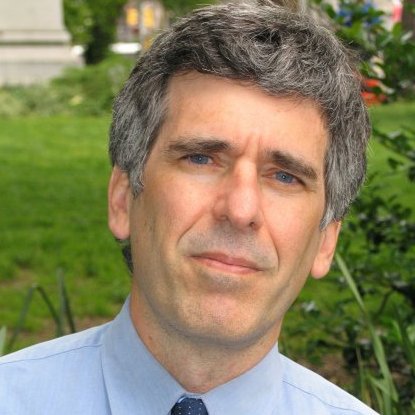
“I’m trying to figure out what difference communications technologies makes to society,” Clay Shirky remarked in a 2011 interview. “What is it about the Internet, what is it about mobile phones, applications built on top of them, that changes how we behave.” The New York University professor has become one of the world’s foremost authorities on gauging how technology has shifted social action. His 2010 book Cognitive Surplus: Creativity and Generosity in a Connected Age outlined how web tools have provided new opportunities for creation in place of consumption, pointing out dynamics such as self-publication and charitable crowdfunding. Shirky has championed government transparency in recent editorials exploring the high-profile leaks of US surveillance programs. (Kevin Lee)

6:30 p.m., $20 (member, $12; students $7)

Commonwealth Club

595 Market, SF

(415) 597-6700

www.commonwealthclub.org


Tommy Davidson

Comedian Tommy Davidson might be offensive, but his keen observations about the absurdity of our daily lives and his animated delivery guarantee laughs. His ability to comment on situations that arise in all walks of life ensures everyone has something to chuckle about through his bits. Known for his roles in the ’90s hit sketch show In Living Color, films like Strictly Business (and OK, Juwanna Mann) and most recently in the spotlight for his character Cream Corn on Adult Swim’s cartoon Black Dynamite, Davidson tours pretty infrequently, so catch him while you can — likely offering fresh takes on old habits. (Hillary Smith)

8pm and 10pm, $24-26

Yoshi’s

1330 Fillmore, SF

(415) 655-5600

yoshis.com/sanfrancisco


FRIDAY 28

Y La Bamba

Indie-folk rocker group Y La Bamba has been steadily building a fan base over the past couple of years, earning high praise from NPR and loaning songs to television programs such as Bones. The Portland-based band’s hauntingly rich and ethereal sound is propelled by singer-songwriter Luzelena Mendoza, whose vocals float and weave tales above Latin-inspired rhythms and unique backing vocals. Its latest full-length album, last year’s Court The Stormwas produced by Los Lobos member Steve Berlin, and an excellent EP, Oh February was released this January. (McCourt)

9pm, $12–$15

Chapel

777 Valencia, SF

(415) 551-5157

www.thechapelsf.com


Japanther

Japanther lets everything go in its performances. Punk is its staple, and the group is known for fuzzy overtones and generally sloppy delivery. All this culminates into weird, disorienting live shows. But whether the band drops five Ramones covers on you or blasts into its own songs (likely off newest album, Eat Like Lisa Act Like Bart) with a raw, unpredictable energy, it will be fun. Keep an eye out for the duo’s signature telephone microphones and the more-often-than-not shirtless bat-shit drummer. (Smith)

With Defiance, Ohio, Psilovision

9pm, $12

Bottom of the Hill

1233 17th St., SF

(415) 626-4455

www.bottomofthehill.com


SATURDAY 29

San Francisco FrontRunners Pride Run

For folks who love to sweat, there’s no better way to celebrate Pride than with veteran LGBT running club the San Francisco FrontRunners, who’ve hosted this event for over three decades. Choose the 5K or the 10K by asking yourself “How many times do I want to haul ass up that hilly stretch of Golden Gate Park’s JFK Drive?” — but remember, the emphasis here is mos def on fun. Sure, some speed demons do turn out (last year’s 5K winner clocked in at just over 18 minutes), but casual joggers are also in effect, as are Pink Saturday-themed athletic ensembles. Upbeat DJs and tasty food at the finish line add to the festive atmosphere. (Eddy)

9am, $40

Golden Gate Park (near Metson and Middle Dr. West), SF

www.sffr.org


In A Daughter’s Eyes

Two women, two very different circumstances: the first, the daughter of a Black Panther sentenced to death for killing an Oakland cop; the second, the daughter of the slain man. Locked in a room together, how will the women negotiate their differences — and is there any chance of forgiveness and healing? Brava! For Women in the Arts and Black Artists Contemporary Cultural Experience present award-winning playwright A. Zell Williams’s In A Daughter’s Eyes in its West Coast debut; though it features just one location and only two characters, expect a powerful, intense story, guided by the sure hand of veteran director Edris Cooper-Anifowoshe. (Eddy)

Through July 14

Previews Thu/27-Fri/28, 8pm; opens Sat/29, 8pm; runs Thu-Sat, 8pm; Sun, 3pm, $15

Brava Theater Center

2781 24th St, SF

www.brava.org


The Juan MacLean (DJ Set)

After years of producing quality electro-disco-club music for DFA Records (home to legendary sometimes-retired LCD Soundsystem), DJ and producer the Juan MacLean (stage name for John Maclean) has leapt head first into a stripped-down, nu-house sound. With vocalist and longtime collaborator Nancy Whang, MacLean released the cool, classy “You Are My Destiny” this March, completing a shift that may have taken root as far back as 2011 with his Peach Melba side project. Transitions are standard practice for the former hardcore guitarist turned electronic music artist, who has collaborated with LCD Soundsystem, !!!, and Holy Ghost! and remixed Yoko Ono and Stevie Nicks. In the midst of a relentless international tour schedule, MacLean signaled his return to dance music prominence earlier this month with a set on BBC Radio 1’s prestigious Essential Mix program. (Lee)

With Kim Ann Foxman, Blacksheep

9pm, $10–$20

Monarch

101 Sixth St., SF

(415) 284-9774

monarchsf.com


SUNDAY 30

Deltron 3030

If you’ve lived in SF for at least a year, then you probably know about Stern Grove’s awesomely free and diverse ongoing music festival. But if not, this summer-long (June 16-Aug.18) series offers the community a chance to get outside and enjoy nature while picnicking with live musical accompaniment. The beautiful, towering eucalyptus trees, redwoods, and grassy meadows provide the best possible settings for a summer music festival. This Sunday’s lineup features dance hip-hip super group Deltron 3030. Rapping about evil corporate Goliaths and space battles, often alongside an orchestral band, Deltron 3030’s performance is anything but typical. The festival itself is always worth checking out, but the group makes this Sunday’s show one of the highlights of summer. (Smith)

2pm, free

Stern Grove

19th Avenue and Sloat, SF

www.sterngrove.org


“Science On Screen: The Science of Baseball”

Hey, batter! There are very few Bay Area residents who don’t have an opinion on which baseball team to root for (default consensus: “L.A. sucks”), but there’s more to the game than trash talk and World Series trophies. Indeed, there’s some pretty serious science behind all those curve balls and home runs, and who better to break it down than the Exploratorium’s David Barker and Linda Shore? (Check out the museum’s clever and educational “Science of Baseball” site at exploratorium.edu/baseball.) Using clips from documentaries and Hollywood films, the duo gets into the nitty-gritty of baseball’s complex biomechanics — so the next time you watch Hunter Pence step up to the plate, you’ll be able to spot the physics behind his hitting prowess. (Eddy)

7pm, $12

Christopher B. Smith Rafael Film Center

1118 Fourth St, San Rafael

www.cafilm.org


TUESDAY 2

Pure Bathing Culture

Listen to Portland, Oreg.-via-Brooklyn duo Pure Bathing Culture’s ethereal, synth-laced cover of Fleetwood Mac’s “Dreams,” and you’ll likely tumble into a web search hole, digging out other soundscape-y Fleetwood Mac covers to quench your newfound obsession (likely finding that PBC’s is still tops). Crawl out of the hole and face your new favorite, Pure Bathing Culture, head on by grabbing a hold of 2012’s self-titled EP, an ode to dreamy 1980s pop produced by Richard Swift. Then note influences like Talk Talk and Cocteau Twins expanding on recently released tracks off upcoming debut full-length, Moon Tides. Band members guitarist Daniel Hindman and keyboardist Sarah Versprille have contributed in the past to records by Foxygen and Damien Jurado, but together as Pure Bathing Culture, they form a loosely wound union of shimmering guitars, twinkling synths, and delicate vocals, twisting along a well-worn path. (Emily Savage)

With Cocktails, Cannons and Clouds, CoolGreg

9pm, free

Brick and Mortar Music Hall

1710 Mission, SF

(415) 800-8782

www.brickandmortarmusic.com


The Guardian listings deadline is two weeks prior to our Wednesday publication date. To submit an item for consideration, please include the title of the event, a brief description of the event, date and time, venue name, street address (listing cross streets only isn’t sufficient), city, telephone number readers can call for more information, telephone number for media, and admission costs. Send information to Listings, the Guardian, 225 Bush, 17th Flr., SF, CA 94105; or e-mail (paste press release into e-mail body — no attachments, please) to listings@sfbg.com. Digital photos may be submitted in jpeg format; the image must be at least 240 dpi and four inches by six inches in size. We regret we cannot accept listings over the phone.

Netrootin’: Dispatches from the progressive tech networking confab

4

George McIntire is reporting live from Netroots Nation ’13 in San Jose

Good morning all you liberals, progressives, socialists, leftists, environmentalists, civil libertarians, feminists, queer activists, radical freegan communists and everyone else! Today is the first day of the 8th annual running of the liberals more commonly know as the Netroots Nation Conference and your correspondent for the three-day liberalchella (I promise that’s the only time I’ll use that term) has just arrived in beautiful San Jose.


Everyone is buzzing about the issues du jour of gay marriage (SCOTUS ruling coming soon), immigration (the one issue Congress might actually work on), and civil liberties (all your phone calls are belong to NSA). Will there be a schism due to the Obama’s administration’s abhorrent record on civil liberties? Or perhaps a new era of progressivism will ignite? Maybe Pride will just kick in and everyone will throw on a wig and rainbow boa. Stay tuned to find out!

For the next 60 hours I will be reporting, blogging, and tweeting on the panels, talks, keynote speeches, attendees, and anything else I see fit to report (in addition to photographing the event). Unfortunately for me the paradox of choice will be in full effect and I do not have a way to clone myself. There are 14 events to choose from during the 3-4:15pm time slot and 16 events during the 4:30-5:45 slot, not to mention all the after parties. Here is the schedule.

So I call on you Guardian faithful to help me decide which events to cover. Should I check out “Moving the Needle: How We Won Gay Marriage in 2012” or “Smoke Signals: The Next Steps in Marijuana Reform” or “Beating Back Mansplaining & Sexism in Politics & Organizing”. Please let me know in the comments or you can tweet at me at @gorejusgeorge.

Everyone but Mayor Lee sees SF’s worsening “housing affordability crisis”

43

There was a clear theme that ran through yesterday’s Board of Supervisors meeting from beginning to end, something understood equally by renters, homeowners, and politicians from across the political spectrum: San Francisco has a crisis of housing affordability that is forcing people from the city.

And the only person who doesn’t seem to understand or care about that is the person with the most power to deal with the situation, Mayor Ed Lee, who opened the meeting by essentially dismissing both short- and long-term gentrification forces and claiming “our city has some of the toughest anti-displacement laws in the country.”

It was a claim that Lee made twice, first in response to a question by Sup. Eric Mar about Plan Bay Area and the massive displacement of current San Franciscans that it would create by 2040. And it was also how he answered a question by Sup. John Avalos about rents that are now skyrocketing beyond what most San Franciscans can afford.

I followed Mayor Lee back to his office, asking him to explain his claim, and he cited the city’s “elaborate” rent control laws and the Rent Board recently hiring new personnel as he briskly retreated toward his office. But surely he’s aware that displacement is already happening and getting worse, I told him, citing Rent Board figures showing that evictions are now at a 12-year high.

Lee looked at me dubiously and said, “I’ll have to check the figures on that.” I followed up today with Press Secretary Christine Falvey to ask whether Lee did check those figures — which show 1,757 evictions in the last year, up from 1,395 the previous, both numbers representing returns to the mass displacement of the last dot-com boom — and I’ll update this post if/when I hear back.

“It shows he’s out of touch with what’s happening in San Francisco,” Avalos told me in response to the mayor’s remarks.

Lee seemed to bristle at the suggestion that his aggressive economic development policies might have a downside that he’s going to have to deal with at some point. He touts the 44,000 jobs the city has added during his mayoral tenure, even deflecting criticism that he’s too focused on the technology industry by citing estimates that every tech job creates at least four other jobs (seemingly oblivious to the fact that most of these are low-wage service sector jobs, the very people who are being forced from the city).

“I’m just hoping you’re not blaming the 44,000 jobs we helped created,” Lee told Avalos, saying that he understands the concern about the rising cost of living, “but those are 44,000 people drawing a paycheck and taking care of their families.”

Yes, Mr. Mayor, but those paychecks are having an increasingly tough time paying for housing in San Francisco. That concern animated the condo conversion debate that took place later in the meeting, voiced by those focused on the lack of affordable homeownership opportunities and those focused on reducing the city’s rental stock to create those opportunities.

“I don’t think saying ‘it’s good that we have a growing economy’ is enough to address the issue,” Sup. David Campos said during the condo debate, referring to Lee’s earlier remarks.

Speaking near the end that discussion, Campos summarized the concerns expressed by both sides and sought to put the legislation into perspective: while important, the condo deal is a drop in the anti-displacement bucket. “We are only dealing with the issue of affordability in San Francisco on the margins,” he said, later adding, “I don’t think we’re doing enough to deal with the fundamental issue of who gets to live in San Francisco.”

The debate on the condo conversion began with its original author — Sup. Mark Farrell, who represents District 2, the wealthiest and most conservative in the city — explaining his desire to help middle class people who want to own homes remain in the San Francisco.

“This is the most affordable form of home ownership in San Francisco today,” Farrell said of tenancies-in-common, the fiscally and legally precarious middle step between an apartment and condominium. Later, he said, “We need more affordable homeownership opportunities and not less.”

Farrell argued that “this didn’t need to be a zero sum game,” but that’s exactly what the stock of rent-controlled apartments is in San Francisco, where only housing built before 1979 is protected from the market forces that can drive rents up to whatever a landlord demands.

“We have a fixed rent control stock. Every apartment that converts to a a condo is one less unit,” said Board President David Chiu, who worked with Sups. Jane Kim and Norman Yee and tenant group to amend Farrell’s legislation to help both renters and homeowners.  

“These units were once the homes of tenants who were displaced,” Kim said, objecting to the notion that one person’s apartment should be another person’s affordable homeownership opportunity and arguing that the city should be building more condos for first-time homebuyers instead of cannabalizing the homes of the nearly two-thirds of city residents who rent.

Like Chiu and Kim, Yee said that he wanted to help the TIC owners of today without simply clearing out of the backlog and letting the condo lottery continue unabated, which would green-light even more conversion of apartments. “We want to curb the speculation,” Yee said.

That idea that the city should help people who live in the city, without simply feeding the speculative investors who profiteer off of housing in San Francisco, was a strong theme among critics of condo conversion.

A pro-tenant crowd packed the Board Chambers. Although barred by board rules from addressing the condo legislation directly (that occurred at the committee level), one commenter said, “Giving any more power to the real estate market in San Francisco should be considered a crime.”

To help ward off real estate speculators once the annual condo conversion lottery resumes in 2024, the legisation also limited future conversions to buildings of less than four units, instead of the current cap of six units, a change that Farrell resisted.

“This is not an academic exercise anymore,” Farrell said of the condo conversion restrictions that were added to the legislation. “This will negatively impact thousands of TIC owners in the city.”

Farrell’s original co-sponsor, Sup. Scott Wiener, had a more pro-tenant point-of-view, objecting to the changes that Chiu inserted on more narrow grounds. In his comments, he noted how close the two sides were and how they share the same basic goal: preventing displacement of current city residents.  

“The one thing we can all agree with is we have a housing affordability crisis,” Wiener said, praising the city’s rent control and tenant protection laws, but adding, “TIC owners are also part of this city.”

The price of dealing with the rapid growth in the city — whether it comes to infrastructure or housing affordability — was also a point that Wiener made earlier in the meeting as the board approved the term sheet for a massive office and residential development project proposed at Pier 70.

“We are not doing what we need to do to support the public transportation needed for those projects,” Wiener said, also referring to other projects along the waterfront (the Warrior Arena at Pier 30 and the Giants/Anchor Steam project at Pier 46) and in the southeastern part of the city. “We don’t have the transit infrastructure to support our current population, let alone new growth.”

It’s about striking a balance, as Chiu said he did with the condo legislation, and not just a balance between renters and TIC owners. It’s about striking a balance between how to protect the San Francisco of today while planning for the San Francisco of tomorrow.

Yes, that means working with market rate housing developers, and it also means diverting some of their would-be profits into the city’s affordable housing fund and its infrastructure needs. Yes, it means private-sector job creation, but it also means more public sector jobs and providing a safety net for people without jobs or who work as artists or social workers or other professions that are being driven from the city. And it means beefing up our public housing and turning around the exodus of African-Americans, concerns raised at the meeting by Sup. Malia Cohen.

We at the Guardian last year looked at how Oakland has become cooler than San Francisco, largely because of the displacement from here. And now, even many people within the tech community have begun to decry the gentrifiction that is being driven by Mayor Lee’s narrow economic development vision.

“Plan Bay Area is an opportunity to think regionally and strategically about planned growth,” Lee said when addressing Mar’s question, sidestepping the direct answer that Mar sought on a set of specific proposals for mitigating some of the displacement planned for San Francisco and maintaining this city’s diversity.

Yes, we do have an opportunity to think strategically about the city we’re becoming and who gets to live in it, but only if we don’t think “jobs” is the answer to every question.

The young master

0

cheryl@sfbg.com

FILM After a banner 2012 and early 2013 — in which his 1958 Vertigo was named the best film of all time by Sight and Sound magazine; a critically-panned but still entertaining-enough biopic hit theaters; and a months-long career retrospective, “The Shape of Suspense,” played the Pacific Film Archive — Alfred Hitchcock’s revival continues. Next up is “The Hitchcock 9,” a San Francisco Silent Film Festival showcase of nine silent films — nearly his entire 1920s output, all made before he turned 30.

His best-known films continue to inspire pop culture (see: A&E’s hit Bates Motel), but Hitchcock’s earliest work isn’t widely circulated. That may change thanks to the British Film Institute’s restoration efforts, the fruits of which are unspooling stateside on a multi-city tour (along with the Silent fest, co-presenters include the Brooklyn Academy of Music and the Academy of Motion Picture Arts and Sciences) launching at the Castro Theatre. Live music by acclaimed musicians will enhance each screening, including the five-piece Mont Alto Motion Picture Orchestra, Bay Area pianist-composer Judy Rosenberg, and British silent-film specialist Stephen Horne.

In movie-crazed San Francisco, where Silent fest screenings regularly sell out (this year’s event is July 18-21; start your engines, Louise Brooks fans), the only dilemma will be deciding which of the Hitchcock 9 to see. Opening night offers a tempting option in 1929’s Blackmail, which Hitchcock — always adventurous with filmmaking technology — shot as a silent/sound hybrid.

Her blonde hair hinting at what would become a Hitchcock trademark, saucer-eyed beauty Alice (Anny Ondra) steps out on her inattentive boyfriend, a Scotland Yard detective, with an artist whose intentions prove shockingly lascivious. Alice has no choice but to stab her attacker (and rip one of his creepy clown paintings) and skulk off into the night, leaving the murder scene for her cop beau to find. What happens next is given away by the film’s title, but no matter — Blackmail is suspenseful to the end.

Another fair-haired lass encounters menace in closing-night film The Lodger (1926), a thriller that takes its stylistic cues from German Expressionist films, particularly 1920’s The Cabinet of Dr. Caligari. Sassy model Daisy (June Tripp, credited as “Miss June”) declares “No more peroxide for yours truly!” when London’s headlines begin shrieking about a serial killer, “The Avenger,” who exclusively targets blondes. Enter a gloomy-yet-dreamy stranger (Ivor Novello), who takes a room at the boarding house run by Daisy’s parents; it doesn’t take long before he makes the landlady uneasy (he does wear a cape, after all), though Daisy finds him intriguing. Naturally, her boyfriend — another cop — becomes highly jealous, not to mention suspicious.

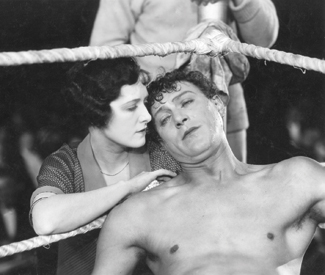
Blackmail and The Lodger are stuffed with elements that would later be easily identifiable as “Hitchcockian” (witness Blackmail‘s high-climbing climax — it ain’t Mount Rushmore, but you see where the idea’s heading). But The Ring, about a love triangle between two boxers and the (dark-haired) temptress that motivates their brawls, is Hitch’s only original script penned without collaborators, and it’s hardly chockablock with psychological terrors. It is, however, a charming sports romance with some nifty technical touches, including an early example of a drunken scene being shot in blurry “booze-o-vision.”

http://www.youtube.com/watch?v=F2T4ZrBel6A

The rest of the Hitchcock 9: 1928’s daffy-heiress tale Champagne; 1927’s Downhill, which also stars The Lodger‘s Novello; 1927’s Isle of Man-set The Manxman; 1928 comedy The Farmer’s Wife, with The Ring‘s Hall-Davis; 1927 Noel Coward adaptation Easy Virtue; and Hitchcock’s feature debut, 1926’s The Pleasure Garden. 

THE HITCHCOCK 9

Fri/14-Sun/16, $15–<\d>$20 (nine-film pass, $135)

Castro Theatre

429 Castro, SF

www.silentfilm.org


The adulation of the technoriche

31

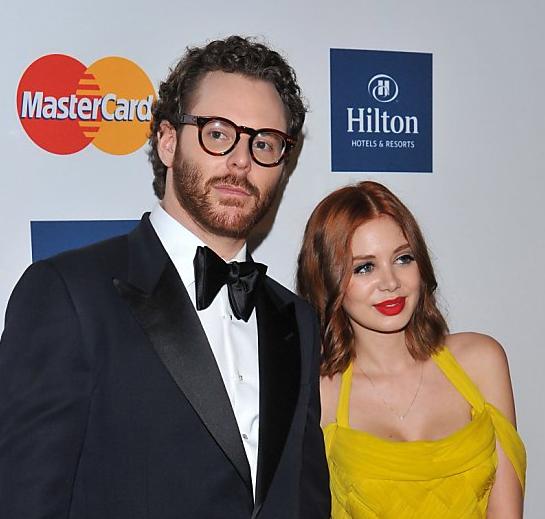
It’s hardly news at this point that billionaire tech mogul Sean Parker tore up a public campground to build the sets for his $10 million fantasy wedding in Big Sur. And it’s been widely reported that Parker paid a $2.5 million fine to the Coastal Commission, which he tried to spin as a wonderful environmental gift to improve the state park system.

But I read with interest in the Chron that both Lite Guv Gavin Newsom and Attorney General Kamala Harris were reportedly at the wedding. Both are very smart people; both have the ability to observe the world around them. So I have to wonder:

Didn’t either Newsom or Harris think it was a little bit odd to see all this new development in a protected area? Did it occur to either of them that their richy-rich-rich pal, who has a history of snubbing laws he doesn’t like, might have done the same thing here?

Could the state’s top law-enforcement official and a member of the state Lands Commission really look at artificial ponds and large new structures, which involved bulldozers to create, and not say:

Huh? Aren’t there rules against this sort of thing?

Okay, it was a wedding, and nobody wants to be the one to throw the turd in the punchbowl. The politician guests were there to celebrate with a person who is capable of helping to fund future campaigns (and since both Harris and Newsom are considered possible candidates for governor when Jerry steps down, I bet they had a great time together).

But didn’t either of them feel at least a little weird about it?

I called Newsom’s office and left a message for Dierdre Hussey, his press person. She hasn’t called back. Nick Pacilio in Harris’s office told me someone would get right back to me; hasn’t happened yet. So we don’t know what the two were thinking.
But I do know this: The level of adulation of the technoriche has reached levels we haven’t seen since the Gilded Age.

Technology columnist James Temple puts it this way:

To the outside observer, Parker’s actions look like contempt for the piddling rules that we non-billionaires can’t buy our way around. And they certainly do nothing to alter the increasingly popular local view of the tech class as selfish and aloof, conspicuously relishing their venture capital rounds and IPO winnings, as a growing portion of the Bay Area population struggles to make the skyrocketing rents.

And politicians seem to adore the most selfish and aloof (and clueless) among them.

Take Mayor Ed Lee’s comments about Airbnb. The company is clearly cheating on its taxes. The city treasurer investigated the situation and ruled unequivocally that airbnb needs to collect and remit the Transit Occupancy Tax money that should be charged on its rooms.
When Michael Krasny asked the mayor on Forum about the issue, Lee defended airbnb (which is funded by his buddy Ron Conway), saying that the company is just “making arguments” about whether it owes the tax.

But that’s just false: The arguments are over. The company argued with the tax collector and lost. And it isn’t arguing anywhere anymore — not in court, not in the political sector. It’s just …. not paying. And because it’s a tech company, and Conway is nurturing it, the mayor seems just fine with that.

It appears that big corporations are big corporations. They may claim that they won’t be evil, and they may be headed by people in their 20s who dress like hipsters, and they may make really cool products — but their operating just like the robber barons of old. And the great wealth they’ve created has, to a great extent, also created great arrogance.

Before the trolls accuse me of fomenting class warfare, let me repeat: I didn’t start this war. I didn’t rig the political and tax systems so that the middle class would be wiped out as all of the net new wealth in a generation goes to the top 1 percent. I’d much prefer we all share in the bounty, as the middle class and working class did in the post-War era.

Meanwhile: Does anyone really need a $10 million wedding in a state park?

Burning questions

7

steve@sfbg.com

A documentary called Spark: A Burning Man Story is arriving on the big screen, with dreams of wide distribution, at a pivotal moment for the San Francisco-based corporation that has transformed the annual desert festival into a valuable global brand supported by a growing web of interconnected burner collectives around the world.

Is that a coincidence, or is this interesting and visually spectacular (if slightly hagiographic) film at least partially intended to shore up popular support for the leadership of Burning Man as the founders cash out of Black Rock City LLC and supposedly begin to transfer more control to a new nonprofit entity?

Filmed during last year’s ticket fiasco — in which high demand and a flawed lottery system created temporary scarcity that left many essential veteran burners without tickets during the busy preparation season — both the filmmakers and leaders of Burning Man say they needed to trust one another.

After all, technology-entrepreneur-turned-director Steve Brown was given extensive, exclusive access to the sometimes difficult and painful internal discussions about how to deal with that crisis. And if he was looking to make a film about the flawed and dysfunctional leadership of the event — ala Olivier Bonin’s Dust & Illusions — he certainly had plenty of footage to make that storyline work.

But that wasn’t going to happen, not this time — for a few reasons. One, Brown is a Burning Man true believer and relative newbie who took its leaders at face value and didn’t want to delve into the details or criticisms of how the event is managed or who will chart its future. As he told us, that just wasn’t the story he wanted to tell.

“We got trusted by the founders of Burning Man to do this story,” he told us. “They were in the process of going into a nonprofit and they wanted to get their message out into the world.”

Two, Black Rock City LLC needed to sign off on the film for it to be distributed, given that the corporation controls the use of images from the event. “Could Burning Man have prevented us from distributing this film? Yeah, they probably could have,” Brown told us. And during my own experience writing and promoting a book about Burning Man, I learned that its leaders resent criticism and can make or break efforts to promote books or movies to the larger burner community.

Finally, as is increasingly the case with many documentary films, the filmmakers and their subjects are essentially in a partnership. Brown and the LLC’s leaders reluctantly admitted to us that there is a financial arrangement between the two entities and that the LLC will receive revenues from the film, although they wouldn’t discuss details with us.

Chris Weitz, an executive producer on the film, is also on the board of directors of the new nonprofit, The Burning Man Project, along with his wife, Mercedes Martinez. Both were personally appointed by the six members of the LLC’s board to help guide Burning Man into a new era.

Brown insists that these relationships had no influence on the film and that the LLC neither requested nor received any editorial changes. “I made it clear to them that I’m only going to do a film that is completely independent,” Brown said.

And his co-director, Jessie Deeter, is a respected journalist and veteran documentary filmmaker whose strong reputation lured estranged Burning Man co-founder John Law to participate in the film, offering the only real questioning of the event’s leadership (although it focused on the decisions in the late 1990s to continue growing the event, not on its more recent stewardship and questions of relinquishing some control to the larger community).

“I’m fair and I’m really proud of my reputation as a journalist,” Deeter told us, noting how important she thought it was to have Law’s contrarian voice in the film.

Still, both Deeter and Brown are also clear that they believe in the leadership of the event. “I found their intentions to be honorable and positive as they deal with difficult-to-solve problems,” Brown said, while Deeter later told us, “I believe in their intentions.”

More cynical burner veterans may have a few eye-rolling moments with this film and the portrayals of its selfless leadership. While the discussions of the ticket fiasco raised challenging issues within the LLC, its critics came off as angry and unreasonable, as if the new ticket lottery had nothing to do with the temporary, artificial ticket scarcity (which was alleviated by summer’s end and didn’t occur this year under a new and improved distribution system).

And when the film ends by claiming “the organization is transitioning into a nonprofit to ‘gift’ the event back to the community,” it seems to drift from overly sympathetic into downright deceptive, leaving viewers with the impression that the six board members are selflessly relinquishing the tight control they exercise over the event and the culture it has spawned.

Yet our interview with the LLC leadership shows that just isn’t true. If anything, the public portrayals that founder Larry Harvey made two years ago about how this transition would go have been quietly modified to leave these six people in control of Burning Man for the foreseeable future.

CHANGING FOCUS

As altruistic as Spark makes Burning Man’s transition to nonprofit status sound, Harvey made it clear during the April 1, 2011 speech when he announced it that it was driven by internal divisions that almost tore the LLC board apart, largely over how much money departing board members were entitled to.

The corporation’s bylaws capped each board member’s equity at $20,000, a figure Harvey scoffed at as ridiculously low, saying the six board members would decide on larger payouts as part of the transition and they have refused to disclose how much (Sources in the LLC tell me the payouts have already begun. Incidentally, author Katherine Chen claimed in her book Enabling Creative Chaos that the $20,000 cap was set to quell community concerns about the board accumulating equity from everyone else’s efforts, but Harvey now denies that account).

In that speech, Harvey also said the plan was to turn over operation of the Burning Man event to the nonprofit after three years, and then three years later to transfer control over the Burning Man brand and trademarks and to dissolve the LLC (see “The future of Burning Man,” 8/2/11).

Board member Marian Goodell assured us at the time that the LLC would be doing extensive outreach to gather input on what the future leadership of the event and culture should look like: “We’re going to have a conversation with the community.”

But with just a year to go until the event was scheduled to be turned over to the nonprofit board, there has been no substantive transfer, the details of what the leadership structure will look like are murky — and the six board members of Black Rock LLC still deem themselves indispensable leaders of the event and culture.

The filmmakers say that the transition to the nonprofit was one of the things that drew them to the project, but the ticket fiasco came to steal their focus, mostly because the nonprofit narrative was simply too complex and confusing to easily convey on film.

Deeter said they decided to close the film with Law and his questions of whether the event should have been allowed to grow so large. “We insisted on having John Law at the end to counterbalance that idea” of who would be leading the event.

As she said of the transition to a nonprofit: “You know that transition is a really, really complicated thing.”

TRANSITION TIME

Yes, and it’s something that seems to be made even more complicated by Harvey and Goodell, who offered dizzying answers to our questions about how the event and culture will be led going forward. All we can tell at this point is that it’s still a work in progress.

“We’re pretty much on schedule,” Harvey told me, noting that he still hopes to transfer ownership of the event over to the nonprofit next year. “The nonprofit is going well, and then we have to work out the terms of the relationship between the event and the nonprofit. We want the event to be protected from undue meddling and we want it to be a good fit.”

From our conversations, it appears that a new governance structure seems synonymous with the “meddling” they want to avoid.

“We want to make sure the event production has autonomy, so it can water the roads without board members deciding which roads and the number of tickets and how many volunteers,” Goodell said. “We did look at basically plopping the entire thing into the nonprofit, but if you look at what we’re trying to do out in the world, we don’t have any interest in becoming a big, large government agency.”

It was an analogy they returned to a few times: equating a new governance structure with bureaucratic tyranny. They rejected the notion that the new nonprofit would have “control” over the event, even though they want it to have “ownership” of the event.

“You just said the control of the event would be turned over to the nonprofit,” Goodell said.

“No, the ownership,” Harvey added.

“Yeah, there’s a difference,” Goodell said.

That difference seems to involve whether the six current board members would be giving up their control — which she said they are not.

“All six of us plan to stay around. We’re not going off to China to buy a little house along the Mekong River,” Goodell said.

“We want to make sure the event production company has sufficient autonomy, they can function with creating freedom and do what it does best, which is producing the Burning Man event, without being unduly interfered with by the nonprofit organization,” Harvey said.

“That’s why you heard it one way initially, and you’re hearing it slightly differently now, and it could go back again,” Goodell said. “We don’t think it’s sensible, either philosophically or fiscally, to essentially strip away all these entities and take all these employees and plop them in the middle of The Burning Man Project.”

In other words, Black Rock LLC and its six members will apparently still produce the event — and it’s not clear what, exactly, the nonprofit will do.

“We are giving up LLC-based ownership control, we are not giving up the steerage of the culture,” Goodell said. “That we’re not giving up. We’re more necessary now than ever.”

PLAYA AS BACKDROP

There are burners who see things in much simpler terms. Chicken John Rinaldi, the longtime burner and thorn in the LLC’s side, was interviewed for Spark but not included in the film. [CLARIFICATION: Deeter and Rinaldi had one phone conversation “on background,” she says, and both deny that he was “interviewed,” as Deeter had told us]. Rinaldi, Law, and others have repeatedly questioned why the LLC doesn’t create a more inclusive and community-based leadership structure, something that would seem appropriate for an event whose value is derived almost entirely by the volunteer efforts of burners, who acquire no equity in the event even after years of work.

But these aren’t the issues that Spark explores. In following both the leaders of the LLC and storylines involving two different art projects and a theme camp, the filmmakers say the film isn’t really about Burning Man at all, but what it brings out in people.

“This film is about ordinary people following extraordinary dreams,” Brown said at a press screening at the Roxie last month. “Burning Man is the context, but it’s not necessarily what it’s about.”

When I asked Brown about whether he paid the LLC for access and the right to use footage they filmed on the playa — something I know it has demanded of other film and photo projects — Brown paused for almost a full minute before admitting he did.

“We saw it as location fees. We’re making an investment, they’re making an investment,” he said, refusing to provide details of the agreement. “The arrangement we had with Burning Man is similar to the arrangements anyone else has had out there.”

Goodell said the LLC’s standard agreement calls for all filmmakers to either pay a set site fee or a percentage of the profits. “It’s standard in all of the agreements to pay a site fee,” Goodell said, noting that the LLC recently charged Vogue Magazine $150,000 to do a photo shoot during the event.

But the issue of paying subjects is a controversial one in the documentary film world, according to a couple of veteran Bay Area documentary filmmakers we interviewed (one spoke only on background). For documentaries that present themselves as journalism, documentary filmmaker Chris Metzler told us, “The rule is, you don’t pay a subject because it will corrupt the process and authenticity you’re trying to capture.”

That rule has become more of a guideline in recent years, particularly as technological advances have made it easier to become a documentary filmmaker. And even the guideline is a little squishy when it comes to interviewing consultants or powerful people who expect to be compensated for their time, or with wanting to ensure people of limited means can take part in a film’s promotion.

Metzler also said that a financial arrangement can influence a film less than an ideological or cultural affinity. That can be particularly strong in the Burning Man world, as Weitz told us, conceding that most art done on Burning Man ends up being at least a little hagiographic: “I think it’s inevitable whenever anyone writes about or makes a film about Burning Man, because we love it.”

Metzler said he simply doesn’t pay sources, but he also said the determining factor should be, “Does it change what you have access to and how people behave?”

TWO VIEWS

There are at least a couple ways for burner true believers to look at the event, its culture, and its leadership. One is to see Burning Man as a unique and precious gift that has been bestowed on its attendees by Harvey, its wise and selfless founder, and the leadership team he assembled, which he formalized as an LLC in 1997.

That seems to be the dominant viewpoint, based on reactions that I’ve received to past critical coverage (and which I expect to hear again in reaction to this article), and it is the viewpoint of the makers of this film. “They’ve dedicated their lives to creating this platform that allows people to go out and create art,” Brown said.

Another point-of-view is to see Burning Man as the collective, collaborative effort that it claims to be, a DIY experiment conducted by the voluntary efforts of the tens of thousands of people who create the art and culture of Black Rock City from scratch, year after year.

Yes, we should appreciate Harvey and the leaders of the event, and they should get reasonable retirement packages for their years of effort. But they’ve also had some of the coolest jobs in town for a long time, and they now freely travel the world as sort of countercultural gurus, not really working any harder than most San Franciscans.

Should the gratitude we feel toward them really be so much greater than the gratitude they feel toward us, the people who hold fundraisers and make sacrifices and toil for months on end for no compensation to give Burning Man its artistic, cultural, and financial value?

In that sense, it’s the community that has gifted Burning Man to the people who run it. So, as Spark claims, is the LLC really planning to gift it back? We’ll see. As Weitz told me when we discussed that idea and whether it’s really true, “I think everyone wants to live up to that phrase.”

Brown also told us that final phrase might have been a little wishful thinking, or perhaps a prompt for burners: “I wrote that card for the end of the film expressing the intention we heard from the Burning Man founders, but I also wrote it to show that it is a process that is just beginning, and we do not yet know the outcome. My bet is that the community will hold them to it.”

Guardian City Editor Steven T. Jones is the author of The Tribes of Burning Man: How an Experimental City in the Desert is Shaping the New American Counterculture (2011, CCC Publishing).

Google and Wikileaks: The takedown

4

By now half the Internet has read the New York Times piece Julian Assange wrote on Google. In theory, it’s sort of an analysis of “The New Digital Age,” a book by Google Chairman Eric Schmidt and former State Department official Jared Cohen, which got a lukewarm review in the Times a month ago. In practice, it’s a total slam at Google and its “don’t be evil” slogan.

Assange isn’t impressed by the Googlers; in fact, he argues that the book is just a manifesto for a new digital age of American imperialism:

 The book proselytizes the role of technology in reshaping the world’s people and nations into likenesses of the world’s dominant superpower, whether they want to be reshaped or not. The prose is terse, the argument confident and the wisdom — banal. But this isn’t a book designed to be read. It is a major declaration designed to foster alliances.

 “The New Digital Age” is, beyond anything else, an attempt by Google to position itself as America’s geopolitical visionary — the one company that can answer the question “Where should America go?” It is not surprising that a respectable cast of the world’s most famous warmongers has been trotted out to give its stamp of approval to this enticement to Western soft power. The acknowledgments give pride of place to Henry Kissinger, who along with Tony Blair and the former C.I.A. director Michael Hayden provided advance praise for the book.

More:

 Google will interpose itself, and hence the United States government, between the communications of every human being not in China (naughty China). Commodities just become more marvelous; young, urban professionals sleep, work and shop with greater ease and comfort; democracy is insidiously subverted by technologies of surveillance, and control is enthusiastically rebranded as “participation”; and our present world order of systematized domination, intimidation and oppression continues, unmentioned, unafflicted or only faintly perturbed.

It’s easy to paint Assange as a crazyman seeing conspiracies everywhere (I’d get that way too if I were cooped up in an embassy and unable to escape.) And that’s how some of the tech journals are playing it.

But let’s get beyond Google Glass and information capture and the scary shit that technology will be doing to us all in a couple of decades. Let’s take Google out of this altogether.

Is it unusual for giant corporations based in the US that control important technology to work closely with the government? Of course not; it’s been going on for more than a century. Standard Oil, J.P. Morgan, General Motors, Lockheed Martin … the list goes on. Corporations that operate on that level are and always have been a part of American foreign policy — and almost always for the worse.

Google doesn’t build missles or spy satellites (although you know they’re working on drones), but what it does is even more powerful — it collects and controls information. And while much of its mission involves making the world’s knowledge available to all, there are other sides to that. And it would be shocking if the State Department/CIA/Industrial Complex DIDN’T involve Google.

At a certain level, if you’re running a big coporation, you have to do more than have a slogan to avoid being evil. Assange’s article is a bit over the top, but I think that’s what he’s trying to say. And it’s absolutely true.


Solomon: Our twisted politics of grief

1

By Norman Solomon
Norman Solomon is co-founder of RootsAction.org and founding director of the Institute for Public Accuracy. His books include “War Made Easy: How Presidents and Pundits Keep Spinning Us to Death” and “Made Love, Got War: Close Encounters with America’s Warfare State.”

Darwin observed that conscience is what most distinguishes humans from other animals. If so, grief isn’t far behind. Realms of anguish are deeply personal — yet prone to expropriation for public use, especially in this era of media hyper-spin. Narratives often thresh personal sorrow into political hay. More than ever, with grief marketed as a civic commodity, the personal is the politicized.

The politicizing of grief exploded in the wake of 9/11. When so much pain, rage and fear set the U.S. cauldron to boil, national leaders promised their alchemy would bring unalloyed security. The fool’s gold standard included degrading civil liberties and pursuing a global war effort that promised to be ceaseless. From the political outset, some of the dead and bereaved were vastly important, others insignificant. Such routine assumptions have remained implicit and intact.

The “war on terror” was built on two tiers of grief. Momentous and meaningless. Ours and theirs. The domestic politics of grief settled in for a very long haul, while perpetual war required the leaders of both major parties to keep affirming and reinforcing the two tiers of grief.

For individuals, actual grief is intimate, often ineffable. Maybe no one can help much, but expressions of caring and condolences can matter. So, too, can indifference. Or worse. The first years of the 21st century normalized U.S. warfare in countries where civilians kept dying and American callousness seemed to harden. From the USA, a pattern froze and showed no signs of thawing; denials continued to be reflexive, while expressions of regret were perfunctory or nonexistent

Drones became a key weapon — and symbol — of the U.S. war trajectory. With a belated nod to American public opinion early in the century’s second decade, Washington’s interest in withdrawing troops from Afghanistan did not reflect official eagerness to stop killing there or elsewhere. It did reflect eagerness to bring U.S. warfare more into line with the latest contours of domestic politics. The allure of remote-control devices like drones — integral to modern “counterterrorism” ideas at the Pentagon and CIA — has been enmeshed in the politics of grief. So much better theirs than ours.

Many people in the United States don’t agree with a foreign policy that glories in use of drones, cruise missiles and the like, but such disagreement is in a distinct minority. (A New York Times/CBS poll in late April 2013 found Americans favoring U.S. overseas drone strikes by 70 to 20 percent.) With the “war on terror” a longtime fact of political life, even skeptics or unbelievers are often tethered to some concept of pragmatism that largely privatizes misgivings. In the context of political engagement — when a person’s internal condition is much less important than outward behavior — notions of realism are apt to encourage a willing suspension of disbelief. As a practical matter, we easily absorb the dominant U.S. politics of grief, further making it our politics of grief.

The amazing technology of “unmanned aerial vehicles” glided forward as a satellite-guided deus ex machina to help lift Uncle Sam out of a tight geopolitical spot — exerting awesome airpower in Afghanistan and beyond while slowing the arrival of flag-draped coffins back home. More airborne killing and less boot prints on the ground meant fewer U.S. casualties. All the better to limit future grief, as much as possible, to those who are not us.

However facile or ephemeral the tributes may be at times, American casualties of war and their grieving families receive some public affirmation from government officials and news media. The suffering had real meaning. They mattered and matter. That’s our grief. But at the other end of American weaponry, their grief is a world of difference.

In U.S. politics, American sorrow is profoundly important and revs up many rhetorical engines; the contrast with sorrow caused by the American military could hardly be greater. What is not ignored or dismissed as mere propaganda is just another unfortunate instance of good intentions gone awry. No harm intended, no foul. Yet consider these words from a Pakistani photographer, Noor Behram, describing the aftermath of a U.S. drone attack: “There are just pieces of flesh lying around after a strike. You can’t find bodies. So the locals pick up the flesh and curse America. They say that America is killing us inside our own country, inside our own homes, and only because we are Muslims.

A memorable moment in the film Lincoln comes when the president says, “Things which are equal to the same thing are equal to each other” — in 1865, a daring leap for a white American assessing race. Truly applying the same Euclidean theorem to grief would be just as daring now in U.S. politics. Let’s face it: in the American political culture of our day, all grief is not created equal. Not even close.

We might say ’twas ever thus: countries and ethnic groups mourn their own while yawning or even rejoicing at the agonies of some “others.” And when grief weighs in on the U.S. political scale, the heaviness of our kind makes any other secondary at best. No wonder presidents have always been wary of red-white-and-blue coffins at Andrews Air Force Base. No wonder “Bring our troops home” is such an evergreen slogan of antiwar activism. If the only grief that matters much is American, then just getting Americans out of harm’s way is the ticket. The demand — like empathy for the war-torn grief of Americans — is vital. And grievously incomplete.

The world’s only superpower has been operating with vast impunity to strike targets and, in effect, summarily execute. (President Obama’s big speech on May 23 reasserted that prerogative; as the ACLU’s president Anthony Romero pointed out, Obama “still claims broad authority to carry out targeted killings far from any battlefield, and there is still insufficient transparency.”)  For American politics and mass media — perennially infatuated with the Pentagon’s latest tech advances in military capacities — such enormous power to smite presumptive evildoers has fed into a condition of jingo-narcissism. Some of its manifestations could be viewed as sociopathic: unwilling or unable to acknowledge, or evidently care much about, the pain of others.

Or the terror of others, if we are causing it. In the American political lexicon, terror — the keynote word for justifying the U.S. state of warfare so far in this century — is a supreme epithet, taken as ours to confer and to withhold. Meanwhile, by definition, it goes without saying, our leaders of the “war on terror” do not terrorize. Yet consider these words from New York Times reporter David Rohde, recalling his captivity by the Taliban in 2009 in tribal areas of Pakistan: “The drones were terrifying. From the ground, it is impossible to determine who or what they are tracking as they circle overhead. The buzz of a distant propeller is a constant reminder of imminent death.”

As part of tacit job descriptions, the U.S. network anchor or the president is highly selective in displayed compassion for the grieving. It won’t do to be seen with watery eyes when the Pentagon has done the killing (“friendly fire” a notable exception). No rulebook need be published, no red lines openly promulgated; the gist remains powerfully inherent and understood. If well acculturated, we don’t need to ask for whom the bell tolls; we will be informed in due course. John Donne, meet Orwell and Pavlov.

The U.S. Constitution — if not international law or some tenacious kind of idealism — could prevent presidential “kill lists” from trumping due process. But, as Amy Davidson wrote in a New Yorker online column last year, the operative approach is: “it’s due process if the president thinks about it.” Stephen Colbert summed up: “The Founders weren’t picky. Trial by jury, trial by fire, rock-paper-scissors — who cares?” After all, “Due process just means there’s a process that you do.” Satire from Colbert has been far more candid than oratory from President Obama, whose May 23 speech claimed a commitment to “due process” and declared: “I’ve insisted on strong oversight of all lethal action.”

Bypassing due process and shrugging off the human consequences go hand in hand. At the same time, it can be reassuring when the commander in chief speaks so well. But Obama’s lengthy speech at the National Defense University laid out a global picture with a big missing piece: grief due to U.S. military attacks. The only mention was a fleeting understatement (“for the families of those civilians, no words or legal construct can justify their loss”), instantly followed by a focus on burdens of top perpetrators: “For me, and those in my chain of command, these deaths will haunt us as long as we live…” As usual, the grief of the USA’s victims was quickly reframed in terms of American dilemmas, essential goodness and standing in the world. So, while Obama’s speech called for “addressing the underlying grievances and conflicts that feed extremism, from North Africa to South Asia,” some crucial grievances stoking the conflicts were off the table from the outset; grief and rage caused by U.S. warfare remained out of the picture.

Transcendent and truly illuminating grief is to be found elsewhere, close to home. “The greatest country in the world” presumes to shoulder the greatest grief, with more access to profundities of death. No wailing and weeping at the scene of a drone strike, scarcely reported by U.S. media anyway, can hold a candle. For American grief to be only as weighty as any other just won’t do. We’re number one! A national narrative of emotional supremacy.

Our politics of grief, bouncing off the walls of U.S. media echo chambers, are apt to seem natural and immutable while fueling much of the domestic political rhetoric that drives U.S. foreign policy. The story goes that we’re sinned against yet not sinning, engaged in self-protection, paying to defend ourselves. Consider the Google tallies for two phrases. “U.S. defense budget”: nearly 4,000,000. “U.S. military budget”: less than 100,000.

But for those in communities grieving the loss of people struck down by the USA’s “Defense Department,” the outlook is inverted. To be killed is bad enough. But to be killed with impunity? To be killed by a machine, from the sky, a missile fired by persons unseen who do not see who they’re killing from hundreds or thousands of miles away? To be left to mourn for loved ones killed in this way?

When, from our vantage point, the grief of “others” lacks major verisimilitude, their resentment and rage appear irrational. Heaven forbid that such emotions could give rise to deadly violence approaching the level of our own. People who are uneducated and unclear on the American concept sometimes fail to appreciate that our perception is to be enforced as hegemonic reality. By a kind of fiat we can elevate with fervent validation some — some — others’ grief. As for the rest, the gradations of importance of their grief, and the legitimacy of their resort to violence, are to be determined by our judicious assessment; for further information, contact the State Department.

There may be no worse feeling of human powerlessness than inability to prevent the death of a loved one. The unmatched power of bereavement forces people to cope with a basic kind of human algebra: love + death = grief. Whether felt as a sudden ghastly deluge or as a long series of sleeper waves with awful undertows, real grief can turn upbeat memories into mournful ones; remembering becomes a source of anguish, so that, as Joan Didion wrote, “Memories are what you no longer want to remember.” Ultimately, intimately, the human conditions of loss often move people to places scarcely mapped by standard news coverage or political rhetoric.

Imagine living in a village in Pakistan or Afghanistan or Yemen. From the sky, death has been visited on neighbors, and drones keep hovering. (As now-former Times reporter Rohde pointed out: “Drones fire missiles that travel faster than the speed of sound. A drone’s victim never hears the missile that kills him.”) Overhead are drones named Reaper, shooting missiles named Hellfire. Have the heavens been grabbed by people who think their instruments of death are godly?

“When scientific power outruns moral power,” Martin Luther King Jr. said, “we end up with guided missiles and misguided men.” For America, drones and other highest-tech weapons are a superb technological means of off-loading moral culpability from public agendas; on the surface, little muss, less fuss.

Disembodied killing offers plenty of pluses in U.S. politics, especially when wars become protracted. From Vietnam to Afghanistan, the reduction of troop levels has cut the number of American deaths (easing the grief that “counts”) in tandem with more bombardment from the air (causing the “other” grief). Today’s domestic politics of grief are akin to what emerged after mid-1969, when President Nixon initiated a steady withdrawal of U.S. troops from South Vietnam. During the three years that followed, Nixon reduced the number of soldiers in Vietnam by nearly half a million, to 69,000. During the same three years, the U.S. government dropped 3.5 million tons of bombs on Vietnam — more than all the bombing in the previous five years.

Then, as now, the official scenario had U.S. troops thinning on the ground, native troops taking up more of the combat burden, and the Pentagon helpfully bombing from the sky as only Americans could “know how.” Independent journalist I. F. Stone astutely identified the paradigm in 1970, when the White House struggled with fading public support for the war. The revamped policy, Stone wrote, was “imperialism by proxy,” aiming to buy “low-wage soldier-power,” an approach that “will be seen in Asia as a rich white man’s idea of fighting a war: we handle the elite airpower while coolies do the killing on the ground.” Stone would have swiftly recognized the pattern in President Obama’s upbeat statement on May 23 that “we will work with the Afghan government to train security forces and sustain a counterterrorism force.”

The number of U.S. ground troops in Afghanistan was down by one-third, to 66,000, at the start of this year, when Obama announced plans to gradually withdraw the remaining troops over a period of two years. High-tech warfare would pick up the slack. The outgoing Defense Secretary, Leon Panetta, told a news conference that a key mission in Afghanistan, persisting after 2014, would be “counterterrorism,” a buzzword for heavy reliance on airpower like drones and cruise missiles. Such weapons would give others grief.

A top “national security” adviser to the president, John Brennan, said as much in an April 2012 speech. “As we have seen,” he noted, “deploying large armies abroad won’t always be our best offense. Countries typically don’t want foreign soldiers in their cities and towns.” The disadvantages of “large, intrusive military deployments” were many. “In comparison, there is the precision of targeted strikes.”

But such “precision” is imperfect enough to be an other’s calamity. Likewise, the extreme relativity of “agony.” At his Senate confirmation hearing to become CIA director in February 2013, Brennan spoke of “the agony we go through” in deciding which individuals to target with drones. Perhaps to square some circles of cognitive dissonance, those who inflict major violence often seem moved to underscore their own psychological pain, their own mental wounds. (As if to say, This hurts me as much as it hurts them; maybe even more, given my far more acute moral sensitivities.) When the focus is on the agony of the perpetrators, there may be less room left to consider the grief of their victims.

Shifting the burden of protracted war easily meshes with a zero-sum geopolitical game. Official enthusiasm for air strikes has correlated with assurances that Americans would be facing much less grief than allied others. So, near the end of 2012, the USA Today front page reported that “the number of U.S. deaths in Afghanistan is on track to decline sharply this year, reflecting the drawdown in U.S. forces” — while the death toll for Afghan government forces had climbed to ten times the U.S. level. These developments were recounted as progress all the way around.

As top officials in Washington move to lighten the political load of American grief, their cost-benefit analyses find major strategic value in actions that inflict more grief on others. Political respects must be paid. Elites in the war corps and the press corps do not have infinite tolerance for American deaths, and the Pentagon’s latest technology for remote killing is a perpetual favorite. In the long run, however, what goes around tends to come around.

Advice offered by scholar Eqbal Ahmad before 9/11 bears repeating and pondering: “A superpower cannot promote terror in one place and reasonably expect to discourage terrorism in another place. It won’t work in this shrunken world.”
After the “war on terror” gained momentum, Martin Luther King III spoke at a commemoration of his father’s birth and said: “When will the war end? We all have to be concerned about terrorism, but you will never end terrorism by terrorizing others.” That was more than nine years ago.

Norman Solomon is co-founder of RootsAction.org and founding director of the Institute for Public Accuracy. His books include “War Made Easy: How Presidents and Pundits Keep Spinning Us to Death” and “Made Love, Got War: Close Encounters with America’s Warfare State.”

(The Bruce blog is written and edited by Bruce B. Brugmann, editor at large of The San  Francisco Bay Guardian, and editor and co-founder and co-publisher of the Guardian with his wife Jean Dibble (1966-2012). He can be contacted at Bruce@sfbg.com. b3

Gopi and the Yoglers

0

culture@sfbg.com

ON THE OM FRONT  Seven years ago, Gopi Kallayil, currently the Chief Evangelist for Google+ (there is indeed such a position), started a program at the Mountain View Google office called Yoglers: members go beyond merely practicing yoga in the office to participating more fully in its potential. It’s kind of like Google+ circles for yogis, where employees become teachers rather than just lunchtime practitioners. I recently spoke with Gopi, a force of nature himself who speaks often on such topics as “Envisioning the Conscious Corporation” and once engineered an online hangout with Desmond Tutu and the Dalai Lama, about this program and his life’s passion: merging business and technology with mindfulness practices like yoga and meditation.

SFBG OK, so what exactly is a “Yogler”?

Gopi Kallayil There are communities of Googlers that self-organize themselves into doing different things. For instance, there is a group for LGBT Googlers (and their straight allies) called Gayglers, a group for Jewish Googlers called Jewglers, and a group for Carpooling Googlers called Carpoolglers. Self-organizing yoga practitioners are called Yoglers.

SFBG Is this different than the corporate yoga program at Google?

GK Yes. Google does a lot of things to keep employees fit and healthy—there are gyms in many offices, and we have group exercise programs that include yoga instruction with contracted yoga teachers to lead these classes. But the Yoglers classes are led only by people who work for Google. They could be product managers or engineers, but they will take a break periodically and not just take a yoga class, but actually teach a yoga class.

SFBG Are Yogler instructors trained yoga teachers or just yoga enthusiasts?

GK They are trained teachers. People who work here are intensely intense about the things that they do. They are very passionate about all aspects of their lives.

SFBG How did you first become involved with yoga?

GK I grew up in India, and became a yoga teacher as a teenager. I was taught yoga by Swami Vishnudevananda, who is one of the people who first brought yoga to America. He taught it as a path to self-realization, but also as a practice that brings joy, peace, and happiness to the world. He wanted us to go and teach it to other people. Since then, I’ve always taught, and I’ve always taught for free.

SFBG What inspired you to start Yoglers?

GK When I joined Google, one of my colleagues here encouraged me to teach a yoga class. So I started teaching a class in a conference room to one student and called it Yoglers. It was a way I could bring yoga to my community at work and pass on this great tradition that I was blessed to have received. Word of mouth spread and years later it’s become a big movement across Google offices worldwide. I had no idea that something I started with one student would evolve to this level.

SFBG Do you think the location of the Mountain View office helped to launch Yoglers?

GK Without question, something like this could happen more easily in the Bay Area. This is a very awakened, conscious place. People are curious about these traditions and don’t look at them suspiciously. People have studied yoga here, they welcome it.

SFBG Why is it important to bring yoga into the workplace in society today?

GK It’s not just today. It has always been important. It was important 50 years ago, 100 years ago, as long as there have been human beings. Yoga and meditation help to create a higher quality, more conscious human being. And any organization—whether it’s a corporation or educational institution—is staffed and run by human beings. If we incorporate these practices into our working life, we get along with each other better, make better products, and make choices that will better serve our customers.

SFBG It’s great that tech companies are embracing yoga, but isn’t technology part of what’s making us scattered and stressed?

GK: Technology, if not used properly and consciously, has the capability to completely distract us and make us unproductive and frenzied. But it’s no different than many other innovations. It’s like fire. Ever since we’ve discovered it and known how to harness it, we’ve found it exceptionally useful. You can cook your food with it, you can melt and blow glass with it. But if you misuse it, you can burn yourself or raze an entire city to the ground. I only check email certain times a day — I’m not constantly looking at it. Technology is a powerful tool. But whether you use the tool to be productive or destructive is up to you.

SFBG How does yoga help people in stressful work environments stay focused and calm?

GK When you practice yoga, you’re asked to bring your complete, 100 percent awareness to your body and your breath. If you practice regularly, it makes you more aware and conscious, and you make choices driven by that. The quality of your interactions improves. You stop checking your email when someone is talking to you. At Google, we’re building amazing technologies like self-driving cars, Google Glass, and Google+. And yet, the most important technology that every human being has access to is right within us: our body, our mind, our consciousness.

SFBG Any advice on how people can start a yoga or meditation program at work?

GK It’s simple. Go book a conference room. Sit, close your eyes, start meditating. Put up a sign that says, “Random acts of meditation.” It doesn’t matter if only one person shows. If you just sit there for 60 seconds and watch your breath, you have just started a meditation program. You don’t need a budget or resources. Someone just needs to step forward and do it.


Björk plays the part of stunning mad scientist at the Craneway Pavilion

19

With purple lightning bolts of electricity jagging toward one another in a steel cage center-stage, powerful pipes that reverberated through the pavilion and rippled out onto the sea, and a fuzzy Snow Cone wig of every color — cherry red, orange, lime green — Björk seemed like the mad scientist of the natural world last night at the relatively intimate Craneway in Richmond, Calif.

She also thanked the audience often, ‘t-ank you, Bay Area, gggrrrratitude!” (she rolls her Rs beautifully) and offered up a 16-piece coven of sequined and hooded Icelandic choir princesses, so you can assume she’s the benevolent type of creator.

The vibe was weird to start, with most of the audience confused as to where to go, do we sit or stand, what is this place, will she come out before dark even though the whole place is encased by floor-to-ceiling windows? Will I cry when she appears? There were a few poofy pink or orange wigs dotting the crowd, and at least one swan costumed fella, who, also benevolent, took time to pose for photos with fans after the show.

The Craneway only holds 4,000 people, which still seems like a lot until you realize that when Björk’s Volta tour came through, it went to the Shoreline Amphitheatre in Mountain View, which holds 22,500. And with the stage in the dead center and the aforementioned ripply waters just outside the windows, it did feel like the smallest possible way to view Björk. “Did she just look directly at me?” It must have been thought dozens of times throughout the night during this Biophilia stop.

The show itself began auspiciously enough, with a young woman stepping out onto the stage to patiently ask the crowd to put away its cell phones and cameras, to live in the moment for the night. People cheered, as concert-goers are sick of the constant interruption at shows (or maybe I’m projecting). Most got the point — hello, we were about to be in the presence of a legendary elf and sonic genius, live in the now — but plenty decided to shirk the suggestion, just too giddy with social media attention. (Full disclosure: I posted a photo of the empty stage long before the show started, but still, I admit to that tugging need to let people know I was there, near her.)

At 9pm, a National Geographic documentary-style voice (actually British broadcaster David Attenborough, narrating Biophilia‘s intro) came over the loudspeaker and explained the night would be about “NATURE, MUSIC, AND TECHNOLOGY.” It also asked us to expand our minds, and a few other ideas that I missed due to excitement. Just listen to the album introduction, it’s all there.

http://www.youtube.com/watch?v=MvaEmPQnbWk

The cloaked Icelandic choir — all blonde, Viking-esque, and vaguely Kirsten Dunst-looking, wearing oversized smocks of glittery green or velvety amber-brown with large hoods — marched out and stood in a hunched and humble circle on the already circular stage and began chanting. A sea of impressive vocals rose with immediacy.

And then Björk rose up like a bewigged phoenix from the ashes, and lightly shuffled near the Tesla coils as they crackled with purple electricity inside a human-sized bird cage (technically, a Faraday shield). She later called the Tesla coils her “fun new toy.” The set began with “Oskasteinar,” then electrifying “Thunderbolt,” which teetered between grinding techno thanks to arpeggios timed to the coils and passionate love song, given Björk’s leaping vocals. This was followed by “Moon” (large moons floating and shifting on the circle of TV screens surrounding the stage) and “Chrystalline” (crystal gems dance across said screens). Most songs had a visual component on those screens, a natural element growing and twisting like a video game or early web screen-saver. The image of the earth’s mantle cracking open looked straight out of a biology book.

Björk and the hooded Kirsten Dunsts sang their way through most of Biophilia — the main star of this tour — but also revisited old favorites like “Hidden Place,” which was matched to a neat video of colorful starfish frolicking underwater, and incredibly sexy Vespertine hit “Pagan Poetry,” which burst out of Bjork’s mouth like fire, filling the room with warmth. That powerful “I love him/I love him/I love him/I love him” breakdown felt almost too personal in such a small place. But then the choir piped up with that tender backup “She loves him,” and it brought us all back to the present.

While she sang, Björk one-two shuffled around in platform glitter shoes and a glittery beige haute couture dress that looked like it was covered in 3-D alien breasts. She pushed her body forward and back. She shot her hands out and spread her fingers like she was casting spells to the beats. She pulled out the iPad to play during a handful of songs, and was also backed by a live drummer, a musician on “computers and shit,” and a truly epic harpist, also wearing a glittery oversized smock. Large pendulums swung to and fro just off the stage.

http://www.youtube.com/watch?v=oZmMTonROmU

Björk and the Dunsts left the stage after an hour, returning a few short minutes later with “Possibly Maybe” off 1995’s Post“Nattura,” and finally, closing with Volta’s “Declare Independence.” For that last song, she asked that everyone stand (VIP area was seated) and sing-along, “Declare independence/Don’t let them do that to you” and everyone obliged, hoping to please their mad scientist master with repeated declarations of independence. Make your own flag, raise your flag higher, higher. 

Set list:
1. “Oskasteinar”
2. “Thunderbolt”
3. “Moon”
4. “Crystalline”
5. “Hollow”
6. “Dark Matter”
7. “Hidden Place”
8. “Heirloom”
9. “Virus”
10. “Sacrifice”
11. “Generous Palmstroke”
12. “Pagan Poetry”
13. “Mutual Core”
14. “Cosmogony”
15. “Solstice”
Encore
16. “Possibly Maybe”
17. “Nattura”
18. “Declare Independence”

Björkphilia

0

MUSIC Can you even recall your first run-in with the mythic, boundary-less creature that is Björk? Perhaps it was bounding through the neon blue forest with tiny crystals underneath her eyes as a giant paper-mache bear chased her through Michel Gondry’s video for “Human Behaviour,” off 1993 solo album Debut. Or maybe it was poised for the tabloids in an elegant swan dress, holding a large egg purse and preening for the worst dressed lists at the ’01 Academy Awards after her devastating performance in Dancer in the Dark (2000). Those long obsessed will likely point to first hearing ’88’s “Birthday” by the Sugarcubes, her early Icelandic act (post teenage punk bands), on international radio.

Whenever — and however — it went down, it left a lasting impression, the stunning shock of that otherworldly voice tends to permeate memories. Solo, Bjork has long coupled that voice with innovation, always grasping at new objects and sounds, or as she described it to me in conversation, she’s “like a kid in a toy shop.”

Her latest triumph was Biophilia, the ’11 album that paired science, nature, iPads, Tesla coils, and tinkling church bells. Since its release, she’s hopped the planet with her sonic education in tow, spreading pixie dust and learning tools at schools and museums along the way. Next up, she’ll play a trio of shows at the Craneway Pavilion in Richmond (Wed/22, Sat/25, and Tue/28). Also during that time, her Biophilia Education Program comes to the Exploratorium, which means interactive workshops exploring connections between music and technology, Wed/22 through Tue/28.

In her unassuming but confident way — with the most endearing accent I’ve ever heard — the avant-pop megastar opened up to the SF Bay Guardian about her song writing process (yes, there’s a new project in the works), early punk career, natural musicology, and how to keep it all DIY:

SF Bay Guardian How did you initially come up with idea to include apps for every song on Biophillia?

Björk It started in 2008. I wanted to use touch screens…though the iPads weren’t out ’till 2010 or something. But I’d been using touch screens on my Volta tour, but more just to perform on stage. When I started doing Biophillia, I was very determined that I wanted to write with [touch screens], not just perform. That’s when I started to map out, to visualize. I had to decide, what did I want to hear on the touch screen when I’m writing this song. That sent me back to my own music education as a child, when I felt the way they explained scales and rhythms and those basic musicology themes, was way too academic. It was like reading a book to learn to dance.

Music is something that doesn’t work that well in the written word, you know? Especially not explaining to kids. So I started making my own map…this is how I would I like to have scales and this is how I would like to have chords and this is how I would like to have arpeggios and this is how I would like to have counterpoint, and so on. This project became naturally educational. I was kind of like, repairing my own education. I was trying to cover what I thought was lacking when I was in music school. In that way, I was able to share it.

We [created] a different program for each song. For example, one song would feature arpeggios, and then I would pick an actual element that would be the simplest way for a kid to understand what an arpeggio is, to visualize it. So we took a pendulum to explain counterpoint, a little bit like how church bells swing back and forth, and that’s like a bass line that swings.

I wrote 10 songs and we did different programs for each song, and it came together using natural elements. For example, one song is called is called “Crystalline” and there are crystals kind of growing as the song changes.

In 2010, when we were programming this and were kind of almost done, the iPad arrived, so we were like, ‘wow!’ It’d be silly just to record these songs and put them on a CD because we’d already written all these programs, we might as well share the programs, and put them with some more poetic, natural things — the moons, the tides, things like this. It was a very gradual thing.

SFBG And now it’s been brought in to educate children at schools throughout Iceland, but also there are related events where you’re touring, as well?

Björk It differs from city to city. So far it’s been in Manchester, Iceland, New York, Buenos Aires, and Paris, and now it’s going to be in California. Some places, like for example, New York Library and the Children’s Museum of Manhattan, took on the curriculum for a few months, and the middle school of Reykjavik, the 10 to 12-year-olds, they have it now in their curriculum for the next three years. It’s looking like it’s going to go to more countries. It sort of keeps growing.

SFBG It seems like you’ve long been ahead of the curve, as far as creating music with new technology, is that something you grew up with as well?

Björk I’m actually really bad with technology. I think that’s why I’m so excited about, for example, the touch screen, because it’s like I waited until technology caught up with me, for it to be simple enough. You have your imagination, and whatever helps you express yourself, I’m all for it, if it’s the violin or piano or singing. Or what has been really helpful for me, since I started doing my own solo albums, the computer has made me a lot more self-sufficient. I guess that comes from being in bands for 10 years, where things are more democratic. It was always drums and bass and keyboards and guitars in every single song [laughs], which is great. But then when I started doing my own album, I was like a kid in a toy shop, I wanted to have every single noise. And this is great, using the computers to do this yourself. It’s quite empowering, especially for a girl. You don’t have to go through this whole hierarchy of whatever, you can just be self-sufficient.

SFBG Some of your early groups were punk bands [Tappi Tíkarrass, and KUKL, which toured with Crass], I was wondering how you discovered punk as a teen, and ended up working with Crass?

Björk I was hanging out with kids that were older than me, like the other guy who used to sing in the Sugarcubes and another guy who was friends with Crass. They played our country, and then we would go and visit them at their farm [Dial House in Essex], and for me what was most important was that one of the bands that was on Crass’ label, a band called Flux of Pink Indians, had a bass player called Derek Birkett and he helped the Sugarcubes release their first album, just from his bedroom. And he’s my manager still today. So I’ve worked with him for like, 30 years now.

It’s pretty much DIY, especially now when the labels are not really functional like they used to be. It’s pretty much just three of us that do most of my stuff.

SFBG Do you have any other long-term goals with Biophillia, or are you working on your next project?

Björk I think I will be doing that on the side, but when it comes to writing my own stuff, I always like the first couple of years to be kind of mysterious. It’s important to play around in the dark, blind-folded, not really knowing what you’re doing. Biophillia was very much like that the first two years, it was very intuitive and impulsive and having no idea what would come out of it. And I’m at that stage with my next album. I really enjoy that. As much as it’s rewarding when [an album] first sees the daylight, I think I even enjoy more the first half of the process, when it’s all still a mystery.

SFBG Were you living in New York during the early playing stage of Biophillia? It seems to have a real connection to natural elements, and science, so I assumed you were in Iceland?

Björk I’ve been living half the year in New York and half in Iceland. I think Biophillia addresses my life in Iceland and the financial crises in a direct way because it’s sort of very DIY. And one of my first dreams was that Biophillia would be a music house and each room would be a song — eventually these rooms became the apps. But it might be that we would be able to go back and make a musical house in Iceland that would serves also as a children’s’ museum and we would use one of the buildings that got kind of half-built in the financial crises and create jobs that way.

But also Biophillia is also about urban areas, because you could stay connected with the moon through your iPad, or to nature and natural structures with your phone.

SFBG My time is almost up but may I ask a few of your favorite things? Like your favorite songs currently, or music that’s helping inspire you creatively now?

Björk At the moment I’ve been listening to the new James Blake album a lot. These things change all the time!

SFBG Favorite mythological story or creature?

Björk I like Icelandic mythology, there’s a lot of amazing tales there.

SFBG And a favorite tour snack?

Björk Um, I like berries.

SFBG Any kind in particular?

Björk Mmmm, no, I like all of them.

BJÖRK

Wed/22, Sat/25, Tue/28, 8:30pm, $75

Craneway Pavilion

1414 Harbour Way, Richmond

www.craneway.com

“One powerful newsroom” pulls back from its San Francisco roots

22

Locally focused journalism in San Francisco took another big hit today with the announcement that The Bay Citizen — which was founded by the late Warren Hellman in 2009 specifically to augment declining reporting on San Francisco and the Bay Area — is being folded into Center for Investigative Reporting [Updated below].

When the two entities merged last year, Bay Guardian and others raised concerns that local accountability journalism in San Francisco would suffer and that the strong donor base that Hellman developed to support Bay Citizen was being used to support CIR, whose board is chaired by former San Francisco Chronicle Editor Phil Bronstein, who engineered the deal.

“It’s exciting for us to be able to address what has been a vacuum in San Francisco for a long time,” CIR Executive Director Robert Rosenthal, addressing the need to strengthen local coverage, told us last year.

But today, in an upbeat press release and blog post announcing The Bay Citizen’s demise entitled “One Powerful Newsroom,” Rosenthal seems to dismiss the importance of San Francisco City Hall coverage and other locally based reporting in justifying CIR’s flip to a more national focus.  

“We know that as long as we are telling the right stories – the stories that no one else is covering, the stories that reveal deeply hidden information, the stories that actually make a difference in people’s lives – it doesn’t matter if they are about San Francisco or Sacramento or Washington, D.C.,” wrote Rosenthal, who has not yet returned our call to discuss the issue [see below].

For anyone who cares about journalism and accountability in San Francisco, where wealthy interests have essentially partnered with the Mayor’s Office on an ambitious agenda that is changing the face and future of the city, it does matter where reporters focus their time and energies.

CIR Editorial Director Mark Katches also wrote today that in addition to less coverage of San Francisco, the merged organization will do fewer overall stories: “First and foremost, we have rededicated ourselves to high-impact investigative reporting – stories that matter. We’ve largely stopped covering routine stories and breaking news, which got in the way of this core mission. Last year, we generated about 1,000 stories. By choice, we expect to produce about 200 stories this year. But the stories we go after will be the ones we think can make a difference.

“The newsroom will also rethink the scope of its coverage: Last year, about 95 percent of the stories generated out of this newsroom were either focused on the Bay Area or the state of California. That left a small fraction of our work focused on national or international issues or produced in a way that would appeal to an audience outside California’s borders,” wrote Katches, who also hasn’t yet returned our call (we’ll update this post if and when we hear back from Rosenethal and Katches).

While it’s always good to have more quality journalism focused on national and international issues, San Francisco needs more accountability journalism, not less, particularly when the Chronicle newsroom has been decimated and the stories that its reporters are doing are now stuck behind an online paywall, further reducing readership.

That dearth of San Francisco-based reporting is why Hellman created The Bay Citizen, as he told me while he was conceiving the concept and shortly after it was created. “It will focus on local news events, including politics and the arts, the kind of thing that is just dying at the Chronicle,” Hellman told me.

And now, just as we feared, two of the Chronicle editors who oversaw that demise — Bronstein and Rosenthal — are killing off the once-successful local newsroom that was created to shine a critical light on what’s happening in San Francisco and around the Bay Area.

We certainly wish CIR well and we hope that this “one powerful newsroom” will continue to devote some reporting resources to San Francisco, as they did most recently in exposing radioactive contamination at Treasure Island. But this is still a sad day for the Fourth Estate in the rapidly evolving city of St. Francis.

Update: Rosenthal just got back to me and expressed the hope that San Francisco won’t suffer from this latest move: “We’re going to continue doing what we hope will be stories that make a difference in San Francisco and the Bay Area.”

But as a longtime newspaper editor who also values local reporters working beats to hold powerful people and entities accountable and to inform local citizens about issues that affect them, Rosenthal said that he understands the Guardian’s concerns.

“I love beat reporting, and yes, beat reporting will suffer,” Rosenthal said, decrying the newsroom cutbacks in communities across the country. “At the same time, we’re the only news organization, if you can call us that, in the country that has been adding staff in the last five years.”

Rosenthal emphasized that there were no layoffs during last year’s merger or as part of this current move, and in the always challenging modern media environment, he said the question he wrestles with is: “How do we keep the whole organization alive?”

Rosenthal also said CIR plans to expand its investigative reporting on the technology industry and its impact on San Francisco and other cities, which should benefit the need for accountability journalism here.

“We don’t want to abandon the Bay Area or the Bay Area media,” he said, citing recent coverage of Bay Area pedestrian deaths as an example the kind of stories that can make a difference locally.

As for Hellman’s vision of The Bay Citizen as a local news outlet, Rosenthal said, “It evolved.”

Do falling jobless numbers mean we’re smart and focused, or rich and exclusive?

73

The unemployment rate continues to drop in San Francisco and all over California, according to new numbers released today by the California Employment Development Department, which were trumpeted by Mayor Ed Lee as vindication for his economic development policies.

“San Francisco’s steady economic recovery is the result of our continued focus on job creation, education and training residents for the demands of the 21st century workforce. San Franciscans are getting back to work across the spectrum of job sectors – from hospitality to construction to technology to service industry jobs and we will continue to help these sectors grow in our City,” Lee said in a press release.

But are Lee’s neoliberal policies of promoting technology and other corporations with tax breaks and city-subsidized training programs and financing mechanisms really creating the rosy economic picture he’s painting? And even if it is helping to promote boom times, at what point have we essentially reached full employment, the point at which we should maybe turn our focus and resources to addressing the rising cost of living here?

After all, San Francisco’s unemployment rate of 5.4 percent is third only to Marin County (4.6 percent) and San Mateo County (5.1 percent). Those three counties also just happen to be the three counties with the highest per capita incomes in the state, a fact that explains our jobless rate more than the mid-Market payroll tax exemption and other taxpayer giveaways.

“Unemployment rates tend to be lowest in areas with high education attainment,” Ruth Kavanagh, EDD’s labor market consultant for this area, told us when we called to discuss the disparties among counties.

What about the rising cost of living in San Francisco? Clearly, this is becoming a much more difficult city for the unemployed and marginally employed to remain living in. How much are gentrification, evictions, and the exodus to the East Bay (Alameda County’s rate is 7 percent, still better than the statewide rate of 8.5 percent) and other locales a factor in our low jobless rate?

Kavanagh said the EDD doesn’t directly track that and so she couldn’t address the question. But she did say that the Bay Area was indeed experiencing the fastest job growth in the state, driven largely by the tech industry. In the last year, this three-county area has added 9,600 jobs in Professional Business Services (which includes tech) and 4,600 each in Leisure & Hospitality and Construction.

Indeed, in his State of the City speech in January, Lee touted the 23 construction cranes on the city skyline as the best gauge of the state of the city. And if counting jobs is one’s only measure of success, San Francisco is doing as well as can be expected. Kavanagh said most economists consider “full employment” within the capitalist system to be somewhere between 4-5 percent.     

Yet Lee says he’s not backing off from his full-throttle focus on economic development. “San Francisco’s unemployment rate today stands at a five-year low and I will continue to pursue policies that get people back to work, support San Francisco families and invest in our City’s future,” he said. “This Summer through San Francisco Summer Jobs +, we are setting an aggressive goal of putting 6,000 youth to work in paid jobs and internships, and I will continue working hard to make sure all San Franciscans have access to good paying jobs.”

Now if only we all had access to reasonably priced housing, health care, food, entertainment, and a transportation system built to handle a growing population.

-sigh-

Now get back to work!

The Ro Khanna party

17

When Ro Khanna, a young, energetic intellectual property lawyer, ran for Congress against Tom Lantos, he was the candidate of the progressives. I liked Khanna, and appreciated his willingness to take on the almost unheard-of task of challenging a longtime incumbent in a Democratic primary. At that point, in 2004, the big issues were the war and the PATRIOT Act, and Khanna was against both. Lantos, who was always hawkish on defense issues (and a die-hard supporter of Israel, no matter what the Israeli government was doing), was clearly out of touch with his district. But Khanna never got much traction, and he lost pretty badly.

Now he’s back, in a new era of top-two primaries (which has its own problems), and in a different district. He’s taking on Mike Honda, who, like Lantos, has been around a while, and hasn’t faced serious opposition in years.

And this time around, it’s not Matt Gonzalez and the left supporting Khanna — it’s Lite Guv Gavin Newsom, who beat Gonzalez for mayor of SF, along with Ron Conway and the tech industry. And  instead of talking about failed US military policies, he’s talking about bringing the interests of Silicon Valley to Washington:

“The premise of this campaign is quite simple,” Khanna told the crowd. “We’ve had quite brilliant people…use technology to change the world. And it’s time that we actually change politics, that Silicon Valley has the potential to do this.” “It’s not just about having a tech agenda. This is about something much deeper — our values, and our ability to use those values to change Washington and the world,” he told them.

Now: It’s not as if Mike Honda has been horrible to Silicon Valley. He’s been involved in all sorts of tech-related issues. But he’s of a different generation, and however stereotypical it may be to say it, there’s a certain level of ageism in the tech world right now. Honda is old; the wealth in the tech world is overwhelmingly young. Politico notes:

Khanna’s decision to take on Honda also reflects a long-standing frustration among many young California pols who have been patiently waiting for older members to exit the state’s congressional delegation. Last year’s induction of an independent redistricting committee and a jungle primary system in which the top two finishers in an open primary advance to the runoff regardless of party affiliation, helped push many senior members into retirement.

Oh, and Honda is very much a pro-labor guy. And tech firms are almost never unionized, and their owners and workers don’t tend to have the same sympathies for labor unions as young activists did 20 years ago.

Politico doesn’t give Khanna much of a shot; it’s going to be a tough battle. Honda’s been around the district forever, and has no apparent scandals or gaffes (and unlike poor Pete Stark, he doesn’t seem to be losing his marbles).

But money talks, and Khanna’s got a lot of it — and in some ways, this will be a new-money-v.-old-Democratic Party, tech v. labor kind of battle that will say a lot about where Bay Area politics are going as the region’s population, and wealth, are dramatically and rapidly changing.