Stage

Missing Indie Mart

1

THE WEEKNIGHTER  Weekends are for amateurs. Weeknights are for pros. That’s why each week Broke-Ass Stuart (www.brokeassstuart.com) will be exploring a different San Francisco bar, bringing you stories about the places and people who make San Francisco one of the most phenomenal cities in the world. Who wants a drink?

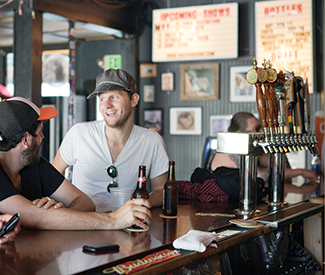
I’ve fallen in love many times at Thee Parkside. Okay, that’s a gross exaggeration. I’ve fallen into moderate, short-term infatuation many times at Thee Parkside.

For years it was home to Indie Mart, the DIY, rock-n-roll, block party Kelly Malone and Co. used to throw. Scores of local artist and designers would set up booths along Wisconsin Street, selling all the strange and beautiful things they created, while grimy-looking bands played ear-splitting music inside.

The parade of manic pixie dream girls was unnerving. They had no real place in society and only belonged as unblemished ideals in my mind. Some would float into town for the weekend and set up shop, only to disappear as soon as Indie Mart shut down. Others would flit from booth to booth, trying on each other’s wares and complimenting each other’s outfits. All of them pretty much sold the exact same shit, not that it mattered to me, they were all so lovely to look at and really only brought things to sell to each other anyway.

Thee Parkside is way more than just for day-long block parties full of whimsically dressed Amelies though. It’s a semi-legendary dive bar famed for it’s out-of-the-way location and its kick-ass live shows. Any night of the week you can see a variety of punk, metal, or country bands playing their hearts out on that tiny stage in that perfectly dingy barroom.

It’s also known for an awesome kitchen that manages to turn well-executed dishes like bahn mi and Cuban sandwiches into perfect bar food. If you haven’t been before, the Original Famous Twang Sundays are a great introduction to Thee Parkside life. Where else in The City can you hear country and bluegrass at an all-ages venue with a back patio for free? I think that’s what Sundays were invented for.

Despite these great things that happen at Thee Parkside, it’s still all those Indie Mart afternoons that most poignantly stick out in my mind. Maybe that’s just because, for many San Francisco’s doers and makers, Indie Mart was a place where we found a community of like-minded bad-asses. Dozens of people who were tinkering with wonderful things all throughout the Bay Area suddenly had a place to coalesce, sharing and selling what they made.

Sculptors, screen printers, and jewelry designers, set up shop next to each other while vintage clothes were hawked down the way and carpenters displayed their crafts. People who may never have encountered each other otherwise, were now meeting and forging relationships that would lead to marriages, babies, collaborations, and successful businesses. A diaspora of creative people now had a base and a community and a way to show the world what they were up to. It was honestly and truly, with all earnestness, magical. And Thee Parkside allowed that to happen.

Like all great scenes, Indie Mart came and left just like a goddamn fireball. One day it jumped from being a small thing in Kelly Malone’s backyard to a block party at Thee Parkside. It burned hot and heavy for a few years, and then suddenly it was done. But what it left in its wake was a slew of creators who now had the confidence and contacts to make a business out of what was previously just a hobby. And of course Thee Parkside is still around too.

Every time I pass by, I think, maybe I should get some people together and throw one more big block party for old times sake. And then I say nah, and stop in for a Cuban sandwich and a cheap drink instead.

Stuart Schuffman aka Broke-Ass Stuart, is a travel writer, poet, and TV host. You can find his online shenanigans at www.brokeassstuart.com

Neighborhood papers tell the story of SF

1


By Jessica Lipsky

news@sfbg.com

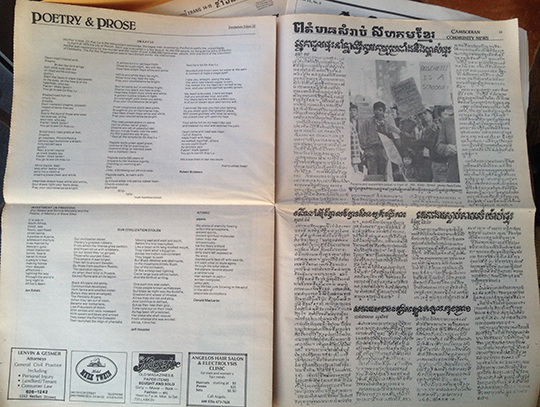
Before many San Francisco residents traded their newspaper subscriptions for Internet media, a dozen monthly papers covered the beat of the city’s distinct neighborhoods. Nine of these papers, whose heyday came with radical changes in the ’70s and ’80s, are being digitally archived by local historical organization Found SF.

“The papers all have their own personalities,” said Found SF organizer LisaRuth Elliott. “You get a sense of even how those change over time too, whether it’s a hard hitting article or it’s talking about the evolution of how the street businesses changed in Noe Valley. Archiving these papers opens up the gates for all the stuff we don’t know, and that you want to find out about, in San Francisco.”

Over the course of six months, Found SF volunteers will archive two decades’ worth of content from papers published throughout the city — the Noe Valley Voice, Tenderloin Times, Visitation Valley Grapevine, Richmond ReView, Potrero View, the New Fillmore, El Tecolote, North Mission News, and the Glen Park Perspective — in partnership with the Internet Archive and San Francisco Public Library. Since beginning the project in January, Found SF has scanned over 200 issues and tagged each with searchable keywords.


BILINGUAL VOICES

While several of the papers have come and gone, the publication that inspired the project is still going strong. Born from 1968 riots at San Francisco State for relevant ethnic education, the Mission’s El Tecolote was founded in 1970 as a bilingual paper dedicated to social activism. The paper made great inroads in the mid-’70s fighting for equitable health services, such as a bilingual emergency phone system, while covering Latino arts and civil wars in Nicaragua and El Salvador.

“We started El Tecolote to fill the gap of the mainstream media, which wasn’t covering this neighborhood with any real consistency; if it did it was often times negative news,” founder Juan Gonzales said. “The mission was to really be a voice for the neighborhood and hopefully move the spirit of organizing ahead to make some social change.”

In addition to taking a hard line on local politics and immigrant issues, the archives document the evolution of San Francisco from various perspectives. Residents of lower-income neighborhoods were displaced, and many districts leveled, during urban renewal projects in the 1950s and 1960s, while a 1973-75 recession caused further damages. The resulting plight set the stage for journalism driven by demand for hyper-local coverage of LGBT and feminist rights, gentrification, and third-world issues.

“In the mid-’70s there was consciousness around neighborhoods as social centers and places where community organizing was happening,” Elliott said. “People are facing eviction, they’re protesting, there are these vigils happening, and people talking about gaining rights for long-term things. We’re still working with the legacy of some of the housing decisions [San Francisco] made around that time due to the activism,” she added, citing the Tenderloin Times’ advocacy for SROs in the face of hotel development west of Union Square.


RESILIENCE IN HARD TIMES

The New Fillmore — established in 1986 as the city became inflicted with crack and AIDS epidemics, just as Reaganism swept in — was at the heart of socioeconomic changes that transformed parts of San Francisco from what felt like a blue-collar town to an increasingly white-collar city. Approximately 30 blocks in the Fillmore and Western Addition were leveled and left vacant until the ’80s, and the monthly paper played an important role in chronicling the return of businesses to the once thriving neighborhood.

“We ended up with the worst of both worlds in the Fillmore,” said Thomas Reynolds, who took over publishing the New Fillmore in 2006. Redevelopment efforts initially provoked no organized public protest, he said, but later “generated a lot of activism. The New Fillmore managed to capture a lot of the change that was coming to the neighborhood, and a lot of the flavor and history of the neighborhood that was being lost.” The paper encouraged civic engagement through a regular architecture column that featured local homes and helped owners register their historic buildings.

Several papers served neighborhoods with large refugee and immigrant populations, many of whom didn’t speak or read English. The Tenderloin Times promoted social services and encouraged activism through coverage of Southeast Asian and local politics, while publishing simultaneously in English, Lao, Cambodian, and Vietnamese over its two-decade run. Others chronicled changes in demographics, including an influx of Chinese residents into Visitation Valley and a population shift in the Mission from predominately Chicano to more Central Americans.

The Noe Valley Voice also took an international turn when escaped Irish prisoner Liam Carl toured the U.S. to expose harsh conditions in British jails. Carl entered the country illegally and was housed in a Noe Valley home in the fall of 1980, telling the Voice, “If [prisoners] thought that perhaps there was a chance that they could be heard through less drastic measures … and maybe bring about some change without so many people having to die, perhaps I can save lives.”

While the newspapers often differed in their coverage, each featured complementary stories chronicling the 1989 Loma Prieta earthquake. Common features included how to check for damage, profiles on restaurants that fed the neighborhood or, as one Noe Valley Voice headline described the experience of meeting neighbors during a power outage: “We Could See the Stars.” Ahead of the 25th anniversary in October, Found SF has examples of quake coverage online.

“It makes me think that the city is comprised of all these little villages and it’s a little hard to say San Francisco has one direction, one value system,” Elliott said. “The papers show the wide variety of people who live in the city … but it’s all very much at a very personal level. They know each other. They’re telling stories about each other.”

For more information on the neighborhood newspaper archiving project, or to volunteer, visit foundsf.org.


Guardian Intelligence: May 21 – 27, 2014

0

P>Because nothing screams “invest in healthcare” like an aging Sammy Hagar: The former Van Halen rocker teamed up with Metallica’s James Hetfield, Green Day’s Billie Joe Armstrong, Train’s Pat Monahan, Nancy Wilson of Heart, and other rock ‘n roll veterans for a special one-time acoustic show at The Fillmore May 15, benefiting the Pediatric Cancer program at UCSF Benioff Children’s Hospital — what organizers were calling the first annual “Acoustic-4-A-Cure” show. That’s a lot of oversized egos for one stage, but hey, we can’t knock rockin’ for a good cause.


HAIL THE TRAIL

Celebrate the 25th anniversary of the San Francisco Bay Trail — still a work in progress, with 60 percent of the “ring around the Bay” having been completed — Sat/24, at a re-dedication of the Rosie the Riveter World War II National Historic Park visitor center in Richmond. The center houses exhibits dedicated to civilian efforts on the home front during World War II, embodied by the iconic female factory worker. The festive ceremony will be a vintage-themed affair, complete with WWII-era big band jazz, swing dancing, and a costume contest. And in a nod to our current century, the event will also unveil the first Bay Trail smartphone app. Let the summer hiking season begin! www.baytrail.org


PROP. 13 PRESSURE

Public policy group Evolve California sent out a survey to California candidates for public office, and discovered that a full 80 percent support reforming Prop. 13. The nearly four-decades-old law bases property taxes on purchase price, not current market value, and is often blamed for lost revenues that could go toward, say, rescuing California’s public education system from the dregs. The vast majority of hopefuls running for federal, state, and local office said they’d support reassessing commercial properties at market value, as long as small businesses, homeowners, and renters remain protected.


GUTS OF THE CITY

A daylong conference Sat/31 will expose curious participants to some of the lesser-known aspects of city life: The design and planning of public transit, water systems, wireless networks, and other kinds of urban infrastructure. MacroCity, to be held at the Brava Theater on 24th Street in the Mission, will feature talks on everything from San Francisco’s modern military ruins, to the city’s transportation history, to water systems feeding San Francisco. Visit themacrocity.com for more.


BISON: “YAWN”

One Bay to Breakers participant apparently heard the call of the wild, as the poncho-clad man was caught on video jumping into the Golden Gate Park bison paddock. Two officers arrested him in short order, and the SFPD Richmond station tweeted afterwards, “The bison seemed unimpressed.”


PORN DISCRIMINATION

San Francisco based porn star Eden Alexander was rushed to an emergency room after a near-fatal reaction to a common prescription drug. But when she tried using crowd-funding site Giveforward to cover the cost of her treatment, she was told by its payment operators, WePay, that her fundraiser would be cancelled because its terms state “you will not accept payments … in connection with pornographic items.” Alexander only sought funding for her medical costs.


MISSION: RUMBA

Dust off your feather headdress — it’s time yet again for Carnaval (Fri/23-Sun/25) when Harrison between 16th and 24th streets becomes one giant celebration of the music, dance, food, and art of Latin America. This year’s theme is “La Rumba de la Copa Mundial,” or a Celebration of the World Cup, which starts June 12 in Brazil. Sure, there’ll be plenty of drunken revelry, but this is also a great showcase of the deep-rooted Latino arts scene that’s holding on here, determinedly, even as the Mission changes: Look for the Arte Expo, featuring works from the Mexican Museum, Mission Cultural Center, Galleria de la Raza, Accion Latina, BRAVA, and Precita Eyes. The parade’s on Sun/25; see www.carnavalsanfrancisco.org to plan your route.


WANGIN’ IT

Insanely talented Chinese pianist Yuja Wang drops in on our SF Symphony once a year to tickle the ivories and steal a few hearts. Seriously: Her annual appearance here has become an event as eagerly anticipated as the return of the swallows to Capistrano or a sweet, light beating at the Folsom Street Fair. This time around (Thu/22-Sun/25, www.sfsymphony.org) she’ll be taking on Prokofiev’s magical, romping Piano Concerto No. 1 and Litolff’s whirling scherzo from Concerto Symphonique — a double treat for music lovers.


MEAT US SOON

We had doubts about 4505 Meats moving into the old Brother-in-Law BBQ #2 space on Divisadero — that hood moved upscale long ago, but a fancy BBQ in that particular space had the potential to be more sacrilegious than celebratory. Well, at least one local outlet is smitten: SFist has been drooling over 4505’s $18 “Big Mac” — “two beef patties lovingly caressing a block of fried macaroni and cheese” — and “famed bacon-studded hot dogs wrapped in macaroni and cheese and then deep fried.” We’ll let you know how all that goes down, once we can afford it!

An evening with Herbie Hancock and Nancy Pelosi at the SFJAZZ Gala

2

By Micah Dubreuil

If you were driving down Fell street last Friday, you might have come upon an unexpected detour. This would have been the block cordoned off for the first annual SFJAZZ Gala in their new facilities at 201 Franklin St. The building opened in January 2013, and in addition to featuring near-perfect acoustics in the main auditorium — arguably the best on the West Coast for jazz — it provides a sophisticated space for a social and fundraising event such as this one.

The Gala was officially honoring pianist and composer Herbie Hancock, and featured performances by Hancock himself in addition to the SFJAZZ Collective, Booker T., Charles Bradley and his Extraordinaires, Terrance Brewer, the SFJAZZ High School All-Stars, and a number of special guests. Standout performances were delivered by Avishai Cohen and Warren Wolf of the SFJAZZ Collective, in particular. And then of course there was Charles Bradley, whose emotional commitment is so thorough that he seems always to be on the verge of tears. Seeing Hammond Organ master Booker T. in a room as small as the Joe Henderson Lab was also a rare and unique experience.

cb
Charles Bradley. All photos by Scott Chernis, courtesy of SFJAZZ.

The High School All-Stars played exceptionally well, highlighted by an inspired arrangement of Hancock’s “Eye of the Hurricane.” It must have been no simple feat for the teenagers (particularly the pianists) to perform mere feet from the legendary Hancock, but they acquitted themselves with distinction. It’d be easy to take the profoundly high level of youth musical achievement in the Bay Area for granted, if not for events like these reminding us that, you know, actual programs drive these accomplishments — programs like the SFJAZZ ensemble, the Berkeley High jazz program, the California Jazz Conservatory (formerly known as the Jazz School) and a number of others — and those programs take passion, effort, and funding. All told, their sweeping institutional support of this music is a remarkable achievement in its own right.

high school
The SFJAZZ High School All Stars, with Paula West

Presenting the SFJAZZ Lifetime Achievement award to Hancock was saxophonist and composer Wayne Shorter, who was himself honored in 2008. After receiving the award, Hancock performed a solo interpretation of Shorter’s classic “Footprints,” which was followed by a SFJAZZ arrangement of the same tune. If I had one criticism, the night’s overall programming was extremely safe, featuring nearly all well-traveled (but beautiful) standards by Hancock (and one by Shorter), including Maiden Voyage, Watermelon Man, and Actual Proof. The only deep cut, as it were, was “And What If I Don’t” from Hancock’s 1963 release, My Point of View, performed by the SFJAZZ Collective. However, the programming reflected the nature of the event: A fundraiser aimed at gaining financial support from perhaps a broader audience than merely hardcore jazz fans — though, to be sure, plenty of those were also in attendance.

When the tally was in, SFJAZZ raised over $1.4 million for its educational and artistic programs, which is roughly in line with previous fundraisers. The event reflected this level of ambition, with a red carpet entrance and deliciously decadent food from local and national culinary artisans: Oysters from Tomales Bay, bacon-wrapped mochi, heirloom tomatoes topped with white chocolate. The statuesque models flanking the front doors with platters of champagne might have been a bit much, but otherwise the event was classy and dignified, with a crowd (which included House Minority Leader Nancy Pelosi) dressed to impress; the invitation has read “black tie optional.” Master of ceremonies Robert Townsend, who directed Eddie Murphy’s stand-up film Raw (among other achievements) was jocular, jovial, and energetic. Even his (undeniably offensive) parody of sign-language interpreters received hearty laughter from the mostly-full auditorium.

booker
Booker T. Jones

Watching Shorter and Hancock sit by the side of the stage, it was hard not to reflect on their 50-year history of close collaboration and friendship. Jazz is obviously a major cultural institution, now propelled by organizations such as SFJAZZ, but for decades it was driven primarily by the passion and fearlessness of musicians like Hancock and Shorter. Their personal achievements are nothing short of colossal, and jazz itself would not be what it is today without them. In his acceptance speech, though, Hancock intoned that the jazz spirit “was all about we,” not the individual. He complimented hishosts for continuing those values: “SFJAZZ is all about sharing.” Here’s hoping the coming years keep allowing them to do just that.

Thick as blood: Sibling duo Broods are the next kiwis on the rise

1

“Kiwis tend to hold back and be too humble. They don’t want to be over-confident, but I think people are starting to realize that a little bit of confidence can go quite well,” says Caleb Nott, the elder brother of the sibling sensation from New Zealand known as Broods. He sits comfortably next to his sister, Georgia, in the back of The Independent, several hours before their show.

The brother-sister electro-pop duo didn’t get that confidence until the release of their first single, “Bridges,” on SoundCloud, created waves on the world wide interwebs last October. “Bridges” became a hit in the blogosphere and in this hemisphere alike, earning over 200,000 streams in a week.

“It all happened at once,” says 19-year-old Georgia. The singer has an innocent face, giving her the appearance of a much younger teenager. “We went from nobody really knowing us to people on the other side of the world wanting to meet us.”

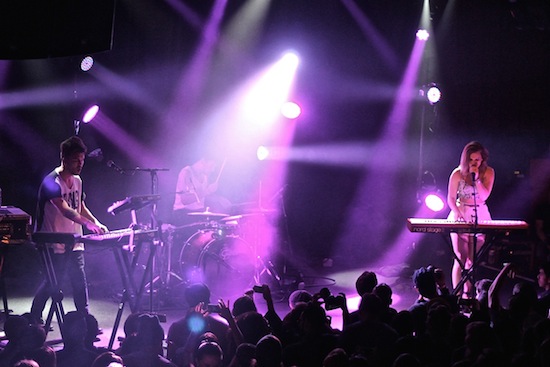
Later that night, the band starts the night off with “Never Gonna Change,” a deep-synth track with correspondingly morose lyrics. “You’re pushing down on my shoulders, and emptying my lungs,” sings Georgia, lyrics reminiscent of a certain internationally-acclaimed Kiwi. Georgia moves slowly around the stage while Caleb creates layered synths and hypnotic beats. The two remain relatively reserved both on stage and in private. Georgia’s voice is sweet and breathy to the likes of Imogen Heap and Romy Madley Croft of The XX. Caleb brings more energy during the upbeat tracks, bouncing up and down behind his keyboard while Georgia skips around stage in a printed corset crop top and white billowy shorts.

broods

Georgia, a self-proclaimed depressing music lover (“I love sad songs,”) falls deeply into “Taking You There,” a personal favorite and one of the strongest songs from the self-titled EP. Caleb gently strums an acoustic guitar and offers deep vocals to accompany his sisters’ silvery, dream-like hums. The audience moves to the soft beat and sings along. Most of the audience knows the words to every song on Broods’ EP, which the siblings admit to still be adjusting to.

“Seeing people wearing our T-shirts in the crowd,” says Caleb before the show. “That’s so weird and crazy, you’ve got my face on your T-shirt.”

Since October, Broods — the name obviously referring to the band members’ blood relation but also the melancholic nature of their songs — has played two US tours, spent a brief stint touring with Haim, and is scheduled as the opening act for Ellie Goulding’s Australia/New Zealand tour this summer.

“Over the last couple of years, people have started to look over to Auckland and to New Zealand as a whole for new music.” Caleb explains. From LadyHawke, to The Naked and Famous, Lorde and now Broods, the New Zealand music scene is a treasure trove of indie talent. Caleb says the music scene remains relatively tight-knit where everyone supports each other in their own music genre but doesn’t reach out beyond, reminiscent to a private high-school. “It’s pretty cliquey, because it’s very small.”

“This one’s for Lorde,” says Georgia in between songs. She dives into the gentle lullaby “Sleep Baby Sleep.” The mesmerizing beat and soft vocals is characteristic of Lorde’s debut album.

The band is clearly following in her footsteps, from the grassroots release of the Broods EP, to the dark coming-of-age tones, to the producer who discovered them. Joel Little found Caleb and Georgia while a judge for a music competition in 2011 but the band wasn’t formed until early 2013 in Auckland. After producing Lorde’s Grammy Award-winning debut album, Joel Little began work on “Bridges.”

broods

Broods closes the show with its first single, “Bridges,” a moody track about broken relationships. Georgia starts out with muted piano chords and an ethereal voice that builds into Caleb’s rich synth soundscape. Georgia’s voice is exceptionally developed for her age. She plays a soft version of a song from their upcoming album. She’s most comfortable behind the piano, her instrument of choice. “And I’m trying hard to make you love me, but I don’t wanna try too hard,” she sings moodily about falling in love with the perfect man.

Broods has played in San Francisco twice now but has yet to play a show in New Zealand. The siblings will head home next week to work on their debut album with Joel Little. Then, they will play their first proper show in their hometown of Nelson with their 17-year-old sister, who is set to open with her folk band. Clearly, talent runs in the family.

Fast food workers strike in the Bay Area and worldwide

0

Bay Area fast food workers who walked out and picketed their stores last year are set for a repeat performance in their battle against the house that Big Mac built, timed to debut right as the Guardian hits the streets. And this strike is also set to expand.

On May 15, fast food workers worldwide plan to rise up in protest of unfair labor practices and punitive actions by their bosses. Fast food workers in the Bay Area will be joining the strike. Labor sources tell us their numbers may double thanks to new workers joining the movement in Pleasanton, Livermore, and Oakland.

The new Oakland march is twofold: One will picket a McDonald’s on East 12th Street, and another a McDonald’s on 14th and Jackson.

“I haven’t had a raise in three years,” a McDonald’s worker who identified herself as Markeisha told us just after she went out on strike from an Oakland McDonald’s in December. And contrary to the common narrative of fast food workers being independent teenagers, Markeisha said she has two children, and she is their sole provider.

Another common misconception is that workers are merely fighting for higher wages. Although raises are among their needs, fast food workers also contend they are a vulnerable workforce. Wage theft, low salaries, slashed hours, and punitive measures for speaking out are among the grievances fast food workers allege against their bosses at chains including McDonalds, Burger King, and Taco Bell.

“One thing we found when talking to fast food workers was wage theft issues were high,” Service Employees International Union Local 1021 Political Director Chris Daly told the Guardian. “When you’re making $8-11 an hour, a couple shifts can be the difference between paying the rent or not.”

Workers we talked to at the last strike alleged their jobs at McDonald’s and Kentucky Fried Chicken paid so low they had to also enroll in CalFresh (food stamps) to afford food. That sort of government subsidy for big business puts a strain on the taxpayer, former Labor Secretary and current UC Berkeley professor Robert Reich noted on his blog.

McDonalds alleges last year’s actions were strikes-in-name-only. “To right-size the headlines, however, the events taking place are not strikes. Outside groups are traveling to McDonald’s and other outlets to stage rallies,” McDonald’s wrote in a press statement.

Counter to the corporate narrative, the Bay Guardian witnessed multiple Oakland McDonalds workers joining picket lines (captured on video: “Oakland joins 100 cities in national strike,” Dec. 5,www.sfbg.com).

The next Fast Food Strike will have a world focus. Earlier this month, Salon.com reported the strike will reach cities including Karachi, Casablanca, London, Bangkok, Buenos Aires, Geneva and San Salvador.

“The fast food organizing across the country speaks to how this issue is capturing not just the public imagination,” Daly told us, “but speaking to low-wage workers realities to struggling simply to live.” 

Bimbo’s 365 club

0

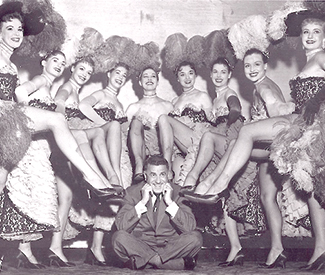
When Agostino “Bimbo” Giuntoli first arrived in San Francisco from Italy in 1922, the 19-year-old found work as a janitor and then as a cook at the swanky Palace Hotel. He likely didn’t think that, within 10 years, he’d be running one of the hottest Prohibition-era speakeasies in the city — where well-heeled guests came to drink, gamble, and watch a young Rita Hayworth dance in the chorus line. Even tougher to believe, most likely, would be the fact that his club is still in business, and run by his family, nearly 85 years later.

Bimbo’s 365, named for its owner (whose nickname was born of a boss not knowing how to pronounce Italian) and its original address on Market Street, is one of a dwindling number of family-owned businesses in San Francisco — and at a time when other historic venues like Café du Nord are shuttering or getting a yuppified overhaul, Bimbo’s seems (knock on wood) to be going strong.

“We work really hard, and we’re very fortunate to be where we are,” says Michael Cerchiai, who reopened the club as a live venue in 1988 after nearly two decades of it being available only as a rental for private parties. Soon after, Bimbo’s served as a hub for the burgeoning swing revival of the ’90s and the growing acid jazz scene. Erykah Badu played there on her first national tour, as did Fiona Apple; the last time George Clinton and the P-Funk All-Stars came through, Stevie Wonder showed up unannounced and sang too.

“We’re a tight-knit Italian family, so it’s a lot of tough love. We get things off our chest, and I think sometimes you can’t do that when it’s not a family-run business,” says Cerchiai, who recalls going to shows with his siblings when they were small children — back when the club was black-tie only. “We had a Felix [tuxedo rental] down the street, so we’d get dressed up and check out the show, and that was a way to see our grandfather and our dad.”

Michael’s brother Gino, and their father, Graziano Cerchiai (Mr. Bimbo’s 83-year-old son-in-law), are three of the seven staff members running the present-day Bimbo’s — whose stage has most recently seen Nicki Bluhm and the Gramblers, Flaming Lips, and the White Stripes, among others.

Says Cerchiai, “Having grown up here, loving music, it’s just gratifying to see people coming out, enjoying a show, and having a good time.”

1025 Columbus Ave, SF

(415) 474-0365

bimbos365club.com

Gimme 5: Must-see shows this week

0

Is it hot in here, or is it just — sorry, no, that’s all of San Francisco, doing that delightfully freakish 85-degree Actual Summer thing while the East Coast is still clawing its frost-bitten way out of the 60s.

In addition to skipping work to drink margaritas on patios and texting your Boston-based friends pictures of your feet on the beach just to be a dick, there are quite a few rad, summery shows going on this week — so make some new cut-offs, fill up your water bottle, and go get sweaty with some strangers. Try not to get into any fights in elevators. And enjoy it while it lasts! By June we’ll all be wearing hoodies again.

THU/15

Cool Ghouls

SF’s own Cool Ghouls make some of the most unpretentiously happy, jangly, beach-brat garage pop you’ve ever heard; they’ve been on many a “why-aren’t-they-bigger-yet” list for a while now. Last year’s self-titled debut was a pretty perfect drive-down-the-coast soundtrack, and the dudes say their second full-length is in the works — chances are there’ll be some new stuff to hear at this Chapel show, which is the first of a few local dates this summer before they head down to Monterey in August to support Beck, The National, Best Coast, et. al. at the First City Festival on August 23. — Emma Silvers
With Mr. Elevator & the Brain Hotel and Mane
8pm, $12
The Chapel
777 Valencia, SF
www.thechapelsf.com

Anti-Nowhere League and T.S.O.L.

British hardcore punk stalwarts the Anti-Nowhere League have made a name for themselves over the past three decades with an unabashedly aggressive and in-your-face approach, as evidenced by their signature songs “I Hate People” and the profanity-laced “So What” — the latter was even notoriously covered by Metallica. In a perfect pairing, Southern California punk icons T.S.O.L (True Sounds of Liberty), who became infamous for the police riots that would break out at their shows, and the tune “Code Blue,” an ode to the joys of necrophilia, join the bill for what promises to be one hell of show. — Sean McCourt
With The Riverboat Gamblers and Dime Runner
9pm, $18-$20
DNA Lounge
375 11th St, SF
(415) 626-1409
www.dnalounge.com

FRI/16

Zion I

Last time Zion I was at the Independent was for a guest appearance during the venue’s 10th anniversary celebration, but this time, the stage will be all theirs. Baba Zumbi and AmpLive of Zion I have been making music together for over 15 years. AmpLive brings the electronic dance beats that vacillate between reggae and drum ’n’ bass, while Zumbi carries the vocals with socially conscious lyrics. Originally formed in Atlanta, the Berkeley-based duo creates a  sound that’s difficult to define — neither West Coast hip-hop, nor East Coast rap, the band’s musical influences remains deeply engrained in songs that deliver messages of unity and hope. — Laura B. Childs
9pm, $25
The Independent
628 Divisadero, SF
(415) 771-1421
www.theindependentsf.com

SAT/17

A Minor Forest

One of the best-loved melodic math-rock bands of the ’90s, San Francisco’s A Minor Forest probably made lots of fans pee their pants last year when they announced their reunion. Then came the re-issue of two iconic albums, Flemish Altruism and Inindependence, for Record Store Day. And then, just for good measure, a national tour. They’ll be coming home this week, and a hometown show to close out a tour is always a fun one — they’ll be tired, sure, but they’ll be happy to see us. Bonus: You can go give Andee, the drummer and co-owner of Aquarius Records, an in-person review of the show at his Valencia Street record store. Maybe just give him a day or two to catch up on work. — Emma Silvers
With Phil Manley’s Life Coach, Golden Void
8pm, $15
The Chapel
777 Valencia, SF
www.thechapelsf.com

SUN/18

Iggy Azalea

First things first, she’s the realest. The Australian beauty and hip-hop performer, Iggy Azalea, has been making waves in this hemisphere since her Clueless-inspired music video for her hit single “Fancy.” With sassy raps and catchy hooks about the glam life, Azalea’s sound is reminiscent of the “it” girls of the early 2000s. Think Gwen Stefani’s vocals and Lil’ Kim’s beats, but this former model adds personal flair with her zero-fucks-given charisma and unabashed obsession with America. She’s opened for household names such as Beyoncé and Rita Ora, but since the release of her debut album, The New Classic, Azalea is on the prowl with her Monster Energy Outbreak Tour. — Childs
8pm, $35
The Fillmore
1805 Geary, SF
(415) 346-6000
www.thefillmore.com

https://www.youtube.com/watch?v=_v-eyAUPS6g

Burning mouse

0

arts@sfbg.com

THEATER Mike Daisey is a talker. He can talk about a lot of things. Hell, he can talk for 24 hours straight (and did in All the Hours in the Day at Portland’s TBA Festival in 2011). This gift of gab has brought him acclaim as an artist in the theater, where he’s known as an eminent monologist of the desk-bound Spalding Gray school. In one case, it’s even brought him public scandal, to wit, NPR’s 2012 call-out regarding fabricated bits in The Agony and the Ecstasy of Steve Jobs — an experience Daisey says has made him not only “wiser” but “a better storyteller.”

But Daisey doesn’t tell stories for the sake of talking alone. He chases after questions that intrigue him, and these, more than his comically barbed but affable stage persona, make his stories worth listening to. Occupying a fertile middle ground between high concept and low humor, his self-referential yarns confront issues he sees as central to how we live and — in a related, no less passionate way — to how the theater lives and dies in American culture. He directly essayed this latter theme in his 2008 show, How Theater Failed America, but it remains a lively concern, as he suggests below.

His latest, American Utopias, makes its Bay Area debut at Yerba Buena Center for the Arts this weekend. Following the format he has been honing since the late 1990s, Daisey uses a few notes written on loose sheets of paper to re-create afresh each night a set of three intertwining stories about Disney World, Burning Man, and Occupy Wall Street, following all three down their respective rabbit holes to glean what, individually and cumulatively, they might teach us about ourselves.

SF Bay Guardian You grew up in a really remote corner of the country. When you consider what brought you to where you’re at now, how much of that do you attribute to this background?

Mike Daisey I grew up in a place called Fort Kent, Maine, which is on the Canadian border. It’s actually the end of US Route 1, which begins in Key West. To me, psychically, it always feels like this must be the most remote place possible because every piece of mythology about roads is that sort of Tolkien idea, “The road goes ever on!” Whereas I was like, “No, it doesn’t actually. It ends. Right here. This must be the furthest place from everything.” It’s a very interesting area, the St. John Valley, around the St. John River. The people are predominately French Canadian. It’s a very different place from what I’ve come to recognize as the rest of America.

I do think that there’s a storytelling tradition that grows up in Maine, that exists there, that informs the work I do now. I think partly it’s informed by years of speech and debate at a very tender age. I think it’s informed by a couple of years of playing Dungeons & Dragons at a formative time. And, layered on top of all of that, was a very earnest desire to discover a form that would allow me to create theatrical experiences that were new in the moment that they were spoken. I was really dedicated to that proposition, that there could be a form of theater that lives in the moment that it’s spoken, both for the performer and the audience. I was looking for a form that would allow both there to be rigor and precision in the structure, but at the same time allow true spontaneity, and allow discoveries to happen in the moment that could not be anticipated.

That’s what I love about the monologues, about all storytelling. I often think of jazz when I’m trying to explain it to people. In the Western tradition, it is hard for people to understand how it is that something is composed without being written. We’ve all become so mired in the tyranny of the written word that we actually come to believe that the act of writing is the act of thinking. The spoken work is actually closer to the thought; it’s a more primal form than the form that writing takes. We forget that. So it’s hard to explain to people sometimes how something [spontaneous] can have form and precision and texture and depth. People often want to know, “How long did you work on this monologue?” And there really is no right answer to give, except the one that the jazz legends often give, which is to say, my whole life.

SFBG Do you think that that fascination with the research and work that goes into a piece is part of the way art gets commercialized, packaged as discrete products?

MD Yeah, I think that’s true. You know, I just went to Cuba. I was in Havana for about two weeks. I’m working on what’s going to be a separate piece, from the show that I’m bringing to Yerba Buena, about the commodification of art. When art transforms into a good. As soon as it does, as soon as it enters that market place, we really want to know its provenance; we want to know that this piece was not just tossed off by the artist. We want to know that the artist was thinking about something, or dreaming about something. We want to know that the piece we’re holding is a piece of the artist’s greatness and is an important piece at that. A lot of what it’s about is really acquisitive in nature.

That’s one of the reasons my going to Cuba was so fascinating. Being in a culture where a ballet dancer is paid the same amount that a surgeon is paid is really fascinating for what it does to cultural priorities. I’m not even saying that we all should pay surgeons the same amount as ballet dancers. But coming from my own culture, which I think is anti-art — I think it’s heavily tilted against art because of a real grain of Puritanism that runs through the center of the American character — it’s really fascinating to think about different ways that lives could be lived. Watch me: I’m slowly dovetailing! That connects to American Utopias in a really direct way. A lot of that monologue is about the effort to imagine a different way of life.

SFBG Where does theater figure in that imagining?

MD Theater really needs to make more radical shifts if it wants to take back some ground in the cultural conversation. Not necessarily in a traditional way, opening large movies that everyone’s talking about, but in a quieter way. I feel like theater sometimes suffers from being neither fish nor fowl. I’m often struck by the difference between a play [that’s considered a success] with 400, 500 performances. But those numbers don’t compare to millions of page views on YouTube.

At the same time, there’s another unique number, which is one, like when I create a show that’s for one night only and only happens once. There’s uniqueness to that, which the American theater also has a hard time [working] with because the form involves playwrights and rehearsals — we have a hard time doing the unique event. So instead we have this weird compromise, where we create this unique event but we then do this unique event 23 times. There’s this very odd middle ground. I often feel a correspondence between those numbers: like a run of 23 or 31 performances and page views of seldom-visited pages on the Internet. It’s really hard to thrive when you’re not doing something that’s singular each time and, at the same time, you’re not doing something that’s digital and ubiquitous and anyone can watch anywhere.

I just wish theater would grapple with one world or the other. I feel sometimes like the theater is a little bit its own version of The Glass Menagerie. It’s ignoring the war, everything that’s going on outside, like Tom talks about in his opening monologue of that beautiful play. But then the whole play is in this apartment, in this world where everyone’s dreams become sort of curdled and small. I sometimes feel like we really need to break out of the apartment. We all need to be like Tom and we need to hit the road.

SFBG Given it has three very different strands to it, what is American Utopias ultimately about?

MD American Utopias is about how we create spaces. But not just in the traditional architectural terms, but how we create them socially. So it’s an examination of three very different types of spaces. In each case, the members of the community that have made that space think of it as a kind of utopia. They see it as a reflection of a more perfect world. In many cases they wish they could live there more of the time but they know it’s not possible. I have preferences among the three to some extent but, on the other hand, none of the three are really my utopia. As a consequence, my role, I feel, is to talk about the connections between them. What really interests me are the anthropological systems, how humans organize themselves and how we share dreams. That interests me a lot. *

AMERICAN UTOPIAS

Fri/16-Sat/17, 7:30pm, $30-$35

Yerba Buena Center for the Arts Theater

700 Howard, SF

www.ybca.org


Rep Clock: May 14 – 20, 2014

0

Schedules are for Wed/14-Tue/20 except where noted. Director and year are given when available. Double and triple features marked with a •. All times pm unless otherwise specified.

ARTISTS’ TELEVISION ACCESS 992 Valencia, SF; www.atasite.org. $6-10. Films by SF State University’s experimental documentary class, Thu, 7:30. “Other Cinema,” contemporary sound and video art works by Derek G, Tommy Becker, and others, Sat, 8:30.

BALBOA THEATRE 3630 Balboa, SF; cinemasf.com/balboa. $7.50-10. “Popcorn Palace:” Wallace and Gromit: The Curse of the Were-Rabbit (Box and Park, 2005), Sat, 10am. Matinee for kids.

CASTRO 429 Castro, SF; (415) 621-6120, www.castrotheatre.com. $8.50-11. “KQED presents: An Evening with Ken Burns:” The Roosevelts: An Intimate History (Burns, 2014), Wed, 7:30. Sneak preview of new miniseries to air in September on PBS; this event, $20-25 at www.cityboxoffice.com. •Drugstore Cowboy (Van Sant, 1989), Thu, 7, and Trainspotting (Boyle, 1996), Thu, 8:55. “Epidemic Film Festival,” works by Academy of Art University students, with a speech by cinematographer Rodrigo Prieto, Fri, 4-8. •Raiders of the Lost Ark (Spielberg, 1981), Sat, 2:30, 7, and Romancing the Stone (Zemeckis, 1984), Sat, 4:45, 9:15. •A Streetcar Named Desire (Kazan, 1951), Sun, 2:15, 7, and Who’s Afraid of Virginia Woolf? (Nichols, 1966), Sun, 4:35, 9:15.

CHRISTOPHER B. SMITH RAFAEL FILM CENTER 1118 Fourth St, San Rafael; (415) 454-1222, www.cafilm.org. $6.50-$10.75. Palo Alto (Coppola, 2013), May 16-22, call for times. “Mark Cantor Presents Jazz at the Movies,” Sun, 6. This event, $15-25.

CITY COLLEGE OF SAN FRANCISCO Diego Rivera Theatre, 50 Phelan, SF; www.ccsf.edu. Free. “CCSF City Shorts Student Film Festival,” Thu, 7.

CLAY 2261 Fillmore, SF; www.landmarktheatres.com. $10. “Midnight Movies:” Dirty Harry (Siegel, 1971), Sat, midnight.

“HIMALAYAN FILM FESTIVAL” Ninth Street Independent Film Center, 145 Ninth St, Suite 250, SF; and Himalayan Fair Grounds, Live Oak Theater, 1301 Shattuck, Berk; www.himalayanfilmfest.com. $10-20 (festival pass, $40). Documentary and narrative films from Nepal, Bhutan, and Tibet. Fri-Sat.

MECHANICS’ INSTITUTE 57 Post, SF; milibrary.org/events. $10. “CinemaLit Film Series: Comedy Tonight:” Stir Crazy (Poitier, 1980), Fri, 6.

ROXIE 3117 and 3125 16th St, SF; (415) 863-1087, www.roxie.com. $6.50-11. Documented: A Film By An Undocumented American (Vargas, 2013), May 15-21, 7, 9. Director Jose Vargas in person at Thu-Fri shows. NOW: In the Wings on the World Stage (Whelehan, 2014), Wed-Thu, 7, 9. “I Wake Up Dreaming 2014: Dark Treasures from the Warner Archive:” •Stranger on the Third Floor (Ingster, 1940), Fri, 6:30, 9:30, and The Unsuspected (Curtiz, 1947), Fri, 8; •Love is a Racket (Wellman, 1932), Sat, 2, and Ladies They Talk About (Bretherton and Keighley, 1933), Sat, 3:30; •Nora Prentiss (Sherman, 1947), Sat, 7:30, and The Unfaithful (Sherman, 1947), Sat, 5:15, 9:45; •Angels in Disguise (Yarbrough, 1948), Sun, 2, and Fall Guy (Le Borg, 1947), Sun, 3:15, and When Strangers Marry (Castle, 1944), Sun, 4:30; •The Window (Tetzlaff, 1949), Sun, 6:30, 9:45, and The Locket (Brahm, 1946), Sun, 8; •Two Seconds (Le Roy, 1932), Mon, 6:30, 9:40, and 20,000 Years in Sing Sing (Curtiz, 1932), Mon, 8; •A Woman’s Secret (Ray, 1949), Tue, 6:15, 9:45, and Tomorrow is Another Day (Feist, 1951), Tue, 8.

YERBA BUENA CENTER FOR THE ARTS 701 Mission, SF; www.ybca.org. $8-10. “Astonishing Animation: The Films of Hayao Miyazaki and Studio Ghibli:” Pom Poko (Takahata, 1994), Thu, 7:30 and Sat, 5; Castle in the Sky (Miyazaki, 1986), Sat, 7:30 and Sun, 3; My Neighbor Totoro (Miyazaki, 1988), Sun, 1. *


Sisterhood of rhythm

0

arts@sfbg.com

DANCE The Mother’s Day weekend premiere of Sarah Bush Dance Project’s reconceived 2011 Rocked by Women was a tenderly raucous, often humorous celebration of an overly sentimentalized holiday. Bush looks at the education of a “girlchild” in the “not-so-promised land” by paying tribute to the mothers who raised us physically. But it was pioneer “mothers” — the feminists of the 1970s, the lesbian activists of many decades, artists and entrepreneurs like Olivia Records and Club Q — who made us the women we have become. Their legacy, Bush realized, was in danger of being forgotten by the current generation of women for whom the battles had been fought. Molded into a convincing piece of dance theater, Rocked by Women is a joyous and self-effacing acknowledgement of prices paid and gains won.

Just as music energized the civil rights movement of the 1960s, feminism in its earlier and later stages drew inspiration from talented musicians who started the women’s music movement. Bush drew on that rich heritage and shaped Rocked‘s three parts around contributions from two generations of songwriters such as Holly Near, Cris Williams, and k.d. lang, as well as Janet Jackson, Tracy Chapman, Missy Elliott, and Bikini Kill. Julie Wolf also contributed music arrangements and wrote original songs.

Rocked derives its impressive energy as much from music as from dance. Yet Natalie Aceves, Krystal Bates, Joanna Gartner, Bianca Mendoza, Juliann Witt, and Bush performed with an intuitive grace, passion, and an almost delirious delight at the choreography’s lush physicality. Much like works by Dance Brigade (Bush’s home company), Rocked contains personal material that also feels universal, speaking to those who don’t fit into given norms, and who have had to struggle to become who they are meant to be. Using contact improv, disco, jazz, and hip-hop in an almost narrative way, the individual dances comment on the songs but do so from a distance. At its best, Rocked became a weighty yet explosive expression of the power of an indomitable spirit and embracing courage.

The show opened and closed with Near’s iconic “Mountain Song.” At first, a trio of kicking “babies” are cuddled by their mothers. It ends with the dancers facing the audience in a sing-along about the unstoppability of women who refuse to have “their dreams taken away.”

Each of the work’s movements explored a different aspect of growing up. In “Her Childhood,” the dancers engaged in circle games and playfully sculpted a mountain from their bodies. One of them triumphantly climbed it. They also donned masks cut from fashion magazines and tugged and pushed their bodies in an attempt to reshape them. Here, ballet’s preoccupation with perfection came in for a kick or two. The choreography had a sense of humor but you couldn’t miss the underlying pain and rage.

The emergence of a young girl’s sexual identity permeated the whole piece and resulted in a number of awkwardly tender duets. In one, the group’s smallest dancers, Mendoza and Bates, discover each other’s differences: Mendoza is Latina, Bates African American. Second movement “Her Adolescence” brings group pressures and rejections, driving and exploring of sexual identity; the choreography veered between plaintive and painfully funny. With Jackson’s “Control” providing the beat, the ensemble performed impressive unison hip-hop that opened into individually athletic feats. It was followed by a dancing-with-“boys” number as an awkward, one-sided groping session. In “Gossip,” teens entangled themselves in yards and yards of telephone lines. For Chapman’s “Fast Car,” they built themselves into a monster automobile that, predictably, crashed, leaving Mendoza stunned and bereft. In an achingly lovely courting duet, Mendoza gently reaches towards Aceves who keeps turning away.

The third movement — “Herself” — opened with a video of the Michigan Womyn’s Music Festival and rather unfocused dancing on stage. The pace picked up with mock taiko drumming to recorded drum. Another playfully confrontational scene involved a boom box, one set of headphones, and Mendoza and Aceves’ different musical tastes. They come to a meeting of minds and take it from there.

The tribute to Club Q, as both a sanctuary for lesbians and a place for fierce dancing, is wonderfully evoked by Bush’s own fierce dancers. It ends in dreamy slow dancing duet for Witt and Bates. Choreographing anger is not easy. When Bush interrupted the lovers, her danced fury felt like an arrow shooting straight at them.

While Rocked‘s documentary clips are convincingly integrated into the stage action, earlier uses of video — shadowy images, dancers sitting as if in lecture by Judy Grahn, crawling from beneath the screen — are not telling enough. That needs rethinking. But Rocked is a warm, skillfully created, and generous show that just might become a Mother’s Day tradition. * sarahbushdance.com/rocked-by-women

Getting the Kink out

2

joe@sfbg.com

The spotlights shone down, the athletes tussled, and the crowd screamed.

The toned and tattooed female wrestler tackled the topless, tanned, blond wrestler from behind, pulling her down like a tumbling tower. The mat thumped. Cheers erupted. In a sudden reversal, the tanned wrestler gained leverage with her right arm and slammed the tattooed fighter’s shoulders onto the mat, giving the blond the win.

What happened next was definitely not standard wrestling fare.

The tanned wrestler, triumphant, digitally penetrated the tattooed fighter. Her moans silenced the crowd, who listened, rapt. The fight wasn’t sport, but porn, America’s real favorite pasttime. Ultimate Surrender is just one of San Francisco-based studio Kink.com’s 30 or so paid subscription porn websites, including Fucking Machines, Everything Butt, and Hogtied.

But a new series of proposed state laws threatens the state’s porn industry, and the freakiest city on the West Coast may soon say goodbye to its highest profile porn purveyor, Kink.com, which for years has operated out of the historic Armory building on 14th and Mission streets.

The situation raises a question: Is Kink.com breaking up with San Francisco? If legislation requiring condoms on-set in porn and stricter state safety requirements become law, Kink.com CEO Peter Acworth tells the Guardian he has no choice but to leave California entirely.

“We can’t do business under those circumstances,” Acworth told us. “We can’t make a product that can compete.”

The tussle between pornographers, porn actors, and state lawmakers is a crucible where worker safety — and the right to choose how that safety is implemented — may soon be decided. Caught in the crossfire, freaky and sex-positive San Francisco stands to get a whole lot less kinky.


ECHOES OF LOS ANGELES

California Assembly Bill 1576 would legally require condom use while shooting porn, mandatory STD testing, and pornographic studios required to hold health records of their talent. The bill cleared the Assembly’s Committee on Labor and Employment just last month, the first step on a short road to gaining the governor’s signature.

Assemblymember Isadore Hall (D-Los Angeles), sponsored the bill, and the day it cleared committee he was triumphant.

“For too long, the adult film industry has thrived on a business model that exploits its workers and puts profit over workplace safety,” Hall said in a press statement. “The fact is, adult film actors are employees, like any other employee for any other business in the state. A minimum level of safety in the workplace should not have to be negotiated.”

The concern is largely over HIV infection on the sets of porn studios, and two parallel statewide efforts are working towards safety on porn sets. The state bill is the first, and the second is the renewed vigor in enforcing longstanding California Division of Occupational Safety and Health regulations.

In the early 1990’s, the federal Occupational Safety and Health Administration adopted a bloodborne pathogens regulation, and DOSH adopted a similar regulation soon after. DOSH’s standard requires employers to take measures to prevent employees’ eyes, skin, and mucous membranes from coming in contact with blood and “other potentially infectious materials,” including semen and vaginal secretions.

To some industries, the standard mandates rubber gloves and goggles. For the porn industry, the DOSH regulations are a moratorium on porn stars ejaculating on each others’ faces, deeming facials a workplace hazard. That standard porn finale can have life-changing ramifications.

“In 2004, there was a big (HIV) outbreak in the industry,” Eugene Murphy, senior safety engineer at DOSH, told the Guardian. “It was demonstrated HIV was clearly contracted on set.”

These infections mostly occurred in Los Angeles, once the center of the porn universe until Measure B arguably changed that. Los Angeles voters mandated porn studio condom use in 2012, and two years later, LA newspapers reported many pornographers have relocated to Las Vegas to escape the regulatory requirements.

The statewide pushback on porn is largely driven by the AIDS Healthcare Foundation, whose President Michael Weinstein has smiled for the cameras alongside Hall and other lawmakers every step of the way.

DOSH began its part in the porn crackdown in Los Angeles, but Murphy was charged with looking into San Francisco’s Kink.com, where Acworth is chafing against the idea of mandatory condoms.


RUBBERS REBUFFED

Acworth said he used to believe condoms should be mandatory for performers. After the porn set HIV infections in 2004, Kink.com buckled down.

“I attempted to run the business as condom mandatory for about a year,” Acworth told us. He even pronounced their necessity in an interview on CNN. But there were complications.

“There was pressure from the models themselves because of the chaffing issues,” he said. Porn performers have echoed those sentiments as well.

In an interview with entertainment site Nerve, popular porn star James Deen (see “Dick and smile,” 7/31/12) said he had no problem with personal condom use, but women he’s worked with often complained of chafing.

“I was talking to a girl about it and she was like, ‘Dude, I’m in pain everyday and constantly swollen,'” he told Nerve. “Condoms are intended to be used on an average-sized penis for average sex, and we have entertainment sex, for anywhere from 20 minutes to four hours.”

The condom effort tanked at Kink. Acworth said he withdrew the policy after listening to his performers’ wishes. The studio does adhere to 14-day HIV tests, and condoms are available in a “double-blind” agreement, by which actors can purportedly safely ask for condoms and not fear retaliation.

Despite those efforts, Kink was later awash in condom controversy. Earlier this year, DOSH fined Kink $78,000 in violations connected with the alleged on-stage HIV infections of two actors in 2013, one of whom alleged that a shoot continued despite one actor having a bleeding cut on his penis.

Acworth adamantly asserts the HIV transmission happened in these actors’ personal lives, and says the issue is used as a wedge by the AIDS Healthcare Foundation to push a political agenda. The Guardian attempted to contact the foundation but did not hear back by press time.

Regardless, Murphy said, DOSH is pursuing regulatory requirements around bloodborne pathogens at Kink, and the enforcement of those regulations is not tied to the whether the initial HIV infection case was verified or not.

“My concern,” Murphy said, “is whether there is a healthy and safe workplace.”


COMMUNITY TIES

Acworth came to San Francisco for the reasons many do: he wanted a place to be weird, or in his case, kinky.

He wanted a new home from which to shoot his leather porn site, Hogtied.com. New York City was big, but at the time (the ’90s), he felt San Francisco had a more established leather scene in the Folsom Street Fair and leather shops like Mr. S.

“San Francisco,” Acworth said, sitting across from us in a leather bondage chair, “appeared to be more geared up.”

Although not universally loved within the BDSM community, the studio is popular in San Francisco. Part of the credit may go to Kink’s recent revitalization of one of the largest spaces in its 200,000-square-foot historic brick fortress: the Drill Court.

The vast, arch-roofed space was outfitted with modern sound proofing for the benefits of performers and neighbors, but its life as a performance space is not new. In the 1920s, boxers traded blows under its lights, and history may repeat itself, Armor Community Center Sales Manager Quincy Krashna told us.

He’s in talks with Golden Boy Promotions (boxer Oscar De La Hoya’s company) to bring prize fighting back to this historic space. In recent months, the Drill Court played host to a massive New Year’s Eve party, a Game of Thrones-themed dance night and cancer fundraiser, and even an evangelical medical conference, where missionaries offered free dental and doctor checkups to the public.

“The Holy Spirit was truly present at this event,” a doctor from the program, Building Bridges, wrote on the program’s website.

Even bigger changes could be in store. Last month, Acworth filed an application with the city to convert most of the historic Armory into office space, what he called a “last ditch” plan in case the state condom ban passes and Kink decamps for Nevada.

“This move represents an insurance policy,” he told us.

In a public May 11 letter to Weinstein of the AIDS Healthcare Foundation, Acworth asked the foundation for a truce: “I am reaching out to you and AHF, in the hopes of a day where we may sit across the table from one another and agree on common goals and strategy on protecting performers as opposed to continuing this battle.”

As he notes in his letter, if pornographers lose this battle, the companies may relocate. If Acworth finds himself uncomfortably bound and gagged by new regulations, his safe word may be: Nevada.

‘Neighbors,’ ‘Belle,’ and more new movies!

0

Not to detract from the drawing power of Seth Rogen’s comic chops (or Zac Efron’s abs, pecs, etc.) in this week’s Neighbors, but it seems Hollywood is taking a little blockbuster breather between last week’s Spider-Man cash grab and next week’s Godzilla onslaught. So now’s a great time to catch up on some smaller films that might’ve otherwise escaped your radar, including brains-and-beauty costume drama Belle, opening theatrically after its recent bow at the San Francisco International Film Festival. Reviews, trailers, and links below!

https://www.youtube.com/watch?v=9Qx90wdRD2I

Belle See “Skin Deep.” (1:45) 

Legends of Oz: Dorothy’s Return Computer-animated musical which does not look to resemble 1985’s spooky-great Return to Oz. Case in point: Dorothy is voiced by Glee‘s Lea Michele. (1:28) 

Neighbors Seth Rogen and Zac Efron star in this comedy about a family with a newborn forced to live next door to a frat house. (1:37) 

Now: In the Wings on a World Stage In 2011, a production of Richard III starring Kevin Spacey played SF’s Curran Theatre; it was but one stop on a dreamy world tour (London, Istanbul, Beijing, Sydney, Doha, Brooklyn, and Epidaurus, Greece) for an American and British company and crew directed by Brit Sam Mendes, who guided Spacey to an Oscar (and earned one himself) for 1999’s American Beauty. This backstage doc — fully endorsed by Spacey and co., so don’t expect any juicy spats or diva routines — follows this rambling troupe around the world as they work through one of Shakespeare’s most iconic history plays. Initially, some of the younger actors feel intimidated (and some of the Americans feel nervous about interpreting the Bard alongside Brits, despite the fact that superstar Spacey is spearheading the whole thing), but gradually the group becomes close-knit. Pretty scenery aside, most of the travel stuff is featherweight (“The culture [in Istanbul] is just crazy!” is one typically shallow insight), but watching the show from the inside out offers an intriguing look at the dramatic process. Still, as Mendes and others point out, “the thrill of theater is the fact that it’s live” and “ephemeral” — qualities not captured by this rather conventional doc. If you’re an aspiring actor, however, Now is probably essential viewing nonetheless. (1:33) Roxie. (Cheryl Eddy)

Young and Beautiful The titular attributes may be obvious surface ones, but they’re pretty much all we can take for granted in the character of Isabelle (Marine Vacth), a 17-year-old Parisian first met on a summer beach vacation with her family. With younger brother Victor (Fantin Ravat) as confidante, she methodically if haltingly sets out to shed her virginity, choosing as the lucky deflowerer a nice, very handsome German tourist (Lucas Prisor). The experience seems to leave her ambivalent, however, and a certain cool psychological opacity lingers after the clan goes home, and Isabelle returns to school while commencing a secret life so outré and baffling we would dearly love to understand her motivations. (Suffice it to say that the obvious reasons, love and/or need of money and/or sex, do not appear applicable in her case.) Is she rebelling? If so, against what? Probably not her easygoing mother and stepfather, played by Geraldine Pailhas and Frederic Pierrot. Reminiscent of Belle de Jour (1967) not just in premise but in dispassionate treatment of it, François Ozon’s latest sports his usual crisp directorial authority and eye for telling detail. But it’s built around a cipher, requiring an 11th-hour appearance by his past muse Charlotte Rampling in order to suddenly snap into focus — even as Isabelle remains something of a blur. (1:35) (Dennis Harvey)

Dress with less

0

arts@sfbg.com

THEATER In the 1940s and ’50s, Sophiatown was a poor and rough but exceptionally vibrant black suburb of Johannesburg. Its destruction under apartheid, which entailed the forced removal of residents in 1955, remains a painful emblem of South Africa’s racist system. It also forms the suggestive backdrop to a small domestic tale of infidelity in Théâtre des Bouffes du Nord’s touring production of The Suit — directed and co-adapted from the famous Can Themba short story by legendary maestro Peter Brook, and now making its Bay Area debut at American Conservatory Theater — which turns the personal lives of its protagonists into an existential rumination and a subtle but resonant political allegory.

But in Brook’s hands — and those of his principal collaborators, translator and co-adaptor Marie-Hélène Estienne and composer Franck Krawczyk, working with the stage adaptation by Mothobi Mutloatse and Barney Simon — the story and its themes are inseparable from a pure theatrical experience. With a few choice properties, a fine trio of actors, a smattering of evocative songs, and three protean musicians (who add a rich soundscape to the proceedings as well as good-naturedly people scenes when necessary), The Suit unfolds as a deceptively simple, wistful, and whimsical communion with its audience, a shared space for dreaming the world as it really is and as it might be.

To this end, the stage comes dressed with little more than a handful of brightly colored wooden chairs and a couple of empty rolling coat racks, the latter serving variously as closet, wall, entry way, or bus shelter. Each of the three actors helps to narrate the story, which centers on Philomen (played by the impressive Ugandan-born London-based actor Ivanno Jeremiah) and his beautiful young wife, Matilda (radiant South African actor and singer Nonhlanhla Kheswa).

The third actor (charismatic New York actor Jordan Barbour) acts as principal narrator, describing early 1950s Sophiatown as the setting for the story, while also winningly playing Philomen’s best friend and other incidental parts. The three musicians (guitarist Arthur Astier, pianist Mark Christine, and trumpet player Mark Kavuma) meanwhile engage with the action in various ways, as accompanists, as fellow players, and silent witnesses.

Philomen, deeply in love with Matilda, is devastated when, en route to work one day, he learns from his friend that she may be having an affair. He heads home instead and discovers her in bed with a young man who promptly runs out of the house, leaving behind his suit. He decides the suit will be the basis of Matilda’s punishment. She will have to care for it as an honored guest in their house, to the point of feeding it meals and taking it along for the couple’s strolls around the neighborhood. This humiliation takes a heavy toll on Matilda, but she is powerless to change Philomen’s mind on the matter. For his part, he acknowledges that he has lost his former self, that some “mechanism” that was his life has broken down and now functions perversely. It is finally his best friend who, in a quietly poignant moment of contact, convinces him to forgive and forget, but by then it is too late.

The domestic world and its promise of bliss are thus distorted and starved, and come to resemble instead something more like a cage, while mirroring a larger system of oppression outside — especially as news comes of the forced relocation of Sophiatown’s residents and the resistance movement it sparks.

But in its deft, joyful staging and gorgeous musicality, the production never lets go of the sense of what is being denied, namely a profound harmony and a depth of feeling, making their loss in the story all the more affecting. Moreover, the music itself (mingling traditional African songs with one by Nina Simone, as well as a raw and stirring rendition of Abel Meeropol’s “Strange Fruit”) reveals a consonance with histories, legacies, and unsung stories much closer to home. *


THE SUIT

Through May 18, $20-$120

ACT’s Geary Theater

415 Geary, SF

www.act-sf.org

Rep Clock: May 7 – 13, 2014

0

Schedules are for Wed/7-Tue/13 except where noted. Director and year are given when available. Double and triple features marked with a •. All times pm unless otherwise specified.

ARTISTS’ TELEVISION ACCESS 992 Valencia, SF; www.atasite.org. $6-10. “Other Cinema:” The Uprising (Snowdon, 2013), Sat, 8:30.

BALBOA THEATRE 3630 Balboa, SF; cinemasf.com/balboa. $7.50-10. “Popcorn Palace:” Pee-Wee’s Big Adventure (Burton, 1985), Sat, 10am. Matinee for kids.

CASTRO 429 Castro, SF; (415) 621-6120, www.castrotheatre.com. $8.50-11. Frozen (Buck and Lee, 2013), Sun, 1. Presented sing-along style; advance tickets ($10-16) at www.ticketweb.com.

CENTER SF 548 Fillmore, SF; www.brownpapertickets.com. $10-15. Radical Faerie Film Festival, short films “that embody radical queer sensibilities,” Sat, 7:30.

CHRISTOPHER B. SMITH RAFAEL FILM CENTER 1118 Fourth St, San Rafael; (415) 454-1222, www.cafilm.org. $6.50-$10.75. times. Super Duper Alice Cooper (Dunn, Harkema, and McFadyen, 2014), Thu, 7. For No Good Reason (Paul, 2013), call for dates and times. Locke (Knight, 2014), call for dates and times. Private Lives (Kent), Sun, 1 and May 15, 7. Theatrical performance filmed live in London’s West End. Love and Demons (Allen, 2014), Sun, 7. With director JP Allen and cast members in person.

CLAY 2261 Fillmore, SF; www.landmarktheatres.com. $10. “Midnight Movies:” The Room (Wiseau, 2003), Sat, midnight.

GREAT WALL OF OAKLAND West Grand between Telegraph and Broadway, Oakl; www.oaklandcatvidfest.com. $5-10. “OakCatVidFest,” cat-themed performances, bands, and more, plus kitty adoption opportunities and a film festival, Sat, 3-10.

MECHANICS’ INSTITUTE 57 Post, SF; milibrary.org/events. $10. “CinemaLit Film Series: Comedy Tonight:” Road to Morocco (Butler, 1942), Fri, 6.

PACIFIC FILM ARCHIVE 2575 Bancroft, Berk; (510) 642-5249, bampfa.berkeley.edu. $5.50-9.50. “Film 50: History of Cinema:” The Five Obstructions (Von Trier and Leth, 2003), Wed, 3:10. San Francisco International Film Festival, Wed-Thu. See complete schedule and ticket info at festival.sffs.org. “Film and Video Makers at Cal: Works from the Eisner Prize Competition,” Fri, 7.

PARAMOUNT THEATRE 2025 Broadway, Oakl; www.ticketmaster.com. $5. Saturday Night Fever (Badham, 1977), Fri, 8.

ROXIE 3117 and 3125 16th St, SF; (415) 863-1087, www.roxie.com. $6.50-11. Quake (Malley, 2014), plus other dance films, Wed, 7, 9. The M Word (Jaglom, 2013), Wed-Thu, 6:45, 9:15. Under the Skin (Glazer, 2014), Thu, 9:15. “Bay Area Docs:” Impossible Light (Ambers, 2014), Thu, 7. With director Jeremy Ambers in person. NOW: In the Wings on the World Stage (Whelehan, 2014), May 9-16, check website for times. First Annual San Francisco Intergalactic Feline Film and Video Festival for Humans, celebrating “the cinematic feline in all forms,” Sat, noon, 4, 8. Beyond Right and Wrong: Stories of Justice and Forgiveness (Singh, 2012), Mon, 7. Breeders: A Subclass of Women? (Lahl and Eppinette, 2014), Tue, 7.

SUNDANCE KABUKI 1881 Post, SF; www.sundancecinemas.com. $8.75-14. Godzilla (Honda, 1954), May 9-15. New restoration of Japanese original.

UNITY IN MARIN 600 Palm, Novato; www.unityinmarin.org. $10. Waste Land (Walker, Harley, and Jardim, 2010), Fri, 7.

YERBA BUENA CENTER FOR THE ARTS 701 Mission, SF; www.ybca.org. $8-10. “Astonishing Animation: The Films of Hayao Miyazaki and Studio Ghibli:” Princess Mononoke (Miyazaki, 1997), Thu, 7:30 and Sat, 4:30; The Cat Returns (Morita, 2002), Sat, 7:30 and Sun, 3:30; Ponyo (Miyazaki, 2008), Sun, 1. *


Theater Listings: May 7 – 13, 2014

0

Stage listings are compiled by Guardian staff. Performance times may change; call venues to confirm. Reviewers are Robert Avila, Rita Felciano, and Nicole Gluckstern. Submit items for the listings at listings@sfbg.com.

THEATER

OPENING

Chasing Mehserle Intersection for the Arts, 925 Mission, SF; chasingmehserle.brownpapertickets.com. $25. Opens Thu/8, 8pm. Runs Thu-Sun and Mon/12, 8pm. Through May 24. Also May 29-31, 8pm, $15-25, Z Space, 450 Florida, SF; www.zspace.org. Intersection for the Arts, Campo Santo, and the Living Word Project present Chinaka Hodge’s performance piece about Oakland in the aftermath of the Oscar Grant killing.

Lovebirds Marsh San Francisco Studio, 1062 Valencia, SF; www.themarsh.org. $20-100. Opens Sat/10, 8:30pm. Runs Fri, 8pm; Sat, 8:30pm. Through May 31. Award-winning solo theater artist Marga Gomez brings her hit comedy back for a limited run before taking it to New York in June.

BAY AREA

The Color Purple Hillbarn Theatre, 1285 East Hillsdale, Foster City; www.hillbarntheatre.org. $23-38. Previews Thu/8, 8pm. Opens Fri/9, 8pm. Runs Thu-Sat, 8pm; Sun, 2pm. Through June 1. Hillbarn Theatre closes its 73rd season with the musical adaptation of Alice Walker’s classic novel.

ONGOING

Communiqué N°10 Exit on Taylor, 277 Taylor, SF; www.cuttingball.com. $10-50. Thu, 7:30; Fri-Sat, 8pm (also Sat, 2pm); Sun, 5pm. Through May 25. Amid a fractious band of young rebels from the urban underclass and ongoing rioting in the streets, a young immigrant named Hassan (Damien Seperi) searches for the man who killed his 16-year-old brother. French playwright Samuel Gallet’s Communiqué N°10 draws immediate inspiration from the Paris riots of 2005, but the tinder box of extreme inequality and anti-immigrant policies are hardly a French monopoly (indeed, the stand-off last year between immigrant rights demonstrators and French police following the deportation of a Roma student, snatched off a school bus in front of her classmates, sounds all too familiar to Americans living through Obama’s unprecedented wave of deportations and incarcerations of undocumented people and the popular protest rising against it). Cutting Ball Theater’s US premiere of Gallet’s play, however, strains after its subject, timely though it is. Presented in association with Golden Thread Productions as part of the second biennial Des Voix&ldots; festival of new French plays and cinema, director and translator Rob Melrose’s production sets the action on a spare set (designed by Michael Locher) ringed by a two-tier framework of metal piping, about which some of the seven-member cast climb and roost. But the sparse setting is in fact overwhelmed with altogether too much stage business, including Emma Jaster’s somewhat labored choreography and Cliff Caruthers’ often distracting soundscape, which only detracts from the already difficult-to-follow plot points and further undermines an ensemble that never really coheres. Add to this contrived dialogue such as Hassan’s retort to having his picture snapped by love-interest Marlene (Maura Halloran) — “Images. We never know what purposes they serve in the end” — and what should be a tense and dynamic drama instead becomes a dreary, vaguely didactic ball of confusion. (Avila)

“DIVAfest” Exit Theatre, 156 Eddy, SF; www.divafest.info. Prices and showtimes vary. Through May 24. This 13th annual festival celebrates the work of women artists, with performances including the premiere of Rat Girl (adapted from the memoir by rocker Kristin Hersh), Margery Fairchild’s ballet comedy The Pas De Quatre, a reading by acclaimed poet Diane di Prima, and more.

Dracula Shelton Theater, 533 Sutter, SF; sfdracula.blogspot.com. $35. Thu-Sat, 8pm. Through May 31. Kellerson Productions presents a new adaptation of the Bram Stoker classic.

Du Barry Was a Lady Eureka Theatre, 215 Jackson, SF; www.42ndstmoon.org. $25-75. Wed-Thu, 7pm; Fri, 8pm; Sat, 6pm (also Sat/10 and May 17, 1pm); Sun, 3pm. Through May 18. 42nd Street Moon presents Cole Porter’s saucy musical comedy, with comedian and writer Bruce Vilanch starring.

E-i-E-i-OY! In Bed with the Farmer’s Daughter NOHSpace, 2840 Mariposa, SF; www.vivienstraus.com. $20. Fri/9-Sat/10, 8pm. Vivien Straus performs her autobiographical solo show.

Feisty Old Jew Marsh San Francisco Main Stage, 1062 Valencia, SF; www.themarsh.org. $25-100. Sat, 8pm; Sun, 7pm. Starting May 17, performance schedule changes to Sat-Sun, 5pm. Extended through July 13. Charlie Varon performs his latest solo show, a fictional comedy about “a 20th century man living in a 21st century city.”

Foodies! The Musical Shelton Theater, 533 Sutter, SF; www.foodiesthemusical.com. $32-34. Fri-Sat, 8pm. Open-ended. AWAT Productions presents Morris Bobrow’s musical comedy revue all about food.

Pearls Over Shanghai Hypnodrome Theatre, 575 10th St, SF; www.thrillpeddlers.com. $30-35. Thu-Sat, 8pm. Through May 31. Five years ago, Thrillpeddlers breathed new life into a glitter-dusted piece of Sixties flotsam, beautifully reimagining the Cockettes’ raunchy mock-operetta Pearls Over Shanghai (in collaboration with several surviving members of San Francisco’s storied acid-drag troupe) and running it for a whopping 22 months. Written by Cockette Link Martin as a carefree interpretation of a 1926 Broadway play, the baldly stereotyped Shanghai Gesture, it was the perfectly lurid vehicle for irreverence in all directions. It’s back in this revival, once again helmed by artistic director Russell Blackwood with musical direction by Cockette and local favorite Scrumbly Koldewyn. But despite the frisson of featuring some original-original cast members — including “Sweet Pam” Tent (who with Koldewyn also contributes some new dialogue) and Rumi Missabu (regally reprising the role of Madam Gin Sling) — there’s less fire the second time around as the production straddles the line between carefully slick and appropriately sloppy. Nevertheless, there are some fine musical numbers and moments throughout. Among these, Zelda Koznofsky, Birdie-Bob Watt, and Jesse Cortez consistently hit high notes as the singing Andrews Sisters-like trio of Americans thrown into white slavery; Bonni Suval’s Lottie Wu is a fierce vixen; and Noah Haydon (as the sultry Petrushka) is a class act. Koldewyn’s musical direction and piano accompaniment, meanwhile, provide strong and sure momentum as well as exquisite atmosphere. (Avila)

Romeo and Juliet Phoenix Theatre, 414 Mason, Ste 601, SF; www.eventbrite.com. $20. Thu-Sat, 8pm; Sun/11 and May 24, 3pm. Through May 24. Ninjaz of Drama performs Shakespeare’s tragic romance.

Seminar San Francisco Playhouse, 450 Post, Second Flr, SF; www.sfplayhouse.org. $20-100. Tue-Thu, 7pm; Fri-Sat, 8pm (also Sat, 3pm); May 18 and June 1 and 8, 2pm. Through June 14. San Francisco Playhouse performs Theresa Rebeck’s biting comedy.

Shit & Champagne Rebel, 1772 Market, SF; shitandchampagne.eventbrite.com. $25. Fri-Sat, 8pm. Open-ended. D’Arcy Drollinger is Champagne White, bodacious blond innocent with a wicked left hook in this cross-dressing ’70s-style white-sploitation flick, played out live on Rebel’s intimate but action-packed barroom stage. Written by Drollinger and co-directed with Laurie Bushman (with high-flying choreography by John Paolillo, Drollinger, and Matthew Martin), this high-octane camp send-up of a favored formula comes dependably stocked with stock characters and delightfully protracted by a convoluted plot (involving, among other things, a certain street drug that’s triggered an epidemic of poopy pants) — all of it played to the hilt by an excellent cast that includes Martin as Dixie Stampede, an evil corporate dominatrix at the head of some sinister front for world domination called Mal*Wart; Alex Brown as Detective Jack Hammer, rough-hewn cop on the case and ambivalent love interest; Rotimi Agbabiaka as Sergio, gay Puerto Rican impresario and confidante; Steven Lemay as Brandy, high-end calf model and Champagne’s (much) beloved roommate; and Nancy French as Rod, Champagne’s doomed fiancé. Sprawling often literally across two buxom acts, the show maintains admirable consistency: The energy never flags and the brow stays decidedly low. (Avila)

Sleeping Cutie: A Fractured Fairy Tale Musical Thick House, 1695 18th St, SF; sleepingcutiemusical.tix.com. $30-40. Thu/8-Sat/10, 8pm; Sun/11, 2pm. Off a Cliff Productions and PlayGround present Diane Sampson and Doug Katsaros’ world-premiere musical.

The Speakeasy Undisclosed location (ticket buyers receive a text with directions), SF; www.thespeakeasysf.com. $70 (gambling chips, $5-10 extra; after-hours admission, $10). Thu-Sat, 7:40, 7:50, and 8pm admittance times. Extended through May 24. Boxcar Theater’s most ambitious project to date is also one of the more involved and impressively orchestrated theatrical experiences on any Bay Area stage just now. An immersive time-tripping environmental work, The Speakeasy takes place in an “undisclosed location” (in fact, a wonderfully redesigned version of the company’s Hyde Street theater complex) amid a period-specific cocktail lounge, cabaret, and gambling den inhabited by dozens of Prohibition-era characters and scenarios that unfold around an audience ultimately invited to wander around at will. At one level, this is an invitation to pure dress-up social entertainment. But there are artistic aims here too. Intentionally designed (by co-director and creator Nick A. Olivero with co-director Peter Ruocco) as a fractured super-narrative — in which audiences perceive snatches of overheard stories rather than complete arcs, and can follow those of their own choosing — there’s a way the piece becomes specifically and ever more subtly about time itself. This is most pointedly demonstrated in the opening vignettes in the cocktail lounge, where even the ticking of Joe’s Clock Shop (the “cover” storefront for the illicit 1920s den inside) can be heard underscoring conversations (deeply ironic in historical hindsight) about war, loss, and regained hope for the future. For a San Francisco currently gripped by a kind of historical double-recurrence of the roaring Twenties and dire Thirties at once, The Speakeasy is not a bad place to sit and ponder the simulacra of our elusive moment. (Avila)

The Suit ACT’s Geary Theater, 415 Geary, SF; www.act-sf.org. $20-120. Wed-Sat, 8pm (also Sat, Wed/7, and May 14, 2pm); Sun, 2pm (May 18, show at 1pm); Tue, 7pm (Tue/13, show at 8pm). Through May 18. ACT performs Peter Brook, Marie Hélène Estienne, and Franck Krawcyzk’s music-infused drama about betrayal and resentment adapted from the short story by South African author Can Themba.

Tipped & Tipsy Marsh Studio Theater, 1062 Valencia, SF; www.themarsh.org. $20-50. Sat, 5pm; Sun, 7pm. Extended through May 17. Last fall’s San Francisco Fringe Festival began on a high note with Jill Vice’s witty and deft solo, Tipped & Tipsy, and the Best of Fringe winner is now enjoying another round at solo theater outpost the Marsh. Without set or costume changes, Vice (who developed the piece with Dave Dennison and David Ford) brings the querulous regulars of a skid-row bar to life both vividly and with real quasi-Depression-Era charm. She’s a protean physical performer, seamlessly inhabiting the series of oddball outcasts lined up each day at Happy’s before bartender Candy — two names as loaded as the clientele. After some hilarious expert summarizing of the dos and don’ts of bar culture, a story unfolds around a battered former boxer and his avuncular relationship with Candy, who tries to cut him off in light of his clearly deteriorating health. Her stance causes much consternation, and even fear, in his barfly associates, while provoking a dangerous showdown with the bar’s self-aggrandizing sleazeball owner, Rico. With a love of the underdog and strong writing and acting at its core, Tipsy breezes by, leaving a superlative buzz. (Avila)

“Des Voix: Found in Translation Biennial 2014” Various venues, SF; www.desvoixfestival.com. Prices vary. Through May 25. In addition to Communiqué N°10 (listed above), this festival of contemporary French playwrights and cinema includes four new play translations, a “New Play Nightclub,” film screenings, and more. Presented by Playwrights Foundation, Tides Theatre, Cutting Ball Theater, French International School, and the French Consulate of San Francisco.

Waxing West Brava Theater Center, 2781 24th St, SF; www.brava.org. $20. Thu-Sat, 8pm; Sun, 3pm. Through May 18. Brava! For Women in the Arts and RasaNova Theater present the West Coast premiere of Saviana Stanescu’s tale of a Romanian mail-order bride haunted by her country’s past.

The World’s Funniest Bubble Show Marsh San Francisco, 1062 Valencia, SF; www.themarsh.org. $8-11. Sun, 11am. Extended through May 25. The popular, kid-friendly show by Louis Pearl (aka “The Amazing Bubble Man”) returns to the Marsh.

BAY AREA

Fences Marin Theatre Company, 397 Miller, Mill Valley; www.marintheatre.org. $37-58. Wed/7, 7:30pm; Thu/8-Sat/10, 8pm (also Sat/10, 2pm); Sun/11, 2 and 7pm. Marin Theatre Company performs August Wilson’s Pulitzer- and Tony-winning drama, with an all-star cast of Bay Area talent: Carl Lumbly, Steven Anthony Jones, and Margo Hall.

Geezer Marsh Berkeley, 2120 Allston, Berk; www.themarsh.org. $25-50. New show schedule: Wed, 8pm; Sat, 3pm. Extended through May 24. Geoff Hoyle moves his hit comedy about aging to the East Bay.

The Letters Harry’s UpStage, Aurora Theatre Company, 2081 Addison, Berk; www.auroratheatre.org. $28-32. Wed-Sat, 8pm; Sun, 2pm. Through June 1. American playwright John W. Lowell’s The Letters harkens back to Stalinist days and some unspecified ministry, where a dutiful staff goes about censoring the personal and openly homoerotic correspondence of an iconic Russian composer (Tchaikovsky). Directed by Mark Jackson for Aurora Theater’s new upstairs black box, the two-hander unfolds in the small but tidy and dignified office belonging to the ministry’s director (an imposing Michael Ray Wisely). He has summoned one of his employees, a widow named Anna (a taut Beth Wilmurt), for reasons not immediately clear to her or us. A careful dance around a minefield of protocol, sexual innuendo, and hidden agendas ensues, as a dangerous and deadly scandal surrounding the aforementioned letters makes itself felt. Given the Ukraine crisis, the ramping up of Cold War II, and Russia’s increasing authoritarianism — including its new law against homosexual “propagandizing” in the cultural realm, and a Ministry of Culture vowing to withhold funding from art lacking in “spiritual or moral content” — it’s all a remarkably timely little time warp. And Lowell’s story is cleverly crafted for the most part. Unfortunately, the production’s two capable actors have a hard time conveying a lifelike (if however strained) relationship or the perspiration-inducing tension the drama purports to carry. At the same time, the drama’s dialogue, at least as played here, can stretch the bounds of verisimilitude by veering from flinty, cagey ducks and jabs to outright insubordination, sarcasm, and ineffectual blustering — the latter outbursts seeming to leave the pressure pot of the Great Terror far behind. It’s still a long way from Tom and Jerry, but as a cat and mouse game the stakes, and the arc of the story, feel more fantastical then pressingly contemporary. (Avila)

Mutt: Let’s All Talk About Race La Val’s Subterranean, 1834 Euclid, Berk; www.impacttheatre.com. $10-20. Thu-Sat, 8pm; Sun, 7pm. Through June 8. Impact Theatre and Ferocious Lotus Theatre Company present the world premiere of Christopher Chen’s political satire.

Nantucket Marsh Berkeley MainStage, 2120 Allston, Berk; www.themarsh.org. $25-100 (all tickets include a picnic dinner). Thu and Sat, 7pm. Through June 14. Acclaimed solo performer Mark Kenward presents his “haunting yet hilarious” autobiographical show about growing up on Nantucket.

Not a Genuine Black Man Osher Studio, 2055 Center, Berk; www.berkeleyrep.org. $30-45. Wed, 7pm (no shows May 14, 21, or 28); Thu-Sat, 8pm (no shows Fri/9-Sat/10). Through May 31. Brian Copeland brings his acclaimed, long-running solo show to Berkeley Rep for a 10th anniversary limited run.

“Pear Slices” Pear Avenue Theatre, 1220 Pear, Mtn View; www.thepear.org. $10-35. Thu-Sat, 8pm; Sun, 2pm. Through May 25. Original short plays from the Pear Playwrights Guild.

Tribes Berkeley Repertory Theatre, Roda Theatre, 2015 Addison, Berk; www.berkeleyrep.org. $29-99. Tue and Thu-Sat, 8pm (also Sat, 2pm); Wed and Sun, 7pm (also Sun, 2pm; no 2pm show May 18). Through May 18. Berkeley Rep performs Nina Raine’s family drama about a young deaf man who comes of age.

Wittenberg Aurora Theatre, 2081 Addison, Berk; www.auroratheatre.org. $32-60. Wed/7-Sat/10, 8pm; Sun/11, 2 and 7pm. Aurora Theatre Company performs David Davalos’ comedy about reason versus faith.

PERFORMANCE/DANCE

“Alien Citizen: An Earth Odyssey” Mission Cultural Center, 2868 Mission, SF; cargocollective.com/aliencitizen. Sat/10, 8pm. $12. Elizabeth Lang performs her solo show about her mixed heritage. Part of the United States of Asian America Festival 2014.

“Asian American StoryFest” Mission Cultural Center, 2868 Mission, SF; ww.ethnohtec.org. Fri/9, 8pm. Also Sat/10, 1:30pm, 3:30pm, 7pm (panel), 8pm, $10-20, Oakland Asian Cultural Center, 388 Ninth St, Oakl. Seven nationally-recognized storytellers take the stage to perform Asian folk tales, myths, and contemporary stories. Part of the United States of Asian America Festival 2014.

Caroline Lugo and Carolé Acuña’s Ballet Flamenco Peña Pachamama, 1630 Powell, SF; www.carolinalugo.com. Sat/10, May 17, 25, June 17, 22, and 29, 6:15pm; Sun/11, 1pm. $15-19 (Sun/11, call for price). Flamenco performance by the mother-daughter dance company, featuring live musicians.

Company C Contemporary Ballet Lesher Center for the Arts, 1601 Civic, Walnut Creek; www.lesherartscenter.org. Thu/8-Sat/10, 8pm; Sun/11, 2pm. $25-48. With two world premieres by Maurice Causey and Charles Moulton.

“The Escapement” Joe Goode Annex, 401 Alabama, SF; theescapement.eventbrite.com. Fri/9-Sat10, 8pm. $15-25. Emerging choreographer Katharine Hawthone presents a new, evening-length work.

Feinstein’s at the Nikko 222 Mason, SF; www.feinsteinssf.com. This week: Wesla Whitfield, Thu/8-Fri/9, 8pm, $30-45; Kim Nalley, Sat/10-Sun/11, 7pm, $30-45.

“The Fifth String: Ziryab’s Passage to Cordoba” Brava Theatre Center, 2781 24th St, SF; www.goldenthread.org. May 15-17, 8pm; May 18, 3pm. $15-22. Golden Thread continues its “Islam 101” performance series with this family-friendly play with live music.

“Golden Gate Dreams and Evil Schemes: Short Plays by Short People” Brava Theater, 2781 24th St, SF; www.brava.org. Thu/8, 6:30pm; Fri/9, 7pm. $10-25. Professional actors and musicians perform six short plays written by fifth graders at Starr King Elementary School.

“Indulge” ODC Theater, 3153 17th St, SF; www.odctheater.org. Tue/13, 8-10pm. $50-150. This ODC Theater benefit features dinner with artists and choreographers, pop-up performances, and more.

“Jackie Beat: If You See Something, Say Something” Rebel, 1760 Market, SF; www.brownpapertickets.com. Sat/10, 7 and 10pm. $25-30. Drag superstar Jackie Beat performs “hilarious new material and a sprinkling of tacky classics.”

“Let’s Get Nautical: A Mother’s Day Yacht Rock Extravaganza” Supperclub, 657 Harrison, SF; (415) 637-3386. Sun/11, 7-11pm. $10. Nautical-themed burlesque and disco-funk jams.

“Magic at the Rex” Hotel Rex, 562 Sutter, SF; www.magicattherex.com. Sat, 8pm. Ongoing. $25. Magic and mystery with Adam Sachs and mentalist Sebastian Boswell III.

“Mortified” DNA Lounge, 375 11th St, SF; www.getmortified.com. Fri/9, 7:30pm. $21. Also Sat/10, 7:30pm, $20, Uptown, 1928 Telegraph, Oakl. Fearless storytellers share their most adorably embarrassing childhood writings.

“Out of Line Improv” Stage Werx, 446 Valencia, SF; outoflineimprov.brownpapertickets.com. Sat, 10:30pm. $12. Ongoing. A new, completely improvised show every week.

“San Francisco Comedy College” Purple Onion at Kells, 530 Jackson, SF; www.purpleonionatkells.com. $5-10. “New Talent Show,” Wed-Thu, 7. Ongoing. “The Cellar Dwellers,” stand-up comedy, Wed-Thu, 8:15pm and Fri-Sat, 7:30pm. Ongoing.

Sara Bush Dance Project Dance Mission Theater, 3316 24th St, SF; www.dancemission.com. Fri/9-Sat/10, 8pm; Sun/11, 4 and 7pm. $23-50. The company performs Rocked By Women, an homage to the feminist movement.

Summation Dance and The Thick Rich Ones Z Space, 450 Florida, SF; www.zspace.org. Fri/9-Sat/10, 8pm. $15-25. The two companies — from New York, all-female troupe Summation Dance, and from Oakland, performance collective the Thick Rich Ones — join forces to present “Three.”

“They Call Me Q” Stage Werx, 446 Valencia, SF; www.theycallmeq.com. Thu/8, 8pm; Sat/10, 2pm. $20-25. Qurrat Ann Kadwani performs her solo show, comprised of 13 characters. Part of the United States of Asian America Festival 2014.

“Thou Swell! Thou Witty! The Rodgers and Hart Salon” Eureka Theatre, 215 Jackson, SF; www.42ndstmoon.org. Mon/12-Tue/13, 7pm. $45-70. Tony winner Faith Prince stars in 42nd Street Moon’s celebration of the Rodgers and Hart songbook.

“Unbecoming MILF: Confessions of a Bi Butch Breeder” Center for Sex and Culture, 1349 Mission, SF; www.sexandculture.org. Sat/10, 7:30pm. $5-20. Lori Selke debuts her solo show.

“Uncertain Weather” ODC Theater, 3153 17th St, SF; www.odctheater.org. Sat/10-Sun/11, 1 and 4pm. ODC School/Rhythm and Motion Dance program presents this youth performance showcasing a variety of dance styles.

“Yerba Buena Gardens Festival” Yerba Buena Gardens, 760 Howard, SF; www.ybgfestival.org. Sun/10, 1pm. Free. Through Oct 26. This week: San Jose Taiko.

BAY AREA

“Asian Pacific American Comedy” Pacific Pinball Museum, 1510 Webster, Alameda; www.pacificpinball.org. Sat/10, 7:30pm. $15. Stand-up comedy for adults with Josef Anolin, Lilybeth Helson, Justin Lucus, and Molly Sokhom.

Diablo Ballet Shadelands Arts Center Auditorium, 111 N. Wiget Lane, Walnut Creek; www.diabloballet.org. Fri/9-Sat/10, 8pm (also Sat/10, 2pm). $24-39. The company performs works by Val Caniparoli and George Balanchine, among others.

“First Annual Contemporary Performance Diasporas Festival” South Berkeley Community Church, 1802 Fairview, Berk; www.infernotheatre.org. Fri/9-Sat/10, 8pm; Sun/11, 6pm, $10-35 (festival pass, $30-50). Interdisciplinary and multi-cultural live ensemble and solo performances, presented by Inferno Theatre.

“MarshJam Improv Comedy Show” Marsh Berkeley, 2120 Allston, Berk; www.themarsh.org. Fri, 8pm. Ongoing. $10. Improv comedy with local legends and drop-in guests.

“3 Still Standing” Throckmorton Theatre, 142 Throckmorton, Mill Valley; www.throckmortontheatre.org. Fri/9, 8pm. $23-35. Stand-up with Will Durst, Larry “Bubbles” Brown, and Johnny Steele.

*


The shaman, the oracle, and the engineer

0

arts@sfbg.com

MUSIC Two bra-clad figures peek through a shroud of fog onstage that’s every bit as thick as the shrieking white noise at Oakland’s Night Light. The sound is a perfect accompaniment for the sadomasochistic display before the audience. One woman’s lips press against another’s flesh, but if you lower your glance, you’ll notice among the chaos that one is slicing a blade across the other’s stomach like a ritualistic-looking sacrifice. Blood is drawn, even though they seem to be intimately embraced.

This was how Replicant, the live music/performance/visual art series with a penchant for the weird, chose to kick off the new year at their January showcase; Bad News, an industrial duo consisting of Sarah Bernat and Alex Lukas from Los Angeles and San Francisco, respectively, headlined. On this night, they had also invited experimental conspirators Greer McGettrick (formerly of The Mallard) and Shannon Madden (Chasms) to join them during the performance. Madden said just a day before this gig that her relationship with Bernat had ended.

So was this arousal, anguish, or both? The audience, mostly in frozen silence by this point, was left to their own devices and had to interpret the definitive sensory overload for themselves. “We were bouncing a lot of ideas off each other, like ‘What can you do besides karaoke to your own music; make it transformative?'” said Madden, referring to conversations with Bernat, during a recent interview.

Bernat writes lyrics and plays guitar in her band and is usually tethered by her instrument, but she seemed possessed enough to become unleashed during this set. Somehow she maintained a straight-faced gaze throughout the cutting, even if she trembled a bit.

“It was totally emotional. We both knew that the only way to say goodbye was to do it on stage. I think there’s a reason why Chasms and Bad News are connected and I think it has something to do with suffering.”

pMadden said this was her last real interaction with her ex, but the two bands (who are on the same labels) will share a bill May 10 at Thee Parkside when Sleep Genius, the independent record label “born of the San Francisco fog” throws a showcase of its acts: Five mostly-local bands will give their own intimate and brooding examples of how new music is emerging from the underground — and what they’re doing to manifest a new direction.

There was nothing subtle about the bodies on stage that night in Oakland, nor the heavily-processed sound that came with it. Along with her collaborator, Jess Labrador, Chasms has a new LP, Subtle Bodies, due this June. Their live show is taking on a slightly different direction, sounding more blown-out and less concerned with pop-song sensibility time constraints. They’ve upped the ante on noise elements and are beefing up on drone.

“I’m using Alex [Lukas]’s gear. There’s a reason,” Madden said. “Alex is my shaman, oracle, and engineer.” She explained that the pedals she’s been using are not meant for her bass guitar. “It’s the first time Jess has ever kept a live take of mine and not edited it.” Labrador is the songwriter, vocalist, guitarist, and sometime drum programmer in this dark duo. “I could never do any of that without experiencing Alex or Sarah.”

Alongside a DX7ii synthesizer and other assorted gear, we’re huddled — Lukas, Madden, and I — inside his tidy Bayview District trailer. Other like-minded artists reside on the property, but his studio hasn’t been completely set up since he was priced out of his old 18th and Mission space, after his landlord raised the rent by 40 percent.

“The cost of living here is so high. People funnel so much of their money into rent,” he said. Having weathered two tech booms as an artist in the Bay Area — he’s been here since 1998 — Lukas knows what it’s like to sell CDs at Amoeba for “a brick of cheese.”

His dwelling is, nevertheless, a cozy hideaway, well-stocked with cassettes and a pretty chill black cat. We chat about how his ties with Madden run deeper than just his influence over how she plays. For one, they spent much of 2013 together at the helm of The Lab, a long-standing visual and performance art space near 16th & Mission that has seen many incarnations over the years.

“There aren’t a lot of spaces like [The Lab] in San Francisco anymore. When Sarah and then [Shannon] kept it active with shows and performances, it sort of compromised The Lab’s role as a venue for visual art, but made it more important than ever as a performance space,” he said.

Under their collective watch, The Lab hosted a variety of underground or emerging acts, like Wreck & Reference, Some Ember, Austin Cesear, Marshstepper, Disappearing People, and Dorian Wood.

Madden claimed the types of shows she was booking weren’t “artsy enough” for a visual arts space to be left alone by the city’s Entertainment Commission. Finding a platform for these types of acts is, she says, the bigger concern in the current “cultural economy” in San Francisco.

“People work high-paying jobs that require their brain. When they get off work, they wanna get shitfaced and hear Toro Y Moi. They don’t wanna go deep in some experimental avant, industrial shit. They want their brains to be massaged and they want to go to sleep, wake up, do it again and eat some fuckin’ food-truck food.”

She notes Oakland is sustaining as an impressive platform for the underbelly of electronic music. “They have a fortified interest in outsider stuff.” She hopes the culture in San Francisco shifts underground again, but in the meantime is happy to book at more traditional venues including Brick & Mortar, The Night Light and Elbo Room.

“It’s not about the space, even as intimate as it was. I want to give the local bands the best deal that I can and not risk it getting broken up. Lots of rad shit’s going to have to happen in a bar space.”

Sleep Genius Presents: Ringo Deathstarr with Sleep Genius artists Bad News, Chasms, Never Knows, and Cry

May 10, 9pm, $10-12

Thee Parkside

1600 17th St, SF

www.theeparkside.com

A musician grows on Market Street

0

esilvers@sfbg.com

If you’ve spent time in downtown San Francisco, chances are you’ve seen him: thin as a rail but dressed to kill, light on his feet in squeaky-clean dress shoes amidst the grey monotone of Market Street, he takes a deep breath in — and when he breathes out, into the mouthpiece of his trumpet, the sound is pure confidence, come to sonic life.

Then he starts tap-dancing while he plays, using the staccato clack of his feet as a rhythm section, swinging his trumpet like a baton every now and then just for show. Depending on the day, he might stop after a few songs and take out a microphone and, armed with the backing tracks of some current Top 40 favorites, belt out a tune or two, all while dancing, grooving, jumping; it’s a rarity to catch him being still. Busy businessmen stop and stare and listen despite themselves. He winks at women and they get the giggles.

Gabriel Angelo is the ultimate entertainer, and he is 14 years old. Known as “the Trumpet Kid,” Angelo, an Oakland native, been playing trumpet and dancing since he was six, at a level that earned him an appearance on the Ellen Degeneres show in 2012, among other publicity, as well as the adoration of one of the toughest audiences in the city: harried FiDi pedestrians.

In honor of our “streets” issue, on a recent Thursday afternoon, I caught up with Angelo when he was playing on the traffic island outside the Ferry Building, serenading appreciative tourists and farmer’s market-goers. His voice has changed. There’s a whiff of cologne about him. Look out, San Francisco, the Trumpet Kid is growin’ up.

https://www.youtube.com/watch?v=C3trqITIf

San Francisco Bay Guardian How did you get your start in music?

Gabriel Angelo My mom sent me to take piano lessons when I was six years old, but when I set foot in the music room, a few feet away from me there was this shiny brass trumpet. And I reached out and grabbed it and it was love at first sight.

Since I was really young, I always wanted to be an entertainer — my family watched a lot of old movies, like with Fred Astaire, and they inspired me a lot. My two older sisters were also very musical — they sang, danced, played the cello, piano, and violin. Our church was very heavy on the arts.

SFBG How often are you out here? Are you in school? 

GA I’m out here most Thursdays, Fridays, Saturdays and Sundays, more if my schedule allows it. I try to get at least four hours of practice a day, usually more like six or eight. I’ve been home-schooled my whole life, and I actually already completed high school. Now I’m working on degrees in music and business through a program called CollegePlus.

SFBG What do you think you’ve gained from performing on the street from such a young age opposed to going the academic route with studying music?

GA This is my stage. There are so many people here, and I get to practice my stage and speaking skills, make connections, meet awesome people. I’ve learned a lot by talking to the homeless people in San Francisco, especially — they tell me their stories and experiences and that’s given me a whole new understanding. And I like feeling like I can help people with music. I’ve had people come up to me and say ‘Oh, I just had a person close to me die, and you put a smile on my face.’ With singing, my goal is just to inspire people. And also to make women feel beautiful.

SFBG To make women feel beautiful?

GA Yeah, because a lot of people don’t have fathers to tell them that, parents who make them feel good, and that one little thing affects their whole life. I know I wouldn’t have achieved anything without my mother’s support, without mentors in my life. And life comes from women.

SFBG Amen. Are you tight with other street musicians downtown? Are there turf wars?

GA No, we all have a lot of respect for each other. It’s whoever gets there first. But if someone ever really wanted me to move, that wouldn’t be [a big deal].

SFBG How much do you make on a given day?

GA It really depends. Anywhere from a penny to $100. It’s all going to help fund my career: paying for costumes, music videos, etc.

SFBG Any big projects coming up?

GA Well, I’m excited that I just signed with Journey’s manager. And I’m going to be playing the 2015 Super Bowl halftime show in Arizona. And I met someone who wants to make a movie about me, called “Swaggy.” (I’m Swaggy.) So yeah, it should be a fun year.

Take to the sky

0

arts@sfbg.com

DANCE With world premieres by Amy Seiwert and Val Caniparoli, and the late Michael Smuin’s affectionate tribute to George Gershwin, Smuin Ballet closed its 20th anniversary season with fine choreography, good music, excellent performances, and, most of all, an intelligent perspective of what ballet in the 21st century has to offer. Today Smuin is a thoroughly contemporary troupe with a promising vision of what it wants to be.

Caniparoli set his full ensemble piece, Tutto Eccetto il Lavandino (everything but the kitchen sink), to a number of Vivaldi scores, including at least one for pipe organ. The work is accurately named. The emotional range slithered between goofy and poignant, refined and raucous. At times, the attempts to be clever and amusing at all costs could have been a little more restrained. But as a whole, the variety of approaches Caniparoli took made for an appealing new work.

Still a character dancer with the San Francisco Ballet despite his 30 years of experience choreographing all over the country, Caniparoli created a lively, unpretentious romp for 16 dancers, balancing smaller, more emotionally-flavored sections with full ensemble numbers. Unlike other contemporary ballet choreographers, who seem to feel that the toe shoe is hopelessly passé, Caniparoli put his women on point. They were completely at ease engaging in his more complex approach to working feet.

Some of the gestural language — stepping through a ring created by arms, crawling between legs, covering ears, torso shakes, flailing arms — looked like movie silliness, but mostly still charmed because everything grew so clearly out of the music.

Caniparoli has a nuanced touch with duets and trios. He also takes full advantage of today’s athletically trained dancers; the women are lifted, slid, and turned over and upside down in every way. The ever-shifting relationship between Terez Dean, Aidan DeYoung, and Weston Krukow felt congenial. More romantic was the duet for the long-limbed and beautifully matched Jane Rehm and Joshua Reynolds. Another, for Ben Needham-Wood and Christian Squires, initially seemed contentious, but ended by looking toward a possibly common future.

Seiwert’s But Now I Must Rest is an exquisite and embracing tribute to the late Cape Verde singer Cesária Évora. It is a work in which Seiwert takes a more theatrical dramatic approach to dance making than usual. But Now is a beautifully realized piece of choreography, performed by dancers in tune with Seiwert’s vision. It showcases the very fine Susan Roemer, one of Smuin’s longtime dancers, in the role of the “barefoot diva” who, by choosing to perform without shoes, paid tribute to the millions of women who cannot afford them. The solicitous Reynolds partnered her sometimes lovingly, sometimes just by holding her up. He seemed a friend, a lover, a guide.

Using as raw material gestures and movements from Évora’s performances — researched with the help of dancer Katherine Wells — Seiwert created wave after wave of lush and sensuous dancing that flooded the stage. Sometimes it enveloped Roemer and Reynolds; sometimes it served as a foil, much the way backup musicians might function; and sometimes the dancers embraced each other as a community. And everything was performed to those lilting beats and rocking rhythms.

A lightly skipping trio (Dean, Jonathan Dummar and Krukow) streaking across the stage suggested happier times, but Christian Squires’ ashen solo dragged him down with grief. It was a risk to actually have him weep, but he brought it off.

The production values were excellent. Sandra Woodall’s earth-toned costumes, with bustiers for the women and, for everyone, floor-length skirts with slits to the hip, allowed for freedom of movement and highlighted working legs. Brian Jones’ azure lighting suggested a view one might glimpse, gazing out from an island.

The excerpts from Smuin’s full-evening Dancin’ with Gershwin threw a spotlight on a man of the theater, at home in ballet but also in love with Broadway. When he created the work in 2001, Smuin commissioned the still impressive costumes from the excellent Willa Kim; lighting from Sara Linnie Slocum; and serviceable sets by Rick Goodwin. Dancin’ opened with video posters from the shows by the redoubtable Gershwins; they elicited both sighs and cheers from the audience.

It’s a rare company that offers its performers opportunities in ballroom, ballet, tap, jazz, modern, and show dancing. Smuin’s troupe took to the challenge with obvious glee. Erin Yarbrough swooned and triumphed with Krukow. Supported by guys with strippers’ fans, Erica Felsch relished being the vamp, though she was no competition to Marilyn Monroe. A poignant Rehm’s pained but resilient “Summertime,” as sung by Peter Gabriel, recalled the whole of the composer’s glorious Porgy and Bess. With Shannon Hurlbut, still a respectable tapper, at the helm, the dancers click-clacked through the final “Shall We Dance.” If that was a question, the answer was a resounding “Yes!” *

XXCENTRICS SPRING DANCE SERIES

Wed/7-Sat/10, 8pm (also Sat/10, 2pm); Sun/11, 2pm, $24-$64

Yerba Buena Center for the Arts

700 Howard, SF

smuinballet.org/xxcentric

Performances continue through June 7 at various Northern California venues.