SF

Ben Gibbard pops up at Cobb’s, plays the theme from “Mannequin”

0

It was well past midnight when a surprise musical guest was announced Saturday night at Cobb’s. “Jon,” the host of the Delocated Witness Protection Program Variety Show, which swung through SF Sketchfest last weekend (and airs on Adult Swim as simply Delocated), came back out to the stage after the last of a thrilling round of comedians – Eugene Mirman, David Cross, Paul Rudd. Approaching the modified mic in a ski mask, baby pink 49ers jersey, and gold lamé bootie shorts, “Jon” introduced (and I’m totally paraphrasing here, because I can’t recall his exact joke) “Sven Jibberd of Meth Cat for Tootie.”

Out came Ben Gibbard of Death Cab for Cutie in a yellow makeshift ski mask and his traditional collared shirt and jeans. With modded mic still buzzing, Gibbard picked up an acoustic guitar and played his Postal Service hit, “Such Great Heights.” Why was Gibbard there? I know he was one of the noted musical guests at SF Sketchfest this year, but I still just wonder what drew him here? Or at least, why he keeps popping up unannounced at additional shows. Perhaps to mend his ailing Deschanel heart? Or most likely, he’s just an entertaining guy who wanted to play a few smaller clubs in San Francisco for fun and hang out with some friends.

Even despite the jokey nature of the set-up, with the the ski mask and the weird Witness Protection Program augmented deep voice, “Such Great Height” still sent nostalgic chills down my spine. It was the closest I’ve ever come to seeing him live. And while he had all that comedic accoutrement, he performed with the same profoundness as his usual gig, he still squeezed his eyes shut and hollered out the lyrics of lasting lovers. It was still Gibbard, just encased in a makeshift comedic costume.

But then things got even weirder, by which I mean better. He next announced he’d be playing the theme from the 1980s flick Mannequin – you know, the one where Kim Cattrall  comes to life and there’s a great sidekick named Hollywood – and he launched into an inspired version of Jefferson Starship’s “Nothing’s Gonna Stop Us Now.” During this Delocated’s “Jon” was miming sensual acts on a molded plastic woman. She quick-changed into a real live person as in the aforementioned film, this time played wordlessly on the Cobb’s stage by Maria Thayer, a.k.a Tammi Littlenut or “Copperhead” from Strangers With Candy. But “Jon” preferred the mannequin. Gibbard kept playing through this entire scene and by the end of it all, my stomach hurt from laughing. Where else but SF Sketchfest?

http://www.youtube.com/watch?v=NRZ1fzGWQz4

Incidentally, Jefferson Starship kicks off a five-day long residency at the Rrazz Room tomorrow. Though I doubt it’ll play that particular hit as only a few members of the band actually played on it. Best to stick to “Wild Again” from Cocktail (thanks Wikipedia!).

SF Sketchfest
Through Feb. 4, various times and prices
sfsketchfest.com

Jefferson Starship
Wed/25-Sun/29, 8 p.m., $45
Rrazz Room
222 Mason, SF
(415) 394-1189
therrazzroom.com

Strong opposition to Wiener plaza plan

17

More than 20 prominent LGBT activists, including eight former presidents of the Harvey Milk Club, have signed a letter opposing legislation by Sup. Scott Wiener that would put some restrictions on the use of the two plazas near Castro and Market.

Harvey Milk Plaza and Jane Warner Plaza are both in an odd legal situation — they aren’t city parks, and they aren’t city streets or sidewalks, so they don’t fit under any existing codes. The park code, for example, bars camping; the sit-lie law applies to sidewalks, but not to these plazas.

So Wiener is seeking some clarity — but his proposal has drawn the ire of the Coalition on Homelessness and the ACLU — and now a group of people who trace their political roots back to Milk, and who say that restricting the use of a plaza with his name is a terrible idea: Here’s their letter:

We, the undersigned members of the Harvey Milk Club, write in opposition to the proposed new regulations for Harvey Milk and Jane Warner Plazas.

We are writing because Harvey Milk’s name is attached to one of the two plazas for which this legislation was written and is a historic space that for decades has been a site of free speech. In the 1970s, Harvey Milk fought against that era’s sit/lie law—a law that had been written to target the hippies of the Haight-Ashbury, but was, in Milk’s day, used as an excuse to attempt to drive gay men out of the Castro. Those of us who have been around long enough, or who are at all in touch with our community’s history, are familiar with the image of Harvey Milk and his megaphone at the plaza which was eventually given his name. To propose to prohibit sitting in that very plaza is not just ironic, it disrespects our community’s legacy.

The interests of the LGBT community have always been united with the interests of public space. As a community that is forced—far too often and for far too long—to spend much of our collective lives “in the closet,” the ability to be free in public spaces has been tremendously liberating. Harvey Milk knew that liberation was only possible if we escaped the shadows of anonymity and invisibility. When we restrict these spaces—even when those restrictions are meant, initially, to be applied to another group of people—we damage ourselves.

We must also recognize that this law does not apply, in any very meaningful way, to another group of people: It applies to us. A great many—perhaps the majority—of homeless people who spend time in the Castro are LGBT San Franciscans, who came from somewhere else, but who came here seeking community and safety. This is most especially notable for the youth of LYRIC. Cuts to the City budget have reduced LYRIC’s drop-in hours to only a few every week. During the other hours, homeless LGBT youth are faced with the choice of either heading to drop-in services in the Mission or Tenderloin—services that are already so overburdened that they must turn clients away, and which likely feel to most youth to be outside of their own communities—or using open spaces in the Castro. With Collingwood Park fenced in, Harvey Milk and Jane Warner Plazas are the last open community spaces in the neighborhood. They are the last places in our community where our community’s most marginalized youth can be.

We have read and share the grave concerns expressed by the ACLU.  Much of the law infringes on important constitutional freedoms, and as they noted, cannot be cured.  We respectfully ask the Board of Supervisors to vote no.

Sincerely,

Tom Ammiano, Assembly member
Harry Britt, Co-Founder, Harvey Milk Club,  Former Supervisor who replaced Harvey Milk on the Board of Supervisors
Cleve Jones, Co-Founder, Harvey Milk Club, Human Rights and AIDS activist, Co-founder of SF AIDS Foundation and AIDS Memorial Quilt
The Harvey Milk LGBT Democratic Club
Stephany Joy Ashley, President, Harvey Milk Club
Gabriel Haaland, Former President, Harvey Milk Club, Former Commissioner
Laura Thomas, Harvey Milk Club member, AIDS activist
Anna Glendon Conda Hyde, Harvey Milk Club member, Commissioner
Esperanza Macias, Former Vice-President, Harvey Milk Club
Eileen Hansen, Harvey Milk Club member, Former Commissioner
Rafael Mandelman, Former President, Harvey Milk Club, Former Commissioner
Gwenn Craig, Former President, Harvey Milk Club, Former Commissioner
David Waggoner, Former President, Harvey Milk Club
Nate Albee, Former President, Harvey Milk Club
Tamara Ching, Harvey Milk Club member
Lisa Feldstein, Harvey Milk Club member, Former Commissioner
Suzanne Rueker, Harvey Milk Club officer
Carol Stuart, Vice-President, Harvey Milk Club
Kim-Shree Maufus, Vice President, Harvey Milk Club, Commissioner
Matt Dorsey, Harvey Milk Club member, SFDCCC
Brian Bassinger, Former President, Harvey Milk Club
Debra Walker, Former President, Harvey Milk Club, Former Commissioner

Dim the lights: sad news for local film fans

0

It’s been a sad few weeks for the local film community. First came the news that film critic Rossiter Drake — who wrote for the SF Examiner and 7×7 among other publications, and was a fellow member of the San Francisco Film Critics Circle — passed away in his Alameda home. He was only 34. SFFCC peer Omar Moore wrote a moving tribute to Drake, touching on not just his love of movies (and Boston sports teams), but also what a good-hearted person he was. Check out Drake’s top ten films of 2011, topped by War Horse, here.

Today, even more tragic news, with the announcement that the newly-appointed San Francisco Film Society Executive Director Bingham Ray died following a stroke he suffered while attending the Sundance Film Festival in Park City, Utah. (Read his impressive bio as part of SFFS’ official press release here.) Only on the job since November, Ray came to San Francisco after the previous Executive Director, Graham Leggat, died after a battle with cancer in August.

As the 55th San Francisco International Film Festival approaches (opening night is April 19), SFFS year-round programming continues at the SF Film Society Cinema in Japantown, and Hollywood ramps up its annual Oscar frenzy, the show goes on — but short a pair of passionate film fans, who turned their love of movies into their respective careers, and will be missed.

The bad kind of pain: Kitty Stryker talks sexual abuse in the BDSM community

35

In a culture where pain equates to pleasure and sexual power is deliberately manipulated for ecstatic highs, how far is too far? Kitty Stryker and Maggie Mayhem are two local activists who are confronting rape and abuse within the BDSM community. The two are gearing up to take a workshop they’ve prepared on the subject called “Safe/Ward” on the road. You can support their educational tour at a Center for Sex and Culture fundraising event on Tue/24.

Stryker and Mayhem have been spreading word about their efforts through blogs and online confessionals, which — Stryker was proud to tell the Guardian in recent interview — has helped to open up a dialouge about these issues in the sex-positive community. The workshop Kitty and Maggie hosted locally in August was a huge success, and the duo have been invited to present their project at Momentum, a feminist sexuality conference taking place March 30 through April 1 in Washington, D.C. 

On Tuesday, the sextivists will be hosting a mini-workshop-party to help raise funds for the big journey. They promise nothing short of titillating raffles, awesome art and performances, tasty drinks — there’s even rumors of a kissing-spanking booth. Read on to learn more about what inspired the “Consent Culture” tour, and what it’s like to bring up these issues in the sex-positive community.


San Francisco Bay Guardian: What is “Safe/Ward” and inspired this project? 

Kitty Stryker: “Safe/Ward” is a workshop that Maggie Mayhem and I put together. The purpose is to talk about consent culture. Basically, we realized that we have had very similar negative experiences in the BDSM scene. When we started talking about these abusive situations more, we realized this was more of a widespread problem. It wasn’t just us. So we started a workshop talking about consent and abuse in the BDSM community and how to promote a more consensual environment. 


SFBG: What goes on in these workshops? 

KS: We generally like to ask the people who come to talk about their experiences.  We also watch a lot of videos regarding consent and we discuss how abuse is generally never seriously confronted. For example, consent — especially in regards to kinky sex — is joked about and made a punch line. These jokes about safe-wording have a darker undercurrent since essentially we are laughing about the lack of consent. We like to talk about why this is problematic. And one of the main issues we’ve noticed is that many people don’t feel comfortable going to their community leader or dungeon monitors about their sexual assaults. In the workshop, we provide some actual steps that party hosts can make to make their space safer.


SFBG: What is a major issue that you find important to address?

KS: The concept of safe-wording. I wrote a piece called “I Never Called it Rape,” and the responses were very intense. There’s this “victim blaming attitude” people like to take. Many people responded saying that maybe if I safe-worded, I wouldn’t have been abused. But there’s not always a definite time to safe-word sometimes, because such unexpected and out of the ordinary situations come up. And who really is going to safe-word in a culture where the person who safe-words is called a wimp?  Sex is supposed to be fun. It’s not a competition. And there’s this attitude that if you are a submissive who safe-words, you’re a difficult submissive. When it should be that you are a better submissive because you are communicating. It’s kind of surreal that people are being so defensive about it. 


SFBG: What is one crucial aspect of consent culture that “Safe/Ward” encourages people to become aware of from the workshop? 

KS: That BDSM is not about who is the most able to withstand torture. It’s about consent and respect. We talk about consent all the time, but it’s a little bit more nuanced within the BDSM community. We’re playing with sex and power, and neglecting the possibility of rape and abuse is symptomatic of our unwillingness to talk about consent and the reality that it’s not always there. 


“Consent Culture” fundraiser 

Tue/24 7-10 p.m., donation suggested

Center for Sex and Culture

1349 Market, SF

(415) 902-2071

www.sexandculture.org

Protesters “occupy” vacant building

38

After a long day of protest that began at 6 a.m., 1200 joined a march affiliatiated with Occupy SF  last night. The march aimed to “liberate the commons”; organizers said they succeeded when they were able to enter a vacant building, the former Cathedral Hill Hotel at 1101 Van Ness.

The march left from Justin Herman Plaza just after 5 p.m. and arrived at the former hotel around 7 p.m. after rallying at several sites along the way.

There, protesters were greeted by a police line and barricades protecting the buildings.

SFPD Officer Carlos Manfredi reports that protesters tried to remove barricades with the hooks of their umbrellas, and then threw “rocks, bottle and bricks” at police. Police responded by pepper spraying a dozen protesters.

Many eyewitness reports confirm manipulation of barricades, but deny that anything was thrown at police, instead attributing the pepper spray usage to anti-police slogans chanted by the crowd.

After the confrontation, the march turned down Van Ness. Some protesters broke windows at a Bentley dealership at 999 Van Ness.

The march soon turned back around, and protesters regrouped near the building’s back entrance on Franklin between Geary and Post.

There, the crowd looked up to see figures on the roof unfurl a banner reading “Liberate the Commons.” The back door was then opened from the inside by activists, largely from Homes Not Jails, who had broken into the building.

Soon after, demonstrators began streaming into the building.

Police arrived around 8 p.m. and redirected traffic, blocking Geary between Van Ness and Franklin, while a mass of several hundred protesters continued to block Franklin street between Post and Geary.

At 8:30, Manfredi said that police had no plans to rush into the “occupied” building.

“RIght now officer safety is our number one priority so we’re not going to go in there and rush into this event. Obviously Van Ness and Geary is a very busy street…We’re monitoring the situation, we’re talking with the owner, and we’re going to come up with a game plan…We’re going to see if we can open up some line of communication and speak to them, and see if we can come to some form of resolution,” Said Manfredi.

Manfredi also discussed the difficulties police find in communicating with Occupy SF protesters, noting that “a lot of times with these protesters, there’s not one single person responsible for leading the pack. So it’s very difficult, when you talk to one person they may not agree with the other ten. So that’s where the problem comes in.”

This “leaderless” quality, as well as privileging immediate human needs like shelter and food over some aspects of capitalism such as property rights, has been a running theme in the Occupy movement. Homeless advocacy was a large part of the Occupy SF focus in past months, as the encampment at Justin Herman Plaza created a community of homeless and housed activists.

Homes Not Jails, an organization that has been working with Occupy SF, was crucial in planning the “liberate the commons” protest. The group insists that the 30,000 vacant housing units in San Francisco should be used to shelter the city’s homeless, which they estimate at 10,000. San Francisco’s Human Services Agency reports the number of homeless at 6,455.

The cold rain pouring down throughout the night’s events increased the urgency many felt to find shelter for homeless colleagues. Said one demonstrator, “if we can prevent just one homeless person from dying of exposure in the rain tonight, the building takeover was worth it.”

The former Cathedral Hill Hotel, which has been vacant since it closed in 2009, is now owned by Sutter Health and California Pacific Medical Center, with plans to open a hospital at the site in 2015.

The project has been a target of several protests campaigns, including opposition from SEIU-United Healthcare Workers West, UNITE HERE Local 2, and the California Nurses Association (CNA). They also say the hospital will not cater to patients with medicare and medicaid.

At a press conferenece Jan. 18, CNA member Pilar Schiavo announced a protest at the site for the afternoon of Jan. 20.

Said Schiavo, “A huge hospital is being planned which is being likened by Sutter to a five-star hotel. At the same time, Sutter is gutting St. Lukes Hospital, which is essential to providing health care for residents in the Mission, the Excelsior and Bayview-Hunter’s Point. We know that the five-star hospital’s not aimed at serving the 99 percent, and we must hold Sutter accountable to all communities, not just those fortunate enough to have private insurance.”

Police cleared the street of protesters and entered the building around 9:30. Those who wished to were allowed to leave; several did, while about 15 remained. Protesters discussed plans to continue the building occupation through the night.

But most protesters providing support from the outsid had left by midnight, and those inside decided to leave voluntarily, according to organizer Craig Rouskey.

This post has been updated.

We want the airwaves

12

MUSIC It was written in an email exchange more than two months before 90.3 FM, better known as KUSF, was abruptly taken off the air. “We expect there will be a vocal minority that will be unhappy with the sale.” That cold-corporate speak delivered plainly from one of the involved entities was an ominous and understated prediction.

One year has passed since Jan. 18, 2011, when the station eventually was silenced in a shrouded and complex deal involving conglomerates, brokers, and non-disclosure agreements. However, the University of San Francisco’s attempt to sell the station’s broadcast license to Public Radio Capital and the University of Southern California’s Classical Public Radio Network (CPRN) for $3.75 million is not a done deal.

The Federal Communications Commission (FCC) has yet to approve the sale that has thus far been thwarted by a collective of volunteers who secured legal counsel in order to preserve over 33 years of independent, community radio and to resume broadcasting at the 90.3 frequency.

According to attorney Peter Franck, co-counsel for Friends of KUSF, a hearing would be the next step in the flurry of legal action if all goes well in the effort to save the station. He’s optimistic that the chances are greater with every day that passes that the sale will be denied and is confident the FCC is taking the situation seriously.

“I think it’s a very important case and the trend of college stations disappearing isn’t good. It’s about keeping the airwaves public,” he said.

CPRN initially said the move to acquire the frequency was out of a genuine desire to preserve classical music. But according to the group Save KUSF, Entercom — one of the top five largest radio broadcasting companies in the U.S., is a for-profit entity that was instrumental in orchestrating the deal. Classical and formerly commercial programming, previously heard on KDFC 102.1, took over 90.3 while the ubiquitous sounds of classic rock (KFOX) began emanating from 102.1 and Entercom’s studios.

Dorothy Kidd, a media studies professor at USF, who has adamantly opposed the sale because the university kept faculty and students in the dark, speculated that Entercom is footing the bill to keep KDFC afloat, presumably losing hundreds of thousands of dollars.

The much larger issue of media consolidation of course goes beyond KUSF. Tracy Rosenberg from Oakland-based Media Alliance noted that colleges and universities are selling their non-commercial educational licenses for millions of dollars.

WRVU (Vanderbilt University, Nashville) and KTRU (Rice University, Houston) are going through similar struggles with corporate radio lusting after their licenses. But on a positive note, Rosenberg said smaller, independent stations are banding together and that a coalition has emerged from this issue. “San Francisco is not the same city or as culturally vital without KUSF,” she said.

The absence of the station immediately sparked the ire of the community who felt deceived by USF. The man in the middle of it all who claimed responsibility for the decision and took some heat for it was USF President Father Stephen A. Privett. A day after the deal was made public; he held an uncomfortable public meeting on campus. There he repeated that KUSF would continue in an “online only” format. In addition, a promise was made that a “teaching lab” would be put in place for students. Though he couldn’t guarantee the full $3.75 million in would-be revenue was going to the department.

After talking to faculty, students, and alumni it became clear that no such media lab for students was in place. “The online station is not up and running and most likely will not be until the legal battle is over,” said Chad Heimann, a graduate from the Media Studies Department who was also a KUSF volunteer. He added that he thinks USF doesn’t want to invest in the online station until they know that the station will be sold.

“As far as I know, students are not getting an equivalent educational experience. The new digital studio has not been set up,” Professor Kidd concurred. She called any lab offers “rhetoric” on the school’s part, and that the money has been held up, while USF spends on legal fees. According to Friends of KUSF lawyers, CPRN and USF are using FCC lawyers in Washington for their joint response to legal action.

With costly litigation involved in the pending decision, there are claims that CPRN and USF didn’t comply with FCC law and that KUSF’s studios were dismantled prematurely in May. Additionally, questions have been raised about the operating agreement between the potential buyer and seller and the legality of their fundraising practices.

When the FCC asked for copies of emails from the University’s President regarding the sale, they were told Father Privett deletes his emails. “The IT department keeps backup copies. Their claim that they’re gone is ridiculous,” Franck said.

Father Privett could not be reached for comment as he was in Africa on business, but according to USF’s media relations department, they, along with CPRN, maintain commitment to the transaction and await FCC action, hoping the matter is resolved in the near future.

The legalese may leave you asking, where have all the DJs gone? “One of the issues moving forward is going beyond a grass-roots effort,” said Friends of KUSF treasurer Damin Esper. They did reach the milestone of fundraising $50,000 by November, mostly by holding benefits, like their upcoming DJ night at Bender’s.

Last spring KUSF- in- Exile emerged as a web stream coming out of the Bayview District’s Light Rail Studios with assistance from WFMU. With roughly 80 volunteers, and a music library being re-built from scratch, they remain committed to the cause, protesting in front of Entercom and playing local music, cultural and independent programming in a nonprofit, commercial-free format, all in the name of community.

Andre Torrez is a longtime volunteer and DJ with KUSF and now KUSF-in-Exile.


SAVE KUSF BENEFIT

Fri/20, 9 p.m., $5–$10 donation

Bender’s Bar and Grill

806 S. Van Ness, SF

(415) 824-1800

www.savekusf.org

There’s no crying in football…

0

It was the crying jag seen round the world. With seconds left in last Saturday’s divisional playoff game 49ers tight end (and Guardian cover model) Vernon Davis caught the game-winning touchdown, kept the Niners’ Super Bowl hopes alive, and ran headlong into the arms of coach Jim Harbaugh while bawling his eyes out.

While the touchdown incited hysteria at Candlestick, Vernon’s “man tears” left many a couch quarterback verklempt (or at least with something “stuck” in their eye). This fan video captured the drama at the stadium:

This isn’t the first time that Vernon’s cried openly on the field. And he’s far from the first 49er to do so… check out this eerily similar last-second playoff TD followed by Terrell Owens’ teary display back in 1998:

But there was something different about this particular jag. Something that spoke to a feeling of destiny about this season, and the sense that disappointment need not reign supreme at The Stick. Maybe, just maybe things could be different this time around. 

The season’s 13 wins never seemed to be enough to override the pundits’ doubts about the Niners. And on Saturday, as the Saints erased their lead in last minutes of the game it seemed the naysayers were about to be proven right.

Yet once Vernon shed those tears it was clear the 49ers had truly arrived. And with this Sunday’s game against the NY Giants they have the chance to lay to rest any doubt of their elite status. As a native New Yawker I’ll be happy with either team going to the Super Bowl… but on behalf of the SF Bay Guardian staff: GO NINERS!


SF defends cops who killed an unarmed innocent

3

San Francisco is denying responsibility and aggressively defending the police officers who shot an unarmed man in the darkened attic of a Parkmerced home they entered without a warrant and where no crime had been committed. But the Ninth Circuit Court of Appeals this week rejected arguments that they were immune from responsibility and allowed the family’s civil lawsuit over the 2006 incident to move forward.

Compounding the fact that the city is pushing hard in the courts in what seems to be a tragic and obviously wrongful shooting is the fact that the officers who did it are still on the streets, with their guns on active patrols, even though one of them was also later indicted for stealing cash from a police evidence locker.

The shooting of 25-year-old Asa Sullivan by Officers Michelle Alvis and John Keesor has been covered extensively by the Guardian, from the early days when police refused to explain why they busted into the home where Sullivan lived to later coverage of communications in which Alvis and Keesor were told to back off by SFPD colleagues but didn’t, instead cornering Sullivan in a dark attic and shooting him 16 times because they say they mistakenly thought he had a gun.

We also covered the criminal indictment of Alvis two years later on charges of stealing $2,000 from a police evidence locker. A San Francisco jury later deadlocked on the case and it was dropped by the DA’s office. SFPD spokesperson Sgt. Michael Andraychak said he can’t comment on any internal discipline actions against the pair or on the current court case, but he did confirm that they are currently assign to Operations, which includes patrol and investigations.

Deputy City Attorney Peter Keith disputed the notion that the city is defending an inexcusable shooting. “We don’t think the shooting was wrongful, we think it was lawful,” he told us. Police were responding to a trespassing call from a security guard in the condo complex when they entered Sullivan’s home, and Keith said that seeing a shirt with blood on it gave them the right to enter the home, where they say Sullivan refused to surrender and threatened police.

But attorneys for Sullivan’s family dispute the police version of events and their story that the dead man threatened the cops that had cornered him, saying that the officers had no right to enter the house and that they attacked aggressively and didn’t heed the recommendation of fellow officers that they back off and de-escalate the situation.

And the court seemed to agree. As Judge Procter Hug wrote in the majority opinion: “Sullivan had not been accused of any crime. He was not a threat to the public and could not escape. He had not initially caused this situation. He had not brandished a weapon, spoken of a weapon or threatened to use a weapon.”

But as the Chronicle reported, the San Francisco Police Officers Association and other police groups fear the ruling will make officers liable for mistakes made during split second decisions. Well guess what, guys: It’s a tough job, for which you’re very well paid, and there need to be consequences when you murder innocent, unarmed civilians. And frankly, I think this precedent is just great because it will hopefully make cops think twice before they err on the side of just opening fire when things get tense.

SF Sketchfest presents An Evening with Ann Magnuson: The Drawing Room Apocalypse

0

Because the Mayan calendar promises that the world shall end in late 2012, Ann Magnuson has decided to celebrate early. And, like Cher and Streisand before her, she shall begin the first of many ‘farewell’ tours to prepare for the aforementioned Apocalypse.

But because she wants to go out with neither a bang nor a whimper, she has chosen the route of Gentility, partly because of age but mostly because, in an increasingly vulgar world, it’s the most radical thing to do. A mashing up of ‘end of the world’ songs, appropriately themed spoken word stories and bona-fide poetry will be presented as a contemporary twist on the “Victorian Drawing Room Entertainment”.

With original songs by Ann Magnuson and Kristian Hoffman including material from the albums Pretty Songs & Ugly Stories, The Luv Show as well as golden nuggets from Ms. Magnuson’s former psycho-sexual-psychedelic alt-cult band, Bongwater.

Ms. Magnuson’s drawing room guests may also hear new variations on songs written by Jacques Brel, Kurt Weill, Bessie Smith, David Bowie, Skeeter Davis and the Doors (in a special Tribute to Occupy Oakland).

In keeping with Victorian Drawing Room tradition, Ms. Magnuson shall recite poetry both classical (by Percy Bysshe Shelley) and contemporary (by California’s own bard, The Lizard King himself, Jim Morrison) and premiere a new original spoken word piece.

With musical director Mr. Kristian Hoffman on grande pianoforte and Mr. Joseph Berardi demonstrating a variety of exotic primitive percussive instruments from cultures occidental, oriental, and accidental.

Celebrate the beginning of the end in true Victorian style.

To purchase tickets, follow this link.

Tuesday, January 24 & Wednesday, January 25 at 8pm @Yoshi’s Oakland, 510 Embarcadero West, Jack London Square, Oak. | $25 | Recommended for mature audiences


Check out this amazing video of a 1997 performance where Magnussun channels Kate Bush:


“Occupy Wall Street West” hopes to see massive protest

14

A coalition from across San Francisco is hoping to make tomorrow – Friday, Jan. 20 – a monumental day in the history of Bay Area activism, the Occupy movement, and the fight against home foreclosures and other manifestations of corporate greed.Organizers call the day of protests, marches, street theater, pickets, and more “Occupy Wall Street West.”

Those that urged Occupy protesters to focus in on a list of demands should be pleased, as the day includes a list of demands on banks, including a moratorium on foreclosures and an end to predatory and speculative loans.


Organizers note that Occupy SF Housing, the coalition that planned the day, is separate from OccupySF. In fact, a subset of the group known best for its months-long tent city at Justin Herman Plaza was only one part of a substantial coalition that planned this day of action. Among others, the coalition includes the SF Housing Rights Committee, Homes Not Jails, Alliance of Californians for Community Empowerment (ACCE), and Occupy Bernal, a neighborhood-focused Occupy group specifically aimed at preventing evictions and foreclosures.

Justin Herman Plaza – or Bradley Manning Plaza, as many in OccupySF like to refer to the park just across from the Ferry Building – will be a crucial meeting point. A press spokesperson said that “down at Bradley Manning Plaza at 6 a.m.,12 p.m., and 5 p.m., we’re going to be launching various segments of the protests, and there will be information desks and education all for those who are interested.”

Organizers hope to culminate the day with a mass march at 5 p.m. A map of the planned actions can also be found here.

Many of the groups in the coalition have focused on specific cases of homeowners and tenants facing eviction and foreclosure; tomorrow, they bring their power to the Financial District.

Vivian Richardson, a member of the coalition who has also worked with ACCE and the newer Foreclosure Fighters group in Bayview, says that she remains in her home after being threatened with foreclosure due to community support.

“On my own, I tried everything to get out of this bad loan… I fought for two years on my own, only to have my home foreclosed on and taken away,” Richardson said at a press conference held yesterday.

“With the help of my community, unions, and ACCE members throughout the state, we generated over 1,400 emails and a few hundred calls to the CEO of [lender] Aurora Bank, and within one hour they called me to reopen my case,” she said. “As of today, the bank has voided the sale of my home and rescinded the foreclosure.”

Groups hoping to prevent foreclosures have had many success stories like Richardson’s. But tomorrow, they will put pressure on large corporate banks.

As SF Housing Rights Committee Executive Director Sarah Shortt said at the rally, “What we’re trying to do here is draw connections between some of those issues and the banking industry… I think that’s one of the most important pieces of the Occupy movement: starting to educate ourselves and each other about how ubiquitous the toll that’s been taken on cities, neighborhoods, communities by banking industry and the one percent.”

The focus is on housing, but in typical Occupy fashion, protesters will draw connections between all kinds of concerns that they see as abuses by banks and corporations.

According to OccupySF member Lisa Guide, the day is about “war profiteering, unjust foreclosures and evictions for profits by the big banks, exploitation of labor and union workers, and liberation of the commons for public good, among many other [issues].”

Guide also mentioned that Jan. 20 is “the eve of the Citizens United Supreme Court case, the court case that gave corporations the power to buy our government.” Simultaneous actions are planned to protest Citizens United, including an Occupy the Courts action at the Ninth District Court of Appeals at noon, to coincide with a national call to “Occupy the Courts

More than 55 organizations are involved in the day of action, and their focuses go beyond housing rights. These include students from Occupy SF State, Occupy Modesto Junior College, and other campus Occupy groups; anti-war organizations such as Iraq Veterans Against the War; environmental organizations such as the Rainforest Action Network; several unions, including UNITE HERE Local 2 and the California Nurses Association; the Chinese Progressive Alliance; and the Interfaith Allies of Occupy, which will be hosting an all-day “respite area” at Saint Patrick’s Roman Catholic Church at 756 Mission.

The array of events planned for Friday is overwhelming. There are demonstrations, pickets, and occupations planned at dozens of banks and corporations throughout the Financial District. Street theater is planned in several places, including an adaptation of A Christmas Carol by the San Francisco Mime Troupe at Justin Herman Plaza at noon and a show from Iraq Veterans Against the War that, according to IVAW member Jason Matherne, a Navy veteran who served in Qatar, “is called Operation First Casualty, because the first casualty of war is the truth.”

Matherne said, “corporations are profiting off the war at the expense of the 99 percent. Specifically, the Bechtel Corporation is using–misusing–billions of dollars to rebuild the infrastructure in Iraq.”

Tomorrow should be big. In a press release, organizers claim that “this is predicted to be the largest street protest of the Financial District since anti-war protests in 2003.”

Whatever the turnout, the Saint Patrick’s “respite” should be a boon, as weather reports indicate rain for tomorrow. Luckily, as Vicki Gray, a Deacon in the Episcopal Diocese of California, Occupy supporter and Interfaith Organizer, said of the sanctuary: “All are welcome. It will be warm, it will be quiet, and you will be loved.”

Abstract truth

0

VISUAL ART A museum-quality show in terms of ambition and achievement, “Surrealism: New Worlds” fleshes out a forgotten, if not effaced, chapter in American art history, even as it incidentally tells the story of the gallery showing it.

For the éminence grise of the Weinstein Gallery was Gordon Onslow Ford (1912-2003), who, in addition to his role in the evolution of abstract art, was also one of the great collectors of modernism. Along with his friends Roberto Matta and Esteban Frances, the British-born Onslow Ford joined André Breton’s Surrealist Movement in Paris in 1938, and would subsequently pursue an increasingly visionary, Zen-influenced abstraction in New York City, Mexico, and finally Northern California, where he lived from 1947 until his death. Onslow Ford’s influence helped transform Weinstein — his exclusive dealer — into a serious gallery for historically-connected surrealist art; through him, the gallery would forge links with other, then-living surrealists like Enrico Donati (1909-2008), and even now, after his death, it continues to gather his fellow travelers, as when it began representing the estate of Gerome Kamrowski in 2005, or the estate of Jimmy Ernst (Max’s son) in 2010.

As befits its plural title, “New Worlds” doesn’t present anything like a unified aesthetic, because surrealism alone among the modernisms isn’t an aesthetic but rather a critical assault on the conventions of reality. Thus abstraction mingles freely with figurative art, assemblages with bronzes, an automatic work like Oscar Domínguez’s Three Figures (1947) with a meticulous imitation readymade like Marcel Duchamp’s Eau & Gaz à tous étages (1958). Drawn from a roughly 30-year time span, the 1930s to the ’60s, the show lists some 22 artists — an unlisted Dorothea Tanning (still alive at 101, though more active these days as a writer than a painter) brings that number up to 23 — all of whom were connected to some degree to Breton’s group. The theme, broadly speaking, is the encounter between the European-formulated surrealism and the “new world” of America.

Being a gallery, Weinstein naturally leans most heavily on painters it represents; Onslow Ford, Donati, Kamrowski, and Leonor Fini are the pillars of this show, along with substantial contributions from Matta and Jimmy Ernst. What is remarkable, therefore, is how deftly the gallery has filled out the show with works from big-name artists from the surrealist pantheon. A pair of Max Ernsts — Convolvulus! Convolvulus! (1941) and Head of a Man (1947) — gives as good an impression of his mercurial range as possible from merely two paintings, the former an Henri Rousseau-like jungle of hidden creatures emerging from weird plumes of color, the latter an austere though colorful Neo-Cubist mask. A single André Masson must suffice for that artist’s equally varied output, but the massive Le Centaure Porte-Clé (1947) (or “centaur key-ring”) is a real stunner whose mutating image suggests something of his graphic work. Large canvases by seldom seen surrealists like Domínguez and Kurt Seligmann lend the show considerable depth.

The most crucial of the surrealist old masters represented here, however, is Yves Tanguy, who stakes out his own wall with three oils and one of his delicately rendered gouaches. All are what you would call prime works of the artist, with significant pedigrees: one belonged to the early surrealist poet Paul Éluard, another to Hans Bellmer, and even the gouache has appeared in books and museums. But to identify Tanguy as more “crucial” here than, say, Masson or Max Ernst isn’t to remark on the greater significance and number of the works in question; rather, the influence of Tanguy on painters like Onslow Ford, Donati, Matta, Kamrowski, and William Baziotes feels more pronounced, and brings us to the heart of the show. For while, again, “New Worlds” showcases the surrealism’s variety over a 30-year span, the main thrust of the show inevitably becomes the development of abstract surrealism, particularly as affected by the arrival of Breton, Tanguy, and other members of the surrealist group in NYC in the early ’40s, fleeing the Nazi occupation of Paris.

The encounter between the European surrealists and American artists like Kamrowski and Baziotes is the chapter of art history largely effaced through the application of the term “abstract expressionism” to NY artists of the late ’40s and the ’50s. The term was already in use, coined in 1919 in German and brought into English by the Museum of Modern Art’s first curator, Alfred Barr (see his 1936 book Cubism and Abstract Art), to describe Kandinsky. But the term was anachronistically applied by American art critics like Clement Greenberg as a way to avoid the label “abstract surrealism.” With its communist and anarchist associations, “surrealism” carried too much revolutionary baggage for the post-war political climate in the US. The move also helped elide the stubborn political reality that abstract art was first achieved in Germany by a Russian artist, as if to suggest that historical “expressionism” hadn’t really been “abstract” and only here in America had become so. Thus Greenberg, in his essay “‘American-Type’ Painting” (1955, 1958), elaborates an account of art as a series of laws, problems, and solutions in order to write: “The early Kandinsky may have had a glimpse of this solution, but if he did it was hardly more than a glimpse. Pollock had had more than that.”

Though no one believes in laws of painting anymore, the eclipse of abstract surrealism from American art history has proved curiously durable. But “New Worlds” illustrates the pivotal role of surrealism with a collaborative poured painting by Kamrowski, Baziotes, and Jackson Pollock, uncertainly dated “Winter 1940-1941.” Given that Onslow Ford began pouring paint in 1939, and gave a series of lectures on surrealism in NYC attended by at least two if not all three of the young American artists beginning in January 1941, it’s hard not to conclude that Pollock’s initial inspiration for his drip paintings was Onslow Ford’s account of surrealist automatism. This is the type of connection the label “abstract expressionism” obscures.

Yet this historical neglect has paved the way for Weinstein’s success, as the gallery has become an effective advocate for abstract surrealism.

“SURREALISM: NEW WORLDS”

Through Feb. 11

Weinstein Gallery

291 Geary, second flr., SF

(415) 362-8151

www.weinstein.com


Higher and higher

0

TRASH Rejected by audiences. Panned by critics. Beloved by a loyal cadre of alternative comedy fans.

Wet Hot American Summer may not have found success when it premiered in 2001, but the offbeat comedy has since become — like so many underrated flops — a cult classic.

“I’m always amazed that some critics didn’t just dislike it, they were outright hostile to it,” says David Wain, who directed the film and co-wrote it with Michael Showalter. “But those who keyed into it, whether the first time or second or third, seemed to really key into it. And for that I’m grateful.”

Those diehard Wet Hot devotees came out in droves when SF Sketchfest announced a live radio play version of the movie: tickets to the event quickly sold out. At the event, Wain will join Showalter and other cast members, including Paul Rudd, Amy Poehler, and Michael Ian Black.

Black remembers when he first realized Wet Hot had achieved cult status.

“About two or three years after the film came out, people started hosting midnight screenings at various theaters around the country,” he says. “It’s very gratifying, particularly because its popularity has remained pretty consistent over the last decade, and has found new fans among people who are unaware of our work — The State, Stella — beyond that movie.”

Those who missed the sketch comedy of The State and Stella were likely the same audience members baffled by Wet Hot, a film that is gleefully strange and — past the simple premise of “last day at summer camp” — difficult to explain.

Wet Hot does not fit into neat categorizations,” Black reflects. “It’s not a parody, it’s not a romantic comedy, it’s not a comedic homage. It has its own thing, its own sensibility.”

Part of that sensibility includes a talking can of mixed vegetables (voiced by H. Jon Benjamin), a cameo by falling Russian space station Skylab, and Black having steamy storage shed sex with future Sexiest Man Alive Bradley Cooper.

“It was kind of awkward because neither of us had ever been with another man before, but once we got into it, it was fine,” Black recalls. “I thought, ‘Oh, this is pretty much just like making out with a girl, only with a dick.'”

Because Wet Hot is the kind of movie fans watch and rewatch endlessly —something I can attest to from personal experience — those attending the live show probably have a pretty good idea of what to expect. Still, Wain promises a unique theatrical experience.

“We’ve gathered much of the original cast and many other awesome comedy folks, and we’ll have a live band and we’ll do an audio version of the movie,” he says. “Should be a blast!” 

SF SKETCHFEST

Jan. 19-Feb. 4, $10–$75 (Wet Hot event SOLD OUT as of 1/18, alas — but there’s plenty more Sketchfest fun to be had!)

Various venues, SF

www.sfsketchfest.com

Nite Trax: Edwardian Baller Justin Katz tells of Gorey origins, steampunk youth, more

0

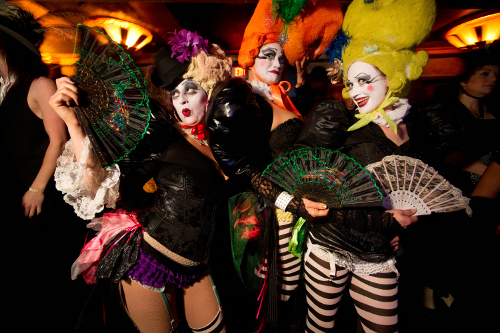
In this week’s Super Ego nightlife column in the paper, I write about this coming weekend’s giant Edwardian Ball at the Regency Ballroom, which spans five events and welcomes thousands into its playful goth-steampunk-burlesque embrace. Named for Edward Gorey but encompassing more than a few winks at the Edwardian Era of the last turn of the century, the all-ages ball has come to act as a summit for a certain essential, instantly recognizable San Francisco nightlife subculture.

The ball was launched in 2000 by Justin Katz of “premiere pagan lounge ensemble” Rosin Coven and Mike Gaines of the neo-cirque Vau de Vire Society, and has grown enormously in the 12 years since — including branching out to Los Angeles. I interviewed the genial Katz over email about the ball’s Gorey origins, the challenges of expansion, combatting the dreaded FOMO, and welcoming a new generation of Friends of Ed.

SFBG Congrats on 12 years of the Edwardian Ball. When you started this, did you think it would take off in this big a way? Can you share a couple of your favorite memories of the Ball since the “turn of the century”?

JUSTIN KATZ Thank you! Each year in the history of this event has been such an adventure, with unpredictability even for us being a constant! Our first year we used a slide projector to show images from a Gorey book. Slides! The second year we did our first interactive theater with the audience, inviting friends to come up and be part of “The Curious Sofa.” Our fifth year was the first with Vau de Vire Society, one of the best decisions Rosin Coven ever made, and I can’t believe the amount of theatre, aerial, and huge open flames that we fit into the back room of the Cat Club. From then on it’s been astounding to see the growth and participation, first the Great American Music Hall, then up to three nights there before waltzing into our current home, The Regency Ballroom.

SFBG You’re extending the festival over six events this year — can you tell me a little about that? Have you ever had this many events, and is this in response to demand?

JK This is definitely our biggest offering to date. The event has developed in so many ways concurrently that there is just too much to see and do during a nighttime event. The Vendor Bazaar (afternoon of Sat/21) has grown into a world of its own and people want more time to shop and mingle amongst the dozens of amazing artisan vendors we now house for the weekend. It gives people a chance to focus without dreaded FOMO — fear of missing out! — with all of the revelry of the Ball afterwards. And this year’s tea with Professor Elemental (also afternoon of Sat/21) is a new one. We are so pleased to have such an excellent artist flying all the way from the UK that it only seemed proper to have a tea party, and give fans a chance to get up close and personal in a more relaxed setting. So it’s about opening up and spreading things out a bit, to enjoy.

http://www.youtube.com/watch?v=0iRTB-FTMdk

SFBG This year’s theme book is the Iron Tonic — will there be specific references to the book, or do you adopt these just as general frameworks to work within? And what are some of the special things you’re looking forward to this year?

JK: Each year Rosin Coven & Vau de Vire Society, co-hosts of The Edwardian Ball, choose a featured Gorey story to bring to life on stage. So this year’s tale is “The Iron Tonic”, which will be presented on Saturday night with original music, staging, choreography, and video as our “big show.” So you will see the story in its entirety. And more, actually, because Vau de Vire always goes to the next level in creating the story – showing you what Gorey doesn’t. One of the most intriguing things about Gorey’s work is that he shows you so little, and implies so much. Vau de Vire plays with character, back story, scenes between the scenes, and really draws you in. Rosin Coven works closely with them developing this and creating the music and narrative that drives and showcases all of the amazing theatrics.

http://www.youtube.com/watch?v=6qgIGKobTe4

Another addition to this year’s event that I just can’t wait to see is our new Museum of Wonders – we’ve added an entire third floor of The Regency to the event, a dense, dark playground of eccentric collections, unusual artifacts, circus sideshows, mechanical dolls that sing you songs, fortune telling, tarot reading, a haunted pipe organ, and a living statue garden by Vau de Vire performing more Gorey stories. We’ve taken the wonderful art that has filled our ballroom and given it its own home, a whole new world to wander during the event, and a place to get away from the crowds for a different experience. This also allows us to open the Ballroom up even more for dancing and enjoying the show – more space to tango!

SFBG I’m fascinated by the general culture that’s coalesced in the past decade or so around the Edwardian Ball — it’s such a San Francisco signature style incorporating burlesque revivalism, playful goth, circus and steampunk, various aspects of Victoriana and Edwardiana. You guys seem to be the major exponents of this certain culture. Have you had any thoughts about it as you’ve seen it develop? What changes or developments have you seen in the Edwardian Ball culture through the years that you’re proud of or that have really made you think?

JK It’s an honor to be recognized as an influence on San Francisco’s style and trends, I’ve always seen us almost more of a great receiver of ideas and influences. We provide a creative, permissive space for people to inspire each other and cross-pollinate. By creating a mood but not strict rules, people have developed their own interpretations and styles over the years, the sum total of which become “Edwardian.” We initially used the name Edwardian just to dress up Edward Gorey, but its been fascinating to see people develop the historic elements of the event on their own. Steampunk is an interesting one too – when we started that word didn’t even exist. We’ve never self-promoted as a “steampunk” event, any more than we would be a “period recreation” event, but we’ve enjoyed the dovetailing of the trend and it’s expansion into more elaborate costume and character. I’ve enjoyed seeing people take Gorey’s work and meld it into their own creations too – characters and monsters and oddities from the pages of his books have been found in the most wonderful corners of the events.

http://www.youtube.com/watch?v=IjjDt2_oKyU

SFBG How has the Los Angeles Ball been going and do you plan to expand further?

JK Los Angeles has been inspiring and challenging. Our first year was gorgeous, held in the mostly-defunct, run down Tower Theater in Downtown LA. It was moody and intriguing, and difficult from a production standpoint. So last year we moved to The Music Box, which is such a great venue. We had a little hiccup when the venue double-booked the night and bumped our date, and we had to push it back a month. But this year The Music Box outdid themselves and shut down a week ago, out of business, so we’re hard at work on finding a new home and date in time to announce at the SF event. LA is just good at tossing us curveballs – but aside from the nuts and bolts we have a wonderful time down there and are inspired and impressed by how ready the crowd is to step up, dress up, and immerse themselves in the Edwardian world. I see no reason not to keep expanding the reach of this event: New York, Seattle, New Orleans, there are so many places that the Edwardian Ball could pay a delightful visit.

http://www.youtube.com/watch?v=D3ISx6UaKw0

SFBG You welcome all ages to the Ball. Do you find that, as steampunk and burlesque enter the mainstream consciousness more, that more younger people are drawn to the culture that the Ball represents?

JK I think that’s a good assessment. I think we’re seeing a couple of groups of younger people – there are those that are drawn to live music, circus, and performance, and this gives them a place to go when most shows are 18+. It’s such a well-behaved crowd – playful but respectful – that we feel good about including all ages and creating a safe space for young people. Their presence adds a really vital energy, and I think affirms that we are creating something that can continue on, it’s not just for the producers and their own social circles. New, young ideas can and will influence where this event goes.

Also, some of the longtime fans are getting older and having children themselves, and starting to bring them to see this unique world. We’re starting to see the “Under-10” crowd show up for the first few hours – they watch the show, climb aboard a bike-powered carnival ride, play midway games with clowns, pose for photos, and head back to school for an unbelievable round of show-and-tell.

Fri/20: Edwardian World’s Faire Kinetic Steam Works, Cyclecide, Vau de Vire, games, and more

Sat/21: Edwardian Ball 2012 “The Iron Tonic” with Jill Tracy, The Fossettes, Miz Margo, and more

Both at Regency Ballroom, 1300 Van Ness, SF. All ages, see www.edwardianball.com for prices, times, and more events.

BODY 2012

0

Coming February 1

REINVIGORATE your New Year’s resolutions. . .

The SF Bay Guardian’s special BODY supplement will guide readers to a
healthier lifestyle by highlighting the Bay Area’s best workouts, gyms, fitness
classes, sports and outdoor activities, spas, beauty and wellness programs.

Plus a special section on Winter workout and spa specials!

To find out more about advertising in this full-color section and reaching tens of thousands of our readers, please click here (PDF).


A Bay Area kind of stand-up: Frankie Quinones of For the People Comedy

2

Common knowledge states that if you’re serious about becoming a stand-up comedian on the West Coast, you move to Los Angeles. But Frankie Quinones created the diversity of For the People Comedy here in San Francisco and despite his rising star on the stand-up scene, he’s sticking around for the moment.

Maybe that’s because Carmelita lives here. “She’s taken on a whole thing of her own, her own career,” says the Ventura County native of his sassed-up, club-going Latina sexpot. “Carmelita’s got her own list of things to do in 2012.” You can check out Quinones — and possibly Carmelita or his popular “Cholo Whisperer” skit — at the next For the People event at Cobb’s on Thu/19. 

Carmelita was created back in 1996 in Quinones’ high school improv class. She hails from Quinones’ stable of characters inspired by – well, what else – the people he sees on an everyday basis. In Carmelita’s case that’s his female family members, mixed with Quinones’ own mannerisms. “She’s really confident, but not really conceited,” he says. 

Her star vehicle was “Eh-So Eh-Spicy,” in which she half-dishes, half-raps about men looking at her tits in line at the store and courts suitors in a San Francisco bar. You’re definitely laughing at her, but somehow, Quinones escapes reducing the brash Carmelita into a stereotype like so many other male comedian’s female alter egos. Carmelita shares set time with a host of Quinones’ other personas, including a hippie character named Sun Diamond whose mannerisms are culled from the patchouli-scented denizens of our fair city.

Quinones is proud of being a Latino comic, part of a tradition that also includes his personal role models Gabriel “Fluffy” Iglesias and Paul Rodriguez, who his parents used to watch on TV when he was young. He often performs at Latino comedy nights in Los Angeles, but in San Francisco — where successful Latino comics are well-known for relocating quickly down south when fame beckons — he’s used to being the only Hispanic name on otherwise all-black and all-white bills.

His comedy often dances along the edge of racial tensions, ultimately resolving them in a feel-good way. In “Cholo Whisperer,” a upper-middle class suburban couple hires an expert to deal with the shanking, 40-drinking gangster (played by Quinones) they’ve adopted after being charmed by their neighbor’s cholo. The cholo whisperer, who walks with a mystic’s bauble-topped scepter but dresses in everyday street wear and a blue bandana, teaches the white husband how to be “the jefe,” a role that mainly involves puffing out his chest and barking short orders. 

“Some people think I’m stupid for not moving to LA already,” says Quinones, drinking a Negra Modelo in front of his combination plate on a sidewalk tables at the Valencia Street Puerto Alegre. “But I feel like I’m doing something for the San Francisco comedy scene.” You can check out For the People’s new monthly gig every last Wednesday at SoMa’s Sofa nightclub on Eighth Street and Minna. Quinones crafts the program for these nights with the newbie comedy fan in mind — usually they’ll feature stand-ups from all kinds of backgrounds, even a live DJ for musical interludes. 

“I’ve always been that fool in my family, like ah, fucking Frankie,” Quinones laughs. “People in my life are not surprised that I’m a stand-up comedian.”

Maybe that’s why they’ve been so supportive. “I have a good team of homies that believe in this as much as I do,” says Quinones, who says the word of mouth hype his group of friends give him is invaluable in promoting his shows – indeed, a word from a mutual friend was how I heard about his work. “Our brand of comedy is like, this is all of us, together. It’s like, I’m no better than you because I’m on stage. I try to create a family vibe so that when people come in they feel a part of it.”

Just don’t heckle him – that positivity has its limits. “If somebody heckles me that’s the green light,” he laughs forbodingly, for a moment seeming like the snarky comedians we’re used to from network television and BET. That impression doesn’t last long before we’re back to the group experience: “But my goal is to make it funny for everyone.”


For the People Comedy

Thu/19 8 p.m., $15

Cobb’s Comedy Club

915 Columbus, SF

(415) 928-4320

www.cobbscomedyclub.com

Fresh and fancy-free

0

virginia@sfbg.com

APPETITE Despite all its high-end culinary buzz, San Francisco is loaded with amazing cheap eats (as my colleague L.E. Leone has been documenting for decades for the Guardian). Here are three new places I consider worth adding to your go-to list.


CHUBBY NOODLE

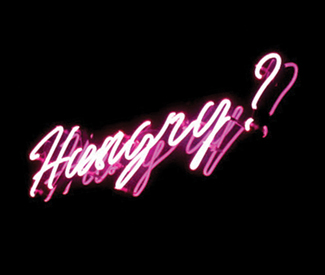
Chubby Noodle easily counts as a best cheap eats opening of 2011. In the back of comfortably retro Amante (www.amantesf.com) bar, order at a kitchen window, illuminated in neon by the word “Hungry?” Then slide into roomy booths to fill up on fresh, daily ceviche, Hawaiian tuna poke ($11), and heartwarming red miso ramen ($9 with pork and poached egg; $11 with shrimp). I expected good from owners of the excellent, neighboring Don Pisto’s — but it’s better than good.

Whatever you do, don’t miss organic, buttermilk-brined, Mary’s fried chicken ($9 for five-piece wings or strips, 2 piece drum and thigh meal $7). It’s traditional American fried chicken with a contemporary Asian attitude, dipped in habit-forming, creamy sambal dipping sauce. Tender chicken strips are an elevated, gourmet version of chicken tenders from childhood.

House kimchi is no slouch, working its gently heated wonders as a side ($4) or on a kimchi kobe beef hot dog ($6). Besides the fried chicken, my other favorite dish is spicy garlic noodles ($8). Chewy and homemade, they’re oozing with garlic, oyster sauce, and a little jalapeno kick. The Korean pork tacos ($9) aren’t carbon copies of the usual trendy dish. Instead of shredded pork, chunks of Niman Ranch rib chop give beefy heft, contrasted by Korean pickles, yogurt sauce, and arbol chile vinegar.

570 Green, SF. 415-361-8850, www.thechubbynoodle.com


ROOSTERTAIL

Roostertail is, yes, another rotisserie joint. A few visits after the recent opening, I’m impressed with the friendly staff who exude a warm welcome, even when merely grabbing take-out (Note the just-launched curbside pickup with prepaid phone orders). The space boasts silver counter tops and bright red stools, festive with beer and wine on draft.

When it comes to rotisserie, I’ll take dark meat, thanks ($5.75–<\d>$18.50, quarter to whole birds). The organic, juicy meat is delightful with the garlicky green house sauce. Husband-wife team, Gerard Darian and Tracy Green, get their mainstay right.

A pulled pork sandwich ($10.75) is a solid sandwich pick, on an Acme bun topped with fresh coleslaw unencumbered by mayo. Tiny chicken wings didn’t excite (I prefer Hot Sauce & Panko’s creative, meatier wings), nor did the cheesesteak sandwich. But there’s brisket, five different sandwiches, or hefty salad options, along with soulful sides ($4–<\d>$5.50) like brisket baked beans or brussels sprouts with bacon.

1963 Sutter, SF. (415) 776-6738, www.roostertailsf.com


GALETTE 88

There’s a Ti Couz-shaped hole where my Brittany crepe hunger resides.

Through the years, crepes didn’t get better than at the now-defunct Ti Couz in the Mission. At the end of an alley off Kearny, the new Galette 88 isn’t exactly a replacement. There’s not quite the same depth of buckwheat earthiness. The French galettes (a.k.a. buckwheat crepes; savory: $6–<\d>$10, sweet: $5–<\d>$6) are even thinner, still crisp, a little less flavorful, but nonetheless worthwhile. Gluten-free and healthy, they’re made with only three ingredients — water, sea salt, buckwheat flour made from buckwheat which is a plant, not a grain — loaded with fiber, vegetable protein, calcium, iron.

Order Four Barrel coffee, Mighty Leaf tea, or hard cider and choose a crepe. Bruce’s Choice ($10) is my first pick, layered with smoked salmon, caramelized onions, and capers, topped with avocado slices, greens, and a tart/sweet lemon chive creme fraiche. Light yet filling, the zesty lemon sauce makes it.

Bleu Velvet ($9) is a savory-sweet choice with blue cheese, browned apples, arugula, honey, and toasted almonds. Dessert crepes (lemon sugar, roasted apples with salted caramel, chocolate with candied orange peel, or Nutella), made with eggs, milk, wheat flour and sugar, lacked the subtle chewiness and flavor of Ti Couz’s wheat dessert crepes. But in their absence, Galette 88’s crepes contend for the best in town.

It’s already one of the more pleasant FiDi lunch options (with just-added dinner, Wed.-Fri.): casual, order-at-the-counter ease, the owner flitting about, ensuring water cups are filled and everyone is content. The space is minimalist with live birch trees towering in one corner and a decidedly Mission air that’s rare in FiDi.

88 Hardie Pl., (415) 989-2222, www.galettesf.com *

Subscribe to Virgina’s twice-monthly newsletter, The Perfect Spot, www.theperfectspotsf.com


Get Gorey

1

marke@sfbg.com

SUPER EGO Wax up your handlebar mustache, dust off your stripy topcoat, burnish your steampunk petticoats, and oil those wheezy accordions: The Edwardian Ball, that phenomenal annual gathering of exquisitely decked-out freaks, is back for its 12th installment of mannered mayhem. This time it aims to quell any kvetching about crowding by stretching itself over five official local events (and a satellite ball in Los Angeles next month). But the Fri/20 World’s Faire and the Sat/20 Ball itself will still be the main attraction for thousands of Friends of Ed.

Where did it come from, the distinctly San Franciscan style that the Edwardian Ball represents, the curious — and, in some pale lights, socially conservative — amalgamation of circus revivalism, steampunk mechanicals, Wild West gumption, burlesque peekaboo, 1990s anarcho-sincerity, and more than a hint of Burning Man fairy dust? The ball itself, launched in 2000 by Justin Katz of “premiere pagan lounge ensemble” Rosin Coven and Mike Gaines of the neo-cirque Vau de Vire Society, delectably conflates affection for Edwards Gorey, author, and Windsor, British king, producing a turn-of-the-last-century high-brow goth fantasia that’s impossible to resist. There’s more than a hint of Burtonesque Scissorhands-worship in there as well, bringing our Ed count to three. (Check out my revealing interview with founder Katz.)

Like absinthe, the ball’s drink of choice, I savor this native subculture most in small, strong doses — sometimes its sheer mass can overwhelm, and its style seems always in a state of coalescence rather than expansion. (An Edwardian Ball in 2112 would, and probably should, be much like the one this week, hover-bikes notwithstanding.) That’s why the ball’s a perfectly cromulent occasion to check in on the dark-eyed, ruby-red, velvety feast of one of our essential undergrounds. Promenade, anyone?

Fri/20: Edwardian World’s Faire Kinetic Steam Works, Cyclecide, Vau de Vire, games, and more

Sat/21: Edwardian Ball 2012 “The Iron Tonic” with Jill Tracy, The Fossettes, Miz Margo and more

Both at Regency Ballroom, 1300 Van Ness, SF. All ages, see www.edwardianball.com for prices, times, and more events.

BENEFITS FOR DJ TOPH ONE Beloved “wino” Toph One got struck while riding his bike by a hit-and-run driver on Sun/8 and was hospitalized with a broken pelvis and internal bleeding. The DJ, bike activist and annual AIDS Rider, and party promoter (of the incredibly long-running Red Wine Social and Pepper) is OK and in good spirits now. And the great Bay Area nightlife scene is banding together once again to help out a friend in need. There are going to be two big benefits — all proceeds going to Toph’s bills — that are also serving as major bay talent summits. One’s at Public Works (Fri/20, 9 p.m.-3 a.m., $10. 161 Erie, SF. www.publicsf.com) with J-Boogie, Jimmy Love, Matt Haze, Pleasure Maker, E Da Boss, Chris Orr, and many more. The other’s at SOM (Sun/22, 8 p.m., $10–$20 but no one turned away. 2925 16th St., SF. www.som-bar.com) with Billy Jam, Sake One, DJ Pause, Rolo 1-3, Rascue, Jah Warrior Shelter Hi-Fi, and tons more. Get well soon, buddy — and anyone with information on the crime please call the anonymous police tip line at (415) 575-4444 or send a tip by text message to TIP411.


LAURENT GARNIER

One day, I will write an entire book about French techno polymath Laurent Garnier’s seminal 1993 “Acid Eiffel,” a monumental track whose throbbing chords (not quite nabbed from Mr. Fingers), squiggling acid jabs, and cheeky whale-song bass figures pretty much audibly nailed where my rave-fatigue head was at back then. He hasn’t been here in a decade: this time he arrives as part of the trio LBS (Live Booth Sessions) with Garnier DJing and knob-twisting, Benjamin Rippert on keyboards and Scan X on “machines.” They’ll be tearing through a whole host of electronic styles at this installment of the whip-smart As You Like It roaming party (co-produced with Public Works), throwing some brilliant corners on Garnier’s signature ecstatic style. With M3, Rich Korach, Briski, and P-Play.

Thu/19, 9 p.m.-3 a.m., $15–$25. Public Works, 161 Erie, SF. www.publicsf.com


THE QUEEN IS DEAD

Honey, is she ever! There has actually been quite an uptick in Smiths tribute nights (maybe making up for Morrissey’s string of Bay Area concert cancellations?). And this monthly one, celebrating a year on Saturday, is the Frankly Mr. Shanklyest of them, with a wide range of melancholy jangle-pop tunes and DJ Mario Muse on decks. Unhappy birthday!

http://www.youtube.com/watch?v=8oYsQ1Ra1hI

Sat/21, 9 p.m., $5. Milk, 1840 Haight, SF. www.milksf.com


OCTAVE ONE

The classic Detroit techno Burden Brothers whose seminal “I Believe” and “Black Water” will always get me on the dance floor hollering and waving my arms around like the homosexual muppet I am have been touring successfully. Catch them on the swell Club Six sound system.

Fri/20, 9 p.m.-4 a.m., $15. www.clubsix1.com


SOUKI

Kooky-rad monthly queer and friends party Dial Up dials up a special Friday night with Berlin ‘s Souki, whose deep-but-friendly techno prowess is making recent waves. She’ll be performing a live PA, sure to get funky.

Fri/20, 9 p.m.-3:30 a.m., free before 10 p.m., $6 after. Public Works, 161 Erie, SF. www.publicsf.com


DUBSTEP PRODUCER BATTLE FINALE

Some great beats have come out of the rounds leading up to this grand wobble finale — nice to see so much local talent holding forth (and stretching the often narrow dubstep definition.) Come jiggle and support finalists Fivel, Taso, and Kontrol Freqs at the new Fuel Lounge (formerly Etiquette).

Fri/20, 9 p.m., $5 before 10 p.m., $10 after. Fuel, 1108 Market, SF. www.fuelsf.com 


Rep Clock

0

Schedules are for Wed/18-Tues/24 except where noted. Director and year are given when available. Double and triple features are marked with a •. All times p.m. unless otherwise specified.

ALA COSTA CENTER 1300 Rose, Berk; missreplacosta.eventbrite.com. $15. Miss Representation (Siebel Newsom, 2011), Fri, 7. Benefits Ala Costa’s Adult Transition Program for young adults with developmental disabilities.

BALBOA 3630 Balboa, SF; www.brownpapertickets.com. $17.50-20. “Opera and Ballet at the Balboa Theatre:” Don Giovanni, from La Scala, Wed, 7:30; Caligula, from the Paris Opera Ballet, Sat-Sun, 10am.

CASTRO 429 Castro, SF; (415) 621-6120, www.castrotheatre.com. $7.50-10. •Lenny (Fosse, 1974), Wed, 2:50, 7, and American: The Bill Hicks Story (Harlock and Thomas, 2009), Wed, 4:55, 9:05. “SF Sketchfest:” “Night of the Shorts III: The Search for Schlock,” with Kevin Murphy and Bill Corbett, Thurs, 8. This event, $30; for tickets and more info, visit www.sfsketchfest.com. “Noir City X:” •Dark Passage (Daves, 1947), Fri, 7, and The House on Telegraph Hill (Wise, 1951), Fri, 9:30; •Okay, America (Garnett, 1932), Sat, 1, 4, and Afraid to Talk (Cahn, 1932), Sat, 2:40; •The Killers (Siegel, 1964), Sat, 7, with Angie Dickinson on-stage interview after the film, and Point Blank (Boorman, 1967), Sat, 9:45; •Laura (Preminger, 1944), Sun, 3, 5, 9, and Bedelia (Comfort, 1946), Sun, 7; •Gilda (Vidor, 1946), Mon, 7, and The Money Trap (Kennedy, 1965), Mon, 9:20; •Unfaithfully Yours (Sturges, 1948), Tues, 7, and The Good Humor Man (Bacon, 1950), Tues, 9:15. Advance tickets (double features, $10-15) and more info at www.noircity.com.

CHRISTOPHER B. SMITH RAFAEL FILM CENTER 1118 Fourth St, San Rafael; (415) 454-1222, www.cafilm.org. $6.75-10.25. “For Your Consideration: A Selection of Oscar Submissions from Around the World:” A Simple Life (Hui, 2011), Wed, 6:30; Patagonia (Evans, 2010), Wed, 9; Once Upon a Time in Anatolia (Ceylan, 2011), Thurs, 7:15. Hipsters (Todorovsky, 2009), Wed-Thurs, call for times.

PACIFIC FILM ARCHIVE 2575 Bancroft, Berk; (510) 642-5249, bampfa.berkeley.edu. $5.50-9.50. “Film 50: History of Film, Cinema, and the Other Arts:” “Course Introduction: The Language of Cinema,” with lecture by Marilyn Fabe, Wed, 3:10. This event, $5.50-11.50. “Henri-Georges Clouzot: The Cinema of Disenchantment:” Manon (1949), Wed, 7; Miquette and Her Mother (1949), Fri, 9; The Wages of Fear (1953), Sat, 8:10. “Austere Perfectionism: The Films of Robert Bresson:” Au hasard Balthazar (1966), Thurs, 7; Mouchette (1967), Sat, 6:30. “Howard Hawks: The Measure of Man:” Fazil (1928), Fri, 7; A Girl in Every Port (1928), Tues, 7.

ROXIE 3117 and 3125 16th St, SF; (415) 863-1087, www.roxie.com. $6.50-10. “It’s the Paul Meinberg! Show!”: Bachelor’s Daughters (Stone, 1946), Wed, 7. Battle for Brooklyn (Galinsky and Hawley, 2010), Thurs, 7, 9. Drive (Winding Refn, 2011), Wed-Thurs, 7. Everyday Sunshine: The Story of Fishbone (Anderson and Metzler, 2010), Wed-Thurs, 9.

SFFS | NEW PEOPLE CINEMA 1746 Post, SF; www.sffs.org. $10-11. “Four Samurai Classics:” Harakiri (Kobayashi, 1962), Wed, 1:30, 6; Yojimbo (Kurosawa, 1961), Wed, 4:15, 9:15; Sanjuro (Kurosawa, 1962), Thurs, 2:45, 8:45; Seven Samurai (Kurosawa, 1954), Thurs, 5. Fullmetal Alchemist: The Sacred Star of Milos (Murata, 2011), Jan 20-26, 2, 4:30, 7, 9:15.

VICTORIA THEATER 2961 16th St, SF; www.start-somewhere.com. $10-20. Miss Representation (Siebel Newsom, 2011), Tues, 6. Benefits StartOut’s new Lesbian Entrepreneurship mentoring program.

YERBA BUENA CENTER FOR THE ARTS 701 Mission, SF; (415) 978-2787, www.ybca.org. $6-8. Red Desert (Antonioni, 1964), Thurs and Sat, 7:30; Sun, 2.

Our Weekly Picks: January 18-24

0

WEDNESDAY 18

“Four Samurai Classics”

Forget Tom Cruise’s preposterous The Last Samurai (2003) — if you haven’t already. The only true samurai films come from Japan, not Hollywood, and the classics of the genre all emerged during the country’s post-World War II rebuilding years. With their tales of collapsing empires, and themes of corruption and courage, the films simultaneously addressed both historical and present-day struggles (and tended to star legendary actor Toshiro Mifune). The San Francisco Film Society unfurls four classics, starting with Masahiro Kobayashi’s Harakiri (1962) and followed by three of Mifune’s 16 collaborations with director Akira Kurosawa: 1961’s Yojimbo, 1962’s Sanjuro; and 1954’s epic Seven Samurai. (Cheryl Eddy)

Wed/18-Thurs/19, $10–$11

SFFS | New People Cinema

1746 Post, SF

www.sffs.org


“Rock ‘N’ Sock Hop for Jonathan Toubin”

On Dec. 8 of last year a taxi crashes through the first floor bedroom of a Portland, Ore. motel. A man is found pinned under the car then taken to a hospital in critical condition. Just a few days earlier, Jonathan Toubin was DJing at the Knockout as New York Night Train, spinning 45s and running his wild and sweaty Soul Clap and Dance-Off. Hailing from NYC but with followers and fans in many places, Toubin is in stable condition but on a slow road to recovery. A number of friends have come together to raise money for his hospital bills. This SF benefit includes support from soul brother and Oldies Night hero DJ Primo, Ty Segall, and Shannon and the Clams. (Ryan Prendiville)

With Hank IV, Lenz, and more

8 p.m., $10

Mezzanine

444 Jessie, SF

(415) 625-8880

www.mezzaninesf.com


THURSDAY 19

John Stanley

On the entertainment beat for the San Francisco Chronicle from the 1960s through the early ’90s, John Stanley scored rare, one-on-one interviews with legendary actors and performers such as Clint Eastwood, Jane Russell, Lauren Bacall, James Stewart and plenty more. The local writer — who also hosted the TV show Creature Features on KTVU — has combed through his extensive files and archives and compiled some of them into his new book The Gang That Shot Up Hollywood (Atlas Books), a treasure trove of film history that Bay Area movie buffs are sure to devour. (Sean McCourt)

7 p.m., free

Books Inc., Opera Plaza

601 Van Ness, SF

(415) 776-1111

www.booksinc.net


“Nameless forest”

The line between performance and performer, audience and artist, is an ongoing concern of much contemporary work. It’s maybe all the more salient in the wake of the Occupy Wall Street eruption —where habitual passivity gives way to spontaneous popular action and organic community. The divide between art and social action comes in for some more suggestive blurring as YBCA presents the West Coast premiere of choreographer Dean Moss’s cross-disciplinary, cross-cultural collaboration with Korean sculpture artist Sung-Myung Chun (set design), six dancers, and maybe a dozen audience members (the last invited onstage at the outset to join in the proceedings). The games, stories, movements, and meanings that follow are framed by Moss’s three-part conceit, but also very much in collective hands. (Robert Avila)

Through Sun/21, 8 p.m.; Thurs., $5, Fri-Sat., $20–$25

Yerba Buena Center for the Arts

701 Mission, SF

(415) 978-2728

www.ybca.org


Jesse & Aaron of Brazilian Girls

The rhythm section of Brazilian Girls, drummer Aaron Johnston and bassist Jesse Murphy, will blend live instrumentation with Djing at the Mighty, which should be very easy to dance to, considering some of the low-slung groovelines the band is know for. The collaborators are part of a band that broke through in 2005 with dynamic party music created by multi-instrumentalist Didi Gutman, Johnston, and Murphy, along with the sultry singing of Sabina Sciubba; you may have heard that “Good Time” track on commercials for a certain, non-heavy Dutch beer. Lately, the band has unofficially been on hiatus as members have been pursuing their own personal projects but a reunion may be in the works. (Kevin Lee)

With Dylan McIntosh of BLVD

9 p.m., $15–$20

Mighty

119 Utah, SF

(415) 762-0151

www.mighty119.com


FRIDAY 20

The Meters

Talented artists like the Meters manage to maintain careers spanning decades. Consider the fact that mainstream audiences might not be able to identify one of their songs, and yet the Meters have been playing their own brand of jazz and funk since the ’60s, and have performed with the likes of James Brown and Paul McCartney. The group’s music never goes out of style. High energy, sensual, groovy, these masters of soul and syncopation have left a lasting impression. Go see them before it’s too late. Last year, they hit Outside Lands, this week, Brick & Mortar Music Hall. The soul train keeps moving for all rhythm lovers ready to board. (Courtney Garcia)

With Korty & Friends feat. Members of Vinyl & The Monophonics

9 p.m., $25

Brick & Mortar Music Hall

1710 Mission, SF

(415) 800-8782

www.brickandmortarmusic.com


Passion Pit DJ Set

Yes, Passion Pit has this sweet electropop sound when it plays live as a band. And a lot of Passion Pit remixes on tracks from Bruno Mars, Phoenix, Tegan and Sara, the Yeah Yeah Yeahs keep in that same vein, with soaring melodies and catchy hooks. But Passion Pit: The DJ extravaganza (my title, not theirs) features the band’s remixer and synthesizer specialist Ayad Al Adhamy opting for less sugar and more bass. Passion Pit tracks are sure to get some love (hit track “The Reeling” will likely make an appearance in one form or another), but with this event, Al Adhamy and gang show they are not afraid of delving into some electro house, techno and maybe even an oldie or two. (Lee)

With White Mike, Derrick Love, Nisus, Kool Karlo, Ant-1, DJ Drome

10 p.m., $10–$15

1015 Folsom

(415) 762-0151

www.1015folsom.com


SATURDAY 21

“LevyDANCE’s Salon”

The muses must have been with Ben Levy when he was looking for a home because he found it in a hidden-gems alley (8th Street between Folsom and Harrison) and, appropriately, named it Studio Gracia. The place is elegant, spacious and grass green; so why not call his annual January party/performance events “The Salon?” Sounded classy, perhaps a little decadent, but highly intriguing. No need to dress up, however, for this fun mix of socializing, dance watching, and a DJ dance party. In the middle of the evening (9 p.m.), ten choreographers — from quasi-famous to neophyte — will showcase five-minute snippets of works of their own choosing. You’ll get a whiff of just how rich in contemporary dance this ol’town is. (Rita Felciano)

8 p.m., $10

Studio Gracia

16 Heron, SF

(415) 701-1300

www.studiogracia.com


The Screwtape Letters

Recent film versions of C.S. Lewis’ Chronicles of Narnia tales have hooked the Jesus fish pretty hard, but even atheists can appreciate the author’s vivid imagination and talent for fantasy storytelling. J.R.R. Tolkien’s homeboy was also unafraid to embrace darker themes (and satire), as evidenced by his 1942 novel The Screwtape Letters — about a bureaucratic demon advising his nephew on the fine art of tempting, with the end goal of securing a particular man’s soul. Touring company Fellowship for the Performing Arts touches down with its award-winning theatrical adaptation, featuring lead demon Screwtape (Max McLean) re-imagined as “Satan’s chief psychiatrist.” How’s that for evil? (Eddy)

Sat/21, 4 and 8 p.m.; Sun/22, 3 p.m., $29–$59

War Memorial Opera House

301 Van Ness, SF

(415) 394-4400

www.screwtapeonstage.com


SUNDAY 22

“Undercover Presents: Nick Drake’s Pink Moon

Before he died from an antidepressant overdose at the age of 26, English songwriter Nick Drake recorded Pink Moon, an intense, lugubrious album that’s evidence of his immeasurable talent, and that keeps you in a state of wretched astonishment listen after listen. Arising from similar events with Doolittle and The Velvet Underground & Nico, “Undercover Presents: Nick Drake’s Pink Moon” enlists a ragtag group of local musicians — a whopping 50 of them — to honor and reinterpret the monument that is Pink Moon. With the event’s music director Darren Johnston, and artists like the Real Vocal String Quartet (who recorded on Feist’s Metals), jazz singer Kally Price, and the Balkan Romani band Brass Menažeri, you’ll hear idiosyncratic covers all night. (James H. Miller)

With Kapowski, David Boyce, Pocket Full of Rye, and more

7:30 p.m., $20

Rickshaw Stop

155 Fell, SF

(415) 861-2011

www.rickshawstop.com


WhoMadeWho DJ set

In theory, Denmark’s WhoMadeWho is a rock band. (Named after an AC/DC song, after all.) But in practice, it’s pitched for the club, and approaches both kinetic live shows and disco/electro infused records more like DJs, with a clear feeling for progression and mood. The trio is set to release its latest album (and second album in 12 months,) Brighter, in February on Kompakt, but to get a sense of what to expect from this DJ set, give a listen to drummer Tomas Barfod’s killer Killing Time With Dancing mixtape, featuring their own tracks, a seriously stellar reworking of Siriusmo’s “Nights Off,” and (personal favorite) Connan Mockasin’s “Forever Dolphin Love.” (Prendiville)

With Sleazemore (Lights Down Low), Nolan Haener (Re:Body)

9 p.m., $5–$8

Public Works

161 Erie, SF

(415) 932-0955

www.publicsf.com


MONDAY 23

Wolves in the Throne Room

With Celestial Lineage (Southern Lord, 2011), the most recent full-length release from Wolves in the Throne Room, the venerable Olympia, Wash. band continues to explore the weird Lovecraftian depths and textures immanent to the black metal genre. The new record is the group’s most sonically defined, but the pervading sense of mystery, the exploration of a gnarly sonic wilderness that made Wolves’ lo-fi output so thrilling permeates the album. Live, Wolves are ferocious, a raw tidal wave of blast beats and cascading guitars, and massive slabs of tone that wash over venue. The effect is as hypnotic as it is awe-inspiring. The band returns to San Francisco Monday night at Slim’s. (Tony Papanikolas)

With Worm Ouroboros, Ash Borer

8 p.m., $16

Slim’s

333 11th St., SF

415-255-0333

www.slimspresents.com


TUESDAY 24

Greil Marcus

Music critic Greil Marcus wrote a notorious review of Bob Dylan’s Self-Portrait for Rolling Stone Magazine in 1970. It began with four words: “What is this shit?” He’s published definitive books and essays on Dylan, Elvis, Van Morrison, the Band, and dozens of others since then. His latest book, The Doors: A Lifetime of Listening to Five Mean Years, takes a swing at the popular ’60s band (its music, not its lead singer). “‘Fire’ — it’s a door swinging open in the wind, seen from a distance,” he writes in the prologue, musing on a bootleg recording of “Light My Fire” (that revered and abhorred song). It sounds like a line from Rainer Maria Rilke. And indeed, it takes somebody with the vision of a poet to say something new about the Doors. (Miller)

7:30 p.m., free

Booksmith

1644 Haight, SF

(415) 863-8688

www.booksmith.com 


The Guardian listings deadline is two weeks prior to our Wednesday publication date. To submit an item for consideration, please include the title of the event, a brief description of the event, date and time, venue name, street address (listing cross streets only isn’t sufficient), city, telephone number readers can call for more information, telephone number for media, and admission costs. Send information to Listings, the Guardian Building, 135 Mississippi St., SF, CA 94107; fax to (415) 487-2506; or e-mail (paste press release into e-mail body — no text attachments, please) to listings@sfbg.com. Digital photos may be submitted in jpeg format; the image must be at least 240 dpi and four inches by six inches in size. We regret we cannot accept listings over the phone.

Stage Listings

0

Stage listings are compiled by Guardian staff. Performance times may change; call venues to confirm. Reviewers are Robert Avila, Rita Felciano, and Nicole Gluckstern. Submit items for the listings at listings@sfbg.com. For further information on how to submit items for the listings, see Picks.

THEATER

OPENING

Cabaret Young Performers Theatre, Fort Mason Center, Bldc C, Room 300, Marina at Laguna, SF; (415) 381-1638, cabaretsf.wordpress.com. $25-45. Previews Thurs/19-Fri/20, 8pm. Opens Sat/21, 8pm. Runs Thurs-Sat, 8pm; Sun, 7pm. Through Feb 19. Shakespeare at Stinson and Independent Cabaret Productions perform the Kander and Ebb classic in an intimate setting.

Olivia’s Kitchen Exit Theatre, 156 Eddy, SF; www.generationtheatre.com. $20-40. Opens Fri/20, 8pm. Runs Fri-Sat, 8pm; Sun, 3pm. Through Feb 19. GenerationTheatre offers this “remix” of Shakespeare’s Twelfth Night.

“SF Sketchfest” Various venues, SF; www.sfsketchfest.com. Jan 19-Feb 4. $10-75. The 11th San Francisco Comedy Festival invades 15 venues in 17 days with local and celebrity-packed (and local-celebrity-packed) performances, film events, improv shows, and more.

Waiting for Godot Royce Gallery, 2901 Mariposa, SF; (415) 336-3522, www.tidestheatre.org. $20-38. Opens Fri/20, 8pm. Runs Thurs-Sat, 8pm. Through Feb 18. Tides Theatre Company debuts with a bold interpretation of the Beckett classic.

BAY AREA

The Pitmen Painters TheatreWorks at Mountain View Center for the Arts, 500 Castro, SF; (650) 463-1960, www.theatreworks.org. $19-69. Previews Wed/18-Fri/20, 8pm. Opens Sat/21, 8pm. Runs Tues-Wed, 7:30pm; Thurs-Sat, 8pm (also Sat, 2pm); Sun, 2 and 7pm. Through Feb 12. TheatreWorks performs a new comedy from the author of Billy Elliot about a group of British miners who become art world sensations.

ONGOING

Food Stories: Pleasure is Pleasure Z Space, Theater Artaud, 450 Florida, SF; www.brownpapertickets.com. $20-55. Wed-Thurs, 7pm; Fri-Sat, 8pm; Sun, 2pm. Through Feb 5. Word for Word presents performances of short stories by T.C. Boyle and Alice McDermott.

Future Motive Power Old Mint, 88 Fifth St, SF; www.mugwumpin.org. $15-30. Fri-Sun, 8pm. Through Jan 29. Mugwumpin takes on the life of Nikola Tesla in its latest performance piece.

Humor Abuse American Conservatory Theater, 415 Geary, SF; (415) 749-2228, www.act-sf.org. $10-85. Tues-Sat, 8pm (Tues/24, show at 7pm; also Wed and Sat, 2pm; no matinee Wed/18); Sun, 2pm. Through Feb 5. ACT presents Lorenzo Pisoni and Erica Schmidt’s tale (based on Pisoni’s life; he is also the sole performer) of a child growing up amid San Francisco’s Pickle Family Circus.

*New Fire: To Put Things Right Again Brava Theater, 2781 24th St, SF; (415) 647-2822, www.brava.org. $10-30. Thurs-Sat, 8pm; Sun, 3pm. Through Jan 29. You hear a lot of lip service these days to “community-building,” even when that community might represent the merest sliver, unable to reach out or expand beyond its own narrow parameters. That is not the kind of community playwright Cherrie Moraga is interested in paying lip service to, and her latest work New Fire reaches out in all possible directions, most notably digging deep into sacred spaces frequently left out of the conversation altogether. Structured not as a conventional (by Western standards) play, but as a healing ceremony centered around the story’s single protagonist, Vero (Dena Martinez), Celia Herrera Rodriguez’ staging and design blend seamlessly with Alleluia Panis’ ecstatic choreography to create a world where the sacred and the mundane coexist, almost unremarked, but certainly remarkably. Combining new media such as video by Emily Encina, with ancient ritual, the most electrifying moments are those rendered wholly without spoken words — the steady heartbeat of percussion, the ululation of Charlene O’Rourke’s magnificent chanting, the stealthy creeping of spirit figures whose faces are hidden by the wide brims of vibrantly painted hats. But don’t go in expecting a woo-woo, earth mother love fest: New Fire, is heavy with dark moments. But as El Caminante (Robert Owens-Greygrass) points out, such darkness can be beautiful too. (Gluckstern) Not Getting Any Younger Marsh San Francisco, Studio Theater, 1062 Valencia, SF; (415) 826-5750, www.themarsh.org. $15-50. Fri, 8pm; Sat, 5 and 8:30pm. Extended through Feb 25. Marga Gomez is back at the Marsh, a couple of too-brief decades after inaugurating the theater’s new stage with her first solo show — an apt setting, in other words, for the writer-performer’s latest monologue, a reflection on the inevitable process of aging for a Latina lesbian comedian and artist who still hangs at Starbucks and can’t be trusted with the details of her own Wikipedia entry. If the thought of someone as perennially irreverent, insouciant, and appealingly immature as Gomez makes you depressed, the show is, strangely enough, the best antidote. (Avila)

BAY AREA

Ghost Light Berkeley Repertory Theatre, Thrust Stage, 2025 Addison, Berk; (510) 647-2949, www.berkeleyrep.org. $14.50-73. Tues, Thurs-Sat, 8pm (also Sat, Thurs/19, and Feb 16, 2pm; no matinee Sat/21); Wed and Sun, 7pm (also Sun, 2pm). Through Feb 19. Berkeley Rep performs Tony Taccone’s world-premiere play about George Moscone’s assassination, directed by the late San Francisco mayor’s son, Jonathan Moscone.

*The Kipling Hotel: True Misadventures of the Electric Pink ’80s New venue: Marsh Berkeley, 2120 Allston, Berk; (415) 282-3055, www.themarsh.org. $20-50. Sat, 8:30pm; Sun, 7pm. Through Feb 12. This new autobiographical solo show by Don Reed, writer-performer of the fine and long-running East 14th, is another slice of the artist’s journey from 1970s Oakland ghetto to comedy-circuit respectability — here via a partial debate-scholarship to UCLA. The titular Los Angeles residency hotel was where Reed lived and worked for a time in the 1980s while attending university. It’s also a rich mine of memory and material for this physically protean and charismatic comic actor, who sails through two acts of often hilarious, sometimes touching vignettes loosely structured around his time on the hotel’s young wait staff, which catered to the needs of elderly patrons who might need conversation as much as breakfast. On opening night, the episodic narrative seemed to pass through several endings before settling on one whose tidy moral was delivered with too heavy a hand, but if the piece runs a little long, it’s only the last 20 minutes that noticeably meanders. And even with some awkward bumps along the way, it’s never a dull thing watching Reed work. (Avila)

*The Wild Bride Berkeley Repertory Theatre, Roda Theatre, 2015 Addison, Berk; (510) 647-2949, www.berkeleyrep.org. $14.50-73. Wed/18, 7pm; Thurs/19-Sat/21, 8pm (also Sat/21, 2pm); Sun/22, 2pm. In the first act of Kneehigh Theatre’s The Wild Bride, the destinies of an innocent girl (Audrey Brisson), her moonshine-making father (Stuart Goodwin), and a predatory devil in a cheap suit (Stuart McLoughlin) become inextricably entwined by an ill-fated bargain. Steeped in European fairytale logic and American folk and blues music, Bride is inventively staged at the base of a giant tree, combining mime, puppetry, dance, live music, Cirque du Soleil-style vocals, acrobatics, and taut verse into a swooping, expressionistic fable. Accidentally promised to the devil by her doting but drink-dulled dad, “The Girl” suffers first the creepy indignity of being perved on by her preternatural suitor, and secondly the horror of having her hands chopped off by her own father, actions which drive her to flee into the woods, morphing into a character known only as “The Wild” (played by Patrycja Kujawska). After a stint as an unlikely, Edward Scissorhands-esque queen, The Wild too is driven from comfort and morphs a second time into a third character “The Woman” (Éva Magyar), an experience-toughened mother bear who kicks the devil’s ass (literally), and triumphs over adversity, without even uttering a single word. At turns dark, dexterous, fanciful, and fatal, Bride rises above the usual holiday fare with a timeless enchantment. (Gluckstern)

The World’s Funniest Bubble Show Marsh Berkeley, TheaterStage, 2120 Allston, Berk; (415) 826-5750, www.themarsh.org. $8-50. Extended run: Sat/21, Feb 12, 19, 26, March 11, and 18, 11am. Louis “The Amazing Bubble Man” Pearl returns with this kid-friendly, bubble-tastic comedy.

PERFORMANCE/DANCE

Caroline Lugo and Carolé Acuña’s Ballet Flamenco Peña Pachamama, 1630 Powell, SF; www.brownpapertickets.com. Sun/22, 6:15pm. $15-19. Flamenco song and dance from a mother-daughter team.

Davalos Dance Company CounterPULSE, 1310 Mission, SF; www.counterpulse.org. Fri/20-Sat/21, 8pm. $20. The contemporary dance company performs “A Wintry Mix.”

“The Gondoliers” Yerba Buena Center for the Arts, 701 Mission, SF; www.lamplighters.org. Fri/20-Sat/21, 8pm (also Sat/21, 2pm); Sun/22, 2pm. $15-48. Also Jan 27-28, 8pm (also Jan 28, 2pm); Jan 29, 2pm. $20-53. Lamplighters Music Theatre performs the Gilbert and Sullivan operetta.

“Nameless forest” Yerba Buena Center for the Arts, 701 Mission, SF; (415) 978-2787, www.ybca.org. Thurs/19-Sat/21, 8pm. $5-25. Multidisciplinary performance matching the talents of choreographer Dean Moss with sculptor-poet Sungmyung Chun.

San Francisco Cabaret Opera Café Royale, 800 Post, SF; (415) 641-6033. Wed/18, 8pm. Free. Performance of “The Kurt Weill Project.”

“The Screwtape Letters” War Memorial Opera House, 301 Van Ness, SF; (415) 392-4400, www.screwtapeonstage.com. Sat/21, 4 and 8pm; Sun/22, 3pm. $29-59. Adaptation of the C.S. Lewis novel about spiritual warfare from a demon’s POV.

BAY AREA

Company C Contemporary Ballet Lesher Center for the Arts, 1601 Civic, Walnut Creek; (925) 943-7469. Fri/20-Sat/21, 8pm (also Sat/21, 3pm). $23-45. Also Jan 28, 7:30pm and Jan 29, 2pm, $15-27. Castro Valley Center for the Arts, 19501 Redwood, Castro Valley; (510) 889-8961. Also Feb 17, 8pm; Feb 18, 6:30pm (gala benefit); and Feb 19, 3pm, $23-175. Yerba Buena Center for the Arts, 701 Mission, SF; (415) 978-2787. The company opens its 10th anniversary season.

Peking Acrobats Zellerbach Hall, Bancroft at Telegraph, UC Berkeley, Berk; www.calperformances.org. Fri/20-Sat/21, 8pm; Sun/22, 3pm. $20-52. The Chinese folk acrobatic company performs.

Film Listings

0

Film listings are edited by Cheryl Eddy. Reviewers are Kimberly Chun, Max Goldberg, Dennis Harvey, Lynn Rapoport, and Matt Sussman. For rep house showtimes, see Rep Clock. Due to the Martin Luther King, Jr. Day holiday, theater information was incomplete at presstime.

OPENING

Addiction Incorporated Charles Evans Jr.’s documentary revisits the history of the tobacco industry’s deceptions, machinations, and other nefarious feats of profit-shielding through the story of Victor DeNoble, an industry scientist turned whistle-blower who was hired by Philip Morris in 1980 to help create a “safer” cigarette — i.e., one that didn’t contain nicotine. The material upsides of developing a product not then known to cause 138,000 strokes and heart attacks a year were clear enough — as one scientist puts it, “dead people don’t buy cigarettes.” But when DeNoble and his colleagues, in the course of their research, developed definitive proof that nicotine has “reinforcing” — a.k.a. “addictive” — properties, the company’s executives and legal counsel recognized a risk to the bottom line that far outweighed the benefits. The lab was shut down, DeNoble lost his job, and the literature generated by the project was stifled. These and subsequent events are related by a long, winding parade of talking heads broken up by archival footage; reenactments; a series of animations featuring hybridized rat-human addicts floating on a river of dopamine; and — as we enter the mid-’90s and the tobacco companies become a target of the FDA, the media, Congress, and a mammoth alliance of 51 law firms — footage from press conferences and hearings before the House Subcommittee on Health and the Environment. The film’s narrative has some gaping holes, but given recent legal setbacks to the FDA’s attempts to regulate the industry, it’s a good reminder that the tobacco behemoth can only be corralled through the energetic efforts of a conscientious, vigilant media and political bodies courageous and committed enough to use and hone the regulating tools at their disposal. (1:42) (Rapoport)

*Coriolanus For his film directing debut, Ralph Fiennes has chosen some pretty strong material: a military drama that is among Shakespeare’s least popular works, not that adapting the Bard to the screen has ever been easy. (Look how many times Kenneth Branagh, an even more fabled Shakespearean Brit on stage than Ralph, has managed to fumble that task.) The titular war hero, raised to glory in battle and little else, is undone by political backstabbers and his own contempt for the “common people” when appointed to a governmental role requiring some diplomatic finesse. This turn of events puts him right back in the role he was born for: that of ruthless, furious avenger, no matter that now he aims to conquer the Rome he’d hitherto pledged to defend. The setting of a modern city in crisis (threadbare protesting masses vs. oppressive police state) works just fine, Elizabethan language and all, as does Fiennes’ choice of a gritty contemporary action feel (using cinematographer Barry Ackroyd of 2006’s United 93 and 2008’s The Hurt Locker). He’s got a strong supporting cast — particularly Vanessa Redgrave as Coriolanus’ hawkish mother Volumnia — and an excellent lead in one Ralph Fiennes, who here becomes so warped by bloodthirst he seems to mutate into Lord Voldemort before our eyes, without need of any prosthetics. His crazy eyes under a razored bald pate are a special effect quite alarmingly inhuman enough. (2:03) (Harvey)

Extremely Loud and Incredibly Close Director Stephen Daldry is no stranger to guiding actors to Oscars; his previous two films, 2008’s The Reader and 2002’s The Hours, both earned Best Actress statuettes for their stars. So it’s no surprise that Sandra Bullock’s performance is the best thing about this big-screen take on Jonathan Safran Foer’s 2005 novel, which is otherwise hamstrung by twee, melodramatic elements that (presumably) translated poorly from page to screen. One year after 9/11, a Manhattan mother (Bullock) and her nine-year-old son Oskar (newcomer Thomas Horn, a youth Jeopardy! champ) are, unsurprisingly, still mourning their beloved husband and father (Tom Hanks), who was killed on “the worst day.” But therapy be damned — Oskar takes to the streets, knocking on the doors of strangers, searching for the lock that will fit a mysterious key his dad left behind. Carrying a tambourine. Later befriending an elderly man (Max von Sydow) whose true identity is immediately obvious, despite the fact that he writes pithy notes instead of speaking. In its attempts to explore grief through the eyes of a borderline-autistic kid (“tests were inconclusive,” according to Oskar), Extremely Loud and Incredibly Close is so forced-quirky it makes the works of Wes Anderson look like minimalist manifestos; that it bounces its maudlin, cliché-baiting plot off the biggest tragedy in recent American history is borderline offensive. Actually offensive, however, is the fact that Daldry — who also knows from young thespians, having helmed 2000’s Billy Elliot — positions the green Horn (ahem) in such a complex role. The character of Oskar is, as written, nauseatingly precocious; adding shrill and stridently unsympathetic to the mix renders the entire shebang nigh-unwatchable, despite the best efforts of supporting players like Viola Davis and Jeffrey Wright. Congrats, Kodi Smit-McPhee, child actor who single-handedly dismantled 2009’s The Road — you now have some company at the kid’s table in the literary-adaptation hall of shame. (2:09) (Eddy)

Fullmetal Alchemist: The Sacred Star of Milos There’s probably no reason to venture out to see Fullmetal Alchemist: The Sacred Star of Milos unless you’re already a fan of the Fullmetal Alchemist manga (and/or its many offshoots, including an anime series that’s aired stateside on the Cartoon Network). That’s not to say Milos is a crappy movie; it just depends an awful lot on foreknowledge about its mythical world and main characters, a pair of young brothers named Ed and Al. Their mastery of “alchemy” (a.k.a. Harry Potter-style zapping skills) has earned them government status but also cost them various body parts — Al, whose voice suggests he’s a pre-teen, exists only as a robot-like metal suit attached to the boy’s human soul. Their adventures in steampunk mischief lead them to a country called Milos that’s been repressed by the world’s superpowers; there, they meet a young girl who’s determined to restore her homeland to grandeur using what’s alternately called “the star of fresh blood,” “the stone of immortality,” or “the philosopher’s stone” to either “open the doorway of truth” or “use the alchemy of the holy land.” Or something. Mumbo-jumbo-y plot points aside, Milos is more or less a fast-paced triumph-of-the-underdog story, with pants-wearing giant wolves and other magic-with-a-k flourishes. Fun if you’re into that kind of thing. (1:50) SFFS New People Cinema. (Eddy)

Haywire Mixed martial arts star Gina Carano ascends to action hero status in genre chameleon Steven Soderbergh’s latest. (1:45)

Pina See “In the Realms of the Unreal.” (1:43)

Red Tails History (and the highly-acclaimed 1995 TV film, The Tuskeegee Airmen) tells us that during World War II, African American fighter pilots skillfully dispatched Nazi foes — while battling discrimination within the U.S. military every step of the way. From this inspiring true tale springs Red Tails, an overly earnest and awkwardly broad film which matches lavish special effects (thank you, producer George Lucas) with a flawed script stuffed with trite dialogue (thank you, “story by” George Lucas?), an overabundance of characters, and too many subplots (including a romance and a detour into Hogan’s Heroes). The movie would’ve been much stronger had it streamlined to focus on the friendship between the brash Lightning (David Oyelowo) and the not-as-perfect-as-he-seems Easy (Nate Parker); the head-butting between these two supplies the film’s only genuine moments of tension. Otherwise, there’s not much depth, just surface-to-air heroics. (2:00) (Eddy)

A Separation See “Conflict Revolution.” (2:03)

Underworld Awakening Vampires and werewolves, still goin’ at it. (1:30)

*The Viral Factor Dreamy Taiwanese megastar Jay Chou — last seen playing second banana (as if) to Seth Rogen in 2011’s The Green Hornet — reclaims center stage in Hong Kong director Dante Lam’s latest blockbuster action flick. Chou plays Jon, a supercop tasked with protecting a scientist in possession of a new and deadly smallpox strain, highly sought-after by villains who lust after its possibilities as a chemical weapon. Unbeknownst to Jon, his long-lost older brother, Yeung (dreamy HK megastar Nicholas Tse) is up to his neck on the wrong side of the law; when clean-cut bro meets hipster-mullet-and-tattoo’d bro, screeching car chases and epic fist- and gunfights soon melt away in favor of begrudging family bonding. That doesn’t mean all of the other bad guys (corrupt cops, Jon’s evil ex-partner, an arms dealer, etc.) go soft, of course — The Viral Factor very seldom stops for a breath during its chockablock two hours, what with all the bullets, grenades, and rocket launchers busting up half the globe (Kuala Lumpur gets the worst of it). The fact that Jon has one of those only-in-the-movies ticking-clock head injuries (two weeks to live! Better make it count!) ups The Viral Factor‘s already sky-high stakes; big-name salaries aside, it’s pretty clear most of the film’s $200 million budget went into special effects of the go-boom variety. Can’t argue with that. (2:00) Metreon. (Eddy)

ONGOING

*The Adventures of Tintin Producer Peter Jackson and director Steven Spielberg join forces to adapt the work of Belgian comic creator Hergé, using performance-capture 3D animation (and featuring that new technology’s most prominent performer, Andy Serkis, in a key role). Hergé wrote over 20 volumes following the globe-trotting exploits of intrepid young reporter Tintin (Jamie Bell) and his canine companion, Snowy; The Adventures of Tintin draws from a trio of books dating from the early 1940s, tweaking the tales a bit but retaining the series’ ebullient energy and sharp humor. After he impulsively buys a model ship, Tintin is sucked into a mystery involving a long-lost pirate treasure sought by the sinister Sakharine (Daniel Craig) and, eventually, newfound Tintin ally Captain Haddock (Serkis). Fan favorites Thompson and Thomson (Simon Pegg and Nick Frost — frequent compadre Edgar Wright co-wrote the script) and a certain “Milanese Nightingale” make appearances in a story that careens between exotic locales and high-seas battles, and is packed with epic chase scenes that would leave Indiana Jones breathless. And in case you were worried, Tintin boasts the least creepy, least “uncanny valley” performance-capture animation I’ve seen to date. (1:47) (Eddy)

*The Artist With the charisma-oozing agility of Douglas Fairbanks swashbuckling his way past opponents and the supreme confidence of Rudolph Valentino leaning, mid-swoon, into a maiden, French director-writer Michel Hazanavicius hits a sweet spot, or beauty mark of sorts, with his radiant new film The Artist. In a feat worthy of Fairbanks or Errol Flynn, Hazanavicius juggles a marvelously layered love story between a man and a woman, tensions between the silents and the talkies, and a movie buff’s appreciation of the power of film — embodied in particular by early Hollywood’s union of European artistry and American commerce. Dashing silent film star George Valentin (Jean Dujardin, who channels Fairbanks, Flynn, and William Powell — and won this year’s Cannes best actor prize) is at the height of his career, adorable Jack Russell by his side, until the talkies threaten to relegate him to yesterday’s news. The talent nurtured in the thick of the studio system yearns for real power, telling the newspapers, “I’m not a puppet anymore — I’m an artist,” and finances and directs his own melodrama, while his youthful protégé Peppy Miller (Bérénice Béjo) becomes a yakky flapper age’s new It Girl. Both a crowd-pleasing entertainment and a loving précis on early film history, The Artist never checks its brains at the door, remaining self-aware of its own conceit and its forebears, yet unashamed to touch the audience, without an ounce of cynicism. (1:40) (Chun)

*Battle for Brooklyn Posed as neither a left nor a right issue (though George Will does drift into view at one improbable moment), Michael Galinsky’s powerful documentary does the exhaustive, long-haul work of charting the fight between residents and business owners in Brooklyn’s Prospect Heights as they oppose the condemnation of their property — oh-so-inconveniently in the way of the proposed Atlantic Yards, a mammoth Frank Gehry-designed development involving a basketball arena for the New Jersey Nets and more than a dozen skyscrapers. The scrappy residents and activists, led in part by graphic designer Daniel Goldstein, face seemingly unbeatable forces: developer Forest City Ratner, which looks to Eminent Domain to seize a community’s land, whether it likes it or not; a complicit and corrupt state and city government; and other members of a diverse, divided community who are clamoring for the jobs that Ratner’s PR machine promises. Galinsky imparts the impact of the project — and its devastating effects on the neighborhood, despite alternate proposals and the recent real estate bust — over the course of eight years, with hundreds of hours of footage, time-lapse images, and a fortunate focus on one every-guy hero: Goldstein, who loses a fiancé and finds love at the ramparts, while his home is shorn away, all around him. Along the way, the viewer gets an education on the infuriating ways that these sorts of boondoggles get pushed through all opposition — the corollaries between this struggle and, say, the building of the 49ers stadium in Santa Clara are there for the viewer to draw. (1:33) Roxie. (Chun)

Beauty and the Beast 3D (1:24)

Carnage Nancy (Kate Winslet) and Alan (Christoph Waltz) have arrived in the apartment of Penelope (Jodie Foster) and Michael (John C. Reilly) to discuss proper follow-up to a playground incident in which one of their children went ballistic on another. But this grownup discussion about conduct between children quickly degenerates into a four-way living room sandbox melee, as the couples reveal snobbish disdain toward one another’s presumed values and the cracks in each marriage are duly bared. Roman Polanski’s unnecessary screen translation of Yasmina Reza’s play remains awkwardly rooted to the stage, where its contrivances would have seemed less obvious, or at least apt for the medium. There’s some fun to be had watching these actors play variously self-involved, accusatory Manhattanites who enact a very lite Who’s Afraid of Virginia Woolf? amid way too much single-malt Scotch ingestion. But the text gets crudely farcical after a while, and its critiques of the characters’ shallow materialism, bad parenting, knee-jerk liberal empathy, privileged class indifference, etc. would resonate more if those faults weren’t so cartoonishly drawn. In the end, Carnage‘s high-profile talent obliterates rather than illuminates the material — it’s like aiming a bazooka at a napkin. (1:20) (Harvey)

Contraband A relative gem among the dross of January film releases, Contraband works best when it doesn’t take itself too seriously, and flounders when it does. Directed by Baltasar Kormákur, the man behind much of Iceland’s popular filmography (2006’s Jar City, 2002’s The Sea, 2000’s 101 Reykjavik), this no-frills genre picture stars Mark Wahlberg as Chris Farraday, an ex-smuggler-turned-family-man who must give the life of crime another go-round when his wife (Kate Beckinsale) and brother-in-law (Caleb Landry Jones) find themselves in thrall to a nasty, drug-addicted criminal (an especially methy-looking Giovanni Ribisi). If you’ve seen any of these One Last Heist movies, you won’t be surprised that Chris’ operation goes completely awry — in Panama, on a cargo captained by J.K. Simmons, no less. Ribisi is as simpering and gleefully evil a caricature as they come, and as Chris’ best friend, brooding Ben Foster’s unexpected about-face in the film’s last third is pretty watchable. I’m not exactly saying you should go and see it, but I’m not stopping you, either. (1:49) (Ryan Lattanzio)

A Dangerous Method Cool and chatty (unsurprisingly, given its subject matter and the fact that it’s based on a play and a novel), David Cronenberg’s latest begins in 1904 Zurich as a shrieking patient (Keira Knightley) is escorted into the care of psychiatrist Carl Jung (Michael Fassbender). Dr. Jung, an admirer of Sigmund Freud, tests the “talking cure” on the woman, who turns out to be the fiercely intelligent and conveniently beautiful Sabina Spielrein. An attraction, both intellectual and sexual, soon develops, no matter that Jung is Sabina’s doctor, or that he happens to be married to a prim wife whose family wealth keeps him in boats and lake houses. Meanwhile, Jung and Freud (an excellent Viggo Mortensen) begin corresponding, eventually meeting and forming a friendship that’s tested first when Sabina comes between them, and later when Jung expresses a growing interest in fringe pursuits like parapsychology. The scenes between Freud and Jung are A Dangerous Method‘s most intriguing — save those brief few involving Vincent Cassel as a doctor-turned-patient who advises Jung to “never repress anything” — but the film is mostly concerned with Jung’s various Sabina-related dramas. Pity that this is a tightly-wound Fassbender’s least dynamic performance of the year, and that Knightley, way over the top in Sabina’s hysterical scenes, telegraphs “casting mistake” from the get-go. (1:39) (Eddy)

The Darkest Hour (1:29)

*The Descendants Like all of Alexander Payne’s films save 1996 debut Citizen Ruth, The Descendants is an adaptation, this time from Kaui Hart Hemmings’ excellent 2007 novel. Matt King (George Clooney) is a Honolulu lawyer burdened by various things, mostly a) being a haole (i.e. white) person nonetheless descended from Hawaiian royalty, rich in real estate most natives figure his kind stole from them; and b) being father to two children by a wife who’s been in a coma since a boating accident three weeks ago. Already having a hard time transitioning from workaholic to hands-on dad, Matt soon finds out this new role is permanent, like it or not — spouse Elizabeth (Patricia Hastie, just briefly seen animate) will not wake up. The Descendants covers the few days in which Matt has to share this news with Elizabeth’s loved ones, mostly notably Shailene Woodley and Amara Miller as disparately rebellious teen and 10-year-old daughters. Plus there’s the unpleasant discovery that the glam, sporty, demanding wife he’d increasingly seemed “not enough” for had indeed been looking elsewhere. When has George Clooney suggested insecurity enough to play a man afraid he’s too small in character for a larger-than-life spouse? But dressed here in oversized shorts and Hawaiian shirts, the usually suave performer looks shrunken and paunchy; his hooded eyes convey the stung joke’s-on-me viewpoint of someone who figures acknowledging depression would be an undeserved indulgence. Payne’s film can’t translate all the book’s rueful hilarity, fit in much marital backstory, or quite get across the evolving weirdness of Miller’s Scottie — though the young actors are all fine — but the film’s reined-in observations of odd yet relatable adult and family lives are all the more satisfying for lack of grandiose ambition. (1:55) (Harvey)

The Devil Inside (1:27)

*Drive Such a lovely way to Drive, drunk on the sensual depths of a lush, saturated jewel tone palette and a dreamlike, almost luxurious pacing that gives off the steamy hothouse pop romanticism of ’80s-era Michael Mann and David Lynch — with the bracing, impactful flecks of threat and ultraviolence that might accompany a car chase, a moody noir, or both, as filtered through a first-wave music video. Drive comes dressed in the klassic komforts — from the Steve McQueen-esque stances and perfectly cut jackets of Ryan Gosling as the Driver Who Shall Remain Nameless to the foreboding lingering in the shadows and the wittily static, statuesque strippers that decorate the background. Gosling’s Driver is in line with Mann’s other upstanding working men who hew to an old-school moral code and are excellent at what they do, regardless of what side of the law they’re working: he likes to keep it clear and simple — his services as a wheelman boil down to five minutes, in and out — but matters get messy when he falls for sweet-faced neighbor Irene (Carey Mulligan), who lives down the hall with her small son, and her ex-con husband (Oscar Isaac) is dragged back into the game. Populated by pungent side players like Albert Brooks, Bryan Cranston, Ron Perlman, and Christina Hendricks, and scattered with readily embeddable moments like a life-changing elevator kiss that goes bloodily wrong-right, Drive turns into a real coming-out affair for both Danish director Nicolas Winding Refn (2008’s Bronson), who rises above any crisis of influence or confluence of genre to pick up the po-mo baton that Lynch left behind, and 2011’s MVP Ryan Gosling, who gets to flex his leading-man muscles in a truly cinematic role, an anti-hero and under-the-hood psychopath looking for the real hero within. (1:40) Roxie. (Chun)

*Everyday Sunshine: The Story of Fishbone This doc offers a lively, revealing look at SoCal ska-punk rockers Fishbone, a band that formed circa 1979 in a San Fernando Valley junior high newly filled with bussed-in South Central kids. In its heyday, Fishbone enjoyed cult success with hits like “Party at Ground Zero” and the tune that gives the film its title; Everyday Sunshine speaks to Fishbone’s broad appeal, as famous faces chime in to reminisce (and longtime fan Laurence Fishburne narrates), but it also illuminates some of the reasons its members never became megastars. Codirectors Chris Metzler (a San Francisco resident best-known for 2004’s Plagues and Pleasures on the Salton Sea) and Lev Anderson spent months on the road with the band, capturing the infectious energy of its live shows in addition to behind-the-scenes tension. Past members add their voices, but the main protagonists are bassist-vocalist Norwood Fisher and lead vocalist-saxophone player Angelo Moore. Their intertwining stories offer a poignant portrait of creative soulmates who’ve weathered many storms (personality conflicts, legal and money troubles, an industry that didn’t know how to categorize them) without once giving up on their music. In addition to its compelling story, the film’s quirkier stylistic choices, including animation, lift Everyday Sunshine above the crowded field of traditional music docs. (1:47) Roxie. (Eddy)

*The Girl With the Dragon Tattoo The meeting of Stieg Larsson’s first “Millennium” book and David Fincher promised fireworks, as he’s a director who can be equally vivid and exacting with just the elements key to the series: procedural detail, obsession, violence, tweaked genre conventions, mind games, haunted protagonists, and expansive story arcs. But perhaps because this possible franchise launch had to be rushed into production to ride the Larsson wave, what should have been a terrific matchup turns out to be just a good one — superior in some stylistic departments (notably Trent Reznor and Atticus Ross’ pulsing score), but overall neither an improvement nor a disappointment in comparison to the uninspired but effective 2009 Swedish film version. Daniel Craig plays Mikael Blomkvist, the muckraking Stockholm journalist whose public disgrace after a failed expose of a suspect corporate tycoon makes him the perfect candidate for an unexpected assignment: staying sequestered in the wealthy, warring Vanger clan’s island home to secretly investigate a teenage girl’s disappearance and presumed murder 40 years ago. His testy helpmate is the singular Lisbeth Salander (Rooney Mara), antisocial hacker, researcher, and ex-mental patient par excellence. Nearly three hours long, the compressed, slightly altered (get over it) storyline nonetheless feels rushed at times; Fincher manages the rare feat of making mostly internet research exciting in filmic terms, yet oddly the book’s more shocking episodes of sex and/or mayhem don’t have the memorable impact one might expect from him. The leads are fine, as is the big support cast of recognizable faces (Christopher Plummer, Stellan Skarsgård, Robin Wright, etc.) But the knockout suspense, atmosphere, and urgency one hoped for isn’t present in this intelligent, not entirely satisfying treatment. On the other hand, maybe those who’ve already read the books and seen the prior films have already had so much exposure to this material that a revelatory experience is no longer possible. (2:38) (Harvey)

Le Havre Aki Kaurismäki’s second French-language film (following 1992’s La Vie de Boheme) offers commentary on modern immigration issues wrapped in the gauze of a feel good fairy tale and cozy French provincialism a la Marcel Pagnol. Worried about the health of his hospitalized wife (Kaurismäki regular Kati Outinen), veteran layabout and sometime shoe shiner Marcel (Andre Wilms) gets some welcome distraction in coming to the aid of Idrissa (Blondin Miguel), a young African illegally trying to make way to his mother in London while eluding the gendarmes. Marcel’s whole neighborhood of port-town busybodies and industrious émigrés eventually join in the cause, turning Le Havre into a sort of old-folks caper comedy with an incongruously sunny take on a rising European multiculturalism in which there are no real racist xenophobes, just grumps deserving comeuppance. Incongruous because Kaurismäki is, of course, the king of sardonically funny Finnish miserabilism — and while it’s charmed many on the festival circuit, this combination of his usual poker-faced style and feel-good storytelling formula may strike others as an oil-and-water mismatch. (1:43) (Harvey)

*Hipsters Though it might misleadingly draw a horde of Hipster Bingo look-alikes, the title of this goofy, passionate, generous-hearted Russian musical is fully earned. Director Valery Todorovsky’s let’s-put-on-a-show gumption, twinkly earnestness, and clownish costumes are likely drive today’s too-cool-for-schoolies out the theater, but if they stick around, the razzle-dazzle charm and cinematic flair that the filmmaker applies to this adaptation of Yuri Korotkov’s book, Boogie Bones, should win them over. The dateline is Moscow, 1955, and the scene is a West Side Story-style showdown between the hard-partying, rebellious boogie-woogie stilyagi, or hipsters, in love with American jazz and culture, and the terribly serious, grayed-out Communist hardliners who equate flashy fashion with individualistic decadence. Yet one comrade, Mels (Anton Shagin), finds himself crossing party lines after an encounter with fetching “Good Time” Polly (Oksana Akinshina of 2002’s Lilya 4-Ever) and slowly begins to assemble the look, the moves, the music, and the bad reputation that come with life as a hipster. A few of the film’s plot turns may be a bit tough to swallow, and some details, such as the music, don’t adhere strictly to era, but the affection Todorovsky feels for his characters, their plight, and musicals (particularly Baz Luhrmann’s) gleams through, especially when the director tracks alongside his freedom-loving protagonists as they occupy the streets with their subcultural kin of yesterday and today. (2:05) Smith Rafael. (Chun)

The Iron Lady Curiously like Clint Eastwood’s 2011 J. Edgar, this biopic from director Phyllida Lloyd and scenarist Abi Morgan takes on a political life of length, breadth and controversy — yet it mostly skims over the politics in favor of a generally admiring take on a famous narrow-minded megalomaniac’s “gumption” as an underdog who drove herself to the top. Looking back on her career from a senile old age spent in the illusory company of dead spouse Denis (Jim Broadbent), Meryl Streep’s ex-British Prime Minister Margaret Thatcher steamrolls past hurdles of class and gender while ironically re-enforcing the fustiest Tory values. She’s essentially a spluttering Lord in skirts, absolutist in her belief that money and power rule because they ought to, and any protesting rabble don’t represent the “real England.” That’s a mindset that might well have been explored more fruitfully via less flatly literal-minded portraiture, though Lloyd does make a few late, lame efforts at sub-Ken Russell hallucinatory style. Likely to satisfy no one — anywhere on the ideological scale — seriously interested in the motivations and consequences of a major political life, this skin-deep Lady will mostly appeal to those who just want to see another bravura impersonation added to La Streep’s gallery. Yes, it’s a technically impressive performance, but unlikely to be remembered as one of her more depthed ones, let alone among her better vehicles. (1:45) (Harvey)

Hugo Hugo turns on an obviously genius conceit: Martin Scorsese, working with 3D, CGI, and a host of other gimmicky effects, creates a children’s fable that ultimately concerns one of early film’s pioneering special-effects fantasists. That enthusiasm for moviemaking magic, transferred across more than a century of film history, was catching, judging from Scorsese’s fizzy, exhilarating, almost-nauseating vault through an oh-so-faux Parisian train station and his carefully layered vortex of picture planes as Hugo Cabret (Asa Butterfield), an intrepid engineering genius of an urchin, scrambles across catwalk above a buzzing station and a hotheaded station inspector (Sacha Baron Cohen). Despite the special effects fireworks going off all around him, Hugo has it rough: after the passing of his beloved father (Jude Law), he has been stuck with an nasty drunk of a caretaker uncle (Ray Winstone), who leaves his duties of clock upkeep at a Paris train station to his charge. Hugo must steal croissants to survive and mechanical toy parts to work on the elaborate, enigmatic automaton he was repairing with his father, until he’s caught by the fierce toy seller (Ben Kingsley) with a mysterious lousy mood and a cute, bright ward, Isabelle (Chloe Grace Moretz). Although the surprisingly dark-ish Hugo gives Scorsese a chance to dabble a new technological toolbox — and the chance to wax pedantically, if passionately, about the importance of film archival studies — the effort never quite despite transcends its self-conscious dazzle, lagging pacing, diffuse narrative, and simplistic screenplay by John Logan, based on Brian Selznick’s book. Even the actorly heavy lifting provided by assets like Kingsley and Moretz and the backloaded love for the fantastic proponents at the dawn of filmmaking fail to help matters. Scorsese attempts to steal a little of the latters’ zeal, but one can only imagine what those wizards would do with motion-capture animation or a blockbuster-sized server farm. (2:07) (Chun)

In the Land of Blood and Honey The grudging, occasionally outright hostile tone some critics, culture vultures, and fan types have taken toward In the Land of Blood and Honey points toward a fundamental problem most of them have, though few admit it: the belief that Angelina Jolie is just too damn famous, too much a figure of public speculation and private fantasy, to be taken seriously — let alone to make a movie about rape and genocide during the Balkans Wars. But the fact is, her narrative debut as writer and director would probably be getting reviews in the respectable-to-rave range if created by anyone else. It’s certainly gotten some of those, but you’d be hard-pressed not to glimpse a certain “Who does she think she is?” resentment behind others who see the film as heavy-handed do-gooderism from a chick who should leave cinematic commentary about profoundly tragic historical events to people who are less … er, sexy. Not that Blood and Honey doesn’t have its genuine faults. There’s contrivance in the way that young Muslim painter Ajla (Zana Marjanovic) and Serb cop Danijel (Goran Kostic) have a first date just as the war reaches 1992 Sarajevo, then intersect again when she’s a POW and he’s an officer in the Serbian Army. This allows him to save her from the regular rapes other women prisoners suffer at the hands of guards, and eventually to set her up as his protected mistress, a breach of code that is unwelcome news to the ears of his powerful father General Nobosjsa (Rade Serbedzija), a fanatical “ethnic cleanser.” This premise is typical movie exceptionalism, even if it’s still a good step above the usual device of casting a Western character-star as our guide in unpleasant foreign affairs. While not a great movie, Blood and Honey is a very good one; an honorable achievement, not just a vehicle for honorable intentions. Of course the point is nothing more complicated than “War is hell,” but how often do movies actually punch that across, as opposed to pouting a bit while making war look exciting? (2:07) (Harvey)

J. Edgar The usual polished, sober understatement of Clint Eastwood’s directing style and the highlights-compiling CliffsNotes nature of Dustin Lance Black’s screenplay turn out to be interestingly wrong choices for this biopic about one of the last American century’s most divisive figures. Interesting in that they’re perhaps among the very few who would now dare viewing the late, longtime FBI chief with so much admiration tempered by awareness of his faults — rather than the other way around. After all, Hoover (played by Leonardo DiCaprio) strengthened his bureau in ways that, yes, often protected citizens and state, but at what cost? The D.C. native eventually took to frequently “bending” the law, witch-hunting dubious national enemies (he thought the Civil Rights movement our worst threat since the bomb-planting Bolshevik anarchists of half a century earlier), blackmailing personal ones, weakening individual rights against surveillance, hoarding power (he resented the White House’s superior authority), lying publicly, and doing just about anything to heighten his own fame. A movie that internalized and communicated his rising paranoid megalomania (ironically Hoover died during the presidency of Nixon, his equal in that regard) might have stood some chance of making us understand this contradiction-riddled cipher. But J. Edgar is doggedly neutral, almost colorless (literally so, in near-monochrome visual presentation), its weird appreciation of the subject’s perfectionism and stick-to-it-iveness shutting out almost any penetrating insight. (Plus there’s Eastwood’s own by-now-de rigueur soundtrack of quasi-jazz noodling to make what is vivid here seem more dull and polite.) The love that dare not speak its name — or, evidently, risk more than a rare peck on the cheek — between Hoover and right-hand-man/life companion Clyde Tolson (Armie Hammer, very good if poorly served by his old-age makeup) becomes both the most compelling and borderline-silly thing here, fueled by a nervous discretion that seems equal parts Black’s interest and Eastwood’s discomfort. While you might think the directors polar opposites in many ways, the movie J. Edgar ultimately recalls most is Oliver Stone’s 1995 Nixon: both ambitiously, rather sympathetically grapple with still-warm dead gorgons and lose, filmmaker and lead performance alike laboring admirably to intelligent yet curiously stilted effect. (2:17) (Harvey)

Joyful Noise As heartfelt and anodyne as the singing underdogs at its center, Joyful Noise offers a spirited if ultimately hamstrung spin on a familiar set-up (anyone seen 1993’s Sister Act 2?). Queen Latifah and Dolly Parton (returning to the screen after a two decade hiatus) do most of the heavy lifting as working-class single mother Vi Rose Hill and flashy widow G.G. Sparrow, respectively, who find themselves locking horns as they strategize how to take the small-town Georgia church choir they both sing in to the big-time Gospel competition that gives the film its title. There’s also the matter of G.G.’s city-slicked grandson’s aggressive courting of Vi Rose’s precocious teenage daughter, who, it turns out, like many of the supporting players here, can out-belt most American Idol finalists. Writer-director Todd Graff’s script works in some genial digs at Parton’s fabulous artifice (“Who cares if I’ve had a few little nips and tucks? God didn’t make plastic surgeons so they could starve!” she proudly declares), but Parton’s singing often provides the emotional expressiveness that her face now has trouble conveying. Latifah’s performance is the biggest surprise in a movie that seems all but hatched from a Disney channel writers meeting: Vi Rose radiates both light and heat, tempering Joyful Noise’s steady stream of homespun treacle with some much-needed righteousness and fury. (1:58) (Sussman)

*Melancholia Lars von Trier is a filmmaker so fond of courting controversy it’s like he does it in spite of himself — his rambling comments about Hitler (“I’m a Nazi”) were enough to get him banned from the Cannes Film Festival earlier this year, where Melancholia had its debut (and star Kirsten Dunst won Best Actress). Oops. Maybe after the (here’s that word again) controversy that accompanied 2009’s Antichrist, von Trier felt like he needed a shocking context for his more mellow latest. Pity that, for Melancholia is one of his strongest, most thoughtful works to date. Split into two parts, the film follows first the opulent, disastrous, never-ending wedding reception of Justine (Dunst) and Michael (Alexander Skarsgard), held at a lavish estate owned by John (Kiefer Sutherland), the tweedy husband of Justine’s sister, Claire (Charlotte Gainsbourg). Amid the turmoil of arguments (John Hurt and Charlotte Rampling as Justine and Claire’s divorced parents), pushy guests (Stellan Skarsgard as Justine’s boss), livid wedding planner (Udo Kier, amazing), and hurt feelings (Michael is the least-wanted groom since Kris Humphries), it’s clear that something is wrong with Justine beyond just marital jitters. The film’s second half begins an unspecified amount of time later, as Claire talks her severely depressed, near-catatonic sister into moving into John’s mansion. As Justine mopes, it’s revealed that a small planet, Melancholia — glimpsed in Melancholia‘s Wagner-scored opening overture — is set to pass perilously close to Earth. John, an amateur astronomer, is thrilled; Claire, fearful for her young son’s future and goaded into high anxiety by internet doomsayers, is convinced the planets will collide, no matter what John says. Since Justine (apparently von Trier’s stand-in for himself) is convinced that the world’s an irredeemably evil place, she takes the news with a shrug. Von Trier’s vision of the apocalypse is somber and surprisingly poetic; Dunst and Gainsbourg do outstanding work as polar-opposite sisters whose very different reactions to impending disaster are equally extreme. (2:15) (Eddy)

Midnight in Paris Owen Wilson plays Gil, a self-confessed “Hollywood hack” visiting the City of Light with his conservative future in-laws and crassly materialistic fiancée Inez (Rachel McAdams). A romantic obviously at odds with their selfish pragmatism (somehow he hasn’t realized that yet), he’s in love with Paris and particularly its fabled artistic past. Walking back to his hotel alone one night, he’s beckoned into an antique vehicle and finds himself transported to the 1920s, at every turn meeting the Fitzgeralds, Gertrude Stein (Kathy Bates), Dali (Adrien Brody), etc. He also meets Adriana (Marion Cotillard), a woman alluring enough to be fought over by Hemingway (Corey Stoll) and Picasso (Marcial di Fonzo Bo) — though she fancies aspiring literary novelist Gil. Woody Allen’s latest is a pleasant trifle, no more, no less. Its toying with a form of magical escapism from the dreary present recalls The Purple Rose of Cairo (1985), albeit without that film’s greater structural ingeniousness and considerable heart. None of the actors are at their best, though Cotillard is indeed beguiling and Wilson dithers charmingly as usual. Still — it’s pleasant. (1:34) (Harvey)

Mission Impossible: Ghost Protocol No world landmark (the Kremlin, the Burj Khalifia) is too iconic and/or freaking tall for uber-adrenalized Impossible Missions Force agent Ethan Hunt (Tom Cruise) and his team (Jeremy Renner, Paula Patton, Simon “Comic Relief” Pegg) to infiltrate, climb, assume false identities in, use as a home base for unleashing futuristic spy technology that seems almost plausible (with the help of lots of iPads), race a BMW through, etc. One kind of gets the sense that Cruise and company sat down with a piece of paper and were like, “What stunts haven’t we done before, and how many of them can I do with my shirt off?” Celebrated animation director Brad Bird (2004’s The Incredibles) is right at home with Ghost Protocol as his first live-action effort — the film’s plot (set in the present day, it involves a positively vintage blend of Russians and nukes) and even its unmemorable villain take a back seat to Cruise’s secret-agent shenanigans, most of which take the form of a crazy plan that must be altered at the last minute, resulting in an even crazier plan, which must be implemented despite the sudden appearance of yet another ludicrously daunting obstacle, like, say, a howling sandstorm. For maximum big dumb fun, make sure you catch the IMAX version. A warning, though: any time the movie screeches to a halt to explore emotions or attempt characterization … zzz. (2:13) (Eddy)

My Week With Marilyn Statuette-clutching odds are high for Michelle Williams, as her impersonation of a famous dead celebrity is “well-rounded” in the sense that we get to see her drunk, disorderly, depressed, and so forth. Her Marilyn Monroe is a conscientious performance. But when the movie isn’t rolling in the expected pathos, it’s having other characters point out how instinctive and “magical” Monroe is onscreen — and Williams doesn’t have that in her. Who could? Williams is remarkable playing figures so ordinary you might look right through them on the street, in Wendy and Lucy (2008), Blue Valentine (2010), etc. But as Monroe, all she can do is play the little-lost girl behind the sizzle. Without the sizzle. Which is, admittedly, exactly what My Week — based on a dubious true story — asks of her. It is true that in 1956 the Hollywood icon traveled to England to co-star with director Sir Laurence Olivier (Kenneth Branagh) in a fluff romance, The Prince and the Showgirl; and that she drove him crazy with her tardiness, mood swings, and crises. It’s debatable whether she really got so chummy with young production gofer Colin Clark, our wistful guide down memory lane. He’s played with simpering wide-eyed adoration by Eddie Redmayne, and his suitably same-aged secondary romantic interest (Emma Watson) is even duller. This conceit could have made for a sly semi-factual comedy of egos, neurosis, and miscommunication. But in a rare big-screen foray, U.K. TV staples director Simon Curtis and scenarist Adrian Hodges play it all with formulaic earnestness — Marilyn is the wounded angel who turns a starstruck boy into a brokenhearted but wiser man as the inevitable atrocious score orders our eyes to mist over. (1:36) (Harvey)

*Pariah A teenage girl stands stock-still in a dark nightclub, gazing with desire and fear at the half-naked female dancers on the stage. Later, riding home on the bus, she slowly removes the layers of butch that held her together in the club, stripping down to some version of the person her parents need to see when she walks in the door. Nearly wordlessly, the opening scenes of Dee Rees’s Pariah poignantly depict the embattled internal life of Alike (Adepero Oduye), a 17-year-old African American girl living in Brooklyn with her family and struggling both to be seen as she is and to determine what that might look like. The battles are being waged externally, too, between Alike’s adoring father (Charles Parnell), living in willful ignorance, and angry, rigid mother (Kim Wayans), desperately enforcing a feminine dress code and steering Alike away from openly butch friend Laura (Pernell Walker). Rees’ script beautifully conveys a household of landmines and chasms, which widen as husband and wife and daughter struggle and fail to communicate, asking the wrong questions, fearfully skirting the truth about Alike’s sexuality and her parents’ crumbling marriage. And the world outside proves full of romantic pitfalls and the tensions of longtime friendship and peer pressure. The poems in which the talented Alike takes solace and makes her way toward a more truthful existence are beautiful, but at a certain point the lyricism overtakes the film, forcing an ending that is tidy but less than satisfying. (1:26) (Rapoport)

*Shame It’s been a big 2011 for Michael Fassbender, with Jane Eyre, X-Men: First Class, Shame, and A Dangerous Method raising his profile from art-house standout to legit movie star (of the “movie stars who can also act” variety). Shame may only reach one-zillionth of X-Men‘s audience due to its NC-17 rating, but this re-teaming with Hunger (2008) director Steve McQueen is Fassbender’s highest achievement to date. He plays Brandon, a New Yorker whose life is tightly calibrated to enable a raging sex addiction within an otherwise sterile existence, including an undefined corporate job and a spartan (yet expensive-looking) apartment. When brash, needy, messy younger sister Cissy (Carey Mulligan, speaking of actors having banner years) shows up, yakking her life all over his, chaos results. Shame is a movie that unfolds in subtle details and oversized actions, with artful direction despite its oft-salacious content. If scattered moments seem forced (loopy Cissy’s sudden transformation, for one scene, into a classy jazz singer), the emotions — particularly the titular one — never feel less than real and raw. (1:39) (Eddy)

Sherlock Holmes: A Game of Shadows Maybe Guy Ritchie should’ve quit while he was ahead. Thanks to strong performances from Robert Downey Jr. and Jude Law, the British director’s first Holmes flick proved surprisingly fun. Two years later, it’s clear that Ritchie’s well of creatitivity has run dry. Sherlock Holmes: A Game of Shadows is cliched and overlong, burying a few good ideas under an avalanche of tired action movie stalwarts gone steampunk. To be fair, the set design and art direction are still sumptuous, creating a hyperbolic, detailed vision of Victorian Europe. New cast additions Jared Harris (as Moriarty, maliciously polite) and Stephen Fry (as Mycroft, eccentric and nude) do well with limited material. Noomi Rapace, playing a helpful gypsy, is superfluous. Downey Jr. and Law are still game for some amusing PG-13 homoeroticism, but it’s the former’s disinterested performance that ensures the movie’s downfall. Forced to make do without witty quips or interesting deductions, the Holmes of A Game of Shadows is part bruiser, part buffoon. The game’s a flop, Watson. (2:09) (Ben Richardson)

The Skin I Live In I’d like to think that Pedro Almodóvar is too far along in his frequently-celebrated career to be having a midlife crisis, but all the classic signs are on display in his flashy, disjointed new thriller. Still mourning the death of his burn victim wife and removed from his psychologically disturbed daughter, brilliant-but-ethically compromised plastic surgeon Robert (played with smoldering creepiness by former Almodóvar heartthrob Antonio Banderas) throws himself into developing a new injury-resistant form of prosthetic skin, testing it on his mysterious live-in guinea pig, Vera (the gorgeous Elena Anaya, whose every curve is on view thanks to an après-ski-ready body suit). Eventually, all hell breaks loose, as does Vera, whose back story, as we find out, owes equally to 1960’s Eyes Without a Face and perhaps one of the Saw films. And that’s not even the half of it — to fully recount every sharp turn, digression, and MacGuffin thrown at us would take the entirety of this review. That’s not news for Almodóvar, though. Much like Rainer Werner Fassbinder before him, Almodóvar’s métier is melodrama, as refracted through a gay cinephile’s recuperative affections. His strength as a filmmaker is to keep us emotionally tethered to the story he’s telling, amidst all the allusions, sex changes and plot twists torn straight from a telenovela. The real shame of The Skin I Live In is that so much happens that you don’t actually have time to care much about any of it. Although its many surfaces are beautiful to behold (thanks largely to cinematographer José Luis Alcaine), The Skin I Live In ultimately lacks a key muscle: a heart. (1:57) (Sussman)

*Tinker Tailor Soldier Spy Tomas Alfredson (2008’s Let the Right One In) directs from Bridget O’Connor and Peter Straughan’s sterling adaptation of John le Carré’s classic spy vs. spy tale, with Gary Oldman making the role of George Smiley (famously embodied by Alec Guinness in the 1979 miniseries) completely his own. Your complete attention is demanded, and deserved, by this tale of a Cold War-era, recently retired MI6 agent (Oldman) pressed back into service at “the Circus” to ferret out a Soviet mole. Building off Oldman’s masterful, understated performance, Alfredson layers intrigue and an attention to weird details (a fly buzzing around a car, the sound of toast being scraped with butter) that heighten the film’s deceptively beige 1970s palette. With espionage-movie trappings galore (safe houses, code machines), a returned-to flashback to a surreal office Christmas party, and bang-on supporting performances by John Hurt, Mark Strong, Colin Firth, Toby Jones, and the suddenly ubiquitous Benedict Cumberbatch, Tinker Tailor epitomizes rule one of filmmaking: show me, don’t tell me. A movie that assumes its audience isn’t completely brain-dead is cause for celebration and multiple viewings — not to mention a place among the year’s best. (2:07) (Eddy)

*War Horse If the idea of watching heroic horses getting slaughtered amid the brutal trench warfare of World War I fills your heart with disgust, then you might want to applaud Steven Spielberg and his relatively sensitive touch with that material in the heartrending War Horse. The PG-13 rating also gives you some idea that the director will be hewing to the movie’s origins as a children’s book. Spielberg paints this tale about loss of innocence, be it in the fields of the farm or the battle, in broad strokes, but here, you might feel a bit less manipulated by his prowess as a crowd-pleasing storyteller, less conscious about the legacy he draws on, and more immersed in a story that stays as close as it can to its animal protagonist’s point of view, short of pulling a Mr. Ed. War Horse opens with Joey’s birth and follows him as he’s sold to a struggling English farm run by traumatized war veteran Ted (Peter Mullan), his spunky wife Rose (Emily Watson), and his animal-loving son Albert (Jeremy Irvine). Circumstance — and an unyielding landlord (David Thewlis) — sends Joey off to the so-called Great War, first into the care of an honorable captain (Tom Hiddleston), later a French girl (Celine Buckens), and worst, into the arms of the German enemy, where he toils as a disposable beast of burden charged with hauling the literal machines of war uphill. Spielberg shields viewers both young and old from the more explicit horrors, though gracefully imparts war’s terrors, sending fresh chills through a viewer when, for instance, a child riding a horse disappears over a ridge and fails to return. No one’s immune from tears, and you have to wonder how much healing is actually possible at War Horse‘s conclusion, despite its stylized, symbolism-laden beauty. Nonetheless cinephiles will glean a certain pleasure from images that clearly nod to the blood-red skies of Gone With the Wind (1939), the ominous deep focus of Orson Wells, and the too-bright Technicolor clarity-slash-artifice of National Velvet (1944). (2:26) (Chun)

We Bought A Zoo “If you could choose between animals or humans or animals, which would you choose?” is a standard question among passionate critter lovers, and Cameron Crowe and company go out of their way to outline which side of the divide they stand on. The result won’t please animal-centric fans of, say, Rise of the Planet of the Apes. Reporter Benjamin Mee (Matt Damon) has just lost his beloved wife and is so overwhelmed by all the solo dad time he’s had with his two cute kids, Dylan (Colin Ford) and Rosie (Maggie Elizabeth Jones), that he’s ready to do something rash. Despite the advice of his brother (Thomas Haden Church), he quits his newspaper job and throws his lot in with the ultimate child’s amusement: he buys a ramshackle zoo in the boonies and tries his darnedest to fix it. Coming with the property is the fetching if brusque zookeeper Kelly (Scarlett Johansson, slightly bushier of eyebrow — read: homelier — than usual) and a mixed bag of kooky workers (including Elle Fanning and Crowe fave Patrick Fugit). The challenge for Ben is to get the zoo up to speed, with zero previous experience and limited lucre. Unfortunately Crowe takes the human vs. animal choice to heart and errs on the side of the humanoids: there’s way too few animals here and far too little about the zoo itself. Much like an overbearing zookeeper, the filmmaker protects us from this semi-tame kingdom, when really a viewer wants to know is, when are we going to get more stories about the animals? Can we have a real tour of the grounds? Even the comic efforts of Haden Church and J.B. Smoove as Ben’s realtor aren’t enough to whisk away one’s impatience (or the unsettling feeling that Ben’s affinity for a elderly ailing tiger will end with an SF Zoo-style arm removal) with all these damn people standing between us and the creatures, like a crowd of gawkers hogging the view of the lions. (2:03) (Chun)

*Young Adult We first meet Mavis Gary (Charlize Theron) passed out next to last night’s bar pickup, whose name she won’t remember upon waking. You get the feeling this scenario happens a lot to Mavis — she’s the aging Manhattan model who seems like a trophy until the guy realizes she’s an even bigger asshole than he is. Plus, she’s in Minneapolis, on a house-grade scotch budget, where the denizens of the Midwestern home town she’s long abandoned assume she’s living a relatively glittering existence as swinging single and published author (albeit ghost author, of a petering-out tween fiction franchise). But no, her life is empty. Save your sympathy, however — Mavis might feel she’s missing something, but her consumerist values and incredible selfishness aren’t going to be sacrificed in finding it. After getting a courtesy baby announcement from old boyfriend Buddy (Patrick Wilson), she makes a determination as arbitrary as it is adamant: they were always meant to be together, and she needs to reclaim him so they can re-live their glory as King Jock and Queen Bitch of high school. Never mind that Buddy is quite happy where he is — let alone that new baby, and a wife (Elizabeth Reaser) less glam but cooler than Mavis will ever be. Acting as her confidant on this kamikaze mission is ex-classmate Matt (Patton Oswalt), who wants to reverse time about two decades for very different reasons. This reunion for the Juno (2007) duo of director Jason Reitman and writer Diablo Cody puts the latter’s facile wit to more complex, mature, organic use — though this ruthless yet quiet black character comedy is no uptempo crowd-pleaser. Rather, it’s an insidious, incisive commentary on such entertainments, as well as on juvie fiction like Sweet Valley High, whose adaptation is what Cody was developing before this tangent trumped it. It’s a surprisingly nervy movie, more like a 20-years-later sequel to Heathers (1988) than to Juno. (1:34) (Harvey)