

Still beaming from the Supreme Court’s DOMA and Prop 8 decisions? If you’ve come down with the Monday blues, here are some great photos from Amanda Rhoades of that historic moment in City Hall on June 26.
sex
Depp stinks but Death rules: new movies!
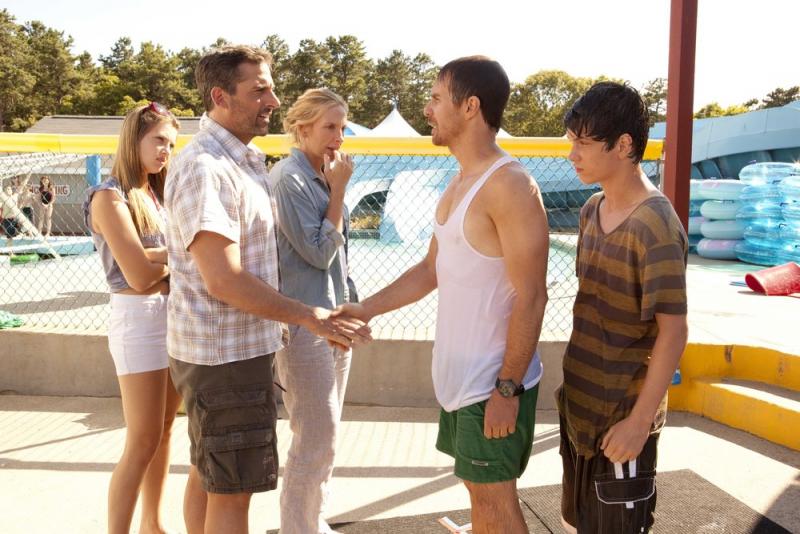
By now you’ve heard how much The Lone Ranger sucks (for more on that, my review here), so what else should you be spending your weekly movie-theater budget on? Well, the Roxie just opened a doc about Detroit band Death (Dennis Harvey breaks it down here), plus there’s a new Pedro Almodóvar joint, a coming-of-age summer flick starring Sam Rockwell and Steve Carell as cool and not-so-cool father figures, and (since one Carell movie ain’t enough) Despicable Me 2 — just the thing for the kidz who’ve already seen Monsters University.
Read on for our takes on these films, and more!
http://www.youtube.com/watch?v=irSSZumpYS4
Augustine When a 19-year-old Parisian kitchen maid (single-named French musician Soko) has a dramatic seizure during dinner service, she makes for Salpêtrière Hospital, where she becomes the superstar patient of Dr. Charcot (Vincent Lindon) — a real-life 19th century professor and neurologist who later mentored Sigmund Freud. There’s no “talking cure” at work here, though; Augustine’s medical treatment consists mostly of naked poking and prodding, as well as hypnosis-induced episodes of her increasingly sexualized “ovarian hysteria.” The tension builds as Charcot struggles against popular disdain for his methods (read aloud to him from newspapers by his coolly elegant wife), as well as his forbidden attraction to Augustine. Occupying the same moody, sensual milieu as David Cronenberg’s too-talky A Dangerous Method (2011), first-time feature writer-director Alice Winocour approaches her tale of misunderstood madness from a point of view that’s more emotionally-driven, with some subtle feminist undercurrents. Points deducted, though, for some obvious symbolism — like costuming Augustine in a brand-new red dress right after she starts her period for the first time. (1:42) (Cheryl Eddy)
http://www.youtube.com/watch?v=KtVEj86Vmzo
Deceptive Practice: The Mysteries and Mentors of Ricky Jay David Mamet fans will recognize Ricky Jay from multiple appearances in the director’s work; he’s also been in films like Boogie Nights and Tomorrow Never Dies (both 1997). But Jay’s true passion is stage magic, specifically card and other sleight-of-hand tricks, performed with a skill so dazzling that it’s tempting to believe he really does have supernatural powers. He’s also a witty, self-deprecating, and sometimes “irascible” (to quote a word used in Molly Bernstein and Alan Edelstein’s doc) character — and has a vast, ever-expanding interest in magic history. Using first-hand interviews, TV and stage-show clips, and some wonderful vintage footage, Deceptive Practice traces Jay’s career (he was a child prodigy in the 1950s, thanks to his supportive grandfather), pausing along the way to pay tribute to the men who influenced him and, in many cases, taught him their top-secret techniques. Throughout, Jay is seen demonstrating his own mind-bending tricks — as “simple” as changing a card’s suit, as elaborate as making it sail across the room and plunge like a knife into a watermelon rind — although never, of course, revealing how he does it. (1:28) (Cheryl Eddy)
Despicable Me 2 The laughs come quick and sweet now that Gru (Steve Carell) has abandoned his super-villainy to become a dad and “legitimate businessman” — though he still applies world-class gravitas to everyday events. (His daughter’s overproduced birthday party is a riot of medieval festoonage.) But like all the best reformed baddies, the Feds, or in this case the Anti-Villain League, recruit him to uncover the next international arch-nemesis. Now a spy, he gets a goofy but highly competent partner (Kristen Wiig) and a cupcake shop at the mall to facilitate sniffing out the criminal. This sequel surpasses the original in charm, cleverness, and general lovability, and it’s not just because they upped the number of minion-related gags, or because Wiig joined the cast; she ultimately gets the short end of the stick as the latecomer love-interest (her spy gadgets are also just so-so). However, Carell kills it as Gru 2 — his faux-Russian accent and awkward timing are more lived-in. Maybe the jokes are about more familiar stuff (like the niggling disappointments of family life) but they’re also sharper and more surprising. And though the minions seemed like one-trick ponies in the first film, those gibberish-talking jellybeans outdo themselves in the sequel’s climax. (1:38) (Sara Maria Vizcarrondo)
I’m So Excited I’m So Excited may be to Pedro Almodóvar what Hairspray (1988) was for director John Waters: a kind of low-intensity, high-fluff gateway drug for a filmmaker who’s otherwise an “acquired taste.” (Note: unlike Hairspray, this is not a family movie.) Almodóvar’s previous pictures were far more explicit about their obsessive thinking: mothers suffered (1999’s All About My Mother); sex was deadly (1990’s Tie Me Up! Tie Me Down!) and men were dishonorable (all of them). But in this drug and booze-addled flame-fest, Almodóvar takes one of his lesser themes (the joy of confinement) and transforms a flight from Madrid to Mexico into the funniest soap opera to ever feature cabaret and S&M talk. Early in the flight we learn the landing gear is shot; this means the flight’s dueling pilots have to find a place to host an emergency landing while Europe is on holiday. They anesthetize all of coach (um…metaphor, anyone?), leaving the rich to bellyache over their lost children, lost happiness, and stubborn virginity. Business class is full of drama queens so the flamboyantly gay attendants spike a cocktail with ecstasy (to make everyone get along) and an orgy ensues, complete with a seemingly victimless rape and multiple change-overs from hetero to homo. Almodóvar does have a knack for make-believe, but his biggest gift for fantasy happens in his stress-free transitions; oh, that coming out could be so liberating — but living in a Catholic country lousy with sexual disorientations, maybe the only place that can happen is at 30,000 feet. (1:35) (Sara Maria Vizcarrondo)
http://www.youtube.com/watch?v=NX9gUw3Kwb4
Kevin Hart: Let Me Explain The comedian (2012’s Think Like a Man) performs in this concert film, shot at Madison Square Garden during his 2012 stand-up tour. (1:15)
Maniac And it came to pass that William Lustig’s trashy classic Maniac (1980) was remade, with Elijah Wood assuming the role of twisted killer Frank, a role closely associated with its originator, the late, great cult actor Joe Spinell. Lustig is credited with a producing credit on this otherwise largely French effort, directed by Franck Khalfoun and co-written by Alejandre Aja and Grégory Levasseur — who also worked together on the 2006 remake of The Hills Have Eyes. Though it’s set in contemporary Los Angeles (complete with dating websites and cell phones), Maniac is shot to mimic the original film’s late-1970s New York (cabs, deserted subways, grimy streetscapes), with a synth-heavy score enhancing the retro vibe. Frank is still obsessed with mannequins, scalps, and his dead mother, with shades of both Psycho (1960) and The Silence of the Lambs (1991) filtering through. When Frank meets Anna (Nora Arnezeder), a beautiful French photographer whose preferred subject is mannequins, he grows ever more confused — and more violent. The entire movie is shot from Frank’s POV (we see Wood’s face only in mirrors and photographs), an off-putting gimmick that fails to add much in the way of suspense or scares. As for the gore, there’s nothing amid the CG enhancements that matches the work of special effects genius Tom Savini, whose memorable exploding-head scene plays just as repulsively effective in 2013 as it did in 1980. If you really wanna be freaked out by a movie maniac, skip this so-so do-over and spend some quality time with Spinell instead. (1:29) Roxie. (Cheryl Eddy)
http://www.youtube.com/watch?v=mK7AS_cITKI
The Way, Way Back Duncan (Liam James) is 14, and if you remember being that age you remember the awkwardness, the ambivalence, and the confusion that went along with it. Duncan’s mother (Toni Collette) takes him along for an “important summer” with her jerky boyfriend, Trent (Steve Carell) — and despite being the least important guy at the summer cottage, Duncan’s only marginally sympathetic. Most every actor surrounding him plays against type (Rob Corddry is an unfunny, whipped husband; Allison Janney is a drunk, desperate divorcee), and since the cast is a cattle call for anyone with indie cred, you’ll wonder why they’re grouped for such a dull movie. Writer-directors Nat Faxon and Jim Rash previously wrote the Oscar-winning screenplay for 2011’s The Descendants, but The Way, Way Back doesn’t match that film’s caliber of intelligent, dry wit. Cast members take turns resuscitating the movie, but only Sam Rockwell saves the day, at least during the scenes he’s in. Playing another lovable loser, Rockwell’s Owen dropped out of life and into a pattern of house painting and water-park management in the fashion of a conscientious objector. Owen is antithetical to Trent’s crappy example of manhood, and raises his water wing to let Duncan in. The short stint Duncan has working at Water Wizz is a blossoming that leads to a minor romance (with AnnaSophia Robb) and a major confrontation with Trent, some of which is affecting, but none of which will help you remember the movie after credits roll. (1:42) (Sara Maria Vizcarrondo)
So now what?
EDITORIAL The scene at City Hall on Friday, June 28 could have been a video rewind of 2004’s Winter of Love: a surprise announcement granting same-sex marriage licenses; a breathless rush of couples to the civic altar, led by two brave, symbolic women (lesbian groundbreakers Del Martin and Phyllis Lyon in 2004 and anti-Prop 8 plaintiffs Kris Perry and Sandy Stier in 2013), a city erupting with good will and cheer, dazed by the speed of luck and history. Earlier, Lt. Gov. Gavin Newsom, teeth and hair and all, was making grand pronouncements, strutting about like he was mayor of the place again.
Back in 2004, the city was scarred and drained from the first great Internet bust, and still reeling from the losses of AIDS. San Francisco was a mess, but it was starting to recover. People who had been forced to move out by the city’s skyrocketing rents and evictions in the early 2000s were beginning to trickle back in, and many of those beached by the boom’s collapse were turning into the very freaks, artists, and innovators they had helped displace. When Newsom launched SF’s same-sex marriage rebellion, it was an act of great civic uplift, burnishing SF’s progressive image in the eyes of the world, while boosting the city’s self-confidence. (Not to mention its economy, which benefited greatly from the wedding explosion.)
The act also burnished Newsom’s own reputation. Previously reviled for his “Care Not Cash” policies that demonized the poor and homeless, a significant percentage of LGBTQ people among them, he was suddenly a posterboy for civil rights. Now of course, San Francisco is supposedly on the arc of an economic boom, skyrocketing evictions included, and not in the dregs of a bust. So it was with a regretful shudder that we noticed some more ominous similarities between 2004 and 2013.
A week before this year’s Pride, and right before the wave of marriage elation overtook the festivities, the city’s homeless census was released. Out of the total count of 6,436 homeless people, a figure emerged that stunned many: 29 percent of 1000 people specifically asked identified themselves as LGBTQ, and it’s assumed that the actual percentage of queer homeless people is in fact higher, due to factors like closeting and mental health. A large portion of LGBTQ homeless are youth, still drawn here by San Francisco’s promise of inclusion and shelter from abusive and rejective backgrounds.
While the city celebrates the achievement of grand ideals of equality, we are failing the very people for whom those ideals may be most valuable. Currently, Dolores Street Services, along with help from Sup. David Campos and the city’s “homeless czar” Bevan Dufty, is working towards the building of a 24-bed shelter specific aimed to service LGBTQ homeless people. But that’s just a drop in the bucket. We need much more.
Now that DOMA has been overturned and Prop. 8 kicked to the curb, there’s a lot of discussion about what the powerful, energized “gay lobby” should take on next. Righting the horrible Supreme Court decision gutting the Voting Rights Act and achieving marriage equality in 37 more states are valiant, necessary goals. But turning toward the actual problems in our own backyard is another imperative.
As the Pride celebration in the Civic Center was winding down on the evening of Sunday, June 30, a group of young women emerged seemingly out of nowhere among the trash-strewn streets and beeping trucks being loaded with the party’s massive detritus. The women quietly dispersed among the leftover crowd, hauling sacks of bread on their shoulders. They made their way toward those lying on the street or huddled in doorways, distributing loaves in a matter-of-fact manner to people in need. It was a perfect reminder of the real spirit of Pride — an inclusivity that benefits all, empowered by actions on a one-to-one, human scale.
Wedding bells and Pride protests
rebecca@sfbg.com ; steve@sfbg.com
The city of San Francisco was a complete whirlwind from June 26 to June 30. First came the historic Supreme Court ruling that ended the ban on same-sex marriage in California and struck down the discriminatory Defense of Marriage Act. The historic decision, handed down just before the city’s Pride festivities got underway and as a rare heat wave gripped the city, unleashed widespread celebration June 26, culminating with a rally and dance party in the streets of the Castro.
The Supreme Court ruled that the Defense of Marriage Act, which denies federal recognition of same-sex marriage, “is unconstitutional as a deprivation of the equal liberty of persons that is protected by the Fifth Amendment.” According to the majority opinion, “DOMA’s principal effect is to identify a subset of state sanctioned marriages and make them unequal.”
Hollingsworth v. Perry, the Prop 8 case, was dismissed on standing due to the fact that the State of California refused to defend it in court. That meant the previous ruling invalidating Prop 8, by Judge Vaughan Walker and upheld by the Ninth Circuit Court, was upheld.
City Hall was totally packed at 7am when the Court convened, with hordes of journalists, gay and lesbian couples, and sign-wielding activists in the crowd. Cheers erupted when the decision was announced striking down DOMA. When the Prop 8 statement came down, the room went nuts.
“It feels good to have love triumph over ignorance,” said Mayor Ed Lee, who joined Lt. Gov. Gavin Newsom in escorting a fragile Phyllis Lyon down the stairway. When Lyon married the late Del Martin, they became the first same-sex couple to get legally married in California in 2004.
“San Francisco is not a city of dreamers, but a city of doers,” Newsom said. “Here we don’t just tolerate diversity, we celebrate our diversity.” He thanked City Attorney Dennis Herrera and others who’d contributed to the fight to for marriage equality. “It’s people with a true commitment to equality that brought us here.”
When Herrera took the podium, he turned to Newsom, and said, “Now you can say, ‘Whether you like it or not!'” — a joking reference to Newsom’s same-sex marriage rallying cry, which some blamed for boosting the anti-same-sex marriage cause. “We wouldn’t be here today if it wasn’t for Gavin Newsom’s leadership,” Herrera continued. “I remember in 2004 when people were saying it was too fast, too soon, too much.” Herrera also pledged to continue the fight that began here in City Hall more than nine years ago: “We will not rest until we have marriage equality throughout this country.”
Later that afternoon, clergy from a variety of faiths including Christianity, Judaism, Islam, Buddhism and the Church of Latter Day Saints gathered on the steps of Grace Cathedral on Nob Hill for a buoyant press conference to celebrate the court’s rulings.
“For 20 years I’ve been marrying gay and lesbian couples, because in the eyes of God, that love and commitment was real, even when it wasn’t in the eyes of the state,” said Rabbi Michael Lerner of the Beyt Tikkun Synagogue. “We as religious people have to apologize to the gay community,” he added, for religious texts that gave opponents of gay marriage ammunition to advance an agenda of discrimination.
He added that the take-home message of the long fight for marriage equality is, “don’t be ‘realistic.’ Thank God the gay community vigorously fought for the right to be married — because they were not ‘realistic,’ the reality changed. Do not limit your vision to what the politicians and the media tell you is possible.”
Mitch Mayne introduced himself as “an openly gay, active Mormon,” which is significant since the Mormon Church was a major funder of Prop 8. He called it “one of the most un-Christlike things we have ever done as a religion,” but noted that the sordid affair had brought on “a mighty change in heart from inside the Mormon community, with greater tolerance than ever before,” with many Mormons going out and marching in solidary with gay and lesbian couples, he said.
Then on June 28, earlier than expected, the County Clerk started issuing same-sex marriage licenses. Kris Perry and Sandy Stier, plaintiffs in the case against Prop. 8, became the first of dozens of happy couples to be married at City Hall that evening, and the marriages continued in the days that followed.
And as if that weren’t enough excitement, it all happened before the weekend, when Pride festivities got underway. This year featured not only the official Pride parade and myriad performances, but also an “Alternative to Pride Parade,” signifying that a radical Pride-questioning movement has been reawakened in San Francisco.
“Have you had enough with the poor political choices of some community leaders that claim to represent you? Are you over the over-corporatizing of SF Pride? Or just tired of the same old events that don’t reflect who you are, and how you want to celebrate your queer pride?” organizers wrote in a statement announcing the event.
The parade itself, meanwhile, also featured some dissenters. The third annual Bradley Manning Support Network contingent swelled in ranks this year, due to the political maelstrom touched off when the Pride Board rescinded Manning’s appointment as Grand Marshal.
The Bradley Manning Support Network contingent attracted more than 2,000 supporters who marched to show solidarity with the openly gay whistleblower, comprising the largest non-corporate contingent in the Parade. Former military strategist Daniel Ellsberg, who leaked secret government documents known as the Pentagon Papers to the press in 1971, donned a pink boa and rode alongside his wife, Patricia, in a pick-up truck labeled “Bradley Manning Grand Marshal.” Patricia told the Bay Guardian, “There is something about the energy and triumph of this beautiful event … Just as the gays have made a tremendous difference with marriage, we have to do the same with wars and aggression” in U.S. foreign policy.
Pride’s legal counsel, Brooke Oliver — who resigned over the Pride Board’s handling of the Manning debacle — marched along with the Bradley Manning contingent. Bevan Dufty, former SF Supervisor and now the mayor’s point person on homelessness, stepped down as a Grand Marshal, also because of the Pride Board’s actions, but didn’t march with the contingent.
Nor were the Bradley Manning supporters the only protest contingent to take part in the parade. A group seized the opportunity to make a political statement by marching with a faux Google bus, an action meant to call attention to gentrification and evictions in San Francisco. They rented a white coach and covered it with signs printed up in a similar font to Google’s corporate logo, proclaiming: “Gentrification & Eviction Technologies (GET) OUT: Integrated Displacement and Cultural Erasure.”
Some trailed the faux Google bus with an 8-foot banner depicting a blown-up version of an Ellis Act evictions map. Others donned red droplets stamped with “evicted” to signify Google map markers, while a few toted suitcases to represent tenants who’d been sent packing. However, their ranks were thin in comparison with the parade contingents surrounding them, which included crowds of workers representing eBay, DropBox, and, of course, Google — the largest corporate contingent in the parade.
“The organizers of this anti-gentrification and displacement contingent are not ‘proud’ that folks are being kicked out of this city that was once their refuge,” organizers of the faux Google bus contingent wrote in a press statement. “The 2013 SF Homeless Count and Survey shows that 29 percent of the city’s homeless population is ‘LGB and other.’ The Castro is experiencing the highest number of evictions in the city. Meanwhile, the SF Pride Parade is becoming as gentrified as SF. This group is calling on Pride to remember its roots.”
Film Listings
Film listings are edited by Cheryl Eddy. Reviewers are Kimberly Chun, Dennis Harvey, Lynn Rapoport, and Sara Maria Vizcarrondo. For rep house showtimes, see Rep Clock.
OPENING
Augustine When a 19-year-old Parisian kitchen maid (single-named French musician Soko) has a dramatic seizure during dinner service, she makes for Salpêtrière Hospital, where she becomes the superstar patient of Dr. Charcot (Vincent Lindon) — a real-life 19th century professor and neurologist who later mentored Sigmund Freud. There’s no “talking cure” at work here, though; Augustine’s medical treatment consists mostly of naked poking and prodding, as well as hypnosis-induced episodes of her increasingly sexualized “ovarian hysteria.” The tension builds as Charcot struggles against popular disdain for his methods (read aloud to him from newspapers by his coolly elegant wife), as well as his forbidden attraction to Augustine. Occupying the same moody, sensual milieu as David Cronenberg’s too-talky A Dangerous Method, first-time feature writer-director Alice Winocour approaches her tale of misunderstood madness from a point of view that’s more emotionally-driven, with some subtle feminist undercurrents. Points deducted, though, for some obvious symbolism — like costuming Augustine in a brand-new red dress right after she starts her period for the first time. (1:42) Opera Plaza, Shattuck, Smith Rafael. (Eddy)
A Band Called Death See “Live to Tell,” this issue. (1:36) Roxie.
Deceptive Practice: The Mysteries and Mentors of Ricky Jay David Mamet fans will recognize Ricky Jay from multiple appearances in the director’s work; he’s also been in films like Boogie Nights and Tomorrow Never Dies (both 1997). But Jay’s true passion is stage magic, specifically card and other sleight-of-hand tricks, performed with a skill so dazzling that it’s tempting to believe he really does have supernatural powers. He’s also a witty, self-deprecating, and sometimes “irascible” (to quote a word used in Molly Bernstein and Alan Edelstein’s doc) character — and has a vast, ever-expanding interest in magic history. Using first-hand interviews, TV and stage-show clips, and some wonderful vintage footage, Deceptive Practice traces Jay’s career (he was a child prodigy in the 1950s, thanks to his supportive grandfather), pausing along the way to pay tribute to the men who influenced him and, in many cases, taught him their top-secret techniques. Throughout, Jay is seen demonstrating his own mind-bending tricks — as “simple” as changing a card’s suit, as elaborate as making it sail across the room and plunge like a knife into a watermelon — although never, of course, revealing how he does it. (1:28) Opera Plaza. (Eddy)
Despicable Me 2 The laughs come quick and sweet now that Gru (Steve Carell) has abandoned his super-villainy to become a dad and “legitimate businessman” — though he still applies world-class gravitas to everyday events. (His daughter’s overproduced birthday party is a riot of medieval festoonage.) But like all the best reformed baddies, the Feds, or in this case the Anti-Villain League, recruit him to uncover the next international arch-nemesis. Now a spy, he gets a goofy but highly competent partner (Kristen Wiig) and a cupcake shop at the mall to facilitate sniffing out the criminal. This sequel surpasses the original in charm, cleverness, and general lovability, and it’s not just because they upped the number of minion-related gags, or because Wiig joined the cast; she ultimately gets the short end of the stick as the latecomer love-interest (her spy gadgets are also just so-so). However, Carell kills it as Gru 2 — his faux-Russian accent and awkward timing are more lived-in. Maybe the jokes are about more familiar stuff (like the niggling disappointments of family life) but they’re also sharper and more surprising. And though the minions seemed like one-trick ponies in the first film, those gibberish-talking jellybeans outdo themselves in the sequel’s climax. (1:38) Four Star, Presidio, Shattuck. (Vizcarrondo)
I’m So Excited I’m So Excited may be to Pedro Almodóvar what Hairspray (1988) was for director John Waters: a kind of low-intensity, high-fluff gateway drug for a filmmaker who’s otherwise an “acquired taste.” (Note: unlike Hairspray, this is not a family movie.) Almodóvar’s previous pictures were far more explicit about their obsessive thinking: mothers suffered (1999’s All About My Mother); sex was deadly (1990’s Tie Me Up! Tie Me Down!) and men were dishonorable (all of them). But in this drug and booze-addled flame-fest, Almodóvar takes one of his lesser themes (the joy of confinement) and transforms a flight from Madrid to Mexico into the funniest soap opera to ever feature cabaret and S&M talk. Early in the flight we learn the landing gear is shot; this means the flight’s dueling pilots have to find a place to host an emergency landing while Europe is on holiday. They anesthetize all of coach (um&ldots;metaphor, anyone?), leaving the rich to bellyache over their lost children, lost happiness, and stubborn virginity. Business class is full of drama queens so the flamboyantly gay attendants spike a cocktail with ecstasy (to make everyone get along) and an orgy ensues, complete with a seemingly victimless rape and multiple change-overs from hetero to homo. Almodóvar does have a knack for make-believe, but his biggest gift for fantasy happens in his stress-free transitions; oh, that coming out could be so liberating — but living in a Catholic country lousy with sexual disorientations, maybe the only place that can happen is at 30,000 feet. (1:35) SF Center, Sundance Kabuki. (Vizcarrondo)
Kevin Hart: Let Me Explain The comedian (2012’s Think Like a Man) performs in this concert film, shot at Madison Square Garden during his 2012 stand-up tour. (1:15)
The Lone Ranger See “Hi-Yo, Stinker.” (2:29) Marina.
Maniac And it came to pass that William Lustig’s trashy classic Maniac (1980) was remade, with Elijah Wood assuming the role of twisted killer Frank, a role closely associated with its originator, the late, great cult actor Joe Spinell. Lustig is credited with a producing credit on this otherwise largely French effort, directed by Franck Khalfoun and co-written by Alejandre Aja and Grégory Levasseur — who also worked together on the 2006 remake of The Hills Have Eyes. Though it’s set in contemporary Los Angeles (complete with dating websites and cell phones), Maniac is shot to mimic the original film’s late-1970s New York (cabs, deserted subways, grimy streetscapes), with a synth-heavy score enhancing the retro vibe. Frank is still obsessed with mannequins, scalps, and his dead mother, with shades of both Psycho (1960) and The Silence of the Lambs (1991) filtering through. When Frank meets Anna (Nora Arnezeder), a beautiful French photographer whose preferred subject is mannequins, he grows ever more confused — and more violent. The entire movie is shot from Frank’s POV (we see Wood’s face only in mirrors and photographs), an off-putting gimmick that fails to add much in the way of suspense or scares. As for the gore, there’s nothing amid the CG enhancements that matches the work of special effects genius Tom Savini, whose memorable exploding-head scene plays just as repulsively effective in 2013 as it did in 1980. If you really wanna be freaked out by a movie maniac, skip this so-so do-over and spend some quality time with Spinell instead. (1:29) Roxie. (Eddy)
The Way, Way Back Coming-of-age comedy about a 14-year-old (Liam James) who strikes up an unlikely friendship with the manager of the local water park (Sam Rockwell). (1:42)
ONGOING
Before Midnight Proving (again) that not all sequels are autonomic responses to a marketplace that rewards the overfamiliar, director Richard Linklater and his cowriters Julie Delpy and Ethan Hawke reconnect with the characters Céline and Jesse, whom we first encountered nearly 20 years ago on a train and trailed around Vienna for a night in Before Sunrise, then met again nine years later in Before Sunset. It’s been nine more years since we left them alone in a Paris apartment, Céline adorably dancing to Nina Simone and telling Jesse he’s going to miss his plane. And it looks like he did. The third film finds the two together, yes, and vacationing in Greece’s southern Peloponnese, where the expansive, meandering pace of their interactions — the only mode we’ve ever seen them in — is presented as an unaccustomed luxury amid a span of busy years filled with complications professional and personal. Over the course of a day and an evening, alone together and among friends, the two reveal both the quotidian intimacies of a shared life and the cracks and elisions in their love story. (1:48) Piedmont, Shattuck, Sundance Kabuki. (Rapoport)
The Bling Ring When it was revealed that high schoolers were behind a series of robberies targeting the lavish homes of Hollywood’s famous-for-being-famous types — most notably Paris Hilton — the fallout became fodder for gossip websites like TMZ.com, plus a memorable Vanity Fair article. The latter (recently expanded into a book by author Nancy Jo Sales) is the basis for Sofia Coppola’s new film, a fictionalized take on the crimes. Bored by upper-middle-class lives that leave them with lots of free time and habitually absent parents, a posse of SoCal teens (newcomers Katie Chang and Israel Broussard, and Harry Potter‘s all-grown-up Emma Watson, lead the charge) begin creepy-crawling the homes of Hilton and others, dovetailing their celebrity obsessions with a raging hunger for expensive shit. (Was ever a crime so victimless, one wonders, than a heist perpetrated at the expense of a starlet’s handbag collection, so vast she won’t even notice a few missing Birkins?) Flashing their ill-gotten new clothes, jewelry, and wads of cash in Facebook selfies, the burglars miss the most valuable lesson of all: that the friendships they share are fleeting and meaningless — kind of like fame, kind of like blowing (stolen) money on designer clothes that will soon be out of style. Ironically, with The Bling Ring, Coppola has delivered her least-vapid film since 1999’s The Virgin Suicides; it’s both candy-colored and canny, a cautionary tale that lingers just long enough on its scenes of youthful excess to let you know it’s in on the joke. (1:27) Metreon, Shattuck, Sundance Kabuki. (Eddy)
The East In Zal Batmanglij and Brit Marling’s powerful second film collaboration (Batmanglij directs, and the pair co-wrote the screenplay, as in 2011’s Sound of My Voice), Marling plays Sarah, an intelligence agent working for a private firm whose client list consists mainly of havoc-wreaking multinationals. Sarah, presented as quietly ambitious and conservative, is tasked by the firm’s director (Patricia Clarkson) with infiltrating the East, an off-the-grid activist collective whose members, including Benji (Alexander Skarsgård), Izzy (Ellen Page), and Doc (Toby Kebbell), bring an eye-for-an-eye sensibility to their YouTube-publicized “jams.” Targeting an oil company responsible for a BP-style catastrophe, they engineer their own spill in the gated-community habitat of the company’s CEO, posting a video that juxtaposes grisly images of oil-coated shorebirds and the unsettling sight of gallons of crude seeping through the air-conditioning vents of a tidy McMansion. A newspaper headline offers a facile framework for understanding their activities, posing the alternatives as “Pranksters or Eco-Terrorists?” But as Sarah examines the gut-wrenching consequences of so-called white-collar crime and immerses herself in the day-to-day practices of the group, drawn in particular to the charismatic Benji, the film raises more complex questions. Much of its rhetorical force flows from Izzy, whom Page invests with a raw, anguished outrage, drawing our sympathies toward the group and its mission of laying bare what should be unbearable. (1:56) California, Piedmont. (Rapoport)
Epic (1:42) Metreon.
Fast and Furious 6 Forget the fast (that’s understood by now, anyway) — part six in this popcorny series is heavy on the “furious,” with constant near-death stunts that zoom past irrational and slam into batshit crazy. Agent Hobbs (Dwayne Johnson) lures the gang out of sunny retirement to bust a fast driver with a knack for strategy and an eye on world domination. Sure, Ludacris jokes their London locale doesn’t mean they’re in a Bond movie, but give cold-blooded Luke Evans some time and he’ll work his way up to antagonizing 007. Shaw (Evans) is smaller than our hero Toretto (Vin Diesel), but he’s convincing, throwing his King’s English at a man whose murky dialect is always delivered with a devilish baritone. If Shaw’s code is all business, Toretto’s is all family: that’s what holds together this cast, cobbled from five Fast and Furious installments shot all over the world. Hottie Gal Gadot (playing Sung Kang’s love interest) reassures Han (Kang) mid-crisis: “This is what we are.” It’s not for nothing the gang’s main weapon is a harpoon gun that, once shot, leaves an umbilicus from the shooter to whatever’s in the crosshairs. That’s Torreto for you. Meanwhile, the villain’s weapon is a car with a spatula-like front end, that flips cars like pancakes. The climactic battle on a cargo plane has to give a face time to every member of the eight-person team, so naturally they shot it on the world’s longest runway. Of course the parade features less car porn than previous editions but it’s got a wider reach now — it’s officially international intrigue, not just fun for gearheads. For my money, it’s some of the best action in theaters today. Stick around for the inevitable sequel-suggesting coda during the credits. (2:10) Metreon. (Vizcarrondo)
Fill the Void Respectfully rendered and beautifully shot in warm hues, Fill the Void admirably fills the absence on many screens of stories from what might be considered a closed world: the Orthodox Hasidic community in Israel, where a complex web of family ties, duty, and obligation entangles pretty, accordion-playing Shira (Hada Yaron). An obedient daughter, she’s about to agree to an arranged marriage to a young suitor when her much-loved sister (Renana Raz) dies in childbirth. When Shira’s mother (Irit Sheleg) learns the widower Yochay (Yiftach Klein) might marry a woman abroad and take her only grandchild far away, she starts to make noises about fixing Shira up with her son-in-law. The journey the two must take, in possibly going from in-laws to newlyweds, is one that’s simultaneously infuriating, understandable, and touching, made all the more intimate given director Rama Burshtein’s preference for searching close-ups. Her affinity for the Orthodox world is obvious with each loving shot, ultimately infusing her debut feature with a beating heart of humanity. (1:30) Shattuck, Smith Rafael. (Chun)
Frances Ha Noah Baumbach isn’t exactly known for romance and bright-eyed optimism. Co-writing 2009’s Fantastic Mr. Fox with director Wes Anderson is maybe the closest to “whimsy” as he’s ever come; his own features (2010’s Greenberg, 2007’s Margot at the Wedding, 2005’s The Squid and the Whale, 1997’s Mr. Jealousy, and 1995’s Kicking and Screaming) tend to veer into grumpier, more intellectual realms. You might say his films are an acquired taste. But haters beware. Frances Ha — the black-and-white tale of a New York City hipster (Baumbach’s real-life squeeze, Greta Gerwig, who co-write the script with him) blundering her way into adulthood — is probably the least Baumbach-ian Baumbach movie ever. Owing stylistic debts to both vintage Woody Allen and the French New Wave, Frances Ha relies heavily on Gerwig’s adorable-disaster title character to propel its plot, which is little more than a timeline of Frances’ neverending micro-adventures: pursuing her nascent modern-dance career, bouncing from address to address, taking an impromptu trip to Paris, visiting her parents (portrayed by the Sacramento-raised Gerwig’s real-life parents), “breaking up” with her best friend. It’s so charming, poignant, and quotable (“Don’t treat me like a three-hour brunch friend!”) that even those who claim to be allergic to Baumbach just might find themselves succumbing to it. (1:26) Smith Rafael. (Eddy)
The Great Gatsby Every bit as flashy and in-your-face as you’d expect the combo of “Baz Luhrmann,” “Jazz Age,” and “3D” to be, this misguided interpretation of F. Scott Fitzgerald’s classic tale is, at least, overstuffed with visual delights. For that reason only, all the fashion-mag fawning over leading lady Carey Mulligan’s gowns and diamonds, and the opulent production design that surrounds them, seems warranted. And in scenes where spectacle is appropriate — Gatsby’s legendary parties; Tom Buchanan’s wild New York romp with his mistress — Luhrmann delivers in spades. The trade-off is that the subtler aspects of Fitzgerald’s novel are either pushed to the side or shouted from the rooftops. Leonardo DiCaprio, last seen cutting loose in last year’s Django Unchained, makes for a stiff, fumbling Gatsby, laying on the “Old Sports” as thickly as his pancake make-up. There’s nothing here so startlingly memorable as the actor and director’s 1996 prior collaboration, Romeo + Juliet — a more successful (if still lavish and self-consciously audacious) take on an oft-adapted, much-beloved literary work. (2:22) Metreon. (Eddy)
The Heat First things first: I hated Bridesmaids (2011). Even the BFF love fest between Maya Rudolph and Kristen Wiig couldn’t wash away the bad taste of another wolf pack in girl’s clothing. Dragging and dropping women into dude-ly storylines is at best wonky and at worst degrading, but The Heat finds an alternate route. Its women are unlikable; you don’t root for them, and you’re not hoping they become princesses because such horrifying awkwardness can only be redeemed by a prince. In Bridesmaids and Heat director Paul Feig’s universe, friendship saves the day. Sandra Bullock is Murtaugh to Melissa McCarthy’s Riggs, with tidy Bullock angling for a promotion and McCarthy driving a busted hoopty through Boston like she’s in Grand Theft Auto. Circumstances conspire to bring them together on a case, in one of many elements lifted from traditional buddy-cop storylines. But! The jokes are constant, pelting, and whiz by like so much gunfire. In one running gag, a low-rung villain’s worst insult is telling the women they look old — but neither character is bothered by it. It’s refreshing to see embarrassment humor, so beloved by chick flicks, get taken down a peg by female leads who don’t particularly care what anyone thinks of them. (1:57) Marina, 1000 Van Ness, SF Center, Sundance Kabuki. (Vizcarrondo)
Hey Bartender Hey, have you heard of this trendy thing called craft cocktails? Be warned, sophisticated San Francisco drinkers: Douglas Tirola’s upbeat documentary mentions our fair city in passing only a handful of times; instead, it concentrates on New York City’s relatively recent “cocktail revolution,” interviewing movers and (literal) shakers on the scene while giving a brief history of cocktails in America (again, with an emphasis on NYC). Hey Bartender‘s focal points are well-chosen studies in contrast: ex-Marine Scott — tattooed and scrupulously mustached — who’s working his way up the ranks at hipster lounge Employees Only; and middle-aged Steve, who runs a struggling blue-collar bar just outside the city and is slowly coming around to the idea of adding fancier drinks to his menu. Though dive-bar denizens may roll their eyes at some of Hey Bartender‘s more pretentious trappings (the movie doesn’t mention it, but drinks at Employees Only are in the $15-16 range), it does make the case that today’s superstar “mixologists” deserve just as much recognition as superstar restaurateurs. And the film has a point: can a Top Chef spinoff for bartenders be that far off? (1:32) Roxie. (Eddy)
The Internship The dirty little secret of the new economy continues to be the gerbil cycle of free/cheap labor labeled “internships” that propels so many companies — be they corporate or indie, digital or print media. But gee, who’s going to see an intern comedy titled The Exploitation, besides me and my local union rep? Instead, spinning off a Vince Vaughn story idea and a co-writing credit, The Internship looks at that now-mandatory time-suck for so many college students through the filter of two older, not-quite-wiser salesmen Billy (Vaughn) and Nick (Owen Wilson) hoping to make that working guy’s quantum leap from watch sales to Google’s Mountain View campus, which director Shawn Levy casts as a bright and shiny workers wonderland with its free spring rolls and lattes, bikes, and napping pods. Departing from reality: the debugging/coding/game-playing/app-making competition that forces Billy and Nick to bond with their team of castoffs (Dylan O’Brien, Tiya Sircar, Tobit Raphael), led by noob manager Lyle (Josh Brener), in order to win a full-time job. Part of the key, naturally, turns out to be a Swingers-like visit to a strip club, to release those deeply repressed nerd sexualities — nothing like a little retrograde sexism to bring a group together. Still, the moment is offset by the generally genial, upbeat attitude brought to The Internship by its lead actors: Nick and Billy may be flubs at physics and clueless when it comes to geek culture, but most working stiffs who have suffered the slings and arrows of layoffs and dream of stable employment can probably get behind the all-American ideals of self-reinvention and optimism about the future peddled in The Internship, which easily slips in alongside The Great Gatsby among this year’s Great Recession narratives. Blink too fast and you might miss the microcameo by Google co-founder Sergey Brin. (1:59) Metreon, 1000 Van Ness. (Chun)
Iron Man 3 Neither a sinister terrorist dubbed “the Mandarin” (Ben Kingsley) nor a spray-tanned mad scientist (Guy Pearce) are as formidable an enemy to Tony Stark (Robert Downey, Jr.) as Tony Stark himself, the mega-rich playboy last seen in 2012’s Avengers donning his Iron Man suit and thwarting alien destruction. It’s been rough since his big New York minute; he’s been suffering panic attacks and burying himself in his workshop, shutting out his live-in love (Gwyneth Paltrow) in favor of tinkering on an ever-expanding array of manned and un-manned supersuits. But duty, and personal growth, beckon when the above-mentioned villains start behaving very badly. With some help (but not much) from Don Cheadle’s War Machine — now known as “Iron Patriot” thanks to a much-mocked PR campaign — Stark does his saving-the-world routine again. If the plot fails to hit many fresh beats (a few delicious twists aside), the 3D special effects are suitably dazzling, the direction (by series newcomer Shane Black) is appropriately snappy, and Downey, Jr. again makes Stark one of the most charismatic superheros to ever grace the big screen. For now, at least, the continuing Avengers spin-off extravaganza seems justified. (2:06) Metreon. (Eddy)
Laurence Anyways Xavier Dolan’s latest is yet another gorgeously-designed love story; it fits perfectly alongside his extremely personal I Killed My Mother (2009) and the devastating Heartbeats (2010). Although some critics have suggested that this young director needs to hire an editor (Laurence Anyways clocks in at two hours and 48 minutes), I would argue that this epic, gender-bending love story needed to take its stylized time to achieve what most films never do: humanize a transgendered lead character. Melvil Poupaud (Raúl Ruiz’s favorite ingénue) is stunning as Laurence; as his longtime lover, Fred, Suzanne Clément performs with a guttural passion that should keep audiences glued to the screen. For those willing to accept a decade’s worth of hypnotic set and costume designs (the film spans 1989-1999); cryptic character development; a crew of campy castaways; and an electric, eclectic soundtrack (Depeche Mode, Celine Dion), Laurence Anyways is well worthy of its epic running time. Could this be the film that elevates Canada’s best-kept secret to being the leader of a post-gender film movement that’s just about to explode? (2:48) Metreon. (Jesse Hawthorne Ficks)
Man of Steel As beloved as he is, Superman is a tough superhero to crack — or otherwise bend into anything resembling a modern character. Director Zack Snyder and writer David S. Goyer, working with producer Christopher Nolan on the initial story, do their best to nuance this reboot, which focuses primarily on Supe’s alien origins and takes its zoom-happy space battles from Battlestar Galactica. The story begins with Kal-El’s birth on a Krypton that’s rapidly going into the shitter: the exploited planet is about to explode and wayward General Zod (Michael Shannon) is staging a coup, killing Kal-El’s father, Jor-El (Russell Crowe), the Kryptonians’ lead scientist, and being conveniently put on ice in order to battle yet another day. That day comes as Kal-El, now a 20-something earthling named Clark Kent (Henry Cavill) — resigned to his status as an outsider, a role dreamed up by his protective adoptive dad (Kevin Costner) — has turned into a bit of a (dharma) bum, looking like a buff Jack Kerouac, working Deadliest Catch-style rigs, and rescuing people along the way to finding himself. Spunky Lois Lane (Amy Adams) is the key to his, erm, coming-out party, necessitated by a certain special someone looking to reboot the Kryptonian race on earth. The greatest danger here lies in the fact that all the leached-of-color quasi-sepia tone action can turn into a bit of a Kryptonian-US Army demolition derby, making for a mess of rubble and tricky-to-parse fight sequences that, of course, will satisfy the fanboys and -girls, but will likely glaze the eyes of many others. Nevertheless, the effort Snyder and crew pack into this lengthy artifact — with its chronology-scrambling flashbacks and multiple platforms for Shannon, Diane Lane, Christopher Meloni, Laurence Fishburne, and the like — pays off on the level of sheer scale, adding up to what feels like the best Superman on film or TV to date — though that bar seems pretty easy to leap over in a single bound. (2:23) Metreon, 1000 Van Ness, Sundance Kabuki. (Chun)
Monsters University Seven-year-old Mike Wazowski is even more adorable than grown-up, Billy-Crystal-voiced Mike Wazowski. It’s a pity, then, that one of the big lessons Monsters University teaches is that the essence of monster-identity is how scary one is. What Mike loses in frightfulness he forcefully recovers in spunk, and after a trip to the scare floor that briskly reminds us the premise of 2001’s Monsters, Inc., mini-Mike becomes the first ever career-driven Pixar character. (For this, I love him.) We all know he eventually becomes a superstar in this scare-powered retro-verse, but first he has to overcome frat boy-inflicted embarrassment and flunk out of school. The most noteworthy thing about Pixar’s first prequel is how very massively its characters fail — it’s a lovely tilt that suggest the greatness of tomorrow begins when you overcome the failures of today. The administrators of Monsters University (in particular Helen Mirren’s dragon-lady Dean) require formal perfection in the scares they grade, but in the world of actual scarers, oddness and difference actually become advantages. It’s all theory but no rulebook. And doesn’t that sound like a good lesson from the studio that once proudly said “story is king,” yet now scrambles to meet Disney’s once-a-year feature demands? Such rigidity comes at a price. (1:50) 1000 Van Ness, Presidio, SF Center, Shattuck, Sundance Kabuki, Vogue. (Vizcarrondo)
Much Ado About Nothing Joss Whedon (last year’s The Avengers) shifts focus for a minute to stage an adaptation of the Shakespeare comedy, drawing his players from 15 years’ worth of awesome fantasy/horror/sci-fi TV and film projects. When the Spanish prince Don Pedro (Reed Diamond) pays a post-battle visit to the home of Leonato (Clark Gregg) with his officers Claudio (Fran Kranz) and Benedick (Alexis Denisof), Claudio falls for Leonato’s daughter, Hero (Jillian Morgese), while Benedick falls to verbal blows with Hero’s cousin Beatrice (Amy Acker). Preserving the original language of the play while setting his production in the age of the iPhone and the random hookup, Whedon makes clever, inventive use of the juxtaposition, teasing out fresh sources of visual comedy as well as bringing forward the play’s oddities and darker elements. These shadows fall on Beatrice and Benedick, whose sparring — before they succumb to a playfully devious setup at the hands of their friends — has an ugly, resentful heat to it, as well as on Hero and Claudio, whose filmy romance is unsettlingly easy for their enemies, the malevolent Don John (Sean Maher) and his cohorts, to sabotage. Some of Acker and Denisof’s broader clowning doesn’t offer enough comic payoff for the hammy energy expenditure, but Nathan Fillion, heading up local law enforcement as the constable Dogberry, delivers a gleeful depiction of blundering idiocy, and the film as a whole has a warm, approachable humor while lightly exposing “all’s well that ends well”‘s wacky, dysfunctional side. (1:49) Albany, 1000 Van Ness, Piedmont, SF Center. (Rapoport)
Now You See Me Cheese can be a tough factor to quantify, but you get close to the levels Now You See Me strives for when you picture the hopelessly goofy, tragically coiffed Doug Henning lisping, “It’s magic!” somewhere between Bob “Happy Little Tree” Ross and a rainbow sprinkled with Care Bears. Now You See Me, however, is much less likely to be dusted off and adored by a Bronies-style cult. Four seemingly savvy street and stage magicians (Jesse Eisenberg, Woody Harrelson, Isla Fisher, and Dave Franco) are brought together by tarot card invite by a mysterious host. What follows is a series of corny performances by the crew, now dubbed the Four Horseman, that are linked to a series of Robin Hood-like, or not, thefts. Nipping at their heels are a loudly flustered FBI agent (Mark Ruffalo, working an overcooked Columbo impression), a waifish Interpol detective (Mélanie Laurent, as if slouching through a Sorbonne semester), and a professional debunker (Morgan Freeman, maintaining amusement). In the course of the investigation, the Horsemen’s way-too-elaborate and far-from-apocalyptic illusions are taken apart and at least one vigorously theatrical fight scene takes place — all of which sounds more riveting than what actually transpires under the action-by-the-book watch of director Louis Leterrier, who never succeeds in making the smug, besuited puppets, I mean Horsemen, who strut around like they’re in Ocean’s Eighteen 4D, anything remotely resembling cool. Or even characters we might give a magical rabbit’s ass about. For all its seemingly knowing pokes at the truth behind the curtain, Now You See Me lacks much of the smarts and wit of loving deconstructionists like Penn and Teller —glimmers of which can only be made out in the smirk of Harrelson and the knowing twinkle of Freeman — or even the tacky machismo of Criss Angel, as well as a will to get to a truth behind the mystery. Or is the mystery behind the truth? (1:56) 1000 Van Ness, SF Center. (Chun)
Rebels with a Cause The huge string of parklands that have made Marin County a jewel of preserved California coastline might easily have become wall-to-wall development — just like the Peninsula — if not for the stubborn conservationists whose efforts are profiled in Nancy Kelly’s documentary. From Congressman Clem Miller — who died in a plane crash just after his Point Reyes National Seashore bill became a reality — to housewife Amy Meyer, who began championing the Golden Gate National Recreation Area because she “needed a project” to keep busy once her kids entered school, they’re testaments to the ability of citizen activism to arrest the seemingly unstoppable forces of money, power and political influence. Theirs is a hidden history of the Bay Area, and of what didn’t come to pass — numerous marinas, subdivisions, and other developments that would have made San Francisco and its surrounds into another Los Angeles. (1:12) Smith Rafael. (Harvey)
Somm First-time filmmaker Jason Wise follows four wine-obsessed men (including three from the Bay Area) on their quest to become Master Sommeliers. Their genial rivalry — the stuffiest member of the quartet is nicknamed “Dad” — somewhat offsets the immense pressure they’re under, though every guy turns into Rain Man when he starts ID-ing each unmarked glass, detecting subtle yet highly specific aromas like “sage, truffle, wet forest floor, decaying dried red rose petals,” “a freshly opened can of tennis balls,” and (in the weirdest example) “grandma’s closet.” It’s an insular, elite world, but Wise’s camera gets right to the front lines as the candidates prep for the grueling, multi-day test, interviewing the long-suffering spouses of the candidates (one of whom ruminates on the grossness of “spit buckets” left behind after late-night tasting marathons). As the day of reckoning looms, the tension mounts along with the piles of flash cards — but the friendships and good humor remain, even after the results are revealed. (1:33) Sundance Kabuki. (Eddy)
Star Trek Into Darkness Do you remember 1982? There are more than a few echoes of Star Trek II: The Wrath of Khan in J. J. Abrams’ second film retooling the classic sci-fi property’s characters and adventures. Darkness retains the 2009 cast, including standouts Zachary Quinto as Spock and Simon Pegg as comic-relief Scotty, and brings in Benedict “Sherlock” Cumberbatch to play the villain (I think you can guess which one). The plot mostly pinballs between revenge and preventing/circumventing the destruction of the USS Enterprise, with added post-9/11, post-Dark Knight (2008) terrorism connotations that are de rigueur for all superhero or fantasy-type blockbusters these days. But Darkness isn’t totally, uh, dark: there’s quite a bit of fan service at work here (speak Klingon? You’re in luck). Abrams knows what audiences want, and he’s more than happy to give it to ’em, sometimes opening up massive plot holes in the process — but never veering from his own Prime Directive: providing an enjoyable ride. (2:07) Metreon, 1000 Van Ness, Sundance Kabuki. (Eddy)
This Is the End It’s a typical day in Los Angeles for Seth Rogen as This Is the End begins. Playing a version of himself, the comedian picks up pal and frequent co-star Jay Baruchel at the airport. Since Jay hates LA, Seth welcomes him with weed and candy, but all good vibes fizzle when Rogen suggests hitting up a party at James Franco’s new mansion. Wait, ugh, Franco? And Jonah Hill will be there? Nooo! Jay ain’t happy, but the revelry — chockablock with every Judd Apatow-blessed star in Hollywood, plus a few random inclusions (Rihanna?) — is great fun for the audience. And likewise for the actors: world, meet Michael Cera, naughty coke fiend. But stranger things are afoot in This Is the End. First, there’s a giant earthquake and a strange blue light that sucks passers-by into the sky. Then a fiery pit yawns in front of Casa Franco, gobbling up just about everyone in the cast who isn’t on the poster. Dudes! Is this the worst party ever — or the apocalypse? The film — co-written and directed by Rogen and longtime collaborator Evan Goldberg — relies heavily on Christian imagery to illustrate the endtimes; the fact that both men and much of their cast is Jewish, and therefore marked as doomed by Bible-thumpers, is part of the joke. But of course, This Is the End has a lot more to it than religious commentary; there’s also copious drug use, masturbation gags, urine-drinking, bromance, insult comedy, and all of the uber-meta in-jokes fans of its stars will appreciate. (1:46) Metreon, 1000 Van Ness, Presidio, Shattuck. (Eddy)
20 Feet From Stardom Singing the praises of those otherwise neglected backup vocalists who put the soul into that Wall of Sound, brought heft to “Young Americans,” and lent real fury to “Gimme Shelter,” 20 Feet From Stardom is doing the rock ‘n’ roll true believer’s good work. Director Morgan Neville follows a handful of mainly female, mostly African American backing vocal legends, charts their skewed career trajectories as they rake in major credits and keep working long after one-hit wonders are forgotten (the Waters family) but fail to make their name known to the public (Merry Clayton), grasp Grammy approval yet somehow fail to follow through (Lisa Fischer), and keep narrowly missing the prize (Judith Hill) as label recording budgets shrivel and the tastes, technology, and the industry shift. Neville gives these industry pros and soulful survivors in a rocked-out, sample-heavy, DIY world their due on many levels, covering the low-coverage minis, Concert for Bangladesh high points, gossipy rumors, and sheer love for the blend that those intertwined voices achieve. One wishes the director had done more than simply touch in the backup successes out there, like Luther Vandross, and dug deeper to break down the reasons Fischer succumbed to the sophomore slump. But one can’t deny the passion in the voices he’s chosen to follow — and the righteous belief the Neville clearly has in his subjects, especially when, like Hill, they are ready to pick themselves up and carry on after being told they’re not “the Voice.” (1:30) Metreon, Shattuck, Smith Rafael. (Chun)
Unfinished Song (1:36) Albany.
White House Down Ah, the mid-1990s: a time when two big-budget movies on the same subject were regularly released within months of each other (1997’s Volcano and Dante’s Peak; 1998’s Armageddon and Deep Impact). When a director named Roland Emmerich ascended into the blockbuster pantheon with Independence Day (1996), a film that’s best-remembered for that iconic shot of the White House exploding under alien death rays. The intervening years have seen Emmerich plunge ever-deeper into various flavors of disaster, and White House Down — which reignites that ’90s copycat-rivalry thing by riding the fumes of March’s Olympus Has Fallen — finds its boogeyman in domestic terrorism. It beings on a triumphant day for President James Sawyer (Jamie Foxx), who has just ordered all US troops removed from the Middle East — angering some high-up men in his administration, as well as some ex-military goons with axes of their own to grind. When the White House is compromised, a wannabe Secret Service agent (Channing Tatum), at the Prez’s house for a tour with his precocious daughter, shoulders one-man-army duties. Rockets are launched; there’s a high-speed limo chase across the White House lawn; we learn the truth about Marilyn and JFK; and thanks to evil genius Skip Tyler (Jimmi Simpson), “the greatest hack the world has ever seen” is about to unleash World War III. Yep, that’s right: 17 years after ID4‘s Jeff Goldblum broke into the alien mainframe, thereby saving the White House-less planet, Emmerich has decided that hackers are actually bad guys. It goes with White House Down‘s warning that the enemy is no longer an external threat, but something lurking right under your nose. Better start working out, America — and working on your one-liners. (2:17) Metreon, 1000 Van Ness, Shattuck, Sundance Kabuki. (Eddy)
World War Z Or, Brad Pitt saves the world from undead beings with rotted brains but super-sharp hearing. Somehow, Max Brooks’ innovative multi-character book — written in the form of interviews with survivors of a recent zombie outbreak — becomes by-the-numbers action horror in the hands of director Marc Forster (2008’s Quantum of Solace, a.k.a. that Bond movie nobody remembers), complete with credit sequence filled with real news reports of environmental disasters, global unrest, and even a little shout-out to that guy who ate another guy’s face off last year in Florida. No bath-salt jokes here, though; instead, we have Pitt playing a verrrry serious former UN investigator — former, because he quit to spend more time with his family, a promise he actually considers keeping even when the survival of the world hinges, apparently, on his very specific expertise. He jets around the world (South Korea! Israel! Wales?) in search of a cure, but it’s obvious from the beginning — when he escapes immediate death in the initial rampage with his picture-perfect wife (Mireille Enos) and two daughters — that he’ll eventually suss out a planet-saving solution. (Sorry, but if that’s a spoiler you’ve never seen a movie before.) A few nifty setpieces can’t save World War Z from more or less embodying the descriptor “meh,” with its undynamic 3D, uninspiring CG, and cobbled-together script, complete with reassuring final voice-over. And one more thing: for the love of flesh-ripping gore, can we please make this the last PG-13 zombie movie? (1:56) California, Four Star, 1000 Van Ness, Presidio, SF Center, Sundance Kabuki. (Eddy) *
Images from a big gay victory celebration
It was an amazing day of celebration in San Francisco yesterday, from the early morning crowd that gathered in City Hall to hear the ruling legalizing same-sex marriages in California to the evening celebration in the Castro. Here are some of the faces of that celebration by photographer Tim Daw (except the Newsom image, which was taken by Steven T. Jones)
Religious leaders celebrate Supreme Court decision upholding marriage equality
Photos by Rebecca Bowe
While proponents of the now-unenforceable Proposition 8 might have pointed to scripture to justify opposition to same-sex marriage, a group of religious leaders from throughout the Bay Area came together this afternoon to celebrate an historic Supreme Court ruling upholding marriage equality.
Clergy from a variety of faiths including Christianity, Judaism, Islam, Buddhism and the Church of Latter Day Saints gathered on the steps of Grace Cathedral on San Francisco’s Nob Hill on June 26 for a buoyant press conference held in celebration of the Supreme Court’s decision to strike down Prop. 8 and the Defense of Marriage Act (DOMA).
“The lies of separate but equal have no place on this holy hill,” said the Rev. Marc Handley Andrus of Episcopal Bishop of California. “Gay marriage is marriage, gay parents are parents, and all people are people.”
“For 20 years I’ve been marrying gay and lesbian couples, because in the eyes of God, that love and commitment was real, even when it wasn’t in the eyes of the state,” said Rabbi Michael Lerner of the Beyt Tikkun Synagogue. “We as religious people have to apologize to the gay community,” he added, for religious texts that gave opponents of gay marriage ammunition to advance an agenda of discrimination.
He added that the take-home message of the long fight for marriage equality is, “don’t be ‘realistic.’ Thank God the gay community vigorously fought for the right to be married – because they were not ‘realistic,’ the reality changed. Do not limit your vision to what the politicians and the media tell you is possible.” Their message caught on, he said, because “The theme of love touched people who had stony hearts in other respects.”
Mitch Mayne’s presence was especially significant.“I am an openly gay, active Mormon,” he explained to the crowd. “I am an optimist. I think you have to be, to be a gay Mormon,” he added, eliciting some chuckling from the crowd. “As a gay man, and as a Mormon, I believe Prop. 8 was one of the most un-Christlike things we have ever done as a religion,” Mayne stated. But he said he’d witnessed an unexpected outcome as a result. “Out of this troubling time has come a mighty change in heart from inside the Mormon community, with greater tolerance than ever before,” he said, adding that many Mormons had marched in solidary with gay and lesbian couples.
Rev. Kamal Hassan, pastor of Sojourner Truth Presbyterian in Richmond, said, “I am glad that DOMA was struck down, because it did not defend marriage – it exclusivized it, and defended heterosexual privilege.” But Hassan, like many other clergy members who spoke, seized on the Supreme Court’s decision striking down part of the Voting Rights Act the day before its ruling on same-sex marriage as yet another civil rights cause that needed to be fought.
“The work is not finished – it continues until the rights of all people are protected and defended,” he said. Referencing the famous quote by Dr. Martin Luther King that the arc of history is long but bends toward justice, Hassan said, “We’ve got to be some arc drivers. We should not be as patient as we’ve been so far. We have to push in order for these things to move forward.”
HOT PINK LIST 2013: ACT-UPPERS
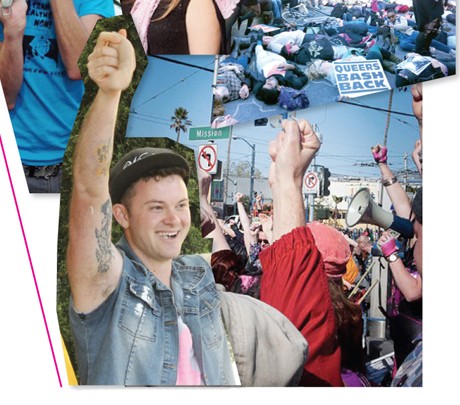
AIDS-era nostalgia gripped popular culture recently with several acclaimed documentaries (including Oscar-nominated How to Survive a Plague) and the Tony-winning revival of Larry Kramer’s play “A Normal Heart” (soon to be an HBO movie with Julia Roberts). But a new generation was also rediscovering the disruptive tactics of ACT-UP. That highly effective, emotionally inspiring AIDS activist organization turned 25 last year, and ACT-UP SF (www.facebook.com/ACTUPSF) relaunched with a new agenda: combating queer homelessness and evictions, the criminalization of HIV and sex work, transphobia and discrimination, and astronomical HIV drug prices. Through direct actions and colorful street protests, ACT-UP SF renewed the intergenerational spirit of queer community.

ACT-UP SF photos by Waiyde Palmer and Liz Highleyman, courtesy ACT-UP SF.
Mood music
arts@sfbg.com
MUSIC It’s amazing what a difference two years makes. In June of 2011, I packed into a sweaty club in Silver Lake to see an up-and-coming glitch producer by the name of Baths (né Will Wiesenfeld) perform a triumphant home-town gig. Preceded by similarly buzzy beatsmiths like Shlohmo and Groundislava, Wiesenfeld spent the hour-long set hiding behind a table full of laptops and sequencers, pairing aggressive, wildly vacillating beats with heady melodies and his Sigur Rós-ian falsetto. While the show was a viscerally arresting experience, it was severely lacking in personality — painting its young architect as a musician much more interested in crafting a unique sonic aesthetic than baring his soul.
Fast forward almost two years, and Wiesenfeld has released an intimate, crushingly personal second album. Obsidian is a harrowing journey into the fractured psyche of an naked young artist, a complete 180 from his beat-driven, somewhat opaque debut, Cerulean. Though there were signs that he was moving in a new direction — notably the brilliant “Pop Song” from his 2011 odds-and-ends LP, Pop Music/False B-Sides — it is a brave, unexpected step forward for the 24-year-old. The Tarzana, Calif.-native strips back the eclectic, maximalist sound of his early work in favor of down-tempo, sparse, vocal-driven numbers.
The confessional lyrics come thick and fast, beginning with the bleak, shadowy, “Worsening.” “Where is God when you hate him most? / When the coughs in the earth come to bite at my robes,” emotes the stricken singer-songwriter, after admitting that he “might try to die.” During the time he was supposed to be working on Obsidian, Wiesenfeld was struck down by a vicious bout of E. Coli. His struggle with the debilitating disease is chronicled throughout the album, no more so than on its opener.
Lyrically, much of Obsidian is explosive, cathartic, and sometimes frankly uncomfortable, and they aren’t just related to his illness. The stand-out third track, “Ironworks,” is a beautiful song of denied love. Driven by a glorious string line and a cascade of piano — which recalls Ryuichi Sakamoto at times — Wiesenfeld tells the story of a man (presumably, him) falling in love with a married man, who denies his love and returns to the comfort of his wife after their relationship. Alone in the end, Wiesenfeld cries, “I am sweet swine. / And no man is ever mine.”
Throughout the album, he touches on anonymous sex, abuse, nihilism, and everything in between — often playing the role of perpetrator. Lyrics like, “And I never see your face, but I just might be okay with that. / Because I have no eyes, I have no love, I have no hope. / And it is not a matter of if you mean it. / But it is only a matter of come and fuck me.” At early listens, it’s difficult to imagine such a bubbly, gregarious character saying these salacious things. Trent Reznor, Kanye West, sure. A chubby, bespectacled kid from the Valley, not so much.
And though there is a lot of darkness on Obsidian, it’s not all sour times. Compositionally, the classically-trained pianist is capable of crafting mellifluous, lush arraignments and soaring vocal melodies. He also loves to cake on layers of woozy percussive droplets, giving his tracks a propulsive, cinematic quality. Though much of the album is of the down-tempo variety, he freshens things up with a few curve-balls, namely on the aggressive, industrial-influenced, “Earth Death,” and the Postal Service churn of “Ossuary.”
Wiesenfeld will be debuting much of this material this to the Bay Area this week, when his tour with buzzy, Chicago-based duo, Houses rolls into the Great American Music Hall. His choice of opening acts reflects his musical shift, as Houses craft reflective, affecting mood music — quite a bit different than the hip-hop/dance stylings of the artists who flanked him two years ago. While the laptop is likely to make an appearance, there will be plenty of live instrumentation on show with Wiesenfeld spending time on the keyboards and bandmate Morgan Greenwood taking on a few different instruments. It will be fascinating to see how he handles his new direction, but you can guarantee that the effusive, passionate performer will be pouring his heart into his show, the same way he poured it into Obsidian.
BATHS
With Houses, D33J
Sat/29, 9pm, $16
Great American Music Hall
859 O’Farrell, SF
(415) 885-0750
Soundtrack to today: DOMA, Prop 8, Wendy Davis, and Devo
It’s hard to comprehend everything that has happened in the past 24 hours, or even the past 10 minutes. The Supreme Court ruled the Defense of Marriage Act (DOMA) and Prop 8 unconstitutional. Senator Wendy Davis spent 11 hours filibustering an anti-abortion bill that would’ve taken away the rights of women all over Texas, and sadly, Devo’s drummer Alan Myers died (earlier this week, but the news filtered out today).
I pretty much can’t stop tearing up today. There are just so many complicated emotions to deal with right now, and so I turned to music.
So far, here’s my soundtrack to June 26, 2013. Tell me what you’re listening to, and I’ll add it to the mix:
**Prop 8/DOMA rulings: this means that gay couples can marry in California. The court also ruled that the portion of DOMA that denies federal benefits to same-sex couples is unconstitutional. These are big steps forward. For our ongoing coverage, keep checking here, then dance:
http://www.youtube.com/watch?v=oG2ixYJ79iE
Thanks for the tip, DJ Carnita:
https://www.youtube.com/watch?v=hQJG-36krgk
**Last night, Senator Davis talked for hours to filibuster a bill in the Texas State Senate that would have placed severe new restrictions on abortion clinics in that state (essentially shutting many down) and ban abortion after 20 weeks of pregnancy — giving Texas one of the most restrictive abortion laws in the country.
As Davis filibustered, President Obama tweeted “Something special is happening in Austin tonight, hashtagged #StandWithWendy. For more on what went down, check here and for more on Senator Davis go here.
An ode to Davis (via Kathleen Hanna’s Bikini Kill)
http://www.youtube.com/watch?v=5DSSFJJ5Wo4
And to fighting for your rights (OK, also via Kathleen Hanna, but her formerly solo project, Julie Ruin)
http://www.youtube.com/watch?v=UWtBD0uRN0g
**For a week full of wins, there was one notable loss: early Devo drummer Alan Myers, who died Monday of brain cancer. San Francisco-based jazz musician Ralph Carney (formerly of Akron, Ohio, where Devo began) was the first to post the news on his Facebook page last night, and it was reported this morning on RollingStone.com. In Myers’ honor, I’ll be listening to 1978’s Q: Are We Not Men? A: We Are Devo! and 1980’s Freedom of Choice on repeat today:
http://www.youtube.com/watch?v=dVGINIsLnqU
http://www.youtube.com/watch?v=jadvt7CbH1o
Pride on fire: This year’s must-do events
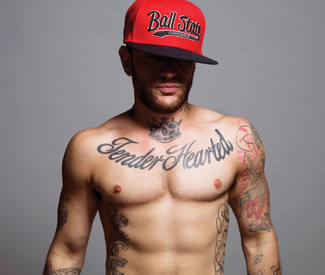
Strap on that rainbow jetpack — there’s a heckuva lot of stuff going down at Pride. Here are our pinkiest, proudest picks.
ONGOING
Faetopia 2286 Market, SF. www.faetopia.com. Through Fri/28, noon-midnight, (event times vary), $10 suggested donation. What’s a radical queer to do in this season of commercialized sexual identity? Fill it with blithe faggotry and faerie magick. The crew behind Faetopia is organizing nights of queer cinema, ecology and history classes, drag musicals, skillshares, and much more — do drop in.
Frameline37 Various venues, SF and Berk; www.frameline.org. Most shows $12. Wed/26-Sun/30. There’s still much to see at the San Francisco International LGBT Film Festival, including the ever-popular “Fun in Girls Shorts” and “Fun in Boys Shorts” short-film programs, plus closing-night high-school comedy G.B.F.
“From Heather’s Mommies to Tango’s Daddies” San Francisco Public Library Main Branch, 100 Larkin, SF; through August 1 during library hours, free, www.sfpl.org. This exhibit traces “the evolution of family affirming literature” through Randall Tarpey-Schwed’s collection of more than 70 same-sex family friendly children’s books published since the 1970s. Also, on the main branch’s second floor, in the Fisher Children’s Collection, the “10,000 Dresses” highlights the first transgender book written for children.
“I Am UndocuQueer!” Galería de la Raza, 2857 24th St, SF; www.galeriadelaraza.org. Through July 1. The latest installment of the gallery’s Digital Mural Project features the work of undocumented queer activist Julio Salgado. His billboard aims to illuminate the intersection between — and foster open dialogue between — the immigrant and LGBT communities.
National Queer Arts Festival Various venues, SF; queerculturalcenter.org/NQAF. The 16th annual performance fest wraps up with Terry Baum’s HICK, a love story about Eleanor Roosevelt (Wed/26-Thu/27 at the Garage), and multi-media performance Girl Talk, with Gina de Vries, Elena Rose, and Julia Serano (Thu/27, African American Arts and Cultural Center).
WEDNESDAY 26
“Dream Queens Revue Pride Show” Aunt Charlie’s Lounge, 133 Turk, SF; www.dreamqueensrevue.com. 9:30-11:30pm, free. Eye-popping Pride drag with experts Collette LeGrand, Diva LaFever, Sophilya Leggz, and more.
“The Guardian and Hard French Present: Pullin’ Pork for Pride” Pilsner Inn, 225 Church, SF; www.sfbg.com. 6-9pm, free. Gather ’round for the ninth annual incarnation of this happy hour tradition, with host Lil Miss Hot Mess and performances by Dick Van Dick, Tara Wrist, and Rotimi Agbabiaka, plus Hard French DJs Carnita and Brown Amy. And, of course … pulled pork sandwiches, with options for vegetarians this time! Plus: BYO dark-colored t-shirt for Bradley Manning screen printing.
“Harvey Milk 2013” Nourse Theatre, 201-299 Hayes, SF; www.sfgmc.org. Wed/26-Fri/28, 8pm. $25-60. The peppy and game San Francisco Gay Men’s Chorus presents its 35th anniversary celebration concert, featuring the world premiere of Andrew Lippa’s new choral work I Am Harvey Milk.
“OH! Pride” Powerhouse, 1347 Folsom, SF; 10pm-2am, $5 benefitting AIDS Emergency Fund Dandy young gentlemen of perversion gather monthly at the Powerhouse to twirl their mustaches, bare their chests, and dance hotly to magical sex tunes.
“What?! Pride” Lookout, 3600 16th St., SF. 7pm-10pm, free. Fun dance tunes and good times with a relaxed crowd of cuties, featuring local composer Samuelroy and friends.
THURSDAY 27
Camp Wild Beaver Lexington Club, 3464 19th St., SF; www.lexingtonclub.com. 9pm, free. The sexy Lex dyke bar kicks off a wild weekend of events with this camp-themed gem, featuring DJs Pony Mane and Zoccocks, plus campfire go-gos, lumberjackin’ hotties, and more.
Folsom Pride Public Works, 161 Erie, SF; www.publicsf.com. 9pm-2am, $25 advance. The naughty team behind Folsom Street Fair and Up Your Alley bring in electro-hotties Bright Light Bright Light and Slow Knights for a raucous dance party (and probably more than a little yummy leather cruising).
“Love: A Deeper Pride” Abada Capoeira Center, 3221 22nd St., SF; loveandpride.brownpapertickets.com. 10 p.m., $10 advance. A vogueing exravaganza brought to you by Vogue and Tone, The A, Miss Beth, Abada Capoeira, and Sandra Navarro, plus music by Gehno Aviance and Go Bang! DJs. Work the runway, mop the floor.
Mykki Blanco Mezzanine, 444 Jessie, SF; www.mezzaninesf.com. Multi-gendered, aggressively experimental rap from the artist everyone’s talking about? Yes.
Pepperspray SF Eagle, 398 12th St., SF; www.sf-eagle.com. 9pm-midnite, $10. If you weren’t hip to this actually legendary all-drag queen rock band when the first time around (in the early 00s), here’s your chance to EXPERIENCE THE MAGIC. The fearsome foursome will be heshing their wigs off for the first time in a decade, supported like pantyhose by She-L-O (Electric Light Orchestra tribute band!). Pepperspray hits the stage at 10 sharp — no drag time please!
“Pride NightLife” California Academy of Sciences, 55 Music Concourse, Golden Gate Park, SF; www.calacademy.org. 6-10pm, $12. This year’s incarnation of the popular annual science museum event includes a “transpecies” costume contest with drag stars Glamamore, Heklina, Juanita More, and Peaches Christ; talks by reps from the Center for Sex and Culture’; music from DJs Carnita and Brown Amy of Hard French vs. DJs Pink Lightning and Rapid Fire of Stay Gold. And more. Seriously, what other Pride event will teach you about sea slugs?
The Tubesteak Connection Aunt Charlie’s, 133 turk, SF; www.auntcharlieslounge.com. 10pm-2am, $5. A quintessential gay SF experience, DJ Bus Station John’s weekly club transports us back to the good ol’ cruisy bathhouse days with soulful disco and Hi-NRG tunes, plus some special Pride surprises. No cell phones, please!
“Vintage Queer San Francisco” Oddball Films, 275 Capp, SF; www.oddballfilms.com, 8pm, $10. Amazing film clips and fascinating video snippets of queer life in Oz over the last century.
FRIDAY 28
Bearracuda Public Works, 161 Erie, SF; www.bearracuda.com. 9pm-3am, $12 advance. Are you big? Fat? Hairy? Hot? Male-identified? If you answered “yes” to at least two of those, this is where you need to be. Honey Soundsystem DJs guest. Otters welcome.
Mr. Monarch, 101 Sixth St., SF; www.monarchsf.com. 9pm-late, $15. Borrow a mustache — or hey, grow your own — for this great party put on by Fag Fridays and Beatbox Events. (Last year’s was a real hoot.) With quality house music from DJs David Harness and Jeno plus cute boys.
“Some Thing is Really Gay” The Stud, 399 Ninth St. SF; www.studsf.com. 10pm-4am, $8. Watch in awe as the city’s most artistically-inclined drag performers deconstruct, reconstruct, and just plain strut with Pride’s many goofy tropes. Oh, and much dancing and carrying on to fun music.
Trans March Dolores Park, Dolores at 19th, SF; www.transmarch.org. Speakers and music 3pm; march (to Civic Center) 6pm, free. The 10th annual Trans March aims to inspire “all trans and gender non-conforming people to realize a world where we are safe, loved, and empowered.” Check out the event’s website for info on post-march parties for youth and adults.
“Unofficial: Trans March After Party” Elbo Room, 647 Valencia, SF; www.elbo.com. 10pm-2am, $10. For the fourth year in a row, Amos Mac and Rocco Katastrophe of the world’s hottest FTM magazine Original Plumbing get wild with you after the march. With DJs Rapid Fire and Average Joe and a boatload of hot trans go-gos.
SATURDAY 29
“Bondage A Go Go: Pervert’s Pride” Cat Club, 1190 Folsom, SF; www.sfcatclub.com. 9:30pm, $10-$20. Polymorphous pansexual explorers and friends of all genders converge for this titillating night of fun and fur cuffs.
“Cockblock: The Seventh Annual Dyke March After-Party” Rickshaw Stop, 155 Fell, SF; www.cockblocksf.com DJ Nuxx and friends’ Cockblock party is always good times for hot girls on the prowl to swirly electro- and hip-pop tunes.
“Dark Room: Pink Party After-Party” Cafe Du Nord, 2170 Market, SF; www.facebook.com/DarkRoomSF. $10 before 11 $15 after. A night of dark electro, industrial, freestyle and more. Guest DJ Heklina and Believe on stage live, with Host Lady Bear and her dark dolls performing, and the debut of Daddies Plastik’s new single, “Google Google Apps Apps.”
Dyke March Dolores Park, Dolores at 19th St, SF; www.thedykemarch.org. Music at noon; march at 6pm, free. This year’s theme is “Dykepocalypse: Our Feminist Awakening,” about which organizers say: “We recognize that there is an opportunity to educate others on the roots of feminism and collectively embrace our strength as we step into our own power.” To which we say: Amen!
“House of Babes SF Dyke March After Party” Public Works, 151 Erie, SF; www.thehouseofbabes.com. 7pm, $15-30. If you thought the Dyke March was a workout, check this out: eight hours of DJs (Rapid Fire and Pink Lightning of Stay Gold; Da Vo and Boyfriend of Swagger Like Us; Jenna Riot and Andre of Fix Yr Hair; and more!), plus live performances by local queer hip-hop superstars Double Duchess, Micahtron, and others. Watch your hydration.
The Juan Maclean and Kim Ann Foxman Monarch, 101 Sixth St., SF; www.monarchsf.com. 9pm, $10-$20. This most excellent NYC twosome are at the forefront of the old-school late ’80s house sound revival, full of melodic hooks and catchy bass lines. Dare you not to dance.
Pink Mammoth Block Party Mighty, 119 Utah, SF; www.pinkmammoth.org. Noon-4am, $25-$45. Not to be confused with the Pink Party (see below) this all-day and all-night outdoor rager from the beloved Burning Man crew will get push your funky house and techno buttons. With, like, 1000 DJs, including Audiofly and Marques Wyatt.
Pink Saturday Celebration Castro and Market Streets, SF; www.thesisters.org. 5pm-10pm, free (donation requested). The Sisters of Perpetual Indulgence host their annual blast, filling the castro with music, cuties, and rainbow rings a-plenty.
Pink Triangle installation and commemoration Twin Peaks Vista Overlook, SF. www.thepinktriangle.com. Installation, 7am; ceremony, 10:30am, free. Volunteers needed to help install this important, instantly-recognizable Pride symbol; help out and get donuts, coffee, and a Pink Triangle t-shirt. (Also needed: volunteers to help take it down, Sun/30, 5-7pm).
Pride in Style Sui Generis 2231 Market, SF. Facebook invite. Noon-4pm, free. A fantastic — annual stylish — Pride welcome gathering in the much-loved mens’ clothing store. With DJs Jason Kendig and Two Dudes in Love, plus all the handsome gentlemen you want to meet.
SF Pre-Parade Pride Celebration Civic Center, SF; www.sfpride.org. Free. The 43rd annual Pride celebration is themed “Embrace, Encourage, Empower.” You can em-party down with multiple music stages — including 23 community-run stages and venues — exhibitor and food booths, and much more.
SUNDAY 30
Big Freedia Public Works, 161 Erie, SF; www.publicsf.com. 6:30pm-1am, $20-$30 All hail the queen diva of Nola bounce as she pops your sissy booty and works it down the middle. With rapper Lady Tragik, filthy club sensation Brooke Candy, and — best of all — Motown’s king of booty bass, DJ Assault. Nice one.
The Cinch Saloon Turns 40! Cinch Saloon, 1723 Polk, SF; www.cinchsf.com. 4pm-10pm, free. Awww, spend some quality time with the beloved (and only remaining) Polk Street gay bar, as a slew of only-in-SF drag personalities pays tribute all day long.
Drippin’ and Droppin’ Poolside Pride Party Phoenix Hotel, 601 Eddy, SF; drippin.eventbrite.com. noon-7pm, $10-$20. All the soulful house lovers will be soaking up the sunshine(?) and good vibes(!) as two of SF’s legendary DJs, David Harness and Ruben Mancias, reunite for this lovely affair.
“Hard French Hearts Los Homos Pride 2013” Roccapulco, 3140 Mission, SF; hardfrenchpride2013.eventbrite.com. 4-11pm, $20-65. Don’t get soft: SF’s queer soul party tickles your lips and dives right in at this enlarged version of its annual queerific celebration. With DJs Carnita and Brown Amy, the Hard French Jiggalicious Drag Babes, and live performances by THEESatisfation, Magic Mouth, Midtown Social, and more. 2 cute 2 miss.
Honey Soundsystem Extended Pride Edition Holy Cow, 1535 Folsom, SF; www.honeysoundsystem.com. 10pm-4am, $5 before 11pm, $10 after. The best gay weekly underground techno party in the city goes long for your enjoyment, with sharp-eared residents Josh Cheon, Jason Kendig, Robot Hustle, and P-Play handling the big decks.
Juanita More Pride Party Jones, 620 Jones, SF; www.juanitamore.com. noon-midnight, $35. An absolute Pride party must, drag goddess Juanita’s huge affair is sold out online, but there will be 100 tickets at the door — line up early to experience a huge art installation by Desi Santiago, DJs Severino of Horse Meat Disco, Kim Ann Foxman, and more, the Cougar Cadet drum troupe, and acres of glamour and debauchery. Benefitting OutLoud queer youth radio.
Magda Monarch, 101 Sixth St., SF; www.monarchsf.com. 9pm-late, $20. The Detroit-via-Berlin ace has already conquered the international underground techno scene. Her more introspective, soulful recent sounds will perfectly dance you out of Pride.
Nina Sky Mezzanine, 444 Jessie, SF. www.mezzaninesf.com, 8pm-2am, $15 advance. Queens-bred, Puerto Rican descended sisters Nicole and Natalie are kind of the Tegan and Sara of catchy R&B with reggaeton roots. Sexy!
Queerly Beloved El Rio, 3158 Mission, SF; queerlybeloved.brownpapertickets.com. 3pm-9pm, $8. A patio full of awesomeness — El Rio explodes with queer porn princess Courtney Trouble’s annual shindig, this year with live electro duo Icy Lites, DJs Jenna Riot, Chelsea Starr, and Portland’s Automaton. Plus: a “queer porn circus.” Rrowr.
SF Pride Parade and Celebration Civic Center, SF; www.sfpride.org. 11am-6:30pm, free. Today’s the parade, with celebrity Grand Marshalls including Tabatha Coffey, Roger Ross Williams, Cheyenne Jackson, and Mondo Guerra. The whole shebang starts at Market and Beale and ends at Market and Eighth St, with Civic Center festivities to follow.
Pride on fire
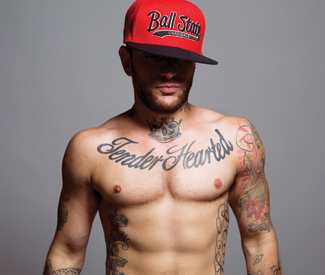
See this list all on one page here.
ONGOING
Faetopia 2286 Market, SF. www.faetopia.com. Through Fri/28, noon-midnight, (event times vary), $10 suggested donation. What’s a radical queer to do in this season of commercialized sexual identity? Fill it with blithe faggotry and faerie magick. The crew behind Faetopia is organizing nights of queer cinema, ecology and history classes, drag musicals, skillshares, and much more — do drop in.
Frameline37 Various venues, SF and Berk; www.frameline.org. Most shows $12. Wed/26-Sun/30. There’s still much to see at the San Francisco International LGBT Film Festival, including the ever-popular “Fun in Girls Shorts” and “Fun in Boys Shorts” short-film programs, plus closing-night high-school comedy G.B.F.
“From Heather’s Mommies to Tango’s Daddies” San Francisco Public Library Main Branch, 100 Larkin, SF; through August 1 during library hours, free, www.sfpl.org. This exhibit traces “the evolution of family affirming literature” through Randall Tarpey-Schwed’s collection of more than 70 same-sex family friendly children’s books published since the 1970s. Also, on the main branch’s second floor, in the Fisher Children’s Collection, the “10,000 Dresses” highlights the first transgender book written for children.
“I Am UndocuQueer!” Galería de la Raza, 2857 24th St, SF; www.galeriadelaraza.org. Through July 1. The latest installment of the gallery’s Digital Mural Project features the work of undocumented queer activist Julio Salgado. His billboard aims to illuminate the intersection between — and foster open dialogue between — the immigrant and LGBT communities.
National Queer Arts Festival Various venues, SF; queerculturalcenter.org/NQAF. The 16th annual performance fest wraps up with Terry Baum’s HICK, a love story about Eleanor Roosevelt (Wed/26-Thu/27 at the Garage), and multi-media performance Girl Talk, with Gina de Vries, Elena Rose, and Julia Serano (Thu/27, African American Arts and Cultural Center).
THURSDAY 27
Camp Wild Beaver Lexington Club, 3464 19th St., SF; www.lexingtonclub.com. 9pm, free. The sexy Lex dyke bar kicks off a wild weekend of events with this camp-themed gem, featuring DJs Pony Mane and Zoccocks, plus campfire go-gos, lumberjackin’ hotties, and more.
Folsom Pride Public Works, 161 Erie, SF; www.publicsf.com. 9pm-2am, $25 advance. The naughty team behind Folsom Street Fair and Up Your Alley bring in electro-hotties Bright Light Bright Light and Slow Knights for a raucous dance party (and probably more than a little yummy leather cruising).
“Love: A Deeper Pride” Abada Capoeira Center, 3221 22nd St., SF; loveandpride.brownpapertickets.com. 10 p.m., $10 advance. A vogueing exravaganza brought to you by Vogue and Tone, The A, Miss Beth, Abada Capoeira, and Sandra Navarro, plus music by Gehno Aviance and Go Bang! DJs. Work the runway, mop the floor.
Mykki Blanco Mezzanine, 444 Jessie, SF; www.mezzaninesf.com. Multi-gendered, aggressively experimental rap from the artist everyone’s talking about? Yes.
Pepperspray SF Eagle, 398 12th St., SF; www.sf-eagle.com. 9pm-midnite, $10. If you weren’t hip to this actually legendary all-drag queen rock band when the first time around (in the early 00s), here’s your chance to EXPERIENCE THE MAGIC. The fearsome foursome will be heshing their wigs off for the first time in a decade, supported like pantyhose by She-L-O (Electric Light Orchestra tribute band!). Pepperspray hits the stage at 10 sharp — no drag time please!
“Pride NightLife” California Academy of Sciences, 55 Music Concourse, Golden Gate Park, SF; www.calacademy.org. 6-10pm, $12. This year’s incarnation of the popular annual science museum event includes a “transpecies” costume contest with drag stars Glamamore, Heklina, Juanita More, and Peaches Christ; talks by reps from the Center for Sex and Culture’; music from DJs Carnita and Brown Amy of Hard French vs. DJs Pink Lightning and Rapid Fire of Stay Gold. And more. Seriously, what other Pride event will teach you about sea slugs?
The Tubesteak Connection Aunt Charlie’s, 133 turk, SF; www.auntcharlieslounge.com. 10pm-2am, $5. A quintessential gay SF experience, DJ Bus Station John’s weekly club transports us back to the good ol’ cruisy bathhouse days with soulful disco and Hi-NRG tunes, plus some special Pride surprises. No cell phones, please!
“Vintage Queer San Francisco” Oddball Films, 275 Capp, SF; www.oddballfilms.com, 8pm, $10. Amazing film clips and fascinating video snippets of queer life in Oz over the last century.
FRIDAY 28
Bearracuda Public Works, 161 Erie, SF; www.bearracuda.com. 9pm-3am, $12 advance. Are you big? Fat? Hairy? Hot? Male-identified? If you answered “yes” to at least two of those, this is where you need to be. Honey Soundsystem DJs guest. Otters welcome.
Mr. Monarch, 101 Sixth St., SF; www.monarchsf.com. 9pm-late, $15. Borrow a mustache — or hey, grow your own — for this great party put on by Fag Fridays and Beatbox Events. (Last year’s was a real hoot.) With quality house music from DJs David Harness and Jeno plus cute boys.
“Some Thing is Really Gay” The Stud, 399 Ninth St. SF; www.studsf.com. 10pm-4am, $8. Watch in awe as the city’s most artistically-inclined drag performers deconstruct, reconstruct, and just plain strut with Pride’s many goofy tropes. Oh, and much dancing and carrying on to fun music.
Trans March Dolores Park, Dolores at 19th, SF; www.transmarch.org. Speakers and music 3pm; march (to Civic Center) 6pm, free. The 10th annual Trans March aims to inspire “all trans and gender non-conforming people to realize a world where we are safe, loved, and empowered.” Check out the event’s website for info on post-march parties for youth and adults.
“Unofficial: Trans March After Party” Elbo Room, 647 Valencia, SF; www.elbo.com. 10pm-2am, $10. For the fourth year in a row, Amos Mac and Rocco Katastrophe of the world’s hottest FTM magazine Original Plumbing get wild with you after the march. With DJs Rapid Fire and Average Joe and a boatload of hot trans go-gos.
SATURDAY 29
“Bondage A Go Go: Pervert’s Pride” Cat Club, 1190 Folsom, SF; www.sfcatclub.com. 9:30pm, $10-$20. Polymorphous pansexual explorers and friends of all genders converge for this titillating night of fun and fur cuffs.
“Cockblock: The Seventh Annual Dyke March After-Party” Rickshaw Stop, 155 Fell, SF; www.cockblocksf.com DJ Nuxx and friends’ Cockblock party is always good times for hot girls on the prowl to swirly electro- and hip-pop tunes.
“Dark Room: Pink Party After-Party” Cafe Du Nord, 2170 Market, SF; www.facebook.com/DarkRoomSF. $10 before 11 $15 after. A night of dark electro, industrial, freestyle and more. Guest DJ Heklina and Believe on stage live, with Host Lady Bear and her dark dolls performing, and the debut of Daddies Plastik’s new single, “Google Google Apps Apps.”
Dyke March Dolores Park, Dolores at 19th St, SF; www.thedykemarch.org. Music at noon; march at 6pm, free. This year’s theme is “Dykepocalypse: Our Feminist Awakening,” about which organizers say: “We recognize that there is an opportunity to educate others on the roots of feminism and collectively embrace our strength as we step into our own power.” To which we say: Amen!
“House of Babes SF Dyke March After Party” Public Works, 151 Erie, SF; www.houseofbabes.com. 7pm, $15-30. If you thought the Dyke March was a workout, check this out: eight hours of DJs (Rapid Fire and Pink Lightning of Stay Gold; Da Vo and Boyfriend of Swagger Like Us; Jenna Riot and Andre of Fix Yr Hair; and more!), plus live performances by local queer hip-hop superstars Double Duchess, Micahtron, and others. Watch your hydration.
The Juan Maclean and Kim Ann Foxman Monarch, 101 Sixth St., SF; www.monarchsf.com. 9pm, $10-$20. This most excellent NYC twosome are at the forefront of the old-school late ’80s house sound revival, full of melodic hooks and catchy bass lines. Dare you not to dance.
Pink Mammoth Block Party Mighty, 119 Utah, SF; www.pinkmammoth.org. Noon-4am, $25-$45. Not to be confused with the Pink Party (see below) this all-day and all-night outdoor rager from the beloved Burning Man crew will get push your funky house and techno buttons. With, like, 1000 DJs, including Audiofly and Marques Wyatt.
Pink Saturday Celebration Castro and Market Streets, SF; www.thesisters.org. 5pm-10pm, free (donation requested). The Sisters of Perpetual Indulgence host their annual blast, filling the castro with music, cuties, and rainbow rings a-plenty.
Pink Triangle installation and commemoration Twin Peaks Vista Overlook, SF. www.thepinktriangle.com. Installation, 7am; ceremony, 10:30am, free. Volunteers needed to help install this important, instantly-recognizable Pride symbol; help out and get donuts, coffee, and a Pink Triangle t-shirt. (Also needed: volunteers to help take it down, Sun/30, 5-7pm).
SF Pre-Parade Pride Celebration Civic Center, SF; www.sfpride.org. Free. The 43rd annual Pride celebration is themed “Embrace, Encourage, Empower.” You can em-party down with multiple music stages — including 23 community-run stages and venues — exhibitor and food booths, and much more.
SUNDAY 30
Big Freedia Public Works, 161 Erie, SF; www.publicsf.com. 6:30pm-1am, $20-$30 All hail the queen diva of Nola bounce as she pops your sissy booty and works it down the middle. With rapper Lady Tragik, filthy club sensation Brooke Candy, and — best of all — Motown’s king of booty bass, DJ Assault. Nice one.
The Cinch Saloon Turns 40! Cinch Saloon, 1723 Polk, SF; www.cinchsf.com. 4pm-10pm, free. Awww, spend some quality time with the beloved (and only remaining) Polk Street gay bar, as a slew of only-in-SF drag personalities pays tribute all day long.
Drippin’ and Droppin’ Poolside Pride Party Phoenix Hotel, 601 Eddy, SF; drippin.eventbrite.com. noon-7pm, $10-$20. All the soulful house lovers will be soaking up the sunshine(?) and good vibes(!) as two of SF’s legendary DJs, David Harness and Ruben Mancias, reunite for this lovely affair.
“Hard French Hearts Los Homos Pride 2013” Roccapulco, 3140 Mission, SF; hardfrenchpride2013.eventbrite.com. 4-11pm, $20-65. Don’t get soft: SF’s queer soul party tickles your lips and dives right in at this enlarged version of its annual queerific celebration. With DJs Carnita and Brown Amy, the Hard French Jiggalicious Drag Babes, and live performances by THEESatisfation, Magic Mouth, Midtown Social, and more. 2 cute 2 miss.
Honey Soundsystem Extended Pride Edition Holy Cow, 1535 Folsom, SF; www.honeysoundsystem.com. 10pm-4am, $5 before 11pm, $10 after. The best gay weekly underground techno party in the city goes long for your enjoyment, with sharp-eared residents Josh Cheon, Jason Kendig, Robot Hustle, and P-Play handling the big decks.
Juanita More Pride Party Jones, 620 Jones, SF; www.juanitamore.com. noon-midnight, $35. An absolute Pride party must, drag goddess Juanita’s huge affair is sold out online, but there will be 100 tickets at the door — line up early to experience a huge art installation by Desi Santiago, DJs Severino of Horse Meat Disco, Kim Ann Foxman, and more, the Cougar Cadet drum troupe, and acres of glamour and debauchery. Benefitting OutLoud queer youth radio.
Magda Monarch, 101 Sixth St., SF; www.monarchsf.com. 9pm-late, $20. The Detroit-via-Berlin ace has already conquered the international underground techno scene. Her more introspective, soulful recent sounds will perfectly dance you out of Pride.
Nina Sky Mezzanine, 444 Jessie, SF. www.mezzaninesf.com, 8pm-2am, $15 advance. Queens-bred, Puerto Rican descended sisters Nicole and Natalie are kind of the Tegan and Sara of catchy R&B with reggaeton roots. Sexy!
Queerly Beloved El Rio, 3158 Mission, SF; queerlybeloved.brownpapertickets.com. 3pm-9pm, $8. A patio full of awesomeness — El Rio explodes with queer porn princess Courtney Trouble’s annual shindig, this year with live electro duo Icy Lites, DJs Jenna Riot, Chelsea Starr, and Portland’s Automaton. Plus: a “queer porn circus.” Rrowr.
SF Pride Parade and Celebration Civic Center, SF; www.sfpride.org. 11am-6:30pm, free. Today’s the parade, with celebrity Grand Marshalls including Tabatha Coffey, Roger Ross Williams, Cheyenne Jackson, and Mondo Guerra. The whole shebang starts at Market and Beale and ends at Market and Eighth St, with Civic Center festivities to follow.
Supreme Court same-sex marriage decisions: DOMA invalidated, Prop 8 case dismissed, SF reacts [UPDATED]
![Supreme Court same-sex marriage decisions: DOMA invalidated, Prop 8 case dismissed, SF reacts [UPDATED]](https://sfbgarchive.48hills.org/wp-content/uploads/sites/2/448-LyonMartin.jpg "Supreme Court same-sex marriage decisions: DOMA invalidated, Prop 8 case dismissed, SF reacts [UPDATED]")
Watch this space throughout the day for breaking news on the decision and reactions. Tonight there will be a celebration of the Court’s decisions at Castro and Market Streets at 6:30pm. (Join the Guardian beforehand, 6-9 at the Pilsner in the castro, at its annual pre-Pride event.)
DOMA INVALIDATED
The Supreme Court released its ruling this morning that the Defense of Marriage Act, which denies federal recognition of same-sex marriage, “is unconstitutional as a deprivation of the equal liberty of persons that is protected by the Fifth Amendment.”
“DOMA singles out a class of persons deemed by a State entitled to recognition and protection to enhance their own liberty,” according to the majority opinion. “DOMA’s principal effect is to identify a subset of state sanctioned marriages and make them unequal.” The Court voted 5-4, with Justice Kennedy, who wrote the majority opinion, as the decisive vote along the usual liberal/conservative lines. You can read the full opinion here.
This means that same-sex marriages performed in states that have legalized such marriages will be recognized by federal law.
PROP 8 DISMISSED ON STANDING
As for Hollingsworth v. Perry, the Prop 8 case, it was dismissed on standing, due to the fact that the State of California refused to defend the case that would uphold Prop 8 (which denied same-sex marriage).That meant private citizens were left to defend a state statute, which was unprecedented, and the Court refused to rule on those grounds.
“We have never before upheld the standing of a private party to defend the constitutionality of a state statute when state officials have chosen not to. We decline to do so for the first time here,” the majority Court statement (which broke along the typical 5-4 line) said. That means there is no specific decision from the Court regarding Prop 8, and the previous ruling, by Judge Vaughan Walker and upheld by the Ninth Circuit Court, that invalidated Prop 8 as discriminatory, stands.
This may mean that same-sex marriages in California can resume as early as July.
You can read the full Prop 8 ruling here.

Scene this morrning at SF City Hall, with Mayor Ed Lee and Lt. Gov. Newsom. Photo by Dan Bernal.
[UPDATE] REACTIONS AT CITY HALL
Steven T. Jones reports from SF City Hall:
City Hall was totally packed at 7am when the US Supreme Court convened — tons of journalists, lots of couples, many signs in the crowd. Two screens were set up, one with a live blog from court chamber, the other with the CNN live feed. Huge cheers erupted at 7:11 when the decision was announced striking down DOMA and forcing the federal government to recognize the rights of same-sex married couples. Then at 7:38, when the Prop 8 statement came down, the room went nuts.
A moment later, an array of current and former city officials appeared at the top of the City Hall main staircase. Mayor Ed Lee and Lt. Gov. Gavin Newsom escorted a fragile Phyllis Lyon down the stairs — she, along with the late Del Martin, were the first same-sex couple to get legally married in California in 2004 — flanked by the rest of the city family, all with big smiles.
“Welcome to the people’s house of San Francisco,” Mayor Lee said, thanking the crowd “for sharing in this historic moment.”
“It feels good to have love triumph over ignorance,” he said.
At 7:44, City Attorney Dennis Herrera and Chief Deputy City Attorney Terry Stewart, who had been on the City Hall steps addressed reporters’ question on the legal details of the ruling, joined the crew to sustained applause as Lee recognized them. He then introduced Newsom, who in 2004 as San Francisco mayor allowed same-sex marriages to be performed, as “one person who used the power of this office to make history and show his love for the city.”
“San Francisco is not a city of dreamers, but a city of doers,” Newsom said. “Here we don’t just tolerate diversity, we celebrate our diversity.” He thanked Herrera and everyone who contributed to this moment. “It’s people with a true commitment to equality that brought us here.”
Newsom introduced Kate Kendall with the National Center for Lesbian Rights, who has led the coalition of groups that have push for marriage equality. She looked around the crowd and said, “Fuck you, Prop 8!”
The crowd roared, and she said that she had scanned the room for children, and promised to “put a dollar in the swear jar” if necessary. But she said that, “We have lived for too many years under that stigmatizing piece of crap.”
Then Herrera took the podium, turned to Newsom, and said, “Now you can say, ‘Whether you like it or not!'” — a joking reference to Newsom’s same-sex marriage rallying cry, which some blamed for boosting the anti-same-sex marriage cause.
“We wouldn’t be here today if it wasn’t for Gavin Newsom’s leadership,” Herrera continued. ““I remember in 2004 when people were saying it was too fast, too soon, too much.”
But today, that long effort has been vindicated, Now, he said, “It’s about changing the hearts and minds of people and educating them.” He also pledged to continue the fight that began here in City Hall more than nine years ago: “We will not rest until we have marriage equality throughout this country.”

Gavin Newsom being interviewed inside City Hall. Photo by Steve Jones
Finally Stewart, who has argued cases related to San Francisco’s stand before both the US and California Supreme Courts, praised both the Prop. 8 and DOMA rulings and the precedents they set. “In the DOMA case decision, the Supreme Court expressed a stong equal protection philosophy…that will help legalize same sex marriage in other states.”
Three members of the Board of Supervisors were also invited by Kendell to address the huge City Hall crowd: Board President David Chiu and Sups. David Campos and Scott Wiener, the only two current supervisors who are gay.
Chiu noted that the bust of slain Sup. Harvey Milk is prominently positioned outside the Board Chambers, a reminder of the long struggle for gay rights that San Franciscans have led. “That work lives on today,” he said.
He added the hope that the work done here will ripple out of across the country because, he said, “As goes San Francisco, so goes California, so goes the rest of the country.”
Campos, an attorney who has long been in a committed relationship, said, “It’s a very emotional moment for those of us who are part of the LGBT community.” He said this Supreme Court ruling is the first time it has really acknowledged “that we are people and we have dignity,” and that the rulings sends a clear message to Congress that legislation like DOMA is unconstitionally discriminatory.
Wiener praised the resilience of the LGBT community, from the early days of enduring the AIDS crisis and fighting for federal support through the current campaign for marriage equality. And he cheered the fact that, “Those marriages that we see under the rotunda [in City Hall] will get a little more diverse.”
11:30 AM UPDATE: Style and substance
While Newsom strutted around like a proud peacock in front of City Hall — clearly the leading man in this epic story with the happy ending, much in demand by the television crews — Herrera and Stewart briefed various reporters on the details of the case that they had just won.

Gavin Newsom outside City Hall. Photo by Steve Jones.
“I wanted a merits ruling, but a standing ruling is a victory too,” Herrera told us, making the distinction between the court ruling that banning same-sex marriage is unconstitutional on the grounds of equal protection under the law — which it did not do — and the 5-4 ruling it did issue: that those who appealed the Ninth Circuit Court ruling invalidating Prop. 8 lack proper legal standing to do so.
The standing ruling leaves same-sex marriage opponents more wiggle room to argue that the ruling might only apply to the couples named in the suit, or in just the counties that took part, which also included Alameda and Los Angeles, positions they were already signaling in press statements.
But Herrera said that he would vigorously contest that kind of challenge, which he considers to be without merit, telling us, “The injunction is not limited in its scope.”
UPDATE: SFPD isn’t worried
Police Chief Greg Suhr, who attended the City Hall event, said the timing on the ruling during Pride Week couldn’t be better. “It’s nice that it all lined up for us,” he told us. “This town is going to rock ‘til the wheels come off.”
Asked whether he has any heightened security concerns about the Pride Parade in the wake of a ruling that is controversial to some, Suhr said that he’s not worried. He said SFPD is now fully staffed and all available personnel working this weekend, although he will try allow many of his gay and lesbian officers to join the celebration if they want.
“We’re going to police what’s likely to be the biggest party this city has ever seen,” Suhr said, adding that his policing philosophy is, “We plan for the worst and hope for the best.”
On pins and needles
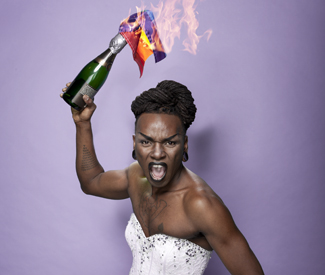
steve@sfbg.com
[UPDATE: The Supreme Court has overturned DOMA and dismissed the Prop 8 case. Read our full coverage here.]
As San Francisco’s LGBT community and its supporters prepared for Pride Weekend, the whole city was anxiously awaiting the imminent US Supreme Court ruling on same-sex marriage. That case began here more than nine years ago when then-Mayor Gavin Newsom decided to let gay men and lesbians marry and the City Attorney’s Office launched a long and torturous legal battle.
The synchronous timing of the two events couldn’t be better. (Well, it could have been better for the Bay Guardian‘s deadline if the ruling has come out June 25, instead of when this issue will be hitting the streets on June 26, but you can read our full, live coverage here at sfbg.com tomorrow.)
LGBT activists are planning a massive rally at Castro and Market streets starting at 6:30pm on June 26, along with another performance stage at Market and 19th streets featuring Donna Sachet emceeing performances ranging from DJs to drag and other live performances, like an early start to an already packed Pride Weekend. (For more info, see www.dayofdecision.org.)
Of course, at press time it was still unclear whether we’ll see a joyous springboard for a raucous Pride that many are hoping for, with total victory and marriage equality becoming the law of the land; a bitter repudiation of LGBT rights reminiscent of Nov. 4, 2008, when the street celebrations over President Barack Obama’s election victory were tempered by frustration over voters approving Prop. 8 and banning same-sex marriage; or something in between.
The ruling will cap a see-sawing legal and political battle for which the City Attorney’s Office calculates it has written more than a half-million pages of legal briefings for more than 50 judges at various levels, including four trips before the California Supreme Court in four separate but related cases before making arguments to the US Supreme Court in March.
If the ruling doesn’t legalize same-sex marriage in California, activists say they’ll immediately return the struggle back into the political arena and use the momentum of the ruling (and the three states that legalized same-sex marriage this year, bringing the total to 12) to win at the ballot box (it would take a popular vote to undo Prop. 8).
If that happens, look for our own Sen. Mark Leno — who got the California Legislature to approve his legislation legalizing same-sex marriage, twice, only to have it vetoed by then-Gov. Arnold Schwarzenegger — to play a lead role.
“The only option is to re-amend the constitution to eliminate the discriminatory Prop. 8,” Leno told us. That measure could be placed on the 2014 ballot by either the Legislature or an initiative, which Leno said will be decision for the coalition of same-sex marriage supporters.
There are benefits and drawbacks to both options. Gathering signatures for an initiative is expensive, but that effort would also help launch the campaign to win over California voters. In the Legislature, four supportive Democrats will likely move to other offices this year, including a Senator and Assemblymember who are each joining the Los Angeles City Council, but Leno is still confident.
“We stand prepared with legislation already drafted to move forward with a bill if that’s what the coalition decides,” Leno said. “And we are confident we have the 27 votes we need [in the Senate], maybe even 28.”
City Attorney’s Office Press Secretary Matt Dorsey has been doing regular email briefings for journalists who are here from around the world, ready to report from the place where it all began as soon as the ruling comes down.
City Attorney Dennis Herrera, Chief Deputy City Attorney Terry Stewart, and their team are prepared to analyze the ruling as soon as it is released just after 7am (Pacific time) and to deliver the first press briefing on the steps of City Hall at 7:30-8am. Mayor Ed Lee, Newsom, and other officials will host a live viewing of the ruling at 7am in City Hall, following by their own press conference.
Dissecting the ruling could be a tricky task given that there at least four major scenarios that the ruling could trigger, each of those with lots of sub-scenarios that depend on the scope and details of the ruling. Everything for legalizing same-sex marriage across the country to a technical ruling that kicks it all back to a lower court are possible.
“In 10 years [working for the City Attorney’s Office], I’m never seen an outcome that could go in so many different directions,” Dorsey told us.
If the ruling invalidates Prop. 8, that decision would be formalized in about a month, then returning jurisdiction over the case to the Ninth Circuit Court of Appeal, which will then issue a formal notice of decision that gives it the force of law, according to a June 11 memo the City Attorney’s Office wrote for other city officials.
It notes, “Depending on how the Supreme Court decides the case, marriages could resume as soon as mid-to-late July.”
Q&A: Dita Von Teese on gaining sexual confidence, creating beauty on her own terms
She is classy, beautiful, and sexually poised. She’s seductive, creative, and ambitious. She is world-famous burlesque dancer Dita Von Teese, and she is coming to SF this week (Wed/26 -Sat/29).
Von Teese recently designed her own line of lingerie, which you can check out here, and is on a tri-city tour with her sexy show “Burlesque: Strip Strip Hooray!” featuring MC Murray Hill. Her performances are much like Von Teese herself — epic and glamorous.
Von Teese talked to me about gaining sexual confidence, her fascination with straight male cross-dressers, and the satisfaction of creating beauty on her own terms.
SF Bay Guardian What is one life lesson that you have learned from dancing?
Dita Von Teese Just generally, discipline. Whether it’s ballet, like from my childhood, or what I do now, there is a lot of discipline involved in being a performer. I have friends that have never worked out and don’t do anything active. It’s something I take for granted because I have to, it’s by job to get up and workout. And having peace with my body. Taking dance classes my whole life forced me to appreciate my body. I don’t have the same kind of body self-hate that some girls get when they’re not used to looking at themselves in mirrors.
SFBG As an outsider, I would think that someone so much in the spotlight and so known for their beauty and style would feel quite a lot of pressure to live up to a flawless image.
DVT I do feel a lot of that at the same time. It’s easy to let that stuff get to you. I think ‘Oh, when are people going to find out I don’t have this perfect body?’ I’m just a normal woman. The things we say about our bodies, I would never say that to someone else.
SFBG You come off as very poised and confident. What advice do you have for someone who wants to gain sexual confidence?
DVT I think it’s important to educate yourself. I think it’s great to read erotica and to be around other people who have a healthy attitude about sex. One of my best friends, Betony Vernon wrote an incredible book and is a great writer and role model for sexually empowered women to have. To seek out role models like that, strong, powerful women in control of their sexual self, that’s really important.
San Francisco has so much to offer, like classes and places to go. I’ve spent a lot of time in San Francisco, and met a lot of people involved in the erotic world. I think that’s important, just exploring it and obviously having a partner with the same kind of attitude you have. Definitely seeking out other sexual partners who have the same kind of attitude that you have.
SFBG Do you believe that fashion can be empowering to people? If so, how?
DVT I’ve always loved clothing for the theatrics of it and how I can change the way I walk, talk, sit, and present myself. If you really think about the way you dress, how it affects your movements and decisions, you can’t go ripping down the street wildly in high heels and a corset. It’s the same way an actor gets in costume; it becomes part of the role. I love the way you can create a role.
You’re putting out a message to the world about who you are. It’s a secret code to other people about who you are — it’s great that we can manipulate that. Every day is another opportunity to wear something that makes me feel a certain way. It’s a way of achieving beauty that does not depend on how you’re born. Weaving this web of beauty and glamour and mystery without being like ‘I wasn’t born looking like a super model.’
SFBG That’s true. I think it’s great how you create beauty very much on your own terms. Speaking of, I think I’ve heard you say before physical beauty isn’t so impressive to you. What does attract you to a person?
DVT I’m really attracted to people who are self-created because that’s what I do, and especially in the world of entertainment. There are so many people who rely on paying for it. I feel like it doesn’t really help the normal women of the world watching all these actresses on the red carpet spend six hours with the best stylists. It’s nice to watch, but where’s the inspiration? I don’t have a stylist, I really like doing it myself, it sends out a good message.
When I go to my shows and see all these girls dressed up and beautiful and doing it themselves, it makes me feel good. Finding empowerment in their own beauty. That’s a common thread for me. In entertainment I do like being around people who have that same thing, like Gwen Stefani. She’s got a very distinguished sense of style, occasionally with makeup artists.
We know when we like to have somebody help us. We really like to be empowered by doing it ourselves, we don’t need that. We like to create; we’re very strong in our sense of self. I like other women who are like that, who realize that being around other gorgeous women doesn’t detract from having their own great worth. I like girls girls. Those are the kind of people I like to be around.
http://www.youtube.com/watch?v=GNfbwlPoEUo
SFBG On your twitter handle (@DitaVonTeese), there was talk of twerking. Do you think SF will be lucky enough to see this in your show?
DVT I was really into the song a couple of years ago. I said it before I even knew what it was. With every number, I always think ‘What’s this thing I could add to this?’ I have this huge feather rhinestone bird tail, it looks really good. I could do this little pop-pop thing in the back, kind of like a twerk. But it’s got to be highly stylized and glamorous.
SFBG Going in a different direction, what role has lingerie played in your life?
DVT Well, I’ve always had a fascination with lingerie from a very young age. I used to steal my mother’s lingerie out of her dresser from age 6. I’ve always really been fascinated by this mysterious thing women wear underneath their clothes. My first job was working at a lingerie store at 15. [I have] a life-long fascination and love for it. It’s perhaps a little bit different for most. For me, it’s like that rite of passage as a woman. A little beautiful moment of femininity and luxury in your everyday life. It’s great, too, for seduction. For me it’s just like this is what it meant to be a woman- a symbol of womanhood.
SFBG What about for men, do you think they can find the same empowerment as you in lingerie?
DVT I’ve been involved in the fetish scene for the better part of 20 years. I’ve known a lot of straight men who like to cross-dress, I find it really interesting. Whatever makes someone happy. An incredibly handsome man taught me a lot of what I know about fetishes. He loved women but he liked to wear women’s lingerie under his clothes. I found him fascinating.
I was in the airport a few years ago, and I looked over and saw this man, in this swanky lounge, in a full three-piece business suit in these long, dripping diamond earrings and high heels while reading the paper. He was obviously a very powerful, wealthy man. I was so fascinated by watching him. He was living it. It was amazing. I wanted to talk to him so bad, but I get really shy around people like that.
Dita Von Teese
Wed/26-Sat/29, 9pm, $40
Fillmore
1805 Geary, SF
(415) 346-6000
www.thefillmore.com
Lives less ordinary
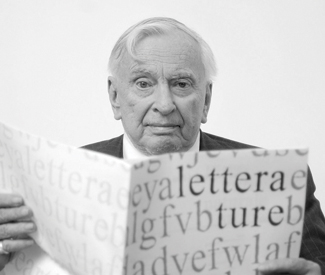
arts@sfbg.com
FRAMELINE Each year Frameline’s program vividly reflects issues that of late have seemed most urgent in the LGBT community — for many years, for instance, there was an understandably overwhelming amount of films about AIDS. Most recently, the fights for gay marriage and trans rights have dominated many a dramatic and documentary selection.
It is sometimes nice, therefore, in the fray of pressing public debate and community activism to escape topicality and sink into the achievements and personalities of more distant queer-history eras. Several documentaries at Frameline37 offer just that, as they chronicle the lives and times of five extraordinary men (albeit one normally found in a dress and fright wig).
The most San Francisco-centric of them is Stephen Silha, Eric Slade, and Dawn Logsdon’s Big Joy: The Adventures of James Broughton, about “a golden secret of West Coast bohemia.” The late James Broughton was a poet, prankster, and experimental filmmaker who began making films in the late 1940s “to see what my dreams really looked like.” A significant figure in the pre-Beat San Francisco renaissance of avant-garde art, he won a prize at Cannes for 1953’s typically playful, hedonistic The Pleasure Garden, but declined the commercial directing career offered him — in fact he didn’t make another movie for 15 years, when free-love hymn The Bed became a counterculture smash.
Broughton married and had three children (including one with not-yet-famous local film critic Pauline Kael), but at age 61 found his soulmate in 26-year-old fellow director Joel Singer, thereafter devoting his life and work to celebrations of gay male sexuality. (Interviewed here, his ex-wife Susanna calls this turn of events “a very unwelcome incident from which I never recovered.”) The documentary provides a treasure trove of excerpts from a now little-seen body of cinematic work, as well as much archival footage of SF over the decades.
Bringing joy to a lot of people during his too-brief life was Glenn Milstead, the subject of Jeffrey Schwarz’s I Am Divine. A picked-on sissy fat kid, he blossomed upon discovering Baltimore’s gay underground — and starring in neighbor John Waters’ underground movies, made by and for the local “freak” scene they hung out in.
Yet even their early efforts found a following; when “Divine” appeared in SF to perform at one of the Cockettes’ midnight movie/theater happenings, he was greeted as a star. This was before his greatest roles for Waters, as the fearsome anti-heroines of Pink Flamingos (1972) and Female Trouble (1974), then the beleaguered hausfraus of Polyester (1981) and Hairspray (1988). Despite spending nearly his entire career in drag, he wanted to be thought of as a character actor, not a “transvestite” novelty. Sadly, he seemed on the verge of achieving that — having been signed to play an ongoing male role on Married … with Children — when he died of respiratory failure in 1988, at age 42.
A different kind of tragedy is chronicled in Clare Beaven and Nic Stacey’s British Codebreaker, about Alan Turing — perhaps the most brilliant mathematician of his era, who basically came up with the essential concept of the modern-day computer (in 1936!) He played a huge role in breaking the Nazi’s secret Enigma code, thus aiding an Allied victory. But instead of being treated as a national hero, he was convicted of “gross indecency” (i.e. gay sex) in 1952 and hounded by police until he committed suicide two years later. Half conventional documentary and half reenactment drama (with Ed Stoppard, playwright Tom’s son, as Turing), Codebreaker illustrates the cruel price even an upper-class genius could pay for his or her sexuality in the days before Gay Lib.
Two literary lions are remembered in the last of these historical bio-docs. Daniel Young’s Swiss Paul Bowles: The Cage Door is Always Open recalls the curious life of a successful American composer turned famous expat novelist. He and wife Jane Bowles moved to post-World War II Tangiers, where they entertained a parade of visiting artists — and, by all accounts, a succession of same-sex lovers. Clips from Bernardo Bertolucci’s underrated adaptation of Bowles’ literary masterwork The Sheltering Sky (1990) are here alongside input from acquaintances and observers including John Waters and Gore Vidal.
http://www.youtube.com/watch?v=INW6i6K1NmQ
The latter is the whole focus in Nicholas Wrathall’s Gore Vidal: The United States of Amnesia, and what could be better than that? Perhaps undervalued as a frequently very fine novelist because he was so prolific (and popular), he’s considered here primarily as a public intellectual — a term that seems positively antiquated in our climate of pundits and ranters — and fierce lifelong critic of American hypocrisy in all its forms, especially the political. He was a scold (or a “correctionist,” as he put it), albeit of the wittiest, most clear-headed and informed type. Among myriad highlights here are seeing him on TV reduce friend-rival Norman Mailer to sputtering fury, shred the insufferable right-wing toady William F. Buckley, and make poor Jerry Brown squirm under his effortless tongue-lashing.
Endlessly quotable (“We’ve had bad Presidents in the past but we’ve never had a goddam fool,” he said of George W. Bush), obstinately “out” from an early age if never very PC in his views (“Sex destroys relationships … I’m devoted to promiscuity”), Vidal is aptly appreciated here as “a thorn in the American Establishment, of which by birth he is a charter member.” There will never be anyone quite like him — but we sure could use some who are at least in the general ballpark. *
FRAMELINE37
June 20-30, various venues
Republicans are just plain daft, part 2
One of the most prosaic lines in film history is in 1974’s Godfather II. When Vito Corleone (Robert DeNiro) is asked by Peter Clemenza (Bruno Kirby) if he checked out the package of oily guns Clemenza had left him as the NYPD was hauling Clemenza away, Corleone replies coolly that “I’m not interested in things that don’t concern me”.
At that point, we realize that the future Don was not a Republican.
Today’s GOPster clown cultist is obsessed with things that do not concern them. Embryos and fetuses germinating in women they’ve never met. Same sex couples marrying thousands of miles from them. The well-being of the same plutocracy that do not pay them the same mind back in the least.
Conversely, when it is things that do concern them–Gulf oil spills, rising seas, warrantless searches of emails and phone calls, endless wars—oddly indifferent.
When someone prioritizes the irrelevant over the important, what else can one say?
They’re fucking daft.
‘Money is a tool’

Jack Abramoff says “legalized bribery” is corrupting our political system, and as a lobbyist who went to prison for taking the practice of buying favors from Congress to obscene new depths, he should know. But if we’re relying on him to help reform that system, a cause he’s now taken up, we could be in real trouble.
Watching Abramoff address “public ethics” at a University of San Francisco class of aspiring political professionals on June 6 was a little surreal. Part charming rogue, part penitent reformer, Abramoff told inside tales of how easily money corrupts even well-intended people who work in Congress.
“I didn’t create a new way of lobbying, I just did more of it,” Abramoff told the students, noting that while some lobbyists had a few good tickets to Washington Redskins or Wizards games to give away to members of Congress, he had 72 of them. And while some lobbyists would take members golfing, “I would put them on a Gulfstream and fly them to Scotland. What’s the difference? It’s still playing golf.”
It was particularly strange for someone of Abramoff’s obviously questionable moral fiber to be addressing political students at this Jesuit-run academic institution, whose local advertising slogans include “How to succeed in business and still go to heaven” and “Wicked smart without the wicked part.”
Yet forgiveness is supposed to be divine, and the instructor who lured Abramoff to speak with his class, local lobbyist and political consultant Alex Clemens, was certainly pleased to attract someone with Abramoff’s inside knowledge, avoiding Abramoff’s usual speaking fees of up to $20,000 by piggybacking on a Southern California speech he gave and paying only his airfare.
I was a bit more skeptical of a guy who equates political donations with bribery while hawking a book and narrow reform proposal — while at the same time soliciting corporate lobbying clients and telling the San Francisco Chronicle that Silicon Valley should be spending far more money to influence politicians.
“It needs a much bigger view of political involvement,” Abramoff told the Chron. “It should be spending much more. They’re not playing as smart as they should, and they could lose big.”
That’s part of the muddle of contradictions that defines Abramoff and his advocacy today, which is consistent with the anti-government, wealth-worshipping conservatism he has pushed with missionary zeal since his college days, along with pals Ralph Reed and Grover Norquist, who still play key roles in keeping religious fundamentalists and the rich in the Republican Party fold.
“I’m not against money in the system, I’m against money being used the wrong way in the system,” Abramoff told me after the talk, as I probed the contradictions in his statements and views. My efforts to pin him down caused him to scornfully brand me a “socialist,” the old bully replacing the affable face he showed the students.
“Money is a tool,” Abramoff told me.
Abramoff is also a tool, I decided as I listened to him, although it’s still tough to discern who is wielding him now and where this effort may be headed.
LESSON FOR STUDENTS
Abramoff told the students that even after he got busted in 2005, for a long time he indignantly wondered why he was being prosecuted for the same sorts of actions that were endemic to Washington DC. Eventually, he began to realize he had done something wrong.
“I thought maybe some of this [the charges against him] is right,” he said. “I decided to be honest with myself. Am I the saint I always thought I’d been, or the devil they said I was?”
Yet in the end, Abramoff never did really rethink his own worldview and history — from his early days of shilling for the South African government against efforts to end apartheid to later bribing members of Congress to oppose regulation of sweatshops and sex trafficking in US territories — he just blamed the political system.
“I thought this system is maybe not right,” he told students studying to be a part of that system. “I thought when I got out, I should probably try to help.”
So he wrote a book, Capitol Punishment: The Hard Truth About Corruption From America’s Most Notorious Lobbyist, and he says that he’s been developing political reform legislation that he intends to start pushing next year along with unnamed others.
Abramoff has consulted with Harvard Law School professor Lawrence Lessig, who founded Rootstrikers to push political reforms, but Abramoff doesn’t support many of the central tenets of that and other reform groups, including public financing of elections and overturning “corporate personhood” court rulings that deem political spending by the rich to be a free speech right.
In fact, Abramoff is still a right-winger who shows little interest in limiting the ability of wealthy corporations and individuals to freely spend their money on political candidates and issues, placing him at odds with pretty much the entire political reform movement.
Phillip Ung, a spokesperson for Common Cause — which has been working on these political reform efforts for decades — was a little skeptical about getting help from someone who once embodied the most corrupt and excessive aspects of the current system.
“As much as we enjoy his newfound support for political reform, we also understand that he has a debt to pay, and not just to society,” Ung said of the $44 million in restitution that Abramoff still owes to his victims.
Ung said that a stark example of political corruption like Abramoff represents does help the cause, but that has little to do with his current advocacy. “The reform flag at the federal level goes almost nowhere if there’s not a political scandal,” Ung said, although even that isn’t saying much because, “Congress and DC only have tolerance for political reform one every 10 years or so.”
With Democrats now overwhelmingly controlling California’s Legislature and executive offices, Ung sees opportunities for important reforms here. The most promising is Senate Bill 27, which would require political groups that raise more than $500,000 to disclose their donors.
By contrast, Abramoff’s proposal seems tepid at best, and his strategy for selling it relies on using political spending to elect sympathetic people to Congress, which would seem to undermine his reform message almost as much as pitches to corporate clients to hire him for lobbying consulting services (see www.abramoff.com).
“He seems to be going back to his old ways,” Ung said of Abramoff.
Abramoff said his legislation would broaden the definition of lobbyist, limit their campaign contributions to $500 per election cycle, and prevent public officials from working as lobbyists for 10 years after they leave government.
Then Abramoff said that he and his unspecified “we” will dump money into six contested Congressional races in 2014, trying to elect three Democrats and three Republicans who pledge to support his legislation, following that up in 2016 by targeting 25 to 50 races.
“Then and only then will Congress take it seriously,” Abramoff concluded, arguing that politicians respond to losing their jobs more than other means of persuasion. He’s going to use aggressive political spending to win the reforms he seeks, which don’t really do anything to limit political spending.
When I asked Abramoff how increased political spending can reform a political system corrupted by money, he replied, “You play with the tools and the battlefield you’re on.”
THE SYSTEM, OR ITS SPONSORS?
Abramoff blames Congress for corruption far more than the lobbyists or wealthy special interests who are doing the corrupting, noting how difficult it is to get political reforms approved by legislators who want to later cash in on their public service.
“The lobbyists are a response to the system set up by Congress,” he told the students, building on his earlier point that “99 percent of everything I did was legal, and that’s a bigger deal than the 1 percent that was illegal. That’s what has to change.”
But he acknowledges that reforming the system will be “impossibly difficult” because those who are invested in the current system will always find loopholes to any new regulation. “They’re extremely brilliant people and their goal is to get around things,” he said.
Omitted from Abramoff’s recitation of what’s wrong in Washington are the people doing the corrupting, that other 1 percent, the very rich. When I asked him about how he can really attack institutionalized political corruption without going after the cash that feeds that corruption, he told me, “I tend to be nervous about a political approach that says, ‘It’s the rich.”
Abramoff actually supports the Supreme Court’s controversial Citizens United ruling, which ended controls on the political spending of wealthy individuals and corporations, telling the students, “We all want certain corporations to have the rights that we individuals have.”
Abramoff also seems to dismiss the possibility of a grassroots political reform effort, saying that any change in the system would need support from both the left and the right, and the latter will kill any effort to actually removes private money from political campaigns.
“You’re not going to have federal financing of elections. The right will die before they let that happen,” Abramoff said.
That might have been the most insightful thing that Abramoff said to the students, although he certainly didn’t intend it the way that I heard it: maybe the right needs to die, in the political sense, before the system that Abramoff both decries and supports will change.
Hot sexy events: Pride-perfect gear
Deep in the bowels of Stevenson Street, there lies a company that could. Could surf the waves of an ever-changing Internet, could accurately predict media consumption trends, could start the tech tsunami engulfing the Mid-Market neighborhood. GameLink could do it — and as in so many cases, porn was the vehicle to this success. Read more about my recent trip to the company’s HQ in this week’s print edition of the good ‘ol Bay Guardian, and read on for VP of Business Development Jeff Dillon’s top sex toy picks for Pride season. (Because what better way to spend your Hump Day than shopping for lube from your cubicle?)
I tell you that I think that Dillon knows his stuff, which is an impression I get from an exchange we had in the GameLink offices. Let me relate it to you in the form of a screenplay, for maxim
Jeff Dillon hands Caitlin Donohue business card. She notices that his nickname, Dillonaire, is printed on it
SFBG: Dillonaire?
JD: Where do you know me from?
SFBG: Your business card?
JD: Oh, it’s just that I’m… around.
Okay? I dunno where you’ll be around by the end of the month, but follow these links to GameLink/Dillionaire’s top Pride-time picks for: festively packaged lube, ace starter kit for anal, penis pump, male enhancement sludge (this column does not necessarily endorse efficacy of these things, by the way), CLASSIC vibrational good times, prostate TLC, vibrating buttholes, Gameboy-looking vibrator controller, cockrings for all.
I’m blushing (how even?) anyway, your to-do’s for the week:
HOT SEXY EVENTS
Earthy
Progressive porn idea woman Annie Sprinkle and her partner and UC Santa Cruz professor Beth Stephens have turned their love of the earth into this ecosexual, interactive performance piece.
Thu/13-Sun/16 and June 20-23, 8pm, $12–$25. Center for Sex and Culture, 1349 Mission, SF. www.sexandculture.org
“Yoga For Sex”
Cramped muscles and closed energy flow are huge bummers, but especially when they put a damper on your bedroom activities. Kink.com star and author Dylan Ryan leads the way to better sex and heightened orgasms through yoga in this workshop at the BDSM porn studio’s historic Mission porn castle.
Fri/14, 7-9pm, $35. SF Armory, 1800 Mission, SF. www.armorystudios.com
Beatpig
Fashionable freaks get their looks all sweaty amid the teeming crowd of daddies at this monthly party, featuring the prodigious hosting/DJing talents of Juanita More, Walter Gomez, and Sidekick. This week pays homage to the ass — er, pork butt.
Sat/15, 9pm-2am, $5. Powerhouse, 1347 Folsom, SF. www.powerhouse-sf.com; Facebook event
“Getting What You Want From Your Dominant”
Being a good submissive =/= losing yourself completely. This class teaches subs how to stay clear and present so that they can meet not only the needs of their dominant partner, but their own. Can I just add here that I attended a class in the Polk Street Good Vibes store last night, and the fact that they hold them in the back room that doubles as a historic vibrator museum means that even if/when your fellow workshop attendees get lost on an interesting-to-them personal spiel, there’s enough eye candy on the walls that you can stay entertained during the digression.
Mon/17, 6:30-8:30pm, $20–$25. Good Vibrations, 1620 Polk, SF. www.goodvibes.com
Kinky boots
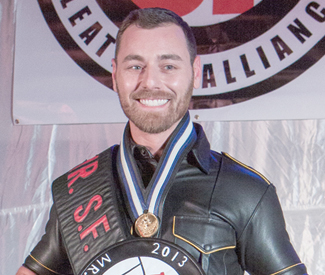
marke@sfbg.com
SUPER EGO Just hear that harness jinglin’, chapped cheeks tinglin’, toooo …. Leather season is here, whipping us into a frenzy in the best possible way. At the feisty International Mr. Leather Competition in Chicago last month, our own adorable Mr. San Francisco Leather, Andy Cross, took home the top title, while Mr. Santa Clara County Leather, Thib Guicherd-Callin, won first runner-up. The International Ms. Leather competition, held here in April, was quite lively as well, and of course we’re still celebrating the reopening of leather central, the SF Eagle. Sashes, lashes, shots, and nipple slaps for everyone!
It’s all the perfect, thigh-high-booted lead-in to a gloriously kinky summer, bracketed by those essential Folsom Street Events (www.folsomstreetevents.com): scruffy gay Up Your Alley Fair on Sunday, July 28 and pansexual bacchanal Folsom Street Fair (celebrating 30 years, woah) on Sunday, September 29. Those two events have grown so much they’ve recently been expanded, as have their satellite parties — this year, Folsom’s muscle-hunk Magnitude party will take over two huge venues, Sound Factory and nearby Terra, as will its more queer-friendly counterpart Deviants, at Beatbox and Mist. Meanwhile, Folsom Events is planning its first Pride float — at 48-feet, it needed a special parade provision, because it’s “too big.” Ummm.
“Well, people are still having the dirty sex. We’re just trying to give them as much as they can handle — and they can handle a lot, apparently.” laughs sparkle-eyed cutie Demetri Moshoyannis, Folsom Events’ executive director, when I bring up how much his organization keeps proving that rumors of the leather scene’s imminent demise are unfounded. (Like many close-knit communities, the leather one’s in a constant tizzy over dying out — due to the Internet, mainstream blanding, old age, gentrification, Japanese water ghosts, what have you.) “But of course things change. No, girl, it’s not gonna look like the ’70s. Because those were the ’70s.”

Demetri Moshoyannis of Folsom Street Events (he’s a DJ, too!) Photo by Uel Renteria
“It’s kind of funny, our biggest task this year is assuring everyone that it’s perfectly legal to be naked at Up Your Alley and Folsom Street Fair,” Demetri continued, referring to the street fair exemption from the city’s recently passed nudity ban. “We’ll have an expanded clothes check, and we encourage everyone to get naked. Everywhere we go, people from around the world are, like, ‘You can’t even be naked in San Francisco anymore?’ Well, at least at our party you can.”
The biggest surprise expansion of the leather community, however, has been one of taste. Under Demetri’s eight-year leadership, Folsom’s gone beyond being the biggest fetish fair in the world to becoming a major West Coast tour stop for indie electro bands. For those of us who still associate leather parties with the tinny diva carnival racket that is gay circuit music, this is an incredible relief. Folsom Street Fair lineups, including acts like The Presets, Little Boots, and Ladyhawke, have been geared toward attracting a more adventurous concert-going demographic. And it’s worked.
“We’re now competing with Treasure Island Music Festival for acts for Folsom,” Demetri said. “We want to grow into more than the circuit-y vibe, and it’s gotten to the point where the thought of playing for 400,000 fetish fans sounds great to a lot of up-and-coming acts.” (Demetri couldn’t share this year’s Folsom co-headliners yet, but could spill that Light Asylum, Icky Blossoms, Heloise and the Savoir Faire, and Mark Moore from legendary UK pop-house outfit S’Express would be there. And Up Your Alley will feature mysterious outfit Luther’s deep techno and David Harness’s soulful house.) “It’s an adjustment for some of our crowd, but most people have welcomed it. Why have the same thing all the time? I love mixing it up, and hear these amazing stories about vanilla straight couples who came for the music bonding with queer piss fetishists and BDSM folks over the whole experience. It’s really one of those only in San Francisco things.”
Still more surprise expansion: Folsom’s now hosting its own concerts, leaping into the game with a Pride pre-party at Public Works, with electro Welsh dreamboat Bright Light Bright Light and Slow Knights, the latest project from Scissor Sisters’ Del Marquis.
“It’s already shaping up to be a crazy party,” Demetri said. “Who knows what’s going to happen? Maybe wear something stain resistant.”
Folsom Events Presents: Bright Light Bright Light, Slow Knights, Honey Soundsystem Thursday, June 27, 9pm, $25. Public Works, 161 Erie, SF. www.publicsf.com, Facebook invite
PS I have to get in an extra special sloppy kiss here for my own Leather Dad, Ray Tilton, the sweetest ever, on his 50th birthday. Love you, Daddy Ray!