San Francisco

Warriors Arena proposal rouses supporters and opponents

72

UPDATED Rival teams have formed in the last week to support and oppose the proposed Warriors Arena at Piers 30-32 as the California Legislature considers a new bill to approve the project, a new design is about to be released, and a trio of San Francisco agencies prepares to hold informational hearings.

Fresh off the collapse of two of the city’s biggest development deals, Mayor Ed Lee and his allies are pushing hard to lock in what he hopes will be his “legacy project.” A new group of local business leaders calling itself Warriors on the Waterfront held a rally on the steps of City Hall today, emphasizing the project’s job creation, community partnerships, and revitalization of a dilapidated stretch of waterfront.

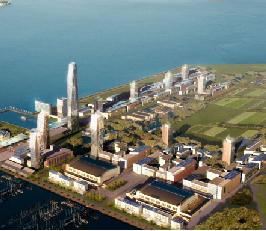
That launch event followed last week’s creation of the San Francisco Waterfront Alliance, made up mostly of area residents and environmental organizations that oppose the project, including the Sierra Club and Save the Bay. The group today released a press release and artist’s rendering of how the 13-story arena and two condo towers may block views of the bay.

Last week, SFWA put out a press release criticizing Assembly Bill 1273 by Assembly member Phil Ting, claiming it would allow the project to avoid scrutiny by the Bay Conservation and Development Commission, which oversees and issues permits for waterfront projects. “One of the primary reasons we have regulatory agencies like the BCDC is so that local jurisdictions don’t run roughshod over the Bay and the waterfront,” group President Gayle Cahill said in the release. “The San Francisco Waterfront Alliance strongly believes that BCDC should retain its jurisdiction in this project to ensure independent oversight for the Bay and for all of us.”

Yet Ting and supporters of the project say the legislation doesn’t change BCDC’s oversight of the project, pointing to language that explicitly acknowledges the agency’s authority. While the legislation would remove the need for the three-member State Lands Commission to approve the project, proponents said approval by the full Legislature is a higher bar that ensures more public scrutiny and accountability.

“It does not waive BCDC. It goes through the same BCDC process,” Ting told us. “By going through the Legislature, you do have more hearings and public process. The idea was to make this more thoroughly vetted.”

The Port’s Brad Benson told us that State Lands staff is also still actively scrutinizing the project. “We’ve been working closely with State Land and BCDC staff to incorporate their concerns,” Benson said. For example, the arena configuration has already been moved closer to shore than originally proposed because of BCDC concerns about maritime access to a deep-water berth at the site.

In addition to approval by the Legislature and BCDC, the project must also be approved by the Port Commission and Board of Supervisors. The latest design for the project is scheduled to be released on May 6 and will be discussed by the Board of Supervisors Land Use and Economic Development Committee that day, said Gloria Chan of the Mayor’s Office of Economic and Workforce Development. The Planning Commission will then hold an informational hearing on the new design May 9, following by a May 14 hearing before the Port Commission. 

The project is proposed to include a 17,500-seat arena that would host more than 200 Warriors games, concerts, and other events per year, starting in 2017, on 13 acres of rebuilt piers. The adjacent, 2.3-acre Seawall Lot 330 would include up to 130 new condos, a hotel of up to 250 rooms, and 34,000 square feet of restaurants and retail space.

The whole project would include just 830-930 parking spaces, making its still-unfolding transportation plan key to the project’s approval. Opponents of the project also criticize the project’s height and its financing package and say this intensive development isn’t consistent with city plans or state laws that protect waterfront lands for maritime and public uses.

“We told the mayor before it was even announced that it is not a legal use of the pier,” Save the Bay Executive Director David Lewis told the Guardian. “There’s no reason that an arena has to be out on the water on a crumbling pier.”

Yet proponents tout the project’s economic benefits to the city and the need for an arena that size to host concerts and conventions, beyond the prestige of luring the Warriors away from Oakland and back to its original home city. “It will be privately financed and turn a crumbling pier and unsafe parking lot into a state-of-the-art venue that generates new revenue for the region and provides a spectacular new facility for the Bay Area’s NBA team.”Jim Wunderman, CEO of the Bay Area Council and an honorary co-chair of Warriors on the Waterfront, said in the press release.

UPDATE: Rudy Nothenberg, who served five SF mayors financing big civic projects and helped found SF Waterfront Alliance, disputes several assertions made by project proponents. “The first version of [AB 1273] unquestionably moved BCDC out of the way,” he said, claiming that bill language was altered after input from BCDC and the consultant to the Assembly Natural Resources Committee. BCDC has not yet returned a call from the Guardian on the issue. Nothenberg also says AB 1273 turns the deliberate fact-finding process required for the State Lands Commission to make its public trust determination into a political process that is a less thorough vetting of the project.

He also took issue with the statements by Wunderman and others that this is a privately funded project, noting that taxpayers will be paying $120 million to rebuild these piers and will give up future property taxes on the site, which will be diverted by a special tax district to help repay the bonds. Nothenberg told us, “Their continued assertion that there is no public money involved in blatantly untrue.”


Faux cabs: A tourism industry perspective

21

I got a fascinating letter from a person who’s worked in the tourism business in San Francisco for many years, and he’s very worried about the impact of the faux cabs on the city’s biggest industry. Here’s his note:

I’m a concerned representative of the tourism industry who read your article, “The cost of fake cabs,” with great alarm.  In fact, I think you should have mentioned more on how it could affect tourism beyond that just “inexperienced drivers aren’t good for the city’s reputation.”  I’ve been the Chief Concierge of a major Union Square-area hotel for the last 11 years, and if even half of what you say is true, then I fear there could be even greater damage than what your article portends.

According to the last statistic I read from the SFCVB, San Francisco welcomed 16.5 million visitors to the city in 2012, and although many of them may be “tech savvy,”  they often do not bring their smart and cell phones with them because it cost to much to use outside their own countries.  Therefore, they are just as dependent on our taxis as those seniors and disabled San Franciscans you wrote would be disenfranchised.  if, as your article infers, companies like Lyft and Sidecar (Et Al) continue their dominating trajectory over our traditional taxi industry, I worry how the millions of visitors who come to the city will be affected.

Unlike the aforementioned vulnerable San Franciscans who at least are somewhat familiar with the city, many of these visitors often have never been here before, so they have no knowledge of alternative ways of getting around and know only a taxi as a means of transportation.

Again if, as your article infers, this trend means a “race to the bottom” of qualified drivers, I fear the detrimental affect would greatly damage our city’s number on industry – tourism.  I know first had how sites like TripAdvisor can enhance or diminish a hotel’s reputation, imagine what would happen if that were expanded tenfold and millions of visitors who could have negative taxi experiences damage the image of the city on line.  It’s not beyond the realm of reason to imagine if one of these under-regulated and under-taxed companies didn’t like tourist A or tourist B for some reason, and then disseminates that information to the other companies; essentially blackballing said tourist completely.

As much concern as I have for those of our most vulnerable citizens who are already suffering the deleterious effects as these companies proliferate, I fear that our city’s greatest industry would be harmed in ways not yet imagined.  We really have no idea yet what the future is, and I fear those who can can do something about it are doubling down on an untested concept with possible disastrous effects.

Thank you for this opportunity to share my observations.

Peter Nasatir

Proposal would halt condo conversions for ten years

San Francisco Supervisors Norman Yee, Jane Kim and Board President David Chiu gathered with a cluster of tenant advocates at City Hall April 15 to unveil a proposal billed as a more equitable alternative to a highly controversial condominium conversion legislation that’s fueled a months-long battle over affordable housing.

Crafted with the input of tenant advocates, the new plan seeks to amend controversial legislation proposed earlier this year by Sups. Scott Wiener and Mark Farrell to allow a backlog of approximately 2,000 housing units to convert immediately from jointly held tenancies-in-common (TICs) to condos.

The proposal would effectively shut down the city’s condo conversion lottery for a minimum of 10 years, a measure aimed toward ending the cycle of real estate speculation that tenant advocates say has given rise to a spike in evictions in San Francisco’s supercharged housing market.

The proposal would still allow a current backlog of TICs to convert to condos without having to wait in a lottery system created to limit the number of units lost from the city’s rental housing stock. The board’s Land Use and Economic Development Committee, which is currently in session, will take up the legislation and proposed amendments later this afternoon.

The 10-year suspension on condo conversions would allow time for permanently affordable units to be built in place of the rental units that would be lost in the one-time conversion, proponents of the alternative legislation said. “If more affordable housing isn’t produced, then units don’t get to convert,” Housing Rights Committee executive director Sara Shortt told the Guardian. 

Chiu stressed that the proposal was crafted to “ensure that as we expedite condo conversions … we protect tenants by suspending the lottery for at least 10 years.”

The 10-year minimum suspension is based on current regulations capping condo conversions at 200 per year. It would last a decade because an estimated 2,000 units would be converted, but could last longer than that.

“For example, if 2,200 units are converted,” Chiu explained, “the suspension would last for 11 years.”

Meanwhile, the proposal would require the conversions that would be intially allowed to be staggered over the course of three years.

The plan “puts the Board of Supervisors on record that we strongly believe in preserving our affordable housing stock,” said Sup. Yee, adding that the package of amendments seeks to “address the risk of speculation that will ensue with a large number of TICs being converted to condominiums.”

The Wiener-Farrell proposal spurred a months-long opposition campaign led by tenant advocates, who said it would permanently remove affordable rental units from the city’s housing stock and incentivize evictions of long-term tenants at a time when Ellis Act evictions are already on the rise. 

“Condo conversions are the number one reason why people are being evicted from the city,” San Francisco Tenants Union executive director Ted Gullicksen said at the April 15 rally and press conference.

Wiener and Farrell’s proposal was presented as a way to remedy TIC owners’ complaints that onerous shared mortgages had left them financially strapped.

But Sup. David Campos, who also appeared at the rally, commented that the real challenge “is for the renters who are finding it very hard to live in San Francisco.”

Campos seemed dubious that a one-time condo conversion should be allowed to move forward at all. “If anything, I think we should be doing more to protect tenants,” he said. “My hope is … if it’s something we cannot live with as a community, we will make sure it dies,” he added, referring to the original condo conversion proposal. 

In an earlier attempt to strike a compromise between TIC owners and tenant advocates, “negotiations broke down quickly,” Shortt said in an interview. At the rally, she said this alternative was “drafted in a way that’s not trying to meet any political agendas.”

For many elderly and low-income tenants who have few options if they are faced with eviction, “there is no price tag that you can put on their units,” said Matt McFarland, a staff attorney at the Tenderloin Housing Clinic, who spoke at the rally. “Their most valuable possession is the long-term rent control on their property. For these tenants, it’s basically a death sentence when you get these eviction notices.”

Treasure Island: Is this the end?

30

So Mayor Lee goes to China with plans to celebrate the signing of a deal that would bring $1.7 billion in Chinese investment into the lagging Treasure Island redevelopment project, and instead the whole thing falls apart. Not good for the cross-Bay rivalry: Gov. Brown, a former mayor of Oakland, landed $1.8 billion in Chinese money for his city’s big project, while Lee lost out.

But there’s a bigger problem. It’s hard to see how anyone would want to invest in Treasure Island right now, when:

The island is sinking,

The Bay is rising,

There’s only one way on or off the island, and it’s already so crowded that a modest event like the Treasure Island Flea Market ties up traffic in both directions for hours, and

The place is radioactive.

Matt Smith and Katherine Mieszkowski of the Bay Citizen did what the Navy and the city of San Francisco refused to do. They went out with a couple of red buckets, dug up some soil and had it tested for Cesium-137. Bingo: The place suffers from far worse contamination that anyone was letting on. And there might be even more:

Until the early 1990s, the Navy operated atomic warfare training academies on Treasure Island, using instruction materials and devices that included radioactive plutonium, cesium, tritium, cadmium, strontium, krypton and cobalt. These supplies were stored at various locations around the former base, including supply depots, classrooms and vaults, and in and around a mocked-up atomic warfare training ship – the USS Pandemonium. CIR’s samples were taken from under a palm tree 50 feet from a classroom building where cesium-137 was kept, according to military archives. A 1974 radiation safety audit identified cesium samples used and stored there with radioactivity several times the amount necessary to injure or kill someone who mishandled them. In 1993, shipping manifests from the same building showed even greater amounts of cesium-137 taken away from the same site that year.

Now some experts say that development plans need to be put on hold while the entire place is checked out more carefully:

“The fact that there is a level above standards is a clear mandate for further study and assessment of the extent of contamination and its origin,” Beyea wrote in an email, adding that more systematic testing is particularly important given that public play areas are planned nearby. “Building a playfield is not an appropriate plan at this time,” he wrote, “given the tendency for little children to put things in their mouths.”

Would you loan a couple billion dollars for a development project on that site?

In theory, of course, the Navy is responsible for the cleanup. In practice? Good luck with that. The Pentagon is blaming the sequester for forced budget cuts in everything including the Blue Angels; you think anyone’s going to write a very big check any time soon for a very complex environmental clean-up job on an artificial island that will soon be underwater?

I used to think the best thing to do with Treasure Island was to leave as much open space as possible for soccer and baseball fields, then slowly let it sink back into the Bay. Now apparently it’s a bad idea even to have kids playing there.

And what about the people who already have moved into housing at TI? Anyone going to test their soil?

Anyone want to take bets on whether anything much is ever going to be built there?

Jessie Ware eats pizza at Little Star, connects with her fans at the Independent

1

Last Thursday, when the lights came up on the stage at the Independent, they revealed a woman who was relishing the reverential shouts of the sold-out crowd. With a dramatic bun on top of her head, large hoop earrings, and tall heels, Jessie Ware appeared to embody the fully realized pop star that the world is starting to recognize in her.

Throughout the night, though, it became clear that what makes Ware so compelling isn’t the idolizing distance of pop-stardom, but its opposite. Between each song, she charmed the audience with candid and often self-deprecating banter. To a loud response of cheers and clapping, she spoke of her boyfriend who had joined her on tour and enjoyed planting himself in the audience to gauge its mood. “If someone comes up to you being a bit pervy, it’s just ‘cause he’s really proud of me,” she said, then laughed along with the crowd.

It’s tempting to say that the best part of the night was this sort of endearingly comedic chat, but that wouldn’t be doing justice to her performance. On Ware’s album, Devotion, the music has an understated ease, and though that is part of what makes it so good – in a world of over-the-top pop, restraint is refreshing – live music requires more than subtlety. Ware and her band delivered.

The music, already catchy on the album, achieved greater depth on stage. In the ballad-like “Wildest Moments,” added emphasis on the reverberant drums and Ware’s responding rhythmic changes gave the audience more to sink its teeth into, while the simplification of quieter tunes such as “Sweet Talk” emphasized the intimacy of Ware’s largely romantic repertoire.

The strength of Ware’s singing also came through more in a live venue than in the album, where the rule of restraint controls her voice, too. On Thursday, commercial but expressive vocals added the right amount of embellishment and variation to soulful tunes such as “What You Won’t Do For Love” (despite the four slices of Little Star Pizza and strawberry ice cream that she admitted to eating before the concert). She is a more talented singer than her recordings suggest.

Because of this, occasionally I wanted her voice to come through even more. On some songs, including that opener, “Devotion,” a jangly guitar and swirling synth that aspired to match their recorded versions obscured Ware and diminished the force of the singer.

This, however, is one complaint in a performance that was otherwise flawless – though “flawless” suggests a show more sterile, glossy, and lifeless than what happened that night. The best moments felt unpracticed and organic, enjoyable because of their imperfections. Ware reacted to the dance moves of the front row, rambled occasionally, and when she plugged her album, which comes out in the US on Tuesday, she gave a bashful look when caught herself clapping along with the audience. Flawlessness would imply that Ware has completely filled her newfound role as a pop-star, but instead, she seems both amused and humbled by it.

Maybe it isn’t enough to equate the quality of a show with how endearing the performer is, but I think it’s significant that the 500 people at the Indy had fun because Ware was so obviously having fun.
One sign of a successful show is its ability to evoke the sensation of a personal stake in the performer. Last Thursday, Ware’s audience became invested in her future career, which, with all of her talent and charm, will inevitably thrive.

Save the San Francisco Mime Troupe’s summer season!

0

All the world may be a stage, but as San Francisco Mime Troupe fans are finding out, it’s not a free one.

Even as we gleefully contemplate a Fleet Week sans Blue Angels, truly the silver lining of sequestration, the news that the San Francisco Mime Troupe is facing an immediate financial crisis reminds us of its downsides as well. After several anticipated grants failed to be awarded to the acclaimed theatrical collective, including one from longtime funders the National Endowment for the Arts, the Mime Troupe announced that it needs to raise $40,000 by the end of April in order to mount its summer tour of a show about natural resources and climate change tentatively entitled Oil and Water.

By no means is the Mime Troupe alone in facing financial difficulties. Securing arts funding has always been a precarious proposition at best for small theater companies, but one thing that sets the Mime Troupe conspicuously apart from most of their peers is their commitment to providing all of their shows for free  — reaching thousands of people with their often tongue-in-cheek, issue-motivated musicals in public parks across the Bay Area each year.

“I don’t think it’s totally sequester-based but I’m sure that hasn’t helped,” Mime Troupe general manager and collective member Ellen Callas says via email. “Money for arts is not a congressional priority, particularly among the GOP.”

In response to its immediate financial crisis, the Mime Troupe has spoken of downsizing the length of its tour this summer as well as cutting back on its overall production costs, shrinking its carbon footprint as it tightens its belt.

It’s not the first time the Mime Troupe has had to scale back dramatically. After broadly-implemented cuts on the NEA and the California Arts Council in the 1990s, support for the cross-country touring the Mime Troupe specialized in was lost for good, and the company confined itself thereafter to the boundaries of the Bay Area, losing the opportunity to reach out to a national audience, once so central to its mission. The upside to this forced localization, though, has manifested itself in the Mime Troupe’s ability to reach out to its more immediate community, particularly in terms of its youth programs and internships, which are also provided free to participants.

With the summer season in jeopardy, so too are the various youth (and working actor) opportunities to be part of the action, something that Callas makes sure to mention in our correspondence. But she remains optimistic in regards to the Troupe’s reinvigorated commitment to grassroots fundraising, having (at the time of this writing) already raised $15,000, money which will be used to reshape the collective into the “leaner and greener” organization that will be better able to withstand the financial crises of the future.

”We’re seeing this as an opportunity to re-tool our business model so that we can sustain ourselves in the new economy,” promises Callas.

Donate to the San Francisco Mime Troupe at www.sfmt.org.

Ron Lanza, queer impressario, dies at 78

24

Ron Lanza, a pioneer in San Francisco’s gay rights movement and an impressario who promoted queer arts through the worst of the AIDS crisis, has died after a long battle with colon cancer. He was 78.

Lanza, a Brooklyn native, was one of the leaders of Bay Area Gay Liberation in the 1970s, and, along with Assemblymember Tom Ammiano and the late activists Hank Wilson and Howard Wallace, was instrumental in building the LGBT movement in San Francisco.

He was the owner and operator of the Valencia Rose Café and later Josie’s Cabaret and Juice Joint, two groundbreaking queer performance venues that helpled launch the careers of  Whoopie Goldberg, Marga Gomez, and Margaret Cho.

“His vision came from looking at people and saying, ‘you have talent, you ought to try this,’ ” Ammiano, who performed as a comedian at Valencia Rose, told me.

“He was a giant in this city,” Tommi Avicolli Mecca, a performer and housing activist and the author of a book on the history of gay liberation, noted. “He created the foundation for what we now know as queer arts in San Francisco. He was really one of a kind.”

Lanza with Dennis Peron and Tom Ammiano

Marke B., our managing editor and a longtime follower of queer culture, put it this way:

“He dedicated his life to promoting theater and arts in San Francisco — even if it sometimes meant playing hardball, but always with that super-charming, goofball smile. Every single drag queen, performance artist, comedian, and actor in the city owes Ron a memorial smoothie — the Valencia Rose and Josie’s Cabaret kept performing arts alive in this town through the worst years of AIDS and political artphobia.”

Lanza, a Navy veteran, arrived in San Francisco in the 1970s, and worked for a while as a teacher in Walnut Creek. “When he came out, he risked being fired, so he quite before they could fire him,” Ammiano said.

With Wilson, Lanza took over the Ambassador Hotel, a Tenderloin SRO with a large number of gay and transgender tenants. In the 1980s, the two helped create what would become the Tenderloin AIDS Resource Center.

Lanza never liked the headlines; while his compatriots entered politics, ran for office, and organized on the streets, he stayed in the background, providing the cultural, moral, and financial support.

When Ammiano challenged then-Mayor Willie Brown in a legendary 1999 write-in campaign, Josie’s Cabaret and Juice Joint became the campaign headquarters. “He was so supportive,” Ammiano said. “He was a real San Francisco lefty. He only cared about money if he had to pay the bills.”

Gabriel Haaland, who helped run the Ammiano write-in, told me that “San Francisco is dimished. It’s such a heavy loss. There are people who are just magical, bright lights in the world, and he was one of them.”

Lanza was diagnosed with colon cancer in his 40s, but survived — in part, probably, thanks to adopting a healthy lifestyle. “He didn’t smoke, he was a vegetarian, and back then we teased him about it,” Ammiano said.

But the cancer came back in his later years, and he quietly underwent a series of operations. “He called me a few weeks ago and said he was dying,” Ammiano said. “He wanted to have a good-bye dinner.”

A huge dog-lover, Lanza could often be seen running down Dolores Street with two or three rescue animals. One of his last wishes was for a trip East to leave the dogs with a relative. He’d been driving a limo for income, and one of his wealthy clients paid for the ticket.

“He was always handsome, always loyal,” Ammiano recalled. “There were times you wanted to kill him, but the love was always there.”

A memorial is pending.

Words, words, words permeate a couple of unconventional theater options this weekend

0

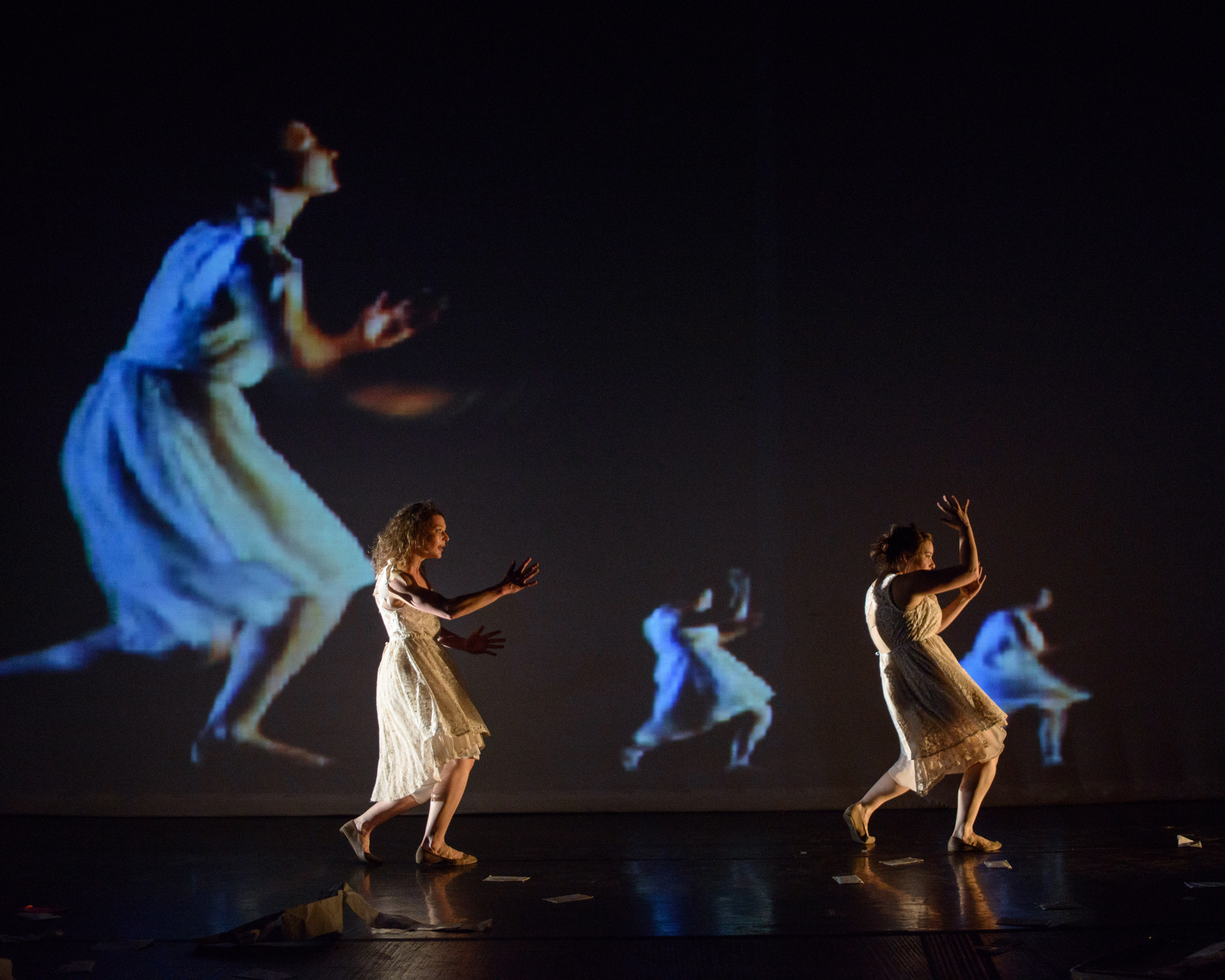
The scattered letters piled on the floor are alternately a lover, a tormentor, a terrible reminder, a set of mysterious directives, and a bed for restless dreaming for Ophelia — or rather, one of her three incarnations — as French company Carte Blanche presents its roaming, site-specific riff on Shakespeare’s sad heroine, with inspiration drawn from Arthur Rimbaud’s famous elegy.
 
But despite all those missives from a certain gloomy prince, the piece makes much use of silence too, as the audience mills around the Firehouse at Fort Mason Center, watching the agitated actions of three young heroines in various rooms before being led outside for a journey to other environs.

The dramatic tone in Ophelia tends toward the sentimental but the environmental staging has its charms, as do certain aspects of the mise-en-scène, which makes use of a giant warehouse space on the pier and at one point includes an enormous video backdrop enveloping the three dancer-performers. A little bit of Sleep No More, a little bit of Cirque du Soleil, and a little bit its own bilingual, francophone thing, Ophelia is a limited but curious journey of discovery.

Elsewhere around town: the great Sheffield-based English experimental theater company Forced Entertainment has only been to San Francisco once before, back in the 1990s, which (there’s no getting around it) just sucks. But FE is coming to a computer screen near you this weekend, live, starting at 3:59 this afternoon local time, for a 24-hour version of its durational performance Quizoola!, a collectively devised piece that relies on thousands of pre-written questions (you can submit your own too) in free-play between audience and performers across an evolving scenario that will only get weirder over the course of the earth’s slow full turn.

Tune in! Play at home! This may be the closest we get to having Forced Entertainment come back to the Bay Area. Link up here.

Side note: A few months ago in London, I had the chance to interview Tim Etchells, Forced Entertainment’s artistic director (and chief producer of questions for Quizoola!), about the group and its approach to the sometimes-sinister power of narrative—including the ongoing rehabilitation of the awful neoliberal hatchet-woman Margaret Thatcher. That interview can be found here.

OPHELIA

Sat/13-Sun/14, 8:30pm, $22

Fort Mason Center

Marina at Laguna, SF

www.carteblanche-sf.com

Checks from mayor’s mysterious breakfast companions mysteriously absent

In less than three months, custom made super yachts will zip around the San Francisco Bay in the ultimate competition for the prized America’s Cup. But San Francisco could wind up spending millions more than originally expected to host this prestigious sailing regatta.

At a March 13 committee hearing at the Board of Supervisors, America’s Cup Organizing Committee CEO Kyri McClellan reported that Mayor Ed Lee was investing an “incredible amount of energy” into helping ACOC with fundraising efforts to avert a city funding shortfall. He was even said to be hosting “breakfasts with CEOs” to solicit funding, McClellan said.

Who are the CEOs? Nobody will say.

How much has each of them pledged to give? Nobody will say.

When the Guardian submitted these questions to Lee, McClellan, and Stefanie Roumeliotes – whose SGR Consulting firm was wheeled in at the last minute to organize fundraising events – none answered directly.

McClellan responded on April 9 with a copy of a letter she sent to Mayor Lee and Board President David Chiu on the day of the hearing, which she indicated was “the most recent update on fundraising.” Roumeliotes, for her part, told the Guardian flat out to stop calling, because her firm was not going to answer any questions.

So far, it appears that none of the mayor’s fundraising meetings, which took place from January 25 to March 4, resulted in his unnamed breakfast companions writing out actual donation checks.

Had they contributed funding, the donation amounts would have been reflected in “behested payment” forms filed with the San Francisco Ethics Commission, required under state law to be submitted 30 days after a contribution is made.

Elected officials are “supposed to file behested payment [forms] for … legislative, governmental or charitable purposes,” Ethics Commission chief John St. Croix told the Guardian, so donations relating to the America’s Cup would fall squarely into this category. Those forms are supposed to filed internally by department, then sent onto Ethics. So far, none have been recorded.

“If there are such forms that the mayor filled out,” St. Croix told the Guardian, “they’re not getting forwarded.”

Meanwhile, McClellan’s March 13 letter suggests that recent fundraising efforts have yielded only $1.4 million – which won’t actually be in hand till next year. That’s a far cry from the estimated $15.6 million funding gap race organizers say is needed to cover San Francisco’s estimated $22.5 million billionaires’ boat race tab. As the fundraising arm of the race organizing committee, ACOC promised in an initial agreement that it would “endeavor to raise” the amount needed to defray city costs. Thus far, it’s paid $6.8 million.

In her letter to Lee and Chiu, McClellan suggested that roughly $13 million of that $15.6 million shortfall would be accounted for in “forecast General Fund revenues.” That translates to additional money harvested from visitors’ pockets via sales and hotel taxes, with some payroll taxes and parking fees sprinkled in, all associated with the America’s Cup events. Little-guy money.

And thanks to the little guys, ACOC’s new fundraising goal is much more attainable. “The SFACOC continues to endeavor to raise the funds,” McClellan wrote. “At a minimum that is $2,670,851 of which we already have $1,400,000 in existing pledges that are to be received by January 2014.”


ABC shows more concern about expanding police video surveillance than Mayor Lee

15

The SFPD has quietly expanded its reach and authority to obtain video surveillance from in and around bars, clubs, and markets through a condition it has begun recommending on new liquor licenses, as I reported in today’s issue, effectively bypassing controls on city-operated surveillance cameras established through extensive public hearings in 2005.

But the Mayor’s Office doesn’t seem concerned about the new trend, echoing SFPD’s point that it is the California Department of Alcoholic Beverage Control that decides whether to heed the SFPD’s request to include the video surveillance condition. “There is no new policy. SFPD makes recommendations as far as I know, not requirements,” Mayoral Press Secretary Christine Falvey wrote to me in an email responses to our questions.

Certainly, everyone from bar owners to the ACLU to Sups. Scott Wiener and David Campos – who have called a hearing on the policy for later this month – consider it a new policy, or at least one that the public has just learned of after it was adopted internally right after the idea was shot down in public hearings in 2011.

ABC spokesperson John Carr had told me the department “routinely denied requests for conditions by SFPD per section 23800(e) of the Californian Business and Professions Code, occasionally these denials include the surveillance condition,” but he wasn’t able to provide me any examples of that happening by press time.

But today, he was able to find one. On Oct. 3, 2012, ABC rejected the SFPD’s request for video surveillance at Bush Market at 820 Bush on a quiet residential block of Nob Hill, noting that state law requires such requests be supported by “substantial evidence” that problems exist at the site that would be mitigated by the condition.

“I regret to inform you that the Department is unable to impose conditions pursuant to your request because no evidence was provided to establish that a problem exists at the premises or in it immediate vicinity,” ABC District Administrator Justin Gebb wrote in what was essentially a form letter.

Carr shared an identical letter that the ABC sent to the SFPD denying some of its requested conditions for another liquor license transfer on Feb. 12, this one for the Space 550 event venue at 550 Barneveld Ave. But in that case, the ABC decided to support the SFPD’s request for video surveillance “that is able to view the inside and outside of the premises” and which must be given to the cops “upon demand.”

As I wrote in this week’s paper, the ACLU considers that kind of extrajudicial expansion of the SFPD’s ability to require and obtain video surveillance to be unconstitutional, and we furnished a copy of the article and the issues it raised to try to get a more substantial comment from the Mayor’s Office, which seems to be less concerned with the civil rights of San Franciscans than the bureaucrats in Sacramento are.

“Balancing public safety with vibrant cultural and nightlife activities is a concern of mayor. He expects the Police Department to work in partnership with the neighborhood and its businesses to lawfully collect evidence that can help keep the public safe and neighborhoods active,” Falvey wrote.

So I had a few follow-up questions, for which I’m still awaiting answers, and I’ll update this post if and when I get them: “The ACLU’s position is that this is not a lawful way to collect evidence, and that it violates the state constitution’s privacy protections and the rules San Francisco established in 2005 regulating when and how the SFPD may request and use video surveillance. Does the mayor reject those concerns and has he sought any legal advice to support his position? In the absence of any judicial review, shouldn’t the city have some guidelines and policies governing this expansion of SFPD’s video surveillance authority? Does the mayor believe the 2005 guidelines should no longer apply? And does the mayor agree with Sups. Wiener and Campos that it would be appropriate to have a public hearing on this issue, particularly given the strong public opposition to requiring expanded video surveillance by bars two years ago?”

San Francisco has a lot of money tied up in fossil fuels

The San Francisco Employees Retirement System has more than $113 million in holdings in Exxon Mobil. It’s a lucrative investment in a dirty business. On March 29, Exxon’s Pegasus Pipeline ruptured, spilling as much as 7,000 barrels of oil in a toxic slick that coated a residential Arkansas neighborhood and prompted the evacuation of 21 homes.

SFERS also has $60 million invested in Chevron, which has its own checkered history. Environmentalists have long shamed the oil giant for its “toxic legacy” in Ecuador, but closer to home it was recently fined nearly $1 million for workplace violations arising from last year’s Richmond Refinery blaze. That incident sent a column of toxic smoke skyward, and resulted in about 200 hospital visits for respiratory problems from the fumes.

Further down the list of SFERS’ public equities holdings in fossil fuels is $28 million in Royal Dutch Shell, a company whose name, in some circles, is synonymous with human rights abuses in Nigeria. (Shell was also tapped to administer San Francisco’s CleanPower SF program, but that’s another story.)

The retirement system also has about $18 million tied up in Occidental Petroleum, a major player in the fracking industry that was responsible for drilling 675 new oil wells in California in 2011 alone, according to industry data. The retirement system portfolio includes about $5.4 million in BP, the company responsible for the infamous Deepwater Horizon explosion and epic oil spill in the Gulf of Mexico three years ago.

And the city’s retirement portfolio includes more than $1.2 million in Arch Coal, one of the largest coal suppliers in the U.S., which has faced millions in fines for Clean Water Act violations and was sued for firing a miner who complained about unsafe working conditions.

SFERS provided the Guardian with details of its energy company holdings in response to a public records request.

Earlier today, the Budget and Finance Subcommittee of the San Francisco Board of Supervisors took up a resolution, introduced by Sup. John Avalos, to urge SFERS to divest from fossil fuel companies.

The resolution is nonbinding; even if it unanimously passes at the full Board in a couple weeks, SFERS is under no legal obligation to tweak its investment portfolio. But support for such a strategy is gaining momentum as major environmental organizations seek to bring the issue of climate change to the forefront.

Avalos’ resolution was inspired in part by 350.org, an organization that has sowed the seeds for divestment campaigns at 260 colleges and universities nationwide. Celebrated 350.org founder and environmental writer Bill McKibben is betting that the kids are going to win. His campaign hinges on the idea that the planet can only sustain combustion of another 565 gigatons of carbon before things really go off the rails climate-wise; the industry has five times as much in reserve.

Despite San Francisco’s green reputation, change is likely to happen slowly, if at all. According to numbers shared by Retirement Board executive director Jay Huish at the April 10 hearing, SFERS has a total of some $500 million tied up in companies that deal in dirty energy. That’s substantial, and there could be more on the private asset side. “We gave them a list of 200 fossil fuel companies” targeted by environmentalists because they hold underground carbon reserves, noted Avalos aide Jeremy Pollock. “They had stock in 81.”

Avalos’ divestment resolution cleared the way to proceed to the full board, but only after Sup. Mark Farrell requested a couple amendments.

Farrell asked to add language making it clear that the retirement board could receive a lower return on investment if went through with divestment, and inserted another clause to underscore the point that the Board resolution shouldn’t infringe upon SFERS’ “fiduciary responsibility.”

The resolution is expected to go to the full Board on April 23.

The Performant: Band(s) of a thousand faces

0

Borts Minorts/Fuxedos/Polkacide fux shit up at Bottom of the Hill

It had been awhile since I’d stood in slightly gape-mouthed awe before the glorious mania of Borts Minorts, who last played the Bay Area some five years ago, the jerk, depriving me of my Dadatastic fun fix for far too long.

For the uninitiated, Borts Minorts is not a band so much as an alien invasion for the senses. Front-creature Borts Minorts (a.k.a. Chris Carlone) appears clad in a shiny white unitard, which makes him look like a giant cartoon spermatozoon, his frenetic dance moves are the stuff of legends and nightmares. He frequently plays a ski, though for this show he played a cabinet door strung with bass strings instead. When last spotted ‘round these parts, his ballsy backup crew had consisted of dancing girls, an unsmiling Norwegian on a flute (a.k.a. Melting Razor), and someone of indeterminate gender blowing endless bubbles—a deliberate hodge-podge of askew confusion.

But Saturday’s lineup at Bottom of the Hill kicked it up to a whole new dimension, thanks mainly to the addition of a horn section, even more dancers, and a glittering diva who sang operatically and took over the poker-face duties from the absent Melting Razor. Plus, somewhere along the way, the Borts Minorts “look” has been tweaked to include a giant blonde rocker-do complete with Richard Simmons sweatband, which somehow managed to dehumanize his freakish facade even more than his previously shiny-smooth Spandexed pate had done.

Shortly after the mighty Minorts crew exited the stage, the Fuxedos took it over, clad in their signature blood-splattered tuxedo shirts, laden with props. The bizarre brainchild of LA’s Danny Shorago, the Fuxedos can be best described as one part metal, one part big band, one part free jazz, and one part carnival sideshow in which Shorago is both the ringmaster and the principle freak.

I get the feeling that Shorago was one of those kids who spent a lot of time alone in the house playing dress-up, what with his penchant for inventive costuming and character-creating. From his eager sales huckster for “Clams and Flan” (the fast food emporium of all our dreams), to his sword-bearing villager with a “real god” (a giant porcupine named Reggie), to his insulation-clad astronaut whose distressed mantra “I feel the air slipping out of my space suit” precedes an epic death metal roar, to his signature sulky sideshow attraction “Mimsy,” to his cane-swinging, Clockwork Orange-channeling crooner singing the song “Leonard Cohen wrote for me” (“The Future”), Shorago’s unique shapeshifting abilities definitely steal the spotlight. But the fact that he’s backed by truly talented musicians and complex composition really elevates the whole Fuxedos experience from mere tomfoolery to actual art, albeit hilarious art.

And speaking of hilarious art, there really is no better way to describe the imitable, unflagging insanity that Hardcore 2/4 crew, Polkacide, bring to the stage. They’ve been raucously rawking it since before half of their oddiences were born, and their punk rock polka is a true San Francisco treat. Each musician in the band has a musical pedigree as long as the string of sausages that clarinetist “Neil Basa” strategically hangs down his lederhosen, and the practiced patter of frontman Ward Abronski guides the faithful Polkacidal around the world in 80 (give or take a few dozen) polkas—from Warsaw, Poland to San Antonio, Texas.

You’ll just have to imagine the mayhem, as by that point I was dancing too much to remember to take many pictures—but better yet, you should probably just go to their next show and experience it for yourself.

British singer Jessie Ware on summer plans, being herself on stage, and flowers in SF

0

I first heard Jessie Ware’s “If You’re Never Gonna Move” on the road from the East Coast. After that, the song averaged about five plays per state. Ware’s understated and soulful dance pop has the rare ability to adapt to any situation. It eases the tension in a car full of two people with almost irreconcilable taste in music; it works equally well as the soundtrack to a lazy afternoon, and a night out. And it feels good.

The formula, which has earned her recognition in her native UK, is gaining a following in the US. Though the breakthrough album Devotion won’t be released stateside until April 16, many of her concerts, including Thursday’s at the Independent, have sold out to audiences that sing along with every word. (Not to worry, she also has an in-store at Amoeba that day.)

Ware has transformed into a full-fledged pop star. But on the phone, she didn’t fit the stereotype. Pop-stardom doesn’t come naturally to the down-to-earth 28-year-old who was going to go to law school if the whole singing career thing didn’t work out. So far it has, though, and she spoke a bit about how delighted she is about it all:

SFBG How has the North America tour been so far?

Jessie Ware Really good. We started in New York, and I was doing lots of promos, doing gigs. The crowds were just amazing. We did the last show in New York and it was quite full on because MTV was live-streaming it. It was only my third proper gig in New York and I’m getting it streamed to whoever wants to watch it online. That was scary but also lovely.

https://www.youtube.com/watch?v=eblGD5yuid8

SFBG Your show at the Independent is sold out, so I take it that it went well the last time you were here a couple months ago.

JW I had the best show ever in San Francisco in that Rickshaw Stop. It was crazy — I got four bunches of flowers at that gig! I I loved it and I love San Francisco. We did a recording for Yours Truly, and we did it in this beautiful flower shop. I can’t wait to wander around again and see San Francisco. I’m told I’m to go to the Mission for good Mexican food.

SFBG Does performing come naturally to you?

JW No, it does not come naturally to me at all. I feel like I’m just starting to really give a performance now. At the beginning I didn’t know what I was doing. I didn’t know whether I was entitled to be a bit over the top. I didn’t feel that comfortable on stage, and I just had to learn. I guess it gets easier when you’re playing to people who have bought tickets to see you. That’s already a bit reassuring, you know?  

I want to kind of tap into the kind of person I play in my videos ever so slightly, but also be myself and really get to know the audience, have a nice conversation whenever I can. Usually, I ask a question and loads of people shout things back at me and I can’t hear what the bloody hell they’re saying. I get myself into trouble because I’ve asked a question and then I have to say, “Whoa!”

SFBG Do you think of genre when you write?

JW I don’t think of genre, I think more of a feel, whether it be upbeat or moody or a bit dramatic. I want the album to feel complete as a whole; all of the songs have to make sense together…I don’t know if the album’s telling a complete story, but I guess it’s quite a lot of romance. Really, it was me experimenting with how to be a songwriter, but thematically they make sense together.

https://www.youtube.com/watch?v=bMJkddvJ4L4

SFBG What is next for you?

JW
I just hope I can keep on playing, really. I’m going to try to be as creative as possible and then play festivals this summer — have a really fun summer and just celebrate that I’m getting to go around the world and perform and play at wonderful festivals that I’ve always wanted to go to anyways.

Jessie Ware
With MS MR, DJ Harry Duncan
Thu/11, 8pm, $18
Independent
628 Divisadero, SF
(415) 771-1421
www.theindependentsf.com

Thu/11, 6:30pm, free
Amoeba Music
1855 Haight, SF
(415) 831-1200
www.amoeba.com

Stage listings

0

Stage listings are compiled by Guardian staff. Performance times may change; call venues to confirm. Reviewers are Robert Avila, Rita Felciano, and Nicole Gluckstern. Submit items for the listings at listings@sfbg.com.

THEATER

OPENING

Acid Test: The Many Incarnations of Ram Dass Marsh San Francisco, 1062 Valencia, SF; www.themarsh.org. $15-50. Opens Fri/12, 8pm. Runs Fri, 8pm; Sat, 5pm (May 11, show at 8pm). Through May 18. Lynne Kaufman’s play (starring Warren Keith David as the spiritual seeker) moves from Berkeley to San Francisco.

Boomeraging: From LSD to OMG Marsh San Francisco, 1062 Valencia, SF; www.themarsh.org. $15-50. Opens Tue/16, 8pm. Runs Tue, 8pm. Through May 28. Comedian Will Durst performs his brand-new solo show.

The Expulsion of Malcolm X Southside Theatre, Fort Mason Center, Marina at Laguna, SF; www.fortmason.org. $30-42.50. Opens Fri/12, 8pm. Runs Fri-Sat, 8pm; Sun, 3pm. Through May 5. Colors of Vision Entertainment and GO Productions present Larry Americ Allen’s drama about the relationship between Malcolm X and Elijah Muhammad.

Ghostbusters: Live On Stage Dark Room Theater, 2263 Mission, SF; www.darkroomsf.com. $20. Opens Thu/11, 8pm. Runs Thu-Sat, 8pm. Through April 27. Rhiannastan Productions brings the beloved 1984 comedy to the stage.

How To Make Your Bitterness Work For You Stage Werx Theatre, 446 Valencia, SF; www.bitternesstobetterness.com. $15-25. Opens Sun/14, 2pm. Runs Sun, 2pm. Through May 5. Fred Raker performs his comedy about the self-help industry.

I’m Not OK, Cupid 🙁 Shelton Theatre, 533 Sutter, SF; www.leftcoasttheatreco.org. $15-35. Opens Thu/12, 8pm. Runs Thu-Sat, 8pm. Through May 4. Left Coast Theatre Co. presents a new collection of one-act, LGBT-themed comedies about dating and relationships.

The Lost Folio: Shakespeare’s Musicals Un-Scripted Theater, 533 Sutter, Second Flr, SF; www.un-scripted.com. $10-20. Previews Thu/11, 8pm. Opens Fri/12, 8pm. Runs Thu-Sat, 8pm. Through May 18. Un-Scripted Theater Company performs a fully-improvised, full-length musical inspired by Shakespeare.

Sheherezade 13 Exit Theatre, 156 Eddy, SF; www.wilywestproductions.com. $25. Opens Fri/12, 8pm. Runs Thu-Sat, 8pm. Through April 27. Wily West Productions presents a short play showcase.

Stuck Elevator American Conservatory Theater, 415 Geary, SF; www.act-sf.org. $20-85. Previews Wed/10-Sat/13, 8pm; Sun/14, 2 and 7pm. Opens Tue/16, 8pm. Runs Tue-Sat, 8pm (also Wed and Sat, 2pm); Sun, 2 and 7pm (no evening performances April 21 or 28). Through April 28. American Conservatory Theater presents the world premiere of Byron Au Yong and Aaron Jafferis’ musical (sung in English with Chinese supertitles) about a Chinese immigrant trapped in a Bronx elevator for 81 hours.

BAY AREA

A Killer Story Marsh Berkeley, 2120 Allston, Berk; www.themarsh.org. $20-50. Opens Fri/12, 8pm. Runs Thu-Sat, 8pm (pre-show cabaret at 7:15pm). Through May 18. Dan Harder’s film noir-inspired detective tale premieres at the Marsh Berkeley.

Pericles, Prince of Tyre Berkeley Repertory Theatre, 2025 Addison, Berk; www.berkeleyrep.org. $29-77. Previews Fri/12-Sat/13 and Tue/16, 8pm; Sun/14, 7pm. Opens April 17, 8pm. Runs Tue, Thu-Sat, 8pm (also Sat and April 25 and May 23, 2pm; no matinee April 27; no show May 24); Wed and Sun, 7pm (also Sun, 2). Through May 26. Mark Wing-Davey directs Berkeley Rep’s take on the Bard.

ONGOING

The Bereaved Thick House, 1695 18th St, SF; www.crowdedfire.org. $10-35. Wed-Sat, 8pm. Through April 27. Crowded Fire Theater launches its Mainstage season with Thomas Bradshaw’s wicked comedy about "sex, drugs, and the American dream."

The Bus New Conservatory Theatre Center, 25 Van Ness, SF; www.nctcsf.org. $32-45. Wed-Sat, 8pm; Sun, 2pm. Through April 28. NCTC performs James Lantz’s tale of two young men whose meeting place for their secret relationship is a church bus.

Carnival! Eureka Theatre, 215 Jackson, SF; www.42ndstreetmoon.org. $25-75. Wed, 7pm; Thu-Fri, 8pm; Sat, 6pm (also Sat/13, 1pm); Sun, 3pm. Through April 21. 42nd Street Moon performs the Tony Award-winning musical.

Eurydice Gough Street Playhouse, 1622 Gough, SF; www.custommade.org. $25-30. Thu/11-Sat/13, 8pm; Sun/14, 7pm. Custom Made Theatre Co. performs Sarah Ruhl’s inventive take on the Orpheus and Eurydice myth, exploring the story through the heroine’s eyes.

Foodies! The Musical Shelton Theater, 533 Sutter, SF; www.foodiesthemusical.com. $30-34. Fri-Sat, 8pm. Open-ended. AWAT Productions presents Morris Bobrow’s musical comedy revue all about food.

The Happy Ones Magic Theatre, Fort Mason Center, Bldg D, Third Flr, SF; www.magictheatre.org. $22-62. Wed-Sat, 8pm (also Sat, 2:30pm; no matinee April 20); Sun, 2:30pm; Tue, 7pm. Through April 21. An Orange County appliance store owner finds his life turned upside down in Julie Marie Myatt’s drama at Magic Theatre.

reasons to be pretty San Francisco Playhouse, 450 Post, Second Flr, SF; www.sfplayhouse.org. $30-100. Tue-Thu, 7pm; Fri-Sat, 8pm (also Sat, 3pm). Through May 11. San Francisco Playhouse’s tenth season continues with Neil LaBute’s romantic drama.

Sex and the City: LIVE! Rebel, 1760 Market, SF; trannyshack.com/sexandthecity. $25. Wed, 7 and 9pm. Open-ended. It seems a no-brainer. Not just the HBO series itself — that’s definitely missing some gray matter — but putting it onstage as a drag show. Mais naturellement! Why was Sex and the City not conceived of as a drag show in the first place? Making the sordid not exactly palatable but somehow, I don’t know, friendlier (and the canned a little cannier), Velvet Rage Productions mounts two verbatim episodes from the widely adored cable show, with Trannyshack’s Heklina in a smashing portrayal of SJP’s Carrie; D’Arcy Drollinger stealing much of the show as ever-randy Samantha (already more or less a gay man trapped in a woman’s body); Lady Bear as an endearingly out-to-lunch Miranda; and ever assured, quick-witted Trixxie Carr as pent-up Charlotte. There’s also a solid and enjoyable supporting cast courtesy of Cookie Dough, Jordan Wheeler, and Leigh Crow (as Mr. Big). That’s some heavyweight talent trodding the straining boards of bar Rebel’s tiny stage. The show’s still two-dimensional, even in 3D, but noticeably bigger than your 50" plasma flat panel. (Avila)

Show Me Yours: Songs of Innocence and Experience Alcove Theater, 414 Mason, Ste 502, SF; www.thealcovetheater.com. $27. Thu-Sat, 8pm; Sun, 5pm. Through April 27. New Musical Theater of San Francisco performs a new musical revue written by Pen and Piano, the company’s resident group of writers and composers.

Steve Seabrook: Better Than You Marsh San Francisco, 1062 Valencia, SF; www.themarsh.org. $15-50. Thu, 8pm; Sat, 8:30pm. Extended through May 18. Self-awareness, self-actualization, self-aggrandizement — for these things we turn to the professionals: the self-empowerment coaches, the self-help authors and motivational speakers. What’s the good of having a "self" unless someone shows you how to use it? Writer-performer Kurt Bodden’s Steve Seabrook wants to sell you on a better you, but his "Better Than You" weekend seminar (and tie-in book series, assorted CDs, and other paraphernalia) belies a certain divided loyalty in its own self-flattering title. The bitter fruit of the personal growth industry may sound overly ripe for the picking, but Bodden’s deftly executed "seminar" and its behind-the-scenes reveals, directed by Mark Kenward, explore the terrain with panache, cool wit, and shrewd characterization. As both writer and performer, Bodden keeps his Steve Seabrook just this side of overly sensational or maudlin, a believable figure, finally, whose all-too-ordinary life ends up something of a modest model of its own. (Avila)

Tinsel Tarts in a Hot Coma: The Next Cockettes Musical Hypnodrome, 575 10th St, SF; www.thrillpeddlers.com. $30-35. Thu-Sat, 8pm. Through June 1. Thrillpeddlers’ sixth annual Theatre of the Ridiculous Revival presents a restored version of the Cockettes’ 1971 Art Deco-inspired musical extravaganza.

BAY AREA

The Arsonists Aurora Theatre, 2081 Addison, Berk; www.auroratheatre.org. $35-60. Previews Wed/10, 8pm. Opens Thu/11, 8pm. Runs Tue and Sun, 7pm (also Sun, 2pm); Wed-Sat, 8pm. Through May 12. Aurora Theatre Company performs Max Frisch’s classic comic parable, translated by Alistair Beaton.

Being Earnest Mountain View Center for the Performing Arts, 500 Castro, Mtn View; www.theatreworks.org. $23-73. Tue-Wed, 7:30pm; Thu-Sat, 8pm (also Sat, 2pm); Sun, 2 and 7pm. Through April 28. TheatreWorks performs the world premiere of Paul Gordon’s musical take on Oscar Wilde’s comedy.

The Coast of Utopia: Voyage & Shipwreck Ashby Stage, 1901 Ashby, Berk; www.shotgunplayers.org. $20-35. Shipwreck runs Wed-Thu, 7pm; Fri-Sat, 8pm; Sun, 5pm. Through May 5. Voyage runs Sat/13, April 20, 27, and May 4, 3pm. Last year in the Shotgun Players’ production of Voyage, the first part of Tom Stoppard’s The Coast of Utopia trilogy (also playing in repertory through May 4), we were introduced to a tight circle of Russian thinkers and dreamers, chafing against the oppressive regime of Nicholas I. In the second part, Shipwrecked, we find them older, perhaps wiser, struggling to keep their revolutionary ideals alive while also juggling familial concerns and personal passions. Focused mainly on Alexander Herzen (Patrick Kelley Jones) and family, Shipwrecked travels from Russia to Germany, France, Italy, and the English Channel, buffeted from all directions by the forces of the uprisings and burgeoning political consciousness of the European proletariat. It’s an unwieldy, sprawling world that Stoppard, and history, have built (made somewhat more so by the Shotgun production’s strangely languid pace during even the most dramatic sequences) but it’s worth making the effort to spend time absorbing the singular world views of Russian émigré Herzen, his impulsively passionate wife Natalie (Caitlyn Louchard), the cantankerous, influential critic Vissarion Belinsky (Nick Medina), professional rabble-rouser Michael Bakunin (Joseph Salazar) and up-and-coming writer Ivan Turgenev (Richard Reinholdt) as they desperately seek to carve out both their personal identities and a greater, cohesive Russian one from the imperfect turmoil of Western philosophy. (Gluckstern)

Fallaci Berkeley Repertory Theatre, 2015 Addison, Berk; www.berkeleyrep.org. $29-89. Tue, Thu-Sat, 8pm (also Sat, 2pm); Wed and Sun, 7pm (also Sun, 2pm). Through April 21. Berkeley Rep performs Pulitzer-winning journalist Lawrence Wright’s new play about Italian journalist Oriana Fallaci.

Love Letters Various Marin County venues; www.porchlight.net. $15-30. Through April 28. Porch Light Theater performs A.R. Gurney’s romantic play at four different Marin venues; check website for addresses and showtimes.

"Pear Slices" Pear Avenue Theatre, 1220 Pear, Mtn View; www.thepear.org. $10-30. Thu-Sat, 8pm; Sun, 2pm. Through April 28. Nine original short plays by members of the Pear Playwrights Guild.

The Whipping Man Marin Theatre Center, 397 Miller, Mill Valley; www.marintheatre.org. $36-57. Tue-Sat, 8pm (also Thu/11, 1pm; April 20, 2pm); Wed, 7:30pm; Sun, 2 and 7pm. Through April 21. Marin Theatre Company performs the Bay Area premiere of Matthew Lopez’s Civil War drama.

PERFORMANCE/DANCE

Caroline Lugo and Carolé Acuña’s Ballet Flamenco Peña Pachamama, 1630 Powell, SF; www.carolinalugo.com. Sat/13, 6:15pm. $15-19. Flamenco performance by the mother-daughter dance company, featuring live musicians.

CubaCaribe Festival This week: Dance Mission Theater, 3316 24th St, SF; www.cubacaribe.org. Fri/12-Sat/13, 8pm; Sun/14, 3 and 7pm. $10-35. Master artists performing music and dance from the Caribbean Diaspora.

Jamel Debbouze Nob Hill Masonic Auditorium, 1111 California, SF; www.masonicauditorium.com. Fri/12, 8pm. $35.50-125. If you understand French: check out this comedian. If you don’t: probably not the show for you.

"Ecstatic Dance" Regency Ballroom, Sutter Room, 1290 Sutter, SF; www.ecstaticdance.org. Tue/16, 7pm. $15-20. Free-form conscious dance for all.

"Feria with Mision Flamenca" Bissip Baobab, 3388 19th St, SF; www.misionflamenca.com. Sat/13, 7:30pm. $15. Flamenco music and dance.

"KALW presents Heard Here" Victoria Theatre, 2961 16th St, SF; www.victoriatheatre.org. Fri/12, 8pm. Free. Storytelling inspired by real people in the Bay Area.

"Mission Position Live" Cinecave, 1034 Valencia, SF; www.missionpositionlive.com. Thu, 8pm. Ongoing. $10. Stand-up comedy with rotating performers.

"Mortified" DNA Lounge, 375 11th St, SF; www.getmortified.com. Fri/12, 7:30pm. $21. Also Sat/13, 7:30pm, $20, Uptown, 1928 Telegraph, Oakl. Embarrassing tales with an April Fools’ Day theme.

"The Naked Stage" Bayfront Theater, Fort Mason Center, Marina at Laguna, SF; www.improv.org. Sat, 8pm. Through April 27. $20. BATS Improv performs an improvised stage play.

Ophelia Fort Mason Center (starting at the Firehouse), Marina at Laguna, SF; www.carteblanche-sf.com. Thu/11 and Sat/13-Sun/14, 8:30pm. $22. Carte Blanche performs a walk-through performance featuring dance, theater, and interactive video.

Red Hots Burlesque El Rio, 3158 Mission, SF; www.redhotsburlesque.com. Wed, 7:30-9pm. Ongoing. $5-10. Come for the burlesque show, stay for OMG! Karaoke starting at 8pm (no cover for karaoke).

"San Francisco Magic Parlor" Chancellor Hotel Union Square, 433 Powell, SF; www.sfmagicparlor.com. Thu-Sat, 8pm. Ongoing. $40. Magic vignettes with conjurer and storyteller Walt Anthony.

"Take 5" ODC Theater, 3153 17th St, SF; www.odctheater.org. Fri/12, 5pm. $5. Works-in-progress by dance artists Andrea Mock, Nicole Klaymoon, and Rachael Lincoln, with discussion to follow.

BAY AREA

"Axis Dance Company Celebrates 25 Years of Inspired Dance" Malonga Casquelourd Center for the Arts, 1428 Alice, Oakl; www.brownpapertickets.com. Fri/12-Sat/13, 8pm; Sun/14, 2pm. $22. The veteran company celebrates 25 years with three works by Victoria Marks, Amy Seiwert, and Sonya Delwaide.

"The Divine Game" Ashby Stage, 1901 Ashby, Berk; www.shotgunplayers.org. Mon/15 and April 29, 8pm. $20. A spur to thought, to reading, to listening, to sparring over the meaning and magnitude of art — they’re all there in the brilliantly expansive, acute, and sometimes barbed observations of professor Vladimir Nabokov (a delighting, animated John Mercer), as he expounds on the subject of Russian literature in this simply staged but witty, well-honed dramatic reading from First Person Singular and adapter-director Joe Christiano. Presented as part of Shotgun’s Monday night Cabaret series, The Divine Game, drawing verbatim on Nabokov’s Cornell lectures of the 1950s, is an invitation to a heady walk down several byways in the land of great literary art, and there are few more discerning or inspiring guides whether or not you share in every conclusion about the relative merits and demerits of Chekhov (Joshua Han) or Dostoyevsky (Brian Quackenbush) — both of whom appear onstage alongside their idiosyncratic peers Gogol (Colin Johnson) and Tolstoy (Jess Thomas). There’s a frisson of mental joy in a distillation like, "Chekhov’s books are sad books for humorous people," or the sweet-talking yet penetrating pronouncement that, "Of all the great characters that a great artist creates, his readers are the best," and their cumulative impact over the course of 90 minutes offers enough inspiration for several reckless bookstore sprees. (Avila)

"Marin Ballet’s 50th Anniversary Reunion Performance" College of Marin, 835 College, Kentfield; www.marinballet.org. Sat/13, 8pm. $50. Featuring Marin Ballet alumni performing works by Ronn Guidi, Julia Adam, Robert Moses, and more.

"Rhythm of Life" 142 Throckmorton Theatre, 142 Throckmorton, Mill Valley; www.142throckmortontheatre.com. Fri/12, 8pm. $20-30. The cabaret and theater star performs songs from throughout his extensive career.

"Sagala 2013" Brentwood Community Center, 35 Oak, Brentwood; www.philippinearts.org. Sat/13, 3pm. $50. Support the American Center of Philippine Arts’ youth dance and music programs by attending this Sagala parade celebrating springtime, with music by jazz vocalist Mitch Franco.

"UniverSoul Circus" Under the Big Top, 633 Hegenberger, Oakl; www.ticketmaster.com. Wed/10-Fri/12, 10:30am and 7:30pm; Sat/13, noon, 4pm, 7:30pm; Sun/14, 1pm, 4pm, 7pm. $16-40. Circus arts acts from Vietnam, Ethiopia, and the US.


Silent sting

12

rebecca@sfbg.com

If the FBI is trying to track down a suspect in your neighborhood, investigators could sweep up information from your mobile device just because you happen to be nearby.

It’s been going on for years with little public notice or attention.

Records obtained through the Freedom of Information Act request shed new light on a surveillance device known as a Stingray that allows law enforcement to automatically collect cell phone data from potentially hundreds of subscribers in a given area — even when the vast majority of those affected have nothing to do with the criminal investigation at hand.

The documents came in response to an FOIA request from the Bay Guardian and the Northern California Chapter of the American Civil Liberties Union.

Stingray is a brand name; the devices might also be known as a Triggerfish, a digital analyzer, a cell site emulator, or an IMSI catcher, the latter being a technical term describing the gadget’s ability to detect International Mobile Subscriber Identities. It essentially behaves like cell phone tower, putting out a strong signal that tricks mobile devices into connecting automatically.

If there are 200 cell phone customers in an area where it’s being deployed, all of their phones will automatically connect to the device.

Once cell phones are talking to the Stingray, the device scoops up digital information and uses it to help agents ferret out their target. Some Stingrays have the capability to capture actual content — texts or telephone conversations — while others act like eyes and ears that can guide police to the precise geographic location of a targeted suspect, even within a couple meters.

And it doesn’t even require a warrant.

“You can operate it without having to involve the cell phone providers at all,” Peter Scheer, executive director of the California First Amendment Coalition, told us. His organization helped a journalist obtain records about the Los Angeles Police Department’s use of Stingrays.

“The service providers, while they don’t stand as a major barrier, tend to insist on police having some kind of judicial authorization,” Scheer said. “It has been an important check on police use of these technologies.”

MANY AGENTS USING IT

The FBI initially refused to provide the documents, but after the ACLU filed suit, the U.S. Attorney for the Northern District of California finally released some information, including a particularly juicy set of internal emails documenting federal agents’ use of these devices.

In one of the emails, Criminal Division Chief Miranda Kane wrote: “Our office has been working closely with the magistrate judges in an effort to address their collective concerns regarding whether a pen register is sufficient to authorize the use of law enforcement’s WIT technology … to locate an individual.”

(“WIT technology” is described as a box that simulates a cell tower and can be placed inside a van to help pinpoint an individual’s location with some specificity.”)

Kane added: “Many agents are still using [this] technology in the field although the pen register application does not make that explicit.” In a clarifying email sent later on the same thread, Assistant U.S. Attorney Kyle Waldinger noted: “Just to be super clear, the agents may not use the term ‘WIT’ but rather may be using the term … ‘Stingray.'”

Kane’s reference to a “pen register application” describes a request for court approval to use an investigative tactic that can trace the outgoing numbers dialed from a particular phone. While Stingrays can potentially sweep in hundreds of cell phone customers’ information, pen-register wiretaps focus narrowly on the digits being punched in by one individual.

The US Supreme Court ruled in 1979 that the use of a pen register is “not a search under the Fourth Amendment,” Susan Freiwald, a law professor at the University of San Francisco, told us. That means law-enforcement agents don’t need a full-scale search warrant. And court orders permitting pen-register wiretaps are “really easy to get,” Friewald explained.

To secure a judge’s blessing, law enforcement agents need only to submit complete applications and show that the phone numbers dialed are “relevant” to an investigation.

Kane’s email, dated in 2011, is significant because it suggests that “many agents” were using Stingrays for investigations after clearing only the low hurdle of court approval for a pen register. “The federal government was routinely using Stingray technology in the field, but failing to make that explicit in its applications to the court to engage in electronic surveillance,” ACLU Staff Attorney Linda Lye wrote in a recent blog post. “When the magistrate judges in the Northern District of California finally found out what was happening, they expressed ‘collective concerns,’ according to the emails.”

The revelation is closely tied to an electronic surveillance case that’s currently making its way through court, most recently prompting the ACLU and the Electronic Frontier Foundation to file an amicus brief challenging the constitutionality of a Stingray use.

TRACKING A HACKER

It all began back in 2008, when FBI agents used the technology to track down a hacker and alleged fraudster named Daniel David Rigmaiden — a guy who sometimes goes by an alias, represented himself in court, and seems to possess enough technical savvy and disposable income to challenge his prosecutors at every turn.

Through discovery proceedings, Rigmaiden “managed to get the government to admit that it has used this location tracking technology to find him,” Lye noted. “That is quite extraordinary, because there have been suspicions that that this device has been around and in use for quite a long time, but there are really very few cases where we talk about it, and this is the only criminal case where the government has plainly admitted to using it to locate a suspect.”

Because FBI agents used a Stingray to locate Rigmaiden, they not only figured out that he was inside a Santa Clara apartment building, but successfully sniffed down to the level of his exact unit.

But the request for court orders that authorized this investigation made only a fleeting mention of a mobile tracking device, without conveying just how powerful the surveillance tool actually is. “When we read the orders, we were very, very surprised and troubled,” Lye said. “Because the government was arguing in the criminal proceeding in Rigmaiden, yes, we acknowledge that we’ve used this cell site emulator, and we’re even … acknowledging that the device is intrusive enough in the way it operates to constitute a search — which is a significant concession.”

In this case, the FBI agents obtained a court order to use a pen register, and separately obtained court approval to solicit Verizon’s help in locating Rigmaiden, which the government claims constituted a warrant (though this is a point of contention). But nowhere did agents make it clear to the judge that in order to work, this surveillance device vacuums up vast amounts of third-party data. The search potentially affected hundreds of subscribers in Rigmaiden’s apartment complex, none of whom were suspected of any involvement in wrongdoing. The government noted in court filings that it purged the third-party data after the fact, presumably as a way to deflect privacy concerns.

“It did not explain that the device broadcasts signals to all devices in the area, receives information about other devices in the possession of third parties, potentially disrupts the connections of third-party devices, and penetrates the walls of every private residence in the vicinity, not solely that of the target,” the ACLU-EFF brief argues.

At the end of March, Lye argued in an Arizona federal court hearing that evidence gathered using a Stingray should be suppressed in the Rigmaiden case, because the government used the tracking tool but failed to tell the federal magistrate judge that it was doing so. But in the course of that hearing, “the government stated … that ‘use of these devices is a very common practice,'” Lye note in an update following the hearing. “It also stated that there were many parts of the country in which the FBI successfully obtains authorization to use this device through a trap and trace [pen register] order.”

Nor is it just federal agencies that use these surveillance tools. The results of a FOIA request filed by a Los Angeles journalist with the assistance of the First Amendment Coalition revealed that LAPD used this technology in 21 out of 155 cell phone investigation cases — from June to September of last year alone. The devices were used to investigate five homicide cases and a roster of other offenses, including a burglary, a narcotics investigation, two suicides, a robbery and three kidnappings.

For civil liberties advocates, the aim is to require stronger judicial oversight and a warrant before this kind of surveillance practice can be used. “The argument here is about, well this technology is so powerful and so intrusive — it really needs to be under extensive oversight by members of the judiciary,” notes Friewald, the law professor. “And in order for that to happen, the judge needs to have that technology described to them.”

Food fight

0

le.chicken.farmer@yahoo.com

SPORTS Did you see what Jed Lowrie (swoon) did last Wednesday, on the very day my column about him hit the streets? He propelled the A’s to their first win of the regular season, going 3-3 with a walk, the game-winning 2-run double, and a home run. In fact he hit two doubles that game, then two more the next — also a win.

This means he loves me too. Although . . . it’s hard to imagine he got a very good look from way down there on the field.

Well, I stand by everything I said about the new A’s shortstop. In fact, taking his lead, I double it.

Almost everything else about last week’s column, however, I have to retract.

Or correct. As in: of course the A’s record-breaking 20-game win streak was in 2002, not 2001. Last year was the 10-year anniversary, and last year was 2012. And math is math.

More importantly, and even more wrongly, I said that AT&T has better concessions than O.co.

What I meant by that careless assertion was that AT&T has a greater variety of fancier (and generally bad) things to eat for even more money than O.co. I know because Hedgehog and I got ourselves to two of those Bay Bridge Series warm-up games, one on each side of the bay, by way of our own li’l Spring Training.

Surprise surprise. I can’t believe a) how many people go to those games, b) how many innings they are willing to miss while standing in line for garlic fries, and c) that Oakland’s garlic fries are better than San Francisco’s.

What the — ?

I thought I remembered AT&T’s garlic fries being awesome, not to mention edible. True, their fryers, like Marco Scutaro, might not be in mid-season form, but you would think at least some of the fries would have at least some amount of crunch to them.

Nope. Greasy soggy seagull food, every single one.

O.co’s garlic fries had a little more crunch to them for a couple dollars less, but then they don’t have the gluten-free hot dog option over there, or gluten-free beer. I asked around, for my boo, who — believe it or not — is more into the game of the game than I am. Plus she was test-running a new score-keeping app she’d paid $10 for and couldn’t leave her seat.

At AT&T, I’ll tell you: the gluten-free stuff is at section 112 in the Promenade Level. Otherwise, you don’t have to walk far in any direction to find all kinds of tempting yummies. To name a few: carving board sandwiches, bacon-wrapped hot dogs, Chicago dogs, and, for the tourists, clam chowder bread bowls and Dungeness crab on sourdough.

After about four-and-a-half innings of prowling, I pulled the trigger on a Cha Cha Bowl from Orlando’s Caribbean Barbecue in the center field food court, and I paraded it back to our seats like a hunter bringing home her kill: Look, Boo! It’s gluten free too!

Yeah, but not very good. Dry jerk chicken, white rice and black beans, with shredded carrots and zucchini. Best thing about it was the pineapple salsa on top.

Whereas . . . and this is a big whereas: O.co’s gluten-free kill turned out to be barbecue barbecue. As in sloppy, sopping spareribs and sliced pork, or Ameri-cue. And it also turned out to be awesome. Not just for stadium food, either. It was legitimately good ‘cue. And to think, last season I couldn’t even find barbecue at Oakland games. Now this: Ribs n’ Things.

Ribs n’ Things, it turns out, is an actual restaurant in Hayward, and — at the risk of reviewing a restaurant in my sports column — let me tell you that I would go there, if I ever went to Hayward. That’s how good it was. The best of both stadiums.

Okay. I conclude my two-part baseball season preview with sauce on my pants, yes, and the smell of barbecue under my fingernails. But as much as I love these things, and Jed Lowrie, the closing shot comes from the first night of the Bay Bridge Series, in San Francisco.

Not too cold, but not exactly warm either. It’s been a beautiful Spring, rain and all. Hedgehog and I are huddled together in the upper deck, facing the bay, and there is that classic late-inning blizzard of seagulls going on around us. Really, it looks like it’s snowing big white bird-shaped flakes, aglow in the stadium lights. The game and the greasy garlic fries have long since lost our interest, but this is something. It feels like we are on a first date. There’s a big orange moon rising up over the water, attended by wisps of clouds. A plane flies in front of it. Its lights go: blink.

Why CEQA matters

3

By Arthur Feinstein and Alysabeth Alexander

OPINION Is now the time to significantly weaken San Francisco’s most important environmental law? When our world is facing the greatest environmental threats ever experienced, why is there a rush to diminish our hard won environmental protections?

That’s the question we should all ask Supervisor Scott Wiener, who has proposed legislation that would significantly weaken the city’s regulations that enforce the California Environmental Quality Act.

Global climate change and extreme weather events are sending a clear message that the world is in trouble. Unprecedented droughts threaten our food supply and drinking water, while floods and sea level rise threaten our homes (the Embarcadero now floods where it never has before). The ozone hole still exists, threatening us with skin cancer, and the critters with whom we share this world are experiencing an unprecedented extinction rate.

Recent region-wide planning efforts, such as One Bay Area, expect San Francisco to provide housing for more than 150,000 new residents, bringing even more impacts to our city.

The best tool available to city commissioners, supervisors, and the public to understand and effectively reduce negative environmental effects of new projects is CEQA, which requires analysis and mitigation of unavoidable environmental project impacts. CEQA mandates that the public be informed of such impacts, and requires decision-makers to listen to the public’s opinions about what should be done to address them. It allows the people to go to court if decision-makers ignore their concerns.

Without an effective CEQA process, the public is helpless in the face of poor planning, and planning based only on the highest corporate-developer-entrepreneur return on the dollar with no regard for environmental consequences, including noise, night-lighting, aesthetics, and transportation — all issues of concern to urban residents. And with current tight real-estate economics, worker safety is at risk if developers cut corners on environmental review, especially with projects built on toxic and radioactive waste sites like Treasure Island, which potentially endanger construction workers and service employees who will work in these areas after projects are completed.

Wiener’s legislation, introduced at the Land Use Committee April 8, makes it much harder for the public to appeal potentially damaging permit decisions, by shortening timelines and establishing more onerous requirements for such appeals. In many instances it would also steer appeals away from being heard by the entire Board of Supervisors, instead allowing small committees to rule on these crucial issues.

A broad coalition of environmental, social justice, neighborhood, parks protection and historic preservation groups, allied with labor unions, is challenging Wiener’s attack on our environmental protections.

Supervisor Jane Kim recently stepped forward to champion these efforts, and work with these groups to draft a community alternative to make the CEQA process more fair and efficient while carefully protecting our rights to challenge harmful projects.

The supervisors need to reject Wiener’s damaging legislation and consider Kim’s community-based alternative in seeking to truly improve our local California Environmental Quality Act process.

Arthur Feinstein is chair of the Sierra Club Bay Chapter. Alysabeth Alexander is vice-president of politics for SEIU Local 1021.


What cabs really do

0

tredmond@sfbg.com

EDITORS NOTES There are two ways to look at the taxicab industry in San Francisco: Either it’s purely a business, out to serve customers with the products that are most profitable — or it’s part of the city’s public transportation infrastructure, and thus subject to regulations that ensure all parts of the city are properly served.

If you take the first approach, then you’re like the entrepreneurs who founded Lyft, Uber, Sidecar, and Tickengo. They offer a product that the market clearly wants — rides that can be summoned with a smart phone and tracked by geolocation (no more “when the hell is that cab going to get here?”), with both drivers and passengers rated on a Yelp-like system.

The newcomers have no interest in the city’s old-fashioned regulations, which really do, in some ways, date back to the days when cabs were buggies pulled by horses. They’ve got a business model, and they’re going to follow it.

The problem here is that cabs are not just a business. (Housing isn’t just a business, either; that’s why we have, for example, rent control, eviction protections, and code enforcement.) Taxis are an essential part of the transit system in San Francisco. They backfill where buses and trains can’t or don’t go. They provide a lifeline for disabled people and seniors who need a ride, for example, to and from health-care appointments or supermarkets.

They are absolutely essential to the tourist economy, which is the city’s biggest and most lucrative industry (tech is still far behind).

There are problems with this part of the transportation system, as there are problems with Muni and BART and airport shuttles. There need to be more cabs on the streets, particularly at busier times. The existing drivers and operators need better technology and a better dispatch system.

But taxi drivers — the old, traditional type — are required to pick up anyone and drive anywhere; they can’t cherry pick the most attractive rides. They have to go through screening and training that ensures the public is safe.

They are, like many other utilities, almost a part of the public sector. There’s a good reason for that. And it’s what the city and the state regulators should be looking at.

Where the wild dogs are

1

San Francisco has more dogs than children, which might be a comment on the price of housing — even the largest canine companion doesn’t need a bedroom. But with all of those furry beasts seeking exercise in a dense urban area, the city’s made a point of finding places for dogs to run, romp, and play — with some success, and some … well, not such great success.

We’ve taken on the task of finding some of the best dog parks, and offer this opinionated guide. Remember, not all dog parks are created equal. Some are great if you just want open space to toss a ball; others are better for the dog that likes to wander around and explore. Some are perfect for the social animal that loves lots of canine company; some serve the more solitary types.

Our ratings reflect the level of cleanliness (will I be constantly stepping over, or in, poo?), friendliness (are the park-goers, human and canine, nice to be around and welcoming, or is there a cliquishness or conflicts between different types of users?) and dog-fun terrain (Just dirt? Lots of trees and bushes? Gophers to chase? Water to drink — and play in?)

Results below.

BERNAL HILL 

Legal status: City park, off-leash allowed

Cleanliness: 2 paws

Friendliness: 4 paws

Terrain: 3 paws

Lots of room on this often-windy hilltop. Hiking trails offer spectacular city views; paved roads are nice for jogging. Amazing rock formations surround a couple of open flat areas for romping and ball-chasing. Dog and human water fountains. Very friendly; everyone who uses the place is used to off-leash dogs. Sadly, some take the vegetation and rocky hillsides as an excuse not to clean up; if you’re off trail, watch where you step. Entrances at the top of Bernal Heights Boulevard and at Folsom and Ripley.

GLEN CANYON PARK

Legal status: City park, on-leash rules are not tightly enforced

Cleanliness: 3 paws

Friendliness: 3 paws

Terrain: 4 paws

You can walk a few hundred yards into Glen Canyon and feel miles away from the city. The canyon floor, with a creek (mud! exciting!) running through it, is cool and shady with trees, thickets, and blackberries. The hillsides are grassy, steep, and sometimes attract rock climbers. Most days, there are off-leash dogs walking and playing — but there are also picnic areas, ball fields, and a (fenced) kids’ playground where it’s best not to allow dogs to roam freely, and sensitive habitat restoration areas where off-leash dogs can wreak havoc. Sometimes users complain about off-leash dogs; if you keep poochie on leash, it’s still a great hiking area. Absolutely do not let your dog wander off in the deeper parts of the canyon, where coyotes have made a home; it’s best for all parties if they are undisturbed.

The south side of the park is undergoing renovations right now, but you can enter at Diamond Heights and Sussex (watch the traffic, there’s no crosswalk) or at the end of Bosworth.

McLAREN PARK

Legal status: City park, off-leash areas

Cleanliness: 3 paws

Friendliness: 3 paws

Terrain: 3 paws

The second-largest park in the city is often overlooked, but it’s got some nice wooded trails — and the only pond in the city where dogs are actually allowed to go swimming. It’s not a nasty, slimy-covered puddle, either; the water’s clear and there’s a (concrete) doggie beach where your canine can ease into a dip. It’s shallow enough near shore for those with short legs and deep enough and long enough for the big dogs to have a nice refreshing swim or practice their water-retrieval skills. There’s some misinformation on the web about how to find the dog-swim area. You don’t want McNabb Lake, on the east side of the park; that’s a playground and picnic area with a nice duck pond where dogs are not terribly welcome. The parking lot for the dog area is off the westernmost part of the John F. Shelley loop, near the big blue water tower. You can see the pond from the road, and it’s a very short walk down. Bring a towel and be prepared to get wet; humans can’t swim there, but the beach is small and wet doggies love to shake.

John F. Shelley Drive.

DUBOCE PARK

Legal status: City park, off-leash area

cleanliness: 2 paws

Friendliness: 2 paws

Terrain: 2 paws

This popular spot used to be called “dog shit park.” It’s the place where Harvey Milk famously announced his legislation mandating that people pick up their canine companions’ stinky piles. It’s a lot better now — in fact, this is a rare place where the interaction between dogs and children is well-managed and everyone seems happy. The kids are fenced off in the upper area, the dogs run free in the lower area, and people just out for some sun sit in between. Still: watch where you walk. The ghost of Harvey’s soiled shoe remains.

The dogs here tend to be a bit rambunctious, perhaps because of the limited space, so don’t be surprised if a few more aggressive ones bound up to you as you enter, which can intimidate the more skittish of both species. The (human) regulars tend to know each other. McKinley School’s Dog Fest turns the place into a grand celebration of the canine spirit every spring.

Duboce Avenue and Noe.

FORT FUNSTON

Legal status: National park, off-leash areas (for now)

Cleanliness: 3 paws

Friendliness: 3 paws

Terrain: 4 paws

The walkable trails — surrounded by lush trees, non-native plants, and flora — that lead down to sandy dunes, cliffs, and Ocean Beach itself make up Fort Funston, a former military base, and current highly traveled dog park. In fact, it’s one of the Bay Area’s most popular mixed-use canine-friendly sites, usually sweeping the Bay Woof’s Beast of the Bay awards, this year winning “Best Hiking Trail” and a runner-up for best overall dog park. There are multiple pathways to explore, great views, and a few doggie amenities along the way. On the rare warm weekend (always with a breeze), there might be dozens of pups lapping up the cooling dribble of water from one of the small water fountains. It gets crowded (some dog owners say it’s too crowded) on the weekends, but is less congested during the week. The off-leash factor is also currently up for review, so those in charge caution owners to pick up after and keep a close eye on their pets. It’s part of the Golden Gate National Recreation Area and is operated under the authority of the National Park Service.

Park in the lot off Skyline Boulevard.

ALAMO SQUARE DOG PARK

Legal status: City park, west half is off-leash.

Cleanliness: 4 paws

Friendliness: 3 paws

Terrain: 2 paws

The dogs atop the sloping west side of Alamo Square Park like to play — and they do so in the rather small dirt-and-grass area allotted for off-leash fun. It’s typically a hyper bunch of small pups, chasing, fetching, leaping after frisbees, and entwining regulars in the old twisted leash dance on the vertical pull up the hill. Thankfully, the typically business and/or tech-veering dog owners in Alamo Square are usually quite friendly, pick up after their pets, and won’t give you side-eye if your darling drools on another’s chew toy. There’s also a water fountain for thirsty pups and a give one/take one plastic doo-doo bag stand at the base of the hill. But be forewarned, the other side of that hill is the one with the classic SF view of the Painted Ladies, so it’s where tour buses dump the masses for photos ops. Fido is less than welcome there without a leash, and it can get scary for less sociable pups. Plus, just below, the park dips directly into the busy intersection.

Hayes and Scott.

CRISSY FIELD

Legal status: National park, off-leash areas (excluding the Crissy Field Tidal Marsh and Lagoon)

Cleanliness: 3 paws

Friendliness: 4 paws

Terrain: 4 paws

With boardwalk walkways, grassy play areas, a bombshell view of the Golden Gate Bridge, and long stretches of California coast, Crissy Field, part of the Golden Gate National Recreation Area, is a frisky pup’s beachy playland. There are even small outdoor showers, specifically for washing the sand off paws, not human feet. The regulars know where to avoid walking without a leash, and will kindly tell you so on arrival. And there’s plenty of room for running, fetching, and playing (canine) or catching up (human). Plus, check out interesting wave formations due to sand bars, and the marshy areas of the former Army airfield, first opened to the public in 2001. There’s also enough sanded open space to keep a distance from other pets, if you’re dog’s the less-than-cordial type.

Beach and Mason, in the Presidio.

UPPER NOE RECREATION CENTER DOG PARK

Legal status: City park, off-leash

Cleanliness: 2 paws

Friendliness: 2 paws

Terrain: 1 paws

This relatively diminutive fenced enclosure is more typical of suburban neighborhoods — a very pre-planned park feel. Connected to the Noe Valley Recreation Center, it’s helpful that this dog run is in the heart of the city, fully gated, and easy for humans to access, for a quick game of fetch or poop jaunt. The entirely fenced in park is great for new dog owners and those with easily spooked puppies. Weirdly, this kind of enclosure seems a rarity in the city. But other than convenience and safety (both considerably important in the pup playtime world) it offers little amenities to the average pup or companion. Also, there is sometimes a slight urine odor, likely due to the closed in nature, and while friendly, the crowd often seems more focused on getting in and out, quickly.

299 Day.

Sneaky surveillance

19

steve@sfbg.com

After public outrage stopped the San Francisco Police Department from instituting controversial — and unconstitutional, say civil libertarians — new video surveillance requirements in bars and clubs more than two years ago, the department quietly began inserting that same requirement into new liquor licenses, a move met with concern at City Hall last week.

In late 2010, the SFPD proposed a draconian set of new security requirements for drinking establishments in the city, including requirements that they do video surveillance and take an image of all patrons’ identification cards and make them available to police upon request, without a warrant or any other controls (see “Going to a club — or boarding an airplane?,” 12/7/10).

That proposal ran into a wall of opposition from the American Civil Liberties Union, California Music and Culture Association, progressives on the Board of Supervisors, and others, who said such a blanket policy violates privacy protections in the California Constitution. The Entertainment Commission held a hearing on the proposal in April of 2011 and voted unanimously to reject the proposals.

At that point, they seemed to just disappear, but they didn’t. Instead, SFPD internally decided at that time to begin asking the California Department of Alcoholic Beverage Control to insert a video surveillance requirement in most new liquor licenses in San Francisco, which escaped public notice until Sup. Scott Wiener raised the issue at the April 2 Board of Supervisors meeting.

“If you have an establishment that perhaps has a track record of bad things happening, that’s one thing. But absent that, I don’t believe that this is justified,” Wiener said as he voted against the requirement in a pair of new liquor licenses. Although Wiener was alone in opposing those applications, Sup. David Campos said he shared Wiener’s concern and the pair called an upcoming hearing on the new policy.

Two days later, at the board’s Neighborhood Services and Safety Committee meeting, Wiener again raised the issue and sought to have the new requirement removed from a pair of proposed liquor licenses: Cesar’s Ballroom on 26th and 3rd streets, the latest project of veteran local club owner Cesar Ascarrunz, and Nosa Ria, a market in Hayes Valley that will import gourmet food and wine from Spain.

“It’s the exact opposite of some kind of rowdy bar or nightclub where people are going in and getting drunk and really bad things are happening,” Wiener said of Nosa Ria, for which he persuaded fellow Sups. Eric Mar and Norman Yee to vote to remove the video surveillance condition before approving the application.

That condition stated: “The petitioner shall utilize electronic surveillance and recording equipment that is able to view the outside of the premises, including all entrances and exits, and that is actively monitored and recorded. The electronic surveillance shall be utilized during operating hours. Said electronic recording shall be kept at least 30 days and shall be made available to the Department or Police Department upon demand.”

Mar said he agreed with Wiener that “a broad discussion of electronic surveillance requirements would be important for this committee,” but Mar then voted against removing that condition from the Cesar’s Ballroom application, saying, “I think we need surveillance in certain spots on a case-by-case basis, and I think this is an area that needs surveillance.”

SFPD IS WATCHING

When SFPD first sought new video surveillance tools — back in 2005, when the department asked for 71 video cameras at high-crime intersections around the city — it was rigorously debated in public hearings for months. And when they were finally approved by the Board of Supervisors, they included an extensive set of controls on when SFPD could request footage — the department wasn’t even allowed to control the cameras directly — how it could be used and when it must be erased.

The legislation also required a follow-up study of their effectiveness in deterring and prosecuting crimes. Conducted by the University of California’s Center for Information Technology Research in the Interest of Society (CITRIS) in 2008, the report found the cameras had no impact on violent crime rates but a small deterrent impact on property crimes in the filmed areas.

As a tool for prosecuting crimes after the fact, “There has been limited success with the cameras acting as a ‘silent witness,’ with footage standing in for witness testimony; some anecdotal evidence suggests that the existence of CSC program footage can actually deter witnesses from cooperating under the assumption that the cameras have caught all necessary evidence,” the report said, also noting that twice in the 120 police requests made by 2008, footage resulted in charges being dropped or downgraded.

But today, SFPD apparently believes that times have changed, and that the rigorous oversight and evaluation of video surveillance tactics and their implications on people’s privacy rights — or even the need to notify the public that SFPD is seeking new ways to watch citizens — are no longer necessary.

“Over the last few years, we’ve increased the number of recommendations for video surveillance, for a few reasons,” SFPD spokesperson Gordon Shyy told the Guardian, citing how cheap and ubiquitous the technology has become and the role that video footage can play in solving crimes.

Yet attorney Michael Rischer with the ACLU of Northern California, who actively opposed the SFPD’s proposal in 2011 and was dismayed to hear the department secretly and unilaterally expanded its video surveillance reach after its proposal was rejected, said that reasoning is exactly why there are legal controls on the expanding police state.

“Both of those justifications are exceedingly troubling and they demonstrate why the San Francisco Police Department should not be doing this in some room sealed off from the public,” Rischer said. “The police have this totally backward. The ease and cost of doing this is a reason why these protections are in place.”

PRIVACY PROTECTIONS

Unlike under federal law, Californians have an explicit constitutional privacy guarantee and a body of case law defining that right in great detail. But the SFPD doesn’t seem to be aware of the nuances of that case law, such as the distinction it makes between people’s expectation of privacy on public streets versus in private businesses.

“When you enter a bar or restaurant, you don’t have an expectation of privacy,” Shyy told us.

But Rischer said that just isn’t true under the law. He noted that people do indeed have a reasonable expectation that they can enter a gay bar without being outed, for example, or that police won’t be able to demand video from a gathering in a bar where subversive political ideas are being discussed. And those concerns are exacerbated by SFPD’s policy that bar owners must simply turn over footage “upon demand.”

“The notion that the government is requiring a business to conduct surveillance of its patrons and to turn it over to the Police Department without any judicial oversight or even rules is deeply troubling and probably unconstitutional,” Rischer said.

Shyy said SFPD will “only request them when a crime has been committed,” but he also admitted that the conditions it is requesting on liquor licenses don’t set that limit and the policy hasn’t been reviewed by the Police Commission or other local oversight bodies.

ABC spokesperson John Carr told us his department doesn’t have a position on video surveillance and hasn’t tracked whether other jurisdictions are seeking the condition. As for whether it routinely includes SFPD’s recommended conditions, he said, “ABC reviews each application on a case by case basis.”

There are indications that SFPD sometimes resorts to bullying bar owners into turning over video surveillance without legal authority to do so. Jamie Zawinski with DNA Lounge last month blogged about Officer Simon Chan telling the club that it was required to keep video footage and turn it over upon request, which club operators informed the SFPD wasn’t true. “It’s just another sneaky, backdoor regulation that ABC and SFPD have been foisting on everyone without any kind of judicial oversight, in flagrant violation of the Fourth Amendment,” Zawinski wrote.

Regarding that incident, Shyy would only confirm that most bars aren’t yet required to keep and turn over video footage. And he said SFPD will cooperate with the hearing Campos and Wiener have called. “At this point, we don’t believe we’re violating people’s constitutional rights, but we’re willing to have that discussion,” Shyy said.

Wiener said that on April 3, he discussed the issue with Police Chief Greg Suhr, who indicated a willingness to cooperate with public hearings on the policy. But Wiener said he’s bothered by the fact that SFPD seems to have put this new policy in place right after being unsuccessful in doing this through a public process in 2011.

“I and others expressed opposition to this and I and others thought the Police Department had backed away from it,” Wiener said at the April 4 hearing, noting that “I’m not philosophically opposed to surveillance,” only with how SFPD instituted it. “I have an issue with the Police Department deciding to insert this on its own without a broader policy discussion.”