San Francisco

The Breeders barrel on

0

esilvers@sfbg.com

LEFT OF THE DIAL The first rule of interviewing former Pixies bassist Kim Deal is that you do not say the word “Pixies” while speaking to Kim Deal.

After it has been made clear to you, multiple times and in no uncertain terms, that you are forbidden from asking her about the iconic rock band she co-founded in 1986, quit, re-joined, and then quit again in 2013, it would be understandable if you were slightly apprehensive about said phone interview — worried, perhaps, that Deal might be cranky or unpleasant regardless of your following the rules, or else that you might suddenly develop a very specific and unfortunate case of Tourette’s that leads to you uncontrollably shouting Frank Black’s name or Pixies album titles into the phone as epithets.

All of this anxiety would be for naught. Kim Deal, 53, is in great spirits when she picks up the phone at home in her native Dayton, Ohio. She’s hilarious, actually. “Hellooo, how are you?” she drawls in an overly perky telemarketer accent of sorts. Then, laughing, before switching into her unmistakable real voice: “Sorry, I don’t know why I’m talking like that.”

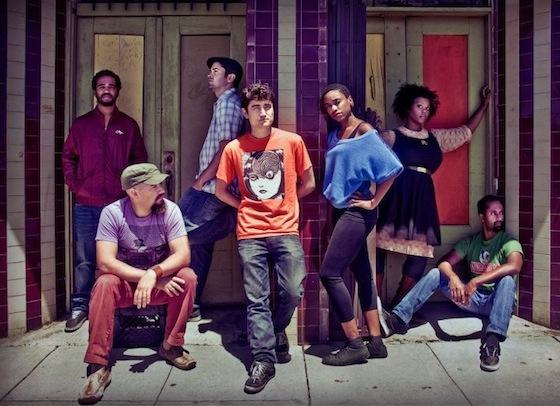
If anything, she’s in a bit of a silly mood because she’s been cooped up in rehearsals. It’s about two weeks before she heads out on tour with The Breeders, the band she co-leads with her twin sister Kelley, whose nearly identical voice blends with Kim’s sultry, sharp-edged alto in a way that creates addictively salty-sweet harmonies — and a band whose chart-topping contributions to the Steve Albini era of early ’90s alt-rock are so significant that only co-founding a band like the Pixies, as Kim did, could relegate it to “secondary reason for fame” status.

Anyway: The Breeders have been rehearsing in Deal’s basement, like old times. Getting on each other’s nerves, like old times. Bassist Josephine Wiggs was convinced there was a weird sound coming out of her amp last night when they were practicing. “I swear I can’t hear what she’s hearing,” says Deal, like a stand-up comedian launching into a routine about his wife’s cooking. “It’s an 810 SVT bass amp, so it sounds like a big fucking bass amp. It’s distracting you? Scoot over and you won’t hear it anymore.”

“She’s British, though,” concludes Deal with a sigh.

And how about working with her twin sister day in, day out?

“I love her more than anything in the world, but she was bothering me so much at practice the other day that I took a lamp and put it between us so I didn’t have to look at her while we were playing,” Deal says cheerfully. “Once somebody starts doing something that annoys me I kind of get a red light around them. The lamp has moved around each day as we all [get annoyed at each other]. It’s subtle.”

They might piss each other off from time to time, but if there were any doubts about the place the Breeders still occupy in their fans’ hearts, last year’s wholly sold-out 60-date tour, in honor of the 20th anniversary of the band’s biggest commercial success, Last Splash, should have laid them to rest. (Two nights at The Fillmore last August saw the band playing the entirety of that album – which was recorded in San Francisco, then rode the same angsty wave to national fame Nirvana saw that year, propelled by its most catchy and most delightfully inane song, “Cannonball.” Then they left the stage for 10 minutes before coming back to play the entirety of Pod, the band’s 1990 Kurt Cobain-influencing debut, as an encore. Deal, who had just quit the power play of the Pixies for the second time, was noticeably exuberant as a frontwoman, and seemingly could not stop smiling.)

Still, not counting last year’s 20th anniversary reissue of Last Splash (LSXX), it’s been five years since the Breeders put out new material (though it’s been a much less dramatic break than the seven-year hiatus between Last Splash and Title TK, during which time the band famously imploded in part due to Kelley Deal’s heroin use).

In lieu of new Breeders records, however — and in lieu of, er, bringing up her most recent few years with the Pixies, which, it could be noted, some of us were excited about mostly because of the chance to hear “Gigantic,” which she wrote, which is arguably the best song in the entire decades-spanning Pixies catalog — Deal has quietly issued eight 7-inch singles of solo material since January 2013. It’s something she began doing when she “couldn’t find anybody who could be in a band” with her, she says, especially living in Ohio.

“The industry dropped out of the music,” she says simply. “Musicians need jobs now. There used to be enough money in music that people who played in bands could actually make their rent. Maybe they’d sling weed on the side or do some pizza delivery, but they could hit their rent. Now that’s just not possible. Even bands that people know pretty well, they need real jobs — they design websites, then they go home to their band. Unless you’re [at the star status] where you’re, like, making perfume.”

So she started making music by herself. Though she’s brought in old friends and bandmates to play along (Slint drummer Britt Walford, whom Deal ran into at Steve Albini’s 50th birthday party, makes an appearance), the songs are unmistakably hers. Their moods shift from volatile bass-driven fuzz (“Walking With a Killer”) to cooing sing-song with an almost creepy Velvet Underground edge (“Are You Mine?”).

In an age when we’re used to artists simply throwing up a SoundCloud link and announcing “I have a new single,” she’s done something increasingly rare, as well: She released each song as an old-school single with an A and a B side, a physical product, each with its own album art. Long known for her perfectionism and attention to detail when it comes to gear and a studio’s technical specs, 2013 and 2014 were the years when Deal became entranced by the physical process of distributing music.

“It makes it more real to me,” she explains. “If I just put it out as a download, I feel like I just emailed my sister the song. Nothing even happens, it doesn’t make sense to me — I’m like, ‘Where do I put the title, the song name?'” Plus, since she self-issued Fate to Fatal in 2009, she realized she enjoyed the process of calling around to research manufacturers, assigning ISRC codes (kind of like serial numbers for songs), getting physical mail back when she sent something out.

She has no current plans to compile the tracks into an album, however — for one, each has “really different levels of production.” She feels a little like she’d be ripping people off, since the songs are all out already. And somehow she doesn’t expect “normal people” to be interested in buying these tracks, anyway, though a large portion of the Internet (and the majority of music critics) might disagree with that.

At the moment, though, Deal is in full-band mode. This current Breeders tour came about when Neutral Milk Hotel asked them to join a bill at the Hollywood Bowl; the Breeders structured the rest of the three-week tour around the gig. (In San Francisco, the band will play The Fillmore this Saturday, Sept. 13.) The tour will be a chance to try out new material, though Deal seems a little nervous about that.

“We have about four new songs right now that we can really play, and I’m working on the words for this other song Josephine wrote,” she explains. “She seems so smart, and she’s English, so I can’t just go, like, ‘ooga chooga,'” you know? I want to really say something with it.” Deal’s been reading The Power of Myth, the anthology of conversations between scholar Joseph Campbell and Bill Moyers, and thinking a lot on the hero’s journey. Specifically, what would happen if the hero completely ignored the advice of the gatekeeper/mentor character at the beginning of the arc.

“We’ve been working on this stuff all year, so when [Neutral Milk Hotel] asked us, even though it’s way out there, we thought ‘Hey, let’s give it a shot. And hope to hell nobody records on cell phones,'” she says.

And then there’s the act of traveling together at this stage in the game, with bandmates she’s known for 20-plus years. (After a decade or so of other members, the current lineup is the original Last Splash crew: Wiggs on bass, Jim McPherson on drums, and the inimitable sisters Deal in the center ring on vocals and guitars.)

People can get snippy on tour, says Kim — especially in Florida, “things get weird…but we get along for the most part, no one’s an asshole, that’s important. There’s just really not a rude person in this bunch.”

In the van, especially, you can always put on headphones. And if all else fails, “You get lamped,” she says. “There’s always the lamp.”

https://www.youtube.com/watch?v=PghwbxtcJo8

THE BREEDERS

With Kelley Stoltz
9pm, $28.50
The Fillmore
1805 Geary, SF
(415) 346-3000
www.thefillmore.com

Under fire

0

culture@sfbg.com

FOOD AND DRINK If you’ve ever tasted a fine mezcal, you know it’s a special thing. Bright, complex, spicy, smooth, smoky, minerally — mezcal is a spirit bursting with character. So it’s no wonder that after more than four centuries of distillation, it’s picked up its share of catchphrases. “Para todo mal, mezcal; para todo bien, también.” (For everything bad, mezcal; for everything good, the same.”) “Sip it, don’t shoot it.” “You don’t find mezcal; mezcal finds you.”

Mezcal seems to be finding a lot of people these days. In San Francisco, restaurants like Loló, La Urbana, and Nopalito — even Magnolia’s Smokestack, a brewery and BBQ spot — have lengthy lists of some of the world’s best mezcals, while cocktail bars would be hard-pressed to not have at least one mezcal drink on the menu. “It’s slow food, made the artisanal way, the way it’s always been made,” says Judah Kuper, a Coloradan who runs the brand Mezcal Vago with his friend and his father-in-law in Oaxaca, the southern Mexican state in which the bulk of all mezcal is made.

Produced in the traditional manner, the way Kuper’s fifth-generation maestro mezcalero father-in-law makes it, mezcal is an expression of true beauty—its basic ingredients quite literally earth, fire, and water. A predecessor to tequila (which is technically a type of mezcal, with its own protected denomination of origin), mezcal is essentially any distillate of the agave plant — although it can only be labeled as such if it’s made in one of eight designated Mexican states.

Its makers (mezcaleros) hand-harvest the heart (piña) of the agave (maguey, as it’s more commonly known in Mexico), roast it underground in earthen pits, crush it by hand or with a beast-drawn millstone, ferment its fibers and juices in wooden vats with airborne yeasts and water, and distill it in clay or copper stills, where it eventually drips off at about 45-55 percent alcohol by volume. These farmyard palenques are small operations, and many of their mezcaleros produce only a few hundred liters per year, making for a very unique and rare product, each batch different from the last.

Today, you can still buy extremely complex, completely organic, artisanally crafted mezcal on the roadside in Oaxaca for a few dollars a bottle. But that may not last forever.


GROWING PAINS

San Francisco’s Raza Zaidi has only been selling his Wahaka Mezcal brand since 2010, yet he’s seen his sales double year over year, and now he can hardly keep up with the demand. His spirits come in at an easier-to-imbibe 40-42 percent alcohol, making them a smooth entry point for those just dipping their toes into the mezcal world, but they still handily hold their own against the more potent stuff.

In the next year, he expects to ship about 32,000 bottles of five different types of mezcal from Wahaka’s palenque in San Dionisio Ocotepec, Oaxaca, all overseen by one maestro mezcalero, an equal partner in the company, who also grows all of his own maguey. Demand outpacing supply is a good problem for any business to have, but Zaidi is concerned nonetheless.

“There’s definitely [an agave] crisis right now. So at the end of this year, we’re going to have to buy from other farmers,” he admits. “The demand and growth was way larger than we expected.”

Mezcal is artisanal by nature, so it isn’t easy scale up. Agave — even its most common, cultivatable espadín variety — needs a minimum of seven years to mature. Some wild species can take upwards of 25 years to ripen, and their management and harvest-rights allocation usually fall to the tiny rural communities on whose property those plants lie.

Over centuries, mezcal’s legacy has been sustainably built around a spiritual and ecological balance of only harvesting what you need, when you need it (for weddings, festivals, funerals, the todo bien and the todo mal) — not for industrial production. But that hasn’t stopped large-scale spirits companies from trying. Bacardi just added Zignum, Oaxaca’s biggest factory producer of mezcal, to its distribution portfolio. Jose Cuervo is rumored to be following suit. And if that doesn’t sound bad enough, Toby Keith (who presumably didn’t get the “sip it, don’t shoot it” memo) has his own mezcal brand called Wild Shot, whose marketing team frequently employs the hashtag #BLAMEITONTHEWORM.


THIRSTY FOR MAGUEY

Drive through the mountains an hour or two outside of Oaxaca City, and you wouldn’t know that an agave shortage is afoot. Agave is seemingly everywhere — lining the roads in clusters, poking out of craggy hillsides, and planted row upon row in fields. But people on the ground there tell a different story.

My tour guide described how each week more and more trucks from the country’s tequila-producing region have been coming down and carting away whatever maguey they can get their hands on, no matter the type or age. This practice not only defies tequila’s own rules and legal standards for production (that it only be made from blue Weber agave, and that it’s grown in Jalisco and some small areas of nearby states), it ravages many Oaxacans’ livelihoods and taxes the region’s immensely complex ecosystem, maybe irrevocably so.

Mezcal’s uptick in popularity isn’t insignificant to its own future, by any means, but the spirit only represents a one percent drip in the still of tequila’s massive 300 million-liter-per-year output. And last year China lifted its ban on tequila importation, spurring even more demand for the mystical maguey.

On a recent trip to visit his uncle, Salomon Rey Rodriguez, who employs an ancestral method of hand-mashing agave and distilling in small clay pots, Kuper noted, “I came around the corner and saw a whole mountainside of agave that had been wiped out by Jalisco the day before. The agave wasn’t even ripe, and that hillside represented what would have been five years of work for Tío Rey.”

While mezcal has made huge strides to shed its reputation as tequila’s “poor country cousin,” in the socio-political sense it still is. Oaxaca is one of Mexico’s poorest states, and the agave shortfall is pitting farmers and mezcaleros against themselves and their communities, forcing them to choose between selling off their agave to tequileros long before it should be harvested or letting their families go hungry.

“There is a nest of issues that boil down to the question of whether Mexico wants to copy the industrialized tequila industry or foster the growth of an industry and product line that expresses the diversity of the agriculture at its base, the many different ideas of the people making the mezcal, and provides a living to a wide swath of society,” says Max Garrone, who co-authors a blog called Mezcalistas with Susan Coss. On Sun/14 at Public Works, Garrone and Coss will host Mezcal: Mexico in a Bottle, which will serve as a tasting extravaganza and summit for all matters mezcal.

“We try to tell [mezcal’s] story on several levels,” says Coss, “How it is produced, the stories of the people producing it, what issues there are impacting the industry — all in the hope to get people to love mezcal and everything it stands for as much as we do.”


MEZCAL AT A CROSSROADS

So what can be done to combat the crisis? Reforestation seems like an obvious place to start. Wahaka not only bought a plot of land for that purpose, but also started a nonprofit, Fundación Agaves Silvestres (Foundation for Wild Agave), to further the cause. “Our philosophy is, if we’re taking away from the land, then let’s give back,” says Zaidi, who’ll be both pouring his mezcal and speaking about the spirit’s history on one of many panels at Mexico in a Bottle. Wahaka grows its typically wild madrecuixe and tobalá varieties from seed, and after a couple of years, replants them in the mountains during the rainy season, in accordance with the strict environmental conditions under which these plants naturally flourish.

“What this comes down to is supporting the artisanal producers,” says Rachel Glueck, a former San Francisco resident and Nopa employee, who is in the process of starting a socially conscious mezcal brand with her husband in Mexico. “Finding a way to help these small mezcaleros register their product and sell it would be huge, because if they’re doing that, then they’re not going to feel like they need to sell their maguey to these industrial companies to make some money.”

Mezcal is really at a crossroads, she says. “Tequila was originally an artisanal product, but it became industrialized, and you look at the quality of tequila — it’s mono-cropped, it’s full of pesticides, it’s cloned from clones of clones of clones, and now the agave is really weak.”

But for all of these artisanal producers, there’s still a kernel of hope when it comes to building a new model for mezcal’s sustainability. “We’re kind of fortunate to have the tequila industry to study,” says Kuper. “But at the same time, never have consumers been more aware of what they’re putting in their bodies and where it comes from.”

Mezcal: Mexico In a Bottle Sun/14, 3pm-7pm, $60. Public Works, 161 Erie, SF. www.publicsf.com


Events: September 10 – 16, 2014

0

Listings are compiled by Guardian staff. Submit items for the listings at listings@sfbg.com. For further information on how to submit items for the listings, see Selector.

WEDNESDAY 10

Lan Cao Mechanics’ Institute, 57 Post, SF; www.milibrary.org. 6pm, $15. The author shares her novel, The Lotus and the Storm, about a Vietnamese American family during and after the Vietnam War.

Gillian Conoley City Lights Bookstore, 261 Columbus, SF; www.citylights.com. 7pm, free. The author discusses Thousand Times Broken, her new translation of three Henri Michaux works, with a presentation of the original art displayed in the book.

James Ellroy Commonwealth Club, 595 Market, SF; www.commonwealthclub.org. 6pm, $7-20. The acclaimed crime novelist (LA Confidential, The Black Dahlia) discusses his long career and latest work, Perfidia.

Carl Russo Green Apple Books, 506 Clement, SF; www.greenapplebooks.com. 7pm, free. The author shares The Sicilian Mafia: A True Crime Travel Guide.

THURSDAY 11

Samuel Fromartz Book Passage, 1 Ferry Bldg, SF; www.bookpassage.com. 6pm, free. The journalist-turned-baker discusses his new book, In Search of the Perfect Loaf: A Home Baker’s Odyssey.

FRIDAY 12

Tanya Holland Books Inc, 1344 Park, Alameda; www.booksinc.net. 7pm, free. The chef, Food Network personality, and author launches her new cookbook, Brown Sugar Kitchen: New-Style, Down-Home Recipes from Sweet West Oakland.

SATURDAY 13

Bay Area Free Book Exchange’s Fifth Anniversary Free Book Blowout Bay Area Free Book Exchange, 10520 San Pablo, El Cerrito; www.bayareafreecookexchange.com. 9am-6pm, free. Through Sun/14. Celebrate five years of free books at this anniversary party, and take home some new reading material of your own from the Bay Area Free Book Exchange’s shelves. Or, go one more step and bring some old books (as well as CD and DVDs!) to donate and share with others.

Ghirardelli Chocolate Festival Ghirardelli Square, 900 North Point, SF; ghirardelli.com/chocolatefestival. Noon-5pm, $20-40. Through Sun/14. Help raise money for Project Open Hand and satisfy your sweet tooth at this 19th annual dessert and wine fiesta. In addition to offering samples of gourmet goodies from over 50 vendors, Ghirardelli hosts chef demos, a silent auction, a “Chocolate School” (learn about chocolate-making!), and the ever-popular hands-free sundae-eating contest.

Sea Music Festival San Francisco Maritime National Historic Park, Hyde Street Pier, SF; www.nps.gov/safr/planyourvisit/seamusicfestival2014.htm. 9am-5pm; evening chantey sing, 7:30-9:30pm. Outdoor performances free; admission to historic ships $5 (kids 15 and under with adult supervision, free). Learn about maritime history through music at this all-day fest of traditional and contemporary songs, instrumentals, and dances. The Sea Music Concert Series continues aboard the Balclutha Sept 20, Oct 25, and Nov 25 ($12-14 or a season ticket, $36).

“Tour de Fat” Lindley Meadow, Golden Gate Park, SF; www.newbelgium.com. 10am-5pm, free (beer, $5; donations for nonprofits accepted). “Bikes, beer, and bemusement” highlight this annual outdoor party, with a costumed bike parade, beer-brewing activities, yo-yo performers, a dance contest (winner gets a new cruiser!), and headliner Reggie Watts.

SUNDAY 14

John Jung Eastwind Books of Berkeley, 2066 University, Berk; www.asiabookcenter.com. 3pm, free. The author presents two works: Chinese Laundries: Tickets to Survival on Gold Mountain and Sweet and Sour: Life in Chinese Family Restaurants.

Sunday Streets: Western Addition Fillmore between Geary and Fulton; Fulton between Fillmore and Baker, SF; www.sundaystreetssf.com. 11am-4pm, free. What traffic? Explore the neighborhood (including breezy, hilly Alamo Square) on foot or bike.

Urban Air Market Hayes Valley, Hayes and Octavia, SF; www.urbanairmarket.com. 11am-6pm, free. Over 130 emerging and established designers share their wares at this outdoor community market. Also: food trucks and live music.

“Writers with Drinks” Make-Out Room, 3225 22nd St, SF; www.writerswithdrinks.com. 7:30pm, $5-20. With Evan Lepucki, Robin Sloan, Lenelle Moïse, Annelyse Gelman, Cecil Castellucci, and Christina Nichol.

TUESDAY 16

Courtney Moreno Booksmith, 1644 Haight, SF; www.booksmith.com. 7:30pm, free. As part of the “New Voices, New Stories” series, the author shares her first novel, In Case of Emergency. *


Feasting on flacks

0

culture@sfbg.com

THE WEEKNIGHTER Sometimes it happens. PR companies take me out, feed me, and get me boozed up. All with the hope that I will write about the place that’s feeding/boozing me. Sometimes I write about the place, sometimes I don’t. I make no promises other than I promise to consume the food and booze that’s put in front of me. I imagine I’ve had worse lifetimes, but I wouldn’t know.

This time Natalie was taking me to Chaya (132 Embarcadero, SF, (415) 777-8688) on the PR company’s dime. Sitting on the Embarcadero with staggering views of the bay, Chaya is absolutely lovely. Come at sunset to see the lights twinkle on the Emperor Norton Bridge and sit down to a romantic dinner of incredible French-Japanese fusion.

In fact, if I’m not mistaken, Chaya was one of the first places doing “fusion” back before that was a beaten and tired word in the culinary world. That’s because Chaya has been around in SF for 14 years, which is a remarkable feat in any town, but nearly magical in San Francisco. The thing is, 14 years ain’t shit compared to the fact that the family that owns the Chaya has been in the hospitality business for almost 400 years.

According to the thing Natalie just sent me (since I neglected to take notes): Chaya has an unprecedented 390-year history of restaurants owned and operated by the same Tsunoda family both in Japan and California. Chaya began under an enormous shade tree in Hayama, Japan, centuries ago, where it offered tea, sweets, and respite to weary horseback travelers.

As they say in Japan: that shit cray.

Sitting down in the back area with Natalie and Matthew, Chaya’s marketing manager, I was told about the restaurant’s all-night happy hour, which happens every day. Chaya has long been an after work staple for the well-heeled, so it only made sense to extend the length of happy hour to keep those with well-coiffed hair quaffing well-made drinks.

Then the food came out and it was glorious. I don’t remember exactly what we ate, but there was a lot of it and it was brilliant and made my mouth happy. Matthew was excited to have me eat the Temari-style sushi, which is little round balls of rice topped with fish so fresh you can almost taste their souls. If fish had souls, that is. More food followed, as did drinks with whimsical names and suddenly, somehow, I was full and drunk. Life was good.

Natalie and Matthew began telling me about something called the Kaisen platter, which is a full selection of various raw seafood meant to be shared. “That sounds amazing,” I said, “but if you actually bring that out here right now, I may cry.” I had made the mistake of saying that I would eat and drink anything they put in front of me, and the clever bastards had the balls to call my bluff. Every man has his limits and I had found mine.

It was the golden hour when I finally toppled out of Chaya. The buildings were shimmering like pyrite and by the time I made it to Market, the street had a pinkish hue.

“I think I’m gonna walk home,” I told Natalie. “If you don’t hear from me, it’s because I ruptured something and died on the way home.”

I didn’t die.

To the classrooms, Baby Boomers

0

OPINION As long as I’ve been substitute teaching, people have asked what I thought we could do to improve public schools. With all of the classrooms I’ve been in, they figured I might know something. But I’ve never had a simple answer for them, because I don’t actually think there is a single overriding educational crisis.

For most kids, the system works okay, or at least as well as it always has. At the same time, there are large groups of kids clearly struggling — black students most obviously, but not only. If we’re serious about fixing the educational problems of the nation’s “disadvantaged” kids, we need to improve the overall circumstances of their lives.

I’d say there is one surefire thing we can do to improve America’s classrooms: Put more adults in them — and not just teachers.

Think of how seldom the question of class size makes it into the highly politicized national education debate. If you didn’t know any better, you’d think it must be an insignificant element. But if you really want to know if class size is a big deal, just ask someone who teaches. Or if you want private sector confirmation of this, check out the private school brochures or websites, which tout their smaller class sizes.

So why don’t we hear more about this? Maybe because there’s no major corporate or political interests pushing it, as opposed to charter schools — or the various tenure, curriculum, or discipline reforms that vie to become panacea of the moment.

For instance, you’ll likely hear more about the problem of inadequate textbooks in “poor schools” than the too-large classes in them. Could this be related to the fact that the only part of the publishing industry that isn’t struggling these days is the educational sector?

The world’s four largest publishers produce educational materials, and they’re out there making their case and drumming up business all the time. There’s a lot of money to be made selling $85 world history texts to middle school classes of 35 students. Again, if you’re not sure yourself, ask any teacher which would help more: the latest textbook or a smaller class?

Moving from business to politics, the Obama Administration has recently expressed interest in reforming school discipline policy, but it says so little about the surest route to reducing classroom problems: a lower student-teacher ratio. The reason for the silence is pretty obvious. More teachers cost more money. This means higher taxes (or maybe reduced military spending). New textbooks cost money too, of course. The difference, however, is that there are no giant corporations pushing for hiring more teachers — there’s simply no money in it for them.

Yet we could put more adults into the mix even when we can’t actually reduce class size. I’ve been in classrooms where it seemed like the adult-to-child ratio needed to really give kids a shot was something like one-to-five-or-six — and this was not special ed. And I’ve seen combinations of teachers, paraprofessionals (aka teachers’ aides), student teachers, parents, or volunteers from the community that achieved that goal — at least for a little while. I’ve also seen situations where an additional person helped a kid who would have otherwise likely disrupted an entire class and not only prevented that, but got him to produce something useful.

After I had expounded on this idea at a recent gathering in Boston, an old friend came up to me and said, “Look around this room,” noting the crowd of Baby Boomers who are soon retiring and will have considerably more time on their hands. All had an interest in public education.

What if even a small percentage of them could find their way to helping public schools by actually spending time assisting in a classroom? Wouldn’t we have a significant asset on our hands? I think he was right.

Tom Gallagher is a San Francisco substitute teacher and the author of Sub: My Years Underground in America’s Schools (Coast to Coast Publishing, 2014). He can be reached at tgtgtgtgtg@aol.com. To submit a guest editorial, contact news@sfbg.com.

Defend the deal

0

EDITORIAL Creating a functional and equitable San Francisco for tomorrow requires political will and foresight today. Do our current political leaders have the requisite courage and commitment to the broad public interest, or are they too willing to give away the farm to powerful private interests wielding promises or threats?

This week at City Hall, there was a fascinating test case for these questions, one that we laid out on Sept. 8 on the SFBG.com Politics blog (“Developers lobby hard to slash payments promised to Transbay Terminal and high-speed rail”). In a nutshell, it involves developers of the biggest office towers proposed for San Francisco reneging on promises to pay for vital public infrastructure, which they made in exchange for lucrative upzoning of their properties.

With hundreds of millions of dollars at stake, they hired top political fixer Willie Brown to make their case to politicians, including those he helped bring to power, giving him a cut of whatever money this shakedown can shake loose. The Board of Supervisors was set to consider the issue after the Guardian press time for this issue, so check our Politics blog for what happened, but there a few observations we can make without even knowing what the outcome was.

This power play would never happen unless these developers and their allies — including Salesforce, which has leased most of the Transbay Tower, what would be the tallest building on the West Coast — thought they had a reasonable chance of success. And given how the Mayor’s Office seems willing to give developers and business leaders whatever they want, it seems likely that this lobbying effort will more than pay for itself, to the detriment of the public.

Mayor Ed Lee isn’t a political leader, he’s really just the city’s chief administrator, a role he’s been playing since Brown was mayor and that he continues playing since Brown helped put him into Room 200. Chief-of-Staff Steve Kawa, another loyalist to Brown and downtown, dishes out discipline to supervisors who don’t toe the line.

City leaders should be willing to play hardball, stick to the original deal, and call the bluff of these developers, even if that means risking that these towers might not get built in their proposed form and timeline. Yes, that strategy might involve some legal liability, but these massive towers were always proposed as a means to an end.

San Francisco doesn’t need a 1,000-foot office building. But given its commitment to rebuild the Transbay Terminal, it does need to ensure that expensive project includes 21st century rail service connecting to the rest of the state, as well as the open space and neighborhood amenities that these developers should fund.

Equally important, San Francisco needs to show that it’s not for sale, that it won’t be bullied, and that its leaders are looking out for more than their own political interests.

Racing for solutions

0

rebecca@sfbg.com

Although there are five seats on the San Francisco Board of Supervisors up for reelection this fall, incumbents face few contenders with the requisite cash and political juice needed to mount a serious challenge. The one race that has stirred interest among local politicos is the bid to represent District 10, the rapidly changing southeastern corner of San Francisco that spans the Bayview, Hunters Point, Visitacion Valley, Dogpatch, and Potrero Hill neighborhoods.

Sup. Malia Cohen, who narrowly beat an array of more than a dozen candidates in 2010, has raised way more money than her best-funded opponent, progressive neighborhood activist Tony Kelly, who garnered 2,095 first-place votes in the last D10 race, slightly more than Cohen’s, before the final outcome was determined by ranked-choice voting tallies.

For the upcoming Nov. 4 election, Cohen has received $242,225 in contributions, compared with Kelly’s $42,135, campaign finance records show. But Kelly, who collected the 1,000 signatures needed to qualify for the November ballot and qualified for public financing, has secured key progressive endorsements, including former Mayor Art Agnos, Assemblymember Tom Ammiano, Sups. David Campos and John Avalos, and the Potrero Hill Democratic Club.

Others who’ve filed to run for this office include Marlene Tran, a retired educator who has strong ties to families in the district, especially in Visitacion Valley, through her teaching and language-access programs (she’s known by kids as “Teacher Tran”); Shawn Richard, the founder of a nonprofit organization that offers workshops for youth to prevent gun violence; and Ed Donaldson, who was born and raised in Bayview Hunters Point and works on economic development issues. DeBray Carptenter, an activist who has weighed in on police violence, is running as a write-in candidate.

But the outcome in this dynamic district could be determined by more than campaign cash or political endorsements. That’s because the D10 supervisor faces the unique, unenviable challenge of taking on some of the city’s most intractable problems, which have disproportionately plagued this rapidly changing district.

Longstanding challenges, such as a high unemployment and crime rates, public health concerns, social displacement, and poor air quality, have plagued D10 for years. But now, fast-growing D10 is becoming a microcosm for how San Francisco resolves its growing pains and balances the interests of capital and community.


MIX OF CHALLENGES

While candidate forums and questionnaires tend to gauge political hopefuls on where they draw the line on citywide policy debates, such as Google bus stops or fees for Sunday parking meters, neighborhood issues facing D10 have particularly high stakes for area residents.

While other supervisors represent neighborhoods where multiple transit lines crisscross through in a rainbow of route markers on Muni maps, D10 is notoriously underserved by public transit. The high concentration of industrial land uses created major public health concerns. A Department of Public Health study from 2006 determined that Bayview Hunters Point residents were making more hospital visits on average than people residing in other San Francisco neighborhoods, especially for asthma and congestive heart failure.

Unemployment in D-10 hovers near 12 percent, triple the citywide average of 4 percent. Cohen told us efforts are being made on this front, noting that $3 million had been invested in the Third Street corridor to assist merchants with loans and façade improvements, and that programs were underway to connect residents with health care and hospitality jobs, as well as service industry jobs.

“The mantra is that the needle hasn’t moved at all,” Cohen noted, but she said things are getting better. “We are moving in the same downward trend with regard to unemployment.”

Nevertheless, the high unemployment is also linked with health problems, food insecurity — and violence. In recent months, D10 has come into the spotlight due to tragic incidents of gun violence. From the start of this year to Sept. 8, there were 13 homicides in D10.

Fourth of July weekend was particularly deadly in the Bayview and D10 public housing complexes, with four fatal shootings. Cohen responded with a press conference to announce her plan to convene a task force addressing the problem, telling us it will be “focused on preventing gun violence rather than reacting to it.”

The idea, she said, is to bring in expert stakeholders who hadn’t met about this topic before, including mental-health experts and those working with at-risk youth.

“I think we need to go deeper” than in previous efforts, Cohen said, dismissing past attempts as superficial fixes.

But Cohen’s task force plan quickly drew criticism from political opponents and other critics, including Sheriff Ross Mirkarimi, who dismissed it as empty rhetoric.

“How many people are cool with yet another task force?” Kelly said in a press statement challenging the move. “We can’t wait any longer to stem the deadly tide of violence in District 10. Supervisor Cohen’s task force won’t even propose solutions till 2017. We can’t wait that long.”

Kelly told us he’s formulated a five-point plan to tackle gun violence, explaining that it involved calling for a $10 million budget supplemental to bolster family services, reentry programs, job placement, and summer activities aimed at addressing poverty and service gaps. Kelly also said he’d push for a greater emphasis on community policing, with officers walking a beat instead of remaining inside a vehicle.

“How do you know $10 million is enough?” Cohen responded. “When you hear critics say $10 million, there is no way to indicate whether we’d need more or less.” She also took issue with the contention that her task force wouldn’t reach a solution soon enough, saying, “I never put a timeline on the task force.”

Cohen also said she wanted to get a better sense of where all of the past funding had gone that was supposed to have alleviated gun violence. “We’ve spent a lot of money — millions — and one of the things I am interested in doing is to do an audit about the finances,” she said.

She also wants to explore a partnership with the Guardian Angels, community volunteers who conduct safety patrols, to supplement policing. Cohen was dismissive of her critics. “Tony was not talking about black issues before this,” she said. “He hasn’t done one [gun] buyback. There’s no depth to what any of these critics are saying.”

Tran, who spoke with the Guardian at length, said she’d started trying to address rampant crime in Visitacion Valley 25 years ago and said more needs to be done to respond to recent shootings.

“There was no real method for the sizable non-English speaking victims to make reports then,” Tran wrote in a blog post, going on to say that she’d ensured materials were translated to Chinese languages to facilitate communication with the Police Department. “When more and more residents became ‘eyes and ears’ of law enforcement, community safety improved,” she said.

Richard, whose Brothers Against Guns has been working with youth for 20 years and organizing events such as midnight basketball games, said he opposed Cohen’s task force because it won’t arrive at a solution quickly enough. He said he thought a plan should be crafted along with youth advocates, law enforcement, juvenile and adult probation officers, and clergy members to come up with a solution that would bolster youth employment opportunities.

“I’ve talked with all 13 families” that lost young people to shootings this year, Richard said, and that he attended each of the funerals.


CHANGING NEIGHBORHOOD

Standing outside the Potrero Terrace public housing complex at 25th and Connecticut streets on a recent sunny afternoon, Kelly was flanked by affordable housing advocates clutching red-and-yellow “Tony Kelly for District Supervisor” campaign signs. The press conference had been called to unveil his campaign plan to bolster affordable housing in D10.

Pointing out that Cohen had voted “no endorsement” at the Democratic County Central Committee on Proposition G — the measure that would tax property-flipping to discourage real estate speculation and evictions — Kelly said, “This is not a time to be silent.”

While Cohen had accepted checks from landlords who appeared on the Anti-Eviction Mapping Project’s list of worst offenders for carrying out Ellis Act evictions, Kelly said he’s pledged not to accept any funding from developers or Ellis Act evictors. Asked if any had offered, Kelly responded, “Some. They’re not knocking down my door.”

Cohen told us that she hadn’t supported Prop. G, a top priority for affordable housing advocates, because she objected to certain technical provisions that could harm small property owners in her district. As for the contributions from Ellis Act evictors, she said the checks had been returned once the error was discovered. Her formal policy, she said, is not to intentionally take money from anyone involved in an Ellis Act eviction.

Speaking outside Potrero Terrace, Kelly said he thought all housing projects built on public land should make at least one-third of their units affordable to most San Franciscans. He also said renovation of public housing projects could be accelerated if the city loaned out money from its $19 billion employee retirement fund. Under the current system, funding for those improvements is leveraged by private capital.

Mold, pests, and even leaking sewage are well-documented problems in public housing. Dorothy Minkins, a public housing resident who joined Kelly and the others, told us that she’s been waiting for years for rotting sheetrock to be replaced by the Housing Authority, adding that water damage from her second-floor bathroom has left a hole in the ceiling of her living room. She related a joke she’d heard from a neighbor awaiting similar repairs: “He said, Christ will come before they come to fix my place.”

Lack of affordable housing is a sweeping trend throughout San Francisco, but it presents a unique challenge in D10, where incomes are lower on average (the notable exceptions are in Potrero Hill, dotted with fine residential properties overlooking the city that would easily fetch millions, and Dogpatch, where sleek new condominium dwellings often house commuters working at tech and biotech firms in the South Bay).

Home sale prices in the Bayview shot up 59 percent in two years, prompting the San Francisco Business Times to deem it “a hot real estate market adorned with bidding wars and offers way above asking prices.”

One single-family home even sold for $1.3 million. Historically, the Bayview has been an economically depressed, working-class area with a high rate of home ownership due to the affordability of housing — but that’s been impacted by foreclosures in recent years, fueling displacement.

Although statistics from the Eviction Defense Collaborative show that evictions did occur in the Bayview in 2013, particularly impacting African Americans and single-parent households, Cohen noted that evictions aren’t happening in D10 with the same frequency as in the Tenderloin or the Mission.

“When it comes to communities of color in the southeast, it’s about foreclosure or mismanagement of funds,” explained Cohen.

She said that a financial counseling services center had opened on Evans Street to assist people who are facing foreclosure, and added that she thought more should be done to market newly constructed affordable units to communities in need.

“There’s an error in how they’re marketing,” she said, because the opportunities are too often missed.

But critics say more is needed to prevent the neighborhood from undergoing a major transformation without input from residents.

“This district is being transformed,” Richard said. “A lot of folks are moving out — they’re moving to Vallejo, Antioch, Pittsburg. They don’t want to deal with the issues, and the violence, and the cost.”

At the same time, he noted, developers are flocking to the area, which has a great deal more undeveloped land than in other parts of the city.

“The community has no one they can turn to who will hold these developers accountable,” he said. “If the community doesn’t have a stake in it, then who’s winning?”


Tenderloin upstart Book & Job aims to level the art-gallery playing field

0

Carson Lancaster is tired of the bullshit. He’s tired of watching the same handful of mainstream galleries hang the same artists and shun a majority of San Francisco’s young, talented artists. “It’s like that scene in Scanners. You know, the one where the guy’s head explodes? That’s what it feels like every time I walk into one of those places,” he said.

Lancaster is the owner of Book & Job, an art gallery that seeks to do exactly the opposite: make San Francisco’s art market accessible to both artists and consumers. Located on Geary and Hyde Streets, Book & Job blends into the grit of the Tenderloin and in no way resembles the blue-chip megaliths huddled toward Union Square. The space is tiny. There’s no team of attractive sales people standing at the entrance, no bubbly event photographers milling around, no tuxedos, and no free champagne.

However, it isn’t uncommon to see a small throng of young people spilling from the entrance on a given Saturday night, or passers-by (likely coming from galleries down the street) stopping in their tracks to gander at the commotion — looking for something, anything, that slightly resembles uncharted territory: candid photographs from inside of a ramshackle San Francisco mosque, say, or a couple of naked male performers feeding each other wedding cake while dancing to Celine Dion. That, Lancaster feels, is an art scene.

Which is why Lancaster is all ears if an artist wants to show work at Book & Job. Though it began mainly for photographers, in the past couple of years the small gallery has broadened its horizons to include just about anything — paintings, zines, and performances. “People come in all the time and say, ‘I like this place because it’s pure, because it’s real, because it’s no bullshit,” he continued. “It’s known in the community as the no bullshit gallery.”

Sat/13, Lancaster’s walls will feature work from an analog photography club called Find Rangers, which sent out an open call to artists around the world. Lancaster and a group of colleagues started the club for many of the same reasons he opened his gallery. “It’s a grassroots affair,” he said. 

As a former photography student at Academy of Art University, Lancaster wondered why many of the best students would flee San Francisco after graduating, but he eventually came to a realization: “The San Francisco art scene sucks. It is very close-minded, unfriendly, not open to interpretation, set in the same ways. And for young artists at CCA [California College of the Arts], SFAI [San Francisco Art Institute], and Academy of Art, to go to an art gallery in the city [and inquire about showing their work], they’re going to be told to go fuck themselves in so many words.”

Lancaster spoke of a disconnect between San Francisco’s relatively insular gallery scene and the high number of art students in the area. From 2002 to 2012, San Francisco received more art funding per capita than any another city in the nation, according to a 2014 study released by the Cultural Policy Center at the University of Chicago. And yet, the city’s abundance of talented artists cannot break in and are thus forced to seek greener pastures, usually in New York or Los Angeles.

Lancaster believes that this is largely because art galleries in San Francisco have tight business models, and that giving artists a chance just doesn’t allow them to stay afloat. These galleries, he said, would rather show artists they know can sell. “They have their roster of artists,” he explained. “December is Ferris Plock, or September is Jay Howell or Mike Giant, and it’s the same names over and over again. It’s more like a meat factory. It’s the meat aisle.”

This is especially prevalent nowadays, Lancaster explained, as many of the higher-end galleries are struggling themselves with out-of-control rents and the city’s shifting cultural values. In the past year, particularly downtown, a rash of galleries have either relocated or completely shuttered.

But Lancaster isn’t worried about Book & Job. His lease is written such that his rent stays fixed — and relatively low — until 2022. For next eight years, Book & Job cannot be priced out, even as the neighborhood continues to transform around it. “This is place is blowing up,” he said, pointing out the new cafés and restaurants that are now sprouting up around the Tenderloin. All the same, in the coming years Book & Job will serve as a small preservation of what remains of city’s DIY ethos, a channel through which local artists can be discovered without having to flee the city. 

“It’s a really nervy thing to do,” Sarah Barsness, one of Lancaster’s former Academy of Art teachers, says of the gallery. She explained that it’s extremely difficult to open a successful art gallery in the city, let alone one as “subversive” as Book & Job. “He’s doing the thing that you’re never supposed to do, which is having a lot of work that he sells for nothing, and spreading it out to a different, broader population — younger people and fellow students,” she explained. 

She even compared Lancaster to Andy Warhol and other pioneers of the pop art movement, who sought to strip art of its “preciousness” and “elitism” by selling prints for pennies on the dollar. Ultimately, Barsness explained, this made art more democratic. “It’s really important right now because we’re at a high point of elitists,” she said. “It’s over the top.”

By making art more democratic, she explained, galleries like Book & Job “bring artists back into the conversation,” making art more about art and less about business. But Barsness believes many San Francisco galleries have always operated this way. “San Francisco collectors are notorious for not buying San Francisco art,” she said, explaining that galleries have had to survive by bringing in work from other cities. 

While Barsness feels that the economic cards are not stacked in Lancaster’s favor, she feels that Book & Job embodies much of what art stands for. “Art is not supposed to preach. It’s supposed to show you an alternative way of thinking, so that questions emerge,” she said. “[Book & Job] is a little work of art, in that sense, making you ask: Do galleries have to operate this way? Is it wrong to have galleries operate this way? And why is it wrong?”

For Lancaster, however, Book & Job’s place in the art world isn’t so much subversive as it is deeply personal. In March, Lancaster found his close friend, renowned San Francisco artist Shawn Whisenant, dead from a health issue in the back room of the gallery, where he had been sleeping. Whisenant was a San Francisco street artist and photographer and one of the last “true” San Francisco artists, according to KQED’s Kristin Farr, who remembered him fondly after his passing.

And for Lancaster, Whisenant’s artistic ethos of “no B.S.” will always shape how Book & Job is run. A day doesn’t go by in which Lancaster doesn’t think about what Whisenant would have done. “He’s the angel and devil on my shoulder,” he said.

The room in which Whisenant died has been converted into a dark room, and for now Lancaster plans to share it with other like-minded photographers and use it to hone his own skills. “If someone is checking their phone and they see my open call [for a Find Rangers Camera Club exhibit], and they dust off their camera and buy a roll of film, I’m doing something right,” he said. “That’s not just me selling a booklet to help pay rent, that’s helping someone’s creativity … and that’s really cool.”

Find Rangers Camera Club exhibit

Sat/13, 7-11pm

Book & Job Gallery

838 Geary, SF

www.book-job.com

Catching up with burlesque star and fashion icon Dita Von Teese

0

With a seductive and sexy nod to the past, modern pin-up and burlesque queen Dita Von Teese has been at the forefront of reviving a once nearly lost art form for two decades.

Bringing back the sense of classic style and glamour of the golden days of Hollywood and meshing it with the tantalizing teasing of the old-time burlesque circuit, Von Teese wraps up a two-night stand at the Fillmore tonight with her Burlesque: Strip, Strip, Hooray! show, a live revue featuring not only her own titillating talents, but a host of other performers as well, including Dirty Martini, Catherine D’Lish, and Lada Nikolska from the Crazy Horse Paris.

When Von Teese (real name: Heather Sweet) first got interested in retro styles and the bawdy and risqué performances of the past, there was just a small community of performers around the world that she recalls encountering; two decades later, she has watched the scene flourish and rapidly expand.

“It’s been really interesting to see the gradual unfolding of the burlesque revival and how massive it’s become. People are starting to get the message that this is inspiring and empowering [for] women that maybe can’t relate to other modern standards of beauty,” says Von Teese. 

“When I started making these shows, I started styling myself after retro looks because I felt that I couldn’t relate to any Victoria’s Secret models, or Sports Illustrated swimsuit models. That’s part of why I look to icons of the past like Marlene Dietrich, and Marilyn Monroe and Betty Grable — I felt that created glamour was something I could maybe capture the spirit of.”

When her tour dates end later this year, Von Teese is looking to take some time off from the road and focus more on other successfully growing parts of her creative output, including makeup, perfume, clothing, and a new line of lingerie, which she will be promoting via an in-store appearance at Bloomingdale’s in San Francisco Tuesday evening.

“It’s important to evolve. I have a 20-year career as a burlesque dancer, and I have to think a lot about my personal evolution. I don’t want to keep doing the same show over and over,” says Von Teese. “I don’t like to claim to be a fashion designer, but I think what I really do is take retro style and find the very ‘best of,’ and find the things that translate to modern times and don’t look like they’re dated or just retro style clothes. I love things that are like classic silhouettes: they stand the test of time and still look elegant and classic and glamorous, but they don’t make you look like you’re in a costume drama.”

And unlike many other performers or stars who are content to simply attach their name to a product, Von Teese chooses to be involved with every aspect of whatever project she is working on at the moment.

“I’m very hands-on, in a sense I am an aesthetic control freak, that’s what I do. With a lot of celebrity lines or celebrity-endorsed products they’ll just sign off, or say, ‘Oh, yeah, that looks good,’ but I’m completely hands-on during the entire process,” she says.

“I base the collection on my vast archive of vintage clothing and lingerie, so there’s a lot of work that goes into that. It’s the same as my burlesque shows. It’s me creating something that I believe in, and that I think is beautiful.”

It’s clear that Von Teese has an ever-growing fan base that appreciates and is inspired by what she does both on-stage and off. She says she’s seeing people of all backgrounds coming to her shows and enjoying themselves.

“I think people are starting to understand it more. It’s been great when people come out and see the show, and to see the diverse audiences,” says Von Teese. “I think that’s why we have such an interesting, eclectic group of people coming to these shows: they’re seeing this attainable way of creating beauty and sensuality.”

“Burlesque: Strip, Strip, Hooray!”

Mon/8, 7:30pm, $45

Fillmore

1805 Geary, SF

www.ticketmaster.com


Dita Von Teese in-store appearance

Tue/9, 6pm, free

Bloomingdale’s

845 Market, SF

www.dita.net

Developers lobby hard to slash payments promised to Transbay Terminal and high-speed rail

0

Will the San Francisco Board of Supervisors let developers of the biggest office towers proposed for San Francisco renege on promises to help pay for the Transbay Terminal reconstruction, extension of rail service to that site, and other public amenities? Or will Willie Brown successfully use politicians that he helped get into office — most notably Mayor Ed Lee and Sup. Jane Kim — to let the developers keep hundreds of millions of dollars in excess profits?

The answers to those questions will become clearer tomorrow [Tues/9] as the board considers a complex yet crucially important agenda item. It involves creation of a special tax district around the Transbay Terminal, where office tower developers have been awarded huge upzonings — including the Transbay Tower, which would be the tallest building on West Coast at more than 1,000 feet — in exchange for paying for public works projects to serve the area.

But those developers, including Hines, Boston Properties, TMG, and others (it’s not clear whether all six upzoned parcels are participating in the current lobbying effort and threatened lawsuit), are now objecting to paying about $1 billion in special taxes and seeking to get that amount lowered to about $400 million. And to do so, they’ve already paid Brown at least $100,000 just this quarter, kicking off a lobbying effort so intense that Brown has finally registered as a lobbyist after questionably resisting it for many years.

Leading the charge against that effort is Sup. Scott Wiener, who said the promised payments are crucial to paying for about $200 million in work on the Transbay Terminal and paying for the first $450 million of the $2.5 billion project of bringing high-speed rail and electrified Caltrain trains into the facility, as well as a promised public park on top of the terminal.

“The downtown extension is one of the most important transportation projects we will deliver in the foreseeable future. It’s a legacy project with huge benefits for San Francisco and the entire state,” Wiener told us. “We have to go to the mat to get it built, and a reduction in this assessment will significantly undermine our ability to deliver the project and get the train downtown. The last thing we need is a very expensive bus station with no train service.”

The developers and their spokespeople (including the San Francisco Chronicle’s Matier & Ross, who announced Brown’s involvement in the project this summer) argue that their fees have gone up substantially since the plan was first hatched in 2007 and fleshed out in the 2012 Implementation Document (which relied on 2007 land values).

That’s true, but that’s mostly because the value of the properties have shot up in recent years (incidentally, so have the costs of bringing the trains downtown), which also makes the projects far more lucrative for the developers. And Adam Alberti, who represents the Transbay Joint Powers Agency, notes that the tax rate hasn’t changed: it’s still the same 0.55 percent of assessed value that it’s always been.

“The rate is exactly the same, 0.55 percent, but the difference is the land valuations,” Alberti told us.

When the rates were formally set this year by the Rate and Method of Appointment (RMA) document, based on detailed studies of the properties and the district, it did charge the tallest buildings a little more than the shorter ones, under the logic that penthouses are more profitable (for example, the Saleforce lease of most of the Transbay Tower is rumored to be the largest commercial office deal in city history).

But the paper trail of documents and conditions for the four projects that have so far been awarded their entitlements always indicated such details would be hashed out by RMA. Indeed, when the city responded to the developers’ legal threats with a 14-page letter on July 14, it meticulously dismantled the convoluted claims by the developers that there’s been some kind of bait-and-switch here.

Still, the developers have been aggressively working the corridors of power in City Hall trying to get their fees reduced.

“Having not received any of the relief that the the Land Owner sought, the Land Owner is now forced to formally protest the formation of the CFD [Community Financing District], the levying of special taxes pursuant to the RMA, and the incurrence of bonded indebtedness in the CFD,” Boston Properties (which has not returned our calls for comment) wrote in a Sept. 2 letter to the city, which prompted Kim, the district supervisor, to continue the item for one week.

The decision to employ Brown upped the ante on this power struggle, given that Brown (who also didn’t return our calls) helped engineer Mayor Lee’s appointment to office in 2011 and worked behind-the-scenes to help Jane Kim beat progressive challenger Debra Walker the year before. Since then, Kim (who didn’t return our calls for comment) has helped do Brown’s bidding a couple of times and made misleading statements about their relationship.

Kim will be a central figure in this unfolding drama, given that it’s taking place in her supervisorial district. Her predecessor, Chris Daly — who says that he’s already been burned once by Hines (which also wouldn’t comment), which he said broke a promise for another $100 million in fees to the TJPA — said the current lobbying effort is essentially a raid on the public coffers that endangers an important project.

“The last redeeming thing about Willie Brown was his unwavering support for Transbay Terminal,” Daly told us, “and now that’s gone too.”

Unfortunately, the complexities of this deal might make it difficult for the general public to digest just how it changes, particularly as they are engineered by Brown, a legendary political dealmaker who spent decades as speaker of the California Assembly before becoming mayor of San Francisco.

But Daly said this project is crucially important for Kim’s district, and it’ll be intriguing to see what happens: “I don’t think she can make a bad vote, but behind the scenes, I’m not sure how much she can stand up to Willie Brown.”  

If the board approves the special tax district and the RMA tomorrow, then the affected property owners will vote on whether to create this Mello-Roos District in December, with a two-thirds vote required for passage. The projects can’t proceed with their current entitlements unless such a district is created, so the effort now is to slash the payments that such a district would require.

“Smart development means, among other things, making sure that development pays for supporting infrastructure,” Wiener told us. “The creation and upzoning of this district were explicitly linked to to funding the transit center and the downtown train extension. By upzoning these properties, we provided the developers with massive additional value and, in fact, the properties have exploded in value. The transit assessment needs to reflect those current property values, not values from the bottom of the recession.” 

[UPDATE: Sup. Kim returned our calls this evening and said this was a difficult issue, but that she wants to defend the city’s stance. “At this point we’re in a legal dispute, an impasse,” Kim told us, noting that she supports the fee structure from the RMA rather than earlier estimates. “The city was very clear those rates were illustrative.”

She said this isn’t simply about getting more money for the Transbay Terminal projects, but holding developers accountable for the upzoning they received. “The question isn’t what is the most money we can extract from the developer,” she said. “The question is: What did we agree to?”

Kim said she has met with Willie Brown about the issue, but she isn’t feeled pressured by him or the developers he’s representing. “Are they making threats? No,” she said. “I didn’t feel pressure at the meeting.”

But she did say she’d always be willing to hear out Brown’s side of the story. “He can just pick up the phone and call me,” she said.

Tomorrow’s meeting will include a closed session discussion of the issue, given its potential for legal actions. As for whether she and other supervisors may be swayed by the legal threat to settle on a lower fee amount, she told us, “That’s what the closed session is for.”

Kim indicated she intends to support the fees the parties originally agreed to. “I think the rates were set clearly,” she said. 

But we may have to take that promise with a grain of salt. Kim has sometimes talked tough, only to compromise later on, as she did with her Housing Balance legislation. After tomorrow’s closed session, we’ll see if her vote is as fiery as her rhetoric. ]

Joe Fitzgerald Rodriguez contributed to this report. 

A firsthand account of the 5-alarm blaze in the Mission

0

Editor’s note: We received this firsthand account from Ben Rosenfeld, who lives in close proximity to the site of yesterday’s [Thu/4] 5-alarm fire. Read more about the blaze in the San Francisco Examiner.

By Ben Rosenfeld

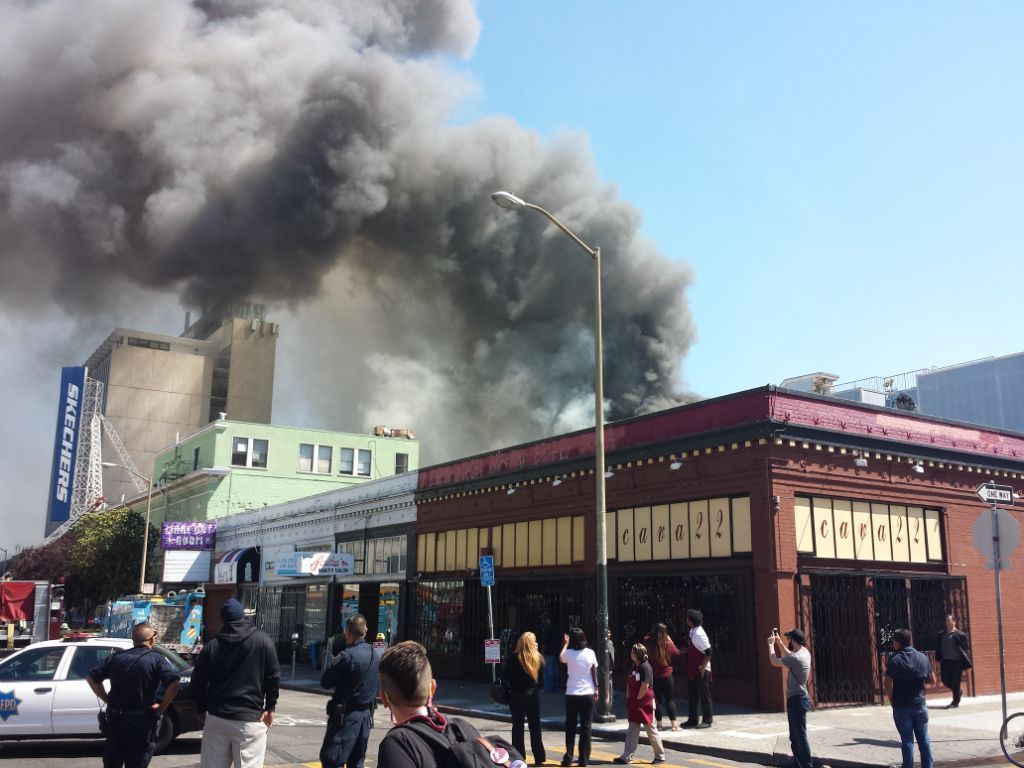
For those who don’t know, we were lucky our building survived a 5-alarm fire yesterday, almost directly behind us (feet away). Fortunately too, there were no serious injuries.

“Fire watch” crews stayed through the night in the back yard dousing flare ups, and are still here now keeping an eye out. Supervisors, inspectors, and news crews have come in and out. [Department of Building Inspection] inspectors came to confirm the obvious: that the building that burned would be condemned. And AT&T showed up and concluded that their engineering department will need to rewire, as our wires come off the building which burned and which undoubtedly will be demolished. Remarkably, though, my phones still work.

There’s no question that the SFFD’s swift and overwhelming response (and decision to “go defensive” and contain the fire in the unit it broke out in) saved this building and the neighbors’. It was amazing to watch them in action and talk to them about their craft.

I saw the smoke when it was little wisps coming out the back (I happened to be in the back room looking out the window while on the phone), and ran out with a fire extinguisher (absurdly as it turned out), calling 911, and yelling “fire,” and reporting that 911 advised us to evacuate.

I think we banded together really well as residents, working to make sure everyone was alerted and accounted for. We want to help the neighbors rebuild their garden with a neighbor solidarity party in which we also discuss disaster contingencies.

This was a good lesson in the meaning of the phrase, “we’re all in this together,” and in how dependent for our safety we are on one another – especially in SF, where we’re almost literally stuck together.

Photos by Ben Rosenfeld

Kids pushed through immigration court at lightning speed while supes debate legal aid funding

0

San Francisco’s efforts to provide legal services for unaccompanied youth who crossed the U.S. border from Central America is heating up as a point of contention between Sup. David Campos and Board President David Chiu, opponents in the race for California Assembly District 17.

The issue stems from the rise of the “rocket docket,” a Department of Justice directive for immigration courts to speed up processing for unaccompanied youth apprehended at the U.S. border. Under the expedited system, created in response to an overwhelming number of kids fleeing north to escape violence, courts are cramming through as many as 50 cases daily. 

“This new docket is dramatically accelerating the pace for the cases of newly arrived, traumatized children and families from Central America,” Robin Goldfaden of the Lawyers Committee for Civil Rights Bay Area wrote in an email to the Bay Guardian. “For many, a wrong decision can mean being sent back to unspeakable harm – brutal beatings, rapes, even death. … But nonprofit legal services providers, already stretched beyond capacity, simply do not have the number of attorneys and other staff required to meet the ever-rising level of need.” 

At the Sept. 2 Board of Supervisor’s meeting, Campos proposed a budgetary supplemental to allocate $1.2 million for legal representation for unaccompanied youth being processed in immigration court in the Bay Area.

“Under international law, many of these kids would actually qualify as refugees,” Campos noted when he introduced the proposal. “And many of them have cases that would allow them to be protected by immigration law in the US,” but those protections would only apply if they had lawyers advocating for them.

Yet Chiu responded to Campos’ proposal by touting his own efforts culminating in a $100,000 grant award for a different legal aid program for undocumented immigrants, the Right to Civil Counsel. Under that effort, the San Francisco-based Lawyer’s Committee for Civil Rights was awarded a city grant to fund pro bono legal representation and associated trainings and workshops, which Chiu described as being “particularly for undocumented children from Central America.” 

Speaking at the meeting, Chiu commented that the board should “work together” to help unaccompanied children threatened with deportation, “rather than working on competing efforts,” which sounded like a dig on Campos’ proposal. That seemed to imply that the problem had been addressed, throwing into question whether there would be enough support to pass the supplemental.

Reached by phone, however, Chiu said he was open to discussing additional funding. “We should have a public discussion about it,” he said. “I’m open to it.” He noted that his office had been working on bolstering immigrant access to civil counsel for months, and that the $100,000 in funding provided as part of the budget process could train up to 400 private-sector lawyers to provide pro bono representation for unaccompanied youth. “All of us are committed to adressing the humanitarian crisi in the way that San Francisco knows how,” Chiu said.

But Campos, who initiated partnerships with legal aid nonprofits and various city departments to put a proposal together, said his funding request was based on research conducted by the Budget & Legislative Analyst to determine what was needed to adequately represent the surge of unaccompanied youth in immigration court.

In nine out of 10 cases nationally, according to a Syracuse University study, youth without legal representation wind up deported, while closer to 50 percent who have lawyers are afforded protection under immigration law. In many cases youth qualify to stay under a category known as Special Immigrant Juvenile Status, created to help kids who suffered abuse, neglect, or abandonment.

The Budget & Legislative Analyst projected that 2,130 juveniles a year would lack legal representation in the San Francisco court. In contrast, the $100,000 grant referenced by Chiu, which was awarded last week to the Lawyer’s Committee for Civil Rights, was only intended to provide enough pro bono legal representation to cover 75 individuals, including adults as well as children, according to service providers.

Immigration attorneys interviewed by the Bay Guardian said the grant to Lawyers’ Committee wouldn’t stretch far enough to cover the pressing need.

“I don’t think the $100,000 is going to be enough,” noted Misha Seay, a staff attorney at the Center for Gender & Refugee Studies who was awarded a fellowship to work on juvenile representation in immigration court before the youth immigration crisis started. “I think it’s a positive thing and a great thing, but we’re going to need a lot more.”

Seay said she had been volunteering in the immigration courts regularly and witnessing firsthand how youth were being thrown into a system that they had little ability to navigate. “We see children of all ages,” she said. “The youngest child I met with was a four-year-old, and then all the way up to 17.”

Goldfaden, of the Lawyers’ Committee, noted that there was a need for more nonprofit attorneys devoted the cause, not just pro bono legal representation. “The grant from the city and the commitment of the pro bono bar comes at a crucial time,” she wrote in emailed comments. “But without the budget supplement that has been proposed to increase the capacity of the corps of nonprofit providers on the frontlines of this crisis, lives will be lost.”

Joel Daniel Phillips illustrates the overlooked in ‘I Am Another Yourself’

0

Joel Daniel Phillips draws people. He draws them with charcoal and pencil and is known for his life-sized renderings of eccentric, seemingly homeless men and women he meets on the corner of Sixth and Mission Streets in San Francisco.

His debut solo show with Hashimoto Contemporary, “I Am Another Yourself,” opens Sat/6 (opening reception 6-9pm; the show runs through Sept. 27). I met up with Phillips to talk about his work and to see his 14 pieces in person.

As we hung out in his roomy studio in East Oakland, the BART train lumbering by every so often, Phillips’s towering life-sized pieces captured my awe and attention. The details he emphasizes in his work  whether it’s a wrinkled pant leg, a takeout container, lines on a face, or a waning pack of Newport Lights  illustrate the attitude and honesty of his subjects. 

“I think of [my work as] a bit like journalism in that the goal is for me to honestly understand something else or someone else and then show it to my audience,” Phillips says. 

Phillips moved to San Francisco three years ago. Not knowing a whole lot about the city, he accepted a live-work studio space on Sixth and Mission. Once he arrived in the neighborhood, he realized it was — well, different. So he started his own artistic exploration of the street corner, which involved approaching people he found particularly intriguing, asking if he could take their photographs, and creating life-sized drawings of them.

When considering whom to approach for a photo, Phillips looks for “people who carry their story on their face” or demonstrate their story in the way they dress. These types of people embody the honesty and vulnerability he aims to capture in his pieces. 

 “I’m fascinated with vulnerability,” Phillips says. “If I approach most people in the street and ask them, ‘Can I take your photograph? I’m an artist,’ they’ll stand in a certain way, pose in a certain way, and have a projected sense of how they want to be perceived. But this particular subset of society doesn’t do that. They allow me into a deeper sense of who they are.”

While people may look at Phillips’s work and assume his drawings are of homeless men and women, that’s not necessarily the case. “A lot of people assume they are all homeless, but I have no idea if any of them are homeless,” Phillips says. 

And he doesn’t care to ask his subjects about their living situations, either. “Part of the reason I isolate my subjects from their backgrounds is because I want to remove certain information,” Phillips says. “I want you to take each person out of context and see them as an individual, rather than place them in a certain box.”

A unifying attitude that links Phillips’ subjects seems to be that “these people are in a place, for whatever reason, where they don’t really give a shit. They’ve gone through a lot of things  maybe hard, maybe just different than your average suburban white kid’s experiences  that have put them in a place where they are comfortable,” Phillips says.

He describes his goal as building an emotional and mental bridge between two disparate cultural groups and allowing people to see themselves in these individuals, who are often from a completely different world than their viewers.

Phillips motions toward Spaceman, who’s sporting Ugg boots, a motorcycle helmet, and a creatively tied tie, and is holding a broom in a way that makes it look like a badass accessory. “I’ve drawn Spaceman several times,” he says. Tinesha, another subject of a life-sized drawing, wears dramatic eye shadow along with a puka shell necklace and is holding a to-go container. Phillips speaks highly of Tinesha and says she is incredibly sweet. 

Then he shows me Billy, one of his smaller drawings. Billy has a long beard and contemplative eyes. His shirt is tucked into his baggy cargo sweatpants, the cuffs of his light button-down shirt are undone, and his crossed arms frame his layered beaded necklaces. “This is Billy the Prophet,” he says. “I’m not sure if anyone other than me calls him that, but he’s definitely a prophet.”

After perusing his pieces, you might think Phillips is trying to impart some type of social justice-driven message or a call to action against poverty or homelessness. But Phillips says his goal is more about perception than social change. His hope is that if you see these pieces and grapple with this idea of how and why you treat certain people a certain way, then “hopefully the next time you walk by someone on the street you might think about this work and say, ‘Hey, I might not be able to fix shit, but I can at least smile; I can at least say hi.’”

After spending almost three years living at the corner of Sixth and Mission, cheaper rent lured Phillips out to East Oakland in April. He still comes back to his street corner, though. Not just for the next photo, but to continue his friendships with the people he’s photographed. He routinely runs into his subjects – now friends – and buys them lunch or art supplies.

“They know who I am on the street corner now. I’m that guy who draws people. And sometimes people even ask me to draw them,” he says.

Being the guy who draws people has allowed Phillips to become a part of the community. “I’m no longer this gentrifying white presence; I’m not the person who’s trying to change Sixth and Mission from what it’s been. I’m somebody who’s trying to understand what Sixth and Mission is,” Phillips says.


“I Am Another Yourself”

Through Sept. 27

Opens Sat/6, 6-9 pm

Hashimoto Contemporary

804 Sutter, SF

www.hashimotocontemporary.com

For inquiries, contact Hashimoto Contemporary: hashimotocontemporary@gmail.com

Follow Phillips on Instagram here

Activists form human barricade to protest crude-by-rail facility

0

This morning [Thu/4], at 7am in Richmond, Calif., four environmental activists used U-locks to fasten themselves by the neck to the fence of an oil shipping facility operated by Kinder Morgan. 

They were interlocked with another four activists, who had their arms secured with handmade lock-boxes. “I’m locked to a lock box connected to my partner, Ann, who is locked with a U-lock to the fence,” Andre Soto, of Richmond-based Communities for a Better Environment, explained by phone a little after 8am.

At that time, Soto said several Richmond police officers had been dispatched to the scene and were calmly surveying the human barricade. He wondered out loud if they would be arrested.

The environmentalists risked arrest to prevent trucks from leaving the Kinder Morgan facility for area refineries with offloaded oil shipped in by train. 

Crude-by-rail transport at Kinder Morgan’s bulk rail terminal, located in the Burlington Northern / Santa Fe railyard in Richmond, is the subject of a lawsuit filed in March by Earthjustice on behalf of the Sierra Club, Communities for a Better Environment, the National Resources Defense Council, and the Asian Pacific Environmental Network.

The suit, targeting Kinder Morgan as well as the Bay Area Air Quality Management District (BAAQMD), charges that Kinder Morgan was illegally awarded a permit for crude-by-rail operations without going through a formal environmental review process, which would have necessitated public hearings and community feedback. The case asks for operations to be halted while the project undergoes review under the California Environmental Quality Act. A hearing will be held in San Francisco Superior Court at 1:30pm tomorrow.

Ethan Buckner of Forest Ethics, who was also locked to the fence, said activists were especially concerned that the crude oil being shipped into Richmond, much of which originates in North Dakota, was volatile, presenting safety concerns.

“The oil trains are … very old tank cars that are subject to puncture, and have been known to fail over and over again while carrying oil,” Buckner said. Much of the oil shipped into the Richmond transfer point by rail originates from the Bakken shale region, which has been dramatically transformed by the controversial extraction method known as fracking.

“Nobody was notified that these oil trains were going to be rolling in,” Buckner said. That morning’s protest, he added, was meant to “send a clear message to Kinder Morgan and the Air District that if we can’t count on our public agencies to protect our communities, we’re going to do it ourselves.”

In the end, none of the activists were arrested. They voluntarily unlocked themselves from the fence and left the railyard around 10am. “After three hours we decided thsat we had made our point,” Eddie Scher of Forest Ethics said afterward, speaking by phone.

Along with a group of around ten others participating in the civil disobedience action, the activists who locked themselves to the fence were affiliated with Bay Area environmental organizations including 350 Bay Area, the Asian Pacific Environmental Network, the Sunflower Alliance, the Martinez Environmental Group, and Crocket Rodeo United to Defend the Environment.

Reached by phone, Ralph Borrmann, a spokesperson for BAAQMD, said, “We have no comment on the current litigation, or any actions relating to it.” He added that more information would come out during the Sept. 5 hearing.

When the Bay Guardian asked Kinder Morgan for a comment on the matter, spokesperson Richard Wheatley responded, “You’re not going to get one. We’re not going to comment on it.” Asked for a comment on the lawsuit, Wheatley said, “We’re not going to comment ahead of that hearing. And we’re not going to comment on the protesters.”

Schools not prisons

0

OPINION Jay-Z doesn’t usually make political endorsements.

But at a recent concert in Los Angeles, he took the rare and unexpected step of endorsing a California ballot initiative. “California, build more schools, less prisons,” he rapped to the crowd, and then encouraged them to all vote yes on Proposition 47.

Jay-Z chose the right issue to speak out about. On an otherwise quiet state ballot, Californians have the opportunity to make history this fall with Prop. 47, also known as the “Safe Neighborhood and Schools Act.”

While California has long been known as an incarceration trailblazer for all the wrong reasons, Prop, 47 will give us an opportunity to reduce overcrowded prisons and bloated corrections budgets, roll back the failed drug war, and reinvest in public education.

Most importantly, Prop 47 will reduce the penalty for most nonviolent, non-serious crimes, such as drug possession, shoplifting, and bouncing a check, from a felony to a misdemeanor. These offenses are closely associated with drug addiction or poverty, and are not well addressed in prison.

This change will also be retroactive, allowing us to make amends for misguided policies. Approximately 10,000 inmates will be eligible for re-sentencing, helping to alleviate California’s notoriously overcrowded prisons. Hundreds of thousands of formerly incarcerated people with past felony convictions will have them reduced to misdemeanors, lifting existing barriers to employment and housing.

The estimated $150–<\d>$250 million in savings each year will be reinvested into K-12 education, victim compensation, and community-based rehabilitation and re-entry programs.

There are a number of reasons why Prop. 47 would be a huge step forward for California. First, we have to stop wasting money unnecessarily locking people up for long periods of time. California currently spends $10 billion on corrections, which has increased 1500 percent since 1981. Even as crime rates have fallen, corrections spending keeps going up.

The astronomical increase in prison spending has squeezed public education and services. We spend $62,000 to imprison someone for one year, while only about $9,000 per K-12 student. California built 22 prisons since 1980, but we built just one university. Imagine if both of those numbers were flipped. In light of all of our urgent priorities as a state, the cost of imprisonment for minor offenses simply isn’t worth it.

Second, prison time and felony convictions can have a devastating impact on individuals and communities. When a person is sent away to prison, they are separated from their family, community, and employment. Their time spent behind bars often leads to serious negative consequences for their physical health, mental health, and overall wellbeing. When they come out, they can face insurmountable barriers to employment, housing, and assistance.

Others feel the impact too: Hundreds of thousands of children in California have parents who are incarcerated. A recent study showed that for many kids, having a parent in prison is more detrimental to a child’s health and development than divorce or even the death of a parent.

Third, locking people up for drug crimes and petty theft is ineffective. Many California prisoners need drug or mental health treatment, not longer prison sentences. There are now three times as many people with mental illnesses in prisons and jails than there are in hospitals.

And instead of treating drug use as a health issue, we have criminalized it and enforced laws selectively, with communities of color bearing the brunt of this counterproductive war on ourselves.

California has long been one of the country’s pioneers in creative and expansive ways to lock people up. We were one of the first to pass a “Three Strikes” law, and have the unfortunate distinction of being the only prison system found by the US Supreme Court to be unconstitutionally overcrowded.

But just like our fellow citizens who made mistakes in the past, California too deserves a second chance. Prop. 47 gives us our own shot at redemption.

Prop. 47 can provide a mandate for a better California, one where we support each other and invest in our people, and put an end to misguided approaches that have been punitive and wasteful. Demanding “Schools Not Prisons,” a new California majority is emerging, one that will shape our state’s future this November and beyond.

Matt Haney is an elected member of San Francisco’s Board of Education and the co-founder of #Cut50, a new initiative to cut the prison population nationally by 50 percent in 10 years.


Taking a cue from SF, California Legislature bans plastic bags and offers paid sick leave

0

California lawmakers took two big steps forward last week, passing a statewide plastic bag ban and a measure providing workers with three sick days a year, both issues borrowed from San Francisco. California is the second state to pass each bill, with Hawaii banning plastic bags in January of this year and Connecticut enacting a similar sick leave measure in 2012.

Gov. Jerry Brown pushed hard for the paid sick leave measure, which barely made it through both houses after losing steam following an amendment that excluded in-home health care workers. Passing the plastic bag ban was also uncertain near the end, but it passed the Assembly with a 44-29 vote and then made it through the Senate by a 22-15 count.

“It took six years of advocacy and the building of a grassroots movement to make this happen,” California Director of Clean Water Action Miriam Gordon said in a statement about the plastic bag ban. “But with 121 local ordinances already on the books across California, our Legislature finally followed the will of the people.”

Brown was similarly thrilled about the passing of the sick leave bill, calling the legislation a “historic action to help hardworking Californians…This bill guarantees that millions of workers – from Eureka to San Diego – won’t lose their jobs or pay just because they get sick.”

San Francisco voters passed a similar measure in 2006 called the Paid Sick Leave Ordinance. The law, which made it through with 61 percent of the vote in the November election, requires all employers to provide paid sick leave to employees (including part-timers) working in the city.

The state sick leave bill that passed on Saturday was a notable achievement for labor advocates, but some Democrats weren’t thrilled about the amendments that gave in-home health workers the short end of the stick. Sen. Holly Mitchell (D-Los Angeles) called it “BS” and told The Sacramento Bee, “I resent the fact that we are picking between two sets of workers.”

Lawmakers passed a few other notable measures last week, including a bill regulating groundwater and a gun-restraining measure that would give judges the power to temporarily remove firearms from those deemed dangerous or mentally unstable. The shooting incident in Isla Vista at UC Santa Barbara in May prompted the bill, while California’s extreme drought pushed the groundwater measure forward. Many believe the state is long overdue in making progress on gun control.

The firearm measure is key in preventing many of the mass shootings that have plagued the country in recent years. Assemblywoman Nancy Skinner (D-Berkeley) noted, via the Los Angeles Times, that “none of those individuals had a criminal record or a criminal background. So we need tools such as this.”

Though it also took an extreme event to stimulate the groundwater regulation bill, the new legislation figures to make serious inroads in the effort to stop a drought that is affecting more than 80 percent of the state. If Brown signs off on the bill, making California the last western state with such regulation, the state would have the ability to enforce restrictions, and local governments would be required to develop groundwater regulations.

“A critical element of addressing the water challenges facing California involves ensuring a sustainable supply of groundwater,” said Assemblyman Roger Dickinson (D-Sacramento) in a statement. “Overdrafting our groundwater leads to subsidence and contamination — consequences we cannot afford.”


Kiesza storms the pop scene at the Rickshaw Stop

0

By Rob Goszkowski

It’s entirely possible that Kiesza outgrew her gig at the Rickshaw Stop a few minutes after it was booked. Those in attendance at the Pop Scene-presented show were fortunate to see the singer, songwriter, and dancer from Calgary in such an intimate club venue on Thursday, Aug. 28, given the staggering rise that she’s in the midst of.

“Of all the places we’ve played — including Wembly Stadium — this has the biggest energy,” she said midway through her set. “Everybody told me this is probably where I belong.” The 25-year-old has already had a #1 single in the UK, among other European countries. Her video for “Hideway,” a single-shot dance routine made on a shoestring budget, has around 97 million views — and lately, it has been tacking on an additional one or two million per day.

If she’s scrambling to get her performance chops up to the level she’s reaching, it did not show on Thursday night. She and her backup dancers only slowed down when Kiesza sat down at a piano for a couple ballads. While she expressed concern about the condition of her voice prior to the show, it proved to be strong throughout the night, particularly when she sang Leonard Cohen’s “Hallelujah.” Halfway through it, she got up and finished the song over Mobb Deep’s “Shook Ones (Pt II)” beat, another prime example of the 90s aesthetic that has taken over popular culture. In this case, the odd juxtaposition worked. And so did her unironic cover of Haddaway’s “What Is Love?,” the first of the two ballads she played.

Before the show, we caught up with Kiesza to find out how she’s adapting to her newfound success and how she got to where she is.

San Francisco Bay Guardian Welcome to San Francisco. How’s your tour going so far?

Kiesza It’s sort of a tour mixed with promo-touring that has been mixed with finishing up the album. We’ve set an Oct. 21 release date, so it’s nice to have that finished. I’m going to NYC soon, [then] back to the UK for press…there’s a lot of back and forth between continents going on right now.

SFBG Dancing is an important part of your performance. How involved are you with choreography?

K I usually go searching for styles or dance moves that I like and bring them to my choreographer (Ljuba Castot) and say, “I really like this style, can we infuse it into what we’re doing?” Locking is one, there’s a few Bollywood moves that I’ve gotten into recently that I might try to sneak in. I like fusing different styles together and throwing them over different music that they’re not usually associated with. I work really, closely with my choreographer, though. We’ve known each other for three years now.

SFBG It sounds like you keep a close circle. Your brother shot the video for “Hideaway.

K Well…if it ain’t broke, don’t fix it, you know? We’re a good team, very creative, we’ve all started from the bottom and now we’re rising together. It’s not like we’re closed to other people. There’s a lot of collaboration that goes on when we bring people into the nucleus.

k

SFBG You’ve got a real 1990s aesthetic to what you’re doing.

K I’m into that era right now. It was a great time for music, some of the best ballads were written around that time, some of the best dance music. It was all about the divas! And soul, R&B. Then there was David Foster, I think he wrote the most epic 90s ballads and he just called me up the other day! I went to his house for dinner and he was just the coolest person ever. We talked about writing together and I think it’s going to happen.

SFBG Do you have a grasp of what’s happening right now with your career?

K It’s strange. It’s been happening so quickly. In January, I was completely anonymous. Now, it seems like wherever I go, people recognize me. I’ve been working in the music industry for years but to have it blow up so quickly? I started as a writer so I haven’t even had a chance to develop the way that a lot of other artists have. Usually, it takes a bit longer to launch a career. So this one just exploded on me, but I’m very grateful for it. I feel like we’re almost catching up to the song. It’s just been let loose!

SFBG You tacked on an additional two million views between Tuesday and Wednesday.

K It’s going up so fast! I think we’ll hit 100 million soon and that’s mind-blowing.

SFBG Where are people into your music?

K It started in the UK. Then Germany. Finally Canada — which is a little funny. Someone wrote an article where they said that it’s hilarious that I went No. 1 in the UK and my country doesn’t even know about it. The next thing I know, Canada was all over it. So they’ve been really supportive, too and it’s amazing.

SFBG It sounds you struggled to find success as a writer in the music business. And then one day “Hideaway” came together almost as an afterthought.

K It kind of channeled itself, really. I was going to catch a plane to LA. from the studio. We were finished with the session we were working on and my producer was playing around with the synth (sings the first few chords of the song) and I loved it! That’s such a mysterious sound and the melody just popped into my head as I was about to leave. I turned around and asked him if I could lay something down, just really quickly. It wasn’t even a produced track, just a chord progression. And then I laid down pretty much the whole “Hideaway” melody. It just came out.

We were like, “Oh my gosh. . . this is really good! Let me write some lyrics!” I was rushing right through it because I was late for the plane. So I wrote them out and demo’d the lyrics and said to send it to me when I arrive. It was done by the time I got to the airport but I was so late that I couldn’t listen to it before I left. When I arrived in LA, I opened it up and the demo vocals sounded so good that we just kept it. We didn’t send it off to be mixed and mastered, he did it himself. That’s it. The whole thing, everything was done in 90 minutes from start to finish, even the production.

k

SFBG The video came together pretty organically as well, with you bringing together your network.

K The single shot was my producer Rami Samir Afuni’s idea. I knew that I wanted to do some street dancing and I went to Ljuba who said that she always wanted to try something like this. Rami’s sister Lianna and I went location scouting and we ended up finding this street we liked that captured graffiti art and the New York skyline. And then I called my brother and said, “Can you please film this for us?” He lives in Toronto, so the biggest expense was flying him from Toronto to New York. The rest of it involved rounding up friends to perform in it. My brother was the most professional person there!

SFBG And he paid the bills by working at weddings.

K Yeah, he’s a very proffesional cinemetographer, but that’s exactly it. Weddings paid the bills. But he’s so phenomenal at these wedding videos!

SFBG All he had to do was apply that skill to this project and he’s getting recognized for it.

K Right! Now he’s a go-to guy for music videos, or at least it definitely helped him.

SFBG What’s driving you? Do you have a dream gig?

K I’ve never thought about that. I just want to keep getting bigger and bigger, but the drive is to keep topping myself, to keep getting better. It’s a challenging show that we do. Singing live, dancing live. There’s no backing tracks and it seems like a lot of people sing over top of vocals to help with touring. Maybe I’m a purist, but I’m just like, “I won’t do it! I can’t do it!” I’d rather be out of tune than do that.

I work really hard, too. I’m always studying other artists. I’m kind of doing it all in the spotlight because it blew up so quickly. A lot of people develop off the stage or off the camera and then when it goes off, you’re seasoned. But with “Hideaway,” that was basically the first time I did the street dance. Ever. And now I’m really learning about that style of dance. I did ballet for years, so I was coordinated. I could pick up dance moves. But now I’m learning the movement, the style, the swag of all these other dances. It’s very different, but it’s fun. With all this creativity behind us, there really is no limit to how far we can go and what we can do.  

The sound of America

0

arts@sfbg.com

THEATER As recently as last month, Berry Gordy Jr., the 84-year-old music mogul, founder, and creator of Motown Records, was hailed as an American icon and an African American hero. Those were Congresswoman Barbara Lee’s words Aug. 18 when it was declared “Berry Gordy Day in the East Bay.”

Impeccably dressed, Gordy made a rare public appearance to speak and receive his accolades on the steps of Oakland’s City Hall. He briefly reminisced about his life’s achievements, particularly building Detroit’s Hitsville USA, not only in a physical sense, but also creating “The Sound of Young America,” as his label would come to be known to the world. Live cast performances from Motown the Musical, the theatrical show based on his autobiography from nearly 20 years ago — To Be Loved: The Music, The Magic, The Memories Of Motown — were interspersed throughout the event.

The Kevin McCollum production (Avenue Q), directed by Charles Randolph-Wright, is running through Sept. 28 at San Francisco’s Orpheum Theatre. But how does one fit all that the Motown-Gordy life story encompasses in a matter of just a few hours?

One sure way to please the audience is through music, which the production certainly does. Here we get a condensed version of a story that deals with America’s recent racist history, with scenes set at the Motortown Revue (which allowed segregated audiences in the South), to the full-on love story where Gordy’s muse, Diana Ross (convincingly played by Allison Semmes), serves as the impetus for his own business savvy and crossover to success with white audiences.

In the early ’60s, the industry still referred to Gordy’s output as “Negro” or “colored” music, or worse. African Americans weren’t seen as entrepreneurs — and owning an independent, predominantly black label was a revolutionary statement to say the least. Gordy’s personal history of being a boxer who idolized Joe Louis in the 1940s, and later borrowing $800 from his family to launch a recording studio, is chaotically interwoven with glazed-over details of complex business deals and lawsuits.

It’s not surprising, considering this is a musical, that an overreliance on a hefty catalog of sentimental songs that resonate throughout generations is a recurring theme. A combination of well-executed choreography and the hits we’ve come to know by the Supremes, Smokey Robinson, the Temptations, the Four Tops, Marvin Gaye, Stevie Wonder, and the rest of the roster probably make for a more entertaining evening than going into detail, say, about top songwriters Holland-Dozier-Holland defecting to create their own label, Invictus. Or the way top artists like the Jackson 5 and Ross would jump ship to other labels like RCA and Epic for more creative control or financial reasons. And any tales of Gaye’s in-studio drug use (documented in writings as being annoying to Ross while they recorded together during her solo years) are excluded, because this story is told from Gordy’s perspective.

And there are other exclusions. While it’s great to see the early acts from Gordy’s early Motown-Tamla Records days — such as Jackie Wilson, the Contours, Barrett Strong, and Mary Wells — getting recognition, Gaye’s frequent duet partner, Tammi Terrell, gets the shaft with nary a mention. It could be seen as added insult, but is more likely a gross oversight, when cast members depicting Gordy and Ross sing the Ashford and Simpson-penned soul ballad, “You’re All I Need to Get By,” one of Terrell’s signature hits with Gaye.

After the intermission, the latter half of Act Two seems especially rushed, though the costumes, sets, and décor during the Black Panther-Vietnam protest-Detroit riot eras, and the company’s relocation to Los Angeles in the early ’70s, are particularly vibrant.

As soon as we emerge from the tumult of the ’60s and the somewhat understated effects of Martin Luther King, Jr.’s assassination, the Jackson 5 are introduced (Reed Shannon plays the young versions of Gordy and Wonder, as well as Michael Jackson), and Ross’ solo career advances when she leaves the Supremes. Gordy’s master plan to have her sing standards in order to assimilate has often been a point of criticism, not only in this case, but also for his other acts, who have been accused of not being “black enough.” Eventually, though, it pays off when she plays grandiose venues that allow for elaborate stage productions. Her subsequent entrance into movie stardom seemed to be something he was grooming her for all along.

Motown revolutionized the world’s perceptions of music. Gordy’s story is one of success through persistence. Most (if not all) of his label’s artists share the same narrative of overcoming obstacles and having to struggle. After all, these were performers who literally had to dodge bullets on stage when they toured the South.

Audience members would be out of touch or ignorant if they couldn’t see the modern-day parallels in racial divisions — unrest and outrage over Mike Brown’s shooting death by police in Ferguson, Mo., had been going on for about a week at the time of Motown‘s press night. Viewers may have to ask themselves how much has changed in the last 50 years. That alone could merit this production’s cultural relevance, if not some harsh realizations. But I have a feeling most people crave those feel-good hit-factory songs, which do make seeing Motown the Musical worthwhile. *

MOTOWN THE MUSICAL

Through Sept. 28

Tue-Sat, 8pm (also Wed and Sat, 2pm); Sun, 2pm, $45-$210

Orpheum Theatre

1192 Market, SF

www.shnsf.com


This Week’s Picks: September 3 – 9, 2014

0


WEDNESDAY 3


WestWave Dance Festival

In its 23rd year, the WestWave Dance Festival, now under the auspices of SAFEhouse for the Performing Arts, has come up with a simple but ingenious idea: Let the dance communities outside San Francisco step up to the plate on their own terms. While the opening and closing programs of this “Dance Around the Bay” festival throw the spotlight on young artists working in the city, the other three invited dancers from the North, East and South Bay to join in. A choreographer familiar with his or her home turf curated each of those programs. You can expect a mix of new voices — familiar ones, but also rarely heard ones such as those of Jose Limon and Donald McKayle, courtesy of the visitors from San Jose. (Rita Felciano)

Through Sun/7, 8pm, $10-20

Z Space

450 Florida, SF

(415) 626-0453

www.zspace.org


Bear In Heaven

It’s a band from Brooklyn, it’s named after a physically powerful woodland mammal, and it broke through in the late ’00s — around the same time as every other band that fits the former two descriptors. But Bear In Heaven is further out than nearly any of its indie-rock peers, incorporating influences from the gnarliest outskirts of psychedelia and prog rock. Upon listening to the band’s debut Red Bloom Of The Boom, you’ll more likely picture naked hippies running around in terror than well-dressed hipsters walking to the cronut stand. Though band members have taken a more pop approach following their magnum opus, 2010’s excellent Beast Rest Forth Mouth, this is still one of the best bands you can smoke a joint or an American Spirit to and still feel okay. (Daniel Bromfield)

8pm, $15

Independent

628 Divisadero, SF

(415) 771-1421

www.theindependentsf.com


THURSDAY 4


“ATA Lives!”

Gallery and screening venue Artists’ Television Access marks its 30th anniversary with “ATA Lives!”, a month of events honoring a long track record of unique, boundary-pushing, subversive programming. Tonight, the ball gets rolling with a program of works by current and past ATA staffers; tomorrow afternoon, buckle up for a 30-hour marathon curated by Other Cinema programmer and ATA co-founder Craig Baldwin, among others. The weekend closes out with a special edition of Mission Eye & Ear, a live-cinema series that facilitates collaborations between experimental filmmakers and composers. Check the website for a complete “ATA Lives!” schedule, including a Sept. 19 Baldwin double-feature. (Cheryl Eddy)

8pm, $7-10

Artists’ Television Access

992 Valencia, SF

www.atasite.org, www.othercinema.com


Eyes Wide: The Films of Stanley Kubrick

Thirteen films. That’s the total number of features Stanley Kubrick made — but though that number seems small for a career that spanned 1953 to 1999, the legendary perfectionist’s towering, astonishingly diverse filmography may be the ultimate example of “quality over quantity.” The Pacific Film Archive screens each film in chronological order, so it’s a great chance to check out lesser-screened early works (the series opens with a double-feature of 1953’s Fear and Desire and 1955’s Killer’s Kiss) as well as revisit favorites, if you can even choose one: 2001: A Space Odyssey (1968)? Dr. Strangelove (1964)? A Clockwork Orange (1971)? The Shining (1980)? All of the above? (Cheryl Eddy)

Through Oct. 31, $6.50-$9.50

Pacific Film Archive

2575 Bancroft, Berk.

www.bampfa.berkeley.edu


FRIDAY 5


The Sam Chase

Folk isn’t a genre usually associated with making audiences want to start a riot, but The Sam Chase isn’t your average folk outfit — if the first line of the band’s bio, “The Sam Chase has a voice like a nun on the lam with a mouthful of cigarettes and curse words,” didn’t tip you off already. Singer Sam Chase and his cast of five to seven backup players (on vocals, guitars, strings, horns, percussion, you name it) have been starting dance parties all over the Bay Area for the past half-decade, alternating whiskey-drinkin’ party songs with rough-around-the-edges lullabies. Equal parts sweet and salty (and just as addictive as that sounds), with fellow local fave Rin Tin Tiger as an opener, this lineup was a solid choice for the Mission Creek Oakland Music & Arts Festival’s opening night. (Emma Silvers)

With Rin Tin Tiger, TV Mike & the Scarecrowes, The Heather Jovanelli Band

8pm, free

Uptown Nightclub

1928 Telegraph, Oakl.

www.mcofest.org


SATURDAY 6


The Bruce Lee Band

Mike Park has been one of the most important figures in the Bay Area music scene since founding the legendary ska band Skankin’ Pickle in 1989. Since then, he’s been in countless bands, organized the Ska Against Racism tour, and started one of America’s most respected DIY labels in Asian Man Records. The Bruce Lee Band is an all-star outlet for Park’s musical ambitions, featuring members of several of his former bands in addition to members of MU330 and Bomb the Music Industry! They’ve only been active sporadically, releasing their self-titled debut in 1997 and following up with an EP in 2005 and this year’s EP, Community Support. The band’s upcoming Bottom of the Hill show is a can’t-miss chance to see one of the Bay Area rock scene’s true legends in action. (Bromfield)

9pm, $12

Bottom Of The Hill

1233 17th St, San Francisco

(415) 626-4455

www.bottomofthehill.com


Sugar Pie DeSanto at Hard French

What’s better than the Hard French DJs’ usual daytime soul party on the patio at El Rio? A Hard French soul party featuring a bona fide ’60s soul legend — namely, Sugar Pie DeSanto. Known for duets with Etta James and making a huge impression on audiences when she toured with Johnny Otis and James Brown in the ’50s, the 78-year-old diva is known as “Little Miss Dynamite” for her small stature and oversized charisma. She’s also the subject of a documentary that’s currently in progress, Bittersweet, which chronicles her life as one of the most successful Filipina-Americans in entertainment. Now’s your chance to see her — and boogie to her — before her name is on everyone’s lips. (Silvers)

5:30pm, $10-12

El Rio

3158 Mission, SF

(415) 622-5301

www.hardfrench.com


Drunk Dad

Portland may be known throughout the country as a place where the dream of the ’90s is alive and adorable, but Drunk Dad aims to change that perspective. Describing its style as “fuck-you-all-wave,” Drunk Dad is angry, wasted, and loud, representing Portland’s tradition of what guitarist Jose Dee calls “heavy fucking gnarly music.” Think of this band as John Belushi thundering down the frathouse stairs, smashing the well-worn acoustic guitars of anyone who dares to hang around and look sensitive in his presence. There are precedents to the band’s sound (Nirvana, The Melvins, Flipper) — but don’t make such comparisons to band members’ faces. Drunk Dad is a band that eschews nearly every hipster trend but (whether they like it or not) might find a few fans among the Portlandia crowd as well. (Bromfield)

7pm, $8

Oakland Metro

630 Third St., Oakl.

(510) 763-1146

www.oaklandmetro.org


SUNDAY 7


Dita Von Teese

Bringing back the sense of classic style and glamour of the golden days of Hollywood and meshing it with the tantalizing teasing of the old-time burlesque circuit, Dita Von Teese has been at the forefront of reviving a once nearly lost art form for two decades now. With a seductive and sexy nod to the past, modern pin-up and burlesque queen Von Teese returns to the city this week with the final local tour dates of her Burlesque: Strip, Strip, Hooray! show, a live revue featuring not only her own titillating talents, but a host of other performers as well. (Sean McCourt)

Through Mon/8

7:30pm, $45

The Fillmore

1805 Geary, SF

(415) 346-3000

www.thefillmore.com


Autumn Moon Festival

The Moon Festival, a holiday celebrated for more than 1,000 years in some Asian countries, is a time for reflection about the mythology of the Moon Goddess, Chang O, who is thought to regulate fertility, water supply, and other necessities for a successful autumn harvest. This two-day festival, now in its 24th year, is organized annually by the SF Chinatown Merchants Association, and features Taiko drumming, lion dancing, martial arts, an open-air street bazaar, traditional and contemporary Chinese music, and more. New this year: A dog costume contest, at 2:30pm today. We’re there. (Silvers) Begins Sat/6

11am – 5pm both days, free

Chinatown, SF

www.moonfestival.org


MONDAY 8


The Rentals

Despite being best known as a Weezer side project (singer Matt Sharp was the early-era bassist for indie titans), The Rentals have a quietly devoted — and large — fan base of their own, who’ve been eating up sweet melodies and goofy Moog-heavy tendencies since the band re-formed in 2005. After a slew of well-received EPs, this year’s Lost in Alphaville marks the band’s first full-length since 1999, and it basically overflows with guest stars — among them, Black Keys’ drummer Patrick Carney and Lucius’ Jess Wolfe and Holly Laessig. One should expect to see a slew of diehards at this show, for good reason. (Silvers)

With Ozma

8pm, $20

Slim’s 333 11th St., SF

www.slimspresents.com


The Guardian listings deadline is two weeks prior to our Wednesday publication date. To submit an item for consideration, please include the title of the event, a brief description of the event, date and time, venue name, street address (listing cross streets only isn’t sufficient), city, telephone number readers can call for more information, telephone number for media, and admission costs. Send information to Listings, the Guardian, 835 Market Street, Suite 550, SF, CA 94103; or e-mail (paste press release into e-mail body — no attachments, please) to listings@sfbg.com. Digital photos may be submitted in jpeg format; the image must be at least 240 dpi and four inches by six inches in size. We regret we cannot accept listings over the phone.