San Francisco

Fairer trade?

6

news@sfbg.com

Many people will pay more for a cup of coffee if a significant amount of that money goes to the people who grew its beans, helping improve their lives and communities. That’s the idea behind Fair Trade Certified coffee.

But Fair Trade may not be as lucrative for coffee farmers as people are led to believe, and uncertified San Francisco roasters such as Four Barrel, Ritual Roasters, and Blue Bottle appear to be making more significant impacts on the growers they buy from.

Fair Trade was once just a name for ethical commerce and an idea to fairly pay the farmers growing our food, but Fair Trade Certified* is now a trademarked term owned by Fair Trade USA*, based here in the Bay Area. To label their coffee with the Fair Trade certification, coffee farmers must buy into the system and abide by strict standards set by the cooperatives that oversee their production.

Although Fair Trade Certified coffee sells at significantly higher prices than generic coffee, the coffee producers often don’t see the majority of the increased profits. That’s because all the parties involved in the system take shares of that increased price.

“The buyer buys the coffee at a hiked price, assuming the price is trickled down to the farmer, but it isn’t,” says Masumi Patzel, a political scientist who made a recent research trip to the coffee farms of Guatemala. “The people who are benefiting from Fair Trade are the exporters.”

The coffee producers only receive a fraction of the final cost of the coffee, says Patzel, and her research has shown it hasn’t done much to improve conditions in coffee-growing communities.

“What are these farmers going do? How are they going to feed their families?” she asks.

Patzel says that in Guatemala, a country of mostly farmers and peasants, more than half of all personal income is spent on food (compared to about 20 percent in the U.S.), food prices have risen 80 percent in the last 10 years, and nearly half the population suffers from malnourishment.

Buying into the Fair Trade system and switching to the monitored system of growing coffee can be costly for the Guatemalan farmers who are struggling to get by. “They are just not making the cut,” she says, noting that on the farms she visited, farmers only drank instant coffee because they couldn’t afford the coffee they grew.

Yet Fair Trade USA spokesperson Stacy Geagan Wagner says Fair Trade has helped farmers. “Fair Trade is essentially an agreement between producers, industry and consumers,” she says. “Fair Trade agrees to pay a fair price for the products.”

At Fair Trade USA, which oversees the label, that “fair price” comes to at least $1.40 per pound of coffee beans, with an added 20-cent community development premium given to the farmers and a possible 30-cent organic incentive.

“Essentially the farmers always get higher then market price,” Wagner says, “because they get the premium, the organic incentive and the minimum price.”

However, the International Coffee Organization’s most recent composite had the average worldwide coffee price at $2.15 per pound, higher than the Fair Trade price. To work with the ever fluctuating coffee market, Fair Trade Certified coffee farmers are either paid the minimum of $1.40, or the current market price, whichever is higher.

“The Fair Trade minimum covers the cost of sustainable production,” says Wagner, “so they don’t starve to death when the market crashes.”

Some of San Francisco’s most popular coffee roasters have chosen to buy their coffee directly from the farms that grow it, bypassing the Fair Trade system and paying the farmers significantly more while forming a strong relationship between producer and roaster. Without the middlemen, there is suddenly a smaller separation between the farmer growing the coffee and the consumer purchasing it.

I saw that illustrated on my recent visit to the Ritual Roasters facility where roasters convert raw beans procured worldwide into aromatic coffee. As I was drinking a cup of very fresh coffee, owner Eileen Hassi showed me pictures of the exact farm where my coffee had been grown.

She had made a recent trip to this Costa Rican coffee farm, and taken pictures of the farm, the processing facilities, and the owners. It is this visible connection, as well as high quality coffee, that contribute to the growing popularity of some San Francisco independent roasters.

Local roasters Ritual, Four Barrel and Blue Bottle Coffee Co. follow this model of buying coffee directly from the producers and forming beneficial relationships. Some roasters call this direct trade.

“For me, it’s the only way to get the best quality coffee and the only way that you can continue to get the best coffee is to pay good money for it,” says Four Barrel owner Jeremy Tooker. “If you pay your pickers better then they pick better coffee.”

Hassi believes that the cost of coffee will continue to increase because of a volatile, heavily fluctuating market, increased consumption, and global warming causing some places to lose their capability of producing coffee.

“If all of us in the developed world want to keep drinking coffee,” she says, “we need to get used to paying a lot more for it.”

James Freeman, owner of Blue Bottle Coffee Co., says he believes there’s a place for Fair Trade. “It’s a certification and, like all certifications, there’s the pluses and the minuses,” he says. Yet his coffee is uncertified and purchased directly from producers and organic cooperatives. “The cheapest we buy coffee for is probably two, two-and-a-half times the fair trade minimum,” he says. “In a way it’s better for fewer farmers, but at least it’s better.”

Wagner disputes several San Francisco roasters’ claims that the $3–<\d>$4 minimum price they pay is double Fair Trade’s. “The market has been over $3 on many occasions in the past year,” she says, reiterating FairTrade’s policy to pay producers either the Fair Trade minimum or the market price. “So to say you’re paying double the fair trade minimum without knowing what is going on that is actually you distorting the information…We love people’s efforts to trade more directly with farmers, but we do not appreciate spreading misinformation about Fair Trade. That doesn’t help anyone.”

Fair Trade’s popularity stems from its altruistic image, and to lose this image through “misinformation” might do damage to its popularity. But challenging people’s assumptions about Fair Trade could help raise its standards, which Patzel says need to be “upgraded and improved”.

“It is my belief,” she says, “that the FTA [Fair Trade Association] and other certifying entities may want to consider how to improve the Fair Trade calculator, ensuring that it is not the exporters that are making the majority of the income and instead, increase the wealth distribution starting at the very base and bottom of the pyramid, not in the middle.”

Even Wagner concedes, “We’ve made significant impact but we can do more.”

Patzel says Fair Trade farmers may not even be treated better than convention coffee farmers. “Just because a farmer is producing Fair Trade coffee does not mean — not at all — that they are being treated better than farmers who are not. It depends on what kind of relationship they have with the producer,” she says. “It really is a case by case basis.”

Gilbert Ramirez has been working to run a cooperative in Costa Rica for 25 years that is 70 percent Fair Trade. For him, the monetary increase between Fair Trade and conventional coffee is 15-20 percent.

“But if we’re taking into account the added value, I’d say that we get 50 percent more in added value when we work through Fair Trade,” says Ramirez. “There’s a long list of things we consider added value, and the largest added value Fair Trade allows us is knowledge.”

Ramirez says he believes that Fair Trade has significantly helped his community. “Farmers are happy in Fair Trade because it’s a model that respects them. And it’s a model that gives farmers a guide on how to develop themselves better.”

In 2010 his cooperative received $8 million in premiums to invest in the community. And yet he says, “The situation is a bit difficult because the cost of living has gone up a lot. In Costa Rica, there’s a higher cost of living than in other countries. We have a really high tax environment in Costa Rica, and also really low production so it doesn’t allow the country to have a lot of economic development.” In the end, consumers can choose to buy a pound of Peet’s Fair Trade Coffee for $15.95, or a pound of Ritual’s Los Crestones coffee for $22.50 and know that it was produced in Costa Rica by Grace Calderón Jiménez before I probably watched it being roasted here in San Francisco.

* This article was changed to correct the name of the organization and its trademark.
So much for civility

0

rebeccab@sfbg.com

The San Francisco mayor’s race went from a lackluster affair to a dynamic match as the Aug. 12 filing deadline drew near and two prominent city officials who had previously said they wouldn’t run tossed their hats into the ring.

Mayor Ed Lee’s Aug. 8 announcement that he’d seek a full term prompted several of his opponents to use their time onstage at candidate forums to decry his reversal and question his ties to the moneyed, influential backers who openly urged him to run. Several days later, Public Defender Jeff Adachi’s last-minute decision to run for mayor signaled more tension yet to come in the debates.

At this point, eight current city officials are running campaigns for higher office, and the dialogue is beginning to take on a tone that is distinctly more biting than civil. Adachi, who had not yet debated onstage with his opponents by press time, told reporters he was running because he wanted “to make sure there’s a voice in there that’s talking about the fiscal realities of the city.”

Adachi authored a pension reform ballot measure that rivals the package crafted by Lee, labor unions, and business interests (see “Awaiting consensus,” May 31, 2011). At an Aug. 11 candidate forum hosted by the Alice B. Toklas Democratic Club, the San Francisco Young Democrats, and the City Democratic Club, all of the top-tier candidates who were present indicated that they would support Lee’s pension reform measure and not Adachi’s.

“The reforms that I have championed are reforms that are absolutely needed, along with action,” Adachi told reporters moments after making his candidacy official. He added that after watching the mayoral debates, “I became convinced that either the candidates don’t get it, or they don’t want to get it.”

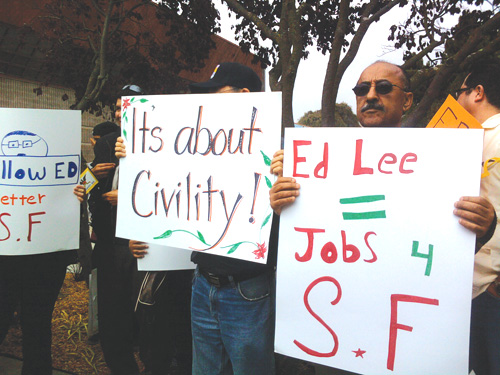
Those fighting words will likely spur heated exchanges in the months to come, but until Adachi’s entrance into the race, it was Lee who took the most lumps from opponents. Even Board President David Chiu, a mayoral candidate whose campaign platform is centered on the idea that he’s helped restore civility to local government, had some harsh words for Lee during an Aug. 11 mayoral debate.

“I do regret my decision to take Ed Lee at his word when he said he would not run,” Chiu said in response to a question about whether he regretted any of his votes. He also said his first interaction with Lee after the mayor had announced his candidacy was “a little like meeting an ex-girlfriend after a breakup.”

Lee, whose pitch on the campaign trail features a remarkably similar narrative about transcending political squabbling in City Hall, became the target of boos, hisses, and noisemaker blasts when a boisterous crowd packed the Castro Theater for an Aug. 8 candidate forum. He received one of the most forceful rebukes from Sen. Leland Yee, an opponent whom Lee supporters are especially focused on defeating.

“Had the mayor said that he would in fact run, he may not have gotten the votes for interim mayor,” Yee said. “Will you resign from your post,” he asked, challenging Lee, “in order to then run for mayor?” Days later, Yee had developed a new mantra about throwing power brokers out of City Hall instead of “wining and dining with them.”

Yet Lee said his decision to enter the race wasn’t because of the push from his backers, but because of how well things have gone during his brief tenure in Room 200. “Things have changed at City Hall, particularly in the last seven months,” he told reporters Aug. 8. “And because of that change, I changed my mind.”

In yet another twist, former Mayor Art Agnos — whom progressives had looked to as a potential appointee to the vacant mayor’s seat back in December, before Lee was voted in to replace former mayor and Lieutenant Governor Gavin Newsom — delivered a surprise endorsement of City Attorney Dennis Herrera shortly after Lee declared. The decision was particularly significant since Agnos first hired Lee to serve in city government, and has a long history of working with him.

“[Herrera] is an independent person who will empower neighborhoods … and won’t be beholden to power brokers,” Agnos said. He also told the Guardian he wasn’t surprised that Lee had opted to run, given the role former Mayor Willie Brown and influential business consultant Rose Pak had played in orchestrating Lee’s appointment.

“Anybody who is an astute political observer saw the signs from the very beginning,” Agnos said. In response to a comment about his unique vantage point as a would-be caretaker mayor, he said, “I would’ve kept my word and not run for reelection.”

Intense focus on Lee’s flip-flop, and on the Progress for All-backed “Run, Ed, Run” effort that was the subject of an Ethics Commission discussion that same week, stemmed at least in part from the threat the incumbent mayor represents to other candidates. A CBS 5-SurveyUSA poll suggested he became an instant front-runner.

Yet questions about “Run, Ed, Run” — some raised by observers unaffiliated with any campaigns — also served to spotlight the candidate’s longstanding ties with backers closely connected to powerful business interests that stand to lose big if their links to city government aren’t preserved.

Retired Judge Quentin Kopp issued an open letter to District Attorney George Gascón Aug. 1 urging him to convene a criminal grand jury to investigate whether illegal and corrupt influencing had occurred when Pak — a close friend of Lee’s and a key driver behind the “Run, Ed, Run” effort — reportedly recruited executives of Recology to gather signatures urging Lee to run.

Recology, which handles the city’s waste, was recently awarded a $112 million city contract, and Lee’s scoring of the company and recommendation to raise rates in his previous capacity as city administrator benefited the company. Brown received substantial campaign donations from Recology in previous bids for mayor. Kopp is the coauthor of a ballot initiative asking San Francisco voters if the company’s monopoly on city garbage contracts should be put out to bid.

“A criminal grand jury is vital in order to put people under oath and interrogate them,” Kopp said. “They would put Willie Brown under oath, put Pak under oath, put [Recology President Mike Sangiacomo] under oath, put [Recology spokesperson Sam Singer] under oath … That’s the course of action that should be pursued by this.”

Although Kopp told the Guardian that he hadn’t yet received a response from Gascón, DA candidates Sharmin Bock, Bill Fazio, and David Onek nevertheless seized the opportunity to publicly and jointly call for Gascón to recuse himself from any investigation into Progress for All. Gascón has a conflict of interest, they argued, since he reportedly sought Pak’s advice when deciding whether to accept Newsom’s offer to switch from his previous post as police chief to his current job as top prosecutor.

The Ethics Commission determined unanimously Aug. 8 that the activities of Progress for All, the committee that was formed to encourage Lee to run, had not run afoul of election laws despite director John St. Croix’s opinion that it had filed improperly as a general purpose committee when it ought to have been a candidate committee, which would have placed caps on contribution limits.

“The Ethics Commission has spoken, and they’ve supported our position,” Progress for All consultant Enrique Pearce of Left Coast Communications told the Guardian.

St. Croix did not return Guardian calls seeking comment, but an Ethics Commission press release included a caveat: “Should facts surface that coordination occurred between Mayor Lee and [Progress for All], such allegations will be investigated under the Commission’s enforcement regulations.”

At a Lee support rally organized by his official campaign team on Aug. 11, volunteers who arrived with “Run, Ed, Run” materials produced by Progress for All were told they could not display those signs and T-shirts; the same people were on a first-name basis with one of Lee’s campaign team members.

Pressed on the question of whether there was any coordination between agents of Progress for All and Lee, Pearce said the Ethics Commission discussion had focused on whether Lee had been a candidate. “Whether or not he’s a candidate has nothing to do with whether or not he has dinner with Rose [Pak],” Pearce noted. He insisted that there had not been coordination, and that the efforts to encourage Lee to run and to support Lee as a candidate were totally separate.

Sup. John Avalos, who is running for mayor on a progressive platform, recalled at an Aug. 8 candidate forum how things unfolded when Lee’s name first came up as an appointee for interim mayor.

Avalos reminded people that he had called for postponing the vote back in December because he hadn’t even had a chance to sit down and meet with Lee, who was in Hong Kong at the time. With behind-the-scenes deals orchestrating his appointment, Avalos said, “We saw City Hall turning into one big back room.”

Drag me from hell

0

emilysavage@sfbg.com

MUSIC Noah “DJ Dials” Bennett Cunningham wants to galvanize your pleasure center.

“You know how you can think back to that one night? That punk show or cool house party or the first time you saw Björk, and it’s just, the night you’ll never forget? I want to do that for other people. I want to make lasting memories,” he says from his perch in Four Barrel Coffee as he grabs Rosamunde french fries from his bag.

A DJ since age 12, the 27-year-old also works as a producer and video artist. His next big gig, in collaboration with Tri Angle Records and 120 Minutes club night, is an event likely to stir brain waves: it’s a showcase of witch house — a controversial genre also known, interchangeably, as grave rave, based goth, drag, or “pop music for the unconscious,” as San Francisco producer oOoOO has been known to describe his own sound.

It’s contentious because it’s all over the map. At its most basic, a combination of hip-hop and goth cultures, many music snobs and bloggers declared it dead on arrival. Even those associated with it seem to at least avoid using the term “witch house” itself. It’s said with an apologetic shoulder shrug.

This may be due to its murky origins. Essentially, it was coined by Denver’s Travis Egedy, a.k.a Pictureplane, sometime around 2009, partially as a joke, to describe his own music. Years later, the name remains and the scene is still burgeoning. There are some skilled musicians and producers creating this sound, including a smattering of national acts, and, locally, oOoOO (pronounced “oh”).

The August 19 showcase at 103 Harriet marks the first local live show (not just DJ set) for oOoOO — newly returned from an international tour — along with Clams Casino, White Ring, Shlohmo, Babe Rainbow, Water Borders, and D33J.

For this particularly significant event, Cunningham is working behind the scenes as the producer and co-host along with Marco De La Vega, the mastermind behind year-old witch house club night 120 Minutes at Elbo Room. Both agree that the biggest misconception about this type of music is that it’s already dead.

“It’s still new, it’s what’s happening right now,” says De La Vega. “The goth scene has a tendency to focus very strongly on the past, so all this music was the first kind of stuff where I was like, ‘Wow, this is actually happening, this makes sense for now. This is contemporary.'”

This much we know: those associated with witch house often make use of darker rhythms with creepy melodies over top, chopped and screwed hip-hop or slowed-down pop music samples, along with hypnotic and dark droning synths and howling, reverberated female vocals.

And yet, many musicians identified with this mutating, nearly indefinable genre wage battle against it. They, understandably, eschew the label for fear of pigeonholing.

“The way we look at it is that there are a few bands that were doing stuff independently and have been grouped by people trying to make it in to one cohesive term,” says Bryan Kurkimilis, one half of New York’s White Ring. “It’s nice and flattering to be part of something like that, but we had no genre in our head when we started. We’re consistently trying to evolve our sound.”

The music itself, of course, varies greatly, especially in this particular showcase. While oOoOO samples sputtering pop vocals, Shlohmo is more associated with L.A’s avant-garde beat scene, and Clams Casino’s repertoire includes making beats for based god Lil B. Toronto’s Babe Rainbow creates dark chopped and screwed hip-hop; White Ring bleeds more toward 80s synth and includes the lush, eerie voice of singer Kendra Malia.

“What motivates me, is putting Shlohmo and Babe Rainbow — who aren’t really considered witch house — next to oOoOO, White Ring, and Water Borders even, to show that it doesn’t really matter what the genre is; it’s that feeling, it’s the mood. It’s the place where it comes from,” Cunningham says. *


TRI ANGLE RECORDS SHOWCASE: 2011 REALITY TOUR

With oOoOO, White Ring, Clams Casino, Shlohmo, Babe Rainbow , Water Borders, D33j

Fri/19, 10 p.m., $15

103 Harriet at 1015 Folsom

1015 Folsom, SF

1015.com

‘West’-ward ho

0

arts@sfbg.com

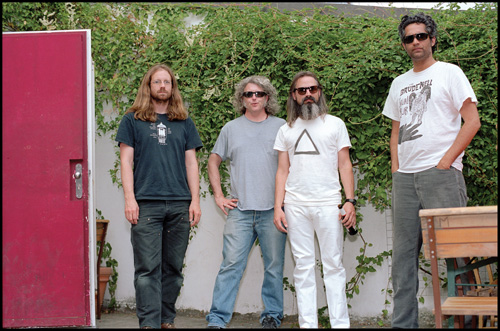
MUSIC There’s a certain irony to the fact that Wooden Shjips’ forthcoming Thrill Jockey long-player is titled West, considering the once firmly SF-based foursome has started to scatter across this storied region. Guitarist-vocalist Ripley Johnson has resettled in Colorado — when he isn’t touring the globe with wife Sanae Yamada as Moon Duo — and drummer Omar Ahsanuddin recently relocated to LA. All of this gives West — its cover art depicting the symbolically loaded Golden Gate Bridge — a particularly powerful charge for this band of musicians who grew up in the East Coast and Midwest and share a fascination with Left Coast mythology, culture, and music.

“Looking at the bridge, I don’t look at it as ‘goodbye’— I see it as ‘hello,'” explains organist Nash Whalen, paging through Hermann Hesse’s Steppenwolf and sunning himself on an Astroturf-clad parklet, in front of Farley’s on Potrero Hill. “Being from San Francisco certainly means something to people in the rest of the world — because of the mystique of California and the San Francisco music scene in particular. We all found our way to California — it’s the land of opportunity that I wasn’t going to experience in Vermont. Those are just some of the themes touched on in the songs.”

Those songs are transmitted with amplified immediacy and in-yo’-ear clarity on West —much like the cover image’s picture-postcard familiarity is imbued with a surreal strangeness. Notably, West signifies the first time the combo had worked in a studio with an engineer, a contrast to previous recordings, which were documented on eight-track in the outfit’s practice space. “We didn’t necessarily have good mics, and the room doesn’t necessarily sound good,” Whalen offers. “So there were a lot of elements to our recordings that frustrated us after a while.”

On West, the heavily distorted crunch of opening track “Black Smoke Rise” is beautifully separated from the shaker death-rattle, textures that seemed inextricably entangled in the past. Through the headphones, the effect is less lo-fi garage grind than a well-defined, clear shot of a speedway toward Wooden Shjips’ crossroads of hip-bobbing psychedelia, dream-drone, and charging Krautrock. The dance floor cleared, you hear the Leslie speaker tremelo, tripindicular echo, and spacey backward masking that the Shjips got to use for the first time in the studio, as well as Johnson’s airy vocals, more discernable than ever before and bidding you to take him on a nightmarish ride on the high-propulsion “Lazy Bones.” “Now when you hear a shaker, you don’t just think of it as a shaker,” says Whalen. “You hear it as a shaker in space, it’s going some place, and it’s more dynamic.”

Farley’s was a place Wooden Shjips would regularly sail into when recording West in February with Phil Manley (Trans Am, the Fucking Champs). The base of operations was Lucky Cat Studios, perched at the foot of Potrero’s slope, just steps away from the Guardian.”Yeah, the hardest thing about it was that the studio is at the bottom of the hill, so if we wanted to come up and get some coffee, it was ‘Oh, we have to walk up the hill…,'” quips Whalen, a former engineering geologist who has switched from studying rocks to rocking out full time.

Now, on this seemingly carefree sunny day, Whalen is most concerned with the fires in London: last week, flames consumed the distribution warehouse that housed the new LP. It’s uncertain how many, if any, were lost —”it’s a huge blow to all these businesses, not only bands and labels, but stores and everyone involved,” worries Whalen, who adds that the album will be available at this week’s SF show, ahead of the Sept. 13 release date. “It might be a small inconvenience for us, getting our record out on time, but for a lot of other people, it could be a lot bigger hassle — and devastating.”

WOODEN SHJIPS

With Night Beats

Thurs/18, 9:30 p.m., free (RSVP at tour.sailorjerrypresents.com)

Bottom of the Hill

1233 17th St., SF.

(415) 621-4455

www.bottomofthehill.com

You can’t trust Ethics

2

By Larry Bush

OPINION Proposition F, a measure on the November ballot, is supposed to clean up some provisions of the law that requires political consultants to register and make disclosures about their clients and their work. It was approved by all 11 supervisors.

But Prop. F has some serious problems. For starters, it grants authority to the Ethics Commission to make any other changes it wants in the law.

As the Voter Handbook says:

“A yes vote means: You also want to allow the City to change any of the campaign consultant ordinance’s requirements without further voter approval.”

Why should you oppose that? Because the Ethics Commission can’t be trusted.

The reason San Francisco has a law forcing political consultants to register and make disclosures is because the voters demanded one. City Hall fought against it every step of the way.

Former Supervisor Tom Ammiano introduced the measure in 1996, and it won board approval. Then-Mayor Willie Brown vetoed it. Ammiano rewrote the measure 1997 to meet Mayor Brown’s objections. Brown vetoed it again. And the supervisors who had voted for the law refused to vote for it again and overturn the veto.

So Ammiano and several other supervisors put the measure on the ballot. The political consultants raised a war chest to defeat it and spent more than $100,000 in direct mail, billboards and other voter contacts.

It passed with 61 percent of the vote.

What kind of clean up does Ethics plan now on the political consultant law? You can bet it won’t come down on the side of greater disclosure.

In 2009, two years ago, the Ethics Commission decided to write a clean up of the city lobbyist law. Just like they want to do with the political consultant law now.

And what happened with that law?

It changed one little aspect that didn’t get any real attention. It changed what is defined as a lobbyist — a person or entity who seeks to influence administrative or legislative decisions.

And what is the result?

Now the San Francisco Chamber of Commerce no longer has to file and disclose its lobbying. Neither does Lennar. Neither does the America’s Cup or Larry Ellison.

All those groups had to file under the old rules.

The bottom line is that a sleeping watchdog that can’t be trusted wants the right to change the laws governing political consultants — without any further oversight or public vote.

The former Ethics Commissioners who also are opposing this measure are Paul Melbostad, who served on the commission when the political consultants act was passed; Bob Dockendorff; Joe Julian; Bob Planthold; and Eileen Hansen, who just completed her term and was the only commissioner who voted against the pay-to-play rewrite.

I urge you to join them in opposing this measure.

Larry Bush is the publisher of Citireport.com, a City Hall watchdog.

Familiar but strange

0

arts@sfbg.com

THEATER In 1934, Broadway hosted its longest-running opera to that time, the serenely unconventional Four Saints in Three Acts. The brainchild of writer Gertrude Stein and composer Virgil Thomson, the production famously featured an all–African American cast (for the first time in roles not geared to depicting African American life), a scenic design covered in cellophane, music that mingled hints of Parisian modernism with a boisterous collage of vernacular American forms, and a libretto of unfathomable if evocative wordplay that merrily eschewed narrative — or even consistency with the title (acts were actually five, saints were many). It was weird. And people liked it.

In deciding upon a topic for the opera, Stein had taken on the lives of saints (especially Theresa and Ignatius, who figure prominently) as representative of the lives of artists. It was a secular work, and apotheosis, that ultimately concerned both her and Thomson, neither of them otherwise religious. As it turned out, the opera not only hailed the arrival of avant-garde ideas into the mainstream, but catapulted Stein into the stratosphere of celebrity.

“In Stein’s personal story the opera was a very large chapter,” explains Frank Smigiel, associate curator of public programs at the San Francisco Museum of Modern Art, currently presenting The Steins Collect: Matisse, Picasso, and the Parisian Avant-Garde. “In addition to The Autobiography of Alice B. Toklas, [Four Saints] radically transformed Stein from an experimental writer known for collecting other artists into a popular artist in her own right.”

One good apotheosis deserves another. This weekend SFMOMA, in association with Yerba Buena Center for the Arts, presents Four Saints in Three Acts: An Opera Installation, as part of The Steins Collect. While the exhibition already includes footage and ephemera from Stein and Thomson’s landmark opera (with even more footage on view in the concurrent Gertrude Stein exhibition at nearby Contemporary Jewish Museum), audiences will now have the chance to see a full staging of the work. Meanwhile, the production’s team of collaborators promises as much a re-envisioning as a revival.

This is as it should be, suggests Smigiel, who spearheaded the idea for the revival about a year ago as he and his colleagues were asking themselves how they might expand on the exhibition.

“If you look at all the other artists in the Steins Collect exhibition, they’re all working not just on canvases,” he says, speaking by phone from his office at SFMOMA. “It was a creative community that was crossing disciplines in ways people might not always know about. One of our aims was to rev up the avant-garde energy of the exhibition. There’s a way, when you go to a show with Matisse and Picasso, they can just look canonical now to us. One of the hopes is that there’s still something about Stein’s language and the opera that’s going to have a bit of shake-up to it. It won’t just appear as a rolling out of a canonical piece, and people wondering, ‘What was this again?'”

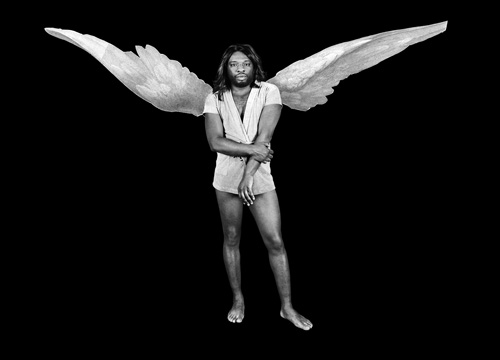
To that end, Smigiel approached local company Ensemble Parallèle, acclaimed specialists in contemporary chamber opera, having been impressed by their recent production of Alban Berg’s Wozzeck, including its shrewd use of visual media. He also sought out Italian-born, San Francisco–based composer, performer, and musicologist Luciano Chessa, an expert in the period whom he had worked with before. Equally inspired was Smigiel’s call to Kalup Linzy, whose video-performance practice mixes soap opera genre with drag, original songs, lip-sync, and themes of family, community, sexuality, and otherness through the prism of his African American Southern upbringing and later Brooklyn milieu.

After a process of deciding how they might re-approach the work, Chessa landed on the idea of resetting the text that Thomson had excised in his own 1950s version of the opera. The result is its own piece, entitled A Heavenly Act, which will immediately precede Four Saints without an intermission (the entire program will run a fleet 90 minutes). Linzy developed video projections as the predominant visual element in the production.

Chessa and Linzy offered further insight into the collaboration, and their respective processes, during a break from a rehearsal last week. Although neither knew the opera very well before embarking on the revival, each found points of contact and familiarity with their own work.

“I knew it mostly because of [Canadian filmmaker] John Greyson’s [2009 operatic documentary] Fig Trees,” explains Chessa. In conceiving A Heavenly Act, Chessa says he wanted to account for both Thomson’s own musical influences as well as the legacy he has left in the work of later composers.

“I couldn’t be approaching the text naively as if I was discovering it for the first time,” he says. “There is a history of setting Stein in the 20th century, which I ended up discovering by analyzing the work and also the development of Thomson’s fortunes in the 20th century. Because Stein’s text is very wordy, Thomson used the technique of having it chanted. So my idea was to bring this element of chant, but do it in a different way, using different lines of text moving at different speeds, creating clusters of textures.”

Adds Linzy, “We kept things very loose and abstract, kind of organic. It didn’t have to be so strict.” Linzy — who in the production also performs a song Chessa wrote for him set to Stein’s words — shot a cast of friends as angels against a green screen, usually with movement informed by music tracks Chessa had forwarded. But in at least one case, Linzy didn’t receive the track for a corresponding scene.

“There’s a dance scene [in A Heavenly Act] where [Chessa] did a waltz, but we danced to Donna Summer’s ‘Bad Girls,'” explains Linzy. “But seeing it against the waltz, really slowed down, it’s almost like the angels got high off LSD and just went too far. But we were moving to Donna Summer, we were discoing. That’s what I like. He had sent the tracks but somehow I didn’t get that particular one. So I was like, ‘Oh, we’ll just disco it out.’ And so that’s what we did, and it’s the most amazing thing.”

FOUR SAINTS IN THREE ACTS: AN OPERA INSTALLATION

Thurs/18, 7:30 p.m. (preview); Fri/19-Sat/20, 8 p.m.; Sun/21, 2 p.m., $10-85.

Novellus Theater

700 Howard, SF

(415) 978-2787

www.ybca.org


Green buds

56

steve@sfbg.com

CANNABIS Most marijuana sold in Bay Area dispensaries is grown indoors, where the ability to precisely control conditions creates the kind of buds — strong, dense, crystal-covered, fragrant, beautiful — that consumers have come to expect. But that perfection comes at a high price, both financially and environmentally.

So some local leaders in the medical marijuana movement have begun to nudge the industry to return to its roots, to the days before prohibition and the helicopter raids of the Campaign Against Marijuana Planting chased the pot growers indoors. They say it’s time for California to start growing more of its cannabis outdoors again, in the soil and sunlight, just like the rest of the state’s crops.

Growers have long known how inefficient it is to grow indoors. All they need to do is look at their huge monthly energy bills. Between the powerful grow lights, constantly running air conditioners, elaborate ventilation systems, pumps and water purifiers, and heaters used for drying and curing, this is an energy-intensive endeavor.

But a widely circulated study released in April — “Energy Up in Smoke: The Carbon Footprint of Indoor Cannabis Production” by Evan Mills, a researcher with Lawrence Berkeley National Laboratory — revealed just what a huge cumulative toll the practice was taking on California and the planet.

It found that indoor pot production accounts for about 8 percent of California household energy use, costing about $3 billion annually and producing about 4 millions tons of greenhouse gases each year, the equivalent of 1 million automobiles. Producing one joint was the equivalent of driving 15 miles in a 44 mpg car.

“The emergent industry of indoor Cannabis production results in prodigious energy use, costs, and greenhouse-gas pollution. Large-scale industrialized and highly energy-intensive indoor cultivation of cannabis is driven by criminalization, pursuit of security, and the desire for greater process control and yields,” Mills wrote in the report’s summary.

Yet while opponents of marijuana seized on the report to condemn the industry, proponents say there’s a very simple solution to the problem: grow it outdoors. And with the artisanship and quality in the fields and greenhouses now rivaling that of indoor buds, the biggest barriers to moving most marijuana production outdoors are federal laws and the biases of pot consumers.

“There’s a misconception out there that indoor is better marijuana than outdoor, but we don’t think that’s true,” Erich Pearson, who runs the San Francisco Patient and Resource Center (SPARC) dispensary and sits on the city’s Medical Cannabis Task Force. “Marijuana is a plant that came from the earth and that’s where we should grow it, just like our food.”


INDOOR VS. OUTDOOR

There are definitely some benefits to growing indoors, beyond just the ability to hide it from the prying eyes of law enforcement. The grow cycles are shorter, allowing for multiple harvests around the year. The generally small operations and precise control over growing conditions also tend to produce the best-looking buds, which command the highest prices and win the top prizes in competitions.

Kevin Reed, who runs Green Cross — a venerable medical marijuana delivery service that works closely with an established group of growers — told us there are several reasons why indoor buds have dominated the marketplace.

“The most important factor is local laws and regulations and the enforcement of those various laws. A second factor is space and climate — obviously outdoor cultivation will flourish is some places better than other. And, a final factor is sustainability of the market; indoor cultivators can produce crops on a year-round basis, providing some stability in the market over the long-term, especially in the event of crop failure or other unforeseen and unexpected disasters,” Reed told us.

Yet he also said, “If cultivated correctly and with care, there should be no difference between the same strain grown in- or outdoors.” And he said that from an environmental standpoint, outdoor is clearly superior: “So far as environmental factors are concerned, there is little doubt in my mind that outdoor cultivation is kinder to Mother Earth.”

Wilson Linker, with Steep Hill Laboratories, Northern California’s largest tester of medical marijuana, said that outdoor plants generally have more vegetative growth because of the longer light cycles, meaning that “indoor tests generally higher in cannabanoids, with THC [marijuana’s main psychoactive compound] in particular.”

But he and other marijuana experts also say that the quality of the buds ultimately depends on a wide variety of factors, from the strain used to the expertise of the cultivators to the time and care taken by the trimmers.

“I’ve seen outdoor that can compete with the best indoor strains,” said David Goldman, who runs San Francisco’s Americans for Safe Access (ASA) chapter, sits on the city’s Medical Marijuana Task Force, and is active in rating the various dispensaries and pot strains in terms of quality, using magnifying glasses to investigate the trichomes and other characteristics. “I would match the best outdoor I know up with anybody’s indoor, any day.”

Even when indoor buds look better, Pearson said, that doesn’t means they are better. Looks can be deceiving, he said, noting how local consumers now accept that those perfect-looking, genetically modified apples and tomatoes in the store aren’t as tasty or good for you as their ugly, organic counterparts.

“It’s not all about appearance,” he said, noting that marijuana grown in the sunshine is more robust and complex than its indoor cousins.

“We’re starting to find [outdoor] strains that were scoring just as high as indoor,” says Rick Pfrommer, the purchasing manager for Oakland’s Harborside Health Center.

And that’s especially true when the cannabis is grown in greenhouses, where it gets natural sunlight but growing conditions can be controlled better than in the fields.

“Greenhouses can attain a level of cosmetic attractiveness that is right up there with indoor,” Pfrommer said.

“There are a lot of products coming out of greenhouses that even trained eyes can’t tell the difference with [compared to indoors],” Linker said. “Greenhouses are the future.”

Or at least they might be the future if there is a change in the federal laws, which still view any marijuana cultivation as a crime — which is why indoor grows flourished in the first place.


LINGERING PROHIBITION

Rising demand for medical marijuana has created some regulatory pushback, even in pot-friendly San Francisco, where the Department of Public Health announced earlier this year that it wanted to create a registry of growers that work with the dispensaries in order to weed out the illegal growing operations.

“In the last few years, there’s been a proliferation of both illegal and legal cultivators,” Dr. Rajiv Bhatia, San Francisco’s environmental health director, told us earlier this summer. “We’re asking for this information to try to steer them back toward legal cultivation.”

Reed, Goldman, and other industry representatives strongly condemned the move, mostly on the grounds that creating lists of growers could subject them to federal prosecution, so the idea was shelved for now. But Bhatia said the problem remains, and in San Francisco, it’s a problem created largely by the demand for cannabis grown indoors.

But allowing for a more widespread conversion to sustainably grown marijuana will require a relaxation of the federal enforcement to allow for more land cultivation and the development of high-tech greenhouses.

“A lot of that rests in the hands of law enforcement,” Pearson said.

But it isn’t just the cops. Consumers are also supporting indoor grows.


SUPPLY AND DEMAND

Pfrommer said there are many factors that influence whether customers choose indoor or outdoor, or what he calls the “bag appeal” that causes customers to zero in on one strain among the 40 or so that can be offered at one time.

Generally, indoor grows are smaller operations, allowing greater care in the tending and processing of the buds, whereas outdoor grows usually produce large crops harvested all at once, “so frequently people won’t manicure it as well,” Pfrommer said.

Smell is another big factor, Pfrommer said, and that’s one area where he thinks outdoor actually has an advantage. “Outdoor generally has a more pungent smell,” he said. “Cannabis is very sensitive to the environment, so it can pick up elements from the soil, the wind, and the surroundings. It picks up different qualities.”

For that reason, he also said, “I personally find outdoor to taste better when it’s grown well,” comparing it to the subtle qualities that various appellations can give to fine wines.

The final factor is price, and that’s one area where outdoor has a distinct advantage. SPARC is currently selling quarter-ounces of greenhouse-grown Big Buddha Cheese with a THC content of more than 17 percent for just $70. And when the buds from open outdoor fields arrive this fall, they’ll be as low as $50.

“This,” Pearson said, holding up a beautiful bud of greenhouse-grown Green Dragon, “was grown at a fraction of the cost of indoor and it’s outstanding.”

“That’s why indoor sells for so much more,” Goldman said, ” because it costs so much more to grow.”

So if outdoor cannabis is cheaper, better for the environment, less risky for the industry, and just as good, why are the indoor stains still so much more popular?

“You’re looking a 20-plus years of indoor being the standard,” Pfrommer said, noting that the hardest part of creating a more substantial changeover in people’s buying habits is their expectations.

He said Harborside started offering more outdoor strains three years ago, “but the market wasn’t responding as strongly.” In other words, people still preferred indoor.

Yet things are changing, prompted partly by the Mills study. “That was what kicked off this latest round,” Pfrommer said. “There is a small but growing awareness among the regular marijuana consumers about the costs of growing indoors…The consciousness is starting to shift, but it’ll be slow, probably over the next two seasons.”

Harvests usually take place during the full moons in September and October, after which they are cured and processed for about four weeks, finally coming to market around Thanksgiving.

“It’s mostly an education process,” Pfrommer said. “We’re going to have a vigorous push around harvest time this year.”

“We’re trying to transition completely to outdoor because the environmental toll is less, the cost is less, the yield is higher, and our testing is showing that the quality is just as good,” said Nick Smilgys, who has done both marketing and purchasing at SPARC. “It just makes more sense to grow it outdoors.”

Munchies

0

HERBWISE There will be things at this weekend’s Street Food Festival that you will want to eat. Oh yes, very much so. And damn if there won’t be things that you will want to look at — and then eat.

One of these things will be Rosa Rodriguez’ Sweets Collection gelatin desserts: small, sweet cups in which three dimensional flowers bloom, taunting you to stick a spoon in them. I will take them over designer cupcakes any day.

Rodriguez, who now lives in the Mission with her two daughters, is from the Mexican state of Durango. There, large gelatin molds traditionally bloom at birthdays, baby showers, and wedding parties; red roses and yellow zinnias made of condensed milk curling prettily around the faces of happy couples and beaming little girls. When I asked her via email about her San Francisco customers’ most common reaction to her wares, she said it is uncertainty. “They ask if they can eat the flower, or if it’s plastic.”

A La Cocina street food incubator program graduate, Rodriguez will be in the heart of the Mission this Saturday, along with the rest of the sweet and savory offerings of the Street Food Festival’s 60-some vendors. She’ll be selling “fanciful jellos shots” at the festival’s bars on 23rd and Folsom streets, and her more family-friendly concoctions at a stand of her own on the same intersection.

Saturday will entail a lot of eating, and a lot of gawking at fanciful jello shots, and for these reasons alone the day will go very well if you are really, really stoned.

But ingesting marijuana before the Street Food Festival is a delicate matter. After all, the third year of the event will be the biggest yet, its girth spanning eight blocks of Folsom Street, plus parts of 23rd, 25th, the Cesar Chavez Elementary School parking lot, and the Parque de los Niños Unidos.

In past years, massive crowds have marred the day for many an avid snacker — the lines, my friend, the lines. This year La Cocina is hopeful that the vast expansion of the event will stem the tide — but nonetheless it would not do to have agoraphobia derail you just as you are reaching the front of the line at the Kasa booth.

Luckily, there are plenty of San Francisco souls that geek out tailor-making THC regimens for situations like these. I placed a call to one such place humans like this congregate: the San Francisco Patient and Resource Center, winningly acronym-ed SPARC. It just received our Best of the Bay reader’s poll award for Best Cannabis Club and it’s well known for having an extensive selection of in-house strains. It seemed like a fine place to start out.

Nick Smilgys, who has served as the club’s marketing director for over a year now, had two words for me: blackberry kush. Then he had some more. The kush — which he says is traditionally cultivated in Pakistan and India, but happens to be one of SPARC’s signature strains — is a deep-green indica that’ll make you hungry as hell, ready to take on all those Indian burritos and handmade huaraches.

Smilgys says the blackberry buds create “good well being” in their ingester, and result in a nice body high. Of course, he cautions, medicines will have differing effects on different patients.

But if you’re not careful with the blackberry, it could keep you from your improbably edible jello flowers. (Smilgys employed the term “couch lock” to describe a potential blackberry kush effect.) If you’re prone to getting paranoid, he counsels medical marijuana patients to look for a sativa-indica hybrid that tilts to the indica side of things for a more tranquil, crowd-ready high.

Be brave friends, eat the flower. *

STREET FOOD FESTIVAL

Sat/20 11 a.m.-7 p.m., free

Folsom between 22nd and 26th sts. and surrounding area, SF

www.sfstreetfoodfest.com


Rep Clock

0

Schedules are for Wed/17–Tues/23 except where noted. Director and year are given when available. Double features are marked with a •. All times are p.m. unless otherwise specified.

ARTISTS’ TELEVISION ACCESS 992 Valencia, SF; www.atasite.org. $10. Face of a Stranger (Michalak, 1977), Fri, 8.

BALBOA 3620 Balboa, SF; www.balboamovies.com. $17.50-20. “Opera and Ballet at the Balboa:” Macbeth, from the Royal Opera house, London, Wed, 7:30; Swan Lake, from the Bolshoi Ballet, Moscow, Sat-Sun, 10am.

CASTRO 429 Castro, SF; (415) 621-6120, www.castrotheatre.com. $7.50-13. “Viva Pedro:” •Bad Education (Almodóvar, 2004), Wed, 2:50, 7, and Law of Desire (Almodóvar, 1987), Wed, 2:45, 7; •Talk to Her (Almodóvar, 2002), Thurs, 2:45, 7, and All About My Mother (Almodóvar, 1999), Thurs, 4:55, 9:10; •The Flower of My Secret (Almodóvar, 1995), Fri, 3:05, 7, and Women on the Verge of a Nervous Breakdown (Almodóvar, 1988), Fri, 5, 8:55. “SF Sketchfest presents: 25th Anniversary Celebration: Labyrinth (Henson, 1986), Sat, 5. This event, featuring Jim Henson Company puppeteers in person, $15 at www.sfsketchfest.com. “SF Sketchfest: Rifftrax Presents:” “Night of the Shorts II: Electric Riffaloo,” Sat, 8:30. This event, $25 at www.sfsketchfest.com. •2001: A Space Odyssey (Kubrick, 1968), Sun, 2, 7, and 2010: The Year We Make Contact (Hyams, 1984), Sun, 4:35, 9:35.

“CENTER STREET SUMMER CINEMA” 2219 Center, Berk; (510) 548-5335, www.downtownberkeley.org. Free (bring your own chair, or $5 to rent a chair). Raiders of the Lost Ark (Spielberg, 1981), Sat, 7:30.

CHRISTOPHER B. SMITH RAFAEL FILM CENTER 1118 Fourth St, San Rafael; (415) 454-1222, www.cafilm.org. $10.25. Crime After Crime (Potash, 2011), call for dates and times. The Names of Love (Leclerc, 2010), call for dates and times. The Whistleblower (Kondracki, 2010), call for dates and times. Senna (Kapadia, 2011), Aug 19-25, call for times.

“FILM NIGHT IN THE PARK” This week: Creek Park, 451 Sir Francis Drake, San Anselmo; (415) 272-2756, www.filmnight.org. Donations accepted. Cinema Paradiso (Tornatore, 1988), Fri, 8; To Kill a Mockingbird (Mulligan, 1962), Sat, 8.

JACK LONDON SQUARE 66 Franklin, Oakl; www.jacklondonsquare.com. Free. “Waterfront Flicks:” Dinner for Schmucks (Roach, 2010), Thurs, sunset.

PACIFIC FILM ARCHIVE 2575 Bancroft, Berk; (510) 642-5249, www.bampfa.berkeley.edu. $5.50-9.50. The Makioka Sisters (Ichikawa, 1983), Wed, 7. “Bernardo Bertolucci: In Search of Mystery:” The Dreamers (2003), Thurs, 7. “Hands Up: Essential Skolimowski:” Essential Killing (2010), Fri, 7 and Sat, 9; Moonlighting (1982), Fri, 8:45. “Japanese Divas:” Late Autumn (Ozu, 1960), Sat, 6:30. “The Timeless Cinema of Marcel Pagnol:” Fanny (Allégret, 1932), Sun, 5.

PIEDMONT 4186 Piedmont, Oakl; www.landmartheatres.com. $8. The Room (Wiseau, 2003), Sat, midnight.

ROXIE 3117 and 3125 16th St, SF; (415) 863-1087, www.roxie.com. $5-9.75. Jay Reatard: Better Than Something (Hammond and Markiewicz, 2011), Wed, 7:30, 9:30. Vigilante Vigilante (Good, 2011), Wed-Thurs, 7, 8:45. The Arbor (Barnard, 2010), Aug 19-25, 7, 9 (also Sat, 5). “Atheist Film Festival,” Sun, 11am. Single films, $12; fest pass, $20; more info at www.sfatheistfilmfestival.org. Rita, Sue, and Bob Too! (Clarke, 1986), Mon, 9:30. YERBA BUENA CENTER FOR THE ARTS 701 Mission, SF; (415) 978-2787, www.ybca.org. Free. “Smut Capital of America: San Francisco’s Sex Cinema Revolution:” “Wildcard Film Night,” Thurs, 7:30. Film title TBA.

Stage Listings

0

OPENING

Exit, Pursued By a Bear Boxcar Playhouse, 505 Natoma, SF; www.crowdedfire.org. $10-35. Previews Thurs/18-Fri/19, 8pm. Opens Sat/20, 8pm. Runs Wed-Sat (Aug 24-27 and Sept 7-17), 8pm. Through Sept 17. Crowded Fire performs Lauren Gunderson’s new play, a feminist revenge comedy.

Waiting for Giovanni Decker Theater, New Conservatory Theatre Center, 25 Van Ness, SF; www.nctcsf.org. $25-36. Previews Fri/19-Sat/20 and Aug 24-26, 8pm; Sun/21, 2pm. Opens Aug 27, 8pm. Runs Wed-Sat, 8pm; Sun, 2pm. Through Sept 18. This world-premiere play by Jewelle Gomez in collaboration with Harry Waters Jr. imagines a split-second of indecision in the mind of author James Baldwin.

BAY AREA

Toke Ashby Stage, 1901 Ashby, Berk; www.brownpapertickets.com. $25. Opens Thurs/18, 8pm. Runs Thurs-Sat, 8pm; Sun, 5pm. Through Sept 11. Swirl Media presents Deedee Kirkwood’s pot-fueled comedy.

ONGOING

Act One, Scene Two SF Playhouse, Stage Two, 533 Sutter, SF; (415) 869-5384, www.un-scripted.com. $10-20. Thurs/18-Sat/20, 8pm. Un-Scripted Theater Company hosts a different playwright each night, performing the first scene of an unfinished play and then improvising its finish.

“AfroSolo Arts Festival” Various venues, SF; www.afrosolo.org. Free-$100. Through Oct 20. The AfroSolo Theatre Company presents its 18th annual festival celebrating African American artists, musicians, and performers.

American Buffalo Actors Theatre of San Francisco, 855 Bush, SF; (415) 345-1287, www.actorstheatresf.org. $26-38. Wed-Sat, 8pm. Through Sept 3. Actors Theatre of San Francisco performs the David Mamet crime classic.

Bedtime in Detroit Boxcar Theatre Studios, 125A Hyde, SF; www.boxcartheatre.org. $15. Thurs/18-Sat/20, 8pm; Sun/21, 4pm. Boxcar Theatre’s first-ever Directing Lab Performance is of Ellen K. Anderson’s drama, set in Detroit on Devil’s Night.

Billy Elliot Orpheum Theater, 1192 Market, SF; www.shnsf.com/shows/billyelliot. $35-200. Wed/17-Sat/20, 8pm (also Sat/20, 2pm); Sun/21, 2 and 7:30pm. As a Broadway musical, Billy Elliot proves more enjoyable than the film. The movie’s T. Rex score may have been a major selling point, but it was a bit maudlin for a story that needed no help in that department. The musical naturally has a sentimental moment or three, but it’s much more often funny, muscular in its staging (with repeatedly inspired choreography from Peter Darling), and expansive in its eclectic score (Elton John) and well-wrought book and lyrics (Lee Hall). Moreover, Stephen Daldry (who also directed the 2000 film) plays up bracingly the too-timely class politics of the modest 1980s English mining town besieged by Margaret Thatcher’s neoliberal regime in the latter’s ultimately successful bid to crush the once-powerful miners union. The cast is likewise very strong. The second act is not as strong as the first, but as crowd-pleasing entertainment the musical burrows deep and more often than not comes up with gold. (Avila)

The Book of Liz Custom Made Theatre, 1620 Gough, SF; www.custommade.org. $25-32. Thurs-Sat, 8pm; Sun, 7pm. Extended through Aug 28. Custom Made Theatre performs David and Amy Sedaris’ comedy about an unconventional nun.

Gilligan’s Island: Live On Stage! 2011 Garage, 975 Howard, SF; www.brownpapertickets.com. $10-20. Sat-Sun, 8pm. Through Aug 28. Moore Theatre and SAFEhouse for the Performing Arts presents this updated, ribald take on TV’s classic castaways.

A Midsummer Night’s Dream Steve Silver Theater, 1101 Eucalyptus (on the Lowell High School campus), SF; www.bathwater.org. $20. Thurs/18-Sat/20, 7:30pm. Bathwater Productions performs an acrobatic version of the Shakespeare classic.

A Midsummer’s Night Dream This week: McLaren Park, Mansell St, SF; www.womanswill.org. Free (donations requested). Sat/20-Sun/21, 2pm. Performances continue at Bay Area parks through Aug 28. Woman’s Will performs the Shakespeare favorite.

The Nature Line Phoenix Theater, 414 Mason, SF; www.sleepwalkerstheatre.com. $17-20. Thurs-Sat, 8pm. Through Aug 27. With The Nature Line, Sleepwalkers Theatre concludes playwright J.C. Lee’s ambitious apocalypse trilogy, “This World and After.” Now well into the post-apocalyptic age, Aya (Charisse Loriaux) buries her miscarriages in the hardscrabble earth, tended by a blind one-breasted s/he named T (Amy Prosser) who plants a would-be garden and collects tattered love letters from a past when people could still physically — and emotionally — touch one another. All that’s been banished now, Aya’s friend Arty (Ariane Owens) tells us, along with the onetime plague of “sadness.” The few humans remaining huddle in the antiseptic arms of a corporate entity represented by a bossy nurse (Janna Kefalas) and her spacey assistant (Lissa Keigwin), who manage an artificial insemination clinic fueled by a stable of four comic-book–reared studs, or “dudes” in the argot of the future (a sensitive crooner smitten with Aya, played by Joshua Schell, and a boisterously adolescent fantastic three played by the roundly hilarious Roy Landaverde, Jeff Moran, and Jomar Tagatac). This all takes place at the edge of a vast, reportedly menacing frontier. Lured by an enchanting dream, and urged by T, Aya crosses over into this forbidding land, followed willy-nilly by everyone else, only to find another Eden of sorts, inhabited by the, at first, unrecognized figures of Aya’s lost and future familia (Soraya Gillis and Carla Pantoja) — a poignant moment comes in a bilingual reunion that magically erases barriers of language and time. Indeed, if Lee’s title suggests “line” as both lineage and division, the play recovers a timeless order by challenging the artificial lines between persons; people and “nature”; past, present, and future; or dream and reality. Director Mina Morita’s staging is fleet and at times poetic, while she gets generally solid performances from her cast (the more comical parts working best). Imaginative, just a little risqué, and reminiscent in its heightened vernacular, low humor, and romantic optimism of word-struck apocalypto-dramas like Liz Duffy Adams’ Dog Act, Nature is a well-constructed narrative with a theme and dialogue that can feel alternately eloquent and heavy-handed. That said, its final image remains an apt conclusion for the trilogy as a whole, amid another Eden where the first kiss, and first heartbreak, starts the beating all over again. (Avila)

Peaches en Regalia Stage Werx, 533 Sutter, SF; www.wilywestproductions.com. $12-24. Thurs-Sat, 8pm. Through Aug 27. The new comedy by Bay Area playwright Steve Lyons borrows its title from a Frank Zappa instrumental and stamps it on the menu of a local diner (tangibly evoked in Wes Cayabyab and Quinn J. Whitaker’s spiffy set design), where new employee and recent college graduate Peaches (an endearingly offbeat Sarah Moser) revels in her impulse decision to leave a job at an investment bank to work at a place with such an auspicious side dish. We meet Peaches, as well as best friend Joanne (Nicole Hammersla), nebbish customer Norman (Philip Goleman), and confident guy’s guy Syd (Cooper Carlson), through a set of discrete monologues, each illustrated with mute help from the other characters. Philosophies of life and hidden desires are all on display but the plot is a prix fixe menu of romance, marriage, and parenthood as deliberate encounters lead to unexpected matches. Sharp performances crisply directed by Sara Staley add zest to otherwise average comic fare, but the writing has several inspired flights of zaniness too. Questionable whether the second act’s course is warranted, however, since it’s plot to pull into parenthood a reluctant Norman — for whom the pace of events collapses nine months and more into a dizzying time warp — is a bit too I Love Lucy to concentrate on without itching to change the channel. (Avila)

Tigers Be Still SF Playhouse, 522 Sutter, SF; www.sfplayhouse.org. $30-50. Tues-Wed, 7pm; Thurs-Sat, 8pm (also Sat, 3pm). Through Sept 10. SF Playhouse performs Kim Rosenstock’s quirky comedy.

True West NOHspace, 2840 Mariposa, SF; 1-800-838-3006, www.truewestsf.com. $10-28. Wed-Sat, 8pm. Through Sept 17. Expression Productions presents Sam Shepard’s tale of two brothers.

2012: The Musical! This week: Washington Square Park, Columbus at Union, SF; www.sfmt.org. Free. Sat/20, 2pm. Also Sun/21, 2pm, Yerba Buena Gardens, Mission at Third St, SF. Continues through Sept 25 at various Bay Area venues. San Francisco Mime Troupe mounts their annual summer musical; this year’s show is about a political theater company torn between selling out and staying true to its anti-corporate roots.

What Mamma Said About Down There SF Downtown Comedy Theater, 287 Ellis, SF; www.sfdowntowncomedytheater.com. $15. Thurs/18-Sat/20, 8pm. Sia Amma returns with her solo comedy.

BAY AREA

Candida Bruns Memorial Amphitheater, 100 California Shakespeare Theatre Way, Orinda; www.calshakes.org. $35-66. Tues-Thurs, 7:30pm; Fri-Sat, 8pm (also Sept 3, 2pm); Sun, 4pm. Through Sept 4. Cal Shakes artistic director helms this taken on George Bernard Shaw’s classic about a housewife torn between her husband and a new suitor.

Communicating Doors Live Oak Theatre, 1301 Shattuck, Berk; www.aeofberkeley.org. $12-15. Fri/19-Sat/20, 8pm. Actors Ensemble of Berkeley performs Alan Ayckbourn’s “time-travel-battle-of-the-sexes comedy.”

The Complete History of America (abridged) Dominican University of California, Forest Meadows Amphitheater, 1475 Grand, San Rafael; (415) 499-4488, www.marinshakespeare.org. $20-35. Performance times vary; check website for schedule. Through Sept. 25. Marin Shakespeare Company performs Adam Lon, Reed Martin, and Austin Tichenor’s three-person romp through American history.

Madhouse Rhythm Cabaret at Marsh Berkeley, 2120 Allston, Berk; (415) 282-3055, www.themarsh.org. $15-35. Thurs, 7:30pm. Through Aug 25. Joshua Walters performs his hip-hop-infused autobiographical show about his experiences with bipolar disorder.

Not a Genuine Black Man Marsh Berkeley, TheaterStage, 2120 Allston, Berk; 1-800-838-3006, www.themarsh.org. $20-50. Sat, 5pm (also Sept 8 and 22, 7:30pm). Through Sept 24. This is it: the final extension of Brian Copeland’s solo show about growing up in (nearly) all-white San Leandro.

Reduction in Force Berkeley City Club, 2315 Durant, Berk; (510) 558-1381, www.centralworks.org. $14-25. Thurs-Sat, 8pm (also Sat/20 and Aug 27, 5pm); Sun, 5pm. Through Aug 28. Central Works performs “an economic comedy about back-stabbing, ass-kissing, and survival of the sneakiest.”

The Road to Hades John Hinkel Park, Southampton Ave, Berk; (510) 841-6500, www.shotgunplayers.org. $10 (suggested donation; no one turned away for lack of funds). Sat-Sun, 3pm. Through Sept 11. Shotgun Players presents a new comedy written by and starring veteran comedian and clown Jeff Raz.

Seven Guitars Marin Theatre Company, 397 Miller, Mill Valley; (415) 388-5208, www.marintheatre.org. $34-55. Tues and Thurs-Sat, 8pm (also Aug 25, 1pm; Sat/20 and Sept 3, 2pm); Wed, 7:30pm; Sun, 2 and 7pm. Through Sept 4. Marin Theatre Company performs August Wilson’s 1940s-set entry into his series of plays about the African-American experience.

Strange Travel Suggestions Cabaret at Marsh Berkeley, 2120 Allston, Berk; (415) 282-3055, www.themarsh.org. $20-50. Fri, 8pm; Sat, 5pm. Through Aug 27. Jeff Greenwald returns with a new version of his hit show of improvised monologues about travel.

“2011 New Works Festival” TheatreWorks at Lucie Stern Theatre, 1355 Middlefield, Palo Alto; (650) 463-1960, www.theatreworks.org. $19-29. Schedule varies. Through Sun/21. TheatreWorks presents its annual festival of new musicals and plays, performed in workshop or staged-reading form, plus a panel discussion.

PERFORMANCE/DANCE

“Four Saints in Three Acts: An Opera Installation” Novellus Theater, 700 Howard, SF; (415) 978-2787, www.ybca.org. Previews Thurs, 7:30pm. Runs Fri-Sat, 8pm; Sun, 2pm. $10-85. SFMOMA and YBCA present this new production of Virgil Thomson and Gertrude Stein’s opera.

“Free Preview of SF Fringe Festival” Exit Theatre, 156 Eddy, SF; RSVP to carrpool@pacbell.net. Sat, 8pm. Free. Check out excerpts from Fringe-bound works by local companies.

“Help is on the Way XVII: Gotta Sing! Gotta Dance!” Herbst Theatre, 401 Van Ness, SF; www.helpisontheway.org. Sun, 7:30pm. $50-125. Performers including Lea Salonga, Shirley Jones, Kim Nalley, Paula West, and more join forces to raise money for local AIDS service organizations, presented by the Richmond/Ermet AIDS Foundation.

“House Special” ODC Theater, 3153 17th St, SF; (415) 863-9834, www.odctheater.org. Sat, 8pm. $15-18. Julie Caffey, Christine Bonasea, and Raisa Punkii present works-in-progress as part of ODC’s summer shared-residency program.

“A Mix Tape for Ophelia” CounterPULSE, 1310 Mission, SF; www.counterpulse.org. Fri-Sat, 8pm. $20. CounterPULSE and Collage Theater present this multimedia exploration of adolescence through a Shakespearian, queer lens.

“SF Live!” 50 Mason Social House, 50 Mason, SF; www.50masonsocialhouse.com. Mon, 9:30pm. Free. Ongoing. Comedy and music showcase.

“2011 Bay Area Rhythm Exchange” Herbst Theatre, 401 Van Ness, SF; (415) 392-4400, www.cityboxoffice.com. Fri-Sat, 8pm. $17-25. Stepology presents this tap dance festival, featuring Melinda Sullivan, Channing Cook Holmes, the Barbary Coast Cloggers, and more.

“The Wounded Stag” Marsh, 1062 Valencia, SF; www.themarsh.org. Tues, 7:30pm, $10. Musical performance and monologues with multi-instrumentalist Andrew Goldfarb (a.k.a. the Slow Poisoner) and absurdist performance artist Dan Carbone.


Performance times may change; call venues to confirm. Reviewers are Robert Avila, Rita Felciano, and Nicole Gluckstern. Submit items for the listings at listings@sfbg.com. For further information on how to submit items for the listings, see Picks. For complete listings, see www.sfbg.com.

Advocates aim to change youth sentencing of life without parole

Christian Bracamontes was 16 years old and had never been in trouble with the law when he made a decision that landed him in a California prison, serving out a sentence of life without parole.

He was part of a tagging crew, and he and a friend had gone down to a wash to hang out and do graffiti. When his friend showed him that he had a gun in his bag, he was surprised. A group of kids came down to the wash and offered to sell them weed, but they refused. Then his friend got an idea. 

“He said to me, do you want to rob them? I said, ‘I don’t care,'” Bracamontes told an interviewer with Human Rights Watch years later. He trailed behind his friend as he approached the kid who’d offered to sell them drugs, but things did not go as planned: The victim threatened to kill them. Bracamontes figured the bluff had been called, and he turned to get his bike so they could leave. But then his friend fired the gun.

Bracamontes was found guilty of first degree murder and sentenced to life without parole. The prosecutor offered a lower sentence of 16-to-life if he accepted a plea deal, but he refused, since he could not fathom how he could possibly be found guilty when he wasn’t the one who pulled the trigger.

His story was one of many profiles included in a Human Rights Watch report titled, “When I Die, They’ll Send Me Home,” an in-depth analysis of California youth serving life sentences without parole. According to that 2008 study, an estimated 45 percent of youth offenders serving that sentence were convicted of murder, but didn’t physically pull the trigger. The convictions reflect a California law that holds youth responsible for a murder that occurs when they were part of a felony, even if they didn’t plan for it to happen. In nearly 70 percent of the cases surveyed by Human Rights Watch, youth didn’t act alone in their crimes, and at least one codefendant was an adult.

A broad statewide coalition of youth advocates and human rights organizations is now pushing for legislation that they hope will give youth in these circumstances a second chance to turn their lives around. Senate Bill 9, dubbed California Fair Sentencing for Youth, would make it possible for youth serving life without parole to petition for a court to review their case and determine whether to impose a lower sentence.

The legislation would permit up to three hearings after 15, 20, and 25 years of incarceration, and the minimum time that someone would have to serve before they could be granted parole is 25 years. Only inmates who exhibit signs of rehabilitation and remorse would be able to submit a petition for a case review. If resentenced, the offenders would still have to go before a parole board to prove that they deserve to be placed on parole.

According to Human Rights Watch, international human rights law prohibits life without parole for youth — and the United States is the only country that imposes this sentence in practice, though other countries have laws on the books permitting it.
 
“All of the organizations and literally thousands of individuals come to this with the idea that this extreme sentence is not a sentence we should be imposing on people who are under the age of 18,” Elizabeth Calvin of Human Rights Watch told the Guardian. Since Human Rights Watch released its national and statewide studies of the issue in 2005 and 2008, she said, “There’s more awareness nationally that our juvenile justice policies of lock them up and throw away the key are failing. It really is worthwhile to give young people a second chance.” Dozens of human rights, civil liberties, and faith-based organizations have pushed to pass the bill, with efforts beginning several years ago.

In California, roughly 300 people who were sentenced when they were minors are serving sentences of life without parole, representing around 12 percent of the estimated 2,500 incarerated individuals in the nation who serving out the same sentence.

Calvin described the bill as legislation that “balances the needs and interests of victim family members who believe that there are some cases that deserve life without parole.” She noted that the bill faced strong opposition from law enforcement and groups of victim family members, though certain individuals in those same communities have voiced support for SB 9. “We’re hopeful, but it’s definitely an uphill battle,” she said.

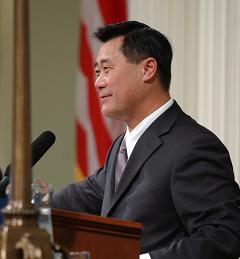
The Assembly Appropriations Committee will vote on SB 9 on Aug. 17, and if it clears that hurdle, it will go onto the full Assembly. The bill was authored by Sen. Leland Yee, with principal coauthors Darrell Steinberg (D-Sacramento) and Juan Vargas (D-Chula Vista), and co-authors Assemblymembers Felipe Fuentes (D-Arleta) and Bonnie Lowenthal (D-Long Beach).

“SB 9 is not a get-out-of-jail-free card; it is an incredibly modest proposal that respects victims, international law, and the fact that children have a greater capacity for rehabilitation than adults,” said Yee, who is also a child psychologist and a candidate for mayor. Research has shown that brain maturation continues throughout adolescence, so young people’s abilities to plan, make decisions, and think critically are not yet fully developed.

“It’s a pretty modest bill,” says Sue Burrell, a staff attorney with the San Francisco-based Youth Law Center. “It’s a pretty intense process even to get a hearing, and to be in a position where you could be released.”

She added that her organization has been engaged in similar work for years. “We’ve been very concerned about the adultification of kids,” she said. “You can’t decide when someone’s so young that … they could never move beyond this phase of their lives.” Many of the cases that land youth in prison without parole are similar, Burell said. “The classic scenario is, they’ll go out and do some low-level thing … but then it turns out that one of the buddies has a knife or a gun. And the rest is history.”

Lee appointment of Nuru darkens the ethical cloud over Room 200

10

City Attorney Dennis Herrera deserves credit for being the one mayoral candidate willing to bring a full-throated denunciation of the sleazy and corrupt politics now flowing from Mayor Ed Lee, who yesterday appointed discredited political fixer Mohammed Nuru to head the Department of Public Works, compounding a series of ethically questionable actions by Lee and his supporters.

While it was inexplicably buried by editors at the bottom of Section C, the Chronicle’s City Insider today had a pair of good stories on Lee’s mounting political problems. The first was about how the U.S. Attorney’s Office has reportedly launched a probe of Progress for All and its “Run, Ed, Run” campaign, for which Lee ally Rose Pak illegally sought support from executives at Recology, the garbage company that had just been awarded a huge city contract, largely because then-City Administrator Lee had given the company far higher ratings than the other two supposedly impartial bid judges.

The second story was about Herrera slamming Lee’s choice of Nuru. On his campaign website, Herrera reminded voters about the scandals that have surrounded Nuru – like Lee, someone who has always taken his cues from former Mayor Willie Brown – who illegally diverted city funds and workers into campaigning for Brown in 1999 and Gavin Newsom in 2003. Brown now writes for the Chronicle and is even allowed to comment on the mayor’s race.

The scandal – first broken by the Chronicle in 2004, furthered by reporting in the Guardian, and then investigated by Herrera’s office – involved Nuru steering city funds to his nonprofit San Francisco League of Urban Gardeners and then requiring its employees to illegally do campaign work during work hours. Nuru then went to work for Lee at the DPW while continuing to illegally use SLUG’s funds and employees for political purposes.

Herrera said the appointment smacks of “cronyism, politics, and poor judgment.” Previously, Herrera had the best line about Lee as he jumped into race, telling a mayoral forum: “To my mind, Ed Lee’s biggest problem isn’t that he’s a dishonest man – it’s that he’s not his own man,” Herrera said. “The fact is, if Ed Lee is elected mayor, powerful people will continue to insist on things.”

Topping that list of the powerful people who have clearly been pulling Lee’s strings throughout his career are Pak and Brown, both of whom are consultants who regularly get paid by corporations that do big business with the city and need support from the Mayor’s Office. And their actions are often blatant and shameless, just like Nuru’s history, and even exposure of the misdeeds doesn’t correct the problem.

For example, as I reported last week, Brown’s administration helped Pak buy a Rincon Hill condo for half-price through a city affordable housing program in 2002, even though her disclosure forms showed she had $73,414 in her checking account, some of which probably included the $12,000 consulting fee she reported on her tax return from Emerald Fund – the politically connected developer of the project, employees of which are barred from buying such below-market rate units – and $10,000 from Chiang CM Construction, which helped fund Progress for All.

Most of this information was prominently reported in 2003 by the Examiner, but nothing was ever done. Pak got to keep her taxpayer-subsidized condo. Same thing with Nuru, who remained at DPW even after the City Attorney’s Office and Controller’s Office concluded his actions were corrupt. And Lee was appointed interim mayor even after being tied to several corrupt Brown scams, including overriding city workers to give contracts to fraudulent companies at Brown’s behest.

And now, Lee has placed Nuru in charge of a city department with a $129 million city budget and 1,200 employees, despite Nuru’s proven history of directing his subordinates to illegally campaign for his mayoral benefactors. You couldn’t even make this stuff up, and even Examiner columnist Melissa Griffin flatly calls the move “stupid.”

But I think it’s more than just stupid. And the appointment of Nuru is more than just a setback from DPW that good government activists had been fearing for a long-dysfunctional department that had gotten much better in recent years. It looks like flat-out corruption of the sort that ought to knock Lee out of the frontrunner position and hopefully land him in front of a grand jury at some point.

The post-labor world

8

The engineers at Intel are thinking about the future, and they’ve hired sci-fi writers to help them imagine what the next few generations of chips will need to do. We’re talking about cars that drive themselves and space stations with AI — and, of course, about a future where robots do most of the work:


In one of the stories in “The Tomorrow Project,” a couple dash from Paris to the south coast of France to provide an injured relative with a blood transfusion. They travel in a car that navigates and drives itself. Medical information is wirelessly beamed to the vehicle’s dashboard and into mobile-phone-like ear studs. In another story, robotic automation has rendered jobs a thing of the past, and one human ponders what to do with his free time.


What to do with your free time. Imagine that.


Got me thinking about Player Piano, the first Vonnegut novel (and the first one I read, back in high school). In Vonnegut’s world, there are rich, educated people who control the machines — and then there’s everyone else, poor and frustrated and marginalized because there’s no meaningful work to do.


Seem familiar? Sound a little tiny bit like our jobless recovery?


Let me suggest something radical, something that a few futuristic writers have discussed but that’s no longer part of our national political consciousness. We may soon be heading for an economic system that involves massive structural unemployment. There may not be a need for as many human beings to do as much labor, particularly manual labor, as there has been in all of the history of civilization. That’s not necessarily a bad thing — but it will require us as a society to be willing, at a certain level, to divorce labor from income.


In other words, we’ll have to accept that the productive wealth of society will have to be distributed in part on the basis of need, not just on work. I know that sounds awful Marxist, but it’s also the only way a post-labor world can actually work. It’s that or massive starvation and global warfare.


This stuff wasn’t all that crazy a generation ago. In 1973, with Nixon in the White House, Daniel Patrick Moynihan wrote “The Politics of a Guaranteed National Income,” and he wasn’t remotely a commie. But with the “end of welfare as we know it” and the Reagan-Bush II tax cuts and the worship of wealth that passes for civil discourse in the United States today, it seems hard to imagine how anyone can talk seriously about giving people money — for the long term, for life — even if they aren’t employed in compensated labor as we know it today.


The dystopian novels like “Player Piano” assume that there’s some inherent value in labor — that people who can’t find meaningful work that requires skill and pride and offers the rewards of craftsmanship — will become morose and depressed. That’s only true if you assume that work and pay are connected in a 2011-style model. There’s plenty of good work to do in the world; shit, I could put 200 people to work today, researching and writing articles and reports that would add to the base of civic knowledge and do at least some good for the world. I just can’t afford to pay them. There’s so much else that the world needs — work that can only be done by humans and that will enrich us all, but that has no “value” in the modern economic paradigm. That is, it’s good work — and nobody will pay anyone to do it.


I’ll give you a good example: San Francisco alone could probably use 500 full-time people to take care of seniors. I don’t mean people with medical training; I mean people who can cook and clean — and, more important, sit around and talk to lonely single seniors, give them company, make their lives more full. There’s absolutely no economic model for that work right now — the seniors who need it can’t afford to pay for it, there’s nowhere near enough government money (thank you, tax cuts) and no conceivable private-sector role. Good, meaningful work that needs to be done. Lots of qualified people around with no jobs. No functional way to pair them.


Now, you ask me, we raise taxes profoundly on the wealthy and big business and create government jobs to do all the work that needs to be done. Redistribute enough wealth and create enough public-sector employment and we’ll be able to keep modern capitalism going for a while longer.


But we also need to start thinking about the post-labor world, about whether we want people to “ponder what to do with their free time” (which isn’t such an awful thing) and then think about good uses for that free time (acknowleging that there will always be some freeloaders who get money and don’t do jack shit for anyone) — or whether we want large number of people to starve in the streets because there’s no paying work.


When robots do the labor, who gets the paycheck? If it’s the small class of people who own all the robots, we’re looking at a pretty damn ugly future.

Warren Buffet’s money

10

Just about everyone I know has been emailing and posting and talking about the Warren Buffett New York Times oped piece on the mega-rich (and I’m not alone — it’s the single most emailed piece on nytimes.com today). I appreciate what Buffett has to say; I’m glad he’s willing to point out that the “shared sacrifice” we’re hearing about from Washington doesn’t include any sacrifices at all from the people who can most afford to give up a little. But that’s not my favorite line; here’s the real crucial argument:


Back in the 1980s and 1990s, tax rates for the rich were far higher, and my percentage rate was in the middle of the pack. According to a theory I sometimes hear, I should have thrown a fit and refused to invest because of the elevated tax rates on capital gains and dividends.


I didn’t refuse, nor did others. I have worked with investors for 60 years and I have yet to see anyone — not even when capital gains rates were 39.9 percent in 1976-77 — shy away from a sensible investment because of the tax rate on the potential gain. People invest to make money, and potential taxes have never scared them off. And to those who argue that higher rates hurt job creation, I would note that a net of nearly 40 million jobs were added between 1980 and 2000. You know what’s happened since then: lower tax rates and far lower job creation.


Get it? Raising tax rates on investments and on the income of the very rich doesn’t impede job creation. RIch people don’t stop working or investing when they have to pay higher taxes. (And local business taxes don’t have a measurable impact on job creation or preservation in San Francisco.)


Here’s where Buffett’s argument bothers me: The guy’s got more money than he can ever spend. He’s going to give most of it away. If he really believes in what he wrote, why doesn’t he use some of that vast wealth to fund a campaign to educate American voters about the truth about taxes and jobs? Imagine what a billion dollars — a modest fraction of his wealth — could do to change the political dynamic in this country. Imagine a concerted advertising and PR campaign, similar to what the right wing has used over the years to promote its pro-corporate agenda, making the case that higher taxes on the rich are good for the economy, that government spending on job creation is a positive thing and that the central dynamic that dominates discussion in both parties is entirely wrong?


Warren: You can do it. I know there are plenty of great charities out there that can use your money, but that won’t change the world. This might.

City workers union backs Yee — and Avalos

18

The press release I got from Leland Yee’s campaign made it sound as if Yee had won a major victory over progressive supervisor John Avalos:


SAN FRANCISCO – Senator Leland Yee has landed the first choice endorsement of the largest organization of city workers – Service Employees International Union (SEIU 1021) – in his campaign for San Francisco Mayor. The move by the 54,000 member union is a complete rejection of the city’s top official, interim Mayor Ed Lee.


The endorsement comes after Yee has landed virtually every major labor endorsement in the race, including the California Nurses Association, California School Employees Association, International Brotherhood of Electrical Workers, San Francisco Building and Construction Trades Council, Laborers International Union, United Brotherhood of Carpenters, Communication Workers of America, and the American Federation of State, County, and Municipal Employees, among others.


Yee has also been endorsed by the major environmental groups, including the Sierra Club and San Francisco Tomorrow.


“I am proud to be the labor candidate in this race and honored to receive the endorsement from SEIU 1021 and our city’s workforce, who run our city and provide us essential services,” said Yee. “SEIU 1021 represents some of our lowest paid and hardest working employees, including healthcare workers, nurses, and janitors. Together, we have fought to ensure greater transparency and accountability at City Hall and within state government. I look forward to working with SEIU as we move San Francisco forward.”


Local 1021 is among the most progressive unions in the city — and when it comes to local politics, one of the most effective. Candidates backed by 1021 get the union’s volunteer work and wealth of political organizing skill, and it can make a huge difference.


Avalos, the leading progressive in the race, would seem a natural for the SEIU nod, and at first glance, it appeared that one of labor’s best friends at City Hall had been stiffed. You don’t learn until the end of the Yee release what really happened:


SEIU 1021 also endorsed John Avalos as a first or second choice and Bevan Dufty as a third choice.


Yep — Yee didn’t win the endorsement outright. Local 1021 was split between Yee supporters and Avalos supporters, and wound up doing a dual endorsement. Here’s what the official 1021 statement says:


The delegates were in support of both Supervisor John Avalos and State Senator Leland Yee, both progressives with strong labor credentials and records, both having been in SEIU at one time, and both friends. The delegates reasoned that with so many candidates in the race, neither could win without the others second votes, so they made a dual endorsement of them, asking members and supporters to vote their choice of first or second between them.


Dufty came in third in part because he did (and does) really well in these kinds of interviews. Watch the candidates on the trail — Dufty is funny, relaxed, personable … the kind of guy you want to go have a beer with. The others often come off as stiff and scripted. That doesn’t mean I’m necessarily voting for Dufty, who has been on the wrong side of too many issues. But in a crowded field, his personality stands out.


What does this mean? It means that SEIU members can and will work for both Yee and Avalos, which is good news for Avalos and probably better news for Yee. The senator has been working hard to get as many Avalos/Yee dual endorsements or 1-2 endorsements as he can, since any apparent connection between the two helps Yee with the progressive vote. And while I understand and appreciate the rights of candidates to promote themselves and hype every endorsement they get in the best terms possible, this one was a bit misleading. 

Outside Lands, day three

0

Ah, Golden Gate Park on a crisp, sunny Sunday morning. Well, afternoon. There’s nothing else like it. When I finally made my way out to Outside Lands, the highly recognizable vocal stylings of tUnE-yArDs were piping through the brush and bramble. Sweaty, shirtless men – fried to a near-crisp –  rain danced far back from the Sutro Stage. And those free-jazzing saxophonists that I mentioned in the pre-festival rundown were indeed beside Merrill Garbus.

Next up, I high-tailed it to foodlands, where I shared gourmet tator tots from Q and later, a falafel snow cone – not as odd as it sounds – from Straw. As we munched, I caught a few songs by the legendary Mavis Staples, but apparently missed it when Arcade Fire singer Winn Butler came out to join Staples in a cover of “The Weight.”

I then hit the Twin Peaks stage for !!!, a dance-punk band I’ve had ongoing mixed feelings about, but I have to say: they put on a good live show yesterday. Nic Offer, wearing teensy jean shorts, sprang across stage, arms open wide, shaking his hips and calling on the crowd to get moving. On route to the set, I overheard a girl yell, “Is that how you say that? ‘Chick, chick, chick’?!”

I’m glad I ran out of !!! during the last couple of songs, so I could be front and center for local garage rocker Ty Segall, working it in the unrelenting (read: not that hot) San Francisco sun. Segall opened with a new song then headbanged his way through older favorites. It was a small stage, but Segall’s show was highly attended. He asked if the crowd would circle pit, then took it back and recommended they just pogo. A few crowd-surfed, at least one lost a shoe.

Major Lazer was a whole otherworldly affair. While dapper Diplo and Switch stood behind a table of mixed electronics and laptops, a hypeman hopped around stage whipping a towel while a woman in a bright tropical onesie and neon pink slotted shades ran back and forth, bending into contortionist-yoga poses.

I watched a few John Fogerty songs –  all CCR – and thought how proud my father would be if he knew my proximity to Mr. Fortunate Son. I wanted to get prime viewing distance to Beirut so I made my way back to the Sutro Stage. With a mighty three-horn brass section (when Zach Condon wasn’t playing his ukulele) and a particularly lovely accordion, Beirut played songs off 2006’s Gulag Orkestar and 2007’s the Flying Club Cup, along with at least one track off upcoming release the Ripe Tide.

The exhilaration was palpable for Arcade Fire over at the Polo Fields/Lands End main stage. Thunderous screams rang out as each musician appeared on stage. Behind the band there was a marquee movie screen showing fuzzy, nostalgic images of tree-lined streets, warm sunsets, and cars on open roads – fitting in nicely with themes of its most recent album, the Suburbs. I’ll admit it, I got a little choked up. In the other direction, there was a sea of people, shrouded in the purple-blue lights of the stage, with lit-up booths lined up past them, and the dark tops of trees out in the park beyond those.
 

It’s official: Adachi’s in the race (VIDEO)

Public Defender Jeff Adachi filed to run for mayor of San Francisco on Aug. 12, the last possible day to enter the race.  Adachi said he’d decided to run in order to “make sure there’s a voice in there that’s talking about the fiscal realities of our city.”

At a mayoral candidate forum Aug. 11, every single contender — Mayor Ed Lee, Sup. John Avalos, venture capitalist Joanna Rees, Assessor Recorder Phil Ting, Board President David Chiu, City Attorney Dennis Herrera, former Sup. Michela Alioto-Pier, former Sup. Bevan Dufty, and Sen. Leland Yee — said they would support the pension reform package that was placed on the ballot after discussion with labor unions, the mayor’s office, and business interests, and not the pension reform measure authored by Adachi.

Here’s a video of Adachi explaining his decision to members of the press moments after filling out the paperwork.

Video by Rebecca Bowe

Environmentalists: America’s Cup not green enough

A preliminary planning document for the America’s Cup doesn’t go far enough to protect San Francisco’s natural environment, a coalition of environmental organizations has said.

The Environmental Council — made up of a group of nonprofits including the Sierra Club, San Francisco Baykeeper, Turtle Island Restoration Network, the Dolphin Swimming and Boating Club, and others closely tracking planning for the America’s Cup — were gearing up to offer feedback to the San Francisco Planning Commission Aug. 11 on a hefty draft environmental impact review (DEIR) of the prestigious yachting event’s impacts on marine life, air quality, and parklands.

The draft EIR “does not go far enough to protect San Francisco’s air, water, and marine life,” said Teri Shore of the Turtle Island Restoration Network. She advocated for requiring vessels to use the cleanest possible fuels and to travel at slow speeds so as not to collide with dolphins, porpoises, seals, sea lions, or whales once outside the Golden Gate.

Ken Coren, Vice President of the Dolphin and Swimming Club, voiced concerns about the effects the race would have on swimming and recreational boating. “The bay would be sealed off — it would only be spectator viewing,” he said. Activities like swimming around Aquatic Park or entering the bay on rowboats “would be prevented if you were going to take the EIR as it stands today at its word.”

Jon Golinger, president of the Telegraph Hill Dwellers, said the report “dramatically underestimates the impact” to individual San Francisco neighborhoods.

http://www.youtube.com/watch?v=BngNbTCUcM8
Jon Golinger speaks at a press conference on the steps of City Hall. Video by Rebecca Bowe

Jennifer Clary, of San Francisco Tomorrow, said the groups’ concerns centered on three key areas: Impacts to the water, such as the potential for oil spills or degraded water quality; impacts that huge crowds would have on surrounding lands, especially in protected areas such as the Presidio; and neighborhood impacts. “You have already busy locations, and they’re going to packing more people in,” she said.

While they raised concerns, the nonprofit representatives also made it clear that they were not opposed to the America’s Cup, and only wanted to see the city strengthen environmental protections during the event. David Anderson, Conservation Committee Chair with the Golden Gate Audubon Society, noted that the world-famous regatta would result in a major economic boon. “Certainly the city can afford some mitigation to make it right,” he said.

Giants fans and offense take a snooze at AT&T Park

0

On yesterday’s clear and sunny Wednesday afternoon, the San Francisco Giants played in front of a sold-out crowd for their sixtieth straight home game in a row. 

But even the 42,000-plus fans in the bleachers couldn’t ignite the recently gone-limp bats of the 2010 world champs. The Giants lost the matinee by a lopsided score of 9-2 to the Pittsburgh Pirates, a team who before arriving in the Bay had lost 10 games in a row. 

There was no joy for Giants fans — until the evening’s post-game special event, that is.

But first, the game itself. Starting pitcher Jonathan Sanchez continued to struggle to find his rhythm since returning from the disabled list on August 1 (he had tendinitis in his left bicep). Sanchez only pitched four and one-third innings, giving up five runs and four earned runs and allowing four walks in the mere four innings he pitched.

“I don’t think it was a very good outing, to be honest,” said Giants skipper Bruce Bochy at the post-game press conference. “[Sanchez] hurt himself. The pitcher sets the tone for the game and it wasn’t a very good one today for him.”

This was an abysmal home showing for the defending champs. In the last 10-game stretch, the Giants have produced a losing record of 3-7, ceding three straight series in a row to the Philadelphia Phillies, Arizona Diamondbacks, and as of yesterday, the Pittsburgh Pirates. The last time the Giants did that was in May of 2008.

The team’s even lost its first place spot in the National League West Division to the Arizona Diamondbacks, who beat the Astros Tuesday night. 

The Giants’ struggles can easily be credited to the lackluster performances displayed by the team’s offense. It’s a problem that Bochy is having issues resolving. “I wish I had an easy answer for that, they just have to get it going (offensively) — I don’t know how else really to say it. We had our chances to get back in the game. You keep going out there and working on it,” said Bochy

The team was missing its key trade deadline acquisition Carlos Beltran, who did not play for the third straight game due to a strained wrist, which he suffered during Sunday’s game against the Phillies. Outfielder Nate Schierholtz also did not play in Wednesday’s game.

But with all the offensive vacancies, Bochy says that he will not alter the lineup for Friday’s series opener against the Florida opener. “This is our club; we’ve got guys that have been around. They’ve got to figure it out,” said Bochy. Friday marks the start of a 10-game road trip for the G-men. The team will make crucial stops in Atlanta, Florida, and Houston. 

Said Bochy, “When you’re in something like this you think, gosh are we going to come out of it? And we will, and I think our offense will as well.”

But the day was not entirely ruined by baseball. After the game, bases and ground chalk were traded in for giant inflatable slides and tents. The ninth annual Giants slumber party was held Wednesday evening — sold-out, as always — right inside AT&T Park. 

Friends and families filed onto the makeshift campground immediately after the game ended, unloading tents, sleeping bags, flashlights, and teddy bears for the night’s festivities. 

They got to participate in a scavenger hunt throughout the stadium, they rambled through the dugouts, they scored autographed paraphernalia, and kids and parents settled down with a screening of Despicable Me projected on the ginormous high definition scoreboard.

All in all, not your average backyard overnighter — $200 per person (including a ticket to the game) has a way of putting AT&T Park in a whole different light. But how can you put a pricetag on home team happiness?

San Francisco’s chance at seeing 3D porn goes flat

0

If you thought wizards and animated toys were fun in 3D, imagine putting on a pair of those nerdy glasses and getting popped in the face by some erect nipples. Sex on the big screen is always a thrill, but the Chinese film, Sex and Zen, is taking eroticism to a whole new dimension (corny pun intended) and is sure to get viewers foolishly grasping at the seemingly tangible passion. Keep your hands at your sides, San Franciscans; unfortunately the film’s debut in our city will only be offered in standard 2D.

Based on the ancient Chinese novel, The Prayer Mat of Flesh, and a remake of the 1991 film with the same name, Sex and Zen claims to be a bold, sexual comedy about a lustful scholar’s sexual adventures to become the ideal lover for his new wife. Practice makes perfect and therefore the film is packed with colorful sex and stars a roster of hot bods, including Japanese porn stars Hara Saori and Suo Yukiko and Hong Kong actress Vonnie Liu. Sex and Zen is considered soft-core, so don’t get your hopes up for massive erections or explosive female ejaculation, but you can still get your shameless 3D kicks with gags featuring jiggly breasts and a gigantic horse cock. 

So why is the Bay Area being teased and then restricted from the 3D amusement? Sex and Zen’s distributor, China Lion Film Distribution, brings about 15 films a year to the US, usually without issue, but this film’s mix of campy-eroticism earned a NC-17 rating from Motion Picture Association of America, meaning big, fat corporate theaters weren’t interested in showing the movie and most smaller, independent art house theaters don’t have the ability to show in the third dimension. China Lion CEO and Kiwi Milt Barlow, says in general, finding happy host screens in the US has been a battle, but San Francisco seems to be the biggest loser in this round.

“On the surface, America is a very conservative country and I find it quite puzzling. It’s supposed to be the land of free speech, sex, drugs, and rock ‘n’ roll,” says Barlow, chuckling, although audibly disappointed. “Americans invented porn, didn’t they?”

According to the MPAA, NC-17 simply means the film contains visuals “most parents would consider patently too adult for their children 17 and under” and “does not mean ‘obscene’ or ‘pornographic’ in the common or legal meaning of those words, and should not be construed as a negative judgment in any sense.” Many corporate theaters uphold policies that restrict the showing of anything past the ‘R’ rating. When you take a glimpse at the types of programming available on cable or even prime-time TV, it feels likely some creepy censorship shit. 

“You can see some pretty rugged stuff on Showtime. Sex and Zen is not a porn– it’s an erotic farce. It’s slapstick and campy.”

The film’s popularity on opening night in Hong Kong surpassed Avatar and stripped the original, highly popular Sex and Zen from its title for highest grossing adult film. Barlow, and I’m guessing many a San Franciscan, are hoping that this potential cult classic will garner a positive response from other theaters in the US who are showing in 3D, such as Dallas, Portland and LA, and eventually swing back around in its intended form. Until then, our hands are tied, and not in a fun way. Boo America. 


Sex and Zen

Fri/12, check theater website for showtimes

Four Star Theater

2200 Clement St., SF

(415) 666-3488

http://www.lntsf.com/4-star_theatre