San Francisco

Hectic days in SFPD’s officer-involved shooting unit

Apparently, the one San Francisco Police Department sergeant tasked with investigating officer-involved shootings has been busy. Yesterday morning, the Guardian received an email from SFPD Media Relations officer Albie Esparza, who apologized for taking almost a month to respond to a Guardian request for information.

“It’s simply been very busy with the multiple officer involved shootings we’ve been having in SF recently,” Esparza explained. “The ONE Sergeant who works in the Internal Affairs Officer Involved Shooting unit is aware of your questions and is trying to research that, as well as investigate the three OIS incidents we’ve had recently.” 

Reached by phone, Esparza said he actually meant to say there were four officer-involved shooting investigations; one involves a Daly City officer who fired upon a person in San Francisco city limits in early March. And whoops, as of yesterday, make that five – an officer shot and killed a pit-bull yesterday in Golden Gate Park.

The three shootings Esparza initally referred to include a March 15 officer-involved shooting in the Richmond District; another one on March 5 in Bayview Hunters Point, and a third one on Feb. 15 in the Tenderloin. Only the March 5 shooting resulted in an individual being struck; he wasn’t killed. Police later held a town hall meeting about that incident, which transpired after a high-speed chase that ended in a cul-de-sac. The suspect drove into two police cars and hit an officer, according to the police department’s account, before officers shot at him. Esparza said he did not have information about whether the incident involving the Daly City officer resulted in a fatal gunshot wound.

The Guardian’s original questions, meanwhile, remain unanswered. We submitted a query regarding a fatal officer-involved shooting that killed Pralith Pralourng last July. The 32-year-old Oakland resident had a history of mental illness, and was killed outside a chocolate factory in San Francisco after brandishing a box cutter. Police Chief Greg Suhr has pointed to this case as a prime example for why police ought to be equipped with Tasers. But the SFPD launched a specialized crisis intervention training (CIT) program over the last several years specifically to help officers better respond to calls involving mentally ill individuals. Local advocates weighing in at recent public hearings convened by SFPD said they feared the department could lose sight of CIT de-escalation tactics if the Tasers plan moves forward. 

The Guardian submitted questions to SFPD in late February asking whether the officer who shot and killed Pralourng had been trained under CIT; if any CIT officers were dispatched to the scene, since the call involved a mentally ill individual; and whether CIT de-escalation techniques were attempted prior to the shooting.

After nearly a month, Esparza finally sent a response from SFPD internal affairs. “We were told that because it’s open and active, the file is exempt from disclosure,” he said. Basically, we hit a dead end and were told to try again later. When things aren’t so busy.

Acclaimed director Sally Potter on redheads, the 1960s, and ‘Ginger and Rosa’

0

It’s the 1960s, nuclear war is a real possibility, and nuclear-family war is an absolute certainty, at least in the London house occupied by Ginger (Elle Fanning), her emotionally wounded mother (Mad Men‘s Christina Hendricks), and her narcissistic-intellectual father (Alessandro Nivola).

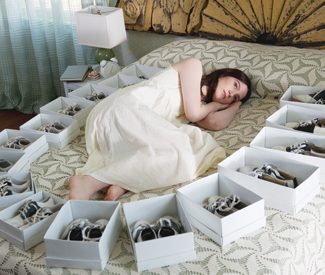
In Ginger and Rosa, a downbeat coming-of-age tale from Sally Potter (1992’s Orlando), Ginger’s teenage rebellion quickly morphs into angst when her BFF Rosa (Beautiful Creatures‘ Alice Englert, daughter of Aussie director Jane Campion) wedges her sexed-up neediness between Ginger’s parents. Hendricks (playing the accordion — just like Joan!) and Annette Bening (as an American activist who encourages Ginger’s political-protest leanings) are strong, but Fanning’s powerhouse performance is the main focus — though even she’s occasionally overshadowed by her artificially scarlet hair.

Ahead of the film’s release Fri/22, I spoke with Potter about teen drama, redheads, and more.

San Francisco Bay Guardian Many, many films tell coming-of-age stories and tales of female friendship. What sets Ginger and Rosa apart from the rest?

http://www.youtube.com/watch?v=47yoVmZeff0

Sally Potter I think what makes it different is that it links the transition in the personal life of two girls with the transition in the world outside. A global crisis as well as a personal crisis. So it’s not really just about going through the baptism of fire of a learning experience. It’s really shatteringly transformative, as the girls try to grapple with the big questions as well as the smaller questions in their lives.

SFBG The film is set in the 1960s, another favorite era for filmmakers. How do you go about creating a period film that avoids the clichés viewers have come to expect?

SP Research. Research into memory, research photographically, research cinematically. I think clichés come from lack of knowledge. I can remember 1962 — I grew up in London, I was 12 at the time, but I remember the city, how it looked and how it felt. This milieu that the story takes place, this social setting if you like, is one that’s very rarely shown onscreen anyway: not much money, but cultured in a certain way. It’s a stark, bare aesthetic, with idealistic views about the world.

SFBG Are there autobiographical elements to the story, as there are with the setting?

SP There’s some. I mined in my own memory and observation of other peoples’ lives as I was growing up, to try and make sure that the story was authentic and as real as possible. But it’s a fictional story. I was on the “Ban the Bomb” marches as a young child and a very young teen, and I do remember the Cuban missile crisis very vividly — the feeling that the world might come to an end.

SFBG The film depends heavily on the casting of leads Elle Fanning and Alice Englert, neither of whom are actually British. Was that a challenge, and how do you guide two young actors (who’ve just met while working on the film) into portraying a lifelong friendship?

SP I had real rehearsal time. I think that’s the key to everything. It was a short shoot, five weeks. We were moving very rapidly through the story, though we did try to shoot [in order] as much as possible. But it totally depended on preparation time, where in the privacy of my studio we could really go deeply into the characters, their lives, and what they felt about each other but were not saying — in a way, exploring the silences between the words.

I did lots of preparing with both [actors], one-on-one and together, and Elle and Alice bonded very quickly through this deep and vigorous work we were doing together. And we had a lot of fun as well. There was a lot of laughter in between [scenes], and hugging, and so on. It was a very warm atmosphere in rehearsal and on the set.

SFBG I’m assuming you’re a Mad Men fan…

SP Of course!

SFBG It was nice to see Christina Hendricks playing a completely different kind of role here.

SP Absolutely. Showing a whole other part of her range, something that’s much more subtle, and much less depending on her appearance, although of course she always looks beautiful, but it’s not so much about the outside. It’s much more about the hidden world of the character that she’s grappling with.

SFBG I maybe shouldn’t follow that up with an appearance-related question, but as a redhead (and the daughter of a redhead) myself, I have to ask: why did you choose to have two redheaded characters, and what does red hair mean to you?

SP There’s a lot of reasons for having red hair in a film. One is that it photographs absolutely brilliantly, and sort of inflames literally all the colors around it. So if you have red hair against a blue sky or a gray wall, it does something amazing to the retina of the eye, to your experience of the color. Then, there’s the fact that redheads are a recessive gene, so it really is a minority. Some redheads, when they’re children, are teased for being red. But visually it already kind of sets somebody apart as being slightly different.

I have to say — there is an autobiographical element because I grew up a redhead myself, with a redheaded brother also. So I remember the feeling of what that meant, this sort of funny mixture of special but also teased for this standout red hair.

GINGER AND ROSA opens Fri/22 in Bay Area theaters.

Last gasp ends the sordid Mirkarimi saga

167

A San Francisco judge has dismissed a defamation lawsuit against Sheriff Ross Mirkarimi and his wife, Eliana Lopez, which is likely to be the last step in an ugly and protracted political, legal, and administrative battle stemming from Mirkarimi grabbing Lopez’s arm during an argument on Dec. 31, 2011.

The couple’s neighbors, attorney Abraham Mertens and his wife, Ivory Madison, reported the grabbing incident to police over the objections of Lopez, who had sought advice from Madison and allowed her to film a short but emotional video displaying a bruise on her arm, which became the main evidence against Mirkarimi.

That exploded into a high-profile drama in which Mirkarimi was vilified by the media, charged with domestic violence and witness dissuasion, pleaded guilty to misdemeanor false imprisonment, suspended without pay for six months by Mayor Ed Lee, and finally reinstated to office by the Board of Supervisors in October.

Along the way, the two couples – who are still neighbors, despite Mirkarimi’s efforts to sell his house and move – became increasingly bitter public rivals. Lopez consistently denied being abused and implied to reporters that Mertens and Madison had political motives for breaking her confidence and reporting the incident to police. Mertens and Madison maintained that Mirkarimi tried to dissuade their cooperation with police – an allegation that the long investigation failed to substantiate – and blasted Mirkarimi and Lopez in a San Francisco Chronicle op-ed.

Other than that, Madison and Mertens refused to talk to the press as the saga unfolded – a stance they maintained today, with a man who answered the phone at the Red Room website business they run immediately telling us, “They’re not interested in talking.”

But Madison, who went to law school before becoming a fantasy writer, did let loose in June when she submitted a wild, incredible 22-page declaration to the Ethics Commission as part of the city’s effort to permanently remove Mirkarimi on official misconduct charges, purporting to describe the tyrannical way the Mirkarimi ran the household, as Madison claimed she was told by Lopez (which she disputes).

The commission criticized and gutted the declaration, finding that it was prejudicial and contained little usable evidence. Commissioner Paul Renne even dressed down the deputy city attorneys for submitting it, calling it “clearly hearsay, clearly having the intention of poisoning the well of this hearing,” causing Deputy City Attorney Peter Keith to apologize and explain they had little to do with the declaration because Madison had hired a private attorney who helped her prepare it.

The couple and their attorney have threatened to sue Mirkarimi and Lopez for more than a year, and they finally filed the defamation case in January, and it has now been quickly dismissed. Domestic violence advocates and allies of Mayor Lee also threatened a recall election against Mirkarimi, but that also seemed to wither late last year – meaning this is probably the last we’ll hear about this case, at least until Mirkarimi runs for reelection in two years, if he decides to do so.

Asked to comment on the lawsuit’s dismissal, Mirkarimi told the Guardian, “My family and I are very happy and have moved forward, and I hope they are too.” His attorney, David Waggoner, told us, “Hopefully, the dismissal represents the end of what has been a long and painful experience for everyone involved.”

Pizza delivery drones?

Well, this is intriguing. According to an event announcement for an upcoming talk this Wednesday, there are some bizarre new developments on the “innovation in San Francisco” front. “New plans are being launched to help entrepreneurs launch their dreams,” the San Francisco Technology Democrats informs us, “from mobile apps to making pizza delivery drones available.”

Drones? For pizza delivery? Shouldn’t someone warn the American Civil Liberties Union?

In any case, the talk aims to give curious techies, policy wonks, activists and others an opportunity to pose questions to Board of Supervisors President David Chiu and Chief Innovation Officer Jay Nath concerning San Francisco’s Open Data Portal, proposed revisions to Open Data laws, and similar topics of interest. It will be held Wed/20 from 6:30 to 9:30 p.m. at the Marine’s Memorial Club Fireplace Room, 609 Sutter, in San Francisco.

Reports of new director appointment at SF arts museums follow critical NYT piece

A report in the New York Times this past weekend highlighted troubles at the Fine Arts Museums of San Francisco (FAMSF), which were also outlined in twin reports in the Guardian two weeks ago. On the heels of that critical news story, reports are surfacing that the museums may be poised to announce the appointment of a new director after a 15-month gap in leadership.

The New York Times piece highlighted internal museum tensions, which staff members say have persisted since former director John Buchanan passed away at the end of 2011:

“For 15 months, since the death of John Buchanan, their last director, the museums have been without a leader. Longtime staff members have been ousted. Unhappy employees have leaked internal e-mails to embarrass management … Several trustees, major donors, former board members and staff members blame the powerful board president, Diane B. Wilsey, an art collector, philanthropist and a hub of San Francisco society, for creating some of the problems.”

This last point was underscored with a quote from trustee Denise B. Fitch, who told the New York Times “one person is in control.” 

In a new twist, the museums may now be on the verge of naming a new director. Journalist and cultural commentator Lee Rosenbaum issued this report in a March 17 blog post:

“Someone with strong ties to the Fine Arts Museums of San Francisco told me today that he had it on good authority that Colin Bailey, who is deputy director and curator at the Frick Collection, New York, is soon to be officially named as director of the Fine Arts Museums of San Francisco. I have tonight confirmed this with an unimpeachably reliable art professional (not from the Frick or FAMSF), who has knowledge of the imminent appointment. As you may remember, I had been told last month by an inside source at FAMSF that the museum was then in negotiations with its leading candidate. It is now thought to be on the verge of making that announcement.”

Ken Garcia, spokesperson for the museums, could not immediately be reached by phone. The Guardian left a voice message with Bailey seeking comment, and soon heard back from a representative of the Frick Collection press office, who said she had no information about it.

The New York Times piece also included an interview with Wilsey herself. (The San Francisco philanthropist did not respond to Guardian requests for comment.)

“No one person has authority to do anything,” Wilsey told the New York Times. “I serve at the will of the board, and all decisions are made through the staff. We are a public institution and we are totally transparent.” She added: “I almost have to give 72 hours of public notice if I want to gain weight.”

Author (and former strip-club DJ) Dee Simon talks ‘Play Something Dancy’

2

Former SF resident Dee Simon wrote a very funny, very raunchy book of short stories about his experiences spinning tunes at local strip clubs; it’s called Play Something Dancy. Clearly I had to talk to him and get the inside scoop.

San Francisco Bay Guardian Standard first question: how did you become a strip club DJ?

Dee Simon I moved to SF in 2000 to pursue a career in broadcasting. Unable to land a paying radio job, I started hosting Rampage Radio at KUSF 90.3FM and eventually found a job in production at The Industry Standard magazine. The Standard was very successful for about a year and then folded once the crash happened. I was unemployed for about eight months until that fateful day I ran into my weed dealer who hooked me up with an audition at a club on Broadway, which launched my illustrious five-year career as a DJ at clubs across the city.

SFBG When you lived in San Francisco, I used to see you at punk and metal shows all the time. Did you ever get to sneak that kind of music into your playlist?

DS When I first started working as a DJ, I mistakenly assumed that all strippers danced to Motley Crue or Guns n’ Roses. Those bands had loads of strippers in their videos. In reality, they don’t dance to hair metal. There might be a few exceptions but most tend to prefer hip-hop and R&B. In the story “Run to the Hills” I talk about how all strip club DJs reserve a special cache of music for girls who choose not to tip. If a girl tipped me, I would play her anything she wanted. But if she didn’t tip, she’d dance to the music I liked — Iron Maiden, Slayer, Gwar, W.A.S.P., Motorhead, the Dwarves — till she realized it was in her best interest to take care of the DJ.

SFBG What constitutes a good versus bad song for stripper utilization?

DS The managers invariably want the DJ to keep the music uptempo. However, there are a variety of factors involved in selecting a song for a dancer. If it’s a Friday night and the club is packed, you don’t want to play a slower song like Portishead or R. Kelly that will decimate the energy in the room. You’ll risk losing the crowd and invoking the wrath of your manager. But at the same time, the DJ also wants to satisfy the dancer, especially if she’s a good tipper.

I would base my decision on the crowd. If the crowd seemed to be really tipping the dancers on stage during rock songs, then I’d persuade her to dance to Aerosmith or Led Zeppelin or AC/DC because she’ll make a lot of money. Conversely, if the crowd was more into hip-hop, I’d choose something old school like Notorious BIG’s “Hypnotize” or Tupac’s “How Do U Want it.” Both songs are recognizable classics and upbeat.

http://www.youtube.com/watch?v=glEiPXAYE-U

SFBG What was your most-hated song to play? Also, please explain how Weird Al became part of your playlist.

DS I despised the song “Hot In Herre” by Nelly. Try listening to that wretched song 12 times a night, four nights a week, and then see how many times you contemplate suicide. It’s been years and I still cringe when I hear it. Weird Al was only bought out in extreme circumstances when a non-tipping stripper was undaunted by the heavy metal and punk music that I was playing for her. In that case, I had no choice but to play some fine Weird Al tunes such as “Dare To Be Stupid,” “Yoda,” or “Amish Paradise.” Most dancers would usually tip after dancing to “Amish Paradise” two or three times in a night.

SFBG Were you writing down the crazy stories that happened to you all along, or did you compile them later? What inspired you to write a book, and how true to life are the stories?

DS Over the five years I worked at the clubs, I kept a journal to chronicle my mishaps and shenanigans. I had several notebooks filled with amusing stories but never really did anything with them. It wasn’t until two years ago when I moved to Los Angeles and was unpacking some boxes, I found my journals and decided to officially write some of the stories down in book form. Sadly, all of the stories in the book are quite true; however, in order to protect myself from criminal prosecution and civil liability, names, locations, and identifying characteristics had to be changed.

SFBG Strip clubs are often fodder for films (Showgirls, The Wrestler, etc.) In your opinion, which is the most accurate portrayal of what goes on behind the scenes? Which is the worst, and why?

http://www.youtube.com/watch?v=CRbUSIRV6i4

DS I think The Wrestler offered a very accurate portrayal of the depressing reality of a strip club and we got to see Marisa Tomei’s ta-tas. I also thought that Tarantino did an excellent job of showing how much of an asshole strip club owners can be in Kill Bill Vol 2.

I know it’s not a film but The Sopranos delivered a realistic portrayal of strip club life with the Bada Bing! club.

Critically, it might be one of the worst films ever made but Showgirls is a hilarious cult classic that has stood the test of time, and it would be blasphemy to criticize it. In my opinion, the worst strip club movie has to be Striptease with Demi Moore and Burt Reynolds. The name of the strip club where Demi Moore worked was called the Eager Beaver and that’s all I really need to say about that.

SFBG You DIY’d the publication of the book, and are doing your own publicity. How has that process been? How do you get the word out and what has the reaction been?

DS Like the music industry, publishing has radically changed and authors are no longer beholden to literary agents and the “Big 6” publishers to produce their book. Now all an author needs to do is find an editor and a digital conversion tool and he or she can make their own digital book and publish it on Amazon or iTunes.

Instead of spending months collecting rejection letters, an author can put his or her own work out there and see who wants to read it. I’ve found that the most difficult part of self-publishing is publicity and promotion. Since I cannot afford to hire a professional publicist nor purchase ads in the New York Times, I rely on social media, blog posts, podcast interviews, and book reviews to spread the word. From what I can tell, people seem to dig the book. I’ve received a lot of positive feedback and good ratings on Amazon and iTunes, which definitely helps with exposure.

SFBG Have any of the people who figure into your stories read the book and given you feedback? Which story do people respond to the most?

DS Thankfully, none of the people I have written about have recognized themselves in the book, hunted me down, and physically harmed me. I’m rather afraid of one character in particular named Pepper. He was a frightening individual but he didn’t strike me as the type of person who would bother reading a book that didn’t have any titty pics so I’ll probably be all right.

I’ve received the biggest response from the opening story “Lexi” and the final story “Kashmir.” In fact, several people mentioned that after reading “Kashmir,” they have been unable to listen to that Led Zeppelin song again without feeling nauseous.

http://www.youtube.com/watch?v=dwisLnjsOCA

SFBG What do you think of Tucker Max comparisons? Personally I think you are a better writer than he is, but some of the … racier subject matter might speak to similarities between you two.

DS Though I’m not a fan, Tucker Max is a bestselling author who has legions of devoted readers. I’d love to replicate that success. I suppose the subject matter of our books is comparable but the theme is vastly different. Rather than boast about my various sexual exploits and deviant acts, I regret having had to endure them.

A lot of the stories in the book are humiliating and some involve venereal disease and diarrhea. There’s a definite reason the full title of the book is Play Something Dancy: The Tragic Tales of a Strip Club DJ.

SFBG What are you up to these days? What is the Sick and Wrong podcast all about?

DS I live in Los Angeles now and am writing a follow up to Play Something Dancy. I host a weekly comedy podcast called Sick and Wrong where my cohost and I ridicule inept criminals, dish out horrible advice to callers, and interview some colorful guests. At seven years, Sick and Wrong is one of the longest-running podcasts and ranked among the top 100 comedy podcasts on iTunes. I also just started a new vidcast called the Obscenesters, which is recorded at Tradiov.com/LA.

SFBG Bonus question — what’s the best rock show you’ve seen lately?

DS My favorite recent show was Graveyard. Their new record, “Lights Out” is fantastic. I highly recommend it.

Dee Simon’s book Play Something Dancy is available on Amazon.com, iTunes Bookstore, and barnesandnoble.com. Learn more about Simon and his other ventures at his website.

Should bars be open until 4 am?

44

State Sen. Mark Leno is introducing a bill that would allow (not require, allow) cities to designate areas where bars could stay open and serve alcohol until 4 am. It’s not going to lead to a rampage of all-night drinking — the bill calls for a three-stage approval system that would allow public input at every step. But it might allow a handful of clubs in the city to stay open later — something that works just fine in a lot of other places, including most of New York State.

I grew up in a small town north of New York City (it was called North Tarrytown then, Sleepy Hollow now) and all the bars were open until 4. No big deal; even the hard-core people usually left well before that.

Then I went to college in Middletown, Connecticut, where people think it’s still 18th Century Puritan New England and all bars have to close at 1 am. At about 12:30, everyone would hear last call, chug as much as they could, and spill out onto the streets, and the cops never had an easy time of it.

That’s why, when Seattle considered this, the police department was all in favor.

But already, there’s opposition, some of it from people who just think everyone should drink less — and some of it from Bruce Lee Livingston at Alcohol Justice, whoi usually spends his time trying to tax drinks to pay for the costs of treating alcohol problems.

I didn’t get why Livingston was fighting this, so I called him up — and after we talked about whether the later hours at a small number of clubs in a few parts of the city will lead to more drinking and more problems (he thinks so, citing this; I disagree), he started talking about how dense San Francisco has become and how late-night clubs could harm residents who live near them. “San Francisco is becoming a daytime city,” he said. Sunday Streets, hiking, healthy lifestyles … all of those things conflict for Livingston with the notion of late-night drinking. Between 2 am and 4 am, he said, people “are trying to get some rest.”

Which is an argument against having active nightlife in an area where there are also residences, a major battle for years in San Francisco. But I have to say: The clubs in Soma moved into that area long before there was much of any residential use, and the condos came later — and I’m sorry, but when you move into a place next to a nightclub, you can’t expect silence at night.

I think with all of the tech workers who work unusual and long hours, this is becoming MORE of a late-night town. I hope so. We’ll see.


MUNI switchbacks disproportionately affect low-income and outlying areas

MUNI switchbacks may be on the decline overall, but when you zero in on who bears the brunt of these annoying service disruptions, it becomes clear that not all transit passengers are created equal. In fact, the vast majority of these annoying service disruptions were concentrated in just three locations this past January, according to San Francisco Municipal Transportation Agency (SFMTA) data.

A “switchback” is SFMTA jargon for ejecting passengers from a train before their destination, leaving them with little choice but to sit tight until the next one arrives. The trains are then rerouted to provide service elsewhere. Switchbacks can happen in foul weather, and at night. They can impact elderly transit riders with few other transportation options. For weary MUNI customers headed to the outskirts of the city after a long workday, a switchback can be the proverbial last straw.

The top three affected stations in January were the T Third stop at Third Street and Carroll Avenue; the N Judah stop at Judah Street and Sunset Boulevard; and the J Church stop at Glen Park Station, in that order. While the January data provides only a snapshot, annual figures show an average of 36 switchbacks on the T and J lines per month since February of 2012, and an average of 49 per month on the N.

For more information, click on the stations plotted below, created by the Guardian using Google Maps.


View MUNI Switchbacks in a larger map

The SFMTA data was included in a February memo to Sup. Carmen Chu, predecessor to newly minted District 4 Sup. Katy Tang, who has taken up switchbacks as a cause. Tang did not return Guardian calls seeking comment.

Whether passengers are bound for the Outer Sunset, Glen Park, or the Bayview, the passengers disproportionately impacted by these disruptions are those traveling furthest from the city’s urban hubs.

Some regard switchbacks as a social justice issue. In the case of riders traveling to the end of the T line in the Bayview, the disruptions disproportionately affect riders who face longer trips to begin with – it takes 40 minutes to get from Van Ness Station to the end of the T line during normal weekday hours, compared with 28 minutes to the end of the N line and 26 minutes to the end of the J line. And those traveling to the city’s lower income, southeastern neighborhoods are less likely to have alternative means of transportation.

The 39 switchbacks that left southbound passengers waiting at the T Third Carroll stop, near Armstrong Ave, accounted for almost a third of all switchbacks recorded in January. Since they’re concentrated during “off-peak” hours, passengers are more likely to be left standing out on the platforms at night, when there are longer gaps between train arrivals. Police Department data accessed on San Francisco’s Open Data Portal shows multiple car break-ins, a robbery with force, and a meth possession charge all occurring nearby that train station in the past three months, suggesting that there could be safety concerns as well. 

According to the SFMTA memo, “Vehicle maintenance issues and automatic train control system issues accounted for most delays in which switchbacks were used to rebalance and restore scheduled service.” There were more service disruptions on the K/T and N lines, Transit Director John Haley wrote, because they are “longer than the other lines and, as a result, have more opportunity to fall behind schedule.” The memo added that upgrades are underway to improve reliability and reduce breakdowns.

“SFMTA needs to prioritize providing reliable transit service to all San Franciscans,” Sup. Malia Cohen, who represents the Bayview, told the Guardian. “While I understand that systems need to be flexible to adjust to accidents or other issues, the data tells us that there is a pattern of these switchbacks in our outer neighborhoods in District 10 and District 4, disproportionately impacting low income transit riders, seniors and families. I will be working with Supervisor Tang and SFMTA to develop strategies to limit these switchbacks so we can provide reliable transit service to all corners of our city.”

San Francisco’s Transit First policy, which appears in the City Charter, states: “The primary objective of the transportation system must be the safe and efficient movement of people and goods.” SFMTA data shows switchbacks disrupt travel for three specific groups of passengers, even though they have the farthest to go. They’re left out on the platforms, sometimes after dark, when there are longer wait times. Does anyone actually believe this practice is safe and efficient?

SEIU 1021 employees authorize strike as its clash with the city goes to arbitration

40

[UPDATE: The two sides reportedly reached a tenative agreement over the weekend]. Service Employees International Union Local 1021, which represents most city employees in San Francisco, continues to fight both internal and external challenges, with its own staff employees overwhelmingly authorizing a strike just as the union battles the city over pay equity issues.

As we reported last month, SEIU Local 1021 organizers, researchers, negotiators, and other professional staff, represented by Communication Workers of America Local 9404, have been without a contract since last fall and they’re resisting concessions to their pensions and health care benefits that President Roxanne Sanchez and her leadership team are seeking.

After several cancelled negotiating sessions between the two sides (which haven’t met since our story was published), CWA last week called for a strike authorization vote that was approved by 94 percent of voting members. CWA Area Director Libby Sayre and Nick Peraino, a CWA shop steward at Local 1021, say the vote repudiates Sanchez’s characterization that it is a small but vocal group that is unhappy with management.

“We’re very much united in our position and our willingness to do what it takes to get a decent contract,” Peraino told us. Sayre told the Guardian, “There is widespread sentiment they’re being low-balled by management.”

The two sides are scheduled to meet tomorrow (Fri/15), and Sayre told us the likelihood of a strike “depends on what management’s attitude is tomorrow.”

Sanchez and her core leadership team, including Vice President of Politics Alysabeth Alexander (both she and Sanchez are on leave from their jobs at Tenderloin Housing Clinic) and Larry Bradshaw, the vice president for the San Francisco region, last week won decisive re-election victories, indicating they have strong support from members.

Sanchez didn’t return a phone call seeking comment, but Local 1021 Political Director Chris Daly told us that he expects the dispute with employees to be resolved without a strike. “We have reason to believe it’s a tactic before they come to settle,” he said. He also questioned how many people voted in the election, and Sayre hasn’t returned our call with that follow-up question.

Meanwhile, Sup. John Avalos last week held a hearing before the Land Use and Economic Development Committee on Local 1021’s dispute with the city over a proposal by the Department of Human Resources to unilaterally lower the salaries on new hires in 43 job categories. Such changes were allowed in hard-won contract that the union negotiated with the city last year.

City officials say the salaries are too high based on a survey of similar positions in other Bay Area cities and counties, but the union has cast it as a pay equity issue, noting that the jobs are disproportionally held by women and minorities and they were deliberately increased in the ’80s and ’90s to offset historical institutional sexism and racism.

But pay equity provisions were removed from the City Charter during its 1997 revision, and Avalos has indicated he may sponsor legislation to address the issue. But in the meantime, Daly said appeals to Mayor Ed Lee to weigh in have been ignored and DHR officially submitted its pay reduction proposal to the arbitrator in the dispute on Monday.

So stay tuned, folks, San Francisco’s biggest labor union has a lot of the table right now and we’ll let you know how it turns out.

Live Shots: The Hush Sound at Great American Music Hall

0

I was introduced to the Hush Sound in high school, when a girlfriend burned “Like Vines” onto a mix CD for me. It was love at first listen. The awkward, adorably fumbling song structures and whimsical lyrics of the Like Vines album were the perfect mirror to my gawky teenage soul. Goodbye Blues, the last album the band released before going on hiatus, showed more advanced songwriting technique and much better production. It was a tragedy. Growing up had made the Hush Sound lose its charm. I kept burning old Hush Sound songs onto mix CDs for a couple of years, and then slowly forgot about it.

You can imagine my surprise when, walking into the Great American last Friday night for a Hush Sound reunion show, I found myself in a nearly sold-out venue. As it turns out, other people had also restlessly waited through the five-year hiatus for this opportunity to relive their youth.

The crowd was predominantly early-20s females — my people. All around me I saw old, faded Hush Sound T-shirts several sizes too small and excited faces screaming at every advancement of set up: drum kit, scream, mic check, scream.

As the Hush Sound took the stage, the energy in the venue was through the roof. To my — and apparently everyone else’s —delight, the first song was “Like Vines.” The floor shook with bouncing bodies and the band nearly drowned out by hundreds of people singing along with every word.

As the set progressed, the audience’s energy plunged ahead undaunted. It screamed for every song, every interlude, and every very bad joke. The band itself was no match for us. Old, beloved songs seemed limp and lifeless. The band seemed tired, and the banter between Greta and Bob was stiff and painfully unfunny.

While the audience clearly had not outgrown its love for the Hush Sound, it seemed as though the band itself has moved on. When the group introduced a few new songs, however, its renewed energy and interest was palpable. Brand new songs like “Scavengers” had a great groove, awesome sing-along vocals, and the kind of enthusiasm that had been missing from the rest of the show.

For the encore, we fans were asked to show out requests. When “Crawling Toward the Sun” was selected, the crowd roared in excitement, to the bands apparent disbelief. As it plunged into one of its oldest songs, everything came together for a brief moment.

The band seemed to enjoy it and the audience was absolutely ecstatic as it sang in chorus and swayed with nostalgia.
This joyful moment was a relief to me. It proved that the Hush Sound is still capable of capturing such moments. I am hopeful that the band’s next album is a return to the simple, earnest melodies its fans will always love it for.

Magic, madness, witches, and holdin’ on to that feeeeeling: new movies!

0

The newly-renamed CAAMfest (the film festival formerly known as the San Francisco International Asian American Film Festival) opens tonight with its own slice of March Madness: basketball-themed doc Linsanity. For more on that film and other CAAMfest documentaries, go here. You’ll find a rundown of films focusing on troubled family ties here.

Also this week: Park Chan-wook’s first English-language film, Stoker, opens tomorrow — it’s a creepy delight, and I spoke with Park about Hitchcock and more in this interview.

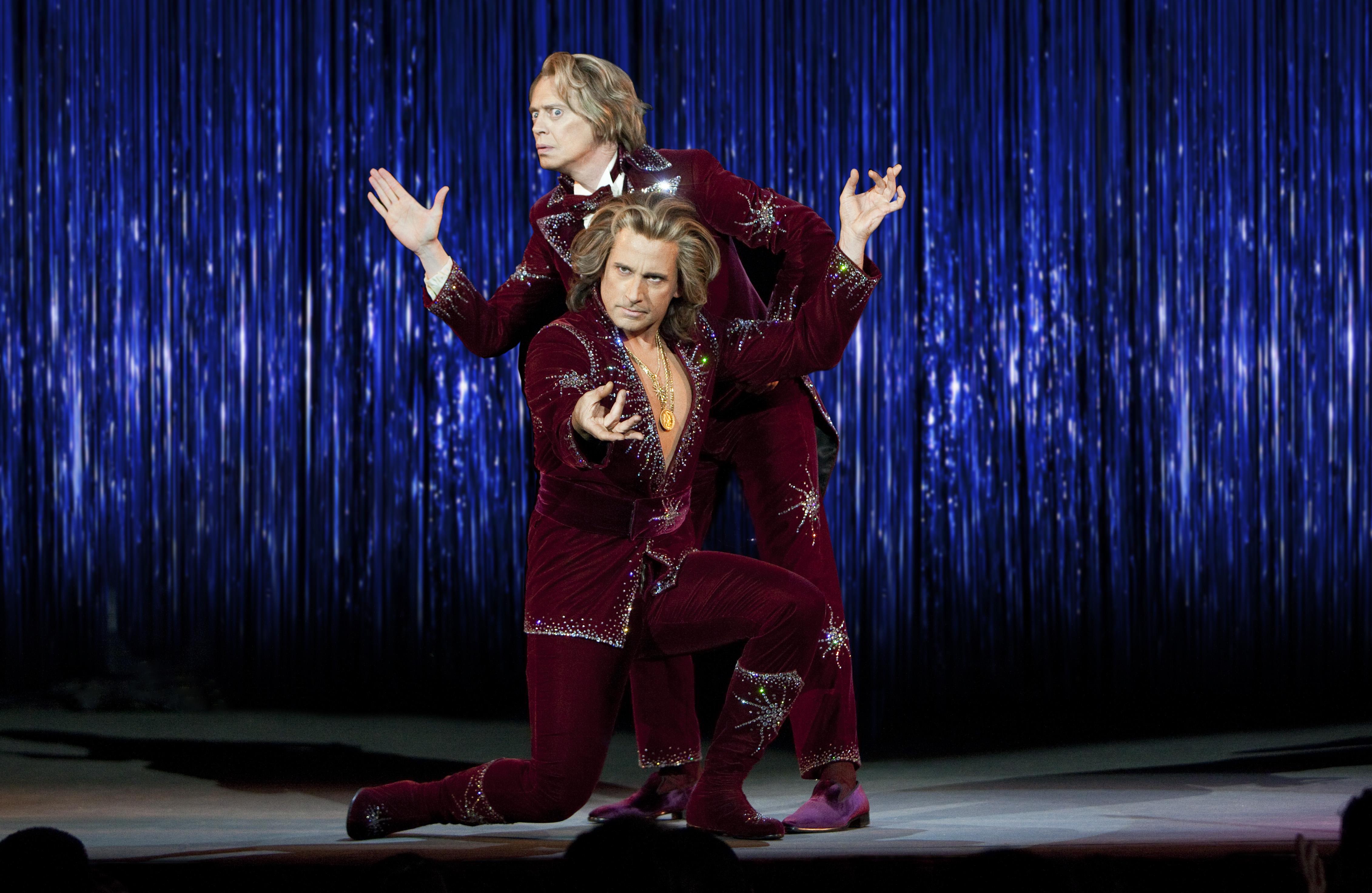
For those so inclined, Hollywood rolls out Halle Berry thriller The Call (make your own “phoning in her performance” joke here) and Steves Carell and Buscemi, plus Jim Carrey, as battling magicians in comedy The Incredible Burt Wonderstone.

Read on for short takes on a new horror omnibus, a stirring tale from Romania, the Oscar-nominated War Witch, two music docs (Journey + Snoop Lion), and more.

http://www.youtube.com/watch?v=LiZr4VFmcpk

The ABCs of Death Variety is the spice of life, yet this international omnibus with 26 directors contributing elaborate micro-shorts on various methods of death — one per alphabetical letter — is like eating dried dill or cilantro for two-plus hours. It’s pungent, but what might color a complex stew proves insufferable in this narrow one. Just why it seems narrow is anyone’s guess — this should have been a genius idea. Yet there are almost no outstanding or memorable contributions, despite the wide-open invitation to extreme content. Filmmakers include Jorge Michel Grau (2010’s We Are What We Are), Simon Rumley (of brilliant 2006 feature The Living and the Dead), Srdjan Spasojevic (2010’s A Serbian Film), cult-favorite actress Angela Bettis, and many more. Nearly all seem to have spent far more than their allotted $5000 budget. There are segments parodying exploitation cinema and video games; offering hyperbolic Terminator-style sci-fi; line-drawing and claymation segments; plus plenty of gross-out narratives. Yet it’s all surprisingly crappy (not least an episode called “Toilet”), with precious few more than halfway decent episodes. The sum impact is of a mean-spirited project that brings out the vacuously shock-value prone worst in everyone involved. (2:03) (Dennis Harvey)

http://www.youtube.com/watch?v=HiJRGbCKCu0

Beyond the Hills Cristian Mungiu — one of the main reasons everyone’s all excited about the Romanian New Wave — follows up his Palme d’Or winner, 2007’s 4 Months, 3 Weeks and 2 Days, with another stark look at a troubled friendship between two women. Beyond the Hills‘ Voichita and Alina (Cosmina Stratan and Cristina Flutur, who shared the Best Actress prize at the 2012 Cannes Film Festival; for his part, Mungiu won Best Screenplay) were BFFs and, we slowly realize, lovers while growing up at a Romanian orphanage. When they aged out of the facility, the reserved Voichita moved to a rural monastery to become a nun, and the outburst-prone Alina pinballed around, doing a stint as a barmaid in Germany before turning up in Voichita’s village, lugging emotional baggage of the jealous, needy, possibly mentally ill, and definitely misunderstood variety. It can’t end well for anyone, as all involved — dismissive local doctors, Alina’s no-longer-accomodating foster family, the priest (Valeriu Andriuta), and the other nuns —  would rather not spend any time or energy caring for a troubled, destitute outsider. Even Voichita can only look on helplessly as an exorcism, a brutal and cruel procedure, is decided upon as Alina’s last, best hope. Based on a real 2005 incident in Moldavia, Mungiu’s unsettling film is a masterpiece of exquisitely composed shots, harsh themes, and naturalistic performances. Check out an interview with Mungiu here. (2:30) (Cheryl Eddy)

http://www.youtube.com/watch?v=Z0cIj3OPM2k

Don’t Stop Believin’: Everyman’s Journey The director of 2003’s Imelda returns with this portrait of a way more sympathetic Filipino celebrity: Arnel Pineda, plucked from obscurity via YouTube after Journey’s Neil Schon spotted him singing with a Manila-based cover band. Don’t Stop Believin’ follows Pineda, who openly admits past struggles with homelessness and addiction, from audition to 20,000-seat arena success as Journey’s charismatic new frontman (he faces insta-success with an endearing combination of nervousness and fanboy thrill). He’s also up-front about feeling homesick, and the pressures that come with replacing one of the most famous voices in rock (Steve Perry doesn’t appear in the film, other than in vintage footage). Especially fun to see is how Pineda invigorates the rest of Journey; as the tour progresses, all involved — even the band’s veteran members, who’ve no doubt played “Open Arms” ten million times — radiate with excitement. (1:45) (Cheryl Eddy)

http://www.youtube.com/watch?v=94zbq5Vaod0

A Fierce Green Fire: The Battle for a Living Planet San Franciscan Mark Kitchell (1990’s Berkeley in the Sixties) directs this thorough, gracefully-edited history of the environmental movement, beginning with the earliest stirrings of the Audubon Society and Aldo Leopold. Pretty much every major cause and group gets the vintage-footage, contemporary-interview treatment: the Sierra Club, Earth Day, Silent Spring, Love Canal, the pursuit of alternative energy, Greenpeace, Chico Mendes and the Amazon rainforests, the greenhouse effect and climate change, the pursuit of sustainable living, and so on. But if its scope is perhaps overly broad, A Fierce Green Fire still offers a valuable overview of a movement that’s remained determined for decades, even as governments and corporations do their best to stomp it out. Celebrity narrators Robert Redford, Ashley Judd, and Meryl Streep add additional heft to the message, though the raw material condensed here would be powerful enough without them. (1:50) (Cheryl Eddy)

http://www.youtube.com/watch?v=MTqyV5Kw9Ss

Reincarnated Reinvention is the name of the game for some mercurial, inventive pop artists, but for rapper Snoop Dogg, now going by the moniker Snoop Lion — you get the scoop on the name change in this doc — transformation turns out to be unexpectedly serious, earnest business. Flirting with Cheech and Chong travelogue comedy, Reincarnated ostensibly spins off the making of the hip-hop artist’s forthcoming 12th album of the same name in Jamaica, with smokin’ production help from Diplo’s Major Lazer gang. The camera is there for many standard behind-the-music moments — sessions with family and adulation in the musical-fertile Trenchtown — along with many not-quite-ready-for-prime-times spent lighting up with other musicians, growers up in the mountains, and reggae forebears like Bunny Wailer. But there’s more going on beneath the billowing smoke: providing the context for today’s high times and ultimately chronicling the rhyme-slinger’s life and times and his path to Jamaica, reggae, and Rastafari spirituality and culture, Vice Films director Andy Capper lays the foundation for Snoop’s shift from rap to Rastafari by revisiting his gangster youth, the rise and fall of Death Row Records, the passing of 2Pac and Nate Dogg, and the music that made the man’s name —and continues to give us a reason to care. The easy, sexy charisma that made Snoop a star is on full display here, and doubtless his latest experiences on reality TV have made Capp’s job that much easier when it came to digging deeper, while the clouds of herb, Cali and Jamaican alike, give viewers a taste of the fun, and possibly healing, attendant with life with the Doggfather. (1:36) (Kimberly Chun)

http://www.youtube.com/watch?v=XtixqUXid9A

Upside Down This sci-fi romance from Argentine-French director Juan Solanas is one of those movies that would look brilliant as a coffee-table photo book — nearly every shot is some striking mix of production design, CGI, color grading, and whatnot. Too bad, though, that it has to open its mouth and ruin everything. Jim Sturgess and Kirsten Dunst play star-crossed lovers who live on adjacent twin planets with their own opposing gravitational forces. Nonetheless, they somehow manage to groove on one another until the authorities — miscegenation between the prosperous residents of “Up Top” and the exploited peasants of “Down Below” being forbidden — interfere, resulting in a ten-year separation and one case of amnesia. But the course of true love cannot be stopped by evil energy conglomerates, at least in the movies. Sturgess’ breathless narration starts things off with “The universe…full of wonders!” and ends with “Our love would change the entire course of history,” so you know Solanas has absolutely no cliché-detecting skills. He does have a great eye — but after a certain point, that isn’t enough to compensate for his awful dialogue, flat pacing, and disinterest in exploring any nuances of plot or character. Dunst is stuck playing a part that might as well simply be called the Girl; Sturgess is encouraged to overact, but his ham is prosciutto beside the thick-cut slabs of thespian pigmeat offered by Timothy Spall as the designated excruciating comic relief. If the fact that our lovers are called “Adam” and “Eden” doesn’t make you groan, you just might buy this ostentatiously gorgeous but grey-matter-challenged eye candy. If you think Tarsem is a genius and 1998’s What Dreams May Come one of the great movie romances, you will love, love, love Upside Down. (1:53) (Dennis Harvey)

http://www.youtube.com/watch?v=BKXEh_kfPCY

War Witch They should give out second-place Oscars. Like, made of silver instead of gold. In that alternate-universe scenario, Canadian writer-director Kim Nguyen’s vivid, Democratic Republic of the Congo-shot drama might’ve picked up some hardware (beyond its many film-fest accolades) to go with its Best Foreign Language Film nomination. War Witch couldn’t stop the march of Amour, but it’s deeply moving in its own way — the story of Komona (played by first-time actor Rachel Mwanza), kidnapped from her village at 12 and forced to join the rebel army that roams the forests of her unnamed African country. Her first task: machine-gunning her own parents. Her ability to see ghosts (portrayed by actors in eerie body paint) elevates her to the status of “war witch,” and she’s tasked with using her sixth sense to aid the rebel general’s attacks against the government army. But even this elevated position can’t quell the physical and spiritual unease of her situation; idyllic love with a fellow teenage soldier (Serge Kanyinda) proves all too brief, and as months pass, Komona remains haunted by her past. The end result is a brutal yet poetic film, elevated by Mwanza’s thoughtful performance. (1:30) (Cheryl Eddy)

Desi Santiago inflates Juanita More’s Pride party plans

0

Does the idea of one of SF’s best-known drag fashionistas rendered in massivem inflatable form excite you? You then, are the target audience for this item of news: Juanita More has announced that multimedia artist Desi Santiago will lend his dark, dramatic style to her yearly Pride party in 2013 as its set designer. 

“Desi is someone with great vision,” More told me in an email. That vision has produced black dogs that swallowed a South Beach hotel whole, outfits that appear to be made from different garments when viewed from various vantage points, atmospheric runway sets, and extravagant works various couture happenings.

After he visited the Jones 620 rooftop where this year’s June 30th party will be held. It was only the Puerto Rican-via-New Jersey artist’s second trip to San Francisco, and my Instagram feed told me that More had celebrated with him over homemade pernil. I chatted with Santiago about what, exactly he means with this plan for balloon Juanita.

“I’m taking her body apart,” he said. “I’m exploding Juanita’s body. I don’t know how much I should give away at this point. But we’re working on an intereactive experience wehere you get to interact with her body.” One of those ways, he said, will be via a “giant” version of the drag queen — reminiscent of his work he did converting the Lords Hotel into “Black Lords,” an installation that saw the hotel morph into a red-eyed black dog. 

“[Juanita] has a heart of gold, and she’s fierce,” he said as towards his motivation for accepting the gig. This isn’t the pair’s first collaboration — More’s played Santiago’s Van Dam party in New York. “I booked her because I loved her but when she spun,” he told me. “She kind of kicked my ass. She really turned it out.” Man can appreciate a good scene-setter.

But who’s to say, really, what the Pride blow-out (tickets available in June) will end up looking like.

“I’m interested in creating completely consuming environments that make you leave the norm,” the artist told me. Santiago’s resume includes work in bondage costume design, metalwork, sculpture, set design. For more on the artist, check out his March 2012 New York Times profile

Severino (Horse Meat Disco, UK), Derek Opperman (Gemini Disco, SF), and Kim Ann Foxman (NYC) have all been announced as DJs for the afternoon party. More was also stoked to tell me about her flyer designer, De La Soul and Snoop Dogg video vet and Bay Area local visual artist Serge Gay Jr.

Tough questions asked on America’s Cup fundraising shortfall

At a March 13 subcommittee hearing called by Sup. John Avalos, representatives from the city’s Office of Economic and Workforce Development (OEWD), the America’s Cup Organizing Committee (ACOC) and others were called upon to explain why coordinators of the prestigious yacht race have failed to reach projected fundraising targets to defray city costs. If the fundraising goals aren’t reached, the city’s General Fund could weather a $13 million hit to cover costs for the sailing event.

San Francisco struck an agreement to host the sailing competition in 2010, following negotiations initiated under former Mayor Gavin Newsom with entities associated with Oracle Racing Team, owned by billionaire Larry Ellison. The events will culminate with a sailing match on the San Francisco Bay this coming summer.

Mark Buell, who chairs the board of ACOC, told supervisors original projections had pegged total event revenue at $300 million, with eight to twelve vessels competing in the race. Those projections have decreased dramatically, with only a handful of teams entering and other “unknowns” amounting to the fact that “revenues are not what we had hoped,” Buell explained. Yet he tried to put a good face on it, saying, “All told, I believe that the city will come out whole.”

Kyri McClellan, who became CEO of ACOC just after helping negotiate the deal to bring the America’s Cup to San Francisco at her previous job with OEWD, told supervisors that ACOC had hired a fundraising expert and launched an initiative called ONESF to kick up the fundraising efforts.

She added that Mayor Ed Lee was helping to secure funding commitments for the race, by “holding breakfasts with CEOs” and asking them to commit funding. Lee is “putting in an incredible amount of energy behind this,” McClellan said, “and people are responding.” She said Sen. Dianne Feinstein had also been involved in helping to secure funding for the sailing competition.

San Francisco Controller Ben Rosenfield provided a breakdown of the funding shortfall so far. An economic analysis conducted a year ago found that ACOC had $12 million cash in hand, he said, less than half the $32 million initially projected as what was needed to defray city costs. Only $13.9 million in pledges and documented cash can be accounted for thus far, Rosenfield added, and the committee has raised around $10 million less than it originally planned for at this stage of the game. “We found they’ve fallen short,” he explained. 

McClellan reported that an additional $1.1 million would be coming in, “from donors and pledges, between now and January of 2014.”

Mike Martin, tasked with leading the city’s involvement in the America’s Cup on behalf of OEWD, displayed a slide that seemed to paint a much rosier picture of the fundraising shortfall than the $20 million cited in recent media reports.

The total city budget projection for covering costs of the race is actually closer to $22 million, lower than the initially projected $32 million, according to his slide. So far the city has been reimbursed for $6.8 million of that, he said. But the next line on Martin’s slide subtracted “projected event-related tax revenues” pegged at around $13 million, apparently suggesting that the city would be made whole by increased tax revenue rather than by receiving an actual reimbursement payment to defray city costs. According to OEWD’s calculation, that makes the “remaining fundraising need” only about $2.67 million, according to Martin’s presentation.

“I don’t think it’s been the intent to say, let’s stop there,” Martin explained. “We have a few months to capitalize on the growing awareness and excitement about the event.”

Reached after the hearing, Sup. Avalos did not sound very excited by what he had heard in response to his inquiries. “It seems that the commitments that were made to the board in 2010 … are not being taken seriously,” Avalos said. “Now that they’re coming up short on fundraising efforts, they’re trying to say the General Fund should be subsidizing the cost of the race.”

Angels in Budapest

0

arts@sfbg.com

THEATER On two old VHS tapes in the collection of San Francisco’s Museum of Performance and Design you can watch the Eureka Theater’s 1991 world premiere of Tony Kushner’s Angels in America, a response to the AIDS epidemic and the reactionary politics of the Reagan era. It’s a low-fi document, with poor sound quality, but it’s completely riveting. Something more than the play’s words and images, as striking as they are, cling to that worn magnetic tape: there’s the electric excitement of a work of art cracking open its historical moment.

A similar frisson passed through the main auditorium of the National Theatre of Budapest last week, where I joined a group of international guests and a local audience for Romanian-born American director Andrei Serban’s production of Angels in America, starring as Prior Walter the National’s celebrated yet politically embattled artistic director, Robert Alföldi, an award-winning international director in his own right and one of the country’s most famous actors.

The production was the capstone of an impressive weeklong festival featuring some of the best work in contemporary Hungarian independent and state-sponsored repertory theater. Presented by the Hungarian Critics Association, in international partnership with Philip Arnoult’s Center for International Theatre Development and the Trust for Mutual Understanding, the Hungarian Showcase (March 2–9) encompassed a revelatory range of styles and talents. It also highlighted a theater actively responding to a rising tide of reactionary politics — reminiscent (especially in its overt anti-Semitism, homophobia, and anti-Roma racism) of the ultra-nationalism of the 1930s — even as the arts in general and theater in particular reel under the economic strain of the conservative government’s neoliberal agenda and attempted curbs on free expression.

The National’s production of Angels is just one instance of theater’s critical role in public dialogue in Hungary today, but in many ways it was the most poignant instance encountered. That’s in large part owed to Alföldi’s powerhouse performance in the lead — a muscular, charismatic performance, extremely witty and wrenching by turns — and simultaneously to his history as artistic director over the last five years. Since Alföldi’s government appointment in 2008, something extraordinary has been underway at the country’s premier stage. Previously, Budapest’s National Theatre had been better known for its kitschy postmodern edifice (opened in 2002 and made to resemble a rather gaudy ship aimed vaguely at the nearby Danube) than for the unexceptional productions on display inside. Under Alföldi’s brilliant and maverick leadership, the theater has come to be widely regarded as one of the best — if not the best — in the country, and attendance has grown dramatically, including among younger audiences.

Alföldi’s attempts to make the theater a place of inclusion and dialogue, meanwhile, as well as his lively and provocative interpretations of classic Hungarian nationalist texts like The Tragedy of Man and John the Valliant, have earned the disfavor of rightwing politicians — including members of the ultra nationalist Jobbik party, who were not above demonstrating noisily outside the theater to demand his ouster, and slandering Alföldi on the floor of the Parliament. Alföldi, popular and unprecedentedly successful in the post, has managed to stay on for his five-year term, but the government denied his application for a second term in favor of a well-known director with conservative political opinions.

In Serban’s considerably pared down version, Millennium Approaches and Perestroika together come in at just under four hours, separated by a short intermission. There are naturally some sacrifices entailed. The subplot involving Roy Cohn (played by the National’s brilliant János Kulka), for example, takes a big hit in terms of stage time. But whatever the faults of the production, the exuberant, ironical tone feels aptly knowing, as does the rotating stage set up like a cross between a dance floor and a merry-go-round.

In just one example of the production’s winking conversation with the audience, an announcement over the PA system at the outset of Part II reminds patrons in this former Soviet bloc country that the play is set in a far off land bearing little resemblance to anything close by — only to be followed by the familiar twang of an electric guitar as the Beatles’ “Back in the USSR” creates a musical bridge to a speech by the Oldest Living Bolshevik. Like Prior’s heavenly counselors, the Bolshevik urges a halt to history. The significance of the theme is unlikely to be lost on an audience facing the atavistic return to authoritarian models of the past.

While this isn’t the first time a Hungarian theater has essayed Kushner’s play, enough has changed politically in Hungary in the last few years to make this production, in which Alföldi assumes the role of the play’s cross-dressing openly gay hero, an act of brazen defiance as well as solidarity with all “outsiders” in the right wing’s narrow compass of nationhood.

“The world only spins forward. We will be citizens. The time has come,” says Alföldi as Prior. “The great work begins.” In its own call for “more life,” the National’s production captures something of the original life of the play all over again — defining the nation and its theater as a place of empathy and inclusion, of harmony in difference.

Meanwhile, tickets for Angels in America, widely seen as Alföldi’s farewell bow, are completely sold out.


Our Weekly Picks: March 13-19, 2013

0

WEDNESDAY 13

VOWS

The legend of San Francisco band VOWS includes heartbreak, cross-country travel, and a little gambling in Reno. All that occurred nearly six years and a couple of albums ago. Since then, it has more finely tuned its breed of psych-pop comprised of punchy guitar riffs, seamless transitions between raspy yelps and bright three-part harmonies, and depth couched in catchy lyrics that all fits perfectly into a distinctly West Coast tradition. In the midst of recording its third album, VOWS comes to Rickshaw Stop to show it all off. (Laura Kerry)

With Standard Poodle, the Goldenhearts

8pm, $10

Rickshaw Stop

155 Fell, SF

(415) 861-2011

www.rickshawstop.com


“Hooch, Harlots, and History: Vice in San Francisco”

Those who’ve moved to San Francisco from other regions (admit it, most of you) are often endlessly curious about the city’s seedier past: the sailors, roadhouses, moonshine-makers, and generalized underground happenings that helped shape our weird little city by the bay. At this Flipside (an offshoot of the the San Francisco Museum and Historical Society) event inside the historic Old Mint building — a docent tour of which is worth the ticket price, alone — there will be historical presentations by Duggan McDonnell, Stuart “Broke-Ass” Schuffman, Woody LaBounty, and Laureano Faedi, along with live music and rare archival footage of old SF. Plus, there’ll be eats on hand for purchase, and entry includes one complimentary boozy beverage. Bring on the vices. (Emily Savage)

6:30-9:30pm, $5–$10

Old Mint

88 Fifth St., SF

flipsidesfvice.eventbrite.com


THURSDAY 14

“Ask A Scientist Pi Day Puzzle Party”

What is it about this particular entity? Throughout the ages, people have composed odes for its elegance, books about its ubiquity, and formulas to try to grasp its ineffability. We’re talking about Pi, of course, and Thursday’s the day to celebrate it (3.14). And whether or not you have memorized three or three-hundred digits (or zero) of the mathematical constant, Ask A Scientist has the perfect pi-worship for you. Come to SoMa StrEat Food Park, grab some nourishment, and settle down alone or with a team to get your blood pumping with a rowdy puzzle competition. You probably won’t pin down the mystery of that wonderfully irrational number, but you just might earn a bit of glory. (Kerry)

7pm, free

SoMa StreEat Food Park

428 11th St., SF

www.askascientistsf.com


Odesza

Somewhere between SF and the Mojave desert, between midnight and three in the morning, it started to get to me. Not the physical tiredness, but the boredom that comes with staring down a couple of yellow lines perpetually receding into the darkness. I needed stimulation, and found it in Summer’s Gone, a free LP from Pacific North West electronic duo Odesza. Headphones were one thing, but hearing it in the car gave new dimension to the production: swelling bass lines emerged and pulled back, light strings and chimes moved about the interior, and the melodic, frequently chopped vocals seemed like passengers along for the ride. (Ryan Prendiville)

With Emancipator, Little People

9pm, $20

Mezzanine

444 Jessie, SF

(415) 625-8880

www.mezzaninesf.com


FRIDAY 15

“Labayen Dance 18th Anniversary Season”

In a couple of years Labayen Dance/SF will celebrate its 20th anniversary. That would be a remarkable achievement for any company, particularly a smallish one working in a town where new companies pop up like crocuses. Enrico Labayen was an excellent dancer and now creates intimate work but also tackles big ambitious pieces around often-painful issues — imprisonment, environmental disasters. child abuse, violence against women. He has choreographed to original music but also well-known scores like Carmina Burana. In this concert he’ll present the American premiere of his Rite of Spring, first shown in his native Philippines. He clearly attracts very fine dancers rarely seen anywhere else. Labayen’s own pieces will be joined by works from his own dancers. (Rita Felciano)

Also Sat/16, 8pm; Sun/17, 7:30pm, $20

Dance Mission Theater

3316 24th St. S.F.

(415) 826-4441

brownpapertickets.com/event/319623


The Chop Tops

Santa Cruz rockers the Chop Tops have been tearing up stages for nearly two decades now, taking traditional rockabilly and chucking out the owner’s manual, boosting the power, streamlining the chassis, and hot rodding it into something that’s all their own. Perennial favorites at the Viva Las Vegas festival, the trio has toured across the country and performed as far away as Australia — but local fans can check out the action tonight at “Handsome Hawk Valentine’s Rock N’ Rumble,” where Sinner, Shelby and Brett are guaranteed to blow the roof off the joint with their always incendiary set of what they call “revved-up rockabilly.” (Sean McCourt)

With Slim Jenkins, Tony T. and the Pendletons, the Bastard Makers

8:30pm, $16

Slim’s

333 11th St., SF

(415) 255-0333

www.slimspresents.com


A Wilhelm Scream

A Wilhelm Scream, named for the stock scream sound byte used in slasher films and classic horror movies, originally formed under the name Smackin’ Isaiah in New Bedford, Mass. The band emerged in a deluge of likeminded acts (Hot Water Music, Propaghandi) formed in the glorious heyday of oldschool emo, post-hardcore, and serious young adult angst — otherwise known as the mid-’90s. Through its decades of inventive melodic hardcore, name changes, shifting lineups, and five studio albums, A Wilhelm Scream never managed to attain that “big break.” Its lack of mainstream success, however, is irrelevant when compared to its incredible stamina and quietly influential presence in the punk scene. (Haley Zaremba)

With Heartsounds, Stickup Kid, I Don’t Wanna Hear It

9pm, $10

Thee Parkside

1600 17th St, SF

(415) 252-1330

www.theeparkside.com


Michael Mayer

“No hesitation, no obligation. Let’s just have a good time,” WhoMadeWho’s Jeppe Kjellberg intones on Michael Mayer’s “Good Times.” The lyrics could be creepy and pushy, but the immaculate underlying beat is strictly 4/4, familiar and reliable as a friend. An all-too-occasional producer in his own right, Mayer is a trusted name as co-owner of Germany’s Kompakt, one of the most dependable labels in the world. At one of techno’s hubs, Mayer should have a lot to pull from for his set, but make sure to arrive in time for the chill house live vocal duo Benoit and Sergio, to be assured an extra good time. (Prendiville)

9pm, $16.50

Mezzanine

444 Jessie, SF

(415) 625-8880

www.mezzaninesf.com


SATURDAY 16

“Lucidity: Fariba Bogzaran, A Retrospective” In our dreams we fly, we have intimate moments, and we travel. In our dreams we also sometimes see ourselves dreaming. Fariba Bogzaran, Ph.D. has studied lucid dreams for decades. And if that wasn’t cool enough, she has also created corresponding artwork for about the same amount of time. In Meridian Gallery’s three-story retrospective of the artist’s work, Bogzaran’s surrealist paintings will shed some light on the consciousness-expanding possibilities of dreams. Everyone dreams but no one can adequately express the images once they wake. Bogzaran presents an intriguing way to do so. (Kerry)

Through April 30

6pm, free

Meridian Gallery

535 Powell, SF

(415)398-7229

www.meridiangallery.org


MONDAY 18

“Math Films Mathathon”

Mathematicians in films are usually portrayed as wack jobs (Russell Crowe in 2001’s A Beautiful Mind; that dude in 1998’s Pi), though you could make a case for the “hunky-yet-emotionally-damaged” blackboard bandit in Good Will Hunting (1997). Bay Area filmmaker George Csicsery’s “Math Films Mathathon” docs sidestep the clichés, thankfully. Tonight brings the local premiere of Taking the Long View: The Life of Shiing-Shen Chern, about the co-founder of Berkeley’s Mathematical Sciences Research Institute, as well as Julia Robinson and Hilbert’s Tenth Problem, notable not just for its famous equation but also for focusing on a female numbers whiz. March 20’s docs spotlight both the legendary (N is a Number: A Portrait of Paul Erdos) and the up-and-coming (Hard Problems: The Road to the World’s Toughest Math Contest). (Cheryl Eddy)

Also March 20

Roxie Theater

3117 16th St., SF

www.roxie.com


The Black Lips

Cole Alexander and Jared Swilley have been making deliciously dirty, cacophonous garage rock together since they were teenagers in Atlanta. In high school, their onstage antics and outlandish humor had already earned them a reputation extreme enough to get them expelled in the anti-outcast hysteria that swept the nation after the Columbine High School massacre. This abrupt turn led them to create the group that would become the Black Lips, one of the industry’s most respected, feared, and least predictable rock bands. Vomit, urine, nudity, etc. were more or less standard in the band’s early, awe-inspiring performances. Though they’ve mellowed a bit over the years, they still provide one of the most frenetic, energetic, and thoroughly worthwhile performances out there. (Zaremba)

With Night Beats

8pm, $16

Great American Music Hall

859 O’Farrell, SF

(415) 885-0750

www.slimspresents.com


Sound Tracks: Music Without Borders

After several years as the Guardian’s art director, Mirissa Neff (already a popular DJ in her spare time) left in 2012 to pursue other avenues for her talents — including co-hosting Sound Tracks: Music Without Borders, a PBS show focusing on world music. Tonight, the latest episode premieres, featuring performances by Youssou N’dour, Wynton Marsalis, Icelandic popsters Of Monsters and Men, and Scottish musician Julie Fowlis — whose crooning on the Brave soundtrack just might have helped the 2012 Pixar hit win an Oscar for Best Animated Film. (Eddy)

10pm, KQED

pbs.com/soundtracks


The Guardian listings deadline is two weeks prior to our Wednesday publication date. To submit an item for consideration, please include the title of the event, a brief description of the event, date and time, venue name, street address (listing cross streets only isn’t sufficient), city, telephone number readers can call for more information, telephone number for media, and admission costs. Send information to Listings, the Guardian, 225 Bush, 17th Flr., SF, CA 94105; or e-mail (paste press release into e-mail body — no attachments, please) to listings@sfbg.com. Digital photos may be submitted in jpeg format; the image must be at least 240 dpi and four inches by six inches in size. We regret we cannot accept listings over the phone.

Stage Listings

0

Stage listings are compiled by Guardian staff. Performance times may change; call venues to confirm. Reviewers are Robert Avila, Rita Felciano, and Nicole Gluckstern. Submit items for the listings at listings@sfbg.com. For further information on how to submit items for the listings, see Picks.

THEATER

ONGOING

Assistance NOHspace, 2840 Mariposa, SF; www.opentabproductions.com. $20. Thu-Sat, 8pm; Sun, 6pm. Through March 30. Over the past three years, things we’ve come to expect from plucky OpenTab Productions — whose annual offerings deal in aggressively contemporary themes such as media spin, business fraud, and job (in)security — include tight ensemble acting, minimal tech, and snappy direction, and in all these regards, Assistance does not disappoint. A crew of desperate office drones whose lives basically revolve around the abuse dished out by their unseen employer, Daniel Weisinger (who may or may not resemble playwright Leslye Headland’s old boss, Harvey Weinstein), hold down their airless fort, fielding calls at 11 p.m. and shirking responsibility whenever possible. Though Headland doesn’t do much to make her emotionally and professionally stunted characters palatable, the capable cast and director Ben Euphrat do manage to wring something resembling humanity out of them. From Nick (Tristan Rholl,) the frustrated slacker supervisor, to Nora (Melissa Keith), the-new-girl-turned-cynical-old-hand, to Justin (Nathan Tucker), the unctuous winner of the title of “last man standing,” to Jenny (Michelle Drexler) a pragmatic yet annoyingly bubbly Brit, what stands out in each performance are the perfectly captured quirky nuances and barely-concealed neuroses of people caught in the process of losing their souls. Nothing about Assistance is likely to change your view of the business world, but if you’ve yet to experience the frenetic fun of an OpenTab show, it’s a perfect primer to the madness behind their method. (Gluckstern)

The Chairs Exit on Taylor, 277 Taylor, SF; www.cuttingball.com. $20-45. Thu, 7:30pm; Fri-Sat, 8pm (also Sat, 2pm); Sun, 5pm. Through March 31. Cutting Ball Theater performs Rob Melrose’s new Eugene Ionesco translation.

Dead Metaphor ACT’s Geary Theater, 415 Geary, SF; www.act-sf.org. $20-95. Tue-Sat, 8pm (also Sat, 2pm); Sun, 2 and 7pm. Through March 24. American Conservatory Theater performs George F. Walker’s dark comedy about postwar living.

Foodies! The Musical Shelton Theater, 533 Sutter, SF; www.foodiesthemusical.com. $30-34. Fri-Sat, 8pm. Open-ended. AWAT Productions presents Morris Bobrow’s musical comedy revue all about food.

The Great Big Also Z Space, 450 Florida, SF; www.zspace.org. $15-30. Thu-Sat, 8pm; Sun, 5pm. Through March 24. Mugwumpin performs a world premiere about creating a new world.

God of Carnage Shelton Theater, 533 Sutter, SF; www.sheltontheater.org. $38. Thu-Sat, 8pm. Through March 30. Shelton Theater presents Yasmina Reza’s Tony-winning comedy about upper-middle-class parents clashing over an act of playground violence between their children.

Inevitable SF Playhouse, 533 Sutter, SF; www.sfplayhouse.org. $20. Thu-Sat, 8pm. Through March 23. SF Playhouse’s “Sandbox Series,” enabling new and established playwrights to stage new works, kicks off its third season with Jordan Puckett’s drama about a woman trying to make sense of her life.

Jurassic Ark Exit Theatre, 156 Eddy, SF; www.theexit.org. $15-25. Fri/16-Sat/16, 8pm. Writer-performer David Caggiano’s zany, well-executed solo play centers on a Christian televangelist who is unwaveringly bent on making a big-budget movie about a cowboy-like Biblical Noah, his Ark, and the largely lovable dinosaurs callously left out of the story — a project he sees delivering a decisive blow to the Darwinians, while turning cineplexes across the land into celluloid cathedrals. Brother Dallas and his proselytizing pitch eventually find receptive ears in a trinity of movie-industry heavies, whose collective business acumen demands a few changes to the script. Meanwhile, the intoxicating power of it all leads to a lapse in Brother Dallas’s righteousness and a scandal reminiscent of Hugh Grant’s career. Dallas rebounds from this bout with the Devil and sees his movie made — but surely only he is unaware that the Devil keeps a Hollywood address. Smartly directed by Mark Kenward, this low-frills production relies almost exclusively on Caggiano’s sturdy ability with quick-change characterizations (couched in Dylan West’s modest lighting design and a suggestive soundscape by sound editor–musician John Mazzei). The fitful satire trades in pretty orthodox caricature and, in Brother Dallas, lacks a very compelling or sympathetic central figure; but it unfolds with a very cinematic imagination that, while formulaic, is itself one hell of a movie pitch. (Avila)

Just One More Game Exit Theatre, 156 Eddy, SF; www.tripleshotprodutions.org. $25. Thu-Sat, 8pm; Sun/17, 2pm. Through March 30. With the rise of the programmer as pop culture hero, it was probably inevitable that we’d start writing plays about them too. In local playwright Dan Wilson’s Just One More Game our programmer protagonist is Kent (Christopher DeJong) whose mission is to find love, and his co-player is Marjorie (Linda-Ruth Cardozo), who wields her own geek credentials like a Mortal Kombat wrath hammer. Where Wilson’s comedy excels is in the witty gamer banter that defines much of their attraction and commonality — references to Zork, Oregon Trail, Dungeons and Dragons, and The Secret of Monkey Island abound, while a series of meticulous video game animations (also Wilson’s) lend colorful counterpoint to the action on the stage. DeJong plays his role of emotionally-inhibited loner with a degree of laconic detachment that unfortunately eliminates all traces of chemistry between him and Cardozo, who is especially good at capturing the cheerfully aggressive awkward of a woman accustomed to being “one of the boys” because there was nothing about “the girls” she could relate to. Both the comedy and pace flag by the time the first NPCs (non-player characters) enter the room, broadly clichéd parents yammering for grandchildren and obnoxious college buddies armed with too many baby photos, who conspire to stunt the growth of Kent and Marjorie’s relationship and wind up stunting the growth of the play. If the quest for love is a game, as the title suggests, it’s one that could use a little more back-end development, and a much greater degree of playfulness. (Gluckstern)

A Lady and a Woman Eureka Theatre, 215 Jackson, SF; www.therhino.org. $15-30. Wed-Sat, 8pm; Sun, 3pm. Through March 24. Life wasn’t easy in the South of the 1890s, particularly for single black women, but in Shirlene Holmes’ A Lady and a Woman the focus is emphatically on rising above circumstance. When itinerant hog-cutter Biddie Higgins (Dawn L. Troupe) swaggers into the village inn run by Miss Flora Devine (Velina Brown) and demands a room, sparks fly almost instantaneously, as the two pragmatic and independent women become drawn to the strength they see in the other. A healer and midwife as well as an innkeeper, Miss Flora has endured enough abuse at the hands of men in her life to make her grateful to be able to live without one around, while Biddie, the only daughter in a household of fourteen, has become accustomed to a life of manual labor and clandestine trysts with willing women, never sticking around one place long enough to run out of either, declaring “it’s been easier to live a hard life then a lie.” Both Brown and Troupe embody their multi-dimensional characters with grace and backbone, never striking a false note as their tender courtship unfolds and they discover that the greatest strength of all is the ability to love freely. (Gluckstern)

The Lisbon Traviata New Conservatory Theatre Center, 25 Van Ness, SF; www.nctcsf.org. $25. Wed-Sat, 8pm; Sun, 2pm. Through March 24. New Conservatory Theatre Center performs Terrence McNally’s play, a mix of comedy and tragedy, about the relationship between two opera fanatics.

The Motherfucker with the Hat San Francisco Playhouse, 450 Post, SF; www.sfplayhouse.org. $30-70. Wed/13-Thu/14, 7pm; Fri/15-Sat/16, 8pm (also Sat/16, 3pm). A fine cast makes the most of Stephen Adly Guirgis’s deceptively coarse, often amusing little play, The Motherfucker with the Hat, which receives its local premiere in a sure and rowdy production from SF Playhouse. Director and designer Bill English’s striking two-tier set almost belies the intimate nature of the quirky story, which concerns a hapless parolee and recovering alcoholic named Jackie (a winningly frazzled, bumptious Gabriel Marin) who retreats to his AA sponsor’s apartment to pine and plot revenge after he discovers a stranger’s hat in the bedroom of his longtime Puerto Rican girlfriend, Veronica (played vividly by an at once edgy and vulnerable Isabelle Ortega). But Ralph, his suave and persuasive sponsor (played with unctuous charm gilded by just a hint of ineptitude by an excellent Carl Lumbly), may not be the guy he wants in his corner. Not that Jackie can see that — he’s got a man-crush on Ralph that dwarfs his already ambivalent affection for much put-upon but stalwart cousin Julio (a sharply funny Rudy Guerrero) and blinds him to the warning signals from Ralph’s own disgruntled wife (a coolly disgusted Margo Hall). Throughout, these working-class New York borough dwellers display their wit and shield their soft underbellies with a rapid-fire barrage of creative swearing. English and cast display a real comfort with this kind of material (this is SF Playhouse’s fourth Girguis play), which drapes its soft heart in the intimations of violence more than the real thing. If the heat and imaginative cursing also seem to cover up for a play with little dramatic purpose beyond a gentle and somewhat pat exploration of loyalty, maturity, and trust, there’s pleasure to be had in the unfolding. (Avila)

Sex and the City: LIVE! Rebel, 1760 Market, SF; trannyshack.com/sexandthecity. $25. Wed, 7 and 9pm. Open-ended. It seems a no-brainer. Not just the HBO series itself — that’s definitely missing some gray matter — but putting it onstage as a drag show. Mais naturellement! Why was Sex and the City not conceived of as a drag show in the first place? Making the sordid not exactly palatable but somehow, I don’t know, friendlier (and the canned a little cannier), Velvet Rage Productions mounts two verbatim episodes from the widely adored cable show, with Trannyshack’s Heklina in a smashing portrayal of SJP’s Carrie; D’Arcy Drollinger stealing much of the show as ever-randy Samantha (already more or less a gay man trapped in a woman’s body); Lady Bear as an endearingly out-to-lunch Miranda; and ever assured, quick-witted Trixxie Carr as pent-up Charlotte. There’s also a solid and enjoyable supporting cast courtesy of Cookie Dough, Jordan Wheeler, and Leigh Crow (as Mr. Big). That’s some heavyweight talent trodding the straining boards of bar Rebel’s tiny stage. The show’s still two-dimensional, even in 3D, but noticeably bigger than your 50″ plasma flat panel. (Avila)

Steve Seabrook: Better Than You Marsh San Francisco, 1062 Valencia, SF; www.themarsh.org. $15-50. Fri, 8pm; Sat, 8:30pm. Through March 22. Kurt Bodden’s San Francisco Best of Fringe-winning show takes a satirical look at motivational speakers.

The Voice: One Man’s Journey Into Sex Addition and Recovery Stage Werx Theater, 446 Valencia, SF; thevoice.brownpapertickets.com. $10-18. Fri-Sat, 8pm. Through April 6. Ticket sales for David Kleinberg’s autobiographical solo show benefit 12-step sex addiction recovery programs and other non-profits.

The Waiting Period Marsh San Francisco, 1062 Valencia, SF; www.themarsh.org. $25-50. Fri, 8pm; Sat, 5pm. Through March 30. Brian Copeland (comedian, TV and radio personality, and creator-performer of the long-running solo play Not a Genuine Black Man) returns to the Marsh with a new solo, this one based on more recent and messier events` in Copeland’s life. The play concerns an episode of severe depression in which he considered suicide, going so far as to purchase a handgun — the title coming from the legally mandatory 10-day period between purchasing and picking up the weapon, which leaves time for reflections and circumstances that ultimately prevent Copeland from pulling the trigger. A grim subject, but Copeland (with co-developer and director David Ford) ensures there’s plenty of humor as well as frank sentiment along the way. The actor peoples the opening scene in the gun store with a comically if somewhat stereotypically rugged representative of the Second Amendment, for instance, as well as an equally familiar “doood” dude at the service counter. Afterward, we follow Copeland, a just barely coping dad, home to the house recently abandoned by his wife, and through the ordinary routines that become unbearable to the clinically depressed. Copeland also recreates interviews he’s made with other survivors of suicidal depression. Telling someone about such things is vital to preventing their worst outcomes, says Copeland, and telling his own story is meant to encourage others. It’s a worthy aim but only a fitfully engaging piece, since as drama it remains thin, standing at perhaps too respectful a distance from the convoluted torment and alienation at its center. Note: review from an earlier run of the same production. (Avila)

The World’s Funniest Bubble Show Marsh San Francisco, 1062 Valencia, SF; www.themarsh.org. $8-50. Sun/17, 11am. The Amazing Bubble Man (a.k.a. Louis Pearl) continues his family-friendly bubble extravaganza.

BAY AREA

Dostoevsky’s The Grand Inquisitor Berkeley City Club, 2315 Durant, Berk; www.centralworks.org. $15-28. Thu-Sat, 8pm; Sun, 5pm. Through March 31. Central Works performs Gary Graves’ adaptation of the story-within-a-story from The Brothers Karamazov.

Fallaci Berkeley Repertory Theatre, 2015 Addison, Berk; www.berkeleyrep.org. $29-89. Opens Wed/13, 8pm. Runs Tue, Thu-Sat, 8pm (also Sat, 2pm); Wed and Sun, 7pm (also Sun, 2pm). Through April 21. Berkeley Rep performs Pulitzer-winning journalist Lawrence Wright’s new play about Italian journalist Oriana Fallaci.

The Mountaintop Lucie Stern Theatre, 1305 Middlefield, Palo Alto; www.theatreworks.org. $23-75. Tue-Wed, 7:30pm; Thu-Sat, 8pm (also Sat, 2pm), through March 31. Starting April 3, runs Wed-Thu, 11am (also Thu, 8pm); Sat, 8pm; Sun, 2pm. Through April 7. TheatreWorks performs Katori Hall’s play that re-imagines the events on the night before Dr. Martin Luther King, Jr.’s assassination.

The Real Americans Marsh Berkeley, 2120 Allston, Berk; www.themarsh.org. $25-50. Fri, 8pm; Sat, 5pm. Through April 6. Dan Hoyle shifts his popular show about small-town America to the Marsh’s Berkeley outpost.

PERFORMANCE/DANCE

“Adventures of a Black Girl: Traveling While Black” Brava Theater Center, 2781 24th St, SF; www.brava.org. Fri/15-Sat/16, 8pm; Sun/17, 3pm. $15. Edris Cooper-Anifowoshe performs the second part of her “Adventures of a Black Girl” trilogy, this time taking a look at the impact of African migration on the black diaspora.

BATS Improv Bayfront Theater, Fort Mason Center, Marina at Laguna, SF; www.improv.org. $20. “Theatresports,” Fri, 8pm. Through March 29. “Double Feature,” Sat, 8pm. Through March 30.

Caroline Lugo and Carolé Acuña’s Ballet Flamenco Peña Pachamama, 1630 Powell, SF; www.carolinalugo.com. Sat/16 and March 24, 6:15pm. $15-19. Flamenco performance by the mother-daughter dance company, featuring live musicians.

“Dream Queens Revue” Aunt Charlie’s Lounge, 133 Turk, SF; dreamqueensrevue@gmail.com (reservations suggested). Wed/13, 9:30pm. Free. Groovy drag with Colette LeGrande, Diva LaFever, Sophilya Leggz, and more.

“Ham Pants Productions presents Sketch Comedy and More!” Stage Werx Theatre, 446 Valencia, SF; www.hampantsproductions.com. Tue/19, 8pm. $10. Sketch comedy, music, and “general chicanery.”

Labayen Dance Dance Mission Theater, 3316 24th St, SF; www.dancemission.com. Fri/15-Sat/16, 8pm; Sun/17, 7:30pm. $25. The company, which blends classical and modern dance with Philippine arts, celebrates its 18th anniversary spring season with the US premiere of Enrico Labayen’s Rites of Spring.

“Laughs at the Lookout” Lookout, 3600 16th St, SF; www.lookoutsf.com. Thu/14, 10pm. $10. Comedy with host Valerie Branch and performers Charlie Ballard, Ronn Vigh, Natasha Muse, and more.

“Mission Position Live” Cinecave, 1034 Valencia, SF; www.missionpositionlive.com. Thu, 8pm. Ongoing. $10. Stand-up comedy with rotating performers.

“The Next Generation of Comedy Tour” Palace of Fine Arts, 3301 Lyon, SF; www.ngoctour.com. Sat/16, 8pm. $25-65. With Ahmed Ahmed (TBS’s Sullivan and Son), Assad Motavasseli, Raj Sharma, Fahim Anwar, and more. “ODC/Dance Downtown 2013” Yerba Buena Center for the Arts Theater, 700 Howard, SF; www.odcdance.org. Thu/14-Sat/16 and March 22-23, 8pm; Sun/17 and March 24, 4pm; March 20-21, 7:30pm. $20. The company celebrates its 42nd season with three world premieres from Brenda Way and KT Nelson.

“Push Dance March Benefit Performance and Party” Terra Gallery and Event Venue, 511 Harrison, SF; marchbenefit.eventbrite.com. Fri/15, 7pm. $25-50. Dance performances plus a silent auction, culinary delights, and a DJ party.

“San Francisco Magic Parlor” Chancellor Hotel Union Square, 433 Powell, SF; www.sfmagicparlor.com. Thu-Sat, 8pm. Ongoing. $40. Magic vignettes with conjurer and storyteller Walt Anthony.

“Unturtled” CounterPULSE, 1310 Mission, SF; www.counterpulse.org. Fri/15-Sat/16, 8pm. $15. The Goethe-Institut presents a conceptual performance by choreographer Isabelle Schad and visual artist Laurent Goldring. (Artist talk Wed/13, 8pm, free.)

Steven Wright Regency Ballroom, 1300 Van Ness, SF; www.theregencyballroom.com. Fri/15, 9pm. $32-47. The deadpan comedian performs.

BAY AREA

“Incarnating for the Evening with the X-plicit Players” East Bay Media Center Performance Space, 1939 Addison, Berk; www.xplicitplayers.com. Fri/15, 8pm. $8-15. Clothing-optional event with an enactment of audience-participatory performance “Group Body,” plus excerpts from the new DVD, Incarnating for an Afternoon: The Ninth Annual Nude and Breast Freedom Parade.

On the Cheap Listings

0

On the Cheap listings by Caitlin Donohue. Submit items for the listings at listings@sfbg.com. For further information on how to submit items for the listings, see Picks.

WEDNESDAY 13

Beats for Lunch Monarch 101 Sixth St., SF. www.sunsetpromotions.com. Noon-2pm, free. It has to be the best party deal in town. Not only do you get in free with pre-registration for this lunchtime disco, but upon entering Monarch’s dark haven from the harsh noon sun, attendees receive their very own organic brown bag lunch. How you’ll eat it neatly while dancing to co-founder of global fusion group Delhi to Dublin, Boogiemeister and DJ Matt Haze is your own challenge to deal with.

Crossroads Irish American Festival reading California Historical Society, 678 Mission, SF. www.irishamericancrossroads.org. 6pm, free. Readings of little-known Irish immigrant writers who lived in San Francisco are interspersed with live harp music at an event perfect for adding cultural learning to your St. Patty’s season.

THURSDAY 14

A Simple Revolution book launch Modern Times Bookstore, 2919 24th St., SF. www.mtbs.com. 6:30pm, free. Judy Grahn celebrates the release of her memoir and raps today about her life as a lesbian in the Bay Area during the 1960s and ’70s.

“Hooch, Harlots, and History: Vice in San Francisco” Old Mint, 88 Fifth St., SF. www.sfhistory.org. 6:30-9:30pm, $10. Rapscallions Broke Ass Stuart, historian Woody LaBounty, and more spin tales of vintage shenanigans, while audience members sip classic cocktails and 21st Amendment Brewery beer.

Ask a Scientist’s Pi Day puzzle party SoMa StrEat Food Park, 428 11th St., SF. www.askascientistsf.com. 7pm, free entry, food purchase suggested. A math and logic puzzle contest in which solo and team competitors (up to six on a side) are invited to bust out the pencils, erasers, and pocket protectors.

FRIDAY 15

“Shifted Perception” Fouladi Projects, 1803 Market, SF. www.fouladiprojects.com. Through May 11. Opening reception: 6-8pm, free. Will painter Marcus Payzant’s work inspire a level-jump in your gray matter? Payzant’s into animist beliefs, instilling deep meaning in relics from the natural world.

“The Art of Dr. Seuss” Dennis Rae Fine Art, 781 Beach, SF. www.dennisraefineart.com. Through March 31. Opening reception: 5-8pm, free. Curator Bill Dreyer will be on hand to introduce the Bay Area to this touring exhibition of the beloved children’s author and illustrator’s hat collection, which are displayed alongside the works of art they inspired.

SATURDAY 16

“Cloth, Clouds, and Survival: Weavers’ Tales from East Timor” de Young Museum, 50 Hagiwara Tea Garden Drive, SF. www.famsf.org. 10am, $10. Cultural anthropologist Jill Forshee presents on her 12 years collecting oral histories from the textile workers who live in one of the world’s poorest countries.

Commonplace Birthday weekend Castle in the Air, 1805 Fourth St., Berk. www.castleintheair.biz. In celebration of Karima Cammel’s picture book Commonplace Birthday, an installation in the author’s Commonplace Mouse children’s series, Castle in the Air studio and art supply shop is hosting a weekend of raising support for Oakland Children’s Hospital. Drop-in crafting sessions for all ages will give visitors the chance to make decorations for sick kids’ birthdays,

St. Patrick’s Day parade and festival Parade starts at Market and Second St., SF. 11:30am, free; festival at Civic Center Plaza, SF. 10am-5pm, free. www.saintpatricksdaysf.com. High step your way downtown today for the biggest leprechaun of all: St. Patty’s Day celebrations. This week’s theme is “Celebrating the Celtic Woman” — SF Fire Department chief Joanna Hayes-White presides over the processional, and will hopefully keep the pub louts in line.

Brain Health Expo Samuel Merritt University Health Education Center, 400 Hawthorne, Oakl. www.samuelmerritt.edu. 10am-3pm, free. Care for your cranium with this day-long event, where you can dig on stress management pointers, ways to prevent hurting that noggin, and tricks for beefing up your memory.

G.I. Joe cosplay at the Cartoon Art Museum Cartoon Art Museum, 655 Mission, SF. www.cartoonart.org. 1-5pm, $7. In celebration of the new G.I. Joe: Retaliation movie, local cosplay group Cobra 1st Legion is taking over the Cartoon Art Museum, providing soldier models for live drawing sessions, and presiding over beaucoup giveaways of comic nerd manna.

“Tarot: Art of Fortune” Modern Eden Gallery, 403 Francisco, SF. www.moderneden.com. Through April 9. Opening reception: 6-10pm, free. Immerse yourself in woo this weekend at this group exhibition curated by local art website Warholian’s founder, Michael Cuffe. The creative works comprise an alternative look at the all-knowing tarot deck.

TUESDAY 19

“Feast of Words: A Literary Potluck” SOMArts Cultural Center, 934 Brannan, SF. www.somarts.org. 7-9pm, $5 with a potluck dish, $10-12 without. Every third Thursday, gourmands and writers congregate at this sit-down reading and eating event. Maggie Weber-Striplin of Pachamama provides the culinary centerpiece at this edition, with a plate inspired by the name of Quiet Lightning, the local reading series that delivers quick bolts of author greatness.

“Colors of Sao Paolo” Glama-rama Salon, 304 Valencia, SF. www.glamarama.com. The Mission salon bedecks its walls with Seren Moran’s vivid color block paintings of sights she took in teaching English in Indaiauba, Brazil.


Family plot

0

cheryl@sfbg.com

FILM None of the characters in Park Chan-wook’s English-language debut, Stoker, devour a full plate of still-squirming octopus. (For that, see Park’s international breakthrough, 2003’s Oldboy; chances are the meal won’t be duplicated in the Spike Lee remake due later this year.)

But that’s not to say Stoker — with its Hitchcockian script by Wentworth Miller — isn’t full of unsettling, cringe-inducing moments, as the titular family (Nicole Kidman as Evelyn, the dotty mom; Mia Wasikowska as India, the moody high-schooler) faces the sudden death of husband-father Richard (Dermot Mulroney, glimpsed in flashbacks) and the equally sudden arrival of sleek, sinister Uncle Charles (Matthew Goode). With a translator’s help, I recently spoke to Park about his latest thriller.

San Francisco Bay Guardian Especially with Stoker, it’s clear that Hitchcock has influenced you as a director. Do you have a favorite of his films?

Park Chan-wook Vertigo (1958) was a big film in my life. Before Vertigo, I wanted to be a filmmaker, but I had only thought about it. After seeing it, I decided that I must become a filmmaker. It’s my favorite Hitchcock film. But ever since that first time I saw it, I’m scared of seeing it again, out of fear that it might be less than I remember it.

SFBG Stoker also reminded me of The Bad Seed (1956) — particularly when a voice-over suggests “we are not responsible for what we come to be.” What are your thoughts on that? Is evil hereditary?

PCW I saw Bad Seed when I was little, with my parents on TV. But it was such a long time ago that I can’t really recall any of the details from it. So I wasn’t consciously bringing anything from it here. Maybe subconsciously I was influenced by it, though — if I see it again, I might realize that.

As far as evil being hereditary, I want to leave Stoker open to different interpretations. That’s part of the joy I want to give to the audience. That’s why I don’t really want to define it in any way. But if I was to give you one possible interpretation of what [that voice-over means], perhaps I intended the opposite, which is to say, does India not feel any responsibility about her actions? No, actually — maybe she feels acutely responsible. She knows it very well, but she doesn’t want to admit it. But there are many other interpretations of this.

SFBG A lot of your films, including Stoker, are about families with unusual dynamics. What attracts you to these kinds of stories?

PCW Family relationships are something that every audience member can identify with, and can understand. But a happy family is a boring story to tell!

SFBG Due to the costumes and the production design, I was convinced at first that Stoker was taking place in the 1950s or 60s — but then it’s revealed that India was born in the 1990s, and this is in fact a very contemporary story. Was this a deliberate choice to make the story feel even more otherworldly than it already does? It kind of felt like the whole thing was taking place in a parallel reality.

PCW The moment you see a cell phone, you realize this is a contemporary story — but even then, if you go back and look at the film from the beginning again, you may actually realize that the clothes they wear, and the way the house is decorated, are actually not completely anachronistic. They are still modern-day.

However, I do admit that it’s one of the first things I talked about with the producer after I read the script: the timelessness of this film. And the same goes for the location as well. It was deliberate in how I didn’t tie the story down to any particular location in America; you can’t really tell where the story takes place. That was intentional, and the reason I was trying to achieve this was that I was trying to create a more archetypical story.

SFBG I have to ask: Harmony Korine has a cameo as India’s art teacher. How did that come about?

PCW Well, we shot in Nashville, and Harmony is based there. He’s also good friends with Mia [Wasikowska]. So we met, and became friends. And the high school where we shot the art-class sequence was actually the high school where Harmony was once a student. *


STOKER opens Fri/15 in Bay Area theaters.

Ay, muchacha

1

marke@sfbg.com

SUPER EGO Can’t talk long, chicas grandes, I’m winging off to Oaxaca to dance with some gorgeous muxes, hike up lost pyramids, dive into cauldrons of darkest mole, and wooze along to the ethereal, chromatic-marimba sounds of son istmeño, one of my favorite musics in the world. (If I don’t come back, give my turquoise witchy retro-’70s thrift store jewelry to Juanita More, to distribute to wee drag newbies in need as she sees fit. And somebody play an accordion by the light of the equinox moon, because.)

Did you know that Oaxaca has one of the largest concentrations of pipe organs in the world? I did not. It’s a meta-calliope! In any case, I’ll need you to represent hard at the following parties, since I Mexican’t. See y’all in Abril.

DEEP EAST

The deep house domination of the East Bay continues with this new weekly, put on by some of pretty damned good DJs: Mo Corleone, Indy Niles, Alixr, and Nackt. Mo tells me they’re meaning to attract “house enthusiasts looking for something fresh (and maybe a little bit raw).” I’m so down.

Thursdays, 9:30pm, free. Lounge 3411, 3411 MacArthur, Oakl. www.lounge3411.com

THREE-NIGHT ELECTRONIC EXTRAVAGANZA

Maybe there could be a better name for this thingie, but if you’re bonkers for that poppy yet sensual tech house sound that’s dominated the past four years and helped form an accessible corrective to corporate EDM — well, your head’s about to explode. Kindly remove your fedora! Rebel Rave Thu/14 (not really a rave) with Art Department and Damian Lazarus, Detroit’s Seth Troxler Fri/15 with Cosmic Kids, and Israeli cutie Guy Gerber Sat/16 with Cassian. ‘Nuff said.

Thu/14-Sat/16, various prices, 9pm-late. Public Works, 161 Erie, SF. www.publicsf.com

AFROLICIOUS

Our favorite weekly Latin soul and Afro funk party, headed by those too-cute McGuire brothers, just released a zazzy album of live music, which is awesome. Check out the full band to celebrate, well, life and everything. You must dance to the beat of the drums.

Fri/15, 8pm, $15. Great American Music Hall, 859 O’Farrell, SF. www.gamh.com

BACK TO LIFE :: BACK TO REALITY

Vogue for life! The original dance form (not so much the Madonnified version) is back in full swing — here’s the second vogue ball this month. This time around there won’t be much shade, as our local representatives of the mighty House of Aviance (plus NYC’s fearsome Icon Mother Juan Aviance) present this showcase ball. Open to all newbies and welcoming of everyone, it should be a real hoot. Check out the link for the competition categories and bring it like a legend. With DJs Gehno Sanchez, Sergio, and Steve Fabus — and appearances by Vigure and Tone, Manuel Torres Extravaganza, many more.

Fri/15, 8pm, $10. Abada, 3221 22nd St., SF. www.theAdance.com/ball

GREG WILSON

One of the absolute greats of DJing returns from the UK to bring his pitch-perfect electro funk and old-school soul, seasoned for three+ decades, to the lovely Monarch’s tables. Maybe this time the club’s lighting system won’t project an error screen onto him for half his incredible set? That was neat for a minute, then weird.

Fri/15, 9pm-3am, $10–<\d>$20. Monarch, 101 Sixth St., SF. www.monarchsf.com

“HOOCH, HARLOTS, AND HISTORY: VICE IN SAN FRANCISCO”

I can tell by the title that this gathering was simply made for you. Super-cool old-timey event with complimentary native drinks pisco punch and 21st Amendment beer, plus “tales of dubious moonshine, dirty roadhouses, and nefarious characters” told by scene players like Broke-Ass Stuart and Woody LaBounty. Live music, rare film footage, and a gaggle of real characters for sure.

Thu/14, 6:30-9:30pm, $10. Old Mint, 88 Fifth St., SF. flipsidesfvice.eventbrite.com

THE QUEEN IS DEAD: THE SMITHS VS. SUEDE

The name says it all for this installment of the stylish yet dour monthly Morrisseypalooza. And with both Suede and Johnny Marr pimping new albums, it’ll be a twee bloodbath. They will play “Suedehead”? They must play “Suedehead.”

Sat/16, 9pm, $5–<\d>$8. Milk, 840 Haight, SF. thesmithsvssuede.eventbrite.com