Protest

On 67th anniversary of bombs in Japan, nuclear energy challenged

4

An hour before the Chevron refinery in Richmond started to burn, Bay Area residents were demonstrating against a different type of energy that posed different environmental and health risks. It was August 6, the 67th anniversary of the day Hiroshima was devastated by a nuclear bomb. August 9 will be the anniversary of the bomb in Nagasaki.

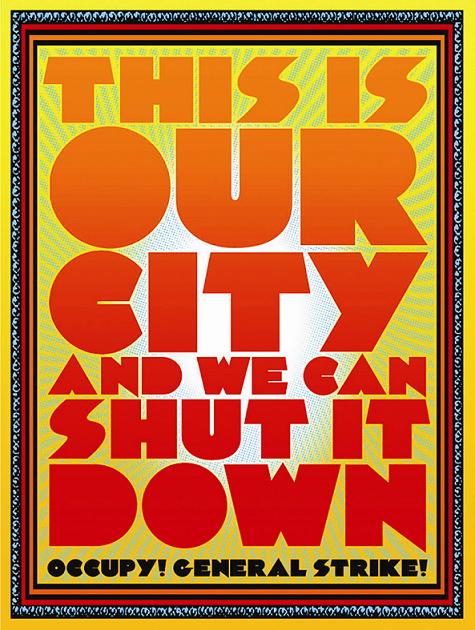
To mark the day, about 50 met in front of the Japanese consulate in San Francisco. They then marched a few blocks to PG&E, bells chiming in beat with chants of “Radiation has no border,” “No nukes, shut the plants down” and “Hiroshima, Nagasaki, Fukushima. Never again, never again, never again.” 

The protest also commemorated the nuclear disaster at Fukushima on March 11, 2011, On Monday, the Japanese government released videos from the day of the disaster.

Speakers emphasized the ill-health effects still felt in the regions where the bombs were dropped.  Between 150,000 and 240,000 people were killed by the bombs, and survivors often suffer cancer and other radiationrelated problems due to their exposure. 

“People are still suffering. Children still have deformities. This is not over,” said Steve Zeltzer, KPFA radio host and member of No Nukes Action Committee 

Long-term reprecussions of military use of nuclear technology are felt strongly Hunter’s Point as well. That was where the US navy docked 79 ships that had been exposed to radiation following a bomb test in Bikini Attol. They docked in San Francisco to be decontaminated and, in the process, released radioactive material. Stationed in Hunter’s Point, and tasked with testing the material on the ships along with other research, was the Naval Radiological Defense Laboratory, which continued testing involving radioactive material in the area for decades. 

“We’re struggling very hard to force them to clean up the nuclear waste that’s buried in BVHP,” said Marie Harrison of Greenaction for Health and Environment. 

“As a mother, grandmother, and great grandmother who happens to live in Bayview-Hunters Point,” said Harrison, “this madness needs to stop. And if we don’t say it, no one else will.”

At the demonstration, protesters passed around a petition calling on the Japanese government. The petition calls for an end to nuclear power in Japan and government funds to evacuate people who remain in Fukushima because they can’t afford to leave.

Protesters also expressed concern about the San Onofre nuclear power plant, which was taken offline in January following a radioactive gas leak. The plant is of concern to San Diego Gas & Electric as well, who say that meeting energy needs for the area will be difficult this summer following the leak.

Film Listings

0

Film listings are edited by Cheryl Eddy. Reviewers are Kimberly Chun, Max Goldberg, Dennis Harvey, and Lynn Rapoport. For rep house showtimes, see Rep Clock.

OPENING

The Bourne Legacy Jeremy Renner steps into Matt Damon’s super-spy shoes to play a Jason Bourne-esque international man of ass-kicking mystery. (2:15) Balboa. Presidio.

The Campaign A smug incumbent (Will Ferrell) and a naïve newcomer (Zach Galifianakis) battle over a North Carolina congressional seat. (1:25) Presidio, California, Vogue.

Celeste and Jesse Forever Indie dramedy about a couple (Andy Samberg and co-writer Rashida Jones) who try to stay friends despite their impending divorce. (1:31) Metreon, Sundance Kabuki.

Easy Money A title like that is bound to disprove itself, and it doesn’t take long to figure out that the only payday the lead characters are going to get in this hit 2010 Swedish thriller (from Jens Lapidus’ novel) is the kind measured in bloody catastrophe. Chilean Jorge (Matias Padin Varela), just escaped from prison, returns to Stockholm seeking one last big drug deal before he splits for good; JW (Joel Kinnaman from AMC series The Killing) is a economics student-slash-cabbie desperate for the serious cash needed to support his double life as a pseudo-swell running with the city’s rich young turks. At first reluctantly thrown together, they become friends working for JW’s taxi boss — or to be more specific, for that boss’ cocaine smuggling side business. Their competitors are a Serbian gang whose veteran enforcer Mrado (Dragomir Mrsic) is put in the awkward position of caring for his eight-year-old daughter (by a drug addicted ex-wife) just as “war” heats up between the two factions. But then everyone here has loved ones they want to protect from an escalating cycle of attacks and reprisals from which none are immune. Duly presented here by Martin Scorsese, Daniel Espinosa’s film has the hurtling pace, engrossing characters and complicated (sometimes confusing) plot mechanics of some good movies by that guy, like Casino (1995) or The Departed (2006). Wildly original it’s not, but this crackling good genre entertainment that make you cautiously look forward to its sequel — which is just about to open in Sweden. (1:59) Lumiere, Shattuck. (Harvey)

Hope Springs A married couple (Meryl Streep, Tommy Lee Jones) turn to a counselor (Steve Carell) to help salvage their relationship. (1:40) Four Star, Marina, Piedmont, Shattuck.

Moth Diaries See “Fangs, But No Fangs.” (1:22) SF Film Society Cinema.

Nitro Circus the Movie 3D The daredevil “action sports collective” hits the big screen with ridiculous stunts aimed at delighting Jackass and X Games fans. (1:28)

Nuit #1 Montreal director-writer Anne Émond bares more than her actor’s beautiful bodies: she’s eager to uncover their tenderized souls: hurt, unsavory, vulnerable, terrified, nihilistic, compulsive, and desperate. Nikolai (Dimitri Stroroge) and Clara (Catherine de Lean) are just two kids on the crowded dance floor, jumping up and down in slow motion to the tune of a torch song; before long, they’re in Nikolai’s shabby apartment, tearing off their clothes and making love as if their lives depended on it. But when Nikolai, laid out on his mattress on the floor like a grunge Jesus with a bad haircut, catches Clara sneaking out without saying good-bye, he sits her down for an earful of his reality. She returns the favor, revealing an unexpected double life, and the two embark on a psycho-tango that takes all night. It can seem like a long one to those impatient with the young, beautiful, and possibly damned’s doubts and self-flagellation, though Émond’s artful, coolly empathetic eye takes the proceedings to a higher level. She’s attempting to craft a simultaneously romantic and raw-boned song of self for a generation. (1:31) Elmwood, Lumiere. (Chun)

360 A massive ensemble sprinkled with big-name stars, a sprawling yet interconnected story, and locations as far-flung as Phoenix and Bratislava: 360 is not achieving anything new with its structure (see also: 2011’s Contagion, 2006’s Babel, and so on). And some pieces of its sectioned-off narrative are less successful than others, as with the exploits of a posh, unfaithful duo played by Rachel Weisz (re-teaming with her Constant Gardener director Fernando Meirelles) and Jude Law. Fortunately, screenwriter Peter Morgan (2006’s The Queen) finds some drama (and a lot of melancholy) in less-familiar relationship scenarios. An airport interlude that interweaves a grieving father (Anthony Hopkins), a newly single Brazilian (Maria Flor), and a maybe-rehabilitated sex offender (Ben Foster) is riveting, as are the unexpectedly sweet and sour endpoints of tales spiraling off a Russian couple (Dinara Drukarova, Vladimir Vdovichenkov) who’ve drifted apart. (1:51) Opera Plaza, Shattuck. (Eddy)

Unforgiveable See “When in Venice.” (1:52) Opera Plaza, Shattuck.

ONGOING

Ai Weiwei: Never Sorry Unstoppable force meets immovable object — and indeed gets stopped — in Alison Klayman’s documentary about China’s most famous contemporary artist. A larger than life figure, Ai Weiwei’s bohemian rebel persona was honed during a long (1981-93) stint in the U.S., where he fit right into Manhattan’s avant-garde and gallery scenes. Returning to China when his father’s health went south, he continued to push the envelope with projects in various media, including architecture — he’s best known today for the 2008 Beijing Olympics’ “Bird’s Nest” stadium design. But despite the official approval implicit in such high-profile gigs, his incessant, obdurate criticism of China’s political repressive politics and censorship — a massive installation exposing the government-suppressed names of children killed by collapsing, poorly-built schools during the 2008 Sichuan earthquake being one prominent example — has tread dangerous ground. This scattershot but nonetheless absorbing portrait stretches its view to encompass the point at which the subject’s luck ran out: when the film was already in post-production, he was arrested, then held for two months without official charge before he was accused of alleged tax evasion. (He is now free, albeit barred from leaving China, and “suspected” of additional crimes including pornography and bigamy.) (1:31) Lumiere, Shattuck, Smith Rafael, Sundance Kabuki. (Harvey)

The Amazing Spider-Man A mere five years after Sam Raimi and Tobey Maguire’s Spider-Man 3 — forgettable on its own, sure, but 2002’s Spider-Man and especially 2004’s Spider-Man 2 still hold up — Marvel’s angsty web-slinger returns to the big screen, hoping to make its box-office mark before The Dark Knight Rises opens in a few weeks. Director Marc Webb (2009’s 500 Days of Summer) and likable stars Andrew Garfield (as the skateboard-toting hero) and Emma Stone (as his high-school squeeze) offer a competent reboot, but there’s no shaking the feeling that we’ve seen this movie before, with its familiar origin story and with-great-power themes. A little creativity, and I don’t mean in the special effects department, might’ve gone a long way to make moviegoers forget this Spidey do-over is, essentially, little more than a soulless cash grab. Not helping matters: the villain (Rhys Ifans as the Lizard) is a snooze. (2:18) Metreon, 1000 Van Ness. (Eddy)

Beasts of the Southern Wild Six months after winning the Grand Jury Prize at Sundance (and a Cannes Camera d’Or), Beasts of the Southern Wild proves capable of enduring a second or third viewing with its originality and strangeness fully intact. Magical realism is a primarily literary device that isn’t attempted very often in U.S. cinema, and succeeds very rarely. But this intersection between Faulkner and fairy tale, a fable about — improbably — Hurricane Katrina, is mysterious and unruly and enchanting. Benh Zeitlin’s film is wildly cinematic from the outset, as voiceover narration from six-year-old Hushpuppy (Quvenzhané Wallis) offers simple commentary on her rather fantastical life. She abides in the Bathtub, an imaginary chunk of bayou country south of New Orleans whose residents live closer to nature, amid the detritus of civilization. Seemingly everything is some alchemical combination of scrap heap, flesh, and soil. But not all is well: when “the storm” floods the land, the holdouts are forced at federal gunpoint to evacuate. With its elements of magic, mythological exodus, and evolutionary biology, Beasts goes way out on a conceptual limb; you could argue it achieves many (if not more) of the same goals Terrence Malick’s 2011 The Tree of Life did at a fraction of that film’s cost and length. (1:31) Bridge, California, Embarcadero, Smith Rafael. (Harvey)

Bernie Jack Black plays the titular new assistant funeral director liked by everybody in small-town Carthage, Tex. He works especially hard to ingratiate himself with shrewish local widow Marjorie (Shirley MacLaine), but there are benefits — estranged from her own family, she not only accepts him as a friend (then companion, then servant, then as virtual “property”), but makes him her sole heir. Richard Linklater’s latest is based on a true-crime story, although in execution it’s as much a cheerful social satire as I Love You Philip Morris and The Informant! (both 2009), two other recent fact-based movies about likable felons. Black gets to sing (his character being a musical theater queen, among other things), while Linklater gets to affectionately mock a very different stratum of Lone Star State culture from the one he started out with in 1991’s Slacker. There’s a rich gallery of supporting characters, most played by little-known local actors or actual townspeople, with Matthew McConaughey’s vainglorious county prosecutor one delectable exception. Bernie is its director’s best in some time, not to mention a whole lot of fun. (1:39) Opera Plaza, Smith Rafael. (Harvey)

Bill W. Even longtime AA members are unlikely to know half the organizational history revealed in this straightforward, chronological, fast-moving portrait of its late founder. Bill Wilson was a bright, personable aspiring businessman whose career was nonetheless perpetually upset by addiction to the alcohol that eased his social awkwardness but brought its own worse troubles. During one mid-1930s sanitarium visit, attempting to dry out, he experienced a spiritual awakening. From that moment slowly grew the idea of Alcoholics Anonymous, which he shaped with the help of several other recovering drunks, and saw become a national movement after a 1941 Saturday Evening Post article introduced it to the general public. Wilson had always hoped the “leaderless” organization would soon find its own feet and leave him to build a separate, sober new career. But gaining that distance was difficult; attempts to find other “cures” for his recurrent depression (including LSD therapy) laid him open to internal AA criticism; and he was never comfortable on the pedestal that grateful members insisted he stay on as the organization’s founder. Admittedly, he appointed himself its primary public spokesman, which rendered his own hopes for privacy somewhat self-canceling — though fortunately it also provides this documentary with plenty of extant lecture and interview material. He was a complicated man whose complicated life often butted against the role of savior, despite his endless dedication and generosity toward others in need. That thread of conflict makes for a movie that’s compelling beyond the light it sheds on an institution as impactful on individual lives and society as any other to emerge from 20th-century America. (1:43) Roxie. (Harvey)

Brave Pixar’s latest is a surprisingly familiar fairy tale. Scottish princess Merida (voiced by Kelly Macdonald) would rather ride her horse and shoot arrows than become engaged, but it’s Aladdin-style law that she must marry the eldest son of one of three local clans. (Each boy is so exaggeratedly unappealing that her reluctance seems less tomboy rebellion than common sense.) Her mother (Emma Thompson) is displeased; when they quarrel, Merida decides to change her fate (Little Mermaid-style) by visiting the local spell-caster (a gentle, absent-minded soul that Ursula the Sea Witch would eat for brunch). Naturally, the spell goes awry, but only the youngest of movie viewers will fear that Merida and her mother won’t be able to make things right by the end. Girl power is great, but so are suspense and originality. How, exactly, is Brave different than a zillion other Disney movies about spunky princesses? Well, Merida’s fiery explosion of red curls, so detailed it must have had its own full-time team of animators working on it, is pretty fantastic. (1:33) 1000 Van Ness, SF Center, Shattuck. (Eddy)

Dark Horse You can look at filmmaker Todd Solondz’s work and find it brilliant, savage, and challenging; or show-offy, contrived, and fraudulent. The circles of interpersonal (especially familial) hell he describes are simultaneously brutal, banal, and baroque. But what probably distresses people most is that they’re also funny — raising the issue of whether he trivializes trauma for the sake of cheap shock-value yuks, or if black comedy is just another valid way of facing the unbearable. Dark Horse is disturbing because it’s such a slight, inconsequential, even soft movie by his standards; this time, the sharp edges seem glibly cynical, and the sum ordinary enough to no longer seem unmistakably his. Abe (Jordan Gelber) is an obnoxious jerk of about 35 who still lives with his parents (Mia Farrow, Christopher Walken) and works at dad’s office, likely because no one else would employ him. But Abe doesn’t exactly see himself as a loser. He resents and blames others for being winners, which is different — he sees the inequality as their fault. Dark Horse is less of an ensemble piece than most of Solondz’s films, and in hinging on Abe, it diminishes his usual ambivalence toward flawed humanity. Abe has no redemptive qualities — he’s just an annoyance, one whose mental health issues aren’t clarified enough to induce sympathy. (1:25) Smith Rafael. (Harvey)

The Dark Knight Rises Early reviews that called out The Dark Knight Rises‘ flaws were greeted with the kind of vicious rage that only anonymous internet commentators can dish out. And maybe this is yet another critic-proof movie, albeit not one based on a best-selling YA book series. Of course, it is based on a comic book, though Christopher Nolan’s sophisticated filmmaking and Christian Bale’s tortured lead performance tend to make that easy to forget. In this third and “final” installment in Nolan’s trilogy, Bruce Wayne has gone into seclusion, skulking around his mansion and bemoaning his broken body and shattered reputation. He’s lured back into the Batcave after a series of unfortunate events, during which The Dark Knight Rises takes some jabs at contemporary class warfare (with problematic mixed results), introduces a villain with pecs of steel and an at-times distractingly muffled voice (Tom Hardy), and unveils a potentially dangerous device that produces sustainable energy (paging Tony Stark). Make no mistake: this is an exciting, appropriately moody conclusion to a superior superhero series, with some nice turns by supporting players Gary Oldman and Joseph Gordon-Levitt. But in trying to cram in so many characters and plot threads and themes (so many prisons in this thing, literal and figural), The Dark Knight Rises is ultimately done in by its sprawl. Without a focal point — like Heath Ledger’s menacing, iconic Joker in 2008’s The Dark Knight — the stakes aren’t as high, and the end result feels more like a superior summer blockbuster than one for the ages. (2:44) Balboa, Marina, Metreon, 1000 Van Ness, Sundance Kabuki. (Eddy)

The Devil, Probably This seldom-revived 1977 feature from late French master Robert Bresson was his penultimate as well as most explicitly political work. Newspaper clips at the start betray where these 95 minutes will be heading: they introduce Parisian Charles (Antoine Monnier) as a casualty, a suicide at age 20. The reasons for that act are probed in the succeeding flashback, as we observe his last days drifting between friends and lovers, quitting student activist groups, and generally expressing his disillusionment with everything from politics to religion to human interaction. Then 70, Bresson expresses his own disenchantment in solidarity with the youthful characters by including documentary shots of pollution, clubbed baby seals, A-bomb explosions, and other dire signs of “an Earth that is ever more populated and ever less habitable.” That essential message makes The Devil, Probably more relevant than ever, but unfortunately it’s also one of the filmmaker’s driest, most didactic exercises. There are a few odd, almost farcical moments (as when the constant pondering of man’s fate extends to a spontaneous philosophical debate between passengers on a public bus), but the characters are too obviously mouthpieces with no inner lives of their own. In particular, Charles remains an unengaging blank in Monnier’s performance, which is all too faithful to the director’s usual call for “automatic,” uninflected line readings from his nonprofessional cast. Nothing Bresson did is without interest, but here his detached technique drains nearly all emotional impact from a film ostensibly about profound despair. (1:35) SF Film Society Cinema. (Harvey)

Diary of a Wimpy Kid: Dog Days (1:34) Metreon, 1000 Van Ness, Presidio.

Farewell, My Queen (Benoît Jacquot, France, 2012) Opening early on the morning of July 14, 1789, Farewell, My Queen depicts four days at the Palace of Versailles on the eve of the French Revolution, as witnessed by a young woman named Sidonie Laborde (Léa Seydoux) who serves as reader to Marie Antoinette (Diane Kruger). Sidonie displays a singular and romantic devotion to the queen, while the latter’s loyalties are split between a heedless amour propre and her grand passion for the Duchess de Polignac (Virginie Ledoyen). These domestic matters and other regal whims loom large in the tiny galaxy of the queen’s retinue, so that while elsewhere in the palace, in shadowy, candle-lit corridors, courtiers and their servants mingle to exchange news, rumor, panicky theories, and evacuation plans, in the queen’s quarters the task of embroidering a dahlia for a projected gown at times overshadows the storming of the Bastille and the much larger catastrophe on the horizon. (1:39) Albany, Embarcadero, Piedmont. (Rapoport)

Girlfriend Boyfriend The onscreen title of this Taiwanese import is Gf*Bf, but don’t let the text-speak fool you: the bulk of the film is set in the 1980s and 90s, long before smart phones were around to complicate relationships. And the trio at the heart of Girlfriend Boyfriend is complicated enough as it is: sassy Mabel (Gwei Lun-Mei) openly pines for brooding Liam (Joseph Chang), who secretly pines for rebellious Aaron (Rhydian Vaughan), who chases Mabel until she gives in; as things often go in stories like this, nobody gets the happy ending they desire. Set against the backdrop of Taiwan’s student movement, this vibrant drama believably tracks its leads as they mature from impulsive youths to bitter adults who never let go of their deep bond — despite all the misery it causes, and a last-act turn into melodrama that’s hinted at by the film’s frame story featuring an older Liam and a pair of, um, sassy and rebellious twin girls he’s been raising as his own. (1:45) Metreon. (Eddy)

Ice Age: Continental Drift (1:27) Metreon, 1000 Van Ness.

The Imposter A family tragedy, an international thriller, a Southern-fried mystery, and a true story: The Imposter is all of these things. This unique documentary reveals the tale of Frédéric Bourdin, dubbed “the Chameleon” for his epic false-identity habit. His ballsiest accomplishment was also his most heinous con: in 1997, he claimed to be Nicholas Barclay, a San Antonio teen missing since 1994. Amazingly, the impersonation worked for a time, though Bourdin (early 20s, brown-eyed, speaks English with a French accent) hardly resembled Nicholas (who would have been 16, and had blue eyes). Using interviews — with Nicholas’ shell-shocked family, government types who unwittingly aided the charade, and Bourdin himself — and ingenious re-enactments that borrow more from crime dramas than America’s Most Wanted, director Bart Layton weaves a multi-layered chronicle of one man’s unbelievable deception. (1:39) Lumiere, Shattuck. (Eddy)

The Intouchables Cries of “racism” seem a bit out of hand when it comes to this likable albeit far-from-challenging French comedy loosely based on a real-life relationship between a wealthy white quadriplegic and his caretaker of color. The term “cliché” is more accurate. And where were these critics when 1989’s Driving Miss Daisy and 2011’s The Help — movies that seem designed to make nostalgic honkies feel good about those fraught relationships skewed to their advantage—were coming down the pike? (It also might be more interesting to look at how these films about race always hinge on economies in which whites must pay blacks to interact with/educate/enlighten them.) In any case, Omar Sy, portraying Senegalese immigrant Driss, threatens to upset all those pundits’ apple carts with his sheer life force, even when he’s shaking solo on the dance floor to sounds as effortlessly unprovocative, and old-school, as Earth, Wind, and Fire. In fact, everything about The Intouchables is as old school as 1982’s 48 Hrs., spinning off the still laugh-grabbing humor that comes with juxtaposing a hipper, more streetwise black guy with a hapless, moneyed chalky. The wheelchair-bound Philippe (Francois Cluzet) is more vulnerable than most, and he has a hard time getting along with any of his nurses, until he meets Driss, who only wants his signature for his social services papers. It’s not long before the cultured, classical music-loving Philippe’s defenses are broken down by Driss’ flip, somewhat honest take on the follies and pretensions of high culture — a bigger deal in France than in the new world, no doubt. Director-writer Olivier Nakache and Eric Toledano aren’t trying to innovate —they seem more set on crafting an effervescent blockbuster that out-blockbusters Hollywood — and the biggest compliment might be that the stateside remake is already rumored to be in the works. (1:52) Clay. (Chun)

Jiro Dreams of Sushi Celebrity-chef culture has surely reached some kind of zeitgeist, what with the omnipresence of Top Chef and other cooking-themed shows, and the headlines-making power of people like Paula Deen (diabetes) and Mario Batali (sued for ripping off his wait staff). Unconcerned with the trappings of fame — you’ll never see him driving a Guy Fieri-style garish sports car — is Jiro Ono, 85-year-old proprietor of Sukiyabashi Jiro, a tiny, world-renowned sushi restaurant tucked into Tokyo’s Ginza station. Jiro, a highly-disciplined perfectionist who believes in simple, yet flavorful food, has devoted his entire life to the pursuit of “deliciousness” — to the point of sushi invading his dreams, as the title of David Gelb’s reverential documentary suggests. But Jiro Dreams of Sushi goes deeper than food-prep porn (though, indeed, there’s plenty of that); it also examines the existential conflicts faced by Jiro’s two middle-aged sons. Both were strongly encouraged to enter the family business — and in the intervening years, have had to accept the soul-crushing fact that no matter how good their sushi is, it’ll never be seen as exceeding the creations of their legendary father. (1:21) Four Star. (Eddy)

Killer Joe William Friedkin made two enormously popular movies that have defined his career (1971’s The French Connection and 1973’s The Exorcist), but his resumé also contains an array of lesser films that are both hit-and-miss in critical and popular appeal. Most have their defenders. After a couple biggish action movies, it seemed a step down for him to be doing Bug in 2006; though it had its limits as a psychological quasi-horror, you could feel the cracking recognition of like minds between cast, director, and playwright Tracy Letts. Letts and Friedkin are back in Killer Joe, which was a significant off-Broadway success in 1998. In the short, violent, and bracing film version, Friedkin gets the ghoulish jet-black-comedic tone just right, and his actors let themselves get pushed way out on a limb to their great benefit — including Matthew McConaughey, playing the title character, who’s hired by the Smith clan of Texas to bump off a troublesome family member. Needless to say, almost nothing goes as planned, escalating mayhem to new heights of trailer-trash Grand Guignol. Things get fugly to the point where Killer Joe becomes one of those movies whose various abuses are shocking enough to court charges of gratuitous violence and misogyny; unlike the 2010 Killer Inside Me, for instance, it can’t really be justified as a commentary upon those very entertainment staples. (Letts is highly skilled, but those looking for a message here will have to think one up for themselves.) Still, Friedkin and his cast do such good work that Killer Joe‘s grimly humorous satisfaction in its worst possible scenarios seems quite enough. (1:43) Embarcadero. (Harvey)

Klown A spinoff from a long-running Danish TV show, with the same director (Mikkel Nørgaard) and co-writer/stars, this bad-taste comedy might duly prove hard to beat as “the funniest movie of the year” (a claim its advertising already boasts). Socially hapless Frank (Frank Hvam) discovers his live-in girlfriend Mia (Mia Lyhne) is pregnant, but she quite reasonably worries “you don’t have enough potential as a father.” To prove otherwise, he basically kidnaps 12-year-old nephew Bo (Marcuz Jess Petersen) and drags him along on a canoe trip with best friend Casper (Casper Christensen). Trouble is, Casper has already proclaimed this trip will be a “Tour de Pussy,” in which they — or at least he — will seize any and every opportunity to cheat on their unknowing spouses. Ergo, there’s an almost immediate clash between awkward attempts at quasi-parental bonding and activities most unsuited for juvenile eyes. Accusations of rape and pedophilia, some bad advice involving “pearl necklaces,” an upscale one-night-only bordello, reckless child endangerment, encouragement of teenage drinking, the consequences of tactical “man flirting,” and much more ensue. Make no mistake, Klown one-ups the Judd Apatow school of raunch (at least for the moment), but it’s good-natured enough to avoid any aura of crass Adam Sandler-type bottom-feeding. It’s also frequently, blissfully, very, very funny. (1:28) Roxie. (Harvey)

Magic Mike Director Steven Soderbergh pays homage to the 1970s with the opening shot of his male stripper opus: the boxy old Warner Bros. logo, which evokes the gritty, sexualized days of Burt Reynolds and Joe Namath posing in pantyhose. Was that really the last time women, en masse, were welcome to ogle to their heart’s content? That might be the case considering the outburst of applause when a nude Channing Tatum rises after a hard night in a threesome in Magic Mike‘s first five minutes. Ever the savvy film historian, Soderbergh toys with the conventions of the era, from the grimy quasi-redneck realism of vintage Reynolds movies to the hidebound framework of the period’s gay porn, almost for his own amusement, though the viewer might be initially confused about exactly what year they’re in. Veteran star stripper Mike (Tatum) is working construction, stripping to the approval of many raucous ladies and their stuffable dollar bills. He decides to take college-dropout blank-slate hottie Adam (Alex Pettyfer) under his wing and ropes him into the strip club, owned by Dallas (Matthew McConaughey, whose formidable abs look waxily preserved) and show him the ropes of stripping and having a good time, much to the disapproval of Adam’s more straight-laced sister Brooke (Cody Horn). Really, though, all Mike wants to do is become a furniture designer. Boasting Foreigner’s “Feels like the First Time” as its theme of sorts and spot-on, hot choreography by Alison Faulk (who’s worked with Madonna and Britney Spears), Magic Mike takes off and can’t help but please the crowd when it turns to the stage. Unfortunately the chemistry-free budding romance between Mike and Brooke sucks the air out of the proceedings every time it comes into view, which is way too often. (1:50) SF Center, Sundance Kabuki. (Chun)

Moonrise Kingdom Does Wes Anderson’s new film mark a live-action return to form after 2007’s disappointingly wan Darjeeling Limited? More or less. Does it tick all the Andersonian style and content boxes? Indubitably. In the most obvious deviation Anderson has taken with Moonrise, he gives us his first period piece, a romance set in 1965 on a fictional island off the New England coast. After a chance encounter at a church play, pre-teen Khaki Scout Sam (newcomer Jared Gilman) instantly falls for the raven-suited, sable-haired Suzy Bishop (Kara Hayward, ditto). The two become pen pals, and quickly bond over the shared misery of being misunderstood by both authority figures and fellow kids. The bespectacled Sam is an orphan, ostracized by his foster parents and scout troop (much to the dismay of its straight-arrow leader Edward Norton). Suzy despises her clueless attorney parents, played with gusto by Bill Murray and Frances McDormand in some of the film’s funniest and best scenes. When the two kids run off together, the whole thing begins to resemble a kind of tween version of Godard’s 1965 lovers-on the-lam fantasia Pierrot le Fou. But like most of Anderson’s stuff, it has a gauzy sentimentality more akin to Truffaut than Godard. Imagine if the sequence in 2001’s The Royal Tenenbaums where Margot and Richie run away to the Museum of Natural History had been given the feature treatment: it’s a simple yet inspired idea, and it becomes a charming little tale of the perils of growing up and selling out the fantasy. But it doesn’t feel remotely risky. It’s simply too damn tame. (1:37) California, Four Star, Metreon, 1000 Van Ness, Piedmont, Shattuck, Sundance Kabuki. (Michelle Devereaux)

Prometheus Ridley Scott’s return to outer space — after an extended stay in Russell Crowe-landia — is most welcome. Some may complain Prometheus too closely resembles Scott’s Alien (1979), for which it serves as a prequel of sorts. Prometheus also resembles, among others, The Thing (1982), 2001: A Space Odyssey (1968), and Event Horizon (1997). But I love those movies (yes, even Event Horizon), and I am totally fine with the guy who made Alien borrowing from all of them and making the classiest, most gorgeous sci-fi B-movie in years. Sure, some of the science is wonky, and the themes of faith and creation can get a bit woo-woo, but Prometheus is deep-space discombobulation at its finest, with only a miscast Logan Marshall-Green (apparently, cocky dude-bros are still in effect at the turn of the next millennium) marring an otherwise killer cast: Noomi Rapace as a dreamy (yet awesomely tough) scientist; Idris Elba as Prometheus‘ wisecracking captain; Charlize Theron as the Weyland Corportation’s icy overseer; and Michael Fassbender, giving his finest performance to date as the ship’s Lawrence of Arabia-obsessed android. (2:03) Metreon. (Eddy)

The Queen of Versailles Lauren Greenfield’s obscenely entertaining The Queen of Versailles takes a long, turbulent look at the lifestyles lived by David and Jackie Siegel. He is the 70-something undisputed king of timeshares; she is his 40-something (third) wife, a former beauty queen with the requisite blonde locks and major rack, both probably not entirely Mother Nature-made. He’s so compulsive that he’s never saved, instead plowing every buck back into the business. When the recession hits, that means this billionaire is — in ready-cash as opposed to paper terms — suddenly sorta kinda broke, just as an enormous Las Vegas project is opening and the family’s stupefyingly large new “home” (yep, modeled after Versailles) is mid-construction. Plugs must be pulled, corners cut. Never having had to, the Siegels discover (once most of the servants have been let go) they have no idea how to run a household. Worse, they discover that in adversity they have a very hard time pulling together — in particular, David is revealed as a remote, cold, obsessively all-business person who has no use for getting or giving “emotional support;” not even for being a husband or father, much. What ultimately makes Queen poignantly more than a reality-TV style peek at the garishly wealthy is that Jackie, despite her incredibly vulgar veneer (she’s like a Jennifer Coolidge character, forever squeezed into loud animal prints), is at heart just a nice girl from hicksville who really, really wants to make this family work. (1:40) Embarcadero, Shattuck, Smith Rafael. (Harvey)

Red Lights Skeptics and budding myth busters, get ready. Maybe. Director-writer Rodrigo Cortés blends the stuff of thrillers and horror in this slippery take on psychics and their debunkers. Psychologist Margaret Matheson (Sigourney Weaver) and her weirdly loyal assistant Tom (Cillian Murphy) investigate paranormal phenomena — faith healers, trance mediums, ghost hunters, and psychics — in order to peer behind the curtain and expose all Ozs great and small. Spoon-bending blind ESP master Simon Silver (Robert De Niro) is their biggest prize: he’s come out of retirement after the death of his most dogged critic. Has Silver learned to kill with his mind? And can we expect a brain-blowing finale on the same level as The Fury (1978)? Despite all the high-powered acting talent in the room, Red Lights never quite convinces us of the urgency of its mission — it’s hard to swallow that the debunking of paranormal phenomenon rates as international news in an online-driven 24/7 multiniched news cycle — and feels like a curious ’70s throwback with its Three Days of the Condor-style investigative nail-biter arc, while supplying little of the visceral, camp showman panache of a De Palma. (1:53) (1:53) Metreon. (Chun)

Ruby Sparks Meta has rarely skewed as appealingly as with this indie rom-com spinning off a writerly version of the Pygmalion and Galatea tale, as penned by the object-of-desire herself: Zoe Kazan. Little Miss Sunshine (2006) directors Jonathan Dayton and Valerie Faris helm this heady fantasy about a crumpled, geeky novelist, Calvin (Paul Dano), who’s suffering from the sophomore slump — he can’t seem to break his rock-solid writers block and pen a follow-up to his hit debut. He’s a victim of his own success, especially when he finally begins to write, about a dream girl, a fun-loving, redheaded artist named Ruby (scriptwriter Kazan), who one day actually materializes. When he types that she speaks nothing but French, out comes a stream of the so-called language of diplomacy. Calvin soon discovers the limits and dangers of creation — say, the hazards of tweaking a manifestation when she doesn’t do what you desire, and the question of what to do when one’s baby Frankenstein grows bored and restless in the narrow circle of her creator’s imagination. Kazan — and Dayton and Faris — go to the absurd, even frightening, limits of the age-old Pygmalion conceit, giving it a feminist charge, while helped along by a cornucopia of colorful cameos by actors like Annette Bening and Antonio Banderas as Calvin’s boho mom and her furniture-building boyfriend. Dano is as adorably befuddled as ever and adds the crucial texture of every-guy reality, though ultimately this is Kazan’s show, whether she’s testing the boundaries of a genuinely codependent relationship or tugging at the puppeteer’s strings. (1:44) Metreon, Piedmont, Shattuck, Sundance Kabuki. (Chun)

Safety Not Guaranteed San Francisco-born director Colin Trevorrow’s narrative debut feature Safety Not Guaranteed, written by Derek Connolly, has an improbable setup: not that rural loner Kenneth (Mark Duplass) would place a personal ad for a time travel partner (“Must bring own weapons”), but that a Seattle alt-weekly magazine would pay expenses for a vainglorious staff reporter (Jake Johnson, hilarious) and two interns (Aubrey Plaza, Karan Soni) to stalk him for a fluff feature over the course of several days. The publishing budget allowing that today is true science-fiction. But never mind. Inserting herself “undercover” when a direct approach fails, Plaza’s slightly goth college grad finds she actually likes obsessive, paranoid weirdo Kenneth, and is intrigued by his seemingly insane but dead serious mission. For most of its length Safety falls safely into the category of off-center indie comedics, delivering various loopy and crass behavior with a practiced deadpan, providing just enough character depth to achieve eventual poignancy. Then it takes a major leap — one it would be criminal to spoil, but which turns an admirable little movie into something conceptually surprising, reckless, and rather exhilarating. (1:34) SF Center. (Harvey)

Savages If it’s true, as some say, that Oliver Stone had lost his way after 9/11 — when seemingly many of his worst fears (and conspiracy theories) came to pass — then perhaps this toothy noir marks his return: it definitely reads as his most emotionally present exercise in years. Not quite as nihilistic as 1994’s Natural Born Killers, yet much juicier than 2010’s Wall Street: Money Never Sleeps, this pulpy effort turns on a cultural clash between pleasure-seeking, honky Cali hedonists, who appear to believe in whatever feels good, and double-dealing Mexican mafia muscle, whose apparently ironclad moral code is also shifting like drifting SoCal sands. All are draped in the Stone’s favored vernacular of manly war games with a light veneer of Buddhistic higher-mindedness and, natch, at least one notable wig. Happy pot-growing nouveau-hippies Ben (Aaron Johnson), Chon (Taylor Kitsch), and O (Blake Lively) are living the good life beachside, cultivating plants coaxed from seeds hand-imported by seething Afghanistan war vet Chon and refined by botanist and business major Ben. Pretty, privileged sex toy O sleeps with both — she’s the key prize targeted by Baja drug mogul Elena (Salma Hayek) and her minions, the scary Lado (Benicio Del Toro) and the more well-heeled Alex (Demian Bichir), who want to get a piece of Ben and Chon’s high-THC product. The twists and turnarounds obviously tickle Stone, though don’t look much deeper than Savages‘ saturated, sun-swathed façade — the script based on Don Winslow’s novel shares the take-no-prisoners hardboiled bent of Jim Thompson while sidestepping the brainy, postmodernish light-hearted detachment of Quentin Tarantino’s “extreme” ’90s shenanigans. (1:57) SF Center. (Chun)

Searching for Sugar Man The tale of the lost, and increasingly found, artist known as Rodriguez seems to have it all: the mystery and drama of myth, beginning with the singer-songwriter’s stunning 1970 debut, Cold Fact, a neglected folk rock-psychedelic masterwork. (The record never sold in the states, but somehow became a beloved, canonical LP in South Africa.) The story goes on to parse the cold, hard facts of vanished hopes and unpaid royalties, all too familiar in pop tragedies. In Searching for Sugar Man, Swedish documentarian Malik Bendjelloul lays out the ballad of Rodriguez as a rock’n’roll detective story, with two South African music lovers in hot pursuit of the elusive musician — long-rumored to have died onstage by either self-immolation or gunshot, and whose music spoke to a generation of white activists struggling to overturn apartheid. By the time Rodriguez himself enters the narrative, the film has taken on a fairy-tale trajectory; the end result speaks volumes about the power and longevity of great songwriting. (1:25) Embarcadero. (Chun)

Step Up Revolution The Step Up franchise makes a play for the Occupy brand, setting up its fourth installment’s Miami street crew, the Mob, as the warrior dance champions of the 99 percent — here represented by a vibrant lower-income neighborhood slated for redevelopment. Embodying the one percent is a hotel-chain mogul named Bill Anderson (Peter Gallagher), armed with a wrecking ball and sowing the seeds of a soulless luxury monoculture. Our hero, Mob leader Sean (Ryan Guzman), and heroine, Anderson progeny and aspiring professional dancer Emily (Kathryn McCormick), meet beachside; engage in a sandy, awkward interlude of grinding possibly meant to showcase their dance skills; and proceed to spark a romance and a revolution that feel equally fake (brace yourself for the climactic corporate tie-in). The Mob’s periodic choreographed invasions of the city’s public and private spaces are the movie’s sole source of oxygen. The dialogue, variously mumbled and slurred and possibly read off cue cards, drifts aimlessly from tepid to trite as the protagonists attempt to demonstrate sexual chemistry by breathily trading off phrases like “What we do is dangerous!” and “Enough with performance art — it’s time to make protest art!” Occasionally you may remember that you have 3D glasses on your face and wonder why, but the larger philosophical question (if one may speak of philosophy in relation to the dance-movie genre) concerns the Step Up films’ embrace of postproduction sleights of hand that distance viewers from whatever astonishing feats of physicality are actually being achieved in front of the camera. (1:20) 1000 Van Ness, SF Center. (Rapoport)

Ted Ah, boys and their toys — and the imaginary friends that mirror back a forever-after land of perpetual Peter Pans. That’s the crux of the surprisingly smart, hilarious Ted, aimed at an audience comprising a wide range of classes, races, and cultures with its mix of South Park go-there yuks and rom-commie coming-of-age sentiment. Look at Ted as a pop-culture-obsessed nerd tweak on dream critter-spirit animal buddy efforts from Harvey (1950) to Donnie Darko (2001) to TV’s Wilfred. Of course, we all know that the really untamable creature here wobbles around on two legs, laden with big-time baggage about growing up and moving on from childhood loves. Young John doesn’t have many friends but he is fortunate enough to have his Christmas wish come true: his beloved new teddy bear, Ted (voice by director-writer Seth MacFarlane), begins to talk back and comes to life. With that miracle, too, comes Ted’s marginal existence as a D-list celebrity curiosity — still, he’s the loyal “Thunder Buddy” that’s always there for the now-grown John (Mark Wahlberg), ready with a bong and a broheim-y breed of empathy that involves too much TV, an obsession with bad B-movies, and mock fisticuffs, just the thing when storms move in and mundane reality rolls through. With his tendency to spew whatever profanity-laced thought comes into his head and his talents are a ladies’ bear, Ted is the id of a best friend that enables all of John’s most memorable, un-PC, Hangover-style shenanigans. Alas, John’s cool girlfriend Lori (Mila Kunis) threatens that tidy fantasy setup with her perfectly reasonable relationship demands. Juggling scary emotions and material that seems so specific that it can’t help but charm — you’ve got to love a shot-by-shot re-creation of a key Flash Gordon scene — MacFarlane sails over any resistance you, Lori, or your superego might harbor about this scenario with the ease of a man fully in touch with his inner Ted. (1:46) Metreon, 1000 Van Ness, Sundance Kabuki. (Chun)

To Rome with Love Woody Allen’s film legacy is not like anybody else’s. At present, however, he suffers from a sense that he’s been too prolific for too long. It’s been nearly two decades since a new Woody Allen was any kind of “event,” and the 19 features since Bullets Over Broadway (1994) have been hit and-miss. Still, there’s the hope that Allen is still capable of really surprising us — or that his audience might, as they did by somewhat inexplicably going nuts for 2011’s Midnight in Paris. It was Allen’s most popular film in eons, if not ever, probably helped by the fact that he wasn’t in it. Unfortunately, he’s up there again in the new To Rome With Love, familiar mannerisms not hiding the fact that Woody Allen the Nebbish has become just another Grumpy Old Man. There’s a doddering quality that isn’t intended, and is no longer within his control. But then To Rome With Love is a doddering picture — a postcard-pretty set of pictures with little more than “Have a nice day” scribbled on the back in script terms. Viewers expecting more of the travelogue pleasantness of Midnight in Paris may be forgiving, especially since it looks like a vacation, with Darius Khondji’s photography laying on the golden Italian light and making all the other colors confectionary as well. But if Paris at least had the kernel of a good idea, Rome has only several inexplicably bad ones; it’s a quartet of interwoven stories that have no substance, point, credibility, or even endearing wackiness. The shiny package can only distract so much from the fact that there’s absolutely nothing inside. (1:52) Albany, Opera Plaza, Sundance Kabuki. (Harvey)

Total Recall Already the source material for Paul Verhoeven’s campy, quotable 1990 film (starring the campy, quotable Arnold Schwarzenegger), Philip K. Dick’s short story gets a Hollywood do-over, with meh results. The story, anyway, is a fine nugget of sci-fi paranoia: to escape his unsatisfying life, Quaid (Colin Farrell) visits a company capable of implanting exciting memories into his brain. When he chooses the “secret agent” option, it’s soon revealed he actually does have secret agent-type memories, suppressed via brain-fuckery by sinister government forces (led by Bryan Cranston) keeping him in the dark about his true identity. Shit immediately gets crazy, with high-flying chases and secret codes and fight scenes all over the place. The woman Quaid thinks is his wife (Kate Beckinsale) is actually a slithery killer; the woman he’s been seeing in his dreams (Jessica Biel) turns out to be his comrade in a secret rebel movement. Len Wiseman (writer and sometimes director of the Underworld films) lenses futuristic urban grime with a certain sleek panache, and Farrell is appealing enough to make highly generic hero Quaid someone worth rooting for — until the movie ends, and the entire enterprise (save perhaps the tri-boobed hooker, a holdover from the original) becomes instantly forgettable, no amnesia trickery required. (1:58) California, Metreon, 1000 Van Ness, Presidio. (Eddy)

The Watch Directed by Lonely Island member Akiva Schaffer (famed for Saturday Night Live‘s popular digital shorts, including “Dick in a Box”), The Watch is, appropriately enough, probably the most dick-focused alien-invasion movie of all time. When a security guard is mangled to death at Costco, store manager and uber-suburbanite Evan (Ben Stiller, doing a damn good Steve Carell impersonation) organizes a posse to keep an eye on the neighborhood — despite the fact that the other members (Vince Vaughn as the overprotective dad with the bitchin’ man cave; Jonah Hill as the creepy wannabe cop; and British comedian Richard Ayoade as the sweet pervert) would much rather drink beers and bro down. Much bumbling ensues, along with a thrown-together plot about unfriendly E.T.s. The Watch offers some laughs (yes, dick jokes are occasionally funny) but overall feels like a pretty minor effort considering its big-name cast. (1:38) 1000 Van Ness, SF Center. (Eddy)

The Well-Diggers Daughter Daniel Auteuil owes a debt of gratitude to Marcel Pagnol, courtesy of his breakthrough roles in the 1980s remakes of the writer and filmmaker’s Jean de Florette and Manon of the Spring. He returns the favor with his debut directorial work, reworking the 1940s film and crafting a loving, old-school tribute to Pagnol. The world is poised on the edge of World War I; Auteuil plays salt-of-the-earth Pascal Amoretti. The poor widower does the town’s dirty work (oh, the dangerous symbolism of hole-digging) and cares for his six daughters — his favorite, the eldest and the most beautiful, Patricia (Astrid Berges-Frisbey), has caught the eye of his assistant, Felipe (Kad Merad). The happy home — and tidy arrangement — is shattered, however, when Patricia meets an inconveniently dashing pilot Jacques Mazel (Nicolas Duvauchelle), who sweeps her away, in the worst way possible for a girl of her day. “You’ve sinned, and I thought you were an angel,” says the stunned father when he hears his beloved offspring is pregnant. “Angels don’t live on earth,” she responds. “I’m like any other girl.” Faced with the inevitable, Auteuil and company shine a sweet but, importantly, not saccharine light — one that’s as golden warm as the celebrated sunshine of rural Provence — on the proceedings. And equipped with Pagnol’s eloquent prose, as channeled through his love of the working folk, he restores this tale’s gently throwback emotional power, making it moving once more for an audience worlds away. (1:45) Opera Plaza, Shattuck. (Chun)


 

Alerts

0

WEDNESDAY 8

Speak up: stop and frisk Southeast Community Complex, 1800 Oakdale, SF; Stop and frisk — the controversial, pretty much definitely Fourth Amendment-violating policy that police in New York cling to despite protest and that Mayor Ed Lee recently proposed implementing in San Francisco — just won’t go away, despite opposition from pretty much everyone. This panel discussion and opportunity to debate issues relating to the proposed stop and frisk policy. The event is presented by the Osiris Coalition and filmmaker Kevin Epps.

First District 5 debate of the season Park Branch Library, 1833 Page, SF; District 5 is in the center of San Francisco, and much of the excitement of November’s city elections will center on its race for supervisor. A wide range of candidates will vie for the coveted spot that Ross Mirkarimi left to become sheriff. All of the candidates have promised to show up to this first debate in the hotly contested race. The debate is presented by District 5 Democratic Club, the District 5 Neighborhood Action Committee, and the Wigg Party.

THURSDAY 9

Occupy the Bay Berkeley Fellowship of Unitarian Universalists’ Hall, 1924 Cedar, Berk; www.bfuu.org. 7pm, $5-10 suggested donation. Filmmakers Name Name and Namey Namey have been documenting Occupy in the Bay Area since the fall. Come reminisce, learn, and be inspired by their film at its premier. You made this history happen, celebrate it, baby!

SATURDAY 11

Black Riders Liberation Party La Peña Cultural Center, 10pm, $5-10. The Black Riders Liberation Party considers itself the new generation of the Black Panther Party, organizing similar programs to stop police violence and gang violence and feed communities. This Saturday, the Party parties. Come celebrate the Black Riders and meet organizers, bring a canned food donation for a discount.

Pistahan Yerba Buena Gardens, Mission and Third St., SF; www.pistahan.net. 11am, free. This giant annual Filipino celebration goes all weekend. Start off the weekend with a parade from Beale and Market streets to Yerba Buena Gardens, where the festival of music, food, performance and education begins.

Foreclosure victory block party 376 Bradford, SF; www.occupybernal.org. 10am, free. Shortly after we named Ross Rhodes a Local Hero (Best of the Bay 2012) for his work protecting his home and those of his Bernal Heights neighbors from unjust foreclosure, he received a loan modification agreement. Come celebrate with Ross and others from Occupy Bernal with a block party at his house. There will be educational presentations about banks’ predatory role in the foreclosure crisis and efforts to fight back in the morning, followed by general partying.

SUNDAY 12

Lessons from Vermont Eric Quezada Center, 518 Valenica, SF; www.collectiveliberation.org. 3-5pm, free. Yes, we have the Affordable Care Act, but it leaves much to be desired, unless you’re in Vermont. There, Governor Peter Shumlin signed universal healthcare into law in May 2011. But of course, Shumlin didn’t do this alone. Come hear a presentation from some of the organizers who won this victory, all the way from the Vermont Workers’ Center.

MONDAY 13

Undocumented and unafraid Asian Law Caucus, 55 Columbus, SF; www.asianlawcaucus.org. 12-1:30pm, free. The Asian Pacific Islander undocumented student group ASPIRE will lead this talk on the immigration rights struggle. The last talk in the Asian Law Caucus-led summer brown bag series is especially timely as undocumented youth work on figuring out if and how they might benefit from President Obama’s policy directive giving limited amnesty to undocumented college students, and what it means for family and friends, especially those already in ICE custody. This talk on the issues youth without legal status face and how to keep building towards the DREAM Act, which would offer broader protections that Obama’s policy.

TUESDAY 14

Milk Club District 5 debate Eric Quezada Center, 518 Valencia, SF; www.milkclub.org. 7-8:30 p.m., free. A District 5 supervisors race debate hosted by the Harvey Milk Democratic Club. Milk Club President Glendon Hyde, aka Anna Conda, says candidates will cover drug policy, public space, sex worker rights, the housing crisis, queer seniors’ issues, and much more. As an extra special bonus, the debate will be hosted by transgender performer Ben McCoy and the Guardian Managing Editor Marke Bieschke.

Activists win legal victory just as the circus comes to town

52

Animal welfare advocates and other critics of Ringling Bros. and Barnum & Bailey Circus just won an important free speech court victory against the city of Oakland just as they prepare to protest the circus starting its annual run there tomorrow.

The grassroots group Humanity Through Education announced that it has reached a $500,000 settlement with Oakland to a lawsuit that plaintiffs Pat Cuviello and Deniz Bolbol filed following their 2004 and 2005 arrests while trying to document abuses of elephants by circus employees.

The settlement includes an injunction allowing the activists to freely videotape the circus operations and to distribute literature critical of circus practices, which they will exercise starting tomorrow (Wed/8) at 6:30pm outside Oakland Arena, where Ringling Bros. begins a five-day run.

“Pictures of Ringling Bros. Circus training of baby elephants will be on display and behind-the-scenes video of Ringling elephant handlers beating the animals will be shown on a large screen. The Ringling elephant handlers videotaped beating the elephants are the same handlers working the elephants in Oakland this week,” the group said in a press statement.

To read more about how Ringling Bros. treats its elephants and its critics, read our 8/12/08 cover story “Dirty Secrets Under the Big Top.”

Eat these words

1

le.chicken.farmer@gmail.com

CHEAP EATS One by one I am finding my old friends and hugging them. Last night at the Giants game, for example, I found El Centro, who — by the time you read this — will have sailed to Alcatraz and swum back to San Francisco. I’m so proud and impressed, and excited because, assuming she doesn’t drown and/or get eaten by sharks on her way home, there’s going to be a barbecue after at her house.

El Centro will be my second friend to have attempted this feat; not the barbecue, the swim.

How cool is that? To swim from Alcatraz to San Francisco — are you kidding me? It’s so cool, I’d need to wear a wet suit just to write one more sentence about it.

My own adventures have been more pedestrian, of late.

Hedgehog and me needed to get a neighborhood sticker for Angelo Joe, our gigantic and hard-to-park Honda Fit cargo van, and this required a long walk down to Market and South Van Ness. Along the way, we held hands and argued about geometry.

Hedgehog thinks that just because she remembers more words (in particular: hypotenuse) than I do, she is always right about math. I argue that, vocabulary-be-damned, the shortest distance between two points is always a straight line and never turning right on 14th St. and then left on Mission. (Except maybe in rare instances like Market St. has a parade or protest on it.)

BTW, I won that argument — as anyone save the staunchest surrealist and possibly airline pilots will plainly see. Even so, we were late for breakfast.

You know me. I can’t stand in line on an empty stomach, so I had asked Hedgehog to find us something good down there to bite into. She did that magic little thing she does with her thumbs and a cell phone and came back with my new favorite restaurant.

Little Griddle, of course. It’s just one block away from MTA, and they have those donut burgers like at Straw, with bacon and everything. Only their donuts are square. The Lucifer, they call it. They also have a giant double-pattied burger (the Evil Knievel), and one called the Hot Mess, featuring pepper jack cheese and jalapenos, and chipotle sauce. Plus cilantro and onions.

Thankfully it was a very breakfasty hour, or I would have been tempted. Instead, it was the Morning Star omelet that caught my eye — in particular the words “maple smoked bacon chicken sausage,” every single one of which is in my vocabulary.

This omelet comes with green pepper, yellow onion, tomato, and substitute spinach for mushrooms if you’re me. (Pssst. You’re not!) All that, plus cheese, and maple smoked bacon chicken sausage. Which is just one thing, mind you. With five words. Working backwards, it’s a kind of sausage, a chicken sausage. With bacon in it. Maple smoked bacon, to be precise.

Now is a very good time to be alive.

I’m serious. When a kind of sausage can have five words in the name of it, and every single one of those words is your all-time favorite word …

Those are the days. These.

I mean, it wasn’t as good as it sounds; but how could it possibly be?

Hedgehog ordered the Bits & Pieces scramble, which is basically the same ingredients minus cheese, scrambled. And you can get salad instead of hash browns so we got one with each and shared. Very good. Good, crispy hash browns. Good, crispy salad.

The coffee was good.

Coach came down on her bike and met us there, for support, and brought me a box of my favorite welcome home maple cream sandwich cookies from Trader Joe’s, and a black Champion skirt to play football in this season. She takes care of her players like that. Speaking of which …

Giants 3, Padres 2 — but I gotta tell you, even though the Giants are in first place and yeah yeah yeah, something even more exciting, baseballwise, is happening in Oakland these days. And it’s still easier to get to the Coliseum. And cheaper. Just saying.

LITTLE GRIDDLE

Sat-Mon: 7:30am-3pm; Tue-Fri: 7:30am-5pm

1400 Market St., SF.

(415) 864-4292

AE,D,MC,V

No alcohol


Our Weekly Picks: August 1-7

0

WEDNESDAY 1

Erol Alkan

A couple years ago it was easier to define Erol Alkan. He was electro. People would say it like it was the best thing in the world or the worst, but it was clear cut, straightforward, easily understood. Recently, though, the London producer’s already impeccable remix work — for bands including Tame Impala, Metronomy, and St. Etienne — has shown increased range, patience, and emotion. While his continued team-up with Boys Noize shows he’s not afraid to still go HARD, with Connan Mockasin’s “Forever Dolphin Love” (a song so nice, he reworked it twice) Alkan went in an entirely other direction, arguably surpassed the original, and created what might be the ultimate comedown track. (Ryan Prendiville)

With Omar (Popscene) 10pm, $10–$20

Vessel

85 Campton Place, SF

(415) 433-8585

www.vesselsf.com


Mynabirds

After a stint as a member of Bright Eyes’ touring band in 2011, Mynabirds frontwoman Laura Burhenn went back into the studio to work on her Saddle Creek indie collective’s sophomore release, Generals, a concept album about war, tragedy, and disarmament (inspired by Richard Avedon’s photo, “Generals of the Daughters of the American Revolution”). The result is a protest record that embodies the spirit of the Occupy Everything movement. Burhenn’s soulful voice soars over percussive, full-bodied pop melodies to sing about a wide array of conflicts, both political and personal. In a concurrent side project called the New Revolutionists, Burhenn uses a portrait series to highlight women who have taken the initiative to be disarmers and activists in their own communities around the country. (Haley Zaremba)

With Deep Time

9:30pm, $12

Cafe Du Nord

2170 Market, SF

(415) 861-5016

www.cafedunord.com


THURSDAY 2

“City Scenes: Installment Four”

Never spent time with David Bowie’s album Diamond Dogs? Beloved San Francisco musician John Vanderslice wants to change that. In the Vogue Theatre’s fourth installment of its ongoing “City Scenes” series, Vanderslice will perform Diamond Dogs, followed by a screening of Michel Gondry’s The Science of Sleep (2006). Vanderslice says he loves the film because of its “vulnerable and personal vibe,” and he considers the Bowie album to be one of the most underrated records, calling it “casual, rugged, and handmade.” Vanderslice adds that the record, which was inspired by Orwell’s 1984,”[was] his most drugged out, freaked out work.” Gondry’s film, which follows Charlotte Gainsbourg and Gael Garcia Bernal on a journey through the human psyche, certainly connects to a Bowie’d musical introduction exploring the confines of state control on the mind. (Shauna C. Keddy)

8pm, $15

Vogue Theatre

3290 Sacramento, SF

(415) 346-2228

www.voguesf.com


Squarepusher

Sure, Aphex Twin and Boards of Canada are seasoned veterans of electronic powerhouse Warp Records, and rightly so; but where have they been lately? Squarepusher, on the other hand, has been churning out quality records for the UK label, with Woody Allenesque prolificacy, since 1996. From ’70s Miles Davis homages, to laptop geekfests, to Daft Punk nods, to virtuosic bass-guitar workouts worthy of a Steely Dan session player, Squarepusher mastermind Tom Jenkinson has built a career on defying expectations and constantly switching focus — which makes the prospect of a live appearance so damn interesting. (Taylor Kaplan)

With Eric Sharp 8pm, $30

Regency Ballroom

1290 Sutter, SF

888) 929-7849

www.theregencyballroom.com


Buraka Som Sistema

There’s just something fascinating about watching a crowd attempt to dance along to a beat that is as unfamiliar as it is irresistible. That was the scene at last year’s Treasure Island Music Festival, during the performance of Portugal’s Buraka Som Sistema. Buraka’s a reportedly rough and tumble neighborhood in Lisbon; Som Sistema quickly translates to “sound system”; put it together and you have a partying collective of DJs, producers, MCs, and dancers spreading the Angolan-originated, techno and hip-hop influenced genre of kuduro. Understanding Portuguese is not a prerequisite, as the group’s seemingly competitive desire to hype up a crowd (with easily recognizable calls to “shake that ass”) proves immediate and universal. (Prendiville)

9pm, $20  

Independent

628 Divisadero, SF

(415) 771-1421

www.theindependentsf.com


FRIDAY 3

Peaking Lights and Woods

One night, two up-and-coming bands with the blogosphere on their side. Woods might be from Brooklyn, but they forgo the New York state of mind in favor of a pastoral, sun-drenched, Byrds-worshipping brand of lo-fi pop, well suited to your next cabin retreat. Originally from the Bay Area, Madison, Wisconsin-based duo Peaking Lights weaves an infectiously stoney web of dub, Krautrock, and loopy, gloopy pop a la Panda Bear, seemingly tailor-made for record collectors and serial name-droppers. First acoustic, then electronic, on an enticing double-bill unlikely to result in any sense of redundancy. (Kaplan)

With Wet Illustrated 9pm, $16

Great American Music Hall

859 O’Farrell, SF

(415) 885-0750

www.slimspresents.com


Birds & Batteries

With the impending release of their new album Stray Light, Birds & Batteries will once grace our ears with chirping indie-pop bliss smashed with heavy electronic beats. Like the name, the band embraces a meeting of the natural and the digital. While their sound embraces vast expanses, it’s also crisp and wound tight; if you want to wave your arms around in the air like you’re at a bonfire dance circle, but also jump up and down like you would at any good rock show, this will be a lovely fit for you The band kicks off its US tour this weekend at the Rickshaw Stop. (Keddy)

With Radiation City, Trails & Ways

9pm, $10–$12

Rickshaw Stop

155 Fell, SF

(415) 861-2011

www.rickshawstop.com


The Pharcyde

Gangsta rap was important and fun in the beginning — and, in retrospect, so kittenish that 50,000 white kids would end up singing along with an anachronistic hologram 20 years later in the California desert. But all the grim misogyny and hysterical homophobia sure got tired. Luckily, Cali also kept the flame alive in the ’90s for inventive, unabashedly intelligent hip-hop. Surreal lyrical genius-machine the Pharcyde blew up the charts with first album Bizarre Ride II in 1992, now original quartet members Fatlip and SlimKid3, with producers J-Swift and LA Jay, are giving the live full-band treatment to Bizarre. (Bootie Brown and Imani, who tried to jumpstart the band back in 2004 are doing their own thing, notably Bootie’s guest spots with Gorillaz.) SLICK, the graffitist responsible for Bizarre‘s cover, art directs the show. (Marke B.)

10pm-4am, $20–$25

1015 Folsom, SF.

www.1015.com


SATURDAY 4

Castro Theatre’s 90th anniversary

Single-screen movie palace the Castro Theater opened in 1922 — and 90 years later, it’s still going strong, with a robust calendar of festivals, first-run movies, rep screenings, and special events. Celebrate this happiest of birthdays by stopping by this weekend’s festivities (special programming, including a John Huston series, continues throughout August). Today, there’ll be a screening of 1964 classic Mary Poppins (presented sing-a-long style — chim-chim-chir-ee!) plus a Howard Hawks double feature of The Big Sleep (1946) and Where Danger Lives (1950), hosted by Noir City’s Eddie Muller, all with pre-show musical entertainment. Head over tomorrow for a couple of films you might have heard of (1941’s Citizen Kane, 1939’s Gone With the Wind), or mark your calendar for upcoming must-see-on-the-big-screen entries, including Roman Polanski’s 1974 Chinatown (Aug. 28). (Cheryl Eddy)

Mary Poppins, 2 p.m., $8.50–$15

Castro Theatre

429 Castro, SF

www.castrotheatre.com


The English Beat

In 1979, the Beat (known in the US as the English Beat) emerged from struggling, blue-collar Birmingham, England. In an era of widespread unemployment and sociopolitical conflict, the band responded by writing simple, fun ska tunes about something we can all agree on: love. The Beat was an overnight success with its chart-topping cover of Smokey Robinson’s “Tears of a Clown.” These legendary musicians, now considered pioneers of two-tone ska along with the likes of the Specials and Madness, have been touring consistently since they reunited in 2003. In today’s similarly tumultuous political climate, perhaps a little love and skanking is what we all need. (Zaremba)

With the Champions Inc.

8pm, $25

Bimbo’s 365

1025 Columbus, SF

(415) 474-0365

www.bimbos365club.com


Drift of a Curse

Supergroups of our time: Bad Company, Damn Yankees, Traveling Wilburys, uh … Asia? Does Asia count? Dunno. What’s important is that local supergroup of sorts Drift of a Curse (it started as an Old Grandad side project, and also features members of Hammers of Misfortune, Aerial Ruin, and Hazzard’s Cure) is reuniting for its first shows in two years. Tonight’s gig prefaces a mini tour to points Northwest; expect to hear songs off 2008 album The Wrong Witness, recorded before the band had played any live shows, and more in the vein of the group’s self-described sound: “melodic vocals, clean tones, and psychedelic soundscapes” with “elements of metal and rock.” Super! (Eddy)

With Hazzard’s Cure

10pm, $6

Bender’s Bar

806 S. Van Ness, SF

(415) 824-1800

www.bendersbar.com


SUNDAY 5

Radio Moscow

This power trio is a blast from the psychedelic past. Drawing from Cream, Hendrix, and ZZ Top, the Story City, Iowa garage rockers play new-old stoner rock with fuzzed out guitar solos and bluesy, experimental jams as long as their Zeppelin-inspired hair. After the band handed a demo to Dan Auerbach at a Black Keys concert, the retro-rock guru got them signed to Alive Naturalsound Records and produced their first album, released in 2007. The band has since relocated to Northern California and after months on the road to support their third full-length, Radio Moscow is ending its national tour in San Francisco. (Zaremba)

With the Dirty Streets, Coo Coo Birds

8:30pm, $12

Cafe Du Nord

2170 Market, SF

(415) 861-5016

www.cafedunord.com


MONDAY 6

Sutekh Hexen

Juggling noise and ambience with a shrewd sense of balance rarely seen among metal outfits, SF’s own Sutekh Hexen specializes in that rare brand of distortion-based guitar chaos in which the darkness is completely convincing. Like Sunn O)))’s dronier passages, approached with the relentless tunnel-vision of Metal Machine Music, this trio’s output is as mentally/physically draining as it is hypnotic and bliss-inducing. Their newly released full-length, Behind the Throne, might as well be titled Ambient 5: Music for Melting Your Face Off. Might wanna bring some earplugs; this one’ll be a doozy. (Kaplan)

With Hallow, Rain and Endless Fall, Rigis

Elbo Room

647 Valencia, SF

(415) 552-7788

www.elbo.com 

The Guardian listings deadline is two weeks prior to our Wednesday publication date. To submit an item for consideration, please include the title of the event, a brief description of the event, date and time, venue name, street address (listing cross streets only isn’t sufficient), city, telephone number readers can call for more information, telephone number for media, and admission costs. Send information to Listings, the Guardian, 71 Stevenson St., Second Floor, SF, CA 94105; fax to (415) 487-2506; or e-mail (paste press release into e-mail body — no text attachments, please) to listings@sfbg.com. Digital photos may be submitted in jpeg format; the image must be at least 240 dpi and four inches by six inches in size. We regret we cannot accept listings over the phone.

Film Listings

0

Film listings are edited by Cheryl Eddy. Reviewers are Kimberly Chun, Max Goldberg, Dennis Harvey, and Lynn Rapoport. For rep house showtimes, see Rep Clock.

OPENING

The Babymakers The Babymakers would be better titled The Anxiety-Wracked Sperminators. Longtime couple Audrey (Olivia Munn) and Tommy (Paul Schneider) have it all — good looks, smart mouths, crazy-cute chemistry — except the requisite rug rats. Despite Tommy’s trepidation, they try and try and try, only to discover, after much tortuous testing of the neurotic would-be baby daddy, that the man has been shooting sleepy and unmotivated seed. Fortunately, Tommy sold a batch of the still-vital stuff to a local sperm bank in order to buy Audrey’s ring five years ago. So swallowing the shame of purchasing nuptial bling with said whack-off money, Tommy and his gang (Kevin Heffernan, Wood Harris, and Nat Faxon) enlist the help of Indian mobster Ron Jon (director Jay Chandrasekhar, channeling Alfred Molina in Boogie Nights) embark on likely the first sperm bank break-in in cinematic history. With Chandrasekhar (2005’s The Dukes of Hazzard) in the director’s seat, the overall effect is that of a slightly ham-fisted indie striving for sitcom-like appeal — its easy laughs fall slightly short of cheap-date status, and the narrative contortions The Babymakers undergoes to achieve its tidy wrap-up undercut the revelry. Too bad for its attractive leads: the bright and beautiful Munn has been languishing in second-banana parts for too long, and the woefully neglected Schneider has a talent for bringing an angry edge-slash-intensity to every role. (1:38) (Chun)

Bill W. Even longtime AA members are unlikely to know half the organizational history revealed in this straightforward, chronological, fast-moving portrait of its late founder. Bill Wilson was a bright, personable aspiring businessman whose career was nonetheless perpetually upset by addiction to the alcohol that eased his social awkwardness but brought its own worse troubles. During one mid-1930s sanitarium visit, attempting to dry out, he experienced a spiritual awakening. From that moment slowly grew the idea of Alcoholics Anonymous, which he shaped with the help of several other recovering drunks, and saw become a national movement after a 1941 Saturday Evening Post article introduced it to the general public. Wilson had always hoped the "leaderless" organization would soon find its own feet and leave him to build a separate, sober new career. But gaining that distance was difficult; attempts to find other "cures" for his recurrent depression (including LSD therapy) laid him open to internal AA criticism; and he was never comfortable on the pedestal that grateful members insisted he stay on as the organization’s founder. Admittedly, he appointed himself its primary public spokesman, which rendered his own hopes for privacy somewhat self-canceling — though fortunately it also provides this documentary with plenty of extant lecture and interview material. He was a complicated man whose complicated life often butted against the role of savior, despite his endless dedication and generosity toward others in need. That thread of conflict makes for a movie that’s compelling beyond the light it sheds on an institution as impactful on individual lives and society as any other to emerge from 20th-century America. (1:43) Elmwood, Roxie. (Harvey)

Crazy and Thief Former S.F. resident Cory McAbee of the Billy Nayer Show, as well as cult film faves The American Astronaut (2001) and Stingray Sam (2009), returns for one night only in this multimedia event under the umbrella of his new enterprise "Captain Ahab’s Motorcycle Club." The Vogue Theatre event will offer music and conversation after a screening of McAbee’s latest. Crazy and Thief stars his children, two-year-old Johnny and slightly senior Willa, in a 52-minute adventure that has them following a "star map" all by themselves around Brooklyn, then journeying out to the country via train. En route they improvise nonsense songs, cross paths with strange adults suspicious and helpful, ride a Mickey Mouse hobby horse, and so forth. A color effort that’s sort of an elaborate home movie compared to the director’s fancifully comic, black and white prior films, it nonetheless gets pretty far on the cuteness of toddlers and a soundtrack of original songs that find McAbee rocking like a five-year-old might — something that’s also pretty cute. (:52) Vogue. (Harvey)

The Devil, Probably This seldom-revived 1977 feature from late French master Robert Bresson was his penultimate as well as most explicitly political work. Newspaper clips at the start betray where these 95 minutes will be heading: they introduce Parisian Charles (Antoine Monnier) as a casualty, a suicide at age 20. The reasons for that act are probed in the succeeding flashback, as we observe his last days drifting between friends and lovers, quitting student activist groups, and generally expressing his disillusionment with everything from politics to religion to human interaction. Then 70, Bresson expresses his own disenchantment in solidarity with the youthful characters by including documentary shots of pollution, clubbed baby seals, A-bomb explosions, and other dire signs of "an Earth that is ever more populated and ever less habitable." That essential message makes The Devil, Probably more relevant than ever, but unfortunately it’s also one of the filmmaker’s driest, most didactic exercises. There are a few odd, almost farcical moments (as when the constant pondering of man’s fate extends to a spontaneous philosophical debate between passengers on a public bus), but the characters are too obviously mouthpieces with no inner lives of their own. In particular, Charles remains an unengaging blank in Monnier’s performance, which is all too faithful to the director’s usual call for "automatic," uninflected line readings from his nonprofessional cast. Nothing Bresson did is without interest, but here his detached technique drains nearly all emotional impact from a film ostensibly about profound despair. (1:35) SF Film Society Cinema. (Harvey)

Diary of a Wimpy Kid: Dog Days The titular hero (Zachary Gordon) returns in the third family comedy adapted from Jeff Kinney’s YA novels. (1:34) Presidio.

Girlfriend Boyfriend The onscreen title of this Taiwanese import is Gf*Bf, but don’t let the text-speak fool you: the bulk of the film is set in the 1980s and 90s, long before smart phones were around to complicate relationships. And the trio at the heart of Girlfriend Boyfriend is complicated enough as it is: sassy Mabel (Gwei Lun-Mei) openly pines for brooding Liam (Joseph Chang), who secretly pines for rebellious Aaron (Rhydian Vaughan), who chases Mabel until she gives in; as things often go in stories like this, nobody gets the happy ending they desire. Set against the backdrop of Taiwan’s student movement, this vibrant drama believably tracks its leads as they mature from impulsive youths to bitter adults who never let go of their deep bond — despite all the misery it causes, and a last-act turn into melodrama that’s hinted at by the film’s frame story featuring an older Liam and a pair of, um, sassy and rebellious twin girls he’s been raising as his own. (1:45) Metreon. (Eddy)

The Imposter See "Foolin’." (1:39) Lumiere, Shattuck.

Killer Joe See "The Friedkin Connection." (1:43) Embarcadero.

Klown A spinoff from a long-running Danish TV show, with the same director (Mikkel Nørgaard) and co-writer/stars, this bad-taste comedy might duly prove hard to beat as "the funniest movie of the year" (a claim its advertising already boasts). Socially hapless Frank (Frank Hvam) discovers his live-in girlfriend Mia (Mia Lyhne) is pregnant, but she quite reasonably worries "you don’t have enough potential as a father." To prove otherwise, he basically kidnaps 12-year-old nephew Bo (Marcuz Jess Petersen) and drags him along on a canoe trip with best friend Casper (Casper Christensen). Trouble is, Casper has already proclaimed this trip will be a "Tour de Pussy," in which they — or at least he — will seize any and every opportunity to cheat on their unknowing spouses. Ergo, there’s an almost immediate clash between awkward attempts at quasi-parental bonding and activities most unsuited for juvenile eyes. Accusations of rape and pedophilia, some bad advice involving "pearl necklaces," an upscale one-night-only bordello, reckless child endangerment, encouragement of teenage drinking, the consequences of tactical "man flirting," and much more ensue. Make no mistake, Klown one-ups the Judd Apatow school of raunch (at least for the moment), but it’s good-natured enough to avoid any aura of crass Adam Sandler-type bottom-feeding. It’s also frequently, blissfully, very, very funny. (1:28) Roxie. (Harvey)

Searching for Sugar Man See "The Comeback King." (1:25) Embarcadero.

Total Recall Frankly, the 1990 Verhoeven-Schwarzenegger version didn’t need remaking, but Len Wiseman (of Underworld series fame) and star Colin Farrell are here with a new take on Philip K. Dick’s short story "We Can Remember It For You Wholesale" anyway. (1:58) California, Presidio.

ONGOING

Abraham Lincoln: Vampire Hunter Are mash-ups really so 2001? Not according to the literary world, where writer Seth Graham-Smith has been doing brisk trade in gore-washing perfectly interesting historical figures and decent works of literature — a fan fiction-rooted strategy that now reeks of a kind of camp cynicism when it comes to a terminally distracted, screen-aholic generation. Still, I was strangely excited by the cinematic kitsch possibilities of Graham-Smith’s Lincoln alternative history-cum-fantasy, here in the hands of Timur Bekmambetov (2004’s Night Watch). Historians, prepare to fume — it helps if you let go of everything you know about reality: as Vampire Hunter opens, young Lincoln learns some harsh lessons about racial injustice, witnessing the effects of slavery and the mistreatment of his black friend Will. As a certain poetic turn would have it, slave owners here are invariably vampires or in cahoots with the undead, as is the wicked figure, Jack Barts (Marton Csokas), who beats both boys and sucks Lincoln’s father dry financially. In between studying to be a lawyer and courting Mary Todd (Mary Elizabeth Winstead), the adult Lincoln (Benjamin Walker) vows to take revenge on the man who caused the death of his mother and enters the tutelage of vampire hunter Henry (Dominic Cooper), who puts Abe’s mad skills with an ax to good use. Toss in a twist or two; more than few freehand, somewhat humorous rewrites of history (yes, we all wish we could have tweaked the facts to have a black man working by Lincoln’s side to abolish slavery); and Bekmambetov’s tendency to direct action with the freewheeling, spectacle-first audacity of a Hong Kong martial arts filmmaker (complete with at least one gaping continuity flaw) — and you have a somewhat amusing, one-joke, B-movie exercise that probably would have made a better short or Grindhouse-esque trailer than a full-length feature — something the makers of the upcoming Pride and Prejudice and Zombies should bear in mind. (1:45) SF Center. (Chun)

Ai Weiwei: Never Sorry Unstoppable force meets immovable object — and indeed gets stopped — in Alison Klayman’s documentary about China’s most famous contemporary artist. A larger than life figure, Ai Weiwei’s bohemian rebel persona was honed during a long (1981-93) stint in the U.S., where he fit right into Manhattan’s avant-garde and gallery scenes. Returning to China when his father’s health went south, he continued to push the envelope with projects in various media, including architecture — he’s best known today for the 2008 Beijing Olympics’ "Bird’s Nest" stadium design. But despite the official approval implicit in such high-profile gigs, his incessant, obdurate criticism of China’s political repressive politics and censorship — a massive installation exposing the government-suppressed names of children killed by collapsing, poorly-built schools during the 2008 Sichuan earthquake being one prominent example — has tread dangerous ground. This scattershot but nonetheless absorbing portrait stretches its view to encompass the point at which the subject’s luck ran out: when the film was already in post-production, he was arrested, then held for two months without official charge before he was accused of alleged tax evasion. (He is now free, albeit barred from leaving China, and "suspected" of additional crimes including pornography and bigamy.) (1:31) Lumiere, Shattuck, Sundance Kabuki. (Harvey)

The Amazing Spider-Man A mere five years after Sam Raimi and Tobey Maguire’s Spider-Man 3 — forgettable on its own, sure, but 2002’s Spider-Man and especially 2004’s Spider-Man 2 still hold up — Marvel’s angsty web-slinger returns to the big screen, hoping to make its box-office mark before The Dark Knight Rises opens in a few weeks. Director Marc Webb (2009’s 500 Days of Summer) and likable stars Andrew Garfield (as the skateboard-toting hero) and Emma Stone (as his high-school squeeze) offer a competent reboot, but there’s no shaking the feeling that we’ve seen this movie before, with its familiar origin story and with-great-power themes. A little creativity, and I don’t mean in the special effects department, might’ve gone a long way to make moviegoers forget this Spidey do-over is, essentially, little more than a soulless cash grab. Not helping matters: the villain (Rhys Ifans as the Lizard) is a snooze. (2:18) Metreon, 1000 Van Ness. (Eddy)

Beasts of the Southern Wild Six months after winning the Grand Jury Prize at Sundance (and a Cannes Camera d’Or), Beasts of the Southern Wild proves capable of enduring a second or third viewing with its originality and strangeness fully intact. Magical realism is a primarily literary device that isn’t attempted very often in U.S. cinema, and succeeds very rarely. But this intersection between Faulkner and fairy tale, a fable about — improbably — Hurricane Katrina, is mysterious and unruly and enchanting. Benh Zeitlin’s film is wildly cinematic from the outset, as voiceover narration from six-year-old Hushpuppy (Quvenzhané Wallis) offers simple commentary on her rather fantastical life. She abides in the Bathtub, an imaginary chunk of bayou country south of New Orleans whose residents live closer to nature, amid the detritus of civilization. Seemingly everything is some alchemical combination of scrap heap, flesh, and soil. But not all is well: when "the storm" floods the land, the holdouts are forced at federal gunpoint to evacuate. With its elements of magic, mythological exodus, and evolutionary biology, Beasts goes way out on a conceptual limb; you could argue it achieves many (if not more) of the same goals Terrence Malick’s 2011 The Tree of Life did at a fraction of that film’s cost and length. (1:31) Bridge, California, Embarcadero, Smith Rafael. (Harvey)

Bernie Jack Black plays the titular new assistant funeral director liked by everybody in small-town Carthage, Tex. He works especially hard to ingratiate himself with shrewish local widow Marjorie (Shirley MacLaine), but there are benefits — estranged from her own family, she not only accepts him as a friend (then companion, then servant, then as virtual "property"), but makes him her sole heir. Richard Linklater’s latest is based on a true-crime story, although in execution it’s as much a cheerful social satire as I Love You Philip Morris and The Informant! (both 2009), two other recent fact-based movies about likable felons. Black gets to sing (his character being a musical theater queen, among other things), while Linklater gets to affectionately mock a very different stratum of Lone Star State culture from the one he started out with in 1991’s Slacker. There’s a rich gallery of supporting characters, most played by little-known local actors or actual townspeople, with Matthew McConaughey’s vainglorious county prosecutor one delectable exception. Bernie is its director’s best in some time, not to mention a whole lot of fun. (1:39) Opera Plaza, Shattuck, Smith Rafael. (Harvey)

The Best Exotic Marigold Hotel (1:42) Opera Plaza, Shattuck.

Brave Pixar’s latest is a surprisingly familiar fairy tale. Scottish princess Merida (voiced by Kelly Macdonald) would rather ride her horse and shoot arrows than become engaged, but it’s Aladdin-style law that she must marry the eldest son of one of three local clans. (Each boy is so exaggeratedly unappealing that her reluctance seems less tomboy rebellion than common sense.) Her mother (Emma Thompson) is displeased; when they quarrel, Merida decides to change her fate (Little Mermaid-style) by visiting the local spell-caster (a gentle, absent-minded soul that Ursula the Sea Witch would eat for brunch). Naturally, the spell goes awry, but only the youngest of movie viewers will fear that Merida and her mother won’t be able to make things right by the end. Girl power is great, but so are suspense and originality. How, exactly, is Brave different than a zillion other Disney movies about spunky princesses? Well, Merida’s fiery explosion of red curls, so detailed it must have had its own full-time team of animators working on it, is pretty fantastic. (1:33) 1000 Van Ness, SF Center, Shattuck. (Eddy)

Dark Horse You can look at filmmaker Todd Solondz’s work and find it brilliant, savage, and challenging; or show-offy, contrived, and fraudulent. The circles of interpersonal (especially familial) hell he describes are simultaneously brutal, banal, and baroque. But what probably distresses people most is that they’re also funny — raising the issue of whether he trivializes trauma for the sake of cheap shock-value yuks, or if black comedy is just another valid way of facing the unbearable. Dark Horse is disturbing because it’s such a slight, inconsequential, even soft movie by his standards; this time, the sharp edges seem glibly cynical, and the sum ordinary enough to no longer seem unmistakably his. Abe (Jordan Gelber) is an obnoxious jerk of about 35 who still lives with his parents (Mia Farrow, Christopher Walken) and works at dad’s office, likely because no one else would employ him. But Abe doesn’t exactly see himself as a loser. He resents and blames others for being winners, which is different — he sees the inequality as their fault. Dark Horse is less of an ensemble piece than most of Solondz’s films, and in hinging on Abe, it diminishes his usual ambivalence toward flawed humanity. Abe has no redemptive qualities — he’s just an annoyance, one whose mental health issues aren’t clarified enough to induce sympathy. (1:25) Smith Rafael. (Harvey)

The Dark Knight Rises Early reviews that called out The Dark Knight Rises‘ flaws were greeted with the kind of vicious rage that only anonymous internet commentators can dish out. And maybe this is yet another critic-proof movie, albeit not one based on a best-selling YA book series. Of course, it is based on a comic book, though Christopher Nolan’s sophisticated filmmaking and Christian Bale’s tortured lead performance tend to make that easy to forget. In this third and "final" installment in Nolan’s trilogy, Bruce Wayne has gone into seclusion, skulking around his mansion and bemoaning his broken body and shattered reputation. He’s lured back into the Batcave after a series of unfortunate events, during which The Dark Knight Rises takes some jabs at contemporary class warfare (with problematic mixed results), introduces a villain with pecs of steel and an at-times distractingly muffled voice (Tom Hardy), and unveils a potentially dangerous device that produces sustainable energy (paging Tony Stark). Make no mistake: this is an exciting, appropriately moody conclusion to a superior superhero series, with some nice turns by supporting players Gary Oldman and Joseph Gordon-Levitt. But in trying to cram in so many characters and plot threads and themes (so many prisons in this thing, literal and figural), The Dark Knight Rises is ultimately done in by its sprawl. Without a focal point — like Heath Ledger’s menacing, iconic Joker in 2008’s The Dark Knight — the stakes aren’t as high, and the end result feels more like a superior summer blockbuster than one for the ages. (2:44) Balboa, Marina, Metreon, 1000 Van Ness, Sundance Kabuki. (Eddy)

Farewell, My Queen (Benoît Jacquot, France, 2012) Opening early on the morning of July 14, 1789, Farewell, My Queen depicts four days at the Palace of Versailles on the eve of the French Revolution, as witnessed by a young woman named Sidonie Laborde (Léa Seydoux) who serves as reader to Marie Antoinette (Diane Kruger). Sidonie displays a singular and romantic devotion to the queen, while the latter’s loyalties are split between a heedless amour propre and her grand passion for the Duchess de Polignac (Virginie Ledoyen). These domestic matters and other regal whims loom large in the tiny galaxy of the queen’s retinue, so that while elsewhere in the palace, in shadowy, candle-lit corridors, courtiers and their servants mingle to exchange news, rumor, panicky theories, and evacuation plans, in the queen’s quarters the task of embroidering a dahlia for a projected gown at times overshadows the storming of the Bastille and the much larger catastrophe on the horizon. (1:39) Albany, Embarcadero, Piedmont. (Rapoport)

Ice Age: Continental Drift (1:27) Metreon, 1000 Van Ness.

The Intouchables Cries of "racism" seem a bit out of hand when it comes to this likable albeit far-from-challenging French comedy loosely based on a real-life relationship between a wealthy white quadriplegic and his caretaker of color. The term "cliché" is more accurate. And where were these critics when 1989’s Driving Miss Daisy and 2011’s The Help — movies that seem designed to make nostalgic honkies feel good about those fraught relationships skewed to their advantage—were coming down the pike? (It also might be more interesting to look at how these films about race always hinge on economies in which whites must pay blacks to interact with/educate/enlighten them.) In any case, Omar Sy, portraying Senegalese immigrant Driss, threatens to upset all those pundits’ apple carts with his sheer life force, even when he’s shaking solo on the dance floor to sounds as effortlessly unprovocative, and old-school, as Earth, Wind, and Fire. In fact, everything about The Intouchables is as old school as 1982’s 48 Hrs., spinning off the still laugh-grabbing humor that comes with juxtaposing a hipper, more streetwise black guy with a hapless, moneyed chalky. The wheelchair-bound Philippe (Francois Cluzet) is more vulnerable than most, and he has a hard time getting along with any of his nurses, until he meets Driss, who only wants his signature for his social services papers. It’s not long before the cultured, classical music-loving Philippe’s defenses are broken down by Driss’ flip, somewhat honest take on the follies and pretensions of high culture — a bigger deal in France than in the new world, no doubt. Director-writer Olivier Nakache and Eric Toledano aren’t trying to innovate —they seem more set on crafting an effervescent blockbuster that out-blockbusters Hollywood — and the biggest compliment might be that the stateside remake is already rumored to be in the works. (1:52) Clay, Piedmont, Shattuck. (Chun)

Jiro Dreams of Sushi Celebrity-chef culture has surely reached some kind of zeitgeist, what with the omnipresence of Top Chef and other cooking-themed shows, and the headlines-making power of people like Paula Deen (diabetes) and Mario Batali (sued for ripping off his wait staff). Unconcerned with the trappings of fame — you’ll never see him driving a Guy Fieri-style garish sports car — is Jiro Ono, 85-year-old proprietor of Sukiyabashi Jiro, a tiny, world-renowned sushi restaurant tucked into Tokyo’s Ginza station. Jiro, a highly-disciplined perfectionist who believes in simple, yet flavorful food, has devoted his entire life to the pursuit of "deliciousness" — to the point of sushi invading his dreams, as the title of David Gelb’s reverential documentary suggests. But Jiro Dreams of Sushi goes deeper than food-prep porn (though, indeed, there’s plenty of that); it also examines the existential conflicts faced by Jiro’s two middle-aged sons. Both were strongly encouraged to enter the family business — and in the intervening years, have had to accept the soul-crushing fact that no matter how good their sushi is, it’ll never be seen as exceeding the creations of their legendary father. (1:21) Four Star, Opera Plaza. (Eddy)

Madagascar 3: Europe’s Most Wanted (1:33) SF Center.

Magic Mike Director Steven Soderbergh pays homage to the 1970s with the opening shot of his male stripper opus: the boxy old Warner Bros. logo, which evokes the gritty, sexualized days of Burt Reynolds and Joe Namath posing in pantyhose. Was that really the last time women, en masse, were welcome to ogle to their heart’s content? That might be the case considering the outburst of applause when a nude Channing Tatum rises after a hard night in a threesome in Magic Mike‘s first five minutes. Ever the savvy film historian, Soderbergh toys with the conventions of the era, from the grimy quasi-redneck realism of vintage Reynolds movies to the hidebound framework of the period’s gay porn, almost for his own amusement, though the viewer might be initially confused about exactly what year they’re in. Veteran star stripper Mike (Tatum) is working construction, stripping to the approval of many raucous ladies and their stuffable dollar bills. He decides to take college-dropout blank-slate hottie Adam (Alex Pettyfer) under his wing and ropes him into the strip club, owned by Dallas (Matthew McConaughey, whose formidable abs look waxily preserved) and show him the ropes of stripping and having a good time, much to the disapproval of Adam’s more straight-laced sister Brooke (Cody Horn). Really, though, all Mike wants to do is become a furniture designer. Boasting Foreigner’s "Feels like the First Time" as its theme of sorts and spot-on, hot choreography by Alison Faulk (who’s worked with Madonna and Britney Spears), Magic Mike takes off and can’t help but please the crowd when it turns to the stage. Unfortunately the chemistry-free budding romance between Mike and Brooke sucks the air out of the proceedings every time it comes into view, which is way too often. (1:50) 1000 Van Ness, SF Center, Sundance Kabuki. (Chun)

Moonrise Kingdom Does Wes Anderson’s new film mark a live-action return to form after 2007’s disappointingly wan Darjeeling Limited? More or less. Does it tick all the Andersonian style and content boxes? Indubitably. In the most obvious deviation Anderson has taken with Moonrise, he gives us his first period piece, a romance set in 1965 on a fictional island off the New England coast. After a chance encounter at a church play, pre-teen Khaki Scout Sam (newcomer Jared Gilman) instantly falls for the raven-suited, sable-haired Suzy Bishop (Kara Hayward, ditto). The two become pen pals, and quickly bond over the shared misery of being misunderstood by both authority figures and fellow kids. The bespectacled Sam is an orphan, ostracized by his foster parents and scout troop (much to the dismay of its straight-arrow leader Edward Norton). Suzy despises her clueless attorney parents, played with gusto by Bill Murray and Frances McDormand in some of the film’s funniest and best scenes. When the two kids run off together, the whole thing begins to resemble a kind of tween version of Godard’s 1965 lovers-on the-lam fantasia Pierrot le Fou. But like most of Anderson’s stuff, it has a gauzy sentimentality more akin to Truffaut than Godard. Imagine if the sequence in 2001’s The Royal Tenenbaums where Margot and Richie run away to the Museum of Natural History had been given the feature treatment: it’s a simple yet inspired idea, and it becomes a charming little tale of the perils of growing up and selling out the fantasy. But it doesn’t feel remotely risky. It’s simply too damn tame. (1:37) Balboa, California, Metreon, 1000 Van Ness, Piedmont, Presidio, SF Center. (Michelle Devereaux)

Prometheus Ridley Scott’s return to outer space — after an extended stay in Russell Crowe-landia — is most welcome. Some may complain Prometheus too closely resembles Scott’s Alien (1979), for which it serves as a prequel of sorts. Prometheus also resembles, among others, The Thing (1982), 2001: A Space Odyssey (1968), and Event Horizon (1997). But I love those movies (yes, even Event Horizon), and I am totally fine with the guy who made Alien borrowing from all of them and making the classiest, most gorgeous sci-fi B-movie in years. Sure, some of the science is wonky, and the themes of faith and creation can get a bit woo-woo, but Prometheus is deep-space discombobulation at its finest, with only a miscast Logan Marshall-Green (apparently, cocky dude-bros are still in effect at the turn of the next millennium) marring an otherwise killer cast: Noomi Rapace as a dreamy (yet awesomely tough) scientist; Idris Elba as Prometheus‘ wisecracking captain; Charlize Theron as the Weyland Corportation’s icy overseer; and Michael Fassbender, giving his finest performance to date as the ship’s Lawrence of Arabia-obsessed android. (2:03) Metreon. (Eddy)

The Queen of Versailles Lauren Greenfield’s obscenely entertaining The Queen of Versailles takes a long, turbulent look at the lifestyles lived by David and Jackie Siegel. He is the 70-something undisputed king of timeshares; she is his 40-something (third) wife, a former beauty queen with the requisite blonde locks and major rack, both probably not entirely Mother Nature-made. He’s so compulsive that he’s never saved, instead plowing every buck back into the business. When the recession hits, that means this billionaire is — in ready-cash as opposed to paper terms — suddenly sorta kinda broke, just as an enormous Las Vegas project is opening and the family’s stupefyingly large new "home" (yep, modeled after Versailles) is mid-construction. Plugs must be pulled, corners cut. Never having had to, the Siegels discover (once most of the servants have been let go) they have no idea how to run a household. Worse, they discover that in adversity they have a very hard time pulling together — in particular, David is revealed as a remote, cold, obsessively all-business person who has no use for getting or giving "emotional support;" not even for being a husband or father, much. What ultimately makes Queen poignantly more than a reality-TV style peek at the garishly wealthy is that Jackie, despite her incredibly vulgar veneer (she’s like a Jennifer Coolidge character, forever squeezed into loud animal prints), is at heart just a nice girl from hicksville who really, really wants to make this family work. (1:40) Embarcadero, Shattuck, Smith Rafael. (Harvey)

Romantics Anonymous An awkward, bumbling Parisian chocolatier named Jean-Rene (Benoît Poelvoorde) falls for his gorgeous, equally awkward sales rep, Angélique (Isabelle Carré), while never missing an opportunity to say the wrong thing, surrender to shyness, or panic under pressure. It’s crucial for films involving such protracted awkwardness to give the audience something to cling to emotionally, but instead we’re handed a limp, formulaic story, sorely underdeveloped characters, and lazy writing in which the protagonists act uncharacteristically stupid/gullible/oblivious for the sake of plot-expedience. Amélie (2001) mined similar thematic territory, but its success lay in the depth of its characters; Romantics Anonymous is about little more than the idea of two hopeless romantics, and that’s simply not enough to hold interest. It’s beautifully scored, lovingly shot, and steeped in vintage French atmosphere — but that doesn’t compensate for sketchy characterization and weak, predictable storytelling. (1:20) Roxie. (Taylor Kaplan)

Ruby Sparks Meta has rarely skewed as appealingly as with this indie rom-com spinning off a writerly version of the Pygmalion and Galatea tale, as penned by the object-of-desire herself: Zoe Kazan. Little Miss Sunshine (2006) directors Jonathan Dayton and Valerie Faris helm this heady fantasy about a crumpled, geeky novelist, Calvin (Paul Dano), who’s suffering from the sophomore slump — he can’t seem to break his rock-solid writers block and pen a follow-up to his hit debut. He’s a victim of his own success, especially when he finally begins to write, about a dream girl, a fun-loving, redheaded artist named Ruby (scriptwriter Kazan), who one day actually materializes. When he types that she speaks nothing but French, out comes a stream of the so-called language of diplomacy. Calvin soon discovers the limits and dangers of creation — say, the hazards of tweaking a manifestation when she doesn’t do what you desire, and the question of what to do when one’s baby Frankenstein grows bored and restless in the narrow circle of her creator’s imagination. Kazan — and Dayton and Faris — go to the absurd, even frightening, limits of the age-old Pygmalion conceit, giving it a feminist charge, while helped along by a cornucopia of colorful cameos by actors like Annette Bening and Antonio Banderas as Calvin’s boho mom and her furniture-building boyfriend. Dano is as adorably befuddled as ever and adds the crucial texture of every-guy reality, though ultimately this is Kazan’s show, whether she’s testing the boundaries of a genuinely codependent relationship or tugging at the puppeteer’s strings. (1:44) Metreon, Shattuck, Sundance Kabuki. (Chun)

Sacrifice Power-mad General Tu’an (Wang Xueqi) engineers the slaughter of the entire Zhao clan — including the newborn son who’s the last of the line. But the baby’s been swapped with the child of the doctor, Cheng Ying (Ge You), who delivered him, and the deception train pretty much goes off the rails after that. Suffice to say the Zhao heir survives while Cheng Ying’s wife and infant do not, and Tu’an is none the wiser. Revenge seems the only logical move, so Cheng Ying patiently waits years for the boy to grow up and learn martial arts from Tu’an, plotting that he’ll reveal the truth when the (kinda bratty) child becomes capable of killing his beloved "godfather" — a.k.a. the guy who massacred his family (and the family of his adoptive father). If that sounds complicated, know that this epic from Chen Kaige (1993’s Farewell My Concubine) has over two hours to get through all those plot mechanics. Also, it’s gorgeously shot, mixing the classy trappings of a big-budget historical melodrama with thunderous battles and scenes of brutal violence. (2:10) Four Star, SF Film Society Cinema. (Eddy)

Safety Not Guaranteed San Francisco-born director Colin Trevorrow’s narrative debut feature Safety Not Guaranteed, written by Derek Connolly, has an improbable setup: not that rural loner Kenneth (Mark Duplass) would place a personal ad for a time travel partner ("Must bring own weapons"), but that a Seattle alt-weekly magazine would pay expenses for a vainglorious staff reporter (Jake Johnson, hilarious) and two interns (Aubrey Plaza, Karan Soni) to stalk him for a fluff feature over the course of several days. The publishing budget allowing that today is true science-fiction. But never mind. Inserting herself "undercover" when a direct approach fails, Plaza’s slightly goth college grad finds she actually likes obsessive, paranoid weirdo Kenneth, and is intrigued by his seemingly insane but dead serious mission. For most of its length Safety falls safely into the category of off-center indie comedics, delivering various loopy and crass behavior with a practiced deadpan, providing just enough character depth to achieve eventual poignancy. Then it takes a major leap — one it would be criminal to spoil, but which turns an admirable little movie into something conceptually surprising, reckless, and rather exhilarating. (1:34) SF Center, Shattuck. (Harvey)

Savages If it’s true, as some say, that Oliver Stone had lost his way after 9/11 — when seemingly many of his worst fears (and conspiracy theories) came to pass — then perhaps this toothy noir marks his return: it definitely reads as his most emotionally present exercise in years. Not quite as nihilistic as 1994’s Natural Born Killers, yet much juicier than 2010’s Wall Street: Money Never Sleeps, this pulpy effort turns on a cultural clash between pleasure-seeking, honky Cali hedonists, who appear to believe in whatever feels good, and double-dealing Mexican mafia muscle, whose apparently ironclad moral code is also shifting like drifting SoCal sands. All are draped in the Stone’s favored vernacular of manly war games with a light veneer of Buddhistic higher-mindedness and, natch, at least one notable wig. Happy pot-growing nouveau-hippies Ben (Aaron Johnson), Chon (Taylor Kitsch), and O (Blake Lively) are living the good life beachside, cultivating plants coaxed from seeds hand-imported by seething Afghanistan war vet Chon and refined by botanist and business major Ben. Pretty, privileged sex toy O sleeps with both — she’s the key prize targeted by Baja drug mogul Elena (Salma Hayek) and her minions, the scary Lado (Benicio Del Toro) and the more well-heeled Alex (Demian Bichir), who want to get a piece of Ben and Chon’s high-THC product. The twists and turnarounds obviously tickle Stone, though don’t look much deeper than Savages‘ saturated, sun-swathed façade — the script based on Don Winslow’s novel shares the take-no-prisoners hardboiled bent of Jim Thompson while sidestepping the brainy, postmodernish light-hearted detachment of Quentin Tarantino’s "extreme" ’90s shenanigans. (1:57) 1000 Van Ness, SF Center. (Chun)

Shit Year Santa Cruz artist Cam Archer’s 2006 debut feature Wild Tigers I Have Known was a texturally gorgeous but content-lite exercise that often seemed like an extended audition for the role of Next Gus Van Sant. (The real one was, in fact, its executive producer.) This sophomore effort strikes pretty much the same (im-) balance. Colleen West (Ellen Barkin) is a famous, now middle-aged actress who decides to retire — why, we don’t know, particularly since she only seems more brittle, dissatisfied, and hollow upon retreating to an isolated home in a woodsy area. (She doesn’t even seem to like nature.) There, she tolerates a sorta-friendship with an irritatingly chirpy neighbor (Melora Walters), endures a visit by the irritatingly uncomplicated, stable brother she was never close to (Rick Einstein), and recalls an unfulfilling affair with her much younger co-star in a play (Luke Grimes). She also imagines (?) appointments with a terse interrogator (Theresa Randle) offering some sort of futuristic experience-simulation service in an eerie all-white environ. While one questions whether there actually was one, per se, Archer’s fragmentary script alternates these flashbacks, surreal interludes, and present-tense expressions of existential ennui ("I’m surrounded by a world of nothing," Colleen moans) into pretty formations. The film’s B&W photography (by Aaron Platt), editing, production design, musical choices, etc. are all impeccably mannered. But our protagonist’s bored self-absorbsion and self-pity, lacking any backgrounding psychology, is ultimately as vacuous a dead-end as it is when Vincent Gallo is baring his soul. Having a bitchy, platinum-haired Barkin do the job for Archer makes the effect a little campier, but no more resonant. That said, this movie would probably seem brilliant if watched on quaaludes. (1:35) Roxie. (Harvey)

Step Up Revolution The Step Up franchise makes a play for the Occupy brand, setting up its fourth installment’s Miami street crew, the Mob, as the warrior dance champions of the 99 percent — here represented by a vibrant lower-income neighborhood slated for redevelopment. Embodying the one percent is a hotel-chain mogul named Bill Anderson (Peter Gallagher), armed with a wrecking ball and sowing the seeds of a soulless luxury monoculture. Our hero, Mob leader Sean (Ryan Guzman), and heroine, Anderson progeny and aspiring professional dancer Emily (Kathryn McCormick), meet beachside; engage in a sandy, awkward interlude of grinding possibly meant to showcase their dance skills; and proceed to spark a romance and a revolution that feel equally fake (brace yourself for the climactic corporate tie-in). The Mob’s periodic choreographed invasions of the city’s public and private spaces are the movie’s sole source of oxygen. The dialogue, variously mumbled and slurred and possibly read off cue cards, drifts aimlessly from tepid to trite as the protagonists attempt to demonstrate sexual chemistry by breathily trading off phrases like "What we do is dangerous!" and "Enough with performance art — it’s time to make protest art!" Occasionally you may remember that you have 3D glasses on your face and wonder why, but the larger philosophical question (if one may speak of philosophy in relation to the dance-movie genre) concerns the Step Up films’ embrace of postproduction sleights of hand that distance viewers from whatever astonishing feats of physicality are actually being achieved in front of the camera. (1:20) 1000 Van Ness, SF Center, Shattuck. (Rapoport)

Take this Waltz Confined to the hothouse months of a summer in Toronto, Take This Waltz is a steamy, sad takedown of (rather than a take on) the romantic comedy. That’s only because it’s very romantic and very funny, often at once, but otherwise the film has nothing in common with its generic sistren. It’s a feel-good movie for the cynics, directed by actor turned director Sarah Polley (2007’s Away From Her). Margot (Michelle Williams) is a writer married to Lou (Seth Rogen), who is sweet and caring and cooks chicken for a living. Both are in their late 20s, and they are obviously each others’ first loves. It is a love like that of children: idealistic and blooming, but they never have a serious conversation. Enter neighbor Daniel (Luke Kirby) — a conventionally sexier man than Lou, more swarthy and sweaty. Soon, Margot is conflicted and confused, torturing herself with some heavy emotional gymnastics and flip-flopping. Williams is always good at using her face to convey feeling. In one of two scenes of the film set on a Scrambler carnival ride, the entire arc of Margot registers on her facial gestures, from scared to elated to uncertain as the Buggles’ "Video Killed the Radio Star" surrounds her. Margot may be indecisive, but she is never docile about her desires. She does, inevitably, make a decision and there is eventual closure, unlike most everything else out there in the indie ether. (1:56) Opera Plaza, Smith Rafael. (Ryan Lattanzio)

Ted Ah, boys and their toys — and the imaginary friends that mirror back a forever-after land of perpetual Peter Pans. That’s the crux of the surprisingly smart, hilarious Ted, aimed at an audience comprising a wide range of classes, races, and cultures with its mix of South Park go-there yuks and rom-commie coming-of-age sentiment. Look at Ted as a pop-culture-obsessed nerd tweak on dream critter-spirit animal buddy efforts from Harvey (1950) to Donnie Darko (2001) to TV’s Wilfred. Of course, we all know that the really untamable creature here wobbles around on two legs, laden with big-time baggage about growing up and moving on from childhood loves. Young John doesn’t have many friends but he is fortunate enough to have his Christmas wish come true: his beloved new teddy bear, Ted (voice by director-writer Seth MacFarlane), begins to talk back and comes to life. With that miracle, too, comes Ted’s marginal existence as a D-list celebrity curiosity — still, he’s the loyal "Thunder Buddy" that’s always there for the now-grown John (Mark Wahlberg), ready with a bong and a broheim-y breed of empathy that involves too much TV, an obsession with bad B-movies, and mock fisticuffs, just the thing when storms move in and mundane reality rolls through. With his tendency to spew whatever profanity-laced thought comes into his head and his talents are a ladies’ bear, Ted is the id of a best friend that enables all of John’s most memorable, un-PC, Hangover-style shenanigans. Alas, John’s cool girlfriend Lori (Mila Kunis) threatens that tidy fantasy setup with her perfectly reasonable relationship demands. Juggling scary emotions and material that seems so specific that it can’t help but charm — you’ve got to love a shot-by-shot re-creation of a key Flash Gordon scene — MacFarlane sails over any resistance you, Lori, or your superego might harbor about this scenario with the ease of a man fully in touch with his inner Ted. (1:46) Metreon, 1000 Van Ness, Shattuck, Sundance Kabuki. (Chun)

To Rome with Love Woody Allen’s film legacy is not like anybody else’s. At present, however, he suffers from a sense that he’s been too prolific for too long. It’s been nearly two decades since a new Woody Allen was any kind of "event," and the 19 features since Bullets Over Broadway (1994) have been hit and-miss. Still, there’s the hope that Allen is still capable of really surprising us — or that his audience might, as they did by somewhat inexplicably going nuts for 2011’s Midnight in Paris. It was Allen’s most popular film in eons, if not ever, probably helped by the fact that he wasn’t in it. Unfortunately, he’s up there again in the new To Rome With Love, familiar mannerisms not hiding the fact that Woody Allen the Nebbish has become just another Grumpy Old Man. There’s a doddering quality that isn’t intended, and is no longer within his control. But then To Rome With Love is a doddering picture — a postcard-pretty set of pictures with little more than "Have a nice day" scribbled on the back in script terms. Viewers expecting more of the travelogue pleasantness of Midnight in Paris may be forgiving, especially since it looks like a vacation, with Darius Khondji’s photography laying on the golden Italian light and making all the other colors confectionary as well. But if Paris at least had the kernel of a good idea, Rome has only several inexplicably bad ones; it’s a quartet of interwoven stories that have no substance, point, credibility, or even endearing wackiness. The shiny package can only distract so much from the fact that there’s absolutely nothing inside. (1:52) Albany, Lumiere, Marina, Sundance Kabuki. (Harvey)

The Watch Directed by Lonely Island member Akiva Schaffer (famed for Saturday Night Live‘s popular digital shorts, including "Dick in a Box"), The Watch is, appropriately enough, probably the most dick-focused alien-invasion movie of all time. When a security guard is mangled to death at Costco, store manager and uber-suburbanite Evan (Ben Stiller, doing a damn good Steve Carell impersonation) organizes a posse to keep an eye on the neighborhood — despite the fact that the other members (Vince Vaughn as the overprotective dad with the bitchin’ man cave; Jonah Hill as the creepy wannabe cop; and British comedian Richard Ayoade as the sweet pervert) would much rather drink beers and bro down. Much bumbling ensues, along with a thrown-together plot about unfriendly E.T.s. The Watch offers some laughs (yes, dick jokes are occasionally funny) but overall feels like a pretty minor effort considering its big-name cast. (1:38) Four Star, 1000 Van Ness, Presidio, SF Center. (Eddy)

The Well-Diggers Daughter Daniel Auteuil owes a debt of gratitude to Marcel Pagnol, courtesy of his breakthrough roles in the 1980s remakes of the writer and filmmaker’s Jean de Florette and Manon of the Spring. He returns the favor with his debut directorial work, reworking the 1940s film and crafting a loving, old-school tribute to Pagnol. The world is poised on the edge of World War I; Auteuil plays salt-of-the-earth Pascal Amoretti. The poor widower does the town’s dirty work (oh, the dangerous symbolism of hole-digging) and cares for his six daughters — his favorite, the eldest and the most beautiful, Patricia (Astrid Berges-Frisbey), has caught the eye of his assistant, Felipe (Kad Merad). The happy home — and tidy arrangement — is shattered, however, when Patricia meets an inconveniently dashing pilot Jacques Mazel (Nicolas Duvauchelle), who sweeps her away, in the worst way possible for a girl of her day. "You’ve sinned, and I thought you were an angel," says the stunned father when he hears his beloved offspring is pregnant. "Angels don’t live on earth," she responds. "I’m like any other girl." Faced with the inevitable, Auteuil and company shine a sweet but, importantly, not saccharine light — one that’s as golden warm as the celebrated sunshine of rural Provence — on the proceedings. And equipped with Pagnol’s eloquent prose, as channeled through his love of the working folk, he restores this tale’s gently throwback emotional power, making it moving once more for an audience worlds away. (1:45) Opera Plaza, Shattuck. (Chun)

Protest song

0

arts@sfbg.com

MUSIC Woody Guthrie would have turned 100 this summer, and numerous centennial celebrations mean that hundreds of people probably have “This Land is Your Land” stuck in their heads at this exact moment. But Guthrie was as much a political icon as he was a catchy folk singer. His “Union Maid” was the anthem of countless labor struggles, and he wrote a regular column for a communist newspaper. “This Land is Your Land” itself was penned in response to the complacent patriotism of “God Bless America.”

Political movements, of course, have always had soundtracks. Before Guthrie was singing the working man’s songs, the Wobblies were writing their own. Slaves sung — or whispered — about freedom as they traveled the Underground Railroad, and civil rights activists bellowed “We Shall Overcome” on marches and in jail. And for several years, the folk music scene was synonymous with the anti-Vietnam War movement.

While there is no one quite like Bob Dylan on the radio right now, or hoards of activists (that we know of) crooning from jail cells, plenty of local musicians are keeping up the tradition of writing and performing protest songs. If you ask any of them whether they’re primarily musicians or primarily activists, they’ll answer that the two identities are inseparable — and that 100 years after Woodrow Guthrie was born in Okemah, Oklahoma, the intersection of art and politics is still a completely natural one.

For Bonnie Lockhart, a member of the East Bay group Occupella, music inspired her to become a lifelong activist, and politics later supported her career as a musician. Growing up in conservative Orange County, she listened to civil rights songs on the radio. “I remember being so moved by the music. I had no context in which to understand what was going on in the South but because that music moved me, I pursued it and found out,” she explained. “It drew me into understanding that something was terribly wrong in our country and that people were doing something incredibly exciting about it.” Later, her involvement in the Women’s Movement gave her courage to pursue a musical career.

Activists have long recognized the power of song to raise morale and create cohesion. “Music is a powerful force for unity,” said Arthur Holden of the Musicians Action Group (MAG).

The amorphous MAG emerged from the more organized Bay Area Progressive Musicians Association, and now consists of a small group of veteran activists and anyone else wants to join them at demonstrations. Initially, music was a crucial political tool. “The police were not happy having picket lines blocking things and nobody knew what to do with a bunch of people with instruments,” said MAG clarinetist Gene Turitz. “When we saw the police coming we would get between the strikers and the police. It would at least stymy them.”

Now, one of the group’s primary goals is to preserve the sounds of historical struggles. MAG is one of the rare groups that continues to perform the Communist anthem “The Internationale.”

“Whenever we do it at a demonstration, someone comes over to us with tears running down their cheeks [in recognition],” Turitz said. The classic pieces have equal importance for those hearing them for the first time, Turitz said, recalling playing “Bread and Roses,” a tune about the Triangle Shirtwaist Factory strike, at a march on Cesar Chavez Day. “A guy in a Latino union group comes over and says, ‘That’s the most beautiful song, what’s it about?’ When I tell him, he gets thrilled. It’s that kind of thing we’re trying to preserve.”

Today, the concept of political musicians achieving commercial success might sound oxymoronic, and groups like Peter, Paul and Mary might seem a thing of the progressive past. “When I was coming up in the ’70s, you could record for real companies,” said Lockhart. “It was still capitalism but it wasn’t this voracious. The record labels weren’t into being monopolies, they were into having a niche.”

Others pointed to a more fragmented, diffused political scene to explain the lack of politics on the radio. But many believe that music is just as integral in contemporary struggles as it was in the past, even if the audience it reaches is smaller and the format is more innovative.

“I think our younger generation is just as engaged in art for social change,” said Talia Cooper, a 26-year-old Oaklander who performs original political songs at rallies. Some current Bay Area groups, such as the Brass Liberation Orchestra, consist mostly of younger musicians.

Cooper, who records under the name Entirely Talia, remembered going to long Occupy lectures at the beginning of the movement and watching the crowd become re-energized when she lead them in song.

“People go to demonstrations and passively listen to speakers. There’s just so much listening people can do,” said Occupella’s Hali Hammer. “When they’re singing, they’re directly involved.”

“I used to think it was cheesy for people to say that revolutions need art,” Cooper said. “But if you think about what gets people to show up, it’s the beautiful posters, or the flashmob with the dancers, or the singing.”

Occupella meets Mondays from 5-6pm at the weekly “Tax the Rich” demo on Solano Avenue at Fresno Avenue, Berkeley.

Bay Area activists join in anger over Anaheim police shootings

24

Last weekend in Anaheim, police shot and killed two young men. Every day since, protesters have taken to the streets. This weekend, a national day of protest following the killings helped spread the call for justice in Anaheim spread to the Bay Area. 

Manuel Diaz, 25, was unarmed when he was killed by Anaheim police July 21. When a crowd gathered at the scene as Diaz lay bleeding, police fired rubber bullets and pepper balls into the crowd. One police dog got loose, charged at a baby, and bit the child’s father. Police say they used crowd control because the people had grown rowdy, and that some were throwing rocks. The next day, police shot a 21-year-old, Joel Acevedo, who they say shot at officers while fleeing. 

Anaheim police shot another man the next day, a suspected burglar, marking the eighth officer-involved shooting in Anaheim so far this year. Five of the shootings resulted in death, and all but one of those killed were Latino.

“What’s going on here in Orange County is symbolic of a problem with the system,” Eduardo Perez, a 21-year-old student who attended Sunday’s protest told the Orange County Register. “This wouldn’t happen to white people. This is racism, simple as that.” 

Saturday was a designated a national day of action, and protests in New York, Oakland, Seattle, and Chicago took place, while a smaller group marched Friday in San Francisco. 

Tensions boiled over between protesters and Anaheim police Tuesday. Police say that protesters smashed windows and set fires. They shot at a crowd of hundreds with rubber bullets, beanbags and pepper balls, arresting 24 by the end of the night. That was what an Occupy Oakland medic, who preferred to be quoted as Elle, want to head down. 

“I saw an insane amount of force being used to disperse protesters who I think are rightfully angry. I noticed there was nobody there as a medic, reaching out to do first aid,” Elle said. 

On Sunday, protesters rallied at the APD headquarters and attempted a march to Disneyland. Law enforcement officers in camoflauge uniforms, toting tear gas launchers, blocked them the crowd from getting near Disneyland.

“They were stopped by the SWAT team that apparently wears desert camo,” said Elle, noting that Anaheim police and Orange County sheriff’s deputies, many on horseback, also confronted the march. 

Although Elle says that she did observe mounted police “using their horses almost as batons to shove and hit protesters onto the street,” she only treated minor injuries as a medic. 

”The unfortunate thing about being a medic is that these people who are being arrested need your help the most,” she said.

“The arrests they made were pretty violent, the ones that I saw. They hit one guy over the head with their baton as they were taking them to the van. They carried another woman out from a back alley, and she was crying and terrified. They were pretty brutal to the people they were arresting.”

Elle says she wanted to go help in Anaheim in part to help build a unified movement.

“We’re building a movement in Oakland around a really similar situation,” she said.

“If our state, community, country is going to make these murders stop all these communities need to rise up together and say this is unacceptable, we need to stop. It’s going to take a lot of people getting out there into the streets and building constant popular support to say this is an unacceptable use of our tax dollars.”

That “constant popular support” has been mounting in the Bay Area so far in 2012. Occupy Oakland started off the year with a march to the Oakland City Jail, and, the next day, joined with the Oscar Grant Committee for a march and rally commemorating his death. As officer-involved shootings have continued throughout the year, family and supporters have continued to take to the streets in response. 

“I also wanted to help build a bridge between Oakland and Anaheim,” Elle says of her trip. 

“If every community is issuing statements saying we want police to be held accountable for these deaths, we want to revoke the police officers’ bill of rights, we want active legislation preventing stop and frisk, active legislation to protect people’s fourth amendment rights, I think it could accomplish something,” Elle said.

Workers launch global Hyatt boycott, hundreds picket at Union Square

1

As shoppers scurried around Union Square yesterday, a picket that drew more than 300 people could be heard for blocks. The grand-scale noise-making was in front of the Grand Hyatt, where workers and supporters demonstrated against what they say is unsafe and unfair treatment of hotel workers.

UNITE HERE Local 2 has been supporting a boycott of a couple Hyatt locations in San Francisco for years now. But this week the national union, along with a broad coalition of supporters, has called for a worldwide boycott of the hotel chain.


Wong says the boycott will end if the Hyatt capitulates to three demands. Two of these are a “fair and mutual process for non-union workers to organize” and to “agree to a fair contract for thousands of unionized Hyatt workers that have been without contract for three years.” But the most important, according to Local  2 spokesperson Julia Wong, is to implement the workplace safety measures that the Occupational Safety and Health Administration (OSHA) recently outlined in a letter to the Hyatt corporation and its CEO, Thomas J. Pritzker.

Year after year, boycott organizers say, Hyatt adds new worker abuses to its track record.

“In 2009, Hyatt fired 100 housekeepers in Boston and replaced them with temporary workers making minimum wage,” Wong said. Rose Sia, a 31-year San Francisco Hyatt worker, recalls being alarmed that Boston workers who had held their jobs for 15 and 20 years were made to train their minimum wage-earning replacements. “They were treated like trash that day,” Sia said.

In a July 2011 incident, Hyatt workers in Chicago were picketing in 100-degree weather when their employers turned on heat lamps to beat down on them.

“They’re continuing to spread subcontracting around in more cities,” Wong said. “In Baltimore there used to be 40 or 50 in-house housekeepers. Now there are only eight or nine, and everybody else is subcontracted.”

Most recently a Hyatt worker in Indianapolis, Elvia Bahena, was fired, she believes, as a direct result of speaking out about her negative workplace experiences at a city council meeting.

Mona Wilson, who has worked at the Grand Hyatt since 1980, says that learning the difference between how union and non-union hotel workers are treated at Hyatt was an “eye-opening experience.”

Many Hyatt workers must clock in 30 every week to receive heathcare benefits, and meeting that quota can be a struggle. “I’ve met with people who work in banquets,” Wilson said. “The guys that move the tables around. They bring them all in, they’ll rush them through to hurry up and finish the job, and then send them home before the shift is over, so they never make enough hours to qualify for healthcare. I’ve met with one guy whose been working there for three years and he hasn’t been able to get healthcare.”

“He’s a regular hired worker, but it’s a non-union hotel,” Wilson said.

Even in San Francisco, where most Hyatt workers are unionized and experience relatively fair treatment, Hyatt workers have seen their workloads increase to back-breaking proportions and had to fight to get raises and benefits.

Sia says Local 2 has been instrumental in improving working conditions. “They are the ones helping us get our pension, get our raise, get everything. Without the union, we’re nothing,” she said.

Workers in San Francisco have been locked in contract negotiations for three years. One of their key issues is the freedom to protest in solidarity with other workers, which Sia says is particularly important as non-union Hyatt workers continue to suffer abuses.

http://www.youtube.com/watch?v=UCbsAl4bQwM
Picketers sing labor songs at yesterday’s demonstration

Hotel workers are largely women, and UNITE HERE’s Hyatt Hurts campaign has always called out their mistreatment as a feminist issue. They protested on International Women’s Day, focusing on two sisters who experienced disrespectful treatment and objectification of their bodies at the Hyatt Santa Clara. A few weeks later, the Reyes sisters met with Gloria Steinem, who pledged her support for the boycott.

Women’s rights groups like the National Organization of Women, the National Women’s Health Network, and the Feminist Majority Foundation have endorsed the worldwide boycott of Hyatt hotels. GLBT rights groups like the National Gay and Lesbian Task Force, the National Stonewall Democrats, the National Black Justice Coalition, and Pride at Work have also signed on. So has the national AFL-CIO.

A more unusual supporter, the NFL Players Association, is also getting behind the boycott, promising that the organization will not spend it’s money at Hyatt and discourage players from staying there.

“Many football players were raised by hardworking men and women who punch time cards just like the hotel workers at Hyatt. This is why we decided to get in the game and support Hyatt housekeepers who suffer abuse and debilitating injuries at work,” said DeMaurice Smith, the association’s executive director.

This kind of support is keeping spirits high for union organizers and workers as they escalate their tactics, but the fight may not be over any time soon.

“It took us seven years to bid the Mariott,” said Chito Cuellar, head of UNITE HERE’s hotel division. “It took us five years to defeat Park 55. It’s been three years that we’ve been fighting the Hyatt. And we don’t know how long it’s going to take, but we know we’re going to win.”

Queens, aliens, isles of wonder, and more: what to watch this week

0

My pick for movie of the week is The Queen of Versailles, a likely (I’m callin’ it in July) inclusion on my top 10 list for 2012. Seriously, this doc is revealing, timely, surprising, beautifully lensed (by photographer-turned-director Lauren Greenfield), and affords an insidery peek into the mysterious borderlands between extreme weath and excessive tackiness.

Hollywood would like you to see either an alien-invasion comedy with Ben Stiller or the fourth Step Up entry … you could do worse, but you could do better. Frankly, I’d pencil in The Queen of Versailles for your Saturday night, and settle in tonight for the 2012 Summer Olympics Opening Ceremony, which comes complete with the amusement park-ish title “Isles of Wonder.” All the buzz indicates that the extravaganza, directed by Danny Boyle (not known for his subtlety), will be one for the ages, or at least supply some juicy fodder for the meme generation.

Reviews of everything opening this week (spoiler: there’s a lot) below the jump.

http://www.youtube.com/watch?v=uoVRetUMub0

Ai Weiwei: Never Sorry Unstoppable force meets immovable object — and indeed gets stopped — in Alison Klayman’s documentary about China’s most famous contemporary artist. A larger than life figure, Ai Weiwei’s bohemian rebel persona was honed during a long (1981-93) stint in the U.S., where he fit right into Manhattan’s avant-garde and gallery scenes. Returning to China when his father’s health went south, he continued to push the envelope with projects in various media, including architecture — he’s best known today for the 2008 Beijing Olympics’ “Bird’s Nest” stadium design. But despite the official approval implicit in such high-profile gigs, his incessant, obdurate criticism of China’s political repressive politics and censorship — a massive installation exposing the government-suppressed names of children killed by collapsing, poorly-built schools during the 2008 Sichuan earthquake being one prominent example — has tread dangerous ground. This scattershot but nonetheless absorbing portrait stretches its view to encompass the point at which the subject’s luck ran out: when the film was already in post-production, he was arrested, then held for two months without official charge before he was accused of alleged tax evasion. (He is now free, albeit barred from leaving China, and “suspected” of additional crimes including pornography and bigamy.) (1:31) (Dennis Harvey)

The Queen of Versailles Lauren Greenfield’s obscenely entertaining The Queen of Versailles takes a long, turbulent look at the lifestyles lived by David and Jackie Siegel. He is the 70-something undisputed king of timeshares; she is his 40-something (third) wife, a former beauty queen with the requisite blonde locks and major rack, both probably not entirely Mother Nature-made. He’s so compulsive that he’s never saved, instead plowing every buck back into the business. When the recession hits, that means this billionaire is — in ready-cash as opposed to paper terms — suddenly sorta kinda broke, just as an enormous Las Vegas project is opening and the family’s stupefyingly large new “home” (yep, modeled after Versailles) is mid-construction. Plugs must be pulled, corners cut. Never having had to, the Siegels discover (once most of the servants have been let go) they have no idea how to run a household. Worse, they discover that in adversity they have a very hard time pulling together — in particular, David is revealed as a remote, cold, obsessively all-business person who has no use for getting or giving “emotional support;” not even for being a husband or father, much. What ultimately makes Queen poignantly more than a reality-TV style peek at the garishly wealthy is that Jackie, despite her incredibly vulgar veneer (she’s like a Jennifer Coolidge character, forever squeezed into loud animal prints), is at heart just a nice girl from hicksville who really, really wants to make this family work. (1:40) Smith Rafael. (Dennis Harvey)

Red Lights Skeptics and budding myth busters, get ready. Maybe. Director-writer Rodrigo Cortés blends the stuff of thrillers and horror in this slippery take on psychics and their debunkers. Psychologist Margaret Matheson (Sigourney Weaver) and her weirdly loyal assistant Tom (Cillian Murphy) investigate paranormal phenomena — faith healers, trance mediums, ghost hunters, and psychics — in order to peer behind the curtain and expose all Ozs great and small. Spoon-bending blind ESP master Simon Silver (Robert De Niro) is their biggest prize: he’s come out of retirement after the death of his most dogged critic. Has Silver learned to kill with his mind? And can we expect a brain-blowing finale on the same level as The Fury (1978)? Despite all the high-powered acting talent in the room, Red Lights never quite convinces us of the urgency of its mission — it’s hard to swallow that the debunking of paranormal phenomenon rates as international news in an online-driven 24/7 multiniched news cycle — and feels like a curious ‘70s throwback with its Three Days of the Condor-style investigative nail-biter arc, while supplying little of the visceral, camp showman panache of a De Palma. (1:53) (Kimberly Chun)

Ruby Sparks Meta has rarely skewed as appealingly as with this indie rom-com spinning off a writerly version of the Pygmalion and Galatea tale, as penned by the object-of-desire herself: Zoe Kazan. Little Miss Sunshine (2006) directors Jonathan Dayton and Valerie Faris helm this heady fantasy about a crumpled, geeky novelist, Calvin (Paul Dano), who’s suffering from the sophomore slump — he can’t seem to break his rock-solid writers block and pen a follow-up to his hit debut. He’s a victim of his own success, especially when he finally begins to write, about a dream girl, a fun-loving, redheaded artist named Ruby (scriptwriter Kazan), who one day actually materializes. When he types that she speaks nothing but French, out comes a stream of the so-called language of diplomacy. Calvin soon discovers the limits and dangers of creation — say, the hazards of tweaking a manifestation when she doesn’t do what you desire, and the question of what to do when one’s baby Frankenstein grows bored and restless in the narrow circle of her creator’s imagination. Kazan — and Dayton and Faris — go to the absurd, even frightening, limits of the age-old Pygmalion conceit, giving it a feminist charge, while helped along by a cornucopia of colorful cameos by actors like Annette Bening and Antonio Banderas as Calvin’s Big Sur-dwelling boho mom and her furniture-building boyfriend. Dano is as adorably befuddled as ever and adds the crucial texture of every-guy reality, though ultimately this is Kazan’s show, whether she’s testing the boundaries of a genuinely codependent relationship or tugging at the puppeteer’s strings. (1:44) (Kimberly Chun)

http://www.youtube.com/watch?v=AW1aAxBG_50

Sacrifice Power-mad General Tu’an (Wang Xueqi) engineers the slaughter of the entire Zhao clan — including the newborn son who’s the last of the line. But the baby’s been swapped with the child of the doctor, Cheng Ying (Ge You), who delivered him, and the deception train pretty much goes off the rails after that. Suffice to say the Zhao heir survives while Cheng Ying’s wife and infant do not, and Tu’an is none the wiser. Revenge seems the only logical move, so Cheng Ying patiently waits years for the boy to grow up and learn martial arts from Tu’an, plotting that he’ll reveal the truth when the (kinda bratty) child becomes capable of killing his beloved “godfather” — a.k.a. the guy who massacred his family (and the family of his adoptive father). If that sounds complicated, know that this epic from Chen Kaige (1993’s Farewell My Concubine) has over two hours to get through all those plot mechanics. Also, it’s gorgeously shot, mixing the classy trappings of a big-budget historical melodrama with thunderous battles and scenes of brutal violence. (2:10) SF Film Society Cinema. (Cheryl Eddy)

http://www.youtube.com/watch?v=nBw1PFjKnrs

Shit Year Santa Cruz artist Cam Archer’s 2006 debut feature Wild Tigers I Have Known was a texturally gorgeous but content-lite exercise that often seemed like an extended audition for the role of Next Gus Van Sant. (The real one was, in fact, its executive producer.) This sophomore effort strikes pretty much the same (im-) balance. Colleen West (Ellen Barkin) is a famous, now middle-aged actress who decides to retire — why, we don’t know, particularly since she only seems more brittle, dissatisfied, and hollow upon retreating to an isolated home in a woodsy area. (She doesn’t even seem to like nature.) There, she tolerates a sorta-friendship with an irritatingly chirpy neighbor (Melora Walters), endures a visit by the irritatingly uncomplicated, stable brother she was never close to (Rick Einstein), and recalls an unfulfilling affair with her much younger co-star in a play (Luke Grimes). She also imagines (?) appointments with a terse interrogator (Theresa Randle) offering some sort of futuristic experience-simulation service in an eerie all-white environ. While one questions whether there actually was one, per se, Archer’s fragmentary script alternates these flashbacks, surreal interludes, and present-tense expressions of existential ennui (“I’m surrounded by a world of nothing,” Colleen moans) into pretty formations. The film’s black and white photography (by Aaron Platt), editing, production design, musical choices, etc. are all impeccably mannered. But our protagonist’s bored self-absorbsion and self-pity, lacking any backgrounding psychology, is ultimately as vacuous a dead-end as it is when Vincent Gallo is baring his soul. Having a bitchy, platinum-haired Barkin do the job for Archer makes the effect a little campier, but no more resonant. That said, this movie would probably seem brilliant if watched on quaaludes. (1:35) Roxie. (Dennis Harvey)

Step Up Revolution The Step Up franchise makes a play for the Occupy brand, setting up its fourth installment’s Miami street crew, the Mob, as the warrior dance champions of the 99 percent — here represented by a vibrant lower-income neighborhood slated for redevelopment. Embodying the one percent is a hotel-chain mogul named Bill Anderson (Peter Gallagher), armed with a wrecking ball and sowing the seeds of a soulless luxury monoculture. Our hero, Mob leader Sean (Ryan Guzman), and heroine, Anderson progeny and aspiring professional dancer Emily (Kathryn McCormick), meet beachside; engage in a sandy, awkward interlude of grinding possibly meant to showcase their dance skills; and proceed to spark a romance and a revolution that feel equally fake (brace yourself for the climactic corporate tie-in). The Mob’s periodic choreographed invasions of the city’s public and private spaces are the movie’s sole source of oxygen. The dialogue, variously mumbled and slurred and possibly read off cue cards, drifts aimlessly from tepid to trite as the protagonists attempt to demonstrate sexual chemistry by breathily trading off phrases like “What we do is dangerous!” and “Enough with performance art — it’s time to make protest art!” Occasionally you may remember that you have 3D glasses on your face and wonder why, but the larger philosophical question (if one may speak of philosophy in relation to the dance-movie genre) concerns the Step Up films’ embrace of postproduction sleights of hand that distance viewers from whatever astonishing feats of physicality are actually being achieved in front of the camera. (1:20) (Lynn Rapoport)

http://www.youtube.com/watch?v=9G8rzHJsWpM

The Watch Directed by Lonely Island member Akiva Schaffer (famed for Saturday Night Live’s popular digital shorts, including “Dick in a Box”), The Watch is, appropriately enough, probably the most dick-focused alien-invasion movie of all time. When a security guard is mangled to death at Costco, store manager and uber-suburbanite Evan (Ben Stiller, doing a damn good Steve Carell impersonation) organizes a posse to keep an eye on the neighborhood — despite the fact that the other members (Vince Vaughn as the overprotective dad with the bitchin’ man cave; Jonah Hill as the creepy wannabe cop; and British comedian Richard Ayoade as the sweet pervert) would much rather drink beers and bro down. Much bumbling ensues, along with a thrown-together plot about unfriendly E.T.s. The Watch offers some laughs (yes, dick jokes are occasionally funny) but overall feels like a pretty minor effort considering its big-name cast. (1:38) (Cheryl Eddy)

http://www.youtube.com/watch?v=_5Z2zG6xMA0

The Well-Diggers Daughter Daniel Auteuil owes a debt of gratitude to Marcel Pagnol, courtesy of his breakthrough roles in the 1980s remakes of the writer and filmmaker’s Jean de Florette and Manon of the Spring. He returns the favor with his debut directorial work, reworking the 1940s film and crafting a loving, old-school tribute to Pagnol. The world is poised on the edge of World War I; Auteuil plays salt-of-the-earth Pascal Amoretti. The poor widower does the town’s dirty work (oh, the dangerous symbolism of hole-digging) and cares for his six daughters — his favorite, the eldest and the most beautiful, Patricia (Astrid Berges-Frisbey), has caught the eye of his assistant, Felipe (Kad Merad). The happy home — and tidy arrangement — is shattered, however, when Patricia meets an inconveniently dashing pilot Jacques Mazel (Nicolas Duvauchelle), who sweeps her away, in the worst way possible for a girl of her day. “You’ve sinned, and I thought you were an angel,” says the stunned father when he hears his beloved offspring is pregnant. “Angels don’t live on earth,” she responds. “I’m like any other girl.” Faced with the inevitable, Auteuil and company shine a sweet but, importantly, not saccharine light — one that’s as golden warm as the celebrated sunshine of rural Provence — on the proceedings. And equipped with Pagnol’s eloquent prose, as channeled through his love of the working folk, he restores this tale’s gently throwback emotional power, making it moving once more for an audience worlds away. (1:45) (Kimberly Chun)

Best of the Bay 2012: Local Heroes

9

2012 Local Heroes

Alex Tom and Shaw San Liu

Alex Tom and Shaw San Liu — the executive director and lead organizer for the Chinese Progressive Association, which celebrates its 40th anniversary on Aug. 4 — have laid the groundwork for a progressive resurgence in San Francisco by organizing Chinese immigrants and actively building close and mutually supportive relationships with working-class allies throughout the city.

The two have been involved in just about every recent effort to counter the pro-corporate neoliberalism that has come to dominate City Hall these days. They have seized space with Occupy San Francisco and they have supported labor unions and helped to create the Progressive Workers Alliance. They have fought foreclosures and pushed for affordable housing reforms, and they have protected vulnerable immigrant workers from wage theft by unscrupulous employers.

“Shaw San and Alex are incredibly talented organizers and movement builders who are managing to do the nearly impossible,” said N’Tanya Lee, who worked closely with the pair as the director of Coleman Advocates for Children and Youth. “They have built an authentic base of working-class Chinese immigrants who are interested in fighting for change in their community, and are creating a grassroots organization at the forefront of building multi-racial alliances to combat the divide-and-conquer strategies that are confronting us.”

Liu, who joined CPA six years ago, said she’s always inspired to see the old photographs on the walls of CPA’s office, and to read the history of CPA’s organizing and advocacy on behalf of working people. She said the organization has always understood the need to forge alliances with labor unions and other progressive interests.

“The organization itself has been, since its inception, playing a critical role in bridging the needs of Chinese interests with other communities,” Liu said. “I’ve always seen my role as bridge building.”

Today — with stagnant real wages, a deteriorating social safety net, and growing power by corporations that enjoy unprecedented political clout thanks to Citizens United and other court rulings — the need to organize people across cultural lines is more important than ever, even if that begins by addressing the individual needs of each community.

“Always at our core, it’s about empowering our folks to be able to voice their own struggles and visions,” Liu said.

Working to build that capacity within the Chinese immigrant community is hard and important work, Liu said, but it’s equally important to connect with the struggles of working class people from other communities, uniting to effectively counter the political dominance of employers and property owners.

Lui framed the struggle as: “How do we build unity and not have that be lip service?”

Tom and Liu have demonstrated that they know how to do just that, despite the diversity of sometimes-conflicting interests on the left and in a working class squeezed by recession and feelings of economic uncertainty.

“The issue that will unify people is good jobs that are accessible to everyone,” Liu said.

Yet she also said that working class organizing is needed to counter the simplistic “jobs” rhetoric coming from City Hall, which politicians are using to advocate for tax cuts to big corporations.

“More and more, it exposes itself as a total lie,” Liu said of the argument that the city should be facilitating private sector job creation with business tax cuts. “So much points to the fact that the US economic system doesn’t benefit everyone … When we talk about jobs, we talk about what kinds of jobs we want and for whom.”


2012 Local Heroes

Stardust and Ross Rhodes

Ross Rhodes and Stardust, like all of the people involved in Occupy Bernal, are neighbors. But until Stardust helped found the group — a local take on Occupy focused on stopping unjust foreclosures and evictions — they didn’t know each other.

Now they do, and if it wasn’t for Occupy Bernal, Rhodes is sure he would no longer have the house that his parents bought in 1964.

A former college football star, Rhodes injured his knees and back playing. He lives on disability payments, volunteering at the 100 Percent College Prep Club, and bringing home-cooked meals to seniors in his area. He also coached kids in the Junior 49ers program until it became too hard on his injuries.

Stardust, an ESL teacher and oboe player in the Bay Area Rainbow Symphony and the SF Lesbian/Gay Freedom Band, has been working for LGBT rights, women’s rights, and online civil rights for years. When Occupy took off, he gravitated toward the neighborhood fights against foreclosures.

Like people all over the US, Rhodes and his wife were fooled several years ago by a pick-a-payment loan plan. At the time, World Savings was peddling the deals through neighborhoods, promising potential borrowers that they could send their kids to college, buy a car, take vacations — and modify their loans after a year.

But when Rhodes started to apply for loan modifications, he was denied. He kept receiving letters asking for more information, often the same information he had already given — a common story that led to part of the Homeowners Bill of Rights that will guarantee a single point of contact from the bank. He was stumped when he was told he needed more income — the bank said it wouldn’t accept payments that were more than 30 percent of a borrower’s income, and Rhodes was getting a fixed disability check.

He found another income source as a homecare provider, but after all the time that the bank wouldn’t accept his payments, Rhodes was marked as someone who wasn’t making payments, and was tracked for foreclosure.

Meanwhile, Occupy Bernal was working on more than 100 similar cases in its neighborhood. The organizers hadn’t quite convinced Mayor Ed Lee to help at that point, but Rep. Pelosi’s staffers were on their side, getting banks to prioritize the cases of those working with Occupy Bernal. They worked with other community groups like Alliance of Californians for Community Empowerment (ACCE) to do physical occupations of homes. But for those who had received a notice of default and a notice of sale — two steps in the foreclosure process that precede the auction of a property — Stardust was there with another tactic.

He spearheaded Occupy the Auctions. He shows up at City Hall at 1:30 every day and tries to disrupt foreclosure auctions. He’s been there continuously since April 27, 2012, and has stopped dozens of home sales. When fighting the eviction of a neighbor, he is sometimes backed by more than 100 people. But many days it’s just Stardust.

Now, Rhodes is in a loan modification process. Rather than conflicting and confusing machine-generated paper work, he gets regular calls about the status of his modification from a point person in Wells Fargo’s executive complaint office. He testified in Sacramento in favor of the Homeowners Bill of Rights, which passed July 2. He’s also become an Occupy Bernal organizer on top of his other volunteer pursuits.

Stardust battles mega-banks and the city’s wealthiest in his work. But he says the biggest challenge is helping people to get over the shame they feel when they realize they are facing foreclosure. “It’s not their fault,” he says. “It’s the system.”

Friends of Ethics

In the summer of 2011, at the behest of the Ethics Commission, the Board of Supervisors put on the ballot a measure that would have loosened some of the rules for campaign consultant reporting, and would have allowed further changes in the city’s landmark ethics laws without a vote of the people. It had unanimous support on the board — and frankly, technical changes in campaign laws are not the kind of sexy stuff that gets the public angry.

But a small group, led in part by five former ethics commissioners, took on the task of defeating the measure. The activists also took on the challenge of defeating Prop. E, which would have allowed the supervisors to amend future measures passed by the voters.

Despite being outspent by tens of thousands of dollars, Friends of Ethics — a small grassroots operation — prevailed. Both measures were defeated (32 percent to 67 percent in the case of Prop. E, the worst loss of all the local measures on the ballot).

The group is great at forming coalitions: in the case of the No on E and F campaign, Friends of Ethics reached out to some 30 organizations that formally joined in opposing the measures after hearing presentations.

The members of FOE are a fractious group of organizers and shit-disturbers who don’t always get along or agree on other issues. But they’ve come together to do something nobody else does: make protecting and expanding political reform laws a front-line priority.

And the battle goes on. Not long after the November 2011 election, Supervisor Scott Wiener introduced legislation that would have led to less disclosure of political contributions before an election, and would have made it easier to conceal who was making contributions and paying for campaign mailers. The Wiener bill would weaken campaign contribution limit, giving the wealthiest donors greater power in elections.

When the amendments were heard at a well-attended Rules Committee in June (with plenty of public comment from Friends of Ethics), the supervisors sent the amendments back to the Ethics Commission to be rewritten.

The next step for the Friends of Ethics is to work with interested supervisors to push for changes to the city’s campaign laws that will actually benefit the public, such as increased transparency in election contributions and expanded campaign restrictions for those receiving contracts and other benefits from the city.

In an era defined by the US Supreme Court’s Citizens United case and a nationwide assault on fair elections, it’s critical work.

Friends of Ethics can be reached at sfethicsfriend@gmail.com

2012 Local Heroes

The Occupy movement

When Adbusters magazine called for people to show up on September 17, 2011, in New York City to protest the way Wall Street was holding the country hostage, no one could have predicted what would emerge.

It was the start of a movement, and San Francisco heeded the call. About 100 people gathered in the city’s Financial District. They started camping. And the effort exploded.

In the first few weeks, camps sprung up across the country. In Chicago and Los Angeles, in Bethel, Alaska and Tuscaloosa, Alabama, people were drawn together. But, unlike most protests, they stayed together. Night after night.

Along the way, a certain prevailing narrative from outside observers never quite got it right. First the camps were dismissed as nothing but bratty college students and hippies. Then they were called dirty and filled with homeless people. (Occupy challenged the whole idea of a monolithic homeless population. Once they had a home in the Occupy tent cities, homeless people were just — shocker — people.)

By December, when most of the campers had been kicked out, the narrative shifted. Occupy was resting, hibernating, many declared. Some snickered at the fair-weather activists who would only come out in the sunshine.

But in the Bay Area, at least, that hibernation story was simply false. On December 12, Occupy Oakland brought out thousands for its second port shutdown, in solidarity with port workers. On January 20, downtown banks were forced to close for the day and people in the streets celebrated Occupy San Francisco’s shutdown of the financial district. A week later, 400 were arrested when thousands tried to turn a vacant Oakland building into a community center. This was no hibernation.

Actions in some way inspired or fueled by Occupy have continued into the spring and summer. On March 1, Occupy, with a focus on student debt and accessible education, formed the 99 Mile March. Dozens marched from the Bay Area to Sacramento to join thousands of students and supporters in calling for an end to cuts to education; hundreds then occupied the Capitol building. On April 22, Occupy, with a focus on food justice, formed the Gill Tract Occupy the Farm action. Hundreds took a UC Berkeley-stewarded tract of land slated for a baseball diamond and a Whole Foods and planted it, turning it into a farm with rows of crops, a kids space, and a permaculture garden. On June 15, Occupy formed the Lakeview sit-in and Peoples School for Public Education, which taught day camp to children and refused to leave a beloved Oakland elementary school, one of five slated for closure.

Police eventually won the many-months battle with most Occupy groups in the Bay Area. The camps are mostly gone, though a tenacious group keeps its 24-hour protest in front of the Federal Reserve.

But because of Occupy — and its accompanying burst in resistance, creativity, and the belief that we really can, and must, come together to do something — dozens of Bay Area residents remain in homes that were facing foreclosure. Hundreds of people who felt forgotten and abandoned have found community. Thousands have been inspired to start their own projects and work with others.

When Adbusters called Occupy Wall Street to action, it was under the banner of “democracy not corporatocracy.” That ain’t an easy project. But it has already made the world a better and more hopeful place. 

On the Cheap Listings

0

Submit items for the listings at listings@sfbg.com. For further information on how to submit items for the listings, see Picks.

WEDNESDAY 25

Grey Panther picnic Live Oak Park, 1301 Walnut, Berk. (510) 548-9696. 1:30-3pm, free. Come hang with the older radical set at this summer fun time – music, poetry, politics welcome.

Bollywood Nights after-hours at the Conservatory of Flowers Golden Gate Park, 100 JFK Drive, SF. www.conservatoryofflowers.org. 6-10pm, $5. Non Stop Bhangra fills the humid air with Punjabi folk notes at this gorgeous greenhouse – learn how to dance bhangra with the group and grab a free cup from the Chai Cart afterwards, with a snack from the Curry Up Now food cart to boot. 

KQED free film screening Roxie Theater, 3117 16th St., SF. www.kqed.org. 8pm, free. Two stories of San Francisco take the stage in this free double feature: A Brush With the Tenderloin, the story of muralist Mona Caron’s ode to the neighborhood, and Stage Left, which looks at the San Francisco Actor’s Workshop and its effect on the city’s theater community, starting in 1952. 

THURSDAY 26

SF International Poetry Festival Various SF locations and times. www.sfipf.org. Through Sun/29. Readings with bards from around the world take place across SF this weekend – from North Beach to Civic Center Plaza, Amiri Baraka to poets from Sweden and the Phillipines. Check out a stanza or stay for a neighborhood-wide poetry crawl.

“The Berkeley You Didn’t Know” Berkeley Fellowship of Unitarian Universalists, 1924 Cedar, Berk. www.bfuu.org. 7pm, donations suggested. Three Berkeley historians – including the first black woman to serve on the town’s city council – talk about radical traditions in their city. The event is part of this year’s LaborFest (www.laborfest.net), and was organized to provide food for thought for this era’s activists. 

FRIDAY 27

Gilroy Garlic Festival Christmas Hill Park, Gilroy. www.gilroygarlicfestival.com. Also Sat/28 and Sun/29. 10am-7pm, $17 one-day admission. Whoever the genius was that snagged the breath mint sponsor of this year’s garlic cook-off: clap, clap. Come for the entertainment (rockabilly to mandolin), stay for the pageant (Miss Gilroy Garlic!), eat garlic-graced snacks from icecream to salmon throughout the day. 

“The Culture of Beer” San Francisco Art Institute, 800 Chestnut, SF. (415) 437-1357, www.sfai.edu. 3-9pm, free with pre-registration. Hans Winkler turns the SFAI campus into a beer garden, complete with suds-themed readings, hard-to-find German pints, and originally-designed coasters.

SATURDAY 28

Ohlone basket ceremony Oakland Museum of California, 1000 Oak, SF. www.museumca.org. 1-3pm, free museum admission. Myriad are the issues involved in exhibiting Native Peoples’ crafts, which oftentimes were never meant to live in a sterile museum environment. That’s what makes this ceremony welcoming Ohlone scholar Linda Yamane’s specially-commissioned basket to the museum – it was made to be here. In honor of the 20,000-stitch, 1,200-bead work, the whole family’s invited for storytelling circles, and performances.  

Graffiti panel discussion and BBQ 941 Geary, SF. www.941geary.com 2-5pm, free. Local graf artist Apex and the president of aerosol spray can company Montana Colors are among those on this panel looking at graffiti and the environment. Before the chat, get loose with BBQ and beer sponsor Trumer Pils. 

Beer Olympics Impala, 501 Broadway, SF. Celebrate the opening of the London 2012 Olympics at Impala’s Beer Olympics. Come wearing a unitard of your choosing – triple “country shots” will be available for the flag of your elected homeland, a perfect warmup for the beer pong, flip cup, and relays that will take place throughout the evening. 

“Hotter Than July” bellydance extravaganza La Peña Cultural Center, 3105 Shattuck, Berk. www.lapena.org. 1pm, $10-$25 suggested donation. Undulate your way through Saturday at this showcase of Bay belly beauties. The cost of your admission goes to supporting Girls Raks Bellydance, a program that improves young girls’ body image through lessons in a judgement-free dance form.

World Naked Bike Ride Justin Herman Plaza, SF. www.worldnakedbikeride.org. 11am, free. Protest global oil dependency by cycling in the buff through town – you’ll be joined by eco-nudes all over the world at the concurrent events in other cities. 

Berkeley Kite Festival Cesar E. Chavez Park, 11 Spinnaker Way, Berk. (510) 235-5483, www.berkeleykitefestival.com. Also Sun/29. 10am-6pm, free. A Japanese kite team, ginormous animal flyers, and ample opportunities to make your own creation take center stage at the 27th year of this festival. Soar in for kites, snacks, and a bouncy house for the kiddos. 

“No Straight Lines: Four Decades of Queer Comics” Pegasus Book, 2349 Shattuck, Berk. (510) 649-1320, www.pegasusbookstore.com. 7:30pm, free. Justin Hall visually presents the new compilation he edited of LGBT cartoons going back four decades. The book includes Dan Savage’s early work, not to mention Alison Bechdel, Howard Cruse, and Ralf Konig. 

SUNDAY 29

Up Your Alley Dore Alley between Howard and Folsom, SF. www.folsomstreetfair.com/alley. 11am-6pm, $7 suggested donation. Each year before the world descends on San Francisco for the leather mania of Folsom Street Fair, Up Your Alley takes place for a slightly more local, intimate, kink street fair. The Folsom-Dore production company donates thousands of dollars each year to small nonprofits, so feel real good about being real bad here. 

MONDAY 30

A Million Heavens McSweeney’s book launch party Amnesia, 853 Valencia, SF. www.amnesiathebar.net. 6:30-8:30pm, free. A piano savant in a coma, a wolf on the porowl, a motley vigil in the New Mexico winter. Learn more about the plot of – and raise a glass in this tiny, soju cocktail-endowed Mission venue — John Brandon’s latest novel at this release party. 

TUESDAY 31

Stories in the Sand: Sunset District 1847-1964 reading St. Philip’s Catholic Church, 725 Diamond, SF. 7pm, $5. Author Lorri Ungaretti reads from her new book on the early to mid-20th century pioneers who settled the sand dunes of the Sunset. The event is free for members of the SF History Association, which is hosting the event. 

President or no president, medical marijuana shows up in Oakland

2

So the President was late. Around the time the “Fire Melinda Haag” press conference (as it had been called in emails I’d received from the various cannabis advocacy groups) at downtown Oakland’s federally-threatened Oaksterdam University was starting, one attendee drily mentioned that Obama was reported to still be in Las Vegas.

“I mean, I know the private jets can get you places really quickly and all, but still.”

It didn’t matter — medical marijuana had assembled in Oakland, the world cannabis community was watching, and there was going to be a show of numbers, regardless of what Air Force One was doing or when the President’s scheduled appearance at the Fox Theater a block away would actually get going.

But first, the formal press conference at Oaksterdam. Grow lights warmed the pot plants on one side of the room as dispensary founders, politicians, and patients said their piece on stage. 

“Name the advantages of continuing the drug war,” said Oaksterdam University president Dale Sky Jones (OU founder Richard Lee on stage a few feet to her right.) “We continue the failed drug policy that targets young people of color.”

“This is simply not the right thing to do,” said Jim Gray, a retired Orange County superior court judge and former assistant US Attorney. “It will not result in less marijuana being sold or consumed in Oakland or anywhere else.” Later on, during the march that would take medical marijuana users on a lap around the Fox, some protesters were seen lofting signs with the ex-official’s name on it — he’s the Libertarian Party’s nomination for vice president. His crowd-pleasing efforts struck gold at Oaksterdam in the form of a quip. “I think going forward, the slogan should be ‘the hempire strikes back.”

Steve Deangelo, founder of Harborside Health Center, was adamant in his call for an immediate freeze on all enforcement actions until courts deemed them consistent with the Obama administration’s policy. Deangelo and the patients that depend on his dispensary have a lot to lose should their call go unheard: a recent letter sent to Harborside by US Attorney Melinda Haag ordered the collective’s closure based on the rationale that it is a “marijuana superstore.”

“If the US Attorneys can come after a dispensary like Harborside,” Deangelo told the assembled crowd, “No dispensary in this country is safe.” Commonly referred to as the best-known dispensary in the country, Deangelo’s dispensary and its staff were the subject of last year’s Discovery Channel reality series Weed Wars

Perhaps the most poignant voices from the day were those of the consumers who will be most affected by the loss of safe and accessible medical-grade marijuana. Yvonne Westbrook-White, a multiple sclerosis sufferer, credited cannabis with getting her out of the house that day and appealed to the President to keep his promise to leave state-legal dispensaries alone.

Jason David’s baby son has Dravet Syndrome, a rare disease with epilepsy-like symptoms. He told the crowd at Oaksterdam that a non-psychoactive cannabinoid tincture had made his boy go from acting like a zombie to being a bubbly kid that greets people at church and at home alike. His voice and hands trembled as he thought out loud about what he would do if Harborside went the way of so many other cannabis businesses in the Bay Area.

“What am, going to ask a drug dealer ‘do you have CBD?’ You’re going after the wrong drug.”

An hour later, feet from the massive Obama-as-cop “Dear Leader” design that members of Chalkupy had painstaking sketched out the same day, a crowd that police later estimated at 800 to 1000 people were ready to march for their cannabis rights. The route took us up Broadway, past the lines of Obama fans patiently waiting for their president to show, down 20th Avenue to San Pablo Avenue, and right back to Oakland’s City Hall.

Would things continue to go as peacefully through the President’s eventual visit? All signs pointed to yes when your Guardian journalist left around 4:30pm, but one protester put it rather succinctly. “Today’s not over yet,” he said. 

Killing of suspect with box cutter may have been legal. But was it necessary?

12

Police officers have dangerous jobs, and when confronted with subjects who may threaten their lives, they have to think fast under stress. When a subject has something classified as a “deadly weapon,” police are justified by law in shooting to stop the threat.

As SFPD spokesperson Carlos Manfredi explained to me for an article in this week’s paper, the official policy isn’t “shoot to kill.” But subjects are often killed, since officers are trained at the police academy to aim for the body’s center mass and to shoot until any threat to their life is neutralized.

It seems many tools and common items can fall under the “deadly weapon” category. The SFPD’s third fatal officer-involved shooting this year occurred July 18 when Pralith Pralourng apparently lunged at an officer. His deadly weapon? A box cutter.
 
In January 2011, Raheim Brown Jr. was shot by Oakland School Police. He was allegedly wielding a screw driver. Last July, Charles Hill was shot by BART police. He was drunk, lying on the ground, and hurled a pocketknife at police, missing them by 10 feet.

When used just right, a box cutter, a screwdriver, or a pocket knife can certainly be deadly weapons. But when a subject is exhibiting likely mental disability, drunk and lying on the ground, or 20 years old and in a car, isn’t there any other type of combat police could use to neutralize the threat?

At a press conference today Police Chief Greg Suhr said that police do take defensive tactical training, which trains officers in using less than lethal weapons. But the July 18 situation warranted the use of lethal weapons, Suhr said.

“The officer was facing a life or death situation. She had to do what she could to protect herself.,” Suhr said.

Suhr explained that the officer had been on the force 20 years, during which time she had received multiple trainings in crisis intervention training, which he called the “most progressive in the country.”

That training deals with psychology and teaches how to deescalate situations in which a subject is a “danger to himself,” Suhr said. But, since the subject had already allegedly attacked a co-worker, the the officer’s life was considered in danger.

Meanwhile, Occupy San Francisco activists who still protest and sleep outside the Federal Reserve on Market Street attained video and audio of people who claim to be witnesses who contradict the police story. One says that “he was on his back, then [paramedics from] the ambulance turned him facing downwards…they but a bag over his body and his head. Next thing, when everybody started looking at they got nervous and they started acting like they were doing CPR even though the guy was gone. It took the ambulance 20 minutes to get there.”

In a video that has been viewed more than 17,000 times on youtube, another man who claims to be a witness says “they had him in cuffs, and they shot him.” In another video shot by the same man, Robert Benson, another man says “he was in handcuffs and they shot him twice in the chest…I saw it.”

The Bay Guardian has not been able to confirm these accounts.

Pralourng’s death was likely legal. He could likely have injured an officer with the six-inch box cutter he carried, although it may have been difficult to kill her. But his crime did not merit the death penalty, and he now joins the ranks of Hill, Brown and others who’s small blades and screwdriver were considered weapons deadly enough to justify their deaths by the SFPD, BART Police, Oakland School Police respectively. It’s hard not to ask—did Pralourng have to die?

To be a poster artist during Occupy: Chuck Sperry on psychedelic art, social change, and port shutdowns

0

With Occupy’s first anniversary sneaking up on us, has enough time past since its inception to reflect on its urban encampments and frightening conflicts with law enforcement in a rational, reasonable manner? Maybe rational is the wrong word — I’m sure many would agree that the movement’s major contributiont to date was a general firing up of the 99 percent, even of those 99 percenters who would sooner have ridden a bike to work than sit in on GA meeting in Oscar Grant Plaza. Through leaving its agenda undefined, Occupy allowed us all to paint our own hopes and dreams for the world onto it like a piece of drawing paper. 

For some more literally than others. This month, an exhibit opened at Yerba Buena Center for the Arts that accumulates the work of 25 Bay Area artists who spun their Occupy dreams into poster form. Chuck Sperry is perhaps one of the most well-known name of the bunch. Sperry’s lived in the Bay since 1989, and recently came home early from a camping trip to answer our questions about his relationship with Occupy, the way he distributed his “This Is Our City And We Can Shut It Down” prints on the day of the Oakland port shutdown, and general “what does art mean” token asks. 

SFBG: At what moment did you realize that Occupy was an important event? How did you first hear about it? 

CS: Through the beginning of 2011, I was creating an installation for the San Francisco Museum of Modern Art curated by Renee de Cossio, with artists Chris Shaw and Ron Donovan. Each artist would install work in one of three artists’ gallery windows on the side of the SFMOMA on Minna Street. The proposal for the installation was to bring the aesthetic of San Francisco’s poster traditions to painting, and to realize these in monumental form. I wanted this piece to reflect San Francisco’s poster history beginning in the freedom of speech movement through the 1960’s, and to also reflect the psychedelic tradition that gave birth to the rock poster.

While I was working on an 11-foot by nine-foot acrylic painting, I was following the progress of the Arab Spring movements, Tahrir Square, and the gathering Occupy Wall Street movement that was spreading across America. I decided to use my reaction to these events as inspiration for an iconographic painting titled, “Saint Everyone.” I wanted to express the opening mind, and spreading enlightened humanism, the decentralization of power — or awakening sense of people power — to the piece. I used vibrating, reactive colors to paint a figure holding an opening lotus (symbol of enlightenment), against a background of op-art circles, which communicate decentralization — that the background has many centers — like the movement which has no leaders.

“Saint Everyone” was installed at the SFMOMA in June 2011. So I was getting with it by then.

As Occupy Oakland was forming by the fall of 2011, my artist friend Jon-Paul Bail of Political Gridlock was printing his iconographic “Hella Occupy Oakland” posters on Frank Ogawa Plaza (re-named Oscar Grant Plaza) from the point when people were first gathering there. When I say printing, Jon-Paul Bail was printing live, right there, with a table set up in the open, printing and handing people freshly-made posters. In a few short weeks he had printed hundreds, if not, thousands of posters which were being handed out to people there. He was joined there on Oscar Grant Plaza by Melanie Cervantes and Jesus Barraza of Dignidad Rebelde, who created more iconographic posters for the Occupy movement.

SFBG: What led to your decision to make art inspired by Occupy? Was it a different process than your other creative projects?

CS: In September I was in an art show, LA VS. WAR, with Bail, Barraza, and Cervantes, (among others) and we discussed making posters for the November 2 Occupy action to close the Port of Oakland. Fellow artist Chris Shaw — who was involved in the SFMOMA Window Gallery Installation — offered to pay for the production of any Occupy posters through the printing account of rock band Moonalice who was in solidarity with Occupy. 

I created “This Is Our City, And We Can Shut It Down.” I usually work with images and take a lot of time to work my art into a design. In this case, the message was so overriding and important that I felt it was my job as an artist to stay out of the way, and let the words and message do their job. So in this way it was different. I used color theories learned in studying the long San Francisco tradition of psychedelic poster art, the use of hot colors against cold colors to make the words read from a half mile away — haha! I wanted a strong, radical message, used with bold nurturing colors that convey a positive emotion. It would not be a typical political poster.  

SFBG: How do you want your Occupy poster to be used?

CS: Chris Shaw and I discussed printing our posters on heavy paper stock, and printing on both sides to double the exposure we could give people to our message. You could use this poster as a placard, hold it up over your head. It would make quite an impression and be useful to the action. I stood at Oscar Grant Plaza next to the street and passed out nearly 1000 posters in 45 minutes to the front of the march, so when television camares picked up the action at the Port of Oakland, the front of the march was a sea of my poster with the message, “This Is Our City, And We Can Shut It Down.” No one directed us to make these posters. No one asked. We just did it. And passed them out.

SFBG: What’s been some of your favorite protest art throughout history?

CS: I am very inspired by Emory Douglas‘ art in the Black Panther Party newspaper. I’ve had the honor to work with Mr. Douglas to reprint some of his iconic images. I also am very fond of the French Situationist posters of May 1968, and had the good fortune to print a poster, while I was visiting Paris to make a poster show about five years ago, on the very same press that produced these memorable images. When my artist friend told me that Guy Debord had worked with artists on this very same press, I laughed and dropped to my knees and just could not believe it.

Sperry at Occupy

I invited Jon-Paul Bail to collaborate in teaching a class at the Free University of San Francisco, as I’m organizing the art department of that cooperatively-organized free school. We told the story of making posters for the Occupy movement and created a poster for the Occupy Education action last spring. I think the ideas coming together from the Occupy protests will move through society in a very healthy and transformative way. There’s no way to stop people once they have been awakened to their potential. 

SFBG: What is the role of art in social protest?

CS: Art can reach many people in many walks of life. I was invited by San Francisco’s Varnish fine art gallery to exhibit at SCOPE / Miami in conjunction with Art Basel Miami art fair. Even in the context of the fine art world I felt it was important to express the social revolution that was taking place through the Occupy movement, and created a piece titled, “Mind Spring,” which expressed some of the same ideas I put in my SFMOMA painting and my Occupy poster. In “Mind Spring”, I created an icon of the worldwide Occupy movement and it’s antecedent in the Arab Spring. The figure wreathed in blooming spring flowers is a representation of the surprising enlightened humanism, the opening mind, the broadened socio-political possibilities which has swept the world in 2011.

I’ve had many discussions about the role of political art over the years. Two solutions to this problem constantly come to mind, first, “content over style” — that content is more important than style. Your message is the most important element in creating art of social protest. Second, that “the personal is political”, your own experience is so very often shared by others all over the world. When you make a piece of art in social protest, and just tell your story from your own perspective, and you do not hold back, you will be describing a situation that is shared by others half a world away. It’s uncanny, but our local problems are very similar to everyone else’s globally. So get in there and try to change what you can from where you are. Many hands make light work.  

“Occupy Bay Area”

Through Oct. 14

Yerba Buena Center for the Arts

701 Mission, SF

(415) 978-ARTS

www.ybca.org

Trust the police?

11

yael@sfbg.com

On July 16, 2011, Kenneth Harding Jr. lay bleeding on the ground. He was surrounded by San Francisco Police officers, who were in turn surrounded by neighbors and community members. The minutes ticked by and no ambulance arrived. After 28 minutes, Harding was dead at 19. The official story: after being stopped in a Muni fare check, Harding ran from police, drew a gun, and shot himself.

A year later, family members and community supporters maintain that the official story is a lie. A protest on his death’s anniversary this week shut down Muni service for an hour in his honor.

But protesters weren’t speaking of just Harding. Since he was killed by law enforcement officers, so were Charles Hill, Alan Blueford, and Derrick Gaines. All have led to varying degrees of protest that feed tensions between the cops and segments of the community.

Hill’s fatal shooting by a BART cop in San Francisco sparked last summer’s OpBART demonstrations, the energy from which flowed into early manifestations of the Bay Area’s Occupy movement, which was also marked by tense standoffs with cops that were followed by “fuck the police” marches throughout the Bay Area.

Despite such lingering tensions, Mayor Ed Lee recently suggested curbing gun violence by giving cops stop-and-frisk authority, a controversial idea that has been the subject of massive protest movements in New York City where what critics say is widespread racial profiling heightens tensions between police and communities of color.

Lee’s idea was widely criticized, triggering the Board of Supervisors to pass a resolution on July 10 criticizing the idea, urging Lee to abandon it, and saying it would destroy trust between the community and police.

There has always been tension in San Francisco between police and segments of the community, but a series of emotional, high-profile episodes and unsatisfying official responses over the last year has frayed that relationship even more than normal.


HARDING’S CASE

When Harding was killed, his mother Denika Chatman moved from Seattle to San Francisco. She wanted to convict the officers she believes murdered him. But the SFPD announced within weeks of the shooting that Harding had shot himself.

Now, Chatman and attorney John Burris have filed a federal lawsuit. “I know that it was murder,” she said. “I know his human rights had been violated.”

Chatman and other family members and friends maintain that when Harding was stopped while off-boarding the T train by SFPD officers and asked for proof of paying the $2 fair, he was unarmed. Harding ran, and those officers drew guns and shot him.

Police say that Harding had pulled out a gun as he ran and shot at police, prompting their return fire. They didn’t recover a gun at the scene, but after a weeklong “community effort,” police say a neighbor turned in a gun found at the scene.

The gun shot .38 caliber bullets, police reported—smaller than the .40 caliber bullets in a standard-issue SFPD weapon. The police crime lab then concluded Harding’s fatal wound was from a .38 caliber bullet, a finding confirmed later by the Office of the Medical Examiner.

A widely circulated video show’s Harding on the ground, bleeding to death, as police stand around him.

But as SFPD spokesperson Carlos Manfredi tells it, “The officers did not just stand around. Officers had just been involved in a violent confrontation, they were fearful for their lives…A hostile crowd began surrounding the officers.”

“It wasn’t until more officers arrived on scene to assist the primary officers and prevent them from being surrounded by a hostile crowd that could have potentially escalated the situation. Not to mention, the ambulance would not be able to enter a violent scene that could potentially put their lives at risk, until we feel it is safe,” he said. “Remember, the officers did not know if Harding was laying under the gun. Approaching an armed gunmen who was shooting at officers is extremely dangerous and life-threatening.”

But many say the police shouldn’t be afraid of the community it patrols. When Chatman moved to the Bay Area, she says, she found a community in Bayview-Hunters Point. She also found support in a movement against police violence, made up largely of grieving mothers.

When hundreds marched in San Francisco demanding that George Zimmerman be charged with murdering Trayvon Martin in Florida, Chatman joined other African American mothers in condemning police killings of their sons. Since Martin’s death, similar deaths have continued in the Bay Area.

Alan Blueford, 18, was killed May 6 in Oakland three weeks before he graduated high school. Derrrick Gaines was 15 when he was fatally shot June 5 in South San Francisco. Each case feeds anew the fears and resentments some communities feel toward the police.


POLICING THE COMMUNITY

Some Occupy reactions continued a tradition of a certain type of radical response to police: just get them out. For many, police are like foreign occupying forces in neighborhoods, afraid of locals they don’t understand and willing to shoot to kill in mildly threatening situations. Harding and Gaines were running away when they were shot; Blueford was allegedly wielding a screwdriver. In all these situations, shooting to wound likely would have sufficed for self-defense.

When asked how she would like to see police interact differently with Bayview-Hunters Point residents, Chatman didn’t see much potential. “Not at this point,” Chatman said. “There’s been too many murders. Things would have to change drastically. And the mayor trying to implement a stop and frisk? Kenny is a worst example of stop and frisk and racial profiling.”

Indeed, at the end of a tense year, Mayor Lee’s idea of adopting the stop-and-frisk tactics used in New York and Philadelphia has been met with intense dissent. Sup. Malia Cohen — whose District 10 includes Bayview-Hunters Point — and former Mayor Willie Brown, two of the mayor’s supporters, immediately came out against the idea.

“San Francisco should remain focused on community policing that values both law enforcement and building relationships with communities who live with gun violence. Anything less would undermine decades of hard work in building trust between local law enforcement and our neighborhoods,” she wrote in a San Francisco Chronicle op-ed.

Even the SFPD is wary of the idea.

“We are not passing stop and frisk,” Manfredi told the Guardian. “It’s not even an option on the table for the department. We’re using the same method we’ve been using this whole time: probable cause and reasonable suspicion.”


A TROUBLING PATTERN

The anniversary of Harding’s death comes a week after the Malcolm X Grassroots Movement released a highly circulated report that concluded an African American is killed by a police officer or someone “deputized to act in their name” every 40 hours.

“We call [the killings] ‘extrajudicial’,” the report notes, “because they happen without trial or any due process, against all international law and human rights conventions.” The report notes that only nine people have been charged in the 110 killings it looks at, and none convicted.

On paper, San Francisco isn’t having a particulary bad year. Manfredi said there have been “two officer-involved shootings and at least one was a fatality” so far in 2012. That’s compared to eight officer-involved shootings with three fatalities in 2011 and 14 officer-involved shootings with three fatalities in 2010.

But community perceptions and unease can linger for a long time when incidents don’t seem properly investigated or atoned for.

“It’s very alarming. Especially the rate that it’s happening at. And anybody is paying attention, they’re starting use all the same stories for all these young black teenage males that they’re murdering,” Chatman said.

Alan Blueford, 18, was killed by Oakland Police on May 6. He was confronted by police on suspicion of hiding a gun and ran away. Police first said he had drawn a gun and shot an officer as he ran; an investigation later revealed that the officer who was injured shot himself in the foot. There has been no evidence uncovered that Blueford had a gun.

A month later, Derrick Gaines, 15, was confronted by South San Francisco police, again for looking suspicious. Police say he ran away and drew a gun, and that they needed to fire in self-defense. At a community speak-out July 13, Gaines’ mother, Rachel Guido Red, said she had just received the coroner’s report. It’s conclusion? “Derrick was shot in the back.”

She related what she believes happened: “He was running. He was scared. He was tripped by the officer, and he didn’t have a chance to pick himself up because this man played judge, jury, and executioner.”

Over and over, police investigations clear the cops of wrongdoing, as an investigation of Hill’s shooting on a San Francisco BART platform recently did. Chatman said lawsuits like the one she filed are often the only way to seek justice.


DEMANDS FOR CHANGE

Chatman wants to see shoot-to-kill policies changed. “I would like to see a bill passed making these people responsible for murder,” she said. “And then maybe they’ll start going back to original ways, of maybe wounding somebody, firing a warning shot, or doing something to injure the person, instead of shooting to kill. Because now they all come with their guns drawn. How come every police man there has to shoot? Why do they all have to shoot? Why can’t one officer shoot, and just shoot to wound?”

Manfredi said the policy isn’t shoot-to-kill, but it isn’t shoot-to-wound either. Instead, it’s to aim for “center mass” (the torso area) and shoot until there is no longer a threat. “We never, ever had a shoot to kill policy,” he said. “We shoot to stop the threat. And once we assess the threat and realize there’s no longer a threat, then we stop.”

Sharen Hewitt, founder of the Community Leadership Academy and Emergency Response Project (CLAER) is also indignant about Harding’s murder. “I don’t think that I should pay for Kenneth Harding to be shot down in my streets because he didn’t have two dollars,” she said.

In her decade of work with CLAER, Hewitt has overseen many projects that improved conditions for families whose children were killed by police, from funding funerals for families who can’t pay to bury their dead to counseling for family members other than biological parents of murdered kids. CLAER also sends emergency responders to sites of murders.

“We thought it was important to deal with the immediacy of the homicide and provide support so we could mitigate the possibility of retaliation,” Hewitt said.

Hewitt also has ideas for how to increase trust in police. “They need to understand the nuances, so they see Johnny with the hoodie on and know, he’s a star quarterback. I’d like to see my cops, paid by my tax dollars, not going to Sonoma County to spend them. One day the officer might be out running and he’ll have a hood on, and he’ll understand the nuances of what people are going through,” Hewitt said. She also advocates for housing set-aside for police in every neighborhood, insuring that officers live in neighborhoods they patrol.

We asked Manfredi about this idea. “I’m a big proponent of having officers live in the community where they work, because then they can engage with the community,” he agreed. But, he said, “one of the major issues about San Francisco, the cost of living is extremely high. To buy a home out here, we’re talking in the millions of dollars. That’s just too expensive.”

He said that to make the idea work, the city would need to “implement some type of program or plan where they offer discounts for public officials so they can afford to live in the city.” He explained that even in less expensive areas like Bayview and Sunnydale, the cost of housing would be too high for police officers to raise a family.

The current entry-level salary for SFPD officers is $88,842 to $112,164. By comparison, the median household income in San Francisco is about $71,000. According to city-data.com, the median household income in Bayview is $47,147. In Sunnydale, Hewitt’s neighborhood, that figure is $33,641. “I would say, the police are part of the community,” Hewitt said. “And they must be held to community standards. What I’d like to do is make it part of common thought that they are perceived as community members.” She said the African American community has differing ideas on how to address police-related problem, but the tension is widely felt. “It’s not like the black community is monolithic,” she said, “although we are bearing the collective brunt.”

Asylum seekers

1

arts@sfbg.com

THEATER From Broadway blockbuster Les Misérables (at the Orpheum) to offbeat courtly lounge act Her Rebel Highness (at Harlot), 18th-century radical postures are enjoying an unexpected vogue at the moment — as anachronistic and bracing as a pinch of snuff. But let the truly adventurous eat Marat/Sade. In what may be the year’s most felicitous blend of company, producer, and material, Thrillpeddlers and Marc Huestis offer an exuberant, exquisitely trashy, and note-perfect revival of Peter Weiss’s radical 1963 play, permeating the enormous Brava Theatre with an infectious delirium perfectly in sync with restive times.

Helmed with operatic flourishes and insouciant humor by artistic director Russell Blackwood, Marat/Sade unfolds meticulously and vibrantly across an imposing pasteboard set (by James Blackwood) that aptly looks something like a sprawling lavatory with enormous glory holes, covered over in political graffiti (from “El pueblo unido jamás será vencido” to “Ayn Rand fucks you”). Whatever debt it owes to the original legendary production (staged by Peter Brook for the Royal Shakespeare Company, and made into a film in 1967), this Marat/Sade is fully inhabited by the raucous libertine spirit and Grand Guignol aesthetic of Blackwood’s adventurous company and its artistic confreres — including former Cockettes Scrumbly Koldewyn (the show’s astute musical director and pianist) and Rumi Missabu (who excels as the straightjacketed and wild-eyed Jacques Roux, radical upstart priest of the French Revolution).

The play’s full title — The Persecution and Assassination of Jean-Paul Marat as Performed by the Inmates of the Asylum of Charenton Under the Direction of the Marquis de Sade — pretty much says it all, plot-wise. The date is July 13, 1808, 15 years to the day after Girondist partisan Charlotte Corday stabbed Jacobin leader Marat to death as he soaked in his bath. The French Revolution, having since lost many more lives in a tidal wave of bloodshed, has succumbed to Napoleon and the return of the old guard, wrapping themselves in the mantle of 1789. A skeptical, revolution-weary but ever defiant Sade (rivetingly personified by a darkly charming Jeff Garrett) has been granted permission to perform his play in the institution’s bathhouse. There the asylum’s director, quintessential bourgeois twit Coulmier (a comically wound yet nicely restrained Brian Trybom), watches the performance with wife (Lisa Appleyard) and daughter (Carina Lastimosa Salazar), intervening now and then to protest feebly Sade’s reinsertion of some previously censored lines.

Sade (once a real-life inmate at Charenton) meanwhile leads his variously deranged cast in a reenactment of the death of the Jacobin leader. The “actors” (or “patients” to Director Coulmier and his regime of mental hygiene) are made up of political dissenters, social deviants, the desperately poor, the disempowered, the mentally ill — the lines blur pointedly here.

This play-within-the-play unfolds like a comically unhinged historical pageant, with bursts of anarchic energy, high political debate, and low provocation — all amid excellent renderings of composer Richard Peaslee’s wonderfully serrated songs (backed by Koldewyn, Victoria Fraser, Eden Neuendorf, and Birdie-Bob Watt on a mix of keyboard, percussion, brass and wind instruments). Marat (played with a biting intensity by a fine Aaron Malberg) argues with Sade while soaking continually in a bath to assuage the fever and itching from a debilitating skin disease, his wounds attended to by spouse Simonne Evrard (a sure Kära Emry).

Before he dies, Marat suffers three separate visits by Corday (played by a delicately incandescent Bonni Suval, as a narcoleptic and melancholic beauty with volcanic depths). But the real purpose of this thin plotline is the airing of competing viewpoints on the nature of revolution, freedom, power, individuality, social solidarity, authority, and (more implicitly) art’s role as a site of radical alternatives.

To this end, the large and able cast has its say in song and other outbursts, variously hysterical, macabre, louche, and chilling. But the preeminent voices are Sade, Marat, Corday, and Roux — all of whom attack, from competing angles, the problem of resistance in the modern age, where bureaucratic class-rule comes in the name of democracy, liberty, equality, fraternity, and other terms appropriated by the modern state.

Effortlessly recalling recent popular uprisings across a shuddering planet, these archetypal voices of dissent sound as alive as ever in Weiss’s eloquent dialogue — an iridescent mix of the philosophical, poetical, and scatological. As the cast belts out for a final time the show’s blunt refrain, “We want our revolution now!”, the actors spill over the stage and the inmates take over the asylum, enveloping the audience in a coup d’état that is simultaneously a coup de theatre, and a thoroughly carnivalesque upending of norms. It’s enough to make you lose your head.

MARAT/SADE

Through July 29

Wed-Sat, 8pm; Sun, 7pm (also Sun/22, 1:30pm), $20-$38

Brava Theatre

2781 24th St, SF

(415) 863-0611

www.ticketfly.com

Morning Muni shutdown commemorates death of Kenneth Harding, Jr.

34

More than 50 protesters disrupted Muni service for about an hour this morning before peacefully leaving to march down Market, in commemoration of the death of Kenneth Harding, Jr., on July 16, 2011.

After gathering at 14th and Market, the group marched to the intersection of Duboce and Church, where Muni trains headed outbound exit the tunnel. Soon, at least four outbound trains and two inbound trains were backed up.

Buses replaced their service.

Some passengers were angered, while most took literature from protesters on their way to catch another train. A few joined in the picket line. Drivers, meanwhile, were mostly nonchalant. “I’m just enjoying the show,” said one driver.

“They shoot us down, we shut it down,” protesters chanted. They also mentioned the names of Raheim Brown Jr., Derrick Gaines, Oscar Grant, and other young African American Bay Area men killed by police.

As a police line closed in, one protester shouted at cops, “you are all complicit!” The group left the intersection around 7:30 without much confrontation with police.

Denika Chatman, Harding’s mother, has been organizing a movement demanding that the police who shot him be charged with murder since his death.

Harding, 19, was stopped by police last year as part of a ticket check while exiting the T train at third and Palou. He ran, and police shot at him. He fell and bled for about thirty minutes, while police surrounded him, before he was taken to a hospital.

Police say Harding pulled a gun out as he ran and shot at them, and that the fatal bullet in his neck was his own. They say that, since the bullet that killed him was from a .380-caliber handgun and police carry .40 caliber guns, Harding shot himself. No gun was found on Harding, but police acquired a gun a week after the shooting that they believe Harding used.

Police have pointed to a video which they say shows a man picking up the gun at the scene, while Harding’s family members and supporters say the object is a cell phone.

By no accounts did police know Harding’s identity before shooting.

Officers Richard Hastings and Matthew Lopez have recieved medals of valor for their handling of the incident.

Dorian Maxwell, a whistleblower former Muni driver who refused to operate his bus and made noise about unsafe conditions on Muni, attended the protest as well. He said Labor Black and Brown, one of the organizations who planned the protest, supported him after he risked his job.

“Your life is in danger if you’re riding the Muni,” Maxwell told the crowd, pointing out what he identified as partially flat tires on a nearby 22 Fillmore.

“We wanted to combine the brutality of the police with the workers getting victimized,” said protest organizer Charles Du Bois.

Chatman has also connected her demonstrations to the movement for free Muni tickets for youth.

“I wanted to organize a Muni shutdown, and it just started growing from there,” Chatman said. It was in honor of Kenny, and to unite the community as well. Because a lot of them witness these horrible murders and I wanted to do something to give back to a community that has supported me since this happened.”

After marching down Market stopping traffic every few blocks, the group ended with a speak-out in front of SFMTA headquarters. There were no arrests. A vigil is planned for 5pm at Third and Palou, in Mendell Plaza, the spot when Harding died. Supporters call the plaza Kenny’s Plaza in Harding’s honor.

Meanwhile, in Uruguay

1

caitlin@sfbg.com

HERBWISE Happy Independence Day hangover (yes, still)! I’ll leave aside all discussion regarding the wisdom of the mid-week holiday and head straight into the fact that I spent the evening of the Third of July very, very sadly.

It was for this reason: after work I tore over to my beloved neighborhood dispensary Shambhala Healing Center (www.shambhalasf.com), arriving ten minutes before closing time. It was closed. Peeved, I called in to lightly berate them for shuttering early.

But this was no early start to the staff’s holiday. Just hours after I posted last week’s Herbwise about the Vapor Room going kaput, I found out Shambhala’s brick and mortar location had shut its doors for the last time on June 30.

Now this should not have come as a surprise. I spent time with an indignant Shambhala founder Al Shawa in his dank-smelling dispensary backroom this spring, discussing the letter that US Attorney Melinda Haag sent to his landlord, proclaiming that his storefront was inappropriately close to a playground, and that this landlord faced decades of jail time if he wasn’t evicted (“Shambhala Healing Center next on the federal chopping block,” 3/5/12).

I should have been paying closer attention to Shawa’s predicament, especially since I buy my sativa from him. At least Shambhala will continue to deliver, a move that the last place I used to buy weed from in the Mission, Medithrive, also resorted to when it was forced to close in November. (For the Herbwise column on that mess see “For the kids?” 12/13/11)

For me, the Third of July was a moment when this to-do between the federal government and these local businesses (and more importantly, the patients that depend on cannabis to function) punched me in the gut. My plans for THC consumption over Independence Day had been foiled by the feds, and all at once the sheer idiocy of this whole cannabis crackdown was almost too much to bear. Work on real problems! Go!

(By the way, SF Chronicle columnists Philip Matier and Andrew Ross have it on good authority that Obama is coming back to town on July 23 for his seventh Bay Area fundraising trip this year, who is down for a protest?)

So this week, I’m giving it up for South America. Big ups to Uruguayan president Jose Mujica for proposing a plan to legalize marijuana so that adults could walk into government-run stores and buy weed. He presented it as an anti-crime measure, suggesting that the hundreds of millions of dollars spent on pot by consumers could be better funneled in the government’s pocket than those of illegal drug dealers.

President Mujica is blessed with one of his continent’s most stable countries — plus it’s tiny, at 3.3 million inhabitants — so his plan could prove more manageable to implement than elsewhere in South America. But he’s not the only leader south of Panama to call bullshit on this War on Drugs. This spring at the Summit of the Americas in Cartagena, Colombia, that country’s President Juan Manuel Santos called for an “in-depth discussion” on the War on Drugs’ utility, preferably one “without any biases or dogmas.” He suggested, as many have, that Prohibition has never worked before, and might not be working now.

Our president was there too. “Legalization is not the answer,” said Barack Obama to a conference full of Latin American leaders. Of those who remain focused on this issue, President Obama counseled perspective. He said that this kind of debate seemed “caught in a time warp, going back to the 1950s and gunboat diplomacy, and Yanquis, and the Cold War, and this, and that, and the other. That’s not the world we live in today.”

Anyways, I’m sure that when he gets here — July 23! — he’ll be looking for our opinion on the ways of the world. ¡Hasta pronto!


Alerts

0

WEDNESDAY 11

Students organizing for CCSF Student Union upper level lounge, CCSF Ocean Campus, 50 Phelan, SF; www.ccsfwill.blogspot.com. 5-8pm, free. At an emergency community meeting concerning the threatened closure of City College of San Francisco July 9, many meetings were called, including the organizing to form a student union, to campaign for the parcel tax initiative to get money to CCSF, and to organize in solidarity with labor. This meeting is discussing support for the parcel tax, which could send $15 million City Colleges way if it passes in November. Come organize with labor on this issue. This meeting is a working group on student response to the accreditation report.

THURSDAY 12

It calls you back 826 Valencia, SF; www.826valencia.org. A book reading and film screening with Luis Rodriguez, a poet, journalist, and fiction writer and author of the best-selling memoir Always Running, La Vida Loca, Gang Days in L.A. He will read from his new sequel and screen Rushing Waters, Rising Dreams: How the Arts are Transforming a Community, documenting how Tia Chucha’s Centro Cultural and Bookstore is bringing art and community to the once devastated post-industrial San Fernando Valley.

Happiness Happiness Institute, 1720 Market, SF; www.meetup.com/SF-Free-School. An afternoon of yoga and a workshop on community building. This event is presented by a collaboration between the Bay Area Community Exchange Time Bank, the San Francisco Free School, and the Happiness Institute- three of the organizations that work on spending time and energy in the gift economy.

FRIDAY 13

4 days for Kenneth Harding Jr. around Bayview-Hunters Point, July 13-16; www.tinyurl.com/4days4kenny. On July 16, 2011, 19-year-old Kenneth Harding Jr. was killed. He was stopped by police and asked for his transfer when off-boarding the Muni T train—he ran, and police began shooting. As far as the SFPD is concerned, the case is settled; they say Harding drew a gun and shot back at them, and the fatal bullet was his own. His family, friends, and the movement resisting police murder of black youth disagree. On this anniversary of his death, commemorate Kenny with four days of events. On July 13, a community speak out at NOI Mosque at 26a 3rd & Revere at 7pm. On July 14th, a free community hip hop show. On July 15th a free community meal at 3rd and Palou St from 10am-2pm. And on July 16th, join Kenneth Harding’s mother and a broad coalition of community and labor to shut down Muni in honor of Kenneth Harding.

SATURDAY 14

Occupy Bohemian Grove Monte Rio Amphitheater, 9925 Main, Monte Rio; www.occupybohemiangrove.com. Noon, free. What, you’ve never heard of Bohemian Grove? It’s just the private club of CEOs, politicians, and their favorite performers that meet every year for debauchery and rituals such as the “Cremation of Care” at the Owl Shrine. The rich and powerful go camping among the redwoods every year, and although business talk is frowned upon, they often make deals, including, notoriously, a 1942 Manhattan Project planning meeting that led to the atomic bomb. Many anti-war activists and others who are pissed off that the 1 percent meets in this strange private camping party to plot acts of war and environmental destruction will be setting up their own protest encampment outside Bohemian Grove this year. The kick-off on Saturday will include musical performances and speakers, including the Fukushima Mothers and Cindy Sheehan.

Tardeada/ women’s social for women’s rights, 2969 Mission, SF; www.defendwomensrights.org. 2pm, $3-10. Women Organized to Defend and Resist are planning a nationwide protest August 26 to defend women’s rights. This Saturday, come share food, entertainment and political conversation to meet and bond with others who won’t stand for attacks on women’s rights.

Oakland families protest Oakland School Police killings and school closures

2

The Oakland School Police Department was the target of a protest today, as more than 100 marched to the department’s headquarters. The small department is devoted to patrolling and policing Oakland public schools. 

The protest group converged at the Oakland Police Department headquarters at 7th and Broadway, and several family members of young people killed by police officers spoke. 

Superintendent of the Oakland Unified School District Tony Smith sent Oakland School Police officers to shut down a sit-in and free school at Lakeview Elementary school July 3. Protesters say officer Barhin Bhatt, who issued the dispersal order at the Lakeview sit-in, should not be working in the schools; he is one of two Oakland School police involved in the killing 20-year-old student Raheim Brown last year.

“They’re no better than anyone else who’s out on the street, killing people,” Brown’s mother, Lori Davis, said at the rally. 

Brown was in a car with a friend, Tamisha Stewart, when he was shot to death. He was shot in the head and chest. Stewart, the only civilian witness, was beaten and jailed for a week.

Police say the car was stolen and that Brown tried to stab one of the officers with a screwdriver. 

Stewart recounted her experiences at the rally. “Seeing my friend get killed for no reason, and calling for help and me not being able to do anything. Being beaten, eyes swollen shut, for no reason. I’m living with the memory every day,” she said. “We need more people to come and stand with us, because we can’t do it alone.  We have single parents, mothers without children, fathers, brothers without their brothers and sisters.”

Brown’s young son and his mother were also present at the protest.

“Of course people make mistakes. And Raheim made mistakes, ” another protester, Jabari Shaw, said through a megaphone. “But what happened to him was police terrorism. What happened to him was murder.”

The group marched to the Oakland School Police headquarters at the former Cole Middle School in West Oakland. On the march, protesters chanted “justice for Raheim Brown” and carried banners that read “jail killer cops” and “stop school closures.”

At the Oakland School Police department headquarters, the group continued to rally. One protester, Jeremy Miller, expressed anger that Cole Middle School had been closed and the building turned into a police station. Earlier this month, the school district closed five elementary schools in order to save about $2 million.

“They don’t have enough money to keep schools open, but they have the money to police our schools,” Miller said. “We know that our children are safer with no police in their schools.”

Another speaker noted that Cole Middle School had an innovative restorative justice program in place, an alternative to zero-tolerance policies. The program cut down on suspensions by 87 percent.

“I feel like the police shutting down a school that had a model restorative justice program is a slap in our faces,”  she said. “This was such a wonderful program, and it could have been copied and duplicated and modeled all across our city”

Sgt. Bhatt was appointed interim chief of the Oakland School Police Department in August after the previous chief Pete Sarna resigned. Sarna had been accused of making racially disparaging remarks about other police officers while drunk after a golf tournament.

Bhatt has been acquitted of wrongdoing by Alameda County prosecutors. But now Brown’s death, as well as Sarna’s racist remarks, are the subject of a federal grand jury investigation of the Oakland School Police Department. The department received a letter from the FBI May 17 announcing that they as well would be looking into the police force.

“I’m so grateful that the federal grand jury got involved,” Davis said at the rally. She told of dealing with the Oakland Police Department the morning after her son’s death. 

“I called down to OPD to find out what happened,” Davis said. “They gave me the runaround. They didn’t want to tell me. And then when they finally did say something, they said that the police killed my son. I was in shock. And they said, oh no, it’s not OPD, it’s not us. It was the school police. That’s not our department, we’re two separate divisions.”  

Davis said that she had been denied victim compensation and other services usually offered to families of crime victims since her son’s death had been caused by a police officer. A community effort was launched to raise funds for Brown’s burial. But Davis hopes that the government will bring her family some justice.

“I’m praying that the federal grand jury,” along with, Davis said, her attorney John Burris, “will get justice for little Raheim.”

Rep Clock

0

Schedules are for Wed/4-Tue/10 except where noted. Director and year are given when available. Double and triple features marked with a •. All times pm unless otherwise specified.

CASTRO 429 Castro, SF; (415) 621-6120, www.castrotheatre.com. $8.50-11. Grease (Kleiser, 1978), Thu, 5, 7. Presented sing-along style; this event, $10-15. “Midnites for Maniacs: BFFs Triple Bill:” •Clueless (Heckerling, 1995), Fri, 7:30; Mean Girls (Waters, 2004), Fri, 9:45; Heavenly Creatures (Jackson, 1994), Fri, 11:45. This event, one or all three films for $13. “Scary Cow Short Film Festival,” Sat, 3. More info at www.scarycow.com. •The Muppet Movie (Frawley, 1979), Sun, noon, 3:15, 7, and Phantom of the Paradise (De Palma, 1974), Sun, 5:05, 8:50.

CHRISTOPHER B. SMITH RAFAEL FILM CENTER 1118 Fourth St, San Rafael; (415) 454-1222, www.cafilm.org. $6.75-$10.25. Bel Ami (Donnellan and Ormerod, 2012), call for dates and times. Bernie (Linklater, 2012), call for dates and times. Oslo, August 31st (Trier, 2011), call for dates and times. Peace, Love and Misunderstanding (Beresford, 2011), call for dates and times. Pink Ribbons, Inc. (Pool, 2011), call for dates and times. Take This Waltz (Polley, 2011), July 6-12, call for times.

PACIFIC FILM ARCHIVE 2575 Bancroft, Berk; (510) 642-5249, bampfa.berkeley.edu. $5.50-9.50. “Bellissima: Leading Ladies of the Italian Screen:” Le Amiche (Antonioni, 1955), Fri, 7; La strada (Fellini, 1954), Sat, 8:30. “A Theater Near You:” Weekend (Godard, 1967), Fri, 9:05; Gerhard Richter Painting (Belz, 2011), Sat, 6:30; This Is Not a Film (Mirtahmasb and Panahi, 2011), Sun, 5:15. “Always for Pleasure: The Films of Les Blank:” Always for Pleasure (Blank, 1978) with “Dry Wood” (Blank and Gosling, 1973) and “Running Around Like a Chicken With Its Head Cut Off” (Blank, Blank, and Van Deusen, 1960), Sun, 7.

ROXIE 3117 and 3125 16th St, SF; (415) 863-1087, www.roxie.com. $6.50-10. Beyond the Black Rainbow (Cosmatos, 2011), Wed-Thu, 7:15. 9:30. The Connection (Clarke, 1962), Wed-Thu, 7, 9:15. “Kung Fu Double Feature:” •Five Element Ninjas (a.k.a. Chinese Super Ninjas) (Chang, 1982), Fri, 7:30, and The Mystery of Chess Boxing (Kuo, 1979), Fri, 9:30. “Au Revoir Béla Tarr:” The Man From London (Tarr and Hranitzky, 2007), July 7-11, 6:30 (also Sat-Sun, 1); The Turin Horse (Tarr and Hranitzky, 2011), July 7-11, 9:15 (also Sat-Sun, 3:45).

SF FILM SOCIETY CINEMA 1746 Post, SF. $10-11. The Story of Film: An Odyssey, Part Six: The Arrival of Multiplexes and Asian Mainstream (1970s); Fight the Power: Protest in Films (1980s), (Cousins, 2011), Sat, noon. British TV series; new episodes weekly through July 21. Corpo Celeste (Rohrwacher, 2011), Wed-Thu, 2:30, 4:30, 6:30. Marina Abramovic: The Artist is Present (Akers, 2011), July 6-12, 2:45, 5, 7:15, 9:30.

SF STATE UNIVERSITY Coppola Theatre, 1600 Holloway, SF; www.legacyfilmfestivalonaging.org. $12. “Legacy Film Festival on Aging,” co-presented by the Osher Lifelong Learning Institute, Fri-Sun.

YERBA BUENA CENTER FOR THE ARTS 701 Mission, SF; (415) 978-2787, www.ybca.org. $6-8. “Documentaries By Ai Weiwei:” Fairytale (2008), Sun, 2.