Politics

Start the mayor’s race now

4

EDITORIAL

We hope you enjoyed last week’s cover package, “The Rise of Candidate X,” a parable about politics and the media in San Francisco. While it was clearly a fantastical tale, it also had a serious underlying message that we would like to discuss more directly here. Bold actions are needed to save San Francisco. It will take a broad-based coalition to keep the city open to all, and that movement can and should morph into a progressive campaign for the Mayor’s Office, starting now.

While 22 months seems like an eternity in electoral politics, and it is, any serious campaign to unseat Mayor Ed Lee — with all the institutional and financial support lined up behind him — will need to begin soon. Maybe that doesn’t even need to involve the candidate yet, but the constellation of progressive constituencies needs to coordinate their efforts to create a comprehensive vision for the city, one radical enough to really challenge the status quo, and a roadmap for getting there.

It’s exciting to see the resurgence of progressive politics in the city over the last six months, with effective organizing and actions by tenant, immigrant rights, affordable housing, anti-corporate, labor, economic justice, LGBT, environmental, transit, and other progressive groups.

Already, they’ve started to coordinate their actions and messaging, as we saw with the coalition that made housing rights a centerpiece of the annual Milk-Moscone Memorial March. Next, we’d like to see progressive transportation and affordable housing activists bridge their differences, stop fighting each other for funding within the current zero-sum game of city budgets, and fully support a broad progressive agenda that seeks new resources for those urgent needs and others.

Yet City Hall is out of touch with the growing populist outrage over trends and policies that favor wealthy corporations and individuals, at the expense of this city’s diversity, health, and real economic vitality (which comes from promoting and protecting small businesses, not using local corporate welfare to subsidize Wall Street). The San Francisco Chamber of Commerce recently gave this Board of Supervisors its highest-ever ranking on its annual “Paychecks and Pink Slips” ratings, which is surely a sign that City Hall is becoming more sympathetic to the interests of business elites than that of the average city resident.

This has to change, and it won’t be enough to focus on citizens’ initiatives or this year’s supervisorial races, which provide few opportunities to really change the political dynamics under the dome. We need to support and strengthen the resurgent progressive movement in this city and set its sights on Room 200, with enough time to develop and promote an inclusive agenda.

San Francisco has a strong-mayor form of government, a power that has been effectively and repeatedly wielded on behalf of already-powerful constituents by Mayor Ed Lee and his pro-downtown predecessors. Lee has used it to veto Board of Supervisors’ actions protecting tenants, workers, and immigrants; and the commissions he controls have rubber-stamped development projects without adequate public benefits and blocked the CleanPowerSF program, despite its approval by a veto-proof board majority.

Maybe Mayor Lee will rediscover his roots as a tenant lawyer, or he will heed the prevailing political winds now blowing through the city. Or maybe he’ll never cross the powerful economic interests who put him in office. But we do know that the only way to get the Mayor’s Office to pursue real progressive reforms is for a strong progressive movement to seek that office.

New York City, which faces socioeconomic challenges similar to San Francisco’s, has exciting potential right now because of the election of Mayor Bill de Blasio, who waged a long and difficult campaign based on progressive ideals and issues. By contrast, San Francisco seems stuck in the anachronistic view that catering to capitalists will somehow serve the masses.

The Mayor’s Office has been a potent force for blocking progressive reforms over the last 20 years. Now is the time to place that office in service of the people.


A look back: The “Candlestick Swindle” in ’68

9

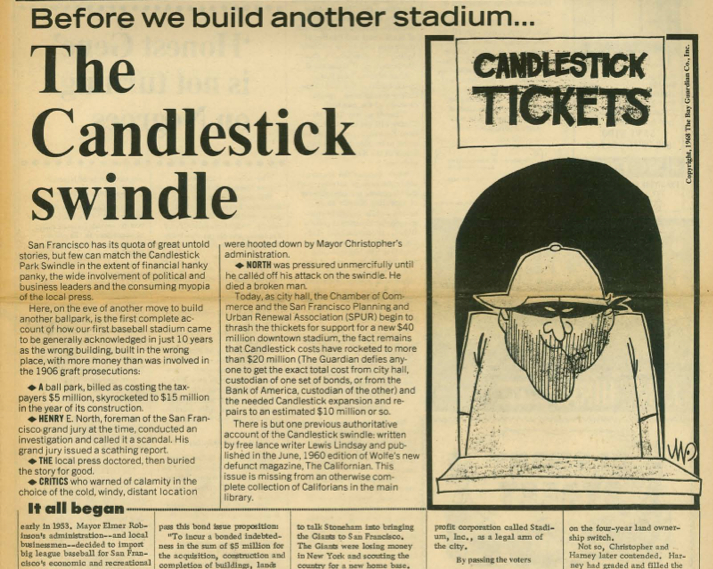
San Francisco spent this week saying goodbye to its beloved foggy stadium, Candlestick Park. Amidst the farewells, the Guardian spotted a post from sports blog Deadspin, which reprinted one of our articles from 1968  titled, “Before We Build Another Stadium… The Candlestick Swindle.” 

When we saw the post, we started thumbing through our archives looking for the article. Though Deadspin said it was from 1972, we found it in Vol. 2, Issue no. 10, May 14, 1968, it’s a down and dirty tale of intimidation, bypassing voters through dummy corporations, profiteering, and racism. Candlestick has a colorful history, to say the least. 

The author, Burton H. Wolfe (Burton, not “Mr. Wolfe,” he wrote via email), gave us permission to re-publish it in full here. Just for fun, we’re also embedding the original issue as a PDF, which can be download and printed. Looking through the issue, it’s heartening (and disheartening) how much, and how little, changes.


The Candlestick Swindle

It all began early in 1953. Mayor Elmer Robinson’s administration—and local businessmen—decided to import big league baseball for San Francisco’s economic and recreational benefit. A downtown stadium was adequate for San Francisco’s AAA minor league club, the Seals, but not for major league fare.

Hence, Robinson asked the Board of Supervisors to approve a $5 million bond proposition to construct a new stadium. Among the supervisors in approval: George Christopher, soon to become mayor; Gene McAteer, headed for the state senate; Francis McCarty, a future judge; Harold Dobbs, restaurateur and budding Republican candidate for mayor, and John Jay Ferdon, future district attorney.

In July of that same year, 1953, a local multi-millionaire contractor named Charles Harney purchased 65 acres of land at Candlestick Point from the city of San Francisco for $2,100 an acre.

Next year, a band of publicists headed by Curley Grieve, S.F. Examiner sports editor, beat the drums and called the natives to pass this bond issue proposition:

To incur a bonded indebtedness in the sum of $5 million for the acquisition, construction and completion of buildings, lands and other works and properties to be used for baseball, football, other sports, dramatic productions and other lawful uses as a recreation center.

Major league baseball, they proclaimed, would bring untold wealth to the city for a mere $5 million, a price that would be returned many times. After voters approved this in November, 1954, the search began for a site. If there were any doubts the stadium would cost more than $5 million, they were dispelled in a personal meeting between Robinson’s successor, Mayor Christopher, and the owner of the New York Giants, Horace Stoneham.

In April, 1957, Christopher and McCarty flew to New York to talk Stoneham into bringing the Giants to San Francisco. The Giants were losing money in New York, and scouting the country for a new home base.

To prove San Francisco’s support for professional baseball, Christopher waved the $5 million stadium bond issue at Stoneham. According to testimony reported by the 1968 grand jury investigation, Stoneham replied contemptuously:

Any figure other than 10 or 11 million dollars shouldn’t even be discussed because there would be no possibility or probability of a major club moving to that particular community.

Back in San Francisco, Christopher reported the need for more money to other city leaders and businessmen. Since the proposition suddenly to double the original bond issue might run into trouble with the voters, they decided to create a non-profit corporation called Stadium, Inc., as a legal arm of the city.

Bypassing the Voters

Operating through this dummy corporation, the Christopher administration could bypass the voters to raise more money.

Harney and two of his employees were selected as the first board of directors of Stadium, Inc. Christopher told Harney that he would be the contractor to build the new stadium, and his 41 acres of Candlestick land would be the heart of the 77-acre location.

In 1957, Harney sold back 41 acres of the parcel he had purchased from the city in 1953 at $2,100 an acre. The 1957 price the city paid to Harney for its own former land was $65,853 an acre. That’s a crisp total of $2.7 million.

The city’s Real Estate Department approved the deal even though other land adjacent to Harney’s was bought at about the same time for just $6,540 an acre. Harney made a profit of $2.6 million on the four-year land ownership switch.

Not so, Christopher and Harney later contended. Harney had graded and filled the land, and so naturally he was paid for his improvements. One fact raised doubts about that explanation: a $7 million fee awarded to Harney to construct the new stadium included $2 million for stadium construction, $2 million for grading and filling and $2.7 million for real estate.

Had it not been for the creation of Stadium, Inc., the Christopher administration would have been required to hold open, competitive bidding for the contract, and voters would have seen the price tags.

By operating through Stadium, Inc., Christopher was able to evade the city charter and arrange the contract in a privately negotiated deal.

Through the same apparatus, his administration was able to float another $5.5 million bond issue without voter approval. The interest rate on these bonds was set at 5% whereas the interest on the original $5 million bond issue was only 2.4%, a difference that would eventually cost the city hundreds of thousands of dollars.

Evading an Investigation

In February, 1958, Harney and his employees were removed from the board of Stadium, Inc., after, as the grand jury report later pointed out, “Three influential men then were substituted to represent the city’s interest—Alan K. Brown, W.P. Fuller Brawne and Frederic P. Whitman.”

The maneuver came too late to prevent Henry E. North from instigating a Grand Jury investigation into the strange transactions.

North, like Christopher, was a Republican and a conservative member of the San Francisco business community. Until his retirement, at 70, he had been executive vice-president of one of the largest property owners in the city: the Metropolitan Life Insurance Company. He had a strong sense of civic duty, however, and the Candlestick Park deal smelled to him of garbage.

The report North issued, as the result of the Grand Jury investigation, was potential dynamite. It showed that, shortly before the city purchased Harney’s land at $65,853 an acre, adjacent pieces of tideland were sold by the city for less that $4,000 an acre. It did not make sense that Harney’s land, partly under water, should have brought $61,000 more from city coffers.

On Dec. 2, 1958, the San Francisco Chronicle carried partial coverage of the Grand Jury report. On page 5, the year Harney purchased the city land was stated as 1933 rather than 1953. Of course, the 20-year difference would provide a reason for the tremendous increase in value, because the initial purchase price would have been at depression levels.

Undoubtedly, it was a typographical error. And no doubt it was by unintentional omission that other salient features of the Grand Jury report were omitted altogether and never printed by the Chronicle or any other major newspaper.

North charged that all bond issues negotiated by Stadium, Inc. were illegal evasions of the city charter. Bond payments had to be made from city funds, not the dummy nonprofit corporation, and so the whole deal amounted to legal subterfuge; a way to make taxpayers foot the bill without letting them vote on it.

The report, drafted by North and signed by 18 other citizens, estimated annual payments on the bonds of $990,000 for the first 15 years of the debt period. Against that, the city was to draw $225,000 a year in rent from the Giants and $225,000 a year from advertising and parking revenues, leaving a balance of $640,000 to be paid annually from taxes or city funds. It was estimated that the city could make up the balance by commanding the juicy television rights; instead, Christopher arranged for rights to go exclusively to the Giants.

Altogether, it was a marvelous deal for the Giants. In their last New York season, attendance at the Polo Grounds plummeted to 684,000. The club had gone broke and it was almost impossible to give away its stock. After the Giants first season in San Francisco in 1958, attendance tripled over its last year in New York, and their stock soared to $1,000 a share. In terms of revenue, the increase in gate receipts alone meant $3 million the first year.

While the Giants were reaping enormous profits at taxpayers expense, City Hall and the local newspapers were trying to make it appear that San Francisco, too, was earning money. The News-Call Bulletin, the now defunct Hearst paper, once stated that when all returns are in, the season just ended (1960) will have yielded the city about $530,000. The fact was that the sole revenue to the city was $50,000 received to maintain buildings and grounds.

The other Hearst paper, the Examiner, stated, on the other hand: City Hall officials said $375,000 of the revenue figure will be used to pay the annual cost of the city’s $5 million bond issue. The Chronicle published this figure: Of the remaining $527,000, the first $375,000 must go toward payment of the city’s $5 million stadium bond issue.

The fact was that all revenues from the ball park and its parking lot had to be used to pay off the $5.5 million worth of bonds issued by Stadium, Inc., with the exception of the $50,000 maintenance income. The other $5 million worth, issued by the city, had to be paid off through real and personal or property taxes collected by the city.

The result: a projected loss, not profit, of $640,000 the city must pay from taxes or other general city revenues (according to the Grand Jury report), and a loss this year of at least $360,000 (according to figures supplied to The Guardian by the city controller’s office and Mike Barrett, the Bank of America executive who handles Stadium, Inc.’s trustee account.)

Some annual loss on Candlestick Park will continue until 1993, when the stadium will finally be free of debt and owned completely by the city—unless, it is torn down before then or reconstructed, which will add more debt.

There was another interesting development at Candlestick: Stevens California Enterprises, which got the food and beverage concession at the ball park, bought all its milk until two seasons ago from Christopher’s milk company, Christopher Dairy Farms. The Borden Co. now has the lucrative contract.

Even though City Hall and the newspapers were misstating facts about the Candlestick story, San Francisco restaurateurs, hotel owners and shopkeepers at least began to realize that they were not making any money from the ball park, as promised by the ballyhooers. Only the Giants, Harney, and Christopher were making money. The Giants were attracting few additional tourists to San Francisco, and area fans who journeyed to isolated Candlestick Point, several miles away, did not stop to patronize downtown establishments. Some downtown business men were angry, and if North’s crusade were given time and publicity, they might cause an uncomfortable controversy.

Christopher sent emissaries to North, but he would not be wooed or pressured from his stand. To the contrary, he made even more vigorous attacks on Christopher and the ball park deal. The lives of future generations had been mortgaged by this shoddy piece of business, he maintained. Christopher was diverting city funds from various departments: $1.4 million from street improvement bonds, $1.2 million from state gasoline taxes given to the city for road improvements, $1.5 million from sewer bonds for services to the Giants ball park.

A Hidden Payoff?

Already the cost was $15 million, and it might exceed $20 million when various exits, entrances, widened access streets and the like were built to handle the anticipated large crowds. Privately, North informed civic and business leaders that there was an underhanded payoff in the deal, and he intended to expose it.

Christopher reacted viscerally to North’s charges. With newspapermen present, he asserted North was drunk, incoherent, and fixable. The description was published in the newspapers.

North went to Nate Cohn, one of the foremost criminal lawyers in California, and they filed a $2 million libel suit against Christopher. In a pre-trial hearing, Christopher’s attorney filed a thick brief with 45 motions for dismissal of the suit, hoping to tie up the case inextricably. In just an hour and a half, Superior Court judge Preston Devine threw out all 45 motions, indicating clearly that Cohn and North had a good case.

Breaking Down North

Christopher’s friends in the business community went to work on North. The publisher of one of the three daily newspapers, North told me, called on him and said, “Henry, why don’t you play ball? You’re giving the city a bad name, stirring things up like this.”

At the Pacific Union Club across the street from the Fairmont Hotel on Nob Hill, where North was already in disfavor for bringing Jewish guests despite the no-Jews-allowed policy, fellow Republican business executives started a snub-North routine. One day, for example, an old business friend greeted North:

“Say, Henry, I see in the papers there’s some fellow named Henry North filing a suit against the mayor and stirring things up. Must be another Henry North in this town, huh?”

“No, that’s me,” North told him.

“Is that so?” the old friend said. He turned his back on North and never spoke to him again.

I talked to North several times during the siege because I was publishing articles about Candlestick Park in my magazine, The Californian (now defunct). In those days he was full of fight, willing to take on City Hall and the entire business establishment even if it meant losing every friend he had. He promised to tell me the names of the men involved in the payoff, and he excoriated Christopher.

“You know what I call men like George Christopher? Black Republicans. Men who never did anything in their lives for the good of the common people. They’ve never realized that this country as a whole is no better off than the great masses of its people.”

The Fateful Fifth

Then they went to work on his wife. Unlike Henry, she was not involved in politics and her life revolved around her friends and social affairs. Her friends snubbed her and she no longer received invitations. She cried, she pleaded, she begged Henry to call off the ball park investigation and the lawsuit, when that did not move him, she threatened him with divorce. Henry began hitting the bottle.

On June 2, 1960, shortly after I published a detailed article by Lewis Lindsay called “The Giants Ball Park: A $15 Million Swindle,” the press broke the story that North had buried the hatchet with Christopher. In its first edition, the Chronicle correctly reported that North and Christopher had drunk a fifth and a half of Scotch together at Christopher’s home, and praised each other for publication. “He’s a great mayor,” North said—and agreed that legal entanglements were finished. The Chronicle dropped mention of the Scotch in later editions that went to most of its readers.

Cohn was outraged. “We had this suit won,” he told me. “North assured me he was going through with this no matter what happened. But they got to him through his wife, the poor old bastard. You see how they do things in this city? It’s so goddamned rotten you can’t believe it.”

When I called on North again, I found a complete transformation in his appearance. The look of a peppery fighter with ruddy cheeks had given way to a physical wreck; a baggy-eyed, tired, meek looking man weighed down by defeat.

The saddest part of the story was that his wife divorced him anyway. Not long afterward, North died of a heart attack. Harney died in December, 1962.

With North out of the way, with the daily newspapers blacking out the most important parts of the Candlestick Park story, with The Californian reaching only a few thousand citizens, it looked as though the scandal would never be investigated. In an effort to stir up something, I personally appeared before the Finance Committee of the Board of Supervisors and urged their help. One committee member, Al Zirpoli, had said before that he would favor an investigation.

No committee member challenged any facts I presented. When I finished, John Jay Ferdon, Committee Chairman, said only that he would not favor an investigation. He did not say why. (Six years later, when he had become District Attorney, he told me I was right about Candlestick.) Zirpoli, later to become a federal judge and the judge to hear draft resistance cases, said, “I agree with what Mr. Ferdon says.” He suggested, “If there is wrongdoing, your best course of action is a taxpayers’ suit.”

I went looking for wealthy liberals to finance a taxpayers suit, but none were in season. Cohn would have taken the suit if I could have found somebody to pay him for his time. All that he could do now was take me to business friends and introduce me.

The typical reaction came from Sam Cohen, owner of a plush restaurant on Maiden Lane said:

“Sorry, Burton, I can’t get involved. Do you know what Christopher can do to me with his power at City Hall? A Health Department inspector can find something wrong with this restaurant any time he wants. A door is too narrow, my stove does not meet regulations, anything to run me out of business. That’s how they do it. You can’t fight them.”

Since nobody in the city would fight, I asked Sen. Estes Kefauver, chairman of the Antitrust and Monopoly Sub-Committee of the Senate Committee on the Judiciary, to investigate. He replied: “As interesting as a study of how the San Francisco ball park deal took place would be, I do not conclude that it is a matter that should be gone into on the federal level. I think that it is entirely a local or state matter, and that the Subcommittee would perhaps be criticized if it moved into this area.”

Now Another Ballpark

Here we are eight years later, with a Candlestick Park that enrages so many people that a new mayor, Joe Alioto, wants to scrap it for a new stadium. His announced philosophy is that great public projects should not be waylaid just because all of the people aren’t getting enough spaghetti and zucchini. And no doubt many San Franciscans believe that a ball park is a great public project, greater than a school, housing complex or a modern transportation system. That attitude could be the most tragic part of this story.


Clean Power SF still moving forward

10

news@sfbg.com 

Dec. 19 marked the 100th anniversary of the Raker Act, federal legislation that specifically called for San Francisco to directly distribute the water and electricity generated by the O’Shaughnessy Dam to its residents and for their benefit. The city does so with the water, through the San Francisco Public Utilities Commission, but Pacific Gas & Electric used its power and connections to take control of the electricity and keep it, corrupting the political system for nearly a century in the process.

“The result: San Francisco has paid through the nose to PG&E for its power and the city loses about $30 million a year in profits it would get from a public system,” journalist J.B. Neilands wrote in the March 27, 1969 issue of the Bay Guardian, the first of dozens of stories we’ve written on the topic, spanning many unsuccessful public power campaigns, each one dominated by millions of dollars in PG&E spending.

Meanwhile, San Francisco’s longstanding effort to develop a municipal renewable energy program has been stymied by politics, but certain aspects of the plan are advancing nevertheless.

At a Dec. 13 meeting of the Local Agency Formation Commission (LAFCo), a committee comprised of members of the Board of Supervisors that has been working to develop CleanPowerSF for years, Sup. London Breed called for putting out a Request for Proposals to develop a concrete plan for building out local renewable energy infrastructure. LAFCo adopted the motion.

With plans for solar panel arrays or wind power facilities that would generate hundreds of megawatts of electricity for the municipal energy program, the build-out is a key aspect of the plan that could lead to job creation and stable electricity rates in the long term.

Earlier this year, members of the San Francisco Public Utilities Commission, a body composed of mayoral appointees, refused to approve a not-to-exceed rate for the program, effectively obstructing any forward progress.

“This does not get around the political problem we have,” said Eric Brooks, a longtime advocate of CleanPowerSF. “On Aug. 13, from [the SFPUC’s] standpoint, they put the program on hold.” Nevertheless, “the idea is to work on all the other things, and get those things done.”

Project proponents plan to bring on a consultant to hash out more tangible goals with regard to job creation, and then use those shovel-ready plans to bring trade unions on board.

The political pressure against CleanPowerSF, fueled by groups associated with PG&E in political alignment with Mayor Ed Lee, is formidable. Yet Breed and others remain undeterred. “We want labor to be a partner on this,” Breed told the Bay Guardian. “We want to make sure that it’s clear, and more importantly, we want it to be a strong proposal. … My goal is to make it difficult for them to oppose it.”

Plans for SF clean energy program still underway, despite political opposition

San Francisco’s longstanding effort to develop a municipal renewable energy program has been stymied by politics, but Sup. London Breed has taken up the cause of advancing aspects of the plan that haven’t been obstructed.

At a Dec. 13 meeting of the Local Agency Formation Commission (LAFCo), a committee comprised of members of the Board of Supervisors that has been working to develop CleanPowerSF for years, Breed called for putting out a Request for Proposals to develop a concrete plan for building out local renewable energy infrastructure. LAFCo adopted the motion. 

With plans for solar panel arrays or wind power facilities that would generate hundreds of megawatts of electricity for the municipal energy program, the build-out is a key aspect of the plan that could lead to job creation and stable electricity rates in the long term.

“Part of what I think is important in developing a plan is to make sure that if there are people who oppose it, that we have answers,” Breed said. “And we have clear answers, so that we’re communicating what the real, true accurate message is: There is real possibility for local jobs.”

Earlier this year, members of the San Francisco Public Utilities Commission, a body composed of mayoral appointees, refused to approve a not-to-exceed rate, effectively obstructing any forward progress on the green municipal power program. But some advocates who are thinking long-term have merely taken the setback as an opportunity to put some time and energy into crafting a well thought out plan that serves the interests of job seekers and environmentalists alike, which would ulimately be politically difficult to oppose.

The rate approval was a necessary step toward inking a contract with Shell Energy North America, the contractor selected by the SFPUC to procure renewable energy on the open market until a build-out gets off the ground.

Just before the commissioners made their decision, opponents of the plan who are affiliated with Pacific Gas & Electric Company – the utility giant that stands to lose customers if CleanPowerSF goes forward – plastered San Francisco residences with flyers denouncing the program and Shell’s involvement. The mailers were paid for by IBEW 1245, the International Brotherhood of Electrical Workers union that represents PG&E employees.

Breed reflected on that messaging as an unfortunate setback. “It created, I think, the challenges that we’re facing getting this program moving forward,” she said. “We need a clear communication strategy. We need a clear understanding of the build-out.”

Eric Brooks, a longtime advocate of CleanPowerSF who has attended hundreds of meetings to help shape the plan on behalf of his nonprofit, Our City, said he was pleased with the latest direction LAFCo talks had taken. He recently penned an editorial for the Bay Guardian calling on LAFCo to take control of the program.

“This does not get around the political problem we have,” he said. “Politically, the program isn’t moving forward. On Aug. 13, from [the SFPUC’s] standpoint, they put the program on hold.” Nevertheless, “the idea is to work on all the other things, and get those things done.” Once there is a practical plan spelling out how the city will move forward with building out green renewable energy infrastructure, he said, it could serve to “show the building trade unions what’s possible.”

From what Brooks said and what was voiced at the meeting, it seems the political strategy of project proponents will be to bring on a consultant to hash out more tangible goals with regard to job creation, and then use those shovel-ready plans to bring trade unions on board. From there, Brooks hopes there may be more leverage to push for approval – or perhaps to pursue an alternative management structure that gets around the SFPUC, such as joining with another municipality to form a Joint Powers Authority that would oversee the program.

Sup. David Campos, who has been a key supporter of CleanPowerSF along with Sup. John Avalos, did voice some reservations about moving forward with the RFP. “We are here,” halted from moving forward, “even though we have a program that has been approved by the Board of Supervisors,” he pointed out. “How do we avoid going down the path of doing additional work, only to find ourselves in the same predicament?”

The political pressure against CleanPowerSF, fueled by groups associated with PG&E in political alignment with Mayor Ed Lee, is formidable. Nevertheless, advocates from environmental organizations such as 350.org, the Sierra Club and others have kept pushing for the program out of a conviction that it represents an opportunity to curb greenhouse gas emissions and combat climate change at the local level.

“This is a very important move,” said June Brashares, a steering committee member of the Local Clean Energy Alliance. “A key piece of work that has not yet been done is the selection of actual sites all over the city for the installation of hundreds of megawatts of local clean energy projects that will make up CleanPowerSF.”

UPDATE: After we posted this, Breed returned a phone call from earlier in the day. She shared some thoughts about the program:

“I just think we’re overdue, to do it. The fact that we have five commissioners appointed, not necessarily elected, [blocking the program] disturbs me,” she said.

Asked why she’s supportive of CleanPowerSF, Breed said, “It’s not just about the choice. It’s also about the environment, and the future. There’s a lot of money in energy in general, and part of that money should go back to the local economy through those jobs.”

When we asked her about the strategy for advancing the program, she responded, “We want labor to be a partner on this. We want to make sure that it’s clear, and more importantly, we want it to be a strong proposal … My goal is to make it difficult for them to oppose it.”

Finally, questioned on whether she was worried about the political opposition, Breed responded, “I can’t do my job in fear that someone may oppose it. I have to do it based on what I think is truly right for the city of San Francisco.”

UPDATE: Union organizer shouts down protesters as they block private Google shuttle

228

Protesters blocked a private Google shuttle on Valencia street today, decrying private shuttle’s use of public bus stops without paying fees or fines.

The group of 20 or so neon-yellow vested protesters called themselves the “San Francisco Displacement and Neighborhood Impact Agency.” The company doesn’t pay San Francisco a dime to use the Muni stops — fines that private auto drivers pay regularly.

UPDATE 3:58pm: Just how does a story go from breaking, to verification, to “holy shit it’s all over the internet now?” Here’s our interview with Fake Google Employee Max Alper, and our recount of how it all went down: http://www.sfbg.com/politics/2013/12/09/whyd-you-do-it-we-ask-fake-google-employee-max-bell-alper

UPDATE 12:32pm: Various tips have streamed in that this shout-out was staged. Protest organizer Leslie Dreyer talked to us on the phone and verified that this person’s identity was Max Bell Alper, a union organizer from Oakland. This person was not a Google employee, and Dreyer was not able to verify if Alper was there in the morning with the group of 20-30 protesters. The Guardian is attempting to contact Alper for comment. Dreyer said she, as an organizer, was unaware that the “performance” had been planned. We are following this as it develops.

UPDATE 1:06pm: Within an hour of our original post, the Guardian learned that Max Bell Alper, a union organizer with Unite Here Local 2850 was the man shouting down Google bus protesters earlier this morning. We asked Alper what motivated him to impersonate a Google employee.

This is political theater to demonstrate what is happening to the city. It’s about more than just the bus. These are enormous corporations that are investing in this community. These companies, like Google, should be proud of where they’re from and invest in their communities,” he said.

When asked if he intentiionally intended to deceive media, he replied “People are talking all over the country about what’s happening in San Francisco (referring to evictions and displacement). That’s the debate we need to have here. The more we talk about it, the more we think about it, the more we’re going to see the tech companies need to contribute.”

 Alper said that he did not intend to engage in theater before going to the protest, but when there made the decision, “spontaneously,” to stage the argument. When he maintained his story that this was political theater, we again asked why he did not verify his name at the protest itself — and only after the story blew up in national and local media.

This was improv political theater,” he said.

Original post follows:

The SFMTA has a pilot plan in the works to regulate private use of public bus stops.

Though the private shuttles were the crux of the day’s protest, the heart of the fight is over gentrification. As the tech revolution in SF leads to rising rents and longtime San Franciscans are being displaced.

In the video, a union organizer who hopped off the bus shouts down Erin McElroy, staging an argument with a protester who also heads the eviction mapping project. “How long have you lived in this city?” McElroy asked him. He shouted back “Why don’t you go to a city that can afford it? This is a city for the right people who can afford it. You can’t afford it? You can leave. I’m sorry, get a better job.”

“What kind of fucking city is this?” he shouted, and then walked off. He mentioned repeatedly that he couldn’t get to work because the bus was blocked, and did exit the bus (indicated he was a Google employee), but the Guardian (nor a nearby Al Jazeera reporter) could not verify his job title or name. If anyone has any tips as to the identity of this man, please contact us at news@sfbg.com. 

(UPDATE 12:12 PM — The Guardian amended the headline to reflect our story more accurately, that though this man exited the bus and claimed he was late for work, we have not yet verified his employment at Google)

We’ll have more on this story later in the day, for now, check out footage from the protest.)

Riot acts

0

arts@sfbg.com

FILM It was strange when Kathleen Hanna — riot grrrl activist, iconic Bikini Kill battle cry leader, electro-popping Le Tigre singer — went silent.

Though she was not entirely absent from the public eye, she did not make any new music or tour for nearly a decade. Beat down by a mysterious illness, she seemingly tumbled into hardcore self-preservation mode, contributing her personal files of zines, show flyers, and lyrics to the “Riot Grrrl Collection” at New York University’s Fales Library.

This archival material would prove key to Sini Anderson’s new documentary about Hanna, The Punk Singer. The film includes many lesser-seen clips from the early days of Bikini Kill, the band’s tours through Europe, and rare early moments with Hanna’s husband, Beastie Boy Adam Horovitz.

“There’s some unfortunate and there’s some fortunate in this,” says Anderson, speaking to me in a hotel in San Francisco ahead of the film’s Bay Area premiere at the Oakland Underground Film Festival in September. “The unfortunate is that Kathleen started getting incredibly sick, and she was getting worse and worse. [But then] she decided to pull all her materials together and start archiving them. So she had a few interns and for a couple of years they just pulled all this stuff from all over the place, so by the time we started the film project, a lot of this was in one place.”

Anderson is a Portland, Ore.-based feminist artist who co-founded Sister Spit while living in SF and has worked in film for a decade, though this is her first documentary. She suggested the idea to Hanna while Le Tigre was making 2011 doc Who Took The Bomp? Le Tigre on Tour. While Hanna became the reluctant face of the riot grrrl movement in the ’90s, she’d never granted the media access to her whole story, at least partially because she didn’t want to be misunderstood.

“She had been out of music for six years at that point, and in [the realms of feminism and politics], there just didn’t seem to be any kind of action going on. Things seemed complacent,” Anderson says. “I said, ‘Kathleen, people need to hear your story, and they need to hear it now.'”

Using archival footage and present-day interviews, the doc covers Hanna’s childhood, the beginning of the riot grrrl movement, Le Tigre, and the resurrection of her post-Bikini Kill solo project, the Julie Ruin. Anderson interviewed Hanna in a series of intimate, enlightening sit-downs at her lake house, which are delicately spliced throughout the film between older clips and interviews with Hanna’s contemporaries: Bikini Kill’s Tobi Vail, Billy Karren, and Kathi Wilcox (now of the Julie Ruin); Kim Gordon; Joan Jett; Carrie Brownstein and Corin Tucker; and teenage Rookie Magazine editor Tavi Gevinson, who wears the colorful “Feminist” sweater gifted to her by Hanna.

The main bulk of filming was done over the course of a year — and it was a momentous one. Countless doctors had misdiagnosed Hanna by the time Anderson began filming, without an end in sight. Halfway through filming, she finally had a name for her illness: late-stage neurological Lyme disease. When she began treatments, filmmaker and subject decided not to shy away from the vulnerability of moments like Hanna taking her meds and experiencing their uncomfortable after-effects.

“Once she started treatment, it was a roller coaster — she got worse, and then she got better, then she got worse. We had to plan the interviews around when she was up for it,” — explains Anderson, who, incredibly, was also diagnosed with Lyme disease during filming, from an unrelated incident. “I really believe there’s so much power and strength in that vulnerability. It really is important for other women to see that we can tell our truth, we can let people see what’s going on — that doesn’t make us weak, that makes us stronger.” Anderson is now working on another documentary specifically about Lyme disease.

During filming for The Punk Singer, Hanna decided to put together the Julie Ruin, her first new musical act since the end of Le Tigre. This year, the band released its full-length, Run Fast, on Dischord Records.

“She says it really eloquently in the film: when she realized that she may never again be able to do this thing she loves, she realized she wanted it more than ever,” Anderson says.

For the director, one of the biggest moments during filming came from this realization. Hanna sits by her fireplace, surprising herself as she talks about why she quit music — why it was easier to just say she’d already said everything she’d needed to sing. She didn’t want to admit to anyone, including herself, that she was quitting because she was sick. In the doc, Hanna seems taken aback and tears up a bit, but gives the go-ahead to keep filming.

The Punk Singer‘s other epiphany comes at the very end, on the last day of filming, in what became the last scene of the film. Hanna asks, “What is my story? I have no idea,” and begins mentioning moments from her life. “I thought, who is going to believe me? Other women will believe me.”

Says Anderson, “It was about being believed, and being heard, and having her truth be validated. That’s [her] story.” *


THE PUNK SINGER opens Fri/6 in San Francisco.

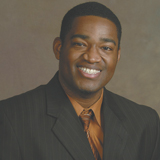
Why I’m resigning from the City College board

15

By Chris Jackson

When I worked for the state legislature, a member once told an overly ambitious guy that there are those who get into politics to be someone and those who get into politics to do something, and we have enough of the first type.

Serving on the City College of San Francisco Board of Trustees was always a means for me to work to connect underserved communities to education and eventually economic empowerment.

One of the first measures that I passed while on the board was to expand City College’s Community/Outreach Ambassador to the Mission and the Southeast campuses. Through this program, City College was better able to do outreach to underserved communities.

Be it by protecting CCSF’s GED program or child care sites, working with community leaders to continue to make the Mission campus an educational jewel to its residents, or working with Bayview advocates to ensure the Southeast campus’ survival and eventual growth, I came to the CCSF Board of Trustees on a mission to help ensure that our most vulnerable populations are given access to education as a means of equity.

Although I’ve had amazing success and even made a few mistakes along the way, I don’t want anyone to doubt my continued passion and commitment to the communities that CCSF serves. It is this passion to do something and not simply be a figurehead that has led me to the difficult decision to resign from the CCSF Board of Trustees.

The Accrediting Commission of Community and Junior Colleges, an unelected and publicly unaccountable organization, seeks to change the values and charge of City College from an inclusive, community-based and student-focused college to a simple junior college that serves the few and shares the values of the corporate education reform movement.

Even more disappointing has been our state Community College Board of Governors. Instead of performing its public-policy duties, the state Board of Governors, led by State Chancellor Brice Harris, has continued to allow itself to be bullied by the ACCJC to the point where there is a serious question of who really sets public policy for the 112 colleges in our statewide system: our publicly appointed Board of Governors or the unelected, unaccountable private ACCJC.

It pains me to see the scope of our class offerings pared back, our community-based campus continually threatened with closure, much-needed academic counselors laid off, and our Second Chance program for ex-offenders with an over 900-student waiting list. It pains me even more to be sidelined by Harris and our public Board of Governors and watch them shrink and cower to the power of Barbara Beno and her private ACCJC.

But in the face of this challenge to our public education, I see hope. Students like Trustee Shannell Williams, Student President Oscar Pena and former Trustee William Walker rallying students to stand up for their public education give me hope. The American Federation of Teachers Local 2121 and the Save CCSF coalition have become rallying points not just for the immediate CCSF community, but for the larger SF community. Their bravery in the face of the withering attacks on public higher education should be commended and be a model that others should follow. At this moment, there exists the base for a long-lasting coalition of students, educators, and community fighting for the high-quality, affordable education.

Thank you for the opportunity to do something to make an impact in people’s lives. Thank you for allowing me the opportunity to serve on the City College of San Francisco Board of Trustees.

Chris Jackson was elected to the CCSF Board of Trustees in 2008.


Dick Meister: The jobless need help. Now!!

58

By Dick Meister

Guardian columnist Dick Meister, former labor editor of the San Francisco
Chronicle and KQED-TV Newsroom, has covered labor and politics for more than
a half-century. Contact him through his website, www.dickmeister.com, which includes several hundred of his
columns.

It’s time for Congress to help the many jobless Americans ­an estimated
450,000 in the next three months alone ­ who are about to be denied
federally- funded Unemployment Insurance benefits.

What Congress must do ­ and must do quickly ­ is once again expand the
emergency program that was established during the Great Recession in 2008 to
provide benefits averaging $300 a week to the steadily growing number of
jobless.  Congress has until only January 1 to block the first cutbacks of
extra benefit weeks that could continue until at least 2015 unless Congress
Acts.

President Obama and congressional Democrats are pushing measures that would
lengthen the benefit payout period through 2014 at a cost of about $25
billion on top of the $225 billion spent so far on the program. But given
the congressional haggling over economic measures, the chance of agreement
before Congress adjourns December 31 is slight.

Meanwhile , the number of Americans unable to find  jobs they need for
survival remains in the millions. Already, there are four million who have
been seeking jobs for more than six months and many others who have stopped
looking.

 Particularly hard hit are aging as well as younger workers, and women and
minorities. Their number ­ and need for unemployment benefits ­ is certain
to grow, most likely at a rapid pace.

All this is happening, of course, at the same time that banks, corporate
interests and other wealthy Republican friends continue raking in huge
profits. Money gained from relaxing the tax breaks given such political
friends, for instance, could very well go into funding further Unemployment
Insurance payments and other steps to help U.S. workers.

Ironically, cutting the federal benefit program could actually lead to more
unemployment. That’s because workers denied benefits naturally have less to
spend and that could in turn cause those who rely on the laid-off workers’
business to cut back operations.

 The need for extending the federal benefit program should be obvious to
anyone outside the powerful circle of GOP & friends. Listen to what Gene
Sperling, Obama’s chief economic adviser, told the New York Times’ Annie
Lowrey:

“There has not been a time where the unemployment rate has been this high
where you have not extended it. Why would you not expand now, when you’re
dealing with the nearly unprecedented levels of long-tern unemployment
coming off such a historic recession? “

Why not, indeed?

Guardian columnist Dick Meister, former labor editor of the San Francisco
Chronicle and KQED-TV Newsroom, has covered labor and politics for more than
a half-century. Contact him through his website, www.dickmeister.com, which includes several hundred of his
columns.

Copyright 2013 Dick Meister

Where I was on the day President Kennedy was shot

5

By Bruce B. Brugmann

On Nov. 22, 1963, I was a reporter for the Milwaukee Journal, a famous MIlwaukee daily newspaper always rated among the top ten U.S. newspapers.

I was packing with my wife Jean and two kids, Katrina and Dan, to go to San Francisco with the idea of starting a newspaper, which three years later became the San Francico Bay Guardian.  But I was still on duty in the Journal newsroom on the  Friday morning of the assassination. 

Early in the morning I got a call from the publicist of the Moscow Circus, which was finishing up its highly successful run in town. I had covered the circus as part of my show business beat and had rated it highly as the splendid show it was. The publicist, a good guy and competent at his job, wanted me and the Journal’s music critic, Walter Monfried, to go with him to lunch at a nearby German restaurant called Mader’s.

“I will buy the lunch,” he said, ‘”and you won’t have to write a thing.  You will be doing me a big favor.  I have lots of money left over on my expense account and I need to get it spent.  I want to spend it on the two of you.” And he repeated the point  for emphasis, “You will be doing me a big favor.”

And so Walter and I, after our noon deadlines on the afternoon paper, headed out for Mader’s,  planning for a big meal and lots of drinks.

We had a couple of drinks and ordered some German specialties of the house and settled in for a long lunch. Word of Kennedy’s death came to Milwaukee at 12:49 p.m. on Nov. 22, but Walter and I got the news by special messenger. Suddenly, Gus Mader, the proprietor, broke the lunch decorum by running around the room carrying a little sign.  “Kennedy’s been shot, Kennedy’s been shot,” he said in an excited voice.”Kennedy’s been shot.” Ane he kept running around the restaurant with the message.

I looked at Walter and said, “Walter, you know Gus. Can he be believed?”   Walter replied, “Yes, he can.  Kennedy’s been shot.”

We quickly finished our meals and did what newspeople do in the news business when disaster and a big story breaks.  We immediately went  back to the Journal newsroom.

It was pandemonium but functional pandemonium. The staff had only minutes to make the final deadline on the afternoon edition. Someone called downstairs to the press room,  nobody knows who, to yell “stop the presses” All the wires were pumping out copy relentessly,  AP, UPI, sports, regional wires, all of them. Our ace reporters had already been dispatched to the scenes, Bob Wells to Dallas and Harry Pease to Washington. Editors were conferring with reporters. Reporters were on the phones or typing furiously on their typewriters. Ruth Wilson was handling the mountains of material streaming in from the wires. The city desk was organzing local coverage and reaction followups and coverage from our Washington bureau. Things were tense and the air crackled but I was amazed at how efficiently and professionally the paper moved along.

The assassination was of particular moment for the Journal and its talented staff. They liked Kennedy and his politics and had a special personal and political affection for him. J. Donald Ferguson, the Journal editor sitting on the Pulitzer Prize board  in 1957, was responsible for the choice of Kenendy’s book, “Profiles in Courage,” to be given a Pulitzer for the best biography.  “The book had not been considered by the other judges until Ferguson won them over, telling the board he had read it aloud to a 12-year-old relative, “‘and the boy was absolutely fascinated,'” according to a Journal history.

Kennedy had visited the Journal newsroom during the crucial 1960 Wisconsin primary and was friendly with many of its reporters and editors and his administration hired some Journal staffers, including Ed Bayley, former star political reporter  and later founding Dean of the UC-Berkeley Graduate School of Journalism  The  Journal warmly endorsed him during the primary and general elections. Kennedy was a welcome change after the Journal’s famous battles during the 1950s with its native son Joe McCarthy and the national scourge of  McCarthyism.

The story made the final edition and then there were other extras, with huge “EXTRA ! EXTRA !” at the top of the front page. When the first of l00,000 copies of an extra rolled off the presses with more details, the Journal lobby was jammed with people waiting to buy papers.

The  Journal rose to the occasion magnificently, put out a special edition on deadline, and produced some of the nation’s best coverage of the assassination and funeral of any paper in the country.  We were all sad about Kennedy but very proud of our newspaper. . b3


After Prop 30, What’s Next? Reform Prop 13.

23


By Matt Haney

Proposition 30 was a big deal: It raised over $6 billion a year by increasing taxes on the wealthy, balanced the state budget, and allowed our K-12 and higher education systems to put an end to mass layoffs, exploding class sizes, and ballooning tuition.

But one year later, it’s about time we ask ourselves: What’s next?

Even after Prop 30, the under funding of education and essential services remains, with California still near the bottom nationally in K-12 per pupil funding. Prop 30 was a step forward, but we all knew that we ultimately would have to take on the “Godzilla” of California tax policy: Proposition 13.

Since its passage in 1978, Prop 13 has decimated public education and essential services in our state. Per pupil support in California plummeted from top 10 in the nation to bottom 10, and the tax burden shifted away from businesses and onto individuals. As state investments in services and education went down, poverty went up.

California voters originally passed Prop 13 mainly to protect homeowners. But due to loopholes in the law that prevent regular reassessment of commercial property, large commercial property owners are getting a multi-billion dollar public subsidy. Many commercial property owners are paying taxes at rates that are nearly unchanged from decades ago. Chevron alone is under-taxed by a billion dollars!

Reforming the commercial property tax loophole in Prop 13 could bring in over $7 billion dollars annually, most of which would go directly to education. Despite new funding from Prop 30, our schools desperately need greater investments if we are going to provide a 21st century education for all of our children.

Prop 13 has long been viewed as the “third rail” of California politics. Talk about reforming it, and risk your political career. Yet recent polls show an openness from Californians to reform Prop 13 to ensure more regular value reassessment of commercial property. Demographic change, voter education and registration, and the victory of Prop 30, have shifted the political landscape.

The San Francisco School Board recently joined dozens of School Boards, City Councils, and Board of Supervisors across the state in calling for the reform of Prop 13 through a statewide ballot initiative in 2016 or sooner. The strategy, led by organizations like Evolve California and California Calls, is to ramp up the pressure from the ground up. Cities, schools, and communities are the canaries in the mine. We have experienced Prop 13’s carnage firsthand, and we cannot be silent.

Just as we did with Prop 30, Californians deserve a choice: fully fund education and essential services, or maintain a broken and inequitable tax system. We can’t have both. Next time the stakes will be even higher, so it’s critical that we start preparing for this fight now. Let’s get to work.


The Performant: Louder, faster, more!

4

When a friend of a friend held his 33 1/3rd birthday party, he filled the rooms of his apartment with turntables and stacks of LPs for his guests to play themselves. It was basically the best party ever, and a good argument for propagating the tradition of celebrating that particular milestone. And of course what better milestone to celebrate if you’re in the music business, like long-time independent label Alternative Tentacles? Particularly in a business climate unkind to independent anything, to be able to celebrate three-plus decades of sticking it to the establishment at all is some cause for jubilee.

Of course there are pitfalls to growing older, which I only discovered when I got to the Alternative Tentacles blowout anniversary show at Slims at the perfectly respectable club-going hour of 11pm, to discover that I had missed most of the show. Well, I never! Not only had a missed out the rare opportunity to see one of my personal musical heroes, Mojo Nixon, tear it up in his indomitable, breakneck way, but I didn’t really get a chance to soak in the atmosphere building up to the main event: headliners Jello Biafra and the Guantanamo School of Medicine.

Fortunately even if my flow was off, the band’s was not, and the fast and furious set punctuated by politicized bon-mots and observations was classic JB. Jello Biafra, of course, is the founder and overlord of Alternative Tentacles, former frontman of the Dead Kennedys, spoken-word raconteur extraordinaire, and occasional political candidate, and while he was sporting the unlikely trimmed beard and mustache combo of “The Most Interesting Man in the World,” his voice was still the strident, yodel of days of yore, and his stage persona full of ham.

Humor and politics have always been the hallmarks of Jello’s work, which songs like “Burgers of Wrath,” “Pets Eat Their Master,” and “Kill the Poor,” perfectly encapsulate, and except for an awkward stagedive that didn’t quite go anywhere, Biafra’s stage performance was as energetic as ever, thankfully proving that aging doesn’t have to be about being graceful, and a punk show that ends at midnight can still rock.

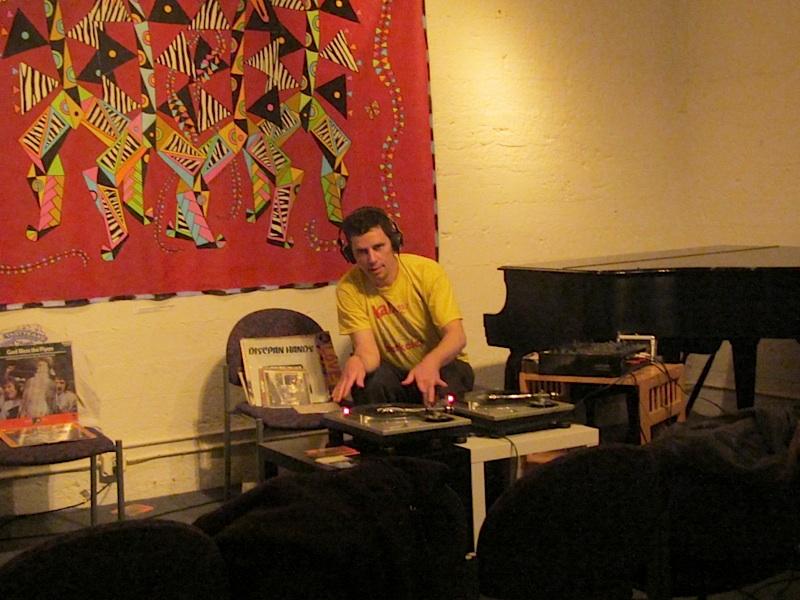
Meanwhile on the other side of the city, an unexpected Alternative Tentacles connection represented at the Emerald Tablet, where Philadelphian Joseph Gervasi held a screening of his Philly punk-scene archive project, Loud! Fast! Philly!, and his co-host/co-organizer turned out to be Jesse “Luscious” Townley, formerly of the Philly scene, and general manager of Alternative Tentacles, who DJ’d an eclectic set before the show.

Originally compiled in the earlier part of the year, Loud! Fast! Philly! was originally shown at the Cinedelphia Film Festival as an “interactive” audio-visual presentation combining old home movie-style footage of various Philly punk bands with live commentary from members in attendance. But in compiling the project, Gervasi realized it was the stories behind the videos he really wanted people to have access to. Thus began the second arm of the project: an audio archive of interviews with a variety of old school Philly punks, which lives in perpetuity online.

Truthfully the archive is probably the most fascinating part of the project. The video clips, while offering a fascinating peek at a particular time and place (and substandard quality of recording devices), don’t offer nearly the same breadth and depth of history as do the interviews. That said, rare footage of bands like More Fiends, Flag of Democracy, Dead Milkmen, and R.A.M.B.O. were unique and frankly humorous enough to transcend their shaky amateur quality and insider appeal, and provided a weirdly cohesive portrait of an ever-morphing scene, from the 80s to the present.

Undocumented and unafraid

45

rebecca@sfbg.com

Business as usual means buses depart from the Immigration and Customs Enforcement building in downtown San Francisco every weekday, ferrying deportees from throughout the region to federal detention centers or the airport. Even in San Francisco, a Sanctuary City where local law enforcement agencies have limited cooperation with ICE authorities, life can be filled with uncertainty for those who lack legal citizenship status.

In recent years, many immigrant activists have taken the step of publicly revealing themselves to be “undocumented,” to sound a call for immigration reform and to push back against the fearful existence that the looming threat of deportation can create.

But the young people who are profiled here have taken things a step further, going so far as to risk arrest by protesting deportations and pushing for immigration reform, all while identifying themselves loud and clear as undocumented.

In the same vein as protesters who marched for civil rights, gay rights, free speech, or in anti-war movements before them, the undocumented youth are putting themselves on the line. Their mantra, chanted at top volume, is “undocumented and unafraid,” highlighting the ever-present possibility that they could face stiff penalties for their actions.

Nationwide, an estimated 11 million undocumented immigrants remain in limbo as a push for federal immigration reform, which would create a pathway to citizenship for people in the country illegally, remains stalled in Congress. While community-led campaigns have yielded legislation that creates safeguards against deportation for young people who arrived with their parents as children, bureaucratic nightmares and forced deportations continue unabated.

Nearly everyone we interviewed for this article mentioned their grandparents while sharing their personal stories with the Guardian. While the politics and policy surrounding immigration reform are tremendously complex, the impact the current system has on people’s lives often boils down to problems like not being able to take a flight to visit an ailing grandparent because it would be impossible to return.

“It’s intense,” says Nicole Salgado, an American citizen who lives with her foreign-born husband in Mexico. “Because you know, it’s essentially an issue of trespassing, and so it seems to me like it’s a really harsh penalty for a civil infraction. No harm was done to a person, and that’s the case for the vast majority of people who are in this situation.”

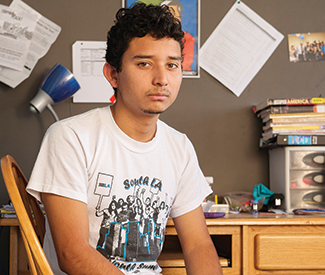
ALEX ALDANA

Alex Aldana is nervous.

He’s stopped making eye contact, which is strange, because Aldana doesn’t normally break eye contact, and isn’t the nervous type. Since 2012, he’s been arrested seven times.

All seven arrests stemmed from acts of civil disobedience, each carried out to protest the same issue: immigration laws that he views as unjust, because they lead to forced deportation.

Aldana, 26, is an undocumented immigrant. He entered the US legally from Guadalajara, Mexico, in February 2003 on a work visa, but when the time on his visa ran out, he was left undocumented. It coincided with the departure of his father, a man Aldanda says deceived his family.

Like many other undocumented immigrants, he has been trying to give a largely misunderstood population a face. Unlike many others, he’s doing so in a way that carries a great deal of risk.

He’s part of the growing contingent of undocumented immigrants who are, as they say, “undocumented and unafraid.” And when they say it, they shout it.

Aldana participated in a sit-in inside Gov. Jerry Brown’s office. He’s faced the Ku Klux Klan at pro-immigration reform rallies in San Bernardino. He’s been a key link in a human roadblock created to halt a deportation bus in San Francisco. He’s been detained by ICE and local police departments. He normally comes across as fearless, but not on this day.

“This is probably the last crazy thing I’ll do,” Aldana says. “I have thought about it, I have planned it.”

Sometime in late November, he and an intrepid band of humanitarian crusaders plan on taking their fight to the southern US border for the first action of its kind.

The details — which they’re keeping intentionally vague — involve a group of activists crossing the San Diego-Tijuana border legally (many are still Mexican citizens, after all), before ferrying previously deported people back over the border into the United States.

Their hope is to create a spectacle to raise awareness, and even mentioning the planned action makes Aldana squirm a bit. He’s hesitant to disclose specific information; the wrong statement could end his journey before it begins, he explains.

And the timing isn’t perfect for community support, he adds. The last act of civil disobedience he engaged in — a human blockade that halted an ICE bus (see “On the line,” Oct. 23) — didn’t garner universal backing within the immigrant activist community.

“[Some] people are really backlashing the immigrant youth movement right now,” says Aldana. “They consider us harmful.”

But on the flip side, Aldana considers that community’s apathy toward deportation harmful. He doesn’t think that any approved immigration reform should even include deportation as an option.

“In the immigrant community, if you mention ‘immigration reform’ — not ‘conscious,’ not ‘comprehensive,’ just ‘immigration reform’ — then you hear, ‘Yeah, I support it,'” he says. “But what kind of immigration reform are we supporting? Are we supporting militarization? Are we supporting massive deportation? Because word by word, that’s what it says right now.”

The immigration reform package now being pushed by President Obama includes beefed up border security, a crackdown on the hiring of undocumented immigrants, and streamlined deportation procedures, along with a path to citizenship.

Aldana’s confidence in his activism belies a background drenched in fear.

“I never learned how to drive because of that fear [of being deported]. I never traveled because of that fear,” he says. “One of the reasons I never went to college was because ICE was in every bus stop, at least where I come from. When you lose fear, you do incredible things. I’ve been to like 30 states now.”

He started on the activism trail when he was still in high school in Coachella, advocating for women’s rights after watching his mother suffer through domestic abuse, but he didn’t start advocating for immigration reform until years later.

“I was very open about my sexuality and my gender identity very early on,” says Aldana, who identifies as queer. Yet he felt more self-conscious about sharing his immigration status. “Ten years after that, even when I was working for a nonprofit [in Southern California], I was really afraid saying I was undocumented, because my family depended on that job.”

More recently, Aldana has struck a balance between activism and bread winning, a lifestyle that will be put to the test in the coming month. He says he isn’t planning on coming back to the US for a little while after the protest at the border, but not for legal reasons. He just wants to have peace of mind for a moment, to be treated like any other American.

“My grandmother is dying, and I’m not gonna wait for any policy to deny what I couldn’t do with my mom’s mom,” says Aldana. “I think that when what makes us human is that vulnerability, that we really need to have those rights.”

He adds, “I really dislike when people say, ‘I’m gonna visit so-and-so because they’re really sick and they’re on the other side of the world.’ To me it’s like, why can’t I do that?” (Reed Nelson)


MAY LIANG

May Liang, a 23-year-old campaign organizer who accompanied her parents to the United States from China as a child, remembers the moment she realized there were other undocumented Asian families in her midst.

She was at a conference on issues surrounding the Asian Pacific Islander community at the University of California Berkeley campus, where she was a student. “Outside of each workshop, there’s this poster. This one said ‘undocumented Asian students.'” It struck a chord as she realized she wasn’t the only one.

It was one of the first meetings of ASPIRE (Asian Students Promoting Immigrant Rights through Education), a small but growing organization where Liang is now the first paid staff member. Her first undertaking was to plan out last month’s ICE bus blockade.

Now, she’s in the middle of preparing for a Thanksgiving Day vigil to be staged with others outside the West County Detention Center in Richmond, where undocumented immigrants are held in federal custody. Many in her community won’t get the chance to enjoy Thanksgiving dinner with loved ones, she says, “because their families have been ripped apart by deportation.”

Liang wasn’t always an activist. She didn’t become aware of the barriers her immigration status presented until she became a teenager and started pursuing part-time jobs and a driver’s license, only to discover she lacked a Social Security number.

Not having an ID posed problems, but she’s quick to note that she had it easier than some of her fellow activists. “I walk around, and nobody suspects me because I’m Asian. In the media we see a lot of Latino people,” she explains. Nevertheless, “It was just like hiding a secret. I was trying to pass as something I knew that I wasn’t.”

One day, just as she was gearing up to go to college, her father called a family meeting. Their immigration status had been “pending” ever since they’d arrived on tourist visas and applied for green cards. But he’d just been notified that their applications had been denied.

“As soon as you get denied, you can’t be here,” Liang notes. “And so we were also ordered deported.”

They decided to fight it out in court, and the case dragged on until after she’d entered college.

“My family’s first court date was on the same day as a midterm,” she recalls. “It was really early in the morning, at the immigration court on Montgomery. I was in the waiting room, reading and studying. And then right afterward, I got on the BART and took my anatomy midterm. It felt really surreal.”

In the end, they were able to avert deportation, yet remained undocumented. As a full-time activist, Liang is thinking big. “For me, it’s like we need to change the system of immigration. One of the most important things we need is sort of a cultural shift as to how we treat people.”

Her first priority is to call for an end to deportations as long as federal immigration reform remains pending in Congress.

Liang is big on being inclusive. Laws such as the California DREAM Act, which aids undocumented students, and the federal Deferred Action for Childhood Arrivals can help youth like herself. Yet she doesn’t understand that piecemeal approach.

“Why is there a distinction being made, just because we’re younger?” she says. “These narratives were given to us. We did not create them. And it becomes divisive, because it really puts our parents under the bus.”

She’s also critical of the notion that immigration laws should treat people differently based on their nations of origin. “We like to say immigration is a Latino issue,” she says. “But it is also an Asian issue. It’s an American issue, because we are immigrants of America.”

Along those lines, Liang regards the work that she and other undocumented youth are engaged in as being a kind of patriotism, for a country that hasn’t yet accepted them as citizens.

“We actually love this country,” she says, “because it does have this sort of mentality of fighting for your rights, social justice, freedom of speech, and that stuff. In all that has happened in the history of this country, there are so many examples of things having been changed because of the people.” (Rebecca Bowe)


DAVID LEMUS

On July 21, 2008, David Lemus arrived in the United States at the age of 16.

He’d spent the previous two days marooned in the pick-your-poison expanse of desert spanning the southern border of the US.

All told, his El Salvador-to-California journey lasted a month, and he did the final two-day leg of the passage solo, carrying nothing more than a water bottle, tortillas, and beans.

He had no identification, he said, and no other personal items; nothing that could tie him to an existence he was supposed to be leaving behind. The goal was to be invisible, both to Border Patrol and any computers storing records.

He made the trip with his father and two younger brothers, but he’d last seen them in Mexico; the coyote guiding them across the border had informed Lemus and his family that they stood a better chance of making it if they split up. Lemus got in one car, next to a Honduran teenager who was roughly the same age, and his father and brothers got into another one.

He didn’t see his father and brothers again until October 2008. They were detained at the US-Mexico border and were deported back to El Salvador; their second trip took over four months, but they finally made it.

Lemus, his father, and his brothers were trying to reunite with his mother and sister, who had successfully completed the journey earlier that year. But as things went, Lemus was ferried across the border, let out in the desert, and traveled across a desert known for its potentially fatal landscape, all without his family.

It was a remarkable journey — hot, rugged, impossibly arid — made even more remarkable by the fact that Lemus, along with the rest of his family, is among the millions to complete it. Yes, millions.

But now, as a UC Berkeley student and member of the East Bay Immigrant Youth Coalition, Lemus is a key player in the “undocumented and unafraid” wave of activism that is under way in California, and he’s a long way from donning the invisible mask he felt he had to wear while crossing the desert.

“Undocumented and unafraid is probably the only thing owned by the undocumented community, where we can say, ‘This is our thing,'” Lemus said.

Lemus and his peers have been making waves in California since 2011, when an anti-ICE action in San Bernardino made national headlines. He was arrested alongside six other students in the demonstration, which he refers to as “coming out of the shadows.”

It was his first action of civil disobedience, and the rush of activism overwhelmed him. The second time he was arrested for civil disobedience was this past summer, while protesting President Obama and the slow pace of immigration reform.

“The first time was scary, because we didn’t know what was going to happen,” Lemus said. “But I also feel that that is the moment when you really wake up, because you see it for the first time.”

Lemus is a born agitator, someone who can’t sit idly by while an injustice is being committed. His face, almost eternally placid, contorts when he mentions things like the public perception of undocumented immigrants.

“People say that we are not only the shit stirrers, but that we created the shit,” said Lemus. “And that’s not fair. The way I see it is that most immigrants are here because of a lot of actions the US has taken in Latin America; military interventions in Nicaragua, Guatemala, El Salvador, Columbia, Venezuela. You know we don’t even have a currency in El Salvador anymore? We have dollars.”

Lemus doesn’t consider himself a DREAMer, a word used to describe students brought here as children who would receive protection from deportation under the federal DREAM Act, were it signed into law. He was born in El Salvador and remembers it well, in stark contrast to the DREAMers — and doesn’t know if he would even want to become a US citizen should the opportunity present itself, since he says he’s witnessed too much injustice at the institutional level.

What he won’t stop fighting for is what he calls, “not civil rights, but human rights. It would be unfair for us to want civil rights right now, because we need to get human rights first.”

For Lemus, that distinction is about valuing our basic humanity more than our citizenship.

“I don’t think a lot of people realize the amount of risk it takes to come here,” he said. “We leave everything behind in the process, and a lot of times we don’t get it back. We just want a better life.” (RN)


SITI “PUTRI” RAHMAPUTRI

Siti Rahmaputri, who goes by Putri, was 19 when she risked arrest by joining a handful of classmates in disrupting a meeting of the University of California Board of Regents.

A petite, soft-spoken UC Berkeley student, she hardly comes across as an agitator. Yet she joined the July protest to voice anger about the selection of Janet Napolitano, former secretary of the Department of Homeland Security, as head of the UC system. For undocumented students like Rahmaputri, Napolitano is synonymous with deportations due to her former post as head of the agency that oversees ICE.

When they got word of Napolitano’s appointment, Rahmaputri and fellow activist Ju Hong joined with some students from UC Irvine and UC San Diego to call attention to the secretary’s role in deportations.

“We started chanting, ‘undocumented unafraid,’ ‘education not deportation,’ ‘no to Napolitano.’ Unfortunately, two of my friends got hurt — they were tackled down by the UC police. And at the end, the four of us stood there and really linked arms. We were screaming and screaming,” she recalls. In a matter of minutes, “everyone left except for us, the media, and the UC police. The UC Regents were just outside the door.”

She was charged with two misdemeanors, placed in handcuffs for several hours, and then released. But the whole time, Rahmaputri said she felt encouraged by supporters from ASPIRE and others.

“I heard people chanting from the outside: Let them go. Let them go. I didn’t want to seem scared, I wanted to seem confident, like here I am, getting arrested, so what?” she says. “I’m just standing for the things that I feel is right.”

Originally from Indonesia, Rahmaputri attended middle school and high school in San Francisco after coming to the United States with her parents at age 11. Not long ago, she and her parents narrowly averted deportation.

“They never really told me exactly that I was undocumented, but they gave me hints,” she says of her upbringing.

A couple years ago, not long after she’d enrolled in Diablo Valley College, her parents were notified — six months late, due to an incorrect address — that their green card applications had been denied.

“I lost a lot of hope. I didn’t really know what to do,” she remembers. “I talked to my counselor and asked, ‘should I keep going in school or should I start working instead to save money to go back to Indonesia?'”

In the end, they were able to defer deportation through letters of support and legal assistance from the Asian Law Caucus, but their immigration status continues to hang in the balance, and the possibility of eventual deportation still looms.

In early October, Napolitano agreed to sit down with Rahmaputri and nine other UC students to discuss policies affecting undocumented university students. The activists urged her to shore up sanctuary protections, by providing campus resources and incorporating better sensitivity training for UC police.

But it was a little awkward, Rahmaputri thought, because Napolitano’s office had made it a lunch meeting.

“She was just there eating her lunch, listening to our stories and our struggles and why we think she should not be here. And here she is, enjoying her meal. It was a weird conversation. She said okay, ‘I will look at it thoroughly. Give me time to look at it.’ So, she’s basically not giving us any answers.”

She and others plan to keep the pressure on by staging rallies whenever Napolitano makes public appearances, and they were planning an action for the Nov. 8 inauguration of the new Berkeley chancellor, Nicholas Dirks.

When her family was fighting deportation, Rahmaputri caught a glimpse of detainees in the ICE facility in downtown San Francisco when she was there to be fingerprinted. She was impacted by the sight of them being led around in shackles.

“It was time for me to reflect, that I have this privilege to be free, to be out here where I can speak my mind, and I am able to go to school and get educated,” she says of that experience. “At the same time, I want to represent others who cannot.” (RB)


Agitating in exile

An American citizen who was born and raised in the United States, Nicole Salgado holds a master’s degree, is a published author, and previously held jobs in the Bay Area as a high school science teacher and urban gardener. While she might seem like an unlikely person to be directly impacted by immigration laws, she’s essentially been living in exile in Queretaro, Mexico, for the past seven years.

She’s there because Margo, Salgado’s husband and the father of their daughter, is prevented from returning to the US from Mexico due to immigration laws.

“It really boils down to some pretty strict technicalities,” Salgado explained in a Skype interview. “There’s really not any way around it. My husband has a permanent bar that lasts 10 years, and we’re in year seven of that. And if there was no reform in the next three years, we would not be able to apply — just apply — for his return until 2016.”

They met in 2001, when she was 23.

“I worked for the San Francisco League of Urban Gardeners. I was working on a project down the peninsula, in La Honda, and I met Margo through friends. We got really close really fast, and got engaged within a few months,” she said.

Salgado knew he was undocumented, “but I didn’t know what it entailed.” Simply getting married, it turned out, wasn’t going to put them in the clear.

As long as they remained in the US, Margo’s status was a source of anxiety. He didn’t have a driver’s license, but nevertheless had to drive in order to work.

“I was always really petrified when he would be working more than half an hour away from the house,” Salgado said. “Because I always knew that if there was just one little bit of racial profiling, or something wrong with the taillight or something, then he could get pulled over.”

They closely monitored the progress of proposed laws that could offer protection for undocumented immigrants, and went to immigration rallies. But in the end, they opted for joining his family in Mexico, because they did not want to live in fear.

Salgado co-authored a book with Nathaniel Hoffman, Amor and Exile: True Stories of Love Across America’s Borders, which explores the role that American citizens who are married to undocumented immigrants might play in the larger immigration reform efforts in Congress.

She’s also been organizing online. “We got together and we formed a sort of loosely organized forum of women, like myself who were in exile, or were separated from their spouses in the US,” she said. “We called ourselves Action for Family Unity.”

She acknowledges that adults who knowingly crossed the border illegally might have a harder time winning over the public at large than youth who were brought to the US as children. Yet she still believes the laws that have placed her in this situation are in need of reform.

“My basic premise is, you know, the US is a nation of immigrants, and we depend on immigrants every year as part of our economy and part of our society,” Salgado says. “And as an American citizen, I believe that it’s my right to be able to determine where I want to live, regardless of who my choice of spouse is.” (RB)


On the Cheap: November 6 – 12, 2013

0

On the Cheap listings are compiled by Guardian staff. Submit items for the listings at listings@sfbg.com. For further information on how to submit items for the listings, see Selector.

WEDNESDAY 6

“The Big Book of Orgasms: 69 Sexy Stories” Good Vibrations, 1620 Polk, SF; www.goodvibes.com. 6:30pm, free. Contributors read from editor Rachel Kramer Bussel’s latest erotica anthology.

David Henry and Joe Henry Diesel, A Bookstore, 5433 College, Oakl; www.dieselbookstore.com. 7pm, free. The brothers (David’s a screenwriter; Joe’s a musician) discuss their new book, Furious Cool: Richard Pryor and the World That Made Him.

THURSDAY 7

Bill Ayers Booksmith, 1644 Haight, SF; www.booksmith.com. 7:30pm, free. The author discusses Public Enemy: Confessions of an American Dissident, a sequel to his Fugitive Days that delves into his life after the Weather Underground.

Travis Smith and Chris Bale Books Inc., 2275 Market, SF; www.booksinc.net. 7:30pm, free. The authors discuss their best-selling travel book, Guide for the Modern Bear, at this official SF Bear Pride Week (www.sfbearpride.com) event.

FRIDAY 8

“Last Word Reading Series” Nefeli Caffe, 1834 Euclid, Berk; (510) 841-6374. 7pm, free. Poets Ivan Arguelles and Mary-Marcia Castoly read, followed by an open mic.

“A Planned Disappearance Of” Proxy, 432 Octavia, SF; www.deptofarchitecture.com. 6-9:30pm, free. Also Sat/9, noon-8pm, free. Dept. of Architecture gallery presents this pop-up event with sound performances, temporary exhibitions, talks, music, and more.

SATURDAY 9

Daniel Alarcón Diesel, A Bookstore, 5433 College, Oakl; www.dieselbookstore.com. 7pm, free. The San Francisco-based author discusses his latest novel, At Night We Walk in Circles.

“Celebration of Craftswomen” Festival Pavilion, Fort Mason Center, Buchanan at Marina, SF; www.fortmason.org. 10am-5pm. Through Mon/11. $7-9 (free for children 12 and under; two-day pass, $15). Over 190 female artists showcase their wares and skills at this 35th annual juried event. Proceeds benefit the Women’s Building.

“Come Out & Play Festival” Today: Everett Middle School, 450 Church, SF; www.comeoutandplaysf.org. 11am-7pm (Journey to the End of Night, pre-registration required, 7pm), free. Sun/10, Mission Recreation Center, 2450 Harrison, SF. 11am-4pm, free. Local and visiting designers and street-game enthusiasts take to the Mission for smart phone-based games, alternative sports, sidewalk chalk-based adventures, and more.

“Diwali: The Festival of Lights” Brahma Kumaris Meditation Center, 401 Baker, SF; www.bksanfrancisco.com. 6-8pm, free (register online). Celebrate the Indian festival of Diwali, or “festival of lights,” with music and meditation to envision “the dawn of the era of peace, happiness, and prosperity.” Supervisor London Breed is the special guest.

“Issue in Focus: The Chocolate Industry” Eric Quezada Center for Cultura and Politics, 518 Valencia, SF; www.518valencia.org. 6-9pm, $5-10. Food Empowerment Project screens two short films (The Dark Side of Chocolate and The Shady Side of Chocolate) at its first-ever public event.

San Francisco Opera Free Community Open House War Memorial Opera House, 301 Van Ness, SF; www.sfopera.com. 10:30am-2:30pm, free. Onstage musical demonstrations, stage combat workshops, makeup and costume demos, a costume photo booth, scavenger hunt, food trucks, and more highlight this second annual event. Register online to win tickets to The Barber of Seville or The Barber of Seville for Families at sfopera.com/openhouse.

SF Green Festival Concourse Exhibition Center, 635 Eighth St, SF; www.greenfestivals.org. 10am-6pm; Sun/10, 11am-5pm. $10-15. Two-day festival celebrating sustainability and ecology, with cooking demos, environmental films, speakers, activities for kids, a green-biz marketplace, and more.

SUNDAY 10

Novemberfest in Temescal Alley Temescal Alley, 49th St at Temescal, Oakl; www.temescalalleys.com. Noon-4pm, free (beers, $5; all-you-can-drink tasting glass, $15-25; proceeds benefit Walk Oakland Bike Oakland). Live music and a showcase of local craft brewers, including Linden Street Brewery, Calicraft, Ale Industries, Drakes Brewing Company, and others.

MONDAY 11

Gail Carriger Borderlands Books, 866 Valencia, SF; www.borderlands-books.com. 7pm, free. The steampunk author reads from Curtsies and Conspiracies, the second title in her “Finishing School” series.

TUESDAY 12

Roxanne Dunbar-Ortiz University Press Books, 2430 Bancroft, Berk; www.universitypressbooks.com. 6pm, free. The author discusses indigenous resistance and the re-release of The Great Sioux Nation: Sitting in Judgment on America. There will also be a poetry reading by Julie Thi Underhill, a descendant of the indigenous Cham of Vietnam.

“The Fabulous World of Queer Pulp Yesterday and Today” Koret Auditorium, San Francisco Main Library, 100 Larkin, SF; www.sfpl.org. 6pm, free. Pulp icon Ann Bannon, historians Martin Meeker and Jenny Worey, and authors F. Allen Sawyer and Monica Nolan gather to discuss queer pulp paperbacks.

Warren Lehrer Booksmith, 1644 Haight, SF; www.booksmith.com. 7:30pm, free. The artist and author discusses A Life in Books: The Ride and Fall of Beau Mobley. *


Why I oppose closing our parks

47

OPINION I have great respect for Recreation & Park General Manager Phil Ginsburg, my colleague Sup. Scott Wiener, and my constituents and friends who support the parks closure legislation. I certainly share their concerns about damage to our parks. But I do not think this law is the appropriate means to address it.

I have six fundamental problems with the legislation.

My first concern is the impact this could have on our neighborhoods. There are an estimated 7,350 homeless youth and adults in San Francisco. Many find a shelter bed; some wind up in jail or a hospital. Over 4,300 people, though, have nowhere to sleep.

As the supervisor for District 5, it would be irresponsible for me not to think about this, not to consider what will happen if homeless people are evicted from the parks and wind up sleeping on the doorsteps of my constituents in the Haight, Inner Sunset, or Buena Vista. This would be unjust for the homeless and worse for the neighborhoods.

Second, we have an enforcement problem, not a regulation problem. The Park Code already prohibits: camping, sleeping between 8pm-8am, dumping, drinking (in most parks), being under the influence, damaging the parks, or making loud, “unreasonable” noises.

Unfortunately, at night there are only two or three park patrol officers on the beat for all 220 parks across 3,500 acres.

We can’t enforce the codes we have. Rather than adding a broad, redundant code, I would like targeted improvements to the codes and their enforcement.

Third, it could cost more to enforce this law than we would actually save. Vandalism is distributed all over the park system and does not all occur between midnight and 5am. A dramatic increase in officers could decrease vandalism, but that would cost more than any savings realized.

Fourth, I am sympathetic to the almost-Libertarian argument made by some constituents that: “My tax dollars pay for those parks and if I want to use them at 4am, that is my prerogative.”

Firefighters and others who work late shifts should be allowed to walk their dogs in the park when they get off work. Whenever I raise this point, I am told by the law’s supporters, “Oh it won’t be enforced against them.”

This is exactly the problem, and my fifth concern — that this law will be selectively enforced. If it’s not intended to target the homeless, the firefighter, or the well-groomed neighbor, who is the law designed to target? Suspicious looking people? Teenagers? Young men in hooded sweatshirts?

Lastly, I think there are perfectly legitimate reasons to use the parks at night, and I don’t think our government should be admonishing us otherwise.

Acts can be criminal. Vandalism, dumping, drug use — those are acts. I am not comfortable preemptively criminalizing a person’s presence, or everyone’s presence, in order to deter the few who commit those acts. I am not comfortable limiting everyone’s freedom in order to deter those who abuse that freedom.

But frankly, I am also not comfortable with how politically charged the issue of homelessness has become in San Francisco. Whether this particular law passes or fails, 7,350 people will wake up tomorrow morning not knowing where they will sleep tomorrow night.

We must be creative, unconventional. For example, we could repurpose fallow city buildings as temporary shelters. Would this idea be received as an opportunity or an insult? I hope the former, but I suspect the latter.

We have a political climate in this city which, for a variety of reasons, seems to default to the status quo on homelessness. Well, we need change. We need to acknowledge that not every call for service is a “handout,” nor every call for enforcement a “criminalization.”

Relegating 4,300 people to a cold spot of concrete or grass every night is not compassion; working creatively to change it is not malice. It is leadership. And it is exactly what we need.

London Breed is the District 5 supervisor. The board was scheduled to make its first of two votes on Wiener’s legislation Nov. 5 after our press time. Visit www.sfbg.com/politics for the latest.

Go vote! And then go party!

23

It’s been quiet at the polls for today’s election with just a few more hours until they close. Although the Department of Elections predicted a 35 percent turnout, it’s possible that San Francisco could vie for the historic low turnout of just under 23 percent.

If you’re still heading to the polls and don’t know how to vote, read our endorsements, and then check back here later tonight to see what happened. The only real drama tonight is surrounding Props. B&C, which would authorize the 8 Washington waterfront luxury condo project.

I’ll be reporting from the No on B&C campaign party being held at 443 Broadway (formerly Club 443), Rebecca Bowe will covering the Yes on B&C party at Coqueta on Pier 5, and our resident tech geek Joe Fitzgerald Rodriguez will be at Guardian HQ compiling our tweets (@sfbg) and others here on the Guardian Politics blog and making it look all pretty for y’all.

The pickings are a little slim for our usual list of election night parties, but the others that we know about are Treasurer Jose Cisneros, who will be at Beaux (2344 Market) from 6-9pm, and the Yes on D party at the 03 Bistro & Lounge, which will supposedly be packed with politicos supporting cheaper drugs. Yay cheap drugs! 

Red herring or not, park closure vote delayed while supes seek police input

26

There is only one police chief in this town, and no law regarding the usage of public parks shall pass without him. Or so they said yesterday when Sup. Scott Wiener continued for a week consideration by the Board of Supervisors of his controversial proposal to close the city’s parks and plazas at night.

Wiener – champion of the legislation that homeless advocates say specifically target the City’s homeless population — motioned for continuance on the hotly contested agenda item after Police Chief Greg Suhr was unavailable to discuss how the measure might be enforced. The motion was seconded by Sup. Malia Cohen and passed without objection. 

But the continuance request means that Wiener will have to deal with what he calls an “epidemic of vandalism” for another week as well. The legislation would amend the “Park Code to establish hours of operation for City parks from 5am to midnight, with certain exceptions; and make environmental findings.” 

“It’s long been illegal to sleep or camp in parks,” said Sup. Wiener. “[Police] don’t need another law.” 

“This. Is. About. Vandalism,” Recreation and Parks Department General Manager Phil Ginsburg told the Guardian. “The homeless won’t be thrown out. The laws are already on the books, man.”

And while Wiener and those in the RPD have continued their insistence that that the legislation was written explicitly to target late-night vandalism, illegal dumping, and other nefarious activities not related to homelessness, opposition to the legislation say it’s “red herring” legislation that, on its face, claims to combat vandalism, but underneath is actually a bill targeting the homeless.

Wiener disagrees with this stance, however, and actually called the argument made by the legislation’s opposition — that the bill is a “red herring” ostensibly aimed at vandalism, but that really targets the homeless — a “red herring” as well. A red herring, historically, is a distraction. It’s a Trojan Horse, a magician’s assistant, a tool designed to confuse and obfuscate actual information or intent. 

It is a term that first found a foothold in the hunting world, but made it’s transcendental leap into the world of politics. Politicians have employed the use of “red herrings” in the past. But why would a group called the Coalition on Homelessness actually support vandalism, as the supervisor’s “red herring” comments would suggest?

When this fact was pointed out, Wiener told the Guardian that he “wasn’t going to speculate.” (And neither will we, at least as to why the supervisor chose to use the phrase “red herring” to describe the COH’s argument in the first place.)

But regardless of rhetoric, next week’s vote promises to be close. COH Executive Director Jennifer Friedenbach told the Guardian last week that she had the support of the four most progressive supervisors — John Avalos, Jane Kim, David Campos and Eric Mar — and needed just two of the three swing votes to shoot down the legislation. Those three undecided votes rest in the hands of Sups. London Breed, Katy Tang and Norman Yee.

“This is going to be a close vote,” said Wiener.

But a vote that will have to wait a week.


Celebrities tell NSA to stop spying as digital privacy advocates head to D.C.

Thousands of privacy and civil liberties activists are bound for Washington, D.C. for an Oct. 26 rally calling for surveillance legislation reform, in response to National Security Agency spying programs.

It’s being organized by more than 100 groups that have joined together as part of the Stop Watching Us coalition. The group has launched an online petition opposing NSA spying, and plans to deliver about 500,000 signatures to Congress on Sat/26. Many of the key drivers behind Stop Watching Us, from the Electronic Frontier Foundation to Mozilla, are based in San Francisco.

In advance of the rally, Stop Watching Us also released a video featuring celebrities who, like millions of Americans, happen to like corresponding via email and text messages. It features appearances from Phil Donahue, John Cusack, Maggie Gyllenhaal, Congressional Rep. John Conyers, NSA whistleblower Thomas Drake, Pentagon Papers whistleblower Daniel Ellsberg, and others.

Since Edward Snowden leaked the NSA spying documents earlier this year, the Bay Area has been host to a number of protests organized in response. This past July, some college kids who met on reddit organized a march against NSA spying, called Restore the Fourth (referring to Fourth Amendment privacy rights), and paraded through downtown San Francisco. Meanwhile, the first-ever clues that the NSA was running a domestic spying program were picked up at AT&T’s Folsom Street facility in San Francisco by whistleblower Mark Klein, who exposed the operations in technical documents that subsequently spurred a lawsuit and mainstream news coverage in 2006.

As The Atlantic Wire pointed out not too long ago, the Stop Watching Us coalition is unique in that it straddles ordinary political boundaries:

“It comprises perhaps the most diverse collection of groups in the modern history of American politics. Among the groups and businesses that are signatories to it are: 4Chan, Freedomworks, BoingBoing, CREDO Mobile, Greenpeace USA, Mozilla, reddit, Sunlight Foundation, Taxpayers Protection Alliance, and California’s The Utility Reform Network. You can see the thread that ties these organizations together, but it’s a thin one.” 

Is the growing digital privacy movement at all worrisome to Sen. Dianne Feinstein, who is chair of the Senate Intelligence Committee and a former San Francisco mayor? So far, she doesn’t seem to be showing any signs of backing down. Feinstein defended the spying program in a recent USA Today editorial, writing that she believes the program should continue and even stating that “the call-records program is not surveillance.”

Gilded Age of Austerity breaks down

9

It was a week when it seemed that civil society in the US was on the verge of collapse.

Most of the federal government was already shutdown when Congress came without hours of letting the US default on its debts, a fate avoided late on Oct. 16 with legislation to limp along for a few months before repeating the partisan budget standoff again.

That same day, both BART and the AC Transit were headed for strikes that would hobble the Bay Area’s transportation system after long contract impasses between workers and management. Gov. Jerry Brown then ordered a 60-day cooling off period for AC Transit, just like the one he imposed on BART that had just ended, leading BART to be shut down by a strike that started Oct. 18 (for more on BART, including what caused two fatalities in the system on Oct. 19, see related story).

It may not be the End of the World as We Know It (the title and subject of our 12/18/12 cover story), but this is a striking confluence of events that should cause us all to take stock of the things we take for granted, from reliable public transit systems to a functional federal government to the ability of politics to resolve our differences.

This era could be called the Gilded Age of Austerity, a duality marked by huge and growing concentrations of wealth for the few, but for the rest of us: increasing economic insecurity, a tattered social safety net, crumbling public infrastructure, and few signs of hope that things will get better.

Democracy is a fragile experiment that needs to be regularly reaffirmed by all sides. The US electoral system was already heavily skewed toward the interests of the wealthy, who sponsor both major political parties, to the point where many consider elections to be a sham. But there was still a political system, a basic framework for running the country even during tough times, and that seems to be breaking down.

For the radical right-wingers responsible for hobbling the federal government, this might appear to be a dream come true: Most of the regulators furloughed, funding for most social services stopped, and only the police state remained largely intact (86 percent of Department of Homeland Security employees were on the job and soldiers were still getting paid).

But these anti-government ideologues have never fully understood or appreciated the myriad things that government does to keep civil society functioning over the long term. Our economy relies on federal spending, our health relies on the CDC spotting coming epidemics and the FDA inspecting our food, justice needs a civil court system, our travels depend on roads, and our future depends on today’s young people getting educated (ie Head Start) and fed (ie Food Stamps), and that’s all come to a grinding halt.

It’s a similar situation with public employee unions, like those that operate BART trains and AC Transit buses. As we’ve reported (see “Last train,” July 9), private sector wages and benefits often rise or fall with those negotiated by unions. So when unions can’t win good contracts or maintain funded pensions for workers, we’re all dragged down.

The Gilded Age gets better for the bosses as the Age of Austerity gets worse for the workers.

BART’s unions had an understandable expectation that they would share in the agency’s recent budget surpluses, particularly after accepting wage and benefit concessions of $100 million over the last four years to help with projected budget deficits that never materialized.

BART managers argue that the district has offered enough and that the rest of the money is needed for its ambitious expansion plans, but there should have been a solution here somewhere short of ultimatums (strike vs. the district’s “last, best, and final offer”). When the center still held, before the new Gilded Age fused with the Age of Austerity, people of goodwill could find common ground.

Maybe we’ll pull ourselves back from the brink and learn our lessons. Or maybe we’ve entered the endgame, a place where the desperation of those living in the Age of Austerity finally matches the greed and self-interest of those living in the Gilded Age, where one must defeat the other to survive, like two fighting birds plummeting to the ground in a death spiral.

And if that’s the case, are we ready for the next era? Have we sown our seeds and tended our gardens? It took World War Two to really get us out of the Great Depression, and I’d like to think we’ve evolved since then. But given recent events I’m not so sure.

Government smackdown

1

arts@sfbg.com

THEATER The premise of Bay Area playwright Lauren Gunderson’s latest, The Taming (not to be confused with her other latest, I and You, running more or less simultaneously at Marin Theatre Company), felt riotously germane on opening night, less than a week into the recent shutdown of the federal government. But only at first.

With a vague nod to Shakespeare’s Taming of the Shrew, this ultimately superficial but consistently witty and rapid-fire political farce takes place in a Washington, DC, hotel room, where a crazed but seriously intelligent, professionally charming Miss America contestant named Katherine, aka Miss Georgia (a superlative Kathryn Zdan), holds hostage two political animals, one liberal and one conservative, while she tries to talk them into helping her bring about a new constitutional convention.

This Southern Liberty Belle is incensed by the status quo and aims at serious reform, seeing nothing short of a new constitution as the way past the political intransigence keeping America from living up to the vision of its Founding Fathers — especially the Constitution’s principal author, James Madison — as she understands it. And she’s willing to go to extreme lengths to see it happen, including drugging her captives and, worse, hiding their cellphones.

Initially, of course, her hostages will have none of it. They immediately wage a rapid-fire quip-war in which the usual stereotypes become so many grenades lobbed at either side of the room and the political aisle.

Bianca (Marilet Martinez) is a liberal blogger in braids, leggings, and hipster hat whose hatred of Republicans is matched by her passionate commitment to the salvation of a tiny, endangered mammal known as the North American Great Pygmy Panda Shrew — a veritable dog pile of qualifiers half-burying the allusion there to Shakespeare’s “taming” play.

Her Republican counterpart, Patricia (Marilee Talkington), is aid and brain to a powerful far-right senator from the South, predictably dim-witted and obsessively predatory on his nubile young interns. Her problems are initially geared to managing her loose cannon of a boss. “What if he actually says what he means? What if CNN asks him to spell something?” But soon we discover that Patricia’s passion lies in the legislation she has devoted her professional life to seeing come to life. It’s actually a jobs bill, in her fashioning, thus pitting ordinary American workers against Bianca’s furry charges in the political melee. Interestingly, the Republican character comes across as the more reasonable of the two.

A dream sequence returns all three to the good old days, 1789, for a brush with Washington and Madison, played amusingly as just two dudes with power in early America, as well as Martha and Dolly, forces in their own right if not always in their right mind. The gender confusion and the erotic charge between the characters throughout (especially, per the Bard’s original, Katherine and Patricia) adds a subversive sexual politics to the proceedings that makes for some interesting dynamics and reflections, if nothing too radical finally.

In artistic director Marissa Wolf’s sharply choreographed production for Crowded Fire (which produced Gunderson’s other Shakespeare-sprinkled contemporary comedy, Exit, Pursued by a Bear, in 2011), the play’s giddy speed also serves it well. While all three performances are strong, Zdan’s tiara-wearing revolutionary, with a fine Southern drawl and a wonderfully composed, perfectly modulated delivery, holds center stage from the first moment we see her — during an exuberant sound check on the pageant stage. Meanwhile, Talkington succeeds best at humanizing her own zany character, infusing her conflicted Republican operative with the hint of melancholic depths that makes her more interesting than the comparatively one-note liberal played by Martinez with punch but less subtlety (which is maybe inevitable given the character’s heavier burden of strained stereotype).

If the play’s timeliness also adds to its enjoyment, the initial frisson of righteous laughter at the expense of politics as usual ends up short-lived. The spectrum of possibilities represented here, political and otherwise, is just too narrow to allow real distance on the hopeless, hideous spectacle of Washington corruption. So resolutely does The Taming stay in the world of red-state, blue-state clichés that the play unintentionally reproduces that sense of hopelessness, in which the world at large comes bounded solely by Democrats and Republicans — a narrow spectrum of humanity that makes one identify more readily with that doomed shrew. *

THE TAMING

Wed/23-Sat/26, 8pm, $10-$35

Thick House

1695 18th St, SF

www.crowdedfire.org


Vote “no” on everything

13

All this year’s candidates are unopposed incumbents, which is lame. It’s a sign of an unhealthy democracy that we don’t even have a choice. Why isn’t anyone running? The citywide races on this ballot have no term limits and no public financing, so we’re stuck with career politicians until they decide to move on. Even if they’re okay at their jobs, that’s problematic.

We aren’t necessarily opposed to Treasurer Jose Cisneros or City Attorney Dennis Herrera. They each have admirable accomplishments on their résumés, but they aren’t the type of pioneering progressive leaders that we’re comfortable endorsing in uncontested elections — and Herrera has a couple ugly marks on his record (gang injunctions and invalidating a people’s referendum on Bayview/Hunters Point development).

We are, however, strongly opposed to the Guardian’s endorsements of Carmen Chu and Katy Tang. Back in the day, they worked together in Mayor Gavin Newsom’s budget office. Then he appointed Chu as District 4 supervisor and Tang became her legislative aide. Then Mayor Ed Lee appointed Chu as Assessor and it was Tang’s turn to be District 4 supervisor.

Are you sensing a trend? If Tang goes on to serve two full terms, the Sunset will go from 2007 until 2022 without a contested election. That’s crazy pants!

Odds are that will also mean 15 years without the District 4 supe ever disagreeing with the mayor. Chu was on the opposite side of virtually every contested vote The League has ever cared about: free Muni for youth, the Sit-Lie law, increasing the hotel tax, Election Day voter registration, and CleanPowerSF.

Tang hasn’t been around long, but she’s already voted against CleanPowerSF and carried the mayor’s water by trying to weaken John Avalos’s Due Process for All ordinance. She attempted to insert exceptions that would’ve made undocumented San Franciscans unsure if they could call the police without risking family members’ deportation. When she used the fearmongering image of the city becoming a “safe haven for criminals,” she was rightfully booed by hundreds of immigration and domestic violence advocates in the audience.

And then there’s the golden rule of politics: Follow the money! Chu and Tang have racked up over $150,000 each. Huge chunks of that money come from developers, property managers, consultants, and others looking to strike it rich with land use deals approved by the new board.

That’s especially troubling for Assessor-Recorder Chu. She’s responsible for assessing property taxes, most of which come from skyscrapers downtown. She should be all up in the business of those corporations: Every time a building changes hands or a company’s ownership changes, the company owes a real estate transfer tax. But Chu is buddy-buddy with the Building Owners and Managers Association, taking piles of cash from the real estate industry. That sucks.

This business of the mayor appointing his buddies who then go on to win uncontested races has got to stop. It’s troubling that the mayor — our executive branch — unilaterally fills out our legislative branch. Hello? Did the folks writing our City Charter ever hear of “checks and balances?”

We think all mayoral appointees should be placeholders, legally prohibited from running in the following election. None of this pledging not to run and then “changing your mind” (we’re looking at you, Ed Lee). That reform would be a proposition we could say yes to — and a welcome change of pace from this November’s ballot.

The San Francisco League of Pissed Off Voters is an all-volunteer local chapter of the National League of Young Voters.

In charge … sort of

5

joe@sfbg.com

Former Compton Community College Special Trustee Dr. Arthur Q. Tyler was formally announced as City College of San Francisco’s new chancellor on Oct. 16. The decision ends a months-long search and comes at a time when CCSF is under state control and facing the loss of its accreditation.

As everyone fears for the future of City College, the key to understanding its new chancellor may lie in his history with similarly troubled community colleges, and to CCSF’s own turbulent history.

City College is in the fight for its life as the deadline of July 2014 looms, at which point the Accrediting Commission of Community and Junior Colleges says it will revoke CCSF’s accreditation. But Tyler has been in a similar position before, in Compton.

Tyler held the same position overseeing the troubled Compton Community College that Special Trustee Bob Agrella held as CCSF lost its accreditation. But more importantly, Tyler was at the helm when it was told its accreditation was revoked in 2005.

In a letter to the community, Compton’s Board of Trustees outlined what they’d need to do: regain their footing and win an appeal to the accreditation commission. They filed for review, much like City College of San Francisco recently did. And they lost.

Compton Community College never regained its accreditation. It was absorbed into a neighboring district, El Camino College, and is now known as The El Camino Compton College Center, essentially another campus in the El Camino system.

“They had problems with integrity,” he said at the Oct. 16 press conference, addressing Compton’s failure under his watch. “It was a different situation.”

Tyler is now tasked with saving San Francisco’s only community college. At the ceremony, Tyler was told that he’d be held liable for CCSF’s future.

“Dr. Tyler, you have many people here, whether they’re students, faculty, staff, and administrators… to stand behind you as you take on this important responsibility,” said Hydra Mendoza, Mayor Ed Lee’s education advisor. “We’re also here to hold you accountable.”

After CCSF was notified it would lose accreditation in a year, the state gave Agrella the full powers of City College’s Board of Trustees, leaving San Francisco’s elected board powerless.

Just exactly how much power and influence Tyler will have while the state-appointed trustee remains at City College is still a mystery. But then again, the history of leadership of CCSF has been cloaked in secrecy and dubious dealings.


DAY’S LEGACY


Former Chancellor Philip Day was head of City College in 1998, and he left under a criminal indictment, pleading guilty and later convicted of misuse of $100,000 of college funds. His chancellorship ended in 2008, but his scandal was not his only contribution to the school.

“In a lot of ways he was a great chancellor. He had some vision,” Fred Teti, who was City College’s Academic Senate president under Day, told the Guardian.

Day was a divisive figure, and the politics around him has split the college to this day. Teti said that rightly or wrongly, Day’s legacy was mainly tied to the construction boom at City College.

“When the state Legislature passed (a law allowing) bonds for schools, he jumped on it immediately. It was really him that got all those buildings up,” Teti said.

The construction boom built the college’s new Multi-Use Building, and the towering Chinatown Campus. Many we talked to attributed this to Day’s coalition style leadership, bringing together disparate groups of the college to a single purpose.

It was also what led him to falter, as Day’s misuse of funds conviction was directly centered around funding he was using to promote more bonds for City College. He put laundered district money into an ad campaign for a facility related bond measure, and he was caught.

Even after Day was gone, the legacy of bitter divisions among trustees and lack of proper fiscal checks-and-balances that Day fostered contributed to CCSF’s downward spiral — and now, the hiring of a hobbled new chancellor to try to pick up the pieces.

Tyler may not have the chance to enact his own City College vision for awhile, and when asked at his introduction to the school “What can and will you do here?” he said “I’ll make recommendations to the board, in this case to Dr. Agrella, on the things we believe… will heal and fix this institution.”

Former City College administrator Stephen Herman, who shared a criminal conviction with Day over the misuse of district funds, told us that Tyler will have few powers until Agrella steps aside.

“Dr. Tyler is going to be a little hamstrung to begin with,” Herman said. “Ultimately, if the college gets its accreditation and is able to survive, then (Tyler) can spread his wings and take over some policy decisions.”

But the history around Tyler’s policy decisions are equal parts heartening and worrisome.


TYLER’S HISTORY

Tyler was charming and self-effacing at his press conference, saying “I’m privileged to stand before you as your new chancellor,” building on what he called “the legacy” that the interim-chancellor Thelma Scott-Skillman will leave for him: “I know I’m filling a large pair of lady shoes.”

Tyler’s resume seems to glow. He’s an anti-terrorism expert who served in the US Air Force, was vice president at Los Angeles City College, and was in charge at Sacramento City College. He also speaks Farsi.

But it was his time as deputy chancellor of Houston Community College where he walked through fire, allegedly resisting bribes and sexual advances from contractors in the corruption-plagued district. Dave Wilson, 66, runs the investigative website “Inside HCCS” in Texas that’s a tell-all about alleged dirty dealings at Houston Community College.

One gold mine of documents he obtained came when the Harris County District Attorney’s Office was investigating alleged corruption at HCC. Family members and friends allegedly helped questionable construction contracts get approved by the HCC Board of Trustees, according to the Houston Chronicle’s stories at the time.

Ultimately, those accused had to take ethics training courses, but it’s the investigation itself that’s really revealing.

Law Firm Smyser Kaplan & Veselka interviewed college officials at the behest of HCC’s board in 2010. Its goal was to get to the bottom of who had anything to do with getting the dirty contracts passed. Houston Community College’s attorney turned investigator, Larry Veselka, interviewed Tyler as part of this investigation and Wilson obtained Veselka’s notes.

When looking into a construction project, Tyler told Veselka he found about $14 million in questionable spending. The interview details allegations that Tyler was receiving vague promises of sexual favors and bribes from a pair of would-be contractors, which he refused.

Veselka would not return phone calls from the Guardian, but the Harris County District Attorney’s Office, which was involved in the investigation of Houston Community College, confirmed that it had documents regarding the college from Veselka’s law firm but would not release them to the Guardian.

The documents paint a rosy picture of Tyler, who cleaned house, and even claimed to have shrugged off shady dealers at Houston Community College.

“I can tell you I did speak to the law firm,” Tyler said when the Guardian asked him about the alleged attempted bribe. “Because that was a violation of trust. Anyone who knows anything about me can confirm that I’ve been about trusting my own instincts about what’s right and what’s wrong. It’s a keynote of my value set that I will never compromise, now and in the future.” But in the same documents that confirmed Tyler talked to attorneys about the alleged bribe, one trustee was concerned enough about Tyler’s close relationship with another trustee that Tyler’s future authority regarding contracts was limited. And while different news outlets reported that Tyler resigned from Houston Community College, that’s not exactly the story the Houston Chronicle told in July. “The trustees agreed Thursday to a settlement with Deputy Chancellor Art Tyler for $600,000, confirmed his attorney, Vidal Martinez. Tyler relinquished all duties Friday,” the paper wrote. “Art is part of the old chancellor’s team. This was part of finishing the past,” Vidal Martinez, Tyler’s attorney, told the Houston Chronicle. Ultimately, they reported, the buyouts of the two administrator’s contracts cost Houston Community College over a million dollars. Tyler would not return follow-up phone calls on the matter. When asked if he was worried about Tyler’s history, CCSF Board President John Rizzo said that none of it came up in the chancellorship interviews — but even if there was truth to it, he wasn’t worried. “He’s going to have a lot of eyes on him,” Rizzo said. “He’ll have the state chancellor and special trustee looking over his shoulder, more than a normal chancellor would.”

BEST OF THE BAY 2013: LOCAL HEROES

0

Bruce Brugmann, Jean Dibble, and Tim Redmond

The San Francisco Bay Guardian — which has had a significant impact on the Bay Area’s cultural and political dynamics and dialogue over the last 47 years — was largely the creation of three people with complementary skills and perspectives, an amalgam that gave the Guardian its voice and longevity.

Although they are no longer involved with running the paper, we’re honoring their contribution and legacy with a form of recognition they created: a Local Hero Award in our Best of the Bay issue, an annual edition that has been adopted by almost every alt-weekly in the country.

Bruce Brugmann and Jean Dibble launched the Guardian in October 1966 after years of planning by the married couple, and they ran it as co-publishers until the paper’s sale to the San Francisco Newspaper Co. last year, with Dibble running the business side and Brugmann in charge of editorial and serving as its most public face.

“We were one of the few husband and wife newspaper teams, a real mom and pop operation,” Brugmann told us. “We couldn’t have done it without the two of us, we needed both of our skill sets.”

They met in 1956 at the University of Nebraska, where Brugmann studied journalism and served as editor of the Daily Nebraskan, starting his long career as journalistic rabble-rouser. Dibble studied business, which she would continue in graduate school at Harvard University’s Radcliffe College while Brugmann got a master’s in journalism at Columbia University.

As graduation neared, they started talking about forming a newspaper together, an idea that percolated while Brugmann served in the US Army, where he wrote for Stars and Stripes, and Dibble moved to San Francisco with their two kids to work in personnel and administrative positions.

After the Army, they settled in Wisconsin, where Brugmann worked as a reporter for the Milwaukee Journal before moving to the Bay Area to work on launching the Guardian while Brugmann supported the family working for the Redwood City Tribune.

“We came out here with the idea of doing it and we immediately started planning. Jean did the prospectus, a damn good prospectus,” Brugmann said.

The Guardian published sporadically in the beginning, but it tapped into a vibrant counterculture that was clashing with the establishment and began publishing important articles highlighting inequities in the Vietnam War draft and exposing local political scandals, including how Pacific Gas & Electric illegally acquired its energy monopoly.

“A lot of it was just keep your head down and keep going,” Dibble said. “We never talked about alternatives, it was just what we were going to do.” The Guardian covered the successful revolts against new freeways in the city and plans to build Manhattan-style skyscrapers, publishing the book The Ultimate Highrise in 1971. In the mid-’70s, the Guardian won a successful unfair competition lawsuit against the Chronicle and the Examiner over their joint operating agreement, allowing the paper to become a free newsweekly. “Eventually, things got better, and we got some large advertisers in the ’80s and they really helped kick us off,” Dibble said. That was also when Tim Redmond, a journalist and activist steeped in radical politics, started writing for the Guardian, going on to serve as the paper’s executive editor and guiding voice for more than 30 years. “Tim was always more radical than I was,” Brugmann said, giving Redmond credit for the Guardian’s groundbreaking coverage of tenant, environmental, and economic justice issues. “Every publisher needs an editor who was more radical than they are to push them.” The two journalists had a prolific partnership, mentoring a string of journalists who would go on to national acclaim, turning the Guardian into a model for alt-weeklies across the country, exposing myriad scandals and emerging arts and cultural trends, and helping to write and pass the nation’s strongest local Sunshine Ordinance. “We always wanted to make things better,” Brugmann said of what drove the Guardian. “Even the battles that we lost, we got major concessions. Yerba Buena is much better because of the stories we did at the time, same thing with Mission Bay…San Francisco is much better that we were here. And we’re really proud and we appreciate the work of the current Guardian staff in keeping the Guardian flame alive.”


LOCAL HEROES: Kate Kendell

The night Proposition 8 passed was one of the hardest of Kate Kendell’s life. She remembers it with startling detail — and she should, because she was one of the most prominent opponents of the measure to overturn marriage equality in California.

“I was hopeful right up until the end that Prop. 8 would be defeated,” she said, speaking slowly as she pulled her thoughts from what sounded like a dark place. “Our initial polling numbers said we’d probably lose, but I really hoped in the deepest heart of my heart that when people got in there that they’d punch their vote in favor of the person they knew.”

But as the voters of California showed in that 2008 election, sometimes the good guys lose.

Kendell, executive director of the National Center for Lesbian Rights, fought the good fight since she started there in 1994. The NCLR litigates, creates policy, and performs outreach for LGBT civil rights on a national level, with headquarters in San Francisco. After years of anticipation, she poured herself into the campaign against the proposition that would make her marriage illegal, and then the measure passed.

That night she hung her head in disbelief. She felt physically ill, and her mind roiled in grief equaled only by the death of one of her parents. “It felt like that,” she said.

Kendell and her wife, Sandy, went home without speaking a word, and when she got in the door she tried to pull it together. Steeling herself to face her family, Kendell walked out of the bathroom and burst into tears. Her son said simply “this just means we have to fight more.”

So she did, and we all won.

That led to the moment for which Kendell may be remembered for a long time to come. When Prop. 8 was overturned by the US Supreme Court this year, a flock of San Francisco politicians descended the steps inside the rotunda at City Hall. Kendell took to the podium and spoke to the nation.

“My name is Kate Kendell with the National Center for Lesbian Rights,” she said, “and fuck you, Prop. 8!” The crowd erupted into cheers.

She regrets saying it now, but history will likely forgive her for being human. For someone whose own marriage’s validity was threatened and who spent two decades fighting for equality, she earned a moment of embarrassing honesty.

Kendell’s infamous declaration may be how she’s known, but one of her key decisions behind the scenes shaped the LGBT equality movement as well. When then-Mayor Gavin Newsom’s administration wanted a couple to be the first in his round of renegade gay marriages in 2004, it was Kendell who suggested Del Martin and Phyllis Lyon.

The two were in a relationship since 1953, pioneers of LGBT activism in San Francisco. Kendell said it was only right that they were first to read their vows in the city they helped shape. “Were it not for their contributions, visibility, and courage in the ’50s and ’60s, we wouldn’t be in that room with Newsom contemplating marriage licenses,” she said. “I’m just happy they said yes. It was absolutely appropriate.” And it’s with that sense of history that she herself pioneers forward, pushing in states across the US what Harvey Milk fought for in California — workplace protections for the LGBT community. “In 38 states, you can be fired from your job or being lesbian, gay, bisexual, or transgender. That has to change,” she said. “When the next chapter of history is written, it will be about a nation that treats the LGBT community as equals.”


Theo Ellington

Last year, when San Francisco Mayor Ed Lee floated the idea of implementing stop-and-frisk, a practice that many civil rights advocates say amounts to racial profiling, Theo Ellington stepped up to create a Change.org petition to oppose the idea — and won.

The policy would have given San Francisco police officers the authority to stop and search any individual who “looks suspicious,” in an effort to get guns off the streets.

“I found it was basically a predatory policing practice that didn’t belong in a city like San Francisco,” Ellington told us. His petition garnered a little more than 2,300 signatures, “enough to show policymakers we were paying attention,” he guesses. Faced with mounting pressure and a community outcry, Lee ultimately abandoned the idea.

“That was a win, I think, for everyone fighting for what’s really a civil right,” the 25-year-old, native San Franciscan told us in a recent phone interview. “It’s not a black issue or a white issue,” but it did strike a nerve and provide Ellington with some momentum for coalition building.

Ellington was born and raised in San Francisco’s Bayview Hunters Point neighborhood, home to a significant portion of the city’s dwindling black population. The campaign against stop-and-frisk helped catalyze his still-evolving political organization, the Black Young Democrats of San Francisco, of which he is president.

Go to BYDSF’s website and you’re confronted with some startling statistics about the experience of black San Franciscans: In the last 20 years, the African American community has dwindled to only 6 percent of the city’s population; meanwhile, the high school dropout rate stands at 38 percent, the unemployment rate is 18 percent, and the level of poverty stands at a disheartening 20 percent.

To tackle these looming challenges, BYDSF now faces the hurdle of getting local elected officials to care. “Since then, we have been trying to build our membership and figure out where we fit in the political climate of SF,” Ellington says.

His group’s chief concerns include closing the achievement gap in San Francisco public schools, doing something about the escalating cost of housing, and finding better solutions for public transit. “There’s the housing need, obviously. It’s a need that working class folks in general are facing,” he said.

He’s pursing a master’s degree in urban affairs at the University of San Francisco, and says he’s taken it upon himself to learn everything he can about how cities operate. To that end, he often ponders vexing questions: “How do you figure out a way to give those same opportunities to everyone? How do you provide opportunities for all income levels?”

His successful opposition campaign to stop-and-frisk didn’t stop Mayor Lee from appointing him to the Commission on Community Investment and Infrastructure, which oversees the successor to the San Francisco Redevelopment Agency. A major project under that body’s purview is the Hunters Point Shipyard development, a massive undertaking led by construction firm Lennar Urban, practically in Ellington’s backyard. Having grown up in the neighborhood, he sees himself as being in a unique position to ensure that the developers are providing jobs for local residents as required under the agreement. “It allows me to speak to both sides — on the community level, and in City Hall,” he said. “There are certain social dynamics you won’t understand unless you have lived in the community.” Ultimately, Ellington says, his goal is to push local politicians to find ways of making San Francisco a place where people of all income levels can find their way. “There’s a lot more work to do,” he said. “I think San Francisco is at a real pivotal point, where we can choose to go in the right direction … or we can choose the opposite.”


LOCAL HEROES: Shanell Williams

Shanell Williams is a chameleon activist, spearheading the effort to save City College of San Francisco from many fronts.

When City College fought off a statewide initiative to save money by stigmatizing struggling students, she defended the school as an Occupy activist. With a banner raised high, she faced down the California Community College Board of Governors, shouting their wrongs aloud at a meeting attended by hundreds. The board was stunned but her fellow activists were not, because that’s who Williams is: an uncompromising defender of San Francisco.

Now, as City College faces a fight for its existence, Williams is defending it again, this time as a duly elected CCSF student trustee.

Williams is at the forefront of Save CCSF, an Occupy-inspired group publicly protesting the Accrediting Commission of Community and Junior Colleges, the body trying to shut down City College. San Francisco is holding its breath until next July to hear if the accrediting commission will close the city’s only community college — and Williams was one of the key organizers helping students’ voices rise up to decry the decision to close the school.

She has reason to fight hard, growing up watching her community ravaged by those in power who purported to do good. She is a black woman and San Francisco native raised in the Fillmore and the long history of redevelopment and its role in the flight of The City’s African American population shaped her ethos. To Williams, there are forces that care about money at the expense of communities and those forces need to be fought.

“How are we supporting people to have a decent quality of life?” she said, and that’s the way she’s approached saving her community since a young age.

In 2003, while in high school, Williams got a taste of politicking as a member of San Francisco’s Youth Commission, appointed by then-Mayor Willie Brown. “I think he’s a very interesting character with a lot of influence over the city,” she said, with just an edge of steel to her voice.

As a teenaged politician, she discovered the work of the Human Rights Commission and was inspired. While a student of Washington High School and then Wallenberg High, she had a tough home life and entered the foster care system, getting a firsthand look at how the state takes care of its youth.

It galvanized her, honed her, and made her yearn for change. “I just innately had a sense of wanting to see justice and fairness,” she said.

Energized, she joined the Center for Young Women’s Development, the Youth Treatment Education Court, Urban Services YMCA, the Youth Leadership Institute, and more. She joined so many organizations and taught so many youth and government officials that even she can’t remember all of them off the top of her head.

At one point, she even taught judges across the country about cultural competency. “We had this whole spoken word performance thing we did,” she said, laughing.

In 2010, as Williams took classes at City College, she waved the banner defending San Francisco’s community college students. She pushed for city-level minimum wage requirements for City College workers, who earned dollars less. She also pushed back against state requirements to cut off priority registrations to those who took too long in the community college system — because she’s been there herself.

“They need a few chances to get it right and become a good student,” she said. When the struggle to save City College is done, win or lose, Williams sees herself remaining an advocate for students for years to come. At 29 years old, she’s still a student herself, and she eagerly awaits the day she’ll transfer to Cal or Stanford as an Urban Studies major. It all comes back to defending her city. “We have to broaden the movement,” she said. “The enemy is not about color, it’s about wealth inequality. It’s not just about City College either. It’s about the austerity regime that doesn’t care about working class people and poor folks.”


San Franciscans for Healthcare, Jobs, and Justice

When the San Francisco Mayor’s Office cut a deal with Sutter Health and its California Pacific Medical Center affiliate for an ambitious rebuild of hospital facilities — which would shape healthcare services in San Francisco for years to come — community activists began to find serious flaws in the proposal.

So they organized and banded together into a coalition to challenge the powerful players pushing the plan, eventually helping to hash out a better agreement that would benefit all San Franciscans. Representing an alliance between labor and community advocates, the coalition was called San Franciscans for Healthcare, Jobs, and Justice.

When the whole affair began, it seemed as if the CPMC rebuild would incorporate a host of community benefits — but those promises evaporated after the healthcare provider walked away from the negotiating table, unhappy with the terms.

Then a second agreement, with much weaker public benefits, came out of a second round of talks between CPMC and the Mayor’s Office. But by then, so much had been given up that “we were stunned,” said Calvin Welch, who joined the coalition on behalf of the Council of Community Housing Organizations. “We met with [Mayor Ed Lee] and told him, this is absolutely unacceptable.”

But the mayor wasn’t willing to address their concerns at that time. When the deal failed to win approval after a series of hearings at the Board of Supervisors, however, “the unacceptable deal that the mayor created melted in the sun of full disclosure,” Welch said.

That plan would have allowed St. Luke’s Hospital, a critically important facility for low-income patients, to shrink to just 80 beds with no guarantee that it would stay open in the long run. CPMC’s commitment to providing charitable care to the uninsured was disappointingly low. And while the project was expected to create 1,500 permanent jobs in San Francisco, the deal only guaranteed that 5 percent of those positions would go to existing San Francisco residents.

Enter the movers and shakers with San Franciscans for Healthcare, Housing, Jobs, and Justice. The coalition took its place at the negotiating table, along with CPMC, a mediator, and an unlikely trio of supervisors that included Board President David Chiu and Sups. David Campos and Mark Farrell. Over several months, the coalition put in some serious time and energy to push for a more equitable outcome.

“We pushed so hard for a smaller Cathedral Hill [Hospital] and a larger St. Luke’s,” Welch said, describing their strategy to safeguard against the closure of St. Luke’s. They also pushed for CPMC to make a better funding contribution toward affordable housing, a stronger guarantee for hiring San Franciscans at the new medical center, and improvements to transit and pedestrian safety measures as conditions of the deal.

Under the terms that were ultimately approved, St. Luke’s will remain a full-service hospital, and CPMC will commit to providing services to 30,000 “charity care” patients and 5,400 Medi-Cal patients per year.

CPMC also agreed to contribute $36.5 million to the city’s affordable housing fund, and promised to pay $4.1 million to replace homes it displaces on Cathedral Hill. Under the revised deal, 30 percent of construction jobs and 40 percent of permanent entry-level positions in the new facilities would be promised to San Francisco residents.

One of the greatest victories of all, Welch said, was how well coalition members worked together. “This was the most straight-up equal collaboration with labor and community people, equally supporting one another, that I’ve ever been involved with,” Welch said. Even though they were motivated to participate by different sets of concerns, the two sides remained mutually supportive, Welch said. During the long, grueling hearings, “The nurses never left,” he noted in amazement. “The nurses stuck around for all the community stuff.”


Photos by Evan Ducharme