Film listings are edited by Cheryl Eddy. Reviewers are Kimberly Chun, Dennis Harvey, Lynn Rapoport, and Sara Maria Vizcarrondo. For rep house showtimes, see Rep Clock.
SAN FRANCISCO JEWISH FILM FESTIVAL
The 34th San Francisco Jewish Film Festival runs July 24-Aug. 10 at the Berkeley Repertory Theatre, 2025 Addison, Berk; California Theatre, 2113 Kittredge, Berk; Castro Theatre, 429 Castro, SF; CinéArts@Palo Alto Square, 3000 El Camino Real Bldg #6, Palo Alto; Grand Lake Theater, 3200 Grand, Oakl; New Parkway Theater, 474 24th St, Oakl; Rayko Photo Center, 428 Third St, SF; and Smith Rafael Film Center, 1118 Fourth St, San Rafael. For tickets (most shows $10-14) and complete schedule, visit www.sfjff.org. For commentary, see “Framing Fame” and “What She Sees.”
OPENING
And So It Goes It’s not hard to scope out what the draw might be here for gray foxes like Diane Keaton and Michael Douglas when it comes to this Rob Reiner effort. The woman who so winningly wrapped her vocal cords around “Seems Like Old Times” in Annie Hall (1977) was obviously diverted from her Pinterest duties by the opportunity to sing her heart out on screen again (accompanied on piano by Reiner, a sad comic side dish). Meanwhile, Douglas gets to play a self-absorbed boomer who’s making up for neglecting the next generation — namely his son, an incarcerated addict — in a role that gives off a strong whiff of autobiography. Douglas’s Oren is doing his half-assed penance by caring for his stranger of a granddaughter Sarah (Sterling Jerins), a chore that he not-so-nicely foists onto the Keaton’s Leah. His character and turnaround of sorts, burnished by the triumph of a successful real estate transaction, is as mundane and unconvincing as a half-hour sitcom pivot. The colorless characterization and lame dialogue can probably be primarily attributed to As Good as It Gets (1997) writer Mark Andrus, who seems to be recycling bits of the latter’s title as well as stale chunks from sundry romantic comedies — though considering the missed opportunities and overall weak soup of And So It Goes, Reiner also appears to be chipping away at whatever reputation he has acquired. Is this really the same Reiner who made This Is Spinal Tap back in 1984? (1:35) (Chun)
The Fluffy Movie Concert movie starring stand-up sensation Gabriel Iglesias. (1:41)
Hercules Dwayne Johnson steps into the mythological hero’s sandals for this action-adventure directed by Brett Ratner; the supporting cast includes Ian McShane and John Hurt. (1:39) Shattuck.
I Origins Sci-fi film about a heartbroken biologist (Michael Pitt) whose research leads him to some deeply metaphysical places. (1:53) Shattuck.
Land Ho! “Ex-brothers-in-law set off on a road trip through Iceland, hoping to reclaim their youth” — that’s the studio-supplied elevator description that does accurately describe Land Ho!, but the film is about so much more than that. Jocular Mitch (Earl Lynn Nelson) is fond of inappropriate jokes, smoking weed, and pushing boundaries, while more reserved Colin (Paul Eenhoorn of 2013’s This is Martin Bonner) is dealing with a recent divorce after enduring the death of his first wife. A spontaneous trip to Iceland, funded by Mitch (who’s going through a senior-life crisis of sorts), takes the pair to Reykjavik dance clubs, spectacular geysers, hot springs, and lonely rolling moors, all the while bantering about life and love (and getting into more than one stupid argument, as old friends do). Without really innovating on the road-movie genre, writer-directors Martha Stephens and Aaron Katz manage to avoid any cute-geezer clichés (for those interested, The Best Exotic Marigold Hotel 2 comes out next year) in this low-key, personality-driven tale, which aims to please with vintage American-indie charm. (1:35) Embarcadero, Smith Rafael. (Eddy)
Lucy Luc Besson directs Scarlett Johansson and Morgan Freeman in this thriller about a woman whose brush with some sketchy science turns her into a super-smart, super-strong killing machine. (1:29) Four Star, Marina.
Magic in the Moonlight Woody Allen’s latest — after last year’s vodka-drenched Cate Blanchett showcase Blue Jasmine — offers a return to period romance á la 2011 smash Midnight in Paris. Instead of Owen Wilson time-traveling through the artsy 1920s, we get winsome 1920s clairvoyant Sophie (Emma Stone, 25 years old) falling for the skeptic who’s sent to debunk her, played by Colin Firth (who’s 53). Firth’s performance is easily the best part of Magic in the Moonlight; his Stanley Crawford is a theatrical conjurer famed for his yellowface act, in which he solemnly makes elephants disappear. Off-stage, he’s a self-proclaimed genius regarded by most who meet him as a pompous jerkface. When he’s summoned to the South of France to help a longtime friend and fellow magician (Simon McBurney) prove that Sophie — from humble origins, she’s grown fond of high-society living — is hoodwinking the fancy American family that’s taken her in, nothing unfolds as he expects. The whole exercise is lighter than meringue; it’d be passable as lesser Allen except for that obvious, comically huge age gap between the leads. He knows we disapprove, and he does not care. Are you trolling us, Woody? (1:40) Clay. (Eddy)
A Most Wanted Man Director Anton Corbijn’s film may not be the greatest John le Carré adaptation in recent years (see: 2011’s Tinker Tailor Soldier Spy), but it’s still a solid thriller, anchored by Philip Seymour Hoffman’s turn as Günther Bachmann, the once-bitten-but-not-yet-shy head of an top-secret branch of Germany’s FBI/CIA equivalent. Its task: spying on Hamburg’s Islamic groups, where the 9/11 attacks were planned, though the enemies that Bachmann faces come mostly from within the greater intelligence community, including his superiors. Never before has the phrase “the Americans have taken an interest” been so chilling, especially to a guy who is just trying to do his job, if only everyone else (including Robin Wright as one of those meddling Americans) would keep their sticky mitts off his delicately planned surveillance operations. There’s a forward-moving plot, of course, about a Chechen-Russian illegal immigrant with a huge inheritance who might be a terrorist (Rachel McAdams plays his human-rights lawyer), but could also serve a greater purpose by helping bring down an even bigger target. And while A Most Wanted Man‘s twists and turns, involving Willem Dafoe as a banker who becomes a reluctant player in Bachmann’s scheme, are suspenseful, Hoffman’s portrayal of a man trapped in a constant maze of frustration — good intentions cut off at every turn, dumping booze into his morning coffee, breaking up a bar fight, ruefully admitting “I am a cave dweller,” visibly haunted by past errors — is the total package, a worthy final entry in a career that ended way too early. (2:02) Embarcadero, Shattuck. (Eddy)
ONGOING
Begin Again Begin Again does indeed resemble writer-director John Carney’s Once (2007): It’s another musical tale of a romantically-challenged artist whose life is changed by a chance encounter. One miserable night, very recent dump-ee Greta (Keira Knightley) takes the stage at an open mic night, crooning a song she’s just written about jumping in front of a subway train. (Knightley does her own singing, but careful camerawork ensures we never get a good look at her guitar skills.) Dan (Mark Ruffalo), a down-on-his-luck music-biz professional whose career status is nearly as dismal as his personal life, is drunkenly enthralled by her performance. Clearly, there’s nothing for these two depressed souls to do but record an album together on the streets of NYC; for her, it’s a way to get even with her cheatin’ ex (Adam Levine, playing a rock star not unlike … Adam Levine); for him, it offers hope for creative rebirth. Carney’s point of view is abundantly clear: tailoring one’s music to please the basic-bitch demographic is bad; while penning personally meaningful tunes and recording them on one’s own terms is good … even if those tunes happen to be forgettable folk-pop. Fortunately, Begin Again fares better with its explorations of complicated relationships. Nobody does rumpled and wounded better than Ruffalo, and Knightley is surprisingly likable as a hipster scorned, determined to figure out her next move even as her world crumbles around her. (1:45) California, Embarcadero, Marina, 1000 Van Ness, Piedmont, Presidio, Sundance Kabuki. (Eddy)
Boyhood Believe the hype: Richard Linklater’s Boyhood is one of the best films of the year. It’d be a towering cinematic accomplishment in any year. By now, you’ve heard the set-up, which borrows elements from Linklater’s Before films, as well as his coming-of-age dramas (1993’s Dazed and Confused in particular). He filmed his cast — including titular youth Ellar Coltrane, Lorelai Linklater as his older sister, and Patricia Arquette and Ethan Hawke as his divorced parents, on and off over 12 years — with scenes touching on moments both monumental (high-tension moments with ugly stepfathers) and microscopic (the creation of a perfect campfire s’more). The years flow by, signaled not by any obvious gestures like on-screen text, but by changing hairstyles, pop culture references, and evolving video-game consoles. Watching Coltrane’s Mason grow from arrowhead-obsessed tyke to thoughtful college freshman is a rare and remarkable pleasure; among the more experienced actors, Arquette is particularly moving as a fiercely loving single mom determined to advance in her career despite continual, mountain-sized roadblocks in her personal life. (2:40) Albany, Embarcadero, Piedmont, Smith Rafael, Sundance Kabuki. (Eddy)
Chef Not to take anything away from the superhero crew, but Chef feels like the closest thing to a labor of love from writer, director, and star Jon Favreau in many a day. As a director, he may have been making doughnuts — fun-filled and teeming with CGI eye candy, but doughnuts nevertheless — when it came to effects-driven blockbusters like 2008’s Iron Man, but this well-meaning play for the heart, by way of the stomach, shows you where Favreau’s head is really at. Chef revolves around Carl Casper (Favreau), a onetime food star, now reduced to serving up predictable crowd-pleasers at the behest of his restaurant’s overbearing owner (Dustin Huffman). It takes the barbs of an influential critic (Oliver Platt) — and an ensuing Twitter war — to set Carl off and send him away on his own, at the coaxing of his glam ex Inez (Sofia Vergara). Hooked up with a dilapidated food truck and former kitchen staffer Martin (John Leguizamo), and aided by ably Tweeting son Percy (Emjay Anthony), Carl ties his dreams — and lost passion — to the classic Cuban sandwich. The ensuing road trip from Miami to LA, and Carl’s journey toward self and a renewed relationship with his son, is a fun (if, in the end, a bit too speedily sketched) vault through the joys of eating your way through America’s new culinary heartland. Amid the volley of sign-of-the-times social-media swinging and cameos by the uncostumed Robert Downey Jr., Scarlett Johansson, and the like, Favreau’s main dish is that a family that eats, cooks, and runs a business together, stays together — child labor laws or no. (1:55) Presidio, SF Centre, Sundance Kabuki, Vogue. (Chun)
Le Chef Before you fire up Twitter to alert Jon Favreau that he’s been ripped off, know that this French comedy came out in 2012. Also, it’s highly unlikely to garner even a quarter-teaspoon of the praise racked up by Favreau’s food-truck tale. Even the formidable presence of Jean Reno can’t save Le Chef; he plays veteran celebrity chef Lagarde, who’s about to have his professional reputation toppled by the money-hungry mogul who owns his signature restaurant. (Yuppie scum wants him to switch to uber-trendy molecular cuisine; traditionalist Legarde ain’t having it.) Enter eager apprentice Jacky (Michael Youn), whose Rain Man-like ability to recall all of Legarde’s recipes makes him a valuable secret weapon in this high-stakes gastronomical battle, which will culminate when a food critic decides whether to dock one of the stars in Legarde’s rating — thus opening a contract loophole that’ll allow his boss to kick him out of the kitchen. BYO food clichés to describe this too-lightweight yet overly hammy affair, which also folds domestic dramas (Jacky’s exasperated, heavily pregnant GF doesn’t understand his cooking dreams! Legarde’s neglected daughter might as well be named Sullen McEyeroll!) into the batter. And if you can’t figure out the ending within the first act, no dessert for you. (1:24) Four Star, Opera Plaza. (Eddy)
Dawn of the Planet of the Apes As usual, a heady hybrid of anticipation and dread accompanies all Planet of Apes installments: you brace yourself for the abused, righteously rebellious apes; the apocalyptic mise-en-scène laden with symbolism; and more overt messaging concerning animal testing, civil rights, and gun control. But why worry? In line with 2011’s Rise of the Planet of the Apes, the PG-13 high-fives go to new Apes director Matt Reeves (2008’s Cloverfield) for sparing us animal kills, gore, and graphic violence, despite its Dawn of the Dead-evoking title. Really, this Dawn is all about the bitterly fought beginnings of a civilization among the primates north of the Golden Gate Bridge in Muir Woods, complete with community building, social structure, and alas, a burgeoning war with the humanoids amid vaguely familiar SF ruins, setting off an epic showdown that challenges not only the oft-repeated commandment “ape shall not kill ape” but takes advantage of our anthropomorphized pals’ ability to swing with the C4 explosions. The viral drug ALZ 113 that led to super-intelligent primates like chimp hero Caesar (motion-captured Andy Serkis) has decimated the human population, leaving the field wide open for enterprising and vengeful creatures like scarred lab survivor Koba (motion-captured Toby Kebbell). Neither quite trusts the band of desperate human survivors — including friendly Jason Clarke, nurturing Keri Russell, and token asshole Kirk Acevedo — that ventures into the apes’ woods to harness the power of nature, namely a dam, to electrify their SF compound. You know what side of the evolutionary span we’re on when the humans seem much more interchangeable than the chimps, and the movie can barely wait to end on its contemporary version of a Touch of Evil (1958) crane shot, as it zooms to an extreme close-up of a certain chimp’s carefully crafted eyes. (2:10) Balboa, Metreon, 1000 Van Ness, Presidio, Sundance Kabuki. (Chun)
Deliver Us From Evil Eric Bana can swelter and flex in the foreground and the Catholic propaganda machine can worry and whirr in the rear, but really Deliver Us From Evil is all about the smokin’ hot priest, as in Édgar Ramírez of Carlos (2010) fame. Styling as a long-tressed Serpico-esque padre, his Father Mendoza glowers, broods, lights up sulkily beside doorways, and then, gloriously, sings the demons out of the afflicted! Get thee to a nunnery, indeed. Evil is nominally based on the real-life journey of Ralph Sarchie (Bana), a good yet overbearing NYC cop and lapsed Catholic who neglects his family (Olivia Munn, Lulu Wilson). Life takes on new paranormal dimensions when Sarchie and his wise-cracking partner Butler (Joel McHale, who looks like he’d rather be roasting than knife-fighting with the devil) encounter a series of inexplicable crimes: a woman tosses her infant into a lion enclosure at the zoo, a painter is found bundled in tarp in a family’s basement beside cryptic tags on a wall. But really Sarchie’s working-dad angst pales a bit beside the charismatic Mendoza, who inevitably sets the officer on the straight and not so narrow. The fallible are forgiven, though lord knows, director Scott Derrickson (2005’s The Exorcism of Emily Rose) shouldn’t be given a pass for failing to deviate from doctrine when it comes to this otherwise uninspired exorcism exercise. And even Ramírez doesn’t get to have as much fun as the possessed, in particular Olivia Horton, who as the baby-hurling Jane, spits, foams, and gnashes her teeth with more fury than a certain Uruguayan soccer star. (1:58) Metreon. (Chun)
Earth to Echo It’s not easy being a Goonie — or riding the coattails of E.T. even 30-plus years along. But that feeling of discovery and interstellar friendship forged in the face of a formidable establishment still calls out, like the insistent bleep of a long-forgotten intergalactic transmission. That appears to be the MO behind Earth to Echo, a decidedly clunkier outing than the aforementioned, despite its nods to a gadget-happy, geekier generation. This time, developers ostensibly want to drive a freeway through the suburban tract homes of wiseacre Tuck (Brian “Astro” Bradley), sensitive foster kid Alex (Teo Halm), and sweet science nerd Munch (Reese Hartwig). A bout of mysterious cell phone interference leads the kids to spend their last night in the ‘hood following the map that appears on their screens. What might have been another crowd-sourced game leads to a weird little piece of space junk that turns out to be the pod for an adorable, owl-like little brother from another planet. Naturally everything they discover needs to be documented for sharing later, though at first they’re hesitant to disclose their find with a popular classmate (Ella Wahlestedt) and a particularly snoopy engineer (Jason Gray-Stanford). But why bother when it’s all been seen before (with the exception of having an African American kid as the first-person narrator of this kids sci-fi adventure)? Director Dave Green is definitely counting on his audience being born yesterday, though parents who remember the source material will recognize that Green has considerably less finesse than Steven Spielberg. There’s only so much that special effects can accomplish when the initial camerawork looks so blown out and crappy, even if it’s supposed to have been documented on a phone. And Green’s slovenly direction, combined with way-too-roughed-out storytelling — how do a kid and alien managed to slip out of evil-empire governmental control, with zero effort, exactly? — do little to mark Earth as more than a knock-off. (1:29) Balboa, Metreon. (Chun)
Edge of Tomorrow Is it OK to root for Tom Cruise again? (The Oprah thing was almost a decade ago, after all.) The entertaining Edge of Tomorrow, crisply directed by Bourne series vet Doug Liman, takes what’s most irritating about Cruise’s persona (he’s so goddamn earnest) and uses it to great advantage, casting him as military PR guru Cage — repping our armed forces on talk shows amid battles with alien invaders dubbed “Mimics” — whose oiliness masks the fact that he’s terrified of actual combat. When he’s forced to fight by a no-nonsense superior (Brendan Gleeson), he’s gruesomely killed, along with nearly every other human soldier. But wait! Thanks to a particularly close encounter with outer-space pixie dust, he awakens, unharmed, to re-live the day, over and over again (yep, shades of a certain Bill Murray comedy classic). Each “reset” offers Cage a chance to work his way closer to changing the course of the war in humanity’s favor, with key help from a badass (Emily Blunt) whose heroics on the battlefield have earned her the nickname “Full Metal Bitch.” Nothing groundbreaking here — but Edge of Tomorrow manages to make its satisfying plot as important as its 3D explosions, which means it automatically rises above what passes for popcorn fun these days. (1:53) Metreon, 1000 Van Ness, Sundance Kabuki. (Eddy)
How to Train Your Dragon 2 (1:42) Metreon, 1000 Van Ness.
Ida The bomb drops within the first ten minutes: after being gently forced to reconnect with her only living relative before taking her vows, novice nun Anna (Agata Trzebuchowska) learns that her name is actually Ida, and that she’s Jewish. Her mother’s sister, Wanda (Agneta Kulesza) — a Communist Party judge haunted by a turbulent past she copes with via heavy drinking, among other vices — also crisply relays that Ida’s parents were killed during the Nazi occupation, and after some hesitation agrees to accompany the sheltered young woman to find out how they died, and where their bodies were buried. Drawing great depth from understated storytelling and gorgeous, black-and-white cinematography, Pawel Pawilowski’s well-crafted drama offers a bleak if realistic (and never melodramatic) look at 1960s Poland, with two polar-opposite characters coming to form a bond as their layers of painful loss rise to the surface. (1:20) Albany, Four Star. (Eddy)
Jersey Boys The musical that turned the back story of Frankie Valli and the Four Seasons — the 1960s hit making machines behind upbeat doo-wop ditties like “Sherry,” “Big Girls Don’t Cry,” “Walk Like a Man,” and a zillion more; you will recognize all of them — into Broadway gold ascends to the big screen thanks to director Clint Eastwood, a seemingly odd choice until you consider Eastwood’s own well-documented love of music. Jersey Boys weaves a predictable tale of show biz dreams realized and then nearly dashed, with a gangster element that allows for some Goodfellas-lite action (a pre-fame Joe Pesci is a character here; he was actually from the same ‘hood, and was instrumental in the group’s formation). With songs recorded live on-set, à la 2012’s Les Misérables, there’s some spark to the musical numbers, but Eastwood’s direction is more solid than spontaneous, with zero surprises (even the big finale, clearly an attempt at a fizzy, feel-good farewell, seems familiar). Still, the cast — including Tony winner John Lloyd Young as Valli, and Christopher Walken as a sympathetic mobster — is likable, with Young in particular turning in a textured performance that speaks to his years of experience with the role. For an interview with cast members Young, Michael Lomenda (who plays original Four Season Nick Massi), and Erich Bergen (as Bob Gaudio, the member who wrote most of the group’s hits), visit www.sfbg.com/pixel_vision. (2:14) Metreon, Shattuck. (Eddy)
Life Itself Paying back the critic who championed his Hoop Dreams 20 years ago, and then some, Steve James’s documentary about the late Roger Ebert is the kind of tribute that sometimes feels like an authorized biographical video played at a testimonial dinner. If he were alive, and it were about someone else, I suspect Ebert himself would be more polite than enthused. It traces his love of newspaperdom from an early age (he started writing for one at age 15); his semi-accidental falling into being the Chicago Sun-Times’ film reviewer in 1967 (a post he’d hold for 46 years); his Pulitzer win; the huge impact of TV’s Sneak Previews, aka At the Movies; his very rocky relationship with co-host Gene Siskel; and his happy first/last marriage at age 50. Ebert was prolific, gregarious, a friend to rising filmmakers (so long as he liked their work, of course), and someone who saw no conflict in being friends with established ones (like Scorsese and Herzog, both interviewed here). But Life Itself — “the only thing he loved more than the movies,” a statement that might strike you as profound or kinda “duh” — assesses his cultural impact as the most popular-movie-critic-probably-ever without really addressing his taste or style. As a result, it has the slightly pat quality of a movie content to admire its subject without digging very deep into the work that defined him. (Nor do the blown-up-video-quality clips from films do justice to his love of that medium.) Instead, the primary focus is on his later struggles with cancer, which took his lower jaw and speech before claiming his life. That stuff is tough to watch. Most entertaining are insights into his long-running ego war with Siskel, who brought out (often on camera) irritable, petty, competitive, and bullying sides to Ebert the public otherwise seldom saw. (1:58) Albany. (Harvey)
Llyn Foulkes One Man Band Tamar Halpern and Chris Quilty’s Llyn Foulkes One Man Band follows Foulkes, a veteran of the fabled Los Angeles art scene briefly and famously centered around the Ferus Gallery. He was such a prodigy he dropped out of the Chouinard Art Institute (now known as CalArts) to go professional, then got kicked out of Ferus for (he says) dissing another, better-entrenched resident “rebel,” Bob Irwin. Foulkes then became quite a popular artist for a while via large paintings derived from vintage landscape photography. Such popularity chafed, so he turned toward what he calls his “bloody heads” period; suddenly, he was no longer the US artist invited to international biennales and handed prestigious prizes. One Man Band follows him some time later (2004-2012), when he passes age 70 with no ebbing of lust for the sales, exhibitions, and critical raves he possibly bypassed in “going out of his way to turn his back on the proprieties of the art world,” as one bemused observer notes. We see him prepping for shows that force him into the position he most resists: actually finishing a work. Foulkes himself is spry, petulant, quite possibly brilliant, admittedly obsessive, random, and self-indulgently juvenile in that way of men who once got away with it by being very handsome. His proclaimed alternative second career is as a “one-man band” whose bizarre stream-of-consciousness autobiographical lyrics (sum: he’s bad with women) are accompanied by the often delightful racket of his “monkey on my back” — a massive sculptural whatzit comprised of myriad cowbells, bicycle horns, and other gizmos. He’s the ultimate Incredibly Strange Music ironicist, goin’ all primitive as an art project. You can exit One Man Band thoroughly intrigued, yet still so puzzling over its subject’s overall personal history or impact on contemporary art. (1:22) Roxie. (Harvey)
Maleficent Fairytale revisionism is all the rage these days, what with the unending power of Disney princesses to latch into little girls everywhere and bring parental units (and their wallets) to their knees. Yet princesses almost seem beside the point in this villain’s-side-of-the-story tale — Maleficent (Angelina Jolie), the queen of the fairies in the magical moors, wronged by Stefan (Sharlto Copley), who saws off her wings in order to win a crown. Accompanied by her shape-shifting minion, crow Diaval (Sam Riley), Maleficent attends the christening of King Stefan’s first-born daughter, Aurora, hot on the heels of three clownish good fairies (Lesley Manville, Imelda Staunton, Juno Temple), and delivers a curse that will have this future Sleeping Beauty (Elle Fanning) prick her finger on a spindle and sink into a deathlike coma until her true love’s kiss. Will that critical smooch be delivered by Prince Bieber, er, Phillip (Brenton Thwaites)? Considering the potential for Disney’s trademark, heart-tugging enchantment to get magically tangled up in girl power, it’s tough to suck up the disappointment in the ooey-gooey, gummy-faced troll-doll aesthetics of the art direction and animation, as well as first-time director Robert Stromberg’s choppy, dashed-through storytelling. Part of the problem is that there’s almost zero threat here, despite its antihero’s devilish presence — is there ever any doubt that a healthy resolution will win out, even at the expense of blood ties? Best to find dangerous pleasures where one can — namely in the vivid Jolie, cheekbones honed to a razor edge, who spits biting remarks at her accursed charge, beneath Joan Crawford-esque eyebrows and horns crying out for club-kid Halloween treatments. (1:37) Metreon, 1000 Van Ness, Shattuck. (Chun)
Mood Indigo After animated Noam Chomsky doc Is the Man Who Is Tall Happy? (2013), naturalistic teens-on-a-bus drama The We and the I (2012), and, uh, The Green Hornet (2011), Mood Indigo reps a return to form of sorts for Michel Gondry. That said, its romantic angst is way less convincing than that of Eternal Sunshine of the Spotless Mind (2004), while its surreal whimsy feels way more forced. It’s based on Boris Vian’s 1947 cult novel Froth on the Daydream — which has already been adapted a few times, including into 2001 Japanese entry Chloe — and concerns a quirky man of means (Romain Duris) who falls in love with a quirky sprite (gamine-4-lyfe Audrey Tautou) who soon develops a quirky illness (a flower grows in her lungs), and things soon shift from quirky to bummer, dude. The plot is practically irrelevant, however, since Gondry’s plan of attack is to cram every frame with crafty frippery (has the mundane practice of getting a prescription filled ever been so lavishly twee?) Sometimes this works, as when the blushing couple takes a first-date ride on a floating swan boat across Paris. Mostly, though, it’s exhausting. (1:34) Opera Plaza, Shattuck. (Eddy)
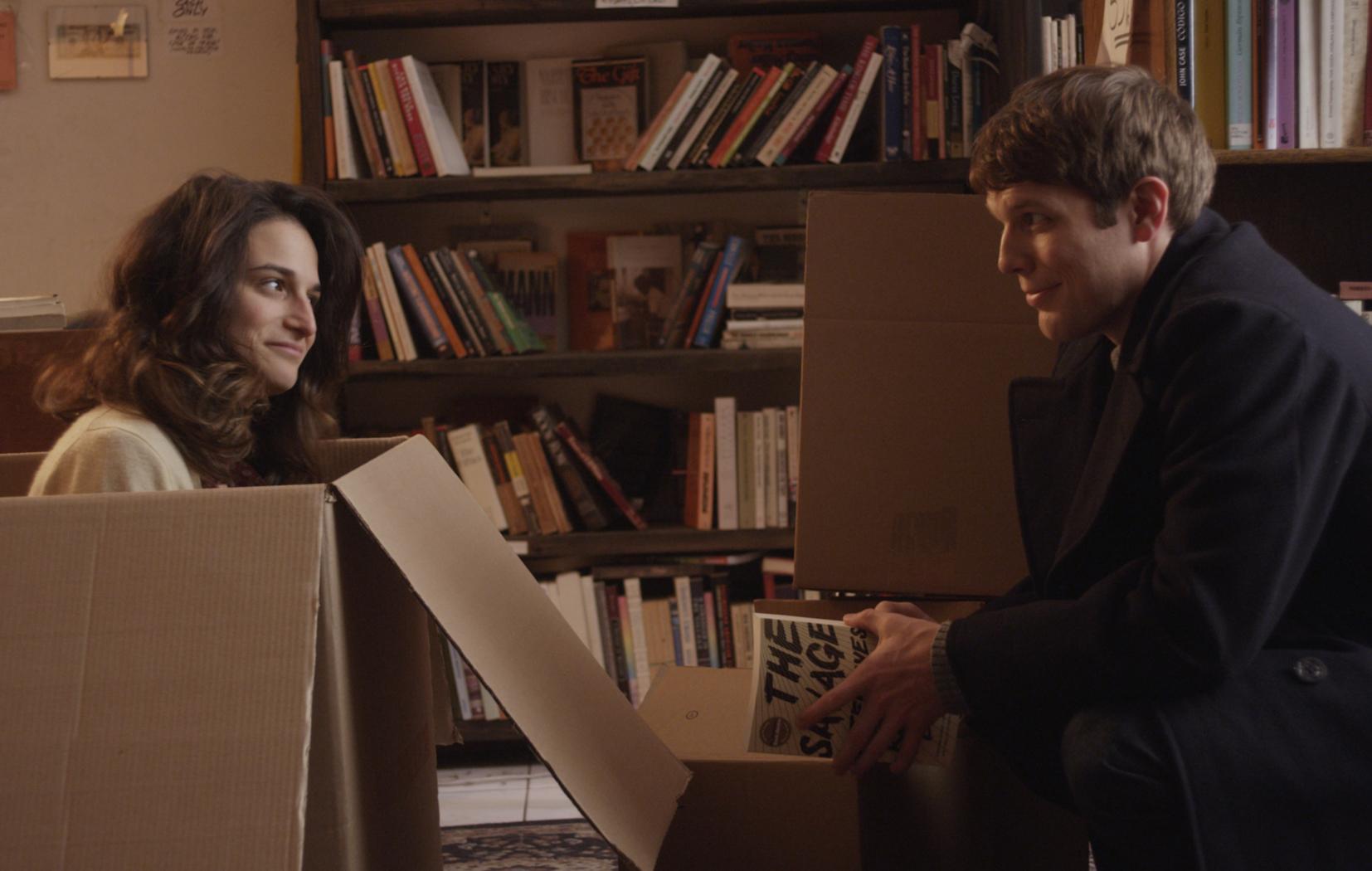
Obvious Child We first encounter the protagonist of writer-director Gillian Robespierre’s funny, original film — a Brooklyn-dwelling twentysomething named Donna (Jenny Slate), who works at a lefty secondhand bookstore and makes regular (if unpaid) appearances at a local comedy night — onstage mining such underdiscussed topics as the effects of vaginal discharge on your garden-variety pair of underwear. This proves a natural segue to other hefty nuggets of embarrassment gold concerning her love life, to the dismay of boyfriend Ryan (Paul Briganti), auditing from the back of the club. He pretty much deserves it, however, for what he’s about to do, which is break up with her in a nasty, well-populated unisex bathroom, taking time to repeatedly glance at the texts coming through on his phone from Donna’s good friend, with whom he’s sleeping. So when Donna, mid-drowning of sorrows, meets a nice-looking fellow named Max (Jake Lacy) at the bar, his post-fraternity-presidency aesthetic seems unlikely to deter her from a one-night stand. The ensuing trashed make-out dance-off in Max’s apartment to the Paul Simon song of the title is both comic and adorable. The fractured recap of the evening’s condom-free horizontal events that occurs inside Donna’s brain three weeks later, as she hunkers down with her best friend, Nellie (Gaby Hoffmann), in the bookstore’s bathroom after peeing on a stick, is equally hilarious — and unwanted-pregnancy jokes aren’t that easy to pull off. Robespierre’s treatment of this extended windup and of Donna’s decision to have an abortion is a witty, warmhearted retort to 2007’s Knocked Up, a couple generations’ worth of Hollywood rom-com writers, and an entertainment industry that continues to perform its sweaty contortions of storytelling in the gutless cause of avoiding the A-word. (1:15) Opera Plaza, Presidio, Shattuck. (Rapoport)
Planes: Fire & Rescue What is it about machines with wheels and boys of a certain age? Disney obviously has its peepers on a very specific demographic with this sequel spin-off to Pixar’s Cars franchise — this time with a more heroic, less individualistic fire-fighting twist. The irony of fossil-fuel-guzzling vehicles saving trees is lost on nearly everyone, which tells you about where this entry is pitched: easy, not-too-clever good times with plenty of good-looking, technically on-point, 3D fire-fighting flight scenes. Dusty (voiced by Dane Cook) — the trusty crop duster who achieved his dream of becoming a champion racing aircraft — is back, but this time he must overcome not only a faulty, impossible-to-replace, life-threatening gear box but also train as a fire-fighting aircraft in order to save his hometown airstrip. Dusty’s teacher is gruff fire-and-rescue copter Blade Ranger (Ed Harris), but he also has to dodge the advances of swoony cohort Lil’ Dipper (Julie Bowen) and try to penetrate the mystery yarns intoned by American Indian-styled helicopter Windlifter (Wes Studi). And that’s exactly when Fire & Rescue starts to fall apart for me: the multiple facile jabs poked at Windlifter’s mysterious native ruminations reads as borderline offensive, especially for a global conglomerate like Disney that purports to reach out to a “small world,” while the fact that the film’s most prominent female character is portrayed as threateningly stalker-esque keeps everything at a prepubescent girls-are-icky level. Is it too much to ask Planes to grow up a little — or at the very least, match its 21st century computer animation (one prominent exception: the vehicles’ distractingly static massive white windshield-eyes, inert like windows to dead souls) with equally up-to-date values? (1:24) 1000 Van Ness, Presidio, SF Centre, Shattuck. (Chun)
The Purge: Anarchy You gotta appreciate the foregrounded anti-NRA-and-gun-violence politics of the Purge movies, but Anarchy? Ah, that’s a big promise to deliver on. While the first Purge (2013), a surprise hit, focused on one privileged family and their security system, its sequel tries to broaden and diversify the scope of its urban paranoia, juggling then clumsily dropping multiple characters and story threads. Waitress Eva (Carmen Ejogo) can’t get a break, especially on Purge night, when lawless violence rules the streets in the name of population control. Her father (John Beasley) is dying, and her daughter (Zoe Soul) is enthralled by an online Black Panther-esque prophet (Boardwalk Empire‘s Michael K. Williams), who speaks out against the way an armed poor population is getting killed off during the annual government-sanctioned Purge. Meanwhile a couple on the verge of breaking up, Shane (Zach Gilford) and Liz (Kiele Sanchez), is caught on the street, their car sabotaged during the deadliest night of the year. When a SWAT-like band of soldiers snatch Eva and Cali from their fortified apartment, they’re fortunate to cross paths with a well-armed mystery man (Frank Grillo), apparently out on a personal purge of his own. Still, in spite of the red herrings, the baddies are clear here — they’re the rich, who can afford to purchase victims to murder in the safety of their own homes — and it doesn’t take long before the narrative breaks down, under the demands of its ambition and a stretched-looking production. Director-cowriter James DeMonaco has courage in his concept — if only his storytelling chops were honed to machete sharpness. (1:44) Metreon, 1000 Van Ness. (Chun)
Sex Tape Belonging in the category of Hangover-style comedies that supposedly dare to “go there,” while also providing date-night fodder for mom and dad, Sex Tape might have been all about how a cute married couple (Cameron Diaz and Jason Segal) parlays sex tape infamy into reality TV stardom and social-media-drenched branding success of Kim Kardashian proportions. Alas, it’s just about as dim, dated, and unimaginative as a How I Met Your Mother rip-off — meaning that despite the charm of its leads and particularly their married friends, played by Rob Corddry and Ellie Kemper, Segal’s sitcom is reliably wittier than this much-ado-about-nothing blowout. Blogger Annie (Diaz) and DJ Jay (Segal) had been falling into a rut as parents who aren’t quite sure they even like the little jerks they are killing themselves to raise, so when they get a rare celebratory night in, they grab the chance to refresh their sex life by drunkenly attempting to document their tries at all the positions in The Joy of Sex. A “Franken-app” sync leads to an inadvertent sex video upload to the cloud and out to every iPad Jay has ever owned and given away — as well as a mildly wild night down the rabbit hole as they attempt to stop the spread of the video. That proves as easy as doing a bump with Annie’s boss (Rob Lowe) and tracking down the server of an online porn peddler (Jack Black), both of which set off Sex Tape‘s few funny moments. Too bad you can’t fast-forward through the rest. (1:30) 1000 Van Ness, SF Centre, Shattuck, Sundance Kabuki. (Chun)
Siddharth Richie Mehta’s Siddharth is an all too real tale about India’s poverty that emphasizes the stark divisions between emerging materialistic markers (exemplified by a reliance on — or ignorance of — mobile phones) and ramshackle slums. Though he’d prefer to remain his family’s sole breadwinner, Mahendra Saini (Rajesh Tailang) sends his 12-year-old son to work in a factory in hopes of earning more rupees. When the boy goes missing, the forlorn man sets out to find him, launching a frustrating search amid the cacophony of everyday life in Delhi. The sounds of car horns and distant conversations are overlaid with the film’s beautifully melancholic score. The film isn’t flashy like a cookie-cutter Bollywood blockbuster, but its frankness (and subtle insights into Indian culture, such as the roles of women and street children, intertwined with the dialogue) resonates. It’s no surprise that the film was inspired by a real-life experience, and in turn, represents the other untold and countless stories of child trafficking victims. (1:37) Shattuck, Smith Rafael. (Amy Char)
Snowpiercer Eighteen years after an attempt to reverse global warming has gone wildly awry — freezing all life into extinction — the only known survivors are on a one-of-a-kind perpetual-motion train that circles the Earth annually, has its own self-contained ecosystem, and can smash through whatever ice buildup has blocked its tracks since the last go-round. It’s also a microcosm of civilization’s worst class-economic-racial patterns over history, with the much-abused “tail” passengers living in squalor under the thumb of brutal military police. Unseen at the train’s front is its mysterious inventor, Wilford, whose minions enforce “Eternal Order Prescribed by the Sacred Engine.” Curtis (Chris Evans) is default leader of the proletariat’s latest revolt, in which they attempt to force their way forward though the prison section (where they free Song Kang-ho and Go Ah-sung as the train’s original lock designer and his psychic daughter) on to the wonders of the first class compartments, and beyond. This first (mostly) English-language feature by South Korean Bong Joon-ho (2006’s The Host, 2009’s Mother), based on a 1982 French graphic novel, starts out as a sort of locomotive, claustrophobic Mad Max (1979) variation. But it gets wilder and more satirical as it goes along, goosed by Tilda Swinton’s grotesquely comic Minister Mason, and Alison Pill as a teacher propagandist in a particularly hilarious set piece. In case the metaphor hasn’t already hit you on the head, one character explains “The train is the world, we the humanity.” But Snowpiercer‘s sociopolitical critique is as effective as it is blunt, because Bong handles everything here — visceral action, absurdist humor, narrative left-turns, neatly etched character archetypes, et al. — with style, confidence, and wit. Some of the FX may not be quite as seamless as it would have been in a $200 million Hollywood studio production, and fanboys will no doubt nitpick like nitwits at various “credibility gaps.” (As if this movie ever asks to be taken literally.) But by current, or any, sci-fi action blockbuster standards, this is a giddily unpredictable, risk-taking joy. (2:07) Metreon. (Harvey)
Tammy There’s an Easter egg for Thelma and Louise (1991) diehards tucked amid Tammy‘s many jokes at the expense of co-writer and star Melissa McCarthy: when Tammy and her boozy grandmother (a gray-wigged Susan Sarandon) set out on a spontaneous road trip to escape their miserable lives, Grandma flashes a wad of cash. The sum ($6,700) is exactly what Louise brought to the table during that long-ago flight to Mexico. It might not be a coincidence that Tammy also features the star of 1991’s other girl-power drama, Fried Green Tomatoes, with Kathy Bates playing a lesbian family friend who finally talks some sense into the clueless, reckless Tammy — basically standing in for the audience. We wanna cheer for this newly dumped, recently fired, perpetually rumpled heroine, if only she weren’t so willfully lacking in self-awareness, and so frequently obnoxious — traits that are all the more mystifying since McCarthy wrote this character for herself, and because we know what she’s capable of (see: her outrageous, hilarious, Oscar-nominated turn in 2011’s Bridesmaids). Tammy — co-written and directed by McCarthy’s husband, Ben Falcone — has its moments, but it’s overall an uneven comedy that yields few belly laughs. It also shoehorns in a stilted romantic subplot (with Mark Duplass, of all people) because … why? Why can’t this be a movie about a woman who figures out how to manage her chaotic life, without landing a man as a reward? Even the ol’ Grand Canyon plunge offers more fresh satisfaction, nearly 25 years on. (1:37) 1000 Van Ness, SF Centre. (Eddy)
Think Like a Man Too (2:02) SF Centre.
Third Person A screenwriter, Paul Haggis, pens a script in which a novelist (Liam Neeson) sits alone in a smoke-filled hotel room in Paris struggling over a manuscript about a novelist who can only feel emotions through his characters. What that psychic state would actually look like remains unclear — when the woman (Olivia Wilde) he’s left his wife (Kim Basinger) for shows up, their playful, painful, fraught interactions reveal a man with above-average emotional reserves. Meanwhile, in another hotel in another city, Rome, a sleazy fashion industry spy (Adrien Brody) finds his life turned sideways by a seemingly chance encounter in a bar with a beautiful Romanian woman (Moran Atias) in dire need of money. And in a third hotel, in Manhattan, a young woman (Mila Kunis) cleans up the suites she used to stay in when she was married to a renowned painter (James Franco), with whom she has a son she may or may not have harmed in some terrible way. The film broadly hints at connections between these three sets of lives — in each, the loss or endangerment of a child produces an unrelenting ripple effect; speaking of which, objects unnaturally submerged in water present an ominous visual motif. If the movie poster doesn’t give the game away as you’re walking into the theater, the signposts erected by Haggis ensure that you won’t be in the dark for long. Learning how these characters relate to one another, however, puts considerable drag on the fabric of the plot, exposing the threadbare places, and where Haggis offers his tortured characters redemption, it comes at the cost of good storytelling. (2:17) Metreon, Shattuck. (Rapoport)
Transformers: Age of Extinction In Michael Bay’s fourth Transformers installment a villainous Black Ops leader (Kelsey Grammer) allies with a snarky Steve-Jobs-alike (Stanley Tucci) to build Transformers de coeur: designer impostor robot-cars they hope will reinvent the face of war. In IMAX 3D, “TransFOURmers” is packed with relentless rock-’em-sock-’em action, spectacular property destruction, and about as much sense as a bucket of worms. After 60 minutes, you think you’re getting more than your money’s worth. At 90 minutes, you’re tired. At two hours, confusion sets in: If Autobots get stronger together how could Optimus be in so much trouble? Who is the bounty hunting Terminator look-alike? HOW MUCH MORE COULD THERE BE? And then … the action shifts to China, Optimus rides a Dinobot, and chaos reigns. I’ve always liked the working-class poetry of the Transformers themselves — the leader is a trucker and the cast is stacked with ambulances, tanks, and the metal workforce that preserves American lives. If that’s not traditional hero worship, I don’t know what is. But Age of Extinction is the soulless designer imposter it lampoons — the whole sequel-snarking ordeal makes you long for Buzz Lightyear, who saw a thousand Buzz Lightyears on a store shelf and survived that existential crisis heroically — while also riding a dinosaur and fighting Frasier. This Transformers movie (sadly, it won’t be the final one) starts with a thesis: Mark Wahlberg walks through an abandoned movie theater and a Wilford Brimley twin (Ron Shedd) bellows: “Movies today! Sequels! Remakes! Crap!” Age of Extinction follows that moment with nearly three hours of evidence that the cause of extinction is redundancy. (2:30) Metreon, 1000 Van Ness. (Vizcarrondo)
22 Jump Street In this TV-inspired sequel, “Previously on 21 Jump Street…” is all the backstory we get. 22 wastes no time sending Officers Schmidt (Jonah Hill) and Jenko (Channing Tatum) back to school to solve another case. A few details have changed (they’re in college now, where the drug of choice is “Why Phy”), but the situation is self-consciously boilerplate, which lets the filmmakers cast (ironic) judgment on sequels — and imply the TV show was redundant. College proves hilarious, from the rundown of dorm room essentials to Schmidt’s walk of shame, and the touchstones are sharp and embarrassing. An extended fight between Schmidt and a girl (Jillian Bell, fabulous) twists gender issues and sexual assault into gloriously absurd politics. Best of all is a fairly understated joke in front of the Benjamin Hill School of Film Studies. I laughed as much at 22 as I did at 21, but 22 spends so much time calling out its number-two status that it almost becomes performance art. (1:45) 1000 Van Ness, SF Centre. (Vizcarrondo)
Venus in Fur Thomas (Mathieu Amalric) is the writer-director preparing to stage his new adaptation of the titular kinky 1870 novel by Leopold von Sacher-Masoch, whose work (and name) inspired the term “masochism.” After a long day’s fruitless auditions, he’s about to go home when in barges actress Wanda (Emmanuelle Seigner), very late for an appointment she might not have actually made in the first place. Doffing coat to reveal an “in character” costume of leather bustier and dog collar, while unconvincingly noting “I’m usually demure and shit,” she bullies him into letting her proceed. To his shock, she’s very, very good. With him taking the submissive male role in their reading, text and real life soon blur into one major mindfuck for the alternately bemused, appalled, and bewitched Thomas. Roman Polanski’s French-language version of David Ives’ hit two-character play can hardly escape theatricality (nor should it), but it’s fluidly cinematic within its limits, and maximizes the material’s gimmicky charms. Mostly it’s a worthy showcase for two terrific performances. Amalric, as ever, rings infinite subtle variations on the comedy of exasperation. More surprising is the director’s longtime wife Seigner, whom he hasn’t made much use of onscreen since 1992’s deliciously satirical (though few got the joke) “erotic thriller” Bitter Moon. Blowsy, vulgar, sexy, aristocratic, finally a mocking Gorgon man-eater, she’s having just as much fun here as we have watching her. (1:36) Opera Plaza, Shattuck. (Harvey)
Video Games: The Movie Jeremy Snead’s slick documentary charts the evolution of an entertainment form by now much bigger (in annual revenue at least) than music or movies, starting with a game created at MIT in 1962 to showcase a new computer with the then-novel feature of a display screen. A decade later came Pong, followed soon by such early hits as Pac-Man and Space Invaders as gaming began migrating from arcades to home formats. A nostalgic parade of increasingly sophisticated graphics illustrates a path in which complexity of interactivity, story elements, character rendering and so forth continues to grow. So far, so entertainingly good. But anyone looking for more than a glorified industry plug will be disappointed in the film’s later progress, when it briefly touches on other areas it fails to investigate even halfway seriously. How are games developed? (“It’s movie making times 1,000!” we’re told, but little else.) Can violent games foster real-world violence? (Nah, that’s silly, right? But just in case, let’s change the subject really fast!) On the other hand, there’s all too much BS about the “global society” comprised by those with a “shared passion” — world peace, thy name is evidently World of Warcraft — which lets you “live the dream.” (Really? The dream is slaying dragons and shooting gangbangers?) Add lofty, poker-faced onscreen quotes from the likes of JFK and Gandhi, and you’ve got a movie too blindsided by fandom to actually say anything interesting about its subject. (1:40) Roxie. (Harvey)
Wish I Was Here More power to the crowd for funding director-cowriter Zach Braff’s follow-up of-sorts to Garden State (2004). His flailing actor and family man Aidan is a slightly older, only slightly wiser, more pretentious, and way more spiritually minded variation on Garden State‘s Andrew, and as with his previous film, Wish I Was Here feels personal, shaggily shambolic, and somewhat oddly shaped for sometimes the right reasons — as when Braff turns the camera on Aidan’s almost impossibly MILF-y wife Sarah (Kate Hudson) and father Saul (Mandy Patinkin) and lets ’em rip like performance thoroughbreds. Aidan himself is a bit misshapen and stunted: he’s been relying on his father to finance the private Hebrew school education of his daughter (Joey King) and son (Pierce Gagnon), until dad breaks the news that he’ll have to stop payments and start funneling his funds toward experimental cancer treatment. Aidan has to give up his somewhat foundering dream of acting and home school the kids, while trying to make peace with his ailing, cantankerous dad and card-carrying-geek brother Noah (Josh Gad). Deep waters, especially for a Peter Pan character like Aidan, and despite a cast of lifesavers à la Kickstarter and Braff’s adept cast, Wish I Was Here never gets to where it wishes to go, beyond its talky attempts to grapple with fatherhood, identity, spirituality, and its hopes to teach one’s children well. Maybe think on it for another decade. (1:46) Piedmont, SF Centre, Sundance Kabuki. (Chun)
X-Men: Days of Future Past Bryan Singer, director of the first two X-Men films (2000’s decent X-Men; 2002’s meh X2) returns to helm this latest franchise entry — the fourth sequel in a series that also includes two movies focusing on Hugh Jackman’s Wolverine. That fan-favorite character is front and center in both of Days of Future Past‘s time frames: the present, a bleak dystopia in which robot assassins have wiped out nearly every mutant (save Wolverine, Patrick Stewart’s Professor X, Ian McKellan’s Magneto, and a few others), and most humans along with them; and the past, a key moment in the polyester-laden 1970s in which mutant avenger Mystique (Jennifer Lawrence) inadvertently sets the disastrous future events in motion by killing robot designer Trask (Peter Dinklage). Wolverine time-travels to convince younger versions of the Professor (James McAvoy) and Magneto (Michael Fassbender) to put aside their Himalayan-sized differences to stop her. (Speaking of avengers, there’s a capital-A one here: Quicksilver, a character from both comic-book worlds; he’s portrayed here with giddy mischief by American Horror Story‘s Evan Peters, and is the film’s high point.) Yes, that’s a heady plot, and there are a zillion other characters, but Future Past manages, for the most part, to avoid feeling like an overloaded mess. It’s most entertaining in scenes that show off its characters’ superpowers — clearly, the CG artists had a blast working on this one — which are plentiful enough to make slogging through the ennui-laden moments of downtime worth it. (2:10) 1000 Van Ness, SF Centre. (Eddy) *