Planning

The next board president

9

EDITORIAL The president of the Board of Supervisors does more than bang the gavel at meetings, tell people to put their clothes back on, and run for higher office. It’s a powerful position largely because the president makes appointments — to the Planning Commission, the Police Commission — and unilaterally decides who serves on which board committees.

Two years ago, Sup. David Chiu, who won the top post in 2009 with progressive support, wanted re-election, and the left wasn’t siding with him anymore. So he cut a deal with the conservative members, appointing the right-wing of the board to plum committee posts — and making life harder for progressives who wanted to pass Legislation or prevent bad developments from happening.

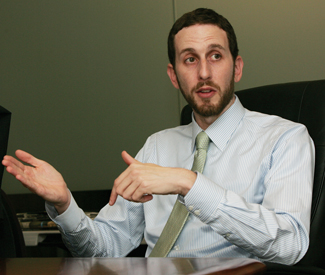
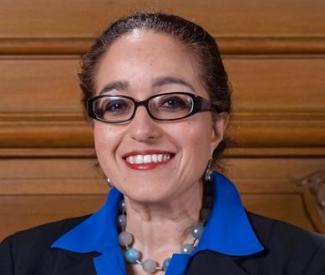
He clearly likes the job and would love to hold it for a third term. But that won’t be easy — Sup. Scott Wiener, who is to the right of Chiu on many issues, is also interested, as is Sup. Jane Kim, who has always been close to Chiu, and Sup. David Campos, who is one of the leading progressives. None of the candidates can count to six right now, so somebody’s going to have to back down or make a deal.

And before that happens, the candidates ought to tell us something about what they plan to do.

Chiu’s 2011 committee appointments were a bit of a shocker, although, in retrospect, the horse trading shouldn’t have surprised anyone. In fact, after he made his decisions, and put Carmen Chu, one of the most conservative supervisors, in charge of the Budget and Finance Committee and put the conservative Scott Wiener and the moderate Malia Cohen on Land Use and Economic Development, and put conservative Sean Elsbernd in charge of two committees, he told us that he felt he had no choice. If the progressives had voted for him, he wouldn’t have had to reward the conservatives.

This time around, with two new supervisors taking office (a more centrist Norman Yee replacing Elsbernd and a more moderate London Breed replacing Christina Olague) everything is up in the air. The progressives still have a solid three votes, and can sometimes count on Jane Kim and Chiu. That’s not enough to elect a president, but it’s coming pretty close.

Based on experience, skills, and temperament, our first choice for board president is Campos, who would be fair to everyone, approachable, and a voice for open government and community participation. But if Campos can’t get six votes, he and his progressive colleagues should ask anyone who want their support to be open about what he or she plans to do.

Who will be on the budget committee? Rules? Land Use? Where will he or she look for candidates for commissions? We know it would look unsightly if, say, Chiu named in advance his preferences for key committees — and then those people voted for him. But the reality is, those discussions are happening anyway, those deals being cut — and it’s happening behind closed doors, where the public (and the other supervisors) can’t watch.

Let’s bring all of the discussions into the sunshine, and have an open debate about the next board president.


More recycling fallout

84

The unintended consequences of closing the Haight Ashbury’s only recycling center are about to ripple through small businesses in the neighborhood. As the recycling center’s final days loom, merchants are gearing up to face new fees — as much as $100 a day.

But they may get a reprieve sooner than they think.

State law requires stores that sell beverages in cans and bottles to take them back for recycling — unless there’s a functioning recycling center within a half-mile radius.

With the Haight-Ashbury Neighborhood Council recycling center gone, Whole Foods supermarket, the largest purveyor of beverages on Haight Street, will be faced with a decision — provide bottle and can buy-back services, or pay a $100 a day fee instead. If Whole Foods decides to pay the fee and not provide recycling in the area, small businesses in the Haight will be forced to make the same choice — only they won’t be able to afford the $36,500 a year fee.

San Francisco’s Department of the Environment doesn’t enforce those fees, but does provide oversight on recycling in San Francisco. Guillermo Rodriguez, spokesperson for the department, said that his office is in the planning stages of creating a mobile recycling center, which could roll out in early 2013.

“Certainly it’s not in our interest to have those businesses pack up and move out,” Rodriguez said. The mobile recycling center gives the neighborhood a new option.

If a recycling center serves the Haight neighborhood, the small businesses in the area could avoid paying the steep fees, and from having to go through the trouble of seeking exemption.

“Its similar to food trucks,” Rodriguez said. “After they finish for the day, they leave. But they’d set up at a usual time in a usual spot.”

San Francisco Supervisor Christina Olague, whose district includes the Haight Ashbury, said she was working on a way for HANC to turn into a mobile recycling center. Though she said that those talks had since stalled, Rodriguez said that if HANC wanted to be a partner in the new mobile center, the Department of the Environment would be open to it.

Why does the state of California expect small businesses to provide a can and bottle buy-back program on site, or face fees in the first place?

Rodriguez explained that the laws weren’t necessarily made with San Francisco in mind.

“When the rules were drafted, San Francisco was the exception, as we are for a lot of things,” Rodriguez told us. “The law was written for the suburbs, where small businesses generally have parking lots where recycling can easily be handled.”

The San Francisco Recreation and Parks department has long pushed for the Haight recycling center’s ouster. Sarah Ballard, spokesperson for the department, said the recycling fees and regulations that will hit local businesses aren’t Rec-Park’s problem.

“HANC has been on a month to month lease for over a decade,” she said. “The Parks Department have never sought to stop them from seeking non-park property to continue to run their business.”

Basically, HANC can operate wherever it wants to — just not in Golden Gate Park. And there aren’t a whole lot of other low-cost open spaces where the center can set up shop.

Small businesses we’ve talked to say they don’t have the space, staff, or ability to handle buying back recyclables. Fred Kazzouh, owner of “Fred’s New Lite Supermarket” on Haight and Masonic streets, doubted he’d get a reprieve from the fee.

“I mean if we all apply for an exemption, there’ll be half a mile radius without a recycling center,” Kazzouh said. “I saw recycling centers on Safeway on Webster (street) and I don’t see why Whole Foods can’t do it.”

Kazzouh’s store has been in the Haight neighborhood since 1995. The Haight has long been known as a place that draws alternative people, he said. And that’s the way he likes it.

“I don’t like to be in the clean neighborhood with the white picket fence and suits and ties,” Kazzouh said. “That’s not a real life. Its a very fake life.”

Even some of the ritzier stores along Haight St. aren’t bothered by the homeless population there. Firras Zawaideh, owner of Liquid Experience on Haight, sells high end (expensive) alcohol that few homeless people can afford.

He said he thinks only the transplants and new folks to San Francisco are bothered by them.

“I’m a native San Franciscan, from the Sunset [district],” Zawaideh said. “We’re the ones who don’t hate the homeless. Its all the transplants from New York and the midwest who complain about it.”

Zawaideh already handles bottle and can buy-back through his store, though he said that no one has ever taken advantage of it. But with HANC closing, he dreads the idea of people bringing cans and bottles en masse to his store.

“Say on a busy Friday night someone comes in with a cart full of recyclables,” he said. “Then what? I have to help them out too?”

The mobile recycling center would exempt Zawaideh of that responsibility. But if neighbors of HANC complained about the homeless population, would the same customers cause a problem for the mobile center as well?

Rodriguez said he wouldn’t speculate on if the homeless population that now uses the Haight recycling center would follow the food trucks around as well.

“I think we’ll have to take it as it comes,” Rodriguez said. Though he wanted this to be clear: “Not everyone that participates, frankly, is a homeless person.”

Fred Kazzouh was dubious that the homeless population would go away with HANC’s closure. “If HANC goes away, the homeless won’t go with them,” Kazzouh said. “The homeless will just have less people fighting for them.”

Dick Meister: Michigan is just the beginning

6

By Dick Meister
Bay Guardian columnist Dick Meister, former labor editor of the SF Chronicle and KQED-TV Newsroom, has covered labor and politics for more than a half-century. Contact him through his website, www.dickmeister.com, which includes more than 350 of his columns.

Be alert, American workers: The passage of right-to-work legislation in Michigan means serious trouble for unions and their supporters everywhere. Yet there’s legitimate hope that it also could lead to a revitalized labor movement.

You can be sure the action by Michigan, long one of the country’s most heavily unionized states, home of the pioneering and pace-setting United Auto Workers and iconic labor leader Walter Reuther, will inspire anti-labor forces in other states to try to enact right-to-work laws.

They aren’t likely, however, to try in California, where voters rejected a right-to-work proposition in 1958 and this November rejected the viciously union-busting State Proposition 32.  But union foes here as elsewhere are certain to seize on the Michigan vote, and the passage earlier this year of a right-to-work statute in Indiana, as evidence of labor weakness that they will try mightily to exploit, politically and otherwise.

They’re already seeking right-to-work laws in Ohio and Wisconsin and planning other steps around the country to weaken  the economic and political clout of unions and their supporters and thus weaken the basic rights and economic position of all working people.

As contradictory as it might seem, that could lead to a badly needed revitalization of labor. For it should make it unmistakably clear to unions and their supporters that there’s a very serious need for a greatly stepped-up mobilization against their political and economic enemies.

 True, unions lost a major campaign this year in trying to recall Wisconsin Gov. Scott Walker for his attacks on the collective bargaining rights of public employees. But that should not dissuade labor from waging other efforts against union opponents. They came close to recalling Walker and, in doing so, laid the groundwork for future campaigns and proved that unions are quite capable of waging major campaigns against their opponents. That surely discouraged at least some others from taking anti-labor actions that would anger labor and its powerful supporters.

Notably impressive as well was labor’s role in helping elect – and re-elect – President Obama. Labor opponents and supporters alike learned from that, if they didn’t already know it, that unions have the money and the manpower to seriously mount major campaigns. They put millions of dollars and millions of campaign workers into their extraordinary efforts on Obama’s behalf.

Obama has responded by appointing a pro-union secretary of labor, Hilda Solis, and other pro-labor men and women to run the Labor Department, plus issuing executive orders that have strengthened the rights and legal protections of working Americans .

But unions are of course doing less well in Michigan and most other states, and that’s being reflected in Congress, where labor has had a rough time getting approval of national measures such as a higher minimum wage.

Most importantly, labor has been unable to garner the votes for passage of the Fair Employee Free Choice Act that has long topped labor’s political agenda. The act, which has been stalled in Congress for three years, would give workers the absolute right to unionization, by making it easier for them to form and join unions.

Also high on labor’s agenda is the pressing need to modify the 1947 Taft-Hartley Act. It has allowed states to enact right-to-work laws, even though the laws, now in Michigan and 23 other states, are clearly designed to weaken – if not destroy – unions by denying them the right to collect the money from members that is essential to effectively represent them in bargaining.

Bay Guardian columnist Dick Meister, former labor editor of the SF Chronicle and KQED-TV Newsroom, has covered labor and politics for more than a half-century. Contact him through his website, www.dickmeister.com, which includes more than 350 of his columns.

Ethics Commission wants to hide its own flaws

3

The Ethics Commission has serious problems. A detailed report by Board of Supervisors Budget Analyst Harvey Rose, comparing SF’s ethics rules and enfocement to that of Los Angeles, found a long list of ways that this city is falling short. The supervisors asked the commission to have a robust discussion of the findings and propose reforms.

Now Friends of Ethics, made up of a number of former commissioners, activists, and campaign-finance watchdogs, says that the commission is trying to hold a quick hearing that will gloss over much of the criticism of the Rose report. The group wants the hearing delayed until there’s a lot more time to bring a lot more people into the process.

Here’s the letter FOE sent over:

To the Ethics Commission and Staff:

Friends of Ethics is writing with objections and protests regarding the upcoming “Interested Persons” meetings scheduled for December 4 and 10, 2012.

The Commission notified “Candidates, Treasurers and Interested Persons” of meetings “to discuss recommendations of the Budget Analyst report (also known as the Harvey Rose report) comparing programs of the San Francisco Ethics Commission with those of the Los Angeles Ethics Commission.”

The notice was dated November 28, providing only three business days before the first meeting will take place.

The Friends of Ethics bases its protest and objections on the following facts, and by this memo, formally requests that Ethics postpone these meetings until February.

     The proposed Interested Persons meetings do not mention inclusion of a representative from the Board Budget Analyst office to present their report and to discuss its findings. Without their direct involvement, as well as the invited presence of Supervisor Campos who requested the Rose report, the Interested Persons meeting will have only the staff’s views of the report as a basis for discussion. We believe this fails to provide the direct interaction and communication that should be part of this process.

    Ethics was requested by the Board of Supervisors to conduct robust and inclusive outreach to all participants in San Francisco’s political life. Ethics provided Friends of Ethics with the list used to contact Interested Persons about this meeting. We believe the list provided is not an adequate outreach, includes no community-based organizations active in electoral politics, any of the chartered Democratic clubs or other partisan political organizations, or special focus organizations active in San Francisco elections. We believe the lack of an inclusive outreach as evidenced by this list denies the Commission of a full discussion of the issues and is weighted toward the regulated community. We are puzzled by the fact that many people who do receive the Interested Persons notices are not on the list provided by Ethics, and seek a clarification on whether additional lists were used that were not disclosed to us. We also note that the late Joe Lynn, while the Campaign Finance Officer for Ethics, not only conducted extensive outreaches for IP meetings, including contacting past treasurers and press and posting notices on local political blogs and chat boards, but also later informed Director St. Croix in writing about those practices for the purpose of encouraging the continuation of such outreach.

    Ethics provided insufficient time for a review and analysis of recommendations that are significant and meaningful for the operation and success of the Ethics Commission mission. We believe that Ethics has done the bare minimum of notice of a public meeting and failed to take a serious approach to this important issue. Providing notice three days before the meeting, particularly in the holiday period between Thanksgiving and the first of December, means that no organization has an opportunity to place this issue on their agenda for a discussion or to endorse comments to be provided to the Ethics Commission.

    Ethics prepared an agenda that omitted significant and critically important comparisons between the Los Angeles and San Francisco Ethics Commissions that were included in the Rose report. While Ethics did list specific recommendations from the Rose report, the report itself detailed a number of additional differences that are significant to the San Francisco political community as we know it, and that should be part of a discussion of the Rose report.

Among the omitted points are:

    Los Angeles has a private right of action for citizens to act when Ethics does not; in Los Angeles this can include penalties under a civil action. San Francisco has no such provision. We believe this is essential to meaningfully empower citizens to directly seek compliance with our laws.

    Los Angeles requires disclosure of contributors of $100 or more to groups making “third party” expenditures. San Francisco does not require public disclosure of this money stream. Disclosure of donors to third party committees would add transparency, particularly if this has become a strategy to allow city contractors to influence elections.

    Los Angeles prohibits contributions from those seeking permits, while San Francisco does not. Friends of Ethics has determined that over 90 percent of all City Hall lobbying involves permit decisions.

    Los Angeles prohibits commissioners from fundraising for candidates, while San Francisco does not. This is the heart of pay-to-play politics that infects city appointments as commissioners are often the first stop for fundraising on behalf of city elected officials. We note a recent case where a city commissioner hosted a fundraiser that included contributions from city employees from the same department. The candidate returned the contributions, recognizing that commissioners are prohibited from seeking contributions from city employees. However, this demonstrates the potential abuse and underscores that Los Angeles’ policy is a stronger and more easily enforced prohibition. We recommend it.

    Los Angeles prohibits fundraising from city contractors and those seeking city actions. San Francisco allows contractors to fundraise and serve on candidate finance committees, although they may not contribute their own funds. Currently San Francisco also does not require candidates to disclose the names of their Finance Committee members. However, we strongly prefer closing the loophole, as Los Angeles has done, by prohibiting city contractors and permit seekers from fundraising.

    Los Angeles requires a more robust disclosure of “paid by” notification on telephone messages when 200 or more people are called. San Francisco sets the threshold at 500 people. Therefore, “paid by” calls to members of political clubs during the endorsement process would be missed under San Francisco’s standard but included under LA’s standard.

    Los Angeles provides a “Guide for Contributors” that educates donors and reduces confusion on such issues as aggregate contribution limits, prohibitions on officers of organizations receiving city funds, and so forth. This is done at minimal cost and made available on the Internet with no printing or mailing costs. San Francisco does not provide a Guide. Instead, the Ethics staff has recommended that the Commission rewrite the law to overturn specific prohibitions, stating that contributors are confused about the rules. The best approach is Los Angeles, where an educational outreach to contributors is part of their program. We note that San Francisco provides guides and outreach to most others involved in political activities, including committee treasurers, candidates and others but does not include an educational outreach to donors.

    Los Angeles prohibits political contributions from being made at City Hall or other city offices, including offices rented with city funds. San Francisco allows contributions to take place in the mayor’s own office, supervisor’s offices, at Redevelopment, Planning, Port or other offices – in short, anywhere that a donor chooses to make a contribution. We believe allowing contributions to be made in the workplace of city officials undermines public confidence and is inconsistent with other restrictions on the use of city resources for political purposes.

    Los Angeles has a more robust view of what constitutes lobbying and includes attorneys who offer strategic advice even if they do not directly contact a city official. San Francisco does not require registering or disclosing clients from such attorneys involved in orchestrating a favorable result for a paying client. Attorneys who serve as committee treasurers also do not face the same level of public disclosure as lobbyists.

We believe this list of omitted topics, coupled with the unacceptable short timeframe provided for analysis and review by the political community, and the failure to provide adequate outreach, raises serious concerns that Ethics is not engaged in a serious effort to obtain the public’s views on its operations and policies based on the Harvey Rose report.

We further note that Ethics has not provided a public schedule of when it will complete a summary of the Interested Persons meeting and comments, or a schedule for consideration by the full Commission of any recommendations.

In addition, Friends of Ethics requests that the San Francisco Ethics Commission audio record the IP meetings regarding the Rose report and post the recordings on its website, as is done by the Los Angeles City Ethics Commission.  In the past, the San Francisco Ethics Commission made audio recordings of its IP meetings, though they were not posted online.  The Commission’s Directors later discontinued the audio recording altogether, which may have been motivated by valuing the privacy of attendees over public transparency.  Given that the Rose report IP meetings are about comparing San Francisco’s good government laws with Los Angeles’ to consider adopting improvements offered by Los Angeles, Friends of Ethics believes that the first improvement that San Francisco should adopt is the Los Angele set of standard practices for conducting IP meetings.  When it comes to the development of good government law and policy, the public’s right to know is paramount.  Therefore, Friends of Ethics requests that all future IP meetings held by the San Francisco Ethics Commission be audio recorded and the recordings promptly posted online.”

Our reasons for requesting a specific timetable for next steps is based on our observation of lengthy delays in staff action on issues even when raised by the Commission itself. We believe the political community will be unlikely to participate in a process that has no specific and public timetable for action but that could take more than a year to reappear.

For example:

    In July 2011, the Ethics Commission requested that staff draft proposals to close the loophole that allows committees seeking to draft a candidate to fall outside the normal reporting and disclosure requirements. However, staff did not produce a proposal until November 2012, 16 months later, and did so without an Interested Persons meeting to discuss their proposal.

    Also at the July 2011 meeting, the Ethics Commission requested that staff examine the loophole that prevented the Commission from acting in cases of Official Misconduct by a commissioner. Ethics staff still has not produced a proposal to close that loophole.

    Also in 2011, a Superior Court judge suggested that San Francisco adopt a policy prohibiting commissioners from recommending a specific lobbyist to parties seeking a contract or other decision from that commission. Ethics has not prepared any response to that suggestion.

    In June 2012, Rules Committee Chair Jane Kim requested that the Ethics Commission provide some information on the city’s Ethics laws in languages other than English, noting that the rules are as important to donors and committees as they are to the public. The Ethics Commission has taken no steps, including in the election just concluded.

Given this record, we believe that any public process to examine the Harvey Rose Report and build new recommendations must include proposed timelines for action if there is to be public confidence that this process is meaningful.

We also strongly recommend that the Ethics Commission set aside time to allow a full discussion before the Commission itself. We believe that such a discussion should not place a two-minute limit on public members making comments.

For the above reasons and cited facts, Friends of Ethics requests that the Interested Persons meeting on the Harvey Rose Report be postponed until February when the political community will have an opportunity to evaluate the proposals and endorse changes, that the Commission immediately engage in a more robust outreach effort that extends beyond the list provided by Ethics to us, that the conversation be broadened to include all topics of comparison between Los Angeles and San Francisco, and that a proposed timeline for a record of the Interested Persons meeting and action by the Commission be provided.

We submit this protest respectfully and with support for the work of the Commission and specifically for the thorough review of any steps that can improve the Commission and public confidence in our political process.

Signed:

Eileen Hansen, former Ethics Commissioner
Bob Planthold, former Ethics Commissioner
Paul Melbostad, former Ethics Commissioner
Sharyn Saslafsky, former Ethics Commissioner
Bob Dockendorff, former Ethics Commissioner
Joe Julian, former Ethics Commissioner
Oliver Luby, former Ethics Commission staffer
Aaron Peskin, past President, Board of Supervisors
Charles Marsteller, former SF Coordinator, Common Cause
Karen Babbitt, community advocate
Marc Saloman, community advocate
Larry Bush, Publisher, CitiReport


A hello to arms

0

arts@sfbg.com

FILM The results of the wee election that happened a couple weeks ago were generally a good thing, needless to say, but just as light also causes shadow, so the light bulb that went off for a majority of voters cast into deeper darkness a certain minority. Oh, you’ve heard the wailings and lamentations: the death of “traditional” America (read: white people, “they” are coming to take your women and steal your home entertainment center), brutal new taxations designed to funnel your hard-earned money to whole communities of professional freeloaders, the national anthem to be translated into Communist (it’s a language, like speaking in demonic tongues), etc.

Some patriots, no longer loving it, are leaving it — mostly to inexpensive warmer retirement magnets whose natives aren’t too uppity yet to avoid calling you “Sir” or “Boss.” Others are planning to secede, one state at a time. (Yes, definitely including the ones you were already hoping would somehow cut ties. Can they take Fox News with them?) Mentally and politically, they seceded a while ago. But now it is on — Elvis is leaving the building, because he didn’t get his way so fuck y’all.

What’s bad about this is that, as with any psychotic break, bystanders may suffer for not sharing or getting in the way of the sufferer’s particular symptoms — in this case likely to primarily consist of depression, violent outbursts, substance abuse, weapons stockpiling, paranoid delusions, paranoid delusions, and reckless home schooling. How many basement man caves have been fertilizing plans for what we might term “assassination,” “domestic terrorism” or “going postal” since November 6, imaging personal heroism and national salvation their eventual reward? It’s like a significant section of the populace has turned into our crazy uncle, off his meds, muttering apocalyptically in the corner and sure to remember where we live sooner or later.

So it is with mixed emotions, to say the least, that one greets the alarmingly timely arrival of Red Dawn. A remake of a 1984 movie that seemed a pretty nutty ideological throwback even during the Reagan Era’s revived Cold War air conditioning (and even alongside such crazy Satan-is-Soviet competition as 1985’s Rambo: First Blood Part II and Rocky IV), it is a movie that should have come out a couple years ago, having been shot late 2009. But in the meantime MGM was undergoing yet another seismic financial rupture, and as the film sat around for lack of the means needed for distribution and marketing, it occurred that perhaps it already had a fatal, internal flaw. You see, this update re-cast our invaders from Russkies to People’s Republicans, tapping into the modern fear of China as debtor and international bully. But: China is also a huge fledgling market for Hollywood product, despite censorship, import quotas, and whatnot. China heard about Red Dawn and was not happy, endangering the foreign profit margins for future MGM product.

So a tortured makeover of the remake ensued; scenes were added, re-shot, and digitally altered to impose a drastic narrative change. China now goes unmentioned, replaced as villain by the country which is nobody’s film market, even if that choice is so absurd it gets acknowledged as such by dialogue: “North Korea? It doesn’t make any sense!” someone says here. It’s a query that goes unanswered.

Yup, in the new Red Dawn a coastal Washington state burg — mom, apple pie and flag figuring large in the opening montage — is the first attack point in a wholesale invasion of the U.S. (pop. 315 million) by the Democratic People’s Republic (pop. 25 million). It’s football season, so a Spokane suburb’s team — Wolverines!! — lends its name as battle cry and its revved up healthy young flesh as guerilla martyrs to the fight for, ohm yeah, freedom. Do they drink beer? Do they rescue cheerleader girlfriends from concentration camps? Do they kick North Korean ass? Do you really need to ask?

Of course this Red Dawn is ridiculous, though as a pulp action fantasy it’s actually fairly entertainingly well-crafted by veteran stunt coordinator-second unit director Dan Bradley. The actors maintain straight faces with variable degrees of success — on the upside pre-Thor Chris Hemsworth, (whose other 2009-shot MGM film The Cabin in the Woods also got released this year) as ex-Marine alpha male, on the downside an irksome Josh Peck as his little bro and an inexplicable Connor Cruise as a teammate. The adopted son of a certain really famous Scientologist, the latter surely got this role on merit alone; otherwise we’d be forced to believe he made up in nepotism what he amply lacks in looks, voice, and presence.

So what does this silly movie have to do with the election, you ask? Just this: its production travails mean this rah-rah, just-credibly-gritty-enough (but still mostly video-game-like) tale of fighting the power has arrived just in time to become a training manual (or at least recruitment video) for revolutionist reactionary rednecks. It’s ready-made for an audience so deprived of air, irony, and other key elements to reality that they’re probably in a hundred or more basements right now, plotting the overthrow of our Socialist Islamophilic oligarchy. 

RED DAWN opens Wed/21 in Bay Area theaters.

A developer’s wet dream

90

CORRECTION: This article has been updated to correct a statement from Sup. Scott Wiener about affordable housing.


tredmond@sfbg.com


Sup. Scott Wiener is proposing a dramatic overhaul of the city’s environmental review process that would limit the ability of citizen activists to appeal projects and could ease the path for major developments.


The new rules — some of which are fairly simple and routine, others more far-reaching — cover the city’s interpretation and implementation of the California Environmental Quality Act (CEQA), the state’s venerable land-use and environmental oversight law. The legislation is before the Planning Commission and could reach the supervisors in December.


According to city staff and outside analysts, the Wiener proposals would:


• Eliminate the public’s legal right to appeal a ruling by the Planning Commission if the Board of Supervisors has to approve any part of the project.


• Weaken the standard for environmental review by city planners.


• Weaken the public notice requirements for CEQA exemptions.


• Speed up the process for developments by compacting the time frame for CEQA appeals.


“Generally, the amendments decrease the opportunities for individuals and community groups with serious environmental concerns to provide input and assert influence on development projects as part of the CEQA process,” an analysis by Community Economic Development Clinic at Hastings College of the Law notes. “The amendments arguably would streamline the CEQA process for various projects, but at the cost of significantly curtailing public participation.”


Wiener told us that he wants to eliminate lengthy, sometimes unpredictable appeals. “The goal is to make sure we have a good CEQA process but also a more predictable process,” he said. “Right now it’s so chaotic and loose that we have unnecessary delays.”


Aaron Peskin, a former supervisor and neighborhood activist, calls the proposed legislation “a developer’s wet dream. It shuts off or makes impossible citizens’ ability to participate in the environmental review process.”


WHAT ARE THE ABUSES?


At issue is a critical part of city planning, mandated by state law and sharpened by years of court decisions. Before any project is approved, the city’s environmental review officer (ERO) must either determine that the proposal “could not have a significant impact on the environment” or is exempt by law from CEQA review. If not — if in fact the proposal could have an impact — then the project sponsor has to pay for a full environmental impact report.


If any member of the public thinks that the ERO’s decision is wrong — or believes that an EIR is inadequate — he or she can appeal to the Board of Supervisors. An appeal halts all work on the project until the supervisors resolve it.


If the board rejects the environmental review, it doesn’t kill the project — planners just have to go back and write, or rewrite, an EIR.


On a practical basis, appeals are relatively rare — the city, Peskin told us, makes tens of thousands of CEQA determinations every year, and at most a couple dozen get appealed. “I don’t understand what the abuses are,” Peskin said.


But in some cases, opponents of a project file a CEQA appeal after they’ve lost at all the policy bodies — and that, Wiener argues, just slows things down. “If you’re going to appeal, then appeal, but don’t wait around,” he said.


Wiener said his proposals would benefit not only private developers but also nonprofit affordable housing projects. “This will help prevent unnecessary challenges to affordable housing,” he told us.


But Calvin Welch, a member of the Council of Community Housing Organizations who has been working to build affordable housing for more than 30 years, told us he doesn’t see the problem. “CEQA never gets used to stop affordable housing,” he said. “It just doesn’t happen.”


CONSOLIDATED APPEALS


Perhaps the most profound change would eliminate any CEQA appeal for a project that has to go to the supervisors anyway. Wiener’s idea: if the board already has to sign off on, say, a zoning change or a special use district or any finances of a project, the environmental review can be done at the same time. “It’s as if there’s an automatic appeal,” he said.


But that conflicts with the concept of environmental review, critics say. No member of the public has the legal right to a sustainable or environmentally sound project; planning commissions, city councils, and county supervisors can, and often do, approve horrible projects.


But everyone has the right to a complete and fair environmental review. CEQA mandates that the decision-makers accept and acknowledge the consequences of their decisions — and if an EIR is flawed, those consequences can be understated.


Wiener would do away with the mandate that the supervisors hold a hearing, accept appeal briefs, and address CEQA questions as a distinct and separate part of a project approval. “The public would be denied the right to a hearing before the full elected body on the adequacy of an EIR or other CEQA determination,” a Planning Department staff analysis states. “And if a member of the public introduced new information at the committee hearing, there would be no way for the city to respond to or modify the environmental document.”


Among the projects that this provision would affect — where the public would lose the right to appeal an environmental determination: The America’s Cup, the Central Subway, the Parkmerced rebuild, the 8 Washington project, and the California Pacific Medical Center’s billion-dollar hospital proposal.


The proposal would also change the standard city planners apply when they review projects. The current rules require that the city show there is a “fair argument” that a project would have a significant environmental impact. The new language would mandate the staffers find “substantial evidence” that a full review is needed.


“It is likely more projects would require an EIR under the ‘fair argument’ standard and fewer projects would require an EIR under the ‘substantial evidence’ standard,” the Hastings analysis concludes.


And while the Board of Supervisors now has to certify that an environmental determination is accurate and correct, Wiener would change that to a determination that the city has made “an independent judgment” on the merits of the review. That, the Hastings lawyers state, “is a more discretionary standard that would be used to uphold an EIR certification decision even if the board determines that the conclusions and findings in the EIR are incorrect.”


MORE LAWSUITS?


A lot of the language in the complex package of CEQA changes involves public information and notice. Many of the lawyers and activists who have reviewed the legislation say it limits public notification of some CEQA determinations, particularly when the city concludes that a project is categorically exempt.


“If the ERO determines that a project is exempt from CEQA review, he may or may not be required to provide public notice of this determination,” the Hastings analysis states.


There’s no question that it would add to the complexity and burden of filing an appeal; and shorten the time frame for doing so — in a way that some say would actually encourage more lawsuits.


Kevin Bundy, a lawyer with the Center for Biological Diversity, argues that “The proposed amendments create a situation where appellants will be required to file litigation prior to the board’s decision on appeal.”


It’s a complicated situation, but in essence, the new Wiener rules would set the timeline for project approval at the first stage of policy decision — and if the supervisors overturned an environmental appeal, the clock for the project would be set back to that day.


That could upset the statutory timeline for CEQA lawsuits — and thus lead to more cases.


Wiener acknowledged that there were a lot of technical issues like that one that still need to be resolved. “We will be conferring with the people who have commented on the legislation and making the appropriate changes,” he said.


He added, however, that he sticks by the essential parts of his proposal despite the opposition: “There are a lot of CEQA lawyers out there,” he said. “And they aren’t always right.”

Aggressive Warriors

0

steve@sfbg.com

No standard defensive strategy is likely to stop the Golden State Warriors, Mayor Ed Lee, and their huge team of partners and employees from dominating the game of approving construction of a new basketball and concert arena on San Francisco’s central waterfront. That became clear on Nov. 14, as the political operation overcame fire, darkness, and neighborhood-based opposition for the first big score.

The Board of Supervisors Budget and Finance Committee was set to consider declaring the project, which the Warriors want to build on Piers 30-32 by the 2017 basketball season, to be “fiscally feasible,” recommending it move forward with more detailed environmental studies and a term sheet nailing down myriad administrative details.

Before the 11am hearing, the project team held a packed press conference to announce that the Warriors had volunteered to abide by the city’s local-hire standards for public works projects, hiring San Francisco residents or military veterans for at least 25 percent of total construction jobs and 50 percent of apprenticeships. A beaming Lee praised the deal as an “unprecedented” indicator of the Warriors’ willingness to partner with the city.

The event overflowed with union members in hard hats and orange “Build It Now!” T-shirts, as well as a full range of local political pros, from former mayoral and current project spokespersons PJ Johnston and Nathan Ballard to former aides to progressive supervisors, David Owen and David Loyola. Among the agreement’s four signatories were Joshua Arce, the Brightline Defense Project head who last year crusaded for Sup. John Avalos’s local hire ordinance, and building trades chief Michael Theriault.

Strikingly missing at the press conference was Sup. Jane Kim, in whose District 6 the project would be built — over the objections of many residents who are raising concerns about the loss of waterfront views, huge crowds attending what is projected to be more than 200 events per year, high interest rates paid by city taxpayers, the project’s accelerated approval schedule, and other concerns.

Kim is one of the three members of the Budget Committee, which held its meeting despite an electrical fire in the basement of City Hall that knocked out power to the building. Portable photography lighting was brought in to supplement the emergency backup lights, making it bright enough so the televised show could go on but giving a strangely surreal feel to the proceedings and reinforcing the urgency project supporters feel to move this forward without delay.

Kim raised the concerns of her constituents, winning support for amending the resolution to ensure the Citizens Advisory Committee — whose chair was given two minutes to convey how its members feel steamrolled by the accelerated process, asking it be delayed by a month or two — will be given chances to weigh in and pushing the EIR scoping meetings back a few weeks to January.

In the end, Kim and the committee voted to move the project forward. A few days later, on Nov. 19, the process repeated itself with another flashy press conference in the Mayor’s Office — with another important union endorsing the project — followed by the Land Use Committee responding favorably to the project.

The full Board of Supervisors was scheduled to approve the project’s fiscal feasibility the next day, after Guardian press time, but there was little chance that the full board would take any other action than giving the Warriors, Lee, and their huge roster of teammates what they want.

This despite unusual financing and some very real concerns about waterfront development.


JOBS, MONEY, AND SUPPORT

Mayor Lee — who has placed a high priority on this project since announcing his deal with the team in May — emphasized its job creation and contribution to the local economy during the Nov. 19 press conference.

“I remind people, this is a private investment of hundreds of millions of dollars,” Lee said of a project pegged to cost around $1 billion. “It means a lot of jobs, and that is so important to all of us.”

The project is expected to directly create 4,300 jobs: 2,600 construction jobs and 1,700 permanent jobs, including those at the 17,000-seat sports and entertainment arena and the 250-room hotel and 100,000 square feet of retail and restaurants that would be built as part of the project.

“We’ve been spending a lot of these last many months describing what it is we want to build,” Warriors President Rick Welts said at the press conference before casting the project in grander terms. “That’s not really what we’re building. What we’re really building are memories.”

But city residents and workers are looking for more tangible benefits than just the highs of watching big games or concerts. The building trades were already expected to strongly support the project, which only got stronger with last week’s local-hire deal. Labor’s support for the project was broadened on Nov. 19 with the announcement that the Warriors agreed to card-check neutrality for the hotel, making it easier for its employees to join UNITE-HERE Local 2.

“Thank you for being a partner and we’re looking forward to working with you in the future,” Local 2 head Mike Casey, who notably also serves as president of the San Francisco Labor Council, said to Welts at the event before the two signed a formal agreement.

In addition to allowing the hotel workers to easily organize, the Warriors agreed to card-check neutrality for vendors at the arena with at least 15 employees and those outside the arena with more than 45 employees, as well as giving those who now work Warriors’ games at Oracle Arena first dibs on jobs at the new arena.

“I think that speaks a lot about what the project is. It’s not just a San Francisco project, but a Bay Area project,” Casey said. He also said, “I want to thank the mayor for bringing people together and laying all this out.”

While Lee and the Warriors do seem to have this deal pretty well wired, this is still a San Francisco project, a complex one on the politically and environmentally sensitive waterfront that city taxpayers are helping to pay for and one for which the residents there will bear the brunt of its impacts.


PAYING FOR IT

Lee, Office of Economic and Workforce Development head Jennifer Matz, and other key project supporters have repeatedly claimed this project is funded completely with private money, noting how rare that is for urban sports stadiums these days.

But in reality, city taxpayers are spending up to $120 million for the Warriors to rebuild the unstable piers on which the arena will be built, plus an interest rate of 13 percent, an arrangement that has drawn criticism from a key source.

Rudy Nothenberg, who served as city administrator and other level fiscal advisory roles to six SF mayors and currently serves as president of the city’s Bond Oversight Committee, wrote a Nov. 12 letter to the Board of Supervisors urging it to reject the deal.

“Quite simply, I would have been ashamed of such a recommendation,” Nothenberg wrote of the high interest rate. “In today’s markets it is incomprehensible to have such a stunning recommendation brought to your honorable Board in such haste.”

Johnston and Matz each disputed Nothenberg’s characterization, citing a report by the project consultants, the Berkeley-based Economic and Planning Systems Inc. (EPS), that 13 percent is a “reasonable and appropriate market based return.”

Matz told us the rate was based on the risky nature of rebuilding the piers, for which the Warriors are responsible for any cost overruns. And she compared the project to the massive redevelopment projects now underway on Treasure Island and Hunters Point, from which the city is guaranteeing powerful developer Lennar returns on investment of 18.5 percent and 20 percent respectively.

Johnston, who was press secretary to former Mayor Willie Brown and worked with Nothenberg on building AT&T Park and other projects, told us “I have great respect for Rudy.” But then he went on to criticize him for taking a self-interested stand to defend the views from the condo he owns nearby: “They don’t want anything built in their neighborhood. They would rather leave it a dilapidated parking lot.”

But Nothenberg told us his stand is consistent with the work he did throughout his public service career in trying to keep the waterfront open and accessible to the public, rather than blocking those views with a 14-story stadium and hotel complex.

“I have a self-interest as a San Franciscan, and after 20 years of doing the right thing, I don’t want to see this rushed through in an arrogant way that would have been unthinkable even a year ago,” Nothenberg told us. “I spent 20 years of my life trying to deal with waterfront issues.”

He is being joined in his opposition by other neighborhood residents, land use experts such as attorney Sue Hestor, some opponents of the 8 Washington project concerned with the creeping rollback of waterfront development standards, and members of the Citizens Advisory Committee who have felt steamrolled by the rapid process so far and unable to thoroughly discuss the project or the neighborhood’s concerns.

“We would like to slow this process down,” committee Chair Katy Liddell told supervisors on Nov. 14. “Things are going so quickly.”


DETAILS OF THE DEAL

The $120 million plus interest that the city will owe the Warriors would be offset by the $30 million the team would pay for Seawall Lot 330 (the property across from the piers where the hotel would be built), a one-time payment of $53.8 million (mostly in development impact fees), annual rent of nearly $2 million on its 66-year lease of Piers 30-32, and annual tax and mitigation payments to the city of between $9.8 million and $19 million.

Kim raised concerns at the Budget Committee hearing about the more than 200 events a year that the arena will host, but she was told by Matz that’s necessary to make the project pencil out for the Warriors.

Many of the project’s financial and administrative details are still being worked out as part of a term sheet going to the Board of Supervisors for approval, probably in April. Other details will be studied in the project Environmental Impact Report, which is expected to come back to the board in the fall.

The Department of Public Works, Police Department, and — perhaps most critically given its impact on Muni and roadways — Municipal Transportation Agency have yet to estimate their costs.

“We do have a lot of concerns in the neighborhood about this project,” Kim told the Land Use Committee, singling out impacts to the transportation system as perhaps the most important, followed by quality-of-life issues associated with huge crowds of sports fans.

Kim noted that the area already has a problematic transportation infrastructure, with some of the highest rates of motorist-pedestrian collisions in the city and a public transit system that reaches capacity at peak times, and said that many residents worry this project will make things worse. The EIR will deal with the transportation details. But Kim praised how about half the space on the piers, about seven acres, will be maintained as public open space: “I think the open space aspect is incredible and it could actually increase access to the waterfront.” In the end, Kim urged project proponents to heed the input of the CAC and other concerned parties because, “This could be a very valuable project, or it could also be a disaster.”

SF’s newest political pole gets a new name: Moderate progressives

101

A Daily Kos blogger known as Kurykh has posted an interesting and insightful “crash course in San Francisco politics,” in which he correctly identifies the tri-polar dynamic of local politics. Everyone knows the progressives (Ammiano, Avalos, the Guardian) and the so-called moderates (Wiener, Ma, the Chronicle), and so Kurykh dubs the rising third pole (Chiu, Kim, Mayor Lee) “moderate progressives.”

He calls them “the new kids on the block,” noting that they sided with progressives in 2008 but ushered in a new political reality by siding with the moderates in 2010, now serving essentially as the swing votes on major issues and projects.

“Like other progressives, they are pro-tenant and advocate for more social services to the poor. However, they have pro-business and pro-development tendencies and tend to focus on streamlining bureaucracy and effective government,” he wrote of the moderate progressives.

Personally, I think a more accurate label for this rising new power center is “neoliberal” (I just called them “liberals” in my own San Francisco political primer that I wrote a year ago), a political term describing the belief that any reforms or progress needs to be negotiated with capitalists and corporations instead of coming directly through taxes or regulations.

And I think it underestimates the influence that so-called “moderates” who are actually quite conservative when it come to finances and land use – people like Lee fundraiser Ron Conway and Planning Commissioner Michael Antonini – have in influencing Lee and shaping politics in the city.

But I welcome this contribution to helping San Franciscans understand the political dynamics that are governing this city.

Millbrae BART development conflict raises ethical questions about Fang

11

BART Director James Fang is coming under fire for his close relationship with a developer who is trying to build a hotel project on BART property next to its Millbrae station, a project that Fang promoted with a misleading presentation to the Millbrae City Council in September. But Fang says the attacks on him are coming from a powerful rival developer and that he’s only trying to get something moving on the long dormant site.

Underlying the conflict are questions about how BART develops the properties it owns around the Bay Area, questions that have increasingly high stakes around the Millbrae station. Critics say the station was badly designed and hasn’t lived up to hopes that it would promote economic development in the area, but that could change if it becomes a California high-speed rail station and the southernmost direct connection into the BART system.

On one side of the conflict is Fang, a longtime director who also owns Asian Week newspaper, and his friend and political supporter Lawrence Lui, who is proposing to build a hotel and office building at the site through his company, Justin Development Corp. The BART Board of Directors voted 6-2 in closed session in May 2011 to enter into an exclusive negotiating agreement with him.

But city officials in Millbrae have refused to share their hotel tax revenue with BART, a key aspect of making the project pencil out as a long-term revenue source for the district (BART’s policy is to lease property rather than sell in order to bolster annual operating revenues and retain control of properties that increase in value). “It turned out the economics of the project didn’t work, they wanted a kickback, for lack of a better word, in the [Transient Occupancy Tax charged to hotels] for the city of Millbrae,” said Adam Alberti with Singer Associates, which is representing the Republic Urban project.

So the BART board earlier this year voted to re-open negotiations Republic Urban Properties, which Lui had beat out in the previous vote, requesting best and final offers from the two rival developers by Sept. 28. They are still being evaluated. Once a project is selected, that developer and BART would essentially become partners in going through the city’s project approval process.

But Fang left out the competing proposal when he appeared with Lui and BART Property Manager Jeff Ordway before the Millbrae City Council on Sept. 25, trying to build support for Lui’s hotel project. “Mr. Fang stated that he is looking for official direction from the City in joining with BART to build a hotel,” according to official minutes from the meeting.

Two days later, BART General Manager Grace Crunican sent the City Council a letter clarifying the status of the property and the two competing bids. “I regret that this information was not made clear during the City Council meeting and I apologize for any confusion that this omission may have caused,” she wrote.  

The Republican Urban proposal calls for 140,000 square feet of office space, 350 housing units (probably rental), and 17,300 square feet of restaurants and retail. It would replace the 851 BART parking spaces now on site with 623 spaces, but it would also include 420 parking spaces for the offices and 410 for the residents. Lui’s project calls for a 200-room hotel, 180,000 square feet of office space, 40,000 square feet of retail, and 200 “corporate service apartments.”

Since negotiations were reopened, Republic has gone on the offensive to overcome that it says is improper and unfair interference by Fang: hiring high-powered PR firm Singer Associates, attorney Scott Emblidge, and a design team with connections to other BART directors.

“I did not expect the venom that Republic Urban has launched against me,” Fang said. “It might be high-speed rail, maybe that’s why Urban is pulling out all the stops….That would be a large part of it. Maybe Urban thinks this is something they’ve got to do.”

Fang admits his friendship with Lui and to having received $3,500 in campaign contributions from him, but he denies doing anything improper or of having a conflict-of-interest in the case, a position BART lawyers have supported, ruling that Fang doesn’t have a direct interest that would keep him from voting on the project.

“You have a piece of property at BART that has just been sitting there for 10 years, doing nothing,” Fang said. “My bottom line is whatever is the best deal for the district, I’m going to go for…If it turns out Urban Republic has the best deal, I’ll vote for it.”

In a letter to the BART, Emblidge said the Republic Urban project is clearly better: “Republic simply wants to play on a level playing field. It has presented BART with the objectively superior proposal. It asks that all further Board decisions about the Property be made in public and without the participation of Director Fang in order to ensure the competing proposals are truly evaluated on their merits. To do otherwise would be to do a disservice to BART, its riders and the general public and community of Millbrae.”

Alberti cast the decision as one of improper political influence pushing a bad project over a rival project that he called a “true transit-oriented development project.” But Tom Radulovich, a BART director who also heads the urban design nonprofit Livable City, doesn’t quite agree with that assessment.

“None of the projects seem very transit-oriented. They’re all very automobile dependent,” Radulovich said. “We should be more focused on what kind of development we want for the site and find the right developer.”

He called on BART to work more closely with Millbrae and other cities earlier in the process, and to pursue projects that are in the best interests of both entities and are smart planning for the region, particularly given the coming high-speed rail improvements.

As Radulovich said, “We’re talking about a very important hub in the regional transit system, and for that reason it’s important to get it right.”


Dick Meister: Labor’s big day

2

By Dick Meister

Dick Meister, former labor editor of the SF Chronicle and KQED/TV Newsroom, has covered labor and politics for more than a half century. Contact him through his website, www.dickmeister.com, which includes more than 350 of his columns.

Now that the election dust has settled, it’s clear that organized labor was a big winner locally, statewide and nationally.

In San Francisco, more than half the winning candidates for local office had labor backing, as did all local candidates for state office and all but two of the winning city propositions.

Labor did as well statewide, with voters soundly rejecting State Prop 32 that would have greatly diminished unions’ political strength.  Defeating the proposition was by far labor’s most important election goal.

Almost as important was Prop 30, which will provide badly needed increases in funding for education and other local services and reduce the state budget deficit.  Funding will come primarily from higher taxes on the wealthy.

Prop 38, which labor successfully opposed, would have provided only increased education funding and that wouldn’t even have included funding for the community colleges that provide vital job training. Funds for Prop 38 would have come from taxes on everyone, including the poor. 

Labor’s campaigning nationally was done largely – and extensively – for President Obama and Democrats who had hoped to substantially increase the party’s narrow margin in the Senate and even regain control of the House.

But though they failed to elect more friendly congressional Democrats who would back labor’s political agenda, unions can correctly assume that Obama will be as friendly to labor in his second term as he was in is first four years in office.  Pro-labor measures that unions might fail to push through Congress could very well be enacted through presidential executive orders, if not through presidential pressures on Congress.

Labor’s election victories included increases in the minimum wage rates in Albuquerque, San Jose and Long Beach, and the defeat of anti-union measures in several states.

Labor Notes’ Samantha Winslow reported, for instance, that unions helped defeat a measure in Illinois that would have changed the state constitution to require a three-fifths majority vote by the legislature to increase public employee pensions, while requiring only a simple majority to make pension cuts. It would have superseded collective bargaining over pension improvements at the state and local levels

Unions also played a major role in helping groups fighting voter suppression in Ohio and elsewhere, and in the successful re-election campaign of Ohio Sen. Sherrod Brown, one of the Senate’s most labor- friendly members.

Labor’s political efforts obviously aren’t going to end with the election over. Unions already are planning drives to protect Social Security, Medicare and Medicaid from benefit cuts.

“Some legislators and their backers on Wall Street are already set on reaching a ‘grand bargain’ in the next eight weeks,” says AFL-CIO President Richard Trumka. He says they’re aiming to raise the retirement age for Social Security and the eligibility requirements for Medicare and Medicaid.

Trumka has a better idea.  He says “Congress must let the Bush tax cuts expire for the wealthiest 2 percent and make no cuts to Social Security, Medicare or Medicaid.”

Those are among the most important of the many tough political issues now facing unions and their supporters in San Francisco, and throughout California and the rest of the country. As the election proved beyond doubt, unions have what’s needed to seriously challenge their opponents and in the process provide important help to us all.

Dick Meister, former labor editor of the SF Chronicle and KQED/TV Newsroom, has covered labor and politics for more than a half century. Contact him through his website, www.dickmeister.com, which includes more than 350 of his columns.

Nudists to sue over Wiener law

62

Sup. Scott Wiener’s ban on public nudity hasn’t even come to a vote at the full board, but the nudists who oppose it are already planning to sue. A group of five plaintiffs, including former mayoral candidate George Davis and Gypsy Taub, who disrobed at a hearing on the issue, are arguing that the city lacks the legal authority to enact the ban, which they call a violation of protected free speech.

Christina DeEduoardo, the group’s attorney, told me she plans to file this week in federal court in San Francisco. “We’re going to ask for a temporary restraining order to prevent the supervisors from enacting this law,” she explained.

It’s not easy to get a court to pre-emptively block a law that hasn’t been approved, but DeEduoardo said she’s going to argue that state law pre-empts San Francisco from taking this type of action. “When a municipality does something at odds with state law, there’s a reason to prevent it,” she said.

California law already regulates lewd behavior, and the state courts have consistently held that mere nudity is not a violation of that statute. “Nothing says the city has to power to regulate dress,” she argued. “It’s the equivalent of the Board of Supervisors saying that in October the only colors you can wear are black and orange.”

Even if the state doesn’t pre-empt San Francisco’s right to ban nudity, DeEduoardo said, there’s a First Amendment issue here: “This purports to ban all nude expression. My clients engage in nudity as speech. The law is way over-broad.” There’s even an equal-protection argument: Wiener’s legislation specifically exempts major city events, like Bay to Breakers and the Folsom Street Fair — but those things cost a lot of money. “So the city’s saying if you have the money for a permit, you can engage in nudity, but if you can’t afford that, and you just want to go au naturel, then you are a criminal.”

Matt Dorsey, spokesperson for the City Attorney’s Office, told me he doesn’t expect any sort of injunction. “State law is very clear that injunctions can’t be granted to prevent a legislative act,” he said.

If a federal judge won’t issue a restraining order, the nudists are going to sue to overturn the law the minute it passes. So there’s likely to be a long, expensive legal battle — and it seems so silly. Particularly since it’s getting chilly out and the rainy season is about to start, and Mother Nature will be dealing with the naked guys pretty quickly.

Critics urge caution on fast-moving Warriors arena deal

28

UPDATED The proposal to let the Golden State Warriors build a new sports arena complex at Piers 30-32 is moving forward quickly, with the Board of Supervisors Budget and Finance Committee considering approving its fiscal feasibility tomorrow (Wed/14), the Land Use Committee hearing its design and transportation aspects on Monday, and the full board scheduled to move it forward on Tuesday, two days before Thanksgiving. After that, it will undergo an environmental study and work on myriad fiscal and administrative details, coming back to the board for final approval, probably in the fall, with the goal of opening by the 2017 basketball season.

[UPDATE 11/14: The Finance Committee today voted 3-0 to approve findings of fiscal feasibility for the project after Sup. Jane Kim made amendments delaying the EIR scoping session until January and ensuring the Citizens Advisory Committee will be given more time to review the project and its term sheet. City officials and the Warriors also signed a deal this morning requiring that at least 25 percent of its construction jobs and half of its apprenticeship positions go to local residents or military veterans. We’ll have more details and analysis of what happened in the coming days.]

Critics of the project say it is being rammed through too quickly, with too little public notice or attention to blocking off views of the bay, and on terms that are too costly to city taxpayers. To some, Lee’s quest for a “legacy project” is reminiscent of the groupthink boosterism that characterized the initial America’s Cup proposal, before it was revealed to really be a lucrative waterfront real estate scheme that was great for developers but costly to the public, and later abandoned.

And just like last time, when the Guardian, then-Sup. Chris Daly, Budget Analyst Harvey Rose, and others forced a major scaling back of the developers’ ambitions, there are some prominent voices of caution now being raised about the Warriors arena deal and its potential to fleece city taxpayers, including concerns raised by someone with decades of experience shepherding some of San Francisco’s biggest public works projects.

Rudy Nothenberg, who served as city administrator and other level fiscal advisory roles to six SF mayors and currently serves as president of the city’s Bond Oversight Committee, yesterday wrote a letter to the Board of Supervisors urging it to reject the deal.

Among other things, he criticized the 13 percent interest that city taxpayers would pay on the $120 million in pier restoration work that the Warriors will do. “Quite simply, I would have been ashamed of such a recommendation,” Nothenberg wrote. “In today’s markets it is incomprehensible to have such a stunning recommendation brought to your honorable Board in such haste.”

Project spokesperson PJ Johnston and its main advocate City Hall, Office of Economic and Workforce Development head Jennifer Matz, each disputed Nothenberg’s characterization, citing a report by the project consultants, the Berkeley-based Economic and Planning Systems Inc. (EPS), that 13 percent is a “reasonable and appropriate market based return.”

Matz told us the rate was based on the risky nature of rebuilding the piers, for which the Warriors are responsible for any cost overruns. And she compared the project to the massive redevelopment projects now underway on Treasure Island and Hunters Point, from which the city is guaranteeing powerful developer Lennar returns on investment of 18.5 percent and 20 percent respectively.

Johnston, who was press secretary to former Mayor Willie Brown and worked with Nothenberg on building AT&T Park and other projects, told us “ I have great respect for Rudy.” But then he went on to criticize him for taking a self-interested stand to defend the views from the condo he owns nearby: “They don’t want anything built in their neighborhood. They would rather leave it a dilapidated parking lot.”

But Nothenberg told us his stand is consistent with the work he did throughout his public service career in trying to keep the waterfront open and accessible to the public, rather than blocking those views with a 14-story stadium and surrounding commercial and hotel complex.

“I have a self-interest as a San Franciscan, and after 20 years of doing the right thing, I don’t want to see this rushed through in an arrogant way that would have been unthinkable even a year ago,” Nothenberg told us. “I spent 20 years of my life trying to deal with waterfront issues.”

Among those also sounding the alarm about how quickly this project is moving is land use attorney Sue Hestor and former Mayor Art Agnos, who told us the supervisors should heed the input of Nothenberg and make sure this is a good deal for the city.

Agnos said, “Rudy Nothenberg stands apart from every other department head and CAO in the modern history of San Francisco for his financial and managerial expertise in bringing major projects with complex finances to completion that worked for our City. That is why the past six mayors…whether conservative or liberal…trusted him to advise them and administer the biggest projects in this city from Moscone Convention Center to the new main library to the Giants baseball park and Mission Bay. “

Legislative Analyst Harvey Rose released his initial analysis of the project on Friday. The $120 million plus interest that the city is paying to the Warriors would be partially offset by the $30 million the team would pay for Seawall Lot 330, a one-time payment of $53.8 million (mostly in development impact fees), annual rent of nearly $2 million on its 66-year lease of Piers 30-32, and annual tax and mitigation payments to the city of between $9.8 million and $19 million.

But the report also notes that many city departments and agencies – including the Department of Public Works, Municipal Transportation Agency, and the Police Department – have yet to estimate their costs. Both Johnston and Matz emphasized Rose’s conclusion that the project is “fiscally feasible” – the determination that supervisors will have to agree with to move the project forward – but the report also noted “the finding of ‘fiscal feasibility’ means only that the project merits further evaluation of environmental review.”

The full text of Nothenberg’s letter follows:

Dear Supervisors:

My experience as a high level financial advisor and city administrator for Mayors Moscone, Feinstein, Agnos, Jordan, Brown, and Newsom, and current President of the City’s Bond Oversight Committee cause me to write in the hope that you will reject the outrageous 13% interest rate that the developers of the waterfront arena are proposing to charge the City for their cost of replacing Piers 30/32. 

In my years as General Manager of Public Utilities, the Municipal Railway System, Water and Hetch Hetchy, and later as the Chief Administrative Officer for the City and County of San Francisco, I took probably more that a billion dollars worth of various debt instruments to the Board. 

Never…even in the worst days of highest modern era interest rates of the 1970’s hovering at 20% …never did I ever bring a 13% City borrowing to the Mayor and the Board of Supervisors for approval.  Quite simply, I would have been ashamed of such a recommendation.

In today’s markets it is incomprehensible to have such a stunning recommendation brought to your honorable Board in such haste. 

Even more remarkable is the fact that just weeks ago, Allentown, Pennsylvania has just procured a 4.78 % interest rate for $224.4 million of taxable bonds to help build with private contributions a hockey arena for 8500 seats. 

Yet, you are being told the best our city can do is 13% for $120 million.

No Board of Supervisors I ever appeared before would tolerate such dramatic discrepancy.

It is with this in mind, I would most respectfully urge you to send this proposed deal back to the developers, instructing the City’s negotiators not to bring it back without a far more favorable interest rate for City tax payers not to exceed a maximum of 7.5%.

And that would still be almost twice what the City would need to pay for City issued debt and more than amply compensate the developers for any risk premium that they allege that they are taking. 

Any such instruction from you to the City negotiators should also make it clear that they are not to make any new concessions to the developers in exchange for achieving a still high, but eminently more reasonable interest rate.

Thank you for your attention.

Rudy Nothenberg

Chief Administrative Officer (Ret.)

Documentation:

1.     The Warriors Arena negotiates 13% interest on $120 million from San Francisco when the City of Allentown in Pennsylvania just issued $224.4 million of taxable bonds for an arena at an average interest rate of 4.78%. 

13% for SF versus 4.78%  for Allentown

 http://www.allentownpa.gov/Home/AllentownCityNews/tabid/142/xmmid/636/xmid/2000/xmview/2/Default.aspx

City of Allentown – PA – Official Site

www.allentownpa.gov

The official website for the City of Allentown, PA. Learn about all the exciting events going on in the city of Allentown, from music, arts, theater, and sports. Allentown is the largest city in the 

2.     Allentown hockey arena bonds cost $4.2 million to issue 

www.lehighvalleylive.com/allentown/…/allentown_hockey_ar

Oct 10, 2012 – About $224.4 million in municipal bonds were sold last week to help finance arena construction. City officials say the issuance costs are about 


Celebrate National Toy Store Day at some of our fave local shoppes

0

There’s perhaps nothing in your life that will ever get you as excited as when you a youngster with a toy trip trip on your schedule. Not even the Giants winning the World Series twice in three years or scoring free VIP tickets to Outside Lands can come close to eliciting that brain-paralyzing gush of euphoria and innocent bliss.

But since you can’t quantum leap back to being eight (get on it science!), the Guardian can offer you the next best thing, and that is the upcoming National Toy Store Day on Sat/10. 

In an effort coordinated by the American Specialty Toy Retailing Association — whose members include over 1400 locally-owned toy shops — over 500 independent centers of child-like joy across our glorious nation will be participating in Toy Store Day.

In the Bay, The Ark, which has locations in Presidio Heights, Noe Valley, and Berkeley, is planning to go all out for the occasion. A veritable carnival will be taking place inside the stores — there’s going to be prizes galore, an “I Spy” contest, and a meet-and-greet with several toy inventors (your mission: find out how to become a toy inventor.)

And definitely check out some of our other favorite independent toy stores: eternal Best of the Bay winner Jeffrey’s, West Portal classic Growing Up, the Mission’s rad place for organic, sustainably made gear Aldea Niños, and Clement Street action figure wonderland Heroes Club/Art of Toys. Should you need inspiration in your quest, totally-not-locally-owned Toys ‘R Us has released its “Fabulous 15” list of top toys for 2012 (we suggest finding the off brand equivalents to avoid having your gift recipients’ holiday hijacked by corporate advertising.) 

Saturday! It’s the perfect excuse to get your holiday shopping done early. Trust, you don’t want to get caught up in the December crush: 


Presidents, secret agents, and true stories galore: new movies!

0

The election is over and, thank Zeus, good defeated evil. So you can stop making snarky Romney gifs and turn your attentions to more important matters — like seeing Lincoln (yeah, he was a Republican, but as Spielberg’s movie makes abundantly clear, Democrats were actually the bigger assholes back in the day). Or, you could see what ol’ James Bond is up to in his 4785th film, Skyfall (just kidding — it’s his 23rd, so Godzilla still has him beat). Reviews for both below the jump.

Elsewhere, DocFest opens tonight and runs through Nov. 21; check out my take on this year’s programming (spoiler alert: lots o’ good stuff) here; and read Dennis Harvey’s review of a very strange movie starring a very strangely coiffed Sean Penn, This Must Be the Place.

And … as if that would be everything going on in San Francisco’s film scene this week? Are you new in town? There’s also the San Francisco Film Society’s local showcase Cinema By the Bay (my overview here) and New Italian Cinema programs; the always-popular (and now 10th annual!) San Francisco Transgender Film Festival; and Marc Huestis’ multi-film tribute to the late, great Natalie Wood at the Castro.

PLUS more short takes, including the good word on Ursula Meier’s acclaimed Sister, below.

Dangerous Liaisons John Malkovich and Sarah Michelle Gellar may have already starred in pop culture’s favorite adaptations of this classic French novel, but since pretty people scheming never gets old, here’s a Chinese take on Les Liaisons dangereuses, complete with big-name cast and all the visual allure of 1930s Shanghai. “You are such a cad!” a woman shrieks at Xie Yifan (Jang Dong-gun) in the first scene, and indeed he is — though his heart belongs to “Miss Mo” (Cecilia Cheung). The malicious wager (if you seduce her and then horribly dump her, I’ll let you sleep with me … plus: incidental affairs along the way) is struck and things proceed on schedule, until Yifan finds himself actually falling for virtuous widow Fenyu (Zhang Ziyi). You know how it ends. Gorgeous costumes and mise-en-scène add visual interest to the familiar story, which also adds a little political flair in the form of Chinese students protesting the early days of Japanese occupation. (1:45) (Cheryl Eddy)

The Details One of the hardest hurdles to clear in watching Jacob Aaron Estes’s The Details might be the sight of Tobey Maguire, erstwhile boy-man and Spider-Man, inelegantly proposing to Elizabeth Banks (playing his character’s wife) that they put their small child to bed and F-U-C-K. On paper, or perhaps under the right mood lighting, that could work, but it’s not a sexy sight here, and it’s almost a relief when she turns him down. Far less appetizing intimacies lie ahead, though, as Maguire’s gynecologist and family man Jeffrey Lang triggers a sticky, unsalutary domino effect involving marauding raccoons, marital infidelity, enabling friends (Kerry Washington), unstable neighbors (Laura Linney), planning codes, pesticides, and kidney disease. Like Estes’s 2004 film Mean Creek, which he also wrote and directed, The Details shows us what can happen when baser human impulses meet unforeseen circumstances. There, it was children making painfully bad decisions. Here, we squeamishly watch Lang get caught, but the drama has a glossy, dark-comedy finish to it that prevents us from suffering too much as we witness his domestic life imploding. Dennis Haysbert plays a pickup basketball buddy/better human being drawn inexorably into the mess our protagonist has made; Ray Liotta, a husband made irate by Lang’s misjudgments. (1:31) (Lynn Rapoport)

Lincoln Distinguished subject matter and an A+ production team (Steven Spielberg directing, Daniel Day-Lewis starring, Tony Kushner adapting Doris Kearns Goodwin, John Williams scoring every emotion juuust so) mean Lincoln delivers about what you’d expect: a compelling (if verbose), emotionally resonant (and somehow suspenseful) dramatization of President Lincoln’s push to get the 13th amendment passed before the start of his second term. America’s neck-deep in the Civil War, and Congress, though now without Southern representation, is profoundly divided on the issue of abolition. Spielberg recreates 1865 Washington as a vibrant, exciting place, albeit one filled with so many recognizable stars it’s almost distracting wondering who’ll pop up in the next scene: Jared Harris as Ulysses S. Grant! Joseph Gordon-Levitt as Robert Lincoln! Lena Dunham’s shirtless boyfriend on Girls (Adam Driver) as a soldier! Most notable among the huge cast are John Hawkes, Tim Blake Nelson, and a daffy James Spader as a trio of lobbyists; Sally Field as the troubled First Lady; and likely Oscar contenders Tommy Lee Jones (as winningly cranky Rep. Thaddeus Stevens) and Day-Lewis, who does a reliably great job of disappearing into his iconic role. (2:30) (Cheryl Eddy)

Sister Twelve-year-old Simon (Kacey Mottet Klein) looks like any other kid vacationing with a family on the slopes of a Swiss ski resort. That’s a big plus, because he’s not one of them — he’s a local living “downhill” in an anonymous high-rise apartment block, sustaining himself and his pretty but irresponsible older sister Louise (Léa Seydoux) by stealing expensive sports equipment and clothes from the oblivious guests. He has no guilt about what he does, but then why should he? Those people are rich, he’s not, and sis’ short attention span toward jobs and boyfriends isn’t going to pay the rent. Ursula Meier’s French-language second feature isn’t heavily plot-driven, though it doesn’t feel like a second is wasted. The casual, somewhat furtive relationships that develop between Simon and stray adults who glean enough to worry about him — a seasonal restaurant worker (Martin Compston), a maternal resort guest (Gillian Anderson), Louise’s better-than-usual new beau (Yann Tregouet) — come and go but are toeholds on stability for him. It’s the contrast between Simon’s aggressively take-charge premature adulthood and his unaddressed needs as a child that ultimately make Sister rather devastating. It’s been aptly compared to the Dardenne Brothers’ similar dramas, but Meier lets her film’s heart beat a little more in open empathy with its protagonist while aping those Belgians’ brisk surface objectivity. (1:37) (Dennis Harvey)

Skyfall Top marks to Adele, who delivers a magnificent title song to cap off Skyfall‘s thrilling pre-credits chase scene. Unfortunate, then, that the film that follows squanders its initial promise. After a bomb attack on MI6, the clock is running out for Bond (Daniel Craig) and M (Judi Dench), accused of Cold War irrelevancy in a 21st century full of malevolent, stateless computer hackers. The audience, too, will yearn for a return to simpler times; dialogue about “firewalls” and “obfuscated code” never fails to sound faintly ridiculous, despite the efforts Ben Whishaw as the youthful new head of Q branch. Javier Bardem is creative and creepy as keyboard-tapping villain Raoul Silva, but would have done better with a megalomaniac scheme to take over the world. Instead, a small-potatoes revenge plot limps to a dull conclusion in the middle of nowhere. Skyfall never decides whether it prefers action, bon mots, and in-jokes to ponderous mythologizing and ripped-from-the-headlines speechifying – the result is a unsatisfying, uneven mixture. (2:23) (Ben Richardson)

Film Listings

0

Film listings are edited by Cheryl Eddy. Reviewers are Kimberly Chun, Dennis Harvey, Lynn Rapoport, and Sara Vizcarrondo. For rep house showtimes, see Rep Clock.

DOCFEST

The 11th San Francisco Documentary Film Festival runs Nov 8-21 at the Brava Theater, 2781 24th St, SF; Roxie, 3117 16th St, SF; and Shattuck Cinema, 2230 Shattuck, SF. Tickets (most films $10-12) and complete schedule at www.sfindie.com.

OPENING

Dangerous Liaisons John Malkovich and Sarah Michelle Gellar may have already starred in pop culture’s favorite adaptations of this classic French novel, but since pretty people scheming never gets old, here’s a Chinese take on Les Liaisons dangereuses, complete with big-name cast and all the visual allure of 1930s Shanghai. "You are such a cad!" a woman shrieks at Xie Yifan (Jang Dong-gun) in the first scene, and indeed he is — though his heart belongs to "Miss Mo" (Cecilia Cheung). The malicious wager (if you seduce her and then horribly dump her, I’ll let you sleep with me … plus: incidental affairs along the way) is struck and things proceed on schedule, until Yifan finds himself actually falling for virtuous widow Fenyu (Zhang Ziyi). You know how it ends. Gorgeous costumes and mise-en-scène add visual interest to the familiar story, which also adds a little political flair in the form of Chinese students protesting the early days of Japanese occupation. (1:45) Metreon. (Eddy)

The Details One of the hardest hurdles to clear in watching Jacob Aaron Estes’s The Details might be the sight of Tobey Maguire, erstwhile boy-man and Spider-Man, inelegantly proposing to Elizabeth Banks (playing his character’s wife) that they put their small child to bed and F-U-C-K. On paper, or perhaps under the right mood lighting, that could work, but it’s not a sexy sight here, and it’s almost a relief when she turns him down. Far less appetizing intimacies lie ahead, though, as Maguire’s gynecologist and family man Jeffrey Lang triggers a sticky, unsalutary domino effect involving marauding raccoons, marital infidelity, enabling friends (Kerry Washington), unstable neighbors (Laura Linney), planning codes, pesticides, and kidney disease. Like Estes’s 2004 film Mean Creek, which he also wrote and directed, The Details shows us what can happen when baser human impulses meet unforeseen circumstances. There, it was children making painfully bad decisions. Here, we squeamishly watch Lang get caught, but the drama has a glossy, dark-comedy finish to it that prevents us from suffering too much as we witness his domestic life imploding. Dennis Haysbert plays a pickup basketball buddy/better human being drawn inexorably into the mess our protagonist has made; Ray Liotta, a husband made irate by Lang’s misjudgments. (1:31) (Rapoport)

Lincoln No vampires in this one. (2:30)

Sister Twelve-year-old Simon (Kacey Mottet Klein) looks like any other kid vacationing with a family on the slopes of a Swiss ski resort. That’s a big plus, because he’s not one of them — he’s a local living "downhill" in an anonymous high-rise apartment block, sustaining himself and his pretty but irresponsible older sister Louise (Léa Seydoux) by stealing expensive sports equipment and clothes from the oblivious guests. He has no guilt about what he does, but then why should he? Those people are rich, he’s not, and sis’ short attention span toward jobs and boyfriends isn’t going to pay the rent. Ursula Meier’s French-language second feature isn’t heavily plot-driven, though it doesn’t feel like a second is wasted. The casual, somewhat furtive relationships that develop between Simon and stray adults who glean enough to worry about him — a seasonal restaurant worker (Martin Compston), a maternal resort guest (Gillian Anderson), Louise’s better-than-usual new beau (Yann Tregouet) — come and go but are toeholds on stability for him. It’s the contrast between Simon’s aggressively take-charge premature adulthood and his unaddressed needs as a child that ultimately make Sister rather devastating. It’s been aptly compared to the Dardenne Brothers’ similar dramas, but Meier lets her film’s heart beat a little more in open empathy with its protagonist while aping those Belgians’ brisk surface objectivity. (1:37) Clay, Smith Rafael. (Harvey)

Skyfall Bond is back! (2:23) California, Four Star, Marina, Shattuck.

This Must Be the Place See "Goth-hmm City." (1:58) Bridge, Shattuck.

ONGOING

Argo If you didn’t know the particulars of the 1979 Iranian Revolution, you won’t be an expert after Argo, but the film does a good job of capturing America’s fearful reaction to the events that followed it — particularly the hostage crisis at the US embassy in Tehran. Argo zeroes in on the fate of six embassy staffers who managed to escape the building and flee to the home of the sympathetic Canadian ambassador (Victor Garber). Back in Washington, short-tempered CIA agents (including a top-notch Bryan Cranston) cast about for ways to rescue them. Enter Tony Mendez (Ben Affleck, who also directs), exfil specialist and father to a youngster wrapped up in the era’s sci-fi craze. While watching 1973’s Battle for the Planet of the Apes, Tony comes up with what Cranston’s character calls "the best bad idea we have:" the CIA will fund a phony Canadian movie production (corny, intergalactic, and titled Argo) and pretend the six are part of the crew, visiting Iran for a few days on a location shoot. Tony will sneak in, deliver the necessary fake-ID documents, and escort them out. Neither his superiors, nor the six in hiding, have much faith in the idea. ("Is this the part where we say, ‘It’s so crazy it just might work?’" someone asks, beating the cliché to the punch.) Argo never lets you forget that lives are at stake; every painstakingly forged form, every bluff past a checkpoint official increases the anxiety (to the point of being laid on a bit thick by the end). But though Affleck builds the needed suspense with gusto, Argo comes alive in its Hollywood scenes. As the show-biz veterans who mull over Tony’s plan with a mix of Tinseltown cynicism and patiotic duty, John Goodman and Alan Arkin practically burst with in-joke brio. I could have watched an entire movie just about those two. (2:00) Four Star, Marina, 1000 Van Ness, Presidio, SF Center, Sundance Kabuki. (Eddy)

The Bay Top-quality (i.e., realistically repulsive) special effects highlight this otherwise unremarkable disaster movie that’s yet another "found footage" concoction, albeit maybe the first one from an Oscar-winning director. But it’s been a long time since 1988’s Rain Man, and the Baltimore-adjacent setting is the only Barry Levinson signature you’ll find here. Instead, parasites-gnaw-apart-a-coastal-town drama The Bay — positioned as a collection of suppressed material coming to light on "Govleaks.org" — is a relentlessly familiar affair, further hampered by a narrator (Kether Donohue) with a supremely grating voice. Rising star Christopher Denham (Argo) has a small part as an oceanographer whose warnings about the impending waterborne catastrophe are brushed aside by a mayor who is (spoiler alert!) more concerned with tourist dollars than safety. (1:25) Sundance Kabuki. (Eddy)

Chasing Mavericks Sidestepping the potential surf-porn impact of influential docs like The Endless Summer (1966) and Step Into Liquid (2003), Chasing Mavericks directors Curtis Hanson and Michael Apted instead focus on the coming-of-age back story of Santa Cruz surf legend Jay Moriarity, who landed on the cover of Surfer magazine at the very unripe age of 16 while attempting the way-challenging waves at Half Moon Bay’s Mavericks. How did the teenager manage to tackle the mythically massive, highly dangerous 25- to 80-plus-foot waves that have killed far more seasoned surfers? It all started at an early age, a starting point that’s perhaps a nod to Apted’s lifetime-spanning Up documentaries, as Moriarity (Jonny Weston) learned to gauge the size of the waves on his own and grew up idolizing neighbor and surfing kahuna Frosty Hesson (Gerard Butler). After tailing Hesson on a Mavericks surfing jaunt, Moriarity becomes enthralled with the idea of tackling those killer waves — an obsession that could kill the kid, Hesson realizes with the help of his wife Brenda (Abigail Spencer). So the elder puts him through a makeshift big-wave rider academy, developing him physically by having the teen, say, paddle from SC to Monterey and mentally by putting him through a series of discipline-building challenges. The result is a riptide of inspiration that even Moriarity’s damaged mom (Elisabeth Shue) can appreciate, that is if the directors hadn’t succumbed to an all-too-predictable story arc, complete with random bullying and an on-again-off-again love interest (Leven Rambin), plus the depthless performance of a too-cute, cherubic Weston. Too bad Butler, who tasted the ocean’s wrath when he got injured during the production, aged out of the Moriarity role: he brings the fire — and the fury that fuels a drive to do the physically unthinkable — that would have given Moriarity’s story new life. (1:45) Metreon, 1000 Van Ness. (Chun)

Cloud Atlas Cramming the six busy storylines of David Mitchell’s wildly ambitious novel into just three hours — the average reader might have thought at least 12 would be required — this impressive adaptation directed (in separate parts) by Tom Twyker (1998’s Run Lola Run) and Matrix siblings Lana and Andy Wachowski has a whole lot of narrative to get through, stretching around the globe and over centuries. In the mid 19th century, Jim Sturgess’ sickly American notory endures a long sea voyage as reluctant protector of a runaway-slave stowaway from the Chatham Islands (David Gyasi). In 1931 Belgium, a talented but criminally minded British musician (Ben Whishaw) wheedles his way into the household of a famous but long-inactive composer (Jim Broadbent). A chance encounter sets 1970s San Francisco journalist Luisa (Halle Berry) on the path of a massive cover-up conspiracy, swiftly putting her life in danger. Circa now, a reprobate London publisher’s (Broadbent) huge windfall turns into bad luck that gets even worse when he seeks help from his brother (Hugh Grant). In the not-so-distant future, a disposable "fabricant" server to the "consumer" classes (Doona Bae) finds herself plucked from her cog-like life for a rebellious higher purpose. Finally, in an indeterminately distant future after "the Fall," an island tribesman (Tom Hanks) forms a highly ambivalent relationship toward a visitor (Berry) from a more advanced but dying civilization. Mitchell’s book was divided into huge novella-sized blocks, with each thread split in two; the film wastes very little time establishing its individual stories before beginning to rapidly intercut between them. That may result in a sense of information (and eventually action) overload, particularly for non-readers, even as it clarifies the connective tissues running throughout. Compression robs some episodes of the cumulative impact they had on the page; the starry multicasting (which in addition to the above mentioned finds many uses for Hugo Weaving, Keith David, James D’Arcy, and Susan Sarandon) can be a distraction; and there’s too much uplift forced on the six tales’ summation. Simply put, not everything here works; like the very different Watchmen, this is a rather brilliant "impossible adaptation" screenplay (by the directors) than nonetheless can’t help but be a bit too much. But so much does work — in alternating currents of satire, melodrama, pulp thriller, dystopian sci-fi, adventure, and so on — that Cloud Atlas must be forgiven for being imperfect. If it were perfect, it couldn’t possibly sprawl as imaginatively and challengingly as it does, and as mainstream movies very seldom do. (2:52) California, 1000 Van Ness, Presidio, SF Center, Sundance Kabuki. (Harvey)

The Dark Knight Rises Early reviews that called out The Dark Knight Rises‘ flaws were greeted with the kind of vicious rage that only anonymous internet commentators can dish out. And maybe this is yet another critic-proof movie, albeit not one based on a best-selling YA book series. Of course, it is based on a comic book, though Christopher Nolan’s sophisticated filmmaking and Christian Bale’s tortured lead performance tend to make that easy to forget. In this third and "final" installment in Nolan’s trilogy, Bruce Wayne has gone into seclusion, skulking around his mansion and bemoaning his broken body and shattered reputation. He’s lured back into the Batcave after a series of unfortunate events, during which The Dark Knight Rises takes some jabs at contemporary class warfare (with problematic mixed results), introduces a villain with pecs of steel and an at-times distractingly muffled voice (Tom Hardy), and unveils a potentially dangerous device that produces sustainable energy (paging Tony Stark). Make no mistake: this is an exciting, appropriately moody conclusion to a superior superhero series, with some nice turns by supporting players Gary Oldman and Joseph Gordon-Levitt. But in trying to cram in so many characters and plot threads and themes (so many prisons in this thing, literal and figural), The Dark Knight Rises is ultimately done in by its sprawl. Without a focal point — like Heath Ledger’s menacing, iconic Joker in 2008’s The Dark Knight — the stakes aren’t as high, and the end result feels more like a superior summer blockbuster than one for the ages. (2:44) Metreon. (Eddy)

Diana Vreeland: The Eye Has to Travel The life of legendary fashion editor Diana Vreeland is colorfully recounted in Diana Vreeland: The Eye Has to Travel, a doc directed by her granddaughter-in-law, Lisa Immordino Vreeland. The family connection meant seemingly unlimited access to material featuring the unconventionally glamorous (and highly quotable) Vreeland herself, plus the striking images that remain from her work at Harper’s Bazaar, Vogue, and the Costume Institute of the Metropolitan Museum of Art. "Narrated" from interview transcripts by an actor approximating the late Vreeland’s husky, posh tones, the film allows for some criticism (her employees often trembled at the sight of her; her sons felt neglected; her grasp of historical accuracy while working at the museum was sometimes lacking) among the praise, which is lavish and delivered by A-listers like Anjelica Huston, who remembers "She had a taste for the extraordinary and the extreme," and Manolo Blahnik, who squeals, "She had the vision!" (1:26) Opera Plaza. (Eddy)

The Flat Arnon Goldfinger’s The Flat begins as the filmmaker’s family descends upon the Tel Aviv apartment of his recently-deceased grandmother, "a bit of a hoarder" who lived to 95 and seemingly never got rid of anything. This includes, as Goldfinger discovers, copies of the Joseph Goebbels-founded newspaper Der Angriff, containing articles about "the Nazi who visited Palestine." The Nazi was Leopold von Mildenstein, an SS officer with an interest in Zionism. Turns out he made the journey in 1933 with his wife and a Jewish couple named Kurt and Gerda Tuchler — Goldfinger’s grandparents. Understandably intrigued and more than a little baffled, Goldfinger investigates, finding letters and diary entries that reveal the unlikely traveling companions were close friends, even after World War II. His mother, the Tuchler’s daughter, prefers to "keep the past out," but curiosity (and the pursuit of a good documentary) presses Goldfinger forward; he visits von Mildenstein’s elderly daughter in Germany, digs through German archives, and unearths even more suprises about his family tree. Broader themes about guilt and denial emerge — post-traumatic coping mechanisms that echo through generations.

(1:37) Albany, Embarcadero. (Eddy)

Flight To twist the words of one troubled balladeer, he believes he can fly, he believes he can touch the sky. Unfortunately for Denzel Washington’s Whip Whitaker, another less savory connotation applies: his semi-sketchy airline captain is sailing on the overconfidence that comes with billowing clouds of blow. Beware the quickie TV spot — and Washington’s heroic stance in the poster — that plays this as a quasi-action flick: Flight is really about a man’s efforts to escape responsibility and his flight from facing his own addiction. It also sees Washington once again doing what he does so well: wrestling with the demons of a charismatic yet deeply flawed protagonist. We come upon Whip as he’s rousing himself from yet another bender, balancing himself out with a couple lines with a gorgeous, enabling flight attendant by his side. It’s a checks-and-balances routine we’re led to believe is business as usual, as he slides confidently into the cockpit, gives the passengers a good scare by charging through turbulence, and proceeds to doze off. The plane, however, goes into fail mode and forces the pilot to improvise brilliantly and kick into hero mode, though he can’t fly from his cover, which is slowly blown despite the ministrations of kindred addict Nicole (Kelly Reilly) and dealer Harling (John Goodman at his most ebullient) and the defensive moves of his pilots union cohort (Bruce Greenwood) and the airline’s lawyer (Don Cheadle). How can Whip fly out of the particular jam called his life? Working with what he’s given, Washington summons reserves of humanity, though he’s ultimately failed by John Gatins’ sanctimonious, recovery-by-the-numbers script and the tendency of seasoned director Robert Zemeckis to blithely skip over the personal history and background details that would have more completely filled out our picture of Whip. We’re left grasping for the highs, waiting for the instances that Harling sails into view and Whip tumbles off the wagon. (2:18) 1000 Van Ness, Presidio, SF Center, Sundance Kabuki. (Chun)

Frankenweenie Tim Burton’s feature-length Frankenweenie expands his 1984 short of the same name (canned by Disney back in the day for being too scary), and is the first black and white film to receive the 3D IMAX treatment. A stop-motion homage to every monster movie Burton ever loved, Frankenweenie is also a revival of the Frankenstein story cute-ified for kids; it takes the showy elements of Mary Shelley’s novel and morphs them to fit Burton’s hyperbolic aesthetic. Elementary-school science wiz Victor takes his disinterred dog from bull terrier to gentle abomination (when the thirsty Sparky drinks, he shoots water out of the seams holding his body parts together). Victor’s competitor in the school science fair, Edgar E. Gore, finds out about Sparky and ropes in classmates to scrape up their dead pets from the town’s eerily utilized pet cemetery and harness the town’s lightning surplus. The film’s answer to Boris Karloff (lisp intact) resurrects a mummified hamster, while a surrogate for Japanese Godzilla maker Ishiro Honda, revives his pet turtle Shelley (get it?) into Gamera. As these experiments aren’t borne of love, they don’t go as well at Victor’s. If you love Burton, Frankenweenie feels like the at-last presentation of a story he’s been dying to tell for years. If you don’t love him, you might wonder why it took him so long to get it out. When Victor’s science teacher leaves the school, he tells Victor an experiment conducted without love is different from one conducted with it: love, he implies, is a variable. If that’s the variable that separates 2003’s Big Fish (heartbreaking) from 2010’s Alice In Wonderland (atrocious), it’s a large one indeed. The love was there for 29 minutes in 1984, but I can’t say it endures when stretched to 87 minutes 22 years later. (1:27) Metreon. (Vizcarrondo)

Fun Size (1:45) Metreon, 1000 Van Ness.

Here Comes the Boom The makers of September’s Won’t Back Down might quibble with this statement, but the rest of us can probably agree that nothing (with the possible exception of Trapper Keepers) says "back to school" like competitive steel-cage mixed martial arts — particularly if the proceeds from the matches go toward saving extracurriculars at a down-at-the-heels public high school. Kevin James plays Scott Voss, a 42-year-old biology teacher at the aforementioned school, whose lack of vocational enthusiasm is manifested by poor attendance and classroom observations about how none of what the students are learning matters. He’s jolted from this criminally subpar performance of his academic duties, however, when budget cuts threaten the school’s arts programs, including the job of an earnest and enthusiastic music teacher (Henry Winkler) whose dedication Scott lazily admires. It seems less than inevitable that this state of affairs would lead to Scott’s donning his college wrestling singlet and trundling into the ring to get pummeled and mauled for cash, but it seems to work better than a bake sale. Less effective and equally unconvincing are Scott’s whiplash arc from bad apple to teacher-of-the-year; a percolating romance between him and the school nurse, played by Salma Hayek; and the script’s tortuous parade of rousing statements celebrating the power of the human spirit, seemingly cribbed from a page-a-day calendar of inspirational quotes. (1:45) SF Center. (Rapoport)

Hotel Transylvania (1:32) Metreon.

A Late Quartet Philip Seymour Hoffman is fed up playing second fiddle — literally. He stars in this grown-up soap opera about the internal dramas of a world-class string quartet. While the group is preparing for its 25th season, the eldest member (Christopher Walken) is diagnosed with early stage Parkinson’s. As he’s the base note in the quartet, his retirement challenges the group’s future, not just his own. Hoffman’s second violinist sees the transition as an opportunity to challenge the first violin (Mark Ivanir) for an occasional Alpha role. When his wife, the quartet’s viola player (Catherine Keener), disagrees, it’s a slight ("You think I’m not good enough?") and a betrayal because prior to their marriage, viola and first violin would "duet" if you get my meaning. This becomes a grody aside when Hoffman and Keener’s violin prodigy daughter (Imogen Poots) falls for her mother’s old beau and Hoffman challenges their marriage with a flamenco dancer. These quiet people finds ways to use some loud instruments (a flamenco dancer, really?) and the music as well as the views of Manhattan create a deeply settled feeling of comfort in the cold —insulation can be a dangerous thing. When we see (real world) cellist Nina Lee play, and her full body interacts with a drama as big as vaudeville, we see what tension was left out of the playing and forced into the incestuous "family" conflicts. In A Late Quartet, pleasures are great and atmosphere, heavy. You couldn’t find a better advertisement for this symphonic season; I wanted to buy tickets immediately. And also vowed to stay away from musicians. (1:45) Albany, Embarcadero, Smith Rafael. (Vizcarrondo)

A Liar’s Autobiography: The Untrue Story of Monty Python’s Graham Chapman Blessed with recordings made by Monty Python member Graham Chapman (King Arthur in 1975’s Monty Python and the Holy Grail; Brian in 1979’s Life of Brian) before his death in 1989 from cancer, filmmakers Bill Jones, Jeff Simpson, and Ben Timlett recruited 14 different animation studios to piece together Chapman’s darkly humorous (and often just plain dark) life story. He was gay, he was an alcoholic, he co-wrote (with John Cleese) the legendary "Dead Parrot Sketch." A Liar’s Autobiography starts slowly — even with fellow Monty Python members Cleese, Terry Jones, Terry Gilliam, and Michael Palin lending their voices, much of the bone-dry humor falls disappointingly flat. "This is not a Monty Python film," the filmmakers insist, and viewers hoping for such will be disappointed. Stick with it, though, and the film eventually finds its footing as an offbeat biopic, with the pick-a-mix animation gimmick at its most effective when illustrating Chapman’s booze-fueled hallucinations. (1:22) Smith Rafael. (Eddy)

The Loneliest Planet Travel broadens, they say — and has a way of foregrounding anxiety and desire. So the little tells take on a larger, much more loaded significance in The Loneliest Planet when contextualized by the devastatingly beautiful Caucasus Mountains in Georgia. In this film by Russian American director and video artist Julia Loktev, adventuring, engaged Westerners Nica (an ethereal Hani Furstenberg) and Alex (Gael García Bernal) hire a local guide and war veteran (Bidzina Gujabidze) to lead them on a camping trip through the wilderness. They’re globe-trotting blithe spirits, throwing themselves into new languages and new experiences, though the harsh, hazardous, and glorious Georgian peaks and crevasses have a way of making them seem even smaller while magnifying their weaknesses and naiveté. One small, critical stumble on their journey is all it takes for the pair to question their relationship, their roles, and the solid ground of their love. Working with minimal dialogue (and no handlebar subtitles) from a Tom Bissell short story, Loktev shows a deliberate hand and thoughtful eye in her use of the space, as well as her way of allowing the silences to speak louder than dialogue: she turns the outdoor expanses into a quietly awe-inspiring, albeit frightening mirror for the distances between, and emptiness within, her wanderers, uncertain about how to quite find their way home. (1:53) Opera Plaza. (Chun)

Looper It’s 2044 and, thanks to a lengthy bout of exposition by our protagonist, Joe (Joseph Gordon-Levitt), here’s what we know: Time travel, an invention 30 years away, will be used by criminals to transport their soon-to-be homicide victims backward, where a class of gunmen called loopers, Joe among them, are employed to "do the necessaries." More deftly revealed in Brick writer-director Rian Johnson’s new film is the joylessness of the world in which Joe amorally makes his way, where gangsters from the future control the present (under the supervision of Jeff Daniels), their hit men live large but badly (Joe is addicted to some eyeball-administered narcotic), and the remainder of the urban populace suffers below-subsistence-level poverty. The latest downside for guys like Joe is that a new crime boss has begun sending back a steady stream of aging loopers for termination, or "closing the loop"; soon enough, Joe is staring down a gun barrel at himself plus 30 years. Being played by Bruce Willis, old Joe is not one to peaceably abide by a death warrant, and young Joe must set off in search of himself so that—with the help of a woman named Sara (Emily Blunt) and her creepy-cute son Cid (Pierce Gagnon)—he can blow his own (future) head off. Having seen the evocatively horrific fate of another escaped looper, we can’t totally blame him. Parsing the daft mechanics of time travel as envisioned here is rough going, but the film’s brisk pacing and talented cast distract, and as one Joe tersely explains to another, if they start talking about it, "we’re gonna be here all day making diagrams with straws" —in other words, some loops just weren’t meant to be closed. (1:58) 1000 Van Ness, Piedmont, SF Center, Sundance Kabuki. (Rapoport)

The Man With The Iron Fists (1:36) 1000 Van Ness, SF Center.

Masquerade (2:11) Metreon.

The Master Paul Thomas Anderson’s much-hyped likely Best Picture contender lives up: it’s easily the best film of 2012 so far. Philip Seymour Hoffman stars as Lancaster Dodd, the L. Ron Hubbard-ish head of a Scientology-esque movement. "The Cause" attracts Freddie Quell (Joaquin Phoenix, in a welcome return from the faux-deep end), less for its pseudo-religious psychobabble and bizarre personal-growth exercises, and more because it supplies the aimless, alcoholic veteran — a drifter in every sense of the word — with a sense of community he yearns for, yet resists submitting to. As with There Will Be Blood (2007), Anderson focuses on the tension between the two main characters: an older, established figure and his upstart challenger. But there’s less cut-and-dried antagonism here; while their relationship is complex, and it does lead to dark, troubled places, there are also moments of levity and weird hilarity — which might have something to do with Freddie’s paint-thinner moonshine. (2:17) Shattuck. (Eddy)

The Other Son The plot of ABC Family’s Switched at Birth gets a politically-minded makeover in Lorraine Lévy’s The Other Son, in which the mixed-up teens represent both sides of the Israel-Palestine conflict. When mop-topped wannabe rocker Joseph (Jules Sitruk) dutifully signs up for Israeli military duty, the required blood test reveals he’s not the biological son of his parents. Understandably freaked out, his French-Israeli mother (Emmanuelle Devos) finds out that a hospital error during a Gulf War-era evacuation meant she and husband Alon (Pascal Elbé) went home with the wrong infant — and their child, aspiring doctor Yacine (Medhi Dehbi), was raised instead by a Palestinian couple (Areen Omari, Khalifia Natour). It’s a highly-charged situation on many levels ("Am I still Jewish?", a tearful Joseph asks; "Have fun with the occupying forces?", Yacine’s bitter brother inquires after his family visits Joseph in Tel Aviv), and potential for melodrama is sky-high. Fortunately, director and co-writer Levy handles the subject with admirable sensitivity, and the film is further buoyed by strong performances. (1:53) Opera Plaza, Smith Rafael. (Eddy)

Paranormal Activity 4 (1:21) Metreon.

The Perks of Being a Wallflower Move over, Diary of a Wimpy Kid series — there’s a new shrinking-violet social outcast in town. These days, life might not suck quite so hard for 90-pound weaklings in every age category, what with so many films and TV shows exposing, and sometimes even celebrating, the many miseries of childhood and adolescence for all to see. In this case, Perks author Stephen Chbosky takes on the directorial duties — both a good and bad thing, much like the teen years. Smart, shy Charlie is starting high school with a host of issues: he’s painfully awkward and very alone in the brutal throng, his only friend just committed suicide, and his only simpatico family member was killed in a car accident. Charlie’s English teacher Mr. Andersen (Paul Rudd) appears to be his only connection, until the freshman strikes up a conversation with feline, charismatic, shop-class jester Patrick (Ezra Miller) and his magnetic, music- and fun-loving stepsister Sam (Emma Watson). Who needs the popular kids? The witty duo head up their gang of coolly uncool outcasts their own, the Wallflowers (not to be confused with the deeply uncool Jakob Dylan combo), and with them, Charlie appears to have found his tribe. Only a few small secrets put a damper on matters: Patrick happens to be gay and involved with football player Brad (Johnny Simmons), who’s saddled with a violently conservative father, and Charlie is in love with the already-hooked-up Sam and is frightened that his fragile equilibrium will be destroyed when his new besties graduate and slip out of his life. Displaying empathy and a devotion to emotional truth, Chbosky takes good care of his characters, preserving the complexity and ungainly quirks of their not-so-cartoonish suburbia, though his limitations as a director come to the fore in the murkiness and choppily handled climax that reveals how damaged Charlie truly is. (1:43) Embarcadero, Piedmont, Shattuck, Sundance Kabuki. (Chun)

Pitch Perfect As an all-female college a cappella group known as the Barden Bellas launches into Ace of Base’s "The Sign" during the prologue of Pitch Perfect, you can hear the Glee-meets-Bring It On elevator pitch. Which is fine, since Bring It On-meets-anything is clearly worth a shot. In this attempt, Anna Kendrick stars as withdrawn and disaffected college freshman Beca, who dreams of producing music in L.A. but is begrudgingly getting a free ride at Barden University via her comp lit professor father. Clearly his goal is not making sure she receives a liberal arts education, as Barden’s academic jungle extends to the edges of the campus’s competitive a cappella scene, and the closest thing to an intellectual challenge occurs during a "riff-off" between a cappella gangs at the bottom of a mysteriously drained swimming pool. When Beca reluctantly joins the Bellas, she finds herself caring enough about the group’s fate to push for an Ace of Base moratorium and radical steps like performing mashups. Much as 2000’s Bring It On coined terms like "cheerocracy" and "having cheer-sex," Pitch Perfect gives us the infinitely applicable prefix "a ca-" and descriptives like "getting Treble-boned," a reference to forbidden sexual relations with the Bellas’ cocky rivals, the Treblemakers. The gags get funnier, dirtier, and weirder, arguably reaching their climax in projectile-vomit snow angels, with Elizabeth Banks and John Michael Higgins as grin-panning competition commentators offering a string of loopily inappropriate observations. (1:52) Metreon. (Rapoport)

Searching for Sugar Man The tale of the lost, and increasingly found, artist known as Rodriguez seems to have it all: the mystery and drama of myth, beginning with the singer-songwriter’s stunning 1970 debut, Cold Fact, a neglected folk rock-psychedelic masterwork. (The record never sold in the states, but somehow became a beloved, canonical LP in South Africa.) The story goes on to parse the cold, hard facts of vanished hopes and unpaid royalties, all too familiar in pop tragedies. In Searching for Sugar Man, Swedish documentarian Malik Bendjelloul lays out the ballad of Rodriguez as a rock’n’roll detective story, with two South African music lovers in hot pursuit of the elusive musician — long-rumored to have died onstage by either self-immolation or gunshot, and whose music spoke to a generation of white activists struggling to overturn apartheid. By the time Rodriguez himself enters the narrative, the film has taken on a fairy-tale trajectory; the end result speaks volumes about the power and longevity of great songwriting. (1:25) Opera Plaza, Shattuck. (Chun)

The Sessions Polio has long since paralyzed the body of Berkeley poet Mark O’Brien (John Hawkes) from the neck down. Of course his mind is free to roam — but it often roams south of the personal equator, where he hasn’t had the same opportunities as able-bodied people. Thus he enlists the services of Cheryl (Helen Hunt), a professional sex surrogate, to lose his virginity at last. Based on the real-life figures’ experiences, this drama by Australian polio survivor Ben Lewin was a big hit at Sundance this year (then titled The Surrogate), and it’s not hard to see why: this is one of those rare inspirational feel-good stories that doesn’t pander and earns its tears with honest emotional toil. Hawkes is always arresting, but Hunt hasn’t been this good in a long time, and William H. Macy is pure pleasure as a sympathetic priest put in numerous awkward positions with the Lord by Mark’s very down-to-earth questions and confessions. (1:35) Embarcadero, Piedmont, Shattuck, Sundance Kabuki. (Harvey)

Seven Psychopaths Those nostalgic for 1990s-style chatty assassins will find much to love in the broadly sketched Seven Psychopaths. Director-writer Martin McDonough already dipped a pen into Tarantino’s blood-splattered ink well with his 2008 debut feature, In Bruges, and Seven Psychopaths reads as larkier and more off-the-cuff, as the award-winning Irish playwright continues to try to find his own discomfiting, teasing balance between goofy Grand Guignol yuks and meta-minded storytelling. Structured, sort of, with the certified lucidity of a thrill killer, Seven Psychopaths opens on Boardwalk Empire heavies Michael Pitt and Michael Stuhlbarg bantering about the terrors of getting shot in the eyeball, while waiting to "kill a chick." The talky twosome don’t seem capable of harming a fat hen, in the face of the Jack of Spades serial killer, who happens to be Psychopath No. One and a serial destroyer of hired guns. The key to the rest of the psychopathic gang is locked in the noggin of screenwriter Marty (Colin Farrell), who’s grappling with a major block and attempting the seeming impossible task of creating a peace-loving, Buddhist killer. Looking on are his girlfriend Kaya (Abbie Cornish) and actor best friend Billy (Sam Rockwell), who has a lucrative side gig as a dog kidnapper — and reward snatcher — with the dapper Hans (Christopher Walken). A teensy bit too enthusiastic about Marty’s screenplay, Billy displays a talent for stumbling over psychos, reeling in Zachariah (Tom Waits) and, on his doggie-grabbing adventures, Shih Tzu-loving gangster Charlie (Woody Harrelson). Unrest assured, leitmotifs from McDonough plays — like a preoccupation with fiction-making (The Pillowman) and the coupling of pet-loving sentimentality and primal violence (The Lieutenant of Inishmore) — crop up in Seven Psychopaths, though in rougher, less refined form, and sprinkled with a nervous, bromantic anxiety that barely skirts homophobia. Best to bask in the cute, dumb pleasures of a saucer-eyed lap dog and the considerably more mental joys of this cast, headed up by dear dog hunter Walken, who can still stir terror with just a withering gaze and a voice that can peel the finish off a watch. (1:45) Metreon, 1000 Van Ness, Sundance Kabuki. (Chun)

Silent Hill: Revelation 3D The husband and adopted daughter of Rosa (Radha Mitchell, star of the 2006 first film and seen briefly here), Harry (Sean Bean) and Heather (Adelaide Clemens) have been on the run from both police and ghouls since mom vanished into the titular nether land some years ago. When dad is abducted, Heather must follow him to you-know-where, accompanied by cute-boy-with-a-secret Vincent (Kit Harington). There she runs screaming from the usual faceless knife-wielding nuns and other nightmare nemeses while attempting to rescue Pa and puzzle out her place in resolving the curse placed on the ghost town. The original 2006 film adaptation of the video game was a mixed bag but, like the game, had splendid visuals; this cut rate sequel lacks even that, despite the addition of 3D (if you’re willing to pay for a premium ticket). It’s pure cheese with no real scares, much-diminished atmosphere, and laughable stretches of mythological mumbo-jumbo recited by embarrassed good actors (Martin Donovan, Deborah Kara Unger, Carrie-Anne Moss, a punishingly hammy Malcolm McDowell). There is one cool monster — a many-faced "tarantula" assembled from mannequin parts — but its couple minutes aren’t worth ponying up for the rest of a movie that severely disappoints already low expectations. (1:34) Metreon, 1000 Van Ness. (Harvey)

Sinister True-crime author Ellison Oswalt (Ethan Hawke) hasn’t had a successful book in a decade. So he uproots wife (Juliet Rylance) and kids (Michael Hall D’Addario, Clare Foley) for yet another research project, not telling them that they’re actually moving into the recent scene of a ghastly unsolved murder in which an entire family — save one still-missing child — was hanged from a backyard tree. He finds a box in the attic that somehow escaped police attention, its contents being several reels of Super 8 home movies stretching back decades — all of families similarly wiped out in one cruel act. Smelling best-sellerdom, Ellison keeps this evidence of a serial slayer to himself. It’s disturbing when his son re-commences sleepwalking night terrors. It’s really disturbing when dad begins to spy a demonic looking figure lurking in the background of the films. It’s really, really disturbing when the projector starts turning itself on, in the middle of the night, in his locked office. A considerable bounce-back from his bloated 2008 Day the Earth Stood Still remake, Scott Derrickson’s film takes the opposite tact — it’s very small in both physical scope and narrative focus, almost never leaving the Oswalt’s modest house in fact. He takes the time to let pure creepiness build rather than feeling the need to goose our nads with a false scare or goresplat every five minutes. As a result, Sinister is definitely one of the year’s better horrors, even if (perhaps inevitably) the denouement can’t fully meet the expectations raised by that very long, unsettling buildup. (1:50) Metreon, 1000 Van Ness. (Harvey)

Taken 2 Surprise hit Taken (2008) was a soap opera produced by French action master Luc Besson and designed for export. The divorced-dad-saves-daughter-from-sex-slavery plot may have nagged at some universal parenting anxieties, but it was a Movie of the Week melodrama made on a major movie budget. Taken 2 begins immediately after the last, with sweet teen Kim (Maggie Grace) talking about normalizing after she was drugged and bought for booty. Papa Neeson sees Kim’s mom (Famke Janssen) losing her grip on husband number two and invites them both to holiday in Istanbul following one of his high-stakes security gigs. When the assistant with the money slinks him a fat envelope, Neeson chuckles at his haul. This is the point when women in the audience choose which Neeson they’re watching: the understated super-provider or the warrior-dad whose sense of duty can meet no match. For family men, this is the breeziest bit of vicarious living available; Neeson’s character is a tireless daddy duelist, a man as diligent as he is organized. (This is guy who screams "Victory loves preparation!") As head-splitting, disorienting, and generally exhausting as the action direction is, Neeson saves his ex-wife and the show in a stream of unclear shootouts. Taken 2 is best suited for the small screen, but whatever the size, no one can stop an international slave trade (or wolves, or Batman) like 21st century Liam. Swoon. (1:31) Metreon, 1000 Van Ness. (Vizcarrondo)

The Waiting Room Twenty-four hours in the uneasy limbo of an ER waiting room sounds like a grueling, maddening experience, and that’s certainly a theme in this day-in-the-life film. But local documentarian Peter Nicks has crafted an absorbing portrait of emergency public health care, as experienced by patients and their families at Oakland’s Highland Hospital and as practiced by the staff there. Other themes: no insurance, no primary care physician, and an emergency room being used as a medical facility of first, last, and only resort. Nicks has found a rich array of subjects to tell this complicated story: An anxious, unemployed father sits at his little girl’s bedside. Staffers stare at a computer screen, tracking a flood of admissions and the scarce commodity of available beds. A doctor contemplates the ethics of discharging a homeless addict for the sake of freeing up one of them. And a humorous, ultra-competent triage nurse fields an endless queue of arrivals with humanity and steady nerves. (1:21) Roxie, Shattuck. (Rapoport)

Wreck-It Ralph Wreck-It Ralph cribs directly from the Toy Story series: when the lights go off in the arcade, video game characters gather to eat, drink, and endure existential crises. John C. Reilly is likable and idiosyncratic as Ralph, the hulking, ham-fisted villain of a game called Fix-It-Felix. Fed up with being the bad guy, Ralph sneaks into gritty combat sim Hero’s Duty under the nose of Sergeant Calhoun (Jane Lynch), a blond space marine who mixes Mass Effect‘s Commander Shepard with a PG-rated R. Lee Ermey. Things go quickly awry, and soon Ralph is marooned in cart-racing candyland Sugar Rush, helping Vanellope Von Schweetz (a manic Sarah Silverman), with Calhoun and opposite number Felix (Jack McBrayer) hot on his heels. Though often aggressively childish, the humor will amuse kids, parents, and occasionally gamers, and the Disney-approved message about acceptance is moving without being maudlin. The animation, limber enough to portray 30 years of changing video game graphics, deserves special praise. (1:34) Metreon, 1000 Van Ness, Presidio, Shattuck, Sundance Kabuki. (Ben Richardson)


D5 shakeups flip the dynamics of that wild race

110

[UPDATED AND CORRECTED] Wild and unsettling political dynamics have rocked the District 5 supervisorial race, with three major candidates having prominent endorsements withdrawn, the most significant being this week’s mass exodus of support from the campaign of Julian Davis following his bad handling of allegations that he has mistreated women.

Those withdrawing their endorsements of Davis since Saturday include Sups. John Avalos, David Campos, and Jane Kim, Assembly member Tom Ammiano, the Bay Guardian, the Examiner, and the League of Pissed-Off Voters. The Harvey Milk LGBT Democratic Club has scheduled a vote for Monday on whether to withdraw its sole endorsement of Davis.

Avalos gave his endorsement to Sup. Christina Olague over the weekend, and she seems to be getting more progressive support in the wake of Davis’ flame-out and her Oct. 9 vote in favor of reinstating Sheriff Ross Mirkarimi. That vote triggered a strong backlash against Olague from Mayor Ed Lee and his allies, with San Francisco Police Officers Association withdrawing its endorsement.

But former Mayor Art Agnos reached out to Olague – who he didn’t know previously – after the Mirkarimi vote and is rumored to be considering offering her his endorsement and support. Agnos didn’t confirm or deny the rumor, but he did tell us, “I was very impressed by her commitment to the progressive issues we share.”

Olague has a long history of progressive activism and was a consistently good vote during her tenure on the Planning Commission, but many progressives were concerned by her early support for Lee, who then appointed her to the District 5 seat vacated by Mirkarimi’s election as sheriff, and by some of her votes and behaviors since then.

But now that she’s been viciously attacked by Lee’s staffers and allies over the Mirkarimi vote – and iced out by Lee himself, who she says won’t return her calls and who bailed out on a planned campaign appearance – Olague seems to have a newfound independence. “At the end of the day, we serve constituents and the city, and that’s who we should answer to,” Olague told us, agreeing that she feels freed up by recent developments, as difficult as they’ve been. “You don’t become an indentured servant.”

She told us that her decision last year to co-chair the “Run, Ed, Run” campaign to convince Lee to break his promise and run for a full term to the office he’d been appointed to was based on her belief that “we’d see an infusion of new energy and some more diversity” of both ideology and demographics in the Mayor’s Office.

“Sadly, I’m not seeing those changes happening really. I didn’t sign up for another four years of Gavin Newsom and those thugs, and I’ve seen a lot of that same behavior,” she said. “People who played prominent roles in the Newsom administration continue to play prominent roles in this administration.”

Olague said the schism with the administration began this summer when she supported Avalos in trying to bring in new revenue as part of the business tax reform measure that became Prop. E, which Lee had insisted be revenue neutral before compromising with progressives. That was when Olague said she got her first nasty message from Tony Winnicker, the former Newsom press secretary who now works for Lee and wrote Olague a text during the Mirkarimi hearing telling her “you disgust me and I will work night and day to defeat you.”

Some prominent progressives privately worried that schism was an election ploy designed to help Olague win the race for this progressive district given that Davis had captured most of the influential progressive endorsements. But with Lee and his allies continuing to be openly livid over the Mirkarimi vote – and with solid progressive John Rizzo running a lackluster campaign that has less than $5,000 in the bank – there is growing progressive support for Olague.

The big fear among many progressives is that London Breed will win the race, a concern that has been exacerbated by the support that Breed has been receiving from real estate and development interests, both directly and in independent expenditures by the Association of Realtors, which has spent more than $225,000 in this election cycle hoping to knock out progressives in Districts 1 and 5 and tip the balance of power on the board.

Breed told us that she doesn’t know the Realtors or why they’re offering such strong support, pledging to be an independent vote. “I’ve never made any promises to anyone that I would help anyone or that I would be this way or that,” she told us. “I’m not here to do anyone’s bidding, whether it’s Aaron Peskin or Willie Brown or anyone else.”

Brown helped launch Breed’s political career by [CORRECTED recommending then-Mayor Gavin Newsom] appoint her to the Redevelopment Commission, where Breed supported Lennar and other big developers, but she had a falling out with him earlier this year and made impolitic comments about him to the Fog City Journal, causing US Sen. Dianne Feinstein to withdraw her endorsement of Breed.

Brown, Lee, and Chinatown power broker Rose Pak helped raise money for Olague, who has received the maximum $500 donation from such powerful inside players as venture capitalist Ron Conway (and his wife, Gayle), Michael Cohen, Victor Makras, Lawrence Nibbi, Mark Mosher, and John Whitehurst.

But that was before the Mirkarimi vote, which Lee’s allies seem to see as a litmus test on Olague’s loyalty to them. As Tenderloin Housing Clinic director Randy Shaw, who helped engineer the progressive split that brought Lee to power, put it on his Beyond Chron blog, “Olague’s vote was an act of profound disloyalty not only to the mayor who appointed her, but also to those who pushed the mayor to do so.”

Olague says she’s disturbed by that viewpoint, and by those so blinded by their efforts to demonize Mirkarimi “and exploit and politicize issues around domestic violence” that they have failed to consider the price he has already paid for his actions or the legal standards for removing an elected official. “On something like this, it’s not a question of loyalty. It’s about principles,” she said.

Breed says that she has seen an increase in support since the Mirkarimi vote and the Davis meltdown, but she said that she doesn’t want to talk about those cases or exploit them politically. “I don’t take pleasure in the misery of someone else,” she said, adding her hope that the furor about Mirkarimi will die down. “The decision has been made and it’s time for the city to come together.”

Progressive leaders have made similar calls, but Mirkarimi’s critics are showing no signs of letting the issue go. San Francisco Democratic County Central Committee members Zoe Dunning and Matt Dorsey have put forward a resolution condemning the reinstatement vote and calling for Mirkarimi’s ouster, which the DCCC will consider on Wednesday evening, Oct. 24.

[CORRECTED At that meeting, the DCCC will also consider a motion] to reopen the D5 endorsement process, hoping to change the DCCC’s previous “no endorsement” vote, and sources tell us there is currently a strong backroom effort to give the endorsement to Breed. That vote will be a big test for progressives, which lost their majority control over the DCCC in the June elections.

Meanwhile, D5 candidate Thea Selby – who snagged one of the three endorsements by both the Guardian and the Examiner – continues to run a strong and well-funded campaign that has avoided the carnage taking place in the other campaigns. “I feel like I’m in the middle watching out for flying beams,” she told us, adding that both she and Rizzo have been “the grown-ups in the room, so there’s an opportunity there and I’m hopeful.”

But unlike Rizzo, who has seems strangely absent and didn’t return Guardian phone calls [see UPDATE below], Selby has plenty of money in the bank – nearly $60,000 as of the last official report two weeks ago – and could benefit from voter disgust with the ugly politics at play. “It’s my experience that is driving this,” says this small-businessperson, “and not my lifelong desire to be a politician, and that may ring some bells.”

How the ranked-choice voting system will play out in this mess is anyone’s guess, and even Davis seems to be hoping that he still has a shot, resisting calls by the Guardian and others to withdraw from the race. Poorly funded candidates Andrew Resignato and Hope Johnson this week announced they were joining forces for the “People’s Ticket” after being excluded from a University of San Francisco candidates forum.

But most political observers seem to think this race will come down to a two-person contest between Breed and Olague – who each have more than $45,000 in the bank with which to make a strong final push – and the distinctions between them are becoming clearer as more progressives get behind Olague and the moderates and monied interests get behind Breed.

Olague said she’s still “willing to work with anybody,” but that, “I’m worried that moderate forces will seize this moment to try to destroy us.”

UPDATE 4:45: Rizzo just got back to us and said he’s been actively campaigning and feeling good about his chances. “We have a great team and we’ll have enough resources to reach voters,” Rizzo said. He said that he’s had a stong fundraising push in the last couple weeks since the last campaign financing statement was released, and he noted his endorsements and active support by influential progressives including Ammiano, Campos, and Carole Migden. “We’re doing a lot of retail campaigning, meeting voters and getting the message out.”

Stage Listings

0

Stage listings are compiled by Guardian staff. Performance times may change; call venues to confirm. Reviewers are Robert Avila, Rita Felciano, and Nicole Gluckstern. Submit items for the listings at listings@sfbg.com. For further information on how to submit items for the listings, see Picks.

THEATER

OPENING

And That’s What Little Girls Are Made Of Tides Theatre, 533 Sutter, SF; www.whatgirlsaremadeof.com. $20-30. Opens Thu/19, 8pm. Runs Thu-Sat, 8pm; Sun, 2pm. Through Nov 4. Jennifer Wilson’s multimedia play chronicles her attempts to break into the male-dominated world of venture capital funds.

Fat Pig Boxcar Theatre Studio, 125A Hyde, SF; www.brownpapertickets.com. $20. Opens Thu/18, 8pm. Runs Thu-Sat, 8pm. Through Nov 10. Theater Toda presents Neil LaBute’s dark comedy about a man who faces scrutiny from his friends when he falls for a plus-sized woman.

Fierce Love: Stories From Black Gay Life New Conservatory Theatre Center, 25 Van Ness, SF; www.nctcsf.org. $25-37. Previews Wed/17-Thu/18, 8pm. Opens Fri/19, 8pm. Runs Wed-Sat, 8pm; Sun, 2pm. Through Oct 28. Pomo Afro Homos performs a revival of of its 1991 hit about the struggles of African American gay men in America.

BAY AREA

Richard III Live Oak Theatre, 1301 Shattuck, Berk; www.aeofberkeley.org. $12-15. Opens Fri/19, 8pm. Runs Fri-Sat, 8pm. Through Nov 17. Actors Ensemble of Berkeley performs the Shakespeare classic.

Within the Wheel Live Oak Park, 1301 Shattuck, Berk; www.raggedwing.org. Free. Previews Wed/17, 6pm. Opens Thu/18, 6pm. Runs Thu-Sat, 6pm (last entry 7:30pm; special Halloween show Oct 31). Through Nov 3. Ragged Wing Ensemble presents an immersive performance experience inspired by the Tibetan Book of the Dead.

ONGOING

Bound By Blood Boxcar Theatre Playhouse, 505 Natoma, SF; www.ianiroproductions.com. $20. Thu-Sat, 8pm. Through Oct 27. Opening on the heels of ACT’s production of The Normal Heart, local theater-maker Eric Inman’s Bound By Blood also explores the devastating human fallout of the AIDS crisis as experienced by the two families — one of blood relations and one of chosen friends — of a young gay man, whose death affects them all. Appearing onstage both as a ghost and in a series of flashbacks, Justin Walker (played by Inman) deals with his fear of dying by ditching his meds in favor of drink, and his fear of coming out to his conservative family by postponing the inevitable until it’s too late, leaving his friends holding the burden of his inconvenient truth in their unwilling hands. Awkward moments abound as Justin’s buddies ponder the ethics of outing him posthumously, as his mother (Sally Hogarty) and sister (CC Sheldon) bicker incessantly and his erstwhile "beard" Alice (Abigail Edber) pluckily spearheads the funeral planning. This is Inman’s first full-length play, which helps to explain the often-clunky dialogue and under-developed characters that unfortunately obscure the play’s dramatic potential, but the ideals he champions within — tolerance, self-acceptance, integrity, loyalty, love — are ones well worth exploring, even imperfectly. (Gluckstern)

Elect to Laugh Marsh San Francisco, 1062 Valencia, SF; www.themarsh.org. Tue, 8pm. Through Nov 6. $15-50. Veteran political comedian Will Durst emphasizes he’s watching the news and keeping track of the presidential race "so you don’t have to." No kidding, it sounds like brutal work for anyone other than a professional comedian — for whom alone it must be Willy Wonka’s edible Eden of delicious material. Durst deserves thanks for ingesting this material and converting it into funny, but between the ingesting and out-jesting there’s the risk of turning too palatable what amounts to a deeply offensive excuse for a democratic process, as we once again hurtle and are herded toward another election-year November, with its attendant massive anticlimax and hangover already so close you can touch them. Durst knows his politics and comedy backwards and forwards, and the evolving show, which pops up at the Marsh every Tuesday in the run-up to election night, offers consistent laughs born on his breezy, infectious delivery. One just wishes there were some alternative political universe that also made itself known alongside the deft two-party sportscasting. (Avila)

The Fifth Element: Live! Dark Room Theater, 2263 Mission, SF; www.darkroomsf.com. Fri-Sat, 8pm. Through Oct 27. Comedic adaptation of the 1997 Luc Besson sci-fi epic.

Foodies! The Musical Shelton Theater, 533 Sutter, SF; www.foodiesthemusical.com. $30-34. Fri-Sat, 8pm (no show Nov 17). Open-ended. AWAT Productions presents Morris Bobrow’s musical comedy revue all about food.

Geezer Marsh San Francisco, 1062 Valencia, SF; www.themarsh.org. $30-100. Sat, 8pm; Sun, 7pm. Through Nov 18. Geoff Hoyle’s popular solo show about aging returns.

Love in the Time of Zombies Café Royale, 800 Post, SF; sftheaterpub.wordpress.com. Free ($5 donation suggested). Mon-Tue, 8pm. Through Oct 30. San Francisco Theater Pub performs Kirk Shimano’s "rom-zom-com."

Of Thee I Sing Eureka Theatre, 215 Jackson, SF; www.42ndstmoon.org. $25-75. Wed, 7pm; Thu-Fri, 8pm; Sat, 6pm; Sun, 3pm. Through Oct 21. 42nd Street Moon performs George and Ira Gershwin’s classic political satire.

The Real Americans Marsh San Francisco, 1062 Valencia, SF; www.themarsh.org. $25-50. Fri, 8pm; Sat, 8:30pm. Extended through Oct 27. Dan Hoyle’s hit show, inspired by the people and places he encountered during his 100-day road trip across America in 2009, continues.

Roseanne: Live! Rebel, 1760 Market, SF; www.brownpapertickets.com. $25. Wed, 7 and 9pm (no shows Oct 31). Through Nov 14. Lady Bear, Heklina, D’Arcy Drollinger, and more star in this tribute to the long-running sitcom.

The Scotland Company Exit Theatre, 156 Eddy, SF; www.thunderbirdtheatre.com. $15-25. Thu-Sat, 8pm; Sun, 3pm. Through Oct 27. Thunderbird Theatre Company performs Jake Rosenberg’s new comedy.

Shocktoberfest 13: The Bride of Death Hypnodrome, 575 10th St, SF; www.thrillpeddlers.com. $25-35. Thu-Sat, 8pm. Through Nov 17. Thrillpeddlers’ seasonal assortment of yeasty Grand Guignol playlets is a mixed bag of treats, but it all goes so nicely with the autumnal slink into early nights and dark cravings. Fredrick Whitney’s Coals of Fire is lightly amusing, if far from smoking, as a two-hander about a blind older matron (Leigh Crow) who discovers her young companion (Zelda Koznofski, alternating nights with Nancy French) has been secretly schtupping her husband. I’m a Mummy is a short, not very effective musical interlude by Douglas Byng, featuring the bright pair of Jim Jeske and Annie Larson as Mr. and Mrs., respectively. The titular feature, The Bride of Death, written by Michael Phillis and directed by Russell Blackwood, proves a worthy centerpiece, unfolding an intriguing, well-acted tale about a reporter (Phillis) and his photographer (Flynn DeMarco) arriving at a stormy castle to interview a strangely youthful Grand Guignol stage star (Bonni Suval) making her film debut. After another, this time more rousing musical number, Those Beautiful Ghouls (with music and lyrics by Scrumbly Koldewyn; directed and choreographed by D’Arcy Drollinger), comes the evening’s real high point, The Twisted Pair by Rob Keefe, acted to the bloody hilt by leads Blackwood and DeMarco as the titular duo of scientists driven mad by an experimental batch of ‘crazy’ glue. All of it comes capped, of course, by the company’s signature lights-out spook show. (Avila)

"Strindberg Cycle: The Chamber Plays in Rep" Exit on Taylor, 277 Taylor, SF; www.cuttingball.com. $10-50 (festival pass, $75). Previews Oct 25, 7:30pm and Oct 26, 8pm (part two); Nov 1, 7:30pm and Nov 2, 8pm (part three). Opens Thu/18, 7:30pm (part one); Oct 27, 8pm (part two); and Nov 3, 8pm (part three). Runs Thu, 7:30pm; Fri-Sat, 8pm (also Sat, 2pm); Sun, 5pm. Through Nov 18. Cutting Ball performs a festival of August Strindberg in three parts: The Ghost Sonata, The Pelican and The Black Glove, and Storm and Burned House.

The Waiting Period Marsh San Francisco, 1062 Valencia, SF; www.themarsh.org. $15-50. Thu-Fri, 8pm; Sat, 5pm. Extended through Oct 27. Brian Copeland (comedian, TV and radio personality, and creator-performer of the long-running solo play Not a Genuine Black Man) returns to the Marsh with a new solo, this one based on more recent and messier events` in Copeland’s life. The play concerns an episode of severe depression in which he considered suicide, going so far as to purchase a handgun — the title coming from the legally mandatory 10-day period between purchasing and picking up the weapon, which leaves time for reflections and circumstances that ultimately prevent Copeland from pulling the trigger. A grim subject, but Copeland (with co-developer and director David Ford) ensures there’s plenty of humor as well as frank sentiment along the way. The actor peoples the opening scene in the gun store with a comically if somewhat stereotypically rugged representative of the Second Amendment, for instance, as well as an equally familiar "doood" dude at the service counter. Afterward, we follow Copeland, a just barely coping dad, home to the house recently abandoned by his wife, and through the ordinary routines that become unbearable to the clinically depressed. Copeland also recreates interviews he’s made with other survivors of suicidal depression. Telling someone about such things is vital to preventing their worst outcomes, says Copeland, and telling his own story is meant to encourage others. It’s a worthy aim but only a fitfully engaging piece, since as drama it remains thin, standing at perhaps too respectful a distance from the convoluted torment and alienation at its center. (Avila)

BAY AREA

Acid Test: The Many Incarnations of Ram Dass Marsh Berkeley, 2120 Allston, Berk; www.themarsh.org. $15-50. Thu-Fri, 8pm; Sat, 5pm. Through Nov 24. Lynne Kaufman’s new play stars Warren David Keith as the noted spiritual figure.

Assassins Ashby Stage, 1901 Ashby, Berk; www.shotgunplayers.org. $20-30. Wed-Thu, 7pm; Fri-Sat, 8pm; Sun, 5pm. Through Nov 4. Shotgun Players interrupts this season of dreary electoral debates with an important announcement about the country you live in, as the sure and provocative 1990 musical by Stephen Sondheim (music and lyrics) and John Weidman (book) stitches together American history’s odd assortment of successful and failed presidential assassins to explore the darker recesses of the national mythos. Through an eclectic score of deft period-specific songs and the narrative framework of a feverish carnival shooting gallery — overseen by a nefarious proprietor (Jeff Garrett) — a pageant of kooks and rebels parades, beginning with pioneer assassin John Wilkes Booth (an aptly imposing Galen Murphy-Hoffman). He, in turn, acts as a sort of patron saint to those that follow in his footsteps — including Charles Guiteau (Steven Hess), Leon Czolgosz (Dan Saski), Giuseppe Zangara (Aleph Ayin), John Hinckley (Danny Cozart), Sam Byck (Ryan Drummond), Sara Jane Moore (Rebecca Castelli), Squeaky Fromme (Cody Metzger), and of course Lee Harvey Oswald (Kevin Singer, in a part that doubles with that of the Balladeer). Throughout, director Susannah Martin’s strong cast and musical director David Möschler’s lively eight-piece band insure a raucous, thoughtful, and intimate American fever dream. (Avila)

An Iliad Berkeley Repertory Theatre, Roda Theatre, 2015 Addison, Berk; www.berkeleyrep.org. $14.50-77. Opens Wed/17, 8pm. Runs Tue and Thu-Sat, 8pm (also Sat, 2pm); Wed and Sun, 7pm (also Sun, 2pm). Through Nov 11. Berkeley Rep performs Lisa Peterson and Denis O’Hare’s Homer-inspired tale.

The Kipling Hotel: True Misadventures of the Electric Pink ’80s Marsh Berkeley, 2120 Allston, Berk; www.themarsh.org. $20-50. Sat, 8:30pm; Sun, 7pm. Extended through Dec 16. This new autobiographical solo show by Don Reed, writer-performer of the fine and long-running East 14th, is another slice of the artist’s journey from 1970s Oakland ghetto to comedy-circuit respectability — here via a partial debate-scholarship to UCLA. The titular Los Angeles residency hotel was where Reed lived and worked for a time in the 1980s while attending university. It’s also a rich mine of memory and material for this physically protean and charismatic comic actor, who sails through two acts of often hilarious, sometimes touching vignettes loosely structured around his time on the hotel’s young wait staff, which catered to the needs of elderly patrons who might need conversation as much as breakfast. On opening night, the episodic narrative seemed to pass through several endings before settling on one whose tidy moral was delivered with too heavy a hand, but if the piece runs a little long, it’s only the last 20 minutes that noticeably meanders. And even with some awkward bumps along the way, it’s never a dull thing watching Reed work. (Avila)

Richard the First: Part One, Part Two, Part Three Berkeley City Club, 2315 Durant, Berk; www.centralworks.org. $14-25. Opens Thu/18, 8pm (part one); Fri/19, 8pm (part two); and Sat/20, 8pm (part three). Runs Thu-Sat, 8pm; Sun, 5pm (three-part marathon Sundays, Nov 11 and 18, 2, 5, 8pm). Through Nov 18. This Central Works Method Trilogy presents a rotating schedule of three plays by Gary Graves about the king known as "the Lionheart."

Sex, Slugs and Accordion Marsh Berkeley, 2120 Allston, Berk; www.themarsh.org. $10. Wed, 8pm. Through Nov 14. Jetty Swart, a.k.a. Jet Black Pearl, stars in this "wild and exotic evening of song."

33 Variations TheatreWorks at the Mountain View Center for the Performing Arts, 500 Castro, Mtn View; www.theatreworks.org. $23-73. Tue-Wed, 7:30pm; Thu-Sat, 8pm (also Sat, 2pm); Sun, 2 and 7pm. Through Oct 28. TheatreWorks performs Moisés Kaufman’s drama about a contemporary musicologist struggling to solve one of Beethoven’s greatest mysteries, and a connecting story about the composer himself.

Topdog/Underdog Marin Theatre Company, 397 Miller, Mill Valley; www.marintheatre.org. $36-57. Wed/17, 7:30pm; Thu/18-Sat/20, 8pm (also Sat/20, 2pm); Sun/21, 2 and 7pm. Marin Theatre Company performs Suzan-Lori Parks’ Pulitzer Prize winner about a contentious pair of brothers.

The World’s Funniest Bubble Show Marsh Berkeley, 2120 Allston, Berk; www.themarsh.org. $8-50. Sun, 11am; Nov 23-25, 11am. Through Nov 25. Louis "The Amazing Bubble Man" Pearl brings his lighter-than-air show back to the Marsh.

PERFORMANCE/DANCE

Alonzo King LINES Ballet Yerba Buena Center for the Arts Theater, 700 Howard, SF; www.ybca.org. Fri/19-Sat/20 and Oct 24-27, 8pm; Sun, 5pm. Through Oct 28. The company celebrates 30 years with its fall home season.

BATS Improv Bayfront Theater, B350 Fort Mason Center, SF; www.improv.org. Fri, 8pm, through Oct 26: "This Just In!," $20. Sat, 8pm, through Oct 27: "Improvised Horror Musical," $20.

"Comedy Bodega" Esta Noche Nightclub, 3079 16th St, SF; www.comedybodega.com. Thu, 8pm. Ongoing. No cover (one drink minumum). This week: Amy Miller, Kurt Weitzmann, Martini Paratore, and Jessica Sele.

"Comikaze Lounge" Café Royale, 800 Post, SF; www.comikazelounge.com. Wed/17, 8pm. Free. Stand-up with Casey Ley and more.

"Crooked Little Hearts" Dance Mission Theater, 3316 24th St, SF; www.brownpapertickets.com. Fri/19-Sat/20, 8pm. $20. The Ananta Project’s home season includes a world premiere that uses dance to explore the nuances of human intimacy.

"Gravity (and other large things)" NOHspace, 2840 Mariposa, SF; www.performancelab.org. Fri/19-Sat/20, 8pm; Sun/21, 4pm. $12-25. Right Brain Performancelab present this evening-length dance-theater piece.

"Halloween! The Ballad of Michele Myers" CounterPULSE, 1310 Mission, SF; michelemyers2012.eventbrite.com. Fri-Sun and Oct 31, 8pm. Through Oct 31. $25. Drag superstar Raya Light returns in the seasonally-appropriate horror musical.

"The Hula Show 2012" Palace of Fine Arts, 3301 Lyon, SF; www.naheihulu.org. Sat/20 and Oct 26-27, 8pm; Sun/21 and Oct 28, 8pm (children’s matinee Oct 28, noon). $35-90. Na Lei Hulu I Ka Wekiu performs its annual show, featuring a hula satirizing President Obama’s birth certificate controversy.

"Let Us Find the Words" Contemporary Jewish Museum, 736 Mission, SF; www.thecjm.org. Thu/18, 6:30pm; Fri.19, 1pm. Free with museum admission ($5-12). Actors Dominique Frot and Alexander Muheum present a dramatic reading of letters between poets Ingeborg Bachmann and Paul Celan.

"Perverts Put Out: The Election Erection Edition" Center for Sex and Culture, 1369 Mission, SF; www.sexandculture.org. Sat/20, 7:30. $10-20. Dr. Carol Queen and Simon Sheppard host performances by Jen Cross, Greta Cristina, Gina de Vries, and more.

"San Francisco Magic Parlor" Chancellor Hotel Union Square, 433 Powell, SF; www.sfmagicparlor.com. $40. Thu-Sat, 8pm. Ongoing. Magic vignettes with conjurer and storyteller Walt Anthony.

"San Francisco Trolley Dances 2012" 925 Mission, SF; www.epiphanydance.org. Sat/20-Sun/21, tours leave at 11am, 11:45am, 12:30pm, 1:15pm, 2pm, and 2:45pm. Free with Muni fare ($2). Climb aboard Muni for a unique performance experience at this annual event presented by Kim Epifano’s Epiphany Productions.

ShadowLight Theatre St. Cyprian’s Church, 2097 Turk, SF; www.noevalleymusicseries.com. Sat/20, 8pm. $15. Balinese shadow puppet theater with live gamelan accompaniment.

"Smack Dab" Magnet, 4122 18th St, SF; www.magnetsf.org. Wed/17, 8pm. Free. Open mic featuring local authors Belo Cipriani and Jim Provenzano.

"Times Bones" Kanbar Hall, Jewish Community Center of San Francisco, 3200 California, SF; www.mjdc.org. Thu/18-Sat/20, 8pm; Sun/21, 7pm. $18-31. Margaret Jenkins Dance Company previews a new work that will premiere in 2013.

San Francisco Stories: The literary life

9

tredmond@sfbg.com

A few months before I graduated from college, a group of Distinguished Literary Figures came to my Fancy Eastern University and gave a special seminar on careers in literature. At least 150 of my classmates showed up in their $80 Frye boots and their shirts with the alligators on them and the attitudes they’d carefully honed during a life in which things pretty much went their way.

After an erudite discussion of the lofty (the philosophy of writing) and the mundane (write every day and don’t send bad photocopies of your manuscript to your publisher), one of the DLF’s asked for a show of hands: How many of you are planning a career as a writer?

Every hand in the room shot up. And I looked around and said to myself:

No you aren’t.

No, most of you people will never be writers. Because you’re too fucking happy. Because you’re all well-adjusted young men and women with real futures, who will want jobs that pay and apartments with heat and decent food and cars that start and clothes that look cool, and cappuccino that someone else makes for you, and vacations in nice places where the sun always shines.

You’ll never be writers. You don’t know enough about life.

*****

A year or so later, I was sitting in the makeshift loft of my $175-a-month illegal storefront apartment, and my fingers were so cold that I couldn’t work the cheap and nasty typewriter very well, and there wasn’t any heat and the only way to get rid of the chill was to turn on the oven, which was a very bad idea because a banged-up British motorcycle shared the concrete floor of my room with me and the gas tank leaked, not enough to spill but enough that after five or six hours the collected aromatic hydrocarbons in the air were probably enough to ignite and consume me and half the neighborhood in a cataclysmic fireball. So: we sat in the cold.

My girlfriend had left me; her cat was gone but the place was full of fleas, and I’d picked one out of my mustache that morning when I tried to shave. I was finishing a story about antinuclear protests for a magazine that would soon fold, but maybe not before I got my $200 check, and all I could think about was:

I still have a couple cold beers, and Brian Eno on the box, the toilet hadn’t overflowed yet this week — and fuck: This is about as good as it gets.

This is how young writers live.

We don’t ask for much, writers. We don’t need better iPhones or wifi at Union Square or tax breaks. What we need, and have always needed, is chaos, misery, and grit. We need places where money doesn’t rule and where everything isn’t comfortable. We need, more than anything, a kind of cheap that isn’t cool.

You go to the Salvation Army or Goodwill these days and you don’t see many writers who have day jobs as temps in the Zone buying the crummiest suits and ties they can get away with; it’s all, like, hipster fashion.

Writers need real cheap. They need $2 beers and $4 burritos and crappy places to live that cost less than you can make selling a story or two a month. They need to exist, for real, not just for fun, in a world outside the bubble — and they need a city that makes room for that to happen.

I love where I live, but it’s failing me. And I sometimes think that nobody in charge really cares.

*****

The Bay Guardian turns 46 this week. I’ve been part of it for more than half its life, since I sold my first story to the paper in 1982, a shocking expose about police harassing homeless people for sitting on the sidewalk. I got paid $50. It was a huge deal. I ran right out and bought a bottle of whiskey.

The Guardian was always more of a reporter’s paper than a writer’s paper — we wanted news, facts, information more than we wanted flair. And that’s as it should be in a newspaper. But we’ve also always appreciated the local literary scene, and have always been a place where young (and old) writers could find their voices and tell stories.

Now the paper’s under new ownership, and for our birthday, we contacted some of the best writers we could find in town and asked them to tell us their San Francisco story. What is the city’s literary narrative? What, to use a horrible cliché, do we talk about when we talk about San Francisco?

I’m not surprised that some of what we got was about rent — about the fact that nobody like us can live here anymore without rent control, that the housing crisis brought on by the latest tech boom has made it a terribly unfriendly city for writers.

But they also talked about beauty and passion and the reasons that, despite it all, we remain.

*****

One day after I’d been in San Francisco a few years, my brother called me from Boulder, Colorado, where he’d enrolled as a University of Colorado student. “I can’t stand it here,” he said. “There aren’t any fucking problems.”

Yep — everyone he saw in Boulder was rich and white and clean and educated and healthy. He dropped out pretty quickly, and went back to his America, where it’s nasty and you fight for every scrap and life sucks and then you die — but along the way, you meet the greatest people in the world and you live and love and get in some awesome kicks.

Me, I stayed in my city, a place worth fighting for.

I spent my childhood and college years in New York and Connecticut; I grew up in San Francisco. This is my place in the world, and, as the late great John D. MacDonald said of Florida, “It is where I am and where I will stay, right up to the point where the Neptune Society sprinkles me into the dilute sewage off the Fun Coast.”

And for better and for worse, San Francisco is a great story, a world of love and hope and fear and greed and all these people who wake up every morning and try to make it and the world a better place, often against the greatest possible odds.

Herb Caen said it once: “Love makes this town go ’round. Love and hate, pot and booze, despair and buckets of coffee, most of it stale.” We are strange, and we are proud, and we are freaks, and while our local politicians try to tamp us down and make us normal, the rest of the world treats us as special because of who and what we are.

We are immigrants, most of us, and we all love the city we once knew, and those of us who have been here a while are the worst kind of radicals, the ones who hate change … but inside us, inside the ones who know and care and believe, there’s a heartbeat that says: We have something special here, and part of it comes from tradition, and part of it comes from the shabby underclass side of life, from the fight against greed and landlords and smart-eyed speculators who want to charge for what San Francisco once gave away free.

And that’s a kind of style and class that doesn’t fit into anyone’s portfolio of stock options.

I can talk about policy options all night. It’s a disease you get when writing becomes journalism and the fight goes out of the pen in your hand and into the pen where the decisions that change your life get made. I could tell you a thousand ways that San Francisco can stop becoming a city of the rich and too fucking cool for words and could give a little, tiny bit of its soul to the population that made it great.

I could say that the dot.com booms that ruined so much of this city’s crazy madness would never have happened without the Beats and the Summer of Love, and that we ought to honor our ancestors — even if it means the newcomers have to do what everyone else did, and live a little lower for a while.

I could make the case that housing in San Francisco ought to be treated like a public utility, dispensed by seniority, so the folks who worked for 30 years trying to build community without making a lot of cash get priority over the ones who arrived yesterday, with gobs of money and no concept of what the people who came before them did to make this city great.

But mostly I want to say this:

It’s not pretty, being a writer. The ones who succeed are few, and the ones who fail are many, and the city’s poorer for every one who is force to give up because the city would rather have rich people than people who live on the edge.

But in my San Francisco, some people still make it. I love them all. It gives me hope.