Planning

On the Rise: Holly Herndon

0

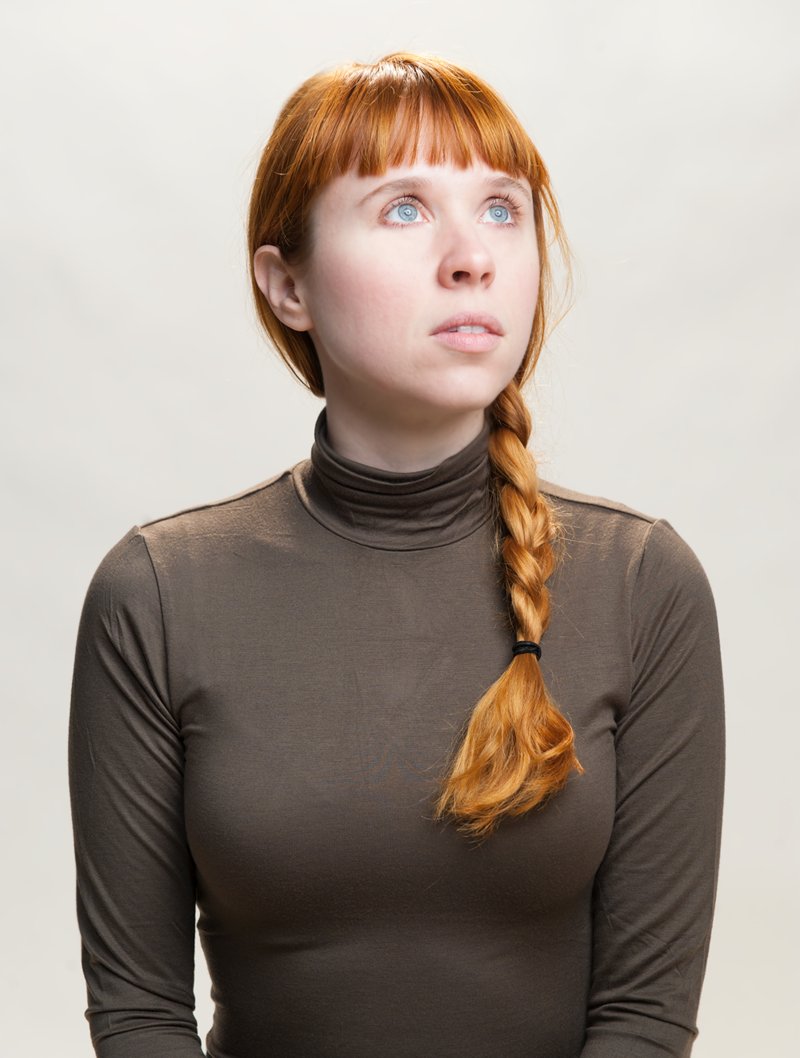
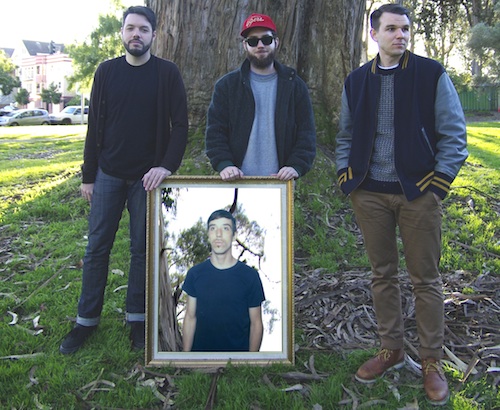
Using just her laptop and live vocal processing, Holly Herndon creates alternate universes. The PhD student at Stanford’s Center for Computer Research in Music and Acoustics manipulates programs into heart-racing, thumping, brain dripping compositions that methodically carry the listener away, then jerk it back with startling shots of noise. The best case example of this is “Movement,” the title track off last fall’s experimental RVNG Intl. release.

Like the others, the song surprises with impact, despite Herndon’s hushed, layered vocals trailing off into an unseen world. While it’s robotically tied to electronics, the track has a base in the natural, which makes sense for a former choir girl from Johnson City, Tennessee who spent her summers in the Berlin club scene. It’s the two halves of her worlds coming together.

She just got back from a brief European tour — which included a stop in underground music mecca, the Boiler Room — and is planning a new single for a spring release. For it, she says she’s “inspired to get more abstract while remaining approachable,” which sounds like a worthy challenge. There also will be a collaboration with Hieroglyphic Being this year, another with Reza Negarestani and Mat Dryhurst that will unfold in an art institution, a few remixes, and her doctoral exams. And likely plenty more media gushing if these first few months have been good indicators of the future.

Description of sound: I make computer music with a focus on live vocal processing and physical sound.

What you like most about the Bay Area music scene: We are literally at the end of the world, and the lack of attention focused here allows for artists to develop their own identities outside of hype bubbles.

What piece of music means a lot to you: I got deep with Trevor Wishart’s “Globalia” last summer and still cannot get over how well his concept of exploring (and collapsing) the diversity of language is executed. It is a gorgeous piece.

Favorite local eatery and dish: Bagel and latte at Java Supreme on Guerrero and 19th; I am there every day and the owners are wonderful.

Who would you most like to tour with: Mat Dryhurst, he is my life and creative partner and touring alone is exhausting.

Holly Herndon at Future|Perfect with Nguzunguzu, DJs Marco de la Vega, Loric Sih. Thu/14, 9pm, $10–$15. Public Works, 161 Erie, SF. www.publicsf.com, hollyherndon.tumblr.com

On the Cheap Listings

0

Submit items for the listings at listings@sfbg.com. For further information on how to submit items for listings, see Picks.

WEDNESDAY 13

“Art, Money Politics: Making it as an Artist” Pro Arts, 150 Frank H. Ogawa Plaza, Oakl. www.proartsgallery.org. 6pm, free. Supporting yourself as an artist can be hard. Head over to this panel discussion and get some advice from digital artist Camille Utterback, multimedia artist and designer Favianna Rodriguez, and muralist Eduardo Pineda. They’ll share tips on how to make a living in a creative field, bring your hope, dreams, and of course, questions.

“Waypost: Unconventional Travel Stories” Stanza Coffee Bar, 3126 16th St., SF. www.meetup.com/traveltalks. 7-8:30pm, free. A blacked-out Vegas weekend can be a good time but if you’re looking to go somewhere that stimulates a… different side of your spirit on your next vacation you might find the inspiration you’ve been looking for at this series of storytellers reflecting on the meaningful swirls of journeys they’ve taken. If you can’t make it to the event in person, no sweat — you can still participate via Google Hangout.

THURSDAY 14

One Billion Rising performance ritual Presbyterian Church, 2619 Broadway, Oakl. www.bayarearising.org. 7-8:30pm, $10-100 donation suggested. Free for youth under 17. Dedicate your Valentine’s Day to a good cause this year at this fundraiser for International Development Exchange (IDEX), an organization working to empower impoverished women across the globe. The evening will be a mix of spirituality, politics, and performances (flash mob, anyone?) from local groups such as Youth Speaks and Mission Dance Brigade.

Dogpatch Wine Works date night Dogpatch Wine Works, 2455 Third St., SF. www.dogpatchwineworks.com. 6-8pm, $40. Few things spell out romance quite like wine and chocolate. Stroll around Dogpatch Wine Works’ tasting room sipping on some vino and snacking on locally-crafted Recchiuti chocolate. After your palette is satisfied you can tour the 15,000-square foot working winery.

“Returning Cupid’s Fire” Cartoon Art Museum, 655 Mission, SF. www.cartoonart.org. 7-9pm, $10. Valentine-less and planning on having a night in with Ben and Jerry? Change of plans. San Francisco comedians Ivan Hernandez, Colleen Watson, and Mike Capozzola feel your pain and will be performing anti-Valentine’s Day themed stand-up routines tonight. Refreshments will be served.

Tout Sweet Pâtisserie tasting Tout Sweet Pâtisserie in Macy’s Union Square, 170 O’Farrell, third floor, SF. (415) 385-1679, www.toutsweetsf.com. 7-8:30pm, $55 per person. Reservations recommended. Yigit Pura, chef and owner of this sweet shop, is celebrating V-Day with a three-course dessert menu featuring a rotating selection of seasonal offerings, each paired with local artisanal wine and beer. If you already have some sweet Valentine’s Day plans don’t fret, Pura has more tastings scheduled for March 14 and April 11.

Hella Vegan Eats V-Day pop-up dinner Dear Mom, 2700 16th St., SF. www.dearmomsf.com. 5pm-midnight, free. The Oakland–based traveling food vendor will be in the city to once again take over Mission bar Dear Mom. We are hoping their doughnut burger with secret sauce will be on tonight’s menu <3 <3

Valentine’s Day at the Armory The Armory, 1800 Mission, SF. tickets.armorystudios.com. 7:30 and 9:30, $55. Start the evening off on the upper floor of the Kink.com porn palace, then head to a workshop led by porn starlet Rain DeGrey that focuses on teaching couples how to make fantasies reality. Afterward, enjoy specialty cocktails and aphrodisiac-themed appetizers at the luxe Armory Club across the street.

FRIDAY 15

SFIndieFest Roller Disco Party Women’s Building, 3543 18th St., SF. www.sfindie.com. 8pm-midnight, $10. Grab your striped socks and short-shorts because the ’70s are back tonight at this fundraiser for film festival organization SF IndieFest. If your skating skills are rusty, don’t sweat. Prizes will be awarded for best costumes, not for slickest moves.

46th California International Antiquarian Book Fair Concourse Exhibition Center, 635 Eighth St., SF. www.sfbookfair.com. Through February 17. 3-8pm, $25 for a weekend pass, $15 for a Saturday and Sunday pass. The world’s largest rare book fair returns to San Francisco this weekend. You will find one-of-a-kind pieces such as sketches by John Lennon, the first edition of the Federalist Papers, and a Mark Twain autographed manuscript. Before you try to snatch up a John Lennon original, be warned — treasures as fine as these can cost you a pretty penny (up to $362,000 to be exact).

SATURDAY 16

“Opera on Tap” Café Royale, 800 Post, SF. www.caferoyale-sf.com. 8pm, free. Nonprofit organization Opera on Tap wants to prove that opera can be awesome — and not just for those who can afford the cushiony box seats. In Café Royale’s intimate and relaxed space, this group will bust out some popular and some more esoteric pieces for an all-new kind of operatic experience.

Family Lunar New Year Celebration San Francisco Botanical Garden, SF. www.sfbotanicalgarden.org. 9-11:30am, free. In celebration of the Year of the Snake and the abundance of magnolias blooming in the gardens, lion and folk dancers will be performing today. While watching the SF Sunset Recreation Center Dance Troupe bust some moves you can pot a plant or make lanterns using magnolia petals.

SUNDAY 17

Urban bicycling workshop San Francisco Jewish Community Center, 3200 California, SF. www.sfbike.org. 10am-2pm, free. RSVP required. The San Francisco Bike Collation wants you to bike and bike safe — which is why it offers a range of course on everything from urban cycling to how to bike safely with your family. Today’s topic: traffic 101. Beginners welcome, and participants don’t need to bring a bike (though one may be helpful after the class when it comes to putting your newfound knowledge into action.)

TUESDAY 19

Literary salon with Rosie Schaap and Robin Ekiss Tosca Café, 242 Columbus, SF. www.toscacafesf.com. 7-8pm, $5-10 donation suggested. In Rosie Schaap’s memoir Drinking with Men she shares her unending quest for the perfect local haunt, which took her everywhere from LA to Dublin to Manhattan. Robin Ekiss writes the “Drink” column for the NY Times, and is the founder of the Ladies Liquor Union, the first fully female intemperance league for ladies who love books and booze. If you too consider yourself a cocktail connoisseur with a literary edge, head over Tosca Café to hear what the two have to say at this Litquake event.


Union divisions

28

steve@sfbg.com

Service Employees International Union Local 1021 strenuously resists the wage and benefit givebacks regularly demanded in recent years by employers, including the city of San Francisco, which is now trying to slash the salaries for more than 40 city job classifications.

At the same time, Local 1021 is asking its own employees for benefit givebacks during new contract negotiations, a move that their own union is blasting as hypocritical.

That has squeezed Local 1021 President Roxanne Sanchez and her leadership team into a difficult position. They must fend off a revolt from staff that is turning vitriolic, without offending members who are in some cases worse off than the SEIU employees who represent them — all without weakening the union’s position at the bargaining tables with employers that relentlessly work to undermine the labor movement.

And they have to do it in the middle of an internal union election that they need to win to stay in power.

“The irony here is SEIU works assiduously to avoid takeaways in their contracts with employers and here they want givebacks from their own sweatshop-type working conditions,” says Libby Sayre, area director for Communications Workers of America Local 9404, which has represented SEIU Local 1021 employees since an internal reorganization in 2007. “It’s time for them to put some of their union principles into play.”

Local 1021 is proposing to increase how much employees pay for one of their health plans, eliminate the 401(k) pension match, and change some work rules, while keeping salaries where they’ve been stuck for many years. Employees say the givebacks total $416,000, and they’re coming even as the union maintains healthy reserves of about $11 million (the union says that level is now closer to $9 million).

“These are proposals they wouldn’t accept from an employer and they’re trying to impose them on their own employees,” Sayre told us. “It’s not justifiable. It’s not like this is a union in collapse.”

Yet Sanchez and her team, including Political Director Chris Daly, say the internal revolt led by a small number of disgruntled employees misrepresents how good the workers actually have it, particularly compared to members who have endured severe layoffs and salary and benefit cuts in recent years. Employees have another generous pension on top of the 401(k) (paying 2.5 percent of final salary per year worked), employer-paid health benefits (costs would go up for the PacificCare plan, but not Kaiser), normal step salary increases, and bonuses in lieu of raises in each of the last two years.

“Our staff has not given up anything,” Sanchez said. “They saw us cut the board’s budget by several hundred thousand dollars before we asked for anything.”

She said that with dues revenue falling along with membership numbers, and pension and health care costs rising steeply, the union can’t afford to keep dipping into its reserve funds, as it has in each of the last two years.

“We’re asking them to give modestly to their health care costs, and that we don’t pay for that second pension,” Sanchez said. “We are not balancing the budget on their backs, like what gets done with us.”

While both Daly and Sanchez admit the local has healthy reserve funds for its budget level, they say that’s necessary for the union to project strength, whether it be threatening a strike at the bargaining table or taking on ballot measures that would cripple the labor movement, such as last year’s Prop. 32, which the local dug into its reserve funds to fight.

“If we didn’t have healthy reserves, we’d be coming at them for more [givebacks] and doing layoffs,” Sanchez said.

While Sanchez said she resents being compared to the employers that her union battles, her rhetoric about the need for fiscal discipline is echoed by city officials who say they are already being generous with workers and they can’t afford to continue paying salaries that are so far beyond market rates.

“The city has to look at all the costs and be fiscally responsible and prudent,” said Susan Gard, a spokesperson for the city’s Department of Human Resources. “We don’t have the luxury of just looking at what’s best for employees.”

As allowed by the two-year contract Local 1021 reached with the city last year, DHR did a study comparing local salaries with eight other jurisdictions, finding that positions such as social workers, clerks, secretaries, custodians, and nursing assistants were between 16 and 48 percent above the Bay Area average. So the city is seeking to lower the salaries in 43 job classifications (applied to new hires only) and raise them for four classifications. The proposal will go before an arbitrator for a decision early next month.

Gard said the increases take into account San Francisco’s high cost of living and historic desire for pay equity, so most increases are less than half of the pay differentials the survey revealed. “They would all still be above market rates,” she said.

But Local 1021 officials say most of these positions had their salaries deliberately increased back in the 1980s and 1990s as part of an official city policy promoting pay equity for jobs often held by women and minorities. Even though that provision was removed from the official City Charter in 1996, they say it remains an important city policy.

“The city is rolling back decades of historic work on pay equity in this city,” Daly said. “We were concerned about equal treatment of workers who were disproportionately women and people of color.”

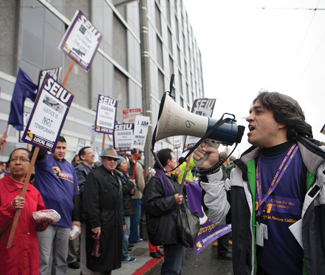
To highlight that pay equity issue, Local 1021 is planning a rally on Feb. 14 at noon outside DHR offices at 1 South Van Ness Avenue. Gard denies that the DHR proposal rolls back pay equity advances: “The city is committed to that principal, equal pay for equal work, and we don’t think our proposal erodes that.”

Sanchez said Local 1021 employees are undermining the union’s position in fights like this one, but they say the local needs to recognize and reward their work rather than justifying givebacks by comparing employees to members. “We don’t want to play the ‘our benefits are better than X-group’ games,” Nick Peraino, a 1021 researcher and CWA steward, told us. “We work very hard on behalf of the membership.”

Sayer accused Local 1021 leaders of arrogance and told us, “There is an attitude problem on the bargaining team and a reality problem on the part of the local,” a tone that that Sanchez sometimes mirrored when talking about the CWA campaign against her leadership.

Yet such vitriolic rhetoric may have as much to do with internal union politics as it does a true impasse. The leaders of the revolt by SEIU employees recently tried to decertify CWA and go with more forceful representation, a vote they lost badly but which may have spurred CWA to toughen its approach. Similarly, after SEIU members have accepted some bad contracts in recent years, some members may resent the organizers. Sanchez stressed how Local 1021 is member-led and responsive to the needs of workers, despite the current conflict.

“We want to make this organization good and strong,” Sanchez said, “and you can’t do that if you’re screwing over someone.”

Editor’s notes

37

tredmond@sfbg.com

EDITORS NOTES This is how dysfunctional the San Francisco housing market has become:

The Chron reported in late January that young people who are just arriving in San Francisco are paying exorbitant rents for tiny spaces — $500 for a laundry room, $600 for an upper bunk — and often living in substandard conditions.

And on Feb. 11, The New York Times reported that a significant number of high-end condos in that city were vacant almost all the time, owned by the uber-rich who used them as pieds a terre — something that’s going on increasingly in San Francisco.

The Times notes:

“The higher up you go in price, the higher the concentration is likely to be of owners who spend only a few months, a few weeks or even just a few days each year in their apartments. This very costly form of desolation means that some of the city’s most expensive residential buildings stand mostly dark, lonesome and empty on the inside.”

I called Brad Paul, a former deputy mayor for housing and a longtime expert on development in San Francisco and read him that quote. “As my nine-year-old son would say, ‘You think?'” he said. My kids would be shorter: “Duh.”

The more housing you build that only multimillionaires can afford, the more likely your serving a population that has three or four other houses and just wants this one for the couple of weeks a year that they jet into San Francisco.

Planning Commission member Katherine Moore has mused about the problem in public, noting that in her Nob Hill neighborhood, there are more and more dark apartments.

Who cares? Everyone should — for a couple of reasons. For one, empty neighborhoods are no good for small businesses. They’re also not as safe. And it just seems so ass-backward: A city that can’t provide decent affordable housing for current residents, much less for the next generation of immigrants who keep the place lively, is giving up valuable land to build housing for people who aren’t going to live here at all.

That’s what the fight over the new condo projects on the waterfront, 8 Washington and 75 Howard, ought to be about.

At the very least, the city ought to get some data here. It’s not that hard — just check property records against the tax documents filed for homeownership exemptions. As Sup. David Chiu told me, “It would be good for us to know if San Francisco’s high-end condos are actually being used.”

Maybe we should find that out before we build any more. You think?


SF Weekly dumps on transgender people, all of Tenderloin

108

Oh hey, isn’t it funny to watch (possibly) transgender people get punched in the face and repost a video of it that calls them “trannies” insultingly, without comment? What a barrel of laughs to compare transgender people to “pickpocketing assholes and crooks who know a crime of opportunity better than they know anything else.” Well hey, to SF Weekly online news director Erin Sherbert, it’s “Just another day in the Tenderloin!

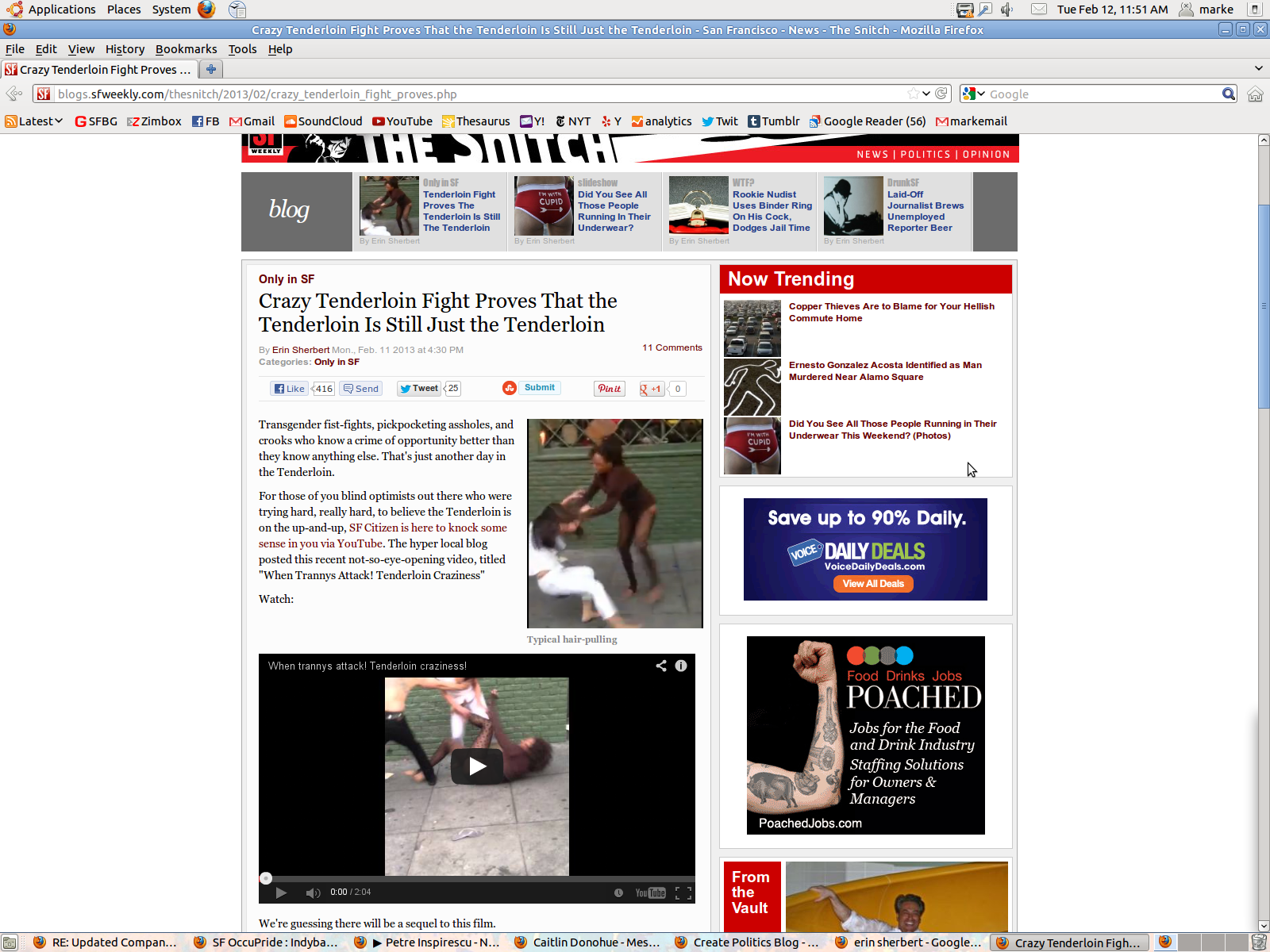
In a post today on the Weekly’s Snitch blog entitled “Crazy Tenderloin Fight Proves That Tenderloin Is Still Just the Tenderloin,” Sherbert, who’s actually called attention to inequality in the past, gives into her unfunny sterotyping and sensationalistic link-baiting impulses and posts a YouTube video recorded a week ago that shows three people fighting in the Tenderloin — two of them possibly transgender (Sherbert offers no evidence of this) — and many horrifying punches to the face. Just so we can LOL with privilege! Here’s the full text of her post.  

Transgender fist-fights, pickpocketing assholes, and crooks who know a crime of opportunity better than they know anything else. That’s just another day in the Tenderloin.

For those of you blind optimists out there who were trying hard, really hard, to believe the Tenderloin is on the up-and-up, SF Citizen is here to knock some sense in you via YouTube. The hyperlocal blog posted this recent not-so-eye-opening video, titled “When Trannys Attack! Tenderloin Craziness.”

I can’t even touch the ignorance of any of the above, so I’m just gonna adjust my wig and leave it all there on the dirt floor like the mess it is. I will point out, however, that this comes at a particularly tone-deaf time, when local trans leaders are launching an historic campaign for medical equality and benefits rights. I will also point out that the SF Weekly, in the past, has maintained a pretty impressive record of covering transgender issues — and isn’t really that hard up for web hits, either. I’ve contacted Sherbert for comment and will update when I hear from her.

UPDATE: I reached out to Erin again, asking her if she was planning to comment. Her response: “no”

On the Cheap Listings

0

Submit items for the listings at listings@sfbg.com. For further information on how to submit items for listings, see Picks.

WEDNESDAY 6

Urban dance at the library Merced Branch Library, 155 Winston, SF. www.sfpl.org. 4:30, free. For ages seven to 18. In celebration of Black History Month, Sergio Suarez of the All the Way Live Foundation will share his knowledge of street dance history — covering everything from the Memphis jook to Oakland TURF to LA crump. Children and teens will also have a chance to watch acclaimed Bay Area dancers Beatz n Pieces, Agatron, Fluidgirl, and Too Wet.

THURSDAY 7

“Bacon, Babes and Bingo” El Rio, 3158 Mission, SF. www.baconbabesandbingo.com. 7-11pm, $10. With endless ways to win prizes — from donning superlative pig-related accessories to spinning the “squeal wheel” — tonight is a shining night for bacon. To keep up with the theme, vendor BaconBacon will be serving up a variety of pork-related goodies. If all this isn’t compelling enough, there will also be burlesque, music, and free snacks courtesy of Rock Candy Snack Shop.

FRIDAY 8

Gray Loft Gallery’s second annual Love Show Gray Loft Gallery, 2889 Ford, third floor, Oakl. Through February 23. www.greyloftgallery.com. Opening reception: 6-9pm, free. Photographs, paintings, collages, sculptures, jewelry, textiles, and handmade cards, all exploring themes of love will be on display tonight in this unconventional work-live warehouse and gallery in Oakland’s Jingletown district.

“On The Edge” erotic photography exhibition Gallery 4N5, 683 Mission, SF. www.eroticartevents.com. 4-10pm. $5. Also open Sat/9, 1-10pm and Sun/10, noon-5pm. Free on Sunday. If the thought of a teddy-bear-and-Hallmark-card kind of Valentines Day puts you straight to sleep, this exhibit might be what you’ve been looking for. Featuring 400 pieces of fine nude art and extreme erotica photographs by 20 photographers, this event is sure spice up your holiday. Mingle with some of the photographers and stay for the leather fashion show at 7:30pm.

“Mortified’s Doomed Valentine’s Show” DNA Lounge, 375 11th St., SF. www.dnalounge.com. Doors open at 6:30pm. Show starts at 7:30pm, $14-21. Sat/8, 7:30pm at the Uptown, 1928 Telegraph, Oakl. “Mortified” is a nationally-loved, comic excavation of the artifacts of teenage angst (i.e. journals, home movies, letters, poems, etc.) shared by the original authors. Complete with a house band, these stories cover topics such as worst hand job, first puff, and Bible camp. Some of these stories may make you cringe with sheer awkwardness but they might make your high school experience seem slightly less tragic.

SF Beer Week Various Bay Area locations. www.sfbeerweek.org. Through Feb. 17. Every year this celebration of the Bay’s burgeoning microbrew macroculture exceeds our expectations and in 2013 we’ll be raising our steins yet again. Check the website for info on tastings, food-beer pairing dinners, educational offerings, and what special brew your favorite bar will be pouring on what night.

SATURDAY 9

“My Perverted Sucky Valentine Puts Out!” Center for Sex and Culture, 1349 Mission, SF. 8pm, $10-25 donation suggested. If you’ve fallen victim to a romantic rejection or two, you should know you’re not alone. In fact, tonight is a spoken word extravaganza focusing on topics such as: hot heartbreak, lust gone wrong, and ill-advised hookups. And let’s hear it for sponsoring sex-positive culture: your donations go to help the Center for Sex and Culture and St. James Infirmary continue those institutions’ rad, empowering programming.

Rare Device Valentine’s Trunk Show Rare Device, 600 Divisadero, SF. www.raredevice.net. Noon-6pm, free. Treat your Valentine (or yourself) with some awesome, locally-crafted goodies this afternoon. Between Zelma Rose’s cross stitched accessories, Jen Hewett’s lively prints, Emily McDowell’s inspirational illustrations, and Karrie Bakes’ gluten-free treats you are sure to walk away with something sweet.

Cupid’s Undie Run The Republic, 3213 Scott, SF. www.cupidsundierun.com. Pre-festivities start at noon, run begins at 2:30pm, $30. Register online. Strip down and sweat up for this mile long run around the Marina and Lombard Street. While your best lingerie gets all sweaty, you’ll also be helping to raise funds to benefit the Children’s Tumor Foundation. Warm up at the Republic before and afterwards with pre and post-run festivities.

SUNDAY 10

SPCA’s Be MineValentine’s Adopt-a-thon 201 Alabama, SF. www.sfspca.org. 10am-6pm, free. Nothing says “I love you” more than a puppy. Join the SF SPCA this weekend for its annual adoption extravaganza. Head over Friday night for a cocktail party, Saturday afternoon for dog and cat behavior seminars, or today for a puppy kissing booth, foster care bake sale, and prize wheel. All adoption fees are waived this weekend for animals from SF SPCA, SF Animal Care and Control, Muttville Senior Dog Rescue, and Family Dog Rescued.

MONDAY 11

“Edible Valentine Workshop” Autumn Express, 2071 Mission, SF. www.autumnexpress.com. 5-6pm. $10 if you register before Feb. 8, $15 at the door. Whether you’re still in school or not, passing out Valentine’s Day cards is fun. Head over to sustainability-oriented print shop Autumn Express to decorate some cookies and chocolate bars with icing and candies and whip up some cards for your big-kid class.

THURSDAY 14

One Billion Rising performance ritual First Presbyterian Church, 2619 Broadway, Oakl. www.bayarearising.org. 7-8:30pm, $10-100 donation suggested. Free for youth under 17. Purchase tickets online. Put your Valentines Day towards a good cause this year at a fundraiser for International Development Exchange (IDEX), an organization working to empower impoverished women across the globe. The evening will be a mix of spirituality, politics, and performances from local groups such as Youth Speaks and Mission Dance Brigade.

Dogpatch Wine Works date night Dogpatch Wine Works, 2455 Third St., SF. www.dogpatchwineworks.com. 6-8pm, $40. Few things spell out romance quite like wine and chocolate. Stroll around Dogpatch Wine Works’ tasting room sipping on some vino and snacking on locally-crafted Recchiuti chocolate. After your palette is satisfied you can tour the 15,000 square foot working winery.

“Returning Cupid’s Fire” Cartoon Art Museum, 655 Mission, SF. www.cartoonart.org. 7-9pm, $10. If you are Valentine-less and planning on having a night in with Ben and Jerry, it’s time to change your plans. San Francisco comedians Ivan Hernandez, Colleen Watson, and Mike Capozzola feel your pain and will be performing anti-Valentine’s Day themed stand-up routines tonight. Refreshments will be served.

Tout Sweet Pâtisserie tasting Tout Sweet Pâtisserie in Macy’s Union Square, 170 O’Farrell, third floor, SF. (415) 385-1679, www.toutsweetsf.com. 7-8:30pm, $55 per person. Reservations recommended. Yigit Pura, chef and owner of this sweet shop, is now offering tastings at Tout Sweet, which for our purposes means a three-course dessert menu featuring a rotating selection of seasonal offerings, each paired with local artisanal wine and beer. If you already have some sweet Valentine’s Day plans don’t fret, Pura has more tastings scheduled for March 14 and April 11.

Hella Vegan Eats V-Day pop up dinner Dear Mom, 2700 16th St., SF. www.dearmomsf.com. 5pm-midnight, free. The Oakland–based traveling food vendor will be in the city to once again take over Mission bar Dear Mom. We are hoping their doughnut burger with secret sauce will be on tonight’s menu.

Valentine’s Day at the Armory Club The Armory, 1800 Mission, SF. tickets.armorystudios.com. 7:30 and 9:30, $55. Start the evening off on the upper floor of the historic Armory then head to a workshop led by porn starlet Rain DeGrey that focuses on teaching couples how to make fantasies reality. Afterward, enjoy specialty cocktails and aphrodisiac-themed appetizers at the luxe Armory Club across the street.


Don’t just stand there — squat!

59

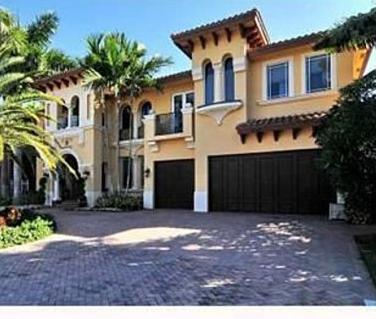
You know I love this story. I love it so much I am going to be following it for weeks, and I hope for years. A homeless guy takes over a $2 million mansion in Florida, which was sitting empty while Bank of America dicked around and never sold or rented it, and now the bank is going to have a tough time getting rid of him.

Did I say I love this story?

Check it out:

It only gets more complicated. By invoking an obscure but never rescinded nor revised Florida law, Barbosa is using “adverse possession” to justify his claim in the house, as it allows a person to move in and claim title of a property “if they can stay there seven years.” Florida has suffered more than one similar case. The Sun Sentinel makes reference to a “handful” of adverse possession claims making their way through the Palm Beach County Property Appraiser’s Office, but Barbosa’s stands out because the house he’s possessing (adversely) is so valuable. And though Barbosa is certainly eccentric, posting a sign that he is the “living beneficiary to the Divine Estate being superior of commerce and usury” on the front of the home, he isn’t stupid. He even contacted the Appraiser’s Office to alert them that his tenancy had begun, presumably as he intends to stay for the required seven years.

We haven’t had any good high-profile public squats like this in San Francisco in years. Back in the day, my old friend Paul Kangas and his brother John were the kings of squats; Paul found an empty house in the Sunset in the late 1970s, with the paint peeling and the shutters hanging off the windows, moved into it, fixed it up, had the water and power turned on in his name and lived there for years. He didn’t operate in secret or the middle of the night; he got the lock re-keyed, moved all his stuff in, and acted like he owned the place. He fixed it up nicely, took care of the yard — and the neighbors loved him. An empty eyesore was now a clean, inhabited house.

Paul was no fool; he had researched the place and found out that the owner had died without leaving direct descendants or a clear will, and for a long time, nobody in the city or the legal system could figure out who actually did own it. Paul needed a place to live; this one was going to be empty for a long time. Why not use it?

John did the same thing with an abandoned house in the Mission, except that to open the door, he had to climb in a window. Somebody saw him, called the cops …. and he was arrested for burglary (for taking the front door knob, which he was going to replace.) He took the case to trial, and it was spectacular: His lawyer, Jonathan McCurdy, called a bunch of city officials and asked them who John had stolen the door knob from; “who,” he kept asking, “actually owns this property?” The title was unclear; nobody could answer the question.

Then John took the stand and said he wasn’t a burglar at all; he was a squatter, who was planning to take over, fix up, and live in an abandoned house.

The jury took about an hour to come back with a verdict of not guilty.

There are plenty of pieces of property around the Bay Area that are owned by banks and sitting vacant. Some of them are becoming eyesores. Somebody ought to be living there.

As we used to say, Don’t just stand there — squat!


Why Mission Bay isn’t a train wreck

55

Now that the city planning director is comparing neighborhood activists to war mongers and meanies, it’s worth a moment to look back at how the city wound up with what the Chron is now calling a vibrant success of a medical-tech development at Mission Bay.

That site used to be a Southern Pacific railroad yard, but in the early 1980s, the old robber barons realized that a lot of their property had more value as real estate than as railroads. So SP decided to develop Mission Bay, eventually spinning off Catellus Corp. as the developer. The first plan was a disaster, a mix of highrise office buildings, hotels and a little bit of housing. Then-Mayor Art Agnos got it toned down a little, but the proposal he and Catellus put forward in the late 1980s was still a mess — more office space than housing, nowhere near enough in the way of community amenities, something an old-school builder with no concern for public process might have gotten away with in another city, but it wasn’t going to fly here. Of course, Catellus and the mayor both argued that this was the best deal the city could possibly get; more housing or different uses just wouldn’t pencil out.

Those same darn crazy activists that the planning director hates forced a public vote on the plan — and it was overwhelmingly rejected.The next day, Catellus came back to the table — and offered dramatic improvements in housing and amenities. In the end, UC decided to move into the site, building what I consider a hideously ugly campus with not a single decent piece of architecture — but without giant highrises and with at least some open space and community facilities. There’s actually a chance that this could become a viable neighborhood — thanks not to the developer, the mayor, or city planning, but to meddlesome neighborhood people.

Funny how that works.


Proposal to raze I-280 linked to train and real estate deals

61

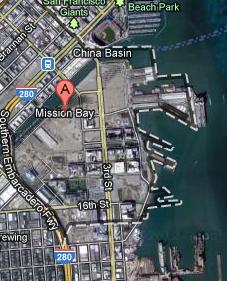
It’s a bold idea, discussed for years behind closed doors and recently announced in a strangely understated and pro-growth way: Tear down the last mile of Interstate 280 and replace it with an wide boulevard – reminiscent of the removal of the Central and Embarcadero freeways – in order to facilitate the extension of electrified Caltrain and high-speed rail tracks into the Transbay Terminal.

For almost three years, city planners have been discussing the idea and drawing up closely guarded plans to tear down the freeway, discussions sparked by the state’s Environmental Impact Reports on electrifying the Caltrain tracks and bringing high-speed trains into town. With an increasing number of trains traveling those tracks, access to the rapidly growing Mission Bay area from the west on 16th Street would turn into a traffic nightmare, either with long waits for an at-grade train crossing or the creation of ugly and uninviting underpasses for cars and bikes.

Mayor Ed Lee and other top politicians have long sought to bring those trains downtown in Transbay Terminal through a still-unfunded tunnel, rather than having them stop at the existing Caltrain station at 4th and King streets. But the existence of the I-280 pilings made it structurally impossible to send the train underground before it got to 16th street.

So the idea was raised to raze the elevated 280 freeway and better integrate Mission Bay and the Potrero Hill/Showplace Square area, where Kaiser plans to build a huge new medical facility, creating a bike- and pedestrian-friendly corridor without the shadow of an antiquated freeway overhead.

“If you get the freeway out of the way, it’s a ton of space,” said Greg Riessen, the city planner who developed and studied the idea. “The whole corridor of the freeway is blocking the ability to do anything else.”

But it wasn’t until the political class and their capitalist partners also realized the enormous development potential of the idea – raising money that could be used to fund the train tunnel – that it was finally floated as a public trial balloon for the first time this week. The Chron’s Matier & Ross led their Sunday column with a short item on the idea, apparently tipped off to its quiet debut a couple weeks earlier.

The city’s Transportation Policy Director Gillian Gillett unveiled the idea in a Jan. 7 letter to the Municipal Transportation Commission, repeating it Jan. 10 at a forum on high-speed rail held at the San Francisco Planning and Urban Research Association. The letter was a response to the MTC’s request for information on “San Francisco’s policy goals and objectives regarding the much-needed electrification of Caltrain.”

Yet rather than deal directly with that issue, the letter said the answer “must be broadened to address the need for growth in the downtown and South of Market areas,” which it said requires funding to bring the trains into Transbay Terminal and to then let developers have at the 21 acres of land surrounding the existing Caltrain station, where transportation officials planned to store the trains.

“We need to create a faster and cheaper DTX [Downtown Extension project] alignment, realize the full value of the 4th & King Streets Railyard site, and eliminate the intrusiveness of I-280 in Mission Bay by terminating it at 16th Street and replacing it with a boulevard, based on the lessons learned from the removal of the Embarcadero Freeway to create a new Rincon Hill neighborhood, and the Central Freeway to create the new Market-Octavia neighborhood. Reenvisioning Caltrain electrification and the DTX could increase ridership, reduce costs considerably and create additional real estate value that would, in turn, provide for both more jobs to create revenue for both Caltrain and DTX and attract investment,” Gillett wrote.

She calls current plans to electrify Caltrain “shortsighted because it reduces the City’s ability to meet its regional job growth allocations, because more than 20 acres are covered with trains, and it eliminates an important opportunity to create real estate value which can be used to fund transit and Caltrain investments,” she wrote.

The letter doesn’t address where the increasing number of trains coming into San Francisco would be stored if the railyard is turned into luxury condos and commercial spaces, which has long been a goal of SPUR and other pro-development cheerleaders. High-speed rail officials have suggested Brisbane, but sources say city officials there have balked at the idea. Although Gillett hasn’t returned our calls with follow-up questions, the Mayor’s Office seems to see such logistical questions as secondary to this cash-cow idea.

So a staff-level proposal to solve a transportation challenge with an elegant multi-modal solution that follows in the city’s tradition of tearing down freeways has morphed into a real estate deal. Quentin Kopp, the father of high-speed rail in California, has already derided the Transbay Terminal project (which is funded by the sale of state land surrounding the site to office tower developers) as little more than a real estate deal, and now the city is apparently seeking to extend that deal further into Mission Bay.

Former Mayor Art Agnos, who worked on both the Embarcadero and Central freeway tear-downs, told us, “In general, I really support the concept of demolishing freeways that bisect the city.”

Yet he said there are many key details and questions that need to be addressed, particularly given the Mayor’s Office support for the new Warriors arena on the Central Waterfront, a project whose unaddressed traffic impacts would be exacerbated by an intensification of development at the Caltrain station, into Mission Bay, and further south.

“It could drown the city, this tsunami of cars, particularly with all the development planned all the way down to Hunters Point,” Agnos said. “I like the idea, but we need a serious discussion of the details, particularly with all these development proposals.”


Planning director insults neighborhood activists

153

John Rahaim, the director of city planning, is the featured speaker at a SPUR forum Jan. 29, and he’s got a very special title for his talk. It’s called “The Meanies and the War Mongers: Recent planning lessons from SF.” Here’s the description:

Land use planning in San Francisco is sometimes called a blood sport. John Rahaim, planning director, will discuss the last five years of planning in San Francisco during his tenure, and why that phrase is too weak. Rahaim will look at the accomplishments of planning in the city, the impacts from the last decade of neighborhood plans and the lessons from the war that will guide the Planning Department into the next decade.

Holy shit: Sounds to me like this guy, who gets very well compensated off the taxpayers’ dime, has just directly insulted generations of activists who have fought some really dumb development ideas and made this a more livable city. “War mongers?” “Meanies?”Is that the term he uses for people who try to get involved in the planning process? Here’s what he told me:

The purpose of the title was to be provocative.  I find it curious that you would make that assumption.  For now I will say that in my experience in SF, there are people on all sides of the development debates who would fit these descriptions.  Other than that, I invite you to the talk.

Okay, provocative is good, but seriously: He’s sounding as if these aren’t real issues that affect people’s lives, that land-use planning isn’t central to what we are as a city, and that people who don’t just shut up and go along with what he wants are troublemakers. Or as former Sup. Aaron Peskin, who has spent years as a neighborhood activists, notes: “He doesn’t want to admit that the best planning in this city is done by those neighborhood organizations and those activists who
challenge and shape literally every piece of planning that comes out of his office.”

Rahaim is supposed to be the guy who balances the various interest groups and tries to create acceptable solutions. “Whoever he’s referring to, it’s demeaning and unprofessional,” Peskin notes.

You can show up and ask Mr. Rahaim what he was talking about Tuesday, Jan. 29 at 6pm at the SPUR Center, 654 Mission. It’s free for SPUR members and costs $10 for everyone else. Worth every penny of it.


The end of landlines?

11

news@sfbg.com

The market for smart phones has reached the saturation point in the United States; it’s hard to find anyone who doesn’t have a mobile device. Hard, maybe — but not impossible. There are still thousands of people, many of them seniors, who rely on that old-fashioned, low-tech landline for their inexpensive connection to the world — and they’re about to lose out.

The deregulation of the telecommunications industry has reached the point where phone companies in California and elsewhere are getting ready to pull out and disconnect the copper wires that support traditional landlines — which, by law, have to be made available at dirt-cheap rates to low-income people.

And while so-called Lifeline rates for cell phones are coming, they aren’t available yet.

“It’s extremely important,” Nick Pasquariello, a senior and low-income resident of San Francisco who uses a landline with a Lifeline rate, told us. Like many seniors, Pasquariello says his old phone is cheaper, more reliable and simpler than a wireless plan.

“The technology and rates are changing all the time. It’s confusing,” he says, adding that the end of landlines would be detrimental to many people. “I haven’t heard of Lifeline for cell phones.”

So over the next year or two, seniors could find themselves disconnected. “It’s clear to us that companies like AT&T and Verizon are planning to get rid of their copper networks,” said Paul Goodman of the Greenlining Institute in Berkeley, which conducts public policy research and advocacy. Telecom companies have spent years lobbying to retire those lines, arguing that they’re expensive to maintain, which explains why they’ve been remiss when it comes to their upkeep.

“The phone companies are not repairing or maintaining old copper networks. They don’t want the responsibility,” Goodman explained.

Basic utilities like phone service have long been considered necessities and legislators have ensured that every household has access to them.

But replacing copper with newer technology makes better business sense. “It’s more lucrative to operate the VoIP and wireless networks,” Mark Toney, Executive Director of The Utility Reform Network, or TURN, told us. “They’re able to charge more per month and the profits are greater.”

The deregulation of phone service is nothing new; it started back in 1984 with the break up of AT&T. But it’s reaching the point where there’s little oversight at all.

In 2011, lawmakers in Wisconsin passed the Telecommunications Modernization Act and last year, virtually eliminating state regulation of phone companies. In New Hampshire, Governor John Lynch signed a similar bill into law. In California, SB 1161 went into effect a few months ago, lifting the California Public Utilities Commission’s regulatory power over internet-based phone services like VoIP and IP, among other things.

The bill’s passage caused consumer advocates to argue that deregulation would lead to price gouging and unfair business practices like cramming (or unauthorized third party charges found on a customer’s bill).

“We’re concerned with making sure consumers and seniors still have their protections which we think should apply regardless of the technology,” said Michael Richard, associate state director of advocacy for AARP.

Right now, Lifeline service is only offered through landlines. Retiring copper wire networks, and thus traditional landline service, could eliminate Lifeline altogether.

As the telecommunications industry has upgraded its products and services to accommodate newer technology, the CPUC has been forced to rethink its idea of what basic service looks like. Bill Johnston, Telecommunications Advisor to CPUC Commissioner Catherine Sandoval, told us the commission is working to make improvements.

“The earlier definition of basic service was from 1996 so there was a need to update that definition to include wireless service,” said Johnston, adding that the commission approved redefinition of “basic service” in December. That redefinition included offering Lifeline to “wireless and non traditional providers.” The definition reads: “Any basic service provider offering basic service must offer Lifeline rates on a non-discriminatory basis to eligible customers within the region where the provider offers basic service.”

But the service isn’t yet available for wireless or VoIP — and some fear that the current program will eclipse before a new one is in place. Johnston said a meeting is set for January 29 to discuss the scope of rules for Lifeline, and public hearings will be held around the state later this year to address this and other issues related to telecom deregulation.

The argument that landline phones are dying out may have some validity, but their benefits and practicality are evident — take for instance weather emergencies. After Hurricane Sandy struck the Northeast a few months ago, many towers providing service to cell phones went down. Landline users, however, were unaffected and still able to get in touch with family and emergency services.

According to Johnston, the commission is well aware of the benefits. “They want to make sure the wire line remains available because it has traditionally been the more reliable service.”

The notion that landlines phones are becoming obsolete has some consumer advocates rolling their eyes. “Most people in California have both cell phones and landlines,” said Toney.

Harmon’s way

0

arts@sfbg.com

THEATER Dan Harmon, performing at this year’s SF Sketchfest, is on the phone, talking about therapy. He’s explaining his belief that a person can find a mental illness for anything they can name, with some fetishistic examples. “There are people out there who like to be walked on,” the creator and former show runner of NBC’s Community says. “There’s people who like to eat human fecal matter. There’s people who want to have sex with kites.”

“Hold on, Dan. Are there really?” I ask, making a note to Google it later.

“I guarantee it. I promise you. There are six billion people in the world and there’s gotta be someone who wants to have sex with a kite. But I don’t know if you’d ever find someone that craves the feeling of being alone.”

We’re on the subject because of Harmontown, the comedy show-town hall meeting-podcast Harmon regularly holds in the back of an LA comic shop, based around “one day forming a colony of like-minded misfits.” Harmon’s about to take the show on a daunting cross-country tour, that will stop in SF for Sketchfest before returning to LA. It’s been eight months since Harmon was unceremoniously fired from the much-analyzed, but little-watched sitcom Community by Sony, and had a public feud with actor Chevy Chase that brought a TMZ level of public scrutiny. Subsequently, the Harmontown episodes have frequently taken on the air of a psychiatric session, with the audience filling an important role.

“The whole point of therapy is the therapist doesn’t particularly matter. You’re listening to yourself talk and I think some people are more comfortable talking to one guy holding a clipboard if they’re going to say ‘Hey, I put a Sharpie pen up my ass the other day, does that make me a pervert?’ I feel weirder saying that to one guy with a masters degree and a tiny office who doesn’t laugh than I do telling it to eight people in the back of a comic book store. It feels healthier to do the latter.”

Harmon doesn’t hold much back; after all, this is a guy that earlier in his career broke ground (and insert obvious pun here) with the self-explanatory “Laser Fart” web series for the no-budget, no restrictions, faux-TV network/film festival, Channel101.com (which he co-founded.) A performer only as a hobby, a “self-destructive writer” by trade, there’s no stand-up at Harmontown and ideally little planning. Instead, alcohol-enabled improv and tangents can lead to talking about being hit with a belt by his father, getting dangerously close to breaking up with frequent guest and girlfriend Erin McGathy on stage, or having Ricki Lake Show-styled heart-to-hearts with the audience.

It could be alienating, but Harmon’s uproarious logic, perspective, and self-awareness (an overabundance of which has caused his work to frequently be deemed “meta”) has gained him a following. “Where I tend to go,” says Harmon, “I tend to start asking the question ‘Am I a good person? Am I a good person?’ over and over again, and a kind of family forms around me. Or everyone else gets repelled.”

Channel101.com was at one time the focal point for this quasi-family. “It was like a barn raising, a church, something we did each month,” recalls Harmon. “We had a thing that we did and a belief system, and that was definitely something that I craved and wanted.” But as Community took over his life for three years, Harmon no longer could make the monthly films required, and moved into a fatherly rather than brotherly role.

Harmontown‘s filled that space, in a culty sort of way, with white-boy freestyle raps and live Dungeons and Dragons. The show tends to draw out bright millennials, eager Aspergians, and closeted creatives who find Harmon’s neuroses at least amusing but more often inspiring (also: nerds). It’s a mix that suit-wearing co-host Jeff B. Davis (Whose Line Is It Anyway?) best termed a “mutual anxiety association.” Harmontown isn’t meant for everybody. But that’s clearly by design. And as he hits the road with the show, Harmon’s looking for his people. 

HARMONTOWN

Jan. 31, 8pm, sold out

Punch Line Comedy Club

444 Battery, SF

www.sfsketchfest.com


The battle of Brotherhood Way

24

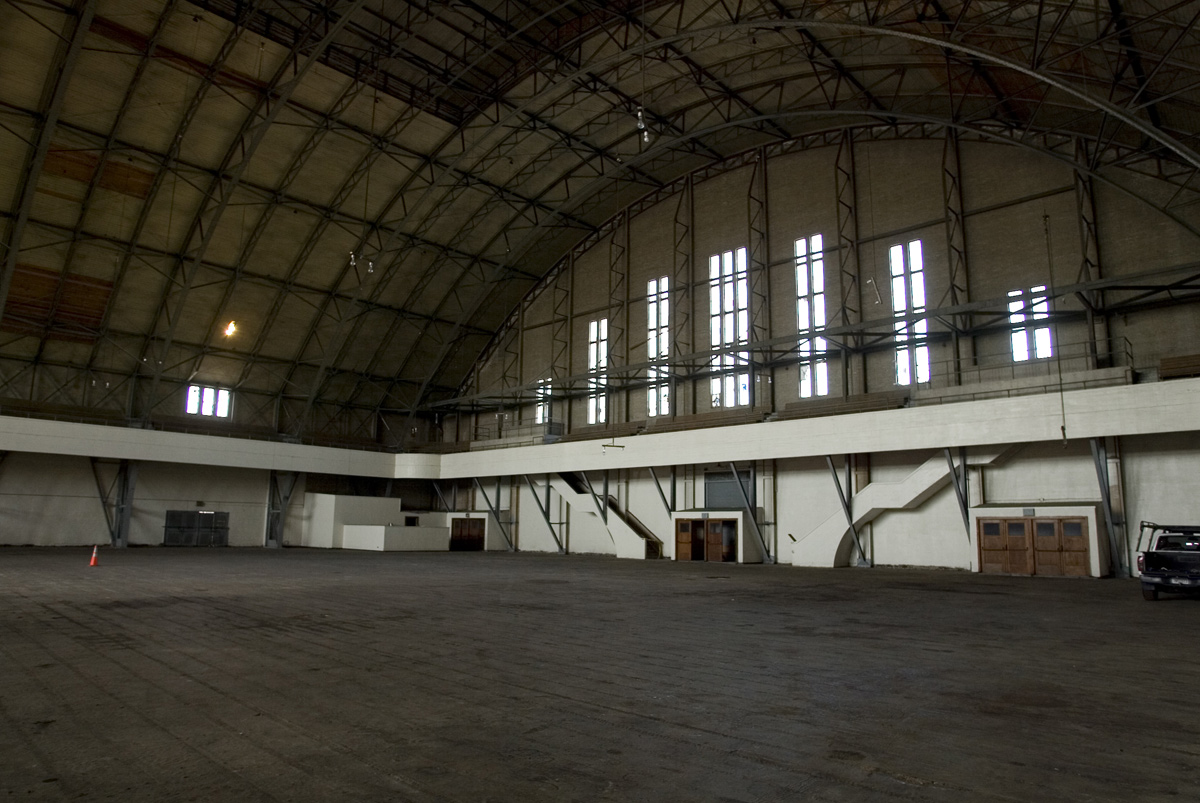
Brotherhood Way is a creature of another era. Tucked between the San Francisco Golf Club and ParkMerced, it was long known as Stanley Way. But in 1958, under Mayor George Christopher, the city, which owned all of the land on the south side of the street, turned that property over to a long list of religious institutions and renamed the street to reflect its role as a place for houses of worship. It’s now home to six churches or synagogues and nine religious schools. It has its own (religious) neighborhood association.

And this quiet little corner of the city has been the scene of a pitched battle over a plan to build 182 housing units on an empty patch of land on the north side of the street.

Opponents of the project say the area was set aside for educational and religious uses, not housing — and they argue that the expansion of ParkMerced will add too much congestion to the area. Supporters say the west side of town needs to acept more housing and more density.

It’s gotten ugly: At one point, the Archbishop himself ordered the pastor of St. Thomas More Catholic Church to quit agitating against the development. Sean Elsbernd, who represented the district for eight years, infuriated neighbors when he supported the project, and later apologized for his insensitivity to their concerns.

And seven years after the Planning Commission and the supervisors gave the project a green light, it still hasn’t broken ground.
Now the developers are ready to go — and the churches, aided by retired Judge Quentin Kopp, are trying once again to shut it down.

Kopp’s been arguing for some time now that the project needs to go back for a new permit because too much time has passed and nothing has happened. But he’s got another argument, too, and he brought it to the Board of Appeals Jan. 9. See, the original deal had a problem with transit access, since there isn’t enough Muni capacity along Brotherhood to handle 300 or so new residents. So the developer agreed to build two pedestrian walkways from the project up to Font Blvd. in Park Merced. But according to Kopp’s appeal, ParkMerced management never agreed to the easements that would be necessary to build a path through its property.

Instead, in 2008, Zoning Administrator Larry Badiner unilaterally changed the requirement, allowing for one footpath to the edge of Park Merced — with some vague agreement that later there might be an extension to the Muni stop. That, Kopp argues, should have triggered a new Conditional Use application and a new hearing. Oh, and in the meantime, ParkMerced has just moved to greatly expand the size of its complex, so maybe that should be considered, too.

The Board of Appeals rejected Kopp’s arguments, but he’s petitioning for a rehearing, in part because the board chair wasn’t present for meeting. Kopp argues that this is a quasi-judicial board — “and you don’t go before the Supreme Court with only eight of the nine members present.” Under city rules, though, four out of five is a quorum and able to hear the matter.

Kopp has another argument, too — one that’s unusual, perhaps unique: He claims none of the board members actually read his original appeal brief.

Kopp, see, asked during the hearing if all of the members had read the papers he submitted, and none of them responded affirmatively. “It is appearent and inferable that no members of the short-handed Board of Appeals had read Appelants’ brief before the hearing, or at all,” the motion for rehearing states. “The manifest failure of the four members present to real Appellants’ carefully-prepared brief constitute extraordinary circumstances and injustice.”

I’ve been able to reach two of the board members, Frank Fung and Darryl Honda, and both insist they read the brief. “I read every case in its entirely,” Fung said, “and so does everyone on this panel.” Honda, who is new to the board, also said he read the documents. “I bust out the highlighter pen and go through all of the briefs in every case,” he said.

So why didn’t they answer Kopp’s question? Well, Fung says, it took them all by surprise: “I don’t think any one has every asked that before.”

I’ll let you know if the petition for rehearing is accepted.

Nite Trax: That Icee Hot sensation

0

The stimulating and excellently-eared Icee Hot crew is blasting a two-part third anniversary party at Public Works: this Sat/19 sees dreamy R&B chopper Jacques Greene (yes, the guy with the glasses from the Azaelia Banks video, but also one of my favorite producers ever) and Dutch hyperdubber Martyn on deck. Part two on Sat/26 brings in alien techno soundscapist Space Dimension Controller and astral floor-pounder Basic Soul Unit. You will find me face down on the floor in sonic worship for both. (And you may be able to score a pass to both parties for a mere $15 here.)

I’ve been following the oft-roving party pretty much since its inception.

Usually I abhor parties that just throw a big name guest up and then give partygoers no other vibe-guidance: no decorations or look or neon Easter eggs of any kind. But the Icee Hot foursome — Shawn Reynaldo, Rollie Fingers, Ghosts on Tape, and Low Limit, all fantastic DJ/musicmakers in their own right — take an expressionist approach to gigs that transcends the bare-boned, and fends off any cynical charges of money-grubbing (the parties are hella cheap). Their excellent curatorial sense brings disparate, original sounds together to create something more stimulating than the sum of sonic parts.

I traded emails with the Icees on the eve of their blowout to talk about the party’s evolution and the SF scene right now.

SFBG Every time you guys throw a party, I trip over myself trying to describe the music with anything more substantial than “awesome” and then I overuse the word “bass.” How would you describe the music you look for when considering guest artists? 

GHOSTS ON TAPE We have a hard time describing it too. I think that’s part of the fun. But since you asked, I’d say we go for weirdo house, outsider artists, and underground pioneers. It’s hard to put a finger on what exactly we look for in a guest, they just have to do music that excites us. We also like to book people that are doing things that no one else is really doing, and it’s important for us to bring acts that have never played in SF before. That’s not always possible, but we try. We don’t really wanna bring artists based solely on internet hype, we have to genuinely like their music.  

ROLLIE FINGERS I think we just book people we like and people who influence people we like. The overarching theme is house and techno. It’s fine to just call it that. (Ed. Note: Mr. Fingers does not have to write exciting things about nightlife every week.)

SFBG What inspired you to start Icee Hot, and what are some of your favorite memories from the past three years?

SHAWN REYNALDO Icee Hot sort of grew out of Tormenta Tropical, another monthly party that I still throw here in San Francisco. That night is based around cumbia and other Latin/tropical styles, but back in 2009, I was mixing in a bunch of UK funky and other new house/bass/grime sounds. Some of those records were vaguely “tropical,” but I gradually realized that they didn’t properly fit the vibe of the party. Still, in November of that year, I booked L-Vis 1990 and Bok Bok at Tormenta Tropical for their first SF show, simply because I was so enthusiastic about the music they were making. This was right around the time that they were launching the Night Slugs label, and they hung out here in San Francisco for several days, during which time Rollie Fingers and I got really inspired, just by talking with them about music and realizing that there was something interesting happening with all these new hybrid sounds coming out of the UK. We also realized that this music melded really well with a lot of great classic house, garage and techno that wasn’t really being celebrated in the SF club scene at the time. Anyways, within a few weeks of that show, we enlisted Ghosts on Tape and Low Limit, booked our first party at 222 Hyde, and began planning ICEE HOT.

In terms of highlights, there are just too many to mention. Hosting Todd Edwards for his first-ever SF show was something special, and it was even better when we brought him back a year later and paired him with MK, one of his musical heroes. Beyond that, there was Robert Hood and Anthony “Shake” Shakir showing us what being a Detroit legend is all about. Ben UFO and Oneman going back-to-back, which was a real landmark for the party. Cedaa literally kicking off his 21st birthday with a midnight set. MikeQ turning the dancefloor out with drag queens doing bicycle kicks on stage. New Years 2011 with Bok Bok and Ramadanman. Girl Unit making his SF debut in the sweaty basement at 222 Hyde. John Talabot, both his DJ set and phenomenal live set a few months later. Our second anniversary last year with Mosca and Altered Natives. I could go on forever. It’s been fun.

ROLLIE FINGERS Hieroglyphic Being is an amazing DJ. He played a delayed vocal sample of “I Feel Love” for like 20 minutes when he played. If anyone else did that, it would be messy, but with him, it was bliss. I also have a very distinct memory of DJ Stingray getting out of the cab at Public Works wearing his ski mask. It was deep.

SFBG It seems like the number of parties has grown exponentially in the past few years. What are some of the challenges and rewards to throwing a party in the current SF nightlife landscape? Has it become more a matter of branding, rather than a distinct music or crowd profile? And do you feel that the party scene is being overdetermined by artist booking agencies?

SHAWN REYNALDO ICEE HOT is the product of a lot of hard work. Between talking to artists, negotiating with booking agents, locking down venues, purchasing flights, picking people up at the airport, fulfilling riders, and doing all the other behind-the-scenes tasks, it can be a little daunting, especially when we’re operating on a zero-profit basis. I don’t know if people always realize this, but ICEE HOT makes a point to keep our door prices as low as possible. Sure, we could charge $20, $25, $30 for a lot of our parties, but we don’t, because charging exorbitant door prices is lame. We’re not doing this to make money. We’re doing this to throw good events, and we don’t want anyone not to come because it’s too expensive.

http://www.youtube.com/watch?v=kwyxmrMSOUM

ROLLIE FINGERS We don’t mind branding our party at all. Every flyer for the past three years has said ICEE HOT really big on top. I think it’s nice for parties to have a distinct look and feel to them. ICEE HOT always feels like ICEE HOT, no matter what artist we are booking. I like that.

SHAWN REYNALDO And sure, dealing with nightlife landscape in San Francisco can be tricky. Even though the city attracts top-level talent, it’s still a relatively small place, so most promoters know one another. Sometimes you wind up competing with other parties to book the same talent, or dealing with booking agents who are trying to pit us against one another. Thankfully, we can usually avoid all of that mess. When booking agents are being unreasonable or don’t understand what we’re about, we usually just bow out of the proceedings. After three years, ICEE HOT has built up a good reputation, so the artists we’re trying to bring out have often already heard of the party and want to come play. Don’t get me wrong, it can all be frustrating sometimes, but we’re proud of what we’re doing and hopefully the parties and the label speak for themselves. Plus, it’s hard to really complain too much. Every month, we’re throwing parties exactly the way we want to throw them with guests we’re personally really excited about. Things are going well, and we want to just keep building on that.

SFBG Why’d you decide on a two-part blowout? It’s almost too-too good. Although I know you haven’t shot your wad yet — any hints on who might be coming in 2013 (or who your fantasy artists would be).

GHOSTS ON TAPE The kind folks at Public Works were nice enough to let us use their club two weeks in a row, and since our anniversary is something of a milestone, we wanted to book artists that are in line with our vision of what we like to do at ICEE HOT. I think Martyn, Jacques Greene, Space Dimension Controller and Basic Soul Unit are going to help us celebrate our three-year anniversary in fine form. As far as future bookings, I can’t give anything away, but we’re going to continue on the same path and keep on booking freakishly talented individuals. In the past, whenever we thought of a fantasy artist that we’d like to book, it always ended up coming true eventually, so I don’t want to say anything to ruin any future surprises.

Appetite: New year sips

0

Ringing in the new year is all about celebratory imbibing, but the sometimes dreary days of January likewise call for a cheering pour. It’s a month of planning towards a new year, reaching out for fresh horizons… good reasons to have something quality in the glass, whatever the category. Here are a few worthy bottles, from sake, wine, whisky, even cocktail bitters.

BITTERS

Medicinal and mixable, the glut of bitters released the last few years has all but assured oversaturation. But Brooklyn Hemispherical Bitters ($21 per bottle) stands out. Made in Brooklyn, the focus is on seasonal flavors like popular Meyer lemon, rhubarb or Sriracha. Heat radiates from their savory-sweet blackberry mole or spicy charred pineapple bitters, or a brisk, bitter chill from Icelandic bitters. These are some of the more inventive, elegant bitters on the market. 

A couple additional stand-out bitter flavors: The Bitter End’s vibrant curry bitters ($24) made in Sante Fe and put to perfect use by  Mike Ryan at Sable Kitchen and Bar in Chicago in his Short Circuit cocktail with cachaca, manzanilla sherry and Kalani coconut liqueur. From Canada, Bittered Sling’s plum root beer evokes a sweet sarsaparilla.

WHISKEY

Nikka Whiskey is blessedly and finally distributed in the US through San Francisco’s Anchor Distilling, just releasing two new Nikka imports – hopefully many more to come. My favorite of the two, Yoichi Single Malt ($129), is a splurge-worthy, 15 year old whisky distilled on the island of Hokkaido from pot stills heated with finely powdered natural coal, a rare traditional method. Though more akin to a Highland-style Scotch, it nods to Islay with a hint of peat alongside a balanced brightness. On the more affordable side is Taketsuru Pure Malt ($69.99): a 12 year pure malt whisky blended in vats from Yoichi and Miyagikyo distilleries. The mountain air and river water humidity of the northern Honshu region where Miyagikyo is produced adds silky, ripe pear dimensions.

This November’s Single Malt and Scotch Whisky Extravaganza in San Francisco (held in 13 major markets), offered tastings of expected Scotches. A few special drams were the fabulous Scotch Malt Whisky Society‘s 8 year Ardbeg Cask No. 33.113, a salty, smoky Scotch young with exotic fruit. The Single Malts’ Auchriosk 20 year Scotch exhibits tropical vividness, though a classic beauty. It was a joy to taste The Balvenie Tun 1401/Batch #6, the youngest whisky in its blend being over 20 yrs old. This rarity expresses layers of fruit, vanilla and spice, lively despite age.

SAKE

Sake produced in a town outside Portland? SakeOne is a range of affordable sakes (those mentioned below $13-15)  made from rice grown nearby in Sacramento, CA. There’s Momokawa organic sakes, like a clean Junmai Ginjo or creamy Pearl Sake redolent of banana and coconut, or the smooth, balanced G Joy Sake.

SANGRIA

Despite low quality bottled sangria you may have tried before, Eppa (found at Bay Area Whole Foods and numerous shops across the country, $12 a bottle) is a refreshing mix of pomegranate, acai, blueberry and blood orange juices with Mendocino Cabernet and Syrah. Trying it chilled over fresh cut fruit this holiday season with family, it tastes homemade,  lush and dark, not too sweet, but just right.

INDY SPIRITS

It was the best year yet at the San Francisco Indy Spirits Expo http://www.indyspiritsexpo.com/ this November. A number of newcomers merely await West Coast distribution but are available online. With a slew of “craft” tonics released lately, each using real cinchona bark (quinine) without the natural color removed, Tomr’s Tonic is one of the better I’ve tasted. 100% organic and made in New Jersey, Tom Richter’s lively tonic combines citrus, herbs, cane sugar, with cinchona. The tonic mixes beautifully with a number of gins I sampled it with at home.

Fabrizia Limoncello is produced in New Hampshire with California and South American citrus by two Italian-American brothers. Balanced, fresh, tart (unlike their sweet Blood Orange liqueur), this limoncello is a step up from most. SW4 London Dry Gin, produced in the Clapham neighborhood of London and imported through Luxe Vintages in Florida, is a smooth, solid gin made from 12 botanicals, including lemon peel and cassia.

WINE

Craving the sparkling especially at this time of year? Two great value bottles ($15 each) are Nino Franco’s Rustico Prosecco, dry yet lively, clean and tight, and Coppo’s Moscato d’Asti  from Piedmont, Italy, its vivd effervescence cutting through intense sweetness, vibrant with brunch or spicy food. For after-dinner dessert wine, Donnafugata’s “Ben Rye” ($45 for half bottle) from Sicily, gives off a rich, raisin-like hue in the glass, made of Zibibbo grapes from the island of Pantelleria. To taste it’s lushly elegant, with a balanced sweetness and nuttiness.

At an industry tasting this fall with Sommelier David Lynch at his restaurant St. Vincent, we explored wines of the fascinating, warm-weather Consorzio Tutela Morellino Di Scansano region of southernmost Tuscany (established as a D.O.C.G. in 2007). I learned the region requires its wines be made with a minimum of 85% Sangiovese grapes. A 2010 Tenuta Pietramora di Collefagiano stood out, unusual at 100% Sangiovese. Its pleasantly funky nose gave way to cherry, even chocolate/earthy notes, balanced by soft acidity.
 
Subscribe to Virgina’s twice-monthly newsletter, The Perfect Spot, www.theperfectspotsf.com


New steps

0

arts@sfbg.com

THEATER/DANCE Choreographer Mary Armentrout’s itinerant, site-specific performance installation, reveries and elegies, passed through CounterPULSE last weekend. A post-solstice meditation on dislocation and flux, it was also the harbinger of a striking new season at the SOMA performance incubator. In fact, reveries and elegies, true to its theme of displacement, can be considered the odd one out among programming whose defining structure is the duet.

A broad range of interpretation and subversion of that basic form comprises CounterPULSE’s Queer Series, running January through March and showcasing new work from artists as diverse and far-flung as New York’s Faye Driscoll, the Minneapolis-based BodyCartography Project, San Francisco’s Annie Danger, Berlin-based American Jeremy Wade, and conjoined local choreographic dynamo Jarry (aka Jesse Hewit and Laura Arrington).

If you’ve followed the vicissitudes of programming at CounterPULSE even intermittently, a glance at this year’s calendar prompts a double take for the careful concentration of work and the thematic consistency it evinces, in addition to its impressive international lineup. The rigorous queering of the duet structure underlined by the series, for instance, comes further elaborated through complimentary work like DavEnd’s well-received 2012 debut, F.A.G.G.O.T.S.: the Musical! (which turns on a duet of sorts with a wall mirror) as well as some rich auxiliary events.

The latter include a talk on gender by Judith Butler (on February 16) and, on February 28 (the eve of Danger’s genuflection to sexual healing and empowerment, The Great Church of the Holy Fuck), a screening of Community Action Center (2010), the aesthetically and politically astute, 69-minute, queer, trans, women-centered celebration/subversion of 1970s porn by A.K. Burns and A.L. Steiner. (That program includes a post-screening Q&A with Steiner, whose film was recently acquired by the Museum of Modern Art).

The duet form (and the act of reimagining it) is an apt metaphor for the programming model behind the season too, which represents something of a departure from business as usual.

CounterPULSE’s Julie Phelps, central in the development of the season and currently serving as interim artistic and executive director for Jessica Robinson Love (who is on sabbatical), explained that the Queer Series and the season as a whole had emerged from some serious rethinking at the organizational level.

“We were sort of primed to embark on this new season, which [comes directly] after our strategic planning process, where we really identified who we are, how we do what we do, and what limits we still have on our impact.”

Phelps says one limit they identified was a single-minded commitment to the bottom line that was keeping certain kinds of work almost permanently out of reach — for example, much work by touring artists from out of the state or country, for which there is relatively little foundational money available for tapping.

“We’re actually, financially, a very conservative organization,” says Phelps, “which has brought with it a lot of stability — very important especially in the young years of an organization, but ultimately stopping us from taking risk on vision. We were always on a break-even model. Either it needs to be some mix of foundation support or some other kind of funding with some tickets sales. The bottom line always has to equal zero. So we’ve been pushing ourselves to think bigger about the types of risks that we can take.”

That’s far from inviting recklessness, Phelps stresses, but it does mean modifying notions of financial success and failure, bringing them in line with an artistic spirit of experimentation and what might be thought of as the useful flop.

“Actually, failure is just as valid a result as success,” says Phelps. “When we had been building failure out of every income model we had, we’d also been building out risk from some of the artistic selections, and from the way we were making artistic selections. We’ve really only just recently moved into curating in the first place. Before we were like, we have a space, if you want to do a show, come ask us and we’ll work it out. [In this] season, every artist was someone we approached and worked with, found out ways that they could intersect with CounterPULSE, what was financially viable for us and for them, what was artistically interesting for us and for them — actually build something from the inside out, instead of the outside in.”

Despite the considerate design in the program, Phelps calls it more art than science and insists it’s all “still a very organic process,” noting that the queer label is at least partly one of sheer convenience.

“I mean, ‘queer’ is basically the only banner that you could fly over that season, and only because it is so indistinct — because actually each of these works is hugely different. So there’s still a patchwork element to it, but it’s a little bit more deliberate [than usual],” she explains, laughing at the metaphor carrying her away. “At least the patches were picked out, and the fabric was cut to shape before they were added to the quilt this time.” *

www.counterpulse.org


Alerts

0

THURSDAY 17

Refugee Hotel

Contemporary Jewish Museum, 736 Mission, SF. 6:30-8pm. Join photographer Jim Goldberg, photographer Gabriele Stabile, and journalist Juliet Linderman for a discussion about Refugee Hotel, a collection of photography and interviews documenting the arrival of refugees to the United States. Hosted by Voice of Witness, a nonprofit book series published by McSweeney’s Books that illuminates contemporary human rights issues. Free before 5pm; admission is $5 after. Advance tickets encouraged. info@thecjm.org; 415.655.7881. If you can’t make the Thursday event, consider dropping by Gallery Carte Blanche (973 Valencia St, SF) Friday/18 at 6 pm, when Voice of Witness will host a talk and book signing for Refugee Hotel, followed by a reception.


SATURDAY 19

Protest Citizens United at Chevron Refinery

March departs Richmond BART station at noon; rally at Chevron Gate 14 (corner of Castro and Chevron Way), 1pm, Richmond. Chevron is widely known in these parts for letting loose a toxic plume of smoke that blackened skies last year when the refinery caught fire. What you may not have heard is that the oil behemoth also bears the distinction of being the single-largest contributor to a so-called Super PAC (for the GOP, naturally) since the Citizens United decision. On the third anniversary of the Supreme Court’s notorious ruling, which opened the floodgates to skyrocketing corporate contributions to political campaigns, activists are planning a march and rally outside the Chevron Oil Refinery. Live music from the Brass Liberation Orchestra will accompany the 2.5-mile walk, local activists and community leaders will speak at the rally.


MONDAY 21

Fracking in California

Gazebo Room, CPMC Davies Campus, 45 Castro Street, SF. 7-9 p.m. Fracking, or hydraulic fracturing, is an environmentally damaging oil and gas&#150;drilling technique that involves injecting high volumes of pressurized water, sand and toxic chemicals deep into the earth. It’s already taking place in nine California counties, according the Center for Biological Diversity. TransitionSF will host a free presentation on fracking with speakers Rose Braz, Climate Campaign Director of the Center for Biological Diversity; and Adam Scow, California Campaigns Director for Food & Water Watch. The talk will cover the environmental effects of fracking and offer ideas on how environmentalists can take action against it. Free.


The downside of Jerry Brown’s budget

9

The guv is quite proud of his new budget: He’s eliminated the chronic deficits, he’s giving some more money to the schools, and he’s vowing that the state will live “within its means.” Which sounds like no more taxes. And gee, just about everyone in Sacramento is singing Kumbaya; the praise is coming not just from Democrats but from Republicans.

But there’s a downside to the Brown budget: He has, to his credit, stopped the red ink, and he’s presenting things in a brilliant way that makes him look like the grownup the state has needed for many years — but he’s doing very little to replace the the money that services for the poor have lost in the past five years.

“At first blush, it has some good things,” Assemblymember Tom Ammiano told me. “But I don’t see restoration of the cuts for the disenfranchised.”

Ammiano is calling for closing Prop. 13 loopholes and passing an oil severance tax as part of the budget process. And with Democrats holding a two-thirds majority in both houses, those kinds of changes are possible. At the very least, it seems, the progressives ought to demand from Brown a plan to backfill what social service providers have lost. If it can’t all happen this year, it ought to be part of the future budget process.

State Sen. Mark Leno, who chairs the Senate Budget Commitee, was a bit more politic than Ammiano, but he also is concerned that the budget move the state forward:

“With the improvement of our fiscal outlook comes the opportunity to continue our work to restore California. While our recent efforts have focused largely on making cuts in the least harmful manner possible, we will now have more capacity to refine our work to improve essential programs and analyze the role of government and its effectiveness. I look forward to working with Governor Brown and my colleagues in the Legislature to evaluate this year’s budget to help ensure it is the best possible plan for a state on the mend.”

On the mend is right — because the state of California is in way worse shape than it was when Arnold Schwarzenegger took over and screwed things up, and the goal shoudn’t be to keep at a steady state that’s unacceptable. It ought to be returning California to its role as a leader in progressive policy. Sorry, Jerry: A balanced budget alone isn’t good enough.

Oh, and Californians United for a Reponsible Budget, which seeks to cut prison spending, points out that this budget is hardly tough on the bloated corrections budget:

The administration has deserted plans to shrink California’s over-sized prison population, ignoring clear messages from voters. The proposed budget increases prison spending $250 million including a $52 million General Fund increase, bringing the total Corrections budget over $11 billion. Despite the passage of Prop. 36 and continuing realignment,  It also projects an increase in the prison population by 2,262 people over the 2012 Budget Act projections. ”If the Governor believes that ‘we can’t pour more and more dollars down the rat hole of incarceration’ then why is he increasing spending on Corrections, planning for more prisoners rather than fewer and defying the demands of the Federal Court and the voters to further shrink the prison system?” asked Diana Zuñiga, Field Organizer for Californians United for a Responsible Budget.

It’s no surprise that the prison guards’ union is happy.

UPDATE: An analysis by Ammiano’s office shows a few other lowlights of the budget: It reduced AIDS Drug Assistance Program money by $16.9 million. It doesn’t restore any of the deep cuts to the state’s Welfare to Work Program. It cuts community college funding by tying state money to student completion, not student enrollment. It offers no additional funding for child care programs. It caps the number of courses students are allowed to take if they want to receive Cal Grants.

The Leg needs to take a hard look at this before it signs off on all these cuts.

Do we need more luxury condos?

0

There’s no shortage of high-end housing in San Francisco. If you can afford to pay $6,000 a month for your rent or mortgage, you’re going to find a nice place to live. And there’s no study anywhere in any corner of the City Planning Department suggesting that current San Francisco residents really want new luxury condos downtown.

In fact, all evidence suggests the contrary — the market for high-end downtown housing is new residents, people who are moving here to take tech jobs, empty nesters moving from the suburbs, or world travelers looking for a pied-a-terre in one of the greatest cities on Earth.

But when the City Planning Department analyzes a project like 75 Howard, that’s not part of the discussion.

The Dec. 12 preliminary environmental study on the “market-rate” (read: $1 million and up for waterfront views) project never addresses the question of what value this type of housing would bring to the city. Instead, it talks about projections from the Association of Bay Area Governments, which says that San Francisco will grow by 52,000 households by 2030.

So a project that’s creating fewer than 200 housing units, and creating a net of 77 jobs, isn’t big enough to be a factor in the future of either jobs or housing.

But in the process, the study makes a remarkable statement, one that underlines everything wrong with city planning policy. Buried on page 48 of a 151-page preliminary study is the following: “In addition, the demand for housing by the net increase in number of employees would be more than offset by the dwelling units that would be constructed on site under the proposed project or its variants.”

That sounds like bureaucratise, and it is, so allow me to translate: The project will create 186 housing units and 77 jobs. More housing than jobs; what’s there to worry about?

Well: The 77 employees at 75 Howard will work in the restaurants and stores, or in the garage under the building, or in maintenance. Not one of them will make even remotely enough money to afford to buy one of the condo units in the building.

So the project — like so much of the development that happens in San Francisco — will create jobs for people who can’t afford to live here, and housing for people who don’t currently work here. That imbalance is utterly unsustainable, spells disaster for the future of the city — and is pretty much hard-wired into current planning and housing policy.

War of the waterfront

40

tredmond@sfbg.com

There’s a blocky, unattractive building near the corner of Howard and Steuart streets, right off the Embarcadero, that’s used for the unappealing activity of parking cars. Nobody’s paid much attention to it for years, although weekend shoppers at the Ferry Building Farmers Market appreciate the fact that they can park their cars for just $6 on Saturday and Sunday mornings.

But now a developer has big plans for the 75 Howard Street site — and it’s about to become a critical front in a huge battle over the future of San Francisco’s waterfront.

Paramount Partners, a New York-based real-estate firm that also owns One Market Plaza, wants to tear down the eight-story garage and replace it with a 350-foot highrise tower that will hold 186 high-end condominiums. The new building would have ground-floor retail and restaurant space and a public plaza.

It would also exceed the current height limit in the area by 150 feet and could be the second luxury housing project along the Embarcadero that defies the city’s longtime policy of strictly limiting the height of buildings on the waterfront.

It comes at a time when the Golden State Warriors are seeking permission to build a sports arena on Piers 30 and 32, just a few hundred feet from 75 Howard.

Between the proposed 8 Washington condo project, the arena, and 75 Howard, the skyline and use of the central waterfront could change dramatically in the next few years. Add to that a $100 million makeover for Pier 70, the new Exploratorium building on Pier 15, and a new cruise ship terminal at Pier 27 — and that’s more development along the Bay than San Francisco has seen in decades.

And much of it is happening without a coherent overall plan.

There’s no city planning document that calls for radically upzoning the waterfront for luxury housing. There’s nothing that talks about large-scale sports facilities. These projects are driven by developers, not city planners — and when you put them all together, the cumulative impacts could be profound, and in some cases, alarming.

“There hasn’t been a comprehensive vision for the future of the waterfront,” Sup. David Chiu told me. “”I think we need to take a step back and look at what we really want to do.”

Or as Tom Radulovich, director of the advocacy group Livable City, put it, “We need to stop planning the waterfront one project at a time.”


Some of the first big development wars in San Francisco history involved tall buildings on the waterfront. After the Fontana Towers were built in 1965, walling off the end of the Van Ness corridor in a nasty replica of a Miami Beach hotel complex, residents of the northern part of the city began to rebel. A plan to put a 550-foot US Steel headquarters building on the waterfront galvanized the first anti-highrise campaigns, with dressmaker Alvin Duskin buying newspaper ads that warned, “Don’t let them bury your skyline under a wall of tombstones.”

Ultimately, the highrise revolt forced the city to downzone the waterfront area, where most buildings can’t exceed 60 or 80 feet. But repeatedly, developers have eyed this valuable turf and tried to get around the rules.

“It’s a generational battle,” former Sup. Aaron Peskin noted. “Every time the developers think another generation of San Franciscans has forgotten the past, they try to raise the height limit along the Embarcadero.”

The 8 Washington project was the latest attempt. Developer Simon Snellgrove wants to build 134 of the most expensive condominiums in San Francisco history on a slice of land owned in part by the Port of San Francisco, not far from the Ferry Building. The tallest of the structures would rise 136 feet, far above the 84-foot zoning limit for the site. Opponents argued that the city has no pressing need for ultra-luxury housing and that the proposal would create a “wall on the waterfront.”

Although the supervisors approved it on a 8-3 vote, foes gathered enough signatures to force a referendum, so the development can’t go forward until the voters have a chance to weigh in this coming November.

Meanwhile, the Paramount Group has filed plans for a much taller project at 75 Howard. It’s on the edge of downtown, but also along the Embarcadero south of Market, where many of the buildings are only a few stories high.

The project already faces opposition. “The serious concerns I had with 8 Washington are very similar with 75 Howard,” Chiu said. But the issues are much larger now that the Warriors have proposed an arena just across the street and a few blocks south.

“Because of the increase in traffic and other issues around the arena, I think 75 Howard has a higher bar to jump,” Sup. Jane Kim, who represents South of Market, told me.

Kim said she’s not opposed to the Warriors’ proposal and is still open to considering the highrise condos. But she, too, is concerned that all of this development is taking place without a coherent plan.

“It’s a good question to be asking,” she said. “We want some development along the waterfront, but the question is how much.”

Alex Clemens, who runs Barbary Coast Consulting, is representing the developer at 75 Howard. He argues that the current parking garage is neither environmentally appropriate nor the best use of space downtown.

“Paramount Group purchased the garage as part of a larger portfolio in 2007,” he told me by email. “Like any other downtown garage, it is very profitable — but Paramount believes an eight-story cube of parking facing the Embarcadero is not the best use of this incredible location.”

He added: “We believe removing eight above-ground layers of parked cars from the site, reducing traffic congestion, enlivening street life, and improving the pedestrian corridor are all benefits to the community that fit well with the city’s overall goals. (Of course, these are in addition to the myriad fees and tax revenues associated with the project.)”

But that, of course, assumes that the city wants, and needs, more luxury condominiums (see sidebar).


Among the biggest problems of this rush of waterfront development is the lack of public transit. The 75 Howard project is fairly close to the Embarcadero BART station, but when you take into account the Exploratorium, the arena, and Pier 70 — where a popular renovation project is slated to create new office, retail, and restaurant space — the potential for transit overload is serious.

The waterfront at this point is served primary by Muni’s F line — which, Radulovich points out, “is crowded, expensive, low-capacity, and not [Americans with Disabilities Act]-compliant.”

The T line brings in passengers from the southeast but, Radulovich said, “if you think we can serve all this new development with the existing transit, it’s not going to happen.”

Then there are the cars. The Embarcadero is practically a highway, and all the auto traffic makes it unsafe for bicycles. The Warriors arena will have to involve some parking (if nothing else, it will need a few hundred spaces for players, staff, and executives — and it’s highly unlikely people who buy million-dollar luxury boxes are going to take transit to the arena, so there will have to be parking for them, too. That’s hundreds of spaces and new cars — assuming not a single fan drives.

The 75 Howard project will eliminate parking spaces, but not vehicle traffic — there will still be close to 200 parking spaces.

And all of this is happening at the foot of the Bay Bridge, the constantly clogged artery to the East Bay. “Oh, and there’s a new community of 20,000 people planned right in the center of the bridge, on Treasure Island,” Peskin pointed out.

Is it possible to handle all of the people coming and going to the waterfront (particularly on days where there’s also a Giants game a few hundred yards south) entirely with mass transit? Maybe — “that’s the kind of problem we’d like to have to solve,” Radulovich said. Of course, the developers would have to kick in major resources to fund transit — “and,” he said, “we don’t even know what the bill would be, and we don’t have the political will to stick it to the developers.”

But a transit-only option for the waterfront is not going to happen — at the very least, thousands of Warriors fans are going to drive.

The overall problem here is that nobody has asked the hard questions: What do we want to do with San Francisco’s waterfront? The Port, which owns much of the land, is in a terrible bind — the City Charter defines the Port as an enterprise department, which has to pay for itself with revenue from its operations, which made sense when it was a working seaport.

But now the only assets are real estate — and developing that land, for good or for ill, seems the only way to address hundreds of millions of dollars in deferred maintenance and operating costs on the waterfront’s crumbling piers. And the City Planning Department, which oversees the land on the other side of the Embarcadero, is utterly driven by the desires of developers, who routinely get exemptions from the existing zoning. “There is no rule of law in the planning environment we live in,” Radulovich said. So the result is a series of projects, each considered on its own, that together threaten to turn this priceless civic asset into a wall of concrete.