Planning

CPMC deal gets warm welcome despite some shortcomings

9

Even though the Board of Supervisors unanimously approved the term sheet for the California Pacific Medical Center’s hospital deal this week, comments from the supervisors and the general public indicated there are still a few outstanding issues before the project returns to the board for final approval, probably in July.

As the Guardian recently reported, CPMC’s longstanding contract impasse with the California Nurses Association remains the biggest sticking point even for many labor-community coalition members who helped hammer out the deal that was announced last week. James Tracy of the Community Housing Partnership told the supervisors that he was almost ready to uncork the champagne and celebrate, “but I’m holding off until there is labor peace with the nurses.”

New District 5 Sup. London Breed went on extended tirade ripping into the hard-won compromise plan, voicing support for the nurses, wanting more specifics on how affordable housing money will be used, calling for more money for job training to support the plan’s local hiring standards (“I need to know how this is going to transfer into support for Western Addition residents,” and concluding that she’s generally supportive of the deal but “I will reserve final judgment.”

Calvin Welch of the Council of Community Housing Organizations echoed Breed’s concern that the $36.5 million in affordable housing funds will be paid into the Mayor’s Office of Housing’s general pot rather than be set aside for specific projects. “We are very concerned with how this multi-faceted program will unfold,” Welch said, asking that COCHO be included in decisions about how the money from CPMC gets used.

Sup. Scott Wiener decried how the new deal’s $14 million in transportation impact fees is 30 percent less than the ill-fated previous deal – the result of a significantly smaller footprint of the Cathedral Hill Hospital – saying, “Once again transit comes out on the short end.”

The change called for by more supervisors than any other is an increase in job training funds to support the guarantee that 30 percent of construction jobs and 40 percent of permanent entry level jobs go to San Franciscans. Even though job training funds were doubled to $4 million under the new agreement, some supervisors and activists say that’s not enough.

“That’s a big improvement, but it’s still not enough, given the type of training needed for low-income San Franciscans to be able to work in the hospitals,” Gordon Mar of San Franciscans For Healthcare, Housing, Jobs and Justice told the Guardian.

Yet even with all these gripes and picking of nits, which will play out as the development agreement is prepared and goes through the Planning Commission approval process starting in May, the consensus across the ideological spectrum seems to be that this is a good deal for the city that is likely to be approved if CPMC can reach a contract with CNA

And all hailed it as a vast improvement over the deal CPMC cut last year with the Mayor’s Office, offering a lesson for city officials who are now negotiating other big deals, such as the Warriors Arena proposal. As Sup. John Avalos said at the hearing, “I remember a statement form the Mayor’s Office last year that this is the best we can get. I think we always need to challenge that.”

The FBI and Occupy

36

A federal judge will decide March 15 whether to dismiss a lawsuit by the ACLU and the Bay Guardian seeking access to FBI records showing the agency’s involvement with the Occupy movement.

As if often the case, the FBI’s legal motions tell an interesting story that sheds light on what some of the still-unreleased documents might show.
The filings make it clear that the FBI was not only spying on the Occupy movement but was sharing data with local law-enforcement agencies — and at some point may have classified some part of the Occupy movement as international terrorists.

The Guardian and the ACLU have been fighting for more than a year to get the agency to release its complete files on Occupy. After a March 8, 2012 Freedom of Information Act request yielded only a few pages, and the FBI claimed it had no more documents, the ACLU filed suit.

In a declaration dated March 15, 2013, David M. Hardy, chief of the FBI’s Information Section, confirms that the agency was sharing information on Occupy with other police agencies. He states that “The mention of the FBI sharing intelligence with another agency doesn’t mean that the document becomes and intelligence or planning document. It is simply documenting that information was shared.”

Among the documents that the feds did release is a Nov. 2, 2011 memo discussing the FBI’s contact with the Port of Stockton Police Department to “share intelligence about Occupy protesters targetting the Port of Oakland.”

And of course, the fact that the FBI is sharing intelligence means that it was gathering intelligence as well.

By law, the FBI can only investigate when there are federal crimes or federal statutes involved, and the vast majority, if not all, of the Occupy actions in cities all over the country were local in nature. Occupy was a famously diverse group of community-based organizations that had no national structure or leadership. In the few instances were Occupy protesters were charged with crimes — mostly in cases of civil disobedience or minor vandalism — there were no federal laws even remotely involved.

In his declaration, however, Hardy defends the FBI’s refusal to release some documents by saying that “the FBI’s general investigative authority … and its general authority to collect records …. provides the statutory basis for the FBI’s role in providing services and support to state and local law enforcement agencies in investigating crimes and terrorism related to the enforcement of federal laws. The FBI is also assigned the lead role in investigating terrorism and in the collection of terrorism threat information within the United States.”

The case is before Judge Susan Illston.

Localized Appreesh: Magic Fight

0

Localized Appreesh is our thank-you column to the musicians that make the Bay. To be considered, contact emilysavage@sfbg.com.

Magic Fight has got fangs. More precisely, the newly formed Oakland “post-indie” band — led by Florida born singer-ukulele player Alex Christopher Haager — just released its very first single, “Fangs” off its forthcoming debut album, Wooden Swords & Stolen Echoes.

And if the first single is any indication of what’s to come (and I think it might be), this record is going to be one to watch. The charming indie pop song begins with a few Casiotone twinkles and a youthful sample, followed by shakers and shimmering harmonies, and the lyrics, “I showed you my fangs and my animal ears/You showed me your scar and your Hollis tattoo/I wanted a bit more than I could chew/So what else is new?”

It’s the kind of song that instantly grabs ahold of your pleasure center, then shakes your shoulders a little to let you know it’s real. 

Magic Fight recently recorded a Daytrotter session (so keep an ear out for that) and will play the Brick and Mortar Music Hall this week, opening for the Lawlands, but first it sprinkled some magic spell dust on Localized Appreesh:

Year and location of origin: 2012 Oakland, California!

Band name origin: I had this name floating around in my head as far back as 2008 but I didn’t have a proper project to put it to. I think it was supposed to be some sort of electro-dance band at some point. Apparently there is still a Myspace page under this name with weird, random demos I made when I was living in Berlin.

Band motto: I wouldn’t say we have a motto as such, but when we are practicing and playing, we end up just saying “Yeah!” a lot. So I suppose that could be a motto of sorts. Constant positive self-affirmation?

Description of sound in 10 words or less: Tender-footed rumblesongs overheard escaping a polychrome cabin overlooking the sea.

Instrumentation: These songs and this band were formed around the combination of sounds produced by amplified ukulele, singing human voices, distorted casiotone keyboards, bass, drums and other random percussive items.

Most recent release: We just released a single called “FANGS” that is taken from a forthcoming seven-song album that will (likely) be called WOODEN SWORDS & STOLEN ECHOES. As of this moment, we are planning on self-releasing the album.

Best part about life as a Bay Area band: Aside from the fact that it simply means that we are living in such a great place on Planet Earth, I would say the best thing about it is that there are actually really great musicians and song-makers doing really great things in the Bay Area.

Worst part about life as a Bay Area band: The worst part is that it is often difficult to find those musicians and song-makers. Also everyone seems to be kind of high most the time, which doesn’t always result in high ambitions.

First album ever purchased: The first cassette I was ever given was the self-titled debut from glam gods Winger. But the first album I remember buying for myself was Sense Field’s 1996 record Building. So I have seen my way around the genre-block a few times, to say the least.

Most recent album purchased/downloaded: A good time for this question, because after personally waiting for about 16 years, I downloaded the new LP from My Bloody Valentine a couple weeks ago. Worth the wait. I think. It’s quite lush and good, in any case.

Favorite local eatery and dish: At this moment, I would say the most exciting food I have had recently was at St. Vincent in the Mission and the most exciting beer I have had was at Social Kitchen & Brewery in the Inner Sunset. 

Magic Fight
With the Lawlands, the Disposition
Thu/14, 9pm, $5-$8
Brick and Mortar Music Hall
1710 Mission, SF
www.brickandmortarmusic.com

Supervisors approve Western SoMa Plan, rejecting expanded office development

145

The Board of Supervisors today approved the Western South of Market Community Plan, the first step to ending a development moratorium that has been in place since the citizen-based planning process that developed the plan began in 2005, but not before some supervisors made a last-ditch effort to allow more office development and nightlife.

“I have real concerns over the plan,” Sup. Scott Wiener said as the plan came before the full board for the first time, continuing an effort to modify the plan that he began a few weeks ago when it was before the Land Use and Economic Development Committee.

While some of Wiener’s colleagues echoed his concerns and those raised by the business and entertainment communities, most decided to defer to the area’s Sup. Jane Kim and the Western SoMa Task Force that developed the plan. It was approved on a 10-1 vote, with Wiener in dissent. It will guide development and set land use rules for the Western SoMa area after being approved on second reading by the board next week.

Wiener led the critique of the plan’s restrictions on office development in most of the plan area, particularly around the transit hub of 4th and King streets, concerns that were echoed by Sups. London Breed and Malia Cohen, likely indicating that the business community has been lobbying supervisors on the issue.

But Kim said she is concerned about the area’s artists, nonprofits, and light industrial businesses – dubbed Production Distribution and Repair (PDR) in the city planning code – being squeezed out if the area is opened up to more office development.

“Office space is hot right now and it’s pushing out PDR uses,” Kim said. “Zoning is an importance tool, otherwise everything will turn into offices in South of Market.”

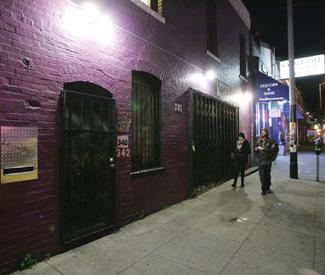
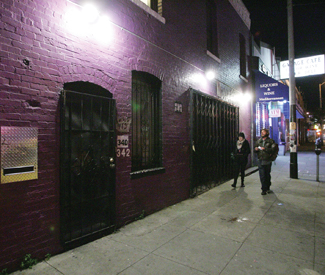
Wiener, Breed, and other supervisors also sounded their support for the entertainment community that has lobbied for changes in the plan, winning greater protections for nightlife at earlier hearings – including a ban on residential development on the raucous 300 block of 11th Street and persuading owners of “the purple building” to switch from residential to office – pushing for removal of more of the plan’s restrictions on attaining limited live music permits.

“I also have some real concerns with how the plan treats nightlife and entertainment,” Wiener said, while Breed said, “As a big supporter of the arts, I’m concerned there are limited live performances in the plan.”

Kim noted that the plan tried to strike a balance in the conflict between nightlife and housing, and she said that expanding the ability business in areas zoned Regional Commercial District (RCD) shouldn’t be done in just in a part of town where there conflicts have often been difficult to resolve.

“If you’re going to permit it in the RCD areas, it should be citywide rather than just in Western SoMa,” Kim said, noting that she’s open to futher discussions after the plan is approved.

Sup. David Campos and other supervisors urged their colleagues not to tinker with the compromises and hard-won balance in the plan. “I’m not 100 percent happy with every aspect of the plan, but I do think some deference should be given to the district supervisor,” Campos said.

Wiener agreed that deference to the desires of district supervisors is an important consideration, “but there are times when this board does not vote the same as their supervisors,” citing as an example the board’s approval of the controversial 8 Washington luxury condo project over the objections of Board President David Chiu.

Afterward, Terrence Alan of the California Music and Culture Association, which had lobbied for expanded protections of nightlife, told us, “Entertainment as a whole fared well.” But he said that they would continue pushing for greater citywide nightlife protections, including supporting Wiener’s proposal to expand the limited live music permits to include DJs.

Chocolate, symbolism, polka dots at this weekend’s quilt show

0

The San Francisco Quilters Guild’s biennial show is back and ready to prove needle arts are alive and kicking – and not just in grandma’s eyes. The exhibit will cozy up the Concourse Exhibition Center this Sat/9 and Sun/10 with a display of over 400 quilts.

Twenty quilts made by members of the Israel Quilters Association comprise a special exhibition dealing in the symbolism of daily life in Israeli society through textile. Former film costumer and seasoned quilter Eleanor Dugan will be showing off the elaborate dot motifs characteristic of her work. Pieces by this year’s two featured artists Laura Lee Fritz, and Roberta Walker will also be on display exhibiting a fresh spin on classic techniques. 

The show will also include a special exhibit on wearable art as well as two quilting challenges, a SFQG tradition that goes out to members prior to the biennial so that completed challenge quilts can be on display through the weekend. For this year’s challenges, the guild gang designed 20-inch square quilt based on the theme “chocolate.” Others crafted from two required fabrics designated by the challenge committee, creating pieces that celebrate the guild’s 30th anniversary.

Roberta Walker is a longtime member of the SFQG, but this is the first year she has been selected as a QUILT San Francisco featured artist – and she has a pretty good idea what has helped earn her spotlight.

“What I do as a quilter that’s different from other quilters is, I am very involved in the Japanese stitchery called sashiko,” she tells the Guardian. Sashiko is a big running stitch that can be seen in Walker’s pieces made from Japanese fabric as well as in her quilts crafted from more conventional materials – the combination of which is Walker’s own adaptation of the technique. 

“I think that’s why people really like my quilts,” Walker explains. “I’ve put a different spin on them by doing that stitching. That has sort of been my specialty. In fact, people go to quilt shows and they say they don’t even have to look at the name to see whose quilt it is, they know [it’s mine].”

Twenty of Walker’s pieces will be on display this weekend. Featured artists will conduct twice-daily walkthroughs of their quilts.

The Quilters Guild biennial requires almost a year of planning. In other words: prepare your eyes.

“People walk into our show and they sort of gasp,” Walker says. “When you see that many quilts hanging, it’s overwhelming.” 

“Quilt San Francisco”

Sat/9-Sun/10

Concourse Exhibition Center

635 Eighth St., SF

www.sfquiltersguild.org 

SF approaches 1 million residents

167

So the Association of Bay Area Governments, which plays an outsized role in local planning by making all sorts of projections, based on whatever economists and demographers use to make projections, that are supposed to guide how cities in the region make land-use decisions, says San Francisco should be prepared to see its population grow to 964,000 people by 2035.If you figure that’s only an estimate, and probably off by at least five percent, we could be talking about a million people in this city just 20 years down the road.

Now: Some of those people will be coming here for jobs that are being created. Many will be coming here as immigrants from other countries. Many more will be coming because, well, California is growing, and, as the official motto of the old Redevelopment Agency put it, “Omnes Volunt Habitare in Urbe San Francisco.” Everybody wants to live in the city of San Francisco.

ABAG says we’re going to need to build homes and create jobs for all of those people, and the Chron talks about the new private-sector development that’s going on, and the zoning plans the city has adopted to increase density, particularly on the Eastern and Southeastern side of town. (Yes, it’s crazy, but John Rahaim, the planning director, freely admits that 80 percent of all new development is going into 20 percent of the city.)

Before we decide that this is our fate and our future, though, it’s worth considering a few points.

1. San Francisco is already one of the densest urban areas in the US. Last time I check the data, this city was number three on the list, behind Manhattan and Union City, New Jersey. Clearly, urban areas are going to have to get more dense as population increases in this state; the only other option is suburban sprawl, which works for nobody. But I wonder: Should San Francisco take this much more density when Berkeley (for example) doesn’t want it and won’t take it? Should it all go on the East Side when the more suburban-style areas on the West Side don’t want it?

Is there a way to do density that looks more like North Beach — one of the densest neighborhoods in town, and a really great place to live, work, and visit — and less like the highrise forests of Soma, which are unappealing at ground level, discourage neighborhood interaction, and are lacking in human scale?

I don’t want to live in Manhattan. I don’t want Soma to turn into Manhattan. Downtown is bad enough.

2. Nowhere in the Chron article, or in the comments attributed to Rahaim, is there any mention of affordable housing. That’s crazy. The urban planning train wreck that we’re heading for is all about the balance between jobs and the cost of housing. The vast majority of the jobs in San Francisco today do not pay enough to cover the cost of renting or buying a market-rate home. That’s not going to change radically; tourism and government are, and will be, the city’s major industries, even as tech, which pays better, increases.
If the housing that gets built is not in synch with the needs of the workforce, then the workers will be forced to live futher and further away, which leads to exactly the kind of sprawl and transportation problems that this “infill” and increased density is supposed to prevent.In other words: Affordable housing for the workforce prevents sprawl. Market-rate housing for people who live here and commute to work on the Peninsula is not environmentally sound.

3. Density — both in housing and in commercial development — has huge impacts on existing populations, particularly low-income communities. That’s not part of the planning discussion at all, and it really ought to be the starting point.

I know my trolls — I know you well — and I know you’re all going to say that growth and change is inevitable. Sure. But I think of a city first and foremost as a community, as a place where a diverse group of people live. Protecting that is just as important as giving developers and businesses a chance to make money.

Oh, and Rahaim’s comment —  “This (growth) is going to happen whether we plan for it or not” — is wrong. If we don’t build office space and room for new jobs, if we don’t build housing, the growth isn’t going to happen. San Francisco gets to decide what happens on land in San Francisco. Not saying we want to stop (all) growth, but Rahaim is a planner, and he should know: Growth happens when you encourage it and allow it. Growth doesn’t happen in places where you don’t allow it.

There is no growth in Bolinas, because the people who live there don’t want it. There’s less growth in Berkeley, because the people who live there want less. Again: Not the model I want to use. I don’t want to live in Bolinas any more than I want to live in Manhattan. But San Francisco does control our own fate, and we should never forget that.


“Unlikely trio” of supervisors saves CPMC hospital deal

37

An ideologically diverse trio of supervisors, a community-minded mediator, and a deliberate negotiations process (one that that involved local stakeholders and verified corporate claims) has managed to do what the Mayor’s Office couldn’t: reach an agreement that seems to be a good deal for the city and has broad political support for California Pacific Medical Center to build two new full-service hospitals in town.

It differs from the disastrous deal announced by Mayor Ed Lee last year in key ways. St. Luke’s Hospital – a staple of care for low-income San Franciscans that must to rebuilt to meet new state earthquake safety standards – will be about 50 percent larger than previously proposed, while the new luxury hospital that CPMC has been trying to build on Cathedral Hill will be about 50 percent smaller.

That simple flip alleviated much of the Cathedral Hill project’s impact on traffic and affordable housing – which CPMC will still pay $14 million and $36.5 million respectively to mitigate, more than in the previous agreement and part of a roughly $80 million payment to the city – and overcame community concerns about the company’s commitment to St. Luke’s.

The new deal also has stronger local hiring requirements and more stringent guarantees that CPMC will serve MediCal patients and provide more charity care to the poor, regardless of the company’s financial situation, while maintaining contributions to community-based organizations at the same level as under the previous agreement.

In many ways, the agreement repudiates the deal cut last year by Mayor Ed Lee, which CPMC refused to significantly modify or even support with verifiable financial claims even as it fell apart in spectacular fashion under scrutiny last year by the Board of Supervisors, particularly during hearings at the Land Use Committee chaired by Sup. Eric Mar.

That flawed deal was rushed to completion just as the Saleforce headquarters expansion that had been trumpeted by Lee and the America’s Cup real estate deal both fell apart, which sources tell the Guardian put pressure on Lee to quickly deliver something to the business community and building trades (read tomorrow’s Guardian for more on Lee’s approach to tough negotiations and its implications).

But today’s press conference to announce the new deal at St. Luke’s was a forward-looking celebration of what was universally lauded as a big victory for the community. And most of the credit seems to go to mediator Lou Giraudo, who owns Boudin Bakery, and Sups. David Campos, David Chiu, and Mark Farrell, who all stepped up late last summer to salvage the project.

“There are two stories: the deal itself and the process,” Giraudo told the crowd. He said that he had some trepidation going in and that all he knew of the supervisors was what he read in the newspapers, and that the three represented the left (Campos), right (Farrell), and center (Chiu). Giraudo said they were the keys to making this deal happen.

“I have never been so impressed by politicians to come together as one,” Giraudo said, praising the trio for working hard, bringing in outside expertise to verify CPMC’s financial claims, and working with their constituencies. “We depoliticized together and then we built trust.”

Farrell also praised both the deal – “It ensures we have access to quality health care for years to come in San Francisco.” – and the process, in which the three supervisors worked well together. “I think about the future of the Board of Supervisors and us working together as colleagues,” he said. “None of us have spent more time on anything than we have CPMC.”

Campos echoed the point. “I really cannot be more proud of the work that we as the Board of Supervisors did here,” Campos said, noting how they had all committed to work together for the good of the city, demonstrating “how we, as the Board of Supervisors, can work on even the most difficult issues and resolve them.”

He also praised his constituents in the community coalition of labor, housing, and social justice advocates – including San Franciscans for Healthcare, Housing, Jobs, and Justice – who had pushed for a better deal for San Francisco. “This is a victory for them at the end of the day,” Campos said, singling out their consultant Paul Kumar for helping shape a deal that ensures that, “St. Luke’s plays a large role in the CPMC system.”

Kumar, a consultant with the National Union of Healthcare Workers who wasn’t at the event, later told the Guardian, “This is a victory for democratic planning.” He noted that CPMC and its parent company, Sutter Health, are notoriously hard-nosed negotiators and that he’s hoping this agreement represents a turning point in their relationship with the community and their employees.

“The question is if we can parlay this into a better and more responsible relationship between Sutter and the city,” Kumar said.

Chiu – who has been at the center of several difficult city negotiations in recent years, and who helped lead the board’s charge against CPMC last year – told the conference, “When we started this process, I was not hugely optimistic we would get here,” calling the supervisors “an unlikely trio.” But he praised all parties involved for working to get a deal with strong local hiring and charity care provisions.

“This is a comprehensive project,” Chiu said.

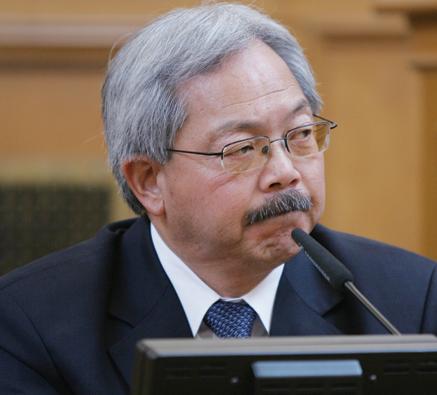
When Lee spoke, he praised the deal and the crucial role played by the three supervisors. “This project would not have gotten done without their direct involvement,” said Lee, who didn’t attend any of the dozens of negotiating sessions, although Ken Rich from the Mayor’s Office was involved. Yet the unusually grim-faced mayor also seemed to bring up the only doubts expressed about the deal, saying “The job is never done, this is an announcement about where we are today” and vaguely warning that, “It’s sensitive, people do have trepidation about what this will mean to them going forward.”

Afterward, Lee took reporters’ questions while walking steadily to his car, without pausing to get into what he was alluded to or why this deal seems so much better than the one he cut, except to say that the “health care landscape has changed.” Later, a mayoral staffer who would only speak on background, said one key to this deal was that CPMC had decided that demand for hospital beds would drop in the future and that they needed fewer in San Francisco.

CPMC CEO Dr. Warren Browner, who had some tough clashes with supervisors last year, didn’t go into the reasons behind the sweetened deal during his presentation (except to contest Giraudo’s comment that he had fought through “deal fatigue and was weary at times” by saying that he actually had a lingering case of “walking pneumonia” that he thanked CPMC’s medical staff for helping to cure.).

After comparing the negotiations to the legend of Sisyphus repeatedly pushing a boulder uphill, Browner said, “We are looking forward to going through the process and putting shovels in the ground, hopefully in 2013.”


Terms of the deal, which were formally introduced at today’s Board of Supervisors meeting, include:

  • Permits for a 120-bed St. Luke’s Hospital, 274-bed Cathedral Hill Hospital (or an additional 30 beds if St. Luke’s operates at 75 percent capacity), medical office buildings at both hospitals, a parking garage with up to 990 spaces (limited to CPMC staff and patients only) on Cathedral Hill, and a new Neurosciences Institute at Davies Medical Center.

  • St. Luke’s Hospital will have a number of specified services – including acute care, senior and community health care, labor and delivery, intensive care, cancer treatment, mental health services, and outpatient care – to ensure it remains a full-service hospital.

  • CPMC caring for 30,000 charity care and 5,400 Medi-Cal managed care patients per year, limits on healthcare cost increases to city employees, and CPMC endowing a new $9 million Healthcare Innovation Fund to increase capacity at local clinics.

  • CPMC contributing $36.5 million to the city’s affordable housing fund and paying $4.1 million to replace the homes it displaces on Cathedral Hill.

  • At least 30 percent of construction job and 40 percent of the permanent entry-level positions in the new facilities will be San Franciscans, and CPMC will contribute $4 million to job training.

  • To offset transportation impacts at Cathedral Hill, CPMC will give $14 million to the SFMTA and “institute a robust transportation demand management program,” as well as spending $13 million on pedestrian safety and streetscape improvements at all its San Francisco facilities.


CCSF board approves report to accreditors amid heavy criticism

164

Windsong, a 21-year-old City College student, held a sign that read “I love CCSF” while standing along Ocean Avenue last evening, as cars rolled by honking their support for the embattled school.

“I love learning while not being bound by the four-year school structure,” she said. She’s an artist in residence at a local elementary school, and was protesting to make sure City College of San Francisco could give her students the same opportunities she had.

“This place is in my heart,” she said. And she wasn’t alone.

Nearly 200 protesters lined the building outside of City College’s board of trustees meeting last night as the CCSF Board of Trustees approved the school’s “Show Cause” report, which is a 220-page document detailing what the college has done to meet its accreditation requirements — accreditation is required for a college degree to have worth, and for a school to receive state funding.

In short, it’s a document arguing what the college has done to improve since it was hit with sanctions last October, and why it should stay open and accredited. The report is due to the accreditation commission on March 15.

The Accrediting Commission of Community and Junior Colleges hit City College with a “show cause” sanction, citing a lack of progress in six problem areas the school was supposed to address since its last accreditation review six years before. When the accrediting commission came back to check on the school, it concluded City College had yet to address key areas, including measuring Student Learning Outcomes, and adequately funding their reserve, a “rainy day fund” the college leans on in hard times.

City College said that it has now met the challenge of those key problem areas. “We were deferring maintenance, and deferring (upgrading) technology,” said board president John Rizzo. “We’re required to spend money, and this gives us a plan going forward.”

But the shouting protesters outside the meeting and the angry students inside disagreed with some points of the plan. Proposition A was a parcel tax measure approved by voters in November that would raise somewhere between $14-16 million City College annually, which the board wanted to use to beef up the college’s reserve fund, one of the key areas where they were knocked by the accrediting commission.

California Federation of Teachers president Joshua Pechthalt implored the board to use Prop A funds for current teachers. “The men and women who work in this college spent many hours taking money out of their pockets to pass Prop A,” Pechthalt said in public comment to the board. The audience of about a hundred or so faculty and students cheered. “I would ask you to work closely with faculty and staff, that you work collaboratively with them.”

Pechthalt was there at the behest of Alisa Messer, the president of City College’s American Federation of Teachers Local 2121. Teachers at City College have had wage freezes for years, and most recently had an 8.8 percent wage reduction just this past month.

Part-time teachers were hit too, as nearly 40 of them were “not rehired” for the current semester, as well as 18 counselors and 30 members of the college’s staff..

Student Martin Madrigal, a 29-year-old mathematics major at CCSF, said he also supported using the Prop A funding to prevent layoffs and wage reductions.

“I missed class to come to this fight,” Madrigal said to the board. “But if I didn’t come here there wouldn’t be a class to miss.”

One by one, faculty and students implored the board to use Prop A funds to buffer the college’s wage reductions and layoffs. At one point, student Eric Blanc, a member of the protest group Save CCSF, came to the podium to speak in public comment and was cut off by the board. Ten or so other students and faculty had yet to speak, and were told there was no longer time.

Blanc then demanded of the board his time to speak. The campus police chief, Andre Barnes, and an officer approached Blanc and tried to remove him from the room. The tension in the room mounted as the audience started chanting “let him speak, let him speak!”

Trustee Rafael Mandelman diffused the situation, asking for silence and calmly explaining that the board needed time to conduct its business. Tensions rose again though as the topic of the college’s reserve fund came up — the reserve is now at $4 million, but the school is planning to boost it to $13 million by 2014, and $18 million by 2019.

It’s a needed safety net, the trustees argued, for a school with a budget hovering at more than $200 million a year and an economy that’s in the tank.

“Tomorrow the sequestration will begin, and it will impact California spending and our communities,” Trustee Steve Ngo said. “This [money] is going to faculty and staff, but in the future. Faculty and staff would not have to take cuts in wages, if we had funded the reserve.”

Ultimately, the board voted to approve its long term reserve fund plan, using Prop A funds to help buffer the reserve for the future. Blanc told the trustees that they had denied themselves other options, like suing the accreditation commission, or asking for emergency funding from City Hall.

“I think behind the rhetoric of this are thousands of people being shut out,” he said.

Vice Chancellor Peter Goldstein, who handles college finance, said that some of the claims of the protesters were inaccurate.

“I keep hearing people talking about cutting classes,but that’s not our plan for [fiscal year] 13-14,” he said. “In fact, this college is putting together a budget for next year that will have more classes than this year.”

The college may not be cutting classes, but it is asking everyone to do more with less. Teachers to teach with less salary, students to fit into larger classrooms, and for classes soon to fit into fewer campuses.

Whether those are improvements or dire straits depends on who you ask.

Video by Joe Fitzgerald:

http://www.youtube.com/embed/pMXeECCvVTs

http://www.youtube.com/embed/L5To6k2uU60


Save CCSF plans to march to City Hall to demand aid to CCSF and to protest austerity cuts at the college on March 14. For more information visit http://www.saveccsf.org/.

Click here to read City College’s 220 page “Show Cause” report: http://www.ccsf.edu/ACC/Preliminary_Final_Draft_Show_Cause_Report_Feb_26.doc.

Big waterfront projects prompt study of new transportation ideas

18

The massive development projects being proposed along San Francisco’s central waterfront – from the proposed Warriors Arena at Pier 30 through the Giants’ housing/retail project at Pier 48 down to Forest City’s sprawling proposal around Pier 70 – will create huge challenges for the city’s already overtaxed transportation system.

Nobody is more aware of that issue than Warriors President Rick Welts as he seeks approval to build a 17,500-seat arena with just a smattering of parking spaces. “We’re investing a billion dollars in this property, and if people aren’t comfortable getting to it and leaving it, we have a problem,” Welts told a gathering of the California Music and Culture Association on Tuesday night, responding to a local resident who raised the concern. “We have to get that right, it’s at the top of our list.”

With Muni and BART already at capacity during peak hours, and thousands of new housing units being built in the coming years both along the waterfront and from nearby SoMa down through the Eastern Neighborhoods Plan area, city transportation planners are trying to get ahead of potential problems created by the development boom.

“We’re now taking a step back and looking at the long-term needs from the Exploratorium down to Pier 70,” says San Francisco Municipal Transportation Agency planner Peter Albert, who is leading a comprehensive waterfront transportation study that will inform the environmental studies done for each of these projects. “What we get is an environmental review that is much smarter because we have all this advanced planning….EIRs are important, but they aren’t really planning.”

Albert is looking at everything from working with various transportation agencies to beef up bus, train, and ferry services to the area; using these projects to complete the ambitious but underfunded and long-stalled Blue-Greenway bicycle path along the waterfront; accelerating capital projects that are already in the SFMTA’s queue; and exploring a dozen or so new ideas.

“What’s also coming out of this are new ideas we’re coming up with, things we weren’t even thinking of that may make sense,” Albert told us, noting that he’ll be doing his first presentation of some of these ideas to the SFMTA Board of Directors on March 5.

They include extending new streetcar service along the Embarcadero to the Caltrain station at 4th and King or possibly all the way out to the Anchor Steam Brewing-anchored project at Pier 48 (which would probably involve construction of new streetcar turn-arounds); better integrating the Central Subway project into Mission Bay and the Embarcadero with new bus and rail connections around 20th and 3rd streets; and expansion of the Embarcadero BART station to increase its peak capacity.

Welts said BART will be an important connector to the new Warriors Arena, noting that the walking distance from Pier 30 to the Embarcadero station is actually about the same distance as the Coliseum BART station is from the entrance to the Warriors’ current arena. He said that he’s excited about Albert’s work and wants to cooperate with helping the city meet its transportation needs: “We have a lot of process to go through and we’re embracing that process.”

Funding the needed improvements will be a challenge, particularly because new development projects generally don’t pay for their full impacts to the transportation system, as SFMTA head Ed Reiskin and Sup. Scott Wiener have told the Guardian. On Monday, Wiener amended the Western SoMa Community Plan to increase how much developers would pay in transportation impact fees.

Albert said funding for the needed improvements to the area’s transportation system would come from a combination of mitigation fees from the developers, reprioritizing the SFMTA’s existing capital budget, and securing state and federal transportation grants by developing impactful projects that are shovel-ready, thanks to this advanced planning effort.

These three waterfront development projects alone could have huge impacts. The Warriors Arena would host more than 200 concerts and sporting events per year, drawing anywhere from a few thousand to more than 17,500 people. The Giants’ Pier 48 proposal involves 27 acres of new development, including retail, office, Anchor Brewing, and about 1,500 homes. And Forest City’s proposal for Pier 70 involves about 1,000 homes, 2.2 million square feet of office space, and 275,000 square feet of retail and light manufacturing.

Addressing the waterfront’s transportation challenges, Board of Supervisors President David Chiu told the Guardian, “It is possibly the most difficult and important question surrounding the Warriors project, and I’ve encouraged all parties to make sure they get it right.”

Our Weekly Picks: February 27- March 5, 2013

0

WEDNESDAY 27

Lisa Fagan and Alison Williams

At the Garage, you get to see a lot of choreography in progress, which is a pleasure in itself because you can imagine what the final product might be like. Not this time. Lisa Fagan and Alison Williams — friends and colleagues, who first met during that hotbed of incubation, ODC’s Pilot Programs — are offering finished work. The evening, about an hour of choreography, comes with a bonus. Fagan calls her trio, Full Grown Baby Lemon, “a dance work of fiction,” and it has a definitely odd set of characters. Williams’ Edit promises to be rollicking duet between pop and geology. That’s where the bonus comes in. Her music will be live and includes an after-performance dance party where you can dive into dubstep. (Rita Felciano)

8pm, $10–$20

Garage

715 Bryant, SF

www.brownpapertickets.com


Fresh and Onlys

Noise Pop borrows its name from a mid-1980s genre that merges contradictions. Noise is edgy and gritty; pop is sunny and easily digestible. The Fresh and Onlys, a San Francisco band that has taken off since its ’08 formation, represents a ’13 incarnation of these oppositions. In “20 Days and 20 Nights,” the opener of last fall’s Long Slow Dance, “I cry” repeats over and over against bright harmonies and an upbeat piano hook, leaving the listener to bop along to the singer’s misery. It is an intriguing sensation caused by the balanced mix of grit and sunshine that continues throughout the vibrant album. The band invites you to bop along to its Noise Pop contradictions at Bottom of the Hill. (Laura Kerry)

With R. Stevie Moore, Plateaus, Burnt Ones

8pm, $14

Bottom of the Hill

1233 17th St., SF

(415) 621-4455

www.bottomofthehill.com


Ceremony

Through the progression of its three studio albums, Rohnert Park’s Ceremony has evolved from unbridled, no-nonsense bursts of hardcore punk to a more slow-burning and equally devastating aggression. While it’s certainly not unusual for punk bands to shine on stage rather than on recordings, Ceremony’s live show takes the cake. Vocalist Ross Farrar is reminiscent of Ian Curtis as he lurches, jerks, and occasionally collapses across the stage, moaning, howling, and screeching as guitarist Anthony Anzaldo and bassist Andy Nelson leap and high-kick around him. The result is a cacophonous and tightly-coiled energy that is deliciously cathartic and at times transcendent in the pissed-off way only a punk band from the suburbs can produce. (Haley Zaremba)

With Terry Malts, Comadre, Perfect Ruin, Synthetic ID

8pm, $12

Rickshaw Stop

155 Fell, SF

(415) 861-2011

www.rickshawstop.com


THURSDAY 28

Other Minds 18

Noise Pop isn’t the only contemporary music and art festival rolling into town this week. Other Minds, an annual event that invites composers and artists to share their avant-garde work, launches its 18th year on Thursday with performances of music from far-away places such as Denmark and India. Each of the three nights includes a panel discussion and a performance to fully engage the world of music outside the mainstream. Don’t come to Other Minds expecting the same finger-snapping tunes as the other festival in town; do come to hear some innovative music and to learn something along the way. (Kerry)

Through Sat/2, 7pm, $30-$115 (festival pass)

Jewish Community Center

3200 California, SF

(415) 292-1200

www.otherminds.org


Punk in Africa

How much do you know about origins of global underground punk scenes? Beyond the live shows, Noise Pop always shows a handful of creative takes on the usual music doc; Punk in Africa is no exception. It explores a too-infrequently examined continent’s aggressive punk roots, from “the underground rock music of early 1970s Johannesburg, the first multi-racial punk bands formed in the wake of the Soweto Uprising and the militant anti-apartheid hardcore and post-punk bands of the ’80s to the rise of celebratory African-inspired ska bands, which sprang up from Cape Town to Maputo in the democratic era of the ’90s.” It also spotlights current acts battling political bombs with explosive lyrics and pounding drumbeats in Zimbabwe and South Africa. (Emily Savage)

7pm, $10

Artists’ Television Access

992 Valencia, SF

(415) 824-3890

www.atasite.org


FRIDAY 1

Peter

Following last November’s potent For the Love of Emptiness (danced by Jorge De Hoyos), San Francisco-based choreographer Sara Shelton Mann presents the second solo in her fascinating “Eye of Leo Series.” Peter reteams the long esteemed, ever-searching Mann with video-light designer David Slaza, joined by composer Robbie Beahrs and performer Jesse Hewit. In these highly dynamic collaborations, Mann is wont to hover on the fringes, interacting variously with the performance space. “I open the ground and track it as a guide and follow the progress of the terrain chosen by the individual,” explains Mann. “Some chose the difficult path, some chose the surreal dream of extinction, some the practice of perfection. . . . I have chosen and I do not choose. People find me. I have become a hermit in a cage and those who find me have to find the key to the door.” (Robert Avila)

Through Sat/2, 8pm, $15

Joe Goode Annex

499 Alabama, SF

www.brownpapertickets.com

www.sarasheltonmann.org


Shih Chieh Huang: Synthetic Seduction

If a work of art had a spirit soundtrack, what would it be? Considering the use of industrial materials such as plastic bags, electrical sensors, and colored lights, one would expect Shih Chieh Huang’s installations to play to the the robotic pop of Daft Punk. Past pieces, though, including one at the National Museum of Natural History, achieve an organic quality that recalls the sound of being submerged in water. Continuing to explore the creation of technological landscapes while engaging in the theme of psychedelia, the artist’s Yerba Buena Center for the Arts installation conjures the image of a Jimi Hendrix solo played backwards over a heart monitor. Huang’s art certainly dances to the beat of its own drummer. (Kerry)

Through June 30 Noon, $10

Yerba Buena Center for the Arts

(415) 978-2700

www.ybca.org


SATURDAY 2

“Voices of Afghanistan”

Ustad Farida Mahwash and Homayoun Sakhi — both legends in their own right — will return to Cal Performances tonight (for the first time in two years) for a pleasant and educational evening of live traditional and contemporary Afghan music. Mahwash, a popular vocalist in her home country known as “the voice of Afghanistan,” will sing over rubâb virtuoso Sakhi and his ensemble in Wheeler Auditorium. The Sakhi Ensemble is a quartet employing instruments such as the harmonium, tula, doyra, tabla, and Sakhi’s rubâb — a lute-like instrument played with a bow that’s one of Afghanistan’s national instruments; it’s likely the sound you imagine when you think of mesmerizing Middle Eastern music. (Savage)

8pm, $36

Wheeler Auditorium, UC Berkeley Campus

Bancroft Way at Telegraph, Berk.

(510) 642-9988

www.calperformances.org


Sonny and the Sunsets

San Francisco’s Sonny Smith has already done more in the past few years than most of us will accomplish in our lifetime. The singer-songwriter-illustrator-playwright has more side projects than Jack White and a seemingly bottomless reserve of creative energy. In 2010, Smith released 200 songs at once that he had recorded for his 100 Records exhibition, and instead of swearing off music for a period like an exhausted person might, he soon began writing the next Sunsets album, worked on 100 Records: Vol. 3 (released this January) and began planning another exhibition, basing songs off protest signs. This project, tentatively titled “Protest Factory,” is still gestating, but last year saw the release of the Sunsets’ third full-length album, which carried on Smith’s tradition of engaging narrative lyrics, though with a surprisingly fantastic country twist. (Zaremba)

With Magic Trick, Cool Ghouls, Dune Rats

Bottom of the Hill

9pm, $12

1233 17th St., SF

(415) 626-4455

www.bottomofthehill.com


SUNDAY 3

“Balboa Birthday Bash”

San Francisco is all about celebrating the newest, hottest place — that pizza restaurant where you wait a full hour for a gourmet pie; that bar where each drink is hand-crafted using 11 exotic ingredients. So why not tip your top hat to an 87-year-old veteran: the Balboa Theatre, keeping the avenues cinematically rockin’ since Feb. 7, 1926? The party gets started at 4pm today with a 35mm screening of the 1924 silent version of Peter Pan, featuring live accompaniment by Frederick Hodges; come to the evening show for a repeat screening, plus a live vaudeville show, birthday prizes, and treats. Roaring Twenties attire encouraged! (Cheryl Eddy)

4 and 7pm, $10

Balboa Theatre

3630 Balboa, SF

www.cinemasf.com


“Tom Fest” Benefit for Tom Mallon

While he may not be a household name, Tom Mallon had a huge influence and impact on the San Francisco music scene, beginning the mid-1970s. As a musician, Mallon has performed with American Music Club and Toiling Midgets among others, and as a producer and engineer, he provided acts with low-cost studio time and guidance that helped document the work of countless artists. A host of musicians he has worked with over the years are performing tonight at “TomFest,” a special tribute and benefit concert for Mallon and his family (along with the SF Brain Tumor Support Group at UCSF), including Chuck Prophet, Toiling Midgets, Fright Wig, Penelope Houston, Ugly Stick, Peter Case, members of American Music Club, and many more. (Sean McCourt)

7:30pm, $25

Great American Music Hall

859 O’Farrell, SF

(415) 885-0750

www.slimspresents.com

Cutting from the bottom

86

news@sfbg.com

While the looming federal budget cuts known as sequestration were designed to equally hit Democratic and Republican party priorities, from social services to the military budget, in the Bay Area they would disproportionately target society’s most vulnerable citizens and strain already-stretched local agency budgets.

If Congress and the White House fail to forge a budget deal by March 1, the cuts could begin to withdraw $9-10 billion of federal support from the California. In the Bay Area, these cuts would have the biggest impact on low-income families, the homeless, victims of domestic violence, adults living with AIDS, and children ages 3-5.

Back in September, San Francisco Mayor Ed Lee signed a U.S. Conference of Mayors’ letter that called on federal lawmakers to resolve the budget conflict before the sequestration cuts could take effect, labeling the budget cuts “a threat” to local economies nationwide. Now, with the deadline looming, city officials and social service providers across the Bay Area are bracing for the impact.

Depending to how the cuts are eventually allocated, San Francisco alone could lose more than $10 million in critical social services. “All across the city, the sequestration hurts those most in need of services and support,” Gentle Blythe, spokesperson with the San Francisco Unified School District, told the Guardian.

San Francisco Unified stands to lose $3.8 million in funding, over 5 percent of the district’s federal education dollars. The cuts would strain an already-tight education budget, which has suffered from the slow economy and the corresponding dip in tax revenue. “We’ve been in a climate of cuts for years,” Blythe said. “There is a definite sense of fatigue.”

The pending round of cuts would force San Francisco district officials to make a series of uncomfortable decisions. The bulk of San Francisco’s federal education funding comes from Title I and Title III grants, money specifically earmarked for low-income students and English-language learners. If the state does not step in to fill the hole, the $3.8 million shortfall will translate into a significant rollback of services for the city’s most at-risk students and potential layoffs of teachers and resource officers.

Early childhood programs are especially vulnerable to the impact of the sequester. San Francisco Head Start Director Marjorie Weiss told us the demand for these federal education programs is spiking as more San Francisco children are living in poverty.

US Census figures show 13.8 percent of San Francisco residents were living below the federal poverty line in 2011, up from 12.2 percent in 2005. Over the last decade, 850 additional children became eligible for SF Head Start, which operates federally funded preschool programs in 19 classrooms at 9 different centers across the city.

These programs significantly improve the long-term employment and educational prospects of children living in or near poverty. But as the need for these early-childhood services grows, the money is drying up. Over the last two years, state and local funding for early-childhood education has be cut by nearly 20 percent.

Now, with the sequestration looming, San Francisco Head Start providers are worried about their ability to continue providing services. “At Head Start, we have already been dealing with years of budget cuts,” Weiss told us. If the sequester comes through, the program will lose an additional $1.1 million and will be forced to eliminate programming for more than 100 low income children ages 3-5.

“This will be devastating. These cuts will have a crippling effect on low-income children in the community and their ability to be ready for school” says Weiss. The funding cuts will take effect June 1st and directly impact the incoming class of 3-year-old preschool students.

Although education will absorb a significant impact from the sequestration, social services across the city will be cut back. San Francisco homeless advocates are forecasting a $1 million cut in federal assistance and AIDS groups have warned that nearly $800,000 dollars in housing vouchers for AIDS patients are on the chopping block. Federal funding for the AIDS Drug Assistance Program (ADAP), which subsidized medical care for AIDS patients, is set to be slashed by nearly 8 percent across the board.

Advocates for the victims of domestic abuse are also worried about the sequester’s impact on local survivors of domestic violence. In San Francisco, federal money provides crucial services for victims of domestic violence through nationally-mandated Family Violence and Prevention Services (FVPS). The city’s three primary domestic violence shelters rely on this revenue stream for outreach programming, translation services, and extended operating hours. The pending sequester would cut nearly 10 percent of FVPS grants, forcing shelters to tighten their belts.

“The sequester is going to dramatically impact the funding for lifesaving services for domestic violence shelters and rape crisis centers, as well as legal service, and children’s programs,” Beckie Masaki, the founder and former executive director of San Francisco’s Asian Women’s Shelter, told the Guardian. Masaki now works with the Asian and Pacific Island Institute (APIDV) on Domestic Violence, where she advocates for more federal funding for domestic violence service providers.

Masaki is worried that the cuts will disproportionately impact the city’s most vulnerable women: low-income and non-English speaking victims of domestic violence, as cash-strapped shelters lay off translators and cut back on outreach and group therapy.

“In the past, when we were facing cuts, we did our best to minimize the impact on survivors,” she explains. “But in this era of constant cuts, it’s going to mean layoffs, and ultimately fewer services for the most vulnerable survivors”. As lawmakers in Washington scramble to pass a budget deal before the March 1 deadline, the climate of uncertainty leaves local service agencies in a state of limbo. With future funding in doubt, long-term planning and strategizing become increasingly difficult. Yet for many local service providers, the most recent threat of sequestration is a familiar consequence of an increasingly fragile social safety net. According to Masaki, the sequestration should motivate Congress to rethink its budgeting priorities: “If they invest in these baseline life-saving services for those that are most vulnerable in our community, in the end that is the path to better economic and social sustainability for our whole nation.”

Sequestration cuts would hit the Bay Area’s most vulnerable

31

While the looming federal budget cuts known as sequestration were designed to equally hit Democratic and Republican party priorities, from social services to the military budget, in the Bay Area they would disproportionately target society’s most vulnerable citizens and strain already-stretched local agency budgets.

If Congress and the White House fail to forge a budget deal by March 1, the cuts could begin to withdraw $9-10 billion of federal support from the California. In the Bay Area, these cuts would have the biggest impact on low-income families, the homeless, victims of domestic violence, adults living with AIDS, and children ages 3-5.

Back in September, San Francisco Mayor Ed Lee signed a U.S. Conference of Mayors’ letter that called on federal lawmakers to resolve the budget conflict before the sequestration cuts could take effect, labeling the budget cuts “a threat” to local economies nationwide. Now, with the deadline looming, city officials and social service providers across the Bay Area are bracing for the impact. Depending to how the cuts are eventually allocated, San Francisco alone could lose more than $10 million in critical social services.

“All across the city, the sequestration hurts those most in need of services and support,” Gentle Blythe, spokesperson with the San Francisco Unified School District, told the Guardian.

San Francisco Unified stands to lose $3.8 million in funding, over 5 percent of the district’s federal education dollars. The cuts would strain an already-tight education budget, which has suffered from the slow economy and the corresponding dip in tax revenue. “We’ve been in a climate of cuts for years,” Blythe said. “There is a definite sense of fatigue.”

The pending round of cuts would force San Francisco district officials to make a series of uncomfortable decisions. The bulk of San Francisco’s federal education funding comes from Title I and Title III grants, money specifically earmarked for low-income students and English-language learners. If the state does not step in to fill the hole, the $3.8 million shortfall will translate into a significant rollback of services for the city’s most at-risk students and potential layoffs of teachers and resource officers.

Early childhood programs are especially vulnerable to the impact of the sequester. San Francisco Head Start Director Marjorie Weiss told us the demand for these federal education programs is spiking as more San Francisco children are living in poverty.

US Census figures show 13.8 percent of San Francisco residents were living below the federal poverty line in 2011, up from 12.2 percent in 2005. Over the last decade, 850 additional children became eligible for SF Head Start, which operates federally funded preschool programs in 19 classrooms at 9 different centers across the city.

These programs significantly improve the long-term employment and educational prospects of children living in or near poverty. But as the need for these early-childhood services grows, the money is drying up. Over the last two years, state and local funding for early-childhood education has be cut by nearly 20 percent.

Now, with the sequestration looming, San Francisco Head Start providers are worried about their ability to continue providing services. “At Head Start, we have already been dealing with years of budget cuts,” Weiss told us. If the sequester comes through, the program will lose an additional $1.1 million and will be forced to eliminate programming for more than 100 low income children ages 3-5.

“This will be devastating. These cuts will have a crippling effect on low-income children in the community and their ability to be ready for school” says Weiss. The funding cuts will take effect June 1st and directly impact the incoming class of 3-year-old preschool students.

Although education will absorb a significant impact from the sequestration, social services across the city will be cut back. San Francisco homeless advocates are forecasting a $1 million cut in federal assistance and AIDS groups have warned that nearly $800,000 dollars in housing vouchers for AIDS patients are on the chopping block. Federal funding for the AIDS Drug Assistance Program (ADAP), which subsidized medical care for AIDS patients, is set to be slashed by nearly 8 percent across the board.

Advocates for the victims of domestic abuse are also worried about the sequester’s impact on local survivors of domestic violence. In San Francisco, federal money provides crucial services for victims of domestic violence through nationally-mandated Family Violence and Prevention Services (FVPS). The city’s three primary domestic violence shelters rely on this revenue stream for outreach programming, translation services, and extended operating hours. The pending sequester would cut nearly 10 percent of FVPS grants, forcing shelters to tighten their belts.

“The sequester is going to dramatically impact the funding for lifesaving services for domestic violence shelters and rape crisis centers, as well as legal service, and children’s programs,” Beckie Masaki, the founder and former executive director of San Francisco’s Asian Women’s Shelter, told the Guardian. Masaki now works with the Asian and Pacific Island Institute (APIDV) on Domestic Violence, where she advocates for more federal funding for domestic violence service providers.

Masaki is worried that the cuts will disproportionately impact the city’s most vulnerable women: low-income and non-English speaking victims of domestic violence, as cash-strapped shelters lay off translators and cut back on outreach and group therapy.

“In the past, when we were facing cuts, we did our best to minimize the impact on survivors,” she explains. “But in this era of constant cuts, it’s going to mean layoffs, and ultimately fewer services for the most vulnerable survivors”.

As lawmakers in Washington scramble to pass a budget deal before the March 1 deadline, the climate of uncertainty leaves local service agencies in a state of limbo. With future funding in doubt, long-term planning and strategizing become increasingly difficult. Yet for many local service providers, the most recent threat of sequestration is a familiar consequence of an increasingly fragile social safety net.

According to Masaki, the sequestration should motivate Congress to rethink its budgeting priorities: “If they invest in these baseline life-saving services for those that are most vulnerable in our community, in the end that is the path to better economic and social sustainability for our whole nation.”

Western SoMa Plan changed to lessen development impacts to nightlife and Muni

14

The Western SoMa Community Plan had its first hearing before the Board of Supervisors Land Use and Economic Development Committee today, with dozens of speakers praising the eight-year citizen-based planning effort that developed it but with much of the testimony criticizing the plan’s emphasis on facilitating housing development to the exclusion of other goals.

As we’ve reported, the nightlife community has in recent months been pushing for changes to the plan that would better protect nightclubs from complaints and pressure from nearby residents, particularly along 11th Street. Area Sup. Jane Kim has supported that effort and those concerns were echoed by Sup. Scott Wiener, the committee chair and a strong nightlife advocate.

“I have had significant concerns about this plan…and I’m hoping we can address them over the course of this hearing,” Wiener said.

Wiener also opened another front of attack on the plan by noting that it doesn’t adequately pay for the impact that thousands of new housing units would have on Muni and other aspects of the transportation system. In particular, he criticized a policy in the plan that would let 13 large properties get increased density in exchange for higher affordable housing fees that would be offset by lower transit and other impact fees paid to the city.

“What are we doing to make sure our transportation system keeps pace?” Wiener asked of Planning Department staff, later asking again, “Where would we get the money to improve transit for these increased residents?” Wiener didn’t get back any answers that seemed to satisfy him, so he asked for a more detailed report when the plan returns next week for a second hearing. That concern was echoed by the third committee member, Board President David Chiu, who said, “Building housing without money for transit will lead to long-term problems.”

The concern seemed to revive a losing fight that Wiener led in December over expanding who pays the city’s Transit Impact Development Fee, which pitted transportation advocates against affordable housing activists. Fernando Marti of the Council of Community Housing Organizing rued the revival of that conflict. “We’ve been here before, pitting [transportation against affordable housing needs] as if it were a zero sum game,” Marti told the committee, noting the importance of policies to balance out market rate housing and calling it a “plan for stability in a neighborhood facing large-scale gentrification.”

Marti’s COCHO colleague Peter Cohen, who was closely involved with the plan’s creation, also urged the committee not to tweak the housing policies or the revenues it creates for affordable housing. “This is a major upzoning,” Cohen said. “In 20 years, perhaps all the market rate stock [of housing in the plan area] will be gentrified.”

But the issue raised most often during more than two hours of public testimony involved nightlife and the need to strike a better balance between housing development and entertainment, much of the input stirred up by the California Music and Culture Association, a industry-backed trade group that formed largely in response to crackdowns on clubs in SoMa.

“It’s often said San Francisco can plan more for fun, and this is a great opportunity to do that,” said Guy Carson, a CMAC founder who owns Cafe du Nord. Longtime nightlife advocate Terrence Alan took part in the Western SoMa Task Force for four years before resigning in frustration, and he told the committee, “We are bringing up issues we felt marginalized in bringing up earlier.”

But several people involved with the task force, as well as speakers representing development interests, urged supervisors to pass the place without significant modifications. “There are dozens or hundreds of compromises in this plan,” Cohen said, urging supervisors not to upset that careful balance.

Task Force Chair Jim Meko – whose leadership was widely praised in the testimony – detailed the extensive outreach and detailed work that went into the plan, and offered a simple plea to the committee: “Please pass this plan so we can get on with our lives.”

The committee unanimously voted to support the change made to the plan by the Planning Commission to ban new residential development on the raucous 300-block of 11th Street, but to reverse the commission’s decision to grandfather in one final 24-home residential project on that block, in the so-called “purple building” at 340 11th Street. A number of other small changes to the plan were also unanimously approved.

But Kim objected to Wiener’s motion to eliminate the plan provision that would reduce the transit and open space fees and raise the affordable housing fees that developers of those 13 large parcels would pay. “I don’t think it’s good policy to reduce transit impact fees when we’re increasing population,” Wiener said.

“This has gone through an extensive community process,” Kim countered, adding that, “I hate that we’re always having this discussion about transit versus affordable housing.”

But Chiu sided with Wiener and the amendment was approved on a 2-1 vote with Kim in dissent. Yet Chiu held open the possibility of changing his mind next week when the plan returns to committee for a final vote – the delay prompted by the other revisions in the plan – when Planning staff will provide more information on the fee structure and its impacts.

If the committee gives final approval to the plan next Monday, it could be before the full board for approval the next day.

Supervisors consider Western SoMa Plan, lots of new condos, and “the purple building”

129

The fate of the “purple building” – which has become caught up in the clash between nightlife and residential interests on the clubgoer-saturated 300-block of 11th Street – remains undecided as the Western SoMa Community Plan heads into its first hearing before the Board of Supervisors Land Use and Economic Development Committee on Monday.

As we reported in this week’s paper, a unique citizen-based task force has spent the last eight years developing the plan, which will allow thousands of units of new housing – most of it along Folsom Street – to move forward once the plan gets final approval from the board. But the California Music & Culture Association and other nightlife advocates successfully amended the plan to ban new housing on that 11th Street block as the Planning Commission approved it in December.

Yet the commission also decided to grandfather in a 24-home project at 340 11th Street, the so-called purple building, which nightlife advocates say would put those new residents on a collision course with Slim’s, DNA Lounge, and other big nightclubs on that busy block. As we went to press, both sides and District 6 Sup. Jane Kim were all hopeful that a compromise was imminent, likely involving switching from residential to office.

But with just days to go before that hearing, building owner Tony Lo still hasn’t decided whether to make the change or fight it out in front of the supervisors. His architect John Goldman – whose residential design for the site was placed on hold by the city since shortly after he submitted it in 2005 – had hoped to hear by now but he’s still waiting for Lo to make the call.

“Based on my analysis, it looks feasible to change to offices if you want to do it, and I mean feasible financially and architecturally and planning-wise,” Goldman today told the Guardian, referring to what he told Lo.

Meanwhile, Western SoMa Task Force Chair Jim Meko – who has not been supportive of tweaking the plan after all the work he oversaw – yesterday sent out an email blast to stakeholders and supporters urging them to attend Monday’s hearing and show support for the plan.

“You don’t often get a chance to participate in making decisions about your own neighborhood from start to finish. Some special interest groups are expected to come out of the woodwork to take pot shots at the Plan so the hundreds of participants in this process need to make their voices heard. Your testimony at the hearing next week will make all the difference,” Meko wrote.

The hearing starts at 10am in board chambers in City Hall. This item might have been heard later in the day considering the agenda opens with a continuation of the controversial condo lottery bypass legislation, on which Board President David Chiu and others have been trying to forge a compromise between tenant advocates and homeowner groups. But committee Chair Scott Wiener just told us that item “will be continued. No compromise yet.”

Pressure, two ways: Academy of Art and Project Runway at NY Fashion Week

2

While hyperbolic coverage of what many news pundits called the ‘storm of the year’ raged across the Tri-State area, Manhattan’s would-be-mammoth blizzard arrived in the Big Apple as a pint-sized flurry that the Weather Channel dubbed Nemo. Nemo did little to deter the stilettoed, snow-shoeing pack of fashion-forward who started the morning of Feb. 8 filing into the tents at Lincoln Center for New York Fashion Week hullabaloo around 6 am.

This is the world of fashion, where a steel backbone is required. Plus, “this is New York, we have noreasters,” said a publicist with whom I scored post-show beers. “This is not a some kind of apocalypse blizzard. This is a snow storm. Put on your big girl boots and get over it.”

The action outside the white-tent runway shows of NYFW has become something of a spectacle recently thanks to the hyper-documentation of show attendees by bloggers, fashion journos, and Instagrammers. The evolution of the street scene has become almost as hyped as the collections themselves — outside-the-tent has converted into a place where writers, buyers, and industry professionals rub shoulders with blogosphere self-starters and editorial wanna-bes. Once you’ve crossed the threshold, however — moved past security and secured your seat — the herd thins out. Inside the shows, attention shifts from the amateur peacocking out front onto the belabored fashion lines themselves.

I attended two shows on February 8 — Project Runway‘s, and that of my Bay Area peers from the Academy of Art University. 

Project Runway: Lacking any true designer start that has emerged from this TV series, the jury is still out on whether reality show competition breeds success or mediocrity. Regardless of who will sink or swim in Project Runway’s 11th season, fierce competition certainly yielded entertainment at NYFW.

Usually by Fashion Week, the Project Runway panel — composed of designers Michael Kors and Zac Posen, fashion editor Nina Garcia, and supermodel host Heidi Klum — has winnowed competitors down to the final three. This season, NYFW crowds were treated to the work of seven. The normal Project protocol was thrown to the wind, each designer remaining anonymous, a move that forced them to compete solely on the strength of their garments, without the crowd bias based on on-air personality.

Fashion is an exhibitionist’s sport, but flashiness is not always effective when it comes to style. Some collections at the show came out swinging, trying too hard to define a point of view. Others showed up more quietly, using complicated shapes and silhouettes without appearing self-indulgent. Most resisted the urge to disguise imperfect results with fluff. Michelle Lesniak Franklin’s collection hit the highest note, with several structured pieces rendered in soft quilted fabric, giving way to an ethereal easiness. It appeared elfin or even Zelda-esque, but retained it’s modernity in the silhouette and layering. She took the road less traveled, mixing 1980s-inspired jacket shapes with earth tones, rendering their severe structures soft in wools and knits.

In short, the show was a mixed bag, and no one went home a true winner.

Academy of Art University:  Pressure is an odd catalyst. Some respond to it favorably, combining time and tension to yield extraordinary results. For others, pressure works against success, internal combustion evident in the resulting design.

Where Project Runway’s contestants are forced into a pressure cooker for 12 weeks to design, shop for, sew, and style their collections, San Francisco Academy of Art University students are incubated in a better-paced program. Here, years of planning and months of preparation produce the impressive work that the school has come to be known for. These student-designers are not working for cheap airtime or a bump in ratings for their network television handlers, but instead are putting in the hours of work for genuine academic recognition, fashion futures the old-fashioned way.

As an Academy fashion journalism student myself, I have witnessed the rigorous, extremely exhausting, but equally rewarding process firsthand. In last weeks leading up to the end of the semester, there is a pronounced hush in campus design studios, the only audible noises come in deep hums of the sewing machines, the incessant clicking of mechanical needles, and the hissing of industrial-grade irons. Each student, earbuds in, rips, measures, presses, tapes, pins, and repeats. One feels guilty even walking past such determination on the way to the bathrooms, so intense is the creative process.

This year, the collections from AAU’s multi-national student body were marked by a range of culture fusions. The show’s focal point was the visual negotiation between student, fabric, form, and heritage.

The runway sequence ebbed and flowed between moments of sparse minimalism, as in Yuming Weng ‘s simple monochromatics and plays on texture and structure, in Chenxi Li’s over-sized crushed velvet coats, rendered unique by combining elements of ‘50s Americana with traditional Chinese armor. Knitwear student Heather Scholl’s sexually charged, gender-explorative neon psychedelics stalked the lane.

Stand-out collections included show openers Janine M. Villa and Amanda Nervig’s marriage of tailored suiting and free-falling knitwear, which gave the rigid geometric patterns that adorned both fabrics fluidity, and embued the suiting with an astonishing sense of movement. Inspired by traditional Welsh blankets, Villa and Nervig’s work felt eclectic and free-spirited on the runway, the print-on-print combinations of chunky knits and embellished tailoring gave the collection an exciting and unexpected visual depth.

Heather McDonald took taut silhouettes to new heights with soaring shapes that defied gravity. These exaggerated forms were rendered in deeply-saturated angoras and wools, which brought the avant-garde down to earth. The final act was perhaps the most impressive. Qian Xie’s crystal-encrusted coat dresses and lattice-woven leather overcoats followed her apt theme “50 Shades of Grey”, and the results were lust-worthy.


Clubs vs. condos

30

steve@sfbg.com

The Western South of Market area is ground zero for the city’s War on Fun, a place where nightlife often comes into conflict with residential expectations, particularly on the raucous 300 block of 11th Street and, to a lesser degree, Folsom Street’s old “miracle mile” of predominantly gay bars.

As the city’s Planning Department and its development community looks to accommodate another 4,000 homes for 10,000 new residents on less than 300 acres of Western SoMa — most of it along Folsom Street between 7th and 13th streets — that potential for conflict could grow in the coming years as funky old buildings give way to shiny new stacks of expensive condos.

And efforts to sort it out may hinge on the future of a 105-year old purple building.

After nearly eight years of work by a unique citizen-led task force, the Western SoMa Community Plan is now before the Board of Supervisors, with the Land Use Committee set to hold its first hearing on Feb. 25. Despite dozens of task force meetings seeking to strike the right balance between residential and entertainment interests, the plan is still being tweaked.

When the Planning Commission approved the plan and some related projects on Dec. 6, it followed King Solomon’s approach of cutting the 11th Street baby in half. The commission heeded the recent recommendation of the nightlife community and District 6 Sup. Jane Kim to modify the plan to prohibit new residential development on the 11th Street block where tipsy visitors to Slim’s, DNA Lounge, and other big clubs clog the sidewalks every weekend. But it also voted to grandfather in a 24-unit residential project at 340 11th Street, which everyone now involved in closed-door negotiations simply calls “the purple building,” a two-story masonry structure built in 1907 that is awaiting demolition.

The building houses light industrial businesses and is the former home of Universal Electric, whose owner, Tony Lo, wants to develop the property. Along with architect John Goldman, Lo submitted a residential project application in 2005, only to have it placed on hold pending adoption of the Western SoMa Community Plan.

“It was well along when the Planning Department put the project on hold,” Goldman told us.

City officials and even many of the nightlife advocates say they sympathize with the long wait that Lo and Goldman have endured, even if many oppose housing on the site and have been urging Lo to find another use for the site, such as an office building.

“They would have no idea what they’re getting into until that first Saturday night,” nightlife advocate Terrance Alan said of the would-be residents of the building, envisioning a young couple who had only visited during daytime hours trying push a baby stroller past the throngs of club-goers. Alan took part in recent meetings Kim facilitated with Lo and Goldman, and Alan told us, “There was, for the first time, a very frank discussion about the problems that owners would experience and the pressure they would put on clubs in the area.”

For example, just one neighbor of Slim’s — a popular live music venue on the block owned by singer Boz Scaggs — has waged a relentless campaign that has forced temporary shutdowns and cost the club more than $750,000 in mediation costs, Alan said, despite the club’s sound buffering and general compliance with local codes.

Alan said that it’s simply unthinkable to add more than two dozen new homeowners to that busy block in a condominium building that only allows access on 11th Street. Alan is hopeful for a negotiated compromise with Lo, something that Kim told us she also thinks is likely.

“I’m hoping we can come to a consensus of the property owners and business owners on 11th street, including the purple building,” Kim said, echoing Alan’s point that, “Just one resident can really shut down a business and hurt its financing.”

Goldman said he understands the concern and “my client is considering alternatives to housing.” While he was a little frustrated that it wasn’t until November that they first heard about a proposal to ban residential projects on the block, “We’ve definitely heard the concerns of the nightlife entertainment folks…No decision has been made yet, but it’s the goal of my client to decide fairly soon.”

A ban on housing is just one of the changes that Alan and other members of the California Music And Culture Association (CMAC) are pushing the supervisors to make to the plan, provisions he was unable to get into the plan as a member of the Western SoMa Task Force for four years before resigning in frustration.

“The task force was made up of people primarily interested in residential development,” Alan told us. “The plan is pretty much about protecting residential.”

That perspective irritates task force chair Jim Meko, who said he held about 60 meetings on entertainment and nightlife issues and bent over backward to accommodate that community. “Overall, the Western SoMa Plan is very friendly to the entertainment industry,” Meko said, noting that the plan grandfathers in all existing nightclubs, even after a building is demolished, and requires new residential construction to buffer against street noise. “They’re never satisfied.”

But Meko does concede that accommodating existing residents and new residential development was central to the task force’s work, as it was charged with doing by the Planning Department. “The most important thing was to do no harm to anyone,” Meko said was the guiding philosophy behind the task force’s approach. “We’re the real test case for a mixed use community in the city.”

While Folsom Street has more bars that 11th street, and those bars will be protected under the plan, Meko said the idea was to keep them limited in scale and prevent the proliferation of large clubs that operate into the wee hours.

“Folsom Street is where the residential growth will go,” Meko said. “That’s the area where we want to add the most residential growth and it seems dumb to add more nightclubs there.”

But he also doesn’t think it makes economic sense for many clubs to open there anyway. With allowable height limits in that corridor being increased from 50 feet now up to 65 feet, and with the plan’s approval allowing development projects to move forward, many of what he called the “old junky buildings” where clubs could find cheap rent will likely be demolished.

“With the height increases, those buildings are going to be history in five years,” Meko said.

Kim said she is supportive of both nightlife and the plan’s facilitation of residential development.

“It’s transit-first and a good place to be able to handle the density that’s close to downtown,” Kim said, noting that she’s supportive of even the massive residential project proposed for 801 Brannan Street, mostly because it includes units with up to two and three bedrooms and an elegant design by architect David Baker.

That project would have 432 housing units with a total of 606 bedrooms, 22,124 square feet of retail, and a 422-car parking garage on a site of just over four acres. In many ways, it is typical of the housing density that will begin to crowd into Western SoMa.

Meko was critical of how the entertainment community was able to make changes to the plan after all the hard work of the task force, and he told us, “It was a choice Jane Kim had to make, and she will have to answer to her constituents in the future.”

But Kim said the change on 11th Street made sense and that it’s important to strike a balance. “Entertainment is clearly an important part of Western SoMa and 11th Street is unique in showcasing that community,” Kim said.

Alan and Glendon Hyde — an LGBT activist who, like Meko, ran against Kim for D6 supervisor two years ago — are also pushing for other changes in the rules governing nightlife in SoMa, including who can get the limited live music permits that the city issues and extending the 10pm curfew in those permits.

“I think small businesses throughout the district should be able to use the limited live music permits, and they’re available only on Folsom Street under the plan,” Hyde told us, noting that otherwise he thinks nightlife fares well until the plan, particularly after Kim’s intervention on 11th Street.

Kim said that she in reluctant to start tweaking too many provisions of the plan, which she characterized as a separate discussion that doesn’t have to happen now: “I’m open to further discussions after we get the plan passed.”

The Western SoMa Plan was broken off from the larger Eastern Neighborhoods Plan by then-Sup. Chris Daly in 2005 to let a citizen-based effort tackle this area’s unique challenges, and Kim said the plan is a testament to the diligent efforts of Meko and a diverse set of members.

“I think it was a really good process with lots of stakeholders involved,” Kim said. “I like the balance. I’m happy.”


What Obama said — and what he meant

0

OPINION The words in President Obama’s State of the Union speech were often lofty, spinning through the air with the greatest of ease. But let’s decode the president’s smooth oratory in the realms of climate change, war and civil liberties.

“For the sake of our children and our future, we must do more to combat climate change.”

We’ve done so little to combat climate change — we must do more.

“I urge this Congress to get together, pursue a bipartisan, market-based solution to climate change…”

Climate change is an issue that can be very good for Wall Street. Folks who got the hang of “derivatives” and “credit default swaps” can learn how to handle “cap and trade.”

“The natural gas boom has led to cleaner power and greater energy independence. We need to encourage that.”

Dual memo. To T. Boone Pickens: “Love ya.” To environmentalists who won’t suck up to me: “Frack you.” (And save your breath about methane.)

“After a decade of grinding war, our brave men and women in uniform are coming home.”

How’s that for an applause line? Don’t pay too much attention to the fine print. I’m planning to have 32,000 U.S. troops in Afghanistan a year from now, and they won’t get out of there before the end of 2014. And did you notice the phrase “in uniform”? We’ve got plenty of out-of-uniform military contractors in Afghanistan now, and you can expect that to continue for a long time.

“We don’t need to send tens of thousands of our sons and daughters abroad, or occupy other nations. Instead, we’ll need to help countries like Yemen, Libya and Somalia provide for their own security, and help allies who take the fight to terrorists, as we have in Mali. And, where necessary, through a range of capabilities, we will continue to take direct action against those terrorists who pose the gravest threat to Americans.”

We don’t need flag-draped coffins coming home. We’re so civilized that we’re the planetary leaders at killing people with remote control from halfway around the world.

“We must enlist our values in the fight. That’s why my administration has worked tirelessly to forge a durable legal and policy framework to guide our counterterrorism efforts.

I’m sick of taking flak just because I pick and choose which civil liberties I want to respect. If I need to give a bit more information to a few other pliant members of Congress, I will.

“The leaders of Iran must recognize that now is the time for a diplomatic solution, because a coalition stands united in demanding that they meet their obligations. And we will do what is necessary to prevent them from getting a nuclear weapon.”

Maybe it’s just about time for another encore of “preemptive war.”

Norman Solomon is co-founder of RootsAction.org and founding director of the Institute for Public Accuracy. His books include “War Made Easy: How Presidents and Pundits Keep Spinning Us to Death.” He writes the Political Culture 2013 column.

Next chapter: Adobe Books hopes to transition into co-op

0

Adobe Books lives on… we hope. The Mission’s beloved 23-year-old bookshop – which reported it would be going out of business multiple times last year – now has plans to stay open as a collective.

Adobe owner Andrew McKinley first reported his shop would be closing in spring of 2012, and then again late summer. His reason: an excessive rent increase for his storefront, in a building at 16th and Valencia Streets. Unless someone was planning to swoop down to be the store’s financial superhero, the proposed rent was too high and McKinley was sure he could no longer afford to keep the shop afloat.

In January, Adobe announced it would hold a final farewell celebration honoring what McKinley has done for the neighborhood. But despite this so-called goodbye ceremony, the shop did not close. McKinley’s superheroes have at long last arrived, in the form of a co-op board.

http://vimeo.com/59473131

Jeff Ray, a longtime member of the Rainbow Grocery collective, is a main player in Adobe’s new phase. Ray became a Mission resident 15 years ago. He remembers Adobe as one of the first neighborhood spots he connected with. “They call it the living room of the Mission and it was kind of my living room for awhile,” he says. “I went to a lot of events and met a lot of people there.” 

Ray and fellow Adobe collective member Kyle Knobel say the first thing they are working out is a location. They are in the process of negotiating the costly rent that was McKinley’s stumbling block, but are also considering relocating to different space nearby if necessary.

The nine-or-so core members – who meet at Adobe on a weekly basis – are also sorting out what type of co-op suits them best. Ray mentions following the business model of Chicago–based co-op, Seminary Bookstore – who list Michelle and Barack Obama as members. With over 50,000 members, anyone can buy in when they purchase three $10 shares. Seminary Bookstore has shareholders all across the globe, a worldwide support system Ray would love for Adobe. 

Ray and Knobel say they envision incorporating additional elements to their new shop’s bookshelves to keep it profitable. The recession-friendly phrase “pop-up” is thrown around quite a bit. Ray says they plan to set up a small pop-up space with Inner Richmond retail shop and art gallery Park Life and has an idea for transforming bookcases into miniature pop-ups for local music labels and magazine companies, possibly selling original artwork, maybe even setting up an art subscription for interested customers. All of this will not be possible without a little help, which is why they have recently launched a fundraising IndieGoGo campaign.

Will the shop’s current beloved owner Andrew McKinley be sticking around? Ray says, “we wanted to make sure he was part [of the switch]. He has been present at every meeting and is hopefully going to stay on.”

On paper, these plans sound ideal – a dying bookshop rising from the ashes in a familiar, yet updated form. It will likely be a long process before the new collectively-run shop becomes a reality. But if we’ve learned anything about the seemingly invincible Adobe Books, it’s that it will manage to stick around, somehow.


Solomon: What Obama said–and what he meant–about climate change, war and civil liberties

1

By Norman Solomon

Norman Solomon is co-founder of RootsAction.org and founding director of the Institute for Public Accuracy. His books include “War Made Easy: How Presidents and Pundits Keep Spinning Us to Death.” He writes the Political Culture 2013 column.

The words in President Obama’s “State of the Union” speech were often lofty, spinning through the air with the greatest of ease and emitting dog whistles as they flew.

Let’s decode the president’s smooth oratory in the realms of climate change, war and civil liberties.

“For the sake of our children and our future, we must do more to combat climate change.”

We’ve done so little to combat climate change — we must do more.

“I urge this Congress to get together, pursue a bipartisan, market-based solution to climate change…

Climate change is an issue that can be very good for Wall Street. Folks who got the hang of “derivatives” and “credit default swaps” can learn how to handle “cap and trade.” The corporate environmental groups are on board, and maybe we can offer enough goodies to big corporations to make it worth their while to bring enough of Congress along.

“The natural gas boom has led to cleaner power and greater energy independence. We need to encourage that.”

Dual memo. To T. Boone Pickens: “Love ya.” To environmentalists who won’t suck up to me: “Frack you.” (And save your breath about methane.)

“That’s why my administration will keep cutting red tape and speeding up new oil and gas permits.”

Blow off steam with your demonstrations, you 350.org types. I’ll provide the platitudes. XL Keystone, here we come.

“After a decade of grinding war, our brave men and women in uniform are coming home.”

How’s that for an applause line? Don’t pay too much attention to the fine print. I’m planning to have 32,000 U.S. troops in Afghanistan a year from now, and they won’t get out of there before the end of 2014. And did you notice the phrase “in uniform”? We’ve got plenty of out-of-uniform military contractors in Afghanistan now, and you can expect that to continue for a long time.

“And by the end of next year, our war in Afghanistan will be over.”

If you believe that, you’re the kind of sucker I appreciate — unless you think “our war in Afghanistan” doesn’t include killing people with drones and cruise missiles.

“Beyond 2014, America’s commitment to a unified and sovereign Afghanistan will endure, but the nature of our commitment will change. We’re negotiating an agreement with the Afghan government that focuses on two missions: training and equipping Afghan forces so that the country does not again slip into chaos, and counterterrorism efforts that allow us to pursue the remnants of al Qaeda and their affiliates.”

We’re so pleased to help Afghan people kill other Afghan people! Our government’s expertise in such matters includes superb reconnaissance and some thrilling weaponry, which we’ll keep providing to the Kabul regime. And don’t you love the word “counterterrorism”? It sounds so much better than: “using the latest high-tech weapons to go after people on our ‘kill lists’ and unfortunately take the lives of a lot of other people who happen to be around, including children, thus violating international law, traumatizing large portions of the population and inflicting horrors on people in ways we would never tolerate ourselves.”

“We don’t need to send tens of thousands of our sons and daughters abroad, or occupy other nations. Instead, we’ll need to help countries like Yemen, Libya and Somalia provide for their own security, and help allies who take the fight to terrorists, as we have in Mali. And, where necessary, through a range of capabilities, we will continue to take direct action against those terrorists who pose the gravest threat to Americans.”

We don’t need flag-draped coffins coming home. We’re so civilized that we’re the planetary leaders at killing people with remote control from halfway around the world.

We must enlist our values in the fight. That’s why my administration has worked tirelessly to forge a durable legal and policy framework to guide our counterterrorism efforts. Throughout, we have kept Congress fully informed of our efforts. And I recognize that, in our democracy, no one should just take my word for it that we’re doing things the right way. So, in the months ahead, I will continue to engage Congress to ensure not only that our targeting, detention and prosecution of terrorists remains consistent with our laws and system of checks and balances, but that our efforts are even more transparent to the American people and to the world.”

I’m sick of taking flak just because I pick and choose which civil liberties I want to respect. If I need to give a bit more information to a few other pliant members of Congress, I will. The ones who get huffy about the Bill of Rights aren’t going to get the time of day from this White House. I recognize that some of my base is getting a bit upset about this civil-liberties thing, so I’ll ramp up the soothing words and make use of some prominent Democratic members of Congress who are of course afraid to polarize with me. Don’t underestimate this president; I know how to talk reverentially about our great nation’s “checks and balances” as I undermine them.

“The leaders of Iran must recognize that now is the time for a diplomatic solution, because a coalition stands united in demanding that they meet their obligations. And we will do what is necessary to prevent them from getting a nuclear weapon.”

Maybe it’s just about time for another encore of “preemptive war.”

Norman Solomon is co-founder of RootsAction.org and founding director of the Institute for Public Accuracy. His books include “War Made Easy: How Presidents and Pundits Keep Spinning Us to Death.” He writes the Political Culture 2013 column.


Should city employees be commissioners?

6

Mayor Ed Lee had to do something radical with the Housing Authority, and I’m glad he did. The commissioners who oversee this mess, particularly the chair, Rev. Amos Brown, were nothing but syncophants for Director Henry Alvarez, who clearly has to go. Firing all but one of the commissioners was the right way to go.

(Although technically, the mayor must have gotten them all to resign. The City Charter says a Housing Authority Commission member can only be removed “for inefficiency, neglect of duty, or misconduct in office, after serving written charges and providing an opportunity for a hearing.”)

That said, his replacement commissioners raise an interesting question. Every one of them is a city employee. Four of the five are either department heads or senior staffers, all of whom work for the mayor or one of his appointees. The other is a deputy district attorney.

Commissions are set up to provide a degree of indepedent oversight over city agencies; there’s a reason the mayor doesn’t directly hire and fire the police chief, the fire chief, the planning director, etc.; there are commissions to give members of the public some role in monitoring those departments. Obviously, the mayor appoints most of the commissioners, and most mayors expect a degree of loyalty, but there’s a least  a chance that appointees will speak up when the mayor is doing the wrong thing. (Planning Commissioner Dennis Antennore used to defy Mayor Willie Brown routinely; he ultimately got fired for it, but at least the public got a chance to hear another point of view.)

Now we have people whose day job — and income — depends directly on the mayor’s will (these are not civil servants; they’re all high-level workers who can be fired any time) running a commission. The idea that any of them will ever cross the mayor is now out of the question.

Oh — and do you think there might ever be a time when the District Attorney’s Office has to investigate the Housing Authority for criminal conduct? Maybe? Could that ever happen? And how would Deputy D.A. and Commissioner Eric Fleming handle that?

It’s perfectly legal for city employees to be commissioners, according to a detailed 2010 memo from the City Attorney’s Office. Former Sup. Aaron Peskin tried before he left the board to change that, but he fell short (in part because labor didn’t like the idea; why should city workers be deprived of the ability to participate in the public process?) But we’re not talking about rank-and-file workers who have union protections and can speak their minds and engage in political action freely; we’re talking about direct appointees of the mayor and the city administrator who have no choice but to do the bidding of their bosses.

This just doesn’t seem like a good idea.