MUNI

Mayor Lee addresses Google bus controversy

116

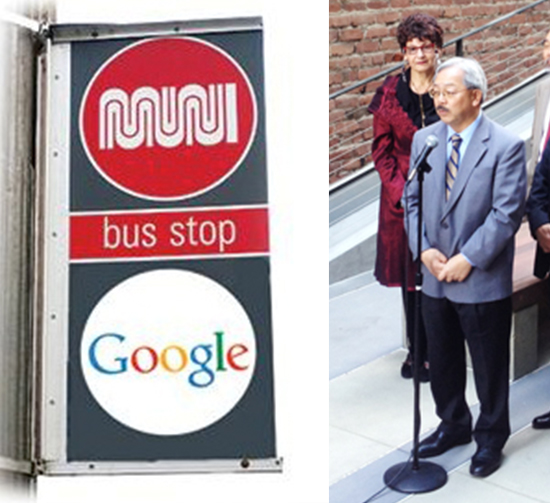
At a press conference on affordable housing today, the Guardian asked Mayor Ed Lee about San Francisco’s favorite pinata: tech buses. The monstrous private shuttles, which daily whisk tech workers away to Silicon Valley, currently use Muni bus stops without paying fines, like most private autos do. 

In Guardian News Editor Rebecca Bowe’s article in the print edition of the Bay Guardian this week, the San Francisco Municipal Transportation Agency spokesperson Paul Rose tells her that although there is a proposal in the works to regulate them, the SFMTA won’t profit a single dime from the plan. 

“We are developing these policies to better utilize the boarding zones for these shuttle providers,” Rose said. “What we’re trying to do is provide a more efficient transportation network.”

But everyone in San Francisco who has ever ridden Muni knows that it struggles to run on time, and chronic underfunding is a perennial Muni problem. It even hurts the city’s bottom line, depressing our economy by over $50 million a year, according a report from the city earlier this May.

The report also highlights the cost to overhaul Muni between now and the year 2020: over $167 million would be needed to overhaul the system.

So why not make a few bucks from tech companies using Muni stops, who, according to the city, cause Muni delays? 

We asked Mayor Ed Lee that very question at a press conference today. You can listen to his answer in the audio embedded below, or read the transcript for yourself. 

San Francisco Bay Guardian: “Housing is one aspect of this, but transportation is another. The MTA’s plan to deal with tech buses is cost neutral. Is that a missed opportunity to get additional funding for Muni?”

Mayor Ed Lee: “Not a missed opportunity. That’s the essence of that 2030 task force, transportation task force, that we put together where they send a report to me, I’m in a process of reviewing all aspects of that. 

Muni officials themselves were directly involved in producing that very comprehensive review along with our Planning Department and many in fact all of the departments here had implemented them.

Transportation is not just about Muni, it’s about all the modes of how people get around the city. You can’t forget that, because that’s a really big part of the task force’s work.

How to get people walking. How to get them bicycling safer and more. How to get cars less, and the cars that do, get them through where they have to go without stalling and congesting. 

How do you invest in Muni? In its assets, in its transportation, in all of its aspects. How do you work with taxis and all the other car-sharing and automobile sharing companies. It’s not just about taxis, by the way. I hear from my taxi friends as I walk around City Hall, they don’t want to be left behind so we want to bring them in to see the new exciting use of Uber carshare and Lyft… all of those modes have to be paid attention to at the highest level, including investing in the assets of Muni.

I want Muni to be the choice.”

Earlier in the press conference Lee voiced his opposition to all of the hatred pointed at tech companies. 

“People, stop blaming tech, tech companies,” he said. “They want to work on a solution. I think it’s unfortunate that some voices want to pit one economic sector they view as successful against the rest of our challenge. The reality is they’re only eight percent of our economy.” 

We tried to ask a follow up question, but at the end of his answer on Muni, the mayor’s spokesperson Christine Falvey told the Guardian “We’re going to go on a tour now, this is off topic.”

With more bikes on the roads, Folsom Street gets a makeover

7

As anyone who has traveled the streets of San Francisco knows, there’s an increasing number of bicyclists out there. And the just-released biennial bike count from San Francisco Municipal Transportation Agency attempts to quantify that increase: 14 percent since 2011.

The agency counted bikes at 51 key intersections around the city during the afternoon/evening commute from Sept. 10-19, counting a total of 23,225 bikes. Comparing 40 counted intersections in 2011, that’s a 14 percent increase; or a 96 percent increase since 2005 when comparing the 20 intersections measured then.

The San Francisco Bicycle Coalition trumpeted the report as good news, including in its press release this quote from Mayor Ed Lee: “Every year we are seeing more people riding a bicycle in San Francisco, and the latest bicycle count data proves it.” And SFBC Executive Director Leah Shahum said, “It’s clear that if we build it, they will come. No other mode of transportation is growing as fast or has a higher return on investment in terms of improving our city for everyone.”

But the reality is that the city is lagging far behind its own stated goals to make cycling a safer and more attractive transportation options, largely because of a severe underinvestment in its cycling network. The report notes that the city has invested $3.3 million in its bike network since 2011, but that was mostly playing catch-up from when a court injunction stalled all bike projects in the city for four years.

The SFMTA report doesn’t calculate the critical number in terms of how we’re really doing — transportation mode share, or the percentage of overall vehicle trips taken by bike — an estimate it is now working on in a separate study at the end of January.

An American Community Survey in 2012 put SF bike mode share at less than 4 percent, which is a far cry from the 20 percent by 2020 that is the city’s official goal, one it has little chance of meeting without a serious increase in infrastructure investment and other changes. The SFMTA’s own stated goal is 8-10 percent mode share by 2018, the result of failure to make needed investments, which amounts to an admission that the city’s official goal is little more than political pandering.

“We’re still moving forward on all the goals that we set to accomplish, but we do have funding needs,” SFMTA spokesperson Paul Rose told us, instead emphasizing the agency’s goal of attaining a 50-50 split between private automobile use and all other modes of transportation, including Muni and cycling.

The SFBC has worked in close partnership with the city, but the continuation of Shahum’s quote in her press release also indicates that she’d like to see the city doing more to promote safe cycling: “It’s time for the City to truly invest in our bicycle network, and ensure that our City’s streets are welcoming and comfortable for the growing number of people riding.”

But the city is moving forward with some bike improvements, including a makeover of Folsom Street now underway.

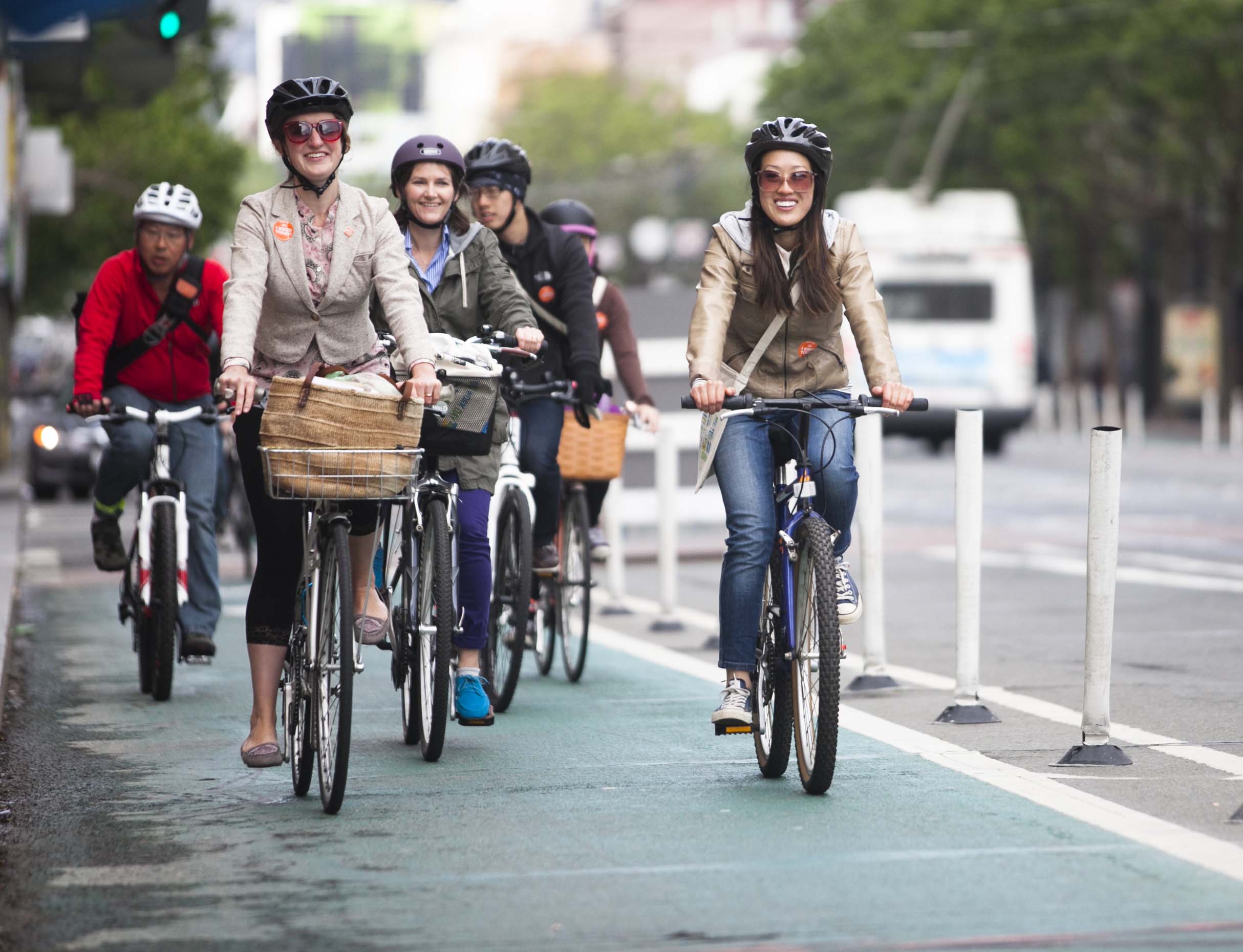
In the wake of some high-profile cases of motorists running over cyclists in San Francisco this year, including the Aug. 14 death of Amelie Le Moullac at the intersection of Folsom and 6th Streets, the San Francisco Municipal Transportation Agency has taken a lane from drivers to create safer cycling along seven key blocks of fast-moving Folsom Street.

The project on one-way Folsom Street between 11th and 4th streets creates an extra wide bike lane with bright green cycling signage on the roadway, with that green lane narrowing and breaking up as it approaches the right turns on 10th, 8th, and 6th streets. The idea is communicate with both motorists and cyclists about how to safely merge and avoid having cars make the unsafe “right hook” turns that are dangerous to cyclists.

“Right now, the project is almost complete and it should be complete by the end of the month,” Rose told the Guardian.

He said the design was discussed and subjected to community outreach efforts during community plan meetings in recent years, but that it was recently accelerated as a $250,000 pilot project with help from Sup. Jane Kim’s office following public concerns about how dangerous that fast-moving strip is to cyclists.

Rose said the traffic flows in the project area will be carefully monitored to see how it’s working, and the agency hopes to learn from that data “so it will inform future projects.” 

Bus stop

85

rebecca@sfbg.com

Each weekday, gleaming white buses operated by Google and other Silicon Valley tech giants roll through congested San Francisco streets and pause for several minutes in public bus stops, picking up passengers bound for sprawling tech campuses.

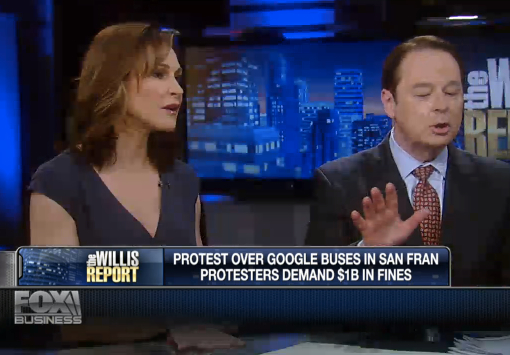
Using bus zones for private passenger pickup is not legal — but so far, that hasn’t resulted in any kind of systematic enforcement. It did boil over as an issue when it became the focal point of the Dec. 9 Google bus blockade, a Monday morning rush hour episode staged by anti-gentrification activists that went viral thanks to Bay Guardian video coverage, spurring commentary by Wall Street Journal, Fox News, and dozens of other media outlets.


SYMBOLIC ISSUE

The significance of the private buses as a symbol for an economically divided San Francisco, private service that spares a high-salaried class of workers from the delays, crowds, and service breakdowns that can plague Muni, has never been more resonant. The shuttles are frequently mentioned in conjunction with eviction and displacement, since apartment units in proximity to shuttle routes have become more desirable and expensive.

And as more shuttles are sent out to transport passengers, the San Francisco Municipal Transportation Agency has come under increasing pressure to solve the logistical and other problems they create.

“Our policies are catching up to this new transportation mode,” SFMTA spokesperson Paul Rose said in a recent phone call. “The shuttle service has been growing very rapidly.”

Accordingly, SFMTA is working on a pilot program to allow Google and other providers of private shuttle buses to share space in Muni bus zones in an organized fashion. The policy would establish a set of guidelines around boarding and alighting, implement measures to prevent Muni delays, create a formal permitting process, and require the shuttles to display identifying placards.

Although Muni needs funding to improve its aging infrastructure (see “Street Fight”), this plan to accommodate private shuttles would not result in any new revenue collection for the agency. Google and other private shuttle providers would be charged a fee under the program, but it would go only toward cost recovery, allowing the agency to break even.

Leslie Dreyer, one of the masterminds behind the Google bus blockade, calculated that the SFMTA could theoretically collect $1 billion if it aggressively targeted private shuttles for violating the Curb Priority Law, which prohibits vehicles other than Muni from using designated bus zones.

“It’s a ballpark estimate,” Dreyer said, describing her project as more of a thought experiment to illustrate a broader point. “We were trying to get people to think about … the bigger issue of what these things symbolize: evictions, gentrification.”

Dreyer based her findings on a color-coded chart released by SFMTA in July, showing the frequency of shuttle stops at 200 known locations. Paul Rose insisted the $1 billion estimate was too high because the total number of daily private shuttle trips is actually lower. He added that it’s more than just Google that is using the stops: At least 27 institutions and employers provide private shuttles in SF, according to data compiled by SFMTA.

But even based on the information that Rose provided, that same calculation shows that Muni could collect $500-600 million in fines from all the shuttle providers. That’s theoretically enough to augment a sizeable portion of Muni’s annual operating budget, which is around $800 million.

The pilot program for sharing bus zone space with private shuttles is expected to be reviewed by the SFMTA board early next year, and it could be implemented by July of 2014. It does not require approval by the Board of Supervisors.


SCOFFLAW BUSES

In the meantime, given that Google and other private shuttle providers are in rather obvious violation of a law prohibiting them from doing what they do every weekday like clockwork, why doesn’t the SFMTA bother to enforce the law?

Rose offered several answers to this question, but most just pointed to more questions.

The fine for violating the law that prohibits vehicles other than Muni from using bus zones is $271, Rose confirmed. According to a Strategic Analysis Report prepared for the SFMTA in June of 2011, which notes that the Curb Priority Law is part of the City Transportation Code, “enforcement … has been limited.”

“We have only so many resources, and most enforcement is based on complaints,” Rose explained.

But the same strategic analysis report, dating back to 2011, shows that a great number of complaints have flowed in from disgruntled transit riders.

“The frequency of public comment and complaints regarding bus zone conflicts … may indicate a more problematic situation than these limited data imply,” a portion of the 2011 study noted after presenting the results of a field study, in which some analyst was presumably sent out to physically observe the private shuttle buses (illegally) stopping in the bus zones.

Rose’s contention that a lack of complaints was behind the lack of enforcement didn’t really seem to hold up, but he offered another reason, too. “We’d have to ID the bus,” he explained. “There isn’t an identity placard or permit to ID them specifically.”

Establishing an identification system is one of the goals of the pilot program now under consideration, he added. Then again, Google buses have license plates. And if SFMTA has the capability to do anything well, it’s to harness license plate data as a mechanism for collecting fines from offending motorists.

In fact, officers under the parking enforcement division of the SFMTA use an automated system called AutoVu Patroller, made by a tech company called Genetech (not to be confused with Genentech, a pharmaceutical giant that has its own fleet of buses transporting San Francisco employees to its South Bay campus).


EASY TO TRACK

The AutoVu patroller starts automatically when a parking enforcement officer fires up the on-board computer. It works by scanning license plates as the parking vehicles cruise down the street, using plate recognition technology to feed the data into a system that checks the identifying numbers against an existing hotlist.

When a hit occurs, it’s automatically flagged on screen. With the flick of an index finger, an enforcement officer can instantly bring up a vehicle’s model, year, and VIN. If a vehicle lacks a permit, it automatically generates a hit, signaling that enforcement may be needed. Then there’s the obvious point that Google buses and other shuttles are highly visible, and stopping all the time — whether or not an enforcement officer has a license plate scanner or not.

But at the end of the day, the private shuttles are treated differently from other kinds of vehicles that are found to be in violation of the transportation code. No matter what the laws on the books say, it’s difficult to imagine the SFMTA or the SFPD, which also has enforcement power, causing tech employees to be late to work as they roll through the city in climate-controlled coaches with tinted windows.

Far from targeting the shuttles for enforcement, an in-depth conversation has actually been taking place between the shuttle providers and SFMTA for quite some time, with representatives from the Planning Department and other agencies brought to the table as well.

The SFMTA actually regards the shuttles as being somewhat helpful, Rose said, since they get drivers out of their cars and into pooled transportation modes, thereby helping to alleviate congestion.

“We are developing these policies to better utilize the boarding zones for these shuttle providers,” Rose explained. “What we’re trying to do is provide a more efficient transportation network.”

To that end, the city has organized a series of stakeholder meetings in recent years with Google, Apple, Adobe, Genentech, the University of California San Francisco, and other shuttle providers to design a way for Muni buses and private buses to coexist in harmony, in city bus zones. Those conversations were referenced in the 2011 report; three years later, the pilot program is expected to solidify those discussions into a formalized system.

Here and there, some bus zones have already been altered to accommodate the private shuttle buses. “[An] extension of the Muni zone on 8th Street (in the South of Market) appears to be working well; although SFMTA Staff report that shuttle operators using the new zone have balked at the suggestion that they should help pay for the $1,500 improvement,” the 2011 strategic analysis noted.

The plan that’s coming down the pipe will essentially serve to legitimize what the shuttles are already doing. But so far, this deal won’t result in any financial gain for the transportation agency. If it goes forward as planned, the opportunity to make transit improvements by collecting revenue from private companies that use public infrastructure will be passed up.

Bus riding tech workers respond to national spotlight on evictions

191

Evictions are rippling through San Francisco. Tensions are high. Tech workers with gobs of cash are driving up the rental market in what may be the newest tech bubble — or the city’s new reality. Protesters took to the street earlier this week, blocking a Google bus to draw attention to gentrification, and our video of a union organizer posing as a Google employee shouting down those protesters lit up the Internet

In the wake of that national spotlight on San Francisco’s outrage, the Bay Guardian decided to talk to the bus-riding techies themselves and ask how they felt about the new tech revolution. Are they at fault for displacing long time San Franciscans? What did they make of Monday’s outrage?

We returned to the scene of the protest, 24th and Valencia streets, where workers from Yahoo, Genentech, Google, and others line up at Muni stops to be whisked away in mammoth private buses. Most had hands in their pockets, turning away when asked questions. Others decided to talk, but none would go on the record with their names.

“We’re very aware of the sentiment in the city against us,” one tech worker with grey hair and glasses told us. “But hopefully this (protest) leads to a positive conversation.”

He said that the envy was understandable. Public transit in the city “isn’t the best,” he said, but pointing to any one company to be at fault isn’t productive. 

“Our economy lacks upward mobility, and the haves and have-nots are divided all over the country,” he said, not just in San Francisco. 

But some of the techies themselves are “have nots,” as one tech worker, a middle-aged Java programmer sitting in Muddy Waters cafe, could attest to. As we watched the tech buses ride by, he told the Guardian he’s been out of work for a few months now. He used to work for a computer sketch software company called Balsamiq. 

He’s lived in the city for 22 years. When he first moved into town, he lucked into renting a room for $175 a month. Now his rent is much, much higher, though he wouldn’t say by how much.

This is not the viral video of the staged argument, but from the same day. A protester enters the Google bus, and a bus rider shouts her out.

“I’m sympathetic,” he said, of the discord on rising rents. “But getting rid of tech isn’t the solution.” He pointed to a need for more affordable housing.

A blonde haired Apple employee told us that although he makes more money than the average San Franciscan, he can’t afford to buy a home here. He’s lived in the city three years, and worked at Apple for four. He took a balanced view of the protest, saying the stunt started a national look at inequality.

“It’s keeping (the conversation) at the front and center. You could argue it’s not fair to target one company, but I see both sides,” he said. 

Tech should do its part to pay its fair share, the 19-year cafe owner of Muddy Waters said. Hisham Massarweh said he likes the tech folk, who are great for business. But the transit issue needs to be worked out, he said. He once got a $250 ticket for parking in the same bus stop outside his store that the tech buses park in every day — ticket and permit free. 

Across the street, Jordan Reznick, a PhD student and teacher at California College of the Arts, said she’s seen many of her friends displaced. “I feel a lot of animosity towards Google and Google workers,” she said, as we sat just behind a line of Google employees waiting for their bus.

“I live in a small place with a family of four,” she told us, as it’s the best she could find in this market.

As she ran off to catch her ride to work, the Guardian approached a man who sat waiting for the same Google bus that was protested earlier in the week. 

“San Francisco doesn’t have its shit together,” he said. The protest was about housing, but San Francisco needs to address that fast. And as for the Google buses, there’s no framework for Google to pay the city, yet. “If they could (pay) they would, going forward I’m sure they will.”

We asked him point blank if he felt guilty watching longtime San Franciscans lose their homes. 

He took a drag of his cigarette, looked me in the eye, and said, “Every day. I love San Francisco with all my heart, and I feel tremendously guilty. Every day.”

As the bus pulled up he hopped on and headed to Mountain View.

Official SF bike count shows big increase, but not big enough to meet city goals

98

As anyone who has traveled the streets of San Francisco knows, there’s an increasing number of bicyclists out there. And the just-released biennial bike count from San Francisco Municipal Transportation Agency attempts to quantify that increase: 14 percent since 2011.

The agency counted bikes at 51 key intersections around the city during the afternoon/evening commute from Sept. 10-19, counting a total of 23,225 bikes. Comparing 40 counted intersections in 2011, that’s a 14 percent increase; or a 96 percent increase since 2005 when comparing the 20 intersections measured then.

The San Francisco Bicycle Coalition trumpeted the report as good news, including in its press release this quote from Mayor Ed Lee: “Every year we are seeing more people riding a bicycle in San Francisco, and the latest bicycle count data proves it.” And SFBC Executive Director Leah Shahum said, “It’s clear that if we build it, they will come. No other mode of transportation is growing as fast or has a higher return on investment in terms of improving our city for everyone.”

But the reality is that the city is lagging far behind its own stated goals to make cycling a safer and more attractive transportation options, largely because of a severe underinvestment in its cycling network. The report notes that the city has invested $3.3 million in its bike network since 2011, but that was mostly playing catch-up from when a court injunction stalled all bike projects in the city for four years.

The SFMTA report doesn’t calculate the critical number in terms of how we’re really doing — transportation mode share, or the percentage of overall vehicle trips taken by bike — an estimate it is now working on in a separate study.

An American Community Survey in 2012 put SF bike mode share at less than 4 percent, which is a far cry from the 20 percent by 2020 that is the city’s official goal, one it has little chance of meeting without a serious increase in infrastructure investment and other changes. The SFMTA’s own stated goal is 8-10 percent mode share by 2018, the result of failure to make needed investments, which amounts to an admission that the city’s official goal is little more than political pandering.

“We’re still moving forward on all the goals that we set to accomplish, but we do have have funding needs,” SFMTA spokesperson Paul Rose told us, insteading emphasizing the agency’s goal of attaining a 50-50 split between private automobile use and all other modes of transportation, including Muni and cycling.

The SFBC has worked in close partnership with the city, but the continuation of Shaham’s quote in her press release also indicates that she’d like to see the city doing more to promote safe cycling: “It’s time for the City to truly invest in our bicycle network, and ensure that our City’s streets are welcoming and comfortable for the growing number of people riding.”

UPDATE: Union organizer shouts down protesters as they block private Google shuttle

228

Protesters blocked a private Google shuttle on Valencia street today, decrying private shuttle’s use of public bus stops without paying fees or fines.

The group of 20 or so neon-yellow vested protesters called themselves the “San Francisco Displacement and Neighborhood Impact Agency.” The company doesn’t pay San Francisco a dime to use the Muni stops — fines that private auto drivers pay regularly.

UPDATE 3:58pm: Just how does a story go from breaking, to verification, to “holy shit it’s all over the internet now?” Here’s our interview with Fake Google Employee Max Alper, and our recount of how it all went down: http://www.sfbg.com/politics/2013/12/09/whyd-you-do-it-we-ask-fake-google-employee-max-bell-alper

UPDATE 12:32pm: Various tips have streamed in that this shout-out was staged. Protest organizer Leslie Dreyer talked to us on the phone and verified that this person’s identity was Max Bell Alper, a union organizer from Oakland. This person was not a Google employee, and Dreyer was not able to verify if Alper was there in the morning with the group of 20-30 protesters. The Guardian is attempting to contact Alper for comment. Dreyer said she, as an organizer, was unaware that the “performance” had been planned. We are following this as it develops.

UPDATE 1:06pm: Within an hour of our original post, the Guardian learned that Max Bell Alper, a union organizer with Unite Here Local 2850 was the man shouting down Google bus protesters earlier this morning. We asked Alper what motivated him to impersonate a Google employee.

This is political theater to demonstrate what is happening to the city. It’s about more than just the bus. These are enormous corporations that are investing in this community. These companies, like Google, should be proud of where they’re from and invest in their communities,” he said.

When asked if he intentiionally intended to deceive media, he replied “People are talking all over the country about what’s happening in San Francisco (referring to evictions and displacement). That’s the debate we need to have here. The more we talk about it, the more we think about it, the more we’re going to see the tech companies need to contribute.”

 Alper said that he did not intend to engage in theater before going to the protest, but when there made the decision, “spontaneously,” to stage the argument. When he maintained his story that this was political theater, we again asked why he did not verify his name at the protest itself — and only after the story blew up in national and local media.

This was improv political theater,” he said.

Original post follows:

The SFMTA has a pilot plan in the works to regulate private use of public bus stops.

Though the private shuttles were the crux of the day’s protest, the heart of the fight is over gentrification. As the tech revolution in SF leads to rising rents and longtime San Franciscans are being displaced.

In the video, a union organizer who hopped off the bus shouts down Erin McElroy, staging an argument with a protester who also heads the eviction mapping project. “How long have you lived in this city?” McElroy asked him. He shouted back “Why don’t you go to a city that can afford it? This is a city for the right people who can afford it. You can’t afford it? You can leave. I’m sorry, get a better job.”

“What kind of fucking city is this?” he shouted, and then walked off. He mentioned repeatedly that he couldn’t get to work because the bus was blocked, and did exit the bus (indicated he was a Google employee), but the Guardian (nor a nearby Al Jazeera reporter) could not verify his job title or name. If anyone has any tips as to the identity of this man, please contact us at news@sfbg.com. 

(UPDATE 12:12 PM — The Guardian amended the headline to reflect our story more accurately, that though this man exited the bus and claimed he was late for work, we have not yet verified his employment at Google)

We’ll have more on this story later in the day, for now, check out footage from the protest.)

Meat is murder

1

arts@sfbg.com

TOFU AND WHISKEY Of course Morrissey would name his long-awaited memoir Autobiography (Putnam Adult, 464 pp., $30). The legendarily morose British pop singer and former Smiths leader has always seemed a bit larger than life.

The book already came out in the UK (and France) in October and was a huge sensation, topping best-seller lists, but US audiences have been forced to wait for the precious tome, twiddling their thumbs for its arrival, much like the infrequent uncancelled Morrissey live performance. The hardcover finally arrives stateside Dec. 3.

That said, the book on the life of the “Meat is Murder” singer-activist is worth the twiddling, if only for morbid curiosity. It’s lengthy, uncanny, and packed with daggering insults toward other musicians (Johnny Marr), ex-presidents and royals (George W., Sarah Ferguson), and himself, along with drawn-out sections on his favorite poets, court cases, and desire to die. It covers his life from birth to present day.

People go crazy over Morrissey — there’s even a Mozipedia book, published in 2010, so clearly the desire to hear it all in his own voice is there. I’ll claim to be a Morrissey novice, comparatively. At least, I’ve never worn a bedazzled jean jacket to a fever-pitched Moz convention, so some revelations in the book were still eye-opening, though needing to be extracted from verbose prose.

The long-time vegetarian, proudly outspoken against the meat industry, writes instead mostly about his suicidal depressive past and his dreary youth — and he finally speaks to those rumors of his sexuality. Yup, he loved a man named Jake Owen Walters. Though he later released this statement about those sections of the book: “Unfortunately, I am not homosexual. In technical fact, I am humansexual. I am attracted to humans. But, of course … not many.”

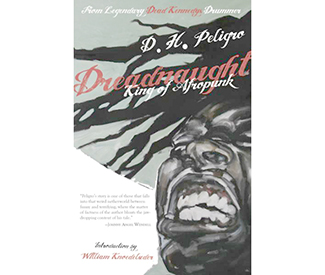
So Steven Patrick Morrissey, as he was known at birth, recounts a dark and uncomfortable childhood in Manchester, much of which was spun into early Smiths songs. But if we’re comparing horrific childhoods, another recent memoir might outweigh every aspect of Morrissey’s sad complaints: that of D.H. Peligro, whose own bio, Dreadnaught: King of Afropunk (Rare Bird Books, 280 pp., $13) came out in October.

Peligro — the complex, wild-man drummer of SF’s Dead Kennedys, as well as (briefly) Red Hot Chili Peppers, and guitarist in his own band, Peligro — grew up “dirt poor” in St. Louis, Mo., where he was born in 1959. (He literally eats dirt as a punishment in one section.) Like Moz, he now eats a veg-heavy diet. “All that food we had growing up in the ghetto was poison, drained of any nutritional value. Being forced to eat that food was one of the reasons that later in life, even when I was strung out on heroin, I remained a fanatic vegan,” he writes.

While the book opens with an extremely upsetting and grotesque strung-out hospital stay in a room with “puke green walls,” one of many incidents for the drug-addicted musician, it quickly falls backward in time to his beginnings as a “Satan’s Child,” the name by which he was known as around town. He never met his father, was mercilessly beat by his oft-drunk stepfather, and lived in a hotbed of violence and racial segregation in his early years.

And yet, despite all this, growing up in St. Louis also greatly influenced Peligro’s interest in music, and fostered a space in which to learn rhythm and blues. His beloved Uncle Sam Carr, who introduced him to musical instruments, was the son of blues guitarist Robert Nighthawk (who supposedly was the first to play slide guitar). Peligro recalls playing Carr some Dead Kennedys music years later and Carr “really listening” and nodding his head along to the noisy, Jello Biafra-led punk band.

Written in a poetic and reflective yet conversational style, Peligro’s tale stands out above most fast-living memoirs. The stories are vivid and disturbing, and the experiences run the gamut from the epicenters of Southern blues, to the influential early SF punk scene, to the costumed LA rock ‘n’ roll lifestyle. And yet, Dreadnaught still follows much of the standard course for the musician’s book tale: grew up poor, found shining beacon influencer, rose above, partied too hard, came down, and reflected.

And while there have been countless rocker memoirs in the past, only a small handful are worth your time — and there’s no time like now: It’s Thanksgiving week, and you’re likely itching for some quiet downtime, away from TVs filled with screeching sportscasters and your aunt asking you (if you’re in line with Moz and Peligro’s dietary habits) one more time: “Just how do you get protein?”

The top of any list should be Patti Smith‘s 2010 Just Kids. It’s eloquent and nonetheless gritty, with sinuous stories tumbling from her recollections and minute details beautifully recounted. The end made me ugly-cry crocodile tears while on Muni.

Like Smith, some musicians take the more introspective approach to their writing, revealing inner strength through the written word. For more of that nature, see Ronnie Spector‘s 1990 memoir, Be My Baby: How I Survived Mascara, Miniskirts, and Madness; or Bob Dylan‘s 2004 Bob Dylan: Chronicles, Volume One.

And then there’s Pamela Des Barres‘ groupie classic I’m With the Band. Oh, the torrid, gushy love tales within that book, of Ms. Pamela’s exploits with famous rock ‘n’ rollers from the 1960s right on up through the decades. Many years ago, over breakfast at a diner in Haight-Ashbury, Des Barres told me: “As far as wanting to meet the guys, I just couldn’t sit in my room and get all horny over Mick Jagger … it was just inside me to see where all that amazing stuff was coming from, that music.” If you’re in the mood for more scandalous tales of sex, drugs, and rock ‘n’ roll, these memoirs come highly recommended as well: Slash‘s Slash or Keith RichardsLife.

If you’re looking for an ironic, jokey, or food-based story, there’s Ian SvenoniusSupernatural Strategies for Making a Rock ‘N’ Roll Group, which I reviewed in an earlier column — noting that the book holds séances with dead rock stars to glean important information for the reader — and Cookin’ with Coolio: 5 Star Meals at a 1 Star Price, which includes a section called “How Coolio Became the King of Kitchen Pimps.” (Hint: his mom.)

Or there’s this year’s insta-classic “cookbook” — which really came as a download with the B.O.A.T.S 2 #Metime albumCooking With Two Chainz. It includes cooking tips like, “Put on your Versace apron.”


LIFE STINKS

Here’s all I know about Life Stinks: The band has a great name, was described as “brutal and mysterious” after SXSW last year; and makes throwback snotty punk songs. It also just released a self-titled debut LP on S.S. records. Listen to “Cemeteries” off said album for more reasons to see the live show. That’s all you need to know. This album release gig is the Friday after Thanksgiving; you’ll be stuffed, sick of family, and most definitely ready to shake along. Plus, one of the openers is messy and awesome high-pitched SF band Quaaludes — they sound like ’77 punk on helium meets ’92 riot grrrl, which is perfect. With Dancer. Fri/29, 9:30pm, $5. Hemlock Tavern, 1131 Polk, SF; www.hemlocktavern.com.


BREAD & ROSES BENEFIT

I was discussing the upcoming Kathleen Hanna doc The Punk Singer with a musician pal, and we got on the topic of the very real healing power of music. While Hanna is certainly not playing this event (sorry), that power translates broadly. Bread & Roses is a Northern California-based organization that knows this well, producing hundreds of free shows a year at hospitals, nursing homes, shelters, and treatment centers. This benefit is full-circle, benefiting the org so it can put on more shows, and offering up live local talent for you: sparkly piano rocker Marco Benevento (of Tea Leaf Green), acoustic folk singer-songwriter Megan Slankard, along with her band, the Novelists, and (((folkYEAH!))) Presents DJ Britt Govea. Sun/1, 8pm, $20–<\d>$50, Chapel, 777 Valencia, SF. www.breadandroses.org. *

We give thanks

0

EDITORIAL We offer a lot of criticism here on the Guardian’s editorial page, which is probably inescapable given the obvious failures of our political and economic systems to address the needs of the people and the planet and to uphold the progressive values that the Guardian and much of the Bay Area supports. We have so much potential, and it’s sometimes maddening when we fall short of realizing it.

So, this week, in the spirit of Thanksgiving, we’re going to put a positive spin on the civic scene and talk about some of the things that we’re thankful for.

We’re thankful to live in such a beautiful, vibrant place. San Francisco is one of the greatest cities in the world, both physically and culturally. And we’re thrice blessed to have Marin County and the East Bay — particularly the progressive and diverse cities of Oakland and Berkeley — just a short bridge ride away. Layer on top of that the nearby Sierras, Sonoma County, and the coastline from Point Reyes down to Santa Cruz and this is perhaps the best region on the planet.

We’re thankful to have a functional, modern transportation system that offers plenty of good alternatives to the automobile. While there’s certainly room for improvement, BART is an amazing transit system that closes the gap among the Bay Area’s many diverse communities, while Muni does a good job at ferrying huge numbers of people around this bustling city. Caltrain is a great link down the peninsula and we’re super excited to see it electrified and that transportation officials are working hard to connect downtown San Francisco to downtown Los Angeles with a long overdue high speed rail line. And we love how San Franciscans have embraced bicycles as an important everyday transportation option.

We’re thankful that so many smart, interesting, creative people have been drawn to San Francisco and its environs. This is home to recognized global leaders in pursuits ranging from technological innovation to progressive and environmental organizing and advocacy. We’re proud of the political initiatives hatched here in the Bay Area, from marriage equality to criminal justice reform. We have a cornucopia of artists and musicians tucked into every little nook of the city, from the stage of Slim’s to the studios of surreal Hunters Point Shipyard. And the locals here cook up some of the world’s best culinary offerings, from a plethora of fancy restaurants to quickie taquerias to surprisingly bountiful food trucks.

And we’re really thankful for you, the person reading these words. The Guardian has been around since 1966 because of the support of our readers, our advertisers, and our community, and we’re grateful that you’ve all given us the opportunity to offer the news, views, and reviews that are helping to shape this wonderful place. Happy Thanksgiving.


Driving us crazy

209

STREET FIGHT Parking reform is one of the most radically important elements of making San Francisco a more livable and equitable city.

In this geographically constrained city, parking consumes millions of square feet of space that could be used for housing, especially affordable housing in secondary units. Curbside parking in the public right of way impedes plans to make Muni more reliable for hundreds of thousands of transit riders. Parking in new housing and commercial developments generates more car trips on our already congested and polluted streets, slowing Muni further while bullying bicyclists and menacing pedestrians.

Fundamentally, parking is a privatization of the commons, whereby driveway curb cuts and on-street parking hog the public right-of-way in the name of private car storage. The greater public good — such as reducing greenhouse gas emissions and enhancing public safety through bike lanes, wider sidewalks, public green spaces, and transit-first policies — is subsumed to narrow private interests. These are among the many reasons why, for over a decade, parking reform has been a key part of progressive transportation policy.

Yet lately, it has been disappointing to watch progressives, especially on the Board of Supervisors, retreat from that stance. In Potrero Hill and North Mission, a vitriolic reaction has slowed rollout of nationally acclaimed SF Park, which raises revenue for Muni and is a proven sustainable transportation tool. Yet there are murmurings that some progressive supervisors might seek an intervention and placate motorists who believe the public right-of-way is theirs.

On Polk Street, some loud merchants and residents went ballistic when the city and bicycle advocates proposed removing curbside parking to accommodate bicycles. The city, weary of Tea Party-like mobs, ran the other way, tail-between-legs. Progressive supervisors seem to have gone along with the cave-in.

Along Geary, planning for a desperately needed bus rapid transit project drags on. And on. And on. And on. The lollygagging includes bending over backward to placate some drivers who might be slightly inconvenienced by improvements for 50,000 daily bus riders.

One thing that is remarkably disturbing about this backpedaling is that, in an ostensibly progressive city by many measures (civil rights, tolerance, environmentalism), the counterattack is steeped in conservative ideology. That is, conservatives believe that government should require ample and cheap parking, whether in new housing or on the street. This conservative ideology, shared by many car drivers and merchants — and even by some self-professed progressives — is steeped in the idea people still need cars. This despite the evidence that cars are extremely destructive to our environment, socially inequitable, and only seem essential because of poor planning decisions, not human nature.

Progressive backpedaling has become more confusing with the recent debate over 8 Washington, defeated at the polls Nov. 5, and on the same day of a convoluted Board of Supervisors hearing on a proposed car-free housing development at 1050 Valencia. Both of these projects highlight the muddled inconsistency emerging among progressive supervisors.

Enough has been written about how 8 Washington was a symbolic battle for the soul of San Francisco. But during the campaigns, the lack of attention to parking was curious. Notably, progressive-leaning transportation organizations like the San Francisco Bicycle Coalition, Walk SF, and Transform sat out the election despite the project’s excessive 327 underground parking spaces, which violated hard-fought progressive planning efforts to make the waterfront livable. The Council of Community Housing Organizations also sat it out, despite benefitting from the progressive parking policies that 8 Washington violated. It appears that despite their transit-first rhetoric, progressives made a tactical calculation to keep parking out of the campaign.

The progressive victory came with a Faustian bargain which involved ignoring parking. To ensure 8 Washington was defeated, conservative voters were folded into the opposition. Groups like Eastern Neighborhoods United Front (ENUF), the Coalition for San Francisco Neighborhoods, and the Republican Party came out against 8 Washington and yet, ironically, all are opponents of progressive parking reform.

Moving forward, whatever happens at the 8 Washington site must include progressive parking policies. Don’t expect this from the unimaginative leadership at the Port, which speciously demanded the excessive parking. Don’t expect it from the developer, who steadfastly insists that the rich must have parking. And don’t expect conservatives to latch on to a waterfront scheme that is both publicly accessible and genuinely transit-oriented. It is progressives who will need to muster political will for a zero-parking project at the waterfront and set the tone for consensus among the other factions in the waterfront debate.

Meanwhile on the same day 8 Washington went down, 1050 Valencia barely made it out of a tortuous Board of Supervisors hearing in which progressives seemed to be the antagonists. As the first car-free market-rate housing proposal on Valencia under progressive parking reforms, this 12-unit mixed use building seemed an obvious win for progressives. It would be a walkable, bicycle-friendly urban infill mixed-use project with on-site affordable housing, all of which the city needs more of.

Yet since 2010, when the project first went to the Planning Commission, conservative rhetoric has been deployed to stop the project. Significantly, the Liberty Hill Neighborhood Association objected to the transit-oriented characterization of the project. It claimed that the 14 Mission and 49 Mission/Van Ness are filthy, crime-ridden, and unreliable and so 1050 Valencia must have parking.

Unlike progressives, who also decry shortfalls with Muni but propose solutions, the Liberty Hill opponents offered only secession from public transit, insisting on driving in secure armored cocoons instead of addressing Muni reliability, and they also expect free or cheap parking in the public right of way.

You would think that progressives at the Board of Supervisors would see through this thinly veiled bigotry against the 14 and 49 buses. But instead, four self-professed progressive supervisors — John Avalos, David Campos, Jane Kim, and Eric Mar — voted against 1050 Valencia.

They may argue that they were more concerned about the neighboring Marsh Theater, which has concerns about construction noise (and also parking). The noise issue can be worked out, and why the progressive supervisors did not work this out in advance is a mystery. But if you watch the hearing closely, the Marsh basically opposed the development — period — and thus a modest car-free development that included affordable housing at an appropriate location. And so did four progressive supervisors. It’s baffling.

At the end of the day, 1050 Valencia moved forward, barely. But it can still be stopped at the upcoming Board of Appeals hearing. Meanwhile, it’s time for progressives to make a frontal response to the Muni-bashing coming out of Liberty Hill.

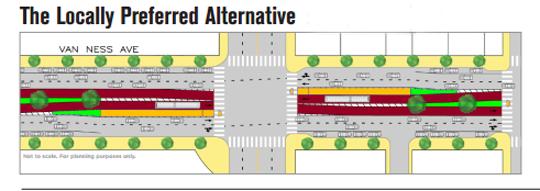
The SFMTA is offering a bold and ambitious proposal for these buses on Mission between 13th and Cesar Chavez. This includes a transit-only lane, restricting automobile traffic, rearranging loading zones, and removing curbside parking so that 46,000 daily 14 and 49 passengers have better reliability and less crowding.

This plan will make life easier for San Franciscans who rely on these buses, but will require progressive supervisors to openly and sincerely advocate for removal of on-street parking, to support SF Park, and push for car-free housing development in the Mission, rather than knee-jerk posturing for a few political points in future elections. Progressives, stop screwing around.

Street Fight is a monthly column by Jason Henderson, an urban geography professor at San Francisco State University.

Vote “no” on everything

13

All this year’s candidates are unopposed incumbents, which is lame. It’s a sign of an unhealthy democracy that we don’t even have a choice. Why isn’t anyone running? The citywide races on this ballot have no term limits and no public financing, so we’re stuck with career politicians until they decide to move on. Even if they’re okay at their jobs, that’s problematic.

We aren’t necessarily opposed to Treasurer Jose Cisneros or City Attorney Dennis Herrera. They each have admirable accomplishments on their résumés, but they aren’t the type of pioneering progressive leaders that we’re comfortable endorsing in uncontested elections — and Herrera has a couple ugly marks on his record (gang injunctions and invalidating a people’s referendum on Bayview/Hunters Point development).

We are, however, strongly opposed to the Guardian’s endorsements of Carmen Chu and Katy Tang. Back in the day, they worked together in Mayor Gavin Newsom’s budget office. Then he appointed Chu as District 4 supervisor and Tang became her legislative aide. Then Mayor Ed Lee appointed Chu as Assessor and it was Tang’s turn to be District 4 supervisor.

Are you sensing a trend? If Tang goes on to serve two full terms, the Sunset will go from 2007 until 2022 without a contested election. That’s crazy pants!

Odds are that will also mean 15 years without the District 4 supe ever disagreeing with the mayor. Chu was on the opposite side of virtually every contested vote The League has ever cared about: free Muni for youth, the Sit-Lie law, increasing the hotel tax, Election Day voter registration, and CleanPowerSF.

Tang hasn’t been around long, but she’s already voted against CleanPowerSF and carried the mayor’s water by trying to weaken John Avalos’s Due Process for All ordinance. She attempted to insert exceptions that would’ve made undocumented San Franciscans unsure if they could call the police without risking family members’ deportation. When she used the fearmongering image of the city becoming a “safe haven for criminals,” she was rightfully booed by hundreds of immigration and domestic violence advocates in the audience.

And then there’s the golden rule of politics: Follow the money! Chu and Tang have racked up over $150,000 each. Huge chunks of that money come from developers, property managers, consultants, and others looking to strike it rich with land use deals approved by the new board.

That’s especially troubling for Assessor-Recorder Chu. She’s responsible for assessing property taxes, most of which come from skyscrapers downtown. She should be all up in the business of those corporations: Every time a building changes hands or a company’s ownership changes, the company owes a real estate transfer tax. But Chu is buddy-buddy with the Building Owners and Managers Association, taking piles of cash from the real estate industry. That sucks.

This business of the mayor appointing his buddies who then go on to win uncontested races has got to stop. It’s troubling that the mayor — our executive branch — unilaterally fills out our legislative branch. Hello? Did the folks writing our City Charter ever hear of “checks and balances?”

We think all mayoral appointees should be placeholders, legally prohibited from running in the following election. None of this pledging not to run and then “changing your mind” (we’re looking at you, Ed Lee). That reform would be a proposition we could say yes to — and a welcome change of pace from this November’s ballot.

The San Francisco League of Pissed Off Voters is an all-volunteer local chapter of the National League of Young Voters.

“Suspicious package” found at Union Square did not contain a bomb

Police closed off Union Square this afternoon, Thu/17, while the San Francisco Police Department’s bomb squad investigated the contents of a “suspicious package” located there just before noon.

At 1:49 pm, police sent an update, saying: “The suspicious package at Union Square has been secured. There was no merit to a hazardous device. Streets are being reopened.”

The package was discovered on the Stockton Street side of Union Square, police spokesperson Albie Esparza said as he stood behind a police line. The officer found it independently rather than in response to a tip, Esparza said, and made the decision to notify the bomb squad.

Esparza declined to offer more details about the package, but explained, “The bomb squad has special devices that can examine packages to see the contents.”

Police tape had been strung across all surrounding streets, Muni buses were being re-routed, and a shelter-in-place was put into effect for people inside surrounding buildings.

All around the area, pedestrians walked up to the police line to ask what was going on, and many expressed disappointment that they would be unable to get to their hair appointments or go shopping at Nieman Marcus. They texted loved ones to say there was a bomb threat. Even Frank Chu was on the scene, holding his signature sign. Helicopters circled overhead and fire trucks were parked inside the closed-off area.

“It’s better to be safe than sorry,” Esparza said, noting that bomb threats happen from time to time. “We don’t want to have a tragedy just because of complacency.”


Best of the Bay 2013: BEST SF TO A TEE

0

Local artist Amos Goldbaum hand-draws and hand-prints some of the most recognizable, SF-centric t-shirts (and hoodies, tanks, and baby onesies) available on the streets — literally, on the streets, since he also hand-sells his wares from wire racks on Valencia, near the Ferry Building, at street fairs like the recent Castro Street Fair, and other open-air spots. Goldbaum’s complete repertoire goes far beyond the familiar tourist-friendly landscapes he’s known for: his web portfolio is packed with psychological, fantastical illustrated scenes you’d spot immediately in a gallery — but probably never witness out a Muni window. When it comes to uniquely Bay gifts, though, you won’t want to miss his quirky, amazingly detailed and vibrant line-drawing takes on local landmarks like Dolores Park, with old-school playground intact, and Bernal Hill — or his illo of the old-timey Sutro Baths, complete with Cliff House aflame in the background.

www.amosgoldbaum.com

Best of the Bay 2013 Editors Picks: Shopping

0

SHOPPING

EDITORS PICKS

Editors picks are chosen by Guardian editors for special recognition for brightening the Bay Area experience.


BEST PLACE TO PARK YOUR CARD

Get that paper, paper, paper — printed. Holed up in a cozy garage with a cute dog and a hunky Vandercock proof press (a rare specimen last produced in the 1960s), the letterpress-loving ladies of Western Editions create and design paper goods for all occasions and situations, from badass business cards with handmade charm to colorful and direct wedding invites that may just get your flaky San Franciscan friends to actually attend the soirée. “Letterpress is magic,” is the motto of Western Addition residents Taylor Reid and Erin Fong, two friends turned business partners who are down to customize and open to suggestions, meaning you can make all the cute shit your ambitious heart desires, or purchase some one else’s great idea from their online store. Oh, hey, and they offer supercool DIY workshops, too — just in time for the holidays.

555 Rose, SF. www.westerneditions.com


BEST BE-SPOKED FASHION

We’re constantly on the hunt for the perfect outfit that will make it through our daily transition from work serf to night owl. Reversible scarves, tear-away skirts, all black outfits — those work OK. But what about then shoes? What pair of hoofers can glide us from the workbound bike lane to the underground dance floor? Welp, a local company has the solution to our woes: DZR Shoes, an SF-based (though they manufacture overseas) outfit that creates sneakers that can clip to all manners of pedal types, but look fly as all getout. Whether you go for high or low top, fully vegan design or whole grain leather, knee-high lace-up or slip-in, chances are you can find the kicks to complete your Lycra-free lane look in style. Our current favorite? The sleek, all-black Minna, designed by artist-DJ Jeremiah Bal.

www.dzrshoes.com


BEST FLORAL HUNTRESS

Her eyes scanning the abandoned lots and hillsides of the Stinson area and East Bay, Louesa Roebuck of Louesa Roebuck Flora isn’t afraid to snoop, sneak, or hustle in the name of foraging for flowers. Her mission: fetch that wild flora and arrange it in ways that exemplify the plant’s natural majesty. Gleaning armloads of budding branches, floppy magnolias, brilliant poppies, sweet mallow, bright berries, and sharp citrus from both public and secret locations, Louesa finds beauty in imperfection, a sublime bouquet in nature’s fantastic mistakes. She lets the blooms and leaves curl, crawl, and droop as they will, showcasing the fascinating juxtaposition between life and slow, dreamy decay. Visit her tiny Hayes Valley shop to see the day’s treasures and meet some of the gorgeous plants living right beside you.

597 Hayes, SF. (415) 686-5482, www.louesaroebuck.com


BEST ONE-STOP SCOTCH SHOP

Like a sweater for your insides, the names warm your gray matter: Broichladdich, Glayva, Mackillop’s, Benriach, Balvenie, Glenmorangie. Standing in the sweetly crammed back bottle room of downtown’s Whisky Shop can be a meditative experience for scotch lovers — the selection of malts and blends vies for the city’s best, with employees as helpful as their kilts are fetching. And should the Whisky Shop staff’s sartorial motif inspire, the front portion of the store is stocked with a rainbow of tartan, wool, and waxed fabric wardrobe. Score kilts and genuine, betasseled fur sporrans you’ll use to stash your new perfectly heart-shaped silver flask. And possibly a novelty gift or two — the Whisky Shop is also flush with crest-adorned coasters, canned haggis, and artisan lotions from the United Kingdom.

360 Sutter, SF. (415) 989-1030, www.whiskeyshopusa.com


BEST COMMUNITY BOARDS

While there can be no debate that surf shops, in general, are selling a lifestyle, few are hawking a way of living as healthy as Mill Valley’s beloved Proof Lab. Need proof? The nine-year-old store (whose owners used reclaimed and reused materials wherever possible in its construction) stocks the best in sustainable men’s and women’s clothing, surfboard brands, and skateboard fixins, of course. But it also hosts a passel of community-minded offerings: sustainability workshops, toddler art classes, a native plant nursery, a biodiesel fuel station. On the lot next door you’ll find a teaching garden co-founded by Proof where one can take the occasional canning seminar, and buy fresh local produce. Plus: a new Equator coffee bar, to keep you up for those waves.

244 Shoreline Highway, Mill Valley. (415) 380-8900, www.prooflab.com


BEST CLAWS CARTEL

We bow down to the business acumen and sharp eye for trends possessed by Floss Gloss duo Aretha Sack and Janine Lee. These two California College of the Arts grads eschewed inward-looking artistic exploration, instead embarking on a mission to paint the world with the sizzling neons and kick-ass, vintage-inspired shades that haunt their minds eye. Their canvas? The fingernails of the Bay Area’s young, hip, and gifted. How did they take their line of animal cruelty-free nail polishes from late-night study sessions to indie and corporate retailers around the globe? (All while remaining 100 percent free of DBPs, formaldehyde, and other harmful chemicals — these colors may scream “heavy metal,” but contain none.) Let us count the ways: perfect nacho cheese orange and bikini coral lacquers; irresistibly chic tones like Party Bruise, Dimepiece, Black Holy, Faded, Pony, and Blood, Suede, and Tears; endless pop-up nail salons, hard work … and the knowledge that you can do anything when you’ve got a perfect 10 to point the way.

www.flossgloss.com


BEST BLADE RUNNER

It is a satisfying, luxurious — if fundamental — satisfaction, settling in to make dinner with a hiss-sharp passel of well-honed knives. Fans of cutting-edge pleasures will want to slip into Nob Hill’s Town Cutler, a well-hewn, immaculately organized shop of blades both wildly fabulous (a $1,050 Wilburn Forge Japanese chef knife, its silver nickel sharp marbled and lovely) and craftily utilitarian (a $100 handleless Takeda Kogotana meant for woodworking). Owner Galen Garretson will sell you these, sharpen the utensils you already own, teach you to work your own knives in a sharpening tutorial or informative class, and even help you get a handle on blunter culinary objects — the back of Town Cutlery is an elegantly hung array of those most-unsharp kitchen friends: spoons.

1005 Bush, SF. (415) 359-1519, www.towncutler.com


BEST BOOKS FOR THE BROKE

These are the facts: Reading is cool, books are rad, free books are even radder, and the best combo of all of these is the Bay Area Free Book Exchange. At any given moment, the space — run cooperatively by a cadre of indie booksellers and printed-page junkies — houses some 10,000 books, all free for the taking. (“It’s like an ever-changing treasure hunt among thousands of books,” its website declares, and we have to agree.) Since opening in May 2009, the Exchange has given away over 350,000 books during its weekend hours, with an ultimate goal of handing out a million, and beyond! Since it survives on donations, consider adding your own previously-read tomes to the stacks proudly bearing this stamp: “Not for Resale, This is a Free Book.”

10520 San Pablo, El Cerrito. (510) 705-1200, www.bayareafreebookexchange.com


BEST ROUNDABOUT OF FOUND GEMS

A compellingly curated combination of artwork by some of San Francisco’s eye-catching countercultural artists — with noteworthy post-industrial tinge courtesy of the Burning Man diaspora — and intriguing flea market finds by diligent shoppers with an eye for the urban aesthetic, Carousel Consignment SF is an oasis of great pre-found finds. This welcoming and decidedly funky Mission whirl, set in motion by co-owners Kelley Wehman and Illy McMahan (who bonded over their passion for all things circus and vintage), can turn a quick fly-by into an afternoon-long exploration. Furniture, toys, lighting, textiles … Its quirky assemblage of wares preserves its surroundings’ penchant for the wacky and weird.

2391 Mission, SF. (415) 821-9848, www.carouselsf.com


BEST SOLO STARTUPS

You know how it goes: surfing the www.aves of one’s sleek laptop, a stray image distracts. Suddenly, you’re no longer typing that return email — your mind has fixed on a different kind of click entirely. For you, sweets, SoMa brand Crave‘s line of tech-happy sex toys. Designed and produced by Ti Chang and Michael Topolovac, and assembled in the land of SF startup, each of the company’s gorgeous, whisper-quiet specimens have all the design and functionality of your favorite Apple toy. Our favorite is the Duet, a vibe with a double-pronged, silicone clitoral approach available in gold plating and with the option of eight or 16 GB of data storage thanks to a USB charging battery. That’s right: there is a USB port up in this vibrator. Adventurous souls can wear their pleasure out in public: Crave’s “Droplet” lariat necklace doubles as discreet nipple vibrators.

www.lovecrave.com


BEST HORROR HOUND DECOR

To some, a house full of Alex Pardee visual art would reap naught but disturbed sleep and missed meals. A living dream catcher made of exposed sinew and dripping eyeballs dangling from tendons, ready to snatch a soul; a roaring “Sharkasus” with razor teeth, four legs, and wings; an endless parade of your favorite horror icons rendered somehow even more terrifying by his spindly, precise strokes. But given the fact there are now two Bay Area shops stocked primarily with his prints, originals, and tees — in addition to the unnerving yet painterly work of other artists like Dave Correia — plenty of us are digging it. While shopping for the creep-craver in your life, you’ll do no better than the Oakland or Lower Haight location of Zero Friends, which has become a ground zero of sorts for the street art marketing scene.

419 Haight, SF. (415) 418-9912; 489A 25th St., Oakl. (510) 735-9405 (open first Fridays of the month or by appointment only); www.zerofriends.com


BEST REPAIR GRAND CENTRAL

Should you need a custom cabinet, a staircase rehab, perhaps a new cupola on your clock tower, you can turn to Clipper Construction’s Mathieu Palmer. But 501 Waller, the storefront Palmer owned and used as storage space — as he told local blog Haighteration — wasn’t the best use of a neighborhood-facing corner shop. Enter Palmer’s friend Dan Daniel, who created Clipper Repair from this clutter, a friendly place for fixing up, designing, or refurbishing anything you could imagine: lamps, cabinets, antique furniture, electrical things. The interior is a gorgeously organized wonderland of screws, nails, tools, gears, and random curiosities. And then! Garret Peters turned Clipper’s back storage room into a bike shop called Wiggle Bikes, conveniently located off the Wiggle, our crosstown thoroughfare for the two-wheeled. Could there be a more useful stop-off for lovers of sustainable transportation and reuse than the Clipper Repair-Wiggle Bikes complex?

501 Waller, SF. (415) 621-4733, www.clipper-construction.com


BEST GIVING FACE, FLAWLESSLY

You could find no better brand rep than Swagger Cosmetics‘ Blake Karamazov. The tiny club kid (who came to us a few years ago fresh from the female drag-friendly land of Seattle) rarely leaves the house without her face immaculately, fantastically done — think ruby red 4mm glitter lips, sherbet orange eyebrows, or an exaggerated, smoky cat eye. The woman lives for everyday drag queen. But as a vegan, Karamazov bridled at many heavily pigmented makeup lines. Lucky us, because the Sanrio-obsessed entrepreneur started designing her own one-woman line of glitters, lipsticks, eye shadows — and most recently, fake eyelashes — manufactured 100 percent sans animal cruelty. Having recently made up one of her genderbending idols James St. James, there’s no question this babe’s got swag. Check her wares online, and don’t miss her wildly popular, glam inspiring Instagram game.

www.swaggercosmetics.com


BEST WAY TO THROW SHADE, PART I

You don’t care if they work from home or not — the neighbors are taking too much pleasure from your lax approach to towels on the post-shower strut from the bathroom, and you sense an overeager, extra pair of peepers when you and your sweet are snuggled up watching Jessica Lange chew the scenery on American Horror Story: Coven. Thank goodness for Christine and Jeff Vidall, whose Art Shade Shop has been keeping neighborly boundaries firm in a densely-packed city since 1934. Wood slats, pleated blinds, sunbrellas, fabric coverings — this Castro couple has it all, perfect for the moment you need more privacy than those gorgeous bay windows will afford on their own. The basement shop (nook, really) also offers bead and reel clutch mechanisms, bottom-up lock pulleys, and Hauser roller shades. If you don’t know what any of that is, they’ll gladly install it all for you anyway.

698 14th St., SF. (415) 431-5074, www.artshadeshop.com


BEST WAY TO THROW SHADE, PART II

And then there are times when you just need a retreat from harsh illumination. Perhaps the fluorescent bars at the office seared your retinas too deeply today, or maybe you wish to give your date a softly lit, haloed-in-shadow version of ever-romantical you. These are the moments in which you’ll be grateful for Lamp Shades SF and its colorfully appointed showroom, ready to shield you from the ever-burning light. A leopard topper for that candlestick fixture? Modern puce shades for the chandelier in the foyer? A pair of matching onyx horse head bedside numbers? You will find them all here. Bring the base or bulb for which you need a topper, ring the doorbell to be allowed entrance, and let the decidedly unshady staff help you select the level of lighting best suited for your look.

199 Potrero, SF. (415) 431-6720


BEST RIFFS KEPT REAL

If you’re looking for a vintage instrument with a personal touch, Panhandle Guitar hits all the right chords. Rock fiends will swoon for the intimate, nicely overstuffed shop’s collection of prime and shiny vintage guitars, basses, amps, and effects. Panhandle buys old instruments too — on consignment, or trade-in — and offers on-site repairs. Owner Robert Williams is known for his encyclopedic knowledge, and there’s a laid-back and welcoming vibe we dig, charmed by store windows cluttered with neon signs and a child mannequin in an oversized Panhandle Guitar T-shirt. Guitar Center this is not; the stated store hours seem more like vague suggestions of when it might be open, and Mondays are simply listed as “some times” open with a smiley face. This kind of store is sadly uncommon these days — a unique, owner-run vendor of rare instrumental goods, tuned into the needs of fellow artists.

1221 Fell, SF. (415) 552-1302, www.panhandleguitarsf.com


BEST RING-A-DING STYLE

When Cable Car Clothiers — venerable haberdasher to dashing gents since 1946 — announced it was vacating its Sansome and Bush location in 2012, our hearts sank. Was this incredible emporium of all things Mad Men-Rat Pack-Nautical Chic-Dressy Preppy about to vanish, like so many other San Francisco institutions? Where, oh where, would we get our crushable Trilby fedoras, handsomely polka-dotted navy blue ascots, and elaborate cherry-handled horsehair brush sets? Never fear: the relocation a few blocks away signaled a snazzy revamp. Jonathan Levin, grandson of original Clothier Charles Pivnick, had returned to the family business, determined to pump some classy 21st Century zazz into the joint. The large, handsome new showroom retains all the charm of the former space — but decks it out in voluminous racks and shelves of exquisite menswear treasures. Another reason to spend your entire afternoon here: the in-store barbershop with master barber Nicky and associates providing hot lather and straight razor shaves, hot toweling, scissor hair cuts, and more. You want full-service swank? This is the place, my man.

110 Sutter, SF. (415) 397-4740, www.cablecarclothiers.com


BEST DREAMY DRESSMAKER

Wiggle your bike down to this sweet little corner shop near Duboce Park for lessons in fine and lovely things. Aline’s Closet is the three-year-old queendom of a one Aline Dazogbo, a seamstress whose French-inflected takes on dresses, skirts, and blouses may just lead you to the customized wardrobe item of your dream. Dazogbo designs and creates nearly everything in the shop: yoga pants, handbags, column skirt-tube top combos, and more. Though many items are ready-to-wear, a rack along one wall of the sunny store showcases the garments she can tailor-make just for you: a lace-paneled velvet slip, a clingy, cap-sleeved onesie. Should her sweet, sassy patterns stray even one iota from your fantasy outfit, don’t fret: Dazogbo loves to help customers concoct one-of-a-kind wearables based out of nothing more than their own visions.

101 Pierce, SF. (415) 312-3468, www.alinescloset.com


BEST CULINARY GEPETTO

Powerful chrome and polished enamel parts, operated by hand, executing a series of swift cuts and swooping motions. Classic design masterfully crafted, all building to — gasp! — the perfect slice of salami. Welcome to the world of Emilio Mitidieri, the man who brings the Bay Area’s venerable Emiliomiti “culinary toys” to life. Though his company is playfully named, Mitidieri’s creations mean business — wood fire and gas brick ovens that yield perfectly cooked pizza pies, pasta machines that extrude dreamy strands of fettuccini, and specimens like the Slicer Mito 300, an elegantly crafted meat slicer that mimics the classic designs of the deli of yesteryear. Mitidieri has been supplying restaurants and dedicated chefs with the tools needed for success for decades now, so chances are you’ve already sampled some of his playful perfection topped with marinara or nestled in a hoagie roll.

www.emiliomiti.com


BEST HAVEN FOR HEARTS OF GLASS

Bolivian-born David Forte’s SoMa workshop has one mission: to light up your life, and colorfully at that. Opened in 1971, Forte’s San Francisco Stained Glass Works is the place to go for those who would have blooming lilies twinkling above a front door, or an Art Deco Emerald City to enliven the upper strata of one’s workspace. The shop turns out devotional works for pane-minded churches and synagogues and extravagantly lovely flatware sets. Others flock to learn the craft themselves. A course on glass fusing and a stained glass 101 are both offered by Forte’s staff, not to mention monthly space rentals for artists in need of a communal glass grinder, firing kiln, and place to indulge a penchant for transcendent translucents.

1246 Howard, SF. (415) 626-3592, www.sfsgw.com


BEST SF TO A TEE

Local artist Amos Goldbaum hand-draws and hand-prints some of the most recognizable, SF-centric t-shirts (and hoodies, tanks, and baby onesies) available on the streets — literally, on the streets, since he also hand-sells his wares from wire racks on Valencia, near the Ferry Building, at street fairs like the recent Castro Street Fair, and other open-air spots. Goldbaum’s complete repertoire goes far beyond the familiar tourist-friendly landscapes he’s known for: his web portfolio is packed with psychological, fantastical illustrated scenes you’d spot immediately in a gallery — but probably never witness out a Muni window. When it comes to uniquely Bay gifts, though, you won’t want to miss his quirky, amazingly detailed and vibrant line-drawing takes on local landmarks like Dolores Park, with old-school playground intact, and Bernal Hill — or his illo of the old-timey Sutro Baths, complete with Cliff House aflame in the background.

www.amosgoldbaum.com


BEST JUNK BONDS

Inside the massive American Steel building, a relic of Oakland’s industrial past repurposed and managed mostly for the Burning Man art world, there’s a beautifully intricate two-story Western saloon made from recycled materials, originally built as the Dustfish Bordello for Black Rock City in 2009. In the intervening years, the structure has matured into what is now known as American Steel’s Oaktown Hall, an art gallery and event space that became a hub this year for a variety of ventures within what its organizers call the salvage and reuse arts. Skate ramps! Haitian art tours! Crazy, old-timey auctions! The hall is a gathering place and focal point for those who would find creative reuses for so-called junk, and build relationships among West Oakland’s diverse communities.

1960 Mandela Parkway, Oakl. (415) 794-1827, www.oaktownhall.com


BEST TIP-TOP SPIFF UP

It has been remarked that West Portal is quite the happy village in the middle of this teeming city. We concur. Tucked into the side of a hill topped by a Twin Peak, slung happily along a leafy central promenade, the neighborhood is not the worst model for Main Street, USA. Tip and Top Vacuum & Shoe Service, particularly seen in this light, is an all-American gem. Bring in your dirt sucker for a fix-me-up and the capable staff will get it back to dirt bunny-busting in two shakes of a dusty rug. And like any good member of a small community, Tip and Top is a multitasker, as evident from the boots in the window. The shop also repairs shoes, and will even custom-cobble you a boot or slipper. To recap: Tip and Top fixes vacuums and shoes, it’s cute as a button, and you kind of need to check it out.

173 W Portal, SF. (415) 664-9320


BEST FRESH FLOWERS

All over the news last year: Medical marijuana dispensaries in San Francisco and other cities were being shut down by a spasm of overzealous and anachronistic enforcement by the federal government (see “Why?” 8/14/12). But a wave of young clubs were undaunted by the headlines. Indeed, many went through the entirely navigable local approval process for cannabis clubs and threw open their doors, come what may from Kamala Harris, Eric Holder, and the rest of the “drug warriors.” Among the best of the bunch? Bloom Room, an elegant establishment just a stone’s throw from hoity-toity Mint Plaza and the Chronicle Building in the heart of downtown. “Where medicine blooms wellness follows” is its somewhat logically fuzzy yet totally cromulent motto. Bloom Rooms got great weed — strains like Grape Romulan (I), Girl Scout Cookies, Chem Dawg, Pink Lemonade, and a special Bloom Blend — at decent prices, weighed out by super-nice and knowledgeable employees, in a classy, exposed brick interior. Here’s hoping Bloom’s given enough room to put down some roots.

471 Jessie, SF. (415) 543-7666, www.bloomroomsf.com


BEST 78S OFF HAIGHT

“I’ve had it with these cheap sons of bitches who claim they love poetry but never buy a book,” SF literary legend Kenneth Rexroth once supposedly said. Many share his sentiment when it comes to music — especially as our city rapidly empties itself of neighborhood record stores (and book stores, too, for that matter). Rexroth himself used to live above Jack’s Record Cellar, one of our longest-operating vinyl concerns — since 1951! — and also one of the most poetic spots in the city. Packed with the rarest of 33s, 45s, and, miraculously, stacks of so-desirable-we-can’t-stand-it 78s, Jack’s has all the jazz you want — plus soul, opera, country, doo-wop, standards, and classic pop. Memorabilia papers the walls, and piles of records spill out onto the aisles. Like many spots in the area, it’s more of a relaxed hangout than a capitalist venture. Conversation is prized over cash receipts. Open hours are spare and unpredictable. Saturday afternoons are a good bet, proprietor Wade Wright might be there to let you in. Unlike Rexroth, he values the love over the sale.

254 Scott, (415) 431-3047


BEST READING REVIVAL

After a 25-year stint on 16th Street in the now-teeming Valencia Corridor, and years of rumors of impending closure, a steep rent increase nearly caused literary, cultural, and artistic hub Adobe Books to shut its doors for good. But supporters launched a fundraising campaign using crowd-funding platform Indiegogo and succeeded in raising $60,000, enough to secure a new home on 24th Street — which, along with the re-situated Modern Times Bookstore, has become somewhat of a haven for gentrification-fleeing libraries. “Adobe has been such an important part of our lives as artists, writers, book lovers, and Mission dwellers,” the bookstore and gallery’s boosters wrote, in what turned out to be a wildly successful pitch. “We couldn’t see the Mission without it.”

3130 24th St, SF. (415) 864-3936, www.adobebackroomgallery.com


Theater Listings: October 16 – 22, 2013

0

Stage listings are compiled by Guardian staff. Performance times may change; call venues to confirm. Reviewers are Robert Avila, Rita Felciano, and Nicole Gluckstern. Submit items for the listings at listings@sfbg.com.

THEATER

OPENING

444 Days Z Below, 470 Florida, SF; www.goldenthread.org. $10-45. Previews Thu/17-Fri/18, 8pm. Opens Sat/19, 8pm. Runs Thu-Sat, 8pm (also Sat, 3pm); Sun, 3pm. Through Nov 3. Golden Thread performs Torange Yeghiazarian’s drama about an Iranian revolutionary and an American diplomat who encounter each other 25 years after first meeting during the hostage crisis at the US Embassy in Tehran.

Lovebirds Marsh San Francisco, 1062 Valencia, SF; www.themarsh.org. $15-100. Opens Thu/17, 8pm. Runs Thu-Fri, 8pm; Sat, 8:30pm. Through Nov 9. Workshop performances of Marga Gomez’s tenth solo show, about different characters seeking romance in the 1970s.

Shakespeare Night at the Blackfriars (London Idol 1610) Phoenix Arts Association Annex Theatre, 414 Mason, SF; www.subshakes.com. $20-25. Opens Fri/18, 8pm. Runs Fri-Sat, 8pm; Sun, 7pm. Through Nov 17. Subterranean Shakespeare performs George Crowe’s comedy about a playwriting contest between Ben Jonson, Thomas Middleton, Frances Beaumont, and the ghost of Christopher Marlowe.

Sidewinders Exit on Taylor, 277 Taylor, SF; www.cuttingball.com. $10-50. Previews Fri/18-Sat/19, 8pm; Sun/20, 5pm. Opens Oct 24, 7:30pm. Runs Thu, 7:30pm; Fri-Sat, 8pm (also Sat, 2pm); Sun, 5pm. Through Nov 17. Cutting Ball opens its 15th season with the world premiere of Basil Kreimendahl’s absurdist romp through gender queerness.

The Wizard of Oz Orpheum Theatre, 1192 Market, SF; www.shnsf.com. $45-210. Opens Wed/16, 7pm. Runs Wed-Sat, 7pm (also Sat-Sun, 1pm); Sun, 6:30pm. Through Oct 27. Andrew Lloyd Webber’s new stage adaptation of the classic, complete with a Dorothy (Danielle Wade) chosen through a Canadian reality-show competition.

BAY AREA

Lettice and Lovage Hillbarn Theatre, 1285 East Hillsdale, Foster City; www.hillbarntheatre.org. $23-38. Opens Fri/18, 8pm. Runs Thu-Sat, 8pm; Sun, 2pm. Through Nov 3. Hillbarn Theatre, now in its 73rd season, performs Peter Shaffer’s raucous comedy.

Metamorphoses South Berkeley Community Church, 1802 Fairview, Berk; www.infernotheatre.org. $10-25. Opens Sat/19, 8pm. Runs Thu and Sat-Sun, 8pm; Fri, 9pm (no show Nov 9). Through Nov 23. Additional performance Nov 9, 8pm, $5-20, Laney College, 900 Fallon, Oakl. Inferno Theatre performs a multimedia, contemporary adaptation of Ovid’s classic.

Red Virgin, Louise Michel and the Paris Commune of 1871 Berkeley City Club, 2315 Durant, Berk; www.centralworks.org. $15-28. Previews Thu/17-Fri/18, 8pm. Opens Sat/19, 8pm. Runs Thu-Sat, 8pm; Sun, 5pm. Through Nov 24. Central Works presents a new play (with live music) by Gary Graves about the Paris Commune uprising.

ONGOING

Beautiful: The Carole King Musical Curran Theatre, 445 Geary, SF; www.shnsf.com. $55-210. Wed/16-Sat/19, 8pm (also Wed/16 and Sat/19, 2pm); Sun/20, 2pm. Pre-Broadway premiere of the musical about the legendary songwriter.

Bengal Tiger at the Bagdad Zoo SF Playhouse, 450 Post, SF; www.sfplayhouse.org. $30-100. Tue-Thu, 7pm; Fri-Sat, 8pm (also Sat, 3pm); Sun/20 and Oct 27, 2pm. Through Nov 16. In Rajiv Joseph’s Pulitzer-nominated Bengal Tiger at the Bagdad Zoo, the dead quickly outnumber the living, and soon the stage is littered with monologist ghosts lost in transition. In Joseph’s world, at least, death is but another phase of consciousness, a plane of existence where a man-eating tiger might experience a crisis of conscience, and a brash young soldier with a learning disability might suddenly find himself contemplating algebraic equations and speaking Arabic —knowledge that had eluded his comprehension in life. Will Marchetti’s portrayal of the titular tiger is on the static side, though his wry intelligence and philosophical awakening comes as a welcome contrast to the willfully obtuse worldview of the American soldiers (Gabriel Marin and Craig Marker) guarding him. But it’s Musa (Kuros Charney), a translator for the Americans and a former gardener and topiary “artist,” who eventually emerges as the play’s most fully realized character and also the most tragic, becoming that which he dreads the most, a beast in a lawless land, egged on by the ghost of his former employer, the notoriously sadistic Uday Hussein (Pomme Koch). At times, director Bill English’s staging feels too understated and contained for a play that’s so muscular and expansive (an understatement not carried over into Steven Klems’ appropriately jarring sound design) focused less on its metaphysical implications than on its mundane surface, but however imperfect the production and daunting the script, it remains a fascinating response to an unwinnable war — the war against our own animal natures. (Gluckstern)

BooKKeepers: A True Fiction Southside Theatre, Fort Mason Center, Marina at Laguna, SF; www.generationtheatre.com. $20-35. Thu-Sat, 8pm; Sun, 3pm. Through Oct 27. GenerationTheatre presents Roland David Valayre’s Kafka-inspired fantasy.

BoomerAging: From LSD to OMG Marsh San Francisco, 1062 Valencia, SF; www.themarsh.org. $15-50. Tue, 8pm. Extended through Oct 29. Will Durst’s hit solo show looks at baby boomers grappling with life in the 21st century.

Carrie: The Musical Victoria Theatre, 2961 16th St, SF; www.rayoflighttheatre.com. $25-36. Wed-Sat, 8pm (also Oct 26, 11:30pm; Nov 2, 2pm). Through Nov 2. Just in time to complement the Carrie film remake, Ray of Light Theatre performs the musical adaptation (initially a Broadway flop, then a re-tooled off-Broadway hit) of the Stephen King horror novel.

The Disappearance of Mary Rosemary Phoenix Theatre, 414 Mason, SF; secondwind.8m.com. $15-25. Thu-Sat, 8pm; Sun, 2pm. Through Oct 26. Script-wise, Second Wind Production’s J.M. Barrie adaptation The Disappearance of Mary Rosemary might well be the most unique ghost story of the season. But in contrast to their masterfully suspenseful The Woman in Black (staged in 2009), Disappearance falls to sustain that charged atmosphere of unease that defines the best terror tales. It begins promisingly enough in a purportedly haunted parlor being shown to a young soldier (Ryan Martin) by its taciturn caretaker (Juanita Wyles). After she leaves him alone in the room, lights flicker, his video camera spontaneously begins to play, and a mysterious light emerges from under a locked door, all evidence pointing to either a supernatural event, or to a PTSD-style mental breakdown. Cutting to the same parlor 29 years before, where domestic tranquility prevails, a lot of that initial tension gets lost, and even though the equally unexplainable events which ensue prove to be much bigger in actual scale, they don’t quite manage to scare so much as to puzzle. Of the performances, Gigi Benson’s matter-of-fact matriarch is by far the most nuanced, and her chemistry with her stage husband (Dave Sikula) is far more convincing than that of their daughter and son-in-law (Caroline Elizabeth Doyle and Brian Martin). Finally, a very unexpected twist turns this story of a young woman who never grows old into one who has grown perhaps too fast, uncomfortably invoking V.C. Andrews rather than J.M. Barrie, and not for the better. (Gluckstern)

Dirty Little Showtunes New Conservatory Theatre Center, 25 Van Ness, SF; www.nctcsf.org. $25-45. Wed-Sat, 8pm; Sun, 2pm. Through Nov 10. New Conservatory Theatre Center presents the return of Tom Orr’s bawdy Broadway parody.

First Stage Werx, 446 Valencia, SF; www.firsttheplay.com. $25-35. Thu-Sat, 8pm; Sun, 2pm. Through Nov 3. Altair Productions, the Aluminous Collective, and PlayGround present the world premiere of Evelyn Jean Pine’s play, which imagines a 20-year-old Bill Gates’ experiences at a 1976 personal computer conference.

Foodies! The Musical Shelton Theater, 533 Sutter, SF; www.foodiesthemusical.com. $32-34. Fri-Sat, 8pm. Open-ended. AWAT Productions presents Morris Bobrow’s musical comedy revue all about food.

Forbidden Fruit Garage, 715 Bryant, SF; www.brownpapertickets.com. $25. Fri-Sat and Mon, 8pm. Through Oct 28. Back Alley Theater and Footloose present the West Coast premiere of Jeff Bedillion’s stylized love story that takes on social and religious conformity.

Geezer Marsh San Francisco, 1062 Valencia, SF; www.themarsh.org. $25-50. Wed-Thu, 8pm; Sat, 5pm. Through Oct 26. Geoff Hoyle’s hit solo show, a comedic meditation on aging, returns to the Marsh.

Gruesome Playground Injuries Tides Theatre, 533 Sutter, SF; www.tidestheatre.org. $20-40. Wed-Sat, 8pm. Through Nov 9. Tides Theatre performs Rajiv Joseph’s drama about two people who first meet as eight-year-olds in the school nurse’s office.

Hedwig and the Angry Inch Boxcar Theatre, 505 Natoma, SF; www.boxcartheatre.org. $27-43. Thu-Sat, 8pm. Open-ended. John Cameron Mitchell’s cult musical comes to life with director Nick A. Olivero’s ever-rotating cast.

An Indian Summer Exit Theatre, 156 Eddy, SF; www.wehavemet.org. $20-40. Thu/17-Sat/19, 8pm. Multi Ethnic Theater performs Charles Johnson’s drama set in the 1980s Deep South.

It’s a Bird … It’s a Plane … It’s Superman Eureka Theatre, 215 Jackson, SF; www.42ndstmoon.org. $25-75. Wed/16-Thu/17, 7pm; Fri/18, 8pm; Sat/19, 6pm; Sun/20, 3pm. 42nd Street Moon kicks off its 21st season with this 1966 musical homage to the Man of Steel.

Randy Roberts Live! Alcove Theatre, 414 Mason, SF; www.randyroberts.net. $40. Thu-Sat, 9pm. Through Nov 2. The famed female impersonator performs. He will also perform a different show with jazz pianist Tammy L. Hall: Mon/21 and Oct 28, 7pm, $20, Martuni’s, 4 Valencia, SF.

The Scion Marsh San Francisco, 1062 Valencia, SF; www.themarsh.org. $15-100. Fri, 8pm; Sat, 8:30pm. Through Oct 26. Popular solo performer Brian Copeland (Not a Genuine Black Man, The Waiting Period) performs a workshop production of his latest, “a tale of privilege, murder, and sausage.” The show has its official world premiere Jan. 9, 2014.

Sex and the City: LIVE! Rebel, 1760 Market, SF; trannyshack.com/sexandthecity. $25. Wed, 7 and 9pm. Open-ended. It seems a no-brainer. Not just the HBO series itself — that’s definitely missing some gray matter — but putting it onstage as a drag show. Mais naturellement! Why was Sex and the City not conceived of as a drag show in the first place? Making the sordid not exactly palatable but somehow, I don’t know, friendlier (and the canned a little cannier), Velvet Rage Productions mounts two verbatim episodes from the widely adored cable show, with Trannyshack’s Heklina in a smashing portrayal of SJP’s Carrie; D’Arcy Drollinger stealing much of the show as ever-randy Samantha (already more or less a gay man trapped in a woman’s body); Lady Bear as an endearingly out-to-lunch Miranda; and ever assured, quick-witted Trixxie Carr as pent-up Charlotte. There’s also a solid and enjoyable supporting cast courtesy of Cookie Dough, Jordan Wheeler, and Leigh Crow (as Mr. Big). That’s some heavyweight talent trodding the straining boards of bar Rebel’s tiny stage. The show’s still two-dimensional, even in 3D, but noticeably bigger than your 50″ plasma flat panel. (Avila)

“Shocktoberfest 14: Jack the Ripper” Hypnodrome, 575 10th St, SF; www.thrillpeddlers.com. $25-35. Thu-Sat and Oct 29-30, 8pm. Through Nov 23. Thrillpeddlers presents their 14th annual Grand Guignol show, “a evening of horror, madness, spanking, and song.”

The Taming Thick House, 1695 18th St, SF; www.crowdedfire.org. $10-35. Wed-Sat, 8pm. Through Oct 26. Crowded Fire Theater presents the world premiere of Lauren Gunderson’s modern farce.

The Voice: One Man’s Journey into Sex Addiction and Recovery EXIT Theatre, 156 Eddy, SF; www.theexit.org. $15-25. Fri-Sat, 8pm. Through Oct 26. David Kleinberg performs his autobiographical solo show.

The World’s Funniest Bubble Show Marsh San Francisco, 1062 Valencia, SF; www.themarsh.org. $8-11. Sun, 11am. Through Oct 27. Soapy, kid-friendly antics with Louis Pearl, aka “The Amazing Bubble Man.”

BAY AREA

Can You Dig It? Back Down East 14th — the 60s and Beyond Marsh Berkeley, 2120 Allston, Berk; www.themarsh.org. $15-50. Sat, 8:30pm; Sun, 7pm. Through Oct 27. Don Reed’s new show offers more stories from his colorful upbringing in East Oakland in the 1960s and ’70s. More hilarious and heartfelt depictions of his exceptional parents, independent siblings, and his mostly African American but ethnically mixed working-class community — punctuated with period pop, Motown, and funk classics, to which Reed shimmies and spins with effortless grace. And of course there’s more too of the expert physical comedy and charm that made long-running hits of Reed’s last two solo shows, East 14th and The Kipling Hotel (both launched, like this newest, at the Marsh). Can You Dig It? reaches, for the most part, into the “early” early years, Reed’s grammar-school days, before the events depicted in East 14th or Kipling Hotel came to pass. But in nearly two hours of material, not all of it of equal value or impact, there’s inevitably some overlap and indeed some recycling. Reed, who also directs the show, may start whittling it down as the run continues. But, as is, there are at least 20 unnecessary minutes diluting the overall impact of the piece, which is thin on plot already — much more a series of often very enjoyable vignettes and some painful but largely unexplored observations, wrapped up at the end in a sentimental moral that, while sincere, feels rushed and inadequate. (Avila)

I and You Marin Theatre Company, 397 Miller, Mill Valley; www.marintheatre.org. $37-58. Tue, Thu-Sat, 8pm (also Sat/19 and Nov 2, 2pm; Oct 24, 1pm); Wed, 7:30pm; Sun, 2 and 7pm. Through Nov 3. Lauren Gunderson’s world premiere explores how Walt Whitman’s words affect the lives of two teenagers.

Rich and Famous Dragon Theatre, 2120 Broadway, Redwood City; www.dragonproductions.net. $15-35. Thu-Sat, 8pm; Sun, 2pm. Through Nov 3. Dragon Theatre performs John Guare’s surreal musical comedy.

strangers, babies Ashby Stage, 1901 Ashby, Berk; www.shotgunplayers.org. $20-35. Previews Wed/16-Thu/17, 8pm. Opens Fri/18, 8pm. Runs Wed-Thu, 7pm; Fri-Sat, 8pm; Sun, 5pm. Through Nov 17. Shotgun Players present Linda McLean’s drama about a woman confronting her past.

Vanya and Sonia and Masha and Spike Roda Theatre, 2015 Addison, Berk; www.berkeleyrep.org. $35-89. Tue and Thu-Sat, 8pm (also Sat, 2pm); Wed, 7pm; Sun, 2 and 7pm. Extended through Oct 25. Berkeley Rep performs Christopher Durang’s comedy about a dysfunctional family in rural Pennsylvania.

Warrior Class Mountain View Center for the Performing Arts, 500 Castro, Mtn View; www.theatreworks.org. $19-73. Tue-Wed, 7:30pm; Thu-Sat, 8pm (also Sat, 2pm); Sun, 2 and 7pm. Through Nov 3. TheatreWorks performs Kenneth Lin’s incisive political drama.

A Winter’s Tale Bruns Amphitheater, 100 California Shakespeare Theater Way, Orinda; www.calshakes.org. $35-72. Wed/16-Thu/17, 7:30pm; Fri/18-Sat/19, 8pm (also Sat/19, 2pm); Sun/20, 4pm. Cal Shakes concludes its 2013 season with the Bard’s fairy tale, directed and choreographed by sister team Patricia and Paloma McGregor.

PERFORMANCE/DANCE

Alonzo King LINES Ballet Training Program fall showcase Z Space, 450 Florida, SF; www.zspace.org. Oct 22-23, 7:30pm. $20. The company’s artists-in-training perform original and diverse works by Maurya Kerr, Dexandro Montalvo, and other choreographers.

BATS Improv Bayfront Theater, B350 Fort Mason Center, SF; www.improv.org. $20. “Horror Super Scene,” Fri, 8. Through Oct 25. “Improvised Farce,” Sat, 8pm. Through Oct 26.

“Broadway Bingo” Feinstein’s at the Nikko, Hotel Nikko, 222 Mason, SF; www.feinsteinssf.com. Wed, 7-9pm. Ongoing. Free. Countess Katya Smirnoff-Skyy and Joe Wicht host this Broadway-flavored night of games and performance.

“The Buddy Club Children’s Shows” Randall Museum Theater, 199 Museum Wy, SF; www.thebuddyclub.com. Sun/20, 11am-noon. $8. Magician Jay Alexander performs for kids and families.

“Canta Napoli” First Unitarian Universalist Church, 1187 Franklin, SF; www.ticketriver.com. Sun/20, 7pm. $35-45. Tenor Pasquale Esposito performs at this benefit to bring artists from Teatro of San Carlo, Naples to perform in San Francisco.

Caroline Lugo and Carolé Acuña’s Ballet Flamenco Peña Pachamama, 1630 Powell, SF; www.carolinalugo.com. Sun/20 and Oct 26, 6:15pm. $15-19. Flamenco performance by the mother-daughter dance company, featuring live musicians.

“An Evening With Linda Eder” Feinstein’s at the Nikko, Hotel Nikko, 222 Mason, SF; www.feinsteinssf.com. Thu/17-Fri/18, 8pm; Sat/19, 7pm. $45-80 (plus $20 food and beverage minimum). The acclaimed vocalist performs Broadway songs as well as standards, pop, country, and jazz.

Neil Hamburger and the Too Good For Neil Hamburger Band Hemlock Tavern, 1131 Polk, SF; www.hemlocktavern.com. Thu/17, 7:30 and 9:30pm. $15. A variety show starring “America’s Funnyman.”

“The Hula Show 2013” Palace of Fine Arts Theatre, 3301 Lyon, SF; www.cityboxoffice.com. Sat/19 and Oct 25-26, 8pm; Sun/20 and Oct 27, 3pm (children’s matinee Oct 27, noon). $15-90. Patrick Makuakane and his Na Lei Hulu I Ka Wekiu dance troupe perform 20 world premieres, a blend of traditional hula and hula performed to modern music.

“The Kepler Story” Morrison Planetarium, California Academy of Sciences, 55 Music Concourse Dr, SF; www.calacademy.org. Sun, 6:30pm. Through Oct 27. $15. Cal Academy and Motion Institute team up to produce this “immersive performance work” about astronomer Johannes Kepler.

“Mission Position Live” Cinecave, 1034 Valencia, SF; www.missionpositionlive.com. Thu, 8pm. Ongoing. $10. Stand-up comedy with rotating performers.

“Okeanos Intimate” Aquarium of the Bay, Pier 39, SF; www.capacitor.org. Sat, 4:30 and 7pm. $20-30 (free aquarium ticket with show ticket). Extended through Dec 29. Choreographer Jodi Lomask and her company, Capacitor, revive 2012’s Okeanos — a cirque-dance piece exploring the wonder and fragility of our innate connection to the world’s oceans — in a special “intimate” version designed for the mid-size theater at Pier 39’s Aquarium of the Bay. The show, developed in collaboration with scientists and engineers, comes preceded by a short talk by a guest expert — for a recent Saturday performance it was a down-to-earth and truly fascinating local ecological history lesson by the Bay Institute’s Marc Holmes. In addition to its Cirque du Soleil-like blend of quasi-representational modern dance and circus acrobatics — powered by a synth-heavy blend of atmospheric pop music — Okeanos makes use of some stunning underwater photography and an intermittent narrative that includes testimonials from the likes of marine biologist and filmmaker Dr. Tierney Thys. The performers, including contortionists, also interact with some original physical properties hanging from the flies — a swirling vortex and a spherical shell — as they wrap and warp their bodies in a kind of metamorphic homage to the capacity and resiliency of evolution, the varied ingenuity of all life forms. If the movement vocabulary can seem limited at times, and too derivative, the show also feels a little cramped on the Aquarium Theater stage, whose proscenium arrangement does the piece few favors aesthetically. Nevertheless, the family-oriented Okeanos Intimate spurs a conversation with the ocean that is nothing if not urgent. (Avila)

“Recovering Home” CounterPULSE, 1310 Mission, SF; www.counterpulse.org. Fri/18-Sun/20, 8pm. $18-22. Afrique Sogue and Jaara Dance Project perform a work about the “convergence of quests for connection.”

“San Francisco Magic Parlor” Chancellor Hotel Union Square, 433 Powell, SF; www.sfmagicparlor.com. Thu-Sat, 8pm. Ongoing. $40. Magic vignettes with conjurer and storyteller Walt Anthony.

“San Francisco Trolley Dances 2013” Guided tours leave from Market Street Museum, 77 Steuart, SF; www. epiphanydance.org. Sat/19-Sun/20, tours leave every 45 minutes from 11am -2:45pm. Free with Muni fare. Epiphany Productions Sonic Dance Theater and guests participate in the 10th annual incarnation of this rolling performance tour.

“A Show of Hands” Jewish Community Center of San Francisco, 3200 California, SF; www.garrettmoulton.org. Thu/17, noon; Fri/18 and Oct 25, 3:30pm; Sat/19 and Oct 24 and 26, 1pm. Free. Garrett and Moulton Productions present a site-specific New Music USA commission that explores the powers and possibilities of human hands.

“Smack Dab” Magnet, 4122 18th St, SF; www.magnetsf.org. Wed/16, 8pm. Free. Open mic with headliner David Miller and his Paradox Magic show.

“Speechless” Public Works, 161 Erie, SF; www.speechlesslive.com. Thu/17, 7:30pm. $20. Improv meets PowerPoint in this new comedy show from the minds behind storytelling series Mortified SF.

“These Are Our Stories” Intersection for the Arts, 925 Mission, Ste 109, SF; theseareourstories.eventbrite.com. Mon/21, 7pm. $5-15. Part of Intersection for the Arts’ Califas Festival, this roving series of site-specific performances is led by playwright Eugenie Chan. *


Cyclists testify to SFPD bias as supervisors call for reforms

66

The cyclists of San Francisco were angry. Sup. Jane Kim was skeptical. Sup. Scott Wiener was unconvinced. Sup. Eric Mar said bikers were “pissed.” Deputy Chief of Police Mike Biel said he was too, but his anger could have just as easily been attributed to the 35 minutes he spent at the stand, acting as a whipping post for frustrations with the SFPD, as it could be to the department’s mistreatment of San Francisco cyclists.

Either way, the cyclists ruled the day.

During Thursday’s (10/3) Board of Supervisors Neighborhood Services and Safety Committee, Sup. David Campos called for a joint Board of Supervisors-Police Commission hearing regarding SFPD investigation protocol for bike accidents, but no immediate timetable has been set for the matter.

Without Police Chief Greg Suhr in attendance — his chiefly presence was required “reading to the children,” as Biel noted multiple times — Biel was left to stand solo in front of both frustrated supervisors and an incensed public.

At one point, following a particularly ambiguous response from Biel regarding accident checklists, Wiener asked bluntly, “Do you think there’s enough traffic cops in San Francisco? I don’t see bike cops, personally.”

To which Biel responded, “I’d like to see more.”

In fact, there was little defense on the part of Biel — and by extension, the Police Department — when it came to the seemingly lax (at best, malicious at worst) approach the SFPD has taken toward bike accidents in the past four years.

He even echoed Mar’s “pissed” comment, saying, “I was pissed too,” in regards to both what Mar called the “supposed investigation” of the Aug. 14 death of 24-year-old Amelie Le Moullac and the flippant attitude some in the department had taken towards cyclists in the days and weeks following. But he also stated that he didn’t think there was a negative bias in the SFPD.

The board’s decision to continue the conversation was bolstered by nearly 40 often-horrific testimonials regarding police treatment of cyclists in the City. And nearly all the stories could make the average person cring with the frustration, anger, and outrage they had the power to illicit.

Leah Shahum, executive director for the San Francisco Bike Coalition, told a story of a woman who was unable to make it to the hearing due to the injuries sustained in an April accident.

The woman, whom she didn’t identify, was biking in Golden Gate Park with her husband and son — the son was on the back of the woman’s bike — when she was hit from behind by a car, while she was stopped in the designated bike lane.

Witnesses stated that the driver was at fault. Her husband said the same thing. The police insisted on questioning the two of them more about their helmet usage — “which they were wearing,” according to Shahum — than they did about the actual events of the accident. Incidentally, adults aren’t required to wear bike helmets in California.

Robin Levitt, a Hayes Valley resident, talked about the strange “culture of blaming the victim” that has seemingly been propagated in the City, and how “in Germany, it’s immediately assumed that the vehicle is at fault, so drivers are safer.”

(And for what it’s worth, when Biel denied that same sentiment’s existence earlier with the committee, supervisors didn’t seem too convinced either. Mar even asked Biel, “Is there a bias or blame-the-victim attitude in the San Francisco Police Department?” which Biel promptly denied.)

And then there was Edward Hasbrouk, a former professional cyclist who has “never owned a motor vehicle.” He was biking home from work one evening when his progress in a Valencia Street bike line was impeded by a double-parked car in line for a valet service.

(Wiener has called for increased police enforcement of laws against double-parking. During today’s (Tues/8) Board of Supervisors meeting, he asked Mayor Ed Lee to support the effort, noting that SFPD rarely issues tickets to double-parkers despite “its impacts on traffic, Muni, cycling, and pedestrians.”)

Hasbrouk said that after a somewhat heated back-and-forth between the valet drivers, he flagged down a police officer to help him resolve the dispute, but the officer instead made Hasbrouk “carry [his] bicycle to the sidewalk.” Hasbrouk then said, “What would I have to do to get you to ticket these cars double-parked?” That comment got him arrested for felony vandalism, according to Hasbrouk. Expunging the arrest cost him nearly $3,000 and a night in jail.

But given the SFPD’s lack of pragmatism when it comes to investigating these accidents (for instance, Biel said SFPD doesn’t require a continuing education for officers assigned to traffic enforcement, despite what Shahum says are complex issues surrounding a rapidly growing population of cyclists), and it’s boorish behavior following the Le Moullac tragedy in August, it’s high time for change.

And a joint hearing could be just the place to start.

Friends in the shadows

36

rebecca@sfbg.com, joe@sfbg.com

It’s a simple fact of life: Money buys influence. But in San Francisco, despite strict sunshine laws to illuminate donations to city agencies and gifts to the regulators from the regulated, money still circulates in the shadows when it flows through the coffers of “Friends” in high places.

Major real estate developers, city contractors, and large corporations often lend financial support to San Francisco city departments, to the tune of millions of dollars every year. But the money doesn’t just flow directly to city agencies, where it’s easily tracked by disclosure laws. Instead, it goes through private nonprofits that sometimes label themselves as “Friends Of…” these departments.

They include Friends of City Planning, Friends of the Library, a foundation formerly known as Friends of the San Francisco Department of Public Health, Friends of SF Environment, and Friends of San Francisco Animal Care and Control.

The Friends pay for programs the departments supposedly cannot cover on their own. Bond money can build a skyscraper, but sometimes not fill it with furniture. Agencies are barred by law from funding an employee mixer or a conference trip, so departments turn to their Friends to fill in the gaps. Adding bells and whistles to city websites, holding lunchtime lectures, hiring a grant writer — or, in the case of the Department of Public Health, bolstering health services for vulnerable populations — these are all examples of what gets funded.

The extra help can clearly be a good thing, but the lack of transparency around who’s giving money raises questions — especially if it’s a business gunning for a major contract or a permit to build a high-rise.

City agencies receive outside funding from a wide variety of sources. Sometimes grants are made by the federal government, or a well-established philanthropic foundation — and according to city law, gifts of $10,000 or higher must be approved by the Board of Supervisors. But in the case of organizations like Friends, which are created specifically to assist city government agencies, the original funders aren’t always identifiable. And the collaboration is frequently much closer, with city staff members serving on Friends boards in a few cases.

the circle of donations to "friends of" foundations

Friends board members told the Guardian that their partnership with government helps bolster city agencies in a time of increasing austerity, in service of the public good. But do the special relationships these influential insiders hold with high-ranking city officials come into play when awarding a contract, issuing a permit, making a hiring decision, or determining whether a developer’s request for a rule exemption should be honored? Without more transparency, it’s tough to tell.

City disclosure rules state that any gift to a department must be prominently displayed on that department’s website, along with any financial interest the donor has involving the city. But Friends and other outside funders are under no obligation to share their supporters’ names, much less financial ties, when they distribute grants. Meanwhile, the disclosure rules that are on the books seem to be frequently ignored, misunderstood, or unenforced, our investigation discovered.

How are donors repaid for their support? Consider the controversy earlier this year around Pet Food Express, which won approval in June for another store in the Marina District despite opposition from four locally owned pet stores in the area that fear competing with a large national chain. Pet Food Express won the unlikely support of the city’s Small Business Commissioners, some of whom reversed their 2009 positions opposing the chain’s previous application.

SF Animal Care and Control Director Rebecca Katz personally lobbied the commission to support Pet Food Express, at least partially because the company has donated pet supplies valued at $50,000 to $70,000 per year to the department. That’s a lot of money for a cash-strapped city department, but a pittance compared to the profits of an expanding national chain.

It’s moments of clarity like those, when the public can easily trace the line from donations to political influence, that show why disclosure is so crucial. But those moments are few and far between when trying to trace the funders of private foundations and Friends organizations, where deals often happen in the dark.


WHEN DEVELOPERS ARE FRIENDS

At the Merchant Exchange Building in May, a crowd of high-profile real-estate developers mixed and mingled with city planners, commissioners, and even Mayor Ed Lee, wine glasses in hand. Sources told the Guardian that most of the planning staff was present, and not all were happy about having ribbons and name tags affixed to their shirts, as if they were being auctioned off.

With around 500 in attendance, the event was an annual fundraiser hosted by the Friends of San Francisco City Planning, a nonprofit organization that accepts contributions of up to $2,500 per individual to lend a helping hand to the Planning Department. This year’s event was titled “Incubator Startups, New Jobs for the Future,” hinting that the development community shares the mayor’s affinity for new tech startups and the droves of high-salaried IT professionals they’ve attracted to the city.

Some Friends of City Planning board members are major real-estate developers who routinely seek approval for major construction projects. Others are former planning commissioners, or have a background in community advocacy.

Amid widespread concern about displacement, gentrification, and the overall character of San Francisco’s built environment, no city department has greater influence than Planning. An individual’s interpretation of the Planning Code can carry tremendous weight; it’s a series of small decisions that shape a project’s profits and the look and feel of San Francisco’s future. And with cranes dotting the city’s skyline and market-rate construction catering to the wealthy while middle income residents get priced out, the amount of capital flowing through the development sector these days is astonishing.

In this dizzy climate, there might seem to be something askew about affluent developers and land-use attorneys rubbing elbows with city regulators, all eager to pass the hat for the Planning Department. Whiff of impropriety or no, the fundraiser appears to be totally legal.

“We aren’t violating the law — that I know,” Friends of City Planning Chair Dennis Antenore told the Guardian. “We’ve had legal advice on that for years.”

There is close collaboration between Friends of San Francisco City Planning and the Planning Department — a partnership so entrenched that it’s almost as if the nonprofit is an unofficial, private-sector branch of the agency.

“We are certainly thankful and appreciative,” Planning spokesperson Joanna Linsangan told the Guardian. “They’ve helped us for many, many years.” The additional funding is needed, she said, because “there isn’t a lot of wiggle room” in the departmental budget.

Each year, Planning Director John Rahaim submits a wish list to the Friends, outlining projects he wants funding for. This year, he requested $122,000 for a variety of initiatives, including training support to help planners assess proposals for formula retail (read: chain stores). That’s a hot-button issue lately, and one that shows how seemingly small decisions by planners can have big impacts.

When the department’s zoning administrator ruled that Jack Spade, a high-end clothing chain that opened up in the old Adobe Books location on 16th Street, wasn’t considered formula retail and therefore didn’t need a conditional use permit, neither widespread community outrage nor a majority vote by the Board of Appeals could reverse that flawed decision. It was a similar story with the Planning Commission’s Oct. 3 approval of the 555 Fulton mixed use project, where Planning Department support for exempting the grocery store for the area’s formula retail ban made it happen, to the delight of that developer.

Even though the planning director makes specific funding requests each year to the Friends and pitches the projects in person at their meetings — and the Friends publishes a list of the grants it awards to the department online — the Planning Department is not reporting those gifts to the Board of Supervisors.

“I confirm that the Planning Department did not receive any gifts,” Finance and IT Manager Keith DeMartini wrote in official gift reports submitted to the Board of Supervisors for the years 2011-12 and 2012-13. Those reports were sent to the board on Oct. 7 and Oct. 4, respectively, well after the July filing deadline and after the Guardian requested the missing reports.

The Friends typically funds two-thirds of the requests, said board member Alec Bash, totaling around $80,000 a year. In 2012, the Friends awarded a $25,000 grant to make the department’s new online permit-tracking system more user-friendly, making life a lot easier for developers.

When asked what safeguards are in place to prevent undue influence when the director is soliciting funding from a nonprofit partially controlled by developers, Linsangan responded, “those are two very separate things. One does not influence the other.”

She stated repeatedly that planners are not privy to information about individual contributors — but the fundraisers are organized by a board that includes identifiable developers, and anyone who attends can plainly see the donors in attendance. Nevertheless, Linsangan insisted that planners would not be swayed by this special relationship, saying, “That’s simply not the way we do things around here. We do things according to the Planning Code.”

But as the ruling on Jack Spade shows, as well as countless rulings by planners on whether a project is categorically exempt from the California Environmental Quality Act, interpreting the codes can involve considerable discretion.

The public can’t review a list of who wrote checks to the Friends of San Francisco City Planning for the May fundraiser. Since the organization waits a year between collecting the money and disbursing grants, donors stay shielded from required annual disclosures in tax filings.

But Antenore says the system was established with the public interest in mind. “We don’t reveal the contributors, because we don’t want anybody to have increased influence by a donation,” he insisted. Bash echoed this idea, saying the delay was to “allow for some breathing room.”

Unlike some of his fellow board members from the high-end development sector, Antenore has a history of being aligned with neighborhood interests on planning issues, helping author a 1986 ballot measure limiting downtown high-rise development. He emphasized that the developers on the Friends board are balanced out by more civic-minded individuals.

Still, developers who regularly submit permit applications for major construction projects sit on the Friends board. Among them are Larry Nibbi, a partial owner of Nibbi Bros.; Clark Manus, CEO of Heller Manus Architects; and Oz Erikson, CEO of the Emerald Fund development firm.

“We’re not making use of [the funding] in a way that benefits these people,” Antenore said. “I wouldn’t do this if I thought otherwise. I have been careful to maintain the integrity of this organization.” The money is meant to facilitate better planning, he added. “I don’t think there’s any conspiracy,” he said. “We’re not financing anything evil.”

Both the Planning Department and its Friends dismissed the idea that the donations could open the door to favoritism or undue influence. So why isn’t the department reporting gifts it receives from the Friends to the Board of Supervisors, or disclosing them on its website, as required by city law?

According to a 2008 City Attorney memo on reporting gifts to city departments, when an agency receives a gift of $100 or more, it “must report the gift in a public record and on the department’s website. The public disclosure must include the name of the donor(s) and the amount of the gift [and] a statement as to any financial interest the contributor has involving the city.”

John St. Croix, director of the San Francisco Ethics Commission, confirmed that’s the current standard, telling us, “The actual disclosure should be on the website of the department that received the gift.”

Linsangan said records of the gifts are indeed available — listed as “grants” in the department’s Annual Report. But while the 2011-12 report lists grants from sources such as the Metropolitan Transportation Commission and the Environmental Protection Agency, there was no mention of Friends of City Planning.

The memo also says any gift of $10,000 and above must first be approved by a resolution of the Board of Supervisors. But last year, when the Friends provided $25,000 to upgrade the permit-tracking system, it wasn’t sanctioned by a board resolution. Asked why, Linsangan made it clear that she was not aware of any such requirement.

As is common, when it comes to adhering to disclosure laws, confusion abounds. And sometimes, only sometimes, politicos get caught.


READING UP ON DISCLOSURE LAWS

When the head of a city agency fails to report gifts totaling $130,000, how much do you think he is fined?

City Librarian Luis Herrera failed to report receiving that amount in gifts and he was fined exactly $600 by the California Fair Political Practices Commission on Sept. 19. Specifically, Herrera had to file a form 700 with the FPPC to state the gifts he received. From 2008-2010, the forms he turned in had the “no reportable interests” box checked.

The money was used in what he calls the City Librarian’s Fund, which is the money he keeps on hand to pay for office parties and giving honorariums to poets and speakers who perform at the library’s branches, money that wasn’t disclosed on the very forms designed for reporting it.

There are two stories of how the fine came about. Longtime library advocate James Chaffee said that it was the result of a complaint he filed with the FPPC in April, and indeed, he sought and obtained many public documents revealing the money trail. San Francisco Public Library spokesperson Michelle Jeffers disagreed, saying that the fine was the result of an ongoing conversation with the FPPC to figure how exactly to file the gifts appropriately.

“The law wasn’t clear around these forms and it wasn’t clear if he had to report them,” she told the Guardian. “For amending the reports you have to pay a $200 fine for every year it was proposed. We keep scrupulous records on every pizza party we have.”

When government officials receive “gift of cash or goods,” they must report them annually in statements of economic interest, known as a Form 700, to the city Controller’s Office. The form is kind of a running tally of who is receiving gifts from whom, a way for the public to track money’s influence in government.

The gifts came from the Friends of the San Francisco Public Library, another nonprofit that bolsters city agency funding. Now Herrera has to list the $130,000 gifts from fiscal years 2008-09 and 2009-10 on his website.

What exactly does that accomplish? As it turns out, not a whole lot.

City Administrative Code 67.29-6 defines the reporting of gifts to city departments, and one of those requirements is to make a statement of “any financial interest the contributor has involving the city.” Now that Herrera lists the Friends of the San Francisco Public Library as donors on the department website, the statement of financial interest by the friends group is this: “none.”

There are myriad donors to the Friends of the SFPL, and the group doesn’t have to state the economic interests of its donors, or even mention who its donors are. The code requires gifts be reported to the controller, and the deputy city controller told us this doesn’t apply to the “friends of” organizations, or any nonprofit foundation arms of city departments.

“If gifts are made to a department, yes, they have to disclose, so people don’t get preferential interest in getting city contracts,” Deputy Controller Monique Zmuda told us. “I know it’s a fine line. The foundations don’t provide us with anything.”

Friends of the SFPL doesn’t provide money just for pizza parties. A breakdown of a funding request from the library to its Friends shows requests up to $750,000 to advertise the library on Muni and in newspapers, funding for permanent exhibits, and the City Librarian’s personal fund. That’s just the money it gives to the library. Other monies are spent directly on activities supporting the library.

As Jeffers pointed out to the Guardian, the money isn’t spent on “trips to Tahiti.” Friends of the SPL do good city works, from a neighborhood photo project in the Bayview branch library to providing books for children. But the question is: Who’s buying that goodwill and why?

The millions of dollars in donations made to the Friends of the SFPL don’t need to be approved by the Board of Supervisors, like gifts to departments do. They’re not checked for conflicts of interest or financial interest by any governmental body. Donors give and the Friends of SFPL spend freely, financial interest or not.

When our research for this story began, no financial statements were available of the Friends of the SFPL website. After a few days of inquiries, the most recent year’s financial statements from 2011-12 were posted to the website.

Ultimately, the San Francisco Public Library is one of the smaller city departments, with an annual budget that hovers around $86 million. The Department of Public Health is a much bigger beast, with a 2011-12 budget of around $1.5 billion.

One of its main foundations, the San Francisco General Hospital Foundation, is also one of the largest nonprofits that supplements city spending. In many ways, it could be described as the model of disclosure for city foundations, although its disclosures are not by law, but by choice.


FOUNDATION OF FRIENDS

The Department of Public Health relies on a few entities that fundraise on its behalf: the San Francisco Public Health Foundation, the Friends of Laguna Honda Hospital, and the San Francisco General Hospital Foundation.

“They’re private nonprofit entities that are separate from the department,” CFO Greg Wagner told us. “But their roles are to support the department in its efforts.” He cited examples such as sending its staff to conferences or hosting meetings, “things that we don’t have the budget for or don’t have the staff or resources.”

The lion’s share of the DPH’s gifts are funneled through the SFGHF. Unlike many of the assorted Friends groups or foundations that support city services, the SFGHF extensively reports the sources of its $5 million in donations. The donors include a veritable who’s who of San Francisco: the Giants, Sutter Health, Xerox, Pacific Union, and Kohl’s all donated between $1,000 and $10,000 in the past two years.

But the largest gifts to the SFGHF came from Kaiser Permanente, and its financial interests in the city run deep. Kaiser came into the city’s crosshairs in July, when the Board of Supervisors passed a resolution calling on Kaiser to disclose its pricing model after a sudden, unexplained increase in health care costs for city employees. Kaiser holds a $323 million city contract to provide health coverage, and supervisors took the healthcare giant to task for failing to produce data to back up its rate hikes.

In the meantime, Kaiser has also been a generous donor. It contributed $364,950 toward SFGHF and another $25,000 to SFPHF in fiscal year 2011-12.

The funding from Kaiser and a host of other contributors — which include Chevron, Intel, Genentech, Macy’s, Wells Fargo (another city contractor), and a pharmaceutical company called Vertex — does support needed programs. They include research into the health of marginalized communities, services through Project Homeless Connect, screening for HIV, and immunization shots for travelers.

But because DPH doesn’t count much of this support as “gifts” formally received by the city, it isn’t subject to prior approval by the Board of Supervisors, or posted on the department’s website along with the contributors’ financial interests. Major contributions are disclosed in a report to the Health Commission, something Wagner described as a voluntary gesture in response to commissioners’ requests.

“Most gifts to foundations are donations to a nonprofit and do not come through the city or DPH at all,” he noted.

This distance is maintained on paper despite close collaboration with the department. In the case of Project Homeless Connect, a program that holds a bimonthly event to aid the homeless, it supports programs headquartered in city facilities. Penny Eardley, executive director of SFPHF— which used to be called Friends of San Francisco Public Health — noted that her organization occasionally makes grants or seeks funding in response to department requests. And Deputy Director of Health Colleen Chawla is a foundation board member. It’s almost like these foundations are extensions of the department, except they’re not.

SFPHF also earns revenue as a city contractor. When DPH received a grant from the Centers for Disease Control, it contracted with SFPHF to manage subcontracts with about a dozen community-based organizations.

The web gets even more tangled. The president of SFPHF is Randy Wittorp — who’s also Director of Public Affairs for Kaiser Permanente’s San Francisco Service Area. It’s a similar story with SFGHF, whose board includes several General Hospital administrators, including CEO Susan Currin.

Former Health Commissioner James Illig said people shouldn’t worry, that hospital the staff would never direct foundation funds to pet projects or mishandle funds. They maintain a separation and a firewall,” he said, for example noting, “Sue Currin is not directing funds to her own hospital.”

But he did admit that since SFGHF’s minutes are not public documents, that “raises a few concerns,” arguing the public should be able to inspect financial documents to decide if the foundations are directing funds lawfully to city departments.

Even when the public by law has a right to access financial records of a city department, rooting out corruption can be like pushing a boulder up a San Francisco hill.


FROM PATIENTS TO PARTIES

In 2010 and 2011, Laguna Honda Hospital administrators and staff used money from the hospital’s patient gift fund to throw a party. And then they spent it on airfare. And then they gave laser-engraved pedometers to the staff. All told, they spent nearly $350,000 meant for the dying and the infirm, nearly half of the total funds.

The incident was big, messy, and out in the public eye. It was an all-too-rare glimpse into the shady use of public funds by public officials. But when hospital staff members Dr. Derek Kerr and Dr. Maria Rivero blew the whistle on Laguna Honda’s misuse of patient funds in 2010, they were drummed out of their jobs.

Eventually litigation on behalf of the whistleblowers and their complaints of corruption were found to have merit.

Kerr’s vindication came at a meeting of the Health Commission in April 2013. In the packed City Hall meeting room, the public watched as Laguna Honda Executive Director Mivic Hirose read her apology to Kerr and Rivero aloud, even announcing a plaque in Kerr’s honor.

“The hospital will install the plaque in the South 3 Hospice,” she read, stiltedly, from a written statement, surrounded by microphones at the podium. “The plaque will say: In recognition of Derek Kerr MD of his contributions to the Laguna Honda’s hospice and palliative care program 1989-2010.”

Kerr received a settlement of $750,000 and something more important: His good name cleared.

But that conflict of interest was rooted out only after years of litigation that revealed the financial abuse through legal discovery of the department’s documents — documents that should’ve been public in the first place. ABC 7’s I-Team broke the story and did much of the reporting at the time, otherwise the entire affair may have been swept under the rug.

The misuse of funds was only brought to light with the revelation of public documents — revelations not possible with most Friends groups. The Laguna Honda Hospital Foundation has also had financial dealings with potential conflicts and a lack of transparency.

The now-defunct LHHF’s board chair, former City Attorney Louise Renne, made an interesting choice for her vice chair after she formed the nonprofit in 2003. Derek Parker was vice chair of the LHHF while simultaneously heading architecture firm Anshen-Allen, with a $585 million city contract to rebuild the hospital.

So he was not only rebuilding Laguna Honda under city contract, but soliciting and spending donations meant to supplement his project. Renne wrote to the Health Commission in December 2011 that LHHF’s purpose was to manage over $15 million in donations meant to furnish the hospital with beds, chairs, and other necessities. Eventually, then-Mayor Willie Brown found funding for the hospital, reducing the foundation’s role.

In a phone interview with the Guardian, Renne said the goals of the LHHF were only ever to furnish the newly christened hospital. “Our purpose was to fill the void, if you will, for what the city and its services could not do,” she said.

But in her letter, Renne advocated for LHHF to take an active role in fundraising for the hospital for years to come. “Today, the members of the Board of Directors of the Foundation continue to assist the hospital in various phases of its new projects and operations with projects approved by the City and/or the hospital administration,” she wrote to the Health Commission.

And Parker would have potentially managed millions of dollars flowing through donations for countless other hospital projects, while heading an architectural firm with contracts to build in San Francisco. We were unable to reach Parker for comment.

“I never saw Derek use his position as an architect or position for any political gain, I never saw it,” Renne told us. But no one else would see it either, because organizations like the now closed Laguna Honda Hospital Foundation operate without public oversight.

The Health Commission itself even noted this in its March 2012 meeting, the minutes describing then-commissioner James Illig as critiquing the foundation for not being open about its source of funding.

“Commissioner Illig thanks Ms. Renne and Mr. Parker for coming to the Commission,” the minutes read. “Because (LHHF) is a project of Community Initiatives, a fiscal sponsor for nonprofits, it is not possible to find basic financial information about the Foundation or its activities.”

Divided interests on hospital board

Due to a quirk of her foundation being under the “umbrella” of a separate entity, Community Initiatives, Illig was never able to even get the LHHF’s IRS forms, he told us. “We tried to get information and reports, and the Community Initiatives [Form] 990 was giant,” Illig said. “It didn’t separate anything out.”

Illig told us that it made sense to have Parker on the board because he is monied and well connected, making it easier to solicit donations. But insiders close to the board told us that Parker’s position may have made it easier to swing getting other contracts for his firm.

Parker got another city contract building the UCSF Benioff Children’s Hospital at Mission Bay, slated to open in 2015. No doubt his firm got the job partly due to his reputation as pioneering architecture that leads to healthy patient outcomes — but then again, the board he served on also approved donations to research at UCSF.

Laguna Honda Hospital Foundation may now be defunct, but it serves to illustrate the lack of controls and oversight of the foundations beyond even gift disclosure.


OFF THE BOOKS

It might be characterized as a web of influence, cronyism, or just the way business is done. But is there something improper about all of this?

Private funding often represents a needed boost that allows for important work to take place beyond what could happen under ordinary budgeting. At the same time, it smacks of privatization. While departments and funders point to lean times in the public sector to justify the need for this help, the funding continues to flow whether it’s a good year or a bad year for city government. And at the end of the day, the most glaring issue of all seems to be the lack of transparency.

Are city departments ever tempted to bend the rules to lend a little help to their Friends? As long as the funding is in the dark, the public has no way of knowing.

Ethics chief St. Croix told us his office lacks the resources to visit every city website and check up on whether departments are following the disclosure rules. “If someone brought it to my attention that a department received a gift and didn’t post it [on the website],” he said, “we would look into it.”

But if the watchdogs need watchdogs, citizens who can’t even review documents that should be publicly available, then these quasi-governmental functions and the people who fund them will remain in the shadows.  

Danielle Parenteau contributed to this report.  

ADDENDUM  

When city funders operate in the dark, one of the best ways to learn about corrupt influence, misuse of funds, and other transgressions is from whistleblowers. If you have a tip for us, send us snail mail at SAN FRANCISCO BAY GUARDIAN, 225 Bush, 17th Floor, San Francisco, CA 94104. Or email us at news@sfbg.com. Just make sure not to use an email address provided by your workplace, which is less secure.


SFPD targets bikes before hearing on its anti-cyclist bias

210

As it prepares for this Thursday’s Board of Supervisors hearing examining allegations that its officers are biased against bicyclists, the San Francisco Police Department has quietly started enforcement stings focused on cyclists riding the Wiggle, one of the city’s most popular and heavily traveled bike routes.

I was among a series of cyclists stopped by one of two motorcycle cops on Saturday night as they stood on Waller Street waiting for cyclists to make that left turn off of Steiner, the first in a series of five turns known as the Wiggle, a key bike route connecting the east and west sides of town.

The sting operation — a term that Officer R. Scott, who stopped me, denied, although that’s clearly what it was — was like shooting fish in a barrel for these guys, given that thousands of cyclists a day roll through the stop signs on the Wiggle on their way to work, school, or errands.

Since being pulled over, I’ve heard this was part of several recent enforcement actions targeting cyclists on the Wiggle, supposedly driven by neighborhood complaints. Although Scott took down my driver’s license information, entered my information into the system, and issued me a citation — lecturing me along the way, and getting an earful from me in response — he waited to the end to tell me it was only a warning (actually, it was his partner who said that he should give me a ticket rather than a warning because of how I was expressing myself, but Scott said it was too late).

I’ve asked the SFPD a series of questions about the reasons for and goals of this stepped-up enforcement against cyclists, as well as about the timing, stats, and other information. I’ll update this post if and when I get a response.

For conservative law-and-order types, it probably doesn’t seem like there’s much to discuss here. Cyclists run stop signs, that’s against the law, end of story. But if San Francisco is going to continue to encourage people to ride bikes — with all the societal benefits that brings — it needs to take a more realistic and progressive approach to this issue.   

The California Vehicle Code Section 22450(a), which I was accused of violating, doesn’t distinguish between cars and bikes when it states, “The driver of any vehicle approaching a stop sign at the entrance to, or within, an intersection shall stop at a limit line, if marked, otherwise before entering the crosswalk on the near side of the intersection.”

Unlike the traffic laws in Idaho, which do have different standards for bikes and cars and where my approach of yielding but not stopping would have been legal, California has traffic laws that are hopelessly mired in another age, before global warming, air pollution, traffic gridlock, skyrocketing automobile fatalities, and other factors caused society to rediscover and embrace bikes as a beneficial mode of everyday transportation.

And when state or federal laws have lagged behind public opinion and behaviors, San Francisco has often been at the forefront of radical reform, as we have done on immigration, marijuana, civil liberties, rent control, marriage equality, and other issues where we have refused to go along with an unjust or unrealistic status quo.

How we get around, and the right to be treated with dignity and respect for the reasonable choices that we make, belongs on that list. The number of cyclists on the streets of San Francisco has surged in recent years, and it’s the official policy of the city to favor that mode over the automobile and to work toward the goal of having 20 percent of all trips be by bicycle by the year 2020.

That probably won’t happen without many more bike lanes — and it definitely won’t happen if bicyclists are expected to stop at every stop sign. Momentum matters on bikes and they become a far less appealing mode of transportation if we’re forced to come to a complete stop at every intersection, an unrealistic approach that impedes the smooth flow of not just cyclists, but motorists, Muni, and pedestrians as well.

Sup. Jane Kim called the hearing on how the SFPD handles cyclists — which is scheduled for this Thurday at 10am before the board’s Neighborhood Services and Safety Committee — after the Guardian helped expose some truly appalling anti-cyclist bias by the SFPD.

San Francisco Bicycle Coalition Executive Director Leah Shahum said that cyclists will call for better training and investigations of traffic collisions involving bikes, as well as a shift in how the SFPD polices the streets. She said her message will be, “Focus limited traffic enforcement resources on known dangerous intersections and known dangerous behaviors.”

And she said the bicyclists on the Wiggle just don’t meet those criteria. “When you look at the data on the Wiggle, it’s not a high collision area,” Shahum said, confirming reports that the SFPD has done bicycle stings on the Wiggle on at least two days in the last week.

Shahum acknowledges that there are sometimes conflicts and that bicyclists aren’t angels, noting that the SFBC has recently done events on the Wiggle encouraging bicyclists to ride carefully and yield to pedestrians and motorists when they have the right-of-way.

But she that Police Chief Greg Suhr has repeatedly called for each police district to “focus on five,” using traffic data to target the five most dangerous intersections in each district. As she said, “We’re asking the police to live up to have they’ve said, over and over.”

As for changing state law to adopt Idaho’s bike standards, Shahum said that the difficult, multi-year effort just to get a weak bike buffer law recently signed into law shows that’s probably not realistic. But here in San Francisco, there’s much more we can do to encourage safer cycling and road sharing.

Van Ness BRT moves forward, slowly, despite the need for rapid reforms

50

San Francisco today inched closer to finally creating a modern bus rapid transit system on Van Ness Avenue, nine years after it was officially proposed, although as we reported in last week’s paper, the city is still about five years away from actually completing it.

The San Francisco Municipal Transportation Agency Board of Directors today approved the project’s Environmental Impact Report, following up its approval last week by the San Francisco Transportation Authority, which has the same makeup as the Board of Supervisors.

Next, the $126 million project heads to the Federal Transportation Authority for approval of its environmental documents, after which it heads into a design phase and comes back for its project-level approvals, giving its motorist critics plenty of time to make mischief and undermine it.

In last week’s debut Street Fight column, Jason Henderson made equity arguments about how a project that will speed up Muni for tens of thousands of riders, and that it’s moving forward over the objections to losing 105 parking spaces, sparking an explosion of caustic comments.

In prepared comments about today’s vote, SFMTA head Ed Reiskin said, “The Van Ness BRT project will transform Van Ness for Muni drivers and for pedestrians, making travel a much more pleasant, safe, and efficient experience.” In his column, Henderson also added the descriptor “dignified,” which should be another goal on an underfunded system that is now busting at its seams.  

As much as motorists love to complain about government, or the “bike lobby,” or other perceived enemies of their convenience, San Francisco should be doing more to create pleasant, safe, efficient, and dignified service to the growing population that relies on Muni.

That will mean some more sacrifices by motorists, it will mean finally asking businesses to help pay for Muni improvements with a downtown transit assessment district (instead of moving in the opposite direction by expanding corporate welfare giveaways), and it will mean finally getting serious about improving the system, rapidly, rather than the nearly 15 years it is taking for this common sense improvement.


Street Fight

218

(Editor’s Note: Welcome to our new monthly transportation column by Jason Henderson, an urban geography professor at San Francisco State University and the author of Street Fight: The Politics of Mobility in San Francisco (UMass Press, 2013). Onward!)

San Francisco is in a mobility stalemate that is becoming increasingly inequitable.

In this supposedly “transit-first” city, the political establishment can’t bring itself to just say “no” to vocal minorities of over-entitled motorists. In the process, it is breaking decades-old promises to improve Muni, enhance bicycling, and make the city more walkable — creating dysfunction on the streets of San Francisco.

This dynamic is on vivid display in several planning initiatives now underway, including the SFMTA’s Transit Effectiveness Project (for which public comments on the EIR are due Sept. 17) and the overly complicated efforts to establish Bus Rapid Transit on Van Ness Avenue and Geary Boulevard and cycletracks on Polk Street.

In each case, officials are dancing around the sensitivities of a handful of motorists and merchants — even to the point of ignoring actual data showing that San Franciscans just aren’t as dependent on the automobile as some believe. For example, studies show 85 percent of people arrive to the Polk Street corridor without a car.

Not only does this disconnect leave San Franciscans stuck in traffic, it is making our city less equitable for car-free households (which make up 30 percent of the city), as well as bicyclists and transit passengers who own cars but use them sparingly.

On Van Ness Avenue, buses crawl along at 5.2 miles per hour, on average. Mixing with cars slows buses, causes bunching and irregular reliability for the 16,000 passengers boarding along this two-mile corridor, and the 38,000 who ride the 47 & 49 routes daily.

Half of the households on Van Ness between Market and Lombard are car-free, yet they have poor transit service and are saturated with other people’s car traffic and pollution.

Franklin and Gough are car sewers and Van Ness is not much better, as the city historically prioritized moving cars over all else. Now the city plans to modernize the corridor by creating bus-only lanes in the middle of Van Ness, providing extensive pedestrian improvements and landscaping, and large, visible bus stops that dignify the transit experience.

Buses will be faster and more efficient, carrying 36 percent more people than each mixed traffic lane and cutting operating costs by 30 percent. Giving a lane to buses will also smooth traffic flow for cars and trucks, because buses would no longer be shifting in and out of mixed traffic in the third outside lane, a classic win-win solution.

But for the plan to work, it also comes with a tradeoff of limiting left turns from Van Ness (except at Broadway) and removing 105 parking spaces, causing a small minority of car activists to howl.

Yet these are the sorts of tradeoffs it takes to become a functional city. Will San Francisco prioritize the wishes of a few dozen drivers over tens of thousands of transit riders? That’s the choice, along this and other key corridors.

On the 5-Fulton, it now takes 50 minutes to go from the Transbay Terminal to Ocean Beach, about the same time it takes to get from San Francisco to Pittsburgh/Bay Point on BART. During rush hour, the buses are often jam-packed, so the 20,000 daily passengers on that line receive less than dignified service.

Muni proposes to fix the 5-Fulton with a practical, modest approach to re-allocate street space. By reworking bus stops and removing some curbside parking, the 5-Fulton pilot proposal will improve reliability and make the bus 10 minutes faster, and add 20 to 30 percent more capacity to the route during rush hour.

Improving the 5-Fulton would relieve traffic on the parallel Fell and Oak corridor. Like Van Ness BRT, this is the transit we were promised when the Central Freeway was removed and the city approved massive amounts of new housing in its place.

The 5-Fulton pilot is critical for the 60 percent of households in the Western Addition that are car-free, and the project would remove just 30 parking spaces. Assume that each of those parking spaces turns over four times per day (a generous assumption considering that cars sit for days in some parking spaces), that’s 120 car owners. Compare that to the 20,000 bus passengers on the 5-Fulton, and we start to see the glaring inequities in the effort to preserve street parking.

At two recent public meetings on improving the 5-Fulton, motorists predictably protested the lost parking. Like the “Save Polk” debacle that sank cycletracks on that street, some of the opponents of the 5-Fulton plan tried to block the Fell-Oak bicycle improvements last year and are currently trying to sink safety improvements on Masonic.

The city will likely bend over backward to placate these motorists. Already it has considered introducing angled parking, as was done at the Panhandle on Baker, to ensure no motorist is inconvenienced. But that makes no sense given the goals that the city has set for itself of 30 percent of all trips by transit and 20 percent of all trips by bicycle in the next decade.

The city should consider the tens of thousands of car-free households and hundreds of thousands of transit passengers before caving in to the automobile extremists.

If the city caves to a minority of parking enthusiasts, as it did on Polk Street, there really is no hope for improving Muni for the majority. Ask any parent, rewarding whiners only leads to more whining — and in this case, more gridlock.

Where’s my car?

8

By Rebecca Bowe

rebecca@sfbg.com

There’s a great scene in The Big Lebowski that my friend reminded me of when I lamented that the San Francisco Police Department didn’t seem to care that my car had been stolen.

Of course they don’t, silly, this friend responded with a hearty laugh. It’s like when The Dude asks a Los Angeles cop whether there are any “leads” on the whereabouts of his stolen car (along with the briefcase full of money inside).

“I’ll just check with the boys down at the crime lab,” the cop responds, a grin spreading across his face. “They’ve got four more detectives working on the case. They’ve got us working in shifts!” Then he bursts into peals of laughter.

When a San Francisco police officer arrived to take a report three hours after my initial call reporting a stolen vehicle, he seemed sympathetic. And he was totally honest: “We’re not going to look for it,” he assured me. “But we’ll let you know if we find it.”

Fair enough, I thought. It was a Saturday night in San Francisco. The SFPD probably had bigger problems on its hands, like shootings or armed robberies or naked acrobats. Clearly, the last thing SFPD was going to focus on was ferreting out my poor little mid-’90s Honda Civic.

Car theft, it turns out, is extremely common in San Francisco. Crime stats provided by SFPD show that from March 1 to Aug. 31 of 2013, a grand total of 2,784 cars were either stolen or almost stolen in San Francisco (the stats include attempted theft). The Ingleside District was the most heavily impacted, while the Mission and the Bayview weren’t far behind.

Why do people drive off with other people’s cars? “Suspects that steal cars have used them for other crimes,” SFPD spokesperson Gordon Shyy explained. “There are also suspects that steal cars simply to ‘joy ride.'”

Another lesson learned the hard way: If you think your car will not be stolen just because it looks like crap, you are mistaken. Shyy said that, nationwide, Hondas made in the 1990s are the most stolen vehicles.

“The reason being that the ignition is worn out over time, and a shaved key or other similar apparatus can be used to start the vehicle easily,” he explained.

Becoming a victim of car theft was an eye-opening experience. For one, it appears that the closed circuit cameras blanketing my neighborhood were basically functioning as seagull perches, taken out of commission the day before for maintenance. So those expensive-looking security cameras served neither as a deterrent for car theft, nor a crime-fighting tool. At least I can rest easy in the knowledge that Big Brother has not, in fact, been recording my every movement.

SFPD stats show just 139 vehicles were stolen and recovered from March 1 to Aug. 31, roughly 5 percent of the total stolen (or almost stolen) in the same time frame. I got lucky, mine was recovered.

SFPD gave me just 20 minutes to retrieve it before calling for a tow truck, notifying me that my Honda had been located as I was on Muni. Looking for an exercise in futility? Promise that you’ll be somewhere in 20 minutes, and then rely on Muni to get there.

But here’s where faith in humanity was restored. Not only did the officers agree to accommodate me by staying put until I could get there, but a random fellow bus passenger — by the name of Carma (for real!) — offered me a lift.

And just as I got to the place where my Civic had been found, a neighbor who lived in an apartment just above the street popped his head out the window to ask if it was my car. I told him it was, and he said it had been sitting there abandoned for days, so he’d phoned the police. Lesson learned: Forget surveillance cameras. If your car gets stolen, just hope somebody out there is paying attention.