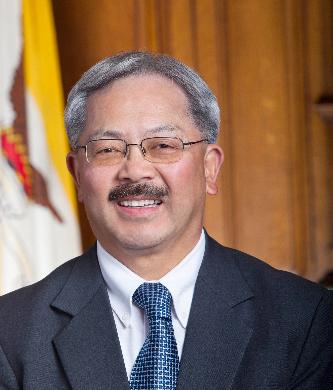
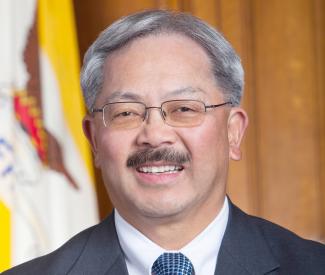
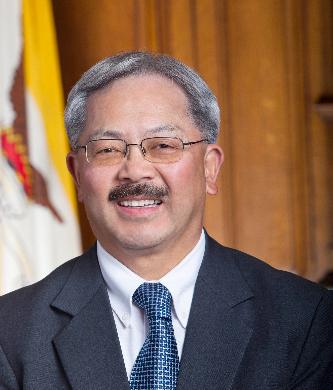
Mayor Lee

Local censored 2012

0


BEHIND THE MIRKARIMI CASE

In early January, details from the police investigation of then-Sheriff-elect Ross Mirkarimi bruising his wife’s arm during an argument were leaked to the San Francisco Chronicle and other news outlets. The key piece of evidence was a 45-second video that Mirkarimi’s wife, Eliana Lopez, made with her neighbor, Ivory Madison, displaying the bruise and saying she wanted to document the incident in case of a child custody battle. That video convinced many of Mirkarimi’s guilt, and a majority of Ethics Commissioners say they found it to be the main evidence on which Mirkarimi should be removed from office on official misconduct charges (the Board of Supervisors was scheduled to vote on Mirkarimi’s removal on Oct. 9, after Guardian press time).

But that video was only a small part of the overwhelming and expensive case that Mayor Ed Lee brought against Mirkarimi, including the more serious charges of abuse of power, witness dissuasion, and impeding a police investigation, all of which go more directly to a sheriff’s official duties. All of those charges got lots of media coverage and they helped cement the view of many San Franciscans that Mirkarimi engaged in a pattern of inappropriate behavior, rather than making a big momentary mistake. Yet most of the media coverage during the six months of Ethics Commission proceedings ignored the fact that none of the evidence that was being gathered supported those charges. Indeed, all those charges were unanimously rejected by the commission on Aug. 16, a startling rebuke of Lee’s case but one that was not highlighted in many media reports, which focused on the one charge the commission did uphold: the initial arm grab.


THE NEXT DOT-BOMB

In the late 1990s, San Francisco was in a very similar place to where it is now. The first dot-com boom was full bloom, driving the local economy and creating countless young millionaires — but also rapidly gentrifying the city and driving commercial and residential rents through the roof (great for the landlords, bad for everyone else). And then, the bubble popped, instantly erasing billions of dollars in speculative paper wealth and leaving this a changed city. The city’s working and creative classes suffered, but the political backlash gave rise to a decade with a progressive majority on the Board of Supervisors.

The era ended in 2010 when Ed Lee was appointed mayor, and he began ambitious agenda of pumping up a new dot-com bubble using tax breaks, public subsidies, and relentless official boosterism to lure more tech companies to San Francisco. Lee has been successful in his approach, in the process driving up commercial rents and housing prices. By some estimates, about 30 percent of the city’s economy is now driven by technology companies.

Yet there have been few voices in the local media raising questions about this risky, costly, and self-serving economic development strategy. The Bay Citizen did a story about Conway’s self interested advice, the New York Times did a front page story raising these issues, and San Francisco Magazine just last month did a long cover story questioning how much tech is enough. But most local media voices have been silent on the issue, and much of the damage has already been done.


OLD POWERBROKERS RETURN TO CITY HALL

More than a decade ago, then-Mayor Willie Brown and Chinatown power broker Rose Pak worked together to empower big business, corrupt local politics, and clear the path for rampant development — an approach that progressives on the Board of Supervisors repudiated and slowed from 2000-2010. But Brown, Pak, and a new generation of their allies have returned in power in City Hall, and it’s as bad as it ever was.

Many San Franciscans know of their high-profile role appointing Lee to office in early 2011. But their influence and tentacles have extended far beyond what we read in the papers and watch on television, starting in 2010 when their main political operatives David Ho and Enrique Pearce ran Jane Kim’s supervisorial campaign, beating Debra Walker, a veteran of the fights against Brown’s remaking of the city.

Now, this crew has the run of City Hall, meeting regularly with Mayor Lee and twisting the arms of supervisors on key votes. Pearce and Ho persuaded longtime progressive Christina Olague to co-chair the scandal-plagued Run Ed Run campaign last year, she was rewarded this year with Lee appointing her to the Board of Supervisors. Pearce has been her close adviser, and most of her campaign cash has been raised by Brown and Pak. Even progressive Sup. Eric Mar admits that Pak in raising money for him, a troubling sign of things to come.


THE REAL OCCUPY STORY

The Occupy San Francisco camp that was cleared by police last week may have been mostly homeless people. And major news media outlets from the start reported that Occupy was dangerous, filthy, and a civic eyesore.

But last fall, the camps were comprised of a huge variety of people that chose to live part or full time on the streets. Students, people with 9-5 jobs, people with service jobs, and the unemployed were all represented. Wealthy people who lived in the financial districts where camps popped up mixed with working-class people who came from suburbs and small towns. Families came out, welcomed in the “child spaces” set up in many Occupy camps throughout the country. Most camps also boasted libraries, free classes, kitchens, food distribution, and medical tents.

As news media focused on gross-out stories of pee on the streets and graphic descriptions of drunk occupiers, they managed to ignore the complex systems that were built in the camps. Nor did anyone mention that homeless people have the right to protest, too.

Endorsements 2012: San Francisco propositions

85

PROPOSITION A

CITY COLLEGE PARCEL TAX

YES

The scathing accreditation report by the Western Association of Schools talks about governance problems at the San Francisco Community College District — a legitimate matter of concern. But most of what threatens the future of City College is a lack of money.

Check out the accreditation letter; it’s on the City College website. Much of what it says is that the school is trying to do too much with limited resources. There aren’t enough administrators; that’s because, facing 20 percent cuts to its operating budget, the college board decided to save front-line teaching jobs. Student support services are lacking; that’s because the district can barely afford to keep enough classes going to meet the needs of some 90,000 students. On the bigger picture, WASC and the state want City College to close campuses and concentrate on a core mission of offering two-year degrees and preparing students to transfer to four-year institutions. That’s because the state has refused to fund education at an adequate level, and there’s not enough money to both function as a traditional junior college and serve as the training center for San Francisco’s tech, hospitality and health-care industry, provide English as a second language classes to immigrants and offer new job skills and rehabilitation to the workforce of the future.

It’s fair to say that WASC would have found some problems at City College no matter what the financial situation (and we’ve found more — the nepotism and corruption under past boards has been atrocious). But the only way out of this mess is either to radically scale back the school’s mission — or to increase its resources. We support the latter alternative.

Prop. A is a modest parcel tax — $79 dollars a year on each property lot in the city. Parcel taxes are inherently unfair — a small house in Hunters Point pays as much as a mansion in Pacific Heights or a $500 million downtown office building. But that’s the result of Prop. 13, which leaves the city very few ways to raise taxes on real property. In the hierarchy of progressive tax options, parcel taxes are better than sales taxes. And the vast majority of San Francisco homeowners and commercial property owners get a huge benefit from Prop. 13; a $6 a month additional levy is hardly a killer.

The $16 million this tax would raise annually for the district isn’t enough to make up for the $25 million a year in state budget cuts. But at least the district would be able to make reasonable decisions about preserving most of its mission. This is one of the most important measures on the ballot; vote yes.

PROPOSITION B

PARKS BOND

YES

There are two questions facing the voters: Does the San Francisco Recreation and Parks Department need money to fix up badly decrepit, sometimes unsafe facilities, and build out new park areas, particularly in underserved neighborhoods? Has the current administration of the department so badly mismanaged Rec-Park, so radically undermined the basic concept of public access to public space, so utterly alienated neighborhoods and communities all over the city, that it shouldn’t be trusted with another penny?

And if your answer to both is yes, how the hell do you vote on Prop. B?

It’s a tough one for us. The Guardian has never, in 46 years, opposed a general obligation bond for anything except jail or prisons. Investing in public infrastructure is a good thing; if anything, the cautious folks at City Hall, who refuse to put new bonds on the ballot until old ones are paid off, are too cautious about it. Spending public money (paid by increased property taxes in a city where at least 90 percent of real estate is way under taxed thanks to Prop. 13) creates jobs. It’s an economic stimulus. It adds to the value of the city’s resources. In this case, it fixes up parks. All of that is good; it’s hard to find a credible case against it.

Except that for the past few years, under the administrations of Mayors Gavin Newsom and Ed Lee and the trusteeship of Rec-Park Directors Jared Blumenfeld and Phil Ginsburg, the city has gone 100 percent the wrong way. Parks are supposed to be public resources, open to all; instead, the department has begun charging fees for what used to be free, has been turning public facilities over to private interests (at times kicking the public out), and has generally looked at the commons as a source of revenue. It’s a horrible precedent. It makes us sick.

Ginsburg told us that he’s had no choice — deep budget cuts have forced him to look for money wherever he can find it, even if that means privatizing the parks. But Ginsburg also admitted to us that, even as chief of staff under Newsom, he never once came forward to push for higher taxes on the wealthy, never once suggested that progressive revenue sources might be an option. Nor did any of the hacks on the Rec-Park Commission. Instead, they’ve been busy spending tens of thousands of dollars on an insane legal battle to evict the Haight Ashbury Neighborhood Council’s recycling center — entirely because rich people in the Haight don’t want poor people coming through their elite neighborhood to cash in bottles and cans for a little money.

So now we’re supposed to cough up another $195 million to enable more of this?

Well, yes. We’re not happy to be endorsing Prop. B, but the bottom line is simple: The bond money will go for things that need to be done. There are, quite literally, parks in the city where kids are playing in unsafe and toxic conditions. There are rec centers that are pretty close to falling apart. Those improvements will last 50 years, well beyond the tenure of this mayor of Rec-Park director. For the long-term future of the park system, Prop. B makes sense.

If the measure fails, it may send Lee and Ginsburg a message. The fact that so many neighborhood leaders are opposing it has already been a signal — one that so far Ginsburg has ignored. We’re going Yes on B, with all due reservations. But this commission has to go, and the sooner the supervisors can craft a charter amendment to give the board a majority of the appointments to the panel the better.+

PROPOSITION C

AFFORDABLE HOUSING TRUST FUND

YES

This measure is about who gets to live in San Francisco and what kind of city this will be in 20 years. If we leave it up to market forces and the desires of developers, about 85 percent of the housing built in San Francisco will be affordable only by the rich, meaning the working class will be forced to live outside the city, clogging regional roadways and transit systems and draining San Francisco of its cultural diversity and vibrancy. And that process has been accelerated in recent years by the latest tech bubble, which city leaders have decided to subsidize with tax breaks, causing rents and home prices to skyrocket.

Mayor Ed Lee deserves credit for proposing this Housing Trust Fund to help offset some of that impact, even if it falls way short of the need identified in the city’s Housing Element, which calls for 60 percent of new housing construction to be affordable to prevent gentrification. We’re also not thrilled that Prop. C actually reduces the percentage of housing that developers must offer below market rates and prevents that 12 percent level from later being increased, that it devotes too much money to home ownership assistance at the expense of the renters who comprise the vast majority of city residents, and that it depends on the passage of Prop.E and would take $15 million from the increased business taxes from that measure, rather than restoring years of cuts to General Fund programs.

But Prop. C was a hard-won compromise, with the affordable housing folks at the table, and they got most of what they wanted. (Even the 12 percent has a long list of exceptions and thus won’t apply to a lot of new market-rate housing.) And it has more chance of actually passing than previous efforts that were opposed by the business community and Mayor’s Office. This measure would commit the city to spending $1.5 billion on affordable housing projects over the next 30 years, with an initial $20 million annual contribution steadily growing to more than $50 million annually by 2024, authorizing and funding the construction of 30,000 new rental units throughout the city. With the loss of redevelopment funds that were devoted to affordable housing, San Francisco is a city at risk, and passage of Prop. C is vital to ensuring that we all have a chance of remaining here. Vote yes.

PROPOSITION D

CONSOLIDATING ODD-YEAR LOCAL ELECTIONS

YES

There’s a lot of odd stuff in the San Francisco City Charter, and one of the twists is that two offices — the city attorney and the treasurer — are elected in an off-year when there’s nothing else on the ballot. There’s a quaint kind of charm to that, and some limited value — the city attorney is one of the most powerful officials in local government, and that race could get lost in an election where the mayor, sheriff, and district attorney are all on the ballot.

But seriously: The off-year elections have lower turnout, and cost the city money, and it’s pretty ridiculous that San Francisco still does it this way. The entire Board of Supervisors supports Prop. D. So do we. Vote yes.

PROPOSITION E

GROSS RECEIPTS TAX

YES

Over the past five years, Board of Supervisors President David Chiu estimates, San Francisco has cut about $1.5 billion from General Fund programs. It’s been bloody, nasty, awful. The budget reductions have thrown severely ill psych patients out of General Hospital and onto the streets. They’ve forced the Recreation and Parks Department to charge money for the use of public space. They’ve undermined everything from community policing to Muni maintenance.

And now, as the economy starts to stabilize a bit, the mayor wants to change the way businesses are taxed — and bring an additional $28.5 million into city coffers.

That’s right — we’ve cut $1.5 billion, and we’re raising taxes by $28.5 million. That’s less than 2 percent. It’s insane, it’s inexcusable, it’s utterly the wrong way to run a city in 2012. It might as well be Mitt Romney making the decision — 98 percent cuts, 2 percent tax hikes.

Nevertheless, that’s where we are today — and it’s sad to say this is an improvement from where the tax discussion started. At first, Mayor Lee didn’t want any tax increase at all; progressive leaders had to struggle to convince him to allow even a pittance in additional revenue.

The basic issue on the table is how San Francisco taxes businesses. Until the late 1990s, the city had a relatively rational system — businesses paid about 1.5 percent of their payroll or gross receipts, whichever was higher. Then 52 big corporations, including PG&E, Chevron, Bechtel, and the Gap, sued, arguing that the gross receipts part of the program was unfair. The supervisors caved in to the legal threat and repeal that part of the tax system — costing the city about $30 million a year. Oh, but then tech companies — which have high payrolls but often, at least at first, low gross receipts — didn’t want the payroll tax. The same players who opposed the other tax now called for its return, arguing that taxing payroll hurts job growth (which is untrue and unfounded, but this kind of dogma doesn’t get challenged in the press). So, after much discussion and debate, and legitimate community input, the supervisors unanimously approved Prop. E — which raises a little more money, but not even as much as the corporate lawsuit in the 1990s set the city back. It’s not a bad tax, better than the one we have now — it brings thousands of companies the previously paid no tax at all into the mix (sadly, some of them small businesses). It’s somewhat progressive — companies with higher receipts pay a higher rate. We can’t argue against it — the city will be better off under Prop. E than it is today. But we have to look around our battered, broke-ass city, shake our poor bewildered heads and say: Is this really the best San Francisco can do? Sure, vote yes on E. And ask yourself why one of the most liberal cities in America still lets Republican economic theory drive its tax policy.

PROPOSITION F

WATER AND ENVIRONMENT PLAN

NO, NO, NO

Reasonable people can disagree about whether San Francisco should have ever dammed the Tuolumne River in 1923, flooding the Hetch Hetchy Valley and creating an engineering marvel that has provided the city with a reliable source of renewable electricity and some of the best urban drinking water in the world ever since. The project broke the heart of famed naturalist John Muir and has caused generations since then to pine for the restoration of a valley that Muir saw as a twin to his beloved nearby Yosemite Valley.

But at a time when this country can’t find the resources to seriously address global warming (which will likely dry up the Sierra Nevada watershed at some point in the future), our deteriorating infrastructure, and myriad other pressing problems, it seems insane to even consider spending billions of dollars to drain this reservoir, restore the valley, and find replacement sources of clean water and power.

You can’t argue with the basic facts: There is no way San Francisco could replace all the water that comes in from Hetch Hetchy without relying on the already-fragile Delta. The dam also provides 1.7 billion kilowatt hours a year of electric power, enough to meet the needs of more than 400,000 homes. That power now runs everything from the lights at City Hall to Muni, at a cost of near zero. The city would lose 42 percent of its energy generation if the dam went away.

Besides, the dam was, and is, the lynchpin of what’s supposed to be a municipal power system in the city. As San Francisco, with Clean Power SF, moves ever close to public power, it’s insane to take away this critical element of any future system.

On its face, the measure merely requires the city to do an $8 million study of the proposal and then hold a binding vote in 2016 that would commit the city to a project estimated by the Controller’s Office to cost somewhere between $3 billion and $10 billion. Yet to even entertain that possibility would be a huge waste of time and money.

Prop. F is being pushed by a combination of wishful (although largely well-meaning) sentimentalists and disingenuous conservatives like Dan Lungren who simply want to fuck with San Francisco, but it’s being opposed by just about every public official in the city. Vote this down and let’s focus our attention on dealing with real environmental and social problems.

PROPOSITION G

CORPORATE PERSONHOOD

YES

If San Francisco voters pass Prop. G, it won’t put any law into effect. It’s simply a policy statement that sends a message: Corporations are not people, and it’s time for the federal government to tackle the overwhelming and deeply troubling control that wealthy corporations have over American politics.

Prop. G declares that money is not speech and that limits on political spending improve democratic processes. It urges a reversal of the notorious Citizens United vs. Federal Elections Commission Supreme Court decision.

A constitutional amendment, and any legal messing with free speech, has serious potential problems. If corporations are limited from spending money on politics, could the same apply to unions or nonprofits? Could such an amendment be used to stop a community organization from spending money to print flyers with political opinions?

But it’s a discussion that the nation needs to have, and Prop. G is a modest start. Vote yes.

SFBC keeps its distance from Critical Mass anniversary ride

27

Today’s 20th anniversary Critical Mass ride has received overwhelming media coverage in the last few days, including a surprisingly laudatory editorial in yesterday’s Examiner, so people are expecting the ride to be huge. But the talk of last night’s CM20 birthday celebration at CELLspace was about Quintin Mecke’s widely circulated letter blasting the San Francisco Bicycle Coalition for refusing to even put the event on its calendar or in its newsletter.

By contrast, even the San Francisco Planning & Urban Research Association (SPUR) – founded and funded by downtown players with little love for Critical Mass – listed today’s “special anniversary ride” and related events throughout the week in its calendar and on its newsletter, recognizing this “monthly bicycling event that began in San Francisco and inspired similar events throughout the world.”

As I wrote in this week’s cover story, SFBC and Critical Mass grew up together on a similar, symbiotic trajectory, effectively working an outside/insider strategy (think MLK/Malcolm X) that has won cyclists a recognized spot on the roadways. But SFBC always warily kept its distance from Critical Mass, worried about offending politicians, the mainstream media, or the driving public.

That’s an understandable strategy, given the persistent resentment many feel toward Critical Mass. But when considered in combination with SFBC’s increasingly corporate culture and sponsorships and its controversial recent decision to allegedly overrule its member vote in its District 5 supervisorial endorsements, SFBC is in danger of losing the allegiance of much of the cycling community (which remains a minority of road users, and thereby political outsiders almost by definition).

David Snyder — SFBC’s executive director through its biggest growth period, SPUR’s former transportation policy director, and currently the executive director of the California Bicycle Coalition — is reluctant to wade into the current controversy, but he does acknowledge the important role Critical Mass played in winning political acceptance for cyclists in San Francisco. 

“In the mid-’90s, when the San Francisco Bicycle Coalition was a couple thousand members, the brouhaha around Critical Mass [particularly the crackdown in ’97] increased our membership by 50 percent at one point,” Snyder told us. “At that time, we benefitted hugely form the attention Critical Mass paid to safe streets for bicycles. And I don’t think we need Critical Mass to do that anymore…The Bicycle Coalition’s goal these days isn’t to develop an awareness of unsafe streets, it’s to develop a bold agenda to fix them.”

I spoke with Mecke, who finished second in the 2007 mayor’s race, at last night’s event, and he was frustrated by his follow-up conversations with SFBC leaders, who seem to have taken a very defensive posture instead of welcoming this interesting conversation. I called SFBC Executive Director Leah Shahum to discuss these issues, and I’m waiting to hear back from her and I’ll update this post when I do.

But in the meantime, to feed the discussion, here’s the full text of Mecke’s letter, followed by another letter to SFBC on the endorsement issue:

Dear Bike Coalition:

Sadly, I can’t say I was surprised when I read this week’s SFBC Newsletter and found absolutely zero mention of the 20th Anniversary of Critical Mass.  According to your own newsletter, apparently the only thing happening in the San Francisco bike world that is worthy of your 12,000 members knowing about on Friday, Sept. 28 is SFBC’s Valet Bike Parking at the DeYoung Museum.  Seriously?

This is the San Francisco Bike Coalition and you couldn’t even bring yourselves to stick a small mention of Critical Mass in your newsletter or on your website (or god forbid you actually celebrate/acknowledge CM and show some pride), a cycling event created here in San Francisco which has spread across the globe to multiple continents since its inception & inspired thousands of cyclists to take to the street?  It’s truly amazing that Critical Mass was on the cover of the Guardian this week and even SF Funcheap listed the event but SFBC wouldn’t even put a mention at the bottom in the “Upcoming Events” section, hidden away amongst all the SFBC sponsored events? Not even a listing of the critical mass website or the community events going on all week long?  Your website lists the celebration of the 15th anniversary of TransForm but not Critical Mass?

Wow.  I’m truly speechless.  How embarrassing but more to the point, how sad. Are you afraid of offending Chuck Nevius or Mayor Lee? I don’t know how, why or what SFBC has become as an organization at this point but it’s disappointing as a long time cyclist to see the city’s only (?) organized bike advocacy organization which continually touts how many members you have to not even show the smallest amount of solidarity to your fellow cyclists and to the city’s own cycling history.  That being the case, history will march on without you.

Contrary to our “biking” Supervisor David Chiu’s comments in today’s Chronicle (I always enjoy politicians running from anything deemed controversial), it’s actually SFBC that is simply one tiny part of a much larger movement made up of a variety of cyclists from all walks of life whose decision twenty years ago to ride freely in the street once a month for just a few short hours has laid the groundwork for cycling reforms, political action and transformative experiences across the country and the world.

What a shame that instead of celebrating all parts of the cycling community, SFBC has decided to distance itself from the historic roots of its own community in the name of moderation, families on bikes and political expediency.

Enjoy Bike Valet night at the DeYoung Museum, it sounds like an awesome event.

thanks,
Quintin


Dear Leah:

My name is Gus Feldman. I am an avid bicyclist, a Bike Coalition member, and the President of the District 8 Democrats.

I’m in receipt of a letter from you, dated September 12, 2012, requesting that I renew my SFBC membership. I am writing to inform you that I will only renew my membership if the SFBC Board of Directors publicly releases the results of the SFBC member vote for the District 5 supervisor race.

While it is clear that the membership vote is one of several factors used by the SFBC Board of Directors to determine endorsements, the refusal of the Board to grant SFBC members the ability to see the results of their votes demonstrates an unacceptable degree of secrecy. By withholding this information, the Board is publicly stripping SFBC members of all agency in the endorsement process.

If in fact the popular suspicion is true – that Julian Davis won the most votes from SFBC members, but the Board decided to grant Christina Olague the top endorsement in the interests of expediting the construction of separated bike lanes on Oak & Fell streets – we would greatly appreciate the Board publicly declaring and explaining the decision. Such a decision is certainly logical, as the Oak/Fell bikes lanes are a key priority for many SFBC members. The fact that the Board has elected to conceal the vote results, as opposed to explaining to SFBC members why and how Olague received the number one endorsement, is highly insulting as it insinuates that the Board does not have faith in SFBC members’ capacity to understand the rationale by which the Board arrived at their determinations. 

Please understand that if the Board elects to depart from the current practice of concealing the vote results, and transitions to one of transparency, I will promptly renew my membership.

Respectfully,
Gus Feldman

Perjury charges don’t look so good for the mayor

65

The Chron doesn’t think it’s important, but there’s some serious evidence in today’s Ex that the mayor wasn’t entirely forthcoming when he testified before the Ethics Commission. The declarations from Debra Walker and Aaron Peskin are attached at the end of the story; they’re worth reading.

Walker is very straightforward: She says she’s friends with Sheriff Ross Mirkarimi and his wife, Eliana Lopez. She’s also been close friends with Sup. Christina Olague:

Ms. Olague and I often got together for coffee or movies, and we talked often about land-use issues. I wrote a letter of support for Ms. Olague to Mayor Lee, asking him to appoint her as supervisor. At her request, I loaned her a painting to hang in her office when she took office.

All of that is consistent with what I’ve heard about their friendship, and it doesn’t sound like Walker was ever out to get Olague or to put her in a bad situation.

Then Walker  explains that during the week of March 6, she was talking to Olague and complained about the Mirkarimi case. “She said the mayor had asked her about the case when they were talking about other issues, and had asked her for her thoughts.”

The declaration goes on a bit, with plenty of backup to the idea that Olague and Lee had discussed how to deal with the sheriff. Which doesn’t surprise me — I have heard from other prominent people in the city that Lee reached out to them for advice on whether to suspend Mirkarimi.

But it’s a problem for two reasons. One is that Olague, sitting as a judge in this case, isn’t supposed to have talked to anyone else about it — certainly not the prosecuting authority, the mayor.

The other is that Lee denied under oath that he had talked to any of the supervisors about the case.

Debra Walker isn’t a fan of Ed Lee, but she would have had to go to considerable lengths to create this level of fiction. It rings honest to me, particularly when she notes that “on June 29, 2012, at 2:10 pm, I received a phone message from Supervisor Olague saying ‘Debra, the converstaion never happened.'”

Look: This is a sworn statement, made under penalty of perjury. So either Walker’s lying and guilty of perjury, or the mayor is. Which seems more likely?

Ditto for the Peskin declaration, which includes dates, times, places, and specific messages. Again: Did Peskin go out of his way to perjury himself — or did the mayor fail to tell the truth on the stand?

This is now part of the case, like it or not: The credibility of the mayor is one of the issues at hand — and more important, if Lee talked to Olague he probably talked to others. Who would then have to recuse themselves.

The gloves are coming off in competitive D5

52

Candidates in the District 5 supervisorial race – where one recent poll showed almost half of voters undecided about a field of imperfect candidates seeking to represent the city’s most progressive district – have been sharpening their attacks on one another, learning lessons about hardball politics, and fighting over key endorsements.

Christina Olague, the incumbent appointed by Mayor Ed Lee earlier this year, has been taking flak in recent debates from competitors who are highlighting the schism between her progressive history and her more conservative recent votes and alliances. That gulf was what caused Matt Gonzalez to pull his endorsement of Olague this summer and give it to Julian Davis.

London Breed has now suffered a similar setback when US Sen. Dianne Feinstein revoked her endorsement following colorful comments Breed made to the Fog City Journal, which were repeated in the San Francisco Chronicle, blasting her one-time political patron Willie Brown. Breed, whose politics have been to the right of the district, seemed to be trying to assert her independence and win over progressive voters who have different worldviews than her more conservative endorsers.

But she may have gone a bit too far when she told Fog City Journal’s Luke Thomas: “You think I give a fuck about a Willie Brown at the end of the day when it comes to my community and the shit that people like Rose Pak and Willie Brown continue to do and try to control things. They don’t fucking control me – you go ask them why wouldn’t you support London because she don’t do what the hell I tell her to do. I don’t do what no motherfucking body tells me to do.”

Shortly thereafter, Breed said she got a call from Feinstein’s people withdrawing the endorsement. “There were just some concerns about the kind of language I used in the article,” Breed told us.

Sources say Brown has been in payback mode ever since, urging Feinstein and others to stop supporting Breed and switch to Olague. Neither Brown nor Feinstein returned our calls. On the record, Breed was contrite when we spoke with her and reluctant to say anything bad about Brown or Feinstein, except to offer us the vague, “There are a lot of people who respect and like me, and they don’t like what they see happening.”

Breed went after Olague hard during a Sept. 18 debate sponsored by the Haight-Ashbury Neighborhood Council and other groups, blasting Olague for her ties to Brown, Lee, and Chinatown power broker Rose Pak, claiming Olague is too beholden to that crew and D5 needs a more independent supervisor.

Asked to respond to the attack during the debate, Olague said, “I won’t dignify that with a response.” But it seems clear to anyone watching the race that Olague has been getting lots of support from Lee, Pak, and Brown and the political consultants who do their bidding, David Ho and Enrique Pearce, which is one reason many progressives have been withholding their support.

The Breed campaign this week trumpeted its endorsement by three prominent progressive activists: Debra Walker, Roma Guy, and Alix Rosenthal. But it has been Davis that has captured the endorsements of the most progressive individuals and organizations, including a big one this week: the Harvey Milk LGBT Democratic Club, which gave Davis is sole endorsement even though he’s straight and Olague is from the LGBT community.

Davis also snagged the number one endorsement of the San Francisco Tenants Union, a big one for D5, as well as the sole endorsements of Gonzalez, former Democratic Party Chair Aaron Peskin, and Sup. John Avalos. Assembly member Tom Ammiano also endorsed the Davis campaign, adding that to Ammiano’s earlier endorsement of John Rizzo, the other solid progressive in the race. Rizzo also got the Sierra Club and the number one ranking by San Francisco Tomorrow.

But Olague is enjoying quite a bit of union support, including snagging the sole endorsement of the San Francisco Labor Council, whose members in the trades like her controversial vote on the 8 Washington project more than progressives or her competitors, who all opposed the deal. Olague was also endorsed by the United Educators of San Francisco and California Nurses Association.

The biggest union of city workers, SEIU Local 1021, gave its unranked endorsements to Davis, Olague, and Rizzo, as did Sup. David Campos. Sup. Jane Kim – who has also occasionally parted ways with progressives after Ho and Pearce ran her campaign against Walker – gave Olague an early endorsement, but late this week also extended an endorsement to Davis.

“As someone who has championed rank-choice voting, it is important for me that progressives are thoughtful about how we strategize for victory.  I have known Julian Davis a long time, and I believe that he would be a strong leader that fights for progressive values that District 5 cares about, including sustainable streets and livable neighborhoods,” Kim said in a statement given to the Davis campaign.

Another important endorsement in D5 is that of the San Francisco Bicycle Coalition, which carried a faint whiff of controversy this year. The group gave Olague its number one endorsement and Davis its number two, but some SFBC members have secretly complained to us that the fix was in and that Davis actually got more votes from SFBC members, which most people thought was how its endorsements are decided.

SFBC Executive Director Leah Shahum told us she wouldn’t reveal who got the most member votes, but she did say that the SFBC Board of Directors actually decides the endorsements based on several factors. “The member vote is one of the factors the board took into consideration,” she said, listing a candidate’s record, relationship with SFBC, personal history, and other factors. “Nothing special was done in that vote, by any means.”

SFBC has been playing nice with Mayor Lee in the last couple years, despite his broken promise of getting the critical yet controversial Fell/Oak separated bike lanes approved by the SFMTA, which he first said would be done by the end of 2011, then by the end of 2012, but which lately seemed to be dragging into 2013.

At SFBC’s urging, Olague recently wrote a pair of letters to the SFMTA urging quicker action on the project, and it seems to have worked: Shahum said a vote on that project has now been scheduled for Oct. 16, and she’s hopeful that it might now be underway by the end of the year after all. As she said, “We’re thrilled.”

BTW, in case you’re curious, the Guardian’s endorsements come out on Oct. 3.

Historic, veto-proof vote launches CleanPowerSF

24

The San Francisco Board of Supervisors today cast an historic vote that was more than a decade in the making, approving the CleanPowerSF program – which challenges PG&E’s monopoly by offering 100 percent renewable energy directly to city residents – on an 8-3 vote that would be enough to override an implied veto threat by Mayor Ed Lee.

The outcome was far from certain throughout the two-hour hearing as conservative Sups. Mark Farrell and Carmen Chu led efforts to undermine the program, which was the final work product of retiring San Francisco Public Utilities Commission Executive Director Ed Harrington, who previously served as the city’s controller for 17 years.

The pair of supervisors offered a series of amendments challenging the state requirement that city residents must proactively opt-out of such community choice aggregation (CCA) programs if they want to remain with PG&E, offering convoluted language that would have required people to opt-in to the program before its launch, and requiring that the $13 million in reserve funds from the SFPUC be covered entirely by CleanPowerSF customers, which could increase its rates.

“It looks like the amendments would be harmful to the success of the program,” Sup. Eric Mar observed, prompting Farrell and Chu to flash broad conspiratorial smiles at one another.

Sup. Scott Wiener, who was undecided and considered a key swing vote in reaching a veto-proof majority, said he also had concerns about the opt-out requirement and wanted to better understand how the amendments would work and whether they were legal. “For me, I’m not interested in putting any poison pills in here,” he said.

Wiener posed questions about the amendments to Farrell and to Harrington, who said it was possible for the SFPUC to have CleanPowerSF customers repay the initial allocation of reserve funds over time but that he wasn’t sure how the opt-in change would work without sabotaging the program.

“It harms the ability to have an intelligent conversation with people,” Harrington said, noting that rates are based on the number of customers in the program, so it would be nearly impossible to survey everyone’s potential interest without being able to tell them how their bills would be affected.

As it is, the SFPUC has already done extensive surveys of which neighborhoods and demographics are likely to be interested in taking part in CleanPowerSF, initially paying about $10 more per month for 100 percent renewable energy (PG&E’s portfolio includes less than 30 percent renewable). “We’ve done extensive surveys already,” Harrington said. Based on that research, the city is initially rolling out the program to less than a third of city residents, who will be repeatedly notified about how to opt-out, anticipating about 90,000 customers remain in the initial program. 

The program has been repeatedly tweaked over the last eight years that it’s been in development, during which time Marin County launched a successful version of the CCA concept that was developed in San Francisco by legislators Tom Ammiano, Carole Migden, and Mark Leno.

“I feel pretty comfortable trusting Ed Harrington on whether the numbers add up,” said the measure’s chief sponsor, Sup. David Campos, arguing against the Farrell/Chu amendments, later adding, “With Ed Harrington leading this charge, this is as good as it gets. If you don’t like CCA under Ed Harrington, you’re not going to like CCA.”

Farrell claimed to support CCA in concept, but he strenuously objected to the opt-out requirements that Migden included in the enabling state legislation, which she had argued was the only way to make CCAs viable against PG&E’s proven willingness to spend tens of millions of dollars to sabotage would-be competitors.

“It’s the wrong way to legislate, the opt-out. It smells of coercion,” Farrell said. Campos countered that, “The best thing we can give the consumers in San Francisco is a choice, a meaningful choice.”

Wiener ultimately made a motion to delay the item by a week, something Mayor Lee yesterday told the Chronicle he wanted, in order to further study the opt-out issue, telling Farrell that his amendment “feels a little seat of the pants to me.”

Campos and other progressive supervisors who were supporting CleanPowerSF argued against the continuance, noting that it has been years in development and sitting in board committees since January, while the Farrell/Chu amendments weren’t offered until this meeting had already begun.    

“This is not going to change because we wait a week to make a decision,” Campos said. “The terms of this deal are not going to change.”

The motion for a continuance failed on a 4-7 vote, with Wiener joined by Farrell, Chu, and Sup. Sean Elsbernd (who offered no comments throughout the hearing).

Then, as the vote on the Farrell/Chu opt-in amendment came up for vote, Wiener said, “I don’t feel comfortable voting for amendments that I don’t know what they’ll do,” and it failed on a 3-8 vote.

Sup. Malia Cohen had earlier indicated a willingness to support the other Farrell/Chu amendment: saddling CleanPowerSF customers with paying the SFPUC back for reserve fund costs – which Harrington indicated could be dragged out over many years to minimize the impact on rates, and which might not be necessary at all if the initial program exceeds expectations.

That amendment was then approved on an 8-3 vote, with Sups. Jane Kim, Christina Olague, and John Avalos opposed. Another set of amendments that would keep low-income city residents out of the initial rollout and take other steps to reduce their rates if they opted in – which was developed by Kim, Cohen, and Sup. Eric Mar – was unanimously approved by the board.

Then it was time for the big vote on creating the CleanPowerSF program, approving the contract with Shell Energy Northern California to administer it, and authorizing the initial $19.5 million expenditure. Would there be eight votes to override a veto by Mayor Lee, who has been under pressure by PG&E and their downtown allies to kill the program?

“To be perfectly candid, I struggled mightily with this contract,” Wiener said, reiterating his concern about its opt-in requirement, noting that the measure wasn’t perfect, even though it was significantly improved from earlier versions. It sounded as if he were about to vote against it.

“What we have the opportunity to do is move forward with clean power,” Wiener said, noting that even Marin County supervisors who initially opposed its CCA have come around to supporting it. “This is something I believe we should try.”

And with that, the board voted 8-3 to launch the program in mid-2013, with Chu, Farrell, and Elsbernd opposed.

Campos said he was “pleasantly surprised” by the vote, while key supporters say they are cautiously hopeful it will stand up during next week’s final supervisorial approval on second reading and in a veto override vote, if that becomes necessary. Campos said he was thankful for the work of Harrington, who got a standing ovation after the vote as the board recognized him for his long service to the city.

Earlier in the meeting, Harrington told supervisors that while the program isn’t perfect, and it contains some risks that he considers reasonable, there is no other way the city has identified to meet ambitious greenhouse gas reduction goals it has set for itself over the last decade. It is city policy to reduce emissions by 25 percent below 1990 levels by 2017 and 80 percent below those levels by 2050.

“This program before you has the only chance of reaching those goals. There’s nothing else,” Harrington said. He also said “it’s an incredibly efficient way to spend money,” noting that the city has spent $90 million on solar and other renewable energy projects that power fewer than 7,000 homes, whereas this $19.5 million will power 90,000 households, possibly without ever tapping into that $13 million reserve fund set aside to cover any losses by Shell, which will buy renewable energy, a role the city hopes to eliminate as it develops its own projects.

Harrington said the ultimate goal of CleanPowerSF is to develop a large enough customer base that the city could use revenue bonds to finance a wide variety of renewable energy projects – many using solar arrays along city-owned property connected to its water system stretching all the way to Hetch Hetchy Valley – that would pay for themselves.

“The real issue is can you build a facility that will have this rate structure support it?” Harrington said.

That’s the real power and potential of CleanPowerSF – finally taking action to address global warming, which will have a huge impact on San Francisco and future generations – as supporters noted in a rally outside City Hall before the meeting. Sen. Mark Leno said that he doesn’t usually weigh in on proposals before the board, but that, “This is an exceptional time and this is an exceptional vote. This is the time that we need to address our inconvenient truth.”

PG&E union mounts attack on Clean Power SF

31

The union that represents PG&E workers — and has opposed every single public-power initiative in modern San Francisco history — just launched an attack on Clean Power SF. And the union’s business representative is having a hard time explaining exactly why he’s working with PG&E to try to undermine this modest step toward public power.

Hunter Stern, with IBEW Local 1245, sent a press release out Sept. 11 announcing the start of a campaign to convince the supervisors not to approve the Clean Power SF plan. The line of attack: Shell Energy, which got the contract to supply sustainable energy to customers in the city, in competition with PG&E. The pitch:

San Francisco city government is considering a proposal to partner with Shell Energy of North America to inaugurate SF’s so-called “clean power” program. If the Board of Supervisors approves the proposal, San Francisco would pay millions to Shell, one of the most notorious environmental violators in business today.

Shell’s a pretty bad company. So is PG&E. So is just about everyone in the energy business. Not justifying Shell’s behavior, just noting: If you want a contractor to deliver electricty to San Francisco, you aren’t going to get a cool independent small business. You aren’t even going to get Google. These folks are evil, all of them.

Oh, and by the way: Shell Energy also sells power to PG&E (pdf). Stern’s boss has a contract similar to what the city is going to get. So the PG&E power we all pay for today is in part Shell power. And as Sup. David Campos points out, it wasn’t as if the city chose Shell over some better competitors: There was no other company out there anywhere in the world that responded to the city’s bid process and offered to work with Clean Power SF.

The key point here is that Clean Power SF is going to use Shell as a bridge — the private outfit will deliver power generated at renewable facililities to the city’s power operation, which will resell it to customers … for a while. The goal is to use the revenue stream from the sales of power to back bonds that will allow the city to build its own renewable energy system. Five, maybe ten years down the road, San Francisco will have solar generators on city property (including large swaths of Public Utilities Commission property in the East Bay), wind generators, maybe at some point tidal generators, and will be able to sell cheap, clean, local power to customers. Shell will be gone.

Let’s face it: this is a step on the path to creating a city-owned and city-run power system — that is, a step to eliminating PG&E as a player in San Francisco’s energy future. Public power will be cheaper and cleaner — and it’s going to take a while to get there. Which is why we need to start now.

PG&E knows this, too, and is fighting to block Clean Power SF, which comes before the board’s Budget and Finance Committee Sept. 12. Now IBEW is allied, as usual, with the giant company.

The Stern press release talks about how Clean Power SF will be expensive:

The average home can expect to see a rate increase of 77% over their current PG&E electricity generation rates. That comes out to an increase of over $200 per year.  The higher cost of power would eat up more and more of the City budget, forcing service reductions and costing San Francisco vitally needed jobs. Our local economy would take a multi-million dollar hit.

Actually, not true: The only people who will pay for Clean Power SF are the ones who want it. The idea is that a significant number of San Franciscans will be willing to pay a little more — maybe $10 a month — to help save the planet. The ones who want to stick with PG&E wil have every opportunity to do so. The city budget isn’t taking a hit — municipal services already use the city’s Hetch Hetchy hydropower. This doesn’t cost the city money or jobs.

It will, of course, hurt PG&E.

I called Hunter Stern to talk about all of this, and we had a long conversation. He was polite and answered all of my questions. Sort of.

He insisted that IBEW isn’t against community choice aggregation, that he’s only worried about the city budget and the impacts on ratepayers. And Shell. So we started going around in circles, like this:

Me: So you don’t oppose Clean Power SF?

Stern: We are not opposed to community choice aggregation. Just to this contract with Shell.

Me: I’m told Shell is the only contractor willing to fulfill this role.

Stern: That’s what I’m told, too.

Me: So if you support CCA, what should the city do?

Stern: Find somebody else.

Me: The city has made it clear there IS nobody else.

Stern: We should put this on hold and wait around until there is.

Me: Why is IBEW unhappy with Shell?

Stern: This is contracting out.

Me: Is Shell Energy a nonunion company?

Stern: They don’t generate power, they just buy and sell, so they don’t really have any employees who could be in IBEW.

Me: So what if they city can use this revenue to build its own renewables, with union labor?

Stern: We aren’t opposed to the city building its own renewables.

Me: But the idea here is to use the revenue stream from Clean Power SF to raise money for local renewables.

Stern: You don’t need revenue to build local renewables. Just creativity.

Me: But the city has a huge budget problem now. There’s no money to build local generation unless you have a revenue stream to bond against.

Stern: There are creative ways to do it.

Me: So you support CCA. You support building local renewables.Clean Power SF is a CCA program to build local renewables. Shell is the only company that answered the city’s call for bids for this project. You don’t have any labor issues with Shell. I don’t understand where you’re coming from.

Stern: I don’t disagree with your checklist.

Me: So why are you against this project?

Stern: We don’t think this is good for the city or for the ratepayers.

Me: But the ratepayers don’t have to be a part of it if they don’t want to.

Stern: I think the way the city is approaching that is a good strategy.

Round and round and round. It was making my head hurt. I wish I’d put it on tape so you could all listen.

I passed the press release along to Tyrone Jue at the SFPUC. He had a pretty clear response:

This attack is not surprising. IBEW is one of the largest unions at PG&E. They historically side with PG&E on all their issues. The fact is CleanPowerSF will not cost IBEW workers jobs. Ironically, the local renewable build out phase will be creating even more green union jobs. This happens while we weaning ourselves off dirty fossil fuel sources.San Franciscans want the choice to embrace a clean energy future. While PG&E shareholders stand to lose with CleanPowerSF, the consumer and environment stand to win.

He added:

Our ‘little creativity’ involves reinvesting revenue into aggressive energy efficiency and local renewable generation projects.  We’re simply not motivated to maximize profit at the expense of our customers or the environment.   Our common sense goal is to reinvest revenue into real projects that will reduce San Francisco’s carbon footprint, create local jobs, and build a sustainable energy future that is better for the environment and our customers.

Ugh. This is going to be a battle royal. I hope there are six votes on the board for Clean Power SF, which is imperfect but important. And then Mayor Lee will have to decide whether to side with his highly respected SFPUC general manager, Ed Harrington, who wants to make this happen, and PG&E, which doesn’t.

Oh, by the way: PG&E pays Willie Brown about $250,000 a year as a “legal retainer.” And I hear the mayor takes his phone calls.

Full circle

52

steve@sfbg.com

When Mayor Ed Lee suspended Sheriff Ross Mirkarimi in March, he publicly took the position that it was an act of official misconduct when Mirkarimi grabbed his wife’s arm during a Dec. 31 argument, subsequently pleaded guilty to false imprisonment, and was placed on probation for three years.

Lee and his allies said that under those conditions, Mirkarimi could no longer effectively function as the city’s top elected law enforcement officer and that his actions clearly violated the City Charter’s ban on "conduct that falls below the standard of decency, good faith and right action impliedly required of all public officers."

The City Attorney’s Office, through deputies Peter Keith and Sherri Kaiser, has maintained that position throughout the investigation and Ethics Commission proceedings over the last five months. On August 16, on a 4-1 vote, the commission agreed and recommend the Board of Supervisors find its former colleague guilty of official misconduct, which would almost certainly result in his removal from office.

But that simple set of facts and interpretations belies the ugly spectacle that Lee and the City Attorney’s Office actually decided to create — at great cost to taxpayers, Mirkarimi’s reputation, and the public’s faith in the proceedings — over the last five months.

Instead of sticking by their initial position, Lee and his attorneys decided to pile on a long list of other official misconduct charges: dissuading witnesses to his crime, impeding a police investigation, abusing his authority in several ways, engaging in a pattern of abuse of women, refusing to cooperate with a city investigation, lying to officers in a scheme to keep a gun, and other charges.

Almost all of those accusations were included in the original written charges that Lee filed on March 21 — before the city had actually begun its investigation to learn whether there was any evidence to support them. Keith and Kaiser continued to make all those accusations right up until the end.

When the Ethics Commission finally deliberated on August 16, going through each of the main factual allegations against Mirkarimi, one by one, it unanimously agreed that there wasn’t enough evidence to support any of those other charges, even using the "preponderance of evidence" standard that is lower than the "beyond reasonable doubt" standard used in criminal cases.

So in the end, the case against Mirkarimi ended at the same place where it began: with the question of whether pleading guilty to a misdemeanor act of domestic violence warrants the removal of an elected official. But the implications and repercussions of what has transpired over these last five months could be felt for many years, in ways that it’s impossible to predict today.

WHAT IS OFFICIAL MISCONDUCT?


With very few legal precedents to guide them, the commissioners spent most of the nine-hour hearing on Aug. 16 wrestling with how to interpret the city’s untested new official misconduct language, how directly the wrongful behavior must relate to the office, and whether broadly interpreting those two issues gives too much power to the mayor.

Underlying that discussion is the question of whether the statute and the city’s interpretation of it will eventually be struck down as unconstitutionally vague by the courts, which Mirkarimi will likely turn to if the board removes him from office. But the commission pointedly refused to enter that debate, with Commissioner Jamienne Studley saying, "I don’t think determining constitutionality is what I signed on for as a commissioner."

Chair Benedict Hur, the sole dissenter in recommending a finding of official misconduct, expressed far more concern about the precedent they were setting than with the fate of Mirkarimi, whose actions he strongly condemned as "clearly wrongful and unlawful."

"There has to be a direct relationship of the behavior to the office held," Hur said. "If we don’t find a nexus, we are opening this provision up to abuse down the road."

Commissioner Paul Renne led the charge in interpreting misconduct in the broadest possible way, arguing it didn’t even have to be related to his official duties. "There’s nothing in that clause that says the misconduct has to relate to the office," Renne said.

But Hur called that a "dangerous precedent," saying he has "grave concerns" about how such a broad interpretation could be applied in the future. "I have a lot of concerns about where you draw the line if you don’t relate it to official duties," he said.

For example, could members of the Board of Supervisors be removed after getting arrested at demonstrations — as has happened many times before in connections with labor and other disputes — or even for using colorful language with constituents or colleagues that might violate a future mayor’s "standard of decency?"

Mirkarimi attorney Shepherd Kopp said there’s a good reason why recall is the preferred means of removing an elected officials accused of wrongdoing, calling the charter "an imperfect document" that can’t cover all circumstances — indeed, it doesn’t allow for the removal of mayors, even those who commit serious crimes — noting that "this is a rarely brought proceeding and it can have the effect of contravening the will of the electorate."

"These proceedings," Kopp said, "are far too susceptible to the vagaries of politics."

THE PILE-ON


Lee’s decision to overcharge Mirkarimi could be a costly one. The City Attorney’s Office won’t release expenses associated with ongoing legal actions like this one, but most indications are that it will run into the millions of dollars, perhaps many millions depending on how Mirkarimi fares in the courts if he is removed and challenges the city’s actions.

According to the City Attorney’s Office, the official misconduct proceedings against former Sup. Ed Jew in 2007 cost the city $381,505 in legal fees, but that was a relatively short and simple proceeding, with just one Ethics Commission hearing and couple of state court appearances before the case was settled.

By contrast, the case against Mirkarimi has already entailed five months of detailed exchanges between the two sides’ attorneys, covering a wide array of legal issues, and months-long investigations of matters only tangentially related to the core charge. The city has paid out money for expert witness. Mayor Lee cast a wide net to catch the fish that he had already hooked before setting out to sea.

Even if the Jew case had played out to completion, it would likely have cost just a fraction of what Mirkarimi’s will, for a simple reason: Mayor Lee acted quickly and brought a broad array of charges before investigating them. Then-Mayor Gavin Newsom investigated whether Jew really lived in the city and then brought just that narrow charge.

The simple residency question was enough to warrant Jew’s removal, and Newsom didn’t even need to get into the far more serious corruption charges related to Jew being caught with $80,000 in marked bills as part of an FBI extortion sting, for which Jew is still serving a five-year term in federal prison.

Lee has refused to justify his decision to pile on the charges and introduce defamatory declarations unsupported by direct evidence, such as the long declaration of key witness Ivory Madison, most of which was stricken from the record after Commissioner Paul Renne called it "clearly hearsay, clearly having the intention of poisoning the well" and said "a first-year lawyer should know that much of it is inadmissible and it should not have been given to us."

Even though Keith apologized to Renne and the commission, Lee and his lawyers continued to defend much of that declaration and use it as the basis for many of their most incredible accusations.

"You received a great deal of evidence, most of it from the mayor and most of it unchallenged," Keith said in his closing statement, glossing over the multitude of challenges and the fact that most evidence doesn’t support the city’s charges.

Mayoral Press Secretary Christine Falvey wouldn’t address a list of Guardian questions about overcharging the case and continuing to rely on discredited evidence. Instead, the Mayor’s Office stands by this Aug. 16 prepared statement: "I am pleased that the members of the Ethics Commission, following a careful review of the evidence, and in the face of a sustained campaign to distract and misdirect them from the facts, agreed with me that Ross Mirkarimi’s actions constitute official misconduct and fall below the ethical conduct we expect of the sheriff."

City Attorney’s Office spokesperson Matt Dorsey said his office also stands by the process: "We respect Ethics Commissioners’ differing opinions about the remaining counts. But nothing about the commission’s conclusions would cause us to pursue these charges of official misconduct differently if we had to do it over again."

But Mirkarimi’s team says it is Lee who has repeatedly sought to distract and misdirect the public, whether through unsubstantiated claims in his charging documents or Lee’s public statements that Mirkarimi "beats his wife" and other comments that blow a single arm-grab out of proportion.

"What the commission has effectively done is agreed with us that’s the only issue," Mirkarimi attorney David Waggoner told reporters after the hearing, noting that he had offered to stipulate to those facts from the beginning and avoid a prosecution that his closing brief deemed "a dog and pony show." Mirkarimi also told reporters that "the piling on of these charges has weighted us down" and complicated his defense. He added, "I leave this process concerned that the will of the voters is being undermined."

THE PRICE OF OVERKILL


Perhaps it was understandable for the city to use over-the-top tactics on Mirkarimi, who has certainly been weakened by proceedings that generated reams of fodder to be used against him in future elections if he survives the board’s removal vote. But the tactic also seems to have hardened the stance of Mirkarimi’s supporters and fed their conviction that this was a politically motivated prosecution and misuse of public resources.

During more than three hours of public testimony on Aug. 16, with each speaker strictly limited to less than two minutes each, speakers overwhelmingly favored Mirkarimi and condemned the city case as overkill.

"Some of the things done in this case, and the levels this has gone to, is outrageous," said Brenda Barros, who works in the city’s public health clinic and said these resources could be better applied to help the "seriously abused women" she works with. Barros called the city’s case "a political witch hunt."

"I think Mayor Lee has overstepped his boundaries and I think you should find that as well," said Pedro Fernandez, a private investigator and former San Francisco Police officer.

David Elliott Lewis, a member of the city’s Mental Health Board, noted that the Sheriff’s Department has no civilian oversight, making the role of an elected sheriff who is progressive and independent of the city’s good-old-boy police culture all the more important. "Those who claim otherwise are really politically motivated," he said.

One issue left unresolved by the Ethics Commission is whether Mirkarimi should be removed even though the case against him was substantially whittled down. In fact, several commissioners indicated during the hearing that they thought the findings and punishment were separate issues.

"Do you agree that it is a two-step process we have to deal with?" Renne asked Keith, referring to the official misconduct finding and whether Lee abused his discretion by removing Mirkarimi.

"There is a determination of, are the consequences appropriate to the wrongful action," Keith replied.

But later, when attorney Scott Emblidge — who is volunteering his legal services to both the Ethics Commission and Board of Supervisors on this case — offered his interpretation that the charter language requires removal of officials found to have committed official misconduct, the commission accepted that and opted not to consider recommending a lesser punishment to the Board of Supervisors.

Mirkarimi’s team objected to the commission’s rewriting of new charges based on its evidentiary findings, and things got so confusing by the end that the commission decided to meet one more time in early September to finalize its recommendation.

So the case probably won’t get to the board until mid-September. Nine votes are required to remove Mirkarimi and the charter requires the board act within 30 days, meaning that final vote will be just a few weeks before the Nov. 6 election, timing that will only increase perceptions that politics will largely determine its outcome.

Rafael Mandelman enters City College board race

6

After the really bad news that Community College Board member Milton Marks died, there’s some good news: Rafael Mandelman, an energetic, smart, progressive lawyer and member of the DCCC, has decided to run for that board.

City College badly needs the help. There’s a real chance that a state monitor could be placed over the district, robbing the board of much of its ability to set policy and spend money. And even if that doesn’t happen, the state — which disagrees with San Francisco on how community colleges should be run — is going to keep tyring to mess with CCSF.

So it would be nice to have someone like Mandelman, who has political experience but also works for a law firm that does a lot of public-sector work, around to help.

Marks’s untimely and tragic death leaves an open seat and he hadn’t filed to run for re-election. So the mayor has the ability to appoint someone to serve out Marks’s term — and if he does it before Aug. 15, that person can file and run as an incumbent. But for those of us who are getting sick of having so much of our government appointed for us, it would be nice if Mayor Lee would wait until after the filing deadline then name a real caretaker — Mandelman suggests former trustee Tim Wolford, who is now in the business of helping troubled nonprofits. The board will need help in the next four months, and someone qualified — and skilled in dealing with fiscal and political problems — would be an immense help.

But appointing a political hack who is pals with the mayor’s inner circle and sees a shot at running as an incumbent would be a big mistake.

Of course, Lee hasn’t done too well in the “caretaker” department. We’ll see what happens.

Forum tonight cancelled after Mayor’s ‘no stop and frisk’ announcement

30

A community forum to discuss stop and frisk tonight has been cancelled, in the wake of Mayor Lee’s announcement yesterday that he would not be implementing the controversial policy.

“We will not be implementing the stop and frisk program, or variations of that, in San Francisco,” Lee said at a press conference yesterday that was well-attended by neighbors, faith leaders and other interested parties.

Before the announcement, a forum was planned tonight for a panel discussion about stop and frisk at the CCSF Southeast campus. It was organized by filmmaker Kevin Epps, known for Straight Outta Hunter’s Point and Straight Outta Hunter’s Point 2, and the Osiris Coalition.

“There’s still a problem,” Epps said. “But as far as what they had planned on doing, the mayor actually backed off of implementing any part of that.”

Instead of stop and frisk, Lee said, the police will use “interrupt, prevent and organize” (IPO). The program involves keeping tighter tabs and the city’s 200 parolees as well as formerly incarcerated people in general, using computer data to track and send police to high crime areas, and working with community groups to “liaison” between police and residents.

Many hope that the conversation continues, however. “Ed Lee needs to meet with some of the younger people in this community about how to stop this violence,” said Jameel Patterson, organizer with the Bayview-based Black Star Liner Coalition. 

Supervisors prepare to receive Mirkarimi case from Ethics

37

The Board of Supervisors this week adopted a plan for considering ousting their former colleague, suspended Sheriff Ross Mirkarimi, on the official misconduct charges brought by Mayor Ed Lee in connection with Mirkarimi grabbing his wife’s arm on Dec. 31. The Ethics Commission is scheduled to make its final recommendation on Aug. 16, after which it will cull together the mountain of documents and evidence developed over the last four months.

Ethics Commission Executive Director John St. Croix tells the Guardian that it will take at least three weeks after the commission votes to compile an official record that already includes documents that now fill three five-inch-thick binders, which will grow with the “findings of fact” and recommendations that the commission will adopt on Aug. 16.

So the board won’t formally get the case until Sept. 6 at the earliest, at which point it will have a City Charter-mandated 30 days to make a decision, which requires at least nine votes from the 11-member board to remove Mirkarimi from office. Board sources say they want to give supervisors some time to review the voluminous record before the hearing, but still allow for a continuance if necessary, making the likely hearing date Sept. 18 if all goes according to schedule.

“Everything we have so far is available online, so if they wanted to get a head start, they’re welcome to,” St. Croix said of the supervisors.

Despite the fact that the commission spent lots of painstaking hours ruling on the admissibility of evidence – including cutting out most of the 22-page declaration of Lee’s star witness, Mirkarimi neighbor Ivory Madison, with commissioners ruling it was a prejudicial attempt to “poison the well” – St. Croix said the entire record will be passed on to supervisors, with strike-throughs or similar indicators for evidence ruled irrelevant or prejudicial.

“It’s got to be easy to understand because once the board gets it, the 30-day clock is ticking, so it needs to be clear,” said St. Croix, who says he is still weighing how much of the evidence can be transmitted electronically versus in paper form.

The Ethics Commission opted not to explore accusations that Mayor Lee committed perjury on two separate issues during his live testimony, but the issue of whether he consulted with any supervisors is likely to come up again as it goes to the board. Supervisors, who essentially act as jurors in these proceedings, have been legally barred from discussing the case, particularly with Lee.

Building Inspection Commissioner Debra Walker said her friend Sup. Christina Olague told he that Lee once asked her about filing charges against Mirkarimi. Olague denied it, but then told reporters that she may recuse herself from the case. One other supervisor is also rumored to have discussed the case with Lee (who denied it under oath).

When Mirkarimi attorney David Waggoner addressed the board on Tuesday, he asked them to affirmatively declare they have not discussed the case with anyone before deliberating. Any supervisors who recuse themselves would become de facto votes to keep Mirkarimi in office because doing do still takes nine votes, no matter now many supervisors actually vote.

Waggoner also objected to the short schedule – which includes a 10-minute presentation by a representative from Ethics, 20 minutes by the Mayor’s Office, 20 by Mirkarimi’s side, a five-minute mayoral rebuttal, and unlimited questions from supervisors and public comment – saying that it belies the serious and unprecedented decision to override voters and remove an elected official.

“This proceeding is extraordinary in its nature,” he said, objecting to the board adopting essentially the same procedures it uses for appealing routine Planning Commission project approvals.

But St. Croix said he welcomed the board’s shortening of his agency’s presentation, saying its recommendation and the record it compiled should speak for itself. “I don’t even know what the commission would present,” he said. “To try to sell it is not seemly.”

Compromise measures

3

news@sfbg.com

San Franciscans are poised to vote this November on two important, complicated, and interdependent ballot measures — one a sweeping overhaul of the city’s business tax, the other creating an Affordable Housing Trust Fund that relies on the first measure’s steep increase in business license fees — that were the products of intense backroom negotiations over the last six months.

Mayor Ed Lee and his business community allies sought a revenue-neutral business tax reform measure that might have had to compete against an alternative proposal developed by Sup. John Avalos and his labor and progressive allies, who sought around $40 million in new revenue, although both sides wanted to avoid that fight and find a compromise measure.

Meanwhile, Mayor Lee was having trouble securing business community support for the housing trust fund that he pledged to create during his inaugural address in City Hall in January. So he modified his business tax proposal to bring in $13 million that would be dedicated to the Affordable Housing Trust Fund, but that didn’t satisfy the Avalos camp, who insisted the city needed more general revenue to offset cuts to city services and help with the city’s structural budget deficit.

Less than a day before the competing business reform measures came before the Board of Supervisors on July 24, a compromise was finally struck that would bring $28.5 million a year, with $13 million of that set aside for the affordable housing fund, tying the fate of the two measures together and creating a kumbaya moment at City Hall that was reminiscent of last year’s successful pension reform deal between labor and the business community.

But there was one voice raised at that July 24 meeting, that of Sup. David Campos, who asked questions and expressed concerns over whether this deal will adequately address the “crisis” faced by the working class in a city that will continue to gentrify even if both of these measures pass. Affordable housing construction still won’t meet the long-term needs outlined in the city’s Housing Element that indicates 60 percent of housing construction would need public subsidies to be affordable to current city residents.

It’s also worth asking why a business tax reform measure that doubles the tax base — just 8.4 percent of businesses in San Francisco now pay the payroll tax, whereas 16.4 percent would pay the gross receipts tax that replaces it — doesn’t increase its current funding level of $410 million (the $28.5 million comes from increased business license fees). Some industries — most notably the technology and restaurant industries that have strongly supported Mayor Lee’s political ambitions — could receive substantial tax cuts.

Politics is about compromise, and Avalos tells us that in the current political climate, these measures are the best that we can hope for and worthy of progressive support. And that may be true, but it also indicates that San Francisco will continue to be more welcoming to businesses than the working class residents struggling to remain here.


SOARING HOUSING COSTS

As Mayor Lee acknowledged during his inaugural speech, the boom times in the technology industry has also been driving up commercial and residential rents, he sought to create “housing for the 100 percent.”

The median rent in San Francisco has been steadily rising, jumping again in June an astounding 12.9 percent over June of last year, according to real estate monitor RealFacts, leaving renters shelling out on average an extra $350 a month to landlords.

Driven by a booming tech industry and a lag in new housing, the average San Francisco apartment now rents for $2,734. That’s an annual increase of $4,000 per unit over last year, in a city that saw the highest jumps in rent nationally in the first quarter of 2012. Even prices for the average studio apartment have edged up to $1,800 a month.

The affordability gap between housing and wages in the city is stark. Somebody spending a quarter of their income on rent would need to be making $85,000 a year just to keep up with the average studio. With a mean wage of $64,820 in the San Francisco metro area, even middle class San Franciscans have a difficult time affording a modest apartment. For the city’s lowest paid workers, even earning the country’s highest minimum wage of $10.25 an hour, even devoting every earned dollar to rent still wouldn’t pay for the average small studio apartment.

For those looking to buy a home in the city, it can be a huge hurdle to put aside a down payment while keeping up with the city’s high rents. Almost 90 percent of San Franciscans cannot afford a market rate home in the city. The average San Francisco home price was up 1.9 percent in June over May, climbing to $713,500, or a leap of $50,000 per unit over last year’s prices.

In the 2010 census, before the recent boom in the local real estate market, San Francisco already ranked third in the nation for worst ratio between income and home ownership prices, behind Honolulu and Santa Cruz.

But as the city leadership grapples to mitigate the tech boom’s effects, the lingering recession and conservative opposition to new taxes have gutted state and federal funds for affordable housing. Capped off last December by the California Legislature’s decision to dissolve the State Redevelopment Agency, a major source of money for creating affordable housing, San Francisco has seen a drop of $56 million in annual affordable housing funds since 2007.

Trying to address dwindling funding for affordable housing, the Board of Supervisors voted 8-2 on July 24 to place the Affordable Housing Trust Fund measure on the fall ballot. Only the most conservative supervisors, Sups. Sean Elsbernd and Carmen Chu, opposed the proposal. Sup. Mark Farrell, who has signaled his support for the measure, was absent.

“Creating a permanent source of revenue to fund the production of housing in San Francisco will ensure that San Francisco is a viable place to live and work for everyone, at every level of the economic spectrum. I applaud the Board of Supervisors,” Mayor Lee said in response.

At the heart of the program, the city hopes to create 9,000 new units of affordable housing over 30 years. The measure would set aside money to help stabilize the ongoing foreclosure crisis and replenish the funds of a down payment assistance program for those earning 80 to 120 percent of the median income.

To do so, the city anticipates spending $1.2 billion over the 30-year lifespan of the program, with a $20 million annual contribution the first year increasing $2.5 million annually in subsequent years. It would fold some existing funding in with new revenue sources, including $13 million yearly from the business tax reform measure. Language in the housing fund measure would allow Mayor Lee to veto it is the business tax reform measure fails.

The board was forced to delay consideration of the business tax measure until July 31 because of changes in the freshly merged measures. That meeting was after Guardian press time, although with nine co-sponsors on the board, its passage seemed assured even before the Budget and Legislative Analysts Office had not yet assessed its impacts, as Campos requested on July 24.

“I do believe that we have to ask certain questions when a proposal of this magnitude comes forward,” Campos said at the hearing, later adding, “When you have a proposal of this magnitude, you’re not going to be able to adjust it for some time, so you want it to be right.”

The report that Campos requested, which came out in the late afternoon before the next day’s hearing, agreed that it would stabilize business tax revenue, but it raised concerns that some small businesses exempt from the payroll tax would pay more under the proposal and that it would create big winners and losers compared to the current system.

For example, it calculated that between the gross receipts tax and business license fee, a sample full service restaurant would pay 69 percent less taxes and a supermarket 33 percent less taxes, while a commercial real estate leasing firm would pay 46.7 percent more tax and a large engineering firm would see its business tax bills more than double.

Board President David Chiu, who has co-sponsored the business tax reform measure with Mayor Lee since its inception, agreed that it is a “once in a decade reform,” calling it a “compromise that reflects the best sense of that word.” And that view, that this is the best compromise city residents can expect, seems to be shared by leaders of various stripes.


BACKING THE COMPROMISE

The business community and fiscally conservative politicians have long called for the replacement of the city payroll tax — which they deride as a “job killer” because it uses labor costs to gauge the size of company’s size and ability to pay taxes — with a gross receipts tax that uses a different gauge. But the devil has been in the details.

Chiu praised the “dozens and dozens and dozens of companies that have worked with us to fine-tune this measure,” and press reports indicate that representatives of major corporations and economic sectors have all spent hours in the closed door meetings shaping the complicated formulas for how they will be taxed, which vary by industry.

When the Guardian made a Sunshine Ordinance request to the Mayor’s Office for a list of all the business representatives that have been involved in the meetings, its spokespersons said no such list exists. They have also asked for a time extension in our request to review all documents associated with the deliberations, delaying the review until next week at the earliest, after the board approves the measure.

But the business community seems to be on board, even though some economic sectors — including real estate firms and big construction companies — are expected to face tax hikes.

“The general reaction has been neutral to favorable, and I expect we’ll be supportive,” Jim Lazarus, the vice president of public policy for the San Francisco Chamber of Commerce, who participated in crafting the proposal but who said the Chamber won’t have an official position until it votes later this week.

Lazarus noted the precipitous rise in annual business license fees — the top rate for the largest companies would go from just $500 now to $35,000 under the proposal, going up even more in the future as the Consumer Price Index rises — “but some of it will be offset by a drop in the payroll tax,” Lazarus said.

He also admitted that the new tax system will be “hugely complicated” compared to the payroll tax, with complex formulas that differ by sector and where economic transactions take place. But he said the Chamber has long supported the switch and he was happy to see a compromise.

“I’m assuming it will pass. I don’t believe there will be any major organized opposition to the measure,” Lazarus said.

Labor and progressive leaders also say the measure — which exempts small businesses with less than $1 million in revenue and has a steeply progressive business license fee scale — is a good proposal worth supporting, even if they didn’t get everything they wanted.

“We fared pretty well, the royal ‘we,’ with the mayor starting off from the position that he wanted a revenue-neutral proposition,” Chris Daly, who unsuccessfully championed affordable housing ballot measures as a supervisor before leaving office and becoming the political director for SEIU Local 1021, the largest union of city employees.

Both sides say they gave considerable ground to reach the compromise.

“Did we envision $28.5 million in new revenue? No,” said Lazarus, who had insisted from the beginning that the tax measure be revenue-neutral. “But we also didn’t envision the Affordable Housing Trust Fund.”

Daly and Avalos also said the measures need to be considered in the context of current political and economic realities.

“We were never going to be able to pass — or even to craft — a measure to meet all of the unmet needs in San Francisco,” Daly said. “Given the current political climate, we did very well.”

“If we had a different mayor who was more interested in serving directly the working class of the city, rather than supporting a business class that he hopes will serve all the people, the result might have been different,” Avalos said. “But what’s significant is we have a tax measure that really is progressive.”

Given that “we have an economic system that is based on profits and not human needs,” Avalos said, “This is a good step, better that we’ve had in decades.”


THE HOUSING CRISIS

The tax and housing measures certainly do address progressive priorities — bringing in more revenue and helping create affordable housing — even if some progressives express concerns that conditions in San Francisco could get worse for their vulnerable, working class constituents.

“I don’t know if the proposal before us is aggressive enough in terms of dealing with a crisis,” Campos told his colleagues on July 24 as they discussed the housing measure, later adding, “As good as this is, we are truly facing a crisis and a crisis requires a level of response that I unfortunately don’t think we are providing at this point.”

Not wanting to let “the perfect be the enemy of the good,” Campos said he still wanted to be able to support both measures, urging the board to have a more detailed discussion of their impacts.

“I wish this went further and created even more funding for critically needed affordable housing,” Sup. Eric Mar said before joining Campos in voting for the proposal anyway. “I think they need to build 60 percent of those units as below market rate otherwise we face more working families leaving the city, and the city becoming less diverse.”

Yet affordable housing advocates are desperate for something to replace the $56 million annual loss in affordable housing the city has faced in recent years, creating an immediate need for action and potentially allowing Lee to drive a wedge between the affordable housing advocates and labor if the latter held out for a better deal.

Many have heralded the mayor’s process in bringing together developers, housing advocates, and civic leaders to build a broad political consensus for the measure, particularly given the three affordable housing measures crafted by progressives over the last 10 years were all defeated by voters.

“One of the goals of any measure like this is for it to gain broad enough support to actually pass,” Sup. Scott Wiener said at a Rules Committee hearing on the measure.

In the measure’s grand bargain, developers receive a reduction in the percentage of on-site affordable housing units they are required to build, from 15 percent of units to 12 percent. The city will also buy some new housing units in large projects, paying market rate and then holding them as affordable housing — the buying power of which could be a boon to developers while creating affordable housing units.

At its root, the measure shifts some of the burden of funding affordable housing from developers to a broader tax base and locks in that agreement for 30 years, which could also spur market rate housing development in the process.

A late addition to the proposal by Farrell would create funding to help emergency workers with household earnings up to 150 percent of average median income buy homes in the city, citing a need to have these workers close at hand in the event of an earthquake or other emergency.

While some progressives have grumbled about the givebacks to developers and the high percentage of money going to homebuyer assistance in a city where almost two-thirds of residents rent, affordable housing advocates are pleased with the proposal.

“Did we gain out of this local package? Yes, we got 30 years of local funding. We came out net ahead in an environment where cities are crashing. We essentially caught ourselves way early from the end of redevelopment funds,” said Peter Cohen, executive director of the San Francisco Council of Community Housing Organizations.

Without it, Cohen says many affordable housing projects in the existing pipeline would be lost. “This last year was a bumpy year, and we will not be back to the same operation level for a number of years,” Cohen said. “There was a dip and we are coming out of that dip. It will take us a while to get back up to speed.”

The progressive side was also able to eliminate some of the more controversial items in the original proposal, including provisions that would expand the number of annual condo conversions allowed by the city and encourage rental properties to be converted into tenancies-in-common.

With ballot measures notoriously hard to amend, the Affordable Housing Trust Fund measure is a broad outline with many of the details of how the fund would be administered yet to be filled in. If passed, it will be up to Olson Lee, head of the Mayors Office on Housing and former local head of the demised redevelopment agency, to fill in the details, folding what was essential two partnered affordable housing agencies into a single local unit.

But even the most progressive members of the affordable housing community said there was no other alternative to addressing affordable housing in the wings — which is indeed a crisis now that redevelopment funds are gone — making this measure essential.

As Sara Shortt of the Housing Rights Committee of San Francisco told the Rules Committee, “We lost a very important funding mechanism. We have to replace it. We have no choice.”


Why should a Republican dentist decide what gets built in San Francisco?

34

The Board of Supervisors is almost evenly divided on confirming Mayor Ed Lee’s appointment of Republican dentist Michael Antonini to his fourth four-year term on the city’s powerful Planning Commission. After delaying its decision at each of its last two board meetings, the board is expected to finally decide this Tuesday.

Sup. Malia Cohen appears to be the swing vote between the progressive-to-neoliberal bloc of supervisors that would rather see new blood that is more reflective of San Francisco’s values and priorities, and the board’s moderate-to-conservative bloc that wants to keep Antonini there as a sure vote for whatever developers want (a bloc that strangely includes progressive-turned-mayoral-shill Sup. Christina Olague, a former planning commissioner who said during the July 17 discussion that she doesn’t agree with Antonini’s politics and that more diversity was needed on the commission, but that she’s voting for him anyway while offering this hollow threat: “This may be the last time I’ll support this kind of move that doesn’t support a diverse body.”)

Sup. Sean Elsbernd, who led the charge for Antonini, fairly effectively picked apart some of the vague and misleading “diversity” arguments made by some supervisors who oppose the nomination, a discussion that Examiner columnist Melissa Griffin dramatized in yesterday’s paper. And everyone praised Antonini as a hard worker.

But almost the entire discussion skipped over what should be the main point: Why the hell is San Francisco even considering appointing a Republican dentist with no particular land use expertise to a fourth term on the Planning Commission?!?! Shouldn’t someone else – preferably not a rubber stamp for developers – be given a chance to serve the city? And why isn’t Mayor Lee – whose main political benefactor and economic adviser, venture capitalist Ron Conway, is also a longtime Republican – paying a political price for this ridiculous appointment?

While supportive supervisors praised Antonini as thoughtful and fair, I can’t gauge that for myself because this supposed public servant hasn’t returned my phone calls. But I’m not sure it would have mattered because his voting record shows he is a consistent vote for developers and their interests, as even Griffin acknowledged in an otherwise supportive column.

Board President David Chiu came the closest to telling it like it is when he said, “Every person who has reached out to me from the northeast neighborhoods has asked me to oppose this nominee.” And for good reasons: Antonini is a right-winger who votes against neighborhood interests every single time. Not just neighborhood interests, but city interests as well, as shown by the commission’s approval earlier this year of a CPMC project that was found to have fatal flaws that were then exposed by supervisors.

Elsbernd argued that the board should give deference to the appointing authority, noting that he’s often voted for nominees whose politics he doesn’t agree with, including Olague. And there certainly is some value to have different perspectives on appointed bodies. But when we grant a Republican dentist tenure in shaping what this embattled city will look like for generations, and pretend that his ideology is less important than his work ethic, we make a mockery of the political system that is supposed to reflect the values and interests of city residents.

Two calls to investigate SF restaurant surcharges as consumer fraud

49

The surcharges that many San Francisco restaurants charge their customers – ostensibly to help cover their employee health care obligations, although in practice it has often just padded their profits – should be investigated by the District Attorney’s Office as consumer fraud, according to Sup. David Campos and San Francisco’s Civil Grand Jury, which recently issued a scathing report scrutinizing the practice.

Campos raised the issue during Tuesday’s Board of Supervisors meeting, calling for a criminal investigation and City Hall hearing. He even questioned whether businesses that have been so hostile to city’s Health Care Security Ordinance – the landmark 2008 measure that created the Health San Francisco universal care program and required businesses to help pay for their employees’ health coverage – should benefit from the tax cuts it would receive under a business tax reform ballot measure the board also considered that day.

“In the restaurant industry, we have an issue that remains unresolved,” Campos said during the business tax debate, after earlier in the meeting calling for the DA “to begin an investigation for fraud against the people of San Francisco by businesses that use this surcharge.”

DA’s Office spokesperson Stephanie Ong Stillman confirmed that the office is looking at the issue: “The Grand Jury report was just released and we are in the process of evaluating the results.”

Mayor Ed Lee last year vetoed legislation by Campos that would have banned the practice and prevented businesses from simply pocketing money from Employer Health Reimbursement Accounts they create to comply with the mandate (federal law bars the city from dictating how businesses cover employee health care) at the end of each year. Lee later signed a watered down version sponsored by Board President David Chiu requiring employers to keep the money in the fund for two years, to let their employees know about the fund on a quarterly basis, and to dedicate surcharge revenue to employee health care.

Rob Black, executive director of Golden Gate Restaurant Association – which unsuccessfully sued the city over the employer mandate and appealed the case all the way to the US Supreme Court – criticized Campos and the Grand Jury, saying they were relying on data from last year and that the situation has improved since Chiu’s legislation went into effect (Chiu told us data collection from his legislation will allow the city to better assess what’s happening).

“Supervisor Campos know this information is based on data that was prior to the new ordinance,” Black told us, acknowledging that many restaurants profited from the surcharges “but that was before the law was changed.” Campos responded by saying the grand jury concluded that the Chiu legislation didn’t go far enough the prevent the abuses, which are tough to detect because they are based on self reporting by the businesses.

The Grand Jury looked at 38 restaurants, of which 25 used the surcharges and 22 use the reimbursement accounts rather than either health insurance or Healthy San Francisco, which health care experts uniformly say are better options for employees. It analyzed data submitted to the city by these 22 restaurants with a total of 1,562 employees, finding that of the more than $2 million earmarked for the health reimbursement funds, just $123,612 was paid to employees and $1.9 million was kept by the employers.

Black said the quarterly noticing requirement in the Chiu legislation is already helping with the low reimbursement rate: “My hope is, and my belief is, we’re going to see significant…improvements in utilization rates in people taking advantage of their benefits, and that’s great.”

The grand jury also looked specifically at the health care surcharges collected by 18 restaurants with almost $64 million in gross revenue. Despite collecting almost $2.2 million in the surcharges it placed on customers bills, they reimbursed their employees for $1.16 million medical expenses and kept the more than $1 million that remained as profits.

Black criticized the grand jury for selectively picking the restaurants in its study and for targetting private sector businesses rather than the public agencies it traditionally investigates. “They’re outside of what the government charter calls for,” he said.

But Mark Busse, the chair of the Grand Jury Health Committee that led the study, told the Guardian that while it’s unusual to look at the private sector, there was a legitimate public policy interest here and its work was approved and overseen by Presiding Judge Katherine Feinstein (who happens to be the daughter of US Sen. Dianne Feinstein, San Francisco’s former mayor).

He also denies hand-picking the restaurants, saying he asked jurors to simply keep the receipts from all restaurants they frequented. While that may not be representative of all restaurants, he said it was a large enough sample to draw some conclusions and that he was more surprised than anyone at their findings.

“I thought our results would be totally different. I didn’t think they would be that abusive, I really didn’t. I thought we would find we have some outstanding restaurants and entrepreneurs,” Busse said, adding that he was alarmed by their actual findings. “It turned our stomachs. It makes us sick. It is not a level playing field. There are legitimate businesses that accept the spirit of the law and are taking care of their employees, but a lot of them aren’t.”

Given that these employees handle the food of city residents, he said that they should get the health care to which they’re entitled. As Busse told us, “The intention of the jury was to make sure the workers are getting health care and the customers aren’t getting deceived.”

7/27 Update: We heard back from the Mayor’s Office, whose Chief Deputy Communications Director Francis Tsang wrote: “Mayor Lee is a strong supporter of the Healthcare Security Ordinance. The Civil Grand Jury surveyed only 38 restaurants and its report restates facts we already know – some businesses add a surcharge and in the past, it was not well regulated.  Working with Supervisors, Mayor Lee strengthened practices effective January 2, 2012 to ensure employees could make better use of the program.  We will know the results in 2013, when we collect and report on 2012 data informed by the new regulations.”

Perspective and proportion

46

steve@sfbg.com

In the eyes of his critics, suspended Sheriff Ross Mirkarimi may never be able to recover from the portrayal by prosecutors and Mayor Ed Lee that he abused his wife, intimidated her with threats to use his power to take custody of their young son if they divorced, and used her and his campaign manager to try to dissuade witnesses and thwart a police investigation.

The tearful video of his wife, Venezuelan actress Eliana Lopez, displaying the bruise on her arm, and the fact that Mirkarimi pleaded guilty to a misdemeanor false-imprisonment charge in connection with the incident are all these critics need to condemn him. Indeed, it was all that Lee relied on when he suspended Mirkarimi without pay and launched unprecedented official misconduct proceedings to remove him from office.

But now that the Ethics Commission has gotten through the substance of its inquiry — and past the tedious work of creating from scratch systems and standards for gathering evidence and evaluating whether it warrants an elected official’s removal by the mayor — the testimony has told a very different story of what really happened.

Accusations of witness dissuasion (which had been one of three original criminal charges Mirkarimi faced before agreeing to a lesser plea deal) and abusing his official position haven’t been supported by any direct evidence or testimony, and as the hearings wore on, Deputy City Attorneys Peter Keith and Sherri Kaiser were looking increasingly vindictive as they fruitlessly pursued those angles with witnesses who seemed credible.

There is also no direct evidence that the abuse was anything more than a moment of frustration and bad judgment at noontime on Dec. 31, when Mirkarimi grabbed Lopez’s arm as she tried to walk away from their heated argument about divorce child custody, and she yanked it away, eight days before his swearing in as sheriff.

Whether that incident and its aftermath meets the City Charter’s broad and untested definition of official misconduct — including “conduct that falls below the standard of decency, good faith and right action impliedly required of all public officials” — will be up to the interpretation of the Ethics Commission, which has now accepted all the evidence that it has deemed relevant and credible. All that remains is the fight over its “finding of fact” at an Aug. 16 hearing and its subsequent recommendation to the Board of Supervisors, which could begin considering the matter in September.

There won’t be an inquiry into whether Mayor Lee committed perjury on June 29, as outside witnesses said he did on two separate issues. The commission July 19 rejected the argument by Mirkarimi’s attorneys that Lee’s alleged lies under oath would cast doubt over his reasons for launching these unprecedented proceedings and the discretionary judgment he exercised. Commissioners decided that was a tangential issue.

In the final hour of the commission’s laborious work in whittling down the voluminous evidence that the city has presented in this case — which both sides and the commission openly acknowledge will likely be considered by the courts as well as the board — it also made deep cuts into the written testimony of attorney Nancy Lemon, a domestic violence expert who drew damning conclusions about Mirkarimi based on how “batterers” typically behave.

That’s been a big part of the city’s case, reducing Mirkarimi down to a two-dimensional batterer whose every action can be predicted by that distinction, from the manner in which he relinquished his weapons to police to the reasons why Lopez has resisted cooperating with efforts to charge her husband with crimes and remove him from office.

Lemon’s testimony was based almost solely on second-hand descriptions of life in the Mirkarimi household in a 22-page written declaration by neighbor Ivory Madison, who was also the only witness that Lee said he spoke to before removing Mirkarimi from office. But most of Madison’s incredible and fantastical narrative — which painted Mirkarimi as a monster who repeatedly abused Lopez and their son and controlled every aspect of their domestic life, right down to what and whether they ate — had already been discredited and disallowed by skeptical commissioners in June.

“I was disappointed by the content of Ivory Madison’s declaration. A first-year lawyer should know that much of it is inadmissible and it should not have been given to us,” Commissioner Paul Renne told Keith in June. Renne called the declaration “clearly hearsay, clearly having the intention of poisoning the well of this hearing.”

Keith apologized and offered little resistance to much of the declaration’s removal, but the city has nonetheless continued to rely on the second-hand accounts of Madison and another neighbor, Callie Williams, in its descriptions of Mirkarimi’s conduct and the questioning of witnesses.

But that hearsay evidence and speculation was countered on July 18 and 19 with the extended cross examination of two key witnesses in the case: Lopez and Mirkarimi campaign manager Linnette Peralta Haynes, a woman with domestic violence training who Lopez reached out to on that pivotal day of Jan. 4 when Madison called the police. Each woman spent more than three grueling hours each on the stand, questioned by city attorneys and commissioners — and they painted a very different portrait of the events than Lee and Madison had.

As for Madison — having had most of her testimony stricken from the record, and with Lopez testifying about Madison’s sudden zeal for going after Mirkarimi and involving his political opponents in that process — Mirkarimi’s team decided not to call her to the stand for live cross-examination. Attorney Shepherd Kopp told reporters, “I think the neighbor’s testimony is suspect at best.”

The go-between

Haynes was central to the city’s allegation that Mirkarimi dissuaded witnesses and sought to thwart a police investigation. Phone and electronic records revealed that she communicated with both Lopez and Mirkarimi many times on Jan. 4, the day Mirkarimi learned that his wife had been confiding with neighbors about the Dec. 31 incident and that Madison had broken that confidence and called the police.

The city’s apparent theory was that Haynes acted as Mirkarimi’s agent in trying to cover up the incident and do damage control, including coaching Lopez on what to say to Madison and Williams.

But the city has never had any evidence to support its theory, and this was its first chance to question Haynes, who had been at the end of a high-risk pregnancy and resisted cooperating with the investigation.

Yet despite Kaiser and commissioners grilling Haynes for more than three hours — twice as long as she had told the commission that she would need — no smoking gun emerged. Haynes seemed calm and consistent as she described giving Lopez emotional support and probing to ensure that she wasn’t in danger. Kaiser fumbled through technical difficulties and maintained an accusatory and belittling tone even as the answers she was receiving seemed to destroy her line of questioning.

“I think the house of cards that mayor has been trying to establish about witness dissuasion was demolished by Linnette Peralta Haynes, who was absolutely credible,” Mirkarimi attorney Shepherd Kopp told reporters after the hearing.

Haynes has a background in domestic violence, undergoing a 40-hour certification training in the mid-90s when she went to work for a domestic violence center in San Mateo for almost two years, then later helping develop and teach a domestic violence curriculum for the jail in San Francisco.

She’s familiar with the Power and Control Wheel — the basis for many of Lemon’s conclusions — which indicates how physical abuse can be connected to other forms of abuse, such as emotional, verbal, and sexual abuse. It was with this background and training that Haynes questioned Lopez about whether she was in danger and being abused when she got an unexpected call on the morning of Jan. 4.

“She let me know she had an argument with Ross and wanted to talk to me,” Haynes said, later answering another question by saying, “She told me she was really worried about custody issues and she was talking to a friend who was an attorney.”

That friend turned out to be Madison, who Lopez maintains had represented herself as an attorney who would keep their conversation and the video they made of her injuries confidential, to be used only in the event of a custody battle. The city has sought to cast doubt on that claim — which the court rejected in Mirkarimi’s criminal case when it admitted the video as evidence — implying that Madison was simply a concerned friend and the attorney argument was developed weeks later.

Haynes said she asked Lopez whether there had been any prior incidents of physical abuse, whether Lopez felt unsafe, and whether she had been subjected to other forms of abuse — defining each form for Lopez — and that she was told “no” to each question.

“I asked if she thought she was in danger and she said no,” Haynes said.

Later on Jan. 4, Lopez told Haynes she had made the video: “She told me a friend had helped me do a video just in case I needed it for custody issues…She did tell me that she really wanted to work on her marriage, that she wanted to make to make it work, but that just in case she wanted to make sure she got custody of Theo.”

Lopez later testified that one reason she sought out Haynes was because Madison had suddenly become aggressive in trying to convince her that she was a domestic violence victim and the incident needed to be reported to the police, and Lopez wanted to get the perspective of someone with a background in domestic violence.

“I said, I have a person telling me this, I want your opinion about it,” Lopez testified.

Around 12:30pm that day, when Madison informed Lopez that she had called the police and they were on the way, she frantically called Haynes from Madison’s house and suddenly put the two women on the phone together, which Madison and the city have characterized as a witness dissuasion effort.

Haynes said she was confused when Lopez suddenly handed the phone to Madison: “She said, ‘help me, help me, help me,’ and I’m on the phone wondering what’s going on.”

“[Madison] told me, ‘I’ve been talking to Eliana for several days and I just called the police,’” Haynes said.

Haynes said she asked Madison if she had called any domestic violence agencies or if she just called the police “and she got very agitated” — adopting a defensive tone of voice — and that reaction seemed “fishy” to Haynes.

Asked whether she tried to dissuade Madison from talking to the police, she responded, “I told her she should maybe talk to her friend about what she wants.” She said that she could hear Lopez telling Madison, “This is not what I want, this is not what I want.”

So Haynes said she tried to extricate herself from the situation: “I told her I really think you need to get off the phone, talk to Eliana, and respect her.” And the phone conversation ended with Lopez getting back on the line and telling Haynes to call Mirkarimi to let him know what was going on.

But Mirkarimi was busy and not answering his phone, prompting Haynes to text at one point that he needed to answer ‘so I can protect you.” What did she mean by that, Kaiser asked.

“My thinking was that something sounded fishy, something wasn’t right, and they need legal help,” Haynes said.

“Your focus had been on Eliana up until then?” Kaiser asked.

“My focus has always been Eliana,” Haynes responded.

Later, asked about the nature of her repeated phone conversations with Lopez, she denied helping her strategize ways to dealing with witnesses or police. “I was just providing support for her, emotional support,” Haynes said, later adding “I wanted to be present for her.”

The victim

Lopez testified that while the grabbing incident was unacceptable and serious — which she conveyed to Mirkarimi — she didn’t consider herself to be in an abusive environment or in need of outside help, except perhaps the marriage counseling she had been seeking and which Mirkarimi finally agreed to.

“An abusive environment is when those kinds of think happen every day or every week,” she said, maintaining — in the face of repeated questioning — that this was the first and only instance of physical abuse.

“At the end of the day on Dec. 31, I told him, that cannot happen, this is wrong, we need counseling,” she said. “He realized it was wrong and he took it very seriously.”

But she said that Madison went from being a supportive friend and counselor on Jan. 1 to suddenly becoming increasingly insistent that Lopez report the incident to police in the days that followed.

“She started trying to convince me to call the police in that email,” Lopez said, answering a question about a Jan. 2 message from Madison, “but that wasn’t our conversation on Jan. 1.”

Lopez said Madison’s approach got more aggressive. “She said, ‘screw him, I have a lot of friends willing to help you,’” Lopez said, noting that Madison offered her the vacant homes of rich friends and offered to bring in journalist Phil Bronstein, DA George Gascon, Attorney General Kamala Harris, and Lieutenant Governor Gavin Newsom to help her.

“It looked to me suspicious…She was calling Ross’ political enemies,” Lopez said.

When Lopez finally made it clear she didn’t want police involvement, Madison called the police.

“I didn’t expect that my lawyer could call the police on her own. I thought that was my decision,” Lopez said.

Keith tried to tie Lopez’s custody concerns to his status as sheriff, driving at that point with many questions. But Lopez said her concern was that California family courts would favor Mirkarimi simply because he’s an American and she’s from a country that has bad relations with the US.

“In this country, I think he’s in a better position than me,” she said. After he again tried to make it about his official position, she said, “As a sheriff, no; as an American, yes.”

She denied the claim by the city and Madison that it was Mirkarimi who sought to improperly use his position, a key element of removing him for official misconduct. Lopez said her conclusions about Mirkarimi’s advantages in a potential custody battle were the result of conversation that happened much earlier.

“That conversation happened in March 2011. He wasn’t even thinking about running for sheriff at that point,” she said, denying that Mirkarimi ever raised his official position in their custody conversations and claiming the concerns about his power were her own. “He never said that, that was my conclusion of our conversations. He never said, ‘I am a powerful man.'”

Throughout hearings, Mirkarimi’s side has enjoyed strong shows of public support, with many of his supporters wielding signs that read, “I believe Eliana” and “I support Eliana,” both in Spanish and English.

During a recess in the July 18 hearing, Mirkarimi said he appreciated the outpouring of support: “There are scores of people showing their support who think this has gone way too far.”


The NY Times and class struggle

7

The NY Times isn’t exactly a revolutionary left-wing publication — and while columnist Paul Krugman routinely talks about the income and wealth divide, it’s not typically a staple of how the Times cover the news. But David Leonhardt is starting a blog on the decline in the middle class and is going to turn it into an article during the later parts of the presidential campaign — and amazingly enough, he’s got it pretty much right:

In addition to the slow growth in overall size of the pie, the share that has been going to anyone but the richest Americans has been declining. The top-earning 1 percent of households now bring home about 20 percent of total income, up from less than 10 percent 40 years ago. The top-earning 1/10,000th of households — each earning at least $7.8 million a year, many of them working in finance — bring home almost 5 percent of income, up from 1 percent 40 years ago. In the simplest terms, the relatively meager gains the American economy has produced in recent years have largely flowed to a small segment of the most affluent households, leaving middle-class and poor households with slow-growing living standards.

It’s simple, and it’s pretty clear — as is the fact that it’s not random but the result of specific policies. From one of the (many intelligent) comments (my trolls, please take note):

The middle class is an artificial construct, something deliberately created through the enactment of policy. It emerged in the U.S. largely because of political, economic and social changes that were imposed: the New Deal, the Great Society, the creation of the suburbs and highway systems, strong unions that demanded fair wages and protections, etc. All of these developments happened only because people willed them and fought to ensure economic expansion benefited regular people. It could have just as easily gone the other way; indeed, it IS going the other way now (and has been for the last 30 years or so). The choices today are different: to let the markets decide, to deregulate and bolster corporations, to exacerbate the wealth divide, to enforce an unfair tax system, to shift essential costs (healthcare, environmental remediation, etc.) to the taxpayer, and so on. And so the middle class erodes. It should come as no surprise.

What’s talked about less in this NYT piece is the role of government in redistributing income. The idea that the US tax system should take more than half of the income people earn beyond a certain point is hardly radical; as early as the 1920s, the highest earners turned over as much as 70 percent to the government — and unlike today’s billionaires, they actually paid it. The JP Morgans of the world got really really rich AND paid high taxes AND gave a lot of money to public enterprises (public libraries, public museums etc.).

That as much as unionization and post-War industrialization created the middle class.

Another interesting comment:

Our “free-market” policies of the last 30 years have favored efficiency and productivity above all else. The result has been sending American jobs overseas on a massive scale. Now we have inexpensive tee-shirts and computers, but vast unemployment and underemployment. Instead, I believe our culture should favor creating as many high paying middle-class jobs as possible without regard to “productivity”. This requires protective trade barriers. Yes, prices will go up, but for a more affluent society, it’s a cheap price to pay.

Obama talks a good line about the middle class, but he’s not offering any specific ideas that would fundamentally change the direction of US economic policy. In fact, the biggest issue in the campaign isn’t even an issue.

Oh, and by the way: I have to note that Randy Shaw at BeyondChron is now talking about the important of “class diversity.” He’s right — there need to be more tenants (and working-class tenants) on the Planning Commission and Board of Appeals. There also needs to be a consciousness of class issues in general at City Hall — and a discussion of how policies that favor high-tech companies, like those of his beloved Mayor Lee, are pretty clearly NOT in the interests of protecting class diversity in the city.


Trust the police?

11

yael@sfbg.com

On July 16, 2011, Kenneth Harding Jr. lay bleeding on the ground. He was surrounded by San Francisco Police officers, who were in turn surrounded by neighbors and community members. The minutes ticked by and no ambulance arrived. After 28 minutes, Harding was dead at 19. The official story: after being stopped in a Muni fare check, Harding ran from police, drew a gun, and shot himself.

A year later, family members and community supporters maintain that the official story is a lie. A protest on his death’s anniversary this week shut down Muni service for an hour in his honor.

But protesters weren’t speaking of just Harding. Since he was killed by law enforcement officers, so were Charles Hill, Alan Blueford, and Derrick Gaines. All have led to varying degrees of protest that feed tensions between the cops and segments of the community.

Hill’s fatal shooting by a BART cop in San Francisco sparked last summer’s OpBART demonstrations, the energy from which flowed into early manifestations of the Bay Area’s Occupy movement, which was also marked by tense standoffs with cops that were followed by “fuck the police” marches throughout the Bay Area.

Despite such lingering tensions, Mayor Ed Lee recently suggested curbing gun violence by giving cops stop-and-frisk authority, a controversial idea that has been the subject of massive protest movements in New York City where what critics say is widespread racial profiling heightens tensions between police and communities of color.

Lee’s idea was widely criticized, triggering the Board of Supervisors to pass a resolution on July 10 criticizing the idea, urging Lee to abandon it, and saying it would destroy trust between the community and police.

There has always been tension in San Francisco between police and segments of the community, but a series of emotional, high-profile episodes and unsatisfying official responses over the last year has frayed that relationship even more than normal.


HARDING’S CASE

When Harding was killed, his mother Denika Chatman moved from Seattle to San Francisco. She wanted to convict the officers she believes murdered him. But the SFPD announced within weeks of the shooting that Harding had shot himself.

Now, Chatman and attorney John Burris have filed a federal lawsuit. “I know that it was murder,” she said. “I know his human rights had been violated.”

Chatman and other family members and friends maintain that when Harding was stopped while off-boarding the T train by SFPD officers and asked for proof of paying the $2 fair, he was unarmed. Harding ran, and those officers drew guns and shot him.

Police say that Harding had pulled out a gun as he ran and shot at police, prompting their return fire. They didn’t recover a gun at the scene, but after a weeklong “community effort,” police say a neighbor turned in a gun found at the scene.

The gun shot .38 caliber bullets, police reported—smaller than the .40 caliber bullets in a standard-issue SFPD weapon. The police crime lab then concluded Harding’s fatal wound was from a .38 caliber bullet, a finding confirmed later by the Office of the Medical Examiner.

A widely circulated video show’s Harding on the ground, bleeding to death, as police stand around him.

But as SFPD spokesperson Carlos Manfredi tells it, “The officers did not just stand around. Officers had just been involved in a violent confrontation, they were fearful for their lives…A hostile crowd began surrounding the officers.”

“It wasn’t until more officers arrived on scene to assist the primary officers and prevent them from being surrounded by a hostile crowd that could have potentially escalated the situation. Not to mention, the ambulance would not be able to enter a violent scene that could potentially put their lives at risk, until we feel it is safe,” he said. “Remember, the officers did not know if Harding was laying under the gun. Approaching an armed gunmen who was shooting at officers is extremely dangerous and life-threatening.”

But many say the police shouldn’t be afraid of the community it patrols. When Chatman moved to the Bay Area, she says, she found a community in Bayview-Hunters Point. She also found support in a movement against police violence, made up largely of grieving mothers.

When hundreds marched in San Francisco demanding that George Zimmerman be charged with murdering Trayvon Martin in Florida, Chatman joined other African American mothers in condemning police killings of their sons. Since Martin’s death, similar deaths have continued in the Bay Area.

Alan Blueford, 18, was killed May 6 in Oakland three weeks before he graduated high school. Derrrick Gaines was 15 when he was fatally shot June 5 in South San Francisco. Each case feeds anew the fears and resentments some communities feel toward the police.


POLICING THE COMMUNITY

Some Occupy reactions continued a tradition of a certain type of radical response to police: just get them out. For many, police are like foreign occupying forces in neighborhoods, afraid of locals they don’t understand and willing to shoot to kill in mildly threatening situations. Harding and Gaines were running away when they were shot; Blueford was allegedly wielding a screwdriver. In all these situations, shooting to wound likely would have sufficed for self-defense.

When asked how she would like to see police interact differently with Bayview-Hunters Point residents, Chatman didn’t see much potential. “Not at this point,” Chatman said. “There’s been too many murders. Things would have to change drastically. And the mayor trying to implement a stop and frisk? Kenny is a worst example of stop and frisk and racial profiling.”

Indeed, at the end of a tense year, Mayor Lee’s idea of adopting the stop-and-frisk tactics used in New York and Philadelphia has been met with intense dissent. Sup. Malia Cohen — whose District 10 includes Bayview-Hunters Point — and former Mayor Willie Brown, two of the mayor’s supporters, immediately came out against the idea.

“San Francisco should remain focused on community policing that values both law enforcement and building relationships with communities who live with gun violence. Anything less would undermine decades of hard work in building trust between local law enforcement and our neighborhoods,” she wrote in a San Francisco Chronicle op-ed.

Even the SFPD is wary of the idea.

“We are not passing stop and frisk,” Manfredi told the Guardian. “It’s not even an option on the table for the department. We’re using the same method we’ve been using this whole time: probable cause and reasonable suspicion.”


A TROUBLING PATTERN

The anniversary of Harding’s death comes a week after the Malcolm X Grassroots Movement released a highly circulated report that concluded an African American is killed by a police officer or someone “deputized to act in their name” every 40 hours.

“We call [the killings] ‘extrajudicial’,” the report notes, “because they happen without trial or any due process, against all international law and human rights conventions.” The report notes that only nine people have been charged in the 110 killings it looks at, and none convicted.

On paper, San Francisco isn’t having a particulary bad year. Manfredi said there have been “two officer-involved shootings and at least one was a fatality” so far in 2012. That’s compared to eight officer-involved shootings with three fatalities in 2011 and 14 officer-involved shootings with three fatalities in 2010.

But community perceptions and unease can linger for a long time when incidents don’t seem properly investigated or atoned for.

“It’s very alarming. Especially the rate that it’s happening at. And anybody is paying attention, they’re starting use all the same stories for all these young black teenage males that they’re murdering,” Chatman said.

Alan Blueford, 18, was killed by Oakland Police on May 6. He was confronted by police on suspicion of hiding a gun and ran away. Police first said he had drawn a gun and shot an officer as he ran; an investigation later revealed that the officer who was injured shot himself in the foot. There has been no evidence uncovered that Blueford had a gun.

A month later, Derrick Gaines, 15, was confronted by South San Francisco police, again for looking suspicious. Police say he ran away and drew a gun, and that they needed to fire in self-defense. At a community speak-out July 13, Gaines’ mother, Rachel Guido Red, said she had just received the coroner’s report. It’s conclusion? “Derrick was shot in the back.”

She related what she believes happened: “He was running. He was scared. He was tripped by the officer, and he didn’t have a chance to pick himself up because this man played judge, jury, and executioner.”

Over and over, police investigations clear the cops of wrongdoing, as an investigation of Hill’s shooting on a San Francisco BART platform recently did. Chatman said lawsuits like the one she filed are often the only way to seek justice.


DEMANDS FOR CHANGE

Chatman wants to see shoot-to-kill policies changed. “I would like to see a bill passed making these people responsible for murder,” she said. “And then maybe they’ll start going back to original ways, of maybe wounding somebody, firing a warning shot, or doing something to injure the person, instead of shooting to kill. Because now they all come with their guns drawn. How come every police man there has to shoot? Why do they all have to shoot? Why can’t one officer shoot, and just shoot to wound?”

Manfredi said the policy isn’t shoot-to-kill, but it isn’t shoot-to-wound either. Instead, it’s to aim for “center mass” (the torso area) and shoot until there is no longer a threat. “We never, ever had a shoot to kill policy,” he said. “We shoot to stop the threat. And once we assess the threat and realize there’s no longer a threat, then we stop.”

Sharen Hewitt, founder of the Community Leadership Academy and Emergency Response Project (CLAER) is also indignant about Harding’s murder. “I don’t think that I should pay for Kenneth Harding to be shot down in my streets because he didn’t have two dollars,” she said.

In her decade of work with CLAER, Hewitt has overseen many projects that improved conditions for families whose children were killed by police, from funding funerals for families who can’t pay to bury their dead to counseling for family members other than biological parents of murdered kids. CLAER also sends emergency responders to sites of murders.

“We thought it was important to deal with the immediacy of the homicide and provide support so we could mitigate the possibility of retaliation,” Hewitt said.

Hewitt also has ideas for how to increase trust in police. “They need to understand the nuances, so they see Johnny with the hoodie on and know, he’s a star quarterback. I’d like to see my cops, paid by my tax dollars, not going to Sonoma County to spend them. One day the officer might be out running and he’ll have a hood on, and he’ll understand the nuances of what people are going through,” Hewitt said. She also advocates for housing set-aside for police in every neighborhood, insuring that officers live in neighborhoods they patrol.

We asked Manfredi about this idea. “I’m a big proponent of having officers live in the community where they work, because then they can engage with the community,” he agreed. But, he said, “one of the major issues about San Francisco, the cost of living is extremely high. To buy a home out here, we’re talking in the millions of dollars. That’s just too expensive.”

He said that to make the idea work, the city would need to “implement some type of program or plan where they offer discounts for public officials so they can afford to live in the city.” He explained that even in less expensive areas like Bayview and Sunnydale, the cost of housing would be too high for police officers to raise a family.

The current entry-level salary for SFPD officers is $88,842 to $112,164. By comparison, the median household income in San Francisco is about $71,000. According to city-data.com, the median household income in Bayview is $47,147. In Sunnydale, Hewitt’s neighborhood, that figure is $33,641. “I would say, the police are part of the community,” Hewitt said. “And they must be held to community standards. What I’d like to do is make it part of common thought that they are perceived as community members.” She said the African American community has differing ideas on how to address police-related problem, but the tension is widely felt. “It’s not like the black community is monolithic,” she said, “although we are bearing the collective brunt.”

If Mayor Lee lied

219

What’s going to happen to Mayor Ed Lee?

That’s the big question after a series of news reports have suggested that the mayor was less-than truthful under oath in his statements to the Ethics Commission. If he actually lied on the stand, that would be considered perjury, which is a felony.

But the reality is that the mayor’s not going to jail. First of all the District Attorney’s Office would have to investigate and file charges — and does anyone really think this DA, George Gascon, is going to subpoena Walter Wong and demand that he talk under oath about his interactions with Lee (who is a close friend)? I think Gascon ought to do it; there’s clear evidence that a crime may have been committed, and the public has a right to know about it, but I suspect that will never happen.
And even if the DA pushed, and Wong told the truth, and the truth contradicted the mayor, would a jury believe Wong over Lee?

It’s really hard to prove perjury. Maybe one of Lee’s staffers talked to Wong and the mayor wasn’t directly involved. Maybe the recollections of the two men have faded in the past few months. Maybe the mayor’s defense would be able to throw up enough chaff that nobody in the courtroom could figure it out.

So it’s not going to be about a criminal case against the mayor. But the revelations of what’s gone down here go far beyond any possible perjury indictment.

For starters, Ross Mirkarimi’s lawyers have every right and responsibility to demand that the Ethics Commission members hear from Debra Walker, Walter Wong, and — I would argue — every member of the Board of Supervisors. Here’s why:

The crux of Mirkarimi’s legal case at Ethics is that the mayor had no grounds to remove him from office — and that Lee never gave Mirkarimi due process or a chance to explain himself. The way the suspended sheriff tells it, the mayor never asked for an explanation of what happened that New Year’s Eve, never tried to talk to Eliana Lopez — never, in short, did any investigation into the incident before deciding the file misconduct charges (except for talking to Ivory Madison).

The way the mayor tells it, Mirkarimi refused to provide an explanation.

That distinction is critical, and the only basis for deciding what happened is for the judges — the commissioners — to use their best information and judgment about who’s telling the truth.

In other words, the mayor’s credibility is central to the entire case.

So if there’s any evidence that Lee lied about his discussions with Walter Wong or about whether he talked to any supervisors, then the commissioners would have the responsibility to consider that when evaluating the rest of his testimony. If you can’t believe everything he said, can you believe anything he said?

Some commissioners may argue that it’s not their business to determine if the mayor perjured himself, and on one level, that’s true — Ed Lee isn’t on trial here. But his credibility either makes or breaks the case. So the panel needs to hear from witnesses who can address that question.

Then there’s the much larger, more disturbing possibility that the mayor sought to influence (or might have been in a position to influence) members of the Board of Supervisors, who will be sitting as the final judges of Mirkarimi’s fate.

There’s a reason that the City Attorney’s Office has advised board members not to talk about the case. They’re sitting in a judicial role, and they can’t legally fulfill that obligation if there’s any indication they’ve already made up their minds. And if the mayor has talked to any of them — and there’s any indication at all that anything he said could be seen as seeking to influence their votes — well, in a courtroom you’d call that jury tampering. It’s a little different in a political forum, but still: Any supervisor who had a conversation with the mayor will be under pressure to recuse himself or herself — and every recusal helps Mirkarimi.

It doesn’t matter how many supervisors are in the room, in the country, recused or otherwise unable to vote — the mayor still needs nine to remove the sheriff. Three recusals and the whole thing collapses.

That’s why all of this is so fascinating and potentially explosive.

Oh,and by the way: When Lee set this process in motion, he should have known that he’d be testifying under oath and that anything he said or did might come out. You’d think he’d have been a little better prepared. 

So what’s going to happen to Ed Lee? Legally, nothing. But he may have done serious damage to his own case.

Perjury allegations against Lee gain more support

126

San Francisco Democratic Party Chair Aaron Peskin has confirmed his role in extending a city job offer from Mayor Ed Lee to Sheriff Ross Mirkarimi if Mirkarimi had been willing to resign in March, bolstering allegations that Lee may have committed perjury when testifying under oath before the Ethics Commission on Friday.

But even as more media outlets report the possible perjury (a story we broke first here), which is further complicating the already complicated official misconduct proceedings that Lee brought against Mirkarimi, the Mayor’s Office and key Lee allies have refused to comment on the perjury allegations or the strange circumstances surrounding the alleged bomb threat that temporarily got Lee off the hot seat.

As we reported in this week’s Guardian, Building Inspection Commissioner Debra Walker said Lee was lying when he said that he hadn’t spoken with any members of the Board of Supervisors before charging Mirkarimi with official misconduct. Walker said Sup. Christina Olague told her she had spoken with Lee about the matter, which Olague now denies.

Lee also responded “absolutely not” when asked by Mirkarimi attorney Shephard Kopp whether he authorized Peskin or development consultant Walter Wong, a close Lee ally, “to convey to Sheriff Mirkarimi if he would stop down, you’d get him another job.”

At press time for this week’s article, Peskin was backpacking in the Sierras and couldn’t be reached, but he has now confirmed to the Guardian that he met with Wong at 11:30am on March 19 – just hours before Lee met with Mirkarimi to say he would be removed from office unless he resigned – at Cafe Trieste.

In that meeting, Peskin said Wong asked him to convey to Mirkarimi an offer from the mayor of a job with the San Francisco Public Utilities Commission or the Airport Commission if Mirkarimi would voluntarily resign. Asked whether Wong indicated that he had discussed the offer with the mayor, Peskin told us, “He certainly left me with that impression.”

Mirkarimi refused to accept the offer, insisting on fighting to keep his job, which was one factor in Peskin’s subsequent public statement calling for Mirkarimi to resign. “There were a lot of things that factored into that,” Peskin said of his call for Mirkarimi to step down, although he wouldn’t discuss other factors on the record.

Efforts by both the Guardian and the Examiner to reach Wong have been unsuccessful, and messages to the Mayor’s Press Office on this and related issues also haven’t been answered. But just as Walker has offered to do, Peskin said he’s willing to testify under oath if asked.

“I am prepared, if subpoenaed, to tell the truth, the whole truth, and nothing but the truth,” Peskin told us.

Lee hasn’t had any public events or made any public comments on the matter since the scandal broke on Friday. The other unanswered mystery is why Lee was whisked from the hearing room just 15 minutes into his testimony, shortly after making the statements that Walker alleges amounted to perjury.

As we reported, neither the SFPD nor the Sheriff’s Department ordered the room evacuated, meaning that decision must have been made by someone within the Mayor’s Office. Press Secretary Christine Falvey’s last statement to the Guardian, on July 2, said, “Again, the mayor’s office did not recess the meeting. I still have to refer you to the Police Department which maintains Mayor Lee’s security or the Ethics Commission about the decision to recess the meeting for (I believe) about 90 minutes.”

Yet neither body seems to know who made the call, and follow-up questions asking the Mayor’s Office to disclose any information they have about that decision have gone unanswered. District Attorney George Gascon — whose office would need to pursue the perjury allegations considering the city’s official misconduct rules don’t apply to the mayor — also didn’t return our call asking generally how allegations of this fashion should be handled.

The official misconduct proceeding continue in front of the Ethics Commission on July 18 and 19 when Mirkarimi’s wife, Eliana Lopez, is scheduled to testify. But that has also been complicated by the Mayor’s Office’s refusal to authorize payment for a plane ticket for Lopez to return from her native Venezuela to testify. Mirkarimi and his legal team say they can’t afford to pay for that plane ticket after Lee suspended Mirkarimi without pay.

Guardian Voices: Stop and Frisk didn’t work last time

5

Mayor Lee’s musings before the Chronicle editorial board, in which he revealed his thoughts about instituting a “stop and frisk” policy in San Francisco, set off a very quick negative responses from two of his high-profile supporters in the African American community, Willie Brown and Supervisor Malia Cohen. But that’s only part of the surprise the mayor will face if he pursues this policy.

It wasn’t a real good week for Mayor Lee, who seemed to repeatedly trip himself up:

— In  the chat about stop and frisk;
— In the admission at a Board of  Supervisors hearing by Sutter/CPMC that the economic modeling of the hospital chain’s proposed  project so undermined key elements of the deal that Mayor Lee demanded that it be redone;
— And in his testimony before the Ethics Commission on the Mirkarimi case that brought specific charges of  perjury he has yet to answer.

But the stop and frisk was the most sobering of the three, for it shows a fundamental misunderstanding of the very nature of the city that he seeks to govern and an astounding insensitivity to its not-too-distant past.

The last time stop and frisk was implemented by the San Francisco Police Department was in 1974, at the height of the “Zebra” murders during which, over a six-month period from the end of 1973 to the beginning of 1974, 16 whites were murdered and another six wounded (one of whopm was a young Art Agnos) in shootings using a similar caliber hand gun. What made sensational headlines was the fact that the six survivors all agreed that the shooters were  black. 

Mayor Joe Alioto, facing a steep decline in tourist visits to the city and a drumbeat of headlines, surprised eferyone by announcing a stop and frisk policy aimed at young Black males. Within the first week some 500 stops were made. Not a single Zebra suspect was found.

The San Francisco NAACP and ACLU quickly filed suit in Federal Court where the policy was banned as being un-Constitutional racial profiling. The Zebra case was broken using the time tested technique of offering a reward for information. An informant stepped up, and in the summer of 1974, four men were arrested based upon his information. In 1976 the four men were convicted –and the stop and frisk policy had nothing to do with either their arrest or conviction.  Nothing remained of the failed policy for 38 years.

What did remain was a deep and bitter memory of stop and frisk in the San Francisco African-American community — a memory neither Willie Brown nor Malia Cohen forgot.

If the mayor really believes that stop and frisk will work in the face of deep seated community resentment, based on actual local historic experience – for his remarks were all about “getting the guns” off the street in African American neighborhoods — then he has a profound misunderstanding of the nature of San Francisco.

San Francisco is perhaps one of the two or three most humanly diverse cities in North America. There is a bewildering mix of humans in our city, which confronts any policy based upon appearances — such as stop and frisk — with complexities that often render its actual use on the street ineffective. Simply stated, people are not as they seem in San Francisco, and many San Franciscans prefer to live no other way. Good cops understand this and work hard to learn who is who on the street. That’s called community policing and it often works in San Francisco.  

But many times it doesn’t. Let me tell you a personal story.

During the school year, I try to pick up my two grandsons, Jalius and Jacob, every Tuesday. We spend some time together walking from their school, George Peabody, in the Inner Richmond, to the 33 Stanyan bus stop at Clement and Arguello for a bus ride back to the Haight-Ashbury. We walk and talk and then wait for the bus and talk some more.

A few months ago, we were waiting for the bus, the boys sitting on the bench, me standing and talking. I noticed a cop across the street doing a foot patrol, talking to merchants and customers. He kept looking at us. He was Chinese and my grandsons are half Chinese.  Finally, he walked over to us and with a polite smile asked me why was I talking to these children.

I had an idea that was why he came over so I was expecting the question. I smiled back to him and said, proudly, “these are my grandsons, Jalius and Jacob”.  He looked at me and then turned to the boys and said “is he?” They said “yes” and he looked back at me and said “just doing my job,”  and turned and walked away.

And what a tough job it is as people are often other than they look in San Francisco. Old white men are not always what they seem, and young black men are not always what they seem, no matter how low they ware their pants. Policies based upon things being exactly as they appear will be overwhelmed by the human reality of the City of St. Francis.

There is a connection between people in this physically compact city of ours that forms a foundation for a common political outlook when it comes to personal and group rights and freedoms. San Francisco is a center-left city on matters of civil and human rights. Local elections have shown time after time that on civil and human rights the usual political divisions between the various parts of San Francisco don’t obtain. Trying to push a center-right stop and frisk policy on San Francisco will politically isolate Ed Lee, making all other parts of his agenda that much more difficult to accomplish. And as a city we need to get some big things done, quickly. Let’s move on, together, and get them done.