Local

Live Shots: Phono del Sol 2014

0

So, what did you get up to on Saturday?

From an abundance of flamingo decorations to the sight of skateboarders with a penchant for performing dangerous acrobatics off stage barricades, July 12’s Phono del Sol — the hometown pride-filled music festival thrown with a new level of fervor each year by the Bay Bridged at Potrero del Sol Park — showcased a variety of genres and kept the musical midsummer blues at bay.

Here’s the best of Phono del Sol 2014.

yalls

Best dark horse: Yalls
Hands down, sickest set of the day — literally. Berkeley-based musician Dan Casey battled a bout of bronchitis but delivered a powerful performance, taking the microphone as if there were no tomorrow for his bronchial tubes. Admittedly, I was a little wary of his set before it began. I first saw him perform as an opener for chillwave superstars Small Black back in March. Yalls reigns as king in venues such as the Rickshaw Stop, where the smoky stage and club lighting complement his beats well. However, he successfully conquered the unfamiliar territory of a sunny, outdoor stage in the middle of the day. I was impressed (his doctor probably isn’t) — not even his slightly nasally vocals could detract from his songs.

tony molina

Best ’90s throwback: Tony Molina
Tony Molina’s biggest strength can easily backfire on him and become his biggest weakness. Making the perfect mixtape for a friend is tough — even tougher when you had to work with an actual cassette tape without the help of iTunes’ drag-and-drop features. It’s important to include a varied selection of songs that also flow into each other. Local musician Molina only halfheartedly hit the mark on Saturday. While he found the delicate balance between grunge and pop in each song, he seemed like he’d simply forgotten to spice his set up a bit. He’s known for exceedingly short songs (none of the tracks on his latest album exceed two minutes) that all flowed into each other a little too well during his afternoon set. Oftentimes, it was difficult to figure out when a song would end and when a new one would begin, which wasn’t a problem when I listened to his 2013 EP Dissed and Dismissed.

blackbird

Best dressed: Blackbird Blackbird
Blackbird Blackbird’s Mikey Maramag has come a long way since he opened for Starfucker in 2013, when I overheard someone in the audience murmur “It’s a wall?” after he asked us to sing along to his song “It’s a War.” Although security cut his set off, Blackbird Blackbird was a notable highlight due to his impeccable sartorial splendor, persistence in trying to connect with the audience, and ethereal vocals. Effortlessly clad in a Hawaiian shirt, he alternated between requesting that “everyone get fucking closer” and enveloping the crowd with dreamy vocals that occasionally battled for dominance over the synth.

das bus
(Das Bus photo by Amy Char)

Best German thing (Das beste deutsche Ding): Das Bus
Two disappointments: the World Cup final took place the day after Phono del Sol and Sportfreunde Stiller’s unofficial World Cup anthem from years past is far too trite to appreciate unironically. Otherwise, the German national football team could’ve claimed this title as well. Das Bus is the Bay Area’s mobile Volkswagen photo booth. In this modern age, we’re both obsessed with photos of ourselves and anything vintage, so Das Bus is simply a rad match made in heaven. A chalkboard outside the van even proclaimed that the experience was pet-friendly, so the family dachshund can jump in with you.

waterhouse

Best audience participation: Nick Waterhouse
Watching this set from a distance while enjoying the food trucks’ offerings, my friend and I marveled at the wall of audience members who swung their bodies along to Nick Waterhouse’s soulful, old-timey tunes. We were impressed by how the number of participants grew steadily throughout the set and the demographics of the dancers. Coachella gets a bad rap these days because some of its most notorious attendees are rich college kids in hipster headdresses. But because Phono del Sol takes place in a small, neighborhood park, it caters more to music aficionados of all ages — ones who don’t pretend to recognize “bands … so obscure that they do not exist” à la Jimmy Kimmel Live. The toddler swaying to Nick Waterhouse’s “This Is a Game” in his mother’s arms and the multitude of well-behaved dogs should remind us that we’re damn lucky to have an annual festival like this just a mere Muni or BART ride away from our neighborhoods. 

Best snippets of stage banter: Bill Baird
As the first act of the day, Bill Baird’s sense of humor was appropriately low key and easy to miss if you trickled into the park late. “We’re Bill Baird,” he announced, in a deadpan voice, before a spiel about the presence of deodorant as one of his stage decorations and how heavily he himself relies on deodorant. (Practical, yes, but I never knew deodorant could be trendy.) Introducing the second lo-fi song, “Your Dark Sunglasses Won’t Make You Lou Reed,” he confessed that the song was originally about talking shit about himself, but the meaning evolved over time; the track now talks shit about one of his bandmates. He may not confess this (if he did, I missed it because I wandered away early to catch the Tiny Telephone tour) but he could very well be talking shit about a pretentious festival-goer…

cat
(Marvin the studio cat photo by Amy Char)

Best hidden gem: Tiny Telephone tour and Marvin the studio cat
Musical magic happens in a small, unassuming corner tucked away behind the park the other 364 days of the year. I couldn’t tell if the Tiny Telephone recording studio tour was poorly advertised or capped at a certain number of people, but it was worth sacrificing the opportunity to see a couple of artists. We explored the studio with owner John Vanderslice, who must be one of the most genuine professionals involved in the music business. His enthusiasm was infectious — he spoke about the difficulties behind monetizing art, the aesthetics of reclaimed wood, and his preference for analog recording (as opposed to something computerized, which is commonplace today).

We even met Marvin the studio cat, who snoozed on top of the console in studio A’s control room. (Adorable, but not affectionate.) I quickly forgot about the studio’s proximity to 280; it felt like I was walking around a cozy cabin in the woods. Still, the studio was weird enough to justify its location in the city — studio B used to be the home of a weed-selling auto shop before it went out of business amidst the rise of dispensaries. 

thao

Best all-around: Thao & the Get Down Stay Down
Hometown heroes Thao & the Get Down Stay Down kickstarted their headlining set with Thao Nguyen’s sincere welcome: “Hello, my hometown.” From the 50-minute-long set alone, I could tell that she’s one of the most talented and down-to-earth modern indie musicians, from her expertise on at least three instruments (not including her impromptu takeover of the drums and her beatboxing prowess) to her introduction of John Vanderslice, “a.k.a. the nicest man in indie rock — it’s a fact.” (The band recorded its last album at Tiny Telephone.) Thao’s energy and stage presence was intoxicating; it was evident how much all the band members love what they’re doing when they lost themselves in the music. The set easily transcended genres even within the first two songs of the set, with a folkier emphasis on the violin on “Know Better Learn Faster” and a louder, rock sound on “City.”

phono crowd

Best festival ending: A little boy’s jam session on the drums under Thao’s helpful eye

“There’s a lot to be proud of living in San Francisco and I hope we remember that,” Thao remarked in between songs. As the crowd slowly dispersed after the band’s encore, I ruminated on her words as I watched her lead a little boy from backstage over to the drums, where she grabbed two pairs of drumsticks: one for her and one for him. She taught by example; whenever he successfully imitated whatever she had done, Thao joyfully raised her arms up and cheered. What was left of the audience quickly followed with an enthusiastic round of applause. I overheard someone behind me mention how this must be the most adorable festival ending ever.

Clutching the setlist I requested from Thao as temperatures steadily returned to normal San Francisco averages, her words rang true. All Phono del Sol attendees should be proud that a festival like this, whose inaugural event was free just three years ago, happens right in our very city…not to mention that it’s a steal compared to Outside Lands.

set
(Set list photo by Amy Char)

phono crowd

City will turn Francisco Reservoir into a park, with no affordable housing

San Francisco is getting a new park – but the deal has left some wondering why a small portion of the new parkland couldn’t have been set aside to build housing for teachers and firefighters.

On July 8 members of the San Francisco Public Utilities Commission voted unanimously, amid a flurry of congratulatory exchanges, to transfer the Francisco Reservoir to the Recreation and Parks Department. Nearly everyone who weighed in during public comment praised the decision to convert the reservoir site into open space for the surrounding neighborhood. Located near Russian Hill on Hyde Street just above Bay Street, the Francisco Reservoir has gone unused for the better part of century.

One speaker did offer some balance. “We have the mayor and the Board of Supervisors constantly hitting us over the head saying we need housing,” she pointed out. “We have to start somewhere.” 

Under city law, publicly owned “surplus property” – as the Francisco Reservoir is categorized – must be considered for affordable housing before city departments may let it go for any other use.

Yet during years of discussion between neighbors and city officials to discuss this 4-acre parcel, the idea of building affordable housing apparently didn’t even receive minimal consideration.

Instead, the affluent neighbors wanted a park – and managed to raise nearly $10 million in private funding through several neighborhood associations to help make it happen. That money has been pledged for a park endowment, to cover development and maintenance purposes.

According to City Attorney spokesperson Matt Dorsey, the city’s “enterprise agencies” are exempted from the affordable housing requirement in the surplus property ordinance – this applies to surplus parcels under the ownership of the Port, the SFPUC, the SFMTA, and the Recreation & Parks Department.

A memorandum of understanding approved by the SFPUC, which must win the approval of the Board of Supervisors and the mayor before being finalized, grants some $10 million from the Recreation and Park Department’s open space fund to purchase the Francisco Reservoir from the SFPUC.

Open space is generally a wonderful amenity in an urban environment, particularly for land that hasn’t been used in decades. As Jan Blum noted at the hearing, the parkland will provide environmental benefits such as “habitat for migratory birds, as well as local wildlife.”

But the city’s decision to convert surplus property to open space comes just as Mayor Ed Lee is seeking to build 30,000 new housing units to stem the affordability crisis.

John Stewart, a prominent affordable housing developer appointed to serve on Lee’s affordable housing task force, told the Guardian that he got nowhere when proposing the idea of affordable housing construction for a small portion of the Francisco Reservoir parcel.

Stewart, who emphasized to the Bay Guardian that his company has no financial ties nor interest in developing a project there, penned an editorial for the San Francisco Business Times earlier this year on the Francisco Reservoir transfer, asking, “Why not expand the conversation to include the subject of housing?”

The idea was not well received. “I did not even propose tax-credit, tax-driven, very low income housing,” Stewart noted. “I proposed moderate-income, for teachers and nurses.”

The neighborhood plan showed the area at the end of the parcel, where Stewart thought housing could go, as a dog run.

Sup. Mark Farrell, who represents District 2, where Francisco Park would be located, was deeply involved in discussions about converting the reservior into a park. Farrell’s office didn’t return calls seeking comment, nor did the SFPUC.

“Sup. Farrell didn’t want me speaking to these groups,” Stewart said. “Nobody said, come by, come to our coffee klatch, make the case and we’ll at least talk it over. Nobody wanted to discuss it – that was clear. There was polite silence. But there was silence,” he said. “And their view is – and it’s understandable – they really want to have the whole thing.”

Party Radar: Basement Jaxx, Outpost, Clockwork, Bardot A Go Go, more

1

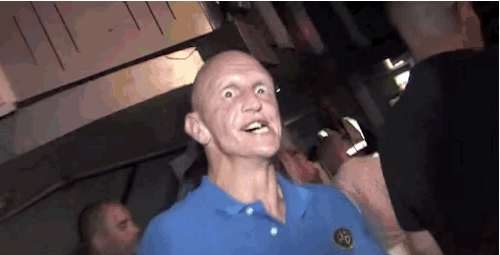
From the wild, wild, wide world of British clubbing: People are calling the video below “the worst club promo ever,” but I kinda want to go. It’s not often you find so much abandon, bounce, tan spray, and just plain this in nightlife these days:

As astute commenters rightly point out, rave was a working class phenomenon in most of Britain. (Here, too, most of the Midwest rave kids I knew were from working class families.) This is a great reminder of it. And hey, at least they’re not all hooliganisming over football, as the stereotypes would have you believe. Besides, yes, the now-famous gabber-gabber-hey at 1:40 is so much more fun that what I’ve been encountering in American clubs lately, alas.In fact! The only place I can thinki of him popping up is in our own sweet, sweet Cali underground. 

I love him. Buzzfeed points out that his name is Sean, and he’s a 41-year-old carpenter, and he loves to dance. Perhaps you’d like to pull off your best imitation at the parties below (click on the titles for more info):


FRIDAY

BARDOT A GO GO— So fun. A pre-Bastille Day bash celebrating the Swinging French Sixties at Rickshaw Stop. Yes there will be ooh la la.

HOT CHIP DJ SET— Those loveable introspective electro nerds take to the turntables at Mezzanine, with Juan Maclean and the Lights Down Low crew

CLOCKWORK — Very, very good ‘n thoughtful London dub-techno duo hits Monarch.

CUBCAKE — Cute, sweet, usually quite packed night for chubby young gays and chasers at Lone Star Saloon.

LAST NITE — The next time someone says, “the ’90s are back!” just roll your eyes and reference this 2000s indie dance party, which has been going strong for many a Strokes singalong moon at MakeOut Room.


————-

SATURDAY

BASEMENT JAXX — The irresitibly catchy freaks of funky house hijinks return after a too-long absence. Public Works will be bopping.

SF THUMAKDA — A queer Bollywod dance party. ‘Nuff said.

URULU — Nice and easy tech/deep house (diva samples included) from this budding youngster at Audio, with the Modular crew.

POUND PUPPY — Hot, scruffy guys, often in goofy outfits.

TORMENTA TROPICAL — Tropical gooves and deep fuzzy bass bangers, with special guess DJ Blass from Puerto Rico, at Elbo Room.

DARK ENTRIES 5-YEAR ANNIVERSARY — Probably the coolest label in SF, releasing rare minimal wave, proto-goth classics, and new synth tunes, celebrates five years at record store RS94109 with a slew of dark local luminaries taking over the decks.

—————-

SUNDAY

SLOW HANDS – The truly talented tech-house Lothario is back, performing at Monarch: Be warned, there will be spandex (???)

 OUTPOST— Awesome-sounding new garage/bass/techno monthly at Underground SF featuring some real cool cats: Vin Sol, Michael Claus, CM-4.

SF to consider joining Richmond in fighting banks over underwater mortgages

7

Plans to ease San Francisco’s often overlooked home foreclosure crisis will have to wait a bit longer. The San Francisco Board of Supervisors this week delayed a resolution that would show the city’s “intent” to save underwater mortgages in favor of a resolution that might actually have begin to intervene in underwater mortgages.

“The idea of people losing their homes is very disheartening,” Sup. John Avalos told the Guardian. “I’m looking forward to an ordinance that would actually allow San Francisco to join a JPA [Joint Powers Authority] and enable us to have leverage over banks.”

The original proposal would have stated San Francisco’s “intention” to form a JPA with the City of Richmond in the obscure—and controversial—use of eminent domain to acquire and fix underwater mortgages for homeowners in working class neighborhoods. But Avalos said that the resolution was primarily aimed at supporting Richmond in defending its principal reduction program.

“The resolution in support of Richmond’s work is not as timely as it was and I want to make sure I can work with you colleagues about the relationship around how we can actually have an ordinance to join a JPA with the city of Richmond and have all of our questions answered as we’re going through that process,” he told the Board of Supervisors on Tuesday.

Eminent domain is a law that allows the government to purchase private property for public use, including nontangible assets such as mortgages. The use of eminent domain to acquire underwater mortgages (when mortgage payments that exceed the value of homes) could be a godsend for homeowners who have been bamboozled by predatory lenders.

Yet Richmond, receiving national attention for the gutsy strategy, faced intense criticism—even federal lawsuits—from banks and financial institutions of late. Certain banks and financial institutions warned lending would halt if the strategy were attempted. Although Richmond recently braved attempts to quash its principal reduction plan, a JPA with San Francisco would allow both cities to leverage some power over banks.

“One city doesn’t have the resources to do it alone,” Sup. David Campos, who co-sponsored the resolution, told the Guardian. “Collectively joining forces can do it, and can be strengthened by taking a regional approach.”

Yet Avalos explained that he has already experienced disagreement from banks, including Well Fargo. “We are swimming against the tide—against the institutions of our banks that have a stronghold on how local loans and mortgages are kept at high interest rates, on the ability homeowners have to renegotiate loans, and on how we can improve the actual principal of our loans,” he told the Board of Supervisors, which was met by public applause.

“People don’t feel a sense of urgency about the housing crisis, and we need to convince them,” Avalos told the Guardian. “Overall we’re two years from the Occupy movement that challenged banks, and people have forgotten the feeling of the time where people questioned how much power banks had over the loan modification.”

In San Francisco, focus has indeed shifted toward out-of-control rents, though fallout from the mortgage crisis still persists. Over 300 underwater mortgages are concentrated in San Francisco’s working class communities, 90 percent of which contain predatory features, according to the Mortgage Resolution Partners, a company helping Richmond administer and finance their principal reduction plan.

Although roughly 64 percent of San Francisco residents are renters, some working class community member still own their homes, and some, like Carletta Jackson-Lane—who has lived in District 10 for 27 years and who spoke at this week’s meeting during public comment—feels that the African American community has been hit especially hard by foreclosures.

“Don’t forget that foreclosures are directly related to the outward migration of African American families out of San Francisco,” she said. “The reality is that in the Mission, there’s a different impact because they were mostly renters.

“The other impact in the African American community—especially in District 10—is that they were single family property owners, so when the foreclosure crisis happened, it knocked them out,” she explained. “And that’s multiple generations.”

Avalos sent the resolution back to committee for modification, and he expects a resolution to be voted on in August. “I don’t want San Francisco to be a place where only the wealthy can survive,” Avalos said.  “But in order to make serious changes we have to break a few eggs.”

When asked what those eggs were, he responded, “What currently is.”  

Gimme 5: Must-see shows this week

4

Hello friends and festival-goers! Did you just get back from High Sierra? Does your hair still smell of patchouli? Are you sad that you actually have to be in the world this week, possibly at a desk, while wearing all of your clothes? (Sexual harassment suits these days, lemme tell you.) 

Fret not, fair Bay Areans. A solid few days of music, most of it bred right here, awaits you. Read on for our picks.

THU/10

WATERS and CATHEDRALS

Get your ALL CAPS game faces on for this buzzy night, which pairs SF’s own Van Pierszalowski and WATERS‘ hook-and-distortion-heavy guitar rock with the melodic, playful electro-pop of singer-songwriter Brodie Jenkins and synth-guitar-wizard-producer Johnny Hwin, aka CATHEDRALS. The latter (one of the Bay Guardian’s bands On the Rise this year) has garnered an impressive amount of attention around the Internets (and at SXSW) without even an EP to their name — this show marks their first public performance in the city. Come prepared to be seduced by Jenkin’s vocals, then do some cathartic headbanging to Pierszalowski’s. WATERS should be in good spirits; they’re heading home from a tour that included two sold-out nights at the Troubadour. [Note: The website says they’re sold out; you should still be able to snag tickets at the door.] (Silvers)

9pm, $12
The Chapel
777 Valencia, SF
www.thechapelsf.com


FRI/11

Cynic

The world was not ready for Cynic when they first emerged in the late ’80s. The band’s jazzy prog-metal and anti-macho stage presence (inspired in part by members Paul Masvidal and Sean Reinert’s sexuality — Reinert calls their music “some gay, gay metal”) made them equal parts influential and reviled. On their first national tour opening for Cannibal Corpse, the extreme audience hostility they experienced was enough to make them call it quits for 12 years — during which time their reputation and influence grew. Since the crew’s 2006 reunion, they’ve enjoyed success and reverence, releasing two more albums and playing major festivals in the U.S. and Europe. Their upcoming Fillmore gig is a chance to see one of metal’s coolest influences rock a venue as comfortably and thoroughly as they deserve to. (Bromfield)

https://www.youtube.com/watch?v=42ngxbGNLWk

9pm, $22.50
The Fillmore
1805 Geary, SF
www.thefillmore.com


Lia Rose

Formerly of Or, the Whale, San Francisco singer-songwriter Lia Rose has the kind of voice that seems like it could cut steel with its clarity — but instead, she’s going to pick up a guitar and carve you a lovesick, honey-and-whiskey-coated lullaby, with pedal steel or upright bass or banjo or all three helping to lull you under her spell. The timeless quality of her indie-folk pairs well here with opener We Became Owls, an East Bay Americana outfit that’s been gaining devotees like a steam train for the past year, despite not having an album out (this is their record release show). Gritty, Guthrie-esque sing-alongs are a distinct possibility here; maybe do some vocal warm-ups? (Silvers)

9pm, $15
The Chapel
777 Valencia, SF
(415) 551-5157
www.thechapelsf.com


SAT/12

Waterstrider

If you have anything left in you after spending the day and boozing and grooving and (sun-)baking to Wye Oak and Thao et al at Phono del Sol — first of all, we salute you. Second, you could do worse than to head over to Slim’s to see these East Bay mainstays co-headline with Guy Fox. Waterstrider‘s blend of Afro-pop, dance-ready synths, and indie rock is a must for anyone who wishes the latest tUnE-yArDs record were twice as long, or that Little Dragon (whom they’re known to cover) were just a little more, er, Californian. Fox will bring more of a driving, brassy garage-funk spirit to the evening. Another fine pairing indeed. (Silvers)

9pm, $14
Slim’s
333 11th St., SF
www.slimspresents.com


SUN/13

Darryl D.M.C. McDaniels

Neck of the Woods becomes a time machine on Sunday as Darryl McDaniels, better known as D.M.C., drops in for a nostalgic journey through the annals of 1980s rap. One third of the explosive rap innovators Run-D.M.C., McDaniels has kept busy since the dissolution of the group more than ten years ago, playing a full festival circuit, doing extensive charity work, and covering Frank Zappa’s “Willie the Pimp” with Talib Kweli, Mix Master Mike, and Ahmet Zappa for a pulsating track on a birthday compilation put out by the Zappa Family Trust. It’s hard to say whether D.M.C. will pull out anything quite as wild during this set, but expect zeitgeist-defining songs like “It’s Tricky” and “Walk This Way,” and hopefully some deeper cuts from the group’s later work (2001’s Crown Royal has some underrated tracks) and D.M.C.’s only solo album, Checks, Thugs, and Rock and Roll. Joining McDaniels on the mic are local groups the Oakland Mind and Jay Stone, each of whom have decidedly D.M.C.-inspired beats and flows and will offer up both politicized and party-themed bangers centered around the Bay. If you’re feeling like “Raising Hell,” then head over. (Kurlander)

9pm, $20
Neck of the Woods
406 Clement, SF
(415) 387-6343

www.neckofthewoodssf.com

San Jose cracks down on pot clubs after eschewing SF’s regulatory approach

16

San Jose’s current (and harsh) crackdown on medical marijuana dispensaries contrasts with San Francisco’s decade-old (and still working well) regulations.

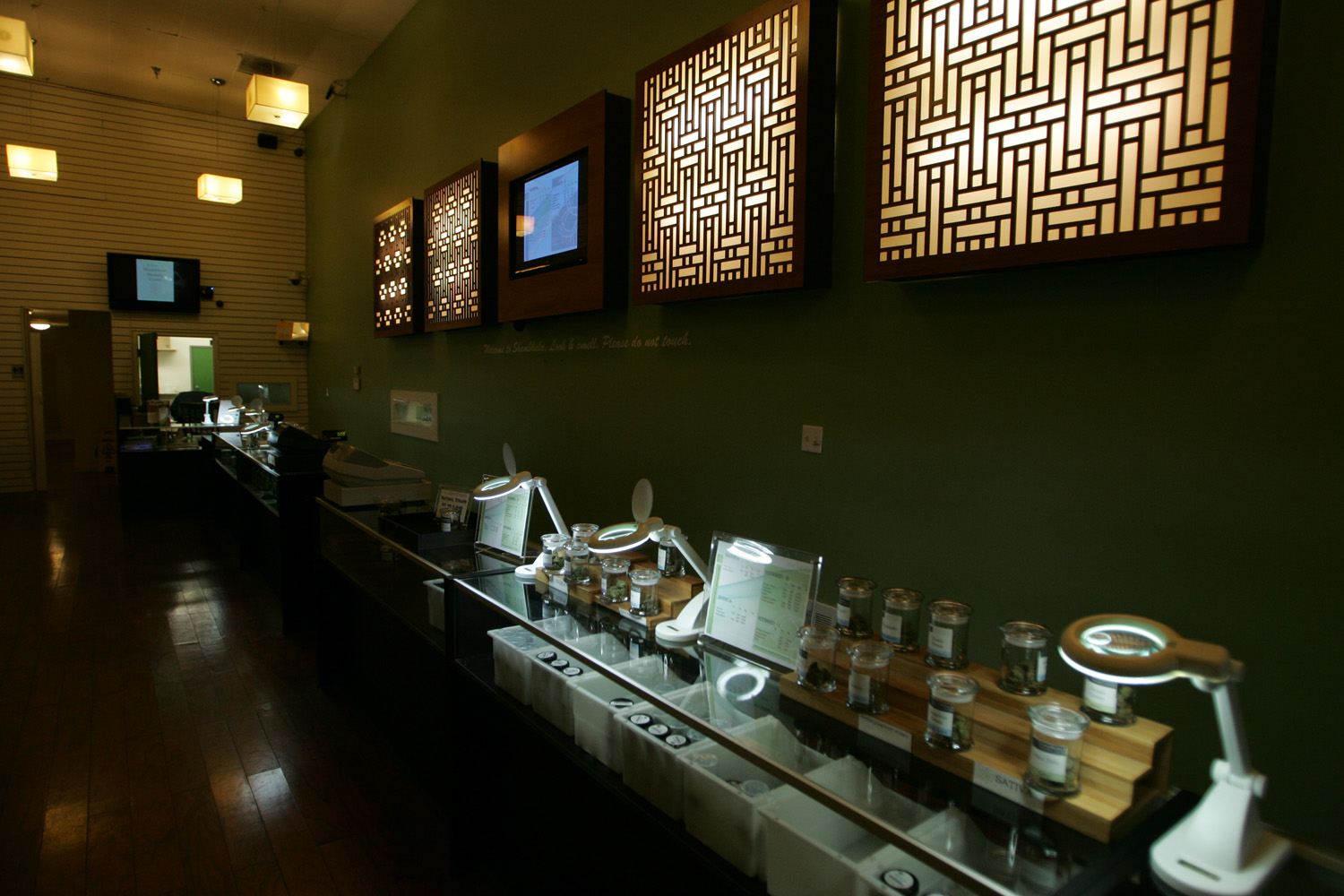
Over the last five years, cannabis club after cannabis club sprouted throughout San Jose while the city’s local government debated, wavered, and faltered over the best way to regulate their pot clubs. But last month, San Jose City Council members, citing an abundance of pot clubs as the cause of a surge of marijuana use in schools, got tough. They voted to enact regulations that would make it too costly for more than 70 of their pot clubs in the city to operate. Only about 10 would survive.

Meanwhile, San Francisco pot clubs rest easy, undisturbed, and untouched — at least by the San Francisco officials who pioneered regulations in the city early on. In fact, the city’s Planning Department has recently recommended expanding the so-called Green Zone where dispensaries are allowed to operate by allowing dispensaries closer to schools.

As it stands, getting a permit to open a dispensary in San Francisco is no easy task. San Francisco regulations mean dispensaries are limited to less than 10 percent of all of San Francisco.

“Because zoning is so limited, the biggest struggle is finding a location,” Shona Gochenaur, director of Axis of Love SF Community Center, told the Guardian. “I’ve known collectives that have searched for over two years for a space correctly zoned. If you get through all those mindfields and to your Planning Commission hearing, it’s smoother. Very few permits have been denied if they survive to that point.”

But San Jose’s proposed regulations take it a step farther: they would limit pot shops to industrial areas that make up roughly 1 percent of San Jose. Plus, under San Jose’s proposal, San Jose’s pot shop owners will have to grow their own cannabis and produce any topicals and edibles in house. For that, they’ll need kitchens, labs, health inspections, and a host of costly equipment. Also unlike San Francisco, no concentrates will be allowed, causing many marijuana patients to suffer from lack of access to the medicine they need.

After San Jose approved the relegations, Santa Clara County Board of Supervisors voted unanimously to enact a temporary moratorium on the establishment of medical marijuana dispensaries in unincorporated Santa Clara County. David Hodges,  a member of the Silicon Cannabis Coalition and owner of the All American Cannabis club, says he has until July 18 to put forth a referendum that would undo San Jose’s vote.

“I want regulations that work,” he said. “We want to remove the language that makes it impossible for dispensaries to operate and to keep everything else.”

The problem, he said, is that San Jose hadn’t enacted regulations soon enough. San Francisco was way ahead of them.

Gochenaur worked on some of San Francisco’s early regulations, recognizing that the feds would step in if cannabis activists didn’t act first.

“[The] San Francisco movement came with the AIDS crisis with city electeds that were both empathetic and personally affected by watching loved one’s suffering, our ZIP code being hit the hardest,” said Gochenaur .“We had the risk takers and the trail blazers willing to open their doors.”

Risk taking for San Francisco included regulating dispensaries in ways the state has since failed to do. Since San Francisco began regulating dispensaries in 2004, anyone wanting to open up a dispensary in San Francisco has had to jump through a series of tough bureaucratic hoops while also garnering neighborhood support.

San Jose, instead, opted for the laissez faire approach, allowing their dispensaries to grow, and then regretting it later.

When San Jose attempted to enact similar regulations back in 2011, Hodges used a referendum to stop the council’s plans. But, once he succeeded in defeating San Jose’s proposal, no new regulations were proposed.

“The cannabis movement in San Jose is back at square one,” Hodges wrote on his website after his referendum succeeded.

John Lee, director of the Silicon Valley Cannabis Coalition, said his organization’s biggest mistake was repealing, rather than revising, San Jose’s proposal 3 years ago. “We just knew that we couldn’t do with what they were proposing,” he said. “We just wanted to stop their relegations. But we had no idea how to regulate this back then. Now we want to.”

Having narrow relegations to begin with leaves San Francisco with room for revision later. For instance, Sup. John Avalos is working with the Planning Commission to help expand the Green Zone by bringing dispensaries 600 feet away from schools rather than 1,000 feet now. On the opposite end of the spectrum, Santa Clara Deputy County Executive Sylvia Gallegos has claimed before that San Jose’s dispensaries, totalling over 90 at the time,  caused a 106 percent increase in drug abuse-related suspensions of students in East San Jose schools in 2011-2012.

“I was smoking pot in high school before I even knew what a cannabis club was,” Hodges said. “Keeping dispensaries away from schools won’t stop that.”

If Hodges referendum fails, he says he’ll leave the cannabis industry for good.

“Right now, this could happen anywhere. There’s no safe place,” he said. “Save for Oakland – kind of. And San Francisco. But they have the territory well-covered in those areas. There’s no need for me there.”

San Francisco dispensaries may have local support, but without statewide regulations, they’re not immune to federal crackdowns, either, as the closures of Vapor Room and HopeNet made clear back in 2012. For years, Assemblymember Tom Ammiano has been trying to create statewide regulatory framework for California to help limit the crackdowns. In May, his most recent bill to address statewide regulation failed to pass the Assembly Floor. Since then, Ammiano has backed a bill from Senator Lou Correa (D-Santa Ana) that would force dispensaries to obtain local approval prior to obtaining state approval.

David Goldman, a former member of the San Francisco Medical Marijuana Task Force, told us, “It’s basically the only sensible approach towards state framework. The US Attorney is less likely to go after states with a strong structure. The tighter the regulations, the less the feds will go after dispensaries.”

For now, cannabis owners in San Jose must focus on their own, local battle to save themselves. As for the San Francisco cannabis owners who’ve passed their bureaucratic tests and received their golden permits, business resumes as usual.

Music Listings Aug 20 – Aug 26, 2014

0

WEDNESDAY 20
ROCK
DNA Lounge: 375 11th St., San Francisco. The Spiritual Bat, Crimson Scarlet, Headless Lizzy & Her Icebox Pussy, Roadside Memorial, 8:30pm, $8-$10.
Elbo Room: 647 Valencia, San Francisco. “Commune,” w/ The Fresh & Onlys, The Tambo Rays, Popgang DJs, 9pm, free with RSVP.
Hemlock Tavern: 1131 Polk, San Francisco. Koward, Green Beret, Condition, Trenches, 8:30pm, $8.
The Independent: 628 Divisadero, San Francisco. Boris, Marriages, 8pm, $20.
Slim’s: 333 11th St., San Francisco. Balance and Composure, Seahaven, The American Scene, 8pm, $16.
DANCE
Beaux: 2344 Market, San Francisco. “BroMance: A Night Out for the Fellas,” 9pm, free.
The Cafe: 2369 Market, San Francisco. “Sticky Wednesdays,” w/ DJ Mark Andrus, 8pm, free.
Cat Club: 1190 Folsom, San Francisco. “Bondage-A-Go-Go,” w/ DJ Damon, Tomas Diablo, guests, 9:30pm, $7-$10.
Club X: 715 Harrison, San Francisco. “Electro Pop Rocks,” 18+ dance party, 9pm, $10-$20.
DNA Lounge: 375 11th St., San Francisco. “Go Deep!,” 18+ dance party, 9pm, $10-$15.
F8: 1192 Folsom, San Francisco. “Housepitality,” 9pm, $5-$10.
Lookout: 3600 16th St., San Francisco. “What?,” 7pm, free.
Madrone Art Bar: 500 Divisadero, San Francisco. “Rock the Spot,” 9pm, free.
Make-Out Room: 3225 22nd St., San Francisco. “Burn Down the Disco,” w/ DJs 2shy-shy & Melt w/U, Third Wednesday of every month, 9pm, free.
MatrixFillmore: 3138 Fillmore, San Francisco. “Reload,” w/ DJ Big Bad Bruce, 10pm, free.
Q Bar: 456 Castro, San Francisco. “Booty Call,” w/ Juanita More, 9pm, $3.
HIP-HOP
Skylark Bar: 3089 16th St., San Francisco. “Mixtape Wednesday,” w/ resident DJs Strategy, Junot, Herb Digs, & guests, 9pm, $5.
ACOUSTIC
Cafe Divine: 1600 Stockton, San Francisco. Craig Ventresco & Meredith Axelrod, 7pm, free.
JAZZ
Amnesia: 853 Valencia, San Francisco. Gaucho, Eric Garland’s Jazz Session, The Amnesiacs, 7pm, free.
Balancoire: 2565 Mission, San Francisco. “Cat’s Corner,” 9pm, $10.
Burritt Room: 417 Stockton St., San Francisco. Terry Disley’s Rocking Jazz Trio, 6pm, free.
Jazz Bistro at Les Joulins: 44 Ellis, San Francisco. Charles Unger Experience, 7:30pm, free.
Le Colonial: 20 Cosmo, San Francisco. The Cosmo Alleycats featuring Ms. Emily Wade Adams, 7pm, free.
Level III: 500 Post, San Francisco. Sony Holland, Wednesdays-Fridays, 5-8pm, free.
Revolution Cafe: 3248 22nd St., San Francisco. Panique, Third Wednesday of every month, 8:30pm, free/donation.
Savanna Jazz Club: 2937 Mission, San Francisco. Savanna Jazz Jam with Eric Tillman, 7pm, $5.
Top of the Mark: One Nob Hill, 999 California, San Francisco. Ricardo Scales, Wednesdays, 6:30-11:30pm, $5.
INTERNATIONAL
Bissap Baobab: 3372 19th St., San Francisco. “Baobab!,” timba dance party with DJ WaltDigz, 10pm, $5.
Cafe Cocomo: 650 Indiana, San Francisco. “Bachatalicious,” w/ DJs Good Sho & Rodney, 7pm, $5-$10.
SOUL
Boom Boom Room: 1601 Fillmore, San Francisco. “Soul Train Revival,” w/ Ziek McCarter, Third Wednesday of every month, 9:30pm, $5.
Monarch: 101 Sixth St., San Francisco. “Color Me Badd,” coloring books and R&B jams with Matt Haze, DJ Alarm, Broke-Ass Stuart, guests, Wednesdays, 5:30-9:30pm, free.
THURSDAY 21
ROCK
The Chapel: 777 Valencia, San Francisco. French Cassettes, Flagship, Black Cobra Vipers, Feat. O, 9pm, $12.
DANCE
Abbey Tavern: 4100 Geary, San Francisco. DJ Schrobi-Girl, 10pm, free.
Aunt Charlie’s Lounge: 133 Turk, San Francisco. “Tubesteak Connection,” w/ DJ Bus Station John, 9pm, $5-$7.
Beaux: 2344 Market, San Francisco. “Twerk Thursdays,” 9pm, free.
The Cafe: 2369 Market, San Francisco. “¡Pan Dulce!,” 9pm, $5.
Cat Club: 1190 Folsom, San Francisco. “Class of 1984,” ‘80s night with DJs Damon, Steve Washington, Dangerous Dan, and guests, 9pm, $6 (free before 9:30pm).
The Cellar: 685 Sutter, San Francisco. “XO,” 10pm, $5.
Club X: 715 Harrison, San Francisco. “The Crib,” 18+ LGBT dance party, 9:30pm, $10.
Elbo Room: 647 Valencia, San Francisco. “Hi Life,” w/ resident DJs Pleasuremaker & Izzy*Wize, 9:30pm, $6.
F8: 1192 Folsom, San Francisco. “Beat Church,” w/ resident DJs Neptune & Kitty-D, Third Thursday of every month, 10pm, $10.
Infusion Lounge: 124 Ellis, San Francisco. “I Love Thursdays,” 10pm, $10.
Madrone Art Bar: 500 Divisadero, San Francisco. “Night Fever,” 9pm, $5 after 10pm
Raven: 1151 Folsom, San Francisco. “1999,” w/ VJ Mark Andrus, 8pm, free.
Trax: 1437 Haight, San Francisco. “Beats Reality: A Psychedelic Social,” w/ resident DJs Justime & Jim Hopkins, 9pm, free.
Underground SF: 424 Haight, San Francisco. “Bubble,” 10pm, free.
HIP-HOP
John Colins: 138 Minna, San Francisco. “Future Flavas,” w/ DJ Natural, 10pm, free.
Showdown: 10 Sixth St., San Francisco. “Tougher Than Ice,” w/ DJs Vin Sol, Ruby Red I, and Jeremy Castillo, Third Thursday of every month, 10pm
Skylark Bar: 3089 16th St., San Francisco. “Peaches,” w/ lady DJs DeeAndroid, Lady Fingaz, That Girl, Umami, Inkfat, and Andre, 10pm, free.
ACOUSTIC
Bazaar Cafe: 5927 California, San Francisco. Acoustic Open Mic, 7pm
Contemporary Jewish Museum: 736 Mission, San Francisco. “Unplugged in the Yud,” w/ Carletta Sue Kay, 7pm, free with museum admission.
Plough & Stars: 116 Clement, San Francisco. Tipsy House, Third Thursday of every month, 9pm, free.
The Pour House: 1327 Polk, San Francisco. Jimbo Scott & Grover Anderson, 7pm, free.
JAZZ
Jazz Bistro at Les Joulins: 44 Ellis, San Francisco. Eugene Pliner Quartet with Tod Dickow, First and Third Thursday of every month, 7:30pm, free.
Le Colonial: 20 Cosmo, San Francisco. Steve Lucky & The Rhumba Bums, 7:30pm
Level III: 500 Post, San Francisco. Sony Holland, Wednesdays-Fridays, 5-8pm, free.
The Royal Cuckoo: 3202 Mission, San Francisco. Charlie Siebert & Chris Siebert, 7:30pm, free.
Savanna Jazz Club: 2937 Mission, San Francisco. Savanna Jazz Jam with Eric Tillman, 7pm, $5.
Top of the Mark: One Nob Hill, 999 California, San Francisco. Pure Ecstasy, 7:30pm, $10.
INTERNATIONAL
Sheba Piano Lounge: 1419 Fillmore, San Francisco. Gary Flores & Descarga Caliente, 8pm
REGGAE
Pissed Off Pete’s: 4528 Mission St., San Francisco. Reggae Thursdays, w/ resident DJ Jah Yzer, 9pm, free.
BLUES
50 Mason Social House: 50 Mason, San Francisco. Bill Phillippe, 5:30pm, free.
The Saloon: 1232 Grant, San Francisco. Chris Ford, Third Thursday of every month, 4pm
COUNTRY
McTeague’s Saloon: 1237 Polk, San Francisco. “Twang Honky Tonk,” w/ Sheriff Paul, Deputy Saralynn, and Honky Tonk Henry, 7pm
The Parlor: 2801 Leavenworth, San Francisco. “Honky Tonk Thursdays,” w/ DJ Juan Burgandy, 9pm, free.
SOUL
Make-Out Room: 3225 22nd St., San Francisco. “In ‘n’ Out,” w/ The Selecter DJ Kirk, Third Thursday of every month, 10pm, free.
FRIDAY 22
DANCE
1015 Folsom: 1015 Folsom, San Francisco. Four Tet B2B Jamie xx, Eug, Shawn Reynaldo, 10pm, $27.50-$30 advance.
Beaux: 2344 Market, San Francisco. “Manimal,” 9pm
The Cafe: 2369 Market, San Francisco. “Boy Bar,” 9pm, $5.
Cat Club: 1190 Folsom, San Francisco. “Dark Shadows,” w/ resident DJs Daniel Skellington & Melting Girl, Fourth Friday of every month, 9:30pm, $7 ($3 before 10pm).
The Cellar: 685 Sutter, San Francisco. “F.T.S.: For the Story,” 10pm
The EndUp: 401 Sixth St., San Francisco. “Trade,” 10pm, free before midnight.
The Grand Nightclub: 520 Fourth St., San Francisco. “We Rock Fridays,” 9:30pm
Infusion Lounge: 124 Ellis, San Francisco. “Flight Fridays,” 10pm, $20.
Madrone Art Bar: 500 Divisadero, San Francisco. “I ♥ the ‘90s,” w/ DJs Samala, Teo, Mr. Grant, & Sonny Phono, Fourth Friday of every month, 9pm, $5.
MatrixFillmore: 3138 Fillmore, San Francisco. “F-Style Fridays,” w/ DJ Jared-F, 9pm
Mezzanine: 444 Jessie, San Francisco. Sneaky Sound System, Blaus, 9pm, $15-$20.
OMG: 43 Sixth St., San Francisco. “Deep Inside,” 9pm, free.
Public Works: 161 Erie, San Francisco. “As You Like It: 4-Year Anniversary,” w/ Todd Terje, Maurice Fulton, Qu, Jason Kendig, Conor, Jackie House (aka P-Play), Christina Chatfield, Rich Korach, Bells & Whistles, Mossmoss, 9pm, $25 advance.
Q Bar: 456 Castro, San Francisco. “Pump: Worq It Out Fridays,” w/ resident DJ Christopher B, 9pm, $3.
Slate Bar: 2925 16th St., San Francisco. “Darling Nikki,” w/ resident DJs Dr. Sleep, Justin Credible, and Durt, Fourth Friday of every month, 8pm, $5.
HIP-HOP
EZ5: 682 Commercial, San Francisco. “Decompression,” Fridays, 5-9pm
John Colins: 138 Minna, San Francisco. “#Flow,” w/ The Whooligan & Mikos Da Gawd, Fourth Friday of every month, 10pm, free befoe 11pm
ACOUSTIC
Bottom of the Hill: 1233 17th St., San Francisco. Before the Brave, Joseph, Marshall McLean, 9pm, $10-$12.
The Sports Basement: 610 Old Mason, San Francisco. “Breakfast with Enzo,” w/ Enzo Garcia, 10am, $5.
JAZZ
Atlas Cafe: 3049 20th St., San Francisco. Mean to Me, Fourth Friday of every month, 7:30pm, free.
Bird & Beckett: 653 Chenery, San Francisco. Chuck Peterson Quintet, Fourth Friday of every month, 5:30pm, $10 suggested donation per adult.
Jazz Bistro at Les Joulins: 44 Ellis, San Francisco. Charles Unger Experience, 7:30pm, free.
Level III: 500 Post, San Francisco. Sony Holland, Wednesdays-Fridays, 5-8pm, free.
Red Poppy Art House: 2698 Folsom, San Francisco. Rob Reich Quintet, 7:30pm, $10-$15.
Top of the Mark: One Nob Hill, 999 California, San Francisco. Black Market Jazz Orchestra, 9pm, $10.
Zingari: 501 Post, San Francisco. Joyce Grant, 8pm, free.
INTERNATIONAL
Amnesia: 853 Valencia, San Francisco. Baxtalo Drom, International shimmying for lovers of Balkan music, bellydancers, and burlesque., Fourth Friday of every month, 9pm, $10-$15.
Bissap Baobab: 3372 19th St., San Francisco. “Paris-Dakar African Mix Coupe Decale,” 10pm, $5.
Cafe Cocomo: 650 Indiana, San Francisco. Taste Fridays, featuring local cuisine tastings, salsa bands, dance lessons, and more, 7:30pm, $15 (free entry to patio).
Pachamama Restaurant: 1630 Powell, San Francisco. Cuban Night with Fito Reinoso, 7:30 & 9:15pm, $15-$18.
Roccapulco Supper Club: 3140 Mission, San Francisco. Fuego Latino, 9pm
Verdi Club: 2424 Mariposa, San Francisco. The Verdi Club Milonga, w/ Christy Coté, Seth Asarnow y Su Sexteto Tipico, DJ Emilio Flores, 8pm, $25-$35.
REGGAE
Gestalt Haus: 3159 16th St., San Francisco. “Music Like Dirt,” 7:30pm, free.
The Independent: 628 Divisadero, San Francisco. Lee “Scratch” Perry, 9pm, $25.
FUNK
Make-Out Room: 3225 22nd St., San Francisco. “Loose Joints,” w/ DJs Centipede, Damon Bell, and Tom Thump, 10pm, $5-$10.
Revolution Cafe: 3248 22nd St., San Francisco. Fourth Fridays Freestyle Fiesta with MSK.fm, Fourth Friday of every month.
SOUL
Edinburgh Castle: 950 Geary, San Francisco. “Soul Crush,” w/ DJ Serious Leisure, 10pm, free.
SATURDAY 23
ROCK
Bender’s: 806 S. Van Ness, San Francisco. Turbonegra, The Grannies, 10pm, $5.
The Independent: 628 Divisadero, San Francisco. Sylvan Esso, 9pm, sold out.
DANCE
DNA Lounge: 375 11th St., San Francisco. “Bootie S.F.,” 9pm, $10-$15.
The EndUp: 401 Sixth St., San Francisco. Shangri-La, Asian queer dance party., Fourth Saturday of every month, 10pm, $15-$20 (free before 11pm).
Infusion Lounge: 124 Ellis, San Francisco. “Set,” Fourth Saturday of every month, 10pm, $20.
The Knockout: 3223 Mission, San Francisco. “Galaxy Radio,” w/ resident DJs Smac, Emils, Holly B, and guests, Fourth Saturday of every month, 9pm, free.
Lookout: 3600 16th St., San Francisco. “Bounce!,” 9pm, $3.
Slate Bar: 2925 16th St., San Francisco. “Electric WKND,” w/ The Certain People Crew, Fourth Saturday of every month, 10pm, $5.
Temple: 540 Howard, San Francisco. “Life,” Fourth Saturday of every month, 10pm, $20.
HIP-HOP
John Colins: 138 Minna, San Francisco. “Nice,” w/ DJ Apollo, Fourth Saturday of every month, 10pm, $5.
ACOUSTIC
Atlas Cafe: 3049 20th St., San Francisco. Craig Ventresco and/or Meredith Axelrod, Saturdays, 4-6pm, free.
JAZZ
Jazz Bistro at Les Joulins: 44 Ellis, San Francisco. Bill “Doc” Webster & Jazz Nostalgia, 7:30pm, free.
Sheba Piano Lounge: 1419 Fillmore, San Francisco. The Robert Stewart Experience, 9pm
INTERNATIONAL
1015 Folsom: 1015 Folsom, San Francisco. “Pura,” 9pm, $20.
Bissap Baobab: 3372 19th St., San Francisco. “Paris-Dakar African Mix Coupe Decale,” 10pm, $5.
El Rio: 3158 Mission, San Francisco. “Mango,” Fourth Saturday of every month, 3pm, $8-$10.
Make-Out Room: 3225 22nd St., San Francisco. “El SuperRitmo,” w/ DJs Roger Mas & El Kool Kyle, 10pm, $5-$10.
OMG: 43 Sixth St., San Francisco. “Bollywood Blast,” Fourth Saturday of every month, 9pm, $10 before 11pm with RSVP.
Pachamama Restaurant: 1630 Powell, San Francisco. Eddy Navia & Pachamama Band, 8pm, free.
Space 550: 550 Barneveld, San Francisco. “Club Fuego,” 9:30pm
REGGAE
Mezzanine: 444 Jessie, San Francisco. Fiji, Mango Kingz, Jah Yzer, 9pm, $25.
BLUES
The Saloon: 1232 Grant, San Francisco. Dave Workman, Fourth Saturday of every month, 4pm
COUNTRY
Slim’s: 333 11th St., San Francisco. 13th Annual Honky-Tonk Showdown: A Celebration of Classic Country Music & Dance, w/ Wolf Hamlin & The Front Porch Drifters, Misisipi Mike Wolf & The Midnight Gamblers, Jon Emery & The Dry County Drinkers, Miss Kay Marie, 9pm, $15.
FUNK
Mighty: 119 Utah, San Francisco. “What the Funk?!: James Brown vs. Fela Kuti,” w/ DJs J Rocc & Rich Medina, 9pm, $10-$20 advance.
SOUL
Edinburgh Castle: 950 Geary, San Francisco. “Nightbeat,” w/ DJs Primo, Lucky, and Dr. Scott, Fourth Saturday of every month, 9pm, $3.
SUNDAY 24
ROCK
Hemlock Tavern: 1131 Polk, San Francisco. Ancient Altar, Infinite Waste, 7pm, $7.
DANCE
The Cellar: 685 Sutter, San Francisco. “Replay Sundays,” 9pm, free.
The Edge: 4149 18th St., San Francisco. “’80s at 8,” w/ DJ MC2, 8pm
Elbo Room: 647 Valencia, San Francisco. “Dub Mission,” Sunday night excursions into the echo-drenched outer realms of dub with resident DJ Sep and guests, 9pm, $6 (free before 9:30pm).
The EndUp: 401 Sixth St., San Francisco. “Sundaze,” 1pm, free before 3pm
F8: 1192 Folsom, San Francisco. “Stamina,” w/ DJs Lukeino, Jamal, and guests, 10pm, free.
The Knockout: 3223 Mission, San Francisco. “Sweater Funk,” 10pm, free.
Lookout: 3600 16th St., San Francisco. “Jock,” Sundays, 3-8pm, $2.
MatrixFillmore: 3138 Fillmore, San Francisco. “Bounce,” w/ DJ Just, 10pm
Monarch: 101 Sixth St., San Francisco. “Werd,” 9pm, $5-$10.
The Parlor: 2801 Leavenworth, San Francisco. “Sunday Sessions,” w/ DJ Marc deVasconcelos, 9pm, free.
Q Bar: 456 Castro, San Francisco. “Gigante,” 8pm, free.
The Stud: 399 Ninth St., San Francisco. “Cognitive Dissonance,” Fourth Sunday of every month, 6pm
Temple: 540 Howard, San Francisco. “Sunset Arcade,” 18+ dance party & game night, 9pm, $10.
HIP-HOP
Boom Boom Room: 1601 Fillmore, San Francisco. “Return of the Cypher,” 9:30pm, free.
ACOUSTIC
The Chieftain: 198 Fifth St., San Francisco. Traditional Irish Session, 6pm
The Lucky Horseshoe: 453 Cortland, San Francisco. Bernal Mountain Bluegrass Jam, 4pm, free.
Madrone Art Bar: 500 Divisadero, San Francisco. Spike’s Mic Night, Sundays, 4-8pm, free.
JAZZ
Chez Hanny: 1300 Silver, San Francisco. George Cotsirilos Trio, 4pm, $20 suggested donation.
Jazz Bistro at Les Joulins: 44 Ellis, San Francisco. Bill “Doc” Webster & Jazz Nostalgia, 7:30pm, free.
Madrone Art Bar: 500 Divisadero, San Francisco. “Sunday Sessions,” 10pm, free.
The Royal Cuckoo: 3202 Mission, San Francisco. Lavay Smith & Chris Siebert, 7:30pm, free.
Savanna Jazz Club: 2937 Mission, San Francisco. Savanna Jazz Jam with David Byrd, 7pm, $5.
INTERNATIONAL
Atmosphere: 447 Broadway, San Francisco. “Hot Bachata Nights,” w/ DJ El Guapo, 5:30pm, $10-$20.
Bissap Baobab: 3372 19th St., San Francisco. “Brazil & Beyond,” 6:30pm, free.
Caña Cuban Parlor & Cafe: 500 Florida, San Francisco. “La Havana,” 4pm
El Rio: 3158 Mission, San Francisco. Salsa Sundays, Second and Fourth Sunday of every month, 3pm, $8-$10.
Revolution Cafe: 3248 22nd St., San Francisco. Balkan Jam Night, 8:30pm
Thirsty Bear Brewing Company: 661 Howard, San Francisco. “The Flamenco Room,” 7:30 & 8:30pm
BLUES
The Saloon: 1232 Grant, San Francisco. Blues Power, 4pm; The Door Slammers, Fourth Sunday of every month, 9:30pm
Sheba Piano Lounge: 1419 Fillmore, San Francisco. Bohemian Knuckleboogie, 8pm, free.
Swig: 571 Geary, San Francisco. Sunday Blues Jam with Ed Ivey, 9pm
MONDAY 25
DANCE
DNA Lounge: 375 11th St., San Francisco. “Death Guild,” 18+ dance party with DJs Decay, Joe Radio, Melting Girl, & guests, 9:30pm, $3-$5.
Q Bar: 456 Castro, San Francisco. “Wanted,” w/ DJs Key&Kite and Richie Panic, 9pm, free.
ACOUSTIC
Amnesia: 853 Valencia, San Francisco. The Pick Bluegrass Jam, Fourth Monday of every month, 6pm, free; The Earl Brothers, Fourth Monday of every month, 9pm, free.
Fiddler’s Green: 1333 Columbus, San Francisco. Terry Savastano, 9:30pm, free/donation.
Hotel Utah: 500 Fourth St., San Francisco. Open Mic with Brendan Getzell, 8pm, free.
Osteria: 3277 Sacramento, San Francisco. “Acoustic Bistro,” 7pm, free.
The Saloon: 1232 Grant, San Francisco. Peter Lindman, 4pm
JAZZ
Jazz Bistro at Les Joulins: 44 Ellis, San Francisco. Eugene Pliner Quartet with Tod Dickow, 7:30pm, free.
Le Colonial: 20 Cosmo, San Francisco. Le Jazz Hot, 7pm, free.
Sheba Piano Lounge: 1419 Fillmore, San Francisco. City Jazz Instrumental Jam Session, 8pm
REGGAE
Skylark Bar: 3089 16th St., San Francisco. “Skylarking,” w/ I&I Vibration, 10pm, free.
BLUES
Elite Cafe: 2049 Fillmore, San Francisco. “Fried Chicken & Blues,” 6pm
The Saloon: 1232 Grant, San Francisco. The Bachelors, 9:30pm
SOUL
Madrone Art Bar: 500 Divisadero, San Francisco. “M.O.M. (Motown on Mondays),” w/ DJ Gordo Cabeza & Timoteo Gigante, 8pm, $3 after 9pm
TUESDAY 26
ROCK
Amnesia: 853 Valencia, San Francisco. Scary Little Friends, 9:15pm continues through.
Elbo Room: 647 Valencia, San Francisco. Apocryphon, Redacted, Connoisseur, Infinite Waste, Jesika Christ M.S. benefit show, 8:30pm, $10 minimum donation.
The Independent: 628 Divisadero, San Francisco. The Rosebuds, El May, 8pm, $12-$15.
DANCE
Aunt Charlie’s Lounge: 133 Turk, San Francisco. “High Fantasy,” w/ DJ Viv, Myles Cooper, & guests, 10pm, $2.
Boom Boom Room: 1601 Fillmore, San Francisco. “Time Warp Tuesdays,” w/ DJ Madison, 9pm, free.
Monarch: 101 Sixth St., San Francisco. “Soundpieces,” 10pm, free-$10.
Q Bar: 456 Castro, San Francisco. “Switch,” w/ DJs Jenna Riot & Andre, 9pm, $3.
Underground SF: 424 Haight, San Francisco. “Shelter,” 10pm, free.
HIP-HOP
Double Dutch: 3192 16th St., San Francisco. “Takin’ It Back Tuesdays,” w/ DJs Mr. Murdock & Roman Nunez, Fourth Tuesday of every month, 10pm, free.
ACOUSTIC
Plough & Stars: 116 Clement, San Francisco. Song session with Cormac Gannon, Last Tuesday of every month, 9pm
JAZZ
Burritt Room: 417 Stockton St., San Francisco. Terry Disley’s Rocking Jazz Trio, 6pm, free.
Cafe Divine: 1600 Stockton, San Francisco. Chris Amberger, 7pm
Jazz Bistro at Les Joulins: 44 Ellis, San Francisco. Clifford Lamb, Mel Butts, and Friends, 7:30pm, free.
Le Colonial: 20 Cosmo, San Francisco. Lavay Smith & Her Red Hot Skillet Lickers, 7pm
Revolution Cafe: 3248 22nd St., San Francisco. The Pleasure Palace, Fourth Tuesday of every month, 9pm
Verdi Club: 2424 Mariposa, San Francisco. “Tuesday Night Jump,” w/ Stompy Jones, 9pm, $10-$12.
Wine Kitchen: 507 Divisadero St., San Francisco. Hot Club Pacific, 7:30pm
Yoshi’s San Francisco: 1330 Fillmore, San Francisco. Tommy Igoe Big Band, 8pm, $22.
INTERNATIONAL
Cafe Cocomo: 650 Indiana, San Francisco. Salsa Tuesday, w/ DJs Good Sho & El de la Clave, 8:30pm, $10.
The Cosmo Bar & Lounge: 440 Broadway, San Francisco. Conga Tuesdays, 8pm, $7-$10.
F8: 1192 Folsom, San Francisco. “Underground Nomads,” w/ rotating resident DJs Amar, Sep, and Dulce Vita, plus guests, 9pm, $5 (free before 9:30pm).
REGGAE
Milk Bar: 1840 Haight, San Francisco. “Bless Up,” w/ Jah Warrior Shelter Hi-Fi, 10pm
SOUL
Make-Out Room: 3225 22nd St., San Francisco. “Lost & Found,” w/ DJs Primo, Lucky, and guests, 9:30pm, free. 2


This Week’s Picks: July 9 – 15, 2014

0


WEDNESDAY 9


‘A Hard Day’s Night’

In 1964, Beatlemania thoroughly swept America. Fifty years after the Fab Four’s stateside and film debuts, San Francisco’s celebrations seem like a blast from the past. Aside from Paul McCartney’s August concert at Candlestick Park — coming full circle to where the Beatles played their last official show — the band’s 1964 film A Hard Day’s Night returns to U.S. theaters this month. Old age may be sneaking up on Macca, but the Liverpudlian boys’ moptops, music, and mockery of Paul’s grandfather are timeless. Stay in your seat for the second feature — the 1978 film I Want to Hold Your Hand chronicles some fans’ Beatlecentric shenanigans. (Amy Char)

5:30pm, 7:30pm, $11

Castro Theatre

429 Castro, SF

(415) 621-6120

www.castrotheatre.com


THURSDAY 10


Nicole Kidman Is Fucking Gorgeous at ‘Gorgeous’

Arty art-pop-performance-party mavens Nicole Kidman Is Fucking Gorgeous (John Foster Cartwright, Maryam Rostami, and Mica Sigourney) show up at the Asian Art Museum this week to host one night’s worth of grand gorgeosity on the occasion of the museum’s current exhibit — Gorgeous (June 20–September 14) — which delves into its permanent collection as well as that of SF MOMA for a cache of 72 fabulous pieces ranging across more than two millennia. Who better to “activate the spaces” of the museum with dance and performance than special guests Fauxnique (Monique Jenkinson), Fatima Rude, La Chica Boom, and DJ Hoku Mama Swamp. Casual dress? I don’t think so. But TopCoat Nail Studio will handle the mani with designs inspired by the artwork. (Robert Avila)

6–9pm, free with museum admission, $5 after 5pm

Asian Art Museum

200 Larkin, SF

(415) 581-3500

www.asianart.org


FRIDAY 11


Cynic

The world was not ready for Cynic when they first emerged in the late ’80s. The band’s jazzy prog-metal and anti-macho stage presence (inspired in part by members Paul Masvidal and Sean Reinert’s sexuality — Reinert calls their music “some gay, gay metal”) made them equal parts influential and reviled. On their first national tour opening for Cannibal Corpse, the extreme audience hostility they experienced was enough to make them call it quits for 12 years — during which time their reputation and influence grew. Since the crew’s 2006 reunion, they’ve enjoyed success and reverence, releasing two more albums and playing major festivals in the U.S. and Europe. Their upcoming Fillmore gig is a chance to see one of metal’s coolest influences rock a venue as comfortably and thoroughly as they deserve to. (Daniel Bromfield)

9pm, $22.50

The Fillmore

1805 Geary, SF

(415) 346-6000

www.thefillmore.com


Lia Rose

Formerly of Or, the Whale, San Francisco singer-songwriter Lia Rose has the kind of voice that seems like it could cut steel with its clarity — but instead, she’s going to pick up a guitar and carve you a lovesick, honey-and-whiskey-coated lullaby, with pedal steel or upright bass or banjo or all three helping to lull you under her spell. The timeless quality of her indie-folk pairs well here with opener We Became Owls, an East Bay Americana outfit that’s been gaining devotees like a steam train for the past year, despite not having an album out (this is their record release show). Gritty, Guthrie-esque sing-alongs are a distinct possibility here; maybe do some vocal warm-ups? (Emma Silvers)

9pm, $15

The Chapel

777 Valencia, SF

(415) 551-5157

www.thechapelsf.com


Hot Chip (DJ set)

Hot Chip’s catchy brand of electro-funk has buoyed the group’s five critically acclaimed albums. Their most recent release, 2012’s In Our Heads, is perhaps their best yet — “Don’t Deny Your Heart,” a harmony-heavy party anthem with irresistible vocals from Alexis Singer that capture all the melody of the Britpop era, was one of the most unique and danceable singles of its year. The group comes to the glitzy Mezzanine for a DJ set that promises to be full of mixing, subtle live instrumentation, and mash-ups of prior releases. The band has a penchant for debuting new music at their gigs (or else subverting their old tunes to an extent that they’re effectively entirely new tracks) and a smaller-scale dance club provides the perfect location for them to run wild. Also performing is local legend and Lights Down Low host Sleazemore and DFA records mainstay The Juan Maclean, who just dropped a stinging new single called “Get Down (With My Love).” (David Kurlander)

8pm, $16-$25

Mezzanine

444 Jessie, SF

(415) 625-8880


SATURDAY 12


Sonny and the Sunsets

San Francisco’s Sonny Smith is a scattered man. He is a singer-songwriter, playwright, author, and curator who honed his musicianship in piano bars and travelling between the Rocky Mountains, the West Coast, and Central America. The music of Sonny and the Sunsets, his SF-based pop outfit with a revolving-door lineup, reflects the patchwork nature of Smith’s mind and talents, melding aspects of pop, doo-wop, indie rock, surf, and folk. Smith is a gifted storyteller and his compelling and wonderfully strange lyricism lends itself well to the demure Ocean Beach vibes of his music. The Sunsets’ most recent album, Antenna to the Afterworld, reflects on Smith’s experiences with the paranormal, and presents some of his strongest and most wonderfully weird material to date. Tonight’s show will feature a brand new lineup and material that’s never been heard before. (Haley Zaremba)

With The Reds, Pinks, and Purples, Bouquet

9pm, $15

The Chapel

777 Valencia, SF

(415) 551-5157

www.thechapelsf.com


The U.S. Air Guitar Championship Semifinals

The times, they are a-changin’. Now you can put “professional air guitarist” on your LinkedIn profile and actually justify the position. Unlike most artists who usually take the stage at the Independent, tonight’s stars left their instruments at home, but they’re ready to shred. Hear — or see, rather — contestants breathe new life into some of your favorite songs, including hits from years past. It’s time for a classic rock revival. AC/DC’s and Van Halen’s riffs inspire fans to rock out, sans guitars, as past contestants can attest to. No offense to Bob Dylan, but his brand of folk just isn’t that conducive to replicate on air guitar. (Amy Char)

9pm, $20

The Independent

628 Divisadero, SF

(415) 771-1421

www.theindependentsf.com


Xavier Rudd

Xavier Rudd is a music festival’s wet dream. He’s a handsome, frequently shirtless, habitually barefoot Australian surrounded by dozens of instruments over which he has complete mastery —and he plays them all at once. Since debuting in 2002 with the album To Let, the one-man band has had a platinum album in Australia (Solace, released in 2004) and gigs at festivals across the Anglophone world, in addition to slots opening for fellow stage hounds like Jack Johnson, Dave Matthews, and Ben Harper. Though he’s been sticking more to indoor venues on this leg of his American tour, his style should be well suited to the Fillmore — home to all manner of hippie-leaning, improv-happy artists since the heyday of the Dead. (Daniel Bromfield)

9pm, $25

The Fillmore

1805 Geary, SF

(415) 346-6000

www.thefillmore.com


SUNDAY 13


Darryl D.M.C. McDaniels

Neck of the Woods becomes a time machine on Sunday as Darryl McDaniels, better known as D.M.C., drops in for a nostalgic journey through the annals of 1980s rap. One third of the explosive rap innovators Run-D.M.C., McDaniels has kept busy since the dissolution of the group more than ten years ago, playing a full festival circuit, doing extensive charity work, and covering Frank Zappa’s “Willie the Pimp” with Talib Kweli, Mix Master Mike, and Ahmet Zappa for a pulsating track on a birthday compilation put out by the Zappa Family Trust. It’s hard to say whether D.M.C. will pull out anything quite as wild during this set, but expect zeitgeist-defining songs like “It’s Tricky” and “Walk This Way,” and hopefully some deeper cuts from the group’s later work (2001’s Crown Royal has some underrated tracks) and D.M.C.’s only solo album, Checks, Thugs, and Rock and Roll. Joining McDaniels on the mic are local groups the Oakland Mind and Jay Stone, each of whom have decidedly D.M.C.-inspired beats and flows and will offer up both politicized and party-themed bangers centered around the Bay. If you’re feeling like “Raising Hell,” then head over. (Kurlander)

9pm, $18

Neck of the Woods

406 Clement, SF

(415) 387-6343

www.neckofthewoodssf.com


MONDAY 14


BAASICS.5: Monsters

These aren’t the monsters that haunted your childhood nightmares. No, these monsters have matured alongside you, escaping their fantasy story homes and creeping into the minutiae of everyday life. A group of scientists and artists serve as their caretakers tonight, enthralling audiences with accounts of honey bees’ transformation into “ZomBees,” vampires’ affinity for the best coast (namely, California), Sasquatch sightings (guaranteed to be more terrifying than the music festival), and glow-in-the-dark plants (mundane, yes, but at least you won’t wet your pants in fear). Still, the multi-media presentation finds the delicate balance between artistic and hair-raising, while maintaining a somewhat spooky aura to keep you on your toes until Halloween. (Amy Char)

7pm, free

ODC Theater

3153 17th St., SF

(415) 863-9834

www.odcdance.org


TUESDAY 15


The Dwarves

 The Dwarves came into the world as we all do, screaming and covered in blood. Formed in Chicago in the mid-’80s as The Suburban Nightmare, the hardcore punk outfit has since relocated to our fine city to wreak havoc. In their three decades of existence, the Dwarves’ lineup and sound have shifted from hardcore to shock rock. The twin pillars of the Dwarves, singer Blag Dahlia and guitarist He Who Cannot Be Named, however, have stood the test of time, and continue to deliver some of the most insane live shows and stunningly tasteless lyrics punk rock has to offer. Infamous for their short, bloody, and often nude live shows, the Dwarves are a legendary part of punk history and the San Francisco rock scene. Also featuring the equally notorious Queers, this show is going to be a doozie. (Zaremba)

With the Queers, Masked Intruder, the Atom Age

9pm, $20

Bottom of the Hill 1233 17th St., SF

(415) 626-4455

www.bottomofthehill.com


Liz Grant

Local stand-up comedian Liz Grant has gotten divorced twice and gone on an astonishing number of dates in the interim. Additionally, she has served as a “ghost online dater” for a busy executive. In her show “Dating Is Comedy,” she breaks down the contemporary SF dating scene and gets brutally honest about her various misadventures and heartbreaks along the way. While the show isn’t expressly designed for singles, Grant hopes that her words of wisdom will resonate with those who “have dated, are dating, or want to date.” With a thematic scope that large, Grant is sure to strike a funny bone (or perhaps a more fragile Achilles’ Heel) for anyone who has survived the rough seas of the dating world. Fresh off a 23-week run of another dating rumination, “Deja Wince: Lessons From a Failed Relationship Expert,” Grant is no stranger to baring her soul about the most universally distressing of all societal practices. (Kurlander)

8pm, $15

Punch Line

444 Battery, SF

(415) 397-7573

www.punchlinecomedyclub.com


The Guardian listings deadline is two weeks prior to our Wednesday publication date. To submit an item for consideration, please include the title of the event, a brief description of the event, date and time, venue name, street address (listing cross streets only isn’t sufficient), city, telephone number readers can call for more information, telephone number for media, and admission costs. Send information to Listings, the Guardian, 835 Market Street, Suite 550, SF, CA 94103; or e-mail (paste press release into e-mail body — no attachments, please) to listings@sfbg.com. Digital photos may be submitted in jpeg format; the image must be at least 240 dpi and four inches by six inches in size. We regret we cannot accept listings over the phone.

Turning the tables

0

arts@sfbg.com

THEATER Between Mugwumpin’s 10th anniversary multi-show celebration and the University of Chichester’s second annual performance-making intensive, the summer has already been a pretty good one for ensemble-driven theater. “Fury Factory” sends it over the top, this week and next, with a festival devoted exclusively to collaborative efforts in live performance from around the Bay Area and across the country. Utilizing the full plate of performance venues in the Mission’s block-sized Project Artaud, the festival (a roughly biennial offering of local theater troupe foolsFURY) offers nine main stage shows and 16 works-in-progress by groups from New York, Chicago, Austin, Atlanta, and from California, San Francisco, Santa Rosa, Oakland, Blue Lake, and Los Angeles.

It all kicked off Sunday night at Z Below with Unfinished Business 2014 (Bay Area Edition), a free works-in-progress showing from the aforementioned performance-making intensive offered by the UK’s University of Chichester and co-presenter the California Institute of Integral Studies (CIIS) — which has come onboard as a local partner and host for the university’s forthcoming MFA program in performance-making (another sign, and a favorable one, that border-blurring devised work is on the rise locally).

As part of its effort to spotlight ensemble work locally as well as put it in a larger geographical context, “Fury Factory”‘s Saturday program includes a midday “convening” on the relationship of Bay Area theater to the wider national and international scenes — a salon whose centerpiece is a public “long table” conversation that this writer, among other folks, was invited to help lead off; followed by a screening of Austin Forbord’s 2011 documentary, Stage Left: A Story of Theater in San Francisco, with further input from the film’s lead researcher, Dr. Zack.

And speaking of tables, leading off the main stage productions this year is a work that takes place on and around one long-ass dining room setting called The Party — a weirdly intent performance soirée by the Imaginists, the admirable Santa Rosa company making its San Francisco debut at the Joe Goode Annex this week.

The piece (which I saw in an earlier version several months back) comes across as mischievously esoteric, eschewing a clear storyline for a jumble of narrative fits and starts that inevitably reflect on the power and contingency of story itself. At the same time, there are immediate, real world concerns undergirding the work, lending a sense of purpose and apprehension to its playful surfaces. For the past six years, founders and artistic directors Brent Lindsay and Amy Pinto have grown a flexible and adventurous company deeply rooted in its largely Spanish-speaking, working-class community. The group had been putting together a Christmas show featuring Chelsea Manning and Edward Snowden last October when Santa Rosa was rocked by the fatal shooting of 13-year-old Andy Lopez by a Sonoma County sheriff’s deputy. (The boy had been walking home with a toy gun at the time.) The grief and the ensuing political hailstorm emanating from that event brought the company’s production plans to a standstill. What finally emerged was The Party.

“We all came to it as a collaborative effort,” explains Lindsay, “and then we all just kept trying to clarify what the hell we were doing.” While the shooting and the politics it brutally underscored remain instigating and enduring inspirations, the play has traveled far down its own path of investigation. Its action serves less to advance an overarching storyline or moral than to conjure a substratum of desires and compulsions, a silence that speaks of what is not spoken.

“We really yearn for story, we want that,” says Lindsay. “The chaos of life won’t hand it to us. So we look to storytellers, or theater, to hand us the clean arc or the plot, we all have a desire for that. [The Party],” he laughs, “is really not giving you that at all.”

And speaking of substrata, a family-friendly main stage Bay Area premiere comes courtesy of Under the Table, a Brooklyn-based physical comedic theater ensemble. Its festival offering, The Hunchbacks of Notre Dame, follows a troupe of hunchbacked siblings trying to turn the tables on their hard luck, in something maybe just vaguely resembling the story by Victor Hugo. Yet more subsurface family-friendly comedy comes along in The Submarine Show (an SF Fringe favorite by Oakland-based Slater Penny and former Cirque du Soleil performer Jaron Hollander).

The emphasis on works-in-progress in the festival’s “Raw Materials” series, meanwhile, develops an interest cultivated in two previous iterations of foolsFURY’s separate “Factory Parts” festival, which opens up the creative process to audiences (who see several offerings for the price of a single ticket) and, in the words of co–artistic director Debórah Eliezer, “provides a rare opportunity for new work to gain critical feedback through performance and audience engagement.” “Fury Factory” offerings in this realm include two developing pieces by San Francisco’s Deborah Slater Dance Theater, another by international clown trio the Defenestrators (of Blue Lake, stomping grounds of famed Dell’Arte school of physical theater), LA’s Estela Garcia (with a piece on the Spanish-Mexican surrealist painter and anarchist Remedios Varo), Atlanta’s Danielle Deadwyler (with a “stream of consciousness mixtape listening party” exploring representations of the black female body), and two by foolsFURY (including playwright Steve Haskell’s Baden Powell Wars, about the conflicted Boer War hero and Boy Scouts founder). *

“FURY FACTORY”

Through July 20, $16 (three performances, $39; five performances, $55)

Z Space, 450 Florida, SF

Z Below, 470 Florida, SF

Joe Goode Annex, 401 Alabama, SF

NOHspace, 2840 Mariposa, SF

www.foolsfury.org

New classics

1

arts@sfbg.com

DANCE It took Los Angeles-born Melody Takata, founder and artistic director of Japantown’s GenRyu Arts, four years to convince her parents to let her study dance. It was her older sister’s “fault” — she had studied ballet for a while but didn’t like it and stopped. “So my parents didn’t want to go through that experience again,” Takata remembered. But Takata was living in a Japanese American community that embraced traditional arts, and ballet wasn’t what she had in mind.

When she finally got her way, she went all out, starting at eight with Odori (Japanese dance), including Bon Odori, a popular circular community dance integral to the Odon festival that honors the ancestors. At 10, she began studying Nihon Buyo (Japanese classical dance) and did so for a decade. During that time, she acquired a repertoire of some two dozen solos drawn from Kabuki. “Some of them, I perform excerpts only; they are too long for an audience to sit through,” she observed. They are also expensive to perform because they have to be licensed, and the elaborate costumes (up to $10,000 a piece) are costly, even on loan. Yet recently, Takata reprised her studies with her 93-year-old Nihon Buyo teacher, wanting to deepen her insight into this noble art.

So what attracted her to this rigorous and highly stylized form that includes — besides dancing from within heavy costumes — an intricate gestural vocabulary of fans, swords, scarves, umbrellas, and even canes? “I just liked becoming all these different characters,” she smiled.

Adding to her dance studies, at 13 she started on the shamisen (“three-stringed”) instrument; at 15 she joined the Taiko group Los Angeles Matsuri. “Dance is my first love, and music is part of that,” she explained. Taiko sharpens rhythmic acuity, but for Takata, it’s also part of a communal experience.

She creates multifaceted works in which she wants “to explore our story” through Taiko, spoken word, contemporary movement, music, traditional Japanese dance, and video. Regular collaborators include Francis Wong and Asian Improv aRts, as well as actor-comedian Todd Nakagawa and Chicago filmmaker, bassist, shamisen expert, and Taiko drummer Tatsuo Aoki.

Though steeped in tradition, Takata doesn’t want these practices to become enshrined as museum pieces. In 2012, as part of Chicago’s annual Taiko Legacy festival, Takata — dressed in a black evening gown and elbow-length white gloves — performed her solo Yodan, which melded dance and Taiko. Her works may examine issues particular to her community, but they also resonate with broader audiences. In 2010, Tsuki no Usagi (Rabbit in the Moon) was created to mark the centennial of the Angel Island Immigration Center, where 60,000 Japanese passed through 1910-1940. The work is rooted in a popular myth in which a rabbit was willing to sacrifice its life for others. As a reward it was lifted to the moon where, Takata said, “it can be seen on either side of the ocean.”

The themes of 2011’s Fox and Jewel — which added jazz, animation, and poetry into the dance-and-Taiko mix — no doubt resonated with Bay Area audiences. Fox is a magical shape-shifting being who comes to the aid of humble folks; in this piece, it’s a mochi-shop owner who takes on real estate speculators who continue to threaten the existence of the local Japantown.

Takata’s newest work, Shadow to Shadow, premieres Sat/12 as part of this year’s Japan Week. The hourlong piece draws inspiration from Junichiro Tanizaki’s poetic In Praise of Shadows, in which he wistfully looks at Japan’s increasing Westernization and the essential differences between two cultures that are still learning to coexist.


BE THERE

Physically, Enrico Labayen may be small, but in importance, he stands tall. Faced with multiple physical challenges and exorbitant medical bills, the choreographer and artistic director of Labayen Dance/SF is in the fight of his life. So the dance community is stepping up with “Encore for Enrico,” a benefit performance to help one of its own. Though he was an early member of Lines Ballet and a longtime ballet teacher, Labayen may best be known as a prolific and wide-ranging choreographer for his own company. But he also is a generous supporter for those who come here from other places, as he did. Recent arrivals like Victor Talledos and Daiane Lopes da Silva found an early home in his company. Health permitting, Labayen will perform a new solo, Will You Still Be There? *

SHADOW TO SHADOW

Sat/12, 2 and 7:30pm, free (donations accepted; sign up for free tickets at brownpapertickets.com/event/704453)

Tateuchi Hall

1830 Sutter, SF

www.genryuarts.org

“ENCORE FOR ENRICO”

Sat/12, 7:30pm, $25-$30

Dance Mission Theater

3316 24th St, SF

http://labayendancecompany.com

San Francisco to provide right to counsel for tenants facing eviction

34

OPINION San Francisco is the second most unequal city in the nation. Working and middle-income people and families are being forced to flee the city they love. Between 2010 and 2013, Ellis Act evictions alone increased by 170 percent.

In 2013, a total of 3,662 San Franciscans were served with eviction notices. Over 1,000 of these tenants went to court without lawyers. According to court statistics, 90 percent of landlords hire attorneys, while only 10 percent of tenants have a lawyer. This inequity has made it more difficult for tenants to adequately assert their rights.

To level the playing field, the San Francisco Board of Supervisors Budget and Finance Committee just designated $1 million to fund 10 nonprofit housing attorneys to perform full scope legal services for any tenant facing eviction in San Francisco. We teamed up with tenant rights organizers and attorneys to fight for this budget allocation in order to address San Francisco’s affordability crisis. This funding will ensure that all San Franciscans facing eviction will receive legal assistance if they need it.

Crucial to ensuring economic diversity in this city is protecting our rent-controlled housing stock. Every time a tenant is evicted from his or her apartment, we lose another unit of price-controlled housing that is safe from the current astronomical market rental and sale prices. The board has passed local legislation that helps tenants remain in the city after an eviction, including Sup. Campos’ legislation increasing relocation assistance amounts after an Ellis Act eviction.

However, only the state Legislature has the power to change the law in a manner that would make a large impact on the frequency of evictions. Sadly, last week, Sen. Mark Leno’s bill that would have curbed Ellis Act evictions died in the Assembly Housing Committee. Leno said he will not further pursue the bill this year. Therefore, we must continue to act locally to deal with our housing crisis.

Legal representation for tenants is a crucial part of the fight against displacement. Several academic studies have shown that tenants are five to 10 times more likely to stay in their homes after receiving an eviction notice if they are represented by an attorney throughout the eviction process. Furthermore, having an attorney protects the tenants against abusive practices by landlords.

Tenant advocates report that illegal harassment by landlords is on the rise in an effort to force out tenants without having to resort to the formal eviction process. It is common practice for landlords to attempt to “buy out” tenants by offering a monetary sum to vacate a unit outside of the legal process. Vulnerable tenants, including immigrants and tenants who live in Section 8 housing, are often forced out of their units because they do not understand or assert their rights. Even if the action results in the tenants leaving, an attorney can help tenants avoid having an eviction on their record, which makes it much more difficult for the tenants to rent again.

We are fortunate to have 14 excellent nonprofit organizations in San Francisco that provide no- or low-cost legal services to tenants. However, these organizations have been woefully underfunded and do not have sufficient staff to address this housing crisis. The budget allocation of $1 million to fund 10 additional tenant attorneys will have a profound impact on San Francisco’s housing crisis. It will also make San Francisco one of the first cities in the country to provide a right to legal assistance to tenants facing eviction. Just as the Constitution allows an attorney for a person accused of a crime, a person threatened with the loss of his or her home should have legal assistance. San Francisco can and should lead the way when it comes to providing legal assistance to those tenants who need it.

Public Defender Jeff Adachi and Supervisor David Campos are elected officials in San Francisco.

Garbage game

8

San Francisco elected officials frequently celebrate the ambitious citywide goal of sending zero waste to the landfill by 2020, an environmental feat widely viewed as attainable since the current waste diversion rate stands at a stellar 80 percent.

Official city numbers — based on reporting by Recology, a company that has a monopoly on trash collection and curbside recycling in San Francisco — demonstrate that only 20 percent of all city dwellers’ trash ends up in a landfill, that unenlightened dead end for matter discarded from our lives, never to be reprocessed.

Yet a lawsuit against Recology exposed some inconsistencies in the company’s record keeping. It also shed light on how some material counted as “diverted” is routinely sent to a landfill anyway, a practice that muddies the concept of the city’s Zero Waste program but is nevertheless legal under state law.

On June 17, a San Francisco jury determined that Recology misrepresented the amount of waste diverted from the landfill in 2008, enabling it to collect an incentive payment of $1.36 million for meeting the goal. The verdict compels Recology to pay the money back to the city, since it was obtained after submitting a false claim.

The outcome of this lawsuit — brought by a former manager of the Tunnel Road recycling Buy Back facility, who also claims he was retaliated against for trying to expose fraud — highlights some larger questions. Was this inaccuracy unique to 2008, or are Recology’s numbers always a little fuzzy? Are there adequate safeguards in place to prevent the company from fudging the numbers, particularly when both company and city officials have an incentive to exaggerate the diversion rate? And if what’s on paper doesn’t quite square with reality, is San Francisco really keeping as much garbage out of the landfill as the city’s Department of the Environment says it is?

Attorney David Anton, who represented the former Recology employee, Brian McVeigh, said he found it odd that San Francisco officials didn’t show much interest in collaborating to recover the bonus money, even though millions of dollars was potentially at stake. Since damages are trebled under the False Claims Act, cited in the lawsuit, Recology could ultimately be made to fork over the incentive payment three times over.

“The city’s representative in the Department of the Environment actually testified that he hoped this lawsuit would be unsuccessful,” Anton recounted. He guessed that officials remained on the sidelines because in San Francisco’s political power centers, “relationships with Recology are so close and tight. It was a very strange thing,” he went on, “to be pursuing this lawsuit, trying to get money to the city, and the city’s representatives are saying, ‘we don’t want it.'”

Recology has filed post-trial motions in a bid to have the penalty reduced, “asking the court to decide whether there was any evidence at trial that there were public funds in the Diversion Incentive Account, and if so, how much,” explained Recology spokesperson Eric Potashner. “We expect a ruling this summer.”

Department of the Environment spokesperson Guillermo Rodriguez told the Guardian that Robert Haley, manager of the department’s Zero Waste team, was unavailable for comment before press time. With regard to the lawsuit, Rodriguez noted, “The city has been following the trial closely and is awaiting the judge’s ruling on post-trial motions before determining any reaction.”


FALSE CLAIMS

The False Claims Act is designed to recover damages to government when false statements are made to obtain money or avoid making payments. It has a provision allowing whistleblowers, such as McVeigh, to lead the charge on seeking civil enforcement action. The whistleblower may be eligible to receive a share of recovery.

Under the bonus incentive program, Recology sets aside extra cash — collected from garbage customers’ payments — in a segregated account. But it cannot withdraw funds from that account unless it hits the city’s established waste-reduction targets. Recology submitted paperwork to the city in 2008 showing that it met the diversion goals, so it was allowed to withdraw the money.

But the lawsuit demonstrated that Recology actually fell short of those goals — and apparently, nobody in city government ever followed up to check whether the reporting was accurate.

A key reason the jury ruled against Recology on this particular claim, according to Anton, was that it was found to have misclassified some construction and demolition waste as “diverted” material. Under state law, when ground-up construction debris is used to cover the top of a landfill — to prevent pests, fires, and odors, for example — it’s counted as “alternative daily cover.” Trash in this category winds up in a landfill, just like any other trash. But state law allows garbage companies to count it as “diverted,” just as if it were an aluminum can tossed into the blue bin.

The lawsuit claimed that Recology tried to count a great many tons of construction and demolition waste as “alternative daily cover” when in reality, it should have been counted as just plain trash.

Solano County records show that a landfill inspector had flagged an “area of concern” after discovering solid waste mixed in with construction debris Recology shipped to a landfill for use as that top layer. “It looks like they didn’t do a good enough job of cleaning out that material,” CalRecycle spokesperson Mark Oldfield noted as he pulled up the report from 2008 at the Guardian’s request.

Had the material gone to the landfill as just plain garbage, instead of “alternative daily cover,” Recology would have had to count it as waste sent to the landfill, instead of waste diverted from the landfill. That would have meant falling short of the waste diversion goal, hence losing out on the $1.36 million.

“Recology kept this completely secret from San Francisco,” according to Anton.

Potashner said it was actually a bit more complicated — the company challenged the inspector’s findings, he said. “The local enforcement agency in Solano County had questions about that material,” but Recology never received a cease-and-desist order, he added. “When we had talked to jurors after the fact, that was the issue that seemed to sway them. In 2008 we didn’t make that bonus by that much. They thought we shouldn’t have been able to count that as diversion because of this issue.”

Either way, the incident exposes a strange reality: When San Francisco city officials trumpet the citywide success of “diverting” 80 percent of all waste from the landfill, some portion of that 80 percent actually winds up in a landfill anyhow. Whether the construction debris counted as “alternative daily cover” has trash mixed into it or not, it’s still destined to wind up in a big, environmentally unfriendly trash heap.


CONCRETE NUMBERS

The lawsuit highlighted a few other red flags, too, raising more questions about the city’s true diversion numbers. For instance, the suit claimed that Recology was involved in a system of digging up concrete from its own parking lots, to be handed over to concrete recyclers as “diverted” waste.

“Recology facilities have large areas of concrete pads,” the complaint noted. “Management of Recology … directed Recology work crews in 2005, 2006, 2007, and 2008 to cut out sections of concrete pads and deliver the removed concrete to concrete recyclers, to falsely inflate the diversion incentive reported to SF.”

The waste management company then “solicited cement companies to deliver and dispose of excess and rejected concrete loads to Recology, to fill in the removed concrete pad sections,” according to the complaint. Those shipments were brought in on trucks that weren’t weighed at entry, and then placed in the concrete pads. Management then had work crews remove the same concrete that had been delivered, shipped it to the concrete recyclers, and reported it “as diverted from being disposed in a landfill,” the complaint noted.

This account was corroborated by a Guardian source unrelated the lawsuit, but nonetheless familiar with the inner workings of the company. “They would take the concrete across the road — right across the street,” this person confirmed.

Asked to provide an explanation for this, Recology’s Potashner said, “it is clear, and wasn’t even challenged by the plaintiff at trial, that recycled concrete is diverted, whether it had been from Recology’s lots or anywhere else.”

McVeigh’s case stemmed from his realization, while working as a manager at Recology’s Tunnel Road recycling buyback facility, that employees there were routinely marking up the weights of recyclable materials brought in, in order to pay out certain customers more than they were actually owed. The suit suggests that these routinely inflated California redemption value (CRV) tags contributed to Recology missing its waste-diversion targets, but the jury ultimately sided against the plaintiff on this question since it amounted to a financial loss for Recology, not the city.

The complaint included tag numbers and logs of scale weights that didn’t match up, showing a pattern of fraudulent dealings at the buyback center. In November 2007, for example, “ticket reports showed that 23.4 tons of aluminum CRV cans were purchased at the Bayshore Buyback Center, yet only 16.56 tons existed and were shipped.”

Asked about these claims, Potashner acknowledged that there may have been some “knuckleheads” involved in messing with the scales at the buyback center, but asserted that such activity had since been addressed. He added, “If there were any staffing issues around theft, that was actually affecting Recology’s books,” not the public.

Oldfield, the CalRecycle spokesperson, noted that a long list of paperwork violations had been recorded in 2010, but he said the company appeared to have been in compliance since then — based on logs from inspectors’ visits once a year.

Another problem uncovered in the trial, Anton said, had to do with Recology misrepresenting tons of garbage from out of county, so that it would be counted outside the parameters of the waste diversion program. Potashner said that had been corrected, adding, “the out-of-county waste is really a small volume.”

But he confirmed that yet another practice brought to light in this lawsuit is ongoing, revealing a surprising end for some of the stuff that gets tossed into the green compost bins.


MANY SHADES OF GREEN

According to every colorful flier sent out by Recology, the stuff that goes into the green bin gets composted. The green bin is for compost. The blue bin is for recycling. The black bin is for trash that goes to the landfill. This is the fundamental basis of Recology’s waste collection operation and, taking the company and the Department of the Environment at face value, one would assume that 80 percent of all waste was being processed through the blue and green waste streams.

Instead, some of what gets tossed into green bins makes its way to a landfill.

The green-bin waste is shipped to a Recology facility where it’s turned into compost, a process that involves sifting through giant screens. But some of what gets processed, known as “overs” because it isn’t fine enough to drop through the screens, is routinely transferred to a nearby landfill, where it’s spread atop the trash pile. Once again, this six-inch topper of neutralizing material is known as “alternative daily cover.”

Although Recology could convert 100 percent of its green-bin waste into soil-nourishing compost, the practice of using partially processed green-bin waste for “alternative daily cover” is cheap — and it’s perfectly legal under California law. Roughly 10 percent of what gets tossed into the compost bins is used in this way, Recology confirmed.

“There are some people who will say using green waste isn’t really diversion,” acknowledged Jeff Danzinger, a spokesperson with CalRecycle, which oversees recycling programs in California counties. “There’s some people who say we should stop that practice because that just incentivizes a landfill solution for green waste. But if somebody’s saying green waste shouldn’t go into a landfill and get counted as diversion, it’s an opinion.”

Nor is it something the city objects to. The Department of the Environment is aware of this practice, Recology’s Potashner told the Bay Guardian. Yet the city agency has never raised formal concerns about it, despite a mandate under its composting program agreement that the company use green-bin waste for the highest and best possible use.

But there’s no incentive for anyone in city government to complain: Recology may legally count this discarded material as “diverted” in official reporting, thus edging it closer to an annual bonus payment. San Francisco, meanwhile, may count it as part of the 80 percent that was successfully diverted — thus edging it closer to the ambitious Zero Waste program goal.

“It’s great PR to say you’re the highest recycling,” noted the person who was familiar with the company, but wasn’t part of the lawsuit. “It’s almost a movement more than reality. But who’s really watching for the public on these numbers? There’s no watchdog. It’s all about bragging rights.”


Recology is “a political business”

Recology’s political connections in San Francisco run deep. Years ago, when former San Francisco Mayor Willie Brown served as speaker of the California Assembly, he also worked as a lawyer for Recology, which was then known as Norcal Waste Systems.

Campaign finance archives show that when Brown ran for mayor in 1995, he received multiple campaign contributions from Norcal employees in what appeared to be a coordinated fashion.

Brown continues to be influential in the city’s political landscape due to his close relationship with Mayor Ed Lee, who himself came under scrutiny in his capacity as head of the Department of Public Works in 1999 when he was accused of granting Norcal a major rate increase as a reward for political donations to Brown.

In 2010, when Recology submitted a bid for a lucrative waste-disposal contract proposing to haul waste to its Yuba County landfill, Lee reviewed its proposal in his then-capacity as city administrator. As the Guardian reported (see “Trash talk,” 3/30/10), Lee recommended far higher scores for Recology than his counterparts on the contract review team, a key to the company winning the landfill contract over competitor Waste Management Inc. Before Lee declared his mayoral candidacy in 2011, news reports indicated that powerful Chinatown consultant Rose Pak had worked in tandem with Recology executives on a campaign effort, “Run Ed Run,” organized to urge Lee to launch a mayoral bid. Company employees had also been instructed to help gather signatures to petition Lee to run for mayor, news reports indicated, but Pak publicly denied her role coordinating this effort. David Anton, the attorney for Brian McVeigh, emphasized that Recology’s close ties to powerful city officials might have something to do with the city’s lack of interest in targeting the company for the improperly received incentive payments. Yet Recology spokesperson Eric Potashner called this assertion “completely untrue. Recology meets with the various city departments and regulators weekly. We are constantly improving our controls and practices for handling the city’s ever-changing waste stream; often at the behest of city regulators.” Recology and its predecessor companies have maintained the exclusive right to collect commercial and residential refuse in San Francisco since 1932, and rates are routinely raised for city garbage customers, based on the company’s own reporting that its costs are increasing. “I can tell you today, there will be another significant increase on July 21, 2016” — five years after the last rate increase — “because they have a monopoly,” said neighborhood activist and District 10 supervisorial candidate Tony Kelly, who previously worked on a ballot measure that sought to have the city’s refuse collection contract go out for a competitive bid. “When you have a closed system … then it’s entirely a black box. It’ll all be self-reported. It’s too powerful of an incentive.” An industry insider familiar with Recology echoed this point, adding that cozy relationships with local officials make it easier for the self-reporting to escape scrutiny. “It’s a political business,” this person said. “In San Francisco, they’re really a political organization.” Since the rate is guaranteed, this person added, the mentality is that there’s plenty of wiggle room for financial losses and expenditures such as generous political contributions. “If you’re losing any money, you just ask for it back when you do your next rate increase. The city doesn’t have any objection. The ratepayers just get stuck with it.” (Rebecca Bowe)

Recycle-pocalypse

16

Joe@sfbg.com

Red explosions and yellow starbursts lit the sky, accompanied by the requisite oohs and aahs.

San Franciscans sat by the beach at Aquatic Park celebrating our nation’s independence, eyes fixed upwards. But all around them, a team of independent scavengers, mostly ignored, methodically combed the wharf, plucking cans and bottles from the ground and overflowing trash bins.

Often derided as thieves or parasites, these workers are cogs in a grand machine instituted by California’s Bottle Bill in 1986, forming a recycling redemption economy meant to spur environmentalism with market principles.

The concept is simple. Taxpayers pay an extra five cents when they buy a can or bottle, and may redeem that nickel by trading the used can or bottle in at a recycling center. Thus, more recycling is spurred.

But now a wave of recycling center evictions is causing San Francisco’s grassroots recycling economy to crumble, and newly released numbers reveal just how much stands to be lost by the trend.

San Franciscan recyclers may miss out on millions of dollars in redemption, local mom-and-pop stores could wind up on the hook for millions of dollars in state fees, and neighborhoods stand to be besieged by recyclers flocking to the few remaining recycling centers.

Recycling activists and local businesses are pushing for change, but NIMBY interests are pushing for more of the same.


SOLUTION IS THE PROBLEM

San Francisco Community Recyclers is on the parking lot of Safeway’s Church and Market location, and after months of legal entanglement, the recycling center’s eviction draws near. Still, SFCR is making a show of resistance.

The San Francisco Sheriff’s Department is set to evict the recycling center within a week or so, as the rebel recyclers have so far refused to vacate voluntarily.

Sup. Scott Wiener says he’ll be glad to see them gone.

“This recycling center caused enormous problems in our neighborhood,” he told the Guardian. This particular Safeway lies within the boundaries of his district, and Wiener says his constituents complain the recycling centers draw too many unruly patrons, who are often homeless.

“There is problem behavior around the center in terms of camping and harassing behavior, defecation, urination in a much more concentrated way,” he said.

This animation shows the areas around San Francisco where recycling centers remain, which are often overburdened with customers as other centers close. The red zones indicate areas where supermarkets are mandated by state law to host recycling centers, but have chosen to pay fees instead.

But others say the not-in-my-backyard evictions only serve to create a ripple effect. The catalyst is a story we’ve reported on before: As well-heeled Golden Gate Park neighbors complained of homeless recycling patrons and waged a successful campaign to shutter the Haight Ashbury Recycling Center two years ago, the clientele adjusted by flocking to the Church and Market recycling center. New numbers illustrate this outcome.

Susan Collins is the president of the Container Recycling Institute, a nonprofit that conducts analysis on recycling data. On average nationwide, Collins said, one recycling center serves about 2,000 people.

But since 2012 the number of recycling centers in San Francisco has been reduced from 21 to 7, causing Church and Market’s service population to boom closer to 40,000, a difference that has more to do with the closures than the density of the area. Data from CalRecycle shows almost half of the city’s populace lacks a recycling center within close proximity, forcing patrons to overwhelm the few remaining centers.

“This makes it a chicken and egg process,” Collins told us. “For people to have the perception that the site is attracting so many people, they have to realize it’s because there are so few sites to begin with.”

Late last month, Assemblymember Tom Ammiano wrote to Safeway Chief Executive Officer Robert L. Edwards, urging the grocery chain to reverse its decision to evict San Francisco Community Recyclers from the Church and Market Safeway.

“Safeway has such a long history of supporting sustainability efforts,” Ammiano wrote, “and I truly believe that it can do so again.” Safeway, however, has other concerns.

“As curbside recycling has increased in San Francisco and around the state,” Safeway Director of Public Affairs Keith Turner wrote to Ammiano, “Safeway’s focus on recycling has evolved as well.”

Safeway is now also flouting local and state laws to throw recyclers off its back. CalRecycle, the state’s recycling agency, performed an inspection in April of the Diamond Heights Safeway. It found that the grocer failed to accept recyclables and offer state guaranteed redemption, despite signing an affidavit with CalRecycle pledging to do just that. CalRecycle cited that location and two other San Francisco Safeways for noncompliance with the bottle bill.

And that’s just the violations CalRecycle has documented so far. Ed Dunn, owner and operator of San Francisco Community Recyclers, has initiated his own investigation into Safeway statewide, filing complaints with CalRecycle alleging that as many as 75 Safeway stores aren’t following the mandates of their affidavits and offering redemption for recyclables.

On the other side of the fence, Safeway and other recycling-center critics (such as Chronicle columnist C.W. Nevius) are essentially saying, who cares? Don’t we all just use blue bins nowadays?

The short answer: Nope.


MAKING GREEN, GOING GREEN

“Why do we need recycling centers if we have curbside recycling?” Sup. Eric Mar asked the deputy director of recycling at CalRecycle, point blank.

Jose Ortiz responded in less than a beat. “While some communities think curbside operations ensure the state’s goals of collecting [recyclables], the reality is that 90 percent of recycling volume is collected through recycling centers, not curbside programs,” he said from the podium.

That number came as a shock to many at the Board of Supervisors Neighborhood Services and Safety Committee June 19, including Sups. Mar, David Campos, and Norman Yee. Only 8 percent of recycling statewide comes through blue bins, CalRecyle confirmed to the Guardian.

Nor is that limited to California: Data from the Container Recycling Institute shows that the 10 states with recycling redemption laws produce such a high rate of return that they account for 46 percent of the nation’s recycling. And since California Redemption Value recycling is pre-sorted, experts note, the bottles are often recycled whole (as opposed to broken) which can be used for higher-grade recycling purposes.

So for the city with a mandated goal of zero waste by 2020, the case for keeping recycling centers open is an environmental one. It’s also fiscal.

San Franciscans make $18 million a year selling back recyclables, Ortiz said, most of which went directly into the pockets of recyclers. Those scavengers at the Fourth of July festivities may have only collected five cents per can, but that’s enough to buoy the income of many poor San Franciscans.

At the recycling hearing, David Mangan approached the podium to speak. His red hat was clean and his grey sweatshirt was ironed, but his face was worn with worry-lines and creases.

“I can’t walk more than about eight blocks at a time, and I’m unemployable because of my disabilities,” he told the committee. Recycling centers are a lifeline, he added. “I need this job, I’m on a limited income. I need the help they offer. I need them to stay open, please.”

Critics say some poor and homeless depend on a black market of recycling truck drivers who trade drugs for cans and bottles, then turn to recycling centers to make a profit. But those at the hearing said the extinction of recycling centers actually helps the mobile, black market recycling fleets bloom, as motorists have an easier time shuttling recyclables across the city.

So recyclers are increasingly forced to rely on these so-called “mosquito fleets” for far-flung trips to cash in their bottles.


SMALL BUSINESS BUST

Meanwhile, recycling center evictions are becoming a source of anxiety within the small business community.

State law establishes a half-mile radius called a “convenience zone” around any supermarket that annually makes more than $2 million. The supermarket is mandated to provide recycling on-site, accept recyclables in-store, or opt to pay a $100 a day fee.

With the eviction of SFCR from Church and Market, Safeway may opt to pay the fee. But that gap would leave surrounding businesses inside that convenience zone with the same options: accept recyclables in-store or pay $36,000 a year.

Miriam Zouzounis of the Arab-American Grocer Association said those options are daunting for liquor stores and mom-and-pop grocers.

“We just don’t have the space for [recycling],” she said at the hearing. If SFCR were to close, the total of small businesses shouldering the burden of state recycling fees would jump from 100 to more than 360, said Regina Dick-Endrizzi, director of the city’s Office of Small Business.

All told, San Francisco small businesses would be made to send $12.96 million in annual fees to California coffers because a few supermarkets didn’t want to handle recyclables. Mar is now calling upon all involved to step up and solve this glaring problem.


SOLUTIONS ON THE WAY

This week the Board of Supervisors is tentatively set to vote on a moratorium of recycling center evictions, introduced by Mar on June 24. The pause would give Mar time to form a work group with those involved: Department of the Environment, Department of Public Works, CalRecycle, local supermarkets, grocers, the Coalition on Homelessness, and others to come together to form a compromise solution.

Department of the Environment proposed a mobile recycling center, which Wiener called an equitable solution that would help distribute recycling responsibility evenly across the city. While that agency did not provide a timeline on the creation of a mobile recycling center before our deadline, it’s been in the works since 2012, when then-District 5 Sup. Christina Olague said it was the answer to the Haight Ashbury Recycling Center’s closure.

It’s been a long wait for a solution. And in the meantime, many more stand to lose.

The Fourth of July: Remembering the good old days in Rock Rapids, Iowa

3

By Bruce B. Brugmann

(Note: In July of 1972, when the Bay Guardian was short a Fourth of July story, I sat down and cranked out this one for the front page on my trusty Royal Typewriter. I now reprint it each year by popular demand on the Bruce blog, with some San Francisco updates and postscripts.)

Back where I come from, a small town beneath a tall standpipe in northwestern Iowa, the Fourth of July was the best day of a long, hot summer.

The Fourth came after YMCA camp and Scout camp and church camp, but before the older boys had to worry about getting into shape for football. It was welcome relief from the scalding, 100-degree heat in a town without a swimming pool and whose swimming holes at Scout Island were usually dried up by early July. But best of all, it had the kind of excitement that began building weeks in advance.

The calm of the summer dawn and the cooing of the mourning doves on the telephone wires would be broken early on July Fourth: The Creglow boys would be up by 7 a.m. and out on the lawn shooting off their arsenal of firecrackers. They were older and had somehow sent their agents by car across the state line and into South Dakota where, not far above the highway curves of Larchwood, you could legally buy fireworks at roadside stands.

Ted Fisch, Jim Ramsey, Wiener Winters, the Cook boys, Hermie Casjens, Jerry Prahl, Elmer Menage, and the rest of the neighborhood gang would race out of  their houses to catch the action. Some had cajoled firecrackers from their parents or bartered from the older boys in the neighborhood: some torpedoes (the kind you smashed against the sidewalk); lots of 2 and 3-inchers, occasionally the granddaddy of them all, the cherry bomb (the really explosive firecracker, stubby, cherry red, with a wick sticking up menacingly from its middle; the kind of firecracker you’d gladly trade away your best set of Submariner comics for.)

Ah, the cherry bomb. It was a microcosm of excitement and mischief and good fun. Bob Creglow, the most resourceful of the Creglow boys, would take a cherry bomb, set it beneath a tin can on a porch, light the fuse, then head for the lilac bushes behind the barn.

“The trick,” he would say, imparting wisdom of the highest order, “is to place the can on a wood porch with a wood roof. Then it will hit the top of the porch, bang, then the bottom of the porch, bang. That’s how you get the biggest clatter.”

So I trudged off to the Linkenheil house, the nearest front porch suitable for cherry bombing, to try my hand at small-town demolition. Bang went the firecracker. Bang went the can on the roof. Bang went the can on the floor. Bang went the screen door as Karl Linkenheil roared out in a sweat, and I lit out for the lilacs behind the barn with my dog, Oscar.

It was glorious stuff – not to be outdone for years, I found out later, until the Halloween eve in high school when Dave Dietz, Ted Fisch, Ken Roach, Bob Babl, Jerry Prahl, Jack McBride, and the  rest of the Hermie Casjens gang and I made the big time and twice pushed a boxcar loaded with lumber across Main Street and blocked it for hours. But that’s another story for my annual Halloween blog.

Shooting off fireworks was, of course, illegal in Rock Rapids, but Chief of Police Del Woodburn and later Elmer “Shene” Sheneberger used to lay low on the Fourth. I don’t recall ever seeing them about in our neighborhood and I don’t think they ever arrested anybody, although each year the Lyon County  Reporter would carry vague warnings about everybody cooperating to have “a safe and sane Fourth of July.”

Perhaps it was just too dangerous for them to start making firecracker arrests on the Fourth – on the same principle, I guess, that it was dangerous to do too much about the swashbuckling on Halloween or start running down dogs without leashes (Mayor Earl Fisher used to run on the platform that, as long as he was in office, no dog in town would have to be leashed. The neighborhood consensus was that Fisher’s dog, a big, boisterous boxer, was one of the few that ought to be leashed).

We handled the cherry bombs and other fireworks in our possession with extreme care and cultivation; I can’t remember a single mishap. Yet, even then, the handwriting was on the wall. There was talk of cutting off the fireworks supply in South Dakota because it was dangerous for young boys. Pretty soon, they did cut off the cherry bomb traffic and about all that was left, when I came back from college and the Roger boys had replaced the Creglow boys next door, was little stuff appropriately called ladyfingers.

Fireworks are dangerous, our parents would say, and each year they would dust off the old chestnut about the drugstore in Spencer that had a big stock of fireworks and they caught fire one night and much of the downtown went up in a spectacular shower of roman candles and sparkling fountains.

The story was hard to pin down, and seemed to get more gruesome every year – but, we were told, this was why Iowa banned fireworks years before, why they were so dangerous and why little boys shouldn’t be setting them off. The story, of course, never made quite the intended impression; we just wished we’d been on the scene.  My grandfather was the town druggist (Brugmann’s Drugstore, “Where drugs and gold are fairly sold, since 1902″) and he said he knew the Spencer druggist personally. Fireworks put him out of business and into the poorhouse, he’d say, and walk away shaking his head.

In any event, firecrackers weren’t much of an issue past noon – the Fourth celebration at the fairgrounds was getting underway and there was too much else to do. Appropriately, the celebration was sponsored by the Rex Strait post of the American Legion (Strait, so the story went, was the first boy from Rock Rapids to die on foreign soil during World War I); the legionnaires were a bunch of good guys from the cleaners and the feed store and the bank who sponsored the American Legion baseball team each summer.

There was always a big carnival, with a ferris wheel somewhere in the center for the kids, a bingo stand for the elders, a booth where the ladies from the Methodist Church sold homemade baked goods, sometimes a hootchy dancer or two, and a couple of dank watering holes beneath the grandstand where the VFW and the Legion sold Grainbelt and Hamms beer  at 30¢ a bottle to anybody who looked of age.

Later on, when the farmboys came in from George and Alvord, there was lots of pushing and shoving, and a fist fight or two.

In front of the grandstand, out in the dust and the sun, would come a succession of shows that made the summer rounds of the little towns. One year it would be Joey Chitwood and his daredevil drivers. (The announcer always fascinated me: “Here he comes, folks, rounding the far turn…he is doing a great job out there tonight…let’s give him a big, big hand as he pulls up in front on the grandstand…”)

Another year it would be harness racing and Mr. Hardy, our local trainer from Doon, would be in his moment of glory. Another year it was tag team wrestling and a couple of barrel-chested goons from Omaha, playing the mean heavies and rabbit-punching their opponents from the back, would provoke roars of disgust from the grandstand. ( The biggest barrel-chest would lean back on the ropes, looking menacingly at the crowd and yell, “ Aw, you dumb farmers. What the hell do you know anyway? I can beat the hell out of any of you.”   And the crowd  would roar back in glee.)

One year, Cedric Adams, the Herb Caen of Minneapolis Star-Tribune, would tour the provinces as the emcee of local  variety shows. “It’s great to be in Rock Rapids,” he would say expansively, “because it’s always been known as the ‘Gateway to Magnolia.” (Magnolia, he didn’t need to say, was a little town just over the state line in Minnesota which was known throughout the territory for its liquor-by-the-drink roadhouses. It was also Cedric Adams’ hometown: his “Sackamenna,” as Caen would say.  Adams kissed each girl (soundly) who came on the platform to perform and, at the end, hushed the crowd for his radio broadcast to the big city “direct from the stage of the Lyon County Fairgrounds in Rock Rapids, Iowa.”

For a couple of years, when Rock Rapids had a “town team,” and a couple of imported left-handed pitchers named Peewee Wenger and Karl Kletschke, we would have some rousing baseball games with the best semi-pro team around, Larchwood and its gang of Snyder brothers: Barney the eldest at shortstop, Jimmy the youngest at third base, John in center field, Paul in left field, another Snyder behind the plate and a couple on the bench. They were as tough as they came in Iowa baseball.

I can remember it as if it were yesterday at Candlestick, the 1948 game with the Snyders of Larchwood. Peewee Wenger, a gawky, 17-year-old kid right off a high school team, was pitching for Rock Rapids and holding down the Snyder artillery in splendid fashion. Inning after inning he went on, nursing a small lead, mastering one tough Larchwood batter after another, with a blistering fastball and a curve that sliced wickedly into the bat handles of the right-handed Larchwood line-up.

Then the cagey Barney Snyder laid a slow bunt down the third base line. Wenger stumbled, lurched, almost fell getting to the ball, then toppled off balance again, stood helplessly holding the ball. He couldn’t make the throw to first. Barney was safe, cocky and firing insults like machine gun bullets at Peewee from first base.

Peewee, visibly shaken, went back to the mound. He pitched, the next Larchwood batter bunted, this time down the first base line. Peewee lurched for the ball, but couldn’t come up with it. A couple more bunts, a shot through the pitcher’s mound, more bunts and Peewee was out. He could pitch, but, alas, he was too clumsy to field. In came Bill Jammer, a farmer now in his late 30’s, but in his day the pitcher who beat the University of Iowa while playing for a small Iowa college called Simpson.

Now he was pitching on guts and beer, a combination good enough for many teams and on good days even good enough  to take on the Snyders. Jammer did well for a couple of innings, then he let two men on base, then came a close call at the plate. Jammer got mad. Both teams were off the bench and onto the field and, as Fred Roach wrote in the Reporter, “fisticuffs erupted at home plate.” When the dust cleared, Jammer had a broken jaw, and for the next two weeks had to drink his soup through a straw at the Joy Lunch cafe, John Snyder, it was said later, came all the way in from center field to throw the punch, but nobody knew for sure and he stayed in the game. I can’t remember the score or who won the game, but I remember it as the best Fourth ever.

At dusk, the people moved out on their porches or put up folding chairs on their lawns. Those who didn’t have a good view drove out to the New Addition or parked out near Mark Curtis’ place or along the river roads that snaked out to the five-mile bridge and Virgil Hasche’s farm.

A hush came over the town. Fireflies started flickering in the river bottom and, along about 8:30, the first puff of smoke rose above the fairgrounds and an aerial bomb whistled into the heavens. BOOM! And the town shook as if hit by a clap of thunder.

Then the three-tiered sky bombs – pink, yellow, white, puff, puff, puff. The Niagara Falls and a gush of white sparks.

Then, in sudden fury, a dazzling display of sizzling comets and aerial bombs and star clusters that arched high, hung for a full breath and descended in a cascade of sparks that floated harmlessly over the meadows and cornfields. At the end, the flag – red, white and blue – would burst forth on the ground as the All-American finale in the darkest of the dark summer nights. On cue, the cheers rolled out from the grandstand and the cars honked from the high ground and the people trundled up their lawn chairs and everybody headed for home. b3

.

Push the Feeling party organizers launch Push the Feeling, the record label

0

If you’ve ever walked out of a dance party wishing you could take the party home with you, Push The Feeling has a solution to your problem. For the last two years, Kevin Meenan and Drew Marcogliese have hosted dance parties at the Lower Haight’s Underground SF nightclub under that name; they’ve hosted all manner of DJs, from local heroes like Giraffage to blogosphere faves like YACHT and Les Sins (aka Toro Y Moi).

But recently, they’ve expanded their endeavors into the field of recorded sound, launched a label under the Push the Feeling name. This week they released a 12-inch containing “Skulls,” a song by Marcogliese’s band Silver Hands, plus four remixes. Of course, the parties will go on: Most immediately, they’re hosting a release party for the 12-inch on Saturday, July 5 at Underground, featuring performances by Silver Hands, Marcogliese (as YR SKULL), and Meenan (as Epicsauce).

Of the remixers, three (Chautauqua, Woolfy, and YR SKULL) have performed at Push The Feeling. The fourth remix comes from Mike Simonetti, boss of the influential Italians Do It Better label; he hasn’t played yet, but according to Meenan, he’s “on our wishlist.”

Yet Push the Feeling doesn’t plan to release only party regulars. The two are fans of just about anything on the electronic spectrum, and as long as it has an electronic element, they’re game.

Meenan and Marcogliese said they had talked about starting a label for a long time, even before the parties. But the demands of the parties made it difficult to get the project off the ground.

“Every month, it was like ‘Okay, we’re done with this party, let’s focus on the label stuff,’ and then next thing we know we’re booking the next party,” said Meenan.  “Realistically, we’re about six months behind where we wanted to be about a year ago.”

But with the label off the ground, and the duo has no intention of slowing down. (The parties will continue at the same rate and will, the organizers promise, be just as wild as ever. If anything, the launch of the label is just another chance to party.)

Hosting a label carries a certain prestige, and it’s already brought them blogosphere recognition. The 12-inch has been featured on prominent blogs such as XLR8R, Lagasta, and Gorilla vs. Bear. But the parties will be just as cheap and accessible as ever: Admission to Push the Feeling event is rarely more than $6, and the duo plans to keep it that way.

“We go to clubs, but the reality is we’re more neighborhood bar-type guys,” Marcogliese said of the cheap, fun, accessible dance music scene he and Meenan have curated.  “We wanted to make it very laid-back, not like an in-your-face club with expensive drinks and cover. We focus on keeping it cheap, keeping it casual — keeping it a night we would both want to go to.”

PUSH THE FEELING: Silver Hands 12″ Release Party

With YR SKULL and Epicsauce DJs

Sat/5, 9pm, $6

Underground SF

424 Haight, SF

www.undergroundsf.com

Grimm but not grim: SF Playhouse’s winning fairy tale ‘Into the Woods’

0

Given all traditional parameters of critical experience, SF Playhouse’s production of Into the Woods (now playing through Sept 6) should be at least somewhat irksome. The vocal talent can be inconsistent, the accents are ambiguous, the set looks busy, and the musical is high-strung enough that it can be insufferable without expert work on all fronts. Shockingly, despite the surface-level issues, the Playhouse production is an unqualified technical success and a complete joy to take in.

The watchability may result from the impeccable staging and verbal interplay between the actors, or the reliable and often gorgeous small orchestra that accompanies the singing. Or perhaps the musical’s hilarity comes from the Robert Goulet-esque swagger of the dual princes and the coy and satirically sexualized awakening of Little Red Ridinghood. Or maybe the show is so good because, in addition to his expert instrumental direction, music director Dave Dobrusky helps his cast find their vocal strengths — the entire ensemble navigates the passaggio-shredding score with astonishing tact. All these positives combine to make Into the Woods an atmospheric journey more than worth taking.

Stephen Sondheim and James Lapine’s 1986 work has aged majestically. The book avoids any hint of contemporary cultural referentiality, giving the work a timelessness and broad humor that seems just as applicable in the millennial age as it was 30 years ago. Gender expectation, the limitations of heroics, and the predictability of children’s stories are all over the 2014 liberal zeitgeist and all play big thematic roles in the production.

Sondheim and Lapine manage to boil down these issues to atomic levels — Ridinghood’s titillation at the lascivious Wolf’s advances, Jack’s clueless but powerful desire to traverse the world of the giants, and the witch’s overprotectiveness over Rapunzel all explore basic yearnings and are remarkably Freudian in scope. It’s no wonder that Disney is releasing a blockbuster version of the musical this December.

The plot is a flimsy excuse to combine the stories of Cinderella (Monique Hafen), Rapunzel (Noelani Neal), Jack and the Beanstock (Tim Homsley), and Little Red Ridinghood (Corinne Proctor) into a single entity. A Baker (Tim Pinto) and his Wife (El Beh) are victims of an infertility curse at the hands of a vengeful witch (Safiya Fredericks) and the very convenient antidote is to steal items from each of the other Brothers Grimm icons.

Despite the storyline’s more contrived elements, Sondheim and Lapine, in typically sophisticated fashion, fill the show with fast-talking, convoluted numbers and twists that require actors capable of sudden and realistic emotional shits as well as deft pronunciation. Not one of the lines in the show was garbled or dropped, nor did any of the sudden shifts cause interruptions in the emotional momentum of the piece. For a Sondheim piece, this is an impressive achievement — I hate to think how many run-throughs some of the more word-heavy interchanges took. Whether to credit this more to Dobrusky or director (and Playhouse co-founder) Susi Damilano is unclear, but they both deserve extensive kudos for the verbal and emotional clarity of the play.

Chiefly responsible for this are Hafen’s Cinderella and the Pinto and Beh’s Baker couple, who have the least flashy parts in the production and need to act as its emotional center. Hafen is the stand-out, with a beautiful coloratura voice that floats up effortlessly to the higher notes in her melancholic “Cinderella at the Grave” and the conflicted “On the Steps of the Palace.” She moves with authenticity and humbleness — she never eats scenery or overdoes anything, which allows the other actors to be more flamboyant. Her evasion of the Baker’s Wife’s questions about her courtship with the Prince is a revelatory moment.

Pinto’s Baker is equally full of humanity. He has to deal with the most opposition and tragedy throughout the narrative and retain the full sympathy of the audience —any garish showboating and nobody cares about his trials anymore. Pinto utilizes his creamy baritone voice and telling body language to field an incredibly likable performance.

El Beh is more dynamic than Pinto, but also less consistent. Her decidedly clipped and modern delivery clashes with his more Victorian dictation and some of her more tender moments come off a bit contrived. At her best though, she delivers powerhouse belting and charged emotive complexity that nicely counters Pinto’s down-to-earth style.

Fredericks is another vocal star as the witch. She has both the fastest (her part during the “Prologue”) and slowest (“The Last Midnight”) songs and manages to carry both — her diction is crisp without sounding contrived, her pitch is accurate without sounding clinical, and her intensity is undeniable.

Cinderella’s Prince and Rapunzel almost steal the show and don’t seem like supporting cast members at all despite their slightly briefer stage time. The Prince (Jeffrey Brian Adams) is a delightful archetype; a square-jawed, Jon Hamm look-alike who charms his way into the heart of Cinderella before realizing that he is addicted to “the rescue” of princesses. He hams it up to an extreme degree, but does so with a charming degree of self-referentiality. His vocals and timing in “Agony,” in which he bemoans the elusiveness of the princesses with Rapunzel’s Prince (Ryan McCrary, who is also solid) were perfection and his seduction of the Baker’s Wife in “Any Moment” is truly inspired Space Age Bachelor Pad-esque sexual panache.

Noelani Neal’s Rapunzel has a gorgeous tone, which she shows off during a tongue-in-cheek reoccurring vocalise that could easily have been shrill. Sadly, she fades into the woodwork a bit as the play goes on. When she’s on stage, however, she owns it, and I’m sure she will be in lead roles at the Playhouse and elsewhere before long.

The ensemble enthusiasm, also increased by the every-fiery local theater legend Maureen McVerry as Jack’s Mother and Homsley’s doe-eyed but mostly relatable Jack, carries through the play’s almost three-hour running time. Even as the unnecessarily trite and sappy ending begins to take shape (no fault of the production, just a rare miscue by Sondheim and Lapine), the chemistry and focus onstage is still palpable. All of the detractions alluded to earlier are still detractions — the set could use more space, there could have been a more unified dialect, and the frenetic action of the play is sometimes overwhelming in the weaker moments. The heart of the production, however, makes it irresistible and sure to fill seats throughout its lengthy run. 

INTO THE WOODS

Through Sept. 6

Tue-Thu, 7pm; Fri-Sat, 8pm (also Sat, 3pm); Sun, 2pm, $20-$120

San Francisco Playhouse

450 Post, SF

www.sfplayhouse.org

Workers’ new website demands: Hey, Tech, do better

8

Can Silicon Valley tech companies “do better?” With the launch of a new website, the tech industry’s security guards are coming forward with tales of inequality in Silicon Valley, and asking Google and other big tech companies to do just that.

Protesting security guards outside Google’s IO conference last week used the annual developers’ conference to demand tech companies pay them living wages — as well as to broadcast their new website, TechCanDoBetter.org.

“We’re trying to change the conversation, because so much of the narrative is around tech and what good it’s doing,” said Alfredo Fletes, communications specialist for Service Employees International Union. “Our website is a safe space to learn more about workers who face the challenge of making it.”

Fletes said a Google spokesperson recently agreed to meet with SEIU to address the security guards’ concerns, but also mentioned this was the first the union heard from the spokesperson since last year.

Google hasn’t yet addressed the issue head on. The tech giant’s spokesperson wrote in press statement: “Thousands of Googlers call the Bay Area home, and we want to be good neighbors. Since 2011 we’ve given more than $70 million to local projects and employees have volunteered thousands of hours in the community. We’re excited to be expanding that work in 2014 with the recent Bay Area Impact Challenge winners – several of them have even joined us at I/O!”

The spokesperson added, in reference to the protestors’ Darth Vader-themed attire, “May the force be with them.”

Google’s Bay Area Impact Challenge means that Hack the Hood, Health Trust, Bring Me a Book, and Center for Employment Opportunities will all be receiving awards of $500,000 each. But donations aren’t the same as fair pay: The average Silicon Valley Security guard, Fletes said, will be receiving $22,000 this year.


Charles Justin Wilson, a security guard in Silicon Valley, speaks out about pay equity at the Google I/O conference last week. Photo by Joe Fitzgerald Rodriguez.

In TechCanDoBetter.org’s video game (aptly named Dream Crushers), users are invited to play the role of a struggling security guard. The gameplay forces the player to make tough budget choices. Maybe, for instance, you’d like your security guard to eat. Maybe you’d like him to pay his utility bills. But if you try to do all the basic necessities – transportation, food, utilities, child care – you lose.

“You’re not meant to win. Security officers who played the game said it was frustrating,” Fletes explained. “But they also said their lives were way more difficult.”

It’s not just about wages, either. “Look at at Apple and Google’s security contractor record of harrassment, discrimination, and surveillance,” Fletes said. Those are the kinds of stories security guards are invited to send to TechCanDoBetter.org. Workers can also fill in surveys on the website to help SEIU advocate for them, and sign up to receive text message alerts from SEIU.

Charles Justin Wilson, 31, moved from Chicago to Silicon Valley to build a life for himself. Now he’s a security guard, and he spends his days “dealing with everything from giving someone directions to a [fighting a] knife-carrying nut job.” He said he’d like to see Silicon Valley tech workers “even try to do” what he does. Like many security guards, he makes $12 an hour.

“Anyone who thinks you can survive on $12 in Silicon Valley is either out of touch, really stupid, or just plain evil,” he said.

Google has been the center of a series of protests since January when San Francisco residents began blocking the company’s buses. Google’s profits rose 36.5 percent to $2.9 billion last fall. The average worker wages in Silicon Valley dropped 3 percent even as the cost of basic needs for a family of four in Silicon Valley rose by nearly 20 percent between 2008 and 2012.

“They’re not doing a lot,” Samuel Kehinde, another security guard, said outside Google’s conference. “So, we are just asking them to pay attention to their home and to give back to their community. They cannot turn a blind eye on the community.”

Maybe they can. Or, they could do better. For tech giants, there are options.

Joe Fitzgerald Rodriguez contributed to this report.

This Week’s Picks: July 2 – 8, 2014

0

WEDNESDAY 2


Be Calm Honcho

As Be Calm Honcho’s lead singer croons about her love of California on the band’s debut album, differences between the SF-based band and an LA-based band quickly emerge. (Yes, LA. You can stop bragging about being able to bath in sunshine at the beach 365 days a year.) Be Calm Honcho recorded the album in Stinson Beach, where Karl the Fog must’ve frequently drifted in, comfortably settling into his guest role on the album. The tunes sound effortlessly dreamy — even a little gloomily hopeful. The band is joined, fittingly, by fellow local bands, The She’s and Owl Paws, at its record release show tonight. (Amy Char)

With The She’s and Owl Paws

8pm, $10

Rickshaw Stop

155 Fell, SF

(415) 861-2011

www.rickshawstop.com


Deafheaven

For the past three years, these hometown heroes have managed to charm the pants off of critics and fans alike with their powerfully emotive mixture of black metal and shoegaze. The band’s most recent album, Sunbather, a sad, seething record about the melancholy of perfectionism and unattainable ideals, was a critical darling that brought Deafheaven onto the national stage in a flood of gushing reviews and end-of-the-year best-of lists. Though they are a relatively new band, with only a few years and two albums under their belt, Deafheaven both record and perform with a masterful confidence and unabashed willingness to break the rules, creating a sound that has been described as “post-everything.” You don’t want to miss the chance to see them shred on their home turf. (Haley Zaremba)

With Wreck & Reference

8pm, $16

Great American Music Hall

859 O’Farrell, SF

(415) 885-0750

www.slimspresents.com


Answer Me! A Comedy Game Show

A thick layer of dust covers your high school quiz bowl trophy in your childhood bedroom. Between Netflix marathons of Orange Is the New Black, you sort of yearn for an intellectually stimulating challenge. Take everything you know about Piper Chapman and head over to the Mission for tonight’s pop culture game show. (While you’re at it, consider renting a video or two to support Lost Weekend Video before the competition begins.) Two teams, each comprised of two local comedians and one randomly selected audience member, duke it out for frivolous fame and useless trinkets. Plus, your teammates are sure to be more entertaining than that awkward mouth-breather back in high school. (Amy Char)

8pm, $10

The Cinecave at Lost Weekend Video

1034 Valencia, SF

(415) 643-3373

www.lostweekendvideo.com


THURSDAY 3


Legendary Stardust Cowboy

Inspired by his obsession with space travel, Norman Carl Odam became the Legendary Stardust Cowboy in 1961 and has been honing his maniacal psychobilly style ever since. “The Ledge” is as interested in cars and girls as he is in sci-fi, toilet humor, and the political issues of whatever era he happens to find himself in (“They signed the treaty in Kyoto, Japan!” he screams on “Global Warming,” as if a UN conference was as exciting as a sockhop.) His absurd subject matter and often incomprehensible vocals have earned him fans from outsider-music guru Irwin Chusid to David Bowie, who covered “I Took A Ride On A Gemini Spacecraft” on his album Heathen. The Ledge’s upcoming Stork Club show should demonstrate why he’s considered one of America’s best — or at least most polarizing — touring musicians. (Daniel Bromfield)

9:30pm, $5

Stork Club

2330 Telegraph, Oakland

(510) 444-6174

www.storkcluboakland.com


FRIDAY 4


Venetian Snares

Winnipeg-based electric music artist Andy Funk, better known as Venetian Snares, has been releasing bass-heavy odysseys of albums since the early 1990s. His artistic diversity and tendency to reinvent himself has led to a scattered but unbelievably prolific output — he’s put out 26 formal full-lengths for 8 different labels since 1998 alongside hundreds of EPs, singles, and mixes. While Venetian Snare’s time signatures, samples, and equipment are constantly in flux, his music stays abrasive and challenging no matter the set-up. His newest album, My Love, is a Bulldozer, released two weeks ago, juxtaposes modern classical elements — particularly strings — with extended drum machine and bass breakdowns and irreverent, often hilarious lyrics. Known for his live mixing and aggressive sets, expect both IDM aficionados and raging moshers to be showing up in full force. Avoid the trite fireworks and head to the Independent for some real explosives. (David Kurlander)

8pm, $15

Independent

628 Divisadero, SF

(415) 771-1421

www.theindependentsf.com


Gilman Benefit

924 Gilman has gotten some flak recently for hiking up the prices of its shows, deviating from its original $5-a-show credo in order to satisfy the demands of its $4,500 rent. Luckily, Gilman will will be hosting not one, but two benefit concerts in the first two weeks of June — and both will only set you back a paper Lincoln. The first will take place on the 4th of July and features a host of local bands, including The SoundWaves (San Leandro), Flip & The European Mutts (San Jose), and Black Dream (San Francisco) — plus Drinking Water, an Arizona ska-punk trio that’s toured in the US and Mexico. Though benefit No. 2 features a higher proportion of indie rockers, this one is as punk as anything the Gilman’s ever put on. (Daniel Bromfield)

7pm, $5

924 Gilman

924 Gilman, Berkeley

(510) 524-8180

www.924gilman.org


SATURDAY 5


The Fresh & Onlys

Though they rose to fame with the San Francisco garage-rock explosion of a few years back, the Fresh & Onlys eschew the punky pulp-horror aesthetic of many of their contemporaries in favor of a romantic sound that’s more Heart Shaped World than “Heart Shaped Box.” Though their early recordings (Grey Eyed Girls, Play It Strange) are as fuzzy as anything Ty Segall or John Dwyer’s ever done, the Fresh & Onlys have always been more pop than rock, more brain than body, more introverted than extroverted. But that doesn’t mean they can’t hold it down live — whether as an opener or headliner, they can bend their style to suit just about any live setting and keep the party going. (Daniel Bromfield)

9pm, $15

The Chapel

777 Valencia, San Francisco

(415) 551-5157

www.thechapelsf.com


SUNDAY 6


“Brakhage, Brakhage, Brakhage!”

Add about 397 more “Brakhages” to the title of this Yerba Buena Center of the Arts tribute to the late, great experimental filmmaker, and you’ll have the approximate number of films he created over the span of his career. Three programs highlight both familiar and rare works from the celluloid wizard. Up first is today’s “Self and Other,” films from 1974-86 that examine “how autobiography and portraiture can be represented with motion pictures.” Later programs are “Sound Films” (1962-74), spotlighting some of the oft-silent artist’s soundtracked pieces; and a vivid, gorgeous array of late-career works represented in “Hand-Painted Films” (1993-2002). (Cheryl Eddy)

2pm, $8-$10

Also July 10, 7:30pm; July 13, 2pm

Yerba Buena Center for the Arts

701 Mission, SF

www.ybca.org


The San Francisco Symphony

The San Francisco Symphony heads west to the Sunset on Sunday for its annual appearance at the free Stern Grove Festival. The outdoor affair, picturesquely located in a green basin of rocks and picnic tables, will feature a mostly 20th-century program conducted by charismatic former Symphony Resident Conductor Edwin Outwater. More unconventional programming, including several offerings from Howard Hansons 1930s opera Merry Mount, join standard overtures and waltzes by Bernstein and Richard Rodgers. A potential second-half highlight comes in the form of Ravel’s heartbreakingly gorgeous “Pavane Pour Une Infante Defunte” and exhilarating “Bolero,” both presented with jazz improvisations from prolific pianist Makoto Ozone — the reworking of these iconic classics into new styles should lead to striking new modalities and moods. Pack up a cheese plate and your best white capris and head down to the Grove for an alternately meditative and rousing journey through the modern classical canon. (David Kurlander)

2pm, free

Sigmund Stern Grove

19th Ave. and Sloat, SF

(415) 252-6252

www.sterngrove.org


MONDAY 7


Cloud Nothings

Cleveland’s Cloud Nothings have been indie darlings since the band’s formation in 2009, but have received special praise for April’s Here and Nowhere Else. The new work sees the group embracing a punchier punk aesthetic — lead singer and rhythm guitarist Dylan Baldi spins confused, remarkably catchy choruses over staccato guitar lines and astonishing drum fills by hitherto unknown new addition Jayson Gerycz. Their present tour, which winds around iconic mid-size theaters in the West and Midwest before a European leg, promises a taut, kinetic setlist that includes all of their new album and a few scattered cuts from their three preceding LPs. These guys may be melodic, but they embrace involved and improvised instrumental interludes onstage that lend each show unpredictability and showcase Gerycz, Baldi, and excellent bassist TJ Duke. The stately Great American Music Hall provides an ideal locale for the group’s blend of flash and homage. (David Kurlander)

8pm, $20

859 O’Farrell, SF

(415) 885-0750

www.gamhtickets.com


TUESDAY 8

Nick Cave and the Bad Seeds

Eccentric doesn’t really being to cover it. Nick Cave is a madman with a burning spark of genius propelling his frenetic presence and unparalleled career, careening from genre to genre, turntable to page to screen, and implanting his gritty, unmistakable thumbprint into everything he touches. With an almost four-decade career, the onetime frontman of Australian punk and post-punk bands the Lost Boys and the Birthday Party, and current frontman of Grinderman and the Bad Seeds, Nick Cave is a legendary force of nature. Everything about Cave’s musical style is unique, but it is his lyrics that set him apart as one of the most imaginative and unapologetically confrontational artists in the industry. Stained pink with blood, sweat, and semen, his songs are a visceral journey that only Cave, one of the most energetic and impassioned performers alive, could properly deliver. His sneer and snarl are a sight to behold. (Haley Zaremba)

With Jonathan Richman

8pm $53

The Warfield

982 Market, SF

(415) 673-4653

www.thewarfieldtheatre.com

The Guardian listings deadline is two weeks prior to our Wednesday publication date. To submit an item for consideration, please include the title of the event, a brief description of the event, date and time, venue name, street address (listing cross streets only isn’t sufficient), city, telephone number readers can call for more information, telephone number for media, and admission costs. Send information to Listings, the Guardian, 225 Bush, 17th Flr., SF, CA 94105; or e-mail (paste press release into e-mail body — no attachments, please) to listings@sfbg.com. Digital photos may be submitted in jpeg format; the image must be at least 240 dpi and four inches by six inches in size. We regret we cannot accept listings over the phone.