Live

The under-celebrated influence of Guided By Voices

0

In a conversation about ’90s rock staples the other day, a friend casually mentioned that he’d never really listened to Guided By Voices, a statement that provoked in me a somewhat surprising level of panic, alongside a strange sense of injustice.

“Here!” I cried, throwing on the starter-friendly greatest hits compilation Human Amusements at Hourly Rates. “Listen!” He listened politely for a few songs.

“They sound like every other lo-fi indie band from the mid-’90s onward,” he said.

“NO,” I said. “Every other lo-fi indie band from the mid-’90s onward sounds like them.”

If people know one thing about GBV, it’s generally that frontman Robert Pollard is one of the most prolific songwriters of his time: Try 23 full-length albums inside 22 years, figuring in a six-year hiatus in the aughts, and not counting the hundreds of songs Pollard has released not under the GBV moniker. If people know a second thing, it’s that the band’s live show is legendary, known for sometimes stretching over three hours (even more impressive considering their propensity for two-minute songs) and for continuous, gleeful onstage drinking.

Other things you should know: Equal parts psych, prog, punk, and British Invasion garage rock, Guided By Voices have influenced a shit-ton of other artists. Their songs are deceptively simple and sing-songy in places and straight-up dark and noisy and uncompromisingly weird in others; often incomprehensible lyrics give way to depths of feeling and wonderfully dreamlike moods that somehow leave you feeling nourished. Pollard’s a bit of a nut, but in a heartfelt way; he’s not putting it on. I love the Pixies and Sonic Youth as much as anyone, but goddamn, now that I’m thinking about it, there is no good reason that GBV doesn’t quite enjoy the same universally accepted recognition as a rock elder from today’s lo-fi younguns. Even White House Press Secretary Jay Carney agrees.

To trace the band’s evolution from early ’80s Dayton bar band up to the present — which finds them about to play The Regency Ballroom tomorrow, Wed/11, in the middle of the fourth year of what was expected to be a one-off reunion that began in 2010, and after releasing their sixth reunion record, Cool Planet, last month (after Pollard announced that the fourth, 2013’s English Little League, was the last) — would take a rather long time. So we won’t do that.

Suffice it to say: Here. Listen.


The Pogues’ James Fearnley on Shane MacGowan, the difference time can make, and the diary that became his new memoir

0

Mixing a high proof distillation from the sounds of traditional Irish folk music with the piss and vinegar attitude and energy of punk rock, The Pogues burst upon the music scene in London in 1984 with Red Roses For Me, and further established themselves with the albums that followed, such as Rum, Sodomy and the Lash (1985), and what many consider to be their masterpiece, If I Should Fall From Grace With God (1988).

The band’s output showcased their stellar musicianship and the masterful songwriting talents of singer Shane MacGowan, whose reputation for wild antics and marathon bouts of drinking took on mythic proportions, and eventually lead to a decade-long estrangement within the band.

The epic rise and fall of the “Boys From The County Hell” has finally been properly chronicled, and by perhaps the best person to do so — Pogues accordion player James Fearnley himself.

Drawing on years’ worth of personal diaries, Fearnley’s book, Here Comes Everybody: The Story of The Pogues (Chicago Review Press) was released last month in the United States, and paints a thorough and deeply rich picture of what life was like as a member of one of most raucous — and supremely talented — bands in rock history.

https://www.youtube.com/watch?v=DrBLqp-s__o

“I kept a diary because I really enjoyed looking at things and experiencing things and knowing that later on I was going to put it down in words, so it made me pay attention — I like to pay attention,” says Fearnley.

“Years and years ago somebody said, ‘If somebody is going to write a book about the Pogues, it’s going to be you, James.’ And I heard that a few times, I was always the guy down in the breakfast room in the hotel scribbling away in my notebook, and in tour buses as well.”

The book came about after Fearnley had taken some writing workshops when he moved to Los Angeles, and Shane MacGowan kept appearing as a subject in his work.

“I think there is a sense of understanding that you come to, about the people that you write about and my reactions to them and my feelings with them, particularly about Shane, who is an extremely inspiring person to write about.”

Fearnley says that the many years that had passed since the original break-up of the band provided some helpful distance from the situations, and a new outlook on what took place in their lives.

“It’s useful to approach one’s experiences back then without so much luggage of self-worth, or lack of self-worth, that one had back then, and to have a look at what was actually going on. I think it’s one’s curiosity about things that helps you kind of move through, rather than get stuck in self-judgement or beating yourself up.”

After producing a large amount of material from the writing workshops, a friend had read some of it, and offered to pass it along to an agent; from that point on, the book came along fairly quickly — but as Fearnley points out, it took a long time to get to that place.

“It’s been in the air for quite a while, it came out of this slow, simmering, cooking process, I suppose — it wasn’t like I just said, ‘Oh, this is what I’m going to do now.’”

pogues

Steeped in detail, the different chapters transport readers to varying times in the life of the Pogues; it starts at the end of the story, where the group had to decide that it had come to the point where they had to fire MacGowan.

Fearnley’s descriptions of the moments leading up to the sacking should make fans feel as they were there in the room with them, in this case a tense situation punctuated with minute elements of information that one might not expect, but that provoke an immediate reaction — after building the scene, he adds a simple sentence, “The room smelled like toothpaste.” A detail that might night seem very important, but that lends the reader a sensory experience jumping off from the page.

“If you are going to write something, use all the sense. I scanned around to remember, what my senses were in that room, and that was the one that came up first,” says Fearnley.

Based on just some of the stories included in the book, the fact that the band members all survived the tumultuous 1980s and 90s is nothing short of a miracle — though guitarist Philip Chevron, to whom the memoir is dedicated, passed away last year from cancer.

“We did a couple of shows before Christmas in England last year without Philip there, and knowing that he would never come back, they were very emotional. I’m going to miss him.”

Fans can be assured that The Pogues’ story will live on forever now though, meticulously archived in Fearnley’s fascinating chronicle.

“I always liked Philip Larkin, he said about his writing was that it was an act of preservation — writing to preserve an event or emotion that he had had,” says Fearnley. “I suppose in writing a memoir, that’s an act of preservation in itself, so I felt that was my job, to bring everything to bear on making it sort of live again in a way.”

James Fearnley
June 9, 7:30pm
Moe’s Books
2476 Telegraph, Berk.
(510) 849-2087
www.moesbooks.com

Party Radar: Daybreaker gets you moving – on a Tuesday morning

0

Back in 1988, I hung out for a summer in West Berlin. Yep, this was before the wall fell, when West Berlin was a roiling, hyperactive, neon-crazy island in a sea of Communist repression — kind of like the most exclusive nightclub in the world.

One of the things that took my breath away: high school kids and college students went to clubs before school. At least the few I knew would met their friends around 5-6am at the all-night club du jour and dance it out for a while before heading to class. “This is the best place in the world!” I thought at the time.

Also: “Why can’t we have this?” Well, now we kinda do. Welcome to San Francisco, Daybreaker.

OK, OK, it has no alcohol, and you still have to be 21 to get in. (And it’s $15-$20, so you may have to save up that pocket change.)

HOWEVER, this 8am-10am Tue/10 morning dance party at the beautiful Audio Discotech — hello, morning skylight! — looks incredibly promising for what organizers Radha, Brimer, Steph, and Mustafa call “a little mischief.” You get music from cutie pie DJ Bradley P. Plus it sounds like a damn fun morning workout! So much better than a gym.

See you there, bright and bleary. Press release:

Over a late-night falafel in Williamsburg a few months back, we mused over an idea. An idea about dancing before the day broke with people we love. About cultivating a community that values camaraderie, self-expression, wellness, immediacy… and mischief. About going to work with our brows slightly dewed from moving our bodies with reckless abandon, sans alcohol but with so much spirit, surrounded by the most amazing people we know.

DAYBREAKER is a morning dance party and community of good-hearted people, and on Tues, June 10th, DAYBREAKER SF will commence.
No more dreary treadmills. No more lackluster mornings. No more dancing only when the sun is down.
With your ticket, you get:
+ good beats by DJ Bradley P
+ fresh Philz coffee
+ delicious smoothies
+ live musicians & performers
+ occasional costumes
+ (no booze)
Be a part of something new and different. Daybreaker will set the tone for your day unlike anything has before 🙂
// Tuesday, June 10th @ Audio — 316 11th St. (btw Folsom and Harrison)
// Dance Party: 8 am – 10 am

Norman Solomon: Obama escalates his war on journalism

2

By Norman Solomon

 (Norman Solomon is executive director of the Institute for Public Accuracy and co-founder of RootsAction.org. His books include “War Made Easy: How Presidents and Pundits Keep Spinning Us to Death.” Information about the documentary based on the book is at www.WarMadeEasyTheMovie.org.)

In a memoir published this year, the CIA’s former top legal officer John Rizzo says that on the last day of 2005 a panicky White House tried to figure out how to prevent the distribution of a book by New York Times reporter James Risen. Officials were upset because Risen’s book, State of War, exposed what — in his words — “may have been one of the most reckless operations in the modern history of the CIA.”

The book told of a bungled CIA attempt to set back Iran’s nuclear program in 2000 by supplying the Iranian government with flawed blueprints for nuclear-bomb design. The CIA’s tactic might have actually aided Iranian nuclear development.

When a bootlegged copy of State of War reached the National Security Council, a frantic meeting convened in the Situation Room, according to Rizzo. “As best anyone could tell, the books were printed in bulk and stacked somewhere in warehouses.” The aspiring censors hit a wall. “We arrived at a rueful consensus: game over as far as any realistic possibility to keep the book, and the classified information in it, from getting out.”

But more than eight years later, the Obama White House is seeking a different form of retribution. The people running the current administration don’t want to pulp the book — they want to put its author in jail.

The Obama administration is insisting that Risen name his confidential source — or face imprisonment. Risen says he won’t capitulate.

The Freedom of the Press Foundation calls the government’s effort to force Risen to reveal a source “one of the most significant press freedom cases in decades.”

Pentagon Papers whistleblower Daniel Ellsberg says: “The pursuit of Risen is a warning to potential sources that journalists cannot promise them confidentiality for disclosing Executive Branch criminality, recklessness, deception, unconstitutional policies or lying us into war. Without protecting confidentiality, investigative journalism required for accountability and democracy will wither and disappear.”

A recent brief from the Obama administration to the nation’s top court “is unflinchingly hostile to the idea of the Supreme Court creating or finding protections for journalists,” Politico reported. The newspaper added that Risen “might be sent to jail or fined if he refuses to identify his sources or testify about other details of his reporting.”

This threat is truly ominous. As Ellsberg puts it, “We would know less than we do now about government abuses, less than we need to know to hold officials accountable and to influence policy democratically.”

So much is at stake: for whistleblowers, freedom of the press and the public’s right to know. For democracy.

That’s why five organizations — RootsAction.org, The Nation, the Center for Media and Democracy / The Progressive, Fairness & Accuracy In Reporting (FAIR) and the Freedom of the Press Foundation — have joined together to start a campaign for protecting the confidentiality of journalists’ sources. So far, in May, about 50,000 people have signed a petition telling President Obama and Attorney General Eric Holder to end legal moves against Risen.

Charging that the administration has launched “an assault on freedom of the press,” the petition tells Obama and Holder: “We urge you in the strongest terms to halt all legal action against Mr. Risen and to safeguard the freedom of journalists to maintain the confidentiality of their sources.”

The online petition — “We Support James Risen Because We Support a Free Press” — includes thousands of personal comments from signers. Here’s a sampling of what they had to say:

“Freedom of the press and freedom of speech are the cornerstones of our democracy. Stop trying to restrict them.”  Jim T., Colorado Springs, Colorado

“Protected sources are essential to a real democracy. Without whistleblowers, there is no truth.”  Jo Ellen K., San Francisco, California

“Enough of the government assault on freedom of the press! Whistleblowers are heroes to the American people.”  Paul D., Keaau, Hawaii

“It seems our government is out of control. The premise of deriving power from the people would appear to be a quaint notion to most within the three branches. Instead they now view us as subjects that must bend to their will rather than the other way around.”  Gary J., Liberty Township, Ohio

“‘Journalism is printing what someone else does not want printed. Everything else is public relations.’ — George Orwell”  Todd J., Oxford, Michigan

“As a writer, I support freedom of the press around the world as a vital first step toward regaining control of our compromised democracies.”  Patricia R., Whitehorse, YT, Canada

“You promised an open and transparent administration. Please keep that promise.”  Willard S., Cary, North Carolina

“Without a free press, we really have nothing.”  Robin H., Weehawken, New Jersey

“The Obama administration’s attack on press freedom is an issue of grave concern. Why are we spending billions of dollars going after supposed ‘terrorists’ when the greatest threat to democracy resides right here in Washington, DC.”  Karen D., Detroit, Michigan

“Damn you, Obama! You become more like Nixon daily!”  Leonard H., Manchester, Michigan

“Congratulations, Mr. Risen!”  Marian C., Hollister, California

“The U.S. is becoming an increasingly frightening place to live, more than a little like a police state. President Obama, you have been a huge disappointment. I expected better from you.”  Barbara R., Newport, Rhode Island

“Come on, President Obama… you’re a Constitutional scholar. You know better than this. Knock it off.”  James S., Burbank, California

“There can be no true freedom of the press unless the confidentiality of sources is protected. Without this, no leads, informants or whistleblowers will be motivated to come forward. Reporters should not be imprisoned for doing their job.”  Chris R., North Canton, Ohio

“You took an oath to ‘preserve, protect and defend the Constitution of the United States,’ freedom of the press!”  Diane S., San Jose, California

“Whatever became of the progressive Obama and the change you promised? Evidently it was a load of campaign bull puckey, making you just another politician who says whatever it takes to get elected. In other words, you and your administration are a complete sham. As for your constitutional scholarship, it would appear to be in the service of undermining the Constitution a la Bush and Cheney.”  Barry E., Bryn Mawr, Pennsylvani

“Without a free press, our republic is paper-mache. Remember John Peter Zenger! We must not shoot the messenger — we must raise the bar for conduct and probity!”  Lance K., Chelsea, Massachusetts

“A free press is the only counterbalance to crony capitalism, corrupt legislators, and a pitifully partisan Supreme Court, that continues to destroy our Constitutional protections.”  Dion B., Cathedral City, California

“I implore you to RESPECT THE FIRST AMENDMENT.”  Glen A., Lacey, Washington

“Did you not learn in grade school that freedom of the press is essential to a free country?”  Joanne D., Colorado Springs, Colorado

“We’ve been down this road before. What amazes me is that we condemn other countries for stifling freedom of the press, then turn around and do the same thing to advance our own purposes. Are we proponents of democracy and a free press or not?”  William M., Whittier, California

“Journalism is a vital component of a democracy, and it is a core function protected by the freedom of expression enshrined in both international and domestic law. You must stop harassing and persecuting journalists and their sources who are providing a vital public service in prying open the activities of governments that are illegitimately concealed from the public. If the public is not informed of state actions executed in their name, they cannot evaluate and render consent to those actions through the vote. This secrecy therefore subverts democracy, and you must stop using police powers to destroy the whistleblowers who enable government accountability to the public.”  Jim S., Gatlinburg, Tennessee

“I support freedom of the press, not the attorney general’s vicious abuse of his position!”  Bettemae J., Albuquerque, New Mexico

“Compelling reporters to reveal their sources just means that sources will stop talking to reporters. That will cripple the free press. If you think that’s not important, please resign immediately.”  Stephen P., Gresham, Oregon

“As an old woman who remembers the lies of Lyndon Johnson, Richard Nixon, Ronald Reagan, Bill Clinton, George W. Bush (especially) and the current administration, I do not trust my own government to tell me the truth anymore.  Freedom of the press is my only chance [to] find out what the truth is. Protect reporters’ sources!”  Monica O., Lomita, California

“Without freedom of the press, we might as well kiss democracy goodbye!”  Melvin M., Vashon, Washington

“I am ashamed of this administration, its policies and its Department of Justice — what a travesty of criminal turpitude and mass media complicity. ‘Transparency’ — hah! Cheap campaign rhetoric.”  Mitch L., Los Altos Hills, California

“Walk the walk or stop talking about democracy. Free press is the basis of our constitution.”  Carl D., Manassas, Virginia

“No free press, no democracy!”  James F., Moab, Utah

“If you force the media to reveal its sources, no one will ever come forth with a news story or lead again. I’m sure this is precisely what the politicians and big business want. Then there’d be absolutely no accountability. We need an effective shield law rather than persecuting journalists and news organizations for reporting the news.”  Jim S., Ladera Ranch, California

“Freedom of the Press is the hallmark of a free society. Your administration has done everything in its power to subvert Freedom of the Press by jailing whistleblowers and reporters who uncover wrong doing. This must stop!”  Ed A., Queens, New York

“We have very few real journalists left. Let’s not jail them!”  Karen H., West Grove, Pennsylvania

“As the press goes, so goes citizens’ rights.”  Kathy F., West Bend, Wisconsin

“I have been shocked at how this administration has treated the American people’s right to know, prosecuting reporters, whistleblowers, and others who have had the temerity to cast light into the dark corners of our government. You bring the whole concept of democracy into disrepute and set a bad example for the rest of the world.”  Marjorie P., Montpelier, Vermont

“We need our investigative reporters more now than ever in history. Keep our press free.”  Joan R., Novato, California

“Investigative reporting is becoming too rare in the U.S., and compelling J. Risen to reveal his sources will only make such reporting even rarer. Is this your deliberate intent?”  Elaine L., Elk Grove, California

“I am responding in support of James Risen. Freedom of the press is one of the cornerstones of our democracy and should never be trampled on by government.”  Lois D., San Jacinto, California

“Freedom of the press is more important than some stinking government attempt to find out how bad shenanigans made it into the press. Quit this crap about trying to make a reporter reveal his or her sources. We need good reporting a lot more than lousy stinking politicians trying to shut up the truth.”  Ralph M., Bakerstown, Pennsylvania

“Without a free press tyranny will ensue.”  Bob P., Holland, Pennsylvania

“I thought Mr. Obama was supposed to be a Constitutional lawyer and swore to uphold it. I thought the Attorney General was supposed to also protect the Constitution. It seems you both have abandoned those duties. Prove you hold the Constitution as the authority from which you derive your own and cease this persecution of a reporter who epitomizes one of the crucial things the Constitution stands for — a truly free press.”  Michael S., Tukwila, Washington

“I’ve seen mud more transparent than the Obama admin.”  Paul H., Carlton, Oregon

“Wow, this coming from the Obama administration who supposedly is for open govt. Isn’t it a police state when the govt cracks down on reporters for telling the truth? James Risen is a hero who will go to jail before revealing his source and the fact that you want to throw him in jail is the real crime here.”  Gayle J., Seattle, Washington

“Shocking.”  Peggy K., Soldiers Grove, Wisconsin

“You have way overstepped your authority. I consider myself a moderate, but your aggressive pursuit of journalists and whistleblowers strikes fear in my heart. Your use of intimidation to weaken the press is contributing to the dismantling of our democracy.”  Marcia B., Pittsburgh, Pennsylvania

“Quit trying to silence journalists! This is a Vladimir Putin approach to government. Hope and Change? Get Real!”  Rich W., Grass Valley, California

“Stop destroying our heroes, the courageous whistleblowers and journalists, including Risen and others who should be thanked, not prosecuted! You know damn well that the People want these people honored!”  Nancy G., Palm Desert, California

“Please recognize the need for a journalist to be free of coercion to reveal confidential sources. Bravo to James Risen for having the courage to resist this onerous government intimidation.”  Thomas S., Pittsburgh, Pennsylvania

“We are already seeing freedom of the press undermined by consolidation of media ownership. The founding fathers believed that we could only keep this republic if we have free press and an informed public. Stop the suppression of information. Free access to information is not an optional ingredient.”  Janelle J., Buffalo, Missouri

“Stop persecuting journalists and whistleblowers. Information is the lifeblood of a democracy.”  William C., Sherman Oaks, California

“Our government has become big brother. Journalists must not be forced to name their sources if we are to know the truth.”  Carolyn S., Los Angeles, California

“A free press is gone if confidential sources are revealed.”  Vincent H., Rutledge, Tennessee

“Frankly, Mr. President, I’m surprised at you, and I have to say, disappointed. This seems like something that happens in totalitarian countries.”  Karen B., Felton, California

“Freedom of the press is already under siege because big business controls so much of the message. The Obama administration must respect James Risen’s right to withhold his source.”  Patricia B., Marco Island, Florida

“Whistleblowers are vital to keeping our democracy from turning into a police state. And a free press is vital to keeping us informed. Drop this case, and uphold the principles of our Constitution.”  Cynthia D., E. Boston, MA

“The press should be free to do its job! How about some of that ‘most transparent administration’ stuff. If an administration has nothing to hide it has nothing to fear.”  Mike H., Terre Haute, Indiana

“James Risen is an investigative reporter of high repute who should not be subjected to state harassment and punishment for upholding his pledge of confidentiality to his sources. These encroachments on our Fourth Estate’s watchdog function as a check on the abuse of power must not stand.”  Barbara K., Santa Fe, New Mexico

“You both have to stop talking out of both sides of your mouth, i.e. lying. We are fighting for freedom of the press. Stop being enemies to us people.”  Judith N., North Bonneville, Washington

“Please don’t trash the Bill of Rights. Protect the freedom and independence of the press. Drop the case against James Risen.”  Andrew M., Lower Gwynedd, Pennsylvania

“Daniel Ellsberg was right. James Risen is right.”  Leonore J., Toledo, Ohio

“When the light of free press is no more, darkness prevails and evildoers flourish. I know this is what this corrupt government wants but over our dead bodies.”  Felix C., San Antonio, Texas

“What Mr. Risen did in this instance, was not criminal. Rather it was EXACTLY what a free press should do, without fear of reprisal. Stop the strong arm tactics.”  John S., Trumbull, Connecticut

“The investigative work of journalists sheds light on the world and what is happening. The increasing punishment of journalists is pushing our world and news into a scary age of non-information. Safeguard the confidentiality of journalists and their sources.”  Christin B., Barnegat Light, New Jersey

“Stop persecuting journalists and truth tellers.”  Phyllis B., Desert Hot Springs, California

Norman Solomon is executive director of the Institute for Public Accuracy and co-founder of RootsAction.org. His books include “War Made Easy: How Presidents and Pundits Keep Spinning Us to Death.” Information about the documentary based on the book is at www.WarMadeEasyTheMovie.org.

(The Bruce blog is written and edited by Bruce B. Brugmann, editor at large of the San Francisco Bay Guardian. He is the former co-founder and co-publisher with his wife Jean Dibble, 1966-2012.)

James Risen is printing the news and raising hell for a damn good cause in the best jounalistic tradition. He needs our support. B3

Middle fingers to the sky, Lady Gaga takes San Jose for an artRAVEy ride

18

There are a lot of critiques that I can make about Lady Gaga’s Tuesday night performance in San Jose — the sports arena acoustics, the horrifically boring opening acts, the focus on her new and less popular album Artpop, $80 sweatshirts, the fact that she performed some of her most popular tunes in truncated versions and neglected to play “LoveGame” altogether — but the fact is, none of these shortcomings made a dent in the incredible energy and impassioned performance that Gaga dished out. The show was fucking incredible.

Lady Gaga doesn’t do concerts. She does productions. With a full band, an elaborate set, a dozen or so backup dancers and as many costume changes, her artRAVE tour is a feast for the eyes and ears alike. The set, bulbous, white, and otherworldly, looked straight out of Tattooine and the dancers’ eye-catching array of outfits reflected this extra-terrestrial theme. Part of artRAVE’s spectacle is simply witnessing Gaga’s amazing ability to dance in five-inch pumps and a leotard with shiny black tentacles sticking out in all directions. These theatrics, however, are in no way a crutch or a form of compensation. Lady Gaga’s talent is stunning.

From the moment that she rose out of the stage floor in angel wings and a rhinestone bodice, it was impossible to tear your eyes from Lady Gaga. Amagnetic presence, impressive dancer, and truly powerful singer, it’s easy to see why she’s made such a lasting impression on pop culture. Mixing her set with dance anthems and ballads, Gaga was able to show off her versatility as a singer; her voice is unbelievable — its clarity and power are not adequately represented by her highly-processed recorded material. Live, it soars between roaring rock growls and deep, rich vibrato, all in perfect pitch.

Though the surface of Gaga’s persona is all rhinestones and superstardom, the show was peppered with heartfelt moments and breaks from the highly organized and choreographed show. Some of her fortune cookie-wisdom lines (“Welcome to a place where we judge no one tonight. We criticize no one. We hate no one.”) are clearly rehearsed, but also clearly strike a chord with her fans, who roared appreciatively with every mic break. In the best moment of the show, Gaga pulled two fans out of the audience to sit on the piano bench with her as she sang an impassioned ballad version of “Born this Way,” as each of the girls she pulled up sang along, weeping openly.

Lady Gaga embraces and uses her status as a queer icon to spread a gospel of love and acceptance that actuallly feels incredibly urgent and genuine, and clearly impacts her fans deeply. At one point between songs, she paused to read aloud a letter that a fan had thrown on stage. In a deeply emotional note, the fan credited “Born This Way” for getting him through high school and allowing him to survive being bullied for his sexuality.

In one of her most impassioned moments, pointing out how many people had come out for her show despite warnings early in her career that she was too queer or warnings from her label that Artpop (which was indeed a flop compared with her previous albums) was too artsy, Gaga roared, “just because we’re gay or like art doesn’t mean we’re fucking invisible, ok?” with both middle fingers to the sky.

In addition to her dedication to supporting her LGBT fans, I found myself extremely inspired by Lady Gaga’s unapologetic sex-positivity and her disregard for gender roles. Her dancers wore unisex outfits that drew heavily from the gender-bending Club Kids of the early ‘90s, and Gaga herself sang openly about masturbating and even deconstructed her own typically flawless image by doing her last costume change onstage, topless and wigless, with a crew of people to help her undress and redress into a truly awesome Derelicte-Harijuku-raver oufit. Before she dirobed, Gaga joked, “Just in case we didn’t make any of you uncomfortable tonight, we’re about to.”

While the production of artRAVE is an airtight spectacle of choreography and stunning visuals, it’s the candid moments that make Lady Gaga’s stage show something special. Underneath the glitter, tentacles, and rainbow dreadlocks, there is something very real and emotionally raw.

Her messages of equality and universality are both genuine and revolutionary in an artist as mainstream and financially successful as she is. Artpop may not have been a huge success, and the Haus of Gaga certainly doesn’t hold the same untouchable status as it did in 2010, but Lady Gaga’s refusal to compromise and willingness to stay strange are truly inspirational.

Cruise into the weekend (oh yes we did) with new flicks!

0

Dudes! The (lucky) 13th San Francisco Documentary Film Festival, aka DocFest to those in the know, is underway now, running through June 19 with all kinds of weird and wonderful docs. Check out Dennis Harvey’s recommendations here

From the spangly tentacles of Hollywood, we’ve got Shailene “I Am Not the Poor Man’s Jennifer Lawrence” Woodley in a certified tearjerker, and Tom “Still a Big Enough Star to Avoid Being Cast in an Expendables Flick Just Yet” Cruise fighting aliens (and, surprisingly, his own ego). Plus: indie picks, including the latest from Kelly Reichardt and Lukas Moodysson. Read on for more.


Edge of Tomorrow Is it OK to root for Tom Cruise again? (The Oprah thing was almost a decade ago, after all.) The entertaining Edge of Tomorrow, crisply directed by Bourne series vet Doug Liman, takes what’s most irritating about Cruise’s persona (he’s so goddamn earnest) and uses it to great advantage, casting him as military PR guru Cage — repping our armed forces on talk shows amid battles with alien invaders dubbed “Mimics” — whose oiliness masks the fact that he’s terrified of actual combat. When he’s forced to fight by a no-nonsense superior (Brendan Gleeson), he’s gruesomely killed, along with nearly every other human soldier. But wait! Thanks to a particularly close encounter with outer-space pixie dust, he awakens, unharmed, to re-live the day, over and over again (yep, shades of a certain Bill Murray comedy classic). Each “reset” offers Cage a chance to work his way closer to changing the course of the war in humanity’s favor, with key help from a badass (Emily Blunt) whose heroics on the battlefield have earned her the nickname “Full Metal Bitch.” Nothing groundbreaking here — but Edge of Tomorrow manages to make its satisfying plot as important as its 3D explosions, which means it automatically rises above what passes for popcorn fun these days. (1:53) (Cheryl Eddy)

The Fault in Our Stars Shailene Woodley stars in this based-on-a-best-seller romance about two teens who meet at a cancer support group. (2:05)

Night Moves Not to be confused with Arthur Penn’s same-named 1975 Gene Hackman thriller, Kelly Reichardt’s latest film nonetheless is also a memorably quiet, unsettling tale of conspiracy and paranoia. It takes us some time to understand what makes temporary allies of jittery Josh (Jesse Eisenberg), Portland, Ore.-style alterna-chick Dena (Dakota Fanning) and genial rural recluse Harmon (Peter Sarsgaard), beyond it being a mission of considerable danger and secrecy. When things don’t go exactly as planned, however, the three react very differently to the resulting fallout, becoming possibly greater threats to one another than the police or FBI personnel pursuing them. While still spare by mainstream standard, this is easily Reichardt’s most accessible work, carrying the observational strengths of 2010’s Meek’s Cutoff, 2008’s Wendy and Lucy, and 2006’s Old Joy over to a genuinely tense story that actually goes somewhere. (1:52) (Dennis Harvey)

Rigor Mortis Spooky Chinese folklore (hopping vampires) meets J-horror (female ghouls with long black hair) in this film — directed by Juno Mak, and produced by Grudge series helmer Takashi Shimizu — inspired by Hong Kong’s long-running Mr. Vampire comedy-horror movie series. Homage takes the form of casting, with several of Vampire’s key players in attendance, rather than tone, since the supernatural goings-on in Rigor Mortis are more somber than slapstick. Washed-up film star Chin Siu-ho (playing an exaggerated version of himself) moves into a gloomy apartment building stuffed with both living and undead tenants; his own living room was the scene of a horrific crime, and anguished spirits still linger. Neighbors include a frustrated former vampire hunter; a traumatized woman and her white-haired imp of a son; a kindly seamstress who goes full-tilt ruthless in her quest to bring her deceased husband back to life; and an ailing shaman whose spell-casting causes more harm than good. Shot in tones so monochromatic the film sometimes appears black-and-white (with splashes of blood red, natch), Rigor Mortis unfortunately favors CG theatrics over genuine scares. That said, its deadpan, world-weary tone can be amusing, as when one old ghost-chaser exclaims to another, “You’re still messing around with that black magic shit?” (1:45) (Cheryl Eddy)

Test Writer-director Chris Mason Johnson sets his film at a particular moment in the early years of the AIDS epidemic — when the first HIV blood test became publicly available, in 1985 — within a milieu, the world of professional modern dance, that rarely makes an appearance in narrative films. Test’s protagonist, Frankie (Scott Marlowe), is a young understudy in a prestigious San Francisco company, and the camera follows him on daily rounds from a rodent-infested Castro apartment, where he lives with his closeted roommate, to the dance studio, where he marks the steps of the other performers and waits anxiously for an opportunity to get onstage. Larger anxieties are hovering, moving in. We get a rehearsal scene in which a female dancer recoils from her male partner’s embrace, lest his sweat contaminate her; conversations about the virus in changing rooms and at parties; a sexual encounter between Frankie and a stranger, after which he stares at the man as if he might be a mortal enemy; a later, aborted encounter in which the man sits up in bed, appalled and depressed, after Frankie hesitantly proffers a condom, remarking, “They say we should use these…” A neighbor watches Frankie examine himself for skin lesions. Rock Hudson dies. Frankie warily embarks on a friendship with a brash, handsome fellow dancer (Matthew Risch) who offers a counterpoint to his cerebral, watchful reserve. And throughout, the company rehearses and performs, in scenes that beautifully evoke the themes of the film, a quiet, thoughtful study of a person, and a community, trying to reorient and find footing amid a cataclysm. (1:29) Elmwood (director in person Sat/7, 7:15pm show), Presidio (director in person Fri/6, 8:30pm; Sat/7, 3:50pm; and Sun/8, 6:15pm shows). (Lynn Rapoport)

We Are the Best! Fifteen years after Show Me Love, Lukas Moodysson’s sweet tale of two girls in love in small-town Sweden, the writer-director returns to the subject of adorably poignant teen angst. Set in Stockholm in 1982, and adapted from a graphic novel by Moodysson’s wife, Coco Moodysson, We Are the Best! focuses on an even younger cohort: a trio of 13-year-old girls who form a punk band in the interest of fighting the power and irritating the crap out of their enemies. Best friends Bobo (Mira Barkhammar) and Klara (Mira Grosin) spend their time enduring the agonies of parental embarrassment and battling with schoolmates over personal aesthetics (blond and perky versus chopped and spiked), nukes, and whether punk’s dead or not. Wreaking vengeance on a group of churlish older boys by snaking their time slot in the local rec center’s practice space, they find themselves equipped with a wealth of fan enthusiasm, but no instruments of their own and scant functional knowledge of the ones available at the rec center. Undaunted, they recruit a reserved Christian classmate named Hedvig (Liv LeMoyne), whose objectionable belief system — which they vow to subvert for her own good — is offset by her prodigious musical talents. Anyone who was tormented by the indignities of high school PE class will appreciate the subject matter of the group’s first number (“Hate the Sport”). And while the film has a slightness to it and an unfinished quality, Moodysson’s heartfelt interest in the three girls’ triumphs and trials as both a band and a posse of friends suffuses the story with warmth and humor. (1:42) (Lynn Rapoport)

Muni sickout: Q&A with transit union president

65

It’s fair to say San Francisco is sick of the sickout.

Three days after hundreds of Muni workers called in sick to work, crippling the city’s transit system, City Attorney Dennis Herrera filed a legal action against Muni workers’ union to end the pseudo-strike. 

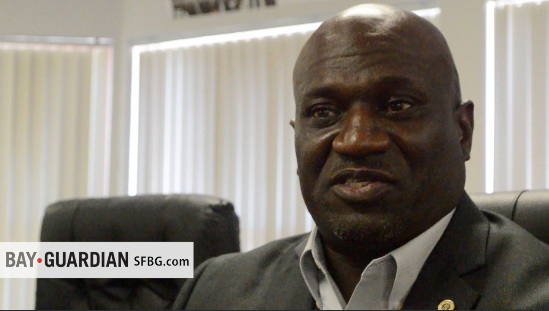
Just as Herrera announced his intentions, the Bay Guardian sat down at the Transit Workers Unit local 250-A for an interview with Eric Williams, president of Muni’s worker union. 

Here are William’s answers to our questions. Pick up a copy of next week’s paper for a broader story on the Muni sickout and union backlash in San Francisco.

San Francisco Bay Guardian: Thanks for sitting down with me. This is obviously a contentious time for Muni workers. But let’s hear how this all started: What’s the nitty-gritty contract disagreement between the SFMTA and the union?

Eric Williams: We don’t have a problem paying our pension, despite what’s being said. We would like a fair even swap, just like everyone else had. The police, the fire department, every union in this city got a fair swap to help pay their own pension. Right now they want to offer us a bump to pay our own pension, but once we got our CPA to crunch the numbers, it’s all negative.

The city wants you to beleive it’s cost-neutral, but that’s not the case. Our members will be making $1.10 less an hour due to this negotiation. 

SFBG So you’ve said before that certain laws and codes have “stacked the deck” in negotiations against the union, in favor of the SFMTA. How does that work?

EW You have to read Prop G [regarding Muni operators’ salaries] and code A8.409 [prohibiting strikes] and say “is this fair?” 

We’re struggling, we’re coming into a negoatiaion with our hands tied behind our back. The beauracracy and the spinning of the words and statements is alive in the agency. 

It’s unfortunate the public thinks it’s the common workers’ fault on any of these issues. Our members have to take care of our families, our children, paying for college, just like you. 

[Proponents of Prop. G said] “Well, it will make everything fair.” Actually, it’s not.

A ten-minute video interview with TWU Local 255-A President Eric Williams, as he explains the motivations behind the sickout.

SFBG Let’s get into that a bit more. So you walk into a negotiation, you bring a proposal. The way most union negotiations work is two parties sit down and present proposals, but the Muni worker/SFMTA negotiation is unique. You have to prove something to the arbitrator. What do you have to prove?

EW Basically, we have to show we’re not going to be costly to the agency. But inflation is going up, how could we not be costly?

 We just want restrooms, but those are costly. We want raises, those are costly. We want better parking, that’s costly.

The arbitrator must side with the city if they feel the cost burden will be too high on the city. All SFMTA employees are under the same deal. I’ve been at four tables in the past few months and negotiated two contracts with parties other than the SFMTA. We had to go to mediation, those mediators told us to talk it over again (offering compromise). You take this proposal, you take this one. That’s not the case with the SFMTA negotiations.

SFBG Can Muni workers afford to live in San Francisco?

EW Definitely not. The only members that live inside the city are those who purchased a home 20 or so years ago. The majority of our members live outside the city. That’s what leads to the issue of transportation and parking. If you’re pulling a bus run at 5:30 in the morning, guess what, there’s no bus at 4am to get them there. They need parking. It’s poor or rich in this city, there’s no in between. That’s no secret.

SFBG How far back would you have to go to say a good strong bloc of members lived in the city?

EW At least 20-30 years. Early ’90s, ’80s. 

SFBG Let’s talk about the atmosphere with riders out there. We recently saw a BART strike, did you take a read on the reaction? The sickout, which seems similar … people seem to not be siding with the union on this. There’s a lot of animosity.

EW We thought people understood who were in charge of the economics. It’s unfortunate the public may believe it’s the common workers’ fault on the issues. 

If you look at the bargaining with BART, yes it caused frustration. Yes it did. But when you see them empathizing with the power, “yes we know this hurts, but we have a family too.” The only thing we can do is ring the bell and say “this is unfair.”

SFBG Do you feel there is a backlash against Muni workers for the sickout?

EW Honestly i couldn’t tell the difference, we’ve been drug over the coals for so long. The frustration you’ve seen the past few days, not brought by the union itself, but by the members, is real. 

But in reality our members encounter something different with the everyday riders. The mothers, the fathers, [they have] a different attitude. Of course we have that 10, 20 percent that no matter what we do, who say we’re wrong. But we have to take a stand as well. We’re important here. We take our jobs seriously, and we should be treated as such. 

[Those who disagree with us] need to challenge the agency on everything the agency tells them. The system is still not on time, you still don’t have enough employees to drive the buses on the ground. The SFMTA spends all this money but we’re not on time, we don’t have enough people. 

Those 10-20 percent [who disagree with the workers] need to read the charter. Any person with common sense, any person with a heart, ask themselves if that process is fair. 

SFBG You don’t think part of it is the view that Muni workers make much more than private sector workers?

EW There’ve always been good private sector employers out there. But unions got us weekends, unions got us better working hours, unions got you sick leave. But go out and ask how they feel, what they think the public’s issue with us because we’re making $60,000 a year, and you went to college for four years. Maybe it’s because we’re making a living, and you’re struggling. Well hey, come get a job as a bus driver if it’s that bad out there.


The pedestrian pop of Sylvan Esso

0

Upon first listen, Sylvan Esso kind of takes hold of you. Nick Sanborn’s melodic, layered, driving electronic beats pair perfectly with Amelia Meath’s blissful voice and artful lyrics. The way Sylvan Esso — the band’s self-titled debut album, which dropped May 13 — is wrapped together feels so intuitive, so ethereal, that it will likely bring you to your feet for an impromptu dance session.

“Hey Mami” will loop in your head; “Dress” will become your jam. And you’ll be in good company this Fri/6 at the Fillmore, when Sylvan Esso open for Oakland’s own tUnE-yArDs.

I had the pleasure of speaking with Meath from the Free Press Summer Festival in Houston on Sunday. She posted up in her trailer for our call after seeing Lauryn Hill’s performance – which, she assured me, was awesome.

So how did Sylvan Esso come to be? Well, for starters, lyricist Amelia Meath and electronic producer Nick Sanborn fortuitously found themselves playing on the same bill at the Cactus Club in Milwaukee one night. They became instant friends. When Meath needed a remix for “Play It Right” — a song she wrote and played with her indie folk trio, Mountain Man — she asked Sanborn to make it and was very pleased with the product.

After collaborating on “Play It Right,” Meath and Sanborn both felt like they should collaborate some more. And then, after some tweeting and planning, Sylvan Esso was born. “It almost feels like magic how good we are at working together,” Meath says.

When I first listened to Sylvan Esso, I felt hard-pressed to assign it a genre. Meath’s lyrics are deep and introspective, and Sanborn’s arrangements are incredibly inventive; but I think the undeniable catchiness of their songs makes Sylvan Esso, essentially, pop. Meath likes to call it “pedestrian pop”: pop music that illustrates universal human experiences and makes you “shake your butt” — and feel emotion — simultaneously.

Meath feels that electronic music has a marketed effect on people; she loves pairing her lyrics and melodies with Sanborn’s electronic arrangements. “I always wanted to make electronic music because I really like that electronic music shakes people; it actually vibrates people at the same rate at the same time,” Meath says.

The duo has many varied sound influences, such as They Might Be Giants, Aliyah, John Lurie/Marvin Pontiac, and Stina Nordenstam. Meath also looked to pop goddesses like Beyoncé and Rihanna while writing the lyrics to Sylvan Esso. “When you write a pop song, you’re trying to make something that’s going to sink into the brain of someone and stay with them after hearing it once,” Meath says.

The duo will be opening for tUnE-yArDs at the Fillmore on Friday, June 6. (They’re in the Bay Area for one night only.) Meath is no stranger to San Francisco, as she used to spend summers here during her teens while training with a Chinese contortionist. (Yes, Meath also happens to be a badass.)

“We have to be in Pasadena the next morning,” Meath says, “but if I were going to be in San Francisco for the weekend, I would walk up Russian Hill, and eat some really delicious food — that’s for sure! Oh, I also always really like to go to Tartine, and then I go to Bi-Rite and spend way too much money on groceries, and then sit in Dolores Park all day long!” She’s an honorary San Franciscan for sure.

When asked what she enjoys most about performing, Meath stressed the communal aspect of live music. “My favorite thing about performing is that you get to be the hinge for the whole room to become a small community,” Meath says.

Sylvan Esso opening for tUnE-yArDs on Fri/6
9 pm, $26
The Fillmore
1805 Geary, SF
www.thefillmore.com

The Damned on playing small venues, headgear that protects you from spit, and why they won’t stop ’til the Stones do

7

For nearly four decades now, legendary British rockers The Damned have been haunting stages around the world with their brand of gothic-inspired punk.

Since storming onto the London punk scene in 1976, the band has evolved and survived multiple line-up changes over the years, with the group now led by founding members Dave Vanian and Captain Sensible, who are keeping the original spirit of The Damned alive and well.

Today, Vanian’s punk-meets-rockabilly crooner vocals and Sensible’s wildly blistering guitar are backed up by the jackhammer rhythm section of drummer Pinch and bassist Stu West, along with keyboardist Monty Oxy Moron, who often looks like a possessed version of Beethoven, his hands flailing wildly about when not pounding the keys.

Bay Area fans are in for a treat this week as The Damned play two shows in Northern California ahead of their appearance at the Ink-N-Iron festival in Long Beach — and these are the only U.S. gigs on the books for the year.

“I love visiting San Francisco, it’s the most European city in North America and a vegetarian’s paradise. My home is in Brighton, the gay capital of the UK and a lot of the relaxed liberal attitude we have there is over here too,” says Captain Sensible, via email. “I like the way the Bay Area is a collection of villages all with their different vibe, but mainly it’s the smart, friendly people here that make a visit such fun.”

Looking back over almost 40 years of on and off history as a band, Sensible offers a candid assessment of what life has been like as a member of The Damned.

“I’m not one for regrets, we’ve had a splendid crack as a band. A lot of things that went pear shaped was our own stupid fault — and how we survived the mania of the 70s / 80s without anyone dropping dead I’ve no idea. But as you can imagine it was bloody good fun in a time when bands could pretty much do what ever they wanted in the studio without label types breathing down our necks; in fact, when they did turn up we always put on a little show for them, band splitting up, drummer climbing in a grand piano to add nonsensical avant-garde overdubs on a straightforward punk tune, food fights. They got the idea in the end and left us alone, and we actually made a few decent records despite all the chaos.”

The Damned were the first punk band from the UK to release a single — “New Rose” — and an album, Damned Damned Damned.

https://www.youtube.com/watch?v=rTfyUqVqX-0&feature=kp

They also broke ground as the first to cross the pond and tour the United States, a jaunt that saw them play the infamous Mabuhay Gardens in San Francisco back in 1977.

“It’s all a blur as you can imagine, but we met loads of young upstarts who told us they were getting their bands together. It was a great time, a clean slate if you like. And it felt good to give the jaded stadium rock stars of the time a kick up the arse.”

“I also remember American beer being universally appalling. In fact I would cram my suitcase with as much booze as possible, if you can believe that. Now, of course Californian craft beer is the cutting edge of brewing and we intend to visit a few breweries this trip.”

As for Sensible’s now-signature stage attire — a red beret and crazy sunglasses — it turns out it had nothing to do with trying to make a fashion statement: It was born from the environment that came to epitomize live shows in the early days of the punk movement.

“The truth is that at first I only wore a beret to stop the ‘gob’ (spit) getting in my hair. After Johnny Rotten and Rat Scabies had their famous spitting incident at a Pistols gig in ’76 it became part of the punk scene for a year or so. The problem was the hot stage lights baked the gob in your hair and it was almost impossible to remove the hard lumps afterwards, so I wore a beret and sunglasses to stop it getting into my eyes. That’s the true story, it wasn’t fashion — it was self preservation!”

Fans will be able to hear all sorts of first-hand accounts and behind the scenes stories in the near future when a documentary film about The Damned is released, made by Wes Orshoski, the filmmaker behind “Lemmy,” the award-winning portrait of the iconic Motorhead frontman.

“I took Wes to do an interview outside the former home of my parents — where I spent my school years — and no sooner was the camera rolling than a drug crazed mugger made a grab for it and a good old fashioned punch up ensued in which $50,000 worth of film equipment got completely trashed. Wes ended up being rushed to hospital. He probably needed a rabies antidote,” says Sensible.

“I should have mentioned to him that I was born and raised in the roughest part of South London — where one person’s posh movie gear is someone else’s years supply of crack cocaine.”

Despite difficulties such as that jarring incident, Sensible says that the rest of the project has been proceeding along well.

“He’s captured some very funny footage already as the Damned are quite a strange bunch these days. People think they know us, but I reckon there will be a few surprised faces when the film is released.”

One fact that casual fans of The Damned might not know is that Captain Sensible is a huge train buff — he’s driven steam engines in England, and even had a diesel locomotive named after him.

“There was a company that had a punk fan as boss and he named his locos after his heroes. John Peel, Joe Strummer — mine was originally going to be called Morrissey but it came to the guy’s attention that he made a point NEVER to travel by train. Whereas I do all the time, so I got it instead!”

Unfortunately, Cotswold Rail went out of business a few years ago, and when the engine was sold, a disgruntled employee that was owed money stole the nameplates.

“I’d maybe buy ‘em if he offered, gotta be worth a fiver, eh?” says Sensible.

While the Damned often perform at large music festivals around the world these days, Sensible still favors smaller shows, like the one the band will play at Slim’s on Wed/4.

“I prefer the club gigs, the closeness to the audience. And when I see bands, that’s also the environment I prefer. Festivals with screens and the musicians half a mile away on a distant stage is not great is it? The problem is that now we are a certain age, and there’s not likely to be another club tour as it’s a bit knackering.”

Although Sensible mentions that the members of The Damned aren’t exactly spring chickens anymore, he’s adamant that they have no intention of hanging it up anytime soon.
 
“The Damned ain’t going to quit while the Stones are still lurching on,” he says. “We’re not gonna be beat by a bunch of old Tories.”

https://www.youtube.com/watch?v=8m2JyiggwAU

The Damned, with Koffin Kats and Stellar Corpses
Wednesday, June 4
8pm, $30
Slim’s
333 11th St., SF
(415) 255-0333
www.slimspresents.com

Ethics complaint says chair of DCCC deliberately tried to confuse voters

NOTE: This post has been updated from an earlier version.

Right down to the wire, a complaint filed with the San Francisco Ethics Commission today [Tue/3] – election day – alleges that Democratic County Central Committee elected chair Mary Jung authorized phone calls that were meant to deliberately confuse voters on Proposition B.

The ballot measure, which would require voter approval for waterfront height limit increases, is officially backed by a committee called “No Wall on the Waterfront, Yes on B.”

But according to the Ethics Commission complaint, opponents of Prop. B falsely portrayed No Wall on the Waterfront as being against Prop. B in a bid to confuse voters.

A transcript of the call included in the complaint notes that a live caller opened the communication by saying, “I’m calling about the No Wall on the Waterfront Campaign,” without saying they were calling in opposition to that campaign, and seemingly posing as being affiliated with it. Callers also made statements such as, “Prop B is about environmental loopholes, against affordable housing,” and “No on B endorsements — the Democratic Party, Alice Toklas democratic club, labor.”

“This act by Ms. Jung was a devious and deceptive plan to trick San Francisco voters,” complainant Geraldine Crowley, formerly a DCCC member herself, charged in the filing. “While I realize she employed as a highly paid lobbyist for the San Francisco Association of Realtors – who oppose Prop. B – it crosses the line for Ms. Jung to violate the ethical codes and San Francisco law in this manner.”

We reached Jung by leaving a message on her phone line, listed on the San Francisco Association of Realtors website, next to her job title: “Director of Government and Community Relations.” (Which is really a very convenient arrangement for the real-estate crowd, when you think about it. Who better to relate to the “community” and the “government” than the chair of one of the most politically influential organizations in town, which endorses candidates for elected office?)

When she called us back, Jung confirmed, “We were calling people to vote No on Prop. B.” But what about the allegation that those calls were intentionally deceptive, falsely painting No Wall on the Waterfront as being against Prop. B? “I have not seen the complaint,” Jung told us. She added, “I don’t have a copy of the script” used by callers when they contacted voters. To get a copy of the script, she said, we would have to call political consultant Eric Jaye, who is handling communications for the opposition to Prop. B. We tried calling Jaye but couldn’t reach him.

[UPDATE: Jaye just returned our call. He said Crowley’s complaint is “frivolous” because the callers said they were calling “about” the No Wall on the Waterfront Campaign. “This was what they named their campaign,” Jaye said repeatedly. “It’s not deceptive.” But we asked him multiple times if he would provide a copy of the full call script, and he refused to do so, without offering any reason why he couldn’t.]

What’s more, according to Crowley’s complaint, is that the paid phone calls to DCCC members appear to have originated with venture capitalist Ron Conway, who made a $25,000 donation to the DCCC on May 30. A few days later, Ethics Commission filings show, Jung authorized expenditures totaling $12,281.13 for “membership communication calls.”

Jung denied having had any conversation with Conway about it, and said “the Democratic Party has done a lot of fundraising in the past three months,” and that she could not link a specific donation with a specific DCCC expenditure. She then said she had to go.

Officially, “you can’t give to the party and officially say the donation is for some purpose, but anyone who’s worked in San Francisco politics knows … it’s designed to make something happen,” said Jon Golinger, who heads up the “No Wall on the Waterfront, Yes on B” committee.

He added, “They’re literally using our name to further an agenda that is the opposite” of what the Yes on B campaign has been organizing for.

Some members of the DCCC are reportedly seeking copies of that script, since there seems to have been little awareness of what was being told to voters in the Democratic committee’s name.

But the idea that Jung herself did not know what was being said in the calls, when she authorized the expenditure for membership calls and works in the same office as Prop. B opponents, raises questions about what sort of leadership she’s actually providing.

In the meantime, here’s the Ethics Commission complaint.

Ethics Complaint Against Mary Jung by Rebecca Bowe

Glickman has been writing and performing reverb- and sun-drenched love songs for the California coast — both literally lyrics about it and music that just begs to be played while driving down it — for more than a decade now. At the helm of the Botticellis, SF’s reigning surf-pop darlings from 2004 through 2008, he was responsible for the tightly-crafted, intricately composed nature of the band’s dream-moody pop songs.

That band is no longer, but if the Botticellis had to meet their end to get Glickman to sound like he does now, fronting Sandy’s, fans shouldn’t mourn too hard. Possessed of an immersive, wide open space of sound, the band’s debut album, Fourth Dementia, out June 3 on Um Yeah Arts, is just as thoughtfully arranged, but there’s room to breathe around it, maybe a druggier-end-of-the-Beatles-spectrum vibe, a sweet melancholy and nostalgia around shaping the edges of the surf-happy guitar.

“When the band broke up in 2009, I had some songs I’d been working on that just got shelved,” says Glickman, while on a break from his day job — he teaches music lessons at the Proof Lab Surf Shop up in Marin, and he’s happy to report that he just taught two nine-year-olds how to play “Smells Like Teen Spirit” on guitar. Following the Botticellis’ demise, faced with the prospect of rebuilding a musical career from scratch, Glickman went out on the road with fellow surfer-musician Kyle Field, aka Little Wings.

“His approach is very different from mine; he writes these poems, basically, and the music is an accompaniment to that. It’s very lyric-centric, and playing in his group each night was this very spontaneous thing,” he says. “The songs were not super-arranged, not ‘Ok, you hit the crash cymbal three times, then the guitar goes like this and we do a jump-kick,’ none of the preciseness I was used to. So every show was different. A lot of the shows were amazing, a few were total shitshows. But that was a way to do things that had never really crossed my mind, and it had a big influence on me.”

He took the songs he’d shelved and rearranged them, playing them with open tuning, all in D major. “Especially when we play live, I think you can see an openness to the sound that’s new for me,” he says. Certainly it’s reassuring, in part, to have familiar folks at his side for that: The Sandy’s album features includes former Botticellis co-writer Blythe Foster, Zack Ehrlich (of Sonny & the Sunsets and Vetiver), Burton Li (Citay), Ryan Browne (Sonny & the Sunsets and Tortured Genie), Apollo Sunshine‘s Jeremy Black, and Range of Light Wilderness‘ Nick Aive.

As for the pervasive sense of melancholy, Glickman acknowledges that Chris Bell’s I Am the Cosmos — the epically composed folk-power-pop opus by the tortured and underappreciated Big Star songwriter — was on repeat during the year or so after the Botticellis broke up (a time in which Glickman also had a relationship end), during which Glickman was writing these songs.

And yet: “We have a lot of fun at our shows, and I get the sense that the audience comes to shows to smile and have fun, and that’s kinda new for me too,” he says with a laugh. “When I was in my 20s, I had a lot to say and I wanted to make this beautiful music and share this experience with people, but I don’t think anywhere in that experience was the word fun. Now there’s a lighthearted element there.”

Catch Sandy’s at Hickey Fest June 20-22 or at their record release party July 11 at The Mill, which Glickman promises will feature a keg and tacos. Works for me.

ELECTRO-FOREST NYMPH JAMS?

“I think we’re both just naturally more inspired when we can be in nature,” says Emily Ritz, one-half of the psych-folk duo Yesway, who released their self-titled debut June 3. She and bandmate Kacey Johansing, who’ve been moving in musical circles around one another since meeting at the Hotel Utah’s open mic in 2006 (Ritz is in the noir-pop band DRMS, Johansing’s provided vocals for the likes of Geographer, and more recently has enjoyed local success as a solo singer-songwriter) have called from the road — they’re on a mini-tour of the East Coast, with our conversation providing the soundtrack for their drive from Brooklyn to upstate New York.

Though they forged their friendship and musical collaborations in San Francisco, both musicians have since moved to small beach towns in the North Bay, whose lush wilderness and dreamy pace of life unmistakably color songs like “Woahcean” and “Howlin’ Face.” The pair’s voices layer over and call-and-response to one another in unexpected ways over fingerpicked acoustic guitar that flits like light on water; throughout the album, there’s the soothing hush of being surrounded by tall trees as opposed to skyscraper, while electronic elements, vibraphones, odd time signatures, and the odd R&B/hip-hop percussive move keep you wide-awake. This isn’t easy-listening music.

It helps, of course, that they’re strong singers; there’s an easy harmony that feels like they’re letting you in on something. “We do have a really unique musical connection, and I think that comes across to people right away,” says Ritz. “We both have voices that are really different from each other, but they melt together in a way. I think it’s rare to see two front women, two kind of powerhouse vocalists come together, meet each other as equals musically, and create something totally different together.” They’ll headline the Rickshaw Stop June 25, so you can go suss out exactly what that is for yourself.

ALSO: This coming weekend is overwhelmingly packed with good shows, so time to make some decisions. Marcus Cohen & the Congress, who bring their funk-soul-hip-hop-R&B stew to the Great American Music Hall Fri/6, are one option that will not likely disappoint. Last time I saw them live I’m pretty sure no one left without a dancing-tired grin on their face. Check the Noise blog for a conversation with Cohen this week.


Movin’ on

2

marke@sfbg.com

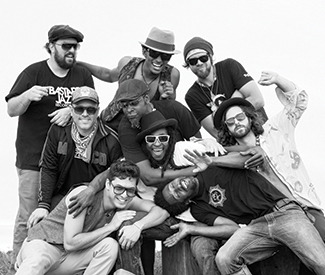
SUPER EGO “The Mission has changed so much since we started the party. Just so many strollers and $10 tacos… It’s crazy … ” DJ Oz McGuire (aka Señor Oz) was telling me. Along with his brother Joey (aka Pleasuremaker) and the cutest crew ever, Oz has thrown fantastic panglobal funk weekly Afrolicious at Elbo Room for the past seven years.

Uh oh. This sounds like the start of a break up talk. An “it’s time to move on” soliloquy. An “it’s not you, it’s them” kind of thing. Don’t make me pull out my wet telenovella hysterical dramatics on you, Oz!

“Elbo Room has always been a special place and it will continue to be,” he continued, gently. “But Afrolicious has developed into something bigger than a club night. We got to try out so many things and expand our horizons. We never planned on becoming a live band, but like everything else about Afrolicious it happened organically. We’re now on Thievery Corporation’s label and touring all over.”

Hot tears welling …

“When we started the party, it was truly what we thought the Mission was about. It wasn’t exclusive and it wasn’t exclusionary, it was open to everyone. Every Thursday has been an adventure, full of live music, great guests, and a room full of awesome people. The youngest person in our collective is the rising soul singer Ziek McCarter who started with us at 19. Our oldest member is Baba Duru, who moved to SF in 1970 and toured with Stevie Wonder. Our vocalist is from Trinidad and our drummer is from Brazil. We all congregated in SF over our love of the universal groove. There are rhythms that connect all dance music from the beginning of time to the present day and we believed we could transmit them. Now it’s time to take that original Mission feeling to the world.”

Oh, I see. So now we’re supposed to share you?

“It’s not like we’re leaving SF. Pleasuremaker and Izzy Wise are starting a new night on Thursdays at the Elbo Room called Hi Life, full of Afrolicious regulars. We just wanted to end while Afrolicious was still hot and relevant. We never wanted to have a bad party, we batted 1000 percent. We’ll always love the vibe here.”

Fine then. Go. But I’m keeping the damn dog. And the purple Camaro!

AFROLICIOUS GRAND FINALE Thu/5, 9:30pm,, $10–$15. Elbo Room, 647 Valencia, SF. www.elbo.com


RICK WADE

Seminal Detroit house player will turn the weekly Housepitality party out with his deep and freaky Harmonie Park sound. A midweek must.

Wed/4, 9pm, free before 11pm with RSVP at www.housepitalitysf.com/rsvp, $10 after. F8, 1192 Folsom, SF.


DBX

Original techno ambassador (and exemplary Canadian chap) Daniel Bell brings his live show — which slayed everyone last month at the Detroit Electronic Music Fest — to the As You Like It party.

Fri/6, 9pm-4am, $20. Monarch, 101 Sixth St, SF. www.ayli-sf.com


WORTHY

Longtime dirtybird crewmember and essential SF DJ/troublemaker Worthy is dropping gorgeously funky album Disbehave featuring one of my favorite people in the world, vocalist Audio Angel. This is the party for that. It will be bonkers.

Fri/6, 9pm-3am, $5 before 11pm with RSVP (details at www.mighty119.com). Mighty, 119 Utah, SF.


STEFFI

One of the best selectors brings her great energy from Berlin to the Honey Soundsystem party, bearing rare, groovy, and just plain lovely house and techno cuts galore.

Sat/7, 9pm-4am, $15–$20. Public Works, 161 Erie, SF. www.publicsf.com


J. ROCC

The legendary turntablist (he started the Beat Junkies in 1992, but has been scratching up Cali since the mid-80s) hits F8’s decks with all-star support from Kevvy Kev, Vinroc, Dials, and Napsty. Expect pyrotechnics.

Sat/7, 10pm, $7–$20. F8, 1192 Folsom, SF. www.feightsf.com


WICKED 23: THE MAGICK BALL

So stoked to celebrate 23 years with this genius crew and a dance floor full of true SF underground flavor. It’s a bittersweet party, though: DJ Thomas — who found global fame as one half of Rub N Tug — has announced this will be his final gig.

https://www.youtube.com/watch?v=dkL71qHDjAc

Sat/7, 10pm-6am, $20–$25. Mighty, 119 Utah, SF. www.mighty119.com


Stroll tide

0

arts@sfbg.com

DANCE The third Walking Distance Dance Festival — basically three programs of two pieces over two days — was modest in scale. Audience members may have traveled only half a block between venues for this fringe-style event, yet as curated by ODC Theater Director Christy Bolingbroke, these short trips became adventures.

Running through the festival was a simple question: What do we do with what we have? Dance works used to be considered moments in time that left behind only fading footprints. No longer. Dance historians have unearthed huge chunks of the past, and the Internet, with YouTube at its core, opens much of it at the click of a key. Besides, like it or not, the past is part of who we are. We can’t get away from it.

In the festival’s opener, the question for Lionel Popkin became how he, with an Indian mother, was supposed to look at Ruth St. Denis, the pioneering modern dancer who dabbled in what she saw as Indian dance. With the brilliant and sharp Ruth Doesn’t Live Here Anymore, Popkin attacked the complexities of these issues with humor, much of it self-effacing, and vigorous dancing for himself, Emily Beattie, and Carolyn Hall. They pushed along the floor and rolled over each other; they also dived into the unholy mess of St. Denis’ fixation on veils as they subverted her pedantic instructions for Nautch, her most famous work. Master accordionist Guy Klucevsek’s score, performed live, was superb.

The festival ended with Amy O’Neal’s cheekily titled solo The Most Innovative, Daring, and Original Piece of Dance/Performance You Will See this Decade. O’Neal is a stunningly captivating performer who slides in and out of hip-hop, club, modern, and even some balletic dancing. She may have been alone on stage, but with her are Dorothy’s red slippers and choreography from music videos by Ciara and Janet Jackson, freely adapted but still recognizable. An accompanying projected text addressed issues of influences (borrowed, stolen, honoring, or accidental) on the creative process. Make them your own, O’Neal asserted. She did.

So did Doug Elkins Choreography, Etc.’s high wire comedy act Hapless Bizarre, in which voguing and musical theater ran smack into vaudeville and physical clowning. The superb Mark Gindick played the clueless outsider who wormed his way into an haute monde — in every sense of that term since all but one of the other performers towered over him. Starting with an elaborate hat trick, the dancers marvelously picked up on voguing’s haughty and competitive struts and poses. As Hapless moved on to romance, the intensity of pratfalls, rejections, and increasingly hopeless entanglements become even more frantic. Glad to say that Gindick finally got the girl.

Three local groups also participated in this fine festival. Garrett + Moulton Productions reprised its A Show of Hands, which premiered last October in the Jewish Community Center of San Francisco’s airy lobby. Dan Becker’s excellent score, performed live, still sounded wonderful.

At ODC, Show, inspired by Charles Moulton’s drawing of hand gestures that were projected as a backdrop, looked tighter and more focused. Hand gestures — so often neglected in Western dancing — came into their own. They poked, touched, and reached. With the dancers stacked on pedestals, their fingers resembled trembling butterflies. But the hands also lifted and carried three of the musicians in a funeral procession, leaving an elegiac cellist behind.

Show offered marvelously full-bodied and fluid dancing with phrases that flew, sank, or simply disappeared into the wings. Nol Simonse injected a comedian’s touch into his duet with Dudley Flores. Newly blond Vivian Aragon, a fiercely balletic dancer, attacked every move as if it were her last. No wonder she could grab and lift Simonse like a puppet.

Show was paired with an excerpt of Bhakti: Women’s Liberation of Love by Kathak dancer Rachna Nivas, in which she attempted to portray Hindu mystic and poet Meerabai as a proto-feminist. An exquisite dancer with a refined sense of rhythmic acuity who is well-schooled in male-female roles, Nivas charmed as the girl devoted to Krishna, but her telling of other aspects of Meerabai’s life needed more complexity.

The festival’s most haunting dancing came from Headmistress dancers Amara Tabor-Smith and Sherwood Chen. Shame the Devil explored the process of what Tabor-Smith calls becoming a crone. Hopping in place and becoming very still, her intensity mesmerized as she called up several lifetimes’ worth of states of being. She should, however, ditch her auxiliary performers.

Mummified in layers and layers of clothing, Chen’s Mongrel channeled Dervish dancing — until he stripped down to acquire a more authentic but also more vulnerable identity. Though it’s a borrowed metaphor, Mongrel convinced because of the rigor and consistency that Chen imposed on his dance making. Replacing Moroccan with Brazilian music, however, seemed just a touch too simplistic. *


End the open primary experiment

21

EDITORIAL

This week’s primary election on June 3 occurred after Guardian press time for this issue, but there’s one conclusion that we can draw about it without even knowing the results: This is a pretty shabby form of democracy that few voters cared about. California’s experiment in open primaries is a disaster, and it’s time for a new model.

Turnout for this election was expected to hit historic lows, and for good reason: There was nothing of any real significance on this ballot, except perhaps for Proposition B on the San Francisco ballot, to require voter approval for height increases on waterfront development projects.

Even the hotly contested Assembly District 17 race between David Campos and David Chiu was simply a practice run for a rematch in November, thanks to an open primary system that sends the top two primary finishers, regardless of party, to the general election.

The system was approved by voters at Proposition 14 in 2010, placed on the ballot by then-Assemblymember Abel Maldonado as part of a deal with then-Gov. Arnold Schwarzenegger to break a budget stalemate caused by their fellow Republicans. Such horse-trading should have been a bad sign that this change wouldn’t live up to its idealistic hopes.

Its backers promised that it would favor more moderate candidates and reduce negative campaigning, but that hasn’t happened. Indeed, at press time it appeared Gov. Jerry Brown would be facing the most radically right-winger in the race, Tim Donnelly, in November.

What it has instead done is reduce the primary election to a boring and meaningless waste of time and money, turning off voters and creating low-turnout elections that are more prone to manipulation by wealthy special interests.

We at the Guardian are all for greater experimentation in our electoral models. We were big supporters of the ranked-choice voting system that is working well in San Francisco and Oakland. We support even more aggressive models for publicly financing campaigns and reducing the role on private money in electoral politics. Hell, we also support a proportional representation system and other wholesale transformations of our political system.

But while we’d love to see even more electoral experimentation, we also need to recognize when experiments are failing, as California’s open primary system now is. It’s time to try something new.


The 8 things that made BottleRock, well, BottleRock

0

I am surrounded by people with purple teeth, stained from too much red wine. These people are twisted beyond belief, screaming obscenities about forgotten 90s bands, while wine sloshes around in glasses suspended by those stupid-looking lanyard wine glass holders. I want to say to them, “Literally, handle your shit. Like, physically hold your glass of wine. You’re a grown up.” It’s like a bad summer picnic for rich winos…

Or at least that’s how I imagined BottleRock to be as we drove up from San Francisco blaring the Gin Blossoms. It was my first time at this particular festival and like everything, I imagined the weirdest possible outcome. While I was dead wrong about the particulars, it was right about something: this festival was strange as shit. Here are a few things that made Bottle Rock, well, Bottle Rock. 

1. Cargo shorts – There were A LOT of cargo shorts. Especially the first day. My friend Lauryn was right, the time machine had worked. But instead of a My So-Called Life fashion parade, it was more like all the style trends of the past 40 years muddled together with large dollop of not really trying. Cargo shorts are the vanguard of not really trying. While I appreciate their utilitarianism, how many things do you really need to hold? I know I sound like a San Francisco snob, but really…cargo shorts.  

cs

2. Middling bands – There were some really stellar, world-class acts at BottleRock. Outkast, The Cure, Weezer, TV on the Radio; these are the groups whose music helps not only define the moments of your lifetime but also whose existence has influenced the way music is created. That said, a lot of the bands who played over the weekend were probably as surprised as you were that they were booked. I wonder how many of them first said to their booking agent, “Are you fucking with me?” While groups like Smash Mouth, Third Eye Blind, The Spin Doctors, and Cracker all have one or two solid hits, festival-goers spent most of their sets fidgeting anxiously while muttering, “Dude, play the one song already.” We didn’t even get to stay long enough to find out if the Gin Blossoms played “Hey Jealousy” because well, The Cure was about to start. BottleRock was held where the Napa Town and Country Fair is held, which makes sense considering how many of the bands now play the fair circuit.

weezer
Weezer

3. The crowd was really well-behaved – Honestly, what a nice group of 40,000 people. I remember saying at one point, “Nobody gets arrested at this festival.” Anyone who’s spent time in large groups of drunk people knows that feeling of menace being in the air. Like when you walk out of a sports game at the opponents home field after your team just won. It’s that feeling of, “things could get ugly real fast”. Well there was none of that at BottleRock. You could’ve headbutted somebody’s child and they would probably have apologized to you. Well done, Napa. You sure bring out nice folks. Case in point: At one point my lady friend Ashley lost her phone and some well-meaning person found it and brought it to a security guard. Ashley had it back in less than an hour.      

cure
The Cure. Photo by Lauryn McCarthy.

4. The crowd was also kinda weak – At two different times during their incredible set, Andre 3000 and Big Boi, the principle members of Outkast, asked the crowed “Are you still with us?” [Ed note: this is embarrassing.] Outkast didn’t even come out for an encore. Maybe it’s because after two days of watching bands like Third Eye Blind, where the festival goers only knew one out of every six songs, they just weren’t emotionally equipped to handle a set this good. At this point they so yearned for something familiar that anytime Outkast strayed from their megahits, the crowd lost interest. I’m sorry, Andre and Big Boi. I was there with you the whole time. 

5. Matt and Kim make the world a better place – Seriously who knew that two people, a drum kit, and a synth could be so enthralling? Matt and Kim are the most fun band ever! I was never that into their recorded music, but after seeing them live, I want to start saving up now so I can afford to hire them to play my as-yet unborn child’s bar or bat mitzvah.

matt and kim
Matt and Kim

6. $20 glasses of wine – Yes, really. Glasses of wine were $20. Maybe that’s why everyone was so nice to each other, nobody could afford to get drunk.  

7. No place to stay and terrible traffic – One of the things that makes Napa so nice to visit, besides the whole being buzzed on wine samples thing, is that it’s a quaint and lovely little town. The problem with that is that when you have 40,000 people come in for the weekend it makes it really had for people to find a place to stay. This makes people stay in the Bay Area and commute each night, which in turn potentially puts a lot more intoxicated people on the road. There isn’t even shuttle service offered from San Francisco, Oakland, Berkeley etc. Even though we stayed with friends for the weekend, everything was so impacted that it took an hour an a half to get an Uber. These are all things that the organizers should take into account for next year.   

8. The strict 10pm curfew – Napa’s lovely quaintness also means that BottleRock has neighbors who hate everything about the festival. Somebody told me they saw a sign on a nearby house that basically said, “Hey Bottle Rock: Get the fuck out of here”. Thus there was a strict 10pm curfew that lead to both The Cure and Heart getting the plug pulled on them. I’m not saying anything instructive here about it, I’m just saying “bummer.”

If my snarkiness makes it seem like I hated the festival, I apologize. Overall BottleRock was a good time and has a lot of potential to get even better as the years progress. Until then, let’s all make an effort to rid the world of cargo shorts.  

Citizen Agnos comes on strong for Proposition B in support of his Athenian oath

3

By Bruce B. Brugmann  (with the complete  text of Art Agnos speech  to the  May 21 dinner of San Francisco Tomorrow)

When Art Agnos was sworn in as mayor in 1988, he used the Athenian Oath that was taken by young men reaching the age of majority in Athens 2000 years ago.  He shortened the oath (as many did) to say: “I promise…upon my honor…to leave my city better than I found it.”

For Agnos, a Greek steeped in Greek traditions, the oath was a serious matter. “At the heart of our vision,” Agnos said in his inaugural address, “ is a refusal to let San Francisco become an expensive enclave  that locks out the middle class, working families and the poor. At the center of our strategy is a belief in the basic right of people to decent jobs and housing.”  

Twenty-six years later, Citizen Agnos was working hard  in private life to leave his city better than he had found it. He led a citizens’ movement that stopped the monstrous 8 Washington project, knocked the Warriors off the piers, forced the Giants to lower their  highrise expectations,  and promoted Proposition  B that would stop  the Wall on the Waterfront and require a public vote on any increases  to current height limits on port property.

 And Agnos is having the time of his life doing all this, as he made clear in his remarks to San Francisco Tomorrow, the one organization in town that has been manning the barricades in every major Manhattanization battle all these years  on the waterfront and everywhere else.  He enjoys taking on Mayor Lee and “the high tech billionaire political network that wants to control city hall and fulfill their vision of who can live here and where.” And he must relish  the Chronicle’s C.W.Nevius and the paper’s editors and their self-immolating bouts of hysteria.  

Agnos gave a splendid speech and confirms that he really is our best ex-mayor. I particularly liked his point about the “power to decide” on development. “Today that power to decide is in a room In City Hall. I know that room. I have been in that room. 

“You know who is in there? It is the lobbyists,..the land use lawyers…the construction union representatives..the department directors..and other politicians. You know who is not in that room. You.Prop B changes that dynamic and puts you in the room that matters. No more ‘advisory committees’ that get  indulged and brushed off. No more ‘community outreach’ that is ignored. It will all matter.”

Yes, yes, yes, a thousand times yes, on B and stopping the Manhattanization of the waterfront. b3

Agnos remarks to San Francisco Tomorrow 

I am delighted to speak to the members and friends of SFT about the waterfront tonight…and a special shout out to Jane Morrison as one of the pioneer professional  women in the media… and one of the  finest Social Service Commissioners in our City’s history. I also welcome the opportunity to join you in honoring tonight’s unsung heroes…Becky Evans with whom I have worked closely over the past year and half …Tim Redmond  the conscience of the progressive community for the past 35 years…Sarah Short and Tommi Avicolli Mecca from the Housing Rights Committee who stand up every day for poor and working people who need a voice in our city.

Twenty-four years ago in 1990, I made one of the best decisions of my mayoralty when I listened to the progressive environmental voice of San Francisco and ordered the demolition of the Embarcadero Freeway. That freeway was not only a hideous blight but also a wall that separated the city from its waterfront. Hard to believe today…but it was a very controversial decision back then… just 3 years before…in 1987 the voters had defeated a proposal by Mayor Feinstein to demolish it. The Loma Prieta Earthquake gave us a chance to reconsider that idea in 1990. Despite opposition of 22,000 signatures on a petition to retrofit the damaged freeway… combined with intense lobbying from the downtown business community led by the Chamber of Commerce, North Beach, Fisherman’s Wharf and especially Chinatown…we convinced the Board of Supervisors to adopt our plan to demolish the freeway… by one vote.

And the rest is history…until today. 

After a period of superb improvements that include a restored Ferry Building…the Ball park… new public piers where one can walk further out into the bay than ever before in the history of this city… the 
Exploratorium…the soon to be opened Jim Herman Cruise Ship terminal…Brannan Wharf Park…there is a new threat. Private development plans that threaten to change the environment of what Herb Caen first called “our newest precious place” …not with an ugly concrete freeway wall…but with steel and glass hi-rises that are twice as tall.

Today…the availability of huge amounts of developer financing …combined with unprecedented influence in city hall and the oversight bodies of this city…the Waterfront has become the new gold coast of San Francisco. Politically connected developers seek to exploit magnificent public space with hi-rise, high profit developments that shut out the ordinary San Franciscan from our newest precious place. We love this city because it is a place where all of us have a claim to the best of it…no matter what our income…no matter that we are renter or homeowner…no matter what part of the city we come from.

And connected to that is the belief that waterfront public land is for all of us…not just those with the biggest bank account or most political influence. 

That was driven home in a recent call I had from a San Franciscan who complained about the high cost of housing for home ownership or rent…the high cost of Muni…museum admissions…even Golden Gate Bridge tours and on and on. When he finished with his list, I reminded him I was mayor 23 years ago and that there had been 4 mayors since me,  so why was he complaining to me?
“Because you are the only one I can reach!” he said.

Over the past few weeks…that message has stuck with me.  And I finally realized why. This is what many people in our city have been seeking… someone who will listen and understand. Someone who will listen…understands… and acts to protect our newest precious place…our restored waterfront. You see…it was not just about luxury high-rise condos at 8 Washington last year…It was not just a monstrous 
basketball arena on pier 30-32 with luxury high-rise condos and a hotel across the street on public land. It’s about the whole waterfront that belongs to the people of San Francisco…all 7 and half miles of it… from the Hyde Street Piers to India Basin. And it must be protected from the land use mistakes that can become irrevocable. 

This is not new to our time…8 Washington and the Warriors arena were not the first horrendous proposals…they were only the latest. Huge… out of scale… enormously profitable projects… fueled by exuberant boosterism from the Chamber of Commerce… have always surfaced on our waterfront. 50 years ago…my mentor in politics…then Supervisor Leo McCarthy said, “We must prevent a wall of high rise apartments along the waterfront…and we must stop the filling in of the SF bay as a part of a program to retain the things that have made this city attractive.” That was 1964…

In 2014…Former Board of Supervisors President Aaron Peskin said it best this way…”It seems like every 10 years…every generation has to stand up to some huge development that promises untold riches
  as it seeks to exploit the waterfront and our public access to it.” Public awareness first started with the construction of the 18 stories of Fontana towers east and west in 1963. That motivated then Assemblyman Casper Weinberger to lead public opposition and demand the first height limits… as well as put a stop to 5 more Fontana style buildings on the next block at Ghirardelli Square. This was the same Casper Weinberger who went on to become Secretary of HEW and Secretary of Defense under President Ronald Reagan.

In 1970 the Port Commission proposed to rip out the then “rotting piers” of piers 1 – 7 just north of the Ferry Building. They were to be replaced with 40 acres of fill (3 X Union Square) upon which a 1200-room hotel and a 2400 car garage would be built. It passed easily through Planning and the Board of Supervisors. When the proposal was rejected on 22 to 1 vote by BCDC, Mayor Alioto complained, “We just embalmed the rotting piers.” No… we didn’t …we saved them for the right project…and if one goes there today… they see it…the largest surviving renovated piers complex with restaurants, walk in cafes, port offices, free public docking space, water taxis and complete public access front and back. 

In 2002… that entire project was placed on the U.S. National Historic Register. But my favorite outrageous proposal from that time was the plan to demolish another set of “rotting piers” from the Ferry Building south to the Bay Bridge. And in place of those rotting piers… the plans called for more landfill to create a Ford dealership car lot with 5000 cars as well as a new Shopping center. That too…was stopped.

So now it’s our turn to make sure that we stop these all too frequent threats to the access and viability of our waterfront.

In the past 2 weeks…we have seen momentum grow to support locating the George Lucas Museum on piers 30-32 or the sea wall across the Embarcadero.I love the idea…but where would we be with that one be if a small band of waterfront neighbors and the Sierra Club had not had the courage to stand up to the Warriors and City Hall 2 years ago. Once again they used the all too familiar refrain of “rotting piers” as an impending catastrophe at piers 30-32.

Proposition B will help prevent mistakes before they happen. Most of all… Prop B will ensure protection of the port on more permanent basis by requiring a public vote on any increases to current height limits on Port property.All of the current planning approval processes will stay in place…Port Commission…Planning commission…Board of Permit Appeals…Board of Supervisors…will continue to do what they have always done. But if a waiver of current height limits along the waterfront is granted by any of those political bodies…it must be affirmed by a vote of the people. Prop B does not say Yes or No…it says Choice. It is that simple. The people of SF will make the final choice on height limit increases on port property. 

The idea of putting voters in charge of final approval is not new. In the past the people of San Francisco have voted for initiatives to approve a Children’s budget…a Library budget…retaining neighborhood fire stations… minimum police staffing… as well as require public authorization for new runway bay fill at our airport. And at the port itself… there have been approximately 18 ballot measures to make land use and policy decisions.

So…we are not talking about ballot box planning…we are talking about ballot box approval for waivers of existing height limits on public property. Opponents like Building Trades Council, Board of Realtors, 
and Chamber of Commerce are raising alarms that we will lose environment protections like CEQA by creating loopholes for developers. 
Astonishing! 

Prop B is sponsored by the Sierra Club…Tonight we honor Becky Evans of the Sierra Club who sponsored Proposition B. That same set of opponents are joined by city bureaucrats issuing “doomsday” reports stating that we will lose thousands of units of middle class housing… billions of dollars in port revenues…elimination of parks and open space on the waterfront. Astonishing!

These are the same bureaucrats who issued glowing reports a couple of years ago that the America’s Cup would mean billions in revenue for the port and the city. And they wanted to give Oracle’s Larry Ellison 66-year leases to develop on 5 of our port piers for that benefit! Now…how did THAT work out? So far…city hall will admit to $11 million dollars in known losses for the taxpayers.

Another opponent… SPUR says any kind of housing will make a difference and there are thousands in the pipe line… so don’t worry.
Astonishing!

We have not seen one stick of low income or affordable housing proposed on the waterfront since the 80s and 90s when Mayor Feinstein and I used waterfront land for that very purpose. Hundreds of low-income housing dwellings like Delancey Street and Steamboat Point Apartments…affordable and middle class housing like South Beach Marina apartments and Bayside village comprise an oasis of diversity and affordable housing in the midst of ultra expensive condos. For me…that was part of an inaugural promise made in January 1988…I said, “At the heart of our vision is a refusal to let San Francisco become an expensive enclave that locks out the middle class, working families and the poor. At the center of our strategy is a belief in the basic right of people to decent jobs and housing. 

Yes…that was the commitment on public land on the waterfront by 2 mayors of a recent era… but not today. Indeed…San Francisco has been rated the #1 least affordable city in America…including NY Manhattan. That is one of the many reasons we see middle class  people…as well as working poor…being forced to leave San Francisco for Oakland and elsewhere in the bay area. That reality was reinforced in the February 10, 2014 issue of Time Magazine…Mayor Lee said, “I don’t think we paid any attention to the middle class. I think everybody assumed the middle class was moving out.”

Today…An individual or family earning up to $120,000 per year …150 per cent of the median in this city… do not qualify for a mortgage and can’t afford the rent in one of the thousands of new housing units opening in the city. The Chronicle reported a couple of weeks ago that a working family of  3 who have lived in a rent-controlled studio apartment in the Mission is offered $50 K to leave. That is what the purely developer driven housing market offers. And that philosophy is reinforced by a planning commission whose chair was quoted in December 2013 issue of SF Magazine saying, “Mansions are as just as important as housing.”

Prop B changes that dynamic by putting the Citizen in the room with the “pay to play” power brokers. That is what it is all about my friends. Power.

Former SF city planning director and UC School of City Planning Professor…Alan Jacobs recently related what he called the Jacobs Truism of land economics: “Where political discretion is involved in land use decisions…the side that wins is the side with the most power. And that side is the side with the most money.” Prop B will ensure that if developers are going to spend a lot of money to get a height waiver on port property …the best place to spend it will be to involve, inform, and engage the citizen as to the merit of their request…not on the politicians.

Today that power to decide is in a room in City Hall. I know that room…I have been in that room. You know who is there? It is the lobbyists…the land use lawyers…the construction union representatives…the departmental directors… and other politicians. You know who is not in the room? YOU. The hope is that someone in that room remembers you. But if you really want your voice to be heard…you have to go to some departmental hearing or the Board of Supervisors…wait for 3 or 4 hours for your turn… and then get 2 minutes to make your case. Prop B changes that dynamic and puts you in the room that matters. No more “advisory committees” that get indulged and brushed off. No more “community outreach” that is ignored. 

It will all matter. That is why today there is no opposition from any waterfront developer…They get it. We are going to win. It is easy to see how the prospect of Prop B on the ballot this June has changed the dynamics of high-rise development along the waterfront. The Warriors have left and purchased a better location on private land in Mission Bay. The Giants have publicly announced that they will revise their plans with an eye to more appropriate height limits on port land. Forest City is moving with a ballot proposal to use Pier 70 to build new buildings of 9 stories…the same height as one of current historic buildings they will preserve on that site for artists.

The Pier 70 project will include 30 percent low-income…affordable and middle class housing on site… along with low-tech industries, office space and a water front promenade that stretches along the entire shoreline boundary. A good project that offers what the city needs will win an increase in height limits because it works for everybody. A bad one will not. My friends…I have completed my elected public service career. There will be no more elections for me.

And as I review my 40 years in public life…I am convinced of one fundamental truth. The power of the people should… and must… determine what kind of a city this will be. It must not be left to a high tech billionaire political network that wants to control city hall to fulfill their vision of who can live here and where. It starts with you… the people of this city’s neighborhoods… empowered to participate in the decisions that affect our future. You are the ones who must be vigilant and keep faith with values that make this city great. This city is stronger when we open our arms to all who want to be a part of it…to live and work in it…to be who they want to be…with whomever they want to be it with. Our dreams for this city are more powerful when they can be shared by all of us in our time…

We are the ones …here and now… who can create the climate to advance the San Francisco dream to the next generation. And the next opportunity to do that will be election day 
June 3. Thank you.

B3 note: The full Athenian oath: “We will never bring disgrace on this our City by an act of dishonesty or cowardice. We will fight for the ideals and Sacred Things of the City both alone and with many. We will revere and obey the City’s laws and will do our best to incite a like reverence and respect in those above us who are prone to annul them or set them at naught. We will strive unceasingly to quicken the public’s sense of civic duty. Thus, in all ways, we will transmit this City not only, not less, but greater and more beautiful than it was transmitted back to us.”  The National League of Cities publishes the oath and says it “was recited by the citizens of Athens, Greece, over 2,000 years ago. It is frequently referenced by civic leaders in modern times as a timeless code of civic responsibility.” 

(The Bruce blog is written and edited by Bruce B. Brugmann, editor at large of the San Francisco Bay Guardian. He is the former editor and co-founder and co-publisher of the Guardian with his wife Jean Dibble, 1966-2012. He can be reached at Bruoe@sfbg.com) 


Losing our religion: The Lost Church says farewell — for now

0

With all the tears shed and (Internet) ink spilled bemoaning the death of the Mission District at the hands of the tech bubble, it’s easy to forget lately that there actually are still artists here. There are people who give a shit about community here — even people who’ve dedicated their lives to building it.

Brett and Elizabeth Cline, who own the homey, intimate, lovingly decorated, and lovingly weird music venue/performance space The Lost Church, are two of those people. The couple (a longtime stage tech veteran and seamstress, respectively, who also play in the band Juanita and the Rabbit together) live behind the space, so it really makes perfect sense that it feels like someone’s very cool living room — a living room where Jonathan Richman and Sonny Smith sometimes drop by to play shows, and cheeky, demon- and Rolling Stones-inspired musical theater takes over at Christmas.)

Long story short: The place, housed in a delightfully unusual and storied David Ireland-designed building featuring windows intended for moon-viewing, is a gem. And now it’s trying to go legit. After a series of benefit shows starting tonight [Wed/28] through Saturday the 31st, the venue will close for renevations to expand the performance area and current 50-person, folding chair seating space into an additional 600 square feet on the building’s ground floor. The goal is to add an ADA-approved bathroom and entrance, as well as a kitchen for food service and an official ABC license, so, you know, that cold beer in your hand as you watch the sweetest, funkiest multi-media folk/punk/theatrical act you’ve ever seen will also be legit.

No official word on how long the venue will be closed, but the Clines are asking for any help they can get — ahem, passing the hat, if you will. You don’t even have to put on your Sunday best.

Hold ‘Steady’

0

arts@sfbg.com

DANCE Alonzo King’s The Steady Heart (which opened his spring season at YBCA May 21) is among his most dramatic and, thematically, most explicit works. It also just may be one of the finest he has yet created for his 11 Lines Ballet dancers, three of whom — David Harvey, Caroline Rocher, and Meredith Webster — will retire at the end of this season.

In many of King’s pieces, small, individualized sections accumulate into collage-like structures. There is always flow but not necessarily direction. Steady however, has a trajectory. It starts with a duet for Kara Wilkes and Robb Beresford; King closes the work with the whole ensemble evoking a timeless, pulsating, yet ever-changing cosmos. Lama Gyurme’s “The Lama’s Chant: Songs of Awakening” sets the tone for a huge finale with waves of dancers stumbling, falling, rolling, and rising. Webster streaked through them but was eventually absorbed into something larger than herself. With Axel Morgenthaler’s fluidly shifting light design, the dancers moved in and out of our vision with a screen descending on them right before the final curtain. The falling snow in the background, however, was something of a cliché.

Trying to find balance within the body and outside it is a theme that is fundamental to King’s thinking. In Steady it takes the concrete shape of a small, destructive figure (Anthony S. Finley) in a World War I uniform. We only see him twice but his existence, and what he represents, permeates all of Steady.

The sculpturally elaborate opening duet begins with simple touches by two young people, she in a pretty frock, he bare-chested and in jeans. Handholding evolves into an increasingly intricate and unrelenting struggle. Every body part from necks to limbs (Wilkes hangs off his and dips between Beresford’s legs) is brought into action. They reach, grab and shove; she sinks into his arms, he flips her overhead. Yet there is no sense of violence just a feeling of inevitability and, perhaps, a need to reach out as a process of self-definition. They communicated an Edenic innocence until the soldier figure pointed his gun at them.

Steady‘s middle section explodes into something dark and chaotic. With John Oswald’s score building into frightening intensity, the magisterial Courtney Henry with Rocher and Yujin Kim takes command of the stage. They stride, turn, and extend limbs; yet they also curl and embrace the ground. In a final image they call up Rodin’s three “Shades.”

An eloquently expressive solo for Babatunji, performed in silence, then cleared the air, with the dancer sinking, turning, and opening himself to space. A unison walking section felt calm until individuals broke out, most prominently the powerful Michael Montgomery’s whose whipping turns and isolations shook his body into spasms. David Harvey, with Webster, Wilkes and Kim, looked like catastrophe survivors. Bent over they dragged their broken bodies across the stage. Again and again, they forced themselves into upright positions to keep on struggling. At one point Harvey looked like a boxer responding to an unseen opponent’s thrusts and punches.

A second trio’s intent eluded me. The soldier from the opening section re-appeared against a white screen. He elicited a duet for Harvey and Kim in which he offered himself and a rolling stage light as support for the panic-stricken Kim, who never raised her gaze. In the follow-up, a darkly lit duet, Webster — she of the steady heart — repeatedly faced the soldier’s gun but, turning its nozzle away, shoved him into the wings.

Steady‘s dancers, including the three departing ones, shone at the top of their expressive abilities. They were well-supported by the beautifully chosen music, and Morgenthaler’s majestic employment of light and space.

The evening opened with excerpts from three earlier King choreographies: Klang (1996), The Radius of Convergence (2008), and Koto (2002). It was good to see the women in point shoes, a practice that King rarely makes use of these days. The first two works also played with the traditional ballet soloist-corps format. The most intriguing standalone came in Klang; it contrasted frozen unison images with high-energy individual dancing. In the male trio, Beresford’s strutting and pugnacious stances had an almost comic flavor to them, while the women’s slinking kicks and hip poses dripped with old-fashioned coyness.

The male quintet in Radius featured solos for each dancer with Montgomery the outside observer until he jumped into the assembled quartet’s arms. They finally left him flat on his back. Radius segued without a break into a section from Koto. An ensemble piece, it showcased Jeffrey Van Sciver, a tall reed-thin dancer in his second year with Lines. His whiplash turns and long leaps felt like a storm invading a placid world. Unfortunately, Miya Masaoka’s koto music on tape jarred. It sounded tinny and sharp. Besides, I missed seeing her perform live in that huge red Colleen Quen gown of hers.