Google

UPDATE: Union organizer shouts down protesters as they block private Google shuttle

228

Protesters blocked a private Google shuttle on Valencia street today, decrying private shuttle’s use of public bus stops without paying fees or fines.

The group of 20 or so neon-yellow vested protesters called themselves the “San Francisco Displacement and Neighborhood Impact Agency.” The company doesn’t pay San Francisco a dime to use the Muni stops — fines that private auto drivers pay regularly.

UPDATE 3:58pm: Just how does a story go from breaking, to verification, to “holy shit it’s all over the internet now?” Here’s our interview with Fake Google Employee Max Alper, and our recount of how it all went down: http://www.sfbg.com/politics/2013/12/09/whyd-you-do-it-we-ask-fake-google-employee-max-bell-alper

UPDATE 12:32pm: Various tips have streamed in that this shout-out was staged. Protest organizer Leslie Dreyer talked to us on the phone and verified that this person’s identity was Max Bell Alper, a union organizer from Oakland. This person was not a Google employee, and Dreyer was not able to verify if Alper was there in the morning with the group of 20-30 protesters. The Guardian is attempting to contact Alper for comment. Dreyer said she, as an organizer, was unaware that the “performance” had been planned. We are following this as it develops.

UPDATE 1:06pm: Within an hour of our original post, the Guardian learned that Max Bell Alper, a union organizer with Unite Here Local 2850 was the man shouting down Google bus protesters earlier this morning. We asked Alper what motivated him to impersonate a Google employee.

This is political theater to demonstrate what is happening to the city. It’s about more than just the bus. These are enormous corporations that are investing in this community. These companies, like Google, should be proud of where they’re from and invest in their communities,” he said.

When asked if he intentiionally intended to deceive media, he replied “People are talking all over the country about what’s happening in San Francisco (referring to evictions and displacement). That’s the debate we need to have here. The more we talk about it, the more we think about it, the more we’re going to see the tech companies need to contribute.”

 Alper said that he did not intend to engage in theater before going to the protest, but when there made the decision, “spontaneously,” to stage the argument. When he maintained his story that this was political theater, we again asked why he did not verify his name at the protest itself — and only after the story blew up in national and local media.

This was improv political theater,” he said.

Original post follows:

The SFMTA has a pilot plan in the works to regulate private use of public bus stops.

Though the private shuttles were the crux of the day’s protest, the heart of the fight is over gentrification. As the tech revolution in SF leads to rising rents and longtime San Franciscans are being displaced.

In the video, a union organizer who hopped off the bus shouts down Erin McElroy, staging an argument with a protester who also heads the eviction mapping project. “How long have you lived in this city?” McElroy asked him. He shouted back “Why don’t you go to a city that can afford it? This is a city for the right people who can afford it. You can’t afford it? You can leave. I’m sorry, get a better job.”

“What kind of fucking city is this?” he shouted, and then walked off. He mentioned repeatedly that he couldn’t get to work because the bus was blocked, and did exit the bus (indicated he was a Google employee), but the Guardian (nor a nearby Al Jazeera reporter) could not verify his job title or name. If anyone has any tips as to the identity of this man, please contact us at news@sfbg.com. 

(UPDATE 12:12 PM — The Guardian amended the headline to reflect our story more accurately, that though this man exited the bus and claimed he was late for work, we have not yet verified his employment at Google)

We’ll have more on this story later in the day, for now, check out footage from the protest.)

Young and talented: SFSU’s 26th Stillwell Student Exhibition

0

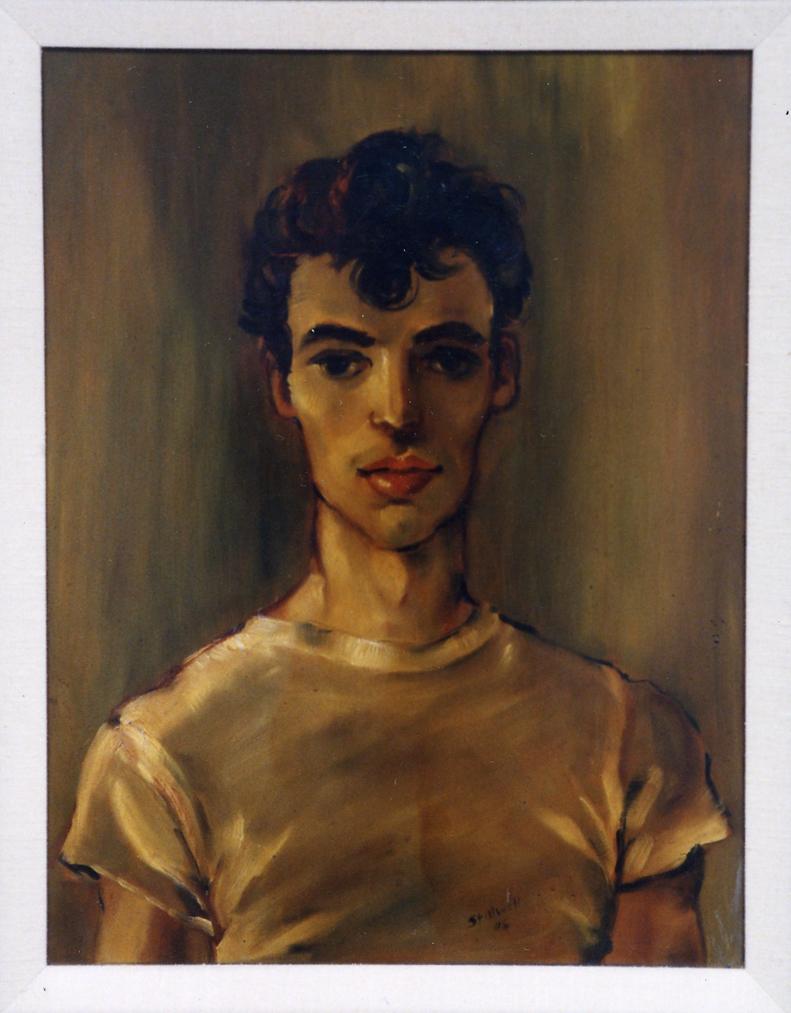
The Stillwell Student Exhibition is San Francisco State University’s annual showcase of undergraduate and second-year MFA artwork celebrated in the name of Leo D. Stillwell, an amateur artist who died at the young age of 22 in 1947.

But a Google search doesn’t even yield that small bit of information about Stillwell. So who was he, and why has SF State honored him for 26 years?

Mark Johnson, director of the Fine Arts Gallery at SF State, explained that the generosity of Stillwell’s mother, Josephine, created opportunities for student artists all in loving memory of her son.

“When Josephine herself was elderly and aware that her days were short, she contacted San Francisco State University to offer us the collection of about 500 works of her son that she had saved 40 years after his death,” said Johnson. “In 1988, the whole collection came to the university, and she bequeathed her house. It was sold in 1988 for $250,000, and that money endowed a scholarship.”

In return, Josephine asked that her son’s work be showcased every year. Stillwell had struggled with health issues and ultimately died of hypertension, but Josephine believed that had he had the chance to attend college, he likely would have chosen SF State. Thus, the student exhibition was named for him, and a small selection of his work is featured every year.

It’s fitting; Johnson said that because Stillwell died so young, his collection is essentially the work of a student. The four pieces displayed this year are watercolors depicting Roman gods, which Johnson feels are some of Stillwell’s strongest works. His entire collection ranges from family portraits to exploration of modernist iconography of surrealism. He was also the co-founder of the short-lived Antinous Gallery.

“Antinous is the name of the boy who the emperor Hadrian loved, so there is a sense that this was a code space for a gay art gallery,” Johnson explained. “For something like that to happen in the mid-1940s is certainly unusual and interesting.”

It is known that Stillwell’s lover was Russell Hartley, the founding collector of the Museum of Performance + Design, then the San Francisco Performing Arts Library and Museum. Recently, a website was discovered that contained letters between Stillwell and Hartley.

“We contacted that person and the site was taken down immediately, but we’re in the process of trying to get access to the letters, because it’s such an important social document of two young gay men interested in the arts from this very early historical period,” said Johnson.

Johnson’s exhibition design students all have this history in mind while organizing the annual show. And while it may be Stillwell’s name in the title, the exhibition very much belongs to the students, who provide the bulk of the work on display and put the gallery together. It’s a difficult, but rewarding experience, and among the bustle of preparing the show, there is a sense of excitement for what the students have to show.

“Different years, different things come to the surface,” said Johnson. “This year, we have, I would say, a number of very strong, large textile works.”

These colorful textiles, as well as stunning prints, paintings, and photography, sculptures, and so much more – all of them are the works of students, many of whom are young, rising artists like Stillwell had been, and they appreciate what it is to be in that position and have a place to display their art.

“[Stillwell’s] work is very cool. It’s visually appealing, it has a message. He was so young, and he could have had a lot more years,” said Karna Southall, a junior who researched Stillwell and put a video about him together for the class. “I think that it’s great that his mother took this unhappy thing that happened to her, and made it a positive experience for students. That’s admirable.”

Junior Lorraine Campos, whose art is displayed in the exhibit for the first time this year, feels that Stillwell remains a great inspiration to SF State’s great variety of talented art students.

“I think it’s an example of how you can be a young artist but still have a legacy,” said Campos. “By taking [exhibition design] class, I learned a lot more about Stillwell and how he was very diverse in his interests, and I think that’s like almost every student at State.”

26th Annual Stillwell Student Exhibition

Through Dec 5

Wed-Sat, 11am-4pm, free (gallery closed Nov 27-30)

Fine Arts Building, Rm 238

SF State University

1600 Holloway, SF

http://gallery.sfsu.edu

NSA spies on Google and Yahoo users

3

More revelations on spying by the National Security Agency were published in the Washington Post on Oct. 31. Thanks again to whistleblower Edward Snowden, we now know that the NSA is capturing massive amounts of communications data flowing between data centers maintained by Bay Area-based Google and Yahoo.

According to the Post, digital information produced by Google and Yahoo account holders — texts, emails, documents, videos and yes, that does include content — is being copied by the NSA and sent to its Fort Meade headquarters, where some but not all is retained by the agency.

The NSA is intercepting Google and Yahoo user account information as it moves between data centers, but the exact collection points remain a mystery. A smiley face inserted into a hand-drawn sketch from a top-secret file was enough to cause a couple Google engineers to “explode in profanity,” the Post reporters noted.

That drawing demonstrated how encryption, a security measure meant to shield data from third parties, is “added and removed here,” at an intersection between the public Internet and Google’s internal cloud servers.

Seeing as how Google is a ubiquitous presence in our lives and a key player in Silicon Valley’s tech industry, it’ll be interesting to see how native San Franciscan US Sen. Dianne Feinstein responds to the news that the NSA has apparently been intercepting the tech giant’s data without its knowledge. Feinstein is uniquely positioned to weigh in on this activity in her capacity as chair of the Senate Intelligence Committee.

Since Snowden’s first leak, Feinstein has kept up the drumbeat that NSA’s spying program is good for national security. On Oct. 2, at a Judiciary Committee hearing on oversight of the Foreign Intelligence Surveillance Act, she delivered the following statement:

“Our great strength today, ladies and gentlemen, in protecting this homeland, is to be able to have the kind of technology that’s able to piece together data while protecting rights. I listened to this program being described as a surveillance program. It is not. There is no content collected by the NSA. There are bits of data—location, telephone numbers—that can be queried when there is reasonable, articulable suspicion. … I will do everything I can to prevent this program from being cancelled out. To destroy it is to make this nation more vulnerable.”

But more recently, following revelations of spying on foreign leaders, Feinstein changed her tune. In an Oct. 28 statement, she said the Senate Intelligence Community was “not satisfactorily informed.”

Suddenly, rather than being notified and informed, the committee members were seemingly kept in the dark while the NSA ran wild. She said, “It is abundantly clear that a total review of all intelligence programs is necessary so that members of the Senate Intelligence Committee are fully informed as to what is actually being carried out by the intelligence community.”

Latest NSA spying news features emoticons and Google engineers exploding with profanity

More revelations on spying by the National Security Agency were published in the Washington Post today. Thanks again to whistleblower Edward Snowden (whose actions gave this cartoonist pause with a “Post-Snowden moment”) we now know that the NSA is capturing massive amounts of communications data flowing between data centers maintained by Google and Yahoo.

According to the Post, digital information produced by Google and Yahoo account holders – texts, emails, documents, videos and yes, that does include content – is being copied by the NSA and sent to its Fort Meade headquarters, where some but not all is retained by the agency.

It’s known that the NSA is intercepting Google and Yahoo user account information as moves between data centers, but the exact collection points remain a mystery. While some of that information evidently belongs to Americans, there doesn’t seem to be detailed information about how much of it originates in the U.S. versus foreign nations. The main tool for capturing this data is a project called MUSCULAR, operated in collaboration with British intelligence agency GCHQ. 

A smiley face inserted into a hand-drawn sketch from a top-secret file was enough to cause a couple Google engineers to “explode in profanity,” the Post reporters noted. That drawing demonstrated how encryption, a security measure meant to shield data from third parties, is “added and removed here,” at an intersection between the public Internet and Google’s internal cloud servers.

Seeing as how Google is a ubiquitous presence in our lives and a key player in Silicon Valley’s tech industry, it’ll be interesting to see how native San Franciscan Sen. Dianne Feinstein responds to the news that the NSA has apparently been intercepting the tech giant’s data without its knowledge. Feinstein is uniquely positioned to weigh in on this activity in her capacity as chair of the Senate Intelligence Committee.

Since Snowden’s first leak, Feinstein has kept up the drumbeat that NSA’s spying program is good for national security.

On Oct. 2, at a Judiciary Committee hearing on oversight of the Foreign Intelligence Surveillance Act, she delivered the following statement:

“Our great strength today, ladies and gentlemen, in protecting this homeland, is to be able to have the kind of technology that’s able to piece together data while protecting rights. I listened to this program being described as a surveillance program. It is not. There is no content collected by the NSA. There are bits of data—location, telephone numbers—that can be queried when there is reasonable, articulable suspicion. … I will do everything I can to prevent this program from being cancelled out. To destroy it is to make this nation more vulnerable. I just wanted to say that. I had to say it.” 

Speaking earlier this year, at a Sept. 26 Senate Intelligence Committee hearing on FISA, Feinstein delivered a reminder of what happened on Sept. 11, 2001 and sought to offer reassurance on the data collection program, saying:

“This committee as well as the Judiciary Committee have reviewed the legality of these programs, been briefed on their operation, and been notified of problems with their implementation. Further, this committee has previously informed all senators of additional classified information regarding these programs available for their review prior to Senate consideration of these measures. 

It is my opinion that the surveillance activities conducted under FISA, and other programs operated by the National Security Agency, are lawful, they are effective, and they are conducted under careful oversight.”

But more recently, following revelations of spying on foreign leaders, Feinstein changed her tune. In an Oct. 28 statement, she said the Senate Intelligence Community was “not satisfactorily informed.”

Suddenly, rather than being notified and informed, the committee members were seemingly kept in the dark while the NSA ran wild. “It is abundantly clear that a total review of all intelligence programs is necessary so that members of the Senate Intelligence Committee are fully informed as to what is actually being carried out by the intelligence community,” she said.

Seems the members of the Senate Intelligence Committee could start by reading Washington Post articles detailing the contents of Snowden’s leaks. There’s plenty of information in there.

Best of the Bay 2013: BEST ANTI-GENTRIFICATION ELECTRO-PUNK SINGLE

0

It certainly touched a nerve. “Hey gurl, where you moving to? Moving to the East Bay, living life the broke way. SF keep your money. FUCK YOUR MONEY!” Esta Noche drag star Persia and local electro duo Daddies Plastik’s “Google Google Apps Apps” single came bouncing through the Web early this summer and ricocheted off hyperlocal blogs, paradoxically gaining speed through the power of social media. A bouncy yet sardonic party track that seriously skewers the tech industry and its effects on the San Francisco cost of living, the song (and wacky-genius video featuring the whole freak posse) successfully captured the rage of a city caught up in a tragic transition. It was an anger Persia herself felt when Esta Nocha, the Mission’s Latino gay bar, was in danger of closing. But she took that rage and turned it into summer anthem gold. Hey girl, could you tag me in that pic?

www.soundcloud.com/persia415

Fighting climate change, with crowd funding and Google Hangouts

A young San Francisco couple, Ryan Kushner and Amanda Ravenhill, are trying out a new approach to climate change activism that they hope will ultimately reach thousands of people via online videos and interactive web-based trainings.

Called Hero Hatchery, the ambitious project launched earlier this week. Celebrity-status environmentalists such as Bill McKibben, head of 350.org, and Tim DeChristopher, who made headlines for throwing a monkey wrench into a Bureau of Land Management auction, will lead free weekly online trainings on climate change, administered via Google Hangout, as part of the effort.

Concurrently with the massive open online training, they’re hoping to generate wind in the sails of a queer climate activist, Lauren Wood, who worked alongside other climate activists to start an organization called Peaceful Uprising in Southern Utah and has been designated as a Hero Hatchery fellow. When not working as a restaurant server to make ends meet, Wood spends her days organizing against the expansion of mining operations in Southern Utah. She got started through support work for DeChristopher, who spent two years in prison for derailing a federal land auction by bidding on parcels that were about to be opened up to mining.

An underlying goal of Hero Hatchery, Kushner said in a recent phone interview, is to reframe a debate that’s all-too-often controlled by PR strategists hired by corporate oil and gas interests. To this end, the plan is to use crowd funding to generate enough money for the fellowship, and to hire their very own professional-grade PR machine.

Kushner and Ravenhill met at the Presidio Graduate School, a San Francisco institution, where they earned MBAs in sustainable business. They traveled to Washington, D.C. last year and got arrested at the Keystone XL pipeline protests outside the White House, alongside activists from 350.org.

Their approach to activism seems to be less about staying at a public hearing till the wee hours to try and halt a mining permit from being issued, and more about using laptops to generate a buzz that can be converted into a form of popular pressure. There are thousands of environmental organizations doing grassroots organizing nationwide; rather than honing in on a specific issue, the Hero Hatchery team seeks to position itself as a kind of megaphone to amplify existing work. Kushner likes to use the word “elevate” when describing how Hero Hatchery will lend assistance to Wood, whom he hopes will be the first of many fellows.

Wood is the daughter of two river guides, and grew up rafting in Southern Utah, where she spent five years as a river guide in her own right. Now, her organization is focused on challenging open pit mining operations that have broken ground at PR Springs on the Tavaputs Plateau, which sits near the top of the drainage to the Green and Colorado river systems.

“The Green River and the Colorado River: they’re the front lines,” she told us, speaking by phone from Salt Lake City, where she was born and raised. Her connection to the rivers brought “this climate change problem into my heart and my gut,” she said.

She said she’d seen river-rafting companies that could no longer operate because the water is running so low, due to drought conditions. Mining operations will only consume more water, making the problem worse.

But as a Hero Hatchery fellow, Wood has bigger plans than just telling the story of what’s happening in her own backyard. She wants to get the word out about a wide variety of campaigns focused on climate change as a way to help support a more cohesive national climate movement.

“I think what I’m most excited about with this project is acting as the veins in a body, and acting as the interconnection between people who want to get involved and don’t know how,” she said.  “This movement is increasingly interconnected. I want to be able to go around the country and talk to different communities about what it’s going to take to build a national movement.”

Keep choppin’

0

arts@sfbg.com

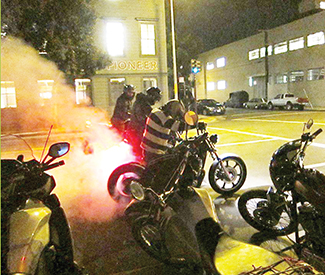
CULTURE It’s 6:35pm in Hunters Point and Poll Brown is about to be late to a documentary about himself. The puckish man from South End, Essex, and a small crew of bikers are scrambling to fix a snapped throttle cable. This is a way of life for them: always under the gun, always fixing things, always a little behind. Like a rag-tag task force, they rip a cable out of one bike and marry it to another. There’s not enough time.

At 7pm, after a hairy ride up the 101, lane-splitting between Google buses on Van Ness, Poll is inside the Opera Plaza Cinema for the premiere of Dirtbag.

“We had a bet — just between four buddies,” Brown says in the film, with his gravelly English accent. “It got to be who could build a custom motorcycle for the least money.”

And thus was born the Dirtbag Challenge, which marks its 10th year this Sunday with more rock music, BBQ, and custom motorcycles doing burnouts than is healthy for any person’s ears, lungs, cholesterol, or psyche. The rules have changed a bit since 2003, but here’s the way they currently stand: 1) build a motorcycle in one month; 2) spend less than $1,000; 3) no Harley-Davidsons; 4) the bike must complete a 60- to 100-mile ride.

The restrictions are designed to bring out the creativity and ingenuity of the builders. The first few years without the 100-mile ride rule attracted several very artistic bikes — some more sculpture than road-ready. (One year, a bike with a partially wooden frame went home in splinters.) As for the no-Harley rule, “the quintessential chopper will always be a Harley-Davidson,” explains Poll. “No matter how bad, if a Harley shows up, it still might win.”

Director Paolo Asuncion’s doc chronicles the 2009 Dirtbag Challenge. “When we started, we were going to do ‘This is about the industry’,” he says. He went so far as to interview bike-building royalty like Arlen Ness. “But by the end of filming, all those high-dollar guys didn’t really belong to the story we were trying to tell.”

Overall, the film is a fun look at a unique subculture of motorcycling. By its end, you get a sense that the Dirtbag is more than just a biker build-off — it’s an idea with a spirit behind it. Asuncion drives the point home with the final word of the film, which was met with roars of approval from the crowd: “This documentary was edited in under a month. And making this entire film cost under a thousand dollars.”

After the screening, Brown says, “I’m blown away. It’s interesting to watch something you’ve created have such a positive influence on so many people.”

Pinky McQueen, longtime organizer of the event, has one honest critique. “I realize the movie was spotlighting the builders in particular, but as far as the [Dirtbag Challenge] party goes, there are so many people who selflessly put in countless hours for free to make sure the event [goes] off without a hitch.”

A few days later, one such volunteer, Emily Wakeman, says, “The movie inspired me to just go with our skill set.” With 16 days to go until this year’s event, she and her friends have a running bike and are getting ready to mount a brake light in an old, mud-filled trombone — donated from the Great Guerneville Flood of ’86.

“We’ve spent more money on beer than we have on parts,” confesses fellow builder Shannon Jones.

In Bayview, master fabricator Turk is exactly $521 into his Yamaha-powered, side-car equipped dragster bike. He enjoys the educational side of the Dirtbag Challenge. “It shows that if you want to build a motorcycle, you can,” he says. “If you don’t know how, you can get help.”

Jason Pate is working against the clock in Fremont. Having spent around $800, he has a running bike constructed from no less than six different motorcycles. His son, Jason Pate II, says Brown was here yesterday and showed him how to clean out carburetors. Meanwhile, San Jose resident Alex “Koska” Verbisky — originally from Moldova — is at exactly $1,000. His 1969 Honda CB450 has a wacky new set of handlebars made from Suzuki shock parts and a Volkswagen camshaft.

Up in Orland, Casey Anderson, a professional chopper builder featured in the film, is about $580 into his build, converting a 1979 Honda touring bike to look like a 1928 BMW R62. Thirty minutes south through walnut and olive orchards, in Willows, Kyle Cannon’s son Michael is building a bike for credit in shop class with his pals Joseph and Jake Martin. And down the road, Josh Stine is overcoming his muscular dystrophy, building a bike he hopes he will sell to supplement his Social Security check.

It’s inspiring — a quality that’s fitting for a volunteer-run event that promotes creativity, self-expression, and self-reliance, and encourages learning and community. Participants build strange, mutant vehicles. And it all started as a small gathering of friends near the waters of San Francisco. Sound like any other event you know?

“At first begrudgingly and now gratefully, I accept comparisons to Burning Man,” says Brown.

Of course, that doesn’t mean he likes it. The biggest difference between the Burn and the Dirtbag is that there’s simply no way to throw money at the Dirtbag. Ten years in, the event is still free and no one is getting paid. Brown even recently sold his van to finance a cross-country motorcycle trip.

“If I did want to make this a money-making enterprise, the potential is there,” says Brown toward the end of the film. “[But] I’m not sure if I’m ever gonna actually do that, because that might remove the soul from it.” *

DIRTBAG CHALLENGE

Sun/13, 2pm, free

End of Quesada St, SF

www.dirtbagchallenge.comwww.rattlerproductions.com

Get to the show, weirdos

2

FALL ARTS There are so many things competing for your precious time: long lines for pricey gourmet coffee, civic responsibilities and volunteer work, actual work, glazed fake cronuts or whatever the kids are into these days. Make live music a priority as well — your days will float by on a pink cloud of fuzzy, hangover-fueled memories.

As we’re lucky enough to live in a region stuffed with musicians and venues that take in touring acts, the options for every week are damn near endless. Here are some shows to take note of this season, one for (nearly) every day of the upcoming months. (Note that dates and locations are subject to change, so always check the venue site.)

>>READ MORE FALL ARTS GUIDES HERE

Plug them in to your Google Calendar. Better yet, stick this list to your wall with chewed-up bubblegum. Either way, impress your friends with superior show knowledge:

Aug. 30 [UPDATE: postponed due to illness] Icona Pop: As silly as it’s always been, bubbly Swedish electro-pop duo Icona Pop is in the running for the arbitrary media-hyped “song of the summer” (or as Slate puts it, the yearly “Summer Song–Industrial Complex”) thanks to party track, “I Love It,” featuring fellow up-and-comer Charli XCX. And, get this, the album from which “Love It” springs, This Is… (Record Company Ten/Big Beat Records), isn’t even out until Sept. 24. Squeeze out the last bits of this very poppy season and hold out for the recorded versions by taking in this live set. Fillmore, SF. www.thefillmore.com

Aug. 31 [Here’s another to make up for that cancellation above] Rin Tin Tiger, French Cassettes Great American Music Hall, SF. www.slimspresents.com

Aug. 31 Sonny and the Sunsets, Shannon and the Clams Chapel, SF. www.thechapelsf.com

Sept. 2 Ty Segall Great American Music Hall, SF. www.slimspresents.com

Sept. 3 Superchunk and Mikal Cronin Fillmore, SF. www.thefillmore.com

Sept. 4 Zomby (live) Public Works, SF. www.publicsf.com.

Sept. 5-6 “UnderCover Presents Bob Dylan’s Highway 61 Revisited:” For this event, the UnderCover Presents collective dives deep into the introspective, folk-rock world of Bob Dylan’s ’65 gem (which gave us “Like a Rolling Stone”) with covers by Carletta Sue Kay, Quinn DeVeaux, Whiskerman, Beth Lisick, and guest music director Karina Denike, among others. Freight & Salvage. www.thefreight.org. Also Sept. 8, Contemporary Jewish Museum. www.cjm.org.

Sept. 6 Mission Creek Oakland: The month-long fall music and arts festival packs a punch with dozens of local bands playing 15 East Bay venues, including the Uptown, the Stork Club, and Children’s Fairyland (!). It kicks off with a free opening party tonight at the Uptown with Naytronix, Clipd Beaks, YNGBMS, and Safeword. Various venues, Oakl. www.mcofest.org.

Sept. 7 Push the Feeling with Exray’s Underground SF, www.undergroundsf.com

Sept. 8 Lil Bub book signing with Nobunny: So Lil Bub is this famous Internet cat and Nobunny is the infamous IRL punky masked Bunny-Man; together they’ll claw through the Rickshaw Stop all day and night. This multipart Burger Bub Mini-Fest includes a Lil Bub book signing and doc film screening, plus live sets by Nobunny, Colleen Green, the Monster Women, and the Shanghais. Paws up, everyone. Rickshaw Stop, SF. www.rickshawstop.com.

Sept. 9 Sex Snobs Elbo Room, SF. www.elbo.com

Sept. 10 Bleeding Rainbow Rickshaw Stop, SF. www.rickshawstop.com.

Sept. 11 Moving Units DNA Lounge, SF. www.dnalounge.com.

Sept. 12 Julie Holter Great American Music Hall, SF. www.slimspresents.com.

Sept. 13 120 minutes presents Death in June Mezzanine, SF. www.mezzaninesf.com.

Sept. 14 Rock the Bells: the annual touring hip-hop fest returns, headlined by Kid Cudi, A$AP Mob. feat. A$AP Rocky, E-40, and Too $hort, Common, and Bone Thugs-N-Harmony on Sept. 14; Wu-Tang Clan, Black Hippy feat. Kendrick Lamar, and Deltron 3000 on Sept. 15. Shoreline Amphitheatre, Mtn View. www.livenation.com.

Sept. 16 Kate Boy Rickshaw Stop, SF. www.rickshawstop.com.

Sept 17 Julie Ruin: Kathleen Hanna returns to her pre-Le Tigre output but beefs it up with a full band including fellow Bikini Kill bandmate Kathi Wilcox and is set to release bouncy feminist dancepop record Run Fast Sept. 3. A few weeks later the Brooklyn band lands in SF. Slim’s, SF. www.slimspresents.com.

Sept. 18 Berkeley Old Time Music Convention Various venues, Berk. www.berkeleyoldtimemusic.org

Sept. 19 Hard Skin 1-2-3-4 Go!, Oakl. 1234gorecords.com.

Sept. 20 Foxygen Independent, SF. www.theindependentsf.com

Sept. 21 Tape Deck Mountain and Battlehooch El Rio, SF. www.elriosf.com.

Sept. 22 “Radio Silence presents: Doe Eye performing Arcade Fire” Brick and Mortar Music Hall, SF. www.brickandmortarmusic.com.

Sept. 24 Wax Tailor Mezzanine. www.mezzaninesf.com.

Sept. 26 Zola Jesus Palace of Fine Arts, SF. www.palaceoffinearts.org.

Sept. 27 Peter Hook and the Light Mezzanine, SF. www.mezzaninesf.com.

Sept. 28 “Station to Station:” This train-travelin’ art and music experiment, organized by artist Doug Aitken, pulls a stop in Oakland with live performances by Dan Deacon, Savages, No Age, Sun Araw and the Congos, Twin Shadow, and more. And the train itself is designed as a moving kinetic light sculpture, so expect a bright show. 16th St. Station, Oakl. www.stationtostation.com.

Sept. 30 Chelsea Wolfe Great American Music Hall, SF. www.slimspresents.com

Oct. 1 Peach Kelli Pop Hemlock Tavern, SF. www.hemlocktavern.com.

Oct. 3Brick and Mortar Music Hall, SF. www.brickandmortarmusic.com.

Oct. 4-6 Hardly Strictly Bluegrass: Bonnie Raitt, Bettye LaVette, Nicki Bluhm & the Gramblers, Devil Makes Three, Chris Isaak, Mark Lanegan, First Aid Kit, Sallie Ford & the Sound Outside. As the free annual fest releases lineup names in glorious song medleys, this is who we know for sure will fill GG Park with folk-country-hardly-strictly-bluegrass notes this year, as of press time. There will be more added in the coming weeks, so check the site. Golden Gate Park, SF. www.hardlystrictlybluegrass.com.

Oct. 5 Har Mar Superstar Bottom of the Hill, SF. www.bottomofthehill.com.

Oct. 7 No Joy Brick and Mortar Music Hall, SF. www.brickandmortarmusic.com.

Oct. 8 Fucked Up Terror Oakland Metro Opera House, Oakl. www.oaklandmetro.org.

Oct. 9 Iceage Rickshaw Stop, SF. www.rickshawstop.com.

Oct. 10 Thee Oh Sees Chapel, SF. www.thechapelsf.com

Oct. 11 Extra Action Marching Band Mezzanine, SF. www.mezzaninesf.com

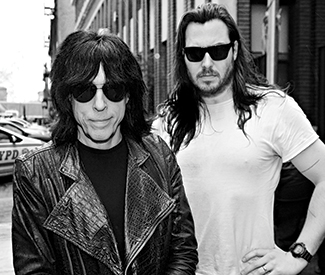
Oct. 12 Marky Ramone with Andrew W.K.: Is this pairing crazy enough that it just might work? While Joey Ramone has sadly passed on to punk rock heaven (lots of leather and skinny jeans), drummer Marky Ramone is carrying on the legacy by enlisting pizza guitar-having party rocker Andrew W.K. as his frontperson. The band known as Marky Ramone’s Blitzkrieg performs classic Ramones songs. Independent, SF. www.theindependentsf.com.

Oct. 13 Legendary Pink Dots DNA Lounge, SF. www.dnalounge.com.

Oct. 14 Langhorne Slim Great American Music Hall, SF. www.slimspresents.com

Oct. 15 Tim Kasher Rickshaw Stop, SF. www.rickshawstop.com.

Oct. 16 Dustin Wong Great American Music Hall, SF. www.slimspresents.com.

Oct. 17 CHVRCHES Fox Theater, Oakl. www.thefoxoakland.com.

Oct. 18 Robert Glasper Experiment SFJazz Center, SF. www.sfjazz.org.

Oct. 19 Treasure Island Music Festival: the forward-thinking two-day fest out on windswept Treasure Island includes Atoms for Peace, Beck, Major Lazer, Little Dragon, Animal Collective, James Blake, Holy Ghost!, Sleigh Bells, and more. Giraffage, and Antwon are the locals on the bill. Treasure Island, SF. www.treasureislandfestival.com.

Oct. 20 Goblin Warfield Theatre, SF. www.thewarfieldtheatre.com.

Oct. 21 Hunx & His Punx Chapel, SF. www.thechapelsf.com.

Oct. 22 Brian Wilson and Jeff Beck Paramount Theater, Oakl. www.paramounttheatre.com.

Oct. 23 Oh Land Independent, SF. www.theindependentsf.com.

Oct. 24 Woodkid Regency Ballroom, SF. www.theregencyballroom.com.

Oct. 25 The Blow Bottom of the Hill. www.bottomofthehill.com.

Oct. 26 Airfield Broadcasts: For this large-scale event, composer Lisa Bielawa will turn Chrissy Field into a giant “musical canvas” in which listeners can interact with broad sounds floating through the area with the help of nearly a thousand professional and student musicians including orchestras, choruses, bands, and experimental new groups. The musicians will begin in the center of the field then slowly move outwards, playing Bielawa’s original score. Chrissy Field, SF. www.airfieldbroadcasts.org.

Oct. 29 The Jazz Coffin Emergency Ensemble El Rio, SF. www.elriosf.com.

Oct. 30 Save Ferris Regency Ballroom, SF. www.theregencyballroom.com.

Oct. 31 Danzig Warfield, SF. www.thewarfieldtheatre.com.

Nov. 1 Janelle Monáe: Futurist soul crooner Janelle Monáe has had a big year, releasing “Q.U.E.E.N.” with Erykah Badu in the spring, and more recently she fired off Miguel duet “PrimeTime.” The last time the pompodoured singer made it to SF she was dancing down the aisles at the SF Symphony’s Spring Gala (earlier this year), but a darkened venue is much more her speed. Think she’ll be wearing black and white? Warfield Theatre, SF. www.thewarfieldtheatre.com.

Nov. 7 Wanda Jackson: The stylish rockabilly queen, and former real life Elvis paramour — and crackling vocalist behind tracks like “Fujiyama Mama” and “Let’s Have a Party” — is still brash and still touring at age 75. And she’s still putting out new tunes too, with her own 2012 LP Unfinished Business, and just before that a collaboration with Jack White on The Party Ain’t Over (2011). Yes, the party continues. Chapel, SF. www.thechapelsf.com.

Nov. 8 Of Montreal Great American Music Hall, SF. www.slimspresents.com.

Nov. 13 Those Darlins Chapel, SF. www.thechapelsf.com.

Nov. 14 Kayhan Kalhor and Ali Bahrami Fard SFJazz Center, SF. www.sfjazz.org.

Nov. 16 Melt Banana Oakland Metro Opera House, Oakl. www.oaklandmetro.org.

Nov. 17 Rhys Chatham: This is vastly bigger than your average rock concert. See, avant-punk composer Rhys Chatham will perform the West Coast premiere of his “A Secret Rose” with an orchestra of 100 electric guitars. That’s right, 100-times the shred. The Other Minds-presented hourlong performance will include musicians from Guided By Voices, Akron/Family, Tristeza, and more. Craneway Pavilion, Richmond. www.brownpapertickets.com.

Nov. 18 Misfits Oakland Metro Opera House, Oakl. www.oaklandmetro.org.

Nov. 22 Kate Nash Fillmore, SF. www.thefillmore.com.


Waiting to connect

10

news@sfbg.com

Eight years ago, San Francisco almost gave away an enormously lucrative public utility to Google and Earthlink: a citywide Wi-Fi connection. The hastily drawn up plan was championed by then-Mayor Gavin Newsom after a Google executive pitched him on the idea of citywide wireless Internet access at a dinner party.

Google’s Wi-Fi scheme would have blanketed the city with coverage, but it would also have required users to obtain Google accounts to sign in, thereby facilitating the company’s vacuum-like data harvesting practices that suck up everything from search queries and emails to the geographic locations of smartphones and tablets. Google’s Wi-Fi plan would have allowed the tech giant to insert “prioritized placement” of ads and brands into a Wi-Fi user’s feed, limiting choice of content through profit-driven algorithms.

The Electronic Frontier Foundation, ACLU of Northern California, Electronic Privacy Information Center, and we at the Bay Guardian all criticized the plan (see “Tech Disconnect,” 11/9/05). Earthlink, Google’s partner in the privatization deal, nearly went bankrupt in 2007 and the company bailed on the Wi-Fi proposal. That was the end of the city’s first Wi-Fi scheme. Thousands of free networks in cafes and hotels popped up in the meantime, leading many to question the purpose of building municipal Wi-Fi.

But municipal Wi-Fi is back. Sup. Mark Farrell and Mayor Ed Lee announced recently that free Wi-Fi is coming to 31 San Francisco parks. Google is involved yet again, but officials in the city’s Department of Technology say that the network will be not be controlled by Google, nor directly susceptible to privacy invasions by the “don’t be evil” company or its affiliates. In short, it will be a public utility.


PUBLIC UTILITY

“I think a lot of the prior debate around free Wi-Fi in San Francisco that never moved forward was because of different questions around business models,” Farrell told us. “To emphasize, this is a free gift [from Google] of financial benefit to the city of San Francisco with no strings attached.”

For the parks, Google has agreed to give a $600,000 contribution to fund Wi-Fi installation and two years of operation. Farrell said this is the company’s only role. There will be no Google hardware or software allowing the company to devour user data or steer traffic.

San Francisco’s reinvigorated push to build out public Wi-Fi comes just as major telecom companies and Internet giants like Google are again targeting large Wi-Fi networks for privatization. In the late 2000s, many tech companies abandoned Wi-Fi services as unprofitable. Telecom companies were busy expanding their cellphone infrastructure.

But thanks to the proliferation and technical advances of smartphones, cellular networks are now choking on megabits of traffic. Telecom companies see Wi-Fi as a means of offloading mobile traffic onto broadband infrastructure. Google and other companies see Wi-Fi networks as vast troves of consumer data, and airwaves on which to advertise.

Google’s grant for Wi-Fi in San Francisco’s parks comes after months of bad press for the company and the tech sector, including revelations that all of Silicon Valley’s top companies readily cooperated with the NSA’s electronic surveillance programs.

Google also recently paid out $7 million to settle state investigations into its “Wi-Spy” data collection activities: wireless receivers hidden in Google’s Street View vehicles sopped up communications data, including passwords and even email content, from millions of networks in the United States and Europe. Beside Google’s numerous spying scandals, the company has also come under criticism for aggressively avoiding federal taxes, and locally for its impact on San Francisco’s transportation and housing problems.

If the $600,000 gift is designed to bolster Google’s image as a good corporate citizen, it probably also makes good business sense. “Thousands of Googlers live and work in SF,” said Jenna Wandres, a spokesperson for the company replied to our inquiries by email.

Marc Touitou, director of the city’s Department of Technology, told us the park Wi-Fi system will be entirely the city’s, and that no third party corporation will determine who can use the service or under what terms.

“It’s not a Google network, it’s not a Wi-Fi name from Google. It’s a donation, a gesture,” said Touitou. He added that talks with AT&T to let the company roll out a Wi-Fi network for all of Market Street were recently cut off because his office has decided to build the system as a fully municipal network instead.


CORPORATE GIFTS

Touitou’s office has plans to light up free municipal Wi-Fi along the Embarcadero, in the Castro, Noe Valley, and perhaps even on Muni buses in the near future. With the parks, Touitou said the idea is to gain back the confidence of the public, to show that the city can do this on its own. Touitou also said that he hopes the city will budget funds for these Wi-Fi systems so that they’re not reliant on corporate gifts.

“We reserve right to leverage this model where companies can put money in because it’s in their interest,” Touitou said. “They don’t care what name is on the network so long as they can dump their traffic on it.”

A public utility model will allow San Francisco to own and operate Wi-Fi across the city and to allow telecom companies to funnel mobile traffic through the city’s infrastructure, likely for a fee. Touitou said it doesn’t make sense for the city to give away its Wi-Fi infrastructure as it is a limited and increasingly valuable asset.

“The day we sell it would be a sad day,” Touitou added.

He described the city’s two radio towers, 200 buildings, thousands of utility poles, and the fiber optic grid that can connect these as the backbone of a robust municipal wireless network. Telecom and Internet companies will pay to use the infrastructure under this model. Most privacy experts who examined San Francisco’s prior Wi-Fi plans have yet to weigh in on the parks network. Revelations about the NSA’s vast spying programs have consumed the attention of groups like EFF and the ACLU.

Touitou said, however, that the city’s Wi-Fi privacy policies will be strong. “This isn’t a third party network trying to market to you,” explained Touitou. “It’s a city network that wants to facilitate traffic, and we want to have the privacy respected.”

Even as San Francisco plans its next steps with city Wi-Fi, Google is rapidly expanding its own wireless network operations. Already the company controls the citywide Wi-Fi network for Mountain View where the “Googleplex” is located. Google also has Wi-Fi networks scooping up communications in Boston’s South Station and New York’s Chelsea neighborhood. The terms of Google’s Mountain View deal do not limit Google from collecting data, and users are required to sign in with a Google account. Google also recently announced that it will take control over Starbucks’ thousands of Wi-Fi networks, creating a potentially vast trove of consumer data and a marketing platform for both companies. Starbucks has 50 locations in San Francisco.

AT&T, which lost the Starbucks contract to Google, and also lost its bid to take over Market Street’s airwaves, has its own data mining projects that tap the company’s Wi-Fi networks in 30 countries for personal information, and to route telecom traffic.

So even with municipal Wi-Fi, tech and telecom companies will still have ample ability to siphon off communications data straight from wireless networks and hand it to the feds or to advertisers.

Tenant defenders, hate-free billboards and budget hackers

Tech sector startups aren’t the only folks “disrupting” things in the Bay Area as of late. Social justice activists are mounting their own creative, grassroots responses to unjust practices – and while they don’t often have deep pockets, they’ve got the collective momentum of people who give a damn propelling them onward. Below, a few examples of what’s percolating on this front.

Landing at the landlord’s

Earlier this year, we told you about Jeremy Mykaels, a tenant and disabled senior living with AIDS who has rented his apartment in the Castro for more than four decades, and is now battling eviction. Here’s his story, posted to a website he created where he also lists other properties where seniors have been targeted with evictions.

Eviction Free Summer, a group of tenant activists who made a splash at the San Francisco Pride Parade this past June with a faux-Google bus, has started rallying people together to show up outside the homes and offices of landlords after they issue eviction notices. On Sat/10, they’re planning to caravan to Union City, where they’ll stage a protest outside the homes of the property owners who are evicting Mykaels. More information can be found here.

Disruptive enough for you?

Hate is lame

In response to a series of anti-Muslim ads that appeared on San Francisco transit vehicles, a group of online activists seeks to drown out the hate speech by taking things to a whole new level. Yes, they’re posting their anti-hate message onto a billboard.

From Aug. 5 until Sept. 1, a billboard at 10th and Howard streets will proclaim: “Hate Has No Place in Our City: San Francisco Embraces Diversity and Acceptance, Not Hate and Bigotry.”

The effort was crowd-funded through Louder, a platform for crowd promotion, through about $3,000 in donations from 100 individuals from throughout the country. It was spearheaded by San Francisco resident Christie George, who teamed up with New Yorker Ateqah Khaki to get the project off the ground.

 “When I read about the ads in other cities, I was horrified by how hateful they were. But when I learned that they were coming to San Francisco, I felt like I couldn’t be silent, and was compelled to do something to celebrate how much this city embraces diversity,” George said.

Next Thursday, Aug. 15, the “No Place For Hate” team will host a meet-up for contributors and supporters, featuring talks from the campaign organizers and some comments by Louder founder Colin Mutchler.

Budget for direct democracy

Meanwhile, in Oakland, the effort to hack Oakland’s budget with a ballot measure that would put discretionary spending in the hands of ordinary people is starting to pick up speed.

As Community Democracy Project co-director Sonya Rifkin explained in this interview with Shareable: “We care about a wide range of issues and lot of problems come back to questions of power – access to resources and self-determination and being engaged in decisions that affect our lives. Problems arise in politics from the right people not being invited to the table. The strength of this process is people getting connecting and understanding each others’ perspectives and empowering communities, which can have far reaching potential for enabling people to solve their own problems.”

Bonus: Sounds of badass señoras

Lastly, the Pacifica Radio Archives has received a $128,000 matching grant from the National Archives – the largest-ever grant for a public radio project, according to spokesperson Stephenie Hendricks — to restore historic recordings of powerful women. Once completed, the recordings will be made available – for free! – to colleges and universities through the archive’s “Campus Campaign.” Pacifica doesn’t accept corporate funding, and it’s hoping to fundraise a matching amount from its listeners.

The recordings were made between 1963 and 1987, and we even have a sample for you. This is the voice of Bella Abzug, a member of the House of Representatives and leader of the women’s movement, recorded in 1981.

Hello Sailor

0

SUPER EGO A “yacht” sounds like something I spit up after huffing too much Air Wick Crisp Linen Room Freshener, but apparently it’s that boat from the Duran Duran “Rio” video? And America’s Cup isn’t a Simon Cowell-produced fantasy half-naked athletic protectivewear “talent” contest? Harumph. Well, at least we get a party out of it. In all the boat-race branding hysteria, the people at PUMA are pulling together two months of neato, free, and yuppie-free lineups of daytime and evening parties at its America’s Cup PUMA Yard temporary space at Pier 27. Hip-hop queen Jeanine Da Feen on Thu/8, Dub Mission‘s J-Boogie and Sep on Sat/10, Sweater Funk on Sun/11, etc. — all the way through September. Check this thing out: www.pumayardsf.com.


‘CUBIC LUST’

You know, us nightlife folks aren’t just stunningly pretty faces, here for you to pump full of drugs and good music and then have your way with us, please! Some of us also write books. (Those are like blogs without Google AdSense). Revered DJ Gavin Hardkiss has written a steamy erotic volume about partying in Hong Kong entitled Cubic Lust, and will be reading from it and spinning records at the long-running Qoöl Happy Hour, now at Harlot.

Wed/7, 6pm-10pm, free. Harlot, 46 Minna, SF. www.cubiclust.com


SKRATCHPAD 10-YEAR ANNIVERSARY BATTLE

Hot hip-hop vinyl on the decks, four nimble-fingered finalists from up and down the West Coast, a slew of nice gear to the winner, and enough turntable pyrotechnics to heat your summer — hey, all that scratching is making me itch. Johnny Krush hosts, with special guests Teeko, Derrick D, Genie G, DJ Pone, and more.

Thu/8, 9pm-1am, free. Neck of the Woods, 406 Clement, SF. www.skratchpadworldwide.com


METRO AREA

Brooklyn-based duo Morgan Geist and Darshan Jesrani, known as Metro Area, traffic in recombinant house textures and live improvisation, building new grooves out of the classic, funky dance floor samples, sounds, and feelings rattling around in the back of your mind. Opening: Christina Chatfield, one of our most exciting techno talents, also performing live.

Fri/9, 9pm-4am, $10–$20. Mighty, 119 Utah, SF. www.mighty119.com


DANNY KRIVIT

One of the true masters — and one of my all-time faves, natch. You probably know Mr. Krivit as one-third of the NYC Body and Soul consortium, a DJ unafraid to indulge in the deep-jazz side of house, providing a colorful canvas for complex footwork. Disco and Latin grooves are on the palette, too, as well as some surprising applications of Detroit techno.

Sat/10, 10pm-4am, $10. Mighty, 119 Utah, SF. www.mighty119.com


DICK SLAP

A gaggle of freaky-sexy gays — a gaygle, even — will descend upon the Eagle (fast becoming a nightlife go-to beyond its legendary Sunday Beer Bust and Thursday Night Live) for a night of frenzied, furry fun. It’s all courtesy of Seattle’s cute DJ Nark and his raucous Dick Slap crew, but local DJs P-Play and Robert Jeffrey will hit you upside, too.

Sat/10, 9pm, $5. SF Eagle, 398 12th St., SF. dickslaplyfe.tumblr.com


SUNSET BOAT PARTY

All aboard for this Sunset party crew annual tradition — this time featuring Toronto’s awesome Stuart Li, aka Basic Soul Unit, who’ll rock us with sparkling house grooves, with jackmaster Sean Hernandez, aka Chicago Skyway, warming up.

Sun/11, 5pm-11pm, $55. San Francisco Spirit, Pier 3, SF. www.tinyurl.com/sunsetboat2013


Street Fight: Plan Bay Area falls short of a worthy goal

20

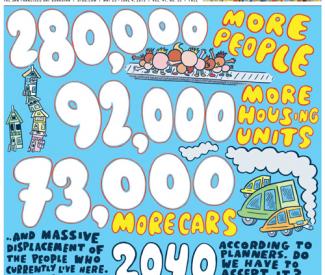
Last week’s adoption of Plan Bay Area by the Metropolitan Transportation Commission was a watershed moment in regional planning. The plan links regional planning to state policies mandating reductions in greenhouse gas emissions, and aims to limit future sprawl by accommodating 2.1 million people, 1 million jobs, and 660,000 housing units largely within the existing built-up areas of the nine-county region.

Newly designated priority development areas (PDAs) will enable modest-density, walkable development in city and suburb alike, while preserving both existing single-family neighborhoods and open space. In a time of urgent need to address global warming, the Bay Area has once again proved a leader by enabling compact housing around transit, and its supporting studies expect the per capita greenhouse gas emissions from driving to decline by 15 percent in 2040.

This will not save the world and it’s not without some challenging byproducts — such as preventing displacement of low-income residents from San Francisco and other urban centers — but it is a start. And in a nation hell-bent on denying the urgency of global warming, it is refreshing and inspiring that someone, somewhere, is trying to do something.   

Yet the transportation component – the lynchpin and impetus of Plan Bay Area, according to many local leaders –is mediocre, uninspiring, and inadequate.  Despite land use policies enabling compact development, 80 percent of all travel in the Bay Area will still be in cars in 2040, not much different from today, and far short of the real change that is needed in this time of urgency. With 2 million more people, this is a recipe for gridlock, inequity, and ecological disaster – not sound public policy. 

 It should be no surprise that a big part of the problem is funding. The MTC, charged with assessing future regional transit potential, identifies just $289 billion between now and 2040 for roads, bridges, and transit — far short of what’s needed.  At $10.3 billion a year that may seem like a lot, but upwards of 87 percent of this is already committed to maintenance of existing roads and transit– not transit capacity expansion.  New homes and jobs might be focused around BART and Caltrain stations, but because there’s no real capacity expansion, the current iteration of Plan Bay Area can’t even reach its own modest goal of 74 percent of trips by car in 2040. 

With 2 million more people, cumulative emissions from driving will actually increase by 18 percent because so few new residents will be able to squeeze onto our already crowded transit systems.  Today BART is breaking ridership records but it is crowded. Extensions to far flung suburbs might be worthwhile but they don’t expand capacity in the system’s core. What we need is a second BART line and/or Amtrak service between San Francisco and Oakland, but this is absent from the plan. Meanwhile, most mainline Muni buses and railcars are currently jam-packed, yet San Francisco is somehow expected to absorb 92,000 housing units in Plan Bay Area.

Supervisors David Campos and Scott Weiner, representing San Francisco in the Plan Bay Area process, are to be commended for drawing attention to the transit problem and for asking MTC staff to show how to meet future funding gaps. By broaching the subject, they show that San Francisco might be poised to lead on this critical issue. But Campos and Weiner, working within the “fiscally constrained envelope” as framed by MTC planners, were only seeking to cover deficits for existing service – not visionary expanded service.  In the end, there was no real vision for adequate transit capacity expansion.

This foretells a troubling transit future – and one that will likely be more and more private. While many San Franciscans decry the proliferation of Google buses and other private corporate shuttles hogging Muni stops, these buses do lay bare the transit conundrum in the Bay Area. Without well-funded, visionary capacity expansion of public transit, those with the means (and high wage jobs) will shift to private buses while everyone else is left to duke it out on crowded highways, buses, and trains.

This conundrum demands that progressives in the Bay Area ramp up their transit politics to lead locally and nationally. The debate about transit finance needs to be redirected – away from regressive local sales tax measures (which often include more roads) back towards more progressive measures, such as transit assessment districts – which could require developers who profit from Plan Bay Area’s growth incentives to adequately finance transit expansion.

The debate needs to move away from demonizing public transit employees to a discussion of the role and responsibility of corporate health care, banks, and the real estate industry in causing economic instability (which has harmed public transit finance more in the last decade than a bus driver expecting a living wage and healthcare). The debate needs to move away from creating new roadway capacity, such as exclusive toll lanes, and focus on how to convert existing highway lanes into transit-only lanes with fast, frequent, reliable regional bus service open to all.

Plan Bay Area is a living document, a work in progress. Within the next four-five years it will need to be revised and can be improved.  The current version of the plan, weak on transit funding, has been dominated by a loud, irrational mob of Tea Party cranks bent on sabotaging anything that hints of progressive ideas. They were successful in diluting Plan Bay Area. While a smattering of progressive transit activists showed up and attempted to shape the plan, next time the plan needs a broader progressive movement — including housing, social justice, and environmental activists — to demand a truly visionary transportation plan.


Jason Henderson is a geography professor at San Francisco State University and the author of Street Fight: The Politics of Mobility in San Francisco. We’ll be sharing his perspective regularly in the Bay Guardian.

Wedding bells and Pride protests

0

rebecca@sfbg.com ; steve@sfbg.com

The city of San Francisco was a complete whirlwind from June 26 to June 30. First came the historic Supreme Court ruling that ended the ban on same-sex marriage in California and struck down the discriminatory Defense of Marriage Act. The historic decision, handed down just before the city’s Pride festivities got underway and as a rare heat wave gripped the city, unleashed widespread celebration June 26, culminating with a rally and dance party in the streets of the Castro.

The Supreme Court ruled that the Defense of Marriage Act, which denies federal recognition of same-sex marriage, “is unconstitutional as a deprivation of the equal liberty of persons that is protected by the Fifth Amendment.” According to the majority opinion, “DOMA’s principal effect is to identify a subset of state sanctioned marriages and make them unequal.”

Hollingsworth v. Perry, the Prop 8 case, was dismissed on standing due to the fact that the State of California refused to defend it in court. That meant the previous ruling invalidating Prop 8, by Judge Vaughan Walker and upheld by the Ninth Circuit Court, was upheld.

City Hall was totally packed at 7am when the Court convened, with hordes of journalists, gay and lesbian couples, and sign-wielding activists in the crowd. Cheers erupted when the decision was announced striking down DOMA. When the Prop 8 statement came down, the room went nuts.

“It feels good to have love triumph over ignorance,” said Mayor Ed Lee, who joined Lt. Gov. Gavin Newsom in escorting a fragile Phyllis Lyon down the stairway. When Lyon married the late Del Martin, they became the first same-sex couple to get legally married in California in 2004.

“San Francisco is not a city of dreamers, but a city of doers,” Newsom said. “Here we don’t just tolerate diversity, we celebrate our diversity.” He thanked City Attorney Dennis Herrera and others who’d contributed to the fight to for marriage equality. “It’s people with a true commitment to equality that brought us here.”

When Herrera took the podium, he turned to Newsom, and said, “Now you can say, ‘Whether you like it or not!'” — a joking reference to Newsom’s same-sex marriage rallying cry, which some blamed for boosting the anti-same-sex marriage cause. “We wouldn’t be here today if it wasn’t for Gavin Newsom’s leadership,” Herrera continued. “I remember in 2004 when people were saying it was too fast, too soon, too much.” Herrera also pledged to continue the fight that began here in City Hall more than nine years ago: “We will not rest until we have marriage equality throughout this country.”

Later that afternoon, clergy from a variety of faiths including Christianity, Judaism, Islam, Buddhism and the Church of Latter Day Saints gathered on the steps of Grace Cathedral on Nob Hill for a buoyant press conference to celebrate the court’s rulings.

“For 20 years I’ve been marrying gay and lesbian couples, because in the eyes of God, that love and commitment was real, even when it wasn’t in the eyes of the state,” said Rabbi Michael Lerner of the Beyt Tikkun Synagogue. “We as religious people have to apologize to the gay community,” he added, for religious texts that gave opponents of gay marriage ammunition to advance an agenda of discrimination.

He added that the take-home message of the long fight for marriage equality is, “don’t be ‘realistic.’ Thank God the gay community vigorously fought for the right to be married — because they were not ‘realistic,’ the reality changed. Do not limit your vision to what the politicians and the media tell you is possible.”

Mitch Mayne introduced himself as “an openly gay, active Mormon,” which is significant since the Mormon Church was a major funder of Prop 8. He called it “one of the most un-Christlike things we have ever done as a religion,” but noted that the sordid affair had brought on “a mighty change in heart from inside the Mormon community, with greater tolerance than ever before,” with many Mormons going out and marching in solidary with gay and lesbian couples, he said.

Then on June 28, earlier than expected, the County Clerk started issuing same-sex marriage licenses. Kris Perry and Sandy Stier, plaintiffs in the case against Prop. 8, became the first of dozens of happy couples to be married at City Hall that evening, and the marriages continued in the days that followed.

And as if that weren’t enough excitement, it all happened before the weekend, when Pride festivities got underway. This year featured not only the official Pride parade and myriad performances, but also an “Alternative to Pride Parade,” signifying that a radical Pride-questioning movement has been reawakened in San Francisco.

“Have you had enough with the poor political choices of some community leaders that claim to represent you? Are you over the over-corporatizing of SF Pride? Or just tired of the same old events that don’t reflect who you are, and how you want to celebrate your queer pride?” organizers wrote in a statement announcing the event.

The parade itself, meanwhile, also featured some dissenters. The third annual Bradley Manning Support Network contingent swelled in ranks this year, due to the political maelstrom touched off when the Pride Board rescinded Manning’s appointment as Grand Marshal.

The Bradley Manning Support Network contingent attracted more than 2,000 supporters who marched to show solidarity with the openly gay whistleblower, comprising the largest non-corporate contingent in the Parade. Former military strategist Daniel Ellsberg, who leaked secret government documents known as the Pentagon Papers to the press in 1971, donned a pink boa and rode alongside his wife, Patricia, in a pick-up truck labeled “Bradley Manning Grand Marshal.” Patricia told the Bay Guardian, “There is something about the energy and triumph of this beautiful event … Just as the gays have made a tremendous difference with marriage, we have to do the same with wars and aggression” in U.S. foreign policy.

Pride’s legal counsel, Brooke Oliver — who resigned over the Pride Board’s handling of the Manning debacle — marched along with the Bradley Manning contingent. Bevan Dufty, former SF Supervisor and now the mayor’s point person on homelessness, stepped down as a Grand Marshal, also because of the Pride Board’s actions, but didn’t march with the contingent.

Nor were the Bradley Manning supporters the only protest contingent to take part in the parade. A group seized the opportunity to make a political statement by marching with a faux Google bus, an action meant to call attention to gentrification and evictions in San Francisco. They rented a white coach and covered it with signs printed up in a similar font to Google’s corporate logo, proclaiming: “Gentrification & Eviction Technologies (GET) OUT: Integrated Displacement and Cultural Erasure.”

Some trailed the faux Google bus with an 8-foot banner depicting a blown-up version of an Ellis Act evictions map. Others donned red droplets stamped with “evicted” to signify Google map markers, while a few toted suitcases to represent tenants who’d been sent packing. However, their ranks were thin in comparison with the parade contingents surrounding them, which included crowds of workers representing eBay, DropBox, and, of course, Google — the largest corporate contingent in the parade.

“The organizers of this anti-gentrification and displacement contingent are not ‘proud’ that folks are being kicked out of this city that was once their refuge,” organizers of the faux Google bus contingent wrote in a press statement. “The 2013 SF Homeless Count and Survey shows that 29 percent of the city’s homeless population is ‘LGB and other.’ The Castro is experiencing the highest number of evictions in the city. Meanwhile, the SF Pride Parade is becoming as gentrified as SF. This group is calling on Pride to remember its roots.”


Anti-gentrification activists “GET OUT” with Pride

A group of activists used the Pride Parade to make a political statement by marching with a faux Google bus, an action meant to call attention to gentrification in San Francisco. They rented a white coach and covered it with signs printed up in a similar font to Google’s coroporate logo, proclaiming: “Gentrification & Eviction Technologies (GET) OUT: Integrated Displacement and Cultural Erasure.”

Some trailed the faux Google bus with an 8-foot banner depicting a blown-up version of an Ellis Act evictions map.

Others donned red droplets stamped with “evicted” to signify Google map markers, while a few toted suitcases to represent tenants who’d been sent packing.

However, their ranks were thin in comparison with the parade contingents surrounding them, which included crowds of workers representing eBay, DropBox, and, of course, Google.

A member of the small anti-gentrification contingent gazes in the direction of the Google contingent, where a crowd of tech workers is bursting with energy and carrying balloons.

A member of the anti-gentrification part of the march gazes in the direction of the Google contingent, where a huge crowd of tech workers was bursting with energy.


Google workers clad in identical tees wore colorful sunglasses, carried balloons and held a banner.

Activist Leslie Dreyer was one of six activists who put together the faux Google bus contingent. She used crowd-funding to raise roughly $2,000 for parade registry, bus rental, and custom-made decals.

“All of us have either been affected, or are in a position where we wouldn’t be able to afford to stay in the Bay Area if something were to happen to our housing situations,” Dreyer said. “There’s really no security to stay here.”

They selected the Google bus as a symbol because “we think the tech boom is directly responsible for creating a population of people who can actually afford these market-rate rents,” while also fueling real-estate speculation and giving rise to a deep-pocketed political lobby. “It’s not targeting tech workers individually,” Dreyer added.

Zeph Fishlyn, a sculptor and activist who earns a living as a tattoo artist, also helped launch the Pride Parade action. “My communities that I’m a part of – not just the queer community, but also artists and activists – are being forced out,” said Fishlyn, who suffered through two separate evictions in 2012. “I know 34 people who got evicted last year.”

Housing advocates are gearing up for a campaign targeting landlords that are infamous for gobbling up rental properties and serially evicting long-term San Francisco renters. Dubbed Eviction Free Summer, the campaign could get underway in coming weeks.

Activists handed out fliers encouraging people to join them by visiting heart-of-the-city.org.