Budget

Film listings

0

Film listings are edited by Cheryl Eddy. Reviewers are Kimberly Chun, Dennis Harvey, Lynn Rapoport, and Sara Maria Vizcarrondo. For rep house showtimes, see Rep Clock.

SAN FRANCISCO INTERNATIONAL FILM FESTIVAL

The San Francisco International Film Festival runs through Thu/9 at the Castro Theatre, 429 Castro, SF; New People Cinema, 1746 Post, SF; Pacific Film Archive, 2575 Bancroft, Berk; and Sundance Kabuki Cinemas 1881 Post, SF. For tickets (most shows $10-15) and complete schedule, visit festival.sffs.org.

OPENING

The Crumbles The awkward slackers and damaged hipsters of The Crumbles live in a sun-strafed, paved-over Los Angeles habitat of coffee shops, taco trucks, bookstores, budding filmmakers, and living room band practice. Darla (Katie Hipol) is slouching nowhere fast when her zany, charismatic cool-girl chum Elisa (Teresa Michelle Lee) enters the picture, looking for a place to crash. Elisa’s wacky, erratic, and unreliable, but she’s also capable of generating real excitement — and a mean little keytar hook — and the girls’ band, the Crumbles, gets off the couch and threatens to get all involved to bust out of their shells. Though director Akira Boch never quite dips into the deep background of his characters’ various dysfunctions — the threatened readings of Darla and Elisa’s psychic friend never quite sheds light — the first-time feature filmmaker has a real feel for the drifting, up-for-anything quality of Cali 20-somethings and an appreciation for their highs and lows that makes this familiar, loving, lets-put-on-show-kids update compelling. (1:13) Roxie. (Chun)

The Great Gatsby Baz Luhrmann reunites with his Romeo + Juliet (1996) star Leonardo DiCaprio for this long-awaited 3D adaptation of F. Scott Fitzgerald’s classic novel. (2:22) California, Four Star, Marina, Presidio, Vogue.

Kiss of the Damned This first feature by Xan Cassavetes isn’t remotely like the Method-y angstfests her late father John used to direct (although he did act in upscale genre movies like 1968’s Rosemary’s Baby and 1978’s The Fury). Instead, it’s an homage to the erotic European horror movies of the late 1960s through early ’80s, with further nods to Dario Argento, 1983’s The Hunger, and other fan-bait. Mysterious Djuna (Joséphine de La Baume) is immediately attracted to hunky screenwriter Paolo (Milo Ventimiglia), and vice versa. But she’s reluctant to follow through, and when he presses, she explains why: she’s a vampire, albeit the respectable kind who only "hunts" wild animals. When he decides that is a drawback he can deal with, they seem set to spend an undead eternity together. Unfortunately, they soon get an unwelcome guest in Djuna’s sister Mimi (Roxane Mesquida), a classic "bad girl" type who has no such compunctions about feasting on "stupid humans," and whose recklessness threatens the cover of any associated fellow vampire. Like its models, Kiss drags at times, and probably will seem too arty and slow to those attuned to mainstream current horror cinema. But if you’re a dweeb enough to know who the likes of Jean Rollin and Jess Franco are, this aesthetically slavish (on a faithfully low budget) salute to their sexy-bloody vintage schlock should amuse, with Steven Hufsteter’s original score an encyclopedia of vintage Eurotrash soundtrack tropes. (1:37) Shattuck. (Harvey)

Love is All You Need Copenhagen hairdresser Ida (Trine Dyrholm) has just finished her cancer treatments — with their success still undetermined — when she arrives home to find her longtime husband Leif (Kim Bodnia) boning a coworker on their couch. "I thought you were in chemo" is the closest he comes to an apology before walking out. Ida is determined to maintain a cheerful front when attending the Italian wedding of their daughter Astrid (Molly Blixt Egelind) — even after emotionally deaf Leif shows up with his new girlfriend in tow. Meanwhile brusque businessman and widower Philip (Pierce Brosnan), the groom’s father, is experiencing the discomfort of returning to the villa he once shared with his beloved late wife. This latest from Danish director Susanne Bier and writing partner Anders Thomas Jensen (2006’s After the Wedding, 2004’s Brothers, 2010’s In a Better World) is more conventionally escapist than their norm, with a general romantic-seriocomedy air reinforced by travel-poster-worthy views of the picturesque Italian coastline. They do try to insert greater depth and a more expansive story arc than you’d get in a Hollywood rom com. But all the relationships here are so prickly — between middle-aged leads we never quite believe would attract each other, between the clearly ill-matched aspiring newlyweds, between Paprika Steen’s overbearing sister in-law and everyone — that there’s very little to root for. It’s a romantic movie (as numerous soundtracked variations on "That’s Amore" constantly remind us) in which romance feels like the most contrived element. (1:50) Embarcadero. (Harvey)

Peeples Kerry Washington and Diahann Carroll star in this Tyler Perry-produced family drama set in the Hamptons. (1:35)

Scatter My Ashes at Bergdorf’s This glossy love letter to posh New York City department store Bergdorf Goodman — a place so expensive that shopping there is "an aspirational dream" for the grubby masses, according to one interviewee — would offend with its slobbering take on consumerism if it wasn’t so damn entertaining. The doc’s narrative of sorts is propelled by the small army assembled to create the store’s famed holiday windows; we watch as lavish scenes of upholstered polar bears and sea creatures covered in glittering mosaics (flanking, natch, couture gowns) take shape over the months leading up to the Christmas rush. Along the way, a cavalcade of top designers (Michael Kors, Vera Wang, Giorgio Armani, Jason Wu, Karl Lagerfeld) reminisce on how the store has impacted their respective careers, and longtime employees share anecdotes, the best of which is probably the tale of how John Lennon and Yoko Ono saved the season by buying over 70 fur coats one magical Christmas Eve. Though lip service is paid to the current economic downturn (the Madoff scandal precipitated a startling dropoff in personal-shopper clients), Scatter My Ashes is mostly just superficial fun. What do you expect from a store whose best-selling shoe is sparkly, teeteringly tall, and costs $6,000? (1:33) Clay, Shattuck. (Eddy)

ONGOING

The Angels’ Share The latest from British filmmaker Ken Loach (2006’s The Wind that Shakes the Barley) and frequent screenwriter collaborator Paul Leverty contains a fair amount of humor — though it’s still got plenty of their trademark grit and realism. Offered "one last opportunity" by both a legal system he’s frequently disregarded and his exasperated and heavily pregnant girlfriend, ne’er-do-well Glaswegian Robbie (Paul Brannigan) resolves to straighten out his life. But his troubled past proves a formidable roadblock to a brighter future — until he visits a whiskey distillery with the other misfits he’s been performing his court-ordered community service with, and the group hatches an elaborate heist that could bring hope for Robbie and his growing family … if his gang of "scruffs" can pull it off. Granted, there are some familiar elements here, but this 2012 Cannes jury prize winner (the fest’s de facto third-place award) is more enjoyable than predictable — thanks to some whiskey-tasting nerd-out scenes, likable performances by its cast of mostly newcomers, and lines like "Nobody ever bothers anybody wearing a kilt!" (not necessarily true, as it turns out). Thankfully, English subtitles help with the thick Scottish accents. (1:41) Opera Plaza, Smith Rafael. (Eddy)

At Any Price Growing up in rural Iowa very much in the shadow of his older brother, Dean Whipple (Zac Efron) cultivated a chip on his shoulder while dominating the figure 8 races at the local dirt track. When papa Henry (Dennis Quaid) — a keeping-up-appearances type, with secrets a-plenty lurking behind his good ol’ boy grin — realizes Dean is his best hope for keeping the family farm afloat, he launches a hail-mary attempt to salvage their relationship. This latest drama from acclaimed indie director Ramin Bahrani (2008’s Goodbye Solo) is his most ambitious to date, enfolding small-town family drama and stock-car scenes into a pointed commentary on modern agribusiness (Henry deals in GMO corn, and must grapple with the sinister corporate practices that go along with it). But the film never gels, particularly after an extreme, third-act plot twist is deployed to, um, hammer home the title — which refers to prices both monetary and spiritual. A solid supporting cast (Kim Dickens, Heather Graham, Clancy Brown, Red West, newcomer Maika Monroe) helps give the film some much-needed added weight as it veers toward melodrama. (1:45) SF Center. (Eddy)

The Big Wedding The wedding film has impacted our concepts of matrimony, fashion, and marital happiness more than all the textbooks in the world have affected our national testing average; but it’s with that margin of mediocrity I report from the theater trenches of The Big Wedding. With this, the wedding movie again peters to a crawl. Susan Sarandon (an actress I love with a loyalty beyond sense) is Bebe, the stepmother/caterer swept under the rug by the selfishness of her live in lover Don (De Niro), his ex-wife/baby momma Elle (Diane Keaton) and their racist wackjob future in-laws. When Don and Elle faced the end of their marriage, they tried to rekindle with a Columbian orphan. Cue Ben Barnes in brownface. Alejandro is set to wed Amanda Seyfried and when his mother ascends from Columbia for the wedding, he decides Don and Elle have to act like their marriage never ended &ldots; which makes Bebe a mistress. Surprise! A decade of caring selflessly for your lover’s kids has won you a super shitty wedding you still have to cater! To give you a sense of the conflict management on display, Bebe — the film’s graceful savior —drops a drink on Don before fleeing the scene in her Alfa Romeo; she’s the one character not determined to act out her more selfish urges in the style of an MTV reality show. Despite some less imaginative conflicts and degrading "solutions," this blended family still speaks some truth about the endearing embarrassment of the happy family. (1:29) 1000 Van Ness, SF Center. (Vizcarrondo)

Blancanieves If you saw the two crappy overblown Hollywood takes on Snow White last year, my condolences. This is probably its best cinematic incarnation ever not made by someone called Walt. Pablo Berger’s Blancanieves transplants the tale to 1920s Spain and told (à la 2011’s The Artist) in the dialogue-free B&W style of that era’s silent cinema. Here, Snow is the daughter of a famous bullfighter (a beautiful performance by Daniel Giménez Cacho) who’s paralyzed physically in the ring, then emotionally by the death of his flamenco star wife (Inma Cuesta) in childbirth. He can’t bring himself to see his daughter until a grandmother’s death brings little Carmencita (the marvelous Sofía Oria) to the isolated ranch he now shares with nurse-turned-second-wife Encarna — Maribel Verdú as a very Jazz Age evil stepmother. Once the girl matures (now played by the ingratiating, slightly androgynous Macarena García), Encarna senses a rival, and to save her life Carmen literally runs away with the circus — at which point the narrative slumps a bit. But only a bit. Where The Artist was essentially a cleverly sustained gimmick elevated by a wonderful central performance, Blancanieves transcends its ingenious retro trappings to offer something both charming and substantiative. Berger doesn’t treat the story template as a joke — he’s fully adapted it to a culture, place, and time, and treats its inherent pathos with great delicacy. (1:44) Opera Plaza, Shattuck, Smith Rafael. (Harvey)

The Company You Keep Robert Redford directs and stars as a fugitive former member of the Weather Underground, who goes on the run when another member (Susan Sarandon) is arrested and a newspaper reporter (Shia LaBeouf) connects him to a murder 30 years earlier during a Michigan bank robbery. Both the incident and the individuals in The Company You Keep are fictive, but a montage of archival footage at the start of the film is used to place them in the company of real-life radicals and events from the latter days of the 1960s-’70s antiwar movement. (The film’s timeline is a little hard to figure, as the action seems to be present day.) Living under an assumed name, Redford’s Nick Sloan is now a recently widowed public interest lawyer with a nine-year-old daughter, still fighting the good fight from the suburbs of Albany, NY — though some of his movement cohorts would probably argue that point. And as Nick heads cross-country on a hunt for one of them who’s still deep underground, and LaBeouf’s pesky reporter tussles with FBI agents (Terrance Howard and Anna Kendrick) and his besieged editor (Stanley Tucci) — mostly there to pass comment on print journalism’s precipitous decline — there’s plenty of contentious talk, none of it particularly trenchant or involving. Redford packs his earnest, well-intentioned film with stars delineating a constellation of attitudes about revolution, justice, and violent radical action — Julie Christie as an unrepentant radical and Nick’s former lover, Nick Nolte and Richard Jenkins as former movement members, Brendan Gleeson as a Michigan police detective involved in the original investigation, Chris Cooper as Nick’s estranged and disapproving younger brother. But their scrutiny, and the film’s, feels blurry and rote, while the plot’s one major twist seems random and is clumsily exposed. (2:05) Albany, SF Center. (Rapoport)

The Croods (1:38) Metreon, 1000 Van Ness.

Disconnect (1:55) 1000 Van Ness, Presidio, SF Center.

Evil Dead "Sacrilege!" you surely thought when hearing that Sam Raimi’s immortal 1983 classic was being remade. But as far as remakes go, this one from Uruguayan writer-director Fede Alvarez (who’d previously only made some acclaimed genre shorts) is pretty decent. Four youths gather at a former family cabin destination because a fifth (Jane Levy) has staged her own intervention — after a near-fatal OD, she needs her friends to help her go cold turkey. But as a prologue has already informed us, there is a history of witchcraft and demonic possession in this place. The discovery of something very nasty (and smelly) in the cellar, along with a book of demonic incantations that Lou Taylor Pucci is stupid enough to read aloud from, leads to … well, you know. The all-hell that breaks loose here is more sadistically squirm-inducing than the humorously over-the-top gore in Raimi’s original duo (elements of the sublime ’87 Evil Dead II are also deployed here), and the characters are taken much more seriously — without, however, becoming more interesting. Despite a number of déjà vu kamikaze tracking shots through the Michigan forest (though most of the film was actually shot in New Zealand), Raimi’s giddy high energy and black comedy are replaced here by a more earnest if admittedly mostly effective approach, with plenty of decent shocks. No one could replace Bruce Campbell, and perhaps it was wise not to even try. So: pretty good, gory, expertly crafted, very R-rated horror fun, even with too many "It’s not over yet!" false endings. But no one will be playing this version over and over and over again as they (and I) still do the ’80s films. (1:31) Metreon, 1000 Van Ness. (Harvey)

42 Broad and morally cautious, 42 is nonetheless an honorable addition to the small cannon of films about the late, great baseball player Jackie Robinson. When Dodgers owner Branch Rickey (Harrison Ford) declares that he wants a black player in the white major leagues because "The only real color is green!", it’s a cynical explanation that most people buy, and hate him for. It also starts the ball curving for a PR shitstorm. But money is an equal-opportunity leveling device: when Robinson (Chadwick Boseman) tries to use the bathroom at a small-town gas station, he’s denied and tells his manager they should "buy their 99 gallons of gas another place." Naturally the gas attendant concedes, and as 42 progresses, even those who reject Robinson at first turn into men who find out how good they are when they’re tested. Ford, swashbuckling well past his sell-by date, is a fantastic old coot here; his "been there, lived that" prowess makes you proud he once fled the path of a rolling bolder. His power moves here are even greater, but it’s ultimately Robinson’s show, and 42 finds a lot of ways to deliver on facts and still print the legend. (2:08) Metreon, 1000 Van Ness, Sundance Kabuki. (Vizcarrondo)

From Up on Poppy Hill Hayao (dad, who co-wrote) and Goro (son, who directed) Miyazaki collaborate on this tale of two high-school kids — Umi, who does all the cooking at her grandmother’s boarding house, and Shun, a rabble-rouser who runs the school newspaper — in idyllic seaside Yokohama. Plans for the 1964 Olympics earmark a beloved historic clubhouse for demolition, and the budding couple unites behind the cause. The building offers a symbolic nod to Japanese history, while rehabbing it speaks to hopes for a brighter post-war future. But the past keeps interfering: conflict arises when Shun’s memories are triggered by a photo of Umi’s father, presumed lost at sea in the Korean War. There are no whimsical talking animals in this Studio Ghibli release, which investigates some darker-than-usual themes, though the animation is vivid and sparkling per usual. Hollywood types lending their voices to the English-language version include Jamie Lee Curtis, Christina Hendricks, Ron Howard, and Gilllian Anderson. (1:31) Shattuck. (Eddy)

GI Joe: Retaliation The plot exists to justify the action, but any fan of badass-ness will forgive the skimpy storyline for the outlandish badassery in GI Joe: Retaliation. Inspired by action figures and tying loosely to the first flick, Retaliation starts with a game of "secure the defector," followed by "raise the flag," but as soon as the stakes aren’t real, the Joes outright suck. They don’t have "neutral," which is maybe why a mission to rescue and revive the Joes as a force is the most ferocious fight that ever pit metal against plastic. The set pieces are stunning: a mostly silent sequence with Snake Eyes (Ray Park) and Jinx (Elodie Yung) on a mountainside will leave the audience gaping in its high speed wake, and a prison break featuring covert explosives is nonstop amazing. You’ll notice an emphasis on chain link fences and puddles (terra nostra for action figures) and set pieces conceived as if by kids who don’t have a concept of basic irrefutable truths like gravity. It’s just that kind of imagination and ardor and limitlessness that makes this Joe incredible, memorable, and a reason to crack out your toys again. (1:50) Metreon. (Vizcarrondo)

In the House In François Ozon’s first feature since the whimsical 2010 Potiche, he returns somewhat to the playful suspense intrigue of 2003’s Swimming Pool, albeit with a very different tone and context. Fabrice Luchini plays a high school French literature teacher disillusioned by his students’ ever-shrinking articulacy. But he is intrigued by one boy’s surprisingly rich description of his stealth invasion into a classmate’s envied "perfect" family — with lusty interest directed at the "middle class curves" of the mother (Emmanuelle Seigner). As the boy Claude’s writings continue in their possibly fictive, possibly stalker-ish provocations, his teacher grows increasingly unsure whether he’s dealing with a precocious bourgeoisie satirist or a literate budding sociopath — and ambivalent about his (and spouse Kristin Scott Thomas’ stressed gallery-curator’s) growing addiction to these artfully lurid possible exposé s of people he knows. And it escalates from there. Ozon is an expert filmmaker in nimble if not absolute peak form here, no doubt considerably helped by Juan Mayorga’s source play. It’s a smart mainstream entertainment that, had it been Hollywood feature, would doubtless be proclaimed brilliant for its clever tricks and turns. (1:45) Albany, Embarcadero, Smith Rafael. (Harvey)

Iron Man 3 Neither a sinister terrorist dubbed "the Mandarin" (Ben Kingsley) nor a spray-tanned mad scientist (Guy Pearce) are as formidable an enemy to Tony Stark (Robert Downey, Jr.) as Tony Stark himself, the mega-rich playboy last seen in 2012’s Avengers donning his Iron Man suit and thwarting alien destruction. It’s been rough since his big New York minute; he’s been suffering panic attacks and burying himself in his workshop, shutting out his live-in love (Gwyneth Paltrow) in favor of tinkering on an ever-expanding array of manned and un-manned supersuits. But duty, and personal growth, beckon when the above-mentioned villains start behaving very badly. With some help (but not much) from Don Cheadle’s War Machine — now known as "Iron Patriot" thanks to a much-mocked PR campaign — Stark does his saving-the-world routine again. If the plot fails to hit many fresh beats (a few delicious twists aside), the 3D special effects are suitably dazzling, the direction (by series newcomer Shane Black) is appropriately snappy, and Downey, Jr. again makes Stark one of the most charismatic superheros to ever grace the big screen. For now, at least, the continuing Avengers spin-off extravaganza seems justified. (2:06) Marina, 1000 Van Ness, Presidio, Sundance Kabuki. (Eddy)

Jurassic Park 3D "Life finds a way," Jeff Goldblum’s leather-clad mathematician remarks, crystallizing the theme of this 1993 Spielberg classic, which at its core is more about human relationships than genetically manufactured terrors. Of course, it’s got plenty of those, and Jurassic Park doesn’t really need its (admittedly spiffy) 3D upgrade to remain a thoroughly entertaining thriller. The dinosaur effects — particularly the creepy Velociraptors and fan-fave T. rex — still dazzle. Only some early-90s computer references and Laura Dern’s mom jeans mark the film as dated. But a big-screen viewing of what’s become a cable TV staple allows for fresh appreciation of its less-iconic (but no less enjoyable) moments and performances: a pre-megafame Samuel L. Jackson as a weary systems tech; Bob Peck as the park’s skeptical, prodigiously thigh-muscled game warden. Try and forget the tepid sequels — including, dear gawd, 2014’s in-the-works fourth installment. This is all the Jurassic you will ever need. (2:07) 1000 Van Ness, SF Center, Shattuck. (Eddy)

Kon-Tiki In 1947 Norwegian explorer and anthropologist Thor Heyderdahl arranged an expedition on a homemade raft across the Pacific, recreating what he believed was a route by which South Americans traveled to Polynesia in pre-Columbian times. (Although this theory is now disputed.) The six-man crew (plus parrot) survived numerous perils to complete their 101-day, 4300-mile journey intact — winning enormous global attention, particularly through Heyderdahl’s subsequent book and documentary feature. Co-directors Joachim Roenning and Espen Sandberg’s dramatization is a big, impressive physical adventure most arresting for its handsome use of numerous far-flung locations. Where it’s less successful is in stirring much emotional involvement, with the character dynamics underwhelming despite a decent cast led by Pal Sverr Hagen as Thor (who, incredibly, was pretty much a non-swimmer). Nonetheless, this new Kon-Tiki offers all the pleasures of armchair travel, letting you vicariously experience a high-risk voyage few could ever hope (or want) to make in real life. (1:58) Embarcadero. (Harvey)

Mud (2:15) California, Metreon, 1000 Van Ness, Piedmont.

No Long before the Arab Spring, a people’s revolution went down in Chile when a 1988 referendum toppled the country’s dictator, Augusto Pinochet, thanks in part to an ad exec who dared to sell the dream to his countrymen and women — using the relentlessly upbeat, cheesy language of a Pepsi Generation. In No‘s dramatization of this true story, ad man Rene Saavedra (Gael Garcia Bernal) is approached by the opposition to Pinochet’s regime to help them on their campaign to encourage Chile’s people to vote "no" to eight more years under the brutal strongman. Rene’s well-aware of the horrors of the dictatorship; not only are the disappeared common knowledge, his activist ex (Antonia Zegers) has been beaten and jailed with seeming regularity. Going up against his boss (Alfredo Castro), who’s overseeing the Pinochet campaign, Rene takes the brilliant tact in the opposition’s TV programs of selling hope — sound familiar? — promising "Chile, happiness is coming!" amid corny mimes, dancers, and the like. Director-producer Pablo Larrain turns out to be just as genius, shooting with a grainy U-matic ’80s video camera to match his footage with 1988 archival imagery, including the original TV spots, in this invigorating spiritual kin of both 2012’s Argo and 1997’s Wag the Dog. (1:50) Shattuck. (Chun)

Oblivion Spoiler alert: the great alien invasion of 2017 does absolutely zilch to eliminate, or at least ameliorate, the problem of sci-fi movie plot holes. However, puny humans willing to shut down the logic-demanding portions of their brains just might enjoy Oblivion, which is set 60 years after that fateful date and imagines that Earth has been rendered uninhabitable by said invasion. Tom Cruise plays Jack, a repairman who zips down from his sterile housing pod (shared with comely companion Andrea Riseborough) to keep a fleet of drones — dispatched to guard the planet’s remaining resources from alien squatters — in working order. But Something is Not Quite Right; Jack’s been having nostalgia-drenched memories of a bustling, pre-war New York City, and the déjà vu gets worse when a beautiful astronaut (Olga Kurylenko) literally crash-lands into his life. After an inaugural gig helming 2010’s stinky Tron: Legacy, director Joseph Kosinski shows promise, if not perfection, bringing his original tale to the screen. (He does, however, borrow heavily from 1968’s 2001: A Space Odyssey, 1996’s Independence Day, and 2008’s Wall-E, among others.) Still, Oblivion boasts sleek production design, a certain creative flair, and some surprisingly effective plot twists — though also, alas, an overlong running time. (2:05) Metreon, 1000 Van Ness, Sundance Kabuki. (Eddy)

Oz: The Great and Powerful Providing a backstory for the man behind the curtain, director Sam Raimi gives us a prequel of sorts to 1939’s The Wizard of Oz. Herein we follow the adventures of a Depression-era Kansas circus magician named Oscar (James Franco) — Oz to his friends — as he cons, philanders, bickers with his behind-the-scenes assistant Frank (Zach Braff), and eventually sails away in a twister, bound for a Technicolor land of massively proportioned flora, talking fauna, and witches ranging from dazzlingly good to treacherously wicked. From one of them, Theodora (Mila Kunis), he learns that his arrival — in Oz, just to clarify — has set in motion the fulfillment of a prophecy: that a great wizard, also named Oz, will bring about the downfall of a malevolent witch (Rachel Weisz), saving the kingdom and its cheery, goodhearted inhabitants. Unfortunately for this deserving populace, Oz spent his last pre-twister moments with the Baum Bros. Circus (the name a tribute to L. Frank Baum, writer of the Oz children’s books) demonstrating a banged-up moral compass and an undependable streak and proclaiming that he would rather be a great man than a good man. Unfortunately for the rest of us, this theme is revisited ad nauseam as Oz and the oppressively beneficent witch Glinda (Michelle Williams) — whose magic appears to consist mainly of nice soft things like bubbles and fog — stand around debating whether he’s the right man for the task. When the fog clears, though, the view is undeniably pretty. While en route to and from the Emerald City, Oz and his companions — among them a non-evil flying monkey (voiced by Braff) and a rather adorable china doll (Joey King) — wander through a deliriously arresting, Fantasia-esque landscape whose intricate, inventive construction helps distract from the plodding, saccharine rhetoric and unappealing story line. (2:07) SF Center, Shattuck. (Rapoport)

Pain & Gain In mid-1995 members of what became known as the "Sun Gym Gang" — played here by Mark Wahlberg, Dwayne Johnson, and Anthony Mackie — were arrested for a series of crimes including kidnapping, extortion, and murder. Simply wanting to live large, they’d abducted one well-off man (Tony Shalhoub) months earlier, tortured him into signing over all his assets, and left him for dead — yet incredibly the Miami police thought the victim’s story was a tall tale, leaving the perps free until they’d burned through their moolah and sought other victims. Michael Bay’s cartoonish take on a pretty horrific saga repeatedly reminds us that it’s a true story, though the script plays fast and loose with many real-life details. (And strangely it downplays the role steroid abuse presumably played in a lot of very crazy behavior.) In a way, his bombastic style is well-suited to a grotesquely comic thriller about bungling bodybuilder criminals redundantly described here as "dumb stupid fucks." There have been worse Bay movies, even if that’s like saying "This gas isn’t as toxic as the last one." But despite the flirtations with satire of fitness culture, motivational gurus and so forth, his sense of humor stays on a loutish plane, complete with fag-bashing, a dwarf gag, and representation of Miami as basically one big siliconed titty bar. Nor can he pull off a turn toward black comedy that needs the superior intelligence of someone like the Coen Brothers or Soderbergh. As usual everything is overamped, the action sequences overblown, the whole thing overlong, and good actors made to overact. You’ve got to give cranky old Ed Harris credit: playing a private detective, he alone here refuses to be bullied into hamming it up. (2:00) Metreon, 1000 Van Ness, Shattuck. (Harvey)

The Place Beyond the Pines Powerful indie drama Blue Valentine (2010) marked director Derek Cianfrance as one worthy of attention, so it’s with no small amount of fanfare that this follow-up arrives. The Place Beyond the Pines‘ high profile is further enhanced by the presence of Bradley Cooper (currently enjoying a career ascension from Sexiest Man Alive to Oscar-nominated Serious Actor), cast opposite Valentine star Ryan Gosling, though they share just one scene. An overlong, occasionally contrived tale of three generations of fathers, father figures, and sons, Pines‘ initial focus is Gosling’s stunt-motorcycle rider, a character that would feel more exciting if it wasn’t so reminiscent of Gosling’s turn in Drive (2011), albeit with a blonde dye job and tattoos that look like they were applied by the same guy who inked James Franco in Spring Breakers. Robbing banks seems a reasonable way to raise cash for his infant son, as well as a way for Pines to draw in another whole set of characters, in the form of a cop (Cooper) who’s also a new father, and who — as the story shifts ahead 15 years — builds a political career off the case. Of course, fate and the convenience of movie scripts dictate that the mens’ sons will meet, the past will haunt the present and fuck up the future, etc. etc. Ultimately, Pines is an ambitious film that suffers from both its sprawl and some predictable choices (did Ray Liotta really need to play yet another dirty cop?) Halfway through the movie I couldn’t help thinking what might’ve happened if Cianfrance had dared to swap the casting of the main roles; Gosling could’ve been a great ambitious cop-turned-powerful prick, and Cooper could’ve done interesting things with the Evel Knievel-goes-Point Break part. Just sayin’. (2:20) Embarcadero, Four Star, 1000 Van Ness, Piedmont, Presidio, Shattuck, Sundance Kabuki. (Eddy)

The Reluctant Fundamentalist Based on Pakistani novelist Mohsin Hamid’s award-winning 2007 novel, and directed by the acclaimed Mira Nair (2001’s Monsoon Wedding, 2006’s The Namesake), The Reluctant Fundamentalist boasts an international cast (Kate Hudson, Martin Donovan, Kiefer Sutherland, Liev Schreiber, Om Puri) and nearly as many locations. British-Pakistani actor Riz Ahmed (2010’s Four Lions) stars as Changez Khan, a Princeton-educated professor who grants an interview with a reporter (Schreiber) after another prof at Lahore University — an American citizen — is taken hostage; their meeting grows more tense as the atmosphere around them becomes more charged. Most of the film unfolds as an extended flashback, as Changez recounts his years on Wall Street as a talented "soldier in [America’s] economic army," with a brunette Hudson playing Erica, a photographer who becomes his NYC love interest. After 9/11, he begins to lose his lust for star-spangled yuppie success, and soon returns to his homeland to pursue a more meaningful cause. Though it’s mostly an earnest, soul-searching character study, The Reluctant Fundamentalist suddenly decides it wants to be a full-throttle political thriller in its last act; ultimately, it offers only superficial insight into what might inspire someone’s conversion to fundamentalism (one guess: Erica’s embarrassingly bad art installation, which could make anyone hate America). Still, Ahmed is a compelling lead. (2:08) Embarcadero, Shattuck, Smith Rafael. (Eddy)

Renoir The gorgeous, sun-dappled French Riviera setting is the high point of this otherwise low-key drama about the temperamental women (Christa Theret) who was the final muse to elderly painter Auguste Renoir (Michel Bouquet), and who encouraged the filmmaking urges in his son, future cinema great Jean (Vincent Rottiers). Cinematographer Mark Ping Bin Lee (who’s worked with Hou Hsiao-hsein and Wong Kar Wai) lenses Renoir’s leafy, ramshackle estate to maximize its resemblance to the paintings it helped inspire; though her character, Dédée, could kindly be described as "conniving," Theret could not have been better physically cast, with tumbling red curls and pale skin she’s none too shy about showing off. Though the specter of World War I looms in the background, the biggest conflicts in Gilles Bourdos’ film are contained within the household, as Jean frets about his future, Dédée faces the reality of her precarious position in the household (which is staffed by aging models-turned-maids), and Auguste battles ill health by continuing to paint, though he’s in a wheelchair and must have his brushes taped to his hands. Though not much really happens, Renoir is a pleasant, easy-on-the-eyes experience. (1:51) Opera Plaza, Shattuck, Smith Rafael. (Eddy)

The Sapphires The civil rights injustices suffered by these dream girls may be unique to Aboriginal Australians, but they’ll strike a chord with viewers throughout the world — at right about the same spot stoked by the sweet soul music of Motown. Co-written by Tony Briggs, the son of a singer in a real-life Aboriginal girl group, this unrepentant feel-gooder aims to make the lessons of history go down with the good humor and up-from-the-underdog triumph of films like The Full Monty (1997) — the crucial difference in this fun if flawed comedy-romance is that it tells the story of women of color, finding their voices and discovering, yes, their groove. It’s all in the family for these would-be soul sisters, or rather country cousins, bred on Merle Haggard and folk tunes: there’s the charmless and tough Gail (Deborah Mailman), the soulful single mom Julie (Jessica Mauboy, an Australian Idol runner-up), the flirty Cynthia (Miranda Tapsell), and the pale-skinned Kay (Shari Sebbens), the latter passing as white after being forcibly "assimilated" by the government. Their dream is to get off the farm, even if that means entertaining the troops in Vietnam, and the person to help them realize that checkered goal is dissolute piano player Dave (Chris O’Dowd). And O’Dowd is the breakout star to watch here — he adds an loose, erratic energy to an otherwise heavily worked story arc. So when romance sparks for all Sapphires — and the racial tension simmering beneath the sequins rumbles to the surface — the easy pleasures generated by O’Dowd and the music (despite head-scratching inclusions like 1970’s "Run Through the Jungle" in this 1968-set yarn), along with the gently handled lessons in identity politics learned, obliterate any lingering questions left sucking Saigon dust as the narrative plunges forward. They keep you hanging on. (1:38) Opera Plaza, Piedmont, Shattuck. (Chun)

Scary Movie 5 (1:35) Metreon.

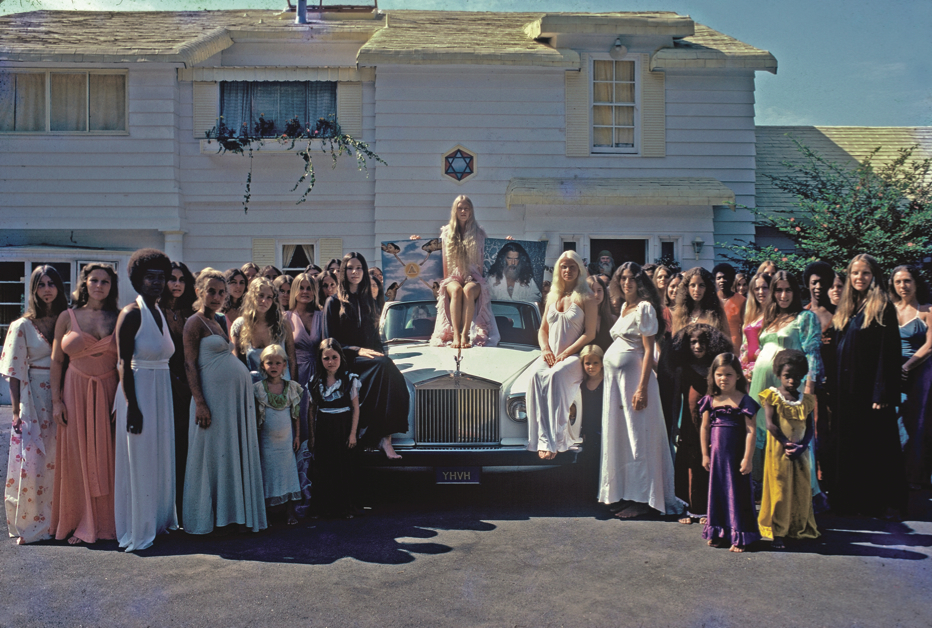
The Source Family Under the guidance of charismatic, luxuriously-bearded leader Father Yod (once named Jim Baker, later known as YaHoWha), the Source Family operated one of the country’s first health food restaurants. They lived in a Hollywood Hills mansion, wore flowing robes, assumed dreamy new names, meditated, and studied Father Yod’s custom blend of Eastern and Western philosophy and mysticism. As the home movies that comprise Maria Demopoulos and Jodi Wille’s documentary, The Source Family, suggest, there were golden moments aplenty, even as the mainstream began to view the group with suspicion (and an aging Father Yod’s decision to take multiple wives confused some members — particularly the woman he was already legally married to). Tapping into the group’s extensive film and psych-rock music archives, as well as interviews with surviving members, The Source Family offers a captivating look at what had to be the most earnest (and most photogenic) cult of the 1970s. (1:38) Roxie. (Eddy)

Trance Where did Danny Boyle drop his noir? Somewhere along the way from Shallow Grave (1994) to Slumdog Millionaire (2008)? Finding the thread he misplaced among the obfuscating reflections of London’s corporate-contempo architecture, Boyle strives to put his own character-centered spin on the genre in this collaboration with Grave and Trainspotting (1996) screenwriter John Hodge, though the final product feels distinctly off, despite its Hitchcockian aspirations toward a sort of modern-day Spellbound (1945). Untrustworthy narrator Simon (James McAvoy) is an auctioneer for a Sotheby’s-like house, tasked with protecting the multimillion-dollar artworks on the block, within reason. Then the splashily elaborate theft of Goya’s Witches’ Flight painting goes down on Simon’s watch, and for his trouble, the complicit staffer is concussed by heist leader Franck (Vincent Cassel). Where did those slippery witches fly to? Simon, mixed up with the thieves due to his gambling debts, cries amnesia — the truth appears to be locked in the opaque layers of his jostled brain, and it’s up to hypnotherapist Elizabeth (Rosario Dawson) to uncover the Goya’s resting place. Is she trying to help Simon extricate himself from his impossible situation, seduce Franck, or simply help herself? Boyle tries to transmit the mutable mind games on screen, via the lighting, glass, and watery reflections that are supposed to translate as sleek sophistication. But devices like speedy, back-and-forth edits and off-and-on fourth-wall-battering instances as when Simon locks eyes with the audience, read as dated and cheesy as a banking commercial. The seriously miscast actors also fail to sell Trance on various levels — believability, likeability, etc. — as the very unmesmerized viewer falls into a light coma and the movie twirls, flaming, into the ludicrous. (1:44) SF Center. (Chun)

Upstream Color A woman, a man, a pig, a worm, Walden — what? If you enter into Shane Carruth’s Upstream Color expecting things like a linear plot, exposition, and character development, you will exit baffled and distressed. Best to understand in advance that these elements are not part of Carruth’s master plan. In fact, based on my own experiences watching the film twice, I’m fairly certain that not really understanding what’s going on in Upstream Color is part of its loopy allure. Remember Carruth’s 2004 Primer? Did you try to puzzle out that film’s array of overlapping and jigsawed timelines, only to give up and concede that the mystery (and sheer bravado) of that film was part of its, uh, loopy allure? Yeah. Same idea, except writ a few dimensions larger, with more locations, zero tech-speak dialogue, and — yes! — a compelling female lead, played by Amy Seimetz, an indie producer and director in her own right. Enjoying (or even making it all the way through) Upstream Color requires patience and a willingness to forgive some of Carruth’s more pretentious noodlings; in the tradition of experimental filmmaking, it’s a work that’s more concerned with evoking emotions than hitting some kind of three-act structure. Most importantly, it manages to be both maddening and moving at the same time. (1:35) Roxie. (Eddy)
Hospital union targets UC executive pensions [VIDEO]

An update to this story has been posted below.

An ongoing labor rift is intensifying between frontline University of California hospital employees and the UC medical center system. UC administrators have minimized employees’ stated concerns about eroding patient care due to staffing rollbacks, saying the real issue at the heart of the dispute is AFSCME’s “refusal to agree to UC’s pension reforms.”

But now the union is striking a different note on pension reform, most recently taking aim at UC executive pensions – or what AFSCME 3299 spokesperson Todd Stenhouse glibly refers to as the “golden handshake protection program.”

AFSCME 3299 represents 13,000 UC patient care and technical workers. The union is expected to announce the outcome of a strike authorization vote, stemming from a contract negotiation that has been at an impasse for months, any day now.

Meanwhile, the hospital workers’ union issued a statement on May 3 pointing out that top-ranking UC executives, particularly longtime administrators whose robust retirement benefits were grandfathered in from a more bountiful era, stand to receive pension payouts that dramatically exceed the reduced retirement benefits most public employees can now expect.

“Our point is simply this,” Stenhouse explains. “How can you even pretend to have pension reform when you’re not capping executives’?”

UC spokesperson Steve Montiel noted that UC restructured its pension program several years ago. He justified the higher payouts, saying, “That’s something we see as being necessary to attract the best people at all levels, and to compete with others for the very best people.”

This past January, sweeping pension reform legislation took effect after winning bipartisan support in Sacramento. The new limits cap pensionable salary levels at $110,000 for public employees who earn Social Security, and $130,000 for those who don’t.

Yet the leaner retirement regime does not apply to employees in the UC system, which operates under a separate pension structure. Under the UC framework, pensionable salary levels are capped at $250,000, or $375,000 for employees hired prior to 1994.

“The cap on compensation for the governor of California is $110,000,” Stenhouse points out. “They say they want pension reform. Well, we want real pension reform.”

AFSCME is targeting Mark Laret, CEO of UCSF Medical Center, in particular. Since he was hired early enough to benefit from the higher pensionable salary cap, the hospital director, whose total annual compensation exceeds $1 million, is expected to earn more than $309,000 per year in retirement benefits.

In 2010, Laret joined 35 other UC executives in threatening to sue the Board of Regents if pension caps, mandated by the Internal Revenue Service, were not lifted. The IRS had offered to grant an exemption to the UC system but Regents ultimately determined that the caps should remain in place, despite executives’ objections.

In this clip, AFSCME 3299 President Kathryn Lybarger and Pathology/Lab Technician Margaret Mann confront Laret during his onstage address at the UC Health Center for Health Quality and Innovation’s Spring Colloquium, held at Oakland Marriott City Center on May 3. Video courtesy AFSCME.

Had they succeeded in lifting the caps, Laret could have received more than twice as much in annual retirement benefits, according to AFSCME estimates. (The medical center CEO recently co-authored an Op Ed in the San Francisco Examiner admonishing AFSCME for resisting “modest reforms” on pension contributions proposed by hospital management.)

Montiel emphasized to the Bay Guardian that contract bargaining negotiations are the central issue, noting that executive pensions haven’t figured into that discussion. “They haven’t raised this at the bargaining table,” he said. “If they wanted to propose caps on pensions for their units, we would look at that, but what they’re talking about is beyond what’s being bargained right now.” A key issue, he added, is a proposal for employees to contribute 6.5 percent toward retirement savings, up from 5 percent.

AFSCME has estimated that the UC system could save $35 million annually if executives were held to the $110,000 pensionable salary cap now in effect for a majority of state, county and municipal employees.

“I haven’t looked at the math on that,” Montiel said when asked about this potential source of savings. “The medical centers are supported by medical center revenue, so there’s really no state funding that is going into salaries there. … There are lots of savings that could be made. These are all things that have been taken into consideration for years as compensation levels have been set and so forth, but this is not part of the negotiations with AFSCME.”

Sen. Leland Yee has introduced legislation, SB 8, to prohibit pay increases for top UC administrators within two years of a tuition hike or when budget allocations are not increased. According to a fact sheet prepared by Yee’s office, the bill is meant to address a trend where “the UC and the CSU systems have historically hiked executives’ pay while raising student fees and have given new administrators more than double digit pay hikes.” The legislation is working its way through the approval process, currently in committee.

On this latest debate, Yee sided with the union. “I don’t see why, when state workers are in a pinch and tuitions are at record highs, UC executives should be pulling down $300,000 a year on their pensions,” he said. “This shows yet again the profoundly backwards priorities in the UC system.”

UPDATE: We just got word that AFSCME 3299 members voted to authorize a strike with 97 percent support. The union can lawfully call a strike any day now, but dates and duration of a strike have not been finalized.

‘Iron Man 3’ and everything else: new movies!

1

This week: the 56th San Francisco International Film Festival continues (our second week picks here); hippie cult doc The Source Family opens at the Roxie (my interview with the filmmakers, who were able to access vast amounts of archival footage shot by the group itself, here); and Iron Man 3 follows the exploits of Tony Stark, Lord of Winterfell. My review of that low-budget indie that you probably haven’t heard of below, plus more!
http://www.youtube.com/watch?v=JNMljhftcWY

At Any Price Growing up in rural Iowa very much in the shadow of his older brother, Dean Whipple (Zac Efron) cultivated a chip on his shoulder while dominating the figure 8 races at the local dirt track. When papa Henry (Dennis Quaid) — a keeping-up-appearances type, with secrets a-plenty lurking behind his good ol’ boy grin — realizes Dean is his best hope for keeping the family farm afloat, he launches a hail-mary attempt to salvage their relationship. This latest drama from acclaimed indie director Ramin Bahrani (2008’s Goodbye Solo) is his most ambitious to date, enfolding small-town family drama and stock-car scenes into a pointed commentary on modern agribusiness (Henry deals in GMO corn, and must grapple with the sinister corporate practices that go along with it). But the film never gels, particularly after an extreme, third-act plot twist is deployed to, um, hammer home the title — which refers to prices both monetary and spiritual. A solid supporting cast (Kim Dickens, Heather Graham, Clancy Brown, Red West, newcomer Maika Monroe) helps give the film some much-needed added weight as it veers toward melodrama. (1:45) (Cheryl Eddy)

Bert Stern: Original Mad Man Mad man, cad man: both describe photographer Bert Stern, famed for his groundbreaking vodka ads as well as his “Last Sitting” session with Marilyn Monroe (a series he recently re-created, rather regrettably, with Lindsay Lohan). Now in his 80s, he’s coaxed in front of the camera by longtime muse Shannah Laumeister; though their closeness (despite a 40-year age difference) means Bert Stern: Original Mad Man contains a few uncomfortably intimate moments, it also makes for some remarkably candid interviews. And what a life he’s had, melding his voracious appetite for women with a talent for capturing them in stunning, creatively innovative photographs. Though his parade of exes (including celebrated ballet dancer Allegra Kent) remember him with a certain amount of curled-lip disdain, his iconic work — 1959 documentary Jazz on a Summer’s Day, the poster for former co-worker Stanley Kubrick’s 1962 Lolita (those heart-shaped glasses? Stern’s idea) — speaks for itself. (1:50) (Cheryl Eddy)

Iron Man 3 Neither a sinister terrorist dubbed “the Mandarin” (Ben Kingsley) nor a spray-tanned mad scientist (Guy Pearce) are as formidable an enemy to Tony Stark (Robert Downey, Jr.) as Tony Stark himself, the mega-rich playboy last seen in 2012’s Avengers donning his Iron Man suit and thwarting alien destruction. It’s been rough since his big New York minute; he’s been suffering panic attacks and burying himself in his workshop, shutting out his live-in love (Gwyneth Paltrow) in favor of tinkering on an ever-expanding array of manned and un-manned supersuits. But duty, and personal growth, beckon when the above-mentioned villains start behaving very badly. With some help (but not much) from Don Cheadle’s War Machine — now known as “Iron Patriot” thanks to a much-mocked PR campaign — Stark does his saving-the-world routine again. If the plot fails to hit many fresh beats (a few delicious twists aside), the 3D special effects are suitably dazzling, the direction (by series newcomer Shane Black) is appropriately snappy, and Downey, Jr. again makes Stark one of the most charismatic superheros to ever grace the big screen. For now, at least, the continuing Avengers spin-off extravaganza seems justified. (2:06) (Cheryl Eddy)

Kon-Tiki This Best Foreign Language Film nominee from Norway dramatizes Thor Heyerdahl’s 1947 Kon-Tiki expedition. (1:58)

http://www.youtube.com/watch?v=7SQs2Y8drP8

The Reluctant Fundamentalist Based on Pakistani novelist Mohsin Hamid’s award-winning 2007 novel, and directed by the acclaimed Mira Nair (2001’s Monsoon Wedding, 2006’s The Namesake), The Reluctant Fundamentalist boasts an international cast (Kate Hudson, Martin Donovan, Kiefer Sutherland, Liev Schreiber, Om Puri) and nearly as many locations. British-Pakistani actor Riz Ahmed (2010’s Four Lions) stars as Changez Khan, a Princeton-educated professor who grants an interview with a reporter (Schreiber) after another prof at Lahore University — an American citizen — is taken hostage; their meeting grows more tense as the atmosphere around them becomes more charged. Most of the film unfolds as an extended flashback, as Changez recounts his years on Wall Street as a talented “soldier in [America’s] economic army,” with a brunette Hudson playing Erica, a photographer who becomes his NYC love interest. After 9/11, he begins to lose his lust for star-spangled yuppie success, and soon returns to his homeland to pursue a more meaningful cause. Though it’s mostly an earnest, soul-searching character study, The Reluctant Fundamentalist suddenly decides it wants to be a full-throttle political thriller in its last act; ultimately, it offers only superficial insight into what might inspire someone’s conversion to fundamentalism (one guess: Erica’s embarrassingly bad art installation, which could make anyone hate America). Still, Ahmed is a compelling lead. (2:08) (Cheryl Eddy)

Don’t vent, organize and “primary” a Democrat near you

5

By Norman Solomon

Norman Solomon is co-founder of RootsAction.org and founding director of the Institute for Public Accuracy. His books include “War Made Easy: How Presidents and Pundits Keep Spinning Us to Death.” He writes the Political Culture 2013 column.

Progressives often wonder why so many Republican lawmakers stick to their avowed principles while so many Democratic lawmakers abandon theirs. We can grasp some answers by assessing the current nationwide drive called “Primary My Congressman” — a case study of how right-wing forces gain ground in electoral terrain where progressives fear to tread.

Sponsored by Club for Growth Action, the “Primary My Congressman” effort aims to replace “moderate Republicans” with “economic conservatives” — in other words, GOP hardliners even more devoted to boosting corporate power and dismantling the public sector. “In districts that are heavily Republican,” the group says, “there are literally dozens of missed opportunities to elect real fiscal conservatives to Congress — not more ‘moderates’ who will compromise with Democrats. . .”

Such threats of serious primary challenges often cause the targeted incumbents to quickly veer rightward, or they may never get through the next Republican primary.

Progressive activists and organizations could launch similar primary challenges, but — to the delight of the Democratic Party establishment — they rarely do. Why not?

Here are some key reasons:

*  Undue deference to elected Democrats.

Members of Congress and other elected officials deserve only the respect they earn. All too often, for example, plenty of Congressional Progressive Caucus members represent the interests of the establishment to progressives rather than the other way around. 

*  Treating election campaigns more like impulse items than work that requires long-term planning and grassroots follow-through.

The same progressives who’ve spent years planning, launching and sustaining a wide range of community projects are apt to jump into election campaigns with scant lead time. Progressives need to build electoral capacity for the long haul, implementing well-planned strategic campaigns with candidates who come out of social movements and have a plausible chance to win on behalf of those movements.

*  Assuming that millions of dollars are necessary to win.

Yes, successful campaigns require effective fundraising — but money is often a less significant obstacle than a shortage of commitment and willingness to do painstaking grassroots organizing.

*  Self-marginalization by ignoring elections.

Some on the left prefer to stay out of electoral contests while focusing on the next protest demonstration — thus leaving the electoral field to battles between corporate Democrats and Republicans. One sure result: a progressive won’t win.

*  Self-marginalization with third-party efforts in partisan races.

In congressional races, Green Party and other progressive third-party candidates have a zero record of success in our lifetimes. In other races with party affiliations also on the ballot (such as governor and state legislature), victories have been almost nonexistent. In such races, the corporate-military complex is not in the slightest threatened by third-party candidates, who rarely get higher than a low single-digit percentage of the vote. In nonpartisan races, by contrast, there are examples of successful and uplifting campaigns by third-party candidates, as with Green Party member Gayle McLaughlin, the mayor of Richmond, California. 

By changing just a few words in the Club for Growth’s “Primary My Congressman” manifesto, progressives have a road map for electoral progress: In districts that are heavily Democratic, there are literally dozens of missed opportunities to elect real progressives to Congress — not more of those who go along with the Obama White House as it keeps compromising with Republicans.

Anyone serious about getting genuine progressives elected to Congress next year should be engaged in developing campaigns now. To avoid the impulse-item syndrome, that means identifying key races where progressives have a real chance to win, while remaining mindful that election campaigns should be subsets of social movements and not the other way around.

If there’s a defining issue that now separates the Obama party leadership from social decency, it is the president’s push to cut Social Security benefits. Less ballyhooed but also crucial is his push to cut Medicare benefits and the ever-present danger of cuts to already woefully-underfunded Medicaid. Meanwhile, Democratic leaders are unwilling to seriously cut the enormous military budget.

Any incumbent Democrat who is not serving progressive interests should be weighed as a possible primary target. And the most fruitful primary challenges are beckoning in heavily Democratic districts where there are many progressive voters and incumbents aren’t measuring up.

By that standard, the Congress members who may be vulnerable to a primary challenge include the 44 who tout their membership in the Progressive Caucus but have refused to sign the letter (initiated by Congressmen Alan Grayson and Mark Takano) promising not to vote to cut Social Security, Medicare or Medicaid benefits.

A good starting point to consider launching a primary challenge in your area would be to look at those 44 members of Congress who continue to refuse to make such a promise, leaving themselves wiggle room to vote for cuts in three crucial programs of the social compact. To see the list of those self-described “progressives,” click here. (Meanwhile, wherever you live, you can let your Congress member and senators know what you think of proposals for such cuts by clicking here.)

It’s fair to say those 44 members of Congress are among the many Democratic incumbents showing themselves to be more afraid of the Obama White House and the Democratic Party hierarchy than they are of voters in their own districts. Progressives in and around those districts need to do less venting and more organizing.

Norman Solomon is co-founder of RootsAction.org and founding director of the Institute for Public Accuracy. His books include “War Made Easy: How Presidents and Pundits Keep Spinning Us to Death.” He writes the Political Culture 2013 column.


The Performant: The real weekend warriors

Holding down the weekend of the weekend with the Dark Room Theatre’s “Ghostbusters: Live” and Har Mar Superstar

Among the true creatures of the night, Saturday Night has always been passé, amateur night if you will, when even the most accommodating of dive bars or clubs are suddenly jammed tight with lightweight dilettantes, whose allegiance to the night life is as superficial as it is truncated. But the real weekend has always begun on Thursday, straddling the line between Wednesday’s hump and Saturday’s slump, a connoisseur’s indulgence.

Though San Francisco is happily full of those who understand that Thursday is when the party starts, any number of theatres can still attest that packing the house on that particular evening can be a tricky prospect, a trend I can attest to from the personal experience of having attended many a Thursday show where the actors outnumbered the oddience. Awkward. Which made entering the oversold, packed to the rafters performance of “Ghostbusters: Live”! at the Dark Room Theatre that much more refreshing. This is one Mission Street outpost that has thus far ably resisted the siren song of gentrification and co-option, and remains a place where silly good fun can be had for the price of cheap, with an additional calendar of ten p.m. comedy shows that caters specifically to the committed night owl crowd.

“Ghostbusters: Live” was a perfect example of the Dark Room aesthetic from start to finish, one which other no-budget production companies would do well to take note of. Eschewing a set, which would really just impede the action on the tiny, 12’ x 8’ stage, but expending just enough effort on costuming, lights, and sound to support the storyline and bolster the humor, “Ghostbusters: Live!” opened with the three researchers (played by Adam Curry, Tim Kay, and Thomas Apley) looking for signs of a haunting in the public library, the best lines about great sponge migrations, family psychosis, and menstruation left intact. With clever puppetry standing in for any number of ghostly apparitions, and a strong supporting cast including Adam Vogel as a pitch-perfect Louis Tully, and Alexia Staniotes as the acerbic Janine Melnitz, “Ghostbusters: Live!” managed to capture both the essence of the movie it was sending up and the heady geist of a Thursday night out on the town, framing the possibilities for the rest of the weekend to come.

If Thursday Night is the prelude to the weekend, then Sunday night is its final salute, and the true testing ground of the dedicated denizens of the dark. Which made it perhaps the perfect day of the week for the rarified talent that is Har Mar Superstar to perform. True, the tough sell that is Sunday night kept the crowd at the Bottom of the Hill from swelling to the epic proportions you might expect for a performer of his caliber, but wasn’t that just more elbow room for the rest of us?

Often compared to the lovably schlubby porn star Ron Jeremy, the Bay Area celebrity Sean Tillmann most closely resembles is Josh Kornbluth, although Tillman’s a whole lot more exhibitionistic. His alter-ego’s double-entendre filled lyrics, funky dance moves, catchy hooks, and unabashed libido combine into a stage persona of pure sweaty id, while his true weapon, a silkily soulful croon, tongue-bathes the oddience in its liquid smooth. While a lot of his songs skew towards the humorous, including the trashy-pop “Tall Boy” and his boy-band ode to “the male camel-toe” “Almond Joy,” when Har Mar gets serious he wields an epic howl such as when he turns on the retro-soul for “Lady, You Shot Me” and further unleashes his formidable upper register on “Sunshine.”

And while there was some initial trepidation on the part of the crowd, perhaps fearful of the unpredictable intentions of the lascivious songster, by the end everyone was getting into the spirit of the moment, rubbing Tillman’s proudly bared belly for luck, swapping saliva, getting down. Rounding out the set with a literally stripped-down (to the briefs) acapella version of “It’s So Hard to Say Goodbye to Yesterday” provided the appropriate closure for the weekend’s last hurrah, and set the mood for all the weekends to come, the sunshine and the rain.    


Scenes from the struggle for economic justice

9

Hacking Oakland’s budget

Sporting trucker hats, nose rings, and in activist Shawn McDougal’s case, a white tee with “Revolutionary” printed across the front in simple black lettering, the young, energetic activists assembled at Sudo Room, an Oakland hacker space, come across as unlikely ballot-initiative proponents. Nevertheless, in a few short weeks, the all-volunteer Community Democracy Project crew intends to hit the pavement and begin collecting signatures for a measure to introduce “participatory budgeting” to Oakland city government.

Their objective is to set up a kind of direct democracy system for hashing out the city’s discretionary spending. The proposal would create a charter amendment and a new Oakland city department to reconfigure the politically contentious budget allocation process, by “shifting accountability in a way that more people are able to engage,” says organizer Sonya Rifkin.

The proposal envisions convening democratic “neighborhood assemblies,” each of which would represent roughly 4,000 Oaklanders. Any resident age 16 or older would be free to attend meetings and vote on NA proposals. The NA proposals would then be forwarded onto citywide committees and synthesized as proposals for the ballot, whereupon the electorate would have the final say.

For the Community Democracy Project organizers, who mostly became acquainted through Occupy Oakland, the radical concept is just as much about achieving equitable budget allocation as it is about stoking the embers of community building. To place it on Oakland’s city ballot, the ambitious campaigners hope to collect 40,000 signatures in the next six months.

It’s a tall order, yet the activists appear undaunted. It’s a movement, McDougal says, comprised of “regular people, realizing that they don’t have to be spectators. They can be participants.” (Rebecca Bowe)

Solidarity with Bangladeshi sweatshop workers

News of a Bangladesh factory collapse last week that killed hundreds of low-wage workers reached San Francisco just as labor organizers were preparing to rally for stronger safety measures in overseas sweatshops.

Last November, a fire broke out in the Tarzeen Fashions factory in Bangladesh, killing 112 employees who produced garments for Walmart and other retailers. Sumi Abedin, a 24-year-old garment worker who earned about $62 a month working 11-hour days, six days a week, survived the blaze.

Through a translator, Abedin told reporters, “We were trying to exit through the staircase, and then we saw a lot of burned bodies, injured bodies. And I jumped through a third floor window because I thought, instead of being burned alive, even if I die, my mother will get my body.”

Abedin was standing outside San Francisco’s Gap headquarters, flanked by Bay Area activists from Jobs with Justice, Unite HERE, Our Walmart, and others. They were there to call on the popular retailer to sign a fire-safety agreement to implement renovations, at an estimated cost of about 10 cents per garment. In a statement, Gap noted that it had implemented its own four-point plan “to improve fire safety at the selected factories that produce our products.”

Gap had no direct connection with the Tarzeen Fashions blaze that Abedin narrowly escaped. Yet Bangladesh Center for Worker Solidarity organizer Kalpona Akter explained that the campaign was targeting Gap because “they’re saying they have corporate social responsibility,” yet have refused to sign onto the worker-sanctioned, legally binding fire safety agreement endorsed by BCWS, which brands such as Tommy Hilfiger and German retailer Tchibo have committed to. “This is one appropriate thing Gap can do in this moment,” Akter said, “if they really wanted to prevent this death toll in other parts of the world.” (Bowe)

Making job-training programs actually work

The phrase “welfare” may conjure up the image of a couch potato catching up on daytime soaps while the checks roll in, but Karl Kramer of the San Francisco Living Wage Coalition says it’s simply not the case — some people are not only working to earn those meager checks, they’re faced with few options once their participation in such programs comes to an end.

In San Francisco, many recipients of public assistance are part of the local Community Jobs Program, designed to provide unemployed people with on-the-job experience to help them land on their feet after six months. In practice, however, “it’s not happening,” Kramer says. “They’re dead-end programs. People aren’t moving onto jobs, and at the end of the Community Jobs program, they’re cut off completely.”

Part of the problem is that few pathways exist to connect the workers with actual paid gigs once they’ve finished. So the Living Wage Coalition is pushing for legislation that would improve and expand upon the Community Jobs Program, by raising the wage rate from $11.03 to $12.43 per hour, giving participants the option of working 40 hours a week, extending the program from six months to one year to square with eligibility requirements for many job listings, and creating an advisory committee to facilitate entry-level job creation in city departments.

“There has not been political will to really make these programs successful,” Kramer notes. And in the meantime, “people don’t connect it with why there’s such a growth of homeless families” in San Francisco. (Bowe)

Basic rights for domestic workers

The California Domestic Workers Bill of Rights would apply basic federal labor protections (such as a minimum wage, the right to breaks, and basic workplace safety standards) to domestic workers. If it becomes law, credit will go in part to its author, Assemblymember Tom Ammiano, but also to the California Domestic Workers Coalition, which has been pushing the issue for years.

Supporters of the bill say it’s unconscionable that domestic workers — the people who care for our children and grandparents and tend our homes — are one of just two occupations exempt from the Fair Labor Standards Act of 1938, the other being farm workers (another profession with a well-documented history of labor abuses, and also one comprised largely of unpaid immigrants). “We need to have protections for the people who do really important work,” Katie Joaquin, campaign coordinator for the coalition, told the Guardian.

As we reported recently (“Do We Care?,” 3/26/13), Gov. Jerry Brown vetoed the measure last year after it was overwhelmingly approved by the Legislature, expressing the paternalistic concern that it may reduce wages or hours of domestic workers. But its supporters have come back stronger than ever this year. Now know as Assembly Bill 241, the measure cleared the Assembly Labor Committee on a 5-2 vote on April 24 and it now awaits action by the Assembly Appropriations Committee. They say this bill, which New York approved in 2010, is a key step toward valuing caregiving and other undervalued work traditionally performed by women. (Steven T. Jones)

Cal president resists pressure to veto West Bank divestment bill

17

Late Tuesday night, UC Berkeley Student President Connor Landgraf decided not to a veto SB 160, which called on the university to divest from companies that profit from the Israeli occupation of the West Bank. The bill labels the university “a complicit third party in illegal occupation and ensuing human rights abuses” by Israel.

Before announcing his decision, Landgraf acknowledged to the Guardian that he had promised divestment proponents during his campaign that he would not exercise his veto. But following the close 11-9 vote last Thursday, Landgraf came under intense pressure from both pro- and anti-divestment groups and he waited until just before the deadline for a veto to announce his decision.

Although the UC Berkeley Student Senate has no control the university’s budget, the divestment bill drew national attention. Palestinian solidarity activists called upon Landgraf to allow the bill to stand, while the Jewish Community Relations Council (JCRC) and the Israel Action Network launched campaigns to pressure Landgraf into vetoing the measure.

Early Tuesday morning, the Guardian revealed that Landgraf had taken advantage of a fully-funded trip to Israel, paid for by the the American Jewish Committee, a sponsor organization for the Israel Action Network. Landgraf failed to disclose this relationship during the debate over SB160, even after the Israel Action Network launched a pro-veto campaign.

Although Landgraf stopped short of issuing a veto, he did release a statement distancing himself from the bill.“I firmly reject its one-sided narrative, and the bill’s complete and utter failure to create any constructive discussion or dialogue on a complex and multifaceted issue,” Landgraf wrote.

Following Landgraf’s announcement, SB 160 author Senator George Kadifa praised Landgraf’s decision to refrain from a veto. “The 60 communities that supported divestment are grateful for President Landgraf’s courage in agreeing not to veto,” Kadifa told the Guardian.

Pro-Israel groups on campus expressed disappointment in his decision. “Obviously we’re really dismayed by the decision,” Abby Porth, associate executive director of the JCRC, told J Weekly.

Ultimately, the divestment bill is unlikely to alter the UC’s investment portfolio. Before Landgraf announced his decision, UC Chancellor Robert Birgeneau voiced his opposition to SB 160, promising the bill would have no effect of the UC’s investment decisions.

But the success of encouraging divestment at Berkeley may inspire other UC campuses to follow suit. On Tuesday, students at UC Davis launched a campaign calling on their own student government to consider divestment from many of the same companies included in Berkeley’s SB 160.

Care clash

13

The first week in April was a rough time for Connie Salguero. The Filipina nursing assistant, who says she would’ve been eligible to retire in two years, reported to her shift at the University of California San Francisco medical center at Mt. Zion on April 1 — and was told she was laid off. Two days after that, she was forced out of her home through an eviction, but fortuitously met an elderly Filipina woman who said Salguero could stay with her until she gets back on her feet.

“This manager said to me, Connie, come here, let’s talk,” and delivered the bad news, Salgeuro recounted, getting a little misty-eyed. Two other Filipina hospital assistants in her unit met with the same fate that day, she said.

“I’m trying to find a job,” Salguero said. “It’s very hard. But I will survive.” She projected a sense of resolve despite the whirlwind of sudden stress, which seemed fitting for someone whose job entailed feeding, bathing, and assisting up to ten bedridden patients at a time, many of them suffering from cancer.

Salguero said management told her the layoffs were necessary because of the most recent wave of federal budget cuts. But Cristal Java, lead organizer for UC patient care technical workers’ union, AFSCME 3299, interjected during an interview with the Bay Guardian to refute that explanation, calling it “total crap. They don’t want to tell workers the truth,” Java said, “which is that the hospitals are extremely profitable.”

UCSF ELIMINATES 300 POSITIONS

Salguero is one of about 25 UCSF certified nursing assistants whose recent layoffs prompted AFSCME to register a formal complaint with the Public Employee Relations Board, an agency that mediates labor disputes. The CNA layoffs hit in March and early April as part of a raft of cutbacks that eliminated a total of 300 full-time equivalent positions. Some of those positions were unfilled while other staffers were reassigned elsewhere or had their hours cut; a total of 75 individuals were laid off.

The cuts prompted union representatives to organize a protest at UCSF’s Parnassus Campus April 4, with San Francisco Sup. John Avalos and California Sen. Leland Yee turning out in support of the workers. Salguero was there too, waving a sign, and she wound up telling her story for an international broadcast by a Filipino news station. Things took a dramatic turn when police arrived on the scene, and Union President Kathryn Lybarger and some others were escorted off the premises in handcuffs.

Asked to explain the rationale behind the layoffs, UCSF spokesperson Karin Rush-Monroe responded, “We evaluated the impact of the Affordable Care Act, expected reductions in Medicare, MediCal and private insurance reimbursements,” as well as employee benefits and rising costs in drugs and medical supplies, and ultimately decided on a 4 percent labor budget cut. “We must make a ‘course correction’ if we are to maintain our resources to care for our patients,” Rush-Monroe said.

But the staffing cuts hit just weeks after AFSCME published a blistering report, titled “A Question of Priorities,” charging that UC has prioritized profit margins at its medical centers since 2009 while needlessly eliminating frontline staff positions, all to the detriment of patient care.

“It feels very much like they’re chasing down the Wall Street model of business,” Randall Johnson, an MRI technologist at UCSF Parnassus Campus who is active with Local 3299, told the Guardian. “We’re pressed to move faster and faster and faster. It’s more about profit than it is about patient care.”

Steve Montiel, spokesperson for UC Office of the President, told us that UCSF is “consistently ranked as one of the top hospitals in the country by U.S. News and World Report,” and pointed out that the AFSCME report coincided with an ongoing contract dispute concerning patient care technical workers, which may lead to a strike authorization in the next few weeks.

DANGEROUSLY LOW STAFFING LEVELS?

Billed as a “whistleblower report,” AFSCME’s 40-page publication portrays an internal environment throughout UC medical centers in which staffers — particularly frontline workers — are exhausted, overburdened, and dangerously likely to make mistakes.

Peppered with anecdotal horror stories describing things like dried blood observed on operating room tables at facilities where custodial staffing was cut to a bare minimum, or an incident in which a mentally altered patient was found on a window sill at a medical facility where harrowed nursing assistants’ attention was divided too many ways, the report portrays an unsafe environment that seems out of sync with the system’s reportedly healthy earnings derived from patient care.

“Bring it up at bargaining, and you get told to kick rocks,” said union spokesperson Todd Stenhouse. AFSCME has called upon state agencies and lawmakers to investigate UC policies on “cutting costs, reducing staff, and maximizing revenue.”

“We’ve been getting lots of reports about short staffing, and no coverage for breaks,” said Tim Thrush, a diagnostic sonographer who works with patients experiencing complications in pregnancy, and has worked at UCSF for years. “If you get a break or a lunch, it seems to be rare — even though it’s state law.” Thrush added. “It looks to us … that UC’s response to us raising concerns … is to say, OK well then let’s make it worse. Let’s lay off a whole bunch of people.

“It’s been very disappointing,” he said, “and it’s getting to be kind of scary.”

The report emphasizes California Department of Public Health findings of violations relating to bedsores from 2008 to 2012. The sores can occur if a patient stays in one position for too long, causing reduced blood flow and damage to skin tissue, and have been linked to infection.

Among those affected by the layoffs were “lift and turn team” members, including care workers tasked with turning immobilized patients to prevent bedsores.

Ironically, Rush-Monroe, the UCSF spokesperson, noted in response to a Guardian query that a $300,000 “incentive pay” bonus CEO Mark Laret received in 2011 was based on multiple “clinical improvement goals” that had to be satisfied in order to qualify for the 2011 compensation increase. One of these targets was a reduction in the number of hospital-acquired bedsores.

While the union report points to rising instances of bedsores, and the UCSF administration claims they were reduced to the extent that the CEO was monetarily rewarded for the accomplishment, a quick look at scores on hospital ranking website California Hospital Compare showed that pressure sore rankings at UCSF are almost exactly even with the statewide average.

Meanwhile, hospital rankings of patient safety indicators on Health Grades, an online consumer ranking website, didn’t reflect any dramatic differences between patient safety scores at UCSF, CPMC or Kaiser Permanente.

QUESTIONS RAISED

In the midst of these staffing cuts, AFSCME charges, the $6.9 billion system has enjoyed robust finances, with UCSF earning $100 million in net revenue last year. Between 2009 to 2012, management positions increased by 38 percent system-wide, while payroll costs for managers grew by 50 percent, with an additional $100 million a year allocated to administrative staffing.

According to a 2013-14 budgetary report prepared at the UC level, the system’s network of public universities have suffered deep financial cuts while its five medical centers “have continued to flourish and grow,” and “enjoy robust earnings.”

A revenue breakdown in the UC budget report shows that 62 percent of medical center earnings system-wide were derived from private health care plan reimbursements, while about a third came from Medicare and MediCal, funded by the federal and state government.

Meanwhile, ASCFME’s report has raised eyebrows in the California Senate. Sen. Ed Hernandez, who represents part of Los Angeles County and chairs the Senate Health Committee, “has expressed an interest in looking at it further,” according to committee consultant Vincent Marchand. “We may decide to call a hearing” sometime in May to see if further action is warranted, he added.

Sen. Yee lambasted the UC system for what he called “blatant disregard for the working staff.” Yee said the layoffs raised concerns about the quality of patient care, saying, “How do you lay off 300 individuals and think that it’s not going to compromise patient care?”

Yee added that he thought the UC budget ought to be scrutinized when it goes before the Senate. “Although the Constitution gives the UCs of California tremendous autonomy via the Board of Regents, ultimately we in the Legislature still allocate dollars … so there is a legislative and moral responsibility that we need to exercise,” he said. “Are the dollars within UC being used appropriately to take care of patients and in ensuring their safety?”

CONSTRUCTION, COMPENSATION AND VIPS

In early 2015, UCSF will open its new Mission Bay complex, a 289-bed facility featuring a children’s hospital with an urgent/emergency care unit and an adult care unit for cancer patients. The estimated price tag for the project is about $1.5 billion, and construction costs associated the project were referenced in an Oct. 12 letter Laret, UCSF’s CEO, issued to hospital staff announcing the pending staffing cuts.

Thrush questions decisions made at the highest administrative levels. Laret is “eliminating 300 jobs, and we’re opening a new facility, and he’s getting a $300,000 bonus,” he said, referring to a “retention bonus” expected to be awarded this year, which could be followed by a $400,000 bonus in 2014. “Why is he getting a huge bonus if we’re having to lay off so much staff?”

With a total compensation of around $1.2 million in 2011, Laret’s salary seems excessive in comparison with that of frontline workers — and it is. At the same time, it seems to be within the realm of a CEO of a major medical facility, a quick Internet search reveals.

ACSFME’s report targets Laret specifically, saying he repeatedly emphasized to hospital staff, “When you see patients, you should see dollar signs.” Johnson, the MRI technician, told the Guardian he heard Laret make this statement years ago, when he first came on as CEO. “I know that some physicians were outraged by it,” he said. “I heard that the physicians told him to stop, and he stopped saying it.” UCSF did not respond to Guardian requests for a comment on this allegation.

The report also focuses on a practice of so-called “VIPs” — patients connected with the UC Regents or other influential persons — receiving preferential care. “I got called in on a Sunday to take care of a celebrity, because they had a headache,” said Johnson. “I’ve seen patients have to be on hold so we can scan the [VIPs]. They definitely get preference. I’ve been told, if one of those VIPs comes in, we have to get them on the scanner.” UCSF didn’t respond to Guardian questions concerning VIP patient treatment, either.

LABOR DISPUTE

Montiel, the media relations director for the UC system, responded to a Guardian query with a wholesale rejection of the detailed 40-page report, without directly addressing any of the allegations. Instead, he said the whole controversy arose from a labor rift over pension reform.

“These claims by AFSCME coincide with a bargaining impasse, and the scheduling of a strike vote by its patient care technical workers,” Montiel wrote in an email. “Quality of care is not the issue. The real issue is pension reform. AFSCME has resisted pension reforms that eight unions representing 14 other UC bargaining units have agreed to. The reforms also apply to UC faculty and staff not in unions.”

AFSCME recently announced that its membership would begin voting on April 30 over whether to authorize a strike, following months of stalled negotiations over a contract that expired last September. Stenhouse, the union spokesperson, called it “the impasse of impasses” yet suggested to the Guardian that the strike authorization vote was a side issue from the concerns raised in the whistleblower report. The workers are there to “provide patient care,” he told the Guardian. “They’re not making Buicks.”

“This report is about something much bigger than our members’ livelihoods,” Lybarger stated when the report was released. “It’s about whether the UC is prioritizing quality care for the millions of Californians who put their lives in our hands.”

Treasure Island: Is this the end?

30

So Mayor Lee goes to China with plans to celebrate the signing of a deal that would bring $1.7 billion in Chinese investment into the lagging Treasure Island redevelopment project, and instead the whole thing falls apart. Not good for the cross-Bay rivalry: Gov. Brown, a former mayor of Oakland, landed $1.8 billion in Chinese money for his city’s big project, while Lee lost out.

But there’s a bigger problem. It’s hard to see how anyone would want to invest in Treasure Island right now, when:

The island is sinking,

The Bay is rising,

There’s only one way on or off the island, and it’s already so crowded that a modest event like the Treasure Island Flea Market ties up traffic in both directions for hours, and

The place is radioactive.

Matt Smith and Katherine Mieszkowski of the Bay Citizen did what the Navy and the city of San Francisco refused to do. They went out with a couple of red buckets, dug up some soil and had it tested for Cesium-137. Bingo: The place suffers from far worse contamination that anyone was letting on. And there might be even more:

Until the early 1990s, the Navy operated atomic warfare training academies on Treasure Island, using instruction materials and devices that included radioactive plutonium, cesium, tritium, cadmium, strontium, krypton and cobalt. These supplies were stored at various locations around the former base, including supply depots, classrooms and vaults, and in and around a mocked-up atomic warfare training ship – the USS Pandemonium. CIR’s samples were taken from under a palm tree 50 feet from a classroom building where cesium-137 was kept, according to military archives. A 1974 radiation safety audit identified cesium samples used and stored there with radioactivity several times the amount necessary to injure or kill someone who mishandled them. In 1993, shipping manifests from the same building showed even greater amounts of cesium-137 taken away from the same site that year.

Now some experts say that development plans need to be put on hold while the entire place is checked out more carefully:

“The fact that there is a level above standards is a clear mandate for further study and assessment of the extent of contamination and its origin,” Beyea wrote in an email, adding that more systematic testing is particularly important given that public play areas are planned nearby. “Building a playfield is not an appropriate plan at this time,” he wrote, “given the tendency for little children to put things in their mouths.”

Would you loan a couple billion dollars for a development project on that site?

In theory, of course, the Navy is responsible for the cleanup. In practice? Good luck with that. The Pentagon is blaming the sequester for forced budget cuts in everything including the Blue Angels; you think anyone’s going to write a very big check any time soon for a very complex environmental clean-up job on an artificial island that will soon be underwater?

I used to think the best thing to do with Treasure Island was to leave as much open space as possible for soccer and baseball fields, then slowly let it sink back into the Bay. Now apparently it’s a bad idea even to have kids playing there.

And what about the people who already have moved into housing at TI? Anyone going to test their soil?

Anyone want to take bets on whether anything much is ever going to be built there?

San Francisco has a lot of money tied up in fossil fuels

The San Francisco Employees Retirement System has more than $113 million in holdings in Exxon Mobil. It’s a lucrative investment in a dirty business. On March 29, Exxon’s Pegasus Pipeline ruptured, spilling as much as 7,000 barrels of oil in a toxic slick that coated a residential Arkansas neighborhood and prompted the evacuation of 21 homes.

SFERS also has $60 million invested in Chevron, which has its own checkered history. Environmentalists have long shamed the oil giant for its “toxic legacy” in Ecuador, but closer to home it was recently fined nearly $1 million for workplace violations arising from last year’s Richmond Refinery blaze. That incident sent a column of toxic smoke skyward, and resulted in about 200 hospital visits for respiratory problems from the fumes.

Further down the list of SFERS’ public equities holdings in fossil fuels is $28 million in Royal Dutch Shell, a company whose name, in some circles, is synonymous with human rights abuses in Nigeria. (Shell was also tapped to administer San Francisco’s CleanPower SF program, but that’s another story.)

The retirement system also has about $18 million tied up in Occidental Petroleum, a major player in the fracking industry that was responsible for drilling 675 new oil wells in California in 2011 alone, according to industry data. The retirement system portfolio includes about $5.4 million in BP, the company responsible for the infamous Deepwater Horizon explosion and epic oil spill in the Gulf of Mexico three years ago.

And the city’s retirement portfolio includes more than $1.2 million in Arch Coal, one of the largest coal suppliers in the U.S., which has faced millions in fines for Clean Water Act violations and was sued for firing a miner who complained about unsafe working conditions.

SFERS provided the Guardian with details of its energy company holdings in response to a public records request.

Earlier today, the Budget and Finance Subcommittee of the San Francisco Board of Supervisors took up a resolution, introduced by Sup. John Avalos, to urge SFERS to divest from fossil fuel companies.

The resolution is nonbinding; even if it unanimously passes at the full Board in a couple weeks, SFERS is under no legal obligation to tweak its investment portfolio. But support for such a strategy is gaining momentum as major environmental organizations seek to bring the issue of climate change to the forefront.

Avalos’ resolution was inspired in part by 350.org, an organization that has sowed the seeds for divestment campaigns at 260 colleges and universities nationwide. Celebrated 350.org founder and environmental writer Bill McKibben is betting that the kids are going to win. His campaign hinges on the idea that the planet can only sustain combustion of another 565 gigatons of carbon before things really go off the rails climate-wise; the industry has five times as much in reserve.

Despite San Francisco’s green reputation, change is likely to happen slowly, if at all. According to numbers shared by Retirement Board executive director Jay Huish at the April 10 hearing, SFERS has a total of some $500 million tied up in companies that deal in dirty energy. That’s substantial, and there could be more on the private asset side. “We gave them a list of 200 fossil fuel companies” targeted by environmentalists because they hold underground carbon reserves, noted Avalos aide Jeremy Pollock. “They had stock in 81.”

Avalos’ divestment resolution cleared the way to proceed to the full board, but only after Sup. Mark Farrell requested a couple amendments.

Farrell asked to add language making it clear that the retirement board could receive a lower return on investment if went through with divestment, and inserted another clause to underscore the point that the Board resolution shouldn’t infringe upon SFERS’ “fiduciary responsibility.”

The resolution is expected to go to the full Board on April 23.

SF declares Pay Equity Day as it lowers salaries for women’s jobs

87

The Board of Supervisors today declared April 9 Pay Equity Day in San Francisco, in recognition of the persistent national gap between male and female financial compensation. But with the city locked in a dispute with SEIU Local 1021 over pay cuts to jobs dominated by women and workers of color, the day took on special local significance. Ahead of the declaration, union members, activists, and supervisors rallied in front of City Hall, chanting against San Francisco’s wage inequality and the general climate of fiscal austerity.

Women in San Francisco earn just 84 cents for every dollar paid to their male counterparts. Although this figure is slightly higher than the national average of 77 cents per dollar, the discrepancy represents a yearly wage gap of $9,968 per year, according to the National Partnership for Women and Families. At today’s press conference in front of City Hall, Sup. Malia Cohen called the gap “unconscionable in a country as wealthy as ours.”

Cohen was joined by Sups. David Chiu and David Campos, who both spoke out against gender-based wage gaps. “It is important for men to speak out,” Chui said. “It wasn’t women who made the decision for pay to be unequal.” Campos went a step further, promising to vote against any budget that further entrenches unequal pay. “I will not support any budget that reflect this discrepancy,” he said.

SEIU Local 1021, which represents over half of city employees, is currently locked in a budget dispute with the city over pay cuts that would adversely affect women and workers of color. The city Department of Human Resources has recommended that the city cut the salaries of 16 categories of city workers, including personnel clerks and nursing technicians, which are disproportionately females and workers of color. The dispute was recently sent to an arbitrator.

At today’s event, local SEIU leaders and the San Francisco Women’s Political Committee (SFWPC) continued to pressure the city to reconsider the salary cuts. SFWPC President Laura Hahn called persistent pay inequality “embarrassing.”

“If we can’t achieve it here in San Francisco where are we going to do it?” she asked.

Former Supervisor Chris Daly, who now works as political director for SEIU 1021, echoed Hahn’s concerns and charged that the proposal to cut pay for female-dominated categories calls into question the city’s long term commitment to pay equity.

“If you ask Mayor Lee if he supports wage equality, of course he will say yes,” Daly told us. “But in reality, his Department of Human Resources is rolling back progress.” Daly’s repeated requests for Mayor Lee to intervene in the wage-cut arbitration have not yet been answered.
But for the DHR, the recommended cuts have more to do with fiscal reality than gender equality. At a March 7th budget hearing, DHR director Micki Callahan said, “It would be improper to base any decision on demographics.”

She voiced concern over the “root causes” of pay discrepancy, but indicated that these issues fall outside the purview of her department. Spokespeople for the the DHR department have repeatedly assured us that the proposed budget cuts have nothing to do with gender, but rather reflect an effort to bring city salaries in line with market forces.

Blue Angels grounding is a victory for sanity, safety, and peace

82

Finally, peace in our time. The Blue Angels’ annual Fleet Week assault on San Francisco has finally, blessedly, mercifully been canceled for 2013, the result of $85 billion in federal budget sequestration cuts divided equally between military expenditures and social service spending.

The Guardian has long called for the cancellation of this wasteful show of military might, citing its inherent danger to a dense urban area, wanton waste of resources and fossil fuels, disturbance of the peace and pets, glamourizing of war and its weapons, and its Soviet-style fetishizing of militarism.

But in the end – appropriately and a little ironically – it was conservative fiscal prudence that finally shot down the Blue Angels. The military is already the biggest item in the federal budget, a massive, unjustifiable expenditure caused by imperial over-reach and the bloat of crony capitalism and pork barrel politics. Spending millions more just to show off their toys over scenic San Francisco was the ridiculous cherry on top of that sloppy sundae.

Real people and the real economy are suffering real harm from reckless sequestration cuts to social programs that have been inflicted by the anti-government ideologues sent to DC by the plutocrats and their minions. To keep the Blue Angels flying high against that backdrop would have been simply obscene, and surely a sign of decadent late empire in decay.

This decision by the Navy to nix the Blue Angels is a small but significant sign of sanity in a country gone mad, and the Guardian proudly salutes this decision.

CAREERS AND ED: Learn to eat

0

caitlin@sfbg.com

CAREERS AND ED Don’t tell me you’ve been eating your whole life and you don’t need any lessons on food. Hardy har har, how’s your waist line? Energy level? Food budget? You can always learn more about how to make your diet healthier, cheaper, and above all, more sustainable. The Bay Area has to be one of the best places in the world to learn about how to eat well, and the institutions that put on each of these course offerings are phenomenal places to start dabbling in the area. No more plastic-wrapped sandwiches, ill-informed beer purchases, or factory farm chicken for you, boo boo.

“GROW YOUR OWN FOOD”

No excuses: you can garden in San Francisco year-round, and that doesn’t matter anyway because we’re in the rosy pink of spring, when even your uncle up in Minneapolis is turning his thoughts to sprouts and soil. Garden for the Environment has a host of classes dedicated to greening that fat lil’ digit of yours, but today’s offering is particularly salient for snackers. Organic gardening instructor Carey Craddock will take charge among the rows today, teaching you what plants are perfect for April, and how to get your space ready to raise edible flora.

April 13, 10am-2pm, $25. Garden for the Environment, Lawton and Seventh Ave., SF. www.gardenfortheenvironment.org

“BUILD A CHICKEN COOP”

At the end of the day in this urban chickenry class, you’ll have not only witnessed but aided in the construction of a “Garden Ark” portable chicken coop. Carpenter Joan Weir has designed this one-off course to be of maximum service to the community — you’ll learn coop-building skills, and Rosa Parks Elementary School will score a brand-new home for its feathered flock.

April 14, 10am-5pm, $50. Rosa Parks Elementary School, 920 Allston, Berk. www.biofueloasis.com

“DEBUNKING THE MYTHS OF VEGANISM”

The talk is actually part of Oakland Veg Week (April 22-28), which includes tons of free veg and vegan cooking classes, lectures on sustainable eating, a screening of the plant-based diet booster Forks Over Knives (April 25), bus trip to a Grass Valley animal sanctuary (April 27), and grand finale buffet at the Lake Merritt Sailboat House (April 28). But start here, with Colleen “The Compassionate Cook” Patrick-Goudreau’s presentation that addresses all the excuses that fly about for not going veg. No time to be meat-free? Not enough protein in greens? She’ll set you straight.

April 23, 6:30pm, free. Oakland Library, Temescal branch, 5205 Telegraph, Oakl. www.oaklandveg.com

“BREW LAB: HOMEBREW AND BEYOND”

Brew and bottle two batches of your very own suds in this three-class seminar, billed as the most comprehensive homebrew 101 in town that doesn’t require any investment in equipment, for all you newbies to the brew scene. Mission Gastroclub (www.missiongastroclub.org) founder Eric Denman is the instructor, which means you can expect delicious bites at each session, happily crucial in your quest to understand the flavors of your beer.

April 23, 30, and May 14, 7-9pm, $160. 18 Reasons, 1874 18th St., SF. www.18reasons.org

“COTTAGE LAW 101”

Huzzah for the California Homemade Food Act! Recently signed into law, it allows small producers to make low-risk foods like candy, empanadas, baked goods, and dried teas in their home, without renting a spendy commercial kitchen space. If the news has you itching to start a homemade chocolate stand, stop off at ForageSF’s class first. It’s a primer on the law’s ins and outs, perfect for those looking to join the ranks of Forage’s lauded Underground Market artisans. Bring a plate to share with 20 people and get a discount on your tuition.

April 27, $30 if you bring a dish to share, $50 without. SomArts Cultural Center, 934 Brannan, SF. www.somarts.org

Two men, one spark

0

emilysavage@sfbg.com

TOFU AND WHISKEY It’s the B-story scene that rules 1983’s Valley Girl. Popped collar-sporting Skip is nervously riding his bike to the suburban home of his preppy high school girlfriend, Suzi — but we the audience know he’s more interested in her young step-mom. (He met the feisty Valley mom when she served him sushi at a house party. Gross me out.) It’s a palpable moment of orgasmic anticipation — with a surprise twist — that bops along perfectly to the soundtrack: “Eaten By the Monster of Love,” by experimental pop duo, Sparks (www.allsparks.com).

“Well, it’s worse than war, it’s worse than death/There ain’t too many left who ain’t been/Eaten by the monster of love(Don’t let it get me),” Sparks vocalist Russell Mael opines with a wide-ranging, Broadway-ready bravado, as his brother Ron Mael tickles a bouncy new wave blast out of his keyboards and synthesizers.

This is just one iteration of Sparks — the flashy new wave version, proudly on display in ’82’s Angst in My Pants LP, two tracks of which were used in that early Nicolas Cage vehicle, Valley Girl. But that’s only a small snippet of the band’s robust timeline, which got a running start in ’71 at UCLA, and continues to this day, with 22 albums and counting.

Sparks has had countless rebirths since the first record was released in ’71, the band then known as Halfnelson. There have been landmark albums like ’74’s electric Kimono My House, with that iconic cover of two powdered and kimono-swathed ladies, along with ’83’s synth-heavy In Outer Space, ’02’s chamber pop Lil’ Beethoven, and most recently, ’09’s The Seduction of Ingmar Bergman, a radio musical commissioned by Sveriges Radio Radioteatern, the radio drama department of Sweden’s national radio broadcaster. (More on that later.)

“It seems like the people that stick with Sparks appreciate that the band doesn’t rest on its laurels,” says Russell, a lifelong Angeleno, speaking to me from his home “in the hills above Beverly Hills.”

“I think that’s why we’re really proud of what we’re doing now; it doesn’t sound like a band that’s necessary had 22 albums,” he says. “Someone can come in fresh — a person that’s maybe never heard of Sparks — and if they hear the latest thing, we would be just as happy as we would be for them to have heard the first album.”

Sparks will perform much of its extensive back catalog during its Two Hands, One Mouth (the hands on the keyboard, mouth at the mic) tour’s rare stop in San Francisco next week, April 9 and 10 at the Chapel, 777 Valencia, SF. www.thechapelsf.com. As of press time, only April 10 is sold out.

The brothers Mael have recorded with dozens of other musicians over the decades, and nearly always toured with a live backing band, so the Two Hands, One Mouth trip has been a unique challenge. “It’s kind of the ultimate expression of self-containment for the band,” Russell says. “We just thought that at this point, it might be an interesting challenge to see what would happen if we just played as the two of us, and without computers or backing tracks.”

He adds, as if reading my mind, “It sounds simple, but we also didn’t want it to read as oh, singer-songwriter, that kind of thing where it lulls you to sleep with an acoustic guitar. We wanted it to keep the power that Sparks has had with the recordings and live band.”

The process has been about choosing the appropriate songs from the duo’s rich recording history, and distilling it with just one keyboard, and vocals. So far, the tour’s been well-received in Europe and Japan, with fans commenting on how this format has brought the strong vocals and songwriting to the forefront.

And the Maels work hard to layer those lyrics with humor, depth, and a drop of speculation. “It’s important to us to have something that’s provocative, but in ways that maybe aren’t like, being a punk band with a stance that you know what it is in five minutes. The Sparks stance is a little bit hard to articulate and place. We kind of like that too, that there is an ambiguity to what we’re doing.”

Their most recent project is that The Seduction of Ingmar Bergman piece. The plot of the radio drama is a farcical situation imagining that Ingmar Bergman had been lured to Hollywood and got trapped in the LA film industry in his worst nightmare — a big-budget action film he can’t figure out how to escape. The Swedish radio spot went so well that Sparks was asked to perform it live at the LA Film Festival last year, where they did so with a cast of 14.

The brothers are currently working on turning it into an ongoing theatrical performance — and also a motion picture. They have the Canadian director Guy Madden on board to direct, but still need the financial backing, so they’ll be flying out to the Cannes Film Festival in May to look for funders.

But before Cannes, Sparks will first play the massive sweaty shitshow that is Coachella for the first time. And yes, they will do it as a stripped-down duo — still just Two Hands, One Mouth.

“We know the show works in our own context, so we thought we should be faithful to ourselves and do it there as well, even if it seems incongruous with what you might expect at a big festival,” Russell says. Do I detect a tiny smirk through the phone? Perhaps wishful thinking on my end.

“It’ll be received however it will be received — [but] it will be different from other things there,” he says. “You tend to get blinded by an assault of 160 indie bands doing their indie thing. We’ll be doing whatever we do, whatever you want to call it.”


ESBEN AND THE WITCH

With swelling crescendos, emotional lyrics, gothy undertones, and shimmering vocals in tow, UK post-rock trio Esben and the Witch comes across the pond for the first time in two years, on tour with newest record, Wash The Sins Not Only The Face (Matador). Should be a witchy one. With Heliotropes.

Thu/4, 9pm, $13. Brick and Mortar Music Hall, 1710 Mission, SF. www.brickandmortarmusic.com.


GLAM.I.ROCK

Lyrically gifted young Oakland rapper Glam.I.Rock — the first half an acronym for “Good Lyrics And Music” — will perform a free in-store during Art Murmur this Friday. If you want to be in on an artist at the tipping point, this would be your chance. The MC has that classic ’90s female-empowerment hip-hop vibe but with some different interests (check the “Who is Glam.I.Rock?” video of her tapping out the Rugrats theme), and a more modern style.

Though like her predecessors, she still very much reps her home-base, performing “Inspire Oakland” at Oakland Digital’s Inspiration Awards last December. Makes sense, she’s the daughter of Nic Nac — the only female member of the Mobb crew — and Dangerous Dame, a member of Too $hort’s Dangerous Crew. Glam.I.Rock’s debut EP, The Feel, recently dropped on Savvie1ent/The Olive Street Agency.

Fri/5, 8pm, free. Oaklandish, 1444 Broadway, Oakl. www.oaklandish.com.


GOP ‘dark wizard’ and Occupy ‘anti-leader’ to speak in SF on the same day

This coming Thursday, a central intellectual figure of the Occupy Wall Street movement will give a talk on “Austerity and its Discontents.” And across the city, at the very same time, powerful anti-tax lobbyist Grover Norquist will mix it up with an elite group of San Francisco Republicans (yes, they really do exist).

Graeber, an American anthropologist and anarchist who teaches at Goldsmiths, University of London, was dubbed “the anti-leader of Occupy Wall Street” in a Bloomberg BusinessWeek Magazine article published shortly after a determined band of committed activists staked a claim on Manhattan’s Zuccotti Park, kicking off the global Occupy movement. Graeber’s tome on wealth inequality, Debt: The First 5,000 Years, recounts the ages of human history through the lens of the indebted, vis-à-vis their creditors. The book helped give rise to Occupy activists’ famous chant: “We are the 99 Percent!”

Norquist hails from the polar opposite end of the political spectrum. An influential lobbyist who leads Americans for Tax Reform, he was once described as “the dark wizard of the Right’s anti-tax cult,” in the words of Arianna Huffington. The fiery conservative is most well known for his role as keeper of “the Pledge,” which essentially asks Republican lawmakers to swear that they will never, ever vote to raise taxes for any reason. 

The Thursday meet-and-greet, billed as “Cocktails with Grover Norquist,” is being hosted by the San Francisco Republican Party – a political body that barely registers as a blip as far as local elections are concerned, but apparently has enough clout to make it worthwhile for a famed operative like Norquist, whose group is based in D.C., to dip into San Francisco for a visit. The cocktail hour will be held at The City Club, a financial district venue. It costs $100.

Just as San Francisco Republicans sip cocktails and discreetly await the chance to engage Norquist in a few moments of powerful face-time, an audience of lefties will gather to hear Graeber’s studious analysis of global austerity measures and anarchist organizing tactics. Billed as a forum that’s free and open to the public, Graeber’s talk is being hosted by the Anthropology and Social Change Department of the California Institute for Integral Studies, located at 1453 Mission Street.

In a recent interview about the round of national budget cuts known as the sequester, Norquist told The Daily Beast: “I’m for the spending cuts. Just let them take effect. … The only thing worse than the sequester would be not reducing spending.”

And here’s Graeber’s take on the underlying economic climate that gave rise to the Occupy movement: “It’s becoming increasingly obvious that the real priority of those running the world for the last few decades has not been creating a viable form of capitalism, but rather, convincing us all that the current form of capitalism is the only conceivable economic system, so its flaws are irrelevant. … The economic crisis of the 1970s never really went away. It was fobbed off by cheap credit at home and massive plunder abroad – the latter, in the name of the ‘third world debt crisis.’ But the global south fought back. … The debt crisis has come home to Europe and North America, replete with the exact same approach: declare a financial crisis, appoint supposedly neutral technocrats to manage it, and then engage in an orgy of plunder in the name of ‘austerity.’”

Behind the decision to accept cuts to in-home support services

29

For the last four years, advocates for those with disabilities have successfully fought to stave off the 20 percent cut in In-Home Support Services that then-Gov. Arnold Schwarzenegger had proposed to help balance California’s budget, each year winning legal injunctions preventing the cuts while the case wound it way through the federal court system.

Their main argument is that such deep cuts in these vital services would discriminate against disabled or elderly Californians by forcing them into nursing homes rather than allowing them to receive services at home, which they contended was a violation of the Americans with Disabilities Act (I discuss this and other systemic devaluing of caregiving in last week’s Guardian).

The Ninth Circuit of Appeals was set to hear the California case (Oster v. Lightbourne) on March 19, and the judges in this famously liberal San Francisco-based court had just ruled against Washington state’s effort to make similar cuts (MR v. Dreyfus) just over a year ago. But then, on the eve of that hearing, proponents in the case announced a settlement that will result in an 8 percent across-the-board to IHHS services (allowing a 3.6 percent cut made by Gov. Jerry Brown now and another 4.4 percent cut to go into effect July 1).

While disabilities rights groups and other opponents of the IHHS cuts issued public statements that put a happy face on the settlement, emphasizing that it had avoided much deeper cuts, many advocates privately grumbled about accepting still-deep cuts to this popular and important program. After all, these cuts will hurt the families of those with disabilities (it is often relatives who are paid as caregivers by the program) and likely result in greater long-term costs from nursing home care and more emergency room visits.

So why did they settle? Sources close to the case who don’t want to be identified say a big factor was that two of the three judges assigned to the case – Carlos Bea and Diarmuid O’Scannlain – are the most conservative on the Ninth Circuit bench and seemed likely to rule against the disability rights community. In other words, those with disabilities drew bad cards.

Bea was appointed to the Ninth Circuit in 2003 by then-President George W. Bush after serving more than 20 years as a San Francisco Superior Court Judge (appointed in 1990 by another fellow Republican, then-Gov. George Deukmejian), where he received poor marks from local attorneys, who said he was biased in favor of Big Business.

O’Scannlain was a founding member of the right-wing Young Americans for Freedom back in 1960, later serving as a tax attorney for Standard Oil. He was in private law practice and serving as chairman of the Oregon Republican Party in 1986 when then-President Ronald Reagan – whose presidential campaigns he had worked on – suddenly appointed him to the Ninth Circuit bench.

And if their histories and ideological leanings weren’t enough to tip the balance in favor of settling, there’s the fact that it was Bea who wrote a strong dissenting opinion in the MR v. Dreyfus case, dismissing the disability rights arguments completely.

He wrote: “Mind you this case does not involve the provision of certain social services to one group of disabled – those in nursing homes – but not to another group – the disabled residing at their own homes. No, the panel majority’s decision proceeds on the premise that the very reduction of social services currently provided the at-home disabled will risk their going to nursing home, and that such reduction therefore ‘discriminates’ against the at-home disabled, although not in favor of the disabled in nursing homes, or anyone else. But virtually everything the government does involves discrimination; it is in the nature of laws that they treat some people differently from others. This is not generally impermissible discrimination. Most government spending affects some groups more than others, but that doesn’t mean that the result in impermissible discrimination.”

He then rues the fact that “since the decision interprets and applies the ADA, it constitutes binding precedent in our nine Western states, with 20 percent of the nation’s population,” calling it a flawed decision that violates other court precedents with its “strained interpretation of the ADA.” Then, Bea goes on at length about how the state voluntarily and generously provided these in-homes services and says it should be allowed to suddenly withdraw them as well.

“To the contrary, this program is a flexible one: coverage is dependent in part on how much money the state has,” he wrote, later concluding by calling the majority opinion, “anti-democratic budgeting by judicial fiat.” Judge O’Scannlain is also a strong critic of “judicial activism,” which is often right-wing code for any rulings that expand the rights of society’s least powerful members, as opposed to the interests of the wealthy and powerful that they normally protect.

Yeah, I can see why disability right advocates might have wanted to cut their losses and settle the case.

Do we care?

77

steve@sfbg.com

Teresa Molina faced abusive, belittling treatment on the job.

The 52-year-old immigrant from Sinaloa, Mexico, says she was paid $500 a month to provide 24-hour, live-in care to a girl in a wheelchair and her family. She wasn’t allowed regular breaks. She couldn’t eat what she wanted. Even her sleep was disrupted.

“I spoke up a couple times, but when I did, my employer told me I was dumb and good for nothing,” Molina, speaking Spanish through a translator, told us. “She would ask my immigration status, and I said that was not important, but she used that as a threat.”

Molina is a domestic worker — one of the only two professions (the other being farm work) exempt from federal labor standards.

Her experience, a common one among immigrant women in California, prompted Molina to get involved in last year’s California Domestic Worker Bill of Rights campaign, part of national effort that resulted in the first-ever protections being signed into law in New York in 2010.

Gov. Jerry Brown vetoed the California version of the bill late on the night of Sept. 30, 2012, the deadline for signing legislation, citing the paternalistic concern that better pay and working conditions might translate into fewer jobs or fewer hours for domestic workers.

“I was offended by how he did it, in the middle of the night on the last day, and he basically trivialized it,” Assembly member Tom Ammiano (D-SF), who sponsored the measure, told us. “Here in California, it’s a major workforce, but there’s no rules and there’s a documented history of abuses.”

But if anything, Brown’s veto has energized local activists, who say the battle for domestic worker rights is part of a much larger issue that women, children, immigrants, and their supporters are struggling against as they try to get society to value one of the most basic of social and economic functions: caring and caregiving.

Those in the caregiving professions are used to such defeats, but this one seems to be galvanizing and uniting several parallel movements — most of which have a strong presence here in the Bay Area — that want to apply human values and needs to an economic system that has never counted them.

It is, economists and policy experts say, a profoundly different way to measure economic output — and if the domestic workers and their allies succeed, it could have long-term implications for national, state, and local policy.


CARING DOESN’T COUNT

There are endless examples of how society undervalues caring and caregiving and other labor that has long been deemed “women’s work.” They range from nurses fighting for fair contracts to in-home support service workers fighting for their jobs. Many are jobs that have traditionally been done in the home — and in some cases, not counted at all as part of the Gross Domestic Product.

Social work, teaching, administrative support, caring for children or seniors, community organizing, and other jobs held predominantly by women and people of color are consistently among the lowest paid professions.

But the demand for those jobs is increasing — and the price of under-investing in education, caregiving, and child development is decreased productivity and increased crime and other costs for decades to come — so activists say they are critical to the nation’s future.

“It’s a different perspective. Caregiving isn’t transactional the way we think about other jobs,” said Alicia Garza, executive director of People Organized to Win Employment Rights (POWER), which has joined with other organizations nationwide for a Caring Across Generations campaign. “We’re a nation that has a growing aging population with no plan for how we’re going to take care of these people.”

In California today, caregivers find themselves under attack. Despite playing an important role in electing Brown as governor and in keeping Kaiser Hospital in Oakland and CPMC’s St. Luke’s Hospital in San Francisco open to the low-income residents they serve, the California Nurses Association is still stuck in a years-long contract impasse with those huge hospital corporations.

“We don’t think of ourselves first, we think of others first,” says Zenei Cortez, a CNA co-president who has been a registered nurse for 33 years, noting that patient care and advocacy standards have been key sticking points in their negotiations.

During each year with a budget shortfall, in-home support services for the sick, elderly, and disabled have been placed on the budgetary chopping block in California and many of its counties — including San Francisco, which has about 21,000 such workers — saved only by political organizing efforts and a longstanding lawsuit against the state (which was just settled on March 20 and will result in an 8 percent across-the-board cut in services).

“This program has been under assault for a full decade,” says Paul Kumar, a public policy and political consultant for the National Union of Healthcare Workers, calling that attack short-sighted, in both fiscal and human terms. “People get better care in a home setting.”


UNDERVALUED, ACROSS THE BOARD

If people generally act in their financial self interest, as economic theory holds, Oakland resident Lil Milagro Martinez would oppose the Domestic Workers Bill of Rights and its requirement that she pay her nanny at least minimum wage and allow for breaks and sick days.

After all, Milagro and her family are barely scraping by, with her husband working four jobs as she balances care for their infant son with coursework as a theology graduate student. Instead, Milagro said, she offers their nanny a living wage, benefits, and good working conditions.

“I wanted to feel that we were affirming her rights, so she would pass on that level of respect to my son,” Milagro told us. “If I can do this, and there are companies out there saying they can’t afford to do the right thing, that angers me.”

She was also angry when Brown vetoed the Domestic Workers Bill of Rights. She’s been working with a domestic worker employer group called Hand in Hand, a part of the larger National Domestic Worker Coalition.

“Our goal is to bring people together to create the kinds of worker relationships they want with people in their homes,” Danielle Feris, the national director of Hand in Hand, told us. “There will just be more and more people that need care in the home, so this touches all families.”

Milagro and other domestic worker employers say their stand is about much more than enlightened self-interest. They say this is an important step toward recognizing the important contributions that women and minority groups make to society and creating an economy focused on addressing human needs.

“Care, we can say, is undervalued across the board,” Feris said.

In addition to reintroducing the bill in Sacramento this year, the coalition is pushing similar legislation in Massachusetts and Illinois.

“I think the domestic workers have done a fantastic job at organizing across the country,” Ammiano said. “Making a movement of something isn’t easy, but once it gets traction then it’s tough to ignore.”

Like Milagro and Ammiano, Molina said she was bitterly disappointed by Brown’s veto, although all say it only strengthened their resolve to win the fight this year. “I felt very sad, depressed, and betrayed,” Molina said. “But we will win this…And I think the movement for women, workers, and immigrants will only grow from us winning.”

Domestic Workers Coalition campaign coordinator Katie Joaquin noted that the campaign is about triggering a cultural shift as much as it’s about winning legal protections, as important as they may be. “Once this bill passes and we have basic protections doesn’t mean the abuses will stop,” she said, noting that this is really about valuing care work.

“It’s bringing people together around the care we need,” Joaquin said. “These are conversations that are breaking new ground. The bill is really something that gets the ball rolling.”

Once some household work gets recognized, it’s not a big step toward a conversation about valuing all kinds of caring work and including that in our measures of economic progress.

“We definitely support the idea of valuing all care work, both paid and unpaid,” Feris said. “We all have something to gain by valuing each other.”


THE REAL WEALTH OF NATIONS

Author and researcher Riane Eisler has been a leading thinker and advocate for creating a more caring economy for decades, work that resulted in her seminal 1988 book The Chalice and the Blade, which sold half a million copies and was lauded as a groundbreaking analysis of the gender roles in ancient and modern history. She followed that with The Real Wealth of Nations in 2007, and the creation of the Center for Partnership Studies (CPS) and the Caring Economy Campaign.

Eisler takes issue with what most people call “the economy,” a wasteful and incomplete system that doesn’t actually economize in connecting what we have to what we need. She persuasively argues that it makes sense in both human and fiscal terms to value caring and caregiving, for one another and the natural world, providing myriad examples of countries, cultures, and companies that have benefited from that approach.

“In a way, the concepts are very simple. What could be more simple than saying the real wealth of nations isn’t financial? It consists of the contributions of people and nature,” Eisler told us by phone from her home in Monterey.

On March 20, Eisler gave a Congressional Briefing (attended by members and staffers in the Rayburn House Office Building) entitled “The Economic Return From Investing in Care Work & Early Childhood Education,” presenting a report on the issue that CPS and the Urban Institute released in December: “National Indicators and Social Wealth.”

“I think this is extremely timely,” Eisler told us, noting that the Republican Party’s currently aggressive fiscal conservatism must be countered with evidence that meeting people’s real needs is better economic policy than simply catering to Wall Street’s interests.

Her address to Congress followed ones that Eisler has given to the United Nations General Assembly and other important civic organizations around the world, and it was followed the next day by an address she gave to the State Department entitled: “What’s Good for Women is Good for World: Foundations of a Caring Economy.”

While Eisler said “there are people who are very excited about it,” she admits that her ideas have made little progress with the public even as the global economy increasingly displays many of the shortcomings she’s long warned against. “This is still very much on the margins.”

But that could be changing, particularly given the political organizing work that has been done in recent years around the rights of domestic workers and immigrants and on behalf of the interests of children and the poor, some of it drawing on the work of liberal economists such as Paul Krugman and Joseph Stiglitz.

“The Gross Domestic Product is a very poor measure of economic health,” she told us, noting that it perversely counts excessive healthcare spending, rapid resource depletion, and the cleanups of major oil spills as positive economic activity.

Erwin de Leon, a Washington DC policy researcher, opens “National Indicators and Social Wealth” with a quote from a speech that Robert F. Kennedy gave in 1968 criticizing GDP as a bad measure of progress: “It measures neither our wit nor our courage, neither our wisdom nor our learning, neither our compassion nor devotion to our country, it measures everything, in short, except that which makes life worthwhile.”

De Leon then writes: “An urgent need met by measuring a nation’s social wealth is identifying the attributes of a society that make it possible to create and support the development of the full capacities of every individual through the human life span. Social wealth indicators identify these drivers, with special focus on the economic value of caring for and educating children and the contributions of women and communities of color.”

The carefully documented report makes an economic argument that investment in caregiving and early childhood development more than pays for itself over the long run in terms of increased productivity and decreased costs from crime and other social ills, creating a happier and more egalitarian society in the process.

“Nobody talks about the work that immigrant women do and how it contributes to productivity. They free us up to do other things, but we don’t count it,” De Leon told us in a phone interview. “We put lots of value on numbers and the views of economists. The problem with the numbers is it’s an economic number that just values production.”

Eisler’s approach is neither liberal nor conservative, and she takes equal issue with capitalism and socialism as they’ve been practiced, labeling them both “domination-based” systems (as opposed to the “partnership-based” systems she advocates) that devalue caregiving and real human needs.

In fact, she seems to be even harder on progressives than those on the other end of the ideological spectrum, given the Left’s stated concern for women and communities of color. It was a point that Ammiano echoed: “There’s a lot of liberal guilt, but the follow-through has yet to happen.”

“What this entails is re-examining everything,” Eisler told us. “It starts with examining the underlying beliefs and values.”


INSTITUTIONAL SEXISM

Even in supposedly enlightened San Francisco, things are getting worse. On March 26, following a battle with SEIU Local 1021 that began last fall, the city’s Department of Human Resources submitted to a labor mediator its proposal to lower the salaries for new hires in 43 job categories, including vocational nurses, social workers, and secretaries.

The rationale: Those workers were paid more than market rates based on a survey of other counties. But it’s also true that those positions are disproportionately held by women and minorities. In the 1980s, San Francisco made a policy decision to raise the pay of what were traditionally female-dominated professions, part of a nationwide campaign to erase decades of pay inequity.

“The city is rolling back decades of historic work on pay equity in this city,” SEIU Political Director Chris Daly told us. “We were concerned about equal treatment of workers who were disproportionately women and people of color.”

DHS spokesperson Susan Gard told us, “The city is committed to that principal, equal pay for equal work, and we don’t think our proposal erodes that.” But she couldn’t explain why that was true. In reality, the move will lower the salaries for women that come to work for the city.

Those involved in the Domestic Workers Bill of Rights campaign mince no words when it comes to seeing the long history of sexism in political and economic institutions as one of the main obstacles they face.

“In so many ways, domestic work is women’s work, and women’s work has always been undervalued and underpaid,” Milagro said.

She even saw it growing up as child when she accompanied her father when he did housekeeping work, when he was treated “as nonentity, not human,” abuse and mistreatment that was exacerbated by the twin facts that he was an immigrant doing women’s work.

“Sexism has undervalued care work,” Feris said.

Ammiano likened the current struggle to the gay rights movement, and he said that when he started as a teacher back in the 1970s and wanted to teach in the early primary grades, he was told that was for women.

“It’s the feminization of labor,” Ammiano said. “When you have institutional sexism, you have to peel it back layer by layer.”

Eisler is equally direct: “We’ve all been taught to marginalize anything connected to the feminine,” she said.

She noted the vastly disproportionate global poverty rates of women compared to men and said “it’s because most are full or part-time caregivers,” work that isn’t often compensated.

Eisler said the current economic system “marginalizes and dehumanizes half the population,” asking how that could ever be considered ethical or equitable. She dismisses arguments that we can’t afford to value caregiving or work done in the home, noting that “there’s always money for the masculine values” of war and economic expansion.

Ammiano said the cultural blinders that prevent people from seeing how society discriminates against women and the work they do makes the problem more insidious and tougher to solve.

“If they’re doing it deliberately, it’s almost better because you can sink you teeth into it, but if it’s not deliberate then it’s tougher to corral,” he said.

Yet there could be subtle but important changes underway in how people value the roles of men and women in society.

There are indications that substantial majorities of people increasingly see men and masculine values as a big part of the problems the people of the world are facing. Author John Gerzema, whose forthcoming book is entitled Athena Doctrine: How Women (And the Men Who Think Like Them) Will Rule the Future, revealed some of the extensive polling research behind his book in a recent TED Talk.

Much of it points to what he called a “global referendum on men,” with strong majorities in countries around the world — with Canada the only exception — agreeing with the statements “I’m dissatisfied with the conduct of men in my country” and “The world could be better if men thought more like women.”

He and his research partners also had the tens of thousands of people they surveyed rate a list of traits as either masculine or feminine, and then later he had respondents state the traits they most wanted to see in their political leaders, finding that people around the world have begun to strongly prefer feminine traits to male ones in their leaders.

His conclusion: “Femininity is the operating system of 21st Century progress.”


THE SILVER TSUNAMI

The “silver tsunami” — Baby Boomers reaching old age and about to need more care — is about to break.

POWER, Senior Action Network, and many other San Francisco-based organizations in the Caring Across Generations campaign are part of a national push to increase access to and investment in caregiving, from early childhood development through care for those with disabilities to elder care.

“The caregiver industry is something we should invest in,” said POWER’s Garza. “We believe in a society that values care and we want to value that work.”

Yet with short-term, bottom-line thinking guiding the decisions, that requires a bold paradigm shift. Instead, the popular state In-Home Support Services program — which provides some compensation for caregivers of those with disabilities — is now facing an 8 percent cut as part of the recent settlement to lawsuits filed to prevent the 20 percent cut that then-Gov. Arnold Schwarzenegger had proposed.

The SF-based lawyer who filed the lawsuit, Stacey Leyton, told us this was the best settlement possible given the current political climate and the risk of deeper cuts if the Ninth Circuit Court of Appeals ruled in the state’s favor. But she thinks any IHHS cuts are short-sighted: “Any cuts to home care may balance the budget ledger now, but they can cause more costs later in the form of nursing home care and emergency room visits.”

James Chionsini, a community organizer with the Senior and Disability Action (SDA, formerly Senior Action Network), tells us that in addition to the sheer size of the “silver tsunami” coming through — which will require a huge influx of caregivers — efforts by the federal and state governments to contain medical costs could hurt the “upper-poor,” who are required to somehow pay a share of their MediCal health care costs.

That’s one reason why SDA, POWER, and other groups are supporting several campaigns aimed at creating a more caring society, from the Domestic Workers Bill of Rights to Caring Across Generations to basic, bread-and-butter political organizing efforts.

“Organizing is so important,” Garza said, while Chionsini said, “It’s about raising the profile of people who are providing care.”

Milagro said that if the immigrant women who do domestic work score a major victory, that could empower other marginalized groups. “It’s about a change in consciousness,” she said. “This can show a path for other movements to build, strengthen, and work together.”

Garza agrees that important, foundational changes are already underway, even though they will require lots of hard organizing work to bring them to fruition.

“There is a groundswell. This is happening,” she said, noting that it revolves around asking important questions. “How do you look at an economy not rooted in patriarchy? What would it look like if we had to compensate mothers?”

Next week: Part II, Do we care about the natural world?

Fine Arts Museums management blasted in colorful anonymous letter

Ever since the Guardian reported on recent firings and allegations of improper behavior by senior staff at the Fine Arts Museums of San Francisco (FAMSF), we’ve received a great deal of correspondence relating to the museums. The barbs continue to fly as current and former museum staff members describe an intimidating internal atmosphere within the city’s charitable trust departments, which Curator Emeritus Robert Flynn Johnson has termed “Orwellian dysfunction.” Just this afternoon, another letter arrived — with no return address.

Dated March 20, it was addressed to Richard Benefield, Deputy Director of the de Young. Here’s the text in full, with our own links inserted to clarify the issues the writer is referencing:

“What a ridiculous and absurd Dept. Head Meeting yesterday!

“Aside from the competent I.T. report … how could you expect even a singular response regarding the recent media attention when everyone in the room has been completely intimidated and muted into silence?

“You, sir, are operating with the same delusion as our board president.

“‘Orwellian Dysfunction’ doesn’t even begin to describe the underlying rage, resentment, and disloyalty among most of us still employed by this institution.”

The letter goes on to name three top-ranking museum staff members, calling them “the greatest threat to this museum’s future function and credibility. If Colin Bailey cannot swiftly address these problem individuals, provide the city and public with a transparent accounting of its operating budget, reinstate board president term limits, and modify the draconian time clock surveillance system for our once dedicated hourly workers, then its [sic] certain that the probing press will only continue.”

Additional recipients were listed as San Francisco Mayor Ed Lee; Colin Bailey (rumored to have been selected as the new director of the de Young); FAMSF Board of Trustees President Diane “Dede” Wilsey; San Francisco Chronicle reporter Jesse Hamlin (who managed to get Wilsey on the phone; she ignored Guardian requests for an interview); New York Times reporter Patricia Cohen and arts journalist Lee Rosenbaum.

The Guardian left a message for Ken Garcia, spokesperson for the museums, to share the contents of the letter and request comment. So far, he has not responded.

Spare change, Larry?

Tensions flared over the America’s Cup last week as critics called for billionaire yacht owner Larry Ellison to cover the looming city deficit out of his own deep pockets.

It’s evidently a popular idea: A petition asking Ellison to pony up had collected 1,663 signatures as of Wednesday morning.

The language in the petition, started by former Sup. Aaron Peskin, cuts straight to the point: “Your net worth is $43 billion,” it states. “Covering the America’s Cup debt would be equivalent to a person who has $40,000 donating $13.95. Is that too much to ask?”

At a hearing March 13, Sup. John Avalos asked why the city’s General Fund was on the hook to help cover costs for the yachting event, despite earlier assurances that the city would be reimbursed for tournament-related expenses.

The prestigious international yacht race will be held on the San Francisco Bay starting in July. A host and venue agreement hashed out between the city and race organizers provided that the America’s Cup Organizing Committee, the tournament’s fundraising arm, would “endeavor” to solicit donations from private donors to reimburse the city for expenses incurred, originally pegged at $32 million. Total city costs are now estimated to hover around $22 million, but so far ACOC has sent less than $7 million in reimbursement, city agency representatives reported at the hearing.

The fundraising committee has mostly come up dry on the rest — and now Avalos is irked because the city agency that negotiated the deal appears to be “moving the buoys,” as he characterized it, by counting a projected tax revenue boost instead of actual reimbursement dollars as adequate compensation for city spending.

Mike Martin, tasked with leading the city’s involvement in the America’s Cup under the Office of Economic and Workforce Development, showed a slide at the hearing suggesting that ACOC’s “remaining fundraising need” was just $2.6 million, since a projected $13 million in increased tax revenues would bring the city to a break-even point. That projection was based on expected increases in sales, payroll and hotel taxes during the yachting event.

The presentation seemed to reframe the premise that the city would be made whole for tournament-related expenditures, as well as reap the benefits of a tax boost, in exchange for agreeing to host the sailing events. Yet Martin called this notion a “mischaracterization” in a phone interview.

“I don’t disagree that there are people who think that this is not what they understood to be the deal,” Martin said, clearly reacting to Avalos. But “this was part of the policy dialogue at all steps of the conversation.”

Reached by phone after the hearing, Avalos did not sound satisfied with the responses he’d heard. “It seems that the commitments that were made to the Board in 2010 … are not being taken seriously,” he said. “Now that they’re coming up short on fundraising efforts, they’re trying to say the General Fund should be subsidizing the cost of the race.”

Martin pointed to a report prepared by Budget and Legislative Analyst Harvey Rose in December of 2010, before the contract between the city and race organizers was finalized. The report included a break-even analysis that factored in tax revenues, and Martin stressed that this consideration had been part of the dialogue since the outset.

But that same report also contained a key recommendation: Rose advised the supervisors to amend the proposed agreement to “require that the America’s Cup Organizing Committee pay the City and County of San Francisco $32 million, or final estimated city costs.”

No such ironclad requirement was ever included; instead, the fine print in the final agreement wound up containing watered-down language: “The Authority and the City acknowledge and agree that they are not relying in any manner on any current or future commitment … or any statements, representation, or actions of, any … agent of [ACOC].”

Nick Magel, who works for Causes.com, told us that Peskin’s online petition calling on Ellison to cover the fundraising shortfall was gaining more momentum than most online campaigns taken up via the website. “The campaign is performing well, considering it’s less than a day old,” he said March 15. “The most impressive indicator is that over 95 percent of the signatories are from the Bay Area. Seems the campaign is striking a chord with local residents.”

The devil’s business

0

cheryl@sfbg.com

FILM Ten years after its release (and more than 15 years since Jim Van Bebber started working on it), the legendary cult film The Manson Family returns for special theatrical screenings in conjunction with a remastered Blu-ray release. Also on the bill: short film Gator Green, Van Bebber’s most recent project.

Personal circumstances have the Ohio native living in Florida these days. “I’m like, goddammit, I’m down here — I gotta make a movie! So that’s what I’m up to with Gator Green,” he drawls over the phone. “It’s about a Vietnam veteran who swindles his way into this alligator farm from the Seminole Indians in 1973, and abuses every right. It’s the worst portrait of America I can think of.”

Strong words coming from the guy who made The Manson Family, maybe the most gruesomely realistic study of the hippie cult, crafted with an eye for detail that speaks to true-crime scholarship of the highest order. His fascination with Charles Manson is a long-standing one, having begun in the late 1970s when the Helter Skelter miniseries aired.

“It was a big fuckin’ deal,” he remembers. He was still in elementary school at the time. “This is back in the day when you only had three channels. I was not allowed to watch the film, so I had to ask my friends on the playground, ‘What was that about?’ It kind of haunted me.”

Unlike Helter Skelter, which is based on the best-seller written by Manson prosecutor Vincent Bugliosi, Van Bebber’s film focuses on the months of drug-fueled delirium (“a crazy, psychotic rush to absolute zero”) prior to the Family’s crime spree.

“How can you touch Helter Skelter, which is basically a great depiction of the trial? I decided to do everything leading up to that. If you watched them together, it would be a great double feature — Manson 101.”

He began The Manson Family after finding underground success with 1988’s Deadbeat at Dawn, which he wrote, produced, directed, and starred in. (He has a similar stack of credits on Manson, too.) At the time, he’d recently seen Geraldo Rivera’s infamous jailhouse interview with a ranting, tongue-twisting Manson.

“I flipped out,” he chuckles. “I mean, are you kidding me?” Conveniently, he already had a friend who resembled Manson; the rest of the cast — many of whom appear fully nude and/or screaming, covered in blood, etc. — came from the theater department at Wright State University, where he was a student.

“I was very up-front with everybody. I was like, this is gonna be freaky,” he says. “We dove into it without the entire budget in place, and it became this ongoing thing. Thankfully we wrapped the photography within, like, four years. But then it was an eternal struggle to see it fully realized. I got plenty of offers, ‘Ok, let’s just slam this into the DVD market. But first, we gotta cut out this one scene …'”

Determined to stay true to his vision — dark and nightmarish though it was — Van Bebber held out until he met producers David Gregory and Carl Daft. “They got it done the right way. They’re warriors. And I’m pleased that it’s finding its Blu-ray home.”

Looking ahead, he hopes to expand Gator Green into a feature. “I’m just gonna keep going. I was born to make films, and that’s just what I do. Sometimes it takes me a long time, but it’s always worth it.”


PERMANENT VACATION

Another sordid tale from the Sunshine State beckons in Harmony Korine’s Spring Breakers. The idea of enfant terrible emeritus Korine — 1997’s Gummo, 2007’s Mister Lonely, 2009’s Trash Humpers — directing something so utterly common as a spring break movie is head-scratching enough, even more so compounded by the casting of teen dreams Vanessa Hudgens, Selena Gomez, and Ashley Benson as bikini-clad girls gone wild. James Franco co-stars as drug dealer Alien, all platinum teeth and cornrows and shitty tattoos, who befriends the lasses after they’re busted by the fun police.

“Are you being serious?” Gomez’s character asks Alien, soon after meeting him. “What do you think?” he grins back. Unschooled filmgoers who stumble into the theater to see their favorite starlets might be shocked by Breakers‘ hard-R hijinks. But Korine fans will understand that this neon-lit, Skrillex-scored tale of debauchery and dirty menace is not to be taken at face value. The subject matter, the casting, the Britney Spears songs, the deliberately lurid camerawork — all are carefully-constructed elements in a film that takes not-taking-itself-seriously, very seriously indeed. Korine has said he prefers his films to make “perfect nonsense” instead of perfect sense. Spring Breakers makes perfect nonsense, and it also makes nonsense perfect.

After a slo-mo opening sequence of generic partying stuffed with the three Bs (boobs, beer, beach), Spring Breakers shifts to a crummy town in Southern Nowheresville, home to bored college students Brit (Benson), Candy (Hudgens), Cotty (Rachel Korine, wife of the director), and Faith (Gomez). (Can you guess which one is the Christian?) The friends moan about the spring break they’re being denied due to lack of funds, until a plan to rob a fast-food restaurant emerges, and Spring Breakers’ prevailing visual motif — ski mask-wearing hot chicks with guns — is born. It’s one of the film’s many “jokes without a punch line” (another favorite Korine pursuit) that the girls’ college life already resembles one big party — they’re already kinda living spraaaannng braaakkke forevaa, as Alien is fond of saying.

That’s important, because there’s a reason spring break is typically just a one-week affair. For most, full-tilt crazy is only a safe state of being when there’s a clearly-defined endpoint. School begins again; as your liver starts to repair itself, you’re left with a peeling sunburn, stories to tell, maybe a questionable new tattoo. For these girls, spring break is elevated into a chance to “find ourselves, to find out who we are,” according to one of Faith’s dreamy voice-overs. For certain among the group, it’s a quest that leads to some very dark places. Is that a good idea? What do you think? But don’t think too hard, now: to quote Alien again, “Bikinis and big booties, y’all … that’s what life is about.”

THE MANSON FAMILY

Fri/22-Sat/23, midnight, $9-10

Clay Theater

2261 Fillmore, SF

www.landmarktheatres.com

SPRING BREAKERS opens Fri/22 in Bay Area theaters.

The lies of war

111

I was listening to Democracy Now this morning, and the introduction to a segment on the tenth anniversary of the Iraq War started out with such an honest, accurate, straightforward statement that I didn’t even think about it until later:

It was 10 years ago today that the U.S. invaded Iraq on the false pretext that Saddam Hussein was hiding weapons of mass destruction. The attack came despite worldwide protest and a lack of authorization from the U.N. Security Council.

Those are facts. That’s about as clean and well-documented a lead as you can put on a news story. It took me a while to realize that a show I listen to because of it’s outfront progressive politics was simply saying what should have been on the front page of the New York Times and every other “objective” news media outlet in the country.

Let’s just parse those 40 words for a second.

Yes, it was 10 years ago. Yes, the U.S. invaded Iraq. Yes, Bush knew that Saddam had no weapons of mass destruction, making that claim by definition a “false pretext.” Yes, there was well-documented worldwide protest. Yes, the U.N. Security Council refused to sanction the invasion.

That’s not liberal bias. It’s demonstrable historical fact.

Let’s compare that to what the New York Times said:

Ten years ago this week, on March 20, 2003, the United States invaded Iraq.

Also true — but inaccurate. Inaccurate because it’s incomplete. And that matters, a lot.

I go to Paul Krugman, the NYT columnist who (unlike his bosses) was right about the war from the start. Here’s his lead:

Ten years ago, America invaded Iraq; somehow, our political class decided that we should respond to a terrorist attack by making war on a regime that, however vile, had nothing to do with that attack.

That’s 100 percent accurate and a lot more complete than the “news stories.” He continues:

There were, it turned out, no weapons of mass destruction; it was obvious in retrospect that the Bush administration deliberately misled the nation into war. And the war — having cost thousands of American lives and scores of thousands of Iraqi lives, having imposed financial costs vastly higher than the war’s boosters predicted — left America weaker, not stronger, and ended up creating an Iraqi regime that is closer to Tehran than it is to Washington.So did our political elite and our news media learn from this experience? It sure doesn’t look like it.

And here’s why it matters: We’re doing the same thing again, in a different forum, with the discussion of budget deficits and the need for cuts in spending:

What we should have learned from the Iraq debacle was that you should always be skeptical and that you should never rely on supposed authority. If you hear that “everyone” supports a policy, whether it’s a war of choice or fiscal austerity, you should ask whether “everyone” has been defined to exclude anyone expressing a different opinion

Here’s my lead for the next story on the “sequester:”

House Republicans and the Obama administration met again this week to discuss a problem that doesn’t exist, offer solutions that won’t work, and drive the nation further into poverty, inequality, and debt.

Accurate. Complete. Factual. I can’t wait to see it on the front page of the Times.


Magic, madness, witches, and holdin’ on to that feeeeeling: new movies!

0

The newly-renamed CAAMfest (the film festival formerly known as the San Francisco International Asian American Film Festival) opens tonight with its own slice of March Madness: basketball-themed doc Linsanity. For more on that film and other CAAMfest documentaries, go here. You’ll find a rundown of films focusing on troubled family ties here.

Also this week: Park Chan-wook’s first English-language film, Stoker, opens tomorrow — it’s a creepy delight, and I spoke with Park about Hitchcock and more in this interview.

For those so inclined, Hollywood rolls out Halle Berry thriller The Call (make your own “phoning in her performance” joke here) and Steves Carell and Buscemi, plus Jim Carrey, as battling magicians in comedy The Incredible Burt Wonderstone.

Read on for short takes on a new horror omnibus, a stirring tale from Romania, the Oscar-nominated War Witch, two music docs (Journey + Snoop Lion), and more.

http://www.youtube.com/watch?v=LiZr4VFmcpk

The ABCs of Death Variety is the spice of life, yet this international omnibus with 26 directors contributing elaborate micro-shorts on various methods of death — one per alphabetical letter — is like eating dried dill or cilantro for two-plus hours. It’s pungent, but what might color a complex stew proves insufferable in this narrow one. Just why it seems narrow is anyone’s guess — this should have been a genius idea. Yet there are almost no outstanding or memorable contributions, despite the wide-open invitation to extreme content. Filmmakers include Jorge Michel Grau (2010’s We Are What We Are), Simon Rumley (of brilliant 2006 feature The Living and the Dead), Srdjan Spasojevic (2010’s A Serbian Film), cult-favorite actress Angela Bettis, and many more. Nearly all seem to have spent far more than their allotted $5000 budget. There are segments parodying exploitation cinema and video games; offering hyperbolic Terminator-style sci-fi; line-drawing and claymation segments; plus plenty of gross-out narratives. Yet it’s all surprisingly crappy (not least an episode called “Toilet”), with precious few more than halfway decent episodes. The sum impact is of a mean-spirited project that brings out the vacuously shock-value prone worst in everyone involved. (2:03) (Dennis Harvey)

http://www.youtube.com/watch?v=HiJRGbCKCu0

Beyond the Hills Cristian Mungiu — one of the main reasons everyone’s all excited about the Romanian New Wave — follows up his Palme d’Or winner, 2007’s 4 Months, 3 Weeks and 2 Days, with another stark look at a troubled friendship between two women. Beyond the Hills‘ Voichita and Alina (Cosmina Stratan and Cristina Flutur, who shared the Best Actress prize at the 2012 Cannes Film Festival; for his part, Mungiu won Best Screenplay) were BFFs and, we slowly realize, lovers while growing up at a Romanian orphanage. When they aged out of the facility, the reserved Voichita moved to a rural monastery to become a nun, and the outburst-prone Alina pinballed around, doing a stint as a barmaid in Germany before turning up in Voichita’s village, lugging emotional baggage of the jealous, needy, possibly mentally ill, and definitely misunderstood variety. It can’t end well for anyone, as all involved — dismissive local doctors, Alina’s no-longer-accomodating foster family, the priest (Valeriu Andriuta), and the other nuns —  would rather not spend any time or energy caring for a troubled, destitute outsider. Even Voichita can only look on helplessly as an exorcism, a brutal and cruel procedure, is decided upon as Alina’s last, best hope. Based on a real 2005 incident in Moldavia, Mungiu’s unsettling film is a masterpiece of exquisitely composed shots, harsh themes, and naturalistic performances. Check out an interview with Mungiu here. (2:30) (Cheryl Eddy)

http://www.youtube.com/watch?v=Z0cIj3OPM2k

Don’t Stop Believin’: Everyman’s Journey The director of 2003’s Imelda returns with this portrait of a way more sympathetic Filipino celebrity: Arnel Pineda, plucked from obscurity via YouTube after Journey’s Neil Schon spotted him singing with a Manila-based cover band. Don’t Stop Believin’ follows Pineda, who openly admits past struggles with homelessness and addiction, from audition to 20,000-seat arena success as Journey’s charismatic new frontman (he faces insta-success with an endearing combination of nervousness and fanboy thrill). He’s also up-front about feeling homesick, and the pressures that come with replacing one of the most famous voices in rock (Steve Perry doesn’t appear in the film, other than in vintage footage). Especially fun to see is how Pineda invigorates the rest of Journey; as the tour progresses, all involved — even the band’s veteran members, who’ve no doubt played “Open Arms” ten million times — radiate with excitement. (1:45) (Cheryl Eddy)

http://www.youtube.com/watch?v=94zbq5Vaod0

A Fierce Green Fire: The Battle for a Living Planet San Franciscan Mark Kitchell (1990’s Berkeley in the Sixties) directs this thorough, gracefully-edited history of the environmental movement, beginning with the earliest stirrings of the Audubon Society and Aldo Leopold. Pretty much every major cause and group gets the vintage-footage, contemporary-interview treatment: the Sierra Club, Earth Day, Silent Spring, Love Canal, the pursuit of alternative energy, Greenpeace, Chico Mendes and the Amazon rainforests, the greenhouse effect and climate change, the pursuit of sustainable living, and so on. But if its scope is perhaps overly broad, A Fierce Green Fire still offers a valuable overview of a movement that’s remained determined for decades, even as governments and corporations do their best to stomp it out. Celebrity narrators Robert Redford, Ashley Judd, and Meryl Streep add additional heft to the message, though the raw material condensed here would be powerful enough without them. (1:50) (Cheryl Eddy)

http://www.youtube.com/watch?v=MTqyV5Kw9Ss

Reincarnated Reinvention is the name of the game for some mercurial, inventive pop artists, but for rapper Snoop Dogg, now going by the moniker Snoop Lion — you get the scoop on the name change in this doc — transformation turns out to be unexpectedly serious, earnest business. Flirting with Cheech and Chong travelogue comedy, Reincarnated ostensibly spins off the making of the hip-hop artist’s forthcoming 12th album of the same name in Jamaica, with smokin’ production help from Diplo’s Major Lazer gang. The camera is there for many standard behind-the-music moments — sessions with family and adulation in the musical-fertile Trenchtown — along with many not-quite-ready-for-prime-times spent lighting up with other musicians, growers up in the mountains, and reggae forebears like Bunny Wailer. But there’s more going on beneath the billowing smoke: providing the context for today’s high times and ultimately chronicling the rhyme-slinger’s life and times and his path to Jamaica, reggae, and Rastafari spirituality and culture, Vice Films director Andy Capper lays the foundation for Snoop’s shift from rap to Rastafari by revisiting his gangster youth, the rise and fall of Death Row Records, the passing of 2Pac and Nate Dogg, and the music that made the man’s name —and continues to give us a reason to care. The easy, sexy charisma that made Snoop a star is on full display here, and doubtless his latest experiences on reality TV have made Capp’s job that much easier when it came to digging deeper, while the clouds of herb, Cali and Jamaican alike, give viewers a taste of the fun, and possibly healing, attendant with life with the Doggfather. (1:36) (Kimberly Chun)

http://www.youtube.com/watch?v=XtixqUXid9A

Upside Down This sci-fi romance from Argentine-French director Juan Solanas is one of those movies that would look brilliant as a coffee-table photo book — nearly every shot is some striking mix of production design, CGI, color grading, and whatnot. Too bad, though, that it has to open its mouth and ruin everything. Jim Sturgess and Kirsten Dunst play star-crossed lovers who live on adjacent twin planets with their own opposing gravitational forces. Nonetheless, they somehow manage to groove on one another until the authorities — miscegenation between the prosperous residents of “Up Top” and the exploited peasants of “Down Below” being forbidden — interfere, resulting in a ten-year separation and one case of amnesia. But the course of true love cannot be stopped by evil energy conglomerates, at least in the movies. Sturgess’ breathless narration starts things off with “The universe…full of wonders!” and ends with “Our love would change the entire course of history,” so you know Solanas has absolutely no cliché-detecting skills. He does have a great eye — but after a certain point, that isn’t enough to compensate for his awful dialogue, flat pacing, and disinterest in exploring any nuances of plot or character. Dunst is stuck playing a part that might as well simply be called the Girl; Sturgess is encouraged to overact, but his ham is prosciutto beside the thick-cut slabs of thespian pigmeat offered by Timothy Spall as the designated excruciating comic relief. If the fact that our lovers are called “Adam” and “Eden” doesn’t make you groan, you just might buy this ostentatiously gorgeous but grey-matter-challenged eye candy. If you think Tarsem is a genius and 1998’s What Dreams May Come one of the great movie romances, you will love, love, love Upside Down. (1:53) (Dennis Harvey)

http://www.youtube.com/watch?v=BKXEh_kfPCY

War Witch They should give out second-place Oscars. Like, made of silver instead of gold. In that alternate-universe scenario, Canadian writer-director Kim Nguyen’s vivid, Democratic Republic of the Congo-shot drama might’ve picked up some hardware (beyond its many film-fest accolades) to go with its Best Foreign Language Film nomination. War Witch couldn’t stop the march of Amour, but it’s deeply moving in its own way — the story of Komona (played by first-time actor Rachel Mwanza), kidnapped from her village at 12 and forced to join the rebel army that roams the forests of her unnamed African country. Her first task: machine-gunning her own parents. Her ability to see ghosts (portrayed by actors in eerie body paint) elevates her to the status of “war witch,” and she’s tasked with using her sixth sense to aid the rebel general’s attacks against the government army. But even this elevated position can’t quell the physical and spiritual unease of her situation; idyllic love with a fellow teenage soldier (Serge Kanyinda) proves all too brief, and as months pass, Komona remains haunted by her past. The end result is a brutal yet poetic film, elevated by Mwanza’s thoughtful performance. (1:30) (Cheryl Eddy)