Budget

City College students a step closer to earning SF minimum wage

Student workers at City College may soon be paid San Francisco’s minimum wage of $10.55 an hour, thanks to a motion made by Student Trustee Shanell Williams at last night’s college board meeting.

It was Williams’ first night on the job, and she drew cheers from students and faculty when she voiced support for students’ fair pay. 

“The (federal) loans for students are set to double in days,” Trustee Chris Jackson told the board and more than 75 meeting attendees gathered at the college’s Ocean Campus. “It’s hard working nine dollars an hour and maintaining residency in San Francisco.”

Francisco employs student workers for a myriad of positions, from clerical workers to advertising agents on the school newspaper. Students are required to be enrolled in at least six credit units in order to enter the college’s work-study program, and must also file an application for federal aid. Notably, San Francisco’s minimum wage is the highest in the country – but according to a recent article in the San Francisco Public Press, it is not widely enforced.

As a state agency housed in state facilities, City College is exempt from the city’s minimum wage ordinance, according to the city’s Office of Standards and Labor Enforcement. The institution is only required to pay its employees the state minimum wage of $8 an hour, though it pays them $9 an hour. 

Williams’ motion came as the college’s Chief Financial Officer, Peter Goldstein, outlined the potential budget future of the school.

“This has been a nightmare of a fiscal year. We’re holding onto any balance that we could to end it on a positive side,” he said. 

Goldstein couldn’t provide an exact number on how much a minimum wage increase for student workers would cost the school, but told the Bay Guardian it could amount to hundreds of thousands of dollars out of City College’s nearly $200 million budget. At the meeting, Williams was asked where she would draw the money for the wage increase. 

“I would like to amend that our CFO Peter Goldstein analyze the budget, look at consulting, and move that funding to raise student wages,” she said. 

When she met resistance for suggesting that funding be diverted from consulting, and the motion was nearly killed.

Trustee Rafael Mandelman voiced opposition to pulling funding from college consultants, which include public relations and technology professionals. 

“I am relatively supportive of the idea of paying our student workers the city minimum wage,” he said. “But I am not going to vote for that amendment tonight because I want to know how much that will cost. I’m nervous about making a bunch of changes on the spot.”

Student Lalo Gonzalez then addressed the board in public comment, taking aim directly at Mandelman. “Back in November, I passed out signs saying, ‘vote for Mandelman, he’ll save City College,’ but you just said you wouldn’t vote on raising student minimum wages,” she said. “Who are you trying to save?”

Ultimately, Goldstein was directed to determine the total cost of raising the student minimum wage, and to identify potential places where funding could be diverted from the budget to fund the wage increase. The board will take up the matter again at its next meeting in July. 

The college’s newspaper, The Guardsman, reported on the school’s lack of adherence to the San Francisco minimum wage in 2012. In an article by student reporter Lance Kramer, 21-year-old student Kirk Ireland said he depended on his job as a docent for City College’s Diego Rivera Theater, which houses Diego’s historic painting “Pan-American Unity.” Ireland told Kramer: “I don’t have to go home and I don’t have to commute to a job later at night, so it actually helps a lot. It’s part of my success that I attribute to working on campus.”

Buddy cops, a one-man army, a boozy doc, and more: new movies!

0

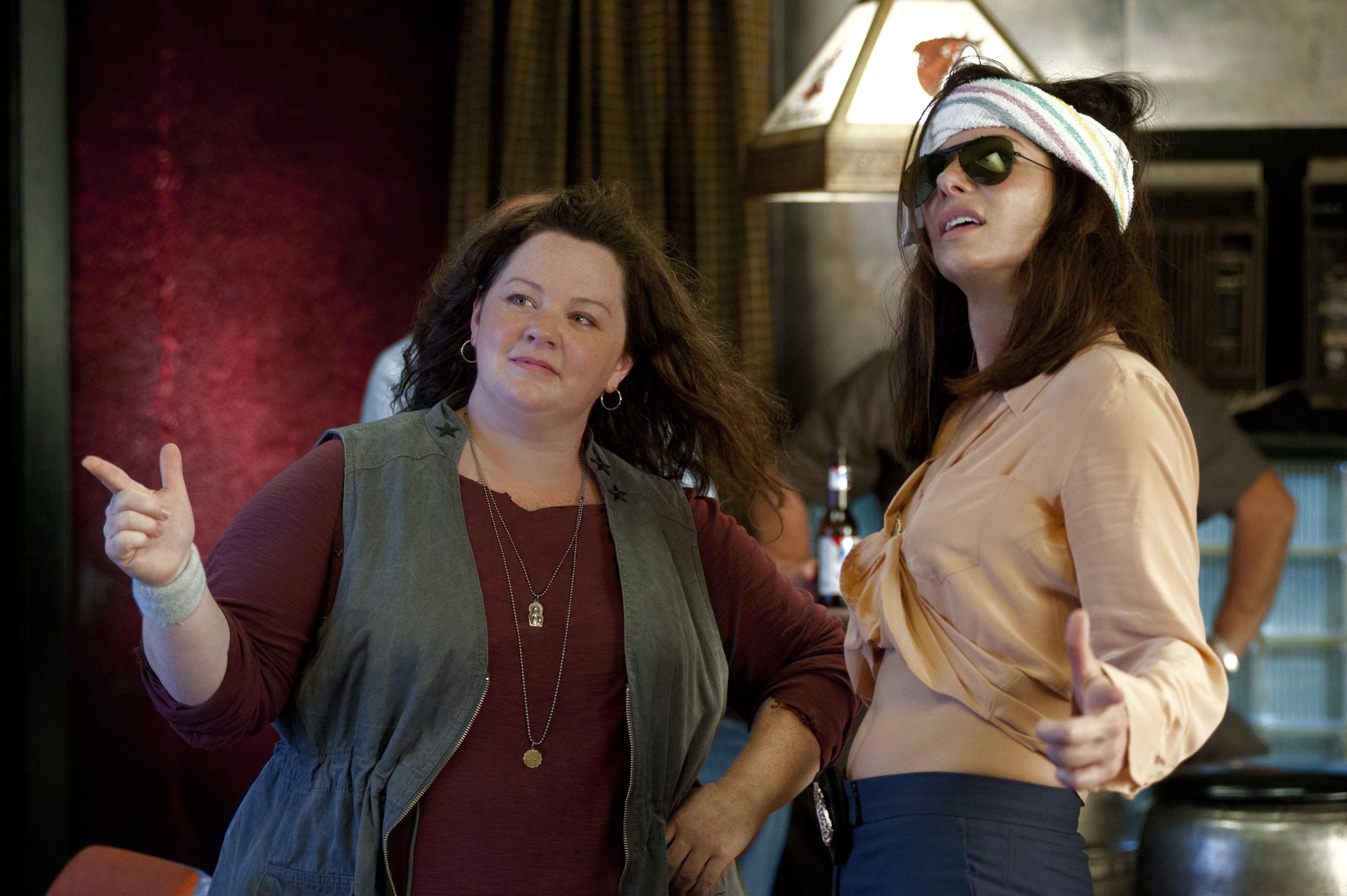
This week: two music docs, a buddy-cop movie starring Sandra Bullock and Melissa McCarthy, and America’s Sweetmeat Channing Tatum saves the White House and, ergo, the world. Plus, more! Read on for takes from our critics.

The Heat First things first: I hated Bridesmaids (2011). Even the BFF love fest between Maya Rudolph and Kristen Wiig couldn’t wash away the bad taste of another wolf pack in girl’s clothing. Dragging and dropping women into dude-ly storylines is at best wonky and at worst degrading, but The Heat finds an alternate route. Its women are unlikable; you don’t root for them, and you’re not hoping they become princesses because such horrifying awkwardness can only be redeemed by a prince. In Bridesmaids and Heat director Paul Feig’s universe, friendship saves the day. Sandra Bullock is Murtaugh to Melissa McCarthy’s Riggs, with tidy Bullock angling for a promotion and McCarthy driving a busted hoopty through Boston like she’s in Grand Theft Auto. Circumstances conspire to bring them together on a case, in one of many elements lifted from traditional buddy-cop storylines. But! The jokes are constant, pelting, and whiz by like so much gunfire. In one running gag, a low-rung villain’s worst insult is telling the women they look old — but neither character is bothered by it. It’s refreshing to see embarrassment humor, so beloved by chick flicks, get taken down a peg by female leads who don’t particularly care what anyone thinks of them. (1:57) (Sara Maria Vizcarrondo)

http://www.youtube.com/watch?v=3HUwmDqi2kA

Hey Bartender Hey, have you heard of this trendy thing called craft cocktails? Be warned, sophisticated San Francisco drinkers: Douglas Tirola’s upbeat documentary mentions our fair city in passing only a handful of times; instead, it concentrates on New York City’s relatively recent “cocktail revolution,” interviewing movers and (literal) shakers on the scene while giving a brief history of cocktails in America (again, with an emphasis on NYC). Hey Bartender‘s focal points are well-chosen studies in contrast: ex-Marine Scott — tattooed and scrupulously mustached — who’s working his way up the ranks at hipster lounge Employees Only; and middle-aged Steve, who runs a struggling blue-collar bar just outside the city and is slowly coming around to the idea of adding fancier drinks to his menu. Though dive-bar denizens may roll their eyes at some of Hey Bartender‘s more pretentious trappings (the movie doesn’t mention it, but drinks at Employees Only are in the $15-16 range), it does make the case that today’s superstar “mixologists” deserve just as much recognition as superstar restaurateurs. And the film has a point: can a Top Chef spinoff for bartenders be that far off? (1:32) Roxie. (Cheryl Eddy)

http://www.youtube.com/watch?v=rwDzRzqFaIE

Laurence Anyways Xavier Dolan’s latest is yet another gorgeously-designed love story; it fits perfectly alongside his extremely personal I Killed My Mother (2009) and the devastating Heartbeats (2010). Although some critics have suggested that this young director needs to hire an editor (Laurence Anyways clocks in at two hours and 48 minutes), I would argue that this epic, gender-bending love story needed to take its stylized time to achieve what most films never do: humanize a transgendered lead character. Melvil Poupaud (Raúl Ruiz’s favorite ingénue) is stunning as Laurence; as his longtime lover, Fred, Suzanne Clément performs with a guttural passion that should keep audiences glued to the screen. For those willing to accept a decade’s worth of hypnotic set and costume designs (the film spans 1989-1999); cryptic character development; a crew of campy castaways; and an electric, eclectic soundtrack (Depeche Mode, Celine Dion), Laurence Anyways is well worthy of its epic running time. Could this be the film that elevates Canada’s best-kept secret to being the leader of a post-gender film movement that’s just about to explode? (2:48) Metreon. (Jesse Hawthorne Ficks)

The Secret Disco Revolution Jamie Kaster’s Canadian documentary chronicles the rise and fall of the 70s booty shaking phenomenon — though what with the subsequent developments of house music, rave culture, et al., you might say disco never really went away. It’s got a goldmine of kitschy vintage clips, and plenty of enjoyable interviews with the scene’s erstwhile stars (Thelma Houston, “KC” Casey, etc.), producers, and observers. (The weirdest are scenes with the Village People, who today are staples on the corporate-party circuit and seem bizarrely eager to deny they were ever a subversively gay act.) Unfortunately, Kaster also burdens the film with sometimes overreaching arguments for disco’s sociopolitical radicalism, as mostly articulated by academic Alice Echols. And there’s a labored staged thread in which an arch narrator informs of us the behind-the-scenes mechanizations of three fictive “masterminds” (played by actors) who propagated disco to liberate gays, women and ethnic minorities. It’s a whimsical conceit that falls completely flat. As a result, there’s plenty of fun to be had here, but the conceptual missteps make this less than the definite disco doc it aims to be. (1:25) (Dennis Harvey)

20 Feet From Stardom Singing the praises of those otherwise neglected backup vocalists who put the soul into that Wall of Sound, brought heft to “Young Americans,” and lent real fury to “Gimme Shelter,” 20 Feet From Stardom is doing the rock ‘n’ roll true believer’s good work. Director Morgan Neville follows a handful of mainly female, mostly African American backing vocal legends, charts their skewed career trajectories as they rake in major credits and keep working long after one-hit wonders are forgotten (the Waters family) but fail to make their name known to the public (Merry Clayton), grasp Grammy approval yet somehow fail to follow through (Lisa Fischer), and keep narrowly missing the prize (Judith Hill) as label recording budgets shrivel and the tastes, technology, and the industry shift. Neville gives these industry pros and soulful survivors in a rocked-out, sample-heavy, DIY world their due on many levels, covering the low-coverage minis, Concert for Bangladesh high points, gossipy rumors, and sheer love for the blend that those intertwined voices achieve. One wishes the director had done more than simply touch in the backup successes out there, like Luther Vandross, and dug deeper to break down the reasons Fischer succumbed to the sophomore slump. But one can’t deny the passion in the voices he’s chosen to follow — and the righteous belief the Neville clearly has in his subjects, especially when, like Hill, they are ready to pick themselves up and carry on after being told they’re not “the Voice.” (1:30) (Kimberly Chun)

Unfinished Song A grumpy widower (Terrence Stamp) learns to enjoy life again by joining an unconventional choir group. Vanessa Redgrave, Gemma Arterton, and Christopher Eccleston round out the cast. (1:36)

http://www.youtube.com/watch?v=Wa5aasz5VXg

White House Down Ah, the mid-1990s: a time when two big-budget movies on the same subject were regularly released within months of each other (1997’s Volcano and Dante’s Peak; 1998’s Armageddon and Deep Impact). When a director named Roland Emmerich ascended into the blockbuster pantheon with Independence Day (1996), a film that’s best-remembered for that iconic shot of the White House exploding under alien death rays. The intervening years have seen Emmerich plunge ever-deeper into various flavors of disaster, and White House Down — which reignites that ’90s copycat-rivalry thing by riding the fumes of March’s Olympus Has Fallen — finds its boogeyman in domestic terrorism. It beings on a triumphant day for President James Sawyer (Jamie Foxx), who has just ordered all US troops removed from the Middle East — angering some high-up men in his administration, as well as some ex-military goons with axes of their own to grind. When the White House is compromised, a wannabe Secret Service agent (Channing Tatum), at the Prez’s house for a tour with his precocious daughter, shoulders one-man-army duties. Rockets are launched; there’s a high-speed limo chase across the White House lawn; we learn the truth about Marilyn and JFK; and thanks to evil genius Skip Tyler (Jimmi Simpson), “the greatest hack the world has ever seen” is about to unleash World War III. Yep, that’s right: 17 years after ID4‘s Jeff Goldblum broke into the alien mainframe, thereby saving the White House-less planet, Emmerich has decided that hackers are actually bad guys. It goes with White House Down‘s warning that the enemy is no longer an external threat, but something lurking right under your nose. Better start working out, America — and working on your one-liners. (2:17) (Cheryl Eddy)

Small Business Commissioners support Pet Food Express over local stores

34

San Francisco’s Small Business Commission has recently come under fire for its promotion of corporate interests and, most recently, advocating for an allegedly predatory pet store chain known as Pet Food Express.

In 2009, the Small Business Commission voted in favor of denying Pet Food Express’ application for a location on Lombard Street in the Marina District. Subsequently, the Planning Commission also denied the request, seemingly blocking Pet Food Express’ efforts to set up shop in the Marina. 

San Francisco’s formula retail legislation requires chain stores like Pet Food Express to apply for a conditional use permit in order to receive approval for opening new locations.

But now, Pet Food Express is back after recently filing another identical application with the SBC for the exact same spot on Lombard Street, and this time some members of the SBC are oddly supporting the chain.

As Pam Habel, owner of local Marina pet store Catnip & Bones, pointed out at the commission meeting on June 10, Pet Food Express already has a location on California Street just one mile away. At the same meeting, Susan Landry, owner of another Marina pet store, Animal Connection, added that nothing has changed in the past four years that would point toward the Marina community needing or wanting this Pet Food Express, since four pet-related stores exist within a mile of the proposed Lombard Street location.

“We were really surprised and disappointed that the commission no longer seemed to be an advocate of small business and even made comments indicating sympathy for the big chain pet store,” Habel and Landry, told the Bay Guardian jointly via email. “Commissioner Adams even said it seemed unfair to him to penalize a business that had started out small and now are being victimized for their success since they are one of the largest pet store chains in the U.S.”

So what has changed since 2009 that is now making the SBC consider supporting the proposed Pet Food Express? For one, Mayor Ed Lee’s corporate-friendly appointees to the SBC, including developer Luke O’Brien and President Stephen Adams, a manager for Sterling Bank & Trust.

Additionally, San Francisco Animal Care and Control Director Rebecca Katz lobbied for approval of the Pet Food Express while holding a blind Chihuahua adorned with a sweater at the June 10 meeting. Katz cited Pet Food Express’ many financial contributions to her agency as reasoning behind supporting the chain’s new location and expansion. According to Animal Care and Control spokeswoman Deb Campbell, Pet Food Express donates an estimated $50,000 to $70,000 in supplies annually to the city department.

“The more business Pet Food Express does, the more they grow and the more they give back to the community,” Katz told the Bay Guardian. “We take in about 10,000 animals a year on a budget of about $40 million.”

Kathleen Dooley, one of the SBC’s few existing members still in favor of promoting local business over big business, met Katz’s lobbying with criticism.

“She went up and lobbied for Pet Food Express and implied if it wasn’t for them no pets would be adopted and the animal world would be in chaos,” Dooley told the Bay Guardian. “They already have a number of stores in San Francisco, but they act as if this one on Lombard would change the tide.”

But Katz says that her public promotion of Pet Food Express is not lobbying. “I spoke to the Ethics Commission and they told me it is okay for me to talk about what Pet Food Express does for us,” said Katz.

Few of the arguments in favor of the Pet Food Express’s intrusion into the Marina actually acknowledge the store’s potential detrimental impact on the existing local businesses. Katz even publically said she thought it was ironic to protest another corporation coming into the Marina, where so many chain businesses already exist.

“The size of the Lombard location would allow for an adoption center which would have a huge impact,” said Katz. “Whereas residents have to drive to the California Street location, now they could walk.”

Unfortunately for local Marina businesses, the SBC, whose professed goal is to “work to support and enhance an environment where small businesses can succeed and flourish,” may be doing just the opposite by supporting a chain business that will undoubtedly endanger the many locally owned pet stores.

“As small businesses in San Francisco, we rely on the SBC as our voice at City Hall, not as a sympathetic voice for chain stores,” said Habel and Landry. “Because of their response last month, we no longer feel that we can look to the SBC to support small business in San Francisco.”

In her presentation before the commission, Landry drew an analogy to the previous opening of a Blockbuster on Lombard Street. Following the corporation’s entrance into the community, all four independent video stores in Cow Hollow closed within a year.

At the same meeting, Commissioner Mark Dwight acknowledged the predatory nature of Pet Food Express, who has sat on the same property for four years in order to continuously rally support in favor of the proposed location.

The pet supply stores in the Marina could face the same fate as the local video rental shops if Pet Food Express succeeds in opening on Lombard Street.

“When chain stores go in, commercial rents go up and the small mom and pop businesses are priced out of the neighborhood and replaced by even more chain stores as they are the only ones who, with their corporate structures, can easily afford high rents,” said Landry and Habel. “This is about more than one Pet Food Express application on Lombard, this is part of our battle to retain the heart and soul of our neighborhood commercial corridors.”

Flagging

0

cheryl@sfbg.com

FILM Ah, the mid-1990s: a time when two big-budget movies on the same subject were regularly released within months of each other (1997’s Volcano and Dante’s Peak; 1998’s Armageddon and Deep Impact). When a director named Roland Emmerich ascended into the blockbuster pantheon with Independence Day (1996), a film that’s best-remembered for transforming Will Smith into an action star — and for that iconic shot of the White House exploding under alien death rays.

The intervening years have seen Emmerich plunge ever-deeper into various flavors of disaster: giant lizard (1998’s Godzilla); Mel Gibson (2000’s The Patriot); global warming (2004’s The Day After Tomorrow); the apocalypse (2009’s 2012). White House Down — which reignites that ’90s copycat-rivalry thing by riding the fumes of March’s Olympus Has Fallen — finds its boogeyman in terrorism. Specifically, domestic terrorism, with another 1996 classic, Michael Bay’s The Rock, offering certain inspiration in the villain department. Ex-military goons with axes to grind storming a national landmark? Right this way, please.

It’s a triumphant day for President James Sawyer (Jamie Foxx), who has just ordered all US troops removed from the Middle East. While ID4‘s President Bill Pullman was a Gulf War veteran, Sawyer is portrayed as more of an anti-violence, increase-the-peace type. But wait! Who are those shifty-eyed fellows skulking around the White House theater room, tinkering with the First Lady’s prized surround-sound system? They don’t look ready to make nice.

Into this mix must enter an Everyman. Beefy nugget Channing Tatum plays John Cale, wannabe Secret Service agent. Trouble is, his former college classmate (and fling? It’s never certain, but every woman Cale interacts with seems to have slept with him), high-ranking Agent Finnerty (Maggie Gyllenhaal), doesn’t think he has what it takes. According to the deep truths of his personnel file, Cale — a Capitol policeman tasked with guarding the Speaker of the House (Richard Jenkins) — “has a problem with authority,” despite his seemingly sincere desire to become an astronaut … er, wait, that was Will Smith’s cocky pilot in ID4.

At any rate, there is (as always) a family to impress; in Cale’s case, it’s a plucky daughter (Joey King), always on the lookout for new fodder for her YouTube channel. What better way to win over a kid who blurts out “Wikileaks” with as much excitement as other 11-year-olds say “One Direction” than to take her on a tour of the White House?

That’s the set-up. The remainder of the film encompasses Cale’s sweaty, sardonic one-man-army maneuverings (in John McClane’s undershirt, no less), to keep both Sawyer — a POTUS so cool he pauses mid-ambush to change into Air Jordans — and Li’l Miss Citizen Journalist safe. Meanwhile, rockets are launched; there’s a high-speed limo chase across the White House lawn; we learn the truth about Marilyn and JFK; The Wire‘s Lance Reddick shows up to turn his McNulty-honed glare onto Gyllenhaal; some high-ranking government dudes reveal their sinister true colors; and thanks to evil genius Skip Tyler (Jimmi Simpson), “the greatest hack the world has ever seen” is about to unleash World War III.

Yep, that’s right: 17 years after Independence Day‘s Jeff Goldblum broke into the alien mainframe, thereby saving the White House-less planet, Emmerich has decided that hackers are actually bad guys. It goes with White House Down‘s warning that the enemy is no longer an external threat, but something lurking right under your nose. Better start working out, America — and working on your one-liners.

WHITE HOUSE DOWN opens Fri/28 in Bay Area theaters.

Last chance to save the Botanical Gardens

133

GUARDIAN OP-ED Riddle me this: When is a public space a private space? Answer: When it is controlled by a “nonprofit” in a “public-private partnership.”

For more than two decades, the San Francisco Botanical Garden Society attempted to obtain entry fees to Strybing Arboretum. It first changed its name from the Strybing Arboretum Society, then hired a lobbyist to push through changes to the name of the Arboretum itself, reasoning that the new name was more commercial.

When, in 2009, it found that it could not find support for fees for everyone, it chose to hire lobbyist Sam Lauter, at a cost of hundreds of thousands of dollars, to push through a $7 “nonresident” fee for a one-year “trial”. Gates were closed; entrance hours were extended; and people (many of them residents, yet undocumented) turned away in droves.

Despite this fact, and counter to the recommendations of Harvey Rose and Associates, the fees (which include steep rate rises for rentals at the Hall of Flowers) were extended for a year.

The ruse of “revenues” notwithstanding, the fees are really a tax on working people, one designed to keep people out. As any visitor on a sunny day can attest, it has acheived dramatic events: The gardens are empty! Members of the San Francisco Botanical Garden Society, however, enter for free and benefit from the tax dollars of Californians, many of whom must pay for entry. Mysteriously, the Society received a $725,000 grant in 2012 and one for $400,000 in 2011.

This July 20th, the Recreation and Park Department will present its budget with a Trojan Horse hidden in it — a contract which will effectively privatize these precious 55 acres for perpetuity, making all of us all second-class citizens in our own City.

Philip A. Ginsburg, manager of the Recreation and Park Department, negotiated this contract behind closed doors. We taxpayers wil be on the hook for paying electricity at their new building, a sprawling walled complex covering two football fields which will require a new road, fell some 50 trees and will endanger the habitat of Mark Twain’s frog. The fact that this building — to be used for parties, a store and offices — will be called a “Center For Sustainable Gardening” makes me feel that we have entered an era in which irony can no longer outdo reality.

Is a vision of a future filled with food trucks, ritzy private events and complete control over public space (by a small number of wealthy people with no accountability to the public), what Helene Strybing had in mind? Will a Supervisor not have the courage to step forward and demand that this set of legislation be considered on its own?

If we fail to act one thing is certain: In the coming years we will find an increasingly commercialized with an entrance charge in the double digits for all and sundry.

READ THE BOTANICAL GARDENS CONTRACT HERE (PDF, 25MB)

Tale of two cities

25

Interesting piece in the LA Times a few days ago, Our new mayor, Eric Garcetti, wants to bring raves back to Los Angeles. After the death of a 15 year old that snuck into the Electric Daisy Carnival event at the Coliseum, the raves have gone to Vegas, where they’re pulling in 100K in attendance. The mayor sees dollar signs in those numbers, not to mention OT for city employees that have been hurting the last five years from budget cuts. A sensible idea.

It got me to thinking, as these things do, about a more general policy of bringing lucrative businesses and events to LA. After all, downtown business rents are cheaper than New York or Tokyo and there is far more space here as well. The city’s soon to be highest high rise will be a Korean owned hotel, so LA has already demonstrated a cooperation with Asian interests that cannot be matched. Not by New York or any other American city, even those on the West Coast. Like Seattle, Portland or erm, San Francisco.

If Garcetti and the city council decided to offer up better deals for high-tech than exist 390 miles to the Northwest, there is precious little Mayor Lee could do to match. LA has a lot more money and of greater importance, much more space. 49 square miles cannot compete with 480 square miles. And with the Internet making high tech jobs doable anywhere, why wouldn’t tech start ups decide to opt for LA?

Let’s face it, San Francisco has priced itself right off the grid. For all of Mayor Lee’s tax incentives, the city is incredibly expensive to rent or buy in. It is still possible to find a decent 1 BR in Silver Lake or Eagle Rock or Highland Park for under 1200 a month–where is that in SF, Bayview (if at all)? And no 82K parking spaces or multi million dollar Manhattan sized condos either–for 3 million bucks, you can buy a reasonable property in the West Side’s swankest hoods–what does that get you in Pacific Heights?

LA is a very expensive city to live in by dint of car ownership as necessity and driving distances. It’s also nowhere near as pretty as San Francisco is. But as SF approaches Tokyo-like exclusivity, it would take very little to pry high tech firms south–where it’s always warm, the beaches and ski resorts both near and best of all–the entertainment business and its attendant pleasures and power are nearby. 

Let’s face it, SF has screwed up–their biggest business for eons is tourism and that would never change were the city not so insistant on wrecking same with crack downs on clubs and “1984”-like scare tactics. Los Angeles–with its money and power can offer incentives that Mr. Lee and his cromies could only dream of–and with a forward thinker like Garcetti at the wheel, this may be inevitable.


Thunder from West Portal: Quentin Kopp savages the Warriors’ Embarcadero Wall and its $220 million taxpayer subsidy

7

(Scroll down to read Kopp’s column from the Westside Observer)

When then State Sen. Quentin Kopp was appointed to the bench in San Mateo County, some of his fellow judges took him out to lunch.  “We hope you realize you have now given up your First Amendment rights,” he was told.

Judge Kopp did as he was told and kept silent for years on the bench on the many issues he felt strongly about and would have taken on in the public arena.   Today, however, he is retired, given up judicial restraint, and is back in action exercising his First Amendment rights with gusto. Operating from a desk in the office of Atty. Peter Bagatelos in West Portal, Kopp blasted the scavengers on behalf of an initiative aimed at upending the scavenger monopoly and controlling rates (he was right.) He has fired away at the RosePak/Willie Brown/Chinatown power structure on the Central Freeway.
He regularly blasts Mayor Lee for “compliancy” on big development, District Attorney for any number of misdemeanors and indiscretions, and former Sup. Sean Elsbernd for being Sean Elsbernd.

Now, in the current edition of the Westside Observer, Kopp has hit his stride with an acidic but well argued column titled appropriately, “The Art of Picking the Public Purse.” 

His lead: “It’s all privately funded!  Those aren’t my words; those are the words of the billionaire owners of the San Francisco Warriors and compliant Mayor Edward Lee respecting the proposed (and financially complicated) Warriors proposal to build a mammoth sports and entertainment arena on San Francisco Piers 30-32.”

Kopp wryly urges his readers to forget that the proposed project, “with Lee as the spear carrier (proudly proclaiming that the wrongly placed arena would be his ‘legacy’) would, if ever built, be higher than the “hated Embarcadero Freeway, which many San Franciscans spent years detesting and attempting to eliminate.”

Instead, he said taxpayers should concentrate on the “taxpayer subsidy of up to $200,000 (including interest) to the Warriors.” And he lays out the arguments and stats that demolish the Warriors’ line that “it’s all privately funded.”  Warming up, Kopp writes that the Warriors demand that Piers 30-32 be fully reconstructed, at Port cost, to a standard that will support the immense 19,000-seat arena.  The reconstruction cost is an estimated $120,000,000. Every single penny of such $120,000,000 is public money, i.e. the Port. The Port must borrow the money to reconstruct those piers.

“From whom? The Warriors, of course, and for the privilege of borrowing such money (for the Warriors’ benefit), the Port will pay the Warriors an exorbitant 13% per year as interest.”

More: “the port must sell the Warriors an enormously valuable piece of public land across the Embarcadero (Seawall 330) for a highrise hotel, condominium and retail development (b3: gulp).” Still more: “under the proposed Warriors’ deal, the $120,000,000 borrowing would be approved by a simple majority of the Board of Supervisors. The San Francisco Giants in 1996 and the San Francisco 49ers in 1971 were not afraid to secure voter/taxpayers approval. Maybe Lee and the Warriors are afraid the truth is that $120,000,000 is needed for the extraordinary cost of bearing the proposed arena’s weight, and supporting facilities the Warriors want to build on a platform over San Francisco Bay (b3: gulp again.)” You get the idea. 

Kopp’s arguments cry for an independent analysis by Harvey Rose, the city’s respected  budget analysis, who did a prescient assessment of the costs of the America’s Cup project. Kopp’s columns, along  with the excellent reporting of Patrick Monette-Shaw on Laguna Honda and George Wooding on the Ethics Commission and others, demonstrate that the Westside Observer under Editor Doug Comstock and Publisher Mitch Bull has become a sharp critic of City Hall from a neighborhood point of view and the best neighborhood paper in town.

Click here to read Kopp in full: http://westsideobserver.com/columns/quentin11.html#jun13
The paper is distributed monthly  West of Twin Peaks but you can see it easily by going to the Observer’s website at westsideobserver.com  b3

(Bruce B. Brugmann, who signs his blogs and emails b3, writes and edits the Bruce blog at the Bay Guardian website at sfbg.com. He is the editor at large of the Bay Guardian and former editor and co-founder with his wife Jean Dibble, 1966-2012.  He is now off to attend his 60th reunion of the dream high school class of 1953 in Rock Rapids, Iowa. He will keep you posted.)

Supervisors pose tough but important questions to Mayor Lee

6

There’s a full agenda at the San Francisco Board of Supervisors meeting today, from the condo conversion lottery bypass legislation to approval of the term sheet from the massive development project at Pier 70, but some of the most interesting and potentially newsworthy items are at the very beginning of the agenda, when Mayor Ed Lee will answer questions posed by the supervisors.

Unfortunately, if past is prologue, Lee won’t give direct, substantive answers to the vitally important questions that he’s being asked, just as he dodged a question on the condo conversion debate in February and has kept everyone in the dark of which of the rival measures he supports and which he may veto. Mayoral leadership was desperately needed on that protracted debate, just as it’s needed today on some of the questions he’s being asked.

The first question, posed by Sup. Eric Mar, concerns Plan Bay Area and how it plans to pack 280,000 more people into San Francisco by 2040, which was the subject of a May 28 Bay Guardian cover story and panel dicussion that we’re sponsoring at the LGBT Center tomorrow night.

Mar lays out the massive displacement of existing residents and the traffic gridlock that the plan will create in San Francisco and how the approval process from much of this streamlined development may be given waivers from California Environmental Quality Act review.

Mar notes more than 40 regional groups have come together to try to improve the plan and mitigate its damage, and he plans to ask Lee:

“A consensus has formed around the following recommendations for making Plan Bay Area better:

– Provide $3 billion in additional operating revenue for local transit service and commit to a long-range ‘Regional Transit Operating Program’ to boost transit operating subsidies by another $9 billion over the coming years.

– Move 5 percent of the housing growth from low-income communities (mainly San Francisco, Oakland, and San Jose) to transit-connected suburban job centers.

– Incorporate strong anti-displacement policies for community stabilization measures, such as land banking and preservation of affordable housing in at-risk neighborhoods.

– Director the Planning Department to analyze the impacts of potential CEQA streamling as soon as possible and create strong mitigation measures.

Do you support these measure, and are you committed to a plan with lower displacement level than the current proposal? If you do not support these ideas, why not?”

Excellent  question, and definitely an appropriate one for our chief executive officer, who would have more clout to push for these changes than any of the supervisors.

The second question comes from Board President David Chiu, who makes news by noting that Mayor Lee has continued his predecessor’s underhanded practice of refusing to fill city positions to provide services that the supervisors have decided to fund in the budget, undermining the city’s balance of power and Lee’s rhetoric on collaboration.

“In recent months, Controller data indicates that positions allocated by the Board for librarians, recreation and park staff, building inspection, health and labor enforcement, urban agriculture and other Board priorities were either not filled or only recently hired. Will you commit to ensuring that when the FY 13-14 budget is approved, our Board of Supervisors’ priorities are treated equally to your Administration’s, with positions filled as soon as possible?”

Again, great question about an important current issue, the kind of thing that voters created this question time for, to ensure that there was communication and collaboration between these two branches of government.

The last two questions concern San Francisco’s housing crisis. Sup. David Campos cites the scatching report that he commissioned from the Budget and Legislative Analyst on the dysfunctional and mordibund Housing Authority, which Lee controls, asking “what is your long term vision to save public housing — a significant public asset to San Francisco?”

Sup. John Avalos cites data on the skyrocketing rents in San Francisco and asks, “Are you concerned that your administration’s policies to stimulate economic activity, especially supporting the tech industry, have created one-sided development and only job for high-income ‘appsters,’ and have exacerbated the already extremely limited housing market? Do you have any plans to address the increasing rents, and increasing rate of evictions and displacement of long-time San Francisco renters?”

These are tough questions, but they are central to what kind of city San Francisco is becoming. They were all submitted last week, so the mayor has had time to think about them and he should provide answers and show leadership on these difficult issues. That is his job.

Will he? Check back later and I’ll let you know. The meeting starts at 2pm.

Sexy events: Fatties rise up

2

Happy Pride Month everybody! This is neither sexy nor an event in the strictest sense, but anyone who doesn’t kindle to forced body norms should know that we began this week with evolutionary psychology professors tweeting about how fat people shouldn’t even try to get a PhD.

Geoffrey Miller, a University of New Mexico psychology prof had this to say on his Saturday afternoon: “Dear obese Phd applicants: if you didn’t have the willpower to stop eating carbs, you won’t have the willpower to do a dissertation #truth”. Miller reportedly told UNM in response to the school’s concern that the tweet was part of a research project, which doesn’t seem right but who is to say what those social scientists are up to these days.

Props to “hate loss not weight loss” activist and friend of the Bay Guardian SEX SF blog Virgie Tovar for being less than satisfied with Miller’s comment that the tweet was related to a research project he was involved in, and bringing his body predjudice to the attention of her Internet community. UNM is “looking into the validity of this assertion” about the research project thing. 

In other news, someone stole the iPad that belongs to Girls Gone Wild founder Joe Francis’ girlfriend and now sex tapes starring the two of them are being shopped around to various porn companies. Francis’ lawyer says they’re doing everything in their power to stop the tape’s release. We here at the sexy events column do not condone theft or nonconsensual publication of erotic images. But if you laughed there we understand.  

THIS WEEK’S HOT SEXY EVENTS

Drive

This big budget ’70s gay porn extravaganza featuring a gorilla suit comes to the New Parkway as part of downtown Oakland sex shop Feelmore510’s monthly Friday night screening series. Expect special effects, sci-fi homage, and a ripped cast over 50 strip-stunners. 

Fri/7, 10pm, $10. New Parkway Theater, 474 24th St., Oakl. www.thenewparkway.com

“Fairoaks Project”

Photographer Frank Melleno’s Polaroids from the Fairoaks Hotel Haight-Ashbury bathhouse between 1977-’79. Play parties, commune living, history galore. Inspiration for all you alternative culture types to start taking snaps of your own, perhaps?

Through June 30. Opening reception: Fri/7, 7-10pm, free. Center for Sex and Culture, 1349 Mission, SF. www.sexandculture.org

Public Sex, Private Lives

We’re kicking off floozy film fest season here — between SF DocFest and Frameline, there’s roughly a thousand flicks making their SF premiere that center on sexuality themes this month. This documentary on the lives of Kink.com’s domme starlets is a great way to kick it all off. Director Simone Jude is an ex-Kink employee and her access to her subjects unquestionably benefits from a level of trust. Even avid fans will have a lot to learn from this look at a single mom, a bereaved daughter, and a grad student testifying in an obscenity trial — who all make BDSM porn for a living.

>>READ THE FULL REVIEW IN THIS WEEK’S PAPER

Sat/8 and June 12, 9pm; $11. Roxie Theater, 3117 16th St., SF. June 15, 7pm, $11. New Parkway, 474 24th St., Oakl. www.sfindie.com/festivals/sf-docfest

“Hot, Healthy, Happy, and Living With Herpes”

Sex educators Midori and Charlie Glickman teach how to live (sexily) with herpes, including ways to break the news to partners, safe sex practices, more.

Tue/11, 6:30-8:30pm, free. Good Vibrations, 1620 Polk, SF. www.goodvibes.com

Dan Savage

The source of Senator Rick Santorum’s SEO problems and the country’s leading voice on progressive sex education comes to the Castro to chat about his new book American Savage.

Tue/11, 7pm, $80. Castro Theatre, 429 Castro, SF. www.commonwealthclub.org

SF homeless services budget item < 0.25 percent of Larry Ellison’s net worth

Billionaire Larry Ellison, the vainglorious CEO of Oracle and yachtsman responsible for bringing the America’s Cup to San Francisco, has come a long way since 2010, when he first floated the idea of hosting the elite regatta against a Golden Gate backdrop.

On Forbes’ 2010 list of the world’s wealthiest individuals, Ellison’s estimated net worth of $28 billion earned him a spot in sixth place. That amount gave him a slight edge over the current GDP of Panama, but the superrich seafarer is doing waaaaay better than that Central American nation these days. On the 2013 Forbes roster, the tech mogul rose to No. 5, and his estimated net worth had ballooned considerably, to an estimated $43 billion.

As it happens, the additional $15 billion Ellison managed to attract in the last three years is nearly twice the total spending plan unveiled by San Francisco Mayor Ed Lee last week, when he presented the largest proposed city budget in history.

Lee made a point of noting in press statements that he’d taken pains to preserve social services; even tossing an additional $3.8 million toward funding for homeless prevention and housing subsidies. Nevertheless, some dust seems to be kicking up over how equitably Lee would have public dollars distributed across the board.

With the America’s Cup looming on the horizon, the mayor’s budget now awaiting supervisors’ review, and an ever-widening gulf between the haves and the have-nots in San Francisco, we began to ponder: Just how does Ellison’s wealth compare to the amount spent on, say, homeless services in San Francisco?

In Lee’s proposed 2014-2015 budget, “homeless services” is allotted $101,669,214 via the Human Services Agency, about $1.5 million less than the amount included in the city’s 2013-2014 budget. 

That figure could also be expressed as 0.236 percent of Ellison’s estimated net worth. Decimal dust.

Within a week or so, we’re told, the Human Services Agency will release an updated estimate of the city’s homeless population, along with historical comparisons suggesting whether the ranks of the un-housed has grown or waned in recent years. Weeks after that, San Francisco’s waterfront will be transformed by a sporting event that only the superrich can afford to compete in.

Ed Lee’s “no social service cuts” budget

6

So Mayor Ed Lee is going to spare social services, and apparently at least part of the Department of Public Heath, from any further budget cuts. That’s good. Lives will be saved.

Lee — like Willie Brown before him — has the luck of serving as mayor during a period of growth, not recession. We don’t know how long the boom is going to last, or what will happen when it ends (as these things always do), but right now, in Sacramento and San Francisco City Hall, there is joy over the fact that revenues are up.

(Lee’s supporters on this blog and elsewhere will say it’s because of the mayor’s “pro-jobs” policies that we have all this new revenue. But remember, he promised tax breaks for Twitter and other tech firms that are moving into mid-Market, so we’re not getting much extra payroll tax revenue there. SF is a disgustingly hot real-estate market right now and more people with more money are moving in, so that’s absolutely a factor. So is the general California recovery.)

Either way, I’m always happy to hear about “no-cuts” budgets. But I have to keep raising the question:

If you’ve already cut about a billion dollars worth of services — which is about what most people on all sides of the political spectrum agree has happened in SF in the past decade — and now you’ve agreed not to cut any more, are you really making progress?

At what point do we need to start planning to restore all the services that are gone?


Solomon: Our twisted politics of grief

1

By Norman Solomon
Norman Solomon is co-founder of RootsAction.org and founding director of the Institute for Public Accuracy. His books include “War Made Easy: How Presidents and Pundits Keep Spinning Us to Death” and “Made Love, Got War: Close Encounters with America’s Warfare State.”

Darwin observed that conscience is what most distinguishes humans from other animals. If so, grief isn’t far behind. Realms of anguish are deeply personal — yet prone to expropriation for public use, especially in this era of media hyper-spin. Narratives often thresh personal sorrow into political hay. More than ever, with grief marketed as a civic commodity, the personal is the politicized.

The politicizing of grief exploded in the wake of 9/11. When so much pain, rage and fear set the U.S. cauldron to boil, national leaders promised their alchemy would bring unalloyed security. The fool’s gold standard included degrading civil liberties and pursuing a global war effort that promised to be ceaseless. From the political outset, some of the dead and bereaved were vastly important, others insignificant. Such routine assumptions have remained implicit and intact.

The “war on terror” was built on two tiers of grief. Momentous and meaningless. Ours and theirs. The domestic politics of grief settled in for a very long haul, while perpetual war required the leaders of both major parties to keep affirming and reinforcing the two tiers of grief.

For individuals, actual grief is intimate, often ineffable. Maybe no one can help much, but expressions of caring and condolences can matter. So, too, can indifference. Or worse. The first years of the 21st century normalized U.S. warfare in countries where civilians kept dying and American callousness seemed to harden. From the USA, a pattern froze and showed no signs of thawing; denials continued to be reflexive, while expressions of regret were perfunctory or nonexistent

Drones became a key weapon — and symbol — of the U.S. war trajectory. With a belated nod to American public opinion early in the century’s second decade, Washington’s interest in withdrawing troops from Afghanistan did not reflect official eagerness to stop killing there or elsewhere. It did reflect eagerness to bring U.S. warfare more into line with the latest contours of domestic politics. The allure of remote-control devices like drones — integral to modern “counterterrorism” ideas at the Pentagon and CIA — has been enmeshed in the politics of grief. So much better theirs than ours.

Many people in the United States don’t agree with a foreign policy that glories in use of drones, cruise missiles and the like, but such disagreement is in a distinct minority. (A New York Times/CBS poll in late April 2013 found Americans favoring U.S. overseas drone strikes by 70 to 20 percent.) With the “war on terror” a longtime fact of political life, even skeptics or unbelievers are often tethered to some concept of pragmatism that largely privatizes misgivings. In the context of political engagement — when a person’s internal condition is much less important than outward behavior — notions of realism are apt to encourage a willing suspension of disbelief. As a practical matter, we easily absorb the dominant U.S. politics of grief, further making it our politics of grief.

The amazing technology of “unmanned aerial vehicles” glided forward as a satellite-guided deus ex machina to help lift Uncle Sam out of a tight geopolitical spot — exerting awesome airpower in Afghanistan and beyond while slowing the arrival of flag-draped coffins back home. More airborne killing and less boot prints on the ground meant fewer U.S. casualties. All the better to limit future grief, as much as possible, to those who are not us.

However facile or ephemeral the tributes may be at times, American casualties of war and their grieving families receive some public affirmation from government officials and news media. The suffering had real meaning. They mattered and matter. That’s our grief. But at the other end of American weaponry, their grief is a world of difference.

In U.S. politics, American sorrow is profoundly important and revs up many rhetorical engines; the contrast with sorrow caused by the American military could hardly be greater. What is not ignored or dismissed as mere propaganda is just another unfortunate instance of good intentions gone awry. No harm intended, no foul. Yet consider these words from a Pakistani photographer, Noor Behram, describing the aftermath of a U.S. drone attack: “There are just pieces of flesh lying around after a strike. You can’t find bodies. So the locals pick up the flesh and curse America. They say that America is killing us inside our own country, inside our own homes, and only because we are Muslims.

A memorable moment in the film Lincoln comes when the president says, “Things which are equal to the same thing are equal to each other” — in 1865, a daring leap for a white American assessing race. Truly applying the same Euclidean theorem to grief would be just as daring now in U.S. politics. Let’s face it: in the American political culture of our day, all grief is not created equal. Not even close.

We might say ’twas ever thus: countries and ethnic groups mourn their own while yawning or even rejoicing at the agonies of some “others.” And when grief weighs in on the U.S. political scale, the heaviness of our kind makes any other secondary at best. No wonder presidents have always been wary of red-white-and-blue coffins at Andrews Air Force Base. No wonder “Bring our troops home” is such an evergreen slogan of antiwar activism. If the only grief that matters much is American, then just getting Americans out of harm’s way is the ticket. The demand — like empathy for the war-torn grief of Americans — is vital. And grievously incomplete.

The world’s only superpower has been operating with vast impunity to strike targets and, in effect, summarily execute. (President Obama’s big speech on May 23 reasserted that prerogative; as the ACLU’s president Anthony Romero pointed out, Obama “still claims broad authority to carry out targeted killings far from any battlefield, and there is still insufficient transparency.”)  For American politics and mass media — perennially infatuated with the Pentagon’s latest tech advances in military capacities — such enormous power to smite presumptive evildoers has fed into a condition of jingo-narcissism. Some of its manifestations could be viewed as sociopathic: unwilling or unable to acknowledge, or evidently care much about, the pain of others.

Or the terror of others, if we are causing it. In the American political lexicon, terror — the keynote word for justifying the U.S. state of warfare so far in this century — is a supreme epithet, taken as ours to confer and to withhold. Meanwhile, by definition, it goes without saying, our leaders of the “war on terror” do not terrorize. Yet consider these words from New York Times reporter David Rohde, recalling his captivity by the Taliban in 2009 in tribal areas of Pakistan: “The drones were terrifying. From the ground, it is impossible to determine who or what they are tracking as they circle overhead. The buzz of a distant propeller is a constant reminder of imminent death.”

As part of tacit job descriptions, the U.S. network anchor or the president is highly selective in displayed compassion for the grieving. It won’t do to be seen with watery eyes when the Pentagon has done the killing (“friendly fire” a notable exception). No rulebook need be published, no red lines openly promulgated; the gist remains powerfully inherent and understood. If well acculturated, we don’t need to ask for whom the bell tolls; we will be informed in due course. John Donne, meet Orwell and Pavlov.

The U.S. Constitution — if not international law or some tenacious kind of idealism — could prevent presidential “kill lists” from trumping due process. But, as Amy Davidson wrote in a New Yorker online column last year, the operative approach is: “it’s due process if the president thinks about it.” Stephen Colbert summed up: “The Founders weren’t picky. Trial by jury, trial by fire, rock-paper-scissors — who cares?” After all, “Due process just means there’s a process that you do.” Satire from Colbert has been far more candid than oratory from President Obama, whose May 23 speech claimed a commitment to “due process” and declared: “I’ve insisted on strong oversight of all lethal action.”

Bypassing due process and shrugging off the human consequences go hand in hand. At the same time, it can be reassuring when the commander in chief speaks so well. But Obama’s lengthy speech at the National Defense University laid out a global picture with a big missing piece: grief due to U.S. military attacks. The only mention was a fleeting understatement (“for the families of those civilians, no words or legal construct can justify their loss”), instantly followed by a focus on burdens of top perpetrators: “For me, and those in my chain of command, these deaths will haunt us as long as we live…” As usual, the grief of the USA’s victims was quickly reframed in terms of American dilemmas, essential goodness and standing in the world. So, while Obama’s speech called for “addressing the underlying grievances and conflicts that feed extremism, from North Africa to South Asia,” some crucial grievances stoking the conflicts were off the table from the outset; grief and rage caused by U.S. warfare remained out of the picture.

Transcendent and truly illuminating grief is to be found elsewhere, close to home. “The greatest country in the world” presumes to shoulder the greatest grief, with more access to profundities of death. No wailing and weeping at the scene of a drone strike, scarcely reported by U.S. media anyway, can hold a candle. For American grief to be only as weighty as any other just won’t do. We’re number one! A national narrative of emotional supremacy.

Our politics of grief, bouncing off the walls of U.S. media echo chambers, are apt to seem natural and immutable while fueling much of the domestic political rhetoric that drives U.S. foreign policy. The story goes that we’re sinned against yet not sinning, engaged in self-protection, paying to defend ourselves. Consider the Google tallies for two phrases. “U.S. defense budget”: nearly 4,000,000. “U.S. military budget”: less than 100,000.

But for those in communities grieving the loss of people struck down by the USA’s “Defense Department,” the outlook is inverted. To be killed is bad enough. But to be killed with impunity? To be killed by a machine, from the sky, a missile fired by persons unseen who do not see who they’re killing from hundreds or thousands of miles away? To be left to mourn for loved ones killed in this way?

When, from our vantage point, the grief of “others” lacks major verisimilitude, their resentment and rage appear irrational. Heaven forbid that such emotions could give rise to deadly violence approaching the level of our own. People who are uneducated and unclear on the American concept sometimes fail to appreciate that our perception is to be enforced as hegemonic reality. By a kind of fiat we can elevate with fervent validation some — some — others’ grief. As for the rest, the gradations of importance of their grief, and the legitimacy of their resort to violence, are to be determined by our judicious assessment; for further information, contact the State Department.

There may be no worse feeling of human powerlessness than inability to prevent the death of a loved one. The unmatched power of bereavement forces people to cope with a basic kind of human algebra: love + death = grief. Whether felt as a sudden ghastly deluge or as a long series of sleeper waves with awful undertows, real grief can turn upbeat memories into mournful ones; remembering becomes a source of anguish, so that, as Joan Didion wrote, “Memories are what you no longer want to remember.” Ultimately, intimately, the human conditions of loss often move people to places scarcely mapped by standard news coverage or political rhetoric.

Imagine living in a village in Pakistan or Afghanistan or Yemen. From the sky, death has been visited on neighbors, and drones keep hovering. (As now-former Times reporter Rohde pointed out: “Drones fire missiles that travel faster than the speed of sound. A drone’s victim never hears the missile that kills him.”) Overhead are drones named Reaper, shooting missiles named Hellfire. Have the heavens been grabbed by people who think their instruments of death are godly?

“When scientific power outruns moral power,” Martin Luther King Jr. said, “we end up with guided missiles and misguided men.” For America, drones and other highest-tech weapons are a superb technological means of off-loading moral culpability from public agendas; on the surface, little muss, less fuss.

Disembodied killing offers plenty of pluses in U.S. politics, especially when wars become protracted. From Vietnam to Afghanistan, the reduction of troop levels has cut the number of American deaths (easing the grief that “counts”) in tandem with more bombardment from the air (causing the “other” grief). Today’s domestic politics of grief are akin to what emerged after mid-1969, when President Nixon initiated a steady withdrawal of U.S. troops from South Vietnam. During the three years that followed, Nixon reduced the number of soldiers in Vietnam by nearly half a million, to 69,000. During the same three years, the U.S. government dropped 3.5 million tons of bombs on Vietnam — more than all the bombing in the previous five years.

Then, as now, the official scenario had U.S. troops thinning on the ground, native troops taking up more of the combat burden, and the Pentagon helpfully bombing from the sky as only Americans could “know how.” Independent journalist I. F. Stone astutely identified the paradigm in 1970, when the White House struggled with fading public support for the war. The revamped policy, Stone wrote, was “imperialism by proxy,” aiming to buy “low-wage soldier-power,” an approach that “will be seen in Asia as a rich white man’s idea of fighting a war: we handle the elite airpower while coolies do the killing on the ground.” Stone would have swiftly recognized the pattern in President Obama’s upbeat statement on May 23 that “we will work with the Afghan government to train security forces and sustain a counterterrorism force.”

The number of U.S. ground troops in Afghanistan was down by one-third, to 66,000, at the start of this year, when Obama announced plans to gradually withdraw the remaining troops over a period of two years. High-tech warfare would pick up the slack. The outgoing Defense Secretary, Leon Panetta, told a news conference that a key mission in Afghanistan, persisting after 2014, would be “counterterrorism,” a buzzword for heavy reliance on airpower like drones and cruise missiles. Such weapons would give others grief.

A top “national security” adviser to the president, John Brennan, said as much in an April 2012 speech. “As we have seen,” he noted, “deploying large armies abroad won’t always be our best offense. Countries typically don’t want foreign soldiers in their cities and towns.” The disadvantages of “large, intrusive military deployments” were many. “In comparison, there is the precision of targeted strikes.”

But such “precision” is imperfect enough to be an other’s calamity. Likewise, the extreme relativity of “agony.” At his Senate confirmation hearing to become CIA director in February 2013, Brennan spoke of “the agony we go through” in deciding which individuals to target with drones. Perhaps to square some circles of cognitive dissonance, those who inflict major violence often seem moved to underscore their own psychological pain, their own mental wounds. (As if to say, This hurts me as much as it hurts them; maybe even more, given my far more acute moral sensitivities.) When the focus is on the agony of the perpetrators, there may be less room left to consider the grief of their victims.

Shifting the burden of protracted war easily meshes with a zero-sum geopolitical game. Official enthusiasm for air strikes has correlated with assurances that Americans would be facing much less grief than allied others. So, near the end of 2012, the USA Today front page reported that “the number of U.S. deaths in Afghanistan is on track to decline sharply this year, reflecting the drawdown in U.S. forces” — while the death toll for Afghan government forces had climbed to ten times the U.S. level. These developments were recounted as progress all the way around.

As top officials in Washington move to lighten the political load of American grief, their cost-benefit analyses find major strategic value in actions that inflict more grief on others. Political respects must be paid. Elites in the war corps and the press corps do not have infinite tolerance for American deaths, and the Pentagon’s latest technology for remote killing is a perpetual favorite. In the long run, however, what goes around tends to come around.

Advice offered by scholar Eqbal Ahmad before 9/11 bears repeating and pondering: “A superpower cannot promote terror in one place and reasonably expect to discourage terrorism in another place. It won’t work in this shrunken world.”
After the “war on terror” gained momentum, Martin Luther King III spoke at a commemoration of his father’s birth and said: “When will the war end? We all have to be concerned about terrorism, but you will never end terrorism by terrorizing others.” That was more than nine years ago.

Norman Solomon is co-founder of RootsAction.org and founding director of the Institute for Public Accuracy. His books include “War Made Easy: How Presidents and Pundits Keep Spinning Us to Death” and “Made Love, Got War: Close Encounters with America’s Warfare State.”

(The Bruce blog is written and edited by Bruce B. Brugmann, editor at large of The San  Francisco Bay Guardian, and editor and co-founder and co-publisher of the Guardian with his wife Jean Dibble (1966-2012). He can be contacted at Bruce@sfbg.com. b3


Gopi and the Yoglers

0

culture@sfbg.com

ON THE OM FRONT  Seven years ago, Gopi Kallayil, currently the Chief Evangelist for Google+ (there is indeed such a position), started a program at the Mountain View Google office called Yoglers: members go beyond merely practicing yoga in the office to participating more fully in its potential. It’s kind of like Google+ circles for yogis, where employees become teachers rather than just lunchtime practitioners. I recently spoke with Gopi, a force of nature himself who speaks often on such topics as “Envisioning the Conscious Corporation” and once engineered an online hangout with Desmond Tutu and the Dalai Lama, about this program and his life’s passion: merging business and technology with mindfulness practices like yoga and meditation.

SFBG OK, so what exactly is a “Yogler”?

Gopi Kallayil There are communities of Googlers that self-organize themselves into doing different things. For instance, there is a group for LGBT Googlers (and their straight allies) called Gayglers, a group for Jewish Googlers called Jewglers, and a group for Carpooling Googlers called Carpoolglers. Self-organizing yoga practitioners are called Yoglers.

SFBG Is this different than the corporate yoga program at Google?

GK Yes. Google does a lot of things to keep employees fit and healthy—there are gyms in many offices, and we have group exercise programs that include yoga instruction with contracted yoga teachers to lead these classes. But the Yoglers classes are led only by people who work for Google. They could be product managers or engineers, but they will take a break periodically and not just take a yoga class, but actually teach a yoga class.

SFBG Are Yogler instructors trained yoga teachers or just yoga enthusiasts?

GK They are trained teachers. People who work here are intensely intense about the things that they do. They are very passionate about all aspects of their lives.

SFBG How did you first become involved with yoga?

GK I grew up in India, and became a yoga teacher as a teenager. I was taught yoga by Swami Vishnudevananda, who is one of the people who first brought yoga to America. He taught it as a path to self-realization, but also as a practice that brings joy, peace, and happiness to the world. He wanted us to go and teach it to other people. Since then, I’ve always taught, and I’ve always taught for free.

SFBG What inspired you to start Yoglers?

GK When I joined Google, one of my colleagues here encouraged me to teach a yoga class. So I started teaching a class in a conference room to one student and called it Yoglers. It was a way I could bring yoga to my community at work and pass on this great tradition that I was blessed to have received. Word of mouth spread and years later it’s become a big movement across Google offices worldwide. I had no idea that something I started with one student would evolve to this level.

SFBG Do you think the location of the Mountain View office helped to launch Yoglers?

GK Without question, something like this could happen more easily in the Bay Area. This is a very awakened, conscious place. People are curious about these traditions and don’t look at them suspiciously. People have studied yoga here, they welcome it.

SFBG Why is it important to bring yoga into the workplace in society today?

GK It’s not just today. It has always been important. It was important 50 years ago, 100 years ago, as long as there have been human beings. Yoga and meditation help to create a higher quality, more conscious human being. And any organization—whether it’s a corporation or educational institution—is staffed and run by human beings. If we incorporate these practices into our working life, we get along with each other better, make better products, and make choices that will better serve our customers.

SFBG It’s great that tech companies are embracing yoga, but isn’t technology part of what’s making us scattered and stressed?

GK: Technology, if not used properly and consciously, has the capability to completely distract us and make us unproductive and frenzied. But it’s no different than many other innovations. It’s like fire. Ever since we’ve discovered it and known how to harness it, we’ve found it exceptionally useful. You can cook your food with it, you can melt and blow glass with it. But if you misuse it, you can burn yourself or raze an entire city to the ground. I only check email certain times a day — I’m not constantly looking at it. Technology is a powerful tool. But whether you use the tool to be productive or destructive is up to you.

SFBG How does yoga help people in stressful work environments stay focused and calm?

GK When you practice yoga, you’re asked to bring your complete, 100 percent awareness to your body and your breath. If you practice regularly, it makes you more aware and conscious, and you make choices driven by that. The quality of your interactions improves. You stop checking your email when someone is talking to you. At Google, we’re building amazing technologies like self-driving cars, Google Glass, and Google+. And yet, the most important technology that every human being has access to is right within us: our body, our mind, our consciousness.

SFBG Any advice on how people can start a yoga or meditation program at work?

GK It’s simple. Go book a conference room. Sit, close your eyes, start meditating. Put up a sign that says, “Random acts of meditation.” It doesn’t matter if only one person shows. If you just sit there for 60 seconds and watch your breath, you have just started a meditation program. You don’t need a budget or resources. Someone just needs to step forward and do it.


Brown raids cap-and-trade funds, delaying action on climate change

5

Greenhouse gas concentrations in the atmosphere continue to rise to dangerous levels, but still our political leaders delay taking meaningful actions to address the looming crisis. The latest example: Gov. Jerry Brown is borrowing $500 million from the state’s new cap-and-trade program — money designated specifically for efforts to address climate change — to help balance the revised state budget proposal that he released today.

And the worst part was that Brown is raiding these funds even though there was no good reason to do so. “The Governor’s Budget reflected California’s most stable fiscal footing in well over a decade,” was the first sentence in the budget document, which admirably begins to restore education funding, partly because voters approved the Prop. 30 tax package last year.

While Brown said that the $500 million raid is just a loan that will be paid back with interest, the action highlights the short-term thinking that animates our political and business leaders, who seem content with hollow gestures and symbolic actions that fall far short of what’s actually needed to minimize climate change and sea level rise (even the cap-and-trade system itself is a business-friendly half-measure; simply capping then decreasing emmissions would have been far more effective).

There are a multitude of immediate needs for that “borrowed” money that would have big impacts to the carbon emmissions that our state continues to spew into the atmosphere, such as helping Muni and other urban transit systems overcome budget deficits that hamper their ability to provide good alternatives to private automobile use, which is one of the top sources of greenhouse gas emmissions.  

Environmentalists and advocates for social and economic justice — who have fought to direct some of these funds to reducing emmissions in low-income communities, where it is an acute public health issue on top of the long-term climate change threat — immediately criticized the governor’s move.

“The governor is playing a dangerous game that could wreck California’s push toward clean energy,” Greenlining Institute Legal Counsel Ryan Young said in a press release. “Voters of color turned out in force to protect AB 32, the clean energy law, when it was under attack by Prop. 23 [last year’s effort to repeal it], and they did it based on the promise that it would bring clean energy investments to polluted and struggling communities. These are the same voters who provided Jerry Brown’s victory margin when he ran for governor. Seizing these funds for other uses will hurt our state’s neediest communities, and it’s simply not necessary.”

Longtime Sierra Club legislative director Bill Magavern, who works with the Coalition for Clean Air, told Capital Weekly that the money is urgently needed for a variety of programs to reduce pollution in communities of color: “These important goals are now shunted aside as broken promises. The Governor has spoken of the urgency of addressing our climate crisis, but he has not put his money where his mouth is. It’s important to remember that none of the dollars in the Greenhouse Gas Reduction Fund come from taxes, and they were never intended to go to the General Fund.”

Another gauge is also telling: how do the polluters feel about the governor’s new budget? Well, here’s another press release we got on the governor’s new budget, from a conservative business organization that has long opposed meaningful efforts to address climate change: “California Manufacturers & Technology Association president Jack Stewart made the following media statement after Gov. Jerry Brown’s proposed ‘May Revise’ budget: ‘We congratulate Gov. Jerry Brown on a proposed balanced budget that will help California provide important government services. We appreciate that the Governor proposes the addition of a statewide sales tax exemption on the purchase of manufacturing equipment.  This will make California a more competitive place to scale up production.”

Same as it ever was.

Gatsby who? Check out these cool rep flicks instead! Plus: more new movies.

2

This week: two, count ’em two, series dedicated to oft-overlooked films produced outside the mainstream, dedicated to the seamier things in life: “I Wake Up Dreaming 2013” at the Roxie (Dennis Harvey’s take here), and “Girls! Guns! Ghosts! The Sensational Films of Shintoho” at the Yerba Buena Center for the Arts (I drool here.)

Short takes on wider releases below, including The Great Gatsby, a film adaptation that finally realizes F. Scott Fitzgerald’s deathbed wish: that one day, his most beloved work would be shot in garish 3D. Clearly, only suckers read books anymore.

Aftershock Dumped into theaters without fanfare or advance screenings, this collaboration between co-scenarist/producer/star Eli Roth and Chilean director Nicolás López deserves better — it’s possibly the most luridly entertaining of numerous recent jokey homages to retro grindhouse cinema. Roth plays a character known only as Gringo, a divorced Yank lawyer on vacation traveling around Chile with two local friends, brash Pollo (Nicolás Martínez) and mopey Ariel (Ariel Levy). Their tour of raves, clubs, drugz, and tail-chasing — the rare warm-up half-hour that’s actually very funny and enjoyable — comes to an abrupt halt in Valparaiso. Partying with three newly met multinational lady friends (Lorenza Izzo, Andrea Osvárt, Natasha Yarovenko) they find themselves caught in a major earthquake — and the carnage that it causes is just the beginning of their woes, as crisis piles upon crisis. Spinning ’70s disaster-flick tropes toward crass gore-horror, Aftershock is gleefully trashy enough to get away with outrageous cruelties, including mortal harm served out to characters shockingly high on the cast list. (1:30) (Dennis Harvey)

The Crumbles The awkward slackers and damaged hipsters of The Crumbles live in a sun-strafed, paved-over Los Angeles habitat of coffee shops, taco trucks, bookstores, budding filmmakers, and living room band practice. Darla (Katie Hipol) is slouching nowhere fast when her zany, charismatic cool-girl chum Elisa (Teresa Michelle Lee) enters the picture, looking for a place to crash. Elisa’s wacky, erratic, and unreliable, but she’s also capable of generating real excitement — and a mean little keytar hook — and the girls’ band, the Crumbles, gets off the couch and threatens to get all involved to bust out of their shells. Though director Akira Boch never quite dips into the deep background of his characters’ various dysfunctions — the threatened readings of Darla and Elisa’s psychic friend never quite sheds light — the first-time feature filmmaker has a real feel for the drifting, up-for-anything quality of Cali 20-somethings and an appreciation for their highs and lows that makes this familiar, loving, lets-put-on-show-kids update compelling. (1:13) Roxie. (Kimberly Chun)

The Great Gatsby Every bit as flashy and in-your-face as you’d expect the combo of “Baz Luhrmann,” “Jazz Age,” and “3D” to be, this misguided interpretation of F. Scott Fitzgerald’s classic tale is, at least, overstuffed with visual delights. For that reason only, all the fashion-mag fawning over leading lady Carey Mulligan’s gowns and diamonds, and the opulent production design that surrounds them, seems warranted. And in scenes where spectacle is appropriate — Gatsby’s legendary parties; Tom Buchanan’s wild New York romp with his mistress — Luhrmann delivers in spades. The trade-off is that the subtler aspects of Fitzgerald’s novel are either pushed to the side or shouted from the rooftops. Leonardo DiCaprio, last seen cutting loose in last year’s Django Unchained, makes for a stiff, fumbling Gatsby, laying on the “Old Sports” as thickly as his pancake make-up. There’s nothing here so startlingly memorable as the actor and director’s 1996 prior collaboration, Romeo + Juliet — a more successful (if still lavish and self-consciously audacious) take on an oft-adapted, much-beloved literary work. (2:22) (Cheryl Eddy)

Kiss of the Damned This first feature by Xan Cassavetes isn’t remotely like the Method-y angstfests her late father John used to direct (although he did act in upscale genre movies like 1968’s Rosemary’s Baby and 1978’s The Fury). Instead, it’s an homage to the erotic European horror movies of the late 1960s through early ’80s, with further nods to Dario Argento, 1983’s The Hunger, and other fan-bait. Mysterious Djuna (Joséphine de La Baume) is immediately attracted to hunky screenwriter Paolo (Milo Ventimiglia), and vice versa. But she’s reluctant to follow through, and when he presses, she explains why: she’s a vampire, albeit the respectable kind who only “hunts” wild animals. When he decides that is a drawback he can deal with, they seem set to spend an undead eternity together. Unfortunately, they soon get an unwelcome guest in Djuna’s sister Mimi (Roxane Mesquida), a classic “bad girl” type who has no such compunctions about feasting on “stupid humans,” and whose recklessness threatens the cover of any associated fellow vampire. Like its models, Kiss drags at times, and probably will seem too arty and slow to those attuned to mainstream current horror cinema. But if you’re a dweeb enough to know who the likes of Jean Rollin and Jess Franco are, this aesthetically slavish (on a faithfully low budget) salute to their sexy-bloody vintage schlock should amuse, with Steven Hufsteter’s original score an encyclopedia of vintage Eurotrash soundtrack tropes. (1:37) (Dennis Harvey)

Love is All You Need Copenhagen hairdresser Ida (Trine Dyrholm) has just finished her cancer treatments — with their success still undetermined — when she arrives home to find her longtime husband Leif (Kim Bodnia) boning a coworker on their couch. “I thought you were in chemo” is the closest he comes to an apology before walking out. Ida is determined to maintain a cheerful front when attending the Italian wedding of their daughter Astrid (Molly Blixt Egelind) — even after emotionally deaf Leif shows up with his new girlfriend in tow. Meanwhile brusque businessman and widower Philip (Pierce Brosnan), the groom’s father, is experiencing the discomfort of returning to the villa he once shared with his beloved late wife. This latest from Danish director Susanne Bier and writing partner Anders Thomas Jensen (2006’s After the Wedding, 2004’s Brothers, 2010’s In a Better World) is more conventionally escapist than their norm, with a general romantic-seriocomedy air reinforced by travel-poster-worthy views of the picturesque Italian coastline. They do try to insert greater depth and a more expansive story arc than you’d get in a Hollywood rom com. But all the relationships here are so prickly — between middle-aged leads we never quite believe would attract each other, between the clearly ill-matched aspiring newlyweds, between Paprika Steen’s overbearing sister in-law and everyone — that there’s very little to root for. It’s a romantic movie (as numerous soundtracked variations on “That’s Amore” constantly remind us) in which romance feels like the most contrived element. (1:50) (Dennis Harvey)

Peeples Kerry Washington and Diahann Carroll star in this Tyler Perry-produced family drama set in the Hamptons. (1:35)

Scatter My Ashes at Bergdorf’s This glossy love letter to posh New York City department store Bergdorf Goodman — a place so expensive that shopping there is “an aspirational dream” for the grubby masses, according to one interviewee — would offend with its slobbering take on consumerism if it wasn’t so damn entertaining. The doc’s narrative of sorts is propelled by the small army assembled to create the store’s famed holiday windows; we watch as lavish scenes of upholstered polar bears and sea creatures covered in glittering mosaics (flanking, natch, couture gowns) take shape over the months leading up to the Christmas rush. Along the way, a cavalcade of top designers (Michael Kors, Vera Wang, Giorgio Armani, Jason Wu, Karl Lagerfeld) reminisce on how the store has impacted their respective careers, and longtime employees share anecdotes, the best of which is probably the tale of how John Lennon and Yoko Ono saved the season by buying over 70 fur coats one magical Christmas Eve. Though lip service is paid to the current economic downturn (the Madoff scandal precipitated a startling dropoff in personal-shopper clients), Scatter My Ashes is mostly just superficial, fan-service fun. What do you expect from a store whose best-selling shoe is sparkly, teeteringly tall, and costs $6,000? (1:33) (Cheryl Eddy)

Crazy sexy cruel

0

FILM Long before VHS demon Sadako glared one eye through a tent of tangled black hair in 1998’s Ring (American viewers may switch that to “Samara” and “2002”), another angry, swampy-coiffed dame was doing her best to scare the bejesus out of ticket buyers. The year was 1825, and the kabuki play was called Yotsuya Kaidan. Ghost Story of Yotsuya, the 1959 version of that oft-filmed tale — which contains visual motifs made famous by J-horror — kicks off the Yerba Buena Center for the Arts’ titillatingly-titled “Girls! Guns! Ghosts! The Sensational Films of Shintoho” series (Thu/9-May 26).

Exploitation specialist Shintoho is often described as “the Japanese American International Pictures,” with output likened to Roger Corman’s oeuvre. The comparison is apt, what with the overlapping timelines (Shintoho was active from 1949-1961) and shared love of low-budget productions chockablock with daring, sleazy, violent, racy, and otherwise beyond-the-mainstream themes. Most of the films in “Girls!” are under 90 minutes, and a good portion of them are even shorter. Ghost Story of Yotsuya, directed by prolific Shintoho hand Nobuo Nakagawa, clocks in at a pulse-pounding 76 minutes.

It opens on a kabuki stage, with a macabre song hinting at what’s to come: “the greatest horror there is,” we’re warned, is “the fury of a woman maddened.” Though it takes nearly an hour to get to payback o’ clock, that allows plenty of time to pile up just cause: sleazy samurai Iemon woos pretty, naive Iwa (played, respectively, by studio faves Shigeru Amachi and Katsuko Wakasugi) after killing her suspicious father and shoving her sister’s beau over a waterfall. Unsurprisingly, he makes for a cruel, manipulative husband, using his wife for gambling collateral and feeding her “medicine for your circulation” once a younger, richer girl captures his attentions. The poison does a Phantom of the Opera-style number on Iwa’s face before hastening her death. “I will visit my hatred upon you,” Iwa’s pissed-off ghost declares, and boy, does she — no VCR required.

More cranky spirits populate Ghost Cat of Otama Pond (1960), which leans heavily on (blood) red and (supernatural) green lighting effects to weave its tale of, again, revenge from beyond the grave. This time, it’s revenge so patient it waits generations to cause havoc, cursing a contemporary woman who stumbles into an abandoned house when she and her fiancé keep tracing the same route through the woods in a Twilight Zone-ish frame story. (Pro-tip: maybe don’t declare, “I hate cats!” when you encounter one with witchy powers.) A flashback to centuries prior explores a feud between two families that encompasses forced marriages, haunted hairpins, horrific fires, bodies tossed in the titular pond, and a monster that takes on an oddly feline form.

Of course, not all of Shintoho’s films were period-pic screamers. A trio of black-and-white “Girls!” selections embrace pulpy, seedy, noirish characters and situations. Nakagawa’s Death Row Woman (1960) begins, ominously, as a posh family goes duck hunting. (“You could kill a person!” someone remarks of another character’s shooting skill.) Rebel daughter Kyoko (Miyuki Takakura) doesn’t want to marry the man her father has picked out for her — but her stepmother and stepsister are none too pleased with Kyoko’s own choice, for different reasons. When Daddy Dearest suddenly croaks, it’s a death sentence for Kyoko — who is actually guilty only of being shrill pain in the ass. Lightly lascivious woman-in-prison scenes (this isn’t 1983’s Chained Heat or anything) are followed by a daring, Fugitive-style escape, though ain’t nobody getting justice without suffering through a vat full of melodrama first.

Even more entertaining are the two films in “Girls!” directed by Teruo Ishii: 1958’s Flesh Pier and 1960’s Yellow Line. Both make great use of back-alley characters, with fedoras and fishnets to spare. Flesh Pier‘s action is set in Ginza, as an undercover cop who’s in love with a burlesque dancer investigates the city’s “trade in flesh;” also undercover is a female reporter hoping to get a big scoop on same. (This film contains a fashion-show scene in which nightie-clad models smoke cigarettes on the runway.) Meanwhile, Yellow Line follows a moody hitman (Amachi again) who kidnaps a dancer (a sassy Yoko Mihara) and drags her to Kobe’s red-light “Casbah” district, with her newspaper-reporter boyfriend in hot pursuit. (This film contains a hooker named “the Moor,” played by a white actress in blackface.)

Not available for preview, but likely as mind-blowing as any and all of the above: Michiyoshi Doi’s The Horizon Glitters (1960), described as a “black comedy about a prison break gone wrong;” Toshio Shimura’s 1956 Revenge of the Pearl Queen, about a bodacious, ass-kicking female pearl diver played by Michiko Maeda (a.k.a. “the first Japanese actress to appear in a nude scene in a mainstream film” … this film); and Kyotaro Namiki’s Vampire Bride (1960), in which a scarred young dancer transforms into a horrific, hairy beast. If a picture says a thousand words, the widely circulated still from this film positively shrieks them. 


“GIRLS! GUNS! GHOSTS! THE SENSATIONAL FILMS OF SHINTOHO”

May 9-26, $8-10

Yerba Buena Center for the Arts

701 Mission, SF

www.ybca.org

Man up

0

arts@sfbg.com

FILM While frequently spiced by dames alluring and sometimes deadly, film noir has always been intrinsically a manly-man’s world. Elliot Lavine’s latest Roxie noir retrospective, offering 30 features over two weeks, seems particularly heavy on vintage male charisma. Whether showcasing the seldom-noted comic chops of Humphrey Bogart, the seldom-appreciated star swagger of Victor Mature, or Cliff Robertson having an unusually credible (for the era) mental breakdown, the range of familiar and ultra-rare titles in “I Wake Up Dreaming 2013” offers a compendium of variably tough guys in tougher situations.

If you’re wondering where the series’ title comes from, the answer kicks things off: 1941’s I Wake Up Screaming is a most enjoyable murder mystery in which Manhattan sports promoter and all-around hustler Frankie Christopher (Mature) decides on a whim to play Pygmalion and make a pretty but coarse waitress (Carole Landis) his Galatea. Once she’s successfully launched as a “glamour girl,” however, she proves quite the little ingrate — “Why should I go on slinging hash when I can sling other things?” she leers, preparing to bolt for Hollywood. There’s no lack of suspects (including reliable sleazeballs Elisha Cook, Jr. and Laird Cregar) once she’s found knocked off.

The publicity at the time focused on 20th Century Fox’s big wartime pin-up and musical star Betty Grable making her dramatic debut as Landis’ “sourpuss sister” (meaning she’s a nice girl who disapproves of her trampy sib). But the movie belongs to Mature, a big strapping lunk who became a punch line about looks-but-no-brains Hollywood he-men. (Later career highlights include playing opposite Hedy Lamarr in Cecil B. DeMille’s vapid 1949 megahit Samson and Delilah, then getting mocked two decades later in the Monkees’ 1968 Head.) But he’s charming, confident, and surprisingly nuanced here. Oddly, Screaming‘s orchestral score heavily features unaccredited lifts from “Over the Rainbow” — a standard now, but then just a song from a two-year-old movie that everybody had already forgotten.

Similarly playing a semi-respectable Big Apple man-about-town, Bogart gives a master course in magnetizing viewer attention while seeming to do very little in the next year’s All Through the Night. “Gloves” Donahue is a gambler — surrounded by memorable flunkies including Jackie Gleason, Phil Silvers, and William Demerest — reluctantly sucked by his busybody mom (Jane Darwell from 1940’s The Grapes of Wrath) into investigating the death of her beloved local immigrant baker-neighbor. This being 1942, the path leads directly to Nazis — Peter Lorre, Conrad Veidt, and Judith “Mrs. Danvers” Anderson chief among them. Packed with priceless snappy patter, this comedy action hybrid may lack the “classic” cache of the star’s other ’40s vehicles. But it’s enormous fun, even if it goes off the rails a bit toward the end.

Another revelation in the program is Screaming‘s co-feature Blues in the Night, a strikingly ambitious sort of jazz musical melodrama written by Robert Rossen (director and co-writer of 1961’s The Hustler) and directed by another intriguing, now-neglected talent, Anatole Litvak. Following the very rocky road traveled by a combo of white musicians seriously dedicated to “real low-down New Orleans blues,” this starless effort is one of those rare B movies that packs an incredible amount of incident and depth into a relatively short runtime without ever feeling cluttered.

Some of “Screaming”‘s bills are themed by director or performer. May 19 brings a double dose of 1950s Joan Crawford, with her eerie resemblance at the time to Mrs. Potatohead. Female on the Beach (1955) is a fun thriller in which she’s a widow seduced and possibly menaced by Jeff Chandler, one of the era’s several leading blond pin-up boys. But Robert Aldrich’s 1956 Autumn Leaves is something else: a May-December romance that turns into a serious treatment of mental illness, as much-younger suitor Robertson turns out to be unstable in ways less conventionally scary than credibly pathetic. Unusually vulnerable — her nervously babbling curtain speech might be the finest acting she ever did — Crawford knew this was one of her best movies, and later paid due credit to Robertson’s “stupendous” performance.

Another evening pays tribute to the fascinatingly odd oeuvre of longtime industry fringe-dweller Arch Obeler, who famously made the first 3D feature (1952’s Bwana Devil), but is found in more intriguing form here with two earlier black and white cheapies. Bewitched (1945) is an offbeat thriller from the POV of a pretty schizophrenic (Phyllis Thaxter), though that term is never used. Its primitive psychoanalysis is bettered by the post-apocalyptic psychodrama of 1951’s Five, whose titular quartet — including a pregnant woman, a kind African American war veteran, and a fascistic white supremacist — mysteriously survive nuclear disaster but may not survive each other’s personalities. Politically progressive if sometimes dramaturgically simple, it’s a fascinating obscurity.

Other highlights include quintessential cult object The Monster and The Girl (1941), in which a giant gorilla takes out various corrupt underworld types whilst “Skipper the Terrier” follows its trail; ultra-low-budget 1957 Mickey Spillane adaptation My Gun is Quick, with Robert Bray as a marginally less cretinous Mike Hammer than usual; the very cool 1961 British drama All Night Long, which transposes Othello into a jazzbo context (complete with Brubeck and Mingus); and last but possibly least, a double bill devoted to short-lived blonde bombshell Beverly Michaels. A hammer-voiced minor challenge to Monroe, Mansfield, and Van Doren, she was invariably cast as destructive man bait. But like Victor Mature, her performances in Pickup (1951) and Wicked Woman (1953) suggest a more alert, modern intelligence than she was given credit for.

I WAKE UP DREAMING 2013

May 10-23, $10

Roxie Theater

3117 16th St, SF

www.roxie.com