Bars

Where the wild dogs are

1

San Francisco has more dogs than children, which might be a comment on the price of housing — even the largest canine companion doesn’t need a bedroom. But with all of those furry beasts seeking exercise in a dense urban area, the city’s made a point of finding places for dogs to run, romp, and play — with some success, and some … well, not such great success.

We’ve taken on the task of finding some of the best dog parks, and offer this opinionated guide. Remember, not all dog parks are created equal. Some are great if you just want open space to toss a ball; others are better for the dog that likes to wander around and explore. Some are perfect for the social animal that loves lots of canine company; some serve the more solitary types.

Our ratings reflect the level of cleanliness (will I be constantly stepping over, or in, poo?), friendliness (are the park-goers, human and canine, nice to be around and welcoming, or is there a cliquishness or conflicts between different types of users?) and dog-fun terrain (Just dirt? Lots of trees and bushes? Gophers to chase? Water to drink — and play in?)

Results below.

BERNAL HILL 

Legal status: City park, off-leash allowed

Cleanliness: 2 paws

Friendliness: 4 paws

Terrain: 3 paws

Lots of room on this often-windy hilltop. Hiking trails offer spectacular city views; paved roads are nice for jogging. Amazing rock formations surround a couple of open flat areas for romping and ball-chasing. Dog and human water fountains. Very friendly; everyone who uses the place is used to off-leash dogs. Sadly, some take the vegetation and rocky hillsides as an excuse not to clean up; if you’re off trail, watch where you step. Entrances at the top of Bernal Heights Boulevard and at Folsom and Ripley.

GLEN CANYON PARK

Legal status: City park, on-leash rules are not tightly enforced

Cleanliness: 3 paws

Friendliness: 3 paws

Terrain: 4 paws

You can walk a few hundred yards into Glen Canyon and feel miles away from the city. The canyon floor, with a creek (mud! exciting!) running through it, is cool and shady with trees, thickets, and blackberries. The hillsides are grassy, steep, and sometimes attract rock climbers. Most days, there are off-leash dogs walking and playing — but there are also picnic areas, ball fields, and a (fenced) kids’ playground where it’s best not to allow dogs to roam freely, and sensitive habitat restoration areas where off-leash dogs can wreak havoc. Sometimes users complain about off-leash dogs; if you keep poochie on leash, it’s still a great hiking area. Absolutely do not let your dog wander off in the deeper parts of the canyon, where coyotes have made a home; it’s best for all parties if they are undisturbed.

The south side of the park is undergoing renovations right now, but you can enter at Diamond Heights and Sussex (watch the traffic, there’s no crosswalk) or at the end of Bosworth.

McLAREN PARK

Legal status: City park, off-leash areas

Cleanliness: 3 paws

Friendliness: 3 paws

Terrain: 3 paws

The second-largest park in the city is often overlooked, but it’s got some nice wooded trails — and the only pond in the city where dogs are actually allowed to go swimming. It’s not a nasty, slimy-covered puddle, either; the water’s clear and there’s a (concrete) doggie beach where your canine can ease into a dip. It’s shallow enough near shore for those with short legs and deep enough and long enough for the big dogs to have a nice refreshing swim or practice their water-retrieval skills. There’s some misinformation on the web about how to find the dog-swim area. You don’t want McNabb Lake, on the east side of the park; that’s a playground and picnic area with a nice duck pond where dogs are not terribly welcome. The parking lot for the dog area is off the westernmost part of the John F. Shelley loop, near the big blue water tower. You can see the pond from the road, and it’s a very short walk down. Bring a towel and be prepared to get wet; humans can’t swim there, but the beach is small and wet doggies love to shake.

John F. Shelley Drive.

DUBOCE PARK

Legal status: City park, off-leash area

cleanliness: 2 paws

Friendliness: 2 paws

Terrain: 2 paws

This popular spot used to be called “dog shit park.” It’s the place where Harvey Milk famously announced his legislation mandating that people pick up their canine companions’ stinky piles. It’s a lot better now — in fact, this is a rare place where the interaction between dogs and children is well-managed and everyone seems happy. The kids are fenced off in the upper area, the dogs run free in the lower area, and people just out for some sun sit in between. Still: watch where you walk. The ghost of Harvey’s soiled shoe remains.

The dogs here tend to be a bit rambunctious, perhaps because of the limited space, so don’t be surprised if a few more aggressive ones bound up to you as you enter, which can intimidate the more skittish of both species. The (human) regulars tend to know each other. McKinley School’s Dog Fest turns the place into a grand celebration of the canine spirit every spring.

Duboce Avenue and Noe.

FORT FUNSTON

Legal status: National park, off-leash areas (for now)

Cleanliness: 3 paws

Friendliness: 3 paws

Terrain: 4 paws

The walkable trails — surrounded by lush trees, non-native plants, and flora — that lead down to sandy dunes, cliffs, and Ocean Beach itself make up Fort Funston, a former military base, and current highly traveled dog park. In fact, it’s one of the Bay Area’s most popular mixed-use canine-friendly sites, usually sweeping the Bay Woof’s Beast of the Bay awards, this year winning “Best Hiking Trail” and a runner-up for best overall dog park. There are multiple pathways to explore, great views, and a few doggie amenities along the way. On the rare warm weekend (always with a breeze), there might be dozens of pups lapping up the cooling dribble of water from one of the small water fountains. It gets crowded (some dog owners say it’s too crowded) on the weekends, but is less congested during the week. The off-leash factor is also currently up for review, so those in charge caution owners to pick up after and keep a close eye on their pets. It’s part of the Golden Gate National Recreation Area and is operated under the authority of the National Park Service.

Park in the lot off Skyline Boulevard.

ALAMO SQUARE DOG PARK

Legal status: City park, west half is off-leash.

Cleanliness: 4 paws

Friendliness: 3 paws

Terrain: 2 paws

The dogs atop the sloping west side of Alamo Square Park like to play — and they do so in the rather small dirt-and-grass area allotted for off-leash fun. It’s typically a hyper bunch of small pups, chasing, fetching, leaping after frisbees, and entwining regulars in the old twisted leash dance on the vertical pull up the hill. Thankfully, the typically business and/or tech-veering dog owners in Alamo Square are usually quite friendly, pick up after their pets, and won’t give you side-eye if your darling drools on another’s chew toy. There’s also a water fountain for thirsty pups and a give one/take one plastic doo-doo bag stand at the base of the hill. But be forewarned, the other side of that hill is the one with the classic SF view of the Painted Ladies, so it’s where tour buses dump the masses for photos ops. Fido is less than welcome there without a leash, and it can get scary for less sociable pups. Plus, just below, the park dips directly into the busy intersection.

Hayes and Scott.

CRISSY FIELD

Legal status: National park, off-leash areas (excluding the Crissy Field Tidal Marsh and Lagoon)

Cleanliness: 3 paws

Friendliness: 4 paws

Terrain: 4 paws

With boardwalk walkways, grassy play areas, a bombshell view of the Golden Gate Bridge, and long stretches of California coast, Crissy Field, part of the Golden Gate National Recreation Area, is a frisky pup’s beachy playland. There are even small outdoor showers, specifically for washing the sand off paws, not human feet. The regulars know where to avoid walking without a leash, and will kindly tell you so on arrival. And there’s plenty of room for running, fetching, and playing (canine) or catching up (human). Plus, check out interesting wave formations due to sand bars, and the marshy areas of the former Army airfield, first opened to the public in 2001. There’s also enough sanded open space to keep a distance from other pets, if you’re dog’s the less-than-cordial type.

Beach and Mason, in the Presidio.

UPPER NOE RECREATION CENTER DOG PARK

Legal status: City park, off-leash

Cleanliness: 2 paws

Friendliness: 2 paws

Terrain: 1 paws

This relatively diminutive fenced enclosure is more typical of suburban neighborhoods — a very pre-planned park feel. Connected to the Noe Valley Recreation Center, it’s helpful that this dog run is in the heart of the city, fully gated, and easy for humans to access, for a quick game of fetch or poop jaunt. The entirely fenced in park is great for new dog owners and those with easily spooked puppies. Weirdly, this kind of enclosure seems a rarity in the city. But other than convenience and safety (both considerably important in the pup playtime world) it offers little amenities to the average pup or companion. Also, there is sometimes a slight urine odor, likely due to the closed in nature, and while friendly, the crowd often seems more focused on getting in and out, quickly.

299 Day.

Sneaky surveillance

19

steve@sfbg.com

After public outrage stopped the San Francisco Police Department from instituting controversial — and unconstitutional, say civil libertarians — new video surveillance requirements in bars and clubs more than two years ago, the department quietly began inserting that same requirement into new liquor licenses, a move met with concern at City Hall last week.

In late 2010, the SFPD proposed a draconian set of new security requirements for drinking establishments in the city, including requirements that they do video surveillance and take an image of all patrons’ identification cards and make them available to police upon request, without a warrant or any other controls (see “Going to a club — or boarding an airplane?,” 12/7/10).

That proposal ran into a wall of opposition from the American Civil Liberties Union, California Music and Culture Association, progressives on the Board of Supervisors, and others, who said such a blanket policy violates privacy protections in the California Constitution. The Entertainment Commission held a hearing on the proposal in April of 2011 and voted unanimously to reject the proposals.

At that point, they seemed to just disappear, but they didn’t. Instead, SFPD internally decided at that time to begin asking the California Department of Alcoholic Beverage Control to insert a video surveillance requirement in most new liquor licenses in San Francisco, which escaped public notice until Sup. Scott Wiener raised the issue at the April 2 Board of Supervisors meeting.

“If you have an establishment that perhaps has a track record of bad things happening, that’s one thing. But absent that, I don’t believe that this is justified,” Wiener said as he voted against the requirement in a pair of new liquor licenses. Although Wiener was alone in opposing those applications, Sup. David Campos said he shared Wiener’s concern and the pair called an upcoming hearing on the new policy.

Two days later, at the board’s Neighborhood Services and Safety Committee meeting, Wiener again raised the issue and sought to have the new requirement removed from a pair of proposed liquor licenses: Cesar’s Ballroom on 26th and 3rd streets, the latest project of veteran local club owner Cesar Ascarrunz, and Nosa Ria, a market in Hayes Valley that will import gourmet food and wine from Spain.

“It’s the exact opposite of some kind of rowdy bar or nightclub where people are going in and getting drunk and really bad things are happening,” Wiener said of Nosa Ria, for which he persuaded fellow Sups. Eric Mar and Norman Yee to vote to remove the video surveillance condition before approving the application.

That condition stated: “The petitioner shall utilize electronic surveillance and recording equipment that is able to view the outside of the premises, including all entrances and exits, and that is actively monitored and recorded. The electronic surveillance shall be utilized during operating hours. Said electronic recording shall be kept at least 30 days and shall be made available to the Department or Police Department upon demand.”

Mar said he agreed with Wiener that “a broad discussion of electronic surveillance requirements would be important for this committee,” but Mar then voted against removing that condition from the Cesar’s Ballroom application, saying, “I think we need surveillance in certain spots on a case-by-case basis, and I think this is an area that needs surveillance.”

SFPD IS WATCHING

When SFPD first sought new video surveillance tools — back in 2005, when the department asked for 71 video cameras at high-crime intersections around the city — it was rigorously debated in public hearings for months. And when they were finally approved by the Board of Supervisors, they included an extensive set of controls on when SFPD could request footage — the department wasn’t even allowed to control the cameras directly — how it could be used and when it must be erased.

The legislation also required a follow-up study of their effectiveness in deterring and prosecuting crimes. Conducted by the University of California’s Center for Information Technology Research in the Interest of Society (CITRIS) in 2008, the report found the cameras had no impact on violent crime rates but a small deterrent impact on property crimes in the filmed areas.

As a tool for prosecuting crimes after the fact, “There has been limited success with the cameras acting as a ‘silent witness,’ with footage standing in for witness testimony; some anecdotal evidence suggests that the existence of CSC program footage can actually deter witnesses from cooperating under the assumption that the cameras have caught all necessary evidence,” the report said, also noting that twice in the 120 police requests made by 2008, footage resulted in charges being dropped or downgraded.

But today, SFPD apparently believes that times have changed, and that the rigorous oversight and evaluation of video surveillance tactics and their implications on people’s privacy rights — or even the need to notify the public that SFPD is seeking new ways to watch citizens — are no longer necessary.

“Over the last few years, we’ve increased the number of recommendations for video surveillance, for a few reasons,” SFPD spokesperson Gordon Shyy told the Guardian, citing how cheap and ubiquitous the technology has become and the role that video footage can play in solving crimes.

Yet attorney Michael Rischer with the ACLU of Northern California, who actively opposed the SFPD’s proposal in 2011 and was dismayed to hear the department secretly and unilaterally expanded its video surveillance reach after its proposal was rejected, said that reasoning is exactly why there are legal controls on the expanding police state.

“Both of those justifications are exceedingly troubling and they demonstrate why the San Francisco Police Department should not be doing this in some room sealed off from the public,” Rischer said. “The police have this totally backward. The ease and cost of doing this is a reason why these protections are in place.”

PRIVACY PROTECTIONS

Unlike under federal law, Californians have an explicit constitutional privacy guarantee and a body of case law defining that right in great detail. But the SFPD doesn’t seem to be aware of the nuances of that case law, such as the distinction it makes between people’s expectation of privacy on public streets versus in private businesses.

“When you enter a bar or restaurant, you don’t have an expectation of privacy,” Shyy told us.

But Rischer said that just isn’t true under the law. He noted that people do indeed have a reasonable expectation that they can enter a gay bar without being outed, for example, or that police won’t be able to demand video from a gathering in a bar where subversive political ideas are being discussed. And those concerns are exacerbated by SFPD’s policy that bar owners must simply turn over footage “upon demand.”

“The notion that the government is requiring a business to conduct surveillance of its patrons and to turn it over to the Police Department without any judicial oversight or even rules is deeply troubling and probably unconstitutional,” Rischer said.

Shyy said SFPD will “only request them when a crime has been committed,” but he also admitted that the conditions it is requesting on liquor licenses don’t set that limit and the policy hasn’t been reviewed by the Police Commission or other local oversight bodies.

ABC spokesperson John Carr told us his department doesn’t have a position on video surveillance and hasn’t tracked whether other jurisdictions are seeking the condition. As for whether it routinely includes SFPD’s recommended conditions, he said, “ABC reviews each application on a case by case basis.”

There are indications that SFPD sometimes resorts to bullying bar owners into turning over video surveillance without legal authority to do so. Jamie Zawinski with DNA Lounge last month blogged about Officer Simon Chan telling the club that it was required to keep video footage and turn it over upon request, which club operators informed the SFPD wasn’t true. “It’s just another sneaky, backdoor regulation that ABC and SFPD have been foisting on everyone without any kind of judicial oversight, in flagrant violation of the Fourth Amendment,” Zawinski wrote.

Regarding that incident, Shyy would only confirm that most bars aren’t yet required to keep and turn over video footage. And he said SFPD will cooperate with the hearing Campos and Wiener have called. “At this point, we don’t believe we’re violating people’s constitutional rights, but we’re willing to have that discussion,” Shyy said.

Wiener said that on April 3, he discussed the issue with Police Chief Greg Suhr, who indicated a willingness to cooperate with public hearings on the policy. But Wiener said he’s bothered by the fact that SFPD seems to have put this new policy in place right after being unsuccessful in doing this through a public process in 2011.

“I and others expressed opposition to this and I and others thought the Police Department had backed away from it,” Wiener said at the April 4 hearing, noting that “I’m not philosophically opposed to surveillance,” only with how SFPD instituted it. “I have an issue with the Police Department deciding to insert this on its own without a broader policy discussion.”

Spring breakers

0

culture@sfbg.com

DRINK San Francisco: the best bars, mixologists, and produce — not to mention drinkers — in the country. And once the weather warms up (fingers crossed), can a bloom of excellent fruity cocktails be far behind? In honor of the lengthening sunlight, here’s a full day’s selection of spring drinks picks.


DAYTIME JAM: RICKHOUSE

This bustling bar nestled in the FiDi — and brought to us by the contemporary speakeasy minds behind Bourbon and Branch and Tradition (see below) — gets a lot of attention. In fact, I couldn’t stop hearing about its cocktails (most $10–$12) made with fresh fruit and local produce. And when I stepped inside early one sunny afternoon, I wasn’t disappointed. The bar was stocked with vibrantly colored jars of berries, citrus, and mint leaves. Joined by a friend, I quickly dived in.

Our first round of drinks consisted of the Kentucky Buck and the Paloma, a Mexican classic. The Buck, served with soda, is a combination of Bourbon infused with organic strawberries, fresh lemon juice, ginger beer, and bitters. It’s a smooth drink that still packs a punch, so don’t be deceived. The Paloma, a fizzy mix of tequila and grapefruit soda (in Mexico, usually Jarritos or Fresca; here housemade, of course), could be considered a more refreshing version of a margarita. True to the meaning of its name (“dove”), it’s light and floaty.

(Perhaps inspired by our fruit journey, our friendly bartender next treated us to his own invention, consisting of strawberries, cinnamon, and whiskey. It wasn’t named or even perfected yet — but when it’s on the house, I’ll gladly take it.)

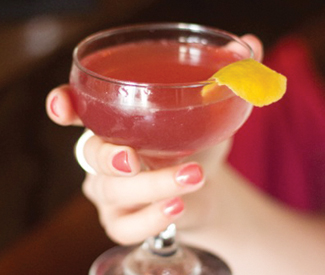
Next round: the Pleasant Evening and my personal favorite, the Berry Bramble. With sparkling wine, crème de cassis, peach bitters, and grapefruit juice, plus a beautiful lemon twist garnish, The Pleasant Evening is also perfect for a warm and boozy afternoon. But the Berry Bramble topped my spring-quest list. Crushed berries and gin with crushed ice yields an invigorating but not overly sweet cocktail, uncloyingly fun, tropical without all the cheesiness.

246 Kearny, SF. (415) 398-2827, www.rickhousebar.com


HAPPY AND HALF-OFF: NIHON WHISKEY LOUNGE

I’d been dying to go to lovely Mission outpost Nihon for its expansive, Japanese-leaning whiskey collection — and its selection of half-off happy hour drinks (many of them $6) provided the perfect opportunity. When I looked at the impressive cocktail menu, I knew I wasn’t ordering anything neat.

I asked our waitress for her recommendation for a nice springtime cocktail and she came back with the California Love, a pretty bourbon cocktail with orange juice, yellow chartreuse liquor, and orange oil. The citrus snaps the bourbon to life, but the drink is a bit too strong for early afternoons: you’ll want to sip this one after work while watching the sun set through Nihon’s windows. (Warning: it does get a bit crowded). If you want my advice, though, grab the Luxury Mojito instead. Topping off silver rum, nigori sake, mint, lime, and sugar with a dash of champagne turns this summer favorite into a bubbly springtime joy.

1779 Folsom, SF. (415) 552-4400


FLY BY NIGHT: TRADITION

With its emphasis on presenting a global selection of cocktail favorites, there isn’t really a season you shouldn’t drink at Tenderloin hotspot Tradition. But I have a great cocktail for you to try during a cool spring night: the Paper Plane ($10). Made with bourbon, Aperol, bittersweet Amaro Nonino, and fresh lemon juice, its zing will launch you skyward. (The drink isn’t on the regular walk-in menu, but appears on the extended menu offered with table reservations, so call ahead.) A variation with honey, adding a level of smoothness, is also amazing. Before you know it, you’ve downed several of this babies, and left any lingering winter blues far behind.

441 Jones, SF. (415) 474-2284, www.tradbar.com


Promo: Craft Warriors at the Asian Art Museum

0

Are you down with DIY? Craft virtuosos will be present to help transform the Asian Art Museum into a workshop for one night. Emiko Oye, Ealish Wilson, Kathryn Kenworth, and Megumi Inoyue all dominate their respective areas (jewelry, sculptural textiles, discarded materials use, and gift wrapping). Choose your team (are you a “textures” person or a “colors” person?) and construct fashionable armor and accessories inspired by the iconic terracotta warriors. Model your handmade haute couture in the photo booth. Don’t want to get your hands dirty? Observe from the sidelines and cheer on your favorite team. Learn the skinny on the Bay Area craft scene with Handful of Salt, Workshop Residence, The Crucible, and SCRAP among others. Music will be spun by Velvet Einstein, the galleries will be open, and so will the bars. May the best crafter win. Find more info here.

Thursday, April 18 from 5-9 pm @ Asian Art Museum, 200 Larkin, SF | Just $10

Delicious beginnings: Chocolate 101 at Dandelion

1

Photos by Bowerbird Photography

“Hi. My name is ______, and I’m a chocoholic.”

The rest of us took turns, going around the room, introducing ourselves and proclaiming our unabashed love for chocolate. We were all gathered at Dandelion Chocolate the bean-to-bar chocolate company on Valencia Street, for Chocolate 101, an introductory class which included comparison tastings, a tour through their manufacturing area, and a slideshow presentation on farming.

Dandelion Chocolate offers a unique product: the bars are made solely from chocolate beans and sugar. That’s all. The goal is to feature the flavor of the bean, which varies depending on genetics, land, farming methods, and fermentation process.

Dandelion’s chocolate, since it lacks the addition of extra fats and additives, proves difficult to make, and that’s precisely one of the reasons it is worth experiencing. Each single-origin bag of beans is hand-sorted and carefully roasted, bringing out beautiful and intoxicating flavors. Many of the machines they use are specially MacGyvered contraptions, or rehabilitated antique relics.

The candy wrapper is 60 years old, and cloaks each bar of chocolate in a piece of handmade paper from India. We even got to sample some fresh chocolate fruit pulp (YUM!), evocative of passion fruit. We all learned so much about chocolate that evening, and I, for one, came to the important realization that my addiction to Dandelion Chocolate is well-deserved. It truly is good stuff!

He will rise again: Hunky Jesus contest rescheduled

0

Soggy hordes of Dolores Park revelers were caught, mid-day-drunk, when unseemly amounts of rain stopped the Sisters of Perpetual Indulgence‘s famed Hunky Jesus contest in its tracks yesterday. No one likes a wet deviled egg.

But don’t worry heathens, you’ll still get a chance to blaspheme — the Sisters have announced that the event will be resurrected in April.

Full details on the time and place where our Lord and Savior will reincarnate as your hot masseuse wearing his cleanest bedsheet have yet to be released, but we’re confident that He will look just as frightening to your far-off relatives when you Snapchat them shots of your blanketmates WOO HOO-ing appreciatively over Him waltzing with a crucifix made entirely of dildos.

This was the 34th anniversary of the Sisters’ annual Easter celebrations. Back in the ’90s, the mayhem took the form of a 13-stop crawl of gay bars and organizations parodying (/updating) traditional Easter passion plays. Thankfully this year the rain spared the Sisters’ egg hunt and, barely, the bonnet contest. 

Here’s the full text from the press release, jussoyaknow:

Despite our best laid plans, the rain won out on Easter Sunday! After a beautiful morning with a flawless Children’s Celebration, the heavens opened and a downpour put a halt to the festivities just as the Bonnet Contest ended. 

But don’t fret! The Hunky Jesus Contest has been rescheduled! Keep an eye out for the “Second Coming” sometime in April. As soon as details are finalized they’ll be posted on www.thesisters.org

Hunky Jesuses, rejoice! And keep your loin cloths and thorny crowns at the ready- your moment in the spotlight will happen soon!


FEAST: 5 stoner cookbooks

0

culture@sfbg.com

FEAST If that joint’s got you jonesin’ for some serious grub, look no further. We’ve rolled up the latest and greatest in stoner cookbooks, perfect for any discerning bud lover’s taste test. No, we didn’t include any weed-infused recipes in this list, but hey, feel free to augment the recipes in the brownie cookbook. Whether you’re a marathon midnight toker or a one hitter-and-quitter, we understand your need for accessibility, availability, and general ease in eating after that smoke sesh. But move beyond Pop Tarts — even the most gourmand of pot heads could use some guidelines for grilling up goodies every once in awhile.

THE MAC AND CHEESE COOKBOOK BY ALLISON AREVALO AND ERIN WADE

Get your mac on. Allison Areval and Erin Wade, co-owners and authors of The Mac and Cheese Cookbook dish out 117 pages dedicated to one of America’s most beloved dishes, based on the crowd pleasing specialties dished up in their Oakland restaurant Homeroom. The book is an homage to Homeroom’s endless variations on the classic orange variety. That’s good news if your cravings leave you hankering for a variety of tastes. Basic bechamel sauces figure on the pages alongside smoky bacon, blue cheese, sriracha, and jalapeno poppers. There’s even a section on desserts suitable for your post-mac munch.

Ten Speed Press, $16.99

FIFTY SHADES OF BACON BY JENNA JOHNSON AND BEN MYHRE

This self-proclaimed “erotic” cookbook sinks its teeth into all things bacon. Bacon au gratin, bacon-wrapped asparagus, bacon Alfredo (just to name a few) — this pork-inspired parody cookbook has all the seductive appeal of its sexy, silly source material. But instead of a half baked S&M narrative, Johnson and Myhre’s book gets you off with five different carnivorous sections of easy-to-follow recipes. A seductive succession of events unfolds with chapters entitled “Foreplay,” “Multiple Orgasms,” “Morning Wood,” and “Bondage”, where bacon bits, bacon jam, bacon martinis, and bacon peanut stoke your stoner flames. And even if pig parts don’t get you off, they’ll almost certainly taste better when you’re high.

CreateSpace Independent Publishing Platform, $19.95

TRY THIS AT HOME: RECIPES FROM MY HEAD TO YOUR PLATE BY RICHARD BLAIS

We’ve all done it. Remember that time when you were so high, you thought putting chocolate sauce on canned jalapeños was the most genius concept ever? Until, of course, you made that dream reality and were left with a wounded mouth and sobering regret. It turns out, however, that unlikely pairings aren’t always painful. Top Chef: All Stars winner Richard Blais proves it to us in this cookbook. From root-beer basted lamb-shanks to coffee butter pancakes, the chef’s recipes do flavor exploration the right way — 125 right ways, to be precise. Go forth and concoct creatively.

Clarkson Potter Publishers, $30

MAD HUNGRY CRAVINGS BY LUCINDA SCALA QUINN

Lucinda Scala Quinn takes on take-out. Her mission in Mad Hungry Cravings is to reconcile the almost unbeatable deliciousness of fast food with the nourishment and nutrition that a home kitchen can produce, without a lot of work. Can good for you also be good for munchies? Damn straight. While raising three boys in NYC, where street food beats about anything found in the fridge (particularly if you’re a ravenous adolescent), Quinn had to create home-cooked meals capable of competition with street dogs and shawarmas.

Artisan, $27.95

BRILLIANT BROWNIES AND BARS: 25 FAVORITE BROWNIE AND BAR RECIPES BY COOKING PENGUIN

Stoners, perhaps more than most, know that not all brownies are created equal. If you have ever tried to make a batch of brownies with your favorite herb, you know it requires a careful balance of elements and timing. This book’s sugary-sweet offerings are winners, and recipes are composed with chocolate and without for more innovative pastry pleasure. The pages start with the standards and segue into non-traditional options, like cocoa-avocado, pumpkin pie, and nonpareil brownies. If you’d rather stick to the classics, try whipping up chocolate walnut brownies or Cooking Penguin’s ace pecan blondies.

168 Publishing, $12.95

Should bars be open until 4 am?

44

State Sen. Mark Leno is introducing a bill that would allow (not require, allow) cities to designate areas where bars could stay open and serve alcohol until 4 am. It’s not going to lead to a rampage of all-night drinking — the bill calls for a three-stage approval system that would allow public input at every step. But it might allow a handful of clubs in the city to stay open later — something that works just fine in a lot of other places, including most of New York State.

I grew up in a small town north of New York City (it was called North Tarrytown then, Sleepy Hollow now) and all the bars were open until 4. No big deal; even the hard-core people usually left well before that.

Then I went to college in Middletown, Connecticut, where people think it’s still 18th Century Puritan New England and all bars have to close at 1 am. At about 12:30, everyone would hear last call, chug as much as they could, and spill out onto the streets, and the cops never had an easy time of it.

That’s why, when Seattle considered this, the police department was all in favor.

But already, there’s opposition, some of it from people who just think everyone should drink less — and some of it from Bruce Lee Livingston at Alcohol Justice, whoi usually spends his time trying to tax drinks to pay for the costs of treating alcohol problems.

I didn’t get why Livingston was fighting this, so I called him up — and after we talked about whether the later hours at a small number of clubs in a few parts of the city will lead to more drinking and more problems (he thinks so, citing this; I disagree), he started talking about how dense San Francisco has become and how late-night clubs could harm residents who live near them. “San Francisco is becoming a daytime city,” he said. Sunday Streets, hiking, healthy lifestyles … all of those things conflict for Livingston with the notion of late-night drinking. Between 2 am and 4 am, he said, people “are trying to get some rest.”

Which is an argument against having active nightlife in an area where there are also residences, a major battle for years in San Francisco. But I have to say: The clubs in Soma moved into that area long before there was much of any residential use, and the condos came later — and I’m sorry, but when you move into a place next to a nightclub, you can’t expect silence at night.

I think with all of the tech workers who work unusual and long hours, this is becoming MORE of a late-night town. I hope so. We’ll see.


Meat and veg

0

caitlin@sfbg.com

IRISH It’s early, even for me, to be in a pub. But cookbook author and Irish chef Larry Doyle requested that I make the trek to meet him at his Taraval and 29th Avenue Parkside Tavern at 9am so we can talk about his kitchens’ plans for St. Patrick’s Day. Sagely, he begins by proposing Americanos and telling me about latchkey kid dinners from growing up in Dublin.

“Whoever got home first in the evening would cook dinner,” he says. That was often Doyle. Starting at 11 years of age, he would work off of the food Mom prepped before leaving for work (she always made dessert first, he remembers), eventually creating the dinners from scratch. “Irish food is rustic, simple,” Doyle tells me, reminiscing about the kitchen gardens from which the family pulled each night’s veggies.

The country’s “Fourth of July,” as Doyle describes St. Patty’s Day celebrations back home, has been adopted by the world as much as its Guinness and Jameson. Dublin hosts a parade akin to the New York City Macy’s Thanksgiving processional and shamrocks and leprechauns rule the day in Eire, just as they decorate tiny hats and novelty t-shirts here in the States.

The only difference between the celebrations, Doyle says, is a slightly less fratty attitude in Ireland towards celebratory green beer bonging.

“Which I don’t have any complaints about,” the bar owner clarifies. Doyle not only owns the four-year-old Parkside, a well-appointed tavern positioned among Korean restaurants, dancewear suppliers, and single family Sunset homes, but works as chef at Johnny Foley’s in Union Square. Both spots get packed out, he says, over the holiday.

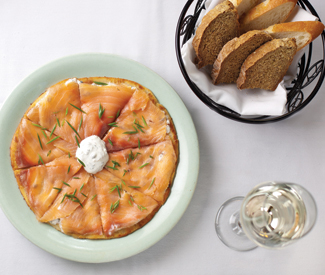
But it is at the Parkside where his smoked salmon boxty (a potato pancake topped with a dill sauce made of sour cream and shallots, and fish) “causes riots” when left off the menu and his Irish soda bread-and-butter pudding, which has been known to incorporate banana and feature a Bailey’s sauce, remains the most-ordered dessert. Should you doubt Doyle’s chops, do know that he wrote the book on Irish cooking (Irish Pub Cooking, Bristol Publishing Enterprises 2006, 139pp, $8.95).

Both boxty and pudding will be available at Parkside this weekend, as well as oysters, a stew made of simmered lamb cubes, and the traditional St. Patrick’s gut bomb of corned beef, white parsley cream sauce, and cabbage. Vegetarians can take solace in the regular menu’s wild mushroom penne, or Dubliner cheddar cheese plate.

Irish breakfast featuring black and white pudding topped with tomato and the starring role sweet, chewy imported bacon is served Friday through Sunday all year long, but Doyle pledges that brunch will be a particularly nice scene during this weekend’s festivities (he counsels coming close to the Fri.-Sat. 11am, Sun. 10am opening of the doors to ensure a spot to sit.)

So eat something in between shot-with-stout-chasers, dammit. There’s hardly an SF neighborhood — side eye, Castro — without an authentic spot that’ll be rolling out the orange-white-and-green flags.

Parkside Tavern 1940 Taraval, SF. (415) 731-8900, www.parksidetavernsf.com

LARRY DOYLE’S TOP PLACES TO REST YOUR PINT THIS WEEKEND

Johnny Foley’s 243 O’Farrell, SF. (415) 954-0777, www.johnnyfoleys.com

Irish Cultural Center 2700 45th Ave., SF. (415) 661-2700, www.irishcentersf.org

Danny Coyle’s 668 Haight, SF. (415) 558-8375, www.dannycoyles.com

Durty Nelly’s 2328 Irving, SF. (415) 664-2555

The Phoenix 811 Valencia, SF. (415) 695-1811, www.phoenixirishbar.com

Chieftain 198 Fifth Ave., SF. (415) 615-0916, www.thechieftain.com


Flip on the Night Light: free show alert

0

We’ve been hearing a lot about the Night Light thanks to its hosting of quality local shows; in the past year there have been performances by Warm Soda, Burnt Ones, Religious Girls, Jaberi and Deutsch, and the like. This Saturday, to celebrate 12 months of life, the bar-venue is hosting a free party, and there’ll be eight bands, seven DJs, and three comedians to check out throughout the night. Yes, all free.

First off, a little background. The Night Light is split-level Jack London Square area building with a bar on the bottom level, and a show venue up top. I’ll let the flowery press release give you the rest: “The decor is influenced by Speakeasy era bars, with flocked velvet wall paper, leather couches, and a darkly stained interior. The alcohol inventory focuses heavily on providing a wide selection of whiskies, and the cocktail menu offers new twists on Prohibition fare.” Doesn’t that cozy?

http://www.youtube.com/watch?v=BS3i-YkeXLI

Here’s the good stuff: to celebrate the one-year anniversary, owners Doug Kinsey and Johnny “Scobey” Nackley (see interview above) are offering all-night happy hour, and a complimentary midnight champagne toast – might as well be New Years.

The performances: DJs Delgado and Odiaka from Fresh Jamz and Miggy Stardust will spin downstairs, beginning at 7pm. In the venue section upstairs, there’ll be sets by live bands Clipd Beaks, Spaceburn, Mahgeetah, Bam! Bam!, Old and Gray, Frankie and the Aztecs, Lessons, and Tastyville; DJs Protoghost, Inti Inti, and Rick Moranis (aw, nice to see that name again, even it’s in a different context), along with live comedy by Clark O’Kane, Joey Devine, and Sean Keane.

http://www.youtube.com/watch?v=0L70HBXwotA

Night Light Anniversary Party
With Clipd Beaks, Spaceburn, Mahgeetah, and more
Sat/9, 7pm, free
Night Light
311 Broadway, Oakl.
www.thenightlightoakland.com

Gentrification’s simple math

66

Chuck Nevius is big into gentrification these days. He thinks it’s a dandy thing and “no longer a dirty word,” says the even longtime residents of the Mission love it, and has a nice photo of a person walking in Dogpatch, where two really cool dive bars just shut down — thanks to the gentrication that’s such a great thing.

Nevius quotes Randy Shaw, who has a bizarre statement:

In the ’70s and ’80s there was massive displacement of residents in the Haight, Noe Valley and the Castro,” says Randy Shaw, executive director of the Tenderloin Housing Clinic. “But now you are seeing a massive influx of upper-income people into previously unoccupied areas.”

What? “Previously unoccupied?” Like the Mission and Soma and Dogpatch? Unoccupied by the wealthy, maybe, but there are people living in almost every square inch of San Francisco, and in some parts of town, they are low-income people, and richer people force them out. That’s happening on the same scale today that it did in the 1980s, except worse: In the 80s, if you werer priced out of the Haight or Noe Valley or the Castro you could move to the Western Addition or the Mission or Soma. Now prices are so high everywhere in town that your only move is out of San Francisco altogether.

And while ol’ Chuck does admit there are downsides, he seems to think that somehow you can move wealthier people and more upscale establishments into existing lower-income areas without anything bad happening, as long as you respect “the delicate balancing act.”

But it isn’t a balancing act at all — it’s a zero-sum game. There’s finite space in this city, and when when something or someone comes in, something or someone has to leave. (Yes, you could build a lot more housing, but nobody’s building housing for working-class people.) But you can’t build more storefronts on Valencia or Mission; force out the existing community serving businesses and they have noplace else to go.

San Francisco has failed spectacularly at the fundamental challenge facing a city under this kind of pressure. First, before you allow more development, more upscaling, more of what C.W. Nevius loves, you have to protect existing vulnerable populations. That’s not a balancing act; that’s a mandate. If you don’t do it, you lose the character of the city and San Francisco becomes another sterile, corporate community.

Jesus. Why is this so hard to understand? I’ve lived through it several times, these booms that people like Mayor Lee and Nevius always celebrate, and every time, the pattern has been the same, the city has been damaged, and community institutions have been lost. I’m not one of those preservationists opposed to all change, but again: First protect existing vulnerable populations.


Wiener’s dance mix: more DJs mixed with fines for “bad actors”

7

DJs could proliferate in San Francisco’s bars, restaurants, coffee shops, and plazas under legislation that Sup. Scott Wiener introduced today to include DJs under the city’s limited live music permits, but the legislation also includes new enforcement powers to crackdown on underground parties and other unpermitted events.

Limited live music permits – which are far cheaper and easier to obtain than the city’s full-blown Place of Entertainment permits ($385 compared to around $2,000 for the POE permits) – were created in 2011 by legislation sponsored by then-Sup. Ross Mirkarimi, allowing amplified performances until a 10pm curfew. But DJs were left out, despite their prevalence in San Francisco, something Wiener is now trying to correct.

“Entertainment and nightlife are an essential part of San Francisco’s cultural and economic vibrancy,” Wiener said today in a press release announcing the proposal. “This legislation fosters live entertainment while also heightening our ability to monitor and regulate bad actors.”

It’s that last part that doesn’t sit well with everyone, particularly given San Francisco’s pervasive culture of throwing underground parties, which are key fundraising tools for grassroots efforts such as Burning Man camps but which are the targets of periodic crackdowns by the SFPD and other agencies. It seems that when it comes to nightlife, we always have to take some medicine whenever City Hall offers a spoonful of sugar.

The legislation would give the Entertainment Commission the authority to levy $100 fines to those involved with unpermitted parties, either in established clubs or underground warehouses, whereas now the commission only has the authority to punish those who have permits for violating them.

“Punishing a DJ playing at a party in which the promoter didn’t get the proper permits (perhaps unbeknownst to the DJ), would be unfair and inappropriate, in my opinion,” was how DJ/Promoter Syd Gris from Opel Productions and Opulent Temple reacted to the legislation.

But Entertainment Commission Executive Director Jocelyn Kane told us she doesn’t expect to fine an DJs. While she asked Wiener for those enforcement powers, they are simply a way of encouraging promoters and business owners to get permits. “We’re not into punishment, we’re into compliance,” she said, adding that this is simply seeking authority to do administratively what the SFPD and California Alcoholic Beverage Control Administration can now to criminally and civilly.

Tom Temprano, president of the Harvey Milk LGBT Democratic Club and a DJ/promoter at the popular Hard French parties, told us “where I really want clarification is on the new enforcement powers for the commission,” although he agreed with Kane that the commission generally works cooperatively with the nightlife community, far more than either the SFPD or ABC.

“All in all, it’s a really good step in the right direction,” Temprano said of the Wiener legislation. “It seems really positive. As a DJ, allowing DJs to be used for limited live performances is just common sense.”

Kane said the legislation will allow music to flourish in the city, from outdoor plazas to small venues, many of which have used DJs illegally. “We’ll be able to legalize that and bring them into the fold,” she said. “There always have been places that use a DJ like a jukebox.”

In addition to the relatively cheap application cost compared to POE permits, limited live music perhaps are quick and easy to obtain and don’t necessarily require city inspections paid for by the applicant.

In his press release, Wiener praised the importance of nightlife to the city economy and cited a city study he commissioned last year which found that nightlife has a $4.2 billion impact on San Francisco, employing 48,000 people and furnishing the City with $55 million in tax revenue annually.

“We need to encourage a flourishing nightlife that not only marks San Francisco as a cultural capital, but also creates jobs and brings in revenue for essential City services,” Wiener said. “These amendments are part of that broader strategy.”

Get a discout code for SF Weekly’s DRINK tasting event

0

This year SF Weekly returns to the City View at Metreon to host their third annual DRINK Tasting Event. Tickets are available here, and Guardian readers get a special discount using this code: Margarita.

Guests can expect sampling from a number of categories, including bars serving sponsored products, light appetizers, entertainment, and also a cocktail competition.

Participants include: Stella Artois, Sailor Jerry, Tullamore Dew, Monkey Shoulder, Reyka Vodka, Hornitos Tequila, SF Room Service, Titan Insurance, Tres, and more.
 
Saturday, March 9 at 3pm @ City View at the Metreon, 135 Fourth St., SF

Staff of shut-down Mission dispensary opens SoMa’s newest cannabis club

1

Today was the grand opening for a new dispensary just steps from the front door of Mezzanine and right down the block from a rapidly-changing Sixth Street. Long-time medical marijuana patients may recognize some familiar faces — Bloom Room employs many of the staff and management from Medithrive, the Mission Street dispensary was was forced to close “for the children” back in November of 2011.

“I was the manager of a store, and then I was the manager of a delivery service,” Bloom Room manager Stephen Rechit tells me, sitting in the dispensary vaporizing lounge area. When federal government agencies informed the cannabis club that it was too close to Marshall Elementary School, Medithrive switched to a $50-minimum, delivery-only service that owners continue to operate. 

The Bloom Room’s open for business, with space for on-site vaporizing steps from the cash register

Did Rechit — who says he became Medithrive’s first employee as a new University of San Francisco graduate — consider a career change in the face of unyielding federal agents? Not for a second. 

“I know this is definitely what I want to do,” he reflects. “I just really — I don’t want to get cheesy, but I believe in the plant.”

>>THROUGH MARCH 1, NEW BLOOM ROOM PATIENTS GET A SAMPLER OF THREE MARIJUANA STRAINS WITH ANY PURCHASE OF $50

Bloom Room’s downtown design, with its exposed brick walls and translucent glass marijuana leaf panels reappropriated from the defunct Medithrive storefront, may be the perfect fit for a Sixth Street neighborhood that’s on a definite upward economic swing. Rechit points out the window to the corporate offices of Burning Man, perched atop a skyscraper alongside the rest of the Mid-Market buildings that tech tenants are filling up. Burning Man’s been an earlier contributor to Bloom Room’s “Community Corner,” a space for neighborhood fliers, business cards. 

Bloom Room plans to stock six to 10 strains each of indicas and sativa, and sells blackberry chocolate bars from Kiva, Auntie Dolores caramel corn, and oen of Rechit’s favorites, TerpX concentrates. 

Sticky: TerpX concentrate

“TerpX is like the Girl Scout Cookies of last year,” Rechit comments, unrolling a piece of waxed paper so I can check out the golden goo. 

As we chatted, Tenderloin resident Jim Murray (who, happily, bore a striking resemblance to Bill Murray in The Life Aquatic in his navy beanie) pulled up in the narrow, tall table to inquire about the availability of the clould of OG Kush pumping into the vaporizer bag between Rechit and I. 

I’d seen Murray complaining about the quality of Bloom Room bud he’d picked up previously, and now he was interested in the “toast,” the spent flower already used in the vaporizer that was sitting on a piece of paper in the ashtray. 

“The reason why I’m sensitive to this is because I am a senior living on a VA pension,” he informed me. “What compassionate care programs do you have here?” he asked Rechit. 

FYI, Rechit says the dispensary gives away free product to patient on holidays and keeps prices low in general. Back when Medithrive’s doors were open at its Mission Street location it made monthly donations to the school around the corner that was eventually used as the excuse by the federal government to shut it down. Let’s hope Bloom Room has more luck in its new SoMa spot. 

Bloom Room, 471 Jessie, SF. (415) 543-7666, www.bloomroomsf.com

On the Om Front: Bhakti by the Bay

3

Some people go out to bars and drink on a Friday. But, you want to know what I do for a good time? I chant. I chill in a room full of yogis and I sing mantras in Sanskrit and I get really happy.

If you’re in the yoga tribe, you might be nodding your head here. If you’re not, you may be thinking I sound like a New Age freak who’s sniffed a little too much patchouli. I understand. I’m the city girl who first resisted yoga 15 years ago, when I moved to San Francisco, saying, “Yeah, right, I’m going to just sit there and breathe.” Like yoga, chanting can be something of an acquired taste. But, also like yoga, it can be acquired very quickly. The biggest obstacle is just getting into the room for the first time to do it.

Chanting events are often called kirtan, which is call-and-response singing led by a kirtan artist (also known as a kirtan wallah). The chants are in Sanskrit, a language that has an innate meditative quality, and the repetition of the words put you into an ecstatic mindset. Though the songs are mostly honoring Hindu gods — like Rama, Lakshmi, and Shiva — you don’t have to be Hindu (or a theist at all) to sing them. I mean, anyone can find joy in offering a Christmas gift, or have a spiritual experience while eating a latke, right? The gods are thought by most to be symbolic, representing different aspects of life and humanity. Ultimately, kirtan is a practice of devotion or bhakti. It doesn’t matter what it is you are devoted to — God, trees, your pup or your honey — so long as love is at the center.

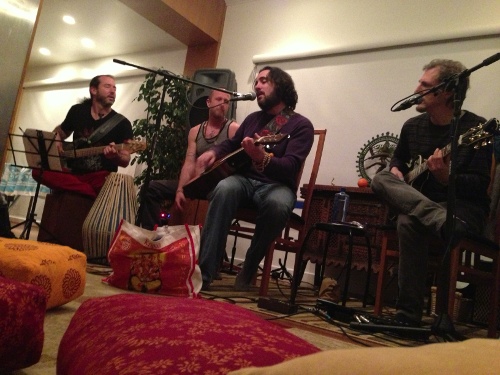
There are kirtan events frequently happening in the Bay (see the listings below), and there are touring kirtan bands constantly coming through here to share their music. One of my favorite kirtan musicians is David Newman (aka Durga Das), a Philly-born yogi who has the soul of an angel and the vibe of an indie rock singer-songwriter. He and his band (pictured above: Dave Watts, Clay Campbell, David Newman, and Philippo Franchini) played a small, intimate house concert this past weekend. It was my favorite kind of Friday night: music, tea, a dimly lit room, and a feeling like each person in the room was somehow destined to be there. But that’s often what it feels like at kirtan. It’s as if time somehow stops, and we’re all just there to linger in the pause.

Video of David Newman and band by Dazza Greenwood:
http://www.youtube.com/watch?v=UNzopGaXyQA

Karen Macklin is a writer and yoga teacher in San Francisco — her On the Om Front column appears biweekly here on SFBG.com.


PLACES TO FIND KIRTAN IN THE BAY AREA

by Joanne Greenstein

Weekly:

Wednesday Night Kirtan around the fire pit
8pm–9pm, by donation
Yoga Society, 2872 Folsom, SF.
More info here

Sunday Night Kirtan
7pm, $10-$15
First Sunday: Stephanie Winn
Second Sunday: Kozmik Kirtan with Evelie Posch
Third Sunday: Art of Living Foundation
Last Sunday: Sean Feit
Yoga Tree Telegraph, 2807 Telegraph, Berk.
More info here

Monthly:

Open Secret Kirtan with Mirabai & Friends
3rd Thursday of the month
This month: Thursday, 2/21, 7:30–9pm, $10-$20
Open Secret, 923C Street, San Rafael
More info here

Kirtan: An Evening of Devotional Chanting & Music with Bhakti Heart
Last Saturday of the month with some exceptions
This month: Saturday, 2/23, 7:45–9:15pm, by donation
Mindful Body, 2876 California, SF.
More info here

Upcoming:

Community Kirtan with Andrew Thomas Fisher and Erin Lila Wilson
All are invited to lead a chant, join in the response or listen to the sweet sounds.  Feel free to bring instruments.
Sat, 2/23, 7–8:30pm, by donation
Integral Yoga Institute, 770 Dolores, SF.
More info here

Complete Immersion:

Bhakti Fest
A full-on kirtan festival in the Joshua Tree desert, the September Bhakti Fest (and its May sister festival, Shakti Fest) features around-the-clock chanting, premiere yoga classes and inspiring lectures.  All the top international kirtan artists play at these festivals.
Shakti Fest, May 17-19
Bhakti Fest, September 5-9
More info here


Fresh sips

2

virginia@bayguardian.com

APPETITE In my endless treks ’round the city for the best partnerships of drink and food, here are a few notable current menu offerings.

MEZCAL AND COFFEE

Easily one of our city’s best bars, Comstock Saloon maintains historical reverence to SF’s Barbary Coast days without being stuffy. Old World decor, live jazz, and bartenders who know how to make a proper cocktail make it one of the most blessedly grown-up watering holes, particularly in partying North Beach. If this weren’t enough, it’s a top notch restaurant. Chef Carlo Espinas churns out dishes better than your typical gastropub “upscale comfort food” fare.

Mostly classic cocktails ($8-12) are often best ordered as a “Barkeep’s Whimsy” option (let the bartender decide how to make it, $12), like a gorgeous Smith & Cross Sour, showing off the musky-elegant-spicy notes of Smith & Cross rum with lemon, sugar, and frothy egg white. Another “whimsy” from the talented Ethan Terry: a stunner of smoky mezcal weaving with Firelit Coffee liqueur, Oloroso sherry and orange bitters. Menu classics remain, like an ever-drinkable Cherry Bounce: bourbon, cherry brandy, lemon, Angostura, Champagne.

Eat: I can’t resist melting soft, mashed potato fritters ($9) dipped in “loaded baked potato dip” (essence of bacon and chives in sour cream — I had to ask for more). Salads are refined yet comforting, whether the austere green of raw kale ($9) tossed with little gems, Parmesan and watermelon radishes in bright lemon dressing, or chunks of fresh crabmeat and smoked trout in a lentil, baby chicories salad ($12). Good thing I can contrast that healthy eating with bacon-wrapped meatloaf ($16), bearing a caramelized “skin” of ridiculously fine house ketchup (of brown sugar, tomato, chili, and more) alongside dreamy coleslaw.

Comstock Saloon 155 Columbus Ave., (415) 617-0071, www.comstocksaloon.com

MINI-MARTINIS AND G&TS

Consider leisurely Brasserie S&P, inside the Mandarin Oriental hotel, your gin and tonic haven. But not just any G&T. Though cocktails fall on the pricey side ($12-16), beverage manager Priscilla Young oversees a robust gin collection, blends tonic waters in house, and presents mix-and-match G&T options via iPad. Her sommelier’s palate ensures tonics align with botanical profiles of gins like local Old World Spirits’ Blade Gin, its Asian botanicals dancing with Young’s citrus-tinged Sensei #1 tonic, orange, and Thai chilies. There’s an earthier G&T of St. George’s Dry Rye Gin with Sensei #1 tonic, orange, black pepper. In a “Dirty” G&T, Scottish Botanist Gin flows with celery brine and Q Tonic, decorated with salt-pepper rim. Outside of G&Ts, Fresno chilis and bacon make the Diablo’s Whisper a refreshingly savory cocktail of Don Julio reposado tequila, blackcurrant hibiscus, and lime.

Bonus: A new (and genius) offering is mini-martinis available all day at $5, like First Word, a twist on a classic Last Word cocktail, with Beefeater Gin, Green Chartreuse, lime and grapefruit. Imbibing guilt free, the diminutive size makes you want to order another.

Eat: Conveniently open 11am-11pm, the Bar at Brasserie S&P is an all day, downtown drink option, though it’s also a smart, non-trendy power lunch spot. Light, clean kanpachi crudo ($17) nods to Hawaii with Kona fish and macadamia nuts, drizzled in sesame oil and Fresno chilis. Also light yet laden with Dungeness crab is a Louie salad ($19) stacked with butter lettuce, sieved egg, avocado. I often glaze over chicken, but Mary’s chicken paillard ($18) is a highlight breaded in anchovy garlic crumbs over marcona almond pesto.

Brasserie S&P Mandarin Oriental, 222 Sansome, (415) 986-2020, www.mandarinoriental.com

CILANTRO DAIQUIRIS AND CIDER SOURS

Rock-star cool and sexy describe Chambers’ record-lined dining room, one of the most striking in the city. Cocktails ($11) are improved from early days when it opened in 2011. Straightforward and unfussy, the drinks are well-made and thirst-quenching. Playing off one of the greats, a whiskey sour, the Whiskey Cider Sour combines house-made cider, whiskey, egg, and fresh-grated nutmeg. A garden-fresh cilantro daiquiri blends silver rum, Cointreau, and lime with plenty of muddled cilantro.

Eat: Appreciating executive chef Trevor Ogden’s unique presentation of smoked fish (salmon) in the past, now it’s tea-smoked tombo tuna ($15), slowly smoking over a grate tableside. Despite pork belly burnout years ago, I hadn’t tried smoking pork belly ($13) until recently, soft fat releasing its aromas as it burns before you, accompanied by Early Girl tomato kimchee. How could I resist? But salads unexpectedly steal the show. Winter is exemplified in an artistic display of fuyu persimmons ($10) happily partnered with burrata and toasted oat toffee, dotted with Angostura bitters (you heard right), olive oil, sea salt, and garam masala spices. Salade Lyonnaise ($12) is artfully deconstructed: grapefruit wedges, pork biscotti, lardons (thin strips of pork fat), and candied pomelo splay out spoke-like from a sous vide egg resting atop a mound of frisée in the center.

Chambers 601 Eddy St., (415) 829-2316, www.chambers-sf.com

Subscribe to Virgina’s twice-monthly newsletter, The Perfect Spot, www.theperfectspotsf.com

Clubs vs. condos

30

steve@sfbg.com

The Western South of Market area is ground zero for the city’s War on Fun, a place where nightlife often comes into conflict with residential expectations, particularly on the raucous 300 block of 11th Street and, to a lesser degree, Folsom Street’s old “miracle mile” of predominantly gay bars.

As the city’s Planning Department and its development community looks to accommodate another 4,000 homes for 10,000 new residents on less than 300 acres of Western SoMa — most of it along Folsom Street between 7th and 13th streets — that potential for conflict could grow in the coming years as funky old buildings give way to shiny new stacks of expensive condos.

And efforts to sort it out may hinge on the future of a 105-year old purple building.

After nearly eight years of work by a unique citizen-led task force, the Western SoMa Community Plan is now before the Board of Supervisors, with the Land Use Committee set to hold its first hearing on Feb. 25. Despite dozens of task force meetings seeking to strike the right balance between residential and entertainment interests, the plan is still being tweaked.

When the Planning Commission approved the plan and some related projects on Dec. 6, it followed King Solomon’s approach of cutting the 11th Street baby in half. The commission heeded the recent recommendation of the nightlife community and District 6 Sup. Jane Kim to modify the plan to prohibit new residential development on the 11th Street block where tipsy visitors to Slim’s, DNA Lounge, and other big clubs clog the sidewalks every weekend. But it also voted to grandfather in a 24-unit residential project at 340 11th Street, which everyone now involved in closed-door negotiations simply calls “the purple building,” a two-story masonry structure built in 1907 that is awaiting demolition.

The building houses light industrial businesses and is the former home of Universal Electric, whose owner, Tony Lo, wants to develop the property. Along with architect John Goldman, Lo submitted a residential project application in 2005, only to have it placed on hold pending adoption of the Western SoMa Community Plan.

“It was well along when the Planning Department put the project on hold,” Goldman told us.

City officials and even many of the nightlife advocates say they sympathize with the long wait that Lo and Goldman have endured, even if many oppose housing on the site and have been urging Lo to find another use for the site, such as an office building.

“They would have no idea what they’re getting into until that first Saturday night,” nightlife advocate Terrance Alan said of the would-be residents of the building, envisioning a young couple who had only visited during daytime hours trying push a baby stroller past the throngs of club-goers. Alan took part in recent meetings Kim facilitated with Lo and Goldman, and Alan told us, “There was, for the first time, a very frank discussion about the problems that owners would experience and the pressure they would put on clubs in the area.”

For example, just one neighbor of Slim’s — a popular live music venue on the block owned by singer Boz Scaggs — has waged a relentless campaign that has forced temporary shutdowns and cost the club more than $750,000 in mediation costs, Alan said, despite the club’s sound buffering and general compliance with local codes.

Alan said that it’s simply unthinkable to add more than two dozen new homeowners to that busy block in a condominium building that only allows access on 11th Street. Alan is hopeful for a negotiated compromise with Lo, something that Kim told us she also thinks is likely.

“I’m hoping we can come to a consensus of the property owners and business owners on 11th street, including the purple building,” Kim said, echoing Alan’s point that, “Just one resident can really shut down a business and hurt its financing.”

Goldman said he understands the concern and “my client is considering alternatives to housing.” While he was a little frustrated that it wasn’t until November that they first heard about a proposal to ban residential projects on the block, “We’ve definitely heard the concerns of the nightlife entertainment folks…No decision has been made yet, but it’s the goal of my client to decide fairly soon.”

A ban on housing is just one of the changes that Alan and other members of the California Music And Culture Association (CMAC) are pushing the supervisors to make to the plan, provisions he was unable to get into the plan as a member of the Western SoMa Task Force for four years before resigning in frustration.

“The task force was made up of people primarily interested in residential development,” Alan told us. “The plan is pretty much about protecting residential.”

That perspective irritates task force chair Jim Meko, who said he held about 60 meetings on entertainment and nightlife issues and bent over backward to accommodate that community. “Overall, the Western SoMa Plan is very friendly to the entertainment industry,” Meko said, noting that the plan grandfathers in all existing nightclubs, even after a building is demolished, and requires new residential construction to buffer against street noise. “They’re never satisfied.”

But Meko does concede that accommodating existing residents and new residential development was central to the task force’s work, as it was charged with doing by the Planning Department. “The most important thing was to do no harm to anyone,” Meko said was the guiding philosophy behind the task force’s approach. “We’re the real test case for a mixed use community in the city.”

While Folsom Street has more bars that 11th street, and those bars will be protected under the plan, Meko said the idea was to keep them limited in scale and prevent the proliferation of large clubs that operate into the wee hours.

“Folsom Street is where the residential growth will go,” Meko said. “That’s the area where we want to add the most residential growth and it seems dumb to add more nightclubs there.”

But he also doesn’t think it makes economic sense for many clubs to open there anyway. With allowable height limits in that corridor being increased from 50 feet now up to 65 feet, and with the plan’s approval allowing development projects to move forward, many of what he called the “old junky buildings” where clubs could find cheap rent will likely be demolished.

“With the height increases, those buildings are going to be history in five years,” Meko said.

Kim said she is supportive of both nightlife and the plan’s facilitation of residential development.

“It’s transit-first and a good place to be able to handle the density that’s close to downtown,” Kim said, noting that she’s supportive of even the massive residential project proposed for 801 Brannan Street, mostly because it includes units with up to two and three bedrooms and an elegant design by architect David Baker.

That project would have 432 housing units with a total of 606 bedrooms, 22,124 square feet of retail, and a 422-car parking garage on a site of just over four acres. In many ways, it is typical of the housing density that will begin to crowd into Western SoMa.

Meko was critical of how the entertainment community was able to make changes to the plan after all the hard work of the task force, and he told us, “It was a choice Jane Kim had to make, and she will have to answer to her constituents in the future.”

But Kim said the change on 11th Street made sense and that it’s important to strike a balance. “Entertainment is clearly an important part of Western SoMa and 11th Street is unique in showcasing that community,” Kim said.

Alan and Glendon Hyde — an LGBT activist who, like Meko, ran against Kim for D6 supervisor two years ago — are also pushing for other changes in the rules governing nightlife in SoMa, including who can get the limited live music permits that the city issues and extending the 10pm curfew in those permits.

“I think small businesses throughout the district should be able to use the limited live music permits, and they’re available only on Folsom Street under the plan,” Hyde told us, noting that otherwise he thinks nightlife fares well until the plan, particularly after Kim’s intervention on 11th Street.

Kim said that she in reluctant to start tweaking too many provisions of the plan, which she characterized as a separate discussion that doesn’t have to happen now: “I’m open to further discussions after we get the plan passed.”

The Western SoMa Plan was broken off from the larger Eastern Neighborhoods Plan by then-Sup. Chris Daly in 2005 to let a citizen-based effort tackle this area’s unique challenges, and Kim said the plan is a testament to the diligent efforts of Meko and a diverse set of members.

“I think it was a really good process with lots of stakeholders involved,” Kim said. “I like the balance. I’m happy.”


Small space, big ideas: New City Company debuts

0

Ten years ago, Kim Jiang-Dubaniewicz sat outside the Chinatown gates nursing an existential crisis; she had serious doubts about pursuing her longtime dream of a career in acting. Just then, she looked up and saw a familiar face drinking coffee next to her. It was Sean Penn, and she asked him for a cigarette even though she didn’t smoke. He told her to stick with acting.

Apparently one doesn’t ignore the advice of Sean Penn.

After several years of acting, the discovery of a store that sold 25-cent paperbacks (including the works of playwrights William Saroyan and Eugene O’Neill), and a move to San Francisco, Jiang-Dubaniewicz wanted to try something new. Last October, she embarked on her first production as a director. The resulting work, The Saroyan O’Neill Project, just finished a twoweekend run at the Postage Stamp Theater in the Potrero Hill Neighborhood House.

In a room that hosts senior lunches by day in a building that has served as a community gathering place for a almost a century, her New City Company staged an energetic piece that worked best in the narrowly focused and understated moments when the play made no attempts to disguise the modesty of the production (the simplicity of the set in the second of two one-acts, a panel of bars in the center of the stage, was probably a reflection both of artistic choice and of the fact that practicing for free in the community room of a police station tends to impose some limits). Hello Out There, the starker of the plays with two characters continuing a mostly linear dialogue that builds into romance, came across beautifully. Gift Harris gave a tight and compelling performance as Photo-Finish, taking us with him through the varying shades of desperation, loneliness, and hope in the repeated cry, “Hello out there!” from which the play earns its name. 

The director cast the play well. In the script of Hello Out There, Saroyan describes Photo-Finish simply as “A Young Man,” a phrase that certainly contained an internal set of assumptions about race and ethnicity in 1941 when the play was written. Jiang-Dubaniewicz chose Harris, an African American man who has performed a number of roles on television and stage, because he just seemed to fit. Similarly, she decided to cast The Long Voyage Home, an Irish play from 1917, without regards to race or other qualities that typically account for typecasting in theater.

Discussing what she refers to as “inclusive casting,” the director cites her own experiences struggling with the scarcity of roles for Asian American actors. The same is true with other racial minorities, she says. Many of the African American actors in her cast have opted not to join Actor’s Equity because the number of available roles doesn’t justify the union fee. Not only does Jiang-Dubaniewicz view this as an injustice, but she also sees it as a failure to mirror the reality of the world around us, an aim of theater. “This is our city,” she says. “This is what we look like.”

The “we” implicates the audience, merging the play and the community. The direction of the show emphasized this. Little separated the two rows of guests and the stage, and while this was sometimes unsettling —  the larger cast and chaotic drunken merriment of A Long Voyage Home at times felt too big for the space and distanced the audience — it mostly added to the feeling of intimacy. In the quieter, more finely tuned Hello Out There, the characters spoke facing outward toward the audience, inviting us into the burgeoning love between outcasts.

And the audience participation did not end with the bows. At the end of the performance, Lewis Campbell, the indispensable executive producer, addressed the audience with a half-joking plea for help transforming the space back to its daytime function. In 30 minutes, it would become a senior lunch room once again. 

Will the senior lunch room ever transform back into The Postage Stamp Theater? Jiang-Dubaniewicz is considering a number of future projects for the New City Company, including more of the rich anti-hero tales of Saroyan and O’Neill. After the success of this first project, hopefully she won’t need a fortuitous Sean Penn run-in to make it happen.

When Christeene Vale plays you in the film version: ‘Fourplay’ screens this weekend at ATA

0

She wears a Guess Collection spotted lynx coat, Manolo Blahnik boots, Isabel Marant dress, La Perla lingerie. She has to figure out how to have sex with a quadriplegic. She is gentle, the most sweet. The Christeene Vale that stars in the “San Francisco” segment of Fourplay, a collection of sex-themed shorts that will screen in part at Other Cinema’s “Eros” lineup at Artist’s Television Access on Sat/16 is not the same filthy drag-terror I remember slapping and dredging her sweaty stomach over the faces of other front row admirers at her Public Works appearance last year. 

In part, this is due to the fact that in Fourplay Vale (or rather, Paul Soileau, her real world alter ego) is interpreting the cross-dressing SF sex worker who is sitting across the table from me in a SoMa cafe. Her name is Chloe, and she is explaining to me why her job is a lot like being a therapist.

Here is the plot of Fourplay‘s “San Francisco”: Soileau’s Chloe is called out to North Bay house with an unusual challenge. The wife of a quadriplegic man wants a professional to give him his first experience with a biological man. He’s not gay, the wife explains upon Chloe’s arrival. It’s just something he wants to do. 

The ensuing scene between Soileau and the prone man will convince anyone of the need for experienced, compassionate sex workers. It will also introduce you to ways of sexual pleasure you perhaps had not previously considered (spoiler alert, but: toe.) 

The story is loosely based on an experience that real-life Chloe recounted to director Kyle Henry when they were introduced by a mutual friend in San Francisco. They changed a things about the plot to make it simpler for audiences to digest. It was actually the quadriplegic’s mother who called Chloe. In the film version of Fourplay the disabled man is older — in real life he was 23 years old, having had an awful motorcycle accident at 18. The real-deal sex took place in Post Street hotel, one with adequate handicapped access so that the mother could position the man in the room, leave the money in an envelope on the desk. The next time real-life Chloe heard from mom, it was three years later. She had called to let him know her son had passed away in his sleep.

“All I could think was ‘god, this woman loves her son so much,’” Chloe tells me over tea at the new 111 Minna cafe. In person, it is easy to see similarities between the queen in front of me and Soileau that may have lead to the casting of the Fourplay short. Both of them have big eyes that look at you — Vale’s through freaky contact lenses, but you imagine the spirit is the same behind the plastic. In person, Chloe affirms, Soileau is actually quite gentle and Southern. Christeene hadn’t yet been born when the short was filmed almost three years ago, or when the two drag queens spent time studying each other before the short was shot. 

Chloe remembers that she was insistent that the tenderness she felt for the disabled man be apparent on screen, that Soileau bring back to life the humility she felt in that moment. 

“It wasn’t about getting pleasure,” she says of the quadripligic man. “It was more about him giving pleasure.” Which makes sense – a man who has to be waited on 24/7 for his own survival would fantasize, one supposes, about the moment when he could give happiness to another. “It changed my definition of what sex could be.” 

Chloe’s career began when a drag queen named Chocolate who worked the door at Trannyshack Tuesdays at the Stud asked baby-drag Chloe what her “price” was. Chocolate became her teacher, learning her the best way to work with clients. Judging from the way Chloe divined, diagnosed, and prescribed a cure for my Valentine’s Day anxiety, she’s definitely attuned to the needs of others — one of those “givers.”

“Very quickly,” Chloe remembers “the fear subsided when I saw how powerful touching the skin of another person, having them touch yours – how remarkable and transformative that can be.” Through the power of drag, she was able to take charge of each rendezvous and, she feels, really help people. “We’re not criminals. We’re artists, we’re shamans,” she tells me. Chloe was active in 2008’s defeated Proposition K, which would have prohibited the SFPD from using resources to instigate and prosecute sex work. 

“We live in a lonely world. People can go for days without speaking [in real life] to anyone.” She saw lots of self-identified straight men during those days of the first dom com boom in San Francisco, the kind of guys desired by the same burly gay men who the slight, nerdy Chloe felt rejected by in bars before she started sex work (“tranny’s revenge,” she laughs.) But when I ask how it felt to be so intimate with people who were in the closet, Chloe bridles. 

“As I understand, there’s a big difference between sexual identity and sexual practice.” Let them be straight if they say they’re straight, she avers. “I believe everyone should have the power of self definition.” 

Her caretaking spirit is evident in the short that Henry and the rest of his Austin-based collective created (Henry’s partner is one of Vale’s back-up dancers — the making of the “San Francisco” segment was somewhat of a family affair.) The partial screening on Saturday will be the second for Fourplay in San Francisco after last year’s Frameline debut. Who know, maybe Christeene will make an appearance — she was just announced as a guest judge for Fri/15’s Trannyshack Star Search pageant

Chloe’s excited that more of her SF friends get a chance to see the piece that they put together so many years ago. “It was so easy because Paul is so sweet, so fearless, he understood the complexity of the piece. And he fit perfectly in my clothes.” 

Yep, that fuzzy feeling wasn’t the only thing Chloe contributed to Fourplay – lady offered up the clothes off her back. 

Fourplay shorts at Other Cinema’s Eros Show

Sat/16, 8:30pm, $7

Artists’ Television Access

992 Valencia, SF

www.othercinema.com

www.frameline.org

Beer Week rolls out the barrel

0

With much fanfare, the San Francisco Brewers Guild annual SF Beer Week popped its cork at the Concourse last Friday night, and the Bay Area has been awash in a tsunami of beer ever since.

Unable to attend the grand gala opening celebration, I got the lowdown from beer-tasting buddy Cee Jay, who took a few for the team in his quest for the perfect snifter of suds and got him to wax eloquent on Sierra Nevada’s new line of barrel-aged beers (“The barrel-aged Bigfoot is the tastiest brew I’ve had in a long time,” he gushed) and weigh in on the collaboratively-brewed Brewers Guild malt liquor Green Death — a brew apparently inspired by one of my secret nostalgic faves Rainer ale, a dubious beverage I have fond albeit very fuzzy memories of. One this subject Cee Jay vacillated between calling it “well-balanced” yet possessed of a “split personality,” code words for “he don’t like it” (decide for yourself at the “Meet the Brewers” event at Speakeasy on February 13).

As I peruse the schedule for the week ahead, all I can say is “thank goodness beer week lasts 10 days”. Because otherwise I don’t know how I’d fit in all the beers that sound too good to pass up.

With over 400 events to choose from all over the Bay, you’d be hard pressed to avoid Beer Week altogether, which makes my strategy of sticking to bars I’d probably be going to anyway but coinciding it with a tap takeover of a brewery I’m keen to further my familiarity with, either sheer genius or maybe just laziness. San Diego night at the Sycamore on Monday was a perfect example of this welcome synchronicity of will to explore and comfortable location. Breweries represented included Ballast Point (whose Sculpin IPA is a big favorite) and Green Flash (whose Black Saison “Friendship Ale” was particularly tempting), and since the Sycamore is within literal stumbling distance of my home, the fact that it was a “school night” did not matter much. Incidentally Sycamore is also hosting a promising-sounding Dogfish Head night on the 12th, which will be a great opportunity to taste some special rarities.

Toronado, naturally, will host two of my real must-do’s, the Russian River ‘Tion night (Tues/12), where some 20 Russian River beers (though ironically NOT the highly-anticipated seasonal release, Pliny the Younger) will be served from 6pm onward, and the not-technically-Beer-Week-but-still-imperative 20th annual Barleywine Festival from the 16th-18th during which over 50 Barleywines will be available on draft. Incidentally, Toronado is also your best bet for scoring the aforementioned Pliny the Younger — just show up on your lunch break through the 25th, they’ll be serving limited supplies of the scarce stuff until they won’t.

Other Tap Takeovers that look promising to me are a couple at Kennedy’s Irish Pub and Curry House in North Beach (Heretic on Wed/13, and Ommegang on Fri/15), Triple Voodoo and Ninkasi at Rosamunde Sausage Grill also on Wed/13 and Fri/15 respectively, Danish Mikkeller at Oakland’s The Trappist on Thurs/14, and the “Band of Gypsies” takeover of Rosamunde’s Oakland outpost on Wed/13. The “gypsies” — eight nomadic local brewers including Lucky Hand and Bison Organic — have collaborated on a Belgian-style Quad (“Belgian Tramp”) brewed with candy sugar, Mission Figs, raisins, and dates which clocks in at a respectable 10.5% abv and sounds like dinner, dessert, and drinks all in one tasty combination.

And speaking of dinner with drinks, I haven’t even touched on all the foodie-worthy events lined up on the Beer Week calendar, but buzzed-about bets include beer-infused Dynamo Donut and Humphrey Slocombe confections, Butchers and Beers on Fri/15 featuring meats from 4505 paired with tasty brews from local “farm-to-bottle” darlings, Almanac Beer Company, Almanac’s special beer-pairing dinner at Central Kitchen on Wed/13, the already sold-out Sau and Brau fest at Drake’s Barrel House in San Leandro, and a Valentine’s Day, four-course, prix fixe dinner and beer pairing at La Trappe Café. Oh la la! In short, life’s short, and beer week is passing by more quickly than you might think. Catch it now while you still can, your liver will forgive you eventually. I promise.

SF Beer Week

Through February 17

Various locations

www.sfbeerweek.org