SFBG Blogs

Prostitution and Mitt Romney

26

Four and a half years ago, San Francisco had the chance to make history as well as eliminate a major social problem. Measure K would have eliminated the prosecution of sex workers in the city. Sensible, sane and prudent, this ballot initiative would have finally given some legal recourse to one of the city’s biggest underground businesses. Because it is sex-based, however, hysteria ruled the day and the measure was defeated.

The arguments against it are the same arguments one hears when one discusses recreational drug legalization. That if legal, street walkers would spring up like so many weeds on heels in every neighborhood and that pimps and hookers would flock to San Francisco en masse. Never mind that the exact opposite would have been the result–no longer in the shadows and with their business legitimate, sex workers could part ways with the parasitical pimps without recourse and also if legal, a “red light district” could exist anywhere (I opt for City Hall myself, as it has been home to courtesans for centuries now). Lost tax revenues reclaimed, better public health for the workers and clients and a win for all.

One would think in the supposed progressive and free-thinking capital of America, this would have been a slam dunk. It lost resoundingly. Which proves that for all of San Francisco’s bluster, at heart it is a provincial city filled with a lot of sexually uneasy residents. That our next door neighbor, the generally “red” Nevada has had legalized prostitution for years speaks volumes about what “liberals” really believe. “Not in my backyard” times ten. Prostitution is called “the world’s oldest profession” and yet it is rarely legal anywhere–why?

As human beings are one of only a few species to have sex for pleasure, you’d think we’d clearly admit same. And that sex between consenting adults is already legal anyway, why does it become illegal when money is involved (unless filmed and sold)? These are incontrovertible facts. I suspect that the real reason prostitution is illegal and has been for eons is that it empowers women at the expense of men (the male escort being about 1/10th as popular as the female, sexual ratios being what they are). A woman that can negotiate the price for her “favors” directly now has some say in her destiny. Yes, it would probably be better for her physical and mental health if she chose another line of work, but in a capitalist system where money talks, a 300 dollar an hour escort is higher up on the ladder than a nine dollar an hour barrista. A couple of grand a day and a person whose educational and class background placed them at the lowest rung on the ladder now has say–it’s the same reason that gambling and drug dealing are decried by moralists. Folks with no options are now equal to the privileged at birth and that upsets the so called “natural order of things”. So, they have to be denigrated.

I got to thinking about that paradigm and realized that in reality, a hooker is part of a much more honest profession than someone that runs or ran an equity capital group. Namely Willard “Mitt” Romney. When a john makes contact with an escort or sexworker, they negotiate a fixed price for a certain act or acts. Upon consumation (or at some time during or before), payment. Both sides happy. Compare that to Mr. Romney’s manner of acquiring businesses. Putting 10% down, leveraging the other 90% as tax free debt larded onto the acquired entity and then tacking on enormous fees paid to backers. Usually what happens with these companies is massive layoffs and often bankruptcies. One side very unhappy. Yet this perfectly legal version of a Mafia bustout is applauded by Wall Street–the same Wall Street that poo-poos sex workers as a moral scourge (while utilizing their services).

Taking advantage of the human tic of discomfort when it comes to acknowledging the sex drive has kept the church alive for centuries and jackasses like William Donahue and L Brent Bozell in cash. Simply recognizing biological normalcy would end a lot of misery. Next time this comes up, be sane San Francisco, be sane.

SF’s first raw milk coffeeshop opens (raw milk pending)

5

After a successful Kickstarter campaign, Drip’d Coffee is pouring gibraltars and cappucinos on Ninth Avenue and Irving. But one piece of the puzzle remains. The small shop intends to be San Francisco’s first raw milk coffee bar — but is still pouring pasteurized moo for the moment. “We’re essentially on a waiting list for spots to open up,” co-owner Chris Morell writes in an email to the Bay Guardian.

“I’ve been a drinker of raw milk for years,” Morell continues. “After a while, the merge of my coffee craft and raw milk logically came together.” He and co-owner Tae Kim — the two met years ago in the videogame industry — have set up shop alongside enviro-friendly cleaning supply shop Green11 with their refurbished vintage La Marzocco GS/2 espresso machine, use Sightglass beans, and are now open Friday through Sunday (Fri. and Sat., 8am-2pm; Sun. 9am-3pm).

Drip’d hopes to eventually source its milk from Claravale Farm in Paicines, Calif. Once the raw milk comes through, certain tweaks to the formula will include steaming the dairy at a lower temperature, making for drinks that are smoother than your average cup. 

“We’re lucky that in California, raw milk is allowed for sale at retail,” says Morell. “In other states, it’s impossible. We’ve already had people come in and ask us when we’ll offer raw, so the demand is out there. Rainbow Grocery and other small raw milk retailers consistently sell out, so that’s a great sign.”

Milk matters have recently been drawn into the spotlight by the trial of Vernon Hershberger, an ex-member of Wisconsin’s Amish community who was acquited of most charges he copped for producing raw milk for his 200-person buyer’s club, or cow-share co-op without a license. Raw milk is legal in California as long as it holds to certain standards, like being cooled to 50 degrees Farenheit after being drawn from the goat or cow. 

Proponents of raw milk say pasteurization can decrease Vitamin C, iron, copper, and maganese. One study suggested that people who suffer digestive problems while drinking pasteurized milk felt better after making the switch to raw. Certainly, raw milk has more terroir than our now-standard variety, and can range in color and texture. 

But raw’s not the only reason that Kim and Morell wanted to open up Drip’d. “It’s more about giving people choice,” Morell writes. “We’re not the type to force anything on anyone. But we believe having the choice of various high-quality ingredients can only be a benefit to both coffeephiles and casual drinkers.” Morell and Smith are also using their new storefront to teach espresso 101 classes. They must be popular teachers — the Sat/1 class has already sold out.

Drip’d Coffee 1352A Ninth Ave., SF. www.dripdcoffee.com

The impending death of American conservatism

55

Gallup released a poll May 24th with some remarkable new data. American liberalism–long thought to be dead and gone and receeding into New Deal memory–is ascendant. 

According to Gallup, 30% of Americans consider themselves social liberals, an all time high. And only 41% of Americans consider themselves economically conservative, an all time low.

Think about the implications of these amazing numbers for a moment. The term “liberal” has been spat out with nothing but contempt by not just right-leaning pundits, but by Republican party apparatchiks for 30 some years at least. Democrats, the “liberal” party, have run away from the tag like it was contaminated with MRSA. Which means that self-proclaimed “moderates” are very likely to be liberal as well, especially on economic issues.

What the poll doesn’t say is why this is. The reasons for the underlying shift. Some are obvious ones–the economy is improving under what is presumed to be a “liberal” presidency, which makes “liberal” synonymous with success. The other likely cause is that as the nation becomes less white, it becomes more liberal. For all the presumed conservatism of Latinos, polls have shown them to be far less conservative on economic and social issues than whites.

But I think those are ephemeral at best. The two real reasons are that in the last 35 years, virtually every Neo-con/neo-liberal/Ayn Rand-esque/Heritage Foundation idea has been tried out and all of them have failed spectacularly. Supply side economics, tried in 1981 and 2001 respectively, turned out to be an unmitigated disaster. “Pre-emptive war” was waged in Iraq with a nightmarish result. ” A two front war” was waged in the last decade, how did that work out? And the deregulation of the banks via Gramm/Leach/Bliley is the proximate cause of 2008’s worldwide meltdown. Odd thing is, the same economic ideas were ruinous in the 1920’s and if Erwin Rommel or Alfred Jodl were alive today, they could tell you how well a two front war works out. That’s reason #1  

Reason #2 has been discussed here already.

With every demographic and logical trend working against them, the American “conservative” will get shriller, louder and like petulant children, dig in their heels that much more. To our detriment as a people, of course, but since when has the well being of the nation ever mattered to them anyway?

Dianne Feinstein and 8 Washington: The letters

8

Here’s a fascinating little bit of history that relates to the 8 Washington project.

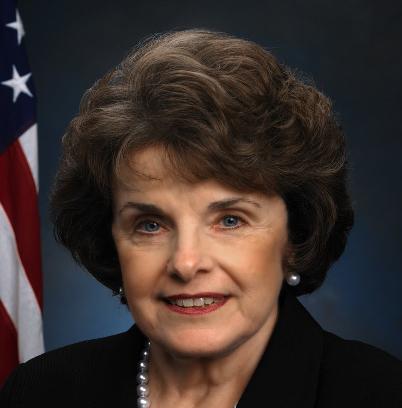
In 1984, the owners of Golden Gateway proposed to build a nine-story condo tower on the site, pretty close to where Simon Snellgove wants to build his ultra-luxury condos today. Dianne Feinstein was the mayor of San Francisco, and she didn’t like the idea at all. In fact, she sent a letter to the Redevelopment Agency Commission, which at that time controlled the land, to say that condo development was inappropriate.

(Feinstein was remarkably open about the whole thing; Willie Brown would have made one phone call, gotten his way, and left no paper trail.)

The point she made in the letter (pdf here) was that the existing Golden Gateway project was approved in the first place largely because of the promise of open space and recreation facilities. Those facilities, contrary to what Snellgrove’s team is saying, are in fact open to anyone who pays dues. “To tear up the present tennis courts to crowd a condominium tower on the site would be regrettable,” she said.

Then in 2003, another plan reared its head — developers wanted to build a $39 million condo and health-club facility on the Golden Gateway site. Again, Feinstein — by that point a US senator — weighed in with a letter of opposition. “Development of more residential units would create traffic noise and pollution and disregard the original understanding between City officials and area residents that open space and recreational amenities would be preserved.”

Feinstein’s opposition was notable: She rarely opposed any development of any sort, anywhere in the city. She allowed massive new waves of office construction and — like Ed Lee today — argued that cranes on the skyline were a sign of progress.

But this idea — condos at the 8 Washington site — was so beyond the pale that even the most pro-growth mayor in the city’s history had to oppose it.

Feinstein hasn’t said anything about the latest project. But she clearly doesn’t actively support it; when the measure came up the the Democratic County Central Committee, her representative didn’t vote.


Clock ticks, ground breaks: SFMOMA kicks off its two years of renovations with 24-hour party, glitter bomb

0

The students from SoMa’s Bessie Carmichael Elementary, against my better judgement, were to ones to push down the level detonating… whatever was going to mark the groundbreak of SFMOMA’s planned two-and-a-half years of closure for massive renovations expansions this morning.

When glitter cannons took the place of the further obliteration of the building behind Supervisor Jane Kim and the museum trustees with their hard hats and decorative shovels, I breathed a sigh of relief. I should have known any cultural institution with the foresight to build a DIY graffiti wall made of cookies wouldn’t allow minors to be injured. 

You’ll probably want to say hasta luego to the Bay Area’s premier contemporary art museum by attending the Countdown Days celebration, which’ll bring ecosexual performance artists Annie Sprinkle and Beth Stephens, dancer-force Marc Bamuthi Joseph, Homobiles, TCHO Chocolate, Guillermo Gómez-Peña, one-canvas docent explorations, and much more, culminating in a 24-hour extravaganza, to the soon-to-be-shuttered atriums and galleries Thu/30-Sun/2.

Dry your eyes though kitty-cat, when the museum returns, it’ll be free to visitors under 18 and larger by 225,000 square feet at an estimated cost of $610 million. 41,000 square feet of free-access public space has been promised, in addition to a new seventh floor outdoor terrace and massive vertical gardens.

While we wait for 2016 to arrive, art fans are invited to enjoy special roaming installations, like the Mark di Suvero sculptures already gracing Crissy Field.

The Contemporary Jewish Museum, Yerba Buena Center for the Arts, and Asian Art Museum, and other venues will be hosting special SFMOMA collaborations. 

Here’s what we have to look forward to with the new design, courtesy its creators, Norway’s Snøhetta architecture firm.

Turn around girl… 

… There it is.

Today’s groundbreaking included aforementioned cookie wall, accompanied by some sadly impotent spray cans of edible spray paint. Groundbreakers were encouraged to spray, then walk off with a souvenir “brick” baker by Blue Bottle Coffee pastry chef Caitlin Freeman. I ate mine when it feel apart in my hands: a delicious impermanence, sonly slightly troubling in that the cookie wall was meant to mimick Snøhetta’s architectural style. 

Delicious cookie wall

I’m sure it will be fine. Here are the little ones charged with ushering the SF arts scene into the future. 

And Supervisor Kim, in a chain metal scarf-necklace that topped off the single best outfit I’ve seen a city politician sport. 

Museum trustees and officials praised the city’s “universal support” towards getting the renovations funded, which was also supported by private donors, including $5 million from anonymous sources. An estimated 1,400 construction jobs wil be created by the project, say museum PR materials. 

Swing through for one last look at the current facilities, and check out the future if you’re so inclined. Download this app by Brooklyn’s Will Pappenheimer and John Craig Freeman and pull out your phone at 10 points throughout the SFMOMA to view: 

Artist-created motifs that riff on features of the museum—such as plants from the new vertical garden and fragments from the current building—merge with iconic images from the Bay Area’s natural and tech environments to create a circling vortex of animation through and around the building, as well as floating off into space. 

SFMOMA Countdown Celebration

Thu/30-Fri/31, 10am-9:45pm; open continuously Sat/1, 10am-Sun/2, 5:45pm

SFMOMA

151 Third St., SF

www.sfmoma.org

Because facts mean nothing

19

This hasn’t been a good time to be Joe Arpaio, the self-proclaimed “toughest sheriff in America” lately. Federal courts have slapped down his “saturation sweeps” through Latino neighborhoods as unconstitutional. The Maricopa Cty lawman’s casting a wide net of picking up anyone that “fit the profile of an illegal immigrant” was said to violate citizen’s rights.

He is appealling the decision, as you’d expect he would, for two reasons. Firstly, the sweeps are easy (and lazy) policing. Secondly, it puts him back in the news, which is his natural home. Sheriff Arpaio loves the limelight as it gives him a chance to indulge in his favorite fantasy, the living embodiment of the the thin blue line between lawless chaos and civilization as he sees it.

In reality, he is as far from his self-generated hype as the most desperate out of work actor in Hollywood is. Crime in Arizona has dropped everywhere BUT Maricopa County. Sheriff Hardass claims to be the mega-tough guy, making his prisoners wear pink uniforms by way of degradation and then has them collapse from dehydration in the sun or denying medical care (and costing taxpayers a fortune). In fact, his negligence led to the county dropping the ball on over 400 cases of sexual abuse. He is not what he seems.

Which doesn’t mean shit to a tree, as Grace Slick used to say. When it comes to demagoging politicians, effectiveness is irrelevant. That he has been sued and lost over and over on the county’s dime is irrelevant. Or that Arizona’s chesters are free to operate in Phoenix–irrelevant. Or wastes resources targeting citizens going about their daily business–irrelevant.

What matters is, his followers hate brown skinned people and they perceive that he does as well. Arizona is a very strange place. Its population swollen by Illinois and Michigan “snowbirds” are generally of the retired stripe and generally not used to being among Spanish-speaking people. That said Spanish speaking people tend their lawns, clean their pools, groom their golf courses–also irrelevant. They are “a threat to our way of life” (ie not white). Arpaio, albeit in typical code, is their ally and protector–because he’s an old white dude from up north like them.   

You see, facts don’t matter. Arpaio is an ineffective buffoonish attention hog that has run up an enormous tab at the expense of the same people that love him. (And whose campaings are paid for by out of state cash) But because they sense or believe that he hates what they hate, he can do no wrong. And won’t leave office until he either dies or AZ’s demographics force him out. 

It murders the souls of thinking men and women that reality is trumped by fantasy, myth beats truth, perception and prejudice slaughter justice. That people can’t be moved because, once again, facts don’t fucking matter.

Ed Lee’s “no social service cuts” budget

6

So Mayor Ed Lee is going to spare social services, and apparently at least part of the Department of Public Heath, from any further budget cuts. That’s good. Lives will be saved.

Lee — like Willie Brown before him — has the luck of serving as mayor during a period of growth, not recession. We don’t know how long the boom is going to last, or what will happen when it ends (as these things always do), but right now, in Sacramento and San Francisco City Hall, there is joy over the fact that revenues are up.

(Lee’s supporters on this blog and elsewhere will say it’s because of the mayor’s “pro-jobs” policies that we have all this new revenue. But remember, he promised tax breaks for Twitter and other tech firms that are moving into mid-Market, so we’re not getting much extra payroll tax revenue there. SF is a disgustingly hot real-estate market right now and more people with more money are moving in, so that’s absolutely a factor. So is the general California recovery.)

Either way, I’m always happy to hear about “no-cuts” budgets. But I have to keep raising the question:

If you’ve already cut about a billion dollars worth of services — which is about what most people on all sides of the political spectrum agree has happened in SF in the past decade — and now you’ve agreed not to cut any more, are you really making progress?

At what point do we need to start planning to restore all the services that are gone?


Short cuts

2

Lots of stuff in news worth looking at today.

We bag on Texas and their generally idiotic governor a lot but recently, he and they did the right thing–under pressure from Texas’ parents, the state is going to slash the number of “No Child Left Behind” tests imposed on school children. NCLB is one of the worst educational ideas ever implemented. Teaching to the test teaches nothing and when its been shown in considerably poorer and smaller nations that drilling and rote are worthless, America should take stock. Good for Rick. That he sort of reversed Bush’s policy (whose actual aim was to enrich a family member, of course) showed some stones.

John McCain snuck over Syria’s border recently to meet with anti-Assad rebels. As the embargo on sending said rebels military aid is ending anyway, it’s hard to say what the purpose of the trip was. As usual, the military’s “worst pilot in history” was advocating more arms, more involvement and naturally, more bloodshed. One would think that after the particularly disasterous embrace of arming an enemy’s opposition in the 80’s and 90’s, the US would have learned, but as Senator McCain has never met a conflict he didn’t like (or that didn’t enrich his friends). no surprise.

Newsweek is for sale again. Its purchase in the first place, says money heavyweight Barry Diller “was a mistake”. It is operating at a loss, even online. Fact is, online content in a “general news” format is very hard to monetize. It’s even hard to monetize in specialty and local forms, but easier. This magazine’s day is over. C’est la vie.

More later!


Guardian event on Plan Bay Area

65

There’s going to be profound change in San Francisco over the next 25 years. If regional planners have their way, we’re talking 280,000 more people — and massive displacement of existing populations. Is that ok? What should we do about it? Is there any alternative, a better way to plan for growth?

I have no problem with increased density and population in San Francisco — but only if we can first protect vulnerable communities. How does that happen? What tools does the city have, and how can they be used?

These aren’t easy questions. Come help us talk about them and look for answers. The Guardian, along with the Council of Community Housing Organizations and Urban IDEA are holding a forum on Plan Bay Area June 12 at 6pm at the LGBT Center. It’s free and open to all.

Among the panelists:

·        Tim Redmond, San Francisco Bay Guardian

·        Mike Casey, Unite HERE Local 2

·        Cindy Wu, San Francisco Planning Commissioner

·        Maria Zamudio, Causa Justa: Just Cause

·        Antonio Diaz, People Organizing to Defend our Economic Rights (PODER)

·        Bob Allen, Urban Habitat

·        Gen Fujioka, Chinatown Community Development Center

·        Peter Cohen, Council of Community Housing Organizations

·        Rachel Brahinsky, University of San Francisco

More information here.

See you there.

I agree with a three-star General

15

I don’t find myself in agreement with military leaders that often, but Lt. General Karl Eikenberry and historian David M. Kennedy have a fascinating piece in the New York Times that I have to say makes a lot of sense.

I was in college when Jimmy Carter brought back draft registration, and we all went batshit: We were just a half-step behind the Vietnam Generation, and I had friends and relatives who faced geting drafted (and the very high likelihood of being sent to die in the jungles in an utterly pointless war) and the notion of “the draft” was repugnant. We protested; we formed collectives; we met late into the night and organized. Nobody outside of the college campuses paid much attention.

That’s because it was pretty clear to political leaders that, registration or no, there wasn’t going to be a return to the draft anytime soon. Congress is happy with the all-volunteer Army: It guarantees that most recruits will be poor people, that very few sons and daughters of the wealthy and powerful (or the members of Congress) will ever have to go to war, and that the upper-middle classes will feel no pain whatsoever when other people’s children become cannon fodder.

If every young American risked getting drafted to go to Iraq, that war might never have happened — and certainly wouldn’t have lasted as long. The general notes:

The Congressional Research Service has documented 144 military deployments in the 40 years since adoption of the all-voluntary force in 1973, compared with 19 in the 27-year period of the Selective Service draft following World War II — an increase in reliance on military force traceable in no small part to the distance that has come to separate the civil and military sectors. The modern force presents presidents with a moral hazard, making it easier for them to resort to arms with little concern for the economic consequences or political accountability. Meanwhile, Americans are happy to thank the volunteer soldiers who make it possible for them not to serve, and deem it is somehow unpatriotic to call their armed forces to task when things go awry.

The officer corps is made up, to a significant extent, of sons and daughters of military officers, making war a “family business.” The rest of the nation is insulated — both from the experience of military service and the impacts of deployments.

I’m not (exactly) in favor of mandatory military service for all (although it would have a huge impact on Washington’s desire to use force every time there’s a foreign policy issue), but I like what Eikenberry says, not only about the draft but about the cost of war:

Congress should also insist that wars be paid for in real time. Levying special taxes, rather than borrowing, to finance “special appropriations” would compel the body politic to bear the fiscal burden — and encourage citizens to consider war-making a political choice they were involved in, not a fait accompli they must accept.

A military that operates outside of the civilian world isn’t good for the country. A civilian population that sees war as an abstract problem happening somewhere else in the world involving someone else’s family isn’t good, either.

So yeah, here I am agreeing with a three-star. Enjoy it; that doesn’t happen often.


For your information

104

ATTENTION


I have been getting too many emails and IMs from readers that tell me that they’d like to weigh in on my blog posts but can’t because the thread had degenerated into a shit-flinging contest. So let me remind you of sfbg.com’s policy on comments.


Comments that have nothing to do with the topic, that are nothing but ad hominem attacks, or that include offensive language or hate speech, are subject to being deleted. We want this to be an open forum, but we also want to keep it (relatively) civil (and relevant).


Unless the topic of my blog post is “does Johnny Angel Wendell (or Tim Redmond/Bruce Brugmann/The SFBG/Another poster) suck or do they rule?” your irrelevant comments are going to go.


We wouldn’t converse with each other in person this way. That is the rule of thumb.


Tear the premise of the blog post to pits, praise it to the skies, be indifferent, fine. I’m personally fair game as well (good or bad), as long as the topic is the subject. This isn’t that hard. I don’t wanna be an Internet cop. But because a few allegedly adult readers are driving off an awful lot of would-be participants, I’m going to have to use the “delete” key. 

Hasta La Vista, Michele Bachmann

5

Michele Bachmann, unsuccessful 2012 presidential candidate, subject of FBI inquiry, Congressman and wife of “Pray The Gay Away (Except For Mine)” Marcus Bachmann, has decided to call it a day.Not seeking re-election in 2014. She says losing her seat isn’t the cause. Sure.

An undistinguished rep from a safely gerrymandered district, she was the soul of the Evangelical Right for a short spell, which is likely her future occupation. Now martyred out of Congress, she can parlay her exile into every Fundamentalist yapper’s dream, not working and getting paid for it. 

This one’s for you, Chellie:http://johnnyangelwendell.bandcamp.com/track/crazy-eyes


Solomon: Our twisted politics of grief

1

By Norman Solomon
Norman Solomon is co-founder of RootsAction.org and founding director of the Institute for Public Accuracy. His books include “War Made Easy: How Presidents and Pundits Keep Spinning Us to Death” and “Made Love, Got War: Close Encounters with America’s Warfare State.”

Darwin observed that conscience is what most distinguishes humans from other animals. If so, grief isn’t far behind. Realms of anguish are deeply personal — yet prone to expropriation for public use, especially in this era of media hyper-spin. Narratives often thresh personal sorrow into political hay. More than ever, with grief marketed as a civic commodity, the personal is the politicized.

The politicizing of grief exploded in the wake of 9/11. When so much pain, rage and fear set the U.S. cauldron to boil, national leaders promised their alchemy would bring unalloyed security. The fool’s gold standard included degrading civil liberties and pursuing a global war effort that promised to be ceaseless. From the political outset, some of the dead and bereaved were vastly important, others insignificant. Such routine assumptions have remained implicit and intact.

The “war on terror” was built on two tiers of grief. Momentous and meaningless. Ours and theirs. The domestic politics of grief settled in for a very long haul, while perpetual war required the leaders of both major parties to keep affirming and reinforcing the two tiers of grief.

For individuals, actual grief is intimate, often ineffable. Maybe no one can help much, but expressions of caring and condolences can matter. So, too, can indifference. Or worse. The first years of the 21st century normalized U.S. warfare in countries where civilians kept dying and American callousness seemed to harden. From the USA, a pattern froze and showed no signs of thawing; denials continued to be reflexive, while expressions of regret were perfunctory or nonexistent

Drones became a key weapon — and symbol — of the U.S. war trajectory. With a belated nod to American public opinion early in the century’s second decade, Washington’s interest in withdrawing troops from Afghanistan did not reflect official eagerness to stop killing there or elsewhere. It did reflect eagerness to bring U.S. warfare more into line with the latest contours of domestic politics. The allure of remote-control devices like drones — integral to modern “counterterrorism” ideas at the Pentagon and CIA — has been enmeshed in the politics of grief. So much better theirs than ours.

Many people in the United States don’t agree with a foreign policy that glories in use of drones, cruise missiles and the like, but such disagreement is in a distinct minority. (A New York Times/CBS poll in late April 2013 found Americans favoring U.S. overseas drone strikes by 70 to 20 percent.) With the “war on terror” a longtime fact of political life, even skeptics or unbelievers are often tethered to some concept of pragmatism that largely privatizes misgivings. In the context of political engagement — when a person’s internal condition is much less important than outward behavior — notions of realism are apt to encourage a willing suspension of disbelief. As a practical matter, we easily absorb the dominant U.S. politics of grief, further making it our politics of grief.

The amazing technology of “unmanned aerial vehicles” glided forward as a satellite-guided deus ex machina to help lift Uncle Sam out of a tight geopolitical spot — exerting awesome airpower in Afghanistan and beyond while slowing the arrival of flag-draped coffins back home. More airborne killing and less boot prints on the ground meant fewer U.S. casualties. All the better to limit future grief, as much as possible, to those who are not us.

However facile or ephemeral the tributes may be at times, American casualties of war and their grieving families receive some public affirmation from government officials and news media. The suffering had real meaning. They mattered and matter. That’s our grief. But at the other end of American weaponry, their grief is a world of difference.

In U.S. politics, American sorrow is profoundly important and revs up many rhetorical engines; the contrast with sorrow caused by the American military could hardly be greater. What is not ignored or dismissed as mere propaganda is just another unfortunate instance of good intentions gone awry. No harm intended, no foul. Yet consider these words from a Pakistani photographer, Noor Behram, describing the aftermath of a U.S. drone attack: “There are just pieces of flesh lying around after a strike. You can’t find bodies. So the locals pick up the flesh and curse America. They say that America is killing us inside our own country, inside our own homes, and only because we are Muslims.

A memorable moment in the film Lincoln comes when the president says, “Things which are equal to the same thing are equal to each other” — in 1865, a daring leap for a white American assessing race. Truly applying the same Euclidean theorem to grief would be just as daring now in U.S. politics. Let’s face it: in the American political culture of our day, all grief is not created equal. Not even close.

We might say ’twas ever thus: countries and ethnic groups mourn their own while yawning or even rejoicing at the agonies of some “others.” And when grief weighs in on the U.S. political scale, the heaviness of our kind makes any other secondary at best. No wonder presidents have always been wary of red-white-and-blue coffins at Andrews Air Force Base. No wonder “Bring our troops home” is such an evergreen slogan of antiwar activism. If the only grief that matters much is American, then just getting Americans out of harm’s way is the ticket. The demand — like empathy for the war-torn grief of Americans — is vital. And grievously incomplete.

The world’s only superpower has been operating with vast impunity to strike targets and, in effect, summarily execute. (President Obama’s big speech on May 23 reasserted that prerogative; as the ACLU’s president Anthony Romero pointed out, Obama “still claims broad authority to carry out targeted killings far from any battlefield, and there is still insufficient transparency.”)  For American politics and mass media — perennially infatuated with the Pentagon’s latest tech advances in military capacities — such enormous power to smite presumptive evildoers has fed into a condition of jingo-narcissism. Some of its manifestations could be viewed as sociopathic: unwilling or unable to acknowledge, or evidently care much about, the pain of others.

Or the terror of others, if we are causing it. In the American political lexicon, terror — the keynote word for justifying the U.S. state of warfare so far in this century — is a supreme epithet, taken as ours to confer and to withhold. Meanwhile, by definition, it goes without saying, our leaders of the “war on terror” do not terrorize. Yet consider these words from New York Times reporter David Rohde, recalling his captivity by the Taliban in 2009 in tribal areas of Pakistan: “The drones were terrifying. From the ground, it is impossible to determine who or what they are tracking as they circle overhead. The buzz of a distant propeller is a constant reminder of imminent death.”

As part of tacit job descriptions, the U.S. network anchor or the president is highly selective in displayed compassion for the grieving. It won’t do to be seen with watery eyes when the Pentagon has done the killing (“friendly fire” a notable exception). No rulebook need be published, no red lines openly promulgated; the gist remains powerfully inherent and understood. If well acculturated, we don’t need to ask for whom the bell tolls; we will be informed in due course. John Donne, meet Orwell and Pavlov.

The U.S. Constitution — if not international law or some tenacious kind of idealism — could prevent presidential “kill lists” from trumping due process. But, as Amy Davidson wrote in a New Yorker online column last year, the operative approach is: “it’s due process if the president thinks about it.” Stephen Colbert summed up: “The Founders weren’t picky. Trial by jury, trial by fire, rock-paper-scissors — who cares?” After all, “Due process just means there’s a process that you do.” Satire from Colbert has been far more candid than oratory from President Obama, whose May 23 speech claimed a commitment to “due process” and declared: “I’ve insisted on strong oversight of all lethal action.”

Bypassing due process and shrugging off the human consequences go hand in hand. At the same time, it can be reassuring when the commander in chief speaks so well. But Obama’s lengthy speech at the National Defense University laid out a global picture with a big missing piece: grief due to U.S. military attacks. The only mention was a fleeting understatement (“for the families of those civilians, no words or legal construct can justify their loss”), instantly followed by a focus on burdens of top perpetrators: “For me, and those in my chain of command, these deaths will haunt us as long as we live…” As usual, the grief of the USA’s victims was quickly reframed in terms of American dilemmas, essential goodness and standing in the world. So, while Obama’s speech called for “addressing the underlying grievances and conflicts that feed extremism, from North Africa to South Asia,” some crucial grievances stoking the conflicts were off the table from the outset; grief and rage caused by U.S. warfare remained out of the picture.

Transcendent and truly illuminating grief is to be found elsewhere, close to home. “The greatest country in the world” presumes to shoulder the greatest grief, with more access to profundities of death. No wailing and weeping at the scene of a drone strike, scarcely reported by U.S. media anyway, can hold a candle. For American grief to be only as weighty as any other just won’t do. We’re number one! A national narrative of emotional supremacy.

Our politics of grief, bouncing off the walls of U.S. media echo chambers, are apt to seem natural and immutable while fueling much of the domestic political rhetoric that drives U.S. foreign policy. The story goes that we’re sinned against yet not sinning, engaged in self-protection, paying to defend ourselves. Consider the Google tallies for two phrases. “U.S. defense budget”: nearly 4,000,000. “U.S. military budget”: less than 100,000.

But for those in communities grieving the loss of people struck down by the USA’s “Defense Department,” the outlook is inverted. To be killed is bad enough. But to be killed with impunity? To be killed by a machine, from the sky, a missile fired by persons unseen who do not see who they’re killing from hundreds or thousands of miles away? To be left to mourn for loved ones killed in this way?

When, from our vantage point, the grief of “others” lacks major verisimilitude, their resentment and rage appear irrational. Heaven forbid that such emotions could give rise to deadly violence approaching the level of our own. People who are uneducated and unclear on the American concept sometimes fail to appreciate that our perception is to be enforced as hegemonic reality. By a kind of fiat we can elevate with fervent validation some — some — others’ grief. As for the rest, the gradations of importance of their grief, and the legitimacy of their resort to violence, are to be determined by our judicious assessment; for further information, contact the State Department.

There may be no worse feeling of human powerlessness than inability to prevent the death of a loved one. The unmatched power of bereavement forces people to cope with a basic kind of human algebra: love + death = grief. Whether felt as a sudden ghastly deluge or as a long series of sleeper waves with awful undertows, real grief can turn upbeat memories into mournful ones; remembering becomes a source of anguish, so that, as Joan Didion wrote, “Memories are what you no longer want to remember.” Ultimately, intimately, the human conditions of loss often move people to places scarcely mapped by standard news coverage or political rhetoric.

Imagine living in a village in Pakistan or Afghanistan or Yemen. From the sky, death has been visited on neighbors, and drones keep hovering. (As now-former Times reporter Rohde pointed out: “Drones fire missiles that travel faster than the speed of sound. A drone’s victim never hears the missile that kills him.”) Overhead are drones named Reaper, shooting missiles named Hellfire. Have the heavens been grabbed by people who think their instruments of death are godly?

“When scientific power outruns moral power,” Martin Luther King Jr. said, “we end up with guided missiles and misguided men.” For America, drones and other highest-tech weapons are a superb technological means of off-loading moral culpability from public agendas; on the surface, little muss, less fuss.

Disembodied killing offers plenty of pluses in U.S. politics, especially when wars become protracted. From Vietnam to Afghanistan, the reduction of troop levels has cut the number of American deaths (easing the grief that “counts”) in tandem with more bombardment from the air (causing the “other” grief). Today’s domestic politics of grief are akin to what emerged after mid-1969, when President Nixon initiated a steady withdrawal of U.S. troops from South Vietnam. During the three years that followed, Nixon reduced the number of soldiers in Vietnam by nearly half a million, to 69,000. During the same three years, the U.S. government dropped 3.5 million tons of bombs on Vietnam — more than all the bombing in the previous five years.

Then, as now, the official scenario had U.S. troops thinning on the ground, native troops taking up more of the combat burden, and the Pentagon helpfully bombing from the sky as only Americans could “know how.” Independent journalist I. F. Stone astutely identified the paradigm in 1970, when the White House struggled with fading public support for the war. The revamped policy, Stone wrote, was “imperialism by proxy,” aiming to buy “low-wage soldier-power,” an approach that “will be seen in Asia as a rich white man’s idea of fighting a war: we handle the elite airpower while coolies do the killing on the ground.” Stone would have swiftly recognized the pattern in President Obama’s upbeat statement on May 23 that “we will work with the Afghan government to train security forces and sustain a counterterrorism force.”

The number of U.S. ground troops in Afghanistan was down by one-third, to 66,000, at the start of this year, when Obama announced plans to gradually withdraw the remaining troops over a period of two years. High-tech warfare would pick up the slack. The outgoing Defense Secretary, Leon Panetta, told a news conference that a key mission in Afghanistan, persisting after 2014, would be “counterterrorism,” a buzzword for heavy reliance on airpower like drones and cruise missiles. Such weapons would give others grief.

A top “national security” adviser to the president, John Brennan, said as much in an April 2012 speech. “As we have seen,” he noted, “deploying large armies abroad won’t always be our best offense. Countries typically don’t want foreign soldiers in their cities and towns.” The disadvantages of “large, intrusive military deployments” were many. “In comparison, there is the precision of targeted strikes.”

But such “precision” is imperfect enough to be an other’s calamity. Likewise, the extreme relativity of “agony.” At his Senate confirmation hearing to become CIA director in February 2013, Brennan spoke of “the agony we go through” in deciding which individuals to target with drones. Perhaps to square some circles of cognitive dissonance, those who inflict major violence often seem moved to underscore their own psychological pain, their own mental wounds. (As if to say, This hurts me as much as it hurts them; maybe even more, given my far more acute moral sensitivities.) When the focus is on the agony of the perpetrators, there may be less room left to consider the grief of their victims.

Shifting the burden of protracted war easily meshes with a zero-sum geopolitical game. Official enthusiasm for air strikes has correlated with assurances that Americans would be facing much less grief than allied others. So, near the end of 2012, the USA Today front page reported that “the number of U.S. deaths in Afghanistan is on track to decline sharply this year, reflecting the drawdown in U.S. forces” — while the death toll for Afghan government forces had climbed to ten times the U.S. level. These developments were recounted as progress all the way around.

As top officials in Washington move to lighten the political load of American grief, their cost-benefit analyses find major strategic value in actions that inflict more grief on others. Political respects must be paid. Elites in the war corps and the press corps do not have infinite tolerance for American deaths, and the Pentagon’s latest technology for remote killing is a perpetual favorite. In the long run, however, what goes around tends to come around.

Advice offered by scholar Eqbal Ahmad before 9/11 bears repeating and pondering: “A superpower cannot promote terror in one place and reasonably expect to discourage terrorism in another place. It won’t work in this shrunken world.”
After the “war on terror” gained momentum, Martin Luther King III spoke at a commemoration of his father’s birth and said: “When will the war end? We all have to be concerned about terrorism, but you will never end terrorism by terrorizing others.” That was more than nine years ago.

Norman Solomon is co-founder of RootsAction.org and founding director of the Institute for Public Accuracy. His books include “War Made Easy: How Presidents and Pundits Keep Spinning Us to Death” and “Made Love, Got War: Close Encounters with America’s Warfare State.”

(The Bruce blog is written and edited by Bruce B. Brugmann, editor at large of The San  Francisco Bay Guardian, and editor and co-founder and co-publisher of the Guardian with his wife Jean Dibble (1966-2012). He can be contacted at Bruce@sfbg.com. b3


Treasure Island 2013 lineup is out! Animal Collective, James Blake, Little Dragon, Tricky, Cayucas, and…

1

Hey look, it’s Animal Collective! Oh, and James Blake, Little Dragon, Tricky, Cayucas, Phantogram, Beck, and Deep Siver Diver, along with locals Antwon and Giraffage. Treasure Island 2013 (Oct. 19-20) is shaping up to be a pretty great festival season closer, heavy on the electronic.

Tickets are on sale this Fri/31 at 10am. Treasure Island Festival lays it all out here:

General admission tickets:
Early Bird 2-Day Ticket – $130.00 (On Sale Friday, May 31st at 10am)
Advance 2-Day Ticket – $140.00 (Limited Availability When Early Bird Sells Out)
Regular 2-Day Ticket – $150.00 (Limited Availability When Advance Sells Out)

The just-announced line-up is below:
Atoms for Peace
Beck
Animal Collective
Major Lazer
James Blake
Little Dragon
Sleigh Bells
Phantogram
STRFKR
Disclosure
Japandroids
Holy Ghost!
Real Estate
Tricky
Lord Huran
DJ Falcon
Haim
Palma Violets
Poolside
Adult
Cayucas
Robert Delong
IO Echo
Giraffage
Deep Sea Diver
Antwon

Sarah Palin = REO Speedwagon

38

One of the more remarkable components of the so-called “Right Wing Entertainment Complex” (Fox/AM Radio/a gazillion reactionary websites) is the agonizing and complete predictability of its content. Barack Obama is the most evil, traitorious, illegal usurper, Muslim, Kenyan Socialist dictator alive and the besieged heroes of American patriotism are outnumbered and will be outgunned when Obama seizes their weapons, Obamacare will kill every member of your family assuming they haven’t committed suicide after it bankrupted them, Benghazi was worse than 9/11, Iraq and the 1962 Mets combined and the IRS only hates the brave and fierce Republican Party. Who are the only ones that can keep you safe against the fifth column of baby-killing Hollywood liberals that will brainwash your son into marrying a barnyard animal.

(Also remarkable is however much you try to lampoon their cray-cray, they’re inevitably more out there than even a parodist can dream of).

Flip on any of these mediums and this is what you get and if I know this in advance, so do their fans and they like it that way. Like a soothing wash of a New Age mixtape in the foyer of a yoga studio.Except that the whoosh of the mixtape is familiar in form and not content.

Nope, the real parallel between the RW Entertainment Complex and its musical equivalent would be the aging classic rock dinosaurs of the 70’s and 80’s and the state fair/shitty casino/low rent rally circuit. Glenn Beck, Bill O’Reilly, the battery of Sunday morning news show dildolatry and especially the Mega MILF of Moosery Sarah Palin are completely and totally identical to the slog it out warriors of faceless corporate FM rock–Foreigner, Journey, Styx, Nightranger and REO Speedwagon.

Think about it–what do Kevin Cronin (REO), Mick Jones (Foreigner, not the Clash’s Mick Jones) and whomever is left in the other bands do for a living? They mount the boards and play their hits–period. And vamoose off to the next hellhole whose main fiscal purpose at this point is alimony, child support and back taxes. 12 tunes, maybe, paycheck and screw. They try not to think about their better days, one imagines, and just do their jobs–which consist now of rote recitation. In that, they are exactly like Palin or Glenn Beck–who hit all the talking points, massage the prejudices of their chosen audience and remind them that only they understand their plight (and then batter them with ads for merchandise and books). Like peas in a pod.  

Except that at one time, these bands were cranking out hit songs and even if you don’t like their hits, writing a hit is hard to do. Regurgitating “the best of Joe McCarthy” only replacing “Communists” with “Muslims” or “libs” is all these verbal midgets need do to cash in. “Hot Blooded” or “Don’t Let Him Go” or “Babe” may sound trite and brittle and overwrought to some, but they had to be concocted, recorded with care and sung in tune. That is a hell of a lot more than these repulsive mountebanks on the right are capable of. 

(And there is, of course, the gent that straddles both worlds with ham-handed, blockheaded glory, the Nuge himself–except he’s third on the bill beneath REO and Styx this summer and is but a mere guest on FOX at best. Sorry, Ted).

Lastly, the rock bands who are on rickety stages this summer outside Lincoln NE or Bakersfield or Dothan Alabama next to livestock and ferris wheels are fucking honest men and women. They travel endless hours for vastly less pay than they used to get. They have seen their expected annuities disappear via digital downloading and YouTube. They look into the smaller crowds and see their reflections in the once fist pumping but now worn looking fans. And they still have enough pride to deliver the goods, because that’s what they do–not chauffered from their expensive mansions to TV and radio studios to spew out the party line that has been focus group and poll tested to perfection. And then home to mansion. I may not like the dino bands but I respect ’em–I have no respect for these reactionary carny barkers at all.


Lawyer who flipped Greenlining for Mercury considers run for office

0

When Mercury Insurance last year failed in its second attempt to fool voters into allowing the industry to raise rates on drivers that don’t maintain continuous car insurance coverage, resulting in the failure of Prop. 33, it enlisted the unlikely support of the Greenlining Institute, the Berkeley-based social and environmental justice nonprofit that had opposed Mercury’s similar effort two years earlier.

As the Bay Guardian reported at the time, Greenlining’s decision was controversial — both within the organization and among other consumer protection groups that opposed Mercury’s quest — and it was a decision driven by Greenlining General Counsel Sam Kang, who took a leave to work on that losing campaign. [CLARIFICATION: Greenling Executive Director Orson Aguilar called to clarify that Kang took a paid sabbatical to work on that campaign and that he wasn’t paid by Mercury or the campaign operation it supported. Frankly, that makes the situation sound even more suspect, so we’re happy to clarify this point.]

Now, we learn that Kang is considering running for the Assembly to represent the East Bay’s District 15 in 2014, where incumbent Democrat Nancy Skinner is termed out. Gee, I wonder whether Kang will get support from the insurance industry.  

Kang recently announced to his Greenlining colleagues that “I was asked to explore a run,” and some wondered whether Mercury’s billionaire founder George Joseph was the one doing the asking and promising to use his wealth and connections to repay Kang for all his help.

It’s still too early to know whether Kang will run (he has a bare bones campaign website up now) and who will support him, and he hasn’t returned our calls seeking comment for this post, but we’ll update it if/when we hear back (updated below).

According to Around the Capitol, others who have expressed interest in running for the seat are EBMUD director Andy Katz, community organizer Peggy Moore, West Contra Costa Unified School District Trustee Charles Ramsey, former WCCUSD Trustee Tony Thurmond, and SBA Regional Administrator Elizabeth Echols. They, like Kang, are all registered Democrats.    

Update 3:40pm: Kang just got back to us and said that Joseph and Mercury Insurance has “zero” impact on his decision to explore a run for office, which Kang says he was asked to consider by “friends, neighbors, all the people who advocate for those who don’t have a voice.” Asked whether Joseph is one of those people and when they last spoke, he replied, “He asked me to check in from time to time to give my thoughts on things.”

He still casts his advocacy for Prop. 33 as genuine and said of those who view it suspiciously, “It is what it is.” As for whether he’s make a final decision to run, Kang said, “I’m just putting one step in front of the other to see how far I go.”

Obamacare works — up to a point

23

The good news, as supporters of the president have been happy to point out, is that the insurance figures the state has released for the Obamacare benefits plans aren’t really that awful. The naysayers were wrong; the Affordable Care Act almost seems …. affordable. Gee, a 40-year-old single person could get basic insurance for $332 a month.

Which is true, but younger, single people have always had better rates. I went to the calculator to see what I would have to pay to cover myself and my two kids, and it was closer to $1,000 a month. And that’s for a plan that includes a $2,000 deductible, $250 emergency-room co-pays and $45 primary-care co-pays. Not all that “affordable” — unless your kids never, say, get injured playing football or doing gymnastics, and you never break your hand doing martial arts, and you never need surgery. In other words, not so fine for my family (or most families).

And that’s the first year out; rates are going to keep going up. In theory, if the insurers raise rates more than 10 percent a year, they’ll have to justify the increases — but you know that’s not going to be a problem at the federal level. And 10 percent a year for a few years makes even the low-end plans too expensive for most people.

Yes, there are subsidies for low-income people, and that’s the best part of this plan — but either those will have to go up every year to match the rate hikes or everyone’s going to be hurting.

Here’s the problem: The feds have mandated everyone gets insurance — but California doesn’t have the right to regulate rates. And the rates aren’t regulated in Washington.

Remember what happened in California when the state (quite properly) mandated in the early 1980s that everyone with a car buy insurance — but then did nothing to control rates? Insurance companies made a fortune, and consumers got screwed, until Prop. 103 passed.

Now it’s pretty clear that we need the same thing for health insurance. That’s what Consumer Watchdog is pushing for — and once the real sticker shock hits, this initiative’s going to pass, just as Prop. 103 did.


Former planning director explains 8 Washington lies

19

Nice oped piece in the Examiner by former City Planning Director Allan Jacobs about the lies behind the campaign to save 8 Washington from ignominous ballot-box defeat. Jacobs, who knows what he’s talking about, explains the problem with spot-zoning, which is pretty common now in San Francisco.:

San Francisco’s now-famous urban design plan addressed issues of height and bulk of buildings citywide, very much including the waterfront. Those matters became law. The piecemeal game playing that is central to what we are being asked to approve is a terrible way to make public policy — all the more so because it benefits a few high-end developers.

He also debunks some of the lies in the “Open Up the Waterfront” campaign, which is paid for by Developer Simon Snellgrove and his partners (who stand to make a fortune on this deal). Among the claims that signature-gatherers are making:

The project will create more public parks, a more accessible waterfront, and more jobs or a toxic asphalt parking lot and an obstructing 1,735 foot fence with a “members only” club.

Now: Jacobs argues that the “more public space” will include space that will be public only to the owners of the condos. But I also want to say something about this “members only” club.Yeah: The Golden Gate Swim and Tennis Club is restricted to people who pay dues. The new athletic club that Snellgrove is promising to build will also be “members only.” So, by the way, is the YMCA, just down the street. It’s “public” in the sense that anyone can join, “private” in the sense that only dues-paying members are allowed to use it.Anyone can join the current club on the site, for a price. It’s not cheap, but it’s not over-the-top expensive.

We have no idea what the dues at the new club will be, but we know this: The GGSTC has in its bylaws a requirement that it be open to anyone, not just to people who live at Golden Gateway. There is as of now no such requirement for Snellgrove’s new “private” club, which could be limited to the (very) rich owners of the new condos.It won’t be “public” in the way that city rec centers are public, open on a daily basis to anyone who comes in the door (although sometimes you have to pay a few bucks to swim.” So really, the difference between the existing club and the replacement club isn’t relevant to this discussion.

Every developer-driven campaign comes up with some misinformation and claims that don’t survive serious scrutiny. Glad Allan Jacobs is on the case.

Justice For Trayvon — maybe?

38

Summer’s here and the time is right for neither dancing nor fighting in the streets down in Florida. George Zimmerman–accused of second degree murder in the killing of Trayvon Martin--is about to go on trial for same.

For the 7 people in America that don’t know the story, On February 26th, 2012, Martin, an African American teenager, left his dad’s house to go to the store to buy an iced tea and a bag of Skittles. Zimmerman, a self proclaimed but not actual member of the local Neighborhood Watch, started following Martin by car and then foot–for reasons not ever fully explained anywhere. What happened next is the crux of the trial, but what is known is that a police dispatcher suggested to Zimmerman not to follow Martin, Martin did phone a girlfriend to tell her he was being followed and Zimmerman did shoot Martin dead.

That Martin was unarmed and did not approach an armed man that shot him first would tend to indicate that this is an open and shut case. But because Florida has a “stand your ground” law, that will be Zimmerman’s defense, even though he has waived the right to a hearing before a judge on whether or not that statute applies–Zimmerman’s attorneys feel that the “stand your ground” defense is better argued in front of a jury than a judge and so off to trial they go.

Zimmerman’s defense got some rather bad news right from the git-go. Judge Debra Nelson has ruled that Zimmerman’s attorneys won’t be able to mention Trayvon Martin’s drug use, suspension from school and past fighting during opening statements (as Zimmerman himself knew none of this as he was following Martin and Martin isn’t on trial, Zimmerman is). This is an enormous blow to Zimmerman’s defense.

Why would something as utterly irrelevant as Martin’s pot smoking (pot makes whom more violent, exactly?) suspensions from school (not at the time) and fighting (common among teens) be an issue when Martin had no criminal record? Jeez, Louise, I wonder what on earth they would use such information for?

Let’s cut the shit once and for all here–Zimmerman’s defense begins and ends on the idea that Trayvon Martin was the stereotypical caraicature of an African American teenaged male. A dangerous, hip hop lovin’, chronic-huffin’, pants on the ground gang bangin’ thug. Which means that any “clear thinking person” would be terrified of same and have the right to ventilate same by firearm.

In short—1)George Zimmerman, like any sane person, would be scared of this kid and 2) Being scared really sucks and makes you feel awful, so 3) Of course it’s OK to shoot the kid. In the minds of the terrified reactionary, “being frightened” justifies “standing your ground”, even when you are chasing someone, not standing anywhere.

Fact is, Trayvon could have been 7” tall and weighed 400 pounds and out on parole and Zimmerman still wouldn’t have a case. But because he and his attorneys are banking on at least a few people in the jury being scared ninnies, that’s the defense. And as Zimmerman found out when he raised a ton of money for his “defense”, this kind of thinking is endemic to people that react to information as opposed to absorbing it.

That America’s “conservatives” lined up behind Zimmerman in near lockstep speaks volumes about the tie that binds them. 

Armed man shoots unarmed man that he was clealry stalking. Can’t get more cut and dried than that. But when the victim is part of a population segment that has another population segment pooping its Depends, it is not. This is gonna be an interesting, if possibly revolting summer in the USA. 

Video Premiere: The Trashies do the worm

0

The view from my studio apartment’s bay windows includes a clear view of my building’s garbage chute. Often times the chute gets clogged and the trash piles high for days. I think about it and freak out over how it will fester and potentially attract vermin. Obviously, I don’t like it when that happens, but I’ve thought to myself, “Man, that dude from Uzi Rash would really love it here.”

So what’s the Oakland frontperson (with an affinity for making his own refuse-themed jams) been up to since the Rash cleared up? Well, as this video post depicts, Max Nordile is literally writhing around in muck and he’s got some friends in the Trashies that have joined him.

“I’m a Worm” off their fourth LP, Teenage Rattlesnakes, is another Dan Shaw-directed VHS video, starring Nordile and his band mates in this gunked-up role. Most of them are from Seattle (including members of Unnatural Helpers, TacocaT, and Shitty Pete and the Fucks), but the East Bay influence is clear.

The video opens with some accusatory name calling before panning over to the band members working through their “mangled Monks worship” as they conduct full-body pantomime as the scum of the Earth. A shrill, descending guitar solo later, each one them has made a mess of their white shorts by the time they’ve reached the finish line comprised of a dilapidated set of instruments.  

I’m told wriggling around at Albany Bulb’s mud flats is a gross and “smelly affair”.  Seems these worms may never learn.

The West Coast tour, “West Coast Worms Save Music,” starts Fri/31 and coincides with the album release.

In Oakland: June 4  with Courtney n’ the Crushers, Shannon and the Clams and Wet Spots at the Stork Club.

In San Francisco: June 12th with Buffalo Tooth and Scraper at the Hemlock Tavern.

To The Valiant That Served

18

Let’s take a moment out of our day to salute the men and women that gave all in defense of our homeland. Memorial Day’s purpose is just that (although its actual origins may surprise you).

For me, the people that had it the hardest were those who, after agonizing reflection, realized that their war effiorts were best served by not serving at all. Like:

Richard Bruce Cheney–VP–he got five student deferments until successfully impregnating his bride. Would have been more than willing to slog through Vietnam’s jungles, but said “I have other priorities”.

Willard “Mitt” Romney–sat out Vietnam War and opted for the brutal battle along the Seine in Paris. As Paris itself had been at peace (minus demonstrations) for over 20 years at the time, his religious mission must have been a lot more satisfying than getting his magical underpants ventilated by VC landmines.

Theodore Nugent–The Motormouth City Madman decided it would be wiser to remain in Michigan rather than the Mekong Delta and spent a week or so shitting himself to stay out of draft. Also used student deferments and has of late raised the “I was making too much money as a musician at the time to waste my prime years”. Now that’s patriotism.

George W. Bush/Dan Quayle: America’s shores protected by these national guardsmen in “champagne units”, that is the scions of the powerful keeping themselves bulletproof via nepotism. The former found his time in the NatGuard too trying and appears to have disappeared in his last year there. Playing cards in Alabama being mentally and physically exhausting and all.

Ronald Reagan: Single handedly won the “Battle Of Culver City” in WW2. And believed and spoke of his war adventures as if they weren’t on film but real. And this is an icon.

Lest you think I am picking on the chickenhawk crew that cheerleads slaughters they have no intention of being a part of, let’s take time out to thank some really brave politicians named Hillary, John Edwards and John Kerry, whose votes on Iraq made solely with presidential ambition in mind led to the worst debacle in American history. And to Obama’s presidency. 

Last but not least, a salute to the fearless Internet Infantry who brave thumb sprains and carpal tunnel to valiantly back America’s war efforts from the dingey bunker known as “mom’s basement”. You will never be forgotten, assuming anyone remembers you in the first place.

Happy holidays and drive safe!