SFBG Blogs

Proposal to rename Bay Bridge draws controversy

50

The proposal to rename the western span of the Bay Bridge after former San Francisco Mayor Willie Brown is generating more controversy as it hurtles through the approval process in Sacramento, where lawmakers are staring down a Sept. 13 deadline before the legislative session ends.

Gov. Jerry Brown has expressed opposition to the idea, and the proposed name change prompted yet another scathing editorial from the San Francisco Chronicle. Former Mayor Brown, who also served as Assembly Speaker, publishes a weekly column in the Chronicle.

Chronicle columnists Matier and Ross reported Sept. 10 that Gov. Brown had met with Alice Huffman, a key supporter of the proposal and president of the California NAACP, about the proposed name change.

The partial renaming of the 77-year-old Bay Bridge has seen very little opposition in the state legislature, and backing from the NAACP might be a key reason why there has been such broad support from lawmakers. As it happens, Huffman has long been described as a friend of Willie Brown’s – she briefly worked for him when he was Assembly Speaker and later served as a political advisor, according to Los Angeles Times coverage.

Assembly Member Tom Ammiano opted to stay out of the fray and abstained from voting, a decision his spokesperson Carlos Alcalá explained by saying, “he’s hesitant to vote against it, because of course Willie Brown was a very important figure” in the California Legislature.

At the same time, Alcalá said Ammiano couldn’t support renaming the bridge, because “it has significant opposition,” and “he thought it was inappropriate to name it after a living person.”

Formal Assembly criteria states that clear community consensus must be in place when a major piece of public infrastructure is renamed. Yet in the case of the Willie L. Brown Jr. Bridge, no such consensus exists. 

On Aug. 29, former Board of Supervisors presidents Matt Gonzalez, Aaron Peskin and Quentin Kopp fired off an open letter to Senate pro Tem Darrell Steinberg in an attempt to halt the proposal from going any further. They urged him not to hear the resolution in the Senate Rules Committee, because the proposal appeared to conflict with Senate rules and “there exists significant concern in our community that naming the Bay Bridge for him is not appropriate.”

So far, the former elected officials haven’t gotten much in the way of a response.

“The state Senate has always been a club, and all those elected officials hope that someday things will be named after them,” Peskin told the Guardian. “I think they should name the old eastern span, that they’re demolishing, after him,” he added with a chuckle. “You know why? Because it’s old and crooked and a danger to society.”

Sammy Hagar runs through the hits at the America’s Cup Pavilion

6

Celebrating 40-plus years on the rock scene, Rock and Roll Hall of Famer Sammy Hagar hit the stage in San Francisco on Saturday night before a crowd of thousands of enthusiastic fans.
 
Playing the America’s Cup Pavilion, the Red Rocker blazed through a set spanning most of his career, starting out with Montrose songs, then on to his solo material, through his stint with Van Halen, and up through his current output.
 
Sporting his signature shaggy hair and shades look, Hagar kicked off his set with several tunes from his first successful band, the Bay Area-based Montrose, for whom he sang back in the early 1970s.
 
Taking to the stage with two of his former Montrose bandmates, Bill Church and Denny Carmassi, along Y&T guitarist Dave Meniketti, who was filling in for the late Ronnie Montrose, Hagar ran back and forth, pumping up the audience with classic cuts like “Rock Candy” and “Bad Motor Scooter.”
 
When his current backing group took over, Hagar wasted no time in getting to some of his early signature solo hits, running through “Red” and then “I Can’t Drive 55,” which got fans — many of whom looked to have been following him since the beginning — singing along and dancing around, much to the chagrin of the bouncers, who seemed intent on keeping people firmly planted in front of their assigned seats.
 
The seating situation was one of the drawbacks to the temporary venue, or at least how it was configured for this particular show; you could tell lots of fans wanted to dance around and let loose, which is hard to do when you’re surrounded a sea of metal folding chairs and security forces keeping a watchful eye on everything.
 
Otherwise, the outdoor amphitheater located along the city’s waterfront was an ideal location for the concert — it definitely helped that it was one of those great late summer/early fall days and nights in San Francisco, where the sun was out all day, and the fog held off rolling in until the show was nearly over.

Landmarks like the the Transamerica Pyramid and Coit Tower provided a stunning backdrop to watching Hagar traverse the stage, at times bounding around and encouraging the crowd the yell or sing along, at others picking up a guitar and reminding concertgoers that he is also a formidable six string slinger in addition to being one of the best known singers in the realm of classic rock.
 
And that voice still sounds as strong as ever, belting out more hits such as “There’s Only One Way To Rock,” “Why Can’t This Be Love,” and “Heavy Metal” among others.
 
Hagar’s old cohort in Van Halen, Michael Anthony, joined in on bass for several tunes, eliciting a roar of approval when he appeared on stage and bantered back and forth with Hagar, who plied him with a bottle of liquor and tried to convince him to move out of LA to join him here in the Bay Area.
 
While playing one of Van Halen’s hits, “Right Now,” a video montage appeared on a giant screen behind the band, culling parts of the vintage video clip and adding a few newer additions. One said, “Right Now…People are hungry in San Francisco,” with the words “You Can Help” and shared the website for the San Francisco Food Bank — keeping with the fact that Hagar himself had previously announced that he would donate money to a couple of local charities when he made this tour stop.
 
Although it seemed he needed no extra help in winning over the crowd’s admiration, Hagar also scored some hometown points when he took a moment to tell everyone how he had “moved to San Francisco back in 1968 with a suitcase, a guitar, and about $5 in my pocket — and I’ve lived here ever since!”
 
He then added that in recent interviews everyone has been asking him, “When are you going to retire?” 

“I tell them I retired when I moved here and started playing music!”


Self service: SF Fringe Festival tells it like it is

1

Note: this is an extended version of an article that appears in this week’s print version.

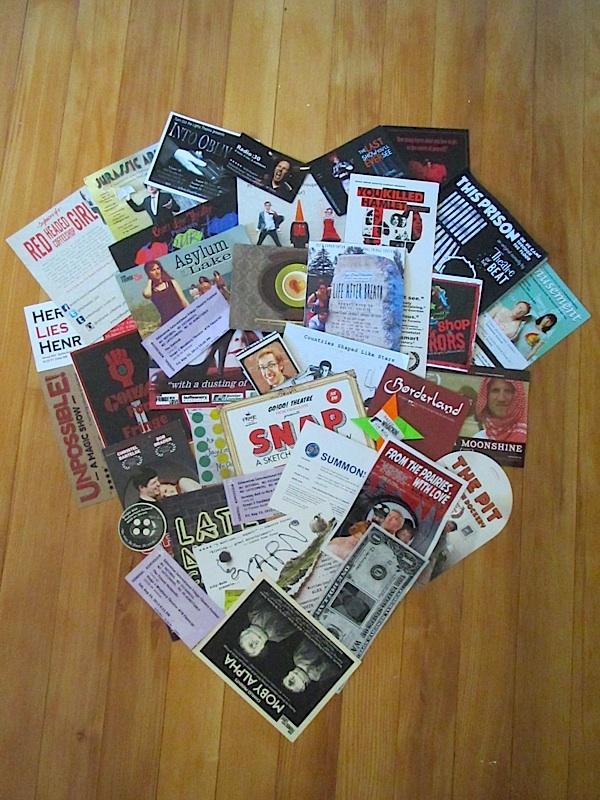
Sitting in the Exit Café with a can of Guinness and the San Francisco Fringe Festival program is one of life’s modest but absorbing pleasures. For those without much inside knowledge on the lineup (currently encompassing 36 companies and 158 performances), it’s a little like taking a vacation by pitching darts at a wall map. There were several immediate sub-themes to choose from for 2013. I could have picked shows with bananas in the title, for instance. But for whatever reason, I dived into the service and servitude sector.

Of course, the Fringe, now in its 22nd year, is a lottery-based operation, so it is fate’s fingers that pluck these patterns from the cultural whirl. At the same time, you don’t need the I Ching to know that serving the rich is about all that’s left of the economy for most of us, making it hardly surprising to find so many stories of bartenders, wait staff, sex workers, and mermaids-who-are-also-sex-workers floating in the pool.

Things began on a high note with Jill Vice’s witty and deft solo, The Tipped & the Tipsy, which brings the querulous regulars of a skid-row bar to life vividly and with real (quasi-Depression era) charm. Without set or costume changes, Vice (who developed the piece with Dave Dennison and David Ford) proves a protean physical performer, seamlessly inhabiting the oddball outcasts lined up before bartender Candy every day at Happy’s — names as loaded as the clientele.

After some hilarious expert summarizing of the dos and don’ts of bar culture, a story unfolds around a battered former boxer and his avuncular relationship with Candy, who tries to cut off his bar service in fear of his deteriorating health, much to the consternation and even greater fear of his barfly associates and the self-aggrandizing sleazeball owner, Rocco. With a love of the underdog and strong writing and acting at its core, Tipsy breezes by, leaving a superlative buzz.

This was largely squandered a half hour later in Sandra Brunell Neace’s Parly Girl, an uneven and unpersuasive testimonial by a New York City waitress with a bad attitude and a traumatic back story. Neace, whose incidental characters are weakly written and delivered, is best in fleeting moments of genuine reflection. But these are few, and the piece flags early on, only to be at best partially redeemed in a hasty turnaround of a conclusion.

Service work gives way to involuntary servitude, and the horrifying reality of child sex trafficking, in writer-performer and activist Regina Y. Evans’ 52 Letters (co-directed with Louel Senores). More than a global scourge, this is a local story, and Evans delivers it with burning compassion in a poetical voice ringing with the resiliency and freighted history of the African American spiritual. The emotional register varies little, which can weaken somewhat the force it justly means to convey. Nevertheless, Evans and her urgent message as a modern-day abolitionist leave one impressed and unsettled.

O Best Beloved isn’t about service work, but the theme still crops up in the opening story — “How the Camel Got Her Hump” — an unburdened beast (played by Sam Jackson) whose relaxed work ethic draws negative attention. It’s one of three scheduled children’s tales by Rudyard Kipling (adapted by actor Joan Howard and director Rebecca Longworth), delivered by a rowdy six-person cast of storytellers. This playful piece is somewhat hectic and a bit garbled (in speech that can get lost in the reverberations of the Exit’s main stage). But it’s colorfully worked up (in costuming and properties as well as performances) and no doubt ideal for families or those happy to revel in light insouciance and unyielding silliness.

Sean Andries and Siouxsie Q’s Fish-Girl, meanwhile, has limited charm as a carny fable of doomed love between a nerdy young man (Andries, who also directed) and the freak-show beauty (Q, in sequined tail and half-shell bra) he’s hooked on. Co-creator Siouxsie Q hosts “The Whorecast” podcast showcasing the voices of American sex workers, and the mermaid’s plight takes on literal and metaphoric overtones of sex work. But the bland love story at the center keeps things bathtub shallow, albeit buoyed by a few decent songs belted out by poised songwriter Siouxsie Q to her own accompaniment on the ukulele — that spinet of the well-bred mermaid.

Hard on Fish-Girl‘s floppy heel came The Women of Tu-Na House, completing the evening’s sub-sub-theme of the aquatic erotic. (For cross-referencing purposes, another bartender’s tale, with fish tails too, stood out in the program but was not seen in time for review: Alexa Fitzpatrick’s sushi-restaurant confessional, Serving Bait to Rich People.) Nancy Eng’s solo is a smart, sassy, and blushingly frank account of the workers at an Asian massage parlor. Although Eng’s characters are not always readily distinct, she marshals an unexpected angle and winning élan in bringing this worthwhile story to life.

Not every show in the Fringe need conform to a surface or sub theme. Dark Porch Theatre’s StormStressLenz brings its own thematic taxonomy with it, in director Martin Schwartz’s uneven but intriguing, vivacious remixing of the work of Jakob Michael Reinhold Lenz (1751–1792), the Baltic German author of the proto-Romantic, anti-rational Sturm und Drang school of literature.

Schwartz’s Lenz remix comes across as an alternately cool and hyperactive investigation of the essence of melodrama, employing a fast-changing four-person ensemble (Nathan Tucker, Margery Fairchild, Ryan Hayes, Meg Hurtado) in a series of scenes shorn of their immediate context and aggregated under various section headings (“Love,” “Tricks,” “Sorrow,” etc.) The subheads are called out by Schwartz, seated at a table to the left of the stage calmly scrutinizing the action, asking the lighting booth for the odd musical interlude (MC5 one minute, Brahms the next), and bouncing his palm lightly on a desk bell to trigger the beginning and the end of each scene. These range widely and wildly, making for a raucous but tonally patchy hour. The broadest and subtlest range of characters comes from Tucker and Fairchild, who between them suggest some of the darker elements otherwise left out of a largely comic romp. But if the show leaves one wanting more complexity and shading, its eccentric enterprise is still worth a stab, as they say.

Finally, San Francisco dancer and performance maker Cara Rose DeFabio’s admirable solo strikes its own idiosyncratic tone, or rather many of them, in another intriguing investigation, this time of the online afterlife to which we are all increasingly subject — whether willingly or not. After the Tone is a smart and provoking exploration of the intersections of grief, technology, memory, ideology, and individuality that uses DeFabio’s sly narrative persona, movement, video, and audio pastiche, and interactive audience participation (via those celebrated and hated cellphones) to productively turn over a subject too close to most of us to be clearly grasped otherwise.

SAN FRANCISCO FRINGE FESTIVAL
Through Sept. 21, $12.99 or less
Exit Theatreplex
156 Eddy, SF
www.sffringe.org

The Performant: Mean Streets and Matchsticks at the Vancouver Fringe

0

Here in Vancouver, the Fringe Festival has been in full swing since Sept. 5, and its early bustle has come as something of a welcome surprise. Shows have been selling out right and left, including those by the five-woman sketch comedy team Strapless, and the manic SNAFU Dance Theatre‘s survivalist romp Kitt & Jane. The buzz hangs as heavy in the air as the morning humidity. It’s interesting to compare the rowdy carnival atmosphere of the Edmonton Fringe, complete with sideshow attractions, tireless street performers, and mountains of cheap fried food and the people who eat it, with Vancouver’s more refined approach and oddience. The Vancouver Fringe is the biggest theater festival in town, I’m told, and therefore attracts a fairly large percentage of mainstream theater-goers.

But despite the fact that each show begins with an overly complicated spiel about sponsorship opportunities, the shows themselves have run the usual fringe-y gamut of content from heartfelt to hilarious, edgy to educational. Here are some of the standouts I’ve seen so far.

One of the bravest shows of the 2012 San Francisco Fringe was not actually a theatre piece at all, but an educational talk entitled The Revolution Will Not Be Circumcised, complete with video footage of infant (male) circumcisions that was decidedly not for the faint of heart. I see a lot of similarity in Tasha Diamant’s equally brave The Human Body Project, because when she takes the stage, naked and unscripted, the audience is immediately forced to examine their own reactions and assumptions around the act, the artist, and the body in general, leading to a tangibly cathartic yet thought-provoking collective experience.

Speaking of San Francisco Fringe, homegrown clown Summer Shapiro, whose Legs and All charmed at the festival in 2009, is here in Vancouver with a fun, interactive work, In the Boudoir; it’s a mostly silent comedy of a first date gone terribly awkward. In the same venue, the wry magic of Travis Barnhardt astounds in his mentalist routine Unpossible, during which he confesses several times that he hasn’t quite mastered the art before revealing that he clearly has.

Canadian storyteller Andrew Bailey, whose show Limbo I enjoyed in Edmonton, knocks one out of the metaphorical ballpark with his smart, compelling The Adversary. Matchstick, a two-person musical centered around a troubled, International love affair with political implications, impresses with its quick wit, inventive staging, and dynamic duo, despite some silly lyrics. Solo clown show Butt Kapinski follows a diminutive, speech-challenged “Pwivate Eye” down the mean streets and aisles of the small theater space, filled with cruel tenements, corrupt cops, and a bevy of working girls and murder victims (all unsuspecting oddience members), while the aforementioned Kitt & Jane wows with its energetic portrayals of a pair of angsty high school misfits who have one hour to save the world from itself.

Still looking forward to so much more, including Little Pussy, Model Wanted, Preacher Man, Kuwaiti Moonshine, Radio:30, The Cruelest Phone Book in the World, Against Gravity, Fools for Love, and 6 Guitars so I’d better get cracking. So little time. So many shows.

Smartphones trigger rise in crime rate as new iPhone features a fingerprint lock

10

Violent crime is on the rise in the Bay Area and the San Francisco Police Department chalks it up to smartphone snatchers, a trend that is being countered by an initiative from the District Attorney’s Office and today’s announcement by Apple of a new iPhone that requires the owner’s fingerprint to unlock.

The FBI’s 2012 Uniform Crime Report, released in June, documented surges in crime in cities across the Bay Area, including Berkeley, Oakland, San Jose, and Richmond. In San Francisco, violent crime increased 7.5 percent in 2012 and property crime spiked 18.3 percent. In 2013, those figures have climbed another 10 and 12 percent, respectively.

Asked for an explanation of the recent trend, SFPD spokesperson Tracy Turner told us that it’s due in large part to “increases in the theft or robbery of cell phones.”

“I can’t think of any other expensive item that people walk around with in their hand in public,” she said. “They’re more available to everybody and yet they’re slightly more expensive.”

Turner also cautioned that it’s not just iPhones that thieves go after, but all types of smartphones and also, more recently, tablets. “Those are the kind of items that people are absorbed in while they’re in a public place and they’re easy targets,” she explained.

Nathan Rapport, a resident of the Lower Haight, had his iPhone, iPod, and wallet stolen shortly before midnight last Wednesday as he approached the intersection of 14th and Sanchez on foot.

“I sent a text probably a block away. Who knows if they saw the light down the street,” he speculated of the pair of thieves who drew a gun on him and demanded his possessions less than a minute later. The responding officers remarked that similar altercations often escalate, ending in physical harm to the victim.

“They said that they were surprised that it wasn’t more violent based on what they’ve been seeing lately in the neighborhood. It’s not usually just a snatch. You get pistol-whipped or there’s something else attached to it,” commented Rapport, who felt fortunate that, in his case, the incident “was strictly a business transaction.”

In San Francisco, “over 50 percent of daily robberies have to do with smartphones and up to 67 percent of robberies include mobile devices of any sort,” said SFPD Officer Danielle Newman.

District Attorney George Gascón has taken these statistics to heart in a newly crafted crime reduction strategy. He is co-chair of the Secure Our Smartphones Initiative, which has been endorsed by law enforcement agencies in 17 states.

In a June press release, the coalition wrote, “It’s time for manufacturers and carriers to put public safety before corporate profits” and he called on them to implement a “kill switch,” which could remotely disable phones reported stolen.

“Unlike other types of crimes, manufacturers and carriers have the ability to end the growing number of smartphone thefts with a technological solution,” the statement continued. A purloined phone’s value “would be equivalent to that of a paperweight. As a result, the incentive to steal them would be eliminated.”

At a hotly anticipated product launch this morning in Cupertino, Apple unveiled two new iPhone models. One, the 5C, is a budget design developed mainly for distribution in overseas markets and the other, 5S, includes fingerprint scan technology in the home button as a security measure. Industry analysts have been abuzz for weeks with speculation as to whether the newly impregnable button would be an innie or an outie.

As expected, the flashy new feature resulted in a minor anatomical change to Apple’s most popular product. Its rollout will have an even broader impact, however, as it alters the distribution of security across different countries and socio-economic classes. In its next major product development, perhaps Apple will take a cue from Gascón and put as much effort into democratizing safety as it does to democratizing its brand.


Heads Up: 6 must-see concerts this week

0

Music can serve to fit your specific mood. If you can pinpoint an emotion you wish to heighten, you have the ability to explode the senses with a band or musical act playing live that night. You’re just that special.

This week, if you want to feel creepy, go to Death in June; for feel-good grooves, try Jimmy Cliff; to feel cultured, take in Julia Holter; to intensify a sense of ecstasy while engaging with the full scope of hip-hop today, grab passes to Rock the Bells.

Here are your must-see shows: 

Bleeding Rainbow

“Bleeding Rainbow has seen several incarnations since its 2009 formation as Reading Rainbow. Its third album, Yeah Right, includes two added band members, a new name (allegedly provoked by a remark from Carrie Brownstein), and as one would expect with a move from “Reading Rainbow” to “Bleeding Rainbow,” added shades of something sinister. Despite the changes, though, its signature sound remains: Out of the fuzzy noise of reverb and distortion emerges sweet pop melodies from Sarah Everton. The band’s transformed, but between the noise, the darkness, and the pop, it still promises a good time.” — Laura Kerry
With the Love Language
Tue/10, 8pm, $12
Rickshaw Stop
155 Fell, SF
(415) 861-2011
www.rickshawstop.com
http://www.youtube.com/watch?v=PL2uSm19aEU

Jimmy Cliff
“At age 65, reggae legend Jimmy Cliff is experiencing perhaps one of the greatest bursts of artistic productivity in all of his five-decade-long and counting career. He’s inspired countless other musicians over the years, including Bay Area punk rocker Tim Armstrong of Rancid and Operation Ivy, who was brought aboard to produce and perform on Cliff’s newest album, last year’s excellent Rebirth. The record includes an outstanding cover of the Clash’s “Guns of Brixton,” which references Cliff’s movie and song “The Harder They Come” in its lyrics — bringing the music full circle, as it were. Don’t miss the Rock and Roll Hall of Famer when he hits the Fillmore stage tonight.” — Sean McCourt
Wed/11, 8pm, $39.50
Fillmore
1805 Geary, SF
(415) 346-6000
www.thefillmore.com
http://www.youtube.com/watch?v=xGE4dnrPPZQ

Julia Holter
Julia Holter’s newest release, this month’s string-and-horn laced Loud City Song, is like the Weetzie Bat of music: a quirky, instantly classic retelling of the modern LA story. The chamber-pop multi-instrumentalist’s calling card is weaving lush, experimental compositions with her own dramatic vocals, creating compelling narratives and backstories through sound (previous records have focused on Greek mythology and French New Wave films). It’s charming to see the light, noise, and gossip of Los Angeles through the Holter lense.
With Nedelle Torrisi
Thu/12, 8pm, $16
Great American Music Hall
859 O’Farrell, SF
www.slimspresents.com
http://www.youtube.com/watch?v=IzzpkDPetZU

Death in June
“Extremely depressing neofolk band Death in June is stopping by San Francisco for its long-awaited US tour. Initially starting as a post-punk, industrial project in the 1980s, the band shunned pretty-boy rock ideals, often donning ghoulish masks and costumes on stage. Death in June has given influence to plenty of contemporary bands such as metal band Agalloch and darkwave horde Faun…And the group released Snow Bunker Tapes, guitar-backed versions of Peaceful Snow, on Neuropa this year. Get sad, get creepy, and slump over to the Mezzanine.” — Erin Dage
120 Minutes with oOoOO, DJ Omar, CHAUNCEY_CC
Fri/13, 9pm, $30
Mezzanine
444 Jessie, SF
(415) 625-8880
www.mezzaninesf.com
http://www.youtube.com/watch?v=myzNWd-Pp2g

Magic Trick
“If there’s anything supernatural about the band Magic Trick, it’s in frontperson Tim Cohen’s seeming ability to be in several places at once. Between the Fresh & Onlys, solo projects, and work with other bands, his prolificacy makes you wonder. But more than witchcraft, magic tricks usually involve sleight of hand. With Cohen’s signature deep voice and romantic songwriting, Magic Trick at times directly echoes the Fresh & Onlys. Don’t be fooled: With three added band members and a minimalism that makes the music more contemplative and a little stranger, Magic Trick surprises.” — Laura Kerry
With the Range of Light Wilderness, Pure Bliss, Cool Ghouls
Sat/14, 9pm, $12
Chapel
777 Valencia, SF
(415) 551-5157
www.thechapelsf.com
http://www.youtube.com/watch?v=Xj9mNkXD8U0

Rock The Bells
“The country’s pre-eminent hip-hop festival is coming to the Bay Area this Saturday and Sunday, bringing a large and diverse crew of rap acts. There’s something for every kind of hip-hop head at this festival. For fans of weird rap, there’s Danny Brown, for fans of ratchet rap, there’s Juicy J, for the homers, there’s a E-40-Too $hort duet and IamSu!, and for fans of hologram rap there will be performances from hologram Eazy-E and ODB. For those you taking Caltrain from the city, remember that the train only runs once a hour and takes more than a hour to get to Mountain View.” — George McIntire
Sat/14-Sun/15, 11am, $65–<\d>$239
Shoreline Amphitheater
One Amphitheatre Pkwy, Mountain View
(800) 745-3000
www.rockthebells.net
http://www.youtube.com/watch?v=h0boHcBFSR0

Grouplove talks Haight love, the Seesaw Tour, and spreading rumors

0

Grouplove’s existence is a strong argument for fate. In 2009, Hannah Hooper and Christian Zucconi met on the Lower East Side of Manhattan. Feeling an instant connection, Hooper invited Zucconi to an artist residency in Greece on the island of Crete, which she was heading to just a few days later, and he said yes. At this residency, in a remote mountain village, the pair formed a fast friendship with three other musicians. Within the year, Grouplove was formed.

Two years after that, the band exploded into the music scene with its cheekily titled, megacatchy album Never Trust a Happy Song. Touring constantly since its inception, Grouplove is still going at full sprint, with its second album, Spreading Rumors, coming out Sept. 17, accompanied by the ambitious Seesaw Tour, in which the band will spend two nights in every city at intimate venues, playing one electric and one acoustic show.

I caught up with Hooper during one of her rare moments of semi-downtime (if that’s what you call standing on a busy street corner waiting for Zucconi) to chat about hometown shows, Haight Street, and (group)love:
 
SF Bay Guardian I saw you play in San Francisco almost exactly two years ago to a nearly empty Bimbo’s, and it was an absolutely amazing show. There was this incredible energy and because there was a sparse audience, it felt truly special to be there. Now you’re playing to much bigger audiences and selling out two nights in a row in SF. How do you feel about this change in dynamics?
 
Hannah Hooper It’s really exciting! It’s kind of surreal in a lot of ways. When we get to play a show we’re excited no matter what, so the scale of it blows our minds. With the Seesaw Tour, we’re kind of underplaying and getting to actually see our fans again. And we’re playing the Independent, which is one of the first venues we played in SF.

We personally love playing any size, but there’s a level of intimacy that’s hard to capture [in a bigger venue]. It’s a very special thing. As a fan, I love to see high-energy bands in small venues. That’s what we want to do before we gear up to do a bigger tour.

http://www.youtube.com/watch?v=1x1wjGKHjBI
 
SFBG How did you come up with the idea for the Seesaw Tour? Why this format?
 
HH We were talking about bands. I love the Yeah Yeah Yeahs, I’m a big fan, but I’ve never had the opportunity to get close to them. I’m always in the back behind like thousands of people. I had this vision of how cool it would be to see them play one night electric and one night acoustic.
It will be a challenge for us because we’re definitively an electric band.
 
SFBG Grouplove has a very vigorous touring schedule. How do you keep from getting burned-out?
 
HH That’s a good question! We stopped to record our album that’s about to come out, which is really the first time we’ve stopped touring in three years. But recording is not that different from touring — we still are living in tight quarters and spending all our time together.

If you stay in motion you don’t notice how exhausted you are. Even when you’ve traveled halfway around the world and you’re like, “are we going to be able to do this?” When you get up on stage, you just respond to the audience. It’s a back and forth. When you see people there screaming your name, you just have to bring it. It’s so fulfilling to give all that you have every time you get on stage. We just get into a trance friendship mode.
 
SFBG Do you all really love each other as much as your name and your live show suggests?
 
HH We do! We really love each other. We have this ability to share this crazy experience together; we’re vulnerable and we’re funny together; we’re stronger together than we are separate. It really works.

There was a freedom when we first got together because we didn’t know each other. We all got to be exactly who we are. We met at a really special time and our friendship really shows that. We write a lot of songs on the road and we genuinely go out together…You have to want to make it work. This is our dream, this is what we want to do. It’s an outlook that we all quietly agreed to have.
 
SFBG There is a unique pressure associated with sophomore albums. Have you felt a need to prove that you’re not a one hit wonder with this record?
 
HH Coming from a painter background I didn’t really realize the “pressure of the second album.” We had this catalogue of songs we had written on the road and we basically drew straws to see which songs made the album. We’re really lucky. We make a point never to combine fear of success with making artwork and writing songs. There’s nothing you can do — you can’t predict whether people will like the songs. All you can really do is be genuine.

http://www.youtube.com/watch?v=VGvHnDeS12o
 
SFBG What does the title of the album Spreading Rumors mean?
 
HH We’re kind of bringing it back to the way that people used to talk about bands and spread the word before the Internet. Despite all of the Internet attention we got for [2011 single] “Tongue Tied,” people were also telling their friends about us and our live shows. The rumor that keeps spreading…we really are this crazy bunch of wild animals let loose.
 
SFBG Since you’re playing two nights in a row here, you’ll have some time to spend in the city. Any special SF plans?
 
HH Well, my brother, sister, mom, and dad live here. I grew up in Upper Haight. I really miss SF. I just like walking down Haight Street. Thrift stores in SF are the best. I can’t tell you how much I love San Francisco.

[Playing here is] like playing a hometown show which is always secretly the most nerve-wracking. It’s always funny to see people you’ve known your whole life in the audience. You really get a sense of how far we’ve come. I’ll probably get emotional up there.
 
SFBG Anything else you feel that people need to know about Grouplove? Any parting words?
 
HH [I’ve learned] through all this touring and meeting all these bands that everyone has their own flavor. We have love, heart, honesty, and passion. Our goal is to have people see that there’s no bullshit up there [on stage] and leave feeling happy. We’re not trying to be cool or sexy. We want to inspire kids to not to care what they look like or whether they’re cool and just be themselves.
 
Grouplove
With the Rubens
Sat/14, 9pm, $20
Independent
628 Divisadero, SF
(415) 771-1421
www.theindependentsf.com

Grouplove (acoustic)
Sun/15, 9pm, $22
Chapel
777 Valencia, SF
(415) 551-5157
www.thechapelsf.com

The NSA made the most boring and controversial Tumblr in the United States; also, best news reads on spying

11

Tumblr is a hub for social media literate millenials, a magical place for Doctor Who animated GIFs, reblogged Instagram photos of your lunch and an endless sea of porn. But Director of National Intelligence James Clapper has a new use for it: boilerplate press releases meant to stem the tide of negative news against the National Security Agency’s spying practices.

Here’s an excerpt from their Tumblr blog addressing their bad press: 

“While the specifics of how our intelligence agencies carry out this cryptanalytic mission have been kept secret, the fact that NSA’s mission includes deciphering enciphered communications is not a secret, and is not news. Indeed, NSA’s public website states that its mission includes leading ‘the U.S. Government in cryptology … in order to gain a decision advantage for the Nation and our allies.'”

Well of course it’s not news that the NSA spies on folks, that’s their purpose. But when the federal government can read the emails and digital records of ordinary citizens without so much as a constitutional please-and-thank you, something is definitely wrong. And thanks to a bombshell dropped by The UK Guardian, the New York Times and Pro Publica partnering to release Edward Snowden’s newest leak, we now know that the NSA can decrypt just about anything on the internet. 

And sometimes the NSA uses it to spy on their love interests. 

Luckily, there are folks who are on this. The Electronic Frontier Foundation just achieved a major victory by suing the government under the Freedom of Information Act, known as FOIA, to get their hands on documents related to the government’s secret interpretation of Section 215 of the Patriot Act, the law the NSA has used to justify searching through the digital lives of Americans. 

You can read more about their victory here.

The EFF is based in San Francisco, which of course means that there is a video of them at Comic-Con.

And the EFF even outlined ways citizens can help: 

“Faced with so much bad news, it’s easy to give in to privacy nihilism and despair. After all, if the NSA has found ways to decrypt a significant portion of encrypted online communications, why should we bother using encryption at all? But this massive disruption of communications infrastructure need not be tolerated. Here are some of the steps you can take to fight back:

  • Sign the petition to stop NSA spying. Let Congress know that It’s time for a full accounting of America’s secret spying programs—and an end to unconstitutional surveillance. If you are not in the US, please take the time to sign our international petition.
  • In addition to signing our petition, take the time to call your elected representative using the dedicated call line: 1-STOP-323-NSA (1-786-732-3672) to voice your opposition.
  • Use secure communications tools (read some useful tips by security expert Bruce Schneier). Your communications are still significantly more protected if you are using encrypted communications tools such as messaging over OTR or browsing the web usingHTTPS Everywhere than if you are sending your communications in the clear.
  • Finally, the engineers responsible for building our infrastructure can fight back by building and deploying better and more usable cryptosystems.

The NSA is attacking our secure communications on many fronts and we must oppose them using every method we have at our disposal. Engineers, policy makers, and netizens all have key roles to play in standing up to the unchecked surveillance state. The more we learn about the extent of the NSA’s abuses, the more important it is for us to take steps to take back our privacy. Don’t let the NSA’s attack on secure communications be the end game. Let it be a call to arms.”

Get educated, and bone up on the most recent news on the NSA’s spying tactics and policies:


Pro Publica, New York Times, Guardian UK  

Revealed: The NSA’s Secret Campaign to Crack, Undermine Internet Security

http://www.propublica.org/article/the-nsas-secret-campaign-to-crack-undermine-internet-encryption


Electronic Frontier Foundation

NSA Spying on Americans, Full timeline of events

https://www.eff.org/nsa-spying


Guardian.co.uk

The NSA Files — All UK Guardian stories on the NSA spying program

http://www.theguardian.com/world/the-nsa-files


And until everything gets better, I’m going to keep using Tumblr the way it was intended: reblogging GIFs of the best Doctor, David Tennant.

Screen shot of Doctor Who Tumblr post

Gary Numan: dark music done right at the Oakland Metro

1

From Metallica to This Mortal Coil, there’s a sense of canned melodrama about most “dark” music that I’ve long found goofy and unconvincing. On that note, Massive Attack’s Mezzanine has always struck me as dark music done right, leaving the angsty ostentation behind, in favor of casually luring the listener downward into its imposing dungeon of groove.

As Gary Numan took the stage in Oakland last Tuesday night, the British artist displayed a similarly nuanced sensibility of what makes dark music work, delivering a relentlessly groove-based set of songs that brooded and seethed with total conviction.

Setting foot inside the Oakland Metro Operahouse (a dimly-lit, converted warehouse with the vibe of a joint operation between the Addams Family and a pack of steampunk welders) I felt the same tinge of skepticism that I did before Nine Inch Nails took the stage at Outside Lands last month; does Numan really have a purpose at this point in his career, aside from reliving old times and peddling out the reliable hit(s)? Surely enough, Numan took the stage with disarming panache, writhing up and down the stage with deft control as he treated the crowd to a stunning 90 minutes of punishing industrial rock.

Despite Numan’s one-hit-wonder status (his 1979 single “Cars” topped the charts in both the UK and the US) the British artist is revered in smaller circles for bridging many seemingly isolated developments in the pop world, from Kraftwerk’s stiff electronic propulsions, to Prince’s new-wave synthpop experiments, to Nine Inch Nails’ consolidation of industrial music with the rock mainstream.

Those mainly familiar with Numan’s early, synth-driven work, though, might’ve been taken aback by the physicality of Tuesday night’s set, in its commitment to the guitar-heavy, riff-based, Trent Reznor-indebted approach he initiated on records like Exile (1997) and Pure (2000).

Dressed in black, head to toe, like a sizable chunk of the enraptured audience, Numan and his four-piece backing band delivered forceful renditions of some recent tracks, namely “Haunted,” “The Fall,” and “Everything Comes Down to This,” dominated by relentlessly fuzzed-out guitars, as those reliably frosty synths provided rich textures and filled in the empty spaces.

“I Am Dust,” from the forthcoming LP Splinter (Songs From a Broken Mind) fit seamlessly into the surrounding material, making a strong case for Numan’s creative future, while beefed-up, modernized variations of older songs, like “Films,” and “Down in the Park,” were impressive in their unpredictability and ambition, refusing to merely replicate their studio counterparts.

Numan’s career has taken many twists and turns, from prickly, proto-synthpop, to industrial filth-rock, yet his touring band refracted it all through their single-minded, distortion-laden aesthetic, intuitively connecting the old and the new.

Numan might be 55 now, with nearly 20 albums under his belt, but his stage presence and vocal delivery were remarkably vitalic, never once suggesting the washed-up burnout illustrated by those VH1-hit-wonder specials. Few AARP qualifiers can rock eyeliner and spiky black hair convincingly, yet Numan completely pulled it off, prancing across the stage with yogic control, and a glammy flair for presentation.

More importantly, his vocal ability hasn’t diminished in the slightest since the late ’70s, as he hit all the high notes on “Cars,” and “Are ‘Friends’ Electric,” without hesitation.

Numan’s voice, strongly reminiscent of David Bowie’s, fit harmoniously with the backing instrumentals, letting the band do most of the heavy lifting, as he deftly avoided the whiny/screamy/growly vocal contrivances that end up derailing so much “dark” music into self-parody mode.

The restraint of Numan’s vocals, combined with the dubby, trip-hoppy, disco-inflected headiness of his backing band’s grooves, resulted in a tightly controlled balancing act; much like Massive Attack’s Mezzanine, Numan’s set succeeded by keeping things at a constant simmer, yet never boiling over. Dark music done right, indeed.

Judging by his seasoned stage presence, and his undeniable influence on the greater music world, it seems that in an alternate universe, Numan could’ve become one of those Prince-y household names, shaping pop culture as well as the music within.

Yet, unlike Prince, who’s lately found himself grasping beyond his reach in hopes of channeling past glories, or countless other new wavers who were relegated to novelty status long ago, Numan has maintained his relevance by powering forward creatively, and smartly avoiding any attempts to relive the ’70s and ’80s over again.

It might’ve been reasonable to expect a phoned-in performance this deep into his career, yet as Numan authoritatively proved on Tuesday night, his icy grooves remain as fresh and involving as ever.
 

Campos urges SF to explore using Richmond’s eminent domain plan

170

Sup. David Campos is urging the board of supervisors to explore using eminent domain to save San Francisco resident’s underwater mortgages, a plan pioneered by the city of Richmond and its mayor Gayle McLaughlin.

The plan uses the power of eminent domain to seize underwater mortgage loans from banks and investors, saving homeowners from being booted out onto the street when they’re behind on their ballooning payments. The plan is controversial and under attack by Wells Fargo and other Wall Street interests, which we explored in last week’s cover story, “Not For Sale.” They say that the plan puts money into the pockets of Richmond and Mortgage Resolution Partners, the group that engineered the plan. 

Campos plans to introduce his resolution at tomorrow’s board meeting, but importantly it only asks The City to explore whether or not the plan could work in San Francisco. The resolution would not enact a plan at this point in time.

At a press conference this morning, housing activists and Campos trumpeted the plan as a way to save the homes of San Franciscans. Often those targeted with predatory loans have been people of color, they noted. 

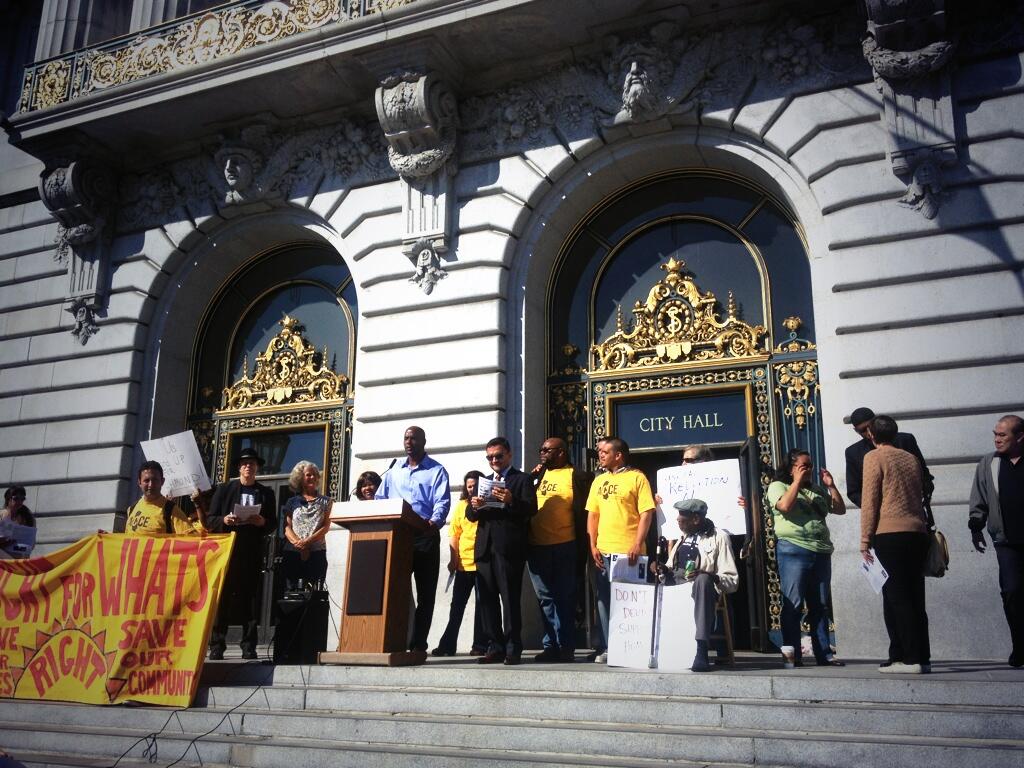
“Our strategies have been, lets be honest, ‘Let’s see what the federal government or the banking industry will do to help these folks,’” Campos said at the steps of City Hall. “We’ve waited long enough.”

Campos rattled off surprising numbers, saying 58 homeowners in his district alone had underwater mortgages at risk of foreclosure, and that 16 percent of homeowners in neighborhoods like Visitacion Valley were underwater. 

Bernal Heights homeowner and activist Ross Rhodes was there supporting the action.

“Dave (Campos) helped me save my home when I was getting nowhere with the banks but frustration,” Rhodes said. 

He was making his payments which were up to $3,500 a month, but while on disability and going through a divorce, it was tough. Campos got Rep. Nancy Pelosi’s office involved, and they talked to the banks on his behalf. In the end, he finally got a principal reduction and what he calls a “real good” modification. “I’m not asking for a handout, I’m asking for help,” he said. 

Now his payments are $1,600 a month. “It just shows the banks can do what they want to do, they control it all, they can work with if you if they want to.”

Campos’ resolution also proclaims San Francisco’s support for Richmond’s eminent domain effort.

The bank asked him why he went to Pelosi and Campos for help, instead of going through them. He was incredulous, as he’d been fighting for a principal reduction on his own for two years. “I’ve been trying to work with you for months,” he told them. “It took that political muscle to get you to move. I went through five different loan agents.” 

The victory made him a convert, going to rallies and speaking to help others suffering with their loans. 

The hounds are coming for Richmond though, and the political muscle needed to enact the controversial plan is at risk. 

Wells Fargo already filed suit against Richmond over its use of eminent domain, saying the plan puts money in the pockets of the city and would put a chill on investments. A Richmond bond with an A- rating was already rejected by Wall Street, finding no financiers, putting Richmond in a possible bind when it comes to public works projects. 

In response, Richmond councilmember Nathaniel Bates has a resolution for tomorrow’s Richmond city council meeting to stall the plan. If it’s voted in, Richmond will withdraw all the offers to buy underwater loans and withdraw the plan to use eminent domain to seize them. 

If Bates’ resolution is approved, the whole plan would tank. 

A petition from the Home Defenders League to sand with Richmond’s eminent domain effort has over 7,000 signatures. 

To contact Wells Fargo’s CEO yourself, follow the link here.

The Guardian wrote to the Mayor Ed Lee’s office to see if he is in support of Campos’ plan, but didn’t hear back before press time, which was admittedly quick. 

Update 2:20 pm: We asked supervisor Campos’ aide Hilary Ronen if San Francisco would be at risk for a lawsuit from Wells Fargo, similar to Richmond, if the city enacted an eminent domain plan. In response, she said “All that we’re doing is asking the city attorney’s office as well as the budget and legislative analyst, ‘if we did something similar, what does it look like? What are the financial risks for the city?’ This way we can make an educated assessment. After having that information he’ll have to balance what the risks are. We’re not there yet.”

Feds force pot clubs to deal in cash, then ban use of armored cars

22

In the US Drug Enforcement Administration’s latest attempt to smoke out medical marijuana dispensaries in the United States, the federal government agency made the decision to ban the use of armored cars by marijuana providers. Compounding that problem, over the last year banking companies, under pressure from the feds, have been refusing to do business with dispensaries, forcing them conduct all-cash transactions.

Dispensaries and their employees all around the Bay Area are being needlessly endangered by this decision. Businesses such as Oakland’s Harborside Health Center — which brings in about $30 million a year, according to co-founder and executive director Steve DeAngelo — stand to take a big hit.

“This decision puts my staff and I at risk,” DeAngelo told us. “People have been known to stake out the property, and having unarmored transport without a secured professional to the US Treasury makes the job even more dangerous.”

DeAngelo declined to comment on how his dispensary will transport money without armored cars. Others, such as Diane Goldstein, a retired lieutenant commander of the Redondo Beach police department and member of the organization Law Enforcement Against Prohibition, finds the decision to be downright unethical.

“It’s unethical in the sense that the DEA made the decision without considering the collateral damage that could be caused,” Goldstein said. “It endangers the people that have to transport large sums of money unprotected, law enforcement, and the community at large.”

But there is a glimmer of hope: the Department of Justice issued a memo last week that was a step forward in support of the federal government respecting states like Washington and Colorado where even recreational use of marijuana has been made legal by state ballot initiatives. The DOJ memo outlines enforcement policies such as not selling to minors or having revenue from dispensaries go to gangs or drug cartels.

“There is hope with the new memorandum released,” Dan Goldman, community liaison for the Green Cross in San Francisco said. “Though it does not directly apply to states where marijuana has not been legalized, it is a step forward.”

DeAngelo and others decried the memo as vague, but ultimately counted it as progress that may support a “large increase in momentum” in the plight for further legitimacy in the medical marijuana business.

But this clearly isn’t the first or last time DeAngelo and many other dispensaries have had the legality of their business questioned. Harborside has been locked in court battles since U.S. Attorney Melinda Haag made the move for a forfeiture proceeding for the businesses’ Oakland and San Jose properties last July. Last month federal magistrate Judge Maria Elena James granted a temporary halt to the forfeiture proceedings.

Is DeAngelo worried? “We’re in a holding pattern for the next two to two-and-a-half years,” DeAngelo said. “I’m positive that our business will continue to thrive just as it always does.”

In the meantime,  US Sen. Patrick Leahy (D-VT) has invited Attorney General Eric Holder to testify at a Sept. 10 hearing regarding whether the feds should be respecting state marijuana laws. 


Supervisors to grill Mayor Lee over CleanPowerSF sabotage

112

Mayor Ed Lee will be on the hot seat for his unqualified support of Pacific Gas & Electric Co. and his related opposition to the CleanPowerSF renewable energy program, which his appointees to the San Francisco Public Utilities Commission are trying to sabotage, when he shows up for the monthly mayoral question time at the Board of Supervisors meeting on Tuesday.

Hopefully the boring, scripted question time format that Lee created in collaboration with Board President David Chiu will finally give way to what the voters intended when they required the mayor to engage with the legislative branch: an actual, substantive, back-and-forth policy discussion meant to illuminate issues of public concern.

Because that’s what’s needed on this important issue. After more than a decade in the making, the board last year cast a historic vote to create the project on a veto-proof 8-3 vote. But the SFPUC is now refusing to set the maximum rate for the program, which should be a fairly technical and pro forma action, instead raising unrelated issues that the supervisors have already considered. In other words, unelected mayoral appointees have decided to veto a hard-won democratic gain, creating something akin to a constitutional crisis in a city that values public process and input. 

So for the first time ever, all the of the supervisors scheduled to ask questions (it rotates because odd- and even-numbered districts each month) have focused various aspects of a single important issue. Even though Lee has mastered the politicians’ dark art of speaking without saying anything, this one should still be a doozy as supervisors ask the following questions:

1. Mayor Lee – As you know, San Francisco has set ambitious goals to combat climate change. In many ways, the City is making great strides in this direction, from increasing bicycling, to pursuing zero waste goals, to hiring a new, excellent environmental policy advisor in Rodger Kim who has a strong background in environmental justice and community engagement. However, the Public Utilities Commission has repeatedly failed to set rates for CleanPowerSF, the most impactful local proposal yet designed to curb carbon emission. This program was adopted by the Board of Supervisors, the legislative body of the City. However, there are some allegations that your office is stalling its implementation. What specifically are you doing, as the City’s head executive, to implement this policy in a timely fashion? (Supervisor Mar, District 1)

2. Mr. Mayor, can you please outline your objections to the CleanPowerSF program as approved last year on an vote 8-3 by the Board of Supervisors? (Supervisor Chiu, District 3)

3. Recognizing the constraints imposed by state law, particularly with respect to opt-out provisions, how would a clean power program need to be structured in order for you to support it? Are you willing to work with the Board of Supervisors, and have your staff and commissioners work with the Board of Supervisors, to revise CleanPowerSF so that you can support it? Can we come to the table and make clean power a reality without any further delay? (Supervisor Breed, District 5)

4. The Board of Supervisors has been very supportive of CleanPowerSF. Do you think it is appropriate for a City Commission to go against the policy the Board of Supervisors set when it approved CleanPowerSF? (Supervisor Campos, District 9)

5. Days after the one-year anniversary of the 2010 PG&E San Bruno pipeline explosion, you called PG&E a “great local corporation” and a “great company that gets it.” However, the examples of PG&E’s immoral, illegal, and greedy behavior are legion:

– PG&E avoided admitting fault in the San Bruno explosion, failed to cooperate with the investigation, fought against paying a fair fine, and hopes to make ratepayers pay for the fine.

– PG&E’s current electric mix is only 20% California-certified renewable.

– Outages of PG&E-owned streetlights have increased over 400% in recent years, and PG&E wants to increase by $600,000 a year the amount it charges the City for streetlight maintenance without committing to improved service.

– Despite the fact that PG&E already has some of the highest electric rates in the country, PG&E is seeking to further increase rates in each of the next three years.

– While PG&E has proposed a new Green Tariff program, it remains only a vague proposal and there is no guarantee that it will ever be implemented.

– PG&E’s previous green campaigns-such as ClimateSmart and “Let’s Green This City”-have proven to be short lived and ineffective public relations stunts. Multiple public surveys conducted by the PUC to gauge the level of support for CleanPowerSF have all found that a substantial number of San Franciscans want the opportunity to pay a slight premium for a 100% renewable alternative to PG&E.

Why does your office continue to oppose providing City ratepayers with an alternative to PG&E’s monopoly by implementing CleanPowerSF? (Supervisor Avalos, District 11) 

Action franchise junkie Vin Diesel returns … and more new movies!

0

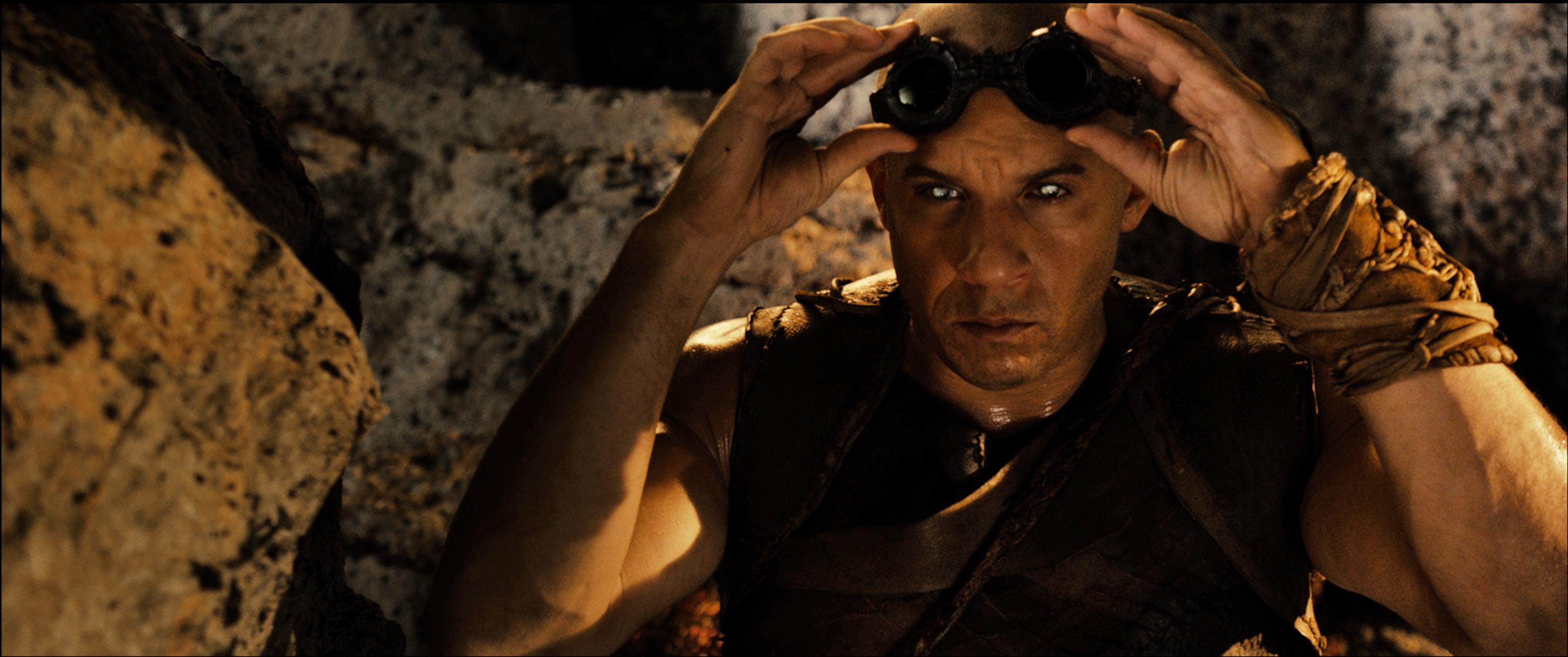
Who dares to challenge the box-office supremacy of Vin Diesel, who returns yet again to play the titular night vision-gifted (but really socially awkward) escaped con in sci-fi actioner Riddick?

For masochists, there’s Brian De Palma’s latest, Passion, which checks in for a brief Castro run (Dennis Harvey gets bored talking about it here); there are also a couple of docs, a MILF drama, and a South Korean disaster-by-numbers flick about a disease that, shockingly, doesn’t spawn zombies, just bloody coughs and rapid death. Read on for our short takes (and take note of your best-bet new flick: “charming seriocomedy” Afternoon Delight).http://www.youtube.com/watch?v=_KWyEbmKHsY

Adore This glossy soap opera from director Anne Fontaine (2009’s Coco Before Chanel) and scenarist Christopher Hampton, adapted from a Doris Lessing novella, has had its title changed from Two Mothers — perhaps because under that name it was pretty much the most howled-at movie at Sundance this year. Lil (Naomi Watts) and Roz (Robin Wright) are lifelong best friends whose hunky surfer sons Ian (Xavier Samuel) and Tom (James Frecheville) are likewise best mates. Widow Lil runs a gallery and Roz has a husband (Ben Mendelsohn), but mostly the two women seem to lay around sipping wine on the decks of their adjacent oceanfront homes in Western Australia’s Perth, watching their sinewy offspring frolic in the waves. This upscale-lifestyle-magazine vision of having it all — complete with middle-aged female protagonists who look spectacularly youthful without any apparent effort — finds trouble in paradise when the ladies realize that something, in fact, is missing. That something turns out to be each other’s sons, in their beds. After very little hand-wringing this is accepted as the way things are meant to be — a MILF fantasy viewed through the distaff eyes — despite some trouble down the road. This outlandish basic concept might have worked for Lessing, but Fontaine’s solemn, gauzily romantic take only slightly muffles its inherent absurdity. (Imagine how creepy this ersatz women-finding-fulfillment-at-midlife saga would be if it were two older men boning each others’ daughters.) Lord knows it isn’t often that mainstream movies (this hardly plays as “art house”) focus on women over 40, and the actors give it their all. But you’ll wish they’d given it to a better vehicle instead. (1:50) (Dennis Harvey)

http://www.youtube.com/watch?v=DQpXyke3VC4

Afternoon Delight It takes about five seconds to suss that Kathryn Hahn is going to give a spectacular performance in Jill Soloway’s charming seriocomedy. Figuring to re-ignite husband Jeff’s (Josh Radnor) flagging libido by taking them both to a strip club, Rachel (Hahn) decides to take on as a home- and moral-improvement project big-haired, barely-adult stripper McKenna (Juno Temple). When the latter’s car slash-home is towed, bored Silver Lake housewife and mother Rachel invites the street child into their home. Eventually she’s restless enough to start accompanying McKenna on the latter’s professional “dates.” Afternoon Delight is a better movie than you’d expect — not so much a typical raunchy comedy as a depthed dramedy with a raunchy hook. It’s a notable representation of no-shame sex workerdom. It’s also funny, cute, and eventually very touching. Especially memorable: a ladies’ round-table discussion about abortion that drifts every which way. (1:42) (Dennis Harvey)

http://www.youtube.com/watch?v=cQlWgnerTRc

Far Out Isn’t Far Enough: The Tomi Ungerer Story Fairy tales really do come true — even when they’re as strange as the one lived by Hans Christian Andersen Award-winning illustrator, writer, and activist Tomi Ungerer. As a child, he was torn between Nazi Germany and occupied France, growing up in the Alsace region; as an artist, Ungerer possesses a creative fire fueled by the trauma of war and a bisected identity — his native Strasbourg, as he paints it with archetypal vivid colors, “is the sphincter of France. When France has indigestion, we’re the first to feel it.” In keeping with that free spirit, director Brad Bernstein playfully, beautifully captures Ungerer’s early years, from the artist’s preteen renderings of Nazi horrors, to his formative artistic inspirations, to the outpouring that followed during NYC’s golden age of illustration. In Big Apple, children’s classics like Crictor (1958), Adelaide (1959), and The Three Robbers (1961) inspired colleagues like Maurice Sendak (here in one of his last interviews) and Jules Feiffer. No niche branding and self-censorship for Ungerer, who happily fed the midcentury’s appetite for his drawings; imbued his kids tales with absurdity, fear, and his lifelong fascination with death; and created powerful anti-war posters and iconic illustrations reflecting the struggles of the ‘60s (and very adult “Fornicon” erotica as well). The latter finally ushered in a kind of closing chapter to Ungerer’s American success story, when word spread that the “kidso” favorite also did porno and his children’s books were blacklisted from libraries. Bernstein generally hastens through the decades of “exile” that followed — staying so far from some of Ungerer’s personal particulars that we never even get the name of his wife (or is it wives?) — but the time he takes to give the viewer a sense of the witty, quirk-riddled artist’s personality keeps a viewer riveted. (1:38) (Kimberly Chun)

The Flu As a shipping crate stuffed with illegal immigrants creeps into a ritzy Seoul suburb, one poor soul within stifles a cough; before long, everyone’s dead — save a crusty-eyed youth who’s apparently resistant to the disease yet still capable of kick-starting a devastating epidemic. Can the headstrong doctor (Soo Ae) save her sassy tot (Park Min-ha) from certain, blood-spewing death? Will the cocky EMT (Jang Hyuk) be able to help her, and win her heart in the process? Will the muckety-mucks in power get their shit together in time to prevent mass panic and a global outbreak? Zzzzz. Save some gnarly third-act visuals (you won’t believe what the government does with the bodies of the afflicted), this disaster movie from writer-director Kim Sung-su fails to innovate on the template laid down by films like 2011’s Contagion or 1995’s Outbreak. Also, for all the gory drama, the central storyline (re: the sick kid and the nascent couple) is completely devoid of tension, trudging for two hours toward the most predictable ending imaginable. (2:00) (Cheryl Eddy)

http://www.youtube.com/watch?v=Od8DhL1hyfw

I Give It a Year This glossy feature writing-directing debut from longtime Sacha Baron Cohen collaborator Dan Mazer has been called the best British comedy in some time — but it turns out that statement must’ve been made by people who think the Hangover movies are what comedy should be like world-wide. Rose Byrne and Rafe Spall play mismatched newlyweds (she’s stiff-upper-lippy advertising executive, he’s a manboy prankster novelist) who worry their marriage won’t last, in part because everyone tells them so — including such authorities as her bitchy sister (Minnie Driver), his obnoxious best friend (Stephen Merchant), and their incredibly crass marriage counselor (Olivia Colman). Also, they’re each being distracted by more suitable partners: she by a suave visiting American CEO (Simon Baker), he by the ex-girlfriend he never formally broke up with (Anna Faris). This is one of those movies in which you’re supposed to root for a couple who in fact really don’t belong together, and most supporting characters are supposed to be funny because they’re hateful or rude. There’s plenty of the usual strained sexual humor, plus the now-de rigueur turn toward earnest schmaltz, and the inevitable soundtrack stuffed with innocuous covers of golden oldies. Some wince-inducing moments aside, it all goes down painlessly enough — and Mazer deserves major props for straying from convention at the end. Still, one hopes the future of British comedy isn’t more movies that might just as well have starred Vince Vaughn and Jennifer Aniston. (1:37) (Dennis Harvey)

http://www.youtube.com/watch?v=rTw4OHsh9so

Riddick This is David Twohy’s third flick starring Vin Diesel as the titular misunderstood supercriminal. Aesthetically, it’s probably the most interesting of the lot, with a stylistic weirdness that evokes ’70s Eurocomix in the best way — a pleasing backdrop to what is essentially Diesel playing out the latest in a series of Dungeons & Dragons scenarios where he offers his wisecracking sci-fi take on Conan. Gone are the scares and stakes of Pitch Black (2000) or the cheeseball epic scale of The Chronicles of Riddick (2004); this is a no-nonsense action movie built on the premise that Riddick just can’t catch a break. He’s on the run again, targeted by two bands of ruthless mercenaries, on a planet threatened by an oncoming storm rather than Pitch Black’s planet-wide night. One unfortunate element leaves a bitter taste: the lone female character in the movie, Dahl (Katee Sackhoff), is an underdeveloped cliché “Strong Female Character,” a violent, macho lesbian caricature who is the object of vile sexual aggression (sometimes played for laughs) from several other characters, including Riddick. (1:59) (Sam Stander)

http://www.youtube.com/watch?v=JbSUyYXH8hs

Spark: A Burning Man Story A few months after kicking off DocFest — and mere days after the flames of Burning Man ’13 were extinguished — doc Spark: A Burning Man Story opens for a theatrical run. With surprisingly open access to Burning Man’s inner-circle organizers, San Francisco filmmakers Steve Brown and Jessie Deeter chronicle the organization’s tumultuous 2012 season, a time when the group was forced to confront concerns both practical (a stressful ticket-sale snafu) and philosophical (why are they selling tickets in the first place?) Spark doesn’t shy away from showing the less-graceful aspects of Burning Man’s exponential growth and transformation, but at its core it’s a fairly starry-eyed celebration of the event’s allure, reinforced by subplots that focus on artists who view “the playa” as their muse. (1:30) (Cheryl Eddy)

Live Shots: Asteroid #4 and the Richmond Sluts at Brick and Mortar Music Hall

0

By Brittany M. Powell

Brick and Mortar Music Hall may have had some noise complaint troubles with the San Francisco Sound Commission earlier this summer, but that hasn’t kept the venue or Kymberli Jenson, of Kymberli’s Music Box Presents, from putting on great shows.  Last Saturday’s bill included the Asteroid #4 and the Richmond Sluts. It was a handful of loud rock’n’roll bands that blasted us back through the decades with sounds echoing 1960s and ‘70s psychedelia and punk, but also hints of the late ‘90s and early 2000s , when these bands were fresh on the music scene. 

They’ve all been around the block, or as frontperson-guitarist Scott Vitt of the Asteroid #4 put it, these are all “old heads” and “mainstays” at this point.

The Asteroid #4, which recently transplanted to the Bay Area from Philadelphia, released its first EP in 1995.  Its music is a blend of classic psychedelic rock, with a little melodic folk and shoe gaze tremor, and strong influences from late ‘60s psych rock bands like Love, and early ‘90s British bands like Spacemen 3. 

When I asked Vitt how he felt living in California was influencing his band’s sound, he responded, “living and breathing the natural beauty, the mountains, the forests and, of course, the ocean, first-hand, I think it’ll be very evident on our next record that we’ve become a California band.”

And the group sounded plenty at home on Saturday night, as if the packed music hall was its own cozy living room. The set was vibrant and full of the precise kinds of melodies and riffs that can only come from a band that’s been playing together as long as it has — and is more than comfortable in its own skin. When asked about this, Vitt quoted Miles Davis, “you have to play a long time to be able to play like yourself.”

The Asteroid #4’s set included personal favorites, “Hold On,” which seems to have a Brian Jonestown Massacre influence, “The Unknown,” and “I Want to Touch You,” a Catharine Wheel cover.  For the final song, Joel Gion of BJM joined the band on stage for “Into the Meadow.”

After the Asteroid #4, the Richmond Sluts went on, which was an excellent transition into an upbeat set closing out the night.

The Richmond Sluts formed in 1998, in the Richmond District. Imagine the NY Dolls on LSD, with a little bit of the Cramps and the Rolling Stones thrown in to keep it both weird and glammy. I have vague memories of hearing this band play at a few parties back in the day, but I have to say I don’t remember it sounding nearly as tight as it did the other night.

Frontperson Shea Roberts also looks nothing like the Stiv Baters (of the Dead Boys) gaunt 20-year-old look-alike I remember either. While the Sluts don’t really have the same excuse for playing trashy, angsty, garage rock about sex, drugs, and rock’n’roll as their post-pubescent selves did back in the late ‘90s, it doesn’t really matter, cause their talent has matured enough to take the material to whole other level. 

Said Shea, “I know some of the lyrics are a little goofy sometimes and the stuff I’m writing now tends to be a bit more serious…but they were all sparked by some emotion I was feeling at the time and I’m OK with that.  Maybe we shouldn’t take ourselves so seriously.”

We shouldn’t.  Not when we can rock out to music like this to keep it in perspective. 

Their set included tracks like “Sweet Something,” “Sad City,” and “Paddy Wagon” off their 2001 self-titled release. Shea says that he hopes to keep playing with the new Sluts and that’s the plan “until it’s not fun anymore.”

The big Hardly Strictly roster reveal

0

After weeks of teasers, Hardly Strictly Bluegrass released its full 2013 lineup this week, and it boasts some fresh young artists and a great many cross-generational acts.

The free weekend-long festival in Golden Gate Park will feature appearances by Nick Lowe, Conor Oberst and friends (including First Aid Kit), Gogol Bordello, Natalie Maines, Emmylou Harris and Rodney Crowell, Bettye LaVette, Allah-Las, Father John Misty, Steve Martin and Steep Canyon Rangers (featuring Edie Brickell), and Bonnie Raitt, among dozens of others.

Hardly Strictly Bluegrass takes place Oct. 4-6 in Golden Gate Park, SF.

Here’s the full roster:

Mike Farris & The Roseland Rhythm Revue

The Brothers Comatose

Mike Scott & Steve Wickham of The Waterboys

Loudon Wainwright III

The Handsome Family

Jesse Dee

The Jerry Douglas Band

Alison Brown

Sallie Ford & The Sound Outside

Justin Townes Earle

The String Cheese Incident

Sonny & The Sunsets

Buddy Miller

The Deep Dark Woods

Pieta Brown

The Flatlanders featuring Joe Ely

Jimmie Dale Gilmore & Butch Hancock

Shovels & Rope

LP

Gogol Bordello

Mark Lanegan

Steve Earle & The Dukes

Supermule

Natalie Maines

Evolfo Doofeht

Calexico

Robert Ellis

Chris Isaak

Conor Brings Friends For Friday Featuring: Whispertown, The Cave Singers, The Felice Brothers, The Evens, First Aid Kit, Conor Oberst

Nick Lowe

Low

The Warren Hood Band

Della Mae

Martha Wainwright

Robert Earl Keen

Holler Down the Hollow: A Hardly Strictly Salute to the Masters

Kieran Kane, Kevin Welch & Fats Kaplin

Buddy Miller & Jim Lauderdale

Ralph Stanley & The Clinch Mountain Boys

Emmylou Harris & Rodney Crowell

The Time Jumpers featuring Brad Albin, Larry Franklin, Paul Franklin, Vince Gill, “Ranger Doug” Green, Andy Reiss, Dawn Sears, Kenny Sears, Joe Spivey, Jeff Taylor & Billy Thomas

Spirit Family Reunion

Nicki Bluhm & The Gramblers

Steve Martin and Steep Canyon Rangers featuring Edie Brickell

Poor Man’s Whiskey (Friday morning middle school program)

Trampled By Turtles

G. Love & Special Sauce

Ryan Bingham

Patty Griffin

The Devil Makes Three

Kat Edmonson

Peter Rowan Bluegrass Band featuring Yungchen Lhamo

Paul Kelly

Dry Branch Fire Squad

Bonnie Raitt

Laurie Lewis & The Right Hands

Boz Scaggs

Seldom Scene

Tumbleweed Wanderers

Manchester Orchestra

Elvin Bishop

The Go To Hell Man Clan

Richard Thompson

Tift Merritt

Jon Langford & Skull Orchard acoustic / FREAKONS

Father John Misty

Billy Bragg

Bettye LaVette

Allah-Las

Tim O’Brien with Bryan Sutton & Mike Bub

Sturgill Simpson

Freakwater

Dave Alvin with Greg Leisz

Moonalice

MC Hammer (Friday morning middle school program)

The Forest Rangers with Katey Sagal

The Wood Brothers

Los Lobos Disconnected

Kate McGarrigle Tribute with Martha & Sloan Wainwright & Special Guests

Jesse DeNatale

Tim O’Brien & Darrell Scott

Joy Kills Sorrow

For more info, see www.hardlystrictlybluegrass.com.


California prisoners end hunger strike after Bay Area legislators call hearings

9

Bay Area legislators Tom Ammiano (D-SF) and Loni Hancock (D-Berkeley) — who chair the Assembly and Senate Public Safety Committees, respectively — played pivotal roles in today’s decision by California prison inmates to end their hunger strike after 60 days.

The legislators last week called for legislative hearings to consider implementing some of the reforms that the prisoners and their supporters have been calling for, including changes to solitary confinement policies that critics say amount to illegal torture under international law.

“I am relieved and gratified that the hunger strike has ended without further sacrifice or risk of human life,” Sen. Hancock said in a joint public statement with Ammiano. “The issues raised by the hunger strike are real – concerns about the use and conditions of solitary confinement in California’s prisons – and will not be ignored.”

“I’m happy that no one had to die in order to bring attention to these conditions,” Ammiano said. “The prisoners’ decision to take meals should be a relief to CDCR and the Brown administration, as well as to those who support the strikers.”

The question now is whether the legislative hearings, set for next month, can persuade the executive branch to finally take action, despite the fact that both Gov. Jerry Brown and the California Department of Corrections and Rehabilitation have taken a hard line on prison issues, even resisting federal court orders to reduce the population in the severely overcrowded prison system and to improve substandard health care.

Ammiano spokesperson Carlos Alcala told the Guardian that the end of the hunger strike could help end that stalemate: “Mr. Ammiano is hopeful that CDCR’s intransigence has been directed at negotiating under the hunger strike pressure, but that they will now be open to making some changes that are meaningful.”

CRCR head Jeffrey Beard issued a public statement saying, “We are pleased this dangerous strike has been called off before any inmates became seriously ill.”

Issac Ontiveros of the Oakland-based California Prisoner Hunger Strike Solidarity group said the hunger strike generated international attention and support, waking the public up to horrific conditions in the prisons and putting pressure on the CDCR to implement reforms.

“Their demands are legitimate and they are pointing out human rigths violations in California’s prisons,” Ontiveros told the Guardian, noting that Amnesty International and a long list of other groups are putting pressure on California to reform its prison practices. “What made them call off the strike was the political gains that they made…It was a thoughtful civil rights strategy.”

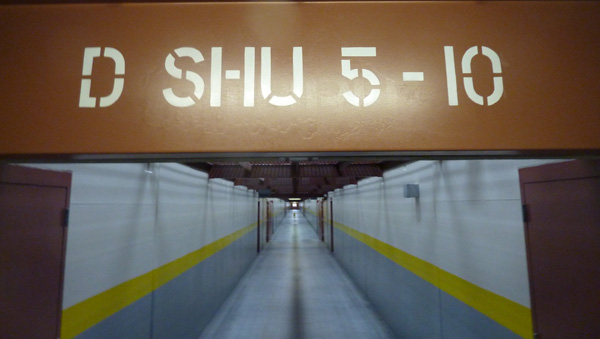
This latest hunger strike was called for and organized by prisoners in the “secure housing units,” aka solitary confinement cells, at the maximum security Pelican Bay State Prison, many of whom have gone years without meaningful human interaction. Court filings indicated that more than 400 prisoners have been locked up in solidary for more than a decade, despite the psychological harm that experts say such confinement causes.   

The prisoners today issued a long statement announcing the end of the hunger strike, which includes this excerpt: “To be clear, our Peaceful Protest of Resistance to our continuous subjection to decades of systemic state sanctioned torture via the system’s solitary confinement units is far from over. Our decision to suspend our third hunger strike in two years does not come lightly. This decision is especially difficult considering that most of our demands have not been met (despite nearly universal agreement that they are reasonable). The core group of prisoners has been, and remains 100% committed to seeing this protracted struggle for real reform through to a complete victory, even if it requires us to make the ultimate sacrifice.  With that said, we clarify this point by stating prisoner deaths are not the objective, we recognize such sacrifice is at times the only means to an end of fascist oppression.

“Our goal remains: force the powers that be to end their torture policies and practices in which serious physical and psychological harm is inflicted on tens of thousands of prisoners as well as our loved ones outside.  We also call for ending the related practices of using prisoners to promote the agenda of the police state by seeking to greatly expand the numbers of the working class poor warehoused in prisons, and particularly those of us held in solitary, based on psychological/social manipulation, and divisive tactics keeping prisoners fighting amongst each other. Those in power promote mass warehousing to justify more guards, more tax dollars for “security”, and spend mere pennies for rehabilitation — all of which demonstrates a failed penal system, high recidivism, and ultimately compromising public safety.”

Kim calls for hearing on how SFPD investigates cyclist fatalities UPDATED

72

UPDATED In the wake of revelations of shoddy and insensitive police work related to the Aug. 14 death of 24-year-old bicyclist Amelie Le Moullac, who was run over by a commercial truck driver who turned right across her path as she rode in a bike lane on Folsom Street at 6th Street, Sup. Jane Kim today called for a hearing on how the SFPD investigates cyclist fatalities.

The issue has lit up the Bay Guardian website with hundreds of reader comments after we wrote a series of blog posts and our “Anti-cyclist bias must stop” editorial, including our revelation that the SFPD failed to seek surveillance video of the crash even as its Sgt. Richard Ernst showed up at an Aug. 21 memorial to Le Moullac to denigrate cyclists and make unfounded statements about the fatal collision.

Police Chief Greg Suhr later apologized for Ernst’s behavior and the flawed investigation and said that surveillance video unearthed by cycling activists led to the conclusion by a police investigation that the driver who killed Le Moullac was at fault, according to Bay City News and SF Appeal, which also reported on Kim’s call for a hearing.

As we reported, motorists are rarely cited in collisions with cyclists or pedestrians, even when there’s a fatality involved and the motorist didn’t have the right-of-way, which appears to the case in Le Moullac’s death. The District Attorney’s Office, which did not immediately return a call from the Guardian, is considering whether to bring criminal charges in the case.

UPDATE: We just heard from DA’s Office spokesperson Stephanie Ong Stillman, who said, “The San Francisco Police Department has delivered a preliminary investigative package and we are in the process of reviewing it to determine what additional investigation is necessary.”

UPDATE 9/5 5pm: San Francisco Bicycle Coalition Executive Director Leah Shahum says she welcomes Kim’s hearings, which are long overdue. “We’re really thankful to Jane for bringing this forward,” Shahum told the Guardian, saying she hopes the hearing results in changes to how the SFPD investigates cyclist fatalilties. “We want to make sure there is ongoing accountability.”

She also said the San Francisco Municipal Transportation Agency has indicated to SFBC that it is working on near-term and long-term improvements on both Folsom and Howard streets, where cyclists in bike lanes must regularly contend to drivers cutting them off. The city does seem committed to a significant pilot of better bikeways there.”

Meanwhile, as the San Francisco Examiner reported today, Le Moullac’s family has filed a civil lawsuit against the driver who killed her, Gilberto Oriheaula Alcantar, as well as the company that he was driving for, Daylight Foods Inc., alleging that he was negligent in driving too fast and failing to pulled into the bike lane before making a right turn from Folsom onto 6th Street.

The Rim Fire and climate change

The monstrous blaze that swept through Yosemite and burned 237,841 acres was a record breaker. According to the latest statistics from Cal Fire, the Rim Fire was the fourth highest in the history of California, with a $77 million price tag. Thanks to the efforts of more than 4,000 firefighters and support personnel, the blaze was 80 percent contained as of the latest update on Sept. 4.

While the exact cause remains a mystery for now, it’s worth pointing out that the Rim Fire could not have reached such epic proportions if it hadn’t been for the dry conditions in place when the smoldering began. And as climate change continues to alter weather patterns across the Western United States, projected declines in precipitation and higher average temperatures will lead to more of the same conditions that give rise to hot destructive infernos.

Daniel Berlant, an information officer with Cal Fire, noted in a recent telephone interview that summers have been longer and hotter over the past decade, a trend that has coincided with a spike in wildfires.

According to Cal Fire statistics, there were 5,135 fires in California from January 1 through August 31 of this year. Over the same time span last year, there were 3,731 fires recorded. The five-year average is even lower, at 3,638.

Another troubling statistic: Seven out of the 10 largest wildfires in California history occurred in the last decade alone.

“What we’ve been seeing here in this past decade is longer summers – seven to eight days longer than normal,” Berlant explained. “There’s a correlation between a longer summer and more wildfires,” he continued, and when rainfall finally does arrive, it comes in at record lows, Berlant explained. Meanwhile, “The high temperatures evaporate more of the rain.”

Brush and vegetation that take in moisture from rainfall have a better chance at withstanding a fiery blaze, Berlant noted, but when things stay bone dry, the plants act as kindling that causes the blaze to burn hotter.

So as climate change continues to transform the natural landscapes of the West, costly raging wildfires might be what Californians have to look forward to. Find that depressing? Here’s a captivating YouTube time-lapse video to distract you.

Are Yee’s anti-tenant votes about courting contributions from landlords?

30

Sen. Leland Yee has never been a vote that renters could count on, from his days on the San Francisco Board of Supervisors to his representation of San Francisco’s westside in the California Legislature. But now that he’s preparing a statewide campaign for Secretary of State, tenant advocates say he’s more squirrely that ever.

They’ve been rankled by a couple of key Yee votes this year — and by Yee’s apparent unwillingness to engage with them or explain any concerns he might have — particularly Yee’s vote yesterday against legislation that would allow cities and counties to reinstate requirements that developers include some affordable rental units in their housing projects, which the California Supreme Court took away in 2009 with its infamous Palmer v. Los Angeles decision.

That legislation, Assembly Bill 1229, was narrowly approved by the California Senate yesterday despite an aggressive opposition campaign by landlords and developers who initially got overwise supportive Democrats to take a walk and abstain from voting, although tenants groups were finally able to stiffen enough spines to win passage. It now awaits the signature of Gov. Jerry Brown, who hasn’t yet taken a position on the measure.

“It directly overturns [the Supreme Court’s ruling on local inclusionary housing laws] and puts us right back where we were before the Palmer decision. It’s a hugely significant affordable rental housing measure,” Dean Preston, head of the statewide Tenants Together, told the Guardian.

But Yee, who provided the Guardian with a written statement in response to our questions, dismisses the bill’s significance: “SB 1229 is a piecemeal solution, offering a chance at lotteries in housing developments scattered randomly throughout the state. I’m proud to stand by my record of supporting effective legislation to provide affordable housing, supporting inclusionary housing and protecting rent control.”

Preston told us the statement “makes no sense and it doesn’t explain why he supported the same thing two years ago that he now opposes,” referring to Sen. Mark Leno’s SB 184, which died in the Senate two years ago.

But Preston did say that he’s happy to hear Yee explain himself, something that he’s been unwilling to do so far this year, including on his vote against Leno’s SB 603, who would have created sanctions for landlords that illegally withhold security deposits from their renters. It stalled in the Senate back in May.

“SB 603 would have invited lawsuits against landlords throughout the state, honest and otherwise, which would inevitably lead to property owners taking units off the market and driving up prices,” is how Yee now explains that vote to the Guardian.

But Preston said that explanation also doesn’t make sense, noting that Leno’s bill is already law in Alabama. “There’s no disincentive whatsoever for landlords to illegally withhold deposits,” Preston said, noting the he and other activists have fruitlessly tried for months to reach Yee on the issue. “It’s good to finally hear any explanation for his vote, months later.”

“There’s a pattern emerging with him where he won’t even explain his votes,” Preston said, noting that Yee “is running for statewide office and he’s trying to appeal to landlords and developers.”

Indeed, Yee will need to raise buckets of cash to reach a statewide audience, and he certainly understands who has the money these days. But Yee denies that he is carrying water for landlords, citing other pro-tenant votes: “I’ve always been proud to fight for tenants. Earlier this year, I cast the deciding vote for SB 391 which directs an estimated $720 million in state funds annually to the construction, rehabilitation and continued preservation of low and affordable affordable housing for everyone, families, seniors, veterans, people with disabilities, the unemployed, and the homeless. I spent years fighting for redevelopment agencies, one of only three Democrats to do so, which put a billion dollars a year into providing affordable housing throughout the state. These are programs that have been proven to be effective, an example of good results rather than just good intentions.”

UPDATE 3pm: Leno just returned our call from the floor of the Senate, where he said that Yee mischaracterized SB 603. “Those are the talking point of the industry and they’re just plain wrong,” Leno told us.

Leno said he modified the bill significantly to win support, including removing provisions that would have required landlords to keep deposits in separate accounts and pay interest on them. “All that remained is the penalty for a landlord that is was determined by the courts had illegally kept a deposit,” Leno told us. “And it still stalled. It’s the power of that lobby.”

Hormone replacement therapy and video games: Anna Anthropy talks Dy5phoria

2

Video games go to alien worlds all the time, but rarely have they explored a transgender person’s identity until Dys4ia. The 2012 Adobe Flash game traced designer Anna Anthropy’s hormone replacement therapy journey, guiding the player through trying on women’s clothing for the first time, dealing with the agony of shaving, and correcting all the people who call you “sir” instead of “ma’am.”

Anthropy was kind enough to let the Guardian interview her in her Oakland home, dodge her energetic cats, and record an audio interview where she walks us through her new game, Dy5phoria, the new chapter and pseudo-sequel to Dys4ia. You can also read a selection from the audio interview below. 

SF Bay Guardian How do you pronounce the new title? 

Anna Anthropy I’ve been calling it Dys-five-ia out loud, but it’s spelled like Dys4ia with a 5 instead of an S. 

SFBG You’re hitting steam now with added content, can you tell us what’s new?

AA Dys4ia is made up of four chapters which represent different times in my life when I was starting to go on hormone replacement therapy. Dy5phoria which will come with Dys4ia is a fifth chapter that follows what’s happened in my life since the place Dys4ia ended.

SFBG Not quite a sequel but downloadable content?

AA Like a fifth chapter, if you will. 

Listen to the full 26 minute interview in the Sound Cloud file above.

SFBG Can you talk about what seperated it from mainstream games?

AA Oh god I’m so sick of talking about Dys4ia, but I will! It’s essentially a collection of short fast scenes, kind of like Wario Ware, that represents the different facets of what happened to me in this part of my life. The frustrations of dealing with gatekeepers and being misgendered. It’s also about the moments of beauty and hope that reassure me that things maybe are getting closer to how I want them to be in my life.

SFBG What were those moments of hope?

AA One of the things that happens to me in Dys4ia is my tits get bigger, and that was nice.

One of the things in Dy5phoria that has changed is the ways I’ve externalized my femininity more and felt prettier and better about being a girl. It was important that mixed in the bullshit I put in the reasons about why this is important to me.

SFBG Can you talk about how Dy5phoria is different than what came before it?

AA In Dys4ia the avatars in the scenes are really inconsistent. Depending on the context I might be a blobby stick figure, or a shield, a razor, a little munchy thing depending on the experience. My body was going through flux at the time, it made sense for the game to represent that by not having a consistent avatar. In Dy5phoria all the levels have a consistent avatar that look like me and who I’ve become comfortable being.

There’s a different motif in the game, there’s some consistency now, some sort of permanence.

SFBG There’s an 8-bit retro style right? It’s like an NES game.

AA Kind of. I don’t want it to be Nintendo retro because I think thats twee and bad, I think that’s overused.

SFBG Omni retro?

AA Sure.

SFBG Tell me where you are in development and what you’re doing today.

AA My process for this game is that every day I sit down and do a single scene. The one I’m working on today is about painting my nails, and the ways I’ve found to externalize my femininity more. The level is just that: a hand with a nail polish brush. Its just that.You paint my nails, and then its over.

Nails painted in screenshot of Dy5phoria

SFBG Well thats the power of videogames right? You carry out the narrative act, as opposed to simply watching it. You mentioned the TSA level earlier. What happened to you and what’s the problem making that read well?

AA There’s a level in Dy5phoria when I was groped by the TSA at the airport. The way that big horrible scanning thing works is there’s a button with a female and a male button. I’ve had it go either way. This particular time I got scanned as male. On the screen parts of me came up as suspicious areas, and there on the screen there were squares around my tits.

My tits came up as an anomaly, and this guy (security) was obliged to grope my breasts. I’m attempting to translate this to a scene in Dy5phoria. I don’t think it’s reading as well as it could because it’s a bit too complicated. 

SFBG Do you think your game designer chops have improved since you did Dys4ia?

AA It’s more like my interests have changed. I’m a lot less interested in making digital games than I used to be. I’ve sort of been envisioning what a fifth chapter of Dys4ia would look like, but when the opportunity came I’m actually more interested in board games than sitting down and coding a game. This is the last game I want to code myself, but I kind of have to because Dys4ia is all mine, all my project. This is kind of a closing of the book for me, in a lot of ways. 

SFBG So you’ll never do digital games again?

AA It’s not that I won’t do digital games again, I’m actually announcing a new game at Indiecade. I just don’t want to do the programming myself. I’ve always learned the coding I needed to do, a mish mash. That’s why I work on Twine games because I don’t have to do any coding. Dy5phoria will be the last project I’ll code myself but it won’t be my last digital game.

SFBG You mentioned you’re sick of talking about Dys4ia, but when I was at GaymerX I met this gal who recently transitioned her gender and was working at your workshop there. She has so completely totally inspired by you. You should have seen her face.

AA I did in fact see her face, she came up to my autograph session, and told me the game was meaningful. Those comments make me feel really good. I’m sick of answering questions about Dys4ia but I’m not sick of hearing it means something to people. That’s why I do anything, I want to make things that will actually connect with people. She told me and other people have told me Dys4ia gave her the confidence to make the decision to start going on hormones.

Hormones have been positioned as the central experience of being trans, which I don’t think is good, because there are trans people who don’t go on hormones. But for those people that are thinking of going on hormones is I hoped Dys4ia would give some sense about what that would be like an the challenges and really really nice things of being on hormones would be like. If it has done that for people I feel accomplished in that regard. 

SFBG And it seems sometimes you’re at the center to this kind of very indie, very LGBT conscious, very different game movement that seems to be happening a lot here in the Bay Area and other places as well. Can you talk about what’s bringing the rise of that about?

AA I think what’s important to outsiders of the mainstream game industry that the industry is mostly pitching to straight cis males. I think what’s making it possible for people to participate are tools like Twine, a hypertext tool where only recently people started realizing they could use it to make games.

Because the tool is so simple if you’re capable of writing you’re capable of making a game with Twine. You can make almost journal style, personal games. There are a lot more autobiographical games coming out with this tool.

The industry is spending millions to make games, they don’t have the liberty to make something risky and personal and weird. If something takes a few hours to make or a few days or a week, you can make what you want.

These avenues of gaming that are barred to queer and marginalized people, people who are barred from making games in this sexist, cisnormative tech culture have found an avenue in making games in Twine and other free game tools. There are avenues for making games for people who the industry don’t think are its mainstream. 

D5phoria is due out on Steam in the fall. You can play the first in the series, Dys4ia, here

The Performant: Fringe 101, an essential lexicon revisited.

0

With the frenzy of the Edmonton Fringe Festival finally subsided, and Vancouver’s about to begin, myself and the Naked Empire Bouffons are ready for action. We have posters to plaster, our venue to scope out, and fellow artists to schmooze before the festival opens on the fifth, but in the interim I have time to let my attentions wander back momentarily to San Francisco, whose Fringe Festival also opens this week.

Did you know that we boast the second oldest Fringe Festival in the United States (the first being Orlando’s)? And that, along with Vancouver, we represent the final leg of the CAFF (Canadian Association of Fringe Festivals) circuit for touring Fringe artists, despite the small complication of not actually being Canadian? Admittedly our festival is smaller than the Vancouver event (36 shows, as compared to 91 and counting), but it’s still a veritable bacchanal of drama, dance, and comedic derring-do packed into 14 days.

For the frequent fringer and the newcomer to the fold alike, the biggest challenge can be narrowing down the field of options to a manageable handful, and while I always advocate the time-honored tradition of asking other people who have already seen a particular show their opinion of it, I’ve also become rather adept at translating some of the more commonly-used descriptors in program blurbs, which does help with the initial elimination process (note: you should always be willing to change your mind about something you’ve eliminated if the buzz it’s generating is suitably favorable). Since it never hurts to be prepared, here is my personal Fringe Festival program guide glossary, reprinted from its 2011 debut, to help you locate the Fringe experience you’re looking for, whether it be a farce, a fantasy, or a free-for-all.

Bare Bones: We’ve never heard of Kickstarter
Cheese: Neo-surrealists in the house
Classic: We don’t need the rights to present this work
Dark: At least one of the characters dies
Disturbing: If you don’t like fart jokes
Dynamic: Theater Arts undergrads
Edgy: Guaranteed to offend at least one minority group
Erotic: For inexplicable reasons, won’t include nudity
Existential: At least half of the characters die
Experiential: Audience participation required
Experimental: We decided not to bother writing a script
Fresh Take: You’ve seen this play 100 times before
Hilarious: If you like fart jokes
Inspirational: Overcoming the effects of an upper middle-class upbringing
Interactive: Don’t sit in the front row
Internationally-acclaimed: Also performed at the Winnipeg Fringe
Multi-media: If our projector breaks we’re screwed
New Translation: We worked way harder on this show than you can imagine
Noir: Will be wearing great hats
Noirish: Couldn’t afford great hats
Poignant: There will be at least one monologue about innocence lost
Provocative: Will include violence and nudity
Quotes from famous people: Assistant Director used to walk their dogs
Quotes from previous runs: We have had a chance to rehearse this
Reimagined: We don’t actually have the rights to present this work
Sensitive: Over-wrought
Site-Specific: Wear layers
Riveting: The stage manager’s mother-in-law said so
Thought-provoking: Will include either violence or nudity
Uncompromising: Guaranteed to offend pretty much everyone
Unforgettable: No matter how hard you try
Universal: Fart jokes
Visceral: Don’t sit in the front row
Wacky: A kazoo will definitely make an appearance at some point
With a twist: You can see it coming
World Premiere: We haven’t had a chance to rehearse this

Wanna Fringe vicariously through us? Follow @enkohl and @NakdEmprBouffon on the twit-thing for updates and gossip.