SFBG Blogs

Solomon: Obama will launch a huge propaganda blitz–and may attack Syria even if he loses the vote in Congress

22

Norman Solomon is co-founder of RootsAction.org and founding director of the Institute for Public Accuracy. His books include “War Made Easy: How Presidents and Pundits Keep Spinning Us to Death.” Information on the documentary based on the book is at www.WarMadeEasyTheMovie.org.

Grassroots pressure has forced President Obama to seek approval from Congress for an attack on Syria. But Obama is hell-bent on ordering a missile assault on that country, and he has two very important aces in the hole.

The administration is about to launch a ferocious propaganda blitz that will engulf a wide range of U.S. media. And as a fallback, the president is reserving the option of attacking Syria no matter what Congress does.

Until Obama’s surprise announcement Saturday that he will formally ask Congress for authorization of military action against Syria, the impassioned pitches from top U.S. officials in late August seemed to be closing arguments before cruise missiles would hit Syrian targets. But the pre-bombing hyper spin has just gotten started.

The official appeals for making war on yet another country will be ferocious. Virtually all the stops will be pulled out; all kinds of media will be targeted; every kind of convoluted argument will be employed.

Hell hath no fury like war-makers scorned. Simmering rage will be palpable from political elites who do not want to see Congress set an unprecedented precedent: thwarting the will of a president who wants Pentagon firepower unleashed on another country.

President Obama and top Democrats such as House Minority Leader Nancy Pelosi will twist every arm they can to get a “yes” vote for attacking Syria. Meanwhile, most mainline media pundits, numbingly addicted to war, will often chastise and denigrate foes of authorization.

But we have a real chance to prevent a U.S. attack. One cogent argument after another, from intelligence veterans and policy analysts and weapons experts, has debunked the messaging for war on Syria. And some members of Congress — not nearly enough, but some — have begun to speak up with cogent opposition.

One of NPR’s inside-the-box hosts of “All Things Considered” on August 30 asked Rep. Zoe Lofgren (D-Calif.) about the Obama administration’s claim that missile strikes on Syria would be “a limited action” and not “war.” Congresswoman Lofgren replied: “I think that anyone who argues that shooting missiles and dropping bombs on another country is not an act of war has got some further education warranted. If somebody shot cruise missiles at Washington for only one day, we would still consider it an act of war, wouldn’t we?”

Not many members of Congress have Lofgren’s clarity, and many of their votes on authorization are up for grabs. Each of us can help affect the outcome by demanding that our senators and representative oppose the war resolution. We should make our voices heard in all sorts of public venues.

The president’s move for a congressional vote should cause a major escalation of anti-war activism. A straw in the wind: during just a few hours after Obama’s announcement on Saturday afternoon, nearly 10,000 people took the initiative via RootsAction.org to email members of Congress with a “No Attack on Syria” message.

National opinion polling and momentum inside Congress indicate that we can defeat Obama’s war resolution. It’ll be a tremendous fight, but we can prevail.

But even if Obama loses the vote in Congress, there’s a very real danger that he will proceed with ordering an attack on Syria.

Burying the lead almost a dozen paragraphs into a September 1 news story, the New York Times mentioned in passing: “White House officials indicated that Mr. Obama might still authorize force even if Congress rejected it.”

A careful reading of Obama’s Rose Garden announcement on Saturday verifies that he never quite said he will abide by the decision of Congress if it refuses to approve an attack on Syria. Instead, the president filled his statement with hedging phrases, detouring around any such commitment with words like these:

*  “I have decided that the United States should take military action against Syrian regime targets. … And I’m prepared to give that order. But … I’m also mindful that I’m the President of the world’s oldest constitutional democracy.”

*  “I will seek authorization for the use of force from the American people’s representatives in Congress.” 

*  “Over the last several days, we’ve heard from members of Congress who want their voices to be heard. I absolutely agree. So this morning, I spoke with all four congressional leaders, and they’ve agreed to schedule a debate and then a vote as soon as Congress comes back into session.”  

*  “And all of us should be accountable as we move forward, and that can only be accomplished with a vote.” 

*  “I’m ready to act in the face of this outrage. Today I’m asking Congress to send a message to the world that we are ready to move forward together as one nation.”

At the grassroots, people across the United States will be working very hard to prevent congressional approval of an attack on Syria. That activism is imperative. But we should also understand that Obama has not committed himself to abide by the decision that Congress makes.

Norman Solomon is co-founder of RootsAction.org and founding director of the Institute for Public Accuracy. His books include “War Made Easy: How Presidents and Pundits Keep Spinning Us to Death.” Information on the documentary based on the book is at www.WarMadeEasyTheMovie.org.

(Bruce B. Brugmann edits and writes the bruce blog on the Bay Guardian website at sfbg.com.  He is the editor at large of the Bay Guardian and former editor and co-founder and co-publisher with his wife Jean Dibble, 1966-2012.)



Extra! Extra! Calling all Nebraska Cornhuskers!

12

How to watch the Nebraska vs. Wyoming game at 5 p.m today on 403 cable and at the Final Final bar  in SF (Saturday, Aug. 31, 2013). Plus: Some inside Nebraska football.

Well, today, first game day at the University of Nebraska/Lincoln, I got out my red Nebraska cap and my white sweat socks with a red trim and the former Jean Dibble got out her red Nebraska sweater.   

Today is the opening game of the season for the Nebraska Cornhuskers and we planned to watch the game. We faithfully watched every game last year and we planned to do so again this year. Jean and I are both graduates of the University of Nebraska. I was editor for a semester in the spring of 1956  of the Daily Nebraskan (known affectionately in my day as the Rag) and we plan to return in October for a grand reunion of the Rag staffs through the years.  Our grandson Nicholas Perez of Santa Barbara is a sophomore mechanical engineering student and has season tickets. And so we became even more faithful fans.

Normally, the opening game is a breeze for the Cornhuskers, but the opening game of the 1955 season, when I was the sports editor of the Rag, was a classic Nebraska loss in a state where NU football losses aren’t tolerated. Nebraska played terribly and lost, 6-0, to the University of Hawaii at Memorial Stadium in a game so humiliating that the Cornhuskers never got closer than Hawaii’s 13-yard line.

Immediately, the Nebraska press and the sports writers across the state  erupted virtually in unison and started pounding on  Bill Glassford, the coach, and kept piling  on with increasing ferocity  for the rest of the season.  

The most virulent were the local sports editors, Dick Becker of the Lincoln Journal and Don Bryant of the Lincoln Star, operating with the power and safety of a joint operating agreement (JOA). (The JOA monopoly  was soon to be declared illegal with President Kennedy’s famous federal antitrust case against the JOA papers in Tucson, Arizona. The U.S. Supreme Court ruled  that the JOA was a  prima facie violation of antitrust law because it pooled profits, fixed prices, and shared markets. The JOA publishers, including the Lee chain that owned the morning  Star and the Seacrest family that then owned the afternoon Journal, lobbied Congress and President Nixon to legalize retroactively  JOAs with special interest legislation.)

I called Becker and Bryant  the Bobbsey Twins of the Journal-Star, countered them whack for whack and defended Glassford with facts and gusto .After all, he was a solid coach with a decent  5-5 season, won second place in the tough Big Seven conference and went on to play in the Orange Bowl.  I was surprised to find that I was about the only sports writer in the state to support Glassford.

Sadly, this was Glassford’s last season and  the end of his coaching career. However, a couple of coaches later, along came Bob Devaney and Tom Osborne and national champsionships and five decades of sold out crowds in Memorial Stadium. Later, I felt that I had been the precursor to Wes “Scoop” Nisker, a Nebraska native from Norfolk, and his famous motto he laid out as a newsman on KSAN radio in San Francsico during the during the dark days of Nixon and Vietnam. “If you don’t like the news,” Scoop would say, “go out and make some of your own.” Perhaps, I later mused,  this unlikely game in this unlikely place was the unlikely start of my career in fighting for the underdog and promoting  alternative journalism.with the Bay Guardian.

But I digress. Updating my research from last year, this is how to watch today’s game.

Nebraska is now a member of the Big Ten conference and so its games are shown on the Big Ten Network (BTN, cable station 403 in San Francisco.) Today’s game will be broadcast at 7 p.m. Nebraska time, 5 p.m. California time.

And then there’s the Nebraska bar in San Francisco, aptly called Final Final, the lively neighborhood sports bar at 2990 Baker Street, across from the Presidio. The bar is real Nebraska. It is owned by Arnie Prien, who comes from Lyons, Nebraska, and graduated from the university in 1964.  He has been running Final Final for the past 36 years and loyally broadcasts Nebraska football games every Saturday on his premier giant screen.

The NU faithful, he told me,  come from all over the Bay Area to see the games and enjoy Husker camaraderie.   (I have always been leery of the alleged Herb Caen rule: never check the item, you might lose it.) So I called Final Final this morning to check. The game, I am happy to report, is on the big screen today at 5 p.m and the suggestion is to come an hour or so early for a seat and first shot at the free pop corn and inexpensive beer.  

Final Final got its name from the days when the soldiers got their final drink before heading back to their barracks at the Presidio after a night on the town. This is most ironic, since the Lincolnites of my era suffered under strict drinking laws,  which meant that one could not get a hard drink nor cocktail in a public bar but only in the sanctuary of the private University Club in the Stuart Building. And then only if one kept a bottle in a private locker.

There is no place like Nebraska. Especially in San Francisco. Go Big Red. b3

Final Final. 2990 Baker St.  San Francisco 94123. 415-931-7800. Nebraska vs. Wyoming, 5 p.m.

P.S. The NU alumni site lists three other “watch sites” in the Bay Area.  Jack’s Brewing Company in Fremont. Legends and Heroes in Concord. And Knuckles Sports Bar in Monterey.

(Bruce B. Brugmann, who signs his blogs and emails b3,  writes and edits the bruce blog on the Bay Guardian website at sfbg.com. He is the editor at large of the Bay Guardian and the former editor and co-founder and co-publisher with his wife Jean Dibble, l966-2013. He can be reached at bruce@sfbg.com.)

Fall films to look forward too … and new movies to see tonight!

1

Click this way for my Fall Film Preview, presented as part of this weeks Fall Arts spectacular. With bonus photo of Bradley Cooper’s Brady perm!

Read on for this week’s openings, including one of the best indie films of the year, the latest from Wong Kar-Wai, and, uh…the One Direction movie.

http://www.youtube.com/watch?v=tH5oaGgYb-Y

Closed Circuit British thriller about a pair of lawyers (Eric Bana, Rebecca Hall) drawn into a possible government cover-up while investigating a London explosion. (1:36)

http://www.youtube.com/watch?v=6YYMY4PcmT4

Drinking Buddies Mumblecore grows up in this latest from actor-writer-director Joe Swanberg (currently starring in You’re Next), about brewery co-workers Kate (Olivia Wilde) and Luke (Jake Johnson), BFFs who’d obviously be the perfect couple if they weren’t already hooked up with significant others. At least, they are at the start of Drinking Buddies; the tension between them grows ever-more loaded when the messy, chaotic Kate is dumped by older boyfriend Chris (Ron Livingston) — a pairing we know is bound to fail when we spot him chiding her for neglecting to use a coaster. Luke’s long-term coupling with the slightly younger but way-more-mature Jill (Anna Kendrick) is more complicated; all signs indicate how lucky he is to have her. But the fact that they can only meander around marriage talk indicates that Luke isn’t ready to settle down — and though Jill may not realize it, Luke’s feelings for Kate are a big reason why. Working from a script outline but largely improvising all dialogue, Swanberg’s actors rise to the challenge, conveying the intricate shades of modern relationships. Their characters aren’t always likable, but they’re always believable. Also, fair warning: this movie will make you want to drink many, many beers. (1:30) Roxie. (Cheryl Eddy)

http://www.youtube.com/watch?v=j1w6CWtykK0

Getaway Ethan Hawke and Selena Gomez team up in a high-speed, high-stakes race to save Hawke’s kidnapped wife. Jon Voight co-stars as “Mysterious Voice,” so there’s that. (1:29)

The Grandmaster The Grandmaster is dramatic auteur Wong Kar-Wai’s take on the life of kung-fu legend Ip Man — famously Bruce Lee’s teacher, and already the subject of a series  of Donnie Yen actioners. This episodic treatment is punctuated by great fights and great tragedies, depicting Ip’s life and the Second Sino-Japanese War in broad strokes of martial arts tradition and personal conviction. Wong’s angsty, hyper stylized visuals lend an unusual focus to the Yuen Woo-Ping-choreographed fight scenes, but a listless lack of narrative momentum prevents the dramatic segments from being truly engaging. Abrupt editing in this shorter American cut suggests some connective tissue may be missing from certain sequences. Tony Leung’s performance is quietly powerful, but also a familiar caricature from other Wong films; this time, instead of a frustrated writer, he is a frustrated martial artist. Ziyi Zhang’s turn as the driven, devastated child of the Northern Chinese Grandmaster provides a worthy counterpoint. Another Wong cliché: the two end up sadly reminiscing in dark bars, far from the rhythm and poetry of their martial pursuits. (1:48) (Sam Stander)

Instructions Not Included Mexican superstar Eugenio Derbez stars in this comedy about a ladies’ man who finds redemption when he’s suddenly tasked with being a single parent to his young daughter. (1:55)

http://www.youtube.com/watch?v=55wi0RlBIPU

One Direction: This is Us Take them home? The girls shrieking at the opening minutes of One Direction: This Is Us are certainly raring to — though by the closing credits, they might feel as let down as a Zayn Malik fanatic who was convinced that he was definitely future husband material. Purporting to show us the real 1D, in 3D, no less, This Is Us instead vacillates like a boy band in search of critical credibility, playing at an “authorized” look behind the scenes while really preferring the safety of choreographed onstage moves by the self-confessed worst dancers in pop. So we get endless shots of Malik, Niall Horan, Liam Payne, Harry Styles, and Louis Tomlinson horsing around, hiding in trash bins, punking the road crew, jetting around the world, and accepting the adulation of innumerable screaming girls outside — interspersed with concert footage of the lads pouring their all into the poised and polished pop that has made them the greatest success story to come out of The X Factor. Too bad the music — including “What Makes You Beautiful” and “Live While We’re Young” — will bore anyone who’s not already a fan, while the 1D members’ well-filtered, featureless, and thoroughly innocuous on-screen personalities do little to dispel those yawns. Director Morgan Spurlock (2004’s Super Size Me) adds just a dollop of his own personality, in the way he fixates on the tearful fan response: he trots out an expert to talk about the chemical reaction coursing through the excitable listener’s system, and uses bits of animation to slightly puff up the boy’s live show. But generally as a co-producer, along with 1D mastermind Simon Cowell, Spurlock goes along with the pop whitewashing, sidestepping the touchy, newsy paths this biopic could have sallied down — for instance, Malik’s thoughts on being the only Muslim member of the biggest boy band in the world — and instead doing his best undermine that also-oh-so-hyped 3D format and make One Direction as tidily one dimensional as possible. (1:32) (Kimberly Chun)

The Patience Stone “You’re the one that’s wounded, yet I’m the one that’s suffering,” complains the good Afghan wife in this theatrical yet charged adaptation of Atiq Rahimi’s best-selling novel, directed by the Kabul native himself. As The Patience Stone opens, a beautiful, nameless young woman (Golshifteh Farahani) is fighting to not only keep alive her comatose husband, a onetime Jihadist with a bullet lodged in his neck, but also simply survive on her own with little money and two small daughters and a war going off all around her. In a surprising turn, her once-heedless husband becomes her solace — her silent confidante and her so-called patience stone — as she talks about her fears, secrets, memories, and desires, the latter sparked by a meeting with a young soldier. Despite the mostly stagy treatment of the action, mainly isolated to a single room or house (although the guerilla-shot scenes on Kabul streets are rife with a feeling of real jeopardy), The Patience Stone achieves lift-off, thanks to the power of a once-silenced woman’s story and a heart-rending performance by Farahani, once a star and now banned in her native Iran. (1:42) (Kimberly Chun)

Short Term 12 A favorite at multiple 2013 festivals (particularly SXSW, where it won multiple awards), Short Term 12 proves worthy of the hype, offering a gripping look at twentysomethings (led by Brie Larson, in a moving yet unshowy performance) who work with at-risk teens housed in a foster-care facility, where they’re cared for by a system that doesn’t always act with their best interests in mind. Though she’s a master of conflict resolution and tough love when it comes to her young chargers, Grace (Larson) hasn’t overcome her deeply troubled past, to the frustration of her devoted boyfriend and co-worker (John Gallagher, Jr.). The crazy everyday drama — kids mouthing off, attempting escape, etc. — is manageable enough, but two cases cut deep: Marcus (Keith Stanfield), an aspiring musician who grows increasingly anxious as his 18th birthday, when he’ll age out of foster care, approaches; and 16-year-old Jayden (Kaitlyn Dever), whose sullen attitude masks a dark home life that echoes Grace’s own experiences. Expanding his acclaimed 2008 short of the same name, writer-director Destin Daniel Cretton’s wrenchingly realistic tale achieves levels of emotional honesty not often captured by narrative cinema. He joins Fruitvale Station director Ryan Coogler as one of the year’s most exciting indie discoveries. (1:36) (Cheryl Eddy)

Thérèse Both Emma Bovary and Simone de Beauvoir would undoubtedly relate to this increasingly bored and twisted French woman of privilege stuck in the sticks in the ’20s, as rendered by novelist Francois Mauriac and compellingly translated to the screen by the late director Claude Miller. Forbiddingly cerebral and bookish yet also strangely passive and affectless, Thérèse (Audrey Tautou) looks like she has it all from a distance — she’s married to her best friend’s coarse, hunting-obsessed brother (Gilles Lellouche) though envious of her chum’s affair with a handsome and free-thinking Jewish student. Turns out she’s as trapped and close to death as the birds her spouse snares in their forest, and the suffocatingly provincial ways of family she’s married into lead her to undertake a dire course of action. Lellouche adds nuance to his rich lunk, but you can’t tear your eyes from Tautou. Turning her pinched frown right side up and hardening those unblinking button eyes, she plays well against type as a well-heeled, sleepwalking, possibly sociopathic sour grape, effectively conveying the mute unhappiness of a too-well-bred woman born too early and too blinkered to understand that she’s desperate for a new century’s freedoms. (1:50) (Kimberly Chun)

Live Review: My Bloody Valentine’s SF show feels like something beamed in from another decade

17

Swirling guitars… cooing vocals… that all-engulfing wall of noise. It’s difficult to describe My Bloody Valentine‘s sound without veering into borderline erotica, and understandably so; in the guitar rock landscape, few bands make music that’s so tactile and exhilarating.

For many of its devoted fans, the band’s seminal 1991 LP, Loveless, is inextricably tethered to private moments of introspection and sexuality. Its delicate balance between loud and quiet, menace and seduction, resulted in a sense of emotional ambiguity, allowing the listener to project their own perspectives and yearnings onto those immaculate pop songs.

Fresh off the heels of this year’s long-awaited Loveless followup, simply titled mbv, My Bloody Valentine stopped by SF this past Friday for its first Bay Area appearance since 2008, on its first tour in support of new material since the early ’90s.

By the looks of the crowd, the band’s overwhelming paralysis was in full force. As wary as I am of audiences too “cool” or self-conscious to dance at live shows, this crowd’s stillness felt wholly appropriate. The band’s output rarely feels conducive to dancing, or jamming out; it’s music to surrender to, and My Bloody Valentine had the crowd in the palm of its hand.

Given My Bloody Valentine’s inconsistent production sound, from the tinny Jesus-and-Mary-Chaininess of Isn’t Anything (1988), to the fuller, more tactile Loveless, to the thuddy brawn of mbv, one of the highlights of last Friday night’s show was hearing a career-spanning set of songs, all delivered with similar depth and richness. It was quite the thrill to hear older material, like “Feed Me With Your Kiss,” and “Only Shallow,” delivered with the generous low-end of MBV circa 2013.

As new songs like “only tomorrow” and “who sees you” suggest, the band’s dynamics have grown more boomy and forceful, yet alternately, groovier and more relaxed. Much of the credit goes to the rhythm section of Deb Googe and Colm Ó Cíosóig, who plucked and smacked their instruments ferociously, providing much of the backbone that defines My Bloody Valentine’s second wave. It all makes sense, considering Googe’s muscular bass-lines on this year’s excellent Primal Scream LP, More Light, and Ó Cíosóig’s recent move to the Bay Area, and subsequent role as drummer for his wife Hope Sandoval’s post-Mazzy Star project, the Warm Inventions.

Otherwise, it seems things haven’t changed much, and thankfully so. Ever the recluse, bandleader Kevin Shields stood calmly on stage left, away from the spotlights, equipped with some heavy-duty Marshall stacks, and an arsenal of guitars and pedals. Abusing the whammy bars on his Fender Jaguars and Jazzmasters, Shields delivered beautifully on the queasy tremolo of his signature “glide guitar” technique. Alternately, Bilinda Butcher occupied center stage, supplying the soft-as-snow vocals that contrast so harmoniously with Shields’ outpouring of sound and feeling.

“Honey Power,” “Come In Alone,” and “Soon,” were wonderfully performed, delivering especially well on the loud/quiet, sweet/snarly binaries of My Bloody Valentine’s sound, and those hugely dense progressions that create an itch with one chord, and scratch it with the next. There’s a reason why the band’s influence has gone so far beyond rock music, into electronic and industrial realms; the live renditions of these songs were a masterclass in My Bloody Valentine’s ability to warp genre boundaries with standard rock instrumentation.

Seeing “Cigarette In Your Bed” performed live was a treat, as it allowed Shields to bust out the acoustic guitar for once, while “new you” offered a glimpse of My Bloody Valentine in full-on pop mode. “wonder 2,” the band’s experiment with Jungle music, was suffocating in its blend of reverb-soaked drum’n’bass beats and jet-engine guitars, while “You Never Should” offered the same claustrophobia in a rock setting. Perhaps most impressively, though, was the noisy, chaotic “holocaust section” of the band’s infamous closer, “You Made Me Realize.” What started out as a cacophony of guitars, bass, and drums, slowly hypnotized the listener, gradually resembling a monolithic, industrial roar, like cruising the Transbay Tube with the windows down.

My Bloody Valentine is one of the last great rock bands of the album era, and as such, every gesture at Friday night’s show was a big one: from handing out free earplugs at the door, to the giant Marshall stacks onstage, to the band’s decision to book the overly big/beige/bloated Bill Graham Civic Auditorium. Much like mbv’s total disconnection from the modern musical landscape, the band’s live show felt like a concert-going experience beamed in from another decade.

The audience, consisting of everyone from metalheads, to ravers, to garden-variety hipsters, might’ve been a bit perplexing, but made total sense, given My Bloody Valentine’s inability to fit comfortably into any one scene. Given its dense, borderline-electronic chords, abrasive guitar squalls, and overriding sense of calm, the band’s sound offers practically any subcategory of listener something to cling onto, providing a gateway to new musical realms.

For those skeptical about My Bloody Valentine’s ability to recapture the singular wonder of Loveless after a two-decade hiatus, mbv was a wonderful surprise, in its insistence on picking up right where the band’s first era left off. Last weekend’s show felt like an extension of this “new” strategy, with the band’s four members commanding the stage as if the past 22 years never happened. Countless groups have tried their hand at pushing the shoegaze genre forward in the post-Loveless wake, but as Shields and Co. resoundingly proved on Friday night, My Bloody Valentine remains the undefeated champion of “swirling guitars.”

Solomon: What the assault on whistleblowers has to do with Syria

1

Norman Solomon is co-founder of RootsAction.org and founding director of the Institute for Public Accuracy. His books include “War Made Easy: How Presidents and Pundits Keep Spinning Us to Death.” Information about the documentary based on the book is at www.WarMadeEasyTheMovie.org.

Without whistleblowers, the mainline media outlets are more transfixed than ever with telling the official story. And at a time like this, the official story is all about spinning for war on Syria.

Every president who wants to launch another war can’t abide whistleblowers. They might interfere with the careful omissions, distortions and outright lies of war propaganda, which requires that truth be held in a kind of preventative detention.

By mid-week, media adrenalin was at fever pitch as news reports cited high-level sources explaining when the U.S. missile attacks on Syria were likely to begin, how long they might last, what their goals would be. But what about other (potential) sources who have documents and other information that contradict the official story?

It’s never easy for whistleblowers to take the risk of exposing secret realities. At times like these, it’s especially difficult — and especially vital — for whistleblowers to take the chance.

When independent journalist I.F. Stone said “All governments lie and nothing they say should be believed,” he was warning against the automatic acceptance of any government claim. That warning becomes most crucial when a launch of war is imminent. That’s when, more than ever, we need whistleblowers who can leak information that refutes the official line.

There has been a pernicious method to the madness of the Obama administration’s double-barreled assault on whistleblowers and journalism. Committed to a state of ongoing war, Obama has overseen more prosecutions of whistleblowers than all other presidents combined — while also subjecting journalists to ramped-up surveillance and threats, whether grabbing the call records of 20 telephone lines of The Associated Press or pushing to imprison New York Times reporter James Risen for not revealing a source.

The vengeful treatment of Bradley (now Chelsea) Manning, the all-out effort to grab Edward Snowden and less-publicized prosecutions such as the vendetta against NSA whistleblower Thomas Drake are all part of a government strategy that aims to shut down unauthorized pipelines of information to journalists — and therefore to the public. When secret information is blocked, what’s left is the official story, pulling out all the stops for war.

From the false Tonkin Gulf narrative in 1964 that boosted the Vietnam War to the fabricated baby-incubators-in-Kuwait tale in 1990 that helped launch the Gulf War to the reports of Iraqi weapons of mass destruction early in this century, countless deaths and unfathomable suffering have resulted from the failure of potential whistleblowers to step forward in a timely and forthright way — and the failure of journalists to challenge falsehoods in high government places.

There are no “good old days” to point to, no eras when an abundance of whistleblowers and gutsy reporters thoroughly alerted the public and subdued the power of Washington’s war-makers. But we’re now living in a notably — and tragically — fearful era. Potential whistleblowers have more reason to be frightened than ever, and mainline journalists rarely seem willing to challenge addiction to war.

Every time a president has decided to go to war against yet another country, the momentum has been unstoppable. Today, the craven foreshadow the dead. The key problems, as usual, revolve around undue deference to authority — obedience in the interests of expediency — resulting in a huge loss of lives and a tremendous waste of resources that should be going to sustain human life instead of destroying it.

With war at the top of Washington’s agenda, this is a time to make our voices heard. (To email your senators and representative, expressing opposition to an attack on Syria, click here.) A loud and sustained outcry against the war momentum is essential — and so is support for whistleblowers.

As a practical matter, real journalism can’t function without whistleblowers. Democracy can’t function without real journalism. And we can’t stop the warfare state without democracy. In the long run, the struggles for peace and democracy are one and the same.

Norman Solomon is co-founder of RootsAction.org and founding director of the Institute for Public Accuracy. His books include “War Made Easy: How Presidents and Pundits Keep Spinning Us to Death.” Information about the documentary based on the book is at www.WarMadeEasyTheMovie.org.

(Bruce B. Brugmann edits and writes the Bruce blog for the Bay Guardian website at sfbg.com.  He is the editor at large and former editor and former co-founder and co-publisher of the Bay Guardian with his wife Jean Dibble, 1966-2012.)

Live Shots: Black Sabbath at Shoreline Amphitheatre

5

Reunions can be hit or miss.

Maybe it’s been too long, maybe you’ve lost your chops, maybe you’re getting old and things just aren’t working the way they used to. Maybe your drummer doesn’t want to play.  In the case of Black Sabbath, thankfully, only the latter was true (and it didn’t seem to matter much), and as fans at the Shoreline Ampitheatre witnessed on Monday night, reunions can be a beautiful thing.

It probably didn’t hurt that the band was promoting an album that it is, rightfully, very proud of. The Rick Ruben-produced, 13, is Black Sabbath’s first #1 album in the States, and while it probably won’t get a third or fourth listen from most longtime Sabbath fans, it’s still pretty damn good.

The big question mark going in — at least for those of us who had been checking in on how this tour was going — was around Ozzy’s voice. Was he going to be able to bring it? There were some sad reviews regarding the subject from the Northeast leg and YouTube videos to support them, but by the time he got to “evil minds that plot destructiooooooon,”  on the “War Pigs” opener, it was clear that he brought it.  It was going to be a good night. 

From a distance, the Prince of Darkness, looked a bit like the Grandma of Darkness, shuffling around the stage, engaging with Tony and Geezer, both of whom were flawless, and throwing the occasional bucket of water into the front rows. He even managed to get a few jumps in here and there (he was wearing sensible New Balance shoes).

Locomotive issues aside, Ozzy, Tony, Geezer, and the young Tommy Clufetos delivered sweet doom to their adoring fans, slow and heavy.  Most of the hits were there, punctuated by the occasional deeper cuts.

The first real frenzy arrived four songs in with “Snowblind,” but there was nary a dull moment before or after. “Dirty Women” was kind of a snoozer, but at least the behind-stage video production featured a nice edit of vintage boobs to keep us entertained.  About two-thirds in, after “Fairies Wear Boots” and “Rat Salad,” the OGs shuffled off, leaving the young-blood Clufetos behind his behemoth kit, where he proceeded to bang out a remarkably long, but also pretty remarkable (nobody is missing Bill Ward at this point), drum solo.

It was easily long enough for the old-timers to pee, take their meds, get dialysis, or whatever it is old rockers do when they take a break (The pee break for the rest of us came in the form of “Is God Dead?,” the nine-minute single off 13. It’s pretty good, but not nine-minutes good.)

The drum blitz went right into “Iron Man,” which obviously got everyone worked up, but was really the last high-point of the pre-encore show, which closed out with the aforementioned single, “Dirty Women,” and “Children of the Grave,” on which Ozzy’s vocals started to go a bit flat. He was, however, able to revive his pipes for the obvious encore, “Paranoid.”

The between-song banter was filled with graititude and mentions of the copious amounts of Northern California pot smoke. Always included were two-three F-bombs, mostly in the form of “let me see your fucking hands,” “Go fucking crazy,” or “We fucking love you.” We did, and we fucking love you, too.

North Beach conflict-of-interest zone

It’s been over a year since North Beach’s Piazza Market closed its doors – but nothing has come along to take its place. The property, boasting 12,000 square feet at $4 per square foot, has attracted plenty of interest yet still remains empty.

“There’s been strong activity on the space – we’ve had several offers,” notes realtor Jeremy Blateis. “If there were less restrictions this place would have been sold already.”

According to Blateis, the place has not been leased to prospective renters because of zoning issues. Though the ad for the building says that it’s zoned for retail and restaurant use, potential owners would have to go through “lots of red tape” to have it used as a restaurant – which North Beach doesn’t have a shortage of.

This is where Claudine Cheng, recently resigned member of the Treasure Island Authority Board, comes in. According to a San Francisco Chronicle report, as a public figure she was paid money to influence decisions of city officers. And a company by the name of 627 Vallejo LLC – the owners of 627 Vallejo – paid Cheng $10,000 in hopes that she would smooth out the zoning situation.

According to the same report, she had been emailing Board of Supervisors President David Chiu seeking amendments to existing legislation in order to change the zoning of the area. Former Board President Aaron Peskin authored that legislation to prevent North Beach retail stores from being transformed into restaurants and chain stores.

Asked whether Chiu would have been open to a possible legislative amendment, legislative aide Judson True responded, “Supervisor Chiu would be open to making legislative changes that have community support,” but added that “the issue was whether or not Claudine Cheng was a lobbyist.” Judson noted that Chiu “also understands that there are laws that should match particular circumstances in neighborhoods like North Beach.”

Peskin, who filed complaints against her with the Ethics Commission and Fair Political Practices Commission, didn’t mince words.

“What she did was illegal,” Peskin said of Cheng’s decision to accept the $10,000. “What should fill 627 Vallejo is something that would further serve the community. Not another restaurant.”

SF water unaffected by wildfire – so far

The giant rim fire raging through Yosemite has tripled in size since Aug. 21, burning about 149,000 acres and approaching the vicinity of the Hetch Hetchy Reservoir, the source of San Francsico’s water supply, according to the San Francisco Public Utilities Commission.

In an update, the SFPUC noted that the city’s water system has not been impacted but is being closely monitored for changes to water quality.

“Currently, some ash has fallen onto the surface of the reservoir, but there has been no impact to the quality of water, which is being withdrawn from the reservoir at a depth of 260 feet,” The SFPUC noted in an update on Aug. 27. “All turbidity (the amount of suspended particles in the water) instrumentation continues to be within normal operating parameters.”

There has been no interruption to municipal electric service – although two hydroelectric powerhouses, Holm and Kirkwood, have been out of commission since last Monday due to the rim fire. Crews succeeded in making some repairs on Kirkwood Aug. 26 in preparation for power restoration.

The SFPUC has been making up the difference in power generation by tapping a power bank and making supplemental power purchases on the open market – a pricey alternative that’s cost the city around $600,000 so far, according to an Aug. 26 update.

A video of the rim fire shot from a Cal FIRE plane. The blaze has increased considerably in size since Aug. 22 when this footage was captured.

Just a pipe dream? SF’s Whirr gets ‘Around’

8

In the cyclical nature of sonic trends, shoegaze has risen from the grave and out of obscurity again. With old guard bands such as My Bloody Valentine and Mazzy Star releasing new material, acts from this generation are following in their footsteps, reviving what was once out of vogue.

And in the midst of this comes Whirr, a dichotomy of sound, layered and simplistic at the same time, wrapped up in a tight package. Formed in San Francisco in 2011, through what guitarist and founding member Nick Bassett describes as basic boredom, the six-piece outfit decries its shoegaze leanings, searching for a heavier sound.

Bassett cites Whirr’s influences as former SST power trio Dinosaur Jr. and European shoegaze band Nightblooms. Despite these influences, critics have been quick to point out that the band also sounds like My Bloody Valentine. Slowdive, and the like. And why not? Much like those forefathers of sound, Whirr has heavy instrumentals that overpower dreamy female vocals. It’s an easy comparison, but also accurate.

http://www.youtube.com/watch?v=bx1D8vwyc9o

And it’s easy to tell that Bassett isn’t exactly thrilled about that comparison. In response, he takes the path of resistance to these accusations.

“We’re louder than them, and I don’t think we really sound like them,” says Bassett.

But the statement that Whirr is louder than MBV is entirely disputable. Known for being the “loudest band on earth” to some, MBV was accused of being criminally negligent by the press while touring to promote Loveless in 1991.

Admittedly, Whirr is also very loud live — and the band has met opposition from venues and crowd goers alike throughout the course of its month-long tour with doom metal band Lycus and shoegaze group Nothing.

“The worst location we played was in Midland, Texas,” says Bassett. “They were blocking their ears and stuff because they thought we were too loud — they probably didn’t get it. Also Washington DC [was bad] because the sound guy wouldn’t let us play loud.”

Formerly of San Francisco black metal band, Deafheaven, Basset is no stranger to playing deafening music. And it seems that references and comparisons to Slowdive are something that have followed Bassett throughout his career as a musician — Deafheaven’s band name came as an homage to the English band.

But in the pursuit of maximum volume, some locations along the way have met Whirr’s arduous expectations. According to Bassett, Tampa, Fla. was the best stop on the road.

Why? “Because we were really loud and got a lot of money,” he says, concisely.

Aside from getting the chance to make lots of noise and get paid, Whirr has had a productive year with the release of a new EP this summer, which was the followup to last year’s LP Pipe Dreams (Tee Pee, 2012). 

Pipe Dreams
is an album of many layers, tossing together slow and kicky uptempo tunes. Some of the guitar riffs on the album, found in tracks like “Toss,” are downright pop-punk. But the band’s newest EP, Around (Grave Face), released in July, goes for a decidedly different temperament. There’s a slowed down pace.

Around
also steps away from Pipe Dreams with its far longer tracks (not one under five minutes) though maintains a heavy, funeral dirge-like sound.

“These songs sound better when we play them live,” Bassett says.

If you’re interested in seeing if Bassett’s claim is accurate (or you just want to damage your hearing, if only momentarily) you can see Whirr at Bottom of the Hill this week. Oh, and bring earplugs just in case. Things might get loud.

Whirr
With Nothing, Lycus
Wed/28, 9pm, $10
Bottom of the Hill
1233 17th Street, SF
(415) 626-4455
www.bottomofthehill.com


The Performant: Fringe Dwellers

2

It’s hard to believe, but the 32nd annual Edmonton Fringe is already over and touring companies like Naked Empire Bouffon are packing their bags to move on to the next festival, while artists who have finished their runs head for home — whether that’s Australia, the UK, or just North of the High Level Bridge. As at every Fringe, my goal has been to see just as many shows as I can, and in between stage-managing Naked Empire’s run and feverishly making deadlines, I saw 35, which ranged in content and execution from the merely mundane to the inarguably sublime. Here’s a roundup of my personal favorites and companies I recommend watching out for should they make over to San Francisco.

1) Best Interpretation of “…the rest is silence:” Grim and Fischer, by the Wonderheads. Haunting, heartfelt, and humorous, Grim and Fischer unfolds on the stage like beautiful French animation, with nary a spoken word passing between the three meticulously-masked characters: the sepulchral Grim, the feisty Mrs. Fischer, and the frustrated Nurse Doug. A classic struggle against the inevitability of death told in movement, allusion, and fart jokes, to a soundtrack of Mozart and Survivor, the impact of the imagery lingers long after the show is over.

2) Best Surrealist Ensemble: The Tenant Haimowitz, by Zygota Theatre. Penned by Israeli playwright Ariel Bronz, this abstract journey through the purgatory of one poet’s worldview is both complex and confounding, but absolutely mesmerizing. Bullied into renting a cheap flat only to discover five unexpected roommates after he signs on the dotted line, Daniel Haimovitz is sucked into a whirlpool of situational farce, at one moment being literally wrapped in bureaucratic red tape, at another forced to play a word association game the rules of which seem not to apply equally to all the participants as the tight-knit, highly-kinetic ensemble alternately defies gravity and gravitas.

3) Best Lo-Budget, Hi-Voltage Costume Concept: Moby Alpha, by Charles Comedy. The staging of this quirky mashup between science-fiction serial drama and Herman Melville is pure fringe, with the two actors (Charlie Stockman and Chuck Armstrong) illuminated only by their inventive space helmets, with switches that allow them to change colors for each character and transporter sequence, while they float through the vastness of space, represented by the otherwise dark stage.

4) Best Canada-centric History Lesson: Jake’s Gift, by Juno Productions. Unless you travel to Canada, chances are you won’t get a chance to see this show about a Canadian WWII vet returning to Juno Beach for the first time in 60 years. While somewhat predictably staged, in a manner most likely to inspire unabashed sniffling from the audience, the script reveals an interesting chapter in Canadian military history, one completely subsumed in the states by our own.

5) Best Whimsical Literary Reimaginings: Poe and Mathews, by Grumble Productions, Innocent When You Dream, by Zeb L. West. What if Edgar Allan Poe was washed up on a deserted island with the now-forgotten author Cornelius Mathews with only a rock to keep them company and a sandwich to stave off the hunger? What if the bulk of the action of Moby Dick took place inside the whale including a long diversion in the guise of Don Quixote? Physical comedy, puppetry, and ukulele tunes take us down those quirky rabbit holes.

6) Best Unscripted Fringe Experiences: Late Night Cabaret, Truth or Dare With Strangers, “The Zackie Awards.” Sorry improv groups, the best unscripted performances are almost always those tackled by the unsuspecting in moments of nervous anticipation and heightened awareness. I loved the randomness of the Late Night Cabaret once the “Wheel of Desire” was spun and whoever the night’s special guests were had to perform the action dictated by random chance; the sweet-natured experiment of Tasha Hickie’s “Truth or Dare With Strangers” where, for two Canadian dollars, you could huddle in a tent with people you’d never met and reveal yourself without inhibition; and the slap-happy hilarity of the performer-centric Zackies after a long hard Fringe.

Next stop, Vanvouver. Stay tuned.

Wanna Fringe vicariously through us? Follow @enkohl and @NakdEmprBouffon on the twit-thing for updates and gossip.

“Refeeding” is prison authorities’ new word for force-feeding

The practice of force-feeding inmates has a branding problem.

The issue first came to light after a U.S. District Judge last week granted the California Department of Rehabilitation and Corrections, or CDRC, the ability to feed inmates who are hunger striking even if they signed “Do Not Resuscitate” waivers, commonly known as DNR’s. The order called any DNR granted during the beginning of the hunger strike 50 days ago as invalid.

As the negotiations wind on, it’s looking more inevitable that the hunger strike holdouts will soon be near death. But when the prisons start force-feeding inmates, a whole new problem will arise: image.

The CDRC have given all the concessions they’re willing to give, they said, and if an inmate dies while fasting they’d become a martyr. At some point, the prisons may have to feed the inmates via liquid in an IV, or even via tubes.

The tubes are inserted through the nose and directly into their stomachs, and conjure images of alleged terrorists at Guantanamo Bay. 

In a video made by musician Mos Def, aka Yasiin Bey, Bey allowed himself to be force fed to bring attention to Guantanamo’s detainees. Bey is strapped to a chair, and a clear plastic tube is inserted through his nose as he screams, writhes, and begs for it to stop.

“The tube went in and the first part of it is not that bad, but then you get this burning,” he said in the video. “It starts to be like really unbearable, like something is reaching into the back of my brain…. I really couldn’t take it.”

For Mos Def, the feeding was brief. For inmates, the process can take two hours.

To address that issue the California Department of Corrections and Rehabilitation (CDCR) has taken to calling force feeding “refeeding,” which is term that already has a definition: feeding someone who has recently ended a fast. It has medical significance because a whole host of ailments can occur when someone who is ending a fast is fed the wrong foods, or fed too quickly. They can even die. 

But now the CDCR has used the word “refeeding” to mean feeding inmates who have already signed DNRs and are fed to prevent death. The word was in every major news report on the court’s recent decision, from Democracy Now to Al Jazeera.

“Refeeding” is the new force-feeding. 

Joyce Hayhoe, legislative director of California Correctional Health Care Services, wanted to make it clear that no one has been force-fed yet, and that refeeding was not force feeding.

“What I would like to say is we’re not force-feeding anybody,” she told the Guardian. “When doctors do not have a valid DNR, in the absence of any other information, when we have an inmate we cannot communicate with, we’re going to save their lives.”

But the sticking point in her statement is the word “valid,” advocates say. What is a valid DNR? The health care providers allege that some inmates began the hunger strike because of intimidation by senior gang members in the jails. Hayhoe said one inmate hid food so his fellow hunger strikers would not know, and that “implied something” to her.

There were 12,000 inmates who started the hunger strike on July 8, according to counts by the prisons themselves. Of those, it’s entirely conceivable that a few were coerced, said Dr. Ronald Ahnen, a politics professor at Saint Mary’s College focusing on prison reform.

“Is it possible some prisoners were coerced,” due to the sheer number of inmates involved, he said in an interview. But, “if you read the call from the hunger strike forward, and you heard from the reps in Pelican Bay (Prison), they have always stated emphatically and clearly that the hunger strike is voluntary. They have said no one should continue with the hunger strike longer than they were willing or able to do.”

Now the number of inmates in the hunger strike is down to 92, according to the CDRC. Of those, 41 have been on a hunger strike continuously since it began on July 8.

Hayhoe said there are only a handful of strikers with DNRs left, but would not reveal specific numbers. 

Ahnen, who is affiliated with the hunger strikers as a reform advocate but did not speak as their spokesperson, said that though those numbers have dwindled, they’re still significant.

“What amazes me is, 41 people who have been without food for 50 days. I think the major media is missing the importance of that,” he said. “When you think of the Irish hunger strike that we all think of from 1980, that’s 23 individuals who all died. We now have 42, risking their lives to have humane conditions in their confinement. Its very, very historic.”

Lost in the debate over food are the actual reasons for striking. The inmates have five core issues which you can see at their website here, but mostly they revolve around quality of life in Segregated Housing Units, commonly referred to as the SHU. The prisoners say it is solitary confinement, and they can be thrown in there easily by being told they have affiliations with gangs.

“I’ve had prisoners tell me their investigators say they can use any evidence and implicate anyone (as a gang member),” Ahnen said.

And the inmates have little recourse once they’ve been labeled a gang member and thrown in the SHU. Toshio Meronek covered this for Bay Guardian last month (“Hungry for Reform,” 7/3/13), saying it would take nearly 20 years to conduct reviews of the over 10,000 inmates presently held in solitary confinement in California.

In a statement circulated shortly after the CDCR’s on Thursday, State Senator Mark Leno wrote, “I have concerns that this review process is moving too slowly and I would like to see it accelerated.”

The hunger strike is one of the inmate’s last tools to reform that system. Now, in a cell that strips away most all human freedoms, “refeeding” may take away an inmate’s choice to die.

The federal judge’s decision to strip away that right reverberated across the world. The United Nations Special Rapporteur on torture, Juan E. Méndez, issued a statement saying “it is not acceptable to use threats of forced feeding or other types of physical or psychological coercion against individuals who have opted for the extreme recourse of a hunger strike.”

Hayhoe, from the prison’s health services, said there is some wiggle room in having your request to not be resuscitated honored.

“If a person has signed a DNR during the hunger strike, the best thing they can do is start having discussions with his primary care physician and expressing their need,” she said. The inmates have been sustained on Gatorade and vitamins, she said, and are not yet at the point of needing resuscitation.

Ahnen also clarified that the violent method of force-feeding may not be used. Another way to do it, he said, is to feed patients through an IV should they lapse into unconsciousness.

“This is a more likely scenario,” he said, but it is still force-feeding. Hayhoe said she would contact a doctor to see when each method would be used, but did not have the information immediately available.

These inmates are close to dehydration, close to organ failure, and close to death for their principles, Ahnen said, and now their political stand won’t be honored. They’ll be force-fed, no matter what terminology is used to describe it.

“Make no mistake about it, if a prisoner is being fed against their will, this is force feeding,” he said.

And with the flip of a word, the inmates have lost their right to die.

To learn see future actions on the hunger strike, visit http://prisonerhungerstrikesolidarity.wordpress.com/take-action-2/ .

Solomon: You failed to break the spirit of Bradley Manning: An open letter to President Obama

12

Norman Solomon is co-founder of RootsAction.org and founding director of the Institute for Public Accuracy. His books include “War Made Easy: How Presidents and Pundits Keep Spinning Us to Death.” Information on the documentary based on the book is at WarMadeEasyTheMovie.org.

Dear President Obama:

As commander in chief, you’ve been responsible for the treatment of the most high-profile whistleblower in the history of the U.S. armed forces. Under your command, the United States military tried — and failed — to crush the spirit of Bradley Manning.

Your failure became evident after the sentencing on Wednesday, when a statement from Bradley Manning was read aloud to the world. The statement began: “The decisions that I made in 2010 were made out of a concern for my country and the world that we live in. Since the tragic events of 9/11, our country has been at war. We’ve been at war with an enemy that chooses not to meet us on any traditional battlefield, and due to this fact we’ve had to alter our methods of combating the risks posed to us and our way of life. I initially agreed with these methods and chose to volunteer to help defend my country.”

From the outset, your administration set out to destroy Bradley Manning. As his biographer Chase Madar wrote in The Nation, “Upon his arrest in May 2010, he was locked up in punitive isolation for two months in Iraq and Kuwait, then nine more months at the Marine Corps brig in Quantico, Virginia. Prohibited from lying down during the day or exercising, he was forced to respond every five of his waking minutes to a guard’s question: ‘Are you OK?’ In his final weeks of isolation, Manning was deprived of all clothing beyond a tear-proof smock and forced to stand at attention every night in the nude.”

More than nine months after Manning’s arrest, at a news conference you defended this treatment — which the State Department’s chief spokesman, P.J. Crowley, had just lambasted as “ridiculous, counterproductive and stupid.” (Crowley swiftly lost his job.) Later, the UN special rapporteur on torture issued a report on the treatment of Manning: “at a minimum cruel, inhuman and degrading.”

At a fundraiser on April 21, 2011, when asked about Manning, you flatly said: “He broke the law.” His trial would not begin for two more years.

Bradley Manning’s statement after sentencing on Wednesday said: “It was not until I was in Iraq and reading secret military reports on a daily basis that I started to question the morality of what we were doing. It was at this time I realized that (in) our efforts to meet the risk posed to us by the enemy, we have forgotten our humanity. We consciously elected to devalue human life both in Iraq and Afghanistan. When we engaged those that we perceived were the enemy, we sometimes killed innocent civilians. Whenever we killed innocent civilians, instead of accepting responsibility for our conduct, we elected to hide behind the veil of national security and classified information in order to avoid any public accountability.”

Public accountability is essential to democracy. We can’t have meaningful “consent of the governed” without informed consent. We can’t have moral responsibility without challenging official hypocrisies and atrocities.

Bradley Manning clearly understood that. He didn’t just follow orders or turn his head at the sight of unconscionable policies of the U.S. government. Finding himself in a situation where he could shatter the numbed complacency that is the foundation of war, he cared — and he took action as a whistleblower.

After being sentenced to many years in prison, Manning conveyed to the American public an acute understanding of our present historic moment: “In our zeal to kill the enemy, we internally debated the definition of torture. We held individuals at Guantanamo for years without due process. We inexplicably turned a blind eye to torture and executions by the Iraqi government. And we stomached countless other acts in the name of our war on terror.

“Patriotism is often the cry extolled when morally questionable acts are advocated by those in power. When these cries of patriotism drown out any logically based dissension, it is usually the American soldier that is given the order to carry out some ill-conceived mission.”

Clearly, Mr. President, you have sought to make an example of Bradley Manning with categorical condemnation and harsh punishment. You seem not to grasp that he has indeed become an example — an inspiring example of stellar courage and idealism, which millions of Americans now want to emulate.

From the White House, we continue to get puffed-up sugar-coated versions of history, past and present. In sharp contrast, Bradley Manning offers profound insights in his post-sentencing statement: “Our nation has had similar dark moments for the virtues of democracy — the Trail of Tears, the Dred Scott decision, McCarthyism, and the Japanese-American internment camps — to mention a few. I am confident that many of the actions since 9/11 will one day be viewed in a similar light. As the late Howard Zinn once said, ‘There is not a flag large enough to cover the shame of killing innocent people.’”

Imagine. After more than three years in prison, undergoing methodical abuse and then the ordeal of a long military trial followed by the pronouncement of a 35-year prison sentence, Bradley Manning has emerged with his solid humanistic voice not only intact, but actually stronger than ever!

He acknowledged, “I understand that my actions violated the law; I regret if my actions hurt anyone or harmed the United States. It was never my intent to hurt anyone. I only wanted to help people. When I chose to disclose classified information, I did so out of a love for my country and a sense of duty to others.”

And then Bradley Manning concluded his statement by addressing you directly as president of the United States: “If you deny my request for a pardon, I will serve my time knowing that sometimes you have to pay a heavy price to live in a free society. I will gladly pay that price if it means we could have a country that is truly conceived in liberty and dedicated to the proposition that all women and men are created equal.”

You failed to break the spirit of Bradley Manning. And that spirit will continue to inspire.

Norman Solomon is co-founder of RootsAction.org and founding director of the Institute for Public Accuracy. His books include “War Made Easy: How Presidents and Pundits Keep Spinning Us to Death.” Information on the documentary based on the book is at WarMadeEasyTheMovie.org.

(Bruce B. Brugmann edits and writes the Bruce blog on the Bay Guardian website at sfbg.com.  He is the editor at large of the Bay Guardian and former editor and co-founder and co-publisher with his wife Jean Dibble, 1966-2012.)

   

How I learned to stop worrying and just trust Larry

8

As I leave for Burning Man, I wanted to share an article that I wrote for the on-playa BRC Weekly. Enjoy, and I’ll see you all on the on the other side:

This is as good as it gets, burners, right here and right now in beautiful, bountiful Black Rock City. And this is the way it’s always going be, year after year, like a dusty Groundhog Day on acid. Only the numbers and faces of the citizens and the things we create for one another will change.

It’s perfect, right? No reason to change a thing. What God (or, rather, Larry Harvey) has created, let no burner presume to alter.

That’s an idea that most burners seem to embrace, despite the beloved pastime of veteran burners to kvetch and celebrate some storied golden age, whether it be 1986, 1996, or 2006. We all just appreciate the chance to build a city for ourselves each year and the leaders of Burning Man for giving us that opportunity, again and again.

And I’m now joining those who accept Burning Man as it is, hereby officially dropping my struggles against Larry, Maid Marian, and the rest of Black Rock City LLC board to create some form of representative or democratic leadership for the Burning Man and its culture.

It’s been a lonely and frustrating crusade anyway, so I’m happy to be done with it (as I’m sure they are). I’ve been regularly covering Burning Man for my newspaper, the San Francisco Bay Guardian, since 2004. My reportage formed the basis of my book, The Tribes of Burning Man, which came out in 2011 just as the LLC board was being torn apart by internal divisions that they resolved by deciding to turn control of Burning Man over to a new nonprofit they were creating, The Burning Man Project.

“Why not act to change the world, a world that you won’t be in? And that’s what we want to do,” Larry told a roomful of grateful burners when he announced the plan in April 2011. “We want to get out of running Burning Man. We want to move on.”

The prospects of that change in leadership seemed exciting, and I imagined a council of veteran burners representing our community’s constituent communities – artists, DPW, sound camps, volunteers, art car makers, regional leaders, maybe the biggest villages – gathering around a table to plan the future of Burning Man. It might get messy, but things worth doing usually are.  

First, I took issue with Larry’s announced plans to create secret payouts for the six board members, but nobody except Chicken John seemed to care about that. The predominant view seemed to be that they had done us all a great service and they deserved whatever it was they wanted to pay themselves.

Fine, so then I publicly questioned the hand-picked nonprofit board, which seemed chosen for their fundraising ability more than the communities they represented. Again, no resonance, so I accepted it and moved on. Maybe money was what was important in the early stages, and new leadership would come later.

And I was totally willing to just let it go and move on, until earlier this year when I watched the new documentary, “Spark: A Burning Man Story,” which concludes with the claim “the organization is transitioning into a nonprofit to ‘gift’ the event back to the community.”

So I decided to plug back into covering Burning Man to check on the status of this gift with just a year to go until Larry had said that control of the event would be transferred to the new nonprofit. But rather than relaxing their grip on the event and entrusting it to the community, I learned that they consider their leadership “more important than ever,” as Marian put it.

Not only are The Burning Man Project board members still not representative of the overall community, but they have no authority over the event, which Larry wants to continue as is “without being unduly interfered with by the nonprofit organization.”

Sure, the LLC and its various fiefdoms can unilaterally change its contracts with artists, its policy on what kinds and how many art cars to license, its ticket pricing structure, and size of the city (the max population this year jumped to 68,000 from 60,000 last year), all without any input from the community. It can cut lucrative side deals with corporations and propagandists. But we can’t have the new nonprofit board making these sorts of decisions, that would be unthinkable. 

“The nonprofit is going well, and then we have to work out the terms of the relationship between the event and the nonprofit. We want the event to be protected from undue meddling and we want it to be a good fit,” Larry told me.

And when I wrote about these issues in the Guardian, where they were read by tens of thousands of people, few people seemed to care. Two articles I wrote on these issues this year got two online comments each, comparing to the 259 comments and vigorous public discussion that ensued after I wrote “Burning Man ticket fiasco creates uncertain future” in February of last year.

The lesson: as long as we can get to Black Rock City, we don’t really care who’s calling the shots. After all, it’s really all of us who create the city each year for our own enjoyment, and that’s what matters, not the six people who control the $23 million we all spent on tickets this year.

So I’m just going to enjoy myself this year and forever after, safe in the faith that “participation” and “radical self-reliance” are things I do in my own camp and immediate surroundings, and that the larger Burning Man project itself is in the same safe and benevolent hands that it’s always been and always will be.

Amen.


Manning contingent wins Pride award

25

Ah, the sweet rainbow flavor of comeuppance. As the fascinating and part-tragic, part-inspiring saga of Chelsea Manning continues to unfold, at least one portion of the struggle has reached a satisfying conclusion.

The disastrous move by this year’s Pride Board to negate the election of Bradley Manning as a community grand marshal in the parade — locking out press and protestors, canceling meetings, and kicking up a general shitstorm in the process — only served to bring out three blocks’ worth of marching supporters in the Bradley Manning Supprt Network Contingent this year. Now, that contingent has won the “Best Overall Pride Contingent Award,” voted on by the public.

Sorry, Pride Board :/

Here’s the press release from Grand Marshal, Not Court Martial, a related group:

This past June 30, the Bradley Manning Support Network (BMSN) marched for its third consecutive year in San Francisco’s Pride Parade.

The BMSN was the largest non-corporate contingent in this year’s parade and was named by judges, along with four other groups, as an “Absolutely Fabulous Marching Contingent.” In addition, at last night’s SF Pride’s Check Granting Party, it also won the award for “Absolutely Fabulous Overall Contingent.”

The vote for the “Absolutely Fabulous Overall Contingent” was put out to the community on SF Pride’s web site. BMSN was up against three other groups: Abada Capoeira, Bay Area Youth Summit, and Mormons for Marriage Equality.

The winning of these awards comes on the heels of a two-month debacle in which SF Pride rescinded the nomination of Bradley (now Chelsea) Manning as a Community Grand Marshal. Local LGBT and veteran activists held demonstrations and a teach-in (as well as a Community Meeting called by Pride at the urging of SF Supervisor David Campos) to try to get Manning reinstated.

The contingent featured former military strategist, 82 year old Daniel Ellsberg, who in 1971 leaked secret documents known as the Pentagon Papers to the New York Times. Ellsberg, adorned with a pink boa around his neck, was accompanied in the parade by his wife, Patricia.

Manning was sentenced this past Wednesday to 35 years in prison for releasing thousands of classified documents including the infamous “Collateral Murder” video, which shows a U.S. Army helicopter gunning down Iraqi civilians and two Reuters journalists. This sentence will automatically be sent to the Army Court of Criminal Appeals. Manning’s lawyer and numerous organizations are calling on President Obama to pardon Manning, who could be paroled after 10 years, three of which have already been served.

Following the sentencing, Manning issued a public statement declaring: “As I transition into this next phase of my life, I want everyone to know the real me. I am Chelsea Manning. I am a female. Given the way that I feel, and have felt since childhood, I want to begin hormone therapy as soon as possible. I hope that you will support me in this transition. I also request that, starting today, you refer to me by my new name and use the feminine pronoun (except in official mail to the confinement facility). I look forward to receiving letters from supporters and having the opportunity to write back.”    

The internet reacts to Sgt. Ernst’s bicyclist memorial tantrum

140

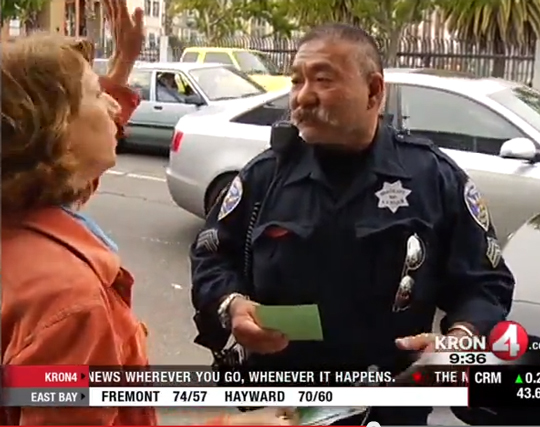
A memorial (and informational event) at the 6th and Folsom corner where bicyclist 24-year-old Amelie Le Moullac was fatally run over by a truck last week was interrupted by a tense confrontation with SFPD Sgt. Richard Ernst, when he showed up to block the bike lane with his cruiser to lecture the cyclists.

SFBC Executive Director Leah Shahum told the Guardian in a story Wednesday that SFPD Sgt. Richard Ernst showed up to make his apparent disdain for “you people,” bicyclists.

From that story: “He then told me explicitly that he ‘would not leave until’ I ‘understood’ that ‘it was the bicyclist’s fault.’ This was shocking to hear, as I was told just a day ago by Commander [Mikail] Ali that the case was still under investigation and no cause had yet been determined,” Shahum wrote in a report to the Office of Citizen Complaints. Below are a few reactions from the Twitterverse to Sgt. Ernst’s actions.

Below are a few reactions from the Twitterverse to Sgt. Ernst’s actions.  


Cyclist Patrick Traughber then rode a route spelling out the victim’s name, in tribute and memoriam. Special software tracked his route and displayed her name via the software. 

Cyclist Patrick Traughber rides a route to spell out the accident victim's name

The robot apocalypse, Mr. Darcy, outlaws, and revolutionaries: new movies!

4

Let’s Boo-Boo! Edgar Wright’s latest bromance-in-genre-clothing, The World’s End, opens today, and it’s a riot. Elsewhere, there’s a rom-com about Jane Austen obsessives, Hollywood’s latest supernatural-teen fantasy, and an indie horror flick critic Dennis Harvey calls “a very bloody good ride.” (Check out those reviews below).

Longer features this week include my interview with director David Lowery about his neo-Western Ain’t Them Bodies Saints, and Harvey’s take on artist-couple doc Cutie and the Boxer. http://www.youtube.com/watch?v=KbHr8YyjSlg

Austenland Jane (Keri Russell) is a Jane Austen fanatic who finds real-life modern romance highly lacking as compared to the fictive Regency Era variety — though having a life-sized cutout of Colin Firth as Mr. Darcy in her bedroom surely didn’t help recent relationships. After yet another breakup, she decides to live her fantasy by flying to England to vacation at the titular theme park-fantasy role play establishment, where guests and staff meticulously act out Austen-like scenarios of well-dressed upper class leisure and chaste courtship. Upon arriving, however, Jane discovers she’s very much a second-class citizen here, not having been able to afford the “platinum premium” package purchased by fellow guests. Thus cast by imperious proprietor Mrs. Wattlesbrook (Jane Seymour) as the unmarriageable “poor relation,” she gets more flirtatious vibes from the actor cast as sexy stable boy (Bret McKenzie) than the one playing a quasi-Darcy (JJ Feild), at least initially. Adapting Shannon Hale’s novel, Jerusha Hess (making her directorial bow after several collaborations with husband Jared Hess, of 2004’s Napoleon Dynamite) has delightfully kitsch set and costume designs and a generally sweet-natured tone somewhat let down by the very broad, uninspired humor. Even wonderful Jennifer Coolidge can’t much elevate the routine writing as a cheerfully vulgar Yank visitor. The rich potential to cleverly satirize all things Austen is missed. Still, the actors are charming and the progress lively enough to make Austenland harmless if flyweight fun. (1:37) (Dennis Harvey)

Long Distance Revolutionary: A Journey with Mumia Abu-Jamal Or, almost everything you ever wanted to know about the guy who inspired all those “Free Mumia” rallies, though Abu-Jamal’s status as a cause célèbre has become somewhat less urgent since his death sentence — for killing a Philadelphia police officer in 1981 — was commuted to life without parole in 2012. Stephen Vittoria’s doc assembles an array of heavy hitters (Alice Walker, Giancarlo Esposito, Cornel West, Angela Davis, Emory Douglas) to discuss Abu-Jamal’s life, from his childhood in Philly’s housing projects, to his teenage political awakening with the Black Panthers, to his career as a popular radio journalist — aided equally by his passion for reporting and his mellifluous voice. Now, of course, he’s best-known for the influential, eloquent books he’s penned since his 1982 incarceration, and for the worldwide activists who’re either convinced of his innocence or believe he didn’t receive a fair trial (or both). All worthy of further investigation, but Long Distance Revolutionary is overlong, fawning, and relentlessly one-sided — ultimately, a tiresome combination. (2:00) Roxie. (Cheryl Eddy)

The Mortal Instruments: City of Bones Adapted from the first volume of Cassandra Clare’s bestselling YA urban fantasy series, The Mortal Instruments: City of Bones follows young Clary Fray (Lily Collins) through her mother’s disappearance, the traumatic discovery of her supernatural  heritage, and her induction into the violent demon-slaying world of Shadowhunters.  This franchise-launching venture is unlikely to win any new converts with its flimsy acting, stilted humor, and clichéd action. It will probably also disappoint diehard fans, since it plays fast and loose with the mythology and plot of the novel, with crucial details and logical progressions left by the wayside for no clear reason. It’s never particularly awful — except for a few plot twists that fall wincingly, hilariously flat — but it’s hard to care about the perfectly coiffed, emotionally clueless protagonists. Fantastic character actors Jared Harris, Lena Headey, and Jonathan Rhys Meyers are all dismally underused, though at least Harris gets to exercise a bit of his vaguely irksome British charm. (2:00) (Sam Stander)

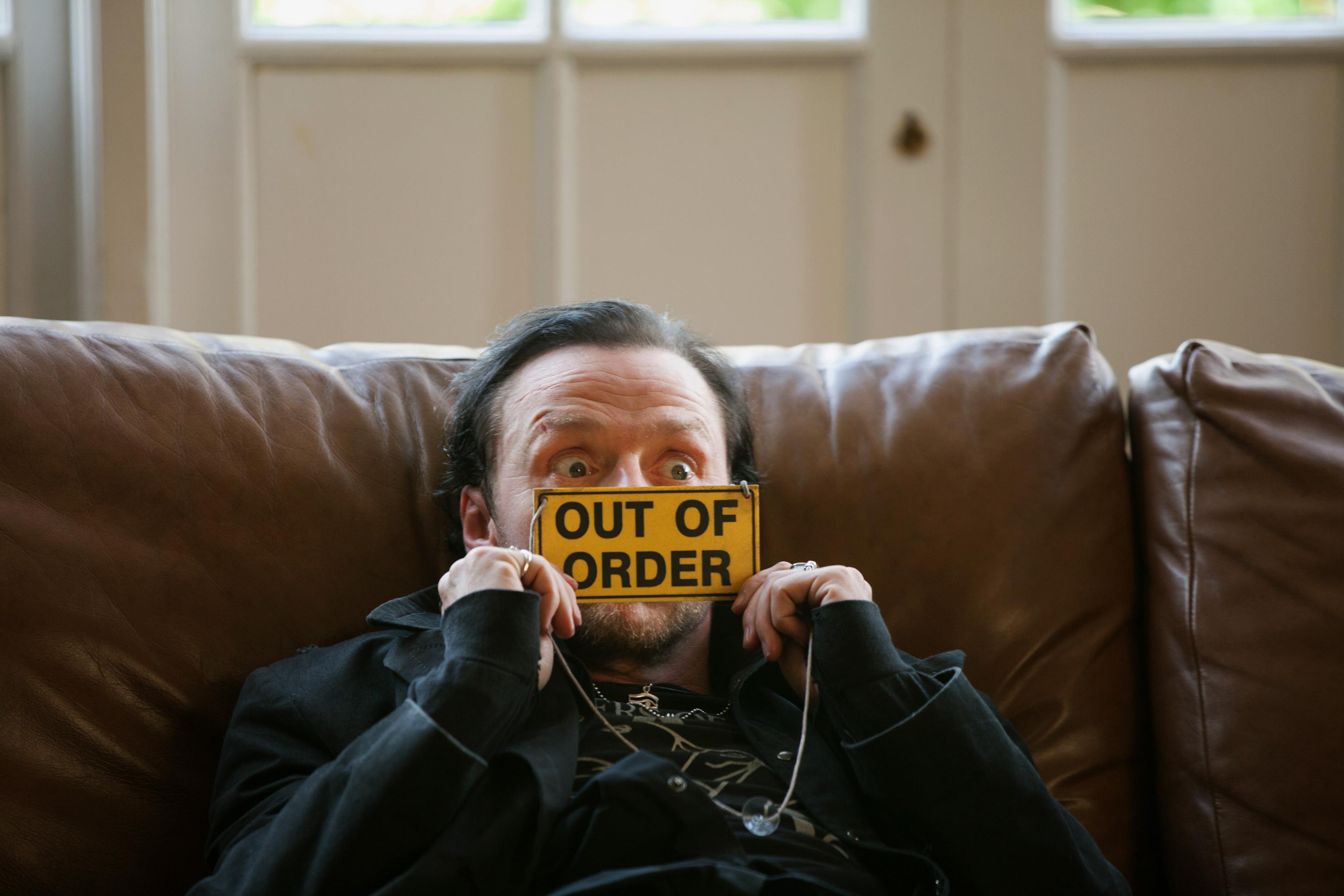
The World’s End The final film in Edgar Wright’s “Blood and Ice Cream Trilogy” finally arrives, and the TL:DR version is that while it’s not as good as 2004’s sublime zombie rom-com Shaun of the Dead, it’s better than 2007’s cops vs. serial killers yarn Hot Fuzz. That said, it’s still funnier than anything else in theaters lately. Simon Pegg returns to star and co-write (with Wright); this time, the script’s sinister bugaboo is an invasion of body snatchers — though (as usual) the conflict is really about the perils of refusing to actually become an adult, the even-greater perils of becoming a boring adult, and the importance of male friendships. Pegg plays rumpled fuck-up Gary, determined to reunite with the best friends he’s long since alienated for one more crack at their hometown’s “alcoholic mile,” a pub crawl that ends at the titular beer joint. The easy chemistry between Pegg and the rest of the cast (Nick Frost, Paddy Considine, Martin Freeman, and Eddie Marsan) elevates what’s essentially a predictable “one crazy night” tale, with a killer soundtrack of 1990s tunes, slang you’ll adopt for your own posse (“Let’s Boo-Boo!”), and enough hilarious fight scenes to challenge This is the End to a bro-down of apocalyptic proportions. (1:49) (Cheryl Eddy)

You’re Next The hit of the 2011 Toronto Film Festival’s midnight section — and one that’s taken its sweet time getting to theaters — indie horror specialist (2010’s A Horrible Way to Die, 2007’s Pop Skull, 2012’s V/H/S) Adam Wingard’s feature isn’t really much more than a gussied-up slasher. But it’s got vigor, and violence, to spare. An already uncomfortable anniversary reunion for the wealthy Davison clan plus their children’s spouses gets a lot more so when dinner is interrupted by an arrow that sails through a window, right into someone’s flesh. Immediately a full on siege commences, with family members reacting with various degrees of panic, selfishness. and ingenuity, while an unknown number of animal-masked assailants prowl outside (and sometimes inside). Clearly fun for its all-star cast and crew of mumblecore-indie horror staples, yet preferring gallows’ humor to wink-wink camp, it’s a (very) bloody good ride. (1:36) (Dennis Harvey)

Chronicle: Don’t question the City College takeover, just submit to the flawed ACCJC

71

I have very low expectations from editorials in the San Francisco Chronicle, which generally share a worldview with the Chamber of Commerce and carry water for some powerful Establishment figure or another. But today’s editorial on City Attorney Dennis Herrera’s lawsuit defending City College is so bad and illogical that it reads like an Onion parody of a Chronicle editorial.

Clearly put up to it by some of the most reactionary figures in the Mayor’s Office, Chronicle Editorial Page Editor John Diaz or one his lackeys parrot the submissive stance that Mayor Ed Lee has taken toward outsiders with corporatist agenda that have seized control of City College and sought to make a high-profile example of it.

“The city’s leaders should be calling for tough love, not coddling dysfunction. Fortunately, Mayor Ed Lee has done just that – but, regrettably, the city attorney is going in the opposite direct [sic],” the Chronicle wrote.

And by “tough love,” they apparently mean obedient and unquestioning compliance with an obscure accrediting agency’s demand that City College slash community-based curriculum; close facilities relied on by both students and local nonprofit groups; rip up contracts with faculty and force instructors to live on part-time wages; distill course offerings down to just what serve corporations, universities, and banking interests; and other aspects of an educational agenda that hasn’t been properly vetted in public hearings or approved by any elected body.

Herrera is to be applauded for pointing out the overreach and conflicts-of-interest on the Accrediting Commission of Community and Junior Colleges, which were also recently criticized by the US Department of Education. And we’re excited to see what Herrera uncovers during the discovery process in his lawsuit against a secretive, corporate-connected, document-shredding agency that broke its own internal rules in its treatment of City College.

The Chronicle graciously refers to these unavoidable facts in a brief paragraph, writing that the ACCJC “is not without flaws. It’s secretive, and its internal policies drew a rebuke from the U.S. Department of Education after City College faculty filed complaints about its conduct.”

But then it dimisses that and shows a suspicious incuriosity about why the ACCJC is being so secretive and what its agenda might be, instead doubling down on criticizing City College in a way that is so over-the-top that this fine institution is unrecognizable to anyone who is actually familiar with it, which Diaz and company clearly aren’t.   

“The needed changes include hiring a comptroller to organize financial controls, making sure students pay for classes, and overhauling a loose-fit governance system that puts faculty, students and staff in charge of operations with inadequate administrative controls. Lee has strongly endorsed an overhaul of City College’s ramshackle operations,” the Chronicle writes.

Unlike us here at the Guardian, where I’ve written two recent editorials in support of democracy and local control and critical of Lee and others who have been too quick to cooperate with the toppling of the locally elected Board of Trustees, the Chronicle apparently believe in more authoritarian methods of governance.

“The first repairs are now under way. The powers of the elected community college board are on hold, and a special trustee dispatched by state Community College Chancellor Brice Harris is in charge,” the Chronicle writes.

And as we report in our upcoming issue, that special trustee also has no interest in questioning the ACCJC’s process or methods or even allowing the public to review internal communications. It’s a shame that bootlickers like Lee and the Chronicle have sold out such an important local institution to their corporate masters, but luckily for San Francisco, Herrera, the California Federation of Teachers, the Guardian, other progressive media voices, and hundreds of our community partners aren’t giving up so easily, instead pushing for an open, truthful, democratic, and transparent discussion about City College’s mission and its future.

The other thing Chelsea Manning said, and more updates

By now, we all now that Pfc. Bradley Manning, who was sentenced to 35 years on Aug. 21 for leaking classified U.S. government documents, would like to enter the next phase of her life as a woman named Chelsea. “I want everyone to know the real me,” Manning said in a statement. “I am Chelsea Manning. I am a female.”

But the message on gender identity wasn’t Manning’s only public statement the day the sentencing was decided. There was also this, a heartfelt explanation of why the whistleblower did what she did, titled, “Sometimes you have to pay a heavy price to live in a free society.” Manning writes:

“It was not until I was in Iraq and reading secret military reports on a daily basis that I started to question the morality of what we were doing. It was at this time I realized in our efforts to meet this risk posed to us by the enemy, we have forgotten our humanity. We consciously elected to devalue human life both in Iraq and Afghanistan. When we engaged those that we perceived were the enemy, we sometimes killed innocent civilians. Whenever we killed innocent civilians, instead of accepting responsibility for our conduct, we elected to hide behind the veil of national security and classified information in order to avoid any public accountability.”

Meanwhile, Bay Area supporters who rallied for Manning at the San Francisco Pride Parade and every other juncture – including attending the trial in Fort Meade, gathering on the day verdict was announced and most recently launching a campaign calling for the WikiLeaker’s pardon – also gathered at Justin Hermann Plaza Aug. 21 in response to the sentence.

The SFPD and CCTV


Yesterday, we told you about CommunityCam, a new online mapping platform that displays surveillance camera locations throughout San Francisco. We’d placed a phone call to Sgt. Dennis Toomer of the San Francisco Police Department’s Media Relations Unit to ask whether SFPD has an eye toward collaboration on this effort, but didn’t hear back until after publishing the post. In a voice message, Toomer explained the manner in which SFPD utilizes CCTV footage to investigate crimes. He said:

“The SFPD does not own or operate any [permanently installed] cameras. There are some cameras throughout the city, but those are operated by the Department of Emergency Management. Consequently, we don’t monitor cameras either. At events like the Pride Parade, Bay to Breakers, we have put up our own cameras along the parade routes, or along the race routes, just for the purpose of deploying resources.

“As soon as the event is over, those cameras come back down, and we don’t store any kind of video footage. What we do is, we rely on the public, the commercial businesses, banks, stores, you name it, to provide us with video if a crime occurs in that area – but it’s not something that we monitor. We ask the public to provide us with any kind of video tape, or cameras or surveillance that they operate. We don’t maintain our own system. Again, the city cameras that are around in certain areas – like the Tenderloin, Bayview, I believe out in Ingleside – those are all operated and managed by DEM.”

Where the Uber meets the road 

We recently reported that Uber, the smartphone-enabled ride service that does not wish to be lumped in with rideshares or taxis, is facing a class action lawsuit from drivers who claim they were cheated out of hard-earned tips.

Uber spokesperson Andrew Noyes initially declined to comment, but has since emailed an official response (which does not actually contain any answers to the Guardian’s questions). Here is what Noyes had to say about the lawsuit, which Uber has not yet received:

“While we have not yet been served with this complaint, the allegations made against our company are entirely without merit and we will defend ourselves vigorously. Uber values its partners above all else and our technology platform has allowed thousands of drivers to generate an independent wage and build their own small businesses on their own time. Frivolous lawsuits like this cost valuable time, money and resources that are better spent making cities more accessible, opening up more possibilities for riders and providing more business for drivers.”

SF City Attorney Dennis Herrera sues to keep City College open

49

City Attorney Dennis Herrera filed a suit today to block City College of San Francisco’s accreditation agency from closing down the school.

The accreditation agency, the Association of California Community and Junior Colleges, moved to put City College on a sanction last July that would lead to its closure in exactly one year. Since then, enrollment at the college has plummeted and the school has been in the fight for its very existence. Now Herrera is saying that closure action was improper, unwarranted, and out of line with the agency’s prior actions.

Herrera’s suit alleges the ACCJC unlawfully allowed its advocacy and political bias to prejudice its evaluation of college accreditation standards, he said. “It is a matter of public record that the ACCJC has been an advocate to reshape the mission of California community colleges,” Herrera said, and that was the basis of his suit.

The ACCJC cannot be advocates for change in the higher education system, he said. “There’s a reason judges aren’t advocates and advocates aren’t judges,” he said. “Now we have no problem with the right of others to advocate an agenda against the open access mission… but we should have a problem with an entity charged with evaluation engages in political advocacy.”

Notably, the ACCJC wanted City College to shrink its mission, concentrating its money on students who could transfer easily to four year institutions from City College, which many advocates say would leave students learning trades, new English learners, and other disenfranchised students in the dust. You can see our coverage on that here.

Above: Text of Herrera’s suit and a press release with more information, courtesy of Sara Bloomberg, reporter for City College’s newspaper The Guardsman.


Herrera also filed an administrative action against the California Community College Board of Governors, saying they had abandoned their role as the check and balance on community colleges, and left it to a private institution that was unaccountable to the public (for full disclosure, I am named in Herrera’s suit on pages 16 and 18 for my role advocating against the Student Success Act of 2012 to the Board of Governors. I was a student at the time, not a professional reporter, and I have no personal stance on the future of the ACCJC). The Board of Governors oversees the 112 community colleges in California, the largest body of community colleges in the country. 

Alisa Messer, the faculty union president of City College, agreed that the Board of Governors should not be abdicating its policy and oversight role. 

“No outside, unaccountable agency should be making up its own rules or setting policy for our state’s colleges,” she said. 

City College Trustee Rafael Mandelman applauded action against the ACCJC.

“At this point I think it absolutely critical the ACCJC is not in the driver’s seat making these decisions, they’re not fit to do that,” he told the Guardian.

This past Tuesday City College submitted review documents to the ACCJC attesting to why it should be allowed to stay open and accredited, and Therese M. Stewart, the chief deputy city attorney, said that while they sent an order to ACCJC not to destroy documents, they had not yet obtained any documents yet. “We haven’t actually sought documents yet from the ACCJC, we asked them to not destroy documents so that we may seek them later,” she said. “Eventually we will get them.”

Solomon: Oiling the war machinery, from Oslo to Heathrow to Washington

3

Norman Solomon is co-founder of RootsAction.org and founding director of the Institute for Public Accuracy. His books include “War Made Easy: How Presidents and Pundits Keep Spinning Us to Death.” Information on the documentary based on the book is at www.WarMadeEasyTheMovie.org.

In Oslo, the world’s most important peace prize has been hijacked for war.

In London, government authority has just fired a new shot at freedom of the press.

And in Washington, the Obama administration continues to escalate its attacks on whistleblowers, journalism and civil liberties.

As a nation at peace becomes a fading memory, so does privacy. Commitments to idealism — seeking real alternatives to war and upholding democratic values — are under constant assault from the peaks of power.

Normalizing endless war and shameless surveillance, Uncle Sam and Big Brother are no longer just close. They’re the same, with a vast global reach.

Last week, I met with the Research Director of the Nobel Committee at its headquarters in Oslo. We sat at one end of a long polished conference table, next to boxes of petitions signed by 100,000 people urging that the Nobel Peace Prize go to Bradley Manning.

The Nobel official, Asle Toje, remained polite but frosty when I urged — as I had two hours earlier at a news conference — that the Nobel Committee show independence from the U.S. government by awarding the Peace Prize to Manning. Four years after the prize went to President Obama, his leadership for perpetual war is incontrovertible — while Manning’s brave whistleblowing for peace is inspiring.

In recent times, I pointed out, the Nobel Peace Prize has gone to some dissenters who were anathema to their governments’ leaders — but not to any recipient who profoundly displeased the U.S. government. Toje responded by mentioning Martin Luther King Jr., a rejoinder that struck me as odd; King received the prize 49 years ago, and more than two years passed after then until, in April 1967, he angered the White House with his first full-throated denunciation of the Vietnam War.

I motioned to the stacks of the petition, which has included personal comments from tens of thousands of signers — reflecting deep distrust of the present-day Nobel Peace Prize, especially after Obama won it in 2009 while massively escalating the U.S. war effort in Afghanistan.

We were in the grand and ornate building that has housed the Nobel Committee for more than a hundred years. Outside, a bust of Alfred Nobel graces the front entrance, and just across a small traffic circle is the U.S. Embassy, an imposing dark gray presence with several stories, hundreds of windows on each of its three sides and plenty of electronic gear on its roof. (That intersection is widely understood to be a base for American surveillance operations.) More than ever in recent years, the Norwegian Nobel Committee building’s physical proximity to the U.S. Embassy is an apt metaphor for its political alignment.

Over the weekend, the British government showed more toxic aspects of its “special relationship” with the U.S. government. As the Guardian reported, “The partner of the Guardian journalist who has written a series of stories revealing mass surveillance programs by the U.S. National Security Agency was held for almost nine hours on Sunday by UK authorities as he passed through London’s Heathrow Airport on his way home to Rio de Janeiro.” David Miranda, who lives with Glenn Greenwald, “was held for nine hours, the maximum the law allows before officers must release or formally arrest the individual. … Miranda was released, but officials confiscated electronics equipment including his mobile phone, laptop, camera, memory sticks, DVDs and game consoles.”

Assaulting press freedom is part of a comprehensive agenda that President Obama is now pursuing more flagrantly than ever. From seizing phone records of AP reporters to spying on a Fox News reporter to successfully fighting for a federal court decision to compel reporter James Risen to reveal his source for a New York Times story, Obama’s war on journalism is serving executive impunity — for surveillance that fundamentally violates the Fourth Amendment and for perpetual war that, by force of arms and force of example, pushes the world into further bloody chaos.

The destructive effects of these policies are countless. And along the way, for the Nobel Committee, more than ever, war is peace. Across the globe, aligned with and/or intimidated by official Washington, many governments are enablers of an American warfare/surveillance multinational state. And in Washington, at the top of the government, when it comes to civil liberties and war and so much more, the moral compass has gone due south.

Norman Solomon is co-founder of RootsAction.org and founding director of the Institute for Public Accuracy. His books include “War Made Easy: How Presidents and Pundits Keep Spinning Us to Death.” Information on the documentary based on the book is at www.WarMadeEasyTheMovie.org.

(Bruce B. Brugmann, who signs his blogs and emails b3, edits and writes the Bruce Blog for the Bay Guardian.  He is the editor at large of the Bay Guardian and the former editor and co-founder and co-publisher, 1966-2013.)