SFBG Blogs

Gimme 5: Must-see shows this week (Noise Pop edition)

0

Like sands through the hourglass, so are the festivals of San Francisco. Or something like that. SF Beer Week is over, dear readers, but fret not! It’s the end of February, which is undoubtedly the cruelest month, no matter what T.S. Eliot said, when the darkest days of winter (in places that have that season) are finally over, and the first blossoms of spring are testing their sea legs like so many trepidatious Bambis. In these parts, that means one thing: Noise Pop is upon us.

This the year NP turns 22, so the festival is definitely old enough to hang with the big kids. And there are indeed some big kids in this year’s lineup — Lord Huron, Real Estate, and Dr. Dog, to name a few. But our favorite part about this festival is what it means for up-and-coming Bay Area acts, for whom playing Noise Pop is something of a rite of passage. We’ll be highlighting a few of our favorites over the course of this week, but for now, here are some suggestions for places to show some local pride. As per usual, the tightly-packed schedule presents some tough choices — so yes, we know there are more than five options here. Life’s tough. T.S. Eliot got that one right.

Wed/26

Papercuts and Vetiver @ The Chapel
This is a dreamy package deal if I’ve ever seen one. Papercuts‘ Jason Robert Quever’s melodic, melancholy sighs have never sounded as subtlely polished as on his upcoming album, Life Among the Savages, his first for the brand-new LA-based label Easy Sound Recording Co. Labelmates and fellow San Franciscans Vetiver‘s breezy folk-pop is music for a spur-of-the-moment afternoon drive up the coast. Throw in San Diego opener The Donkeys and you’ve got yourself the sonic landscape of a California we’re in the habit of relegating to car commercials where someone in the passenger seat is grinning and sticking their hand out the window playfully, a California where everyone’s fresh-faced and it never rains. Noise Pop-goers, you can have it all! Especially that last part.
With EDJ, and Vinyl selections by Britt Govea
8pm, $18
The Chapel
777 Valencia, SF
www.thechapelsf.com

(Plan B: Strange Vine/French Cassettes at Bottom of the Hill, or CCR Headcleaner/Skate Laws at Benders)

Thu/27

Jel @ Sparc
Forget the music, watching Jel repeatedly punch drum machine pads and twist sampler knobs on bulky, last-gen machinery would be worth the price of admission. The East Bay-based electronic hip-hop producer manages to keep his appendages intact while stabbing out a dizzying array of kick drums, snares, and percussion in ever-shifting breakbeat arrangements and tempos. On his latest LP, Late Pass (Anticon), Jel balances bass with shoegaze melodies, hints of psychedelia, electric guitar chords and some of his own emceeing. In line with the political undertones throughout the album (“Don’t get comfortable,” the title track advises), this show marks the two-year anniversary of the San Francisco Patient and Resource Center, a medical cannabis nonprofit. — Kevin Lee
7pm, free (RSVP req. for non badge-holders)
Sparc
1256 Mission, SF
www.sparcsf.org

(Plan B: Social Studies, Aan, Farallons, Max and the Moon at the New Parish)

Fri/28

Painted Palms, Dirty Ghosts, Happy Fangs @ Slims
Sure, Cold Cave is technically the headliner, but calling these three local bands supporting acts just seems wrong. SF duo Painted Palms are the darlings du jour of the psych-rock world, for good reason — Forever, released just last month, is one of the most lush, layered debut albums we’ve heard in a while. Dirty Ghosts‘ Allyson Baker is a frontwoman and a half, drawing from punk, blues, experimental rock, and electronica, and the band has promised a new record in 2014, so we wouldn’t be surprised to hear some fresh material. And Happy Fangs, featuring boundless, rough-around-the-edges, sweet n’ salty energy from former members of My First Earthquake and King Loses Crown, will be playing their first show with a live drummer (check back here for a Q&A with them later this week).
7pm, $16
Slim’s
333 11th St, SF
www.slimspresents.com

(Plan B: Soft White Sixties/The She’s at the Chapel, Bleached/Terry Malts at the Rickshaw Stop)

Sat/1

Black Map, Free Salamander Exhibit, Lasher Keen, Happy Diving @ Bottom of the Hill
Yes, there’s a lot going on Saturday night. No, you shouldn’t go see that band you’ve seen a million times before. If you’re in the mood to get super-heavy and excellently weird, this is a solid lineup of newish Bay Area talent running the gamut from Black Map‘s epic, guitar-driven, smart-art-rock-meets-anthemic-metal sound to upstart Happy Diving‘s soft-grunge-leaning, head-bobbing power pop. Lasher Keen’s earthly psychedelia seems to be from another century, you just can’t tell if it’s the future or the past — we’re pretty sure they’d say that’s a good thing. And Free Salamander Exhibit is, of course, the new project from former members of the elaborately theatrical, cultishly loved experimental noise-rock outfit Sleepytime Gorilla Museum. Let’s just say you’re not going to be bored.
8pm, $15
Bottom of the Hill
1233 17th St, SF
www.bottomofthehill.com

(Plan B: Mikal Cronin at the Chapel, Mark Kozelek at Great American Music Hall — look for our feature on the latter in this week’s paper.)

Sun/2

Rogue Wave, Trails and Ways, Wymond Miles @ The Chapel

Oakland’s Rogue Wave set the tone for lo-fi, indie pop-rock way back in the mid-aughts, with an onset of popularity so sudden it seemed unsustainable. Not so — the lineup may change, but the band’s talent for crafting jangly earworms needs no further proving, as of last year’s Nightingale Floors. Trails and Ways, whose members met at Cal, make danceable, Bossa Nova-infused dream-pop that broadens and deepens with repeated listens, but doesn’t take itself overly seriously; oh yeah, they also sing in three languages. And Wymond Miles, still probably best known as the Fresh and Onlys’ guitarist, put out his second solo work late last year — a dense, thoughtfully arranged post-punk gem of a record. Note: This is an afternoon show and, with a bloody Mary on the side, would probably be an excellent hangover soother.
3pm, $20
The Chapel
777 Valencia, SF
www.thechapelsf.com

Ammiano and Leno seek to reform the Ellis Act and slow SF evictions [UPDATED]

110

State lawmakers from San Francisco are launching a two-pronged attack on the Ellis Act, which real estate speculators are increasingly using to evict tenants from rent-controlled apartments and cash in on a housing market that’s been heated up by demand from high-paid employees of the booming tech sector.

Assemblymember Tom Ammiano today introduced Assembly Bill 2405, which would allow the San Francisco voters or the Board of Supervisors to declare a mortorium on Ellis Act evictions when the city’s state-mandated affordable housing goals aren’t being met.

Sen. Mark Leno is also planning to introduce his own Ellis Act reforms by today’s legislative deadline for introducing new bills. He’s been working on a reform package with Mayor Ed Lee, but Leno is keeping the details under wraps under Monday at 9am when the pair will hold a press conference outside a Chinatown apartment building to announce their proposal.

Both proposals face an uphill battle in Sacramento given that San Francisco is one of only a couple jurisdictions in the state that have rent control, which Ellis Act was designed to undermine by allowing landlords to get out of the rental business and remove apartments for the market. And the real estate industry industry is expected to strongly oppose the reforms.

“It will, of course, be very difficult, but Mr. Ammiano has been talking about this for months and he’s committed to doing something,” his Press Secretary Carlos Alcala told the Guardian.   

UPDATE 2/24] Leno and Mayor Lee — flanked by other supporters of the legislation, including Sups. David Campos and David Chiu, rival candidates to succeed Ammiano — this morning announced the introduction of Senate Bill 1439. It would authorize San Francisco to prohibit those who buy rental properties to invoke the Ellis Act and evict tenants for at least five years, and only allow only one Ellis Act eviction for the life of each property. 

“The original spirit of California’s Ellis Act was to allow legitimate landlords a way out of the rental business, but in recent years, speculators have been buying up properties in San Francisco with no intention to become landlords but to instead use a loophole in the Ellis Act to evict long-time residents just to turn a profit,” Leno said.

Ammiano’s press release follows, followed by Leno’s:


Ammiano Introduces Bill to Stem Evictions from Affordable Housing


SACRAMENTO – Assemblymember Tom Ammiano today introduced AB 2405 to empower local jurisdictions to stop the erosion of affordable housing stock.


“San Francisco is seeing a terrible crisis,” Ammiano said. “The people who have made our city the diverse and creative place that it is are finding it harder and harder to stay in San Francisco. The rash of Ellis Act evictions has only made it worse.”

Ellis Act evictions are permitted under certain circumstances when a property owner is taking a rent-controlled unit out of the rental market. However, some owners have been abusing these provisions and improperly evicting tenants from rent-controlled units. The problem is not restricted to San Francisco, although the city is going through a particularly critical loss of affordable housing.

AB 2405 would allow local jurisdictions – by means of a Board of Supervisors or public vote – to enact a moratorium on Ellis Act evictions when the local housing element is not met. Also, the bill would hide no-fault evictions from tenant records or credit checks in unlawful detainer cases, and would place Ellis Act unlawful detainer cases on civil court calendars.

“Experience shows you can’t build your way out of an affordable housing crisis,” Ammiano said. “We have to do what we can to preserve what affordable housing we have. This is one piece of that effort.”

New Legislation Closes Ellis Act Loophole for San Francisco

Senator Mark Leno Joins Mayor Ed Lee, Tenant Advocates, Labor Groups and Business Leaders

to Stop Speculative Evictions in San Francisco


SAN FRANCISCO – Senator Mark Leno today joined San Francisco Mayor Ed Lee, other elected officials, tenant advocates, labor groups and business leaders to introduce legislation closing a loophole in the Ellis Act that allows speculators to buy rent-controlled buildings in San Francisco and immediately begin the process of evicting long-term renters. Aiming to mitigate the negative impacts of a recent surge in Ellis Act evictions in San Francisco, Senate Bill 1439 authorizes San Francisco to prohibit new property owners from invoking the Ellis Act to evict tenants for five years after the acquisition of a property, ensures that landlords can only activate their Ellis Act rights once, and creates penalties for violations of these new provisions.


“The original spirit of California’s Ellis Act was to allow legitimate landlords a way out of the rental business, but in recent years, speculators have been buying up properties in San Francisco with no intention to become landlords but to instead use a loophole in the Ellis Act to evict long-time residents just to turn a profit,” said Senator Leno, D-San Francisco. “Many of these renters are seniors, disabled people and low-income families with deep roots in their communities and no other local affordable housing options available to them. Our bill gives San Francisco an opportunity to stop the bleeding and save the unique fabric of our City.”


Ellis Act evictions in San Francisco have tripled in the last year as more than 300 properties were taken off the rental market. This spike in evictions has occurred simultaneously with huge increases in San Francisco property values and housing prices. About 50 percent of the city’s 2013 evictions were initiated by owners who had held a property for less than one year, and the majority of those happened during the first six months of ownership.


“We have some of the best tenant protections in the country, but unchecked real estate speculation threatens too many of our residents,” said Mayor Lee. “These speculators are turning a quick profit at the expense of long time tenants and do nothing to add needed housing in our City. These are not the landlords the Ellis Act was designed to help, and this legislation gives San Francisco additional tools needed to protect valuable housing and prevent further Ellis Act speculator evictions, which has already displaced working families and longtime San Franciscans. This carve out is a good policy for San Francisco, and I thank Senator Leno for being a champion on this issue. Together we have built a large coalition of renters, labor and business leaders to fight this battle in Sacramento to support middle income and working families here in our City.”


“Rents in San Francisco are at an all-time high. My former neighbors and I, working families and seniors, were displaced from the place we called home for several decades,” said Gum Gee Lee. “Those that have yet to receive an Ellis Act notice continue to live in fear, fear that they too will be evicted from their homes. For seniors such as myself who rely on public transportation and access to social and health services within our community, Ellis evictions cut our lifeline, our independence to thrive. For working class families such as my former neighbors from Jackson Street, they continue to struggle to survive in San Francisco. San Francisco is our home.”


Enacted as state law in 1985, the Ellis Act allows owners to evict tenants and quickly turn buildings into Tenancy In Common (TIC) units for resale on the market. In San Francisco, the units that are being cleared are often rent controlled and home to seniors, disabled Californians and working class families. When these affordable rental units are removed from the market, they never return.


Senate Bill 1439 will be heard in Senate policy committees this spring.

Happy Hour: The week in music

0

Dearest clock-watchers! If you hadn’t noticed, it’s almost the weekend. In the event that your excitement is currently tempered with social anxiety about which pop culture topics to discuss over happy hour beverages — a very sad and all-too-common affliction — here are a few gems from the music world that the Internet bestowed upon us this week.

— The 5th annual Burger Boogaloo, one of the spunkiest (and most affordable!) festivals in the Bay Area’s grand feast of summer festival offerings, announced its lineup yesterday, and it’s a good one. What says “summer” more than the legendary Ronnie Spector crooning “Be My Baby” as hipsters play drunken kickball around you in Mosswood Park?

— Oakland noir-pop rockers DRMS released this epically and mysteriously engaging 17-and-a-half-minute film set to some of the most experimental music we’ve heard from them yet. They’re at the Rickshaw Stop tomorrow night [Sat/22], if you wanna get good and dreamy.

— The city of Abderdeen, Wash., home of one Kurt Cobain, celebrated its first annual “Kurt Cobain Day” yesterday, Feb. 20, on what would have been the rocker’s 47th birthday. With what, you ask? Why, a giant, weird, crying, Jesus-like Kurt Cobain statue, of course. Because that definitely seems like something he would have wanted.

— The SFJAZZ Center is a very precocious one-year-old. [SFGate]

Kelis will finally get to share her milkshake recipe with the world — or at least viewers of the Cooking Channel — thus eliminating the need for boys to even come to her yard at all.

Cranky dude at the Thermals show last night at The Chapel: You’re unhelpful. [via Mission Mission]

Go forth, my friends. Stay hydrated.

Speakers boycotting security conference to protest collaboration with NSA

On Feb. 24, the world’s largest computer security conference, RSA, will commence at San Francisco’s Moscone Center. It’s a huge deal: Speakers will include Former U.S. Secretary of State Condoleezza Rice, and closing remarks will be given by comedian Stephen Colbert.

Started in 1991, the RSA Conference has grown exponentially. But this year, 13 digital security experts have canceled their scheduled talks in protest of recent revelations that RSA cooperated with the National Security Agency to use a flawed tool for safeguarding sensitive information.

Speakers who are boycotting include technology experts from Google and various security firms. They’re concerned about allegations that RSA, a pioneer in the security software industry, agreed to incorporate a flawed encryption formula into a widely used security product in accordance with a secret $10 million NSA contract. 

“In my opinion, RSA has a serious trust issue,” said Jeffrey Carr, CEO of a security firm called Taia Global Inc. and one of the speakers who has decided to cancel his talk and boycott the conference. “I think they’ll just let it die down. There’s been little uproar, even among the security people,” he added.

Carr authored a blog post explaining his decision. He also organized a “town hall” debate, part of an event series called Suits and Spooks, to be held at the Ritz Carlton in San Francisco on Feb. 27 featuring commentary from security industry representatives as well as insiders from the national intelligence community.

RSA used the encryption algorithm as a default for its security products, meaning users would have had to actively switch to a different formula to avoid exposure to the security threat.

According to a Reuters article published in December, the NSA arranged the contract as part of a campaign to embed breakable encryption software into security products that are widely used to safeguard personal devices.

Previous reporting by the New York Times, based on documents leaked by former NSA contractor Edward Snowden, showed that the NSA had generated the weak encryption formula to create a “backdoor.”

EMC, the parent company that owns RSA, issued a response in December that didn’t specifically address the allegations. The company stated that in 2004, when it agreed to use the algorithm, “the NSA had a trusted role in the community-wide effort to strengthen, not weaken, encryption.”

But Carr said researchers within the security industry had suggested the algorithm might be flawed as early as 2006, and RSA did not abandon its use until after the Snowden leaks were publicized. 

Other speakers who are boycotting have issued statements publicly condemning RSA.

“Your company has issued a statement on the topic, but you have not denied this particular claim. Eventually, NSA’s random number generator was found to be flawed on purpose, in effect creating a back door. You had kept on using the generator for years despite widespread speculation that NSA had backdoored it,” wrote chief researcher Mikko Hypponen of the Finnish company F-Secure.

“As my reaction to this, I’m cancelling my talk at the RSA Conference USA 2014 in San Francisco in February 2014,” Hypponen went on. “Aptly enough, the talk I won’t be delivering at RSA 2014 was titled ‘Governments as Malware Authors.'”

Meanwhile, Colbert is also taking some heat for agreeing to speak at the RSA conference.

“We know you, Stephen, and we know you love a good ‘backdoor’ joke as much as we do—but this kind of backdoor is no laughing matter,” activists from Fight for the Future wrote in a petition urging him to join the other speakers who are boycotting the RSA conference. “Companies need to know that they can’t betray our trust without repercussions. We want to hear your speech, but give it somewhere else!”

Slamdance Film Festival 2014 report!

4

Twenty years ago, a few filmmakers — including Dan Mirvish, Peter Baxter, and Paul Rachman — rented out a room in a Prospector Square hotel, creating the first Slamdance Film Festival

Their motivation: “the other film festival in Park City” had perhaps lost some of its independent spirit. Over the years this “little festival that could” has continued to showcase emerging filmmakers. Some of those upstarts have achieved A-list status since their Slamdance debuts: Christopher Nolan (more on him below) and Marc Forster, for example. 

Nolan was given Slamdance’s inaugural Founder’s Award. The acclaimed director arrived with his entire family in tow to accept the award, including wife Emma Thomas, who has been his producing partner in crime since his 1998 debut, Following

“We’ve grown up together in every sense but particularly in filmmaking,” Nolan said. “We began making 16mm films together and that’s evolved into studio work. As a filmmaker the best thing you can possibly have is somebody close to you who can support you, but who also knows your weaknesses and your strengths and has no other agenda than to make the best film it can be and see you do the best work as a director. That’s what Emma’s been for me.” 

Nolan softly spoke about how this DIY film festival helped him and his ultra low-budget ($6,000) first feature. “What Slamdance teaches you is that while it’s wonderful to have a great community of filmmakers around you, you have to be prepared to do everything yourself. That’s something that never goes away. You have to be prepared to carry the flag for the film because if you’re not, nobody else is going to bother.”

This year’s Slamdance opener was Bill Plympton‘s Cheatin’ (US), which showcased 40,000 hand drawn pictures. Holding true to the imperfect beauty of his drawing style, Plympton used Kickstarter funds to create a genuinely surreal and delightful feature amongst a sea of VFX and CGI animated films that rule the cinematic schools these days. 

The nostalgic story of a couple’s relationship woes as they desperately groan and grumble through life’s complications has the possibility to be Plympton’s biggest crossover to date, particularly among Pixar-fan types who have recognized that cartoons aren’t just for kids. French audiences seem to already be celebrating Cheatin’ and you should do the same at your first opportunity.

Monja Art and Caroline Bobek’s Forever Not Alone (Austria) is an hypnotic ‘tween documentary that allows its subjects to speak for themselves. It throws the viewer into the thick of what it’s like to be a young girl today. While it explores the trials and tribulations of being young, fun, and hopelessly in love, it also captures youth’s melancholy side. The end result is not only a time capsule for its subjects, but also a haunting reminder of a time older audiences may have forgotten.

Slamdance’s Jury Prize Winner also screened at the recent SF IndieFest: Fernando Frias’ Rezeta (Mexico), a small, wonderful film. An Albanian (well, it’s complicated) woman named Rezeta finds herself in Mexico City, bouncing around from one modeling gig to the next. As she looks for love in all the wrong places she befriends metal dude Alex, who talks to her like a human being while sporting a Neurosis hoodie. The honest conversations, difficult egocentric dilemmas, and a memorably unsentimental structure make Frias’ debut feature a must-see.

But perhaps my favorite film at Slamdance this year was Paul Rachman’s six-minute Zoë Rising (US) which continues his exploration into the life and death of exploitation star Zoë Tamerlis Lund, this time interviewing her mother. Her claim to fame was starring in Abel Ferrara’s X-rated masterpiece Ms. 45 (1981) as well writing the original screenplay to his most critically acclaimed gem, the NC-17 Bad Lieutenant (1992). Rachman, who previously helmed the wonderful punk/no wave documentary American Hardcore (2005), has massive plans over the next couple of years to dive deeper into this character study, hoping to include interviews with Ferrara, Harvey Keitel, other of Lund’s close friends and family members. 

What’s so unique about both short films — the first film, Zoë XO (2006),  interviewed her ex-husband — is that Rachman allows the interviewees to be working on their own projects while they discuss Lund. It’s reminiscent of Penelope Spheeris’ interview technique in her Decline of Western Civilization films. He also experiments with sound and image, suggesting an aesthetic that feels like Richard Kern eating the montage pioneer Slavko Vorkapich. It is a rare kind of cinema and it has the possibility of blossoming into something truly special.

Speaking of short films, 2014’s “other film festival in Park City” is worth revisiting one last time for its true standouts. Sundance’s best short was Andre Hyland’s seven-minute screwball laugh-riot Funnel (US) which follows a guy on his cell phone. Bob Odenkirk has put his name on the film which will hopefully get Hyland an entire TV series, because I could watch this dude’s ramblings all day. 

Janicza Bravo’s Gregory Go Boom (US), starring a wheelchair-bound Michael Cera, rides a thin line towards a Todd Solondz/Harmony Korine-esque Americana, which may or may not hit the mark. Either way, this 17-minute trek most definitely is a great calling card for its young director. 

Todd Rohal’s Rat Pack Rat (US) won a Special Jury Prize at Sundance for its “unique vision.” Eddie Rouse delivers a memorable performance as a Sammy Davis Jr. impersonator — and let’s just say Eastbound and Down‘s scene-stealing Stevie (Steve Little) takes things to an oddly dark comedy zone. Like Gregory Go Boom, Rat Pack Rat may or may not hit the mark for some. But I have found myself thinking about this 18-minute short long after the festival.

Chiu and others get stung for support from speculators and evictors

88

Our colleagues down the hall at the San Francisco Examiner seem to have spoiled tonight’s [Thu/30] fundraiser for David Chiu’s Assembly race by reporting this hour that the host, attorney Steven MacDonald, is on a housing activists’ blacklist for representing landlords in controversial Ellis Act evictions.

Reporter Chris Roberts quotes Chiu campaign manager Nicole Derse pleading ignorance about “what type of law Steven practices” and pledging to return a $500 campaign contribution from him in October, but saying that the 6pm fundraiser at John’s Grill would go on nonetheless.

Derse told the Guardian that MacDonald represents a wide variety of clients, including many tenants who are fighting evictions, so the campaign decided to go ahead with the fundraiser but refused MacDonald’s direct financial support, consistent with a pledge not to take money from those involved in evictions.

“We won’t accept money from anyone who has been involved with evictions at all,” Derse told us, saying it was a mistake to accept money from MacDonald but acknowledging the challenge of the “scrutiny and vetting involved for a small campaign.”

“We’ll do everything we can to make sure this doesn’t happen again,” she told us.  

The controversy and the Chiu’s campaign’s quick decision to refuse the support from an early contributor show just how volatile and politically toxic the city’s eviction and affordable housing crisis have become, rapidly transforming the city’s political dynamics. It also shows how information being made public by housing activists, and their new confrontational tactics, are being used within that changed realm. 

Former Guardian Editor Tim Redmond had a story yesterday on his 48 Hills website focusing on the heat that Sup. Scott Wiener is taking over the political contributions that he’s received from real estate speculators and those involved in evictions, including Urban Green and speculator Ashok K. Gujral, who are among the Dirty Dozen serial evictors highlighted by the Anti-Eviction Mapping Project, whose work we been covering for months here at the Guardian.

Below is an infographic of Supervisor Wiener’s campaign contributions, created by the Anti-Eviction Mapping Project:

Video: Behind the scenes at Goldies photoshoots

5

Behind the scenes on two photoshoots for the SF Bay Guardian’s 25th annual Guardian Outstanding Local Discovery arts awards. Winners Malic Amalya (film) and Brontez Purnell (performance/music) are featured in the video, with photographers Saul Bromberger and Sandra Hoover, who have been photographing Goldies winners for the past 18 years.

Music is from Brontez’s band, The Younger Lovers. The featured song is “Get Up, Get Up.”


Activists, union challenge Google bus pilot program

73

San Francisco activists and labor filed an appeal of the controversial commuter shuttle (aka, the Google buses) pilot program to the Board of Supervisors today, alleging it was pushed through without a proper environmental review. 

The appeal was filed by a coalition of the Harvey Milk LGBT Democratic Club, SEIU 1021, The League of Pissed Off Voters, and Sara Shortt of the Housing Rights Committee. 

The shuttles, mostly to Silicon Valley tech firms, pick up passengers in Muni bus stops. The use of public bus stops would incur a $271 fine for private autos, and often do, but the shuttles have largely received a free pass from the city. Last month, the San Francisco Municipal Transportation Agency approved of a pilot plan hatched behind closed doors that allows use of 200 bus stops by the private shuttles, charging only $1 per stop, per day.

The appeal alleges that the program needed review under the California Environmental Quality Act, which asks for projects to be analyzed for, among other things, land use, housing, and public health impacts. 

“CEQA actually identifies displacement as an environmental impact,” attorney Richard Drury, who filed the appeal on behalf of the coalition, told us. “Almost no one knows that. Honestly I didn’t know that, until I started researching all of this.”

If the Board of Supervisors doesn’t back the appeal, there may be a court battle on the environmental impact of the shuttle stops, which increase rents and home prices nearby. 

Paul Rose, spokeserpson for the SFMTA, responded to the complaint in an email to the Guardian.

“We developed this pilot proposal to help ensure the most efficient transportation network possible by reducing Muni delays and further reducing congestion on our roadways,” Rose wrote. “We are confident that the CEQA clearance is appropriate and will be upheld.”

In the meantime, Drury told us, the coalition is performing environmental research of its own. It has experts from the US Environmental Protection Agency and other organizations analyzing diesel outputs from the shuttles, as well as the impact of shuttles on displacement. 

“CEQA review needs to have a review before they start the pilot, not after,” Drury said. “They’re basically doing it backwards: let’s have 200 stops and 35,000 people in the service, and figure out what happens.”

Some studies conducted already show that affluence rises wherever the shuttle stops are placed. One by Chris Walker, a 29 year old in Mumbai, India, shows rising property values in and around the Google bus stops from 2011 to 2013.

heatmap

This heatmap shows a rise in property values appreciated near shuttle stops.

“We see the Google Bus as a part of a larger effort to privatize public spaces and services, displacing both current residents and the public transportation system we rely on,” said Alysabeth Alexander, Vice President of SEIU Local 1021, in a statement. “San Francisco has a long history and tradition as a union town. With the tech takeover, San Francisco is becoming inhospitable to working class families. Our wages are stagnant, as the cost of everything is skyrocketing. This is a shame.”

Live Shots: Hether Fortune gets cathartic at the Night Light

0

Last Friday it was Valentine’s Day, but all I saw was tears. I’ve wondered before how some musicians can sing some of their more emotional songs during live performance without becoming visibly emotional themselves. Aren’t they attached to those lyrics (especially if they’ve written them)? Are they desensitized by the one-hundredth time they play that song about having their heart ripped out by the one who doesn’t even love them anymore? Or worse yet — the one who never did? It wasn’t full-on sobbing, but last Friday, Hether Fortune wouldn’t hold it in.

Peculiarly sandwiched on the bill at the most recent installment of the experimental/industrial-focused REPLICANT Presents series at Oakland’s Night Light, Fortune was scheduled in between opening and headlining acts to deliver an intimate solo set, sans Wax Idols. I had gone anticipating that it would be a rare treat.

hether fortune
Heather Fortune photos by Sadie Mellerio

You’re supposed to be with your lover on Valentine’s. You’re not supposed to be alone. That’s the worst-case scenario if you buy into the norms and expectations placed on yet another commercialized holiday. But imagine being alone, not only because you don’t have your bandmates (Wax Idols) to musically support you, but because you’re going through a divorce. Meanwhile, you’re up on stage about to perform in front of an audience. Certainly not one to hide or shy away from the spotlight, Fortune embraced her predicament. Instead, she announced that in fact, this is her situation.

After Vestals (armed with a guitar and gear that looped layers of complimentary noise) finished her opening set, DJs mixed acid techno with whatever tracks Barn Owl saw fit for spinning that night. But then the room seemed different. One could sense the changing of the atmosphere right down to the molecules because of Fortune’s poised, gothic and graceful presence.

hether fortune

Standing tall without a band or a man; her lanky, trademark androgynous figure appeared on an un-lit stage. Draped in a lacy, button-down blouse; our dually-wounded, heavy-hearted warrior had to face the harsh reality of her bandaged finger that had been crushed and ripped open by an amplifier in an accident a week earlier.

She carefully tuned her weapon of choice — a beautiful black-and-white Danelectro 12-string guitar. The instrument, combined with a hard-cover bound journal (perhaps containing a set list, lyrics, or maybe just her thoughts) that lay at her feet, conjured bohemian images of a hippie-freak, pre-T.Rextasy-era Bolan about to play Middle Earth or some coffee shop.

hether fortune

Stripped of arrangement and with not much more than her soul to bear, the vibe of her set was very much singer-songwriter with an emphasis on despair. While her vocal-style seemed to channel the aura of Bowie, it was her strumming of that jangling guitar, with its larger-than-life sound, that seemed like it could fill the universe with its unwavering, doleful tone.

In a genuinely honest moment and without any dramatic intonation, she quickly uttered “This is tough” into the microphone. Lyrics to a cover song were muddled in the sound system, and then we were treated to a new song, apparently never heard by anyone before. By that point, the words almost didn’t matter since we were already running high on emotion.

hether fortune

Towards the end, tears welled up, overflowing onto her thick eye-liner, mid-song. I was somewhat stunned by the display of emotion, but not at all alienated. The entire thing could have been awkward for both audience and performer, but in reality everyone seemed receptive to what she had to express that night. It was an opportunity to connect on a deeper level or however those who were subjected saw fit.

One could interpret it all as a damaged, agonizing wail and while that may hold some validity, it would trivialize the more noble qualities of a veteran, seasoned ahead of her time, demonstrating strength in sharing vulnerability while ultimately remaining in control. Numbness worn off, Fortune delivered something beautiful only the lonely might fully understand.

Sundance, fin: more from the Native Forum

1

Running into Chris Eyre was easily one of the most exciting moments of this year’s festival. Following his 1998 Audience Award-winning debut, Smoke Signals, Eyre premiered Skins at Sundance 2002, just a few months after 9/11 — and it still ranks as one of the most memorable cinematic experiences I’ve ever had. 

After the film, which offers a harrowing look at a sheriff on the Pine Ridge reservation (which is still to this day the poorest in the nation), Park City audiences were dumbfounded as to how to respond. Producer Jon Kilik, who also helped Spike Lee with his ensemble masterpieces Do the Right Thing (1989) and Clockers (1995) was on hand with director Eyre as they plowed through us progressive pit fallers at Sundance. “We are all responsible.” Eyre’s words are still stuck in my head. 

Other than directing a couple of Friday Night Lights episodes and a few TV movies, Eyre has since had difficulty getting features financed. Make sure to track down his stunning 40-minute A Thousand Roads (2005), created for the Smithsonian’s National Museum of the American Indian. It showcases a harrowing score by Dead Can Dance’s Lisa Gerrard. 

And so the baton seems to have been passed to 34-year-old Oklahoma-based Sterlin Harjo, who read a segment from Hal Ashby’s Bound To Glory (1976), an ode to folk pioneer Woody Guthrie, at the Native Forum anniversary celebration. It perfectly connected his regional stories to a larger context. 

Harjo’s third feature, documentary This May Be the Last Time (US) is a historian’s as well as musicologist’s dream, as Harjo attempts to uncover his grandfather’s disappearance in 1962. As he traces the origins of the Seminole songs that he grew up with, he learns that his tribe’s singing style is tied to traditions that originated in Scotland, Appalachia, and the experiences of enslaved African Americans.

With a film that plays out similarly to Malik Bendjelloul’s Searching For Sugar Man (2012), Harjo has constructed a deeply moving personal documentary that transcends the region, and can connect to anyone interested in our country’s complicated colonialism. 

I was able to track Sterlin Harjo down post-fest for a quick interview, and he’s as thoughtful and as passionate as his films suggest. Smoke Signals and Jim Jarmusch’s acid-western Dead Man (1995) both came out at the perfect time to open Harjo’s eyes to filmmaking as a possible career.

“Jarmusch did such a wonderful job with Dead Man, even better than some Native filmmakers. The language, the wardrobe, the regions, it was all so well researched. And the film isn’t about an Indian; it’s about a human who’s complicated, with a dark side and a lighter side,” he said. After graduating from the University of Oklahoma in 1998, Harjo found that he had to leave home to begin reflecting on his own part of the country. 

After completing the Sundance Lab and Native Forum through the Sundance Institute, Harjo made his debut feature, Four Sheets to the Wind (2007), a terrific hipster comedy about a twenty-something who takes a trip to visit his sister off the reservation. “The film is a reactionary Native film to the reactionary Native films that I grew up with. I wanted to contradict the newly formed stereotypes from within the community. No one was going to walk around talking about ‘being an Indian,’ because that didn’t happen in my world. There’s an integrated relationship with a white woman and no one was going to comment on it. Indians were going to drink beer and smoke pot and it wasn’t going to be an issue.”

Though star Tamara Podemski won an Independant Spirit Award nomination as well as a Special Jury Prize at Sundance for her “fully realized physical and emotional turn,” the film ran into categorical problems from distributors. “There were supposedly three-hour meetings about how the film was ‘too Indian’ as well as ‘not Native enough’,” he recalled. 

And here lies perhaps the biggest problem with second-generation Native/Indigenous cinema; Who wants to watch these films? Harjo’s follow-up, 2009’s Barking Water, which premiered at Sundance, spotlights a powerhouse performance by Richard Ray Whitman as a man dying of cancer trying to get back home. 

With shades of David Lynch’s The Straight Story (1999), this poignant piece engages the viewer thoroughly through the struggles of generation gaps in our contemporary culture. And all the while, it exposes Oklahoma’s quiet and even “magical” ambiance, according to Harjo. 

“It’s true, all of my films are centered around ‘Home’. That’s ‘Home’ with a capital H because growing up, displacement was a constant subject taught to us. The Trail of Tears seems to still be affecting us to this day. And so ‘Home’ is sacred and part of our mythology yet we are aware of it often feeling temporary. Funny enough, my next film Chief (which is a term used for homeless Natives) is centered around the loss of home when a man is forced to head to Tulsa, where he becomes homeless and finds himself in the middle of the city’s homeless population. You could call it a poetic thriller.” 

Harjo is exactly the type of filmmaker I hope to uncover at film festivals: his work is thought-provoking, passionate, and energized. It’s now up to us to seek out and watch his films so that we don’t read about him 30 years from now and ponder “it’s too bad those second-generation filmmakers didn’t make more cinema.”

Up next: SLAMDANCE!

Controversial housing proposal at 16th and Mission follows calls to “Clean up the Plaza”

89

El Tecolote had a great cover story last week about the coalition that has formed to oppose a large housing development proposed for the corner of 16th and Mission streets, with 351 new homes that would tower 10 stories above the BART plaza, which is a gathering place for the poor SRO residents who live in the area.

This could become the next great battleground over the gentrification and displacement struggles that are rapidly transforming the Mission, where commercial and residential evictions have been increasing as real estate speculators trying to cash in on the hot housing market.

The article covered a recent protest by the Plaza 16 Coalition, which includes Latino, social justice, and housing rights groups, as well as parents from nearby Marshall Elementary School, which would be left in the shadows of the development project.

The article mentioned but didn’t shed much light on the shadowy Clean up the Plaza campaign, which popped up in September, the month before Maximus Real Estate Partners introduced the lucrative project, which the San Francisco Business Times pegged at $175 million.

The Clean of the Plaza campaign started a website and covered the neighborhood with flyers decrying the “deplorable” conditions around 16th and Mission and painted a portrait of people risking violent assaults every time they use BART, employing more than a little hyperbole while declaring “Enough is enough.”

But the campaign didn’t return Guardian calls at the time or again this week, nor those from El Tecolote or others who have tried to ask questions about possible connections to the developers, who also didn’t return Guardian calls about the project.

“Everyone has assumed those are connected, but nobody has found the smoking gun,” activist Andy Blue told the Guardian.

The possible connection between the development project and a supposedly grassroots campaign seeking to “clean up” that corner did come during the Jan. 23 Assembly District 17 debate between Board President David Chiu and Sup. David Campos, who represents the Mission.

Chiu chided Campos for conditions in the area, claiming “crime has not been tackled” and citing the thousands of signatures on the Clean up the Plaza campaign claims to have gathered on its petition as evidence that Campos’ constituents aren’t happy with his leadership.

“It’s a way to get a luxury condo project,” Campos countered. “You would be supportive of that.”

Campos told the Guardian that he doesn’t have evidence of the connection and that he’s remaining neutral on the project, noting that it could eventually come before the Board of Supervisors. But Campos said he has worked with both police and social service providers to address concerns raised by the petitions and flyers.

“To the extent there were legitimate concerns by these people, I wanted to address them,” Campos said, noting that there have been more police officers patrolling the area and homeless outreach teams trying to get help to people who need it in recent months, a trend we’ve observed.

As to the fate of the project and efforts to promote it, stay tuned. 

Healthy San Francisco enrollees can stay – for now

Thousands of Healthy San Francisco enrollees will soon face a dilemma.

Federal health care reform will hold them to the “individual mandate,” a requirement to obtain health insurance – but Healthy San Francisco doesn’t count. Roughly 70 percent of uninsured San Franciscans currently rely upon the city-administered program, created by San Francisco’s Health Care Security Ordinance, to access medical care.

Anyone who doesn’t satisfy the individual mandate will be made to fork over $95 as a penalty – but that noncompliance fee will skyrocket to $625 in 2015.

Meanwhile, people who are eligible for subsidized health insurance under the Affordable Care Act will automatically become ineligible for Healthy San Francisco under current rules, according to San Francisco Department of Public Health Deputy Director of Health Colleen Chawla.

For many – especially those currently experiencing health problems – this change spells trouble.

The prospect of becoming suddenly ineligible for Healthy San Francisco will leave thousands of residents in the bind of being unable to rely on the system they now use to access care, while also being unable to afford the new insurance option  – and so far, city officials have found no clear resolution to this dilemma.

Assemblymember Tom Ammiano, who authored the legislation that created Healthy San Francisco as a member of the Board of Supervisors, admonished the Department of Public Health last week for turning away enrollees, conveying to program participants that only those who are undocumented would be eligible to remain in Healthy San Francisco.

“It’s really outrageous,” Ammiano told the San Francisco Chronicle.

Ammiano’s legislative aide, Carlos Alcala, said the Assemblymember was aghast at DPH’s approach, because “this is what Healthy San Francisco was intended for – the city agreed to be committed to helping people who can’t afford insurance.”

Alcala said that over the course of the last week, numerous conversations had taken place between Ammiano’s staff and DPH staff, including Director Barbara Garcia.

On Feb. 18, the San Francisco Health Commission approved a temporary solution, signing off on a resolution that creates a “transition period” allowing Healthy San Francisco enrollees to remain in the program until the end of the 2014.

“SFDPH is making every effort to help San Franciscans enroll in the best health insurance option available to them,” according to the resolution. “Still, navigating the various options can be confusing and SFDPH wants to be sure that no one is left without health care options particularly during this time of transition.”

For some, the change under ACA will mean migrating from Healthy San Francisco to subsidized health insurance under Covered California, the state-administered program created by the ACA. But for low-wage earners and others struggling to make ends meet in pricey San Francisco, the monthly Covered California premiums may be unaffordable; even the options with lower premiums come with $5,000 deductibles and high co-payments.

The transition period extends Healthy San Francisco eligibility through December for San Franciscans who qualify for Covered California but haven’t enrolled.

Prior to this stopgap measure – apparently largely a product of the discussions between DPH and Ammiano – many would have faced being cut off from Healthy San Francisco in March, when full ACA implementation kicks in.

“Healthy San Francisco eligibility has not changed,” Garcia confirmed at the Feb. 18 meeting. “But the world around it has changed.”

The Department of Public Health’s mantra since the start of ACA implementation, repeated by Garcia at the Health Commission meeting, is that “health insurance is better than Healthy San Francisco.”

But for those who cannot afford the new subsidized health insurance option, “better” may remain out of reach.

“When people come in for renewal … we will counsel them to make sure they know that health insurance is better, and counsel them on affordability,” Chawla noted at the meeting. She added that if participants wish to remain in Healthy San Francisco, they will be able to do so – for now.

To be eligible for Healthy San Francisco, enrollees must live on a combined family income at or below 500 percent of the federal poverty level ($57,450 per year); be a San Francisco resident; have been uninsured for at least 90 days; not be eligible for Medi-Cal, and be between the ages of 18 and 64.

Between now and December, when the transition period comes to an end, DPH and other city agencies will presumably try and hash out a solution for people who are threatened with a loss of access to medical services.

In 2013, San Francisco Mayor Ed Lee re-convened an ad-hoc body called the Universal Healthcare Council to address the looming problem of how ACA implementation would affect the city’s existing healthcare policies. However, the final report produced by that group did not offer much in the way of guidance.

Instead of drawing any solid conclusions, the various stakeholders drafted a set of recommendations – many of which stood in direct contradiction to one another.

That report is supposed to help city officials identify a solution going forward.

Deena Lahn, Director of Policy at the San Francisco Community Clinic Consortium, thanked the health commissioners for approving the transition period during the Feb. 18 meeting, saying nobody was sure what would happen in March, when thousands of Healthy San Francisco enrollees would have been suddenly unable to access services through the program.

“We had been especially concerned about people needing their medications,” she told them.

Kelly challenges Cohen in D10

66

After being narrowly edged out in the race for the District 10 seat on the Board of Supervisors four years ago, Potrero Hill political activist Tony Kelly says he will launch his campaign for the seat tomorrow [Wed/18], challenging incumbent Malia Cohen.

In 2010, after former Sup. Sophie Maxwell was termed out, the D10 race was a wide open contest that had low voter turnout and the squirreliest ranked-choice voting ending that the city has seen. On election night, former BART director Lynette Sweet finished first, followed by Kelly, a third place tie between Cohen and Marlene Tran, and Potrero Hill View publisher Steve Moss in fourth.

But the strong negative campaigning between Sweet and Moss, the leading fundraisers in the race, allowed the likable but then relatively unknown Cohen to vault into the lead on the strength of second- and third-place votes, finishing a few hundred votes in front of Kelly, who came in second.

Cohen has had a relatively unremarkable tenure on the board, spearheading few significant legislative pushes and being an ideological mixed bag on key votes. But she’ll likely retain the support of African American leaders and voters in Bayview and Hunters Point, and enjoy the always significant advantage of incumbency.

Kelly hopes to turn that advantage into a disadvantage, tying Cohen to City Hall economic development policies that have caused gentrification and displacement. “Too many San Franciscans face an uphill battle, especially here in District 10,” Kelly said in a statement announcing his candidacy. “Our district is part of one of the richest cities in the richest state in the richest country in the world, and yet our neighborhoods are home to the highest unemployment rates in the City, our homeowners are at risk of foreclosure, and our tenants at risk of evictions. This is unacceptable, and we must do better.”

Kelly and his supporters plan to file his official declaration of candidacy tomorrow at 12:30pm in the Department of Election office in the basement of City Hall.


UPDATE: Rabblerousers drag Google down from astral plane

62

At one point protesting tech buses was new and shiny, but now it barely registers a shrug from San Franciscans. The newest eviction protest took a different turn.

On Saturday, protesters jumped up on stage to interrupt Googlers meditating at the annual Wisdom 2.0 conference. The Google corporateers sat on the stage, ready to share their secret to mindfulness “the Google way.” No one said “meditate on all the money you’re making,” but maybe it was implied. 

Meng Tan, who was identified on the Wisdom 2.0 website as “Google employee #107” (oh, inner circle!), is a corporate trainer who wrote the bestselling book Search Inside Yourself. He looked totally serene on stage, legs crossed. Next to him sat Bill Duane, a senior manager in charge of well-being, among other things. Hundreds were in the audience, watching. Duane began by trying to introduce Tan.

“I’ll start by introducing… not this person,” Duane said as the protesters unexpectedly strolled across the stage, carrying the now familiar banner championing an Eviction Free San Francisco, and the audience applauded.

“Wisdom means stop displacement, wisdom means stop surveillance, what do we want? Stop the evictions!” chanted Erin McElroy through a bullhorn, one of the lead organizers of the Anti-Eviction Mapping Project. She was at the forefront of the Google bus protests, as well as the TechCrunch protest, the Crappies.

The protesters were ushered off the stage, and security engaged in a tug of war with the protesters for their banner. 

The protest group, Heart of the City, noted in their press release that video from the protest was not available on the conference’s website (though the protesters had their own camera on hand). 

Was it intentional on Wisdom 2.0’s part to censor the protest?

“The only reason it’s not up is our AV guys cut the feed as soon as the protesters walked on stage,” Rita O’Connell, communications coordinator for Wisdom 2.0 told us. She said that other feeds were captured, and that it would be posted “as soon as humanly possible.”

“We are going to put it out,” she said. “We’re not intentionally trying to keep it from anyone’s view.”

We reached out to Google spokepeople, but our emails weren’t returned before press time. 

Many reading this no doubt will wonder about the point of interrupting a Google presentation  on meditation and spiritual well being to talk about evictions in San Francisco. What, if anything, do they have to do with one another?

The spiritual advocacy group The Bhuddist Peace Fellowship put it eloquently in its post “Why Google Protesters Were Right to Disrupt Wisdom 2.0”:

All the talk about kindness, happiness, and well being (with twin values of creativity, productivity, and profitability) focused on the users and innovators of technology. There was never any mention of the people who manufacture the gadgets that techies then outfit with meditation bell apps. What about the mindfulness, happiness, and well being of the people mining coltan in the DRC, or the people assembling iPhones at the infamous Foxconn sweatshops?

I mean, if we exclude them from the picture, then yes, we can calmly check in with our bodies. 

Things look very mindful and peaceful. Very reasonable, polite, and progressive.

But such deep exclusion invites deep delusion. Something important is missing. Entire groups of relevant people are cut out of the conversation altogether.

The fact is that waves of gentrification have pushed thousands of low-income, disproportionately (black and brown) residents out of San Francisco, and now the city is courting wealthy tech companies (like the ones at Wisdom 2.0) to move in.

Are we just going to ignore the people who are being displaced? Act like we don’t know about this history?

Are we going to pretend that there’s nothing we can do about it?

Hopefully, our friends with the banners won’t let us.”

After the protesters were ushered off the stage, the Google Senior Manager, Duane, then asked the audience to center themselves and consider their point of view. 

“Check in with your body and see what happens, and what it’s like to be around heartfelt people with ideas that may be different than what we’re thinking. Take a second and see what it’s like,” he instructed the audience. 

Meditating on other’s ills isn’t much, yet, but it’s a start. 

Update 2/19: The Wisdom 2.0 folks reached out to us to provide a correction, saying that the employee who engaged in a tug of war with the protesters for their banner was part of the Mariott A/V crew, and not security personnel. They also included this post on their blog:

We very much understand the concern about rent prices and evictions in San Francisco — we’re sure many Wisdom 2.0 conference attendees share the sentiment. There are many issues facing our culture that we try to address at Wisdom 2.0, and we freely admit that we do not always successfully cover every important topic that is worthy of public discussion. We do invite feedback about the topics we cover, and we also provide many opportunities for conference participants to engage in conversations with each other about topics that matter to them.  

In trying to communicate with the protesters after they left the stage, we were met with a great deal of aggression. The protesters chose to enter the conference using fabricated badges instead of reaching out to us to request that this conversation be included in conference programming. Rather than create more anger and division, we invite open dialogue in our community, and wish to support those who will engage with honesty and respect about the matters that are important to them.

That said: as part of Wisdom 2.0’s commitment to holding productive and inclusive conversations, we are currently designing a meetup that will focus on the creation and support of constructive dialogue around pressing social concerns like this one. If you are interested in participating, please email info@wisdom2conference.com to learn more.  

Sundance, part 11: Celebrating the 20th annual Native Forum

1

The current second-generation movement of Native/Indigenous filmmakers took the spotlight at the Sundance Film Festival’s celebration of the 20th anniversary of its annual Native Forum. 

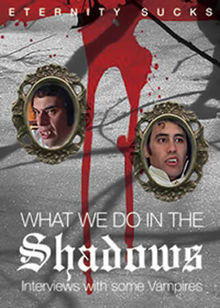
The event gathered some of the most important figures from around the world to not only screen their most recent films but to share artistic works that inspired them to become filmmakers themselves. Sundance favorite Taika Waitita — a self-proclaimed “Academy Award-losing filmmaker” for his 2005 short Two Cars, One Night, he’s best-known for his wonderfully quirky 2007 film Eagle vs. Shark — read a sequence from Andrei Tarkovsky’s Stalker (1979), while his vampire comedy What We Do in the Shadows (co-directed with Flight of the Conchords‘ Jermaine Clement) enraptured Midnight Movie audiences at the 2014 festival. 

Heather Rae, director of the powerful 2005 documentary Trudell, read a piece from Trinh T. Minh-ha’s remarkably eye-opening text Woman, Native, Other: Writing Postcoloniality and Feminism

And even though Smoke Signals (1998) helmer Chris Eyre (the defining first generation filmmaker) brought the house down by reading an entire Sherman Alexie short story (Alexie also wrote Signals), filmmaker Billy Luther — who directed the documentary Miss Navajo (2007)  — further took the edge off of things by reading a memorable scene from The Golden Girls. But I found myself most drawn to Sydney Freeland and Sterlin Harjo’s readings. Both filmmakers also had features in the festival.

Freeland wrote and directed her stunning debut, Drunktown’s Finest, which showcases lively performances by Jeremiah Bitsui (Victor from Breaking Bad) and newcomer Carmen Moore. The wonderfully entangled screenplay weaves together its Navajo characters, subjects, and themes with powerful precision, announcing Freeland as a voice to be taken seriously. 

In a post-fest interview I learned that ensemble films — as widely varied as Casablanca (1942) and Amores Perros (2000) — inspired her greatly, which led me and other viewers to retrace some of Drunktown‘s more compelling plot twists. The film’s complicated dealings with a MTF trans-woman are enlightened, as are the ways it explores the Navajo Nation’s beliefs about a third gender: nàdleehì, meaning “one who is transformed” or “one who changes.”

Ironically, the filmmaker explained, “I had to leave the reservation and move to San Francisco to learn about this.” Freeland’s own interests changed dramatically after finding photography and filmmaking in college. “Making movies just was not an option growing up. Other fine arts were being taught, like pottery and weaving, but not filmmaking.” 

When asked about the growing number of native filmmakers, she attributes much of it to technology’s increasing accessibility, via phones and digital cameras.nd Drunktown’s Finest has achieved what second-generation movements have the power to do: complicate matters. 

Part two coming tomorrow, with Sundance vet Sterlin Harjo (who screened his first documentary, This May Be the Last Time, at Sundance 2014) and Smoke Signals’ Chris Eyre.

Locals Only: Shareef Ali

0

Is there anything more punk-rock, truly, than baring your soul in the form of a song? That’s what came to mind the first time I heard Shareef Ali, an Oakland-based singer-songwriter whose debut album, A Place To Remember the Dead, will most likely land in the “folk” section of the record store (er, the iTunes store?) after it drops tomorrow, Feb. 19.

Yes, there’s acoustic guitar; there are poetic and earnest turns of phrase about melancholy, joyful, and romantic feelings. But the underlying current is pure punk defiance — a melodic middle finger of sorts to anyone who might suggest that confessional songwriting means you have to be soft, to anyone made uncomfortable by rough-hewn, sacrificial-sounding love ballads, to an indie music landscape that offers little room for artists who don’t buy into ironic or detached as the road to cool.

Ahead of Ali’s record release show at Bottom of the Hill tomorrow night, I asked him how that sound came about.

SF Bay Guardian: Where are you from originally, and what brought you to SF?

Shareef Ali: I spent my formative years in the Midwest; born and bred in St. Louis, Missouri, schooled in Oberlin, Ohio. In 2006 I moved to LA to start a band that existed long enough to play exactly one show. Then I did a few years toiling away in the non-profit world, which brought me up to the Bay. Eventually, I realized that not only would I not be happy unless I was making music, but that I also believed it was the most valuable contribution I could make. I’ve been focused on music for the past five years, and have never been happier or more sure of my path.

SFBG: How and when did you first start playing music? Who are some of your biggest influences?

SA: I got my first guitar in the 7th grade when my mom accidentally ran over my foot with the car and felt hell of bad about it. I played in a kinda all-over-the-map rock band through high school, messed around with jazz and experimental composition in college, but it wasn’t until I got to the Bay that I really discovered my best assets as a songwriter. As far as influences go, there are the obvious ones that you can detect — Oberst, Cohen, Waits, to name a few — but really, my biggest inspiration these days comes from the musicians in the rich local folk scene here, some of whom can write a fucking song as well as anyone. There are a lot of talents, Brian Belknap and Mr. Andrew being two of my favorites (who both also played as sidemen on my record).

SFBG: How do you describe your sound or genre, when forced to do such a thing?

SA: There’s only one thing more obnoxious than trying to describe one’s music in brief, and that’s listening to a fucking musician hem and haw about how they “don’t want to be pigeonholed.” My roots are in folk, but I feel like a punk aesthetic informs my delivery a lot, even if it’s not a punk-style song. And then stylistically I also draw on country, jazz, pop music, old-time blues, whatever. What ties it all together is that it’s all lyrical music. The song, the story, the poetry of it, is the centerpiece; other musical elements are all supportive of that.

SFBG: Some of your songs are obviously very autobiographical/confessional. How do you decide how much of yourself to put into a song, and what to leave kind of vague?

SA: Some of my songs are definitely deeply personal, especially in a tune like “For the Rest of my Life,” wherein I address, by their real names, both my partner and my ex-lover-still-close-friend. I like to put in little Easter eggs of meaning, inside jokes that only the subjects of the songs will get. There’s one song on the record written about another local songwriter, and I quote half a dozen of her songs back to her. Who knows what other listeners take away from these lines, but there are plenty of lyrics in songs I love that I can only guess at their meaning; that’s part of the fun.  On the other hand: My buddy S.A. Bach put it well when he sang, “Writing songs ain’t for telling the truth.”  Or as someone else somewhere said, “A story doesn’t have to be real to be true.”

SFBG: How do you survive financially in the Bay Area as a musician? If you have a day job, I’m always curious to hear about ’em…

SA: I’m fortunate to have a partner with a stable teaching gig who’s very supportive of my music; we’re currently expecting our first kiddo, and I’m probably gonna get to be the stay-at-home papa, which I’m pretty stoked for. I have a few other odd gigs that I do, and I have also spent some time on the dole, for which I make no apologies.

SFBG: What neighborhood do you live in? And what’s the one Bay Area food you couldn’t live without? I love the It’s-It reference in “Tucson.”

SA: I live in the Lower Bottoms of West Oakland. Bay Area cuisine I couldn’t do without? I’m gonna have to go with the handmade noodles at Shan Dong in downtown Oakland. [Ed. note: Fuck yeah.]

https://www.youtube.com/watch?v=CaPENY3uIHA

Shareef Ali
With Sparkbox (Kelly McFarling + Megan Keely) and Whiskerman
2/19, 8:30pm, $8
Bottom of the Hill
1233 17th St., SF
www.bottomofthehill.com

Locals Only is our shout-out to the musicians who call the Bay Area home — a chance to spotlight an artist/band/music-maker with an upcoming show, album release, or general good news to share. To be considered, drop me a line at esilvers@sfbg.com.

BARF-y, in a good way: Bay Area record labels draw a cattle drive of local music lovers

2

On Saturday, the first annual Bay Area Record Label Fair (BARF) was born. As a labor of love between Father/Daughter Records and local promoters, Professional Fans, the event set out to be an ode to the ingenuity and entrepreneurial efforts of record labels in the Bay. Some 17 labels, including Slumberland Records, Loglady Records, Polyvinyl Record Co., Alternative Tentacles, and many more, displayed and sold their music at Thee Parkside.

It was a given that BARF would be successful — after all, it was free, and boasted a live show with uber-talented Bay Area acts — but it was truly staggering to see how packed the place was. At times, wandering through the vendor section was nothing short of a cattle drive. The layout of vendors was superb, however; I was pleasantly surprised to see how the folks behind BARF turned the patio at Thee Parkside into a marketplace for music wares.

al lover

Al Lover

Of course, one big thing that initially attracted me to the event (other than the possibility of spending too much money) were the performances by Al Lover, Cocktails, Twin Steps and Dog Party. All bands were from various record labels tabling at BARF. Al Lover kicked off the more musical aspect of the event. As a San Francisco-based music producer, he combines various beats from ‘60s psych-rock and heavy-sounding drum tracks much like those of Wu-Tang Clan alum RZA. Al Lover has also been known to make remixes of tracks from fellow Bay Area artists, such as Fuzz and Burnt Ones.

More people started to filter in when Cocktails, self-dubbed “slop-pop” from San Francisco off Father/Daughter Records, started to play. At times, vocalist and guitarist Patrick Clos’ vocals were reminiscent of Elvis Costello. Often fuzzed out and with a tendency to combine sneering and saccharine-sweet vocals, the band cranked out its set in record time.

cocktails
Cocktails

Twin Steps, off 1-2-3-4 Go! Records, is a sample-based quartet from Oakland that blends elements of ‘60s soul, weirdo rock, and pop. Known for surf riffs punctuated with yelping vocals, the band is flying off the handle exemplified. Vocalist Drew Pearson tried to engage the audience by routinely darting off the stage and using the crowd as a crutch (literally), but they weren’t quite as receptive as he’d maybe hoped. This was a little disheartening, given the band’s track record of rowdy (or raucous, if you will) shows.

twin steps
Twin Steps

It should be noted here that the audience for the show portion of the event was ultimately meek. Since the event occurred between the hours of noon and 5 pm, maybe there just weren’t enough fierce advocates for day-drinking in the crowd? Pearson was caught saying “I didn’t know we were in a library” during the band’s set. So yes, it was very quiet.

Despite that one shortcoming, Dog Party, a Sacramento-based sister duo (ages 17 and 14) brought an air of Ramones worship to the house. Known cronies of Kepi Ghoulie, their fellow Asian Man Records labelmate and the former frontman for ‘90s pop-punk mainstays Groovie Ghoulies, it’s easy to see where the band draws influence from. The high point of the Dog Party set was its cover of “Los Angeles” by seminal ‘80s punk band X.

dog party
Dog Party

After that, the audience dispersed. Some mingled, others ventured out to vendor area saddled with questions to the tune of “Should I buy this cassette for $5, though I have never heard of this band before?” or perhaps “How did I spend so much money at an event that’s supposed to be free?”

Long story short: BARF was pretty much everything a fan of independent Bay Area music could hope for. So when does this all happen again?

“Monologos de la Vagina” An artistic and cultural triumph at the Brava theater in the Mission

86

I had just settled into my seat Friday night at the  Brava Theater in the Mission to see  the opening night  production of “Monologos de la Vagina” and the San Francisco debut of Eliana Lopez as a performer and producer.

This would be an interesting evening, I mused, because the play is being performed in Spanish and I speak only a word or two of Spanish.  The play, known in English as the “Tne Vagina Monologs,” was written by Eve Ensler. It opened in 1994 for a five year run off Broadway and has been produced internationally in many variations. It became, as the New York Times put it, “probably the most important piece of political theater of the last decade.” .

 Art Agnos, the ex-mayor who is leading  the battle to stop the Manhattanization of the waterfront, was attending the performance  with his wife Sherry. He tapped me on the shoulder and said quietly, Bruce, they filed a lawsuit this afternoon to block our waterfront initiative. They, he explained,  were the developers, the Building Trades and Construction Union, and the San Francisco Giants.  We chatted for a few moments about the impact of the suit and what  must be done quickly to stop  it in court.

This was, I thought, a quintessential San Francisco moment.

Here were Sherry and Art, coming to the Brava Theater, deep in the heart of the Mission at 2781 24th St., on the very day that the waterfront  gang were bringing up their big guns to knock out a people’s initiative aimed at saving the waterfront on the other end of town. The timing was exquisite and the political and community points became eminently clear as the evening wore on.

The  Warriors’ arena proposal, as Art and his allies have argued, is merely a loss leader for a monstrous condos-for-millionaires project by a Los Angeles developer  that would do serious short and long term damage to one of the most valuable pieces of property  in the world.  And it’s on public property on the waterfront  and would involve enormous public subsidies for the duration. The Giants, quiet till now, have their own highrise agenda.

 By contrast, here were Eliana, the Brava Theater, and  her merry band of monologists  working to do good, lots of good,  by producing  the first professional Spanish-speaking  production of the Monologs in San Francisco—and its message  that illuminated  women’s sensuality and the social stigma of rape and abuse.  In the process they were helping to save a lovely old Mission theater building and institution and  helping  the Mission District, which needs all the help it can get these days.

 Neighborhood theaters like Brava are an endangered species in San Francisco and its home base in  the Mission is under relentless eviction and gentrification pressure.  San Francisco is the only major urban municipality in California  that is not seeing an increase in its Latin population..

Eliana became famous in her native Venezuela as a star in television soap operas, but her real passion is live theater.  Her father is a theater director in Caracas and live theater is in her bones. She feels strongly that San Francisco needs more and better access to Spanish-speaking  theater and Brava is a wonderful venue for her to indulge her passion.  She and her husband, Sheriff Ross Mirkarimi, live with their son Theo, 4,  on the edge of the Mission, only three blocks from the theater. 

I found that the good  thing about seeing the Monologos without knowing  the language was that I could still get a lot out of the play and the production  The lady from Venezuela can act—and did so beautifully and with charm, gusto, and style. And she can perform in both English and Spanish, as she has done in other Monolog productions. .

 She can also produce, mounting  a professional production that could play on any stage in San Francisco or Caracas or points in between. And she is also a splendid promoter and public face of the play and the theater, appearing regularly on Spanish  programs on radio and television and in public appearances. Her six person ensemble  included  two actors  who have performed  the Monologs in Spanish in Miami and New York: Alba Roversi  and Marisol Correra. Eliana performed with Alba in Caracas.

The actors  worked together nicely, obviously enjoyed each other and  the dialog, played to each other’s strengths, and got their points across with expressive  gestures and voice inflections and humor and poignancy. They loved the play and got a big kick out of performing at the Brava Theater. The audience loved the ladies and their performance and gave them a standing ovation.  Alas, the play was only for the three day Valentine’s Day weekend.

Bravo, Eliana. Bravo.  Keep on rolling, as we say in English. B3 

A newspaper is not just for reporting the news as is, but to make people mad enough to do something about it.  Mark Twain  (The motto of Random Lengths, an alternative newspaper published by James Allen in San Pedro, Calif.)

(The Bruce blog is written and edited by Bruce B. Brugmann, editor at large of the Bay Guardian.  He was the editor and co-founder and  co-publisher with his wife Jean Dibble of the Guardian, 1966-2012)

Hard French Winter Ball video is bonkers

0

The annual Hard French Wnter Ball, in which our favorite queer retro-soul party gets gussied up and holds a prom in Santa Cruz (next Saturday!), has always gone big and hilarious with its promotions. But it’s outdone itself this year, with an epic kooky acid trip promo video by Dirtyglitter. Get it, Veronica Kuka-Florez.


Sundance part 10: Happy Valentine’s Day!

0

Four memorable movies about frisky females from the 2014 Sundance Film Festival

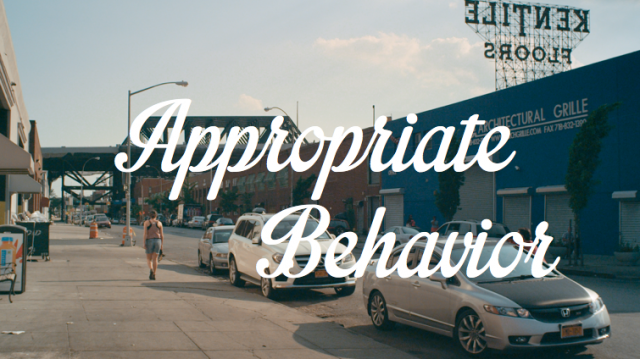
1) Desiree Akhavan wrote, directed, and stars (with deadpan aplomb) in Appropriate Behavior (US/UK), a tremendously personal story about growing up as a bisexual woman in a Persian family in New York. 

2) David Wnendt’s Wetlands (Germany) knocks the ball out of the park, adapting German author Charlotte Roche’s 2008 raunchfest. Lead actress Carla Juri immerses herself in the role of Helen as deeply as the character sticks her fingers into every orifice of her body. While perhaps attempting to attack too many issues from the original text, the film lives up to its scandalous reputation; it sent many audience members into fits of confusion for its graphic sexuality and obsessive behavior in regards to bodily fluids. 

3) Gillian Robespierre’s Obvious Child (US) gave comedian Jenny Slate more than enough material to chomp on when she’s dumped, fired, and impregnated all in time for Valentine’s Day. This classic indie ditty knows what it wants and grabs it with both hands. Buy advance tix when this comes your way: it’s clearly this year’s Juno (2007), but, you know, without the backlash. 

4) Gregg Araki’s White Bird in a Blizzard (US) stars Shailene Woodley — of The Spectacular Now (2013) and The Descendants (2011), and about to break huge in Divergent. Writer-director Araki (an indie legend for films like 1995’s The Doom Generation) returns to the contemplative maturity he explored in Mysterious Skin (2004). This time, he takes on a young woman dealing with the disappearance of her mother. 

The melancholy soundtrack by Harold Budd and Robin Guthrie gives the film a Twin Peaks ambiance (never a bad thing), plus there’s the added bonus of Gabourey Sidibe as the main character’s hilarious BFF. Araki hasn’t lost his unique clunkiness that keeps him at the level of festival favorite, but White Bird may be his breakthrough (again) at last. You could do a lot worse than this. 

Next week: a look at Sundance’s Native Forum, and reports from the 2014 Slamdance Film Festival!

Happy Valentine’s Day from Horse Feathers, Bowerbirds, Fruit Bats, Marissa Nadler, Maps & Atlases, Mark Kozelek, and more

0

Devon Reed is a San Francisco songwriter who also happens to be super-passionate about his volunteer work at 826 Valencia, everyone’s favorite Dave Eggers-founded, pirate store-fronted, kids’ literacy nonprofit in the Mission. A little over a year ago, he had the thought: What can I do that would combine the philanthropic and creative sides of my life?

The result is You Be My Heart, an album of 17 songs (almost all of them love songs of some kind) written by Reed, recorded by artists from around the country that he simply liked and decided to approach — including an impressive amount of indie rock royalty, like Bowerbirds, Horse Feathers, Fruit Bats, Maps & Atlases, Marissa Nadler, and Mark Kozelek. Proceeds from the album benefit 826 Valencia.

“I generally approached artists whose work was literate, wordy or melodic, or all three, since I tend to write dense, structured songs,” says Reed. “I also gravitated toward musicians who have a good-natured or folky streak in their work, since I thought that would give a good representation of the feeling of 826.” With the exception of Ghost and Gale, a local dreamfolk duo, he didn’t know any of the artists personally before he started the project. He simply asked bands to participate, and if they said yes, handed songs off to them for reinterpretation.

“I was mostly surprised, pleasantly, by things like a pedal steel solo in Marissa Nadler’s track ‘Half as Much,’ or Bowerbirds adding some real dramatic elements to the bridge of ‘Seven Wonders,’ — little changes that weren’t in my original demos but which nonetheless added something significant to the final versions,” says Reed of his reactions to the bands’ work. “Hearing each of the recordings for the first time was like unwrapping one present after another.”

Below, check out a video Valentine from a handful of the participating artists, as well a track from Bowerbirds. They’re both pretty. Just listen. For the children.