SFBG Blogs

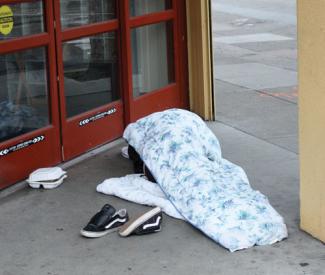
Homeless families still waiting for a meeting … and housing

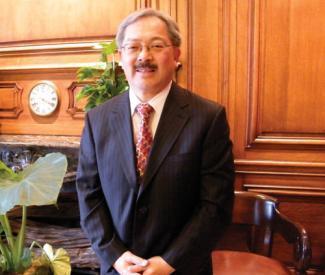
San Francisco Mayor Ed Lee still has not met with homeless parents organized by the Coalition on Homelessness to discuss their proposed solutions to combat the growing problem of youth homelessness. Nor has the mayor’s office responded to multiple Guardian phone calls inquiring why a meeting hasn’t been scheduled.

Homeless parents organized by the Coalition entered City Hall last Wednesday to raise awareness about a growing problem of San Francisco families lacking a permanent home, and to request a meeting with mayor, whom advocates first contacted Oct. 26.

Coalition on Homeless executive director Jennifer Friedenbach said the mayor’s office had offered to schedule a meeting with a mayoral representative, but not with Lee. “Why would we meet with a representative?” she asked. “We want a meeting with the mayor himself. It should be important for the mayor to meet with parents in a crisis.”

As the Guardian reported last week, the number of homeless families on shelter waitlists citywide has risen to an unprecedented high of 267, while the number of homeless students in public schools identified by San Francisco Unified School District stands at a high of 2,167. Both figures suggest homelessness is on the rise in a city where rents are well above average and the recession has given rise to job loss, evictions, and foreclosures. A nationwide Occupy Our Homes day of action scheduled for today, Dec. 6, is meant to draw attention to tenant evictions and homeowners losing their properties to bank foreclosure.

Part of the problem facing newly homeless families in San Francisco is the lack of availability in public housing and other housing assistance programs such as Section 8 rental assistance vouchers. The waitlist for public housing units in San Francisco stands at between 24,000 and 25,000 — enough would-be tenants to fill the roughly 6,500 units in the city’s public housing system nearly four times over. The San Francisco Housing Authority closed its waitlist for public housing several years ago. The waitlist for Section 8, a separate program administered by the federal government, is also closed.

“Why do waiting lists close? The demand for low-income housing so far outweighs the available vacancy,” said San Francisco Housing Authority (SFHA) spokesperson Rose Dennis. “A number of housing authorities have had to close their waitlists, because we cannot serve the people who are not on the waitlist right now. This is not unique to San Francisco.”

Nevertheless, advocates with the Coalition on Homelessness say part of their strategy is to pressure the mayor to revamp units sitting empty in housing authority properties so they can be used for housing.

Asked about this, Dennis responded that there are relatively few vacancies, and that all vacant units are already in the process of being prepared for new tenants — some of whom have already been identified and promised a unit, and others who are part of a pool of applicants undergoing a screening and selection process.

Housing Rights Committee executive director Sara Shortt, however, told the Guardian public housing tenants she’s worked with have long observed boarded-up units on SFHA properties. She added that they’ve raised concerns about the tendency for empty units to attract rodents, graffiti, or squatters engaged in drug sales or use, which can lead to violence.

Friedenbach said she’d heard from multiple people seeking public housing units who said they’d been promised a unit only to experience delay after delay, for weeks on end. Dennis said it takes SFHA between one and 45 days to move a tenant into a unit once the housing has become available, depending on the status of the tenant.

In addition to the conflicting accounts, another complicating factor is that the actual number of vacancies in housing authority property seems difficult to pin down. Dennis told the Guardian that the occupancy rate in SFHA property typically stands at around 93 percent. Since there are roughly 6,500 units total, this would imply that there are about 450 vacant units. Yet Dennis also stressed that the number of vacant units is always around 225, give or take, and has hovered consistently around that level without any dramatic spikes in vacancy.

A SFHA report to its federal parent agency, the Housing and Urban Development (HUD), which housing advocates received as part of a Freedom of Information request, listed a total of 847 vacant public housing units as of May 2011. That’s nearly twice as high as a 7 percent vacancy rate, and almost four times as high as the 225 vacant units Dennis said the authority consistently has in its system.

“That’s not a vacancy rate,” Dennis explained after we sent her a copy of the document. “That’s a cumulative, historic count that HUD has that is different from day-to-day management. These are not numbers that accurately represent what you would go out and see on a site. These numbers have a lot of other aspects to them.” She added, “The numbers that I gave you are accurate and true.”

The Guardian has placed a call to the Human Services Agency, as well, in hopes of sorting out some of these issues. We’ll update this post if we hear back.

Skew your perceptions: Lomography’s new gallery store opens Thursday

1

Almost as cryptic as some of their warped, blurred, color-drenched photos is the Lomography Society’s 10th rule: “Don’t worry about any rules.” For an artistic movement as commercially successful (the fantastically cheap cameras sell at Urban Outfitters worldwide) and historically important (the LOMO LC-A, the first lomographic camera, was mass produced in Soviet Russia for the enjoyment of the proletariat masses) as Lomography, it sure is hard to pin down.

The term at this point encompasses a photographic style, loose and experimental, centered upon the  purposely faulty cameras that produce wildly unexpected results. But Lomography is also a broad, inclusive movement that hosts a massive website on which “Lomographers” can display their work – not to mention a magazine emphasizing the “analogue lifestyle” and gallery stores the world over.

San Francisco gets its own hub of lomographic activity December 8 with the opening of a gallery store at 309 Sutter. 

Our city is already home to quite a bit of Lomogramania; any foray into the geotagged-recesses of the expansive website yields glimpses of our bridge pillars and telephone wires, delightfully skewed. 

The new gallery store will serve as as a kind of colorful, artistically-bent Apple store, chockful of products, sure, but just as much about the tactile, try-out experience. Veterans and the uninitiated alike can participate in workshops, snag items from the entire Lomography product line, and check out local work on display. 

The gallery store, the latest of more than 30 from Guangzhou to Cologne, opens Thu/8 with a party that seems fittingly eclectic, featuring barbeque, moonshine punch, bluegrass, and the soul stylings of Hard French’s DJ Carnita. The store’s regular hours will be Mon.-Sat., 10 a.m.-9 p.m.; Sun. 11 a.m.-7 p.m.


Lomography San Francisco gallery store opening

Thu/8 7 p.m., free

309 Sutter

(415) 248-0083

RSVP to shopsf@lomography.com

www.lomography.com


Burning Man attendees anxious over new ticketing system

7

Burning Man attendees are feeling anxious over a new lottery-based ticketing system set up this year to address the growing popularity of the event, so much so that an unprecedented number of them are now registering for pre-sale tickets – which were originally intended as holiday gifts – that are being sold at the top-tier price of $420.

Black Rock City LLC, the San Francisco-based company that stages the annual late-summer event in Nevada’s Black Rock Desert, announced the new system last month, setting off a cascade of online denunciations and expressions of anxiety over whether burners will be able to secure enough tickets for their friends, family, and project partners.

“There’s been a strong reaction for all the reasons we thought would happen,” said Marian Goodell, one of six LLC board members responsible for the decision, who said they searched in vain for a better label for the new system. “The word ‘lottery’ is highly charged and unfortunately people equate a lottery with one in a million odds to win a fortune.”

But she said they needed to try something new after last year’s problems, when strong demand for tickets on the first day of sales repeatedly crashed the online ticketing system, and when the event sold out in late July for the first time in its 25-year history, causing scalpers to sell tickets for double-face-value in many cases.

The first round of ticket sales aren’t likely to ease people’s concerns – it could make them more nervous. As in previous years, the LLC is selling 3,000 tickets in December, and their high prices have previously kept demand at around that level. But not this year, as several thousand people have already registered for a lottery-based sale whose registration period ends Dec. 11.

“If 10,000 people apply for 3,000 tickets, I’ve got more unhappy people than I want,” Goodell said.

Those who don’t get tickets will automatically be registered for the main ticket sale in January, when everyone else will register at either the $240, $320, and/or $390 tiered pricing levels to buy up to two tickets from the 40,000 being sold then (10,000 at the lowest tier and 15,000 each at the next two). Notifications will go out on Feb. 1.

Then, in March, about 10,000 more tickets will be sold on a first come, first served basis. Goodell said the exact number of tickets sold then will depend on the permit that is issued by the U.S. Bureau of Land Management for next year’s Burning Man. The LLC has been seeking the negotiate a five-year permit that will allow the event to gradually grow up to 70,000 people.

“We’re looking at a five-year permit and the five-year permit has the potential to grow bigger. What that looks like in the first year isn’t clear yet,” Goodell said.

There are mixed views in the Burning Man community to growing Black Rock City far beyond its current size of just over 50,000 people. It would open the event to more people, but that presents challenges to acculturation and the logistics of getting people to and from a far-flung locale accessed only by a narrow highway with one lane in each direction.

Earlier this year, the LLC moved into a more high-profile headquarters space on mid-Market and set up a nonprofit called the Burning Man Project, which will eventually supplant the LLC in running the event and which is intended to pursue more projects off the playa.

“We’re all for Burning Man culture continuing to grow, and fortunately we have other avenues to grow, including the nonprofit and the regional events,” Goodell said. “The city has all kinds of other constraints.”

Critics last year complained about scalpers reselling Burning Man tickets at high prices, something frowned on in the community and discouraged by the LLC, although it did little to address the problem. An analysis done by the online ticket site Seat Geek found that the average resale price of $350 before the sellout increased to almost $700 afterward, with the highest price ticket going for $1,120.

Goodell said that the only way to minimize the scalping of Burning Man tickets would have been to create a system in which all buyers were identified by name and after-market ticket sales were regulated by the organization, “and that’s more than we were willing to do.” Instead, the LLC will be creating an online system for reselling tickets and guarding against counterfeits, with details to be announced later.

But she predicted the new system will work better than the old one and that most people’s anxieties are unfounded.

“Most people who think ahead are going to get a ticket,” Goodell said, later adding, “It’s a lot less scary than people think.”


Bay Guardian City Editor Steven T. Jones is the author of The Tribes of Burning Man: How an Experimental City in the Desert is Shaping the New American Counterculture (2011, CCC Publishing)

Guardian editorial: The problem with the tax initiatives

1

 The Occupy movement — despite police abuse, official hostility and dismissive media — is changing the mainstream of discussion in American politics. For the first time in years, it’s actually possible to talk about raising taxes on the very wealthy. All the polls show strong, and growing, public sentiment in favor of economic equality. It’s a great opportunity to reform California’s tax system — but Gov. Jerry Brown seems unwilling to take advantage of what could be the most important moment in his political career.

At least five groups are preparing tax-reform measures for the November, 2012 ballot. One of them — the so-called Think Long proposal supported by billionaire Nicolas Berggruen and Google executive Eric Schmidt — is largely regressive. Much of the $10 billion it would raise would come from sales taxes on services, which amounts to a whopping new tax on the middle class. Another, known as the Clean Energy Jobs Act (also backed by a billionaire, hedge fund manager Tom Steyer) would force corporations to pay taxes based on sales in the state, which in and of itself isn’t a terrible idea. But that’s the beginning and end of the measure, and half of the $1 billion it would raise would be earmarked for (private sector) clean energy projects.

Then there are the income tax proposals. One, sponsored by a Los Angeles attorney named Molly Munger (whose father happens to be a billionaire investor) would raise almost everyone’s income taxes, although the wealthy would pay more; every penny of the $10 billion in new revenue would be earmarked for education. The Courage Campaign and the California Federation of Teachers want to raise taxes on incomes of more than $1 million, with the money also dedicated to education.

Then there’s the governor’s plan. Brown’s offering a mix of a half-cent sales-tax hike and higher income taxes to raise about $7.5 billion. Some major labor groups are already on board — as are some business groups, which would rather see a tax on consumers than higher taxes on big corporations and the wealthy. His plan may seem pragmatic — but it’s hardly progressive and won’t solve the state’s $13 billion budget shortfall for this year, much less restore funding to the services that have been cut in past budget battles.

All of the plans have problems. While we’re much more aligned with the Courage Campaign’s goal of taxing the rich, and we agree that education is a critical need, there are other critical needs in the state, too (affordable housing, health and social services, for example) and we’re not sure the education earmark makes sense. And most of them don’t go beyond personal income taxes, when taxes on big businesses are often scandalously low.

Brown ought to be taking the best of the various proposals, adding other ideas that have been put forward by Democrats in the Legislature, and producing a final product that would shift the state’s tax burden onto those who can most afford it. That means scrapping he sales tax and replacing it with steeper income tax increases on the highest earners and an oil-severance tax (which could alone bring in as much as $8 billion a year). Higher taxes on financial institutions ought to be part of the deal, too.

With the presidential election driving a high turnout in California, and public anger at the greed of the top one percent defining the electoral debate, it’s foolish to put forward a half-assed measure that doesn’t amount to real reform. Brown and his team need to make some major changes before a tax measure heads to the Nov. 2012 ballot.


The always amazing John Burton

1

John Burton, former member of Congress, the state Assembly and the state Senate and now the chair of the state Democratic Party, has represented PG&E and real-estate developers and helped build a political machine that stifled local politics for years. But I have to say: The guy is a great interview. Deep down, he really thinks like the 99 percent and every other word out of his mouth is “fuck.”

Oh, and he’s always an example of sartorial splendor. Everyone in Sacramento politics wears fancy suits; John dresses like he just came from the Occupy campground. On a good day.

Check out this outstanding interview on The Daily Show (thanks, Calitics).

My favorite line:

“My daughter bought me a Kindle for my birthday and I won’t use it because of those goddam people at Amazon. I go to the book store and buy a goddam book and I read it. I can read it while I’m taking a crap.”

Oh, and when the Daily Show interviewer tells Burton “you cuss more than a West Coast rapper,” he says:

“I who?”

There’s nobody else like him in politics.

Localized Appreesh: Uni & Her Ukelele

0

Localized Appreesh is our weekly thank-you column to the musicians that make the Bay. Each week a band/music-maker with a show, album release, or general good news is highlighted and spotlit. To be considered, contact emilysavage@sfbg.com.

This is the time of year when sparkly holiday affairs are everywhere. Depending on your current state of mind, these tinsel-coated, candy-caned, dreidal-spun affairs can stink like commercial biz abominations, or warm like twinkling, nostalgia-inducing winter shindigs. With San Francisco act Uni & Her Ukelele opening up for the Yule Logs (a band that just released an album called You Ruined Christmas) at Amnesia, the evening is bound for greatness. It’s the seventh annual “Christmas is the Best” show, and both holiday-loving acts play clever and folky power-pop with tongue-planted-firmly-in-cheek sweetness.

Uni & Her Ukelele can’t avoid the sugar, given the doe-eyed, oft-frilly skirted uke mistress at the band’s helm, Heather Marie Ellison. She writes songs (and records) like 2006’s “My Favorite Letter is U” and a covers album that includes “Tonight You Belong to Me” (which brings to mind the best ever use of uke in film   – Steve Martin and Bernadette Peters strolling the beach in The Jerk). She even uses her signature sign-off (Ding!) to end emails. It’s giving me a toothache.

Year and location of origin: 2005. Uni & Her Ukelele began in Hollywood.
Band name origin: Uni is short for Unicorn.
Band motto: Light Rock Less Talk!
Description of sound in 10 words or less: Dreamy, melodic, folk-pop that is emotional and melancholy, but also funny.
Instrumentation: Vocals and ukelele, although on the album there’s a full band.
Most recent release: I’m doing a Kickstarter right now to finish my fourth full length album, Lover’s Cliché.
Best part about life as a Bay Area band: There are many places to play and good bands/acts to share the bill with.
Worst part about life as a Bay Area band: At the end of the show, it’s hard walking away without money.
First record/cassette tape/or CD ever purchased: Wham Make It Big.
Most recent record/cassette tape/CD/or Mp3 purchased/borrowed from the Web: I just bought Tom Petty’s Tom Petty and the Heartbreakers.
Favorite local eatery: Green Chili Kitchen.

Seventh Annual Christmas is the Best
Uni and her Ukelele
With Yule Logs
Sun/11, 9pm, $7
Amnesia
853 Valencia, SF
www.amnesiathebar.com

A tender portrait:
http://www.youtube.com/watch?v=zJArwBjWoEc

Castro residents clash over proposed restrictions in public spaces

37

UPDATE: This article has been changed to include three corrections.

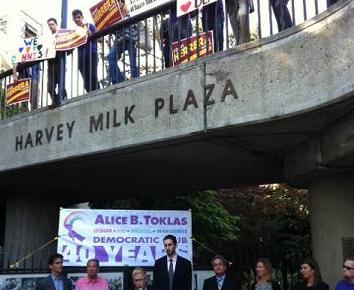
Community activists in the Castro District of San Francisco have been riled up by recent legislation proposed to limit public use of the Harvey Milk and Jane Warner plazas.

The ordinance proposes to ban “wheeled equipment” and prevent people from sleeping, camping, or selling merchandise. Further, the ordinance limits the time that seating will be available to 9 a.m. to 9 p.m. 

“Poor people and low income people can’t live in the neighborhood anymore,” said community activist and Housing Rights Committee member Tommi Avicolli Mecca. “This ordinance is a response to people’s discomfort with people who look homeless in the plaza.”

Mecca believes that this legislation was pushed forward by the Castro/Upper Market Community Benefit District and the Merchants of Upper Market and Castro (MUMC) as a way to privatize the public spaces and, in effect, prevent homeless people from occupying them.

“(The legislation) talks about sleeping and camping. Who is doing that other than homeless people and what printed materials are being distributed other than the Street Sheets?” said Bob Offer-Westort human rights organizer for the Coalition for Homelessness. “All of this really clearly targets homeless people.”

Other community activists, such as blogger Mike Petrelis, believe that this legislation is a preemptive act against the Occupy movement and that meetings discussing the ordinance intentionally excluded activists like himself. “This new legislation is part of a downtown agenda to prevent an Occupy encampment set up,” said Petrelis.

Petrelis wrote about the legislation on his blog, and among his arguments he states that preventing tents to be present in Harvey Milk and Jane Warner plazas expresses direct disapproval of the movement.

“I read this and hear fear on the part of [Sup. Scott] Wiener, MUMC and the CBD that an Occupy the Castro encampment could take root at the top of Market Street,” he said.

Wiener, who is sponsoring the legislation, says that it was drafted under the Pavement to Parks effort to transform the space into park land and that the provisions are standard for that use. 

“We’re trying to have usable vibrant public space and this legislation will help us have it,” Wiener told us. “This legislation provides what we already have in our parks. It’s pretty basic provisions.”

Wiener says that many local merchants and advocates, such as the Sisters of Perpetual Indulgence, have been involved in discussions around of this legislation, but the Sisters have not taken a stand on the measure.

“The Sisters, as far as I know, have not made a collective effort one way or another on the legislation at this time,” said Sister Barbi Mitzvah in an email. “The Sisters individually can comment, but coming from the organization takes a majority vote as we are a 501c3 non profit.”

Whether this legislation addresses homelessness, an attempt to prevent an Occupy Castro movement, or if it is to create a “usable vibrant public space,” the community is demanding participation in this decision.

“Both plazas play a vital role in the Castro community,” Petrelis said. “So why won’t he hold a public meeting?”


Live Shots: A peep at the upcoming “Revolutionary Nutcracker Sweetie”

0

Rehearsal was in full twirl this weekend, as dancers prepared to perform “The Revolutionary Nutcracker Sweetie” at Brava Theater this coming weekend.

This is not your classic, bourgeois version of the Nutcracker, but more of a Cinderella tale. Clara is an undocumented worker, working for the richest family in town, the McGreeds, whose gay son (with a pink hairdo) gives Clara a freedom fighting doll from Africa.

Later, the pair embark on an adventure of a lifetime. They make their way through a magical world, of melting ice caps and even underwater, concluding with the a beautiful “dance of the flowers,” which I caught a few photos of during the rehearsal. So start a new tradition this year, and check out Dance Brigade’s spunky and cool version of this holiday favorite, because, sweetie, you don’t want to miss it!

December 10-11
Saturday 2pm and 6pm; Sunday 1pm and 5pm, $15-$17
Brava Theater
2781 24th Street, SF
Purchase tickets here

Telegenic Band Check: Corpus Callosum

2

SFBG videographer Ariel Soto-Suver met local SF band and performance troupe, Corpus Callosum, in their studio to record a live set and learned all about their love of video game music.

Period Piece: A walk in the (man-made) woods

1

It’s easy to get a little romantic standing in a beam of filtered sunlight inside Mount Sutro Open Space Reserve. The 61-acre expanse of ivy and eucalyptus feels like a remnant of an earlier, wilder San Francisco. 

But the densely tangled forest backing UCSF’s medical campus is actually man-made. It harkens back to the heyday of good old Adolph Sutro, bathman, silver magnate, and forest enthusiast. Sutro covered the mountain on his sandy property with many of the trees standing today.

Hoofing the Historic Trail, a mild romp of an urban hike, is a little bizarre. The behemoth mass of the UCSF Medical Center glints steadily through the trees, and yet it’s hard to shake the feeling that you’re deep in a damp cloud forest.

Today’s eucalyptus trees obscure a view that Craig Dawson, founder of the Mt. Sutro Stewards, says was once one of the best around. “Imagine roaming here on horseback and seeing these vistas,” said Dawson. “You could see both Angel Island and Alcatraz.” 

A 1950s aerial view of Mt. Sutro. Photo courtesy San Francisco Public Library

Nowadays, you have to be willing to brave major poison oak and a steep off-trail grade if it’s an unfettered view you’re hankering for. 

Dawson and his crew of volunteer trailworkers accidently uncovered the trail in 2006, and Dawson’s best guess is that it served joyfully meandering equestrians in the 1880s. 

Now, the narrow footpath stretches from an unassuming Cole Valley gate to the lofty summit of Mount Sutro, where, strangely enough, the Cold War managed to make its mark. Rotary Meadow, the ending point of the Historic Trail, housed a Nike radar site – a high vantage point from which it was possible to order the launch of deadly anti-aircraft missiles a few miles away. 

To access the Historic Trail, most people start in Cole Valley, on the west side of Stanyan where it meets 17th Street. A green sign on a small gate indicates the trailhead. The hike will gradually climb up through Woodland Canyon before reaching Medical Center Way, the large thoroughfare cutting through and around Mt. Sutro. The trail continues directly across the road and is marked with with two orange flags. For maps, check out www.sutrostewards.org


Appetite: Winter delights

0

Our favorite holiday Scotches

In this week’s paper I shared a few dynamic new spirits releases across categories, from creme de menthe to Scottish gin. This round, it’s Scotch sips for a winter’s night. While I continue to sip Mortlach 16 and one-of-a-kind bottles from the Scotch Malt Whisky Society I recently brought home from Scotland, wishing they were available in the States, here are four producers that are available and would be gladly received as holiday gifts by Scotch whisky lovers in your life.

For something unusual:

BOWMORE – Smoky Sophistication

Smoky, like a fine cigar, with muted, sophisticated tones… that’s Bowmore’s 15-year “Darkest” Scotch.

For Islay Scotch-fanatics (Islay: the island on which generally peaty/smoky Scotches thrive), this one is an understated beauty. Where Laphroaig‘s standard 10-year Scotch hits hard and heavy on the smoke (Ardbeg’s Supernova and Alligator take it even further – like sucking on an ashtray… in a good way), Bowmore 15 takes a more seductive route. Tantalizing on the nose with chocolate, pepper and wood, the taste is rich in cedar wood, sea brine, sherry, toffee, and, yes, peat. This gorgeous Islay Scotch is aged in American bourbon and Oloroso sherry casks, without being overwhelmed by either sherry sweetness or peaty smoke.

It’s among my top peat-driven Scotches of all time, a lesson in balance, offering all the smoke one could desire, but not merely that. Bowmore is the oldest distillery in Islay, around since 1779. In keeping with its rich history, it’s one of Islay’s gems – at a reasonable price. $69.99

BALBLAIR 2000 – Young and Bright

Young and bright aren’t words one thinks of in relation to Scotch. Way up north in the Highlands, Balblair crafts stand-up Scotches with just such a profile.

Though I like the green apple, woody spice of their 1989 single malt, I’m more taken with the younger 2000. Golden, and balanced, it unfolds with pear and green apple notes, making way for honey, coconut, and a spice zing that lingers warm and soft on the palate. It tastes young, yes, but this makes it no less complex than an older, mustier Scotch. In fact, in my latest travels through Scotland, Balblair 2000 stood out not just because of it’s modern packaging, but because it is fresh, different than many of the other whiskies I was sipping (and well-priced for a single malt). Though not easy to find in the States, SF’s own Whisky Shop has it at $62.50 a bottle. $62.50

Elegantly approachable:

THE MACALLAN – Romance & Range

Returning last month from Speyside up in Northern Scotland, I stayed on the enchanting Macallan estate. I’ll never forget the austere peace of the 370-acre land: the river Spey, lush green hillsides contrasting with vivid colors of fall, moody storms passing swiftly through.

The Macallan whiskies are a lesson in elegance, even if the popularity (and thus scarcity) of higher-aged product drives up prices. Harmony of spice and brightness is obtained by maturing their Scotches in both sherry and bourbon casks.

Besides their bracing 10 year cask strength Scotch, which is sadly not available in the States, my favorites are on the pricier end: 21 year Fine Oak ($180-250) is heady with jasmine and tropical fruits, while nutty, orange blossom notes of the 3o year Sherry ($900-$1000) compliment its earthiness. Both are gorgeous. On the affordable end, the 15 year ($80) is honey-rich, with cinnamon and floral notes melding into orange and chocolate. The classic Sherry Oak 12 year ($49.99) is a great value, evoking orange marmalade, vanilla and toffee. $49.99-$1000

THE GLENROTHES – Smooth Balance

If you can find Glenrothes Vintage 1994 ($79), snatch it up, for it is the last of the vintage. Making way for Vintage 1995 ($82) just released this month, the Speyside whisky producer makes some of the more elegant Scotches from the region.

Like The Macallan, they mature their whiskies in both sherry and bourbon casks. 1995 evokes pepper, cedar, creamy butterscotch, and when a couple drops of water are added, a surprising whisper of chocolate. 1994 gives off a nose of apple and even pencil shavings, while tasting of woody vanilla. On the cheaper end ($45), you won’t go wrong with Glenrothes classic Select Reserve ($45), bright with orange zest, malt, salt, and coconut. If you want to go all out, hunt for the rare (only 120 bottles in US, $375) 1996 Single Cask Editor’s Edition. The nose evokes an earthy, aged rum and demerara sugar, while the taste is crisp spice, maple syrup richness, and Oaxacan chocolate. A truly unique Scotch.

I recently spent time with Glenrothes director Ronnie Cox, his sense of humor and good taste evident. Glenrothes is one of the great blended whiskys, and as he quipped: “Single malts for thinkers, blended whisky for drinkers.” I’d say Glenrothes is for both. $45-$375

Subscribe to Virgina’s twice monthly newsletter, The Perfect Spot, www.theperfectspotsf.com

Sup. Elsbernd ducks more Impertinent Questions

4

Well, I am sad to report that my neighborhood supervisor, Sean Elsbernd, has once again refused to answer my Impertinent Questions and to say if he voted for Ed Lee for mayor. Perhaps I will tell you, he says, perhaps not and he chose to perhaps not. He has thus refused to shed light on his role in one of the most fateful nominations in San Francisco history.

 Here’s the latest version of the almost famous Que Syrah correspondence between Elsbernd and me on these critical Impertinent Questions. (As attentive readers of this blog know, I have been trying for months to get Elsbernd to meet me to talk about these questions at Que Syrah, a nifty little wine bar in the West Portal area of Elsbernd’s district. I am still trying.)

 When Willie Brown, Rose Pak, and the downtown gang were plotting their move  to outfox the progressives in City Hall in January  and install Ed Lee as the interim mayor, they chose Sean Elsbernd to take the lead and nominate Lee for this crucial job.

 He intoned at the time and later in writing to me that he was nominating Lee only on condition that Lee would serve as an interim mayor to fulfill the vacancy created by then Mayor Newsom who was off to Sacramento as the newly elected lieutenant governor. Lee, Elsbernd emphasized, thumping the lectern, would not run for mayor.

 Well, the Guardian and many progressives and I said at the time that this was just the Willie and Rose play, to get Lee in as interim mayor and then roll him over to run for mayor in the fall with the major advantage of incumbency.

 And so when Lee as we expected changed his mind and ran for mayor, Elsbernd was left in the position of being a key player in the plot to put Lee into the mayor’s office under false pretenses. And of course in the process he would ace out two more qualified candidates, former Mayor Art Agnos, and retiring sheriff Mike Hennessey.. Both were ready to serve as interim mayor and both pledged they would not run for mayor and most important neither would operate as enablers for Willie, Rose, and their undisclosed clients. (Willie, for starters, is on a  $200,000 plus a year retainer for PG&E, according to PG&E filings with the California Public Utilities Commission.)

 When the tide of sleaze started rising in the mayor’s office and Willie, Rose, and the gang were pounding on Lee to run, I asked Elsbernd another Impertinent Question: Would he have nominated Lee if he knew Lee was going to reverse field and run for mayor?

Elsbernd replied that he had not endorsed anyone, but that “I have been most attracted to the candidacies of City Attorney Dennis Herrera and former Supervisors Alioto-Pier and Bevan Dufty.” He said that these three have the “right combination of qualifications, experience, intelligence, skills and integrity to serve as mayor. Should Mayor Lee run for election, I would only consider endorsing his effort under one circumstance—if, and only if, I was convinced that without his candidacy, Sen. Leland Yee would be elected. That is, if I see that no one else can beat Sen, Yee other than Mayor Lee, then I would support a Mayor Lee campaign. At this point, I’m not convinced of that—I still think any one of the three I mentioned above could beat Sen.Yee.”

Just before election day when Lee was running solidly ahead in the polls, I posed more Impertinent Questions to Elsbernd: who did he support for mayor and why? He replied that he had not yet voted and had not endorsed a candidate and then stated, “Talk to me on November 9 and perhaps I’ll tell you who I voted for. Rest assured, the Bay Guardian’s endorsements will certainly influence my decision-making process.”

And again,  after Lee won handily thanks in large part to the decisive advantage that Elsbernd helped give him, I took Elsbernd up on his promises and emailed him more Impertinent Questions: Who  did he vote for and why? He ducked again and asked me to read his “original email” and to note the significance of the word “perhaps.”

Perhaps he would tell me, perhaps he wouldn’t tell me. He chose not to tell me, and the rest of his constituents,  why he made the nomination as a “neighborhood” supervisor  that helped return Willie, Rose, and the downtown gang to power in City Hall.

His explanation was classic Elsberndese and I quote it in full in all of its elegance.

”Another e-mail?  Another entry in your blog? And now a deadline?  At what point am I going to start receiving a byline in the “Guardian?” I am not going to share with you and your readers for whom I voted.  I’ll keep that one between me and my ballot.  I voted for 3 candidates who I believed had integrity, intelligence , and some grasp of the daunting fiscal challenges facing the State and the City.

“Am I happy with the results?  Again, I’m going to deflect that question because I have learned in the short time I’ve been around here, that focussing on wins and losses of past elections can take you down a rabbit hole from which you’ll never recover.  Rather, the most pragmatic thing I can do for my constituents, which is, after all, what I am here to do, is to recognize the result, accept it, and move forward with it.  Ed Lee is now San Francisco’s Mayor-elect, and I am very excited about being able to work with him during my remaining 13 months in office.  He and I worked extremely well together in developing Proposition C, which the voters overwhelmingly endorsed (and, yes, thank you to the Guardian for your endorsement – you actually got a few right this year).

“We have had some policy disagreements (e.g.  Proposition B), but I have always found him to be open to dialogue, extremely deliberate and thoughtful, and, most importantly, honest.  When we have disagreed, he has explained why and has done so with a logical argument.  While that may sound simple, I can assure you, that is a rare characteristic in this building and it is one I very much appreciate. Have fun parsing this e-mail apart.”

Final Impertinent Questions: If Elsbernd really finds Lee “open to dialogue, extremely deliberate and thoughtful and most importantly honest” and Lee explains his disagreements with Elsbernd with “a logical argument,” how in the world does Elsbernd explain the months of lies and deceptions by Lee before he decided, gosh, golly, gee, that he changed his mind and  was running for mayor after all? How does Elsbernd explain how the sleaze continues to rise in Lee’s office?  How does Elsbernd explain why, as a “neighborhood” supervisor, that he has once again followed the Willie Brown/RosePak/downtown gang agenda by introducing a June 2012 charter amendment to repeal rank choice voting, with public financing and perhaps even district elections in his gun sights? Wasn’t this all part of the master plan to gut progressive measures to level the playing field on local  elections?

Sean? Sean? Let’s talk about all of this this over flights of the wondrous wines from small, locally owned wineries and the Barcelona -style tapas served up  at Que Syrah. To that end, I will keep sending you the notices of Que Syrah special events. B3


Government jobs are jobs, too

81

The New York Times weighed in Dec. 4 on an economic fact of life that I’ve been harping about for years now: Jobs in the public sector are … jobs. In many cases, they’re good jobs. And when conservatives and business leaders talk about reducing the size of government — and then complain about the unemployment rate — they’re stuck in doublespeak.

I know the Times has a paywall now, so if you can’t get in from that link I’ll give you the main points of the editorial:

While the private sector has been adding jobs since the end of 2009, more than half a million government positions have been lost since the recession. … The cutbacks hurt more than just services. As Timothy Williams of The Times reported last week, they hit black workers particularly hard. Millions of African-Americans — one in five who are employed — have entered the middle class through government employment, and they tend to make 25 percent more than other black workers. Now tens of thousands are leaving both their jobs and the middle class. Chicago, for example, is laying off 212 employees in the upcoming fiscal year, two-thirds of whom are black.

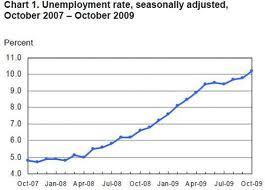
That’s one reason the black unemployment rate went up last month, to 15.5 percent from 15.1. The effect is severe, destabilizing black neighborhoods and making it harder for young people to replicate their parents’ climb up the economic ladder. …

Many Republicans, however, don’t regard government jobs as actual jobs, and are eager to see them disappear. Republican governors around the Midwest have aggressively tried to break the power of public unions while slashing their work forces, and Congressional Republicans have proposed paying for a payroll tax cut by reducing federal employment rolls by 10 percent through attrition. That’s 200,000 jobs, many of which would be filled by blacks and Hispanics and others who tend to vote Democratic, and thus are considered politically superfluous.

But every layoff, whether public or private, is a life, and a livelihood, and a family. And too many of them are getting battered by the economic storm.

Something to think about as city officials try to eliminate the latest defict and negotiate new union contracts. Because Repbulicans aren’t the only ones who don’t regard government jobs as actual jobs; a lot of Democratic officials and business leaders in liberal San Francisco seem to feel the same way.J


Live Shots: Iggy Pop at the Warfield

2

It had been a long wait to see Iggy Pop live (not like, Morrissey-long, but more like three months later than anticipated). When I spoke with Pop back in September, he was ecstatic to be out on the road again.

He was in France at the time, prepping in his hotel room before a big show – a concert he’d planned to follow up with an evening of wine and French television with his lady friend. We talked about cartoons, his image, the Rock and Roll Hall of Fame, and American Idol.

He told me that on this tour, he’d be playing, “All of Raw Power, some of Fun House, some songs from the eponymous debut The Stooges, and some stuff that was too hot to handle, too raw for the times — stuff that came out on bootlegs in the ’70s like ‘Cock in My Pocket,’ ‘Open Up and Bleed,’ ‘Head on the Curve.’” So I was, understandably, equally ecstatic to see him live. Shortly thereafter, he broke his foot (after seeing him last night at the Warfield, I now realize how easily that could happen) and the tour was cut short.

Finally in San Francisco, on a windy  December evening, Pop tore the paint off the walls with the sheer enormity of his stage presence, pumping with rock’n’roll energy and yes, raw power. These were my favorite moments from the night:

10 great bits about Iggy Pop’s show at the Warfield (hint: the band plays the venue again Tuesday night):
1. Pop and Co. running out on stage and immediately launching into a frenzied “Raw Power.” No opening chit-chat, no fuss.
2. The quick-fire follow-up to that first song was ultimate punk anthem, “Search and Destroy.” Fist pumps.
3. Seeing guitarist James Williamson and saxophonist Steve Mackay a.k.a “Mr. Fun House” (as Pop described him) in the flesh.
4. Mike Watt’s cherry red bass, forever-entertaining facial expressions, and jerky movements.
5. Speaking of movement, Pop’s taut, brown leathered skin, and the noodling snake contortions he does with it.
6. Pop writhing “like a cat!” (as the couple behind me kept shouting), on top of one of the speakers, posing.
7. The band inviting “99 percenters” – and every one else – from the crowd on stage for one song, and Pop instructing them to “shake a little,” adding, “I would!”
8. The threatening, heart-pumping, supersexy guitar riff in “I Wanna Be Your Dog.”
9. Pop stage-diving during “I Wanna Be Your Dog.”
10. Pop stage-diving during “I Wanna Be Your Dog” and not breaking his foot.

Live Shots: Dan Deacon at New Parish

0

You go to Dan Deacon in a bad mood – a no-good-reason sort of bad mood, where you’ve been sleeping a lot just to turn it off. (Works for a while, until the stress dreams start.) And even though you’d seen this guy a few times before, you have doubts about the show. Do you really enjoy the music, the high-pitched, manic indie electronics with screeching chipmunk vocals over it? Has he progressed enough as an artist to make a return worthwhile, or enough to brave the crush of an amped up, teenage and hyper crowd?

And once inside the New Parish, Deacon’s fan base seems even younger than last time. There are even old stone-faces seated in comfy chairs along the balcony, obvious school-night-in-Oakland chaperones for the giddy kids below. Peter O’Connell — one of the openers along with locals Chasms and Nero’s Day at Disneyland — plays off this crowd, asking and answering, “You know what I hate?” “Parents.”

A lovably buffoonish, intentionally bad comedian who comes to the stage pre-doused with sweat and proceeds to spill pocket change at every opportunity, O’Connell hails from Deacon’s Wham City performer collective, and shares the inept genius DIY-crap aesthetic. As with the late night oeuvre of Tim and Eric, there’s a silly, winking method to the mindlessness that appeals alternately to both the perma-stoned and a simple pre-pube/acid sense of cartoonish fun. 
 

To stand outside, it’s easy to dismiss much of what’s going on as gimmicky. (Or to look down from above, and think somebody needs to have that D.A.R.E. talk when they get home.) Deacon, a grizzly hipster geek king of a man, performs down in the crowd, an array of multicolored controllers and keys set up on a folding table. At one side is a precariously rigged tower of brilliant strobes capped by a neon green skull, lights that don’t seem to just accompany the music but race it to a more spastic tempo (a one-two punch that knocks every concrete thought out of your head.)

Sometimes these lights are all that can be made out, as the crowd, in full on mob mode crushes closer. “I can see this is going to be one of those shows,” Deacon says, narrowly avoiding being crushed between the stage and his equipment, another night of hurt legs and resorting to performing on the other side, equipment turned upside down, until security shows up to give him some space.  

There’s not much room around him, and nowhere for a jaded observer to stand. Deacon — more happy cult leader than the pious religious figure that his name and the location suggests — lays out the performance with interactive elements: contests and interpretive dance numbers led by audience members (a couple of costumed gnomes, tonight,) telepathic renditions of “Happy Birthday,” multiple requests to “take a knee for a sec.”

It’s basically peer pressure. Give in and before you know it you’ve crawled/danced through a human tunnel — stretching out the door, through the patio, back across the floor and upstairs to the balcony — and come out the other end, where you’re holding hands in the air with a red-headed woman you’ve never seen before as the two of you giggle like school children. An old, forgotten feeling, and refreshingly better than sleeping.

Dick Meister: Six ways to heal the economy

8


By Dick Meister

 Dick Meister, former labor editor of the SF Chronicle and KQED-TV Newsroom, has covered labor and politics for more than a half-century. Contact him through his website, www.dickmeister.com, which includes more than 350 of his columns.

The AFL-CIO has come up with an ambitious six-point plan for healing our very sick economy – one of the best plans that have yet been suggested by anyone.

Point one calls for rebuilding the school, transportation and energy systems by spending at least $2.2 trillion to restore crumbling 20th century infrastructure. As the AFL-CIO says, it would be an investment that would put millions of people to work while laying the foundation for the nation’s long-term growth and competitiveness with other nations.

Point two is as direct: “Revive U.S. manufacturing and stop exporting good jobs overseas.”  That would involve, among many other steps, reforming and enforcing tax policies that are currently encouraging U.S. companies to have manufacturing done in other countries. And enhance Buy America standards, increase investment in job training and oppose free trade deals.

Point three: Provide federal help for hiring people to do at least part of the work that needs to be done nationwide. That could create millions of jobs in distressed communities, especially communities of color, where much of the work is badly needed. In doing so, pay competitive wages and do not replace existing jobs.

Point four: Help federal, state and local governments avoid more of the layoffs and cutbacks of public services that have been a major drag on the economy. Congress should make a commitment to not lay off any more federal employees. It should prevent more state and local layoffs by providing increased federal funding of Medicaid when unemployment is high and providing additional federal funds directly to communities “to save and create jobs and protect and restore public services.”

Point five: Extend unemployment benefits for at least a year to those whose benefit payout time has expired. “Our economy continues to suffer from a massive shortfall of consumer demand . . . the primary reason why businesses are not hiring.”

The AFL-CIO calls for combining the extension of benefits with providing relief to homeowners facing foreclosure. If banks lowered the principal balance on mortgages to current market value, the AFL-CIO calculates that “over $70 billion a year would be pumped back into the economy, millions of families would be able to stay in their homes and over one million jobs would be created.”

Point six: “Reform Wall Street so that it helps Main Street create jobs.” That would mean channeling capital into productive sectors of the economy – more lending to small businesses, for instance – and enacting a federal financial speculation tax to discourage harmful speculation and “make Wall Street pay to rebuild the economy it helped destroy.” The government should “enforce tough safeguards to stop the kind of cheating and massive fraud on Wall Street that precipitated the crisis of 2008.”

Many of those who did indeed cause the crisis are still in control, many still doing just what brought on the economic ailments that so deeply affect the country. It will take a lot to loosen their tight grip on the economy. But it can be done if we are wise enough to adopt reforms such as the AFL-CIO advocates.

Dick Meister, former labor editor of the SF Chronicle and KQED-TV Newsroom, has covered labor and politics for more than a half-century. Contact him through his website, www.dickmeister.com, which includes more than 350 of his columns.

Art Basel frontlines: SCOPEing out Friday

1

Guardian photos by Paula Connelly

Art Basel is not the only show in Miami’s town this weekend. In addition to every gallery, boutique, and busy streetcorner hosting its own opening of varying degrees of importance, there are approximately 2,100 smaller art fairs going on (give or take). One of these is SCOPE, which I heard about first because urban art trendsetter SF gallery White Walls was trucking some canvases of ABOVE’s stenciled hip-hop dancers– and street artist ROA’s drawings of animals in capitivity, etched on wooden crates — down to show. (CORRECTION: ROA’s publicist has informed us that his installation is not wood etchings. His mediums are enamel, charcoal, China ink, aerosol and acrylic on found wood….no crates.) 

But to get into SCOPE, I first had to make it past the Alpine climber.

And I’m not talking Avery Lawrence’s “Moving a Tree,” though his real-life treadmilling amongst the artourists was a refreshing welcome to SCOPE’s cool white-tent embrace.

“Hi! I’m hear for press reg — ” I began, but didn’t take into account there was an older, wealthier European man with three likewise situated adults with him, behind me. 

“WELL WHAT IS THIS?” he bellowed, and the young woman at the front desk switched her attention like some money-seeking automaton. “Hello! This is SCOPE Festival!” 

“Is it mainly… emerging artists?” ventured the woman in tow with the man, who was now at my elbow at the front desk and had briefly given me a look of consolation when he realized he had asserted his importance over mine. Whatever, they paid first and then the other guy at the counter took pity on me and let me in. 

Everyone clucks when I tell them this story later in the wind of a South Beach hotel terrace. Were you trying to buy art? Well then. SCOPE, on its own, is responsible for $100 million in art sales each year. It concentrates on more edgy art — statement pieces, if you will. And there was some fantastically beautiful things on sales.

Here is the art fair to attend if you are interested in purchasing a life-size replica of a taco shack (Kenton Parker), multi-level traditional Iranian drawings wherein size-appropriate photographs of modern Iranians seamlessly collaged in (Soody Sharifi), Isabel Samaras‘ “Nuthatches With Attitude” (they’re wearing NWA hats and dookie gold and they’re adorable). But also, a rhinestone hamburger. 

This was the most serious buyer-seller discussion I heard, and yes I took photos of it with my Droid (above!) The couple were deciding between the basketball-sized hamburger, opened Lifesavers pack, or Chanel perfume bottle, all shiny and glorious. The Chanel bottle was beginning to rise above the hamburger, and the salewoman smoothly informed them “this one is $26,000. You see, the artist applies each stone individually. It really is amazing.” Reflecting on how little I wanted to see that puppy installed in someone’s home (or dressing room, e-blargh!) I moved on to eavesdrop on other, less trainwrecky people.

Later on the same day, a few blocks from SCOPE, we wandered into the Rubell Family Collection, currently hosting an exhibit featuring a room wallpapered in full Budweiser sixpacks (old label design) and sculptures of gravestones with putt-putt holes on the grass before them, human hands protruding from their flanks holding paper cups where their gravestone ears would be. It is called “American Exuberance,” but judging from my experience at SCOPE you could most likely have the same experience at any of the art fairs in Miami this weekend. Duh.  

BART adopts policy on cutting cell phone service

1

 The Bay Area Rapid Transit (BART) Board of Directors has adopted the nation’s first policy outlining the circumstances under which cell phone service can be suspended. The policy comes in the wake of BART’s disruption of cell service in a bid to preempt an August 11 anti-police brutality protest that was called to highlight the July 4 police slaying of Charles Hill by BART police at San Francisco’s Civic Center station.

That cell service cut thrust BART into the middle of a national debate over if and when it is appropriate for government agencies to cut cell service to the public. The fallout included multiple rush hour protests against BART this summer led by activists with No Justice, No BART and supporters of the hacker group Anonymous. In the wake of the controversy, BART directors set out to create a policy outlining the circumstances under which BART would cut cell service in the future.

“The intent of this cell phone interruption policy is to balance free speech rights with legitimate public safety concerns,” BART Board President Bob Franklin said. “This policy, with input from the Federal Communications Commission and the American Civil Liberties Union, will serve as a pioneering model for our nation, as a reference to other public agencies that will inevitably face similar dilemmas in the future.”

The policy was quickly adopted yesterday at the BART board’s regular meeting by a vote of 7-0, with directors Lynette Sweet and Joel Keller absent for the vote. The policy states cell service will be “interrupted only in the most extraordinary circumstances that threaten the safety of District passengers, employees and other members of public, the destruction of District property, or the substantial disruption of public transit service.”

What remains unclear is if BART’s controversial decision to cut cellphone service in order to prevent protest would have been justified under the new policy. In the lead up to the policy, BART directors said their aim was to craft a policy to be used in the most extreme emergencies, and not against the free speech rights.

“If we were faced with the exact same situation, we would not shut off cell phone service,” Franklin said, “we would arrest people.”

However, in the wake of the action, BART asserted in an official statement that, “Organizers planning to disrupt BART service on August 11, 2011 stated they would use mobile devices to coordinate their disruptive activities and communicate about the location and number of BART Police. A civil disturbance during commute times at busy downtown San Francisco stations could lead to platform overcrowding and unsafe conditions.”

BART would seemingly be justified in a disruption cell service in these circumstances under the new policy, as the planned protest represented in the eyes of BART officials both a perceived risk to safety and a potential for service disruption – the stated strategy in the announcement of the August 11 anti-police brutality protest.

The judgment call on where to draw the line in emergency circumstances will rest with predesignated top BART officials. Those officials will be obligated to immediately inform BART’s directors of any disruption of cell service.

Federal Communications Commission Chairman Julius Genachowski said BART’s policy was an important step towards responding to the incident, but he cautioned, “the legal and policy issues raised by the type of wireless service interruption at issue here are significant and complex.”

He said that the FCC will be undertaking a review of the issue and will “consider the constraints that the Communications Act, First Amendment, and other laws and policies place upon potential service interruptions.”

The FCC regulates cellphone service as part of its broader regulation of the nation’s airwaves. BART’s new policy outlining when to cut cellphone service will take effect immediately.

A link to download the new policy can be found here. http://www.bart.gov/news/articles/2011/news20111201.aspx.


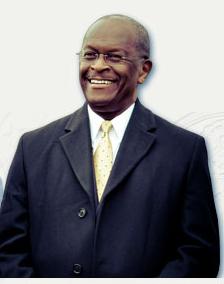
The women who love Herman Cain

4

Sexual harassment is serious, and Herman Cain ought to be held to account for the sizable number of allegations against him. (Really, whatever Cain says, most women don’t make this stuff up; going public is painful enough). The charges that he had an affair? Whatever — that’s none of my business or anyone else’s. But in the GOP world, being “unfaithful” is a pretty serious sin (unless, of course, your name is Newt Gingrich).

Still, it’s pretty creepy that he’s set up a “women for Cain” website, with some truly bizarre testimonials:

**Sir, I firmly believe that you were sent to our nation through Divine Providence and I believe that you are the man to preserve our Republic for our children.

**”I first saw Mr Cain on the day he announced his presidency! I absolutely loved his upbeat attitude about my country! Then he smiled … how long has it been since we have seen a sincere smile from a political candidate!

**I am with you all the way Sir!!!!!!!! We need someone that believes in GOD, life and liberty

**Mrs. Cain, Joshua 1:6 says, “”Be strong and courageous, because you will lead these people to inherit the land I swore to their forefathers to give them.” I am praying for you and Mr. Cain…that God would protect you and give you courage to be obedient to Him…whatever He asks.

**Dear Mr Cain many years ago I find this not so unique for christians I knew a man Charles in died at 54 i knew him and and his wife and they were beautiful from the heart christians. at one point in my live i was going to lose my home and well he heard about it, so me at Maass and told me Adrinne I want you to go down to the bank Monday and there wil be a check for 40.000 dollars. I told him I dont know how in the world i would pay it back and he just said don.t worry you are young and you have your whole live to pass a blessing on to someone else, At any rate he died at 54 of a heart attack and when I went to the funeral I was not surprised to see at least 500 or more people at his funeral and I went up to his wife and she told me has helped so many people his whole life and I looked in those green eyes with flowing tears and I said I was one of those people!

Whoa. These are the supporters of Herman Cain. I wonder what Women for Gingrich would look like.

More evidence that Occupy is working

19

The Occupy movement has already had an impact on poltics in Washington, DC, and it’s having an impact in California, too. The Chron’s front-page banner headline today reads “Tax measures target wealthy.” By time time the story made it to sfgate, it was buried and carried the downer of a head “Tax-the-rich measures may cancel each other out.” Still, the lead sentence says it all:

The tax-the-rich sentiment behind the Occupy Wall Street movement – and the cash-starved state budget – are reshaping California politics.

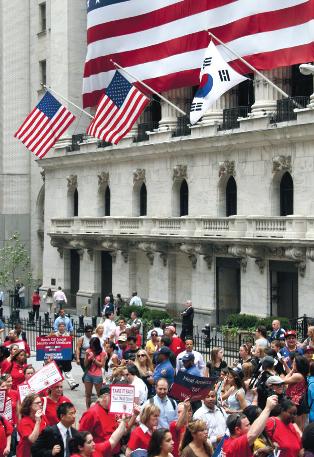
I still think at some point Occupy will need to move into the electoral arena (I’d love to see the tent city residents register to vote at Justin Herman Plaza — perfectly legal — and show up to weigh in on the city budget in the spring). But all this talk of the lack of a “clear message” continues to miss the point: Occupy has brought economic injustice back into the mainstream of the political dialogue, and that’s changing the level of discussions from City Hall to Congress.

I’m not saying that Obama and the GOP will suddenly agree to start taxing big corporations and wealthy individuals at the sort of rate they should; it’s not that easy. It won’t be easy to pass a tax measure on the November ballot, either. But just think about the progress we’ve made in a few short months.


Students forage in SF park for weekend Fungus Fair

0

Late fall is the time for the fleshy bodies of fungi to find their way to the moist, earthy surface.

This time of year, mushroom specialist and biology teacher JR Blair can be found at McClaren Park with students from San Francisco State University collecting hundreds of species of mushrooms for the much-anticipated Fungus Fair (check Caitlin Donohue’s piece on last year’s fair here). 

“All of the mushrooms are collected the Friday before the fair,” Blair said. ”Between 100 and 200 species of mushrooms are sorted and brought to (the exhibit) by Friday night.”

Blair was featured on KQED’s video series Science on the Spot, foraging around McClaren Park sniffing, tasting, and delicately handling the mushrooms to identify the species.

“It’s like an Easter egg hunt,” said Blair in the Quest video. “You hear squeals of delight off in the woods.”

The collected mushrooms are spread over several tables and meticulously labeled, providing an elaborate mushroom gallery of all shapes, sizes, colors and smells.

The Fungus Fair has been an annual event for 41 years with exhibits that show mushroom hunters how to identify edible species and workshops that demonstrate how to grow your own on pieces of wet newspaper.

Around 200 volunteers, comprised of UC Berkeley and SF State students, help to gather mushrooms and run the different exhibit stations. The fair includes live cooking demonstrations, informational exhibits on poisonous, hallucinogenic, medicinal, and microscopic mushrooms and family-friendly workshops on how to make spore prints.

“I think everyone should go to the fungus fair,” said volunteer coordinator Stephanie Wright. “But I’m biased.”

This is Wright’s fourth year helping out with the Fungus Fair and her job wrangling college students is not one she takes lightly. An incredible amount of planning goes into the fair each year, but the rewards of the fair are worth it to those dedicated to spreading the mushroom love.

“Foraging for mushrooms puts me in touch with nature, slows me down,” said mushroom enthusiast and Fungus Fair coordinator Lisa Gorman. “I’m stopping, breathing more deeply and observing. The process compels me to attend to a world and kingdom other than my own.”

The fair takes place Dec. 3 and 4 at the Lawrence Hall of Science in the Oakland Hills from 10 a.m. to 5 p.m. and costs $15 at the door. For more information you can visit the Mycological Society of San Francisco website or the museum event site.


UC’s pick of Bratton to investigate pepper spray incident isn’t reassuring

12

The video images are already iconic, a line of young students sit cross legged, arms linked, at the front edge of an Occupy UC Davis protest, nonviolently protesting the impacts of the economic crisis on the University of California and beyond. As police step forward students begin to chant “the whole world is watching,” and officers disperse fire extinguisher size canisters of pepper spray into the faces of the seated students.

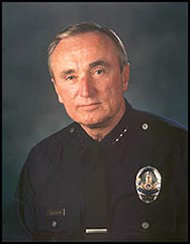
As is turns out the students were right, the whole world was watching, leaving UC Davis with a public relations nightmare that has left the campus police chief and two officers on administrative leave. In the wake of the incident, UC President Mark G. Yudof established an independent review to be conducted within the next 30 days, naming former Los Angeles Police Chief, Bill Bratton, now chairman of Kroll Security, to lead the investigation.

“My intent,” Yudof said, “is to provide the chancellor and the entire University of California community with an independent, unvarnished report about what happened at Davis.”

While UC Davis touts Bratton as “a renowned expert in progressive community policing,” deep questions surround the choice of Bratton. The Council of University of California Faculty Associations (CUCFA) was quick to question the independence of the investigation of police violence at UC Davis, pointing out that Bratton, through Kroll, already holds contracts with the UC system.

“We already know that Kroll has provided security services to at least three UC campuses for the past several years. This in itself would disqualify Mr. Bratton from participating in the investigation,”said CUCFA president Robert Meister. “You would be illustrating the kinds of connection between public higher education and Wall Street that the Occupy UC movement is protesting.”

Bratton also served as president of the Police Executive Research Forum, the police non-profit that facilitated controversial phone discussions between major metropolitan police chiefs in the lead up to the crackdown on the Occupy movement across the nation, raising questions about his ability to lead the UC Davis investigation.

Bratton’s offical bio from the LAPD shows the depth of his involvement in PERF when it states, “He is also the only chief executive to serve two terms as the elected President of the Police Executive Research Forum (PERF).” Bratton was instrumental in the creation of PERF’s hardline 2006 report Police Management of Mass Demonstrations http://www.policeforum.org/library/critical-issues-in-policing-series/MassDemonstrations.pdf for which he receives special recognition in the acknowledgments section of.

“PERF gathered more than 100 invited practitioners and stakeholders at an international forum in San Diego in December 2004 to highlight issues related to mass demonstrations and use-of-force. At this event, Los Angeles Police Chief William J. Bratton set the scene for a lively interaction as he discussed the changing nature of protests and mass demonstration events. He recalled that in the 1960s the issues leading to demonstration events tended to be more community-centered and that the police focus was largely tactical. He noted that today, demonstrations are sometimes orchestrated by far-reaching national and international organizations, coalitions and informal groups subscribing to anarchistic methods,” reads the report.

The manual pays special attention to managing media messaging, devoting a section to media in the wake of a major demonstration: “An integrated media strategy seeks to manage and harness the media attention in order to help achieve the overall policing objectives. By partnering with the media, the potential increases for all parties to win, public confidence to be maintained and the reputation of the law enforcement agencies to be enhanced.”

Though Bratton has moved on as PERF’s president, he keeps close ties with the organization. In April , Bratton was the keynote speaker at a PERF conference on technology and policing held in Washington, DC, a subject Bratton is an expert on due to his role in developing the controversial CompStat system used to “predicatively model” crime in some metropolitan areas.

Bratton is widely recognized as the leading proponent of the “broken windows theory” of policing, which advocates a zero tolerance approach to petty crime. Speaking to the Telegraph(UK) this summer about the historically large youth riots in the UK, he said youth were “emboldened” by over-cautious policing.

“To be effective, a police force should have ‘a lot of arrows in the quiver,’ said Mr Bratton, advocating a doctrine of ‘escalating force’ where weapons including rubber bullets, Tasers, pepper spray and water cannon were all available to commanders,” the paper wrote on August, 12 2011.