SFBG Blogs

Dick Meister: Unemployment is slamming public employees

18


By Dick Meister

Dick Meister, former labor editor of the SF Chronicle and KQED-TV Newsroom, has covered labor and politics for more than a half-century. Contact him through his website, www.dickmeister.com, which includes more than 350 of his columns.

The latest job reports show that public employees, those favorite targets of Republicans and other government budget slashers, are being hit particularly hard by the country’s severe unemployment problems.

As the New York Times reported, 20,000 government workers were laid off in November alone, most of them state, county and city employees.

The public workers’ unemployment numbers have been steadily increasing for the past several years, at the same time that the jobless figures for workers in private employment actually have been decreasing.

In fact, private employers have been adding jobs since the end of 2009, a year after the beginning of the Great Recession. More than a half-million government jobs have been lost since the recession began.

The Times noted that in most cases, the layoffs were made because of declining tax revenues, or reduced federal aid “because of Washington’s inexplicable decision to focus more on the deficit in the near term than on jobs.”

The layoffs mean “a lower quality of life . . . fewer teachers, pothole repair crews and nurses.” It’s been happening all over the country, of course. The Times cited as a typical example what’s been happening in the Indiana city of Marion, population 30,000.

Marion city officials recently announced what they called a “radical reorganization” of city services that will mean laying off 15 of the city’s 58 police officers and 12 of its 50 firefighters. Radical, indeed. That’s more than 25 percent of Marion’s police and firefighters.

As elsewhere, the layoffs of course reduce vital public services, but it’s important to note that they also of course have a serious impact on those who lose their jobs. The impact has been especially harsh on African- American workers.

The Times’ Timothy Williams reported that one-fifth of the nation’s millions of black workers “have entered the middle class through government employment” and tend to make 25 percent more than other African-American workers. But now tens of thousands are being forced to leave both their jobs and the middle class.

The Times cited as a prime example the city of Chicago, which is scheduled to lay off more than 200 employees in the next fiscal year, two-thirds of them African-Americans.

It shouldn’t be surprising, then, that the African-American jobless rate has risen to more than 15 percent nationwide, almost double the rate for other workers.

As the Times said, the effect has been severe – “destabilizing black neighborhoods and making it harder for young people to replicate their parents’ climb up the economic ladder.” Their rise was made largely by the government jobs that they’re now losing without much hope of finding other jobs, given the current tattered state of the economy and continued job discrimination against African-American workers generally.

It certainly would be hard to disagree with the Times’ conclusion that much of the public job losses and consequent cutbacks in public services stem from the fact that many Republicans “don’t regard government jobs as actual jobs, and are eager to see them disappear. Republican governors around the Midwest have aggressively tried to break the power of public unions while slashing their workforces, and Congressional Republicans have proposed paying for a payroll tax cut by reducing federal employment rolls by 10 percent through attrition.”

That 10 percent, the Times pointed out, is 200,000 jobs. And, surprise! Many of those jobs “would be filled by blacks and Hispanics and others who tend to vote Democratic.” So, said the Times, those workers “are considered politically superfluous” by the GOP.

But, the Times concluded, “every layoff, whether public or private, is a life, and a livelihood, and a family. And too many of them are getting battered by the economic storm.”

Dick Meister, former labor editor of the SF Chronicle and KQED-TV Newsroom, has covered labor and politics for more than a half-century. Contact him through his website, www.dickmeister.com, which includes more than 350 of his columns.

 

Should Occupy pull back and reinvent itself?

14

Maybe it’s time for the Occupy movement to simply take a bow, step off the national stage for now, and start planning its next big production. Because at this point, Occupy has been a smashing success – winning over its audiences and key critics, influencing the national debate – but it’s in danger of losing that luster if its lingers too long in its current form.

Consider the events of this week. When OccupySF’s long-standing encampment was finally removed by police and city workers, the general public barely noticed or reacted. Unlike during previous police raids, hundreds of supporters didn’t pour in to defend the camp and social media sites didn’t light up with messages of indignation and solidarity.

Why? Well it’s not because people don’t support the movement. Polls have consistently shown most people back Occupy, and even higher percentages support its basic message that the 99 percent are being screwed over by the 1 percent. Top political leaders at every level – Mayor Ed Lee, Gov. Jerry Brown, and President Barack Obama – made statements and speeches this week that echo the themes and ideas that Occupy has injected into the national dialogue.

But the tactic of occupation was only going to get us so far. It was a great way to start a conversation and demonstrate a broad discontent with this country’s inequities and plutocratic excess. Finally, the people have started to challenge those who are exploiting them, and it’s been particularly exciting to see young people fighting to reclaim their stolen futures.

That energy hasn’t dissipated, and it’s interesting to see it morphing into other campaigns, such as the recent takeovers of vacant foreclosed homes, the human rights march planned for tomorrow, and West Coast port shutdown scheduled for Monday. But I predict the crowds blockading the Port of Oakland will be a fraction of the size of the tens of thousands who took to the streets during the Oakland General Strike on Nov. 2.

Then, people were reacting to police violently crushing Occupy Oakland’s peaceful political assembly on Oct. 25, a galvanizing event, much like the raid on Occupy Wall Street and the abusive police tactics against occupiers on the UC Berkeley and UC Davis campuses. Each example showcased the police state’s willingness to use a heavy hand against peaceful protesters, demonstrating for a global audience what an important struggle this is and what we’re up against.

Yet it was hard to summon up much indignation over this week’s raid on OccupySF, even as protesters complained about being given just five minutes to get out and having their belonging seized and destroyed. Mayor Lee had been threatening the raid for weeks and had offered the group a free new home in the Mission – an offer they probably should have taken, one that would have allowed the group to declare victory and have a base of operations throughout the winter.

But unlike my cranky, “you kids get off my lawn” colleagues in the mainstream press, who have consistently derided the movement and valued anti-camping laws over the core constitutional right to peaceably assemble to petition for a redress of grievances, I think Occupy has been extremely important and effective. My desire is to see it evolve and continue.

Mayor Lee and other city officials have praised the goals and worldview of Occupy at every turn, even as they oppose the tactic of camping. As Police Chief Greg Suhr raided OccupySF, he told reporters that “part of the 99 percent removed part of the 99 percent to give the other part of 99 percent some relief,” tipping his hat to Occupy’s basic paradigm. Gov. Brown echoed Occupy’s economic inequity language in his call for higher taxes on the rich this week.

“I’m here in Kansas to reaffirm my deep conviction that we’re greater together than we are on our own. I believe that this country succeeds when everyone gets a fair shot, when everyone does their fair share, when everyone plays by the same rules. These aren’t Democratic values or Republican values. These aren’t 1 percent values or 99 percent values. They’re American values. And we have to reclaim them,” Obama said in his big speech this week, embracing the Occupy paradigm even as he tried to transcend it. But go back and read the whole speech and you’ll see that it would have fit right in during any Occupy General Assembly, with its regular calls to tax the rich, something this movement has given him the political cover to more forcefully advocate.

So the conversation has now begun, thanks largely to this movement. But, as most supporters of Occupy already know, our elected officials won’t simply enact the reforms we need on their own. They will need to be pushed and prodded relentlessly by a restive public, so the supporters of Occupy still have a lot of work to do.

How will they do that and what will it look like? I don’t know, but after watching these smart, creative, courageous, and committed young people and their supporters change the political dynamics of this country over the last three months, I’m anxious to see what they come up with and I stand read to chronicle and support the next phase, whatever it’s called and whenever it begins.

The Performant: Cheap thrills

0

Bargain Basement Mondays and Amoebapalooza

The upside to living in a city as notoriously pricey as San Francisco is that despite the myriad opportunities to blow too much cash on a mediocre time out, there are plenty of options for cheaper entertainments, keeping the broke-ass among us from being eternally housebound. This weekend in particular, a couple of low-budge music showcases offered those too skint to make it to Iggy Pop a way to afford more beer by charging less cover, and one even threw in the pizza! Sure, rocking out with the godfather of punk would have been quite a bang for its buck, but at least Bottom of the Hill and Café du Nord offered economical alternatives to hanging out in a drafty San Francisco flat Google-stalking Mike Watt. Not that I’d know anything about that.

If free’s your price, then Bargain Basement Mondays at Bottom of the Hill is your place. A once-monthly showcase of local musicians with no cover charge, the attitude is chummy and freewheeling. This week’s lineup was intriguing in that it was not just a random assortment of strangers, but instead a loose coalition of one-man bands gathered together to put on a show subdued only in decibels, but certainly not in invention.

I made it just in time to catch Andrew Goldfarb “The Slow Poisoner” halfway through a cluster of bug-themed songs, such as the instrumental “Spastic Maggot” (a personal fave). Goldfarb’s musical sensibility is one part Southern Gothic, one part B-movie creature feature, and one part swampy psychobilly, and in addition to accompanying himself on the electric guitar and kick drum, he also provides a visual “slideshow” of oversized flashcards with the names of each song painted in Goldfarb’s distinctive cartooning style, deceptively simple lines, skewed perspectives, and boneless, Piraro-esque physiology.     

Sean Lee’s 1manbanjo act followed, in which he led a spontaneous conga line of oddience members around the dance floor, beating time on a snare drum strapped to his back while strumming his mandolin-sized banjo, a hobo pied piper in a rumpled suit. A member of Thee Hobo Gobbellins, about half of Lee’s set was comprised of songs from their Alice in Wonderland-themed “Cheshire Rock Opera”—next slated to play the Oakland Metro on Jan 27, 2012. Last but certainly not least, Jordan B. Wilson debuted his very interesting music-making machine, which the other musicians kept referring to as a “squid”. An elaborate array of cables , computers, mixing boards, and drumsticks snaked around an entire drum kit’s worth of percussion, additionally Wilson played a double-necked guitar with keys, and sang, a triumph of multi-tasking, to say nothing of the three-year creation process of his singular contraption. 

Sunday’s Amoebapalooza, the annual open-to-the-public holiday party of Amoeba Music employees, was as quirky and varied as the music selection at our favorite converted bowling alley, during which the employees rocked the stage, and the aforementioned pizza was distributed like the modern equivalent to a Dickenson turkey. With a couple of exceptions (Vanishing Breed being one), most of the bands gave the impression of being hastily assembled for the purpose of playing this one show, but for five bucks, and all-you-can eat, it basically paid for itself, which was ultimately the desired effect..

Give The Performant a reason to Twit. Follow @enkohl for of-the-minute updates from the underground


Style Paige: Be funneled

0

Well-dressed men always make me a little weak in the knees. What can I say; I’m a sucker for fashion. But in a city like San Francisco, where men’s clothing stretches from one end to the style spectrum to the other, it is the simplest of styles that catch my eye.  

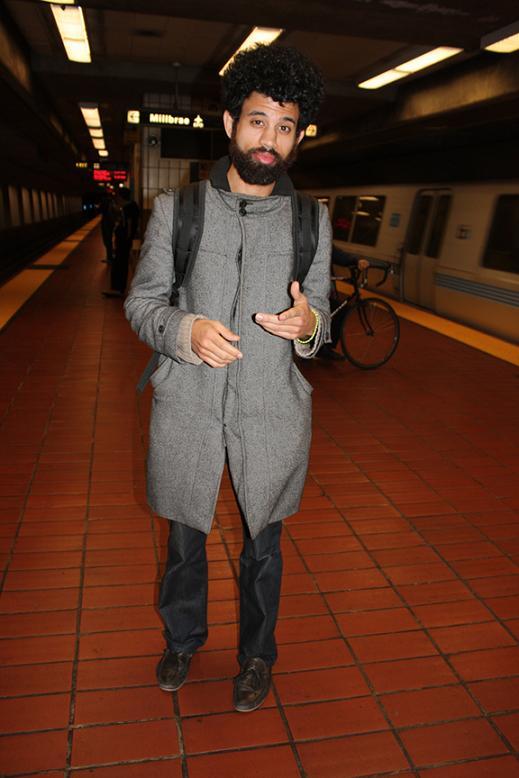
Wearing a wool trenchcoat, dark blue jeans, and tassel loafers, Rolando Brown was waiting for his BART train to arrive when I interrupted him mid-text message.

Making his outfit edgy and modern, Brown wore his funnel collar coat with a black hoody tucked underneath. Designers Richard Chai for Penguin and John Varvatos have created similar looks recently — trenchcoats in tweeds, camel, cashmere, and solids that make it easy for men to be trendy when bad weather arises. 

My be-styled traveler was also wearing brown leather loafers, footwear that you really can’t go wrong with regardless of the decade. I once read in GQ that if Michael Jackson can rock loafers with white socks, then there’s no reason why everyone else can’t follow his lead. 


Poverty among plenty

108

The Bay Citizen has a fascinating map by census tract of poverty in the Bay Area. Among the things that jump out: There’s plenty of serious poverty in the area — and it’s worst than the map shows. The definition of “poverty” is a family of four living on $22,113 — in the Bay Area. Hard to imagine how a family of four can even pay rent, much less eat, in this part of the world on $22,000.

Aaron Glantz makes an interesting point: “In many parts of the Bay Area, the wealthy and poor live in close proximity to each other.” Check out the census tract in the Richmond, right next to Seacliff, where some of the richest San Franciscans live. A full 20 percent of the residents of that area are under the federal poverty line — and they can walk a couple of blocks to the mansions where millionaires live. There are 60 people living in extreme poverty in the 35-square-block area around Presidio Heights, where the likes of Sen. Dianne Feinstein and Rep. Nancy Pelosi live.

Poverty among plenty. Just a tiny fraction of the wealth of Feinstein, Pelosi and their neighbors would pull all of those 60 people way above the poverty line. And the Presidio Heights denizens would never miss it.


The data also show that in many parts of the Bay Area, the wealthy and the poor live in close proximity to each othe

Source: The Bay Citizen (http://s.tt/14J0t)

The data also show that in many parts of the Bay Area, the wealthy and the poor live in close proximity to each other. 

Source: The Bay Citizen (http://s.tt/14J0t)

That high-priced high-speed rail

20

Even Democrats in the state Legislature are starting to get nervous about continuing the high-speed rail program. After all, the price has gone up to close to $100 billion. That’s such a vast sum of money; the state can’t possibly afford that, right?

Well, let’s think about that and put it in a little historical perspective.

The Golden Gate Bridge was constructed during the worst years of the Great Depression. Cost in today’s dollars: $1.2 billion. That’s for one bridge.

BART was built in the 1960s. Cost in today’s dollars: $6.4 billion. For a transit system serving (at the time) three counties.

The California Aqueduct was also built in the 1960s. Cost in today’s dollars: $31 billion.

I can’t find good figures on the historical cost of building the California freeway system, but in 2006 dollars, highway construction runs between $3 million and $19.5 million per lane-mile. That is, a four-line highway costs between $12 million and almost $80 million a mile. If you take just the ten biggest highways in the state (a total of 3,547 miles) and figure a middle-of-the-road average of $40 million a mile, building the backbone of the state’s freeway system would cost $141 billion today.

High-speed rail, of course, gets cars off the road, reduces pollution and fossil-fuel dependence, and offers a much better transportation experience for people moving around California.

Sounds like a bargain to me.

All will be revealed!

0

The art of storytelling took a hit the day Johannes Gutenberg began fucking around with moveable type (on or around Tuesday, 1450), but stoking a good story by firelight or halogen lamp hangs on as a cultural desideratum in places like Ireland or San Francisco. Arline Klatte and Beth Lisick figured that out a long time ago, of course, with their Porchlight series (nine years running and going strong). But “Previously Secret Information” has lately proved there is plenty more storytelling worth accommodating in this chatty town.
 
Produced by stalwart stand-up comic Joe Klocek and impresarios Bruce Pachtman and Ty Mckenzie, “PSI” slants toward the comic and happens on the odd Sunday at Stage Werx Theatre — including this Sun/11, oddly enough. The new installment features well-known pop music critic Joel Selvin, with consummate insider dish about Bill Graham back in the day; the Dursts (political satirist Will and partner in comedy Debi), recounting an understandably bizarre White House wedding they attended (I’m guessing probably not in the Bush years); and Sammy Obeid, a former UC Berkeley honor roll student turned stand-up comic (it must have been one of those funny majors), relating the story of how a teetotaler gets a DUI.

It’s already an impressive bill. But there’s more: Klocek joins the lineup with his own account of how “Barney the Dinosaur Got My Butt Kicked.” I don’t know if this tail tale can match Klocek’s last “PSI” offering — a near-death experience that changed the course of his life that was at times predictably hilarious, at times surprisingly moving, and always genuine — but I’d be keen to find out.
 
“Previously Secret Information (PSI)”
Sun/11, 7 p.m., $15
Stage Werx Theatre
446 Valencia, SF
www.stagewerx.org

OccupySF retakes plaza to debate whether to keep it

10

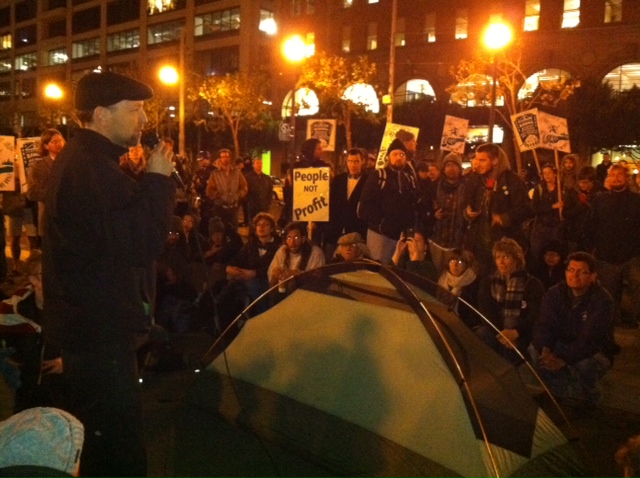
OccupySF and its supporters defended Justin Herman Plaza last night (Wed/7) in a strong display of nonviolent action, demonstrating a commitment to the movement. But the unfolding events also showed the group is at a crossroads as it debates its next moves, and whether to continue trying to occupy the plaza after the group’s tent city was removed by police and city workers.

About 250 gathered for a rally at 5 pm at 101 Market Street, marching the half a block to Justin Herman Plaza an hour later. Since the plaza was cleared out that morning, it had been guarded on all sides by a line of police. But as they approached, improbably, the police line parted, letting protesters through.

The group began to hold a general assembly meeting, but after 20 minutes police issued an order to disperse. About 50 sat down in a show of civil disobedience while a couple hundred more surrounded the outskirts.

Clashes with police in the past have been characterized by tension and angry cries from protesters. This one was more peaceful. Protesters held their ground and refused to leave, but besides a few incidents in which police detained and shoved protesters, most supporters were restrained and calm.

At 8:50 pm, police suddenly began to clear out. Jubilant protesters rushed into the plaza, having won it once again. However, from the meeting that followed, it seemed clear that many are restless to put their energies into actions other than defending the plaza.

The meeting consisted of several announcements concerning upcoming actions, such as taking part in the local march in support of International Human Rights Day on Saturday and Monday’s West Coast port shutdown. Occupy groups from Anchorage to San Diego have pledged to shut down their cities’ ports on Dec. 12.

Representatives from Occupy Community College of San Francisco and Occupy SF State University, both of which have now created tent city occupations of their own, were also present. After announcements, the discussion turned to strategy. Many saw a great opportunity to pitch tents and try to take back Justin Herman Plaza. Numbers had dwindled somewhat, but there were at least 150 protesters still present for that discussion. Others argued that OccupySF had successfully shown they could retake the plaza and that they should try and avoid a police clash that night, and instead sleep at and near 101 Market Street, their other recently reclaimed protest site.

Many insisted that OccupySF would be strategically wise to allow their supporters to reserve their energy for upcoming marches and actions; nightly calls to defend camp, said one protester, were wearing many down. In the end it was clear that “OccupySF is a network of autonomous individuals. Some will stay in Justin Herman, some won’t—but we’re all in solidarity.”

All this discussion took place amid reports that police were massing in the garage underneath the nearby Hyatt Hotel and at the police tactical building on 16th and De Haro streets. Many believed that they were staging to come back and make arrests if protesters attempted to re-erect their tent city. During the meeting, protesters put up five tents, but by 11:20 pm, they had voluntarily taken down their tents.

The OccupySF general assembly consented last week to defend Justin Herman Plaza anytime it is threatened. Yet the events of the past few days, as well as the destruction of large Occupy sites throughout the country in the past weeks, many sense that strategy may now be shifting.

Gordon Mar, director of Bay Area Jobs With Justice and OccupySF supporter who risked arrest last night, told us, “There’s a lot of exciting ideas and debate about new directions, including reoccupying JHP, but also moving forward in different ways. Occupy our homes initiatives have taken off recently, as well as occupations on college campuses, different communities and neighborhoods. It’s a really exciting and hopeful moment.”

Shaw San Liu of the Chinese Progressive Alliance issued a public statement saying, “You can raid a camp, but you can’t raid a movement. The movement cannot be stopped. [The occupation] was just the tip of the iceberg.”


Progressives split on bag ban, ex-cons

12

A couple of interesting votes at the Board of Supes Dec. 6. Sup. Ross Mirkarimi lost two pieces of legislation — a mandate that stores charge for bags at checkout counters and a tax credit for companies that hire ex-offenders.

The bag ban went down 7-4. Well, actually, it was continued to February, by which time Mirkarimi will be gone. Sup. Jane Kim said she wanted to see more outreach to minority businesses, and was quoted in the press saying she would support it at a future date, but I suspect the delay marks the end of the bill. Without Mirkarimi around to push it, the measure will probably just die. It’s odd because San Francisco used to be on the cutting edge of environmental issues; the bag ban is getting picked up by other cities and will probably be law all over the country in a decade.

Voting for the continuation were three supes who said they supported the “concept” — Scott Wiener, David Chiu and Kim.

The ex-offender tax credit went down 6-5 — and on this one, Sup. Malia Cohen, who is not always with the progressives but whose district has the largest number of parolees in the city, supported Mirkarimi. So did Kim, Eric Mar, and David Campos. The swing vote: Sup. John Avalos, the progressive leader in the mayor’s race and one of the most solid left votes on the board.

Avalos told me that he doesn’t support tax breaks; he’s been consistent on that, and I understand. I don’t support tax breaks, either. I don’t think they’re very effective and they cost the city money. But there are two elements that make this unusual — for one, if anyone actually used the tax credit and hired an ex-offender, the money the city would likely save by keeping that person from going back to jail would greatly exceed the amount of the tax reduction.

Besides, I was waiting to see Lee come up with an excuse to veto the bill — particularly at a time when more and more ex-offenders are going to be released in San Francisco. I know this is just petty politics and all that, but this was a tough decision involving a very unpopular group (nobody wants to be nice to former criminals) — and Lee got off easy.

The Phil Ting for Assembly campaign is under way

11

Just a few days after the race for mayor of San Francisco ended, Assessor-Recorder (and mayoral candidate) Phil Ting began his next campaign — for state Assembly.

The Westside district now represented by Fiona Ma opens up in 2012, when Ma will be termed out. And Ting was moving to set himself up as the frontrunner almost as soon as the ink had dried on on the final results from the mayoral election (where he finished a disappointing 11th, behind even Green Party candidate Terry Baum). Philting.com, which had been the official website for Phil Ting for Mayor, has been switched over to Phil Ting for state Assembly. I got an email Dec. 7 inviting me to a reception for his Assembly campaign; several prominent local politicians told me Ting had called even earlier than that to ask for support.

And he’s getting it — both state Sen. Mark Leno and Assemblymember Tom Ammiano are on his already-impressive list of endorsments.

Which is no surprise: The 12th District (which will become the 19th under the new redistricting) is the more conservative side of San Francisco, and by the standards of the state Assembly, Ting would be a pretty solid progressive. He actually understands tax policy, and he’s made a huge issue of removing the commercial property loophole from Prop. 13.

So now comes the interesting part: Who’s going to run against him?

Ting has a relatively cordial relationship with Mayor Ed Lee, and didn’t spend much time in the campaign attacking the appointed incumbent. He’s a former executive director of the Asian Law Caucus, where Lee worked in his early days as a tenant and civil-rights lawyer. There shouldn’t be any reason for the mayor or his pals to try to drum up a candidate to take on Ting … or should there?

Ting is not an enemy of the Willie Brown-Rose Pak folks. But he’s not a loyal ally, either. The most obvious conservative/pro-downtown candidate, one the mayor and his big-business pals could count on, would be Sup. Carmen Chu. I couldn’t get her on the phone, but in the past she’s been only lukewarm about running. The other strong potential candidate would be Sup Sean Elsbernd, but he told me he’s absolutely not running. “I was very interested during my first few years on the Board, but since my son was born, there’s no way I would consider it,” he said. “I am not a candidate and shouldn’t be talked about as a candidate.”

So will we see a “Run, Carmen, Run” campaign? Or will Brown and Pak think about it and realize that giving the mayor an appointment to Ting’s office might be a real advantage? Would they rather control a state Assemblymember — of the county assessor?

Stayed tuned to this one.


ILWU attitudes toward port blockade aren’t so simple

The Chronicle’s Andrew Ross describes Occupy organizers as “brilliant” in a sarcastic tone for vowing to move ahead with the Dec. 12 West Coast port blockade, despite public statements from the longshore union’s president criticizing the plan. But Ross’ article misses the mark, and seems to ignore alliances that have been forged between various sectors of labor and the Occupy movement in recent months.

“Trouble is, the folks they purport to be in solidarity with don’t seem hot on the idea to ‘effectively shutdown the hubs of commerce’ at all,” Ross writes. The Chronicle’s narrative is clear: Here you have some everyday working people trying to do their jobs, make ends meet, and put food on the table. They don’t want to see business as usual disrupted by a bunch of out-of-touch radicals who claim to speak for them.

But in reality, workers’ attitudes toward the port shutdown are far more nuanced. After all, longshore and warehouse workers are feeling the pinch as advances in technology reduce the number of jobs to be filled along waterfront shipping facilities, and many truck drivers who haul cargo to and from West Coast ports are barely able to make ends meet since they’re employed as independent contractors and paid low hourly wages without union representation.

The president of the International Longshore and Warehouse Union (ILWU), Robert McEllrath, issued a statement Dec. 6 in which he criticized the plan for a west coast port blockade, which occupiers in Oakland, Los Angeles, Seattle, Portland, Vancouver, and Anchorage have all vowed to participate in on Dec. 12.

The official aim of the Occupy port shutdown is to demonstrate solidarity with longshore workers engaged in a labor dispute against EGT in Longview, Wash., and to stand with port truckers in Los Angeles whose attempts to unionize have been thwarted. The action is also meant as payback for raids against Occupy encampments in Portland, Oakland, Los Angeles, and other major cities, which were carried out in the wake of coordinated teleconferences between metropolitan mayors and a powerful organization of former police chiefs engaged in shaping law enforcement practices.

“Support is one thing,” wrote McEllrath, the ILWU president. “Organization from outside groups attempting to co-opt our struggle in order to advance a broader agenda is quite another and one that is destructive to our democratic process and jeopardizes our over two year struggle in Longview.”

ILWU spokesperson Craig Merrilees echoed McEllrath’s statement, telling the Guardian, “The Occupy Oakland group failed to respect the ILWU’s democratic decision-making structure. It’s unfortunate — it could’ve been handled differently.”

Dan Coffman, president of ILWU Local 21 in Longview, Washington, had just gotten out of a court hearing with grain terminal operator EGT when the Guardian caught up with him by phone. His union has been locked in an ongoing struggle against EGT, stemming from the multinational corporation’s attempts hire non-union workers and erode standard worker benefits such as overtime pay at a new grain terminal built on Port of Longview property.

“The ILWU has no involvement in [the port blockade] whatsoever,” Coffman explained. “We are not organizing this, and we are not promoting it.”

Yet he emphasized that, speaking as individual, “I’m a 99 percenter. Things have got to change. We’ve got to get some sanity back in this country. It’s obscene what they’re doing to working people and poor people in this country.”

Some rank and file members of ILWU said they agreed with the principles of the Occupy movement.

“Longshoremen had a good response to the [Nov. 2 general strike and port blockade],” Anthony, a longshoreman who’s worked at the Port of Oakland for more than a decade, told the Guardian in a phone interview. “It was empowering to a lot of people that so many people came out.” He added, “The rank and file do support the principles of the community and Occupy.”

The Port of Oakland ran full-page ads in major newspapers last week condemning plans for a port blockade, yet incorporating a key phrase of the Occupy movement into its message. “Port of Oakland is where the 99% work,” the ad proclaimed. “Occupy groups have called for a ‘total west coast ports shutdown’ on December 12th. Port of Oakland maritime operations were partially shut down on November 2nd. What did that accomplish? Lost work hours, lost shifts, and lost wages for workers and their families.”

Asked about the ad, Anthony called it “a lot of propaganda.”

Tremaine Waters, another longshoreman at the Port of Oakland, told the Guardian, “The majority of ILWU workers are supportive of what’s going on. They understand the situation occurring in America right now.” He added that if community members organize a picket line on Dec. 12, “I would say, yes, the ILWU members will respect it.”

Clarence Thomas, a third generation Oakland longshoreman, discussed the planned port shutdown in an interview with Worker’s World. Thomas emphasized that ILWU traditions and practices dictate that union members do not cross community picket lines.

“A picket line is a public demonstration — whether called by organized labor or not,” Thomas said in the interview. “It is legitimate. There are established protocols in these situations. To suggest to longshoremen that they shouldn’t follow them demands clarification. It is one thing to state for the record that the union is not involved, but another thing to erase the historical memory of ILWU’s traditions and practices included in the Ten Guiding Principles of the ILWU adopted at the 1953 biennial convention in San Francisco,” Thomas said. He added, “Labor is now officially part of the Occupy movement. That has happened.”

Party Radar: Cassy, Patrice Scott, Starkey, Lopazz, Gadi, DJ Rupture, Wonder Full

0

First the horrifying news: Tiesto is launching a clothing line today called CLVB LIFE. (I pray to Satan/Skrillex that there will be Tiesto Euro-trance Spanx. Tranx?)  And now the wonderful news: There are a bunch more excellent parties happening this weekend than we could fit in the paper’s Weekly Picks section. Let’s get to ’em.

>> CASSY

Gaaaah I love the Berlin minimal house goddess so — even enough to brave the slightly Gucci-esque crowd and expensive drinks at Vessel. (Every Thursday, the Union Square club brings in delicious talent for the Base parties, and you can usually find a friendly dancefloor spot with some fellow travelers.) Lst time she was here, Miss Cassy schooled the fanboys at EndUp’s Kontrol party. I can’t wait to hear what direction her stripped-down, funky tech sound is taking now. She will be playing all vinyl! Jeno opens up! Bliss.

Thu/8, 10pm, $10. Vessel, 85 Campton Pl., SF. More info here.


>> LOPAZZ

The infamous and lovely outdoor Sunset Party season has ended — but the After the Sunset series keeps the sunshine alive with quality regular gigs. During the age of minimal techno, Germany’s Lopazz neatly injected some bright grooves into the often astringent sound. Now he’s full of mental-twist funky, and his performance on the decks at Sunset a couple years back was really, really fun. Check him out at the new Monarch venue, which is shaping up to be a real winner music-wise.

Fri/9, 9pm, $5 before 11. Monarch, 101 6th St., SF. More info here


>> PATRICE SCOTT

Patrice is from Detroit, and has been part of the techno scene there for more than 25 years. His hypnotic sounds maintains the original deep-deep vibes of the early movement, at once expansive yet deliciously focused, cosmic yet body-oriented — the sound of Detroit’s soul-cybotronic underground. This appearance will be a chance to hear the legend backed up by one of our own soul-tech greats: Aybee Deepblak. Jason Kendig and Conor will round off an evening I’m totally geeking out about. 

Fri/9, 10pm-4am, $10-$15. Public Works, 161 Erie, SF. www.publicsf.com


>> STARKEY

Philly future bass producer Starkey blows my mind with his tracks, often ecstatic wobbles through sticky starlight. I’ve been a fan since he was vaguely associated with the right fit Scottish collective LuckyMe, which brought a smart, introspective, slightly melancholic sheen to the burgeoning future bass sound in the late-mid-naughts . Starkey’ll be part of a bonkers lineup that will please future bass, dub step, d ‘n b, and straight up dance fans alike: Ana Sia, Tokimonsta, Ghosts on Tape, DJ Dials, and more.

Fri/9, 8pm-4am, $15-$20. 103 Harriet, SF. www.1015.com    

http://www.youtube.com/watch?v=JZCM3gzoptE


>> DJ RUPTURE

Famously wide-eared global bass and nu-cumbia party Tormenta Tropical is celebrating its fourth anniversary with one of the biggest ambassadors of intelligent worldly electronic dance music, DJ Rupture. NYC-Dominican bad girl Maluca opens up — get ready to dance all over. 

Sat/10, 10 p.m., $5. Elbo Room, 647 Valencia, SF. www.elbo.com


>> GADI

Regular readers know Im a freak for NYC’s Wolf + Lamb duo, of which the dark and handsome Gadi Mizrahi is one half (I prefer he be Lamb). He returns with his sexy pitched-down house sound (ladies and me might throw panties) for the Public Works holiday party, also featuring our own genius Afrolicious brothers, the fantastically danceable Pumpkin, and Vancouver’s Smalltown DJs, who pump an electro sound all their own. Oh, and Briski of the As You Like It Crew, whose deep techno sets have turned my ear all year. 

Sat/10, 10pm-3am, $10-$20. Public Works, 161 Erie, SF. www.publicsf.com   


>> ODYSSEY WITH DAVID HARNESS

This little monthly-ish party from promoter-DJ Robin Simmons at Deco Lounge is tight sand delightful. David, our king-queen of soulful house, plays super-deep, danceable, expertly mixed sets in a relaxed atmosphere where people actually get down on the dance floor. 

Sat/10, 9 p.m., $5. Deco Lounge, 510 Larkin, SF. www.decosf.com 


>>WONDER FULL 8

This regular tribute to Stevie Wonder transcends mere “Greatest Hits” nostalgia and blasts off into a groovy cosmos of love and funk with a slew of rare tracks, remixes, edits, and just plain living for the cit-ay. DJ Spinna handles the keys of life. 

Sat/10, 9 p.m.-4 a.m., $20-$25. 103 Harriet, SF. www.1015.comTickets here


No more Scrooge: A list of nonprofits that still have holiday volunteer slots

1

Mincemeat, Christmas goose, Hannukah gelt, lush sprays of holly bedecking the proverbial halls – traditionally, the December holidays are all about richness, overeating, and expense. But — especially these days — not everyone will be blessed with bounty over the holidays. In trying economic times, the number of San Franciscans struggling to put food on the table let alone buy their loved ones presents is steadily growing. 

So volunteer. San Franciscans have a long-standing tradition of helping out come the holidays, and many of the traditional community meals and grocery hand-outs have filled up their guest lists like a Big Freedia show during Pride Week. Nevertheless, a bunch of opportunities remain for those looking to lend a last-minute hand.

San Francisco Food Bank

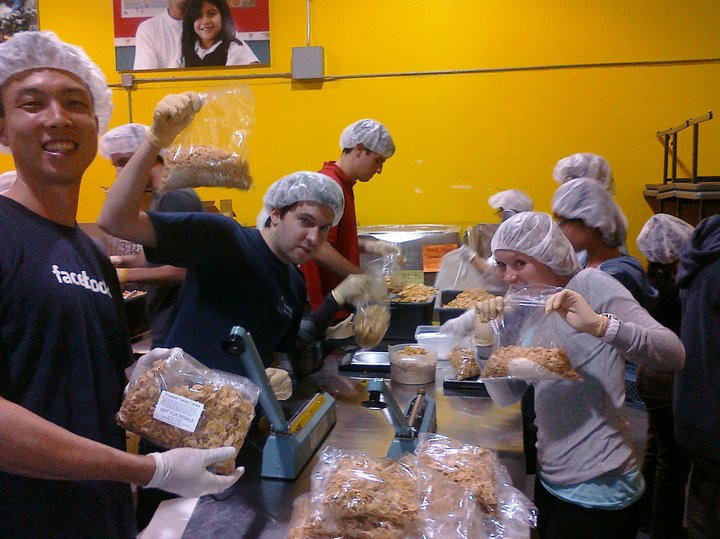
Given recent funding cuts to the organization, the San Francisco Food Bank is taking all the help it can get in its quest to feed an ever-growing number of hungry San Franciscans. An enviably efficient volunteer system relies on interested helpers to sign up on an online calendar before showing up for their shift of repackaging food for community distribution.

900 Pennsylvania, SF. www.sffoodbank.org


Glide Memorial Church

Signing up to volunteer with Glide is a bit like jockeying for the last square of fudge. But luckily the organization – a superpower of Samaritan spirit – has a few spots left for December. Chose between an early-morning grocery bag distribution gig or a toy sorting task.

330 Ellis, SF. www.glide.org


St. Anthony’s

Packed to the gills with volunteers for its main events, St. Anthony’s is still calling out for help with two upcoming items: managing curbside drop-offs on December 23rd and 24th and clothing collection throughout the month. Both duties require the volunteer to be at least somewhat physically fit and able to lift 25 pounds of goodies. Shifts are four to five hours long and can be signed up for via a voicemail message to the volunteer hotline (see below). 

150 Golden Gate, SF. (415) 592-2829, www.stanthonysf.org


Tenderloin Tessie

If you’re looking to participate in a volunteer-run, community-oriented holiday dinner, this is one of  the best bets as better-known options are already staffed out the wazoo. Tenderloin Tessie provides holiday meals to homeless, low-income, disabled, and elderly San Franciscans – and has a wide-open sign-up sheet for volunteers. December 24th shifts involve loading and unloading food from the truck while shifts on Christmas Day are dedicated to decorating the dining room, preparing and serving dinner, and cleaning up afterwards. 

First Unitarian Universalist Church, 1187 Franklin, SF. Call Michael Gagne at (415) 584-3252 to register, www.tenderlointessie.com


Meals on Wheels San Francisco

The nationwide organization that delivers healthy meals to homebound seniors is peddling its Chefs of the Bay Area calendar for the next few weeks at various locations throughout the city. Individual volunteers are needed to staff the tables and promote the calendars, the proceeds from which eventually translate into someone’s hot holiday dinner.

1375 Fairfax, SF. Contact Danie Belfield at dbelfield@mowsf.org or call (415) 343-1311, www.mowsf.org


Habitat For Humanity

Habitat Greater San Francisco holds an ongoing inter-faith build on one of their largest projects to date, a 36-unit condominium at 7555 Mission.  No construction experience is necessary, and December 21 marks the start of their Winter Solstice Build, a community-driven effort to get the Daly City residence available to low-income tenants as soon as possible.

7555 Mission, Daly City. Sign up online at www.habitatgsf.org


Little Brothers San Francisco

Not everyone has family around for the holidays, and older San Franciscans can be especially in need of some care and affection. Little Brothers organizes several opportunities for volunteers looking to befriend community elders, from Christmas Day house visits to phone check-ins to help at the office. 

Various locations, SF. Sign up online or at (415) 771-7957, www.littlebrotherssf.org


AIDS Emergency Fund

Unlimited slots for volunteers pretty much guarantees a perfect present of a Christmas Eve dinner for San Franciscans with HIV/AIDS and their families. Last year, more than 1,000 people ate; this year (the 24th such dinner), a similar turnout is expected. Load-in of supplies begins at 10 a.m. on December 23rd and shifts run all day on Christmas Eve, starting at 8 a.m.

War Memorial Veterans Building, 401 Van Ness, SF. www.aef-sf.org, sign up at aefxmas@aol.com.


Jewish Family and Children’s Services

Gather and deliver holiday treats to those who might not otherwise celebrate the holidays on December 16th and 18th at the JFCS. Individuals and groups of volunteers are both welcome; sign up by December 9.

2150 Post, SF. Call (415) 449-3832 or email loril@jfcs.org to sign up. 


SF SPCA

A sprinkling of volunteer spots remains (especially post-Christmas) at the SPCA’s annual window display at Macy’s Union Square. Staff the windows – full of then-and-there-adoptable creatures – to raise money for future SPCA programs. 

Email windowsvolunteer@sfspca.org, use the online calendar, or call (415) 554-3008 to register, www.sfspca.org 


Hayes Valley Farm

Always open to volunteers, Hayes Valley Farm, an off-ramp-turned-urban-ag-oasis, holds special holiday hours for those looking to weed away end-of-year poundage or just engage with some of the happiest plants and gardeners in San Francisco. December 27 marks the first post-holiday gardening session and is sure to host droves of veterans and newbies alike.

450 Laguna, SF. www.hayesvalleyfarm.org


Occupy movement targets foreclosed homes

14

Throughout the Bay Area on Tuesday (Dec. 6), Occupy activists and housing advocates launched what they said will be an ongoing effort to place families back into their foreclosed homes, seizing bank-owned homes to put pressure on the banking industry to cooperate with homeowners in loan trouble.

In San Francisco, San Jose, and Oakland, activists highlighted the nation’s foreclosure crisis by occupying foreclosed homes as part of the Occupy movement’s national day of action against foreclosures. Occupy Oakland activists said the tents are gone in downtown Oakland, but the move toward house occupations represents a new phase for the movement.

“I am here fighting for my home,” said Margarita Ramirez, addressing a crowd of 150 supporters at the West Oakland BART station. Ramirez said her family fell behind on their mortgage payments after her husband was laid off at the onset of the recession. The Ramirez family applied for a loan modification under the federally subsidized Home Affordable Modification Program(HAMP) hoping for some relief, but their lender, Bank of America, denied their request. Though HAMP is a federal program, it is administered though individual mortgage lenders.

According to Ramirez, with time left before her foreclosure, Bank of America urged them to explore other options to save their home. Then, inexplicably, Bank of America sold her home to Fannie Mae, leaving her family out of options despite what Ramirez says is Bank of America’s later admission to the error and willingness to work with the family. Fannie Mae however has held firm that the sale was valid, leaving the Ramirez family in an uncomfortable comprise of renting their own home.

In order to pressure Fannie Mae on behalf of the Ramirez family, activists with Occupy Oakland and Just Cause seized a vacant Fannie Mae owned foreclosure at 1417 Tenth street in West Oakland.

“This house is owned by the federal government, who we pay taxes to,” said Occupy Oakland activist Thaddeus Guidry, who said that he had struggled hard to get by during the recession. As he stood over a grill cooking hotdogs for the crowd gathered in the yard of the newly occupied house, he said he had found new inspiration and hope after becoming part of Occupy Oakland.

“Tonight will be the first night here in the house,” said Guidry. “This is my home now. We hope to house eight people here.”

Fannie Mae, which was effectively foreclosed on by the U.S. Treasury in 2008 under a process know as conservatorship, has received $169 billion in federal bailout money and remains under federal control.

The house on Tenth street is modest but spacious, with electricity and water. Downstairs, Just Cause is getting ready to start an eviction defense clinic. Just Cause organizer Maria Zamudio told the Bay Guardian that the group holds regular eviction defense clinics in San Francisco and Oakland, but the freshly occupied house in West Oakland would serve as a community space that people can drop into to learn their rights.

“We have been doing eviction defense for a long time. Since the recession, we have seen a change to tenants being pressured to leave by banks after landlords lose a house to foreclosure,” said Zamudio. “It is important for tenants to know that they do not need to leave a foreclosed property. The tenant has more rights in these situations then the homeowner.”

Only blocks away, Gayla Newsome stood in front of her house at 1536 Adeline St with another crowd of supporters from Occupy Oakland, and housing advocates from the Alliance of Californians for Community Empowerment(ACCE). She has been out of the house for six months after the foreclosure, leaving her and her children to stay with family in an overcrowded situation as the house sat vacant.

“This is the moment I take my house back. I’m a little scared, a little nervous, but I have to do this for my kids and grandkids. I have to do this for the other people who are going through this,” said Newsome.

Newsome said Chase Bank repeatedly denied receiving her HAMP loan modification paperwork. When she finally sent a copy by certified mail, they acknowledged the application and denied her eligibility in the program.

The eviction came swiftly. Unaware of the looming eviction, and believing she still had time to save her house even though Chase was outside the HAMP program, Newsome was called by her children while at work the morning of July 19.

“The kids were given 10 minutes to grab what they could before they were put on the sidewalk in their pajamas by the bank representative and the sheriff. They called me frantic,” recalled Newsome.

The recession has been hard on West Oakland. One out of 236 houses in West Oakland are in foreclosure, with many more families hard-pressed to hang on. Housing advocates say that foreclosures destabilize entire neighborhoods, as surrounding property values plummet and blight spreads.

“I’m not just here personally to reclaim my house, I’m here to say it is time to reclaim this neighborhood,” said Newsome, who laid the blame for the neighborhood’s sharp decline at the feet of the banks.

Residents of the neighborhood gathered for the rally shared stories of realtors cruising the neighborhood stopping to photograph even properties that are not in foreclosure or for sale.

“This was not an accident, this is redlining,” said Nell Myhand of Just Cause about West Oakland’s housing troubles.

“It’s time to take this to the politicians,” said ACCE organizer Shirley Burnell. “If they are not willing to help us, then they got to go. We will take them to the streets.”

Outside, activists signed up for shifts to help defend Newsome’s home from eviction, and started an emergency phone tree in case of trouble.

“The tents are gone but we are still here!” yelled an Occupy activist from the crowd as home defense clipboards circulated.

“I appreciate everyone doing this with me,” said Newsome. “That’s what Occupy is all about. We will take our homes back one at a time – no, five at a time.”

Just gimme the nudes: Art Basel’s pervy side

2

I dare you to lay your fingers on a city that’s sexier than Miami. The whole urban area is one big infinity pool — Cuban dancing, too-much-is-not-enough cleavage, shiny shirts, flirting in traffic jams. Add Art Basel weekend, when the population of nubile arty types skyrockets and you have yourself an I-saved-my-money-up-to-blow-it-here powder keg. Small wonder that the Miami Convention Center was packed with nudes and nakeds last weekend. Art’s a great excuse to be pervy.

The Convention Center was sexy on Saturday, Dec. 3. There was this vibrating hush in the cavernous building, the result of a massive group of people (the show attracted 50,000 people over the course of four days, according to official festival numbers) trying to be quiet. But it was hard to be quiet when you wanted to yelp in pleasure every 15 minutes. A voluptuous python curling sleepily around a brother from another mother (the latter attached to another man’s crotch). A classic Helmut Newton starlet, leaning coquettishly on a hot rod, Hollywood sign evident in the background. 

From a pure beauty standpoint, what can beat a nude? Like food porn, images of the tropics, and cuddly kitty portraiture, the art of the nude necessitates no graduate level art history seminar to appreciate. It’s flesh. You want to be on it. But you’re in one of the largest makeshift gallery spaces in the world, so try to hid your aesthetic exuberance until the after-party. Lucky for you, there’s quite a few at Art Basel.

There was clothed art there too. I’ve already posted an exploration of Wynwood, Basel’s street art district. And you’ll definitely want to check out my trip to the SCOPE Festival for urban art and rhinestone hamburgers. Shh, there’s a naked in that one too. 

Unless otherwise noted, all images were on display at Art Basel Miami Beach


Lit shorts: Cocker, on paper

0

Mother, Brother, Lover
By Jarvis Cocker
Faber and Faber
208 pp., hardcover, $17

 
Books of lyrics — words uprooted from the music and set down naked on the page — are traditionally published with either self-congratulation or doubts by songwriters. Jarvis Cocker has some doubts.

“Lyrics are not poetry: they are words to songs,” he writes in the reluctant and faintly self-conscious introduction to Mother, Brother, Lover: The Selected Lyrics of Jarvis Cocker. But the former Pulp front man doesn’t give himself enough credit. His persona as a sexual fantasist makes for devilishly entertaining stories — scotched lovers, adultery, watching someone’s sister from the bedroom closet — all of which become more vivid here. Pulp classics like “Do You Remember the First Time?” are plain funnier when you can pick up on the subtleties in punctuation and position of words. Notes in the back are similarly revealing. The title of the misfit anthem “Mis-shapes” comes from chocolates called by the same name that are too malformed to fit in boxes.

Read more reviews in our Books Issue, on stands now

Lit shorts: ‘Beck’ by the book

0

Beck
By Autumn de Wilde
Chronicle Books
176 pp., hardcover, $35

 
For more than a decade and half, pop culture photographer (and video director) Autumn de Wilde has chronicled Beck, the iconic songwriter and her personal friend, on tour, in the studio, and as he’s posed before the camera — the latter especially.

Indeed, in Wilde’s photos we find Beck looking as impenetrably cool as ever. Incorporating fewer candid shots and plenty of showy staged ones — Beck in a white suite; Beck lifting an enormous red egg; Beck surrounded by loosely clad dancers — the collection has few insights into the mythologized songwriter and too many into his eclectic wardrobe. Wilde is a fine photographer, but her photos evoke the same Beck we’ve been looking at for decades. For real insights, look to the front of the book at the conversations between Wilde and Beck, where the two are finishing each other’s sentences and looking back on their collaboration. 

Read more book reviews in our Books Issue, on stands now

Style Paige: Does this go together?

0

Don’t you wish there was a how-to-guide on how to mix and match patterns properly? How do you really know if that leopard and that floral look good together? There should some kind of chart online you can download that tells you if seesucker pants and a neon T-shirt is an okay fashion combo. Let’s just come to terms with it: true style doesn’t come from pat answers.

When I stopped Alexandra Haag on 18th Street and Mission, she was wearing a red and black leopard-spotted vintage top and a blue and black tribal-print skirt. For her, mixing and matching is easy. “Just put it on. If it works, it works. If it doesn’t, find something else.” she said.

Simple logic: think less. Brands like Dolce and Gabbana have already embraced this winter trend with its floral print top-leopard print bottom dress. But you don’t have to go to Nordstrom to purchase such an outfit. You probably have the essentials in your closet, say a plaid shirt and paisley pants, or a polka dot blouse and striped leggings. 

Remember, there are no rules.


CPMC provides little charity care despite huge profits

30

A new study has found that the California Pacific Medical Center (CPMC), an affiliate of nonprofit Sutter Health, provides far less charity care per paying patient than other hospitals in San Francisco even as it makes by far the most in profits, highlighting an issue that many city officials have raised as CPMC seeks permission to build a high-end new hospital on Cathedral Hill.

The study by UC Hastings College of Law is called “Profits & Patients: the Financial Strength and Charitable Contributions of San Francisco Hospitals,” and the Guardian reviewed an advance copy before its official release this Thursday. It compares CPMC’s hospitals with St. Francis Memorial Hospital, St. Mary’s Medical Center (both are Catholic Healthcare West facilities), and Chinese Hospital.

“Mainly due to Sutter Health’s plan to alter its current hospital structure within San Francisco, the provision of community health benefits by San Francisco hospitals is now a major issue before the Planning Commission and Board of Supervisors,” the report reads.

Even before that project, CPMC/Sutter is the dominant health provider in town, and by far the most profitable. Between 2006-2010, the report says the company made $743.9 million in profits from its San Francisco operations, compared to St. Mary’s $22.6 million in profits and the $14.8 million loss by St. Francis.

CPMC runs four of the largest hospitals in the city – St. Luke’s Hospital and CPMC’s Davies, California, and Pacific campuses – behind only San Francisco General Hospital, the city-run facility that does by far the most charity care. But while the other hospitals in the study are smaller, with much less staffed bed counts, they still manage to see the same or more charity care patients than CPMC.

For example, from the report, Saint Francis has 150 staffed beds and sees approximately 31 charity care patients per bed per year. CPMC has 514 staffed beds and sees only 14 patients per bed per year. “In 2010, CPMC’s three oldest campuses (Davies, California, and Pacific campuses) saw charity care patients at a patients per bed rate less than half that of Saint Francis, despite being more than 3 times the size of Saint Francis and having significantly greater financial stability,” read the report.

St. Mary’s and Chinese Hospital also see approximately 13 charity care patients per year per staffed bed, and their staffed beds are 160 for St. Mary’s and 31 for Chinese Hospital. If CPMC has so many more staffed beds, why aren’t their charity counts any higher than a hospital with only 31 beds to their 514 beds?

Hastings Professor Mark Aaronson, who put together the study, said that charity care is supposed to be at least 3 percent, the minimum expectation for the San Francisco Board of Supervisors. CPMC’s is closer to 1 percent.

Why is it so low? If you ask CPMC, it’s not. “It depends on how you calculate it,” said CPMC spokesperson Kevin McCormack. “As a dollar amount, we give more in charity care than any other hospital expect for General Hospital.”

Well, obviously. CPMC is a massive conglomerate that has four campuses to maintain and put money into to have the beds and staff available. Having so much more space than any other hospital, they would have to put in more as a dollar amount just to sustain those campuses.

Given that CPMC is a non-profit organization, where does that extra few tens of millions of dollars go? Well, some of it goes to hire the huge team of consultants and lobbyists who are now trying to win approval for the Cathedral Hill project. But McCormack said it also gets absorbed into CPMC operations.

“It goes back into the system itself,” said McCormack. “It goes back into the hospital, into salaries, building new facilities, repairing old ones.”

Even so, the report shows CPMC to be in a different category than other hospitals when it comes to supporting San Francisco’s full population. It also found that the profits extracted from San Francisco’s hospital subsidize the whole chain, a situation that will only become more pronounced as it builds a hospital at Cathedral Hill that seeks to draw patients from around the country.

“CPMC-St. Luke’s is not only the most profitable hospital in San Francisco, but it is also the most profitable hospital in the Sutter Health statewide network. Out of twenty-one hospital groups within the Sutter Health network, CPMC/St.Luke’s brought in nearly one quarter of Sutter Health’s average net income over the last five years,” the report reads.

The report was prepared for the Good Neighbor Coalition, Coalition for Health Planning — San Francisco, and Jobs with Justice. The official public release of “Profits & Patients” will be at 11 am on Thursday, Dec. 8, at the UC Hastings College of the Law, 100 McAllister St., Room 300, San Francisco.

Steven T. Jones contributed to this report.

A new name in District 5

73

There’s a new name popping up in the cattle call that is the District Five supervisorial appointment. He’s not terribly well known in city political circles (his chief claim to local fame is serving on the Library Commission), but he’s got a powerful patron: U.S. Senator Dianne Feinstein.

His name is Michael Breyer. Yes, from that Breyer family.

In a Nov 30 letter to Mayor Ed Lee, Feinstein lauds Breyer and says he has her endorsement for the job. You can read the letter here (pdf).

Feinstein notes that Breyer’s grandfather, Irving, was chief counsel for the San Francisco Unified School District and that his aunt was a president of SEIU. She doesn’t mention his closer, and better-known, political connections. Nor does she mention that his uncle was a partner in a law firm that was once among the most politically connected in the city, run by William Coblentz, who when Feinstein was mayor was routinely considered one of the two or three most powerful people in San Francisco.

Among the great qualities the senator sees in Michael Breyer? He can raise money. “He can count on financial support from the high tech community and others,” Feinstein notes.

Would Ed Lee seriously consider someone who has this little local political experience and no real history of activism in the district — but really, really strong family political ties? I can’t imagine it. But Senator Feinstein isn’t doing this just for fun.

Cass McCombs greets the Great American Music Hall crowd warmly

0

There’s been a lot of talk about how Cass McCombs is an impenetrable character, so much so that it’s become tiring. We’ve heard about his elusiveness and nomadic lifestyle; about his tendency to either act bitterly in interviews (i.e. Pitchfork interview) or shun them altogether. Oh, and that he’s never happy. Admittedly, McCombs has shaped this cryptic persona himself — he’s even made it difficult to know what he looks like (recent photographs have been vague, he’s always altering his “look”). It was an enormous pleasure then on Sunday night to be able to experience the songwriter first hand when he performed at the Great American Music Hall, where it was all about the music.

Before a dazzling wall of batting lights, McCombs stood with his band and seemed to take pleasure in every moment of the concert. The audience gave him a very warm reception and was perhaps appreciative for the same reasons I was — at long last we were having our own experience of McCombs.

The better part of the set was downtempo and tinged with melancholy. Wit’s End, the first of two albums that he released this year on Domino Records, is slow, ethereal, and rooted in what feels like the aftermath of tragedy. Listening to the band perform the single from that record, “County Line,” was grand. If one didn’t appreciate how lovely and original that song was before, one certainly did after last night. It has the mood of an R&B track, and the slow, hushed rhythm section seems to reflect the hopelessness of McCombs’ voice as he sings so simply “you never even tried to love me / what do I have to do / to make you want me?”

Humor Risk, McCombs’ second album of this year, is an effective supplement to Wit’s End in a live context. Compared to Wit’s End, it’s a more buoyant and melodic album. When the band performed songs like “The Same Thing” and “Robin Egg Blue,” it felt like McCombs was taking the audience up for a breath of air before plunging it back into the chilling gloom of Wit’s End.

Earlier in the set, the band performed “Bradley Manning,” a song that McCombs premiered a few days before on the television news show Democracy Now. The “protest” narrative tells the story of Bradley Manning — the 23-year-old intelligence analyst that was arrested for dispatching thousands of classified documents to Wikileaks. McCombs’ detailed story-telling recalls Bob Dylan’s “Hurricane,” and it was played to shouts and whistles of approval from the audience. “Bradley you know you have friends even though you’re locked in there,” McCombs says at the very end of the song. It was one of the highlights of the night. How many of us had forgotten about Bradley Manning, and how many are now discussing his arrest?

As the audience poured out of the venue then, the overwhelming thought on everyone’s mind was probably not “who is Cass McCombs?” but something like “wow — so that’s Cass McCombs.”

Bank of America frets about Occupy

An internal Bank of America email has surfaced, making it clear that the megabank is concerned about the national day of action against evictions and foreclosures being carried out today, Dec. 6, by the Occupy Wall Street movement. The leaked internal memo suggests BofA is taking Occupy housing actions very seriously.

According to the email, which was sent to BofA’s third-party Field Services suppliers, the nationwide protests “could impact our industry.”

“We believe protests will likely take place tomorrow at auction sites, homes that are being foreclosed, homes in the eviction stage, and vacant homes,” the BofA memo notes. “We want to make sure that we are all prepared.”

It goes on to emphasize three points: do not engage with the protesters, ensure that vacant homes are secured, and report “media incidents” to 800-796-8448. I called that number to verify that the email was real, and sure enough, a spokesperson confirmed that it was.

The memo concludes with proof that the Bank of America has been paying close attention to activist websites. “The website occupyourhomes.org has a story posted of a Bank customer we are researching,” the email notes. “The web site has an event finder that can help identify upcoming protests.”

After the Guardian called the BoFA to determine whether the email was real, media relations representative Jumana Bauwens followed up with this statement:

“As a matter of normal course of business, when we are alerted to activities that may affect our real estate owned properties, we inform our third party contractors. This is standard operating procedure. The safety of our associates and third party contractors is our first priority. It is the bank’s policy to protect and secure our properties for the investors who own them. Bank of America is committed to helping our customers with home retention solutions and other foreclosure avoidance programs. Foreclosure is always our last resort.”