SFBG Blogs

SF supervisors urge city to defy federal immigration holds

57

The San Francisco Board of Supervisors yesterday (Tues/13) approved a resolution calling for the city to adopt stronger policies for resisting federal efforts to deport undocumented immigrants who live here. It is the latest move to support the city’s Sanctuary City status and counter the federal Secure Communities (S-Com) program, a new database that allows the feds to circumvent local policies protecting local immigrants who have been arrested but not convicted of any crimes.

The resolution urges the Sheriff’s and Juvenile Probation departments not to honor civil immigration detainer requests from U.S. Immigration and Customs Enforcement until there is a written agreement to have ICE pay for all local costs associated with the incarcerations. The Santa Clara County Board of Supervisors adopted a similar policy in October, a move also being pursued in Chicago, New York City, Washington DC, and other jurisdictions.

“It doesn’t make communities safer. In fact, it makes immigrant communities less safe,” Sup. Eric Mar, who authored the resolution, said of S-Com, noting that it makes immigrants less likely to report crimes or cooperate with police. “I urge you to support this message and to follow the lead of jurisdictions like Santa Clara and Chicago, Cook County.”

Sups. David Campos and Jane Kim asked to join Mar and Board President David Chiu as co-sponsors of the measure, which was then approved on an 8-3 vote, with Sups. Sean Elsbernd, Mark Farrell, and Carmen Chu in dissent. Members of the San Francisco Immigrant Right Defense Committee, who had lobbied hard for the resolution and who packed board chambers, erupted in a sustained standing ovation after the vote.

Angela Chan, an attorney with Asian Law Caucus who helped lead the effort, afterward told supporters, “It’s because of this group’s hard work that we got a lot more votes than we thought we’d get,” noting they only had six solid votes going in. “Thank you, happy holiday, and we have lots more work to do.”

Chan hopes the resolution will give political cover to Ross Mirkarimi – who supported the measure as a supervisor and who takes over as sheriff at the end of the month – to expand policies created this year by Sheriff Michael Hennessey to resist some immigration detainer requests. Mirkarimi hasn’t yet returned calls for comment on the issue.

San Francisco has a fraught recent history on how to handle undocumented immigrants accused of crimes. Two years ago, the board adopted a policy of refusing to report them to the feds until they had been convicted of serious crimes, approving the Campos-authored legislation on a veto-proof 8-3 vote, only to have then-Mayor Gavin Newsom refuse to enforce the policy. After that highly charged fight, the creation of the S-Com program allowed the feds to circumvent those restrictions by directly finding out whether local inmates are undocumented, making moot Mayor Ed Lee’s agreement to partially implement the Campos legislation.

As we report in this week’s paper, this is one of a number of issues related to local control and an overreaching police state where Bay Area communities such as Berkeley, San Francisco, Richmond, and San Jose are trying to push back on the federal government. Sup. Jane Kim is currently working on an ordinance to restrict the participation of San Francisco http://www.sfbg.com/2011/04/26/spies-blue. Advocates say she plans to introduce the measure next month, but Kim told us she’s have some difficulty getting sign-off from the City Attorney’s Office.
Gifted: A $25 three-course meal at the Cliff House

0

Sure, the menu isn’t exactly on the cutting edge of cuisine. But I’ll tell you what, any buddy that turns down a three-course meal at the Cliff House? Clearly, the two of you need to have a talk. Preferably, over ocean views, cheese ravioli, baby spinach salad, and bread pudding.We consider the Cliff House one of SF’s premier destination restaurants. It clearly has one of the more epic locations. Perched on the crags overlooking the ruins of the Sutro Baths and that one creepy cave everyone walks through, it appears to be the gatekeeper to the roiling greyness that the Pacific usually is this time of year. It’s just about the perfect length of a bike ride down through the park (say hi to our freshly acquired baby bison, thanks Dick Blum, husband of Senator Diane Feinstein!), with a couple 100 feet of monster hill climb at the end, so you’re guaranteed to be hungry by the time you get there. 

And now you can take your roommate to the Cliff House’s fancy dining room, the Bistro, for 25 lousy bucks! (Just tell them in advance that they’re paying for their own drinks, unless you’ve been leaving your dirty dishes out recently) Every Wednesday, a different three-course meal beckons you out to where the avenues reach the sea, just north of where the Murphy Windmill’s vanes wait to turn, expensively

Hey, today is Wednesday! What’s on offer at the Bistro? Glad you asked… 


This week’s menu:

Course the first: Baby spinach salad with satsuma tangerines, candied walnuts, ricotta salata, and white balsamic vinaigrette

Course the second: Cheese ravioli with sautéed wild mushrooms in pomodora sauce and Parmesano-Reggiano

Course the third: Persimmon and white chocolate bread pudding with cinnamon crème anglaise


Incredible, yes? Scoop up your lucky holiday honey and celebrate not being at the mall. 


Cliff House

1090 Point Lobos, SF

(415) 386-3330

www.cliffhouse.com

My (latest) favorite website ever

10

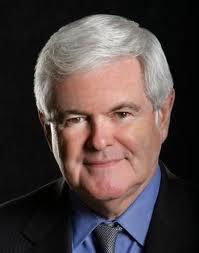
Rick Perry will fight a chicken with hand. He says so himself, right here. And Newt Gingrich reminds us that you can’t think when you’re fucking high.

Oh, and there’s a group of spin-meisters in the back room trying to figure out how to make Perry sound less like a blithering idiot.

Livefunnyordie. I don’t know how these folks manage the lip-reading stuff, but it’s spectacular.

Clouded: Oakland’s Main Attrakionz rise up from the fog

1

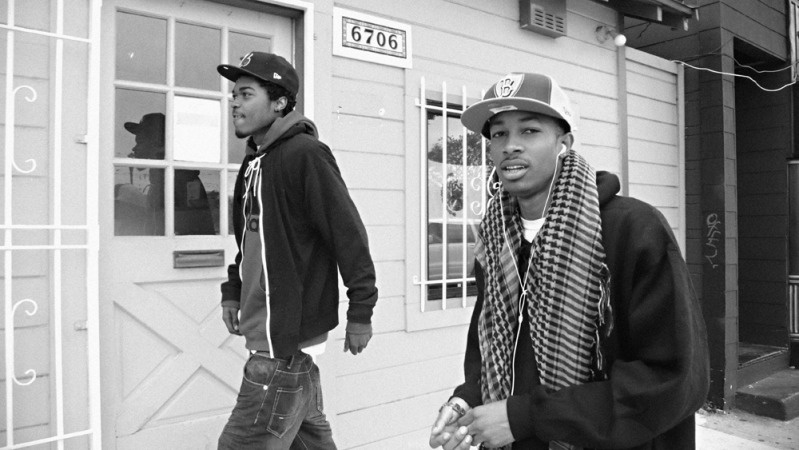
Maybe it’s the dreamy, celestial quality of their ethereal beats, or the cloud of weed smoke that seems to float from the speakers whenever Squadda B or MondreMAN spit one of their sky-high verses. While the origin of the term “cloud rap” may be up for debate, it’s undeniable that Main Attrakionz is carving out its own place in hip-hop by pioneering a new sub-genre.

Squadda and Mondre diligently recorded track after cloudy track in a foam-padded bedroom closet in North Oakland before entering a professional studio to lay down their most recent mixtape 808’s & Dark Grapes II. Thanks to its more polished production — and an ever-growing spotlight on the emerging DIY rap movement — 808’s & Dark Grapes II catapulted Main Attrakionz to the spotlight.

The pair is back at the home studio where it all began when I call them one winter afternoon. Mondre and Squadda, both barely 20 years old, are in high spirits, laughing and joking while we chat. The self-proclaimed “best duo ever” has been rapping together since age 12; they met in a seventh grade math class, and they’ve been inseparable ever since. “We would write and perform at talent shows,” says Mondre.

“Old school Cash Money, back in the ‘90s, those were the first CDs I ever bought,” he says of his formative influences. “No Limit, DJ Quik, Snoop Dogg, Too $hort. East Coast, West Coast, the South, all of it.”

Back in their talent show days, Mondre and Squadda were members of a four-piece called 4Figgas. The summer after they met, they recorded their first track – rapping over the Neptunes-produced beat for the Clipse’s “Grindin’.”

Beats for other early Main Attrakionz releases were often supplied by Shady Blaze, an Oakland rapper, producer, and prominent member of Main Attrakionz’s hip-hop collective Green Ova Undergrounds. More recent work has featured ambient, new-agey beats by up-and-coming artists like East Bay duo Friendzone, whose praise for Main Attrakionz’s off-the-cuff writing process sparked my interest.

“They make a brand new beat, we gotta write brand new shit to go along with it,” explains Squadda. He describes his studio mentality as “blank minded.” The pair listens to a track, rolls a few blunts, and cultivates breezy, zoned-out rhymes on the spot. “Wherever the beat takes it, that’s where we take it,” he says.

A refreshing realness runs throughout Main Attrakionz’s lyrics. The hardships of coming up in Oakland are neither downplayed nor glorified. Smoking weed is a continuous motif, as are the young rappers’ lofty ambitions and dreams. When there are mentions of money, it’s usually in the context of having enough to get by.

Main Attrakionz’s mixtapes have featured a slew of guest appearances from rising stars like ASAP Rocky and Danny Brown. When I ask Squadda whom he’d recruit if he could collaborate with anyone, alive or dead, he responds with youthful cockiness. “It’s gotta be a producer first off, cause I gotta have somebody that can bring something to the table,” he says. “It’s gotta be [UGK’s] Pimp C. Hands down, case closed.”

“It’s crazy that it came at this time, cause now we don’t even care about all that,” Squadda remarks on his recent critical acclaim. “[I’m just] glad to put music out that people can hear from anywhere.” Upcoming projects for Main Attrakionz include solo efforts from Mondre and Squadda, a Green Ova Undergrounds compilation, and a debut full-length.

Since it accompanies every mention of the duo, I can’t resist asking for a definition of cloud rap. “Hold on,” says Mondre. There’s a lot of commotion as he hands the phone to Squadda, and all I can make out is, “We’re higher than everybody else.”

Main Attrakionz
With G-Side and DaVinci
Tues/20, 9 p.m., $15
Independent

628 Divisadero, SF

(415) 771-1421

www.theindependentsf.com

Josh Cheon’s top 10 new releases of 2011

2

For so many more year-end music lists, click here and pick up this week’s paper.

Dark Entries Records‘ Josh Cheon submits his list of the top 10 new releases of 2011:

1. Container, S/T LP (Spectrum Spools)

2. Staccato du Mal, Sin Destino (Weird Records)

3. Bronze, Copper (RVNG Intl.)

4. Grouper, Dream Loss/Alien Observer (Yellow Electric)

5. White Fence, Is Growing Faith (Woodist) 6. Belong, Common Era (Kranky)

7. Widowspeak, S/T LP (Captured Tracks)

8. Total Control, Henge Beat (Iron Lung)

9. Iceage, New Brigade (What’s Your Rupture?)

10. Brotman & Short, Heights (Cold Dick)


The dark synth of Staccato du Mal:

George Chen’s list of things that didn’t suck in 2011

0

For so many more year-end music lists, click here and pick up this week’s paper.

Musician and writer George Chen says, “2011: man, most of it was shitty, but here were the good things:”

1. Helm. Luke Younger from Birds of Delay, Halloween weekend in London. Best noise set I’ve seen in a while, it helped that there was a fan blowing his bangs out of his hoodie. He has an album called Cryptography out on Kye.

2. White Lung. Youngins from Vancouver B.C. playing sick, straight forward punk. Saw them in a bowling alley.

3. Village of Spaces’ Alchemy and Trust album. It took a village to put this out, or at least four labels working in conjunction. Dan Beckman’s (Uke of Spaces Corners) quiet folk masterpiece.

4. Divorce. A band from Glasgow that exists in kind of a cultural vacuum there, a bit like the early ’00s trapped in amber, but then cracked open and given adrenal supplements. They are coming to America in July 2012.

5. Trash Kit put out an album in 2010, but I only got to see them once in 2011. Sadly, they have broken up. Finger-picky jaunty punk with weird rhythms.

6. Andrew W.K. This was not particularly “good”, but distinct encapsulation of the zeitgeist. My band played a show with him at Dem Passwords. He didn’t actually watch us or anything, he showed up right before going on with an entourage. Fans started force-feeding him bananas, Redbull, and whiskey and it turned into a freakish spectacle. I took a nap during his set, came back in, and he was still going for like two and a half hours, driving his fans away. Respect, the modern Andy Kaufman.

7. This Invitation. Chen Santa Maria went on a California tour with Warren in April and it was sparsely attended, but perhaps we’re to blame for that. It’s nice to see one of your oldest friends get some recognition for their work, which Aquarius did by giving their stamp of approval to his three (!) double CDs.

8. Cacaw from Chicago, a few ex-Coughs peeps project. They are now broken up, but this summer they came through and it was a monstrous sludge engine. Dark and fierce.

9. Anika. Technically a 2010 release, but she played at the Independent in October. The lady herself has a passive stage presence, but the music of the whole group (members of Portishead and Beak>) is best described as “Nico fronting PiL” (someone at the LA Times can claim that one).

10. SF Comedy. I still feel like an outsider at all this, but holy shit, there’s good stuff going on right now. Perhaps it is a national, even international renaissance in comedy, but the energy and talent going on here feels as exciting to me as the music scene used to feel. I actually don’t want to name names although the free show at the Rite Spot is a good place to start. I also noticed that none of the music I put on this list has anything to do with the Bay Area. Sorry, music. I just listen to podcasts now.

Young Canadian punk band White Lung:

Cheryl Eddy’s top 10 metal shows of 2011

0

For so many more year-end music lists, click here and pick up this week’s paper.

Cheryl Eddy’s list of the top 10 metal shows of 2011 (in chronological order):

1. Feb. 2: Motörhead, Clutch, and Valient Thorr at Warfield

2. March 11: Weedeater, Zoroaster, Kvelertak, and Begotten at Thee Parkside

3. March 12: Slough Feg, Christian Mistress, and Witch Mountain at Hemlock

4. April 3: Saint Vitus, Red Fang, and Howl at Mezzanine

5. June 7: Orange Goblin and Gates of Slumber at Bottom of the Hill

6. Aug. 12: Eyehategod, Impaled, Laudanum, and Brainoil at Oakland Metro

7. Aug. 16: Pentagram at Mezzanine

8. Oct. 13: Enslaved at Slim’s

9. Nov. 3: Mastodon and Red Fang at Warfield

10. Nov. 19: Kyuss Lives! and Black Cobra at Regency Ballroom


Relive it: Motörhead at Warfield

Guardian editorial: And now we recommend a national Occupy Day

9

EDITORIAL In less than three months, the Occupy movement has changed the national political debate — and possibly the course of U.S. history. A small group of protesters, derided in the mainstream media, grew to a massive outpouring of anger at economic inequality. It’s no coincidence that politicans at all levels have begun to respond. At least five different measures aimed at raising taxes on the rich are in the works in California. In Kansas Dec. 6, President Obama made one of the most progressive speeches of his career, talking directly about the need for economic justice.

While even some supposed allies say the encampments weren’t effective, the truth is that the out-front, in-your-face tactic of holding nonstop protests in the financial heart of places like Manhattan and San Francisco got attention. The visibility of the Occupy camps forced everyone to pay attention. The U.S. economy is in a crisis; less disruptive tactics wouldn’t have worked. But now most of the emcampments are gone, broken up by police forces and scattered from the central areas of major cities. It’s crucial that this growing and powerful national movement not fall apart after the almost inevitable crackdown on one style of protest. Occupy needs to look forward and plan its next steps.

Some of that is already happening, with Occupy activists targeting home foreclosures and marching on West Coast ports. But it’s worth considering another tactic, too: Occupy ought to begin planning now for a massive spring mobilization in Washington and a series of nationwide actions that could bring millions more people into the movement.

Part of the strategy of the Occupy camps was to maintain a presence, day after day — and that made perfect sense when the movement was starting. But single-day events, if organized on a massive scale as part of a larger campaign, can have a profound and lasting impact.

The original Earth Day — April 22, 1970 — involved 20 million people across the United States. There were events in hundreds of cities and thousands of high school and college campuses. It brought together old-school, sometime stodgy conservation groups with radical young environmentalists, the United Auto Workers with people concerned about pollution from car exhaust. It was, by any reasonable account, the birth of the modern American environmental movement.

The other great thing about Earth Day — and the reason it makes a great model for the Occupy movement — is that it was largely a grassroots event. Although there was a national office, most of the work was done spontaneously, in local communities, with no top-down direction.

And everyone — from Washington D.C. to the state capitols and city halls — paid attention.

Mass marches and mobilizations helped end the Vietnam War, spark the Civil Rights Movement and fight the anti-labor politics of the Reagan Administration. None of those events took place in isolation, any more than a national Occupy Day would take place in isolation. The nation’s ready for major economic change — and organizing a national event alone could help make stronger connnections among the broad constituency that is the 99 percent.


Lowe’s: The anti-Muslim neighbor on Bayshore

9

I don’t shop at Lowe’s. Don’t go to Home Depot or Wal-Mart (those folks have enough money as it is), either. I don’t like big-box retail in general, and I was opposed to bringing a big-box, out-of-state chain to build a store on Bayshore Boulevard. I think shopping local and spending your money with small merchants who are part of the community is good for the economy. 

But thanks to lobbyist Jack Davis, who was hired at some vast sum of money to bring Home Depot to San Francisco, and then-Mayor Willie Brown, who bought Davis’s line, Home Depot won permission to build on Bayshore — and when the Georgia-based company decided not to bother and left the site vacant, Lowe’s (based in North Carolinia) stepped in.

And now we know what an excellent neighbor the giant retail outlet has turned out to be. Lowe’s has decided to pull its ads from the Discovery Channel’s All-American Muslim show because some right-wing Christian nut-group objects to anything that doesn’t demonize the Islamic religion and all who follow it.

What a fine, upstanding company to welcome to San Francisco.

The good news about the mid-year state cuts

6

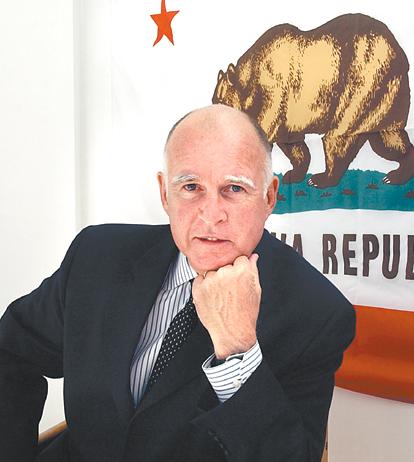
Well, there isn’t much good news, really — Gov. Jerry just announced another $1 billion in cuts, mostly to education and services for the disabled and poor. Check out the state’s priorities: $429.6 million in cuts to education, $225 million in cuts to MediCal, In-Home Supportive Services and developmental services — and a whopping $20 million in cuts to the prison system.

Supporters of K-12 education will walk away a little happier than they expected; the direct cuts (which could have meant losing an entire week of the school year) will amount to far less, only about $11 a student. But that doesn’t include $248 million in cuts to state funding for school transportation, which a lot of district will have to absorb in other ways. In San Francisco, it’s easier for kids in middle school and high school to take Muni; in more rural areas, school buses are a bigger deal.

Missing in a lot of the MSM coverage of the midyear cuts is the fact that the state is actually spending more money than expected. As Calitics points out, that’s no surprise:

It turns out that during a bad economic period, people need more services, but in the current climate in Sacramento, getting the legislature to approve the revenues for those services is an impossible feat even for somebody with the experience of Jerry Brown.

But here’s what’s interesting. In his press conference, Brown noted that the bright spot on the state’s fiscal front was increased money coming in from Prop. 63 — a surtax on incomes of more than $1 million to pay for services for the mentally ill. Which means that there’s additional money to be made by taxing the very rich.

And the voters seem more than willing to do just that.


Style Paige: Homeless youth show off their designing chops

0

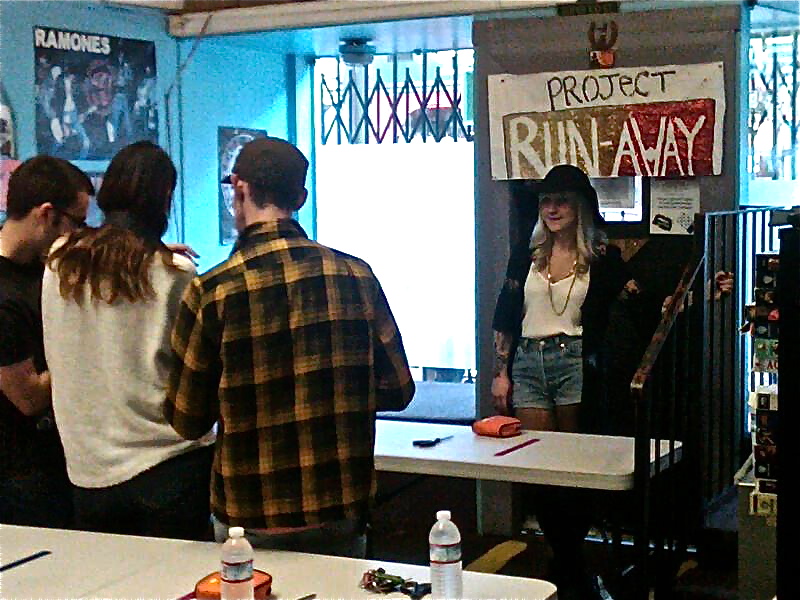
Five fashion-minded homeless youth – two men and three women  – had two hours to complete a fashion challenge using only donated clothing and street friendly supplies. That meant no sewing machines – more like dental floss, duct tape, and art supplies. The result? Find out by attending the Homeless Youth Alliance‘s screening of Project Runaway on Fri/16.

Some of the looks created in the series might come across as obvious – the streetpunk aesthetic of Haight-Ashbury’s homeless youth seems to have influenced a few of the garments. But not all. Other HYA participants went for more avant garde looks, like the “business pirate,” (as a HYA volunteer described one of the looks in a Guardian interview).

At Friday’s event, there will also be a fashion show at which a group of well-known fashion-forward judges will critique the garments and choose which DIY fashionista emerged victorious. The judging panel is still up in the air, but the center is hoping to land a former HYA participant who is now working in the fashion industry and a prominent fashion blogger.

Since the long-time haven for homeless youth has seen its funding recently cut by one-third, 100 percent of the ticket profits will go to the center – and in times like these, and particularly with the holidays fast approaching, a little bit of money can go a long way. Seven dollars will allow a youth at HYA the chance to get legal identification, and $30 will purchase 25 pairs of socks.  

The center hopes this is the first of many screenings of Project Runaway. So be an early adaptor –  come enjoy hors d’oeuvres and the inventiveness of young adults who are street and fashion savvy.


Homeless Youth Alliance screening of Project Runaway

Fri/16 7–8:30 p.m., $10-$30

Sports Basement

1590 Bryant, SF

(415) 437-0100

www.homelessyouthalliance.org


OccupyOakland extends Port blockade into second day

0

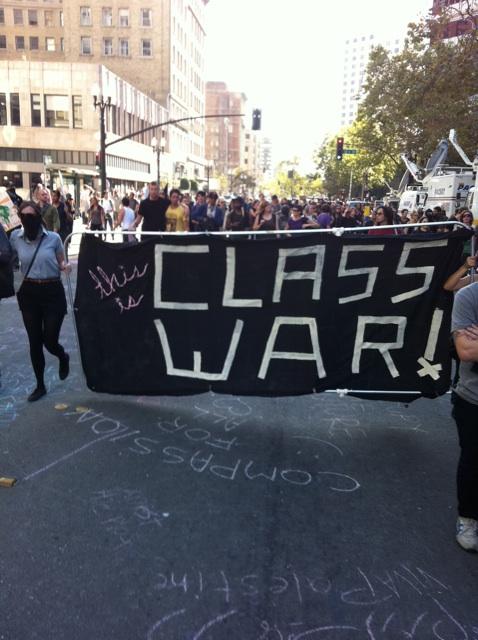
Early this morning, the protesters carrying out Oakland’s part in yesterday’s national “West Coast Port Shutdown” declared victory after 24 hours of demonstrations. After picketing during both the 8am and 6pm shifts at the Port of Oakland yesterday, protesters decided to extend the day of action to the 3 am shift today (Tues/13). 

Occupy Oakland’s General Assembly had voted to extend the shut-down if there was police violence against Occupy protesters in other participating cities; Occupy groups from Anchorage to San Diego participated, and protesters were tear-gassed in Houston and Seattle.

After a successful morning action, thousands of protesters arriving on a march to picket the 6pm shift were surprised to find that it had already been canceled. In an emergency General Assembly, protesters exchanged information about solidarity actions across the country and chose to continue the shutdown.

Protesters marched to Gate 60, where they commenced what one long-time OccupySF protester called a “festival in the streets.” Sound trucks with live music and DJs entertained the crowd while others played live music; a handful of tents were pitched.
At 1:20 am, the picket began again. Demonstrators circled in front of the gate entrance, chanting “Oakand is a union town!” and slogans against Export Grain Terminal (EGT), a grain elevator operator with which the ILWU has been in dispute since 2009.

Port workers began to arrive around 1:30 am, and many were surprised to see that the picket had been extended. One man, one of the earliest to arrive, seemed exasperated, saying “This is still going on? I didn’t show up yesterday, but I drove here from Fairview today.”
Others reacted differently. When a protester greeted one man and explained the reason for the continued protest, he responded, “Listen, I’m from (ILWU) Local 10. We’re a militant union. I’m used to this kind of thing.”

Clarence Thomas, past secretary-treasurer of ILWU Local 10 and third generation Oakland longshoreman, expressed a similar sentiment of solidarity in a recent interview with Workers World, saying, “If ILWU members don’t honor the community picket lines, it will cause an irreparable breach with the community. If the ILWU can’t support the community, why should the community support the ILWU in 2014 contract negotiations or when the new grain agreement is up next year?”

At 1:45 am, dozens of Occupy supporters, many of whom had left the “port shutdown” action to get some rest with plans to return in the early hours of the morning, began marching to the port from 7th and Adeline streets to join the picket lines.

By 2:30 am, protesters were marching in community picket lines at gates 60, 63, 67 and 68, with over 100 at the first three locations and about 20 in an all-bike picket line at the fourth. A handful of workers crossed the picket line and went to work. The majority who arrived for work – a light turnout, as news of the picket traveled quickly – did not cross the picket line. Many did stay, however, and engage in political conversations with Occupy protesters.

By 3:15 am, the shift had been officially canceled. A general assembly of Occupy protesters and representatives from the ILWU met to discuss next steps.  ILWU steward Anthony Lavierge addressed the group, saying, “This was called in solidarity with the Longshoremen, and in my opinion another day would harm that relationship. However, this is a community picket, and in the end it’s up to you what you decide to do.

Though some protesters wanted to continue to extent the blockade, they were overwhelmingly voted down by those who felt the time was right to declare victory. Samantha Levins, an Alameda/Oakland ferry worker and organizer with the Inland Boatmans Union/ILWU, stayed until the protest dispersed at 3:45am. She told the Guardian, “Today was great. It was extremely well organized and everybody was really respectful.”

Levins saw the day of action as a step forward for Occupy in the direction of working more closely with unions. She said, “It really opens up possibilities (for Occupy) to work more with unions. They’ve proven they can do it in a respectful way. ”

Dick Meister: The artistry of silence in film

0

Dick Meister is a long-time San Francisco writer. Contact him through his website, www.dickmeister.com.

I didn’t get much sleep last night. I was kept awake thinking of a film – “The Artist” – I had just seen. It stands out, even in the harsh light of day, as one of the very best of the many movies, silent and sound movies alike, that I’ve watched over the past 60 years. (Read the Guardian’s take on the film here.)

Although the widely-acclaimed movie was made this year, “The Artist” is a silent film, except for an excellent music soundtrack that sounds like the live orchestral music that accompanied major silent films. That practice ended, of course, with the coming of talkies.

That’s the movie’s major theme, the end of the silents – a theme it handles even better than other excellent films covering the topic, such as “Singin’ in the Rain.” I won’t go beyond noting the theme, for fear of disclosing the plot, but, believe me, it’s a very well-plotted and well-acted theme.

It was filmed in the United States, and two of its co-stars, Penelope Ann Miller and John Goodman, are American, but it’s really a French film. The director, Michael Hazanavicius, is French, as are the two lead characters, Jean Dujardin and Berenice Bejo. They play it straight with none of the mugging and exaggerated gestures that were common in the silents of yesterday.

But, boy, do Dujardin and Bejo look like the silent stars of yesterday, he classically handsome with pencil-thin mustache playing a silent film idol in the late 1920s, she with the pert, almost always-smiling look of a twenties flapper seeking film stardom. Their acting is indeed special, as is that of an incredibly talented fox terrier named Uggie, Dujardin’s romping, steadfastly loyal canine sidekick.

All that, and dancing, too – especially the stars’ dynamic hoofing to jazz melodies that could have come straight out of the twenties. They will surely turn you to toe-tapping and maybe the urge to leap up and do a little body swaying yourself.

The San Francisco Chronicle’s exceptional film critic, Mick LaSalle, describes Dujardin’s performance as “extraordinary and lovely, the first truly great silent film performance in about 80 years.” Amen to that, and to LaSalle’s assessment of “The Artist” as “a profound achievement . . . a product of serious study, honest appreciation and love” of silents.

Maybe it could even lead to a resurgence of the silent film, a medium that has not been of much interest to contemporary audiences. For the average person’s exposure to silents – if any – has been primarily through the speeded-up, bleached-out, “sound-enhanced” silents shown occasionally on television, that greatest of all the enemies of thoughtful, imaginative silence.

Watching silents presented as intended is an experience unlike any other, one that brings the actors and their audiences particularly close, far closer than most sound films. It requires special skills of actors, film directors and editors, who cannot rely on the crutch of words and sounds to reach the audience.

It requires great involvement and concentration by the audience as well. Silent film viewers are free to exercise their right to interpret cinematic actions as they wish, to imagine for themselves the retort of the gun, the scream of the heroine, the lonesome whistle of the train.

They are free to imagine all that’s being said, be it in French, or any other language. Silent films are truly universal and truly a distinctive art form apart from sound films.

Relatively few people have been privileged to see silents as they were meant to be seen. “The Artist” gives them that rare opportunity.

Dick Meister is a long-time San Francisco writer. Contact him through his website, www.dickmeister.com.

The Balboa is here to stay — fundraiser tonight!

0

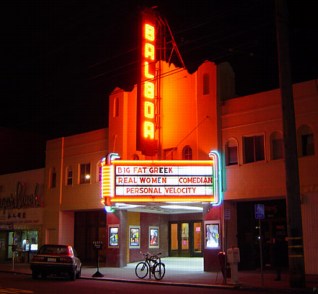
With all the bad news in the world, the recent announcement that the Richmond District’s historic Balboa Theatre would be keeping its doors open — thanks to a partnership between the non-profit San Francisco Neighborhood Theater Foundation and the theater’s veteran operator, Gary Meyer — is cause for cinematic celebration. (Full release here.)

Under president Alfonso Felder, the SFNTF (which also owns the Vogue on Sacramento Street and oversees the “Film Night in the Park” series) will lease the Balboa through 2024 — taking the built-in-1926 landmark nearly to its 100th birthday. A fundraiser tonight offers the public a chance to step up and show support for this new partnership and help raise some dough for Balboa repairs and upgrades.

The event features a “Then and Now Presentation of San Francisco Theatres” (presumably, focusing more on the pre-multiplex days), plus an Oscar season preview (get a head start on your office pool!), and live and silent auctions, with items contributed by such local luminaries as the Film Noir Foundation‘s Eddie Muller. Some ticket levels include chances to “name” one of the brand-new seats in the auditorium and copies of Jack Tillmany’s Theatres of San Francisco, filled with historic photos of venues — some gone long ago, others shuttered only recently (remember the Coronet? Sigh). Fortunately, the Balboa looks set to thrive for years to come.

“Celebrating the Balboa Theatre: SFNTF Fundraiser”

Tues/13, 7-9 p.m., $35-$1000

Balboa Theatre

3630 Balboa, SF

www.sfntf.org

www.balboamovies.com


Localized Appreesh: Mental 99

0

Localized Appreesh is our weekly thank-you column to the musicians that make the Bay. Each week a band/music-maker with a show, album release, or general good news is highlighted and spotlit. To be considered, contact emilysavage@sfbg.com.

Between them, local guitarist Joe Gore and drummer Dawn Richardson have played alongside some heavy-hitters: Tom Waits, PJ Harvey,  Tracy Chapman, Eels, DJ Shadow, Courtney Love, Four Non-Blondes, and a whole lot more. Together, the duo plays lush instrumental rock’n’roll in their new band, Mental 99. How lush? With just two (albeit two considerably talented) musicians, the band showcases a densely layered sound – the strength  you might expect from say, a quartet – thanks in part to its live looping skills.

Check out Mental 99’s killer cover of classic Joy Division tear-jerker “Love Will Tear Us Apart” (video below). Yep, just the two of ’em, no vocals necessary; the power of the emotion-inducing song bleeds through. Next, catch the band live this weekend at the Make-Out Room. But first, read up.

Year and location of origin: 2010/San Francisco
Band name origin: “Crack Spackle” was confusing people, so we resorted to Plan B. We were thinking more 1899 than 1999.
Band motto: “How much damn noise can two people make?”
Description of sound in 10 words or less: Instrumental. Cinematic. Eerie. Beautiful. Funny. Virtuosic. Catastrophic. More adjectives, please.
Instrumentation: Guitar, drums, and sheer optimism.
Most recent release: Mental 99. Your basic eponymous debut album.
Best part about life as a Bay Area band: Global beacon of tolerance and innovation. Plus good pizza.
Worst part about life as a Bay Area band: Legitimate sasquatch sightings are few and far between.
First record/cassette tape/or CD ever purchased:
Dawn: Sonny and Cher Live (yep, it was on vinyl)
Joe: Enrico Caruso’s Celeste Aida (yep, it was on Edison cylinder)
Most recent record/cassette tape/CD/or Mp3 purchased/borrowed from the Web: Joe: Skrillex’s Scary Monsters and Nice Sprites is real fun.
Dawn: Bustin’ Loose – Chuck Brown & the Soul Searchers.
Favorite local eatery and dish: Joe: Iwashi (sardine) at Tataki South (Church and 29th).
Dawn: It’s hard to go wrong in SF – so many good places to eat. But the veggie burrito at Taqueria Cancún is pretty tasty – and close by, especially if you just played El Rio.

Mental 99

With the Anita Lofton Project
Fri/16, 7:30 p.m., $8
Make-Out Room
3225 22nd St., SF
(415) 647-2888
www.makeoutroom.com

http://www.youtube.com/watch?v=4MNy5-tCT04

G-O-S-S-I-Ping with the PreZcotts

1

It is rare that you get a chance to kick it with a girl group in its early stages. In my admittedly paltry experience in the matter, they emerge full-grown into one’s consciousness. Blame it on lax Disney Channel-watching regime, blame it on the commercial music hype machine — typically by the time one catches wind of a Miley Cyrus four-pack, they already have their own line of hair extensions and rapt fan club. 

Which is why time was of the essence when the email from the PrezCotts‘s publicist came. “You HAVE to Check Out the Dynamite New Modesto-Based Girl Group the PreZcotts!” it preached. Unique capitalization, it was soon to be revealed, is a trademark trope of the PreZcotts’ canon.

“What I love about the girls is that they really represent what teens nowadays go through and look like,” said the email. “They avoid the artificial and sometimes overly matured look of their pop star contemporaries and stick to an empowering and inspirational message of believing in oneself and loving yourself for who and how you are.”

And so, I made a date to meet the PreZcotts. Westfield Mall food court, Monday afternoon seemed like an appropriate place and time.

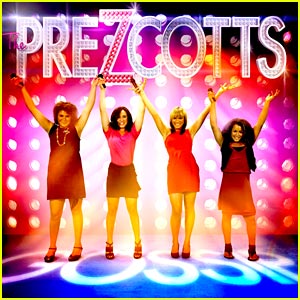
Perched on some benches, the four PrezCott sisters were on their fourth trip to San Francisco with their manager, an ex-Metallica employee named Frank Munoz, who is on his first foray into the world of teen pop. They (the young women) were wearing vests and gold and pink and zebra prints, which inspired oddly maternal feelings in me. 

What road had led AnaLeyna, ChaLyn, RaNelle, and MaRiah to this sister group? What did the publicist mean by avoiding the overly matured look of their contemporaries? What was the message behind their music? Was any of this their idea in the first place?

“We want to be role models,” said AnaLeyna, who as the songwriter and oldest sister was the first to provide the answer to most questions. She’s the gang leader, clearly. “A lot of our songs are emotionally inspiring.” 

The PreZcotts get with god. They started singing in church at incredibly young ages. Their mom limited the kinds of songs they could listen to as young(er) whippersnappers. ChaLyn mentions that she is the only one who does not believe in evolution in her high school science class (but doesn’t preach contrary theories, at least not in the interview: “I don’t understand how it happened really, I’m not a scientist.”)

As Christians, they’re a bit leery of the scandalizing nature of pop culture. “We try and keep it honorable and appropriate,” AnaLeyna said. When asked how they will avoid the pitfalls of celebrity, a la Miley’s pole dancing or Lindsay Lohan’s… well, everything, the PreZcotts seemed sure that family and their religion will keep them on track. Of those who have fallen before: “They must be under so much pressure, like they crack or something,” AnaLeyna reasoned, graciously. The PreZcotts talked about their faith candidly, a remarkable feat in an interview with a Guardian reporter that gave one the impression that maybe no one has vetted the publication before the interview. 

But they do seem ready to take their family vessel to the top, these sisters. They want to bolster kids their ages through tragedies, share with them what happened when their own dad passed away (his face and birth-death dates adorns their debut album’s liner notes). 

Guardian photo by Caitlin Donohue

His passing hasn’t been the only rough spot for the girls from Modesto. All four of them have had to deal with bullying — AnaLeyna had to be homeschooled when the harassment got to be too much at her school. “MaRiah always feel like she doesn’t have any friends,” the eldest PreZcott told me, MaRiah quickly turning her face away at the statement. “Gossip” is AnaLeyna’s response to bullying. “It really is affecting people everywhere.”

Though at times the girls seemed unsure of how to answer questions, they haven’t been shoved into a gimmick yet. You get the impressions that their songs are comprised of things that they actually think need to be said. 

But I’m sure it was Munoz who suggested that the girls cover a Metallica song. 

The song features the PreZcotts and Japanese guitar prodigy Yuto Miyazawa. Through a neat trick, it was published on the Metallica Youtube channel, where at the time of writing it has recieved over 31,000 views. But as it is a Youtube video, it has Youtube comments — and reading through them after my interview with the girls it makes me wanna bash heads. Bullies! 

“A lot of the Metallica fans were pretty teed off that a teen pop had covered the song — they were the ones commenting,” said Munoz. The girls seemed a little distressed, so we had a satisfying conversation about how people can get real pigheaded when they’re anonymous on the Internet. 

The PreZcotts’ album smells like strawberries. 

Packaged in pink and images of the girls in lights, its materials have been infused with a strawberry scent that persists a day or so past the time you tear off its shrink wrap. 

The reason for this, Munoz explained to me, is to counteract the younger generation’s tendency to listen to all their music in Internet single form. Indeed, when I asked the PreZcotts what their favorite albums were, I was met with little more than searching stares. (Later we ascertained that some of their favorite artists were Alicia Keyes, Disney pop princess Selena Gomez, and Mariah Carey — though many of these singers release some songs deemed inappropriate by the girls). 

As their publicist had promised me they would, the PreZcotts asked if I’d like to hear them sing something acappella. I said I would, and a few minutes later, in the middle of the mall, I am treated to a private concert. 

“What do you guys want to sing?” asked AnaLeyna. “I want to sing ‘Free Your Mind’ by En Vogue.” Her sisters were fine with that choice, and without losing all of their endearing awkwardness, they start to harmonize like pros. Well, because they are, of course. “We’re here to tell you it’s okay, things happen.” AnaLeyna told me. “No matter what the latest fashion trend is, be yourself.” 

Why we need Occupy

7

Not than anyone needs this kind of reminder any more, but more reports seem to come out every day highlighting the level of economic injustice in the United States. The Organization of Economic Cooperation and Development reported Dec. 5 that the United States now has the fourth-highest inequality level in the OECD, behind only Mexico, Chile and Turkey. Not distinguished company. Perhaps more important:

Income taxes and cash benefits play only a small role in redistributing income in the United States … only in Korea, Chile and Switzerland is the effect still smaller.

In other words, not only are we among the worst countries on Earth for economic inequality, we aren’t doing shit to change the situation.

Oh, and by the way — San Francisco has the worst income inequality in California.

That’s why we need Occupy. Because nobody else is making us pay attention.

The Hangover: Dec. 8-11

1

**Environmental concerns aside, there is something satisfying about delving into the lost art of film photography. Or maybe I was thrilling to analogue on account of all the pretty cameras that were on sale at the opening of Union Square’s new Lomography store on Thursday, Dec. 8. Pretty patterns, candy colors — coupled with the hand-infused vodkas in flavors like sasparilla, orange peel, and bayleaf being churned out by experimental mixers Cocktail Lab, the creative possibilities were intoxicating. The store specializes in cameras that produce Instagram-esque shots, check out the thousands of color-soaked photos that have been uploaded to its website by film freaks around the country. (Caitlin Donohue)

**A couple words used (and possibly made up) to describe Jose James’ show at New Parish on Friday night: swoontastic and babymakingmusic. The rising neo-crooner gigged in San Jose and SF the preceding two  evenings, but for our money it’s hard to beat the intimacy of the small Oakland venue. Whereas James’s previous shows in the Bay Area featured more traditional jazz with restrained piano accompaniment, on this tour he was backed up with a full band capable of illustrating his range. It made for a super talented quintet including keyboardist Kris Bowers (who appeared on Kanye and Jay Z’s Watch the Throne album), bassist Solomon Dorsey, trumpet player Takuya Kuroda (a familiar collaborator of James’s), and standout drummer Nate Smith. (Ryan Prendiville) 

**If there was one cohesive thread linking the entirety of the sold-out Tycho show at the Independent on Saturday night, it would be water. Basic H20. Though, more to the truth, water spruced up with rolling waves, psychedelic cuts, vintage surfers, and a hazy orangeish moon on the horizon — the latter a constant in the current Tycho aesthetic, gracing the cover of the recently released album, Dive (Ghostly International). Behind the live three-piece, there was a running stream of visuals with a few shots that appeared to be out of surfer-cinematographer George Greenough’s groundbreaking 1975 surf film, Crystal Voyager. Tycho’s ebb and flow rose with its backdrop; there was silvery synth and acid-popped live drum hits laced together with smooth, wandering guitar and rippling bass. With shots of giant kohl-rimmed eyes and warming balls of sun, the performance was complete. And what better night to see Tycho (a.k.a. SF’s Scott Hanson, a.k.a graphic designer ISO50) than the evening of the blood-red lunar eclipse? (Emily Savage)

**It’s been over a year since Dave Portner – the yelping member of Animal Collective better known as Avey Tare – released his crocodile-inspired solo debut Down There (Paw Tracks). Maybe Tare needed to spend some time away from the songs that dealt with divorce, death, and illness, as he only recently set out on tour in support of the album. He finished his brief solo tour on Sunday night at Oakland’s New Parish, and I couldn’t wait to finally check him out. The dismal grey weather was well-suited to Tare’s dark and murky debut. A youthful crowd clad in an unsettling amount of lumberjack plaid filled the venue. Onstage was a creepy Yoda skeleton and a white sequined cloth-draped table with a few baby crocodiles placed around several electronic instruments. (Frances Capell) 

Kenneth Patchen centennial: poetry that still resonates

1

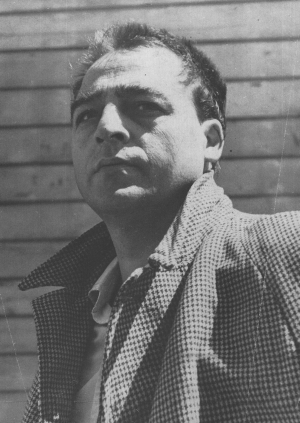
Poet Kenneth Patchen was born in Niles, Ohio, 100 years ago on December 13, 1911. He died in Palo Alto in 1972. Due to a ruptured spinal disk that was never properly treated, Patchen produced some 30 volumes of poetry and prose largely from the confines of his bed — work, nonetheless, that fiercely engaged the modern world that raged on outside. In his words, “I speak for a generation born in one war and doomed to die in another.” For this, the Beats were deeply indebted to his work. Patchen however, who lived in Telegraph Hill in the 1950s, referred to “Ginsberg and Co.” and the media hype surrounding them as a “freak show.”

Patchen had a broad range — he could be political, tender, devotional, and surreal — and unlike the Beats, he vehemently opposed being labeled as one kind of poet or another. Kenneth Patchen: A Centennial Selection (Kelly’s Cove Press, paperback, $25), edited by Patchen’s friend Jonathan Clark, marks the 100th birthday of the indefinable poet. Clark first met Patchen in the 1960s as a teenager living in the same Palo Alto neighborhood as him. He describes the collection as “a personal selection of some poems in which I hear most clearly the voice of the man I remember…those seeking perfection had best look elsewhere…” Fair enough. However, the collection is also a reasonable review of the poet’s scope. And, if indeed modest, it’s still the only book that has observed the centennial.

Although he wrote poems of all kinds, Patchen was always an adamant pacifist with a social conscience. He could be blunt and unsparing in this regard. In an essay from 1946, novelist Henry Miller described Patchen with slight terror and open-mouthed awe as “the living symbol of protest:” “He is a fizzing human bomb ever threatening to explode in our midst.” It’s a disputed description of the man. But if one had been reading Patchen’s work and nothing of his life, it would sound befitting enough. In one poem alone, “What I Want to Know Is,” he refers to politicians as “filthy lying lice,” “foul bastards,” “lousy bastards,” and “frauds and fakers.” Patchen’s pacifism is closely tied to what he sees as the loss of innocence in society, the corrupted human spirit, and is often expressed with animals. Such is the case with the forbidding “The Lions of Fire Shall Have Their Hunting:”
 
The lions of fire
Shall have their hunting in this black land
 
Their teeth shall tear at your soft throats
Their claws kill
…………………………………..

Because you are sick with the dirt of your money
Because you are pigs rooting in the swill of your war
Because you are mean and sly and full of the pus of your
     pious murder

 
Clark has also included a selection of Patchen’s artwork in the book (though the cover and back images are not the poet’s best). Patchen first started painting in 1942 to make cover illustrations for his book The Dark Kingdom, and it eventually led him to reimagine all his subsequent volumes. Larry Smith, Patchen’s biographer, notes that Patchen pioneered “the painted book, the concrete poem in which type set is used to paint the poem on the page, the drawing-and-poem form, the poetry-prose experiments of his anti-novels, and finally the picture-poem form.”

In A Centennial Selection, the artwork ranges from animals reminiscent of Chagall with words floating around them, such as “peace now for all men or amen to all things,” to an untitled work that would have been in line with Patchen’s New York School contemporaries. The latter is proof that Patchen was a painter in his own right, not simply a poet with a paintbrush. Franz Kline, upon seeing his art, called Patchen “more of an artist than most artists today.”
 
Patchen’s poems, especially those with a political edge, are as relevant as they ever were. It’s an appropriate coincidence that the Occupy Movement — and more recently, Take Back the Capitol — should correspond with Patchen’s 100th birthday. From his first volume of poetry in 1936, Before the Brave (which the New York Times categorized as Marxist), Patchen wrangled with the same questions that many people are weighing today — questions of power and greed, corruption, accountability, and of course, war. Patchen, who was invariably poor his whole life, saw things as a collective human struggle, and he placed himself squarely in that struggle with his poetry.
 
As Clark admits, A Centennial Selection has its shortcomings. But it’s a nice way to revisit Patchen’s poems and artwork and to see how both continue to work and be relevant today. Newcomers to Patchen, however, best refer to The Collected Poems.

Here are two of Kenneth Patchen’s best recordings, poems which are included in A Centennial Selection: the droll “State of the Nation” and the unusual “The Origin of Baseball.” Here you can pick up on Patchen’s dark and uncanny sense of humor.

Kenneth Patchen “The State of the Nation” by jmill116

Kenneth Patchen, “The Origin of Baseball” by jmill116

Occupy shuts down morning shift at Port of Oakland

Usually, when significant events related to the Occupy movement occur in the pre-dawn hours, it means an encampment has been raided. But this morning, Occupy protesters were the ones carrying out a strategic plan before the sun came up.

A main objective of today’s Port of Oakland shutdown — the second in two months initiated by Occupy Oakland — was to strike back against the police raids that dismantled their camps.

Protesters led by Occupy Oakland effectively shut down the morning shift at the Port of Oakland today, Dec. 12, as part of a Coordinated West Coast Port Blockade that Occupy groups from San Diego to Anchorage have been planning since Nov. 18, when Occupy Oakland’s General Assembly unanimously approved the call to action.

Several hundred activists met up at the West Oakland BART station at 5:30 a.m. and proceeded to march down Seventh Street to the sprawling shipping hub, where they formed picket lines outside terminal entrances to prevent workers from entering the gates for the 7 a.m. shift. Shortly after they began picketing, truckers waiting to load or unload cargo began turning around to exit port property.

There were several busloads of protesters in addition to those who traveled to the port on foot, as well as a bicycle contingent. While most protesters filed through the streets in an uncharacteristically quiet march that seemed muted due to a lack of sleep, a few displayed gusto with a sound system, shiny homemade flags, and flashy outfits. Some showed up toting a life-sized cut-out of Lt. John Pike, the University of California Davis officer who became notorious for dispersing teargas into student protesters’ eyes, with the face cut out so people could pose for photos.

Police arrived on the scene clad in riot gear, but did not attempt to prevent protesters from circling up around the gate entrances and forming picket lines. They stood in formations in front of the gates weilding batons and teargas launchers, though protesters had no intention of entering the gates and only sought to block them. Alameda County Sheriff buses circled the area as well.

Around 7 a.m., when the morning shift would have typically started, two ILWU dockworkers (who declined to give their names) stood near the Hanjin Shipping gate at berths 55 and 56, surveying the picket line. Past the gate, a cargo vessel which had likely come from Japan was berthed and waiting to unload.

“Ain’t nobody going to cross it,” one of the men offered. The other gestured toward protesters and said, “These are Americans wanting American jobs.” Asked how he felt about the picket, he responded, “We don’t support it, because it’s not in our contract — but I do see some issues, like we’re hurting, too.” The ILWU members said longshoremen turned away because of the picket line wouldn’t be paid for the day, because they’re only registered as having reported to work if they’re physically on the terminal. They also noted that there was a relatively light workload at Oakland terminals on this particular day.

The official objectives of the port blockade, aside from showing resistance against crackdowns on Occupy encampments, were to demonstrate Occupy’s solidarity with longshore workers and port truckers. The International Longshore & Warehouse Union (ILWU) Local 21, based in Longview, Wash., has been locked in a legal dispute with Export Grain Terminal (EGT) stemming from what workers characterize as union-busting practices.

Port truckers, particularly in Los Angeles, have been unable to unionize due to their employment classification as independent contractors, and protesters sought to highlight their struggle as well. Picketers held signs declaring solidarity with the ILWU and truckers against the one percent — global shipping companies owned in part by agribusiness giant Bunge, Ltd. and Goldman Sachs, respectively, who profit from their labor.

Speaking into a megaphone, organizer Barucha Peller announced that occupiers in southern Washington had shut down the Port of Longview, according to a text message from ILWU Local 21. Union members wanted to thank the movement for the show of support.

By around 10 a.m., an independent arbitrator had ruled that the picket posed a health and safety risk to longshore workers, so the dockworkers were sent home, effectively halting port activity for the first part of the day. “I’m really impressed that so many people got up at five o’clock in the morning,” Anthony Lavierge, a steward with ILWU, said into the megaphone. “It’s officially shut down. The longhshore labor is officially going home.” However, protesters planned to return to the port later on to prevent the start of an evening shift.

Following the announcement that workers had gone home for the day, protesters marched back to West Oakland BART station. A second march to the port is planned for 4 p.m., leaving from 14th and Broadway streets in downtown Oakland following a 3 p.m. rally. A third march to the port is scheduled to leave the West Oakland BART station at 5 p.m.

Erotic string art. (And just like that, your holiday gift list is taken care of)

2

Pop quiz, secular Jews: when does Hannukah start? If the question is inspiring sweaty palms and twitchy elf ears, the message is clear: it’s time to get started on that shopping list. For the pervs on your list, the answer is clear. Kevin L. Muth’s X-rated, blacklight-ready DIY string art kits.

Right? The kits are the 2011 version of Muth’s boob-and-penis laden shag pillow packages, which we were all over last year. For $25, your horndog loved one can punch, pattern, and stitch their way to some top shelf art work, perfect for hanging alongside one’s favorite velvet painting of the woman in the fur bikini and possibly positioned so that it is visible through that beaded curtain entry way into one’s love den. Order by Monday, December 19 and your trick will recieve their gift on time. After that, you can pay an extra fee for expediated shipping. 

It appears at the moment that selection is limited to “hetero,” but if your lucky gift recipient is of the same-sexual orientation, feel free to cop them a nice girl-on-girl or all-boy handjob scene that Muth made available last year on those aforementioned shag pillows. 

Other randy gift ideas? Well there’s always…

– The candy nipple tassels we touted in this year’s Guardian Holiday Guide

– A heartbreakingly lovely and minimal bra from the UK’s Coco de Mer (or one of the line’s ceramic butt plugs)

– A candy cane dildo

– What the hell, why not a sex toy for their dog

P.s., Hannukah starts on Tuesday the 20th. 

Live Shots: José James at New Parish

0

A couple of phrases used (and possibly made up) to describe José James’s show Friday night: swoontastic and baby-making-music. The rising neo-crooner gigged in San Jose and SF the preceding two evenings, but it’s hard to beat the intimacy of Oakland’s the New Parish, which has a certain bohemian vibe.

Whereas James’s previous shows in the Bay Area were more traditional jazz with restrained piano accompaniment, on this tour he was backed up with a full band capable of illustrating his range. It made for a super talented quintet including keyboardist Kris Bowers (who appeared on Kanye/Jay Z’s Watch the Throne album), bassist Solomon Dorsey, trumpet player Takuya Kuroda (a familiar collaborator of James’s), and standout drummer Nate Smith.

Known for pulling hip-hop and electronic sounds into the vocal jazz tradition, James is as much influenced by John Coltrane as he is in line with the legend’s nephew, Flying Lotus (who did production on 2010’s Black Magic) and gave a respective shout-out to each.

Most impressively, the group collectively had a relaxed, pretension-free quality, with James on point, cuing Kuroda to take a solo or setting a mic stand in front of the seemingly reserved Dorsey, wordlessly indicating that it was his turn to sing. Previewing a significant amount of material from the upcoming album Trouble, James closed the show with an encore of the title track. Reiterating that it was his first time in Oakland, it was clear from the smile on his face (and the crowd’s) that it probably wouldn’t be the last.

Police arrest 55 in early morning raid at Occupy SF

9

After more than two months, police have successfully cleared out all of the Occupy SF encampment on Market Street between Main Street and the Embarcadero. In an early morning raid, police completely cleared out the Occupy SF protest site at 101 Market St.

More than 50 protesters were present at 101 Market St. on the evening Dec. 10, as well as at a smaller site across the street. No tents, tarps or other structures had been erected; most protesters had sleeping bags and blankets. Following an afternoon march and a small concert that ended by midnight, protesters were quiet and mostly asleep.

Police previously warned protesters that they were in violation of California Penal Code section 647(e), “lodging in a public place.” Police entered the camp and read written notices aloud every 90 minutes or so for more than 24 hours before the raid, but did not give a specific warning as to when enforcement would take place.

Around 4:30 a.m. on Dec. 11, police rushed in, quickly surrounding those who slept in front of the Federal Reserve Building. Without giving them the option to pack up their belongings and leave, police arrested each individual one by one. Protesters who’d set up camp at a smaller site across the street looked on and yelled out in dismay.

Protesters had previously been informed that they were permitted to sleep on the sidewalk between 11 p.m. and 7 a.m., as outlined in San Francisco’s sit-lie ordinance.

Until about 6 a.m., Market Street between Main and Spear streets was blocked off by over 100 police officers in partial riot gear as well as several police vehicles. At about 5 a.m., Department of Public Works crews arrived and started loading all the protesters’ belongings — mostly sleeping bags, blankets, protest signs, and food — into trucks.

Several were arrested on charges other than public lodging. Two protesters, who yelled at police as they lined up on the street, were arrested for obstructing traffic.

One man yelled that he was a homeless war veteran and that he wanted his belongings back, which he’d left on the sidewalk in front of 101 Market. He had been loudly decrying police activity for almost 30 minutes when he jeered that an officer “carried a big stick because he had a small dick,” at which point three officers immediately grabbed him, brought him inside police lines, and were joined by several other officers in pushing him to the ground and zip-tying his wrists. Another man was arrested for spitting near the feet of a policeman.

In one bizarre incident, an officer confiscated a package of bottled water that an individual was carrying at the time of his arrest and then proceeded to distribute the bottles up and down the police line.

A man with a broken foot, who was walking on crutches, was pushed down by police for obstructing the street. He was arrested a few minutes later, after he and several others sat down in a crosswalk in defiance of orders to step onto the sidewalk.

By 6 a.m., everyone who remained at 101 Market St. had been arrested and all of their belongings confiscated; the sidewalk was clear.

Occupy SF began its 24 hour protest at 101 Market St. on Sept. 29. The camp remained until the first police raid on Nov. 20. Protesters subsequently reclaimed the site on Dec. 1.

As things stand, there is no Occupy SF presence at either of the original downtown locations. By 6:45 a.m., about 10 individuals — those who’d evaded arrest — had set up a small protest site, complete with signs and information table, at 532 Market St., in front of the offices of E Trade Financial.

In the past week, Occupy protest sites have also popped up at City College of San Francisco, San Francisco State University, and at the Bank of America at 501 Castro St. Occupy SF State is the only protest camp, complete with tents, still in place today in the city today.