For so many more year-end music lists, click here and pick up this week’s paper.
120 Minutes’ Marco De La Vega (@S4NTA_MU3RTE) lists his top 10 substances that have influenced music in 2011:
1. Adderall: Not just because Bay-local comeup, Kreayshawn, spits bout slangin’ em (“gnarly, radical, on the block I’m magical… see me at your college campus baggie full of Adderalls” or even because of Kendrick Lamar’s thoughtfully spaced out track “A.D.H.D.” but mostly because of its association with hyperactive, creative, and willfully scattered children. Odd Future blew up, Tyler the Creator dropped Goblin, A$AP Rocky put out one of the strongest releases of the year with LIVELOVEA$AP. All kinds of kids were spittin’ up mixtapes right outta high school and then signing multimillion dollar contracts.
2. DMT: Dimethyltryptamine is some fucked up shit, and I mean that in the most complementary way possible. A small glimpse behind the fabric of reality. There were a few releases this year that resemble and reflect this completely alien and confusing greater truth. Oneohtrix Point Never’s Replica, James Ferraro’s Far Side Virtual, and Laurel Halo’s flawless EP, Hour Logic (Hippos In Tanks).
3. Nitrous Oxide: whippets are back and that shit makes everything sound like you’re living in a vacuum cleaner. As much as I despise the hyperwobbly, fist pumpin’ sounds of brosteppers like Rusko, and (cringe) Skrillex, I can’t deny that that shit is selling cars; dubstep car commercials. Also, to be fair, real dubstep and what is often called post-dubstep is some amazing music and some of its less commercially viable/more critically acclaimed artists have put out some beautiful work. Zomby dropped Dedication this year on 4AD and that shit is sick. James Blake’s debut album is also impossibly good.
4. Pills: maybe it’s just the kids I roll with, but I assume that most sensitive, well thought, independent rock is made by people on pills (think old Brian Jonestown Massacre or Jesus and Mary Chain). The second I heard that track “Vomit” off of friends and local heroes Girls new album Father, Son, Holy Ghost, I had to raid my own medicine cabinet, take a couple Vicodin, and listen to a stack of records including that, Tamaryn, King Dude, Chelsea Wolfe, and Zola Jesus.’Bout as close to heaven as a guy like me can get.
5. Coke: coke always has and always will rule the dancefloor. It goes further than that though; coke rap is alive and well. Trap rap (rap about drug dealing) in general is continuing to run shit. And when you got Lex Luger droppin’ some of the illest beats around for songs that are 90 percent chorus, how can you go wrong? This is a very serious statement — the Ferrari Boyz (Gucci Mane and Waka Flocka Flame) mixtape that came out about a week before that overhyped, tired, abomination that is Watch the Throne, has some of the best tracks this year.
6. K: club drugs in general are back, and nothing says party like as strong debilitating dissociative. I mentioned this album earlier when I was talking about DMT, but it’s good and weird enough that it needs to be mentioned twice. James Ferraro’s Far Side Virtual.
7. Acid: my favorite substance. LSD is an extended barrage of overwhelming sensory input, particularly sight and sound, and should therefor be discussed in those terms. Sight: this year has been all about projections, lasers, and smoke — there are a lot of amazing producers playing live right now, and a dude with a laptop ain’t a show, so it’s important to add some flare. Sound: from mixtapes like White Ring’s tranced out Chaind and Nike7up’s crazy melted-pop gem 33:33 to Araabmuzik’s breathtakingly unfuckwithable album Electronic Dream, this has been the strongest showing dosed out music has had since the mid ’90s.
8. MDMA: like I was saying earlier, club drugs are huge right now. Best part about the ecstasy thing though is that we’re not talking pressies here, just pure crystalized love. You can hear it in the work of groups like Sleep 8 Over and (of course) Pure X. But I think it’s most evidenced by song’s like The Weeknd’s “High for This” and on Pictureplane’s brilliantly positive album Thee Physical (Lovepump United).
9. Weed: not that weed ever goes away, but it’s had a really strong year. Seems like everybody’s smoking blunts and flipping pounds these days. Wiz Khalifa, A$AP, Lil B, Lil Wayne, Miley fucking Cyrus. and of course Zip and a Double Cup himself, Juicy J., which brings us to our big winner…
10. Promethazine: Lean, purple drank, double cup, sizzurp — codeine cough syrup has a lot of names, and it’s been an important factor in rap, particularly Southern rap, for a very long time. But that influence is spreading. Bands like Salem have created whole new subgenres of music built off applying the late great DJ Screw’s production sensibilities as liberally as possible. New York Rappers like A$AP Rocky are singing the praises of Screw and Pimp C while repping Harlem and putting New York back on the map. I think 2012 is gonna be all about double cup dinner parties and art walks. Do yourself a favor, call your doctor and fake a cough, pop in Clams Casino’s Instrumental mixtape and/or LIVELOVEA$AP and chill for a bit.
So it may be that this gruesome and pointless farce has come to an end. It may be that California is ready to join the civilized world. It may be that the state is ready to save billions (yes, I said billions) of dollars by replacing death with life without parole. Which is effectively what we have now — the number one cause of death on Death Row is old age.
State Sen. Mark Leno noted at the San Francisco Tomorrow holiday party Dec. 14 that life without parole “means exactly that” — since that sentence has been adopted, not one person facing LWOP in California has ever been released. The one exception: People who turned out to be innocent. Fortunately, innocent people serving life sentences can still have a chance.
Oh, hell yeah. The LowSF and Cruz Skate Shop crews (famous for building skate ramps inside their parties?) are teaming up to deck your hols with mousse and spritz — and some majorly cool gift ideas to boot. Join them for the Winter Thunderland party at Club Six tonite, Fri/16. DJs Sarah Delush and Motley Cruz pump out the hair jamz, while a slew of vendors show off their goodies — and you rollersjate to it all! Full details after the duck-n-jump:
From the press release:
Bust out the old Aqua Net encrusted Santa hat cuz you”re invited to Winter Thunderland!
A rollerskatin’, tight-pants wearin’, big hair havin’, local artist-made gift buyin’, beer guzzlin’, goat throwin’, butt rockin’ kinda holiday party.
Roll around to hair metal classics blasted into yer earholes care of DJs Sarah DeLush and Motley Cruz, then grab a beer and head out to the vendor village where we will be featuring merchandise from local small businesses and artists for holiday shopping including:
– Leppard Lady Fashions – Specializing in leather goods including rollerskate accessories, purses, hair clips and jewelry – Tools of the Trade – An SF based company who partner with top contemporary artists to create classic games like dice, dominoes, jigsaw puzzles, playing cards and more. – A. Salt Co. – Sustainable body products “made with hands, not machines”, specializing in bath salts, jewelry and feather hair extensions – Stone Pony – Mens and womens vintage clothing, rocks, gems, minerals and jewelry – Milk Money – Sweets and treats including cupcakes, cookies, pies, and cakes. And more!
Did we mention there are 2 FULL BARS?
Co-hosted by Cruz Skate Shop and LowSF
Doors at 8pm $5 door entry $5 rollerskate rental care of D. Miles and CORA 21+ $6 Tall Boy/Jim Beam/Whiskey combos! $5 cocktails
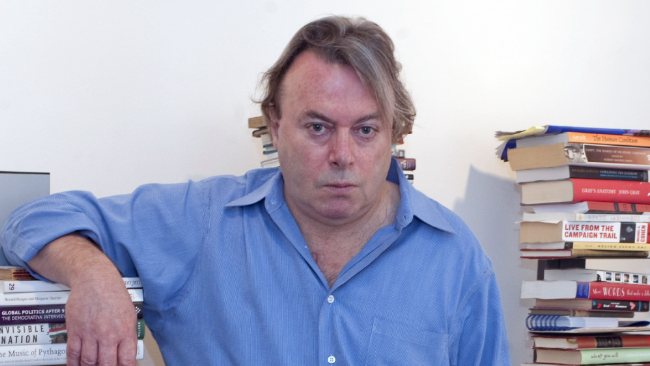
Everything that can be said about Christopher Hitchens has already been said. Thanks to the wonders of the Internet (and the fact that we all knew he was going to die soon), every friend, foe, analyst and critic in the world weighed in on the guy who was both an Oxford-educated British snob, a hard-partying literary figure, a one-time Trotskyite and, over the past decade, a disgraceful fan of the Iraq War.
He’d barely been dead an hour when the plaudits and attacks started to roll in — and I’m nowhere near qualified to join that party. (Although I will say: I have to give a certain amount of credit to anyone who can get away with calling Mother Teresa a “thieving, fanatical Albanian dwarf.”)
But I will say this: “God is not Great: How Religion Poisons Everything” is a wonderful read, and there was nothing more entertaining in the world than listening to Hitchens debate learned and respected religious figures on the Bible, hell and Jesus. While he’s (righly) lambasted for popularizing the term “Islamofascist,” he wasn’t much kinder to the Pope; he despised all religious leaders, rejected calls for a deathbed conversion and died a confirmed atheist.
I heard him once ask a noted Baptist minister whether he was really going to suffer unspeakable torture for eternity just because he didn’t believe in the Baptist God; the guy couldn’t answer him. He could discuss the great religious texts like the scholar he was and make jokes along the way.
I’m not much for the upper classes in general, and the British upper classes seem to have a particular sense of entitlement that grates on me, particularly when they weave back and forth between socialism and fine champagne. But you have to admit: The guy had style.
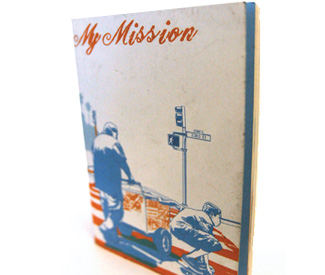
Continuing the countdown of 11th hour gifts, here’s a locally-made Mission-centric guidebook that clocks in well under $10…
MISSION LOC@L: Mission Loc@l’s guidebook lives up to the neighborhood news site’s name: their pocket-sized collection of various Missionites’ (from grade-schoolers to aging boho poets) favorite places in the ‘hood could open the eyes of the most seasoned South Van Ness dweller to hidden gems amidst the murals and taco shops.
For so many more year-end music lists, click here and pick up this week’s paper.
Guardian intern Frances Capell’s list of the top 10 self-released albums of 2011:
1. WU LYF, Go Tell Fire To The Mountain Recorded in an abandoned church, the full-length debut from British heavy pop quartet WU LYF was funded by membership fees for the band’s deviant fan club, the Lucifer Youth Foundation.
2. Death Grips, Ex Military The sinister debut mixtape from Sacramento’s Death Grips is an explosion of dark, twisted shout-rap and noisy, industrial beats.
3. Nick Diamonds, I Am An Attic Former Unicorn and current member of Islands and Mister Heavenly, Nick Diamonds (a.k.a. Nick Thorburn) released his understated, haunting solo album via Bandcamp.
4. Clams Casino, Instrumental Mixtape Clams Casino’s collection of swirling, synth-laden instrumentals crafted for the likes of Lil B and Soulja Boy reveals the genius of this visionary New Jersey producer.
5. Big K.R.I.T, Return of 4Eva Of all the exciting rap mixtapes released in 2011, Southern heavy-hitter Big K.R.I.T.’s Return of 4Eva is my favorite.
6. Frank Ocean, nostalgia, Ultra. This R&B pop gem presents Frank Ocean as, perhaps, the only member of the OFWGKTA family who proved worthy of the hype in 2011.
7. Fort Lean, Fort Lean (EP) Though it’s only 12 minutes long, Fort Lean’s infectious, summery debut EP is a promising glimpse of things to come for this indie five-piece from Brooklyn, NY.
8. Friendzone, Kuchibiru Network II I chose East Bay duo Friendzone’s Kuchibiru Network 2 over Main Attrakionz’s 808’s & Dark Grapes II, as it showcases Main Attrakionz at its best along with tasty selections from Oakland’s Shady Blaze and Finally Boys, Japanese producer Uyama Hiroto, and more.
9. Small Black, Moon Killer In addition to some of Small Black’s catchiest electronic pop songs to date (like the Nicki Minaj-sampling “Love’s Not Enough”), this mixtape features two appearances by Das Racist’s Himanshu Suri, and some inspired remixes from Star Slinger and Phone Tag.
10. The Weeknd, House of Balloons This is a no brainer. Canadian-Ethiopian R&B prodigy the Weeknd’s debut mixtape House of Balloons is the best album of the year, period.
Big K.R.I.T’s Return of 4Eva theme: http://www.youtube.com/watch?v=w2cVHk9ZTuo
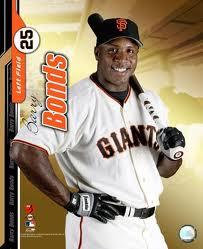
If I take steroids and lie about it, can I spend a month there, too?
Seriously — other than the publicity the U.S. Attorney’s Office got for prosecuting the Home Run King, what has all of this accomplished? Are any of us safer now that Bonds has been forced to live under house arrest for 30 days and do 250 hours of community service (that he was going to do anyway)?
After all the public money, drama, and hysterics, this is what we’re left with. He was “evasive.” Keep in mind that we live in a country where the US Department of Justice has not pursued one person for the investment banking fraud that cratered the US economy in 2008. Not one indictment has been issued to a single Bush official on charges of ordering torture or lying to provoke an invasion of Iraq. Instead, we get farcical reality television like the US vs. Barry Bonds.
Did Bonds take a “performance enhancing drug?” Again, Zirin:
The cortisone shot into Curt Schilling ankle in the 2005 playoffs was a performance enhancer. The Viagra coursing through Bob Dole’s veins is a performance enhancer. Whatever keeps that smile glued to Laura Bush’s face is a performance enhancer.
Please: There are real crimes happening all the time, from war crimes to political corruption and fraud, things that actually change the lives of human beings for the worse. And the U.S. Department of Justice has proudly used our taxpayer money to send Barry Bonds home for a month.
Guardian reporter Yael Chanoff embedded at the Occupy SF and Occupy Oakland encampments during the months-long protest. Here, she reflects on the non-monogamy movement and what it could mean for the 99 percent
Temperatures were running high at Occupy San Francisco. After a day of hard work, the protesters were decompressing. Talented musicians shared their instruments with friends and strangers in impromptu jam sessions.
The evening in question took place during Occupy SF’s early stages, back when police would swarm at the first sign of a tent being propped up, and all of the 200 or so people who camped out that night mingled and slept in the open air. I sat with two young women and three young men who were all topless, leaning on each other and using laps as pillows.
Another occupier, who said he had arrived that day, wandered by. “So,” he asked, “Is this thing about free love?”
“I don’t know” the guy next to me replied. He shrugged at the newcomer. “But we’re definitely doing that.”
RADICAL INTIMACY
One week later, I was sitting in the midst of a very different kind of alternative community. We were inside the Supperclub nightclub, in a hot room scattered with beds. The event’s attendees wore sparse Adam and Eve-themed costumes and glittery pasties winked here and there. A video of bonobos copulating was playing.
Among the night’s speakers: Dossie Easton, Carol Queen, Philippe Lewis, people who have devoted their lives to creating intellectual and physical spaces where free love is unquestioningly ‘what it’s about.’
Their passion notwithstanding, the party that would follow their talk was not a sex party, strictly speaking. Event producers and Club Exotica founders Philippe “Fuzzy” Lewis and Jocelyn Agloro describe their gatherings as “co-created pieces of temporary social art,” places “for people to explore intimacy, relationships, sensuality, and sexuality — in community.”
In some ways, the two nights were similar. But in other ways, they were quite different. The cost of admission, for example (Occupy SF: free; Club Exotica’s party: $10-35). And the numerous beds. But I couldn’t help being struck by the similarities.
Both spaces were populated by humans whose need for connection wasn’t being met anywhere else, humans brought together by an experiment in revolutionary ways of relating to each other based on sharing and compassion.
As I see it, the two communities have important lessons to share with each other.
THE FUTURE OF LOVE?
Occupy SF’s merry encampment is just a memory now. Justin Herman Plaza is empty these days, and somewhat unsettling – a grim square of concrete, bocce courts, and dead grass where 200 thrilled, at times confused, yet fiercely committed individuals spent two month trying to make a better world.
But the movement is not over. It’s just in the process of reinventing itself. Forums on “Occupy 2.0” are happening around the country.
And as I think back on that night with those free loving campers, I have to wonder, will Occupy hook up with the sexual liberation movement?
When it comes to sex at Occupy, experiences varied among the individuals I interviewed. One young man who has been involved in polyamorous relationships for several years said he didn’t see anything of the sort at camp. “People have met and started dating here,” he said, “but it’s usually monogamous.”
Be that as it may, more than a few people assured me that “there’s been at least one orgy in the tents.”
Two campers who had been occupying since late September told me that they were in a polyamorous relationship with a third occupier, and knew of other of other threesomes that had developed at camp. One of them, a calm, smiling young man, said the Occupy SF camp was an environment that definitely encouraged this kind of free love.
“I think it’s because you’re around each other all the time, in this rapid exchange of revolutionary ideas, and that’s another way you connect.”
But is sexual revolution part of the Occupy ethos?
The calm man’s partner was an energetic twenty-year-old known to start dance parties at 4 a.m. when camp was still around. She didn’t think so.
“I mean, we talk about it with each other,” she said. “But it’s not really a part of the political side of the movement.”
Others found that Occupy had at least encouraged more sexual license, albeit unaccompanied by sex-positive theory. With wide-eyed disbelief one long-time camper told me, “I don’t understand it. I’ve been with more women since I’ve been here, homeless, than I ever did when I was housed.”
It appeared that societal notions of monogamy were being sloughed off at Occupy SF – but without any of the underlying theories of polyamory espouses by the city’s sex-positive community. Many occupiers I spoke had never heard of any theory of non-monogamy, and agreed that a workshop teaching about alternative relationship models at camp could have helped sort out a lot of their ambiguous sexual experiences.
Ironically, some of the city’s most qualified teachers might have been in the tent next door to these potential students.
SEXPERTS IN THE TENTS
Joani Blank, founder of Good Vibrations and longtime sexual liberation activist, spent time at Occupy Oakland. She told me that she saw ideas of love, sharing, and interpersonal connection brewing in that camp.
Said Blank, “the camps encouraged love and acceptance and egalitarianism. With Occupy, there’s been a significant opportunity for the nature of love and friendships to change and be more open, and a lot of people [are] relating to other people who are very much not the same as they are. A variety of relationships are being encouraged and supported because everybody’s united.”
Blank thinks that the camps bred sexual experimentation. “[The occupiers] will jump into sexual experiences they’ve never had. So, for them it’s very liberating. I felt that energy myself the night I stayed there, and it translates easily into other kinds of excitement.”
In the ambiguity that surrounds Occupy’s future, one thing seems clear: this movement won’t survive unless it’s built on our love for our peers. That’s the focus of parties like “Sex At Dawn,” where attendees are not allowed to have intercourse, but instead are encouraged to open up sensually to those around them.
The quest to open up in ways not traditionally encouraged within the bounds of capitalism was seen by many as a keystone of Occupy. The viral video-upcoming documentary The Revolution is Lovefocuses on Occupy and protesters’ search to replace consumerism with intimacy.
Polly Pandemonium, founder of sex club Mission Control and its popular swinger’s party Kinky Salon told me that “the sexual liberation movement and the Occupy movement…we are all working towards the same future. It’s homo sapiens natural predisposition to share rather than hoard and fight. The mutual goal is to help people realize that it’s safe to share, and that they won’t be left out in the cold, and to create a culture which supports and rewards that kind of behavior.”
Even in its current transition phase, Occupy continues to capture the imagination of millions, including many involved in our sexual liberation movement right here in San Francisco. With a new, restless crowd of thousands who saw how community sharing could be applied to sexual relationships at the Occupy camps, some new sexual revolution may be stirring.
For now, Occupy and the sexual liberation movement are just getting acquainted. But if activists stick with the core notions of sharing and love, we might be seeing the start of a beautiful relationship.
Bryan Boyce and Negativwobblyland pump up the culture jams at L@te
Nighttime at the Berkeley Art Museum. An undercurrent of glee emanating from the patrons, as with a roomful of children up past their bedtimes. Enhancing the playground vibe, a giant orange mountain of rippling wooden waves designed by Thom Faulders, squats in the middle of the room, serving as seating for the assembled crowd, as well as pre-show entertainment as we scramble up its sides.
We’re here for the last L@te program of the year for a fanciful pairing between filmmaker Bryan Boyce and electronic noise ensemble Negativwobblyland, comprised of two parts Negativland (Mark Hosler and Peter Conheim) and one part Wobbly (Jon Leidecker). Pop culture appropriationists all, Boyce may be best known as the creator of the crassly hilarious political short “America’s Biggest Dick,” a tortured marriage of Dick Cheney and “Scarface,” while Negativland has been creating sonic mash-ups of samples and electronically-generated noise since 1979—including the infamous, legally-contested “U2” which combined a rude Casey Kasem rant with a casio-tone undercurrent of “I Still Haven’t Found What I’m Looking For,” and landed Negativland on the Fair Use frontlines.
As the lights dim, a brief burst of fanfare grabs attention, while on the projection screen the face of G.W. Bush superimposed on top of a cartoon sun, rises above the placid hills of Teletubbyland as a baby giggles offscreen. As cute little bunnies come out to play, the G.W. Bush sun firebombs them into oblivion with unexpected superpowers, smiling genially the whole time.
Terry Gilliam springs immediately to mind, and as more politically-pointed clips roll, so do the Yes Men, except instead of dressing up as politicians or corporate shills, the “characters” employed by Boyce is tweaked footage of actual politicians. “This is absolutely unbelievable,” boasts an “infomercial host” G.W. Bush with Jonathan Crosby’s “stunt mouth,” hawking macaroni and glitter “Election Collectibles” alongside Al Gore. Veering into more introspective ground, Boyce’s final two pieces ditch the politics for poetry-in-motion with “More is Always on the Way,” a series of quietly remarkable photographs of signs and billboards in their “native” urban habitat displayed with a spare, electronic soundtrack, and the other, “Whisper Hungarian Softly to Me,” a haunting blend of old Bela Lugosi footage and a trio of modern belly dancers with original music composed by Dan Cantrell.
Negativwobblyland, clad in identical grey plaid shirts, take their places at a table set with piles of gear, in particular a series of five devices they call “boopers”—feedback devices inventively engineered from recycled radio and amplifier parts. The sonic onslaught created by these deceptively simple devices (and a few judiciously appended drum loops and samples of insect and animal noises) can be likened in some ways to the meandering of jazz improvisation, and inspires (in me, anyway) similar free-associations of image and impression. As the drone of an underwater sea creature, the loneliness of the long-distance trucker, a buzzing chainsaw disco, a teenage Atari foxtrot, the rumble of Tibetan long horns, and the high whine of a Himalayan mosquito swirl through my particular streams of consciousness, onstage, three fearless captains set a course for the opposite shore, jamming our earwaves with their slyly subversive, yet ultimately inclusive, collaboration.
You may have missed the awesome Vagabond Indie Craft Fair this past Saturday in the backyard of Urban Bazaar, but luckily all the great, hecka-local vendors have shops online, so you still have time to snatch up some of their lovely wares for the holidays. And what do they have to offer you, you might ask? Check it out:
>>Dorklandia: Ridiculously cute and absurd, self-proclaimed “goofy little things.” Octopi that are fuzzy and loveable, a just-right gift for that clingy friend of yours.
>>Heathered: Super cool recycled wallets made out of those old vintage things we called the “fast pass.” Plus, ones made of maps, for your always-traveling auntie.
>>Art History Nerd: Edgar Allen Poe pendants and Picasso bracelets. Give one to that library school grad student in your life.
>>Yarrow Jewelry: Elegant dripping copper and crystal necklaces, and delicate pendant earrings. Your lady friend will love anything from this shop!
>>MzCreation: Penguin and giraffe felt hats. Wonderfully weird and so cozy. Your niece wants a panda one.
>>The Enchanted Square: Artist Ruth Tillman didn’t take a break and was busy at her stall crocheting cute aviator wool hats and adorable owl coin purses. Your brother will dig the aviator hat (crocheted goggles included).
>>Lady Alamo: Beautiful felt jewelery, plus super hip screen printed tote bags. Umm … I want one!
Need an 11th hour gift idea? Want to shop local and support Bay Area-owned businesses? Here’s a present that’s sure to please your music-loving loved ones…
ROOKY RICARDO’S: There is perhaps nothing more happy than a man with soul in his heart, as anyone who watches the YouTube video entitled “Dick Vivian cuttin’ the rug at Rooky’s!” can attest. Vivian is the owner and spiritual embodiment of the venerable Lower Haight record store, which he stocks with real-cheap 45s, vintage camera equipment, and a passel of witty lapel pins and magnets.
For real holiday majick, however, one must turn to Vivian’s lovingly-crafted mix CDs. There they sit, 10 bucks a pop with witty, retro-recreation packaging, a wonderland of ’60s soul, girl bands, and more. Many of the tracks, Vivian will attest, have never been captured in CD form before. Do you have a dad who still digs on the funky sounds of his youth? A buddy who is never more happy than when she’s doing the twist? You friend, have struck shopping list gold.
A substantial majority of Americans support ending the war in Afghanistan, decreasing the military budget, and redirecting that money to domestic needs, a position held even more strongly in liberal San Francisco. Yet three members of the Board of Supervisors this week still opposed a resolution in support of that position, a resolution that was mocked on the cover of today’s San Francisco Examiner.
So-called political “moderates” here love to deride progressives and label them out-of-touch with the rest of the country or with what they consider the “real world.” But how sensible and fiscally responsible is it to continue spending more than half of the federal budget on the military, a dollar amount that has more than doubled since Bill Clinton left the White House, when domestic conditions are so bad that tens of thousands of people across the country have been willing to spend months occupying their town squares?
The resolution approved Tuesday on a 8-3 vote – with Sups. Sean Elsbernd, Mark Farrell, and Carmen Chu, consistently the board’s most conservative members, in dissent – was similar to resolutions approved in dozens of jurisdictions across the country, most recently in Los Angeles and Pittsburgh, Penn. In May, a similar resolution was also approved by the U.S. Conference of Mayors, the first such action since the Vietnam War.
The resolution calls for members of Congress to “reduce the military budget, end the wars in Iraq and Afghanistan, and redirect the savings to domestic needs.” In support of that position, it notes that we’re spending almost $1 trillion per year on the military and war debt, more than 50,000 U.S. troops have been killed or injured in the two conflicts, and that everything from schools to public services to the country’s infrastructure needs are severely underfunded.
“It’s a way to signal to the federal government – in this case, particularly [Reps.] Nancy Pelosi and Jackie Speier – that people are fed up with their local economies being plundered to support war,” Janet Weil, who works on resolution like this as part of Code Pink’s Bring Our War Dollars Home campaign, told us. San Francisco’s resolution was developed by the New Priorities Campaign, a nationwide coalition that includes Code Pink.
But during this week’s approval of the measure – which included no discussion and lasted less than a minute – Elsbernd rolled his eyes as the measure came up and then voted against it. Afterward, I asked him why, and he gave a two-pronged answer. He generally opposes local resolutions on international issues, and on this one, he said that pulling all troops out of Afghanistan is an unrealistic position that is out of the national mainstream.
“Is this the appropriate forum to discuss how many troops we should have in Afghanistan? Probably not,” he said.
Yet most people clearly see the connection between lack of resources at home and trying to fight two simultaneous wars and maintain a military presence in 63 countries, something that Weil said has fed the Occupy movement around the country, where signs and public statements have repeatedly made that connection.
“I visited OccupySF and I saw very eloquent anti-war messages on dozens of signs, and that had nothing to do with organizing by Code Pink or other anti-war groups,” Weil said. “For a lot of people, it’s such a no-brainer that people don’t even bring it up.”
Yet she said that many politicians and mainstream media outlets have been out-of-touch with that reality. For example, while there has been some popular outcry over this week’s approval of a provision in the latest defense authorization bill that allows for indefinite military detentions of suspected terrorists captured on U.S. soil, the fact that the bill principally authorizes a whooping $662 billion in new military expenditures has gotten less attention.
“But the Occupy movement has pulsed energy and people into the anti-war movement across the country,” Weil said, predicting that the connection between domestic needs and wasteful military spending will put increasing pressure on the federal government to address the issue.
As for whether local resolutions will help with that process, even moderate political consultant Jim Ross – who mocked this week’s anti-war resolution in the Examiner article – correctly noted that San Francisco helped lead the international effort to boycott South Africa and end its apartheid regime, a movement that began with a resolution approved by the San Francisco Board of Supervisors.
Or, to put it in the bumper sticker mentality that conservatives seem to appreciate: think globally, act locally.
It’s been over a year since Dave Portner – the yelping member of Animal Collective better known as Avey Tare – released his crocodile-inspired solo debut Down There (Paw Tracks). Maybe Tare needed to spend some time away from the songs that dealt with divorce, death, and illness, as he only recently set out on tour in support of the album. He finished his brief solo tour on Sunday night at Oakland’s New Parish, and I couldn’t wait to finally check him out.
The dismal grey weather was well-suited to Tare’s dark and murky debut. A youthful crowd clad in an unsettling amount of lumberjack plaid filled the venue. Onstage was a creepy Yoda skeleton and a white sequined cloth-draped table with a few baby crocodiles placed around several electronic instruments.
Tare began by blasting the audience with a discordant burst of noise. In the spirit of Animal Collective, the set that followed was comprised of several new, unreleased songs interspersed with selections from Down There. Animal Collective is known to routinely perform new material prior to putting it out, so it seems only natural that the band’s primary songwriter would engage in a similar backwards album cycle.
New songs like “Slow Words” and a track fans are tentatively referring to as “Sometimes” were bright and bubbly with Tare’s passionate, yelping vocals at the forefront. As with all things Animal Collective, there were plenty of repetitive, primal rhythms and colorful samples. Tare seemed well acquainted with the new stuff, which is (hopefully) indicative of a follow-up to Down There in the not so distant future.
For me, watching an artist breath new life into songs I know and love is the highlight of any performance. Given the sonic complexity of Tare’s material, it was tough digesting all the newness without something familiar to latch onto. I was thrilled whenever one of his unknown offerings blossomed seamlessly into a track from Down There. The ambling, accordion-driven “Laughing Hieroglyphic,” the swampy, synth-heavy “Lucky 1,” and a pulsing “Oliver Twist” were the shining moments of Tare’s set. I didn’t get to dance as much as I would have liked. Instead, I watched in awe as Tare toyed with his gear and sang with fervid intensity.
Opener: I often describe bands as energetic, but L.A.’s Foot Village made every performance I’ve seen before look like a geriatric yoga class in comparison. The four tribal noise rockers beat on a giant cluster of drum kits while two members took turns shouting incoherently into a megaphone. Held over a floor tom, the same megaphone produced a sound unlike anything I’ve heard. The band’s only female member, Grace Lee (who removed her pants after the opening song), stole the show by convulsing wildly, whipping a rope light around, and knocking down a speaker twice her size.
You never know what you’re going to get on Slate, which tends toward the neo-liberal and sometimes libertarian, but I just read a particularly awful piece by technology writer Farhad Manjoo, who thinks that local bookstores are economically inefficient and should just go away:
Compared with online retailers, bookstores present a frustrating consumer experience. A physical store—whether it’s your favorite indie or the humongous Barnes & Noble at the mall—offers a relatively paltry selection, no customer reviews, no reliable way to find what you’re looking for, and a dubious recommendations engine.
For a tech writer, Manjoo has a remarkably shoddy understanding of economics:
After all, if you’re spending extra on books at your local indie, you’ve got less money to spend on everything else—including on authentically local cultural experiences. With the money you saved by buying books at Amazon, you could have gone to see a few productions at your local theater company, visited your city’s museum, purchased some locally crafted furniture, or spent more money at your farmers’ market. Each of these is a cultural experience that’s created in your community. Buying Steve Jobs at a store down the street isn’t.
He conveniently ignores that fact that money spent a locally owned, independent business stays in the community — and thus creates more local economic activity and more jobs (not to mention tax revenue for local government). Money spent at Amazon goes to an out-of-town operation that doesn’t even pay state sales tax. You want to read about the well-documehted economic value of shopping at a local story, you can find plenty here and here and here.
And let’s talk about the One Percent — would you rather that your money helps the owner of a small local store buy food for his or her kids, or see the money go to one of the richest people in the world?
But there’s another point here. Like local coffee shops, local bookstores are places where people gather and have actual human interactions. I see my neigbors there; we talk about what we’re reading. When I’m done with books, I can sell them back — and someone else can buy them, used, and I can use the money to buy another new book. Which is a pretty efficient economic system.
And there are things you can’t put a price on: At Red Hill Books, the allegedly inefficent, overpriced local bookstore in Bernal Heights, the employees know me and my kids — and when my daughter, who is a voracious reader, finishes one series of books, they know what to recommend next.
That’s not a “recommendations engine” — that’s a live person.
If Farhad Manjoo wants to live in robo-world where a machine tells you what to eat, drink and read, fine — but I still think human beings, inefficient as we are, do a better job at selling books.
Talking to founder Martin O’Brien about the party crew’s latest get-together — and an upcoming film about the early Bay rave scene
Earlier this year, SF’s Wicked rave crew celebrated 20 years, and now another seminal and actually legendary party, The Gathering, will mark two full decades of debauchery on Sat/17 (10pm-6am, check the website for location and price — it’s ravey that way! — and here’s the Facebook invite). This party will feature an all-star lineup of much-loved DJs, from Justin Martin and many of the cross-pollinating Wicked and Sunset party DJs to Raindance’s Little John and club stalwart Toph One.
The Gathering started when promoters from separate, then-smaller parties — Malachy from Come-Unity, Tony from Destiny, Kenny and Harry from Pieces, and Martin Eklypz — decided to combine forces for something huge, “and the circle was complete” according to the Gathering’s legend. “Malachy busted out an old Hopi prophecy book” with a passage for that year, 1991, that read:
“For those that stay here on Grandmother Earth, they will totally gain the light of the great light wheel. There will be one planet, one humanity composed of all the different ways of dances in complete harmony in the gathering together circle. In 1991 the seeds will be planted … “
(I remember arriving in Northern Cali from my own much more aesthetically materialist — as in physically grounded — rave tradition in Detroit, and being shocked by the spiritualism and cultural appropriation of the scene here: the prayer circles, Indian invocations, candle-lighting ceremonies, and Buddhist overtones that eventually coalesced into Burning Man culture as the regular rave scene slowly retreated into shadows. I’ve grown to look upon it all fondly as an expression of, and hope for, transcendent possibility.)
Early clips of The Gathering:
I’m really excited about this 20-year shindig — it will now actually be a gathering of some of our scene’s acknowledged masters letting their hair down. I’m not sure if it’s all-ages yet, but I’m thinking there will be a god-sized contingent of the young and curious talented as well. (Thd Gathering has been throwing annual get-togethers for a while now, but this one should be extra-special.)
I got to exchange a few questions via email with The Gathering’s Martin — Martin O’Brien of Mo Films, that is, here’s a good recent radio interview with him — about the Gathering and an upcoming film he’s working on with DJ Jeno of Wicked (also spinning at the party) about the early Bay Area rave scene.
SFBGCan you share a favorite memory of one of the early Gatherings? I know there are a ton …
MARTIN Wow, a favorite memory. What a question. Well… I will have a quick smoke, that normally gets the creative juices flowing ;-).. i’m back.. 🙂
One of my favorite memories of The Gathering rave parties would be when the hill caught fire at the Let Freedom Rave festival (later shortened to Freedom) on July 3rd, 1993, at Sand Hill Ranch in Brentwood. It may sound like a sandy hill should not catch on fire, but there in fact there was a lot of brush and small trees, and it caught fire real fast, with a little help from a bottle rocket.. it was July 4th weekend after all 🙂
The place went into a bit of a panic, the music stopped, and thousands of people ran out of the festival into the parking lot, but some brave souls led by a off-duty fire fighter ran up the hill, with dozens of five gallon water bottles from the free water bar. The guy led them above the fire as he knew it would it would naturally burn uphill, and they made a fire break by pouring the water along a line across the hill (it was a big hill!!)
They grabbed fallen branches of trees, used their jackets, anything they could find and beat the fire out! People were dancing on the f’in flames, they wanted the party to go on that much. It was spectacular! When the throngs of people in the parking lot saw the fire was out, they all came running into the party by the thousands. DJ Jeno pulled the perfect track out to kick off the party again, with a vocal that said “for those of you who can feel the fire burning, check this out” and BOOM!! The bass kicked and the place went absolutely ballistic!!
SFBGWhat are some of the challenges to putting on an event now compared to back in the day?
MARTIN Putting on parties back in the day was a lot harder. Remember, we were trying to stay one step ahead of Johnny Law, breaking into warehouses, doing mad parties all night long with no permits in all kinds of strange locations. Plus today’s rave promoters are very limited in where they can hold their events, especially the bigger ones. Rave is still a four letter word to a lot of the general public, and to the powers that be.
SFBGDo you still follow the techno and house scene as much now?
MARTIN Yes I do still love the music, and go out to some events for sure. Sunset parties, Friends & Family, and others. That love of the music never really goes away, a person may stop going out a lot, or even stop going out altogether, but the music never leaves your heart. For sure it was combination of many elements that made raves so special and potentially life-changing, but the music was the driving force that people resonated with because it was self interpretive, and you could go on an inner journey to make your self a better person.
SFBGYou’re doing a film about the early Bay rave scenewith Jeno from Wicked, yes? Can you tell me a bit about it and when will it be released?
http://vimeo.com/18228601
MARTIN Yes, Jeno and I are making the documentary, with our partners Robbie Proctor and Mike Koeppel. It is a Lunar-tic / Mofilms production. The film is titled (R)evolutions, it is a feature-length documentary that will take you on a fascinating journey through the early days of the San Francisco rave underground. Emerging from a city with a long history of fostering counterculture, it was an evolutionary social movement stemming from a diverse community of Americans and expats that embraced technology, psychedelia, music, and dance. Renegade in nature, DIY in spirit, these all-night electronic-music dance parties became a catalyst in the lives of so many who experienced them. It is beautifully shot in high-definition, with amazing archival footage that takes you back in time. The film features interviews with many of the pioneers who helped develop a cultural phenomenon that continues on globally to this day. The soundtrack made up of the music from the era, seamlessly stitched together into a live DJ set by our very own DJ Jeno. We are currently doing the final sound mix at Skywalker Sound (Lucas Film) in Marin.
We are almost done with this behemoth of a project, that we have been working hard on for close to two years now. I am sure the question on peoples’ minds is when can we see it. In fact I believe I have heard people say “I can’t wait to see it”, a thousand times. Believe me, we cannot wait to show the film to everyone, as soon as we possibly can. So we have entered a few top tier film festivals, The San Francisco International Film Festival, and South by Southwest, to name but a few, and plan to secure a North American theatrical distribution deal by being in one of these festivals. So all going well, people will be able to see the documentary screened here in San Francisco in April, or in Austin Texas in March. It would then come out in theaters in North America a few months after that.
And if people want to see any of my Mofilms company’s previous films, they can watch them free of charge at www.mofilms.org
Magic! Magic Roses gave SFBG videographer Ariel Soto-Suver a private living room performance and their conversation took her to concerts at Big Sur and dreams of sparkling hair accessories. The piece they performed will be on their new, upcoming album, but first they need a little Kickstart.
The singular DJ speaks of slow house, fraud players, and the pop future of dance music
“Oh, the slo-mo thing. I guess I can see how people came to associate me with that.” DJ Slow Hands, a.k.a. New York’s Ryan Cavanagh, was playing down his status as poster boy for the slow house movement.
A couple of years ago, some DJs, mainly from the East Coast, started slowing things down to a sultry 100 beats per minute from the standard, boppy 120 BPM. And Slow Hands — a fast talker, I learned, in wide-ranging phone interview anticipating his appearance this Fri/16 (9 p.m., $15 before midnight, $20 after. Beat Box 314 11th St., SF., www.ayli-sf.com and Facebook) — came to the fore, with a dynamic combination of disco-dubby aesthetics, a willingness to let songs breathe a little, and an impeccable instinct for track selection. Does it hurt things that’s he’s rather dreamy in the brains and looks department? It certainly does not.
Slo-mo was a thrilling development for many of us who enjoyed the disco revival of the late ’00s, with its focus on expansive tunes, slow-burning builds, and relaxed pace, but were worried that we were being backed into a retro corner with no way forward. The disco re-edit scene was entering its prime with some great contemporary-sounding rejiggers of classic tunes, yet slo-mo was a more radical approach to extending the disco vibe into more of-the-moment electronic music developments. It also brought with it a crunky, somewhat zonked global-dub mood of its own that felt eerily avant-garde. (In slow house sets, sometimes tracks are physically slowed down, and sometimes lower-tempo songs from outside the usual house canon are incorporated, adding to the mystique). Cavanagh brings his own brand of artfulness to the mix: in his sets I hear echoes of everything from the Orb to classic Cadillac soul.
Don’t pigeonhole Slow Hands, however. “I don’t just stick with one tempo at all,” Cavanagh continued. “I aim for what’s appropriate, like any other DJ, because at the end of the day people are paying money and we’re here to do a job and keep the party going. At least the DJs who aren’t complete dicks! I think it’s the shittiest thing in the world if another DJ is warming up and someone just comes in and shuts down their track to make an entrance or whatever. ‘Oh, look at me! Here I am!’ Sure, I sometimes prefer to play a whole set at 90 BPM, but I’m not going to ruin anyone’s night. And also, really, who wants to walk into a party at two in the morning and the beats are at 90 BPM?”
Well, a lot of people actually, as indicated by his huge following — as well as of other, if not as slow beatswise, than similarly deep, slightly warped, and funky-minded compatriots like the Soul Clap, No Regular Play, and Wolf + Lamb duos. (Cavanagh is also part of a duo, Worst Friends, with his best friend John Paul “J.P.” Jones. In fact, Cavanagh was calling from LA, where he was hanging out with his amigo for a few weeks before the birth of Jones’ baby.)
Still that “go with the flow” ethic explains the unexpected acceleration level of the podcast he provided to the As You Like It party crew to promote his appearance here (listen below): peppy almost, and brimming with neat pop. “Oh yeah, that was I think recorded in Moscow, and the party was in full swing. It’s still me, though,” he said with a laugh.
A classically trained guitarist (his moniker is taken from a favorite Eric Clapton album, not the Pointer Sisters classic) who originally foresaw a career in jazz, Cavanagh dropped out of music school in the first year. “I went to a gig where there was this guy playing the guitar on stage, really talented, but he was playing the same jazz songs people had played forever. And then I looked around at the handful of other guys in the room, and they just looked so stale, stroking their chins like ‘mmm-hmmm.’ I hate chinstrokers, by the way and I know they’re all over the techno scene, too. Just standing there stroking their chins and thinking they’re smart. New York is full of them and it drives me crazy.
“Anyway, I thought the whole jazz thing felt like a trap, hearing and analyzing the same songs and getting paid $50 to go play them somewhere to the same people. If you think about it, jazz innovation stopped with Miles Davis. He invented so many splinter genres that it was the end of jazz, in a way. The music has gone nowhere new since. I thought, ‘I’ve got to get out of here. I’m never going to be able to do what I want, and I’ll never make any money at it.’ So I became a bartender, ha ha ha, but I also started DJing and really learning the craft.”
Some chinstrokers may shudder at his introduction to electronic dance music, but at least it got him here.
“This was all in the ’90s and I started hearing those big DJs like Sasha and John Digweed, [Paul] Oakenfold, and my jaw just dropped. I realized that here was this kind of music with the possibilities that I envisioned. And I started digging and found the direction I wanted to take things, in making my own music and playing to crowds — and now with a live show. “
(As for making his own music, an EP, The Formal, came out in April, and a split 10-inch Covers with Benoit and Sergio, on which Slow hands re-interprets Sade’s “Sweetest Taboo” came out in July.)
Cavanagh has some interesting words about some of the things going on in DJ culture lately.
“I was cracking up earlier looking at the Resident Advisor top DJs of 2011 poll that just came out. Like half of those people have jumped on the slow thing, going from 120 BPM to 100, 110. And — this is going to get me into a lot of trouble, but that’s what interviews are for — some of those DJs are, well, less than genuine. Guys like Soul Clap had to play thousands of gigs to get to the level they’re at now, and really their style, and maybe the whole slo-mo thing itself, came from DJing at weddings, learning to play things in a way that people who don’t ever listen to house music can get into. The only way you could get away with playing the music you wanted was with edits, or slower tempos, or records that sounded like house but weren’t at all. Many of the DJs on the RA list don’t have nearly that experience or versatility.
“And some of them say they’re playing live when they’re really just syncing two of their tracks in Ableton — big deal, right, and only two tracks. Literally not doing anything, really half-assed. One of those guys, I actually watched this, was playing ‘live’ and played someone else’s song, the whole eight-minute track, as his own, and he got away with it. Not a remix or anything, just basically cued someone else’s song up in Ableton and played it straight. People are getting away with a lot right now because of the technology. What is a ‘live’ performance in dance music? I think you need to do more than just look down at a laptop if you’re going to charge promoters twice as much, and then the audience pays twice as much, for a live performance.”
http://www.youtube.com/watch?v=odbJ6_sp9IU
Getting back to slo-mo, though. It’s definitely taken off. Any thoughts, Slow Hands, on the hows and whys?
“I don’t think BPMs have much to do with anything anymore, insofar as defining a genre of music. I think we’ve broken through that at this point, that you can play a variety of tempos during a set and have it be satisfying, that that can actually make it feel timeless. We’re progressing beyond the usual expectations and audiences are ready for something different. I think people got tired of minimal, they got tired of techy stuff. The slo-mo thing came along and was new and it had a sort of drama that was missing. I think it offered an alternative to harder techno and in-your-face electro and French Touch that just strikes me as angry, nervous music. I definitely think there’s a place for that kind of metrical, aggressive style, but it’s not what I’d choose to listen to. I’m sorry I wasn’t in Windsor when Richie Hawtin was playing for 20 people in a basement or whatever and blowing everybody’s mind 20 years ago, but that doesn’t mean there isn’t room in electronic music now for what I do as well.”
“When it was just me really out there doing it, I had to learn how to construct a set very carefully to get the effects that I wanted, it was a real period of exploration, how far could I take it? Now there’s a lot of people making music that fits into the sound, but still there’s not enough for me to DJ three times a week and feel like I’m not repeating myself. I look very hard for tracks. I think that’s another reason slo-mo caught on. With so much available through sites like Beatport etc. people want someone to create something unique out of all that, something difficult to replicate, well-curated but still enjoyable and that makes sense on a dance floor. So the slow thing was also viable that way.
“In any case, I used to over-analyze it, but now I just have fun with it.”
Cavanagh will be appearing behind the decks on Friday, but he’s pulling back on DJing next year to focus exclusively on his live show which, yes, involves much more than staring at a laptop. Guitar, singing, and keyboards are all part of his one-man band. Here’s a recording of him live last August at the Ego club in Hamburg:
“It’s something I visualized since I was a kid, putting together a live show. It’s really changed my work flow. I have to actually sit down and make plans for once, and I’ve never been really good at that. I’m just not good at normal life stuff. There’s a lot to figure out, and really when you see me up there you see someone on the verge of pissing his pants. It’s not like your laptop melting or anything, you can’t blame the equipment if you screw up, it’s just you.”
From what I’ve seen and heard of the live show — a full tour is set to kick off in February — it’s smooth as silk. But it also puts Slow Hands more in a pop context, something that’s extending to many of his DJ-turned-vocal-act peers, like Art Department, Matthew Dear, James Blake, Visionquest, and Maceo Plex.
“Definitely,” Cavanagh agrees, “I think this kind of music is absolutely moving in a more pop direction, and you’re going to see more and more people in the next year doing this type of thing. They put Jamie Lidell from Super Collider’s music in a Target commercial! For me there will always be an electronic component, though — I’ve heard about a lot of problems some guys are having with full live bands, and it doesn’t sound so good.”
Does Slow Hands see anything else in the future of dance music?
“We’re going to start seeing some big changes in the way DJs play music thanks to some new software and the way people like Subb-An are using it. It’s incredible some of the possibilities with some of the software now just becoming available, insane.
“And yeah, of course a great party on Friday — I had an awesome time playing San Francisco for the As You Like It crew last year at the underground space, the Compound, great memories from that night. The Bay Area is one place that really gets into what I’m doing.”
As San Francisco grapples with a record-high number of homeless families seeking shelter space during the holiday season, a pair of homeless policy discussions at yesterday’s Board of Supervisors meeting highlighted shortcomings and missed opportunities in the city’s approach to the issue.
Mayor Ed Lee announced that he is opening up more shelter space and public housing units for homeless families, finally relenting to weeks of pressure to address the pressing problem. Yet the board also narrowly approved turning surplus city property over to neighborhood residents rather than using proceeds from selling it to benefit homeless families, as city policies call for.
The property in question, 341 Corbett Avenue, is a vegetated hillside near Upper Market that the city declared a surplus property in 2004, transferring it to the Mayor’s Office of Housing to either develop as housing for poor families or to put the proceeds from its sale toward that purpose. Providing housing for the homeless is what city policy calls for surplus property to be used for, according to 2002’s Surplus City Property Ordinance. The property was assessed at $2.2 million, but it wasn’t developed because of costs associated with the steep hillside, nor was it listed for sale.
Neighbors of the property have sought to use the property for open space and a community garden, so the district’s Sup. Scott Wiener authored legislation to facilitate a community garden by transferring it to the Department of Public Works. The transfer would involve no money, leaving homeless advocates concerned about depriving homeless families of any revenues from the property.
“There are a lot of public assets we could sell if we wanted to fund this need or that,” Wiener told his colleagues, noting that neighbors would rather see a community garden on the site and that Upper Market lacks adequate open space.
But Sups. Jane Kim and Eric Mar led the opposition to the move, saying they didn’t object to that kind of community use of this property, but that city policies need to be followed, particularly considering the dire need for more resources to address the needs of homeless families. “I do have concerns about the precedent we set and also being consistent,” she said, arguing for a delay in the action until city officials find a way to compensate MOH for at least some of the property’s value.
“Overriding the surplus property ordinance is not something I want to do right now,” Sup. John Avalos said.
But the board voted 6-5 to approve the transfer, with progressive Sups. Kim, Avalos, Mar, David Campos, and Ross Mirkarimi in dissent. Housing advocates upset by the action directly their ire at the swing vote, one-time progressive Sup. David Chiu, with activist Tommi Avicolli Mecca sending out an e-mail blast saying, “david chiu betrayed us again — he wouldn’t support continuing the 341 Corbett item so that affordable housing advocates could try and work out a better deal with the Mayor’s Office on Housing and others.”
During yesterday’s monthly mayoral question time, Kim asked Lee what he was doing to address the “alarming rate” of homeless families in the city – with 267 families now on a wait list for emergency shelter space, a 356 percent increase since 2007 – specifically challenging him to expand the city’s Rental Subsidy Program by 50 families and open new emergency winter shelters. She also noted three recent suicides in the city by individuals facing homelessness.
“I share your concern about family homelessness in San Francisco. My staff has been hard at work for a long time now trying to proactively respond to this very serious challenge and I’m proud to offer some very constructive, tangible solutions,” Lee said. He announced that his administration had just this week starting expediting the placement of homeless families into vacant public housing units, with 18 families now being processed and a goal of placing about 30 of the 79 families now in shelters into public housing units.
Lee also said that SalesForce.com CEO Marc Benioff is donating $1.5 million to the Home for the Holidays program the city is creating to provide rent subsidies and case management to 160 families, a donation that the city will match. “Their generosity is inspiring,” Lee said.
He also pledged to open up an unspecified number of new family shelter spots and, somewhat bizarrely, tried to wrap this issue into his relentless focus on promoting private sector job creation, mostly through tax breaks that actually cut into the city’s ability to provide direct assistance to homeless families. As Lee said, “The long-term goal is to increase these families’ incomes and to place them into permanent unsubsidized housing.”
Assemblymember Tom Ammiano finally got a meeting with the U.S. attorney for Northern California, Melinda Haag, Dec.13 to talk about the feds crackdown on medical marijuana — and he left disappointed that Haag didn’t seem to understand what a mess she’s making.
“The meeting didn’t result in any changes,” Ammiano told me. “But it was good that it happened. We cleared the air about the harm that’s being done.”
According to Ammiano’s aide Quintin Mecke, who was also in the meeting, Haag wasn’t at all clear about what she wanted — what, in other words, would end the crackdown. She talked a lot about “proximity to kids,” suggesting that dispensaries that are close to schools were a problem — although that’s a really bogus argument. I’ve been to a number of local dispensaries and my colleague Steve Jones has been to most of them, and every one requires a drivers license and a medical marijuana ID and they’re really serious about security. No high school kids are getting pot from the clubs.
Now: Pot use is up among high school kids nationally (which is another whole issue) but San Francisco Unified School District surveys show that drug use in general, and pot use in particular, is actually declining in this city. So a city that has a lot of pot clubs — highly regulated — is bucking the national trend on pot use among teens.
Ammiano wants to set strong state regulations for clubs, which most of the dispensary owners would welcome. But Haag wasn’t helpful with that, either — she said she wouldn’t make policy recommendations.
So there you have it — the U.S. Attorney is using demonstrably false allegations to pursue a program that she can’t defend — and she won’t help the Legislature find a solution. Thanks, President Obama.
More American teens are smoking pot, and fewer are drinking alcohol, according to a new survey that’s at the very least interesting and could be a push for policymakers to start thinking about how we regulate marijuana.
As the father of two kids, I’d like to start off by stipulating: High schoolers are going to try to alter their consciousness. They’re also going to try to have sex. I did it, you did it, we all did it (well, we all drank and smoked pot. Some of us got laid and some of us didn’t, but speaking personally, I can say that for those who didn’t, it wasn’t for lack of trying).
My sainted mother used to tell my brother and me that she’d rather have us hang out in the basement with our friends than go out and drive somewhere at night, and she never adhered to the Catholic doctrine of pretending kids shouldn’t know about birth control. Her mantra: “As long as nobody gets pregnant or killed in a car accident, whatever you’re doing can’t be that bad.” Which isn’t such an awful parenting lesson.
And when it comes to getting pregnant or killed in a car accident, I’d say it’s probably better that kids smoke pot than drink. Not saying either one is a great choice for a 16-year-old, just saying that drunk driving, blackouts etc. are a product of alcohol and that the risks of really bad outcomes from smoking pot are a bit lower.
But there’s a larger point here, coming from the Marijuana Policy Project:
“This report, once again, clearly demonstrates that our nation’s policymakers have their heads buried in the sand when it comes to addressing teen marijuana use,” said Rob Kampia, executive director of the Marijuana Policy Project. “Political leaders have for decades refused to regulate marijuana in order to keep it out of the hands of drug dealers who aren’t required to check customer ID and have no qualms about selling marijuana to young people. The continued decline in teen tobacco and alcohol use is proof that sensible regulations, coupled with honest, and science-based public education can be effective in keeping substances away from young people. It’s time we acknowledge that our current marijuana laws have utterly failed to accomplish one of their primary objectives – to keep marijuana away from young people – and do the right thing by regulating marijuana, bringing its sale under the rule of law, and working to reduce the easy access to marijuana that our irrational system gives teenagers.”
Yep: Education and intelligent regulation works. When I was in High School, I was one of the very few kids that didn’t smoke cigarettes. Today, the number of teen smokers is much, much lower. And the new study says kids aren’t drinking as much — again, no doubt a result of health education and strict regulation.
So if harm reduction is the goal (and it ought to be), why aren’t we legalizing and regulating pot?
Every time I hear the word “job killer” I think of the California Chamber of Commerce, which loves to affix the label to anything that might hurt corporate profits. Most environmental legislation, most pro-labor legislation, most financial regulations, anything that improves employer requriements for health insurance — the Chamber dubs it “job killers.”
And now Ed Lee is using that word to slow down progressive taxes, regulations or business mandates. He’s proposing a Charter Amendment to send any bills that might cause job losses to the Small Business Commission for a “jobs impact” public hearing.
That would give another weapon to downtown interests who want to kill, say, improvements to the Healthy San Francisco law, or any changes in the business tax.
Here’s what kills me: How many jobs were destroyed by the LACK of regulations over the U.S. financial industry? How many jobs were destroyed by a tax system that keeps most of the wealth concentrated in the top one percent? How many jobs were destroyed by cutbacks and layoffs in the public sector (which were a direct result of a failure to seek new revenues that business leaders would have called “job killers”?)
But we don’t have a special commission weighing in on tax cuts and tax breaks that cost the city money and kill city jobs.
Assemblymember Tom Ammiano, who has to deal with the California Chamber and its lackeys, told me that Lee “is talking like a Republican, or like the moderate Democrats in Sacramento.” That’s not where the mayor of San Francisco ought to be.