• No categories

Politics Blog

Millbrae BART development conflict raises ethical questions about Fang

11

BART Director James Fang is coming under fire for his close relationship with a developer who is trying to build a hotel project on BART property next to its Millbrae station, a project that Fang promoted with a misleading presentation to the Millbrae City Council in September. But Fang says the attacks on him are coming from a powerful rival developer and that he’s only trying to get something moving on the long dormant site.

Underlying the conflict are questions about how BART develops the properties it owns around the Bay Area, questions that have increasingly high stakes around the Millbrae station. Critics say the station was badly designed and hasn’t lived up to hopes that it would promote economic development in the area, but that could change if it becomes a California high-speed rail station and the southernmost direct connection into the BART system.

On one side of the conflict is Fang, a longtime director who also owns Asian Week newspaper, and his friend and political supporter Lawrence Lui, who is proposing to build a hotel and office building at the site through his company, Justin Development Corp. The BART Board of Directors voted 6-2 in closed session in May 2011 to enter into an exclusive negotiating agreement with him.

But city officials in Millbrae have refused to share their hotel tax revenue with BART, a key aspect of making the project pencil out as a long-term revenue source for the district (BART’s policy is to lease property rather than sell in order to bolster annual operating revenues and retain control of properties that increase in value). “It turned out the economics of the project didn’t work, they wanted a kickback, for lack of a better word, in the [Transient Occupancy Tax charged to hotels] for the city of Millbrae,” said Adam Alberti with Singer Associates, which is representing the Republic Urban project.

So the BART board earlier this year voted to re-open negotiations Republic Urban Properties, which Lui had beat out in the previous vote, requesting best and final offers from the two rival developers by Sept. 28. They are still being evaluated. Once a project is selected, that developer and BART would essentially become partners in going through the city’s project approval process.

But Fang left out the competing proposal when he appeared with Lui and BART Property Manager Jeff Ordway before the Millbrae City Council on Sept. 25, trying to build support for Lui’s hotel project. “Mr. Fang stated that he is looking for official direction from the City in joining with BART to build a hotel,” according to official minutes from the meeting.

Two days later, BART General Manager Grace Crunican sent the City Council a letter clarifying the status of the property and the two competing bids. “I regret that this information was not made clear during the City Council meeting and I apologize for any confusion that this omission may have caused,” she wrote.  

The Republican Urban proposal calls for 140,000 square feet of office space, 350 housing units (probably rental), and 17,300 square feet of restaurants and retail. It would replace the 851 BART parking spaces now on site with 623 spaces, but it would also include 420 parking spaces for the offices and 410 for the residents. Lui’s project calls for a 200-room hotel, 180,000 square feet of office space, 40,000 square feet of retail, and 200 “corporate service apartments.”

Since negotiations were reopened, Republic has gone on the offensive to overcome that it says is improper and unfair interference by Fang: hiring high-powered PR firm Singer Associates, attorney Scott Emblidge, and a design team with connections to other BART directors.

“I did not expect the venom that Republic Urban has launched against me,” Fang said. “It might be high-speed rail, maybe that’s why Urban is pulling out all the stops….That would be a large part of it. Maybe Urban thinks this is something they’ve got to do.”

Fang admits his friendship with Lui and to having received $3,500 in campaign contributions from him, but he denies doing anything improper or of having a conflict-of-interest in the case, a position BART lawyers have supported, ruling that Fang doesn’t have a direct interest that would keep him from voting on the project.

“You have a piece of property at BART that has just been sitting there for 10 years, doing nothing,” Fang said. “My bottom line is whatever is the best deal for the district, I’m going to go for…If it turns out Urban Republic has the best deal, I’ll vote for it.”

In a letter to the BART, Emblidge said the Republic Urban project is clearly better: “Republic simply wants to play on a level playing field. It has presented BART with the objectively superior proposal. It asks that all further Board decisions about the Property be made in public and without the participation of Director Fang in order to ensure the competing proposals are truly evaluated on their merits. To do otherwise would be to do a disservice to BART, its riders and the general public and community of Millbrae.”

Alberti cast the decision as one of improper political influence pushing a bad project over a rival project that he called a “true transit-oriented development project.” But Tom Radulovich, a BART director who also heads the urban design nonprofit Livable City, doesn’t quite agree with that assessment.

“None of the projects seem very transit-oriented. They’re all very automobile dependent,” Radulovich said. “We should be more focused on what kind of development we want for the site and find the right developer.”

He called on BART to work more closely with Millbrae and other cities earlier in the process, and to pursue projects that are in the best interests of both entities and are smart planning for the region, particularly given the coming high-speed rail improvements.

As Radulovich said, “We’re talking about a very important hub in the regional transit system, and for that reason it’s important to get it right.”
 

The nudists file suit

32

You all know the joke: What did the unsuccessful lawyer who joined a nudist colony never have? (A suit. LOL. Sort of.)

But a successful lawyer just filed a detailed suit trying to stop San Francisco from enforcing a ban on public nudity, and it makes a lot of interesting points. You can read the filing here (pdf). I’ll get beyond the fact that a legal argument over nudism uses the terms “prong” and “thrust” and “penal” all in a few short paragraphs, and get to the substance:

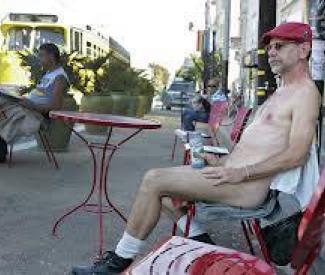
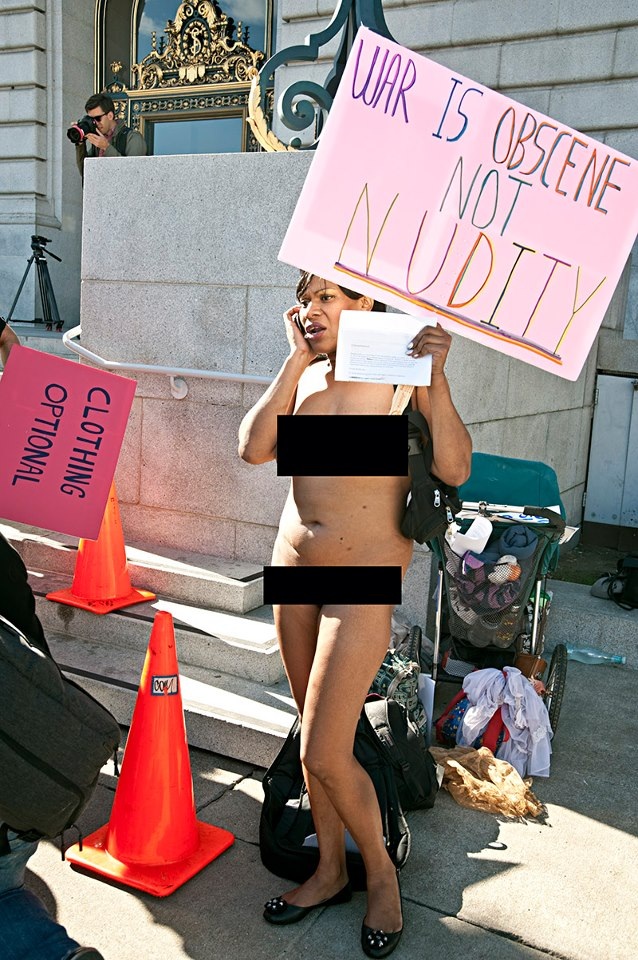
Attorney Christina DeEduoardo claims that her clients use nudity as a form of free speech and protest — and given who they are, it’s a pretty good argument. You’ve got a guy who ran as the nudist candidate for mayor and a woman who took her clothes off at a Board of Supervisors meeting for political reasons, and they contend that they have the right to appear naked in public.

The claim seeks a restraining order prohibiting the Board of Supervisors from enacting the law, but a federal judge already nixed that, according to City Attorney spokesperson Matt Dorsey. Instead, all parties have to wait unitl the supes approve the law, at which point this will become a motion for an injunction against the law taking effect.

So banning a handful of people, mostly older guys, from hanging out naked on Castro Street is going to become a legal battle that will cost the city a bunch of money. Unless sanity prevails and Sup. Scott Wiener, the city attorney and the nudists can reach a deal, which might be pretty simple:

It’s cool to get all nekkid (although it won’t be happening much in the next few months, way too cold). But maybe the Castro Guys can agree not to wear cockrings that attract attention to their dicks (and seem to be the proximate cause of all the fuss). Just be natural when you go au naturel, and we can all stop fighting over this.

You think?


Howard Wallace, LGBT icon, dies at 76

6

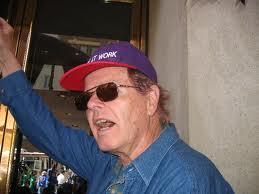
Howard Wallace, a longtime organizer who played a key role in bringing the LGBT movement and labor together in San Francisco, died Nov. 14. He was 76 and had been struggling with Alzhiemer’s disease.

Wallace grew up in Denver, and according to a biography by Andrej Koymasky, was forced to drop out of college when his father saw some United World Federalist literatature he’d brought home and told him to drop of of “commie” politics:

“He put a couple of checks on the dining-room table – the checks for next year’s tuition – and said, ‘Get out [of activism] and you can have those checks.’ I tore them up in his face, and that was the end of my college education.” 

Instead, he began a series of blue-collar jobs that brought him into labor organizing.

By the early 1970s he was in San Francisco, part of a generation of activists that included the late Hank Wilson and Assemblymember Tom Ammiano, who together helped form a group called Bay Area Gay Liberation.

“He made bridges,” Ammiano told me. “He came to BAGL and told us we had to support Cesar Chavez, and some of us were reluctant — you know, it was the Catholic Church, homophobia, all of that. But he convinced us to go on that march, and we were all glad we did.”

Wallace was a founder of the Lesbian-Gay Labor Alliance and later Pride at Work, and he was instrumental in bringing LGBT workers into the labor movement — and also bringing labor support to LGBT causes.

In 1974, Wallace worked with members of the Teamsters Union — not a group always known in those days known for enlightened attitudes towards gay people — on a boycott of Coors beer.  The teamsters were fighting bad labor practices at Coors, including a mandate that all employees take a lie-detector test that incuded the question “are you a homosexual?”

Working with both sides, Wallace got the LGBT community to sign on to the boycott, got Coors out of many of the bars in the Castro — and made lasting connections between local labor leaders and the LGBT community.

“He’s the one who brought Harvey Milk into the Coors boycott,” Ammiano recalled. “And he was never afraid to call out labor leaders when they were being homophobic.”

Like all great organizers, he could be persistent to the point where he was sometimes infuriating — but always, always pure of heart. “He was a character,” Ammiano said. “I never knew what color his hair would be, but I always knew what color his politics would be.”

Tommi Avicolli Mecca, a longtime activist and writer on LGBT history, said Wallace was “a giant among us. He was always there, for the rights of union members, the poor and working class, antiwar activists … you could always count on Howard to be there.”

Mecca noted that Wallace “saw the connections between the LBGT movement and disenfranchised people everywhere. He saw the queer struggle as part of a larger struggle for social and economic justice.”

He will be sorely missed, but as Mecca said, “we will always have his legacy; future generations can look back and understand what our movement was about.”

Said Ammiano: “I hope he and Hank Wilson are up there tipping a few back and talking about Lenin vs. Trotsky.”
 
A memorial is pending, and I’ll keep you posted as updates are available.

UPDATE NUMBER 1: State Sen. Mark Leno told me that Wallace “was not only a dear friend but a teacher. His values were strongly intact.” Leno recalled chairing the fundraising drive for the LGBT Center, a huge undertaking, and accepting a check from Coors for $5,000. “I though I had done due diligence, I knew the boycott was over, but Howard came to our board meeting and convinced us that the LGBT Center had to be above reproach.” 

(I’m sure Howard Wallace didn’t use those exact words).

“It was after that that we became good friends,” Leno said.

UPDATE NUMBER 2: From Gabriel Haaland, Pride at Work co-vice-president (SEIU< SF): I don’t know if most progressives know how much Howard gave to us all. I know there are so many who considered him a mentor and an inspiration. For those of you who don’t know him, Howard had a way of connecting the dots across so many issues. A legend and a hero for sure. A fearless warrior for justice, Howard was both passionate and gentle in his own way… He gave so much of himself and taught me so much in the rashness of my younger years. Even in death, he continues to inspire me to be better than I was before, more in integrity. I honor those who took such good care of him in the last year, like Kathy Lipscomb, Carl Finamore, Tab Buckner, Eileen Hansen, and Susan
Englander. I will miss him.

Fell/Oak bike lane project appealed

56

Long-awaited bicycle and pedestrian improvements along Fell and Oak streets – a key east-west connection where fast-moving cars create sometimes-scary conditions for cyclists – approved last month by the Municipal Transportation Agency’s board suffered a couple frustrating setbacks last week.

First, on Nov. 5, the project was appealed to the Board of Supervisors by area residents Mark Brennan, Howard Chabner, and Ted Loewenberg, who charged that it violates state environmental laws and the Americans with Disabilities Act and should be subjected to a full-blown Environmental Impact Report rather than relying on the overall Bicycle Plan’s EIR.

The MTA is confident the appeal will be denied, so its crews went ahead with the project, removing the existing bike lane markings and then just leaving it that way for the last week, creating a confusing and potentially dangerous situation for both motorists and cyclists. It also raised fears among project supporters that the two developments were connected.

But MTA spokesperson Paul Rose told us there is no connection and “we expect to begin striping tomorrow, weather permitting.” He also said the agency heard the concerns from cyclists and this week put up signs urging motorists to share the road with cyclists and placing flyers on cars parked along the stretch.

As for the appeal, Rose said, “We have confidence that the environmental work that went into this project was appropriate and the appeal will be denied.”

Leah Shahum, executive director of the San Francisco Bicycle Coalition – for whom this project has been a top priority for years – echoed the optimism and emphasized the extensive outreach effort that has gone into this project.

“I think it’s unfortunate that there is the threat of delay to a project that has gone through so many years of community input and has such strong support,” Shahum said. “There are a few individuals who are trying to delay the project, but I’m happy to hear the MTA is moving it forward anyway.”

The appeals hearing has been tentatively set for Dec. 11. Once completed, this will be one of just a few cycletracks – or bikeways that are physically separated from automobile traffic – in San Francisco, something bike activists hope to see more of in the coming years.

Oh well, Pelosi’s going to stick around

32

For a while there some of us thought that Rep. Nancy Pelosi, who failed to win back a house majority for the Democrats, might decide her time was up and step down as minority leader (which would probably have meant retiring from Congress). That would have set off one of the hottest political battles in town; just about everyone knows that Pelosi’s daughter is interested in the seat, but there’s no way she was going to get it without a fight. There are lots of ambitious people in this town who would jump at a once-in-a-lifetime chance at a Congressional seat, starting with possibly all of our current state Legislators and a few supervisors.

Would progressives and independents sick of the notion of a Pelosi family dynasty get behind one candidate (say, Mark Leno)? Would Scott Wiener, who Leno has supported and mentored all these years, run anyway, arguing for a younger candidate who could be around for long enough to get seniority? Would Leland Yee, who will be termed out and didn’t get elected mayor, jump in the race? Would Tom Ammiano, who doesn’t seem at all ready to retire?

Lots of crazy speculation — and now it appears we’ll have to wait two more years to go through it again. Because, barring a huge upset in the Democratic Caucus, Pelosi’s sticking around.

I’m not so thrilled about that — and I swear it has nothing (well, almost nothing) to do with the amazing story that a contested race would create for political reporters. It’s just that Pelosi’s been a big disappointment to San Francisco; she cares more about her national constituency that about her district, and her legacy achievement is the privatization of a national park.

It would be nice to get someone representing San Francisco who represented San Francisco values.

Oh well.

Diablo Canyon: What else do we need to know?

2

So PG&E wants to frighten, deafen, and kill a whole lot of marine mammals and fish by blasting sound waves at the Ocean floor — to discover exactly what? That there are, indeed, a lot of earthquake faults right near the Diablo Canyon nuke — and that a serious quake risks cracking the containment facility or toppling the whole thing into the sea, contaminaing much of the coast and poisoning a huge population area?

Don’t we already know that?

Don’t we already know that the plant was a terrible idea when it was built and is a worse one now?

It’s well established that a major strike-slip fault (the Hosgri) runs right offshore, and that another one (the Shoreline) is even closer. The whole Morro Bay area is riddled with faults. If one of them goes, it could cause others to go, and that could create a whole lot of shaking, quite possibly more than the aging plant could handle.

Nuclear power plants of Diablo’s vintage were designed to operate for maybe 40 years. PG&E wants to relicense it for another 25. Why not? The company paid about $7 billion to build the thing, and the longer it runs, the more money comes into the corporate coffers.

But one would think that, given what we now know about nuclear plant disasters, that the existence of such a precarious seismic zone so nearby would be ground to shut the thing down, or certainly to let its current license expire without renewal. I’m sure PG&E’s scientific study will show that there’s no danger to the public — that’s what every study the company has done on Diablo has shown — but really? Don’t we know better?

Gascon skips valuable reform panel

58

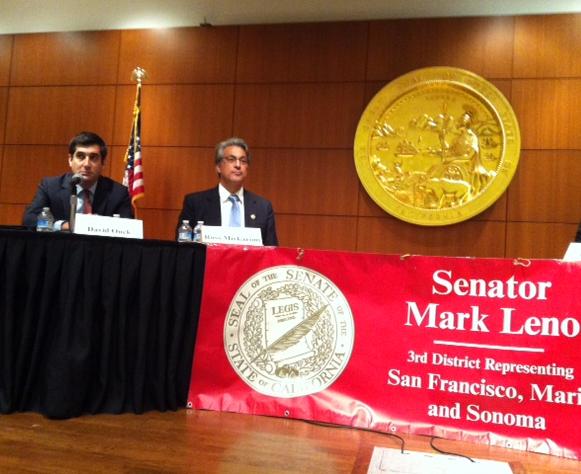
District Attorney George Gascon didn’t show up for the town hall meeting that Sen. Mark Leno held on criminal justice reform last night. Gascon was scheduled to appear on a panel with Sheriff Ross Mirkarimi, Chief Probation Officer Wendy Still, Public Defender Jeff Adachi, and Police Chief Greg Suhr (who also didn’t show, sending Commander John Murphy instead).

Gascon spokesperson Stephanie Ong Stillman minimized the decision to forego appearing on a panel with Mirkarimi, whom Gascon prosecuted for a domestic violence incident and continues to persecute with calls to resign or abdicate some of his official duties, telling us, “There was just a change in his schedule.”

But Gascon, who has only lived and worked in San Francisco for three years, might have benefitted from the discussion, which focused on how San Francisco has for decades pioneered a successful approach to criminal justice emphasizing rehabilitation and redemption rather than the punitive “zero tolerance” approach to crime pushed in Sacramento and other jurisdictions, which has been costly in human and fiscal terms.

“This team of individuals you see in front of you have had the most extraordinary results in leading San Francisco,” Leno said, focusing much of the discussion on how well-prepared San Francisco was for Realignment, the year-old state policy of transferring low-level offenders from the overcrowded state prison system to the local level.

David Onek, the UC Berkeley criminal justice professor who ran against Gascon for DA last year, was added to the panel after Gascon bailed out. He said, “San Francisco by all accounts is way ahead of the curve and can really provide leadership to the rest of the state for how to do Realignment right.”

The main reason for that, as most panelists acknowledged, was because of a variety of programs created by longtime Sheriff Michael Hennessey, who endorsed Mirkarimi to continue his legacy over two traditional law enforcement challengers. Mirkarimi noted that Hennessey didn’t have a law enforcement background when he became sheriff, and that the SFPD and other local agencies long resisted the progressive reforms that he instituted.

“The constellation of what we’re all addressing is unique to San Francisco,” Mirkarimi said, describing the city’s current multi-agency approach as “one that recognizes where redemption comes into the criminal justice system.”

Still, whose department oversees Mirkarimi’s three-year probation for his misdemeanor false imprisonment conviction, emphasized how much her department’s approach has changed in recent years, adopting “evidence-based” approach that respects  probationers, which she now calls “clients,” and addressing their needs.

“We created a plan for success instead of supervising for failure,” Still said. “We changed the culture.”

That cultural change came from the Sheriff’s Department, she said. “Sheriff Hennessey developed a litany of programs over the years, so we were well-positioned for [SB] 678,” the legislation that created Realignment. Despite all the recent talk about having “zero tolerance” for crimes like domestic violence, Hennessey’s controversial approach brought ex-offenders into key leadership positions and refused to dehumanize criminals or see them in black-and-white terms.

“In San Francisco, we kind of live in a bubble. You don’t know how crazy it is outside San Francisco,” Adachi said, noting how politicians in other jurisdictions have aggressively sought to block sentencing reforms and demonize criminals for political reasons.
“In San Francisco, we’ve been so fortunate that we’ve had progressive criminal justice policies,” Adachi said, recognizing that the last three DAs refused to bring the death penalty and Mirkarimi for six years ago creating the Reentry Council to address recidivism.

“It might seem like common sense, but it’s radical to other counties,” Mirkarimi said. “It makes me proud to be part of a criminal justice system that is looking forward.”
  

Nudists to sue over Wiener law

62

Sup. Scott Wiener’s ban on public nudity hasn’t even come to a vote at the full board, but the nudists who oppose it are already planning to sue. A group of five plaintiffs, including former mayoral candidate George Davis and Gypsy Taub, who disrobed at a hearing on the issue, are arguing that the city lacks the legal authority to enact the ban, which they call a violation of protected free speech.

Christina DeEduoardo, the group’s attorney, told me she plans to file this week in federal court in San Francisco. “We’re going to ask for a temporary restraining order to prevent the supervisors from enacting this law,” she explained.

It’s not easy to get a court to pre-emptively block a law that hasn’t been approved, but DeEduoardo said she’s going to argue that state law pre-empts San Francisco from taking this type of action. “When a municipality does something at odds with state law, there’s a reason to prevent it,” she said.

California law already regulates lewd behavior, and the state courts have consistently held that mere nudity is not a violation of that statute. “Nothing says the city has to power to regulate dress,” she argued. “It’s the equivalent of the Board of Supervisors saying that in October the only colors you can wear are black and orange.”

Even if the state doesn’t pre-empt San Francisco’s right to ban nudity, DeEduoardo said, there’s a First Amendment issue here: “This purports to ban all nude expression. My clients engage in nudity as speech. The law is way over-broad.” There’s even an equal-protection argument: Wiener’s legislation specifically exempts major city events, like Bay to Breakers and the Folsom Street Fair — but those things cost a lot of money. “So the city’s saying if you have the money for a permit, you can engage in nudity, but if you can’t afford that, and you just want to go au naturel, then you are a criminal.”

Matt Dorsey, spokesperson for the City Attorney’s Office, told me he doesn’t expect any sort of injunction. “State law is very clear that injunctions can’t be granted to prevent a legislative act,” he said.

If a federal judge won’t issue a restraining order, the nudists are going to sue to overturn the law the minute it passes. So there’s likely to be a long, expensive legal battle — and it seems so silly. Particularly since it’s getting chilly out and the rainy season is about to start, and Mother Nature will be dealing with the naked guys pretty quickly.

Critics urge caution on fast-moving Warriors arena deal

28

UPDATED The proposal to let the Golden State Warriors build a new sports arena complex at Piers 30-32 is moving forward quickly, with the Board of Supervisors Budget and Finance Committee considering approving its fiscal feasibility tomorrow (Wed/14), the Land Use Committee hearing its design and transportation aspects on Monday, and the full board scheduled to move it forward on Tuesday, two days before Thanksgiving. After that, it will undergo an environmental study and work on myriad fiscal and administrative details, coming back to the board for final approval, probably in the fall, with the goal of opening by the 2017 basketball season.

[UPDATE 11/14: The Finance Committee today voted 3-0 to approve findings of fiscal feasibility for the project after Sup. Jane Kim made amendments delaying the EIR scoping session until January and ensuring the Citizens Advisory Committee will be given more time to review the project and its term sheet. City officials and the Warriors also signed a deal this morning requiring that at least 25 percent of its construction jobs and half of its apprenticeship positions go to local residents or military veterans. We’ll have more details and analysis of what happened in the coming days.]

Critics of the project say it is being rammed through too quickly, with too little public notice or attention to blocking off views of the bay, and on terms that are too costly to city taxpayers. To some, Lee’s quest for a “legacy project” is reminiscent of the groupthink boosterism that characterized the initial America’s Cup proposal, before it was revealed to really be a lucrative waterfront real estate scheme that was great for developers but costly to the public, and later abandoned.

And just like last time, when the Guardian, then-Sup. Chris Daly, Budget Analyst Harvey Rose, and others forced a major scaling back of the developers’ ambitions, there are some prominent voices of caution now being raised about the Warriors arena deal and its potential to fleece city taxpayers, including concerns raised by someone with decades of experience shepherding some of San Francisco’s biggest public works projects.

Rudy Nothenberg, who served as city administrator and other level fiscal advisory roles to six SF mayors and currently serves as president of the city’s Bond Oversight Committee, yesterday wrote a letter to the Board of Supervisors urging it to reject the deal.

Among other things, he criticized the 13 percent interest that city taxpayers would pay on the $120 million in pier restoration work that the Warriors will do. “Quite simply, I would have been ashamed of such a recommendation,” Nothenberg wrote. “In today’s markets it is incomprehensible to have such a stunning recommendation brought to your honorable Board in such haste.”

Project spokesperson PJ Johnston and its main advocate City Hall, Office of Economic and Workforce Development head Jennifer Matz, each disputed Nothenberg’s characterization, citing a report by the project consultants, the Berkeley-based Economic and Planning Systems Inc. (EPS), that 13 percent is a “reasonable and appropriate market based return.”

Matz told us the rate was based on the risky nature of rebuilding the piers, for which the Warriors are responsible for any cost overruns. And she compared the project to the massive redevelopment projects now underway on Treasure Island and Hunters Point, from which the city is guaranteeing powerful developer Lennar returns on investment of 18.5 percent and 20 percent respectively.

Johnston, who was press secretary to former Mayor Willie Brown and worked with Nothenberg on building AT&T Park and other projects, told us “ I have great respect for Rudy.” But then he went on to criticize him for taking a self-interested stand to defend the views from the condo he owns nearby: “They don’t want anything built in their neighborhood. They would rather leave it a dilapidated parking lot.”

But Nothenberg told us his stand is consistent with the work he did throughout his public service career in trying to keep the waterfront open and accessible to the public, rather than blocking those views with a 14-story stadium and surrounding commercial and hotel complex.

“I have a self-interest as a San Franciscan, and after 20 years of doing the right thing, I don’t want to see this rushed through in an arrogant way that would have been unthinkable even a year ago,” Nothenberg told us. “I spent 20 years of my life trying to deal with waterfront issues.”

Among those also sounding the alarm about how quickly this project is moving is land use attorney Sue Hestor and former Mayor Art Agnos, who told us the supervisors should heed the input of Nothenberg and make sure this is a good deal for the city.

Agnos said, “Rudy Nothenberg stands apart from every other department head and CAO in the modern history of San Francisco for his financial and managerial expertise in bringing major projects with complex finances to completion that worked for our City. That is why the past six mayors…whether conservative or liberal…trusted him to advise them and administer the biggest projects in this city from Moscone Convention Center to the new main library to the Giants baseball park and Mission Bay. “

Legislative Analyst Harvey Rose released his initial analysis of the project on Friday. The $120 million plus interest that the city is paying to the Warriors would be partially offset by the $30 million the team would pay for Seawall Lot 330, a one-time payment of $53.8 million (mostly in development impact fees), annual rent of nearly $2 million on its 66-year lease of Piers 30-32, and annual tax and mitigation payments to the city of between $9.8 million and $19 million.

But the report also notes that many city departments and agencies – including the Department of Public Works, Municipal Transportation Agency, and the Police Department – have yet to estimate their costs. Both Johnston and Matz emphasized Rose’s conclusion that the project is “fiscally feasible” – the determination that supervisors will have to agree with to move the project forward – but the report also noted “the finding of ‘fiscal feasibility’ means only that the project merits further evaluation of environmental review.”

The full text of Nothenberg’s letter follows:

Dear Supervisors:

My experience as a high level financial advisor and city administrator for Mayors Moscone, Feinstein, Agnos, Jordan, Brown, and Newsom, and current President of the City’s Bond Oversight Committee cause me to write in the hope that you will reject the outrageous 13% interest rate that the developers of the waterfront arena are proposing to charge the City for their cost of replacing Piers 30/32. 

In my years as General Manager of Public Utilities, the Municipal Railway System, Water and Hetch Hetchy, and later as the Chief Administrative Officer for the City and County of San Francisco, I took probably more that a billion dollars worth of various debt instruments to the Board. 

Never…even in the worst days of highest modern era interest rates of the 1970’s hovering at 20% …never did I ever bring a 13% City borrowing to the Mayor and the Board of Supervisors for approval.  Quite simply, I would have been ashamed of such a recommendation.

In today’s markets it is incomprehensible to have such a stunning recommendation brought to your honorable Board in such haste. 

Even more remarkable is the fact that just weeks ago, Allentown, Pennsylvania has just procured a 4.78 % interest rate for $224.4 million of taxable bonds to help build with private contributions a hockey arena for 8500 seats. 

Yet, you are being told the best our city can do is 13% for $120 million.

No Board of Supervisors I ever appeared before would tolerate such dramatic discrepancy.

It is with this in mind, I would most respectfully urge you to send this proposed deal back to the developers, instructing the City’s negotiators not to bring it back without a far more favorable interest rate for City tax payers not to exceed a maximum of 7.5%.

And that would still be almost twice what the City would need to pay for City issued debt and more than amply compensate the developers for any risk premium that they allege that they are taking. 

Any such instruction from you to the City negotiators should also make it clear that they are not to make any new concessions to the developers in exchange for achieving a still high, but eminently more reasonable interest rate.

Thank you for your attention.

Rudy Nothenberg

Chief Administrative Officer (Ret.)

Documentation:

1.     The Warriors Arena negotiates 13% interest on $120 million from San Francisco when the City of Allentown in Pennsylvania just issued $224.4 million of taxable bonds for an arena at an average interest rate of 4.78%. 

13% for SF versus 4.78%  for Allentown

 http://www.allentownpa.gov/Home/AllentownCityNews/tabid/142/xmmid/636/xmid/2000/xmview/2/Default.aspx

City of Allentown – PA – Official Site

www.allentownpa.gov

The official website for the City of Allentown, PA. Learn about all the exciting events going on in the city of Allentown, from music, arts, theater, and sports. Allentown is the largest city in the 

2.     Allentown hockey arena bonds cost $4.2 million to issue 

www.lehighvalleylive.com/allentown/…/allentown_hockey_ar

Oct 10, 2012 – About $224.4 million in municipal bonds were sold last week to help finance arena construction. City officials say the issuance costs are about 


Out of the last closet

20

It got pretty well buried in the last-minute election madness, but Sups. David Campos and Christina Olague did a very cool thing Oct. 31 — they helped create some press, and some possible national buzz, for a small San Francisco organization that’s taking on a very big issue.

The Last Closet is trying to get someone — anyone — in the senior hierarchy of male professional sports to talk about homophobia and the fact that there are no out gay men in any of the five major pro sports (football, basketball, baseball, hockey and soccer). When Olague and Campos held a press conference to introduce a resolution endorsing the group’s aims, it got at least passing mention on sfgate. And that’s a start.

Everyone knows there are gay men in the NFL, and in the NBA, and in MLB, and on the ice playing professional hockey. Yet even in 2012, when retired tough-guy athletes can talk about homophobia and the need for equality, not one active player has come out of the closet.

Who cares? Well, if you’re a young LGBT person involved in sports, you care — and you care a lot. Middle-school and high-school locker rooms (male locker rooms, particularly) are still pretty homophobic places and can be scary for gay kids. And there’s nobody for them to see as a role model.

As Campos told me, “What I was with the San Francisco Giants, all the Latino players, was such a source of pride to Latino boys and girls. We can’t feel that in the LGBT community. We know there are gay baseball players, but the LGBT youth don’t have those rold models to look up to.”

Not that sports figures are great role models, but still: One badass NFL player — I envision a linebacker — comes out, and a generation of LGBT youth can say: He’s gay. He’s tougher than any of you assholes who are teasing me.

And it would change lives.

All the Last Closeters want right now is for the commissioners of the five major sports to speak out, to make a statement, to say that out gay players would be welcomed and protected in their leagues and that homophobia would not be tolerated. Doesn’t seem like much to ask.

And yet: Not one will do it.

Maybe Larry Baer can bring it up at the next owner’s meeting.


Get ready for a garbage rate hike

30

Recology, the San Francisco garbage monopoly, usually comes to the city to ask for a rate increase once every five years or so. It’s been almost seven since the last one — and it’s not as if the company’s costs have come down. Anyone who’s running big diesel trucks and paying for fuel has been hammered in the past year or two.

So why did the folks at Recology wait until this fall — Sept. 11 — to let the city know they want to change the way they charge for trash — and most likely rise rates at the same time?

Well, for one thing, there was a ballot measure back in June that would have broken up the lucrative monopoly and opened the waste-removal franchise to competitive bidding. That’s Recology’s worst nightmare. Since 1932, the company (through its predecessors) has had the exclusive right to pick up residential and commercial refuse in San Francisco; unlike virtually every other outfit that does this level of business with the city, the contract never comes up for renewal and nobody else ever gets to bid. There’s virtually no chance that anyone but Recology would ever win a bid for the deal anyway — we’re talking about a unionized, worker-owned local company, and all of the other big garbage outfits are nasty out-of-state operations with bad management and environmental records. But if there were other bidders, Recology might have to sweenten the city’s deal — keep the rates lower or give some more money to City Hall.

Ant any rate, the ballot measure went down under a flood of Recology money, and to nobody’s surprise the rate hike is now on the table.

Your rates won’t actually go up for a while — the process is long and complicated and both Recology and the Department of Public Works agree that the earliest any new pricing would go into effect would be next summer. We won’t actually see a firm proposal until December.

But already, the company’s talking about ending the current practice of charging for the black (garbage-to-the-landfill) cans and picking up recycling and compost free. The city and the company are both trying to reduce the amount of landfill material that gets discarded — and ultimately, everyone would like to eliminate the black cans altogether. But that, Recology spokesperson Eric Potashner told me, doesn’t work with the current business model: “We can’t rocus our financial operations on a black can if we’re trying to get rid of it.”

Which leads to a dilemma: If you want people to recycle and compost more, how do you get away with charging them more to do it? “That’s the challenge,” Potashner said.

Either way, the rates are going to go up. “There hasn’t been a cost-of-living increase since 2010,” Douglas Legg, finance director at DPW, told us. The increase might be fairly steep, too — after all, it’s been seven years since the last one.

All of which comes back to the competitive bidding question. If this weren’t a monopoly, and Recology had to compete for the contract every once in a while, “these rate hikes might be more moderate,” retired Judge Quentin Kopp, a longtime critic of the company, told us.

Voters affirm progressive leadership at City College

5

San Francisco voters this week reinforced their support for progressive leadership at City College, re-electing incumbents Steve Ngo and Chris Jackson (assuming Jackson’s 549-vote margin over Amy Bacharach holds), and bringing newcomer Rafael Mandelman into the fold during a period where the school will make drastic, transformative changes. 

At the same time, voters rejected a monied, politically connected, fiscally conservative board member, Rodrigo Santos, who was appointed by Mayor Ed Lee in August to fill the vacancy created by Milton Marks’ death. Longtime board member Natalie Berg was also re-elected, likely buoyed by her decades of incumbency, but finishing third behind the more-progressive Ngo and Mandelman.

As the college airs all of its dirty laundry, showing its worst practices to the world, San Francisco voters also showed faith that the college could spend money wisely in the future: they passed Proposition A with more than 72 percent of the vote, delivering $14 million a year in parcel taxes, for the next eight years, to the money-starved institution.

The lack of money means more than just numbers on a page — real classes will be cut, real campuses are already being closed, and the diverse communities the colleges serve will either be given smaller portions, or excused from the dinner table entirely.

Rejecting politicians that represent these kind of austerity measures, Santos was one of the casualties of this voters’ swing away from conservative politicians (despite what Chuck Nevius may think).

Santos, who head the pro-development Coalition for Responsible Growth, had all the odds stacked in his favor: he was an incumbent appointed by the mayor himself, and had a huge  campaign war chest. He raised $192,000 for his college board race, an unheard of for a local college board member.

 It did nothing for him: ultimately, Santos got slightly more than half the votes of candidates with as little as $30,000 in their campaign chests. By voting in mostly progressive candidates, and overwhelmingly reaffirming Prop. A, San Francisco has said loud and clear: they want the college to protect education in their individual communities, and for the college to maintain as many classes as possible, despite cuts urged by lack of state funds.

Steve Ngo and Chris Jackson earned their progressive bona fides in pushing forward the “Placement Plus One” program, a policy giving students taking placement tests the ability to “bump up” a class higher than they placed. Students, mainly from the local nonprofit Coleman Advocates, complained that placement tests were disproportionately unfavorable to minorities.

The consequences for placing low in math or English are huge — a student placing in a rudimentary English class could delay transferring to a four year school by years. Ngo and Jackson fought for a student’s right to decide their own futures, and importantly, fought for minority students who were falling behind.

But don’t think that just because Ngo is progressive, that he isn’t afraid to make the cuts he feels he needs to make. He notably did not support his colleagues on the board as they voted to reject the Student Success Task Force, which advocated for lowering class registration prioirty for students who took too long to get out of community colleges statewide, accruing over 100 credit units.

Mandelman as well is a figure whose professional, calm demeanor lends himself to a new progressive movement. He may have lost his past bid for supervisor of District 8, but as Chris Daly noted, Mandelman is a consensus builder with the backing of many groups and associations in San Francisco. The same was true of his City College bid, and likely why he won.

The college desperately needs someone like him that can build unity right now. The school, highly politicized and villainized in the media, needs allies. With Mandelman and his calm demeanor on the new progressive bloc on the board and a clear strong mandate from the city to back up classes with millions of dollars in taxes, there is now hope that the changes at City College may not only be transformative, but serving its diverse community through solid progressive values.

Is the tax revolt over?

46

The most optimistic piece I’ve read on the results of the November election is on Calitics, where Robert Cruikshank argues that the tax revolt that started with Prop. 13 in 1978 is finally over.

And while there is still a lot of work ahead to overturn the legal and constitutional legacies of the tax revolt, it no longer has political power. That in turn means the California Republican Party, and the California conservative movement, are as dead as Monty Python’s parrot.

That’s a pretty sweeping statement for a fairly modest tax package supported by the same governor who called himself a born-again tax-cutter in the wake of Prop. 13. But Cruikshank makes a good point:

This victory over the tax revolt happened because of years of progressive organizing against further tax cuts and for tax increases. Progressive voices and organizations completely rejected the post-1978 Democratic logic that the tax revolt had to be appeased. Instead, we insisted that the tax revolt had to be confronted and defeated. With Prop 30 that’s exactly what happened.

I know the Democrats in the Legislature are going to be nervous about more tax hikes, particularly since the two-thirds majority includes some folks from pretty conservative districts who are going to be scared of “overreaching.” But it’s not just about general tax hikes; we got one this year, and we may not get another. It’s about all of the long list of tax loopholes that art on the books that take a two-thirds majority to undo. It’s about a budget that includes addition as well as subtraction. And it’s about not being afraid to say that investment in the state has economic value.

Maybe the Dems don’t have to be afraid; maybe this two-thirds majority isn’t an anomaly and isn’t going to change. Maybe the state is getting so much more Democratic that supermajorities are the way of the future and people are sick of the GOP no-new-taxes nonsense. Maybe (as I’ve long said with same-sex marriage) it’s part of an inevitable demographic change:

Many of those angry white suburbanites convinced that people of color and their liberal allies were going to destroy their suburban paradise have left California, either by relocation or by the intervention of the Grim Reaper. In their place has grown up a native-born population that is diverse, that isn’t ideologically wedded to car-centric postwar suburbs, and that rejected the “I’ve got mine, screw you” mentality of Howard Jarvis.

In which case we really can start turning this state around.

School board incumbent victories could undermine UESF

6

San Franciscans this week saw the end result of long-running teacher union attacks on the re-election campaign of three SFUSD school board incumbents — Sandra Fewer, Jill Wynns and Rachel Norton — who were all reelected.

The feud between the San Francisco teacher’s union, United Educators of San Francisco, and the school board was sparked by the board’s vote to protect 14 low-performing schools from teacher layoffs. Every year, the pink slips go out to teachers in San Francisco, but this time around a vote was cast to protect teachers in a “special superintendent’s zone,” established by then-Superintendent Carlos Garcia.

After the board’s vote to protect more vulnerable teachers, the teacher’s union started going on the offensive against the board. “[The union] was very angry with me,” Fewer told us. They told people all over the city not to vote for her, she said, and declined to hold any discussions on the topic. “They told me, you had just better not [pursue this],” she said. 

Ultimately, despite the attacks, the incumbents of the school board were elected with twice the votes of the closest losing candidate. Sandra Fewer netted the most out of any board candidate — 93,971 San Franciscans voted her in, as of the election day count. They’ll be joined by newcomer Matt Haney, who disagreed with the school board’s approach but not its decision.

UESF President Dennis Kelly didn’t see their conflict in quite the same was as Fewer. “When they made a mistake, we decided to point it out to them,” Kelly told us.

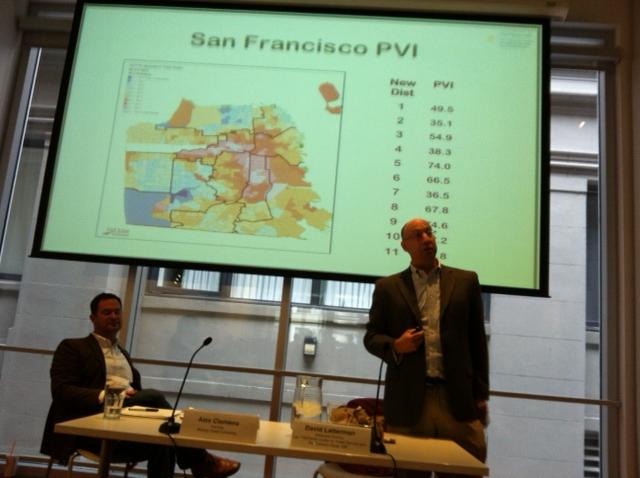
But political analysts say UESF will likely lose some influence in the district over its failed campaign strategy. “The school board now has a mandate to do what it wants to on behalf of kids,” political consultant David Latterman told the crowd at SPUR’s post-election wrap-up yesterday.

Ironically, even Kelly admits the fight they picked wasn’t over an issue that really impacted teachers much. He said that the 70 teachers the board decided to spare was a symbolic move. “They’re temporary teachers, their contact essentially ends that year,” he said. “It was a pointless thing to do.”

Fewer, of course, disagreed. When the district sends out their pink slips annually, they hire back most of the teachers, she said. But when you send pink slips to the younger or newer teachers at vulnerable schools, they often don’t come back.

“If you lose 60 percent of your staff every year, how can you do that and run a school?” she said.

Those schools often have the newest and youngest teachers. And that can make it difficult to retain them once they’ve left. Salome Milstead has taught in San Francisco for four years, and knows that feeling of dejection when that annual pink slip comes in. She started out at the Academy of Arts and Sciences, one of the newest schools in the SFUSD.

Like the schools in the special zone that Fewer tried to protect, the Academy serves a diverse socio-economic population: kids from troubled homes, that are usually tougher to teach. In 2008, Milstead and the teachers there had achieved something remarkable: building a new school from scratch. They were a close knit-team.

“That year, the principal got his layoff notice and pretty much most of us got a pink slip,” Milstead said. “We had all worked really hard that year to build up what we had.”

It takes that kind of young, idealistic, not-yet burned out person to go into the more troubled schools and have the energy to teach, she said. After the intense schooling and work training teachers go through, to immediately receive a pink slip was demoralizing.

The decision to protect the teachers of those kinds schools was something Fewer said she had to do, but it was a hard decision.

Kelly said that despite their differences, he looked forward to working with Fewer again. “We’ve worked with them before,” he said. “There were nine candidates in this race, and we were ready to work with any one of them.”


What the fuck, Chuck: No, Ed Lee is not God

76

So who were the big winners in the election? You could argue Ron Conway; you could argue surprise D5 winner London Breed. But to say it was all about Ed Lee?

Actually, no.

Every one of the initiatives that Lee backed was also supported by the entire progressive leadership on the board and almost every progressive group in the city, and other than Prop. B, there was little in the way of funded or credible opposition. The Yes on C campaign was run by the affordable housing folks, not the mayor. The mayor didn’t even endorse Prop. A, the City College parcel tax, until late in the game.

Oh, and the mayor’s appointee to the Community College Board? Got clobbered. The guy the mayor wanted in District 7? Out of the running.

The real story here — aside from the supervisors races, where I don’t think any one operation or political alliance won overall — was the remarkable civic consensus on the ballot measures. If Ed Lee had been out of town all fall, they all still would have won.

I know Chuck thinks the mayor is the greatest ever, but in this case, his impact was at best a wash.


Election makes the Board of Supervisors tougher to predict

20

I’m still a bit too bleary-eyed for serious political analysis on D5 or other races today, but I’ll offer a few of my own post-election observations and those that politicos Alex Clemens and David Latterman delivered during their usual political wrap-up at the SPUR office this afternoon, noting how this election has altered local political dynamics.

“The Board of Supervisors as a whole is becoming a helluva lot more interesting,” Clemens said, noting that progressive District 5 just elected London Breed, the most moderate candidate in that race, while conservative District 7 gave the most progressive candidates, Norman Yee and FX Crowley, its top two spots (with Crowley the likely winner once ranked choices ballots are tallied).

The result is that both the progressive and moderate blocs lost their most reliable votes to the squishy center, so that “determining what’s going to happen before it happens just got more difficult,” a dynamic that could play out most strongly on land use issues.

“I think land use politics is going to be even more interesting,” Clemens said, with Latterman adding, “In this city, all politics really comes down to land use.”

Assessor Phil Ting’s election to the Assembly also now paves the way for Mayor Ed Lee to appoint his replacement, with Sup. Carmen Chu widely considered the clear favorite, which would in turn give Lee an appointment to her District 4 seat on the board.

Yet Clemens speculated that Lee may wait to replace Chu until after the next Board of Supervisors is seated in early January – which would allow that person to finish her final two years and still run for an additional two full terms, whereas the Charter would otherwise limit that person to one more term – which could complicate an already complicated election for board president. Sups. Jane Kim and Scott Wiener are the likeliest contenders, but anything could happen.

“Counting to six from 10 is going to be so much fun to watch,” Clemens said, although he added, “I believe in the era of Ed Lee, it’ll all be worked out beforehand.”

Neither Clemens nor Latterman agreed that the overwhelming expenditures on political hit pieces (mostly against D1 Sup. Eric Mar, who won a surprisingly big margin of victory) by allies of Lee, or the fact that they turned on Sup. Christina Olague in nasty fashion, would diminish Lee’s public standing or the aura of civility he’s tried to cultivate.

Personally, I don’t agree, and it think progressives have been given an opportunity to highlight the money-driven nature of the agenda that Lee and his billionaire backer Ron Conway have for San Francisco. It’s also significant that the most anti-progressive candidates – Lee’s City College appointee Rodrigo Santos, D1’s David Lee, and D7’s Mike Garcia – all fell far short of victory.

Progressives now have a chance to set a positive, proactive agenda for the city, of the kind eloquently voiced by new school board member Matt Haney, whom Clemens thanked for running such a strong and positive campaign, as well as top City College finisher Steve Ngo and Sup. David Campos, who shared an election night campaign party and positive message about progressive prospects.

“That’s what me, Steve, and David were saying here tonight,” Haney told me, calling for an end to the adversarial style of practicing politics. “Our values are love and compassion.”

Latterman and Clemens did acknowledge that that record-breaking spending against Mar may have backfired, but they gave more credit to Mar’s campaign. “You don’t bet against [Mar campaign manager] Nicole Derse in a ground game in the last week of the campaign,” Latterman said.

Derse, who was there, noted its innovative voter identification efforts and strong grassroots volunteer push, a drive partially helped by those reacting to the big-money attacks. Latterman also acknowledges that the strange and controversial videos attacking Mar didn’t help, telling the crowd, “And tactically, don’t have the Realtors make the videos.”

As for District 5, neither politico claimed to fully understand the complex variables that shaped the race.

“It’s hard to unravel what happened here,” Latterman said of the D5 race, noting the complicated dynamics created by Olague’s mayoral appointment, her vote to reinstate Sheriff Ross Mirkarimi, Julian Davis’ problems, and the outside spending. He praised Breed’s campaign, calling it a “a solid win,” but he also said Breed’s independence helped her and she might have suffered the same fate as Olague if she had gotten the appointment from Lee back in January: “I think Supervisor Breed doesn’t win this race; challenger Breed did.”

D5 candidates and other Election Night photos

0

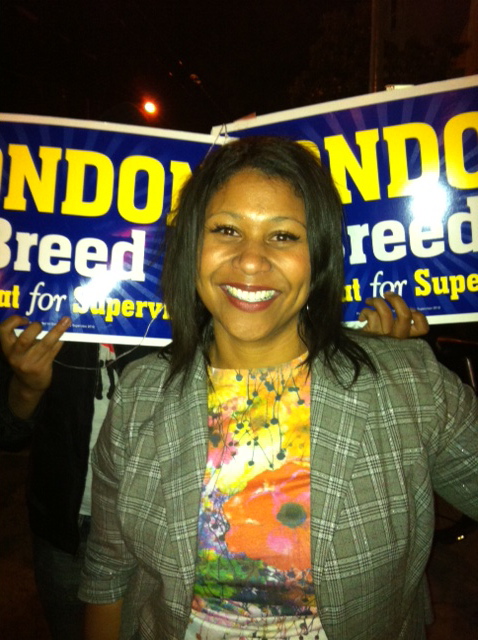
Photographer Tim Daw joined me on an Election Night trek through the San Francisco Democratic Party headquarters, five election night parties in the highly contested 5th supervisorial district, and an election party at Brick & Mortar. He came up with some great images, which illustrate my two Election Night posts. Enjoy.

Demos control Sacramento. Completely.

51

The sleeper in this election is the apparent supermajority for the Democrats in both houses of the Legislature. This is huge news, if it holds; for the first time since the passage of Prop. 13 in 1978, which mandated a two-thirds vote to raise taxes, it’s actually possible to govern and set fiscal policy without the no-taxes-ever-no-way Republicans being obstructionist.

In fact, as the Chron points out, Republicans would be essentially irrelevant in Sacramento.

That doesn’t mean everything’s just fine and dandy in the Legislature — the moderate-to-conservative Dems are sometimes as bad as the Republicans. But it means that if the Democratic leadership can craft a sane budget plan that raises some taxes (beyond what Gov. Brown did with Prop. 30), there’s a chance it could actually pass and the state could get back on track.

Of course, that assumes the governor will be on board, and he may not. Brown promised that he would never raise taxes without a vote of the people, and he got his vote, and it was close, and I bet he says: no more. Which is a problem, because Prop. 30, while absolutely necessary to keep California from falling off a cliff, only stabilizes the state’s revenue situation. It does nothing to restore the billions in cuts that have been made in the past decade and doesn’t even begin to put the state in a position to invest in, say, new education initiatives.

This could be a profound moment, a chance to make the state great again (and in the process, prove what can happen if you get rid of the minority-rule that’s crippled the Legislature for decades). It’s too great an opportunity to miss.

Prop. 34: We’re making progress

0

It’s always easy after a losing campaign to make excuses and play up the positive, but there really is some good news in the Prop. 34 loss. For starters, it put the death penalty back on the agenda in the state. That’s a big deal — one of the reasons there were so many undecided voters going into the last couple of weeks of the election was the fact that there haven’t been any executions in a while, so the major news media haven’t been talking about the issue. For a lot of younger voters, it’s never even been on the radar.

George McIntire reported from the No on 34 party last night, and said that Jeanne Woodford, the former San Quentin warden who was the lead proponent of the measure, remained upbeat. She pointed out that the last time the death penalty was on the ballot, 70 percent of the voters supported it. Now, that’s down to a narrow 55 percent — and with a little more money to get the message out, the nubmers could have been narrower still.

So we’re moving in the right direction. It’s not as fast as I’d like, but the death penalty is on life support and won’t be around forever.

D5 race displays key SF political dynamics

70

There’s so much to say about the District 5 supervisorial race, whose top five finishers’ parties I attended tonight, gathering interesting perspectives from each candidate. But given the late hour, I’m just going to run a few thoughts and quotes and save most of it for a more in-depth report tomorrow, because there’s a fascinating story to be told here.

Christina Olague, John Rizzo, and Julian Davis – respectively the second through fourth place candidates – each presented as more progressive than the likely winner, London Breed, who has an 8-point lead going into the final ballot tally and ranked choice tabulation. They and their allies raised concerns that renters were undermined by Breed’s victory in one of the city’s most progressive districts.

“It was a lie. I’m a renter, I live in a rent-controlled apartment,” she told us just before midnight outside in party at Nickie’s on Haight. “I will do everything to protect rent control. I will work with the Tenants’ Union. I’m here to be everybody’s supervisor.”

She pledged to work productively with all the progressive groups who opposed her, such at SEIU Local 1021, whose members “ take care of my mom at Laguna Honda,” while others are her friends.

“The pettiness of politics is over and it’s time to move forward,” Breed said.

It was a widely sounded theme among jubilant progressives tonight, but D5’s (likely) runner-up Olague sounded a bit of bitterness when we caught up with her a little after 11pm as she was leaving her party at Rassela’s on Fillmore. “The Left and the Right both came at me,” she told us.

She felt unfairly attacked by progressives after being appointed to the D5 seat by Mayor Ed Lee, saying her only bad vote was in favor of the 8 Washington luxury condo project, which Sup. Eric Mar also backed without losing progressive support. “From the beginning, people were hypercritical of me in ways that might not be completely fair.”

Then, this fall, Mayor Lee’s people – chief of staff Steve Kawa, tech point person Tony Winnicker, and billionaire backer Ron Conway – turned on her after a series of votes culminating in the one to reinstate Sheriff Ross Mirkarimi, resisting what she labeled “a power play” aimed at progressives.

Yet she believes her key vote in favor of CleanPowerSF, coming after her support for Sup. John Avalos getting new revenue out of the business tax reform Prop. E, was really what turned Conway and the downtown crowd against her and attracted outrageous attacks that she condoned domestic violence and supported Big Oil.

“They don’t want to say it, but it was the whole thing around CleanPowerSF. Do you think PG&E wanted to lose its monopoly?” she said. “It’s not about disloyalty, it’s about power.”

Julian Davis was similarly deflective about his campaign’s fourth place finish, despite having a strong presence on the streets today and lots of energy at his crowded campaign party at Club Waziema, after he weathered a loss of prominent progressive endorsements over his handling of sexual misconduct allegations.

“It’s been a challenging few weeks, but I’ve kept my head held high in this campaign,” Davis said, decrying the “self-fulfilling prophecy of the local media” that didn’t focus on the progressive endorsers who stayed with him, such as former D5 Sup. Matt Gonzalez and the SF Tenants Union.

Third place finisher John Rizzo, whose party at Murio’s Trophy Room party reflected his less-than-exuberant campaign, was generally positive about the night, although he expressed some concerns about the agenda of the “people putting up hundreds of thousands of dollars” into this race and the D1 contest, where progressive favorite Eric Mar won a strong victory.

I stopped by Breed’s party twice tonight: at the end, and a little before 10pm, when the results were coming over the television proclaiming that voters in Maryland approved same-sex marriage and Colorado voter legalized marijuana – and the room erupted in cheers – and Oregon voters rejected legalizing weed, drawing big boos.

Breed’s was a liberal crowd, a D5 crowd, and a largely African American crowd. Rev. Arnold Townsend, who is on the Elections Commission and local NAACP board, told me as I left Breed’s party the second time, “It’s a good election for my community. The black community was energized by this.”

New school board member Matt Haney, whose party at Brick & Mortar was my final stop of the night, also likes Breed and said her likely victory was another part of “a good night for progressive San Francisco,” which stands for important egalitarian values. “We are the ones about equity and compassion. That’s what this city is about.”

At least Prop. 30 is passing

24

I suspected that when all the votes were in, Prop. 30 might squeak through, and right now it looks like it wll. That’s really good news, because I don’t know what we’d be doing tomorrow if the results were different. Statewide it’s not all bad — Prop. 32 is toast, Prop. 39 has won and I think ol’ Jerry B pulled it out on Prop. 30, which is now ahewad 52-48.

Preliminary RCV points to Breed, Crowley

55

How incredibly strange: District Five, the most left-leaning district in the city, just elected a moderate supervisor who supports the sit-lie law and has the backing of the landlords. District 7, the most conserative district, elected a labor guy who may sometimes be a swing vote.

The preliminary RCV results show London Breed winning in D5 and FX Crowley in D7. The D7 results are close and could change; the D5 results are not. Promoted by landlord money and helped by two billionaires attacking incumbent Christina Olague, Breed is now in a position to move the board to the right.