News and Politics | San Francisco Bay Guardian

News & Opinion

Final step?

4

steve@sfbg.com

President Barack Obama is fond of reciting the Martin Luther King Jr. quote, “The arc of history is long, but it bends toward justice.” On the issue of marriage equality, that arc looks more like a zig-zagging path that began when San Francisco unilaterally began issuing marriage license to same-sex couples just before Valentines Day in 2004 and ending — its backers hope — in June 2013 with the US Supreme Court affirming the basic constitutional right of everyone to marry whomever they want and to have those marriages treated equally under the law.

“We’ve seen the ups and the downs, the highs and the lows,” said City Attorney Dennis Herrera, who has watched court injunctions blocking marriages by the city, the California Supreme Court ruling that the ban on same-sex marriage violated the state constitution, the 2008 vote amending the constitution through Proposition. 8, and the Ninth Circuit Court ruling that the measure violated federal equal protection standards.

Yet few officials or legal experts are willing to predict with any certainty that this long and winding road will end with a definitive conclusion in June. In fact, Herrera and other same-sex marriage supporters expressed disappointment Dec. 7 when the Supreme Court announced it had decided to review the Ninth Circuit Court ruling that Proposition 8 was unconstitutional.

Letting the ruling in Perry v. Brown stand would have re-legalized same-sex marriages in California, which would have joined the nine other states and the District of Columbia as places where it’s legal for gays and lesbians to get hitched. Yet in taking the case — along with U.S. v. Windsor, which challenges the Defense of Marriage Act and its prohibition on recognizing the inheritance law and tax code rights of same-sex spouses — the court could issue a landmark civil rights ruling striking down all laws that discriminate against same-sex couples.

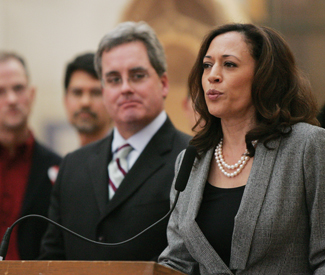
That’s the hope of California Attorney General Kamala Harris. “Are we a country that is true to its word and true to its spirit, or not?” was how Harris framed the question at a Dec. 7 press conference with Herrera. She focused on the basic equal protection argument and the need to “stand for the principle that we are equal and we will be treated that way.”

Herrera, who had just gotten off a conference call with lead attorneys Theodore Olson and David Boies and the rest of the advocates who are defending same-sex marriage, told reporters that the main goal was a broad ruling: “Ted Olson has made it clear he’s going to make a very broad argument.” Yet the Supreme Court could also issue a narrow ruling, extending the twisty path of this issue.

As for reading the tea leaves, Deputy City Attorney Terry Stewart, who has litigated the city’s position since the beginning, said she doesn’t think anyone knows how this case is going to be resolved — not even the Supreme Court justices themselves. “I don’t think they know, to be honest with you,” Stewart said when asked whether taking the Perry and DOMA cases indicate a willingness to finally settle the broad question of whether same-sex couples should be treated equally to heterosexual couples.

She noted that the Supreme Court waited until the last minute — its decision had initially been expected on Nov. 30 — to decide to take the cases: “They took a long time, so clearly they’re wrestling with it.”

Like many observers, Harris speculated that Justice Kennedy is the likely swing vote if the court reaches a 5-4 ruling on the issue, and some have speculated that Chief Justice Roberts could also be a surprisingly liberal vote on the issue, as he was earlier this year in upholding Obamacare. And the advocates say their optimism is reinforced by the long and meticulous case for marriage equality that advocates put together in the courtroom of federal Judge Vaughn Walker, whose 2010 ruling the Ninth Circuit upheld.

“We worked really hard to put in the best possible case,” Stewart said, while Herrera said, “I can think of no better case to take up than this case…The confidence level of all of us is high.”

Yet even if it turns out that there are a few more turns to navigate before justice prevails on what Harris called “the civil rights struggle of our time,” the advocates are pledging to win marriage equality in California next year, even if that means going back to the ballot. “We’re going to win this fight one way or another,” Sup. Scott Wiener said at the press conference, with Sup. David Campos later adding, “the question is whether the Supreme Court chooses to be on the right side or history or the wrong side of history.” It was a theme that Lt. Gov. Gavin Newsom — who started us down this path with his unilateral decision as mayor to issue marriage licenses to same-sex couples — echoed in public statement he released: “Today’s announcement starts the clock towards the final decision for California. History will one day be divided into the time before marriage equality and the period that follows. And thankfully, we will be on the side of history worthy of being proud of.”

Editor’s notes

0

EDITOR’S NOTES The two prominent lawyers who helped bring same-sex marriage to the US Supreme Court, Theodore Olson and David Boies, started out their case with the notion that it would get to the highest court, and that the Court would find a fundamental Constitutional right to marriage equality.

They’re both brilliant litigators who have argued more than 50 cases before the Supreme Court — and they think they know something. I can’t get into either man’s brain, but what legal scholars around the country are saying is that the fate (for now) of same-sex marriage may come down to one person, Justice Anthony Kennedy. And they figure he’s going to be on the right side.

I wouldn’t be surprised — those two have been here before, parsed this court, and been right enough to give them the benefit of the doubt. In fact, although 30-some states still ban same-sex marriage, I think the members of the Court see the direction that history is going. It’s moving fast, too — in five years, the tide will have fully turned, and the Court doesn’t want to be horribly embarrassed.

Kennedy, of course, is often the swing vote on the divided court — and in two prior cases, he wrote the decision affirming gay rights.

Kennedy was appointed by Ronald Reagan, but what hasn’t been mentioned much in the press was that he was a second choice. Reagan wanted Robert Bork in that position — and if Bork had gotten the job, we wouldn’t be having this discussion. Bork is another Antonin Scalia and would have held down the right wing of the Court and ensured a 5-4 right-wing majority.

This goes back to 1987, ancient history for a lot of political people today. When Reagan, who mostly got his way, nominated Bork, an unheard-of coalition came together to oppose him. It seemed a long shot — it was rare for a Supreme Court nominee to get rejected. Some argued that it wouldn’t matter, anyway — if Bork lost, Reagan would nominate someone else just as bad.

But the opposition came together. The ACLU, which in its history had only opposed one other Supreme Court nominee, helped lead the way. Women’s groups around the country joined in, mostly because of Bork’s open hostility to abortion rights. The Guardian ran a front-page piece called “The case against Judge Bork.” It was a huge national issue.

Sen. Ted Kennedy led the Judiciary Committee opposition to Bork, and all of us were riveted to the proceedings, which aired on KPFA and NPR. Bork gave detailed answers to all the questions, explaining, for example, why he thought Roe v. Wade was “improperly decided.” In the end, his nomination was rejected, 58-42.

Reagan got the message. He nominated Anthony Kennedy — also a conservative, but not a Bork-style nut. And the course of legal history was changed.

So if the Court comes down 5-4 for same-sex marriage, and Kennedy is the fifth vote, we can all thank that massive mobilizing effort a quarter century ago that kept a young, healthy, wingnut who would still be there today from holding that critical seat.

IN OTHER NEWS: The mayor may think the scandal over Housing Authority Director Henry Alvarez is going to blow over, but he’s wrong. There are lots of problems in that agency. Among other things, as Citireport publisher Larry Bush has detailed over the past year, Alvarez used his official position (and city time) to go after a nonprofit, the Housing Rights Committee, that was advocating for public-housing tenants. Lee needs to distance himself from this guy, or he’s going to get dragged down with him.

Guns in Bayview

36

The National Rifle Association’s bid to kill two San Francisco gun control ordinances — which a federal judge initially rejected last week, although that legal process continues — highlights differing views on the issue in the violence-plagued Bayview, where two prominent activists have opposing viewpoints.

One ordinance requires guns in the home to be locked up when not on the owner’s person and the second bans the sale of fragmenting and expanding bullets, affecting only the city’s sole gun store: High Bridge Arms, in the Mission district.

The first ordinance was introduced in 2007 by then-Mayor Gavin Newsom and supported by Sheriff and then-Sup. Ross Mirkarimi and opposed by three supervisors: Ed Jew, Aaron Peskin, and Chris Daly. City Attorney Dennis Herrera was pleased at the judge’s ruling.

“The NRA took aim at San Francisco’s Police Code,” Herrera said in a press release. “I’m proud of the efforts we’ve made to beat back these legal challenges, and preserve local laws that can save lives.”

NRA attorney C.D. Michel told the San Francisco Examiner, “This is not over, not by a long shot…What if you’re old and need glasses in the middle of the night, or you have kids at home to protect? Why are they being forced to keep their guns locked up?”

Interestingly, its not the NRA’s name on the front of the lawsuit, entitled “Espanola Jackson v. City and County of San Francisco.”

Jackson, a San Francisco native and longtime Bayview Hunter’s Point civil rights activist, has been fighting for the rights of minorities since she was old enough to hold a picket sign. She was recognized last May by the San Francisco Human Rights Commission with a “Legacy Award for a Lifetime in Human Rights Advocacy.”

So why is she advocating for unlocked guns in the home, and more lethal bullets?

“I live in the Bayview and I’m 79 years old,” she told The Guardian. “We’re mostly single women, but we need to have protection.”

She cited a recent police report she’d read of an elderly woman being assaulted by several teenage girls, just blocks from her home, as one of the many reasons she feels she needs protection in her own neighborhood.

Jackson said she’s had a lifetime of training with her firearm, although she wouldn’t identify the kind of weapon she wield. Back in the ’60s, she said, “they were calling us pistol packing mamas.” It’s that history, she said, that makes her feel safest with a gun in her drawer, where she can easily get it in case of a robbery.

But Theo Ellington — a board member of the Bayview Opera House and the Southeast Community Facilities Commission — sees the issue differently. Notably, as a member of the Young Black Democrats, he led the opposition against Mayor Ed Lee’s proposal to introduce “Stop and Frisk” policing to San Francisco. Lee abandoned the idea after activists cited rampant civil rights abuses under the policy in New York City.

Ellington thinks that overturning the San Francisco’s gun ordinances would be a bad idea. “We face a much greater risk if we fail to take measures to prevent [gun] accidents,” Ellington told us. “The last thing we want is for any weapons to be in the hands of children or for potential misuse.”

He has reason to be worried about the Bayview. Recent city statistics show an upswing in most crime categories in the district from 2011 to 2012, from homicides and rape to vehicle theft and burglaries. National studies have shown gun owners or their family members are more likely to get shot by guns kept in homes than are intruders. Public safety means different things in different areas, Ellington said, especially “when we’re dealing with a population that is plagued by gun violence.”

A cab driver’s lament

8

OPINION I’m a San Francisco taxi driver. The reality on the streets is terrible.

Cab drivers are being squeezed from all sides. The Municipal Transportation Agency is part of the problem, because for the past year or so it has been energetically focused on enhancing the city’s revenues by selling taxi medallions (for $200,000) and putting hundreds of new cabs in service, at the expense of drivers.

That happened to coincide with the introduction of Sidecar and Lyft, to which the MTA’s response is painfully slow and ineffective. Neither problem is being resolved to the benefit of drivers.

SideCar and Lyft pretend that they’re just folks doing community service car-pooling, while being backed by millions of venture capital dollars. They are trying to be taxi services while avoiding using the word “taxi” in their names. They don’t want to talk about driver safety or insurance issues.

Cab drivers are heavily regulated for a reason — for your safety. There is accountability in the system.

There is no oversight of the new industry interlopers. The way these companies operate is not safe and not legal. When I went through my city-required week of driver training, photographing, fingerprinting, background check, and fee paying, everyone involved took it very seriously. If a cab driver screws up in any way, the company pulls him or her off the street.

Taxi drivers are held to a high standard of performance. We’re not the pizza delivery guy who’s now using his car to “ride-share” people around. Most of the time that won’t matter — until it really does matter. With SideCar and Lyft, if something goes wrong, you’ll find yourself with no protection and nowhere to turn.

I’m a night shift driver, and let me make it clear: Driving a taxi is a very hard job. You have to know the city, you have to deal with all kinds of people, have the patience of Job, make no mistakes, and be okay with little better than minimum wage — although there are no wages for cab drivers, what you make is whatever business you can manage to find — with no guarantees or benefits. The driver is the sole merchant, and he or she takes all the risks.

The regulatory framework needs to catch up with the technology, which is here to stay. The larger cab companies already use GPS technology. Luxor uses the “Taxi Magic” or “Cabulous” app to connect cabs to people who need rides.

But the taxi industry is already in a situation where, as a Guardian editorial noted, “too many cabs chasing too little money leads to bad behavior — and bad drivers.” The cease and desist order against the interlopers is being ignored. The fines imposed on them are being challenged and appealed.

So the industry is dysfunctional, with lawyers on all sides making things worse — and the drivers are the only ones who are suffering the consequences.

John Horn drives for Luxor Cab


Vote yes on fresh school meals

6

OPINION My young friend ate school meals in San Francisco for 12 years. With food in short supply at home, he had little choice but to eat cafeteria offerings, but he was disheartened by the rubbery meat patties and limp vegetables that characterize frozen reheated school lunches. That’s why he was thrilled to hear that SFUSD wants to replace frozen meals with freshly prepared entrees. Although his school lunch days are over, his younger siblings still rely on the cafeterias. He hopes they will never again be served a meal still frozen in the middle, or the lifeless, tasteless food he remembers.

For years, parents and students have identified “fresh healthy food” as the most wanted improvement to school meals. SFUSD has tried to respond; middle and high schools offer lunch choices prepared daily on site, in addition to the traditional frozen reheated entree. But now SFUSD is ready to move forward with a new meal contract that would ensure all meals at every school are freshly prepared locally.

School officials are bringing the proposed contract, with Oakland-based Revolution Foods, to the Board of Education on Dec. 11. With board approval, students will be enjoying freshly prepared meals as early as January 7th.

Healthier food, happier students and parents — what’s not to like? The price, of course. In expensive San Francisco, with above-average food and labor costs, the money the federal government provides for school meals for low income students is already insufficient to cover the cost of serving those meals. Replacing cheaper frozen entrees with freshly prepared offerings drives the price higher still, and despite the passage of Prop 30, SFUSD continues to face major financial challenges.

The board should approve the new meal contract despite its higher cost — because academic achievement, equity and proper nutrition are not unrelated issues. Better food means better nourished students; healthy kids take fewer sick days and are better able to learn. Kids who eat only a few bites of unappealing meals return to class without the fuel they need to power them through an academic afternoon. Hungry students struggle to focus, or even to stay awake; they can be quick to anger (a condition school counselors call “hangry” — angry because hungry) and disrupt learning for everyone.

SFUSD’s student nutrition department runs the largest public feeding program in the city; the majority of school cafeteria patrons are low-income children of color, so offering better food is an equity issue.

If the board nixes the new contract, meal costs will still increase in 2013, with food, milk and delivery prices already rising. So SFUSD would find itself paying more for the same frozen meals students reject now.

The SF Board of Education meets at 6pm, in the Irving G. Breyer Board Meeting Room on the ground floor at 555 Franklin Street.

Dana Woldow is the parent of three SFUSD graduates, and has been an advocate for better school food since 2002.

Immigrants — or refugees?

23

LATIN DISH Whenever politicians start talking immigration reform it always reminds me of the story—perhaps chisme—about that guy, who, you know, burned his neighbor’s house down, and then when the neighbors jumped over the fence to escape the fire, he complained bitterly, just bitterly, that they were trampling his rose garden.

It’s the same with the pejoratives “illegal alien,” or in a kinder mood “undocumented worker.” Both of these terms, like the phrase “immigration reform,” are tricks with words to hide the true status of this unique community.

Just think about the language for a minute. These 12 million human beings, this mass of humanity that has flooded over the southern border of the US, are neither illegal nor undocumented. The precise and accurate English word is refugees.

Why are they refugees? For the most part, the great majority of them are fleeing some sort of political, economic or military chaos—the metaphoric burning house.

You want to know who is burning down the house?

US foreign policy is like a match setting fire everywhere, a sort of scorched Earth in regards to Latin America.

Just so we don’t recount a whole catalogue of arson that is the story of US-Latin America relations in the last century, here’s a current example, that of Honduras, somewhere in Central America.

Even a democrat like President Obama couldn’t resist kicking out the elected president, Manuel Zelaya, in the middle of the night, as if he was a banana worker. I’m talking about the president of the country known as Honduras. The president. Sent out of the country in his pajamas in the middle of the night before the astonished eyes of Latin Americans, a noble action in support of a decrepit oligarchy that has impoverished the country for more than a hundred years as if in a magical-realism novel. And this coup d’ etat, this destabilization of the country, ushered in a whole new level of chaos with total impunity for the oligarchy and the military.

In the aftermath of that tragic June day, hundreds of people would be killed or disappeared. Journalists were assassinated at will. A country so on fire it now holds the sad distinction as the most violent place on earth, more violent deaths per capita than Iraq, Afghanistan, West Oakland or La Misión. Cartels up the yin000-yang — even the US Peace Corps pulled out, couldn’t handle the heat. Are we clear about this?

Now remind me — how many refugees were created by this chaos, by this sickening rerun of the banana-republic-soap-opera bullshit of the 20th century?

Then after his quick knock out in Honduras, President Obama showed his true hand by deporting 400,000 refugees a year in the greatest forced migration in human history. Many of these deportees were sent back to — Honduras, the house he just set on fire.

So you see — it’s a two-faced game, with a perfect cycle of opportunism.

Here’s part of the hypocrisy with this phony immigration reform debate. For the politicos — they only pontificate about their own little border. But this chaos doesn’t just destabilize the sacred border of the US, but also the southern border of Mexico, of Guatemala, of Belize, you know, the domino effect, something that politicos don’t talk about because they have no knowledge of geography.

Now why not use the word refugees? And since the US has just been re-elected to another three-year term on the Human Rights Council of the United Nations, shall we stop the name calling and get serious about the issue?

But wait — if they are named refugees then it would change their status, actually accord them rights and protection — just like any refugee in Africa, Asia or the Middle East. A whole series of UN protocols would come into effect. It would force this country to look hard and deep into its bloody history with the rest of the continent. What politico wants that? And what politico wants to lose million of workers who can be exploited perhaps for generations as long they are kept in the shadows?

So the next time you see someone who might be a refugee — especially a Latino, since Latinos seem to be the main focus of Immigration Control and Enforcement — ask yourself what country that person might be from. Ask yourself if the US created some chaos there — and if you don’t know, try reading some critical histories of the continent. Guatemala Country Occupied by Eduardo Galeano, Or Empire’s Workshop by Greg Grandin. or Masters of War, by Clara Nieto or, well — you get my drift.

As long as the US doesn’t stop creating chaos, propping up mummies and dropping matches all over the neighborhood, you won’t be able to build a fence high enough or long enough to stop the flood of refugees from escaping the fire. Regardless what you do with the “reform” you’ll soon have millions more refugees.

As for the guy who complained about the neighbors trampling his rose garden—well, why did you burn your neighbor’s casita down for pendejo?


IMMIGRATION REFORM HOT DOG

Seared with billions in military aid

Trussed together with phony borders, barbed wire,

Ridiculous fences and patriotic scoundrels

Wrapped in red-white-blue cheesecloth

Slathered with the thickest of lies

Cooked to perfection on fox-no-news

Serve flambéed at the next

Immigration reform potluck

Invite your neighbor

Canned!

6

news@sfbg.com

So much for the holiday spirit.

In a win for the NIMBY neighbors of the Haight neighborhood, the Haight Ashbury Recycling Center was gifted with its final eviction notice, ordering it out on the street by the day this story goes to print, Dec. 5.

But those who hoped this eviction would rid the neighborhood of poor people recycling bottles and cans may be disappointed — and so might local small businesses that could face some unintended consequences of the move.

The site, run by the Haight Ashbury Neighborhood Council (HANC), houses a community garden, native plant nursery, and recycling center. HANC battled eviction for nearly a decade as newer neighborhood associations complained to the city, saying the center was too noisy and attracted too many homeless people.

The recycling center is located at the edge of Golden Gate Park behind Kezar stadium, and has been crushing cans and busting bottles since 1974.

The San Francisco Recreation and Park Department issued several eviction notices to HANC over the years, and the process seemed to drag on, but the eviction notice from the Sheriff’s Department on Nov. 28 is likely the last nail in the coffin.

“We’ve exhausted our legal options,” Ed Dunn, HANC’s director, told us.

Even Sup. Christina Olague, who has championed HANC as one of their few supporters on the current Board of Supervisors, said that the recycling center was done, although representatives from Sup. Eric Mar’s office told us they were still hopeful the eviction could be delayed long enough to relocate HANC somewhere else.

Olague told us that she’d talked to Mayor Ed Lee about the issue many times, and they discussed many options. But with the finality of the eviction notice, she said, “I just don’t know what we can do.”


COAL FOR CHRISTMAS

The recycling center’s employees will lose their jobs just at the start of the winter holiday season. “The notion that they’d put people out of work before Christmas was horrendous,” Dunn said.

What will happen to HANC’s 10 employees is up in the air. “I have no idea what I’ll do,” HANC employee Brian McMahon told us, lowering his orange protective headphones to talk. He’s worked there since 1989, and his last job was at a Goodwill store. “The quote under my high school yearbook picture says ‘take it as it comes,’ and that’s what I’m going to do.”

Susan Fahey, the sheriff’s media relations officer, declined to discuss the details of how the officers would handle the eviction, saying only that “we plan accordingly.”

A staff report prepared for the Recreation and Park Commission’s Nov. 20 meeting estimated that just 0.1 percent of San Francisco’s recycling tonnage is processed at HANC, according to a report by citizen journalist Adrian Rodriguez. The agenda also said that the Department of Environment was confident that recyclers would use other nearby sites instead.

But the customers at HANC that we talked to didn’t agree.

“I think it’s necessary they have the [recycling center] here,” HANC customer Eugene Wong told us. Wong lives in the Haight, and hauls in his recyclables every six months or so for some extra pocket money. As Wong and his friend Bob Boston spoke, one of their Haight Ashbury neighbors, Rory O’Connor, surprised them as he walked up.

“Just droppin’ off my beer cans, man,” O’Connor said. Asked if he would make his way out to the Bayview recycling center when HANC closed, he said, “You’ll spend more on gas than you would even get back.”

There were quite a few neighborhood locals there that day, and more people drove into the recycling center than there were people pushing shopping carts. But it’s the folks with the shopping carts that had HANC’s opponents up in arms.

And though some — like Chronicle columnist C.W. Nevius, a regular critic of HANC — are celebrating HANC’s demise, the unintended consequences should have all small businesses in the Haight Ashbury worried.


CLASS WARFARE BACKFIRES

State law requires that Californians have easy access to a “convenience zone,” basically somewhere nearby that they can collect the five-cent deposit all consumers pay for cans and bottles. HANC served that purpose for a half mile radius around its location on Frederick, near Stanyan.

“Whole Foods and Andronico’s were serviced by HANC’s existence,” Regina Dick-Endrizzi, the director of San Francisco’s Office of Small Business, told us. With HANC gone, “They will be required to buy back [bottles and cans] from local stores.”

San Francisco’s Department of Environment oversees recycling policy in the city, but did not respond to calls or emails.

The reason that HANC was being pushed out was due to a vocal few, like the Haight Ashbury Improvement Association, complaining that HANC was a magnet to the homeless population looking to sell bottles and cans collected in shopping carts. That group didn’t respond by press time. Now those same poor folks may take their business from Golden Gate Park to the Haight neighborhood itself by recycling at the local Whole Foods, the new legal alternative to HANC.

Sometimes local grocery stores defy the state mandate, and instead choose to pay a state-mandated fee, Dick-Endrizzi said. If Whole Foods chooses not buy back recyclables, small businesses all over the Haight will be required by state law to do it themselves.

Suhail Sabba has owned Parkview Liquors on Stanyan Street, just two blocks from HANC, for nine years. He said that he doesn’t have the employees, storage, or scale “to handle even a portion of HANC’s customers.”

He may not have much of a choice. If small businesses don’t buy back the recyclables, they would face charges of $100 a day under California state law. A year gone without complying would lead to charges up to $36,000, an amount that large-scale businesses often factor into their budgets, but which could bankrupt a small store.

When contacted, Whole Foods representative Adam Smith said that the company was aware of the issue and was still deciding on a course of action.

The company has a 60-day grace period to make a decision that, for good or ill, would ripple through the Haight neighborhood. “I might go out of business,” Sabba said.

Store owners can apply for an exemption, but the process can be as lengthy as a few months and fines could still accrue, Dick-Endrizzi said. The Office of Small Business will soon reach out to the affected store owners, but she encourages them to contact her office directly at 415-554-6134.


GARDEN FOR A GARDEN

The HANC site houses more than the recycling center. It also encompasses a native plant nursery, run for the past decade by caretaker Greg Gaar, who we’ve profiled before (“Reduce, reuse, replace,” 5/30/12). Gaar raises Dune Tansy, Beach Sagewort, Coast Buckwheat and Bush Monkey — all native plants bred from the dunes of old San Francisco, which Golden Gate Park used to be.

Adjacent to the nursery is a community garden with 50 plots serving just more than 100 neighbors. But the odd part is, when the city is done tearing down the recycling center and gardens, it plans to put in, well, another community garden, at taxpayer expense.

The new plan does offer a few tweaks. There will be a small stone Greek-style amphitheater, and removing the recycling center will leave more green space for the site. The new community garden will feature 10 fewer plots. As of now, there is no formal plan to transfer the 100 gardeners from HANC’s community gardens to the new plots once they’ve been built.

Some of HANC’s current gardeners count among the local homeless population, said Soumyaa Behrens, HANC’s social media coordinator. Those few homeless use their plots to grow food.

“You meet people you wouldn’t meet anywhere else,” said Miriam Pinchuck, a writer who will soon lose her and her husband’s garden plot at HANC. “It’s very shortsighted, and it’d deprive us of a chance to meet our neighbors.”

Though Dunn and Gaar are in negotiations with city officials on their gardners’ behalf, at this point it looks like the current gardeners will need to sign up for the new plots, just like everybody else.

Gaar looks like he may be the only employee to work at the new garden site once it replaces the recycling center. He’d have to volunteer, but he said that doesn’t necessarily bother him.

“For me, gardening is a joy,” Gaar said, although he did voice one concern: “I just want the nursery to survive.” With HANC’s eviction, it seems like everyone has something to worry about.

Editor’s notes

0

tredmond@sfbg.com

EDITOR’S NOTES The San Francisco Local Agency Formation Commission is holding a hearing Dec. 7 on the Mayor’s Renewable Energy Task Force report. That may not sound like the most exciting moment in any of our lives — but it’s actually worth talking about, a lot. Because the city has a goal of reaching 100 percent renewable energy in just eight more years, and the task force think it can be done — and the report, while it has its moments, completely screws up the central tenet of any long-term renewables policy.

Background: Former Mayor Gavin Newsom, who was prone to making sweeping press statements about things he never really intended to do, proclaimed in 2010 that San Francisco would be free of all fossil fuel electricity in 10 years. Then he went on his merry way to the Lieutenant Governor’s Office.

It fell to his successor, Ed Lee, to figure out how to make this happen, so Lee appointed a task force to study the situation. A lot of the members were environmental activists; some were experts in solar energy. One, Ontario Smith, worked for Pacific Gas and Electric Co., hung up five minutes into the first phone-conference meeting, and took his name off the final report.

If you don’t think this is serious business, you haven’t been looking out the window this past week. Scientists are now saying that it’s already too late to prevent the surface temperature of the Earth from rising three degrees, which means volatile and dangerous weather patterns are going to be part of the future anyway, and things might get way, way worse. San Francisco’s energy policy isn’t going to prevent China from burning coal, but it’s a step — and a 100 percent renewable portfolio would be a signal to other cities (and countries) that this is economically and technically feasible.

The report has 39 recommendations, many of them simple, practical, and laudable. It talks (correctly) about the importance of distributed generation — that is, small-scale solar and other renewable systems on houses and commercial buildings. It gives a nod to CleanPowerSF, the city’s community-choice aggregation system.

And it never once mentions public power.

In fact, from the tone of the report, the city plans to get to 100 percent renewable generation with the support and assistance of PG&E.

Let me give you a ring on the clue phone, folks: It isn’t going to happen.

Private utilities don’t have any interest in distributed generation, because it, quite literally, destroys their business model. If I have solar panels on my roof that meet my family’s energy demands, I have no need for PG&E anymore (except to use the company’s grid as a storage battery system, but soon we won’t need that, either). The only functional path to 100 percent renewables in a dense city is small-scale generation — and PG&E stands directly in the way.

I’ve always been a proponent of public ownership of essential services — water, power, streets and roads, firefighting and police operations, broadband, etc. But when it comes to electricity, this is more than a financial and resource-control issue. I see no path to a carbon-free (and nuclear-free) future, in San Francisco or anywhere else, as long as private companies make profits generating power in one place, shipping it along their private lines, and selling it someplace else.

Public power is not sufficient to create Newsom’s energy dream — but it’s absolutely necessary. And I hope the members of LAFCO make that point — and suggest that the task force update its report to reflect economic and political reality.

Sharing the sun

1

news@sfbg.com

Dan Rosen, the co-founder of Solar Mosaic, told us there was an ironic note to the devastation that Hurricane Sandy recently brought to New York City. The same power grid that helps create such fierce hurricanes through the burning of fossil fuels was unable to distribute power to thousands of homes, in mostly low-income neighborhoods, for weeks in the wake of storm.

Sandy brought to the forefront a huge energy challenge: how to move over to renewable energy fast enough to avoid catastrophic climate change and the killer storms in generates, build more efficient and reliable grids, and ensure that everyone can equitably participate in the new renewable energy economy. Bay Area energy entrepreneurs such as Rosen are working on innovative energy models that address those issues.

So far, the solar debate has mostly been between proponents of personal solar projects such as residential rooftop installations, also known as distributed generation, and those who back industrial-scale projects in far away plains and deserts.

But Rosen and other entrepreneurs are championing a middle route: They propose vastly increasing the prevalence of large solar power arrays and other renewable power plants close to where the energy is consumed, and opening up creative new ways for more people to buy into those projects.

This kind of approach to energy has the potential to democratize power production, avoid costly and environmentally unsound transmissions lines, and prevent utilities from monopolizing renewable energy.


CROWD FUNDING SOLAR

One of the barriers to the proliferation of solar is the relatively high upfront cost of purchasing and installing the panels. But with the rising costs of fossil fuel and the government incentives around renewable energy, investments in solar infrastructure can pay off big.

Bloomberg New Energy Finance crunched the numbers and according to a report that came out in June, large solar projects may soon pay a 5-9 percent return on investment. Big financial institutions and other corporate players have taken note of these figures and potential for profit they represent.

For example, Google has invested almost $1 billion in renewable energy that it plans to sell into the grid, including opening a $75 million fund for residential rooftop solar this past September. The problem is that big lenders are only looking for large-scale solar deals in order to cover their costs.

Enter Rosen and Solar Mosaic, who are coming up with a way to harness the power of crowds to fund the local and decentralized projects that big financial institutions tend to overlook. Solar Mosaic specializes in raising seed capital for solar projects by collecting many small investments into one pool.

That idea won Solar Mosaic a $2 million grant from the Department of Energy’s SunShot Initiative, and attracted $3.5 million in venture capital.

“Our job — not just as Mosaic, but as society — is to make sure that the next energy economy has participation and ownership from millions of people and communities around the world,” Rosen said. “Crowd funding is really the beginning of a broader movement to democratize and distribute capital — enabling people to invest in projects they otherwise wouldn’t have had access to.”

This vision proved itself initially with a successful Kickstarter-like crowd funding platform that facilitated the development of five solar projects with the participation of more than 400 small investors and over $350,000 raised. The money went to fund solar panel installations on the roofs of community organizations in California and Arizona, including People’s Grocery in Oakland.

But there’s a catch. As the law currently stands, Solar Mosaic, or any company engaged in crowd funding, cannot offer any interest on the money invested by small online contributors. Since there is only a limited pool of people who believe in an energy revolution enough to shell out money for free, these examples are not entirely replicable. “We chose to start with those ones because they have very strong constituencies and we were using more a philanthropic model,” Rosen said.

The new model the company is developing is “getting people who are not necessarily just environmentalists invested in the clean energy economy,” Rosen said. “I want people who are like, ‘Oh, cool, I can make [a decent return] if I invest in this,’ and that gets more stakeholders than Sierra Club members. Let’s have millions of stakeholders with skin in the game.”

So how to move forward? The controversial federal Jumpstart Our Business Startups (JOBS) Act passed in April by Congress included a much-trumpeted crowd funding provision. The bill charged the Securities and Exchange Commission with the responsibility of putting meat on the legislation’s skeleton.

The SEC has until the Dec. 31 deadline to come up a set of rules allowing start-ups to gather small investments from ordinary people online while still offering provisions to protect the public from fraud. Many are skeptical that the SEC will complete the rule-writing process by the end of year.

Impatient to wait for the SEC and unsure whether the provisions will be practical for their purposes, Solar Mosaic is following a different path. It is using the funds raised already to pay for a lengthy and expensive filing with the SEC to upgrade its financial status.

Rosen said he couldn’t discuss details, but he said the new status should grant Solar Mosaic some leeway on offering financial returns to a wider variety of investors.


ENERGY IN THE CLOUD

Investment opportunities in local solar projects may be a good way to get people financially involved in clean energy but what about Californians who simply wish to purchase renewable energy for their homes or business?

California leads the country in rooftop solar installation, much to the credit of two programs: rebates that offset the cost of the panels through the California Solar Initiative and a program that allows those who own a rooftop with solar panels to offset their utility bills with credit from the energy they produce. California Public Utilities Commission statistics indicate these programs are largely responsible for some 1,379 megawatts of solar that have been installed in California at 131,874 different sites; about as much energy as one large nuclear reactor.

There has been record growth in adoption of solar by homeowners in the past two years, according to the CPUC, including a 364 percent jump in low income areas in since 2007. Yet that’s a far shot from the goal of 12,000 megawatts of local clean energy by 2020 called for by Gov. Jerry Brown in July.

Californians who do not have savings or a high credit score or who have shaded roofs usually can’t participate in the state’s renewable energy programs. But the most significant obstacle to increased participation is that only homeowners are eligible, while renters must contend with whatever power they can get from their utility. In a city like San Francisco, where almost two-third of residents rents, that is the overwhelming majority of citizens.

One solution that would circumvent the property-owning restrictions is allowing people to subscribe to solar gardens and other renewable energy facilities in their area and receive the same credit on their utility bill for their share of energy delivered to the grid. Decoupling where energy is made from who is able to buy it “allows everyone to participate, it makes it so it doesn’t matter if you are rich or poor, the only thing that matters that you have a utility bill,” said Tom Price of CleanPath, a solar project investment firm.

California Senate Bill 843, introduced by Sen. Lois Wolk (D-Davis) and coauthored by Price, attempted to create the legal framework for this kind of virtual transaction. Over the summer, it died in the Assembly Committee on Utilities and Commerce as result of late session lobbying by Pacific Gas & Electric and Southern California Edison. Notably, the state’s other largest utility, San Diego Gas and Electric, supported SB843. Also supporting the bill was a wide and diverse coalition ranging from the US Department of Defense to the Ella Baker Center for Human Rights. Wolk plans to reintroduce SB843 in the next legislative session.

Price and other supporters see the bill’s eventual passage as inevitability: “In an age when so many transaction are virtual [and] we can put so many parts of our lives in the cloud, why can’t we put energy in the cloud and let people virtually subscribe to it? From the grid’s perspective, there is no difference.”


COOPERATIVE ENERGY

Democratizing the green energy industry is about allowing everyone to participate easily, but it is also about empowering those who are typically left out of the conversation.

Low-income and marginalized communities are often the ones most impacted by the environmental and health effects of burning fossils fuels. As the green energy revolution expands, those same communities will potentially be last in line to benefit from or exert influence over the transformation.

Considering that solar can be small scale and still financially sound in the long term, “there is an opportunity to rebuild the energy infrastructure…from the grassroots,” said Shiva Patel who co-founded Energy Solidarity Cooperative. Patel and his partner Dave Ron want to set up multi-stakeholder cooperatives that promote ownership and decision-making by consumers.

In a low-income neighborhood, residents are most likely tenants with little leverage and no eligibility for California’s renewable energy incentives. The cooperative model suggests residents can pool space, financial resources, and labor to become players in small-scale power production.

Normally, consumers considered downstream along the energy supply chain do not have the financial or political means to make decisions about the energy their communities use. “We are flipping that on its head,” said Ron “We want those people to be upstream. We are taking a very horizontal approach.

The nuts and bolts of the coop’s structure may be new, but the distinction between those who own and control the community power project and those who finance it is important. There are three types of members in the cooperative: consumers, workers, and community investors. The consumers initiate the community power project and then maintain ownership of it. They contribute labor and money toward the project according to their ability. The workers are a group of energy experts organized into a collective that provide support and advice for the project. Decisions about the coop and its projects are left to the consumers and workers. Community investors are drawn to the project by crowd funding, but financial support does not buy them a decision making role. Once the upfront costs of the project are paid back to the community investors, consumers can keep the revenue or use it to foster more community power projects.

One source of inspiration for the duo is Co-op Power based in Boston, which has more than 150 full-time green jobs with living wages, spawning 10 businesses in the decade since its founding.

“We had a large number of people trying to solve the puzzle of how communities could come together and create sustainable energy models,” said President and CEO Lynn Benander. “It’s the brain child of many people.”

A developer’s wet dream

90

CORRECTION: This article has been updated to correct a statement from Sup. Scott Wiener about affordable housing.


tredmond@sfbg.com


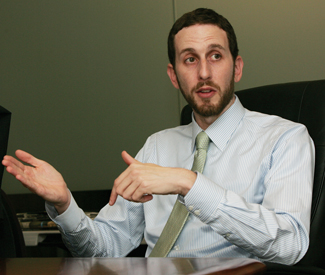
Sup. Scott Wiener is proposing a dramatic overhaul of the city’s environmental review process that would limit the ability of citizen activists to appeal projects and could ease the path for major developments.


The new rules — some of which are fairly simple and routine, others more far-reaching — cover the city’s interpretation and implementation of the California Environmental Quality Act (CEQA), the state’s venerable land-use and environmental oversight law. The legislation is before the Planning Commission and could reach the supervisors in December.


According to city staff and outside analysts, the Wiener proposals would:


• Eliminate the public’s legal right to appeal a ruling by the Planning Commission if the Board of Supervisors has to approve any part of the project.


• Weaken the standard for environmental review by city planners.


• Weaken the public notice requirements for CEQA exemptions.


• Speed up the process for developments by compacting the time frame for CEQA appeals.


“Generally, the amendments decrease the opportunities for individuals and community groups with serious environmental concerns to provide input and assert influence on development projects as part of the CEQA process,” an analysis by Community Economic Development Clinic at Hastings College of the Law notes. “The amendments arguably would streamline the CEQA process for various projects, but at the cost of significantly curtailing public participation.”


Wiener told us that he wants to eliminate lengthy, sometimes unpredictable appeals. “The goal is to make sure we have a good CEQA process but also a more predictable process,” he said. “Right now it’s so chaotic and loose that we have unnecessary delays.”


Aaron Peskin, a former supervisor and neighborhood activist, calls the proposed legislation “a developer’s wet dream. It shuts off or makes impossible citizens’ ability to participate in the environmental review process.”


WHAT ARE THE ABUSES?


At issue is a critical part of city planning, mandated by state law and sharpened by years of court decisions. Before any project is approved, the city’s environmental review officer (ERO) must either determine that the proposal “could not have a significant impact on the environment” or is exempt by law from CEQA review. If not — if in fact the proposal could have an impact — then the project sponsor has to pay for a full environmental impact report.


If any member of the public thinks that the ERO’s decision is wrong — or believes that an EIR is inadequate — he or she can appeal to the Board of Supervisors. An appeal halts all work on the project until the supervisors resolve it.


If the board rejects the environmental review, it doesn’t kill the project — planners just have to go back and write, or rewrite, an EIR.


On a practical basis, appeals are relatively rare — the city, Peskin told us, makes tens of thousands of CEQA determinations every year, and at most a couple dozen get appealed. “I don’t understand what the abuses are,” Peskin said.


But in some cases, opponents of a project file a CEQA appeal after they’ve lost at all the policy bodies — and that, Wiener argues, just slows things down. “If you’re going to appeal, then appeal, but don’t wait around,” he said.


Wiener said his proposals would benefit not only private developers but also nonprofit affordable housing projects. “This will help prevent unnecessary challenges to affordable housing,” he told us.


But Calvin Welch, a member of the Council of Community Housing Organizations who has been working to build affordable housing for more than 30 years, told us he doesn’t see the problem. “CEQA never gets used to stop affordable housing,” he said. “It just doesn’t happen.”


CONSOLIDATED APPEALS


Perhaps the most profound change would eliminate any CEQA appeal for a project that has to go to the supervisors anyway. Wiener’s idea: if the board already has to sign off on, say, a zoning change or a special use district or any finances of a project, the environmental review can be done at the same time. “It’s as if there’s an automatic appeal,” he said.


But that conflicts with the concept of environmental review, critics say. No member of the public has the legal right to a sustainable or environmentally sound project; planning commissions, city councils, and county supervisors can, and often do, approve horrible projects.


But everyone has the right to a complete and fair environmental review. CEQA mandates that the decision-makers accept and acknowledge the consequences of their decisions — and if an EIR is flawed, those consequences can be understated.


Wiener would do away with the mandate that the supervisors hold a hearing, accept appeal briefs, and address CEQA questions as a distinct and separate part of a project approval. “The public would be denied the right to a hearing before the full elected body on the adequacy of an EIR or other CEQA determination,” a Planning Department staff analysis states. “And if a member of the public introduced new information at the committee hearing, there would be no way for the city to respond to or modify the environmental document.”


Among the projects that this provision would affect — where the public would lose the right to appeal an environmental determination: The America’s Cup, the Central Subway, the Parkmerced rebuild, the 8 Washington project, and the California Pacific Medical Center’s billion-dollar hospital proposal.


The proposal would also change the standard city planners apply when they review projects. The current rules require that the city show there is a “fair argument” that a project would have a significant environmental impact. The new language would mandate the staffers find “substantial evidence” that a full review is needed.


“It is likely more projects would require an EIR under the ‘fair argument’ standard and fewer projects would require an EIR under the ‘substantial evidence’ standard,” the Hastings analysis concludes.


And while the Board of Supervisors now has to certify that an environmental determination is accurate and correct, Wiener would change that to a determination that the city has made “an independent judgment” on the merits of the review. That, the Hastings lawyers state, “is a more discretionary standard that would be used to uphold an EIR certification decision even if the board determines that the conclusions and findings in the EIR are incorrect.”


MORE LAWSUITS?


A lot of the language in the complex package of CEQA changes involves public information and notice. Many of the lawyers and activists who have reviewed the legislation say it limits public notification of some CEQA determinations, particularly when the city concludes that a project is categorically exempt.


“If the ERO determines that a project is exempt from CEQA review, he may or may not be required to provide public notice of this determination,” the Hastings analysis states.


There’s no question that it would add to the complexity and burden of filing an appeal; and shorten the time frame for doing so — in a way that some say would actually encourage more lawsuits.


Kevin Bundy, a lawyer with the Center for Biological Diversity, argues that “The proposed amendments create a situation where appellants will be required to file litigation prior to the board’s decision on appeal.”


It’s a complicated situation, but in essence, the new Wiener rules would set the timeline for project approval at the first stage of policy decision — and if the supervisors overturned an environmental appeal, the clock for the project would be set back to that day.


That could upset the statutory timeline for CEQA lawsuits — and thus lead to more cases.


Wiener acknowledged that there were a lot of technical issues like that one that still need to be resolved. “We will be conferring with the people who have commented on the legislation and making the appropriate changes,” he said.


He added, however, that he sticks by the essential parts of his proposal despite the opposition: “There are a lot of CEQA lawyers out there,” he said. “And they aren’t always right.”

Aggressive Warriors

0

steve@sfbg.com

No standard defensive strategy is likely to stop the Golden State Warriors, Mayor Ed Lee, and their huge team of partners and employees from dominating the game of approving construction of a new basketball and concert arena on San Francisco’s central waterfront. That became clear on Nov. 14, as the political operation overcame fire, darkness, and neighborhood-based opposition for the first big score.

The Board of Supervisors Budget and Finance Committee was set to consider declaring the project, which the Warriors want to build on Piers 30-32 by the 2017 basketball season, to be “fiscally feasible,” recommending it move forward with more detailed environmental studies and a term sheet nailing down myriad administrative details.

Before the 11am hearing, the project team held a packed press conference to announce that the Warriors had volunteered to abide by the city’s local-hire standards for public works projects, hiring San Francisco residents or military veterans for at least 25 percent of total construction jobs and 50 percent of apprenticeships. A beaming Lee praised the deal as an “unprecedented” indicator of the Warriors’ willingness to partner with the city.

The event overflowed with union members in hard hats and orange “Build It Now!” T-shirts, as well as a full range of local political pros, from former mayoral and current project spokespersons PJ Johnston and Nathan Ballard to former aides to progressive supervisors, David Owen and David Loyola. Among the agreement’s four signatories were Joshua Arce, the Brightline Defense Project head who last year crusaded for Sup. John Avalos’s local hire ordinance, and building trades chief Michael Theriault.

Strikingly missing at the press conference was Sup. Jane Kim, in whose District 6 the project would be built — over the objections of many residents who are raising concerns about the loss of waterfront views, huge crowds attending what is projected to be more than 200 events per year, high interest rates paid by city taxpayers, the project’s accelerated approval schedule, and other concerns.

Kim is one of the three members of the Budget Committee, which held its meeting despite an electrical fire in the basement of City Hall that knocked out power to the building. Portable photography lighting was brought in to supplement the emergency backup lights, making it bright enough so the televised show could go on but giving a strangely surreal feel to the proceedings and reinforcing the urgency project supporters feel to move this forward without delay.

Kim raised the concerns of her constituents, winning support for amending the resolution to ensure the Citizens Advisory Committee — whose chair was given two minutes to convey how its members feel steamrolled by the accelerated process, asking it be delayed by a month or two — will be given chances to weigh in and pushing the EIR scoping meetings back a few weeks to January.

In the end, Kim and the committee voted to move the project forward. A few days later, on Nov. 19, the process repeated itself with another flashy press conference in the Mayor’s Office — with another important union endorsing the project — followed by the Land Use Committee responding favorably to the project.

The full Board of Supervisors was scheduled to approve the project’s fiscal feasibility the next day, after Guardian press time, but there was little chance that the full board would take any other action than giving the Warriors, Lee, and their huge roster of teammates what they want.

This despite unusual financing and some very real concerns about waterfront development.


JOBS, MONEY, AND SUPPORT

Mayor Lee — who has placed a high priority on this project since announcing his deal with the team in May — emphasized its job creation and contribution to the local economy during the Nov. 19 press conference.

“I remind people, this is a private investment of hundreds of millions of dollars,” Lee said of a project pegged to cost around $1 billion. “It means a lot of jobs, and that is so important to all of us.”

The project is expected to directly create 4,300 jobs: 2,600 construction jobs and 1,700 permanent jobs, including those at the 17,000-seat sports and entertainment arena and the 250-room hotel and 100,000 square feet of retail and restaurants that would be built as part of the project.

“We’ve been spending a lot of these last many months describing what it is we want to build,” Warriors President Rick Welts said at the press conference before casting the project in grander terms. “That’s not really what we’re building. What we’re really building are memories.”

But city residents and workers are looking for more tangible benefits than just the highs of watching big games or concerts. The building trades were already expected to strongly support the project, which only got stronger with last week’s local-hire deal. Labor’s support for the project was broadened on Nov. 19 with the announcement that the Warriors agreed to card-check neutrality for the hotel, making it easier for its employees to join UNITE-HERE Local 2.

“Thank you for being a partner and we’re looking forward to working with you in the future,” Local 2 head Mike Casey, who notably also serves as president of the San Francisco Labor Council, said to Welts at the event before the two signed a formal agreement.

In addition to allowing the hotel workers to easily organize, the Warriors agreed to card-check neutrality for vendors at the arena with at least 15 employees and those outside the arena with more than 45 employees, as well as giving those who now work Warriors’ games at Oracle Arena first dibs on jobs at the new arena.

“I think that speaks a lot about what the project is. It’s not just a San Francisco project, but a Bay Area project,” Casey said. He also said, “I want to thank the mayor for bringing people together and laying all this out.”

While Lee and the Warriors do seem to have this deal pretty well wired, this is still a San Francisco project, a complex one on the politically and environmentally sensitive waterfront that city taxpayers are helping to pay for and one for which the residents there will bear the brunt of its impacts.


PAYING FOR IT

Lee, Office of Economic and Workforce Development head Jennifer Matz, and other key project supporters have repeatedly claimed this project is funded completely with private money, noting how rare that is for urban sports stadiums these days.

But in reality, city taxpayers are spending up to $120 million for the Warriors to rebuild the unstable piers on which the arena will be built, plus an interest rate of 13 percent, an arrangement that has drawn criticism from a key source.

Rudy Nothenberg, who served as city administrator and other level fiscal advisory roles to six SF mayors and currently serves as president of the city’s Bond Oversight Committee, wrote a Nov. 12 letter to the Board of Supervisors urging it to reject the deal.

“Quite simply, I would have been ashamed of such a recommendation,” Nothenberg wrote of the high interest rate. “In today’s markets it is incomprehensible to have such a stunning recommendation brought to your honorable Board in such haste.”

Johnston and Matz each disputed Nothenberg’s characterization, citing a report by the project consultants, the Berkeley-based Economic and Planning Systems Inc. (EPS), that 13 percent is a “reasonable and appropriate market based return.”

Matz told us the rate was based on the risky nature of rebuilding the piers, for which the Warriors are responsible for any cost overruns. And she compared the project to the massive redevelopment projects now underway on Treasure Island and Hunters Point, from which the city is guaranteeing powerful developer Lennar returns on investment of 18.5 percent and 20 percent respectively.

Johnston, who was press secretary to former Mayor Willie Brown and worked with Nothenberg on building AT&T Park and other projects, told us “I have great respect for Rudy.” But then he went on to criticize him for taking a self-interested stand to defend the views from the condo he owns nearby: “They don’t want anything built in their neighborhood. They would rather leave it a dilapidated parking lot.”

But Nothenberg told us his stand is consistent with the work he did throughout his public service career in trying to keep the waterfront open and accessible to the public, rather than blocking those views with a 14-story stadium and hotel complex.

“I have a self-interest as a San Franciscan, and after 20 years of doing the right thing, I don’t want to see this rushed through in an arrogant way that would have been unthinkable even a year ago,” Nothenberg told us. “I spent 20 years of my life trying to deal with waterfront issues.”

He is being joined in his opposition by other neighborhood residents, land use experts such as attorney Sue Hestor, some opponents of the 8 Washington project concerned with the creeping rollback of waterfront development standards, and members of the Citizens Advisory Committee who have felt steamrolled by the rapid process so far and unable to thoroughly discuss the project or the neighborhood’s concerns.

“We would like to slow this process down,” committee Chair Katy Liddell told supervisors on Nov. 14. “Things are going so quickly.”


DETAILS OF THE DEAL

The $120 million plus interest that the city will owe the Warriors would be offset by the $30 million the team would pay for Seawall Lot 330 (the property across from the piers where the hotel would be built), a one-time payment of $53.8 million (mostly in development impact fees), annual rent of nearly $2 million on its 66-year lease of Piers 30-32, and annual tax and mitigation payments to the city of between $9.8 million and $19 million.

Kim raised concerns at the Budget Committee hearing about the more than 200 events a year that the arena will host, but she was told by Matz that’s necessary to make the project pencil out for the Warriors.

Many of the project’s financial and administrative details are still being worked out as part of a term sheet going to the Board of Supervisors for approval, probably in April. Other details will be studied in the project Environmental Impact Report, which is expected to come back to the board in the fall.

The Department of Public Works, Police Department, and — perhaps most critically given its impact on Muni and roadways — Municipal Transportation Agency have yet to estimate their costs.

“We do have a lot of concerns in the neighborhood about this project,” Kim told the Land Use Committee, singling out impacts to the transportation system as perhaps the most important, followed by quality-of-life issues associated with huge crowds of sports fans.

Kim noted that the area already has a problematic transportation infrastructure, with some of the highest rates of motorist-pedestrian collisions in the city and a public transit system that reaches capacity at peak times, and said that many residents worry this project will make things worse. The EIR will deal with the transportation details. But Kim praised how about half the space on the piers, about seven acres, will be maintained as public open space: “I think the open space aspect is incredible and it could actually increase access to the waterfront.” In the end, Kim urged project proponents to heed the input of the CAC and other concerned parties because, “This could be a very valuable project, or it could also be a disaster.”

A crisis of will

10

OPINION In 2009, I was working in Congress when the eminent South African judge Richard Goldstone came to the House of Representatives to defend the UN report he authored on war crimes committed by both Israelis and Palestinians during that year’s war.

Goldstone stood before a few of members of Congress and told them that before they condemned the report, they should at least read it. A few staffers and I sent emails across Capitol Hill offering to hand deliver a paper copy of the entire 575 page report. Only two members took up our offer. That afternoon 344 out of the 435 members of US Congress voted in favor of condemning the report. Most members said the same thing: we need to move forward and not point fingers.

But pointing fingers, Goldstone reminded us, is sometimes the most important thing to do. Without ascertaining who violated the law and therefore who should be held accountable, we create no system of punishment for those who harm civilians. We give them, in short, no incentive not to do such things again. As I left the Capitol building, an Israeli friend who worked with me in support of Judge Goldstone reminded me that in Congress the ultimate four letter word is “accountability.”

Three years later Goldstone’s fear has come true: The same war is happening again. And it is happening again because the US too often looks away when Israel violates international law.

You can almost copy a news article from 2009 and paste it into a newspaper today: Israel kills children in Gaza. Hamas fires rockets into southern Israel, killing civilians. The US issues a statement defending Israel’s right to self defense. The US says Hamas must change its actions but will not deliver these messages to Hamas because the US does not talk to terrorists. Then a few months later, a fact-finding report is released saying Israelis used US weapons and failed to distinguish between civilians and combatants. The UN votes on the report, the US vetoes, and the report’s author, like Goldstone, is vilified. Pundits come on TV and debate who fired first, and Fox News argues if there is a Palestinian proclivity to violence and hopelessness. And finally, NGOs put together donor pitches about how the solution to the Israeli Palestinian conflict is getting Israelis and Palestinians to spend a summer on a picturesque lake in Maine.

But the solution is not getting Israelis and Palestinians to drink tea together. Nor is the solution to investigate Palestinian culture. The solution is addressing US aid to Israel. Last year, the US gave $3.1 billion to Israel. In comparison, Ethiopia received just $580 million. And while US law stipulates that no US weapon should be used to carry out human rights abuses, these laws are seldom applied to Israel. Even when 23-year-old American Rachel Corrie was killed by an Israeli bulldozer, the US did not press Israel for justice.

This is not to absolve Palestinians of guilt—Israelis civilians have also been killed, and we must not forget that. But we should not think this is an Israeli-Palestinian conflict. This is a issue of occupation.

Thankfully there is rising resentment over this lopsided support. Jon Stewart regularly skewers Israel and there is a growing group of Americans—across all faith lines—who wonder if the US should give Israel so much money given its record.

But this shift is not reflected among US politicians. This is a crisis of will, after all, not a crisis of solutions.

Shit happened

0

CASH FOR TRASH

Recology, the city’s garbage monopoly, has a problem: It charges residential customers only for the black cans full of unrecyclable material headed for the landfill — but thanks to city policy and environmental consciousness, there’s less and less traditional trash out there. Ultimately, the company wants to get rid of the big black cans altogether.

So a business model based on offering free recycling and compost doesn’t work any more — and everyone has known for some time that it had to change.

But there was no discussion of rate changes earlier this year; in fact, Recology folks said there were no plans for an immediate rate hike in the works. That’s because the June ballot included a measure that would have created competitive bidding for the city’s garbage contract — and the last thing Recology wanted was the threat of a rate hike to drive voters toward amending the 1932 City Charter provision that gives just one company complete control over the lucrative waste franchise.

Ah, but the June election is long over, and Recology beat back that effort — so the rate hike we all expected is now on the table.

On Sept. 11, Recology informed the city that it intends to apply for a new rate structure — and while the process is long and convoluted, we’ll see the details in a few weeks, and you can expect to start paying more for your service by next summer.

There’s no formal proposal yet — that will come in December. The director of the Department of Public Works has to approve it, and so does a Rate Board made up of the city administration, the controller and the head of the Public Utilities Commission. But both Recology and the city say there will be some significant changes in the way San Franciscans pay to have their refuse removed.

“We can’t focus our financial operations on a black can if we’re trying to get rid of it,” Recology spokesperson Eric Potashner told us.

Douglas Legg, the finance director at the Department of Public Works agrees. “As we’ve been pushing diversion, the blue and green cans have been pretty heavily subsidized.”

But shouldn’t good habits, like recycling, be subsidized? Should people who recycle and compost more be penalized? “That’s the challenge,” Potashner said.

And in the end, it’s going to be more than a shift in which bins cost how much. There’s no doubt that your bills will be rising, perhaps by a significant amount. “I assume it will go up,” Legg said. “There hasn’t been a cost-of-living increase since 2010.”

Which, of course, brings back the competitive bidding point. If others had a chance to make a play for the city contract, might rates be lower? Or might the city get more out of the deal?

Retired Judge Quentin Kopp, who helped spearhead the campaign for competitive bidding, thinks so. “If we had competitive bidding,” he told us, “these rate hikes would be more moderate.”

OPENING THE LAST CLOSET DOOR

While most everyone’s attention was focused on electoral politics in late October, Supervisors David Campos and Christina Olague were talking about a different level of political issue, one that’s still a huge taboo: Gay men in professional sports. At an Oct. 30 press conference, the two LGBT supes joined with representatives of The Last Closet, an SF-based campaign that’s trying to get gay professional athletes to come out.

It’s remarkable (or maybe, sadly, it isn’t) that in 2012, not one openly gay man has played in any of the Big Five pro sports (football, basketball, hockey, baseball and soccer). There are, everyone knows, plenty of gay athletes, and the NFL, NBA, NHL, MLB and various soccer associations all have gay players. Some of them have come out after they’ve retired. But on the field (or on the floor, or on the ice)? No way.

Why does anyone care? Because youth sports are still, even in this town, full of homophobic language and homophobic attitudes, and it’s hard to imagine what young LGBT football or basketball players have to endure. Even one gay player could make a world of difference.

“What I saw with the San Francisco Giants, all of the Latino players, was such a source of pride to Latino boys and girls,” Campos told us. “We can’t feel that in the LGBT community. We know there are gay baseball players, but the LGBT youth don’t have those role models to look up to.”

The Last Closet campaign emerged out of a documentary film project that sought to look at homophobia in pro sports. “It became clear that some members of the sports hierarchy were not going to make themselves available to speak about this taboo subject,” the group’s website notes.

In fact, Fawn Yacker, one of the project directors, told us that nobody in a senior position in any sports organization was willing to talk — and that’s turned the movie into a political campaign. “We want the fans to push the sports leaders to address this,” she said.

In fact, all The Last Closeters want right now is for the commissioners of the major sports leagues to make a statement that homophobia is unacceptable and that the leagues will do everything possible to make sure that out gay players are accepted. Seems like a pretty simply no-brainer — but so far, not one sports official has gone along.

It’s pretty crazy, considering that it’s almost inevitable that a few major sports athletes will come out in the next few years — and the leagues are going to look foolish if they pretend it’s not going to happen. Any bets on which sport is going to be the first? “I don’t know,” Yackey said. “I think it might be hockey.” 

Protest — and run for office

1

OPINION Millions of Americans are eager, even desperate, for a political movement that truly challenges the power of Wall Street and the Pentagon. But accommodation has been habit-forming for many left-leaning organizations, which are increasingly taking their cues from the party establishment: deferring to top Democrats in Washington, staying away from robust progressive populism, and making excuses for the Democratic embrace of corporate power and perpetual war.

It’s true that many left-of-center groups are becoming more sophisticated in their use of digital platforms for messaging, fundraising and other work. But it’s also true that President Obama’s transactional approach has had demoralizing effects on his base. Even the best resources — mobilized by unions, environmental groups, feminist organizations, and the like — can do only so much when many voters and former volunteers are inclined to stay home.

For people fed up with bait-and-switch pitches from Democrats who talk progressive to get elected but then govern otherwise, the Occupy movement has been a compelling and energizing counterforce. Its often-implicit message: protesting is hip and astute, while electioneering is uncool and clueless. Yet protesters’ demands, routinely focused on government action and inaction, underscore how much state power really matters.

To escape this self-defeating trap, progressives must build a grassroots power base that can do more than illuminate the nonstop horror shows of the status quo. To posit a choice between developing strong social movements and strong electoral capacity is akin to choosing between arms and legs. If we want to move the country in a progressive direction, the politics of denunciation must work in sync with the politics of organizing — which must include solid electoral work.

Movements that take to the streets can proceed in creative tension with election campaigns. But even if protests flourish, progressive groups expand and left media outlets thrive, the power to impose government accountability is apt to remain elusive. That power is contingent on organizing, reaching the public and building muscle to exercise leverage over what government officials do — and who they are. Even electing better candidates won’t accomplish much unless the base is organized and functional enough to keep them accountable.

Politicians like to envision social movements as tributaries flowing into their election campaigns. But a healthy ecology of progressive politics would mean the flow goes mostly in the other direction. Election campaigns should be subsets of social movements, not the other way around.

For progressives, ongoing engagement with people in communities has vast potential advantages that big money can’t buy — and (we hope) can’t defeat. But few progressive institutions with election goals have the time, resolve, resources or patience to initiate and sustain relationships with communities. For the most part, precinct organizing is a lost art that progressives have failed to revitalize. Until that changes, the electoral future looks bleak.

Norman Solomon is founding director of the Institute for Public Accuracy and co-founder of rootsaction.org. A longer version of this piece appears in the Nov. 24 edition of The Nation.

Sorting out a strange election

120

steve@sfbg.com, tredmond@sfbg.com

The way the San Francisco Chronicle pundits put it, Mayor Ed Lee was the clear winner in a grand San Francisco election. “All his measures on the ballot won hands down,” noted Willie Brown, the high-paid lawyer and political operative who also functions as a Chron columnist. “It was a great day for Ed Lee,” proclaimed columnist C.W. Nevius.

Well, not really.

There are a lot of ways to explain and analyze the inconsistent results of one of the most heavily propagandized elections in recent San Francisco history. But no matter how you look at it, the election was at best a wash for the mayor. Indeed, we’d argue that voters rejected the basic premise of the mayor’s political agenda – that tax cuts and favors for big business are the best economic policy – despite record-breaking outside spending selling that agenda and targeting those who stood in its way.

Let’s take a look at the real facts:

• Every single initiative backed by the mayor, the ones he’s getting credit for – from the City College parcel tax to the housing fund to the business tax – was either a compromise with progressives or a measure that originated on the left. There was nothing the mayor pushed that had any significant progressive opposition; his wins were equally, if not more dramatically, wins for the left.

• Both people the mayor appointed to office were soundly rejected by the voters. Rodrigo Santos, his high-profile appointee to the troubled City College Board of Trustees, spent almost $200,000 and finished a distant sixth. Sup. Christina Olague lost to the candidate Lee had rejected for appointment, London Breed, in a complicated race where the mayor’s actual role was unclear (he never withdrew his endorsement of Olague even as his allies trashed her in nasty ways).

• A million-dollar effort funded by some of the mayor’s allies to oust Sup. Eric Mar was a spectacular failure, suggested some serious problems in the mayor’s political operation, and undermined his emphasis on “civility.”

• The voters made clear on every level that they believe higher taxes on the wealthy and closing tax loopholes on big business are the right approach to the economy and to funding government. From Prop. 30 to Prop. 39 to Prop. A to Prop. E, the message was pretty clear: The tax revolt that started in California in 1978 may be winding down, and the notion of making property owners and the wealthy pay for education and public services is no longer a radical idea.

Robert Cruikshank, who writes for the Calitics blog, argues that the November election signals a major sea change in California. “[The] vote to pass Prop 30 — by a larger margin than most observers expected — does more than just provide $6 billion of badly needed funding to the state’s public school,” he wrote. “It brings to a close a 34-year long tax revolt that came very close to destroying California’s middle class, locking its low income families into permanent poverty, and left the state on the edge of financial ruin.”

That sounds like a progressive message. The agenda put forward by the mayor’s closest allies, including right-wing billionaire Ron Conway, who played a heavy-handed role in this election, not only failed to carry the day; the big-money types may have overplayed their hand in a way that will shape the political narratives going forward.

A LOT OF CONSENSUS

Let’s start with the ballot measures (before we get to the huge and confusing mess that was D5).

Proposition A, the parcel tax for City College, didn’t come out of the Mayor’s Office at all; it came from a City College board whose direction the mayor tried to undermine with the appointment of Santos, a pro-development engineer so conservative that he actually endorsed the Republican opponent of Assembly member Tom Ammiano.

Lee didn’t even endorse Prop. A until a few weeks before the election, and played almost no role in raising money or campaigning for its passage (see “Words and deeds,” 9/11/12). Yet it got a higher percentage of the vote than any of the three measures that Lee actively campaigned for: Props. B, C, and E.

Then there’s Prop. C, the Housing Trust Fund. Lee’s office played a central role in drafting and promoting the measure -– but it wasn’t exactly a Lee initiative. Prop. C came out of the affordable housing community, and Lee, who has strong ties to that community, went along. There were tough negotiations -– the mayor wanted more guarantees and protections for private developers -– and the final product was much more what the progressives who have spent decades on the housing front wanted than what the mayor would have done on his own.

The way the mayor envisioned business-tax reform, the city would have eliminated the payroll tax, which tech firms hate, and replaced it with a gross-receipts tax -– and the result would have been revenue-neutral. It was only after Sup. John Avalos and the progressives demanded that the tax actually bring in more money that the outlines of Prop. E were drafted and it received strong support from groups across the ideological spectrum.

“You had a lot of consensus in the city about these ballot measures,” political consultant David Latterman, who usually works with downtown-backed campaigns, said at SPUR’s post-election round-up.

The supervisorial races were a different story, with unprecedented spending and nasty messaging aimed at tipping the balance in favor of real estate and development interests. Mayor Lee didn’t get directly involved in the District 1 race, but he was clearly not a supporter of incumbent Sup. Eric Mar.

The real-estate and tech folks who are allied with Lee spent more than $800,000 trying to oust Mar — and they failed miserably, with Mar winning by 15 points. While Mar did have the backing of Chinatown powerbroker Rose Pak, who raised money and helped organize ground troops to help, Mar’s victory was primarily the result of a massive outpouring of support from labor and progressive activists, many reacting to the over-the-top effort to oust him.

Mar, who voted to put Lee in office, won’t feel a bit indebted to the mayor for his survival against a huge money onslaught. But in District 5, the story was a whole lot more complicated, and impact more difficult to discern.

THE D5 MESS

Before we get into what happened in D5, let’s dispel some of the simplistic and self-serving stories that circulated in the wake of this election, the most prominent being that Olague’s loss -– the first time an incumbent was defeated in a ranked-choice election –- was payback for crossing Mayor Lee and voting to reinstatement Sheriff Ross Mirkarimi.

It’s certainly true that Lee’s allies went after Olague and supported London Breed, and that they tried to make an issue of domestic violence, but there was much, much more to this district election. Breed is an SF native with a compelling personal story who ran a strong campaign –- and that three strongest progressive candidates in the race each had major flaws that hurt their electability. By most accounts, the Olague campaign was a disaster until the very end. Equally important, the progressive community was divided over D5, leaving room for Breed to slip in.

“It’s hard to unravel what happened here,” Latterman said.

San Francisco Women for Responsibility and an Accountable Supervisor was an independent expenditure group fronted by domestic violence advocates and funded by more than $100,000 from the families of Conway and fellow right-wing billionaire Thomas Coates. It attacked Olague’s Mirkarimi vote as being soft on domestic violence — but it also did a last minute mailer criticizing Olague’s vote for CleanPowerSF, muddling its message of moral outrage.

On election night, Olague told us she believed her split with the Mayor’s Office really had more to do with CleanPowerSF –- which the board approved with a veto-proof majority over the objections of Lee and the business community –- and with her insisting on new revenue from Prop. E than it did with Mirkarimi, whose ouster she dismissed as “a power play” aimed at weakening progressives.

“They don’t want to say it, but it was the whole thing around CleanPowerSF. Do you think PG&E wanted to lose its monopoly?” she said.

Yet Olague said the blame from her loss was also shared by progressives, who were hard on her for supporting Lee, courting his appointment to the D5 seat, and for voting with him on 8 Washington luxury condo project and other high-profile issues. “The left and the right both came at me,” she told us. “From the beginning, people were hypercritical of me in ways that might not be completely fair.”

Fair or not, Olague’s divided loyalties hurt her campaign for the D5 seat, with most prominent progressives only getting behind her at the end of the race after concluding that John Rizzo’s lackluster campaign wasn’t going anywhere, and that Julian Davis, marred as he was by his mishandling of sexual impropriety accusations, couldn’t and shouldn’t win.

Olague told us she “can’t think of anything I would have done differently.” But she later mentioned that she should have raised the threats to renters earlier, worked more closely with other progressive candidates, and relied on grassroots activists more than political consultants connected to the Mayor’s Office.

“The left shouldn’t deal with consultants, we should use steering committees to drive the agenda,” Olague said, noting that her campaign finally found its footing in just the last couple weeks of the race.

Inside sources say Olague’s relations with Lee-connected campaign consultant Enrique Pearce soured months before the campaign finally sidelined him in the final weeks, the result of his wasteful spending on ineffective strategies and divided loyalties once a wedge began to develop between Olague and the Mayor’s Office.

Progressive endorsements were all over the map in the district: The Harvey Milk Club endorsed Davis then declined to withdraw that endorsement. The Tenants Union wasn’t with Olague. The Guardian endorsed Rizzo number one. And none of the leading progressive candidates had a credible ranked-choice voting strategy — Breed got nearly as many second-place votes from Davis and Rizzo supporters as Olague did.

Meanwhile, Breed had a high-profile falling out with Brown, her one-time political ally, after her profanity-laden criticism of Brown appeared in Fog City Journal and then the San Francisco Chronicle, causing US Sen. Dianne Feinstein to withdraw her endorsement of Breed. That incident and Olague’s ties to Lee, Brown, and Pak may have solidified perceptions of Breed’s independence among even progressive voters, which the late attacks on her support from landlords weren’t ever able to overcome.

Ironically, while Breed and some of her prominent supporters, including African American ministers in the district, weren’t happy when Lee bypassed her to appoint Olague, that may have been her key to victory. Latterman noted that while Olague was plagued by having to divide loyalties between Lee and her progressive district and make votes on tough issues like reinstating Mirkarimi –- a vote that could hurt the D5 supervisor in either direction -– Breed was free to run her race and reinforce her independence: “I think Supervisor Breed doesn’t win this race; challenger Breed did.”

But even if Breed lives up to progressive fears, the balance of power on the Board of Supervisors could be up in the air. District 7 soundly rejected Mike Garcia, the hand-picked successor of the conservative outgoing Sup. Sean Elsbernd.

At press time, progressive favorite Norman Yee seemed headed for victory, although FX Crowley was within about 30 votes, making this too close to call. But either way, the once-solid conservative seat will now be a swing vote on many issues, just as Breed will be in the once-solid progressive D5.

“The Board of Supervisors as a whole is becoming a helluva lot more interesting,” was how political consultant Alex Clemens put it at SPUR election wrap-up. “Determining what’s going to happen before it happens just got more difficult.”

GOBS OF MONEY

The other big story of this election was money, gobs of it, and how it can be spent effectively — or used to raise suspicions about hidden agendas.

Third-party spending on D1 loser David Lee’s behalf was $454,921, with another $219,039 to oppose Mar, pushing total spending to defeat Mar up over the $1 million mark, roughly doubling the previous record. Labor groups, meanwhile, spent $72,739 attacking Lee and $91,690 backing Mar. But many political analysts felt that lop-sided spending only served to turn off voters and reinforce the idea that powerful interests were trying to buy the seat.

In District 5, the landlords, Realtors, and tech moguls spent $177,556 in support of Breed, while labor spent $15,067 attacking her as a shill for the landlord lobby. The only other D5 candidate to attract significant spending by outside groups was Olague, who had $104,016 spent against her, mostly by the families of Conway and Coates, and $45,708 spent in support of her by SEIU 1021. Yet ultimately, none of these groups bought very much with their money. Conway, Salesforce CEO Marc Benioff, and San Francisco Association of Realtors each spent hundreds of thousands of dollars of their money, and the most obvious result was to convince San Franciscans that they’re working together to move an agenda in San Francisco. They may have the mayor on their side, but in a politically sophisticated city like San Francisco –- with its cost of living being driven up by the schemes of Lee, Conway, and the Realtors -– they seem to have a long way to go before they achieve they’re stated desire of destroying the progressive movement, particularly with its rising new leaders on the left, including Matt Haney and Sandra Fewer on the school board and Steven Ngo and Rafael Mandelman on the City College board. As Haney said on Election Night, “It was a good night for progressive San Francisco,” which stands for important egalitarian values. “We are the ones about equity and compassion. That’s what this city is about.”


District surprises

1

tredmond@sfbg.com

EDITOR’S NOTES The Wall Street Journal, which ought to focus on stellar reporting and skip the political analysis, stuck its haughty little nose into California last week, announcing that the Democratic supermajorities in the state Legislature spell doom for us all.

“Liberals,” the paper noted, “will pick up enough seats to secure a supermajority. Governor Jerry Brown then will be the only chaperone for the Liberals Gone Wild video that is Sacramento.”

I guess I go to the wrong parties, but I’ve never seen that movie. In fact, a lot of the Dems in Sacramento would have to cough and gasp a bit to call themselves “liberals,” and that’s on a good day. Frankly, the majority party in the Assembly and Senate tends to be relatively conservative, with many of its members afraid to so much as talk about, say, amending Prop. 13 or legalizing marijuana.

The bigger danger is that the Democrats from the more moderate districts will so fear that loss of their seats that they’ll want to be even more cautious about raising taxes than the Republicans.

See, I don’t think either party quite realizes what happened Nov. 6 in California, and what it means for the future.

This election wasn’t an anomaly. It wasn’t a miraculous twist of fate driven by high Obama turnout or by labor’s GOTV efforts to defeat Prop. 32. It was the inevitable result of two forces — the demographic changes in the electoral map of this state, and the utter, complete collapse of the California Republican Party. Neither one is about to change any time soon.

For decades, the GOP has focused on older, white, suburban voters, and there was a time when that strategy worked. But the future of the state is younger, non-white urban voters who are less frightened by crime, less xenophobic about immigration, less likely to have kids in private schools, and largely uninterested in the traditional Republican social issues.

Brian Leubitz, the insightful blogger at Calitics.com, notes that almost 30 percent of the people who went to the polls Nov. 6 were between 18 and 29 years old. “The California GOP, like the greater national party, has lost young voters,” he writes. “If it hopes to return to a semblance of a statewide party, it will need to moderate itself back into a party that accurately represents some portion of California’s electorate.”

How likely is that? Anyone want to bet that the GOP is going to reject the Howard Jarvis Taxpayers Association the right-wing radio guys in Los Angeles and start promoting immigration reform and an overhaul of Prop. 13? You’ll have to give me pretty long odds.

No: The era of Democratic supermajorities in the California Legislature is here to stay for a while, and the Dems might as well use it. No need to be afraid of a backlash; there’s nothing out there to lash back with. The only real danger is that Democrats and independents will be so disappointed in the Legislature’s failure to act on the huge issues facing the state that they’ll stay home in two years.

Why not talk about a split-role property tax program? Why not an oil-severance tax? Why not let local government raise local taxes without a two-thirds majority? The Wall Street Journal can whine all it wants, but it can’t change reality — right now, the Democrats are the only game in town.


Editor’s notes

0

tredmond@sfbg.com

EDITOR’S NOTES The Wall Street Journal, which ought to focus on stellar reporting and skip the political analysis, stuck its haughty little nose into California last week, announcing that the Democratic supermajorities in the state Legislature spell doom for us all.

“Liberals,” the paper noted, “will pick up enough seats to secure a supermajority. Governor Jerry Brown then will be the only chaperone for the Liberals Gone Wild video that is Sacramento.”

I guess I go to the wrong parties, but I’ve never seen that movie. In fact, a lot of the Dems in Sacramento would have to cough and gasp a bit to call themselves “liberals,” and that’s on a good day. Frankly, the majority party in the Assembly and Senate tends to be relatively conservative, with many of its members afraid to so much as talk about, say, amending Prop. 13 or legalizing marijuana.

The bigger danger is that the Democrats from the more moderate districts will so fear that loss of their seats that they’ll want to be even more cautious about raising taxes than the Republicans.

See, I don’t think either party quite realizes what happened Nov. 6 in California, and what it means for the future.

This election wasn’t an anomaly. It wasn’t a miraculous twist of fate driven by high Obama turnout or by labor’s GOTV efforts to defeat Prop. 32. It was the inevitable result of two forces — the demographic changes in the electoral map of this state, and the utter, complete collapse of the California Republican Party. Neither one is about to change any time soon.

For decades, the GOP has focused on older, white, suburban voters, and there was a time when that strategy worked. But the future of the state is younger, non-white urban voters who are less frightened by crime, less xenophobic about immigration, less likely to have kids in private schools, and largely uninterested in the traditional Republican social issues.

Brian Leubitz, the insightful blogger at Calitics.com, notes that almost 30 percent of the people who went to the polls Nov. 6 were between 18 and 29 years old. “The California GOP, like the greater national party, has lost young voters,” he writes. “If it hopes to return to a semblance of a statewide party, it will need to moderate itself back into a party that accurately represents some portion of California’s electorate.”

How likely is that? Anyone want to bet that the GOP is going to reject the Howard Jarvis Taxpayers Association the right-wing radio guys in Los Angeles and start promoting immigration reform and an overhaul of Prop. 13? You’ll have to give me pretty long odds.

No: The era of Democratic supermajorities in the California Legislature is here to stay for a while, and the Dems might as well use it. No need to be afraid of a backlash; there’s nothing out there to lash back with. The only real danger is that Democrats and independents will be so disappointed in the Legislature’s failure to act on the huge issues facing the state that they’ll stay home in two years.

Why not talk about a split-role property tax program? Why not an oil-severance tax? Why not let local government raise local taxes without a two-thirds majority? The Wall Street Journal can whine all it wants, but it can’t change reality — right now, the Democrats are the only game in town.


The Latin dish

1

news@sfbg.com

San Francisco is a literate community, always has been. Bookstores abound, perhaps not as much as bars, but that’s fish for another soup. The literary scene is uber-vibrant, as highlighted by the recent Litquake Festival with more than 800 writers reading in hundreds of venues.

But looked at from another perspective, the most recent study on adult literacy reveals startling numbers: Nationwide one in seven adults is illiterate, about 14 percent of the adult population. The same study cited San Francisco with an adult illiteracy rate of 18 percent, or nearly one in five adults (National Assessment of Adult Literacy, 2003).

One out of five adults in San Francisco is illiterate and we have 11 supervisors—it’s scary, right? If I think too much about this it keeps me up at night.

So I am proposing that our elected officials, especially our supervisors, post their reading lists on their websites, for the electorate to view, perhaps to even offer comments or questions.

Nothing reveals more about the human heart—who you are, your world view, your interests—than what you’re reading. Where do they get the recipes for all the laws they cook up? Do they read newspapers—I mean community newspapers? Poetry? Fiction? Non-fiction? Adrian Rich? Isabel Allende? Machiavelli? I would like to see the list of their dictionaries, and I hope to see lots of bilingual ones—like Spanish-English, Cantonese-English, Tagalog-Spanish-English, Russian-English. Caló. Me entiendes, Méndez? Or is it English-only dictionaries?

In the best of worlds we would find on their reading lists poetry, novels, history, art, philosophy.

One way out of this morass of violence brought to us in burning color by the powers that be…might just be a poem. Something created by another human being, easy to hold in one hand, or folded in the pocket—sometimes the gift of peace is as simple as that.

It’s not just about books, but writing and stories that speaks to us, our sense of who we are, who we have been—and, if there’s any time left on this planet, where we might be going.

One of the biggest problems in our society right now is that too many politicos run around downplaying reading and writing—proud of the fact they’ve never read a book, don’t know cacahuates about poetry or literature, much less art or music, and could care less. But we live in one of the great literary cities, rich with song and poetry going way back before any Euro cats showed up trapping beavers or digging for gold. So to ignore this heritage would be foolish for any politician. After all—as the wise poet once said, “Poetry is the best word in the best place.”

If we are truly a literate city—the City of Poets — then it must be all of us, from four-year-olds to 100-year-olds. We must all be good readers: From the Rammaytush songs still drifting in the fog that sweeps over Twin Peaks, to Maria Amparo Ruíz de Burton to Oscar Zeta Acosta, the Brown Buffalo, to Roberto Frost. Or any of the past poet laureates will do just fine, Ferlinghetti, Mirikitani, major, Hirschman, di Prima, a virtual all-star lists of voices, styles, visions.

As part of a literacy campaign aimed at city officials and our elected leaders, two poets Virginia Barrett and Bobby Coleman, have put together an anthology Occupy SF: poems from the movement that includes more than 100 poets, from Lawrence Ferlinghetti, devorah major and Jack Hirschman to many emerging poets. The two editors have launched a campaign to place this anthology in the hands of every city bureaucrat and elected official. They are operating as a nonprofit, and all proceeds go to benefit the evolving Occupy movement. The anthology is published by Jambu Press/Studio Saraswati, which can be contacted via email: saraswati.sf@gmail.com or snail mail at PO Box 720050, SF 94172.

And please, political leaders — no excuses about how busy you are. If that’s the case maybe you should retire so you can take some time to read.


A POETIC PAELLA


All the ingredients can be found

At your local bookstore


Take the honey from many languages

The poetic juice from many cultures

The crying songs of many lands

The spices of diverse foods

The love a parent has for a child

The love a child has for the wind

Include an image of bound feet

Discovered in a 19th century photo book

Plus the history of war crimes

Seasoned with the salt of exile

The lovers’ caress before sex

Blend them together In any order You will find wisdom in every bite

Alejandro Murguía is San Francisco’s poet laureate. His column will appear regularly.

The practice of politics

119

steve@sfbg.com

ESSAY San Francisco’s progressive movement needs restoration and renewal. Our focus on immediate fights and indignities has blurred our perspective on the larger, longer struggle for a more just, sustainable, and inclusive society. It’s time to regain that vision by taking a new path and practicing a different kind of politics.

Back-to-back local scandals involving progressive male politicians treating women badly have spawned waves of ugly reactions and recriminations on all sides. Those frustrations have bubbled up against an overwhelming tidal wave of money from wealthy individuals and corporations used to deceive and divide the voting public on the local and national levels.

Real concerns about domestic violence have been reduced to an election-year weapon, cheapening an important issue. Stubborn injustices like lack of gender equity in pay and promotions and access to contraception have been countered with mythical “binders full of women,” a new take on the old dodge of personal responsibility. Unacceptable groping or grabbing is alternatively denied, dismissed, or blamed on the women. Little has changed except the modern polish on our dated pronouncements.

The turbulence of this political year has tested our tolerance and we’ve lost our balance, if not our minds from time to time. But we can learn from our mistakes. San Franciscans should be leading the way forward, not just with our gadgets and technological innovations, but with the example we set in how we practice our politics.

Perhaps I’m not the best one to call out my comrades and propose our next steps. I’m a single, straight man, and I’ve fought as fiercely as anyone on behalf of the Guardian’s progressive values and worldview, sometimes resorting to the same nastiness that we’ve seen bubbling over this year.

But as I’ve covered this year’s high-profile political scandals involving Ross Mirkarimi and Julian Davis for the Guardian — and read the vitriolic comments reacting to my stories and expressed in public forums — it has caused me to rethink my own approach and that of the progressive movement. So I want to offer my insights, make amends, and contribute to the dialogue that our community desperately needs to have.

***

Let me start by saying that I understand why people perceive political conspiracies against Mirkarimi, Davis, and other progressive politicians in San Francisco. Wealthy interests really do have a disproportionate influence over the decisions that are shaping this city’s future, to the detriment of the working and creative classes.

A small group of powerful people installed Ed Lee as mayor using calculated deceptions, and he has largely been carrying out their agenda ever since, practicing dirty politics that have fractured and debilitated the progressive movement. In this election cycle, we saw the willingness of Lee’s deep-pocketed benefactors, such as right-wing billionaire Ron Conway, to shatter previous spending records to achieve their unapologetically stated goal of destroying San Francisco’s progressive movement.

But if we want to replace economic values with human values — emphasizing people’s needs over property and profits, which is the heart of progressivism — we can’t forget our humanity in that struggle. Choosing conflict and the politics of division plays into the hands of those who seek to divide and conquer us. We need to embody the change we want to see and build new systems to replace our ailing political and economic models.

When Mayor Lee decided in March to suspend Sheriff Mirkarimi without pay and without any investigation — and by the way, showing no interest in hearing from the alleged victim, Eliana Lopez — progressives had good reason to be outraged. Domestic violence advocates and the Chronicle’s editorial writers may not see it this way, but I understand why it seemed politically motivated.

I also understand why people wanted Mirkarimi gone, believing that someone who admitted to domestic violence couldn’t possibly remain San Francisco’s chief elected law-enforcement officer. This was a black-and-white issue for them, and they saw progressive opposition to his removal as condoning his actions, despite our arguments that his criminal punishment was separate from the question of what the standard should be for removing an elected official from office.

Both sides fervently believed in their respective positions and were largely talking past one another, unable to really communicate. Positions hardened and were charged with emotion until they boiled over during the Oct. 9 hearing on Mirkarimi’s removal.

But there’s never any excuse for booing or making derogatory comments to domestic violence advocates who braved a hostile crowd to offer their opinions on the issue. Tolerance and respect for differing opinion are core progressive tenets, and our faith in those values must override our emotional impulses, which only feeds a fight that we lose just by fighting.

It was against this backdrop — and partially as a result of this polarized climate — that revelations of Davis’ bad behavior toward women were made public. Davis is a friend of mine, and I was aware that he could act like an over-entitled jerk toward women, particularly during his worst period several years ago, although I had no idea how bad it really was.

As with many political scandals, the issue here wasn’t just the original incidents, but how someone responds to them. That’s the mark of someone’s character and integrity. Most people do the wrong thing sometimes, but if we learn from our mistakes and truly make amends — which isn’t something we claim, but something offered to us if our intentions seem true — then we become better people.

As we said in our editorial withdrawing our endorsement from Davis a few weeks ago, being a progressive has to be more about the movement than the person, and it’s time that we remember that. So as a movement, the moment has arrived to come clean, admit our flaws, start anew, and try to lead by our example rather than our rhetoric or our stands on the issues.

***

They say confession is good for soul, so let me give it a shot. Shortly after Sup. Jane Kim took office in 2010, we had a series of confrontational conflicts over some votes she made and her failure to come clean about what her relationship was with Willie Brown, which seemed to me related. She offered a misleading answer to my question and then said she wouldn’t answer any more questions from me, which infuriated me because I believe politicians have a duty to be accountable. And so I continued to be hard on her in print and in person.

Now, I realize that I was being something of a bully — as political reporters, particularly male reporters, have often been over the years. I want to offer a public apology for my behavior and hope for forgiveness and that our relationship — which was a friendly one since long before she took office — can be better in the future.

While I felt that I was treating Kim like I would any politician, and I probably was, the fact is that the style of combative political exchanges — embodied in the last decade by Mirkarimi, Chris Daly, Aaron Peskin, and many others, mostly men but some women like Carole Migden — is what has brought the progressive movement and San Francisco politics in general to the lowly point that we now find ourselves.

My old friend and ex-girlfriend Alix Rosenthal and other political women I know have long tried to impress upon me the value of having more females in office, regardless of their ideology, as long as they aren’t actual conservatives. I have always bristled at that idea, believing ideology and political values to be more important than identity politics, which has been used as a wedge to divide the progressive movement.

At first, I supported Davis because I saw in him a progressive warrior. But most progressives know in our hearts that nobody wins wars. We are all diminished just for fighting them, and their fallout can be felt in unexpected ways for years to come. Even though I agreed with the Board of Supervisors decision to reinstate Mirkarimi, I felt sad and sick watching the celebrations that followed, and I understood that winning that battle might do real damage to the progressive movement.

So I’m proposing that we just stop fighting. We need to stop demonizing those we don’t agree with. “We are not the enemy,” Domestic Violence Consortium head Beverly Upton told supervisors at the Mirkarimi hearing, and she’s right. We can still disagree with her position, and we can say so publicly and call for her to talk to Lopez or take other steps, but we shouldn’t make her an enemy.

***

Having written this essay before the Nov. 6 election, I don’t know the outcome, but I do know progressive power is waning just as we need it most. Landlords and Realtors are intent on rolling back renter protections, while technology titans and other corporate leaders will keep pushing the idea that city government must serve their interests, something the mayor and most supervisors already believe. And they’re all overtly hostile to progressives and our movement.

Against this onslaught, and with so much at stake, the temptation is to fight back with all our remaining strength and hope that’s enough to change the dynamics. But it won’t. Now is the time to organize and expand our movement, to reach out to communities of color and the younger generations. We need to grow our ability to counter those who see San Francisco as merely a place to make money, and who are increasingly hostile to those of us standing in their way.

It may sound trite, but we need to meet their hate with our love, we need to counter their greed with our generosity of spirit. In the year 2012, with all the signs we see in the world that the dominant economic and political systems are dying, we need to work on building our capacity to create new systems to replace them. If they want to build a condo for a billionaire, we should find a way to build two apartments for workers. If they want to bend the campaign rules and dump millions of dollars into one of their candidates, we should use free media and bodies on the street to stand up for someone with more integrity.

Our heroes are people like MLK and Gandhi, and — and most recently and perhaps more relevantly, Arundhati Roy, Amy Goodman, and Aung San Suu Kyi — and we should heed their examples now more than ever. I’m not going to presume to lay out a specific agenda or new tactics, leaving that leadership to those who embody the new approaches and visions that I’m willing to learn and lend my energies and experience to supporting.

But the one essential truth that I’ve come to embrace is that our current struggles and paradigms are as unsustainable as the system that we’re critiquing. It’s time to embrace a new way of doing things, and to join the vast majority of people around the world in creating a new era.

KCSM and the future of community TV

0

OPINION On October 24th, the San Mateo Community College District Board of Trustees voted unanimously to reject the final two bidders (of an original six) for the broadcast license for KCSM television, bringing to an end an 18-month process by the district to try to sell the television broadcast license housed at the College of San Mateo since 1964. KCSM television reaches 10 Bay Area counties and is broadcast on 60 municipal cable systems in Northern California.

The 48-year old TV station was originally established as a broadcast training facility. From 1964 to 1980, the College of San Mateo ran one of the most comprehensive broadcast journalism programs in the country. In 2004, the station converted to a digital-only signal and in 2009, dropped PBS affiliation and became one of the largest independent public televisions stations in the country.

The district, which operates the College of San Mateo, Skyline College and Canada College, has experienced the severe financial pressures affecting California higher education generally and community colleges in particular. Throughout the US, colleges and universities have been shedding non-commercial broadcast licenses at a rapid rate, causing a crisis in independent media that has long had a home at educational facilities. KCSM-TV is the largest Bay Area media asset to go on the chopping block so far.

KCSM currently broadcasts a block of distance learning opportunities and on-line courses that provide a lifeline to many Bay Area residents who for reasons of disability or family obligations can’t participate in campus-based education. It also features a variety of cultural-exchange, craft/hobby, theatrical and informational programs including Ideas in Action, the Miller Center forums and Moyers and Company. The station is also one of the few sources for children’s programs free of commercials and provides 16 hours of week of kids TV.

Educational broadcasters are a bulwark against the commercially-driven broadcast media, whose need to deliver eyes and ears to advertisers compels them to avoid potentially controversial content and pander to the audiences that are most likely to buy large amounts of consumer goods. The freedom to present content that appeals to smaller niche audiences or presents ideas that may be challenging to some aspects of the status quo largely belongs to the independent media. So when a big chunk of it goes up for sale, it affects everyone who values the free exchange of ideas without a corporate blockade.

My organization, democratic communication advocates Media Alliance, filed a public records request with the District to obtain the details of the bids for the broadcast license and the documents are available for review at media-alliance.org.

Unsuccessful bidders for the station included Christian broadcaster Daystar Television Networks, low-power San Jose station KAXT, the Minority Television Project, which operates KMPT, Channel 32, and Belmont’s Locus Point Networks, a startup run by two former telecom executives The final two runners-up were Public Media Company, a division of the Colorado LLC Public Radio Capital, the radio brokers who have been active in scooping up college radio stations, and San Mateo Community Television, a newly established nonprofit connected with Independent Public Media of Colorado.

At the October 24th board meeting, district trustees stated repeatedly that despite the collapse of the process, they were unwavering their determination to sell the television license. This follows previous board meetings at which some trustees referred to the $5 million public asset as the equivalent of a junked car.

A new bid cycle is likely to ensue, which will provide an opportunity for an open and transparent process to find a responsible local operator to serve Bay Area residents and their informational and educational needs. It’s more than time for colleges and universities to stop speculating on broadcast infrastructure like Maui condos and strive to fulfill the public interest obligations inherent in the free gift of a non-commercial license to broadcast.

Tracy Rosenberg is the executive director of Media Alliance, an Oakland-based advocate for community media. They can be found at www.media-alliance.org.