News and Politics | San Francisco Bay Guardian

News & Opinion

The case for Prop F

89

By Mike Marshall

OPINION Progressives have a rare opportunity to improve San Francisco’s water and power policies by passing Proposition F, the Water Conservation and Yosemite Restoration Initiative, this November. Prop F would require the city to do something it’s been reluctant to do: develop a plan for making our outdated, wasteful water system more sustainable and environmentally friendly.

Despite San Francisco’s “green” reputation, we don’t yet recycle water, we treat rainwater as sewage, we wash our streets and flush our toilets with drinking water, and we use Yosemite National Park as a water storage tank (Hetch Hetchy Valley, where we built a dam almost 100 years ago, was one of Yosemite’s grandest valleys and contained an extraordinary ecosystem).

Meanwhile, other California cities and counties have developed much more eco-friendly water systems. Orange County, not known for progressivism, recycles 92 million gallons of water a day.

Opponents of Prop F claim that reform of our water system would be too expensive, but they cite unreliable and inflated cost estimates. One of Prop F’s purposes is to replace such speculation with realistic numbers.

Opponents say it’s “insane” to take away San Francisco’s water source, but that’s misleading; Hetch Hetchy Reservoir is a storage site (one of nine reservoirs in our water system), not a water source. The Tuolumne River is our primary water source, and will remain so regardless of whether we return Hetch Hetchy Valley to the National Park Service for restoration.

Opponents claim we’d lose the hydropower generated by the current system, but our hydropower facilities are downstream from Yosemite, and would continue to power all the same city services they currently do. It’s true that if we relinquish the Hetch Hetchy Reservoir, we’ll have less power to sell to other energy markets, but we can make up the difference by increasing our investment in renewable power such as wind and solar, which we should be doing anyway.

In fact, San Francisco owns 42 miles of above-ground right-of-way between Yosemite and the city, where we can place enough solar panels to generate at least 40 megawatts per year—an idea that the San Francisco Public Utilities Commission has never even considered. This, too, can be part of the plan that will result from passage of Prop F.

Remember, Prop F changes nothing about our current system. It simply requires the formation of a task force with a lean budget of $8 million to develop a specific plan for reform, which will be completed in 2015 and made available for public review, discussion and debate. San Francisco voters would then approve or reject the plan in 2016. Only if voters approve the plan will actual reform begin. This approach is appropriately cautious, thorough and transparent. If the costs of reform are too high, or if our commitment to a sustainable future is too low, voters will reject the plan and our current water system will continue unchanged.

Prop F opponents aren’t waiting to see what the costs of reform might be, or even whether the reform plan makes sense. They want to prevent the plan from happening. How does that serve the interests of San Francisco residents, when the plan would give them essential information about how and whether their water system can become more sustainable?

So please join me in voting for Proposition F. Let’s at least get a water reform plan on the table.

Mike Marshall lives in Hayes Valley is the Executive Director of Restore Hetch Hetchy.

Man for the moment?

25

steve@sfbg.com

This year’s supervisorial race in District 5 — representing the Haight, Panhandle, and Western Addition, some of the most reliably progressive precincts in the city — has been frustrating for local leftists. But as the long and turbulent campaign enters its final week, some are speculating that John Rizzo, whose politics are solid and campaign lackluster, could be well-positioned to capitalize on this strange political moment.

Appointed incumbent Sup. Christina Olague has been a disappointment to some of her longtime progressive allies, although she’s now enjoying a resurgence of support on the left in the wake of her vote to reinstate Sheriff Ross Mirkarimi. Now two allies of the mayor — tech titan Ron Conway and landlord Thomas Coates — are funding a $120,000 last-minute attack on Olague.

The campaign of one-time left favorite Julian Davis lost most of its progressive supporters following his recent mishandling of accusations of bad behavior toward women (see “Julian Davis should drop out,” 10/16).

The biggest fear among progressive leaders is that London Breed, a well-funded moderate candidate being strongly supported by real estate and other powerful interests, will win the race and tip the Board of Supervisors to the right. The final leg of the campaign could be nasty battle between Breed and Olague and their supporters, who tend to see it as a two-person race at this point.

But in a divisive political climate fed by the Mirkarimi and Davis scandals and the unprecedented flood of hundreds of thousands of dollars in real estate and tech money, it’s hard to say what D5 voters will do, particularly given the unpredictably of how they will use ranked-choice voting to sort through this mess.

Running just behind these three tarnished and targeted candidates in terms of money and endorsements are Rizzo and small business person Thea Selby, who described their candidacies as “the grown-ups in the room, so there’s an opportunity there and I’m hopeful.”

Selby hasn’t held elective office and doesn’t have same name-recognition and progressive history as Rizzo, although she has one of the Guardian’s endorsements. It probably didn’t help win progressive confidence when the downtown-backed Alliance for Jobs and Sustainable Growth recently did an independent expenditure on behalf of both Selby and Breed.

And then there’s Rizzo, who has been like the tortoise in this race, quietly spending his days on the streets meeting voters. Between fundraising and public financing, Rizzo collected about $65,000 as of Oct. 20 (compared to Breed’s nearly $250,000), but he’s been smart and frugal with it and has almost $20,000 in the bank for the final stretch, more than either Olague or Davis.

But perhaps more important than money or retail politics, if indeed D5 voters continue their strongly progressive voting trends, are two key facts: Rizzo is the most clear and consistent longtime progressive activist in the race — and he’s a nice, dependable guy who lacks the oversized ego of many of this city’s leaders.

“I see consistency there and a lack of drama,” Assembly member Tom Ammiano, an early Rizzo endorser, told us. “He’s looking not like a flip-flopper, not like he owes anyone, and he doesn’t have a storied past.”


PROGRESSIVE HISTORY

Rizzo, who was born in New York City 54 years ago, is downright boring by San Francisco standards, particularly given his long history in a local progressive movement known for producing fiery warriors like Chris Daly, shrewd strategists like Aaron Peskin, colorful commenters like Ammiano, bohemian thinkers like Matt Gonzalez, and flawed idealists like Ross Mirkarimi.

Rizzo is a soft-spoken family man who has lived in the same building on Waller Street in the Haight-Ashbury for the last 27 years. Originally, he and Christine, his wife of 25 years, rented their apartment in a tenancy-in-common building before they bought it in the early 1990s, although he’s quick to add, “In all the years we’ve owned it, we never applied for condoship.”

He supports the city’s limits on condo conversions as important to protecting working-class housing, although he said, “The focus should be on building new affordable housing.” That’s an issue Rizzo has worked on since joining the Sierra Club’s San Francisco Bay Chapter more than 20 years ago, an early advocate for broadening the chapter’s view of environmentalism.

He’s a Muni rider who hasn’t owned a car since 1987.

Michelle Myers, director of the Sierra Club’s San Francisco Bay Chapter, said Rizzo brings a wealth of experience, established relationships, and shrewd judgment to his role as the group’s political chair. “We really rely on John’s ability to weigh what is politically feasible, not just what’s ideal in our minds,” she told us.

Yet that political realism shouldn’t be confused for a lack of willingness to fight for big, important goals. Rizzo has been an advocate for public power in San Francisco for many years, strategizing with then-Sup. Ammiano in 2001 to implement a community choice aggregation program, efforts that led to this year’s historic passage of the CleanPowerSF program (with a key vote of support by Olague) over the objections of Mayor Lee and some business leaders.

“CleanPowerSF was carried by John Rizzo, who has been working on that issue for 10 years,” Myers said.

Rizzo is a technology writer, working for prospering computer magazines in the 1990s “until they all went away with the dot.com bubble,” as well as books (his 14th book, Mountain Lion Server for Dummies, comes out soon).

He sees the “positives and the negatives” of the last tech boom and this one, focusing on solving problems like the Google and Genetech buses blocking traffic or Muni bus stops. “On the one hand, these people aren’t driving, but on the other hand, they’re unregulated and using our bus stops,” he said. “We need to find some solution to accommodate them. Charge them for it, but accommodate them.”

That’s typical of how Rizzo approaches issues, wanting to work with people to find solutions. As president of the City College of San Francisco Board of Trustees, Rizzo suffered the bad timing of the district having its accreditation threatened just as his supervisorial race was getting underway, but he’s steadily worked through the administrative problems that predated his tenure, starting with the criminal antics of former Chancellor Phil Day and continuing with “a management structure still in place, and it had calcified.”

Despite being on the campaign trail, Rizzo called the trustees together six times in August to deal with the accreditation problems. “We now have a plan that shows all the things the district needs to do to keep it afloat. City College is back on track.”


WEAKNESS BECOMES STRENGTH

Eileen Hansen — a longtime progressive activist, former D8 supervisorial candidate, and former Ethics Commissioner — gave her early endorsement to Rizzo, who never really seemed to catch fire. “There hasn’t been a lot of flash and I would love for there to be more energy,” she admitted.

So, like many progressive leaders, she later offered her endorsement to Davis, believing he had the energy needed to win the race. But after Davis’ problems, Hansen withdrew that endorsement and sees Rizzo as the antidote to its problems.

“We are in such a mess in D5, and I’m hoping they will say, ‘enough already, let’s find someone who’s just good on the issues, and that’s John,” Hansen said. “As a progressive, if you look at his stands over many years, I’d be hard-pressed to find an issue I don’t agree with him on. He’s a consistent, strong progressive voice, someone you can count on who’s not aligned with some power base.”

Other prominent progressive leaders agree.

“What some people may have viewed as his weak point may end up being his strength,” said former Board President Aaron Peskin, who endorsed Rizzo after the problems surfaced with Davis. “A calm, steady, cool, collected, dispassionate progressive may actually be the right thing for this moment.”

Sup. Malia Cohen, a likable candidate who rose from fourth place on election night to win a heated District 10 supervisorial race two years ago, is a testament to how ranked-choice voting opens up lots of new possibilities.

“Ranked choice voting defies conventional wisdom,” Peskin said. “There may be Julian Davis supporters and Christina Olague supporters and London Breed supporters who all place John Rizzo as their second.”

In fact, during our endorsement interviews and in a number of debates and campaign events, nearly every candidate in the race mentioned Rizzo as a good second choice.

Yet Rizzo doesn’t mince words when he talks about the need for reconstitute the progressive movement after the deceptions and big-money interests that brought Mayor Lee and “his fake age of civility” to power. Lee promised not to seek a full term “and he broke the deal,” Rizzo said. “And it was a public deal he broke, not some backroom deal.” 

That betrayal and the money-driven politics that Lee ushered in, combined with the divisive political climate that Lee’s long effort to remove Mirkarimi from office created, has deeply damaged the city’s political system. “I think the climate is very bad It’s bad for progressives, and just bad for politics because it’s turning voters off,” Rizzo said.

He wants to find ways to empower average San Franciscans and get them engaged with helping shape the city’s future.

“We need a new strategy. We need to regroup and think about things long and hard. I think it’s not working here. We’re doing the same things and it’s not working out. The money is winning.” He doesn’t think the answers lie in continued conflict, or with any individual politicians “because people are flawed, everyone is,” Rizzo said.

Yet Rizzo’s main flaw in the rough-and-tumble world of political campaigns may be that he’s too nice, too reluctant to toot his horn or beat his chest. “That kind of style is not me. That aggressive person is not who I am,” Rizzo said. “But I think voters like that. Voters do want someone who is going to focus on policy and not themselves.”

Labor money fighting Prop. 32

0

Modern California politics can be tug of war between corporate interests and the public interest. On one side is a gang of the biggest, toughest, strongest kids on the playground. On the other side is everyone else.

The labor movement isn’t always on the side of the disenfranchised — the prison guards union, for example, has long used its clout to push for greater incarceration levels, costing the taxpayers hundreds of millions and destroying lives in the process.

But overall, with the huge expense that’s now involved in running a political campaign in this state, labor — using the combined money of millions of dues-paying members — is often the only force that can stand up to the big-business bullies.

“The working class doesn’t have enough institutions through which to makes its voice heard,” says Nelson Lichtenstein, Director of the Center for the Study of Work, Labor and Democracy at UC Santa Barbara.

That’s why some of the richest and most powerful corporate interests in the country are trying, once again, to cut labor money out of politics — and why the battle over Proposition 32 is so critical for the state’s future.

And, ironically, the fight over an initiative whose backers say it’s aimed at limiting campaign spending by special interests has become one of the most expensive ballot battles in state history.

BILLIONAIRE’S BANQUET

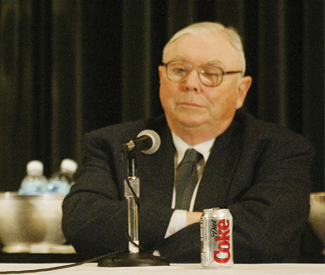
Prop. 32, to put it bluntly, is backed by a handful of rich people. Billionaire Republican Charles Munger, hedge fund manager William Oberndorf, and investment manager Jerrold Perenchio have between them put up nearly $24 million to get the measure on the ballot and pass it.

The Yes on 32 campaign talks about limiting both corporate and union spending. Again, in a biting irony, backers capitalized on the public’s concern with Citizen’s United, which gave corporations the same constitutional rights as people and enabled them to spend unlimited amounts of money on political campaigns.

But the measure really only affects one side. Corporations don’t use paycheck deductions to collect political money — and partnership, limited liability companies and many other entities could give as they wish. So, of course, could rich individuals, like the ones behind Prop. 32.

“All we’re doing is exposing the truth,” says Eric Heins, Vice President of the California Teachers Union, which has thrown more than $20 million dollars to block 32. The truth, he says, is that it will exempt corporations while limiting the voice of unions. “All you really need to do is just follow the money and follow who is exempted from it. We’re not doing anything other than telling it like it is.”

Labor’s efforts seem to be working. A September 21 survey by UC Berkeley and the Field Poll showed that just 38 percent of voters favored the measure while 44 percent opposed it. Another late September poll from USC and the Los Angeles Times showed similar results. The latest numbers from the Public Policy Institute of California show labor’s efforts have made more gains with just days before the election.

“The No on 32 campaign has been working overtime,” says Chris Daly, political director for the Service Employees International Union local 1021. “I think in the beginning the feeling was 32 started with a lead and as we educated voters about what it really is, support evaporated.”

Part of the labor effort has been to remind voters that they have seen this kind of proposition before. In 1998 it was called the “Paycheck Protection” initiative that aimed to establish new requirements with regard to payroll deductions for political activity. It was defeated at the polls. A 2005 measure aimed to do the same thing, but after a hard fought campaign and millions of dollars spent, it too was blocked.

Unions have also reached out to young people. “Voters 18 to 35 are a key demographic,” says Daly. “They tend to be much more progressive voters and more concerned about corporate power.”

For years the anti-union movement has argued that payroll deductions for political use without consent from employees is unethical and corrupt. They’re also one of the few ways working people can compete with wealthy corporate donors in politics and are necessary to keep the playing field somewhat balanced.

So while the corporate world is contributing money to silence one side of the debate, the other is using money to keep its voice alive. According to Maplight — a nonpartisan research group that tracks money in politics — spending on 32 has surpassed $100 million, with supporters spending roughly $45 million and the opposition $58 million.

THE FINAL PUSH

And there’s still a significant amount of money to be spent before November 6. The campaign finance database on Secretary of State Debra Bowen’s official website breaks down the 18 committees formed to support or oppose the measure. Of the five pro-32 committees, three have a combined $7 million dollars left to spend on their agenda while eight of the 13 opposition committees have roughly $9.7 million left.

The labor folks argue that their big money is different than big corporate money. “When we put money into a campaign its money that’s been cobbled together from a lot of people,” says Heins. “There’s a big difference with CTA putting in money as opposed to Munger putting in a check of $20 million that he won’t even miss.”

In addition to direct support from wealthy individuals like Munger, Prop. 32 has received money from a number of political action committees that aren’t required to disclose their donors. So while it’s pretty clear who the teachers union is and what its members want, its hard for voters to know the agenda of The American Future Fund — a PAC that’s donated $4 million raised from anonymous sources.

AFF has close ties to right-wing billionaires Charles and David Koch — but their names aren’t anywhere on any disclosure forms. “The ability to hide behind large PACS is corrosive and I think everybody knows it,” says Barbara O’Connor, Emeritus Professor of Communications at California State University, Sacramento.

The campaign financing behind Prop 32 is symptomatic of what’s happening across the country in the world the US Supreme Court has created with its Citizens United decision. At the national level, the Obama and Romney campaigns combined will have spent more than $1 billion by Election Day. While the President’s campaign has spent more money, Romney’s camp has benefited from enormous amounts of outside cash from super PACS, erasing Obama’s edge.

Could this be a new normal for election spending and campaigning?

O’Connor says change will likely come sooner than later. But as Prop. 32 demonstrates, that change will be tricky. What would happen if 32 passed? Would other states follow? Would one-sided campaign laws be the next frontier in reform?

“Discourse has gotten more bipolar,” says O’Connor, noting the change in the political atmosphere since Citizens United became law.

What everyone wants to know is whether or not this is the new normal for elections. “I think people on both sides are seeing the impact and skewing of citizen voting and once the fury calms down it will change. You’re going to see a big shift in how we campaign after this election.”

Women complain about F.X. Crowley’s union

0

Four women filed National Labor Relations Board complaints and one of them filed a lawsuit alleging gender discrimination against a union run by supervisorial candidate F.X. Crowley, public records show.

Many of their charges were dismissed, but in at five instances, the complaints ended in settlements — and some involved substantial payments to the women.

The union, Local 16 of the International Alliance of Theatrical Stage Employees, Moving Picture Technicians, Artists and Allied Crafts, has never admitted to gender discrimination.

Four settlement agreements that occurred while Crowley, a candidate in District 7, was the union’s business agent contain confidentiality clauses. But details of a lawsuit settled in 2008 are public — and the records show that the plaintiff, Sandy Reed, accepted $500,000 to settle claims of gender discrimination, harassment, retaliation, and disability discrimination.

Crowley says that the accusations of discrimination are completely untrue. When we asked if gender discrimination went on at Local 16 under his leadership, he replied, “absolutely not.”

“Local 16 has never admitted that there’s been any discrimination at the union hall,” said William Sokol, an attorney for the union. “The union is steadfast that there has been absolutely no discrimination.”

SANDY REED’S CASE

Reed works in craft service, catering film shoots. Since 1989, she worked regularly on sets that were organized by the union and protected by a union contract. She even paid the union 3.5 percent of her earnings in “work fees.”

But some craft-service jobs required union membership, and when she tried to become a union member, Reed alleged in her suit, she ran into problems. She was informed that applicants needed to take a three-year apprenticeship class — and then told that the classes were full, year after year. Meanwhile, male friends and colleagues, doing what she saw as similar work, were brought in as “auxiliary members,” a process by which workers can bypass the apprenticeship program and become members, she claimed in her suit.

In 2001, she filed a complaint with the Equal Employment Opportunity Office, asking what recourse she could take for what she perceived as discrimination based on gender and disability.

The EEOC made a determination in her favor, and in 2003, Reed sued Local 16, its president Richard Putz, and Crowley. Reed settled in 2008, after the case went before labor arbitrator Gerald McKay.

In his findings, McKay wrote: “The Union’s arbitrary standards provided the opportunity for the Plaintiff to claim that the reason for her denial was based on her status as a woman. Whether it is true or not true, the Union has forfeited its defense by not having any objective or transparent criteria against which one could measure the Plaintiff to see whether she is being rejected for reasons other than her status as a woman. The Plaintiff’s evidence is sufficiently strong to conclude that it is quite possible that she was discriminated against in her request for membership because of her status as a woman. What the Union has failed to do is to rebut that assertion by objective evidence that there were other reasons for her rejection. The Arbitrator is persuaded that the Plaintiff was the victim of discrimination because of her status as a woman.”

But charges aimed specifically at Crowley and Richard Putz, the union’s president, were dismissed. The two had allegedly facilitated the discrimination.

We asked Sokol about Reed’s case. “I don’t think Sandy Reed’s case was about gender discrimination at all,” he said. “That may be her retrospective point of view on that. That sure wasn’t what the case was about at the time.”

OTHER CHARGES

Charlotte Laughon’s story, as she tells it, followed a similar path — she told us she was prevented from joining the union, and retaliated against when she took legal roads in an attempt to rectify the situation.

Laughon and two other women, Victoria Lewis and Laura Chariton, filed a joint National Labor Relations Board charge in 1998.

Chariton declined to comment for this story.

“We just wanted to be able to join the union,” Laughon told us. “I want to work in my chosen field.”

The case was settled in 2000.

In the settlement agreement, Local 16 agreed to pay the women damages. The settlement also stipulated that they be permitted to join the union.

But when they joined, Laughon and Lewis say, they didn’t get as much work as they wanted. They described it as being “blackballed.”

At Local 16, members call in when they are free to work to be added to referral lists. Producers and directors sometimes call the union for availability lists and referrals of workers, although producers and directors also use other methods to find crews.

The women say that their names weren’t being added to referral lists that the union made available to employers. Laughon says she called every week to ask to be added to the list, as well as asking for copies of the list to check if her name was on them.

Laughon said she could not recall how many EEOC and NLRB charges she filed during that time, but there were many.

Three of those charges were consolidated in July 2005, and the next year, Laughon and the union had reached another settlement agreement. It was ordered that the union furnish Laughon with back pay and send her documents detailing who was on referral lists and other information about several films that had recently been shot in San Francisco.

Crowley said that the union only settled to save money, and that he believes if the cases had gone to court, the union would have won.

Local 16 has also sued Laughon. After the 2000 settlement, the union claimed, she breached the confidentiality agreement.

“Following a resolution between the union and a member of the union, the member breached the terms of the settlement which ultimately resolved in arbitration proceeding and federal court proceeding. The union has a judgment against her in the six figure range,” said Kristina Hillman, an attorney with Weinberg, Roger, and Rosenfeld, the firm that represents Local 16.

Hillman added that “The union is hopeful that she would be gainfully employed,” because she could then pay the money she owes Local 16.

Laughon admitted that she hasn’t paid the judgment. She denies breaching the contract, and told us the case against her had been dismissed.

Crowley said that he is named on these settlements simply because of his role as business manager, and that it has no bearing on his connection to any gender discrimination that may have taken place.

“I wasn’t sued as anything else other than the head of the local. I’m responsible for taking care of those things,” Crowley told us. Dealing with complaints like these is not uncommon, Crowley said, “When you’re the head of an organization.

“I have a track record of advancing woman in my industry,” Crowley told us. “As business manager for the stagehands, I promoted and mentored several woman to our Executive Board including the four woman who currently serve. I am also proud that I identified and recommended to the SF Opera its first female property master.

“I feel that someone’s doing this to make me look bad when all I’ve done is the best I could.”

Another look at Olague

22

OPINION As Election Day nears, the chaotic contest for supervisor in District 5 represents a critical decision for progressive voters in the district — and for activists across the city.

The campaign for Julian Davis, the original first choice of many left/liberal activists, has imploded and is now in free-fall. The repercussions of the board’s vote on Sheriff Ross Mirkarimi continues to reverberate, nowhere more than in District 5. And respected progressive advocates who had worked together for decades are now estranged, even as our city faces urgent challenges of great complexity.

I don’t know Davis or the other candidates in District 5, but I sat down with Supervisor Christina Olague last month after she received the endorsement of the San Francisco Labor Council. It was our first meeting, and as I rode the Metro to Civic Center I was, frankly, not expecting much. Like many San Franciscans, I could not help but be skeptical of anyone appointed by Mayor Ed Lee. I had heard of decisions made and votes cast by Olague that troubled me. I was not expecting to like her, but friends of mine in the labor movement encouraged me to speak with her directly and I’m glad I did.

I started to like Olague as we walked from her office to find some lunch. Before we got to a restaurant I was already asking her questions about some of the tougher choices she’s made. We didn’t agree on everything, of course, but I was struck by her candor, her common sense, and pragmatic progressive values.

Christina Olague grew up in a migrant labor community in the Central Valley. She survived the often-brutal working conditions and poverty that define the lives of some of the most cruelly exploited workers in the United States. She became active in politics early in life, put herself through school, and moved to San Francisco, where she became a familiar figure in the city’s grassroots community.

As a Latina, and as a member of the LGBT community, Olague’s life experiences shaped her politics and basic values. Her candidacy is important in a city that seems every day more destined to become an enclave reserved exclusively for only the very wealthy and most privileged.

I endorsed Olague several weeks before she cast her vote on the struggle between Lee and Mirkarimi. I would have continued to support her regardless of her vote that day. But the bitterness of that controversy, and the nature of the scandal now surrounding Davis, underscore the need for progressives to heal, to repair our alliances and to demonstrate political leadership grounded in respect for all our communities.

The UNITE HERE International Union represents hotel, restaurant, casino, food service and laundry workers throughout the US and Canada. The majority of our members — the people I work for — are immigrant women. In our union we stand together: LGBT and straight, brown and black and white, immigrant and native-born. In all our actions we seek to build power for working people and to strengthen the broader movement for peace and social justice.

San Francisco has seen many changes in the 40 years since I first hitchhiked here as a youth from Arizona. While the political landscape has certainly altered, I reject the notion that the city’s voters have moved irrevocably to the right. I do believe that progressive activists must do better in communicating our values and our vision for this beautiful and unique city we all love. I think Olague could be an important part of that process.

On behalf of the members of UNITE HERE Local 2, and as a longtime organizer for LGBT and worker rights, I ask my many friends in District 5 to take another look at Christina Olague and to consider casting your vote for her on November 6.

Cleve Jones is a longtime activist and the founder of the NAMES Project AIDS Memorial Quilt

Men behaving badly

10

The fiasco that was the candidacy of Julian Davis for Supervisor has shed a spotlight on the long simmering sexist underside of progressive San Francisco politics. For years, men have dominated elections and institutions; the lack of women in progressive leadership has been obvious, but too often unaddressed.

San Francisco has a long history of electing women to high office — Dianne Feinstein, Nancy Pelosi, Louise Renne, Kamala Harris … it’s not as if politics in general is controlled by men. But most of those women have been from the more moderate (in some cases, conservative) side. The elected officials who are leaders in the progressive movement have, for most of the past decade or more, been overwhelmingly male.

And it’s hard to ignore the obvious questions: How could so many progressives get behind a candidate with such a history of poor treatment of women? Why did it take so long for the truth to come out? When did attitudes on the left devolve to the point where groping was considered a minor detail?

More important, where are we going from here? How is the progressive movement going to encourage a new generation of women leaders? How are we going to address the perception, and sometimes the reality, that the politics of the San Francisco left is not a welcoming place for women?

It’s going to take a while to talk all of this out, but this week, we want to start the conversation.

>>A NEW FEMINISM FOR SAN FRANCISCO: Community activists on a guide to compassion, redemption, and accountability

>>THE “HEIGHTENED SENSITIVITY” BLUES: Hey progressives, why don’t you stop being such idiots? (An angertorial)

A new feminism for San Francisco

34

OPINION Accountability is one of the hardest things that we have to do. Being accountable stretches us to our very limits as human beings. Blame and deflection is a function of shame, and more often than not, when we make a mistake, it’s more common to point the finger at someone else than it is to acknowledge our mistake and work towards a different practice. The story time and time again is how it never happened — and then when the water gets too hot, there’s generally a soft acknowledgment that something did happen, but by then, the damage is done and trust is broken.

As feminists working in the progressive community for social justice, we are calling for a new type of accountability — one that’s not about demonization or polarization, but instead consists of checking ourselves, checking each other, supporting each other when we are brave, and having the courage and integrity to acknowledge our mistakes and work towards making whole what has been damaged.

Progressives need to take a look at ourselves and come together so that we can advance our vision for San Francisco. We aim to build a progressive movement in San Francisco that is rooted in compassion and love, that acknowledges our contradictions and works to create bridges across class, race, and gender that are so often the typical pitfalls that keep us from accomplishing what we really want and need. Checking ourselves is an act of love for ourselves and for our communities.

The last few weeks in San Francisco have not just been about men behaving badly; it’s also been about women treating each other badly. White feminists in San Francisco came together to “save” Eliana Lopez, an immigrant woman of color, but never actually included her in the conversation — and then treated her like she had Stockholm syndrome. Women who supported Sheriff Ross Mirkarimi were suddenly not feminists anymore. Survivors of domestic violence who supported Mirkarimi and supported redemption were shunned by a large portion of the domestic violence community.

We recognize that there are important reasons why domestic violence law allows charges to brought without the consent of the survivor; however, in this case, these laws were misused. How demoralizing to see a largely white, second-wave feminist advocate community come together around a woman they failed to include in the conversation about what she felt was best for herself and her family. Are we still in the 1950s?

The attempt to remove Mirkarimi from office was a political attack. It does a disservice to the cause of domestic violence to use it as a political tool to unseat a politician. At the same time, it was also regrettable that many progressives supporting the sheriff did not take the domestic violence charges against him seriously enough — both in the initial outcry that surrounded the charges and by being disrespectful towards the domestic violence advocates who testified at City Hall.

On the other hand, following close on the heels of the Mirkarimi situation, District 5 candidate Julian Davis was accused of a troubling history of inappropriate and nonconsensual groping by more than one woman. We have to take into account that there is an unacceptable cultural reality that people are likely to believe accusations against men of color by white women that are untrue, but that is not what has happened with the accusations brought forward about Davis.

In this scenario many in the progressive community knew about this history and were complicit in silencing any real conversation about it. It was only when Davis started intimidating one of the women that brought accusations against him with threats of legal action that a real conversation opened up.

Our goal is not to rehash Davis’s past behavior; everyone deserves redemption. However, it would make it easier for those of us who want to work with him going forward if he could take responsibility for his past instead seeking to silence his accusers.

Many have stood up to support the woman who came forward, but sadly others have not. For women and feminists in our movement it was exceedingly demoralizing to watch people who call themselves progressives attack a woman who came forward or dismiss her allegations because of political allegiances. One blog even went so far as to try and discredit her by alleging that she had been in a pornography film, as if somehow this would cast doubt on her allegations.

We seek a kind of feminism that supports and empowers women to make informed choices about their lives, not the type that falls into the same pattern of erasing the voices of women of color and immigrant women. We are calling for a cutting-edge feminist movement that includes men in our strategy of ending violence against women, and a feminist movement that walks away from this tired dualism between “victims and perpetrators,” when we all know that these so-called perpetrators are often victims of violence themselves.

We are calling for restorative justice that bridges the divides of class and race and gender and makes us stronger to achieve the lives that we want and need. We seek a feminist movement that sees housing and economic justice and racial justice and gender justice as all part of the same movement.

The truth of the matter is that in our progressive movement here in San Francisco, there is still a prominence of straight white men who continue to believe that they are the sole arbitrators of what is or is not progressive in this city, who go after women of color in leadership with a ferocity that they do not for our progressive male counterparts, and who continue to excuse problematic behavior in ways that undermine us all.

So much has happened so quickly that it has been hard to orient ourselves and keep fighting for our rights and our communities. After the election, we call for a public conversation around what it means to be a third- or even fourth-wave feminist progressive that we can build our work around — where men are feminist and women of color leaders can actually get some support from the progressive left. Gabriel Haaland is a queer, transgender Labor feminist and domestic violence survivor. Jane Martin and Alicia Garza are queer, feminist community organizers in San Francisco’s working-class communities of color

The ‘heightened sensitivity’ blues

74

OPINION 

“No one can deny that there is presently a particular sensitivity around domestic violence issues, and this may have been a contributing factor in their decision in this instance. I want to emphasize that I respect this heightened sensitivity and I will not criticize those allies of mine that have chosen to withdraw support.”

– Oct. 17 press statement from District 5 candidate Julian Davis

This is not a Julian Davis hit piece. Just as much as any young progressive in this town, I know the guy. He’s not a bad guy.

He can be a boor. But to be fair, he’s only doing what he’s been taught to do in this era of the San Francisco City Hall progressive scene.

Lemme take it back to my first assignment covering politics for the Bay Guardian (indulge me.) I was a culture intern.

I was assigned to the Democratic County Central Committee election-night party at the Great American Music Hall. I had the early shift, because those hours of the evening are boring enough to entrust to an intern with little background knowledge of the San Francisco political scene. While I was there, gamely interviewing the only person I recognized from the newspapers (a man who I’ve been told ad nauseum is a leader of the San Francisco progressive movement), a shrill -– to appropriate a term usually coded for women and gays –- elderly, straight male blogger approached us and inquired loudly if I was the politician’s escort.

Now, I am pro-sex worker. But as a young woman who was performing an important task for the first time, when a dinosaur implies that you are at a stone-dull political happening to solicit sexual favors for money -– well I’m sorry, brothers and sisters, but I was there to interview people for a newspaper. I don’t think this man’s query, shouted as it was over the crowd, implied a high degree of sex-positivity.

The progressive leader seemed unfazed. Who knows, maybe it happens all the time. He briefly made introductions and ninja-moved into the social melée, leaving me with old blogger, who commenced interrogating me rudely, on camera, from a distance close enough that I could smell him. It wasn’t a superlative scent.

Perhaps Kay Vasilyeva felt similarly six years ago when she went to Bill Barnes, who was serving as campaign manager for Chris Daly, the San Francisco progressive deity at whose campaign event she says the most egregious incident with Davis took place.

Davis groped her, she told Barnes. He told her she could report the incident to the police, and when questioned about the incident by Fog City Journal last week, he said “my memories that are most clear about that campaign were the political side of what was going on, not about the interpersonal issues.”

I’ve told my election night story a couple times over the last week since it stands out clearly as the moment I knew, for sure, I would never get involved in San Francisco politics.

More than one of my friends told me I was asking for this humiliation, what with having identified myself as a Guardian reporter. I’ll admit, that perhaps I could have expected such diminutive behavior. The paper’s, like, “controversial.” All the same, I told those friends, as respectfully as possible, to fuck off.

In the wake of the Ross Mirkarimi and Julian Davis debacles, and in the wake of reaction to said debacles (decidedly the more catastrophic happenings, even compared with the acts themselves), many are realizing that the dominant face of SF progressivism is that of a self-absorbed, hierarchy-enforcing man.

Perhaps some are making the cognitive leap to wonder about why we’re not exactly overwhelmed with progressive females in elected office.

Could it be that through sloppily coded language like that used in Davis’s email, the Barnes response, and my election night incident, an environment is systematically being created that no intelligent young women would ever sanely choose to take part in?

Tell me I’m too soft for politics. Sure you’re right. Tell me it’s equal opportunity assholery. Probs. Tell me that’s just how it is.

I’ll tell you this: being progressive is about more than voting in favor of rent control and raising teacher’s wages. Being pro-choice is not the end of one’s involvement in women’s issues. You can have all the right politics on paper, but if you make those who are different from you feel like shit when you’re two cocktails into election night, take a seat, wrench your eyes from their tits, and let someone else take the lead, because you’re the reason why the progressive movement, the labor movement, et. al., are stale and worn.

Convince all the young women and other people who are not the face of power in this country that they have no place and they will find a different place, and your slate will be all the dumber for it.

Beware, boorish men, when you blame the current spate of sexual abuse unmaskings on “political climate” or “interpersonal issues.” Denigrate actual justice as a “trend” or “gossip” and you will most certainly find yourself fighting for something that you really, really don’t want — the increased infirmity of the movement you claim to hold so dear.

“Heightened sensitivity” getting you down? Hit up a pharmacy, I bet they have a cream for that.

Move on, Mr. Mayor

21

EDITORIAL San Francisco politics hasn’t been this tense in years — and it’s not just because of the upcoming election. The battle over Mayor Lee’s attempt to oust Sheriff Ross Mirkarimi has left bitter divisions at City Hall and in communities all over town. And the mayor is only making things worse.

In an odd way — and we say odd because it was so expensive and a misuse of mayoral power — the system worked. Mirkarimi, who had a physical altercation with his wife that left a bruise on her arm, took responsibility and pled guilty to a misdemeanor; he’s now on probation and undergoing counseling.

After the mayor decided to invoke a rarely used Charter provision and suspend Mirkarimi without pay, the Ethics Commission held hearings, conducted and extensive inquiry and voted to uphold the charges, with the chair, Benjamin Hur, strongly dissenting. Every one of the commissioners raised thoughtful points; several poked big holes in the mayor’s case.

Then the Board of Supervisors met — and again, the members carefully considered Mirkarimi’s actions, the language and history of the City Charter, the prevailing law, and the facts of the case. There was remarkably little political grandstanding; we listened to the entire meeting, lasting more than seven hours, and were left with the impression that the supervisors took their job seriously, weighed the case, forced the City Attorney’s Office, representing the mayor, and Mirkarimi’s defense team, to justify their arguments, and rendered a ruling.

Nine votes were needed to remove the sheriff; that’s appropriate for such a profound sanction. Only seven supervisors sided with the mayor, and the four who rejected the charges had excellent, well-stated and credible reasons.

That’s the way the Charter outlined this process playing out, and in the end, the mayor lacked the overwhelming consensus he would have needed to use his executive authority to remove from office someone duly chosen by the voters. It’s done; it’s over. Most of the city would like to move on.

That’s not to say that Mirkarimi should be celebrating. He did an inexcusable thing. Domestic violence advocates have every right to be unhappy with his actions — and nobody, nobody in town should condone his behavior. He’s not denying it, either; he accepted the criminal consequences and will now have to demonstrate that he’s able to do his job.

But the mayor won’t move on. Mirkarimi sent him a note asking for a meeting, and Lee hasn’t responded. That shows a lack of leadership — and a lack of the civility that the mayor promised us when he took office. Ed Lee started this political process, and now that it’s over, he should be leading the effort to pull the city back together, to recognize that there were valid arguments on both sides of this case and his didn’t prevail — and to stop the demonization of people who didn’t agree with him.

The return of the ugly laws

0

OPINION In the late 19th and early 20th centuries, municipalities across the country passed what have become known as “ugly laws,” often modeling their ordinances word for word on San Francisco’s. According to The Ugly Laws: Disability in Public, Susan Schweik’s comprehensive study of these laws, they were intended to target those who “exposed disease, maiming, deformity, or mutilation for the purpose of begging.” In city after city a pattern emerged of “enactment, reenactment, crackdown, malaise.” As Schweik writes, “what most aligned” the cities “were not the law’s successes, but its failures, the impossibility of removing the unsightly in the form of persons.”

Fast-forward 150 years and “sit lie,” replaces “ugly,” as the name for a category of laws whose intention is to remove the unsightly from our public spaces. Different in form, but nearly identical in intent and justification, these laws are now sweeping through the country, disfiguring the municipal codes of one city after another. San Francisco is not patient zero of this epidemic. But it now threatens to pass that contagion on directly to Berkeley.

Berkeley’s Measure S would prohibit sitting on any commercial sidewalk or on any object placed on the sidewalk without express permission of the city between 7 am and 10 pm. (Since 1998 Berkeley has had an ordinance prohibiting lying on the sidewalk.)

As with the “ugly laws,” the fact that sit lie-laws have been ineffective, has proven no impediment to their spread. Months before the Berkeley City Council voted to place Measure S on the ballot, an independent analysis of San Francisco’s sit-lie ordinance conducted one year after its implementation concluded that it had “on the whole, been unsuccessful at meeting its multi-faceted intentions to improve merchant corridors, serve as a useful tool for SFPD, connect services to those who violate the law, and positively contribute to public safety for the residents and tourists of San Francisco.” Undeterred by the failures of sit-lie in San Francisco, proponents of Measure S, most prominently business improvement districts representing commercial landlords, promise it will rid the city of what they describe as unsightly “encampments” of nomadic street youth.

The fact that Measure S is targeted at homeless youth is an open secret. Ugly laws are a thing of the past. It is not constitutionally permissible to pass laws that target people for who they are as opposed to what they do. The Supreme Court has declared laws against loitering and vagrancy unconstitutionally void for vagueness. The workaround these constitutional obstacles is to pass laws against specific behaviors associated with people whom we don’t want in our public space. Like laws prohibiting sitting on the sidewalk.

Over a hundred years ago, Anatole France famously praised “the majestic equality of the law that forbids the rich and the poor alike to sleep under bridges, to beg in the streets, and to steal bread.” He would no doubt smile at a law that forbids everybody from sitting on the sidewalk. Measure S is supported by people who hide behind its “majestic equality,” but count on a “majestic inequality,” in its enforcement. They believe, without reservation, that it will always be enforced against others.

I don’t like using disease metaphors in politics. Susan Schweik describes the spread of ugly laws as a “contagion,” and it’s hard to resist a similar metaphor for the spread of sit-lie laws. But what is really at stake here is an ugly tendency in national politics, spread not by an anonymous bug, but by people in positions of power and influence, to shift the blame for our sour economy from those who run the system to those who are run over by it: labor unions, public employees, teachers, immigrants, and now, in Berkeley and too many other cities, people who are homeless. If Berkeley passes Measure S, sit-lie laws could be greenlighted across the nation, for who could object that such laws are unfair and mean spirited if oh-so-radical Berkeley passed one. On the other hand, if we defeat measure S Berkeley has a chance to model how a community can come together to find real solutions to real problems in hard economic times.

Osha Neumann is an attorney with the East Bay Community Law Center, and Chair of Berkeley Standing Up for the Right to Sit Down/No on Measure S. For more on the measure, visit www.noonsberkeley.com.

Davis should drop out

49

EDITORIAL Kay Vasilyeva, a member of the San Francisco Women’s Political Caucus, has come forward with the allegation that District Five candidate Julian Davis grabbed her and put his hand down her pants at a political bar crawl in 2006. That was six years ago, but it’s still important — and more than the incident itself, the response we’ve seen from Davis is highly disturbing. He’s utterly denying that it ever happened, and retained a lawyer to send Vasilyeva a letter threatening her with legal action if she continues to talk.

While we endorsed Davis for supervisor, we take these charges very, very seriously — particularly coming at a time when relations between men and women in the progressive movement are badly strained.

Since the SF Weekly, which broke the story, suggested that we knew something about Davis’s behavior, we need to state, for the record: When we endorsed Davis, we had heard nothing even remotely close to this type of allegation. Yes, we knew that in his 20s he was a bit of an arrogant ass. We knew that at one point, he actually got into a tugging match with another person over the ridiculous question of who got to hold a campaign sign. We’d heard that, in the past, at somewhat debauched parties, he’d made advances toward women who weren’t interested in his affections.

Those could be the acts of an immature man who has since grown up. And since, on a level of policy, knowledge, and positions, he was by far the best and strongest progressive in the race in District 5, we — along with much of the local progressive leadership — thought he was demonstrating enough maturity that he was worthy of our support.

But this new information, and his response to it, is alarming.

We don’t take last-minute allegations about a front-running candidate lightly; people have been known to dump all sorts of charges into heated races. When we learned about Vasilyeva’s allegations on Oct. 13, we did our own research. We spent two hours with Davis and his supporter and advisor, former D5 Supervisor Matt Gonzalez. We realized that allegations without corroboration are just charges, so we tracked down everyone we could find who might know anything about this incident — and, as we discovered, other similar events. And we have to say: Vasilyeva’s account rings true. Davis’s categorical denial does not.

More than that, we were offended that he in effect threatened with a lawsuit a woman who, at some peril to herself, came forward to tell the public information about someone who is running for elected office. What was the point of that, if not to intimidate her? It’s highly unlikely he’s going to sue (and drag this whole mess into court). He says he was just trying to send a message that he has a legal right to respond to defamation, but this is a political campaign; if he didn’t want to deal publicly with what he must have known were these sorts of potential allegations, he shouldn’t have run for office.

This is a bad time for progressives in San Francisco. The Mirkarimi case has brought to the fore some deep and painful rifts; a lot of women feel that (mostly male) progressive leaders have pushed their issues to the side. For the future of the movement and the city, the left has to come together and try to heal. This situation isn’t helping a bit.

Davis needs to face facts: Supervisors John Avalos and David Campos have withdrawn their endorsements. Assembly member Tom Ammiano is almost certain to do the same. With his inability to handle the very credible charge that he not only groped a woman but lied about it, Davis no longer has a viable campaign in the most progressive district in the city, and we can’t continue to support him.

We have said it many times before: People on the left need to be able to put their own ambitions aside sometimes and do what’s right for the cause. Davis can’t win. He’s embarrassing his former allies. He needs to focus on coming to terms with his past and rebuilding his life. And for the good of the progressive movement, he needs to announce that he’s ending his campaign, withdrawing from the race, and urging his supporters to vote for another candidate.

Alerts

0

THURSDAY 18

Culture as a weapon: poetry and storytelling SOUL School of Unity and Liberation, 1904 Franklin Suite 904, Oakl; www.schoolofunityandliberation.org, RSVP at info@schoolofunityandliberation.org. 6:30pm, $5-25. The second in a three-part series exploring how art and culture can be a form of political resistance. At this workshop, learn from poet, writer, artist and organizer Erika Vivianna Céspedes about writing that helps build movements. RSVP is required, and if you can’t get into this one, try their next event in the series, an activist printmaking workshop on Oct. 25.

Fall of the I-Hotel film screening New Nothing Cinema, 16 Sherman, SF; newnothing.wordpress.com. 8pm, free. A screening of a film depicting the historic struggle between residents and supporters of the International Hotel and the landlords that wanted it razed and turned into a parking lot. After massive neighborhood “revitalization,” the I-Hotel was one of the last remnants of the once-lively Manilatown neighborhood. See how residents fought for it at a screening presenting by Shaping San Francisco, New Nothing Cinema, and the CIIS Anthropology and Social Change Department.

FRIDAY 19

Say goodbye to condoms as evidence Jane Warner Plaza, 401 Castro, SF; www.tinyurl.com/condommarch. 6-8pm, free. As we reported this week, SFPD has decided to temporarily end the controversial practice of using possession of condoms as evidence in prostitution cases. For a three to six month trial period, condoms will not be seized or photographed if a cop thinks someone might be a sex worker. A group that was planning to march in opposition to the practice will now march in celebration of the decision, and to urge the city to make the trial period permanent.

Disobeying with great love Powell Street Bart station, Powell and Market, SF; www.tinyurl.com/disobeylove. 6pm, free. A flash mob meditation in the middle of the Disneyland-like shopping district. What better way to relax amongst the chaos?

SATURDAY 20

Op Trapwire Department of Homeland Security, 560 Golden Gate Ave, #36127, SF. WikiLeaks let loose information about Trapwire, the now-notorious company that uses surveillance and tracking to monitor people’s movements and aggregate them into patterns. It does this with a network of security cameras across the country, government and law enforcement uses its information, and the whole thing may be illegal. Some Occupy types have called for a national day of action against surveillance on Oct. 20, and San Francisco is joining in.

Picket Mi Pueblo market Mi Pueblo Mercado1630 High, Oakl; dignityandresistance@gmail.com. 1-4pm, free. Mi Pueblo Market is a successful and beloved grocery store chain. Workers were upset to learn that the company signed up to participate in E-Verify, a voluntary program that tracks the immigration status of all new hires. Managers say that the decision was made after serious pressure from ICE and the Department of Homeland Security. Workers and community supporters will picket the store in protest of the new policy.

SUNDAY 21

Amy Goodman speaks First congregational church of Oakland, 2501 Harrison, Oakl; www.kpfa.org/events. 7pm, $15 in advance. Amy Goodman co founded Democracy Now! The War and Peace Report in 1996. Since then, she has consistently brought progressive, hard hitting reporting to television screens and radios, authored a few books, and established herself as a distinctive voice in journalism. She’s also a kick ass speaker. Come hear her share her wisdom at a benefit for KPFA radio, where she’ll be speaking on “The Silenced Majority: Stories of Uprisings, Occupations, Resistance, and Hope”

MONDAY 22

Tasers forum Hamilton Recreation Center, 1900 Geary, SF; www.tinyurl.com/taserforums. 5pm, free. The SFPD has called a public forum to discuss the possible introduction of tasers into the police arsenal. Come to share your thoughts on the idea. And if you want to hear more, show up a half hour early for a community-led forum. “This summer, ACLU delivered a report of 532 documented Taser related deaths in the US since 2001, but that has not stopped SF Police Chief Greg Suhr from pushing the fourth attempt to spend several million dollars to equip SFPD with these deadly weapons,” say organizers.

Local censored 2012

0


BEHIND THE MIRKARIMI CASE

In early January, details from the police investigation of then-Sheriff-elect Ross Mirkarimi bruising his wife’s arm during an argument were leaked to the San Francisco Chronicle and other news outlets. The key piece of evidence was a 45-second video that Mirkarimi’s wife, Eliana Lopez, made with her neighbor, Ivory Madison, displaying the bruise and saying she wanted to document the incident in case of a child custody battle. That video convinced many of Mirkarimi’s guilt, and a majority of Ethics Commissioners say they found it to be the main evidence on which Mirkarimi should be removed from office on official misconduct charges (the Board of Supervisors was scheduled to vote on Mirkarimi’s removal on Oct. 9, after Guardian press time).

But that video was only a small part of the overwhelming and expensive case that Mayor Ed Lee brought against Mirkarimi, including the more serious charges of abuse of power, witness dissuasion, and impeding a police investigation, all of which go more directly to a sheriff’s official duties. All of those charges got lots of media coverage and they helped cement the view of many San Franciscans that Mirkarimi engaged in a pattern of inappropriate behavior, rather than making a big momentary mistake. Yet most of the media coverage during the six months of Ethics Commission proceedings ignored the fact that none of the evidence that was being gathered supported those charges. Indeed, all those charges were unanimously rejected by the commission on Aug. 16, a startling rebuke of Lee’s case but one that was not highlighted in many media reports, which focused on the one charge the commission did uphold: the initial arm grab.


THE NEXT DOT-BOMB

In the late 1990s, San Francisco was in a very similar place to where it is now. The first dot-com boom was full bloom, driving the local economy and creating countless young millionaires — but also rapidly gentrifying the city and driving commercial and residential rents through the roof (great for the landlords, bad for everyone else). And then, the bubble popped, instantly erasing billions of dollars in speculative paper wealth and leaving this a changed city. The city’s working and creative classes suffered, but the political backlash gave rise to a decade with a progressive majority on the Board of Supervisors.

The era ended in 2010 when Ed Lee was appointed mayor, and he began ambitious agenda of pumping up a new dot-com bubble using tax breaks, public subsidies, and relentless official boosterism to lure more tech companies to San Francisco. Lee has been successful in his approach, in the process driving up commercial rents and housing prices. By some estimates, about 30 percent of the city’s economy is now driven by technology companies.

Yet there have been few voices in the local media raising questions about this risky, costly, and self-serving economic development strategy. The Bay Citizen did a story about Conway’s self interested advice, the New York Times did a front page story raising these issues, and San Francisco Magazine just last month did a long cover story questioning how much tech is enough. But most local media voices have been silent on the issue, and much of the damage has already been done.


OLD POWERBROKERS RETURN TO CITY HALL

More than a decade ago, then-Mayor Willie Brown and Chinatown power broker Rose Pak worked together to empower big business, corrupt local politics, and clear the path for rampant development — an approach that progressives on the Board of Supervisors repudiated and slowed from 2000-2010. But Brown, Pak, and a new generation of their allies have returned in power in City Hall, and it’s as bad as it ever was.

Many San Franciscans know of their high-profile role appointing Lee to office in early 2011. But their influence and tentacles have extended far beyond what we read in the papers and watch on television, starting in 2010 when their main political operatives David Ho and Enrique Pearce ran Jane Kim’s supervisorial campaign, beating Debra Walker, a veteran of the fights against Brown’s remaking of the city.

Now, this crew has the run of City Hall, meeting regularly with Mayor Lee and twisting the arms of supervisors on key votes. Pearce and Ho persuaded longtime progressive Christina Olague to co-chair the scandal-plagued Run Ed Run campaign last year, she was rewarded this year with Lee appointing her to the Board of Supervisors. Pearce has been her close adviser, and most of her campaign cash has been raised by Brown and Pak. Even progressive Sup. Eric Mar admits that Pak in raising money for him, a troubling sign of things to come.


THE REAL OCCUPY STORY

The Occupy San Francisco camp that was cleared by police last week may have been mostly homeless people. And major news media outlets from the start reported that Occupy was dangerous, filthy, and a civic eyesore.

But last fall, the camps were comprised of a huge variety of people that chose to live part or full time on the streets. Students, people with 9-5 jobs, people with service jobs, and the unemployed were all represented. Wealthy people who lived in the financial districts where camps popped up mixed with working-class people who came from suburbs and small towns. Families came out, welcomed in the “child spaces” set up in many Occupy camps throughout the country. Most camps also boasted libraries, free classes, kitchens, food distribution, and medical tents.

As news media focused on gross-out stories of pee on the streets and graphic descriptions of drunk occupiers, they managed to ignore the complex systems that were built in the camps. Nor did anyone mention that homeless people have the right to protest, too.

East Bay Endorsements 2012

22

The East Bay ballot is crowded, with races for mayor, city council and school board in Berkeley and Oakland, plus a long list of ballot measures. We’re weighing in on what we see as the most important races.


OAKLAND CITY ATTORNEY


BARBARA PARKER

This one’s simple: Progressives on the council like Parker, who’s a pretty unbiased attorney. Her challenger, Jane Brunner, is a supporter of Ignacio De La Fuente. Vote for Parker.


OAKLAND CITY COUNCIL


AT-LARGE


REBECCA KAPLAN

In some ways, this is a replay of the 2010 mayor’s race, where Rebecca Kaplan and Jean Quan, running as allies in a ranked-choice voting system, took on and beat Don Perata, the longtime powerbroker who left town soon after his defeat. This time around, it’s Kaplan, the popular incumbent, facing Ignacio De La Fuente, a Perata ally, for the one at-large council seat.

De La Fuente, who currently represents District 3, would have easily won re-election if he stuck to home. But for reasons he’s never clearly articulated, he decided to go after Kaplan. The general consensus among observers: De La Fuente wants to be mayor (he’s tried twice and failed), thinks Quan is vulnerable, and figures winning the at-large seat would give him a citywide base.

It’s a clear choice: Kaplan is one of the best elected officials in the Bay Area, a bright, progressive, practical, and hardworking council member who is full of creative ideas. De La Fuente is an old Perata Machine hack who wanted to kick out Occupy Oakland the first day, wants curfews for youth, and can’t even get his story straight on cutting the size of the Oakland Police Department.

De La Fuente is all about law and order, and he blasts Kaplan for — literally — “coddling criminals.” But actually, as the East Bay Express has reported in detail, De La Fuente, in a fit of anger at the police union, led the movement to lay off 80 cops. And the crime rate in Oakland spiked shortly afterward. Kaplan opposed that motion, and tried later to rehire many of those cops — but De La Fuente objected.

Public safety is one of the top local issues, and Kaplan not only supports community policing (and more cops) but is working on root causes, including the lack of services for people released into Oakland from state prison and county jail. She’s also a strong transit advocate who’s working on new bike lanes and a free shuttle on Broadway. She helped write the county transportation measure, B1. She richly deserves another term — and De La Fuente deserves retirement.


BERKELEY MAYOR


KRISS WORTHINGTON

It would be nice to have a Berkeley person as mayor of Berkeley again.

The city’s still among the most progressive outposts in the country — and Mayor Tom Bates, for all his history as one of the leading progressive voices in the state Legislature and a key part of the city’s left-liberal political operation, has taken the city in a decidedly centrist direction. Bates these days is all about development. He’s a big supporter of the sit-lie law (hard to imagine the old Tom Bates ever supporting an anti-homeless measure). He didn’t even seek the mayoral endorsement of Berkeley Citizens Action, which he helped build, and instead hypes the Berkeley Democratic Club, which he used to fight. After ten years, we’re ready for a new Berkeley mayor.

Worthington is the voice of the left on the City Council. He’s an aggressive legislator who is never short of ideas. He’s talking about the basics (holding separate council meetings on major issues so people who want to speak don’t have to wait until midnight), to the visionary (a 21-point plan for revitalizing Telegraph Avenue). He’s against sit-lie and wants developers to offer credible community benefits agreements before they build. We’re with Worthington.

Alameda County ballot measures


MEASURE A1


ZOO TAX


YES

The Oakland Zoo does wonders with rescue animals; instead of bringing in creatures from the wild or from other zoos, the folks in Oakland often find ways to take in animals that have been abused or mistreated elsewhere. Measure A1 would impose a tiny ($12 a year) parcel tax to support the public zoo. Critics say the money could go for zoo expansion, but the expansion’s happening anyway. Vote yes.


MEASURE B1


TRANSPORTATION PROGRAMS


YES

Quite possibly the most important thing on the East Bay ballot, Measure B1 creates the funding for a long-term transportation plan. Almost half of the money goes for public transit and only 30 percent goes for streets and road. There’s more bicycle money than in any previous transportation plan. Every city in Alameda County supports it. Vote yes.

Berkeley ballot measures


PROPOSITION M


STREET IMPROVEMENTS BOND


YES

Not our first choice for a street improvement bond, it’s a bit of a hodgepodge that squeaked through a divided council. But the city’s deferred street maintenance is a major problem and this $30 million bond would be a modest step forward.


MEASURE N


POOLS BOND


YES

Berkeley has lost half its public pools in the past two years; the facilities are unusable, and it’s going to take about $20 million to refurbish and rebuild them. This bond measure would allow the city to re-open the Willard Pool and build a new Warm Water Pool — critical for seniors and people rehabbing from injuries. Vote Yes.


MEASURE O


POOL TAX


YES

Berkeley often does things right, and this is a perfect example: Instead of building new facilities that it can’t afford to operate (hell, SF Recreation and Parks Department), Berkeley is asking for two things from the voters: Bond money to rebuild the municipal pools, and a special tax to provide $600,000 a year for operations. We support both.


MEASURE P


REAUTHORIZING SPECIAL TAXES


YES

Measure P doesn’t raise anyone’s taxes. It’s just a housekeeping measure, mandated by state law, allowing the city to keep spending taxes that were approved years ago for parks, libraries, medical services, services for the disabled, and fire services. Vote yes.


MEASURE Q


UTILITY TAX


YES

Berkeley’s been collecting utility taxes on cell phones for some time now, but the law that allows it is based on federal language that has changed. So the city needs to make this modest change to continue collecting its existing tax.


MEASURE R


DISTRICT LINES


YES

The council districts in Berkeley were set when the city adopted district elections in 1986, with a charter amendment saying all future redistricting should conform as closely as possible to the 1986 lines. Nice idea, but the population has changed and it makes sense for the council to have more flexibility with redistricting.


MEASURE S


SIT-LIE LAW


NO, NO, NO

It’s hard to believe that progressive Berkeley, which has spent hundreds of thousands of dollars defending similar laws in court, wants to criminalize sitting on the sidewalk. It hasn’t worked in San Francisco, it won’t work in Berkeley. Vote no.


MEASURE T


AMENDMENTS TO THE WEST BERKELEY PLAN


NO

Council Members Kriss Worthington, Jesse Arreguin, and Max Anderson all oppose this plan, which would open up West Berkeley to more office development — with no guarantee of community benefits. Everyone agrees the area needs updated zoning, but this is too loose.


MEASURE U


SUNSHINE COMMISSION


YES

Berkeley has needed a strong sunshine law for years; this one isn’t the greatest, but it’s not the worst, either; it would mandate better agendas (and allow citizens to petition for items to be put on the agenda) for city boards and commissions, would create a new sunshine commission with the ability to sue the city to enforce the law, and would require elected and appointed officials to make public their appointments calendars.


MEASURE V


CERTIFIED FINANCIAL REPORTS


NO

This sounds like a great idea — mandate that the city present certified financial audits of its obligations before issuing any more debt. In practice, it’s a way to make it harder for Berkeley to raise taxes or issue bonds. Vote no.

Oakland ballot measures


MEASURE J


SCHOOL BONDS


YES

Measure J would authorize $475 million in bonds for upgrading school facilities. This one’s a no-brainer; vote yes.


PROJECT CENSORED 2012

6

yael@sfbg.com

People who get their information exclusively from mainstream media sources may be surprised at the lack of enthusiasm on the left for President Barack Obama in this crucial election. But that’s probably because they weren’t exposed to the full online furor sparked by Obama’s continuation of his predecessor’s overreaching approach to national security, such as signing the 2012 National Defense Authorization Act, which allows the indefinite detention of those accused of supporting terrorism, even US citizens.

We’ll never know how this year’s election would be different if the corporate media adequately covered the NDAA’s indefinite detention clause and many other recent attacks on civil liberties. What we can do is spread the word and support independent media sources that do cover these stories. That’s where Project Censored comes in.

Project Censored has been documenting inadequate media coverage of crucial stories since it began in 1967 at Sonoma State University. Each year, the group considers hundreds of news stories submitted by readers, evaluating their merits. Students search Lexis Nexis and other databases to see if the stories were underreported, and if so, the stories are fact-checked by professors and experts in relevant fields.

A panel of academics and journalists chooses the Top 25 stories and rates their significance. The project maintains a vast online database of underreported news stories that it has “validated” and publishes them in an annual book. Censored 2013: Dispatches from the Media Revolution will be released Oct. 30.

For the second year in row, Project Censored has grouped the Top 25 list into topical “clusters.” This year, categories include “Human cost of war and violence” and “Environment and health.” Project Censored director Mickey Huff told us the idea was to show how various undercovered stories fit together into an alternative narrative, not to say that one story was more censored than another.

“The problem when we had just the list was that it did imply a ranking,” Huff said. “It takes away from how there tends to be a pattern to the types of stories they don’t cover or underreport.”

In May, while Project Censored was working on the list, another 2012 list was issued: the Fortune 500 list of the biggest corporations, whose influence peppers the Project Censored list in a variety of ways.

Consider this year’s top Fortune 500 company: ExxonMobil. The oil company pollutes everywhere it goes, yet most stories about its environmental devastation go underreported. Weapons manufacturers Lockheed Martin (58 on the Fortune list), General Dynamics (92), and Raytheon (117) are tied into stories about US prisoners in slavery conditions manufacturing parts for their weapons and the underreported war crimes in Afghanistan and Libya.

These powerful corporations work together more than most people think. In the chapter exploring the “Global 1 percent,” writers Peter Phillips and Kimberly Soeiro explain how a small number of well-connected people control the majority of the world’s wealth. In it, they use Censored story number 6, “Small network of corporations run the global economy,” to describe how a network of transnational corporations are deeply interconnected, with 147 of them controlling 40 percent of the global economy’s total wealth.

For example, Philips and Soeiro write that in one such company, BlackRock Inc., “The eighteen members of the board of directors are connected to a significant part of the world’s core financial assets. Their decisions can change empires, destroy currencies, and impoverish millions.”

Another cluster of stories, “Women and Gender, Race and Ethnicity,” notes a pattern of underreporting stories that affect a range of marginalized groups. This broad category includes only three articles, and none are listed in the top 10. The stories reveal mistreatment of Palestinian women in Israeli prisons, including being denied medical care and shackled during childbirth, and the rape and sexual assault of women soldiers in the US military. The third story in the category concerns an Alabama anti-immigration bill, HB56, that caused immigrants to flee Alabama in such numbers that farmers felt a dire need to “help farms fill the gap and find sufficient labor.” So the Alabama Department of Agriculture and Industries approached the state’s Department of Corrections about making a deal where prisoners would replace the fleeing farm workers.

But with revolutionary unrest around the world, and the rise of a mass movement that connects disparate issues together into a simple, powerful class analysis — the 99 percent versus the 1 percent paradigm popularized by Occupy Wall Street — this year’s Project Censored offers an element of hope.

It’s not easy to succeed at projects that resist corporate dominance, and when it does happen, the corporate media is sometimes reluctant to cover it. Number seven on the Top 25 list is the story of how the United Nations designated 2012 the International Year of the Cooperative, recognizing the rapid growth of co-op businesses, organizations that are part-owned by all members and whose revenue is shared equitably among members. One billion people worldwide now work in co-ops.

The Year of the Cooperative is not the only good-news story discussed by Project Censored this year. In Chapter 4, Yes! Magazine‘s Sarah Van Gelder lists “12 ways the Occupy movement and other major trends have offered a foundation for a transformative future.” They include a renewed sense of “political self-respect” and fervor to organize in the United States, debunking of economic myths such as the “American dream,” and the blossoming of economic alternatives such as community land trusts, time banking, and micro-energy installations.

They also include results achieved from pressure on government, like the delay of the Keystone Pipeline project, widespread efforts to override the US Supreme Court’s Citizens United ruling, the removal of dams in Washington state after decades of campaigning by Native American and environmental activists, and the enactment of single-payer healthcare in Vermont.

As Dr. Nafeez Mosaddeq Ahmed writes in the book’s foreword, “The majority of people now hold views about Western governments and the nature of power that would have made them social pariahs 10 or 20 years ago.”

Citing polls from the corporate media, Ahmed writes: “The majority are now skeptical of the Iraq War; the majority want an end to US military involvement in Afghanistan; the majority resent the banks and financial sector, and blame them for the financial crisis; most people are now aware of environmental issues, more than ever before, and despite denialist confusion promulgated by fossil fuel industries, the majority in the United States and Britain are deeply concerned about global warming; most people are wary of conventional party politics and disillusioned with the mainstream parliamentary system.”

“In other words,” he writes, “there has been a massive popular shift in public opinion toward a progressive critique of the current political economic system.”

And ultimately, it’s the public — not the president and not the corporations—that will determine the future. There may be hope after all. Here’s Project Censored’s Top 10 list for 2013:


1. SIGNS OF AN EMERGING POLICE STATE

President George W. Bush is remembered largely for his role in curbing civil liberties in the name of his “war on terror.” But it’s President Obama who signed the 2012 NDAA, including its clause allowing for indefinite detention without trial for terrorism suspects. Obama promised that “my Administration will interpret them to avoid the constitutional conflict” — leaving us adrift if and when the next administration chooses to interpret them otherwise. Another law of concern is the National Defense Resources Preparedness Executive Order that Obama issued in March 2012. That order authorizes the President, “in the event of a potential threat to the security of the United States, to take actions necessary to ensure the availability of adequate resources and production capability, including services and critical technology, for national defense requirements.” The president is to be advised on this course of action by “the National Security Council and Homeland Security Council, in conjunction with the National Economic Council.” Journalist Chris Hedges, along with co-plaintiffs including Noam Chomsky and Daniel Ellsberg, won a case challenging the NDAA’s indefinite detention clause on Sept. 1, when a federal judge blocked its enforcement, but her ruling was overturned on Oct. 3, so the clause is back.


2. OCEANS IN PERIL

Big banks aren’t the only entities that our country has deemed “too big to fail.” But our oceans won’t be getting a bailout anytime soon, and their collapse could compromise life itself. In a haunting article highlighted by Project Censored, Mother Jones reporter Julia Whitty paints a tenuous seascape — overfished, acidified, warming — and describes how the destruction of the ocean’s complex ecosystems jeopardizes the entire planet, not just the 70 percent that is water. Whitty compares ocean acidification, caused by global warming, to acidification that was one of the causes of the “Great Dying,” a mass extinction 252 million years ago. Life on earth took 30 million years to recover. In a more hopeful story, a study of 14 protected and 18 non-protected ecosystems in the Mediterranean Sea showed dangerous levels of biomass depletion. But it also showed that the marine reserves were well-enforced, with five to 10 times larger fish populations than in unprotected areas. This encourages establishment and maintenance of more reserves.


3. US DEATHS FROM FUKUSHIMA

A plume of toxic fallout floated to the US after Japan’s tragic Fukushima nuclear disaster on March 11, 2011. The US Environmental Protection Agency found radiation levels in air, water, and milk that were hundreds of times higher than normal across the United States. One month later, the EPA announced that radiation levels had declined, and they would cease testing. But after making a Freedom of Information Act request, journalist Lucas Hixson published emails revealing that on March 24, 2011, the task of collecting nuclear data had been handed off from the US Nuclear Regulatory Commission to the Nuclear Energy Institute, a nuclear industry lobbying group. And in one study that got little attention, scientists Joseph Mangano and Janette Sherman found that in the period following the Fukushima meltdowns, 14,000 more deaths than average were reported in the US, mostly among infants. Later, Mangano and Sherman updated the number to 22,000.


4. FBI AGENTS RESPONSIBLE FOR TERRORIST PLOTS

We know that FBI agents go into communities such as mosques, both undercover and in the guise of building relationships, quietly gathering information about individuals. This is part of an approach to finding what the FBI now considers the most likely kind of terrorists, “lone wolves.” Its strategy: “seeking to identify those disgruntled few who might participate in a plot given the means and the opportunity. And then, in case after case, the government provides the plot, the means, and the opportunity,” writes Mother Jones journalist Trevor Aaronson. The publication, along with the Investigative Reporting Program at the University of California-Berkeley, examined the results of this strategy, 508 cases classified as terrorism-related that have come before the US Department of Justice since the 9/11 terrorist attacks of 2001. In 243 of these cases, an informant was involved; in 49 cases, an informant actually led the plot. And “with three exceptions, all of the high-profile domestic terror plots of the last decade were actually FBI stings.”


5. FEDERAL RESERVE LOANED TRILLIONS TO MAJOR BANKS

The Federal Reserve, the US’s quasi-private central bank, was audited for the first time in its history this year. The audit report states, “From late 2007 through mid-2010, Reserve Banks provided more than a trillion dollars… in emergency loans to the financial sector to address strains in credit markets and to avert failures of individual institutions believed to be a threat to the stability of the financial system.” These loans had significantly less interest and fewer conditions than the high-profile TARP bailouts, and were rife with conflicts of internet. Some examples: the CEO of JP Morgan Chase served as a board member of the New York Federal Reserve at the same time that his bank received more than $390 billion in financial assistance from the Fed. William Dudley, who is now the New York Federal Reserve president, was granted a conflict of interest waiver to let him keep investments in AIG and General Electric at the same time the companies were given bailout funds. The audit was restricted to Federal Reserve lending during the financial crisis. On July 25, 2012, a bill to audit the Fed again, with fewer limitations, authored by Rep. Ron Paul, passed the House of Representatives. HR459 expected to die in the Senate, but the movement behind Paul and his calls to hold the Fed accountable, or abolish it altogether, seem to be growing.


6. SMALL NETWORK OF CORPORATIONS RUN THE GLOBAL ECONOMY

Reporting on a study by researchers from the Swiss Federal Institute in Zurich didn’t make the rounds nearly enough, according to Censored 2013. They found that, of 43,060 transnational companies, 147 control 40 percent of total global wealth. The researchers also built a model visually demonstrating how the connections between companies — what it calls the “super entity” — works. Some have criticized the study, saying control of assets doesn’t equate to ownership. True, but as we clearly saw in the 2008 financial collapse, corporations are capable of mismanaging assets in their control to the detriment of their actual owners. And a largely unregulated super entity like this is vulnerable to global collapse.


7. THE INTERNATIONAL YEAR OF COOPERATIVE

Can something really be censored when it’s straight from the United Nations? According to Project Censored evaluators, the corporate media underreported the UN declaring 2012 to be the International Year of the Cooperative, based on the coop business model’s stunning growth. The UN found that, in 2012, one billion people worldwide are coop member-owners, or one in five adults over the age of 15. The largest is Spain’s Mondragon Corporation, with more than 80,000 member-owners. The UN predicts that by 2025, worker-owned coops will be the world’s fastest growing business model. Worker-owned cooperatives provide for equitable distribution of wealth, genuine connection to the workplace, and, just maybe, a brighter future for our planet.


8. NATO WAR CRIMES IN LIBYA

In January 2012, the BBC “revealed” how British Special Forces agents joined and “blended in” with rebels in Libya to help topple dictator Muammar Gadaffi, a story that alternative media sources had reported a year earlier. NATO admits to bombing a pipe factory in the Libyan city of Brega that was key to the water supply system that brought tap water to 70 percent of Libyans, saying that Gadaffi was storing weapons in the factory. In Censored 2013, writer James F. Tracy makes the point that historical relations between the US and Libya were left out of mainstream news coverage of the NATO campaign; “background knowledge and historical context confirming Al-Qaeda and Western involvement in the destabilization of the Gadaffi regime are also essential for making sense of corporate news narratives depicting the Libyan operation as a popular ‘uprising.'”


9. PRISON SLAVERY IN THE US

On its website, the UNICOR manufacturing corporation proudly proclaims that its products are “made in America.” That’s true, but they’re made in places in the US where labor laws don’t apply, with workers often paid just 23 cents an hour to be exposed to toxic materials with no legal recourse. These places are US prisons. Slavery conditions in prisons aren’t exactly news. It’s literally written into the Constitution; the 13th Amendment, which abolished slavery, outlaws  slavery nor involuntary servitude, except as a punishment for crime whereof the party shall have been duly convicted.” But the article highlighted by Project Censored this year reveal the current state of prison slavery industries, and its ties to war. The majority of products manufactured by inmates are contracted to the Department of Defense. Inmates make complex parts for missile systems, battleship anti-aircraft guns, and landmine sweepers, as well as night-vision goggles, body army, and camouflage uniforms. Of course, this is happening in the context of record high imprisonment in the US, where grossly disproportionate numbers of African Americans and Latinos are imprisoned, and can’t vote even after they’re freed. As psychologist Elliot D. Cohen puts it in this year’s book: “This system of slavery, like that which existed in this country before the Civil War, is also racist, as more than 60 percent of US prisoners are people of color.”


10. HR 347 CRIMINALIZES PROTEST

HR 347, sometimes called the “criminalizing protest” or “anti-Occupy” bill, made some headlines. But concerned lawyers and other citizens worry that it could have disastrous effects for the First Amendment right to protest. Officially called the Federal Restricted Grounds Improvement Act, the law makes it a felony to “knowingly” enter a zone restricted under the law, or engage in “disorderly or disruptive” conduct in or near the zones. The restricted zones include anywhere the Secret Service may be — places such as the White House, areas hosting events deemed “National Special Security Events,” or anywhere visited by the president, vice president, and their immediate families; former presidents, vice presidents, and certain family members; certain foreign dignitaries; major presidential and vice presidential candidates (within 120 days of an election); and other individuals as designated by a presidential executive order. These people could be anywhere, and NSSEs have notoriously included the Democratic and Republican National Conventions, Super Bowls, and the Academy Awards. So far, it seems the only time HR 347 has kicked in is with George Clooney’s high-profile arrest outside the Sudanese embassy. Clooney ultimately was not detained without trial — information that would be almost impossible to censor — but what about the rest of us who exist outside of the mainstream media’s spotlight? A book release party will be held at Moe’s Books, 2476 Telegraph, in Berkeley, on Nov. 3. You can listen to Huff’s radio show Friday morning at 8pm on KPFA.

Endorsements 2012: San Francisco propositions

85

PROPOSITION A

CITY COLLEGE PARCEL TAX

YES

The scathing accreditation report by the Western Association of Schools talks about governance problems at the San Francisco Community College District — a legitimate matter of concern. But most of what threatens the future of City College is a lack of money.

Check out the accreditation letter; it’s on the City College website. Much of what it says is that the school is trying to do too much with limited resources. There aren’t enough administrators; that’s because, facing 20 percent cuts to its operating budget, the college board decided to save front-line teaching jobs. Student support services are lacking; that’s because the district can barely afford to keep enough classes going to meet the needs of some 90,000 students. On the bigger picture, WASC and the state want City College to close campuses and concentrate on a core mission of offering two-year degrees and preparing students to transfer to four-year institutions. That’s because the state has refused to fund education at an adequate level, and there’s not enough money to both function as a traditional junior college and serve as the training center for San Francisco’s tech, hospitality and health-care industry, provide English as a second language classes to immigrants and offer new job skills and rehabilitation to the workforce of the future.

It’s fair to say that WASC would have found some problems at City College no matter what the financial situation (and we’ve found more — the nepotism and corruption under past boards has been atrocious). But the only way out of this mess is either to radically scale back the school’s mission — or to increase its resources. We support the latter alternative.

Prop. A is a modest parcel tax — $79 dollars a year on each property lot in the city. Parcel taxes are inherently unfair — a small house in Hunters Point pays as much as a mansion in Pacific Heights or a $500 million downtown office building. But that’s the result of Prop. 13, which leaves the city very few ways to raise taxes on real property. In the hierarchy of progressive tax options, parcel taxes are better than sales taxes. And the vast majority of San Francisco homeowners and commercial property owners get a huge benefit from Prop. 13; a $6 a month additional levy is hardly a killer.

The $16 million this tax would raise annually for the district isn’t enough to make up for the $25 million a year in state budget cuts. But at least the district would be able to make reasonable decisions about preserving most of its mission. This is one of the most important measures on the ballot; vote yes.

PROPOSITION B

PARKS BOND

YES

There are two questions facing the voters: Does the San Francisco Recreation and Parks Department need money to fix up badly decrepit, sometimes unsafe facilities, and build out new park areas, particularly in underserved neighborhoods? Has the current administration of the department so badly mismanaged Rec-Park, so radically undermined the basic concept of public access to public space, so utterly alienated neighborhoods and communities all over the city, that it shouldn’t be trusted with another penny?

And if your answer to both is yes, how the hell do you vote on Prop. B?

It’s a tough one for us. The Guardian has never, in 46 years, opposed a general obligation bond for anything except jail or prisons. Investing in public infrastructure is a good thing; if anything, the cautious folks at City Hall, who refuse to put new bonds on the ballot until old ones are paid off, are too cautious about it. Spending public money (paid by increased property taxes in a city where at least 90 percent of real estate is way under taxed thanks to Prop. 13) creates jobs. It’s an economic stimulus. It adds to the value of the city’s resources. In this case, it fixes up parks. All of that is good; it’s hard to find a credible case against it.

Except that for the past few years, under the administrations of Mayors Gavin Newsom and Ed Lee and the trusteeship of Rec-Park Directors Jared Blumenfeld and Phil Ginsburg, the city has gone 100 percent the wrong way. Parks are supposed to be public resources, open to all; instead, the department has begun charging fees for what used to be free, has been turning public facilities over to private interests (at times kicking the public out), and has generally looked at the commons as a source of revenue. It’s a horrible precedent. It makes us sick.

Ginsburg told us that he’s had no choice — deep budget cuts have forced him to look for money wherever he can find it, even if that means privatizing the parks. But Ginsburg also admitted to us that, even as chief of staff under Newsom, he never once came forward to push for higher taxes on the wealthy, never once suggested that progressive revenue sources might be an option. Nor did any of the hacks on the Rec-Park Commission. Instead, they’ve been busy spending tens of thousands of dollars on an insane legal battle to evict the Haight Ashbury Neighborhood Council’s recycling center — entirely because rich people in the Haight don’t want poor people coming through their elite neighborhood to cash in bottles and cans for a little money.

So now we’re supposed to cough up another $195 million to enable more of this?

Well, yes. We’re not happy to be endorsing Prop. B, but the bottom line is simple: The bond money will go for things that need to be done. There are, quite literally, parks in the city where kids are playing in unsafe and toxic conditions. There are rec centers that are pretty close to falling apart. Those improvements will last 50 years, well beyond the tenure of this mayor of Rec-Park director. For the long-term future of the park system, Prop. B makes sense.

If the measure fails, it may send Lee and Ginsburg a message. The fact that so many neighborhood leaders are opposing it has already been a signal — one that so far Ginsburg has ignored. We’re going Yes on B, with all due reservations. But this commission has to go, and the sooner the supervisors can craft a charter amendment to give the board a majority of the appointments to the panel the better.+

PROPOSITION C

AFFORDABLE HOUSING TRUST FUND

YES

This measure is about who gets to live in San Francisco and what kind of city this will be in 20 years. If we leave it up to market forces and the desires of developers, about 85 percent of the housing built in San Francisco will be affordable only by the rich, meaning the working class will be forced to live outside the city, clogging regional roadways and transit systems and draining San Francisco of its cultural diversity and vibrancy. And that process has been accelerated in recent years by the latest tech bubble, which city leaders have decided to subsidize with tax breaks, causing rents and home prices to skyrocket.

Mayor Ed Lee deserves credit for proposing this Housing Trust Fund to help offset some of that impact, even if it falls way short of the need identified in the city’s Housing Element, which calls for 60 percent of new housing construction to be affordable to prevent gentrification. We’re also not thrilled that Prop. C actually reduces the percentage of housing that developers must offer below market rates and prevents that 12 percent level from later being increased, that it devotes too much money to home ownership assistance at the expense of the renters who comprise the vast majority of city residents, and that it depends on the passage of Prop.E and would take $15 million from the increased business taxes from that measure, rather than restoring years of cuts to General Fund programs.

But Prop. C was a hard-won compromise, with the affordable housing folks at the table, and they got most of what they wanted. (Even the 12 percent has a long list of exceptions and thus won’t apply to a lot of new market-rate housing.) And it has more chance of actually passing than previous efforts that were opposed by the business community and Mayor’s Office. This measure would commit the city to spending $1.5 billion on affordable housing projects over the next 30 years, with an initial $20 million annual contribution steadily growing to more than $50 million annually by 2024, authorizing and funding the construction of 30,000 new rental units throughout the city. With the loss of redevelopment funds that were devoted to affordable housing, San Francisco is a city at risk, and passage of Prop. C is vital to ensuring that we all have a chance of remaining here. Vote yes.

PROPOSITION D

CONSOLIDATING ODD-YEAR LOCAL ELECTIONS

YES

There’s a lot of odd stuff in the San Francisco City Charter, and one of the twists is that two offices — the city attorney and the treasurer — are elected in an off-year when there’s nothing else on the ballot. There’s a quaint kind of charm to that, and some limited value — the city attorney is one of the most powerful officials in local government, and that race could get lost in an election where the mayor, sheriff, and district attorney are all on the ballot.

But seriously: The off-year elections have lower turnout, and cost the city money, and it’s pretty ridiculous that San Francisco still does it this way. The entire Board of Supervisors supports Prop. D. So do we. Vote yes.

PROPOSITION E

GROSS RECEIPTS TAX

YES

Over the past five years, Board of Supervisors President David Chiu estimates, San Francisco has cut about $1.5 billion from General Fund programs. It’s been bloody, nasty, awful. The budget reductions have thrown severely ill psych patients out of General Hospital and onto the streets. They’ve forced the Recreation and Parks Department to charge money for the use of public space. They’ve undermined everything from community policing to Muni maintenance.

And now, as the economy starts to stabilize a bit, the mayor wants to change the way businesses are taxed — and bring an additional $28.5 million into city coffers.

That’s right — we’ve cut $1.5 billion, and we’re raising taxes by $28.5 million. That’s less than 2 percent. It’s insane, it’s inexcusable, it’s utterly the wrong way to run a city in 2012. It might as well be Mitt Romney making the decision — 98 percent cuts, 2 percent tax hikes.

Nevertheless, that’s where we are today — and it’s sad to say this is an improvement from where the tax discussion started. At first, Mayor Lee didn’t want any tax increase at all; progressive leaders had to struggle to convince him to allow even a pittance in additional revenue.

The basic issue on the table is how San Francisco taxes businesses. Until the late 1990s, the city had a relatively rational system — businesses paid about 1.5 percent of their payroll or gross receipts, whichever was higher. Then 52 big corporations, including PG&E, Chevron, Bechtel, and the Gap, sued, arguing that the gross receipts part of the program was unfair. The supervisors caved in to the legal threat and repeal that part of the tax system — costing the city about $30 million a year. Oh, but then tech companies — which have high payrolls but often, at least at first, low gross receipts — didn’t want the payroll tax. The same players who opposed the other tax now called for its return, arguing that taxing payroll hurts job growth (which is untrue and unfounded, but this kind of dogma doesn’t get challenged in the press). So, after much discussion and debate, and legitimate community input, the supervisors unanimously approved Prop. E — which raises a little more money, but not even as much as the corporate lawsuit in the 1990s set the city back. It’s not a bad tax, better than the one we have now — it brings thousands of companies the previously paid no tax at all into the mix (sadly, some of them small businesses). It’s somewhat progressive — companies with higher receipts pay a higher rate. We can’t argue against it — the city will be better off under Prop. E than it is today. But we have to look around our battered, broke-ass city, shake our poor bewildered heads and say: Is this really the best San Francisco can do? Sure, vote yes on E. And ask yourself why one of the most liberal cities in America still lets Republican economic theory drive its tax policy.

PROPOSITION F

WATER AND ENVIRONMENT PLAN

NO, NO, NO

Reasonable people can disagree about whether San Francisco should have ever dammed the Tuolumne River in 1923, flooding the Hetch Hetchy Valley and creating an engineering marvel that has provided the city with a reliable source of renewable electricity and some of the best urban drinking water in the world ever since. The project broke the heart of famed naturalist John Muir and has caused generations since then to pine for the restoration of a valley that Muir saw as a twin to his beloved nearby Yosemite Valley.

But at a time when this country can’t find the resources to seriously address global warming (which will likely dry up the Sierra Nevada watershed at some point in the future), our deteriorating infrastructure, and myriad other pressing problems, it seems insane to even consider spending billions of dollars to drain this reservoir, restore the valley, and find replacement sources of clean water and power.

You can’t argue with the basic facts: There is no way San Francisco could replace all the water that comes in from Hetch Hetchy without relying on the already-fragile Delta. The dam also provides 1.7 billion kilowatt hours a year of electric power, enough to meet the needs of more than 400,000 homes. That power now runs everything from the lights at City Hall to Muni, at a cost of near zero. The city would lose 42 percent of its energy generation if the dam went away.

Besides, the dam was, and is, the lynchpin of what’s supposed to be a municipal power system in the city. As San Francisco, with Clean Power SF, moves ever close to public power, it’s insane to take away this critical element of any future system.

On its face, the measure merely requires the city to do an $8 million study of the proposal and then hold a binding vote in 2016 that would commit the city to a project estimated by the Controller’s Office to cost somewhere between $3 billion and $10 billion. Yet to even entertain that possibility would be a huge waste of time and money.

Prop. F is being pushed by a combination of wishful (although largely well-meaning) sentimentalists and disingenuous conservatives like Dan Lungren who simply want to fuck with San Francisco, but it’s being opposed by just about every public official in the city. Vote this down and let’s focus our attention on dealing with real environmental and social problems.

PROPOSITION G

CORPORATE PERSONHOOD

YES

If San Francisco voters pass Prop. G, it won’t put any law into effect. It’s simply a policy statement that sends a message: Corporations are not people, and it’s time for the federal government to tackle the overwhelming and deeply troubling control that wealthy corporations have over American politics.

Prop. G declares that money is not speech and that limits on political spending improve democratic processes. It urges a reversal of the notorious Citizens United vs. Federal Elections Commission Supreme Court decision.

A constitutional amendment, and any legal messing with free speech, has serious potential problems. If corporations are limited from spending money on politics, could the same apply to unions or nonprofits? Could such an amendment be used to stop a community organization from spending money to print flyers with political opinions?

But it’s a discussion that the nation needs to have, and Prop. G is a modest start. Vote yes.

Endorsements 2012: State and national races

25

National races

PRESIDENT

BARACK OBAMA

You couldn’t drive down Valencia Street on the evening of Nov. 4, 2008. You couldn’t get through the intersection of 18th and Castro, either. All over the east side of the city, people celebrating the election of Barack Obama and the end of the Bush era launched improptu parties, dancing and singing in the streets, while the cops stood by, smiling. It was the only presidential election in modern history that create such an upwelling of joy on the American left — and while we were a bit more jaded and cautious about celebrating, it was hard not to feel a sense of hope.

That all started to change about a month after the inauguration, when word got out that the big insurance companies were invited to be at the table, discussing health-care reform — and the progressive consumer advocates were not. From that point on, it was clear that the “change” he promised wasn’t going to be a fundamental shift in how power works in Washington.

Obama didn’t even consider a single-payer option. He hasn’t shut down Guantanamo Bay. He hasn’t cut the Pentagon budget. He hasn’t pulled the US out of the unwinnable mess in Afghanistan. He’s been a huge disappointment on progressive tax and economic issues. It wasn’t until late this summer, when he realized he was facing a major enthusiasm gap, that he even agreed to endorse same-sex marriage.

But it’s easy to trash an incumbent president, particularly one who foolishly thought he could get bipartisan support for reforms and instead wound up with a hostile Republican Congress. The truth is, Obama has accomplished a fair amount, given the obstacles he faced. He got a health-care reform bill, weak and imperfect as it was, passed into law, something Democrats have tried and failed at since the era of FDR. The stimulus, weak and limited as it was, clearly prevented the recession from becoming another great depression. His two Supreme Court appointments have been excellent.

And the guy he’s running against is a disaster on the scale of G.W. Bush.

Mitt Romney can’t even tell the truth about himself. He’s proven to be such a creature of the far-right wing of the Republican Party that it’s an embarrassment. A moderate Republican former governor of Massachusetts could have made a credible run for the White House — but Romney has essentially disavowed everything decent that he did in his last elective office, has said one dumb thing after another, and would be on track to be one of the worse presidents in history.

We get it: Obama let us down. But there’s a real choice here, and it’s an easy one. We’ll happily give a shout out to Jill Stein, the candidate of the Green Party, who is talking the way the Democrats ought to be talking, about a Green New Deal that recognizes that the richest nation in the history of the world can and should be doing radically better on employment, health care, the environment, and economic justice. And since Obama’s going to win California by a sizable majority anyway, a protest vote for Stein probably won’t do any harm.

But the next four years will be a critical time for the nation, and Obama is at least pushing in the direction of reality, sanity and hope. We endorsed him with enthusiasm four year ago; we’re endorsing him with clear-eyed reality in 2012.

UNITED STATES SENATE

DIANNE FEINSTEIN

Ugh. Not a pleasant choice here. Elizabeth Emken is pretty much your standard right-wing-nut Republican out of Danville, a fan of reducing government, cutting regulations, and repealing Obamacare. Feinstein, who’s already served four terms, is a conservative Democrat who loves developers, big business, and the death penalty, is hawkish on defense, and has used her clout locally to push for all the wrong candidates and all the wrong things. She can’t even keep her word: After Willie Brown complained that London Breed was saying mean things about him, Feinstein pulled her endorsement of Breed for District 5 supervisor.

It’s astonishing that, in a year when the state Democratic Party is aligned behind Proposition 34, which would replace the death penalty with life without parole, Feinstein can’t find it in herself to back away from her decades-long support of capital punishment. She’s not much better on medical marijuana. And she famously complained when then-mayor Gavin Newsom pushed same-sex marriage to the forefront, saying America wasn’t ready to give LGBT couples the same rights as straight people.

But as chair of the Senate Intelligence Committee, Feinstein was pretty good about investigating CIA torture and continues to call for the closure of Guantanamo Bay. She’s always been rock solid on abortion rights and at least decent, if not strong, on environmental issues.

It’s important for the Democrats to retain the Senate, and Feinstein might as well be unopposed. She turns 80 next year, so it’s likely this will be her last term.

HOUSE OF REPRESENTATIVES, DISTRICT 8

NANCY PELOSI

The real question on the minds of everyone in local politics is what will happen if the Democrats don’t retake the House and Pelosi has to face two more years in the minority. Will she serve out her term? Will her Democratic colleagues decide they want new leadership? The inside scuttle is that Pelosi has no intention of stepping down, but a long list of local politicians is looking at the once-in-a-lifetime chance to run for a Congressional seat, and it’s going to happen relatively soon; Pelosi is 72.

We’ve never been happy with Rep. Pelosi, who used the money and clout of the old Burton machine to come out of nowhere to beat progressive gay supervisor Harry Britt for the seat in 1986. Her signature local achievement is the bill that created the first privatized national park in the nation’s history (the Presidio), which now is home to a giant office complex built by filmmaker George Lucas with the benefit of a $60 million tax break. She long ago stopped representing San Francisco, making her move toward Congressional leadership by moving firmly to the center.

But as speaker of the House, she was a strong ally for President Obama and helped move the health-care bill forward. It’s critical to the success of the Obama administration that the Democrats retake the house and Pelosi resumes the role of speaker.

HOUSE OF REPRESENTATIVES, DISTRICT 9

BARBARA LEE

Barbara Lee represents Berkeley and Oakland in a way Nancy Pelosi doesn’t represent San Francisco. She’s been a strong, sometimes lonely voice against the wars in Iraq and Afghanistan and a leader in the House Progressive Caucus. While Democrats up to and including the president talk about tax cuts for businesses, Lee has been pushing a fair minimum wage, higher taxes on the wealthy, and an end to subsidies for the oil industry. While Oakland Mayor Jean Quan was struggling with Occupy, and San Francisco Mayor Ed Lee was moving to evict the protesters, Barbara Lee was strongly voicing her support for the movement, standing with the activists, and talking about wealth inequality. We’re proud to endorse her for another term.

HOUSE OF REPRESENTATIVES, DISTRICT 12

JACKIE SPEIER

Speier’s an improvement on her predecessor, Tom Lantos, who was a hawk and terrible on Middle East policy. Speier’s a moderate, as you’d expect in this Peninsula seat, but she’s taken the lead on consumer privacy issues (as she did in the state Legislature) and will get re-elected easily. She’s an effective member of a Bay Area delegation that helps keep the House sane, so we’ll endorse her for another term.

State candidates

ASSEMBLY DISTRICT 13

TOM AMMIANO

Tom Ammiano’s the perfect person to represent San Francisco values in Sacramento. He helped sparked and define this city’s progressive movement back in the 1970s as a gay teacher marching alongside with Harvey Milk. In 1999, his unprecedented write-in mayoral campaign woke progressives up from some bad years and ushered in a decade with a progressive majority on the Board of Supervisors that approved landmark legislation such as the universal healthcare program Ammiano created. In the Assembly, he worked to create a regulatory system for medical marijuana and chairs the powerful Public Safety Committee, where he has stopped the flow of mindless tough-on-crime measures that have overflowed our prisons and overburdened our budgets. This is Ammiano’s final term in the Legislature, but we hope it’s not the end of his role in local politics.

STATE ASSEMBLY, DISTRICT 19

PHIL TING

Phil Ting could be assessor of San Francisco, with a nice salary, for the rest of his life if that’s what he wanted to do. He’s done a good job in an office typically populated with make-no-waves political hacks — he went after the Catholic Church when that large institution tried to avoid paying taxes on property transfers. He’s been outspoken on foreclosures and commissioned, on his own initiative, a study showing that a large percentage of local foreclosures involved at least some degree of fraud or improper paperwork.

But Ting is prepared to take a big cut in pay and accept a term-limited future for the challenge of moving into a higher-profile political position. And he’s the right person to represent this westside district.

Ting’s not a radical leftist, but he is willing to talk about tax reform, particularly about the inequities of Prop. 13. He’s carrying the message to homeowners that they’re shouldering a larger part of the burden while commercial properties pay less. He wants to change some of the loopholes in how Prop. 13 is interpreted to help local government collect more money.

It would be nice to have a progressive-minded tax expert in the Legislature, and we’re glad Ting is the front-runner. He’s facing a serious, well-funded onslaught from Michael Breyer, the son of Supreme Court Justice Breyer, who has no political experience or credentials for office and is running a right-wing campaign emphasizing “old-style San Francisco values.”

Not pretty. Vote for Ting.

SENATE DISTRICT 11

MARK LENO

Mark Leno wasn’t always in the Guardian’s camp, and we don’t always agree with his election season endorsements, but he’s been a rock-solid representative in Sacramento and he has earned our respect and our endorsement.

It isn’t just how he votes, which we consistently agree with. Leno has been willing to take on the tough fights, the ones that need to be fought, and shown the tenacity to come out on top in the Legislature, even if he’s ahead of his time. Leno twice got the Legislature to legalize same-sex marriage, he has repeatedly gotten that body to legalize industrial hemp production, and he’s twice passed legislation that would give San Francisco voters the right to set a local vehicle license fees higher than the state’s and use that money for local programs (which the governor finally signed). He’s also been laying an important foundation for creating a single-payer healthcare system and he played an important role in the CleanPowerSF program that San Francisco will implement next year. Leno will easily be re-elected to another term in the Senate and we look forward to his next move (Leno for mayor, 2015?)


BART BOARD DISTRICT 9


TOM RADULOVICH

San Francisco has been well represented on the BART Board by Radulovich, a smart and forward-thinking urbanist who understands the important role transit plays in the Bay Area. Radulovich has played leadership roles in developing a plan that aims to double the percentage of cyclists using the system, improving the accessibility of many stations to those with limited mobility, pushing through an admittedly imperfect civilian oversight agency for the BART Police, hiring a new head administrator who is more responsive to community concerns, and maintaining the efficiency of an aging system with the highest ridership levels in its history. With a day job serving as executive director of the nonprofit Livable City, Radulovich helped create Sunday Streets and other initiatives that improve our public spaces and make San Francisco a more inviting place to be. And by continuing to provide a guiding vision for a BART system that continues to improve its connections to every corner of the Bay Area, his vision of urbanism is helping to permeate communities throughout the region

BART BOARD, DISTRICT 7

ZACHARY MALLETT

This sprawling district includes part of southeast San Francisco and extends all the way up the I-80 corridor to the Carquinez Bridge. The incumbent, San Franciscan Lynette Sweet, has been a major disappointment. She’s inaccessible, offers few new ideas, and was slow to recognize (much less deal with) the trigger-happy BART Police who until recently had no civilian oversight. Time for a change.

Three candidates are challenging Sweet, all of them from the East Bay (which makes a certain amount of sense — only 17 percent of the district’s population is in San Francisco). Our choice is Zachary Mallett, whose training in urban planning and understanding of the transit system makes up for his lack of political experience.

Mallett’s a graduate of Stanford and UC Berkelely (masters in urban planning with a transportation emphasis) who has taken the time to study what’s working and what isn’t working at BART. Some of his ideas sound a bit off at first — he wants, for example, to raise the cost of subsidized BART rides offered to Muni pass holders — but when you look a the numbers, and who is subsidizing who, it actually makes some sense. He talks intelligently about the roles that the various regional transit systems play and while he’s a bit more moderate than us, particularly on fiscal issues, he’s the best alternative to Sweet.

Qualifying Mirakarimi’s jury

5

The San Francisco Board of Supervisors formally received the official misconduct case against suspended Sheriff Ross Mirkarimi Sept. 18, starting the clock on the 30-day deadline that the City Charter provides for the board to take action. Board President David Chiu announced a special meeting to consider the case on Oct. 9 at 2pm. The schedule the board had previous agreed to: a 10-minute presentation by the Ethics Commission, 20 minutes by representatives of Mayor Ed Lee (who brought the case), 20 minutes by Mirkarimi’s side, a five-minute rebuttal by Lee, public comment (which could last for hours), and then deliberation by supervisors.

The drama-before-the-drama will involve what in court would be called jury selection — Mirkarimi’s lawyers want to see if any supervisors should be disqualified from voting.

It’s a critical point: It would take at least nine of the 11 supervisors to remove the sheriff, and that number doesn’t’ change if some are ineligible to vote. So every recusal is, in effect, a vote to save Mirkarimi’s job.

And it’s an open question whether some supervisors should recuse themselves. They’re supposed to be unbiased jurors, and if any of them have discussed the case with the mayor in advance, they might be forced to sit this one out.

Mayor Ed Lee was asked on the witness stand whether he spoke with any supervisors about removing Mirkarimi, and he denied it. But Building Inspection Commissioner Debra Walker said her longtime friend and political ally Sup. Christina Olague told her Lee had sought her input on the decision. Confronted by journalists, Olague denied the charge but said, “I may have to recuse myself from voting on this.”

Another possible recusal from the vote would be Sup. Eric Mar, who just happened to be called as a juror in Mirkarimi’s criminal case — and thus could have been exposed to prejudicial evidence — before those charges were settled with a plea bargain. There have also been rumors that Board President David Chiu spoke with Lee about Mirkarimi at some point.

Last month, Mirkarimi lawyer David Waggoner told the board that he wanted each supervisor to declare whether he or she has spoken with anyone about Mirkarimi, but the legal team is proceeding cautiously, wary of offending the supervisors who will now decide the fate of their former colleague.

“We’re going to respectfully ask each member of the board to state under oath who they’ve talked to about the case,” Waggoner told us.

Normally, jurors would be extensively questioned during the voir dire process, and those who had served on an elected body with a defendant for years would almost certainly be removed from the jury pool, which seems to have been the case with Mar’s disqualification on the criminal case. But that’s just one more example of how this unprecedented process is anything but normal, with city officials basically making up the rules as they go along.