News and Politics | San Francisco Bay Guardian

News & Opinion

Feinstein screws Breed

0

Candidates in the District 5 supervisorial race, where one recent poll showed almost half of voters undecided about a field of imperfect candidates to represent the city’s most progressive district, have been sharpening their attacks on one another — and learning lessons about hardball politics.

Christina Olague, the incumbent appointed by Mayor Ed Lee earlier this year, has been taking flak in recent debates from competitors who are highlighting the schism between her progressive history and her more conservative recent votes and alliances. That gulf was what caused Matt Gonzalez to pull his endorsement of Olague this summer and give it to Julian Davis.

London Breed has now suffered a similar setback: US Senator Dianne Feinstein revoked her endorsement of Breed following colorful comments the candidate made to Fog City Journal, which were repeated in the San Francisco Chronicle, blasting her one-time patron Willie Brown.

Breed, whose politics have been to the right of the district, seemed to be trying to assert her independence and may he gone a bit overboard is proclaiming that she didn’t “give a fuck about Willie Brown.”

Sources say Brown has been in payback mode ever since, urging Feinstein and others to stop supporting Breed. Neither Brown nor Feinstein returned our calls, but Breed confirmed that she was told the senator was “concerned” about that published comment. And we know that Feinstein never called her to discuss the article, her comments or the fact that, perhaps at the behest of Brown, she was yanking her support.

On the record, Breed was contrite when we spoke with her and reluctant to say anything bad about Brown or Feinstein, except to offer us the vague, “There are a lot of people who respect and like me, and they don’t like what they see happening.”

The Aoki files

1

Editors note: Steve Woo and Alex T. Tom argued in a Guardian oped last week that a new book unfairly paints Richard Aoki as an FBI snitch. The book’s author asked for space to respond.

OPINION I write to correct serious misstatements about my new book — and particularly about my revelation that the late radical leader Richard Aoki was an FBI informant — in the editorial by Steve Woo and Alex T. Tom.

My book, Subversives: The FBI’s War on Student Radicals, and Reagan’s Rise to Power (Farrar, Straus and Giroux), examines the FBI’s covert activities concerning the University of California during the Cold War. It focuses on the FBI’s secret involvement with three iconic figures: Clark Kerr, the UC president; Mario Savio, leader of the Free Speech Movement; and Ronald Reagan, California Governor.

Subversives is based on more than 300,000 pages of FBI records released to me as a result of five lawsuits I brought under the Freedom of Information Act. The FBI frequently claimed redacted information had to be withheld by law, but as a result of my challenges, seven federal judges ordered the FBI to release more information. One court order specifically recognized my expertise, stating, “Plaintiff has persuasively demonstrated in his affidavit that his research requires meticulous examination of records that may not on their face indicate much to an untrained observer.”

In Subversives I also profile many other figures, including Aoki, a revered activist in the San Francisco Bay Area who I revealed was a paid FBI informant at the time he gave the Black Panthers some of their first guns and firearms training in late 1966 and early 1967. I also disclosed this in an article and video produced with the Center for Investigative Reporting (CIR), which were published contemporaneously with my book last month.

Woo and Tom are incorrect when they claim my findings about Aoki are “baseless and false.” Although reporting on intelligence activities is notoriously difficult and often relies on off-the-record sources, I relied only upon on-the-record sources such as:

— A detailed interview with retired FBI agent Burney Threadgill Jr., who was Aoki’s initial handler;

— A 2007 interview with Aoki in which he denied being an informant but when pressed added, “People change. It is complex. Layer upon layer.”

— FBI records concerning Aoki released in response to my Freedom of Information Act request, including a November 16, 1967 report on the Black Panthers that identified him as informant T-2.

— Consultation with former FBI agent M. Wesley Swearingen, who had helped vacate the murder conviction of Black Panther leader Geronimo Pratt on the ground that the FBI and Los Angeles police failed to disclose that a key witness against him was an FBI informant.

My conclusion that Aoki was an informant was thus based on the totality of my research — not merely on a “scrap of evidence.” The detailed notes to my book make this clear. As I also have noted, available evidence does not show whether the FBI was involved in Aoki’s arming the Panthers, or that bureau officials even knew about it.

My initial disclosures about Aoki have been confirmed by the FBI’s release of 221 pages of Aoki’s FBI informant file. I reported this in a September 7 article, posted with his entire informant file as released to me at the CIR website.

Although I strongly disagree that my revelations about Aoki “damage the movement” and reinforce stereotypes of Asian Americans, they surely shed new light on him. For while he may well have been a dedicated activist, substantial evidence shows he also was an FBI informant. Although his full role and motives are not yet known, Richard Aoki was undoubtedly more complex than his fellow activists knew.

Seth Rosenfeld is a San Francisco writer.


The case for reinstating Mirkarimi

113

EDITORIAL We know for a fact that on New Year’s Eve, 2011, Ross Mirkarimi, the elected but unsworn sheriff of San Francisco, had a physical altercation with his wife that left her with a bruised arm. We know she later complained about that bruise on a video lasting less than a minute. Beyond that, nobody except Mirkarimi and Eliana Lopez knows exactly what happened; there were no witnesses except the couple’s three-year-old son, no video taken during the fight, no audio recordings — nothing.

We know that Mirkarimi agreed to plead guilty to misdemeanor false imprisonment — although we also know there was never any evidence that he actually imprisoned anyone.

That’s all we really know about the incident that has set off an expensive, drawn-out, political and legal battle that could change the city’s politics for years to come. If the whole thing seems a little overblown, that’s because it is.

There is nothing in the record that justifies Mayor Ed Lee’s move to suspend Mirkarimi, and nothing that would justify the supervisors voting to remove him from office. In fact, a removal vote would set a dangerous precedent for future mayors in a city that already gives its chief executive far too much power.

Let us examine the three main reasons why the board needs to vote to restore the elected sheriff.

1. If you believe Eliana Lopez, there’s no case.

The only person other than Mirkarimi who can honestly and accurately testify about the events of New Year’s eve is Lopez — and she has been clear, consistent, and convincing in her account.

Lopez acknowledges that she and her husband have had marital issues, that Mirkarimi wasn’t as supportive or her and their young son as he should have been, that he was away from home and working when she should have been sharing domestic duties. She was considering divorce — but was worried that Mirkarimi might gain custody of their boy.

She testified under oath before the Ethics Commission that Mirkarimi was never someone who “beats his wife” (to use Lee’s utterly inappropriate terminology). He had no history of domestic violence with her.

What he did was grab her arm during an argument, leaving a bruise. Inexcusable, but hardly a sign of serious assault. In fact, Lopez testified that she bruises so easily that just playing around with three-year-old Theo can leave marks on her.

Lopez testified that she made the video to use as a tool — a bargaining chip, so to speak — if Mirkarimi ever sought to gain custody of their son. She said she believed that her neighbor, Ivory Madison, who made the video, was a lawyer and that the video would be protected by attorney-client confidentiality. She said she never wanted to go to the police and never felt physically threatened by her husband.

The mayor charged Mirkarimi with attempting to dissuade witnesses and interfere with a police investigation, but those charges were based almost entirely on the testimony of Madison, whose rambling 22-page statement was so full of hearsay that the Ethics Commission tossed almost all of it. There was absolutely no evidence of witness tampering, and those claims were dismissed.

In fact, the only reason the commission recommended removal is the fact that Mirkarimi bruised his wife and pled to a misdemeanor — one that everyone knows he didn’t really commit. Remember: It’s legal, and common, in misdemeanor cases to plead to something you never did to avoid facing trial on more serious charges.

There’s no principled way to accept as credible the testimony of Lopez and still vote to remove the sheriff. If she’s telling the truth — and we believe her — the case should end right there.

2. Mirkarimi was chosen by the voters, and the voters can freely remove him.

Ross Mirkarimi was elected in November, 2011, with a clear majority in a contested race. The state Constitution provides an excellent remedy for replacing an elected official who has lost the confidence of the voting public; it’s called the recall. With a fraction of the effort that’s been spent on this case, people who feel Mirkarimi should no longer serve as sheriff could have collected signatures and forced an election.

The City Charter gives the mayor extraordinary authority — we would say too much authority — to unilaterally suspend an elected official and seek removal. That’s a power that should be wielded only in the most extreme cases, with great deference to the will of the voters.

Lee did no investigation before filing official misconduct charges. He based those charges on unsubstantiated claims, most of which were proven false. There’s a dangerous precedent here: If Mayor Ed Lee can suspend without pay Sheriff Ross Mirkarimi on such limited evidence, the ability of future mayors to misuse this power could be alarming. And remember: There is nothing in the Charter that allows anyone to suspend or seek removal of the mayor.

3. This case mangles “official misconduct.”

There’s another dangerous element to this case, and it’s not just a legal technicality. The New Year’s Eve incident occurred before Mirkarimi took the oath of office; on that day, he wasn’t the sheriff of San Francisco. He was a supervisor.

It’s hard to claim he was guilty of “official misconduct” on a day when he had no official duties. A fascinating, but unsigned analysis by somebody who clearly has a strong legal background is posted on the web (rjemirkarimi.blogspot.com). It notes:

“If the Supervisors approve what the Ethics Commission did on August 16, they will be handing a powerful new political weapon to all mayors, present and future. Good mayors may never misuse it, but other mayors might. No longer will such a mayor be limited to examining an opponent’s conduct while in office. He will have carte blanche and a strong motive to look farther back in time for personal misconduct that occurred before his opponent took office, and to use what he finds to suspend his opponent without pay and remove him from office — all while claiming (as undoubtedly he will) to be engaged in a noble pursuit of truth and justice.”

Let’s be serious: There have been San Francisco mayors with a long record of vindictive politics, or seeking any method possible to punish their enemies. There may well be again. Do we really want to have this case — this weak case driven more by politics than reason and evidence — set the precedent for the grave step of overriding the voters and removing an elected official?

Any of these three reasons ought to be grounds to vote against the mayor’s charges. Together, they make a sound enough case that it’s hard to imagine how the supervisors, sitting as a fair and impartial jury, could come to any conclusion other than returning Mirkarimi to office. We recognize that there are political implications, that Mirkarimi’s foes will target anyone who votes to support him. And just as it’s hard for some politicians to appear “soft on crime,” it’s nearly impossible to survive in San Francisco if you’re considered “soft on domestic violence.” But anyone who doesn’t want tough choices shouldn’t run for public office. It will take courage to do the right thing here — and in the end, that’s what should matter.

Critical Mass at 20

20

steve@sfbg.com

I was in Zeitgeist on a Friday summer evening, at a planning meeting for the 20th anniversary of Critical Mass, when I first heard about the idea of kicking off the celebration week with a renegade bicycle ride over the Bay Bridge.

The people who first shook up the city’s commute two decades ago were going to take the idea of seizing space from cars a step further — and fulfill a longtime cyclist fantasy. They were going to take the bridge.

Chris Carlsson, the author/activist who helped found Critical Mass and has evangelized the concept around the world, reminded me of this super-secret ride last Wednesday when I finally got around to starting my reporting for this story. I was surprised that I’d forgotten about it — but yes, I told him, I still wanted to be there.

>>JOIN IN ON THE FESTIVITIES WITH OUR GUIDE TO THIS WEEK’S CRITICAL MASS EVENTS

“This will galvanize our sense of the week,” Carlsson told me, explaining that Critical Mass has always been about “opening up a space for a conversation,” whether it’s about how urban space is used or who gets to make that decision.

“There is a real necessity to have a place for people to start thinking creatively. That’s Critical Mass’s enduring contribution, 20 years ago and today.”

What started in September 1992 with 48 cyclists pedaling together through San Francisco has become an enduring worldwide phenomenon. On the last Friday of every month, without leaders or direction, this group bike ride simply meanders through the streets, riders smiling and waving at motorists often perplexed at the temporary alteration of traffic laws by a crowd too big to stop or ignore. While views of Critical Mass may differ, the conversation about urban cycling that it started has had an undeniable impact on how people see cities and their power to shape them, placing it high on the list of San Francisco’s proudest cultural exports.

Last Friday evening — a week before thousands of people are expected to show up for the 20th anniversary ride Sept. 28 — I rode over to a meeting in the back of the art gallery at 518 Valencia, the welcome center for the week. The first international arrivals were there: four Europeans who flew to Mexico City, where most of them built tall bikes to cycle up to San Francisco for the anniversary ride, arriving last week after a four-month trek.

They were veterans of Critical Mass events all over Europe, which borrowed the concept from the Bay Area, and they were happy to be going back to its core.

Andrea Maccarone is a 31-year-old Italian who lives in Paris when he isn’t bike touring, which he does quite a bit, last year riding to consecutive Critical Mass events in Paris, Toulouse, Rome, and Madrid. “It began here and spread everywhere,” he said. “A lot of my lifestyle — I’ve been a bike messenger and worked in bike kitchens — is based on what started here.”

His French girlfriend, Marie Huijbregts, described a cultural happening that began when she was 8 years old. “It’s a political movement of cyclists to release the streets from the cars,” the 28-year-old told me. “It’s environmental, do-it-yourself, and a great way to meet people.”

She said she wanted to be here “because it’s supposed to be the biggest one and all the world was invited. It’s symbolic and I wanted to be a part of it.”

Carlsson has watched the event he helped popularize spread to hundreds of cities around the world, from the Biciletada in Sao Paulo to the Cyklojizda in Prague. He loves to see young people who have been energized by Critical Mass and the larger renegade cyclist movement that grew up around it — from DIY bicycle kitchens and art bikes to creative political actions that seize public spaces — “who dream of San Francisco with stars in their eyes.”

But he often feels like we’re the “hole in the donut” of this international urban cycling movement, unable to retain the same intention and energy that it had when Carlsson, Jim Swanson, and a group of their bike messenger and anarchist cyclist friends conceived of the idea (originally called Commute Clot) in the Market Street office of a zine called Processed World.

Carlsson still hears the stories from people whose lives were changed by Critical Mass. But it was only in the last year or so, as the 20th anniversary approached, that he started regularly riding Critical Mass again, with a new generation of participants often drawn by confrontational yahooism, riding well-trod routes and rejecting efforts to suggest destinations as counter to its leaderless ethos.

“It’s extremely predictable now and I’m sick of it,” Carlsson admitted to me, a less diplomatic version of what he wrote in the introduction to the newly released book of essays he edited, Shift Happens: Critical Mass at 20, writing that the “euphoria of cooperative, joyful reinhabitation of urban space is hard to sustain after a awhile.”

Yet that powerful central idea is still there, and it remains as relevant as ever in cities dominated by fast-moving cars. People working together to create “an organized coincidence” can still change the rules of the road, opening up all kinds of new possibilities.

“It is an unpredictable space and you never know what’s going to happen,” Carlsson told me. That’s true of the history of Critical Mass around the world — with its storied clashes with cops and motorists, and its glorious convergences and joyful infectiousness — and it was true of our quest to take the Bay Bridge the next day.


TO THE BRIDGE

We weren’t just being daredevils. The idea of fighting for a freeway lane against six lanes of fast-moving cars, drivers distracted by that epic view of San Francisco, was conceived by Carlsson as a political statement protesting current plans to rebuild the Bay Bridge with a bike lane going only from Oakland to Treasure Island, leaving out that final 2.5-mile stretch into The City.

And for years, the Bay Bridge had been out there as a symbol of where bikes couldn’t go — and in dozens of demonstrations, riders have sought to make it up those ramps, particularly during the Bikes Not Bombs rides protesting the US invasion of Iraq, only to be blocked by police.

Carlsson handed out flyers headlined “A Bay Bridge for Everyone,” harking back to the early pre-Internet “xerocracy” that used flyers to promote Critical Mass ideas or suggest routes. A local historian, Carlsson included photos and descriptions of the Bay Bridge with three lanes of cars in each direction on the top deck, back when the lower deck had trains.

Why couldn’t we have one lane back for bikes? Well, it’s actually under consideration — sort of.

The idea of creating a bicycle/pedestrian lane on the western span is the subject of an ongoing $1.6 million study by Caltrans and the Bay Area Toll Authority, which are looking at attaching paths to the sides of the bridge. That would likely require replacing the decks on the bridge with a lighter new surface to compensate for the added weight, all at a cost of up to $1 billion.

Carlsson thinks that’s ridiculous overkill, and probably intended to scuttle the idea (or else put the blame on bicyclists for the cost of resurfacing the bridge). “For five grand, in three hours it could be done,” he said, arguing that all cyclists need is a lane, a protective barrier, perhaps a lowering of the speed limit — oh, and the political will to recognize that we have as much right to this roadway as motorists.

“It is a sad commentary on the nature of our government that the only way the state transit agency will take bicycling seriously as everyday transportation is when pressured by demonstrations and organized public demands,” Carlsson wrote on the flyer. “Why don’t they take the lead in opening space for cycling instead of doing everything to obstruct, deny, and prevent cycling?”

Even getting to Treasure Island for a bike ride isn’t easy for the car-free. Muni only allows two bikes at a time on its 108 bus, so Carlsson borrowed a van to shuttle almost 20 of us out there in multiple trips. Among the crew were the group that rode up from Mexico City, a Peruvian, and many regular local Critical Mass riders, including Bike Cavalry founder Paul Jordan and LisaRuth Elliott, a 10-year Critical Mass rider who helped edit Shift Happens and coordinate volunteers for the anniversary week, along with a couple of its very early adherents: Hugh D’Andrade and Glenn Bachmann.

“Nobody knew what we were doing,” Bachmann said of that first ride. “We didn’t know what was going to happen. But displacing cars left us this intense euphoria.

Elliott said she was drawn to Critical Mass shortly after she got into urban cycling, attracted by the sense of community that had developed around her transportation choice. She was later inspired to visit Paris and Marseille and other cities that adopted Critical Mass rides.

“They have taken charge and are leading their movements to better bicyclable cities. It’s an adaptable idea,” she told me as we prepared to load our bikes on the van bound for Treasure Island.

Once we were out there, we gathered for a picnic on the beach in Cooper Cove, where we got some sobering news from David Wedding Dress, who talked us through the ride and was going to be trailing our crew in his Mercedes as a safety measure.

“Prepare to be in jail until Monday morning,” he told us. There were also the high winds and dangerous gaps to contend with, offering a bleak prognosis.

A veteran radical activist and bicyclist, Dress has ridden the bridge before and been arrested most times, and he didn’t share Carlsson’s view that we were most likely to get away with it. When Carlsson arrived, he tried to shore up our spirits, saying we’d probably be okay if we maintained the element of surprise.

“We have a right to do this and make that point,” Carlsson said.

Elliott, who was already a wobbler going in, decided not to ride, but 16 of us decided to do it anyway, feeling nervous but excited. When a CHP patrol pulled over a car near our spot and it turned into an hour-long arrest and towing ordeal, which we were forced to wait out, we had plenty of time to think about what we were doing.

As D’Andrade told me as we waited to ride up to the bridge entrance, “What feels to me like the early days of Critical Mass is how scary this is.”


THE EARLY DAYS

In the beginning, the Critical Mass activists say their battle for space was a safety issue infused with a political message, delivered with a smile derived from the joyous new discovery that riding with friends made it much easier. San Francisco streets were designed for automobiles, and to a lesser extent public transit, with cycling relegated to the bike messengers and a few renegades seen by most as simply refusing to grow up.

Even the nascent San Francisco Bicycle Coalition of that era — which grew in numbers and power on a similar trajectory as Critical Mass, despite its policy of maintaining a defensible distance from that outlaw event — was initially dominated by the philosophy that urban cyclists should ride quickly with car traffic and didn’t need separate lanes.

“That’s what I like to remind people is how scary bicycling was in San Francisco in the early ’90s,” D’Andrade said.

I first encountered Critical Mass in 2001 when I was the news editor for the Sacramento News & Review, and Berkeley resident Jason Meggs brought the movement into automobile-centric Sacramento. My reporters and I covered those early rides, which were met with a harsh crackdown by police, who often cited every minor traffic violation.

But Meggs was committed to the concept, as he wrote in his Shift Happens! essay entitled, “The Johnny Appleseed of Critical Mass,” a role he has played over the last 19 years. “Critical Mass made me a video activist and filmmaker; it sent me to jail and then to law school, and again to graduate school for healthy cities. It provided us the space to build a vibrant bicycle culture, and to feel free and alive in cities that otherwise felt hostile, caustic, and alien,” he wrote.

Meggs calculates that he’s been arrested more than 20 times and received more than 100 traffic tickets during Critical Mass events, beginning with the Berkeley Critical Mass that he started in March of 1993, in part to protest plans to widen I-80.

“Those early rides were legendary — moment to moment ecstatic joy and street theater,” he remembered. “The combination of bike activists and freeway fighters with anarcho-environmentalists on wheels was a combination that couldn’t be beat. Like a newscaster once said of Critical Mass, back then we were drunk with power.”

Yet in almost city where it’s sprouted, Critical Mass has had to battle through crackdowns by police, which are often met with greater determination by the cycling community. San Francisco fought through a showdown with Mayor Willie Brown in 1997, when his threats to shut Critical Mass down turned out thousands of cyclists for the next ride.

In 2007, the San Francisco Chronicle sensationalized a conflict between a motorist and Critical Mass, beginning a media campaign that led Mayor Gavin Newsom to order a heavy police presence on subsequent rides — a show of force, but one without any apparent plan or directive — again increasing number of cyclists.

Each time, San Francisco city officials were forced to accept the inevitability of Critical Mass, opting to avoid the route of the harsh, sustained, and costly crackdowns employed in New York City, whose police and city officials essentially went to war with Critical Mass in 2004 and have all-but destroyed it. Portland has also had a tumultuous relationship with its Critical Mass, with police there essentially shutting it down.

Yet Carlsson noted in his Shift Happens essay that the bicycle activism that formed along with those rides still prevailed: “Both cities — not coincidentally I think — have implemented extensive and intensive street-level redesigns to accommodate the enormous increase in daily cycling that followed the rapid growth and ultimate repression of their Critical Mass rides.”

San Francisco has seen an even greater explosion in the number of cyclists on the roadways, so many that spontaneous “mini-Masses” of cyclists form up during the daily commutes on Market Street and elsewhere. But despite the near-universal City Hall support for cycling here, and the SFBC’s status as one of the city’s largest grassroots political advocacy organizations, Carlsson said San Francisco’s cyclists still lack the infrastructure and policies needed to safely get around the city.

That’s one reason why the challenge of Critical Mass is still relevant, he said, and one reason why we were determined to ride our bikes into San Francisco on the Bay Bridge.


ANOTHER DAY

The cops left a little before 6pm, so we massed up and headed for the Bay Bridge, pedaling single-file up a long hill. Soon, the long western span of the bridge came into view, stretching to the downtown destination that we all hoped to reach without incident or arrest, as we passed a sign reading “Pedestrians and Bicycles Prohibited.”

As we crested the hill and dropped down toward the freeway entrance, our pathway seemed clear, with the only real variable being coordinating with Dress in the Mercedes trail car, but Carlsson was on the phone with him and we all assumed that we were about to ride our bikes onto the Bay Bridge.

We were in a fairly tight pack, Maccarone smiling atop the tall bike that had traveled so far to this point, as we rounded the swooping right turn to the point where even cars make a dangerously quick entrance onto the bridge from a complete stop, merging into loud and dense traffic moving at freeway speeds.

We stopped, looked back for Dress, and he wasn’t there. A minute crept by, then another, as cars drove cautiously past us to get onto the freeway, their drivers giving us the same quizzical, confused looks that we’d seen on Critical Mass so many times. Another minute passed, then another, as Carlsson lit one of the road flares that we planned to use as a secondary safety measure to the Mercedes.

Then, a CHP patrol car rounded the bend, the officer sternly telling us over his PA system, “Don’t even think you’re getting on this bridge with those bikes.”

So we turned around and began to head back when Dress finally arrived in his Mercedes, presenting a moment of truth. Did we proceed anyway, even though we had been warned and knew the officer had probably radioed in our presence, taking away the element of surprise and increasing our chances of arrest?

There was dissension in ranks and a clear division among those urging opposite courses of action, but Carlsson and others continued to ride away after talking the Dress, who proceeded onto the freeway. Later, Carlsson said he was still game to go at that moment, but tried to be responsive to the collective: “I was not comfortable imposing going on the bridge on everyone.”

D’Andrade advocated for going anyway, but most felt it was too risky at that point, siding with Carlsson’s argument that is wasn’t about getting arrested: “I like to do something and get away.”

And so it was decided that we would choose a strategic retreat, some pledging to take the bridge some other day, hopefully with greater numbers. Besides, we all had a big week ahead of us, starting the next day with the first official event of Critical Mass’s anniversary week: the Art Bike/Freak Bike Ride and BBQ.

We gathered the next afternoon on the waterfront under sunny blue skies, our aborted bike crew increased in size 10-fold, joined by underground DIY bike crews from San Francisco’s own Cyclecide to the Black Label crews from Minneapolis, Oakland, and Los Angeles, infusing the ride with a countercultural edge.

Urban bike culture is now vast and varied — from the eco-warriors and urban thinkers to wage slaves and renegade tinkerers — and they’ve all found a regular home in Critical Mass. “Twenty years on, people are kinda nostalgic about it, even if they don’t ride in it or think it’s a good idea,” an activist name rRez told me during that beautiful Sunday ride, the one we were able to take because we weren’t in jail.

Carlsson told me on the ride that he was at peace with our failed mission of the day before, a sign that being radical isn’t the same thing as being reckless. “That was a good strategic retreat moment. It’s very adult,” he said. “It was a good experience for all of us, and nothing bad happened and nobody is in jail.”

In a way, that’s the essence of Critical Mass. It isn’t pure anarchy, and it’s not about fighting with the cops or the motorists, something Carlsson sees as straying from its original intent. It’s a joyful gathering, an exercise in the power of people who are willing to challenge the status quo and take well-considered risks to create a society of their choosing.

“In a modern capitalist society, the roads are the lifeblood,” Carlsson said, “and if you block them, you’re a threat.”


CELEBRATE 20 YEARS OF CRITICAL MASS


Wednesday 26

East Bay Ride, meet at West Oakland BART station, 11:45am. Ride along the east shore of the bay to the Rosie the Riveter monument in Richmond.

NOIZ Ride, McKinley statue on the Panhandle at Baker Street, noon. Bring food, drink, and layers for a several hour, non-strenuous ride featuring three live bands.

Shift Happens book release party and discussion, Main SF Library, Latino-Hispanic Room, 100 Larkin St, 5:45 p.m. Discuss Critical Mass and this new book with its writers.

Book release concert, Great American Music Hall, 859 O’Farrell, SF, $15, 8pm. Featuring Seaweed Sway, Aaron Glass and Friends, and Kelly McFarling


Thursday 27

Mosquito Abatement Ride, Meeting place TBA near 16th & Valencia, SF, 11am. One-hour rides with a cycling city contractor.

NYC Critical Mass discussion and video, 518 Valencia, SF, 2pm. Hosted by Times Up New York City.

Bike Polo, Jose Coronado Playground, 21st and Shotwell, SF, 7-9pm. Play with locals and visitors, share a beer.

Bikes, Bands, and Brew: CM’s 20th Bday party, CELLspace, 2050 Bryant, 7pm, $10-20. Bike cultural offerings and music by Grass Widow, Apogee Sound Club, The Rabbles, and Future Twin.


Friday 28

20th Anniversary Critical Mass Ride, Justin “Pee Wee” Herman Plaza, Market and Embarcadero, SF, 6pm

Vintage Bicycle Film Festival, Oddball Films, 275 Capp, SF, $10. Saturday 29 International Critical Mass Symposium, California Institute of Integral Studies, 1453 Mission, Rooms 303/304, 5-8pm. Event will include an open mic and CM20 Anniversary Week photo contest at 7pm Sunday 30 Farewell Bike Ride and Party, 1pm departure from 518 Valencia, 2pm at Ocean Beach. Bring food and drink to share with your new friends and listen to bands on Rock the Bike’s pedal-powered stage. For more events and details, visit www.sfcriticalmass.org


Celebrate Mass

1

Check out this week’s cover story on the 20th anniversary of Critical Mass, then proceed directly to the festivities below

WEDNESDAY 26

East Bay Ride, meet at West Oakland BART station, 11:45am. Ride along the east shore of the bay to the Rosie the Riveter monument in Richmond.

NOIZ Ride, McKinley statue on the Panhandle at Baker Street, noon. Bring food, drink, and layers for a several hour, non-strenuous ride featuring three live bands.

Shift Happens book release party and discussion, Main SF Library, Latino-Hispanic Room, 100 Larkin St, 5:45 p.m. Discuss Critical Mass and this new book with its writers.

Book release concert, Great American Music Hall, 859 O’Farrell, SF, $15, 8pm. Featuring Seaweed Sway, Aaron Glass and Friends, and Kelly McFarling

THURSDAY 27

Mosquito Abatement Ride, Meeting place TBA near 16th & Valencia, SF. One-hour rides with a cycling city contractor.

NYC Critical Mass discussion and video, 518 Valencia, SF, 2pm. Hosted by Times Up New York City.

Bike Polo, Jose Coronado Playground, 21st and Shotwell, SF, 7-9pm. Play with locals and visitors, share a beer.

Bikes, Bands, and Brew: CM’s 20th Bday party, CELLspace, 2050 Bryant, 7pm, $10-20. Bike cultural offerings and music by Grass Widow, Apogee Sound Club, The Rabbles, and Future Twin.

FRIDAY 28

20th Anniversary Critical Mass Ride, Justin “Pee Wee” Herman Plaza, Market and Embarcadero, SF, 6pm

Vintage Bicycle Film Festival, Oddball Films, 275 Capp, SF, $10.

SATURDAY 29

International Critical Mass Symposium, California Institute of Integral Studies, 1453 Mission, Rooms 303/304, 5-8pm. Event will include an open mic and CM20 Anniversary Week photo contest at 7pm

SUNDAY 30

Farewell Bike Ride and Party, 1pm departure from 518 Valencia, 2pm at Ocean Beach. Bring food and drink to share with your new friends and listen to bands on Rock the Bike’s pedal-powered stage.


For more events and details, visit www.sfcriticalmass.org
Beyond the video

124

steve@sfbg.com

The Board of Supervisors received the official misconduct case against suspended Sheriff Ross Mirkarimi this week, with a majority of Ethics Commission members urging supervisors to give more weight to the 45-second video that started this sordid saga than the voluminous record they have compiled at great expense over five months of hearings.

Yet Chair Benedict Hur, the commission’s sole vote against finding that Mirkarimi committed official misconduct, last month argued that supervisors shouldn’t take such a narrow view of this decision, expressing concern about the “dangerous precedent” of removing an elected official for conduct unrelated to his job.

Ironically, Hur will be the one presenting the commission’s case to the board later this month, a decision his colleagues made because the other options weren’t good and because they said he has been so knowledgeable and fair-minded through the process. While Hur is likely to play it straight, the supervisors will have an opportunity to elicit his true perspective — raising questions that will be central to the sheriff’s future.

Will supervisors see their decision as a matter of showing zero tolerance for even minor acts of domestic violence, as Mayor Ed Lee and some women’s groups are urging? Or will they see this as governmental overkill in pursuing a punishment that doesn’t fit the crime, overturning an election and giving mayors too much power to go after their political rivals?

Is this just about Mirkarimi and his actions, or are there larger, more important principles involved in this unprecedented decision?

In the video, Mirkarimi’s wife, former Venezuelan soap opera star Eliana Lopez, displays a small bruise on her right bicep and tearfully tells the neighbor who filmed it, Ivory Madison, that Mirkarimi caused it the previous day, Dec. 31, and “this is the second time this is happening.” She also said that she wants to work on the marriage, but that, “I’m going to use this just in case he wants to take [her son] Theo away from me.”

Lopez last month spent more than three hours on the witness stand being grilled by Deputy City Attorney Peter Keith and Ethics commissioners, explaining why she made the video and how she believed Madison was an attorney and their conversations were confidential. She repeatedly insisted that she was not a victim of domestic violence and criticizing city officials and prosecutors for persecuting her family and taking away her husband’s livelihood.

There was nothing in the testimony that obviously impeached Lopez or hurt her credibility. To many observers -– particularly Mirkarimi supporters, who made up the vast majority of those giving public comments to the commission -– her testimony marked the moment when the city’s case began to unravel. Indeed, on Aug. 16 the commissioners voted unanimously to reject most of the charges that Lee filed, including witness dissuasion, abuse of authority, and impeding the police investigation.

In the end, there was just that video, and commissioners on Sept. 11 added a final statement into the record that they believed it more than anything Lopez has said since then. Even Hur said that he found it compelling, and that more may have happened on Dec. 31 than Lopez and Mirkarimi have admitted.

But there really isn’t much evidence to support that belief, and Hur said in August that it shouldn’t matter anyway. If the city’s vague and untested official misconduct language can apply to low-level misdemeanors unrelated to an official’s duties, he said, “we are opening this provision up to abuse down the road.”


Torture, for real

3

OPINION Last week I walked into my favorite café in SoMa and noticed the barista wearing a t-shirt emblazoned with the black and orange word “torture.”

I froze. I knew I was holding up the line but I didn’t care. I had to ask about that shirt.

“Oh, it’s to promote the San Francisco Giants,” he said. He continued speaking, not noticing my umbrage. “So do you want your coffee hot or cold today?”

I wanted to keep talking about that shirt, but I didn’t know what to say. “I will have my coffee cold please,” I told him.

For the past ten years, torture has never been far from me. When I worked at Amnesty International, it was two doors down in the person of my colleague Kumar, who was tortured in Sri Lanka for advocating for Tamil rights. When I was on Capitol Hill as a foreign policy aide in the House of Representatives, I saw lawmakers justify President Obama’s lackadaisical attitude towards US torture.

One of the first things I learned at Amnesty International is the power and the responsibility of words. Human-rights work is about finding and verifying stories and then giving those stories names: war crime, rape, genocide … torture. It’s in the naming that our action begins. When we use the word torture it carries weight—and can heal wounds—because for so many people, their torture is denied, rationalized, or trivialized.

When I see the word torture on a t-shirt I do more than cringe: I mourn how far we are as a nation from a serious discussion of the use of torture by our own government.

Just last week Attorney General Eric Holder announced that the Justice Department was closing the last two cases examining harsh CIA interrogation tactics during the Bush administration.

According to the ACLU, “(CIA) Interrogators were told they could use, among other tactics, extended sleep deprivation; ‘stress positions’ such as forced-standing, handcuffing in painful crouched positions and shackling people to the ceiling, usually for hours or even days; confining prisoners to small, coffin-like boxes with air and light cut off; extended forced nudity; sensory bombardment; extreme temperatures; hooding; and physical beatings, including slamming prisoners into walls.”

I can understand and I can attest that watching your team blow a lead in the bottom of the ninth is painful, excruciating even. It might cause you to drink or curse or smoke more. But it’s not torture. It doesn’t violate the core of your being. It doesn’t terrorize your nights.

Standing in line at the café that day, I thought of my friend Firoze who was tortured so badly he can no longer have sex. I wonder what he would say if were staring at the Barista with the “torture” t-shirt.

He would probably laugh and say it’s just a game. And then he might say what he told me each time we met: “People have no idea.”

Zahir Janmohamed recently completed a fellowship at the San Francisco Writers’ Grotto and is writing a book about Juhapura, the largest ghetto of Muslims in India

.

Locking down reforms

0

steve@sfbg.com

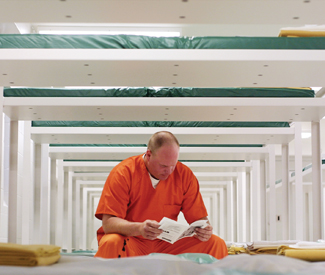
Realignment, California’s year-old program of diverting more inmates and parolees from state prison to county jails and probation offices, was borne of necessity: The state faced a severe budget crisis and had been ordered by the federal courts to reduce the population in its overcrowded prisons. But Realignment is proving to be a real opportunity to address inmates’ needs and reduce recidivism, particularly in San Francisco, where progressive notions of rehabilitation and redemption have deep roots.

“Realignment is the most significant criminal justice reform in decades,” says Assembly member Tom Ammiano, the San Francisco Democrat who chairs the Assembly Public Safety Committee and has helped oversee the process. “The motivation of many of us came from things that were thwarted, like sentencing and parole reform, in Sacramento for many years.”

San Francisco was uniquely positioned to thrive under the new system and to be a model for other counties that seek to improve on the 70 percent recidivism rate among state prison inmates, and the myriad problems and costs that spawns. Former Sheriff Michael Hennessey brought a variety of innovative educational and support services into the jail during his 32-year reign that ended last year (see “The unlikely sheriff,” 12/20/11).

“It’s more than an opportunity. It’s in line with the Michael Hennessey doctrine of enhancing public safety while elevating the idea of redemption, and I subscribe to that,” said suspended Sheriff Ross Mirkarimi, who successfully ran as Hennessey’s endorsed heir before Mayor Ed Lee ousted him over domestic violence allegations. “Michael Hennessey made famous the rehabilitation programs inside the jail and outside the jail.”

San Francisco was also in a good position as both a manageably sized city and county, and one that had room for the influx of inmates. It was ordered by the courts in the 1980s to reduce its crowded jail population – the peak jail population of 2,300 is now down to about 1,550 – and gained even more capacity last year when the SFPD’s crime lab scandal resulted in hundreds of drug cases being thrown out by the courts.

“It’s something that makes sense for San Francisco,” Acting Sheriff Vicky Hennessy told us. “We’re doing better than most other counties because we had the bed space and we had community programs. Michael Hennessey is a visionary…and he got these community programs out there.”

Undersheriff Ellen Brin, who oversees the jail, said the main difference among inmates that San Francisco is dealing with under Realignment – a total of 2,258 in the jail over the last year, staying an average of 60 days each, and another 306 convicts under post-release supervision – is that they’re in local custody longer than before.

“It’s sort of the same population we’ve always dealt with, but maybe we’re dealing with them on a longer term,” she said.

That creates some challenges – Brin said there are more inmates who are a little more hardened and “more sophisticated” – but it also gives local programs more of a chance to help the inmates. That was one of the arguments for Assembly Bill 109, the main legislation that created Realignment, along with five other related bills.

“That was the whole plan about AB 109 is the counties do it better,” Brin said. “For us, we’ve been doing these programs for so long, with reentry and other community programs, so it’s easy for us to manage this population because they’re here longer.”

Realignment has also prompted more collaboration among the affected local agencies – particularly the Sheriff’s Department, Adult Probation Services, and the District Attorney’s Office – and their counterparts on the state level.

“We haven’t had an overarching initiative that we’ve all been required to sit around a table and work on. This has kind of brought us together, and we’ve discovered other areas where we need to work together as well,” Hennessy said.

That has sparked new programs. For example, San Francisco just started to bring those about to be paroled from state prison into the local jail before their release in order to integrate them into the San Francisco rehabilitation system. “We’re creating a reentry cycle for them so they aren’t just getting off the bus and landing here and going directly to Probation for an interview,” Hennessy said. “Now, we’re going to try to bring them here 60 days early and provide them with wrap-around services, so that we can get them established, get them housing, give them the best opportunity we can for a successful reentry.”

With counties now responsible for the people local judges send to jail, there’s more interest in reforming sentencing laws and exploring more progressive and community-based alternatives to incarceration, which is the focus of the new San Francisco Sentencing Commission that held its first meeting last month.

“District Attorney [George] Gascon is very supportive of Realignment, DA’s Office spokesperson Stephanie Ong Stillman told us. “He has said it could have the greatest impact on justice reform in decades. San Francisco is on its way to being a model for the state.”

But the flip-side of San Francisco’s advantages has been a growing backlash against Realignment in conservative counties with disproportionately high incarceration rates and a lack of capacity in their jails – which is often a byproduct of combining tough-on-crimes policies with anti-tax attitudes, something Ammiano is now dealing with in Sacramento.

“There is a lot of push-back from the Republican Party and alarmism over Realignment,” Ammiano said, noting that he’s just waiting to be hit with anecdotal stories about a transferred inmate committing some horrific crime, even though Realignment only involves low-level convicts who committed non-violent and non-sexual crimes.

Ammiano will work with a newly constituted Board of State and Community Corrections that will distribute funds to counties that need to beef up each their jail capacities or their treatment programs. That mix hasn’t been set yet, but Ammiano said he won’t support counties that simply seek more state resources to maintain high incarceration rates.

“In one way, it’s perturbing and the other way, it’s exciting,” Ammiano said. “For me, the more the county has programs, the more sympathetic I’ll be.”

Yet in this era of chronically underfunded government entities, even San Francisco is strained. Hennessy and Brin say Realignment has brought more inmates with serious mental health issues into the jails for longer periods of time — and that has stretched their resources.

“That’s where we lack, even before AB 109, and I’d like to get more people in there who are experts in the mental health field,” Brin said.

Hennessy agreed, but added, “The mental health program we have is extremely good, it’s just overtaxed because we’re seeing many more people, and this is across the state.” Mental health isn’t the only issue. “The other thing that is a concern is housing for people,” Hennessy said, explaining that the city needs both supervised housing and regular low-income housing for former inmates returning to the community. Maintaining the Sheriff’s Department progressive legacy in the face of new challenges is one reason why Mirkarimi sees danger in Lee’s decision to overturn that election and consolidate more power in the Mayor’s Office. “It’s important that the independence of the Sheriff’s Department be preserved,” Mirkarimi said. “Programs can easily be changed by successive mayoral administration if there isn’t that check on power.” But for now, Brin said San Francisco’s various law enforcement officials have been working well to realize the potential of Realignment: “The collaboration between the criminal justice partners has just been really, really great. Everybody is working together to try to accomplish the same thing.”

Ending the mayor’s commission monopoly

2

EDITORIAL Ten years ago, San Francisco voters took a huge step toward decentralizing control of city planning, approving a measure that splits the appointments to the powerful Planning Commission between the mayor and the Board of Supervisors. A year later, a similar change gave the supervisors a role in appointing Police Commission members.

By any rational account, it’s been a complete success. The commissions better reflect the diversity of opinion in the city, function well and are no longer complete rubber stamps for the mayor and his planning director and police chief.

The mayor still controls the majority on both panels; his ability to set the direction of city policy hasn’t been harmed. But there’s a least a chance for a dissenting voice or two.

Compare that to, say, the Recreation and Parks Commission.

Rec-Park is a disaster. The seven members are all appointed by the mayor. Some have little or no past experience in anything related to recreation or parks. One actually works as Mayor Ed Lee’s scheduler. Commission votes are nearly always unanimous and the panel supports the director more than 90 percent of the time.

The mayoral appointees have overseen the rampant privatization of public space and a change in direction that undermines the entire concept of urban parks. Rec-Park staff have been directed to find increased ways to turn the parks into cash machines, prioritizing revenue over public access.

The result: So many people are angry at the department that it’s possible San Francisco voters will reject a bond act in November aimed at providing badly needed money to fix up ailing parks and facilities.

The discontent with Rec-Park stems in significant part from the perception that the commission is inaccessible and uninterested in public input. Since all of the members typically line up in lockstep on every decision, there’s little discussion and less chance for opposing opinions to get heard.

There’s a pretty easy fix — the supervisors could put a charter amendment on the ballot giving the board three of the seven appointments. But that would leave a long list of other key commissions unchanged — and there’s no reason to address the problem piecemeal. It’s time for the supervisors to push a comprehensive reform package that redefines how every policy commission in the city is structured.

The reason district elections of supervisors has been such an unqualified success (and remains incredibly popular) is that it guarantees not only neighborhood input on issues but a diverse board. Fiscal conservatives have a voice; so do left-progressives. You won’t find that on most mayoral commissions; it’s very, very rare for a mayor to appoint someone who doesn’t share his or her policy perspectives.

The mayor of San Francisco — who needs to raise huge gobs of money to get elected, leaving him or her deeply in debt to powerful and wealthy individuals and interests — has too much power. That’s a basic problem in the City Charter. The supervisors should start holding hearings now on alternative approaches to a more equally shared governance. Splitting appointments to all commissions would be a great start.


Convict clinicians

1

news@sfbg.com

Editor’s Note: Dey is an inmate at Soledad State Correctional Facility serving 25 years-to-life for his third strike.

Recidivism is like a circular river of criminality. After picking up toxic momentum in my neighborhood, deviance carves a path of destruction through yours. Being a participant in this tragic affair while defined indefinitely by a rap sheet from hell — it’s a feeling worse than death.

Someone has to put their foot down and say enough is enough. If I only had one wish — I’m almost embarrassed to say — prisons and jails would become factories that turn lawbreakers into advocates for change. Sound crazy? Welcome to my world, where sanity is a luxury. But I’m willing to put up or shut up.

In 2007, the Legislature approved Assembly Bill 900 to bring the smart-on-crime movement to the California Department of Corrections and Rehabilitation (CDCR). An expert panel designed the California Logic Model to evaluate and measure evidence-based methods, which are supposed to combine education, lifeskills, and cognitive restructuring. In theory, it makes perfect sense.

Then the recession hit, and the labor-intensive smart-on-crime movement never got moving. Budget cuts brutalized rehabilitation. About the only austerity measure left to impose, according to conventional wisdom, is to remove the word “rehabilitation” from the agency’s masthead. As the state struggles with a federally imposed prison population cap and counties scramble with Realignment’s influx of prisoners, I’m through waiting. Seventy percent of incarcerated people who still suffer from untreated substance abuse will continue to recidivate 70 percent of the time. It’s not a puzzle. People need help, and lives are at stake — including my own.

OPPORTUNITIES INSIDE

In late 2009, I found myself part of a mass transfer of long-term offenders being sent to the Correctional Training Facility (CTF) in Soledad. Attempts to think outside the box in higher security prisons always fell on deaf ears. However, the abundance of rehabilitative programs being offered in CTF presented a rare opportunity.

Inmate-run groups grew roots in CTF in the mid-’00s, and programming cuts didn’t impact CTF to the same degree as other prisons. In the self-help method, volunteers from the community or correctional employees in their off-hours team up with prisoners to deliver services. Soledad is unique. Seven days a week, seminars and workshops facilitated by inmates for inmates cover 12-steps, anger management, and victim awareness, to name just a few.

One shining example is a self-funded college program that serves almost 300 students a semester. In 2010, a small cohort of determined individuals established an arrangement with Palo Verde College to become specialists in their Alcohol and Drug Studies (ADS) program. Since I’m “struck-out” for a three-strikes drug offense, I have a vested interest in this concept. Thirteen years of bearing witness to political and governmental indifference to public safety has turned me into a fanatic on a mission. We need training and treatment — and we need it now. The CDCR does have a substance abuse certification program in Solano State Prison, but it is too exclusive and expensive, not to mention a logistical nightmare.

Palo Verde College offers ADS to some CDCR prisoners via distance education, but obtaining state credentials requires a larger investment. We found an investor. With the help of a generous nonprofit organization, we intend to use the ADS program to develop an inclusive and mobile method of cost-effective licensing.

As the spring 2011 semester comes to an end, we have almost 20 students ready to begin the final phase of state certification. Twenty guys might not be able to change the world, but if given the chance, we can lay a solid foundation to make an impact on the underworld. I’m excited.

In-custody substance abuse treatment followed by aftercare is most effective when total exposure lasts two to three years. It’s also very expensive. Post-secondary training tied to long-term treatment is fiscally and socially responsible — cutting right to the heart of criminal thinking, anger, and addiction. Our specialized studies empower us to develop promising methods that can be delivered for next to nothing.

We follow the evidence. A rehabilitative oversight committee identified adult education and addiction as the two greatest criminogenic needs not being met. In response, a handful of us formed Inside Solutions, an evidence-based think-tank, and designed a program that addresses these unmet needs.

Starting in the summer of 2011, college-educated tutors began helping illiterate offenders raise their test scores while the ADS students began facilitating cognitive-lifeskills workshops. By establishing a voluntary program that doesn’t impact the budget, we are delivering group-oriented treatment to those who need it the most. One prisoner helping another is power without equal. Delivering programs doesn’t take a lot of money — it takes ingenuity, passion, and tenacity. We do things for pennies on the dollar, and we wouldn’t even know what to do with the type of funds it takes to mismanage a fully-staffed program. Rather than some bunk program ran by a bunch of timecard punching half-assers, we remain true to our cost-effective roots by making something out of nothing. More bang for the buck is the motto of our method. For years, I felt like I was buried alive on the banks of the Recidivism River. Not anymore. Now I’m on a collective sojourn of systemic self-actualization. Accumulating multiple ADS certifications, college degrees and delivering treatment is a life-changing convergence of therapeutic alchemy. I have been transformed by the process of turning convict lead into clinical gold — social justice of the highest order. If we had a budget to match our enthusiasm, I can only imagine. In the here and now, not bad for a bunch of criminals.

Alerts

0

WEDNESDAY 19

Day of action for free Muni passes for youth Balboa BART Station, 401 Geneva Ave, SF; www.peopleorganized.org. 1:30pm, free. POWER has been working for years to get free Muni passes for youth, but the fight is not over. Come help keep the pressure on in a campaign that aims to "shift local, regional, and national mass transit priorities towards the needs of working class communities of color and to bring an analysis of race, class, and gender to bear on transportation planning decisions," starting with free Muni for youth in San Francisco.

Norman Yee happy hour Rio Grande, 1108 Market, SF; www.tinyurl.com/kim4yee. 6pm, free. Connect with some politicians at this happy hour, which District 6 Sup. Jane Kim is throwing for District 7 candidate Norman Yee. Yee is currently on the school board and hopes to represent District 7, which spans from Judah in the north to Lake Merced.

THURSDAY 20

Speak-out and march for Derrick Gaines Arco gas station, 2300 Westborough Blvd., South San Francisco; Derrick Gaines was just 15 years old when he was killed on June 5, 2012 by an officer of the South San Francisco Police Department. Police approached Gaines and a friend, who they say were "looking suspicious." Police say Gaines ran away from them and drew a gun. Family and friends don’t buy it. They will meet at the site of Gaines’ death, the Arco gas station, in a continuing campaign to demand justice.

Icarus 10-year anniversary concert El Rio, 3158 Mission, SF; www.theicarusproject.net. 6pm, $5-25. The Icarus Project is celebrating a decade of redefining mental illness by "navigating the space between brilliance and madness." Learn more about the Bay Area-born group in our story "Still Soaring" (9/12/12). Join them for live music, poetry, and an open mic.

SATURDAY 22

Out from the Wreckage Thrillhouse, 3422 Mission, SF; heatherwreckage.blogspot.com. "The collected, rejected, and recent works of punk artist Heather Wreckage." Her art has fueled revolutionary movements and counterculture at places like the Slingshot Collective, Occupy Oakland, and Hellarity House. Her zine, Dreams of Donuts, is on its 15th edition. Celebrate Wreckage with live music and zine bartering Saturday.

Third annual Castro nude-in Jane Warner Plaza, 17th and Castro, SF; nude-in.blogspot.com. Noon, free. It’s that time again. Come celebrate and defend the right of the Castro’s nude dudes and everyone who likes to be naked in public space. Of recent concern: cops unhappy with the public donning of cock rings. Decorated or not, nude-in organizers say, cocks should be able to fly free. So come support, nude or not- you can even dig up your Guardian butt guard from last year!

Self respect and community defense people’s forum Humanist Hall, 390 27th Street, Oakl; peopleshearing.wordpress.com. 12pm, free. Registration is at noon with events at 1, 3, and 6pm in this all-day forum on self-defense in the face of racial profiling and violence. In the wake of a report from The Malcolm X Grassroots Movement that shows that "every 36 hours a black man, woman, or child is murdered by the police, private security guards, prison guards or vigilantes in the US," this forum will discuss the history and current state of racial profiling and violence and how to launch a movement of people protecting themselves and their communities.

SUNDAY 23

Effective Animal Advocacy 101 371 10th St., SF; www.tinyurl.com/veg101. 1pm, free. Farm Sanctuary works to help animals by spreading the word about going vegetarian or vegan. They launch their Compassionate Communities national tour in San Francisco Sunday. Join them for a vegan lunch and workshop on "Effective Animal Advocacy 101," and be sure to pick up some leaflets explaining the merits of "going veg."

MONDAY 24

Nonprofit workers’ victory party El Rio, 3158 Mission, SF; www.tinyurl.com/seiunonprofit. 6pm, free. San Francisco nonprofit workers, represented by SEIU 1021, won a 2 percent increase in funding and prevented layoffs this year. Celebrate with the SEIU nonprofit division at El Rio, with DJ Carnita of Hard French.

Words and deeds

4

steve@sfbg.com

When Mayor Ed Lee appointed engineer and pro-development activist Rodrigo Santos to fill a vacant seat on the City College of San Francisco Board of Trustees, both men talked about the urgent need to save this troubled but vitally important institution.

“Our economic future is directly tied to the success of City College,” Lee said at a press conference, touting the school’s critical job-training role.

But when you cut through all the politics and hyperbole, the school’s biggest single problem is a lack of money — and the mayor and his new trustee aren’t doing much to help.

Neither Lee nor Santos have yet endorsed or publicly supported Proposition A, the $79-per-parcel tax that would stave off deep cuts to a district whose accreditation has been threatened over its anemic cash reserves and reluctance to scale back its course offerings (see “City College fights back,” July 17).

Nor have they appealed for support from their deep-pocketed allies in the business community, which City College supporters say should be doing more to support the district.

And while some say Lee is finally getting ready to endorse Prop. A, he’s done nothing to help the campaign.

“It’s a shame because [the mayor] has pledged to support City College,” John Rizzo, president of the Board of Trustees and a supervisorial candidate from District 5.

Lee also refused a request the trustees made last year to ease the more than $2.5 million in rent and fees that the district pays annually to the city. That’s a stark contrast to the city’s generous support of the San Francisco Unified School District, which gets an annual subsidy from the city of around $25 million, thanks to a ballot measure pushed by city officials of various ideological stripes.

“K-12 is important, but when we try to get help from the city, it falls on deaf ears and I don’t know why. Maybe little kids are cuter,” Rizzo told us.

Sup. Eric Mar said that dichotomy is a real problem, particularly given City College’s current challenges and the important role it plays in providing low-cost training to local workers. Mar has called for a hearing this month before the Joint City and School District Select Committee, which oversees SFUSD’s relationship with the city.

“I support stronger city support for City College,” Mar told us.

Asked about Lee’s unwillingness to help with City College’s fiscal situation, mayoral Press Secretary Christine Falvey said Lee has offered logistical support from city officials to help City College overcome the threats to its accreditation and has been carefully monitoring the situation, but she didn’t directly address why he has withheld financial support or endorsed Prop. A.

“The mayor has not taken a position on the parcel tax and is focusing his efforts on supporting the college’s need for serious fiscal and management changes and protecting its accreditation,” she told us by email Sept. 7. “The mayor knows it is more important than ever that the City support City College to make sure they get back on their feet for the sake of current and future City College students and for all San Francisco residents.”

But City College officials aren’t buying it. “Talk and nice words don’t mean anything anymore,” Rizzo said.

Other Prop. A supporters agree.

“The mayor needs to step up and support this,” Trustee Chris Jackson told the Guardian, arguing that most of the district’s problems stem from steadily declining financial support from the state. “We have a revenue problem.”

“It is the workforce training vehicle for the city,” said Rafael Mandelman, a candidate for trustee who has been actively supporting Prop. A. “Maybe now is the time when the city shouldn’t say no to that.”

Falvey responded by saying, “The City supports all of our public education institutions in some capacity. Each public education institution also pays the city for some of the required services it is provided.”

Other Prop. A supporters say they are hopeful that Lee may still come around. Alisa Messer, president of American Federation of Teachers Local 2121, which represents City College faculty, told us, “The mayor says he supports City College and we’re hoping he will support the measure soon.”

Gabriel Haaland, who has been working on the measure for SEIU Local 1021, also told us as we were going to press on Sept. 10, that Lee seems to be coming around: “From what I understand, the mayor is about to endorse it.”


PROMISE OF SUPPORT

When Lee appointed Santos — who has raised an unprecedented amount of money for his race, $113,153 as for July 1, mostly from the real estate and development interests he represents as president of Coalition for Responsible Growth — some argued that it would bring needed financial support for the district and the Prop. A campaign.

“He is expected to bring his allies in these fields into the fight to save City College, which faces a critical 2/3 vote on a parcel tax this November,” Tenderloin Housing Clinic Director Randy Shaw wrote on his Beyond Chron blog on Aug. 22, a day after telling the Guardian how the parcel tax was essential to City College’s future and Santos was uniquely positioned to support it.

But Santos, whose campaign didn’t return Guardian calls on the issue, hasn’t appeared at any Yes on A campaign events or offered any discernible support for the measure, whose supporters had only raised a little over $20,000 as of July 1. While there is little organized opposition to Prop. A, the fact that it needs approval by two-thirds of voters is a challenge that requires strong support.

Rizzo said Shaw’s argument doesn’t hold up. “It’s a nice theory,” he said, “but I haven’t seen evidence of that, and I haven’t seen Rodrigo at any Prop. A events.”

Santos hadn’t been involved with City College or educational issues before deciding to run for trustee, and he’s widely perceived as an ambitious politico setting himself up to run for the Board of Supervisors. At his press conference, Santos pledged to aggressively fight for City College.

“I join an institution that must be saved, and I’m absolutely committed to that goal,” Santos said.

Lee assembled a variety of representatives from “the city family” at his press conference, including trustees Natalie Berg and Anita Grier, Interim Chancellor Pamila Fisher, representatives from the Controller’s Office, Board of Education, Department of Children Youth and their Families, and the Mayor’s Budget Office.

“They, after all, need our help, need our support and they will not be able to accomplish it all by themselves,” said Lee, who pointedly didn’t say anything about the parcel tax at the event, even though he sang the praises of the district. “It empowers those economic sectors that we consider most valuable to our future, especially in the area of health care, hospitality, biotech, and now technology in general. We have become dependent on City College for their ability to prepare future workforces.”

Lee also sounded a tough love theme, saying “any improvement means a change from the status quo” and praising Santos as “someone who shares my vision of reform and will support the tough decisions ahead.”

Indeed, the board members face a number of tough decisions in the coming weeks, from whether to abdicate some of their authority to a special trustee empowered to make unilateral decisions about what programs to cut or campuses to close. The college is responding to a threat from the Accrediting Commission for Community and Junior Colleges to live within its means or lose its accreditation.

Santos didn’t mention Prop. A during the press conference that followed his swearing in, instead offering vague platitudes and promises that he’s willing to work hard and make tough decisions, while also making some puzzling statements about the district’s current situation.

“We must support the interim chancellor, Pamila Fisher,” he said. “Our primary duty is to ensure she enjoys the support and tools needed to implement difficult reforms. At the same time, we will hold her accountable, we will help her, we will challenge her.”

He appeared unaware that Fisher’s tenure ends in just a few weeks, well before any reforms could possibly be approved or implemented.

Some Prop. A supporters are hoping Santos will also challenge his allies in the business community to open their wallets and support both Prop. A and ongoing operations at City College.

“It would be great for the businesses to step up in a big way because they are really benefiting from our workforce training programs,” Messer said. “It’s clear to me the business community understands how important City College is to this city.”

Now, City College’s biggest supporters say it’s time for the city and the business community to put their money where their mouths are.

“City College certainly gives back to the people of San Francisco,” Rizzo said, “and it’s time for the city to give back to City College.”

CEQA: We Need It

0

OPINION Big business interests in California are waging a full-scale assault on the California Environmental Quality Act, known as CEQA, which has been loudly blamed for the slowdown in new construction in recent years.

But sluggish construction has been problematic nationwide and is far beyond CEQA’s reach. The exaggerated attacks on CEQA parallel extreme Tea Party politics, where facts don’t seem to matter and well-funded voices drown out reason. Attackers unfairly scapegoat a law that instead deserves great credit for far-reaching good.

The truth is that while environmental review takes time and costs money, the CEQA process usually moves quickly. In terms of litigation, a recent report recounted 11 CEQA lawsuits filed against San Francisco last year, while many hundreds of projects were approved in the city without CEQA challenges. A Natural Resources Defense Council study in Los Angeles similarly found 18 cases filed after 1182 approvals. A more in-depth analysis by the Public Policy Institute of California found that only one CEQA lawsuit is filed per 354 projects, a fraction of a percent.

So — what good does CEQA do? It assures citizens that they can participate in identifying and solving environmental problems alongside self–interested project applicants and City Hall insiders. The concept is simple and results in tangible benefits to California’s environment via better, smarter projects. The Planning and Conservation League, in a publication aptly entitled “Everyday Heroes,” assembled more than 70 examples of CEQA success. If space permitted I could describe scores of happy endings attributable to CEQA review that I have personally seen and celebrated.

CEQA assures environmental quality for present and future generations. Californians count on being informed about projects with environmental impacts — before their approval. In every California community, citizens organize and volunteer their time to offer comments and problem-solving suggestions. Applicants in turn know that their projects’ environmental impacts must be both disclosed and mitigated.

Attempts to weaken CEQA have also been around for decades. They always fail as Californians continue to champion their unique neighborhoods, cities, farmland, beaches, and wilderness areas. Most developers, even if preferring that their own projects not be subjected to CEQA review, do not want the law waived for all other projects.

Still, the national economic slowdown has given new life to the overblown claims of CEQA critics. A few weeks ago in Sacramento, a last-minute “gut and amend” bill would have taken away key protections. The public responded and the effort, again, failed. But the push to gut CEQA continues in cynical barrage.

What should happen? While well-orchestrated attacks on CEQA in the press and in Sacramento are largely opportunistic and misdirected, there is room for improvement. Over the past five years CEQA has been revised to prevent alleged abuses — including a $10,000 penalty for anyone filing a frivolous suit — and to streamline environmental review. Other positive changes are now being discussed among experts — without sacrificing citizen participation or substantial environmental protections.

Any CEQA amendments should occur only after a broad-based public process with full review by the Senate and Assembly Committees on Natural Resources.

Surely we do not want to regress to back-room planning and development without accountability. Benefiting all Californians in the long run, this profound law must itself be protected. As we continue to welcome millions to our beautiful state, we need CEQA’s protections more than ever.

Attorney Susan Brandt-Hawley represents public-interest environmental preservation groups statewide. In the last 15 years her work has been recognized with state and national awards and her cases have contributed to CEQA precedent in all six districts of the California Court of Appeal and in the Supreme Court.

Still soaring

3

yael@sfbg.com

“I was 18 years old the first time they locked me up in a psych ward.”

So begins “The Bipolar World,” an article published in the Bay Guardian‘s literature section 10 years ago, on September 18, 2002. The writer, Sascha Altman DuBrul, tells the story of his life. He’d been arrested walking on New York subway tracks after the year he first experienced what would later be diagnosed as bipolar disorder.

In the article, DuBrul wrote that the ideas shooting through his head were like a pinball game and he was convinced the radio was talking to him and that the CIA was recording his thoughts via secret neurotransmitters under his skin. But when he was diagnosed and told that he would need to take daily pills for the rest of his life, he wrote“I wasn’t convinced, to say the least, that gulping down a handful of pills every day would make me sane.”

“I think it’s really about time we start carving some more of the middle ground with stories from outside the mainstream and creating a new language for ourselves that reflects all the complexity and brilliance that we hold inside,” the article concludes.

DuBrul was right—the time was ripe.

“Within a couple of days of it being out on the street, I got about 40 emails from strangers,” DuBrul told me. “And it wasn’t just one or two line emails that were,’ hey, great article.’ It was people pouring out their stories to me.”

One of those people was Oakland artist Jacks McNamara, and the two instantly connected.

“You know the myth of Icarus, right? It’s the boy who flies too close to the sun. It’s from Greek mythology. So we were two people who had been diagnosed with bipolar disorder, and we were like, instead of seeing ourselves as diseased or disordered, we see ourselves as having dangerous gifts, like having wings,” DuBrul said. “And so, we put up a website that said, ‘The Icarus Project, navigating the space between brilliance and madness.'”

The Icarus Project began as a website, whose forums quickly filled with discussions as more people shared their stories and connected. Today, The Icarus Project has published three books, including a guide to starting support groups, dozens of which have sprung up around the country. More than 14,000 people have registered on the website.

The Bay Area-born radical mental health project celebrates its 10 year anniversary this year. An art show, concerts, spoken word, film screening, and skill share will take place this coming week. “Icaristas” will do what they do best: share their stories in language that feels right, building connections and community.

“When Sascha and I started it, we’d never seen anything written about bipolar that we could relate to. Everything was sterile and clinical and very mainstream, and didn’t really situate these sort of struggles within a larger political context,” McNamara recalls.

Now, there are Icarus Project books translated into six languages, and a huge collection of writing and art in what one zine editor, Jonah Bossewitch, calls the Icarus “sphere of influence and inspiration.”

“Our lives are made of fleeting moments, and to create documentation — whether in print or online or on canvas — is to make a fleeting moment into something to be shared. The Icarus Project and others who share similar ideas of liberation need to live our lives of beautiful fleeting moments, but also need to create documentation so that we can be heard,” said Laura-Marie Taylor, creator of Functionally Ill, an Icarus-inspired mental health zine now in its 13th edition.

We’re in competition with the loud voices of psychiatry, advertising, governments, and other forces that want to tell us who we are. We need to broadcast our stories far and wide in order to counteract the forces that want to tell us who we are,” Taylor said.

That was also the view of Ken Paul Rosenthal, whose film, Crooked Beauty, will be screened at the 10-year anniversary celebration.

“She who does not write is written upon,” Rosenthal told me. “Society’s narratives will overwrite your authentic self.”

“I think more than anything, Icarus is about hearing stories,” he said.

And that story telling is intimately connected to the building of community and networks.

Rosenthal first got acquainted with Icarus when he read a line Mcnamara had written: “The world seemed to hit me so much harder and fill me so much fuller than anyone else I knew. Slanted sunlight could make me dizzy with its beauty and witnessing unkindness filled me with physical pain.”

“We really wanted to create materials that were beautiful and inspiring and that people actually wanted to read,” said McNamara. “And that they could relate to if they came from more of a subcultural perspective or just had suspicions about the mental health industry and the ways that it diagnoses people and treats them. “

Icarus concepts also spread through means other than their support groups and publications.

“A lot of long-term Icarus members have gone on to become social workers, or to become therapists, or in various ways to have careers that are based in mental health and are bringing alternative perspectives,” McNamara said.

One such Icarista is Kathy Rose. She met McNamara at a screening of Crooked Beauty in 2010, and began participating in support groups and volunteering with Icarus. A teacher at Five Keys Charter School, which operates in San Francisco county jails, Rose said that the understanding and language of mental health she got from Icarus have been useful in her classroom.

“I see how many of my students are struggling with their own mental health, how they are treated, and how so much is related to the trauma they’ve experienced in their lives and lack of support,” said Rose. She said that she has used Icarus materials in the classroom and screened Crooked Beauty.

Those materials explore questions of over-medication and independence and autonomy in decision-making and question the role of institutions like psychiatric hospitals and prisons.

“Institutionalization in prisons and mental hospitals isn’t helping anyone and isn’t getting us anywhere,” Rose said.

The Icarus Project isn’t the first effort to resist the mental health establishment. The Mental Patients Liberation Front, and the larger Psychiatric Survivors movement grew out of civil rights efforts of the 1960s and 70s, as patients demanded an end to coerced and forced psychiatric interventions like electroshock. Today, Mind Freedom International and other groups continue that pressure; most recently, hundreds protested an American Psychiatric Associations meeting discussing new definitions for the Diagnostic and Statistical Manual of Mental Disorders Fifth Edition on May 5.

The Icarus Project is also intimately connected to activist movements, but plays a unique role.

“There’s support networks that get started in activist communities, but there’s a lot of ways that people have a really hard time being supportive of each other if they haven’t done the work themselves to be able to be supportive of themselves,” said DuBrul. “What happens in activist communities is that people burn out, which is kind of the ultimate Icarus project. I mean, that’s the Icarus myth.”

He called the Occupy movement, with its distinctive tent cities packed with people, many of whom were hurting financially and emotionally, a “test case” for implementing Icarus concepts.

In fact, Occupy has led to yet another Icarus-inspired book, Mindful Occupation, due to be released this year. The book “aims to address the need for attention to mental health, healing, and emotional first aid within Occupy and other movement groups.”

Mental health professionals, along with other non-professionals who were a part of Occupy Wall Street, formed the Support working group to intervene when people seemed to be in crisis and patrol the park at night. But Jonah Bossewitch, a member of the working group and one of the editors of Mindful Occupation, said that the broad critique of society and authority present in most of Occupy didn’t always extend to Support.

“Nobody was going to go to the cops after people got into a fight. Yet people were getting forced treatment and psych evaluations, ” Bossewitch said. “Folks are ready to critique the outside world — capitalism, banks — but it’s way harder to look in at their own profession.”

For DuBrul, the emotional tensions that played out at Occupy, as well as the trauma of police beatings, jail, and exposure to chemicals, proved the need to continue and grow The Icarus Project.

“If you know how you are when you’re well, it’s much easier to get back there,” said DuBrul said. “I’m telling you, a movement full of people, an Occupy movement full of people that have a sense of how they are when they’re well, then it’s much easier to work towards what it is that you want. If you’re operating from a place where you’re having a really hard time, it’s much harder to get to where you’re going.”

So where is Icarus going? They hope to formalize the mentorship and education that has already happened, borrowing in some ways from the “sponsorship” approach that groups like Alcoholics Anonymous take.

“We started with a vision of creating a new language and culture about what gets considered mental illness,” DuBrul said. “It’s alright to be ‘mad’ and still be brilliant.”

The schedule of Icarus anniversary events is available at www.theicarusproject.net/10thanniversary

The unregulated cabs

43

EDITORIAL Yeah, the shared economy. Yeah, high tech. Yeah, there’s an app for that. Yeah, the San Francisco cab industry is screwed up and you can never get a cab when you need one.

But that’s not an excuse for the city to stand by and allow a whole cottage industry of unregulated, unlicensed cabs hit the streets, using a business model that everyone knows is fake and undermining decades of painstakingly crafted rules that govern this critical part of the city’s transportation infrastructure.

Over the past year, at least five new companies have opened that offer what the taxi industry offers — rides around the city for money. They do it in a cool new way — you send a message from your phone requesting a ride, you follow where the driver is with a GPS app, and when you get to the destination, you make a “voluntary” payment through a Pal-Pal-style system.

It sounds great: Fast service that the existing industry can’t always offer, an easier way to pay (a lot of drivers still demand cash only, in part because the cab companies charge drivers an extraordinary fee for credit-card transactions) and — more important to a lot of us — a way to know exactly when your ride will arrive. (Ever call a major cab dispatcher to ask when the car will be there? “As soon as he gets there,” is the usual gruff response. Sorry we asked.)

But there’s a reason that the city regulates taxis. Drivers are in constant contact with the public — with vulnerable people who may be tourists with limited English, seniors or others who could easily be exploited, or in the worst case scenario, harmed — so a background check is required for anyone who gets behind the wheel of a cab. Cabs have to carry extra insurance to cover passengers. There’s a city office where you can file complaints against unethical drivers. Companies won’t hire anyone with a serious infraction on his or her license.

There’s nothing, not a single rule or regulation, to protect customers of the new startups.

The city also controls the number of cabs on the streets — in part because too many cabs chasing too few fares leads to problems. You can’t legally drive a cab in the city — that is, pick up and discharge passengers for hire — without a city medallion.

The new companies, like Lyft and Sidecar, get around that rule by claiming the fare is just a “suggested donation” — which everyone knows is bogus. The companies would have no business model without charging money for rides.

The emergence of these new companies demonstrates how far behind the city and the taxi industry is — easier payment and more reliable service is such a mandate that customers are willing to go elsewhere when they don’t get it. But the idea that the free market and tech-savvy entrepreneurs will solve every problem clashes with the longtime, demonstrated need for regulations in the taxi industry.

City officials need to make it clear that they won’t allow these rogue cabs to keep operating. If the new outfits want to offer their services, they need to do what every other cab company does — line up medallions, follow the rules, get the proper insurance and operate within the law.

Defending Richard Aoki — and the movement

5

OPINION In a new book, Bay Area journalist Seth Rosenfeld publicly names longtime Asian American leftist Richard Aoki as an FBI informant during his time as a leader of the Third World Liberation Front movement and as a founding member of the Black Panther Party. As Asian American activists in the movement today, we denounce these claims as baseless and false and are shocked at the way Rosenfeld makes such unsubstantiated claims while promoting his book release. His allegations damage the movement and reinforce trite “yellow peril” stereotypes of Asian Americans.

The allegations against Richard come without any credible evidence. Rosenfeld provides one incomplete document that he claims identifies Richard as an informant called “SF T-2.” It reads: “SF T-2 was designated for [redacted] (Richard M. Aoki) for the limited purposes of describing his connections with the organization and characterizing him.” The FBI cover sheet associates names of informants with their “T” codes. All informants’ names have been redacted.

It is astounding to us that Rosenfeld concluded Richard was an informant from that scrap of evidence. Later in this document, Aoki’s name is used again in order to name an FBI file location. In the few pages available under his FBI file, the informant “SF T-2” goes on to inform about the readings, political thought, and organizational/party membership of Richard Aoki. It appears to us that an informant named “SF T-2” was assigned to inform about Richard.

Rosenfeld also cites a former agent named Burney Threadgill, who claims Richard was an informant; before his death in 2009, Richard denied that in an interview. Threadgill is hardly a credible source and was a major player at the height of COINTELPRO, implementing FBI policy that was designed to deter and divide the movement. Unfortunately, both men are now deceased and cannot defend their claims.

He also uses testimony of a former FBI agent, M. Wesley Swearington, who had no relation to Richard Aoki. Despite this, Swearington claims that Richard was a “perfect informant” because he was a Japanese person in an organization of Black Americans. That makes no sense because Richard stuck out while in the Black Panther Party, and again feeds into the divisive stereotypes of Asian Americans.

Rosenfeld implies that Richard worked as an instigator, pushing people toward violent action. In fact, Richard was cautious about the use of violence and was vigilant about it during mass actions. It’s true that Richard armed the Black Panthers; however, he did so in the name of self-defense and protecting the people against police brutality.

All in all, Seth Rosenfeld’s news story on Richard Aoki was poorly researched and only a small fraction of his new book. His public accusations are unfounded and sensationalist.

Richard’s advanced leftist political thought, mentored and developed new leaders, educated his working-class sisters and brothers, and built black and Asian solidarity — and this was invaluable. Richard and other movement veterans inspired us and a new generation of young leaders to carry forward the work today. We are stronger because of them — and that is how people should be judged and remembered.

Steve Woo is an organizer in the Tenderloin and steering committee member of the Richard Aoki Fund. Alex T. Tom is the executive director of the Chinese Progressive Association.

Alerts

0

Thursday 13

Coalition on Homelessness 25 years SomArts Cultural Center, 934 Brannan, SF; www.cohsf.org. 5:30pm, $25-75. The Coalition on Homelessness has been working for the rights on the homeless for 25 years, always with a focus on people defining for themselves what their needs are and how to meet them. San Francisco has the Coalition on Homelessness to thank for more than a thousand supportive housing units, an expanded substance abuse treatment system, rental subsidy programs for poor families to access housing, and so much more. Show them some love back at their anniversary celebration., an art auction and benefit for the organization.

Friday 14

Human be-in Kezar Gardens, 780 Frederick, SF; www.humanbein.org. 3pm, free. Beginning Friday and spanning three days leading up the anniversary of Occupy on Sept. 17, this festival in Golden Gate Park celebrates coming together in pubic spaces and the commons. Musical performances are booked all weekend, a film festival will be screened in the evening, and workshops and skill-shares ranging from rainwater harvesting basics to bread baking to living without conventional currency fill the weekend, as well as yoga and meditation. But don’t just come to check out what the organizers and participants offer. As they put it, “you are invited to teach a workshop, facilitate a discussion, share a skill, play music, make art, cook a meal, or simply be.” They did it in 1967 — come create the modern Human Be-in this weekend.

Saturday 15

Odd couples Modern Times. Author Anna Muraco’s has done loads of interviews with “odd couples” — friends who don’t fit the norms of what genders go with which platonic and romantic relationships. “Odd Couples” examines friendships between gay men and straight women, and also between lesbians and straight men, and shows how these “intersectional” friendships serve as a barometer for shifting social norms, particularly regarding gender and sexual orientation,” say event organizers. So come here Muraco speak and examine the relationships and norms in your life.

Monday 17

Fight foreclosure Spear Tower, 1 Market Plaza, SF; www.occupybernal.org. 3pm, free. Occupy Bernal, Occupy Noe, and foreclosure fighters will rally at the offices of Peter Briger, board co-chair at Fortress Investment Group. These anti-foreclosure occupiers have zeroed in on Briger for involvement buying up distressed mortgage bond debt and selling it to turn a profit, a process Briger calls “Financial Services Garbage Collection.” As people resisting foreclosure with these Occupy groups put it, “we’re not garbage!”

Occuanniversary 555 California, SF; www.occupyactionsf.org. 5pm, free. One year ago, “Occupy the Financial District San Francisco” met at this spot, the massive Bank of America San Francisco headquarters and Goldman Sachs offices. The meeting was called in solidarity with Occupy Wall Street, and the first San Francisco occupiers began camping out at 555 that night. Celebrate a year of resisting the 1 Percent and taking back power with a debt burning. Organizers ask that participants bring copies of debt papers to burn symbolically, and pots and pans for a loud casserole march. There will also be music and guerrilla movie screenings.

Community Not Commodity 18th and Castro, SF; www.bayoccupride.com. 2pm, free. Community Not Commodity came together to protest commercialization and corporate greed at Gay Pride this year. Join the group today to celebrate the one-year anniversary of Occupy Wall Street. Protesters will march on the banks, hold a sit-in at Harvey Milk Plaza to protest the sit-lie ordinance that forbids San Franciscans from sitting or lying on sidewalks during the daylight hours, then meet up with other occupy anniversary events at 555 California at 5pm.

Tuesday 18

Connie Rice book reading Prevention Institute, 221 Oak, Oakl; preventioninstitute.org. 4:30-6:30 p.m., free. Civil rights attorney Connie Rice worked to reform the Los Angeles Police Department, filing case after case in an attempt to end police brutality against LA’s communities of color. She’s also Condoleezza Rice’s cousin. She will speak and read from her book, Power Concedes Nothing: One Woman’s Quest for Social Justice in America, from the Courtroom to the Kill Zones.

Defending Richard Aoki — and the movement

0

By Steve Woo and Alex T. Tom

OPINION In a new book, Bay Area journalist Seth Rosenfeld publicly names longtime Asian American leftist Richard Aoki as an FBI informant during his time as a leader of the Third World Liberation Front movement and as a founding member of the Black Panther Party. As Asian American activists in the movement today, we denounce these claims as baseless and false and are shocked at the way Rosenfeld makes such unsubstantiated claims while promoting his book release. His allegations damage the movement and reinforce trite “yellow peril” stereotypes of Asian Americans.

The allegations against Richard come without any credible evidence. Rosenfeld provides one incomplete document that he claims identifies Richard as an informant called “SF T-2.” It reads: “SF T-2 was designated for [redacted] (Richard M. Aoki) for the limited purposes of describing his connections with the organization and characterizing him.” The FBI cover sheet associates names of informants with their “T” codes. All informants’ names have been redacted.

It is astounding to us that Rosenfeld concluded Richard was an informant from that scrap of evidence. Later in this document, Aoki’s name is used again in order to name an FBI file location. In the few pages available under his FBI file, the informant “SF T-2” goes on to inform about the readings, political thought, and organizational/party membership of Richard Aoki. It appears to us that an informant named “SF T-2” was assigned to inform about Richard.

Rosenfeld also cites a former agent named Burney Threadgill, who claims Richard was an informant; before his death in 2009, Richard denied that in an interview. Threadgill is hardly a credible source and was a major player at the height of COINTELPRO, implementing FBI policy that was designed to deter and divide the movement. Unfortunately, both men are now deceased and cannot defend their claims.

He also uses testimony of a former FBI agent, M. Wesley Swearington, who had no relation to Richard Aoki. Despite this, Swearington claims that Richard was a “perfect informant” because he was a Japanese person in an organization of Black Americans. That makes no sense because Richard stuck out while in the Black Panther Party, and again feeds into the divisive stereotypes of Asian Americans.

Rosenfeld implies that Richard worked as an instigator, pushing people toward violent action. In fact, Richard was cautious about the use of violence and was vigilant about it during mass actions. It’s true that Richard armed the Black Panthers; however, he did so in the name of self-defense and protecting the people against police brutality.

All in all, Seth Rosenfeld’s news story on Richard Aoki was poorly researched and only a small fraction of his new book. His public accusations are unfounded and sensationalist.

Richard advanced leftist political thought, mentored and developed new leaders, educated his working-class sisters and brothers, and built Black and Asian solidarity — and this was invaluable. Richard and other movement veterans inspired us and a new generation of young leaders to carry forward the work today. We are stronger because of them — and that is how people should be judged and remembered.
Steve Woo is an organizer in the Tenderloin and steering committee member of the Richard Aoki Fund. Alex T. Tom is the executive director of the Chinese Progressive Association.

The park bond battle

17

yael@sfbg.com

Recreation and Parks clubhouses are privatized and cut off from public access. Public spaces like the Botanical Gardens and the Arboretum in Golden Gate Park are closed to people who can’t pay the price of admission. Event fees and permit processes have become so onerous that they’ve squeezed out grassroots and free events.

It’s been enough to infuriate a long list of neighborhood groups who have been complaining about the San Francisco Recreation and Park  Department for years.

And now those complaints have led to a highly unusual coalition of individuals and groups across the political spectrum coming together to do what in progressive circles was once considered unthinkable: They’re opposing a park bond.

From environmentalists, tenant advocates, labor leaders, and Green Party members to West Side Republicans and fiscal conservatives,  activists are campaigning to try to defeat Proposition B, the Clean and Safe Neighborhood Parks Bond. 

The bond would allow the city to borrow $195 million for capital projects in several parks around the city. It comes five years after the voters passed a $185 million park bond. 

Environmental groups like San Francisco Tomorrow and SF Ocean Edge oppose the bond, and even the Sierra Club doesn’t support it because “In recent years, we have had many concerns with management of the city’s natural places,” as Michelle Meyers, director of the Sierra Club’s Bay Chapter, told us.  

Matt Gonzalez, the only Green Party member ever to serve as Board of Supervisors president, is part of the opposition, as is progressive leader Aaron Peskin.  Joining them is retired Judge Quentin Kopp, darling of the city’s fiscal conservatives.

The San Francisco Tenants Union wrote a ballot argument opposing Prop. B. The left-leaning Haight Ashbury Neighborhood Council and the more centrist Coalition of San Francisco Neighborhoods both want the bond defeated.

Many of the people opposing Prop. B have never before opposed a city bond act. “This is very difficult for me,” said labor activist Denis Mosgofian. “Some of us always support public infrastructure spending.”

When we called Phil Ginsburg, the director of Rec-Park, for comment, his office referred us to Maggie Muir, who’s running the campaign for Yes on B. She sent a statement saying: “Unfortunately, a small group of individuals are opposing Proposition B because they disapprove of Recreation and Park Department efforts to improve our parks and better serve San Francisco’s diverse communities.” The statement refers to Prop B’s opponents as “single issue activists”

 So who are these activists, and why have they come together to oppose the parks bond?

 Many started with, as Muir put it, a single issue.  Journalist Rasa Gustaitis  didn’t want to see fees to enter the Botanical Gardens and Arboretum in Golden Gate Park.  West of Twin Peaks resident George Wooding was upset that Rec-Park has been leasing public clubhouses to private interests. Landscape Architect Kathy Howard took issue with a plan to renovate Beach Chalet soccer fields, complete with artificial turf and stadium lighting.

After a few years of fighting these small battles, people like Gustaitis, Wooding, and Howard started to see a pattern.  Park property was being privatized.

THE ENTERPRISE

Some city departments, like the airport and the port, are so-called enterprise agencies. They don’t receive allocations from the city’s general fund, and operate entirely on money they charge users. In the case of the airport, most of the money comes from landing fees paid by airlines. The port charges ships that dock here, and takes in rent from its real-estate holdings.

Other departments, like Recreation and Parks, provide free services, funded by taxpayer money. In theory, the department creates and maintains open spaces for public use. The recreation side offers services like classes and after-school activities, many of which are centered in recreation centers and clubhouses in parks throughout the city. 

These have been staffed in the past by recreation directors, adults who coordinated and supervised play, in many cases becoming beloved community figures.

But some city officials want that mission to change. In a time of tight budgets (and facing significant cuts to its operating funds), Rec-Park has been looking for ways to increase revenue by charging fees for what was once free.

In fact, in a 2010 Rec-Park Commission meeting, interim General Manager Jared Rosenfeld said, “the sooner we become an enterprise agency, the better off we will be.”

In August 2010, the department fired 48 recreation directors.  In their place, Rec-Park hired part-time workers who were paid to put on programs but not to staff neighborhood rec centers. The department also hired six more employees in the Property Management Division, tasked with leasing out and renting parks property.

In 2010, the commission also approved a plan to impose a fee for non-residents and require residents to show ID to enter the Arboretum. The once-free public garden was on its way to becoming a cash cow (operated in part by the private San Francisco Botanical Society).

A fledgling group formed to fight the fees – and its members soon connected People from SF Ocean Edge, the Parks Alliance and SPEAK who were not pleased with a proposal to install artificial turf and floodlights at the Beach Chalet soccer field and people who opposed the leasing of clubhouses.

 Mosgofian, a member of the Labor Council and worker with Graphic Communications International Union Local 4-N, helped bring together many disparate groups who, they realized, have a common goal in halting the privatization of the parks system.

“It started with a number of different people who were involved in a number of different efforts to get the Rec and Park Department to do the right thing running into each other and eventually getting together,” said Mosgofian “People from these groups found themselves listening to each other’s efforts and got together.”

Subhed: The empty clubhouse

One of the turning points was the fight over J.P. Murphy Clubhouse in the Sunset.

 In July 2010, Rec-Park quietly began taking clubhouses, previously free and open to anyone in the neighborhood, and putting them up for lease. Nonprofits, some of them offering expensive programs,  took exclusive control of public facilities.

For Rec-Park, it was more money. For neighborhood residents, it was a sign they were being cut off from the resources their tax dollars built and funded.

“They would put a notice on the clubhouse door for a hearing, they would have four or five concerned mothers show up, and they would lease the facility,” said George Wooding, then-president of the West of Twin Peaks neighborhood group that got involved in opposing the clubhouse privatization.

The J.P. Murphy clubhouse in the inner sunset had benefitted from the 2008 bond. The building was renovated at a cost of $3.8 million. But when the shiny new rec center was finished, Rec-Park tried to put it up for lease.

Wooding helped organize strong opposition to the lease. They had already paid for the clubhouse through taxes and bond money, the opposition figured—why shouldn’t it be kept open to the public, free? 

 “I’d had enough. We felt, this is our park,  they just spent a ton of money. They fired the rec director. When Rec-Park came to rent out the facility, we just said no way,” Said Wooding.

The department gave up, and J.P. Murphy wasn’t leased. But without a lessee, the department simply closed the center. It’s empty and dark – although it’s available for $90 an hour rent.

Other similarly frustrating battles were going on around the city. 

Muir called the opposition “short-sighted.” 

“This opposition is punishing the people who use the facilities across the city, children who need safe parks to play in, seniors, and those who are disabled who need ADA compliance,” said Muir.

But Friends of Ethics, another group opposing the bond, argues that Rec-Park shouldn’t get another cent until the agency cleans up its act. In a paid ballot argument against Prop B, the group brought up the controversial process of leasing out the Stowe Lake Boathouse last year. The move to put Bruce McLellan, longtime operator of the family business that sold snacks and rented paddle boats, on a month-to-month lease before auctioning a new lease to the highest bidder created a serious backlash.

 On top of that, commission officials were accused of bias when they recommended a lobbyist, Alex Tourk, to one of the companies vying for the contract. 

 “It’s unseemly and it clouds public trust,” said No on Prop B proponent Larry Bush,  who publishes Citireport. 

The boathouse isn’t the only much-beloved tradition ended under the current Rec-Park administration’s reign. The Power the Peaceful festival, which brought big name musicians and thousands of attendants, all for free, has been priced out due to dramatic increases in fees. So has the Anarchist Book Festival. 

 Bob Planthold, a disability rights advocate who is also a member of Friends of Ethics, says that there are issues in the ADA compliance plans for the Parks Bond as well. Planthold says that money from the last bond measure in 2008 was misspent in terms of disability access.

 “Trails weren’t graded properly. There was no attention to whether there were tree roots that might be rising above the level of the trail that could trip somebody,” said Planthold. “They didn’t do a good, proper, fair job on making trails accessible.”

 The bond got unanimous support from the Board of Supervisors. That’s because it earmarks money for parks that desperately need it throughout the city. 

 But that doesn’t mean all the supervisors are pleased with the way Rec- is being run, either. In July 2010, Sup.  David Campos and then-Sup.  Ross Mirkarimi tried to pass a Charter Amendment to split the appointments to the commission among the mayor and the supervisors. 

 But they couldn’t get the measure through, and the commission remains entirely composed of mayoral appointees.  

So now the voters have a choice: Give more money to what  many say is a badly managed department moving toward the privatization of public property – or shoot down what almost everyone agrees is badly needed maintenance money. Of course, the critics say, Rec-Park can always change its direction then come back and try again in a year or two – but once public facilities become pay-per-use private operations, they tend to never come back. 

The latest insurance scam

0

steve@sfbg.com

Mercury Insurance and its billionaire founder George Joseph are trying, for the second time in two years, to charge infrequent drivers more for car insurance.

Only this time, the measure has the surprising support of a progressive advocacy group that represents low-income communities of color — and that recently received a substantial donation from Mercury.

Proposition 33 — which so far has received fairly little news media attention in an election dominated by talk of taxes — is a reprise of a similar measure, Prop. 17, that went down to defeat in 2010.

The measure seeks to allow insurance companies to set premiums based in part on whether consumers have had continuous coverage. In other words, Mercury wants to raise rates on people who take a break from driving for economic, environmental, or other reasons.

The new measure contains a few exemptions targeted at sympathetic groups singled out by opponents in the last campaign, including active-duty soldiers and those unemployed due to layoffs.

And Prop. 33 also has a significant new backer, the Berkeley-based Greenlining Institute.

That alliance has drawn the ire of Consumer Watchdog, the nonprofit group that created California’s regulated car insurance system with Prop. 103 in 1988 and has been fighting to defend it ever since.

“It raises rates on the people that Greenlining claims to represent,” Consumer Watchdog President Jamie Court told us.

GOLDEN STATE GOLD

Mercury got its start in the 1960s, selling insurance to car owners who had spotty records, charging high rates — and aggressively challenging claims. About 80 percent of its business is in California.

And Mercury has been trying for some time to challenge the landmark Prop. 103, the 1988 ballot measure that set tight regulations on what car-insurance companies can charge — and what they can use to set rates.

Under that law, insurance companies can only use three basic rating factors: how long someone has been driving, vehicle miles traveled per year, and a driver’s safety record. There are 16 more factors that the state has allowed to have a smaller impact on rates, including the “persistency discount” that rewards drivers for staying with a single company.

Court said there are good reasons for that discount, noting that it costs companies more to market to and administer new customers than to serve existing ones.

Prop. 33 would allow consumers to shop around and still keep that discount — something that Court said only makes sense if you want to give insurance companies the power to divide customers by class and punish people who choose to give up driving for a while.

“It’s sleight of hand,” Court said. “Some drivers get a discount, everybody else is going to get a surcharge.”

Two years ago, every single legitimate consumer group in the state opposed Mercury’s efforts. So why is the prominent Greenlining Institute changing its tune?

Greenlining says the new measure is better. But the group’s staffers also acknowledge that Mercury is now a significant donor to Greenlining. Joseph appeared as a panelist at Greenlining’s 19th Annual Economic Summit in April, and the company donated $25,000 at that time.

Greenlining General Counsel Sam Kang, who pushed for the new position and is the designated point person in defending the stance, told us the new exemptions make the measure worth supporting. “The protections are what really distinguish Prop. 17 from Prop. 33,” Kang said. “It’s better than what we’ve got now.”

Kang argues that the increased competition it could foster among insurance companies might lower premiums for everyone. “If customers are willing to walk away” from their current insurance provider and still keep their continuous coverage discount, Kang told us, “that’s how it will drive down rates.”

Court called it “ridiculous” to claim this corporate-sponsored measure — Joseph has personally given almost $8.3 million to the Yes on 33 campaign, the lion’s share of its total funding — would drive down premiums through increased competition for customers.

“There’s no dispute on that and Greenlining is using tactics that are really reprehensible, and it’s a shame because they are likely to be the centerpiece of Mercury’s campaign,” he said. “George Joseph is trying to get cover from a group that has no business doing this.”

Greenlining Executive Director Orson Aguilar acknowledged the organization was divided on this measure, and that is still open to being convinced it made the wrong call. “This was hotly debated. This was not an easy issue for us,” Aguilar told us. “Frankly, if we’re wrong, we’re happy to be convinced.”

GREENLINING’S CAMPAIGN ROLE

Yet it may be too late for that: The state voter handbook has already been printed, and the Yes on 33 campaign has been touting the group’s support. “The Greenlining Institute — a consumer group founded to fight unfair business practices — supports Proposition 33 because it protects consumers and allows this discount to everyone who has followed the law,” says a ballot argument that signed by Kang and CDF Firefighters President Robert T. Wolf and California Hispanic Chamber of Commerce President Julian Canete.

“As you know, we opposed Prop. 17 and we opposed it quite vigilantly,” Kang told us. And the main reason was the organization didn’t buy Mercury’s spin that it would simply lower rates for those with continuous coverage. “If someone is going to get a discount, someone else is going to pay more,” Kang acknowledges.

Yet he is now parroting the Yes on 33 campaign’s rhetoric that the measure simply rewards drivers who “followed the law” and maintained continuous insurance coverage, saying the exemptions that Mercury wrote into the new measure actually give those groups — soldiers and the unemployed, which he notes are disproportionately poor people of color — more protections than they now enjoy.

“If you have continuous coverage for five years, you are eligible for a persistency discount,” Kang said, casting the measure as simple and straightforward.

Court and his group strongly object to that simplistic approach, asking why an insurance company would sponsor a measure that lowers premiums. The reality, consumer advocates say, is that this is a duplicitous measure that relies on a flawed premise and is really about giving insurance companies a new tool to capture certain customers and bilk those who can least afford it.

“These exemptions are bullshit, and they are written to be very narrow. It’s lipstick on a pig,” Court said. “It exposes how it raises rates for all low-income people who don’t meet these very narrow exemptions.”

In fact, the official summary by the Attorney General’s Office makes it clear that prop. 33 “Will allow insurance companies to increase cost of insurance to drivers who have not maintained continuous coverage.”

Kang disputes that objective analysis, telling us, “The ballot title and summary is up for discussion as far as what it meant.”

Kang admitted that Mercury is supporting Greenlining. “They gave us $25,000 in anticipation of the summit, and we anticipate they they’ll help us out in the advocacy of this measure,” Kang said. “Corporations regularly contribute to us, and it has never guaranteed our consent or dissent on anything.”

He defended the approach, telling us, “Sometimes working with corporations is the only way to make monumental changes,” citing their successful efforts to improve the billing practices of PG&E, which regularly makes six-figure donations to Greenlining.

Aguilar also strongly defended the organization’s integrity. “To say that just because we got a stipend from Mercury Insurance” that bought their support, Aguilar said, is simply wrong. “Money comes from somewhere.”

Greenlining’s allies in various campaigns to protect low-income communities say they’re willing to give the group the benefit of the doubt. Joshua Arce, executive director of the SF-based Brightline Defense Project, doesn’t think donations from Mercury Insurance influenced the group’s position, noting that it has also received contributions from PG&E and AT&T then subsequently joined campaigns that opposed those companies’ practices.

Instead, he said Greenlining was probably just offering support to the measure because Mercury had addressed Greenlining’s criticism of Prop. 17 two years ago. “That’s one of the things about Greenlining,” Arce told us, “they say, ‘If you fix all the things we laid out, if you address them, then we’ll support it.” Yet Court said the minor changes made between Props. 17 and 33 shouldn’t have won over such a potentially influential ally. “I’m told they’re going to use Greenlining in the commercial. It’s clearly a transactional relationship,” Court said. “When the billionaire behind Mercury Insurance says it, it’s hard to believe, but it’s easier to believe coming from an organization called Greenlining.”

Approve clean power SF

20

EDITORIAL The clean energy plan for San Francisco isn’t perfect. It’s going to cost residents a bit extra to join a sustainable, city-run electricity system. Officials at the San Francisco Public Utilities Commission figure that only about 100,000 residential customers will pay the premium to buy renewable energy — fewer if Pacific Gas and Electric Company launches a huge marketing effort to drive potential customers away. And PG&E will still control the distribution lines, the billing, the meters — and will make most of the profit.

It is, in other words, a long way short of a city-owned public-power system.

But it’s an important step in that direction, and the supervisors should approve the plan.

San Francisco has been talking about community choice aggregation for almost a decade, since the state approved legislation allowing cities and counties to form the equivalent of co-ops to buy electric power. The idea is that the city can purchase power in bulk — either at low rates or with a cleaner generation portfolio — and resell it to local customers. CCA programs don’t displace private utilities, which still own the power lines and charge a fee to deliver the electricity to customers.

But they do offer consumers choice: Right now, PG&E can’t even meet the weak, limited state standards for renewable energy, so San Franciscans are buying power from fossil-fuel and nuclear plants. Clean Power SF, as the city program is called, would offer as much as 100 percent renewable electricity — purchased through Shell Energy — at what at first will be a higher price.

But the goal of the program — and after years of wrangling, the SFPUC is now entirely on board with it — is to use the revenue stream from the early stages of electricity sales to build local renewable-energy facilities that can be brought on line to replace the power from Shell. Eventually, although it may be a decade or more down the road, San Francisco can probably generate enough power from solar, wind, and its existing hydroelectric dam to meet around 40 percent of the total power needs. If part of the program involves aggressive demand reduction, that number could go higher.

The locally produced energy would be cheap and green — and would bring down the price of the city alternative. If the city can build, operate, and make money from renewable energy plants, it will also demonstrate that running a municipal utility is entirely feasible. And the initial work of creating a full public power system will be in place.

It’s a modest experiment. Anyone who doesn’t want to pay extra for green power can opt out, and the city won’t even be trying to take on major commercial customers yet. But as the price of renewables comes down, and San Francisco commences its own build-out, it’s almost certain that Clean Power SF will be offering not only cleaner power but better rates.

For all its flaws, this is a program that community activists and city officials have spent years working out — and both sides are, for once, happy it. It needs strong support at the board, to send a message to the mayor that this is something San Franciscans want.