Arts & Culture

Arts & Culture

On the Cheap Listings

0

On the Cheap listings compiled by Cortney Clift. Submit items for the listings at listings@sfbg.com. For further information on how to submit items for listings, see Picks.

WEDNESDAY 30

“Red Bull Curates: The Canvas Cooler Project” Public Works, 161 Erie, SF. 9pm, free. The Canvas Cooler Project pairs selected artists with local bar, lounge, and restaurant owners. Artists are then given 24 hours to transform a blank, canvas wrapped Red Bull Cooler into a work of art representative of their venue. The end results will be on display tonight where guests and selected judges vote on each piece — the winners get a trip to Miami for Art Basel week 2013.

THURSDAY 31

“Voices of Japan: Tanka after the Tsunami” SFSU Cesar Chavez Student Center, 1650 Holloway, SF. . Through Feb. 14. Opening reception: 5-8pm, free. Since the traumatic tsunami hit Japan in March of 2011, the country’s newspapers have been publishing tanka poems written by a wide range of Japanese citizens affected by the natural disaster. This exhibit takes a look at what these victims had to say, showing 29 selected poems from the papers. Photo collages, calligraphy, and video will also be on display alongside the translated words. Tonight’s reception will include a live calligraphy and story-telling performance.

FRIDAY 1

“A Hella Space” MOCO gallery, 371 17th St., Oakl. . Through Feb. 21. Opening reception: 6-10pm, free. Long time friends and artists Sam Turner, Meighan Moore, and Noelle Dexter share their artistic interpretation of life in Oakland through digital prints, watercolor, and pen and ink drawings. Tonight’s reception will also include a musical act by Noelle Dexter.

“Peace, Pies & Prophets: I’d Like to Buy and Enemy” First Presbyterian Church, 2619 Broadway, Oakl. 7pm, $12 donation accepted. There will be pie. And comedy. Need we say more? This Positive Peace Warrior and Christian Peacemaker Team fundraiser will include a homemade pie auction and a performance addressing issues of peace and justice in a comedic light.

SATURDAY 2

Fourth Annual German Family Karneval 1581 LeRoy, Berk. . 3-7pm, free. Bring the little ones out to help support the German School of Silicon Valley’s growing Berkeley campus. Enjoy a performance by a Brazilian-style marching band, snack on German food and drink, and let the kiddos take part in the various children’s activities offered.

Chantey Sing at Hyde Street Pier” San Francisco Maritime National Historical Park, 499 Jefferson, SF. (415) 561-7171. 8pm-midnight, free. RSVP by phone, required. Pick out your best blue-and-white striped shirt and channel your inner Popeye for this sailor sing along. Park rangers will lead you in sea chanteys under the stars and aboard a historic ship at San Francisco Maritime National Historical Park. Bring your own mug and soothe your vocal chords with free cider.

“Mud & Blood: A Swamp Noir Fairy Tale” The Lost Church, 65 Capp, SF. . 8pm, $10. Singer-songwriter Wesley Morgan introduces you to a new sort of story time. Through a mixture of story and song, Morgan and his guitar tell a Gothic, fantastical tale of a boy found in the mud, still attached to his mother in the aftermath of a tragic flood. Years later, the boy sets out on an adventure where he meets intoxicating temptresses, precious songbirds, and more.

Tomboy Tailors store opening Crocker Galleria, 50 Post, first floor, SF. . 2-6pm, free. Eventbrite RSVP requested. Tomboy Tailors, a fine clothier specializing in made-to-measure, custom suits for the butch among us, is opening up shop this afternoon in its new retail space. Check out the new store with champagne in one hand and hor d’oeuvres in the other. Maybe even get fitted for a suit while live jazz plays in the background?

SUNDAY 3

“Janet Jackson Flash Mob ‘Together Again'” Dance Mission Theatre, 3316 24th St., SF. . Noon-2pm, $3. On May 18th Bay Area Flash Mob will gather in various locations around San Francisco to perform “Together Again” in honor of Janet Jackson’s birthday. But before you can be part of the flash mob fun you’ve got to master the moves. Get some knowledge of the dance beforehand with free online tutorial videos and then join your mob mates this afternoon to learn part four of eight to the dance.

Fourth Annual Super Bowl Heavy Metal Chili Cookoff Bottom of the Hill, 1233 17th St., SF. . 1-6:30pm. Doors open at 1pm, game at 3:30pm, free. Spice up your Super Bowl Sunday with some home-style cooking. To give this cook-off an extra kick, all participants must also give their dish a heavy metal name. Prizes will be given away at halftime for best chili, best chili (popular vote), and best heavy metal name. Chili entrants must RSVP in advance. Everyone else is free to bring other food to share.

MONDAY 4

“Quiet Lighting’s Tour Through Town”826 Valencia, SF. . 6:30pm, $5 donation accepted. Quiet Lightning kicks off their citywide tour alongside Valencia Street literary staple, 826 Valencia for its first show of the year. Snack on some goodies from Bi-Rite Market, OneBar, and Cheddar and Chutney, sit back, relax and enjoy an evening of poetry and fiction readings by some of the city’s best young authors. This specific Quiet Lighting event will showcase pieces by written by six to 18-year-olds.


Film Listings

0

Film listings are edited by Cheryl Eddy. Reviewers are Kimberly Chun, Dennis Harvey, Lynn Rapoport, and Sara Maria Vizcarrondo. For rep house showtimes, see Rep Clock.

OPENING

Beware of Mr. Baker This mesmerizing bio-doc about volatile, wildly talented drummer Ginger Baker (Cream, Blind Faith) begins with the 70-something musician clocking director Jay Bulger in the face. After this opening, Bulger — who also wrote a deeply compelling article about Baker for Rolling Stone last year — wisely pulls himself out of the narrative, instead turning to a wealth of new interviews (with Baker, his trademark red locks faded to gray, and many of his musical and personal partners, including Eric Clapton and multiple ex-Mrs. Bakers), vintage performance footage, and artful animation to weave his tale. Baker’s colorfully-lived, improbably long life has been literally all over the map; he overcame a hardscrabble British childhood to find jazz and rock stardom, and along the way jammed with Fela Kuti in Nigeria (where he picked up his fierce love of polo), broke many hearts (his own kids’ among them) and lost multiple fortunes, spent a stint in the US, and eventually landed at his current farm in South Africa. Two constants: his musical genius, and his frustratingly jerky behavior — the consequence of a naturally prickly personality exacerbated by copious drug use and bitterness. A must-see for musicians and those who love them. (1:30) Roxie. (Eddy)

Hansel & Gretel: Witch Hunters Jeremy Renner and Gemma Arterton star in this fairy-tale action film directed by Tommy Wirkola (2009’s Dead Snow). (1:41) California.

In Another Country This latest bit of gamesmanship from South Korea’s Hong Sang-soo (2000’s Virgin Stripped Bare by Her Bachelors) has Isabelle Huppert playing three Frenchwomen named Anne visiting the same Korean beachside community under different circumstances in three separate but wryly overlapping stories. In the first, she’s a film director whose presence induces inapt overtures from both her married colleague-host and a strapping young lifeguard. In the more farcical second, she’s a horny spouse herself, married to an absent Korean man; in the third, a woman whose husband has run away with a Korean woman. The same actors as well as variations on the same characters and situations appear in each section, their rejiggered intersections poking fun at Koreans’ attitudes toward foreigners, among other topics. Airy and amusing, In Another Country is a playful divertissement that’s shiny as a bubble, and leaves about as much of a permanent impression. (1:39) (Harvey)

Movie 43 An A-list ensemble cast (Hugh Jackman, Halle Berry, Kate Winslet) and multiple directors (Peter Farrelly, James Gunn, Bob Odenkirk) combine their star power for this 12-chapter comedy film. (1:37)

Parker "Jason Statham" is pretty much a distinct genre at this point, yeah? (1:58) Shattuck.

Quartet See "Smith Happens." (1:38) Embarcadero.

ONGOING

Amour Arriving in local theaters atop a tidal wave of critical hosannas, Amour now seeks to tempt popular acclaim — though actually liking this perfectly crafted, intensely depressing film (from Austrian director Michael Haneke) may be nigh impossible for most audience members. Eightysomething former music teachers Georges and Anne (the flawless Jean-Louis Trintignant and Emmanuelle Riva) are living out their days in their spacious Paris apartment, going to classical concerts and enjoying the comfort of their relationship. Early in the film, someone tries to break into their flat — and the rest of Amour unfolds with a series of invasions, with Anne’s declining health the most distressing, though there are also unwanted visits from the couple’s only daughter (an appropriately self-involved Isabelle Huppert), an inept nurse who disrespects Anne and curses out Georges, and even a rogue pigeon that wanders in more than once. As Anne fades into a hollow, twisted, babbling version of her former self, Georges also becomes hollow and twisted, taking care of her while grimly awaiting the inevitable. Of course, the movie’s called Amour, so there’s some tenderness involved. But if you seek heartwarming hope and last-act uplift, look anywhere but here. (2:07) Smith Rafael. (Eddy)

Argo If you didn’t know the particulars of the 1979 Iranian Revolution, you won’t be an expert after Argo, but the film does a good job of capturing America’s fearful reaction to the events that followed it — particularly the hostage crisis at the US embassy in Tehran. Argo zeroes in on the fate of six embassy staffers who managed to escape the building and flee to the home of the sympathetic Canadian ambassador (Victor Garber). Back in Washington, short-tempered CIA agents (including a top-notch Bryan Cranston) cast about for ways to rescue them. Enter Tony Mendez (Ben Affleck, who also directs), exfil specialist and father to a youngster wrapped up in the era’s sci-fi craze. While watching 1973’s Battle for the Planet of the Apes, Tony comes up with what Cranston’s character calls "the best bad idea we have:" the CIA will fund a phony Canadian movie production (corny, intergalactic, and titled Argo) and pretend the six are part of the crew, visiting Iran for a few days on a location shoot. Tony will sneak in, deliver the necessary fake-ID documents, and escort them out. Neither his superiors, nor the six in hiding, have much faith in the idea. ("Is this the part where we say, ‘It’s so crazy it just might work?’" someone asks, beating the cliché to the punch.) Argo never lets you forget that lives are at stake; every painstakingly forged form, every bluff past a checkpoint official increases the anxiety (to the point of being laid on a bit thick by the end). But though Affleck builds the needed suspense with gusto, Argo comes alive in its Hollywood scenes. As the show-biz veterans who mull over Tony’s plan with a mix of Tinseltown cynicism and patiotic duty, John Goodman and Alan Arkin practically burst with in-joke brio. I could have watched an entire movie just about those two. (2:00) 1000 Van Ness, Sundance Kabuki. (Eddy)

Broken City Catherine Zeta-Jones’ measured performance and killer wardrobe run away with this uneven political thriller about a made-up Manhattan with real(-ish) problems. Russell Crowe is only slightly improving his record post-Les Mis, as he plays another harried and morally confused agent "for the people." Here, he’s Mayor Hostetler, a swaggering politico with fingers in New York’s real estate cookie jar and the sort of "get shit done" directive that results in bodies lying in NYC’s overfilled gutters. Good thing he has Mark Wahlberg in his back pocket, a cop who slipped a murder wrap and now scrapes the bottom for gigs as a private detective. Seven years ago Billy Taggart (Wahlberg) was seeking vigilante justice for the victim of a rape-murder in the city’s biggest ghetto. The victim became a household name but the killer was let off, leading to cries about the validity of NY’s justice system and to allusions to the Central Park Five. Broken City is less about a broken City and more about broken Men, and there are certain elements that seem too subtle for a story built on such bald-faced and predictable strategy. Between a script that’s struggling to demonstrate moral compromise and integrity, and direction (by Allen Hughes) that’s as sensitive to nuance as a border collie, it’s hard to find much beyond Zeta-Jones’ shoe stylings to admire. (1:49) 1000 Van Ness, SF Center. (Vizcarrondo)

Cirque du Soleil: Worlds Away (1:31) Metreon.

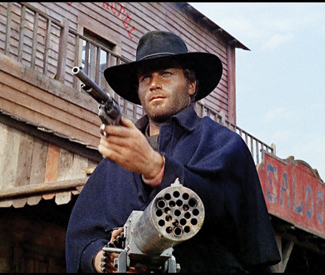
Django Unchained Quentin Tarantino’s spaghetti western homage features a cameo by the original Django (Franco Nero, star of the 1966 film), and solid performances by a meticulously assembled cast, including Jamie Foxx as the titular former slave who becomes a badass bounty hunter under the tutelage of Dr. Schultz (Christoph Waltz). Waltz, who won an Oscar for playing the evil yet befuddlingly delightful Nazi Hans Landa in Tarantino’s 2009 Inglourious Basterds, is just as memorable (and here, you can feel good about liking him) as a quick-witted, quick-drawing wayward German dentist. There are no Nazis in Django, of course, but Tarantino’s taboo du jour (slavery) more than supplies motivation for the filmmaker’s favorite theme (revenge). Once Django joins forces with Schultz, the natural-born partners hatch a scheme to rescue Django’s still-enslaved wife, Broomhilda (Kerry Washington), whose German-language skills are as unlikely as they are convenient. Along the way (and it’s a long way; the movie runs 165 minutes), they encounter a cruel plantation owner (Leonardo DiCaprio), whose main passion is the offensive, shocking "sport" of "Mandingo fighting," and his right-hand man, played by Tarantino muse Samuel L. Jackson in a transcendently scandalous performance. And amid all the violence and racist language and Foxx vengeance-making, there are many moments of screaming hilarity, as when a character with the Old South 101 name of Big Daddy (Don Johnson) argues with the posse he’s rounded up over the proper construction of vigilante hoods. It’s a classic Tarantino moment: pausing the action so characters can blather on about something trivial before an epic scene of violence. Mr. Pink would approve. (2:45) Metreon, 1000 Van Ness, Sundance Kabuki. (Eddy)

Gangster Squad It’s 1949, and somewhere in the Hollywood hills, a man has been tied hand and foot to a pair of automobiles with the engines running. Coyotes pace in the background like patrons queuing up for a table at Flour + Water, and when dinner is served, the presentation isn’t very pretty. We’re barely five minutes into Ruben Fleischer’s Gangster Squad, and fair warning has been given of the bloodletting to come. None of it’s quite as visceral as the opening scene, but Fleischer (2009’s Zombieland) packs his tale of urban warfare with plenty of stylized slaughter to go along with the glamour shots of mob-run nightclubs, leggy pin-curled dames, and Ryan Gosling lounging at the bar cracking wise. At the center of all the gunplay and firebombing is what’s framed as a battle for the soul of Los Angeles, waged between transplanted Chicago mobster Mickey Cohen (Sean Penn) — who wields terms like "progress" and "manifest destiny" as a rationale for a continental turf war — and a police sergeant named John O’Mara (Josh Brolin), tasked with bringing down Cohen’s empire. The assignment requires working under cover so deep that only the police chief (Nick Nolte) and the handpicked members of O’Mara’s "gangster squad" — ncluding Gosling, a half-jaded charmer who poaches Cohen’s arm candy (Emma Stone) — know of its existence. This leaves plenty of room for improvisation, and the film pauses now and again to wonder about what happens when you pit brutal amorality against brutal morality, but it’s a rhetorical question, and no one shows much interest in it. Dragged down by talking points that someone clearly wanted wedged in (as well as by O’Mara’s ponderous voice-overs), the film does better when it abandons gravitas and refocuses on spinning its mythic tale of wilder times in the Golden State. (1:53) Metreon, 1000 Van Ness. (Rapoport)

A Haunted House (1:25) Metreon, 1000 Van Ness.

The Hobbit: An Unexpected Journey Make no mistake: the Lord of the Rings trilogy represented an incredible filmmaking achievement, with well-deserved Oscars handed down after the third installment in 2003. If director Peter Jackson wanted to go one more round with J.R.R. Tolkien’s beloved characters for a Hobbit movie, who was gonna stop him? Not so fast. This return to Middle-earth (in 3D this time) represents not one but three films — which would be self-indulgent enough even if part one didn’t unspool at just under three hours, and even if Jackson hadn’t decided to shoot at 48 frames per second. (I can’t even begin to explain what that means from a technical standpoint, but suffice to say there’s a certain amount of cinematic lushness lost when everything is rendered in insanely crystal-clear hi-def.) Journey begins as Bilbo Baggins (a game, funny Martin Freeman) reluctantly joins Gandalf (a weary-seeming Ian McKellan) and a gang of dwarves on their quest to reclaim their stolen homeland and treasure, batting Orcs, goblins, Gollum (Andy Serkis), and other beasties along the way. Fan-pandering happens (with characters like Cate Blanchett’s icy Galadriel popping in to remind you how much you loved LOTR), and the story moves at a brisk enough pace, but Journey never transcends what came before — or in the chronology of the story, what comes after. I’m not quite ready to declare this Jackson’s Phantom Menace (1999), but it’s not an unfair comparison to make, either. (2:50) Metreon, 1000 Van Ness, Sundance Kabuki. (Eddy)

How to Survive a Plague David France’s documentary chronicles the unprecedented impact political activism had on the course of AIDS in the U.S. — drastically curtailing its death toll within a few years despite considerable institutional indifference and downright hostility. As the epidemic here first surfaced in, and decimated, the gay male community, much of Reagan America (particularly in religious quarters) figured the death sentence was deserved. The President himself infamously refrained from even saying the word "AIDS" publicly until his final year of office, after thousands had died. Both terrified and outraged, the gay community took it upon themselves to demand treatment, education, and research. Most of this urgent 1980s overview is concerned with the rise of ACT-UP, whose angry young men successfully lobbied and shamed corporate, academic, medical, and pharmaceutical bodies into action, with the result that by the mid-90s new drugs existed that made this dreaded diagnosis no longer a necessarily terminal one. France is a journalist who’s been covering AIDS practically since day one, and his first feature (made with the help of numerous first-rate collaborators) is authoritative and engrossing. Just don’t expect much (or really any) attention paid to the contributions made by S.F. or other activist hotspots — like many a gay documentary, this one hardly notices there’s a world (or gay community) outside Manhattan. (1:49) Roxie. (Harvey)

The Impossible Spanish director Juan Antonio Bayona (2007’s The Orphanage) directs The Impossible, a relatively modestly-budgeted take on the 2004 Indian Ocean tsunami, based on the real story of a Spanish family who experienced the disaster. Here, the family (Naomi Watts, Ewan McGregor, three young sons) is British, on a Christmas vacation from dad’s high-stress job in Japan. Beachy bliss is soon ruined by that terrible series of waves; they hit early in the film, and Bayona offers a devastatingly realistic depiction of what being caught in a tsunami must feel like: roaring, debris-filled water threatening death by drowning, impalement, or skull-crushing. And then, the anguish of surfacing, alive but injured, stranded, and miles from the nearest doctor, not knowing if your family members have perished. Without giving anything away (no more than the film’s suggestive title, anyway), once the survivors are established (and the film’s strongest performer, Watts, is relegated to hospital-bed scenes) The Impossible finds its way inevitably to melodrama, and triumph-of-the-human-spirit theatrics. As the family’s oldest son, 16-year-old Tom Holland is effective as a kid who reacts exactly right to crisis, morphing from sulky teen to thoughtful hero — but the film is too narrowly focused on its tourist characters, with native Thais mostly relegated to background action. It’s a disconnect that’s not quite offensive, but is still off-putting. (1:54) SF Center, Sundance Kabuki. (Eddy)

Jack Reacher (2:10) Metreon.

The Last Stand With gun control issues dominating the news, what better time to release a movie that lovingly glorifies the wonders of excessive firepower? Fortunately for star Arnold Schwarzenegger, making his return to leading-man status after that little fling with politics, The Last Stand is stupidly enjoyable enough to make any such PC-minded realizations relatively fleeing ones. When a Mexican drug lord (who also happens to be an expert race-car driver) escapes from federal custody and begins speeding home in a super-Corvette, the lead FBI agent (Forest Whitaker, slumming big-time) realizes his only hope is a teeny Arizona border town that happens to be overseen by Sheriff Schwarzenegger. (Other residents include a couple of hapless deputies; an Iraq war vet; and a gun nut played by a cartoonishly obnoxious Johnny Knoxville.) Can this ragtag crew hold off first the drug lord’s advance team (led by a swaggering Peter Stormare), and then the head baddie himself? Duh. The biggest surprise The Last Stand offers is that it’s actually pretty fun — no doubt thanks to the combo of Korean director Kim Jee-woon (2008’s eccentric The Good, The Bad, and the Weird; 2003’s spooky A Tale of Two Sisters) and the heft of Schwarzenegger’s still-potent charisma. (1:47) Metreon, 1000 Van Ness. (Eddy)

The Law in These Parts Ra’anan Alexandrowicz’s documentary is a rather extraordinary historical record: he interviews numerous retired Israeli judges and lawyers who shaped and enforced the country’s legal positions as occupiers of Palestinian land and "temporary guardians" of a Palestinian populace living under foreign occupation. The key word there is "temporary" — in using here a different (military rather than civil) justice from the one Israeli citizens experience, Israel has been able to exert the extraordinary powers of an invading force in wartime. But what is "temporary" about an occupation that’s now lasted nearly 45 years? How can the state justify (under Geneva Convention rules, for one thing) building permanent Jewish settlements that now house about half a million Israelis on land that is as yet not legally Israel’s? By constantly changing the terms and laws of occupation, they do just that. If many policies have been perhaps necessary to control terrorist attacks, one can argue that they and other policies have created the climate in which oppositional fervor and terroristic acts were bound to flourish. That, of course, is a political-ethical judgement far beyond the public purview of the judges and others here, whose dry legalese admits no personal culpability — and indeed sometimes seems almost absurdly divorced from real-world ethics and consequence, which of course serves an increasingly rigid governmental stance just fine. Without preaching, The Law in These Parts raises a number of discomfiting questions about bending law to suit an agenda that in any other context would seem frankly unlawful. (1:40) Roxie. (Harvey)

Let Fury Have the Hour Though its message — that creative expression is a powerful, meaningful way to fight oppression — is a valuable one, Antonino D’Ambrosio’s Let Fury Have the Hour covers turf well-trod for anyone who has ever seen a documentary about punk rock and social justice. (Especially when it contains usual suspects like Ian MacKaye, Shepard Fairey, and Billy Bragg waxing nostalgic about how nonconformist they were in the 1980s.) In truth, Fury is more collage than doc, pasting together talking-head interviews (also here: Chuck D, John Sayles, Van Jones, Tom Morello, Boots Riley, and Wayne Kramer, plus a few token women, chiefly Eve Ensler) with a mish-mash of sepia-toned stock footage that more or less thematically compliments what’s being discussed at the time. A more focused examination of D’Ambrosio’s thesis might have resulted in a more effective film — like, say, an in-depth look at how Sayles’ politically-themed films (here, he reads from the script for 1987’s Matewan in a frustratingly brief segment) are echoed in works by contemporary artists and citizen journalists, particularly now that the internet has opened up a global platform for protest films. Listen: I admire what the film is trying to do. I am OK with watching yet another doc that contains the phrase "Punk rock politicized me." But with too much lip service and precious little depth, Fury‘s fury ends up feeling a bit diluted. (1:40) Balboa. (Eddy)

Life of Pi Several filmmakers including Alfonso Cuarón, Jean-Pierre Jeunet, and M. Night Shyamalan had a crack at Yann Martel’s "unfilmable" novel over the last decade, without success. That turns out to have been a very good thing, since Ang Lee and scenarist David Magee have made probably the best movie possible from the material — arguably even an improvement on it. Framed as the adult protagonist’s (Irrfan Khan) lengthy reminiscence to an interested writer (Rafe Spall) it chronicles his youthful experience accompanying his family and animals from their just shuttered zoo on a cargo ship voyage from India to Canada. But a storm capsizes the vessel, stranding teenaged Pi (Suraj Sharma) on a lifeboat with a mini menagerie — albeit one swiftly reduced by the food chain in action to one Richard Parker, a whimsically named Bengal tiger. This uneasy forced cohabitation between Hindu vegetarian and instinctual carnivore is an object lesson in survival as well as a fable about the existence of God, among other things. Shot in 3D, the movie has plenty of enchanted, original imagery, though its outstanding technical accomplishment may lie more in the application of CGI (rather than stereoscopic photography) to something reasonably intelligent for a change. First-time actor Sharma is a natural, while his costar gives the most remarkable performance by a wild animal this side of Joaquin Phoenix in The Master. It’s not a perfect film, but it’s a charmed, lovely experience. (2:00) 1000 Van Ness, SF Center. (Harvey)

Lincoln Distinguished subject matter and an A+ production team (Steven Spielberg directing, Daniel Day-Lewis starring, Tony Kushner adapting Doris Kearns Goodwin, John Williams scoring every emotion juuust so) mean Lincoln delivers about what you’d expect: a compelling (if verbose), emotionally resonant (and somehow suspenseful) dramatization of President Lincoln’s push to get the 13th amendment passed before the start of his second term. America’s neck-deep in the Civil War, and Congress, though now without Southern representation, is profoundly divided on the issue of abolition. Spielberg recreates 1865 Washington as a vibrant, exciting place, albeit one filled with so many recognizable stars it’s almost distracting wondering who’ll pop up in the next scene: Jared Harris as Ulysses S. Grant! Joseph Gordon-Levitt as Robert Lincoln! Lena Dunham’s shirtless boyfriend on Girls (Adam Driver) as a soldier! Most notable among the huge cast are John Hawkes, Tim Blake Nelson, and a daffy James Spader as a trio of lobbyists; Sally Field as the troubled First Lady; and likely Oscar contenders Tommy Lee Jones (as winningly cranky Rep. Thaddeus Stevens) and Day-Lewis, who does a reliably great job of disappearing into his iconic role. (2:30) 1000 Van Ness, SF Center, Sundance Kabuki. (Eddy)

LUV Baltimore native Sheldon Candis drew from his own childhood for this coming-of-age tale, which takes place in a single day as 11-year-old "little man" Woody (Michael Rainey Jr.) tags along with his uncle, Vincent (Common), recently out of jail and rapidly heading back down the criminal path. With both parents out of the picture, Woody’s been raised by his grandmother (Lonette McKee), so he idolizes Vincent even though it’s soon clear the short-tempered man is no hero. Of course, things go horribly awry, bloody lessons are learned, tears are shed, etc. Despite the story’s autobiographical origins, the passable LUV suffers greatly by inviting comparisons to The Wire — the definitive docudrama examining drug crime in Baltimore. Most blatantly, sprinkled into an all-star cast (Dennis Haysbert, Danny Glover, Charles S. Dutton) are supporting characters played by Wire icons Michael K. "Omar" Williams (as a cop) and Anwan "Slim Charles" Glover (as a meaner Slim Charles, basically). Perhaps if you’ve never seen the show this wouldn’t be distracting — but if that’s the case, you should really be watching The Wire instead of LUV anyway. (1:34) Metreon. (Eddy)

Mama From bin Laden to wild babes in woods, Jessica Chastain can’t seem to grab a break. Equipped with just the bare outlines of a character, however, she’s one of the few pleasures in this missed-opportunity of a grim, ghostly fairy tale. Expanding his short of the same name, director Andres Muschietti kicks off his yarn on a sadly familiar note in these days of seemingly escalating gun violence: little sisters Victoria and Lily have disappeared from their home, shortly after their desperate father (Game of Thrones‘ Nikolaj Coster-Waldau) has gone on a shooting spree. They repair to an abandoned cabin scattered with mid-century modern furniture. Five years on, the girls’ scruffy artist uncle Lucas (also Coster-Waldau) is still searching for them, supported by his punk rock girlfriend Annabel (Chastain). The little girls lost are finally found by trackers — and they appear to be hopelessly feral, with the angelic-looking Victoria (Megan Charpentier), acting as the ringleader and the younger, bedraggled Lily (Maya Dawe) given to sleeping under beds and eating on all fours next to the dog bowl. The arty couple take them in and move into a "test house" provided by the sisters’ enthralled therapist (Daniel Kash), obviously psyched to study not one but two Kaspar Hausers. The traumatized kids are clearly haunted by their experience — in more ways than one — as inexplicable bumps go off, night and day, and Misfits t-shirt-clad Annabel discovers the real meaning of goth while getting in touch with her seemingly deeply buried maternal urges. Unfortunately, despite possessing the raw material for a truly scary outing that plunges to the core of our primal instincts (what’s scarier than an unsocialized kid that’s capable of anything?) and showing off Muschietti’s occasional instances of cinematic flair (as when multiple rooms are shown using split-screens), Mama ends up running away from the filmmaker and is finally simply spoiled by its mawkishly sentimental finale. It doesn’t help that the inadequate script sports logic holes that a mama could drive a truck though. (1:40) Metreon, 1000 Van Ness. (Chun)

Les Misérables There is a not-insignificant portion of the population who already knows all the words to all the songs of this musical-theater warhorse, around since the 1980s and honored here with a lavish production by Tom Hooper (2010’s The King’s Speech). As other reviews have pointed out, this version only tangentially concerns Victor Hugo’s French Revolution tale; its true raison d’être is swooning over the sight of its big-name cast crooning those famous tunes. Vocals were recorded live on-set, with microphones digitally removed in post-production — but despite this technical achievement, there’s a certain inorganic quality to the proceedings. Like The King’s Speech, the whole affair feels spliced together in the Oscar-creation lab. The hardworking Hugh Jackman deserves the nomination he’ll inevitably get; jury’s still out on Anne Hathaway’s blubbery, "I cut my hair for real, I am so brave!" performance. (2:37) 1000 Van Ness, SF Center, Sundance Kabuki. (Eddy)

My Worst Nightmare First seen locally in the San Francisco Film Society’s 2012 "French Cinema Now" series, My Worst Nightmare follows icy art curator Agathe (Isabelle Huppert) as her airless, tightly-controlled world begins to crumble — thanks in no small part to an exuberantly uncouth, down-on-his-luck Belgian contractor named Patrick (Benoît Poelvoorde). (His obnoxious, freewheeling presence in Agathe’s precision-mapped orbit gives rise to the film’s title.) Director and co-writer Anne Fontaine (2009’s Coco Before Chanel) injects plenty of offbeat, occasionally raunchy humor into what could’ve been a predictable personal-liberation tale — the sight of classy dame Huppert driving through a bikini car wash, for instance. (1:43) Smith Rafael. (Eddy)

Parental Guidance (1:36) Metreon.

Promised Land Gus Van Sant’s fracking fable — co-written by stars Matt Damon and John Krasinski, from a story by Dave Eggers — offers a didactic lesson in environmental politics, capped off by the earth-shattering revelation that billion-dollar corporations are sleazy and evil. You don’t say! Formulated like a Capra movie, Promised Land follows company man Steve Butler (Matt Damon) as he and sales partner Sue (Frances McDormand) travel to a small Pennsylvania town to convince its (they hope) gullible residents to allow drilling on their land. But things don’t go as smoothly as hoped, when the pair faces opposition from a science teacher with a brainiac past (Hal Holbrook), and an irritatingly upbeat green activist (Krasinski) breezes into town to further monkey-wrench their scheme. That Damon is such a likeable actor actually works against him here; his character arc from soulless salesman to emotional-creature-with-a-conscience couldn’t be more predictable or obvious. McDormand’s wonderfully biting supporting performance is the best (and only) reason to see this ponderous, faux-folksy tale, which targets an audience that likely already shares its point of view. (1:46) SF Center. (Eddy)

The Rabbi’s Cat A rabbi, a Muslim musician, two Russians (a Jew and a boozy Christian), and two talking animals hop into an antique Citroën for a road trip across Africa. No, it’s not the set-up for a joke; it’s the premise for this charming animated film, adapted from Joann Sfar’s graphic novel (the author co-directs with Antoine Delesvaux). In 1930s Algiers, a rabbi’s pet cat suddenly develops the ability to talk — and read and write, by the way — and wastes no time in sharing opinions, particularly when it comes to religion ("God is just a comforting invention!") When a crate full of Russian prayer books — and one handsome artist — arrives at the rabbi’s house, man and cat are drawn into the refugee’s search for an Ethiopian city populated by African Jews. Though it’s not suitable for younger kids (there’s kitty mating, and a few bursts of surprising violence) or diehard Tintin fans (thanks to a randomly cranky spoof of the character), The Rabbi’s Cat is a lushly illustrated, witty tale of cross-cultural clashes and connections. Rockin’ soundtrack, too. (1:29) Smith Rafael. (Eddy)

Silver Linings Playbook After guiding two actors to Best Supporting Oscars in 2010’s The Fighter, director David O. Russell returns (adapting his script from Matthew Quick’s novel) with another darkly comedic film about a complicated family that will probably earn some gold of its own. Though he’s obviously not ready to face the outside world, Pat (Bradley Cooper) checks out of the state institution he’s been court-ordered to spend eight months in after displaying some serious anger-management issues. He moves home with his football-obsessed father (Robert De Niro) and worrywart mother (Jacki Weaver of 2010’s Animal Kingdom), where he plunges into a plan to win back his estranged wife. Cooper plays Pat as a man vibrating with troubled energy — always in danger of flying into a rage, even as he pursues his forced-upbeat "silver linings" philosophy. But the movie belongs to Jennifer Lawrence, who proves the chops she showcased (pre-Hunger Games megafame) in 2010’s Winter’s Bone were no fluke. As the damaged-but-determined Tiffany, she’s the left-field element that jolts Pat out of his crazytown funk; she’s also the only reason Playbook‘s dance-competition subplot doesn’t feel eye-rollingly clichéd. The film’s not perfect, but Lawrence’s layered performance — emotional, demanding, bitchy, tough-yet-secretly-tender — damn near is. (2:01) 1000 Van Ness, SF Center, Sundance Kabuki, Vogue. (Eddy)

Skyfall Top marks to Adele, who delivers a magnificent title song to cap off Skyfall‘s thrilling pre-credits chase scene. Unfortunate, then, that the film that follows squanders its initial promise. After a bomb attack on MI6, the clock is running out for Bond (Daniel Craig) and M (Judi Dench), accused of Cold War irrelevancy in a 21st century full of malevolent, stateless computer hackers. The audience, too, will yearn for a return to simpler times; dialogue about "firewalls" and "obfuscated code" never fails to sound faintly ridiculous, despite the efforts Ben Whishaw as the youthful new head of Q branch. Javier Bardem is creative and creepy as keyboard-tapping villain Raoul Silva, but would have done better with a megalomaniac scheme to take over the world. Instead, a small-potatoes revenge plot limps to a dull conclusion in the middle of nowhere. Skyfall never decides whether it prefers action, bon mots, and in-jokes to ponderous mythologizing and ripped-from-the-headlines speechifying — the result is a unsatisfying, uneven mixture. (2:23) Metreon, Sundance Kabuki. (Ben Richardson)

Texas Chainsaw 3D (1:32) Metreon.

This is 40 A spin-off of sorts from 2007’s Knocked Up, Judd Apatow’s This is 40 continues the story of two characters nobody cared about from that earlier film: Debbie (Leslie Mann, Apatow’s wife) and Pete (Paul Rudd), plus their two kids (played by Mann and Apatow’s kids). Pete and Debbie have accumulated all the trappings of comfortable Los Angeles livin’: luxury cars, a huge house, a private personal trainer, the means to throw catered parties and take weekend trips to fancy hotels (and to whimsically decide to go gluten-free), and more Apple products than have ever before been shoehorned into a single film. But! This was crap they got used to having before Pete’s record label went into the shitter, and Debbie’s dress-shop employee (Charlene Yi, another Knocked Up returnee who is one of two people of color in the film; the other is an Indian doctor who exists so Pete can mock his accent) started stealing thousands from the register. How will this couple and their whiny offspring deal with their financial reality? By arguing! About bullshit! In every scene! For nearly two and a half hours! By the time Melissa McCarthy, as a fellow parent, shows up to command the film’s only satisfying scene — ripping Pete and Debbie a new one, which they sorely deserve — you’re torn between cheering for her and wishing she’d never appeared. Seeing McCarthy go at it is a reminder that most comedies don’t make you feel like stabbing yourself in the face. I’m honestly perplexed as to who this movie’s audience is supposed to be. Self-loathing yuppies? Masochists? Apatow’s immediate family, most of whom are already in the film? (2:14) Metreon, 1000 Van Ness. (Eddy)

Wreck-It Ralph Wreck-It Ralph cribs directly from the Toy Story series: when the lights go off in the arcade, video game characters gather to eat, drink, and endure existential crises. John C. Reilly is likable and idiosyncratic as Ralph, the hulking, ham-fisted villain of a game called Fix-It-Felix. Fed up with being the bad guy, Ralph sneaks into gritty combat sim Hero’s Duty under the nose of Sergeant Calhoun (Jane Lynch), a blond space marine who mixes Mass Effect‘s Commander Shepard with a PG-rated R. Lee Ermey. Things go quickly awry, and soon Ralph is marooned in cart-racing candyland Sugar Rush, helping Vanellope Von Schweetz (a manic Sarah Silverman), with Calhoun and opposite number Felix (Jack McBrayer) hot on his heels. Though often aggressively childish, the humor will amuse kids, parents, and occasionally gamers, and the Disney-approved message about acceptance is moving without being maudlin. The animation, limber enough to portray 30 years of changing video game graphics, deserves special praise. (1:34) Metreon. (Ben Richardson)

Zero Dark Thirty The extent to which torture was actually used in the hunt for Osama Bin Ladin may never be known, though popular opinion will surely be shaped by this film, as it’s produced with the same kind of "realness" that made Kathryn Bigelow’s previous film, the Oscar-winning The Hurt Locker (2008), so potent. Zero Dark Thirty incorporates torture early in its chronology — which begins in 2003, after a brief opening that captures the terror of September 11, 2001 using only 911 phone calls — but the practice is discarded after 2008, a sea-change year marked by the sight of Obama on TV insisting that "America does not torture." (The "any more" goes unspoken.) Most of Zero Dark Thirty is set in Pakistan and/or "CIA black sites" in undisclosed locations; it’s a suspenseful procedural that manages to make well-documented events (the July 2005 London bombings; the September 2008 Islamabad Marriott Hotel bombing) seem shocking and unexpected. Even the raid on Bin Ladin’s HQ is nail-bitingly intense. The film immerses the viewer in the clandestine world, tossing out abbreviations ("KSM" for al-Qaeda bigwig Khalid Sheikh Mohammed) and jargon ("tradecraft") without pausing for a breath. It is thrilling, emotional, engrossing — the smartest, most tightly-constructed action film of the year. At the center of it all: a character allegedly based on a real person whose actual identity is kept top-secret by necessity. She’s interpreted here in the form of a steely CIA operative named Maya, played to likely Oscar-winning perfection by Jessica Chastain. No matter the film’s divisive subject matter, there’s no denying that this is a powerful performance. "Washington says she’s a killer," a character remarks after meeting this seemingly delicate creature, and he’s proven right long before Bin Ladin goes down. Some critics have argued that character is underdeveloped, but anyone who says that isn’t watching closely enough. Maya may not be given a traditional backstory, but there’s plenty of interior life there, and it comes through in quick, vulnerable flashes — leading up to the payoff of the film’s devastating final shot. (2:39) 1000 Van Ness, SF Center, Sundance Kabuki. (Eddy)

Are your friends criminals?

4

STREET SEEN Nearing the climax of her presentation at last week’s Zero Graffiti International Conference, Vancouver PD’s graffiti-fighting specialist Valerie Spicer despaired over graffiti’s affects on its perpetrators.

“He didn’t die because of graffiti,” she said sadly, a deceased Canadian graffiti artist’s childhood photo on the PowerPoint screen behind her. “But I’m quite sure that the behaviors he learned in the subculture didn’t help him confront the man who stabbed and killed him.”

It wasn’t the only conflation between societal decay and graffiti made at the conference (www.zerograffiti.org), held Jan. 16-18 in the soaring white St. Mary’s Cathedral on Geary and Gough — the one designed so that God sees a cross when he looks down at it.

Organized by the SF Graffiti Advisory Board, anti-graffiti nonprofit Stop Urban Blight, and citizen’s group SF Beautiful, the conference gave law enforcement and city officials the chance to attend lectures on prevention and investigation of graffiti, tours of Mission and Tenderloin murals on Academy of Art buses — the school was one of the event’s sponsors, in addition to the SF Arts Commission — and a play put on by a Sacramento anti-gang and graffiti group. This last, “performed in the colloquial dialect of youth and street culture,” as the program delicately put it.

As Spicer wrapped up her tragic tale, the lights came back on in the St. Mary’s basement. I fumbled with my things I was targeted by one of the graffiti fighters present.

“Are your friends into crime?” said Monty Perrera, professional buffer for the City of Oakland. “I assume you’re probably in the subculture,” he continued (my pink-and-purple hair made for poor camouflage, I guessed.) He was wearing a T-shirt screen printed with one of Oakland street artist Gats’ enigmatic visages.

“I’ve met many of the main [graffiti artists] in Oakland,” Perrera continued, after apologizing for “promoting graffiti” with the shirt. “They don’t really trust me or like me, but…” The admission hung between us in the air.

Perrera has a healthy interest in street art — so much so, he told me, that he buffs selectively, paying special attention to “bubble taggers” (“we call them the ego artists”) and new artists (“if someone’s new I get you because you’re new. Maybe you’ll go away.”) Despite having attended East Bay street art blog Endless Canvas’ “Special Delivery” mural exhibit in an empty Berkeley warehouse twice, Perrera was adamant that the work he does removing graffiti is vital to his community. “The ego taggers just have no mercy,” he told me.

Between public and private enterprise, as the police chief asserted from the Zero Graffiti podium, San Francisco spends $20 to $30 million dollars a year combating graffiti. The Department of Public Works, which takes responsibility for quickly removing graffiti deemed motivated by gang activity, drops a cool $3.6 million alone.

But to be fair, no one has ever asked me for cash to buy a spray can. That dollar figure is what graffiti removal costs us. And behind the rows of folding chairs at the conference, the rows of sponsoring vendor booths gave hints as to what that money could go towards. Graffiti Safe Wipes, suitable for removing paint from stone walls with a swipe. This Stuff Works! brand anti-graffiti wall coating.

Perhaps the most ominous is one of the tools our own city uses, according to SF’s DPW director of public affairs Rachel Gordon. Meet the GraffitiTech graffiti detection system, a 10″ x 3.8″ box that mysteriously detects tagging as it happens by means of “advanced heuristics and algorithms,” according to its company’s website. The sensor’s inner workings are left unexplained for fear of vandalism attempts but I’ve taken the liberty tracking down GraffitiTech’s US Patent Office full text description for those interested.

The second and final lecture open to the public that day was that of Dwight Waldo, a retired San Bernadino cop who proudly recounted tales of shutting down legal street art shows and murals by proving associated artists had drug convictions. He described the “five types” of graffiti to the crowd, and lauded the use of the Internet for its utility in researching crime (you can start by searching “tag crews fighting” on YouTube, he advised.)

“You’re going to hear things in trainings where you’ll go ‘oh I can’t do that’ because your political climate doesn’t allow it,” Waldo told Zero Graffiti attendees.

An hour later Mohammed Nuru, director of the DPW, used the podium to announce plans to fight for higher mandatory fines for convicted taggers, and to require commercial truck owners to rid their vehicles of graffiti before their registration could be renewed. Perhaps the political climate in the Bay Area is changing when it comes to the war on graffiti.


Psychic Dream Astrology: January 23-29, 2013

0

ARIES

March 21-April 19

Things must change, and part of that process is letting go. You need to be willing to go through the pain of loss in order to create the room needed in your life for that new relationship, idea, or situation to flourish. There is a larger cycle of growth, death, and renewal at play in your life — be open to it.

TAURUS

April 20-May 20

The best medicines for what ails you are compassion, faith, and kindness. If you’re not nice to yourself you won’t have the energy needed to work on the fundamentals effectively, Taurus. You may be stuck with uncertainty this week but you don’t have to beat yourself up about it.

GEMINI

May 21-June 21

Go for gold, Twin Star! You’re changing in healthy and potentially long-lasting ways, and the best thing you can do is to set your sights on your ideal possibilities. If you are willing to put in the time and do the work, you can create just about anything you want this week. Don’t let outdated fears stop you.

CANCER

June 22-July 22

This week avoid the temptation to compulsively look back, Cancer. Love is a tricky thing; you’ve got to be present for the object of your affection and not project your past all over them. Even if you fear a replay of your past, be willing to see yourself or others for the changed version of themselves that they are.

LEO

July 23-Aug. 22

If you don’t learn from your past, then you’ve got a lot of wasted wisdom taking up space in your head, Leo. Strive to notice the patterns running through your life so you can make certain that your participation is fresh and conscientious. This week you shouldn’t just make it work, you should make it work for you.

VIRGO

Aug. 23-Sept. 22

Your worries are not founded in reality, Virgo. Instead of projecting into what might go wrong, train your watchful eyes on what might go well. The potential in your life is fierce but it will take your willingness to see the best in order to produce it. What you put in is what you’ll get out this week.

LIBRA

Sept. 23-Oct. 22

As you move through steep emotional terrain this week you will find that things are both challenging and rewarding. The best approach is to be yourself, and not the version of you that you think will be best suited for your situation. Cope with things honestly, even if it’s less appealing, Libra.

SCORPIO

Oct. 23-Nov. 21

Making decisions is a pain in the butt, but easy enough to do. It’s following through on them that’s hard. Strive to find creative and life-affirming ways to make good on the promises you’ve made to your self or others this week. You’re only as good as your word, Scorpio, so make yours awesome.

SAGITTARIUS

Nov. 22-Dec. 21

Communication happens on many levels, Sag. There’s what you say with your mouth, touch screen, or keyboard. There’s your body language; how warm or guarded you are with others. Finally, there’s your actions, the stuff that speaks volumes. Make sure all parts of what you are saying are in concert with each other.

CAPRICORN

Dec. 22-Jan. 19

You can work hard and accumulate power, objects, relationships or time. What’s important is not how much you have, it’s how you use it. Challenge yourself to enjoy the fruits of your labors and to really take in what you’ve got. This life is yours, are you enjoying your potential and living it wisely?

AQUARIUS

Jan. 20-Feb. 18

There’s no value in picking things to pieces and trying to handle everything on your own. Perfectionism and too much attention to detail will backfire this week, Water Bearer. Develop confidence based on your strategies and your largess of spirit will allow you to see potential where all you would otherwise see is problems, pal.

PISCES

Feb. 19-March 20

You can do this the easy way or the hard way, Pisces. There’s no getting out of putting out effort and working diligently this week, but your approach will have everything to do with how that impacts you. Be kind to yourself and adopt a willing attitude. Ask for help when you need it and your load will be easier to bear.

Jessica Lanyadoo has been a Psychic Dreamer for 18 years. Check out her website at www.lovelanyadoo.com  to contact her for an astrology or intuitive reading


Music Listings

0

Since club life is unpredictable, it’s a good idea to call ahead or check the venue’s website to confirm bookings and hours. Prices are listed when provided to us. Visit www.sfbg.com/venue-guide for venue information. Submit items for the listings at listings@sfbg.com. For further information on how to submit items for the listings, see Picks.

WEDNESDAY 23

ROCK/BLUES/HIP-HOP

Buckeye Knoll, These Old Wounds, Creak Bottom of the Hill. 9pm, $10.

Gojira, Devin Townsend Project, Atlas Moth Fillmore. 8pm, $20.

Guido vs Nathan Temby Johnny Foley’s Dueling Pianos. 9pm, free.

Headnodic, Skins and Needles, DJ Zeph Boom Boom Room. 8pm, $5.

Freddie Hughes Royal Cuckoo, 3203 Mission, SF; www.royalcuckoo.com. 7:30pm, free.

"Jason Becker Not Dead Yet 2" Slim’s. 8pm, $31. With Steve Morse, Uli Jon Roth, Richie Kotzen, and more.

Jhameel, Coast Jumper Cafe Du Nord. 8:30pm, $10.

Mumlers, Ohioan, Whiskerman Hemlock Tavern. 8:30pm, $7.

Panic is Perfect, Institution, Red Valley Trappers Elbo Room. 9pm, $6.

Terry Savastano Johnny Foley’s. 9pm, free.

Tambo Rays, Evil Eyes, Moonbell, Jesus Songs Brick and Mortar Music Hall. 9pm, $6.

Midge Ure Red Devil Lounge. 8pm, $25-$30.

JAZZ/NEW MUSIC

Shawn Colvin Yoshi’s SF. 8pm, $35.

Quinn DeVeaux Rite Spot. 9pm, free.

Dink Dink Dink, Gaucho, Eric Garland’s Jazz Session Amnesia. 7pm, free.

Ricardo Scales Top of the Mark, 999 California, SF; www.topofthemark.com. 6:30pm, $5.

FOLK/WORLD/COUNTRY

Timba Dance Party Bissap Baobab, 3372 19th St, SF; www.bissapbaobab.com. 10pm, $5. Timba and salsa cubana with DJ Walt Diggz.

DANCE CLUBS

Booty Call Q-Bar, 456 Castro, SF; www.bootycallwednesdays.com. 9pm. Juanita MORE! and Joshua J host this dance party.

Coo-Yah! Slate Bar, 2925 16th St, SF; www.slate-sf.com. 10pm, free. With Vinyl Ambassador, DJ Silverback, DJs Green B and Daneekah.

Full-Step! Tunnel Top. 10pm, free. Hip-hop, reggae, soul, and funk with DJs Kung Fu Chris and Bizzi Wonda.

Hardcore Humpday Happy Hour RKRL, 52 Sixth St, SF; (415) 658-5506. 6pm, $3.

Martini Lounge John Colins, 138 Minna, SF; www.johncolins.com. 7pm. With DJ Mark Divita.

THURSDAY 24

ROCK/BLUES/HIP-HOP.

Anthem Johnny Foley’s. 9pm, free.

"BB King Tribute" with Billy Big Daddy Cade Biscuits and Blues. 8 and 10pm, $20.

Brand New Trash, TV Mike and the Scarecrows, Ottomobile and the Moaners Amnesia. 9pm, $7.

Nate Currin, Brian Fuente, Jason Patrick Stevens Cafe Du Nord. 8pm, $10.

Dangermaker, Lessons, San Francesca DNA Lounge. 9pm, $8.

Earphunk Boom Boom Room. 8pm, $7.

Ever Ending Kicks, Natural Harbors Hemlock Tavern. 8:30pm, $6.

Hammond Organ Soul Blues Party with Chris Siebert Royal Cuckoo, 3203 Mission, SF; www.royalcuckoo.com. 7:30pm, free.

La Panique, Greater Sirens, La Montagne Bottom of the Hill. 9pm, $8.

"Music for Mutts" with Purple Ones Red Devil Lounge. 9:30pm, $25. Benefit for Muttville Senior Dog Rescue.

"Red Bull Thre3style" Independent. 8pm, $15. With Hot Pocket, DJ Sharp, J Espinosa, and more.

Ken Stringfellow, Maldvies, Will Sprott (Mumlers) Brick and Mortar Music Hall. 9pm, $12-$15.

Nathan Temby vs Guido Johnny Foley’s Dueling Pianos. 9pm, free.

"Voices of Latin Rock Benefit for Autism" Bimbo’s. 6pm. With Tierra, Generation Esmeralda, and more.

Walkmen, Father John Misty Fillmore. 8pm, $25.

JAZZ/NEW MUSIC

Shawn Colvin Yoshi’s SF. 8pm, $40.

Stompy Jones Top of the Mark, 999 California, SF; www.topofthemark.com. 7:30pm, $10.

FOLK/WORLD/COUNTRY

JimBo Trout and the Fishpeople Atlas Cafe, 3049 20 St, SF; www.atlascafe.net. 8pm.

Twang! Honky Tonk Fiddler’s Green, 1330 Columbus, SF; www.twanghonkytonk.com. 5pm. Live country music.

DANCE CLUBS

Afrolicious Elbo Room. 9:30pm, $8. DJs Pleasuremaker and Señor Oz spin Afrobeat, Tropicália, electro, samba, and funk.

All 80s Thursday Cat Club. 9pm, $6 (free before 9:30pm). The best of ’80s mainstream and underground.

Ritual Dubstep Temple. 10pm-3am, $5. Trap and bass. [every Thursday]

Tropicana Madrone Art Bar. 9pm, free. Salsa, cumbia, reggaeton, and more with DJs Don Bustamante, Apocolypto, Sr. Saen, Santero, and Mr. E.

FRIDAY 25

ROCK/BLUES/HIP-HOP

Ash Thursday Bazaar Cafe, 5927 California, SF; (415) 831-5620. 7pm, free.

"BB King Tribute" with Billy Big Daddy Cade Biscuits and Blues. 8 and 10pm, $20.

Body and Soul Johnny Foley’s. 9pm, free.

Brian Jordan Band, Afrofunk Experience Slim’s. 9pm, $13.

Daniel Castro Band, Chris Cobb Band Great American Musical Hall. 9pm, $15.

Fake Your Own Death, Happy Fangs, Vela Bottom of the Hill. 10pm, $10.

Hammond Organ Soul Blues Party with Chris Siebert Royal Cuckoo, 3203 Mission, SF; www.royalcuckoo.com. 7:30pm, free.

Inferno of Joy, Tunnel Hemlock Tavern. 9:30pm, $7.

KRS-One Yoshi’s SF. 10:30pm, $25.

Johnny Lawrie El Rio. 9pm, $5.

Midtown Social, Myron and E, Selecter DJ Kirk and DJ Ren Elbo Room. 10pm, $10.

Modern Kicks, Cumstain, Mud Mouth, Dead Waste, Banshee Boardwalk, Gladys Brick and Mortar Music Hall. 9pm, $5.

Mike Realm’s Ghetto Blaster, D-Sharp, Miles the DJ Independent. 9pm, $15.

Sensations, Jackpot, Prairiedog Chapel, 777 Valencia, SF. www.thechapelsf.com. 9pm, $12.

Solwave, Trophy Fire, Via Coma Rickshaw Stop. 9pm, $10-$12.

Greg Zema, Randy, Nathan Temby Johnny Foley’s Dueling Pianos. 9pm, free.

JAZZ/NEW MUSIC

Audium 1616 Bush, SF; www.audium.org. 8:30pm, $20. Theater of sound-sculptured space.

Black Market Jazz Orchestra Top of the Mark, 999 California, SF; www.topofthemark.com. 9Pm, $10.

Shawn Colvin Yoshi’s SF. 8pm, $45.

"Disappear Incompletely: The Music of Radiohead" Red Poppy Art House. 8pm, $10-$15. Electro-jazz arrangements.

Michael McIntosh Rite Spot. 9pm, free.

Rival Sons Cafe Du Nord. 9pm, $10.

FOLK/WORLD/COUNTRY

Baxtalo Drom Amnesia. 9pm, $7-$10. Live music, gypsy punk, belly dancing.

Oarsman, Grenade Hand, Progress Band 50 Masion Social House, SF; www.50masonsocialhouse.com. 7pm.

Trio Troubadour Bissap Baobab, 3372 19th St, SF; www.bissapbaobab.com. 7pm, free.

DANCE CLUBS

Cool Story Bro DNA Lounge. 9pm, $20. With Crizzly, Atom One, Sam F, Freefall.

Illumination: Envision Festival Fundraiser 1015 Folsom, SF. 10pm. With Gladkill, Surgarpill, Nominous, and more.

Joe Lookout, 3600 16th St.,SF; www.lookoutsf.com. 9pm. Eight rotating DJs, shirt-off drink specials.

Moguai, G-Stav Vessel, 85 Campton Place, SF; www.vesselsf.com. 10pm, $20-$30.

Old School JAMZ El Rio. 9pm. Fruit Stand DJs spinning old school funk, hip-hop, and R&B.

Paris to Dakar Little Baobab, 3388 19th St, SF; (415) 643-3558. 10pm, $5. Afro and world music with rotating DJs including Stepwise, Steve, Claude, Santero, and Elembe.

SATURDAY 26

ROCK/BLUES/HIP-HOP

Blues Ambassadors Biscuits and Blues. 8 and 10pm, $22.

Conspiracy of Beards Riptide Tavern. 9:30pm, free.

Exhausted Pipes Red Devil Lounge. 7pm, $13.

Foreverland, Minks Bimbo’s. 9pm, $22.

Hammond Organ Soul Blues Party with Lavay Smith, Chris Siebert Royal Cuckoo, 3203 Mission, SF; www.royalcuckoo.com. 7:30pm, free.

Katdelic feat. RonKat Spearman, Groove Session, DJ Fillmore Wax Boom Boom Room. 8pm, $12.

Locura, Shake Your Peace!, Makru Great American Musical Hall. 9pm, $17-$20.

Niki and the Dove, Vacationer, DJ Aaron Axelsen Independent. 9pm, $15.

"SF Rock Project’s Tribute to Black Sabbath, Frank Zappa, and Captain Beefheart" Thee Parkside. Noon, $5.

Stellar Corpses, Rocketz, Memphis Murder, Limnus Slim’s. 8:30pm, $13-$15.

Sunbeam Rd., Casey Chisolm Thee Parkside. 9pm, $7.

Nathan Temby, Chris A., Greg Zema Johnny Foley’s Dueling Pianos. 9pm, free.

Ticket to Ride Johnny Foley’s. 9pm, free.

Trainwreck Riders, Porkchop Express, Joseph Childress El Rio. 10pm, $8.

Tsar, Radishes, Custom Kicks Hemlock Tavern. 9:30pm, $7.

Vinyl and special guests Lebo, Bo, Jeconte and Friends Brick and Mortar Music Hall. 9pm, $15-$20. FunkRaiser for Mali.

Wovenhand, Vir, Yassou Benedict Bottom of the Hill. 9:30pm, $14.

Zodiac Death Valley, Hollow Mirrors, Peach Kings, Down and Outlaws Milk Bar. 9pm, $10.

JAZZ/NEW MUSIC

Audium 1616 Bush, SF; www.audium.org. 8:30pm, $20. Theater of sound-sculptured space.

Mr. Lucky and the Cocktail Party Rite Spot. 9pm, free.

Frederic Yonnet Yoshi’s SF. 8pm, $26; 10pm, $22.

FOLK/WORLD/COUNTRY

Americano Social Club Red Poppy Art House. 8pm, $15-$20.

"Aswang – a Tagalog Song Cycle" Bindlestiff Studio, 185 Sixth St, SF; www.kularts.org. 8pm, $15.

Sonya Cotton, Kelly McFarling, Mana Maddy, Rebecca Cross Community Music Center, 544 Capp, SF; www.kangarooconcerts.com. 7:30pm. Benefit for the Marine Mammal Center.

Gaucho, Kally Price and the Old Blues and Jazz Band, Craig Ventresco St Cyperian’s Church, 2097 Turk, SF; www.noevalleymusicseries.com. 8pm, $12.

International Guitar Night Brava Theater, 2781 24th St, SF; www.omniconcerts.com. 8pm, $38. With Martin Taylor, Solorazaf, and more.

Craig Ventresco and Meredith Axelrod Atlas Cafe, 3049 20 St, SF; www.atlascafe.net. 4-6pm.

DANCE CLUBS

Bearracuda Rickshaw Stop. 9pm, $6-$8.

Bootie SF: ’90s Mashup Night DNA Lounge. 9pm, $10-$15. With A Plus D, DJ Tyme, Dada.

Cazzette Ruby Skye. 9pm.

Dark Room 2.0 Anniversary Cafe Du Nord. 9:30pm, $7. Katabatik, Nezzy Id, Zania Morgan, DJ Identity Theft, and more.

120 Minutes Elbo Room. 10pm, $12. With Vatican Shadow, resident DJs S4NtA_MU3rTE and Nako.

Paris to Dakar Little Baobab, 3388 19th St, SF; (415) 643-3558. 10pm, $5. Afro and world music with rotating DJs.

Temptation Cat Club. 9:30pm. $5-$8. Indie, electro, new wave video dance party.

SUNDAY 27

ROCK/BLUES/HIP-HOP

Before the Brave, Glossary, Travis Hayes Thee Parkside. 8pm, $8.

Tyler Bryant and the Shakedown, Lea Grant Brick and Mortar Music Hall. 8pm, $12.

DJ Teddy Ted Hemlock Tavern. 8:30pm, $7.

Pentatonix Warfield. 8pm, $28.

Terry Savastano Johnny Foley’s. 9pm, free.

"SF Rock Project’s Tribute to Black Sabbath, Frank Zappa, and Captain Beefheart" Bottom of the Hill. 2pm, $5.

JAZZ/NEW MUSIC

Belinda Blair Bliss Bar, 4026 24th St, SF; .www.blissbarcom. 4:30pm, $10.

FOLK/WORLD/COUNTRY

"Aswang – a Tagalog Song Cycle" Bindlestiff Studio, 185 Sixth St, SF; www.kularts.org. 3pm, $15.

Brazil and Beyond with Rebecca Kleinmann Bissap Baobab, 3372 19th St, SF; www.bissapbaobab.com. 6:30pm, free.

"Mexico City and Beyond" Community Music Center, 544 Capp, SF; www.sfcmc.org. 4pm, $10-$15. Bernal Hill Players’ concert of Latin American Chamber Music.

Twang Sunday Thee Parkside. 4pm, free. With Laura Benitez Band.

Western Swing with Heel Draggers Amnesia. 8pm, $5-$10 (with dance lesson).

DANCE CLUBS

Beats for Brunch Thee Parkside. 11am, free. With Chef Josie and DJ Matt Haze.

Dub Mission Elbo Room. 9pm, $6. With DJ Sep, J. Boogie, and DJ Alarm.

Jock Lookout, 3600 16th St, SF; www.lookoutsf.com. 3pm, $2.

MONDAY 28

ROCK/BLUES/HIP-HOP

Damir Johnny Foley’s. 9pm, free.

Mike Olmos Jazz Pro Jam Biscuits and Blues. 7:30 and 11:30pm, $12.

JAZZ/NEW MUSIC

Mike Burns Rite Spot. 8:30pm, free.

FOLK/WORLD/COUNTRY

Open bluegrass jam Amnesia. 6pm.

DANCE CLUBS

Death Guild DNA Lounge. 9:30pm, $3-5. Gothic, industrial, and synthpop with Joe Radio, Decay, and Melting Girl.

Crazy Mondays Beauty Bar, 2299 Mission, SF; www.thebeautybar.com. 10pm, free. Hip-hop and other stuff.

M.O.M. Madrone Art Bar. 6pm, free. DJs Timoteo Gigante, Gordo Cabeza, and Chris Phlek playing all Motown every Monday.

Soul Cafe John Colins Lounge, 138 Minna, SF; www.johncolins.com. 9pm. R&B, Hip-Hop, Neosoul, reggae, dancehall, and more with DJ Jerry Ross.

Vibes’N’Stuff El Amigo Bar, 3355 Mission, SF; (415) 852-0092. 10pm, free. Conscious jazz and hip-hop with DJs Luce Lucy, Vinnie Esparza, and more.

TUESDAY 29

ROCK/BLUES/HIP-HOP

Tia Carroll and Hardwork Biscuits and Blues. 8 and 11:30pm, $15.

Cody ChesnuTT Independent. 8pm, $15.

ESMK, CYPH4, Ruff Draft, Demigod Bastards Elbo Room. 9pm, $6.

Good Gravy, Neckbeard Boys Brick and Mortar Music Hall. 9pm, $7-$10.

Willy Mason Chapel, 777 Valencia, SF. www.thechapelsf.com. 9pm, $12-$14.

One Hundred Percent, Mosshead, Couches Amnesia. 9pm, $7.

Poor Luckies, 1906, Unmanned Pilots, DJ Alberto Knockout. 9:30pm, $5.

Tristan Prettyman Great American Musical Hall. 8pm, $17-$19.

Stan Erhart Band Johnny Foley’s. 9pm, free.

Tropics Boom Boom Room. 8pm, $5.

Vintage Trouble Cafe Du Nord. 8:30pm, $12.

JAZZ/NEW MUSIC

Helen Jane Long and the London Players Yoshi’s SF. 8pm, $35.

FOLK/WORLD/COUNTRY

Brazilian Zouk Bissap Baobab, 3372 19th St, SF; www.bissapbaobab.com. 8:30pm, $5-$12.

Toshio Hirano Rite Spot. 8:30pm, free.

Film Listings

0

Film listings are edited by Cheryl Eddy. Reviewers are Kimberly Chun, Dennis Harvey, Lynn Rapoport, and Sara Maria Vizcarrondo. For rep house showtimes, see Rep Clock. For complete film listings, see www.sfbg.com.

OPENING

Beware of Mr. Baker This mesmerizing bio-doc about volatile, wildly talented drummer Ginger Baker (Cream, Blind Faith) begins with the 70-something musician clocking director Jay Bulger in the face. After this opening, Bulger — who also wrote a deeply compelling article about Baker for Rolling Stone last year — wisely pulls himself out of the narrative, instead turning to a wealth of new interviews (with Baker, his trademark red locks faded to gray, and many of his musical and personal partners, including Eric Clapton and multiple ex-Mrs. Bakers), vintage performance footage, and artful animation to weave his tale. Baker’s colorfully-lived, improbably long life has been literally all over the map; he overcame a hardscrabble British childhood to find jazz and rock stardom, and along the way jammed with Fela Kuti in Nigeria (where he picked up his fierce love of polo), broke many hearts (his own kids’ among them) and lost multiple fortunes, spent a stint in the US, and eventually landed at his current farm in South Africa. Two constants: his musical genius, and his frustratingly jerky behavior — the consequence of a naturally prickly personality exacerbated by copious drug use and bitterness. A must-see for musicians and those who love them. (1:30) Roxie. (Eddy)

Hansel & Gretel: Witch Hunters Jeremy Renner and Gemma Arterton star in this fairy-tale action film directed by Tommy Wirkola (2009’s Dead Snow). (1:41) California.

In Another Country This latest bit of gamesmanship from South Korea’s Hong Sang-soo (2000’s Virgin Stripped Bare by Her Bachelors) has Isabelle Huppert playing three Frenchwomen named Anne visiting the same Korean beachside community under different circumstances in three separate but wryly overlapping stories. In the first, she’s a film director whose presence induces inapt overtures from both her married colleague-host and a strapping young lifeguard. In the more farcical second, she’s a horny spouse herself, married to an absent Korean man; in the third, a woman whose husband has run away with a Korean woman. The same actors as well as variations on the same characters and situations appear in each section, their rejiggered intersections poking fun at Koreans’ attitudes toward foreigners, among other topics. Airy and amusing, In Another Country is a playful divertissement that’s shiny as a bubble, and leaves about as much of a permanent impression. (1:39) (Harvey)

Movie 43 An A-list ensemble cast (Hugh Jackman, Halle Berry, Kate Winslet) and multiple directors (Peter Farrelly, James Gunn, Bob Odenkirk) combine their star power for this 12-chapter comedy film. (1:37)

Parker "Jason Statham" is pretty much a distinct genre at this point, yeah? (1:58) Shattuck.

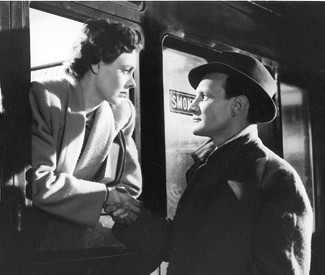
Quartet See "Smith Happens." (1:38) Embarcadero.

ONGOING

Amour Arriving in local theaters atop a tidal wave of critical hosannas, Amour now seeks to tempt popular acclaim — though actually liking this perfectly crafted, intensely depressing film (from Austrian director Michael Haneke) may be nigh impossible for most audience members. Eightysomething former music teachers Georges and Anne (the flawless Jean-Louis Trintignant and Emmanuelle Riva) are living out their days in their spacious Paris apartment, going to classical concerts and enjoying the comfort of their relationship. Early in the film, someone tries to break into their flat — and the rest of Amour unfolds with a series of invasions, with Anne’s declining health the most distressing, though there are also unwanted visits from the couple’s only daughter (an appropriately self-involved Isabelle Huppert), an inept nurse who disrespects Anne and curses out Georges, and even a rogue pigeon that wanders in more than once. As Anne fades into a hollow, twisted, babbling version of her former self, Georges also becomes hollow and twisted, taking care of her while grimly awaiting the inevitable. Of course, the movie’s called Amour, so there’s some tenderness involved. But if you seek heartwarming hope and last-act uplift, look anywhere but here. (2:07) Smith Rafael. (Eddy)

Broken City Catherine Zeta-Jones’ measured performance and killer wardrobe run away with this uneven political thriller about a made-up Manhattan with real(-ish) problems. Russell Crowe is only slightly improving his record post-Les Mis, as he plays another harried and morally confused agent "for the people." Here, he’s Mayor Hostetler, a swaggering politico with fingers in New York’s real estate cookie jar and the sort of "get shit done" directive that results in bodies lying in NYC’s overfilled gutters. Good thing he has Mark Wahlberg in his back pocket, a cop who slipped a murder wrap and now scrapes the bottom for gigs as a private detective. Seven years ago Billy Taggart (Wahlberg) was seeking vigilante justice for the victim of a rape-murder in the city’s biggest ghetto. The victim became a household name but the killer was let off, leading to cries about the validity of NY’s justice system and to allusions to the Central Park Five. Broken City is less about a broken City and more about broken Men, and there are certain elements that seem too subtle for a story built on such bald-faced and predictable strategy. Between a script that’s struggling to demonstrate moral compromise and integrity, and direction (by Allen Hughes) that’s as sensitive to nuance as a border collie, it’s hard to find much beyond Zeta-Jones’ shoe stylings to admire. (1:49) 1000 Van Ness, SF Center. (Vizcarrondo)

Gangster Squad It’s 1949, and somewhere in the Hollywood hills, a man has been tied hand and foot to a pair of automobiles with the engines running. Coyotes pace in the background like patrons queuing up for a table at Flour + Water, and when dinner is served, the presentation isn’t very pretty. We’re barely five minutes into Ruben Fleischer’s Gangster Squad, and fair warning has been given of the bloodletting to come. None of it’s quite as visceral as the opening scene, but Fleischer (2009’s Zombieland) packs his tale of urban warfare with plenty of stylized slaughter to go along with the glamour shots of mob-run nightclubs, leggy pin-curled dames, and Ryan Gosling lounging at the bar cracking wise. At the center of all the gunplay and firebombing is what’s framed as a battle for the soul of Los Angeles, waged between transplanted Chicago mobster Mickey Cohen (Sean Penn) — who wields terms like "progress" and "manifest destiny" as a rationale for a continental turf war — and a police sergeant named John O’Mara (Josh Brolin), tasked with bringing down Cohen’s empire. The assignment requires working under cover so deep that only the police chief (Nick Nolte) and the handpicked members of O’Mara’s "gangster squad" — ncluding Gosling, a half-jaded charmer who poaches Cohen’s arm candy (Emma Stone) — know of its existence. This leaves plenty of room for improvisation, and the film pauses now and again to wonder about what happens when you pit brutal amorality against brutal morality, but it’s a rhetorical question, and no one shows much interest in it. Dragged down by talking points that someone clearly wanted wedged in (as well as by O’Mara’s ponderous voice-overs), the film does better when it abandons gravitas and refocuses on spinning its mythic tale of wilder times in the Golden State. (1:53) Metreon, 1000 Van Ness. (Rapoport)

The Last Stand With gun control issues dominating the news, what better time to release a movie that lovingly glorifies the wonders of excessive firepower? Fortunately for star Arnold Schwarzenegger, making his return to leading-man status after that little fling with politics, The Last Stand is stupidly enjoyable enough to make any such PC-minded realizations relatively fleeing ones. When a Mexican drug lord (who also happens to be an expert race-car driver) escapes from federal custody and begins speeding home in a super-Corvette, the lead FBI agent (Forest Whitaker, slumming big-time) realizes his only hope is a teeny Arizona border town that happens to be overseen by Sheriff Schwarzenegger. (Other residents include a couple of hapless deputies; an Iraq war vet; and a gun nut played by a cartoonishly obnoxious Johnny Knoxville.) Can this ragtag crew hold off first the drug lord’s advance team (led by a swaggering Peter Stormare), and then the head baddie himself? Duh. The biggest surprise The Last Stand offers is that it’s actually pretty fun — no doubt thanks to the combo of Korean director Kim Jee-woon (2008’s eccentric The Good, The Bad, and the Weird; 2003’s spooky A Tale of Two Sisters) and the heft of Schwarzenegger’s still-potent charisma. (1:47) Metreon, 1000 Van Ness. (Eddy)

The Law in These Parts Ra’anan Alexandrowicz’s documentary is a rather extraordinary historical record: he interviews numerous retired Israeli judges and lawyers who shaped and enforced the country’s legal positions as occupiers of Palestinian land and "temporary guardians" of a Palestinian populace living under foreign occupation. The key word there is "temporary" — in using here a different (military rather than civil) justice from the one Israeli citizens experience, Israel has been able to exert the extraordinary powers of an invading force in wartime. But what is "temporary" about an occupation that’s now lasted nearly 45 years? How can the state justify (under Geneva Convention rules, for one thing) building permanent Jewish settlements that now house about half a million Israelis on land that is as yet not legally Israel’s? By constantly changing the terms and laws of occupation, they do just that. If many policies have been perhaps necessary to control terrorist attacks, one can argue that they and other policies have created the climate in which oppositional fervor and terroristic acts were bound to flourish. That, of course, is a political-ethical judgement far beyond the public purview of the judges and others here, whose dry legalese admits no personal culpability — and indeed sometimes seems almost absurdly divorced from real-world ethics and consequence, which of course serves an increasingly rigid governmental stance just fine. Without preaching, The Law in These Parts raises a number of discomfiting questions about bending law to suit an agenda that in any other context would seem frankly unlawful. (1:40) Roxie. (Harvey)

Mama From bin Laden to wild babes in woods, Jessica Chastain can’t seem to grab a break. Equipped with just the bare outlines of a character, however, she’s one of the few pleasures in this missed-opportunity of a grim, ghostly fairy tale. Expanding his short of the same name, director Andres Muschietti kicks off his yarn on a sadly familiar note in these days of seemingly escalating gun violence: little sisters Victoria and Lily have disappeared from their home, shortly after their desperate father (Game of Thrones‘ Nikolaj Coster-Waldau) has gone on a shooting spree. They repair to an abandoned cabin scattered with mid-century modern furniture. Five years on, the girls’ scruffy artist uncle Lucas (also Coster-Waldau) is still searching for them, supported by his punk rock girlfriend Annabel (Chastain). The little girls lost are finally found by trackers — and they appear to be hopelessly feral, with the angelic-looking Victoria (Megan Charpentier), acting as the ringleader and the younger, bedraggled Lily (Maya Dawe) given to sleeping under beds and eating on all fours next to the dog bowl. The arty couple take them in and move into a "test house" provided by the sisters’ enthralled therapist (Daniel Kash), obviously psyched to study not one but two Kaspar Hausers. The traumatized kids are clearly haunted by their experience — in more ways than one — as inexplicable bumps go off, night and day, and Misfits t-shirt-clad Annabel discovers the real meaning of goth while getting in touch with her seemingly deeply buried maternal urges. Unfortunately, despite possessing the raw material for a truly scary outing that plunges to the core of our primal instincts (what’s scarier than an unsocialized kid that’s capable of anything?) and showing off Muschietti’s occasional instances of cinematic flair (as when multiple rooms are shown using split-screens), Mama ends up running away from the filmmaker and is finally simply spoiled by its mawkishly sentimental finale. It doesn’t help that the inadequate script sports logic holes that a mama could drive a truck though. (1:40) Metreon, 1000 Van Ness. (Chun)

On the Cheap Listings

0

On the Cheap listings by Cortney Clift. Submit items for the listings at listings@sfbg.com. For further information on how to submit items for the listings, see Picks.

WEDNESDAY 23

“From Vision to Icon: Building the Golden Gate Bridge” Sports Basement, 1590 Bryant, SF. www.sfwalksandtalks.com. 7pm, free. Local writer, producer, and narrator Peter Moylan presents the story of the Golden Gate Bridge, exploring all the triumphs and challenges encountered throughout its creation The lecture will be told with over 120 historic photos in the live documentary style SF Walks and Talks is known for.

THURSDAY 24

“Pixilated Drift” Johansson Projects, 2300 Telegraph, Oakl. www.johanssonprojects.net. Through March 16. Noon-6pm, free. The show will feature Andrew Benson’s hypnotic pixel prints, David O’ Brien’s explosive and abstract video stills, and Tamara Albaitis’ sound sculptures, sure to be as entrancing and mysterious to look at as they are to listen to.

FRIDAY 25

“Full Wolf Moon” Cotton Mill Studios, 1091 Calcot, Oakl. www.f3oakland.com. 6-10pm, free. F3 at the Cotton Mill will be showing off resident and guest artists’ new work in the collective’s eighth event. The evening will be a bit of a cultural smorgasbord with various galleries and studios open throughout the building, live music, dance, and spoken word in the “Wolf Den,” a design bazaar, and food trucks. Free shuttle transportation will be provided to the Cotton Mill Studios from the Fruitvale BART station from 6-10:30pm.

Fundraiser for KPOO Radio Mercury Café, 201 Page, SF. 7-10pm, free. For over 40 years local nonprofit radio station has been discussing issues facing underserved communities such as GLBT folks, low-income families and young people as well as playing music largely absent in mainstream media. But KPOO has recently lost a significant source of funding due to budget cuts. Head over to Mercury Café for a night of food, drinks, and music to help keep the station on the air. 10 percent of all sales will go to KPOO.

“Deviant Type Press Benefit Show” Temescal Arts Center, 511 Eighth St., Oakl. 7pm, $10 donation suggested. Hosted by Jezebel Delilah X, this evening will consist of readings by Mia McKenzie, fat activist Virgie Tovar, Sister Spit-Valencia queer author Michelle Tea, and Manish Vaidya. After the readings Bay Area band Gaymous rocks.

SATURDAY 26

“All You Can Dance” Alonzo King LINES Dance Center, 26 Seventh St., fifth floor, SF. www.linesballet.org. 1-5pm, $5. Whether you’ve been itching to brush up on your ballet skills or wanting to test your talent in Zimbabwean dance, the $5 entry fee allows you try out any and all classes on today’s schedule. Offering everything from Bollywood dance to Pilates to Argentinean tango, you’re free to dance ’til you drop.

Roe Vs. Wade 40th anniversary celebration Justin Herman Plaza, SF. www.oursilverribbon.org. 10am-noon, free. Reproductive rights pioneer Pat Maginnis, president of the San Francisco Board of Supervisors David Chiu, and other speakers will be addressing women’s issues today in remembrance of the legendary court case that gave us our reproductive rights. It may not technically be a carnival, but there will be face-paining, airbrush tattoos, balloon artists, a bubble artist, and a performance by One Billion Rising, a radical gang of flash mobbers.

SUNDAY 27

“San Francisco Poet Laureate Alejandro Murguía’s Inaugural Address” San Francisco Main Library, Koret Auditorium, 100 Larkin, SF. www.sfpl.org. 1-3pm, free. Murguía will give his inaugural address as the city’s sixth poet laureate and speak about the connection Latino history and San Francisco history have to one another as well as how poetry has affected the local Latino community. A reception will follow his wise words, so you’ll have ample time to chew them over.

“Drunken Spelling Bee” Café Royal, 800 Post, SF. www.caferoyale-sf.com. 6pm, free. Hosted by Jimi Moran, this event is exactly what it sounds like. Maybe you dominated in your sixth grade spelling bee, but how are your skills after a few beers? No iPhone spell checks allowed.

“Oakland Youth Orchestra ‘Russian Romance’ Winter Concert” Holy Names University, 3500 Mountain, Oakl. www.oyo.org. 3pm, free. Get classy Sunday afternoon at what is sure to be something far better than an average high-school music recital. The 75 musicians who make up the Oakland Youth Orchestra range from ages 12 to 22 but possess musical skills far beyond their years. The concert will include festive pieces by Dimitri Shostakovich, Pyotr Ilyich Tchaikovsky, and Sergei Rachmaninov.

MONDAY 28

Berkeley Arts & Letters presents Adam Mansbach’s Rage is Back The Marsh Berkeley, 2120 Allston, Berk. www.berkeleyarts.org. 7:30pm, $5/students, $12/advance. The author of the No. 1 New York Times bestseller Go the F**k to Sleep is back to tell the story of a clever kid, the father who left him, and the greatest graffiti stunt New York City has ever seen in his new book titled Rage is Back. Today Mansbach will read and discuss his new release. The Marsh Cabaret Bar will be open before, during, and after the program.

TUESDAY 29

Recology art exhibit and panel discussion Reception at 503 Tunnel, SF. 5-7pm, free. Panel discussion at 401 Tunnel, SF. 7pm, free. Exhibition also on display Fri/25, 5-9pm; Sat/26, 1-3pm. www.recologysf.com. Recology’s artist in residence program will exhibit work created by Michael Damm, Julia Goodman, and Jeff Hantman over the past four months, made from scavenged materials found at the dump. After the exhibit, head a few doors down to catch the artists talking about their experience working to create art in trashland.

Find your happy place

2

culture@sfbg.com

HEALTH AND WELLNESS January may be cold, but it’s not particularly chill. The temps are low and it’s still dark out, which makes it a natural time for hibernation. Problem is, no one’s hibernating.

People, in fact, are exceptionally busy. We are trying to make up for time we lost during our temporary retirements in December. We are also frantically trying to realize our resolutions (before we forget them) and get back into shape after eating pie twice a day last month.

By the third week of the year, our holiday vacations are nothing but distant dreams, and we’ve all but tossed away any intention to be more present and calm in our lives in favor of strong partnerships with our coffee makers and datebooks to keep us afloat through the madness. Though Elton John once sang that “January is the month that cares”, it’s hard to believe it’s true. If January really does care, it certainly has a funny way of showing it.

>>Read Karen’s biweekly yoga and spirituality column, On the Om Front, here.

But I care. So here’s my advice: Unplug. Check out. Hop in or on your vehicle of choice, and get thee to a refuge. Go someplace where you can reconnect with your breath and your body. And stay for an hour—or at least until you remember that there is more to life than organizing your inbox. Here are some of my favorite winter spots for dialing down the noise and reconnecting with oneself.

SAMOVAR TEA LOUNGE

The Buddhist ambiance at these colorful lounges makes you feel like you’re actually in a temple. The tea — which ranges from earthy, caffeinated varieties like the Blood Orange Puerh to delectable herbal teas like Moorish Mint — isn’t cheap, but its surrounds really make it a spiritual experience. Two more bonuses for the midwinter urban escape artist: There is no Internet access and it’s always toasty inside.

Various SF locations. www.samovarlife.com

GRACE CATHEDRAL

This beautiful Episcopal cathedral is home to awe-inspiring architecture, stained glass windows of Biblical scenes, and the famous indoor Grace Cathedral labyrinth, the walking of which evokes sweet, honey-glazed mind states. You can cruise the labyrinth any time during regular church hours, take a candlelit labyrinth walk on the second Friday evening of each month, or do yoga in the labyrinth each Tuesday at 6:15 p.m. with Darren Main.

1100 California, SF. www.gracecathedral.org

FIRE CEREMONY AT THE YOGA SOCIETY

Fire was a fantastic discovery — and not only because marshmallows are better toasted. Watching a fire burn is mesmerizing, and can take you to a different plane of consciousness in seconds. There’s nothing quite like meditating on the power of heat and transformation. During select hours each week, the Yoga Society holds free fire ceremonies led by yoga teachers and other spiritual leaders who chant Sanskrit mantras as the flames dance around the indoor fire pit.

2872 Folsom, SF. yssfyoga.blogspot.com

ATHLETIC PLAYGROUND

Sometimes you just need to play! Jump, spin, do cartwheels and handstands, fall down. Children know this intuitively, but adults tend to forget. If you want to honor your inner child, the Athletic Playground is the place to do it. Every day there is a full schedule of classes, including acro-yoga, “monkey conditioning”, and aerial conditioning. It’s a perfect treat on a chilly day, and you don’t need to bring a companion — everyone plays very nicely at this playground.

4770 San Pablo Ave, Emeryville. www.athleticplayground.com

IMPERIAL DAY SPA RED CLAY ROOM

This small, cozy day spa is on the edge of Western Addition, and is a nice, lower-profile alternative to some of the more popular spots in town. It’s got a hot tub, a cold pool, and the requisite dry and wet saunas, but the real gem here is the red clay room. According to the spa, red clay removes toxins, boosts your metabolism, and gives you more energy. Lying naked in the hot (but not too hot) room on straw mats with your head on a beaded pillow also just feels really good.

1875 Geary, SF. www.imperialdayspa.com

URBAN FLOW YOGA

Any yoga class taught by a respectable teacher will take you on a journey of the spirit. But Rusty Wells’ two-hour weekend morning classes here are one of the best antidotes for the winter doldrums. They are hot and sweaty (you’ll need to be fairly fit to fit in), and have often been called “yoga church”. Rusty sings, dances, beats a drum (or just the floor), and preaches the best of things: love, courage, and connection with your juicy self.

1543 Mission, SF. www.urbanflowsf.com

SPIRIT ROCK MEDITATION CENTER

Zip it. No, really, that’s what you do at Spirit Rock. You stop talking. Sometimes for an afternoon, sometimes for a day, sometimes for 10 days. This beautiful, hilly retreat center in Woodacre is a great place to do a silent meditation retreat, one of the best ways to reconnect with yourself. We spend so much time thinking about what someone is saying, what to say next, and what we should say, shouldn’t say, or shouldn’t have said. Take all of that socializing off your plate for a few hours or days, and you’re left with a contemplation of some serious depth. I couldn’t recommend it more.

5000 Sir Francis Drake Boulevard, Marin. www.spiritrock.org

Check out Karen Macklin’s yoga column On the Om Front on the Guardian’s Pixel Vision blog


Peace of mind

9

culture@sfbg.com

HEALTH AND WELLNESS When New Leaf Services closed its doors in 2010, after 35 years of providing vital mental health and substance abuse services to the queer community of San Francisco, a huge gap was left in its wake. New Leaf was the victim of budget shortfalls when the city reduced funding allocated for various nonprofits.

In response, four like-minded New Leaf colleagues — Nancy Heilner, Chris Holleran, Stacey Rodgers and Joe Voors — banded together to create a safe space in which LGBTQQI (Lesbian, Gay, Bisexual, Transgender, Queer, Questioning, Intersex) people can receive client-directed services specifically oriented toward their community. Just days after the closing of New Leaf, the four opened SF Therapy Collective, a marriage and family therapist corporation owned and operated by the colleagues in the heart of the Castro.

In July of 2011 the group launched Queer LifeSpace, an LGBTQQI-focused nonprofit counseling agency located on the same floor as SF Therapy Collective that provides quality, low-cost mental-health and substance-abuse care with a focus on people who have been historically marginalized or who are at risk, as well as individuals who belong to underserved communities.

Although the four colleagues supervise and serve as the staff for Queer LifeSpace, the nonprofit’s services are provided by a team of nine trainees who come from four different graduate schools in the Bay Area, as well as six volunteer postgrad interns who receive LGBTQQI-specialized training hours to count toward their licensure.

The Queer LifeSpace team provides therapy in individual, couples, and group settings, addressing issues that commonly affect the lives of queer people including anxiety, depression, relationship and intimacy issues, substance-abuse issues, trauma, HIV/AIDS-related issues, gender identity issues and aging-related concerns. Depending on a client’s income, the service provides low-fee, sliding-scale therapy at $20 for individual sessions, $40 for couples sessions and $5 for group therapy.

Included in Queer LifeSpace’s roster of services are support groups for trans and gender-variant individuals, queer people of color, individuals seeking to address such issues as men’s relationships, and sober folks, and the intersex community (the sole services of their kind available in the city.) The operation has been tremendously successful, having provided 1,800 units of service to 215 clients as of December 2012 — a goal they hadn’t anticipated reaching until the end of 2013.

Queer LifeSpace was founded not only to provide services that had previously been available at New Leaf, but also to serve as a vanguard institution for the next generation of queer trainees in psychotherapy. Given the tenuous nature of government funding for nonprofits, the formation of the service was a risky undertaking, and one that the group commenced against the advice of nearly everyone they spoke to.

As executive director Nancy Heilner recalls, “It wasn’t our intention to open a nonprofit, but what happened was people began calling and needing services at a fee lower than what we offered [at the Collective]. We also discovered that we couldn’t have a training program if we were to remain a for-profit corporation. And having a training program was something we felt really strongly about.”

What’s most remarkable about the service is that it’s entirely volunteer-run. As Heilner describes it, Queer LifeSpace has been a “labor of love. Nobody gets paid for it. We have donated at least half our workweek to making it a reality.”

In spite of their success to date, the colleagues recently learned that the lease for Queer LifeSpace cannot be renewed after April. As the staff and board of the nonprofit look toward the future, they are eager to reach their fundraising goal of $60,000 to cover the costs of moving and establishing plans for a long-term center that can serve 350 members by the end of 2013.

Eventually, they hope to expand their capacity for clients and trainees in the new space and develop a financial model for long-term success and sustainability. But in the meantime, they face the crisis of not having a home in the spring.

As Heilner made clear, “Our next step is finding funds to sustain growth and reach. We’ve been reassuring people that we will make it through this. We will.”

Queer LifeSpace 470 Castro, Suite 202, SF. (415) 358-2000, www.queerlifespace.org.

Here’s the deal

1

culture@sfbg.com

BEAUTY

Lash Lab 2166 Union, SF. (888) 406-5274, www.lash-lab.com. Full set of eyelash extensions (normally $219) for $150.

Gentle Star 14 Mint Plaza, Suite 110, SF. (415) 618-0108, www.gentlestar.com. On Mondays, get $100 microderm treatment (regularly $150), or $25 off a facial.

Population Salon 537 Divisadero, SF. (415) 440-7677. www.populationsalon.com. First-time clients get haircuts for $40 men’s styles, $55 women’s styles.

Waxing 4 Men 500 Sutter, SF. (415) 640-1414, www.waxing4men.net. Get “Four Layer Hydration Facial” (regularly $95) for $40 during the month of January. First-time clients can get a Brazilian wax and trim for $65 (regularly $95) through Yelp deal.

Fringe Salon 322 Hayes, SF. (415) 255-3036, www.fringesalon.com. Yelp Deals users pay $75 for a haircut and gloss treatment (regularly $140).

John Brody Salon 2338 Market, SF. (415) 252-0782, www.johnbrodysalon.com. Yelp Deals users pay $200 for a Bumble and Bumble hair smoothing treatment (regularly $400).

HEALTH AND FITNESS

Bikram Yoga Seacliff 6300 California, SF. (415) 751-6908, www.bikramyogaseacliff.com. Seven-day trial for $20. Buy a drop-in or single class card, get free towel and mat rental.

Dance Mission Theater 3316 24th St., SF. (415) 826-4441, www.dancemission.com. Through Jan. 21, get 15 classes for $150 (good for one year after purchase.) Drop-in Fee: $13.00/class. $44.00 for four classes, or $100.00 for 10 classes, good for three months

Earthbody 534 Laguna, SF. (415) 552-7200, www.earthbody.net. Pay $89 membership fee, receive one massage a month (regularly $115), special services and promotions, 10 percent off all retail products. First time clients get an essential foot therapy, facial massage, or heated neck therapy treatment for free.

Sivananda Yoga Vedanta Center 1200 Arguello Blvd, SF. (415) 681-2731, www.sfyoga.com 90-minute classes start at $12 drop-in rate, 60-minute classes $10. Sign up for “Beginner Yoga” and “Meditation I” classes together and save $30.

Balance the Clinic 3303 Buchanan, SF. (415) 440-4033, www.balance.us.com Get massages this month for $50 (normally $95).

Baby Boot Camp Various locations, SF. www.babybootcamp.com. New moms can try Strollfit and Strollga, yoga-inspired stroller fitness classes, for $96/month. Get eight classes for $128. First class is always free.

San Francisco Community Acupuncture 220 Valencia, SF. (415) 675-8973, www.missionsfca.com. Treatments available on sliding scale, $25–$45. Yelp Deals users receive $40 redeemable voucher for $25.

Mission Massage 3150 18th St., Suite 551, SF. (415) 954-2180, www.missionmassagesf.com. During month of January, get three one hour-long sessions for $175 or three 90-minute sessions for $265.

EOS Lymphatic Massage and Aromatherapy Bodywork 450 Sutter, Suite 2011, SF. (415) 971-9373, www.eosmassage.com. Yelp Deals users pay $149 for a two-hour session of “holistic, realistic life-coaching.” Regularly $225.

Juicey Lucy’s Available online and at SF farmer’s markets. (415) 786-1285, www.juiceylucys.com. “Mean Green for 2013” cleanse package for $40/day, including restorative tea and soup.

Green Chiropractic Clinic 1406A Valencia, SF. (415) 702-3311, www.sanfranciscochiropractordc.com Yelp Deals users receive $99 worth of services for $79.

Skin Space 323 Geary, Suite 720, SF. (415) 577-0982, www.skinspace.com. New customers enjoy $15 off Brazilian wax or $20 off facials.

Planet Granite 924 Mason, SF. (415) 692-3434, www.planetgranite.com. New customers can skip the initiation fee in January (regularly $35).

Life Chiropractic 5330 College, Oakl. (510) 594-9994, www.lifechiropracticdc.com. Yelp Deals users pay $100 for $150 worth of services.

Energy Matters Acupuncture and Qigong 4341 Piedmont, Oakl. (510) 597-9923, www.energymatterseastbay.com. Receive $70 worth of treatments for $120 when purchased through Yelp Deals. Six-treatment acupuncture package available for $432 (regularly $480).

SKYEFiT 864 Folsom, SF. (415) 992-3110, www.skyefit.com. First session of boot camp or personal training is free. This month, pay $89 for one-month unlimited training or two personal training sessions (regularly $150). Regular boot camp classes are $175 for a month.

Body Mechanix Fitness 292 Fourth St, Oakl. (877) 658-4757, www.body-mechanix.com. Get one month of unlimited group training for $99 (regularly $190) when purchased through Yelp Deals.

Phoenix Aerial Art and Pole 1636 University, Berk. (510) 504-5065, www.phoenixaerialartandpole.com. Phoenix is offering a Yelp Deals promotion of $50 for $75 on classes.

Purusha Yoga 3729 Balboa, SF. (415) 668-9642, www.purushayoga.org. Free yoga at 11am on weekend mornings (check website for locations). New students get one week of unlimited classes for $25, one month for $49. College students receive 10 percent off any regularly-priced membership, class. or package.

Pop Physique 2424 Polk, SF. (415) 776-4678, www.popphysique.com. First-time customers receive 30-day unlimited class pass for $100. New moms get three months of unlimited classes for $375.


Old joy — and pain

1

cheryl@sfbg.com

FILM Film editor Sari Gilman — her resume includes 2007’s Ghosts of Abu Ghraib and 2002’s Blue Vinyl — made her directorial debut with the 30-minute documentary Kings Point, a bittersweet exploration of a Florida retirement community. The film first screened locally as part of the 2012 San Francisco Jewish Film Festival, and will air on HBO in March. In the meantime, it’s been nominated for an Oscar for Best Documentary Short. I caught up with Gilman to talk about her film — and little gold men.

San Francisco Bay Guardian Congratulations on your nomination! You knew your film was on the shortlist, but were you surprised when you made the final cut?

Sari Gilman Thank you! You know, I had no idea. I have worked very hard in my life to try not to predict the future. [Laughs.] I was very happy when I found out, but I don’t think it would have destroyed me if it hadn’t happened. Obviously, though, it’s a total thrill and a complete honor, and more than I ever expected when I started making this movie.

SFBG Do you get to, like, walk the red carpet?

SG I do! I gotta get a dress! I mean, not that anyone’s going to care who I’m wearing, but for me, it’ll be fun.

SFBG What’s your connection to Kings Point, the place, and what made you want to create a documentary about it?

SG My grandmother moved to the community in 1978, when I was about nine years old. I visited her there many times a year for 30 years. About 15 years in, I was starting to get involved in storytelling and still photography, and I was always really fascinated with the place on a couple of different levels: socially, it sort of seemed like it was a summer camp for old people, and then visually — it’s 7500 identical one- and two-bedroom condominium units, spread out over miles. So there’s a lot of architectural homogeneity. These long hallways that look exactly the same, with these palm-tree shadows on them. It seemed like a natural place to start exploring.

SFBG Since you knew the residents already, was it easier to get them to open up in interviews?

SG I think so. None of the subjects in the final film were people that I knew personally before I started making it, but some of them did know my grandmother, and they all knew me as the granddaughter of someone who lived there. I think that’s what made it easy for them to talk to me. I also shared a lot with them about my grandmother’s experience and my experience there, so the interviews weren’t so much interviews as they were conversations. Obviously, we cut my voice out in most cases, but I think that I was able to get the kind of candid stories that I got because I was on the other end of the camera talking to them.

SFBG Though you’ve worked extensively as an editor on other people’s films, you didn’t edit Kings Point. Why was that?

SG As an editor, I knew how badly I needed an editor. I know that directors need to have a collaborator to provide perspective, and look at the footage with a little more of an objective eye. I got incredibly lucky in that I was able to hire Jeffrey Friedman [co-director, with Rob Epstein, of 2010’s Howl and 1995’s The Celluloid Closet, among others], who is a local luminary and an amazing filmmaker who edits occasionally. He was actually my mentor when I was learning how to edit in the 1990s in San Francisco, so working with him on my first film was a really great experience.

SFBG The tone of the film is unique in the way that it balances light-hearted moments with the sort of sad undertone that runs throughout.

SG That was the biggest challenge. I knew there was going to be sadness and darkness, and humor and lightness, and I had a sense of what I wanted that to be, but I knew from the beginning that it would be hard to achieve. Jeffrey and I spent a lot of time achieving the tone. It was kind of like salt and sugar — “A little sprinkle here, oh, now it’s too dark, let’s add more of the other.” The feeling that I wanted to evoke, more than anything, was that certain feeling that I had when I was visiting there.

SFBG Had you always intended for Kings Point to be a short film?

SG No, I actually intended it to be a feature. It was in the cutting room that we decided to make it a short. A large part of that was because of the tone, actually — we had enough story to keep it going, but the tone of those stories were shifting the film in a direction that I wasn’t comfortable with. It was a little more of that “cute old person” movie. Kitschy, kind of, “Look at the old people doing belly dancing,” or whatever.

I was extremely sensitive to the fact that most people, when they heard about the film, would think that’s what they were going to be seeing. I was a little crazy-determined not to make that movie, because that wasn’t what my experience was. That’s not what I saw. In cutting it down, we got rid of a lot of the lighter stuff, which is what helped us achieve the tone that we did.

SFBG There have been several films with themes about aging lately: Amour, Quartet, and The Best Exotic Marigold Hotel (all 2012) come to mind. Why do you think that is?

SG Oh, I definitely want to see Amour. I think it’s a moment whose time has come. As a population, the baby boomers have now started to retire, and in the next 20 years, we are going to see a major shift in the demographics of this country. There will be many, many more elderly than there are now. I think that people are starting to think about aging issues in a new way.

I truly hope Kings Point will encourage people to have those kinds of discussions. Nobody likes to grow old or think about what’s going to happen, but the truth is that we kind of need to. There’s a bit of a denial about the realities of aging; there’s so much emphasis placed on being independent, self-reliant, and remaining active. On the cover of AARP Magazine, you always see pictures of, like, 75-year-olds on bicycles riding to the beach. And that’s great, and everyone wants that to be their experience, but not everyone is so lucky. *

www.kingspointmovie.com

Peace corps

0

arts@sfbg.com

DANCE In a pre-rehearsal conversation at the ODC Commons, choreographer Robert Moses says that his newest piece, Nevabawarldapece (“never be a world of peace”– premiering at YBCA Fri/25-Sun/27), is “a dance about protest movements.” The evening-length work is set on ten dancers and is a collaboration between Moses and Obie and Bessie winning writer-performer Carl Hancock Rux; activist and singer-composer Laura Love; and MacArthur Fellow and blues musician Corey Harris. The trio will perform live during this weekend’s world premiere at Yerba Buena Center for the Arts.

The impetus for Neva, explains Moses, came less from the specifics of historic revolutions and contemporary challenges to the social order than from the people who gave their all attempting to bring about fundamental change — only to see their efforts dissipated, co-opted, or met with failure. “It’s about idealism, the loss of it, and then what you do? What are you left with if the rage, the energy, and all the sacrifices you have made fall by the wayside? Can you pick up and keeping moving forward? I don’t know,” he says.

Moses and Love, who is in town for her first look at the company, discussed leaders like Malcolm X, James Brady, and Nat Turner, but also contemporary movements like Occupy Wall Street, the Arab Spring, and environmental activism. Referencing Sisyphus’ rock, Moses says, “When it falls, it’s hard to go down that mountain and pick it up again. It takes courage and energy to roll it and believe that this time it just might stay up.”

For Love the choice is clear. “I have moments of disillusionment, and moments when I believe that we can have justice. Right now I am more afraid not to act than to act.” She remembers a banner at a recent Freedom of Choice rally that said: “I can’t believe that we have to do this again.”

Neva had been in the back of Moses’ mind for a long time. “It’s a big idea,” he admits. So he was pleasantly surprised that when he called his now collaborators and described exactly what he wanted to explore, everybody agreed to participate. For Love, it was Moses’ willingness to not restrict her role. (Moses laughs, “I can’t do what she does, so why would I restrict her?”)

Love and Harris sent him musical suggestions; Hancock Rux emailed texts he had written. Moses has yet to determine Neva’s final shape. For instance, he has two versions of one of Love’s banjo tunes. He also wants to hear Hancock Rux’s voice reading text. “I don’t want to pin myself down, because when we get together I want to see how context and content push against each other.”

Heading into rehearsal, he chuckles, “Yeah, the piece is finished … and it is not.” A thread, he knows, will emerge when everybody finally meets in the studio a few days before the premiere. Right now, he explains, the dancers have between 30 and 40 choreographic sections from which choices will be made.

In the studio on this particular afternoon, the dancers work on three of these pieces. As other couples observe and copy, Moses refines small gestures — a handgrip, a leg stretch, an overhead lift — on tiny Norma Fong and lanky Brendan Barthel. Then Crystaldawn Bell, softly but intensely, talks the company through a section that she has developed based on a solo which Moses had created for senior dancer Katherine Wells. Finally, Moses gives newcomer Jeremy Bannon-Neches five minutes to keep teaching to the company a piece he had choreographed for him. “The teaching is good experience,” Moses notes.

Dripping with sweat, tired to the point of exhaustion, and throwing themselves with every ounce of their being into fierce, volatile, and ever-changing movement challenges, the dancers are an odd contrast to the studio’s serene and neutral environment. They are also unstoppable — just like those who are willing to commit whatever it takes to make their ideals come to life.

NEVABAWARLDAPECE

Fri/25-Sun/27, 8pm, $25-$50

Yerba Buena Center for the Arts

Lam Research Theater

700 Howard, SF

www.ybca.org

www.robertmoseskin.org

Smith happens

1

arts@sfbg.com

FILM Every year there’s at least one: the adorable-old-coot fest, usually British, that proves harmless and reassuring and lightly tear/laughter producing enough to convince a certain demographic that it’s safe to go to the movies again, just this once. The last months have seen two, both starring Maggie Smith (who’s also queen of that audience’s home viewing via Downton Abbey), and in this case more is probably less.

Last year’s The Best Exotic Marigold Hotel, in which Smith played a bitchy old spinster appalled to find herself in India (hip replacement operations being cheaper there), has already filled the slot. It was formulaic, cute, and sentimental, yes, but it also practiced more restraint than one expected, delivering a certain amount of emotional payoff you didn’t have to cringe over the next day. (Particularly if you forgot how one-dimensional the Indian characters were — and they certainly were forgettable.)

Now here’s Quartet, which is basically the same flower arrangement with quite a bit more dust on it. Smith plays a bitchy old spinster — complete with hip problems — appalled to find herself forced into spending her twilight years at a home for the elderly. It’s not just any such home, however, but Beecham House (actually Hedsor House, a much-filmed estate in Buckinghamshire), whose residents are retired professional musicians.

Gingerly peeking out from her room after a few days’ retreat from public gaze, Smith’s Jean Horton — a famed English soprano — spies a roomful of codgers rolling their hips to Afropop in a dance class. “This is not a retirement home — this is a madhouse!” she pronounces. Oh, the shitty lines that lazy writers have long depended on Smith to make sparkle. Well, even she’s not that much of a magician.

Quartet is full of such bunk, adapted with loving fidelity, no doubt, from his own 1999 play by Ronald Harwood, who as a scenarist has done some good adaptations of other people’s work (2002’s The Pianist, 2007’s The Diving Bell and the Butterfly). But as a generator of original material for about a half-century, he’s mostly proven that it is possible to prosper that long while being in entirely the wrong half-century. The highlight was The Dresser, a play (later filmed, in 1983) of that type which throws bouquets at theater itself while handing an enormous slice of ready-cooked ham to the actors playing theatrical archetypes. The lowlight has been 2008’s Australia — for which Baz Luhrmann shoulders the primary blame, but anyone associated with that script should have had their Writers Guild membership suspended at least until the screams of unprepared ticket buyers stopped.

This play, too, seems to have inspired enthusiasm only for its performers in its original West End run. (Oddly, however, it’s been a long-running hit in a Finnish adaptation.) It seems doubtful anyone was chomping at the bit to make a movie version. But then in one of those periodic reminders that the ways of show biz (when not strictly commercial) can be unfathomable, it has found new life as the directorial debut of … 75-year-old American actor Dustin Hoffman.

Which ought to be more interesting than it turns out — with its workmanlike gloss and head-on take on the script’s very predictable beats, Quartet could as well have been directed by any BBC veteran of no particular distinction. The English countryside can be counted on to look pretty; this cast and its hundreds of years of experience (including those members identified at the end as former classical musicians) need hardly break a sweat realizing such soft material.

So, Maggie Smith arrives at Beecham House to the varying delight of former operatic colleagues Pauline Collins (comic ditherer), Billy Connelly (randy old goat), and Michael Gambon (nasty old queen), as well as the initial dismay of Tom Courtenay as the ex-husband whose heart she carelessly broke. Naturally, the joint is in danger of closure and can only be saved by the starry new arrival’s participation in an annual charity performance. Yes, it’s just like the plot of Roller Boogie (1979), and every other hoary “Let’s put on a show to save the [blank]” exercise. You know just what’s going to happen — “How dare you!” turns to “Oh, all right then” turns to triumph, although the film (like the play) cheats by declining to actually show us that triumph — and it does, on cue, for 98 digestion-easing minutes.

There’s certainly nothing wrong with providing vehicles for beloved older actors — but why does it always have to be this kind of vehicle, bland as toast and no more nutritious? Even Dame Maggie Smith doesn’t seem particularly interested; no doubt she’d like to play someone to whom the adjective “bitchy” doesn’t apply once in a while. The classical canon is full of great roles for fully mature actors. But for the movies, it seems, after a certain point you only get to play silly old dears or bitter crones. There’s got to be room for something between condescending trifles like Quartet and the bleak staring-death-in-the-face of Amour


QUARTET opens Fri/25 in Bay Area theaters.

Harmon’s way

0

arts@sfbg.com

THEATER Dan Harmon, performing at this year’s SF Sketchfest, is on the phone, talking about therapy. He’s explaining his belief that a person can find a mental illness for anything they can name, with some fetishistic examples. “There are people out there who like to be walked on,” the creator and former show runner of NBC’s Community says. “There’s people who like to eat human fecal matter. There’s people who want to have sex with kites.”

“Hold on, Dan. Are there really?” I ask, making a note to Google it later.

“I guarantee it. I promise you. There are six billion people in the world and there’s gotta be someone who wants to have sex with a kite. But I don’t know if you’d ever find someone that craves the feeling of being alone.”

We’re on the subject because of Harmontown, the comedy show-town hall meeting-podcast Harmon regularly holds in the back of an LA comic shop, based around “one day forming a colony of like-minded misfits.” Harmon’s about to take the show on a daunting cross-country tour, that will stop in SF for Sketchfest before returning to LA. It’s been eight months since Harmon was unceremoniously fired from the much-analyzed, but little-watched sitcom Community by Sony, and had a public feud with actor Chevy Chase that brought a TMZ level of public scrutiny. Subsequently, the Harmontown episodes have frequently taken on the air of a psychiatric session, with the audience filling an important role.

“The whole point of therapy is the therapist doesn’t particularly matter. You’re listening to yourself talk and I think some people are more comfortable talking to one guy holding a clipboard if they’re going to say ‘Hey, I put a Sharpie pen up my ass the other day, does that make me a pervert?’ I feel weirder saying that to one guy with a masters degree and a tiny office who doesn’t laugh than I do telling it to eight people in the back of a comic book store. It feels healthier to do the latter.”

Harmon doesn’t hold much back; after all, this is a guy that earlier in his career broke ground (and insert obvious pun here) with the self-explanatory “Laser Fart” web series for the no-budget, no restrictions, faux-TV network/film festival, Channel101.com (which he co-founded.) A performer only as a hobby, a “self-destructive writer” by trade, there’s no stand-up at Harmontown and ideally little planning. Instead, alcohol-enabled improv and tangents can lead to talking about being hit with a belt by his father, getting dangerously close to breaking up with frequent guest and girlfriend Erin McGathy on stage, or having Ricki Lake Show-styled heart-to-hearts with the audience.

It could be alienating, but Harmon’s uproarious logic, perspective, and self-awareness (an overabundance of which has caused his work to frequently be deemed “meta”) has gained him a following. “Where I tend to go,” says Harmon, “I tend to start asking the question ‘Am I a good person? Am I a good person?’ over and over again, and a kind of family forms around me. Or everyone else gets repelled.”

Channel101.com was at one time the focal point for this quasi-family. “It was like a barn raising, a church, something we did each month,” recalls Harmon. “We had a thing that we did and a belief system, and that was definitely something that I craved and wanted.” But as Community took over his life for three years, Harmon no longer could make the monthly films required, and moved into a fatherly rather than brotherly role.

Harmontown‘s filled that space, in a culty sort of way, with white-boy freestyle raps and live Dungeons and Dragons. The show tends to draw out bright millennials, eager Aspergians, and closeted creatives who find Harmon’s neuroses at least amusing but more often inspiring (also: nerds). It’s a mix that suit-wearing co-host Jeff B. Davis (Whose Line Is It Anyway?) best termed a “mutual anxiety association.” Harmontown isn’t meant for everybody. But that’s clearly by design. And as he hits the road with the show, Harmon’s looking for his people. 

HARMONTOWN

Jan. 31, 8pm, sold out

Punch Line Comedy Club

444 Battery, SF

www.sfsketchfest.com


Mestranda Cigarra kicks ass

4

caitlin@sfbg.com

HEALTH AND WELLNESS It is impossible to climb the stairs to the San Francisco chapter of Abadá Capoeira and not know that you are in the Mestranda’s house.

Márcia Treidler founded the Mission District capoeira school, and she is there in the first photograph you see when you come in off the street. In it, she strikes her customary pose, an improbable one-handed flip (kick?) Her washboard abs challenge visitors to trade sedentary habits for the rich traditions and fat-carving core moves of the Brazilian martial arts form, the love of which made Treidler beg her mom for classes as a teenager, brought her from Brazil to the Bay Area, and led her to start a chapter of her teacher’s school right here in San Francisco.

In person, seated at a table next to Abadá’s statue of Iemanjá, orisha goddess of the Southern seas and patron deity of Rio de Janeiro, Treidler is hardly as intimidating. Mestranda Cigarra (her capoeira-given name) is in fact incredibly patient while explaining Brazilian history and basic tenets of the martial arts form to a stranger. She does do it for a living, after all.

Sharing information is a guiding principle of capoeira, which began as a covert form of fighting practiced by African slaves in Brazil who certainly couldn’t rely on written record to educate new generations in the martial art. After escaping servitude, some used their martial skills against the law enforcement sent after them. Capoeira helped fend off colonial attacks on their newly formed quilombos, the settlements ex-slaves built in remote locales.

Even after abolishing slavery in 1888, the Brazilian government considered capoeira subversive. It was officially banned in 1890, a tool used by authorities to put black men in jail. When waves of immigration brought new labor forces to the country and left many Africans jobless, public perception often equated capoeira with criminal activity.

The sport’s rise to acceptance and spread to other countries is a relatively recent occurrence. Treidler, who is now one of two of the highest ranking females in her school Abadá’s 41,000-member international organization, started practicing 31 years ago in Rio de Janeiro. She lived in Botafogo, a middle class beachfront neighborhood. At the time, capoeira still wasn’t considered respectable — and certainly not an obvious choice for an ambitious young woman. After becoming entranced by the sport at a school performance, the current Mestranda had to work on her mother for a year before she would agree to finance her classes.

“Women in capoeira was not popular at all,” Treidler says. “[My mother] was like ‘are you crazy? What are you thinking?'” Treidler had been active in sports — swimming and gymnastics — since she was six, but her mother insisted on observing capoeira classes before she’d agree to let her high school age daughter enroll.

“The [sport’s] reputation was really bad at the time,” Treidler remembers. “But when I first started, I never stopped.” Prepped by her athletic background, she took easily to capoeira’s acrobatics. She graduated through levels quickly, and struck a deal with her instructor to pay when she could after her mother withdrew financial support. Treidler credits the sport with teaching her patience, and became close with Mestre Camisa, the founder of Abadá.

The importance of their relationship today means Abadá students benefit from the vision of the founder, who still lives in Brazil. “She follows his vision 100 percent,” Treidler’s student and fellow Abadá instructor Antonio Contreras says. Camisa and Treidler are in constant contact, and he was present at the school’s January batizado graduation ceremony at Dance Mission Theater.

Eighty-plus students take classes at Abadá San Francisco chapter. They perform at places like the Academy of Sciences and in the Ethnic Dance Festival. The studio also offers Portuguese classes. Although there are only three adult Brazilians who currently take classes, the studio is somewhat of a center for Brazilian culture here in the city. Displays that tell of the legacy of capoeira line the walls in the main room, interspersed with statues of figures in traditional poses. Brazil’s world-famous street art duo Os Gemeos have whimsically rendered Abadá practitioners in large paintings that hang in the studio’s front stairwell, alongside the Mestranda’s portrait.

It is perhaps indicative of Treidler’s own start in the sport that her students are nothing if not diverse. At the recent batizado, the spotlight lingered on tiny children, middle-aged practitioners, developmentally-disabled capoeiristas sparring, flipping, playing musical instruments, and smiling tremendously in an immense roda, the circle of practitioners that encloses a capoeira presentation.

Treidler is the only instructor that Contreras, her only other full-time teacher at Abadá SF has ever had. An ex-personal shopper, he has called the studio home since 2000, when the sounds of single-stringed berimbaus and tambourine-like pandeiros pulled him into the studio after dinner at a Mission Street restaurant. He was amazed by the maculelê, the traditional dance that accompanies capoeira, and impressed by Treidler’s presence.

“I was like, ‘whoa, who’s that’ — this larger than life person,” he remembers. He was back that Tuesday for his first class. A cardio-weights gym rat who still employs a personal trainer, Contreras says that first day was the best workout of his life. He started noticing the changes in his body “immediately.”

“To me, it was very natural to learn from Márcia,” Contreras says, sitting next to a jar full of juice one afternoon at the studio. “The advantage is that she had it tough. She identifies with the difficulties you face because she has had her own.” He himself felt unflexible and uncoordinated when he first started his practice. He’s convinced that many instructors would have given up on him long ago.

But Treidler’s teaching eventually brought Contreras to a level of mastery that compelled him to quit his day job, to stop having to rush to the school from the stores every day at 5:45pm. Contreras says that the decision to commit to teaching is a natural part of capoeira.

Unlike other martial arts forms, in which the progressively more masterful levels of belt reward physical mastery of the form and discipline, capoeira reserves the next stage of training — and corresponding 10 colors of cords worn around your hips — for those who have displayed their ability to role model for others.

Treidler originally made ends meet here in San Francisco by working construction jobs, starting to teach capoeira a few times a week at SoMa’s Rhythm and Motion dance studio. She was deemed eligible for an “alien of extraordinary ability” visa by the US government and opened her first studio on Mission in between 19th and 20th Streets, moving to the current space 11 years ago.

Capoeira’s divergent skill sets — singing, playing musical instruments, sparring, and dancing — do seem to be a sport that can reward many kinds of students. Treidler resists generalizing when it comes to her students, but will say that the “women are very rational. Men identify with the power. I think that’s why it’s unique. We help each other in class.”

Capoeira is a good opportunity to let go of the “I’m sorry” hair trigger that plagues some females. “Women are too careful with each other,” the Mestranda says. “It’s like, I’m sorry? There’s no sorry! You get out of the way. That’s the challenge, for women not to think about it so much.” It’s difficult to picture Treidler hesitating — but then, she has been in rodas since she was 17 years old.

At the batizado in December, the Mestranda’s values of inclusion are as visible among her white-uniformed students as the high fives they can’t stop giving each other in the roda. After each class of graduates’ names are called, honorees “play games” — capoeira terminology for the minute-long sparring sessions that show off the flowing acrobatics and feigned violence of the sport. These run the gamut from the younger kids’ hyper, sky-high flips — done alongside each other as much as at each other — to the more focused bouts between older students. The latter range in tone from comical to rapid-fire serious. Everyone looks really good — er, healthy.

After a 2012 packed with performances, Treidler’s ready to expand her flock, make it possible for her part-time instructors to follow her path and leave their construction or restaurant job to focus on their passion for the sport. “What’s next you know?” she asks, somewhat rhetorically. “How can we use capoeira to make the world a better place?”

Abadá Capoeira 3221 22nd St., SF. (415) 206-0650, www.abada.org


All kinds of work and one play

0

arts@sfbg.com

THEATER SF Sketchfest, running this year Jan. 24-Feb. 10, has changed the face of comedy in the Bay Area. It has done this by importing faces, many very funny faces, and mingling them with a complement of local ones. The precise composite changes yearly but, 12 years on, the juggernaut founded by David Owen, Cole Stratton, and Janet Varney has developed one of the largest comedy profiles in the country. My spellcheck may still not recognize improv as a word, but there’s no denying the influence this festival has had on the Bay Area’s exposure to the greater world of comedy.

Fans of drama may wish to know that this year’s comedy feast — which again unfolds across everything from standup to game shows to film-related events — also includes a little theatrical soufflé called SEX a.k.a. Wieners and Boobs, a 1998 work for the stage penned by State cofounders Joe Lo Truglio, Michael Showalter, and David Wain. The play, although hardly what you’d call regional fare, has since been published, and gleefully mounted by amateur companies here and there. But its creators — who famously went on to other things, including films such as Wet Hot American Summer (2001) — are only now revisiting the work themselves.

Lo Truglio explains that the genesis of the play was owed to Maria Striar, founder of New York’s Clubbed Thumb theater company, who in 1998 called up her old Brown University classmate Showalter with a last-minute invitation.

“They were doing a summer series, and one of the plays had dropped out,” recalls Lo Truglio by phone from Los Angeles. “So Maria called Michael Showalter and said, ‘Do you guys have anything you want to do?’ He said yes immediately. The catch was that we didn’t have anything ready. So we had to write the play in about three days.”

They started with the title, according to Lo Truglio, only because Striar needed to place an ad in the paper the next day. Coming out of theatrical left field, he acknowledges that a grabber was in order. “We just came up with that title to get people to come see it,” he explains. Taking no chances, the ad also promised a scene from David Mamet’s Glengarry Glen Ross — a claim the authors later make good on in one of the play’s brasher non-sequiturs.

The plot was borrowed from High Noon and set in a Teaneck, New Jersey menaced by a cranky desperado named Tad Theaterman. That narrative spine supports some wayward elephantine flesh, including a meta-theatrical opening scene involving a Q&A with the audience, and the aforementioned segue into Mamet (pronounced “mam-AY” in the play). Other moments were derived from previously untapped material, as Lo Truglio remembers.

“We had some bits that might have come from, probably not the State, but some stuff that David [Wain] and Showalter did at Stella, when they were doing live shows in Time Cafe on Lafayette in New York City. I also performed there and did some characters. I think a few characters and maybe a couple of the scenes in SEX were born out of that. But the majority was just this new-sheriff-in-town idea. We have a scene from Glengarry Glen Ross, because we just thought would be so cool to perform. [The process] went along those lines: what kind of thing would we like to see in a play? What bit do we have that we haven’t been able to use anywhere else?”

San Francisco audiences will be the first to see what this late 20th-century opus looks like in the garish light of a new millennium, with its creators in the roles they originated 15 years ago.

“I have no idea how it’s going to play after so many years,” admits Lo Truglio. “It’s very vignettey, which is a new word I’m coining. Looking back now, I think we would have cut out a lot of it. But it’s only about 55 pages anyway.”

A glance at the script suggests there’s still gold in them there pages, and anyway it’s hard to imagine the play’s triumvirate disappointing an audience reared on the State and all the subsequent work it has spawned. For his part, Lo Truglio looks forward to returning to a festival he recalls fondly and sees as essential.

“It’s fantastic that Janet Varney and the rest of those guys have created an annual event where really the best people in comedy go to perform,” he enthuses. “I think it’s important. It’s very similar to the way I feel about Marc Maron’s podcast, which I think is a terrific, really important record of some amazingly talented comics and actors. At Sketchfest there are so many people who are interested in comedy, different types of comedy, that it creates a terrific environment for it to thrive.” 

SEX A.K.A. WIENERS AND BOOBS

Feb. 8, 8pm, $30

Marines Memorial Theatre

609 Sutter, SF

www.sfsketchfest.com


Damnation investigation

0

arts@sfbg.com

FILM It’s a peculiarity of our moment that the worse things get, the more people seem inclined to think everyone else is going to hell. Their interpretation of the Bible (or Quran, or whatever) is seemingly absolute, yet God seems to stay on their side no matter which way the worldly wind might blow. Righteous judgment of others has practically become the American way, not that we were ever less than an opinionated bunch.

There is much talk of “God’s love,” but in popular and pious discourse these days it seems exclusively to be tough love — the emphasis on cautionary corrective smack downs and threats of everlasting hellfire rather than comfort and salvation, to an often lunatic degree. Just when did so many get so interested in, even quite eager about, waggling a finger at those presumed to be headed Down There?

Documentarian Kevin Miller has an answer: 9/11. At least that provides an easy and dramatic turning point, from which a great many Americans seemed to become experts in who should be doomed to sizzle in that never-ending frying pan. As one political pundit put it on CNN soon after the Twin Towers tragedy, America now had a license to “Blow them all away in the name of the Lord.” A national desire for revenge was understandable. But that event did seem to trigger a fundamental shift in our society, and the public discourse hasn’t much calmed down since.

Miller’s Hellbound? uses reactions to 9/11 as one recurrent measure of why the “eternal conscious torment” theory of hell — as opposed to annihilationism, in which only the righteous experience immortality (the rest are simply destroyed), let alone namby-pamby, forgiveness-based universalism — holds such sway today. All three concepts are equally supported by Biblical passages; various historians and theologians here note how hesitantly Judaism first accepted the notion of a punitive afterlife (apparently inherited from Zoroastrianism), and how debate of such slippery ideas was often — not always, but often — considered a healthy part of religious devotion through the history of Christianity. After all, so many events and messages in the Bible are open to interpretation — not to mention the drastic changes in understanding that can occur when you take into consideration the linguistic, historical, political, and social contexts in which they were originally written (then frequently revised).

Yet as everyone knows, today a great number of people — some loud and influential — overlook all that in the hard certainty that they understand exactly what the Bible means and what God is saying. Particularly what and whom he doesn’t like, which inevitably points fingers at others (the gays, the welfare cheaters, the Muslims, Piers Morgan) rather than oneself. Miller spends a fair amount of time chatting up the hate-a-holics of Westboro Baptist Church, and while you might groan anytime they get a public forum, he actually engages with them sufficiently to avoid a yelling contest — and to demonstrate how “Not only do I damn you but God damns you too” bile is a cartoon masquerading as evangelical faith.

After all, as one calmer voice puts it, playing “paper Pope” as a smug individual interpreter of Biblical condemnation runs counter to a vast majority of what’s actually in that book.

“The irony is that you have this teacher named Jesus and then you essentially side with his enemies in [your] behavior,” says Crazy for God author Frank Schaeffer. “Evangelicism is for America what the Pharisees were in ancient Israel. These guys wreak vengeance on the people who bring the good news about a loving god … because that message puts the gatekeepers out of a job.”

Why would God create enormous numbers of folk — say, all those non-Christian ones — just to send them to Hades? If you’re a Buddhist or a Sikh raised in religious isolation, how have you exercised a personal “choice” against the true God that justifies sending you there? Don’t ask, just shut up, feel the fear, and hate who I hate — or such seems to be the message of many prominent “Christians” of late. But: “If you have a paradigm that doesn’t allow you to ask questions, there’s something wrong with your paradigm,” as another scholar puts it here.

In fact, Jesus was all about the loving enemies, plenty of the Bible suggests ultimate reconciliation and “washing of sins” for all, and isn’t making God hateful just a way of justifying the hate we feel ourselves? Maybe hell was merely meant to be “your condition, not a place … the malice we feel within our own conscience that ‘burns’ us,” an Orthodox rabbi says. God’s justice as restorative and healing, embracing all — the dread word is not heard in Hellbound?, but one could easily imagine many fervent believers of today feeling that that long-running yet currently unfashionable interpretation is dangerously close to, y’know, Socialism. *

HELLBOUND?

Thu/17-Sat/19, 7:30pm (also Sat/19, 4pm); Sun/20, 2 and 4pm

Yerba Buena Center for the Arts

701 Mission, SF

www.ybca.org


Hardly strictly British

0

cheryl@sfbg.com

FILM “In Somalia there are no such things as kid actors and stage moms,” explains the trailer for Asad, an 18-minute film about a Somali boy forced to choose between fishing and piracy. “There are just survivors telling a story.”

Critically acclaimed, winner of much festival love, and just nominated for a Live Action Short Film Oscar, Asad is one of many stories filling the Mostly British Film Festival, a week-long spotlight of works from the UK, Ireland, Australia, and South Africa. Some of these tales are less-than-inspiring — like the Downton Abbey-biting Cheerful Weather for the Wedding, based on a 1932 novella, though its period setting is mostly conveyed cinematically by some fetching gowns and hairstyles. As uncertain bride Dolly (Felicity Jones) guzzles rum in her bedroom, her boisterous, moneyed family (headed by Downton‘s Elizabeth McGovern) makes nice through gritted teeth while waiting for her to emerge in her wedding dress.

The tension cranks to 11 when Dolly’s rather recent ex (Luke Treadaway) shows up for the ceremony. We see their relationship unfold in golden flashbacks, and though it’s clear they deserve each other — neither character is particularly likable, for one thing — a reunion between the two is clearly not in the cards; heavy symbolism like the pair finding a rotting fox carcass on one of their summer jaunts makes this all too clear.

Fear not, though — a far more satisfying doomed romance, if such a thing is possible, unfolds in Jump, a Northern Ireland-set crime thriller whose jumbled-up chronology is contained within a single night. Though his script (co-written with Steve Brookes) gets a bit coincidence-heavy by the end, director Kieron J. Walsh brings a crackling energy to this tale of Greta (Nichola Burley, from last year’s Wuthering Heights), a gangster’s daughter who decides to end it all on New Year’s Eve. Teetering on a bridge rail, dressed as an angel (cough), she meets a man (Martin McCann) who convinces her not to take the plunge.

Once they discover a connection (long story short: they both hate her dad), they decide to rip off her father’s club and blow town. Elsewhere in time, dad’s goons (one rabid, one reluctant) chase down the missing money, while Greta’s two friends (one of whom is costumed as a slutty Mary Poppins) bumble through New Year’s and somehow get involved in the events described above. Everyone’s life is a mess (typical NYE: someone’s sobbing on the sidewalk, someone’s in jail), but all the loose ends are tied up by act three. As Greta points out in her fantastic accent, “Nothing’s real. It’s like a fillum.”

Other new films: opening-night pick Hunky Dory, starring Minnie Driver (who’ll appear in person) as an inspirational music teacher; Her Master’s Voice, a documentary about “world famous British ventriloquist Nina Conti,” who also directs; The Sapphires, about a 1960s girl group determined to find fame beyond the Australian Outback; Michael Apted’s 56 Up, the latest in his long-running doc series; Ken Loach’s love-beyond-borders tale Ae Fond Kiss; and the closing-night film, James Marsh’s IRA drama Shadow Dancer, starring Clive Owen and rising talent Andrea Riseborough.

Classic films also have their place at Mostly British. Fans of James Mason take note, as both Carol Reed’s 1947 noir Odd Man Out (starring Mason as an imperiled IRA agent) and Sidney Lumet’s 1966 espionage drama The Deadly Affair will screen. The latter features a sweet Quincy Jones bossa nova score — so incongruous to the setting and action it’s both distracting and awesome — and a blustering turn by Mason as a spy whose job woes are eclipsed only by the anguish he feels over his cheatin’ wife. All kinds of juicy Cold War intrigue in this one: code names, suspicious deaths, mysterious postcards, and bag-switching plots, plus stellar supporting turns by Harry Andrews as a tough guy (who also loves bunnies), and fading sexpot Simone Signoret as a secretive Holocaust survivor.

Another pair of oldies well worth revisiting, or seeing for the first time, are included in Mostly British’s David Lean double feature, which also happens to be a double feature for star Celia Johnson. In 1944 family drama This Happy Breed — as plot-twisty, character-stuffed, and entertaining as a soap opera, and shot in color to boot — she’s the brow-furrowed matriarch of a working-class family that tumbles through the decades between World Wars I and II. In 1945’s lusciously black-and-white Brief Encounter, she’s a lonely housewife who rediscovers desire after a chance meeting with an also-married doctor (Trevor Howard). Speaking of doomed romances, Johnson’s Oscar-nominated performance is a major reason why this film has become such a classic of that genre. *

MOSTLY BRITISH FILM FESTIVAL

Jan. 17-24, $12.50-$35 (festival pass, $99)

Vogue Theatre

3290 Sacramento, SF

www.mostlybritish.org


New steps

0

arts@sfbg.com

THEATER/DANCE Choreographer Mary Armentrout’s itinerant, site-specific performance installation, reveries and elegies, passed through CounterPULSE last weekend. A post-solstice meditation on dislocation and flux, it was also the harbinger of a striking new season at the SOMA performance incubator. In fact, reveries and elegies, true to its theme of displacement, can be considered the odd one out among programming whose defining structure is the duet.

A broad range of interpretation and subversion of that basic form comprises CounterPULSE’s Queer Series, running January through March and showcasing new work from artists as diverse and far-flung as New York’s Faye Driscoll, the Minneapolis-based BodyCartography Project, San Francisco’s Annie Danger, Berlin-based American Jeremy Wade, and conjoined local choreographic dynamo Jarry (aka Jesse Hewit and Laura Arrington).

If you’ve followed the vicissitudes of programming at CounterPULSE even intermittently, a glance at this year’s calendar prompts a double take for the careful concentration of work and the thematic consistency it evinces, in addition to its impressive international lineup. The rigorous queering of the duet structure underlined by the series, for instance, comes further elaborated through complimentary work like DavEnd’s well-received 2012 debut, F.A.G.G.O.T.S.: the Musical! (which turns on a duet of sorts with a wall mirror) as well as some rich auxiliary events.

The latter include a talk on gender by Judith Butler (on February 16) and, on February 28 (the eve of Danger’s genuflection to sexual healing and empowerment, The Great Church of the Holy Fuck), a screening of Community Action Center (2010), the aesthetically and politically astute, 69-minute, queer, trans, women-centered celebration/subversion of 1970s porn by A.K. Burns and A.L. Steiner. (That program includes a post-screening Q&A with Steiner, whose film was recently acquired by the Museum of Modern Art).

The duet form (and the act of reimagining it) is an apt metaphor for the programming model behind the season too, which represents something of a departure from business as usual.

CounterPULSE’s Julie Phelps, central in the development of the season and currently serving as interim artistic and executive director for Jessica Robinson Love (who is on sabbatical), explained that the Queer Series and the season as a whole had emerged from some serious rethinking at the organizational level.

“We were sort of primed to embark on this new season, which [comes directly] after our strategic planning process, where we really identified who we are, how we do what we do, and what limits we still have on our impact.”

Phelps says one limit they identified was a single-minded commitment to the bottom line that was keeping certain kinds of work almost permanently out of reach — for example, much work by touring artists from out of the state or country, for which there is relatively little foundational money available for tapping.

“We’re actually, financially, a very conservative organization,” says Phelps, “which has brought with it a lot of stability — very important especially in the young years of an organization, but ultimately stopping us from taking risk on vision. We were always on a break-even model. Either it needs to be some mix of foundation support or some other kind of funding with some tickets sales. The bottom line always has to equal zero. So we’ve been pushing ourselves to think bigger about the types of risks that we can take.”

That’s far from inviting recklessness, Phelps stresses, but it does mean modifying notions of financial success and failure, bringing them in line with an artistic spirit of experimentation and what might be thought of as the useful flop.

“Actually, failure is just as valid a result as success,” says Phelps. “When we had been building failure out of every income model we had, we’d also been building out risk from some of the artistic selections, and from the way we were making artistic selections. We’ve really only just recently moved into curating in the first place. Before we were like, we have a space, if you want to do a show, come ask us and we’ll work it out. [In this] season, every artist was someone we approached and worked with, found out ways that they could intersect with CounterPULSE, what was financially viable for us and for them, what was artistically interesting for us and for them — actually build something from the inside out, instead of the outside in.”

Despite the considerate design in the program, Phelps calls it more art than science and insists it’s all “still a very organic process,” noting that the queer label is at least partly one of sheer convenience.

“I mean, ‘queer’ is basically the only banner that you could fly over that season, and only because it is so indistinct — because actually each of these works is hugely different. So there’s still a patchwork element to it, but it’s a little bit more deliberate [than usual],” she explains, laughing at the metaphor carrying her away. “At least the patches were picked out, and the fabric was cut to shape before they were added to the quilt this time.” *

www.counterpulse.org


Nero worship

0

arts@sfbg.com

FILM Though it’s much more a Southern than a Western — closer to Mandingo (1975) than Red River (1948), that’s for sure — Quentin Tarantino’s Django Unchained nonetheless pays specific homage to spaghetti westerns in its title and some stylistic fillips.

The subgenre of Euro-westerns that briefly revived the flagging American genre in the mid-to-late 1960s, spaghettis remain defined by their most famous creator, Sergio Leone. He kickstarted the vogue with 1964’s sleeper hit A Fistful of Dollars — a stark, nihilistic tale of greed and revenge that borrowed heavily from Akira Kurosawa’s 1961 Yojimbo and turned Clint Eastwood into an international idol. It wasn’t strictly the first of its type, but the unexpected splash it made, plus its director’s singular cinematic voice, would continue to define spaghettis long after their heyday had passed. The huge close-ups, austere widescreen vistas, sparse dialogue, and cynical and violent content were Leone signatures that would be widely imitated — not just because these films were highly commercial for a time, but because their essences were ones that could be mimicked effectively enough by the lowliest fly-by-night production company.

https://www.youtube.com/watch?v=uA0EUIKKgec

Before it breathed its last, the genre had coughed up about 600 such knockoffs, the vast majority between 1965 and 1972 or so. Most of them were made in haste, interchangeable in flavor and story, and tedious to all but the diehard fan. As with many Italian-born film export waves, this one ensured its quick demise by cranking out so much crap.

Of course, there were exceptions beyond Leone’s, probably the most beloved and certainly the most influential of them being the original Django. Playing a rare theatrical revival, Sergio Corbucci’s 1966 bloodbath took the morbidity and weirdness of spaghettis — at least compared to their generally wholesome American forebears — and ran amuck, pushing gallows humor to the edge of black comedy. While not nearly as well remembered in the US as the Eastwood films, it was huge at the time, so much so that at least 30 features with “Django” in the title followed, even when no character with that name appeared on-screen.

The reason for all this is that Django, and his movie, remain dead cool. At least you couldn’t get any cooler than that most alarmingly handsome of Italian actors Franco Nero in black floor-length duster and leather hat, dragging a coffin around the desert, striking a stylishly sinister balance between Eastwood’s Man With No Name and José Mojica Marins’ Coffin Joe. His Django was a sardonic figure of mystery seeking revenge on bandits led by a corrupt military officer. Umpteen unpleasant altercations later, there’s a great climactic shootout in a graveyard, cementing Django’s vaguely evangelical air with some outright blasphemy.

Just what was in that box? Death, natch, but not in the way you might think — Django used his coffin as a plus-sized version of the way a movie gangster uses a violin case. The film was so violent for its era, what with ears sliced off and a body count of nearly 150, that it was banned for many years in various countries. The multilingual, far-left-leaning Nero preferred to pursue artistic adventure rather than genre success, making few other westerns. He does, however, duly make a cameo appearance in Django Unchained, sans coffin but still looking mighty fine for 71.

DJANGO

Fri/18, 11pm, $8.50-$11

Castro Theatre

429 Castro, SF

www.castrotheatre.com