Arts & Culture

Arts & Culture

Desolation angels

0

arts@sfbg.com

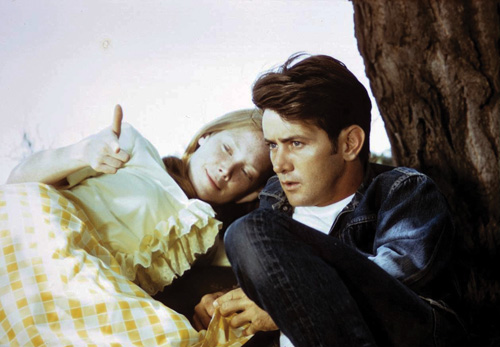
FILM Wanda (1970) takes a long time to settle into anything resembling a plot, but the wayward scenes at the start of the film have a remarkable exactness to them. In one, the title character (played by director Barbara Loden) walks into a dingy bar looking to end the day early. She’s fresh from divorce court, where she lost her kids, merely acceding to the judgments of her ex-husband and the court. As the bartender puts a bottle of beer and glass on her table, a greasy lump at the bar says he’ll take care of the drink. The unsolicited offer clouds Wanda’s face; she sips her drink resigned to what it means. A rude cut takes us to a spent motel room where Wanda sleeps naked alone in pale afternoon light. The guy from the bar tiptoes around the room to leave, but he makes a noise setting Wanda to hurriedly dress herself, pointlessly calling after him to wait. The plainness of the scene’s despair tells us it’s nothing new for her.

Characterization emerges in the fluidity of situation and behavior, melancholy in an unanchored camera and stark ellipses. Once its protagonist takes up with an amateur thief who radiates nervous energy, Wanda unspools as an inverted Gun Crazy (1950), its unsentimental portrait of a female drifter looking ahead to films like Jeanne Dielman (1975), Vagabond (1985), Safe (1995), and Kelly Reichardt’s River of Grass (1994) and Wendy and Lucy (2008). Wanda screens in a restoration print as part of a bountiful overview at the Pacific Film Archive called “The Outsiders: New Hollywood in the Seventies.”

Drawing inspiration from The Last Great American Picture Show, an excellent anthology edited by Alexander Horwath to accompany an earlier retrospective at the Austrian Film Museum, the PFA series shifts the historical narrative of New Hollywood from movie brats to unnamed margins. Celebrity-driven surveys of the same period (like Peter Biskind’s Easy Riders, Raging Bulls) miss the congruence of by-the-teeth filmmaking and borderline characters that helps to define the PFA series. Ample room is made for those filmmakers whose careers couldn’t hold a straight line (Loden’s career as a director began and ended with Wanda), and familiar landmarks like Mean Streets and Badlands (both 1973) are considered alongside lesser known but no less groundbreaking character studies like Dusty and Sweets McGee (1971), Ice (1970) and The Heartbreak Kid (1972).

The swift scene of Wanda getting picked up at the bar establishes a few leitmotifs for “The Outsiders.” You notice right away that the crummy motel rooms and bars are the real thing, and that an actor’s vanity is never spared a frank look at a character’s worn down body and face. The incidental nature of the camera placement, long duration of scenes, and dispersive spread of sound deepen the melancholy reality of these appearances. A verité-style handheld camera takes single measure of the scene, registering the immediacy of behavior but stopping short of slicing up the conflict into easy points of identification (Wanda cinematographer Nicholas T. Proferes cut his teeth with Robert Drew’s pioneering documentary crew in the early 1960s). Also borrowed from observational documentary is an interest in private, semi-coherent forms of speech; the stories are as much told through gesture and movement. You constantly feel on the precipice of emotions, watching as they form and stagnate in a languid real time that makes a character’s exhaustion palpable in the theater.

Most of these movies are indeed populated by outsiders, though the meaning of the word shifts from film to film. There are plenty of figures of hedonism (memorably, Rip Torn’s hard-driving country western singer in 1972’s Payday), but so too are there close portraits of the lived differences of gender, race, class and age — Wanda, but also Killer of Sheep (1977), Bush Mama (1975), and Over the Edge (1979). Unlike Easy Rider (1969), the film typically cited as launching a hundred New Hollywood productions, these movies don’t valorize the outsider towards an obvious political morality. A film like Killer of Sheep is delicate because it recognizes the social constraints of the central character’s life while at the same time respecting the fullness of his winnowed existence. The same long-take camera style which expresses pessimism is also left open to moments of ragged beauty that escape political allegory.

The exciting vision of radical heroism offered by Sweet Sweetback’s Baadasssss Song (1971) is the exception that makes it easier to imagine how Wanda‘s brittle poetry of despair might have disappointed feminists at the time. Wanda is left alone again at the end of the film, seemingly unable to live with or without a man. There’s a glimmer of hope when another woman invites her inside a raucous roadhouse where mixed company drink and smoke and laugh as a string duo stomp out a joyful sound. But through it all Wanda remains withdrawn, eating and drinking as if someone might at any moment snatch the food out of her hands. The film ends with a freeze frame of her blank face as the music slowly drains away on the soundtrack. The shot holds a mirror up to our desire for her story to mean something, our wish for the succor of tragedy or redemption. Loden’s film instead narrows in on the insoluble nature of the character’s existence, holding the wreckage of her life in view with both pitiless reserve and tender regard.

THE OUTSIDERS: NEW HOLLYWOOD CINEMA IN THE SEVENTIES

Sept. 2-Oct.27, $5.50–<\d>$9.50

Pacific Film Archive

2575 Bancroft, Berk.

(510) 642-5249

bampfa.berkeley.edu

Chicago hope

0

arts@sfbg.com

FILM Hard times and an African American man in the White House have unleashed racial hostilities on a level unseen for decades, even if most of it is (thinly) veiled. Millions of low-paid or unemployed whites who should know better from their own experiences with economic struggles view blacks as a homogenous group of “welfare cheats” (believing all welfare is cheating, unless of course you need it yourself) and violent thugs. The online rhetoric, where everyone’s ugliest prejudices can be aired from a safe place of anonymity, reveals a nation of way too many people who spend way too much time hating each other. The venom is so enthusiastic you know most of them wouldn’t want rapprochement if it came with a $50 Wal-Mart gift certificate.

With concern from society and government as a whole at low ebb, communities at greater risk of violence from within than ever have had to come up with their own peace-making solutions. The Interrupters, the latest documentary by Steve James (1994’s Hoop Dreams), shows dedicated efforts to help one of the nation’s worst centers of such bloodshed. In Chicago, the overwhelming majority of both victims and perps of gang-related, domestic, and armed robbery fatalities are African American; shooting incidents in a few neighborhoods have continued to skyrocket even as similar statistics have declined elsewhere around the country.

“Violence is like the great infectious diseases of all history,” says epidemiologist Gary Slutkin, in that it can be stopped from spreading to epidemic proportions by numerous “initial interruption(s) of transmission” at its source. He translated that perspective into the founding of CeaseFire, a Chicago-based organization that doesn’t aim to summarily end the existence of gangs and drug trade. Instead, its plain but hardly simple mission is to stop the shootings, stabbings, etc. which are exacerbated by unemployment, broken families, and other sources of stress whose cumulative effect can rapidly escalate a casual dis to a mortal confrontation. As one interviewee in James’ film says, “sticks and stones” logic doesn’t apply here because “words can get you killed.”

Under CeaseFire’s auspices, Tio Hardiman created the Violence Interrupters program, which drafts people from the community — many former gangbangers themselves — as mediators wading into conflicts to defuse them before things get out of hand. It takes considerable will and nerves of steel; “interrupters” have been shot at, and during the course of this documentary’s year-long span one volunteer lands in the hospital for his trouble.

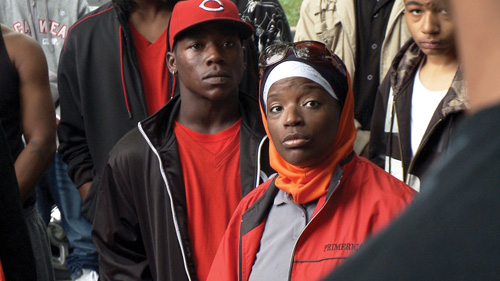
The Interrupters‘ most charismatic figure is Ameena Matthews, daughter of legendary local crime boss Jeff Fort (now in prison for life) and a onetime enforcer herself. Now a mother and devout Muslim, she is seen fearlessly, tirelessly diving into fraught situations where few would be able to command sufficient respect to “interrupt,” let alone arrest, the path that leads from disagreement to threat to assault. She even takes the podium at (yet another) funeral to harangue the attendees about stopping the cycle of brutal retaliation slayings. It’s hardly just active gang members or even their families who are at risk — random, mistaken-identity, and bystander shootings claim an outrageous number of lives every year. (In the New York Times Magazine article that led to this documentary, producer Alex Kotlowitz noted one summer Chicago weekend in which 36 people were shot, seven fatally.)

Like much of inner Detroit — as other recent docs have observed — these Chicago neighborhoods have practically been abandoned by the larger society, considered incurable zones in terms of crime, blight, brutality, abuse, despair. If residents already rank low in a pinched job market, prospects for those who’ve returned from prison stints are subterranean.

Such frustration and anger will be channeled one way or another; constructive alternatives are damn few. But The Interrupters makes a powerful case against the inevitability of hopelessness turning into violence. The program has even seen former perps transformed to the point of returning to the scene of a crime in order to apologize. Rage is blinding; CeaseFire and its mediators prove there’s nothing like taking a step back and a clear-eyed look at oneself to achieve peace in near-impossible circumstances. “Community, heal thyself” may well have to become the American mantra of the near future, because you know the Tea Party wouldn’t mind in the least letting certain groups self-destruct. 

THE INTERRUPTERS opens Fri/2 in Bay Area theaters.

Good girls inhale

16

caitlin@sfbg.com

HERBWISE This is the image that could very well legalize weed in the United States, if not on the books then in our national subconscious: a be-curlered, white-bathrobed housewife ducking behind the backyard clothesline for a quick toke before her adolescent son comes to ask her to wash his gear for the Little League championship tomorrow.

Dee Dee Kirkwood thinks so. The playwright behind Toke places the image at the center of an opening scene in her semi-autobiographical play about a woman and her weed.

“It’s all positives, there are no negatives about marijuana,” chirped Kirkwood over the phone the day after the friends and family preview performance of Toke. “I wanted to focus my writing on making a change, helping cannabis smokers, and helping people come out of the closet.”

Out of the closet? Kirkwood does put much truck in marijuana as a libido-enhancer, and noted Bay sexologist Carol Queen is slated to step into the pointy high heels of Toke‘s pot fairy character for the second two weeks of the play. Sexuality is in the air of Ashby Theatre as much as smoke, in fact — but Kirkwood’s talking about an entirely different kind of self-realization here.

The climactic scene of Toke takes place after protagonist Wee Dee (get it!) has surfed the seas of kitchen table abortions, Post Traumatic Stress Disorder-having Vietnam vet first loves, radical European commune life, and a confining marriage to the father of her two children — happenings that Kirkwood’s script manage to make touching and madcap in turns. The character is plucky, likable, fun, so it makes sense when her second hubby encourages her to take that indomitable Wee Dee spirit and channel it towards marijuana activism.

So she organizes an event. It’s not important what the event is, because it’s at the end of an already-wacky play and if you’re not stoned by that point, it’s not clear why you at a production called Toke to begin with.

What is important is that after Wee Dee has listened to the This is Your Life-style cassette tape of various blasts from the past wishing her well, she emerges onstage with a glittering, Beach Blanket Babylon-esque cannabis headdress. She announces “I’m coming out of the closet! I’m green!”

And boy does the audience cheer. Wee Dee is a hero.

Toke is Kirkwood’s raison d’être. She doesn’t consider herself a career activist, just wants to lead people to more morality-based look at marijuana’s outlaw status, even though the unjust incarceration issue doesn’t get much play in Toke. As a wife and mother, she wants others to share in the happiness that the dro has brought to her life.

And — if it ever makes it out of Berkeley’s green hills — one could see Toke performing similar feats for weed that Eat, Pray, Love enacted on Middle America’s acceptance of yoga and women traveling solo.

“If it ever makes it out of Berkeley” being the key phrase there, of course.

TOKE

Fri/26 – Sept. 11, Thu.-Sat, 8 p.m.; Sun., 5 p.m., $25

Ashby Theatre

1901 Ashby, Berk.

www.toketheplay.com


Sequel smackdown

1

GAMER Though video game sequels abound every season, fall 2011 plays host to an unusual profusion. Three is indisputably the magic number, though five and a pair of un-numbered twos make a strong case. Decide for yourself which game deserves your dollars by delving into the details below.

Shooter wars In terms of sheer seismic impact, it’s hard to match Call of Duty: Modern Warfare 3, which hits store shelves Nov. 8. Successor to Call of Duty: Black Ops — literally the best-selling video game in the history of world — Modern Warfare 3 is the 2011 iteration in a once-yearly parade of market-dominating games released by publishers Activision. Defined, for better or worse, by its frenetic gameplay and rabid fans, Call of Duty‘s vast popularity has resulted in uncanny levels of cultural saturation. It’s the video game of choice for people who only own one video game.

This appeal to the lowest common denominator has been tacitly criticized by the team behind Battlefield 3, another hyper-realistic military shooter from rival publishers Electronic Arts. Released exactly a fortnight earlier than its megalithic competitor (Oct. 24), Battlefield 3 will point to a less puberty-addled player base and the excitement of pilotable vehicles (tanks, helicopters, etc.) as its main selling points.

Though the chivalric code of video game public relations prevents these two giant franchises from really laying into each other, the gaming intelligentsia expects a consumerist cage match come late October. By the time the first-week sales numbers are compared, they’ll be baying for blood.

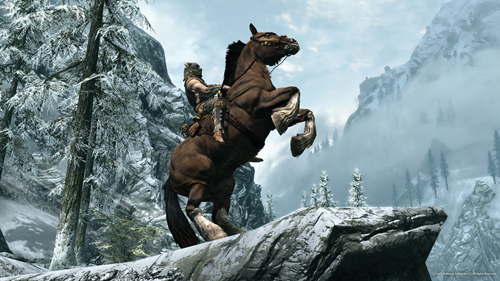
Open worlds Evaluated superficially, The Elder Scrolls V: Skyrim seems like a parody of itself. Every gaming stereotype is represented, starting with the portentous title. Screenshots reveal barbarians swathed in fur, casting wary glances at the dragons wheeling overhead.

But despite its conventional high fantasy trappings, Skyrim (Nov. 11) represents the sophisticated, forward-thinking apex of modern RPG design. Its new Creation Engine allows surprising flexibility — the A.I. modifies quests on the fly to test a player’s strengths and weaknesses, and to showcase the content that player might be missing. The aforementioned dragons are given license to roam, appearing randomly to ruin your day at the expense of choreographed, scripted sequences.

Speaking of ruined days, no game will kill you quite as dead as Dark Souls. The follow-up to the cult Japanese import Demon’s Souls will expand on its predecessor’s distinctively punishing gameplay, turning players loose in an ominous open world filled with booby traps and seemingly invincible monsters. It will take unwavering concentration and an iron will to succeed when the game releases Oct. 4.

Gamers who prefer a more modern open world are gearing up for Batman: Arkham City (Oct. 18.), sequel to 2009’s surprise smash Arkham Asylum. Escaping the confines of the comics world’s most recognizable prison, Arkham City will allow the Caped Crusader freedom to explore a wide swath of dystopian Gotham, putting paid to recognizable Batman adversaries like the Penguin, Bane, Two-Face, Catwoman, the Riddler, and the Joker.

Arkham Asylum won players over with its fluid, timing-based combat system, which will return improved, able to pit Batman against 27 heavily-muscled henchmen at once without breaking a technological sweat. Fisticuffs aside, Arkham City will also allow you to swoop down off buildings with only an inky-black cape to break your fall — who wouldn’t want to try that?

Trilogies completed Like Batman, Uncharted protagonist Nathan Drake is no stranger to precipitous heights. The wisecracking Indiana Jones homage returns Nov. 1 in Uncharted 3: Drake’s Deception, rounding out a trilogy of cinematic, visually stunning adventure titles.

Clambering up priceless ancient architecture while dispatching baddies with bullets and bon mots, Drake will take advantage of huge investments in motion capture and hardware optimization that will make Uncharted 3 one of the most realistic looking games ever. You can also expect it to set new benchmarks for video game writing and voice acting — traditional strengths of the series.

Gears of War 3 might not boast the same level of insouciant wit, but its graphical and gameplay bona fides are second to none. Due out Sept. 20, the new game from influential studio Epic Games (famed for their extensively licensed Unreal 3 engine) aims to wrap up the story of hydrant-shaped marine Marcus Fenix, who first growled his way onto consoles in 2006. The plot is conventional stuff — find your missing father; save the world — but Epic’s satisfying cover-based shooting mechanics and popular multiplayer modes will attract customers in droves.

For the fall of it

0

arts@sfbg.com

FALL ARTS Puppets, fanciful forms of democracy, and disfigured villains are leitmotifs beyond the Beltway this season, as the following theater and performance highlights suggest.

Stuffed and Unstrung Bad puppets, puppets misbehaving, puppets you won’t see on Sesame Street, puppets you don’t want to meet on a darkened street. Eighty of them. And six improvising comedians too: Henson puppeteers gone wild. (Brian Henson, that is, son of puppeteering parents Jim and Jane). Co-presented by SF Sketchfest. (Through Sat/27, Curran Theatre; shnsf.com.)

Roughin’ It: Theater. Oysters. Campfire. Booze. Is one of these things not like the others? No, they are all just like the others. Now you can yell oyster in a crowded campfire and drink like an actor. It seems this unique opportunity (one night only, this weekend) arises because PianoFight is couch surfing right now, very near the actual surf in Tomales Bay. The show-show part of this show consists of new material by local playwrights writing plays for this very moment in time at the Tomales Bay Oyster Company in Point Reyes Station, just in case you were wondering about it. Round-trip shuttle ride from SF available for a few extra clams, and dollar oysters for a dollar. (Sat/27, Tomales Bay Oyster Company, Point Reyes Station; pianofight.com.)

A Delicate Balance Aurora Theatre turns 20 this season too. It has chosen to celebrate by kicking things off with a production of Edward Albee’s great and so great play, A Delicate Balance. And to include in the cast local luminaries Anne Darragh, Charles Dean, and Carrie Paff. This is all just an excellent idea. (Sept. 2-Oct. 9, Aurora Theatre; auroratheatre.org.)

San Francisco Fringe Festival, the 20th annual for god’s sake. Forty-four shows from all over, all over 12 days, all over the lovely Tenderloin. Good theater very cheap, and bad theater, also very cheap. The lottery-based, snob-resistant Fringe: this is what democracy looks like. (Sept. 7–18, Exit Theatre; www.sffringe.org.)

The People: San Francisco Corporations are people too, my friend. So was Hitler. Even I am people apparently. There’s a lesson there somewhere in this Yerba Buena Center for the Arts and Z Space co-production, as the New York–based performance team of Caden Manson and Jemma Nelson (makers of 2009’s wowing S.O.S. at YBCA) bring to the street outside Z Space the local installment of their globetrotting site-specific democracy-curious spectacle, featuring live performance and real-time gi-normous video projections. I’m told there will also be taco trucks. But really: no way you want to miss Big Art Group. (Sept. 16–17, Z Space; bigartgroup.com)

3 For All Maybe the SF Improv Festival has whetted your appetite. Or maybe you already know that this longstanding, outstanding long-form improv trio comprised of Rafe Chase, Stephen Kearin, and Tim Orr are always varied and strange and wonderful. (Sept. 16–17, Bayfront Theatre; www.improv.org.)

Frankenstein Independent Eye’s Conrad Bishop and Elizabeth Fuller present their take on Mary Shelley’s gothic (and profoundly modern) tale, using a trio of actors, a moody mix of sound and image, and their exquisitely crafted puppets. (Oct. 7–30, 6th Street Playhouse; 6thstreetplayhouse.com.)

Richard III Now is the winter of our discontent made glorious with this fall theater-season spectacular starring Kevin Spacey. M’lord. What hump? (Oct. 19–29, Curran Theatre; shnsf.com.)

Desdemona Responding to internationally acclaimed director Peter Sellars’s 2009 staging of Othello, author Toni Morrison and African singer-songwriter Rokia Traoré, together with Sellars himself, channel a conversation between Shakespeare’s unlucky heroine and her African nurse, Barbary, in this intimate and intriguing U.S. premiere. (Oct. 26–29, Zellerbach Playhouse; calperfs.berkeley.edu.)

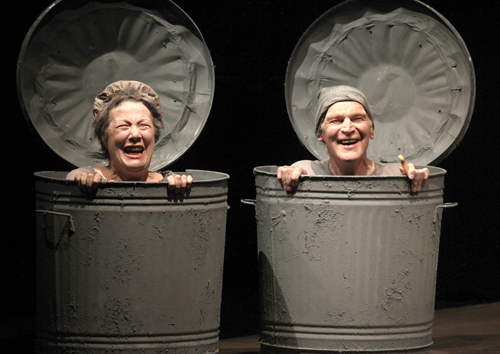
Endgame and Watt Samuel Beckett is not the Gloomy Gus everybody likes to think. All right, sure, he kind of is. But he’s also very funny. And I’m told tidy. He’s also a genius, damn it, and when it comes to interpretations of Beckett nobody has the cred that these Irish cats do, in Gate Theatre of Dublin’s rare visit to Berkeley’s Zellerbach Playhouse. Starring Barry McGovern, who can’t go on but will go on, in the great play Endgame, as well as his own selections from the novel Watt. (Nov. 17–20, Zellerbach Playhouse; calperfs.berkeley.edu.)

The big ones

0

SEPTEMBER

Handsome Furs Sept. 3, Slim’s

Mi Ami Sept. 3, Public Works

Mummies Sept. 6, Knockout

Givers Sept. 7, Rickshaw Stop

Kills Sept. 9, Fox Theater

Rancid Sept. 10, Warfield

Iggy Pop and the Stooges Sept. 12-13, Warfield

Kylesa Sept. 14, Great American Music Hall

Religious Girls Sept. 15, Hemlock Tavern

Album Leaf Sept. 16, New Parish

Bass Necter Sept. 17, Bill Graham Civic Auditorium

Rock Make Street Fest Sept. 17, 18th Street in the Mission

Low Sept. 19, Great American Music Hall

Bush Sept. 20, Great American Music Hall

James Blake Sept. 21, Fillmore

Two Gallants Sept. 23-24, Independent

Lee “Scratch” Perry Sept. 25, Independent

B.B. King Sept. 26, Nob Hill Mason Center

Dominant Legs Sept. 27, Cafe Du Nord

Tyler Ward Sept. 28, Slim’s

Kaiser Cheifs Sept. 29, Fillmore

Nouvelle Vague Sept. 30, Regency Ballroom

Odd Future Sept. 30, Warfield


OCTOBER

Amon Tobin Oct. 1 (sold out) and Oct. 2, Warfield

Dum Dum Girls Great American Music Hall, Oct. 4

Why? Great American Music Hall, Oct. 5

CSS Oct. 6, Fillmore

Peter, Bjorn and John Oct. 6, Great American Music Hall; Oct. 7, New Parish; Oct. 8. Slim’s

The Pains of Being Pure at Heart Oct. 7, Slim’s

Girls Oct. 8, Great American Music Hall

Yellowcard Oct. 9, Slim’s

Yelawolf Oct. 10, Independent

Gang Gang Dance Oct. 11, Independent

Zee Avi Oct. 13, Independent

Bryan Ferry Oct. 14, Fox Theater

Naked Aggression Oct 15, 924 Gilman

The Shirelles Oct. 18-23, Rrazz Room

Opeth Oct. 18, Warfield

Lindsey Buckingham Oct. 19, Regency Ballroom

Noothgrush Oct. 22, 924 Gilman

War on Drugs Oct 23, Independent

Yngwie Malmsteen Oct. 26, Fillmore

Anvil Oct. 27, Red Devil Lounge

Skrillex Oct. 28, Warfield

Deadmau5 Oct. 29, Bill Graham Civic Auditorium

Dwarves Oct. 30, 924 Gilman


NOVEMBER

Zola Jesus Nov. 1, Independent

Yael Naim Nov. 2, Bimbo’s

Shonen Knife Nov. 4, Bottom of the Hill

Mike Doughty and His Band Fantastic Nov. 5-6, Independent

Warbringer Nov. 7, Thee Parkside

Lykke Li Nov. 9, Fox Theater

M83 Nov. 10, Mezzanine

Gwar Nov. 11, Regency Ballroom

We Were Promised Jetpacks Nov. 11, Bimbo’s

Cobra Skulls Nov. 12, Thee Parkside

Feist Nov. 14, Warfield

Budos Band Nov. 19, Mezzanine

Wu Lyf Nov. 21, Independent

tUnE-YarDs Nov. 23, Regency Ballroom

The Weakerthans Nov. 30-Dec. 2, Independent

Vision statement

0

arts@sfbg.com

FALL ARTS You better start doing your stretches and invest in a good pair of walking shoes. There’s as much ground to cover as there is art to see this fall, and if you get to every gallery, studio, and museum on this far-from-comprehensive list your eyes will probably be as sore as your feet. But as any seasoned hiker will tell you, the views are well worth any aches incurred along the way.

Julie Heffernan: Boy Oh Boy II” “Boschian” is an oft-overused adjective in art writing, and Heffernan’s more-is-more paintings, chock-full of twisted allusions to Renaissance art (Bosch included) and all sorts of fantastic razzle-dazzle, will have you scrambling for synonyms. (Sept. 3–Oct. 29, Catharine Clark Gallery; www.cclarkgallery.com)

Pamela Jorden” I’ll leave the question of whether or not painting’s dead up to more qualified coroners, and simply state that the oil-on-linen works of the young, Los Angeles-based Jorden make a powerful case for the continued relevance of gestural abstraction. There are echoes of Richard Diebenkorn or Clyfford Still in Jorden’s fractured cataracts of color (her blues will make you blush), but compositionally her canvases evince an alchemy that’s entirely her own. (Sept. 16-Oct. 15, Romer Young Gallery; www.romeryounggallery.com).

SF Open Studios Artists, they’re just like us! Seriously, though, one of the many pluses of ArtSpan’s annual city-wide event is that it helps demystify and de-romanticize what it means to be a working artist. Get to know the creative types in your neighborhood, see where the magic happens, and maybe help stimulate the local economy (hint, hint). (Oct. 1-18, various venues; www.artspan.org.)

Lionel Bawden: The World of the Surface” The title of Badwen’s American debut is a half-truth. His sculptural works, comprised of hexagonal colored pencils grouped together and shorn, topiary-like, into amorphous shapes, suggest a world far below the surface: caves, fatty tissue, cells. Dive in. (Oct. 1–Nov. 26, Frey Norris Gallery; www.freynorris.com.)

Houdini: Art and Magic” How does a museum escape the confines of the now tired “contemporary artists responding to famous historical figure X” approach to curating? Do like the Contemporary Jewish Museum and put on a show about legendary escape artist Harry Houdini. Come for tributes by Vik Muniz, Jane Hammond, etc. (what, no Matthew Barney?) but stay for a recreation of his famous Water Torture Cell illusion, along with the hundred other bits of Houdiniana. (Oct. 2–Jan. 16., 2012, Contemporary Jewish Museum; www.thecjm.org.)

Ralph Eugene Meatyard” The very banality of Meatyard’s biography — he was a happily married optician in Lexington, Ken. who did photography as a weekend hobby — only makes his singular and startling body of work that much more so: from children creepily posed with dolls and masks to bold experiments with abstraction and “no focus” imagery, Meatyard’s pictures push into territory far more strange and wondrous than the Gothic South. (Oct. 8- Feb. 26, de Young Museum, www.famsf.org.)

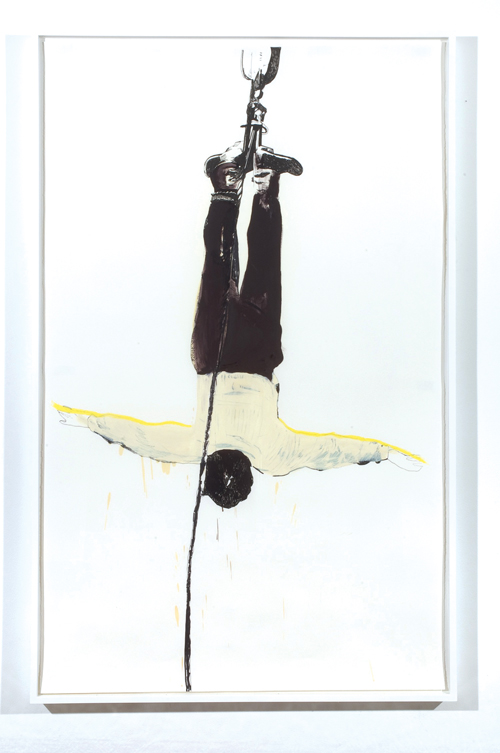
“Geoff Oppenheimer” Oppenheimer makes conceptually smart and visually arresting installation and video work that frequently voices the unspoken dynamics behind public performances of controlled discourse, such as press conferences. Be prepared to be discomfited. (Oct. 28–Dec. 11, Ratio 3; www.ratio3.org).

The Air We Breathe” I have some serious reservations about the San Francisco Museum of Modern Art’s decision to organize their first major contemporary group show in a long while around “the cause of marriage equality” (for starters, why not host “Hide/Seek,” the previously censored and now traveling exhibit about same-sex desire and American portraiture currently at the Tacoma Art Museum, instead?). That said, something truly queer, politically risky and aesthetically challenging has gotta happen when you put specially commissioned works by the likes of John Ashbery, Dodie Bellamy, Raymond Pettibon, Ann Hamilton, and Robert Gober (and many others) under one roof, right? For now, consider my tongue held and eyebrow raised. (Nov. 5–Feb. 20, 2012; SFMOMA, www.sfmoma.org.)

Open mouth, insert popcorn

0

FALL ARTS Supporters of the cinema-industrial complex know that fall is, arguably, the primo time to catch a flick. As the days get shorter, the award hopefuls roll out faster. Of course, there’s some non-Oscar contenders worth noting as well, and I don’t just mean A Very Harold and Kumar 3D Christmas (pass the dutchie Nov. 9). Here’s a sprinkling of high- and lowlights to look forward to. All dates are subject to change. 

>>Click here for a look at what’s coming to the Bay’s rep houses anf alternative screens

September

Apollo 18 (Sept. 2) is another one of those “this shit really happened” found-footage scary movies, except it takes place on the moon. Steven Soderbergh’s star-studded disease epic Contagion (Sept. 9) is one of those “this shit could really happen” scary movies. The fightin’ Warrior has gotten good advance buzz (Sept. 9); and hip Dane Nicolas Winding Refn directs Ryan Gosling as a stunt driver/getaway driver in the appropriately-titled Drive (Sept. 16).

Gus Van Sant’s Restless has all kinds of worrisome plot points (terminal illness, young-adult romance, quirky ghost encounters), while Moneyball casts Brad Pitt as the math-minded manager of the Oakland A’s (both Sept. 23). Plus, a pair of horror flicks: Dream House, a.k.a. the movie where Daniel Craig and Rachel Weisz began their secret romance, and Tucker and Dale vs. Evil, a splat-stick backwoods tale. (Sept. 30).

October

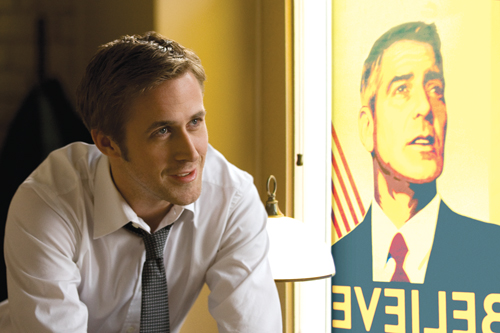
Directed and co-written by George Clooney, Ides of March (Oct. 7) is about the campaign of a POTUS hopeful (Clooney again) seen through the eyes of a hotshot staffer (Gosling again). Wanderlust reunites Jennifer Aniston and Paul Rudd, though director David Wain and a yuppies-go-counterculture plot will presumably prevent any The Object of My Affection (1998) flashbacks. Intriguing actor Michael Shannon stars in Take Shelter, a re-teaming with Shotgun Stories (2007) writer-director Jeff Nichols; and hotly-anticipated sequel The Human Centipede 2 (Full Sequence) unfurls for the discriminating midnight moviegoer (both Oct. 7).

Oct. 21 marks the scheduled releases of Pedro Almodóvar’s The Skin I Live In, starring Antonio Banderas as a troubled plastic surgeon. Charlie Sheen and Chris O’Donnell star in — whoops, wrong generation. The millennial take on The Three Musketeers is directed by the Resident Evil series’ Paul W.S. Anderson, which of course means Milla Jovovich gets a juicy role alongside the sword-wielding himbos.

Also: Johnny Depp in the long-awaited Hunter S. Thompson adaptation The Rum Diary; disaster-movie specialist Roland Emmerich’s Shakespeare story, Anonymous (you heard me); and Justin Timberlake’s latest effort to make us take him seriously as an actor, In Time (all Oct. 28).

November

The sweepstakes winner will clearly be The Twilight Saga: Breaking Dawn — Part One (Nov. 18). But as it turns out, Lars von Trier’s new one, Melancholia (Nov. 11), won former vampire Kirsten Dunst an acting award at Cannes. Yet another former vampire, Gary Oldman, stars in Tinker, Taylor, Soldier, Spy (Nov. 18), from Tomas Alfredson, last seen directing vampires in 2008’s Let the Right One In. To be clear: there are no coincidences.

As the holidays approach, the names get bigger: Clint Eastwood’s J. Edgar biopic stars Leonardo DiCaprio (Nov. 9); plus Martin Scorsese ventures into 3D whimsy with Hugo; Alexander Payne helms the Clooney-starring family drama The Descendants; Kermit the Frog headlines Jason Segel’s reboot of The Muppets; and John Gulager directs Piranha 3DD (all Nov. 23).

December Wrapped up for you under the celluloid tree are the bullet-proof Roman Polanski, who returns with drama Carnage; the bullet-proof in other ways Meryl Streep, who portrays Thatcher in The Iron Lady; the reunion of the writing-directing team behind 2007’s Juno for the Charlize Theron-starring Young Adult; and Guy Ritchie’s Sherlock Holmes: A Game of Shadows (all Dec. 16). Your Xmas choices (Dec. 21-28) include Cameron Crowe’s We Bought a Zoo (don’t know anything about it, already hate it, still pissed about 2005’s Elizabethtown); Brad Bird’s Mission Impossible: Ghost Protocol, with Jeremy Renner and Simon Pegg doing duty alongside The Cruise; David Fincher’s The Girl with the Dragon Tattoo; and a double-header from Steven Spielberg: animated The Adventures of Tintin: The Secret of the Unicorn (Dec. 21), and War Horse (Dec. 28).

Events List

0

Hey there — this week we’ve taken over the Events Listings space in the paper with our grand Fall Fairs and Festivals Guide. Check it out to see what’s poppington.

Bestivals

0

caitlin@sfbg.com

FALL ARTS Now that even the quaintest neighborhood block parties publish music lineups in advance and big beat fests give as much shine to snack vendors as secondary stages, it’s becoming clear that the events on our fall fair and festival listings are all just part of one big movement. Leading to what, you might ask? Leading to you having a celebrate-good-times kind of autumn in the Bay Area. Seize the day, pack your sunscreen, bring cash: from film to activism to chocolate, here comes the sun.


NOW-SEPT. 25

Shakespeare in the Park Presidio’s Main Post Parade Ground Lawn, between Graham and Keyes, SF. (415) 558-0888, www.sfshakes.org. Times vary, free. Whilst thou be satisfied with the Bard’s hits in the open air, free for you and the clan? The line-up, from Cymbeline to Macbeth, suggests that it won’t be so hard.


AUG. 27

J Pop Summit Japantown Peace Plaza, SF. www.newpeopleworld.com. 11 a.m.-6 p.m., free. Enter the kaleidoscope of anime, manga, Lolita, androgynously cute boys in tuxedo jackets, keyboard theatrics, and Vocaloid (a computer program that creates complete songs, vocals and all) contests at this unique festival marathon of Japanese pop culture.

Rock The Bells Shoreline Amphitheatre, Mountain View. www.rockthebells.net. 10:55 a.m.-10:25 p.m., $55.50-281.00. Lauryn Hill, Nas, GZA, Common, Black Star — the country’s biggest hip-hop festival hits the Bay, bigger than ever.


SEPT. 3

International Cannabis and Hemp Expo Telegraph from 16th to 20th sts. and Frank Ogawa Plaza, Oakl. intche.eventbrite.com. Noon-8 p.m., $18-300. 120 different strains of Mary Jane should be enough to get you through eight hours of festival — if not, there will be three stages of music and educational speakers for pot pals to trip on.


SEPT. 3-4

Zine Fest SF County Fair Building, 1199 Ninth Ave., SF. www.sfzinefest.org. 11 a.m.- 6 p.m., free. If arbiter of Bay indie comic cute Lark Pien’s original kitty cat Zine Fest 2011 poster doesn’t hook you (how?), you’re sure to find something that tickles your cut-and-paste among the aisles at this assemblage of DIY publishers and comic heads.

Millbrae Art and Wine Festival Broadway between Victoria and Meadow Glen, Millbrae. (650) 697-7324, www.miramarevents.com. 10 a.m.- 5 p.m., free. Celebrate Labor Day at this multi-faceted celebration of artisan comestibles, classic cars, live tunes, and hundreds of crafters — it even has a kids talent show.


SEPT. 4

EcoFair Marin Marin County Fairgrounds, San Rafael. www.ecofairmarin.org. 10 a.m.-7 p.m., $5. The keynote speaker at this expo of all things green and cutting-edge is Temple Grandin, Ph.D., one of the world’s leading autism advocates.


SEPT. 7-18

Fringe Festival Various locations, times, prices. www.sffringe.org. This festival’s egalitarian method of stage assignments mean that there’s no better time of year in the city to check out first-time playwrights and original (yes, sometimes wonky) scripts.


SEPT. 8-11

Electronic Music Festival Brava Theater Center, 2789 24th St., SF. www.sfemf.org. The Bay’s new music artists pop off together for this long weekend of exploration of the sonic spectrum.


SEPT. 10

Brews on the Bay Pier 45, SF. www.sfbrewersguild.org. Noon-5 p.m., $45. The city’s biggest brewers: Magnolia, Beach Chalet, Anchor, and Speakeasy among others, pour out endless tastes at this Bay-side swigfest


SEPT.10-11

Ghirardelli Square Chocolate Festival Ghriradelli Square, North Point and Larkin sts., SF. (415) 775-5500, www.ghirardellisq.com. Noon-5 p.m., $20 for 15 samples. A benefit for chronically ill and housebound elderly folks, chocolatier demonstrations and ice cream sandwich-eating contests sprinkle over this day of chocolate tasting par excellence.


SEPT. 14-18

Berkeley Old Time Music Convention Times, locations, and prices vary. www.berkeleyoldtimemusic.org. Loosen up them joints — it’s time to get goofy and gangly to some banjos and flat-footin’ at this multi-day Americana celebration of film screenings, concerts, open jams, and more.

Power and Sailboat Expo Jack London Square, Broadway and First St., Oakl. (510) 536-6000, www.ncma.com. Wed.-Fri., noon — 6 p.m.; Sat.-Sun., 10 a.m.-6 p.m., $10. In the market for a rubber inflatable raft? Wanna scope haute yachts? Sail away to this family-friendly event on the Bay.


SEPT. 15 — DEC. 18

SF Jazz Fest Times, locations, and prices vary. (866) 920-5299, www.sfjazz.org. Esperanza Spalding, Booker T., Aaron Neville, and performances by SF’s most talented high school jazz players mark this season of innovative concerts and jazz appreciation events.


SEPT. 23-25

Eat Real Jack London Square, Broadway and First St., Oakl. (510) 250-7811, www.eatrealfest.com. Fri, 1-8 p.m.; Sat, 11 a.m.-8 p.m.; Sun, 11 a.m.-7 p.m., free. A celebration of all foods local and sustainable, you can enter your prize pickles in a contest at this burgeoning fest, learn how to be a backyard farmer, and of course, eat good food til you burst.


SEPT. 23 — OCT. 16

24 Days of Central Market Arts www.centralmarketarts.org. Most events are free. The heart of the city organizes this smorgasboard of art events — from world class dance to circus to quirky theater pieces. Take your brown bag (lunch? something else?) down to Civic Center for one of the free performances.


SEPT. 24

Lovevolution Oakland Coliseum, 7000 Coliseum Way, Oakl. www.sflovevolution.org. Noon- 8 p.m., $25. The days of prancing neon-ly down Market Street are over but hey, Oakland’s got better weather! This year’s massive outdoor rave stages its traditional parade around the circumference of the coliseum’s parking lot.


SEPT. 25

Folsom Street Fair Folsom between Seventh and 12th sts., SF. www.folsomstreetfair.org. 11 a.m.- 6 p.m., $10 suggested donation. Sure, it’s touristy, but this kink community mega-event has its heart in the right place (between its legs). The premier place to get whipped in public, hands down.


SEPT. 30 — OCT. 2

Hardly Strictly Bluegrass Speedway Meadows, Golden Gate Park, SF. www.strictlybluegrass.com. Sure this homegrown free twangfest gets more crowded by the year — but attendance numbers are directly tied to the ever-more-badass lineup of multi-genre legends. This year: Emmylou Harris, Bright Eyes, Broken Social Scene, Robert Plant — and yes, MC Hammer.

Oktoberfest By the Bay Pier 48, SF. 1-888-746-7522, www.oktoberfestbythebay.com. Fri, 5 p.m.-midnight; Sat, 11 a.m.-5 p.m. and 6 p.m.-midnight; Sun, 11 a.m.-6 p.m., $25-65. Oompah, it’s time for some bratwurst! Raise your stein to this boozy celebration of German culture.


OCT. 1

Wildlife Conservation Expo Mission Bay Conference Center, 1675 Owens, SF. www.wildnet.org. 10 a.m.- 6 p.m., $30-60. Save the Botswanan cheetahs and okapis! Learn from leading conservationists about innovative environmental projects around the world.


OCT. 1-2

World Vegetarian Day County Fair Building, 9th Ave. and Lincoln, SF. (415) 273-5481, www.worldvegfestival.com. 10 a.m.-6 p.m., $10 suggested donation, free before 10:30 a.m. The 40-year old SF Vegetarian Society sponsors this expo of veggie livin’ — expert speakers talk science and advocacy, and there’ll even be a round of vegan speed dating for those hoping to share their quinoa with a like-minded meatless mama.

Alternative Press Expo (APE) Concourse Exhibition Center, 635 Eighth St., SF. (619) 491-1029, www.comic-con.org/ape. Check website for times and prices. The indie version of Comic-Con offers a weekend designed to give budding comics a leg up: workshops, keynote talks by slammin’ scribblers, issue-based panel discussions, and tons of comics for sale.


OCT. 2

Castro Street Fair Castro and Market, SF. (415) 841-1824, www.castrostreetfair.org. 11 a.m.- 6 p.m., free. This is no standard block party — big name acts take the stage at our historic homo ‘hood’s neighborhood get down, and along the curbs, crafters and chefs park alike.


OCT. 7-15

Litquake Times, locations, and prices vary. www.litquake.org. Our very own literary festival has grown a lot — the Valencia Street LitCrawl tradition has even spread to Austin and New York — check out its schedule for a chance to see one of your favorite scribes live and reading.


OCT. 9

Italian Heritage Day Parade Begins at Jefferson and Stockton sts., SF. (415) 703-9888, www.sfcolumbusday.org. 12:30 p.m., free. Peroni floats and courts of teenaged “Isabellas” reign supreme at this long-running North Beach cultural day.

Decompression Indiana outside Cafe Cocomo, SF. www.burningman.com. Check website for times prices. The Burning Man after-after-after party will be slammin’ this year, what with all the playa peeps that couldn’t score a ticket in the sell-out.


OCT. 15

Potrero Hill Festival 20th St. between Missouri and Arkansas, SF. potrerohillfestival.eventbrite.com. 9 a.m.- 4:30 p.m., free. $12 for brunch. A New Orleans-style mimosa brunch with live music kicks off this neighborhood gathering, also featuring a petting zoo and traditional Chinese dancers.

Noe Valley Harvest Festival 24th St. between Sanchez and Castro, SF. www.noevalleyharvestfestival.com. 10 a.m.- 5 p.m., free. Your little pumpkins can get their faces painted at this neighborhood fest, while you cruise the farmer’s market and meet the neighbors.


OCT. 15-16

Treasure Island Music Festival Treasure Island, SF. www.treasureislandfestival.com. $69.50-219.50. Indie fever takes a hold of the island this weekend, with a varied lineup this year featuring Aloe Blacc, Death Cab for Cutie, Empire of the Sun, and Dizzee Rascal.


OCT. 22

CUESA Harvest Festival In front of the Ferry Building, Embarcadero and Market, SF. www.cuesa.org. 10 a.m.-1 p.m., free. Butter churning, cider pressing, weaving demonstrations, and a chance to pick the mind of Bi-Rite Market founder Sam Morgannam.


NOV. 12-13

Green Festival SF Concourse Exhibition Center, 635 Eighth St., SF. www.greenfestivals.org. Sat, 10 a.m.- 7 p.m.; Sun, 11 a.m.- 6 p.m. Check website for prices. What would the sustainability movement be without endless halls of hemp backpacks and urban farming lectures? Keep up with the (Van) Joneses at this marquee environmental event.

Bravo, il gato

2

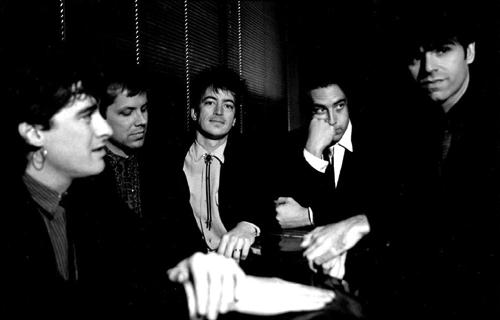
FALL ARTS The clouds hang over San Francisco like a brumous, early evening warning sign. It’s late summer on the back patio of popular Mission street bar El Rio. Small pockets of people huddle near outdoor heaters, and vintage pop songs come pumping through the speakers. Three men dressed neatly in sweaters and hoodies sit at a long picnic table clutching cheap beers.

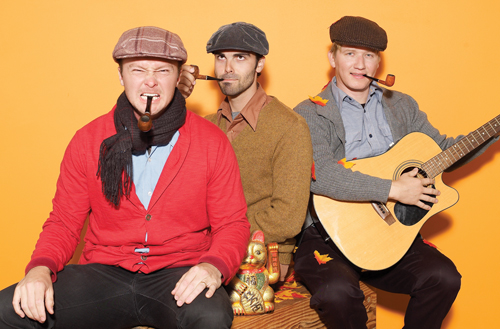
This is the story of il gato, a San Francisco band that describes itself as indie-baroque-folk. Its music is baroque in the sense that it’s melancholic yet upbeat, lyric-heavy yet leans towards the classical, and highly decorated with a wide array of instrumentation. The band’s 2010 long-player, All These Slippery Things (self-released), and similarly-named followup EP All Those Slippery Things (released last month) feature banjo, mandolin, piano, a string quartet, and trumpets, along with aggressive acoustic folk guitar, looping pedal, upright and electric bass, and complex drumming.

After years of dutiful practice in tiny apartment kitchens, labored songwriting, and intimate live shows, the group finally recorded (thanks to a grant from the Bay Bridged blog) in 2009 at legendary studio Tiny Telephone, owned by revered local musician John Vanderslice. “I…remember how eclectic and fresh their instrumentation and arrangements were,” says Vanderslice. “They were a blast to have in the studio.” But this all came a decade after the first seedling of the il gato concept. Fittingly, the band’s journey — a mildly operatic one, given the twists and bumps along the way — began in Italy.

THE PROLOGUE: Daimian Holiday Scott is studying architecture abroad in Vicenza, Italy. The year is 1999; he hasn’t picked up an instrument since middle school. All of those niggling emotions involved with overseas travel had led to an outburst of emotions, which, naturally, led to buying a guitar. The initial concept was performance art: he’d speak with a fake Italian accent but sing cover songs in English. That never actually happened. “It’s the story before the story,” says il gato drummer, Johnny Major, “the prelude.”

THE FIRST ACT: fast forward five years. Scott shuts the door to the bedroom and asks his girlfriend to listen to the songs he’s been working on from a safe distance in the living room. “It took a long time for me to break free of being super shy and inhibited,” Scott says.

Scott was in his native Gainsville, Fla. writing songs on acoustic guitar and harmonica, learning that to be a songwriter, one must evolve out of the bedroom. He moved to the Bay Area in 2001, first to Berkeley and later, the Mission District of San Francisco, playing as il gato with a rotating cast of talented musicians friends. Years later, when he longed for consistency, he put up an ad on Craigslist seeking musicians.

Major, a San Francisco native who had recently returned from a two-year stay in Chile, answered it. “I liked the name,” says Major, “And of course, I really liked the music. I thought he sounded like a combination of Isaac Brock from Modest Mouse and Doug Martsch from Built to Spill, two of my favorite bands.”

Major — who has played in a variety of other bands including Sang Matiz and his new solo project, Adios Amigo — listened to Scott’s first album Conversation Music, which didn’t have drums, and heard some interesting potential for percussion. During this time, in 2008, Scott, Major and multi-instrumentalist Matthew Souther (who left the band a few months ago) would play in Major’s street-level Lower Haight apartment. The band next gained bassist Andrew Thomas, a Dallas, Tex.-born musician who had recently moved to SF with his girlfriend after a stint in college and other touring bands in Los Angeles. Scott and Thomas had been introduced by their girlfriends one night at the Latin American Club. “He came over the next week to my apartment in North Beach, we just played guitar and upright bass in my kitchen,” says Thomas of Scott.

ACT TWO: the end of an era. Scott’s aria, his solo work in effect, officially comes to an end. He’s part of a band now, all equal parts. “It was no longer just my project,” he says, taking a sip of Pabst Blue Ribbon. Over the course of four short days in February of 2010, the band essentially recorded two albums (the full-length and E.P.), 17 songs in total. The guitar, bass, vocals, and drums were all recorded live at Tiny Telephone. The overdubs of horns and string sections were recorded in Thomas’ home, to save time and money. “I can’t believe it turned out as well as it did,” Major says.

And it did turn out well. The songs are striking and wholly unique. That said, there are hints at the groups’ influences like Neutral Milk Hotel, Beirut, Modest Mouse, even Violent Femmes. But there are other elements, even hip-hop tucked in some parts as Major points out, especially in the mouthful of talk-sung lyrics in brassy folk single, “On Feathers and Arrows.” Major and Scott then discuss Scott’s predilection toward reggae beats, a holdover from his childhood with hippie parents. “That’s the nature of trying to describe your music to someone, it’s always difficult,” Scott says.

He adds that he is also influenced by the non-musical: acerbic, witty writers such as Kurt Vonnegut, along with films like Paul Thomas Anderson’s Magnolia. The band was recently featured on the soundtrack for the documentary Crime After Crime, something Scott is hoping to do more in the future.

ACT THREE: that future. The band has a handful of shows lined up this fall, including Cafe du Nord this week and Andrew Bird’s “Rock for Kids” fundraiser Sept. 19 at the Make-Out Room, along with some brief tours planned. Then, in January 2012, il gato wants to go back to Tiny Telephone to record a followup. Sitting in the back patio, chatting about the projects to come, the group’s goals are clear. Right now, all three are primarily focused on the band itself. In 2009, Scott was laid off from his job as an architect and Major was laid off six months ago. “I’m hopefully looking to break in to something else,” Major says. “Ideally, I’ll have a career as a performing musician, it’s difficult but that’s the dream for all of us. That’s why we’re here right now.”

CURTAIN CALL: take a bow. Crush the cans. 

Check out il gato’s favorite local eats here. They’ve got some good ones!

IL GATO

With Sallie Ford & The Sound Outside

Thurs/25, 9 p.m., $12

Cafe du Nord

2170 Market, SF

www.cafedunord.com

Rep Clock

0

Schedules are for Wed/24–Tues/30 except where noted. Director and year are given when available. Double features are marked with a •. All times are p.m. unless otherwise specified.

ARTISTS’ TELEVISION ACCESS 992 Valencia, SF; www.atasite.org. $6-8. “Dimensions,” short film program curated by Cassandra Sechler, Fri, 8. “3rd I Queer Eye:” Flying With One Wing (Handagama, 2002), Sat, 7.

ALBANY 1115 Solano, Albany; www.unausaeastbay.org. $5-10. Sergio (Barker, 2009), Sat, 9:30am. Presented by the United Nations Association-USA East Bay Chapter in honor of World Humanitarian Day.

BALBOA 3620 Balboa, SF; www.balboamovies.com. $17.50-20. Swan Lake, from the Bolshoi Ballet, Moscow, Wed, 7:30. Nabucco, from Teatro Antico, Taormina, Sat-Sun, 10am.

CASTRO 429 Castro, SF; (415) 621-6120, www.castrotheatre.com. $7.50-13. •Double Indemnity (Wilder, 1944), Wed, 2:40, 7, and The Postman Always Rings Twice (Garnett, 1946), Wed, 4:40, 9:05. •Days of Heaven (Malick, 1978), Thurs, 3:10, 7, and Badlands (Malick, 1973), Thurs, 5, 8:55. “Midnites for Maniacs: An All-Night Tribute to Edgar Wright:” •Scott Pilgrim vs. The World (2010), Fri, 7, followed by Q&A with Edgar Wright, Hot Fuzz (2007), Fri, 9:45, and Shaun of the Dead (2004), Fri, 11:59. This event, $15. “The Peaches Christ Experience:” Showgirls (Verhoeven, 1995), Sat, 7. This event, $25-45.

“CENTER STREET SUMMER CINEMA” 2219 Center, Berk; (510) 548-5335, www.downtownberkeley.org. Free (bring your own chair, or $5 to rent a chair). The Big Lebowski (Coen, 1998), Sat, 7:30.

CHRISTOPHER B. SMITH RAFAEL FILM CENTER 1118 Fourth St, San Rafael; (415) 454-1222, www.cafilm.org. $10.25. The Names of Love (Leclerc, 2010), call for dates and times. Senna (Kapadia, 2011), call for dates and times. The Whistleblower (Kondracki, 2010), call for dates and times. Africa United (Gardner-Paterson, 2010), Thurs and Sun, 7. The Hedgehog (Achache, 2010) Aug 26-Sept 1, call for times.

“FILM NIGHT IN THE PARK” This week: Creek Park, 451 Sir Francis Drake, San Anselmo; (415) 272-2756, www.filmnight.org. Donations accepted. Harold and Maude (Ashby, 1971), Fri, 8; Mary Poppins (Stevenson, 1964), Sat, 8. Union Square, Geary and Powell, SF; same contact info. Roman Holiday (Wyler, 1953), Sat, 8.

PACIFIC FILM ARCHIVE 2575 Bancroft, Berk; (510) 642-5249, www.bampfa.berkeley.edu. $5.50-9.50. “Bay Area Animation:” “Twentieth-Century Animations,” Wed, 7; “Twenty-First Century Animations,” Sun, 7. “Hands Up: Essential Skolimowski:” Moonlighting (1982), Thurs, 7. It Conquered the World (Corman, 1956), Thurs, 8:30. Free outdoor screening in the BAM/PFA Sculpture Garden. The Makioka Sisters (Ichikawa, 1983), Fri, 7. “The Timeless Cinema of Marcel Pagnol:” Cigalon (Pagnol, 1935), Sat, 6; Angèle (1934), Sat, 7:50; The Baker’s Wife (1938), Sun, 4.

PARAMOUNT 2025 Broadway, Oakl; 1-800-745-3000, www.ticketmaster.com. $5. Dr. Strangelove, or: How I Learned to Stop Worrying and Love the Bomb (Kubrick, 1964), Fri, 8.

ROXIE 3117 and 3125 16th St, SF; (415) 863-1087, www.roxie.com. $5-9.75. The Arbor (Barnard, 2010), Wed-Thurs, 7, 9. Rita, Sue, and Bob Too! (Clarke, 1986), Wed, 9:20. Terri (Jacobs, 2011), Wed-Thurs, 7. Vigilante Vigilante (Good, 2011), Thurs, 9. Shut Up Little Man! An Audio Misadventure (Bate, 2011), Aug 26-Sept 1, 7, 9 (also Sat-Sun, 3, 5).

VICTORIA 2961 16th St, SF; www.threeminutepictureshow.com. $5-10. “Three-Minute Picture Show:” “Twinkling To-Do Film Screening,” family-friendly films made by 6-17 year-olds, Sat, 3:15 (ages 6-12) and 4 (ages 13-17); “Black-Tie Gala and Film Screening,” Sat, 7:15. YERBA BUENA CENTER FOR THE ARTS 701 Mission, SF; (415) 978-2787, www.ybca.org. Free. “Smut Capital of America: San Francisco’s Sex Cinema Revolution:” Resurrection of Eve (Fontana and Mitchell, 1973), Thurs, 7:30.

Psychic Dream Astrology

0

Mercury goes direct on the 26th!

ARIES

March 21-April 19

Fear of the unknown is totally reasonable, but it can make way for some pretty unreasonable emotions. Dynamically engage in your life’s question marks this week! Be open in a way that takes courage and trust. You are on the verge of great things, so don’t let your fears screw you up.

TAURUS

April 20-May 20

Rely on your own inner resources, Taurus. Now is the time for worrying less about what others think or what you are “supposed” to want, and to investigate what’s happening inside of your insides. You are on the brink of something new; make sure it’s a thing you will be happy with.

GEMINI

May 21-June 21

You can make the best decisions possible, care in the most open way you know how and remain balanced as all get-out and still not get what you want. Don’t let your attachments to seeing things go a certain way stop you from being the best Twin Star that you know how to be.

CANCER

June 22-July 22

Watch your ego, Cancer! Whether you are unaware of other’s needs or just feel entitled to do what you want because of some crap from your past, your bad behavior stinks the same. Assert yourself with honesty and care, instead of going the way of flight and fight this week.

LEO

July 23-Aug. 22

There’s nothing like running an idea over and over in your mind until you find that it’s been beaten to a confused pulp! Instead of projecting into the future, try looking to the past as your teacher this week. You are at the dawn of playing into your patterns or changing them, Leo.

VIRGO

Aug. 23-Sept. 22

Uncertainty easily leads to confusion, and there is no Virgo that likes that! Look to your relationships for insights into your recent behavior and it’s consequences. Love is in the air, pal, but if you don’t change how you participate, how will your relationships ever be any different?

LIBRA

Sept. 23-Oct. 22

Don’t let yourself get so overwhelmed that you lose touch with your instincts, Libra! Regain balance this week by separating your fears from your actual current problems. By doing this you can constructively deal with your real-deal troubles and compassionately tend to the needs of your heart.

SCORPIO

Oct. 23-Nov. 21

It’s time to let go of the baggage that’s been holding you back. Whether it comes in the form of attitudes, habits or relationships, envision where you could be if you were liberated from all that dead weight. The only way to get to the other side of your crap is to go through it, pal.

SAGITTARIUS

Nov. 22-Dec. 21

Break all of your responsibilities into bite sized pieces, so you don’t choke on them. Think about what needs to get done in tiers and be systematic in how you knock them off your list. Get as much done this week as you can do and still get it done right, Sagittarius.

CAPRICORN

Dec. 22-Jan. 19

You can’t control the way you feel, but you can manage the ways you choose to participate, Capricorn. Even if you feel your vulnerabilities acutely, this is the week to creatively point yourself in the direction you want to be headed. Handle your old problems in new ways for best results.

AQUARIUS

Jan. 20-Feb. 18

Lay your heavy burden down, Aquarius. This is a meaningful time for your sign and the best way to rise to the occasion is by detaching from your pride. Work towards creating the life you want to be living, no matter how long the path to your goals seems to be.

PISCES

Feb. 19-March 20

You are creating more problems and pain for yourself by being ambiguous than you need, pal. Strive towards decisiveness this week, and if you have trouble with that refocus your attention on your goals. Make sure your actions reinforce them to get on point. 


Jessica Lanyadoo has been a Psychic Dreamer for 17 years. Check out her website at www.lovelanyadoo.com or contact her for an astrology or intuitive reading at (415) 336-8354 or dreamyastrology@gmail.com


Stage Listings

0

THEATER

OPENING

Geezer Marsh, 1062 Valencia, SF; (415) 282-3055. $25-100. Opens Thurs/25, 8pm. Runs Thurs, 8pm; Sat-Sun, 5pm. Through Sept 18. Geoff Hoyle returns to the Marsh with his acclaimed solo show.

BAY AREA

The Merry Wives of Windsor Old Mill Park, 375 Throckmorton, Mill Valley; www.curtaintheatre.org. Free. Opens Sat/27, 2pm. Runs Sat-Sun and Sept 5, 2pm. Through Sept 18. Curtain Theatre performs Shakespeare’s Falstaff-centric comedy.

Of Dice and Men La Val’s Subterranean, 1834 Euclid, Berk; www.impacttheatre.com. $10-20. Previews Thurs/25-Fri/26, 8pm. Opens Sat/27, 8pm. Runs Thurs-Sat, 8pm. Through Oct 1. Impact Theatre performs Cameron McNary’s comedy about a group of adult Dungeons and Dragons players.

Sense and Sensibility Mountain View Center for the Performing Arts, 500 Castro, Mtn View; (650) 463-1960, www.theatreworks.org. $19-69. Previews Wed/24-Fri/26, 8pm. Opens Sat/27, 8pm. Runs Tues-Wed, 7:30pm; Thurs-Sat, 8pm (also Sat, 2pm); Sun, 2 and 7pm. Through Sept 18. TheatreWorks performs Roger Parsley and Andy Graham’s adaptation of the Jane Austen novel.

The Tempest Dominican University of California, Forest Meadows Amphitheater, 1475 Grand, San Rafael; (415) 499-4488, www.marinshakespeare.org. $20-35. Performance times vary; check website for schedule. Through Sept. 25. Marin Shakespeare Company presents Shakespeare’s romance with a steampunk twist.

ONGOING

“AfroSolo Arts Festival” Various venues, SF; www.afrosolo.org. Free-$100. Through Oct 20. The AfroSolo Theatre Company presents its 18th annual festival celebrating African American artists, musicians, and performers.

American Buffalo Actors Theatre of San Francisco, 855 Bush, SF; (415) 345-1287, www.actorstheatresf.org. $26-38. Wed-Sat, 8pm. Extended through Sept 17. Actors Theatre of San Francisco performs the David Mamet crime classic.

The Book of Liz Custom Made Theatre, 1620 Gough, SF; www.custommade.org. $25-32. Thurs/25-Sat/27, 8pm; Sun/28, 7pm. Custom Made Theatre performs David and Amy Sedaris’ comedy about an unconventional nun.

Exit, Pursued By a Bear Boxcar Playhouse, 505 Natoma, SF; www.crowdedfire.org. $10-35. Wed-Sat (Wed/24-Sat/27 and Sept 7-17), 8pm. Through Sept 17. Crowded Fire performs Lauren Gunderson’s new play, a feminist revenge comedy.

Gilligan’s Island: Live On Stage! 2011 Garage, 975 Howard, SF; www.brownpapertickets.com. $10-20. Sat/27-Sun/28, 8pm. Moore Theatre and SAFEhouse for the Performing Arts presents this updated, ribald take on TV’s classic castaways.

A Midsummer’s Night Dream This week: Dolores Park, 19th St at Dolores, SF; www.womanswill.org. Free (donations requested). Sat/27-Sun/28, 2pm. Woman’s Will performs the Shakespeare favorite.

The Nature Line Phoenix Theater, 414 Mason, SF; www.sleepwalkerstheatre.com. $17-20. Thurs/25-Sat/27, 8pm. With The Nature Line, Sleepwalkers Theatre concludes playwright J.C. Lee’s ambitious apocalypse trilogy, “This World and After.” Now well into the post-apocalyptic age, Aya (Charisse Loriaux) buries her miscarriages in the hardscrabble earth, tended by a blind one-breasted s/he named T (Amy Prosser) who plants a would-be garden and collects tattered love letters from a past when people could still physically — and emotionally — touch one another. All that’s been banished now, Aya’s friend Arty (Ariane Owens) tells us, along with the onetime plague of “sadness.” The few humans remaining huddle in the antiseptic arms of a corporate entity represented by a bossy nurse (Janna Kefalas) and her spacey assistant (Lissa Keigwin), who manage an artificial insemination clinic fueled by a stable of four comic-book–reared studs, or “dudes” in the argot of the future (a sensitive crooner smitten with Aya, played by Joshua Schell, and a boisterously adolescent fantastic three played by the roundly hilarious Roy Landaverde, Jeff Moran, and Jomar Tagatac). If Lee’s title suggests “line” as both lineage and division, the play recovers a timeless order by challenging the artificial lines between persons; people and “nature”; past, present, and future; or dream and reality. Director Mina Morita’s staging is fleet and at times poetic, while she gets generally solid performances from her cast (the more comical parts working best). Imaginative, just a little risqué, and reminiscent in its heightened vernacular, low humor, and romantic optimism of word-struck apocalypto-dramas like Liz Duffy Adams’ Dog Act, Nature is a well-constructed narrative with a theme and dialogue that can feel alternately eloquent and heavy-handed. (Avila)

Peaches en Regalia Stage Werx, 533 Sutter, SF; www.wilywestproductions.com. $12-24. Thurs/25-Sat/27, 8pm. The new comedy by Bay Area playwright Steve Lyons borrows its title from a Frank Zappa instrumental and stamps it on the menu of a local diner (tangibly evoked in Wes Cayabyab and Quinn J. Whitaker’s spiffy set design), where new employee and recent college graduate Peaches (an endearingly offbeat Sarah Moser) revels in her impulse decision to leave a job at an investment bank to work at a place with such an auspicious side dish. We meet Peaches, as well as best friend Joanne (Nicole Hammersla), nebbish customer Norman (Philip Goleman), and confident guy’s guy Syd (Cooper Carlson), through a set of discrete monologues, each illustrated with mute help from the other characters. Philosophies of life and hidden desires are all on display but the plot is a prix fixe menu of romance, marriage, and parenthood as deliberate encounters lead to unexpected matches. Sharp performances crisply directed by Sara Staley add zest to otherwise average comic fare, but the writing has several inspired flights of zaniness too. Questionable whether the second act’s course is warranted, however, since it’s plot to pull into parenthood a reluctant Norman — for whom the pace of events collapses nine months and more into a dizzying time warp — is a bit too I Love Lucy to concentrate on without itching to change the channel. (Avila)

Tigers Be Still SF Playhouse, 522 Sutter, SF; www.sfplayhouse.org. $30-50. Tues-Wed, 7pm; Thurs-Sat, 8pm (also Sat, 3pm). Through Sept 10. SF Playhouse performs Kim Rosenstock’s quirky comedy.

True West NOHspace, 2840 Mariposa, SF; 1-800-838-3006, www.truewestsf.com. $10-28. Wed-Sat, 8pm. Through Sept 17. Expression Productions presents Sam Shepard’s tale of two brothers.

Waiting for Giovanni Decker Theater, New Conservatory Theatre Center, 25 Van Ness, SF; www.nctcsf.org. $25-36. Previews Wed/24-Fri/26, 8pm. Opens Sat/27, 8pm. Runs Wed-Sat, 8pm; Sun, 2pm. Through Sept 18. This world-premiere play by Jewelle Gomez in collaboration with Harry Waters Jr. imagines a split-second of indecision in the mind of author James Baldwin.

BAY AREA

Candida Bruns Memorial Amphitheater, 100 California Shakespeare Theatre Way, Orinda; www.calshakes.org. $35-66. Tues-Thurs, 7:30pm; Fri-Sat, 8pm (also Sept 3, 2pm); Sun, 4pm. Through Sept 4. Cal Shakes artistic director helms this taken on George Bernard Shaw’s classic about a housewife torn between her husband and a new suitor.

The Complete History of America (abridged) Dominican University of California, Forest Meadows Amphitheater, 1475 Grand, San Rafael; (415) 499-4488, www.marinshakespeare.org. $20-35. Performance times vary; check website for schedule. Through Sept. 25. Marin Shakespeare Company performs Adam Lon, Reed Martin, and Austin Tichenor’s three-person romp through American history.

Madhouse Rhythm Cabaret at Marsh Berkeley, 2120 Allston, Berk; (415) 282-3055, www.themarsh.org. $15-35. Thurs/25, 7:30pm. Joshua Walters performs his hip-hop-infused autobiographical show about his experiences with bipolar disorder.

Not a Genuine Black Man Marsh Berkeley, TheaterStage, 2120 Allston, Berk; 1-800-838-3006, www.themarsh.org. $20-50. Sat, 5pm (also Sept 8 and 22, 7:30pm). Through Sept 24. This is it: the final extension of Brian Copeland’s solo show about growing up in (nearly) all-white San Leandro.

Reduction in Force Berkeley City Club, 2315 Durant, Berk; (510) 558-1381, www.centralworks.org. $14-25. Thurs/25-Sat/27, 8pm (also Sat/27, 5pm); Sun/28, 5pm. Central Works performs “an economic comedy about back-stabbing, ass-kissing, and survival of the sneakiest.”

The Road to Hades John Hinkel Park, Southampton Ave, Berk; (510) 841-6500, www.shotgunplayers.org. $10 (suggested donation; no one turned away for lack of funds). Sat-Sun, 3pm. Through Sept 11. Shotgun Players presents a new comedy written by and starring veteran comedian and clown Jeff Raz.

Seven Guitars Marin Theatre Company, 397 Miller, Mill Valley; (415) 388-5208, www.marintheatre.org. $34-55. Tues and Thurs-Sat, 8pm (also Thurs/25, 1pm; Sept 3, 2pm); Wed, 7:30pm; Sun, 2 and 7pm. Through Sept 4. Marin Theatre Company performs August Wilson’s 1940s-set entry into his series of plays about the African-American experience.

Strange Travel Suggestions Cabaret at Marsh Berkeley, 2120 Allston, Berk; (415) 282-3055, www.themarsh.org. $20-50. Fri/26, 8pm; Sat/27, 5pm. Jeff Greenwald returns with a new version of his hit show of improvised monologues about travel.

Toke Ashby Stage, 1901 Ashby, Berk; www.brownpapertickets.com. $25. Thurs-Sat, 8pm; Sun, 5pm. Through Sept 11. Swirl Media presents Deedee Kirkwood’s pot-fueled comedy.

2012: The Musical! This week: Veterans’ Memorial Park, Main at Third St, Napa; www.sfmt.org. Free. Wed/24, 7pm. Also Thurs/25, 7pm, Montclair Ball Field, 6300 Moraga, Montclair; Sat/27-Sun/28, 3pm, San Lorenzo Park, Dakota at Ocean, Santa Cruz. Continues through Sept 25 at various Bay Area venues. San Francisco Mime Troupe mounts their annual summer musical; this year’s show is about a political theater company torn between selling out and staying true to its anti-corporate roots.

PERFORMANCE/DANCE

“Crazy Ain’t Nothing But Love Misspelled” Stage Werx Theatre, 533 Sutter, SF; www.brownpapertickets.com. Sun, 7pm. $12. Presented by Solo Sundays, this evening includes performances by Maria Affinito, David Caggiano, and Vanessa Alabarces.

Gray Garage, 975 Howard, SF; www.brownpapertickets.com. Thurs, 8pm. $10. The Oakland-based solo performer presents excerpts from Burst and the work-in-progress Self-ish.

“Hubba Hubba Revue Summer Camp” DNA Lounge, 375 11th St, SF; www.hubbahubbarevue.com. Fri, 10:15pm. $15. The burlesque and variety revue returns with a summer camp there.

“Rustling Silk” CounterPULSE, 1310 Mission, SF; www.brownpapertickets.com. Fri-Sat, 8pm. $15-20. This Avy K Productions project is inspired by the world of ancient nomadic horsemen, with music, dance, video, and live painting. 


Stage listings are compiled by Guardian staff. Performance times may change; call venues to confirm. Reviewers are Robert Avila, Rita Felciano, and Nicole Gluckstern. Submit items for the listings at listings@sfbg.com. For further information on how to submit items for the listings, see Picks. For complete listings, see www.sfbg.com.

Film Listings

0

OPENING

Brighton Rock Writer Rowan Joffe (2010’s The American) moves into the director’s chair for this Graham Greene adaptation, previously filmed in 1947 with an early-career star turn by Richard Attenborough. Joffe’s version updates Greene’s 1938 story to 1964, allowing the brutal actions of small-time hood Pinkie Brown to unfold as Britain’s mods vs. rockers youth riots boil in the background. Don’t get too excited, though — despite a cool premise and even cooler setting, and the presence of veterans Helen Mirren and John Hurt in supporting roles, Brighton Rock rages without a rudder. Pinkie is played by Sam Riley (so good as Ian Curtis in 2007’s Control), who snarls like a sociopathic James Dean and is so transparently hateful it’s hard to root for anything other than his hastened demise. Brighton Rock‘s most memorable element is probably Andrea Riseborough, an on-the-verge young Brit who’s being touted as the next Carey Mulligan. She has the thankless yet showy role of Rose, a naïve waitress who becomes entangled in Pinkie’s web after being in the wrong place at the wrong time. A far-from-storybook ending awaits, and you’ll experience little enjoyment watching the characters claw their way there. (1:51) Embarcadero. (Eddy)

Don’t Be Afraid of the Dark If you’re expecting a traditional haunted house story, Don’t Be Afraid of the Dark might be a disappointment. The film, which was co-written by Guillermo del Toro, has a lot in common with his Pan’s Labyrinth (2006) — both movies are more dark fairy tale than horror. They follow a young girl who discovers a mystical world around her, much to the disbelief of the adults around her. It’s worth noting that Don’t Be Afraid of the Dark is lighter fare: despite all the peril involved, it’s actually pretty fun. Young Bailee Madison, who made such an impression in 2009’s Brothers, is a charming lead, precocious but believable. And Katie Holmes is surprisingly sympathetic in her role as the caring stepmother, a nice switch from the standard fairy tale trope. As with Fright Night, the ad campaign for Don’t Be Afraid of the Dark is misleading, so here’s hoping audience members looking for a gory slasher will appreciate a whimsical fable instead. (1:40) California. (Peitzman)

*The Hedgehog You needn’t possess the rough, everyday refinement of the characters of The Hedgehog to appreciate this debut feature by director-screenwriter Mona Achache — just an appreciation for a delicate touch and a tender heart. Eleven-year-old Paloma (the wonderful Garance Le Guillermic) is too smart for her own good, bored, neglected by her parents, and left to fend for herself with only her considerable imagination and a camcorder. She drifts around her fishbowl of privilege, a deluxe art nouveau-style apartment building in Paris, leveling her all-too-wise gaze on its denizens and plotting certain suicide on her 12th birthday — that is until a new resident appears in her viewfinder: a kindly Japanese gentleman Kakuro Ozu (Togo Igawa). He has as much of a connoisseur’s eye as Paloma — the proof is in his unlikely focus of attention, the building’s concierge Renée Michel (Josiane Balasko, resembling a burly Gertrude Stein), who hides her cultured and bookish inclinations behind a gruff, drab exterior. They recognize in each other a reverence for an almost monkish life of the mind, the austere elegance of wabi-sabi, and the transient beauty of rough-hewn imperfection, even in the sleek, well-heeled heart of the City of Light. To the credit of Achache, working with Muriel Barbery’s novel, these unlikely fragile friendships between outsiders take hold in a way that sidesteps preciousness and stays with you long after its pages have turned. (1:40) Clay, Shattuck, Smith Rafael. (Chun)

Motherland When Raffi Tang (Francoise Yip) learns of her estranged mother’s death, the prodigal-daughter returns to her hometown, San Francisco, only to discover that nothing is as first supposed. Forced to contend with the protracted legal battle between her late mother and re-married father (Kenneth Tsang) as well as an incompetent (and poorly acted) police detective (Jason Payne), Tang drifts, looking distracted, lost, and maybe vaguely concerned throughout the first two thirds of the film. Yip does little to enliven a flat script rife with stock phrases and worn cinematic conventions, and while her emotional distance seems genuine, it’s boring nonetheless. Motherland is, to its credit, an angry movie — director Doris Yeung drew on her own experience with the murder of her mother — but the rage fizzles when it finally does erupt, smothered by uninspired acting and a directionless screenplay. (1:33) Four Star. (Cooper Berkmoyer)

Our Idiot Brother Paul Rudd is the ne’er-do-well sibling to Emily Mortimer, Elizabeth Banks, and Zooey Deschanel. (1:36) Presidio.

*Shut Up Little Man! An Audio Misadventure Once upon a time (1987 to be exact), two young men moved to San Francisco from the Midwest. Eddie Lee “Sausage” and Mitchell “Mitch D” Deprey wound up living in a somewhat derelict apartment in the Lower Haight. The paint was peeling and the walls were thin, but the rent was cheap. What Eddie and Mitch didn’t count on was having Peter J. Haskett and Raymond Huffman as their neighbors. “You blind cocksucker. You wanna fuck with me? You try to touch me and I will kill you in a fucking minute.” “Shut up! Shut up! Shut up! Shut up little man!” The insults, tantrum throwing, and threats of violence coming from next door were constant. Eddie and Mitch started to lose sleep; after one failed attempt at complaining to Raymond’s face (he threatened death), they started tape-recording the endless geyser of vitriol — first, as possible future evidence, but also out of a growing voyeuristic fascination with these two seniors who had to be the world’s oddest and angriest odd couple. The rest is history. Mitch and Eddie started including snippets of Peter and Ray’s bickering on mix tapes for friends. Somehow, the editor of the now-defunct SF noise music zine Bananafish heard a snippet and approached Mitch and Eddie about distributing compilations of the recordings to a large network of found sound fans. Gradually “Peter and Raymond” became known and much-beloved characters. Their warped repartee inspired several theatrical adaptations, short animated films, pages of comic book panels by artists such as Dan Clowes, and even a one-off single from Devo side project the Wipeouters. Matthew Bate’s documentary Shut Up Little Man! An Audio Misadventure is much an attempt to comprehensively recount the above long, strange trip from start to finish; it is also the newest chapter in the now 20-year saga of Peter, Raymond, Mitch, and Eddie. (1:30) Roxie. (Sussman)

*!Women Art Revolution Bay Area artist and filmmaker Lynn Hershman Leeson’s vibrant look back at the first waves of feminist art in the ’60s and ’70s is an extremely necessary and impassioned recounting of a history that perpetually seems to be on the edge of erasure. Mixing old and new interviews with artists, critics, and scholars — many of which are from Hershman Leeson’s own personal archive — !W.A.R. lets those who stood at the frontlines of one the most significant movements in contemporary art tell their own stories. Seeing and hearing the testimonies of the likes of Yoko Ono, Cindy Sherman, B. Ruby Rich, Judy Chicago, Carolee Scheeman, Rachel Rosenthal, and Ingrid Sischy, one after another, is dazzling — like being in the presence of an Olympian summit — even as their overlapping tales of pushback, casual misogyny and outright ridicule from critics, the art establishment, and in some cases, their colleagues, paint a damning picture of just how endemic sexism was, and as the need for a film such as !WAR attests to, in many ways still is. (1:23) Lumiere, Shattuck. (Sussman)

ONGOING

*The Arbor An audaciously conceived and genuinely haunting chronicle of a family, The Arbor reinvents two of the most debased forms of nonfiction film: the venerating portrait of an artist who died young and the voyeuristic confession of abuse. The locus here is the short, bottle-strewn life of Andrea Dunbar, a brilliant playwright whose work distilled the manners and speech of the West Yorkshire housing projects. The Arbor effectively stages some of this work in a park near the same apartments, but the project’s focus is Dunbar’s shambling private life and its devastating effect on friends, lovers, and daughters. Our emotions are strained by their collective fury and grief, but never cheated. Curiously, Clio Barnard accomplishes this by being up front in her manipulations. After collecting interviews with the key players, she cast actors to lip sync the answers — that is, the voices are documentary while the images are staged, an uncanny effect that becomes even more so when Barnard stitches together responses to narrate a single event. The technique is eerie and literally disembodying. In the same way that one affected by trauma may experience a separation from his or her self, so the image of the actor speaking comes unglued from the “real” voice — and so too is there a crucial hesitation in our assigning authenticity to a single, undivided subject. There are shades of Greek tragedy in The Arbor‘s patient, distanced unfolding of its characters’ fates. The speakers are imagined as a chorus, and though the drama is offscreen, long since buried, the pain still lives. (1:34) Roxie. (Goldberg)

*Beginners There is nothing conventional about Beginners, a film that starts off with the funeral arrangements for one of its central characters. That man is Hal (Christopher Plummer), who came out to his son Oliver (Ewan McGregor) at the ripe age of 75. Through flashbacks, we see the relationship play out — Oliver’s inability to commit tempered by his father’s tremendous late-stage passion for life. Hal himself is a rare character: an elderly gay man, secure in his sexuality and, by his own admission, horny. He even has a much younger boyfriend, played by the handsome Goran Visnjic. While the father-son bond is the heart of Beginners, we also see the charming development of a relationship between Oliver and French actor Anna (Mélanie Laurent). It all comes together beautifully in a film that is bittersweet but ultimately satisfying. Beginners deserves praise not only for telling a story too often left untold, but for doing so with grace and a refreshing sense of whimsy. (1:44) Four Star, Lumiere. (Peitzman)

*Bellflower Picture Two Lane Blacktop (1971) drifters armed with “dude”-centric vocabulary and an obsession with The Road Warrior (1981) and its apocalypse-wow survivalist chic. There are so many pleasures in this janky, so-very-DIY, heavy-on-the-sunblasted-atmosphere indie that you’re almost willing to overlook the clichés, the dead zones, and the annoying characters. Seeming every-dudes Woodrow (director-writer-producer Evan Glodell) and Aiden (Tyler Dawson) are far too obsessed with tricking out their cars and building a flamethrower for their own good — the misfits must force themselves out of the metal shop of the mind to meet women. So when Woodrow goes up against Milly (Jessie Wiseman) in a cricket-eating contest at a bar, it’s love at first bite. Their meet-gross morphs into a road trip and eventually a relationship, while the flamethrower nags, unexplained, in the background, like an unfired gun — or an unconsummated, not-funny bromance. These manifestations of male fantasy — muscle cars, weapons, and tough chicks — are cast in a dreamy, saturated, and burnt-at-the-edges light, as Glodell and company weave together barely articulated reveries and bad-new-west imagery with a kind of fuck-all intelligence, culminating in a finale that will either haunt you with its scattershot machismo-romanticism or leave you scratching your noggin wondering what just happened. (1:46) Sundance Kabuki. (Chun)

Buck This documentary paints a portrait of horse trainer Buck Brannaman as a sort of modern-day sage, a sentimental cowboy who helps “horses with people problems.” Brannaman has transcended a background of hardship and abuse to become a happy family man who makes a difference for horses and their owners all over the country with his unconventional, humane colt-starting clinics. Though he doesn’t actually whisper to horses, he served as an advisor and inspiration for Robert Redford’s The Horse Whisperer (1998). Director Cindy Meehl focuses generously on her saintly subject’s bits of wisdom in and out of a horse-training setting — e.g. “Everything you do with a horse is a dance” — as well as heartfelt commentary from friends and colleagues. In the harrowing final act of the film, Brannaman deals with a particularly unruly horse and his troubled owner, highlighting the dire and disturbing consequences of improper horse rearing. (1:28) Opera Plaza. (Sam Stander)

Captain America: The First Avenger OK, Marvel. I could get behind 2008’s Iron Man (last year’s Iron Man 2, not so much), but after Thor and now Captain America, I’m starting to get cynical about this multi-year build-up to the full-on Avengers movie, due in May 2012. Can even a superhero-stuffed movie directed by Joss Whedon live up to all this hype? There’s plenty of time to ponder, and maybe worry a little, with Captain America’s backstory-explaining picture now in theaters. Chris Evans stars as the 90-pound weakling who morphs into a supersoldier, thanks to the World War II-era tinkerings of a scientist (Stanley Tucci) and an inventor (Dominic Cooper as Howard Stark, a.k.a. Iron Man’s dad). The original plan for the musclebound shield-bearer (fighting Nazis, natch) gets waylaid a bit when the newly famous Captain America becomes a PR prop for the U.S. government; it’s abandoned entirely when a worse-than-Hitler foe, in the guise of power-obsessed Red Skull (Hugo Weaving), threatens the world. Directed by Spielberg cohort Joe Johnston, Captain America is gee-whiz enjoyable enough, but it’s very nearly the same movie as Thor, which no amount of Tommy Lee Jones (as a sarcastic army colonel) wisecracks can conceal. And here’s an anti-spoiler: there’s no post-credits surprise in this one, so you can bolt as soon as they start to roll. (2:09) SF Center, Shattuck. (Eddy)

Conan the Barbarian Neither 3D (unnecessary) nor Jason Momoa (beefcake-y) are enough to make this Conan the Barbarian competition for the 1982 Schwarzenegger classic. This new take is a barely adequate adventure movie helped along by Rose McGowan’s leering turn as an evil witch with Freddy Krueger claws. Would that everyone involved (including frequent remake director Marcus Nispel) had McGowan’s razor-sharp grasp of tone; as a whole, the film is never quite sure if it’s a camp-tastic voyage (the prologue, containing Conan’s birth and much Ron Perlman nostril-flaring, suggests what might have been) or a semi-straightforward fantasy actioner. A totally forgettable female lead (Rachel Nichols), a he-was-scarier-in-Avatar villain (Stephen Lang), a blah mixture of two tired plots (revenge + “chosen one”) — there’s just not a lot here, aside from a few hilarious lines of dialogue and Momoa’s muscles. He was so great in Game of Thrones, though, I suspect this dud won’t keep his career from skyrocketing. (1:42) 1000 Van Ness. (Eddy)

Cowboys and Aliens Here ’tis in a nutshell: the movie’s called Cowboys and Aliens — and that’s exactly, entirely what you’ll get. Director Jon Favreau may never best 2008’s Iron Man (actor Jon Favreau will prob never top 1996’s Swingers, but that’s a debate for another time), but that doesn’t mean he won’t have a good time trying. Cowboys is a genre mash-up in the most literal sense; as the title suggests, it pits Wild West gunslingers (Harrison Ford as a crabby cattleman, Daniel Craig as an amnesiac outlaw) against gold-seeking space invaders who also delight in kidnapping and torturing humans. As stupidly entertaining as it is, this is a textbook example of a pretty OK movie that could have been so much better … if only. If only the alien characters had a little bit more District 9-style personality. If only the story had a shred of suspense — look ye not here for “spooky” and “mysterious;” this shit is 100 percent full-on explosions. If only Craig’s comically fine-tooled physique didn’t outshine his wooden acting. And so forth. (1:58) 1000 Van Ness, SF Center. (Eddy)

Crazy, Stupid, Love Keep the poster’s allusion to 1967’s The Graduate to one side: there aren’t many revelations about midlife crises in this cleverly penned yet strangely flat ensemble rom-com, awkwardly pitched at almost every demographic at the cineplex. There’s the middle-aged romance that’s withered at the vine: nice but boring family man Cal (Steve Carell) finds himself at a hopeless loss when wife and onetime teenage sweetheart Emily (Julianne Moore) tells him she wants a divorce and she’s slept with a coworker (Kevin Bacon). He ends up waxing pathetic at a slick nightclub where he catches the eye of the well-dressed, spray-tanned smoothie Jacob (Ryan Gosling), who appears to have taken his ladies man stance from the Clooney playbook. It’s manly makeover time: GQ meets Pretty Woman (1990)! Cut to Cal and Emily’s babysitter Jessica (Analeigh Tipton), who is crushing out on Cal, while the separated couple’s tween Robbie (Jonah Bobo) hankers for Jessica. Somehow Josh Groban worms his way into the mix as the dullard suitor of Hannah (Emma Stone) in a hanging chad of a storyline that must somehow be resolved in this mad, mad, mad, mad — actually, the problem with Crazy, Stupid, Love is that it isn’t really that crazy. It tries far too hard to please everybody in the theater to its detriment, reminding the viewer of a tidy, episodic TV series (albeit a quality effort) like Modern Family more than an actual film. Likewise I yearned for a way to fast-forward through the too-cute Jessica-Robbie scenes in order to get back to the sleazy-smart, punchy complexity of Gosling, playing adeptly off both Carrell and Stone. (1:58) Marina, 1000 Van Ness, Shattuck, Sundance Kabuki. (Chun)

The Devil’s Double Say hello to my little friend, again— and rest assured, it’s not a dream and you’re seeing double. New Zealand filmmaker Lee Tamahori gets back to his potboiler roots with this campy, claustrophobic look back at the House of Saddam Hussein, based on a true story and designed to win over fans of Scarface (1983) with its portrait of mad excess and deca-dancey ’80s-ish soundtrack. The craziest poseur of all is Hussein’s son Uday (Dominic Cooper), a petty dictator-in-the-making — and, according to this film, a full-fledged murderous pedophile — who chomps cigars and wraps his jaws around schoolgirls while Cooper happily chews scenery. Uday needs a double to sidestep all those troublesome assassination attempts, so he enlists look-alike childhood friend Latif (also Cooper) to get the surgery, pop in the overbite, bray like a madman, make appearances in his stead, and function as a kind of pet human. Never mind Ludivine Sagnier, glassy-eyed and absurd in the role of Uday’s favorite sex kitten Sarrab — Double is completely Cooper’s, who seizes the moment, investing the morally upstanding Latif with a serious sincerity with just his eyes and body language and infusing evil odd job Uday with a dangerous, comic-book unpredictability. To his credit, Cooper imbues such cult-ready, blow-the-doors-off lines as “I love cunt! I love cunt more than god!” with, erm, believability, even as the denouement rings somewhat false. (1:48) Empire. (Chun)

*Final Destination 5 The thing about my undying love for the Final Destination series is that it’s completely legitimate and 100 percent sincere. You know exactly what you’re getting with each new movie, and these films never try to tell you otherwise. Yes, everyone will die. Yes, the deaths will be creative and disgusting. Yes, the quality of acting will be sacrificed for some of the more expensive splatter effects. For those of us who understand what the series is all about, Final Destination 5 is a triumph. It’s gory, wickedly funny, and a notable improvement on previous sequels. Not to mention the fact that Tony “Candyman” Todd gets a beefed-up role. For once, the 3D is actually a big help, with some of the best in-your-face effects I’ve seen. As for non-fans, I can’t say Final Destination 5 has much to offer. You have to embrace the absurdity and the mission statement before you can fully appreciate death by laser eye surgery. (1:32) 1000 Van Ness. (Peitzman)

Fright Night Don’t let the spooky trailer fool you: the Fright Night remake is almost as silly as the original. In fact, it follows the 1985 film closely, as young Charley Brewster (Anton Yelchin) comes to realize that his neighbor Jerry (Colin Farrell) is a vampire. The biggest change is a smart one — this Fright Night transforms late-night TV host Peter Vincent into Criss Angel-type illusionist Peter Vincent (David Tennant). The casting is spot on all-around, and frankly, Farrell is a lot more believable than Chris Sarandon as the seductive bad boy. The only real problem with the new Fright Night — other than the unnecessary 3D — is that it never fully commits to camp the way the original did. There’s a bit too much back-and-forth between serious scares and goofy blood splatters. Luckily, it’s still an entertaining remake that doesn’t crap all over a classic. It’s also a great reminder that vampires don’t have to be moody — remember, they used to be fun. (2:00) 1000 Van Ness, Presidio. (Peitzman)

*The Future Dreams and drawings, cats and fantasies, ambition and aimlessness, and the mild-mannered yet mortifying games people play, all wind their way into Miranda July’s The Future. The future’s a scary place, as many of us fully realize, even if you hide from it well into your 30s, losing yourself in the everyday. But you can’t duck July’s collection of moments, objects, and small gestures transformed into something strangely slanted and enchanted, both weird and terrifying, when viewed through July’s looking glass. Care and commitment — to oneself and others — are two vivid threads running through The Future. Cute couple Sophie (July) and Jason (Hamish Linklater) — unsettling look-alikes with their curly crops — appear at first to be sailing contently, aimlessly toward an undemanding unknown: Jason works from home as a customer-service operator, and Sophie attempts to herd kiddies as a children’s dance instructor. But enormous, frightening demands beckon — namely the oncoming adoption of a special-needs feline named Paw-Paw (voiced by July as if it’s a traumatized, innocent child). Lickety-splitsville, they must be all they can be before Paw-Paw’s arrival. The weirdness of the familiar, and the kindness of strangers, become ways into fantasy and escape when the couple bumps up against the limits of their imagination. This ultra-low-key horror movie of the banal is obviously remote territory for July (2005’s Me and You and Everyone We Know). The Future is her best film to date and finds her tumbling into a kind of magical realism or plastic fantastic, embodied by a talking cat that becomes the conscience of the movie. (1:31) California, Sundance Kabuki. (Chun)

Glee: The 3D Concert Movie (1:30) 1000 Van Ness.

The Guard Irish police sergeant Gerry Boyle (Brendan Gleeson) is used to running his small town on his own terms — not in a completely Bad Lieutenant (1992) kind of way, though he’s not afraid to sample drugs and hang with hookers. More like, he’s been running the show for years, and would prefer that big-city cops stay the hell out of his village. Alas, a gang of drug smugglers is doing business in the area, so an officious group of investigators from Dublin (horrors!) and America (in the form of an FBI agent played by Don Cheadle) soon descend. His mother’s dying, his brand-new partner’s missing, and between all the interlopers on both sides of the law, Boyle’s having a hard time having a pint in peace. Good thing he’s not as simple-minded as all who surround him think he is. Writer-director John Michael McDonagh (brother of playwright Martin, who directed 2008’s In Bruges — also starring Gleeson) puts an affable Irish spin on what’s essentially a pretty typical indie comedy, with some pretty typical crime-drama elements layered atop. Boyle’s character is memorably clever, but the film that contains him never quite elevates to his level. (1:36) Embarcadero, Shattuck, Sundance Kabuki. (Eddy)

Gun Hill Road Though the visibility of gays and lesbians in cinema remains (largely) confined to independent film, Rashaad Ernesto Green, in his debut feature Gun Hill Road, uses the creative freedom afforded by that closeting to explore issues of race and confused sexuality amid the Latino population of the Bronx. Esai Morales is Enrique, a former drug dealer returning from prison to his wife Angela (Judy Reyes) and teenage son Michael (Harmony Santana). But everyone seems to have moved on with their lives. Angela is having an affair, and Michael has created a new persona, Vanessa. Green’s film focuses on the relationship between the damaged Enrique and Michael, whose cross-dressing and budding transsexuality puts the family members at odds. Nominated for the Grand Jury Prize at Sundance and an entry in this year’s Frameline Film Festival, Gun Hill Road is one in a recent spate of films that deals with coming out in an urban setting. Like Green’s film, Peter Bratt’s La Mission (2009) offered a picture of homophobia in the Latino community. But Gun Hill Road, despite its bulging dramatic heft, shirks the after-school-special formula of La Mission by imagining complex characters rather than hewing them from instantly recognizable, sympathetic archetypes. (1:28) Sundance Kabuki. (Ryan Lattanzio)

*Harry Potter and the Deathly Hallows Part 2 Chances are you aren’t going to jump into the Harry Potter series with Harry Potter and the Deathly Hallows Part 2. So while the movie is probably the best Harry Potter film yet, it’s more a fitting conclusion than a standalone film. For fans of the books, there are no real surprises — this is a close adaptation. And for those Harry Potter movie fans who haven’t read the books, shame on you, and kudos if you managed to not get spoiled. It’s hard for me to offer a serious critical analysis of Part 2, because it represents the end of a long and very emotional journey. (Everyone in that audience was crying. Everyone.) I will say that, as was the case in the book, there are a few overdone, schmaltzy moments that aren’t really necessary. But in the context of the series, they’re forgivable — this may not be the great cinematic event of our generation, but Harry Potter as a whole is sure to be one of our most enduring cultural icons. (2:10) 1000 Van Ness, Sundance Kabuki. (Peitzman)

The Help It’s tough to stitch ‘n’ bitch ‘n’ moan in the face of such heart-felt female bonding, even after you brush away the tears away and wonder why the so-called help’s stories needed to be cobbled with those of the creamy-skinned daughters of privilege that employed them. The Help purports to be the tale of the 1960s African American maids hired by a bourgie segment of Southern womanhood — resourceful hard-workers like Aibileen (Viola Davis) and Minny (Octavia Spencer) raise their employers’ daughters, filling them with pride and strength if they do their job well, while missing out on their own kids’ childhood. Then those daughters turn around and hurt their caretakers, often treating them little better than the slaves their families once owned. Hinging on a self-hatred that devalues the nurturing, housekeeping skills that were considered women’s birthright, this unending ugly, heartbreaking story of the everyday injustices spells separate-and-unequal bathrooms for the family and their help when it comes to certain sniping queen bees like Hilly (Bryce Dallas Howard). But the times they are a-changing, and the help get an assist from ugly duckling of a writer Skeeter (Emma Stone, playing against type, sort of, with fizzy hair), who risks social ostracism to get the housekeepers’ experiences down on paper, amid the Junior League gossip girls and the seismic shifts coming in the civil rights-era South. Based on the best-seller by Kathryn Stockett, The Help hitches the fortunes of two forces together — the African American women who are trying to survive and find respect, and the white women who have to define themselves as more than dependent breeders — under the banner of a feel-good weepie, though not without its guilty shadings, from the way the pale-faced ladies already have a jump, in so many ways, on their African American sisters to the Keane-eyed meekness of Davis’ Aibileen to The Help‘s most memorable performances, which are also tellingly throwback (Howard’s stinging hornet of a Southern belle and Jessica Chastain’s white-trash bimbo-with-a-heart-of-gold). (2:17) Balboa, California, Empire, 1000 Van Ness, Presidio, SF Center, Sundance Kabuki. (Chun)

Midnight in Paris Owen Wilson plays Gil, a self-confessed “Hollywood hack” visiting the City of Light with his conservative future in-laws and crassly materialistic fiancée Inez (Rachel McAdams). A romantic obviously at odds with their selfish pragmatism (somehow he hasn’t realized that yet), he’s in love with Paris and particularly its fabled artistic past. Walking back to his hotel alone one night, he’s beckoned into an antique vehicle and finds himself transported to the 1920s, at every turn meeting the Fitzgeralds, Gertrude Stein (Kathy Bates), Dali (Adrien Brody), etc. He also meets Adriana (Marion Cotillard), a woman alluring enough to be fought over by Hemingway (Corey Stoll) and Picasso (Marcial di Fonzo Bo) — though she fancies aspiring literary novelist Gil. Woody Allen’s latest is a pleasant trifle, no more, no less. Its toying with a form of magical escapism from the dreary present recalls The Purple Rose of Cairo (1985), albeit without that film’s greater structural ingeniousness and considerable heart. None of the actors are at their best, though Cotillard is indeed beguiling and Wilson dithers charmingly as usual. Still — it’s pleasant. (1:34) Albany, Four Star, Embarcadero, 1000 Van Ness, Piedmont, Sundance Kabuki. (Harvey)

*My Perestroika Robin Hessman’s very engaging documentary takes one very relatable look at how changes since glasnost have affected some average Russians. The subjects here are five thirtysomethings who, growing up in Moscow in the 70s and 80s, were the last generation to experience full-on Communist Party indoctrination. But just as they reached adulthood, the whole system dissolved, confusing long-held beliefs and variably impacting their futures. Andrei has ridden the capitalist choo-choo to considerable enrichment as the proprietor of luxury Western menswear shops. But single mother Olga, unlucky in love, just scrapes by, while married schoolteachers Lyuba and Boris are lucky to have inherited an apartment (cramped as it is) they could otherwise ill afford. Meanwhile Ruslan, once member of a famous punk band (which he abandoned on principal because it was getting “too commercial”), both disdains and resents the new order just as he did the old one. Home movies and old footage of pageantry celebrating Soviet socialist glory make a whole ‘nother era come to life in this intimate, unexpectedly charming portrait of its long-term aftermath. (1:27) Balboa. (Harvey)

*The Names of Love Arthur (Jacques Gamblin) is a 40-ish scientist being interviewed about the threat of a bird flu epidemic when his radio broadcast is interrupted by 20-something Baya (Sara Forestier), who denounces him on-air as a “fascist” for frightening the public. But then, Baya tends to use that label rather indiscriminately, applying it to anyone who might conceivably have views to the right of the dial — and Arthur is in fact a solid liberal, which means she can bed him for love. As opposed to the many, many other men she beds as a self-described “political whore,” seeking out conservative types in order to seduce them and hopefully induce an idealogical shift by whispering sweet nothings (“Not all Arabs are thieves,” etc.) as they orgasm. Raised by parents whose emotions are so tightly wound his mother won’t acknowledge her parents were Jews killed at Auschwitz, Arthur has a hard time adjusting to a relationship with a lover who is faithful emotionally but sees promiscuity as her propagandic gift to the world. Meanwhile Baya’s largely Algerian family treats garrulous political argument as the very air they breathe. This odd-couple story written by Baya Kasmi and director Michel Leclerc deals with serious issues in both humorous and respectful fashion, making for one of the more novel, delightful and depthed French romantic comedies in a long time. Added plus: lots of antic gratuitous nudity. (1:42) Opera Plaza, Smith Rafael. (Harvey)

*One Day Why do romantic comedies get such a bad rap? Blame it on the lame set-up, the contrived hurdles artificially buttressed by the obligatory chorus of BFFs, the superficial something-for-every-demographic-with-ADD multinarrative, and the implausible resolutions topped by something as simple as a kiss or as conventional as marriage, but often no deeper, more crafted, or heartfelt than an application of lip gloss. Yet the lite-as-froyo pleasures of the genre don’t daunt Danish director Lone Scherfig, best known for her deft touch with a woman’s story that cuts closer to the bone, with 2009’s An Education. Her new film, One Day, based on the best-selling novel by David Nicholls, flirts with the rom-com form — from the kitsch associations with Same Time, Next Year (1978) to the trailer that hangs its love story on a crush — but musters emotional heft through its accumulation of period details, a latticework of flashbacks, and collection of encounters between its charming protagonists: upper-crusty TV presenter Dexter (Jim Sturgess) and working-class aspiring writer Emma (Anne Hathaway). Their quickie university friendship slowly unfolds, as they meet every St. Swithin’s Day, July 15, over a span of years, into the most important relationship of their lives. Despite the blue-collar female lead and UK backdrop that it shares with An Education, One Day feels like a departure for Scherfig, who first found international attention for her award-winning Dogme 95-affiliated Italian for Beginners (2000). (1:48) Balboa, Marina, 1000 Van Ness, Piedmont, SF Center, Shattuck. (Chun)

*Point Blank Not for nothing did Hollywood remake French filmmaker Fred Cavaye’s last film, Anything for Her (2008) as The Next Three Days (2010) — Cavaye’s latest, tauter-than-taut thriller almost screams out for a similar rework, with its Bourne-like handheld camera work, high-impact immediacy, and noirish narrative economy. Point Blank — not to be confused with the 1967 Lee Marvin vehicle —kicks off with a literal slam: a mystery man (Roschdy Zem) crashing into a metal barrier, on the run from two menacing figures until he is cornered and then taken out of the action by fate. His mind mainly on the welfare of his very pregnant wife Nadia (Elena Anaya), nursing assistant Samuel (Gilles Lellouche) has the bad luck to stumble on a faux doctor attempting to make sure that the injured man never rises from his hospital bed. As police wrangle over whose case this exactly is — the murder of an industrialist seems to have expanded the powers of the stony-faced, monolithic Commandant Werner (Gerard Lanvin) — Samuel gets sucked into the mystery man’s lot, a conspiracy that allows them to trust no one, and seemingly impossibly odds against getting out of the mess alive. Cavaye never quite stops applying the pressure in this clever, unrelenting cat-and-mouse and mouse-and-his-spouse game, topping it with a nerve-jangling search through a messily chaotic police station. (1:24) Embarcadero, Shattuck. (Chun)

*Rise of the Planet of the Apes “You gotta love a movie where the animals beat up on the humans,” declared my Rise of the Planet of the Apes companion. Indeed, ape must not kill ape, and this Planet of the Apes prequel-cum-remake of Conquest of the Planet of the Apes (1972) takes the long view, back to the days when ape-human relations were still high-minded enough to forbid smart apes from killing those well-armed, not-so-bright humanoids. I was a fan of the original series, but honestly, I approached Rise with trepidation: I dreaded the inevitable scenes of human cruelty meted out to exploited primates — the current wave of chimp-driven films seems focused on holding a scary, shaming mirror up to the two-legged mammalian violence toward their closest living genetic relatives. It’s a contrast to the original series, which provided prisms with which to peer at race relations and generational conflict. But I needn’t have feared this PG-13 “reboot.” There’s little CGI-driven gore, apart from the visceral opening and the showdown, though the heartbreak remains. Scientist Will (James Franco, brow perpetually furrowed with worry) is working to find a medicine designed to supercharge the brain in the wake of Alzheimer’s — a disease that has struck down his father (John Lithgow). When the experimental chimp that responds to his serum becomes violently aggressive, the project is shut down, although the primate leaves behind a surprise: a baby chimp that Will and his father name Caesar and raise like a beloved child in their idyllic Bay Area Victorian. Growing in intelligence as he matures, Caesar finds himself torn by an existential dilemma: is he a pet or a mammal with rights that must be respected? Rise becomes Caesar’s story, rendered in heart-wrenching, exhilarating ways — to director Rupert Wyatt and his team’s credit you don’t miss the performance finesse of Roddy McDowell and Kim Hunter in groundbreaking prosthetic ape face in the original movies — while resolving at least one question about why humans gave up the globe to the primates. One can only imagine the next edition will take care of the lingering question about how even the cleverest of apes will feed themselves in Muir Woods. (1:50) Empire, 1000 Van Ness, Presidio, SF Center, Sundance Kabuki. (Chun)

Sarah’s Key (1:42) Albany, Bridge, Piedmont.

*Senna When Ayrton Senna died in 1994 at the age of 34, he had already secured his legacy as one of the greatest and most beloved Formula One racers of all time. The three-time world champion was a hero in his native Brazil and a respected and feared opponent on the track. This eponymous documentary by director Asif Kapadia is nearly as dynamic as the man himself, with more than enough revving engines and last minute passes to satisfy your lust for speed and a decent helping Ayrton’s famous personality as well. Senna was a champion, driven to win even as the sometimes-backhanded politics of the racing world stood in his way. A tragic figure, maybe, but a legend nonetheless. You don’t have to be an F1 fan to appreciate this film, but you may wind up one by the time the credits roll. (1:44) Embarcadero, Smith Rafael. (Berkmoyer)

Sholem Aleichem: Laughing in the Darkness This documentary cuts to the chase right at the beginning: yeah, Sholem Aleichem was the guy who wrote the Tevye stories that inspired Fiddler on the Roof. But filmmaker Joseph Dorman isn’t trying to make Fiddler: Behind the Musical. Instead, he takes an in-depth look at the life, writing career, and cultural significance of “one of the great modern Jewish writers — and our greatest Yiddish writer,” per the film’s press notes. Fans of Jewish lit will be particularly engaged by Sholem Aleichem’s tale; raised in a shtetl in what’s now the Ukraine, he moved around Europe and to the United States pursuing various careers, but always writing the popular stories that addressed not just Jewish life, but broader issues facing turn-of-the-last-century Jews, including the cross-generational conflicts that make up much of Fiddler‘s plot and humor. That said, this film does rely an awful lot on PBS-style slow pans over black-and-white photos and intellectual talking heads; one suspects the subject himself (so devoted was he to entertaining the regular folk who gobbled up his tales) would’ve preferred his life story to unfold in a livelier fashion. (1:33) Opera Plaza. (Eddy)

Spy Kids: All the Time in the World (1:29) 1000 Van Ness.

30 Minutes or Less In some ways, 30 Minutes or Less is reminiscent of 2008’s Pineapple Express: both are stoner action comedies about normal people shoved into high-stakes criminal activity. But while Pineapple Express was an exciting addition to the genre, 30 Minutes or Less is a flimsy 80-minute diversion that still feels like a waste of time. Jesse Eisenberg plays Nick, a pizza delivery boy who is forced to rob a bank after two would-be criminals strap a bomb to his chest. Strangely, Eisenberg was more charming as Mark Zuckerberg in The Social Network (2010) — and his buddy Chet (Aziz Ansari) doesn’t exactly up the likability factor. There’s actually the potential for an interesting story here: something darker seems appropriate, given that 30 Minutes or Less was inspired by a true story with a very unhappy ending. But the film completely fumbles, delivering an action comedy that’s neither tense nor funny. That means the pizza’s free, right? (1:29) 1000 Van Ness, SF Center, Shattuck. (Peitzman)

The Tree of Life Mainstream American films are so rarely adventuresome that overreactive gratitude frequently greets those rare, self-conscious, usually Oscar-baiting stabs at profundity. Terrence Malick has made those gestures so sparingly over four decades that his scarcity is widely taken for genius. Now there’s The Tree of Life, at once astonishingly ambitious — insofar as general addressing the origin/meaning of life goes — and a small domestic narrative artificially inflated to a maximally pretentious pressure-point. The thesis here is a conflict between “nature” (the way of striving, dissatisfied, angry humanity) and “grace” (the way of love, femininity, and God). After a while Tree settles into a fairly conventional narrative groove, dissecting — albeit in meandering fashion — the travails of a middle-class Texas household whose patriarch (a solid Brad Pitt) is sternly demanding of his three young sons. As a modern-day survivor of that household, Malick’s career-reviving ally Sean Penn has little to do but look angst-ridden while wandering about various alien landscapes. Set in Waco but also shot in Rome, at Versailles, and in Saturn’s orbit (trust me), The Tree of Life is so astonishingly self-important while so undernourished on some basic levels that it would be easy to dismiss as lofty bullshit. Its Cannes premiere audience booed and cheered — both factions right, to an extent. (2:18) Four Star, Lumiere, Shattuck. (Harvey)

*The Trip Eclectic British director Michael Winterbottom rebounds from sexually humiliating Jessica Alba in last year’s flop The Killer Inside Me to humiliating Steve Coogan in all number of ways (this time to positive effect) in this largely improvised comic romp through England’s Lake District. Well, romp might be the wrong descriptive — dubbed a “foodie Sideways” but more plaintive and less formulaic than that sun-dappled California affair, this TV-to-film adaptation displays a characteristic English glumness to surprisingly keen emotional effect. Playing himself, Coogan displays all the carefree joie de vivre of a colonoscopy patient with hemorrhoids as he sloshes through the gray northern landscape trying to get cell reception when not dining on haute cuisine or being wracked with self-doubt over his stalled movie career and love life. Throw in a happily married, happy-go-lucky frenemy (comic actor Rob Brydon) and Coogan (TV’s I’m Alan Partridge), can’t help but seem like a pathetic middle-aged prick in a puffy coat. Somehow, though, his confused narcissism is a perverse panacea. Come for the dueling Michael Caine impressions and snot martinis, stay for the scallops and Brydon’s “small man in a box” routine. (1:52) Opera Plaza. (Devereaux)

*Vigilante Vigilante Eschewing any pretense of objectivity and adopting a civic-journalism approach, Bay Area director Max Good and producer Nathan Wollman exhaustively explore the issues at stake in the current graffiti and street art scene by focusing on some unexpected, once-hidden antagonists: the so-called buffers, graffiti abatement advocates, and self-styled vigilantes who obsessively paint over graffiti in cities like Los Angeles (Joe Connolly) and New Orleans (Fred Radtke). Good wraps his interviews with well-known street artists like Shepard Fairey, cultural critics such as Stefano Bloch, and graf advocates a la SF author Steve Rotman around his central pursuit: he’s trying to uncover the identity of the Silver Buff, the mysterious figure who has splashed silver over artwork and tags in Berkeley for more than a decade. After capturing the Buff on camera in the wee hours of the morn, the documentarian get his story — it’s Jim Sharp, a stubborn preservationist intent on “beautifying” the blight, tearing down street posters, picking up trash, and covering over what he sees as vandalism, even if he has to damage the property he claims to be cleaning up. In a witty twist on if-you-can’t-beat-’em-join-’em, Good and Wollman ratchet their tale up a notch when they follow Sharp with colorful paint of their own, brilliantly driving home an appeal for freedom of expression and a reclamation of public space. (1:26) Roxie. (Chun)

The Whistleblower (1:58) Opera Plaza, Shattuck, Smith Rafael.


Film listings are edited by Cheryl Eddy. Reviewers are Kimberly Chun, Michelle Devereaux, Max Goldberg, Dennis Harvey, Louis Peitzman, Lynn Rapoport, Ben Richardson, and Matt Sussman. For rep house showtimes, see Rep Clock. 

Deep in the heart

0

arts@sfbg.com

FILM Why do romantic comedies get such a bad rap? Blame it on the lame set-up, the contrived hurdles artificially buttressed by the obligatory chorus of BFFs, the superficial something-for-every-demographic-with-ADD multinarrative, and the implausible resolutions topped by something as simple as a kiss or as conventional as marriage, but often no deeper, more crafted, or heartfelt than an application of lip gloss.

Yet the lite-as-froyo pleasures of the genre don’t daunt Danish director Lone Scherfig, best known for her deft touch with a woman’s story that cuts closer to the bone, with 2009’s An Education. Her new film, One Day, based on the best-selling novel by David Nicholls, flirts with the rom-com form — from the kitsch associations with Same Time, Next Year (1978) to the trailer that hangs its love story on a crush — but musters emotional heft through its accumulation of period details, a latticework of flashbacks, and collection of encounters between its charming protagonists: upper-crusty TV presenter Dexter (Jim Sturgess) and working-class aspiring writer Emma (Anne Hathaway). Their quickie university friendship slowly unfolds, as they meet every St. Swithin’s Day, July 15, over a span of years, into the most important relationship of their lives.

And although One Day‘s story belongs to both characters, the too-easily dashed desires and hopes of a young woman spunkily attempting to surmount age-old class barriers spoke to Scherfig, who immediately thought of her 16-year-old daughter when reading the script. “Emma’s insecurity is an important element for me,” she says now, selecting her words delicately in her interview suite at the Ritz-Carlton. The director hadn’t been outside all day, yet it’s obvious from the way she looks out the long windows before her that she’d love to be free to wander the city.

“There are so many girls who, because of their insecurity, get too little out of life,” Scherfig continues. “You’re so worried about how you look at some family event you almost forget to enjoy looking at everybody else, and what you learn over the years is that people aren’t as critical as you think. The more you get out of whatever surroundings you’re in the happier you become. I think that’s something in your 20s — you sort of have to grow up one more time, which is a major theme of this film.”

In contrast, Dexter is the cute, rumpled brat who can’t be bothered to figure out who he is or what’s truly important to him. “He neglects himself, and he doesn’t try to find out what it is love can be,” says Scherfig. “And it’s meaningful, much more meaningful than your generic romantic comedy where the characters are very much alike, though it’s a different kind of pleasure to see those films because it’s almost like a dance. It’s the variations that you enjoy.”

Despite the blue-collar female lead and UK backdrop that it shares with An Education, One Day feels like a departure for Scherfig, who first found international attention for her award-winning Dogme 95-affiliated Italian for Beginners (2000). From where she’s sitting, she has few preconceptions about rom-coms in general, and how they can sometimes seem like a cashmere-lined ghetto, the cinematic equivalent of a Jane Austen writing corner, for U.S. women directors such as Nicole Holofcener, Nora Ephron, and Nancy Meyers.

“The love itself is what the film’s about, and the facets of it, and where it’s meant to be. Hopefully, [it’s] a classic, emotional love story,” she says. “That, I’ve never done. And this time, it was, let’s go for it. I didn’t feel like I had to fight it at all. Of course, this film has a substance that I felt when I first read the script. But yeah, I wish romantic comedies would attract the best possible directors, the best possible writers because it can be a wonderful genre.”

Her kinship still appears to lie with Dogme moviemakers and their embrace of the unpredictable and dismissal of lighting, props, and costumes (just try to picture a Pretty Woman-style shopping orgy working within those guidelines). “[Dogme] gives me a confidence that I can work on much lower budgets, so I enjoy the luxury of having a higher budget,” she says with a chuckle. “With this film I felt so fortunate that we could get that many period cars and that many music tracks and that caliber of actors in bit parts, so I really feel grateful, because I’m not used to it. This is the biggest budget I’ve ever had.”

Scherfig sounds genuinely humbled, giving off just a glimmer of the young woman that once had to scrape together state funding for her debut, The Birthday Trip (1990). “With [One Day] — even the crew would talk about it as we shot it — we felt privileged to work on a film that had the ambition of being nuanced, in a year when a lot of films had to make money.”

Filming love in the cold climate of the Great Recession has been less of a challenge after An Education, and Scherfig’s not ready to leave Europe yet. She’s set to direct Music and Silence, based on the novel by Rose Tremain, which brings together an English lute player and a Danish servant in the court of Christian IV of Denmark. But after that, America looms in the horizon: namely, a mafia project with Jessica Biel set in New York’s Lower East Side in the ’60s. “I know I’d like to do genre,” she exclaims. “It’ll been great to do something that’s even more cinematic, less character-based, more technical, and more plot-oriented. You won’t be seeing a romantic comedy!”

ONE DAY opens Fri/19 in Bay Area theaters.

Fortress of meh

0

FILM Unless you’re between the ages of approximately 8 and 16 (mental as well as actual years applicable), it’s been difficult to avoid a serious case of superhero fatigue at the movies lately. If a particular weekend doesn’t bring yet another comic book to life at several thousand multiplex screens near you, it’s providing the same favor to a toy, video game, or some pre-existing movie franchise that might as well have originated from one of the above.

They’re always pretty much the same: some interchangeable lead actor who’s done a million crunches; some leading lady for whom this is either slumming (Gwyneth Paltrow) or a likely career zenith (Megan Fox); some interesting actors doing some of their least interesting work — but still stealing scenes — as villains, scientists, police chiefs, etc. The same CGI depicting the impossible so easily (if expensively) that the amazing has thoroughly ceased to amaze — one actor doing a back flip sans cutaways is now worth a passel of dinosaurs, morphing thespians, and cities under space attack.

These movies can only be so good or surprising or idiosyncratic (no matter what "unconventional" director gets assigned them) because they cost so much to make and market that no major deviation from formula is allowed. Yes, 2008’s The Dark Knight was very good. But in 50 years, Citizen Kane will still be Citizen Kane. Knight will be the equivalent of Errol Flynn’s The Adventures of Robin Hood (1938) — a popcorn flick still skillful enough to be enjoyed, but hardly exalted.

Even superhero spoofs have gotten kinda old, not that there’s been one that did the job half as well as, say, Hot Fuzz (2007) sent up Michael Bay-type awesome-but-not-quite-super heroics. (If Edgar Wright himself couldn’t quite nail it with 2010’s Scott Pilgrim vs. the World, maybe nobody will.) Still, folks keep trying to tweak the formula, searching for ways to ride its coattails while doing something different, deeper, or at least cheaper.

The latest, Griff the Invisible, hails from Australia — but unlike most Australian movies, this one could have come from anywhere. In fact, it already has, in that the Woody Harrelson’s underseen 2009 Defendor (from Canada), 2010’s Super (from the U.S.) with Rainn Wilson, and doubtless others already forgotten have previously trod the delusional-loser-thinks-he’s BlahBlahMan concept. None of these are spoofs so much as dramedies. When you’re dealing with insanity and imaginary superpowers in a fairly serious, analyst’s-couch way, being adequate really isn’t good enough. Griff is adequate.

True Blood himbo Ryan Kwanten keeps his shirt on as Griff, a cubicle-working nonentity whose handsome-actor-trying-to-look-dweeby (but not too hard) Clark Kent act practically screams "I’VE GOT A SECRET LIFE NONE OF YOU KNOW ABOUT!!!" Indeed, he moonlights as a mysterious crime fighter in black rubber gear yea more fetishy than the Marvel norm. Trouble is, the victims he rescues seem as scared of him as their attackers, and the police are looking for this vigilante freak. Also concerned is Griff’s brother Tim (Patrick Brammall), who’s moved to Sydney from Adelaide to keep an eye on this sibling with no social skills and a history of acting out grandiose fantasies.

Coping with bad guys by night and one specific dickhead (Toby Schmitz as a smug workplace bully) by day, Griff is reluctantly introduced to Tim’s new possible girlfriend Melody (Maeve Dermody), with whom he has more in common than bro does. He’s working on an invisibility formula; she on something involving atoms and walking through walls. Perceiving a kindred soul, Melody labors to become Griff’s unwanted sidekick and co-conspirator.

Actor turned writer-director Leon Ford’s first feature is professionally executed but not very special, let alone super, in ideas or action. It doesn’t really have a perspective on superherodom — at least none you haven’t seen before — or mental illness, or even on which condition our protagonists truly suffer from. (The ending kinda fudges the question.) It aims for Sweet and Charming, lands at Sorta Kinda.

The routine bombast of regular superhero movies has been overexposed, but as an alternative flavor so has a certain creepy indie seriocomedy cuteness. Just recently we’ve had the fey, overly pettable likes of Beginners (2010) and The Future, with Gus Van Sant’s even more cloying Restless up next. Griff the Invisible is less irksome for having less overbearing "personality." But it’s still just another self-consciously quirky romance between contrived misfits that congratulates the audience for enjoying a plate of nutmeg chervil Hollandaise sauce rather than the usual overcooked hamburger. Either way, you’re going to wish you’d ordered something else.

GRIFF THE INVISIBLE opens Fri/19 in Bay Area theaters.

Once upon a time in the Bronx

0

arts@sfbg.com

FILM Though the visibility of gays and lesbians in cinema remains (largely) confined to independent film, Rashaad Ernesto Green, in his debut feature Gun Hill Road, uses the creative freedom afforded by that closeting to explore issues of race and confused sexuality amid the Latino population of the Bronx.

Esai Morales is Enrique, a former drug dealer returning from prison to his wife Angela (Judy Reyes) and teenage son Michael (Harmony Santana). But everyone seems to have moved on with their lives. Angela is having an affair, and Michael has created a new persona, Vanessa. Green’s film focuses on the relationship between the damaged Enrique and Michael, whose cross-dressing and budding transsexuality puts the family members at odds.

Nominated for the Grand Jury Prize at Sundance and an entry in this year’s Frameline Film Festival, Gun Hill Road is one in a recent spate of films that deals with coming out in an urban setting. Like Green’s film, Peter Bratt’s La Mission (2009) offered a picture of homophobia in the Latino community. But Gun Hill Road, despite its bulging dramatic heft, shirks the after-school-special formula of La Mission by imagining complex characters rather than hewing them from instantly recognizable, sympathetic archetypes.

Yet Gun Hill Road takes many a detour into hokum-town. There’s a lot of yelling and screaming in that tiny Bronx apartment, which makes the proceedings occasionally claustrophobic and tiresome. The film has the subtlety of a slam poetry reading: it has emotional punch, but that punch often feels like its swinging in the dark. Yet the whole thing is handled with such chutzpah and bravery that you have to admire it.

The young Santana is fearless, portraying Michael-Vanessa with a naked-to-the-world earnestness that makes him the emotional center of the film. Enrique’s fist-wielding masculinity makes him a difficult character to like, but the film is well-cast and the performances are on-point. Though the script is flawed, it’s the execution that succeeds.

With a handheld camera in the tradition of gritty social realism, Green sheaths the Bronx cityscape in a muted lacquer of beige and blue, affording visual pleasures while treating Michael’s disoriented sexuality with sensitivity rather than camp. But the film probably could have used a sense of humor. Perhaps it’s because Michael isn’t yet comfortable in his own skin. In the end, Green gives us reason to believe that he’ll get there. 


GUN HILL ROAD opens Fri/19 at the Sundance Kabuki.