Tim Redmond

PG&E union mounts attack on Clean Power SF

31

The union that represents PG&E workers — and has opposed every single public-power initiative in modern San Francisco history — just launched an attack on Clean Power SF. And the union’s business representative is having a hard time explaining exactly why he’s working with PG&E to try to undermine this modest step toward public power.

Hunter Stern, with IBEW Local 1245, sent a press release out Sept. 11 announcing the start of a campaign to convince the supervisors not to approve the Clean Power SF plan. The line of attack: Shell Energy, which got the contract to supply sustainable energy to customers in the city, in competition with PG&E. The pitch:

San Francisco city government is considering a proposal to partner with Shell Energy of North America to inaugurate SF’s so-called “clean power” program. If the Board of Supervisors approves the proposal, San Francisco would pay millions to Shell, one of the most notorious environmental violators in business today.

Shell’s a pretty bad company. So is PG&E. So is just about everyone in the energy business. Not justifying Shell’s behavior, just noting: If you want a contractor to deliver electricty to San Francisco, you aren’t going to get a cool independent small business. You aren’t even going to get Google. These folks are evil, all of them.

Oh, and by the way: Shell Energy also sells power to PG&E (pdf). Stern’s boss has a contract similar to what the city is going to get. So the PG&E power we all pay for today is in part Shell power. And as Sup. David Campos points out, it wasn’t as if the city chose Shell over some better competitors: There was no other company out there anywhere in the world that responded to the city’s bid process and offered to work with Clean Power SF.

The key point here is that Clean Power SF is going to use Shell as a bridge — the private outfit will deliver power generated at renewable facililities to the city’s power operation, which will resell it to customers … for a while. The goal is to use the revenue stream from the sales of power to back bonds that will allow the city to build its own renewable energy system. Five, maybe ten years down the road, San Francisco will have solar generators on city property (including large swaths of Public Utilities Commission property in the East Bay), wind generators, maybe at some point tidal generators, and will be able to sell cheap, clean, local power to customers. Shell will be gone.

Let’s face it: this is a step on the path to creating a city-owned and city-run power system — that is, a step to eliminating PG&E as a player in San Francisco’s energy future. Public power will be cheaper and cleaner — and it’s going to take a while to get there. Which is why we need to start now.

PG&E knows this, too, and is fighting to block Clean Power SF, which comes before the board’s Budget and Finance Committee Sept. 12. Now IBEW is allied, as usual, with the giant company.

The Stern press release talks about how Clean Power SF will be expensive:

The average home can expect to see a rate increase of 77% over their current PG&E electricity generation rates. That comes out to an increase of over $200 per year.  The higher cost of power would eat up more and more of the City budget, forcing service reductions and costing San Francisco vitally needed jobs. Our local economy would take a multi-million dollar hit.

Actually, not true: The only people who will pay for Clean Power SF are the ones who want it. The idea is that a significant number of San Franciscans will be willing to pay a little more — maybe $10 a month — to help save the planet. The ones who want to stick with PG&E wil have every opportunity to do so. The city budget isn’t taking a hit — municipal services already use the city’s Hetch Hetchy hydropower. This doesn’t cost the city money or jobs.

It will, of course, hurt PG&E.

I called Hunter Stern to talk about all of this, and we had a long conversation. He was polite and answered all of my questions. Sort of.

He insisted that IBEW isn’t against community choice aggregation, that he’s only worried about the city budget and the impacts on ratepayers. And Shell. So we started going around in circles, like this:

Me: So you don’t oppose Clean Power SF?

Stern: We are not opposed to community choice aggregation. Just to this contract with Shell.

Me: I’m told Shell is the only contractor willing to fulfill this role.

Stern: That’s what I’m told, too.

Me: So if you support CCA, what should the city do?

Stern: Find somebody else.

Me: The city has made it clear there IS nobody else.

Stern: We should put this on hold and wait around until there is.

Me: Why is IBEW unhappy with Shell?

Stern: This is contracting out.

Me: Is Shell Energy a nonunion company?

Stern: They don’t generate power, they just buy and sell, so they don’t really have any employees who could be in IBEW.

Me: So what if they city can use this revenue to build its own renewables, with union labor?

Stern: We aren’t opposed to the city building its own renewables.

Me: But the idea here is to use the revenue stream from Clean Power SF to raise money for local renewables.

Stern: You don’t need revenue to build local renewables. Just creativity.

Me: But the city has a huge budget problem now. There’s no money to build local generation unless you have a revenue stream to bond against.

Stern: There are creative ways to do it.

Me: So you support CCA. You support building local renewables.Clean Power SF is a CCA program to build local renewables. Shell is the only company that answered the city’s call for bids for this project. You don’t have any labor issues with Shell. I don’t understand where you’re coming from.

Stern: I don’t disagree with your checklist.

Me: So why are you against this project?

Stern: We don’t think this is good for the city or for the ratepayers.

Me: But the ratepayers don’t have to be a part of it if they don’t want to.

Stern: I think the way the city is approaching that is a good strategy.

Round and round and round. It was making my head hurt. I wish I’d put it on tape so you could all listen.

I passed the press release along to Tyrone Jue at the SFPUC. He had a pretty clear response:

This attack is not surprising. IBEW is one of the largest unions at PG&E. They historically side with PG&E on all their issues. The fact is CleanPowerSF will not cost IBEW workers jobs. Ironically, the local renewable build out phase will be creating even more green union jobs. This happens while we weaning ourselves off dirty fossil fuel sources.San Franciscans want the choice to embrace a clean energy future. While PG&E shareholders stand to lose with CleanPowerSF, the consumer and environment stand to win.

He added:

Our ‘little creativity’ involves reinvesting revenue into aggressive energy efficiency and local renewable generation projects.  We’re simply not motivated to maximize profit at the expense of our customers or the environment.   Our common sense goal is to reinvest revenue into real projects that will reduce San Francisco’s carbon footprint, create local jobs, and build a sustainable energy future that is better for the environment and our customers.

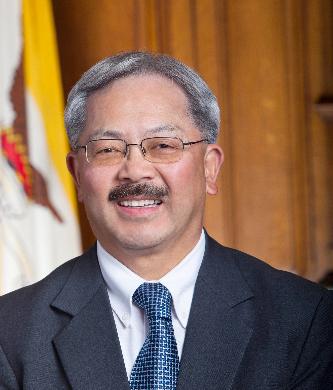
Ugh. This is going to be a battle royal. I hope there are six votes on the board for Clean Power SF, which is imperfect but important. And then Mayor Lee will have to decide whether to side with his highly respected SFPUC general manager, Ed Harrington, who wants to make this happen, and PG&E, which doesn’t.

Oh, by the way: PG&E pays Willie Brown about $250,000 a year as a “legal retainer.” And I hear the mayor takes his phone calls.

Why Question Time is boring

9

So Sup. Jane Kim isn’t sure Question Time is useful. And the press and some other board members think that, to quote Sup. John Avalos, it’s “deadening.”

Well, there’s a reason for that — the mayor doesn’t like the idea of appearing in an unscripted forum with board members, where he could face tough questions he doesn’t expect and engage in some real debate. And led by Board President David Chiu, the supervisors intentionally created a system that guarantees nothing valuable will happen.

The board sets the rules for Question Time. It’s in the law. And the mayor has to follow those rules.

The whole idea, when Sup. Chris Daly first brought this up, was to mandate that the chief executive interact with the board — and to provide an opportunity for the supervisors to engage in public discussion and debate with the occupant of an office that under Mayors Willie Brown and Gavin Newsom had become increasinly imperious.

Lee’s nowhere near as bad — but still, what Daly envisioned, and what the voters approved, was an open forum. Instead, we got a farce, a pre-scripted scene where the supervisors submit questions in advance, the mayor reads from a prepared answer, and there’s no follow-up or back-and-forth.

Yeah, it’s boring. No, it’s not useless. It’s just broken, because the supervisors didn’t have the guts to put into practice what the voters wanted. It’s simple: Change the rules. Get rid of the requirement that questions be sumitted in advance. Let the supervisors ask, challenge, debate, follow up. That would be a public service.

And the idea that the mayor can’t handle a few unscripted questions is insulting. Lee handles press conferences just fine. And I suspect the supes would be no worse than those wild, unpredictable hordes in the City Hall press corps.

SF School Board members are suddenly pals

11

I’m used to negative campaigning in San Francisco School Board races. Two years ago, much of the effort candidates were putting forward seemed to be about trashing Margaret Brodkin. These days, I’m getting emails from all sides telling me IN CAPITAL LETTERS who the Guardian should never endorse.

And the board itself has been bitterly divided at times; Rachel Norton and Jill Wynns used to constantly fight with Sandra Fewer. There were two factions on the board, and there’s no way either side would support a member of the opposing crew.

But a funny thing is happening this fall. Among the torrent of trash-talk, the three incumbents — Norton, Wynns, and Fewer — have nothing bad to say about each other. In fact, everyone agrees that the board is working more closely together than it has in years, and while they aren’t always saying so in public, Wynns, Fewer and Norton are quietly helping each other out with their campaigns. All three told us they’d be happy to see their colleagues win re-election.

And it’s all because of the teacher’s union.

Back in March, the school board, by a 5-1 vote, did something almost unheard of in this union town: They discarded the rule of seniority and protected the jobs of 70 mostly newer teachers while issuing layoff notices to teachers with time on the job. The superintendent, Carlos Garcia, wanted to end the cycle of high turnover at 14 school with historically low performance rates, so he created a special “superintendent’s zone.” Teachers who agreed to work in schools that veterans often sought to avoid received extra training and support. Principals sought to build working teams that would stick together.

Then came the annual pink-slip ritual.

The SFUSD administration doesn’t know in the spring how much money it’s going to have for the next fiscal year. That’s because the state doesn’t finalize it’s budget until summer. And by law, the district is required to give teachers notice in March if they might be laid off come September.

So every year, the district issues pink slips to several hundred teachers — and most years, most of those layoffs are later rescinded.

Layoffs are mostly, but not entirely, done by seniority — teachers with advanced skills that are hard to find (special-ed teachers and some math and science teachers, for example) are exempt from the normal layoff process. But the union didn’t consider the 70 Superintendent Zone teachers as fitting that description — and when the board sided with Garcia and protected those teachers from pink slips, union leaders were furious.

Fewer, a staunch progressive who had never so directly defied the union before, told us she was so nervous before the vote that she wasn’t sure she could speak. But speak she did — making a strong statement that the visible, measurable progress in those 14 schools justified a tough decision. Four of her colleagues, including Wynns and Norton, backed her up.

For the United Educators of San Francisco, this was unacceptable. Seniority is at the heart of most union contracts, and once you carve out exceptions like this, the union argued, you go down a very dangerous path. An administrative law judge agreed, and ruled in May that the district acted improperly.

As it turns out, enough layoffs were rescinded that it isn’t really an issue any more — but the bad blood is still there. UESF has refused to support a single incumbent for re-election. Ken Tray, a UESF representative, told me that the superintendent was “at war with the teachers union” and called the vote “a toxic mess.”

But the ire of the union has brought the incumbents closer together. Wynns and Fewer have something in common now. They feel like they’ve been through — to use Tray’s term — a war together.

Not, I suspect, what UESF had in mind. But it’s happening. And it could affect the outcome of the election.

Endorsement interviews: Jill Wynns for School Board

4

Jill Wynns has been on the San Francisco school board for 20 years. She knows the system inside and out — and these days, she’s president of the California School Boards Association and had led the group’s efforts to pass (both) tax measures on the November ballot. We fought with her (on JROTC), supported her (on battles against school privatization) and always walked away with an understanding the she cares deeply about public schools and kids. You can hear her discuss why she wants a sixth term after the jump.

Endorsement interviews: Sandra Fewer for School Board

4

The San Francisco School Board has long been a fractious crew, with members sharply disagreeing on a lot of issues. They still disagree — but according to all the board members we’ve interviewed, there’s a much-better working relationship these days. Sandra Fewer, who has served for four years, talks about that — and restorative justice, ethnic studies and how she wants to build on her accomplishments in a second term. You can listen to the entire interview after the jump.

Endorsement interviews: London Breed for D5 supervisor

33

District 5 candidate London Breed has an amazing life story. She grew up in the Western Addition projects, living with her grandmother at a time when many of the people around her were killed or wound up in prison. She survived, went through public schools and UC Davis and now runs the African American Art and Culture Complex. She’s served on the Redevelopment Commission, where she voted in favor of the Lennar project, and is now on the Fire Commission. “I am here as the result of progressive politics in this city,” she said. She also talked about fiscal responsibility, and how it’s good to have someone at City Hall “who knows the value of a dollar.”

Listen to the full interview after the jump.

Endorsement interviews: Julian Davis for D. 5 supervisor

28

Julian Davis, a candidate in District Five, has lined up some impressive endorsements. He’s running to the left of the incumbent, Christina Olague, and talked about “why ordinary people can’t live in this city any more.” He told us that in the 1990s, the city of Chicago poured billions of dollars into affordable housing, and “San Francisco needs to think in the billions.” He also called for a “comprehensive and aggressive revenue strategyl.” You can listen to the entire interview after the jump.

Endorsement interviews: Norman Yee for D. 7 supervisor

28

Norman Yee, president of the School Board, is running in the tighly contested race for District 7, one of the most conservative districts in the city. Yee talked about the sorts of things you’d expect a district candidate to talk about — public safety (and pedestrian safety, an issue particularly important to Yee, who was seriously injured by a car), public schools, keeping libraries open, and parks.

But he also talked about citywide concerns — he’s a supporter of Local Hire, supports the City College parcel tax, and wants to see an audit of city-owned land to look for places to build affordable housing. He supports a program to legalize existing in-law units if they’re brought up to code.

You can listen to the entire interview here:


The real issue for the Dems in November

5

Lots of fun with convention democracy on Day Two, when the chair of the event, LA Mayor Antonio Villaraigosa, got caught up in the scam that happens almost every year, when the party rank-and-file doesn’t want to do what leadership says, and the unruly hordes have to be tamed. I’ve seen this happen at the state level (where Art Torres pulled a classic years ago to cut off party reformers at the knees) and it happens at the national level, too — typically not in prime time.

But this time around, the whole world got to see how it works.

It goes like this: When the American Israeli Political Action Committee (AIPAC) decided that the party’s official platform wasn’t sufficiently radically pro-Israel, and President Obama started feeling the pressure, the party leaders realized that they had to make a last-minute change. Party platforms are drafted by a fairly broad group, and I suspect the majority of the party faithful are concerned that Israeli settlements are making any longterm peace agreement impossible and are getting a little impatient with the same old “Israel is always right” position. So the 2008 plank asserting that Jerusalem is the capital of Israel (a meaningless statement designed largely to appeal to the AIPAC crowd and infuriate Palestinian supporters, since at least three major religions consider Jerusalem a holy city and and both Israel and Palestine claim it as a political center) didn’t make it in this time around.

Oh, but AIPAC howled and the Romney camp was going to use that against Obama (that and the again-meaningless use of the word “God”), the it had to be amended. On the convention floor. Which requires a two-thirds vote.

But the way Davey D described in on KPFA — generally confirmed by video and other reports on the scene — Villaraigosa had a bit of a problem, namely that he didn’t have anywhere near two-thirds of the delegates behind him. He tried three times; every time, it appeared that the vote was, at best, even — and if he’d actually done a roll call, he probably would have lost. And then the president would be in the embarassing position of having his own party reject his efforts — and whoa, the Romney folks would have gone to town.

So Mr. Chair had no choice but to pretend he had the votes, to rule from on high that he’d heard two-thirds say Aye when everyone knew that was bogus, and just put the issue away. Gotta love it.

But that’s all sideshow. The real problem the Democrats face this fall — and it’s only starting to get any real attention — is the blatant efforts by Republicans to suppress the votes of African Americans, Latinos, seniors, and poor people. That’s the core constituency that elected Obama four years ago, and since the swing-state votes are going to be super close, all Romney needs is a few percentage points to take the White House.

The tactic of choice this year is mandating voter ID — that is, telling people they can’t vote unless the present a government-issued identification card. Rep. Karen Bass, the former California Assembly Speaker, was on KPFA talking about the problem, and she noted that there are probably 25 million Americans who don’t have a valid government-issued ID.

Granted, a lot of the states that have passed these laws (Texas, for example) were never going to go for Obama anyway. But there are voter-suppresion laws now on the books in Wisconsin and Pennsylvania, two critical battlegrounds. And while the courts have tossed out some, others are still in effect — and the ones that are on hold are also on appeal.

And even if the courts chuck the worst of the laws, the message will have gotten out: If you’re on the margins, don’t bother to try to vote.

Remember: It only takes a couple of percentage points, a few hundred thousand discouraged or disenfranchised voters, to swing the half-dozen states that will determine the direction of this country for the next four years. If I were Obama, I’d stop worrying about AIPAC and Jerusalem and God and put all of my efforts into making sure that my folks actually get to cast ballots. Because that could be the only issue that matters Nov. 6.

Warren, Clinton, and the Demo divide

4

Talk about a contrast.

Tonight was all about the two sides of the Democratic Party, the two visions of how the party should approach policy, two utterly divergent approaches to the world that can hardly even be called “wings” of one party. And yet, they both got rousing cheers — and even the progressives were all hot about ol’ Bill.

Okay — the guy’s a pro. He’s one of the best off-the-cuff, unscripted public speakers in America, even if he doesn’t know when he’s done. He had all the right talking points, all the great ways to demolish everything that the Romney team has been saying. He can talk about the “real world” from experience, since for eight years he sorta ran it.

But let’s remember — this is the guy who threw millions off welfare (and now brags about it), who was responsible for the deregulation of Wall Street and the telecom industry, a guy who the financial world loved and whose policies were pretty close to what the mainstream of the Republican Party supported just a few years earlier.

I got to meet Clinton a few years ago at an alternative newsweekly convention in Little Rock, and I asked him why he didn’t consider same-sex marriage a civil-rights issue. He ducked and said in essence that America wasn’t ready for it.

And just before he took the stage, Elizabeth Warren — who talks seriously about regulating big business, who wasn’t afraid to say “corporations are not people” — was on stage. She talked like a member of the Democratic Wing of the Democratic Party, like someone who believes that too few have too much at the expense of the rest of us.

It’s not odd to have a wide spectrum of opinion in a major political party (except that the GOP doesn’t allow that any more). But it’s startling to see two speakers who might as well come from different planets, not just different parties, sharing the podium — and getting the same wild applause.

I get it — it’s all about the show. But it’s also all about people forgetting what Clinton was about.

Pop thrills

0

tredmond@sfbg.com

LIT So much trash lit, so little summer left. It hasn’t been the greatest of years for beach and backyard reading (seriously, more trash than lit), but we struggle on. Some selections:

THE AFFAIR

By Lee Child

Delacourte Press

405 pp, hardcover $28

Jack Reacher is one of the best action characters of our time, up there with Spenser and Travis McGee.

Child came up with a winner, a former military cop who wanders the world like Kwai Chang Caine, doing good work, sometimes reluctantly, with superior fighting skills that make him a true badass.

The Affair is sort of a prequel, and takes us back to Reacher’s army days. It’s absolutely formulaic, completely predictable, just like all the other Reacher books — but so well executed that it’s still a beautifully guilty pleasure.

There’s a murder that puts Reacher in danger, a gang of thugs who get their butts kicked, a hot woman in law enforcement with whom Reacher has what we all know will be a short-lived affair … and plenty of sharp dialogue the keeps the pages turning.

With all the pablum out there, it was nice to sit down and read the work of a master who is still in his prime.

STOLEN PREY

By John Sandford

G.P. Putnam’s Sons

402 pp, hardcover $27.95

Put this one up there with The Affair. If you love Lucas Davenport and his world of twisted murder shit in and around the Twin Cities, then Stolen Prey works fine.

Mexican drug gangs seem to be the Most Evil Fuckers In The World this summer, and in Stolen Prey, they’re particularly horrible, doing a stomach-turning murder that takes place in a nice upper-middle class town. The dead family appears to have no ties to any type of criminal activity — but ah, there is much more here.

Again, nothing radically new (except a suprising ending involving Davenport’s adopted daughter, Letty, who apparently has some of the step-old-man in her), but a fine read for a sunny afternoon.

THE LITIGATORS

By John Grisham

Dell Paperback

488 pp, paper $9.99

Grishman practically invented the modern lawyer novel, and most of his protagonists are brilliant (if tormented) legal advocates who fight valiantly against corporate crime.

It was getting old.

This time around, there’s plenty of evil corporation (big pharma) — but the lawyers are bumbling idiots, worthless ambulance chasers who’ve stumbled into something they’re mind-bendingly unqualified to handle. Drunk lawyers, dumb lawyers, lawyers behaving badly … it’s a grand and glorious testament to the noble profession. And it moves right along.

DON’T BLINK

By James Patterson and Howard Roughan

Hachette

365 pp, paper $9.99

Patterson has written so many books I don’t think even he can keep track. The Alex Cross series is among the modern classics in crime lit. His current M.O.: Find co-writers who can do some of the heavy lifting while he polishes. At least, that’s how much of his stuff reads. And this one, sad to say, is a snooze.

Even in his collaborations, Patterson normally manages to keep things lively. The plots are good, the characters decent, and there’s no shortage of action. He’s into seriously depraved, psychotic villains and seriously evil enemies. Never a dull moment — mostly.

But Don’t Blink bored me. It’s about a reporter (good) who sees a mob killing (cool) and then gets in trouble (predictable). The protag is decent and believable, but the plot goes on and on and gets nowhere. Blink.

LET THE DEVIL SLEEP

By John Verdon

Crown

449 pp, hardcover $25

Verdon’s series hero, retired cop Dave Gurney, continues to live in his gruesome Green Acres in upstate New York, where his wife wants a quiet country life and he keeps tangling with psychokillers. I really liked the first two, Think of a Number and Shut Your Eyes Tight, and this one’s fine, although not as stone-cold sick-ass wacked-out crazy as the past two.

Here, Gurney looks into a cold case and everyone thinks he’s crazy except that the killer, who supposedly isn’t around, keeps doing things like shooting deadly hunting arrows into his garden. Between the murderer and the pain of his tormented marriage, there’s enough to keep you turning the pages. But it’s at best a B-plus.

ROBERT B. PARKER’S LULLABY

By Ace Atkins

G.P. Putnam’s Sons

320pp, hardcover $26.95

All of the knockoffs suck. Tom Clancy’s Ops Center? Worthless. The Jason Bourne sequels? Robert Ludlum’s ghost is puking. You don’t do that shit; it doesn’t work. And another writer trying to take on the Late Great Robert B. Parker and Spenser? Not a prayer. Give it up.

Except that Ace Atkins actually makes it work. And he does it not by becoming Parker but by staying true to the characters and developing just enough of his own voice that it’s not just a weak parody. You’ve got Spenser and Hawk and Vinnie and Susan Silverman and a 14-year-old terrified girl who hired the detective for a box of donuts and leads him into a fierce FBI-Boston mob frameup gig that sparkles like Parker of old.

For real. I’m amazed.

The Dems open with a contrast

18

You couldn’t have scripted it better (and that’s what it was, carefully scripted). The contrast between the mayor of San Antonio, Julian Castro, grandson of immigrants, child of a working-class family, and the first lady, Michelle Obama, daughter of a disabled blue-collar public employee, teling their life stories just reminded everyone about the life of that other candidate. Yeah, the one who told students to borrow money from their parents to start a business.

Castro was good because of who he is, and he’s a fine speaker, and the HuffPo  thinks he’s been vaulted into the national spotlight, but this wasn’t a speech that’s going to change anyone’s life. Not like the keynote eight years ago. It was good campaign speech, some nice slaps at the Republicans, and a good line: The GOP wants to take back America — back to what and to when?

But Michelle Obama stole the show. I was listening in the car with my daughter, on the way home from her gymnastics class, and Viv — who generally tolerates nothing on the radio except Katy Perry and Lady Gaga and Kesha and J. Lo and like that — was actually quiet for a few minutes, and at one point asked me the same question I was asking myself:

Why isn’t she the president?

But she isn’t and her husband is, and we all have a lot of issues with him, and I’m not here to defend this administration. But the stark contrasts between the candidates and the conventions can’t be ignored. Davey D, who’s doing an awesome job of covering both conventions, talked about walking around the RNC and not seeing any black people (Colorlines looked carefully and found exactly 89) and from his perspective (and he’s certainly not a Democratic synchophant) the DNC was worlds away.

By most accounts, Mitt Romney didn’t get much bounce from his nomination speech, but most accounts — that is, the national polls — mean very little at this point. The next election will be won or lost in about six swing states, and the GOP clearly thinks it will be a “base” election, that there are enough right-wing types in those states to make the difference if they’re motivated. I don’t know if Obama can say or do anything that will change that.

But for those handful of undecided voters, most of whom are not rich, the Dems have a tailored message. And so far, it’s working well.


The SFPUC’s cool new building

12

I finallly got a tour of the San Francisco Public Utilities Commission’s cool new building at 525 Golden Gate. It’s about as green as an urban building can be, with solar panels, wind turbines, a wastewater recycling system using the underground root structure of street gardens to clean sewage … the energy use is about 30 percent below a typical building that size, and water use is even lower; the PUC projects about a 60 percent savings, which is a good thing for a water agency that wants to promote conservation. So far, it’s gotten pretty good press.

For a 13-story office building done in a very modern style (not my favorite type of structure), it looks pretty cool, too, with polycarbonate panels that wave in the wind and light up at night. Inside, it’s open and full of light. There’s lots of space for bicycles and an on-site child-care center.

There’s also $4 million worth of public art — most of it purchased or commissioned from local artists. I love the painting and photos, and the cafe on the first floor has a pretty wild giant computerized display that shows the entire water and power system, with interactive popups as you approach different areas.

Nice.

I was a little disappointed that Ed Harrington, the SFPUC general manager, and Barbara Hale, the assistant general manager for power enterprise, had no idea why the power lines from the city’s hydroelectric facilities in the Sierra end in Fremont, where the city’s power gets plugged into the Pacific Gas and Electric system. “I’ve never heard that story,” Hale said. You’d think that I’d written enough about that tale; you’d think P&E’s role in denying the city its legal right to public power would be part of the official history of the Hetch Hetchy system.

But I forgive them; the story is long and complicated, and very rarely told or taught in San Francisco, which has been scrambling for more than 80 years to duck the Congressional mandate that should force us to kick out PG&E. Because here’s the thing: As he heads for retirement, I think Harrington now gets it.

We sat and talked on the top floor of his new building, in an oddly-shaped conference room with a stunning view, and I got the distinct impression that Harrington and Hale want to move the city toward public ownership of the local electrical system. They’re pushing Clean Power SF, which is a critical step down the path to energy independence; Harrington wants this to be part of his legacy. He’s careful not to say anything that sounds like he wants to fully replace PG&E and create a fully municipalized electric utility in San Francisco, but he can’t ignore the facts: The only way this city is going to get to a sustainable energy future is if we own the infrastructure.

Of course, even if we started today, that would happen long after Harrington’s tenure is over.

But when we talked about the city’s water system, he noted that there are all sorts of important policy decisions that we have only been able to make becuase we own the entire system, soup to nuts, water storage, pipes, delivery. And he didn’t try to argue with me when I said that the same clearly applies to power.

Harrington has made his peace with the energy activists who want to make sure that part of the Clean Power SF program involves buidling our own generation facilities. Even with a full build-out of solar and wind on all the land the city has access to, and with the Hetchy Hetchy hydro system, a municipal utility could probably only generate about 40 percent of the city’s current needs. But knock the current needs down by 20 percent (through better efficiency and conservation) and get every homeowner and commercial building to put solar on the roof, and look at wave energy down the road … and it’s not hard to imagine that 25 years from now San Francisco would have no need to buy electricity from PG&E, Shell Energy, or anyone else.

I know, I know, that’s a long time from now. But I wrote my first story about PG&E in 1982. If we’d started back then, we’d be well on our way by now.

So here’s to hoping that this slick $200 million building is the start of a new era for SF’s PUC, which in the past has been openly hostile to public power. Let’s hope that when I’m 80 years old I can write my last PG&E/Raker Act story and move on to something else.


KPFA shows us how to do convention coverage

149

I watched and I listened as the Republicans alienated much of America and the TV announcers made fools of themselves and the big newspapers reported what happened without much perspective or criticism. But the best coverage of he GOP convention came from a local outlet: KPFA’s Mitch Jeserich, Davey D Cook, and Margaret Prescod had it nailed.

We got the word from the streets, the word from inside, great analysis of the issues and the speakers, all in a lively way that made me want to keep listening. Great interviews, great commentary, great back-and-forth between Mitch and Davey D, who are very different reporters with different styles… good work, folks. 


D5, Mirkarimi, and 8 Washington

151

Everybody knows that the timing of the Board of Supervisors vote on ousting the sheriff for official misconduct is bad for Ross Mirkarimi. We’re talking about a huge, high-profile decision just weeks before some of the key board members are up for re-election, two of them in hotly contested races. For Sups. Eric Mar and Christina Olague, it’s going to particularly difficult: Mar’s in a moderate district, and he’ll be attacked from the more conservative David Lee if he supports Mirkarimi. Olague’s in a progressive district where Mirkarimi was a popular supervisor, so no matter what she does, she’ll take heat.

But I was a little surprised by Randy Shaw’s analysis, which suggests that Olague will be motivated entirely by political spite:

D5 Supervisor Christina Olague once faced a tough decision on Ross, but since Mirkarimi allies have attacked her on a number of issues it would be very unlikely for her to support him.

That’s pretty insulting. Shaw, who has supported her in the past, is saying that Olague won’t make up her own mind based on the actual issue and case in front of her. She was pretty clear when I called her: “I will vote on the merits of this issue,” she said. “If I was motivated to vote based on who had pissed me off I’d have a hard time voting on anything.”

I’ve disagreed with Olague quite a few times, and one could easily argue that she’ll be under immense pressure from the mayor. (“The mayor doesn’t want a lot from Christina, but he does want this,” one insider told me.) But is it impossible for Shaw to imagine that, in one of the toughest matters she will ever have to handle, the supervisor might actually listen to the testimony, consider the merits of the case, and vote to do what she thinks is right?

Meanwhile, Joe Eskenazi at the Weekly has already announced the Guardian’s endorsement in D5 — which is interesting, since we’re barely started interviewing the candidates. Eskenazi calls Julian Davis “the Guardian’s fair-haired boy” (which, speaking of insults, is not a terribly appropriate way to refer to an African American man), indicating that he’s already our candidate.

For the record: We have not made an endorsement in District Five. We plan to endorse a slate of three candidates for the ranked-choice ballot, and we’ll publish that endorsement the last week in September or the first week in October.


Bullets fly

25

When cops shoot their guns, sometimes they kill or injure bad guys. Sometimes it turns out that the person who was shot didn’t do anything wrong. And sometimes the majority of the carnage involves utterly innocent bystanters.

That’s a side of police shootings that doesn’t get talked about as much. But it’s real — and it’s a matter of concern when cops are firing off rounds in a crowded urban area, in particular when they’re near a school. Which is what happened in Noe Valley Aug. 27. According to my friends at the Ex:

A female officer caught up to the suspect as he tried to climb over a fence on Valley Street. He reportedly moved quickly toward the officer with his hands in the middle of his torso, prompting the officer to fire a single shot, which did not strike the suspect, police Chief Greg Suhr said.

So if the bullet didn’t hit the suspect, where did it go?

It went flying around Noe Valley. In the middle of the day. Near an elementary school. Lucky it didn’t hit anybody. Because officers are trained to fire at someone who they perceive as a lethal threat — but that training doesn’t include looking around behind the perp to see where the rounds will go if they miss.


Political corruption is “trumped up?”

7

The truly shocking aspect of the latest fallout from the City College scandal is the response of incumbent Trustee Natalie Berg, who is up for re-election.

Bad enough that Berg allowed Stephen Herman, who was directly involved in the scandal and pled guilty to two felonies, to hold a fundraiser for her. But his offenses were reduced to misdemeanors, he’s paid his fine — and Berg has every right to say that he’s learned his lesson and deserves a chance to continue in the political world.

That’s not what she’s saying, though:

Berg, first elected to the college’s board in 1996, saw nothing wrong with having Herman host the fundraiser, calling him, “completely honest and honorable.” Of the criminal charges, she said: “The whole thing was trumped up. Nobody benefited from that, and it ruined people’s careers.”

Trumped up? Seriously?

Nobody has thus far disputed the basic evidence: Former Chancellor Phil Day and Herman diverted tens of thousands of dollars in public money into political campaigns. They never denied doing it. The documents showing what happened were completely clear. And just about everyone with any sense of law or ethics agrees it was a serious problem.

Nobody benefited? How about the taxpayers and the students, who have the right to honest oversight of their money?

Wow. I knew Berg was a bad trustee, but this is over the top.


Fiona Ma’s vampire garbage bill

3

State Assembly Member Fiona Ma, who wants to keep 15-year-olds in prison for life, has been trying for a while now to help the big garbage outfits, Recology and Waste Management Inc., avoid running into local laws that could block their use of landfills. So far, she hasn’t been able to get it through the normal commitee process.

But she’s not giving up: As the session winds down, she’s done the ol’ gut and amend and created AB 845, which looks pretty much like the bill she hasn’t been able to get through committee. And she got this reborn Dracula of a bill it through the state Senate, which means she just needs concurrence at the Assembly, and away she goes.

Ma says that garbage is a statewide concern — true, as far as it goes — but she’s also helping Recology avoid problems in Solano County, where local residents want a cap on the amount of outside garbage trucked in from other places (like San Francisco) and buried in Solano landfills.

By the way, she’s also been helping Recology fight those pesky recycling poachers who make a few extra bucks by getting the bottles and cans out of the bins before Recology can.

And the garbage giant hasn’t even been her biggest campaign contributor. Her non-campaign for state Senate got $1,500, her campaign for state Board of Equalization got $500, and she picked up $3,000 more in her Assembly races.

Oh, and she isn’t returning my calls and emails.

About the Mirkarimi poll

193

It’s no suprise that lawyers for suspended Sheriff Ross Mirkarimi are calling a recent poll biased. The poll, paid for by a group of local women, many of whom have been in the forefront of the efforts to remove Mirkarimi from office, found that 61 percent of people wanted the sheriff ousted. More significant, it broke the results down for the supervisorial districts where there are contested elections; the goal, of course, was to put pressure on the supes to support the mayor’s removal efforts.

But nobody has published the actual questions in the poll — although I got a call from Greg Kamin, a San Francisco resident who was among those contacted by the robo-poll, and he said it was unusual, to say the least.

“In a normal push poll, they ask you your opinion first, then give you information to see if it changes your view,” he told me. “In this one, there was just a barrage of negative information first, before they asked a single question.”

One question went more or less like this: Which factors would most convince you the sheriff should be removed — the fact that he pled guilty to false imprisonment, the fact that the Ethics Commission ruled against him, the fact that he was involved in domestic violence, or the fact that he’s on probation?

“There was no way to answer the question that didn’t say you wanted him removed,” Kamin said.

Given the way the poll was structured, Kamin told me, “it’s surprising Mirkarimi got as much support as he did.”

Worth considering.

Also worth considering: For all the talk about domestic violence and zero tolerance and the need to remove the sheriff, there’s been very little discussion about the impacts on the people in the county jail — who are overwhelmingly African American and Latino. It makes a difference who the sheriff is. Someone who really believes in rehabilitation and wants to treat inmates in a decent, humane way can change lives — and radically improve public safety in a state with a 70 percent recidivism rate.

Again: Just something that ought to be part of the discussion.


Endorsement interviews: John Rizzo (D5 supervisor)

20

We’re underway with our endorsement interviews for the November election, and I’ll be posting the full sound file of all the interviews as we finish them (and as I have time to upload them). First up: Community College Board member John Rizzo, who is running for supervisor in District 5.

Rizzo told us he has the political experience to take on the district’s, and the city’s, tough problems. Among other things, he wants to eliminate the fund that developer pay into for affordable housing and require market-rate builders to construct affordable units on site. He discussed a “scientific approach” to managing Muni and wants a closer audit of the $600 million the city gives to nonprofits providing public services every year.

You can listen after the jump.

Dear SFW: HST is dead. And you’re not him

6

Note to SF Weekly (and the other Village Voice Media papers that are running the same story this week):

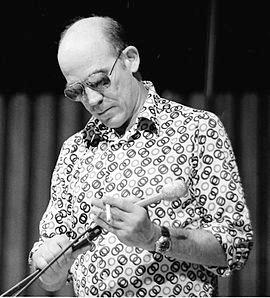
Hunter Thompson is dead. He shot himself in 2005, in Woody Creek, Colorado. His remains, per his wishes, were fired out of a cannon.

Many have tried to copy his style; all have failed, each effort more pathetic than the one before. You’re failing, too. Give it up.

What will Jerry do?

14

A few good bills have emerged from the madness of the end of the Legislative session in Sacramento — including measures by Assemblymember Tom Ammiano and Sen. Leland Yee — and now we have to wait for the governor, who isn’t thinking much beyond Prop. 30.

Jerry’s always odd and unpredictable, but this year, I’m told, he’s focused almost entirely on getting his tax measure approved. He’s told everyone in the state how much everything will suck if we don’t vote Yes, and he’s made it something of a referendum on his leadership. If it goes down, he’s facing almost unthinkable cuts to education and public services — cuts that will make him hugely unpopular. When class sizes go up and UC rejects qualified students and cops get laid off, the voters won’t blame themselves for rejecting Prop. 30; they’ll blame the guv. And Jerry knows it.

So he’s gone all in on this one — and he’s viewing everything he does, including every bill he might sign, through that lens.

Which leaves some very worth legislation up in the air — or rather, since it’s Jerry Brown, up in the ozone.

Ammiano managed to win approval for a measure that would allow the news media to interview inmates in state prisons — something that the California Department of Corrections and Rehabilitation has blocked since 1996. Right now, the only way reporters get access to the inside of prisons is on special tours that CDCR sets up — and the jailers get to decide which “random” inmates can talk to the press. It’s pretty basic — In San Francisco, the Sheriff’s Department allows reporters to talk to any prisoner who consents to an interview, and nothing bad has happened. We spend so many billions of dollars on prisons, and we know so little about where it goes. Even the prison guard’s union (Jerry’s BFFs) supports this. Jerry? Who knows.

Another Ammiano bill, AB 889, would require that domestic workers (people who do child care, housecleaning etc.) get basic labor rights, including lunch breaks and overtime. Seems like a no-brainer (and no, it doesn’t apply to your casual high-school babysitter). Lots of support, and it’s hard to see what this has to do with tax policy, but nobody’s sure about the guv.

And everyone’s really unsure what will happen with Sen. Leland Yee’s latest attempt to give juveniles who are sentenced to life without parole at least some opportunity to get out of prison before they die. SB 9 is pretty moderate — it states that a person convicted of a crime as a youth who has already served 15 (FIFTEEN) years can petition a court to reduce the sentence to 25 (TWENTY FIVE) years. Nobody’s getting out without serving some long, hard time, but since someone who is an accessory to murder at 15 almost certainly doesn’t have the brain development of an adult, and no other industrialized nation in the world allows LWOP for anyone under 18, and since there are only 300 people in the who state prison system who would be eligible for sentence changes under this law, I can’t imagine anyone opposing it. Seriously, Jerry. Can you veto something like this? The Jesuits would go batty.