Tim Redmond

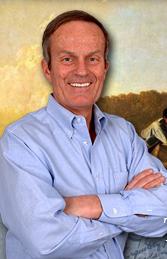
Is Todd Akin the dumbest Congressman ever?

7

There have been a lot of really stupid members of the esteemed House of Representatives and the United States Senate. I’m talking real morons here — not just people who are dumb because they disagree with me and I’m always right. In fact, there are quite a few before Todd Akin who have promoted the Magical Vagina Power theory that says women who are raped can’t get pregnant. Jezebel has a handy-dandy guide here.

(The guide also notes the insanity of distinguishing “legitimate rape” from … what? Sorta, kinda rape? Is that like being a little bit pregnant — which might be what happens from a little bit of rape? Seriously?)

Of course, Rep. Steven King thinks teenagers can’t get pregnant, either.

There’s a nice list here of the ten dumbest members of Congress, but a lot of that’s political: Rand Paul bellieves a lot of stupid things, but he’s not dumb. Not like Akin.

Counterpunch gave the honor to Rick Santorum, a “vacuous boob.”

Esquire lists the worst members of Congress, but they aren’t all dumb. Some are just, you know, crooks, liars, and sleazeballs.

Daily Kos likes Louis Gohmert for the Stupidist Person in Congress award.

We could go on — and all of these lists are current. Go back a few years and you’ll find plenty more.

So help me out here — is Akin the dumbest Congressman ever? (There have no doubt been dumb Congresswomen, but I think in this category the guys have it.) Who else belongs on the list?


The end of work as we know it

21

I read Player Piano in high school, when all of us were suburban kids were discovering Vonnegut. (We were also discovering Herman Hesse, for reasons I will never understand, and we talked about Slaughterhouse Five and The Glass Bead Game as if we were some sort of intellectuals. I read a couple of the Hesse books and found them dry and pointless. I loved Vonnegut, particularly God Bless You Mr. Rosewater.)

At any rate, even in the 1970s, Player Piano didn’t seem that far away, and it was one of the formative books of my crazy political consciouness of the time, and it got me thinking, years later, about unemployment. When I was first out in San Francisco, all of my friends were busy — and not many of them were working for pay at a traditional job. And I thought, as the nation went into a deep recession and everyone talked about creating jobs, that what people really needed was money, not jobs. For almost everyone I knew — people involved in politics and art and theater and writing and troublemaking — a job was just a way to pay the rent. And if we didn’t have to work to make ends meet, so much the better. We all had a lot to do, much of which would never earn us any money; get rid of the damn jobs and we could do it all a lot better.

Yes, as Vonnegut made very clear, people got, and get, a lot of their self-worth from what they do for a living, particularly if it’s skilled work. But maybe that’s not the way it always ought to be — particularly if the day when robots take over almost all manufacturing is rapidly approaching.

John Markoff of the New York Times has a mind-bending piece about robots taking over jobs that even a few years ago were too complicated to be done by machines:

 The falling costs and growing sophistication of robots have touched off a renewed debate among economists and technologists over how quickly jobs will be lost. This year, Erik Brynjolfsson and Andrew McAfee, economists at the Massachusetts Institute of Technology, made the case for a rapid transformation. “The pace and scale of this encroachment into human skills is relatively recent and has profound economic implications,” they wrote in their book, “Race Against the Machine.” In their minds, the advent of low-cost automation foretells changes on the scale of the revolution in agricultural technology over the last century, when farming employment in the United States fell from 40 percent of the work force to about 2 percent today. The analogy is not only to the industrialization of agriculture but also to the electrification of manufacturing in the past century, Mr. McAfee argues.

The “debate” can go on as long as you want, but the reality is that a lot of what we now call “work” will soon be done by machines — sooner than a lot of us think — and that will mean, if nothing else changes, a nightmarish society where the gap between the rich and poor is even worse and the middle class is in a free-fall collapse. Consider:

In one example, a robotic manufacturing system initially cost $250,000 and replaced two machine operators, each earning $50,000 a year. Over the 15-year life of the system, the machines yielded $3.5 million in labor and productivity savings.

So who gets that $3.5 million? Not to be all Marxist or anything, (heaven forbid), but right now, under modern industrial capitalism, none of it goes to the displaced workers. In theory, the robots could allow them to do something else with their lives — teach, or mentor kids, or paint, or learn to speak a couple new languages, or build a new house to retire in, or whatever. The robots don’t need to be paid, and that “productivity savings” could go directly to the wealth of society as a whole, making life better for all of us. But it won’t — the whole $3.5 million is kept by the factory owner, and the displaced worker gets nothing — except depression, a lower standard of living, and the opportunity to scramble for a job that takes less skill and pays less.

If we’re going to survive as a stable society, two things are going to have to happen. We’re going to have to accept that “work” in the traditional sense is not going to be the only, or even main, source of people’s income — and that’s okay. And the only way that’s going to work is if we mandate that the saving from more efficient technology go to everyone, not just the elite.

Pretty radical shit, huh? I must be out of my mind. Kind of like that ol’ Commie Kurt was in 1952, when he saw this coming.


Guess who’s unopposed for supervisor?

34

Here’s an interesting fact to think about: There are exactly two people running unopposed for the SF Board of Supervisors, two people whose constituents support them strongly enough that nobody thinks a challenge would be effective (or necessary). And those are two supes who have consistently stuck to the progressive agenda and uncompromising progressive politics. They’ve done exactly what they promised to do four years ago; they haven’t moved to the center, haven’t tried to redefine their politics … they are who they are. And that works.

Just worth noting.

Hate (and free) speech

20

How far can you push free speech? Is it okay for Muni to run ads that are utterly, inexcusably offensive to Arabs and Muslims in the name of political expression?

I’m pretty much always on the side of the First Amendment. And we were furious when a Bay Guardian ad campaign accusing then-mayor WIllie Brown of political corruption suddenly vanished from the sides of the local buses. It’s hard to seek government limitations on any political statement. But if the ads that appeared Aug. 7 on Muni aren’t over the line, they’re pretty close to it.

Here you have an organization described not only by the Southern Poverty Law Center but by the Anti-Defamation League as a hate group buying space on San Francisco buses for ads that effectively disparage a vast religious, ethnic and cultural community as “savages.” The campaign is obviously designed to get publicity; not that many San Franciscans are going to be convinced to join the American Freedom Defense Initiative. Nobody’s opinion on the Middle East will be swayed by this shit.

But this tiny cadre of loonies, led by Pamela Geller, who is really fucking scary, wants attention. In New York, the anti-Muslim group sued when the city tried to take down the same bus ads, and you know they’d love it if that happened here. Muni says it can’t legally pull the ads, which is probably true — although BART has a more restrictive policy.

It’s not just idle rhetoric — this stuff frightens people. “We’re hearing from people that they’re uncomfortable riding Muni,” Zahra Biloo, executive director of the Bay Area office of the Council on American-Islamic Relations, told me.

Obviously, you can’t run ads that enourage someone to engage in violence. Is dehumanizing people and calling them “savages” the same thing? Biloo thinks it’s pretty close: “It’s important for progressive cities to say, ‘not in our city,'” she said.

A change.org petition condemning the ads has more than 2,000 signatures.

On the other hand, I don’t want to give Geller the pleasure of suing San Francisco and making this into a Free Speech cause. Because that’s exactly what she wants, and probably the reason she bought the ads in the first place. So how about this: The supervisors pass a resolution denouncing the ad and the message, and Muni agrees to give CAIR the same number of ads, free, in the same locations (gee, maybe even on the other side of the same buses) to present an alternative message.

At least it’s a start.


Newsom votes for — and pushes — housing for the rich

10

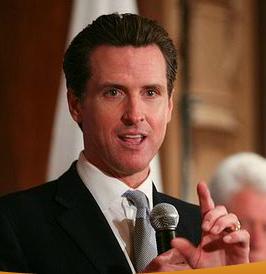
I can’t say if the campaign contributions had anything to do with it (in fact, nobody seems to know when campaign contributions become bribery) but for whatever reason, Lt. Gov Gavin Newsom not only voted for 8 Washington on the State Lands Commission — he pushed hard to make sure the project went through.

According to former City Attorney Louise Renne, who was at the hearing making the case against the project, the director of the governor’s office of finance, Ana Matosantos, sent a proxy. So did state Controller John Chiang. Newsom appeared in person.

And when Matosantos’s person reviewed the evidence, he decided that it wasn’t appropriate for the panel to take any action — thanks to a successful referendum effort, the whole matter is in legal limbo in San Francisco until Nov. 2013. But Newsom was having none of it.

“It was very close at first, the controller’s representative went back and forth,” Renne told me. “But the lieutenant governor was very clear that the matter should be addressed today, and he swayed the vote.”

In the end, it was 2-0 to approve the deal, with Matosantos’s rep abstaining.

So as if there were any doubt, we know where Newsom is when it comes to giving public land to a developer to build housing for the top sliver of the 1 percent.


Rafael Mandelman enters City College board race

6

After the really bad news that Community College Board member Milton Marks died, there’s some good news: Rafael Mandelman, an energetic, smart, progressive lawyer and member of the DCCC, has decided to run for that board.

City College badly needs the help. There’s a real chance that a state monitor could be placed over the district, robbing the board of much of its ability to set policy and spend money. And even if that doesn’t happen, the state — which disagrees with San Francisco on how community colleges should be run — is going to keep tyring to mess with CCSF.

So it would be nice to have someone like Mandelman, who has political experience but also works for a law firm that does a lot of public-sector work, around to help.

Marks’s untimely and tragic death leaves an open seat and he hadn’t filed to run for re-election. So the mayor has the ability to appoint someone to serve out Marks’s term — and if he does it before Aug. 15, that person can file and run as an incumbent. But for those of us who are getting sick of having so much of our government appointed for us, it would be nice if Mayor Lee would wait until after the filing deadline then name a real caretaker — Mandelman suggests former trustee Tim Wolford, who is now in the business of helping troubled nonprofits. The board will need help in the next four months, and someone qualified — and skilled in dealing with fiscal and political problems — would be an immense help.

But appointing a political hack who is pals with the mayor’s inner circle and sees a shot at running as an incumbent would be a big mistake.

Of course, Lee hasn’t done too well in the “caretaker” department. We’ll see what happens.

Local parking permits — and fees

70

So the city’s going to take a look at the neighborhood parking program. Good. Here’s my first question: Why do the car owners get away so cheap?

It costs $64 a month to buy a Muni Fast Pass. It costs at least $300 a month to rent a garage. But if you’re in the neighborhood parking program, you get essentially a guaranteed parking space on a city street — public property — for $104 a YEAR, or about 28 cents a day.

That’s crazy.

I’m not for eliminating the neighborhood parking stickers; the program keeps out-of-town commuters from driving into SF and using residential areas as free parking lots. But let’s make the car owners — who, by the way, are still reaping the Schwarzenegger VLF windfall — pay their fair share. 

Double the fee and you get another $6.5 million. And the parking permits would still be the bargain of the decade.

And then maybe we can get God out of the parking system.


Milton Marks, City College defender, dies at 52

3

Milton Marks III, the son of a state senator who for 12 years tried, often against long odds and strong opposition, to clean up the San Francisco Community College District, died Aug. 9 of complications from a brain tumor. The whole city — particularly the college district and its community of teachers and students — should be mourning a genuinely good guy who stood up to corruption and secrecy and was an honest progressive on the College Board back when that was a lonely position.

“Of all the public servants I’ve known, he was the one I really admired most,” his colleague, board member John Rizzo, said. “For all the shit he took, he never wavered. He was the nicest guy in politics, but he never backed down.”

Marks was elected to the board in 2000, when it was a snake pit of sleaze, and he fought valiently — often against the board majority and the administration — to bring accountability and openness to the district.He’s been re-elected twice, and would have been a shoo-in for another term this fall. (Unlike many College Board members, Marks wasn’t constantly running for higher office. He loved City College and saw his role right there on the board.)

With all the problems the college is facing today, Marks and his voice of reason and credibility will be sorely missed.

The mayor will appoint a new member to that seat, and the person will have to run in November.

I don’t know all the details about memorial arrangements; I’m still waiting for the formal statement from City College. The school paper, the Guardsman, has a solid obit you can read here. I’ll fill in more details when I have them.

Meanwhile, we’ll all miss you, Milton. You gave it the good fight.


Corporations, people, money, and speech

4

tredmond@sfbg.com

On July 24, the San Francisco Board of Supervisors weighed in on a policy debate that’s become a powerful cause on the American left. By a unanimous vote, the supervisors placed on the November ballot a measure calling for a Constitutional amendment to end corporate personhood.

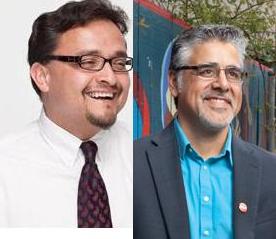
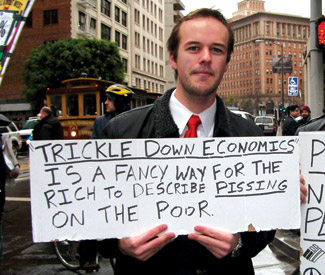
“We’re living in a time of trickle down economics and tax breaks for the rich,” Avalos said, later adding, “Big corporations [are] able to spend vast amounts of money” and have “the greatest influence on the outcome of elections.

“We need to look at our Constitution and have it amended so we aren’t looking at corporations as living, breathing people,” Avalos said.

That’s an immensely popular sentiment in this country, and it’s been stirred up by the US Supreme Court’s 2010 decision in Citizens United v. Federal Election Commission, a ruling that has come to represent all of the evils of big-money politics rolled into one two-word phrase.

More than 80 percent of Americans say they want the decision overturned. Six states, including California, have passed resolutions calling for a Constitutional amendment. Occupy protesters have made it a big issue. Marge Baker, policy vice president for People for the American Way, wrote a Huffington Post piece calling the campaign “A Movement Moment.”

But while Citizens United is a great rallying point, the challenge here goes way beyond one court decision. Citizens United didn’t create corporate personhood. Repealing the decision won’t end the flow of money in politics — and a lot of First Amendment experts are exceptionally nervous about anything that seeks to mess with this central part of the Bill of Rights.

And for all the denunciation of Citizens United, the solution — drafting the actual language of a new Constitutional amendment — turns out to be more than a little tricky.

MICHAEL MOORE AND HILARY CLINTON

Citizens United v. FEC has a complicated history. In 2002, Congress passed the McCain-Feingold Act, which barred corporations and unions from funding “electioneering” activities in the period right before an election.

The right-wing group Citizens United complained that Michael Moore’s documentary Fahrenheit 911 was an attack on George W. Bush and intended to influence the 2004 election, and the courts dismissed that complaint, saying that there was no evidence the independent documentary was an illegal campaign contribution.

Citizens United then started making its own “documentaries,” including one in 2008 that many saw as a campaign commercial against Hillary Clinton. The FEC found that the video was, in fact, “electioneering,” and the case wound up at the Supreme Court.

The legal decision was complicated, but among other things, the court ruled that a ban on independent corporate spending on election campaigns was a violation of the First Amendment rights of those business entities.

That was amplified when Republican presidential candidate Mitt Romney uttered his famous line, “corporations are people.”

But in reality, Citizens United alone hasn’t caused the tsunami of big money that’s poured into elections, including the 2012 campaigns. Much of the cash contaminating the presidential coffers this year comes not from corporations effected by the ruling but from individuals and private trusts that have been free to throw money around for decades.

“The flood of money is disgusting and corrupting,” Peter Scheer, director of the California First Amendment Coalition, told us. “But it isn’t coming from public corporations. It’s mostly wealthy people and private trusts, and they didn’t need Citizens United to do this.”

In fact, the groundwork for modern sleaze was set a long time ago, in 1976, when the Supreme Court ruled in Buckley v. Valeo that, in effect, money was speech — and that any rich individual could spend all he or she wanted running for office.

What the Supreme Court has done, though, is set the modern political tone for campaign finance — among other things, invalidating a Montana law that barred corporate contributions to campaigns. And in the majority ruling and the assenting opinions, the court made clear that it doesn’t think government has any role in leveling the campaign playing field — that it’s not the business of government to decide that the money and speech of rich people and big business is drowning out the opinions and speech of the rest of the populace.

SO NOW WHAT?

So now that every decent-thinking human being in the United States agrees that there’s too much sleazy money in politics and that it’s not a good thing for government to be for sale to the highest bidder, the really interesting — and difficult — question comes up: What do we do about it?

There are a lot of competing answers to that question. And frankly, none of them are perfect.

That may be one reason why the ACLU is mostly on the sidelines. When I contacted the national office to ask if anyone wanted to talk about the efforts to overturn Citizens United, spokesperson Molly Kaplan sent me an email saying “we actually don’t have anyone available for this.”

But on its website, the organization — in a nuanced statement on campaign reform — notes: “Any rule that requires the government to determine what political speech is legitimate and how much political speech is appropriate is difficult to reconcile with the First Amendment.”

In an ACLU blog post, Laura Murphy, director of the group’s Legislative Office in Washington DC, argues that “a Constitutional amendment—specifically an amendment limiting the right to political speech—would fundamentally ‘break’ the Constitution and endanger civil rights and civil liberties for generations.”

But David Cobb, one of the organizers of Move To Amend, which is pushing a Constitutional amendment, told me that “the idea that spending money is sacred is part of the problem, the reason that we don’t have a functioning democracy.”

There are two central parts to the problem: The notion that corporations have the same rights to free speech as people, and the notion that money is speech. Eliminate the first — which is immensely popular — and you still allow the Meg Whitmans and Koch brothers of the world to pour their personal fortunes into seeking political office or promoting other candidates.

Eliminate the second and you open a huge can of worms.

“It would be a disaster, in my view,” Scheer said. “As a general principle, I’m frightened by the concept of tampering with the Constitution.”

Money may not equal free speech, but it’s hard to exercise the right to free speech in a political campaign without money. And there are broader impacts that might be hard to predict.

But Peter Schurman, one of the founders of MoveOn.org and a leader in Free Speech for the People, told me that “it’s a false premise that money equals speech. The point is to get a level playing field.”

THE PROPOSALS

Move to Amend and Free Speech for People are promoting similar approaches, Constitutional amendments that, in fairly simple terms, would radically and forever alter American politics. Several members of Congress have offered Constitutional amendments that include similar language.

The Move to Amend proposal is the broadest and cleanest. It states: “The rights protected by the Constitution of the United States are the rights of natural persons only. Artificial entities, such as corporations, limited liability companies, and other entities, established by the laws of any State, the United States, or any foreign state shall have no rights under this Constitution and are subject to regulation by the People, through Federal, State, or local law.”

It goes on to say: “Federal, State and local government shall regulate, limit, or prohibit contributions and expenditures, including a candidate’s own contributions and expenditures, for the purpose of influencing in any way the election of any candidate for public office or any ballot measure.”

It also includes this statement: “Nothing contained in this amendment shall be construed to abridge the freedom of the press.”

Free Speech for the People is simpler. It only addresses the corporate speech issue: “People, person, or persons as used in this Constitution does not include corporations, limited liability companies or other corporate entities established by the laws of any state, the United States, or any foreign state, and such corporate entities are subject to such regulations as the people, through their elected state and federal representatives, deem reasonable and are otherwise consistent with the powers of Congress and the States under this Constitution.”

Cobb notes that the Move to Amend measure doesn’t say how political speech should be regulated; it just opens the door to that kind of lawmaking. “The question of how to protect the integrity of the electoral process is a political question, not a Constitutional question,” he said. In the end, there’s a huge issue here. The framers of the Constitution, their political consciousness forged in a battle against big and repressive government, feared as much as anything the notion of rulers controlling the rights of the people to speak, write, assemble, publish (oh, and carry firearms) freely. Corporate interests (with the possible exception of the British East India Company, which monopolized the tea trade) weren’t a major concern.

And First Amendment purists still recoil at the idea that government, at any level, could make decisions limiting or regulating political speech. I sympathize. It’s scary. But in 2012, it’s easy to argue that the power of big money and big business has far eclipsed the power of government, that for all practical purposes, the rich and their corporate creations are the government of the United States — and that the people, assembled and exercising the power envisioned under the Constitution, need to make rules to, yes, level the playing field. Not rashly, not in crazy ways, with full cognizance of the risks — but also with the recognition that the current situation is fundamentally unacceptable, and that the potential dangers of messing with the First Amendment have to be balanced with the very real dangers of doing nothing.


The worst archibishop ever

92

As they say … Jesus!

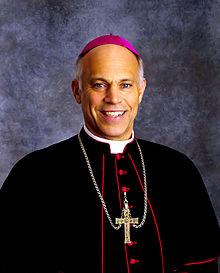
The new archbishop of San Francisco isn’t just a conservative. All the bishops appointed by this pope are conservatives. The new guy overseeing the Catholic Church in one of the most socially liberal parts of the world is a genuine culture-warrior, someone who (literally) says that same-sex marriage is the work of the devil and who wanted to make the use of contraception a mortal sin.

Salvatore Cordileone also happens to be the father of Proposition 8. The East Bay Express, in an excellent profile, noted in 2009 that he

has cultivated one of the most theologically conservative worldviews imaginable. Especially when it comes to sexual matters, Bishop Sal is conservative and uncompromising.

What I hear through the Catholic rumor mill is that the Vatican folks who screen candidates for these jobs gave the pope a list of three names. He rejected them all and chose Cordileone.

So now the center of the crazy-looney-here-comes-the-devil branch of the Church has a powerful throne here in San Francisco. What this is going to do, of course, is drive gay people, and liberals, and moderates, and pretty much everyone who’s sane to question why they even stay in the Catholic Church. And maybe, as one gay Catholic told me, that’s exactly what Rome has in mind — get rid of the malcontents and the thinkers until the Catholic Taliban is all that’s left.

I suspect Bishop Sal is going to have some problems in his new assignment.

There goes the SF Democratic Party

41

We all knew that the progressives didn’t win a majority on the Democratic County Central Committee, but for a while there it looked as if there might still be a chance to elect someone who isn’t one of the most conservative members of the panel as the chair. But no: Mary Jung, who works for PG&E, now controls the San Francisco Democratic Party.

Jung was elected unanimously July 27, which means the progs realized they didn’t have a candidate who could get a majority. Most of the other leadership roles are from the conservative side of the party. Yes, Alix Rosenthal is second vice-chair, but it’s clear who is going to be in charge of the party — and it’s not the folks who have run it for the past four years.

The slate-card committee, which has the key job of creating and delivering the powerful endorsement card, will be dominated by conservatives, Jung and Tom Hsieh, with only one progressive, Rafael Mandelman. It’s pretty much a train wreck all around.

Samson Wong (who is a good guy) says it’s a new era of civility, which is the same thing we used to say about City Hall (and I agree with him that it’s historic: The mayor, the president of the board and the chair of the party are now Asians). But when civility means you stop fighting (loudly, even if you lose) for things that matter in the name of keeping the peace, I’m against it.

In a press release, the DCCC’s new corresponding secretary, Matt Dorsey, notes that the local party’s priorities this fall are re-electing Barack Obama (who will win California even if the SF DCCC members all take a six-month nap) and restoring Democratic control of the House (which won’t be decided in the Bay Area). No mention of electing progressives to the Board of Supervisors — which is where the local party really matters.

The race to watch will be D1, where incumbent Eric Mar is part of the progressive bloc that lost the DCCC. We’ll see what happens.


The Peripheral Canal emerges from the dead like Dracula

8

The Chron has pretty much signed off on the inevitability of a giant set of tunnels moving water from the Sacramento River to the San Joaquin River, screwing up even futher the ecosystem of the San Francisco Bay and Delta:

The water world has already separated into three camps: the water contractors, the federal government, the governor and the state Department of Water Resources, which support the “conveyance” as a necessary part (but only one element) of providing future water supplies;

the environmental community, which does not speak with a single voice but, conceding that the $14 billion facility probably is inevitable, is focusing on how it might be operated.

The last group, the delta residents and the Northern California congressional delegation, is opposed, seeing a loss of water and productive farmland and little tangible benefit in return.

But let’s remember: When this came up in 1982, it was voted down statewide, with something like 80 percent of Northern California saying “no.” And it wasn’t just the pumps and the Big Suck — it was the whole concept of shifting more water to unsustainable agriculture in the desert. That point hasn’t changed at all. Until we get a handle on why the state allows farmers to grow rice and tomatoes in the US version of Africa’s Serenghetti, I don’t see why we’re spending a whole lot of money to make things worse.


Trash Lit.: Endless summer reading edition

0

So much summer trash lit. So little of note.

I’ve been reading as fast as I can, catching up on all of the beach books I can find, looking for the Great Work of Summer, 2012. I still haven’t found it. There’s plenty worth reading, some decent drivel and distractions. But overall, I can’t say anything had my head spinning.

So here’s the first installment of my rundown, the good, the fair and the total waste cases.

Against All Enemies, Tom Clancy, Berkeley Books, 799 (gasp) pages, paperback $9.99.
Tom Clancy doesn’t need to write anymore. He’s 65, firmly ensconsed in the top slice of the 1 Percent, owns part of the Baltimore Orioles, makes a killing off franchising his name for cheap and worthless spin-off books … he can chill. And maybe he should.

Against All Enemies has his name on the top, although there’s a tiny “with Peter Telep” down below. That should have been a warning. The first 100 pages should have been another one. But I soldiered on to the very end, and trust me: It was a struggle.

Say what you want about Clancy’s politics; the guy can tell a story. His characters are interesting, the action crisp, the plots intricate and engrossing … and this one’s a piece of shit. It’s actually boring, deadly dull. And that’s a thriller no-no.

Nice idea: The Taliban and the Mexican drug gangs have formed an alliance and are using tunnels to sneak terrorists into the US. Could be full of fascinating people. But it’s not. The hero is a loser, the drug lords and terrorists are weak parodies of themselves — and it goes on and on and nothing happens. Don’t bother.

Robert Ludlum’s The Borune Imperative by Eric Van Lustbader, Hatchette, 435 pages, $27.99.

Another cheap attempt to profit off a talented (in this case, dead) author, but Van Lustbader’s no slouch himself, and some of his earlier efforts at this have been at least entertaining, so I thought I’d see what he could do with his laterst effort at reviving one of the great thriller characters in history. Shouldn’t have bothered.

There’s an assassin with amnesia (sound familiar?), a Russian spy gone rogue, a terrorist mastermind, a global conspiracy and … what? People going in and out of freezing water while they get shot. This series is getting seriously slow.

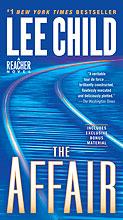
The Affair, Lee Child, 405 pages, Delacourte Press $28.

This one’s just coming out in paper, and it’s worth the wait. It’s a bargain at $9.99, a bit of a stretch at full price.

Jack Reacher is one of the best action characters of our time, up there with Spenser and Travis McGee, (and that’s serious). Child came up with a spectacular mix, a former military cop who wanders the world like Kwai Chang Caine, doing good work, sometimes relucatantly, with superior fighting skills that make him a true badass.

The Affair is sort of a prequel, and takes us back to Reacher’s army days. It’s absolutely formulaic, completely predictable, just like all the other Reacher books. There’s a murder that puts Reacher in danger, a gang of thugs who get their butts kicked, a beautiful woman in law enforcement with whom Reacher has what we all know will be a short-lived affair … and plenty of sharp dialogue the keeps the pages turning.

With all the pablum out there, it was a pleasure to sit down and read the work of a master who is still in his prime. At a certain point, like Ian Fleming in the glory days of Bond, Reacher can get away with formula — because it’s such a good formula. It still works, still delivers. He’s just a great writer, and if we sort of know what’s going to happen when half a dozen of the local losers try to attack Reacher in the streets, it’s still fun to see it unfolding.

Don’t expect anything new or dramatic here (except what Reacher fans will realize is the absolutely critical tale of where he got his portable toothbrush), but The Affair won’t let you down.

Stolen Prey, John Sandford, G.P. Putnam’s Sons, 402 pages, $27.95.

Put this one up there with The Affair. If you love Lucas Davenport and his world of twisted murder shit in and around the Twin Cities, then Stolen Prey works fine. Again, Mexican drug gangs, which seem to be the Most Evil Fuckers In The World this summer, and in Stolen Prey, they’re particularly horrible, doing a stomach-turning murder that takes place in a nice upper-middle class town. The dead family appears to have no ties to any type of criminal activity — but ah, there is much more here. Again, nothing radically new (except a suprising ending involving Davenport’s adopted daughter, Letty, who apparently has some of the step-old-man in her). But Sandford, like Child, is a master, and you can enjoy this with the guilt of a lazy afternoon of Bud Light and bourbon. Nothing wrong with that.  

The NY Times and class struggle

7

The NY Times isn’t exactly a revolutionary left-wing publication — and while columnist Paul Krugman routinely talks about the income and wealth divide, it’s not typically a staple of how the Times cover the news. But David Leonhardt is starting a blog on the decline in the middle class and is going to turn it into an article during the later parts of the presidential campaign — and amazingly enough, he’s got it pretty much right:

In addition to the slow growth in overall size of the pie, the share that has been going to anyone but the richest Americans has been declining. The top-earning 1 percent of households now bring home about 20 percent of total income, up from less than 10 percent 40 years ago. The top-earning 1/10,000th of households — each earning at least $7.8 million a year, many of them working in finance — bring home almost 5 percent of income, up from 1 percent 40 years ago. In the simplest terms, the relatively meager gains the American economy has produced in recent years have largely flowed to a small segment of the most affluent households, leaving middle-class and poor households with slow-growing living standards.

It’s simple, and it’s pretty clear — as is the fact that it’s not random but the result of specific policies. From one of the (many intelligent) comments (my trolls, please take note):

The middle class is an artificial construct, something deliberately created through the enactment of policy. It emerged in the U.S. largely because of political, economic and social changes that were imposed: the New Deal, the Great Society, the creation of the suburbs and highway systems, strong unions that demanded fair wages and protections, etc. All of these developments happened only because people willed them and fought to ensure economic expansion benefited regular people. It could have just as easily gone the other way; indeed, it IS going the other way now (and has been for the last 30 years or so). The choices today are different: to let the markets decide, to deregulate and bolster corporations, to exacerbate the wealth divide, to enforce an unfair tax system, to shift essential costs (healthcare, environmental remediation, etc.) to the taxpayer, and so on. And so the middle class erodes. It should come as no surprise.

What’s talked about less in this NYT piece is the role of government in redistributing income. The idea that the US tax system should take more than half of the income people earn beyond a certain point is hardly radical; as early as the 1920s, the highest earners turned over as much as 70 percent to the government — and unlike today’s billionaires, they actually paid it. The JP Morgans of the world got really really rich AND paid high taxes AND gave a lot of money to public enterprises (public libraries, public museums etc.).

That as much as unionization and post-War industrialization created the middle class.

Another interesting comment:

Our “free-market” policies of the last 30 years have favored efficiency and productivity above all else. The result has been sending American jobs overseas on a massive scale. Now we have inexpensive tee-shirts and computers, but vast unemployment and underemployment. Instead, I believe our culture should favor creating as many high paying middle-class jobs as possible without regard to “productivity”. This requires protective trade barriers. Yes, prices will go up, but for a more affluent society, it’s a cheap price to pay.

Obama talks a good line about the middle class, but he’s not offering any specific ideas that would fundamentally change the direction of US economic policy. In fact, the biggest issue in the campaign isn’t even an issue.

Oh, and by the way: I have to note that Randy Shaw at BeyondChron is now talking about the important of “class diversity.” He’s right — there need to be more tenants (and working-class tenants) on the Planning Commission and Board of Appeals. There also needs to be a consciousness of class issues in general at City Hall — and a discussion of how policies that favor high-tech companies, like those of his beloved Mayor Lee, are pretty clearly NOT in the interests of protecting class diversity in the city.


Alex Cockburn, funny man

13

So Alex Cockburn is dead. What a piece of work he was.

Yeah, he was vitriolic and could be savage when going after his enemies. Yeah, he was an old-fashioned leftist who was sometimes accused of Stalinist tendencies (tho he also had a weird libertarian side to him). But most of the obits missed the fact that Alex could be really, really funny.
Left-wing writers (and right-wing writers) have a grand tendency toward self-importance, and he was as guilty as any of us. But he didn’t always take himself and what he was doing so seriously that he couldn’t make fun of it.

I remember hearing him talk once about a piece he was doing lambasting some poor East Coast academic for writing something that Alex found way too pro-Israel. The poison pen was out and sharpened, the vitriolic hit-piece for The Nation was halfway done … and then, he said, he decided he ought to call the guy for comment.

Big mistake. Turns out the man was a huge Alex Cockburn fan, his comments had been misinterpreted, he really agreed with everything Alex was writing and saying … and, as Alex told us, it totally ruined a good column.

“I learned,” he said with a smile, “that you should never call the other side, because it just screws up the story.”

He was at his best when he was being funny; the piece on McNeil and Lehrer and the insanity of balanced journalism is one of the best things I’ve ever read, and I cite it all the time when I talk to journalism students:

ROBERT MACNEIL (voice over): A Galilean preacher claims he is the Redeemer and says the poor are blessed. Should he be crucified? (Titles)
MACNEIL: Good evening. The Roman procurator in Jerusalem is trying to decide whether a man regarded by many as a saint should be put to death. Pontius Pilate is being urged by civil libertarians to intervene in what is seen here in Rome as being basically a local dispute. Tonight, the crucifixion debate. Jim?

In a classic 1986 piece in the Nation, he discussed a missive from the Spartacist League discussing ways to travel across the nation without hitting any states with anti-sodomy laws:

I am in receipt of mail from intending vacationers, perturbed by the Supreme Court decision upholding the Georgia sodomy laws and anxious about their travel plans. For many of them the question comes down to this: Can you drive coast to coast across the United States without entering states that have legal sanctions against the practicing sodomite, remembering that the Georgia law defines sodomy as “any sex act involving the sex organs of one person and the mouth or anus of another’?

After laying out the best options for “sods on the road,” he ended: “And I didn’t think the Sparts were into that sort of thing.”

He will be remembered for his columns in the Village Voice, for being the token leftist on the Wall Street Journal oped page, for blasting all of us who weren’t quite pure enough for him …. And I will remember how he was a rare guy on the Left who made me laugh, even in the 1980s when we were all way too serious.

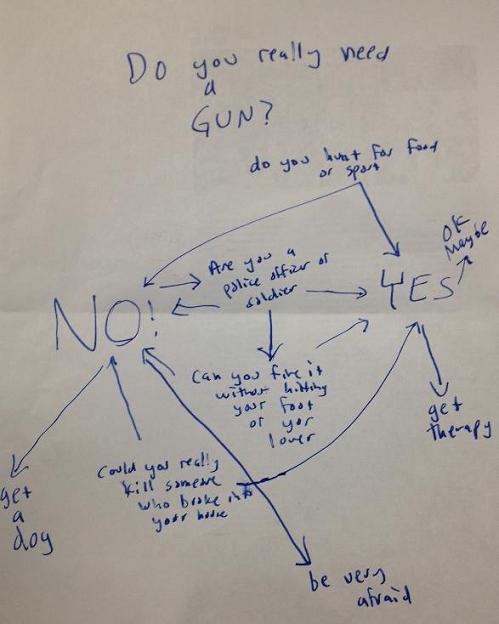
A 2nd Amendment Infographic

5

With apologies to the Awl, where they draw better than I do.

You know I have to talk about guns now

31

My son is 13. He and a friend went to the movies the other afternoon, at the San Francisco Metreon. I was at work; I wasn’t a bit worried. They’re good kids, city kids, they travel around on Muni and BART, hang out with their friends after school … and what’s safer than a movie theater?

Jesus fucking Christ.

It’s apparently random, and the guy who killed at least 12 people in Colorado is probably crazy, and you can’t decide to keep your kids locked up in a bulletproof room all day just because a nutcase 2,000 miles away went crazy at a Batman show. People get killed riding bikes, too, and Michael rides everywhere.

But I’m not the only one who thinks that this massacre could have been prevented — or at least, the severity of it could have been prevented — if it wasn’t so easy to get high-powered assault-style weapons in this country. Here’s a press release from state Sen. Leland Yee:

My thoughts and prayers go out to the victims of this horrific tragedy and their families. These events are shocking to all of us and sadly remind us of the carnage that is possible when assault weapons get into the wrong hands. It is imperative that we take every step possible to eliminate the types of senseless killings witnessed in Aurora, Colorado. We must limit access to weapons that can carry massive rounds of bullets or that can be easily reloaded. SB 249 is a step in that direction and should be approved by the Legislature as soon as possible.

Here’s US Senator Dianne Feinstein (who knows a thing or two about gun violence):

Today is a time for grieving but my hope is the country will also reflect on the roots of gun violence that has again visited terror on an American community, claiming the lives of more innocents.

Here’s LA Times columnist Paul Whitefield:

We don’t need to disarm Americans.  But neither do we need to arm Americans with assault rifles.  We can respect the 2nd Amendment — and respect the right of young people to go to a theater without having to survive a fusillade normally reserved for the battlefield.

And here’s me:

Nobody needs a AK 47. Nobody needs to be able to carry around a weapon that has the kind of firepower that it takes to create this level of terror and carnage. And for those people who want to argue that an armed populace would prevent this kind of thing, imagine if half a dozen pistol-packing civilians started firing through smoke grenades at a guy wearing body armor in a crowded theater. You want the body count any higher?

This, my friend and trolls and gun lovers, is just insane.

UPDATE: Damn, those federal regulations make it hard for an honest citizen to buy a gun.

I have a Gander Mountain gift card in my wallet. Seriously. Wonder what I should do with it.


8 Washington’s going on the ballot

63

San Franciscans are going to get a chance to vote on the most expensive condos in the city’s history and the future of development on the waterfront as soon as this November.

Opponents of the 8 Washington project turned in 31,721 signatures to the Department of Elections July 19, and since only about 19,000 have to be valid, it’s a safe bet the referendum will qualify.

That means no work can be done on the development until after the election — and since the deadlines are tight and it’s possible the DOE won’t get its counting and verifying done in time for November, 2012, the whole thing could be on hold until 2013.

It’s going to be a bitter and expensive campaign: Developer Simon Snellgrove tried to keep this off the ballot — and, since he has about $200 million riding on the outcome, he’s going to spend what it takes to win. The Stop the Wall on the Waterfront folks aren’t going to be able to match Snellgrove by any stretch, but they’ve raised some money and they’ll be able to run an effective campaign.

And we can have an important public debate: Should the city continue to build housing for the very rich when it can’t keep up with its existing affordable-housing requirements? And what will happen to San Francisco if the people who work here can’t afford to live here and the people who live here don’t work here (or in many cases, don’t work at all because they’re stinking rich)?

Is $11 million in affordable housing money enough for a project that will make a $200 million profit?

Gonna be a good one.

Oh, please

8

A “lewd act?” Isn’t that what you’re supposed to do in porn theaters? Why else would you go?

And why are the LA police conducting routine inspections of wank-houses and arresting people who wank?

Your tax dollars at work.


The future of St. Luke’s Hospital

8

The CPMC hospital-rebuild deal is on life support — and some say, to use the harsh medical code, it’s CTD. Stands for Circling the Drain.

IF the arrogant leadership at CPMC and Sutter Health comes back in two weeks with a radically improved plan, and IF community groups get behind it, and IF the supervisors can trust Sutter enought to even consider it, then there’s a chance this creature can be electroshocked back into the land of the living. But that’s a lot of ifs. It’s entirely possible at this point that the city and CPMC are so far away from agreement that the billion-dollar proposal for a fancy spankin new hospital on Van Ness will never happen.

We’re all hopeful. As Emily Lee, an organizer with the Chinese Progressive Association, put it, “we’re hearing a very different tone than they took before.” CPMC is in something of a bind: Its existing main hospital on California St. doesn’t meet state seismic standards, and has to be replaced or upgraded by 2015. And this isn’t a typical business that can just pack up and move out of the city — CPMC would lose far too many patients and too much money. So the crew there has to do business with San Francisco.

But it also has leverage over the city. Everyone in San Francisco agrees that St. Luke’s Hospital in the Mission is a critical part of the city’s health-care infrastucture. Everyone agrees that it has to remain open as a full-service hospital with emergency and acute-care facilities. And everyone agrees that it also has to be rebuilt (at a cost of about $250 million) and that it loses money every year.

Oh, and CPMC owns it. And threatens to close it down if the city won’t move on the Van Ness palace.

 So Sup. David Campos has authored a resolution calling on city officials to start looking into Plan B: What do we do to save St. Luke’s if CPMC won’t put up the money to rebuild and operate it?

It’s a tough question. CPMC, owned by Sutter Health, is a private nonprofit. The city could, in theory, seize the facility under eminent domain, and float a bond to pay for the rebuild and come up with $25 million a year in General Fund money to cover its operating loses, but that seems a stretch, particularly since the taxpayers have already approved a much bigger bond to rebuild SF General.

There are other health-care providers in the city, though — and some argue that St. Luke’s is only a money-loser because CPMC keeps shrinking its operations. “It’s become too small to survive without a subsidy,” Chuck Idelson, from the California Nurses Association, told me. And in theory, Dignity Health or even Kaiser could decide it was worth the investment to assume operations, particularly if the city joined in some sort of partnership to help. UCSF runs a big ol’ hospital on Parnassus Heights, and already helps staff SF General with attending physicians and residents; maybe St. Luke’s could be integrated into the university’s medical training program.

“We need to explore what it would be like if St. Luke’s was operated by someone who cared about the hospital for itself,” Lee said. Unlike CPMC, which seems to care about it largely as a bargaining chip.

Joanne Jung, also with CNA, told me that “there has to be a St. Luke’s. It’s just too important to the city.” And if CPMC doesn’t want to keep it going, “clearly there has to be another operator., someone who has some decency and respect for the community St. Luke’s serves.”

Of course, nobody can force CPMC to sell the hospital or give it to another (competing) provider (although I suspect CPMC would be glad to get rid of it) — and nobody can force Dignity or Kaiser to take it on.

The wildest idea I’ve heard is for the city to use bond money for the rebuild — then let the health-care unions run it. A hospital run by hospital workers. Hospitals used to be run by doctors. But Idelson says CNA doesn’t have anywhere near the kind of money that would be needed to upgrade and expand services — and managing a hospital is a huge undertaking.

Chinese Hospital has its own nonprofit; maybe one gets created for St. Luke’s.

But something has to happen, and we have to start thinking about it now. Otherwise, CPMC can continue to hold the city hostage.


Dicks on the cover

29

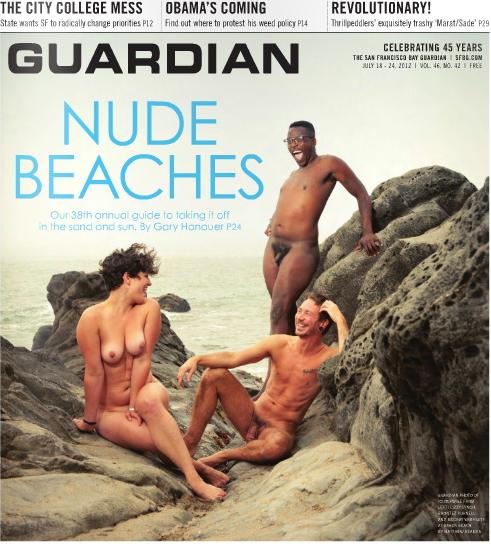
So SFist likes our cover this week. I haven’t heard any complaints yet, but we’ll get some. And they’ll be utterly predictable: Why are there penises on the front page, right out there (as my mother used to say) in front of God and everyone?

Here’s the thing: I’ve been doing this a long time, and we’ve put a lot of naked people on the cover (nude beaches, sex issue, random stories about public nakedness) — and when it’s just women, nobody peeps. Full frontal, whatever — it seems in our society that it’s perfectly okay to show the unclothed female body. But not a dick. God, not a dick.

I’ve often wondered why a movie that shows tits and (female) asses can get away with a PG-13 rating and even full-frontal female, and lots of it, only gets you an R. But a single glimpse of a male organ, even in its unaroused state, automatically turns a movie into NC-17.

What, are penises really that scary? Or are most of the censors guys who have, you know, issues?’

>>See the full cover in our Nude Beaches Guide 2012

High noon for CPMC

7

CPMC, the health-care giant owned by Sutter Health, has two weeks to convince some very reluctant city officials that its plan to build a flashy new hospital on Van Ness Avenue is at least marginally acceptable.

It might not be possible.

CPMC and Mayor Ed Lee had a deal back in June — a bad deal for the city, but one that the mayor was ready to push. Then internal documents showed that the hospital folks weren’t telling the truth and were looking for ways to shut down St. Luke’s, which provides care to the underserved population in the southeast part of the city.

The actual deal is in some kind of suspension now, since CPMC and the mayor aren’t anywhere near close to agreement — but the environmental impact report on the development came up on appeal to the supervisors, and it was clear that there weren’t enough votes to approve the document. Rejecting it would have set the project back at least 18 months, probably two years — and that would spell doom. CPMC is under a state mandate to upgrade the seismic safety of its facilities by 2015, and this Van Ness super-hospital is supposed to replace that aging California St. campus, which doesn’t meet state codes.

At the end of a seven-hour hearing, the supes agreed to continue the matter for two weeks after Michael Duncheon, Sutter’s general counsel, promised to maybe, sorta, kinda try to reopen talks with the city:

“In the intervening two weeks, CPMC commits to work with the mayor’s office and with you. … CPMC is ready to talk about a structure for future discussions as we all put our heads together.”

I other words, we’re ready to consider the shape of the bargaining table.

That doesn’t go very far, particularly since CEO Warren Browner has been a complete asshole throughout this process. He acts as if he’s entitled to do anything he wants with this project and he dismisses community benefits as nonsense. Oh, and guess what? He’s not even around right now. He’s on vacation.

Sup. Jane Kim made a good point in her remarks:

“The fundamental issue in certifying this EIR, in my humble opinion, is the elephant in the room, which is that there is no proposed project.  The only sponsor of this project, has himself stated that there is currently no project without greater assurance and agreement to stronger language from project sponsor on a commitment to the operation of St. Luke’s.”

And she said that if the matter hadn’t been continued, she would have voted not to certify the EIR. Sup. David Campos told me that he agreed: “We sent a very clear message that we can kill this thing if we want to,” he said.

So now we wait two weeks to see if Browner and his crew will come to their senses. “There’s hope,” Campos said, “but who knows?” And if CPMC doesn’t come back very quickly with a much-better plan, it will be time to start thinking about other options for saving St. Luke’s.

Developer hires crew to block signature gathering

82

The developer of 8 Washington has taken an unusual if not unprecedented step to prevent a referendum on his waterfront condo project from succeeding: He’s hired a crew of people to surround signature-gatherers and try to drive away anyone who might sign a petition to put the project before voters.

[UPDATE: Sup. Sean Elsbernd called to let me know that this isn’t unprecedented — he says opponents of his Muni reform initiative, including bus drivers, also tried to discourage people from signing petitions. ]

The pro-condo team, whose members were paid a reported $20 an hour, were visible July 14, 15 and 16 at Fort Mason Center, at the Safeway on Church and Market, at Dolores Park, at Duboce Park and elsewhere in the city, according to accounts from signature gatherers and from Guardian staffers.

The team, usually made up of several people, typically surrounds the signature gatherer, waves signs talking about jobs and parks, and loudly seeks to disuade passers-by from signing the referendum petition.

There is, of course, nothing illegal about two sides of a political debate expressing their First Amendment rights on the sidewalk. Some of the people gathering signatures for the referendum are getting paid, too.

But I can’t think of another time when crews were hired to convince people not to sign a petition.

It’s gotten serious enough the Simon Snellgrove, the developer behind 8 Washington, was out himself. He appeared in Dolores Park after the Mime Troupe performance, where Brad Paul, a foe of the project, saw him debate with a signature gatherer who was leaving the area. He was also at Fort Mason, where, according to one account, a person gathering signatures confronted him and complained that his workers were harassing her.

“That’s their job,” Snellgrove reportedly said.

I couldn’t reach Snellgrove at his office. But Jon Golinger, the campaign manager for the stop 8 Washington effort, said the tactic was a sign of desperation. “They are worried about a public vote on this,” Golinger told me.


We can stop 8 Washington

19

There’s a week left to stop the sale of San Francisco’s waterfront to the 1 percent.

The Board of Supervisors approved the 8 Washington project, and a coalition that (for various reasons) opposes this giant pile of housing for the very, very rich is trying to put the issue on the ballot. That takes a lot of signatures, and there’s only one week left to collect them.

I could tell you the story of why this project sucks, or you could just read it here. In my mind, it’s simple: If we are using public land to build housing for the richest people in the country, allowing a developer to clear a couple hundred million dollars while offering the city only $11 million for affordable housing — nowhere near enought to equalize the housing imbalance inherent in this deal — then we’re losing the city’s future.

But there’s still time. If you want to help, go here. Stop by 15 Columbus Ave or call 415-894-7008.

Hell, I’m willing to have a discussion this fall about the really, really dumb idea of tearing down the Hetch Hetchy dam. Let’s at least give the voters a chance to look at the future of the city’s housing policy.