Tim Redmond

The most shameless campaign mailer of the year

47

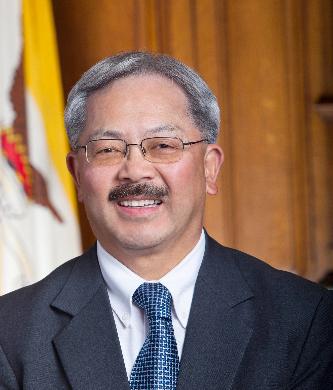
This is out-of-control shameless: David Lee — the pro-landlord, pro-downtown, pro-any-form-of-development candidate who is running against Sup. Eric Mar in District 1, is trying to hit Mar for supporting 8 Washington.

Here’s the headline: “Housing for the rich … or housing for everyone?” There’s even a picture of the proposed project. The flip side says that Mar “opposed the construction of 19,148 units of middle-class housing” while he “supported multimillion dollar condominiums on the waterfront at 8 Washington Street.”

The middle-class housing at issue here is, of course, ParkMerced, where Mar joined tenant groups in opposing a deal that could wind up costing the city thousands of rent-controlled units. It’s likely Lee would have supported that deal; fair enough.

The 8 Washington discussion is far more interesting — because David Lee was far from a critic of the project and certainly not among the large group of opponents. “He never said a word against the project,” Brad Paul, who helped organize the opposition, told me. “And the people who are backing him were in favor of it. This sounds like shameless political opportunism.”

So would David Lee have done anything different from Mar on this issue? We can’t know for sure, since Lee has announced a policy that until the election is over, he isn’t going to talk to reporters. (That alone is pretty odd, but it seems to be in synch with his really expensive campaign of misleading information that there’s no easy way to correct.)

But I know this: Among the most vocal propoponents of 8 Washington was the SF Building and Construction Trades Council, which is strongly endorsing and spending money on getting Lee elected. Same for the Alliance for Jobs and Sustainable Growth, a downtown front group. Let’s be serious: No way Lee would ever have opposed this project.

So he’s blasting his opponent for something he would have done, too — probably with more vigor and less concern for community benefits.

Meanwhile, Mar is getting screwed here. The main reason he voted for 8 Washington, as far as I can tell, was that labor leaders (and not just the Building Trades) told him it was important to them. The idea, I’m told, was that Mar would get an early, united, and strong endorsement from labor if he went along. Not pretty, and not a great recommendation for Mar — but that was the deal.

And almost immediately, the Building Trades went with Lee, stabbing in the back the guy who had crossed his progressive base for them.

Nice. Really nice.

UPDATE: I missed a point. In his role as a Rec-Park commissioner, Lee actually voted in favor of 8 Washington. Rec-Park had to grant an exemption to the law barring buildings from casting shadows on city parks, and 8 Washington would have shaded part of Sue Bierman Park. So he’s on the record as a supporter.


San Francisco Stories: The literary life

9

tredmond@sfbg.com

A few months before I graduated from college, a group of Distinguished Literary Figures came to my Fancy Eastern University and gave a special seminar on careers in literature. At least 150 of my classmates showed up in their $80 Frye boots and their shirts with the alligators on them and the attitudes they’d carefully honed during a life in which things pretty much went their way.

After an erudite discussion of the lofty (the philosophy of writing) and the mundane (write every day and don’t send bad photocopies of your manuscript to your publisher), one of the DLF’s asked for a show of hands: How many of you are planning a career as a writer?

Every hand in the room shot up. And I looked around and said to myself:

No you aren’t.

No, most of you people will never be writers. Because you’re too fucking happy. Because you’re all well-adjusted young men and women with real futures, who will want jobs that pay and apartments with heat and decent food and cars that start and clothes that look cool, and cappuccino that someone else makes for you, and vacations in nice places where the sun always shines.

You’ll never be writers. You don’t know enough about life.

*****

A year or so later, I was sitting in the makeshift loft of my $175-a-month illegal storefront apartment, and my fingers were so cold that I couldn’t work the cheap and nasty typewriter very well, and there wasn’t any heat and the only way to get rid of the chill was to turn on the oven, which was a very bad idea because a banged-up British motorcycle shared the concrete floor of my room with me and the gas tank leaked, not enough to spill but enough that after five or six hours the collected aromatic hydrocarbons in the air were probably enough to ignite and consume me and half the neighborhood in a cataclysmic fireball. So: we sat in the cold.

My girlfriend had left me; her cat was gone but the place was full of fleas, and I’d picked one out of my mustache that morning when I tried to shave. I was finishing a story about antinuclear protests for a magazine that would soon fold, but maybe not before I got my $200 check, and all I could think about was:

I still have a couple cold beers, and Brian Eno on the box, the toilet hadn’t overflowed yet this week — and fuck: This is about as good as it gets.

This is how young writers live.

We don’t ask for much, writers. We don’t need better iPhones or wifi at Union Square or tax breaks. What we need, and have always needed, is chaos, misery, and grit. We need places where money doesn’t rule and where everything isn’t comfortable. We need, more than anything, a kind of cheap that isn’t cool.

You go to the Salvation Army or Goodwill these days and you don’t see many writers who have day jobs as temps in the Zone buying the crummiest suits and ties they can get away with; it’s all, like, hipster fashion.

Writers need real cheap. They need $2 beers and $4 burritos and crappy places to live that cost less than you can make selling a story or two a month. They need to exist, for real, not just for fun, in a world outside the bubble — and they need a city that makes room for that to happen.

I love where I live, but it’s failing me. And I sometimes think that nobody in charge really cares.

*****

The Bay Guardian turns 46 this week. I’ve been part of it for more than half its life, since I sold my first story to the paper in 1982, a shocking expose about police harassing homeless people for sitting on the sidewalk. I got paid $50. It was a huge deal. I ran right out and bought a bottle of whiskey.

The Guardian was always more of a reporter’s paper than a writer’s paper — we wanted news, facts, information more than we wanted flair. And that’s as it should be in a newspaper. But we’ve also always appreciated the local literary scene, and have always been a place where young (and old) writers could find their voices and tell stories.

Now the paper’s under new ownership, and for our birthday, we contacted some of the best writers we could find in town and asked them to tell us their San Francisco story. What is the city’s literary narrative? What, to use a horrible cliché, do we talk about when we talk about San Francisco?

I’m not surprised that some of what we got was about rent — about the fact that nobody like us can live here anymore without rent control, that the housing crisis brought on by the latest tech boom has made it a terribly unfriendly city for writers.

But they also talked about beauty and passion and the reasons that, despite it all, we remain.

*****

One day after I’d been in San Francisco a few years, my brother called me from Boulder, Colorado, where he’d enrolled as a University of Colorado student. “I can’t stand it here,” he said. “There aren’t any fucking problems.”

Yep — everyone he saw in Boulder was rich and white and clean and educated and healthy. He dropped out pretty quickly, and went back to his America, where it’s nasty and you fight for every scrap and life sucks and then you die — but along the way, you meet the greatest people in the world and you live and love and get in some awesome kicks.

Me, I stayed in my city, a place worth fighting for.

I spent my childhood and college years in New York and Connecticut; I grew up in San Francisco. This is my place in the world, and, as the late great John D. MacDonald said of Florida, “It is where I am and where I will stay, right up to the point where the Neptune Society sprinkles me into the dilute sewage off the Fun Coast.”

And for better and for worse, San Francisco is a great story, a world of love and hope and fear and greed and all these people who wake up every morning and try to make it and the world a better place, often against the greatest possible odds.

Herb Caen said it once: “Love makes this town go ’round. Love and hate, pot and booze, despair and buckets of coffee, most of it stale.” We are strange, and we are proud, and we are freaks, and while our local politicians try to tamp us down and make us normal, the rest of the world treats us as special because of who and what we are.

We are immigrants, most of us, and we all love the city we once knew, and those of us who have been here a while are the worst kind of radicals, the ones who hate change … but inside us, inside the ones who know and care and believe, there’s a heartbeat that says: We have something special here, and part of it comes from tradition, and part of it comes from the shabby underclass side of life, from the fight against greed and landlords and smart-eyed speculators who want to charge for what San Francisco once gave away free.

And that’s a kind of style and class that doesn’t fit into anyone’s portfolio of stock options.

I can talk about policy options all night. It’s a disease you get when writing becomes journalism and the fight goes out of the pen in your hand and into the pen where the decisions that change your life get made. I could tell you a thousand ways that San Francisco can stop becoming a city of the rich and too fucking cool for words and could give a little, tiny bit of its soul to the population that made it great.

I could say that the dot.com booms that ruined so much of this city’s crazy madness would never have happened without the Beats and the Summer of Love, and that we ought to honor our ancestors — even if it means the newcomers have to do what everyone else did, and live a little lower for a while.

I could make the case that housing in San Francisco ought to be treated like a public utility, dispensed by seniority, so the folks who worked for 30 years trying to build community without making a lot of cash get priority over the ones who arrived yesterday, with gobs of money and no concept of what the people who came before them did to make this city great.

But mostly I want to say this:

It’s not pretty, being a writer. The ones who succeed are few, and the ones who fail are many, and the city’s poorer for every one who is force to give up because the city would rather have rich people than people who live on the edge.

But in my San Francisco, some people still make it. I love them all. It gives me hope.

Okay, this is funny

2

It only works once; if everyone all over the web starts using this gag, I’ll get totally sick of it. But right now, it’s worth a laugh.

NY cops misuse Tasers; would it be different here?

8

In New York State, cops are routinely misusing Tasers, zapping suspects who are laready handcuffed, zapping people in the chest, zapping people who aren’t menacing or carrying any weapon … pretty much, it seems, zapping away at will.

This is the problem with so-called non-lethal weapons, and it’s why I get worried when SFPD Chief Greg Suhr talks about how he’d love to have the little zappers in his armory.  See, in theory, you can stun someone who has, say, a box cutter — which is, yeah, a lethal weapon, in theory, but maybe the person holding it didn’t have to die. So Suhr thinks if the officer had a stun gun, she could have zapped him and he’d still be alive.  (Actually, I wasn’t there, but I would think a professional law-enforcement officer with a nightstick and even basic self-defense training might have been able to keep the box-cutter guy at bay until backup arrived.)

I get it, the cops would rather not have to kill people — but it turns out, at least according the the NY ACLU, that once there’s another less-lethal alternative, it just gets used in a lot of situations where there was no need to shoot anyone with anything. Turns out, according the the ACLU, that if you give a cop a Taser and say it’s a weapon that won’t kill anyone, there’s less reason to use discretion.

So Tasers in SF are on hold for a while, but Suhr ought to take heed: If he wants Tasers, their use should be limited to the same situations where firearms are authorized, that is, to protect the life of an officer or another person — and not, for example, to subdue someone who’s resisting arrest. 

Davis needs to drop out

246

EDITORIAL Kay Vasilyeva, a member of the San Francisco Women’s Political Caucus, has come forward with the allegation that District Five candidate Julian Davis grabbed her and put his hand down her pants at a political bar crawl in 2006. That was six years ago, but it’s still important — and more than the incident itself, the response we’ve seen from Davis is highly disturbing. He’s utterly denying that it ever happened, and retained a lawyer to send Vasilyeva a letter threatening her with legal action if she continues to talk.

While we endorsed Davis for supervisor, we take these charges very, very seriously — particularly coming at a time when relations between men and women in the progressive movement are badly strained.

Since the SF Weekly, which broke the story, suggested that we knew something about Davis’s behavior, we need to state, for the record: When we endorsed Davis, we had heard nothing even remotely close to this type of allegation. Yes, we knew that in his 20s he was a bit of an arrogant ass. We knew that at one point, he actually got into a tugging match with another person over the ridiculous question of who got to hold a campaign sign. We’d heard that, in the past, at somewhat debauched parties, he’d made advances toward women who weren’t interested in his affections.

Those could be the acts of an immature man who has since grown up. And since, on a level of policy, knowledge, and positions, he was by far the best and strongest progressive in the race in District 5, we — along with much of the local progressive leadership — thought he was demonstrating enough maturity that he was worthy of our support.

But this new information, and his response to it, is alarming.

We don’t take last-minute allegations about a front-running candidate lightly; people have been known to dump all sorts of charges into heated races. When we learned about Vasilyeva’s allegations on Oct. 13, we did our own research. We spent two hours with Davis and his supporter and advisor, former D5 Supervisor Matt Gonzalez. We realized that allegations without corroboration are just charges, so we tracked down everyone we could find who might know anything about this incident — and, as we discovered, other similar events. And we have to say: Vasilyeva’s account rings true. Davis’s categorical denial does not.

More than that, we were offended that he in effect threatened with a lawsuit a woman who, at some peril to herself, came forward to tell the public information about someone who is running for elected office. What was the point of that, if not to intimidate her? It’s highly unlikely he’s going to sue (and drag this whole mess into court). He says he was just trying to send a message that he has a legal right to respond to defamation, but this is a political campaign; if he didn’t want to deal publicly with what he must have known were these sorts of potential allegations, he shouldn’t have run for office.

This is a bad time for progressives in San Francisco. The Mirkarimi case has brought to the fore some deep and painful rifts; a lot of women feel that (mostly male) progressive leaders have pushed their issues to the side. For the future of the movement and the city, the left has to come together and try to heal. This situation isn’t helping a bit.

Davis needs to face facts: Supervisors John Avalos and David Campos have withdrawn their endorsements. Assembly member Tom Ammiano is almost certain to do the same. With his inability to handle the very credible charge that he not only groped a woman but lied about it, Davis no longer has a viable campaign in the most progressive district in the city, and we can’t continue to support him.

We have said it many times before: People on the left need to be able to put their own ambitions aside sometimes and do what’s right for the cause. Davis can’t win. He’s embarrassing his former allies. He needs to focus on coming to terms with his past and rebuilding his life. And for the good of the progressive movement, he needs to announce that he’s ending his campaign, withdrawing from the race, and urging his supporters to vote for another candidate.

The Julian Davis allegations

110

Obviously the allegations in SF Weekly that Julian  Davis groped a woman are serious stuff. For the record, nobody at the Guardian knew anything about this; we didn’t know anything even remotely close. The worst we’d ever heard about Julian was that he was kind of an entitled jerk in his 20s who thought he was God’s gift to women and sometimes came on a little strong. Groping? This is very serious business. Yes, we are reconsidering our endorsement. Yes, we take this about as seriously as you can take anything.

We of course have to talk to all sides, but we’ll be making a recommendation by tomorrow.

Another bizarre Realtor video: London Calling

15

I don’t know who the San Francisco Association of Realtors has hired to make its campaign videos, and the Realtor folks aren’t calling me back (imagine that). But it’s some weirdo shit. They’ve got Eric Mar holding meetings in a steam room — and now they’ve got London Breed portrayed as cheddar cheese in a sandwich.

For real.

It’s called “London Calling,” and no, there’s no clash music. It starts off as if it’s heading into Journey, but then becomes it’s own peppy vocal track, with lines like “London Breed, London Breed, She’s the one San Francisco needs” and (my all-time favorite) “London Breed will bring us together, We are slices of bread, she’s the melted cheddar.”

Which voters is that aimed at?


Mayor’s aide’s totally inappropriate text to Olague

64

Wow — a source just passed me the text messages that Tony Winnicker, a senior advisor to Mayor Lee, send to Sup. Christina Olague after her vote on the Mirkarimi case.

It’s totally crazy, outrageous — and inappropriate coming from a top mayoral staffer. Check it out:

As your constituent you (sic) disgust me and I will work night and day to defeat you. You are the most ungrateful and dishonorable person ever to serve on the board. You should resign in disgrace.

Winnicker confirmed to me that he wrote the text, but insisted he wasn’t speaking for the mayor:

As you know I am not the Mayor’s spokesperson and have not been for some time, especially on matters like this. I am, however, a district five constituent who disagrees strongly with my district supervisor’s vote last night and i took the opportunity to express my opinion and extreme disappointment in her decision and judgment. It is just that, however, my personal opinion and frustration with her vote, a frustration shared by many fellow district five residents who agree with Mayor Lee and the majority of the Board of Supervisors that Ross Mirkarimi should not be Sheriff.

Holy shit. I hope the mayor tells Mr. Winnicker that this is not an example of the “civility” Lee is trying to promote at City Hall.

Mirkarimi case — the aftermath

98

So many things to think about after last night’s Board of Supervisors vote on Ross Mirkarimi. It was a dramatic moment in local politics, a clear rejection of the mayor by four supes, including one of his appointees, a show of political courage by some and weakness by others.

But before I get into that, let me say:

I argued against removing Mirkarimi, for a lot of reasons. One of the most important is the precedent here — the City Charter gives the mayor too much power, the ability to singlehandedly remove an elected official for what the city attorney’s office concluded was pretty much any reason at all. There is no definition of “official misconduct” — and the way this case was presented, it could be interpreted really broadly. That’s dangerous, and the supervisors (or four of them, anyway) knew it.

I’m also a believe in restorative justice, in redemption, in the idea that people can do bad things and turn themselves and their lives around.

Still, it’s important to remember that what Mirkarimi did on New Year’s Eve, 2011, was awful, unacceptable. He was, at the very least, a total asshole and a jerk, treating his wife in a way that was — again, at the very least — psychologically abusive. Some of the comments at the board meeting were way off base; some speakers attacked the domestic violence community and made it sound as if Mirkairmi’s crime was pretty minimal.

I agree with David Chiu that the city’s going to have to come together after this — and the progressives who supported Mirkarimi are going to have to reach out to, and work with, the DV advocates. Because domestic violence is no joke, is no “private matter,” is still a major, serious issue in this city, and the worst possible outcome would be a reversal in San Francisco’s progressive policy on handling these cases.

I wish the audience hadn’t erupted in cheers when the final votes were cast. I heard Mirkarimi on Forum this morning, and when Michael Krasny asked if he was “elated,” he indicated that he was. Wrong answer: Nobody should be happy about what happened here. Mirkarimi’s biggest political and personal flaw has always been his ego, which at times bordered on arrogance, and that has to end, today. The sheriff needs to be humble about what happened to him, recognize that nobody “won” this ugly chapter in city history, and get back to work trying to mend fences with his critics. He’s facing the very real possibility of a recall election, and if he acts like he’s been totally vindicated, it’s going to happen.

This is a chance for Mirkarimi to take the notion of restoration and redemption seriously — by doing what Sup. John Avalos suggested at the hearing. He has to become a changed man. He has to show the world that he really, really gets it. Starting now.

Speaking of change …. the Number One Profile in Courage Award goes to Sup. Christina Olague. Olague was under immense pressure from the mayor, who wanted her vote badly. And because of the rotation of the votes, she had to go early, when it wasn’t clear at all which way this was going to turn out. And she came through, 100 percent solid. She made all the right points, and once she said she was going to vote against the mayor’s charges, the whole thing was over. At that point, there was no way David Campos or John Avalos could or would go the other way, so Mirkarimi had his three votes. I have been critical of Olague, but in this case, I want to give full credit: She did the right thing, when it wasn’t easy. She may have just won the election. (Let me clarify that — she may have kept herself from losing the election.)

Sup. Jane Kim was brilliant in her questioning of the mayor’s representatives and her analysis of the case. She showed real leadership and helped set the stage for what happened by pointing out the flaws in the mayor’s case.

And of course, Campos and Avalos, the undeniable, solid left flank of the board, came through.

It wasn’t easy for any of these four supervisors, and they all deserve immense credit.

Not so Eric mar, who I realize is in a tough race, but … when Olague, who has been accused of being too close to the mayor, had the courage to stand up, Mar, who has nearly universal progressive support, did not.

This is a great opportunity for the city to start talking about restorative justice in a serious way. Let’s get started.


Credit to the supervisors. Seriously.

35

Politicians get a lot of shit, and they generally deserve it. But I have to say: After listening to almost all of the debate over the removal of Ross Mirkarimi — and watching the 4-7 vote to keep him in office — I was impressed by the supervisors who got it right, took it seriously and provided thoughful and credible debate.

Profiles in Courage Awards to John Avalos, David Campos, Jane Kim and Christina Olague. I haven’t always agreed with all of them, and Randy Shaw said that Olague would never vote with Mirkarimi because his supporters were dissing her, but she stood up to immense pressure and did the right thing. Jane Kim was very lawyerly, but came to the right conclusion. Avalos and Campos were articulate and pointed out the problems with giving the mayor this much power.

David Chiu was a disappointment, Eric Mar even more so. I expected more of both of them. But Chiu handled a tough meeting very well, giving all sides a chance and showing immense patience. Credit for running the show well, even if he voted the wrong way.

But overall, an intelligent discussion with the right outcome. More tomorrow.

Is Obama in trouble?

7

There’s no doubt that Mitt Romney got a nice, juicy bounce from the first presidential debate. There’s no doubt that President Obama’s performance was so bad that even his friends call it a world-class fuckup.

Is it time to seriously start believing that if we don’t all get our shit together, we could be looking at this?

Well, yes and no.

Yes in the sense that momentum is a huge deal in a presidential race — the more it appears Obama might lose, the more money pours into the Romney camp and the more Romney partisans get active and the more the reluctant right that never really trusted him starts to perk up. The Obama folks hope the opposite happens — that fear will motivate a lot of progressives who’ve been pissed at the president to get back into the game.

But let’s remember — the winner in November will not be the one who finished first in the Gallup poll. This is not a national election. It’s a state-by-state election, for better or for worse, and the polling we ought to be looking at is in the swing states. And so far — even in the days right after the debae, when Romney was seeing the most dramatic improvement — the swing states are looking okay. Not great, but not a disaster.:

In what were the worst polling days for the president all cycle, the GOP’s hack pollster Rasmussen found Nevada tied 47-47, Obama up in Iowa 49-47, Obama up in Colorado 49-48, and Obama up in Ohio 50-49. He also found Romney up 49-47 in Florida and 49-48 in Virginia. PPP found Obama winning Virginia 50-47 and Wisconsin 49-47. Ann Selzer, one of the best pollsters in the biz, found Obama leading in Colorado 47-43.

Yes, the polls in Texas show even more support for Romney, and Obama’s support in California has softened a little, but that’s irrelevant — the only way the solid-color states are shifting columns is if something really cataclysmic happens.

Fox News thinks Romney has already won — but check out the popular vote v. the electoral vote rundown here. Romney’s got a nearly 50-50 chance of winning the popular vote — but his odds of winning the election are stil below 30 percent.

Just for fun, check out the second map here, which shows a plausible scenario for a deah heat, a tie that would be broken by the House of Representatives. Plausible, but pretty unlikely.

So don’t file your application for Canadian residency yet; Obama needs to fight back a little more and realize that this isn’t a time for nonpartisanship, but he’s still the odds-on favorite to win.


Weird homophobic attack ad from the Association of Realtors

44

Gee, this ad that’s up on You Tube, apparently paid for the the San Francisco Association of Realtors, is creepy, strange and a bit homophobic.

It starts with a bunch of kids chanting about sending “Eric Mar back to Mars” — huh? — where, presumably, there are still happy meals with toys in them, because I can’t figure out why else all these children would be doing a political attack ad. Creepy element number one.

Then there’s a fake news announcer saying that “thousands of kids” are angry at Mar, when I saw maybe a dozen in the video — and they’re mad because they “are being bused long distances to schools they don’t want to attend.” (Creepy element number two — busing is a racial code word, even these days — and Mar, as a member of the Board of Supervisors, has nothing at all to do with the city’s school assigment policy.

Then we go to clips from the Daily Show making fun of Mar’s happy meal ban (including a superimposed legend “embattled Supervisor Eric Mar.”) Creepy element number three — why is he “embattled?” Only because the realtors don’t want a pro-tenant vote on the board.

After that it gets truly odd: The voice-over announces that Mar is famous “for suggesting that his meetings be held in the the hot tub of a local YMCA” — while a photo shows three apparently naked men cozying up around a big flume of steam. Ah — Mar is linked to a steamy male bath scene! Eeew.

“Our kids are right,” the ad says at the end. But does anyone think those (very) young children spontaneously took to the streets to complain about a member of the Board of Supervisors? Seriously — some parents clearly rounded up their kids and gave them pots and pans to bang on and created a totally false an pretty outrageous political hit piece.

Oh, and at the end, the ad hypes David Lee — and again claims that “neighborhood schools” are a part of his platform. Fine, be ignorant: David Lee isn’t running for School Board.

I can’t believe the Association of Realtors really endorses this stuff. I’ve called over there to ask about it, but haven’t heard back.

Check it out. Am I crazy, or is this some ugly shit?


Why the parks bond could lose

13

A general obligation bond to improve San Francisco parks ought to be a slam dunk, particularly when it’s getting pushed by Sup. Scott Wiener, who isn’t exactly a pro-tax kind of guy. The left always votes for these things. Wiener’s lining up the moderates. Proposition B would, in normal circumstances, get 70 percent of the vote.

But there’s an awful lot of pent-up anger at the Rec-Park department, and if you want to know why, just check this out. A group of mostly immigrant soccer players, who’ve been using a park in the Mission for pickup games for more than a decade, are now getting kicked out two nights a week — because Rec-Park has turned the place over to a private outfit that charges money to enter the games.

Oh, and you have to register on your smartphone.

So the young white techies who want to play soccer and can afford $7 for a game on parkland our taxes paid for get to play, and the Latino immigrants — who, by the way, were there first — lose out.

You like that? It’s the direction Rec-Park is going under the direction of Phil Ginsburg.

Even the Guardian, which has never opposed a GO bond for anything except prisons, had a lot of trouble with Prop. B. And while Wiener, in a meeting with us, dismissed most of the opposition as marginal, it doesn’t take much to prevent a bond from getting a two-thirds vote. Here’s the question Ginsburg needs to think about:

Would he rather have his park bond — or evict the Haight Ashbury Neighborhood Council recycling center? Would he rather have his $195 million for badly needed capital projects — or privatize recreation facilities? Will he do anything, anything at all, to show some good faith that he’s heard the message from his critics?

Ginsburg and Wiener both support the idea of coming up with a new (tax-based) revenue source for Rec-Park. And we went along with the park bond, reluctantly. But if doesn’t show us any reason to believe there’s hope for the Latino immigrants to play soccer without paying $7, if he isn’t changing his tune at all, he may not get his two-thirds vote Nov. 6. And he’s going to have a hell of a time convincing any of us to give him any more money in the future.


Obama choked. Big time.

38

I realize Romney lied, over and over. I realize that the Democrats are trying to point that out, and the president is trying to spin his way out of it. And some people actually think Obama “won” the debate. But debates are about image as well as substance, about appearing confident and presidential — and speaking in a way that reaches the average undecided voter. That means using stories and simplifying things and delivering information in an understandable, linear way. Romney did that, beautifully. Obama did not.

I kept trying to find reasons to think Obama was doing well, but after an hour or so it was like watching a bad boxing match where one of the fighters is so punch drunk you with the ref would just step in and end it. And that’s scary — Romney is a dangerous candidate whose vision for the nation is as bad as GW Bush. Our guy needs to do a little better here.

And the killer is, he could have done it so easily:

Obama let him sail through 90 minutes with no mention of General Motors, choice, the 47%, union rights, dumping patients in the emergency room, the phony $716 million cut in Medicare, privatizing Social Security, Paul Ryan’s budget, Bain — you name it.

It’s disturbing — Obama can be such an inspiring speaker.I don’t think he lost the election last night — nothing that dramatic happened. But he could have pretty much clinched the victory if he’d been on his game.

And next time, can we have a real moderator who doesn’t let Romney stomp on him like last year’s grapes?


Why the debate will be meaningless

3

Other than not making any stupid mistakes, the presidential candidates have one goal for the Oct. 3: “debate” — and it’s the reason not much of substance is going to come out of either one’s mouth.

See, this isn’t a national campaign at this point; it’s all about winning over a few hundred thousand undecided voters in about nine states. Which means that Romney and Obama are going to be talking to a few hundred thousand people mostly in Pennsylvania, Florida, and Ohio.

And who, exactly, are “undecided voters” at this point? Who, after everthing that’s been said and done in a campaign that features two very different candidates with completely different visions for the country, still can make up his or her mind?

Think about that. Think about what kind of a cautious, all-things-to-all-people, America-is-great-if-we-all-work-together kind of message Obama and Romney have to craft to reach the tiny and politically bizarre group that could still change this election. That’s what you’re going to see on the TV screen.

Oh, you’ll see Romney try to knock Obama off balance with some sort of attack or quip or zinger. Not likely to work. You’ll see Obama try to be as presidential as possible, and Romney trying to look august and presidential, too. A lot of it’s visuals.

But really, there won’t be much “debate,” since both candidates have memorized canned responses to every possible question.

It’s a show for a micro-audience. Just remember that when you tune in.


Nancy Pelosi is a zombie

12

I never knew that the house minority leader had a hidden zombie estate up in Napa Valley where a bunch of poorly made-up zombies who don’t even know how to be zombies try to kill Goldman Sachs, or maybe the Constitution, or maybe just a little lamb who looks kinda like a goat. They’ve got a pretty boss knife and they speak in Ancient Zombie or something; anyway, there are subtitles.


It’s all part of an ad by John Dennis, who is running against Pelosi and has zero chance to beat her, so he’s doing the weird demon-sheep thing (what is it about barnyard animals and politics? Do I need to ask?)and trying to get some attention.

So ok, he got my attention. Except that it’s a really bad zombie ad. As Cheryl Eddy, our resident expert on all things zombie and horror, explained to me, “if those were real zombies they would have already eaten his brain.” He’s not so fearsome, Mr. Dennis; he has no anti-zombie weapons. He never would have made it out of that Pelosi bunker alive.

And Zombies don’t kill sheep, anyway, not usually.

So get a zombie clue, John Dennis. And if you’re going to attack Nancy Pelosi, you need better makeup.


Bad and good news from the Guv

14

First, the bad news: Jerry Brown has vetoed a couple of important bills by Assemblymember Tom Ammiano, showing that he’s still a strange and unpredictable guy. He rejected a measure that would have provided some basic labor protections to domestic workers and another that would have opened up state prisons to a modicum of media access. His message on domestic workers was confusing (gee, maybe it would cost more to make sure people get meal breaks); on the media access, it was just bizarre:

“Giving criminals celebrity status through repeated appearances on television will glorify their crimes and hurt victims and their families,” Brown wrote in his veto message for Assembly Bill 1270.

What? The notion that the press might be able to interview prisoners about conditions behind bars in an agency that consumes more than $10 billion a year in state funds will “glorify crimes?” Sorry, but Jerry is out of his mind.

From Ammiano’s press release:

“Press access isn’t just to sell newspapers. It’s a way for the public to know that the prisons it pays for are well-run,” Ammiano said. “The CDCR’s unwillingness to be transparent is part of what has led to court orders on prison health care and overcrowding. We should know when the California prisons aren’t being well run before it goes to court. I invite the Governor to visit the SHU [special housing unit/solitary confinement] to see for himself why media access is so important.”

Same goes for the TRUST Act, which had the support of a lot of local police chiefs, the mayor of Los Angeles and Assembly Minority Leader Nancy Pelosi.

On the other hand, Brown did sign a bill by Sen. Mark Leno that could turn out to be the best budget news San Francisco’s had in years. SB 1492 would allow the Board of Supervisors and the voters to reinstate, just in this city, the vehicle license fee that former Governor Arnold Schwarzenegger cut, to such disastrous effect, when he first took office. If the supervisors put it on the ballot and the voters approve, a two percent hike in the car tax could raise $70 million a year for the city — more than triple the amount that the mayor has agreed to raise in his weak gross receipts tax proposal.

That law goes on the books Jan. 1 — and the supes should immediately take up the challenge and approve the VLF hike for the next even-year ballot, November 2014.

Then the Guv vetoed Leno bills protecting cell phone users from warrantless searches and alloing the state to recognize more than two people as parents of a child.

Sen. Leland Yee’s bill allowing juveniles who were sentenced to life without parole to get a second chance made it passed Brown’s desk.

So what do we make of the governor? About the usual — he’s random.

Perjury charges don’t look so good for the mayor

65

The Chron doesn’t think it’s important, but there’s some serious evidence in today’s Ex that the mayor wasn’t entirely forthcoming when he testified before the Ethics Commission. The declarations from Debra Walker and Aaron Peskin are attached at the end of the story; they’re worth reading.

Walker is very straightforward: She says she’s friends with Sheriff Ross Mirkarimi and his wife, Eliana Lopez. She’s also been close friends with Sup. Christina Olague:

Ms. Olague and I often got together for coffee or movies, and we talked often about land-use issues. I wrote a letter of support for Ms. Olague to Mayor Lee, asking him to appoint her as supervisor. At her request, I loaned her a painting to hang in her office when she took office.

All of that is consistent with what I’ve heard about their friendship, and it doesn’t sound like Walker was ever out to get Olague or to put her in a bad situation.

Then Walker  explains that during the week of March 6, she was talking to Olague and complained about the Mirkarimi case. “She said the mayor had asked her about the case when they were talking about other issues, and had asked her for her thoughts.”

The declaration goes on a bit, with plenty of backup to the idea that Olague and Lee had discussed how to deal with the sheriff. Which doesn’t surprise me — I have heard from other prominent people in the city that Lee reached out to them for advice on whether to suspend Mirkarimi.

But it’s a problem for two reasons. One is that Olague, sitting as a judge in this case, isn’t supposed to have talked to anyone else about it — certainly not the prosecuting authority, the mayor.

The other is that Lee denied under oath that he had talked to any of the supervisors about the case.

Debra Walker isn’t a fan of Ed Lee, but she would have had to go to considerable lengths to create this level of fiction. It rings honest to me, particularly when she notes that “on June 29, 2012, at 2:10 pm, I received a phone message from Supervisor Olague saying ‘Debra, the converstaion never happened.'”

Look: This is a sworn statement, made under penalty of perjury. So either Walker’s lying and guilty of perjury, or the mayor is. Which seems more likely?

Ditto for the Peskin declaration, which includes dates, times, places, and specific messages. Again: Did Peskin go out of his way to perjury himself — or did the mayor fail to tell the truth on the stand?

This is now part of the case, like it or not: The credibility of the mayor is one of the issues at hand — and more important, if Lee talked to Olague he probably talked to others. Who would then have to recuse themselves.

The strange deal behind the SF Weekly sale

13

We all knew something like this was coming. Village Voice Media, owner of SF Weekly and 12 other alternative papers, has been looking for a way out of a seemingly intractable bind for some time now.

See, the sex ads the VVM sells on its Backpage web site have created a huge stir. After NY Times columnist Nicholas Kristof started a moral crusade to rid the world of the demonic prostitution ads, a lot of national and local advertisers decided they didn’t want to be affiliated with VVM, so they pulled millions of dollars worth of print advertising. Then Goldman Sachs dumped its ownership stake. And since some of the VVM papers were already doing poorly, the cascade of bad news was a real threat to the chain’s bottom line — and possibly its future. VVM was already underwater on its bank loans, and the Bank of Montreal had in effect foreclosed and taken control of the company’s finances.

Oh, but there’s nothing that could be done about Backpage, since (according to Reuters) it pulls in about $3 million a month in sex-ad revenue. That money was paying the bankers off and keeping the whole operation afloat.

So what is a poor predatory chain to do? Can’t live with Backpage; can’t live without it.

It doesn’t take a rocket scientist to figure out what Mike Lacey and Jim Larkin have been thinking about: If Backpage were just conveniently put into a separate company, then everyone would have plausible deniability. So suddenly Village Voice Media becomes Voice Media Holdings, under new management — that is, the same management that’s always been there, except for Lacey and Larkin, who now own Backpage. The headlines blare: SF Weekly has been sold! No more evil Backpage! Come on back, noble advertisers!

But let’s remember: Lacey and Larkin are Village Voice Media. They built the company and hand-picked the senior management. I know how hard it is for an owner to give up his newspaper; these guys are control freaks and there’s no way they were walking away totally from VVM.

Scott Tobias, the new CEO, isn’t responding to my messages. Neither is Lacey. But let’s take a look at the essential element here: How did Tobias and his team come up with the cash to buy VVM — which isn’t worth what it was five years ago, but is still a significant media property? How did they actually “buy” it when the Bank of Montreal owns most of VVM and would want to be paid back some $70 million in outstanding loans? How would they find private financing for a company that couldn’t pay its bills without the Backpage revenue that will suddenly be going away?

Tobias told Reuters that “some private investors” were found, and maybe so, but I bet it’s this simple: The deal was financed with the Bank of Lacey and the Larkin National Trust. Those two almost certainly still hold the note on the company, and thus are still in a way the owners, and will probably still play a management role — if only because their money (and whatever deal they wheedled out of the Bank of Montreal) is still in the game.

So yes, you can say that SF Weekly and its brother and sister papers have been “sold.” But unless Nick Kristof and the advertisers who cut off the dollars are pretty damn dumb, they’ll take a hard look at this and say: Really?

The rich, the poor and the state of SF

68

The latest Forbes 400 is out, the list of the richest Americans, and a record number (according to my annual record-keeping) now live in San Francisco. This is a city with 18 people on the top-billionaires list — and since the list cuts off at $1.1 billion, there are a lot of really, really rich San Franciscans who didn’t quite make it this year. School Board candidate Sam Rodriguez told us his research shows that there are 80,000 millionaires in the city, meaning one in ten San Franciscans is worth a cool mil, and while some of that is just homeowners who bought 20 years ago and now have property worth $1 million — and I haven’t verified his data anyway — it’s hard to argue that this is anything but a very wealthy city.

(It also has, according to Forbes, the second-hippest neighborhood in the nation, and that would be the Mission, which is reaching that fully-gentrified stage where nobody young can afford to live there anymore so it won’t be hip much longer.)

The list comes out at the same time that figures show nearly 7 million Californians are living in poverty, and household income for most people has been stagnant — at best — for more than a decade.

It was a great year for the top 400, though — their median income was up rather dramatically. It seems that, whatever Mitt Romney may say in public or in private, the Obama administration hasn’t been bad at all for the 1 percent.

I keep asking, and I know it’s tiresome, but: Why, in a city with 18 billionaires, do we still have to clear out homeless encampments?

Why are the public schools holding (literally) bake sales to buy paper and pencils? Why have we cut the number of acute psychiatric care beds at SF General from 40 to 10? If San Francisco can’t even talk about taxing the billionaires, is there any hope for the rest of the country?

FYI, here’s The SF 18 (complied by Anna Sterling):

    1
    Riley Bechtel
    $2.9 B
    Chairman and CEO, Bechtel Corp.
    2
    Stephen Bechtel, Jr.
    $2.9 B
    Former Chairman, Bechtel Corp.
    3
    Doris Fisher
    $2.9 B
    Cofounder, Gap
    4
    Dustin Moskovitz
    $2.7 B
    CEO, Asana
    5
    Ray Dolby
    $2.4 B
    Founder and director emeritus, Dolby Laboratories
    6
    John Fisher
    $2.3 B
    President, Pisces, Inc.
    7
    William Randolph Hearst, III
    $2.3 B
    Source of Wealth: Hearst Corp
    8
    Marc Benioff
    $2.2 B
    Chairman and CEO, Salesforce.com
    9
    James Coulter
    $2.1 B
    Source of Wealth: Leveraged buyouts, Self-made
    10
    Gordon Getty
    $2 B
    President and Chairman, Ann & Gordon Getty Foundation
    11
    Phoebe Hearst Cooke
    $1.9 B
    Source of Wealth: Hearst Corp
    12
    Michael Moritz
    $1.9 B
    Partner, Sequoia Capital
    13
    John Pritzker
    $1.8 B
    Source of Wealth: Hotels, investments
    14
    Robert Fisher
    $1.7 B
    Director, Gap
    15
    William Fisher
    $1.7 B
    Director, Gap
    16
    Peter Thiel
    $1.4 B
    Partner, Founders Fund
    17
    Thomas Steyer
    $1.3 B
    Founder & Co-Senior Managing Partner, Farallon Capital Management
    18
    Jack Dorsey
    $1.1 B
    CEO, Square, Inc.


City College has too many teachers. Damn.

12

So the state auditors have determined that City College is in serious financial trouble, which we knew, and has ascertained the reason: There are too many teachers, and they get paid too well.

Damn. That sounds like a terrible situation. Too many teachers! Horrors! Let’s fire some of them today!

Seriously: I know the district has problems, and I know that a lot of people inside the district feel that department heads have too much power, and there’s an awful lot of political patronage going around. It’s been a nightmare for more than a decade, with too many incompetent and corrupt people controlling the College Board, protecting their allies in administration, and treating the place as a personal fiefdom.

I think things have gotten a little better since the ascension of a more progressive majority on the board and the departure of Chancellor Phil Day and his crooked crew, but it’s still a mess.

But isn’t it a sad statement on San Francisco, and California, and the United States today that an auditor could look at a college that serves working-class and poor kids, immigrants, people who need jobs skills, and a broad, diverse community and say: You  have too many teachers? Isn’t is sad that the auditors, in a city that has about the highest cost of living in the Western United States, think teachers — teachers — are getting paid too much money?

Makes you want to throw up.

Yeah, let’s get the City College house in order, and recognize that expenses have to meet revenues, and make the tough decisions. But along the way, let’s ask ourselves: Is this what we really want?


Endorsement interviews: Shamman Walton for School Board

3

Shamann Walton, who runs a youth development program, told us what most candidates tell us — that the schools don’t have enough money. But he’s also suggesting solutions, ones that don’t require the kind of dramatic change in Sacramento that is years away. He talks about leverage federal vocational training funds, about pushing to get more General Fund money for the San Francisco schools, about demanding that developers set aside some money for public education. Walter has plenty of experience in education — he taught at a public school in Solano County, worked with at-risk kids and has helped the SFUSD with support and transition programs.

Walton said he would have voted against skipping seniority for the so-called Superintendent’s Zone schools; when it comes to layoffs, he said, “you have to let the teachers and the union decide that.” You can listen to the full interview after the jump.

How Jerry Brown got us here

46

Jerry Roberts, who has long been among the best political reporters in California, has a nice, detailed piece on CalBuzz about Jerry Brown’s history and legacy — and how California got into the mess that the Guv is trying to get us out of. (It’s a nice complement to this Chron interview, in which Ol’ Jer takes us back to his seminary days and tells us how much he loves austerity: “I took vows of poverty, chastity and obedience. I am ready, OK?”

Jesus, Guv — we all know you’re cheap, but “obedience” really isn’t part of your personality. And chastity? For real?

But let’s get back to austerity. Brown is clearly hanging his governorship on Prop. 30, his tax measure, and is happily warning us all that things will really, really suck if it doesn’t pass. Roberts does a good job explaining how Prop. 13 — which a much-younger Jerry opposed before he supported it — laid the groundwork for the state’s endless budget mess be capping local property taxes and giving the state Legislature control over how much money flows to cities and counties.

The one missing element: Arnold Schwarzenegger.

The state budget was never simple, and California schools in particular never recovered from Prop. 13, but Schwarzenegger instantly made things much worse the day he took office in 2003 when he terminated much of the Vehicle License Fee, costing state and local government about $4 billion a year. Schwarzenegger derided the fee as a “car tax,” but it’s actually a fee that keeps counties from assessing cars as personal property. Either way, that’s a huge chunk of money, and while it was popular, it played into the idea that we can have something for nothing — similar to the Bush tax cuts.

So I guess all we can do is quote Jerry:

There is a lot of magical thinking in Washington and in Sacramento and, maybe, I might even say, Western civilization,” he said. “We had it easy and now the moment of truth is upon us. … We’ve got to pay for what we want. And if we don’t want to pay, then we have to deprive ourselves of that which we would like, and it’s very hard to get people to make that choice.”