youth

Whose park?

150

news@sfbg.com

Golden Gate Park and Ocean Beach have long been destinations for locals and tourists to take in natural beauty within an urban setting, but a controversial plan to build a complex of artificial turf soccer fields at their intersection is drawing opposition from neighbors and environmentalists.

The project seems to belie the original intent of Golden Gate Park as a uniquely wild setting. The Master Plan for Golden Gate Park, drafted in 1995, emphasizes environmental stewardship and maintaining the park in a natural, multi-use way. Among its provisions are “major meadows and lawns should be adaptable to host a wide variety of activities, rather than designed for a specific use.”

But the Recreation and Park Department (RPD) and sports advocates are pushing a plan to install seven acres of synthetic turf fields, complete with 60-foot, 150,000-watt lighting that will shine until 10 p.m. year-round.

The project will have its first major public hearing before the Planning Commission on Dec. 1 at 5 p.m. in Room 400 at City Hall. Public comments on the project’s Draft Environmental Impact Report, which was released in October, will be accepted at the Planning Department until 5 p.m. on Dec. 12.

Critics of the plan, including the Ocean Edge Steering Committee, have been distributing educational materials and trying to energize people to oppose a project that the group says runs counter to the park’s purpose and which will harm wildlife and cause other negative impacts.

The fields are slated to be installed over the four existing run-down grass fields in the Western Edge of Golden Gate Park, which sits directly across from Ocean Beach and next to the Beach Chalet historical building and restaurant. The project is projected to cost up to $48 million, about $20 million of which comes from the Clean and Safe Neighborhood Parks bond measure approved by city voters in 2008.

Advocates for the synthetic fields — most notably the City Fields Foundation, the main proponent of converting grass to turf in city parks (see “Turf wars,” 10/13/09) — say that this project will only take up a fraction of the natural space in the park, and that turf has many benefits over natural parkland.

“You can put a grass field in, but then you have to limit public access,” said Patrick Hannan, communications director for the City Fields Foundation. “If you want to have grass, there’s only so much sports play that can happen.”

Hannan says that this project is a response to the high demand for usable athletic fields and the limited play provisions of grass fields and availability of usable fields also limits the number of adults and children able to play sports.

RPD spokesperson Connie Chan was not responsive to Guardian questions about the project’s consistency with the Master Plan, and on the main project, she referred to a statement on the RPD website: “We are proposing to renovate the dilapidated Beach Chalet Athletic Fields in the western end of Golden Gate Park with synthetic turf, field lights and other amenities because Beach Chalet is one of three primary ground sports fields in San Francisco but unfortunately, these fields are in abysmal condition, often closed, and lacking spectator seating.”

But activists say the RPD shouldn’t disregard its own planning documents. “It took a long time to draft the Master Plan,” said Shawna McGrew, an activist who worked at RPD for 30 years. “They have no legal obligation, but a moral obligation to uphold the Master Plan.”

The grass soccer fields have been run down due to lack of maintenance and a continuing gopher problem. But environmental advocates argue that installing the planned light fixtures and synthetic turf will interfere with the wildlife, particularly the nesting birds.

“It’s been referred to as the mothership landing,” said Nature Trip tour guide and bird watcher Eddie Bartley, discussing the impact of the proposed lighting fixtures.

Environmentalists are seeking a greener alternative to this project.

“We feel that there’s a compromise alternative that should really satisfy the concerns that everyone has,” said Katherine Howard of the Ocean Edge Steering Committee. She said her group’s goal is “to renovate the athletic fields, but to do it with real grass. They need a good drainage system, a state of the art irrigation system, gopher control barriers, and top notch grass.”

Howard has spent a significant amount of time approaching people at Golden Gate Park to inform them of the upcoming plans. She believes that not enough park users have been notified about the proposal to install the synthetic turf.

“I had no idea that they were going to do that,” native San Francisco resident Rick Rivero said in response to Howard’s description of the plans. “I played soccer in this field myself and I don’t want to see them changed.”

Rivero said that he hadn’t seen any flyers around the park mentioning plans to change the soccer fields.

RPD originally tried to do the project with conducting an EIR to study alternatives and environmental impacts, but groups like the Golden Gate Audubon Society and Ocean Edge objected. The resulting DEIR stated that, after a few alterations and formal recommendations, the project will have a “less than significant impact” on the biological resources of the area. But environmentalists are dissatisfied with the report.

Among their objections was the report labeling some trees as “tall shrubs” in order to allow for their removal. Studies cited in the DEIR state that water toxicity from the runoff of synthetic turf fields — which can contains plastic and other waste products — “decreased over time” and should have no effect on those using them.

But there have been conflicting studies of that issue, the subject of controversy through the country. Environmentalists noted that water used in natural fields filters down into the underground aquifer where it can be reused, whereas runoff from the turf will be need to be treated as wastewater, a fact given short shrift in the DEIR.

“In our opinion, the EIR is inadequate and incomplete,” Howard said. “And we will be submitting letters to that effect before Dec. 12th, as well as testifying to that on Dec. 1st.”

But the DEIR doesn’t wholly endorse the project. For example, it also states that the project’s impact on cultural resources, referring to the original intent of Golden Gate Park, will be “significant and unavoidable.”

Some parents and sports enthusiasts are disappointed with this backlash and argue that the turf fields will provide an important asset to the city.

“I’m 60, but a few decades ago I played soccer on the Beach Chalet Fields. They were in crappy condition [then] and they’re still in crappy condition,” said Tim Colen, a “soccer parent” we were referred to by Hannan. Colen is also executive director of the San Francisco Housing Action Coalition and someone who regularly testifies at City Hall in favor of large development projects.

“It surprises me that a small minority of people has been able to obstruct this project,” Colen said, noting that many parents support the project because the shortage of fields is forcing families out of the city and toward the readily available fields in the suburbs.

Community meetings and even mayoral forums have addressed the proposed Beach Chalet fields. As reported by the RichmondSF blog, mayoral candidate Joanna Rees showed up to a debate wearing her daughter’s soccer jersey and voiced opposition to the artificial turf. Board of Supervisors President David Chiu also reminisced about the joy of playing soccer on grass fields.

Other community meetings have been flooded with youth soccer players from San Francisco and beyond advocating the installation of the turf fields. But local environmentalists say Golden Gate Park was meant to be a refuge for all city residents and visitors.

“Golden Gate Park was created as a place for people to get away from the city,” Howard said. “The amount of contiguous park land is very important.”

Gifts with grace

1

culture@sfbg.com

HOLIDAY GUIDE 2011 It’s the gift-giving season, and each foil-wrapped bauble tells a tale. There’s the love-you-this-much of a parent’s infamous peach cobbler pie, the damn-I-just-took-your-breath-away of a winter getaway to the Bahamas. There is the who-are-you-again? of Aunt Shirley’s yearly package of black dress socks. But then there are the let’s-change-the-world gifts, the ones that are not just about the recipient but that nonetheless land in the giftee’s hands with a heft that speaks of their worth to the community. Toasty as a chestnut roasting on an open fire, no? Giving that warmth can be as simple as copping a T-shirt, book, or card from one of the do-gooder nonprofits and shops listed below. And remember, even if you’re not the thin sock-loafer type, you can always improve your own karma by snail-mailing a heartfelt thank you note to Shirley. 


NIROGA CENTER

Everyone seems to make the same tired New Year’s resolution: lose weight, live healthier, blah blah blah. At the Niroga Center, however, you can spring for a yoga package for that uncreative loved one that will not just help brighten their inner light, but will go to stoke the spark of others who are struggling to make ends meet. The center offers affordable, high-quality yoga instruction, and puts particular focus on at-risk and underserved individuals, teaching yoga to incarcerated youth, high school children, and cancer survivors. For the holidays, you can donate any amount of money to the center, which will fund their donation-based classes and classes that teach yoga to the underprivileged. You can also purchase yoga classes to start someone’s year anew for as low as $10.

1808 University, Berk. (510) 704-1330, www.nirogacenter.org


CASA BONAMPAK

With a salesfloor awash in papel picado and other crafts from Chiapas, Casa Bonampak believes in preserving Mexican traditions, and that reconnecting with culture can transform and heal. All in all, it’s a feel-good (and community-building) place to do your holiday shopping. The shop’s all-woman staff works directly with Mexican and Latin American artists to sell unique jewelry, luchador masks, and handmade cards, with most items ranging from $4 to $13. The store has also been dedicated to promoting local Latin artists in the Bay Area for 15 years. With so many gorgeous handicrafts crammed into the Valencia Street storefront, Casa Bonampark is a great place to support culture on either sides of the border.

1051 Valencia, SF. (415) 642-4079, www.casabonampak.com


GUARDSMEN CHRISTMAS TREE LOT

The Guardsmen, a group of Bay Area men who work together to help at-risk children and organize educational and outdoor activities for inner-city youth have organized this forest of fir every year since 1947. Now as way back then, the proceeds from the lot support the organization’s doing-good year-round. Post-Thanksgiving, a corner of Fort Mason is transformed into a winter wonderland with trees as tall as 15 feet decorated with ornaments and wreaths. The all-volunteer guardsmen staff can assist you in picking the perfect holiday tree with which to surprise your apartmentmates — you can even arrange to have one delivered to your home. Coupled with events like crab feeds, wine tastings, and opportunities to take photos with Santa, picking up some beautiful boughs for the family never felt so good.

Festival Pavilion, Fort Mason Center, 38 Fort Mason, SF. www.guardsmentreelot.com


LIBERATION INK

Do you have a friend who has been dying for a “Brown and Proud” T-shirt ($24)? Perhaps they’re jonesing for an organic tote with a picture of Assata Shakur ($16)? Liberation Ink, an all-volunteer, worker-owned apparel printing and design collective, believes in a sustainable movement for social justice that is funded from within. It prints revolutionary faces and sayings on shirts made organically and/or without the use of sweatshop labor. All profits go directly to support grassroots social justice organizations like the May 1st Alliance for Land, Work and Power, and the Deporten a la Migra Coalition. The brand’s comfy, stylin’ T-shirts will have your lucky giftee looking fly and spreading the word of social equality in one fell swoop.

www.liberationink.org


COMMUNITY THRIFT STORE

A nonprofit secondhand store, Community Thrift relies entirely upon donations of clothes, knick-knacks, kitchen supplies, and furniture to keep its doors open. And they stay open, too: the Mission District shop is open to browsing and donations from 10 a.m. to 5 p.m. daily. Shopping here — and if your boyfriend’s been searching for that perfect yet affordable leather bomber jacket or snazzy armchair, this should be your first stop — supports local non-profits like the San Francisco LGBT Center and the San Francisco Child Abuse Prevention Center, just two of almost 200 organizations that benefit from Community Thrift’s largess.

623 Valencia, SF. (415) 861-4910, www.communitythriftsf.org


SAN FRANCISCO ZOO

Has the kid you nanny been yapping about adopting a Magellanic penguin? Maybe your friend has always admired Chilean flamingos? You can sponsor their love of the wild by donating $50 in their name to the Adopt-an-Animal program at the San Francisco Zoo. The donation will help to provide veterinary care for the furred and feathered, not to mention support educational programs for tomorrow’s wildlife champions. Once you’ve dropped the dough your loved one will receive a certificate of adoption — very official! — as well as a fact sheet and photo of the critter they’re sponsoring. Feeling flush? Your other option is the zoo’s Guardian program, which for a minimum annual contribution of $1000 will help provide further support to the zoo. It supports high-quality animal care, and all kinds of incidentals that keep the family destination open to the public. Give the gift of Guardianship and your buddy will receive free admission, carousel rides, and free parking near their furry for an entire year.

San Francisco Zoo, 1 Zoo Road, SF. (415) 753-7080, www.sfzoo.org


THE BOOKMARK STORE

Sure, the money from your holiday purchase here will go to a good cause — but it’s also the perfect place to browse and spend your lunch hour while you shop down your holiday list. The Bookmark is a non-profit that’s run by the Friends of the Oakland Public Library. It houses everything from science fiction to cooking to non-fiction, an inexpensive place where you don’t have to scour shelves to find those hard-to-find, out-of-print books your favorite bibliophile will flip to receive. Plus, all proceeds from your sale will keep libraries in Oakland with their pages open to the public.

721 Washington, Oakl. (510) 444-0473, www.thebookmarkstore.org


Holiday gift guide

0

culture@sfbg.com

HOLIDAY GUIDE 2011 We know. Between the blasts of pepper gas you sustained at the last Cal protest and all those “support needed” texts you’ve been receiving from Occupy Everything, Everywhere, All the Time you’ve barely had a spare moment to think about your holiday shopping list. Easy now, no need to get your bandanna in a twist. We’ve been trekking around the city (and that hella occupied burg on the other end of the Bay Bridge) for the very best in affordable presents this holiday season — and we found them all at locally-owned businesses. So don’t break the bank — occupy its lobby instead, conquered shopping list in hand. 


DICK VIVIAN MIX CD, $10

ROOKY RICARDO’S

There is perhaps nothing more happy than a man with soul in his heart, as anyone who watches the YouTube video entitled “Dick Vivian cuttin’ the rug at Rooky’s!” can attest. Vivian is the owner and spiritual embodiment of the venerable Lower Haight record store, which he stocks with real-cheap 45s, vintage camera equipment, and a passel of witty lapel pins and magnets.

For real holiday majick, however, one must turn to Vivian’s lovingly-crafted mix CDs. There they sit, 10 bucks a pop with witty, retro-recreation packaging, a wonderland of ’60s soul, girl bands, and more. Many of the tracks, Vivian will attest, have never been captured in CD form before. Do you have a dad who still digs on the funky sounds of his youth? A buddy who is never more happy than when she’s doing the twist? You friend, have struck shopping list gold.

448 Haight, SF. (415) 864-7526, www.rookyricardos.com


WOMEN’S SHOES, $8

CLOTHES CONTACT

Half the battle of holiday shopping is remaining positive. You will find the perfect token of your affection for each and every coworker, friend, family member, and postal worker. The secret to undying enthusiasm this season is patronizing shops where retailing can make you happy — which is why a visit to Clothes Contact is essential. The Mission vintage shop is a carnival of colors and patterns, and sells most of its items by the pound ($10 per!)

Some of the shop’s most attractive items are the individually-priced accessories like its bowties and fedoras, which combine for a package that’ll make even the most sartorially uninspired chappie stoked for the office holiday party. The real steal, however, is in the shoe section, where you will find women’s kicks for a pittance. $8 gets you this pair of jewel-toned slippers, whose sexy-comfy flat heels have the power to traipse with you through much more than eight crazy nights.

473 Valencia, SF. (415) 621-3212


BLOOD ORANGE BITTERS, $5.50

BLACKWELL’S WINE AND SPIRITS

The average behind-the-bar adventurer knows bitters to be highly concentrated blends of herbs, spices, rinds, and roots sure to add zing to a standard cocktail. This non-alcoholic blood orange bottle lends a deep, pumpkin-y hue to your drinks — as well as a slightly sweet taste.

5620 Geary, SF. (415) 386-9463, www.blackwellswines.com


MY MISSION GUIDEBOOK, $7

MISSION LOC@L

Mission Loc@l’s guidebook lives up to the neighborhood news site’s name: their pocket-sized collection of various Missionites’ (from grade-schoolers to aging boho poets) favorite places in the ‘hood could open the eyes of the most seasoned South Van Ness dweller to hidden gems amidst the murals and taco shops.

Available in various SF locations. Order online at www.missionlocal.org (search term: guidebook)


VINTAGE BOWTIES, $10

PAUL’S HAT WORKS

Paul’s Hat Shop has been around since 1918 — and the same goes for many of its hat styles. Check out the silky old bowties that sit seductively on a countertop. They come in patterns that haven’t seen the light of day for decades, guaranteeing that vintage fans recipients will wear them with care.

6128 Geary, SF. (415) 221-5332, www.hatworksbypaul.com


CANDY NIPPLE TASSELS, $10

GOOD VIBRATIONS

Open the door to the best kind of trouble with these dangling pasties, made from the same chalky rainbow sweets as traditional candy necklaces. Swing by Good Vibe’s newest store at 899 Mission to check out the sex toy vanguard’s downtown flavor.

Various Bay Area locations. www.goodvibes.com


JAPANESE HOUSE SLIPPERS, $4.89

SAKURA DISCOUNT STORE

Unless your recipient’s feet fall outside the size four to thirteen range, they can rest easy in the soft silken threads of Sakura’s house slippers. A jam-packed and family-run Japanese discount store, this spot stocks hundreds of the kicks, which are perfect for padding around the house or slipping on for a last-minute car-moving operation since yes, street sweeping is this morning.

936 Irving Street, SF. (415) 665-5064, www.sakurasf.com


DIY HOLLOW BOOK, COST OF SUPPLIES

YOUR HOUSE (YOU’VE GOT OLD BOOKS, RIGHT?)

A sweet present for a secretive soul: choose a book from your shelves that you’re done with (hardcover tends to work best), glue the pages together with super glue or epoxy leaving one cover free, and use an Exacto knife to cut out a square in the middle of the pages, creating a nook worthy of a Sherlock Holmes novel. Stick in a note that declares your end-of-2011 love and give to the super sleuth you fancy the most.

For more DIY present ideas, check out www.instructables.com


ROSEWATER CANDIED CASHEWS, $8 FOR ¼ POUND BAG

LAURA’S NUTS

Slow Food adherent Laura Forst makes the perfect housewarming present for nutters: candied floral cashews that steer clear of holiday-heavy saccharine.

www.laurasnuts.com


1985 MR. POTATO HEAD WITH ACCESSORIES, $10

SF MISSION FINDS

An online Etsy toybox of vintage toys and kitschy coffee cups, SF Mission Finds clearly subscribes to that old Playskool truism: “Mr. Potato Head’s other parts might get mixed up, but his heart is always in the right place.” Cop the shop’s 1985 Mr. Potato Head for the beloved misfit toy on your list.

www.etsy.com/shop/SFMissionFinds


MYSTERIES OF THE UNKNOWN BOOK, $5

PAINTED BIRD

Could Time-Life Books have imagined that their series on the paranormal — which was published between 1987 and 1991 and broke sales records for the publishing house — would find new popularity on the shelves of a Mission District vintage clothing store? Surely not, but the occult fan in your life will certainly appreciate the resurrection of such titles as Cosmic Duality and Spirit Summonings.

1360 Valencia, SF. (415) 401-7027, www.paintedbird.org


FELTED CHRISTMAS TREE ORNAMENT, $8

KATE’S CLOSET

For the holidays, this cozy little shop in Potrero Hill is selling felted ornaments made by two women who live right in the neighborhood. No need to truck out to the Christmas superstore this year (sorry, Target)!

1331 18th St., Potrero Hill, SF. (415) 624-3736


VEGAN MAPLE PECAN PIE, COST OF SUPPLIES

YOUR KITCHEN

Of course, you can always give them something that will, without fail, ensure that sharp intake of breath that marks the happy receipt of a caloric holiday gift-bomb. This holiday sweet from Isa Chandra Moskowitz and Terry Hope Romero’s Vegan Pie in the Sky (DaCapo Press, 233pp, $17) should do just the trick — and will win the heart of gentle vegans and fierce omnivores alike.

Makes one nine-inch pie or one 11-inch pie

INGREDIENTS:

1 nine-inch pie crust

Filling:

½ cup sugar

½ cup brown sugar

½ cup pure maple sugar

¼ cup nonhydrogenated margarine

6 ounces extra-firm silken tofu

¼ cup cold unsweetened plain nondairy milk

2 tablespoons cornstarch

½ teaspoon salt

1 teaspoon pure vanilla extract

2 cups pecan halves

First, we’re going to make a caramel. In a two quart saucepan, mix together the sugars and the maple syrup. Heat over medium heat, stirring often with a whisk. Once small bubbles start rapidly forming, stir pretty constantly for about 10 minutes. The mixture should become thick and syrupy. It shouldn’t be boiling too fiercely; if big bubbles start climbing the walls of the pan then lower the heat a bit.

Add the margarine and stir to melt. Turn the heat off, transfer the mixture to a mixing bowl, and let it cool for a bit. In the meantime, prepare the rest of the filling.

Crumble the tofu into a blender or food processor, along with the milk, cornstarch, and salt. Puree until completely smooth, scraping down the sides of the blender to make sure you get everything.

Transfer the filling to the prepared pie crust and bake for 40 minutes. When done, the pie is going to be somewhat jiggly, but it should appear to be set. Let cool, slice, and serve! No cheating and pulling pecans off the pie.

Variation: Sprinkle ½ teaspoon coarse sea salt over the cooled pie.

For more vegan recipes from Isa Chandra Moskowitz, check out www.theppk.com


FRESH SPINACH FETTUCCINE, $3.98 PER POUND

LUCCA FOODS

There’s just something that works about Italian feasts over the holidays. Maybe it’s the decadence of the cuisine, or perhaps the vivid hues of marinara, eggplant, and basil — wherever the allure lies, you can get your buddy rolling on a meal to remember with this cheap but classy gift: a pound or two of Lucca Foods’ housemade spinach pasta.

1100 Valencia, SF. (415) 647-5581, www.luccaravioli.com


NEIGHBORHOOD BATH SALTS, $8

URBAN BAZAAR

Few might initially elect to smell like Union Square, but Roman Ruby’s handmade soaps ($10) and bath salts are redolent in the postcard-pleasure of San Francisco’s most beloved areas. Ocean Beach (coconut and sea salt), Golden Gate Park (grass and rose), Potrero Hill (goat milk and lemon verbena), and Bernal Heights (fig and brown sugar) are all represented.

1371 Ninth Ave., SF. (415) 664-4422, www.urbanbazaarsf.com


ICE CREAM CONE EARRINGS, $1-4

BOOBADEEBOO JEWELRY

This sweet Etsy page is run by a self-proclaimed misanthrope right here in the city, and stocks a passel of darling, uber-affordable earrings. Made of polymer clay, ice cream cone earrings can be ordered in a variety of “flavors” — the mint is a lovely light green and bubblegum is a pretty pink dotted with green and blue sprinkles.

www.etsy.com/shop/boobadeeboo


ONE POUND OF INCENSE, $10

BUDDHISM FENG SHUI SUPPLY

We all know the adage about quantity and quality, but what about when you can get a lot of something that also happens to be really good? Buddhism Feng Shui Supply’s incense is high quality (meant for use in shrines) and comes in a wide variety of scents. Unless your giftee is a real burner, it’s pretty much bound to last a lifetime.

907 Clement, SF. (415) 831-1987


DATE NIGHT AT THE MOVIES, $5 DONATION

LOST WEEKEND

How very adorable will it be when you take your baby to this well-loved local video store for one of its cheap-as-heck movie nights? Like, very very. Grab two of the seats near the front of the store and bring their fave candy for maximum points. Film buffs rejoice: Lost Weekend’s projection screen productions tend to involve flicks not available on Netflix (in fact, in September it hosted a film festival called just that).

1034 Valencia, SF. (415) 643-3375, www.lostweekendvideo.com


LUBE SHOOTER, $8.95

FEELMORE 510

One touch and you’ll be touching: this handy little number from Oak-Town’s hottest new feminist-queer sex shop promises that it “puts the lube between your cheeks, not on the sheets.” That means the only unwanted friction between you and your lover over the holidays will be about whose family is more bizarre.

1703 Telegraph, Oakl. (510) 891-0199, www.feelmore510.com


SECONDHAND T-SHIRT, $6

NEW JACK CITY

Along one wall of this super-fly supplier of 1990s and aught-era Starter jackets, ball caps, and occasional fanny packs is the $6 t-shirt rack. Browse its hangers for tees from your giftee’s alma mater, fave sports team, or artistic nemesis: a recent trip to the store uncovered a Takashi-Murakami-designed number from Kanye West’s “Glow in the Dark” tour.

299 Guerrero, SF. (415) 624-3751, newjackcity.blogspot.com


CHOCOLATE-COVERED MANGOS, $9.95

TCHO

Snag a treat from the city’s most educational chocolate factory for your holiday honey — if they’re really into the fine chocolate bathing these succulent pieces of fruit you can bring them back for one of TCHO’s Wonka-fied tours of its factory floor.

Pier 17, SF. (415) 981-0189, www.tcho.com


ORGANIC PLANT SIX PACK, $3.69

RAINBOW GROCERY

In our experience, all it takes to restore confidence in a would-be gardener with a track record of failed ferns is a salad green seedling. Rainbow’s got the goods in this department: stock up on a sixer of Asian mizuna greens, lemongrass, chives, and more for your budding grower.

1745 Folsom, SF. (415) 863-0620, www.rainbow.coop


FRANK LLOYD WRIGHT PLAYING CARDS, $8.50

ROOM 4

What started out as an interior design studio has since evolved into a great resource for handpicked vintage goods, but hints of Room 4’s roots are visible in its selection of playing cards, which features a deck printed with the Prairie School architectural school progenitor’s greatest hits. Your giftee’s Solitaire game has never been this well-constructed.

904 Valencia, SF (415) 647-2764, www.room4.com


BEESWAX SHEETS, $4.59; WICK, 29 CENTS PER YARD

THE HOBBY COMPANY OF SAN FRANCISCO

Candlemaking is a craft pretty much anyone can conquer — and a fragrant one at that. Hobby Co.’s beeswax comes in a variety of colors, including the standard yellow. With wicks retailing for less than fifty cents a yard, expect your giftee’s electric bill to significantly drop.

5150 Geary, SF. (415) 386-2802, www.hobbycosf.com


TERRARIUM, $10

MISSION STATEMENT

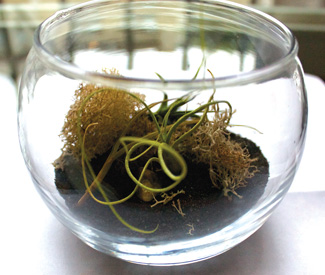
One of the three owners of this well-turned-out Mission boutique crafts these “air plants” in bulbous aquarium bowls. Rocks, sand, moss, and greenery coexist peacefully within the bowels of the terrariums – the perfect window sill companion for your buddy who longs for more nature in their life.

3458 18th St., SF (415) 244-7457, www.missionstatementsf.com


Dickens and drag queens and dreidels (oh my!)

0

culture@sfbg.com

HOLIDAY GUIDE 2011 You know what would be a good present to yourself this holiday season? Some ankle weights. Imagine all the almond cake and vegan eggnog you’ll have shoved into your belly by this time next month, you soon-to-be-less-svelte snowy sexpot. Not into approximating a house arrest prisoner? How about pledging to run about to as many as the Bay’s holiday hotspots as possible this year — you’ll be a Kwanzaa cutie in no time a’tall. And with such jingling gems — from costume fairs to drag queens in Union Square and free chamber orchestra performances — you’ll come out on the other side (2012) cut and cultured. 


Union Square iceskating rink Good news for nervous wall-grabbers and double axel spinners alike: the holiday ice rink is back at Union Square. Cue icicle lights, grand romantic gestures, and seizing onto strangers for suddenly-needed support.

Through Jan. 16. 10 a.m.-11:30 p.m. except for when closed for private parties, $10 for 90-minute session. Union Square, SF. www.unionsquareicerink.com


Great Dickens Fair Before Harry Potter and Kate Middleton transformed young Americans into full-blown Anglophiles, a whole different conception of Britain flourished stateside: the Dickensian version, replete with scones and hot toddies. Walk off your burgeoning middle with a jaunt through the Cow Palace’s temporary lamp-lit alleys.

Saturdays and Sundays through Dec. 18, 11 a.m.-7 p.m., $25. Cow Palace, 2600 Geneva, SF. www.dickensfair.com


“The Best Time of Year” SF Symphony Christmas special concert The San Francisco Symphony and Chorus exhale classical Christmas picks and carols to a fully-bedecked Davies Symphony Hall.

Nov.30-Dec.1, 8 p.m., $25–$68. Davies Symphony Hall, 201 Van Ness, SF. (451) 864-6000, www.sfsymphony.org


Working Solutions holiday gift fair Showcasing San Francisco businesses assisted by Working Solutions’ micro loan programs, this fair lets shoppers pick up everything from Bernal Heights-wrought knives to chunks of Mission-crafted chocolate.

Dec. 1, 5-8 p.m., free. 101 Second St., SF. (415) 655-5433, www.tmcworkingsolutions.org


The Golden Girls: The Christmas Episodes Trannyshack takes on the blue-haired wonder that was The Golden Girls in a glitzy, raucous yearly San Francisco tradition.

Thursdays, Fridays, and Saturdays Dec. 1-23, 8 p.m., $25–$30. Victoria Theater, 2961 16th St., SF. www.trannyshack.com


A Christmas Carol There’s no better way to get in the mistletoe mood than to watch old Ebenezer slowly thaw out his icy, pinched heart in the Deco glory of the ACT Theatre.

Dec. 1-24, 7 p.m., $20–$75. American Conservatory Theatre, 415 Geary, SF. (415) 749-2228, www.act-sf.org


Holiday tree-lighting ceremony Jack London Square becomes a Bay-side holiday crèche two hours with live reindeer, snow, wintry tunes, and a tree-lighting to launch the flurry of the holidays.

Dec. 2, 5-7 p.m., free. Jack London Square, Oakl. www.jacklondonsquare.com


Oakland-Alameda Estuary lighted yacht parade How can yachts parade, you ask? With style, we answer — East Bay boat owners trick out their vessels with festive lights visible from the shore.

Dec. 3, 5:30 p.m., free. Visible from Jack London Square, Oakl. www.lightedyachtparade.com


Fantasy of Lights celebration ‘Tis the season for brilliant night-time lights, and Union Street will not be an exception. Stately Victorians provide the glowing background for a holiday gathering featuring everything from a monkey to Santa and his elves.

Dec. 3, 3-7 p.m., free. Union between Van Ness and Steiner, Fillmore between Union and Lombard, SF. www.sresproductions.com


San Francisco Forest Choir Imagine yourself in a snowy Narnia glen, the Forbidden Forest, or roaming through the woods with Hansel and Gretel to the music of the San Francisco Forest Choir, an all-female group who sing in Japanese and English at the Western Addition library.

Dec. 3, 3-4 p.m., free. Western Addition branch library, 1550 Scott, SF. (415) 355-5727, www.sfpl.org.


Sharon Art Studio winter pottery and craft sale Thousands of gleaming pieces are up for sale by this staple of the Bay Area craft scene; lug your loot home and get your bicep curls out of the way for a week.

Dec. 4, 11 a.m., free. Sharon Art Studio, Children’s Playground, Golden Gate Park, SF. (415) 753-7005, www.sharonartstudio.org


SF Chamber Orchestra holiday family concert Circus Bella and the SF Chamber Orchestra team up for a strangely compelling holiday pairing: clownish acrobatics set to the strains of classical music.

Dec. 4, 3-4 p.m., free with RSVP. Bayview Opera House, 4705 Third St., SF. (415) 824-0386, www.bayviewoperahouse.org


Gourmet Ghetto’s snow day For those Bay citizens unfamiliar with the bliss of a true snow day, the Gourmet Ghetto’s version provides a superior version to the rest of the country’s admittedly frigid ones: real snow, yes, but also crafting, hot cocoa and cookies, a Snow Queen, and the warmth of community.

Dec. 5 10 a.m.-3 p.m., free. Andronico’s parking lot, 1550 Shattuck, Berk.; 1-4 p.m., free. M. Lowe and Co., 1519 Shattuck, Berk.; Noon-4 p.m., free. Twig and Fig, 2110 Vine, Berk. www.gourmetghetto.org


“Winter in the Wineries” Sixteen wineries will stamp your passport for a two-month period starting December 2, enabling you to enjoy unlimited tastings, tours, and meet-and-greets throughout Napa Valley.

Various locations and times, Calistoga. www.calistogavisitors.com. $50 for one passport ticket


Palestinian Craft Fair Straight from the hands of Palestinian artists and craftspeople: olive oil-based soap, embroidery, glassware, ceramics, books, honey, and Dead Sea products sold to benefit their makers an ocean away.

Dec. 4, 10 a.m.-4 p.m., free. Live Oak Park, 1301 Shattuck, Berk. (510) 548-0542, www.mecaforpeace.org


“Songs and Harps to Celebrate the Holiday Season” Harpists of the Bay, unite! The young pluckers of the Bay Area Youth Harp Ensemble join the Triskela Celtic Harp Trio to perform holiday pieces from around the world. Singing along is not only encouraged but expected.

Dec. 6, 6 p.m., free. Main Library, 100 Larkin, SF. (415) 557-4400, www.sfpl.org


“Drag Queens on Ice” Break out your very best glitz for a night spent skating next to legions of SF’s drag personalities. A 9:30 p.m. performance by the queens in question ends the evening.

Dec. 8, 8 p.m., $10 for 90-minute session. Union Square, SF. www.unionsquareicerink.com


“A Very Shut-Ins Xmas” The vanguard leaders of the “hulabilly” sound, the Shut-Ins return with a Christmas show to benefit San Francisco’s Legal Assistance to the Elderly.

Dec. 8, 5:30-8 p.m., $20. 50 Mason Social House, 50 Mason, SF. (415) 538-3333, www.laesf.org


Golden Gate Park tree lighting Golden Gate Park’s hundred-foot Monterey cypress (shouldn’t it have a name by now?) transforms into a light-bedecked behemoth for the 82 year.

Dec. 8, 5 p.m., free. McLaren Lodge, 501 Stanyan, SF.


La Cocina gift fair Its cryptic but tasty-sounding “tamale alley” should provide enough of a draw, but La Cocina’s gift fair also promises local vendors selling organic olive oils, handmade pasta, and mushrooms nourished by recycled coffee grounds. Pretty easy to stomach.

Dec. 9, 5-9 p.m., free. Mission Cultural Center for Latino Arts, 2868 Mission, SF. www.lacocinasf.org


Winter Wunderkammer holiday art sale The most you can spend here on one item is 50 bucks, the least a dollar. Accompanied by spiced wine and tunes, small-format works from local artists are on sale. Proceeds from this walk-in curio cabinet benefit The Lab and participating artists.

Opening party Dec. 9, 6-11 p.m., free. Also Dec. 10, 11 a.m.-4 p.m., free. The Lab, 2948 16th St., SF. (415) 864-885, www.thelab.org


California Revels Ah, the revels. This year, the interactive period presentation will sit you smack down at the Round Table. Dance and sing, young knight — no one’s mocking you at this costume-heavy conclave.

Dec. 9-11, 16-18; Fri. 8 p.m., Sat. and Sun. 1 p.m. and 5 p.m., $19-52. Scottish Rite Theater, 2850 19th Ave., SF. (510) 452-8800, www.californiarevels.org


SF Ballet’s Nutcracker Even with its lampoonable name, the Nutcracker remains a incomparable date choice for its lush costumes, fantastical storyline, and ability to trigger childhood flashbacks.

Dec. 9-25, various times, $25–$285. War Memorial Opera House, 301 Van Ness, SF. (415) 865-2000, www.sfballet.org


Misfit Toy Factory For one evening, artists cobble together sculptures, toys, and gifts under one roof to the beat of DJ Yukon Cornelius. Items are sold at the end of the evening for a fixed price of forty dollars.

Dec. 10, 7-10 p.m., free. Root Division, 3175 17th St., SF. (415) 863-7668, www.rootdivision.org


The Revolutionary Nutcracker Sweetie A radical alternative to the holiday classic, Dance Brigade’s version features Clara, an undocumented worker, a homeless Sugar Plum Fairy, and an angel of resistance.

Dec. 10, 2 p.m. and 6 p.m.; Dec. 11, 1 p.m. and 5 p.m., $15–$17. Brava Theater, 2781 24th St., SF. www.dancemission.com


Hanukah festival of light Geared towards the younger set and their handlers, the JCC East Bay’s festival of light features storytelling, menorah making, dreidel games, and a concert by Isaac Zones, a mainstay in the Bay’s Jewish music scene.

Dec. 11, 10 a.m-2 p.m., $5. JCC East Bay, 1414 Walnut, Berk. www.jcceastbay.org.


“Holidays: Christmas, Chanukah, and Other Festive Celebrations” lecture Library docents present an examination of paintings from around the world dealing with everyone’s favorite subject: the giving, feasting, and receiving endemic to the holiday season.

Dec. 14, 6:30-7:30 p.m., free. Glen Park branch library, 2825 Diamond, SF. (415) 355-2858, www.sfpl.org


Mechanics’ Institute holiday gift and poster sale The staggeringly lovely Mechanics’ Institute hosts a large sale of hard-cover and paperback books, gifts, and posters straight from its library.

Dec. 15, 4:30-6:30 p.m., free. Mechanics’ Institute, 57 Post, SF. (415) 393-0100, www.milibrary.org


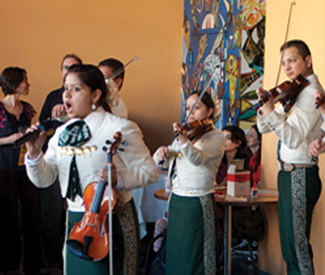
Holiday youth mariachi concert Three zestful youth mariachi bands perform traditional Mexican holiday music, providing an energizing segue into a sometimes exhausting season.

Dec. 16, 7:30 p.m., $10. Mission Cultural Center for Latino Arts, 2868 Mission, SF. (415) 643-2785, www.missionculturalcenter.org


Holiday Memories double feature Head back to the times of toboggans and candle-lit windows with two short films recounting rural winters of yesteryear. A Child’s Christmas in Wales visualizes Dylan Thomas’ Welsh childhood; The Sweater animatedly recounts Roch Carrier’s Quebecois, hockey-centered upbringing.

Dec. 17, 2 p.m., free with $15 museum admission. The Exploratorium, 3601 Lyon, SF. (415) 561-0360, www.exploratorium.edu


Renegade Craft Fair holiday market For the third year and showcasing more than 250 makers and craftspeople, the Renegade Craft Fair’s holiday happening can be a bit overwhelming. But it’s an undeniably great answer to gifting woes: pick up jewelry, body products, paper goods, clothing, and way, way more, all DIY enough to satisfy your most loca-ttired friend.

Dec. 17-18, 11 a.m.-6 p.m., free. Concourse Exhibition Center, 635 Eighth St., SF. www.renegadecraft.com


Reclaiming Yule ritual It may be chilly outside, but Sebastapol’s midwinter celebration (led by Starhawk, a leader in Bay Area earth-based spirituality) is indoors and full of warmth-inducing activities, namely dancing in honor of the Earth and Sun.

Dec. 18, 6:30 p.m., $7. Sebastopol Community Center, 390 Morris, Sebastapol. www.reclaiming.org


Solstice Eve celebration With a bonfire and roles doled out to participants (rocks, trees and mists), celebrating the longest night of the year on Ocean Beach is actually rather toasty. Bring items to release into the transformative fire — love letters are just the starting point.

Dec. 20, 3:30 p.m., free. Ocean Beach at Taraval, SF. www.reclaiming.org


Bill Graham menorah lighting The lighting itself takes place at 5 p.m., but the hours-long run-up is by no means lacking: traditional Jewish music, arts and crafts, and menorahs for every child fill Union Square starting at 3 p.m.

Dec. 20, 5 p.m., free. Union Square, SF. www.chabadsf.org


Kujichagulia celebration Kwanzaa’s day of personal definition and expression comes to City Hall, followed by a candle-lighting ceremony and dinner at Gussie’s, known for its fried tasties, red velvet cake, and Southern sweet tea.

Dec. 27, noon, City Hall, SF., 6 p.m., Gussies Chicken and Waffles, 1521 Eddy, SF. www.kwanzaasanfrancisco.com


Ujima celebration On Ujima, the third day of the week-long Kwanzaa holiday, community members gather to celebrate a collective spirit of responsibility and work.

Dec. 28, 3-6 p.m., free. Bayview Hunters Point YMCA, 1601 Lane, SF. www.sfpl.org


Keeping Score: Ives Holiday Symphony screening Unrecognized at the time of his death, experimentalist composer Charles Ives labored over his Holiday Symphony, which now gets fitting recognition by the San Francisco Symphony in a library concert that follows an hour-long documentary on the man.

Dec. 29, noon, free. Main Library, 100 Larkin, SF. (415) 557-4400, www.sfpl.org


Kuumba celebration Fittingly, the main San Francisco celebration of Kwanzaa’s Kuumba (day of creativity) occurs in the Jazz Heritage Center, a space shared by musical hotspot Yoshi’s. Celebrate the Fillmore’s manifold musical virtuosos on the last day of the year.

Dec. 31, 1-5 p.m., free. Jazz Heritage Center, 1330 Fillmore, SF. www.jazzheritagecenter.org

Lessons of the Avalos campaign

157

By N’Tanya Lee

It’s the middle of the night. His two kids and wife are home in bed. Supervisor John Avalos, candidate for mayor, heads downtown in his beat-up family car. He parks and walks over to 101 Market Street, and casually starts talking to members of OccupySF. He’s a city official, but folks camped out are appreciative when they see he’s there to stand with them, to try to stop the cops from harassing them, even though its 1 a.m. and he should be in bed.

John Avalos was the first elected official to personally visit Occupy SF. It wasn’t a publicity stunt — his campaign staff didn’t even know he was going until it was over. He arrived and left without an entourage or TV cameras. This kind of moment — defined by John’s personal integrity and the strength of his personal convictions — was repeated week after week, and provides a much-needed model of progressive political leadership in the city.

John Avalos is more than “a progressive standard bearer,” as the Chronicle likes to call him. He’s also a Spanish-speaking progressive Latino, rooted in community and labor organizing, with a racial justice analysis and real relationships with hundreds of organizers and everyday people outside of City Hall. He’s demonstrated an authentic accountability to the disenfranchised of the city, to communities of color and working people, and he knows that ultimately the future of the city is in our hands.

Some accomplishments of John’s campaign for mayor are already clear: He consolidated the progressive-left with 19%, or nearly 40,000, first-place votes, despite the confusion of a crowded field; he came in a strong second to incumbent Ed Lee despite being considered a long shot even weeks before the election; after RCV tallies, he finished with an incredible 40% of the vote, demonstrating a much wider base of support across the city than he began with, and much broader than former frontrunners Leland Yee and David Chiu, who outspent him 3-1. He won the Castro, placed third in Chinatown (ahead of Yee), and actually won the election-day citywide vote. Not bad. In fact, remarkable, for a progressive Latino from a working class district in the southern part of town, running in his first citywide race.

I believe John Avalos demonstrated what can be accomplished with a new kind of progressive leadership — and suggests the elements of a new progressive coalition that can be created to win races in 2012, and again, in 2015.

It’s Monday afternoon, 1:35pm, time for our weekly Campaign Board meeting. John rushes in, after a dozen appointments already that day. The rest of us file into the ‘cave’ — the one private room in Campaign headquarters, with no windows, a makeshift wall and furniture that looks to be third-hand. The board makes the key strategy, message, and financial decisions. There are no high paid political consultants here. Most of us are, or have been, organizers. Today, we need to approve the campaign platform. Finally. We’ve decided to get people excited about our ideas, an agenda for change. We leave the meeting excited and nervous, wondering if anyone will get excited about the city creating its own Municipal Bank.

We were an unlikely crew to lead a candidate campaign — even a progressive one in San Francisco. We come from membership based community and labor organizations, and share a critique of white progressive political players and electeds who spend too few resources on building power through organizing and operate without accountability to any base. We are policy and politics nerds, but we hate traditional politics. Seventy percent of us are people of color — Black, Filipina, Latino, and Chinese. We are all women except John, the candidate, and nearly half of us are balancing politics with parenting.

The campaign board — including John himself—shared a vision for building progressive power. The campaign plan was explicit and specific about achieving outcomes that included winning room 200 but went beyond that central goal. We set out to strengthen progressive forces, to build towards the 2012 Supervisor races, and increase the capacity of the community-based progressive electoral infrastructure so we can keep building our collective power year-round, for the long-term.

We hope these victories will shape progressive strategy moving forward:

1. In just a few months, Team Avalos consolidated a new and unique progressive bloc. We brought together people and organizations who’d never worked together before — white bike riders and Latino anti-gentrification organizers, queer activists and African American advocates for Local Hire. The Avalos coalition was largely community forces: SF Rising’s base in working class Black, Latino, Filipino and Chinese communities; the Bike Coalition’s growing base of mostly white bike riders; affinity groups like Filipinos, Queers, Latinos and Arabs for Avalos; progressive Democrats; social networks of creative, young progressive activists affiliated with the League of Young Voters; and loyal families and neighborhood leaders from John’s own District 11. The campaign prioritized communicating to voters in four languages, and according to the Chinese press, John Avalos was the only non-Chinese candidate with a significant Chinese outreach program. There were stalwarts from progressive labor unions (most notably SEIU 1021 and USWW) who threw down — but overall, labor played it safe and invested resources in other guys. And then, in the great surprise development of the race, supporters of the new national occupy movement came to be a strong part of the Team Avalos base because the campaign was so well positioned to resonate with the call to take on the one percent.

2) Team Avalos built popular support for key progressive ideas. We used the campaign to build popular support for a citywide progressive agenda. Instead of leading with our candidate we led with bold, distinctive issues that provided a positive alternative vision to the economic crisis: Progressive taxation, municipal banking, and corporate accountability for living wage jobs instead of corporate tax breaks. By the end of the campaign, at least three other candidates came to support the creation of a city-owned bank, and the idea had enough traction that even the San Francisco Business Times was forced to take a position against it.

3) Team Avalos built the electoral capacity of grassroots organizations whose members have the most at stake if progressives gain or lose power in SF: poor and working-class communities of color. We developed the electoral organizing skills of a large new cohort of grassroots leaders and organizers of color with no previous leadership experience in a candidate campaign. They are ready for the next election.

For the last few months, I had the privilege of working with an unusual but extraordinary Avalos campaign team, who were exactly the right people for the right moment in history, to lead a long shot campaign to an unlikely, remarkable and inspiring outcome. Let’s build on these gains. In the coming weeks and months, we must be thorough in our analysis of this election, engage and expand the Avalos coalition base, and build unity around one or more collective demands of Mayor Lee from the left. And in time, we will have a progressive voting majority and a governing bloc in City Hall. We will win, with the mass base necessary to defend gains, hold our own electeds accountable, and truly take on the city’s one percent.

NTanya Lee was the Executive Director of Coleman Advocates for Children & Youth, and served as a volunteer chair of the Avalos for Mayor campaign board. You can find her now at USF or working on her new project about a long-term vision for left governance called Project 2040.


Thoughtful hooligans

0

arts@sfbg.com

MUSIC A somber organ chord rings out on the opening track of WU LYF’s Go Tell Fire To The Mountain, “L Y F.” As the distant clash of cymbals grows louder, a wailing guitar lures you in like a siren song. Then Ellery Roberts unleashes a desperate, hellish growl, and you realize that WU LYF is unlike any band you’ve ever heard.

Characterized by Roberts’ guttural snarl and a rich, grandiose sound the band refers to as heavy pop, Go Tell Fire To The Mountain is a cathartic masterpiece born from the restless adolescence of four young Mancunians. WU LYF (an acronym for World Unite! Lucifer Youth Foundation) came together through a firm resistance to a conventional transition into adulthood.

“I didn’t want to go to university,” says Roberts. “I felt like it was kind of the only option I had.” On the phone, Roberts is a far cry from the gravel-throated animal on WU LYF’s debut. The 20-year-old is thoughtful, reserved, and exudes a remarkable intelligence.

Roberts and bandmates Tom McClung, Joe Manning, and Evans Kati were in their mid teens when they began playing together in their native Manchester, England. “When we wrote [the single] ‘Heavy Pop,’ that was the moment,” Roberts says. “It didn’t feel like we were trying to sound like anyone else.”

Sure, Roberts’ vocals easily draw comparisons to Tom Waits, and the band’s epic sound is reminiscent of Godspeed You! Black Emperor or Explosions In The Sky. In an era of rampant imitation and recycling, however, WU LYF has stumbled upon a sound that’s refreshingly unusual.

Expecting “Heavy Pop” to reach only a handful of friends, the group posted the track online. Media outlets caught hold of the song and began speculating wildly about the mystery band from Manchester. Rather than sign a record deal, WU LYF set up a website with vague, anti-authoritarian musings where fans could join the Lucifer Youth Foundation. For a small entry fee, members received the band’s single and a white “bandit flag of allegiance.” This worldwide alignment of hoodlums funded WU LYF’s full length debut.

If “Heavy Pop” marked the genesis of WU LYF, the abandoned church where Go Tell Fire To The Mountain was recorded is the mother that nurtured the beast. The group abstained from working in a studio, which Roberts says “seemed like a mathematic way of making music.” Instead, the foursome went out in search of big, empty spaces.

“We were walking around this old, industrial part and we just came across this church in the middle of a maze of factories,” he says. “It added so much to the record. None of us were really controlling the sound.”

Though Roberts’ impassioned vocals render his words nearly incomprehensible, a quick look at his lyrics reveals a literary astuteness. Go Tell Fire To The Mountain‘s narrative structure was inspired by a screenplay Roberts wrote at the age of 17, and the cinematic album explores themes of camaraderie, mortality, and ambiguous religion.

“We put a lot of ourselves into it,” says Roberts. Although the record’s only been out for a few months, WU LYF has achieved a cult like following that Roberts calls “pretty amazing, but strange.” In the wake of the monstrous reaction to Go Tell Fire To The Mountain, WU LYF is embarking on its most extensive tour thus far.

The band’s been in the US for a few days when we speak so I ask Roberts if he’s spotted any LYF members in the audience. “We’ve seen a couple,” he responds. “It’s always nice to see when you come on stage, [the] fans that have their white flags. You know you’ve got your friends out there.”

WU LYF With Crystal Antlers

Mon/21, 8 p.m., $15

Independent

628 Divisadero, SF

(415) 771-1421

www.theindependentsf.com

Editor’s notes

0

tredmond@sfbg.com

Occupy Oakland has been very good at exposing one local problem — police brutality. The first raids, and the tear gas and rubber bullets that flew afterward — showed the world how poorly trained the Oakland cops are and how unprepared they were for a largely peaceful demonstration.

But overall, the Occupy movement has been about national issues — or rather, The National Issue, which is income inequality. Nothing else going on in the United States compares. On an economic level, I could argue that nothing else matters — until we resolve the wealth and income gap, the recession will never end, the deficit will never improve, the unemployment rate won’t stabilize, the nation will grow weaker and weaker and more and more unstable … basically, we’re doomed.

But while there have been marches on local banks and corporations, not a lot of Occupy attention has gone to local inequality — to what the folks at San Francisco City Hall, and Oakland City Hall are doing to make the one percent in our own backyards pay its fair share for the services that most impact many of our lives. Mayor Jean Quan got booed for calling in the riot cops, but Mayor Ed Lee isn’t getting booed for corporate tax breaks.

The OccupySF people came out in force to a Board of Supervisors hearing to demand that their camp be left alone. But they aren’t out in force to demand, say, a local fee on bank foreclosures.

That’s not a criticism of a movement that continues to inspire me every day; it’s just a statement about tactics and strategy. And it’s one we all ought to be thinking about.

In a brilliant opinion piece this week, Raj Jayadev, director of Silicon Valley Debug, notes:

“In San Jose, the city that used to promote itself as the capitol of Silicon Valley, city budget cuts have either eliminated or dramatically slashed hours for youth sanctuaries like libraries and community centers. … For us, the one percent are just up the street -– the 101 to be precise. Those tech giants exist in the same Silicon Valley that cannot even keep its library doors open. Why have they not given? Why have we not demanded?”

Good question.

Film Listings

0

Film listings are edited by Cheryl Eddy. Reviewers are Kimberly Chun, Max Goldberg, Dennis Harvey, Lynn Rapoport, and Matt Sussman. For rep house showtimes, see Rep Clock.

OPENING

California State of Mind: The Legacy of Pat Brown It’s arguably still the late Pat Brown’s California — we’re just living in it. This up-close documentary — put together with care and passion by his granddaughters Sascha Rice and Hilary Armstrong — looks at history that often gets neglected for its close proximity to the present. The moviemakers go back to the politician’s beginnings, on the heels of the 1906 earthquake, amid the subsequent rebuilding of San Francisco, and the growing sense of optimism. Viewed through the lens of news footage, photographs, and interviews with close observers including Dianne Feinstein, Tom Hayden, and Jerry Brown (Pat’s son), Pat Brown was there, putting his weight behind some of the state’s most significant legislation, from the passing of the fair housing act to the building of the California Aqueduct. Despite their evident love and respect for their subject — the filmmakers refer to their subject as “grandpa” — Rice and Armstrong don’t duck from the disappointments Pat Brown may have suffered in his failure to enter a national political stage and the pressures of living in a clan that, as daughter Barbara Brown Casey says, considered politics “the family business.” (1:30) SFFS New People Cinema. (Chun)

Curling This spare drama from Quebec writer-director Denis Côté centers on Jean-Francois (Emmanuel Bilodeau), a 40-ish small towner who works as janitor-handyman at both the local bowling alley and motel. He keeps 12-year-old daughter Julyvonne (Philomène Bilodeau) at home, not letting her attend school and rarely letting her see other people out of a misguided over-protectiveness that Côté chooses to leave unexplained. Just like he leaves unexplained the dead bodies Julyvonne finds in a nearby forest, the dying boy Jean-Francois finds on a roadside one night, or the bloody motel room he’s instructed to clean up without calling police. You might think from the above that Curling is an elliptical thriller, but no — it’s just elliptical, and induces a big “So what?” once we realize this is simply a tale about a father and daughter enduring modest strain, then getting past it. Why there are so many red herrings scattered around a narrative otherwise as chilly, flat and bleak as the wintry landscapes here is anyone’s guess. (1:36) SFFS New People Cinema. (Harvey)

*The Descendants See “Blue Hawaii.” (1:55)

Dragonslayer See “Let’s Get Lost.” (1:14) Roxie.

Happy Feet Two The dancing penguins are back, with Elijah Wood, Robin Williams, and Hank Azaria among the celebrity vocalists. (1:40) Four Star, Presidio.

The Heir Apparent: Largo Winch The title is a mouthful; the billionaire-heir-fights-to-save-his-corporation plot a little out of step with the times. But The Heir Apparent: Largo Winch — based on a wildly popular Belgian comic book series that’s already spawned a TV series, a video game, and a sequel to this 2008 film — is a serviceable, multilingual thriller in the James Bond mode, with a little bit of Mr. Deeds (Adam Sandler version) tossed in. When megarich businessman Nerio Winch (Miki Manojlovic) dies on his Hong Kong yacht, his second-in-command (Kristin Scott Thomas, rocking an ice-queen Anna Wintour ‘do) takes control — until word gets out about Largo Winch, secretly adopted as an infant and groomed since youth to inherit Nerio’s wealth and position. A power struggle ensues, and since Largo (Tomer Sisley) is a rakishly handsome, ne’er-do-well adventurer type, the action includes chase scenes in multiple countries, bad guys shooting out of helicopters, documents stashed in secret locations, a femme fatale, disguises, back-stabbing (sometimes literally), etc. Why no part here for Jean-Claude Van Damme? He’s Belgian — and he perfected this international B-movie formula decades ago. (1:48) Balboa. (Eddy)

The Other F Word See “I Don’t Want to Grow Up.” (1:38) Lumiere, Shattuck.

Steve Jobs: The Lost Interview Is this a quickie cash-in following the tidal wave of appreciation following the death of Steve Jobs? Interviewer Robert Cringely made Triumph of the Nerds, a PBS miniseries about the birth of the personal computer industry, in 1995, and much of this lengthy talk with Jobs (his former employer) didn’t ultimately make the cut, although the Apple co-founder’s critique of Microsoft as lacking taste went down in history. The master tapes of this discussion were thought to be lost until the series editor unearthed an unedited copy of the entire interview in his London garage. This rush production isn’t quite unedited (at points Cringely steps in to contextualize) — and it was done more than 15 years ago, before Jobs sold NeXT to Apple and returned to the firm to shake the firmament with the iPod, iPhone, and iPad — but the interview and the answers Cringely fields are nevertheless fascinating, from the potentially silly question “are you a hippie or a nerd?” (“If I had to pick one of those two, I’m clearly a hippie,” Jobs responds with a sly look in his eye, “and all the people I worked with were clearly in that category, too”) to Jobs’ prophesies about the impact of the Web to musings like “I think everybody in this country should learn to program a computer, learn a computer language, because it teaches you how to think.” (1:00) Opera Plaza. (Chun)

Twilight Saga: Breaking Dawn — Part One The one with the wedding. (1:57) Marina, SF Center.

Tyrannosaur Apparently unemployed and estranged from any family, middle-class Leeds Joseph (Peter Mullan) is fueled by enough rageahol (Homer Simpson: “I’m a rageaholic! Addicted to rageahol!”) to commit three violent acts in the first three scenes of actor Paddy Considine’s debut feature as writer-director. Volunteering at a Christian charity thrift shop in his bleak hood by day, our other protagonist Hannah (Olivia Colman) spends nights in the “nice” part of town. Behind one of its doors, she endures considerable abuse as punching bag (and occasional urinal) for violently mood-swinging spouse James (Eddie Marsan, making one pine for the comparative harmlessness of his horrible driver’s ed teacher in 2008’s Happy-Go-Lucky). A slice of British miserabilist pie with a razor in it, Tyrannosaur throws these characters in various extremis together with almost no backstory but a real zeal to rub our noses in it — whatever “it” is. Strong content and strong performances make this as hard to turn away from as it is sometimes hard to watch. Yet there’s something a little underdeveloped and contrived about the load of angry angst Considine makes his story bear. The result is worthy, but not as genuinely shocking as say, Tim Roth’s 1999 The War Zone, nor as insightful about dole-ful lower-class English life as 2009’s Fish Tank, to name a couple comparable features. (1:31) Sundance Kabuki. (Harvey)

*The Woodmans Francesca Woodman jumped off a building in 1981 when she was 22, despondent over the fact that her photographs hadn’t found a niche in New York’s competitive art world. She was no stranger to competition — she’d grown up with a parents who placed art-making above all other obligations. Fast-forward to the 21st century, and Francesca remains the most-acclaimed Woodman; her haunting black-and-white photos, often featuring the artist’s nude figure, have proven hugely influential in the realms of both fine art and fashion. She was, as the San Francisco Museum of Modern Art website says (an exhibit of her work opens Nov. 5), “ahead of her time.” Scott Willis’ documentary features extensive interviews with her parents, George and Betty, and to a lesser extent Francesca’s brother, Charles (also an artist); the film is both Woodman bio and incisive exploration of the family’s complex dynamics. Most fascinating is Charles, who remarks of his daughter’s posthumous success, “It’s frustrating when tragedy overshadows work.” But after her death, he took up photography, making images that resemble those Francesca left behind. (1:22) Roxie. (Eddy)

Young Goethe in Love You might be suspect North Face (2008) director Philipp Stölzl’s take on Germany’s most renowned writer is biting off of 1998’s Shakespeare in Love, but the filmmaker manages to rise above facile comparisons to deliver his own unique stab at re-creating the life and love of the 23-year-old polymath, long before he became an influential poet and cultural force. Stölzl and co-writers Christoph Müller and Alexander Dydyna spin off the autobiographical nature of what some consider the world’s first best-seller, 1774’s The Sorrows of Young Werther, though there were few sorrows at first for the young Johann Wolfgang von Goethe (Alexander Fehling) — a perpetually raging, playful party animal rather than the brooding forerunner of romanticism. Unable to move forward in his law studies and believed a wretched failure by his father (Henry Hübchen), Goethe is exiled to a job in a small-town court, beneath the thumb of the fiercely bourgeois court councilor Kestner (Moritz Bleibtreu). Embodying the charms of provincial life: Lotte Buff (Miriam Stein), the bright-eyed, artistic eldest daughter of a struggling widower. Naturally Goethe and Lotte end up caught in each other’s orbits, although rivals for affection and attention lie around each corner, as does a certain inevitable sense of despair. Charismatic lead actors and attention to period details — as well as an infectious joie de vivre — are certain to animate fans of historical romance. (1:42) Embarcadero, Shattuck. (Chun)

ONGOING

Anonymous Hark, what bosom through yonder bodice heaves? If you like your Shakespearean capers OTT and chock-full of fleshy drama, political intrigue, and groundling sensation, then Anonymous will enthrall (and if the lurid storyline doesn’t hold, the acting should). Writer John Orloff spins his story off one popular theory of Shakespeare authorship — that Edward de Vere, the 17th Earl of Oxford, was the true pen behind the works attributed to William Shakespeare of Stratford-upon-Avon. Our modern-day narrator (Derek Jacobi) foregrounds the fictitious nature of the proceedings, pulling back the curtain on Ben Jonson (Sebastian Armesto) staging his unruly comedies for the mob, much to the amusement of a mysterious aging dandy of a visitor: the Earl of Oxford (Rhys Ifans). Hungry for the glory that has always slipped through his pretty fingers, the Earl yearns to have his works staged for audiences beyond those in court, where Queen Elizabeth I (Vanessa Redgrave as the elder regent, daughter Joely Richardson as the lusty young royal) dotes on them, and out of the reach of his puritan father-in-law Robert Cecil (David Thewlis), Elizabeth’s close advisor, and he devises a plan for Jonson to stage them under his own name. But much more is triggered by the productions, uncovering secret trysts, hunchback stratagems, and more royal bastards than you can shake a scepter at. Director Roland Emmerich invests the production with the requisite high drama — and camp — to match the material, as well as pleasing layers of grime and toxic-looking Elizabethan makeup for both the ladies and the dudes who look like ladies (the crowd-surfing, however, strikes the off-key grunge-era note). And if the inherent elitism of the tale — could only a nobleman have written those remarkable plays and sonnets? — offends, fortunately the cast members are more than mere players. Ifans invests his decadent Earl with the jaded gaze and smudgy guyliner of a fading rock star, and Redgrave plays her Elizabeth like a deranged, gulled grotesque. (2:10) 1000 Van Ness, Sundance Kabuki. (Chun)

*El Bulli: Cooking in Progress Oh to be a fly on the wall of El Bulli — back in 2008 and 2009, when director Gereon Wetzel turned his lens on the Spanish landmark, it was considered the best restaurant in the world. This elegantly wrought documentary, covering a year at the culinary destination (now closed), allows you to do just that. Wetzel opens on chef-owner Ferran Adrià shutting down his remarkable eatery for the winter and then drifting in and out of his staff’s Barcelona lab as they develop dishes for the forthcoming season. Head chef Oriol Castro and other trusted staffers treat ingredients with the detached methodicalness of scientists — a champignon mushroom, say, might be liquefied from its fried, raw, sous-vide-cooked states — and the mindful intuition of artists, taking notes on both MacBooks and paper, accompanied by drawings and much photo-snapping. Fortunately the respectful Wetzel doesn’t shy away from depicting the humdrum mechanics of running a restaurant, as Adrià is perpetually interrupted by his phone, must wrangle with fishmongers reluctant to disclose “secret” seasonal schedules, and slowly goes through the process of creating an oil cocktail and conceptualizing a ravioli whose pasta disappears when it hits the tongue, tasting everything as he goes. Energized by an alternately snappy and meditative percussive score, this look into the most influential avant-garde restaurant in the world is a lot like the concluding photographs of the many menu items we glimpse at their inception — a memorable, sublimely rendered document that leaves you hungry for more. (1:48) Opera Plaza. (Chun)

*Drive Such a lovely way to Drive, drunk on the sensual depths of a lush, saturated jewel tone palette and a dreamlike, almost luxurious pacing that gives off the steamy hothouse pop romanticism of ’80s-era Michael Mann and David Lynch — with the bracing, impactful flecks of threat and ultraviolence that might accompany a car chase, a moody noir, or both, as filtered through a first-wave music video. Drive comes dressed in the klassic komforts — from the Steve McQueen-esque stances and perfectly cut jackets of Ryan Gosling as the Driver Who Shall Remain Nameless to the foreboding lingering in the shadows and the wittily static, statuesque strippers that decorate the background. Gosling’s Driver is in line with Mann’s other upstanding working men who hew to an old-school moral code and are excellent at what they do, regardless of what side of the law they’re working: he likes to keep it clear and simple — his services as a wheelman boil down to five minutes, in and out — but matters get messy when he falls for sweet-faced neighbor Irene (Carey Mulligan), who lives down the hall with her small son, and her ex-con husband (Oscar Isaac) is dragged back into the game. Populated by pungent side players like Albert Brooks, Bryan Cranston, Ron Perlman, and Christina Hendricks, and scattered with readily embeddable moments like a life-changing elevator kiss that goes bloodily wrong-right, Drive turns into a real coming-out affair for both Danish director Nicolas Winding Refn (2008’s Bronson), who rises above any crisis of influence or confluence of genre to pick up the po-mo baton that Lynch left behind, and 2011’s MVP Ryan Gosling, who gets to flex his leading-man muscles in a truly cinematic role, an anti-hero and under-the-hood psychopath looking for the real hero within. (1:40) Lumiere. (Chun)

50/50 This is nothing but a mainstream rom-com-dramedy wrapped in indie sheep’s clothes. When Adam (Joseph Gordon-Levitt) learns he has cancer, he undergoes the requisite denial, anger, bargaining, depression, and acceptance like a formality. Aided by his bird-brained but lovable best friend Kyle (Seth Rogan), lovable klutz of a counselor Katherine (Anna Kendrick), and panicky mother (Anjelica Huston), Adam gets a new lease on life. This comes in the form of one-night-stands, furious revelations in parked cars, and a prescribed dose of wacky tobaccy. If 50/50 all sounds like the setup for a pseudo-insightful, kooky feel-goodery, it is. The film doesn’t have the brains or spleen to get down to the bone of cancer. Instead, director Jonathan Levine (2008’s The Wackness) and screenwriter Will Reiser favor highfalutin’ monologues, wooden characters, and a Hollywood ending (with just the right amount of ambiguity). Still, Gordon-Levitt is the most gorgeous cancer patient you will ever see, bald head and all. (1:40) 1000 Van Ness. (Ryan Lattanzio)

Gainsbourg: A Heroic Life Far from perfect, yet imbued with all the playful, artful qualities of the maestro himself, writer-director Joann Sfar goes out of his way to tell singer-songwriter Serge Gainsbourg’s tale the way that he sees it, as that of an artist, and in the process creates a wonderland of cartoonish perversity from the cradle to the grave. The remainder of A Heroic Life is almost eclipsed by the film’s earliest interludes, which trail the already too-clever-for-his-own-good young musician and painter, born Lucien Ginsburg, as he proudly claims his gold star from the Nazis. With echoes of 400 Blows (1959) resounding with every wayward step, the brash young Lucien lives by his active imagination, dreaming up a fat, spiderlike plaything from the monstrous Jew depicted in Nazi propaganda and conjuring an imaginary alter-ego he dubs his ugly Mug. Though Heroic Life‘s adult Serge is seamlessly embodied by Eric Elmosnino, few of the moments from the grown lothario’s life rival those initial scenes, with the exception of his exuberant love affair with Brigitte Bardot (Laetitia Casta) and the fantastic music that came out of it. Still, it’s a joy to hear his music, even in short snatches, with subtitles that clearly spell out Gainsbourg’s talents as a stunning, uniquely talented lyricist. (2:02) Roxie. (Chun)

*Gainsbourg: The Man Who Loved Women Those hungry for more of the real Serge Gainsbourg — after being tantalized and teased by Joann Sfar’s whimsical comic book-inspired feature — will want to catch this documentary by Pascal Forneri for many of the details that didn’t fit or were skimmed over, here, in the very words and image of the songwriter and the many iconic women in his life. Much of the chanson master’s photographic or video history seems to be here — from his blunt-force on-camera proposition of Whitney Houston to multiple, insightful interviews with the love of his life, Jane Birkin, as well as the many women who won his heart for just a little while, such as Brigitte Bardot, Juliette Gréco, Françoise Hardy, and Vanessa Paradis. Gainsbourg may be marred by its somewhat choppy, mystifying structure, at times chronological, at times organized according to creative periods, but overriding all are the actual footage and photographs loosely, louchely assembled and collaged by Forneri; delightful pre-music-videos Scopitones of everyone from France Gall to Anna Karina; and the gemlike, oh-so-quotable interviews with the mercurial, admirably honest musical genius and eternally subversive provocateur. Quibble as you might with the short shrift given his later career—in addition to major ’70s LPs like Histoire de Melody Nelson and L’Homme à tête de chou (Cabbage-Head Man) — this is a must-see for fans both casual and seriously seduced. (1:45) Roxie. (Chun)

Le Havre Aki Kaurismäki’s second French-language film (following 1992’s La Vie de Boheme) offers commentary on modern immigration issues wrapped in the gauze of a feel good fairy tale and cozy French provincialism a la Marcel Pagnol. Worried about the health of his hospitalized wife (Kaurismäki regular Kati Outinen), veteran layabout and sometime shoe shiner Marcel (Andre Wilms) gets some welcome distraction in coming to the aid of Idrissa (Blondin Miguel), a young African illegally trying to make way to his mother in London while eluding the gendarmes. Marcel’s whole neighborhood of port-town busybodies and industrious émigrés eventually join in the cause, turning Le Havre into a sort of old-folks caper comedy with an incongruously sunny take on a rising European multiculturalism in which there are no real racist xenophobes, just grumps deserving comeuppance. Incongruous because Kaurismäki is, of course, the king of sardonically funny Finnish miserabilism — and while it’s charmed many on the festival circuit, this combination of his usual poker-faced style and feel-good storytelling formula may strike others as an oil-and-water mismatch. (1:43) Clay, Shattuck. (Harvey)

The Ides of March Battling it out in the Ohio primaries are two leading Democratic presidential candidates. Filling the role of idealistic upstart new to the national stage — even his poster looks like you-know-who’s Hope one — is Governor Mike Morris (George Clooney), who’s running neck-and-neck in the polls with his rival thanks to veteran campaign manager (Philip Seymour Hoffman) and ambitious young press secretary Steven (Ryan Gosling). The latter is so tipped for success that he’s wooed to switch teams by a rival politico’s campaign chief (Paul Giamatti). While he declines, even meeting with a representative from the opposing camp is a dangerous move for Steven, who’s already juggling complex loyalties to various folk including New York Times reporter Ida (Marisa Tomei) and campaign intern Molly (Evan Rachel Wood), who happens to be the daughter of the Democratic National Party chairman. Adapted from Beau Willimon’s acclaimed play Farragut North, Clooney’s fourth directorial feature is assured, expertly played, and full of sharp insider dialogue. (Willimon worked on Howard Dean’s 2004 run for the White House.) It’s all thoroughly engaging — yet what evolves into a thriller of sorts involving blackmail and revenge ultimately seems rather beside the point, as it turns upon an old-school personal morals quandary rather than diving seriously into the corporate, religious, and other special interests that really determine (or at least spin) the issues in today’s political landscape. Though stuffed with up-to-the-moment references, Ides already feels curiously dated. (1:51) California, 1000 Van Ness, Piedmont, Sundance Kabuki. (Harvey)

Immortals Arrow time (comin’ at ya, in 3D), blood lust, fascinating fascinators, and endless seemingly-CGI-chiseled chests mark this rework of the Theseus myth. Tarsem Singh flattens out the original tale of crazy-busy hero who founded Athens yet seems determined to outdo the Lord of the Rings series with his striking art direction (so chic that at times you feel like you’re in a perfume ad rather than King Hyperion’s torture chamber). As you might expect from the man who made the dreamy, horse-slicing Cell (2000), Immortals is all sensation rather than sense. The proto-superhero here is a peasant (Henry Cavill), trained in secret by Zeus (John Hurt and Luke Evans) and toting a titanic chip on his shoulder when he runs into the power-mad Cretan King Hyperion (Mickey Rourke, struggling to gnash the sleek scenery beneath fleshy bulk and Red Lobster headgear). Hyperion aims to obtain the Epirus Bow — a bit like a magical, preindustrial rocket launcher — to free the Titans, set off a war between the gods, and destroy humanity (contrary to mythology, Hyperion is not a Titan — just another heavyweight grudge holder). To capture the bow, he must find the virgin oracle Phaedra (Freida Pinto), massacring his way through Theseus’ village and setting his worst weapon, the Beast, a.k.a. the Minotaur, on the hero. Saving graces amid the gory bluster, which still pays clear tribute to 1963’s Jason and the Argonauts, is the vein-bulging passion that Singh invests in the ordinarily perfunctory kill scenes, the avant-garde headdresses and costumes by Eiko Ishioka, and the occasional edits that turn on visual rhymes, such as the moment when the intricate mask of a felled minion melts into a seagoing vessel, which are liable to make the audience gasp, or laugh, out loud. (1:50) 1000 Van Ness, Presidio. (Chun)

In Time Justin Timberlake moves from romantic comedy to social commentary to play Will Salas, a young man from the ghetto living one day at a time. Many 12-steppers may make this claim, but Salas literally is, because in his world, time actually is money and people pay, say, four minutes for a cup of coffee, a couple hours for a bus ride home from work, and years to travel into a time zone where people don’t run from place to place to stay ahead of death. In writer-director Andrew Niccol’s latest piece of speculative cinema, humans are born with a digitized timepiece installed in their forearm and a default sell-by date of 25 years, with one to grow on — though most end up selling theirs off fairly quickly while struggling to pay rent and put food on the table. Time zones have replaced area codes in defining social stature and signaling material wealth, alongside those pesky devices that give the phrase “internal clock” an ominous literality. Niccol also wrote and directed Gattaca (1997) and wrote The Truman Show (1998), two other films in which technological advances have facilitated a merciless, menacing brand of social engineering. In all three, what is most alarming is the through line between a dystopian society and our own, and what is most hopeful is the embattled protagonist’s promises that we don’t have to go down that road. Amanda Seyfried proves convincible as a bored heiress to eons, her father (Vincent Kartheiser) less amenable to Robin Hood-style time banditry. (1:55) California, 1000 Van Ness. (Rapoport)

*Into the Abyss: A Tale of Death, a Tale of Life How remarkable is it that, some 50-plus features along, filmmaker Werner Herzog would become the closest thing to a cinema’s conscience? This time the abyss is much closer to home than the Amazon rainforest or the Kuwaiti oil fields — it lies in the heart of Rick Perry country. What begins as an examination of capital punishment, introduced with an interview with Reverend Richard Lopez, who has accompanied Texas death row inmates to their end, becomes a seeming labyrinth of human tragedy. Coming into focus is the execution of Michael Perry, convicted as a teenager of the murder of a Conroe, Tex., woman, her son, and his friend — all for sake of a red Camaro. Herzog obtains an insightful interview with the inmate, just days before his execution, as well as his cohort Jason Burkett, police, an executioner, and the victims’ family members, in this haunting examination of crime, punishment, and a small town in Texas where so many appear to have gone wrong. So wrong that one might see Into the Abyss as more related to 1977’s Stroszek and its critical albeit compassionate take on American life, than Herzog’s last tone poem about the mysterious artists of 2010’s Cave of Forgotten Dreams (and it’s also obviously directly connected to next year’s TV documentary, Death Row). The layered tragedies and the strata of destroyed lives stays with you, as do the documentary’s difficult questions, Herzog’s gentle humanity as an interviewer, and the fascinating characters that don’t quite fit into a more traditional narrative — the Conroe bystander once stabbed with a screwdriver who learned to read in prison, and the dreamy woman impregnated by a killer whose entire doomed family appears to be incarcerated. (1:46) Embarcadero, Shattuck. (Chun)

J. Edgar The usual polished, sober understatement of Clint Eastwood’s directing style and the highlights-compiling CliffsNotes nature of Dustin Lance Black’s screenplay turn out to be interestingly wrong choices for this biopic about one of the last American century’s most divisive figures. Interesting in that they’re perhaps among the very few who would now dare viewing the late, longtime FBI chief with so much admiration tempered by awareness of his faults — rather than the other way around. After all, Hoover (played by Leonardo DiCaprio) strengthened his bureau in ways that, yes, often protected citizens and state, but at what cost? The D.C. native eventually took to frequently “bending” the law, witch-hunting dubious national enemies (he thought the Civil Rights movement our worst threat since the bomb-planting Bolshevik anarchists of half a century earlier), blackmailing personal ones, weakening individual rights against surveillance, hoarding power (he resented the White House’s superior authority), lying publicly, and doing just about anything to heighten his own fame. A movie that internalized and communicated his rising paranoid megalomania (ironically Hoover died during the presidency of Nixon, his equal in that regard) might have stood some chance of making us understand this contradiction-riddled cipher. But J. Edgar is doggedly neutral, almost colorless (literally so, in near-monochrome visual presentation), its weird appreciation of the subject’s perfectionism and stick-to-it-iveness shutting out almost any penetrating insight. (Plus there’s Eastwood’s own by-now-de rigueur soundtrack of quasi-jazz noodling to make what is vivid here seem more dull and polite.) The love that dare not speak its name — or, evidently, risk more than a rare peck on the cheek — between Hoover and right-hand-man/life companion Clyde Tolson (Armie Hammer, very good if poorly served by his old-age makeup) becomes both the most compelling and borderline-silly thing here, fueled by a nervous discretion that seems equal parts Black’s interest and Eastwood’s discomfort. While you might think the directors polar opposites in many ways, the movie J. Edgar ultimately recalls most is Oliver Stone’s 1995 Nixon: both ambitiously, rather sympathetically grapple with still-warm dead gorgons and lose, filmmaker and lead performance alike laboring admirably to intelligent yet curiously stilted effect. (2:17) Marina, 1000 Van Ness, SF Center, Shattuck, Sundance Kabuki. (Harvey)

Jack and Jill (1:39) 1000 Van Ness, Presidio, Shattuck.

*Like Crazy Jacob (Anton Yelchin) and Anna (Felicity Jones) meet near the end of college; after a magical date, they’re ferociously hooked on each other. Trouble is, she’s in Los Angeles on a soon-to-expire student visa — and when she impulsively overstays, then jets home to London for a visit months later, her re-entry to America is stopped cold at LAX. (True love’s no match for homeland security.) An on-and-off long-distance romance ensues, and becomes increasingly strained, even as their respective careers (he makes furniture, she’s a magazine staffer) flourish. Director and co-writer Drake Doremus (2010’s Douchebag) achieves a rare midpoint between gritty mumblecore and shiny Hollywood romance; the characters feel very real and the script ably captures the frustration that settles in when idealized fantasies give way to the messy workings of everyday life. There are some contrivances here — Anna’s love-token gift from Jacob, a bracelet engraved “Patience,” breaks when she’s with another guy — but for the most part, Like Crazy offers an honest portrait of heartbreak. (1:29) California, Sundance Kabuki. (Eddy)

*Love Crime Early this year came the announcement that Brian De Palma was hot to do an English remake of Alain Corneau’s Love Crime. The results, should they come to fruition, may well prove a landmark in the annals of lurid guilty-pleasure trash. But with the original Love Crime finally making it to local theaters, it’s an opportune moment to be appalled in advance about what sleazy things could potentially be done to this neat, dry, fully clothed model of a modern Hitchcockian thriller. No doubt in France Love Crime looks pretty mainstream. But here its soon-to be-despoiled virtues of narrative intricacy and restraint are upscale pleasures. Ludivine Sagnier plays assistant to high-powered corporate executive Christine (Kristin Scott Thomas). The boss enjoys molding protégée Isabelle to her own image, making them a double team of carefully planned guile unafraid to use sex appeal as a business strategy. But Isabelle is expected to know her place — even when that place robs her of credit for her own ideas — and when she stages a small rebellion, Christine’s revenge is cruelly out of scale, a high-heeled boot brought down to squash an ant. Halfway through an act of vengeance occurs that is shocking and satisfying, even if it leaves the remainder of Corneau and Nathalie Carter’s clever screenplay deprived of the very thing that had made it such a sardonic delight so far. Though it’s no masterpiece, Love Crime closes the book on his Corneau’s career Corneau (he died at age 67 last August) not with a bang but with a crisp, satisfying snap. (1:46) Lumiere. (Harvey)

*Margin Call Think of Margin Call as a Mamet-like, fictitious insider jab at the financial crisis, a novelistic rejoinder to Oscar-winning doc Inside Job (2010). First-time feature director and writer J.C. Chandor shows a deft hand with complex, writerly material, creating a darting dance of smart dialogue and well-etched characters as he sidesteps the hazards of overtheatricality, a.k.a. the crushing, overbearing proscenium. The film opens on a familiar Great Recession scene: lay-off day at an investment bank, marked by HR functionaries calling workers one by one into fishbowl conference rooms. The first victim is the most critical — Eric Dale (Stanley Tucci), a risk-management staffer who has stumbled on an investment miscalculation that could potentially trigger a Wall Street collapse. On his way out, he passes a drive with his findings to one of his young protégés, Peter (Zachary Quinto), setting off a flash storm over the next 24 hours that will entangle his boss Sam (Kevin Spacey), who’s agonizing over his dying dog while putting up a go-big-or-go-home front; cynical trading manager Will (Paul Bettany); and the firm’s intimidating head (Jeremy Irons), who gets to utter the lines, “Explain to me as you would to a child. Or a Golden Retriever.” Such top-notch players get to really flex their skills here, equipped with Chandor’s spot-on script, which manages to convey the big issues, infuse the numbers with drama and the money managers with humanity, and never talk down to the audience. (1:45) Shattuck, Sundance Kabuki. (Chun)

*Martha Marcy May Marlene If Winter’s Bone star Jennifer Lawrence was the breakout ingénue of 2010, look for Martha Marcy May Marlene‘s Elizabeth Olsen to take the 2011 title. Both films are backwoodsy and harrowing and offer juicy roles for their leading starlets — not to mention a pair of sinister supporting roles for the great John Harkes. Here, he’s a Manson-y figure who retains disturbing control over Olsen’s character even after the multi-monikered girl flees his back-to-the-land cult. Writer-director Sean Durkin goes for unflashy realism and mounds on the dread as the hollow-eyed Martha attempts to resume normal life, to the initial delight of her estranged, guilt-ridden older sister (Sarah Paulson). Soon, however, it becomes clear that Things Are Not Ok. You’d be forgiven for pooh-poohing Olsen from the get-go; lavish Sundance buzz and the fact that she’s Mary-Kate and Ashley’s sis have already landed her mountains of pre-release publicity. But her performance is unforgettable, and absolutely fearless. (1:41) Bridge, Piedmont, Sundance Kabuki. (Eddy)

*Melancholia Lars von Trier is a filmmaker so fond of courting controversy it’s like he does it in spite of himself — his rambling comments about Hitler (“I’m a Nazi”) were enough to get him banned from the Cannes Film Festival earlier this year, where Melancholia had its debut (and star Kirsten Dunst won Best Actress). Oops. Maybe after the (here’s that word again) controversy that accompanied 2009’s Antichrist, von Trier felt like he needed a shocking context for his more mellow latest. Pity that, for Melancholia is one of his strongest, most thoughtful works to date. Split into two parts, the film follows first the opulent, disastrous, never-ending wedding reception of Justine (Dunst) and Michael (Alexander Skarsgard), held at a lavish estate owned by John (Kiefer Sutherland), the tweedy husband of Justine’s sister, Claire (Charlotte Gainsbourg). Amid the turmoil of arguments (John Hurt and Charlotte Rampling as Justine and Claire’s divorced parents), pushy guests (Stellan Skarsgard as Justine’s boss), livid wedding planner (Udo Kier, amazing), and hurt feelings (Michael is the least-wanted groom since Kris Humphries), it’s clear that something is wrong with Justine beyond just marital jitters. The film’s second half begins an unspecified amount of time later, as Claire talks her severely depressed, near-catatonic sister into moving into John’s mansion. As Justine mopes, it’s revealed that a small planet, Melancholia — glimpsed in Melancholia‘s Wagner-scored opening overture — is set to pass perilously close to Earth. John, an amateur astronomer, is thrilled; Claire, fearful for her young son’s future and goaded into high anxiety by internet doomsayers, is convinced the planets will collide, no matter what John says. Since Justine (apparently von Trier’s stand-in for himself) is convinced that the world’s an irredeemably evil place, she takes the news with a shrug. Von Trier’s vision of the apocalypse is somber and surprisingly poetic; Dunst and Gainsbourg do outstanding work as polar-opposite sisters whose very different reactions to impending disaster are equally extreme. (2:15) Albany, Embarcadero, Smith Rafael. (Eddy)

Midnight in Paris Owen Wilson plays Gil, a self-confessed “Hollywood hack” visiting the City of Light with his conservative future in-laws and crassly materialistic fiancée Inez (Rachel McAdams). A romantic obviously at odds with their selfish pragmatism (somehow he hasn’t realized that yet), he’s in love with Paris and particularly its fabled artistic past. Walking back to his hotel alone one night, he’s beckoned into an antique vehicle and finds himself transported to the 1920s, at every turn meeting the Fitzgeralds, Gertrude Stein (Kathy Bates), Dali (Adrien Brody), etc. He also meets Adriana (Marion Cotillard), a woman alluring enough to be fought over by Hemingway (Corey Stoll) and Picasso (Marcial di Fonzo Bo) — though she fancies aspiring literary novelist Gil. Woody Allen’s latest is a pleasant trifle, no more, no less. Its toying with a form of magical escapism from the dreary present recalls The Purple Rose of Cairo (1985), albeit without that film’s greater structural ingeniousness and considerable heart. None of the actors are at their best, though Cotillard is indeed beguiling and Wilson dithers charmingly as usual. Still — it’s pleasant. (1:34) Opera Plaza, Shattuck. (Harvey)

Moneyball As fun as it is to watch Brad Pitt listen to the radio, work out, hang out with his cute kid, and drive down I-80 over and over again, it doesn’t quite translate into compelling cinema for the casual baseball fan. A wholesale buy-in to the cult of personality — be it A’s manager Billy Beane or the actor who plays him — is at the center of Moneyball‘s issues. Beane (Pitt) is facing the sad, inevitable fate of having to replace his star players, Jason Giambi and Johnny Damon, once they command the cash from the more-moneyed teams. He’s gotta think outside of the corporate box, and he finds a few key answers in Peter Brand (a.k.a. Paul DePodesta, played by Jonah Hill), who’s working with the sabermetric ideas of Bill James: scout the undervalued players that get on base to work against better-funded big-hitters. Similarly, against popular thought, Moneyball works best when director Bennett Miller (2005’s Capote) strays from the slightly flattening sunniness of its lead actor and plunges into the number crunching — attempting to visualize the abstract and tapping into the David Fincher network, as it were (in a related note, Aaron Sorkin co-wrote Moneyball‘s screenplay) — though the funny anti-chemistry between Pitt and Hill is at times capable of pulling Moneyball out of its slump. (2:13) Sundance Kabuki. (Chun)

*Paranormal Activity 3 A prequel to a prequel, this third installment in the faux-home-movie horror series is as good as one could reasonably hope for: considerably better than 2010’s part two, even if inevitably it can’t replicate the relatively fresh impact of the 2007 original. After a brief introductory sequence we’re in 1988, with the grown-up sisters of the first two films now children (Chloe Csengery, Jessica Tyler Brown) living with a recently separated mom (Lauren Bitter) and her nice new boyfriend (Christopher Smith). His wedding-video business provides the excuse for many a surveillance cam to be set up in their home once things start going bump in the night (and sometimes day). Which indeed they do, pretty quickly. Brown’s little Kristi has an invisible friend called Toby she says is “real,” though of course everyone else trusts he’s a normal, harmless imaginary pal. Needless to say, they are wrong. Written by Christopher Landon (Paranormal Activity 2, 2007’s Disturbia) and directed by the guys (Henry Joost, Ariel Schulman) who made interesting nonfiction feature Catfish (2010), this quickly made follow-up does a good job piling on more scares without getting shameless or ludicrous about it, extends the series’ mythology in ways that easily pave way toward future chapters, and maintains the found-footage illusion well enough. (Excellent child performances and creepy camcorder “pans” atop an oscillating fan motor prove a great help; try to forget that video quality just wasn’t this good in ’88.) Not great, but thoroughly decent, and worth seeing in a theater — this remains one chiller concept whose effectiveness can only be diminished to the point of near-uselessness on the small screen. (1:24) 1000 Van Ness. (Harvey)

Puss in Boots (1:45) 1000 Van Ness, Presidio.

The Rum Diary Hunter S. Thompson’s writing has been adapted twice before into feature form. Truly execrable Where the Buffalo Roam (1980) suggested his style was unfilmable, but Terry Gilliam’s Fear and Loathing in Las Vegas (1998) duly captured a “gonzo” mindset filtered through quantities of drugs and alcohol that might kill the ordinary mortal — a hallucinatory excess whose unpleasant effectiveness was underlined by the loathing Fear won in most quarters. Now between those two extremes there’s the curiously mild third point of this Johnny Depp pet project, translating an early, autobiographical novel unpublished until late in the author’s life. Failed fiction writer Paul Kemp (Johnny Depp) thinks things are looking up when he’s hired to an English-language San Juan newspaper circa 1960 — though it turns out he was the only applicant. A gruff editor (Richard Jenkins), genially reckless photographer flatmate (Michael Rispoli) and trainwreck vision of his future self (Giovanni Ribisi) introduce him to the thanklessness of writing puff pieces for the gringo community of tourists and robber barons. One of the latter (Aaron Eckhart as Sanderson) introduces him to the spoils to be had exploiting this tax-shelter island “paradise” without sharing one cent with its angrily cast-aside, impoverished natives. Sanderson also introduces Kemp to blonde wild child Chenault (Amber Heard), who’s just the stock Girl here. Presumably hired for his Withnail & I (1987) cred, Bruce Robinson brings little of that 1987’s cult classic’s subversive cheek to his first writing-directing assignment in two decades. Handsomely illustrating without inhabiting its era, toying with matters of narrative and thematic import (American colonialism, Kemp-slash-Thompson finding his writing “voice,” etc.) that never develop, this slack quasi-caper comedy ambles nowhere in particular pleasantly enough. But the point, let alone the rage and outrageousness one expects from Thompson, is missing. On the plus side, there’s some succulent dialogue, as when Ribisi asks Depp for an amateur STD evaluation: “Is it clap?” “A standing ovation.” (2:00) California, 1000 Van Ness, Piedmont, Sundance Kabuki. (Harvey)

The Skin I Live In I’d like to think that Pedro Almodóvar is too far along in his frequently-celebrated career to be having a midlife crisis, but all the classic signs are on display in his flashy, disjointed new thriller. Still mourning the death of his burn victim wife and removed from his psychologically disturbed daughter, brilliant-but-ethically compromised plastic surgeon Robert (played with smoldering creepiness by former Almodóvar heartthrob Antonio Banderas) throws himself into developing a new injury-resistant form of prosthetic skin, testing it on his mysterious live-in guinea pig, Vera (the gorgeous Elena Anaya, whose every curve is on view thanks to an après-ski-ready body suit). Eventually, all hell breaks loose, as does Vera, whose back story, as we find out, owes equally to 1960’s Eyes Without a Face and perhaps one of the Saw films. And that’s not even the half of it — to fully recount every sharp turn, digression and MacGuffin thrown at us would take the entirety of this review. That’s not news for Almodóvar, though. Much like Rainer Werner Fassbinder before him, Almodóvar’s métier is melodrama, as refracted through a gay cinephile’s recuperative affections. His strength as a filmmaker is to keep us emotionally tethered to the story he’s telling, amidst all the allusions, sex changes and plot twists torn straight from a telenovela. The real shame of The Skin I Live In is that so much happens that you don’t actually have time to care much about any of it. Although its many surfaces are beautiful to behold (thanks largely to cinematographer José Luis Alcaine), The Skin I Live In ultimately lacks a key muscle: a heart. (1:57) Embarcadero, Shattuck, Sundance Kabuki. (Sussman)

*Sutro’s: The Palace at Land’s End Filmmaker Tom Wyrsch (2008’s Watch Horror Films, Keep America Strong and 2009’s Remembering Playland) explores the unique and fascinating history behind San Francisco’s Sutro Baths in his latest project, an enjoyable documentary that covers the stories behind Adolph Sutro, the construction of his swimming pools, and the amazingly diverse, and somewhat strange collection of other attractions that entertained generations of locals that came to Land’s End for amusement. Told through interviews with local historians and residents, the narrative is illustrated with a host of rarely-seen historic photographs, archival film footage, contemporary video, and images of old documents, advertisements and newspapers. The film should appeal not only to older viewers who fondly remember going to Sutro’s as children, and sadly recall it burning down in 1966, but also younger audiences who have wandered through the ruins below the Cliff House and wondered what once stood there. (1:24) Balboa. (Sean McCourt)

Tower Heist The mildest of mysteries drift around the edges of Tower Heist — like, how plausible is Ben Stiller as the blue-collar manager of a tony uptown NYC residence? How is that Eddie Murphy’s face has grown smoother and more seamless with age? And how much heavy lifting goes into an audience member’s suspension of disbelief concerning a certain key theft, dangling umpteen floors above Thanksgiving parade, in the finale? Yet those questions might not to deter those eager to escape into this determinedly undemanding, faintly entertaining Robin Hood-style comedy-thriller. Josh Kovacs (Stiller) is the wildly competent manager of an upscale residence — toadying smoothly and making life run perfectly for his entitled employers — till Bernie Madoff-like penthouse dweller Arthur Shaw (Alan Alda) is arrested for big-time financial fraud, catching the pension fund of Josh’s staffers in his vortex. After a showy standoff gets the upstanding Josh fired, he assembles a crew of ex-employees Enrique (Michael Peña) and Charlie (Casey Affleck), maid Odessa (Gabourey Sidibe), and foreclosed former resident Mr. Fitzhugh (Matthew Broderick), as well as childhood friend, neighbor, and thief Slide (Murphy). Murphy gets to slink effortlessly through supposed comeback role — is he vital here? Not really. Nevertheless, a few twists and a good-hearted feel for the working-class 99 percent who got screwed by the financial sector make this likely the most likable movie Brett Ratner has made since 2006’s X-Men: The Last Stand — provided you can get over those dangles over the yawning gaps in logic. (1:45) 1000 Van Ness, Shattuck. (Chun)

A Very Harold and Kumar 3D Christmas Delivery of a mystery package to the crash pad Kumar (Kal Penn) no longer shares with now-married, successfully yuppiefied Harold (John Cho) forces the former to visit the latter in suburbia after a couple years’ bromantic lapse. Unfortunately Kumar’s unreconstructed stonerdom once again wreaks havoc with Harold’s well-laid plans, necessitating another serpentine quest, this time aimed toward an all-important replacement Xmas tree but continually waylaid by random stuff. Which this time includes pot (of course), an unidentified hallucinogen, ecstasy, a baby accidentally dosed on all the aforementioned, claymation, Ukrainian mobsters, several penises in peril, a “Wafflebot,” and a Radio City Music Hall-type stage holiday musical extravaganza starring who else but Neil Patrick Harris. Only in it for ten minutes or so, NPH manages to make his iffy material seem golden. But despite all CGI wrapping and self-aware 3D gratuitousness, this third Harold and Kumar adventure is by far the weakest. While the prior installments were hit/miss but anarchic, occasionally subversive, and always good-natured, Christmas substitutes actual race jokes for jokes about racism, amongst numerous errors on the side of simple crassness. There are some laughs, but you know creators Jon Hurwitz and Hayden Schlossberg are losing interest when the majority of their gags would work as well for Adam Sandler. Cho and Penn remain very likeable; this time, however, their movie isn’t. (1:30) 1000 Van Ness. (Harvey)

*Weekend In post-World War II Britain, the “Angry Young Man” school excited international interest even as it triggered alarm and disdain from various native bastions of cultural conservatism. Alan Sillitoe’s Saturday Night and Sunday Morning (1958) discomfited many by depicting a young factory grunt who frequently wakes in a married woman’s bed, chases other available tail, lies as naturally as he breathes, and calls neighborhood busybodies “bitches and whores.” Today British movies (at least the ones that get exported) are still more or less divided by a sort of class system. There’s the Masterpiece Theatre school of costumed romance and intrigue on one hand, the pint-mouthed rebel yellers practicing gritty realism on another. Except contemporary examples of the latter now allow that Angry Young Men might be something else beyond the radar once tuned to cocky, white male antiheroes. The “something else” is gay in Weekend, which was shot in some of the same Nottingham locations where Albert Finney kicked against the pricks in the 1960 film version of Saturday Night. The landscape has changed, but is still nondescript; the boozy clubs still loud but with different bad music. It’s at one such that bearded, late-20s Russell (Tom Cullen) wakes up next morning with a hangover next to no married lady but rather Glen (Chris New). It would be unfair to reveal more of Weekend‘s plot, what little there is. Suffice it to say these two lads get to know each other over less than 48 hours, during which it emerges that Russell isn’t really “out,” while Glen is with a vengeance — though the matter of who is more emotionally mature or well adjusted isn’t so simple. Writer-director Andrew Haigh made one prior feature, a semi-interesting, perhaps semi-staged portrait of a male hustler called Greek Pete (2009). It didn’t really prepare one for Weekend, which is the kind of yakkety, bumps and-all romantic brief encounter movies (or any other media) so rarely render this fresh, natural, and un-stagy. (1:36) Lumiere. (Harvey)

The Woman on the Sixth Floor There is a particular strain of populist European comedy in which stuffy northerners are loosened up by liberating exposure to those sensual, passionate, loud, all-embracing simple folk from the sunny south. The line between multicultural inclusion and condescension is a thin one these movies not infrequently cross. Set in 1960, Philippe Le Guay’s film has a bourgeoisie Paris couple hiring a new maid in the person of attractive young Maria (Natalia Verbeke). She joins a large group of Spanish women toiling for snobbish French gentry in the same building. Her presence has a leavening effect on investment counselor employer Jean-Louis (Fabrice Luchini), to the point where he actually troubles to improve the poorly housed maids’ lot. (Hitherto no one has cared that their shared toilet is broken.) But he also takes an inappropriate and (initially) unwanted romantic interest in this woman, lending a creepy edge to what’s intended as a feel-good romp. (For the record, Verbeke is about a quarter-century younger than Luchini — a difference one can’t imagine the film would ignore so completely if the genders were reversed.) Le Guay’s screenplay trades in easy stereotypes — the Spanish “help” are all big-hearted lovers of life, the Gallic upper-crusters (including Sandrine Kiberlain as J-L’s shallow, insecure wife) emotionally constipated, xenophobic boors — predictable conflicts and pat resolutions. As formulaic crowd-pleasers go, it could be worse. But don’t be fooled — if this were in English, there’d be no fawning mainstream reviews. In fact, it has been in English, more or less. And that ugly moment in cinematic history was called Spanglish (2004). (1:44) Albany, Opera Plaza. (Harvey)

Let’s get lost

0

FILM Dragonslayer tags along with Josh “Skreech” Sandoval, a Fullerton, Calif. skater celebrated for shredding pools and living a vagabond’s life. First-time director Tristan Patterson fronts with the kind of side-winding portraiture that prizes sensory impressions instead of back-story, but whittle away Dragonslayer‘s loose ends and you end up with an unremarkable lost generation romance, a Bonnie and Clyde with lower stakes. If Dragonslayer‘s Sundance awards and Christine Vachon executive producer credit are any indication, Patterson’s combination of familiar character packaging and cool reality effects has already been a lucrative one.

The film meets Skreech at 23: he’s turned his back on sponsorship gigs and a romance that produced a son (no trace of the mother here). In an arbitrarily defined chapter structure, Skreech investigates freshly abandoned pools, squats in a friend’s backyard, shows off his medical marijuana license, and cracks tallboys in Southern California’s magic light. He’s stunned by a pretty girl’s red lipstick and fades into a relationship with her (it takes a while before the movie treats her as anything more than scenery). He takes a few earnest stabs at fatherhood and rehearses his principles of no principles to the soundtrack’s well-stocked bangs.

There are a few genuinely poignant moments — Skreech’s taking a call from his estranged mother in a bus full of punks — but in general Dragonslayer is too caught up in its own glossy reverie to register emergent emotions. Patterson’s tendency to use editing as dramatic shorthand is evident in an early sequence of Skreech muffing a skate contest abroad: repeated shots of Skreech wiping out are cut with the eventual winner’s triumphs and then back to our hero’s defeated expression. Arranged in the foregone style of reality television, the actual event is given no room to breathe. This kind of telescoping becomes even more calculating when Patterson treads into Skreech and Leslie’s garbled romance. Patterson seems eager to place the movie in the tradition arty wasted youth pics (take your pick), but Dragonslayer‘s riskless form makes like Real Skaters of Orange County.

Skreech’s interesting face is the only thing that counts. Like a punk Giacometti, he appears very differently from one angle to the next. His rotating hairstyles and t-shirts provide visual fizz, and he’s also good for sweetly stoned bits of dropout philosophy. With all that said, it’s difficult to imagine Patterson pulling off the same frictionless portraiture with one of the punks squatting in Oscar Grant Plaza — someone, that is, who would necessitate difficult editorial decisions. I didn’t love Matthew Porterfield’s 2010 Putty Hill — another portrait of lost youth with plenty of other elements in common — but its canny diffusion of grief and formally inscribed layers of knowledge make for an instructive comparison with Dragonslayer‘s shallow depths. The filmmaker’s hand is both invisible and inescapable in Dragonslayer, its main purpose to score the artistic equivalent of a contact high.

After inking Skreech with a tribute to his son, a tattooist speaks wistfully about how the young man’s wild style hearkens back to the days before skateboarding was another ESPN sport. For his own part, Skreech listens to the Germs when he’s cruising Fullerton with his infant son. There’s an interesting question of punk nostalgia lurking here, but Dragonslayer is too caught up banking a pretty picture to address it.

DRAGONSLAYER opens Fri/18 at the Roxie.

Contemplating Appetite

1

virginia@sfbg.com

APPETITE My adventures in food and drink have been the subject of my SFBG Appetite column for nearly three years online at SFBG.com. As of last month, you now also find me in print every week. Many have asked where I am going with this column — some expecting a formal weekly review, others a mix of subjects and directions. The latter is true. I cannot replace former Guardian food critic Paul Reidinger’s eloquence and decades-long experience as a food writer (and I’m glad to say we will continue to hear from him in various articles). I take this opportunity to explain where I’ve come from and my philosophy in covering the edible world.

First and foremost, I bring to the table passion. From mostly Italian and German stock, I’ve eaten heartily since early childhood in Oklahoma and Missouri, 16 total years of my youth in Southern California and New Jersey (just outside LA and NYC respectively), and travel over five continents. As an incessant reader and writer since girlhood, books first opened me up to the world, though I dreamed of having my own adventures to write about. Moving to San Francisco a decade ago, I was wowed not only by its unique, radiant beauty, but by the consistent quality of food, spending spare dollars eating out constantly. Though SF wasn’t the immediate love affair for me New York was, it is a love that has only increased each year, the home I would happily end up in. This city still takes my breath away.

Patricia Unterman’s original San Francisco Food Lover’s Guide was my food bible in those early days. I connected with her quest for the authentic, no matter the cuisine. I ate my way through neighborhoods, marking up her book (and all my dining guides) until I had been to every single restaurant, market, and bar in its pages. Eventually, requests asking me where to go and what to eat reached a fever pitch, so my husband (and partner in taste and travel) helped create my own humble website, The Perfect Spot, to share my reviews and finds. I’ve been sending out a bi-weekly newsletter for nearly four years based on my writings for the site. I also write for an ever-increasing number of magazines and websites.

“Diet,” “lowfat,” and “hold the cream” are words you’ll never hear me say. My hunger for food as adventure means I make it a goal to have no food prejudices. Many say, “I’ll try anything once,” but my philosophy is to keep trying anything I don’t like until I do. The food may not have been prepared properly; it was perhaps of poor quality; maybe the palate wasn’t quite ready for it — dishes still deserve to be known at their best. I spent years trying to overcome my aversion to uni (sea urchin), for example. Eating chef David Bazigran’s brilliant uni flan at Fifth Floor early this year was a revelation. I realized it was uni’s texture, not its of-the-sea flavor, turning me off. I’ve enjoyed uni ever since, though only when ultra-fresh. From personal experience, I know one can change one’s abhorrence of a food, and in so doing expand one’s horizons another inch, uncovering another of life’s simple delights.

Sometimes fear arises around unfamiliar foods — and the unfamiliar in general. Without variety and a vast range of expression, the world loses it color — and its joy. While sameness can be comforting (and there’s a time for that), it is entirely boring. To go through any part of life bored or complacent is simply lazy. As with music or books, one can discover unknown lands with a few new ingredients, enlivened by the hands of a gifted, caring chef. Whether food cart or fine dining, there’s no reason to settle for mediocrity, not with the unreal produce, vision, and talent surrounding us.

Internationally, I’ve fallen in love with black pudding in Ireland, extreme spice in Thailand, Tyrolean food in the Italian Alps. I’ve explored wine chateaus in Bordeaux, agave fields in Mexico, gin distilleries and cocktail labs in London, whisk(e)y houses in Scotland and Ireland. I’ve frequented restaurants, coffee havens, bars, chocolate shops, farmers markets everywhere. I sample obsessively and comparatively. Rather than one single review, I prefer to cover a mixture of highlights in any given week. I’m opinionated, yes, but don’t care much for snark, flippancy, or jadedness. Though honest assessment is crucial, rather than rip apart the few not doing it well, I’d rather focus on the many having fun with or perfecting their craft.

My “holy trinity” of US cities for food and culture, though, consists of New York, New Orleans, and San Francisco. Travel is one of life’s greatest gifts, yet when I cannot afford to go, I am able to travel in my own city. Authentic foods transport me back to the place in which that food was illuminated — anchovies on the coast of Italy, bastilla in Morocco, Creole cream cheese in New Orleans, or bahn mi in Vietnam. It helps to live in a place as international and cosmopolitan as SF. But even in nondescript towns, I uncover gems. The hunt is a key part of the thrill.

Besides travel, you’ll notice I also write about drink… a lot. Whether coffee, spirits, and cocktails (my first love), wine and beer (the ultimate food accompaniments), my knowledge of drink grows along with the culinary. Even at 21, I wanted a grown-up atmosphere in which to imbibe, detesting noisy, crowded “scenes.” Drink, for me, is similar to food: it’s about quality, artistry, and adventure, not buzz or quick consumption. A memorable meal isn’t complete without the right sip to begin, pair, or end with.

As with food, Northern California was instrumental in furthering my taste for fine drink, though global explorations have shaped my standards of comparison. It started with cocktails years ago as SF (and, of course, NYC) lead the way in reviving classics, and creating experimental, culinary drinks. The artistry and history behind these drinks intrigued me, connecting to my Old World, retro, jazz-loving self.

Delving into cocktails inevitably led to my great love of craft spirits, many of our country’s trailblazers and innovators being based right here. (Thank you, St. George, Charbay, Germain-Robin, Anchor Distilling, et. al.) Our local Wine Country and craft beer pioneers like Fritz Maytag likewise have shaped the world, while local personalities such as Kermit Lynch and Rajat Parr in the wine realm are experts on global glories in drink.

What makes a great meal? Service, setting, and, of course, food are crucial. Ultimately, I see eating as a communal ritual. A thoughtfully-prepared meal surprises and nourishes the body and spirit. We engage (or should — put those cell phones away!) over a meal, reflect on our day, truly taste, actually look at and listen to each other. Expect me to share with you the best tastes and backdrops from these moments.

While I don’t expect our tastes to be the same, I do look forward to embarking on delicious adventures together throughout the food realm. *

BEST NEW OPENINGS OF 2011

In the spirit of ushering in my print column, I recap the year with my list of 2011’s best new openings, realizing we still have a few weeks worth of openings left:

CASUAL

Wise Sons Deli www.wisesonsdeli.com. Although not getting a brick and mortar location until 2012, this pop-up deli (every Tuesday at the Ferry Plaza) was one of the year’s great new delights, filling a gaping vacancy of quality Jewish food with excellent babka, bialy, and corned beef.

Hot Sauce and Panko 1545 Clement, SF. (415) 387-1908, www.hotsauceandpanko.com. With an impressive array of hot sauces from around the world, addictive chicken wings in a crazy range of sauces (tequila-chipotle-raspberry jam!), this quirky take-out also has a hilarious blog.

Mission Cheese 736 Valencia, SF. www.missioncheese.net. Mission Cheese serves not only lush cheeses and wines, but some of the best grilled cheese sandwiches around in a chic cafe setting.

MID-RANGE

Bar Tartine 561 Valencia, SF. (415) 487-1600, www.bartartine.com. Though not a new opening, I refer to the complete revamp and Eastern European-influenced menu under chef Nick Balla that happened this year. Unusual dishes, Hungarian and beyond, and Balla’s impeccable technique make this menu unlike any other.

Boxing Room 399 Grove, SF. (415) 430-6590, www.boxingroomsf.com. It’s refreshing to get some New Orleans breezes in SF from a Louisiana chef making his own Creole cream cheese and frying up fresh alligator.

Nojo 231 Franklin, SF. (415) 896-4587, www.nojosf.com. We’ve had a glut of izakayas open over the past few years, but this one stands above in warm, hip atmosphere and consistently delightful food.

Park Tavern 1652 Stockton, SF. (415) 989-7300, www.parktavernsf.com. From the owners of Marlowe, this immediately feels like the buzzing destination restaurant of Washington Square Park for satisfying American food with gourmet edge.

Jasper’s Corner Tap 401 Taylor, SF. (415) 775-7979, www.jasperscornertap.com. All things to all people: comfortable meet-up spot with perfect cocktails, craft beers and wines aplenty, and the food is consistently heartwarming.


Shrouded in black, Lykke Li makes eye contact with us at the Fox

0

Lykke Li doesn’t want you. Let’s just get that straight.

Lykke Li wants me. Or at least I think so. Because even though it’s a cliche to say that it sounds like someone is singing just to you, that’s what she does. Particularly when the most common word in her lyrics is the word “you,” and you’re standing in the pit at the Fox Theater on Wednesday night, and you (you!) seem to make eye contact right when she says it, so that suddenly it’s not the royal “you,” it’s you, as in “Hey you. You in the tan coat. Hi.” And you – or at least I – blush, for a moment, not caring at all who this Jerome guy is, although he may just be her noisy upstairs neighbor.

Lykke Li doesn’t want anyone. At least not you (royal “you.”) She hardly can even stand to have you look at her. That’s why she’s draped in black. That, and because it’s a funeral. A funeral for her love. Or a celebration of heartbreak, but those are same thing.

Lykke Li is in control. A few of the songs from her first album, particularly “I’m Good, I’m Gone,” still have the heavy stamp of producer/co-writer/collaborator Björn Yttling, but otherwise these songs are Lykke Li’s. The band is Lykke Li’s, and they steamroll through every track from the latest album, Wounded Rhymes, in an emotional arch that roughly seems to go from collapse to strength, culminating with a Kanye West infused version of “Youth Knows No Pain” and “Get Some.”

Aside from what Lykke Li calls “really indulgent cover song,” “Unchained Melody,” (it kind of was, but let’s still blame the movie Ghost for that) everything goes off according to a clear plan, particularly the extra theatrical lighting and slow building dugga-dugga-da beat around “Rich Kid Blues.” From there to the end, they just smash it.

Lykke Li comes back on stage for an encore, the sparsely accompanied slow doo-wop number, “Unrequited Love.” A few minutes later, there’s a bottleneck in the lobby of the Fox, people clamoring around the merch table. Among the swag were a number of t-shirts, a couple screenprinted with her face, but the majority just have text, a message which reads: “LYKKE LI LOVES YOU”. Someone once said you “can’t buy me love.”  They were wrong. You can buy it on a t-shirt. Lykke Li loves me.

1. Jerome
2. I’m Good I’m Gone
3. Sadness Is A Blessing
4. I Follow Rivers
5. Dance Dance Dance
6. Silence My Song
7. I Know Places
8. Unchained Melody (Righteous Brothers)
9. Little Bit
10. Love Out Of Lust
11. Rich Kid Blues
12. Silent Shout (The Knife)
13. Youth Know No Pain / Power (Kanye West)
14. Get Some
Encore:
15. Unrequited Love

Also: Maybe it was just all the fabric flapping in the fog, but I had some weird Stevie Nicks moments during the night. Particularly during openers, First Aid Kit, Swedish sisters Johanna and Klara Söderberg. Tremendous voices on those two, who have a second album, The Lion’s Roar, coming out next year. But the Fleetwood Mac feel may have just been when the drummer leaned away from folk to rock drumming.

AIDS vigil returns at Occupy SF

3

A coalition has come together to bring a striking new component to OccupySF: a rebirth of the ARC/AIDS Vigil. The vigil created an encampment similar to OccupySF’s at UN Plaza in the 1980s and remained there for ten years, protesting the federal government’s refusal to put resources into research and support for people with HIV/AIDS. Some who were involved in the vigil are currently part of the OccupySF encampment as individuals. Now, many hope to make that relationship more direct and active.


Brian Basinger, a longtime activist in several capacities including work with the AIDS Housing Alliance, is one of those involved in this effort. Says Basinger, “We are resurrecting the ARC/AIDS Vigil at 11/11/11 at 11:11 am. We are going to provide housing counseling, bring needle exchange, providing HIV testing, distributing organic vegetarian brown bag lunches, holding a speak-out, and presenting our demands to mayor Ed Lee to cure homelessness for people with HIV/AIDS, LGBT youth and transgender San Franciscans.”

All of this will take place tomorrow from 11am-2pm at Justin Herman Plaza, the site of Occupy SF’s encampment. Or, says Basinger, “Ethel Merman Plaza, as we like to call it.”

Those interested in the speak-out should be sure to get there by 11:11, as that will likely be first on the agenda. The food distribution is planned for the end of the kick-off event.

The group will provide services to the OccupySF encampment and anyone who comes through it. “We’re looking to create a safe space for homeless LGBT youth to gather…queer homelessness is invisible. We experience homelessness differently than the non-gay world.”

Like the ARC/AIDS Vigil of the 1980s and the Occupy Movement today, this event has the potential to be ongoing. Said Basinger plainly, “We won’t leave until we get our demands are met.”

Basinger warns: “It’s going to rain. But we want to highlight that people with fullblown AIDS and cancer are out in the goddamn rain everyday because the mayor has failed. ‘Ed Lee gets it done’- he’s not ‘getting it done’ for people with AIDS.” Basinger added that San Francisco “has the highest rate of homelessness for people with AIDS in the country.”

The group is putting out a call for “Rain gear to keep us warm- tarps and umbrellas.” Added Basinger, “Umbrella, ella, ella. Also, we put out a call for Rhianna. Rhianna, if you’re listening, come tomorrow.”

And with the impossible to predict explosion of the Occupy Movement- hey, anything could happen.


The Performant: Revenge of the nerds

0

Gaiman and Palmer, the Bay Area Science Festival, and a live game of Frogger

Nerd might still be a four-letter word in high school locker rooms (assuming these are still high school locker rooms to be found), but there’s really never been a better time in history to be an adult nerd. No matter if your inclinations lie in language, linux, or the laws of thermodynamics, a nerdish life lived well is truly the best revenge for all those real or imagined slings and arrows of awkward youth.

Epitomizing this truism, geek-elite power couple Neil Gaiman and Amanda Palmer launched a joint mini-tour across the West Coast entitled simply “An Evening with Neil Gaimna and Amanda Palmer,” which turned out to be exactly that, no more and no less.


Though shades of goth tinge both artists’ output, their overall aesthetic is more playful than grim. Neil Gaiman, a prolific writer in many mediums, will perhaps always be best known for his long-running graphic novel series The Sandman, while Amanda Palmer, first hit international acclaim as co-founder of the antique punk/Weimer cabaret act The Dresden Dolls. During a pleasurably meandering three-hour evening at the Brava Theatre (two days before their appearance at The Palace of Fine Arts), the two performed bits of their own work—Neil reading from his 2006 collection of short stories Fragile Things, she playing the ukulele and piano with her singular panache. The songs that they performed together were naturally the highlights. Who knew that Neil Gaiman had a torch singer tucked within his black garb and quiet English reserve? He also penned the lyrics for some of the more notable tunes, including a lovelorn lament “I Google You,” plus one of opening act The Jane Austen Argument’s tunes: “Holes.”

It was a brainiac weekend all around, thanks to the Bay Area Science Festival, which hosted a plethora of walking tours, lectures, exhibitions, and hands-on activities for all. Ducking into my friendly neighborhood Sci-Fi/Fantasy/Horror fiction bookshop, Borderlands, I got an earful from science fiction authors Scott Sigler, Mira Grant, and Jeff Carlson about the “Science of Science Fiction,” primarily about how much research goes into being able to create with a mostly scientific justification for “melting faces” and “zombification”.

Last but not least, the Come Out and Play Festival, wrapped up a week’s worth of street games with an intensely-packed weekend of battle-scaled dodgeball, cardboard tube fighting, city-wide scavenger hunts, and labyrinths. In Everett Middle School’s vast playground, about forty adults plus a handful of kids, showed up to play a few rousing rounds of Field Frogger, a completely analog twist on the classic arcade game of yore. Participants playing “froggers” sat on giant yoga balls and bounced through an obstacle course of banner-carrying “cars,” “turtles,” and ”logs.” By the end of the morning, there were six froggers hopping through the roads and rivers at the same time, which gave the playing field more of an appearance of a collision course than in the original Konami version, combining innovation with chaos and homage with humor.

http://www.youtube.com/watch?v=zDgqJjht2vQ

GOLDIES 2011 Lifetime Achievement: David Meltzer

1

GOLDIES “This isn’t a conflict of interest, I hope?” David Meltzer asks. We’re smoking on the back porch of his Piedmont apartment with his wife, poet Julie Rogers, about two bottles of wine into our interview, wondering whether he’s the first former Guardian contributor to get a Goldie. A decade or so ago, he was writing CD reviews and the odd feature on anything from pedal steel guitar to new age music. But Meltzer had made a reputation long before, as the youngest poet (along with Ron Loewinsohn, now a UC Berkeley professor) in Donald Allen’s seminal New American Poetry (Grove, 1960). Now, at age 74, he’s fresh from his latest achievement, When I Was a Poet, chosen by Lawrence Ferlinghetti as #60 in the City Lights Pocket Poets Series.

Between these two events he’s made so many distinctive contributions to Bay Area culture that his foray into music journalism for the Guardian is simply characteristic of his protean endeavors. Indeed, his musical endeavors alone would earn him a place in San Francisco history, beginning with his late ’50s jazz poetry readings at the Cellar. In the mid-’60s, Meltzer hosted the Monday night hootenannies at the Coffee Gallery — folk jam sessions attracting visitors like David Crosby, as well as now-legendary locals like Jerry Garcia — as well as performing there regularly with his late first wife, Tina Meltzer (who died in 1997).

“It was the genesis of the SF rock scene,” Meltzer says, and he soon found himself, like Dylan, “going electric,” as guitarist, songwriter, and co-lead vocalist of the Serpent Power, a psychedelic folk band featuring Tina on vocals and poet Clark Coolidge on drums, along with stray members of the Grass Roots. Released on Vanguard Records in 1967, Serpent Power’s eponymous LP went nowhere at the time, but in 2007 was named #28 on Rolling Stone‘s top 40 albums of the Summer of Love (which, if you think of the number of classics released in ’67, is extraordinary). As an example of the possibilities of long-form rock, the 13-minute, album-closing “Endless Tunnel” is widely considered ahead of its time.

Meltzer’s a natural raconteur — easily outlasting my digital recorder — because his life’s been so extraordinary. By the time he moved from L.A. to SF in 1957, first inhabiting the window display area of a defunct radio repair shop at 1514 Larkin, the Brooklyn-born Meltzer was already a former child performer on radio and TV, as well as a recent participant in the art scene around Wallace Berman. But SF was an irresistible lure for a 20-year-old poet.

“It seemed to be the place of a kind of creative surge,” he recalls, having already encountered Pocket Poets books such as Ferlinghetti’s Pictures of the Gone World (1955) and Allen Ginsberg’s Howl (1956). “I needed to be in a place where you dealt with language rather than paint and images.”

“Of course, when I got here, the first place I went to was City Lights,” Meltzer continues. “It was much smaller back then, like a more proletarian Gotham Bookmart, with an emphasis on literary production.”

By 1961, Meltzer would find himself co-editor of the first issue of City Lights’ occasional Journal for the Protection of All Beings, the first of several projects he worked on at the press. But, despite Ferlinghetti’s admiration for his work, When I Was a Poet is Meltzer’s first book of poems for City Lights, some 54 years after his arrival. “It’s just one of those things,” says Meltzer, who published many books over the years on presses ranging from Black Sparrow to Penguin.

Space precludes a full rehearsal of Meltzer’s career, and significant items — such as editing the poetry and kabbalah journal Tree in the ’70s or co-founding the New College poetics program in ’80s — can only be mentioned in passing. His precociousness has engendered a sort of perpetual youth, and you can still find Meltzer giving readings around town, solo or in tandem with Julie Rogers. He remains one of the key people who make San Francisco great.

Youth Lagoon kicks off his first national tour at Bottom of the Hill

0

My infatuation with Youth Lagoon is easy to explain. Youth Lagoon brainchild Trevor Powers and I have a lot in common. Like Powers, I’m an anxious kid who grew up in the scenic, laid back city of Boise, Id. The piano pop prodigy and I have our differences, though. For instance, I didn’t make one of 2011’s most surprising and heartfelt albums, The Year Of Hibernation (Fat Possum).


It was an evening of firsts at the Bottom of the Hill on Tuesday. The sold-out show marked the kick off of Youth Lagoon’s first national headlining tour. It was also Powers’ first time performing in San Francisco. With the way fans eagerly rushed the stage long before Powers appeared, you’d think he was a hometown hero. 

A hush fell over the audience as the shaggy-haired boy wonder laid out the tender leading notes of “Cannons.” Then the thunderclap of the drum machine kicked in, setting the crowd in motion and giving rise to appreciative hoots and hollers.

This became the pattern of Powers’ set; transfixing us with fragile, emotional delivery then compelling us to dance with his effervescent bedroom beats.

The highly personal nature of Powers’ music was intensified by his remarkably candid song introductions. I got a little verklempt when he revealed that “Bobby” was about his older brother easing his struggles with anxiety.


The Year Of Hibernation’s haunting guitar loops were skillfully re-created by Powers’ friend Logan Hyde. The duo’s entrancing rendition of “Daydream” was another first, as it had never before been performed for an audience. Seconds after closing with “July” and stepping offstage, the sheepish Powers returned for what seemed like an unplanned solo encore of his album’s bonus track, “Ghost To Me.”

Opener: Also making its San Francisco debut was Australian trio Young Magic. The group pulled off an occult vibe by placing lit candles on stage, layering lots of spooky, howling vocals, and rattling the venue with so much bass that my vision blurred. Though the spanking new group performed a super short set, it was enough catch my interest. I’m hereby pronouncing Young Magic a band to watch.

Alerts

0

alert@sfbg.com


WEDNESDAY 2

Occupy Oakland General Strike

In response to last week’s police crackdown, Occupy Oakland called for a general strike on Nov. 2, urging workers and students to shut the city down and join the movement. Convene with neighbors, community members .and affinity groups to take part at a moment when “the whole world is watching Oakland.” Banks and corporations that don’t close will be marched on. The Strike Coordinating Council will begin meeting every Wednesday at 5pm in Oscar Grant Plaza before the daily General Assembly at 7pm. All participants are welcome.

All Day, free

Oscar Grant Plaza

14th & Broadway, Oakland

www.occupyoakland.org


THURSDAY 3

Transgender Film Festival

This year at the 10th Annual Transgender Film Festival, watch the captivating collection on defiance, bullying, romance, relationships, sex, and so much more. International filmmakers journeyed from across the globe. Be sure to buy your tickets before they sell out, which it is expected to.

8-10 p.m., $12-15

CounterPULSE

1310 Mission, SF

Contact Eric Garcia: intern@freshmeatproductions.org

www.sftff.org


FRIDAY 4

Sacred Sites Peacewalk

The Berkeley Fellowship of Unitarian Universalists Social Justice Committee will provide overnight shelter space for participants in Sacred Sites Peacewalk for a Nuclear Free World. All are welcome for a potluck dinner, speak out and discussion featuring a Buddhist teacher and peace activist. The walk began Oct. 22 at Diablo Canyon and ends Nov. 6 at Glen Cove, Vallejo.

6-9 p.m.

Berkeley Fellowship of Unitarian Universalists’ Hall

1924 Cedar, Berkeley

(510) 841-4824

www.bfuu.org


SATURDAY 5

Occupy Wells Fargo

The marginalized in the 99 percent are fed up with austerity, especially these 67 Suenos, a collective of undocumented youth and allies that refuse to be passive about violence in the Bay Area community. Stand in solidarity against banks who aggressively invest and profit off anti-immigrant laws like Arizona’s AB 1070. Come and join in planning preparations.

10 am- 1 p.m., free

Contact: 67suenos@gmail

Oscar Grant Plaza/Downtown Wells Fargo 1 block away

14th St. and Broadway, Oakl.


Marxism Conference

From Athens to Cairo to San Francisco, capitalism has proven its instability and people are fighting back. With the Occupy Wall Street phenomenon, it’s the perfect time to further understand the Marxist philosophy on exploitation and how the working class can liberate the oppressed. Featured speakers include Alan Maass, editor of Social Worker newspaper and Keeanga Yamahtta Taylor, editorial board member of International Socialist Review.

10 am- 6 p.m., free

UC Berkeley

Rooms 220 Wheeler and 126 Barrows

Telegraph and Bancroft, Berk

iso@norcalsocialism.org

www.norcalsocialism.org


Mail items for Alerts to the Guardian Building, 135 Mississippi St., SF, CA 94107; fax to (415) 437-3658; or e-mail alert@sfbg.com. Please include a contact telephone number. Items must be received at least one week prior to the publication date.

Gear up: Trevor Traynor’s lowrider captures cruise into the Mission

1

Photographer Trevor Traynor is moved by lowriders. And he says he’s not the only one.

“Lowriders move people,” he wrote to the Guardian in an email interview. “Literally and figuratively. When you’re cruising people smile, wave, they take pictures. The cars connect people of all walks of life and the clubs enjoy it as well. It keeps people productive with a strong passion in cars.”

You can tap into his love for the low on Thu/3, when Traynor’s photo show “Low Life” opens at The Summit SF in the Mission.

Though the Mac-sprouting coffeeshop might seem like an odd venue for a show that celebrates the Mission’s Latino car clubs, the San Francisco-based shutterbug’s exhibition will be hanging just a few blocks away from where his passion for lowriders was first spawned on Cinco de Mayo in 2010. 

“As a native New Yorker, seeing 30-plus lowriders cruising low and slow, hopping on three wheels down Mission Street was something new and exciting and the energy [could] not be ignored,” Traynor recalls. The sight was enough to get him in a ride. “I remember hanging out of the back of a mint 1969 yellow [author’s note: he’s also described it as “flan-colored”] Buick Skylark Convertible while Lexxx from the Padrinos Car Club drove nice and slow for me to steady my camera.”

Traynor’s body of work has tended to specialize in hip-hop culture — he’s shot everyone from Mos Def and E-40 to Lil’ B and N.E.R.D. over the years. But since that Cinco, Traynor has ridden with a score of Bay Area clubs: The Inspirations (the only cars people are stoked to see when Sunday Streets hits the Mission), Padrinos, Pachuco, Aztecas, Excandalow, Frisco’s Finest, Bay Riders, and Fo’ Fifteen Car Club among others. The images from the show come from outside the Bay, too — places like Santa Fe and Sacramento make appearances. On opening night, they’ll be accompanied by shifting motion visuals from John Coyne, and DJs bumping lowrider anthems from the Summit sound system.  

It’s clear from looking at the shots of the cars and their riders that result that he digs the aesthetic (craziest thing he’s ever seen airbrushed on a ride: “A nude angel goddess holding two smoking guns riding a fire-breathing dragon above the pits of hell”) but he insists that these are more than just pretty machines. 

“Lowriders hold history in the Chicano community. [The cars’ purpose is] a sense of pride, passion, and respect. Car clubs are a small community, a family, a group of friends that are all car-loving aficionados.” He’s even seen car clubs that do youth outreach programs and toy drives. 

“Some people wake up on a sunny Sunday and go golfing, go to the park, go to the courts, go hiking. Car clubs cruise. Lowriding is a lifestyle.”


“Low Life”

Through Dec. 1

Opening reception: Thu/3 7-10 p.m., free

The Summit

780 Valencia, SF

(415) 861-5330

www.thesummit-sf.com


Progressive group stands out as the lone Lee endorser

86

Mayor Ed Lee’s support by the wealthy power brokers and his checkered history with the Willie Brown administration has caused most progressive groups to shun him in this election, with one notable exception. San Francisco Rising Action Fund, a grassroots organization for working class people of color, gave Lee its second place endorsement, right after progressive favorite John Avalos. It’s the only slate that the two political opposites appear on together.

The San Francisco Democratic Party, Sierra Club, San Francisco Labor Council, the Bay Guardian, and other progressive groups have all issued endorsement slates that generally include Avalos, Dennis Herrera, and sometimes Leland Yee. But Lee has been almost entirely shut out on the left – except for a third place endorsement by the San Francisco Bicycle Coalition, which is generally left but mostly single issue – making SFRAF the rare exception.

Alex Tom, one of the directors of SFRAF, clarified that its endorsement “ is not about Ed, but about the larger progressive movement.” Going against the endorsement grain, he said SFRAF consolidates the Asian, Latino, and Black communities— a strategy to compensate the divided nature in the political left.

“We need to step back in general and have a conversation with how people of color engage with politics and the progressive movement,” Tom told us.

Like many liberal groups, SFRAF is at the front lines of OccupySF and supports progressive bills like the Health Care Security Ordinance, which was the subject of Lee’s first veto this week, angering progressive groups who sought to close a loophole that lets businesses raid the health savings accounts of their employees.

But Tom points out that “there is an assumption in SF that to get progressive things passed you need to go to District 5, 6, and 9— you don’t go to the Southeast,” or other lower income neighborhoods. SFRAF is trying to reframe the broad spectrum of progressives, to “civically engage [voters of color and lower incomes] and [include them] in the electorate.”

Voters of color don’t engage in the same spaces that other progressive do. “We are not insiders, we are not even inside the progressive circle,” Tom says.

SFRAF’s Board of Directors includes Joel Aguilar, who recently left SF Day Labor Program; Chelsea Boilard with Coleman Advocates for Children and Youth; Antonio Diaz of People Organized to Demand Environmental and Economic Rights; Ariana Gil of Mujers Unidas y Activas; Adam Gold of Causa Justa: Alex Tom with the Chinese Progressive Association; and Steve Williams of People Organized to Win Employment Rights (POWER).

The Directors promote Ed Lee’s platforms on local hire, summer school, fight against wage-theft, and facilitating equitable budget process. Lee’s a viable candidate for a new type of progressive, says SFRAF, who doesn’t “agree with the insider game” in regards to Rose Pak and Willie Brown, Lee’s closest associates.

SFRAF doesn’t believe the company Lee keeps makes him untrustworthy. While many progressives see a politician’s connections as good indicators of their future actions and allegiances, SFRAF doesn’t seem to place much emphasis on this. Indeed, Lee seems to be an obstacle to much of the group’s agenda.

Take the SFRAF’s 10-point platform, which is diametrically opposed to many of Lee’s recent actions. In the matters of health care, SFRAF’s promotes, “policies that require employers to provide quality, affordable healthcare coverage to their employees and their families,” something that Lee’s recent veto seemed to weaken, letting businesses take about $50 million per year that city law required them to set aside for employee health care.

The next day, Lee faced the same groups he voted against— at a labor union rally— and explained his veto was an act of diligence to protect jobs. But the sponsor of the vetoed legislation, Sup. David Campos, said the veto was an setback for workers’ rights and consumer protection. “It’s a defining issue for us at City Hall,” Campos told us.

But Tom disagrees with progressive assessments that “pay to play” is a major force in City Hall politics, although to did say it is important to “acknowledge your power structure.” To SFRAF, the progressive sector cannot duplicate a city run by a few insiders— a fear SFBG expects to be a reality with Ed Lee as mayor. Instead, he says a progressive City Hall must bring a “multi-sectored” people into the decision-making process.

And he think Lee will be an ally in doing so.

Steven T. Jones contributed to this report.

Hans-Joachim Roedelius celebrates his 77th birthday at Cafe Du Nord

0

“What a cerebral evening,” a show companion observed as we exited Cafe Du Nord last night, pushing the doors open to a whoosh of cool fall air. Indeed. For the man who’s seen it all, first as a child actor in 1930s Germany, then as a reluctant member of the Hitler Youth, and finally a pioneer of early experimental krautrock in the 1970s and ambient jazz, Hans-Joachim Roedelius (Cluster/Harmonia) was not the confrontational artist one might expect. Tall and bald with wire-rimmed glasses, he was erudite, pleasant, subdued.

He looked concentrated while constructing music, focused mainly on lilting keyboard and buzzing MOOG and an Allen & Heath ZED 14 mixer (note: I read the back of machines well), but between the pieces Roedelius smiled wide, nearly goofy. It was his 77th birthday, a rather special occasion. He kicked off the set with a startling sample of America’s national anthem, followed by a half-hour-long piece of ambient drone. He then told us he’d play Europe’s national anthem and out came a crackling Beethoven’s Symphony No. 9 (“Ode to Joy”).

The crowd, mostly casual in black hoodies and  sportscoats, wished the living legend well, and sang him “Happy Birthday” (English version). Roedelius looked pleased, thanking us back repeatedly, tipping his handled glass of amber liquor. I guessed it spiced rum, just to keep it casual, another show companion thought perhaps brandy. Astute observations all around, companions.

An aside. These are the sounds I heard (or perhaps conjured) during the set of experimental openers, XAMBUCA:
1. Fat drops of metal tears.
2. Supposedly what it sounds like to have cochlear implants (according to a This American Life episode)
3. Fuzzy ham radio waves
4. A swarm of electronic birds
5. The knock-knock-knocking of a looming horror movie villain


*Note: excuse the red-soaked tone of the images. But really gives you a sense of the humming womb ambience, no?

Occupy camps don’t create social ills, they showcase them

14

By Anna Lacey

OPINION When I entered the public square off Broadway and 14th on Oct. 17 — the site of the Occupy Oakland camp that police violently broke up this week — I immediately felt dazed by the atmosphere. But rather than seeing the squalor that has been highlighted by city officials and the media, I saw it as a place of real possibilities, particularly from my perspective as a social worker

Surrounded by tall buildings, the square is in the heart of downtown Oakland. It felt like I was in a commune of sorts. Walking through the rows of tents, I found myself amidst a sea of commotion; there were children of different ethnicities playing, a crowd was listening to some guy on a microphone talking about political freedom, a marching band was performing, and lines of people were dishing out and receiving free food. The energy in the air was almost tangible.

The police raided the square Monday night, October 24th, arguing that the occupiers were dangerous or directionless substance abusers. They had also been complaining about a rat infestation and other problems and about the camp being a magnet for homeless people. But when I visited the camp several times before it was raided, there were two important points that struck me about what has really been happening in Oakland’s occupation.

First: The occupation did not create new social problems. Instead, the movement has been making existing problems visible. Oakland is a city with an overwhelming crime problem and serious financial woes, a city known by many as “Oaksterdam” because of its many marijuana dispensaries as well as the presence of weed smokers on the streets. It’s a city with rats, gangs, unemployment, and school closures. Existing social problems have become more visible because people have congregated together, largely because they were sick of suffering from social ills in silence and isolation.

It should also be pointed out that the homeless population was in the square before the occupation. Yet only now are they able to receive free healthcare, learn about available social services, and enjoy respite from police harassment. The police were not allowed in the square for two weeks, and participants in the movement voiced extreme pride of the “liberated space.” As one organizer put it, “Here in Oakland we have a history that makes us unable to dialogue with the police. Occupy Oakland is unique due to the legacy of the Oscar Grant movement; we know the police are not on our side.”

It does seem quite clear that, instead of trying to resolve the problems being brought to light in the square, the police would prefer the protesters remain isolated from each other, so as not to bring attention to existing social problems. I suppose a gang of police in riot gear followed by the terrorizing and arrests of almost 100 peaceful organizers is easier, thanks to our flawed governmental system, than responding to the social issues put forth by the public.

Second: The occupation was never a party zone. Quite the opposite, for two weeks the participants functioned as an organized political and social union. By day, various presenters lectured the crowds on such things as the rights and responsibilities of political beings. One evening, several youth spoke of their hopes and dreams, saying things like, “I want to be the future of America, but I can’t if there’s no money to fund my school.”

Dusk would mark the start of the nightly General Assembly, a sort of lengthy debate giving all the opportunity to make propositions to influence the movement. The assembly would last until after midnight, and a 90 percent majority of votes was needed to pass any given proposition. One evening, the General Assembly closed with everyone chanting, “This isn’t Burning Man,” implying the seriousness of the movement and the need to leave the party in the desert.

At the same time, the square was far from utopian. There were a couple of fights, which were deescalated quickly. Another key issue remains how to manage the movement’s ethos of equality while still moving in a unified direction. However, as one organizer put it, “Our power is in the lack of a leader, and our diversity is a blessing. The media doesn’t know how to control the masses.” There are discussions of new occupations to bring attention not only to the recent jailing of many protestors but also to school closures, police brutality, prison hunger strikes, foreclosures, and other social and political injustices.

Obviously, the Occupy Oakland that I experienced was very different than what the media and police accounts would have you believe. I wish I could tell you to come and judge for your self, but unfortunately there is no longer any one identified place to congregate. Instead, following Monday night’s raid and Tuesday’s squirmishes, many involved in the movement have been scattered out on the streets, forced to defend themselves from the police without the sanctuary of a peaceful and supportive liberated space.

Snow Park, along Lake Merritt, originally an extension of the original camp, is currently one meeting place for those involved in the movement. While I think the police’s senseless and heartless behavior has, at least for the time being, destroyed much of the beauty taking place in Occupy Oakland, I still urge you to lend your support. As one occupier told me, “Be a part of the process. It’s not perfect. Then again, if it was so easy, it wouldn’t be worth it.”

Anna Lacey is MSW trainee and therapist with La Clínica de la Raza who lives in Oakland and is working on her master’s in social work at UC Berkeley