Video

It’s alive!

2

arts@sfbg.com

FILM There’s a T-shirt that’s achieved must-have status in record time, even though as yet it may just be an idea for a T-shirt: A picture of Al Gore gesticulating at the podium, with the words “If you don’t believe in climate change just look at San Francisco … only a few years ago that city was still cool.” Haha. Sob. The temperature drift from cool to tepid (and expensive) registers in a thousand ways, big and small, with the shuttering of cultural venues now a predictable minor-key prelude to the ka-ching symphony of condo construction.

Not yet axed, but with head positioned above the bucket, is the Vortex Room — that SOMA venue so cool you need to know the address (there’s no sign), as if it were a Prohibition speakeasy or something. Spawn of the late, beloved Werepad, the Vortex was threatened with eviction last fall. After a few months of legal skirmishing the landlord backed down, but then served notice again not long afterward. “We are currently fighting it out in, I guess, a battle of resources. They appear to just want to wear us down. This new real estate marketing is just too tempting, I suppose,” says founder Scott Moffett.

Aptly, July’s Film Cult series at the Vortex takes as its theme “Bad Vibrations.” The bounty of five Thursdays this month allows plenty of room for programmer Joe Niem to mine a collection of largely 16mm exploitation obscurities in which “Summer is spelled with a ‘B’.” As in, you know, bummer! — but more about that film title later.

Things kick off with a double dose of female imperilment from the golden age of TV movies. A Vacation in Hell (1979) has one would-be playa (Michael Brandon) arranging a day trip from a Club Med-type resort with four women so he can hit on the dumb blonde (Priscilla Barnes). The others are Andrea Marcovicci as Embittered Neurotic Man-Hating Possible Lesbian, Get Smart!‘s Barbara Feldon as an insecure divorcee still looking for love, and erstwhile Marcia Brady Maureen McCormick as the teenage daughter she’s dragged along as security blanket.

Upon reaching an isolated beach, their inflatable boat gets a puncture. They attempt to dither their way back to civilization cross-country, and in pure idiot panic incur the wrath of a strapping native hunter (Ed Ka’ahea) whom Marcovicci dubs “you murderous savage.” Under the silly, talky circumstances, this ABC Movie of the Week has some surprisingly good acting. Which cannot be said, perhaps thankfully, for the prior year’s Summer of Fear, aka Stranger in Our House. Fully exorcised then-telepic queen Linda Blair plays a seriously bratty SoCal teen who grows suspicious of the freshly orphaned cousin (Lee Purcell) who comes to live with her family, and who in record time goes from twangy wallflower to usurping seductress. This (eventually) Satanic thriller was the first mainstream Hollywood project for a Wes Craven fresh from Last House on the Left (1972) and The Hills Have Eyes (1977), and remains the tamest thing he ever directed — yes, tamer than Meryl Streep inspiring Harlem youth in 1999’s Music of the Heart.

Fear not, stronger meat is ahead. July 10 brings two theatrical horrors, 1980’s Blood Beach and 1976’s Who Can Kill a Child?, aka Island of the Damned. The first is a late entry in the cycle of Jaws (1975) rip-offs, which it winks at by having one character quip, “Just when you thought it as safe to get back in the water, you can’t get to it” — because something unseen is pulling Santa Monica beachgoers down screaming, right through the sand. It turns out to be an all-too-briefly seen monster in this lethargic chiller by the future director of Flowers in the Attic (1987 version, not the recent made-for-Lifetime version), with the highlight being a surprising political speech by John Saxon’s police chief about how taxpayers want the sun and the moon in city services … they just don’t want to pay for it.

Who Can Kill a Child? is something else: a beautifully atmospheric Spanish nightmare by underrated Uruguayan Narcisco Ibáñez Serrador, in which two English tourists row to a quaint village off the mainland. When they arrive, however, everyone appears to be gone save a few children — with whom something has gone very, very wrong. Quiet and slow-building, it’s a striking parable that really pays off once ominousness turns to terror at the completely irrational crisis these visitors have stumbled into. Equally memorable and shocking is 1978’s US Blue Sunshine, a tale of a government LSD experimentation that the Vortex (and the Werepad before it) has shown so many times it might as well be its filmic mascot.

The rest of the schedule is obscure even by Vortex standards. English-language 1972 Eurotrash hostage drama Summertime Killer stars Christopher Mitchum, one of two (with sibling Jim) Robert Mitchum offspring who experienced moderate movie fame — despite dad’s oddly dismissive public statements about their B-list careers. Aussie One Night Stand (1984) has New Wave youth in Sydney acting like mildly New Wave cut-ups in a John Hughes movie as they await nuclear holocaust. It’s less fun than it sounds. More fun than it sounds is 1990’s direct-to-video Punk Vacation, in which mildly “punk” miscreants slumming in the sticks wage war against local hicks.

Lastly there’s 1973’s Bummer!, a sobering film about the groupie lifestyle — even before the fat misogynist drummer no one will have sex with goes postal. Offering further proof the rock ‘n’ roll lifestyle leads to Hades is Down Beat, a feature so obscure imdb.com doesn’t know it exists. Even the few to note Christian film “pioneer” Ken Anderson’s passing in 2006 made no mention of this 1967 warning against all that was then groovy and ungodly. If and when the Vortex goes away for keeps, who will unearth such treasures for us henceforth? That’s right: Nobody. *

“THURSDAY NIGHT FILM CULT: BAD VIBRATIONS”

Thursdays in July, 9 and 11pm, $10

Vortex Room

1082 Howard

Facebook: The Vortex Room


It’s a trap

10

joe@sfbg.com

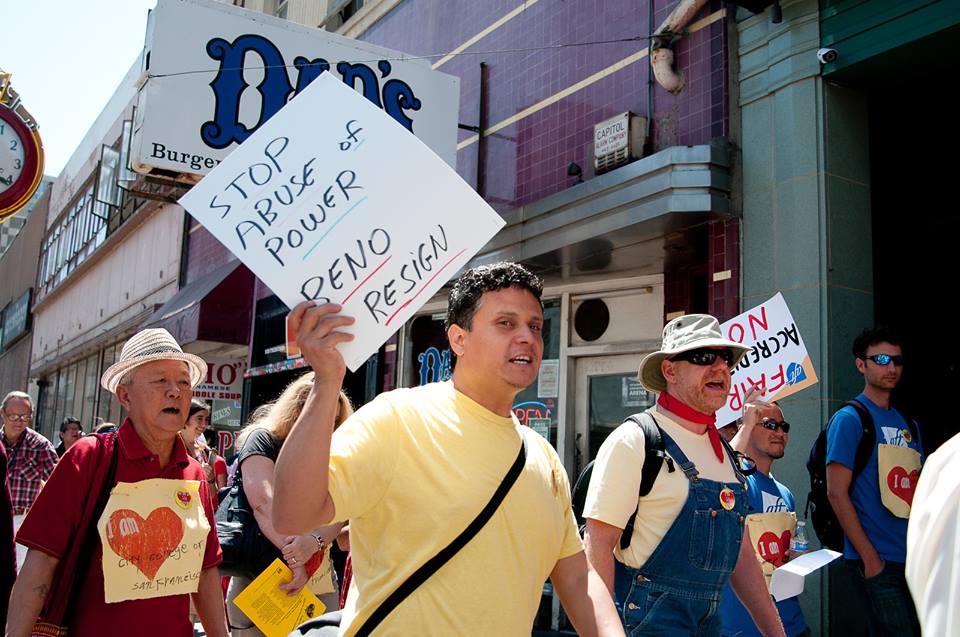
As City College of San Francisco struggles to loosen the noose around its neck, this week its accreditors are slated to offer the college a new way out. But some skeptics are sounding the alarm: it’s a trap.

The Accrediting Commission of Community and Junior Colleges is scheduled to vote on and announce a newly revised version of its “restoration policy,” which some journalists have called City College’s salvation.

Huge CCSF Win: College Won’t Close,” one San Francisco Chronicle headline read. Bay Area TV stations and others echoed the jubilant headline, saying City College was saved. Chancellor Art Tyler told the Chronicle he would “absolutely” apply for restoration status. But many are calling the restoration policy a poor choice for the college’s future.

“Rumors of City College being saved are premature,” Alisa Messer, political director for the American Federation of Teachers Local 2121, told us.

The college’s faculty union isn’t the only one worried. A report released this month by the California State Auditor shows ACCJC has operated against its own bylaws and without full transparency in threatening CCSF’s accreditation.

“To allow community colleges flexibility in choosing an accreditor,” the state auditor’s report wrote, “the chancellor’s office should remove language from its regulations naming the commission as the sole accreditor of California community colleges while maintaining the requirement that community colleges be accredited.”

In the staid and stuffy bureaucratic language, the auditor essentially wrote the accreditor group was so dysfunctional it should be closed. The 75-plus page report scathingly tears down ACCJC staff, board selection, decisions, and policies. There are few areas in which they did not find fault.

“The report draws conclusions about accreditation without the necessary context and facts related to institutional evaluations,” ACCJC President Barbara Beno told the Guardian via email. “ACCJC is reviewed and approved by the United States Department of Education and its recognition was renewed in January 2014. That is the appropriate body to review the ACCJC’s practices.”

The DOE found many faults with the accreditors as well, but the scope of its review was limited to complaints made by the unions. The auditor viewed the accreditors in a fuller context, alleging the ACCJC decided to terminate CCSF’s accreditation “after allowing only one year to come into compliance,” while simultaneously allowing 15 other colleges two years and another six institutions to up to five years to reach compliance.

Such accusations of bias are also alleged in City Attorney Dennis Herrera’s lawsuit against ACCJC, charging CCSF was targeted with harsher penalties due to its political views.

Meanwhile, a closer look at restoration status shows it’s less like a lifeline and more like a tightrope suspended over flames.

The policy would give CCSF two years to come into compliance with all of the so-called “defects” ACCJC identified. If the college addresses these issues in two years, the commission would rescind the notice to terminate the college’s accreditation.

But buried in the legalese is a frightening clause noting that if CCSF isn’t found to comply with everything, “the termination implementation will be reactivated and the effective date will be immediate,” with “no further right to request a review or appeal in this matter.”

Beno said she heard the college community’s concerns around these clauses, during a two-week public comment period regarding the proposed policy that ended June 25.

“The Commission received a good deal of feedback,” she wrote, saying a revised “final version” of the restoration policy has been sent to the commissioners, who will vote remotely over the next week. “If it is approved, the ACCJC will post the final policy on its web page, the policy will be effective immediately.”

But the auditor found Beno hasn’t followed existing bylaws. This has long been an open secret in the community college world that’s referenced to in a 2010 public letter from the former California Community College Chancellor Jack Scott to the Department of Education. His immediate successor, Brice Harris (who also served on the ACCJC as a commissioner for seven years), did not heed this knowledge. He trusted Beno.

He met her for coffee, he talked to her on the phone. These interactions led him to believe replacing the college’s leadership would appease Beno, he said in his declaration (under penalty of perjury) in Herrera’s lawsuit against the ACCJC.

So on July 3, 2013, Harris released a video announcing he stripped the college’s elected Board of Trustees of all of its powers and promoted Special Trustee Bob Agrella to take its place. The college community was in an uproar, but Harris maintained publicly it was the right thing to do.

Privately, he received an email from Beno. “Dear Brice, Beautiful job,” she wrote to him, about his decision to whack the board. “The college may survive, with the right leadership.”

Harris wrote in his declaration: “Based on this email, which was consistent with all my prior interactions with Dr. Beno, I believed that City College could maintain its accreditation… if City College took extraordinary steps to comply with the ACCJC’s recommendations.”

But the accreditors did just the opposite. Just this month, it denied CCSF’s accreditation appeal, telling the college they it not review any evidence of progress it made after they voted to terminate its accreditation. This took Harris by surprise.

“If I had known on July 8, 2013, that the rules of the commission were later going to be interpreted to preclude any progress made by City College after June 2013,” he wrote in his declaration, “I would not have asked the Board of Governors to take the extraordinary step of setting aside the locally elected Board of Trustees.”

Harris was burned by the ACCJC. Now City College faces the choice to trust Beno and the accreditors again.


Above, California Community Colleges Chancellor Brice Harris explains why he pushed state entities to remove the City College’s Board of Trustees and replace them with Special Trustee Bob Agrella. Should City College of San Francisco trust the ACCJC?

Protest against “Prison of Love” Armory party leads to arrests

23

At least six people were arrested and taken into custody shortly before midnight on Saturday at the 16th Street Mission BART Plaza following a raucous protest of Kink.com’s pre-Pride party, according to San Francisco Police Department spokesman Albie Esparza.

The protest, put on by LGBTQ activist group Gay Shame, totaled around 150 people who were unhappy with the theme of the Kink.com party, “Prison of Love.” They allege that the company used sexual assault in prisons as a means of revenue, saying it has “turned these genocidal practices into a cash-making joke.” (Tickets to the party were as much as $175.)

Though a statement from Gay Shame said the protesters were arrested “without provocation,” Esparza told us they stemmed from alleged assaults on the security guards at the party by protesters. According to an account of the protest compiled by Armory facilities manager Andrew Harvill and provided by Kink.com CEO and Armory owner Peter Acworth, “protesters were largely peaceful, though unruly. Having said that, at least a dozen were highly militant.” 

Witnesses recalled seeing a Kink.com security guard follow protesters to 16th Street roughly 30 minutes after the protest ended and begin “targeting people who were casually standing on the sidewalk getting ready to go home.” According to the witnesses, “the arrests and police violence were reportedly in retaliation for the night’s protest.”

Esparza confirmed that a security guard followed the protesters down to the plaza, though for the purpose of identifying the offenders when the police arrived. One protester reportedly threw a metal object and made threats toward a security guard during the protest, both of which are being charged as felonies, while another allegedly through an egg and spit on a security guard. When the police attempted to arrest the protester for the alleged felonies, Esparza said two other protesters tried to intervene. They were arrested and charged with lynching—a violation of Penal Code 405a, defined as “the taking by means of a riot of any person from the lawful custody of any peace officer.”

Two other protesters were cited for interfering with an officer and resisting arrest, and released, according to Esparza. The protesters who allegedly threw the egg was cited for battery and released, he said. But those involved in the protest see it a bit differently.

“A friend of mine was standing with a bicycle and they arrested her seemingly at random,” said protester Erin McElroy, who was at the BART station and said the police were simply searching for someone with a bike, which led to her friend’s arrest. Similarly, another person was arrested because the police “were looking for an Asian woman with short hair,” according to McElroy, and the woman was “identified as somebody who had been with a provocateur.”

Those arrested and facing felony charges are Prisca Carpenter, Sarai Robles-Mendez, and Rebecca Ruiz-Lichter, although District Attorney George Gascón is unlikely to pursue the lynching charges, according to Rachel Lederman, president of the San Francisco Bay Area Chapter of the National Lawyers Guild.

“I can pretty much guarantee that the DA will not be proceeding on those charges. It is the DA who makes the charging decision…[the protesters are] being subjected to preemptive punishment right now,” Lederman wrote in an email.

Video of the Prison of Love pride party provided by Kink.com.

Harvill’s account of the events stated that protesters “used a slingshot to propel objects at security,” and punched and spat in the face of the Armory’s manager of security. The Armory guards reportedly did not retaliate or detain anyone, though they had to “block/deny intrusion onto property a few times.”

In his account, Harvill also wrote, “There was a decent contingent of protesters who were militant and provoking. Our own security was extremely professional in face of numerous provoking acts and assaults. Any claims of police brutality would be highly unlikely, but I will confirm exact details of those arrested.”

Those involved with the protest were unsurprisingly dismayed by the night’s proceedings, including members of Gay Shame.

“Like the Stonewall rebellion 45 years ago, last night’s attack reminds us how trans and queer people of color are criminalized and arrested for simply gathering in public space, like the 16th Street BART plaza,” said Gay Shame representative Mary Lou Ratchet in a statement.

Attorney John Viola, sent as an observer from the National Lawyers Guild, was also arrested, according to Lederman. The NLG is “appalled by all of the arrests…particularly that three people have been held in jail since Saturday night on groundless charges, in violation of their constitutional rights,” wrote Lederman in her email.

Four arrestees have since been released, including Viola, and all were initially medically cleared, indicating that they likely did not sustain injuries. Nevertheless, Lederman said the NLG is still working to get the three women released, with their bail currently set at a combined $178,000, Chief Deputy Kathy Gorwood told the Guardian. (Carpenter’s bail is set at $78,000, while Robles-Mendez and Ruiz-Lichter are each at $50,000.)

Acworth expressed his thoughts about his party in an open letter, stating he believes that “if a group wants to organize a particular kind of party, they should be free to do so without shame,” though conceding that “the extent to which some groups find this theme offensive because the party is happening during the San Francisco Pride weekend has given me cause to reflect.”

The Kink.com CEO has also voiced his support for the protesters’ contention, writing in an email, “I attempted to negotiate directly with the crowd, but this proved unsuccessful. This was frustrating, because I agree with the underlying issue that we are in need of prison reform,” adding, “Had it been possible to change the theme, we would have done so.”

Jury find SF officer used excessive force in beating a restrained arrestee

28

A jury last week unanimously convicted a San Francisco police officer of using excessive and unnecessary force, although the San Francisco Police Department cleared the officer in an internal investigation and kept him on the streets.

In Magistrate Maria-Elena James’ courtroom, the jury voted 8-0 that Police Officer Matthew Sullivan used excessive force against plaintiff Eduardo Alegrett on February 7, 2012.  Alegrett’s lawyer, Panos Lagos, told the Guardian that Alegrett was suffering a “mental crisis” when he allegedly battered a woman at 88 Perry Place.

Police arrived to arrest him and called for backup when Alegrett pretended to have a gun, a bust that Lago said was appropriate, although he disagrees with what happened next. Sullivan arrived at the scene, ordered Alegrett to get on his stomach, then repeatedly hit him in the head while Alegrett was already restrained by two officers. Lagos told us that Sullivan acted too quickly for the other officers to stop him—administering “10 strikes within two seconds.”

A SFPD spokesperson told us that Sullivan is still on street duty. When we asked if they were imposing any disciplinary actions, we were told the information was not available to the public, although the spokesperson did say the SFPD’s “investigation revealed there were no wrongdoing…and there’s no reason to penalize someone that didn’t do anything wrong.”

According to Lagos, the Bane Act and Alegrett’s Fourth Amendment rights were violated in the incident. The Bane Act, one of California’s civil and criminal laws related to hate crimes, “provides protection from interference by threats, intimidation, or coercion or for attempts to interfere with someone’s state or federal statutory or constitutional rights.”   

Alegrett was awarded $3,200 compensation for his injuries, and his legal fees will be covered. Sullivan will also be required to pay a fine, which will be determined at a later trial.

“It’s very unusual to have this trial decision,” said Lagos.

Quantitative information regarding police brutality cases is limited. A 2013 San Francisco Office of Citizen Complaints report shows that out of 727 complaints, only 43 were sustained. Out of the 43 sustained, over half were for neglect of duty, 24 percent for unwarranted action, 10 percent for “conduct reflecting discredit represented,” and 7 percent for unnecessary force.

The National Institute of Justice says “police officers should use only the amount of force necessary to control an incident, effect an arrest, or protect themselves or others from harm or death.” However, there are no universal rules regulating the amount of force allowed, and officers must refer to their specific agency for force guidelines. The NIJ’s website also says that “excessive use of force is rare.”

Lagos said that the OCC  told Alegrett, when he first filed his complaint, that the case wouldn’t go to court because they saw no evidence of excessive force. We asked Lagos why this incident report managed to do what others didn’t.

“Video evidence is what made this trial different.” Two tenants, unknown to the police officers, filmed the incident on their phones.

Lagos said that the outcome of the trial should encourage police to enforce the established rules on officers’ use of force, specifically rules regarding mental breakdowns: “The SFPD has a practice of failing to train officers to recognize citizens with mental or emotional breakdowns.”

Comedy without limits means ‘No Happy Endings’ for SF’s Granny Cart Gangstas

0

Sexy granny panties? Up-and-coming San Francisco comedy troupe Granny Cart Gangstas recently proved this isn’t an oxymoron. Taking a cue from the Kids in the Hall — one of member Ava Tong’s biggest inspirations — who were once photographed wearing bras over suits, the troupe decided to do something similar (one member flaunted a pair of leopard-print granny panties) for a photo shoot ahead of its Sat/28 show, “No Happy Endings,” at SF’s Little Boxes Theater. 

Founding members Tong and Aureen Almario dreamed about creating their own comedy troupe since 2006. The two met at San Francisco State University, where Tong was Almario’s teaching assistant in an Asian American studies class. “Then she ended up being one of my friends’ girlfriends and I was like ‘Oh … hey!’ and I saw her at Bindlestiff [Studio] and it was like … ‘Can’t get away from you, Aureen!’” The two finally created the troupe in 2011, with five total members, and continued to expand by inviting women associated with Bindlestiff that they worked well with. 

The name of the comedy troupe, Granny Cart Gangstas, juxtaposes two contrasting concepts. Tong said Almario, who came up with the name, was inspired by the pedestrian lifestyle of granny-cart owners in the midst of the hustle and bustle of certain SF neighborhoods. “That’s like, ‘I don’t care. I’m going to do my thing and I don’t care what anyone else thinks,’” Tong explained. 

Lauren Garcia, who joined the troupe last October, expanded on the name’s connotations. “If you have a granny cart, you know, you can’t politely, say, go through the bus or the street, and go ‘Excuse me, excuse me.’” (Tong interjected, “You’re just unapologetic.”) Garcia continued, “You just run over those people’s feet.”

When it comes to the troupe’s material, this mindset is always relevant. Its material is solely comprised of things that make its own members laugh. And even though members grapple with worries that no one else will find certain things funny, they’ll keep them in anyway.

“No Happy Endings” opens with a piece that pays homage to grannies — one of the first pieces where the members assume the role of grannies. “You’ve got to respect grannies,” Garcia said. “They’re grannies — they’ve been through shit.” In the sketch, the troupe members are nursing home residents (sans granny carts, unfortunately), comatose as a nurse administers their daily medicine. Before the nurse leaves, she switches on a radio, which starts playing classical music. But one of the grannies won’t have that and slowly trudges to the radio — with the assistance of her walker — and changes the music to something more modern: Beyoncé’s “Grown Woman.” Instantly rejuvenated, the grannies begin to dance. 

The troupe returns to this scene later to close the show. “Grown Woman” is still playing. “We actually bust out into our younger selves and we do a short synchronized dance,” Tong said, “kind of saying that every granny is young inside them. They have that young person that lived there before.” Combined with the young souls’ dance, Beyoncé’s lyrics “I’m a grown woman / I can do whatever I want” only serve to further drive this message home.

“I feel like so many people forget that older people were young once and they are people — they’re not the sacks that people treat them as,” Garcia said. As a nurse, she said she constantly witnesses incidents of verbal elder abuse where nurses and other people in the hospital condescendingly speak to elderly patients. 

Besides the geriatric piece, the group likes to write about womanhood. For their first show, “Rise of the Red Dawn,” the group performed a sketch titled “Look At This Betch.” “We’re making fun of the idea that women sometimes … have this competition with each other,” Garcia said. “They’re cutthroat and catty and will cut other women to get ahead when they should be helping other women. They know what it’s like to be a woman in this world.”

However, Tong said the group noticed that much of the last show focused on the negative aspects of womanhood. To depict women in a more positive light, it included a sketch titled “Vag Save” in the upcoming show, which also includes films and stand-up. Garcia introduced “Vag Save” to me through a mock movie trailer voiceover: “Save your best friend’s vagina. Coming soon, this Saturday, June 28, we will be saving … your vaginas.”

The sketch follows a group of women at a club banding together to protect each other from the unwelcome advances of creepy men. “Not everybody sees that world,” Tong said. “Guys definitely don’t know when other guys are being creepy — or when they’re being creepy — and this is how women see it.”

The troupe is entirely comprised of women of color. Members write cultural references sparingly — one of the lines in sketch “Spanx” plays with how similar the word “backpack” and the Tagalog word for “vagina” (pekpek) sound: “Reach into my pekpek” — because they don’t want to alienate any audience members. Sometimes they’ll include references if a character has an accent (the references are usually improv ad libs), but they stray from writing references that aren’t obvious or explained. 

At the same time, Tong and Garcia appreciate San Francisco’s diversity and open-mindedness. “I think we take advantage of that,” Tong said. “We almost take it for granted. We don’t think about having to be sensitive.” The two joked that they might have things thrown at them on stage or their citizenship papers checked in more conservative states. Most of the members are Bay Area natives, but live in cities as spread apart as Walnut Creek, San Francisco, and Hayward, which Tong admitted makes getting together for rehearsal tough.

Inspiration can hit the troupe at any time — sources range from people, such as Beyoncé, or the minutiae of daily life, such as putting in a Diva Cup. (A Diva Cup is an eco-friendly alternative to a tampon. Garcia shared some tips from a YouTube how-to video she watched, where an upside-down wine glass served as a model vagina: improper nail length can quickly make the experience unpleasant and one of the tricky things is “getting it into a little ball and making sure it goes in before it pops open … because then that’s painful and you don’t want to do that, let me tell you.” Tong was a little hesitant about this sketch idea.) Throughout the interview, Tong and Garcia effortlessly bounced new ideas off each other, assuring me they could even parody the interview we were having. “You’ll be in this,” Garcia told me. “Come watch our stuff; you’ll see yourself.”

Six days before the show, at least one troupe member’s grandmother was confirmed to attend “No Happy Endings.” Garcia’s mother purchased tickets for several family members — before her daughter explained that the not-so-family-friendly show was “mature, sexual, and raunchy.” Garcia complained that her grandmother would simply have to sit through performances such as “Octopussy,” where she sings “I’ve tried everything / You could possibly do / When you’re in bed with two / Wheelbarrow, doggy style / Missionary, 69 / It feels so fine / But he can’t make me cum.”

“We’ll apologize later if you need us to,” Tong reassured Garcia. 

Emphasis on “need.” After all, a true granny cart gangsta is never apologetic if they can help it. 

Granny Cart Gangstas’ “No Happy Endings”

Sat/28, 8pm, $15

Little Boxes Theater

1661 Tennessee, SF

(415) 603-0061

www.littleboxestheater.wordpress.com

Your latest SF gentrification soundtrack: Cold Beat, Thee Oh Sees, Violent Change, and more

3

Is San Francisco doomed?  The legendary SF punk band Crime said so 35 years ago on their album San Francisco’s Doomed. Yet with tech money flowing into San Francisco and musicians being priced out of the city, the phrase has taken on a new resonance among those musicians who have stayed in town.

There’s been no shortage of music and other art forms lamenting the sea change in our dear city: Earlier this month, Katie Day drew accolades and vitriol with “San Francisco (Before the West Falls),” and tonight [Wed/25], cabaret singer-songwriter Candace Roberts will celebrate the debut of her theatrical “Not My City Anymore” with a party at the Gold Dust Lounge (where the music video was shot).

Stepping up to the plate for the indie/garage/punk kids is Hannah Lew, currently of Cold Beat, formerly of Grass Widow, and most recently the curator of a compilation whose name differs from Crime’s album by one contraction: San Francisco Is Doomed.  Released on Lew’s Crime On The Moon label, the compilation features 13 songs by either former or current San Francisco bands and artists, from Thee Oh Sees to Erase Errata to Violent Change, all of them dealing with the tech boom’s effect on the city and its music scene.

Lew has lived in the city since 1989, and was a first-hand witness to the ascent of the city’s garage-rock scene to international prominence as a member of Grass Widow. Though she plans to stay in the city, it’s increasingly difficult for musicians in San Francisco to keep up with increased prices. Most of the artists on the compilation have since moved.

“People are moving here to make money now,” Lew said. “It’s never really been like that before — not since the Gold Rush. Because of that there’s a lot of foodie culture…things catered to people with a lot of money. I think that creates a cultural divide.”

The compilation isn’t an act of war against the “techies,” though; according to Lew, some of the artists on the compilation actually work in the tech industry. It’s not a benefit album either. It’s simply a snapshot of the time and place in which SF musicians currently exist. 

For now, Lew and Cold Beat are still headquartered and playing shows in the city — the compilation seems timed nicely to coincide with the release of the band’s latest, Over Me, which will be out July 8 (a music video for the first single just premiered over at NPR). But it’s hard to say the band is part of a “scene” anymore. Bay Area scenes have come and gone, of course, from psychedelic rock to ’80s thrash metal, and, as others have noted, it’s increasingly apparent that the garage-rock movement is at the end of its lifespan. The question of whether or not San Francisco’s music scene is truly doomed relies on a different equation — whether musicians are willing to move into San Francisco. And according to Lew, it’s not exactly an attractive option for most.

“I can’t really imagine people moving here for a thriving music scene without the rent prices going way down,” she said. “Usually the towns with a thriving music scenes are affordable to live in. But it’s hard to even find an affordable practice space in San Francisco these days.”

“There’s nothing we can do about it,” she added. “[San Francisco] is becoming more of a fancy town. But we just want to talk about it and hopefully provide another voice in that conversation.”
 
San Francisco Is Doomed Record Release

With Cold Beat, Synethic ID, Violent Change, Caged Animal

July 1, 9pm, free

Brick and Mortar Music Hall

1710 Mission, SF

www.brickandmortarmusic.com


Rep Clock: June 25 – July 1, 2014

0

Schedules are for Wed/25-Tue/1 except where noted. Director and year are given when available. Double and triple features marked with a •. All times pm unless otherwise specified.

ANSWER COALITION 2969 Mission, SF; www.answersf.org. $5-10 donation. Two Spirits (Nibley, 2009), Wed, 7.

ARTISTS’ TELEVISION ACCESS 992 Valencia, SF; www.atasite.org. $7-10. “Rotterdam VHS Festival,” short videos, Thu, 8. “Mission Eye and Ear #5,” new music/sound and film/video collaborations by Dominique Leone and Brenda Contreras, Kyle Bruckmann and John Slattery, and Gino Robair and Bryan Boyce, Fri, 8.

BERKELEY FELLOWSHIP OF UNITARIAN UNIVERSALISTS 1924 Bonita, Berk; www.bfuu.org. $10 suggested donation. Born This Way (Tullmann and Kadlec, 2012), Sat, 7:30.

CASTRO 429 Castro, SF; (415) 621-6120, www.castrotheatre.com. $8.50-11. Frameline 38: SF International LGBT Film Festival, June 19-29. For tickets and schedule, visit www.frameline.org.

COURTHOUSE SQUARE 2200 Broadway, Redwood City; www.redwoodcity.org. Free. Frozen (Buck and Lee, 2013), Thu, 8:45. Presented sing-along style.

JACK LONDON FERRY LAWN Clay and Water, Oakl; www.jacklondonsquare.com. Free. “Waterfront Flicks:” The Secret Life of Walter Mitty, Thu, sundown.

PACIFIC FILM ARCHIVE 2575 Bancroft, Berk; (510) 642-5249, bampfa.berkeley.edu. $5.50-9.50. “Martin Scorsese Presents Masterpieces of Polish Cinema:” Mother Joan of the Angels (Kawalerowicz, 1961), Wed, 7; Innocent Sorcerers (Wajda, 1960), Fri, 7. “Kenji Mizoguchi: A Cinema of Totality:” The Story of the Last Chrysanthemums (1939), Thu, 7; The 47 Ronin, Parts I and II (1941/42), Sat, 6. “Rude Awakening: American Comedy, 1990-2010:” Waiting for Guffman (Guest, 1996), Fri, 8:50; Groundhog Day (Ramis, 1993), Sun, 6. “Picture This: Classic Children’s Books on Film:” “Take Aways,” short films, Sun, 3:30.

ROXIE 3117 and 3125 16th St, SF; (415) 863-1087, www.roxie.com. $6.50-11. Frameline 38: SF International LGBT Film Festival, Wed-Sun. For tickets and schedule, visit www.frameline.org. Ping Pong Summer (Tully, 2014), Wed-Thu, 6:30, 8:20. Breathing Earth: Susumu Shingu’s Dream (Riedelsheimer, 2013), Fri-Sat, 6, 8; June 29-July 3, 7, 9. “Roxie Kids:” Panda! Go, Panda! (Takahata, 1972), Sun, 2.

SMITH RAFAEL FILM CENTER 1118 Fourth St, San Rafael; (415) 454-1222, www.cafilm.org. $6.50-$10.75. Breathing Earth: Susumu Shingu’s Dream (Riedelsheimer, 2013), June 27-July 3, call for times.

YERBA BUENA CENTER FOR THE ARTS 701 Mission, SF; www.ybca.org. $8-10. Thy Womb (Mendoza, 2012), Thu and Sat, 7:30; Sun, 2. *


Fuck Buttons on their wildly visual live show, the writing process, and bringing “fuck” to the world stage

0

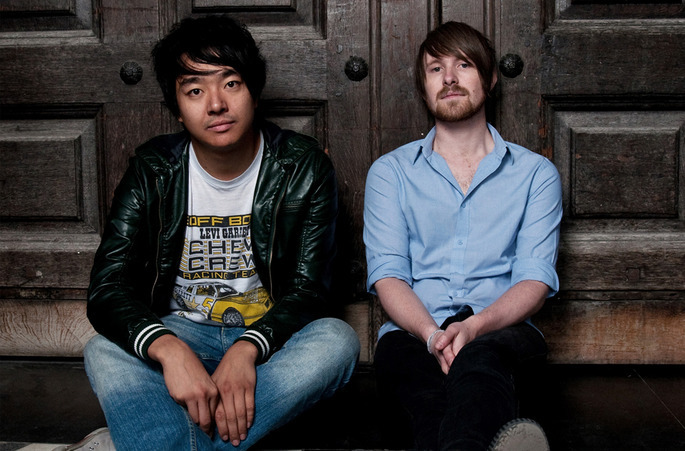
“I think I’ve heard of them before,” is the kind of spineless response you’ll never hear if you ask someone about Fuck Buttons.  If you’ve heard them, you’ll most definitely will remember.  With music that elicits feelings of wonder and rebellion, intense live shows, and of course an, err — catchy name, Benjamin John Power and Andrew Hung leave a lasting impression.

If you didn’t catch them when they played at The Independent last October, chances are you heard Fuck Buttons in 2012 when the band received arguably the most widespread kind of exposure — their tracks “Surf Solar” and “Olympians” were featured separately during the London Summer Olympics opening ceremony. Their self-produced third effort, Soft Focus, has earned the band a multitude of accolades, including an 8.7 and Best New Music honor from persnickety Pitchfork, as well as the #3 Dance Album Of The Year 2013 from Rolling Stone.

I got the opportunity to chat with Fuck Button Benjamin John Power about the process behind the band’s unique live performance set-up, as well as the AV show they’re bringing to the US for the first time.  The English experimental-electro duo are currently in the middle of a monthlong tour, coming back to The Independent this Fri/27.

San Francisco Bay Guardian So you just played North By Northeast. Taking some time off on the West Coast right now?

Benjamin John Power Yeah, that’s right.  Andy had to go home to a wedding so there is a slight break in the tour, but it’s cool.

SFBG I’m sure the time off to before the shows next week is welcomed.

BJP I get a week off in LA and my wife is coming out to join me for the time off. It’s nice to take a breather.

SFBG NXNE has such a diverse lineup, between all the acts and comedians.

BJP NXNE was great. Quick turnaround, but a really amazing crowd. I didn’t get a chance to see anyone else on the lineup, but I wish I could have seen Tim Hecker.

SFBG It’s funny you mention him. You’re familiar with Steve Hauschildt, yes?

BJP Yep, from Emeralds? I’m a fan.

SFBG I liken his and Tim Hecker’s music to your solo project, Blanck Mass. They form a genre I refer to as “lunar planning music.”

BJP Oh yeah? That’s a nice term.

SFBG I mean that in the best way possible.

BJP It is welcomed — fear not.

SFBG You recently played a show with Mount Kimbie that involved some some special visuals.  Can the stateside crowd expect anything like that?

BJP Yes, 100 percent. We have brought our full AV show with us this time — for the first time in the USA — so that’s totally in the cards. We wanted to make sure that the visual aspect wasn’t just a bunch of video loops, as a separate focus.  The visuals are interactive and in real time, so it’s a more interesting show and it’s working out really well.

SFBG Sounds great. I saw you last year at Primavera Sound, and your music translates really well on stage.

BJP Thank you. The live show and the recorded output go hand in hand, so when we write, we write in exactly the same way that we do when we play live — across the table from each other, with all the gadgets in front of us — so it translates easily into the live performance.

SFBG You also produced the last album (Soft Focus) yourselves — have other people been contacting you regarding production work?

BJP Yeah, a few people have.  We like to keep ourselves busy, and I think from working on the last record primarily by ourselves we have picked up some pretty helpful production tricks.

SFBG Last question — do you feel the word “fuck” is losing its potency?

BJP I don’t really think too much about the word fuck losing its potency. If anything, it probably makes my life easier, haha.

SFBG I can see that.  Being featured in the Olympics, you guys are like ambassadors of “fuck.”  Bringing “fuck” to the world stage.

BJP Yeah! Well, in those instances, everybody just seems to go with “F Buttons.” It’s really fine. What’s in a name anyway?

FUCK BUTTONS
With Total Life
6/27, 9pm, $20
The Independent
628 Divisadero, SF
www.theindependentsf.com


Film Listings: June 25 – July 1, 2014

0

Film listings are edited by Cheryl Eddy. Reviewers are Kimberly Chun, Dennis Harvey, Lynn Rapoport, and Sara Maria Vizcarrondo. For rep house showtimes, see Rep Clock. For complete film listings, see www.sfbg.com.

FRAMELINE

Frameline 38, the San Francisco International LGBT Film Festival, runs through June 29 at the Castro Theatre, 429 Castro, SF; Roxie Theater, 3117 16th St, SF; Victoria Theatre, 2961 16th St, SF; and Rialto Cinemas Elmwood, 2966 College, Berk. For tickets (most shows $10-15) and schedule, visit www.frameline.org.

OPENING

Breathing Earth: Susumu Shingu’s Dream Japanese artist Susumu Shingu has built his career through his concerted engagement with the natural world. The wise and eternally smiling 75-year-old creates angular and often gargantuan mobiles that harness the power of wind and water to gyrate in ever-changing directions. In Breathing Earth, German director Thomas Riedelsheimer crafts a deliberately paced rumination on Shingu’s life philosophy that, while devoid of the frenetic facts, figures, and trite biographical rehashes that punctuate hyper-informative pop-docs, uses a beautifully simplistic narrative arc to illuminates Shingu’s attempt to create a hilly, open-air collection of windmills. The sculptor’s impassioned narration and charming conversations with potential landlords and investors (who usually entirely miss the point of his mission to raise environmental consciousness through aesthetic beauty) make Shingu impossible not to fall in love with — he is laid-back, funny, and astonishingly youthful. Riedelsheimer’s camera is similarly relaxed, gliding sumptuously over the green and wild landscapes on which Shingu installs his works. Despite his meditative tempo, Riedelsheimer manages to explore a remarkably wide scope; Shingu’s late-life marriage to a fellow sculptor, his appeals to both Japanese and German schoolchildren to care for the earth and help to avoid environmental disasters, and his intricate technical processes all receive intimate and inspiring sections. (1:37) Roxie, Smith Rafael. (David Kurlander)

Citizen Koch After quietly influencing conservative ideology, legislation, and elections for decades, the billionaire industrialist Koch brothers have found themselves becoming high-profile figures — much to their dismay, no doubt. The relative invisibility they hitherto enjoyed greatly abetted their impact in myriad arenas of public policy and “popular” conservative movements. Look behind any number of recent red-vs.-blue flashpoint issues and you can find their fingerprints: Notably state-level union busting; “smaller government” (i.e. incredible shrinking social services); seeding allegedly grassroots organizations like the Tea Party; furthering the Corporations = People thing (see: Citizens United); and generally helping the rich like themselves get richer while fostering working-class outrage at everybody else. This documentary by Trouble the Water (2008) co-directors Carl Deal and Tia Lessen touches on all those matters, while also focusing on Wisconsin as a test laboratory for the brothers’ Machiavellian think-tank maneuvers, following a Louisiana GOP candidate on the campaign trail (one he’s marginalized on for opposing corporate influence peddling), and more. Any one of these topics could support a feature of their own (and most already have). Citizen Koch‘s problem is that it tries to encompass too much of its subjects’ long reach, while (despite the title) leaving those subjects themselves underexplored. (It also suffers from being a movie completed at least 18 months ago, a lifetime in current US political terms.) For the reasonably well-informed this documentary will cover a lot of familiar ground—which is not to say that ground isn’t still interesting, or that the added human interest elements don’t compel. But the film covers so much ground it ends up feeling overstuffed and unfocused. (1:26) Opera Plaza, Shattuck. (Harvey)

Coherence See “Vortex Room.” (1:29) Presidio.

Korengal This companion piece to 2010’s Oscar-nominated Restrepo — one of the best docs about modern-day warfare to date, offering unfiltered access to an Army platoon stationed in Afghanistan’s Korengal Valley — uses previously unseen footage shot during the year filmmakers Sebastian Junger and Tim Hetherington spent shadowing their subjects. Korengal is structured as a more introspective work, with musings on what it feels like to be a soldier in the Korengal, surrounded by rough (yet strikingly beautiful) terrain populated by farmers who may or may not be Taliban sympathizers, not to mention unpredictable, heavily armed opponents referred to simply as “the enemy.” Interviews reveal sadness, boredom, a deep sense of brotherhood, and the frustrating feeling of going from “100 miles an hour to a dead halt” after the surreal exhilaration of a firefight. Korengal also functions as a tribute to Hetherington, who was killed in 2011 while on assignment in Libya. Not only does his death add a layer of poignant subtext, it also suggests why Junger felt moved to revisit this story. That said, though Korengal‘s footage is several years old, its themes remain distressingly timely. (1:24) Opera Plaza, Shattuck. (Eddy)

Snowpiercer Eighteen years after an attempt to reverse global warming has gone wildly awry — freezing all life into extinction — the only known survivors are on a one-of-a-kind perpetual-motion train that circles the Earth annually, has its own self-contained ecosystem, and can smash through whatever ice buildup has blocked its tracks since the last go-round. It’s also a microcosm of civilization’s worst class-economic-racial patterns over history, with the much-abused “tail” passengers living in squalor under the thumb of brutal military police. Unseen at the train’s front is its mysterious inventor, Wilford, whose minions enforce “Eternal Order Prescribed by the Sacred Engine.” Curtis (Chris Evans) is default leader of the proletariat’s latest revolt, in which they attempt to force their way forward though the prison section (where they free Song Kang-ho and Go Ah-sung as the train’s original lock designer and his psychic daughter) on to the wonders of the first class compartments, and beyond. This first (mostly) English-language feature by South Korean Bong Joon-ho (2006’s The Host, 2009’s Mother), based on a 1982 French graphic novel, starts out as a sort of locomotive, claustrophobic Mad Max (1979) variation. But it gets wilder and more satirical as it goes along, goosed by Tilda Swinton’s grotesquely comic Minister Mason, and Alison Pill as a teacher propagandist in a particularly hilarious set piece. In case the metaphor hasn’t already hit you on the head, one character explains “The train is the world, we the humanity.” But Snowpiercer‘s sociopolitical critique is as effective as it is blunt, because Bong handles everything here — visceral action, absurdist humor, narrative left-turns, neatly etched character archetypes, et al. — with style, confidence, and wit. Some of the FX may not be quite as seamless as it would have been in a $200 million Hollywood studio production, and fanboys will no doubt nitpick like nitwits at various “credibility gaps.” (As if this movie ever asks to be taken literally.) But by current, or any, sci-fi action blockbuster standards, this is a giddily unpredictable, risk-taking joy. (2:07) (Harvey)

Third Person A screenwriter, Paul Haggis, pens a script in which a novelist (Liam Neeson) sits alone in a smoke-filled hotel room in Paris struggling over a manuscript about a novelist who can only feel emotions through his characters. What that psychic state would actually look like remains unclear — when the woman (Olivia Wilde) he’s left his wife (Kim Basinger) for shows up, their playful, painful, fraught interactions reveal a man with above-average emotional reserves. Meanwhile, in another hotel in another city, Rome, a sleazy fashion industry spy (Adrien Brody) finds his life turned sideways by a seemingly chance encounter in a bar with a beautiful Romanian woman (Moran Atias) in dire need of money. And in a third hotel, in Manhattan, a young woman (Mila Kunis) cleans up the suites she used to stay in when she was married to a renowned painter (James Franco), with whom she has a son she may or may not have harmed in some terrible way. The film broadly hints at connections between these three sets of lives — in each, the loss or endangerment of a child produces an unrelenting ripple effect; speaking of which, objects unnaturally submerged in water present an ominous visual motif. If the movie poster doesn’t give the game away as you’re walking into the theater, the signposts erected by Haggis ensure that you won’t be in the dark for long. Learning how these characters relate to one another, however, puts considerable drag on the fabric of the plot, exposing the threadbare places, and where Haggis offers his tortured characters redemption, it comes at the cost of good storytelling. (2:17) Shattuck. (Rapoport)

Transformers: Age of Extinction Mark Wahlberg and the Dinobots star in the latest installment of Michael Bay’s action sci-fi series. (2:30) Presidio.

Under the Electric Sky Hey, raver! This 3D concert film enables you to experience the Electric Daisy Carnival without punching any holes in your brain. (1:25)

Violette Taking on another “difficult” woman artist after the excellent 2008 Séraphine (about the folk-art painter), Martin Provost here portrays the unhappy life of Violette Leduc (Emmanuelle Devos), whose fiction and autobiographical writings eventually made her a significant figure in postwar French literature. We first meet her waiting out the war with gay author Maurice Sachs (Olivier Py), one of many unrequited loves, then surviving via the black market trade before she’s “discovered” by such groundbreaking, already-established talents as Jean Genet (Jacques Bonnaffé) and Simone de Beauvoir (Sandrine Kiberlain). It is the latter, a loyal supporter who nonetheless retains a chilly emotional distance, who becomes bisexual Violette’s principal obsession over the coming 20 years or so. Devos does her best to portray “a neurotic crazy washed-up old bag” with an “ugly mug” — hardly! — who is perpetually broke, depressed, and awkward, thanks no doubt in part to her mean witch of a mother (Catherine Hiegel). “Screaming and sobbing won’t get you anywhere,” Simone at one point tells her, and indeed Leduc is a bit of a pill. For the most part lacking the visual splendors of Séraphine (this character’s environs weren’t so pastoral), Violette is finely acted and crafted but, like its heroine, hard to love. (2:18) Albany, Embarcadero. (Harvey)

ONGOING

Belle The child of a British naval officer and a Caribbean slave, Belle (Gugu Mbatha-Raw) is deposited on the doorstep — well, the estate grounds — of her father’s relatives in 1769 England after her mother dies. Soon she’s entirely orphaned, which makes her a wealthy heiress and aristocratic title holder at the same time that she is something less than human in the eyes of her adopted society. For Belle is black (or more properly, mixed-race), and thus a useless curiosity at best as a well-bred noblewoman of the “wrong” racial makeup. Based on a murky actual historical chapter, Amma Asante’s film is that rare sumptuous costume drama which actually has something on its mind beyond romance and royalty. Not least among its pleasures are a fine supporting cast including Tom Wilkinson, Miranda Richardson, Penelope Wilton, and Emily Watson. (1:45) Embarcadero, Piedmont, Shattuck. (Harvey)

A Coffee in Berlin How do you say “mumblecore” in German? Jan Ole Gerster’s debut feature has certain arty pretensions — it’s shot in black-and-white, and scored with peppy jazz — but it’s more or less a rambling day in the life of law school dropout Niko (Tom Schilling). It happens to be the very day Niko’s golf-loving father decides to stop funding his shiftless son’s slacker lifestyle, though that crisis (which, you know, Lena Dunham built an entire HBO comedy around) receives nearly equal heft as a cutesy ongoing gimmick that sees Niko incapable of getting a cup of coffee anywhere in Berlin. Hipster ennui can be compelling if it has some underlying energy and purpose (see: 2013’s Frances Ha, to which this film has been compared), but A Coffee in Berlin comes up short on both. That said, it does offer an intriguing portrayal of Berlin — a city whose modern-chic façade barely contains the history that haunts it — and some of its supporting characters, particularly Friederike Kempter as a former schoolmate of Niko’s who has outgrown him emotionally by about one thousand percent, provide pleasant enough distractions. (1:28) Opera Plaza, Shattuck. (Eddy)

The Fault in Our Stars I confess: I’m no card-carrying, vlog-flogging Nerdfighter in author John Green’s teen-geek army. But one can admire the passion — and teary romanticism — of the writer, readers, and the breakthrough novel that started it all. Much has been made over the cinematic tweaks to the best-selling YA book, but those seem like small beefs: OK, male romantic lead Gus’s (Ansel Elgort) perhaps-understandable brattiness seems to have been toned down a touch, but we’ll all get the somewhat-subversive push and pull of Green’s love story centered on two cancer-stricken innocents. Sixteen-year-old Hazel (a radiant Shailene Woodley) has been battling cancer almost all her life, fighting back from the brink, and now making her way every day with an oxygen tank and her devoted parents (Laura Dern, Sam Trammel) by her side. Her mordant wit, skeptical attitude, and smarts attract Gus, a handsome teen with a prosthetic leg, at a cancer support group, and the two embark on what seems like the most normal thing in the world — sweet, sweet love — albeit cut with the poignancy of almost-certain doom. Would the girl who calls herself a grenade dare to care for someone she will likely hurt? That’s the real question on her mind when the two reach out to the solitary author (Willem Dafoe) of their favorite book, An Imperial Affliction. The journey the two make leaves them both open to more hurt than either ever imagined, and though a good part of Fault‘s denouement boils down to a major puddle cuddle — with solid performances by all, but particularly Dern and Woodley — even a cynic is likely to get a bit misty as the kids endure all the stages of loss. And learning. (2:05) Balboa, 1000 Van Ness, Presidio, SF Center. (Chun)

Gore Vidal: The United States of Amnesia Nicholas Wrathall’s highly entertaining documentary pays tribute to one of the 20th century’s most brilliant, original, and cranky thinkers, with extensive input from the man himself before his death in 2012 at age 86. The emphasis here is less on Vidal’s life as a literary lion and often glittering celebrity social life than on his parallel career as a harsh scold of US social injustices and political corruption. (Needless to say, recent history only sharpened his tongue in that department, with George W. Bush dismissed as “a goddamn fool,” and earlier statements such as “This is a country of the rich, for the rich and by the rich” seeming more apt than ever.) He’s a wellspring of wisdoms both blunt and witty, sometimes surprising, as in his hindsight doubts about the virtues of JFK (a personal friend) as a president. We get plenty of colorful archival clips in which he’s seen verbally jousting with such famous foes as William F. Buckley and Norman Mailer, invariably reducing them to stammering fury while remaining exasperatingly unruffled. His “out” homosexuality and outré views on sexuality in general (at odds with an increasingly assimilationist gay community) kept him controversial even among many liberals, while conservatives were further irked by his rock-solid family connections to the ruling elite. In our era of scripted political rhetoric and pandering anti-intellectualism, it’s a joy merely to spend an hour and half in the company of someone so brilliantly articulate on seemingly any topic — but particularly on the perpetually self-mythologizing, money-worshipping state of our Union. (1:29) Opera Plaza. (Harvey)

The Grand Seduction Canadian actor-director Don McKellar (1998’s Last Night) remakes 2003 Quebecois comedy Seducing Doctor Lewis, about a depressed community searching for the town doctor they’ll need before a factory will agree to set up shop and bring much-needed jobs to the area. Canada is still the setting here, with the harbor’s name — Tickle Head — telegraphing with zero subtlety that whimsy lies ahead. A series of events involving a Tickle Head-based TSA agent, a bag of cocaine, and a harried young doctor (Taylor Kitsch) trying to avoid jail time signals hope for the hamlet, and de facto town leader Murray (Brendan Gleeson) snaps into action. The seduction of “Dr. Paul,” who agrees to one month of service not knowing the town is desperate to keep him, is part Northern Exposure culture clash, part Jenga-like stack of lies, as the townspeople pretend to love cricket (Paul’s a fanatic) and act like his favorite lamb dish is the specialty at the local café. The wonderfully wry Gleeson is the best thing about this deeply predictable tale, which errs too often on the side of cute (little old ladies at the switchboard listening in on Paul’s phone-sex with his girlfriend!) rather than clever, as when an unsightly structure in the center of town is explained away with a fake “World Heritage House” plaque. Still, the scenery is lovely, and “cute” doesn’t necessarily mean “not entertaining.” (1:52) Albany, Embarcadero. (Eddy)

Ida The bomb drops within the first ten minutes: after being gently forced to reconnect with her only living relative before taking her vows, novice nun Anna (Agata Trzebuchowska) learns that her name is actually Ida, and that she’s Jewish. Her mother’s sister, Wanda (Agneta Kulesza) — a Communist Party judge haunted by a turbulent past she copes with via heavy drinking, among other vices — also crisply relays that Ida’s parents were killed during the Nazi occupation, and after some hesitation agrees to accompany the sheltered young woman to find out how they died, and where their bodies were buried. Drawing great depth from understated storytelling and gorgeous, black-and-white cinematography, Pawel Pawilowski’s well-crafted drama offers a bleak if realistic (and never melodramatic) look at 1960s Poland, with two polar-opposite characters coming to form a bond as their layers of painful loss rise to the surface. (1:20) Albany, Clay, Piedmont. (Eddy)

Ivory Tower The latest “issue doc” to come down the pipeline is this very timely and incisive look at the cost of higher education from director Andrew Rossi (2011’s Page One: Inside the New York Times). Rossi is a Yale and Harvard Law grad, and he begins his film in the hallowed halls of the latter to frame the question: In the era of skyrocketing tuition, and with the student loan debt hovering at a trillion bucks, is college still worth it? The answer is left open-ended, though with the very strong suggestion that nontraditional education (including community colleges, online learning, and the Silicon Valley-spawned “uncollege” movement) is certainly something worth exploring, particularly for the non-wealthy. Along the way, we do see some positive tales (a kid from the mean streets of Cleveland gets a full-ride scholarship to Harvard; students at rural Deep Springs College follow philosophy discussions with farm work; African American women at Spelman College thrive in an empowering environment), but there’s a fair amount of cynicism here, too, with a hard look at how certain state schools are wooing deep-pocketed out-of-staters with fancy athletic stadiums, luxurious amenities, and a willingness to embrace, however unofficially, their hard-partying reputations. Segments following a student protest at New York’s Cooper Union, a formerly free school forced to consider collecting tuition after a string of financial troubles, echo Frederick Wiseman’s epic At Berkeley (2013), a thematically similar if stylistically very different work. (1:37) California. (Eddy)

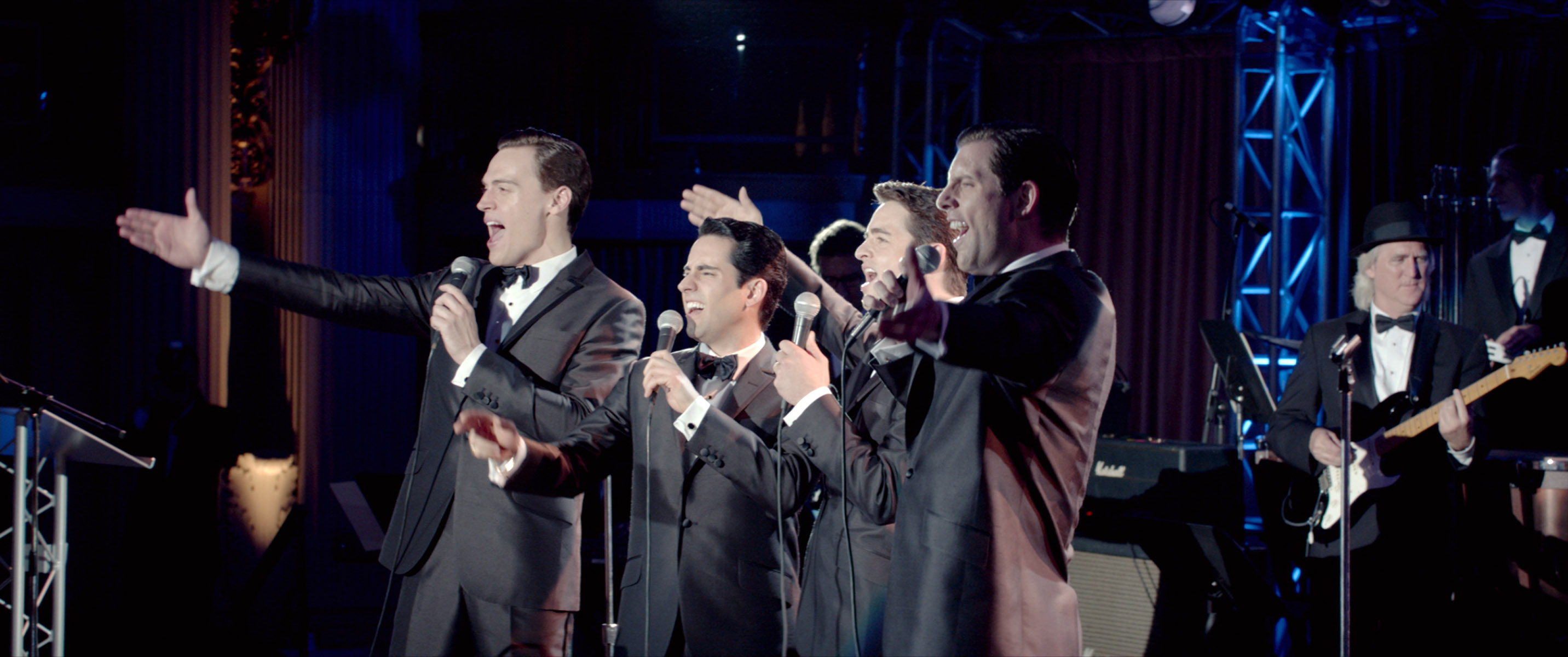
Jersey Boys The musical that turned the back story of Frankie Valli and the Four Seasons — the 1960s hit making machines behind upbeat doo-wop ditties like “Sherry,” “Big Girls Don’t Cry,” “Walk Like a Man,” and a zillion more; you will recognize all of them — into Broadway gold ascends to the big screen thanks to director Clint Eastwood, a seemingly odd choice until you consider Eastwood’s own well-documented love of music. Jersey Boys weaves a predictable tale of show biz dreams realized and then nearly dashed, with a gangster element that allows for some Goodfellas-lite action (a pre-fame Joe Pesci is a character here; he was actually from the same ‘hood, and was instrumental in the group’s formation). With songs recorded live on-set, à la 2012’s Les Misérables, there’s some spark to the musical numbers, but Eastwood’s direction is more solid than spontaneous, with zero surprises (even the big finale, clearly an attempt at a fizzy, feel-good farewell, seems familiar). Still, the cast — including Tony winner John Lloyd Young as Valli, and Christopher Walken as a sympathetic mobster — is likable, with Young in particular turning in a textured performance that speaks to his years of experience with the role. For an interview with cast members Young, Michael Lomenda (who plays original Four Season Nick Massi), and Erich Bergen (as Bob Gaudio, the member who wrote most of the group’s hits), visit www.sfbg.com/pixel_vision. (2:14) Four Star, Marina, 1000 Van Ness, SF Center, Shattuck, Sundance Kabuki, Vogue. (Eddy)

Obvious Child We first encounter the protagonist of writer-director Gillian Robespierre’s funny, original film — a Brooklyn-dwelling twentysomething named Donna (Jenny Slate), who works at a lefty secondhand bookstore and makes regular (if unpaid) appearances at a local comedy night — onstage mining such underdiscussed topics as the effects of vaginal discharge on your garden-variety pair of underwear. This proves a natural segue to other hefty nuggets of embarrassment gold concerning her love life, to the dismay of boyfriend Ryan (Paul Briganti), auditing from the back of the club. He pretty much deserves it, however, for what he’s about to do, which is break up with her in a nasty, well-populated unisex bathroom, taking time to repeatedly glance at the texts coming through on his phone from Donna’s good friend, with whom he’s sleeping. So when Donna, mid-drowning of sorrows, meets a nice-looking fellow named Max (Jake Lacy) at the bar, his post-fraternity-presidency aesthetic seems unlikely to deter her from a one-night stand. The ensuing trashed make-out dance-off in Max’s apartment to the Paul Simon song of the title is both comic and adorable. The fractured recap of the evening’s condom-free horizontal events that occurs inside Donna’s brain three weeks later, as she hunkers down with her best friend, Nellie (Gaby Hoffmann), in the bookstore’s bathroom after peeing on a stick, is equally hilarious — and unwanted-pregnancy jokes aren’t that easy to pull off. Robespierre’s treatment of this extended windup and of Donna’s decision to have an abortion is a witty, warmhearted retort to 2007’s Knocked Up, a couple generations’ worth of Hollywood rom-com writers, and an entertainment industry that continues to perform its sweaty contortions of storytelling in the gutless cause of avoiding the A-word. (1:15) California, Embarcadero, Piedmont, Sundance Kabuki. (Rapoport)

Ping Pong Summer Eighties teen flicks of the My Bodyguard (1980), smart-dweebs-beat-the-bullies ilk are paid homage in Michael Tully’s deadpan satire, which is closer in spirit to the Comedy of Lameness school whose patron saint is Napoleon Dynamite. Radley (Marcello Conte) is an average teen so excited to be spending the summer of 1985 in Ocean City, Md. with his family that he renames himself “Rad Miracle.” He acquires a new best friend in Teddy (Myles Massey), who as the whitest black kid imaginable might make even Rad look cool by comparison. However, they are both dismayed to discover the local center for video gaming and everything else they like is ruled by bigger, older, cuter, and snottier douchebag Lyle Ace (Joseph McCaughtry) and his sidekick. Only kicking Lyle’s ass at ping pong — with some help from a local weirdo (a miscast Susan Sarandon, apparently here because she’s an off screen ping pong enthusiast) — can save Rad’s wounded dignity, and the summer in general. A big step up from Tully’s odd but pointless prior Septien (2011), this has all the right stuff (including a soundtrack packed with the likes of the Fat Boys, Mary Jane Girls, New Edition, Whodini, and Night Ranger) to hilariously parody the era’s inanities. But it’s just mildly amusing — a droll attitude with lots of period detail but not much bite. (1:32) Roxie. (Harvey)

The Rover Future days have never seemed quite so bleak as they are depicted in the wild, wild Aussie west of The Rover — rendered by Animal Kingdom (2010) director David Michod, who co-wrote The Rover with Joel Edgerton. Let’s just say we’re probably not going to see any primo Burner ensembles inspired by this post-apocalyptic yarn: Michod ventures to a plausible future only a decade out, after a global economic collapse, and breaks down the brooding road trip to its hard-boiled bones, setting it in a beauteous, lawless, and unceasingly violent outback. A heist gone wrong leads a small gang of robbers to steal the car belonging to monosyllabic, ruthless mystery man Eric (Guy Pearce). The latter wants his boxy little sedan back, badly, and, in the cat and mouse game that ensues, seems willing to die for the trouble. Meanwhile, one of the gang of thieves — the slow, dreamy Rey (Robert Pattinson), who has been left to die of a gunshot wound in the dirt — turns out to be more of a survivor than anyone imagined when he tracks down the tracker hunting for his brother and cohorts. Michod seems most interested in examining and turning over the ties that bind, in a mean time, an eminently absurdist moment, when everything else has fallen away in the face of sheer survival. Cineastes, however, will appreciate the elemental, existential pleasures of this dog-eat-dog Down Under out-Western, not the least of which include the performances. Pearce’s rework of the Man With No Name exudes intention in the very forward thrust of his stance, and Pattinson breaks his cool — and the confines of typecasting — as a blubbering, babbling, thin-skinned man-child. Clad in the mystic expanses of the South Australia desert, which tip a hat to John Ford Westerns as well as scorched-earth-of-the-mind movies such as El Topo (1970) and Paris, Texas (1984), The Rover is taken to the level of tone poem by the shuddering, moaning cellos of Antony Partos’s impressive, atonal electroacoustic score. (1:42) Metreon, Shattuck. (Chun)

The Signal Sharing its title with a 2007 film — also a thriller about a mysterious transmission that wreaks havoc in the lives of its protagonists — this offbeat feature from co-writer and director William Eubank belies its creator’s deep affection for, and knowledge of, the sci-fi genre. Number one thing The Signal is not is predictable, but its twists feel organic even as the story takes one hairpin turn after another. MIT buddies Nic (Brenton Thwaites) and Jonah (Beau Knapp) are driving Nic’s girlfriend, Haley (Olivia Cooke), cross-country to California. Complicating the drama of the young couple’s imminent separation is Nic’s deteriorating physical condition (it’s never explained, but the former runner apparently has MS or some other neurological disease). The road trip turns dark when the trio (who also happen to be hackers) realize an Internet troll they’ve tangled with in the past is stalking them. After a brief detour into found-footage horror — fooled ya, Eubank seems to be saying; this ain’t that kind of movie at all! — the kids find themselves embroiled in ever-more-terrifying realities. To give away more would ruin the fun of being shocked for yourself, but think Twilight Zone meets Area 51 meets a certain futuristic trilogy starring Laurence Fishburne, who turns up here to play a very important role in Nic and company’s waking nightmare. (1:37) Metreon. (Eddy) *


Frameline is underway! Plus: crooners, ping-pong champs, and more, in new movies

0

Frameline 38, the San Francisco International LGBT Film Festival, kicked off last night and runs through June 29; check out our big list o’ blurbs right here. Elsewhere, Clint Eastwood directs a musical, Guy Pearce prowls the outback, a very good suburban noir emerges from the Netherlands, a documentary takes on the cost of higher education, and more! Read on for the goods (and bads). 

https://www.youtube.com/watch?v=j-VBgShBKlY

 Borgman Popping out from his underground hidey hole, narrowly escaping organized armed vigilantes — indicating an ongoing, possibly global secret battle this movie is content to leave entirely unexplained — the titular figure (Jan Bijvoet) shambles to a nearby home and demands comfort. Refused, he persists, and housewife Marina (Hadewych Minis) acquiesces — at first on the sly, as husband Richard (Jeroen Perceval) has already beaten their paunchy, disheveled, weird would-be guest. But soon Borgman is insinuating himself with the well-off suburban couple’s three children, gradually warping the family dynamic until he has everyone under his power. You’ve seen this kind of “Enigmatic stranger invades complacent bourgeoisie home, wreaks liberating and/or terrifying havoc” thing before, both in thrillers and in artier parables from Teorema (1968) to The King (2005). There is nothing wildly original about Dutch filmmaker Alex van Warmerdam’s seductive, macabre black comedy in outline, not its satire of oblivious upper-middle-class entitlement or even (perhaps especially) when the too-generous hosts and any unlucky interlopers start getting killed off one by one. You can debate Borgman’s precise point, or whether it has one at all. But there’s a tart, bracing quality to this cruel absurdist joke that is as perversely delightful as the film is utterly misanthropic. (1:53) (Dennis Harvey)

A Coffee in Berlin How do you say “mumblecore” in German? Jan Ole Gerster’s debut feature has certain arty pretensions — it’s shot in black-and-white, and scored with peppy jazz — but it’s more or less a rambling day in the life of law school dropout Niko (Tom Schilling). It happens to be the very day Niko’s golf-loving father decides to stop funding his shiftless son’s slacker lifestyle, though that crisis (which, you know, Lena Dunham built an entire HBO comedy around) receives nearly equal heft as a cutesy ongoing gimmick that sees Niko incapable of getting a cup of coffee anywhere in Berlin. Hipster ennui can be compelling if it has some underlying energy and purpose (see: 2013’s Frances Ha, to which this film has been compared), but A Coffee in Berlin comes up short on both. That said, it does offer an intriguing portrayal of Berlin — a city whose modern-chic façade barely contains the history that haunts it — and some of its supporting characters, particularly Friederike Kempter as a former schoolmate of Niko’s who has outgrown him emotionally by about one thousand percent, provide pleasant enough distractions. (1:28) (Cheryl Eddy)

Fateful Findings Oh my. With the technical sophistication of Birdemic (2008), Doris Wishman-worthy attention to superfluous detail, and the obliviousness of The Room (2008) toward any semblance of narrative or character continuity, this supernatural drama — or, uh, something like that — is making a bid to be the latest so-bad-it’s-surreal midnight movie hit. Writer-director-producer-editor-star Neil Breen, a man of many hats if no apparent talents, plays Dylan, a writer. As a child, he and friend Leah had found a mushroom that turned into a jewelry box (““Look what I found! A treasure! It’s a magical day!”), and which will come to effect their lives in ways that never make any sense whatsoever. They reunite as re-infatuated adults (Jennifer Autry now playing Leah), which is bad news for the pill-popping wife (Klara Landrat) Dylan is kinda over anyway. Meanwhile, their friends Jim (David Silva) and Amy (Victoria Valene) fight a lot, because he drinks to compensate for their nonexistent sex life, and she’s just incredibly bitchy. Eventually we realize that Dylan is working on a new book that will shockingly expose the rampant global corporate and political corruption that apparently no one has ever noticed before. The climax, which must be seen to be believed, has him triumphantly announcing these (extremely vague) revelations to the cheers of invisible thousands, while disgraced officials are seen committing suicide en masse rather than, you know, retiring to the Canary Islands. There’s a fine line between the hilarious and tortuous that is exactly where Fateful Findings lives. With its flatlined pacing, not-from-this-planet dialogue (Dylan straight facedly tells a dead body “I can’t help you outta this one”), gratuitous nudity, and curious insistence that its characters express emotions by throwing things (laptops, pieces of meat, etc.), this inscrutable vanity project is indeed unique. What it lacks to get you through the (many) boring parts is the compelling personality of a Tommy Wiseau — Breen is (like everyone here) awful, but he’s just a zero onscreen, not a fascinating weirdo. You will want to be drunk for this movie. (1:40) Clay. (Dennis Harvey)

Ivory Tower The latest “issue doc” to come down the pipeline is this very timely and incisive look at the cost of higher education from director Andrew Rossi (2011’s Page One: Inside the New York Times). Rossi is a Yale and Harvard Law grad, and he begins his film in the hallowed halls of the latter to frame the question: In the era of skyrocketing tuition, and with the student loan debt hovering at a trillion bucks, is college still worth it? The answer is left open-ended, though with the very strong suggestion that nontraditional education (including community colleges, online learning, and the Silicon Valley-spawned “uncollege” movement) is certainly something worth exploring, particularly for the non-wealthy. Along the way, we do see some positive tales (a kid from the mean streets of Cleveland gets a full-ride scholarship to Harvard; students at rural Deep Springs College follow philosophy discussions with farm work; African American women at Spelman College thrive in an empowering environment), but there’s a fair amount of cynicism here, too, with a hard look at how certain state schools are wooing deep-pocketed out-of-staters with fancy athletic stadiums, luxurious amenities, and a willingness to embrace, however unofficially, their hard-partying reputations. Segments following a student protest at New York’s Cooper Union, a formerly free school forced to consider collecting tuition after a string of financial troubles, echo Frederick Wiseman’s epic At Berkeley (2013), a thematically similar if stylistically very different work. (1:37) (Cheryl Eddy)

Jersey Boys The musical that turned the back story of Frankie Valli and the Four Seasons — the 1960s hit making machines behind upbeat doo-wop ditties like “Sherry,” “Big Girls Don’t Cry,” “Walk Like a Man,” and a zillion more; you will recognize all of them — into Broadway gold ascends to the big screen thanks to director Clint Eastwood, a seemingly odd choice until you consider Eastwood’s own well-documented love of music. Jersey Boys weaves a predictable tale of show biz dreams realized and then nearly dashed, with a gangster element that allows for some Goodfellas-lite action (a pre-fame Joe Pesci is a character here; he was actually from the same ‘hood, and was instrumental in the group’s formation). With songs recorded live on-set, à la 2012’s Les Misérables, there’s some spark to the musical numbers, but Eastwood’s direction is more solid than spontaneous, with zero surprises (even the big finale, clearly an attempt at a fizzy, feel-good farewell, seems familiar). Still, the cast — including Tony winner John Lloyd Young as Valli, and Christopher Walken as a sympathetic mobster — is likable, with Young in particular turning in a textured performance that speaks to his years of experience with the role. Interview with cast members Young, Michael Lomenda (who plays original Four Season Nick Massi), and Erich Bergen (as Bob Gaudio, the member who wrote most of the group’s hits), right here. (2:14) (Cheryl Eddy)

Ping Pong Summer Eighties teen flicks of the My Bodyguard (1980), smart-dweebs-beat-the-bullies ilk are paid homage in Michael Tully’s deadpan satire, which is closer in spirit to the Comedy of Lameness school whose patron saint is Napoleon Dynamite. Radley (Marcello Conte) is an average teen so excited to be spending the summer of 1985 in Ocean City, Md. with his family that he renames himself “Rad Miracle.” He acquires a new best friend in Teddy (Myles Massey), who as the whitest black kid imaginable might make even Rad look cool by comparison. However, they are both dismayed to discover the local center for video gaming and everything else they like is ruled by bigger, older, cuter, and snottier douchebag Lyle Ace (Joseph McCaughtry) and his sidekick. Only kicking Lyle’s ass at ping pong — with some help from a local weirdo (a miscast Susan Sarandon, apparently here because she’s an off screen ping pong enthusiast) — can save Rad’s wounded dignity, and the summer in general. A big step up from Tully’s odd but pointless prior Septien (2011), this has all the right stuff (including a soundtrack packed with the likes of the Fat Boys, Mary Jane Girls, New Edition, Whodini, and Night Ranger) to hilariously parody the era’s inanities. But it’s just mildly amusing — a droll attitude with lots of period detail but not much bite. (1:32) Roxie. (Dennis Harvey)

The Rover Future days have never seemed quite so bleak as they are depicted in the wild, wild Aussie west of The Rover — rendered by Animal Kingdom (2010) director David Michod, who co-wrote The Rover with Joel Edgerton. Let’s just say we’re probably not going to see any primo Burner ensembles inspired by this post-apocalyptic yarn: Michod ventures to a plausible future only a decade out, after a global economic collapse, and breaks down the brooding road trip to its hard-boiled bones, setting it in a beauteous, lawless, and unceasingly violent outback. A heist gone wrong leads a small gang of robbers to steal the car belonging to monosyllabic, ruthless mystery man Eric (Guy Pearce). The latter wants his boxy little sedan back, badly, and, in the cat and mouse game that ensues, seems willing to die for the trouble. Meanwhile, one of the gang of thieves — the slow, dreamy Rey (Robert Pattinson), who has been left to die of a gunshot wound in the dirt — turns out to be more of a survivor than anyone imagined when he tracks down the tracker hunting for his brother and cohorts. Michod seems most interested in examining and turning over the ties that bind, in a mean time, an eminently absurdist moment, when everything else has fallen away in the face of sheer survival. Cineastes, however, will appreciate the elemental, existential pleasures of this dog-eat-dog Down Under out-Western, not the least of which include the performances. Pearce’s rework of the Man With No Name exudes intention in the very forward thrust of his stance, and Pattinson breaks his cool — and the confines of typecasting — as a blubbering, babbling, thin-skinned man-child. Clad in the mystic expanses of the South Australia desert, which tip a hat to John Ford Westerns as well as scorched-earth-of-the-mind movies such as El Topo (1970) and Paris, Texas (1984), The Rover is taken to the level of tone poem by the shuddering, moaning cellos of Antony Partos’s impressive, atonal electroacoustic score. (1:42) (Kimberly Chun)

Think Like a Man Too Kevin Hart and company head to Vegas in this sequel to the 2012 hit comedy based on Steve Harvey’s best-selling relationship tome. (2:02)

Doo-wop (that thing): talking with the cast of ‘Jersey Boys’

0

The backstage musical that turned the story of Frankie Valli and the Four Seasons — known for 1960s doo-wop ditties like “Sherry,” “Big Girls Don’t Cry,” “Walk Like a Man,” and a zillion more; you will recognize all of them — into Broadway gold ascends to the big screen Fri/20 thanks to director Clint Eastwood, a seemingly odd choice until you consider Eastwood’s own well-documented love of music. 

Jersey Boys weaves a predictable tale of show biz dreams realized and then nearly dashed, with a gangster element that allows for some Goodfellas-lite action (a pre-fame Joe Pesci is a character here; he was actually from the same ‘hood, and was instrumental in the group’s formation). With songs recorded live on-set, à la 2012’s Les Misérables, there’s some spark to the musical numbers, but Eastwood’s direction is more solid than spontaneous, with zero surprises (even the big finale, clearly an attempt at a fizzy, feel-good farewell, seems familiar). 

Still, the cast — including 2006 Tony winner John Lloyd Young as Valli, and Christopher Walken as a sympathetic mobster — is likable, with Young in particular turning in a textured performance that speaks to his years of experience with the role. I spoke with Young, Michael Lomenda (who plays original Four Season Nick Massi), and Erich Bergen (as Bob Gaudio, the member who wrote most of the group’s hits) when the trio made a recent visit to San Francisco to promote the movie.

https://www.youtube.com/watch?v=6tC1yOUvvMo

SF Bay Guardian This must be a crazy time for you guys.

John Lloyd Young It’s a very exciting time for all three of us, and including our fourth colleague Vincent Piazza [who plays Four Season co-founder Tommy DeVito]. This is our first major studio feature film, and we got to be directed by Clint Eastwood. 

SFBG Did he ever break into song on the set?

Michael Lomenda [Laughs.] It was very interesting, actually, to see him between takes trying to capture that Frankie Valli falsetto. I think it was an ongoing challenge for him the whole 38 days that we shot, to try and figure out how to manipulate his voice in that way.

JLY It was a tongue-in-cheek challenge, because it was all playful. He knew he wasn’t gonna sing like Frankie!

SFBG Few can! Though, you’ve been able to do it for several years. How do you keep your voice in shape to hit those notes?

JLY Well, you either have a falsetto or you don’t. If you have it, you just keep it in shape the same way any singer does. Obviously, singers, there’s certain things we can’t do. We can’t go out and yell all night in a bar. We shouldn’t smoke, we shouldn’t drink. The voice is very delicate. Those are very delicate muscles. Anything you do that’s not good for your body in general won’t be good for your voice. But, basically, just living a clean life. And Frankie Valli himself will tell you the same thing.

SFBG It’s interesting that you bring up clean living. I hadn’t seen the stage show, and I didn’t know much about the group before I saw the movie. But in every show-biz biopic, there’s always some kind of vice (usually drugs or booze, as in Walk the Line) that threatens to ruin the performer’s success. Here, it’s the mobster subplot — mobsters are not the typical vice.

Erich Bergen I think that’s one of the things that’s very interesting is that Frankie didn’t get into [drugs or alcohol]. That’s sort of the reason why he’s still around and he’s still on the road, because he’s been able to preserve not only his gift, but his life. Of course, he went through some harsh things in life. He went through a couple of marriages and divorces, and obviously he lost a daughter. Actually, and we don’t go into this in the movie, but he’s lost two daughters. He’s lived a very hard life. He didn’t need drugs or alcohol; that hard life came to him naturally. 

I think that’s what makes this story so interesting: we’re watching someone whose life is hitting him in the face. And we sort of identify with that. I don’t know about you, but for me personally, when I watch a lot of biopics and they start to get into the drugs and all that type of stuff — that’s where I sort of lose them a little bit, because that’s just sort of the generic story at this point. What makes Jersey Boys work is that we really connect with these guys because we identify with them. It’s written in a way that even when they’re not at their highest point, when they’re doing things that aren’t so great — especially the character of Tommy DeVito — we still root for them, and we still want them to succeed. 

SFBG The movie really shows how hard they had to work to be successful. It’s a stark contrast to the music business of today, where someone can become famous overnight thanks to a YouTube video.

EB That’s exactly what we talk about when we’re asked the question, “What makes this story so interesting?” If you look at the groups of today, whether it’s a One Direction or a Justin Bieber, before we actually know their songs, we know what they had for breakfast. But [the Four Seasons] really came at a time when you were trying to hide your real story and project out a shiny, clean image, because that’s what everyone wanted. That’s why Jersey Boys can exist today, because the story was never known. 

JLY I have a thought about that, too, which is that nowadays — without naming anyone by name — a lot of successful music acts are created as an idea in a marketing boardroom first, and then they find someone to fit that image. You know what I’m saying? It seems like the marketers are the stars nowadays. The more you can get an audience to feel there’s something really exciting there, and then get them there, then you’ve won. But when they get there and they don’t have a great experience, well, you already got their money, so who cares?

But I think at the time of Jersey Boys, to succeed you had to work really hard. There were only three networks, and there were very few print outlets. If you actually got on the cover of a magazine, or you got on a network, you made it. But you had to have something to show for it. You had to have talent, and especially that generation of Baby Boomers — the biggest generation we’ve ever had in American history. That’s a lot of people competing for which of the talented ones among them would become known. And the Four Seasons had the talent, but they also had that special, very distinctly East Coast, riveting-to-an-audience kind of thing, with that Mob connection that makes their story unique among that era of bands.

SFBG The movie makes it clear that they had to succeed, because they didn’t have anything to go back to.

ML It’s true. These guys are from the wrong side of the tracks. You have some choices. You can go in the army, you can get mobbed up, or you can become famous, as they say in the film. We also sort of say that they did two out of the three. But I think their music spoke for itself. They broke when their music had to speak for them, and that’s what made them successful.

EB The proof of that is that everyone knows these songs, but not the band. There are so many songs we don’t even get to in this movie, because we’d run out of time! That tells you how much talent they really had as performers, writers, producers — all of those things. Their catalog is endless, and yet nobody knew they were all by the same group.

JL I just saw Clint Eastwood on the Today show, and when they introduced him, they said the Four Seasons had 71 chart-topping hits. 71! I think that’s incredible for that band, coming out of that decade.

SFBG They were also commercially savvy. The songs were so catchy. No wonder people liked them.

ML I think that’s they key to why their music has stood the test of time. Maybe it’s commercially viable, and it is good pop music. But if you did a little deeper into some of the lyrics — for example, “Dawn” is one of my favorite songs, and they’re singing, “Dawn, go away, I’m no good for you, think about what the future would be with a poor guy like me…” It’s that kind of lyric that brings depth so what initially could be perceived as just pop, bubblegum music. It spoke to an audience that I think was sort of the fabric of America.

JLY Their early attempts at marketing are sort of outlined in the movie. You got [producer] Bob Crewe giving them advice on how to get their songs out there. You have Bob Gaudio figuring out how to get his songs out there. I know, and am friends with, the real Bob Gaudio, and it’s funny, he’s a hugely successful songwriter, but he almost seems more proud of his business successes than he does of his songwriting. He gets pumped by being smart in business as he gets pumped by writing a good song.

SFBG As actors, does it present a particular challenge to play a real person, a famous person, particularly if that person is still living? Or were you able to put your own stamp on the characters?

EB I think John had the most pressure out of all of us, because he’s playing someone that’s so well-known, and John can tell you about that experience. But for the rest of us, we really did invent these characters. Even though they were real people, and while we wanted to pay respect to these people, and their families, we did have the luxury of not having to play John Lennon and Paul McCartney. They’re not well-known to the public. So we did get to use our skills as actors and create characters from the ground up.

JLY One of the benefits as an actor approaching the role of Frankie, even in the beginning in the original cast, is that he is known. People know what he looks like and they know what he sounds like. He did some talk show stuff, so they kind of know how he moves. So I knew that I needed to get his physical attributes down. I needed to evoke his sound, look like him, talk like him. But outside of those physical things, the internal life of Frankie Valli, we don’t really know. We didn’t know. 

When I was researching the original Broadway show, all I could find were maybe 12 minutes of footage of him at the Museum of Television and Radio. That was, like, the year before YouTube broke, so now there’s footage of him everywhere, but I didn’t have the benefit of that. But now I have seen a lot of YouTube and everything. So I thought, as long as I get those physical characteristics down, the story of the Four Seasons, the story of Frankie Valli, is still largely unknown to audiences. So I had free reign to kind of build the psychological reality of the character using my own imagination, and the cues that I had from the script. And knowing Bob Gaudio, Frankie Valli’s real-life best friend, and the things he told me about Frankie, and knowing, of course, the man himself. 

But I didn’t feel pressure so much. The pressure I felt was to honor the people who put this movie together, which was Frankie and Bob, and to portray the character in a way that was compelling and riveting to an audience so that we’d have as successful a show as we could have. And now, I think that I feel very proud of what we’ve accomplished with this movie, and I think it’s an enhancement, actually, of what has been out there all these years, with the successful stage musical across the world. 

SFBG How true is the movie to the stage production?

ML It’s actually very similar. We were lucky to work with [screenwriters and musical authors] Marshall [Brickman] and Rick [Elice] on the film, which I think we were all very grateful for, because it meant that we didn’t have to learn too many new lines. [Laughs.] But it was great. I think when I first found out that the movie was being done, I was really concerned that the final product would be true to the stage, because the script is so fantastic. But beauty of film is that you get to flesh out certain relationships, and certain storylines. I think fans of Jersey Boys are going to love a lot of the scenes that they loved from the stage version, but they’re also going to go crazy over the other stuff, the extra stuff that is put into the film.

The stage production is directed in a very slick fashion, but logistics dictate that you have to move from scene to scene very quickly to keep up the energy going in the two-and-a-half hour show. But what Mr. Eastwood does so beautifully with this movie, and with all of his movies, is create a real environment that’s rich and tangible, that you can really sense in the theater. I think Jersey Boys fans are going to love that as well.

JYL If people love the stage show of Jersey Boys, the movie is going to give then a much deeper, more thorough, and much more detailed experience.

SFBG I did not realize, until I was reading up on the movie, that there were Jersey Boys superfans who have seen the show hundreds of times.

EB Michael and I opened the national tour of Jersey Boys in San Francisco, and six years later Michael closed that tour in the same theater. This was my first discovery with anything remotely like that. I remember seeing these fans come in over and over again. At first I thought, “What are they doing?” and “Where are they getting the money that they’re buying such great seats three times a week?” I remember I got a letter one time, we all got these letters, from a fan who said, “I know you probably think it’s crazy that I’m here all the time, but this is the first time I’ve felt happy in 10 years.”

When we get things like that, we don’t really know what to make of that. But we are so thrilled that it’s had an impact. I don’t know if it can be explained. People often ask us, “What is it about Jersey Boys that keeps people coming back?” I don’t know if I know. I don’t know if anyone knows. I know that when people come to see the show, they’re affected by it for whatever reason. It moves them, it changes them. They are really passionate about it, and we’re just sort of lucky that we got to be a part of that somehow. I don’t really know what else to say about it!

JYL I have something else to say about it, and that is: if a person has seen the stage play of Jersey Boys 100 times, let them know, please, on our behalf, that for the price of one Broadway ticket, they can see this movie 10 times! [All three laugh.] So we hope that they decide to make their investment in 10 tickets for the movie. 

SFBG What’s up next for you guys? More musicals?

ML I think we’ve all been bitten by the movie bug. To start on a Clint Eastwood set, we’ve been a bit blessed and totally spoiled. So, I think certainly, we would all like to dive further into this genre and explore it.

EB I agree. My album comes out next week, some new music that I just recorded down in Nashville, and I’m in a new series on CBS this fall called Madame Secretary. I will also be hosting lots of Jersey Boys viewing parties once the DVD comes out. [Laughs.]

JLY I have a new album that I just released, My Turn — it’s R&B hits from the 60s in my voice, not Frankie’s, and it’s on iTunes and Amazon. I’m also a recent appointee by Barack Obama to the President’s Committee on the Arts and Humanities. So I’ll be working with kids in the lowest-performing schools, re-inserting arts into their curriculum to increase their school performance and their school culture. The actor Kal Penn and I will be sharing a school district in Des Moines, Iowa. I’m really looking forward to it.

JERSEY BOYS opens Fri/20 in Bay Area theaters.

City College’s accreditors bow to pressure, amend rules to save CCSF

18

Keep City College of San Francisco open, or else.

That’s the message local and federal officials have drilled into City College’s accreditors in recent weeks. Representatives Nancy Pelosi and Jackie Speier; Assemblymembers Tom Ammiano and Phil Ting; and the state’s community college government have all publicly pressured the Accrediting Commission for Community and Junior Colleges to give City College an extension to prove its worth.

Finally bowing to pressure, the ACCJC may soon chang their own rules to save City College.

Today the ACCJC announced changes in its policy exclusively for colleges with terminated accreditation, granting a chance for such colleges to request a new “accreditation restoration status.”

“This is new for the ACCJC, but I don’t know if its new for other institutions,” Dave Hyams, a spokesperson for the ACCJC told us. But this new policy may offer new hope for City College.

In 2012 the ACCJC told City College its accreditation would be terminated, putting the school in the fight of its life. A loss of accreditation would mean its degrees are worthless, and the school would lose government funding. Notably, the school has not lost its accreditation yet.

The ACCJC’s policy change is not yet final, as the agency is allowing two weeks for the public to weigh in. The changes will be finalized on June 25, the commission said.

If the policy is adopted though, it means City College would be able to apply for a lifeline.

“If this policy is adopted as expected,” the ACCJC wrote in their statement to the press, “CCSF would have the opportunity to take steps to be designated as being in restoration status.”

Hyams denied the decision has anything to do with the very recent, and very public, emails from Nancy Pelosi and other politicians to demanding the ACCJC give City College more time.

“The ACCJC was looking for a way to balance the impact of termination on students,” he said, “with the needs for the college to meet basic standards.”

The college would need to file its application for restoration status by July 2014, City College’s originally announced accreditation termination date. This may all be moot, however, as City Attorney Dennis Herrera filed for an injunction to stall the college’s closure until the conclusion of the city’s lawsuit against the ACCJC. Legal proceedings are expected to begin in October.

Sara Eisenberg, the deputy city attorney leading the case against the ACCJC, told us this doesn’t affect the case at all.

Our lawsuit is about the ACCJC’s bad acts, which go to the heart of the fairness and accuracy of the accreditation evaluation process,” she told the Guardian. “These violations of law, policy and fundamental fairness require that the ACCJC’s past decisions concerning City College be vacated and that City College be reevaluated on a clean slate using a fair process.”

Interestingly, the announcement of restoration status by the ACCJC contains a caveat: they will not extend CCSF’s appeal unless the US Department of Education gives them the go-ahead. Hyams said the ACCJC developed this plan while consulting the USDOE, so it may be a slam dunk.

Need some context on the City College fight? Check out the video above for a basic overview.

“The commission and the department had very recent meetings that have been constructive and productive, they’re fully aware of this proposal,” he told us.

One of those meetings was not so peaceful, however, as over 200 City College supporters rallied outside the ACCJC’s semi-annual meeting in Sacramento, demanding the organization rescind its decision to revoke the college’s accreditation. The protest was led by the California Federation of Teachers, the local AFT 2121 and attended by teachers and students alike.

Tim Killikelly, the president of the AFT 2121 had questions about the new policy.

“I’m not sure how this restoration status is different than what appeals already existed,” he said. “The students need to be sure about their academic future, and this doesn’t do that. The students need to breathe a sigh of relief.”

He’s referring to the college’s recent drop in enrollment. At its height City College had over 100,000 students enrolled. But, due in part to its accreditation struggles and (some have said) the economy’s mild upswing, the enrollment has recently dropped to under 80,000 students. 

Killikelly laid much of the blame for that enrollment drop at the feet of the ACCJC. “They should’ve sent a team to verify we’re in compliance,” he said. Instead of this middling compromise, if the ACCJC had instead granted full accreditation Killikelly thinks confidence in the college could be restored.

City College Trustee Rafael Mandelman was also cautious about the decision.

“Its good news,”  he said, but, “the powers that be have rallied and persuaded the ACCJC that they cannot shut City College down now. The ACCJC are not pulling their claws out of the college. We will continue this terrible dance unless the City Attorney wins his lawsuit.”

The college may already have bounced back. California Community College Chancellor Brice Harris and City College Chancellor Arthur Tyler have publicly stated the school is 95 percent done addressing all of the concerns the ACCJC wanted to see fixed.

Mandelman contends the ACCJC’s move to terminate City College’s accreditation did more harm than good. “This whole process has been incredibly and unnecessarily disruptive on City College,” he said. “It’s a horrendous way to reform an institution.”

It should be noted that City College is still open, and remains accredited. For a look at the new policy from the ACCJC, click here.

The dual

0

arts@sfbg.com

DANCE Circus Automatic’s In the Tree of Smoke is a fun and greatly entertaining show that aims to place circus acts, traditionally viewed as club and variety show entertainments, into a more mainstream theatrical context. Tree‘s organizers could not have chosen a better place than Chinatown’s recently resurrected Great Star Theater, an old-time movie house that had fallen on hard times.

In the spirit of its venue, the show was interspersed with newsreel-like video collages that proposed a perspective of the world more inclusive than the one we tend to encounter. They included vast landscapes suggesting hunters and foragers, an homage to Blade Runner (1982), and depictions of catastrophes both natural and man-made. They created a dreamy, perhaps phantasmagoric environment — one in which a contortionist feels just at home as a would-be stripper wielding claws instead of fans, or a lusciously adorned queen dragging a bunch of black balloons behind her. On opening night the connection between the narrated video clips and the live show was not yet well enough established. Yet it is hoped that by the time this ambitious but low-budget performance closes June 27, the kinks will have been ironed out.

Circus artists face a conundrum. Because what they ask of their bodies is often so extreme, it is tempting to not look beyond their sheer physical accomplishments. But Tree‘s performers tried to go deeper, via technique, discipline, and the sheer bravado of it all. Jewel-encrusted contortionist Inka Siefker ritualistically rearranged her body parts until she finally shaped them into an eerily beautiful image involving two feet and a bow and arrow. When ballet dancer Micah Walters played with verticality and gravitational pull, he seemed to transcend and affirm his own humanity. You couldn’t miss the dance elements in Katie Scarlett’s dramatic give-and-take between her and her silk apparatus; at times the silk appeared to control her as much as she did it. When Chloe Axelrod, in white, brilliantly “danced” with, in, and around her hoop, she was highly controlled, yet ever so free. But freest of all was Fleeky Flanco, a superb apparatus juggler, varied contortionist, and clown — not to mention the brains and heart behind this brave and much-welcome artistic endeavor.


LAST WALTZ?

In its seventh incarnation, Nol Simonse and Todd Eckert’s “Shared Space” became a celebration of dance, dancers, and two fine choreographers. Eckert is heading for the Midwest, and the future of what has become a popular showcase may be in doubt. Both choreographers have long and distinguished performance careers, which may account for the superb dancers they have been able to enlist for a long time, but they were particularly fine in this program.

Simonse’s new trio Mistakes and Gifts is an intimate yet translucent meditation on what it means to live as a gay man, with James Graham swinging the proverbial about-to-drop other shoe like a Damocles sword, and Christy Funsch as a haunted, fearful, but ultimately embracing spirit.

Eckert’s problematic Previously Published Or I Could Never Make You Stay — Revisited is a synthesis of four earlier pieces. It traces the relationship between two couples, Crystaldawn Bell with Eckert and Norma Fong with Victor Talledos. The men find each other in glorious dancing by Talledos and Eckert; they leave the women contemplating their own futures as they are holding the T-shirts the men left behind. Previously looked like both a movie romance and a soap opera, though the quartet engaged in its tasks with such passion, competence, and individuality that I almost bought into the premise.

No such reservations came with Eckert’s mesmerizing Yaw, for which Bell, Fong, and Talledos returned in a work of pure dance that explored physical forces that affect an object in motion. Light on their feet, comfortable in the air, and close to the ground, they listened to their bodies, and then followed their impulses wherever they went.

Not every episode in Simonse’s infectiously exuberant yet thoughtful What’s Important is Not Always convinced equally. The high-intensity, unison trio (Dudley Flores, Juliann Witt, and Simonse) of money-chasing business types was brilliantly comedic and scary. However, the quartet of pole-dancing males (with one ending up as a carcass) needed more complexity. Simonse also engaged a white-clad Hannah Rose in a ghoulish courting duet. But then the pace picked up with Stella Adelman and Jerry Lin exploding into a Lindy Hop-inspired duet that segued into a large-scale beach party in which couples hooked up but just as quickly dissolved. What’s closed with a stunningly beautiful solo for 17-year-old Mia Chong that explored the dancer’s relationship not with others but with her own body, carefully, curiously, and completely. *

IN THE TREE OF SMOKE

Through June 28

Thu-Sat, 8pm, $25

Great Star Theater

636 Jackson, SF

www.circusautomatic.com

www.sharedspacesf.org


Stage Listings: June 11-17, 2014

0

Stage listings are compiled by Guardian staff. Performance times may change; call venues to confirm. Reviewers are Robert Avila, Rita Felciano, and Nicole Gluckstern. Submit items for the listings at listings@sfbg.com.

THEATER

OPENING

“The Bakla Show 3” Bindlestiff Studio, 185 Sixth St, SF; http://baklashow3.bpt.me. $10-20. Opens Thu/12, 8pm. Runs Thu-Sat, 8pm. Through June 28. Three short works focusing on the struggles of Pinoy LGBT youth.

Body of Water Southside Theater, Fort Mason Center, Bldg D, Third Flr, Marina at Laguna, SF; www.brownpapertickets.com. $15-35. Opens Fri/13, 7:30pm. Runs Fri-Sat, 7:30pm; Sun, 2:30pm. Through June 28. A Theatre Near U presents an original indie-rock teen musical, with songs by Jim Walker.

The Weir Shelton Theater, 533 Sutter, SF; www.sheltontheater.org. $38. Opens Thu/12, 8pm. Runs Thu-Sat, 8pm. Through July 12. Shelton Theater performs Conor McPherson’s acclaimed tale about a spooky night in an Irish pub.

BAY AREA

American Buffalo Aurora Theatre, 2081 Addison, Berk; www.auroratheatre.org. $32-60. Previews Fri/13-Sat14 and June 18, 8pm; Sun/15, 2pm; Tue/17, 7pm. Opens June 19, 8pm. Runs Tue and Sun, 7pm (also Sun, 2pm); Wed-Sat, 8pm. through July 13. Aurora Theatre closes its 22nd season with David Mamet’s powerful drama.

ONGOING

Brahmin/I: A One-Hijra Stand-Up Comedy Show Thick House, 1695 18th St, SF; www.crowdedfire.org. $15-35. Wed-Sat, 8pm. Through June 28. Crowded Fire Theater presents Aditi Brennan Kapil’s “outrageous play masquerading as a stand-up comedy routine.”

The Crucible Gough Street Playhouse, 1620 Gough, SF; www.custommade.org. $10-35. Thu/12-Sat/14, 8pm; Sun/15, 7pm. Custom Made Theatre Co. performs Arthur Miller’s drama.

Devil Boys From Beyond New Conservatory Theatre Center, 25 Van Ness, SF; www.nctcsf.org. $25-45. Wed-Sat, 8pm; Sun, 2pm. Through June 28. New Conservatory Theatre Center performs Buddy Thomas and Kenneth Elliot’s campy sci-fi saga.

Each and Every Thing Marsh San Francisco Main Stage, 1062 Valencia, SF; www.themarsh.org. $20-50. Previews Thu/12-Fri/13, 8pm. Opens Sat/14, 8:30pm. Runs Thu-Fri, 8pm; Sat, 8:30pm. Through July 12. Dan Hoyle presents his latest solo show, about the search for real-world connections in a tech-crazed world.

Feisty Old Jew Marsh San Francisco Main Stage, 1062 Valencia, SF; www.themarsh.org. $25-100. Sat-Sun, 5pm. Extended through July 13. Charlie Varon performs his latest solo show, a fictional comedy about “a 20th century man living in a 21st century city.”

Foodies! The Musical Shelton Theater, 533 Sutter, SF; www.foodiesthemusical.com. $32-34. Fri-Sat, 8pm. Open-ended. AWAT Productions presents Morris Bobrow’s musical comedy revue all about food.

God Fights the Plague Marsh San Francisco Studio Theater, 1062 Valencia, SF; www.themarsh.org. $15-100. Previews Sat/14, 8:30pm; Sun/15, 7pm. Opens June 21, 8:30pm. Runs Sat, 8:30pm; Sun, 7pm. Through Aug 10. The Marsh presents a solo show written by and starring 18-year-old theater phenom Dezi Gallegos.

Homo File CounterPULSE, 1310 Mission, SF; www.counterpulse.org. $20-35. Fri/13-Sat/14, 8pm; Sun/15, 7pm. Writer-designer-director Seth Eisen’s homage to queer rebel Samuel Stewart (1909–1993), whose polymorphous career spanned the better part of the 20th century, was last seen at CounterPULSE in a trim and appealing 40-minute version that capped his artistic residence there in 2012. Since then the work has ballooned across two acts and, unfortunately, lost its focus. What was a compact but meaningful exploration of a polymath and sexual rebel, boldly negotiating the social hierarchies of a deeply repressive and homophobic culture, has become a vague, sometimes difficult to follow story with little more to recommend it than a hedonistic joie de vivre (though even the raunch feels listless and somewhat perfunctory). The expanded production still sports the playful puppetry (shadow and otherwise), overhead and video projections, and aerial choreography of the original — and these do produce some interesting or enjoyable moments — but the show’s polyphonic elements get drastically watered down in a sprawling, lumbering, and unevenly performed dramatic narrative. This is marked by a lot of leaden dialogue and underwhelming songs in scenes that feel either unnecessary or under-explored. The subject (played dutifully but without much illumination by Brian Livingston), along with a seven-actor ensemble of supporting characters, traverses the mutually exclusive worlds of academia and the literary avant-garde (where Michael Soldier as both sexologist Alfred Kinsey and Gertrude Stein is a notable treat); the working-class homosexual underworld of sailors and tattoo parlors; and even the conventionality of a part-time heterosexual romance (where a nicely understated Katharine Otis as Emmy Curtis begins to cast an intriguing angle on Stewart’s complex makeup). But the import of Stewart’s unique vantage and influence on it all as well as his peculiar aloofness in the midst of everything are fuzzily evoked at best. For all the media employed to depict him and his world, we come away with little sense of either. (Avila)

The Homosexuals New Conservatory Theatre Center, Decker Theatre, 25 Van Ness, SF; www.nctcsf.org. $25-45. Wed-Sat, 8pm; Sun, 2pm. Through June 28. This mildly intriguing and fitfully engaging drama from rising Chicago playwright Philip Dawkins (whose Failure: A Love Story is currently having its Bay Area debut at Marin Theater Company) explores the tensions — sexual, generational, and otherwise — among a small circle of mostly gay friends via a central figure, Evan (a sharp Robert Rushin), who ends up in relationships with almost everyone. Beginning in 2010, as 29-year-old Evan breaks up with older histrionic theater director Peter (a drolly world-weary Matt Weimer), each successive scene jumps back two years and one relationship, until the final scene unites the entire circle as they welcome naïve Iowa teen Evan out of the closest and to the big city. It’s also a new millennium, of course, some distance now from Stonewall and the first wave of the AIDS crisis, and one of the more interesting aspects of the drama (which benefits from an overall strong cast under the direction of Arturo Catricala) is the generational divide between Evan and his circle. This divide feels downright political in the aggressive showdown between Evan and the apathetic art teacher and predatory libertine Mark (a persuasive Keith Marshall), but there’s a political edge at the outset, in Evan’s pointed refusal to join Peter in referring to himself as a “homosexual,” insisting instead on the word “gay” tout court. Despite this underlying issue and some witty dialogue, however, there’s little of interest in most of the dynamics between Evan and his circle. The play’s structure accordingly becomes a slightly tedious countdown, at least until the final scene, which cashes in on the power of hindsight to produce a limited, wistful tremor of reflection. (Avila)

In the Tree of Smoke Great Star Theater, 636 Jackson, SF; www.brownpapertickets.com. $25. Thu-Sat, 8pm. Through June 28. Circus Automatic performs an new evening of immersive, experimental circus.

Macbeth Fort Point (beneath the Golden Gate Bridge), SF; www.weplayers.org. $30-75. Thu-Sun, 7pm. Through June 29. We Players’ latest site-specific undertaking is nothing less than the Scottish play at San Francisco’s historic Civil War-era Fort Point, under the southern base of the Golden Gate Bridge. And a better location for Shakespeare’s brooding, bloody, and spooky civil war drama is hard to imagine. The grandeur of the multi-story red-brick edifice with its mammoth steel doors, magnificent inner courtyard, graceful arches, spiral stairwells, mysterious passageways, canon casemates looking onto the Pacific — as well as old canons and cannonballs — add up to a deeply atmospheric setting. Moreover, directors Ava Roy and John Hadden and their production team make good use of it, moving the audience around the grounds for the better part of three hours amid picturesque staging of scenes, a wonderfully powerful quartet of musicians (made up of percussionist Brent Elberg, trumpeter Aaron Priskorn, saxophonist Charlie Gurke, and trombonist Mara Fox alternating with Rick Brown), and reverberant cries from the weyard sisters (Julie Douglas, Maria Leigh, Caroline Parsons), the enraged MacDuff (Dixon Phillips), or usurper Macbeth’s hapless victims. As the titular hero-villain, John Hadden is generally imposing if not always convincing, while Ava Roy’s forceful Lady M cuts an elegant, at times ethereal figure in her magnificent black gown (the admirable costumes throughout are by Julia Rose Meeks and Master Seamstress Dana Taylor). In general, the acting proves the weakest link, but the overall spectacle makes this a unique and rather compelling outing. (Avila)

The Orphan of Zhao ACT’s Geary Theater, 415 Geary, SF; www.act-sf.org. $20-120. Opens Wed/11, 8pm. Runs Wed-Sat and June 24, 8pm (also Wed and Sat, 2pm); Tue/17, 7pm. Through June 29. Tony winner BD Wong stars in James Fenton’s acclaimed Chinese-legend adaptation at American Conservatory Theater.

Pearls Over Shanghai Hypnodrome Theatre, 575 10th St, SF; www.thrillpeddlers.com. $30-35. Thu-Sat, 8pm. Extended through June 28. Five years ago, Thrillpeddlers breathed new life into a glitter-dusted piece of Sixties flotsam, beautifully reimagining the Cockettes’ raunchy mock-operetta Pearls Over Shanghai (in collaboration with several surviving members of San Francisco’s storied acid-drag troupe) and running it for a whopping 22 months. Written by Cockette Link Martin as a carefree interpretation of a 1926 Broadway play, the baldly stereotyped Shanghai Gesture, it was the perfectly lurid vehicle for irreverence in all directions. It’s back in this revival, once again helmed by artistic director Russell Blackwood with musical direction by Cockette and local favorite Scrumbly Koldewyn. But despite the frisson of featuring some original-original cast members — including “Sweet Pam” Tent (who with Koldewyn also contributes some new dialogue) and Rumi Missabu (regally reprising the role of Madam Gin Sling) — there’s less fire the second time around as the production straddles the line between carefully slick and appropriately sloppy. Nevertheless, there are some fine musical numbers and moments throughout. Among these, Zelda Koznofsky, Birdie-Bob Watt, and Jesse Cortez consistently hit high notes as the singing Andrews Sisters-like trio of Americans thrown into white slavery; Bonni Suval’s Lottie Wu is a fierce vixen; and Noah Haydon (as the sultry Petrushka) is a class act. Koldewyn’s musical direction and piano accompaniment, meanwhile, provide strong and sure momentum as well as exquisite atmosphere. (Avila)

Seminar San Francisco Playhouse, 450 Post, Second Flr, SF; www.sfplayhouse.org. $20-100. Wed/11-Thu/12, 7pm; Fri/13-Sat/14, 8pm (also Sat/14, 3pm). San Francisco Playhouse performs Theresa Rebeck’s biting comedy.

“Sheherezade 14” Exit Theater, 156 Eddy, SF; www.playwrightscentersf.org. $25. Thu-Sat, 8pm. Through June 21. The Playwrights’ Center of SF and Wily West Productions host this annual festival of fully-produced short plays.

Shit & Champagne Rebel, 1772 Market, SF; shitandchampagne.eventbrite.com. $25. Fri-Sat, 8pm. Open-ended. D’Arcy Drollinger is Champagne White, bodacious blond innocent with a wicked left hook in this cross-dressing ’70s-style white-sploitation flick, played out live on Rebel’s intimate but action-packed barroom stage. Written by Drollinger and co-directed with Laurie Bushman (with high-flying choreography by John Paolillo, Drollinger, and Matthew Martin), this high-octane camp send-up of a favored formula comes dependably stocked with stock characters and delightfully protracted by a convoluted plot (involving, among other things, a certain street drug that’s triggered an epidemic of poopy pants) — all of it played to the hilt by an excellent cast that includes Martin as Dixie Stampede, an evil corporate dominatrix at the head of some sinister front for world domination called Mal*Wart; Alex Brown as Detective Jack Hammer, rough-hewn cop on the case and ambivalent love interest; Rotimi Agbabiaka as Sergio, gay Puerto Rican impresario and confidante; Steven Lemay as Brandy, high-end calf model and Champagne’s (much) beloved roommate; and Nancy French as Rod, Champagne’s doomed fiancé. Sprawling often literally across two buxom acts, the show maintains admirable consistency: The energy never flags and the brow stays decidedly low. (Avila)

The Speakeasy Undisclosed location (ticket buyers receive a text with directions), SF; www.thespeakeasysf.com. $65-100 (gambling chips, $7-10 extra; after-hours admission, $10). Wed-Sat, 7:30, 7:40, 7:50, 8pm, and 9pm admittance times. Extended through June 21. Boxcar Theater’s most ambitious project to date is also one of the more involved and impressively orchestrated theatrical experiences on any Bay Area stage just now. An immersive time-tripping environmental work, The Speakeasy takes place in an “undisclosed location” (in fact, a wonderfully redesigned version of the company’s Hyde Street theater complex) amid a period-specific cocktail lounge, cabaret, and gambling den inhabited by dozens of Prohibition-era characters and scenarios that unfold around an audience ultimately invited to wander around at will. At one level, this is an invitation to pure dress-up social entertainment. But there are artistic aims here too. Intentionally designed (by co-director and creator Nick A. Olivero with co-director Peter Ruocco) as a fractured super-narrative — in which audiences perceive snatches of overheard stories rather than complete arcs, and can follow those of their own choosing — there’s a way the piece becomes specifically and ever more subtly about time itself. This is most pointedly demonstrated in the opening vignettes in the cocktail lounge, where even the ticking of Joe’s Clock Shop (the “cover” storefront for the illicit 1920s den inside) can be heard underscoring conversations (deeply ironic in historical hindsight) about war, loss, and regained hope for the future. For a San Francisco currently gripped by a kind of historical double-recurrence of the roaring Twenties and dire Thirties at once, The Speakeasy is not a bad place to sit and ponder the simulacra of our elusive moment. (Avila)

36 Stories by Sam Shepard Z Below, 470 Florida, SF; www.36stories.org. $35-55. Wed-Thu, 7pm; Fri-Sat, 8pm; Sun, 3pm. Through June 22. Word for Word has been at the business of putting literature on the stage, verbatim, for some time, and far from slowing down, this new production shows the company operating at the height of its powers. Among the best manifestations of the company’s particular concerns and talents, 36 Stories by Sam Shepard not only shows off the considerable virtues of Shepard’s short-story writing (usually overshadowed by his justly acclaimed plays) but unfolds as a stellar piece of theater in its own right. Shrewdly adapted and directed by company charter member Amy Kossow, the production repeatedly finds opportunities in the writing for dramatic transmission and exchange among the performers — a kick-ass ensemble composed of Patrick Alparone, Carl Lumbly, Delia MacDougall, JoAnne Winter, and Rod Gnapp as “The Writer” — the latter a sleepless wanderer crisscrossing the country by car, from whose head and manual typewriter the low characters, tall tales, and electrical encounters issue forth with sharp, sometimes zany humor; smoldering sexual heat; and a shapeless foreboding. Word for Word’s loyal fans need little encouragement, but all interested in a gratifying night in the theater will want to catch this one before it goes. (Avila)

Too Much Light Makes the Baby Go Blind Boxcar Theatre, 505 Natoma, SF; www.sfneofuturists.com. $11-16. Fri-Sat, 9pm. Ongoing. The Neo-Futurists perform Greg Allen’s spontaneous, ever-changing show that crams 30 plays into 60 minutes.

Triassic Parq Eureka Theater, 215 Jackson, SF; www.rayoflighttheatre.com. $25-36. Wed-Sat, 8pm (also June 21 and 28, 2pm). Through June 28. Ray of Light Theatre presents the Bay Area premiere of Marshall Pailet’s musical involving “dinosaurs, show tunes, and sex changes.”

Walk Like A Man Costume Shop, 1117 Market, SF; www.therhino.org. $15-35. Wed/11-Sat/14, 8pm; Sun/15, 3pm. Falling in love with your boss, surviving child abuse, losing a loved one in war, dealing with your straight daughter’s shame around her mom’s butch wardrobe — these are only a few of the circumstances encountered in a raucous and affecting evening of celebrating desire and being true to yourself, as Theatre Rhinoceros presents 10 stories of love and sex among a diverse set of African American women. Culled from the titular collection of erotic fiction by Atlanta-based author Laurinda D. Brown, the evening unfolds with a pert and playful finesse thanks to director John Fisher and a strong, charismatic five-women ensemble (made up of Alexaendrai Bond, Kelli Crump, Nkechi Emeruwa, Daile Mitchum, and Desiree Rogers). Sexy and brazen, raunchy and wrenching, this series of vignettes, spread out over two acts, comes with nary a dull moment and plenty of climaxes. (Avila)

BAY AREA

Candida Town Hall Theatre, 3535 School, Lafayette; www.townhalltheatre.com. $20-32. Thu/12-Sat/14, 8pm. Town Hall Theatre performs the Shaw classic.

The Crazed Berkeley City Club, 2315 Durant, Berk; www.centralworks.org. $15-28. Thu-Sat, 8pm; Sun, 5pm. Through June 23. Central Works performs Sally Dawidoff’s play, based on Ha Jin’s novel about coming of age in Communist China.

Daylighting: The Berkeley Stories Project Ashby Stage, 1901 Ashby, Berk; www.shotgunplayers.org. $20-35. Wed-Thu, 7pm; Fri-Sat, 8pm; Sun, 5pm (June 22, show at 2pm). Through June 22. Shotgun Players present Dan Wolf’s new play inspired by real-life tales from Berkeley residents past and present.

Dead Man’s Cell Phone Masquers Playhouse, 105 Park Place, Point Richmond; www.masquers.org. $22. Fri-Sat, 8pm; Sun, 2pm. Through June 28. Masquers Playhouse performs Sarah Ruhl’s imaginative comedy.

Failure: A Love Story Marin Theatre Company, 397 Miller, Mill Valley; www.marintheatre.org. $37-58. Tue and Thu-Sat, 8pm (also Sat/14 and June 28, 2pm; June 19, 1pm); Wed, 7:30pm; Sun, 2 and 7pm. Through June 29. Marin Theatre Company performs Philip Dawkins’ play about love and loss, with puppets and live music.

Hershey Felder as Leonard Bernstein in Maestro Berkeley Repertory Theatre, Thrust Stage, 2025 Addison, Berk; www.berkeleyrep.org. $29-87. Tue and Thu-Sat, 8pm (also Sat, 2pm); Wed and Sun, 7pm (also Sun, 2pm). Through June 22. Juno-winning actor and musician Hershey Felder (George Gershwin Alone) performs his latest solo show.

The Intelligent Homosexual’s Guide to Capitalism and Socialism with a Key to the Scriptures Berkeley Repertory Theatre, Roda Theatre, 2015 Addison, Berk; www.berkeleyrep.org. $14.50-89. Tue, Thu-Sat, 7:30pm (also Sat and June 26, 2pm); Wed and Sun, 7pm (also Sun, 2pm). Through June 29. Berkeley Rep’s Tony Taccone, a comrade of Tony Kushner’s from way back in the Angels in America days, directs this revised version of the playwright’s 2009 play, whose long title is a riff on an earlier one by George Bernard Shaw. It concerns the fractured Italian American family of a diehard Communist longshoreman named Gus (Mark Margolis in an impressive, anchoring performance), now retired, who has announced his intention to kill himself and leave his Brooklyn brownstone to the grown children to sell and divide among themselves. In today’s inflated real estate market, that’s not chump change either. His announcement plunges the family into chaos, though truth be told they were all kind of a mess already. Son Pill (Lou Liberatore) is a married gay high school history teacher having a torrid affair with a young hustler (Jordan Geiger), which has already cost him $30,000 of his sister’s hard-earned money. His sister, Empty (Deidre Lovejoy), meanwhile couldn’t care less about the baby to whom her partner (Liz Wisan) is about to give birth, courtesy of the donated sperm from her kid brother Vito (Joseph J. Parks) — who comes across as the contrarian of the family: he’s neither gay nor a Communist. Other significant others are on hand, as well as Gus’s sister Clio (an effective, comically deadpan Randy Danson), a onetime nun who later became a Maoist in Peru and now seems some sloshy mix of the two. And for that reason she, along with Gus, symbolizes more than most the real dilemma here: a lack of something to believe in, of a structure for explaining and shaping experience and modeling action toward a better (post-capitalist) world. At nearly four hours, the play is Kushner’s version of the great American three-act family drama — those personal yet prophetic portraits by your O’Neills, your Millers, your Shepards. Tracy Letts made a similar bid with 2007’s August: Osage County. I don’t think either play really makes it into the pantheon, but while Letts’ play was ultimately slicker, more entertaining, Kushner’s has more in it, more to talk about of real relevance. Not that the production isn’t also entertaining — stage business with pregnant lesbians and mysterious briefcases buried in the wall are deployed to elating effect. But the play’s various subplots and characters are not equally interesting and the machinations of the plot and the sometimes-overlapping dialogue can be overwrought. But despite the tedium this produces, the political questions opened up here are liable to continue rattling around the brain after the curtain comes down, leaving one with a small but worthwhile buzz. (Avila)

Marry Me A Little Mountain View Center for the Performing Arts, 500 Castro, Mtn View; www.theatreworks.org. $19-73. Tue-Wed, 7:30pm; Thu-Sat, 8pm (also Sat, 8pm); Sun, 2 and 7pm. Through June 29. TheatreWorks performs Stephen Sondheim’s intimate musical.

Nantucket Marsh Berkeley MainStage, 2120 Allston, Berk; www.themarsh.org. $25-100 (all tickets include a picnic dinner). Thu and Sat, 7pm. Extended through July 19. Nantucket Island, a wisp of shifting sand 30 miles off the coast of Cape Cod, Mass., is the evocative setting for this autobiographical story from writer-performer Mark Kenward — less the tourists’ Nantucket of summer holidays, mind you, than the inhabitants’ gray and isolated winter. And just as its bleak weather stood for the tempestuous mood of Herman Melville’s Ishmael before he sets sail again in Moby Dick, so the environment for Kenward’s coming-of-age darkly foreshadows a terrible downward spiral. The only son and oldest child of two in a nuclear family from Normal, Ill., that really seemed to fit the bill — complete with a dad who, “in his entire life, only missed four days of shaving” — Mark becomes the odd-boy out upon the Kenwards’ relocation to the remote island. An affable, poised, physically demonstrative performer with a residual Midwestern charm, Kenward describes an upbringing in a household overshadowed by a high-strung, controlling, deeply unhappy mother who, as luck would have it, also becomes his high school English teacher. This relationship is the ground for much of the play’s humor, but also a trauma that blows in like a winter squall. Directed keenly, if perhaps a little too stiffly, by Rebecca Fisher, and accompanied at points by a watery island backdrop (courtesy of video designer Alfonso Alvarez), Nantucket discharges some of its messy human themes a bit too neatly but maintains an inescapable pull. (Avila)

Other Desert Cities Barn Theatre, 30 Sir Francis Drake, Ross; www.rossvalleyplayers.com. $10-26. Thu/12, 7:30pm; Fri/13-Sat/14, 8pm; Sun/15, 2pm. Ross Valley Players perform Jon Robin Baitz’s Pultizer-nominated drama about a tense family holiday.

South Pacific Cushing Memorial Amphitheater, 801 Panoramic Hwy, Mill Valley; www.mountainplay.org. $20-60. Sun/15, 2pm (arrive one hour prior to show time). Mountain Play Association performs the classic Rodgers and Hammerstein musical.

The 25th Annual Putnam County Spelling Bee Lesher Center for the Arts, 1601 Civic, Walnut Creek; www.centerrep.org. $37-65. Wed, 7:30pm; Thu-Sat, 8pm (also Saturdays in June, 2:30pm); Sun, 2:30pm. Through June 21. Center REP performs the Tony-winning musical by William Finn and Rachel Sheinkin.

PERFORMANCE/DANCE

“Bitch and Tell: A Real Funny Variety Show” Kunst-Stoff Arts, One Grove, SF; www.brownpapertickets.com. Fri/13-Sat/14, 8pm. $8-10. Footloose presents this variety show with Bob McIntyre, Nick Stargu, Carolina “CoiCoi” Duncan, and others.

Caroline Lugo and Carolé Acuña’s Ballet Flamenco Peña Pachamama, 1630 Powell, SF; www.carolinalugo.com. June 22, 29, July 12, 19, and 27, 6:30pm. $15-19. Flamenco performance by the mother-daughter dance company, featuring live musicians.

“Dash: Improv in a Flash” Un-Scripted Theater Company, 533 Sutter, Second Flr, SF; www.un-scripted.com. Sat, 10pm. $15. Ongoing through Aug 30. A late-night, free-form improv show with Un-Scripted Theater Company.

“Dream Queens Revue” Aunt Charlie’s Lounge, 133 Turk, SF; www.dreamqueensrevue.com. Wed/11, 9:30pm. Free. Drag with Collette LeGrande, Ruby Slippers, Sophilya Leggz, Bobby Ashton, and more.

Feinstein’s at the Nikko 222 Mason, SF; www.feinsteinssf.com. This week: “Judy Kaye Sings Bernstein and Sondheim,” Thu/12-Fri/13, 8pm, $35-50; Christine Ebersole in “Strings Attached,” Sat/14-Sun/15, 7pm, $60-85.

“Global Dance Passport Showcase” ODC Dance Commons Studio B, 351 Shotwell, SF; www.odctheater.org. Sat/14, 8pm; Sun/15, 4 and 7pm. $10. ODC presents a sampler of world dance.

“Hubba Hubba Revue’s Burlesque Nation” DNA Lounge, 375 11th St, SF; www.dnalounge.com. Fri/13, 9:30pm. $15-30. Burlesque performers from NY, Miami, LA, Germany, Australia, and more.

“Imaginary Activism: The Role of the Artist Beyond the Art World” Modern Times Bookstore Collective, 2919 24th St, SF; (415) 282-9246. Sat/14, 8pm. Free. A new monologue by acclaimed performance artist Guillermo Gomez Peña.

“Magic at the Rex” Hotel Rex, 562 Sutter, SF; www.magicattherex.com. Sat, 8pm. Ongoing. $25. Magic and mystery with Adam Sachs and mentalist Sebastian Boswell III.

Natasha Carlitz Dance Ensemble Dance Mission Theater, 3316 24th St, SF; www.carlitzdance.org. Fri/13-Sat/14, 8pm. $15-18. Performing Momentum, dance works exploring the magic of mathematics.

“Out of Line Improv” Stage Werx, 446 Valencia, SF; outoflineimprov.brownpapertickets.com. Sat, 10:30pm. $12. Ongoing. A new, completely improvised show every week.

“Rites and Passages” Nourse Theatre, 275 Hayes, SF; www.cityboxoffice.com. Sat/14, 8pm. $18-36. The San Francisco Girls Chorus closes its season with a concert of music by Eastern European composers (Bartók, Stravinsky), plus performances by the Joe Goode Performance Group and pianists Kanoko Nishi and Sarah Cahill.

“San Francisco Comedy College” Purple Onion at Kells, 530 Jackson, SF; www.purpleonionatkells.com. $5-10. “New Talent Show,” Wed-Thu, 7. Ongoing. “The Cellar Dwellers,” stand-up comedy, Wed-Thu, 8:15pm and Fri-Sat, 7:30pm. Ongoing.

“Sojourners” Commonwealth Club of California, 595 Market, SF; www.magictheatre.org. Mon/16, 6pm. Free. Staged reading of Nigerian storyteller Mfoniso Udofia’s new work. Presented as part of the Magic Theatre’s Martha Heasly Cox Virgin Play Series.

“This Lingering Life” Z Space, 450 Florida, SF; www.theatreofyugen.org. Previews Thu/5, 7pm. Opens Fri/6, 8pm. Wed/11-Thu/12, 7pm; Fri/13-Sat/14, 8pm. $15-50. Theatre of Yugen performs the world premiere of Chiori Miyagawa’s drama, inspired by nine Japanese Noh plays from the 14th century.

“Yerba Buena Gardens Festival” Yerba Buena Gardens, 760 Howard, SF; www.ybgfestival.org. Free. Through Oct 26. This week: Destani Wolf, Thu/12, 12:30-1pm; Venezuelan Music Project, Fri/13, 11-11:30am; “The Art of the Descarga” with the John Santos Sextet, Sat/14, 1-2:30pm; Native Contemporary Arts Festival, Sun/15, noon-3pm; “Poetic Tuesday,” Tue/17, 12:30-1:30pm.

BAY AREA

“Immigrant Stories: Personal Stories Honoring the Immigrant Experience” La Peña Cultural Center, 3105 Shattuck, Berk; www.livingartsplayback.com. Sat/14, 8pm. $18-20. Playback Theater presents an evening dedicated to honoring the experiences of immigrants, with audience input guiding the performance.

“MarshJam Improv Comedy Show” Marsh Berkeley, 2120 Allston, Berk; www.themarsh.org. Fri, 8pm. Ongoing. $10. Improv comedy with local legends and drop-in guests.

“The Next Big Thing” Laney College Theater, 900 Fallon, Oakl; www.bigmoves.org. Sat/14, 8pm; Sun/15, 2pm. $18. Big Moves presents its all-new dance and music spectacular, featuring residence dance company emFATic DANCE.

“Precious Drop: Our Relationship to Water” Malonga Casquelourd Theater, 1428 Alice, Oakl; www.afriquesogue.com. Sat/14, 7pm; Sun/15, 2pm. $10-15. Live music, dance, and multimedia elements contribute to this contemplation of water and culture, inspired by African folklore.

“Virago Theatre Company New Play Reading Series” Flight Deck, 1540 Broadway, Oakl; www.theflightdeck.org. Wed/11, 5:30pm; June 18, 25, and July 2, 7pm. Wed/11, $10-25; other dates free. This week: Danii Kharms: A Life in One Act and Several Dozen Eggs by Nancy Cooper Frank. *