Video

Vigilante Vigilante: The anti-anti-tagging movie

5

Fred Radke buffs Banksy and can’t stand public mural walls, even when they’re meant to inspire  hope in his post-Katrina NoLa. 

Joe Connolly deals with the death of his 11-year old son by zealously trucking around cans of paint and paint-removing chemicals, occasionally throwing up his own tag as a caution sign to the other, bad, graffiti artists.

Jim “Silver Buff” Sharp will even take down signs for lost dogs in his mission to purge Berkeley’s streets of DIY expression.

Meet your anti-graffiti activists, courtesy of a new film by Berkeley producers, Vigilante Vigilante.

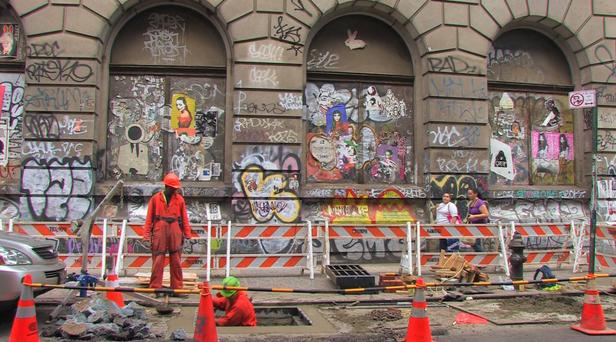
The movie, shot over the course of 500-some days by Max Good and Nathan Wollman, gives a breathless history of people writing on walls (including a dubious reference to graff buffers back in the Paleolithic days), right up to modern day Bay Area strife – anybody remember the Warm Water Cove “clean-up”? The timeline focuses on the conflict between taggers and law-and-order types. If, in this age of JR and other highly-publicized and lauded street art, you don’t think is for real anymore, watch this video

Good capturing Sharp’s technique

The movie then moves onto Good and Wollman’s mission to expose the unaffiliated lone wolfs who spend their days erasing other people’s works of self-expression. They travel across the country, gaining surprising amounts of access to the three men’s routines.

But as it turns out, Vigilante isn’t down to use the middle-aged to elderly white guys they profile (add to this list a one “Silver Circle” from Portland, who is now retired) as the faces of evil. Instead, the movie couches its critique in the wack broken windows sociological theory – itself a tool used by elite populations to justify wiping clean the visible signs of any disenfranchised citizens. 

By the end of the movie, Good and Wollman are arranging meet-ups between the anti-taggers so that they can swap paint-matching and poster removal techniques. The scene is almost heartwarming: the anti-graffiti vigilantes, with their relentless schedules and dedication to their craft almost win the audience over. Even if we’re a little creeped out by them.

Coca Cola vs. Twist’s tag wall: Which is the visual pollution?

So who is the villan in all this? Vigilante Vigilante finds a plausible symbol of nefariousness: James Q. Wilson, the sociologist behind the broken window theory (the inspiration, by the way, for Rudy Giuliani’s 1990s purging of downtown Manhattan).

The producers were right to do so. For the community member upset that their neighborhood is poor, that their area’s youth are unemployed, that circumstances seem beyond their control, Wilson’s theory successfully obfuscates cause and effect, a standard conservative trick of defeating class consciousness. Graffiti doesn’t cause race riots, poorly-dealt-with natural disasters, or high unemployment rates. Writing on a wall is often the response to a society that belittles minority youth, the middle class and poorer, and anyone who is having trouble with the capitalistic treadmill. Jeff Chang‘s Can’t Stop Won’t Stop is a great place to start if you’re interested in this anti-colonialist view of street art.

The obsessive cover-ups of the vigilantes (that in more than one case have morphed into tags themselves, a fact the filmmakers highlight when they begin covering up Sharp’s silver buffs with neon pink and gold buffs, to his dismay), are ultimately their attempt at regaining control in a world that can seem really mean at times. Which doesn’t change the fact that what they’re doing is lame — can hardly blame this guy… 

Vigilante Vigilante is at the Roxie through Sat/20


Fist Fam’s “Drinkin” in the Cackalack backwoods

4

There are few hip-hop crews that get so gleefully shitfaced at gigs — in fact, I think cheap domestics actually power Fist Fam’s psychedelic hip-hop pick-up truck. Or maybe the group’s mojo, underlaid with remixed crate gems from DJ Al Lover, comes from the fact the whole posse is family-close, having moved to the Bay from North Carolina pretty much en masse a few years ago. Both factors (Coors Banquet and bro love) are present in the video for the group’s new summer anthem, shot at emcee Philo’s childhood home in what the press release calls “the moonshine mountains of Asheville.” So how drunk was the Fam by the end of a day of “Drinkin”? “I think fools went out to the bars afterwards though, so maybe not drunk enough,” recalls Al Lover, somehow. 

Stop cell phone censorship

13

EDITORIAL The bizarre move by BART officials Aug. 11 to shut down cell phone service in the underground train stations made headlines around the world — and for good reason. It was, Wired Magazine reported Aug 15, apparently the first time in United States history that a public agency sought to block electronic communications as a way to prevent a political protest.

It came at a time when oppressive governments around the world have been disabling cell phone and internet services to frustrate protest organizers. And it followed months of abysmally bad behavior by the transit agency, which is trying to respond to yet another dubious BART police shooting. Civil liberties activists have issued statements of condemnation and outrage; state Sen. Leland Yee, who is also running for mayor, has called on the BART board to adopt policies preventing future shutoffs.

But the BART board has proven itself unable to properly monitor and oversee its law-enforcement operations. At this point, the state Legislature needs to step in.

It’s not surprising that protesters have been swarming around BART stations this summer. The agency has a history of failing to control its police force, and when an officer shot and killed an apparently drunk man in the Civic Center station July 3, activists were fed up. BART responded badly, refusing to turn over video of the incident — and the more facts that came out, the worse the agency looked.

We understand the frustration that commuters felt when angry activists disrupted service for a brief period during the afternoon rush hour. And we understand BART’s concern that further actions inside the stations could be difficult to control.

But let’s remember: The BART board has never been particularly open to public input and most of its members show little interest in accountability. Over the past two decades, hundreds of people have appeared to speak at board meetings to demand a serious response to police shootings — and nothing ever happened. It took a particularly horrendous incident — a point-blank shooting of an unarmed man that was recorded on video — for the board to create even a modest police oversight program.

BART officials are trying to argue that cell phone service in the underground stations is a new service, something offered at the agency’s discretion — as if BART were some sort of private café that gives its customers free wifi. But that ignores the fact that the Bay Area Rapid Transit District is a government agency, one that has no more business shutting down cell phone service than the White House does blocking a newspaper from publishing embarrassing secrets.

As a practical matter, the decision was foolish: The protesters may have been inconvenienced, but so were hundreds of others who may have been trying to make business calls or connect to family members. In political terms, it was inexcusable. Think about it: A public agency was intentionally disabling communications to prevent a political protest. That’s about as bad as it gets.

We agree with Yee that the BART board ought to set a clear policy against any future attempts to control cell phone service for political purposes. But that’s not likely to happen — and it won’t be enough. The state Legislature needs to pass a measure specifically banning any public agency in California from disabling or interfering with any public communications system for political purposes. We can’t wait to see BART lobbyists show up and try to oppose that one.

Fortress of meh

0

FILM Unless you’re between the ages of approximately 8 and 16 (mental as well as actual years applicable), it’s been difficult to avoid a serious case of superhero fatigue at the movies lately. If a particular weekend doesn’t bring yet another comic book to life at several thousand multiplex screens near you, it’s providing the same favor to a toy, video game, or some pre-existing movie franchise that might as well have originated from one of the above.

They’re always pretty much the same: some interchangeable lead actor who’s done a million crunches; some leading lady for whom this is either slumming (Gwyneth Paltrow) or a likely career zenith (Megan Fox); some interesting actors doing some of their least interesting work — but still stealing scenes — as villains, scientists, police chiefs, etc. The same CGI depicting the impossible so easily (if expensively) that the amazing has thoroughly ceased to amaze — one actor doing a back flip sans cutaways is now worth a passel of dinosaurs, morphing thespians, and cities under space attack.

These movies can only be so good or surprising or idiosyncratic (no matter what "unconventional" director gets assigned them) because they cost so much to make and market that no major deviation from formula is allowed. Yes, 2008’s The Dark Knight was very good. But in 50 years, Citizen Kane will still be Citizen Kane. Knight will be the equivalent of Errol Flynn’s The Adventures of Robin Hood (1938) — a popcorn flick still skillful enough to be enjoyed, but hardly exalted.

Even superhero spoofs have gotten kinda old, not that there’s been one that did the job half as well as, say, Hot Fuzz (2007) sent up Michael Bay-type awesome-but-not-quite-super heroics. (If Edgar Wright himself couldn’t quite nail it with 2010’s Scott Pilgrim vs. the World, maybe nobody will.) Still, folks keep trying to tweak the formula, searching for ways to ride its coattails while doing something different, deeper, or at least cheaper.

The latest, Griff the Invisible, hails from Australia — but unlike most Australian movies, this one could have come from anywhere. In fact, it already has, in that the Woody Harrelson’s underseen 2009 Defendor (from Canada), 2010’s Super (from the U.S.) with Rainn Wilson, and doubtless others already forgotten have previously trod the delusional-loser-thinks-he’s BlahBlahMan concept. None of these are spoofs so much as dramedies. When you’re dealing with insanity and imaginary superpowers in a fairly serious, analyst’s-couch way, being adequate really isn’t good enough. Griff is adequate.

True Blood himbo Ryan Kwanten keeps his shirt on as Griff, a cubicle-working nonentity whose handsome-actor-trying-to-look-dweeby (but not too hard) Clark Kent act practically screams "I’VE GOT A SECRET LIFE NONE OF YOU KNOW ABOUT!!!" Indeed, he moonlights as a mysterious crime fighter in black rubber gear yea more fetishy than the Marvel norm. Trouble is, the victims he rescues seem as scared of him as their attackers, and the police are looking for this vigilante freak. Also concerned is Griff’s brother Tim (Patrick Brammall), who’s moved to Sydney from Adelaide to keep an eye on this sibling with no social skills and a history of acting out grandiose fantasies.

Coping with bad guys by night and one specific dickhead (Toby Schmitz as a smug workplace bully) by day, Griff is reluctantly introduced to Tim’s new possible girlfriend Melody (Maeve Dermody), with whom he has more in common than bro does. He’s working on an invisibility formula; she on something involving atoms and walking through walls. Perceiving a kindred soul, Melody labors to become Griff’s unwanted sidekick and co-conspirator.

Actor turned writer-director Leon Ford’s first feature is professionally executed but not very special, let alone super, in ideas or action. It doesn’t really have a perspective on superherodom — at least none you haven’t seen before — or mental illness, or even on which condition our protagonists truly suffer from. (The ending kinda fudges the question.) It aims for Sweet and Charming, lands at Sorta Kinda.

The routine bombast of regular superhero movies has been overexposed, but as an alternative flavor so has a certain creepy indie seriocomedy cuteness. Just recently we’ve had the fey, overly pettable likes of Beginners (2010) and The Future, with Gus Van Sant’s even more cloying Restless up next. Griff the Invisible is less irksome for having less overbearing "personality." But it’s still just another self-consciously quirky romance between contrived misfits that congratulates the audience for enjoying a plate of nutmeg chervil Hollandaise sauce rather than the usual overcooked hamburger. Either way, you’re going to wish you’d ordered something else.

GRIFF THE INVISIBLE opens Fri/19 in Bay Area theaters.

The persistence of objects

3

arts@sfbg.com

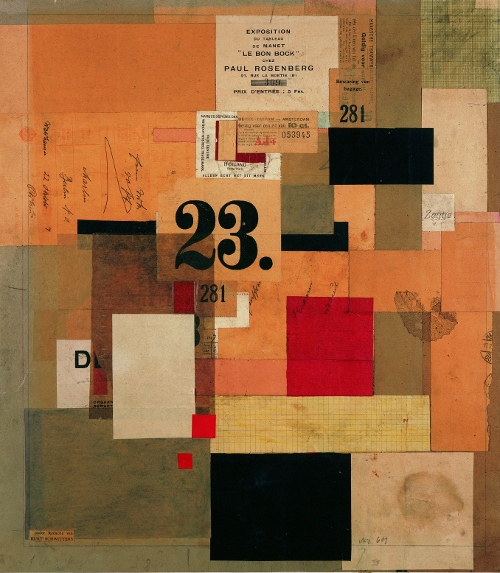
HAIRY EYEBALL German artist Kurt Schwitters (1887-1948) acted as an interpreter for the discards of modern life, or what Alfred Barr, the first curator of New York’s Museum of Modern Art, tellingly referred to as, “witnesses stolen from the ground.” He listened to what the matchbook covers, torn ticket stubs, crinkled packaging, scrap paper, fabric remnants, and other junk that he took back to his studio had to say about form and color, and in turn, re-presented their testimonies to the world in which they once circulated.

Berkeley Art Museum’s exhibit “Kurt Schwitters: Color and Collage,” the first US survey of the artist’s work in 25 years, traces the dialogue between found things and made objects that comprises Schwitters’ remarkable oeuvre. The 30 some-odd works that fill BAM’s sixth floor gallery are densely indeterminate, neither strictly paintings nor collages, but hybrids of both that reflect Schwitters’ association with the Berlin Dadaists — and also his background in painting, which accounts for both the influence Expressionism, and later, Constructivism, would have on his approach to composition.

In some pieces the assembled components have been pushed and flattened into each other, with the paste acting as both fixing agent and mixing medium, giving the work the appearance of having been painted — which in a sense it has been, if you substitute paper scraps for brushes and oils. In other works, bas relief-like effects are created through successively built up and painted-over layers in geometric arrangements that become more precise over time. In every piece, there is a careful attention to the grain of the materials used as well as their color (Schwitters gravitated towards an autumnal palette of reds, blacks, browns, and yellows, with occasional streaks of blue or gray).

As with other artists of his generation, Schwitters’ life and career was to be inevitably shaped by both world wars (his trajectory from Germany to Norway to England was largely determined by where the Nazis weren’t). Schwitters referred to his output interchangeably as Merz, a neologism based on the second half of Kommerz, the German word for “commerce.” The designation reflected his desire for his practice to, in his words, “make connections, if possible, between everything” in a world he saw as increasingly fragmented.

Whereas his Dadaist contemporaries such as John Heartfield and Hannah Höch cut apart newspapers and film rags and reconfigured them as monstrous satires of the noisy, busy society that produced them as spectacular propaganda, Schwitters’ work proposes an engagement with its various found source materials based on assimilation and incorporation rather than harsh juxtaposition. Everywhere in Schwitters’ work there is the glint of the familiar: the postage marks, the trademarks, bits of text, and reproduced images in his skeins of torn pulp and paint identify specific places, times, and events.

The Merzbau — a vast, ongoing architectural assemblage that took over six rooms of Schwitters’ family home in Hannover and which was completely destroyed in a 1943 bombing raid — is perhaps the apotheosis of Schwitters’ vision. Like a beaver building a dam, Schwitters constantly added bits and pieces, inviting friends to build out alcoves within the all-white grotto-like rooms whose square lines had totally given way to myriad angled surfaces and seemingly-impossible proportions.

On BAM’s ground floor sits Peter Bissegger’s meticulous, life-size reconstruction (1981-83) of one of the Hannover rooms. It’s a doozy to walk into, and, once you’re out again, near-impossible to try and square the three dimensional geometric assault just experienced against the three wall-mounted 1933 black and white interior photos on which the reconstruction was based. Save perhaps for the Winchester Mystery House, you will simply not experience another space like it, or have your experience of space so wonderfully warped (even BAM’s interior, which offers a Brutalist response to the Guggenheim’s famous spiraling rotunda, seems positively orderly by comparison).

While undeniably cool as an object, in some respects, the reconstructed Merzbau conceptually cuts against Schwitters’ process of ongoing accumulation that led to its construction in the first place. To have the Merzbau be a wholly transportable thing that can be taken down and re-assembled, jigsaw puzzle-style (as demonstrated in an accompanying time lapse video of the piece’s installation), is to fail to treat it as something that has no final form but is always in the process of becoming. Indeed, it’s telling that Schwitters built other Merz environments wherever he moved, at each location spinning anew another web of form and shape culled from bits and pieces of his surroundings. The task he had set before himself to connect the world anew would prove to be unending. 


KURT SCHWITTERS: COLOR AND COLLAGE

Through Nov. 27, $7-$10

Berkeley Art Museum

2626 Bancroft, Berk.

(510) 642-0808 www.bampfa.berkeley.edu

Drag me from hell

0

emilysavage@sfbg.com

MUSIC Noah “DJ Dials” Bennett Cunningham wants to galvanize your pleasure center.

“You know how you can think back to that one night? That punk show or cool house party or the first time you saw Björk, and it’s just, the night you’ll never forget? I want to do that for other people. I want to make lasting memories,” he says from his perch in Four Barrel Coffee as he grabs Rosamunde french fries from his bag.

A DJ since age 12, the 27-year-old also works as a producer and video artist. His next big gig, in collaboration with Tri Angle Records and 120 Minutes club night, is an event likely to stir brain waves: it’s a showcase of witch house — a controversial genre also known, interchangeably, as grave rave, based goth, drag, or “pop music for the unconscious,” as San Francisco producer oOoOO has been known to describe his own sound.

It’s contentious because it’s all over the map. At its most basic, a combination of hip-hop and goth cultures, many music snobs and bloggers declared it dead on arrival. Even those associated with it seem to at least avoid using the term “witch house” itself. It’s said with an apologetic shoulder shrug.

This may be due to its murky origins. Essentially, it was coined by Denver’s Travis Egedy, a.k.a Pictureplane, sometime around 2009, partially as a joke, to describe his own music. Years later, the name remains and the scene is still burgeoning. There are some skilled musicians and producers creating this sound, including a smattering of national acts, and, locally, oOoOO (pronounced “oh”).

The August 19 showcase at 103 Harriet marks the first local live show (not just DJ set) for oOoOO — newly returned from an international tour — along with Clams Casino, White Ring, Shlohmo, Babe Rainbow, Water Borders, and D33J.

For this particularly significant event, Cunningham is working behind the scenes as the producer and co-host along with Marco De La Vega, the mastermind behind year-old witch house club night 120 Minutes at Elbo Room. Both agree that the biggest misconception about this type of music is that it’s already dead.

“It’s still new, it’s what’s happening right now,” says De La Vega. “The goth scene has a tendency to focus very strongly on the past, so all this music was the first kind of stuff where I was like, ‘Wow, this is actually happening, this makes sense for now. This is contemporary.'”

This much we know: those associated with witch house often make use of darker rhythms with creepy melodies over top, chopped and screwed hip-hop or slowed-down pop music samples, along with hypnotic and dark droning synths and howling, reverberated female vocals.

And yet, many musicians identified with this mutating, nearly indefinable genre wage battle against it. They, understandably, eschew the label for fear of pigeonholing.

“The way we look at it is that there are a few bands that were doing stuff independently and have been grouped by people trying to make it in to one cohesive term,” says Bryan Kurkimilis, one half of New York’s White Ring. “It’s nice and flattering to be part of something like that, but we had no genre in our head when we started. We’re consistently trying to evolve our sound.”

The music itself, of course, varies greatly, especially in this particular showcase. While oOoOO samples sputtering pop vocals, Shlohmo is more associated with L.A’s avant-garde beat scene, and Clams Casino’s repertoire includes making beats for based god Lil B. Toronto’s Babe Rainbow creates dark chopped and screwed hip-hop; White Ring bleeds more toward 80s synth and includes the lush, eerie voice of singer Kendra Malia.

“What motivates me, is putting Shlohmo and Babe Rainbow — who aren’t really considered witch house — next to oOoOO, White Ring, and Water Borders even, to show that it doesn’t really matter what the genre is; it’s that feeling, it’s the mood. It’s the place where it comes from,” Cunningham says. *


TRI ANGLE RECORDS SHOWCASE: 2011 REALITY TOUR

With oOoOO, White Ring, Clams Casino, Shlohmo, Babe Rainbow , Water Borders, D33j

Fri/19, 10 p.m., $15

103 Harriet at 1015 Folsom

1015 Folsom, SF

1015.com

Familiar but strange

0

arts@sfbg.com

THEATER In 1934, Broadway hosted its longest-running opera to that time, the serenely unconventional Four Saints in Three Acts. The brainchild of writer Gertrude Stein and composer Virgil Thomson, the production famously featured an all–African American cast (for the first time in roles not geared to depicting African American life), a scenic design covered in cellophane, music that mingled hints of Parisian modernism with a boisterous collage of vernacular American forms, and a libretto of unfathomable if evocative wordplay that merrily eschewed narrative — or even consistency with the title (acts were actually five, saints were many). It was weird. And people liked it.

In deciding upon a topic for the opera, Stein had taken on the lives of saints (especially Theresa and Ignatius, who figure prominently) as representative of the lives of artists. It was a secular work, and apotheosis, that ultimately concerned both her and Thomson, neither of them otherwise religious. As it turned out, the opera not only hailed the arrival of avant-garde ideas into the mainstream, but catapulted Stein into the stratosphere of celebrity.

“In Stein’s personal story the opera was a very large chapter,” explains Frank Smigiel, associate curator of public programs at the San Francisco Museum of Modern Art, currently presenting The Steins Collect: Matisse, Picasso, and the Parisian Avant-Garde. “In addition to The Autobiography of Alice B. Toklas, [Four Saints] radically transformed Stein from an experimental writer known for collecting other artists into a popular artist in her own right.”

One good apotheosis deserves another. This weekend SFMOMA, in association with Yerba Buena Center for the Arts, presents Four Saints in Three Acts: An Opera Installation, as part of The Steins Collect. While the exhibition already includes footage and ephemera from Stein and Thomson’s landmark opera (with even more footage on view in the concurrent Gertrude Stein exhibition at nearby Contemporary Jewish Museum), audiences will now have the chance to see a full staging of the work. Meanwhile, the production’s team of collaborators promises as much a re-envisioning as a revival.

This is as it should be, suggests Smigiel, who spearheaded the idea for the revival about a year ago as he and his colleagues were asking themselves how they might expand on the exhibition.

“If you look at all the other artists in the Steins Collect exhibition, they’re all working not just on canvases,” he says, speaking by phone from his office at SFMOMA. “It was a creative community that was crossing disciplines in ways people might not always know about. One of our aims was to rev up the avant-garde energy of the exhibition. There’s a way, when you go to a show with Matisse and Picasso, they can just look canonical now to us. One of the hopes is that there’s still something about Stein’s language and the opera that’s going to have a bit of shake-up to it. It won’t just appear as a rolling out of a canonical piece, and people wondering, ‘What was this again?'”

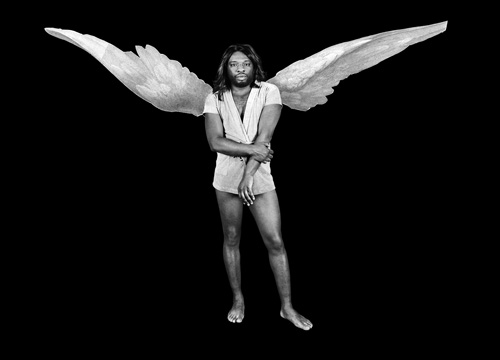
To that end, Smigiel approached local company Ensemble Parallèle, acclaimed specialists in contemporary chamber opera, having been impressed by their recent production of Alban Berg’s Wozzeck, including its shrewd use of visual media. He also sought out Italian-born, San Francisco–based composer, performer, and musicologist Luciano Chessa, an expert in the period whom he had worked with before. Equally inspired was Smigiel’s call to Kalup Linzy, whose video-performance practice mixes soap opera genre with drag, original songs, lip-sync, and themes of family, community, sexuality, and otherness through the prism of his African American Southern upbringing and later Brooklyn milieu.

After a process of deciding how they might re-approach the work, Chessa landed on the idea of resetting the text that Thomson had excised in his own 1950s version of the opera. The result is its own piece, entitled A Heavenly Act, which will immediately precede Four Saints without an intermission (the entire program will run a fleet 90 minutes). Linzy developed video projections as the predominant visual element in the production.

Chessa and Linzy offered further insight into the collaboration, and their respective processes, during a break from a rehearsal last week. Although neither knew the opera very well before embarking on the revival, each found points of contact and familiarity with their own work.

“I knew it mostly because of [Canadian filmmaker] John Greyson’s [2009 operatic documentary] Fig Trees,” explains Chessa. In conceiving A Heavenly Act, Chessa says he wanted to account for both Thomson’s own musical influences as well as the legacy he has left in the work of later composers.

“I couldn’t be approaching the text naively as if I was discovering it for the first time,” he says. “There is a history of setting Stein in the 20th century, which I ended up discovering by analyzing the work and also the development of Thomson’s fortunes in the 20th century. Because Stein’s text is very wordy, Thomson used the technique of having it chanted. So my idea was to bring this element of chant, but do it in a different way, using different lines of text moving at different speeds, creating clusters of textures.”

Adds Linzy, “We kept things very loose and abstract, kind of organic. It didn’t have to be so strict.” Linzy — who in the production also performs a song Chessa wrote for him set to Stein’s words — shot a cast of friends as angels against a green screen, usually with movement informed by music tracks Chessa had forwarded. But in at least one case, Linzy didn’t receive the track for a corresponding scene.

“There’s a dance scene [in A Heavenly Act] where [Chessa] did a waltz, but we danced to Donna Summer’s ‘Bad Girls,'” explains Linzy. “But seeing it against the waltz, really slowed down, it’s almost like the angels got high off LSD and just went too far. But we were moving to Donna Summer, we were discoing. That’s what I like. He had sent the tracks but somehow I didn’t get that particular one. So I was like, ‘Oh, we’ll just disco it out.’ And so that’s what we did, and it’s the most amazing thing.”

FOUR SAINTS IN THREE ACTS: AN OPERA INSTALLATION

Thurs/18, 7:30 p.m. (preview); Fri/19-Sat/20, 8 p.m.; Sun/21, 2 p.m., $10-85.

Novellus Theater

700 Howard, SF

(415) 978-2787

www.ybca.org


Stark raving mod

0

TRASH One of the longer-running Holy Grail pursuits among a certain type of movie fan finally ended last month with the official DVD release of Otto Preminger’s Skidoo, a legendary 1968 boondoggle that was the veteran Hollywood prestige director’s attempt to tap the new “youth market.” Someone deemed those crazy kids might be magnetized, in the year of 2001: A Space Odyssey, Rosemary’s Baby, and Yellow Submarine, by a gangster farce starring the fossilizing likes of Jackie Gleason, Carol Channing, Frankie Avalon, Mickey Rooney, and 78-year-old Groucho Marx (as God).

Possibly impressed by the dancing-trash-cans production number, a presumably well-paid Timothy Leary opined “I think this movie’s going to ‘turn on’ the country.” But between the script’s attempted surrealism, Preminger’s cement-block flair for levity, and the cast’s general bewilderment, Skidoo could only become Hollywood’s most grotesquely square attempt to groove with the Now Generation. A major flop, notoriety made it a sought-after curio for later generations who mostly had to dig its bad trip in crappy 10th-generation TV dupes. Now that it’s available through above-ground channels, everyone can experience the satisfaction of finally seeing something they’ve always wondered about, even if Skidoo will always be better in theory than actual viewing.

But how to see such yea more obscure relics of cinema’s most flailingly adventuresome era as Been Down So Long It Looks Like Up To Me (1971), The Magic Garden of Stanley Sweetheart (1970), or B.S. I Love You (1971)? What about the umpteen “kinky” pre-porn sexploitation epics and Pop Art-flavored spy spoofs from Europe that never achieved the cult (let alone the budget) of 1968’s Barbarella? Or those early TV movies which scarred late-wave boomer kids’ memories, then were left to gather studio library dust?

Good luck — considered to be of no remaining commercial value, most of the above eluded salvage even at the height of the 1980s VHS craze, when it seemed almost anything shot on celluloid (or not) got shunted out to hungry renters. What is the fan of post-“Golden Age,” pre-mall flick moviegoing to do?

Fortunately, meeting the demands of a discerning, frequently obsessive few have been such variably gray-shaded online market purveyors as Video Search of Miami, Something Weird, Subterranean Cinema, and Modcinema. Modcinema (www.modcinema.com), currently celebrating its third year anniversary of “exploring ’60s/’70s culture through rare and hard to find films,” is run by Los Angeleno Dante Fontana. He blames the no-show of some psychedelic relics and Me Decade titles on music rights issues — before VCRs, soundtracked songs were licensed for very limited use, and can now be very expensive to renew.

Things are looking up, however. Warner Bros. and Sony/Columbia have launched on-demand DVD-R services, Fontana says, noting “we’ll see many rare movies become available over the course of the next several years. Many studios are in debt and they want to make money off of their titles currently being sold on the gray market by people such as myself.”

He’s not worried about the competition, however. “I love these films and want them to become available on an official level. I consider what I do preservation, [selling] titles that are in danger of being completely forgotten about, raising awareness so that the studios will see there is in fact a fanbase of people who’d buy a DVD of a movie like Skidoo if they saw it.” Still, there remain “thousands and thousands of movies out there being neglected. Films that simply don’t have any known stars in them, or experimental-art films, made-for-TV movies, international films that never got any U.S. distribution.”

Among the nuggets Modcinema has unearthed in such categories are vintage telepics like The Feminist and the Fuzz (Barbara Eden as middle America’s then-idea of a Women’s Libber — forever fuming at imaginary sexist offenses, requiring a he-man to settle her down), vanity biker flick J.C. (as in Jesus Christ, which is how producer-writer-director-star William F. McGaha’s character humorlessly sees himself), or leeringly Italian crime caper You Can Do A Lot With Seven Women. And those are just from 1971.

Fontana also has a particular fondness for vintage Franco pop. In his collection you’ll find plenty of showcases for Françoise Hardy, Serge Gainsbourg, etc., plus multiple episodes of the incredible monthly 1965-70 TV program Dim Dam Dom, which made the best use of a go-go dancing ensemble this side of Shindig! while offering musical guests both native and imported (from the Bee Gees to Jimi Hendrix).

Modcinema has also packaged some unique compilations: The “Colorspace” series is a party sampler of movie trailers (“Now you’ll know the thrill of wrapping your legs around a tornado of pounding pistons, like The Girl on a Motorcycle!”), fashion promos, commercials (007 Deodorant), and whatnot. Hearing Nancy Sinatra trill “Shake that cola drag/Try the one that’s really mad!” for RC Cola — well, it can really blow your mind. (Dennis Harvey)

Editorial: Stop cell phone censorship

43

The bizarre move by BART officials Aug. 11 to shut down cell phone service in the underground train stations made headlines around the world and for good reason. It was, Wired Magazine reported Aug 15, apparently the first time in United States history that a public agency sought to block electronic communications as a way to prevent a political protest.

It came at a time when oppressive governments around the world have been disabling cell phone and internet services to frustrate protest organizers. And it followed months of abysmally bad behavior by the transit agency, which is trying to respond to yet another dubious BART police shooting. Civil liberties activists have issued statements of condemnation and outrage; state Sen. Leland Yee, who is also running for mayor, has called on the BART Board to adopt policies preventing future shutoffs.

But The BART Board has proven itself unable to properly monitor and oversee its law-enforcement operations. At this point, the state Legislature needs to step in.

It’s not surprising that protesters have been swarming around BART stations this summer. The agency has a history of failing to control its police force, and when an officer shot and killed an apparently drunk man in the Civic Center station July 3, activists were fed up. BART responded badly, refusing to turn over video of the incident and the more facts that came out, the worse the agency looked.

We understand the frustration that commuters felt when angry activists disrupted service for a brief period during the afternoon rush hour. And we understand BART’s concern that further actions inside the stations could be difficult to control.

But let’s remember: The BART Board has never been particularly open to public input and most of its members show little interest in accountability. Over the past two decades, hundreds of people have appeared to speak at board meetings to demand a serious response to police shootings and nothing ever happened. It took a particularly horrendous incident a point-blank shooting of an unarmed man that was recorded on video for the board to create even a modest police oversight program.

BART officials are trying to argue that cell phone service in the underground stations is a new service, something offered at the agency’s discretion as if BART were some sort of private café that gives its customers free wifi. But that ignores the fact that the Bay Area Rapid Transit District is a government agency, one that has no more business shutting down cell phone service than the White House does blocking a newspaper from publishing embarrassing secrets.

As a practical matter, the decision was foolish: The protesters may have been inconvenienced, but so were hundreds of others who may have been trying to make business calls or connect to family members. In political terms, it was inexcusable. Think about it: A public agency was intentionally disabling communications to prevent a political protest. That’s about as bad as it gets.

We agree with Yee that the BART Board ought to set a clear policy against any future attempts to control cell phone service for political purposes. But that’s not likely to happen and it won’t be enough. The state Legislature needs to pass a measure specifically banning any public agency in California from disabling or interfering with any public communications system for political purposes. We can’t wait to see BART lobbyists show up and try to oppose that one.


Tim Carr is a “Fame Whore” (maybe)

0

We were tickled earlier this year by local songsmith Tim Carr’s clever “Shake Your Caboose” video — now comes a Gaga-ripping, kiddy-hip clip for “Fame Whore” from his forthcoming album The Shadows, due out in December. How many infantilized SF club kids can you spot? 

Scenes from #opBART: video of the Civic Center protests

Protesters shut down afternoon rush hour BART operations on Aug. 15 as part of a campaign by international hacker group Anonymous in response to the transit agency’s unprecedented move to shut off cell service to prevent a protest. Here’s footage from underground at Civic Center Station, and on the street as stranded commuters sought a way home:

Video by Shawn Gaynor

It’s official: Adachi’s in the race (VIDEO)

Public Defender Jeff Adachi filed to run for mayor of San Francisco on Aug. 12, the last possible day to enter the race.  Adachi said he’d decided to run in order to “make sure there’s a voice in there that’s talking about the fiscal realities of our city.”

At a mayoral candidate forum Aug. 11, every single contender — Mayor Ed Lee, Sup. John Avalos, venture capitalist Joanna Rees, Assessor Recorder Phil Ting, Board President David Chiu, City Attorney Dennis Herrera, former Sup. Michela Alioto-Pier, former Sup. Bevan Dufty, and Sen. Leland Yee — said they would support the pension reform package that was placed on the ballot after discussion with labor unions, the mayor’s office, and business interests, and not the pension reform measure authored by Adachi.

Here’s a video of Adachi explaining his decision to members of the press moments after filling out the paperwork.

Video by Rebecca Bowe

Environmentalists: America’s Cup not green enough

A preliminary planning document for the America’s Cup doesn’t go far enough to protect San Francisco’s natural environment, a coalition of environmental organizations has said.

The Environmental Council — made up of a group of nonprofits including the Sierra Club, San Francisco Baykeeper, Turtle Island Restoration Network, the Dolphin Swimming and Boating Club, and others closely tracking planning for the America’s Cup — were gearing up to offer feedback to the San Francisco Planning Commission Aug. 11 on a hefty draft environmental impact review (DEIR) of the prestigious yachting event’s impacts on marine life, air quality, and parklands.

The draft EIR “does not go far enough to protect San Francisco’s air, water, and marine life,” said Teri Shore of the Turtle Island Restoration Network. She advocated for requiring vessels to use the cleanest possible fuels and to travel at slow speeds so as not to collide with dolphins, porpoises, seals, sea lions, or whales once outside the Golden Gate.

Ken Coren, Vice President of the Dolphin and Swimming Club, voiced concerns about the effects the race would have on swimming and recreational boating. “The bay would be sealed off — it would only be spectator viewing,” he said. Activities like swimming around Aquatic Park or entering the bay on rowboats “would be prevented if you were going to take the EIR as it stands today at its word.”

Jon Golinger, president of the Telegraph Hill Dwellers, said the report “dramatically underestimates the impact” to individual San Francisco neighborhoods.

http://www.youtube.com/watch?v=BngNbTCUcM8
Jon Golinger speaks at a press conference on the steps of City Hall. Video by Rebecca Bowe

Jennifer Clary, of San Francisco Tomorrow, said the groups’ concerns centered on three key areas: Impacts to the water, such as the potential for oil spills or degraded water quality; impacts that huge crowds would have on surrounding lands, especially in protected areas such as the Presidio; and neighborhood impacts. “You have already busy locations, and they’re going to packing more people in,” she said.

While they raised concerns, the nonprofit representatives also made it clear that they were not opposed to the America’s Cup, and only wanted to see the city strengthen environmental protections during the event. David Anderson, Conservation Committee Chair with the Golden Gate Audubon Society, noted that the world-famous regatta would result in a major economic boon. “Certainly the city can afford some mitigation to make it right,” he said.

Return of the rock

0

emilysavage@sfbg.com

MUSIC Outside Lands has stepped up its game in its fourth year. The mix of bands this time around is truly inspired — if a bit pilfered from old lineups at other fests like Treasure Island. No matter, it’s riding high in 2011.

This was not always the case. Last year, the Golden Gate Park festival seemed lackluster in the music department; the lineup wasn’t as solid as it had been previously, and it lacked that one giant-but-dependably-awesome act like Radiohead (or this year’s Arcade Fire). In the process, it may have lost a festival-goer or two.

It also went down to just two days in 2010 (it was three in 2008 and 2009), which Another Planet Entertainment vice president Allen Scott says was originally the plan. He later added, “[Last] year there weren’t a lot of touring headliners because of the recession. A lot of bands and artists decided to take last year off.”

This year, however, it’s back to long-weekend status. Saturday is already sold out, unless you want to do it up big and invest in a three-day pass or VIP tickets. That leaves, as of press time, the option of going either Friday or Sunday.

The highlights below are meant to help you more easily maneuver your way through the thick bustle of crowds and trees when you get out to those green fields. For the most part, I steered clear of headliners, since those are the artists who likely inspired your decision to attend in the first place. Here’s how to get the most (audio) bang for your buck.


FRIDAY

Do not miss:

Big Boi: Despite Big Boi’s arrest for drug possession last weekend, Scott says, “We are expecting Big Boi to be performing at Outside Lands this Friday.” Chances are, you were not one of the lucky few who jumped on tickets to see Big Boi at the Independent earlier this year — a venue far smaller than his usual digs. Needless to say, that show was way, way sold out. While the Outside Lands stage is far larger, his presence with silky-smooth vocals and casual flowing skills are big enough to dominate.

Joy Formidable: The acclaimed Welsh trio has been lauded for ushering a return to ’90s-era pop and shoegaze. With driving guitar riffs and strong female vocals, there’s a definite glint of Breeders in there. Dave Grohl, a man well familiar with the grunge decade, chose the band to open for Foo Fighters later this year.

Toro Y Moi: South Carolina native Chaz Bundick, known as Toro Y Moi on stage, is one of those talented genre smashers. His sophomore album Underneath the Pine, which came out earlier this year, has elements of dance, funk, and dream pop; Bundick is said to be influenced by French house, ’80s R&B, and Stones Throw hip-hop. And you can throw a little Off the Wall-era Michael Jackson in there as well.

Worth checking out:

Kelley Stoltz: He’s got connections with Sonny Smith (of Sonny and the Sunsets) — he appeared on the Sunsets’ album Tomorrow is Alright — but Kelley Stoltz is a talented musician to watch in his own right. The singer-songwriter-guitarist is at the heart of San Francisco’s garage scene, has been compared to Brian Wilson (Beach Boy, not Giant), and will likely perform tracks off his excellent 2010 Sub Pop release To Dreamers.


SATURDAY

Do not miss:

Black Keys: With just two members, the Black Keys has a notoriously big sound. This will travel well, even if you’re stuck towards the back of the crowd, and that deep soul will likely cause some uncontrollable shoulder shaking.

Old 97s: One of the early pioneers of alt-country, Old 97s was at the forefront of a new classification of music in the early ’90s. Since then, singer Rhett Miller has struck out on his own with well-received solo albums, but catching his sound where it all started is a rarer treat.

Worth checking out:

STRFKR: Portland, Ore.-based dance pop quartet STRFKR (pronounced “Starfucker”) injects emotion into live electronic dance music. Call it that now-retro genre electro pop, call it the LCD Soundsystem effect, call it whatever you wish: just dance.


SUNDAY

Do not miss:

Beirut: Beirut doesn’t play very often — the last time it stopped in San Francisco was at the Treasure Island Festival in 2008 — but when it does, it’s imperative that you watch. The result is an inspired jumble of brass horns and ukulele, Balkan folk, and Eastern European-influenced torch songs. Band leader Zachary Condon’s vocals soar live and he emotes convincingly at each stop.

Deadmau5: The tripped-out lights, lasers, and holograms of the show are worth sticking around for regardless of sound. But Deadmau5, nestled in a lit-up diamond cube and wearing an oversize foam mouse head, does bring music as well; it’s haunting yet danceable electronica with moving beats and breakdowns.

tUne-YarDs: Colorful, paint-streaked Merrill Garbus (a.k.a. tUne-YarDs) could likely be dubbed acid queen of 2011 — minus any actual drugs. Her looping drums, ukulele, and bass compositions are a dizzying work of art. And if you’ve seen her weirdo video for “Bizness,” you know she’s got a few unique ideas floating around. All that brain power manifests itself into a superior live show. Plus, she brought “two free-jazzing saxophonists” to the Pitchfork Music Festival, so here’s hoping she’ll do the same in her adopted Bay Area home.

Worth checking out:

Fresh & Onlys: The band may on the verge of outgrowing this place, but for now, Fresh & Onlys can be described as very San Francisco. As in, its music is one of a few local favorites to be included in the Hemlock Tavern’s meticulously selective jukebox. The garage rockers play moody, ’80s-tinged rock ‘n’ roll — soundtrack music for backseat teenage make-out sessions.

Major Lazer: You know Diplo, that guy who made M.I.A. good? He is also a member of Major Lazer, along with another producer you may know through M.I.A., Switch. Diplo has described Major Lazer’s sound as “digital reggae and dancehall from Mars in the future,” which: yeah. The show includes eye-popping costumes, hype men, and a refreshing bent towards live audio.


OUTSIDE LANDS MUSIC AND ARTS FESTIVAL Fri/12-Sun/14, noon, $85 Golden Gate Park, SF www.sfoutsidelands.com

Fear and longing

0

arts@sfbg.com

Dreams and drawings, cats and fantasies, ambition and aimlessness, and the mild-mannered yet mortifying games people play, all wind their way into Miranda July’s The Future. The future’s a scary place, as many of us fully realize, even if you hide from it well into your 30s, losing yourself in the everyday. But you can’t duck July’s collection of moments, objects, and small gestures transformed into something strangely slanted and enchanted, both weird and terrifying, when viewed through July’s looking glass.

With The Future, which evolved out of a performance titled Things We Don’t Understand and Definitely Are Not Going to Talk About, July explains, “I think there was a lot of stuff that I didn’t want to talk about — that I found really embarrassing. Why talk about [making art]? Isn’t it a lot cooler just to make a movie that doesn’t have that in it? Since obviously the great fear of someone in my position would be that you wouldn’t be able to make something — and what would happen then? But it’s also really interesting to me that you devote your life to doing this and it doesn’t stop being interesting, like, how ideas come and when they don’t.”

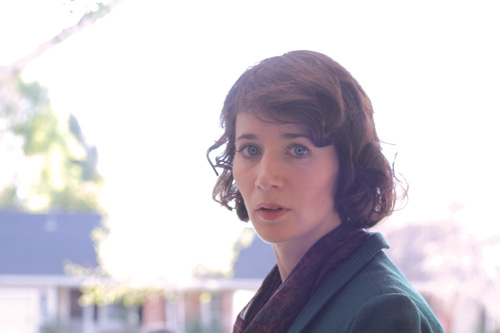
At the moment July (2005’s Me and You and Everyone We Know) seems perfectly imperfectly in step with the world she’s in: an opulently beige meeting room at the Four Seasons. I can’t stop studying her shocking pink lips and matching glittery collar, happily clashing with her camel sweater, as she averts those star-child, sky-blue peepers to stare intently at the pen in her hands. Despite seeming as dazzled by life as a child, she chooses her words scrupulously, as if her existence depended on it, and punctuates the end of almost every sentence with a gently-hurled exclamation point of a “yeah.” The careful consideration coloring her words and appearance obviously finds its way, stumbling and fumbling gracefully, into her films, performances, and short stories, as well as the assignments she assembled with Harrell Fletcher for the online art project Learning to Love You More.

Care and commitment — to oneself and others — are two vivid threads running through The Future. Cute couple Sophie (July) and Jason (Hamish Linklater) — unsettling look-alikes with their curly crops — appear at first to be sailing contently, aimlessly toward an undemanding unknown: Jason works from home as a customer-service operator, and Sophie attempts to herd kiddies as a children’s dance instructor. But enormous, frightening demands beckon — namely the oncoming adoption of a special-needs feline named Paw-Paw (voiced by July as if it’s a traumatized, innocent child). Lickety-splitsville, they must be all they can be before Paw-Paw’s arrival, so the pair quit their jobs as Sophie tries to set up a Julie and Julia-style online stunt designed to make her a YouTube dance hit and Jason drifts into environmental activist work that sends him into the orbits of anyone who answers the door. In the meantime, Sophie gets pulled into the suburban vortex of a random man (David Warshofsky) that Jason meets at Paw-Paw’s shelter. The weirdness of the familiar, and the kindness of strangers, become ways into fantasy and escape when the couple bumps up against the limits of their imagination.

This ultra-low-key horror movie of the banal is obviously remote territory for July. The Future is her best film to date and finds her tumbling into a kind of magical realism or plastic fantastic, embodied by a talking cat that becomes the conscience of the movie. “Sometimes I’d see the cat as Sophie and Jason’s unborn child and sometimes I would see it as one’s own relationship to one’s parents — the part of oneself that’s always waiting for their parent, long past where that makes any sense at all, even for people whose parents are dead,” she explains. “You still, on some level, are waiting for them to come get you, and the death of that hope in a way is both really sad and also maybe the beginning of kind of growing up.”

Certain events in Berkeley-bred July’s life pointed toward the major turning points of The Future. “I got married at that time, and I think that makes me think a lot about the future — and maybe the end of your life more?” she recalls. “You’re committing to someone till the end, so it suddenly seems, at least on paper, that you’ll know one person who will be there at the end — or you’ll be there at the end of their life. That brought time into focus. Also being a woman in my mid-30s, y’know, you have a special relationship to time suddenly, as far as the question of having children — so all those things were swirling.” Yet she claims she never fully realized she’d be grappling with something as potentially horrifying as the future on film: “If I thought I was making a movie about the future, I probably would have not made it —yeah! I don’t really attack subjects like that. It has to be more mysterious than that to me. I’m not that conscious when I’m writing.”

If we could all see into the future, with an oracle’s specs in place, what would we dare to make it out? Peering into the future, as a riot grrrl follower in the late ’90s, I would never have imagined sitting across from July, telling her about my pilgrimage up to Yo-Yo a Go-Go in Olympia, Wash., to see her first full-fledged multimedia performance, Love Diamond. The past and future are still intertwined, much as the riot grrrl years continue to resonate with July: she plans to launch the Web archive of her Joanie4Jackie project, which collected women’s short films via video chain letter and birthed a community of DIY female filmmakers.

“I still have a lot of friends from that time, so we’re all kind of old riot grrrls now!” she says with a little laugh. “It’s still great to see that there are things about it that did matter and were really formative, and we’re all much better for having had each other and this sense of — call it revolution or call it self-importance. Nonetheless, they weren’t easy things we were trying to do, creating a space to feel free and safe to make things in.”

THE FUTURE opens Fri/19 in Bay Area theaters.


Music Listings

0

WEDNESDAY 10

ROCK/BLUES/HIP-HOP

Blah Boutique, Love Axe, Genius and the Thieves Rickshaw Stop. 8pm, $10.

Grady Champion Biscuits and Blues. 8 and 10pm, $18.

Clap Your Hands Say Yeah Independent. 9pm, $20.

Outside Lands Night Show. Mad Noise Yoshi’s San Francisco. 8pm, $5.

Outdoorsmen, Mordecai, SF Water Cooler Hemlock Tavern. 9pm, $6.

Personal and the Pizzas, X-Mas Island Knockout. 9pm, $6.

Return to Earth, Suggies, Symbolick Jews, Guitar Wizards of the Future Elbo Room. 9pm, $6.

Roundups 50 Mason Social House, 50 Mason, SF; www.50masonsocialhouse.com. 9pm, free.

Steinway Junkies, Shake Me!, Mick Leonardi, Prose In Rosette Bottom of the Hill. 8:30pm, $8.

JAZZ/NEW MUSIC

Dink Dink Dink, Gaucho with Tamar Korn, Michael Abraham Amnesia. 7pm, free.

Jazz organ party with Graham Connah Royal Cuckoo, 3202 Mission, SF; www.royalcuckoo.com. 7:30pm, free.

Ben Marcato and the Mondo Combo Top of the Mark. 7:30pm, $10.

FOLK/WORLD/COUNTRY

Steve Taylor-Ramirez Plough and Stars. 9pm.

DANCE CLUBS

Booty Call Q-Bar, 456 Castro, SF; www.bootycallwednesdays.com. 9pm. Juanita Moore hosts this dance party, featuring DJ Robot Hustle.

Buena Onda Little Baobab, 3388 19th St, SF; (415) 643-3558. 10pm, free. Funk, swing, rare grooves, and more with Dr. Musco and guests.

Death or Glory Milk. 9pm, free. Punk rock dance party with Handsome Hawk Valentine and DJs Bazooka Jules and Queen-e.

English Pound Radio Otis Lounge, 25 Maiden Lane, SF; www.otissf.com. 9pm, $5. Reggae.

Mary Go Round Lookout, 3600 16th St, SF; www.lookoutsf.com. 10pm, $5. Drag with Suppositori Spelling, Mercedez Munro, and Ginger Snap.

Megatallica Fiddler’s Green, 1333 Columbus, SF; www.megatallica.com. 7pm, free. Heavy metal.

No Room For Squares Som., 2925 16th St, SF; (415) 558-8521. 6-10pm, free. DJ Afrodite Shake spins jazz for happy hour.

THURSDAY 11

ROCK/BLUES/HIP-HOP

Best Coast, Eskmo California Academy of Sciences, 55 Music Concourse Dr, SF; www.calacademy.org/nightlife. 6pm, $12.

Outside Lands Night Show. Eels, Submarines Great American Music Hall. 9pm, $28.

Equipto Amoeba, 1855 Haight, SF; www.amoeba.com. 6pm, free. Evaline, Lite Brite, Fake Your Own Death Botttom of the Hill. 9pm, $10.

Alan Iglesias Biscuits and Blues. 8 and 10pm, $16. Stevie Ray Vaughan tribute.

Jésus and the Rabbis Blackthorn Tavern, 834 Irving, SF; www.blackthornsf.com. 10pm, free.

Memorials, Secret Secretaries, NIAYH Café Du Nord. 9pm, $12.

Pins of Light, Young Lions, Hornss Knockout. 9:30pm, $7.

White Pee, Birch Cooper and Polly Darton Hemlock Tavern. 9pm, $6.

Zoot Woman Rickshaw Stop. 10pm, $12. With Popscene DJs.

JAZZ/NEW MUSIC

SF Jazz Hotplate Series Amnesia. 9pm.

Soul jazz party with Chris Siebert Royal Cuckoo, 3202 Mission, SF; www.royalcuckoo.com. 7:30pm, free.

Stompy Jones Top of the Mark. 7:30pm, $10.

FOLK/WORLD/COUNTRY

Shareef Ali and the Radical Folksonomy Revolution Café, 3248 22nd St, SF; (415) 642-0474. 8:30pm, free.

Kentucky Twisters Atlas Café. 8-10pm, free. Maxi Priest Yoshi’s San Francisco. 8 and 10pm, $24-32.

Bradley Reeves 50 Mason Social House, 50 Mason, SF; www.50masonsocialhouse.com. 9pm, free.

Shannon Céili Band Plough and Stars. 9pm.

DANCE CLUBS 

Afrolicious Elbo Room. 9:30pm, $5. Afrobeat, Tropicália, electro, samba, and funk with DJs Pleasuremaker and Señor Oz, plus guest Ursula 1000.

Guilty Pleasures Gestalt, 3159 16th St, SF; (415) 560-0137. 9:30pm, free. DJ TophZilla, Rob Metal, DJ Stef, and Disco-D spin punk, metal, electro-funk, and 80s.

1984 Mighty. 9pm, $2. The long-running New Wave and 80s party features video DJs Mark Andrus, Don Lynch, and celebrity guests.

Thursday Special Tralala Revolution Café, 3248 22nd St, SF; (415) 642-0474. 5pm, free. Downtempo, hip-hop, and freestyle beats by Dr. Musco and Unbroken Circle MCs.

Thursdays at the Cat Club Cat Club. 9pm, $6 (free before 9:30pm). Two dance floors bumpin’ with the best of 80s mainstream and underground with Dangerous Dan, Skip, Low Life, and guests.

Tropicana Madrone Art Bar. 9pm, free. Salsa, cumbia, reggaeton, and more with DJs Don Bustamante, Apocolypto, Sr. Saen, Santero, and Mr. E.


FRIDAY 12

ROCK/BLUES/HIP-HOP

Alma Desnuda, Dogman Joe Slim’s. 9pm, $17.

Califone, Yesway, Sands Bottom of the Hill. 9:30pm, $12.

Damned Things, Maylene and the Sons of Disaster, Fair to Midland, Hourcast, I Am Empire Fillmore. 8pm, $20.

Dex Romweber Duo, Ferocious Few, Touch-Me-Nots Thee Parkside. 9pm, $10. Moon Rockers, Lumps, Joy Hemlock Tavern. 9pm, $6.

“Outside Lands Music and Arts Festival” Golden Gate Park, SF; www.SFOutsideLands.com. Noon, $85. With Phish, Shins, MGMT, Original Meters, and more.

Sadies, Jesse Sykes and the Sweet Hereafter Great American Music Hall. 9pm, $17.

Soft Bombs, Aerosols, These Hills of Gold, Skystone Knockout. 9pm, $7.

Vetiver, Extra Classic Rickshaw Stop. 10pm, $15.

Outside Lands Night Show. We The Kings, Summer Set, Downtown Fiction, Hot Chelle Rae, Action Item Regency Ballroom. 6:30pm, $18.

JAZZ/NEW MUSIC

Black Market Jazz Orchestra Top of the Mark. 9pm, $10.

Gaucho with Tamar Korn Caffe Pascucci, 170 King, SF; www.caffe-pascucci.com. 8pm, $10.

Jazz Organ Party with Graham Connah Royal Cuckoo, 3202 Mission, SF; www.royalcuckoo.com. 7:30pm, free.

Lavay Smith and Her Red Hot Skillet Lickers Biscuits and Blues. 8 and 10pm, $20.

Paula West with the George Mesterhazy Trio Yoshi’s San Francisco. 8 and 10pm, $25-35.

FOLK/WORLD/COUNTRY

Kitchen Fire Plough and Stars. 9pm.

Song Preservation Society 50 Mason Social House, 50 Mason, SF; www.50masonsocialhouse.com. 9pm, free.

Torreblanca, Bang Data, Andrea Balency, DJ El Kool Kyle Elbo Room. 10pm, $10.

DANCE CLUBS

Afro Bao Little Baobab, 3388 19th St, SF; (415) 643-3558. 10pm, $5.Afro and world music with rotating DJs including Stepwise, Steve, Claude, Santero, and Elembe.

Blow Up vs. Popscene 8 DNA Lounge. 10pm, $20. With DJs Jeffrey Paradise, Fred Falke, Omar, and more.

Breakiosaurus: Elephant Bird Camp Fundraiser and Outside Lands After Party Blue Macaw, 2565 Mission, SF; www.thefunkyones.com/breakiosaurus. 10pm, $5-10. Hip-hop.

No Way Back Public Works. 10pm, $15. With Theo Parrish, Conor, and Solar. Re:Creation Temple SF, 540 Howard, SF; www.templesf.com. 10pm, $20. With Polish Ambassador, Quitter, Dnae Beats, Samples, and more.

Vintage Orson 508 Fourth St, SF; (415) 777-1508. 5:30-11pm, free. DJ TophOne and guest spin jazzy beats for cocktalians.


SATURDAY 13

ROCK/BLUES/HIP-HOP

Matt Berkeley Blackthorn Tavern, 834 Irving, SF; www.blackthornsf.com. 9:30pm, free.

Big Sandy and His Fly-Rite Boys, Eilen Jewell, Zoe Muth and the Lost High Rollers Slim’s. 9pm, $16.

Matthew Edwards and the Unfortunates, Sean Smith Make-Out Room. 7:30pm, $8.

“Elv-O-Rama King Size Variety Show” Knockout. 9:30pm, $10. With Elvis Herselvis, Quarter Mile Combo, Naked and Shameless, and more.

Forgotten Passage 50 Mason Social House, 50 Mason, SF; www.50masonsocialhouse.com. 9pm, free. 

Heartsounds, Story So Far, This Time Next Year, Shotdown Thee Parkside. 9pm, $8.

Hooks, Eastern Span, InterChords, Clash City Sirens Bottom of the Hill. 9:30pm, $10.

“Jimmy McCracklin’s 90th Birthday Bash” Biscuits and Blues. 8 and 10pm, $20. With Ben Petry, BigCat, Bobby Cochran, and more.

Sid Luscious and the Pants, CH-3, Doormats Thee Parkside. 3pm, free.

“Outside Lands Music and Arts Festival” Golden Gate Park, SF; www.SFOutsideLands.com. Noon, $85. With Muse, Black Keys, Girl Talk, Roots, and more.

“Rotfest III” Hemlock Tavern. 5pm, $10. With 3 Stoned Men, Natural Fonzie, Wiki Wiki Uke Band, and more.

“Swing Goth Presents: Bowie Ball 2: 2 Times the Bowie” Café Du Nord. 9:30pm, $20. With Scission and Tiger Club.

JAZZ/NEW MUSIC

Carlitos Club Deluxe, 1511 Haight, SF; (415) 552-6949. 9pm.

Soul Jazz Party with Jules Broussard and Chris Siebert Royal Cuckoo, 3202 Mission, SF; www.royalcuckoo.com. 7:30pm, free.

Paula West with the George Mesterhazy Trio Yoshi’s San Francisco. 8 and 10pm, $25-35.

FOLK/WORLD/COUNTRY

DaMaDa Westside Art House, 540 Balboa, SF; www.westsidearthouse.com. 8:30pm, $5.

Mutineers, Misisipi Mike Wolf, Big Jugs Plough and Stars. 9pm. Sweet Chariot Riptide Tavern. 10 and 11:15pm, free.

Craig Ventresco and Meredith Axelrod Atlas Café. 4-6pm, free.

DANCE CLUBS

Afro Bao Little Baobab, 3388 19th St, SF; (415) 643-3558. 10pm, $5. Afro and world music with rotating DJs including Stepwise, Steve, Claude, Santero, and Elembe.

Bootie SF: Eight Year Anniversary Show DNA Lounge. 9pm, $10-15. With DJs Adrian and Mysterious D, Trixxie Carr, and more.

Cockblock Rickshaw Stop. 10pm, $8-10. With Natalie Nuxx. DJ Questlove, DJ Mark DiVita Public Works. 9pm, $15.

Tormenta Tropical Elbo Room. 10pm, $5-10. Electro-cumbia with DJs Shawn Reynaldo and Oro 11.


SUNDAY 14

ROCK/BLUES/HIP-HOP

Bare Wires, Liquor Store, Natural Child Hemlock Tavern. 9pm, $8.

Ronnie Baker Brooks Biscuits and Blues. 8 and 10pm, $22.

Buck 65 Slim’s. 8pm, $16.

Cosa Brava, Grex, Jack O’ the Clock Great American Music Hall. 8pm, $20.

“Outside Lands Music and Arts Festival” Golden Gate Park, SF; www.SFOutsideLands.com. Noon, $85. With Arcade Fire, Deadmau5, Decemberists, John Fogerty, and more.

Solo and the Skyrider Band, Dosh Bottom of the Hill. 9pm, $12.

Underground Railroad to Candyland, Arrivals Knockout. 9pm, $6.

Warren Haynes Band, Stone Foxes Independent. 10pm, $30.

Young Offenders, Airfix Kits, Only the Messengers Hemlock Tavern. 3pm, $5.

JAZZ/NEW MUSIC

Creative Voices Musicians’ Union Hall, 116 Ninth St, SF; www.noertker.com. 7:30pm, $10.

Jazz organ party with Lavay Smith and Chris Siebert Royal Cuckoo, 3202 Mission, SF; www.royalcuckoo.com. 7:30pm, free. Mezghoon Ensemble Yoshi’s San Francisco. 7pm, $35.

Sunday Jazz Jam 50 Mason Social House, 50 Mason, SF; www.50masonsocialhouse.com. 9pm, free.

FOLK/WORLD/COUNTRY

Maria Fibush and friends Plough and Stars. 9pm. Javier Limón featuring Buika, La Shica, Sandra Carrasco, and Luisa Maita Sigmund Stern Grove, 19th Ave at Sloat, SF; www.sterngrove.org. 2pm, free.

Zach Lupetin and the Dustbowl Revival Amnesia. 8pm, $7.

Saddle Tramps Thee Parkside. 4pm, free. Secret Sisters Café Du Nord. 8pm, $17.

DANCE CLUBS

Batcave Cat Club. 10pm, $5. Death rock, goth, and post-punk with Steeplerot Necromos and c_death.

Dub Mission Elbo Room. 9pm, $6. Dub, roots, and classic dancehall with DJ Sep, Ludichris, and guest Roger Mas.

Jock Lookout, 3600 16th St, SF; www.lookoutsf.com. 3pm, $2. Raise money for LGBT sports teams while enjoying DJs and drink specials.

La Pachanga Blue Macaw, 2565 Mission, SF; www.thebluemacawsf.com. 6pm, $10. Salsa dance party with live Afro-Cuban salsa bands.


MONDAY 15

ROCK/BLUES/HIP-HOP

Bomb the Music Industry, Sidekicks, Blanks, Caps Bottom of the Hill. 9pm, $10.

Kirby Sewell Band featuring John Nemeth Biscuits and Blues. 8 and 10pm, $15.

Ovens, Culture Kids, Sourpatch, DJs Harkin and Chominski Knockout. 9pm, $5.

Winter, Noothgrush, Trap Them, Black Breath, All Pigs Must Die, Acephalix Elbo Room. 7pm, $25.

DANCE CLUBS

Death Guild DNA Lounge. 9:30pm, $3-5. Gothic, industrial, and synthpop with Joe Radio, Decay, and Melting Girl.

DJ Brian Turner Hemlock Tavern. 6pm, free.

M.O.M. Madrone Art Bar. 6pm, free. DJs Timoteo Gigante, Gordo Cabeza, and Chris Phlek playing all Motown every Monday.

Sausage Party Rosamunde Sausage Grill, 2832 Mission, SF; (415) 970-9015. 6:30-9:30pm, free. DJ Dandy Dixon spins vintage rock, R&B, global beats, funk, and disco at this happy hour sausage-shack gig.


TUESDAY 16

ROCK/BLUES/HIP-HOP

Bipolaroid, Nectarine Pie, Shrougs, DJ Tina Boom Boom Knockout. 9:30pm, $7.

Go Go’s, Girl In A Coma Fillmore. 8pm, $39.50. Heavy Hawaii, Bleached, Plateaus Hemlock Tavern. 9pm, $7.

Milk Carton Kids, Andrew Belle Café Du Nord. 9pm, $12.

Pentagram, Pelican, Alpinist, Masakari, Early Graves, Baptists Mezzanine. 6:30pm, $25.

Holcombe Waller, Mia Doi Todd, Garrett Pierce Bottom of the Hill. 9pm, $12.


Since club life is unpredictable, it’s a good idea to call ahead or check the venue’s website to confirm bookings and hours. Prices are listed when provided to us. Submit items for the listings at listings@sfbg.com. For further information on how to submit items for the listings, see Picks. 

Music Listings

0

Music listings are compiled by Emily Savage. Since club life is unpredictable, it’s a good idea to call ahead or check the venue’s website to confirm bookings and hours. Prices are listed when provided to us. Submit items for the listings at listings@sfbg.com. For further information on how to submit items for the listings, see Picks.


 

WEDNESDAY 3

ROCK/BLUES/HIP-HOP

Carolyn Wonderland Cafe Du Nord. 9:30pm, $15.

DNTEL, One Am Radio, Geotic Rickshaw Stop. 8pm, $10-$12.

Early and Often, Goodriddler, Build Us Airplanes Bottom of the Hill. 9pm, $8.

Midnite Snaxx, Veronica Hemlock Tavern. 9pm, $5.

Proclamation, Sanguis Imperem, Pale Chalice Elbo Room. 9pm, $10-$12.

This is Hell, Decoder, Endwell, Until Your Heart Stops Thee Parkside 8pm, $10.

JAZZ/NEW MUSIC

Cat’s Corner with Nathan Dias Savanna Jazz. 9pm, $10.

Cosmo Alleycats Le Colonial, 20 Cosmo, SF; www.lecolonialsf.com. 7pm.

Dink Dink Dink, Gaucho, Michael Abraham Amnesia. 7pm, free.

Jazz organ party with Graham Connah Royal Cuckoo, 3202 Mission, SF; www.royalcuckoo.com. 7:30pm, free.

Ben Marcato and Mondo Combo Top of the Mark. 7:30pm, $10.

Curtis Salgado Biscuits and Blues. 8 and 10pm, $18.

DANCE CLUBS

Booty Call Q-Bar, 456 Castro, SF; www.bootycallwednesdays.com. 9pm. Juanita Moore hosts this dance party, featuring DJ Robot Hustle.

Buena Onda Little Baobab, 3388 19th St, SF; (415) 643-3558. 10pm, free. Funk, swing, rare grooves, and more with Dr. Musco and guests.

Mary Go Round Lookout, 3600 16th St, SF; www.lookoutsf.com. 10pm, $5. Drag with Suppositori Spelling, Mercedez Munro, and Ginger Snap

No Room For Squares Som., 2925 16th St, SF; (415) 558-8521. 6-10pm, free. DJ Afrodite Shake spins jazz for happy hour.


THURSDAY 4

ROCK/BLUES/HIP-HOP

AXXONN, En, Holly Herndon Hemlock Tavern. 9pm, $7.

A Decent Animal, Bitter Honeys Cafe Du Nord. 9pm, $10.

Exhumed, Macabre, Cephalic Carnage, Withered Slim’s. 8pm, $16.

Flexx Bronco 330 Ritch. 9pm, $8.

Halden Wofford and Hi Beams Amnesia. 9pm, $7.

Hydroponic, Agent Deadlies, Over the Falls Bottom of the Hill. 9pm, $8.

Texas Thieves, Unko Atama, Paper Bages Knockout. 10pm, $7.

Tornado Rider, Phenomenauts, Judgement Day Great American Music Hall. 8pm, $14.

Wailers, Revival Sound System Independent. 9pm, $25.

JAZZ/NEW MUSIC

Jazz organ party with Graham Connah Royal Cuckoo, 3202 Mission, SF; www.royalcuckoo.com. 7:30pm, free.

Tom Lattanand, Jon Raskin Quartet El Valenciano, 1153 Valencia, SF; (415) 826-9561. 9pm, $5.

DANCE CLUBS

Afrolicious Elbo Room. 9:30pm, $5. Afrobeat, Tropicália, electro, samba, and funk with DJs Pleasuremaker and Señor Oz.

Guilty Pleasures Gestalt, 3159 16th St, SF; (415) 560-0137. 9:30pm, free. DJ TophZilla, Rob Metal, DJ Stef, and Disco-D spin punk, metal, electro-funk, and 80s.

1984 Mighty. 9pm, $2. The long-running New Wave and 80s party features video DJs Mark Andrus, Don Lynch, and celebrity guests.

PAWAS, Clint Stewart, Atish and Mark Slee, Dheeraj Sareen, Jamaica Suk Public Works. 10pm, $5-$7. Electronic dance music.

Shit Robot DJ Set Rickshaw Stop. 10pm, $7.

Thursday Special Tralala Revolution Café, 3248 22nd St, SF; (415) 642-0474. 5pm, free. Downtempo, hip-hop, and freestyle beats by Dr. Musco and Unbroken Circle MCs.

Tropicana Madrone Art Bar. 9pm, free. Salsa, cumbia, reggaeton, and more with DJs Don Bustamante, Apocolypto, Sr. Saen, Santero, and Mr. E.


FRIDAY 5

ROCK/BLUES/HIP-HOP

Bastard Noise, Landmine Marathon, Voetsek, Hosebeast Sub/Mission, 2183 Mission;www.sf-submission.com. 8pm, $10.

Brass Tax Amnesia. 9pm, $5.

Rick Estrin and Nightcats Biscuits and Blues. 8 and 10pm, $20.

La Corde, Ggreen,Waldo Astoria Hemlock Tavern. 9:30pm, $7.

Mirah, Tara Jane O’Neil El Rio. 9pm, $5-$10.

Mr. Big Fillmore. 9pm, $35.

Mustache Harbor, Private Idaho Slim’s. 9pm, $15.

New Monsoon, Sean Leahy and Friends, Kiyoshi Foster with late night set by New Monsoonageddon Great American Music Hall. 9pm, $15.

Pollux, Cure for Gravity, Repeat After Me Bottom of the Hill. 10pm, $10.

True Mad North, Red Weather, City Tribe, MilesCountry Hotel Utah Saloon. 8:30pm, $8.

JAZZ/NEW MUSIC

Black Market Jazz Orchestra Top of the Mark. 9pm, $10.

Rick Estrin and Nightcats,Little Charlie Baty Biscuits and Blues. 8 and 10pm, $20.

Jazz organ party with Graham Connah Royal Cuckoo, 3202 Mission, SF; www.royalcuckoo.com. 7:30pm, free.

Vaughan Johnson Jazz Combo Jack’s Club, 2545 24th St., SF; (415) 641-1880. 7pm, free.

DANCE CLUBS

Afro Bao Little Baobab, 3388 19th St, SF; (415) 643-3558. 10pm, $5. Afro and world music with rotating DJs including Stepwise, Steve, Claude, Santero, and Elembe.

Duniya Dancehall Bollyhood Cafe, 3372 19th St., SF; www.duniyadance.com. 10pm, $5-$10. Bangra, Bollywood, and West African dance.

Oldies Night Knockout. 9pm, $2-$4. Doo-wap, one hit wonders, and soul with DJ Primo, Daniel and Lost Cat.

120 Minutes Elbo Room.10pm, $5-$10. With Resident Djs Whitch and Nako plus special guest Nike 7UP.

Steffi, Mike Huckaby, Beautiful Swimmers, Lovefingers Public Works. 9pm, $10-$15.

Vintage Orson, 508 Fourth St, SF; (415) 777-1508. 5:30-11pm, free. DJ TophOne and guest spin jazzy beats for cocktalians.


SATURDAY 6

ROCK/BLUES/HIP-HOP

Justin Ancheta Amnesia. 10pm, $30.

Annie Bacon and Her Oshen Riptide. 10 and 11:15pm, free.

Cast of Thousands featuring Brady Kids String Players, Kindness and Lies, Tremor Low Cafe Du Nord. 9:30pm, $10.

Dredg, Trophy Fire, Strange Vine Great American Music Hall. 8pm, $20.

Dub Fillmore Festival Gene Suttle Plaza and Fillmore Center, Fillmore and O’Farrell; www.dubfillmorefest.com. 10am, free.

Mickey Hart Band Independent. 9pm, $30.

Moenia Fillmore. 9pm, $35.

Oakhelm, Walken, Negative Queen El Rio. 10pm, $7.

San Francisco Rock Project Amoeba. 2pm, free.

San Frandelic Summer Fest Thee Parkside. 2pm, $12.

Sioux City Kid, Kill Moi, Tiny Television Bottom of the Hill. 10pm, $10.

Torche, Big Business, Thrones Slim’s. 9pm, $15.

Wet Illustrated, Angora Debs, Dimples Hemlock Tavern. 9pm, $5.

WomenROCK’s Fifth Anniversary Celebration Box Factory,865 Florida, SF; (415) 637-6870. 2pm, free.

JAZZ/NEW MUSIC

Bonjour, Tristesse St. Gregory of Nyssa Episcopal Chuch, 500 De Haro, SF; www.pacificcollegium.org. 8pm, $10-$30.

Jazz organ party with Graham Connah Royal Cuckoo, 3202 Mission, SF; www.royalcuckoo.com. 7:30pm, free.

John Weise, C. Spencer Yeh, Bill Orcutt, Pod Blotz Lab, 2948 16th St., SF; www.thelab.org. 9pm, $6-$15.

DANCE CLUBS

Afro Bao Little Baobab, 3388 19th St, SF; (415) 643-3558. 10pm, $5. Afro and world music with rotating DJs including Stepwise, Steve, Claude, Santero, and Elembe.

Bootie SF DNA Lounge. 9pm, $8-$10. Mashups with DJ Paul V, DJ Fox, and John!John!

Club 1994 Rickshaw Stop. 9pm, $10-$15. ’90s hip-hop and TRL classics

Debaser Knockout. 9pm, $5. ’90s alternative dance party with DJ Jamie Jams and Emdee.

ESL Music Showcase Public Works. 930pm, $10-$20. Featuring Nickodemus, Rob Garza, Afrolicious, DJ Sep.

Sanafrica Bollyhood Café. 9pm, $7-10. West African and Latin fusion party with Jose Luis, DJ Nado, and DJ Mignane.

Saturday Night Soul Party Elbo Room. 10pm, $10. Sixties soul 45s with DJs Lucky, Phengren Oswald, and Paul Paul.


SUNDAY 7

ROCK/BLUES/HIP-HOP

Bowling for Soup, Dollyrots, Sunderland Bottom of the Hill. 9pm, $15.

Gorilla Takeover DNA Lounge. 5:30pm, $10-$12.

Hipwaders at JAMband Family Festival Park Chalet, 100 Great Hwy., SF; www.parkchalet.com. 3pm, free.

Hurd Ensemble, Ellul Hemlock Tavern. 9pm, $6.

“Jerry Day” Jerry Garcia Amphitheater,40 John F. Shelley, SF; jerryday.org. Noon, free.

Aaron Neville and Quinn Deveaux, Blue Beat Review Stern Grove, 19th Ave. and Sloat, SF; www.sterngrove.org. 2pm, Free.

Kally Price Old Buster Blues and Jazz Band, Emperor Norton’s Jazz Band Amnesia. 9pm, $5.

Twang Sunday with Going Away Party, Creak Thee Parkside. 4pm, free.

YOB, Dark Castle, Hornss Elbo Room. 3pm, $10-$12.

JAZZ/NEW MUSIC

Bonjour, Tristesse St. Gregory of Nyssa Episcopal Chuch, 500 De Haro, SF; www.pacificcollegium.org. 8Pm, $10-$30. A cappella music from the 20th century on.

Jazz organ party with Graham Connah Royal Cuckoo, 3202 Mission, SF; www.royalcuckoo.com. 7:30pm, free.

Matt Schofield Biscuits and Blues. 8 and 10pm, $20.

DANCE CLUBS

Batcave Cat Club. 10pm, $5. Death rock, goth, and post-punk with Steeplerot Necromos and c_death.

Fresh Ruby Skye. 6pm. DJ Kevin Lee and Derek Monteiro. Benefiting Glide Memorial Church.

Dub Mission Elbo Room. 9pm, $6. Dub, roots, and classic dancehall with DJ Sep, Ludichris, and guest Matt Haze.

Jock Lookout, 3600 16th St, SF; www.lookoutsf.com. 3pm, $2. Raise money for LGBT sports teams while enjoying DJs and drink specials.

La Pachanga Blue Macaw, 2565 Mission, SF; www.thebluemacawsf.com. 6pm, $10. Salsa dance party with live Afro-Cuban salsa bands.

Tropical Hot Dog Night Knockout. 10pm, free. Mutant disco and post punk with DJ Placentina, Lady of the Night.


MONDAY 8

ROCK/BLUES/HIP-HOP

Adam Arcuragi and Lupine Choral Society, Fancy Dan Elbo Room. 9pm, $7.

Dominique Leone, Horns of Happiness, Aaron Novik/Thorny Brocky Knockout. 10pm, $7.

DANCE CLUBS

Death Guild DNA Lounge. 9:30pm, $3-5. Gothic, industrial, and synthpop with Joe Radio, Decay, and Melting Girl.

M.O.M. Madrone Art Bar. 6pm, free. DJs Timoteo Gigante, Gordo Cabeza, and Chris Phlek playing all Motown every Monday.

Sausage Party Rosamunde Sausage Grill, 2832 Mission, SF; (415) 970-9015. 6:30-9:30pm, free. DJ Dandy Dixon spins vintage rock, R&B, global beats, funk, and disco at this happy hour sausage-shack gig.


TUESDAY 9

ROCK/BLUES/HIP-HOP

Timothy Bloom Cafe Du Nord. 9:30pm, $12.

Bombshell Betty and Her Burlesqueteers, Fromagique Elbo Room. 9pm, $10.

Imelda May Independent. 8pm, $20.

Misner and Smith Dastardly Amnesia. 9:30pm, $5.

Tortured Genies,Roomate, Sunbeam Rd Hemlock Tavern. 9pm, $6.