Theater

Damaged goods

0

emilysavage@sfbg.com

TOFU AND WHISKEY Jello Biafra could be your theatrical political science professor. The still-charismatic frontperson and song-composer has long spewed knowledge deep from the underbelly of political theater, from his influential early 1980s Bay Area punk band Dead Kennedys, and projects like the band Lard, through his nine dense spoken word albums, and up to his newest musical endeavor, louder than ever in his 50s, Jello Biafra and the Guantanamo School of Medicine.

That band, which also includes Victims Family guitarist Ralph Spight, plays the Uptown this weekend with D.I., the Divvys, and Gir-illa Biscuits — an excellent local Gorilla Biscuits tribute act (Fri/26, 9pm, $15. Uptown, 1928 Telegraph, Oakl. www.uptownnightclub.com.)

Given Biafra’s affinity for weaving news-worthy (though oft-overlooked) scandals into contextual lyrics, I have often wondered from where he gathered his news. “Why, the Bay Guardian, of course! Where would a local voter be without your fine rag?” Biafra tells me from his San Francisco home, while finishing up making a juice of apples and greens. Is he mocking me? “I just hope the new ownership and staff goes pedal to the metal to keep up the standard of muckraking and ethics. There’s so much corruption to dig up in this area.” No, his tone is just often sarcastic.

“Locally, we have you folks, among others. And then you know, the Nation, Progressive, Mother Jones, interesting things people send me in the mail, digitally or otherwise, putting two and two together — trying to write songs about stuff that no one else has. Or at least, not in the same way.”

He continues: “It’s just filling in the gaps with what’s interesting. I’m proud that no two of my music albums sound alike. Not even the Lard albums sound alike. From Dead Kennedys onward my mission as the main lyricist and composer of the damn tunes, I kind of stick to my punk core — whether I intend to or not, it’s just who and what I am —but widen the base of the pyramid to what you can do with that energy.”

Guantanamo School of Medicine’s White People and the Damage Done (Alternative Tentacles, 2013) is the group’s most recent album. A semi-concept album, Biafra says it’s about “grand theft austerity, and how unnecessary it is.”

He explains, “People have asked me…what I think is the biggest problem in the world today and they expect me to say something like ‘climate change’… or inequality, or war, or whatever. I say you know, there’s a worse one, it’s corruption. Because that is what’s blocking anything constructive from being done about all those other problems.”

The title track of White People and the Damage Done, a pounding, guitar-heavy, Dead Kennedys-esque song, explicitly points a finger toward attitudes of the higher-ups in the US and EU regarding countries run by people of color, and the need to step in and take control.

Anthemic single “Shock-U-Py!” has a chantable chorus, and moment-in-time impact. In it, Biafra howls “Wake up and smell the noise/We can’t take it any more/Corporate coup must go/We will Occupy/We will Shock-U-py.” The Occupy movement may have left the mainstream radar for now, but Biafra’s song commemorated the moment, much like he did in early career chants calling out yuppies and atrocities in places like Cambodia, in the early ’80s. His lyrics are typically both rooted in the present, and packed with historical references.

A fast-paced earlier released track (still with that Biafra-esque carnivalian breakdown), “Dot Com Holocaust,” recorded at the time of the The Audacity of Hype EP (AT, 2009), touched on problems more local to Biafra and this rag, of gentrification and a new class of tasteless techies coming in to the Bay. Dripping with satire, the song seemed to have touched a nerve when first released, and garnered scores of angry, faceless Internet comments.

“I had this funny feeling we weren’t done with the Dot Com Holocaust. Sure enough, now it’s more aggressive and obnoxious than ever. Dot Com Monte Carlo — that’s kind of what Willie Brown’s puppets are trying to turn this city into, yet again,” he says. “It has been really sad for me to see so many cool people and artists and service-workers and people of color just bulldozed out of this town to make room for more mini little yuppies who treat San Francisco as a suburb of Silly-clone Valley.” Yes, Biafra talks like he sings.

When we discuss newer bands, he notes many acts are fleeing SF for the East Bay, something bands across genre styles and influences have brought up with me during casual conversations and interviews.

“Now you don’t see people like me when I was 19, just moving out to San Francisco [from Boulder, Colo.], chasing a dream. There was a time when the vitality of the underground was maintained by entire bands moving here as a unit. Everybody from MDC and the Dicks to DRI and later, Zen Guerilla.”

But as an underground label owner (Alternative Tentacles) he knows times are tough for both bands and music fans, with a poisonous combination of the crashed economy and rampant file-sharing affecting all involved. “I wonder how many people save up money from their shitty jobs for years in order to make some really cool piece of music only to find that nobody actually gives anything back,” he says. “Maybe the solution for people who want to get their friends into really cool music, don’t just send them the whole album, pick some favorites and send them a little teaser package, a little file to inspire them to check out them more.”

For the complete Jello Biafra Q&A, see SFBG.com/Noise.


YASSOU BENEDICT

Counterpoint, there are still some bands and artist types heading way out west to San Francisco in these turbulent, high-priced times: Yassou Benedict. This band is not in the slightest akin to Biafra’s people, though it is a group of hopeful young dreamers.

The shoegazing dreampop four-piece formed at a small high school in Upstate New York. While most bands from the area would migrate south to New York City, Yassou Benedict made the “fairly random” decision to head to SF. “We all got into a Subaru Forrester with a Great Dane in the back and all our stuff in a trailer and drove across country,” says guitarist James Jackson, who traveled with singer-bassist Lilie Bytheway-Hoy, guitarist-keyboardist A.J. Krumholz, and drummer Patrick Aguirre.

Now in the Bay, they work as servers at Outerlands, a cook at Beauty Bagels and Wise Sons, a bartender at the Boxing Room, and a pizza-dealer at Lanesplitter Pizza and Pub.

But more importantly, the group of 20-somethings recently released its debut EP, In Fits in Dreams, a moody, complex, emotionally fraught record that leaves the listener itching for a full-length, and touches on themes of “anxiety, and wanting to be weightless, the desire to run through wide open spaces.” The album release party was actually a few weeks back, but you can catch the band this week at Milk Bar with Beautiful Machines, Hotel Eden, and NVO (Fri/26, 8:30pm, $10. Milk Bar, 1840 Haight, SF. www.milksf.com).

Led by Bytheway-Hoy’s dramatic, high-ranging vocals, and unconventional song structures (like shifting time signatures) In Fits in Dreams also features guest vocals by Hole’s Melissa Auf Der Maur on track “Cloisters.”

The subtle beats and rolling vocals of “Cloisters” feels like a doomed march toward the unknown, while closer “Last Cicada” ventures more into Radiohead In Rainbows territory (the band has been known to cover “Jigsaw Falling Into Place”). There’s also the church-like pop hymn of “Back Roads that Dead End,” which begins as an anxious vocal solo with faraway chimes, the beats and guitars slowing filtering in.

It’s surely been noted elsewhere on the blogosphere, but there’s something strangely seductive within Yassou Benedict, which I mention to Jackson. “I am not sure why that is. If we are making people feel, whether it is the desire to make love, or children or anything else, than we are succeeding. It is kind of strange though. Our music is fairly depressing. Now I’m just imaging people holding each other and crying while they listen. Lilie’s voice probably has a lot to do with that.” Bytheway-Hoy’s voice is indeed both haunting and captivating.

There’s also a cinematic quality to In Fits in Dreams, likely driven by that high emotional tug. Given the soundtrack capabilities, I asked Jackson what type of film would best be suited to Yassou Benedict and he picked a future Wes Anderson film, also noting that a dream opening slot would be an imaginary Radiohead show in an intimate venue (no arenas!).

While the record was recorded and produced back in Hudson, NY (with Steve Durand at Dioramaland Studios), the band is touring on it from its new homebase in the Bay.


The ascendants

0

arts@sfbg.com

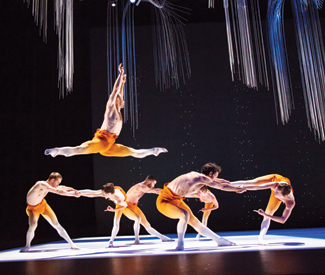
DANCE Though only in its fourth season, Robert Dekkers’ Post:Ballet has already gained an enthusiastic, impressively large following that has allowed the company to move from the Cowell to the Herbst to this year’s Lam Research Theater at Yerba Buena Center for the Arts. It’s easy to see the reason for Dekkers’ success.

While his dance making is clearly ballet-based, his works have an expansive sense of freedom that makes them welcoming and easy on the eye. By choosing to perform in the summer when other companies are on break, he can also work with highly trained professionals otherwise unavailable to a small (ten-person) ensemble like his. This year they came from Houston Ballet and Ballet Arizona, as well as the local Smuin Ballet, Alonzo King LINES Ballet, and Company C Contemporary Ballet.

Perhaps most intriguing is the ease with which Dekkers’ choreography embraces the ground and the air as one liquid continuum. His dancers crawl, slither, and slide along the floor like billowing smoke — and then rise into space as if born to it.

The world premiere for seven dancers, field the present shifts, is probably Dekkers’ most ambitious piece yet. It is a problematic work. A collaboration with architects Robert Gilson and Catherine Caldwell and a commissioned score, performed live by Matthew Pierce, it also features gorgeous magenta body-hugging costumes by Christine Darch, and a richly varied lighting design by David Robertson.

According to the program notes, field examines complex relationships. Within a given set of parameters, the piece also allows for individual decision-making by everyone involved. It added up to a lot of in-the-moment choices by a lot of people, and the results did not convince.

Visually, however, field was a feast for the senses. The dancers flew at each other like arrows, bunched up into swaying unisons as if buffeted by some gale force wind. They gathered on individual squares of light, responded to each other across the stage, and seemed to walk on water. They rolled into somersaults and carefully explored and yanked at each other. What I missed was an encompassing frame that held these individual units together. Also, a sense of uncertainty marred some the canons and unisons.

The two designers came up with what looked like huge sheaves of wheat hung upside down; at one point, they were lowered, presumably for the dancers to interact with. Few of them did. So what was the point? The distinct character of each of the ten or so sections of Pierce’s score for five violins, however, was a pleasure to hear.

The evening opened with the reworked Colouring II from 2011, danced with great authority by Ashley Flaner and Domenico Luciano. The piece traced the making of a pas de deux, developing at the same time as Enrico Quintero’s creation of a large, calligraphy-inspired painting. The dancers, approaching each other from opposite sides, added another gesture with each encounter, suggesting an almost filmic sense of accumulation. Daniel Berkman’s score, performed live, contributed his own voice to this intriguing process. This was watching visual and kinetic art in the making, and it was a delight. However, Dekkers standing on the sidelines, cueing the process, seemed intrusive. He should have trusted his artists.

Sixes and Seven, also from 2011, is a solo, here danced delicately yet firmly by Jessica Collado. This was richly varied choreography in which the dancer made full use of her body, including an excellent use of gestural language. At times, Collado appeared to withdraw into herself, but she also reacted to invisible external forces that impinged on her. You got a sense that she was living in a rich world. If the use of an excerpt from Philip Glass’s Einstein at the Beach meant to suggest some kind of cosmic existence, the choice was perfect.

Last year’s When in Doubt ended awkwardly in a wobbly pyramid, and used a distracting word-and-sound score by Jacob Wolkenhauer. But Dekkers showed considerable choreographic chops in the way he used his septet of dancers both in unisons and in smaller units. With the women on pointe walking in plié, and Robertson’s stark lighting that pulled the dancers across the stage with a quasi magnetic force, When began to feel ominous. This was even true for the two very different duets for Raychel Weiner and Christian Squire, and Collado and Jane Hope Rehm.

Dressing the women in black leotards and the topless men in black tights was inspired because the dancers could almost disappear into each other. The women were dark from the waist up, the men from the waist down. The color scheme abstracted personal interactions and sequences into two-dimensional patterns — thus foregoing overly eager tendencies to read narrative intentions into Dekkers’ choreography. *


Heads Up: 6 must-see concerts this week

1

Hiatus Kaiyote, Yassou Benedict, Elvis Christ with Pookie and the Poodlez, Jello Biafra and the Guantanamo School of Medicine — this week’s must-sees are a mouthful. A salty, appetizing taste of old school punk, the young and shoegazy, Australian future soul-makers, and more. There’s also locals Wild Moth, and the reliably bubbly J-POP Summit, which includes a performance by Kyary Pamyu Pamyu.

Not listed below, but there’s also a mid-‘90s nostalgia wave hitting our shores this week, with Courtney Love’s sold-out Independent show and Weezer at the America’s Cup Pavilion (both Thu/25) — tickets to the latter are $47.50.

Here are your must-see Bay Area concerts this week/end:

Wild Moth
“To understand SF’s Wild Moth, it’s much easier to describe what it’s not. The band’s fuzzy, electric guitar styling is wild, but not sloppy. Wild Moth’s EP Mourning Glow isn’t long, it’s also not lacking in kick. Distorted guitar and rough vocals have never been so appealing. The group’s big bang is its general lackluster attitude juxtaposed with its tight percussion and surged guitar licks. It’s all about the raw emotional energy that often accompanies its tunes. Wild Moth very much leaves it up to the listener — are you there to hear about the black void of blind compliance, or to feel it?” — Hillary Smith
With Speedy Ortiz
Thu/25, 9pm, $10
Bottom of the Hill
1233 17th St., SF
www.bottomofthehill.com
http://www.youtube.com/watch?v=egkSza2EXeM

Jello Biafra and the Guantanamo School of Medicine
Jello Biafra could be your theatrical political science professor. The still-charismatic frontperson has long spewed knowledge deep from the underbelly of political theater, from his influential early 1980s Bay Area punk band Dead Kennedys, and projects like the band Lard, through his nine dense spoken word albums, and up to his newest musical endeavor, louder than ever in his 50s, Jello Biafra and the Guantanamo School of Medicine. That band, which also includes Victims Family guitarist Ralph Spight, plays the Uptown this weekend with D.I., the Divvys, and Gir-illa Biscuits — an excellent local Gorilla Biscuits tribute act.
Fri/26, 9pm, $15
Uptown
1928 Telegraph, Oakl.
www.uptownnightclub.com
http://www.youtube.com/watch?v=6f66EqCyPOE

Yassou Benedict

The shoegazing dreampop group of 20-somethings Yassou Benedict recently released its debut EP, In Fits in Dreams, a moody, complex, emotionally fraught record that leaves the listener itching for a full-length, and touches on themes of “anxiety, and wanting to be weightless, the desire to run through wide open spaces.” The album release party was actually a few weeks back, but you can catch the band this week at Milk Bar.
With Beautiful Machines, Hotel Eden, NVO
Fri/26, 8:30pm, $10
Milk Bar
1840 Haight, SF
www.milksf.com
http://www.youtube.com/watch?v=MrEejzbeYbI

J-POP Summit Festival
“The theme of the fifth annual J-POP Summit Festival is “Making Kawaii Universal” — which seems a certainty. What warm-blooded, sweet-tooth-having human could resist this two-day explosion of film, art, fashion, pop culture, and pop stars, chiefly feather-bedecked glamour girl Kyary Pamyu Pamyu, “Japan’s Official Ambassador of Kawaii”? (For those not in the know, “Kawaii” = “cute,” and its influence goes way beyond whatever Gwen Stefani co-opted and repackaged for the American masses a few years back.) She’ll be performing live (along with other acts, including a human beat box); other J-POP attractions include a film festival (with a hefty anime component), a Harajuku fashion show, live art events, sake tasting, a dance contest, and a whole lot more.” — Cheryl Eddy
Sat/27-Sun/28, 11am-6pm, prices vary
Japantown (near Geary and Webster), SF
www.j-pop.com
http://www.youtube.com/watch?v=yzC4hFK5P3g

Elvis Christ, Pookie and the Poodlez
“Looking at the bands’ names on this lineup is enough to make your head spin. From quirky to downright dumb, it won’t matter much because the performance will prove they all take playing live seriously. Elvis Christ may sound familiar if not for his new cassette on Burger Records, then for recording troves of trash rockers including Nobunny and Pookie and the Poodlez (also on the bill). Be sure to catch Yogurt Brain, an earnest act with a solid songwriter (though he does have an affinity for covering Springsteen and Gram Parsons songs). Expect some country-punk style shredding (fingerpicks and all) on guitar and if you’re lucky he may even do the kick splits on stage!” — Andre Torrez
With Yogurt Brain
Sat/27, 8pm, $5
Eli’s Mile High Club
3629 Martin Luther King Jr., Oakl.
(510) 350-7818.
www.elismilehigh.com
http://www.youtube.com/watch?v=6SdZUC5QaPI

Hiatus Kaiyote

“Hiatus Kaiyote might identify as a “future soul” ensemble, and Nai Palm’s impassioned, show-stopping vocals surely establish a strong R&B foundation, but in the end, Tawk Tomahawk sounds less like a soul LP than an unfiltered rush of creative energy, heaping countless ideas and influences into an ecstatic vision of musical possibility.” — Taylor Kaplan
With the Seshen, Bells Atlas
Sun/28, 9pm, $22
Independent
628 Divisadero, SF
(415) 771-1421
www.theindependentsf.com
http://www.youtube.com/watch?v=ghw26g3h6L0

The Performant: Parts is Parts

1

FoolsFURY’s Factory Parts Builds a Future for Ensemble Works

Ever ambitious, the process-oriented foolsFURY theater ensemble has added yet another performance series to its production calendar: “Factory Parts,” focusing on works-in-development from fellow ensemble companies from both coasts.

Structured like a lower-key version of its biennial festival of ensemble theater, “The FURY Factory,” “Factory Parts” brings together ten companies to present segments of unfinished works before an audience (and each other) to gain perspective on how to shape them for the future. Broken up into three separate programs each showing three times over the course of ten days, Factory Parts offers artists and audiences alike to get in on the ground floor of a production’s existence and offer insight and feedback to the companies involved, turning what would normally be behind-the-scenes workshopping into a form of participatory theatergoing.

I caught up with foolsFURY’s associate artistic director Debórah Eliezer to get the inside scoop on the series, which opens tonight.

SF Bay Guardian So how does the focus of Factory Parts” differ from that of “The FURY Factory”?

Debórah Eliezer What we’ve been doing with “FURY Factory” is creating mainstage performances during the weekends; in the middle of the week, we’ve been doing works-in-progress. So what would happen is, we’d do multiple types of shows, and you’d get this cross-hybrid of audience, who were all there to see a different thing. And the secondfold here is to be able to offer a venue for creators who are working together over a long period of time. You need to have these stops on your journey where you go “Ok, this is what I’ve got, I’m going to bare my soul in front of you and show you this, bearing in mind that it’s a work in a larger development process.”

What we’ve found is that there are a lot of venues showcasing this kind of work if you call it dance. It’s very typical for dancers to have five minutes of their work in a choreographic showcase, and then to keep working on the piece. So what we want to do is [similarly] educate the theater audience member. We really want to bring people into process.

SFBG When we talk about works that are in progress in the context of this festival, was there a minimum threshold of completeness required for participation? What was the selection process like?

DE The selection process was in large part determined by time. My thing was, “Just give me ten good minutes. I would rather see that, than half an hour that contains ten good minutes.” I think the majority of the pieces, about 80 percent, are ten-minute pieces, including foolsFURY’s. It allows artists to take responsibility for what they are capable of producing in a time period that is feasible. 

SFBG And how did you wrangle the artists that you did?

DE We did send out a publicity letter, but more specifically, we reached out to people that we thought would really benefit from the experience. And I think we’re building on the strength of “The FURY Factory,” that this is really a way for some of the companies to start ramping up for next year. There’s no guarantee of acceptance but the idea is we’re providing this venue as a stair step for how to develop your piece. ”Ok I’m in ‘Factory Parts’ and maybe I can work toward ‘FURY Factory.’”

SFBG So the main thing you expect audiences to get out of this program is the opportunity to be integrated into the process of creating theater? Or what do you think the main draw will be?

DE [To] invite the audience into process development with the idea that they can then take responsibility for what they see and their own enjoyment, their participation is a vital aspect of the development process. On the third night of every program there’s going to be an audience feedback session, moderated by a dramaturg, a talkback of sorts, so there’ll be the feedback between the artist and the audience. And then there’ll be peer review feedback, between the companies, who are all required to see the other two programs, and they’ll have a feedback forum … and then the third part of this whole response ecosystem will be a roundtable discussion (on the morning of Sun/28). It’ll be a moderated discussion among peers, a community gathering of sorts, to culminate the process as a whole.

“Factory Parts”

Wed/17-Sun/21 and July 25-28, 8pm, $15 ($40 pass)

NOH Space

2840 Mariposa, SF

www.foolsfury.org


Labors of love

0

arts@sfbg.com

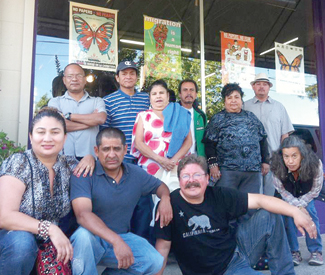
THEATER A white passenger van pulls to the curb in a Santa Rosa neighborhood, discharging a group of Latino men and women at the door of a converted warehouse. The visitors vary by age, class, and education. All hail from Mexico or Central America, but more recently Los Angeles, where they’re among the city’s thousands of jornaleros, or day laborers, making their way job by job, often without secure documentation or security of any kind.

Standing beside the warehouse on this quiet street, they could be mistaken for an ad hoc work crew. But the warehouse is a theater, and this sunny afternoon in June is the culmination of a precious week off. Not that these men and women aren’t here in Santa Rosa to work — just this time, it’s on a play.

Brent Lindsay and Amy Pinto, artistic directors of the Imaginists, greet the visitors as they collect outside the theater and saunter in, joining other members and friends of the Santa Rosa company. It’s the final day of a weeklong artistic exchange between the Imaginists and Teatro Jornalero Sin Fronteras (Day Laborer Theater Without Borders), a Los Angeles–based Spanish-language ensemble theater created by and for the immigrant day laborer population. The ten-member troupe, founded in 2008 under the umbrella of LA’s Cornerstone Theater and led by co–artistic directors Juan José Mangandi and Lorena Moran, has created 15 short plays that they perform mostly at day laborer centers across Los Angeles — although last year saw TJSF tour both Northern California and El Salvador. The plays examine everything from the legal and human rights of immigrant workers to the transnational cultures migrant workers share and foster.

After a light breakfast of coffee and pan dulce, the two companies gather in a circle for warm up exercises led by both Lindsay and Moran. Then they all get back to work on a playlet they’ve been developing from improvisations. It begins with two workers who alternately pay off and slip by a snoozing guard (played by Imaginists company member Eliot Fintushel) to dump toxic waste into a nearby stream. When this causes an environmental disaster, a government spokesperson (Pinto) assures people in the audience that their organic produce is safe. Meanwhile, a cleanup crew of migrant workers is slowly poisoned to death. A news team rushes to the scene of the eco-disaster, but seems to take no notice of the brown bodies sprawled over it. Left alone onstage, the workers rise as ghosts — beginning with one who sings, “They’re carrying me off to the cemetery. Don’t anyone cry for me. Just sing my favorite song…” — and one by one exit the stage.

Throughout, Lindsay directs from a chair audience-side, giving advice or suggestions. All, however, are welcome to chime in with comments and do. An elderly woman named Adela Palacios, for instance, suggests that before departing the stage each ghost can simply state their name and what they did for a living, a suggestion readily embraced by all. Soon the form of the scene has a solid arc, and a tone that makes a virtue of the mix of amateur and professional actors. Combining slapstick, winking asides, an eerie sense of tragedy, and a moving use of direct address, it’s a surprisingly affecting bit of work.

“We come to the theater as older people,” explains Moran. “But we feel we’ve found a company [in the Imaginists] like us. We share the same path.” A native of Guatemala who worked in business administration before fleeing domestic abuse and the country, Moran (translated by Gustavo Servin of the Imaginists) speaks eloquently about the company she joined five years ago amid a dangerous working life both foreign and alienating to her. She acknowledges frankly, “Theater saved my life.”

TJSF is currently developing its first full-length play, Caminos al Paraíso (Paths to Paradise), written by Mangandi and directed by Moran. This exchange in Santa Rosa, made possible by a grant from the Network of Ensemble Theaters, has offered TJSF members the opportunity to learn important technical aspects of crafting a full evening’s production from their more experienced colleagues. At the same time, it’s offered the Imaginists, which has grown into a bilingual company since rooting itself in Santa Rosa, a chance to advance its own mission through contact with a deeply community-driven Latino theater. But neither motive really captures the personal ties and mutual respect that have been forming here, the subtle and profound reciprocity of influence, and the solidarity emerging from it all.

“TJSF is a brave, important theater company that is telling stories that we don’t usually hear,” reflected Pinto by email. “Coming together for a week, we were able to strengthen our own resolve to tell these stories, not to be afraid of being deemed ‘political.’ For the Latino members of the Imaginists, the exchange was a catalyst to be empowered by their histories and stories. This exchange reinforced how necessary it is to have comrades, to share experiences and methods, to have a network of support throughout the country for this work.”

The Imaginists plan to travel to Los Angeles for another face-to-face meeting with TJSF over next steps. Together they hope to develop something that can tour to labor centers across the country.

In the meantime, inspired by the exchange, the Imaginists are concocting a new play, based on a famous children’s story, which will address the plight of undocumented people. Working title: REAL. *

For an extended version of this story, visit www.sfbg.com/pixel_vision.


Theater Listings: July 17 – 23, 2013

0


Stage listings are compiled by Guardian staff. Performance times may change; call venues to confirm. Reviewers are Robert Avila, Rita Felciano, and Nicole Gluckstern. Submit items for the listings at listings@sfbg.com.

THEATER

OPENING

Sweet Bird of Youth Tides Theatre, 533 Sutter, Second Flr, SF; www.tidestheatre.org. $20-40. Previews Thu/18, 8pm. Opens Fri/19, 8pm. Runs Wed-Sat, 8pm. Through Aug 24. Tides Theatre performs Tennessee Williams’ Gulf Coast-set drama about an improbable couple.

BAY AREA

A Comedy of Errors Forest Meadows Amphitheater, 890 Bella, Dominican University of California, San Rafael; www.marinshakespeare.org. $20-37.50. Previews Fri/19 and Sun/21, 8pm. Opens July 27, 8pm. Presented in repertory Fri-Sun through Sept 29; visit website for performance schedule. Marin Shakespeare Company presents a cowboy-themed spin on the Bard’s classic.

ONGOING

Betrayal Phoenix Theatre, 414 Mason, Sixth Flr, SF; www.offbroadwaywest.org. $40. Thu/18-Sat/20, 8pm. Off Broadway West Theatre Company performs Harold Pinter’s out-of-sequence drama about an unfaithful married couple.

Can You Dig It? Back Down East 14th — the 60s and Beyond Marsh San Francisco, 1062 Valencia, SF; www.themarsh.org. $15-50. Sat, 8:30pm; Sun, 7pm. Through Aug 25. Solo performer Don Reed returns with a prequel to his autobiographical coming-of-age hits, East 14th and The Kipling Hotel.

Chance: A Musical Play About Love, Risk, and Getting it Right Alcove Theater, 415 Mason, Fifth Flr, SF; www.thealcovetheater.com. $40-60. Thu-Sat, 8pm (also Sat, 3pm); Sun, 5pm. Through July 28. New Musical Theater of San Francisco presents Richard Isen’s world premiere work inspired by the writings of Oscar Wilde.

Endgame Royce Gallery, 2901 Mariposa, SF; www.itetheater.org. $18-24. Thu/18-Sat/20, 8pm. International Theater Ensemble performs Samuel Beckett’s Theatre of the Absurd classic.

Foodies! The Musical Shelton Theater, 533 Sutter, SF; www.foodiesthemusical.com. $30-34. Fri-Sat, 8pm. Open-ended. AWAT Productions presents Morris Bobrow’s musical comedy revue all about food.

God of Carnage Shelton Theater, 533 Sutter, SF; www.sheltontheater.com. $26-38. Thu-Sat, 8pm. Through Sept 7. Shelton Theater performs Yasmina Reza’s award-winning play about class and parenting.

Hedwig and the Angry Inch Boxcar Theatre, 505 Natoma, SF; www.boxcartheatre.org. $27-43. Thu-Sat, 8pm. Open-ended. John Cameron Mitchell’s cult musical comes to life with director Nick A. Olivero’s ever-rotating cast.

How to Make Your Bitterness Work for You Stage Werx Theatre, 446 Valencia, SF; www.stagewerx.org. $15-25. Mon-Tue, 8pm. Through Aug 27. Kent Underwood is a motivational speaker and self-help expert with some obvious baggage of his own in this solo play from former comedy writer and stand-up comedian Fred Raker (It Could Have Been a Wonderful Life). The premise, similar to that of Kurt Bodden’s Steve Seabrook: Better Than You (ongoing at the Marsh), has the audience overlapping with participants in an Underwood seminar. Underwood, however, two years on the seminar circuit and still unable to get his book published, deviates from the script to answer texts related to a possible career breakthrough. Meanwhile, with the aid of some bullet points and illustrative slides, he explains the premise of said manuscript, “How to Make Your Bitterness Work For You,” as the sad truth of his own underdog status emerges between the laugh lines. But where Bodden is careful to make his Seabrook a somewhat believable character despite the absurdity of it all (or rather, while firmly embracing the absurdity of the self-help industry itself), Raker and director Kimberly Richards put much more space between the playwright/performer and his character, which turns out to be a less effective strategy. Verisimilitude might not have mattered much if the comic material were stronger. Unfortunately, despite the occasional zinger, much of the humor is weak or corny and the narrative (interrupted at regular intervals by an artificial tone representing the arrival of a fresh text message) too contrived to sell us on the larger story. (Avila)

Keith Moon: The Real Me Eureka Theatre, 215 Jackson, SF; www.brownpapertickets.com. $40. Thu-Sat, 8pm; Sun, 7pm. Through July 28. Mick Berry performs the world premiere of his solo play about the Who drummer.

A Pinoy Midsummer Bindlestiff Studio, 185 Sixth St, SF; www.bindlestiffstudio.org. $10-25. Thu/18-Sat/20, 8pm. It’s the perfect time of year for Shakespeare’s A Midsummer Night’s Dream, but unless you caught Bindlestiff Studio’s irreverent adaptation A Pinoy Midsummer last September, you’ve probably never seen a version quite like it. Conceptualized and directed by Lorna Velasco, A Pinoy Midsummer combines elements of Philippine culture—traditional music, dress, and language—with a rowdy modernist approach to the tale of tradition-bound lovers and the bawdy fairies who would make sport of them and each other. A live score directed by Ogie Gonzales, choreographed interludes by Gemma Calderon, and otherworldly shadow puppetry designed by Melissa Diaz Infante and Marcius Noceda help to flesh out the bare bones production and enhance the action, in particular the intrigues of the mischievous fairy folk. Of the Athenians, it’s star-crossed Hermia (Aureen Almario) and Helena (Julie Kuwabara) who stand out most particularly, and their cat fight over the  fickle love of the fairy-enchanted Lysander (Tonilyn A. Sideco) is wickedly funny. But the true highlight of the scrappy production is the band of the rudest mechanicals to ever grace a stage, from the scene-stealing Bottom (Joe Cascasan) to the angry butch Flute (Roczane Enriquez), the fact that they deliver their lines almost entirely in Tagalog not detracting one bit from their brilliant buffoonery, whether you speak the language or not. (Gluckstern)

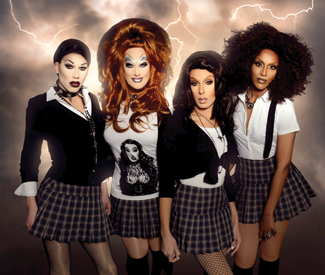
Sex and the City: LIVE! Rebel, 1760 Market, SF; trannyshack.com/sexandthecity. $25. Wed, 7 and 9pm. Open-ended. It seems a no-brainer. Not just the HBO series itself — that’s definitely missing some gray matter — but putting it onstage as a drag show. Mais naturellement! Why was Sex and the City not conceived of as a drag show in the first place? Making the sordid not exactly palatable but somehow, I don’t know, friendlier (and the canned a little cannier), Velvet Rage Productions mounts two verbatim episodes from the widely adored cable show, with Trannyshack’s Heklina in a smashing portrayal of SJP’s Carrie; D’Arcy Drollinger stealing much of the show as ever-randy Samantha (already more or less a gay man trapped in a woman’s body); Lady Bear as an endearingly out-to-lunch Miranda; and ever assured, quick-witted Trixxie Carr as pent-up Charlotte. There’s also a solid and enjoyable supporting cast courtesy of Cookie Dough, Jordan Wheeler, and Leigh Crow (as Mr. Big). That’s some heavyweight talent trodding the straining boards of bar Rebel’s tiny stage. The show’s still two-dimensional, even in 3D, but noticeably bigger than your 50″ plasma flat panel. Update: new episodes began May 15. (Avila)

So You Can Hear Me Marsh San Francisco, 1062 Valencia, SF; www.themarsh.org. $15-50. Thu/18-Fri/19, 8pm; Sat/20, 5pm. A 23-year-old with no experience, just high spirits and big ideals, gets a job in the South Bronx teaching special ed classes and quickly finds herself in over her head. Safiya Martinez, herself a bright young woman from the projects, delivers this inspired accounting of her time not long ago in perhaps the most neglected sector of the public school system — a 60-minute solo play that makes up for its relatively slim plot with a set of deft, powerful, lovingly crafted characterizations. These complex portraits, alternately hysterical and startling, offer their own moving ruminations on a violent but also vibrant stratum of American society, deeply fractured by pervasive poverty and injustice and yet full of restive young personalities too easily dismissed, ignored, or crudely caricatured elsewhere. An effervescent, big-hearted, and very talented performer, Martinez’s own bounding personality and contagious passion for her former students (as complicated as that relationship was), makes this deeply felt tribute all the more memorable. (Avila)

Steve Seabrook: Better Than You Marsh San Francisco, 1062 Valencia, SF; www.themarsh.org. $15-50. Sat, 8:30pm. Extended through August 24. Self-awareness, self-actualization, self-aggrandizement — for these things we turn to the professionals: the self-empowerment coaches, the self-help authors and motivational speakers. What’s the good of having a “self” unless someone shows you how to use it? Writer-performer Kurt Bodden’s Steve Seabrook wants to sell you on a better you, but his “Better Than You” weekend seminar (and tie-in book series, assorted CDs, and other paraphernalia) belies a certain divided loyalty in its own self-flattering title. The bitter fruit of the personal growth industry may sound overly ripe for the picking, but Bodden’s deftly executed “seminar” and its behind-the-scenes reveals, directed by Mark Kenward, explore the terrain with panache, cool wit, and shrewd characterization. As both writer and performer, Bodden keeps his Steve Seabrook just this side of overly sensational or maudlin, a believable figure, finally, whose all-too-ordinary life ends up something of a modest model of its own. (Avila)

Tinsel Tarts in a Hot Coma: The Next Cockettes Musical Hypnodrome, 575 10th St, SF; www.thrillpeddlers.com. $30-35. Thu-Sat, 8pm. Extended through July 27. Thrillpeddlers and director Russell Blackwood continue their Theatre of the Ridiculous series with this 1971 musical from San Francisco’s famed glitter-bearded acid queens, the Cockettes, revamped with a slew of new musical material by original member Scrumbly Koldewyn, and a freshly re-minted book co-written by Koldewyn and “Sweet Pam” Tent — both of whom join the large rotating cast of Thrillpeddler favorites alongside a third original Cockette, Rumi Missabu (playing diner waitress Brenda Breakfast like a deliciously unhinged scramble of Lucille Ball and Bette Davis). This is Thrillpeddlers’ third Cockettes revival, a winning streak that started with Pearls Over Shanghai. While not quite as frisky or imaginative as the production of Pearls, it easily charms with its fine songs, nifty routines, exquisite costumes, steady flashes of wit, less consistent flashes of flesh, and de rigueur irreverence. The plot may not be very easy to follow, but then, except perhaps for the bubbly accounting of the notorious New York flop of the same show 42 years ago by Tent (as poisoned-pen gossip columnist Vedda Viper), it hardly matters. (Avila)

The World’s Funniest Bubble Show Marsh San Francisco, 1062 Valencia, SF; www.themarsh.org. $8-50. Sun/21, 11am. Louis “The Amazing Bubble Man” Pearl returns after a month-long hiatus with his popular, kid-friendly bubble show.

Wunderworld Creativity Theater, 221 Fourth St, SF; www.wunderworld.net. $10-15. Sat-Sun, 2pm (also Sat, 11am; Sun, 5pm). Through Aug 11. In an irresistible boost to the the Children’s Creativity Museum’s new Creativity Theater (formerly Zeum), beloved Bay Area comedian, playwright, and performer Sara Moore (Show Ho) teams up with gifted co-writer and performer Michael Phillis (The Bride of Death) and director Andrew Nance for a largely wordless, but gabble-packed, family-friendly comedy that asks what Alice might find down the rabbit hole were she to tumble down it again as an octogenarian? The 60-minute play showcases the elastic features and sharp comedic instincts of both Moore (as a hilarious and heartfelt Alice, whom no one recognizes these days unless she stretches her face smooth again) and Phillis (who kicks things off with a mimed pre-curtain speech deserving of its own encore, before coming back as the now droopy-eared White Rabbit). Equally endearing are performances by Dawn Meredith Smith (as Caterpillar, Red Queen, and a rest home nurse), choreographer Rory Davis (as the Cheshire Cat), and the inimitable Joan Mankin as Alice’s bored nursing-home roommate and the Mad Hatter. (Avila)

BAY AREA

The Loudest Man on Earth Lucie Stern Theatre, 1305 Middlefield, Palo Alto; www.theatreworks.org. $19-73. Tue-Wed, 7:30pm; Thu-Sat, 8pm (also Sat, 2pm); Sun, 2 and 7pm. Through Aug 4. TheatreWorks presents the world premiere of Catherine Rush’s unconventional romantic comedy starring acclaimed actor Adrian Blue, who is deaf.

Oil and Water This week: Arena Theater, 214 Main, Point Arena; www.sfmt.org. $10-15. Wed, 8pm. Also Thu, 7pm, free, Todd Grove Park, Live Oak at Clubhouse, Ukiah; Sat, 8pm, $20, Mateel Community Center, 59 Rusk, Redway. It’s a rough year for mimes, or at any rate for the San Francisco Mime Troupe who, after presenting 53 seasons of free theater in the parks of San Francisco (and elsewhere), faced a financial crisis in April that threatened to shut down this season before it even started. The resultant show, funded by an influx of last-minute donations, is one cut considerably closer to the bone than in previous years. With a cast of just four actors and two musicians, plus a stage considerably less ornate then usual, even the play has shrunk in scale, from one two-hour musical to two loosely-connected one-acts riffing on general environmentalist themes. In Deal With the Devil, a surprisingly sympathetic (not to mention downright hawt) Devil (Velina Brown) shows up to help an uncertain president (Rotimi Agbabiaka) regain his conscience and win back his soul, while in Crude Intentions adorable, progressive, same-sex couple Gracie (Velina Brown) and Tomasa (Lisa Hori-Garcia) wind up catering a “benefit” shindig for the Keystone XL Pipeline giving them the opportunity to perpetrate a little guerilla direct action on a bombastic David Koch (Hugo E Carbajal) with a “mole de petróleo” and a smartphone. Throughout, the performers remain upbeat if somewhat over-extended as they sing, dance, and slapstick their way to the sobering conclusion that the time to turn things around in the battles over global environmental protection is now — or never. (Gluckstern)

Sea of Reeds Ashby Stage, 1901 Ashby, Berk; www.shotgunplayers.org. $20-35. Wed-Thu, 7pm; Fri-Sat, 8pm; Sun, 5pm. Through Aug 18. The stage comes unusually populated in this latest from well-known Bay Area monologist and red-diaper baby Josh Kornbluth: a four-piece musical ensemble (El Beh, Jonathan Kepke, Olive Mitra, and Eli Wirtschafter) sits stage right, a standing table with some reed-making equipment appears stage left. Front and center is Kornbluth and his oboe, before him a music stand and behind him three “reeds”—freestanding concave walls of a bamboo-hue (designed by Nina Ball). But there’s more: Kornbluth’s physical trainer (Amy Resnick, replaced by Beth Wilmurt beginning August 7), bounding up from her seat in the first row to lend Kornbluth support or, more productively, prod him in the right direction as he takes the long road home to setting up a promised recital of Bach’s Cantata No. 82. That set up hinges on his recent bar mitzvah, at 52, in Israel, and its unexpected connections between his life-long oboe playing, his Communist upbringing in New York, his mixed marriage, his conversations with a local rabbi, and the Book of Exodus (specifically, Moses’s trail-blazing for the Israelites across the Red Sea, a.k.a., the Sea of Reeds). Although the introduction of supporting characters, musicians, and a musical score (by Marco D’Ambrosio) breaks new ground for the longtime soloist, Sea of Reeds is classic — indeed classical (thanks to a final few tenuous bars from the promised Bach cantata) — Kornbluth. Directed by longtime creative partner David Dower, the show features the boyish comedic persona, the intricate storytelling, and the biographical referents that have given him a loyal following over the years. Diehard fans aside, the show’s cheesy, somewhat self-regarding conceit of staging “spontaneous” interactions between Kornbluth and his trainer may not work with everyone. Perhaps more challenging, though, is the persistence of a less than fully examined disjunction between the political values of his parents and his own political and ethical evolution — a disjunction highlighted here in the narrative’s fraught Middle Eastern setting and its vague navigation between the violence of religious zealotry and a plea for tolerance. (Avila)

The Spanish Tragedy Forest Meadows Amphitheater, 890 Bella, Dominican University of California, San Rafael; www.marinshakespeare.org. $20-37.50. Presented in repertory Fri-Sun through Aug 11; visit website for performance schedule. Marin Shakespeare Company performs Thomas Kyd’s Elizabethan revenge tragedy.

This Is How It Goes Aurora Theatre, 2081 Addison, Berk; www.auroratheatre.org. $32-60. Tue and Sun, 7pm (also Sun, 2pm); Wed-Sat, 8pm. Extended through July 28. An awkward love triangle between former high school classmates gets the caustic Neil LaBute treatment in Aurora Theatre Company’s production of This is How it Goes. Not content to merely skewer the familiar battles between the sexes, LaBute further prods his captive audience with the big stick of race relations, and the often unacknowledged prejudices that lurk in the hearts of men. And women. There are no innocents in this play, though each character certainly has moments where they play upon audience sympathies, only to betray them a few inflammatory lines later. As the marriage between the successful yet self-conscious African American alpha male Cody (Aldo Billingslea) and his neurotically placating Caucasian wife Belinda (Carrie Paff) erodes, the mostly affable (and former fat kid) “Man” (Gabriel Marin) insinuates himself in the middle of their troubled relationship, obviously still carrying the torch for Belinda he did 15 years ago — as well as the same wary animosity an unpopular kid carries for the star of the track team, in this case, Cody. All three actors do a very good job of shape-shifting between their middle-class Jekyll and Hyde selves, assisted in part by Marin’s amiable asides, which don’t so much lull the audience as tease them with the idea that things are about to get better, when they can only get worse. (Gluckstern)

The Wiz Julia Morgan Theater, 2640 College, Berk; www.berkeleyplayhouse.org. $17-60. Wed-Thu and Sat, 7pm (also Sat, 2pm); Sun, noon and 5pm. Through Aug 25. Berkeley Playhouse travels to Oz with the Tony-winning musical.

PERFORMANCE/DANCE

BATS Improv Bayfront Theater, B350 Fort Mason, SF; www.improv.org. $20. BATS Improv performs spontaneous shows based on current events (Fri, 8pm, through July 26) and “Improvised Shakespeare” (Sat, 8pm, through July 27).

“Bay Area Playwrights Festival” Thick House Theater, 1695 18th St, SF; www.playwrightsfoundation.org. Fri/19-Sun/21 and July 26-28. $15. Three Bay Area playwrights and three New Yorkers contribute brand-new works to this 36th annual fest. The six plays were chosen from 425 submissions.

“Bitch and Tell: A Real Funny Variety Show” Garage, 715 Bryant, SF; www.ftloose.org. Fri/19-Sat/20, 8pm. $10-20. Tracy Shapiro performs both nights, with guests David Gborie, Mary-Alice McNab, and others.

“Bubbles on Fire Burlesque presents: Mad Women!” Mojo Theatre, 2940 16th St, #217, SF; www.bubblesonfire.com. Fri/19, 8:15pm. $10-20. With MC Patina DeCopper, Alexa Von Kickinface, Candi Fornia, Dolly Dior, and others.

Caroline Lugo and Carolé Acuña’s Ballet Flamenco Peña Pachamama, 1630 Powell, SF; www.carolinalugo.com. Sun/21, July 27, Aug 4, 17, and 25, 6:15pm. $15-19. Flamenco performance by the mother-daughter dance company, featuring live musicians.

“The Dirt on Dorian Gray” CounterPULSE, 1310 Mission, SF; www.counterpulse.org. Fri/19-Sun/21, 8pm. $15-20. Samantha Giron Dance Project presents an examination of “Peter Pan syndrome” via contemporary dance and other elements.

“Dohee Lee: ARA Gut (Ritual of Ocean)” Yerba Buena Center for the Arts, 701 Mission, SF; www.ybca.org. Sat/20, 4-6pm. Free. The artist presents a site-specific performance installation reflecting on the relationship between humans and nature.

“Factory Parts” NOH Space, 2840 Mariposa, SF; www.foolsfury.org. Wed/17-Sun/21 and July 25-28, 8pm. $15. FoolsFURY presents new works-in-progress by 10 cutting-edge theater ensembles, including San Francisco’s Affinity Group and Oakland’s Ragged Wing.

50 Shades! The Musical Marines’ Memorial Theatre, 609 Sutter, SF; www.50shadesmusical.com. July 23-25, 8pm; July 26-27, 6:30 and 9:30pm; July 28, 3pm. $20-65. Musical parody of Fifty Shades of Grey.

“Four Plays” Lam Research Theater, Yerba Buena Center for the Arts, 700 Howard, SF; www.postballet.org. Thu/18-Fri/19, 8pm. $30-50. Post:Ballet presents its fourth annual home season, featuring a world premiere collaboration between choreographer Robert Dekkers, architect Robert Gilson, and other artists.

“Harboring” Fort Mason Center Festival Pavilion, Marina at Buchanan, SF; www.bandaloop.org. Thu/18, 8:30pm; Fri/19-Sun/21, 8:30pm (also Sat/20, 2pm). $25-100. Vertical dance company Bandaloop performs a site-specific, multi-dimensional work inspired by Fort Mason’s maritime past and present.

“Merola Opera’s Schwaber Summer Concert” Everett Auditorium, 450 Church, SF; www.merola.org. Thu/18, 7:30pm. $25-40. Also Sat/20, 2-4pm, free, Yerba Buena Gardens, Mission between 3rd and 4th Sts, SF; www.ybgfestival.com. The company performs scenes from Don Giovanni and other operas.

“Mission Position Live” Cinecave, 1034 Valencia, SF; www.missionpositionlive.com. Thu, 8pm. Ongoing. $10. Stand-up comedy with rotating performers.

“Randy Roberts: Live!” Alcove Theater, 414 Mason, Ste 502, SF; www.thealcovetheater.com. Tue/23, 9pm. $30. The famed female impersonator takes on Cher, Better Midler, and other stars.

Red Hots Burlesque El Rio, 3158 Mission, SF; www.redhotsburlesque.com. Wed, 7:30-9pm. Ongoing. $5-10. Come for the burlesque show, stay for OMG! Karaoke starting at 8pm (no cover for karaoke).

“San Francisco Magic Parlor” Chancellor Hotel Union Square, 433 Powell, SF; www.sfmagicparlor.com. Thu-Sat, 8pm. Ongoing. $40. Magic vignettes with conjurer and storyteller Walt Anthony.

“Union Square Live” Union Square, between Post, Geary, Powell, and Stockton, SF; www.unionsquarelive.org. Through Oct 9. Free. Music, dance, circus arts, film, and more; dates and times vary, so check website for the latest. *


 

Labors of love

0

Los Angeles’s Teatro Jornalero Sin Fronteras makes common cause with Santa Rosa’s the Imaginists

(Note: what follows is an extended version of a story and interview that appears in this week’s Guardian.)

A white passenger van pulls to the curb in a largely residential Spanish-speaking neighborhood in Santa Rosa, discharging a group of Latino men and women at the door of a converted warehouse. The visitors vary by age, class, and education. All hail from Mexico or Central America, but more recently Los Angeles, where they’re among the cities thousands of jornaleros, or day laborers, making their way job by job, often without secure documentation, or much security of any kind.
Standing beside the warehouse on this quiet street, they could be mistaken for an ad hoc work crew. But the warehouse is a theater, and this sunny afternoon in June is the culmination of a precious week off. Not that these men and women aren’t here in Santa Rosa to work — just this time it’s on a play.

Brent Lindsay and Amy Pinto, founders and artistic directors of the Imaginists, greet the visitors warmly as they collect outside the theater and slowly saunter in, joining other members and friends of the Santa Rosa company inside its spacious single room, together with their small children. The two groups have known each other barely a week, but already seem more than colleagues — more like extended family.

It’s the final day of a weeklong artistic exchange between the Imaginists and Teatro Jornalero Sin Fronteras (Day Laborer Theater without Borders), a Los Angeles–based Spanish-language ensemble theater created by and for the immigrant day laborer population. The ten-member troupe, founded in 2008 under the umbrella of LA’s Cornerstone Theater and led by co-artistic directors Juan José Mangandi and Lorena Moran, has so far created 15 short plays that they perform mostly at day laborer centers across Los Angeles — although this last year saw TJSF tour both Northern California and El Salvador. The plays examine everything from the legal and human rights of immigrant workers to health issues to the transnational cultures migrant workers share and foster.

After some socializing over a light breakfast of coffee and pan dulce, the two companies gather in a circle for some warm up exercises led by both Lindsay and Moran. One particular challenging memory game provokes mild frustration and laughter. “This is why we do this exercise,” explains Moran to her actors, all amateurs and volunteers united by the unique opportunities their theater has offered them. “We need to connect to another person and remember details about them.”

Then they all get back to work on a playlet they’ve been developing from improvisations. It begins with two workers who alternately pay off and slip by a snoozing guard (played by Imaginists company member Eliot Fintushel) to dump toxic waste into a nearby stream. When this causes an environmental disaster, a government spokesperson (played by Pinto) assures people in the audience that their organic produce is safe. Meanwhile, a cleanup crew of migrant workers is slowly poisoned to death. A news team rushes to the scene of the eco-disaster, but seems to take no notice of the brown bodies sprawled over it. Left alone onstage, the workers rise as ghosts — beginning with one who sings, “They’re carrying me off to the cemetery. Don’t anyone cry for me. Just sing my favorite song…” — and one by one exit the stage.

Throughout, Lindsay directs from a chair audience-side, giving advice or suggestions at various points. All, however, are welcome to chime in with comments and do. An elderly woman named Adela Palacios, for instance, suggests that before departing the stage each ghost can simply state their name and what they did for a living, a suggestion readily embraced by all. Soon the form of the scene has a solid arc, and the action gains many subtleties, as well as a tone that makes a virtue of the mix of amateur and professional actors. Combining slapstick, winking asides, an eerie sense of tragedy, and a moving use of direct address, it’s a surprisingly affecting bit of work.

“We come to the theater as older people,” explains Moran. “But we feel we’ve found a company [in the Imaginists] like us. We share the same path.” A native of Guatemala who worked in business administration before fleeing domestic abuse and the country, Moran (translated by Gustavo Servin, a young member of the Imaginists) speaks eloquently about the company she joined five years ago amid a dangerous working life that was both foreign and alienating to her. She acknowledges frankly, “Theater saved my life.”

TJSF is currently developing its first full-length play, Caminos al Paraíso (Paths to Paradise), written by Mangandi and directed by Moran. This exchange in Santa Rosa, made possible by a grant from the Network of Ensemble Theaters, has offered TJSF the opportunity to learn important technical aspects of crafting a full evening’s production from their more experienced colleagues. At the same time, it’s offered the Imaginists, which has grown into a bilingual company since rooting itself in Santa Rosa, a chance to advance their own mission through contact with a deeply community-driven Latino theater. But neither motive really captures the personal ties and mutual respect that have been forming here, the subtle and profound reciprocity of influence, and the solidarity emerging from it all.

“TJSF is a brave, important theater company that is telling stories that we don’t usually hear,” reflected Amy Pinto recently by email. “They tell them with humor, with heartache, in a group, in Spanish. Coming together for a week, we were able to strengthen our own resolve to tell these stories, not to be afraid of being deemed ‘political.’ For the Latino members of the Imaginists, the exchange was a catalyst to take ownership and be empowered by their histories and stories. This exchange reinforced how necessary it is to have comrades, to share experiences and methods, to have a network of support throughout the country for this work.”

The Imaginists plan to travel to Los Angeles for another face-to-face meeting with TJSF over next steps. Together they hope to develop something that can tour to labor centers across the country.

In the meantime, inspired by the exchange, the Imaginists are concocting a new play, based on a famous children’s story, which will address the plight of undocumented people. Working title: REAL.

“For Teatro Jornalero there is no division,” notes Pinto. “They are telling the stories of their lives. They are humanizing a ‘political’ situation. We have to let that sit in us, that uncomfortability — can we turn our politics off and on? No. Everything in art is a choice.”

She adds that the encounter held surprises for them too. “To have an encounter where all your expectations are turned upside down,” she marvels, “theater can do that. We are changed. There was so much laughter the entire week. And a fare share of tears.”

Voices from Teatro Jornalero Sin Fronteras

The following excerpts are from conversations that took place on Saturday, June 22, at the warehouse theater of the Imaginists in Santa Rosa. Members of the Imaginists and Teatro Jornalero Sin Fronteras had just completed their rehearsal, ahead of a public performance that evening, and were seated in a semi-circle to answer a few questions about their collaboration. Translation was provided by Julie Kaiser.

SF Bay Guardian Can I ask a general question of the members of Teatro Jornalero? Anyone who would like to answer please do. What brought you to the company, and why did you join? What does being in the company offer you?

Teatro Jornalero Sin Fronteras My name is Alberto Scareño. I found out about this when some of my friends told me about it. It was really interesting, so I called them up to see if there was a spot for me. They said, sure, come that day. And I went in. I’ve never been an actor. We started with exercises. It was really interesting and relaxing. Sometimes I have a lot of stress, or I’m just mad, and to come to this place that relaxes me — it relieves my stress, and time flies. Now what I hope for is to work with even more verve and learn more about the theater.

SFBG What kind of work do you do to make a living?

TJSF Every morning I go out and look for work at a corner in central Los Angeles. I’m a day laborer.

SFBG And you still find energy after a long day’s work for theater?

TJSF The deal is, I don’t get work everyday. So if I don’t work one day, then I have energy to go. When I work, I’m tired, but I get there, and I get my friends, and we do the exercises and I relax. And it’s fascinating.

SFBG Anyone else?

TJSF My name is Xico [pronounced “Chico”] Salvador Paredes. I was on a workers’ corner in California — I’d joined a battle to have a [day laborer] center made — and the first person that [I met] was Juan José. He had participated in theater as an actor, and he was starting to work on his play about illegals. Then he invited me and Lorena [Paredes is married to artistic director Lorena Moran], and other guys, to work in theater. At first I didn’t like it, because I’m a worker: I just get work, get work, get work — I’m not interested in anything else. I send money [home]. That was my only vision, to have a day of work.

But after I came in, I realized, it’s a weapon for communication and understanding, a means of connecting with other people. We started to create pieces out of our own experience, and to recreate our experience. It serves to take out of us what’s inside of us, and to let us know that we’re not alone. The best part of being in this theater is that we’re getting together with people who don’t know what a day laborer is. A day laborer stands on a corner. In the morning he’s cold. He doesn’t have anything to eat. He doesn’t have the security he’s going to actually get work. People walk by and say, “Oh what a lazy guy,” or they pass by as if you’re just a tree, because you’re just standing there all the time. Nobody understands what you’re doing standing there. But a day laborer has huge hope. And he doesn’t know if he’s going to get work. And that’s us.

With the theater, we’ve told many people about what a day laborer is, and shared with those who don’t know anything about their rights. Now we can say, “This is what it is.” It’s really difficult. I just got into a situation where I’ve gotten into the deportation process. I’m in the struggle, but I also have to go to court. I have to do lots of things. And I might get deported. I came here not just to work; I came here to tell my story. And my story’s big. No bigger than anybody else’s. But it’s very positive for people to hear: Here we are.

TJSF I’m Mario Rivera, and I’m very happy to be here sharing with you all. I’m also, like my friends here, a day laborer and I work in central Los Angeles. I came into the theater because I was invited by Lorena. What I like is learning from my compañeros. I had nerves when people looked at me, and I lost that. I lost that fear, and I really like being here. I’d like to learn more from everybody. And I like the play that we’re doing here [with the Imaginists]. This all suits me. I like all of this.

TJSF I’m Adela Palacios. And I’m not very good for talking. The reason why I’m in the theater is because I don’t have work. I studied nursing. Two times I graduated in nursing. I am a nurse. But I had an accident. Now I can’t find work. In this country there’s a lot of discrimination about age. I looked for work for two years. The only opportunity I’ve found, that opened doors for me without discrimination, was this theater. We are volunteers. We don’t have work. They help us. Sometimes they give us food. I am very grateful to this great person, Lorena. And I’m very grateful to Cornerstone Theater. We have some understanding there. We are not heard as we should be [in society], but they do a little, what they can. They give us a little bit of a normal life. My stress is better than it was. And they’ve done everything possible. They do what they can. They can’t do more. I’m really grateful. You have to accept what there is and not ask for much.

TJSF I’m Heidi Guevara. My problem is I have a fear of being in front of people. But now it’s gone. I didn’t think I’d ever do something like this, because I’m really embarrassed easily. Now I have the courage to be in front of people. Lorena gives us exercises. And they help you to use your voice and express yourself, to overcome your shame. It’s a little complicated, but I’m learning more little by little. And here we go! I’ve been with them one year — you have to keep learning and learning. You know this. You have to keep going and learning. Little by little, but I’m going. Thank you, Lorena.

TJSF My name is Raul Salinas. I’m from northern Mexico. Chihuahua. I have six kids. I’ve been ten years here. Now I’m in the Centro Jornalero for work. I don’t have full-time work. I’ve been with the theater three months. How did I get here? I don’t know. It was just chance. One day Lorena came to the work center. She came to do casting for a play that they’re doing called Ways to Paradise. I wasn’t going to do it. No. But there was another person who wanted to go and I helped him with directions to the place where they were doing the casting. And then I got involved. Now I’m involved with Ways to Paradise, about the problems facing migrant workers, explaining who we are, what we’re doing: Yeah, we’re undocumented, we’re from Central America, Mexico … I started thinking about the work, and I really like it. So I stayed. That’s it. There’s not much more to tell.

SFBG I’d like to ask Lorena: How did you become involved in the theater, and how has your relationship with it evolved over the years?

Lorena Moran I would like to tell you the story of Teatro Jornalero, how the project got created. In 2006, Michael John Garcés, the director of Cornerstone Theater, wrote a play called The Illegals. He went and did castings at all the day laborer centers. [Co–artistic director] Juan José [Mangandi] came out of that. He participated in the work, along with other workers from day laborer centers at the national level. And they were invited to a national congress of day laborers. One day they were bored, just hanging out. And Juan José said, “You know what? I have the script of The Illegals. Why don’t we just do a little piece of it and present it to the congress?” It was a marvelous idea.

We have lots of ideas that are marvelous. We need a reason to do it and we also need people to help us. Nothing is possible without that. This was a great idea of Juan José. And we got a lot of help from Michael Garcés and Cornerstone Theater. Roberta Uno of the Ford Foundation gave us our first grant, a big grant of several thousand dollars for two years. And right now, we’re working on a small grant of $25,000 for two years. It’s not much — it’s a big deal to maintain 21 people on $25,000. But it would not have been possible at all if we didn’t have these workers — gardeners, housekeepers, bouncers, day laborers, nurses — they all have stories and voices. And they can educate others, and educate themselves about the rules of this country, the laws, their status as undocumented people.

In 2008, I was invited to participate in a casting for the first company of Teatro Jornalero Sin Fronteras. We were 12 members, two directors. Ethan Sawyer, an American graduate of Northwestern, helped train Juan José, who didn’t know anything about the technical part of theater but had a big spirit for it. They helped us, and the other 12 members of the company.

And that’s how my story starts. I’d had just a year here. I’m from Guatemala. I suffered domestic violence; that’s something I don’t want to remember. They even have my three kids; they’re still there now. But I’m here. And I’m growing a better life. And my dream is that when I’m a citizen I can bring my kids here. But nevertheless, I’ve had five years in this country, and the theater saved my life. And if I’m well, I want my friends to be well, in spite of the traumas, the economic problems. I was this close to getting deported once. I was this close to getting deported once. I was working on a corner with my husband, Xico. I was working gardening, in construction, cleaning houses. I spent five months making six houses. Twelve men, one woman. I was the only woman building houses.

All that showed me the world of day laborers from the roots up. We’d get up at 5:00 in the morning and be standing next to Home Depot. And somebody would drive up and say, “I need somebody,” and we’d run. It was like trying to play the raffle. In my country I’m actually a business administrator. I have a university degree. It’s a totally different life. And there I am, standing on the day laborer corner. I’ve had to clean bathrooms, deal with sexual harassment, I’ve had to clean, and change floors out, and paint — it was a completely different thing for my life. And I realized this is the moment to find a sense of what it’s like to be a migrant. Separated from our families, from our countries; we’re not raking in money, we just want to live with dignity.

So we did a casting. We had some administrative help from Michael John Garcés. And I was named the managing director. It was a whole process. It didn’t happen immediately. But from the beginning I was a part of this group. There’s a moment when you’re present, and there’s a moment when you leave. I don’t know when I’ll leave. But I want people to love this group. We have a voice, and we have a story. We ourselves are part of this story, and we’re writing it.

For today, I’m grateful for my life, and I share with Brent and Amy and their group. I haven’t stop writing, because each day I want to get down every word that drops out of their mouths. For me, it’s part of my learning. That’s what this exchange is all about. We’re training in technical ways with a group that has a lot of similarity with us. They’re helping our community of day laborers and house cleaners. We’re talking. Not in the same idiom, but the same language. And I’m very grateful.

SFGB Can you say a little more about what it’s been like to work with the Imaginists?

LM This is a dream. It’s a dream. To think it all started those years again with Juan José and Sergio in Washington, DC. Juan José Mangandi, the other artistic director, he dreams all the time. He thinks of all these big ideas. For four years we’ve been looking for funds to do this. And we found a grant. And here we are. And we’re dreaming of a second one. We don’t know when or how, but we have a dream, we’re going to keep going, we want to build a network of theaters nationally in the same line as [Teatro Jornalero]. But even so, we have to talk more. This coming together now is a first pass.

We’re just dreaming — some groups in a bus, in a van, connecting with each other from different cities. We’re empowering our voice as immigrants with respect to the larger population of whites, African American, and other groups. This is the story that we have. We’re trying to remove the barriers to our opportunities. It’s huge that we came together.

SFBG What about for the Imaginists?

Amy Pinto For us, the kind of work we’re doing — in bringing Spanish and English together, the issues of the day laborers, and bringing people who are day laborers and professionals together to perform — sometimes the community doesn’t understand, and we’re not always supported. So you [Teatro Jornalero] coming here gives us strength. You teach us how to be strong and to come together to make this kind of work. I think for [Imaginists company members] Zahira [Diaz], and Sergio [Zavala], and Marcela [Mejia], and Gustavo [Servin], who is young, meeting all of you — they see the road then; and it can empower them to take more leadership.

Brent Lindsay It reminds us of why we do theater.

LM I have one question for Amy and Brent. How did it come about that two white people decided to come so close to our community, and do such magic things and help empower us? There’s migrants and Latinos — how did two white people decide to tell our stories, to live our stories?

BL There was a gentleman in the video that you showed. Close to the end, he said, I want to be proud of what I do in life. Like you, Lorena, theater saved me. And it became my religion because it saved me. My investment in theater now is the investment of human beings, what theater can give to others. Because what it did for us, that gift — now we should become its messenger. We have to invite every person into this art form. For the reasons that you’re finding: It heals us. It’s too easy to let fear divide us. We have to worker harder, to overcome fear and come together. Because so much of that fear is based on nothing. It’s nonsense. And the best way we learn that is to do what we’re doing now.

A conversation with co–artistic director Juan José Magandi [translation by Marcela Mejia]

SFBG Can you tell me about Caminos al Paraíso and your part in the production?

Juan José Mangandi As the dramaturg, I try to put the stories together in a cohesive way, drawing from the experience of the actors and my own — as a day laborer, as a community organizer, as an undocumented person. There was a lot of pressure of impose specific themes or stories, but in the end I put in what I felt was the most appropriate for the story as a whole. I was tempted to tell my own personal story, but I tried to tell the story of our community. it’s the first full-length play of Teatro Jornalero since I’ve been working with them, seven years now.

SFBG What was the starting point for this new project?

JJM I’ve worked for many years on behalf of day laborers, and have heard many stories, experiences, tragedies, dreams, songs. So Caminos al Paraíso is the story of the breakdown of connection, of what it feels like for people to lose their home, their town, their country. For example, Chronic Stress Disorder is something that affects many immigrants. Every time you cross a border, and then another, the syndrome grows worse. You don’t get rid of it. It manifests in the way you behave — in anxiety, fear, even the change in the diet has an effect, in addition to the intrinsic dangers that a journey like that implies.

So we speak about these things, so people know what happens when one cross the border, including the abuses on the Mexican side of the border. Everybody talks about the US and the racism and the discrimination of an imperialistic government, but what happens when our own people are the ones that are doing the discriminating? So the governments from Mexico and Central American countries say they want to protect the rights of our emigrants and yet they are often the first ones to commit abuses. So it’s a critique of the economic, political, and social conditions. It’s an industry, an industry of immigrants, not only here but there as well, where for the ones that benefit — the government, the traffickers, the narcos, everybody — it’s a business, it creates a lot of employment for people.

So there are a lot of tragic events that immigrants experience before they arrive in the US. And then what happens when we arrive in “paradise”? That will be the second half, and that’s a totally different story. We start to mix with other races, and we start to change. I mentioned already the diet, but also the culture, the values, the sense of belonging to a community, not necessarily a country. And chronic health problems can ensue. Many become bipolar or diabetic, suffer from high cholesterol, high blood pressure. It’s like the body is not prepared for all of this processed food. It’s a big shock physically, in addition to all the other aspects impacting the humanity of the immigrant.

We are escaping because we are old, victims of the corruption, the lack of opportunities. But we come here and there are no jobs really, and we don’t have a social identity — just the paper itself makes such a difference. It’s like being invisible. Besides doing dangerous work, we are also breaking with our cultures, with our identities, who we were and where we came from. Some people get really uptight about clinging to their past identities. It can become a big obstacle to making bridges to connection with each other, to understand each other.

SFBG Do you see the theater you’re making as a means of helping forge a new culture, bridging those divides?

JJM I think that the theater is a weapon of social struggle and transformation—not only for the people that are out in the audience but also for the actors themselves. The government teaches us about political borders, and then the poverty and the ignorance help us create another border, another barrier. We want to be different, we want to be better than the other, we want to separate form each other—a Salvadoran has to be better than a Mexican, a Mexican has to be better than a Guatemalan, and so on. For me, in my experience, the great problem is, and my big question is: Why can’t we integrate? This is what Teatro Jornalero is searching and striving for, to break these separations. We’ve had people from Cuba, Mexico, Salvador, Guatemala… Sometimes it gets heavy between the actors. There’s an inner racism. All of these themes that hurt so much, that we don’t want to talk about, are in Caminos al Paraíso. But then there is also a message for the community. That we should get ready to integrate. That we like this country. That we have adopted it as our own. Now we want them to adopt us as well, as members, and let us taste the good of this country so we can practice compassion for the ones that come after us.

Unfinished business

1

THEATER About two years ago, a small band of Brits came on an exploratory mission from the South of England to the Bay Area. They wanted to discover what, if anything, they had in common with their American counterparts in the theater world. The trip ended with a party in the Mission, where UK performance duo Action Hero performed A Western for their new friends way out West.

And that might have been that. But a year later, in 2012, Action Hero (Gemma Paintin and James Stenhouse) was back, this time leading a workshop-residency at CounterPULSE. This collaboration with local artists (six people drawn mostly from the experimental dance and performance world) produced a one-night smorgasbord of performance, complete with a dining area, a menu, and a wait staff to bring you to your performance when it was ready.

The evening was also a lively mixer, in which a friendly, jocular man named Ben Francombe — head of the pedagogically radical theater department at the small arts-focused University of Chichester in West Sussex — was an enthusiastic participant.

As Francombe explained at the time, the school of performing arts at his university was eager to maintain contact with places like CounterPULSE as a partner in creative exchanges. “We share a commitment to the idea of ‘exchange’ in creative processes,” he wrote, in an email correspondence shortly before arriving in San Francisco, “and how artists develop methods of working through sharing ideas that are ‘foreign’ and different from their established practice. As an arts-based university, we are very interested in exploring ways in which our international connections stimulate our cultural ideas.”

He added, “As a department we have a unique commitment to developing small-scale artists, and exploring radical ideas on the nature of theater and performance through facilitating interesting artists in interesting creative contexts.”

That sounds good on paper, but what would it really mean in practice? The Chichester folks were the first to admit they didn’t really know but were seriously interested in finding out, as long as their counterparts here were game to work on it together.

It turned out many were. The call for a joint programs of exchange geared to artist-centered new work found receptive ears among the experimental dance and performance makers gathered around CounterPULSE — whose working methods are already more or less akin to the devised approach facilitated at Chichester — but it also attracted people in the theater scene, where devised work (ensemble-driven theater built from the ground up) has its champions in companies like Mugwumpin and the work of artists like playwright-director Mark Jackson and actor Beth Wilmurt, co-creators of The Companion Piece at Z Space in 2011. Indeed, Z Space was soon onboard for more contact across the pond. Meanwhile, Jackson, Wilmurt, and CounterPULSE’s Julie Phelps all went over to Chichester in February of this year to see the university’s theater-performance MA program in action.

This year, Chichester’s open-ended and open-minded dialogue with San Francisco’s theater and performance scene ramped up considerably with a just completed summer intensive at Z Space. And there’s more just ahead, including a festival of devised performance in October (at CounterPULSE) and, if all goes well, the inauguration sometime in 2014 of an international MFA program in theater-performance making exclusively linked to San Francisco.

“We decided to come here a couple of years ago,” says Louie Jenkins, a solo artist and Chichester faculty member who led the summer intensive in partnership with Mark Jackson. (Jackson has detailed the evolution of his involvement with, and his firsthand experience at, Chichester in an editorial promoting the intensive in Theatre Bay Area magazine.) “[We were] trying to understand what was happening here and whether what we did fit in with the ethos here. So we met with these different people. And the sense we had was that this was a fertile place.”

The summer intensive involved 16 artists, including several Chichester masters students mixed in with the disparate group of local theater, dance, and performance practitioners. It also came with a public component, designed to further introduce this type of work to local audiences. This included a showing of MA student work and a shrewd little piece by Box Tracy Theatre Dance Company (Nixx Strapp-Freeman and Valerie Watkinson) at CounterPULSE.

It also included last Saturday’s completely sold-out showing at ZBelow of work generated during the intensive — four pieces by four groupings of British and local artists. No director, no playwright, no set designers — the artists did everything, being responsible for the whole experience. The title of the evening was “Unfinished Business,” and yet it felt startlingly complete as an evening of performance. Still, the title is both apt and promising. At the same time, it was arguably one of the more exciting things to happen in a local theater for a long time.

“We often talk about accidents,” says Jenkins, whose own history as an artist and resident of San Francisco in the 1990s inspired Chichester’s initial foray into the Bay Area. “Out of this process of trying to make work, an accident will happen, and that becomes what the piece is about. I know it’s a luxury to have time and space to be able to look at the processes, but in [the usual mode of theatrical production] there is very little flexibility for mistakes to happen, for accidents to happen. I think that is when the excitement comes into theater.” 

For information on the MFA program as it emerges and for details on the formal launch in October 2013: www.chi.ac.uk/theatremaking


Our Weekly Picks: July 10-16, 2013

0

WEDNESDAY 10


Botany’s Breath

Even if you are a plant lover, the Conservatory of Flowers in Golden Gate Park can intimate you. Taking but a few steps from the Highland to the Lowland Tropics, places that on the outside are hundreds of miles apart, is decidedly weird. But choreographer Kim Epifano loves it. Her Epiphany Productions Sonic Dance Theater’s Botany’s Breath is both a tribute to the natural world and a wake-up call to be mindful of our position within in. Joining Epifano’s eight dancers are excellent collaborators Norman Rutherford and Peter Whitehead (music) Allen Willner (lighting design), and Ellen Bromberg and Ben Estabrook (video design). Space is tight so only 40 people at a time can take in the show.(Rita Felciano)

Through Sat/13, 7:30pm and 9pm, $25–$30

Conservatory of Flowers

100 John F. Kennedy Drive, Golden Gate Park, SF.

conservatoryofflowers.org/special-events


The Melodic

The Melodic is like a flavorful snack that hits all the right spots. Pegged as experimental Afro-folk-pop, the London quartet’s delicious harmonies alone are enough to back this, but only one part of its allure — the group is inspired by sounds around the world. While the West African folk is brought by instruments like the Kora, and the Latin influence is evident in the acoustic guitar picking and charango, the songs are also chockfull of poppy melodies and whimsical lyrics. Just as readily though, the group cranks out a song like “Ode to Victor Jara,” with such a heavy tone and earnest lyrics, you’d swear you’re hearing some kind of beautiful eulogy. The point is, the band is mighty versatile, dipping between South American and African influences with a pop edge — and how can that not translate into a great live performance? (Hillary Smith)

With Song Preservation Society and Dyllan Hersey

8:30pm, $12

Rickshaw Stop

155 Fell, SF

(415) 861-2011

www.rickshawstop.com


The Flamin’ Groovies

Influential 1960s rockers the Flamin’ Groovies — who delivered wailing cult classics like “Slow Death,” “You Tore Me Down,” and “Shake Some Action” (you know this last one from its resurrection in the film Clueless) — have gone through some serious band changes over the past four decades, with more than 15 members rotating through the legendary group and some legendary rifts in the mix as well. Roy Loney has moved on to Roy Loney and the Phantom Movers. This current lineup is a circle back to Cyril Jordan, Chris Wilson, and George Alexander, who all overlapped in the group from 1971 through ’80. That power-pop lineup played a hastily arranged show in SF earlier this year, its first time together since ’81, but now it’s given you more advance notice. The current crew is rounded out by drummer Victor Penalosa. Don’t miss it again. (Emily Savage)

With Deniz Tek (Radio Birdman), Chuckleberries, DJ Sid Presley

9pm, $25

Chapel

777 Valencia, SF

www.thechapelsf.com


THURSDAY 11


Molly Ringwald

While Molly Ringwald might be best known for her acting career, having starred in several 1980s hit movies, she has recently returned to her first love, singing. She started performing with her father, a jazz pianist, when she was just a few years old, and recorded and released several songs before turning her attention to acting. Her latest album, Except Sometimes was released earlier this year, and showcases her sultry vocals, along with her love for the classics and a desire to mesh those styles with more contemporary material — such as a jazz rendition of “Don’t You (Forget About Me),” from her film The Breakfast Club. (Sean McCourt)

Through Fri/12, 8pm (also 4pm, Sat/13), $50–$125

Starlite Room, Sir Francis Drake Hotel

450 Powell Street, SF

www.societycabaret.com


FRIDAY 12


“New Works by Emily Glaubinger // Sean Newport”

This in-store exhibit takes the one-dimensional and make it pop in 3-D. It brings together noted local graphic designer/jewelry-maker Emily Glaubinger’s colorful illustrations of bold patterns and textiles and Sean Newport’s carefully crafted sculptures, “turning her intricate illustrations into 3-D pieces of art.” The “New Works by Emily Glaubinger // Sean Newport” opening event at Mission apparel store Nooworks includes live musical performances by Wild Hum and Philip Manley Life Coach (Glaubinger created the eye-popping album cover for Life Coach’s newest record, Alphawaves). As Glaubinger mentions in the invite, this will be her last local event, for now — she’s moving to Philadelphia. So it will indeed be your final opportunity (in the foreseeable future) to witness the homespun talent of one of SF’s favorite illustrators. (Savage)

Through Sept. 15

Opening tonight, 6-10pm, free

Nooworks

395 Valencia, SF

www.nooworks.com


Suspiria and The Exorcist double feature

If there’s anything horror movies of the 1970s taught us, it’s that evil lurks in unexpected places — a comfortable brick manse in Georgetown, or a ballet school in Germany, for example. Tonight, immerse yourself in a double-feature that presents two of the decade’s spookiest standouts. First up is the 1973 film that launched Catholic nightmares galore (and probably just as many head-rotation jokes): William Friedkin’s The Exorcist, presented in director’s-cut form for maximum Captain Howdy thrills. It’s paired with Italian genre master Dario Argento’s 1977 Suspiria, which is still crazy after all these years — and is the perfect flick to get you pumped for soundtrack artist Goblin’s October tour stop in San Francisco. (Cheryl Eddy)

The Exorcist, 7pm; Suspiria, 9:30pm, $8.50–$11

Castro Theatre

429 Castro, SF

www.castrotheatre.com


“David King’s Odd Alcove”

Iconography and graphic design have long been integral to the ethos of punk. For a certain sect, there’s no stronger symbol than the iconic, anarcho-punk Crass logo (once explained by the designer David King as “a cross and a diagonal, negating serpent, formed into a circle.” This week, Needles and Pens will present “David King’s Odd Alcove,” a solo show and book release for The Secret Origins of the Crass Symbol, which will include Crass graphics, photographs, wood constructions, “hi-art, lo-art, and more.” King, who grew up in London, met Crass’ Penny Rimbaud and Gee Vaucher in art school, lived with the band at Dial House, created illustrations for Crass and other acts, formed his own bands, and migrated to San Francisco during the early 1980s punk explosion. He’s remained here ever since, and now brings an assortment of personal treasures for this show. (Savage)

Through Aug. 12

Opening tonight, 7-9pm, free

Needles and Pens

3253 16th St., SF

(415) 255-1534

www.needlesandpens.com


Winfred E. Eye

Rough around the edges but smooth when he wants to be, Winfred E. Eye frontperson Aaron Calvert crafts compelling tunes no matter where he takes them. From blues to folk to rock, Calvert’s haggard, sing-talk style surprisingly doesn’t get old. “Moonlight touches on the snow, moonlight touches on my soul,” yelps Calvert in “Money in Bank,” a hybrid tune of country and rock’n’roll. The group’s songs work on low frequencies, never using volume as a crutch to get listeners pumped. Instead, it employs eloquent yet accessible lyrics, smooth vocals, and tight rhythms to draw a crowd. (Smith)

With Glacier and Beware of Safety

9:30pm, $12

Bottom of the Hill

1233 17th St., SF

(415)626-4455

www.bottomofthehill.com


Acid Pauli

Punk bands, Bjork productions, hip-hop projects, an ambient album on Nicolas Jaar’s label, mixes for Crosstown Rebels: Martin Gretschmann has many musical roles and aliases. In DJ mode as Acid Pauli, the guy sends me Googling every time, re-energizing my excitement for new sounds. Half the time it’s something I’ve never heard like the wonky jazz romp of Der Dritte Raum’s “Swing Bop,” or tectonically teutonic deep house of Gunther Lause’s “Mountain.” (Where the school children astral pop on Jan Turkenburg’s “In My Spaceship” came from I. Just. Don’t. Know.) Even when it’s as familiar as Nancy Sinatra or Johnny Cash, Gretschmann reworkings are something else entirely. At this debut three+ hour set, I expect to see at least few cell phones on the dance floor, Shazam-ing to keep up. (Ryan Prendiville)

With Eduardo Castillo (Crosstown Rebels/Voodoo),

9pm-3:30am, $12 presale

Public Works

161 Erie St., SF

(415) 932-0955

www.publicsf.com


SATURDAY 13

Creepy KOFY Movie Time: The Golem

Keeping the tradition of the old-school local late-night horror host TV show alive and well — or perhaps undead and twisted would be better terms — the ghouls, er, guys behind “Creepy KOFY Movie Time” are getting out of their cave/studio and hosting a special party at one of the oldest theaters in the city. Featuring a screening of the classic 1920 horror flick The Golem (with new music by Hob Goblin) co-hosts Balrok, Webberly, and Slob will be on hand for the festivities that will also include live music from their house band the Deadlies, a bevy of beautiful Cave Girls, beer, prizes, and more. (McCourt)

9pm, $7.50–$10

Balboa Theater

3630 Balboa, SF

cinemasf.com/balboa


MONDAY 15

Langhorne Slim and the Law

Langhorne Slim and the Law is jumpy, chipper, and a whole lot of fun on stage — which is par for the course because it doesn’t need any of that. The group’s raw energy and commitment to its songs is seen in the stand-up bassist’s wriggly plucking, in the way Sean Scolnick approaches the mic like he’s communicating an urgent truth, and in the obvious connection they all share on stage. The group’s acoustic sound jumps as easily into foot-stomping folk as it does to soul and dirty rock. And Scolnick’s dynamic vocals thread it all together. One thing you can be sure of is there will never be a lack of energy or zeal at a Langhorne show. And with Easy Leaves on the bill, this show might just have double. (Smith)

With Easy Leaves

8pm, $20

Independent

628 Divisadero, SF

(415)771-1421

www.theindependentsf.com


TUESDAY 16

The Jazz Coffin Emergency Ensemble

If the free jazz sets on Wednesdays at Amnesia have taught us anything, it’s that hipsters can A) swing dance surprisingly well and B) appreciate music un-ironically when it comes without a price tag. The Jazz Coffin Emergency Ensemble promises standards from the 1950s and ’60s, a period when jazz was really evolving its own sub-genres. The band describes its set as verging on funk and march/dirge-heavy. This is the group’s second concert at El Rio and the price is certainly right. Hell, if that’s not enticing enough, for just $4 at 6:30pm before the show, Science, Neat, a monthly science happy hour that pairs short talks with live demos, will be on the patio with this month’s theme “Brains! Brains! Brains?” It’s the perfect opportunity to get your mind blown during a bustling happy hour at a colorful bar before enjoying some old favorites and a cheap buzz. (Ilan Moskowitz)

With Science, Neat (6:30 p.m. on the patio, $4 donation)

8pm, free

El Rio

3158 Mission, SF

(415) 800-8782

www.elriosf.com


Once upon a time in Oakland

1

cheryl@sfbg.com

FILM By now you’ve heard of Fruitvale Station, the debut feature from Oakland-born filmmaker Ryan Coogler. With a cast that includes Academy Award winner Octavia Spencer and rising star Michael B. Jordan (The Wire, Friday Night Lights), the film premiered at the 2013 Sundance Film Festival, winning both the Audience Award and the Grand Jury Prize en route to being scooped up for distribition by the Weinstein Company. A few months later, Coogler, a USC film school grad who just turned 27, won Best First Film at Cannes.

Accolades are nice, especially when paired with a massive PR push from a studio known for bringing home little gold men. But particularly in the Bay Area, the true story behind Fruitvale Station eclipses even the most glowing pre-release hype. The film opens with real footage captured by cell phones the night 22-year-old Oscar Grant was shot in the back by BART police, a tragedy that inspired multiple protests and grabbed national headlines. With its grim ending already revealed, Fruitvale Station backtracks to chart Oscar’s final hours, with a deeper flashback or two fleshing out the troubled past he was trying to overcome.

http://www.youtube.com/watch?v=9yy1znso-fc

Mostly, though, Fruitvale Station is very much a day in the life, with Oscar (Jordan, in a nuanced performance) dropping off his girlfriend at work, picking up supplies for a birthday party, texting friends about New Year’s Eve plans, and deciding not to follow through on a drug sale. Inevitably, much of what transpires is weighted with extra meaning — Oscar’s mother (Spencer) advising him to “just take the train” to San Francisco that night; Oscar’s tender interactions with his young daughter; the death of a friendly stray dog, hit by a car as BART thunders overhead. It’s a powerful, stripped-down portrait that belies Coogler’s rookie-filmmaker status.

I spoke with Coogler the day after Fruitvale Station‘s emotional local premiere at Oakland’s Grand Lake Theater.

San Francisco Bay Guardian How was the screening at the Grand Lake?

Ryan Coogler It was intense! Pretty much everybody at the screening had a stake in the film and the story: being from the Bay Area, being there when [Grant’s death] happened, being a member of Oscar’s family, being an employee of BART or a law enforcement officer, being a member of my family, or being someone who opened up their home or business to our film. Everybody was there under one roof, you know? In many ways, we wanted our film to be something that brought people together — and that screening was a personification of that.

SFBG The film doesn’t make Oscar out to be a saint; rather, it shows that he was a real human who’d made some serious mistakes. Were you careful to portray him that way?

RC Absolutely. We set out to examine him through the lens of his relationships with the people who knew him best. I think that’s often what’s not looked at, in terms of tragedies that get politicized like this: people forget that this guy was a person who mattered to specific people — and he couldn’t make it home to those people. When you know somebody intimately, you know their good qualities and their faults. You know their flaws firsthand, and [their behavior] affects you firsthand. I think it would have been a mistake not to look at the things he was struggling with in his life.

SFBG You were born in 1986, the same year as Oscar, and you’re both from the East Bay. Were there other things that drew you to his story?

RC Those commonalities were a major factor. But young people like Oscar Grant’s lives are lost constantly over violence, and I was really interested in exploring why it happens, and why people shouldn’t be OK with it.

Oscar was the kind of person who is often marginalized, both in the media and in fiction films. I thought that giving his story this type of personal perspective could be eye-opening for people that wouldn’t get to know a character like him in their own lives. So that’s what really drew me to it — to add a perspective that might promote some healing and some growth.

SFBG What was the reaction when members of Oscar’s community found out you were making the film?

RC The Bay Area is culturally diverse, but it’s also diverse as far as opinions go. Obviously, there were people on both sides of the fence, since this was a complicated situation. Some people were glad the story was being told; others were like, “That story doesn’t deserve to be told.” There were also a lot of opinions between those two ends of the spectrum. But overwhelmingly, the community supported the film in many ways, especially when they found out the approach we were taking.

SFBG Did you ever consider making the BART cops full-fledged characters, or did you always plan to just focus on Oscar?

RC I decided from the beginning that Oscar would be the focal point of the story. That was the type of film that I wanted to make, and that was the one perspective that I felt wasn’t really heard — because he’s not around to speak anymore. In terms of filmmaking, it was really a creative choice. You have these types of films that follow one character around, and we really wanted to follow Oscar and see how other characters bump off of him. In the scope of his day, the cops were only involved for a very small amount of time.

SFBG BART itself is almost a character in the film. It’s something that non-locals might not pick up on, but Bay Area residents will be able to tell how carefully you chose your locations to include it in the background.

RC When I was researching the film, I noticed a lot of things that were always there, but that I hadn’t thought about before. In San Francisco, BART is underground. You don’t see or hear it when you’re walking around. In the East Bay, however, it’s always above you. Oscar’s from the East Bay, and I’m from the East Bay, so that’s how I know BART. It’s something that you can always hear in the distance — and it’s something that rushes over you. 


FRUITVALE STATION opens Fri/12 in Bay Area theaters.

We are the weirdos, mister

0

emilysavage@sfbg.com

FILM RuPaul’s Drag Race season four winner Sharon Needles and boyfriend/season five finalist Alaska Thunderfuck rarely do live shows together. But for Peaches Christ, and her stage-and-screen showing of witchtacular occult movie The Craft (1996), they made an exception.

The Pittsburgh-based couple will star alongside one another in Christ’s Craft-based pre-movie play, as pure evil “Nancy” (originally played to perfection by wild-eyed, real life Wiccan actress Fairuza Balk) and Neve Campbell’s scarred and shy “Bonnie.” The rest of the gothy teen coven will be filled out by Christ as good witch “Sarah” and San Francisco’s first RuPaul’s Drag Race contestant Honey Mahogany as “Rochelle.”

“It’s such a foursome vehicle,” Christ says in a phone call. “I said to Sharon, ‘how do you feel about working with your boyfriend?’ Obviously it makes more sense for them to split themselves up and do more gigs. And especially since Sharon was such a phenomenon and Alaska is now coming fresh off the show, and she was such a hit. But I said, ‘see if you’ll make an exception for me?'”

Christ has been sending up cult classics in San Francisco since 1998, and says that it’s become increasingly clear that she needs to keep looking for newly cult titles. (This November look out for 9 to 5 with Pandora Boxx , and likely, a Clueless send-up.) “[The Craft] was brought to my attention by some of my fans these past few years, so I rewatched it and determined like, oh my god, why did I ever dismiss this? It’s witchy goth girls. It’s everything, it’s grunge, it’s goth, it’s witch.”

And Thunderfuck and Needles were both enamored of the film from an early age.

“It was like, one of those movies that everyone knew and saw when I was in high school and it made us feel like we were witches too, which we weren’t, we were just like, nerdy theater kids,” Thunderfuck nasally says from a Best Western hotel in Chicago. “But it made us feel really badass. And everyone was a weirdo in high school anyway.”

“And I’m from the ’90s so the witchcraft was always there,” Needles adds.

The film has grown cult thanks to now-iconic scenes of the witches looking fierce at Catholic school, walking in a line down the hallways with sexy ’90s music filling the montages. Favorites scenes by the performers include the ones of the witches down at the beach, intensely invoking “Manon” then passing out after an electric bolt hits Nancy, or the next morning, walking by beached whales and sharks, or giddily casting spells on another while driving through town, or vividly messing with teen-queen parties, and throwing sleazy jerks out of windows.

During our conversation, Needles perfectly intones the Nancy line, “then why are you still bleeding?!”

“I’ll tell you, this was one of the hardest and most challenging stage plays I’ve ever had to write, because the movie is so full of moments that people love, trying to cram them into a 50-minute stage show was almost impossible — I had to go back in and kind of kill babies here and there,” Christ says. “My memory of it was that it was a lot tamer, and a lot more PG-13 then it is. It’s actually rated R and it’s harsh, and in some ways really horrifying. The way the girls treat each other, even despite the violence or the snakes — I hate snakes — just the meanness of the witches.”

That meanness should play out in some deviously amusing ways during Christ’s The Craft: Of Drag show before the film. The queens play themselves emulating characters in the movie, with key scenes thrown in (someone will get thrown out of a window, and there will be a levitating “light as a feather, stiff as a board” moment) — but with a Drag Race twist. The reason the witches all turn on Christ’s “Sarah” this time, is because she’s never been on Drag Race.

This inevitably leads to the question of why not? “I don’t think I’d survive,” Christ says. “I’ve said this to Sharon, I admire them so much for being able to go on that show but Peaches is a very established character that I’ve been doing for a long, long, long time, so it’s very hard for me in a lot of ways to be flexible. You know, I always wear that Bozo the Clown paint, and I just know I’d be ripped to shreds,” she says. Though she has been sending out signals to producers World of Wonder and RuPaul that she should come on as a guest judge for a hypothetical Scream Queen challenge.

It was the show, however, that first introduced her to Needles — Elvira was the guest judge on the first episode of Needles’ season, and she fell in love with the queen (who spurts blood from her mouth during her runway walk). Elvira immediately told Christ, and that’s why she first reached out to Needles, last year.

Along with heaps of praise for Elvira, and the show in general, Needles and Thunderfuck both tell me the drama in their seasons was all real.

Says Needles, “When you take 13 adult males and dress them up like teenage girls, take away their cigarettes and booze, and force them in front of a camera for 16 hours a day for two months, you don’t need a producer or a storyboard, it writes itself.”

PEACHES CHRIST PRODUCTIONS PRESENTS THE CRAFT

Sat/13, 3pm and 8pm, $25

Castro Theatre

429 Castro, SF

www.castrotheatre.com

Stage Listings

0

Stage listings are compiled by Guardian staff. Performance times may change; call venues to confirm. Reviewers are Robert Avila, Rita Felciano, and Nicole Gluckstern. Submit items for the listings at listings@sfbg.com.

THEATER

OPENING

Endgame Royce Gallery, 2901 Mariposa, SF; www.itetheater.org. $18-24. Previews Thu/11, 8pm. Opens Fri/12, 8pm. Runs Thu-Sat, 8pm. Through July 20. International Theater Ensemble performs Samuel Beckett’s Theatre of the Absurd classic.

Keith Moon: The Real Me Eureka Theatre, 215 Jackson, SF; www.brownpapertickets.com. $40. Opens Wed/10, 8pm. Runs Thu-Sat, 8pm; Sun, 7pm. Through July 28. Mick Berry performs the world premiere of his solo play about the Who drummer.

Wunderworld Creativity Theater, 221 Fourth St, SF; www.wunderworld.net. $10-15. Opens Sat/13, 11am and 2pm. Runs Sat-Sun, 2pm (also Sat, 11am; Sun, 5pm). Through Aug 11. Sara Moore and Michael Phillis wrote and star in this “world-premiere human cartoon,” a pantomime about an elderly Alice going back down the rabbit hole.

BAY AREA

The Loudest Man on Earth Lucie Stern Theatre, 1305 Middlefield, Palo Alto; www.theatreworks.org. $19-73. Previews Wed/10-Fri/12, 8pm. Opens Sat/13, 8pm. Runs Tue-Wed, 7:30pm; Thu-Sat, 8pm (also Sat, 2pm); Sun, 2 and 7pm. Through Aug 4. TheatreWorks presents the world premiere of Catherine Rush’s unconventional romantic comedy starring acclaimed actor Adrian Blue, who is deaf.

The Spanish Tragedy Forest Meadows Amphitheater, 890 Bella, Dominican University of California, San Rafael; www.marinshakespeare.org. $20-37.50. Opens Fri/12, 8pm. Presented in repertory Fri-Sun through Aug 11; visit website for performance schedule. Marin Shakespeare Company performs Thomas Kyd’s Elizabethan revenge tragedy.

The Wiz Julia Morgan Theater, 2640 College, Berk; www.berkeleyplayhouse.org. $17-60. Previews Thu/11, 7pm; Sat/13, 2pm. Opens Sat/13, 7pm. Runs Wed-Thu and Sat, 7pm (also Sat, 2pm); Sun, noon and 5pm. Through Aug 25. Berkeley Playhouse travels to Oz with the Tony-winning musical.

ONGOING

Betrayal Phoenix Theatre, 414 Mason, Sixth Flr, SF; www.offbroadwaywest.org. $40. Thu-Sat, 8pm. Through July 20. Off Broadway West Theatre Company performs Harold Pinter’s out-of-sequence drama about an unfaithful married couple.

Can You Dig It? Back Down East 14th — the 60s and Beyond Marsh San Francisco, 1062 Valencia, SF; www.themarsh.org. $15-50. Sat, 8:30pm; Sun, 7pm. Through Aug 25. Solo performer Don Reed returns with a prequel to his autobiographical coming-of-age hits, East 14th and The Kipling Hotel.

Chance: A Musical Play About Love, Risk, and Getting it Right Alcove Theater, 415 Mason, Fifth Flr, SF; www.thealcovetheater.com. $40-60. Thu-Sat, 8pm (also Sat, 3pm); Sun, 5pm. Through July 28. New Musical Theater of San Francisco presents Richard Isen’s world premiere work inspired by the writings of Oscar Wilde.

Dark Play, or Stories for Boys Exit Theatre, 156 Eddy, SF; www.theexit.org. $5-20. Fri/12-Sat/13, 9pm. Do It Live! Productions offers a steadily engrossing production of this slippery play from Chicago playwright Carlos Murillo, wherein a less-then-trusty teenage narrator, Nick (a clever, tightly wound, darkly charming Will Hand), addicted to “making shit up,” recounts his fateful internet-baiting of a fellow teen upon whom he had become fixated. As the unwitting object of Nick’s desire, sweet guy Adam (Adam Magil) gets pulled into an online love affair with Rachel (Amy Nowak), his first love, and — as fate and Nick would have it — Nick’s sister. But Rachel exists only online. And her equally fantastical evil stepdad (Nathan Tucker) soon intercedes, throwing Nick and Adam closer together. All of this disembodied desire floating around the ether leads to a physical climax even Freud might find a bit much, but the way there proves increasingly tense and interesting — if also a little frustrating itself at times in some strained plot points and, especially, its overwrought psychopathologizing of homoerotic desire. (Erik LaDue’s awkward set design also takes a little getting over.) But despite various flaws, the story intrigues, thanks to the solid performances from director Logan Ellis’s sure cast. Tucker and Kelly Rauch are dependable throughout in a varied range of sharp and often hilarious supporting roles. Nowak’s take on the vital (albeit imaginary) teen heroine is refreshingly straightforward. And Hand, while slightly slower to catch fire, ends up a persuasively complex figure at the center of it all. (Avila)

Foodies! The Musical Shelton Theater, 533 Sutter, SF; www.foodiesthemusical.com. $30-34. Fri-Sat, 8pm. Open-ended. AWAT Productions presents Morris Bobrow’s musical comedy revue all about food.

God of Carnage Shelton Theater, 533 Sutter, SF; www.sheltontheater.com. $26-38. Thu-Sat, 8pm. Through Sept 7. Shelton Theater peforms Yasmina Reza’s award-winning play about class and parenting.

Hedwig and the Angry Inch Boxcar Theatre, 505 Natoma, SF; www.boxcartheatre.org. $27-43. Thu-Sat, 8pm. Open-ended. John Cameron Mitchell’s cult musical comes to life with director Nick A. Olivero’s ever-rotating cast.

In A Daughter’s Eyes Brava Theater Center, 2781 24th St, SF; www.brava.org. $15. Thu/11-Sat/13, 8pm; Sun/14, 3pm. Brava! for Women in the Arts and Black Artists Contemporary Cultural Experience present the award-winning 2011 play by A. Zell Williams. It’s a tense, sophisticated exploration of the politics of class and race in the story of two daughters drawn together in uneasy alliance over a legal case that forever scarred each of their families. Based on the story of journalist-activist Mumia Abu-Jamal, placed on death row in 1982 for allegedly killing a Philadelphia police officer (he was removed form death row in 2012 but remains in prison), Williams’s well written and unpredictable two-hander takes place in the legal office of Rahema Abu-Salaam (a tough, tightly wound Britney Frazier), the young Stanford law graduate trying to get a new trial for her father, a well known Black Panther, author, and death row political prisoner. To this end, she’s convinced Katherine Tinney (a quietly forlorn, conflicted Lisa Anne Porter), daughter of the murdered white police officer with a checkered past, to craft a statement to the court requesting admittance of heretofore unexamined evidence. Director Edris Cooper-Anifowoshe and her excellent cast astutely draw out the subtleties and mounting tension in a timely and involving political play, convincingly re-set in West Oakland, that forgoes easy answers for a complicated portrait of competing filial claims to justice. (Avila)

Sex and the City: LIVE! Rebel, 1760 Market, SF; trannyshack.com/sexandthecity. $25. Wed, 7 and 9pm. Open-ended. It seems a no-brainer. Not just the HBO series itself — that’s definitely missing some gray matter — but putting it onstage as a drag show. Mais naturellement! Why was Sex and the City not conceived of as a drag show in the first place? Making the sordid not exactly palatable but somehow, I don’t know, friendlier (and the canned a little cannier), Velvet Rage Productions mounts two verbatim episodes from the widely adored cable show, with Trannyshack’s Heklina in a smashing portrayal of SJP’s Carrie; D’Arcy Drollinger stealing much of the show as ever-randy Samantha (already more or less a gay man trapped in a woman’s body); Lady Bear as an endearingly out-to-lunch Miranda; and ever assured, quick-witted Trixxie Carr as pent-up Charlotte. There’s also a solid and enjoyable supporting cast courtesy of Cookie Dough, Jordan Wheeler, and Leigh Crow (as Mr. Big). That’s some heavyweight talent trodding the straining boards of bar Rebel’s tiny stage. The show’s still two-dimensional, even in 3D, but noticeably bigger than your 50″ plasma flat panel. Update: new episodes began May 15. (Avila)

So You Can Hear Me Marsh San Francisco, 1062 Valencia, SF; www.themarsh.org. $15-50. Thu-Fri, 8pm; Sat, 5pm. Through July 20. A 23-year-old with no experience, just high spirits and big ideals, gets a job in the South Bronx teaching special ed classes and quickly finds herself in over her head. Safiya Martinez, herself a bright young woman from the projects, delivers this inspired accounting of her time not long ago in perhaps the most neglected sector of the public school system — a 60-minute solo play that makes up for its relatively slim plot with a set of deft, powerful, lovingly crafted characterizations. These complex portraits, alternately hysterical and startling, offer their own moving ruminations on a violent but also vibrant stratum of American society, deeply fractured by pervasive poverty and injustice and yet full of restive young personalities too easily dismissed, ignored, or crudely caricatured elsewhere. An effervescent, big-hearted, and very talented performer, Martinez’s own bounding personality and contagious passion for her former students (as complicated as that relationship was), makes this deeply felt tribute all the more memorable. (Avila)

Steve Seabrook: Better Than You Marsh San Francisco, 1062 Valencia, SF; www.themarsh.org. $15-50. Sat, 8:30pm. Extended through August 24. Self-awareness, self-actualization, self-aggrandizement — for these things we turn to the professionals: the self-empowerment coaches, the self-help authors and motivational speakers. What’s the good of having a “self” unless someone shows you how to use it? Writer-performer Kurt Bodden’s Steve Seabrook wants to sell you on a better you, but his “Better Than You” weekend seminar (and tie-in book series, assorted CDs, and other paraphernalia) belies a certain divided loyalty in its own self-flattering title. The bitter fruit of the personal growth industry may sound overly ripe for the picking, but Bodden’s deftly executed “seminar” and its behind-the-scenes reveals, directed by Mark Kenward, explore the terrain with panache, cool wit, and shrewd characterization. As both writer and performer, Bodden keeps his Steve Seabrook just this side of overly sensational or maudlin, a believable figure, finally, whose all-too-ordinary life ends up something of a modest model of its own. (Avila)

Tinsel Tarts in a Hot Coma: The Next Cockettes Musical Hypnodrome, 575 10th St, SF; www.thrillpeddlers.com. $30-35. Thu-Sat, 8pm. Extended through July 27. Thrillpeddlers and director Russell Blackwood continue their Theatre of the Ridiculous series with this 1971 musical from San Francisco’s famed glitter-bearded acid queens, the Cockettes, revamped with a slew of new musical material by original member Scrumbly Koldewyn, and a freshly re-minted book co-written by Koldewyn and “Sweet Pam” Tent — both of whom join the large rotating cast of Thrillpeddler favorites alongside a third original Cockette, Rumi Missabu (playing diner waitress Brenda Breakfast like a deliciously unhinged scramble of Lucille Ball and Bette Davis). This is Thrillpeddlers’ third Cockettes revival, a winning streak that started with Pearls Over Shanghai. While not quite as frisky or imaginative as the production of Pearls, it easily charms with its fine songs, nifty routines, exquisite costumes, steady flashes of wit, less consistent flashes of flesh, and de rigueur irreverence. The plot may not be very easy to follow, but then, except perhaps for the bubbly accounting of the notorious New York flop of the same show 42 years ago by Tent (as poisoned-pen gossip columnist Vedda Viper), it hardly matters. (Avila)

The World’s Funniest Bubble Show Marsh San Francisco, 1062 Valencia, SF; www.themarsh.org. $8-50. Sun, 11am. Through July 21. Louis “The Amazing Bubble Man” Pearl returns after a month-long hiatus with his popular, kid-friendly bubble show.

BAY AREA

Oil and Water This week: Rhythmix Cultural Works, 2513 Blanding, Alameda; www.sfmt.org. $15-25. Also Cedar Rose Park, 1300 Rose, Berk; www.sfmt.org. Free. Sat/13-Sun/14, 2pm. At various NorCal venues through Sept. 2. It’s a rough year for mimes, or at any rate for the San Francisco Mime Troupe who, after presenting 53 seasons of free theater in the parks of San Francisco (and elsewhere), faced a financial crisis in April that threatened to shut down this season before it even started. The resultant show, funded by an influx of last-minute donations, is one cut considerably closer to the bone than in previous years. With a cast of just four actors and two musicians, plus a stage considerably less ornate then usual, even the play has shrunk in scale, from one two-hour musical to two loosely-connected one-acts riffing on general environmentalist themes. In Deal With the Devil, a surprisingly sympathetic (not to mention downright hawt) Devil (Velina Brown) shows up to help an uncertain president (Rotimi Agbabiaka) regain his conscience and win back his soul, while in Crude Intentions adorable, progressive, same-sex couple Gracie (Velina Brown) and Tomasa (Lisa Hori-Garcia) wind up catering a “benefit” shindig for the Keystone XL Pipeline giving them the opportunity to perpetrate a little guerilla direct action on a bombastic David Koch (Hugo E Carbajal) with a “mole de petróleo” and a smartphone. Throughout, the performers remain upbeat if somewhat over-extended as they sing, dance, and slapstick their way to the sobering conclusion that the time to turn things around in the battles over global environmental protection is now — or never. (Gluckstern)

Sea of Reeds Ashby Stage, 1901 Ashby, Berk; www.shotgunplayers.org. $20-35. Wed-Thu, 7pm; Fri-Sat, 8pm; Sun, 5pm. Through Aug 18. Josh Kornbluth’s brand new comedy — it involves atheism, oboes, and the Book of Exodus — opens at Shotgun Players “before it goes on Torah.”

Superior Donuts Pear Avenue Theatre, 1220 Pear, Mtn View; www.thepear.org. $10-30. Thu/11-Sat/13, 8pm; Sun/14, 2pm. Pear Avenue Theatre performs Tracy Letts’ comedy about the redemptive power of friendship.

This Is How It Goes Aurora Theatre, 2081 Addison, Berk; www.auroratheatre.org. $32-60. Tue and Sun, 7pm (also Sun, 2pm); Wed-Sat, 8pm. Extended through July 28. An awkward love triangle between former high school classmates gets the caustic Neil LaBute treatment in Aurora Theatre Company’s production of This is How it Goes. Not content to merely skewer the familiar battles between the sexes, LaBute further prods his captive audience with the big stick of race relations, and the often unacknowledged prejudices that lurk in the hearts of men. And women. There are no innocents in this play, though each character certainly has moments where they play upon audience sympathies, only to betray them a few inflammatory lines later. As the marriage between the successful yet self-conscious African American alpha male Cody (Aldo Billingslea) and his neurotically placating Caucasian wife Belinda (Carrie Paff) erodes, the mostly affable (and former fat kid) “Man” (Gabriel Marin) insinuates himself in the middle of their troubled relationship, obviously still carrying the torch for Belinda he did 15 years ago — as well as the same wary animosity an unpopular kid carries for the star of the track team, in this case, Cody. All three actors do a very good job of shape-shifting between their middle-class Jekyll and Hyde selves, assisted in part by Marin’s amiable asides, which don’t so much lull the audience as tease them with the idea that things are about to get better, when they can only get worse. (Gluckstern)

PERFORMANCE/DANCE

BATS Improv Bayfront Theater, B350 Fort Mason, SF; www.improv.org. Fri, 8pm. Through July 26. $20. BATS Improv performs spontaneous shows based on current events.

“Botany’s Breath” Conservatory of Flowers, 100 JFK Dr, Golden Gate Park, SF; www.conservatoryofflowers.org. Wed/10-Sat/13, 7:30-8:30pm and 9-10pm (short, free outdoor video/dance performances take place each night from 8:30-9pm). $30. Epiphany Productions Sonic Dance Theater performs a site-specific contemporary dance work.

Caroline Lugo and Carolé Acuña’s Ballet Flamenco Peña Pachamama, 1630 Powell, SF; www.carolinalugo.com. Sat/13, July 21, and 27, 6:15pm. $15-19. Flamenco performance by the mother-daughter dance company, featuring live musicians.

“Courage” CounterPULSE, 1310 Mission, SF; www.counterpulse.org. Fri/12-Sat/13, 8pm. $10-15. Rasika Kumar presents a solo Bharatanatyam performance.

“Mission Position Live” Cinecave, 1034 Valencia, SF; www.missionpositionlive.com. Thu, 8pm. Ongoing. $10. Stand-up comedy with rotating performers.

“Randy Roberts: Live!” Alcove Theater, 414 Mason, Ste 502, SF; www.thealcovetheater.com. Tue, 9pm. Through July 23. $30. The famed female impersonator takes on Cher, Better Midler, and other stars.

“The Rape of Lucretia” Everett Auditorium, 450 Church, SF; www.merola.org. Thu/11, 7:30pm; Sat/13, 2pm. $25-60. Merola Opera Program presents Britten’s chamber opera.

Red Hots Burlesque El Rio, 3158 Mission, SF; www.redhotsburlesque.com. Wed, 7:30-9pm. Ongoing. $5-10. Come for the burlesque show, stay for OMG! Karaoke starting at 8pm (no cover for karaoke).

“San Francisco Magic Parlor” Chancellor Hotel Union Square, 433 Powell, SF; www.sfmagicparlor.com. Thu-Sat, 8pm. Ongoing. $40. Magic vignettes with conjurer and storyteller Walt Anthony.

“Union Square Live” Union Square, between Post, Geary, Powell, and Stockton, SF; www.unionsquarelive.org. Through Oct 9. Free. Music, dance, circus arts, film, and more; dates and times vary, so check website for the latest.

“Yerba Buena Gardens Festival” Yerba Buena Gardens, Mission between 3rd and 4th Sts, SF; www.ybgfestival.org. Through Oct 15. Free. This week: AXIS Dance Company, inMotion Dance Workshop (Sun/14, 1-2pm).

Independence movement

0

arts@sfbg.com

THEATER/DANCE The crowd outside the Niebyl-Proctor Marxist Library in Oakland was hopping. Fidgeting, really — imperceptibly at first, but soon enough bodies were bouncing and flailing, until the scrum of dancers packed shoulder-to-front-to-back on the sidewalk morphed their collective way through the front door.

June 22 marked one year’s worth of PPP, the monthly performance series instigated by Oakland-based dance collective SALTA. As much a scene as a performance platform, PPP has been building an ethic of serious, unbridled experimentation in a low-key setting where failure is as valid as success, and no one ever encounters a price tag, a door charge, or a gate keeper.

In terms of curation, PPP is equally promiscuous and shrewd, emphasizing a cross-generational perspective. “We try to reach out to people who have paved pathways for us,” says one SALTA member. “And we’ve been a little brazen about cold-emailing, cold-calling people who are in town, like Jeremy Wade.” Meanwhile, PPP has been building a unique audience for contemporary dance-performance and inspiring dialogue about the ethics of art-making in the Bay Area.

As an attribute of its headlong dive into experimentation and openness, PPP never sits still but moves restlessly and freely from one donated space to another. With each space come new networks as well as many PPP diehards. As its members explain, the anniversary installment marked the beginning of a summer hiatus for PPP, so that the collective can better focus on advancing other projects — all geared to creating space, in the widest sense, for dance in Oakland.

SALTA is very much the restive and searching reflection of its monthly series. What began as necessity — a space for dance — has been embraced as ethic. Not that the two were entirely strangers to begin with. As suggested by the conversation below with the members of SALTA (currently seven young women who preferred to speak as members of the collective rather than use their individual names), the realities of dance today imply, more than ever, a confrontation with the values of the dominant culture.

SFBG Which came first, PPP or SALTA, and what’s the relationship?

SALTA It’s funny, we were just talking about this earlier — it’s so confusing!

SALTA I guess we, as a collective, came first.

SALTA And we named that SALTA.

SALTA But the name SALTA didn’t come until after we had the name PPP.

SALTA We all came together in the idea of making space for dance. We were talking a lot about having an actual space and, in the meantime, [we said] let’s do a performance series. So that came second, and then it eclipsed a lot of what we’d been doing. We’re actually going to take a break over the summer and focus on some other stuff.

SALTA We want to have classes, [and start] a dance publication. We want to work on networking. We’ve had some out of town people, but just because the West Coast can be very isolating.

SFBG How did it all start?

SALTA We’re all based in Oakland, and we wanted to have a space for dance to happen here — there are not a lot of venues that are really open for experimental work. That was the big thing: we’re sick of going to San Francisco all the time, and we want to figure out what the community is in Oakland and see what we can build. Something that’s been really cool from the beginning is that a lot of non-dancers come to PPP, a lot of Oakland people who hear about it from different arenas.

SALTA As well as there not being institutions interested in the kind of work we were doing, we were also not interested in institutionalizing art, in the way that it’s done. Also, financially, making it a free event was really important to us as artists and the way we want to make art. Not having to play this whole [“who do you know”] game. It was modeled, or got a lot of guidance from Jmy [Leary] in LA, who started [dance organizers/activists] AUNTS in New York. That’s been a model that we’ve been in dialogue with.

SALTA She’s a mentor of ours, and a benefactor actually, through the Yellow House fund. We originally wanted to create a space here in Oakland similar to Pieter Pasd in LA, but the realities of being who we are as artists and where we are in our lives, as transient people, we thought we’d keep the space moving. We figured out that that worked over the past year.

SFBG I like this ethic of moving around, of asking for a free space each time. It seems a good social ethic to encourage, and it really pushes back against the spirit of the times.

SALTA It’s interesting who said no to the proposal, and who has been really willing to donate space and time — and their art.

SALTA I feel as we continue to exist and assert ourselves into spaces, it opens up more. We have to find a space, ask for a free space, because as dancers we don’t have the resources to be renting all the time. So where there’s this huge scene of First Friday or whatever — “art’s happening all the time in Oakland” — we’re not a part of that. It would be interesting at some point. Well, we WILL be a part of that. [Laughter.] But what does that mean? And how much more legit, in a certain sense, do we have to become? *

For a longer version of this interview, visit www.sfbg.com/pixel_vision; for more information on SALTA, visit www.saltadance.info.

In tech-dominated Mid-Market, arts center beats the odds

Is there a place for community theaters and nonprofit arts and education programs in pricey San Francisco? The 950 Center for Art and Education, a project that will be housed on the corner of Market and Turk streets in San Francisco, has gained a foothold against the odds.

Two years in the making, the center will provide permanently affordable performance facilities for the Lorraine Hansberry and Magic theaters, and create affordable space for art education organizations including Youth Speaks, the American Conservatory Theater and All Stars Project. Other groups, such as Lines Ballet, the Tenderloin Boys and Girls Club and others previously unsure whether they could continue to rent in the Tenderloin/SoMa area will get the chance to expand their performance and programming capabilities at the center.

Because the neighborhood is in such high demand in the wake of recent tax breaks and incentives designed to bring tech businesses to SF, it took the Tenderloin Economic Development Project, a part of the North of Market Neighborhood Improvement Corporation, at least two years to secure the property for the arts and education complex. Until very recently, the project’s fate was hanging in the balance, with many groups uncertain whether they would be able to remain in the city.

Three-quarters of the project space that TEDP had long set its sites on is located at 970 Market, and was initially owned by Lone Star, a Texas-based hedge fund. The remaining project space, at 950 Market, was under the ownership of the Thatcher family, known for philanthropy.

Initially, TEDP “had a deal with the hedge fund,” says TEDP director Elvin Padilla, but after property values rose, “they basically walked away from the negotiating table. The crisis moment was, who’s going to control the land – and will they collaborate with us?”

Padilla credits Gladys Thatcher, founder of the San Francisco Education Fund, as “the reason we decided to make the attempt [to acquire these spaces for the 950 Center] in the first place.” 

When TEDP first pitched the idea to her several years ago, “she gave us her blessing we decided to make a go of it,” he explained.

Thatcher is trustee and former board member of the San Francisco Foundation, which worked alongside TEDP and the Rainin Foundation to secure the lion’s share of the land needed for the 950 Center, by facilitating a purchase of the 970 Market Parcel from Lone Star.

On June 7, the property was transferred from Lone Star to Group I, a San Francisco-based real estate development firm that Thatcher is friendly with. Now that the sale has gone through, the space will be devoted to the arts and education programming that TEDP had long envisioned. The San Francisco Foundation plans to facilitate development of the center through the creation of a new sponsoring organization that will be housed at Community Initiatives, a nonprofit. 

While he is grateful for the community support, Padilla likened their quest to gain 970 Market to a climb up Mt. Everest.

A 2011 payroll tax exclusion zone introduced by Mayor Ed Lee vastly increased the property value in the mid-Market area. Although Lee had a soft spot for the 950 Arts and Education Center and even organized events to support bringing that use to mid-Market, his new policy left the project facing an uncertain future in a suddenly pricey strip along Market Street. “He doesn’t have any real authority over private sector transactions,” Padilla says, so all the Mayor could do was stipulate the city’s interest in using this land for “arts and education.”

The city doesn’t offer public funding for projects like 950 Center for Arts and Education. To “subsidize on the front end,” as Padilla puts it, the center will have to rely on the backing of individual investors, philanthropic groups and new market tax credits to reduce and eliminate the debt entirely, so the organizations that will be housed at the center don’t have to carry a mortgage.

In the end, it was only through the efforts of wealthy and connected individuals that plans for the center were nailed down rather than extinguished. “Mid-Market is going through a very rapid transformation,” says Dr. Sandra R. Hernández, Chief Executive Officer of the San Francisco Foundation. “We’re just lucky that Group I, the developer, shares this vision with us for an arts center.”

Looking back on the years of effort it took to piece the plan together, Padilla noted, “When we started this, it was before the tech boom. Now, the pressure on the real estate is many times what it was when we conceptualized the 950 project.” 

That uncertainty finally came to an end for Padilla’s organization when Group I closed the deal with Lone Star on June 7. “That really [did] start the project officially,” Hernández says. “We’re now working with a number of the organizations that have expressed interest in having permanent space or accessible space for their programming or rehearsals for their theater production.”

Mime Troupe debuts its usual political satire in stripped down fashion

2

The San Francisco Mime Troupe overcame its recent financial troubles and debuted the SFMT’s latest season of free, socially-relevant theater in Dolores Park yesterday (Thu/4), a rollicking send-up on the political culture and Chevron’s greedy plunder of Ecuador, delivered by a smaller than usual cast.

“We all felt really great just to have the opportunity to do the show because of the financial issues,” Pat Moran, one of the SFMT’s head writers, told the Guardian.

“It came very close to not happening this year,” Moran said. “There was a period of about a month or a month and a half when the show wasn’t going to happen, but we had to keep writing as if there were going to be one.”

After a “successful grassroots fundraising effort,” according to the SFMT website, the Troupe knew for sure there would be a show, and was able to resume rehearsal in April. But it was a show marked by austerity measures that slashed the number of actors and musicians involved in the performance. There were just four actors who hurried through various costume changes to fill all the parts.

Moran helped write the SFMT’s two-part “Oil and Water” that debuted Thursday. The first part “Deal with the Devil” begins in the White House Oval Office, set in the future, where a secret service agent finds the President dead on the day of an important speech on environmental issues. The second part “Crude Intentions” focuses on Chevron, whose headquarters is now in San Ramon, CA, but was previously in San Francisco.

The performance “continues in a noir style with some slapstick comedy,” according to Moran. And as it has done since its beginning in 1959, the SFMT hits strongly on the political in “Oil and Water,” focusing on Chevron’s mounting counter-suits and millions of dollars spent in order to fend off the settlement requirements that an Ecuadorian judge awarded to its people for damages Chevron committed.

“We focus on Chevron as a specific and local entity, but also as a way to focus on the larger issue of how oil companies use tactics to control their image in public, from National Public Radio donations and advertisements,” Moran said.

These SFMT shows rely on foundational grants and on-the-spot cash donations from audiences. And earlier this year, the SFMT’s financial situation worsened due to the loss of foundation money, including its long-held National Endowment for the Arts grant and others. In addition, cash donations have gone down since, as Moran observed, “people carry less money around now” when they come to SFMT shows in the park.

“But at this point, we are optimistic. We have a show up, and that’s our focus,” Moran added. Although up and running now until its last show September 2nd, come the end of the season the SFMT may have to rethink doing its performances in public space for free, Moran said.
“In September we might have to re-imagine the show. We may not be able to make shows happen in park, or at least free with donations; it may not work out. We might have to figure out something new, rather than strip away the elements of the current show so we can afford it.”

Depp stinks but Death rules: new movies!

0

By now you’ve heard how much The Lone Ranger sucks (for more on that, my review here), so what else should you be spending your weekly movie-theater budget on? Well, the Roxie just opened a doc about Detroit band Death (Dennis Harvey breaks it down here), plus there’s a new Pedro Almodóvar joint, a coming-of-age summer flick starring Sam Rockwell and Steve Carell as cool and not-so-cool father figures, and (since one Carell movie ain’t enough) Despicable Me 2  — just the thing for the kidz who’ve already seen Monsters University.

Read on for our takes on these films, and more!
http://www.youtube.com/watch?v=irSSZumpYS4

Augustine When a 19-year-old Parisian kitchen maid (single-named French musician Soko) has a dramatic seizure during dinner service, she makes for Salpêtrière Hospital, where she becomes the superstar patient of Dr. Charcot (Vincent Lindon) — a real-life 19th century professor and neurologist who later mentored Sigmund Freud. There’s no “talking cure” at work here, though; Augustine’s medical treatment consists mostly of naked poking and prodding, as well as hypnosis-induced episodes of her increasingly sexualized “ovarian hysteria.” The tension builds as Charcot struggles against popular disdain for his methods (read aloud to him from newspapers by his coolly elegant wife), as well as his forbidden attraction to Augustine. Occupying the same moody, sensual milieu as David Cronenberg’s too-talky A Dangerous Method (2011), first-time feature writer-director Alice Winocour approaches her tale of misunderstood madness from a point of view that’s more emotionally-driven, with some subtle feminist undercurrents. Points deducted, though, for some obvious symbolism — like costuming Augustine in a brand-new red dress right after she starts her period for the first time. (1:42) (Cheryl Eddy)

http://www.youtube.com/watch?v=KtVEj86Vmzo

Deceptive Practice: The Mysteries and Mentors of Ricky Jay David Mamet fans will recognize Ricky Jay from multiple appearances in the director’s work; he’s also been in films like Boogie Nights and Tomorrow Never Dies (both 1997). But Jay’s true passion is stage magic, specifically card and other sleight-of-hand tricks, performed with a skill so dazzling that it’s tempting to believe he really does have supernatural powers. He’s also a witty, self-deprecating, and sometimes “irascible” (to quote a word used in Molly Bernstein and Alan Edelstein’s doc) character — and has a vast, ever-expanding interest in magic history. Using first-hand interviews, TV and stage-show clips, and some wonderful vintage footage, Deceptive Practice traces Jay’s career (he was a child prodigy in the 1950s, thanks to his supportive grandfather), pausing along the way to pay tribute to the men who influenced him and, in many cases, taught him their top-secret techniques. Throughout, Jay is seen demonstrating his own mind-bending tricks — as “simple” as changing a card’s suit, as elaborate as making it sail across the room and plunge like a knife into a watermelon rind — although never, of course, revealing how he does it. (1:28) (Cheryl Eddy)

Despicable Me 2 The laughs come quick and sweet now that Gru (Steve Carell) has abandoned his super-villainy to become a dad and “legitimate businessman” — though he still applies world-class gravitas to everyday events. (His daughter’s overproduced birthday party is a riot of medieval festoonage.) But like all the best reformed baddies, the Feds, or in this case the Anti-Villain League, recruit him to uncover the next international arch-nemesis. Now a spy, he gets a goofy but highly competent partner (Kristen Wiig) and a cupcake shop at the mall to facilitate sniffing out the criminal. This sequel surpasses the original in charm, cleverness, and general lovability, and it’s not just because they upped the number of minion-related gags, or because Wiig joined the cast; she ultimately gets the short end of the stick as the latecomer love-interest (her spy gadgets are also just so-so). However, Carell kills it as Gru 2 — his faux-Russian accent and awkward timing are more lived-in. Maybe the jokes are about more familiar stuff (like the niggling disappointments of family life) but they’re also sharper and more surprising. And though the minions seemed like one-trick ponies in the first film, those gibberish-talking jellybeans outdo themselves in the sequel’s climax. (1:38) (Sara Maria Vizcarrondo)

I’m So Excited I’m So Excited may be to Pedro Almodóvar what Hairspray (1988) was for director John Waters: a kind of low-intensity, high-fluff gateway drug for a filmmaker who’s otherwise an “acquired taste.” (Note: unlike Hairspray, this is not a family movie.) Almodóvar’s previous pictures were far more explicit about their obsessive thinking: mothers suffered (1999’s All About My Mother); sex was deadly (1990’s Tie Me Up! Tie Me Down!) and men were dishonorable (all of them). But in this drug and booze-addled flame-fest, Almodóvar takes one of his lesser themes (the joy of confinement) and transforms a flight from Madrid to Mexico into the funniest soap opera to ever feature cabaret and S&M talk. Early in the flight we learn the landing gear is shot; this means the flight’s dueling pilots have to find a place to host an emergency landing while Europe is on holiday. They anesthetize all of coach (um…metaphor, anyone?), leaving the rich to bellyache over their lost children, lost happiness, and stubborn virginity. Business class is full of drama queens so the flamboyantly gay attendants spike a cocktail with ecstasy (to make everyone get along) and an orgy ensues, complete with a seemingly victimless rape and multiple change-overs from hetero to homo. Almodóvar does have a knack for make-believe, but his biggest gift for fantasy happens in his stress-free transitions; oh, that coming out could be so liberating — but living in a Catholic country lousy with sexual disorientations, maybe the only place that can happen is at 30,000 feet. (1:35) (Sara Maria Vizcarrondo)

http://www.youtube.com/watch?v=NX9gUw3Kwb4

Kevin Hart: Let Me Explain The comedian (2012’s Think Like a Man) performs in this concert film, shot at Madison Square Garden during his 2012 stand-up tour. (1:15)

Maniac And it came to pass that William Lustig’s trashy classic Maniac (1980) was remade, with Elijah Wood assuming the role of twisted killer Frank, a role closely associated with its originator, the late, great cult actor Joe Spinell. Lustig is credited with a producing credit on this otherwise largely French effort, directed by Franck Khalfoun and co-written by Alejandre Aja and Grégory Levasseur — who also worked together on the 2006 remake of The Hills Have Eyes. Though it’s set in contemporary Los Angeles (complete with dating websites and cell phones), Maniac is shot to mimic the original film’s late-1970s New York (cabs, deserted subways, grimy streetscapes), with a synth-heavy score enhancing the retro vibe. Frank is still obsessed with mannequins, scalps, and his dead mother, with shades of both Psycho (1960) and The Silence of the Lambs (1991) filtering through. When Frank meets Anna (Nora Arnezeder), a beautiful French photographer whose preferred subject is mannequins, he grows ever more confused — and more violent. The entire movie is shot from Frank’s POV (we see Wood’s face only in mirrors and photographs), an off-putting gimmick that fails to add much in the way of suspense or scares. As for the gore, there’s nothing amid the CG enhancements that matches the work of special effects genius Tom Savini, whose memorable exploding-head scene plays just as repulsively effective in 2013 as it did in 1980. If you really wanna be freaked out by a movie maniac, skip this so-so do-over and spend some quality time with Spinell instead. (1:29) Roxie. (Cheryl Eddy)

http://www.youtube.com/watch?v=mK7AS_cITKI

The Way, Way Back Duncan (Liam James) is 14, and if you remember being that age you remember the awkwardness, the ambivalence, and the confusion that went along with it. Duncan’s mother (Toni Collette) takes him along for an “important summer” with her jerky boyfriend, Trent (Steve Carell) — and despite being the least important guy at the summer cottage, Duncan’s only marginally sympathetic. Most every actor surrounding him plays against type (Rob Corddry is an unfunny, whipped husband; Allison Janney is a drunk, desperate divorcee), and since the cast is a cattle call for anyone with indie cred, you’ll wonder why they’re grouped for such a dull movie. Writer-directors Nat Faxon and Jim Rash previously wrote the Oscar-winning screenplay for 2011’s The Descendants, but The Way, Way Back doesn’t match that film’s caliber of intelligent, dry wit. Cast members take turns resuscitating the movie, but only Sam Rockwell saves the day, at least during the scenes he’s in. Playing another lovable loser, Rockwell’s Owen dropped out of life and into a pattern of house painting and water-park management in the fashion of a conscientious objector. Owen is antithetical to Trent’s crappy example of manhood, and raises his water wing to let Duncan in. The short stint Duncan has working at Water Wizz is a blossoming that leads to a minor romance (with AnnaSophia Robb) and a major confrontation with Trent, some of which is affecting, but none of which will help you remember the movie after credits roll. (1:42) (Sara Maria Vizcarrondo)

Diversity in motion

37

arts@sfbg.com

DANCE Last weekend, World Arts West’s San Francisco Ethnic Dance Festival closed out four almost completely sold-out weekends of performances. It is tempting to take this 35-year-old celebration for granted. Yet despite universal accolades, excellent audiences, a steadily improving roster of artists, an increase in live music, and ever-better production values, EDF still does not receive the support it deserves.

Consider this: according to its own numbers, EDF’s budget this year was two-thirds of what it was five years ago. Foundation and corporate support is down, between 30 and 50 percent. This time around, even Grants for the Arts — a stalwart champion of the festival since the beginning — had to cut its contribution by close to 20 percent.

Add to these challenges the fact that in 2011, due to the complications of the Doyle Drive construction, EDF lost its home at the Palace of Fine Arts. The much smaller Lam Research Theater at Yerba Buena Center for the Arts cannot make up the lost ticket sales.

Of course, in these mean and lean times, all the arts suffer. But other institutions of similar size, track record, and scope have endowments that help tie them over. Not EDF. It’s paycheck to paycheck. One reason for EDF’s survival, however, is that the biggest supporters of the arts have always been the artists themselves. Most of this year’s 500 dancers and musicians performed for free. (Their companies get a small stipend.)

So perhaps it’s appropriate to give a small bouquet to these eminent artists who may have come from places most of us will never visit — 19 countries on five continents — but are bringing to both fellow dancers and audiences their perspectives on what dance can tell us about being human.

While the Palace’s loss deprived EDF of its preferred stage, spreading the dance to different venues was a successful experiment. On June 7, a free, mid-day gala opening rocked the rotunda at San Francisco City Hall; the following day, Charya Burt’s reimagining of sculptor Auguste Rodin’s 1906 encounter with classical Cambodian dance brought East and West together at the Legion of Honor Museum’s jewel box theater. Later in the festival, one could walk across the lawn at Yerba Buena Gardens, where Patrick Makuakane was teaching light-hearted contemporary hula — and then, at YBCA, watch Halau o Keikiali’i present dignified re-interpretations of sacred Hawaiian rituals, offering an inkling of the complexities of culturally-specific dance.

EDF presents cultural traditions that range from high classicism (Chinese Performing Arts of America) to folkloric community celebrations (Lowiczanie Polish Folk Ensemble). But the fest also embraces change within continuity. It gives newcomers a chance, and welcomes re-interpretations of the past.

Nine of this year’s 33 participants made their EDF debuts. Among them were Colectivo Anqari, which charmed with an urban reinterpretation of popular dance from the Andes in which the men both danced and played the pan pipes. The women’s contribution almost looked like an afterthought. Ceremonially stepping dancers, drummers, and a flute player from Ensohza Minyoushu performed Sansador from Northern Japan, its high degree of formality leavened by a leaping masked “spirit.” Antoine Hunter’s short Risk showed a fascinating mix of jazz and sign language by this deaf dancer. High fives, however, must go to the two dozen youngsters of Mona Khan Company Emerging Performers. Their rousing, Bollywood-inspired Jalsa showed them to be disciplined, tough, and exuberant.

A relatively recent phenomenon is dancers and companies who rethink their heritage and reframe it into the kind of individual expression that Western art encourages. Charya Burt is one of them. Another is La Tania Baile Flamenco, whose Tierra translated the quintessential male farruca into a women’s dance. The trio became a striking expression of female power — rigorous and utterly convincing. Solo artist Oreet incorporated modern and ballet vocabulary into her spunky belly dancing, making it a decidedly contemporary expression of womanhood.

I do find it problematic, however, that dance from Mexico — there are over two dozen folklórico groups in the Bay Area — inevitably is represented by suites that are happy, fast, and loud. Surely there are more varied ways to showcase that culture’s rich variety of traditions.

The Palace of Fine Arts is scheduled to re-open in 2015. The people at World Arts West would like the complex to become a center for art and culture from around the globe. Sounds like a good idea to me.

Live to tell

1

arts@sfbg.com

FILM The most popular feel-good documentary last year was Searching for Sugar Man, Malik Bendjelloul’s film about the somewhat mysterious Rodriguez — a talented singer-songwriter who recorded two major-label albums in the early 1970s, attracted no notice whatsoever, then disappeared from any public view. Unbeknownst to him (or to his bank account, since the royalties seem to have vanished more completely than he did), the records were a big hit in South Africa, where fans eventually tracked him down and informed him that he was, well, a star. So, decades after falling into obscurity, he was playing before large audiences he’d never known he had, and (via the film) getting new ones.

Sugar Man made you wonder how many other such stories might be waiting to be excavated. We’ve probably all seen or heard acts that deserved some commercial success, but never got close to it. More than ever, the musical mainstream seems more about marketing a package than promoting genuine, idiosyncratic talent. And examples of the latter slip through the cracks all the time, hopefully getting re-discovered later — for instance Nick Drake, sainted godhead of sensitive singer-songwriters, was barely a blip on the public-awareness horizon during his life. It was only after he’d died that the cult, and record sales, began to swell.

A Band Called Death is a similar story of recognition delayed so long that the principal vindicated character was no longer alive to enjoy it. Sons of a Detroit Baptist minister, David, Dannis, and Bobby Hackney were enamored with rock music from the time the family sat down to watch the Beatles play The Ed Sullivan Show in 1964. By 1971 they were calling themselves Rock Fire Funk Express — but exposure to live hard-rock acts like the Who and Alice Cooper convinced them to ditch the funk part completely. Their father’s tragic death (he was killed by a drunk driver while taking an injured coworker to the hospital) hit all of them hard, but especially guitarist David, who had a spiritual awakening of sorts and insisted their band be named after what he now considered “the ultimate trip:” Death.

It seemed a career-killing moniker if ever there was one. (Though by 1983 Orlando’s death metal pioneers would have no trouble using the same name.) Nor did the trio’s loud, fast, heavy sound — their rehearsals drove the neighbors nuts — make sense for an African American outfit in a city where Motown ruled. Though their parents had always encouraged them, nearly everyone else took a “Why are you playing that white boy music?” stance. Nonetheless, they found a supporter at local studio-music publisher Groovesville Records, recorded some tracks, and shopped them around to every imaginable label here and abroad. After innumerable rejections, they seemingly hit the jackpot with Columbia Records prez Clive Davis, who was eager to sign them … if they’d just change that name. As the band’s “visionary,” however, David Hackney was unwilling to budge on his total “concept.” The offer was withdrawn.

Defeated and exasperated, the brothers accepted a relative’s invite to stay with him in Burlington, Vt., and wound up relocating there — but when they put up Death posters around town, the unamused local cops assumed this was some sort of gang-activity threat. That was the last straw; Dave reluctantly agreed on a name change, to the 4th Movement. In that form they played some gigs and recorded a couple albums — but their new, more overtly spiritual emphasis didn’t play well with rock audiences who really didn’t want to flick their Bics to lyrics about Jesus Christ.

A man with a plan — but no backup plan — Dave eventually slunk back to Detroit, and was dismayed when his brothers moved on musically, experiencing some success with a reggae band called Lambsbread. Death wasn’t just forgotten; it had never really been noticed. Its only material issue was a self-distributed 1974 single of “Politicians in My Eyes” b/w “Keep on Knockin'” that had scored just token local radio play. But three decades later some of its 500 pressings started surfacing on underground DJ’s turntables, rare-record collectors’ wish lists, and on eBay (at $800 a pop). What could be a more fascinating enigma and find than an unknown African American group making music that was precociously protopunk (with some psych influences) well before even the Ramones’ first album in ’76?

Eventually the surviving members saw their ancient masters released at last, and toured clubs as a reformed Death with Lambsbread’s guitarist taking cancer-felled Dave’s place. It was all made sweeter by the fact that three of Bobby’s sons now had their own band, named Rough Francis after their late uncle’s last recording pseudonym.

A bit overlong, the documentary nonetheless ingratiates with its surprising wealth of home-movie footage, commentary from the very genial Hackney clan, and testimony from latter-day fans like Henry Rollins, Jello Biafra, Kid Rock, and Questlove.


A BAND CALLED DEATH opens Fri/5 at the Roxie Theater.

Stage Listings

0

Stage listings are compiled by Guardian staff. Performance times may change; call venues to confirm. Reviewers are Robert Avila, Rita Felciano, and Nicole Gluckstern. Submit items for the listings at listings@sfbg.com.

THEATER

OPENING

Chance: A Musical Play About Love, Risk, and Getting it Right Alcove Theater, 415 Mason, Fifth Flr, SF; www.thealcovetheater.com. $40-60. Previews Fri/5-Sat/6, 8pm. Opens Sun/7, 5pm. Runs Thu-Sat, 8pm (also Sat, 3pm); Sun, 5pm. Through July 28. New Musical Theater of San Francisco presents Richard Isen’s world premiere work inspired by the writings of Oscar Wilde.

Oil and Water This week: Dolores Park, 18th St and Dolores, SF; www.sfmt.org. Free. Thu/4, 2pm. Also Peacock Meadow, Golden Gate Park, SF; www.sfmt.org. Free. Sat/6, 2pm. Also Washington Square Park, Columbus at Union, SF; www.sfmt.org. Free. Sun/7, 2pm. Also Mitchell Park, South Field, 600 E. Meadow, Palo Alto; www.sfmt.org. Tue/9, 7pm. Free. At various NorCal venues through Sept. 2. The San Francisco Mime Troupe presents its 54th annual summer season; this year’s performance is comprised of two one-act musicals about corporations and the environment: Crude Intentions and Deal With the Devil.

ONGOING

Abigail’s Party San Francisco Playhouse, 450 Post, SF; www.sfplayhouse.org. $30-100. Wed/3-Thu/4, 7pm; Fri/5-Sat/6, 8pm (also Sat/6, 3pm). Although it’s tempting to compare Mike Leigh’s Abigail’s Party to Edward Albee’s rancorous Who’s Afraid of Virginia Woolf, Abigail‘s escalating nastiness skews emphatically British, giving it as much in common with televised exports such as Fawlty Towers and the Ricky Gervais version of The Office. As with these, the humor in Abigail’s Party is of the bleakest and cruelest kind, and there are moments when the five Americans onstage don’t quite convey the wit that lurks beneath the ire, but when they do the results are hysterical and uncomfortable in equal measure. Though the party we witness is not Abigail’s (she’s having a teenage house party next door, the music of which keeps throbbing through the walls of Bill English’s attractively-appointed set) the adults-only cocktail party is just as awkward as any high school mixer. Hosted by the fiercely self-absorbed Beverly (Susi Damilano) and her obnoxiously classist husband Laurence (Remi Sandri), the guest list includes the mousy Angela (Allison Jean White), her monosyllabic husband Tony (Patrick Kelley Jones), and Abigail’s ill-at-ease mum, Susan (Julia Brothers), who’s agreed to keep out of the house during her daughter’s wild soiree. The acting — as well as Brendan Aanes’ sound design, Jacqueline Scott’s props, and Tatjana Genser’s costuming — is pitch perfect, but unless you haven’t already been to enough bad parties, you might find it difficult to sit through this one. If you do, don’t be surprised if you find yourself secretly envying Laurence by the end of the play — at least he finds a way out. (Gluckstern)

Betrayal Phoenix Theatre, 414 Mason, Sixth Flr, SF; www.offbroadwaywest.org. $40. Thu-Sat, 8pm. Through July 20. Off Broadway West Theatre Company performs Harold Pinter’s out-of-sequence drama about an unfaithful married couple.

Can You Dig It? Back Down East 14th — the 60s and Beyond Marsh San Francisco, 1062 Valencia, SF; www.themarsh.org. $15-50. Sat, 8:30pm; Sun, 7pm. Through Aug 25. Solo performer Don Reed returns with a prequel to his autobiographical coming-of-age hits, East 14th and The Kipling Hotel.

Dark Play, or Stories for Boys Exit Theatre, 156 Eddy, SF; www.theexit.org. $5-20. Fri-Sat, 9pm. Through July 13. Do It Live! Productions offers a steadily engrossing production of this slippery play from Chicago playwright Carlos Murillo, wherein a less-then-trusty teenage narrator, Nick (a clever, tightly wound, darkly charming Will Hand), addicted to “making shit up,” recounts his fateful internet-baiting of a fellow teen upon whom he had become fixated. As the unwitting object of Nick’s desire, sweet guy Adam (Adam Magil) gets pulled into an online love affair with Rachel (Amy Nowak), his first love, and — as fate and Nick would have it — Nick’s sister. But Rachel exists only online. And her equally fantastical evil stepdad (Nathan Tucker) soon intercedes, throwing Nick and Adam closer together. All of this disembodied desire floating around the ether leads to a physical climax even Freud might find a bit much, but the way there proves increasingly tense and interesting — if also a little frustrating itself at times in some strained plot points and, especially, its overwrought psychopathologizing of homoerotic desire. (Erik LaDue’s awkward set design also takes a little getting over.) But despite various flaws, the story intrigues, thanks to the solid performances from director Logan Ellis’s sure cast. Tucker and Kelly Rauch are dependable throughout in a varied range of sharp and often hilarious supporting roles. Nowak’s take on the vital (albeit imaginary) teen heroine is refreshingly straightforward. And Hand, while slightly slower to catch fire, ends up a persuasively complex figure at the center of it all. (Avila)

Foodies! The Musical Shelton Theater, 533 Sutter, SF; www.foodiesthemusical.com. $30-34. Fri-Sat, 8pm. Open-ended. AWAT Productions presents Morris Bobrow’s musical comedy revue all about food.

God of Carnage Shelton Theater, 533 Sutter, SF; www.sheltontheater.com. $26-38. Thu-Sat, 8pm. Through Sept 7. Shelton Theater peforms Yasmina Reza’s award-winning play about class and parenting.

Hedwig and the Angry Inch Boxcar Theatre, 505 Natoma, SF; www.boxcartheatre.org. $27-43. Thu-Sat, 8pm. Open-ended. John Cameron Mitchell’s cult musical comes to life with director Nick A. Olivero’s ever-rotating cast.

In A Daughter’s Eyes Brava Theater Center, 2781 24th St, SF; www.brava.org. $15. Thu-Sat, 8pm; Sun, 3pm. Through July 14. Brava! For Women in the Arts and Black Artists Contemporary Cultural Experience presents the West Coast premiere of A. Zell Williams’ tale of two women: the daughter of a man on death row, and the daughter of the man he’s been convicted of killing.

Sex and the City: LIVE! Rebel, 1760 Market, SF; trannyshack.com/sexandthecity. $25. Wed, 7 and 9pm. Open-ended. It seems a no-brainer. Not just the HBO series itself — that’s definitely missing some gray matter — but putting it onstage as a drag show. Mais naturellement! Why was Sex and the City not conceived of as a drag show in the first place? Making the sordid not exactly palatable but somehow, I don’t know, friendlier (and the canned a little cannier), Velvet Rage Productions mounts two verbatim episodes from the widely adored cable show, with Trannyshack’s Heklina in a smashing portrayal of SJP’s Carrie; D’Arcy Drollinger stealing much of the show as ever-randy Samantha (already more or less a gay man trapped in a woman’s body); Lady Bear as an endearingly out-to-lunch Miranda; and ever assured, quick-witted Trixxie Carr as pent-up Charlotte. There’s also a solid and enjoyable supporting cast courtesy of Cookie Dough, Jordan Wheeler, and Leigh Crow (as Mr. Big). That’s some heavyweight talent trodding the straining boards of bar Rebel’s tiny stage. The show’s still two-dimensional, even in 3D, but noticeably bigger than your 50″ plasma flat panel. Update: new episodes began May 15. (Avila)

So You Can Hear Me Marsh San Francisco, 1062 Valencia, SF; www.themarsh.org. $15-50. Thu-Fri, 8pm; Sat, 5pm. Through July 20. A 23-year-old with no experience, just high spirits and big ideals, gets a job in the South Bronx teaching special ed classes and quickly finds herself in over her head. Safiya Martinez, herself a bright young woman from the projects, delivers this inspired accounting of her time not long ago in perhaps the most neglected sector of the public school system — a 60-minute solo play that makes up for its relatively slim plot with a set of deft, powerful, lovingly crafted characterizations. These complex portraits, alternately hysterical and startling, offer their own moving ruminations on a violent but also vibrant stratum of American society, deeply fractured by pervasive poverty and injustice and yet full of restive young personalities too easily dismissed, ignored, or crudely caricatured elsewhere. An effervescent, big-hearted, and very talented performer, Martinez’s own bounding personality and contagious passion for her former students (as complicated as that relationship was), makes this deeply felt tribute all the more memorable. (Avila)

Steve Seabrook: Better Than You Marsh San Francisco, 1062 Valencia, SF; www.themarsh.org. $15-50. Sat, 8:30pm. Extended through August 24. Self-awareness, self-actualization, self-aggrandizement — for these things we turn to the professionals: the self-empowerment coaches, the self-help authors and motivational speakers. What’s the good of having a “self” unless someone shows you how to use it? Writer-performer Kurt Bodden’s Steve Seabrook wants to sell you on a better you, but his “Better Than You” weekend seminar (and tie-in book series, assorted CDs, and other paraphernalia) belies a certain divided loyalty in its own self-flattering title. The bitter fruit of the personal growth industry may sound overly ripe for the picking, but Bodden’s deftly executed “seminar” and its behind-the-scenes reveals, directed by Mark Kenward, explore the terrain with panache, cool wit, and shrewd characterization. As both writer and performer, Bodden keeps his Steve Seabrook just this side of overly sensational or maudlin, a believable figure, finally, whose all-too-ordinary life ends up something of a modest model of its own. (Avila)

Tinsel Tarts in a Hot Coma: The Next Cockettes Musical Hypnodrome, 575 10th St, SF; www.thrillpeddlers.com. $30-35. Thu-Sat, 8pm. Extended through July 27. Thrillpeddlers and director Russell Blackwood continue their Theatre of the Ridiculous series with this 1971 musical from San Francisco’s famed glitter-bearded acid queens, the Cockettes, revamped with a slew of new musical material by original member Scrumbly Koldewyn, and a freshly re-minted book co-written by Koldewyn and “Sweet Pam” Tent — both of whom join the large rotating cast of Thrillpeddler favorites alongside a third original Cockette, Rumi Missabu (playing diner waitress Brenda Breakfast like a deliciously unhinged scramble of Lucille Ball and Bette Davis). This is Thrillpeddlers’ third Cockettes revival, a winning streak that started with Pearls Over Shanghai. While not quite as frisky or imaginative as the production of Pearls, it easily charms with its fine songs, nifty routines, exquisite costumes, steady flashes of wit, less consistent flashes of flesh, and de rigueur irreverence. The plot may not be very easy to follow, but then, except perhaps for the bubbly accounting of the notorious New York flop of the same show 42 years ago by Tent (as poisoned-pen gossip columnist Vedda Viper), it hardly matters. (Avila)

The World’s Funniest Bubble Show Marsh San Francisco, 1062 Valencia, SF; www.themarsh.org. $8-50. Sun, 11am. Through July 21. Louis “The Amazing Bubble Man” Pearl returns after a month-long hiatus with his popular, kid-friendly bubble show.

BAY AREA

Dear Elizabeth Berkeley Rep’s Roda Theatre, 2015 Addison, Berk; www.berkeleyrep.org. $24-77. Wed/3 and Sun/7, 2 and 7pm; Fri/5-Sat/6, 8pm (also Sat/6, 2pm). Berkeley Rep performs Sarah Ruhl’s play written in the form of letters between Elizabeth Bishop and Robert Lowell.

George Gershwin Alone Berkeley Repertory Theatre, Thrust Stage, 2025 Addison, Berk; www.berkeleyrep.org. $29-77. Wed/3 and Sun/7, 2 and 7pm; Fri/5-Sat/6, 8pm (also Sat/6, 2pm). Hershey Felder stars in his celebration of the music and life of composer George Gershwin.

Sea of Reeds Ashby Stage, 1901 Ashby, Berk; www.shotgunplayers.org. $20-35. Previews Wed/3-Thu/4, 8pm. Opens Fri/5, 8pm. Runs Wed-Thu, 7pm; Fri-Sat, 8pm; Sun, 5pm. Through Aug 18. Josh Kornbluth’s brand new comedy — it involves atheism, oboes, and the Book of Exodus — opens at Shotgun Players “before it goes on Torah.”

Superior Donuts Pear Avenue Theatre, 1220 Pear, Mtn View; www.thepear.org. $10-30. Wed/3 and Thu-Sat, 8pm (no show Thu/4); Sun, 2pm. Through July 14. Pear Avenue Theatre performs Tracy Letts’ comedy about the redemptive power of friendship.

This Is How It Goes Aurora Theatre, 2081 Addison, Berk; www.auroratheatre.org. $32-60. Tue and Sun, 7pm (also Sun, 2pm); Wed-Sat, 8pm. Extended through July 28. An awkward love triangle between former high school classmates gets the caustic Neil LaBute treatment in Aurora Theatre Company’s production of This is How it Goes. Not content to merely skewer the familiar battles between the sexes, LaBute further prods his captive audience with the big stick of race relations, and the often unacknowledged prejudices that lurk in the hearts of men. And women. There are no innocents in this play, though each character certainly has moments where they play upon audience sympathies, only to betray them a few inflammatory lines later. As the marriage between the successful yet self-conscious African American alpha male Cody (Aldo Billingslea) and his neurotically placating Caucasian wife Belinda (Carrie Paff) erodes, the mostly affable (and former fat kid) “Man” (Gabriel Marin) insinuates himself in the middle of their troubled relationship, obviously still carrying the torch for Belinda he did 15 years ago — as well as the same wary animosity an unpopular kid carries for the star of the track team, in this case, Cody. All three actors do a very good job of shape-shifting between their middle-class Jekyll and Hyde selves, assisted in part by Marin’s amiable asides, which don’t so much lull the audience as tease them with the idea that things are about to get better, when they can only get worse. (Gluckstern)

PERFORMANCE/DANCE

Caroline Lugo and Carolé Acuña’s Ballet Flamenco Peña Pachamama, 1630 Powell, SF; www.carolinalugo.com. July 13, 21, and 27, 6:15pm. $15-19. Flamenco performance by the mother-daughter dance company, featuring live musicians.

“Comedy Returns to El Rio” El Rio, 3158 Mission, SF; www.brownpapertickets.com. Mon/8, 8pm. $7-20. With Eve Meyer, Johan Miranda, Kate Willett, Sammy Obeid, and Lisa Geduldig.

“Mission Position Live” Cinecave, 1034 Valencia, SF; www.missionpositionlive.com. Thu, 8pm. Ongoing. $10. Stand-up comedy with rotating performers.

“Performance Making Showcase” Z Space, 450 Florida, SF; www.zspace.org. Sat/6, 7:30pm. Free. Work created by participants in the University of Chichester (UK)’s Performance Making Institute.

“Queer Rebels of the Harlem Renaissance” Performances: African American Art and Culture Complex, 762 Fulton, SF; www.queerrebels.com. Fri/5-Sat/6, 8pm. $15-20. Films: New Parkway, 474 24th St, Oakl; www.queerrebels.com. Sun/7, noon. $7-10. The National Queer Arts Festival presents this showcase of queer black performers, plus films by and about the same.

“Randy Roberts: Live!” Alcove Theater, 414 Mason, Ste 502, SF; www.thealcovetheater.com. July 9, 16, and 23, 9pm. $30. The famed female impersonator takes on Cher, Better Midler, and other stars.

Red Hots Burlesque El Rio, 3158 Mission, SF; www.redhotsburlesque.com. Wed, 7:30-9pm. Ongoing. $5-10. Come for the burlesque show, stay for OMG! Karaoke starting at 8pm (no cover for karaoke).

“San Francisco Magic Parlor” Chancellor Hotel Union Square, 433 Powell, SF; www.sfmagicparlor.com. Thu-Sat, 8pm. Ongoing. $40. Magic vignettes with conjurer and storyteller Walt Anthony.

“Union Square Live” Union Square, between Post, Geary, Powell, and Stockton, SF; www.unionsquarelive.org. Through Oct 9. Free. Music, dance, circus arts, film, and more; dates and times vary, so check website for the latest.

“Yerba Buena Gardens Festival” Yerba Buena Gardens, Mission between 3rd and 4th Sts, SF; www.ybgfestival.org. Through Oct 15. Free. This week: “Accordion Daze,” Sat, noon-3. *


Rep Clock

0

Schedules are for Wed/2-Tue/9 except where noted. Director and year are given when available. Double and triple features marked with a •. All times pm unless otherwise specified.

ARTISTS’ TELEVISION ACCESS 992 Valencia, SF; www.atasite.org. $6-10. Directing Dissent (Hamacher, 2013), Sat, 8.

CASTRO 429 Castro, SF; (415) 621-6120, www.castrotheatre.com. $8.50-13. •Jaws (Spielberg, 1975), Wed, 2:15, 7, and Rocky (Avildsen, 1976), Wed, 4:35, 9:25. •Josie and the Pussycats (Elfont and Kaplan, 2001), Fri, 7:30; Velvet Goldmine (Haynes, 1998), Fri, 9:30; Wild in the Streets (Shear, 1968), Fri, 11:59. “Scary Cow Independent Film Festival,” Sat, 3. This event, $10-25; visit www.scarycow.com for more details. “50th Anniversary Restoration:” Cleopatra (Mankiewicz, 1963), Sun, 2, 7.

CHRISTOPHER B. SMITH RAFAEL FILM CENTER 1118 Fourth St, San Rafael; (415) 454-1222, www.cafilm.org. $6.75-$10.25. Fill the Void (Burshtein, 2012), call for dates and times. Frances Ha (Baumbach, 2012), call for dates and times. Rebels With a Cause (Kelly, 2012), call for dates and times. 20 Feet From Stardom (Neville, 2013), call for dates and times. Augustine (Winocour, 2012), July 5-11, call for times.

CLAY 2261 Fillmore, SF; www.landmarktheatres.com. $10. “Midnight Movies:” Mr. Hush (Madison, 2011), Fri, midnight. Hosted by Miss Misery.

“FILM NIGHT IN THE PARK” This week: Creek Park, 400 Sir Francis Drake, San Anselmo; www.filmnight.org. Free (donations appreciated). Super 8 (Abrams, 2011), Fri, 8; Return of the Jedi (Marquand, 1983), Sat, 8.

NEW PARKWAY 474 24th St, Oakl; www.thenewparkway.com. Free. “First Friday Shorts,” featuring short films made by local youth, Fri, 6.

PACIFIC FILM ARCHIVE 2575 Bancroft, Berk; (510) 642-5249, bampfa.berkeley.edu. $5.50-9.50. “A Call to Action: The Films of Raoul Walsh:” Sailor’s Luck (1933), Fri, 7; Me and My Gal (1932), Fri, 8:40. “A Theater Near You:” Port of Shadows (Carné, 1938), Sat, 6:30; Kuroneko (Shindo, 1968), Sat, 8:30. “Castles in the Sky: Masterful Anime from Studio Ghibli:” Pom Poko (Takahata, 1994), Sun, 4:30.

ROXIE 3117 and 3125 16th St, SF; (415) 863-1087, www.roxie.com. $6.50-11. Hey Bartender! (Tirola, 2013), Wed-Thu, 7, 9:15. Ain’t In It For My Health: A Film About Levon Helm (Hatley, 2013), Wed, 7:15, 9:15. A Band Called Death (Covino and Howlett, 2013), July 5-11, 7, 9. Maniac (Khalfoun, 2012), July 5-11, 7:15, 9:15.

VICTORIA 2961 16th St, SF; teatrofrida.eventbrite.com/#. $12-35. “Fiestas Fridas:” •Frida: Naturaleza Viva (1984), and The Life and Death of Frida Kahlo as told to David and Karen Crommie (1966), Sat, 5. Followed by “Somos Frida,” a performance showcase. *


The Performant: People are Strange

0

Ape faces and hocus-pocuses

She was a medical marvel in an age where such marvels were not entirely uncommon. Forced into sideshows or the superficially more genteel lecture circuit, these Victorian-era human wonders were often exploited by their handlers and employers, but in an age where there were already limited possibilities for earning one’s keep, the ability to transform a physical disability into a money-making attribute was at least a more attractive proposition than starving.

For Julia Pastrana, the so-called “Nondescript,” her unusual condition — a form of hypertrichosis which covered her body in thick black hair and deformed her face — touring the world was better than staying in her home state of Sinaloa, Mexico, where she was a marginalized house servant. By all accounts, many of which are recited verbatim onstage in May van Oskan’s The Ape Woman, which played at the EXIT Theatre last weekend, she was an intellectually curious woman who spoke three languages, had a beautiful singing voice and a gracious manner, and even believed in romantic love, even though to outsiders her own marriage had the appearance of an exploitative measure on the part of her husband, Theodore Lent, who also happened to be her “manager”.

In van Oskan’s musical enactment of the Pastrana saga (billed as a “rock opera” despite long passages of spoken text), Julia, at last, is given a voice — and a ukulele — plus a backing band of folksy musicians. Portrayed by van Oskan, who eschewed appearing in “apeface,” which would certainly be a distraction, this Julia lulled us into a kind of melancholy trance as she related her troubled childhood; her escape, of sorts, into the exhibition business; and her journey into adulthood as medical curiosity, wife, and, briefly, mother to a child whose difficult birth resulted in both of their deaths.

Her external circumstances mainly described by a parade of carnival barkers, anatomists, and her exhibitor-turned-husband, Julia’s internal landscape was illuminated through song, a blend of harmony and shimmering introspection, of gracious acceptance of her strange lot, and a wistful yearning for normalcy.

“I keep letting the dreams in,” she confessed in song, as she reminisced over her unusual life path, from obscurity to celebrity, like a reverse kind of supermodel, an exploitable image for others to hang their fantasies and preconceived perceptions on, without taking into account the human soul beneath the exposed skin.

Unusual life paths are what the Dark Room Theater’s summertime Twilight Zone series is all about. Now entering its tenth year, The Twilight Zone is a collection of new plays written to vaguely resemble the Twilight Zone episodes of yore, taking ordinary people and dropping them into unexplainable scenarios that defy reason. This past weekend, a small-town hanging in I Am the Night, Color Me Black, became a metaphor for a creeping wave of hatred that threatened to engulf, not only the stage, but the entire world, and a small-town liar became an unlikely ambassador to the outer reaches of the galaxy in Hocus Pocus and Frisby.

Spoof commercials, a dreadlocked “Rod Serling,” and an intriguing implication for pool noodles reminded the odd-ience that they were no longer in Kansas, nor even in any stale remake, but in a uniquely San Francisco kind of world, where the unlikely lurks around every corner, and the curiosities are all of us.

City College students a step closer to earning SF minimum wage

Student workers at City College may soon be paid San Francisco’s minimum wage of $10.55 an hour, thanks to a motion made by Student Trustee Shanell Williams at last night’s college board meeting.

It was Williams’ first night on the job, and she drew cheers from students and faculty when she voiced support for students’ fair pay. 

“The (federal) loans for students are set to double in days,” Trustee Chris Jackson told the board and more than 75 meeting attendees gathered at the college’s Ocean Campus. “It’s hard working nine dollars an hour and maintaining residency in San Francisco.”

Francisco employs student workers for a myriad of positions, from clerical workers to advertising agents on the school newspaper. Students are required to be enrolled in at least six credit units in order to enter the college’s work-study program, and must also file an application for federal aid. Notably, San Francisco’s minimum wage is the highest in the country – but according to a recent article in the San Francisco Public Press, it is not widely enforced.

As a state agency housed in state facilities, City College is exempt from the city’s minimum wage ordinance, according to the city’s Office of Standards and Labor Enforcement. The institution is only required to pay its employees the state minimum wage of $8 an hour, though it pays them $9 an hour. 

Williams’ motion came as the college’s Chief Financial Officer, Peter Goldstein, outlined the potential budget future of the school.

“This has been a nightmare of a fiscal year. We’re holding onto any balance that we could to end it on a positive side,” he said. 

Goldstein couldn’t provide an exact number on how much a minimum wage increase for student workers would cost the school, but told the Bay Guardian it could amount to hundreds of thousands of dollars out of City College’s nearly $200 million budget. At the meeting, Williams was asked where she would draw the money for the wage increase. 

“I would like to amend that our CFO Peter Goldstein analyze the budget, look at consulting, and move that funding to raise student wages,” she said. 

When she met resistance for suggesting that funding be diverted from consulting, and the motion was nearly killed.

Trustee Rafael Mandelman voiced opposition to pulling funding from college consultants, which include public relations and technology professionals. 

“I am relatively supportive of the idea of paying our student workers the city minimum wage,” he said. “But I am not going to vote for that amendment tonight because I want to know how much that will cost. I’m nervous about making a bunch of changes on the spot.”

Student Lalo Gonzalez then addressed the board in public comment, taking aim directly at Mandelman. “Back in November, I passed out signs saying, ‘vote for Mandelman, he’ll save City College,’ but you just said you wouldn’t vote on raising student minimum wages,” she said. “Who are you trying to save?”

Ultimately, Goldstein was directed to determine the total cost of raising the student minimum wage, and to identify potential places where funding could be diverted from the budget to fund the wage increase. The board will take up the matter again at its next meeting in July. 

The college’s newspaper, The Guardsman, reported on the school’s lack of adherence to the San Francisco minimum wage in 2012. In an article by student reporter Lance Kramer, 21-year-old student Kirk Ireland said he depended on his job as a docent for City College’s Diego Rivera Theater, which houses Diego’s historic painting “Pan-American Unity.” Ireland told Kramer: “I don’t have to go home and I don’t have to commute to a job later at night, so it actually helps a lot. It’s part of my success that I attribute to working on campus.”

Flagging

0

cheryl@sfbg.com

FILM Ah, the mid-1990s: a time when two big-budget movies on the same subject were regularly released within months of each other (1997’s Volcano and Dante’s Peak; 1998’s Armageddon and Deep Impact). When a director named Roland Emmerich ascended into the blockbuster pantheon with Independence Day (1996), a film that’s best-remembered for transforming Will Smith into an action star — and for that iconic shot of the White House exploding under alien death rays.

The intervening years have seen Emmerich plunge ever-deeper into various flavors of disaster: giant lizard (1998’s Godzilla); Mel Gibson (2000’s The Patriot); global warming (2004’s The Day After Tomorrow); the apocalypse (2009’s 2012). White House Down — which reignites that ’90s copycat-rivalry thing by riding the fumes of March’s Olympus Has Fallen — finds its boogeyman in terrorism. Specifically, domestic terrorism, with another 1996 classic, Michael Bay’s The Rock, offering certain inspiration in the villain department. Ex-military goons with axes to grind storming a national landmark? Right this way, please.

It’s a triumphant day for President James Sawyer (Jamie Foxx), who has just ordered all US troops removed from the Middle East. While ID4‘s President Bill Pullman was a Gulf War veteran, Sawyer is portrayed as more of an anti-violence, increase-the-peace type. But wait! Who are those shifty-eyed fellows skulking around the White House theater room, tinkering with the First Lady’s prized surround-sound system? They don’t look ready to make nice.

Into this mix must enter an Everyman. Beefy nugget Channing Tatum plays John Cale, wannabe Secret Service agent. Trouble is, his former college classmate (and fling? It’s never certain, but every woman Cale interacts with seems to have slept with him), high-ranking Agent Finnerty (Maggie Gyllenhaal), doesn’t think he has what it takes. According to the deep truths of his personnel file, Cale — a Capitol policeman tasked with guarding the Speaker of the House (Richard Jenkins) — “has a problem with authority,” despite his seemingly sincere desire to become an astronaut … er, wait, that was Will Smith’s cocky pilot in ID4.

At any rate, there is (as always) a family to impress; in Cale’s case, it’s a plucky daughter (Joey King), always on the lookout for new fodder for her YouTube channel. What better way to win over a kid who blurts out “Wikileaks” with as much excitement as other 11-year-olds say “One Direction” than to take her on a tour of the White House?

That’s the set-up. The remainder of the film encompasses Cale’s sweaty, sardonic one-man-army maneuverings (in John McClane’s undershirt, no less), to keep both Sawyer — a POTUS so cool he pauses mid-ambush to change into Air Jordans — and Li’l Miss Citizen Journalist safe. Meanwhile, rockets are launched; there’s a high-speed limo chase across the White House lawn; we learn the truth about Marilyn and JFK; The Wire‘s Lance Reddick shows up to turn his McNulty-honed glare onto Gyllenhaal; some high-ranking government dudes reveal their sinister true colors; and thanks to evil genius Skip Tyler (Jimmi Simpson), “the greatest hack the world has ever seen” is about to unleash World War III.

Yep, that’s right: 17 years after Independence Day‘s Jeff Goldblum broke into the alien mainframe, thereby saving the White House-less planet, Emmerich has decided that hackers are actually bad guys. It goes with White House Down‘s warning that the enemy is no longer an external threat, but something lurking right under your nose. Better start working out, America — and working on your one-liners.

WHITE HOUSE DOWN opens Fri/28 in Bay Area theaters.