Tech

Presidio Trust critical of museum proposals

4

The three museum proposals for a hotly contested Presidio site need significant revisions, the Presidio Trust announced today.

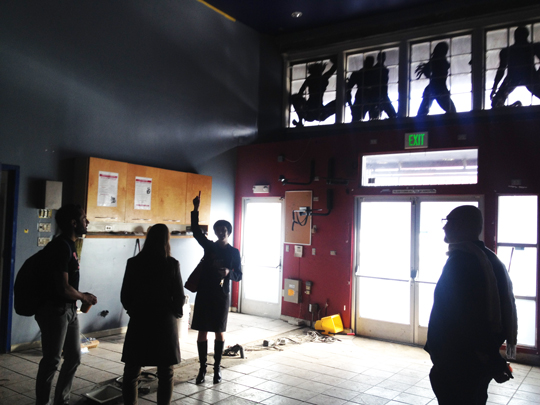
Teams with three museum proposals are vying for a Presidio space just behind Crissy Field (See The Presidio Strikes Back, this week’s cover story): A museum on sustainability, a museum celebrating the history of the Presidio, and a tech and popular art museum holding the personal collection of filmmaker George Lucas, the creator of Star Wars. The trust had this to say about the proposals: 

On The Bridge/Sustainability Institute

“We are concerned, however, about the institutional capacity of the team to … deliver and sustain the project financially. We encourage the … team to bring more clarity to the question of who might fund the building and early programming, and what institution will be created to operate and sustain the Bridge. While the building is ‘light on the land,’ it is also too large and we urge some consolidation of the building program.” 

On the Lucas Cultural Arts Museum

“The Trust is particularly excited about the potential of exceptional educational programming to draw diverse audiences to the museum and the greater Presidio. Despite this, we have significant issues with the proposed building – its massing and height, and its architectural style – and believe it should be redesigned to be more compatible with the Presidio.” 

On the Presidio Exchange (PX)

“The Presidio … is replete with examples of the Conservancy’s good work and of its ethos of partnership in the public interest. The Conservancy’s approach to programming … intended to be varied, flexible, and relevant over time to park audiences – is fascinating. Yet, these attributes also make it harder to understand what the PX is truly striving for programmatically. What is the master narrative? Is there an overall theme or focus that can be better articulated?”

Lucas museum spokesperson David Perry did not offer a detailed response when contacted by the Guardian, saying only that his team would comply with the Trust’s Jan. 3 deadline to submit additional information.

Film Listings: November 20 – 26, 2013

0

Film listings are edited by Cheryl Eddy. Reviewers are Kimberly Chun, Dennis Harvey, Lynn Rapoport, Sam Stander, and Sara Maria Vizcarrondo. For rep house showtimes, see Rep Clock.

OPENING

Broken Circle Breakdown This Belgian movie by director Felix Van Groeningen arrives bearing major awards (from the Berlin and Tribeca festivals) and promising to nab plenty more of them. Why, you ask? I haven’t the faintest idea. Didier (Johan Heldenbergh) is leader of a bluegrass group; Elise (Veerle Baetens) is a tattoo artist until she meets him, they get together, and it’s discovered that when she opens her mouth Alison Krauss falls out. They have a child, Maybelle (Nell Cattrysse), who develops cancer at age six or so, and whose prospects are grim. So far, so ordinary — Once (2007) meets Lorenzo’s Oil (1992), a tearjerker in which people sing high lonesome American roots music (in English, too) well enough, but not so well that you ever stop wondering “Why are these Belgians doing this?” The expected tragedy hits halfway through, and that’s when the movie really gets into trouble. Its protagonists fall apart, understandably, but in irksome ways — mostly picking on each other — with particularly annoying sequences occurring in both past and present tense. It’s hard to tell which one is worse, the arch flashback wedding scene, her deciding to rename herself “Alabama,” his endless onstage outburst about Yahweh, the climactic psychedelic flashback crisis montage, or the wholly gratuitous final … well, never mind. This was originally a stage play, and in the usual way that seeing musicians act and actors play instruments live is exciting, it probably worked well in that medium. But on film it seems like a contrived pileup of ill-matched ideas and plot devices. Don’t take my word for it, though: From Seattle to Osaka, apparently there’s been nary a dry eye in the house. So knock yourself out. (1:50) Opera Plaza, Shattuck. (Harvey)

Delivery Man Twenty years ago David Wozniak (Vince Vaughn) “put love in a cup” 600-plus times to finance a family trip to Italy. His mother was sick, his father couldn’t afford it, and with time running out, David embarked on a harebrained scheme to make (a lot of) “it” happen. The sperm bank that paid him $23K for his “seed” overused it, and 18 years later he has 533 kids, 143 of which are on a hunt to find their biological father, “Starbuck.” (This also the name of the 2011 Canadian comedy on which The Delivery Man is based.) With a premise this quirky you’ll have a hard time finding something to hate, even if this is technically a film about runaway jizz. This heartwarming Thanksgiving release isn’t really appropriate for youngsters (unless you’re been trying to find a entrée to explain sperm banks) but the way Delivery Man deals with the seemingly limitless generosity contained in each of us is both touching and inspiring. Maybe David’s contribution to “Starbuck’s Kids” doesn’t obligate him to reveal his identity, but he’s desperately attached, and goes embarrassingly far outside his comfort zone to interact. The kids’ emotional stake in this is murky, but the way their search for identity finds a voice in tune with the current tech-confident yet socially-confused younger generation could make Delivery Man relevant to more generations than X or Y. (1:45) Four Star, Presidio. (Vizcarrondo)

The Hunger Games: Catching Fire Jennifer “Your BFF Who Happens to Have An Oscar” Lawrence returns as fierce fighter Katniss in this blockbuster-to-be. (2:26) Balboa, California, Marina, Presidio, Shattuck.

Nebraska See “Born to Lose.” (1:55) Embarcadero.

Persistence of Vision The Holy Grail of cartoon features is The Thief and the Cobbler, which can never really be “found” — after nearly 30 years of work the unfinished film was taken from its creators’ hands and released in crudely patched together form. (You can find online Garrett Gilchrist’s Recobbled Cut, a fan edit utilizing storyboards and other materials that give a much better idea of its potential than these bastardized versions.) Would it have been the greatest full-length animation ever, as mastermind Richard Williams intended? Maybe: The sequences he did manage to finish are extraordinary, with dazzling background designs and amazing sight gags. But this Arabian Nights-inspired comedy adventure was perhaps always doomed by his ambition, perfectionism, and inability to find a grounding narrative spine. The film was ultimately torpedoed by financing woes (a completion bond company seized it when Williams failed to deliver a finished film by deadline), but all the money in the world might simply have allowed its writer-director to never stop tinkering with it. A Canadian who moved to London in the mid 1950s, he started his own animation studio there, achieving considerable success via shorts, TV specials, umpteen commercials, movie credits sequences (notably for the Pink Panther films), and as the Oscar-winning animation director on 1988’s Who Framed Roger Rabbit. All the while (as of 1964) he was working on Thief, driving his talented staff to exhaustion, but also exhilarating them with its tortuously frame by-frame-produced quality. It all dragged on so long that several collaborators and voice actors (including Vincent Price) died en route; so many animators passed through that when Disney’s Aladdin came out in 1992, the current team was horrified yet not entirely surprised to see that it had clearly ripped off several design concepts from their own still-unfinished film. Kevin Schreck’s documentary about this fascinating saga is missing (archival interviews aside) one voice — Williams’ own, since understandably the outcome was so embittering he now refuses to discuss it. Schreck will be present (via Skype) to answer questions after this first Northern California screening at Rafael Film Center. (1:23) Smith Rafael. (Harvey)

ONGOING

About Time Richard Curtis, the man behind 2003’s Love Actually, must be enjoying his days in England, rolling in large piles of money. Coinciding with the 10-year anniversary of that twee cinematic love fest comes Curtis’ latest ode to joy, About Time. The film begins in Cornwall at an idyllic stone beach house, as Tim (Domhnall Gleeson) describes his family members (Bill Nighy is dad; Richard Cordery is the crazy uncle) and their pleasures (rituals (tea on the beach, ping pong). Despite beachside bliss, Tim is lovelorn and ready to begin a career as a barrister (which feels as out of the blue as the coming first act break). Oh! And as it happens, the men in Tim’s family can travel back in time. There are no clear rules, though births and deaths are like no-trespass signs on the imaginary timeline. When he meets Mary (Rachel McAdams), he falls in love, but if he paves over his own evening by bouncing back and spending that night elsewhere, he loses the path he’s worn into the map and has to fix it. Again and again. Despite potential repetition, About Time moves smoothly, sweetly, slowly along, giving its audience time enough to feel for the characters, and then feel for the characters again, and then keep crying just because the ball’s already in motion. It’s the most nest-like catharsis any British film ever built. (2:03) Four Star, 1000 Van Ness, SF Center, Shattuck, Sundance Kabuki. (Vizcarrondo)

All Is Lost As other reviewers have pointed out, All Is Lost‘s nearly dialogue-free script (OK, there is one really, really well-placed “Fuuuuuck!”) is about as far from J.C. Chandor’s Oscar-nominated script for 2011’s Margin Call as possible. Props to the filmmaker, then, for crafting as much pulse-pounding magic out of austerity as he did with that multi-character gabfest. Here, Robert Redford plays “Our Man,” a solo sailor whose race to survive begins along with the film, as his boat collides with a hunk of Indian Ocean detritus. Before long, he’s completely adrift, yet determined to outwit the forces of nature that seem intent on bringing him down. The 77-year-old Redford turns in a surprisingly physical performance that’s sure to be remembered as a late-career highlight. (1:46) Albany, Opera Plaza, SF Center. (Eddy)

American Promise This remarkable look at race, education, parenting, and coming-of-age in contemporary America is the result of 13 years spent following African American youths Seun and Idris (the latter the son of filmmakers Joe Brewster and Michèle Stephenson). At the beginning, the Brooklyn pals are both starting at the exclusive Dalton School, where most of their classmates are rich white kids. This translates into culture-clash experiences both comical (a 13-year-old Idris estimates he’s been to 20 bar mitzvahs) and distressing, as both boys struggle socially and academically for reasons that seem to have a lot to do with their minority status at the school. Culled from hundreds of hours of footage — a mix of interviews and cinéma vérité — Brewster and Stephenson’s film captures honest moments both mundane and monumental, sometimes simultaneously, as when Seun’s mother, driving the kids to school, discusses her battle with cancer as his younger siblings trill a Journey song in the back seat. (And even this seemingly light-hearted aside takes on heft later in the film.) Extra props to Brewster and Stephenson, who clearly made a conscious choice not to edit out any of their own foibles — for the most part, they’re caring, involved parents, but be warned: strident homework nagging is a recurrent theme. (2:20) Roxie. (Eddy)

The Armstrong Lie “This is a story about power, not doping,” a talking head points out in Alex Gibney’s latest doc, The Armstrong Lie. Gibney, an Oscar winner for 2007’s Taxi to the Dark Side, set out to make something more along the lines of The Armstrong Return, shadowing Lance Armstrong as he prepped for his 2009 Tour de France comeback. He envisioned crafting a “feel-good movie,” especially when Armstrong notched an impressive third-place finish — a feat intended to silence those performance-enhancing drug rumors once and for all. In the end, it only amplified the skepticism that loomed over his accomplishments. And as the evidence against Armstrong mounted, Gibney scrapped his original concept and went in a decidedly darker direction. Armstrong’s critics, interviewed for Lie, admit they spotted the acclaimed documentarian among Armstrong’s Tour de France entourage and feared he was “buying into the bullshit.” Among these voices are Armstrong’s former US Postal Service teammate, Frankie Andreu, and his wife, Betsy, who’d been excoriated by their former good friend and his supporters for speaking out against him. A feel-good movie, this is not. And ultimately, Gibney’s film probes deeper than Armstrong’s flaws; it’s careful to point out that drug use is widespread among professional cyclists, who are surrounded by an insular, high-stakes culture that encourages it. The sports world lives and dies by the next world record or superhuman achievement. Is it any wonder that elite athletes seek out that extra competitive edge? And that Armstrong, in fully-inflated ego mode, would believe he had the power to rearrange reality to keep his victories intact? (2:03) Opera Plaza, Smith Rafael. (Eddy)

The Best Man Holiday (2:00) Metreon, 1000 Van Ness.

The Book Thief One of those novels that seems to have been categorized as “young adult” more for reasons of marketing than anything else, Markus Zusak’s international best seller gets an effective screen adaptation from director Brian Percival and scenarist Michael Petroni. Liesl (Sophie Nelisse) is an illiterate orphan — for all practical purposes, that is, given the likely fate of her left-leaning parents in a just-pre-World War II Nazi Germany — deposited by authorities on the doorstep of the middle-aged, childless Hubermanns in 1938. Rosa (Emily Watson) is a ceaseless nag and worrywart, even if her bark is worse than her bite; kindly housepainter Hans (Geoffrey Rush), who’s lost work by refusing to join “the Party,” makes a game of teacher Liesl how to read. Her subsequent fascination with books attracts the notice of the local Burgermeister’s wife (Barbara Auer), who under the nose of her stern husband lets the girl peruse tomes from her manse’s extensive library. But that secret is trivial compared to the Hubermanns’ hiding of Max Vandenburg (Ben Schnetzer), son of Jewish comrade who’d saved Hans’ life in the prior world war. When war breaks out anew, this harboring of a fugitive becomes even more dangerous, something Liesl can’t share even with her best friend Rudy (Nico Liersch). While some of the book’s subplots and secondary characters are sacrificed for the sake of expediency, the filmmakers have crafted a potent, intelligent drama whose judicious understatement extends to the subtlest (and first non-Spielberg) score John Williams has written in years. Rush, Watson, and newcomer Schnetzer are particularly good in the well-chosen cast. (2:11) Metreon, Shattuck, Sundance Kabuki. (Harvey)

Blue is the Warmest Color The stars (Adèle Exarchopoulos and Léa Seydoux) say the director was brutal. The director says he wishes the film had never been released (but he might make a sequel). The graphic novelist is uncomfortable with the explicit 10-minute sex scene. And most of the state of Idaho will have to wait to see the film on Netflix. The noise of recrimination, the lesser murmur of backpedaling, and a difficult-to-argue NC-17 rating could make it harder, as French director Abdellatif Kechiche has predicted, to find a calm, neutral zone in which to watch Blue is the Warmest Color, his Palme d’Or–winning adaptation (with co-writer Ghalya Lacroix) of Julie Maroh’s 2010 graphic novel Le Blue Est une Couleur Chaude. But once you’ve committed to the three-hour runtime, it’s not too difficult to tune out all the extra noise and focus on a film that trains its mesmerized gaze on a young woman’s transforming experience of first love. (2:59) Clay, Shattuck, Smith Rafael, Sundance Kabuki. (Rapoport)

Blue Jasmine The good news about Blue Jasmine isn’t that it’s set in San Francisco, but that it’s Woody Allen’s best movie in years. Although some familiar characteristics are duly present, it’s not quite like anything he’s done before, and carries its essentially dramatic weight more effectively than he’s managed in at least a couple decades. Not long ago Jasmine (a fearless Cate Blanchett) was the quintessential Manhattan hostess, but that glittering bubble has burst — exactly how revealed in flashbacks that spring surprises up to the script’s end. She crawls to the West Coast to “start over” in the sole place available where she won’t be mortified by the pity of erstwhile society friends. That would be the SF apartment of Ginger (Sally Hawkins), a fellow adoptive sister who was always looked down on by comparison to pretty, clever Jasmine. Theirs is an uneasy alliance — but Ginger’s too big-hearted to say no. It’s somewhat disappointing that Blue Jasmine doesn’t really do much with San Francisco. Really, the film could take place anywhere — although setting it in a non-picture-postcard SF does bolster the film’s unsettled, unpredictable air. Without being an outright villain, Jasmine is one of the least likable characters to carry a major US film since Noah Baumbach’s underrated Margot at the Wedding (2007); the general plot shell, moreover, is strongly redolent of A Streetcar Named Desire. But whatever inspiration Allen took from prior works, Blue Jasmine is still distinctively his own invention. It’s frequently funny in throwaway performance bits, yet disturbing, even devastating in cumulative impact. (1:38) Opera Plaza, Shattuck, Vogue. (Harvey)

Captain Phillips In 2009, Captain Richard Phillips was taken hostage by Somali pirates who’d hijacked the Kenya-bound Maersk Alabama. His subsequent rescue by Navy SEALs came after a standoff that ended in the death of three pirates; a fourth, Abduwali Abdukhadir Muse, surrendered and is serving a hefty term in federal prison. A year later, Phillips penned a book about his ordeal, and Hollywood pounced. Tom Hanks is perfectly cast as Phillips, an everyman who runs a tight ship but displays an admirable ability to improvise under pressure — and, once rescued, finally allows that pressure to diffuse in a scene of memorably raw catharsis. Newcomer Barkhad Abdi, cast from an open call among Minneapolis’ large Somali community, plays Muse; his character development goes deep enough to emphasize that piracy is one of few grim career options for Somali youths. But the real star here is probably director Paul Greengrass, who adds this suspenseful high-seas tale to his slate of intelligent, doc-inspired thrillers (2006’s United 93, 2007’s The Bourne Ultimatum). Suffice to say fans of the reigning king of fast-paced, handheld-camera action will not be disappointed. (2:14) 1000 Van Ness, Piedmont, SF Center, Sundance Kabuki. (Eddy)

Carrie Is the world ready for a candy-covered Carrie? It’s a sad state of affairs when the best thing about a movie, particularly a wholly superfluous remake like this, is its creepy poster. That’s the closest thing this Carrie has to offer next to that retina-scorching, iconic 1976 image of blood-saturated Sissy Spacek that continues to lend inspiration to baby Billiths everywhere. Nonetheless, like a shy violet cowering in the gym showers, this Carrie comes loaded with potential, with Boys Don’t Cry (1999) director Kimberly Peirce at the helm, the casting of Julianne Moore and Chloe Grace Moretz in the critical mother-daughter roles, and the unfortunately topical bullying theme. Peirce makes a half-hearted attempt to update the, um, franchise when the tormented Carrie (a miscast Moretz) is virally videoed by spoiled rival Chris (Portia Doubleday), but the filmmaker’s heart — and guts — aren’t in this pointless exercise. We speed through the buildup — which unconvincingly sets up Carrie’s torments at home, instigated by obviously mentally ill, Christian fundamentalist mom Margaret (Moore), and at school, where the PE teacher (Judy Greer) pep-talks Carrie and Sue Snell (Gabriella White) is mysteriously hellbent on paying penance for her bullying misdeeds — to the far-from-scary denouement. Let’s say mean-spirited reflexive revenge-taking is no real substitute for true horror and shock. Supposedly drawn to Carrie for its female-empowerment message, Peirce nevertheless isn’t cut out to wade into horror’s crimson waters — especially when one compares this weak rendition with Brian De Palma’s double-screen brio and high-camp Freudian passion play. (1:32) Metreon. (Chun)

Cloudy With a Chance of Meatballs 2 (1:35) Metreon.

The Counselor The reviews are in, and it’s clear Ridley Scott has made the most polarizing film of the season. Most of The Counselor‘s detractors blame Cormac McCarthy’s screenplay, the acclaimed author’s first that isn’t drawn from a prexisting novel. To date, the best film made from a McCarthy tale is 2007’s No Country for Old Men, and The Counselor trawls in similar border-noir genre trappings in its tale of a sleek, greedy lawyer (Michael Fassbender) who gets in way over his head after a drug deal (entered into with slippery compadres played by Brad Pitt and Javier Bardem) goes wrong. Yes, there are some problems here, with very few unexpected twists in a downbeat story that’s laden with overlong monologues, most of them delivered by random characters that appear, talk, and are never seen again. But some of those speeches are doozies — and haters are overlooking The Counselor‘s sleazy pleasures (many of which are supplied by Cameron Diaz’s fierce, feline femme fatale) and attention to grimy detail. One suspects cult appreciation awaits. (1:57) Metreon, Roxie. (Eddy)

Dallas Buyers Club Dallas Buyers Club is the first all-US feature from Jean-Marc Vallée. He first made a splash in 2005 with C.R.A.Z.Y., which seemed an archetype of the flashy, coming-of-age themed debut feature. Vallée has evolved beyond flashiness, or maybe since C.R.A.Z.Y. he just hasn’t had a subject that seemed to call for it. Which is not to say Dallas is entirely sober — its characters partake from the gamut of altering substances, over-the-counter and otherwise. But this is a movie about AIDS, so the purely recreational good times must eventually crash to an end. Which they do pretty quickly. We first meet Ron Woodroof (Matthew McConaughey) in 1986, a Texas good ol’ boy endlessly chasing skirts and partying nonstop. Not feeling quite right, he visits a doctor, who informs him that he is HIV-positive. His response is “I ain’t no faggot, motherfucker” — and increased partying that he barely survives. Afterward, he pulls himself together enough to research his options, and bribes a hospital attendant into raiding its trial supply of AZT for him. But Ron also discovers the hard way what many first-generation AIDS patients did — that AZT is itself toxic. He ends up in a Mexican clinic run by a disgraced American physician (Griffin Dunne) who recommends a regime consisting mostly of vitamins and herbal treatments. Ron realizes a commercial opportunity, and finds a business partner in willowy cross-dresser Rayon (Jared Leto). When the authorities keep cracking down on their trade, savvy Ron takes a cue from gay activists in Manhattan and creates a law evading “buyers club” in which members pay monthly dues rather than paying directly for pharmaceutical goods. It’s a tale that the scenarists (Craig Borten and Melisa Wallack) and director steep in deep Texan atmospherics, and while it takes itself seriously when and where it ought, Dallas Buyers Club is a movie whose frequent, entertaining jauntiness is based in that most American value: get-rich-quick entrepreneurship. (1:58) California, Embarcadero, Piedmont, Sundance Kabuki. (Harvey)

Ender’s Game Those entering Ender’s Game in search of homophobic threads or politically unsavory themes will likely be frustrated. After all, Orson Scott Card — once a board member of the National Organization for Marriage, and here serving as a producer intent on preserving the 1985 novel that netted him acclaim — has revisited what was initially a short story multiple times over the years, tweaking it to reflect a new political climate, to ready it for new expedient uses. Who knows — the times are a-changin’ fast enough, with the outcry of LGBT activists and the growing acceptance of gay military members, to hope that a gay character might enter the mix someday. Of course, sexuality of all sorts is kept firmly in check in the Ender‘s world. Earth has been invaded by an insect-like species called the Formics, and the planet unifies to serve up its best and brightest (and, it’s implied, most ruthless) young minds, sharpened on first-person-shooters and tactical games, to the cause of defeating the alien “other.” Andrew “Ender” Wiggin (Asa Butterfield) is the knowing hybrid of his sociopath brother Peter (Jimmy Pinchak) and compassionate sister Valentine (Abigail Breslin) — of the trinity, he’s “the One,” as Han Solo, I mean, Harrison Ford, cadet talent-spotter and trainer Colonel Graff, puts it. Ender impresses the leather off the hardened old war horse, though the Colonel’s psychologically more equipped cohort Major Anderson (Viola Davis) suspects there’s more going on within their chosen leader. Director-screenwriter Gavin Hood demonstrates his allegiance to Card’s vision, valorizing the discipline and teamwork instilled by military school with the grim purpose and dead serious pleasure one might take in studying a well-oiled machine, while Ender is sharpened and employed as a stunningly effective tool in a war he never truly conceived of. This game has a bit more in common with the recent Wii-meets-Rock ‘Em Sock ‘Em Godzillas of Pacific Rim than the winking, acidic satire of Starship Troopers (1997), echoing a drone-driven War on Terror that has a way of detaching even the most evolved fighter from the consequences of his or her actions. The question is how to undo, or rewrite, the damage done. (1:54) 1000 Van Ness, SF Center. (Chun)

Free Birds (1:31) Metreon, 1000 Van Ness.

Gravity “Life in space is impossible,” begins Gravity, the latest from Alfonso Cuarón (2006’s Children of Men). Egghead Dr. Ryan Stone (Sandra Bullock) is well aware of her precarious situation after a mangled satellite slams into her ship, then proceeds to demolition-derby everything (including the International Space Station) in its path. It’s not long before she’s utterly, terrifyingly alone, and forced to unearth near-superhuman reserves of physical and mental strength to survive. Bullock’s performance would be enough to recommend Gravity, but there’s more to praise, like the film’s tense pacing, spare-yet-layered script (Cuarón co-wrote with his son, Jonás), and spectacular 3D photography — not to mention George Clooney’s warm supporting turn as a career astronaut who loves country music almost as much as he loves telling stories about his misadventures. (1:31) Metreon, 1000 Van Ness, Sundance Kabuki. (Eddy)

Jackass Presents: Bad Grandpa (1:32) Four Star, Metreon, 1000 Van Ness.

Kill Your Darlings Relieved to escape his Jersey home, dominated by the miseries of an oft-institutionalized mother (Jennifer Jason Leigh) and long-suffering father (David Cross), Allen Ginsberg (Daniel Radcliffe) enters Columbia University in 1944 as a freshman already interested in the new and avant-garde. He’s thus immediately enchanted by bad-boy fellow student Lucien Carr (Dane DeHaan), a veteran of numerous prestigious schools and well on the road to getting kicked out of this one. Charismatic and reckless, Carr has a circle of fellow eccentrics buzzing around him, including dyspeptic William S. Burroughs (Ben Foster) and merchant marine wild child Jack Kerouac (Jack Huston). Variably included in or ostracized from this training ground for future Beat luminaries is the older David Kammerer (Michael C. Hall), a disgraced former academic who’d known Carr since the latter was 14, and followed him around with pathetic, enamored devotion. It’s this last figure’s apparent murder by Carr that provides the bookending crux of John Krokidas’ impressive first feature, a tragedy whose motivations and means remain disputed. Partly blessed by being about a (comparatively) lesser-known chapter in an overexposed, much-mythologized history, Kill Your Darlings is easily one of the best dramatizations yet of Beat lore, with excellent performances all around. (Yes, Harry Potter actually does pass quite well as a somewhat cuter junior Ginsberg.) It’s sad if somewhat inevitable that the most intriguing figure here — Hall’s hapless, lovelorn stalker-slash-victim — is the one that remains least knowable to both the film and to the ages. (1:40) SF Center. (Harvey)

Last Vegas This buddy film may look like a Bucket List-Hangover hybrid, but it’s got a lot more Spring Breakers in it than you expect — who beats Vegas for most bikinis per capita? Four old friends reunite for a wedding in Vegas, where they drink, gamble, and are confused for legendary men. Morgan Freeman sneaks out of his son’s house to go. Kevin Kline’s wife gave him a hall pass to regain his lost sense of fun. Kline and Freeman trick Robert De Niro into going — he’s got a grudge against Michael Douglas, so why celebrate that jerk’s nuptials to a 30-year-old? The conflicts are mostly safe and insubstantial, but the in-joke here is that all of these acting legends are confused for legends by their accidentally obtained VIP host (Romany Malco). These guys have earned their stature, so what gives? When De Niro flings fists you shudder inside remembering Jake LaMotta. Kline’s velvety comic delivery is just as swaggery as it was during his 80s era collaborations with Lawrence Kasdan. Douglas is “not as charming as he thinks he is,” yet again, and voice-of-God Freeman faces a conflict specific to paternal protective urges. Yes, Last Vegas jokes about the ravages of age and prescribes tenacity for all that ails us, but I want a cast this great celebrated at least as obviously as The Expendables films. Confuse these guys for better? Show me who. (1:44) Metreon, 1000 Van Ness, Presidio. (Vizcarrondo)

Running From Crazy Can one ever escape one’s toxic genetic legacy, especially when one’s makeup, and even one’s genius, is so entangled with mental illness, the shadow of substance abuse, and a kind of burden of history? Actor, author, healthy-living proponent, and now suicide prevention activist Mariel Hemingway seems cut out to try, as, eh, earnestly as she can, to offer up hope. Part of that involves opening the door to documentarian Barbara Kopple, in this look at the 20th century’s most infamous literary suicide, Mariel’s grandfather Ernest Hemingway, and just one of his familial threads, one full of lives cut deliberately short. For Running From Crazy, Kopple generally keeps the focus on Mariel, who displays all the disarming groundedness and humility of the youngest care-taking, “good” child. Her father, Ernest’s eldest son, Jack, regularly indulged in “wine time” with his ailing wife and, according to Mariel, had a pitch-black side of his own. But we don’t look to closely at him as the filmmaker favors the present, preferring to watch Mariel mountain climb and bicker with her stuntman boyfriend, meet up with her eldest sister Muffet, and ‘fess up about the depression that runs through the Hemingway line to her own daughters. Little is made of Mariel’s own artistic contributions in acting, though Kopple’s work is aided immeasurably by the footage Mariel’s rival middle sister Margaux shot for a documentary she planned to do on Ernest. Once the highest paid model in the world, Margaux leaves the viewer with a vivid impression of her brash, raw, eccentric, and endearingly goofy spirit — she’s courageous in her own way as she sips vino with her parents and older sister and tears up during a Spanish bull fight. Are these just first world problems for scions who never hesitated to trade on their name? Kopple is more interested in the humans behind the gloss of fame, spectacle and sensation — the women left in the wake of a literary patriarch’s monumental brand of masculinity and misogyny. And you feel like you get that here, plainly and honestly, in a way that even Papa might appreciate. (1:40) Smith Rafael. (Chun)

Thor: The Dark World Since any tentacle of Marvel’s Avengers universe now comes equipped with its own money-printing factory, it’s likely we’ll keep seeing sequels and spin-offs for approximately the next 100 years. With its by-the-numbers plot and “Yeah, seen that before” 3D effects, Thor: The Dark World is forced to rely heavily on the charisma of its leads — Chris Hemsworth as the titular hammer-swinger; Tom Hiddleston as his brooding brother Loki — to hold audience interest. Fortunately, these two (along with Anthony Hopkins, Natalie Portman, Idris Elba, and the rest of the supporting cast, most of whom return from the first film) appear to be having a blast under the direction of Alan Taylor, a TV veteran whose credits include multiple Game of Thrones eps. Not that any Avengers flick carries much heft, but especially here, jokey asides far outweigh any moments of actual drama (the plot, about an alien race led by Christopher Eccleston in “dark elf” drag intent on capturing an ancient weapon with the power to destroy all the realms, etc. etc., matters very little). Fanboys and -girls, this one’s for you … and only you. (2:00) Balboa, Metreon, 1000 Van Ness, Sundance Kabuki. (Eddy)

12 Years a Slave Pop culture’s engagement with slavery has always been uneasy. Landmark 1977 miniseries Roots set ratings records, but the prestigious production capped off a decade that had seen some more questionable endeavors, including 1975 exploitation flick Mandingo — often cited by Quentin Tarantino as one of his favorite films; it was a clear influence on his 2012 revenge fantasy Django Unchained, which approached its subject matter in a manner that paid homage to the Westerns it riffed on: with guns blazing. By contrast, Steve McQueen’s 12 Years a Slave is nuanced and steeped in realism. Though it does contain scenes of violence (deliberately captured in long takes by regular McQueen collaborator Sean Bobbitt, whose cinematography is one of the film’s many stylistic achievements), the film emphasizes the horrors of “the peculiar institution” by repeatedly showing how accepted and ingrained it was. Slave is based on the true story of Solomon Northup, an African American man who was sold into slavery in 1841 and survived to pen a wrenching account of his experiences. He’s portrayed here by the powerful Chiwetel Ejiofor. Other standout performances come courtesy of McQueen favorite Michael Fassbender (as Epps, a plantation owner who exacerbates what’s clearly an unwell mind with copious amounts of booze) and newcomer Lupita Nyong’o, as a slave who attracts Epps’ cruel attentions. (2:14) California, Embarcadero, 1000 Van Ness, Piedmont, Presidio, Sundance Kabuki. (Eddy) *


Gray days

3

arts@sfbg.com

TOFU AND WHISKEY New DIY record labels? Minimalist two-person ukulele bands? These are not the signs of fast-paced, modern, glossy hi-tech lifestyles. While San Francisco is at a crossroads, on the verge of an identity crisis splintered throughout many a start-up, at least a few of SF’s musicians (and likely plenty more) have made an artist’s leap farther north to even grayer Portland, Ore.

Magic Fight’s Alex Haager is one of those expatriates. He started a new indie label — Breakup Records — and moved to Portland with his partner, Sierra Frost, another musician, from the bands clintongore and Downer Party. “It’s a great place for music and a great place to live if you make less than 200k a year. And we like the rain.”

They started the label last month with an indeterminate interest in dreamy, brainy pop acts. There are already plans to release records by Frozen Folk, Magic Fight, Jesus Dude Mom, and a few more in the next six months or so. Right now, the roster of acts soon to be rolled out is all from the Bay Area.

“We each have tight relationships with some great independent bands whom we have worked with in different capacities over the years,” says Haager, from his newish home in Portland. “Our goal is to help grow the bands that inspire us — especially musicians with approaches and aesthetics that we find interesting within the realms of what can be considered pop.”

“Frankly, we’re both underwhelmed by garage rock. We plan to release records that offer an alternative to the overly nostalgic, blasted out stuff that has become so prevalent in California in the last 10 to 15 years. We want to showcase what the West Coast sounds like to us.”

One of the label’s first releases will be the debut EP of Kitten Grenade, a deceptively named duo made up of old-timey vocalist-ukulele player Katelyn Sullivan and drummer Ben Manning. Breakup previewed it with a single release a few weeks back, for a song titled “Gray.”

The minimalist pop track is arresting — occupying a space between bright and dark, it’s both melancholy and lightly fluttering over heavier vibes, with much of those emotions pinned to Sullivan’s jazz-inflected vocals. “That was very intentional,” says San Francisco’s Sullivan, who lives in the Mission. “‘Gray’ started out being about my inability to make decisions, and is another play on opposites; it felt like a great song to pick as our first single.”

The video for the track, shot in black and white, similarly plays with light and dark shadows. It features crisp repetitive images cropped in closely around Sullivan’s face and bare shoulders, and dancing orchids and roses twirling around her. Like Georgia O’Keeffe’s storied paintings, the close-ups of the flowers can resemble female sexual organs, in particular the still from the video that was chosen for the cover of the single.

“In a way, the orchid in the image — with its vaginal undertones — could represent purity, which then fades into the muddled gray of the real world in the background. Using it as the cover wasn’t so much planned as it was a happy accident. It’s an image that happened to be in our video that really resonated with me,” Sullivan says.

The full four-track debut EP, Nice Day, on Breakup is coming in January 2014. Sullivan — who calls Philz Coffee, the Phone Booth, El Rio, and Hog and Rocks her favorite local spots — says the album title references her experience with drummer Manning when they were recording during the “beautiful San Francisco summer we had this year.”

So why go with a label full of SF ex-pats? Turns out Sullivan played music with Frost before, in her previous ukulele band, Hate Factory. “[I] have always admired her smarts and knowledge when it comes to music,” says Sullivan of Frost. “Both Alex and Sierra are working musicians, but they’re also excellent at playing a supportive creative role. In terms of building my band, they’ve really helped me realize what’s in my head when on stage, in the studio, and representing myself out in the world, which can be hard and weird. It’s wonderful to be a part of something during its beginning stages.”

Sullivan, whose long-running influences are Fiona Apple and Joli Holland, got her own start doing musical theater on the East Coast. She came to California to study visual arts and later began writing music. She met Frost around then and they formed Hate Factory, another charming act with a defiant name: “Although most people who hear the name Kitten Grenade imagine shredding guitars and screaming metal ballads, it really does fit the theme of our little indie folk band. The name has actually been with me for a long time, and was the name of my thesis project in art school. Kitten Grenade in itself is all about juxtapositions and opposites. I really like names that trick you.” she explains. “I mean, when you hear the name Hate Factory, you don’t think of two cute girls playing ukuleles.”

While Sullivan and Manning await the release of their EP on Breakup, they’ll play a few local shows including opening the BFF.FM launch party for the new local radio station Best Frequencies Forever, with the Happy Hollows next week (Nov. 27, 9pm, $10. Bottom of the Hill, 1233 17th St., SF. www.bottomofthehill.com.)

“If you haven’t seen Kitten Grenade yet, you definitely should,” says Haager. “She’s basically an angel.”

As for Haager’s concert schedule, he’ll flee the life of Portland comfort momentarily for the Bay Bridged’s annual Bay Brewed festival Dec. 7 at Public Works. Also, he too is looking forward to a new release through Breakup: a split cassette EP with Oakland-based Frozen Folk. And of course, he’s excited about Kitten Grenade’s debut.

“It’s simple and elegant and will encourage you to fall in love.”


WORLD MUSIC MAYHEM

Longstanding global music-mashers Dengue Fever (of LA) and New York City’s Balkan Beat Box (originally from Tel Aviv) both arrive in SF on extended tours this week. Led by Cambodian singer-songwriter Chhom Nimol and guitarist Zac Holtzman, Dengue Fever will release its Girl from the North EP Dec. 3 — its first release in more than two years, on its own label, Tuk Tuk Records. It plays the Independent this Thu/21 with locals Seventeen Evergreen (8pm, $18. 628 Divisadero, SF. www.theindependentsf.com). BBB is releasing new videos, including one for “Suki Muki,” a single off 2012’s Give (Nat Geo Records), and a remix of “Suki Muki” by Ori Kaplan’s alter ego DJ Shotnez. It plays with Canadian Bhangra-Celtic fusion act (really) Delhi 2 Dublin at the Regency Fri/22 (8:30pm, $27. Regency Ballroom, 1300 Van Ness, SF. www.theregencyballroom.com).


Liquid spine

0

marke@sfbg.com

Here’s an insane and insanely wonderful San Francisco nightlife life — perhaps the kind of life we’re in danger of seeing no more. Run away from home in the 1950s and join the circus as a male hoochie-coochie dancer in the sideshow. Make your fame in the Midwest as glamorous and naughty drag performer back when men could be jailed for wearing a dress (priests excepted). Move to San Francisco and become a glorious institution, enshrined every weekend at Aunt Charlie’s in the TL, where you perform right up until you pass away at 76 in 2011 — “The Girl with the Liquid Spine,” looking and living fabulous as ever without losing your feisty, gritty edge. Then the accolades, the grand service, the big-screen documentary Forever’s Gonna Start Tonight.

And now, the museum exhibition. Vicki Marlane: I’m Your Lady (opening reception Fri/15, 7-9pm, $5 GLBT History Museum, 4127 18th St., SF. www.glbthistory.org) displays “video, artifacts and photographs from the performer’s estate that tell a remarkable life story.” But maybe it does more than just celebrate the kind of unique personality San Francisco used to make room for. Maybe Vicki’s life can inspire us to take heart that this city, too, has a liquid spine, and can bend itself around (and over) any obstacle that threatens to block us with blandness and smother us in meh. Forever really is gonna start tonight!

Fancy an Oddjob? There are an estimated 15,000 people moving in along Market Street in the next five years. Where will they all eat and drink? That’s the first thing that pops right into my mind. And then: Woah, I need to open a bar or a pop-up exotic flan truck or something and cash in. And then, also: Does this asymmetrical haircut make my butt look flat?

Well, someone has done something at least about the bar part — and I’ll soon be parking my well-rounded (thank you) cheeks at Oddjob (1337 Mission, SF. www.oddjobsf.com), a cute new joint in the old Shine spot from two of my longtime secret boyfriends Jeff Whitmore (Public Works) and Peter Glikshtern of practically every club in town, plus Jordan Langer of my former secret favorite bar, Big, now sadly closed.

Oddjob looks amazing — it has the deconstructed, construction site-like ambiance of Public Works in the front (including a conveyor belt bar top, drafting chair bar stools, and a neato Rube Goldberg-like “Corpse Reviver” automated cocktail maker) and the playfully swanky-swaggy atmosphere of Big at the back (along with Big’s incredible cocktail sensibility). Oddly, the press materials say Oddjob is located in, ugh, “Mid-Market Gulch,” which surely equals “SoMissPo” in catastrophic neighborhood nomenclature. A good stiff drink might erase that.


BUTANE

The ever-traveling Alphahouse label head, coming at us via St. Louis, blew me away with a roiling, bass-heavy techno set the old Kontrol party in 2008. But come for the whole evening, which also features phenomenal up-and-comers Stephanie from Brooklyn and Marija Dunn and Amber Reyn from the Bay.

Thu/14, 9pm-3am, $15. Public Works, 161 Erie, SF. www.publicsf.com


ALEXI DELANO

As luck would have it, one of Butane’s partners in tech-crime, Swedish-Chilean Alexi Delano (they release the booming EP “What You See Is What There Is” on Nov. 18) is in town at the very same time. Oooh, techno fight! Alexi experiments with dubby, acid effects but still keeping things pounding.

Thu/14, 9:30pm, $10. Monarch, 101 Sixth St., SF. www.monarchsf.com


KMFDM

Before the excruciatingly boring hyper-machismo (and hyper-whiny) phase of industrial music kicked in, there was the dark, delicious dance floor stomp of bands like Nitzer Ebb, early Ministry, and this aggressive batch of Germans, KMFDM, who are back and louder than ever.

Thu/14, 7:30 doors, 8pm show. $30. The Independent, 628 Divisadero, SF. www.theindependentsf.com


ODYSSEY

The old underground space that housed this incredible house and disco party is now a super-fancy restaurant. But you can’t stop the music. Seriously, one of the cutest affairs going in the city, with a lovely, freaky crowd. Happy birthday DJ Robin Simmons!

http://www.youtube.com/watch?v=sGapPeba4is

Fri/15, 9pm-3:30pm, $10. Public Works, 161 Erie, SF. www.publicsf.com


MASTERS AT WORK

Oh, honey. If you don’t know, you just don’t know. True masters Kenny Dope and Lil Louie Vega, who brought out one of the most diverse crowds I’d ever seen when they were at 1015 last time, are back to school us on classic house jams, soulful grooves, Latin rhythms, and vinyl wizardry — on the outstanding Mighty sound system. I can’t get no sleep.

http://www.youtube.com/watch?v=jYxZaLhNpTQ

Fri/15, 9pm-3am, $30. Mighty, 119 Utah, SF. www.mighty119.com


BOOGIE NITE

Old-school Chicago-style house mixing and some good ol’ dancefloor fun from Windy City denizen Boogie Nite will light up the funky new Play It Cool party. With Parisian Guillame Galuz, Matthew Favorites, Derek Opperman, and Avalon Emerson.

Sat/16, 9pm, $5. Balancoire, 2565 Mission, SF. www.howtoplayitcool.com


ORIGINAL PLUMBING

Hot-hot quarterly mag for transmen and admirers throws a party to celebrate the release of its latest issue — the Party Issue, duh. Hosted by Amos Mac and Rocco Katastrophe, with DJs Rapid Fire and Jenna Riot. Transmazing!

Sat/16, 10pm, $7. The Stud, 399 Ninth St., SF. www.originalplumbing.com


Schooled

10

joe@sfbg.com

Federal politicians are blasting the commission that would close City College of San Francisco, calling the entire accreditation process a debacle.

At a forum US Rep. Jackie Speier (D-SF) and Rep. Anna Eshoo (D-Palo Alto) convened at City College on Nov. 7, Speier trumpeted what local advocates have said all along: The evaluation of CCSF was bungled, lacked transparency, and violated federal education regulations, all pointing to a desperate need for reform of its accreditors.

Accreditation has been the means to check the quality of education in colleges, but now a growing chorus of critics says the process can be used to carry out an ideological agenda and usurp local control (“Whose college?” Aug. 13).

Yet upending the accreditation process could also have unintended consequences, perhaps letting corporate and conservative interests seize the chance to implement their long-simmering agendas.

Either way, it is beginning to look like the fight to save City College could end up being about more than just City College.


ACCJC UNDER FIRE

The Accrediting Commission of Community and Junior Colleges keeps a watchful eye on the community colleges of California, Guam, and Hawaii. After a six-year review, the ACCJC this summer rocked City College by terminating its accreditation, pending appeals before the sentence is carried out in July 2014.

At the forum, Speier said the debacle with the ACCJC signaled a need to reform accreditation on a national level, citing a lack of public accountability.

“I think the ACCJC has run amok, they have lost their vision — if they ever had one,” Speier said in an interview after the forum. “They are riddled with conflicts of interest and arbitrariness.”

Teachers, faculty, and education advocates packed City College’s Diego Rivera Theater, all cheering at every jibe toward the ACCJC. Pressure on the group is mounting. A third lawsuit against the body was announced the day of the forum, this one filed by the activist group Save CCSF.

But Speier sees the problems as stemming from the US Department of Education, which she said needs the tools to correct problems at the ACCJC, something she plans to meet with Education Secretary Arne Duncan to discuss.

“The Department of Education only has one hammer, and that is to deny the ACCJC certification,” she said.

The group is slated to undergo this evaluation in December, which could spell its end. But if the fight for City College sparks a change in accreditation nationally, what would take its place?

There are wolves at the door of the US education system, for-profit colleges with a history of taking vulnerable students to the bank with nothing to show for it. And they want accreditation reform too.


THE DEVIL YOU KNOW

The ideological argument between the ACCJC and City College is taking place nationally.

President Obama called for a change to college accreditation in his last State of the Union speech, calling for higher graduation and transfer rates for community colleges (see “Who killed City College?” July 9).

One of the biggest cheerleaders of the president’s reform is the American Enterprise Institute, a conservative think tank. At a conference it held on accreditation last month, AEI and its partners lampooned accreditation as it stands now.

“This is a system that is flawed, unable to deal with the rapidly changing higher education landscape,” Anne D. Neal, a partner of the American Council of Trustees and Alumni, a national education reform group, said at the conference. “If meat inspections were as loose as college accreditation… most of us would have mad cow disease.”

On the surface, the critique seems reasonable. More people should transfer, and more people should graduate. But how colleges get those numbers is the challenge. The ACCJC asking City College to jettison students not aiming for a higher degree was just the start, one higher education watchdog told us.

“There are people on both sides saying that accreditation is broken. The White House is pushing this, as are Republicans. You almost never hear that,” Paul Fain, a reporter for Inside Higher Ed, told the Guardian.

But the reform may lead to the transformation of accreditation, allowing tech companies and long distance online learning universities to bypass the process entirely.

Accreditation is seen as “holding back innovators who are trying to transform the Internet,” Fain said.

These “innovators” are largely for-profit colleges that want to offer single courses or shortened courses online, like the Minerva Project or Straighterline, both online universities lobbying Congress to loosen accreditation requirements.

But for-profit colleges have been attacked nationally for their abysmal job placement rates, and their graduation rates aren’t much better. A widely circulated 2010 report by the think tank Education Trust found that for-profits in the U.S. had a graduation rate of 22 percent.

And with many of those for-profits fighting for accreditation reform by Congress, it’s unclear how a push to reform accreditation from Speier would aid or stall them.


FEAR FACTOR

ACCJC President Barbara Beno said that City College is having problems facing reality. Beno would only speak with the Guardian by email through a representative. She defended the accountability of the ACCJC, saying that her doors were always open.

“Colleges don’t need a forum like that held on Nov. 7; they can write to the commission at any time, or ask to address the decision-making commissioners at one of their two meetings each year, or can call up the commission chair or president,” Beno wrote.

“Instead of joining forces to help improve City College, many purported supporters of the college are bent on disrupting the ACCJC operations. It is simple to blame the messenger of bad news,” she wrote. “People unhappy with the commissioners’ decisions are targeting [me] for doing [my] job.”

But Rafael Mandelman, a newly elected member of CCSF Board of Trustees, told those assembled at the forum that ACCJC was unprofessional and unduly punitive: “I went from ACCJC agnostic, to skeptic, to foe”

Dr. Sarah Perkins, vice president of instruction of Skyline College, told the forum that ACCJC is hard to work with.

“I came here to California after spending 25 years in the middle part of the country under the Higher Learning Commission,” she said, contrasting that accrediting agency with the bullying done by ACCJC. “That I even feel like I’m putting my college at risk by speaking at this forum speaks volumes.”

Indeed, the ACCJC even makes criticism of the agency or its methods grounds for a revocation of accreditation, making “collegiality” part of its “policy on institutional integrity and ethics.” CCSF Special Trustee Bob Agrella in September cited that as one reason not to criticize the agency.

Sen. Jim Beall and Assemblymember Tom Ammiano were also in attendance at the forum, and promised to continue the fight at the state level to preserve City College. The Joint Legislative Audit Committee is evaluating ACCJC at the request of those legislators and Sen. Jim Nielsen (R-Gerber).

“We will kick a lot of butt, with class, of course,” Ammiano said.

And would City College close down? “It’s not going to happen,” Speier said to the cheering crowd.

Theater Listings: November 6 – 12, 2013

0

Stage listings are compiled by Guardian staff. Performance times may change; call venues to confirm. Reviewers are Robert Avila, Rita Felciano, and Nicole Gluckstern. Submit items for the listings at listings@sfbg.com.

THEATER

OPENING

Emmett Till: A River NOH Space in Project Artaud, 2840 Mariposa, SF; www. theatreofyugen.org. $20-30. Opens Thu/7, 8pm. Runs Thu-Sat, 8pm; Sun, 2pm. Through Nov 17. Theatre of Yugen presents a world premiere by Kevin Simmonds and Judy Halebsky; it uses classical Japanese Noh drama to tell the story of civil rights-era murder victim Emmett Till.

The Gershwins’ Porgy and Bess Golden Gate Theatre, One Taylor, SF; www.shnsf.com. $60-210. Opens Sun/10, 2pm. Runs Tue-Sat, 8pm (no show Nov 28; check website for matinee schedule); Sun, 2pm. Through Dec 8. The Tony-winning Broadway revival launches its national tour in San Francisco.

My Beautiful Launderette New Conservatory Theatre Center, 25 Van Ness, SF; www.nctcsf.org. $25-45. Opens

Fri/8, 8pm. Runs Wed-Sat, 8pm; Sun, 2pm. Through Dec 22. New Conservatory Theatre Center performs Andy Gram and Roger Parsley’s adaptation of Hanif Kureishi’s award-winning screenplay.

The Rita Hayworth of this Generation Garage, 715 Bryant, SF; www.715bryant.org. $10-15. Opens Wed/6, 8pm. Runs Wed-Thu, 8pm. Through Nov 21. Tina D’Elia performs her multi-character solo play.

BAY AREA

A Bright New Boise Aurora Theatre, 2081 Addison, Berk; www.auroratheatre.org. $32-50. Previews Fri/8-Sat/9 and Nov 13, 8pm; Sun/10, 2pm; Tue/12, 7pm. Opens Nov 14, 8pm. Runs Tue, 7pm; Wed-Sat, 8pm; Sun, 2 and 7pm. Through Dec 8. Aurora Theatre presents Samuel D. Hunter’s tale of an ex-Evangelical cult member attempting to bond with his estranged son before the end of the world.

ONGOING

The Barbary Coast Revue Stud Bar, 399 Ninth St, SF; eventbrite.com/org/4730361353. $10-40. Wed, 9pm (no show Nov 27). Through Dec 18. Blake Wiers’ new “live history musical experience” features Mark Twain as a tour guide through San Francisco’s wild past.

Bengal Tiger at the Bagdad Zoo SF Playhouse, 450 Post, SF; www.sfplayhouse.org. $30-100. Tue-Thu, 7pm; Fri-Sat, 8pm (also Sat, 3pm). Through Nov 16. In Rajiv Joseph’s Pulitzer-nominated Bengal Tiger at the Bagdad Zoo, the dead quickly outnumber the living, and soon the stage is littered with monologist ghosts lost in transition. In Joseph’s world, at least, death is but another phase of consciousness, a plane of existence where a man-eating tiger might experience a crisis of conscience, and a brash young soldier with a learning disability might suddenly find himself contemplating algebraic equations and speaking Arabic — knowledge that had eluded his comprehension in life. Will Marchetti’s portrayal of the titular tiger is on the static side, though his wry intelligence and philosophical awakening comes as a welcome contrast to the willfully obtuse world view of the American soldiers (Gabriel Marin and Craig Marker) guarding him. But it’s Musa (Kuros Charney), a translator for the Americans and a former gardener and topiary “artist,” who eventually emerges as the play’s most fully realized character and also the most tragic, becoming that which he dreads the most, a beast in a lawless land, egged on by the ghost of his former employer, the notoriously sadistic Uday Hussein (Pomme Koch). At times, director Bill English’s staging feels too understated and contained for a play that’s so muscular and expansive (an understatement not carried over into Steven Klems’ appropriately jarring sound design) focused less on its metaphysical implications than on its mundane surface, but however imperfect the production and daunting the script, it remains a fascinating response to an unwinnable war — the war against our own animal natures. (Gluckstern)

BoomerAging: From LSD to OMG Marsh San Francisco, 1062 Valencia, SF; www.themarsh.org. $15-50. Tue, 8pm. Extended through Dec 17. Will Durst’s hit solo show looks at baby boomers grappling with life in the 21st century.

Dirty Little Showtunes New Conservatory Theatre Center, 25 Van Ness, SF; www.nctcsf.org. $25-45. Wed/6-Sat/9, 8pm; Sun/10, 2pm. Lyricist-performer Tom Orr and director F. Allen Sawyer’s sassy but loving remix of iconic Broadway songs returns in another iteration, this one at the New Conservatory Theatre Center, complete with a willing and able cast of five (Rotimi Agbabiaka, David Bicha, Jesse Cortez, Randy Noak, Orr), piano accompaniment by musical director Scrumbly Koldewyn, and some rudimentary if evocative choreography by Jayne Zaban. Truly silly, sometimes inspired, the show mixes favorite parodies from past productions with some new ones. Orr’s wit shines throughout, even if it does not necessarily outshine every borrowed theme. Gilbert and Sullivan, for example, are hardly upstaged as much as celebrated with Bicha belting out, “I Am the Very Model of a Modern Homosexual.” More sentimental numbers about T cell counts or gay marriage, while an understandable part of the landscape of gay life explored here, can feel a little strained in the context of the generally ribald. But the high-spirited nature of this whimsical show makes pardonable even the less-dirty parts. (Avila)

Driving Miss Daisy Buriel Clay Theater at the African American Art and Culture Complex, 762 Fulton, SF; www.african-americanshakes.org. $12.50-37.50. Fri-Sat, 8pm; Sun, 3pm. Through Nov 17. African-American Shakespeare Company performs Alfred Uhry’s Pulitzer-winning drama.

Foodies! The Musical Shelton Theater, 533 Sutter, SF; www.foodiesthemusical.com. $32-34. Fri-Sat, 8pm. Open-ended. AWAT Productions presents Morris Bobrow’s musical comedy revue all about food.

Gruesome Playground Injuries Tides Theatre, 533 Sutter, SF; www.tidestheatre.org. $20-40. Wed/6-Sat/9, 8pm. Tides Theatre performs Rajiv Joseph’s drama about two people who first meet as eight-year-olds in the school nurse’s office.

Hedwig and the Angry Inch Boxcar Theatre, 505 Natoma, SF; www.boxcartheatre.org. $27-43. Thu-Sat, 8pm. Open-ended. John Cameron Mitchell’s cult musical comes to life with director Nick A. Olivero’s ever-rotating cast.

I Married an Angel Eureka Theatre, 215 Jackson, SF; www.42ndstmoon.org. $25-75. Wed-Thu, 7pm; Fri, 8pm; Sat, 6pm (also Sat/9, 1pm), Sun, 3pm. Through Nov 17. 42nd Street Moon performs the Rodgers and Hart classic.

The Jewelry Box: A Genuine Christmas Story The Marsh San Francisco, 1062 Valencia, SF; www.themarsh.org. $15-40. Fri, 8pm; Sat, 5pm. Through Dec 28. Brian Copeland performs the world premiere of his new, holiday-themed work, an Oakland-set autobiographical tale that’s a prequel to his popular Not a Genuine Black Man.

The Life Machine DanzHaus, 1275 Connecticut, SF; www.faultlinetheater.com. $15-20. Fri/8-Sat/9, 8pm; Sun/10, 2pm. A naïve and restive young woman (Gwen Kingston), working as admin for a high-powered and ethically questionable business firm, marries her pig-headed and lecherous boss (Nick Medina) in a desperate bid to escape the drudgery of the work-a-day world. Instead, she finds her suffocating marriage and unwanted motherhood its own prison. An extramarital affair with a latter-day beatnik (Jon Oleson) gives her a first taste of life and freedom, for which she pays the ultimate price when things go south. Set in a palpably near future, this socially rich dystopic drama acknowledges several “reflective texts” as influences, including Donna Haraway’s “A Cyborg Manifesto” and (as evidenced in some of Maxx Kurzunshki and Clive Walker’s wide-ranging and remarkable video design) Godfrey Reggio and Philip Glass’s Koyaanisqatsi. But the piece remains in large part an astute revamping and updating of Sophie Treadwell’s Machinal. Director Cole Ferraiuolo’s inspired retooling of that 1928 expressionist stage classic proves a potent contemporary lens on the persistent anomie of the people, and growing enemies of the state, in a self-congratulatory high-tech and hyper-connected world. Sophie Needelman’s mercurial choreography for five dancers, meanwhile, evokes everything from the crush of the daily commute to the cyborg cogs of the post-industrial work world or the drift of the moon across a fathomless sky. At the heart of this worthwhile production from impressive newcomers FaultLine are a handful of strong and intelligent performances. These are led by Kingston’s dynamic, rigorously unsentimental performance as a tragically alienated every-woman, who must suffer any number of mundane indignities before her apotheosis as a deeply violent and repressed society’s convenient cipher. (Avila)

Lovebirds Marsh San Francisco, 1062 Valencia, SF; www.themarsh.org. $15-100. Thu/7-Fri/8, 8pm; Sat/9, 8:30pm. Workshop performances of Marga Gomez’s 10th solo show, about different characters seeking romance in the 1970s.

Peter and the Starcatcher Curran Theatre, 445 Geary, SF; www.shnsf.com. $40-160. Tue-Sat, 8pm (also Wed and Sat, 2pm; no show Nov 28); Sun, 2pm. Through Dec 1. Fanciful, Tony-winning prequel to Peter Pan.

Shakespeare Night at the Blackfriars (London Idol 1610) Phoenix Arts Association Annex Theatre, 414 Mason, SF; www.subshakes.com. $20-25. Fri-Sat, 8pm; Sun, 7pm. Through Nov 17. Subterranean Shakespeare performs George Crowe’s comedy about a playwriting contest between Ben Jonson, Thomas Middleton, Francis Beaumont, and the ghost of Christopher Marlowe.

“Shocktoberfest 14: Jack the Ripper” Hypnodrome, 575 10th St, SF; www.thrillpeddlers.com. $25-35. Thu-Sat, 8pm. Through Nov 23. It’s lucky 14 for the Thrillpeddlers’ annual Halloween-tide Shocktoberfest, and while there are few surprises in this year’s lineup, there’s plenty of reliable material to chew on. Opening with A Visit to Mrs. Birch and the Young Ladies of the Academy, a ribald Victorian-era “spanking drama,” the fare soon turns towards darker appetites with a joint Andre De Lorde-Pierre Chaine work, Jack the Ripper. Works by De Lorde — sometimes referred to as the “Prince of Fear” — have graced the Hypnodrome stage over the years, and this tense Victorian drama, though penned in the 30s, is suitably atmospheric. Although it becomes pretty evident early on who dunnit, it’s the why that lies at the heart of this grim drama, and in the course of that discovery, the play’s beleaguered lawmen reveal themselves to be no less ruthless than the titular Ripper (John Flaw) in pursuit of their quarry. Norman Macleod as Inspector Smithson particularly embodies this unwholesome dichotomy, and Bruna Palmeiro excels as his spirited yet doomed bait. Inspired by Oscar Wilde’s Salome, the Thrillpeddlers’ piece by the same name is perhaps the weak link in the program, despite being penned by the ever-clever Scrumbly Koldewyn, and danced with wanton abandon by Noah Haydon. Longtime Thrillpeddlers’ collaborator Rob Keefe ties together the evening’s disparate threads under one sprawling big top media circus of murder, sex, ghosts, and sensationalism with his somewhat tongue-in-cheek, San Francisco-centric The Wrong Ripper. (Gluckstern)

Sidewinders Exit on Taylor, 277 Taylor, SF; www.cuttingball.com. $10-50. Thu, 7:30pm; Fri-Sat, 8pm (also Sat, 2pm); Sun, 5pm. Through Nov 17. Cutting Ball opens its 15th season with the world premiere of Basil Kreimendahl’s absurdist romp through gender queerness. In a cartoonish, desolate wasteland (designed by Michael Locher), Dakota (Sara Moore), a bleached-blonde gunslinger in buckskin fringes, and Bailey (DavEnd), a possibly AWOL soldier rocking high-heeled boots and a single drop earring, wrestle with the conundrum of what to call their respective genitals. And more to the point, what to do with them after they figure it out. Or as Bailey bluntly puts it, “Who am I supposed to fuck?” But there’s more to being stranded in the uncharted wilderness at stake than “organ confusion,” and soon they must channel their uncommon alliance into finding a way back out. What they find instead include a regal figure of indeterminate gender possessed of extra limbs (Donald Currie), a suicidal servant with surgical skills (Norman Muñoz), and a growing realization that wilderness, like identity, is relative. Moore and DavEnd make a good comedic team, their endless banter, circular logic and exaggerated facial gymnastics giving them the philosophical gravitas of a Looney Tunes episode, while Currie’s turn as mutated muse is unexpectedly moving. Recent winner of the prestigious Rella Lossy award, this intriguing world premiere marks playwright Basil Kreimendahl’s first professional production, though it seems safe to say that it won’t be the last. (Gluckstern)

BAY AREA

Can You Dig It? Back Down East 14th — the 60s and Beyond Marsh Berkeley, 2120 Allston, Berk; www.themarsh.org. $15-50. Sat, 8:30pm; Sun, 7pm. Extended through Dec 15. Don Reed’s new show offers more stories from his colorful upbringing in East Oakland in the 1960s and ’70s. More hilarious and heartfelt depictions of his exceptional parents, independent siblings, and his mostly African American but ethnically mixed working-class community — punctuated with period pop, Motown, and funk classics, to which Reed shimmies and spins with effortless grace. And of course there’s more too of the expert physical comedy and charm that made long-running hits of Reed’s last two solo shows, East 14th and The Kipling Hotel (both launched, like this newest, at the Marsh). Can You Dig It? reaches, for the most part, into the “early” early years, Reed’s grammar-school days, before the events depicted in East 14th or Kipling Hotel came to pass. But in nearly two hours of material, not all of it of equal value or impact, there’s inevitably some overlap and indeed some recycling. Reed, who also directs the show, may start whittling it down as the run continues. But, as is, there are at least 20 unnecessary minutes diluting the overall impact of the piece, which is thin on plot already — much more a series of often very enjoyable vignettes and some painful but largely unexplored observations, wrapped up at the end in a sentimental moral that, while sincere, feels rushed and inadequate. (Avila)

Don’t Dress For Dinner Center REPertory Company, 1601 Civic, Walnut Creek; www.centerrep.org. $33-52. Wed, 7:30pm; Thu-Sat, 8pm (also Nov 23, 2:30pm); Sun, 2:30pm. Through Nov 23. Center REP performs Marc Camoletti’s sequel to his classic farce Boeing-Boeing.

A King’s Legacy Pear Avenue Theatre, 1220 Pear, Mtn View; www.thepear.org. $10-35. Thu-Sat, 8pm; Sun, 2pm. Through Nov 24. Pear Avenue Theatre performs Elyce Melmon’s world premiere, a drama about King James VI of Scotland.

A Little Princess Julia Morgan Theater, 2640 College, Berk; www.berkeleyplayhouse.org. $17-60. Thu-Fri, 7pm (Nov 28, shows at 1 and 6pm); Sat, 1 and 6pm; Sun, noon and 5pm (no 5pm show Dec 1). Through Dec 8. Berkeley Playhouse opens its sixth season with Brian Crawley and Andrew Lippa’s musical adaptation of the Frances Hodgson Burnett story.

Metamorphoses South Berkeley Community Church, 1802 Fairview, Berk; www.infernotheatre.org. $10-25. Thu and Sat-Sun, 8pm; Fri, 9pm (no show Sat/9). Through Nov 23. Additional performance Sat/9, 8pm, $5-20, Laney College, 900 Fallon, Oakl. Inferno Theatre performs a multimedia, contemporary adaptation of Ovid’s classic.

The Pianist of Willesden Lane Berkeley Repertory Theatre, Thrust Theatre, 2015 Addison, Berk; www.berkeleyrep.org. $29-89. Tue and Thu-Sat, 8pm (also Thu/7, Dec 5, and Sat, 2pm; no matinee Sat/9; no show Nov 28); Wed and Sun, 7pm (also Sun, 2pm). Through Dec 8. Mona Golabek stars in this solo performance inspired by her mother, a Jewish pianist whose dreams and life were threatened by the Nazi regime.

Red Virgin, Louise Michel and the Paris Commune of 1871 Berkeley City Club, 2315 Durant, Berk; www.centralworks.org. $15-28. Thu-Sat, 8pm; Sun, 5pm. Through Nov 24. Central Works presents a new play (with live music) by Gary Graves about the Paris Commune uprising.

Social Security Muriel Watkin Gallery, 1050 Crespi Drive, Pacifica; (650) 359-8002. $10-25. Fri-Sat, 8pm; Sun, 2pm. Through Nov 24. Pacifica Spindrift Players performs Andrew Bergman’s classic comedy.

strangers, babies Ashby Stage, 1901 Ashby, Berk; www.shotgunplayers.org. $20-35. Wed-Thu, 7pm; Fri-Sat, 8pm; Sun, 5pm. Through Nov 17. Shotgun Players present Linda McLean’s drama about a woman confronting her past.

Swing Shift Onboard the SS Red Oak Victory, 1337 Canal, Berth 6A, Richmond; www.galateanplayers.com. $18-20. Fri/8-Sat/9, 8pm; Sun/10, 3pm. Galatean Players Ensemble Theatre perform Kathryn G. McCarty’s adaptation of Joseph Fabry’s novel, performed aboard a ship in the yards where Fabry once worked.

PERFORMANCE/DANCE

BATS Improv Bayfront Theater, B350 Fort Mason Center, SF; www.improv.org. $20. This week: “DuoProv Championship,” Fri, 8pm, through Nov 29; “Family Drama,” Sat, 8pm, through Nov 30.

“Best of the 2013 San Francisco Fringe Festival” Exit Studio, 156 Eddy, SF; www.theexit.org. Fri/8-Sat/9, 8pm. $15-25. This week: 53 Letters (“Best of” series continues through Nov. 23)

Jim Brickman Venetian Room, Fairmont San Francisco, 950 Mason, SF; www.bayareacabaret.org. Sun/10, 5pm (with David Burnham) and 8pm (solo). $48. Romantic piano sensation Brickman plays, joined at the earlier show by Broadway tenor David Burnham.

“Broadway Bingo” Feinstein’s at the Nikko, Hotel Nikko, 222 Mason, SF; www.feinsteinssf.com. Wed, 7-9pm. Ongoing. Free. Countess Katya Smirnoff-Skyy and Joe Wicht host this Broadway-flavored night of games and performance.

“Cabinet of Wonders” Jewish Community Center of SF, Kanbar Hall, 3200 California, SF; www.jccsf.org. Mon/11, 8pm. $30-40. Musician-author Wesley Stace curates and hosts this variety show, featuring Eugene Mirman, Alec Ounsworth, Dean & Britta, Bobcat Goldthwaite, and others.

“Comedy Returns to El Rio!” El Rio, 3158 Mission, SF; www.brownpapertickets.com. Mon/11, 8pm. $7-20. With Micia Mosely, David Hawkins, Sampson McCormick, Emily Epstein White, and Lisa Geduldig.

“Competitive Erotic Fan Fiction” Punchline, 444 Battery, SF; www.punchlinecomedyclub.com. Tue/12, 8pm. $15. Ten comics (Nato Green, Caitlin Gill, Sean Keane, and others) perform erotic fan fic.

CounterPULSE 1310 Mission, SF; www.counterpulse.org. This week: Instrument by Monique Jenkinson (aka Fauxnique), Fri/8, 8pm and Sat/9, 7pm, $20-30; “Beware the Band of Lions (They’re Dandy Lions),” with Bandelion, Sun/10 and Nov 17, 3pm, free (reservations required as space is extremely limited; to request an invitation, email info@dandeliondancetheater.org).

Flyaway Productions Joe Goode Annex, 401 Alabama, SF; www.flyawayproductions.com. Fri/8-Sat/9 and Nov 13-16, 7:30 and 9:30pm. $25. Choreographer Jo Kreiter and designer Sean Riley present the world premiere of Give a Woman a Lift.

“Hysterical Historical San Francisco, Holiday Edition” Shelton Theater, 533 Sutter, SF; www.sheltontheater.org. Sun, 7pm. Through Dec 29. $30-40. Comic Kurt Weitzman performs.

Roslyn Kind Feinstein’s at the Nikko, Hotel Nikko, 222 Mason, SF; www.feinsteinssf.com. Fri/8, 8pm; Sat/9, 7pm. $30-60 ($20 food and beverage minimum per person). The Broadway star performs.

Kunst-Stoff Dance Company ODC Theater, 3153 17th St, SF; www.kunst-stoff.org. Fri/8-Sat/9, 8pm; Sun/10, 7pm. $25-45. The company marks its 15th anniversary with retrospectives, contained in two different programs: recreated old works and new works inspired by repertory.

“Mission Position Live” Cinecave, 1034 Valencia, SF; www.missionpositionlive.com. Thu, 8pm. Ongoing. $10. Stand-up comedy with rotating performers.

“ODC/Dance Unplugged” ODC Dance Commons Studio B, 351 Shotwell, SF; www.odctheater.org. Fri/8, 7pm. $25. Get a unique, behind-the-scenes look at Triangulating Euclid, a new collaboration between Brenda Way, KT Nelson, and Kate Weare.

“Okeanos Intimate” Aquarium of the Bay, Pier 39, SF; www.capacitor.org. Sat, 4:30 and 7pm. $20-30 (free aquarium ticket with show ticket). Extended through Dec 28. Choreographer Jodi Lomask and her company, Capacitor, revive 2012’s Okeanos — a cirque-dance piece exploring the wonder and fragility of our innate connection to the world’s oceans — in a special “intimate” version designed for the mid-size theater at Pier 39’s Aquarium of the Bay. The show, developed in collaboration with scientists and engineers, comes preceded by a short talk by a guest expert — for a recent Saturday performance it was a down-to-earth and truly fascinating local ecological history lesson by the Bay Institute’s Marc Holmes. In addition to its Cirque du Soleil-like blend of quasi-representational modern dance and circus acrobatics — powered by a synth-heavy blend of atmospheric pop music — Okeanos makes use of some stunning underwater photography and an intermittent narrative that includes testimonials from the likes of marine biologist and filmmaker Dr. Tierney Thys. The performers, including contortionists, also interact with some original physical properties hanging from the flies — a swirling vortex and a spherical shell — as they wrap and warp their bodies in a kind of metamorphic homage to the capacity and resiliency of evolution, the varied ingenuity of all life forms. If the movement vocabulary can seem limited at times, and too derivative, the show also feels a little cramped on the Aquarium Theater stage, whose proscenium arrangement does the piece few favors aesthetically. Nevertheless, the family-oriented Okeanos Intimate spurs a conversation with the ocean that is nothing if not urgent. (Avila)

Point Break Live!” DNA Lounge, 373 11th St, SF; www.dnalounge.com. Dec 6 and Jan 3, 7:30 and 11pm. $25-50. Interactive interpretation of Kathryn Bigelow’s 1991 classic. (Some tickets include meatball sandwiches!)

“San Francisco Magic Parlor” Chancellor Hotel Union Square, 433 Powell, SF; www.sfmagicparlor.com. Thu-Sat, 8pm. Ongoing. $40. Magic vignettes with conjurer and storyteller Walt Anthony.

“Solitude” Brava Theater Center, 2781 24th St, SF; www.brava.org. Thu/7-Sat/9, 8pm (also Sat/9, 3pm). $15-35. LA’s Latino Theater Company performs Evelina Fendandez’s critically acclaimed play about Chicaco life and culture.

“Upside-Downton Abbey” Palace of Fine Arts Theatre, 3301 Lyon, SF; www.lamplighters.org. Sun/10, 4pm (silent auction at 3pm). $35-97. Also Nov 24, 4pm, $58-83, Mountain View Center for the Performing Arts, 500 Castro, Mtn View; www.mvcpa.com. Lamplighters Musical Theatre’s annual gala performance spoofs the popular British soap opera.

“WERK! Performance Festival 2013” Dance Mission Theater, 3316 24th St, SF; www.werkcollective.org. Fri/8-Sun/10, 8pm (also Sun/10, 4pm). $20. Choreographers Alyce Finwall, Samantha Giron, Timothy Rubel, and Ashley Trottier share the weekend.

BAY AREA

Diablo Ballet Smith Center, Ohlone College, 43600 Mission, Fremont; www.diabloballet.org. Sat/9, 2 and 8pm. Also Nov 15-16, 8pm (also Nov 16, 2pm), Lesher Center for the Arts, 1601 Civic, Walnut Creek; www.lesherartscenter.org. $20-52. The company’s 20th season kicks off with Our Waltzes Trilogy and A Swingin’ Holiday.

“Dogugaeshi” Zellebach Playhouse, Dana at Bancroft, UC Berkeley, Berk; www.calperformances.org. Wed/6-Fri/8, 8:30pm (also Thu/7-Fri/8, 6pm); Sat/9-Sun/10, 2 and 7pm. $48-76. The latest from innovative puppeteer Basil Twist.

“Rapunzel” Marin Theatre Company, 397 Miller, Mill Valley; www.marintheatre.org. Sat/9-Sun/10, 10am and 12:30pm. $15-20. Marin Theatre Company performs a fairy-tale play for all ages. *


 

Hi, Guy

1

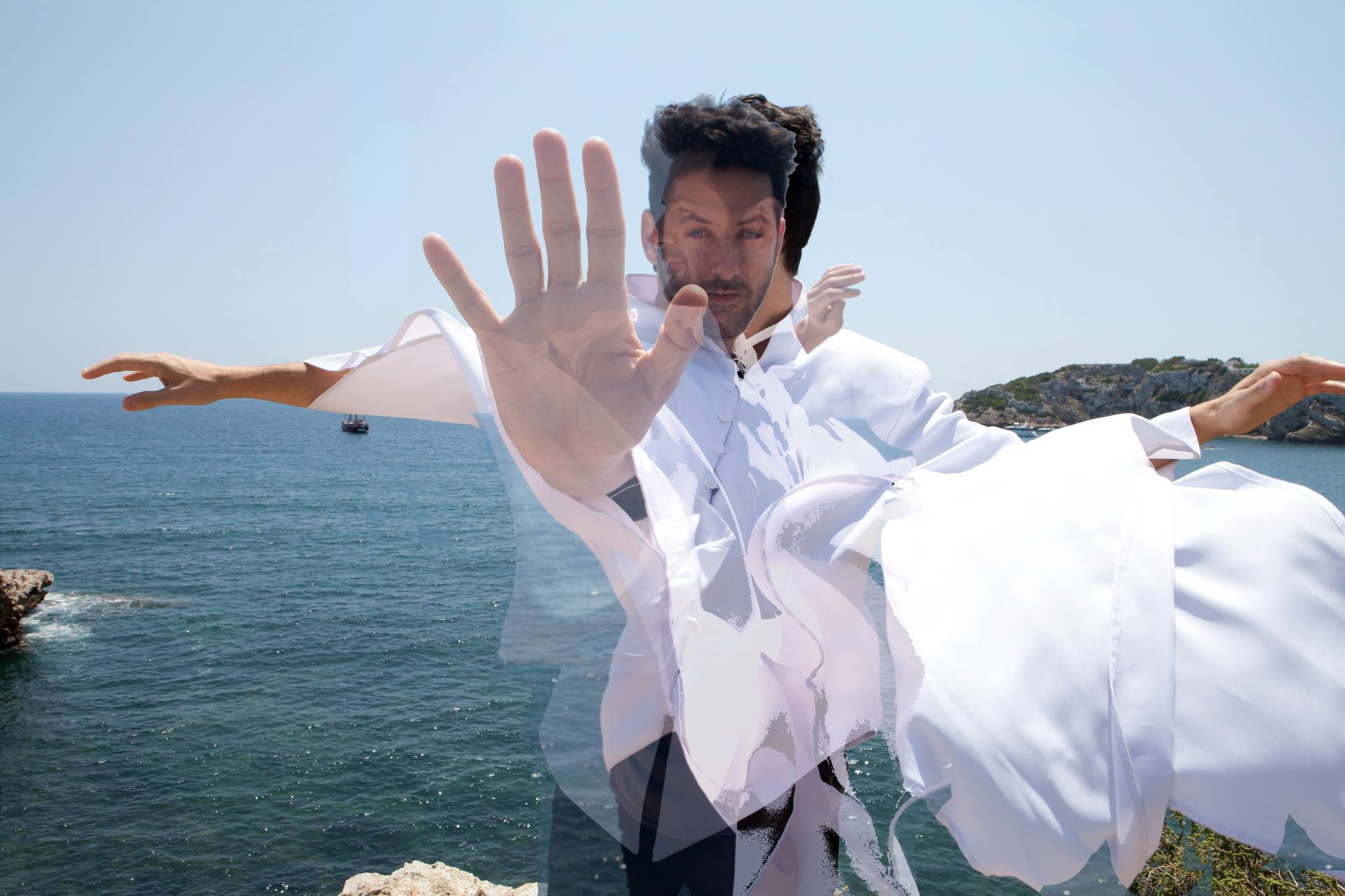
Guy Gerber is blowing his nose. A lot. He’s also trying to talk to me, through a massive hangover, over the phone from NYC. His chopped-up vocal snippets, mashed into long expulsions of compressed air, spiked with a woman’s giggle, rustling sheets, and clanking bottles somewhere in the background of his room, could almost be one of his driving, hypnotic, yet always surprisingly human, techno tracks. Good lord, even this protean dance music creator’s phlegmatic exudations are musical.

Honk. “We played somewhere in Brooklyn for Halloween last night, you know, in these ridiculous outfits. And then there were mischiefs,” he says. Brooklyn is a temporary homebase for the constantly on-the-go Supplement Fact label honcho — he’s opening a warehouse club in Williamsburg called Verboten soon — but the hyperactive Israeli underground star, ever restless in style and spirit, can’t stay in one place for long. He’ll be performing a hybrid live-DJ set this weekend at Public Works (Fri/8, 9:30-3:30, $16 advance, 161 Erie, SF. www.publicsf.com).

Appropriately for someone who came to techno via Joy Division and My Bloody Valentine, Gerber’s sonic imprint is as peripatetic as his ever-touring lifestyle: from moody, psychedelic electronic grooves and introspective Visionquest-style tech-house to the large-screen, crisply atmospheric “emotive” techno slices like “Stoppage Time” and “Timing” that made his name in the late 2000s. This year has been banner: Gerber was one of the major forces in Ibiza pushing back against EDM commercialization with his deep and surreal Wisdom of the Glove parties; his captivatingly intelligent September BBC Radio1 Essential Mix (my favorite mix of the year so far) refines and expands his dreamy post-minimal sound; and new releases with Clarian (“Claire”) and Dixon (“No Distance”) are gorgeous.

And then there’s that fabled collaboration with P. Diddy(!), 11:11, that may finally see the light of day. “I think Puff Daddy’s at the point where he’s finally ready to release something this deep to the world, and I just keep taking us deeper and weirder. But he completely trusts me,” the hyperproductive Gerber, who can toss off enough quality tunes to fill a stream in a blink, says about the long-delayed album. (The 2011 Jamie Jones remix of 11:11 leak “Tourist Trap” is what I wish pop music sounded like.)

On top of that, there’s the burden/privilege of being the only major Israeli DJ on the underground techno circuit. “It gets lonely. Techno’s supposed to be this global thing and I’m all over the world, even back in Tel Aviv a lot, which is great, but it feels like I’m the only one,” he says. “I’m proud to represent Israel, though of course I don’t agree with everything. I feel I want to represent less the country than the region, which shares these values of love and family while always being honest with their emotions. Sometimes too honest,” he laughs.

And what about the future? Has he composed three tracks and planned another tour while we’re talking on the phone? “Marke, right now my only concern is to get past this hangover.” Honk.


SANDRA ELECTRONICS

Karl O’Connor aka Regis and Juan Mendez aka Silent Servant dive into synthy darkness with this stunning live collaborative project, with roots in the 1990s. In Aeternum Vale and Veronica Vasicka round out this Minimal Wave label showcase at the new Surface Tension party.

Fri/8, 10pm, $15. Project One Gallery, 251 Rhode Island, SF. st001.eventbrite.com/


BEARS LOVE HONEY

There is a thing called Bear Pride Week going on right now; in typical fashion this Honey Soundsystem party both lauds and gooses the concept, with striking Berlin techno-soul DJ/singer Virginia and randy Roman DJ Hugo Sanchez of Alien Alien.

Fri/8, 10pm-4am, $15 advance. Beatbox, 314 11th St, SF. bearslovehoney.eventbrite.com


KAFANA BALKAN

Time once again for this insanely fun Balkan-themed stomp and whirl, where you’ll hear more time-signatures in one night (mostly all at once) than you’ll hear all year. DJ Zeljko leads the mad charge, with the Inspector Gadje brass band and Jill Parker’s bellydancers in tow. Arrive early.

Sat/9, 9pm, $15. Balancoire, 2565 Mission, SF. kafanabalkan.eventbrite.com


MAD PROFESSOR

No words to describe my love for the genius Guyanese godfather of dub. The prof’s about to school us, too — his “Roots of Dubstep” tour digs deep, deep into his 30-year DJ and recording career to show what’s what. At the excellent Dub Mission weekly.

Sun/10, 9pm, $15–$20. Elbo Room, 647 Valencia, SF. www.dubmissionsf.com


SF ALBUM PROJECT

Every two months a wonderfully inventive, theatrical troupe of drag queens performs an entire album you’d never think would benefit from drag treatment (OK Computer, Parade) — but it works! Next up: Roxy Music by Roxy Music.

Sun/10, doors at 8pm, $15. The Chapel, 777 Valencia, SF. www.thechapelsf.com


NSA spies on Google and Yahoo users

3

More revelations on spying by the National Security Agency were published in the Washington Post on Oct. 31. Thanks again to whistleblower Edward Snowden, we now know that the NSA is capturing massive amounts of communications data flowing between data centers maintained by Bay Area-based Google and Yahoo.

According to the Post, digital information produced by Google and Yahoo account holders — texts, emails, documents, videos and yes, that does include content — is being copied by the NSA and sent to its Fort Meade headquarters, where some but not all is retained by the agency.

The NSA is intercepting Google and Yahoo user account information as it moves between data centers, but the exact collection points remain a mystery. A smiley face inserted into a hand-drawn sketch from a top-secret file was enough to cause a couple Google engineers to “explode in profanity,” the Post reporters noted.

That drawing demonstrated how encryption, a security measure meant to shield data from third parties, is “added and removed here,” at an intersection between the public Internet and Google’s internal cloud servers.

Seeing as how Google is a ubiquitous presence in our lives and a key player in Silicon Valley’s tech industry, it’ll be interesting to see how native San Franciscan US Sen. Dianne Feinstein responds to the news that the NSA has apparently been intercepting the tech giant’s data without its knowledge. Feinstein is uniquely positioned to weigh in on this activity in her capacity as chair of the Senate Intelligence Committee.

Since Snowden’s first leak, Feinstein has kept up the drumbeat that NSA’s spying program is good for national security. On Oct. 2, at a Judiciary Committee hearing on oversight of the Foreign Intelligence Surveillance Act, she delivered the following statement:

“Our great strength today, ladies and gentlemen, in protecting this homeland, is to be able to have the kind of technology that’s able to piece together data while protecting rights. I listened to this program being described as a surveillance program. It is not. There is no content collected by the NSA. There are bits of data—location, telephone numbers—that can be queried when there is reasonable, articulable suspicion. … I will do everything I can to prevent this program from being cancelled out. To destroy it is to make this nation more vulnerable.”

But more recently, following revelations of spying on foreign leaders, Feinstein changed her tune. In an Oct. 28 statement, she said the Senate Intelligence Community was “not satisfactorily informed.”

Suddenly, rather than being notified and informed, the committee members were seemingly kept in the dark while the NSA ran wild. She said, “It is abundantly clear that a total review of all intelligence programs is necessary so that members of the Senate Intelligence Committee are fully informed as to what is actually being carried out by the intelligence community.”

Go vote! And then go party!

23

It’s been quiet at the polls for today’s election with just a few more hours until they close. Although the Department of Elections predicted a 35 percent turnout, it’s possible that San Francisco could vie for the historic low turnout of just under 23 percent.

If you’re still heading to the polls and don’t know how to vote, read our endorsements, and then check back here later tonight to see what happened. The only real drama tonight is surrounding Props. B&C, which would authorize the 8 Washington waterfront luxury condo project.

I’ll be reporting from the No on B&C campaign party being held at 443 Broadway (formerly Club 443), Rebecca Bowe will covering the Yes on B&C party at Coqueta on Pier 5, and our resident tech geek Joe Fitzgerald Rodriguez will be at Guardian HQ compiling our tweets (@sfbg) and others here on the Guardian Politics blog and making it look all pretty for y’all.

The pickings are a little slim for our usual list of election night parties, but the others that we know about are Treasurer Jose Cisneros, who will be at Beaux (2344 Market) from 6-9pm, and the Yes on D party at the 03 Bistro & Lounge, which will supposedly be packed with politicos supporting cheaper drugs. Yay cheap drugs! 

Latest NSA spying news features emoticons and Google engineers exploding with profanity

More revelations on spying by the National Security Agency were published in the Washington Post today. Thanks again to whistleblower Edward Snowden (whose actions gave this cartoonist pause with a “Post-Snowden moment”) we now know that the NSA is capturing massive amounts of communications data flowing between data centers maintained by Google and Yahoo.

According to the Post, digital information produced by Google and Yahoo account holders – texts, emails, documents, videos and yes, that does include content – is being copied by the NSA and sent to its Fort Meade headquarters, where some but not all is retained by the agency.

It’s known that the NSA is intercepting Google and Yahoo user account information as moves between data centers, but the exact collection points remain a mystery. While some of that information evidently belongs to Americans, there doesn’t seem to be detailed information about how much of it originates in the U.S. versus foreign nations. The main tool for capturing this data is a project called MUSCULAR, operated in collaboration with British intelligence agency GCHQ. 

A smiley face inserted into a hand-drawn sketch from a top-secret file was enough to cause a couple Google engineers to “explode in profanity,” the Post reporters noted. That drawing demonstrated how encryption, a security measure meant to shield data from third parties, is “added and removed here,” at an intersection between the public Internet and Google’s internal cloud servers.

Seeing as how Google is a ubiquitous presence in our lives and a key player in Silicon Valley’s tech industry, it’ll be interesting to see how native San Franciscan Sen. Dianne Feinstein responds to the news that the NSA has apparently been intercepting the tech giant’s data without its knowledge. Feinstein is uniquely positioned to weigh in on this activity in her capacity as chair of the Senate Intelligence Committee.

Since Snowden’s first leak, Feinstein has kept up the drumbeat that NSA’s spying program is good for national security.

On Oct. 2, at a Judiciary Committee hearing on oversight of the Foreign Intelligence Surveillance Act, she delivered the following statement:

“Our great strength today, ladies and gentlemen, in protecting this homeland, is to be able to have the kind of technology that’s able to piece together data while protecting rights. I listened to this program being described as a surveillance program. It is not. There is no content collected by the NSA. There are bits of data—location, telephone numbers—that can be queried when there is reasonable, articulable suspicion. … I will do everything I can to prevent this program from being cancelled out. To destroy it is to make this nation more vulnerable. I just wanted to say that. I had to say it.” 

Speaking earlier this year, at a Sept. 26 Senate Intelligence Committee hearing on FISA, Feinstein delivered a reminder of what happened on Sept. 11, 2001 and sought to offer reassurance on the data collection program, saying:

“This committee as well as the Judiciary Committee have reviewed the legality of these programs, been briefed on their operation, and been notified of problems with their implementation. Further, this committee has previously informed all senators of additional classified information regarding these programs available for their review prior to Senate consideration of these measures. 

It is my opinion that the surveillance activities conducted under FISA, and other programs operated by the National Security Agency, are lawful, they are effective, and they are conducted under careful oversight.”

But more recently, following revelations of spying on foreign leaders, Feinstein changed her tune. In an Oct. 28 statement, she said the Senate Intelligence Community was “not satisfactorily informed.”

Suddenly, rather than being notified and informed, the committee members were seemingly kept in the dark while the NSA ran wild. “It is abundantly clear that a total review of all intelligence programs is necessary so that members of the Senate Intelligence Committee are fully informed as to what is actually being carried out by the intelligence community,” she said.

Seems the members of the Senate Intelligence Committee could start by reading Washington Post articles detailing the contents of Snowden’s leaks. There’s plenty of information in there.

In the year of worms

4

emilysavage@sfbg.com

TOFU AND WHISKEY That voice. Those eerie, singular vocals that are somehow both alien and intimately familiar. They sound like electric Tesla coils wrapped in whipped silk. San Francisco’s Hannah Lew is most often heard harmonizing by three with her striking post-punk trio Grass Widow. With newer project Cold Beat, it’s her vocals alone above the needling guitars and anxious synths of a different band.

Lew has been writing songs as Cold Beat for some time, in between Grass Widow releases and tours, but this week she releases her first EP under the moniker: Worms/Year 5772, with songs inspired by the trauma of Lew’s father passing away a few years back. While Cold Beat is mainly a Lew production, she enlisted many local rock ‘n’ roll luminaries to both play on the album and back her up at shows.

The record’s sound is rounded out by guitarist Kyle King, drummer Lillian Maring, and Shannon and the Clams’ Cody Blanchard on guitar and synths. The live band features King, the Mallard’s Greer Mcgettrick on guitar, and Erase Errata’s Bianca Sparta on drums. That live version will celebrate the release of the EP with a show at the Night Light in Oakland Tue/5.(Cold Beat also plays Great American Music Hall on Nov. 14.) But before that, Lew spoke with the Bay Guardian about the origins of Worms/Year 5772, her DIY record label and music video projects, and the songs she played at her wedding last week:

SF Bay Guardian What inspired you to write new music as Cold Beat, outside of Grass Widow?

Hannah Lew I always write songs and sometimes they just didn’t totally feel like Grass Widow songs. I just kept collecting them and not really knowing if I should release them. As the tunes started accumulating I decided I should get a band together and figure out a way to share the songs. When Kyle King and I started playing — his energy really enabled the songs to come to fruition.

SFBG Can you tell me a bit about the songwriting process with Worms/Year 5772 and how the themes of “death, Internet surveillance, paranoia and science fiction” translated into the music?

HL “Worms” was written as a response to my grief about my father’s death in 2009. I couldn’t help but imagine worms eating his corpse — which was a very visceral image I couldn’t get out of my head…I think the horror of this was something I couldn’t really share with anyone, and in taking time to write more songs on my own I started realizing that it was good for me to have an outlet for some other concepts that were a bit more personal.

I always turn to science fiction when I am trying to understand or relate my feelings. It gives me a change to explore depths of doom and hope that I can more easily imagine not on this earth. In writing all the lyrics alone for Cold Beat there is a little more of me just in my own head which can be great and sometimes paranoid or depressed. I get really bad insomnia and many Cold Beat songs were demoed at 5 or 6am.

Grass Widow lyrics are always more of a conversation where as Cold Beat lyrics are more like an interior dialogue. It’s kind of like describing a dream to someone.

SFBG Does “Year 5772” refer to the Jewish calendar? Why did you make this connection?

HL My late father was a rabbi and I was raised very religious. I was writing Year 5772 about a dystopian post-apocalyptic dream I had that seemed to take place in some distant future and I started thinking about how the Jewish calendar is already in Year 5772 — actually a couple years later now since the song was written a few years ago — and how our concept of the future is based in what point in time we imagine ourselves in — but the concept of linear time is very relative.

I guess being Jewish is kind of futuristic and ancient simultaneously. I like the idea of collapsing time and writing a song that takes place in a landscape outside of time. I also like thinking about existing in many times simultaneously.

SFBG Did you find the solo songwriting process freeing or more complicated without the group’s input?

HL Some of the Cold Beat songs were written during the time Grass Widow was writing our last record — Internal Logic. Somehow they just seemed more personal and better spoken from one voice instead of related by three people. I think the complicated part for me was deciphering which songs were Cold Beat songs and which ones to give to Grass Widow.

Grass Widow is a great space where the three of us would relate and abstract our feelings and dreams together. But there were some things I was going through that I couldn’t synthesize with anyone else and just had to express on my own. I like having conversations about concepts with bandmates, but I also like working alone.

Luckily I can do both! I think it is important to be able to do things on your own so you know who you are and have something to offer a collaborative project. Just like in love.

SFBG You got married last weekend — what key songs were on your playlist? Are you willing to give up any other details?

HL It’s all kind of a blur. but it was so much fun! Some friends of ours put together a wedding band with Kyle King as the band leader. My husband (whoa!) and I put together a set list for the band to play of all our favorite dancing songs. I think the party really went crazy during the Dick Dale version of “Hava Nagila” and we got lifted up in chairs and everything, but also [the Flamin’ Groovies song] “Shake Some Action” was pretty epic too.

My friend Henson Flye made giant clamshells and Raven Mahon made a moon photo backdrop. We had a choir of friends sing “I’ll Be Your Mirror” while I walked down the aisle. It was really beautiful and a beautiful way for all our friends to express their love and friendship and show us support and for us to throw a fun party for everyone. We’re lucky to have a lot of love. Still buzzing from it!

SFBG As with Grass Widow (HLR), you’re putting Cold Beat out on your own label, Crime On The Moon. Can you tell me about the label, and why you’re sticking with DIY?

HL I really enjoy doing everything myself. HLR has been a great experience and we really took the time to make critical decisions about how we wanted to do business. I figured I could easily do it myself with Crime On The Moon since I had the experience of putting out the last few Grass Widow releases. One drawback is that when you put music out on a label you have an instant fan, publicist, and advocate — so when you’re on your own you have to manufacture your own confidence for what you are doing. But having good bandmates and support from your friends goes a long way!

SFBG You also make music videos — will you make any for Cold Beat? Are you working on any others currently?

HL Mike Stoltz, who made the Grass Widow “11 of Diamonds” video and collaborated with me on “Give Me Shapes,” is in the process of editing a Cold Beat video for “Worms.” So that will be out in the next couple of weeks! I am always updating my site (www.hannahlew.com) with new finished videos I make for other bands.

SFBG Anything else you want people to know about Cold Beat or about other upcoming projects?

HL Well I’m excited for our EP to be released November 5. We’ll have copies at our record release show at the Night Light in Oakland with Screature and Pure Bliss. Then we’ll be touring the West Coast to follow that.

I’m also releasing a seven-inch [that] Raven and I recorded with Jon Shade on drums under the name Bridge Collapse. We recorded with Kelley Stoltz and I’m looking forward to releasing those songs along with a compilation of SF bands writing songs as a response to the tech boom. So a lot of exciting Crime On The Moon projects ahead!

COLD BEAT

Tue/5, 9pm, $6

Night Light

311 Broadway, Oakl.

www.thenightlightoakland.com

What jobs?

16

For all its shiny gadgets and gleaming new luxury condo towers, San Francisco nevertheless houses a huge demographic that lives at or below poverty.

Officially, it affects about 12 percent of the city’s population, according to the most recent US Census data. Experts from the Stanford Center on Poverty and Inequality calculated an adjusted poverty figure to capture a more accurate portrait of economic disadvantage. According to that alternative yardstick, which factors in location-based costs such as the price of housing, a full 23.4 percent of San Franciscans live in poverty.

City agencies have documented ethnic identities, languages, neighborhoods of residence, and other data concerning poor people who seek assistance through city-administered services. But even though millions of dollars have flowed through city coffers to boost prospects for those who lack steady work, there’s scant documentation showing what this has actually achieved.

Despite budgeted expenditures totaling nearly $70 million for workforce development in 2013-14, not a single San Francisco city official can say how many individuals managed to rise above poverty as a result.


FIVE YEARS, NO IMPROVEMENT

At the behest of Board of Supervisors President David Chiu, the city’s Budget & Legislative Analyst recently analyzed the city’s myriad workforce development programs. It found that there is no standard measure to track the results of the programs, which are administered across 14 city departments.

The analysts recommended convening a committee to get a handle on it, “so there would be somebody accountable for compiling that information,” noted Severin Campbell, a principal at city budget analyst Harvey Rose Associates.

The analysis was a follow-up to a similar audit performed in 2007. The previous study concluded that the system to help struggling people obtain job skills and get hired “was fragmented, with inconsistent planning and coordination of resources and inadequate monitoring of programs to ensure that the programs’ goals and outcomes were achieved.”

Analysts who examined the workforce development system in 2007 discovered a lack of evidence that “individuals receiving services were eventually placed into jobs leading to economic self-sufficiency.”

To cure this dysfunction, the Board of Supervisors formulated a plan. In November 2007, it created Administrative Code Section 30, a new policy centralizing oversight of all workforce development initiatives under the Office of Economic and Workforce Development, overseen by the Mayor’s Office.

In 2007, OEWD’s annual budget for its workforce division was $547,841. By 2012-13, that amount had swelled to $19.3 million. The federal government contributes a lot, but citywide, about 65 percent of workforce development spending comes from local funds.

“Since 2007, the city has worked hard to incorporate the recommendations that came from the audit,” OEWD spokesperson Gloria Chan told the Bay Guardian earlier this year. She said the workforce division of OEWD “has made significant strides and progress to improve the city’s workforce system.”

But the latest Budget & Legislative Analyst report tells a different story. “The city continues to lack citywide policy and oversight of its workforce development system,” it notes. “Many of the key provisions of Administrative Code Section 30 have not been implemented.”

Five years have passed, and little seems to have changed. “We didn’t find a broken system,” Campbell said, “but it wasn’t what the city had envisioned.”

The report noted that the shortcomings could be partially attributed to constraints on funding provided by outside entities like the federal government, making collaboration among departments difficult.

Nevertheless, the lack of a cohesive citywide workforce development strategy coincided with one of the worst economic downturns in US history. While certain sectors have experienced recovery by now, many low-income San Franciscans are still grappling with losses sustained during the Great Recession.

A recent survey of panhandlers, commissioned by Union Square business owners, found that the majority were homeless individuals who said they didn’t have jobs, and thus couldn’t afford rent. Some apparently interpreted these findings as a revelation; the survey results were recently spotlighted on the front page of the San Francisco Chronicle.


LOOKING FORWARD TO WHAT?

Tiffany Green is one of the 10,883 clients served by San Francisco’s workforce development system in 2012-13. She’d previously worked at the security desk of a Tenderloin services provider, but left that job because she couldn’t find anyone to look after her young son during her shifts — and the job didn’t pay enough to cover child care costs.

So she enrolled in CalWORKS, a state program administered by the city’s Human Services Agency, which offers subsidized child care, food stamps, and cash aid for low-income parents while they complete six-month job training gigs with employers who have partnerships with the city.

She was less than optimistic when asked if she thought it would lead to a steady job. “The outcome is going to be everybody else’s outcome, which is nothing to look forward to,” she said, adding that for all her friends and family members who’d completed similar six-month job training programs, she didn’t know of any who’d landed full-time jobs as a direct result.

Karl Kramer, director of the San Francisco Living Wage Coalition, said his organization has been working with city agencies to build pathways to help participants in the programs connect with opportunities for full-time employment in civil service positions.

His organization is pushing for legislation to reform one of those initiatives, the Community Jobs Program, “to make it a real job training program that fast tracks participants into available entry-level city jobs. The reports that we get is, for people who have been through the programs, it leads to very few full-time jobs,” Kramer said. So far, his group hasn’t gotten much traction with city officials.

Steve Arcelona, deputy director in charge of Economic Support and Self-Sufficiency at the Human Services Agency, didn’t respond to multiple voicemails seeking comment.


UNEVEN RECOVERY

The report comes at an odd time — in San Francisco’s current economic climate, new jobs are being created all the time, and the unemployment rate has declined. But experts note that recovery has been uneven, and only certain sectors have reason to be optimistic about the future.

“The San Francisco region is doing better than most,” Chris Haney, executive director of the California Budget Project, told us.

The city boasts a rise in “high-scale, high-production, better paying jobs” in the flourishing tech sector, accompanied by a rise in “lower-paying service jobs,” he said. “But we’re not seeing a tremendous amount of growth in the middle class, middle paying categories.”

The dilemma follows a broader trend of wage inequality that’s persisted over the last couple decades, he added, giving rise to what economists have dubbed the “missing middle.” A decline in the unemployment rate can mask this dysfunction, he said, because “you may have folks who are employed, but they’re employed at lower wages than before … What’s coming back isn’t as solid as it was previously.”

It’s against this precarious backdrop that, despite $70 million dedicated to connecting the low-income or disadvantaged with decent jobs over the past year, the city’s workforce development system appears to be plagued by dysfunction. Chiu recently introduced legislation to implement the Budget Analyst’s recommendations of undertaking yet another system overhaul.

But for many still struggling to get by, few short-term solutions are in sight. Ever-increasing housing costs make the “missing middle” phenomenon especially thorny in the Bay Area, Haney noted. “It’s harder and harder for low and middle income folks to live in the region,” he said. “They are being given clear signals that they need to move.”

Guardians of Fospice

0

joe@sfbg.com

DEATH ISSUE Like in any hospital, the doctors at the San Francisco Society for the Prevention of Cruelty to Animals shelter deal with the living and the dying on a daily basis. But in these halls, the dying often have no homes and no families — unless they’re lucky enough to leave through the front door.

The SPCA is a unique safe haven for the furred, a pioneering “no-kill” shelter. The distinction doesn’t mean no death, it means the staff actively avoids euthanization of animals that have a chance of being adopted, including those that are already in the process of dying.

The doctors, technicians, and support personnel have a unique challenge: While most pet owners — or pet guardians, the official replacement term San Francisco adopted in 2002 — deal with the death of a beloved pet once or twice in a lifetime, the people here learn to deal with losing the animals they love every week.

The term they use is “compassion fatigue,” and the specialists here have to learn how to manage emotions surrounding death of animals that number in the hundreds every year.

Dr. Kate Kuzminski, the director of shelter medicine at the SF SPCA, gives us a tour. Our first stop is a small checkup room, where two adopted kittens, Liam and Otto, are pacing on a table.

“Here’s your opportunity to see poopy kittens,” their guardian, Judy, says. Though she’s playful, diarrhea can be dangerous for kittens if left unchecked. Diarrhea leads to dehydration, which leads to death.

Kuzminski looks them over, pulling the unhealthily scrawny young cats by the scruff of the neck. They’re a dark, dusky grey, with poofy fur, and about the length of her hand. After just a minute of looking them over, she prescribes a treatment and moves on. The brevity of her visit seems callous at first, until she tells us that she has more than 300 animals clamoring for her attention.

The most vulnerable of the animals under her care are kittens, Kuzminski explains. “We have a great foster program, but without the foster program they would likely die,” she says. It costs thousands of dollars to care for one kitten for a few days.

kittens

Two kittens in beginning of life care at the SF SPCA snuggle. 

Compartments along one wall hold about three kittens each, many hooked into little IVs that kept them hydrated. The kittens tumble and play with each other as she discusses their likelihood of living. The facility has an extraordinary success rate, she says, but sometimes there’s a limit on what the vets can do.

The kittens mew and meow in the background as she outlines their options.

When an animal is suffering, sometimes the answer is euthanasia. But for those with kidney disease, cancer, or other debilitating conditions, the SPCA’s “Fospice” program is sometimes the answer. Fospice is the combination of two ideas: Foster care, and hospice. It’s end of life care for homeless pets.

Alison Lane is the Fospice coordinator, overseeing 13 or so animals at any one time. “Most of these cats, and sometimes dogs, if they were in any other shelter, they’d be euthanized,” Lane says. “They’re hard to adopt out.”

The foster owners are provided free food and vet care for the animals they nurse into death. Photos of the pets and their owners are on Lane’s door — one cat watches fish float by on an iPad. The pets often last much longer in Fospice than they’re expected to, she says.

“Amore is only three years old but has congenital heart failure. She’s been out for three years now, the doctors were certain she only had three weeks to live,” Lane says. “But we’re not looking to extend their lives necessarily, we just want to make their quality of life better.”

The SFPCA’s hospice found homes for 1,045 cats and kittens and 115 puppies in 2012. But there are only a dozen or so animals in Fospice care. When one dog had to be euthanized just a few weeks ago, the staff held a “last day of life” party for her and the owner.

Laura Mullen, a foster technician, tells us it was healing for her and the staff.

“We had an Amber party, with balloons and flowers and she got hamburgers and all sorts of things. Amber had a good time, a good snack, and had her family around her. It ended on a happy note,” she said.

Mullen needed it more than most because she usually assists Dr. Kuzminski when an animal is euthanized. She says kitten season is often the hardest. Between December and March, they see anywhere between 30-40 kittens a day. Mullen is a 12-year veteran of the SPCA, so when the less experienced techs can’t handle it emotionally, she steps in to assist with euthanasia.

dr kuzminski


Dr. Kate Kuzminski is Director of Shelter Medicine at the SF SPCA. 

First, they separate the animal into a room on its own. It’s very important the other animals don’t see the process, Mullen says. They sedate the animal, and touch its eyelids to make sure they are asleep. Then they administer the euthanizing fluid and watch it take its last breaths and check for a pulse with a stethoscope.

Kuzminski said when they euthanize an animal, they often email the volunteers, techs, and vets who spent the most time with them so they can say goodbye. Before she asks for a tech to help her ease an animal to its final sleep, she asks about how the person is feeling that day.

“I always check in with Lauren, ‘are you okay with doing this today?’ It’s easy to get burnt out,” she said. Kuzminski’s colleagues do the same for her. Though she’s seen a lot of animals through their last days, she says the hardest loss she’s dealt with on the job was a dog named Coco.

When Coco came in, she was already suffering. She couldn’t walk, and couldn’t eat. They amputated her leg. When her esophagus closed, they took turns feeding her intravenously. The small staff grew to love Coco. The team worked with her for six weeks, in shifts. Ultimately, she didn’t make it. When Coco was euthanized, Kuzminski was out of town on business.

“The difficult thing about when Coco died was I wasn’t here for my staff,” she says, her voice fluttering a bit as she speaks. “You really want to win.”

But sometimes, you don’t win. And with the short lifespan, fragility, and sheer number of animals in pet-loving San Francisco, the staff of the SF SPCA sees a lot of death. For Lane, it helps to think of death as a part of life, something she learned here.

“As sad as death is, it’s inevitable. We all try to make the death, the passing of this animal, as easy and as comfortable as we can make it,” she tells us.

When a pet passes, they give a card to the foster owners, but it’s not a condolence card. It’s a thank-you card. “I think I’m much less afraid of (death),” she says. “You get that feeling of, well, we’ve done everything we can, and now we say goodbye. It’s not an awful thing, it’s not terrible. It’s about how you’ve spent your life. “

kittens

kittens

kittens

The Performant: Alley up!

1

Clarion Alley Block Party still standing strong

It’s an age-old paradox of urban living that no matter how much there is to do and see it’s a) impossible to experience it all and b) so easy to take it all for granted. And it’s really not such a stretch to figure out that the more we take for granted the more chance there is that one day those things we love will disappear.

Of course a certain amount of flux is healthy, and part of what makes a city vibrant is that it’s a place where new ideas and new energies take root and flourish far more readily than in more insular, more homogenous spaces. And for every street corner band that’s moved indoors, every homey café long gone, every poetry brawl, punk rock peepshow, robot sex symposium, marching band parade, and nomadic dance party that have dropped off the radar, there’s bound to be a new crew of upstart art-agonists rising up to fill the empty spaces, it’s just finding the will or time to seek them out that can be daunting. They’re worth the effort. But sometimes we don’t want to have to put in so much effort.

Like comfort food for the underground, some perennial events are still staking out the remnants of, if not the long-distant past, at least the 90s, where the foundations for much of what is now taken for granted were formed. The Clarion Alley Block Party is one such remnant, and still going strong, as Saturday’s event proved.

Blessed by mild weather and a musically diverse lineup of beloved local bands, attending the annual celebration and fundraiser for CAMP (Clarion Alley Mural Project) was a bit like attending the reunion party that more reunion parties should aspire to be like, full of familiar faces and a distinct lack of hubris.

 A couple of new murals glowed from the colorful walls which have been evolving since 1992, a who’s-who of notable works including Chuy Campusano’s homage to Picasso’s Guernica; Jet Martinez’ fantastical, Tomi De Paola-esque landscape Lo Llevas por Dentro; and a venerable, twitchy elephant by Andrew Schoultz, crowded into a much too confined space. Of the newer works, a comic strip detailing the adventures of modern-day, anti-overdose superheroine, Narcania, by Erin Amelia Ruch and Mike Reger (of Mission Mini-Comix infame); an image of busy cartoon ants working over the pale blue corpse of a gadget-toting, tech-type by Mats Stromberg; and Megan Wilson’s playfully anti-capitalist Tax the Rich (with its bed of smiling flowers that carpet the sidewalk) are perhaps the most eye-catching, and provocatively relevant to some of the abiding concerns of the neighborhood.
 
Of course it wouldn’t be a proper block party without bands, and Clarion Alley always manages to put together a creative and raucous all-day show on its twin stages. Highlights for me this year included a bombastically sludgy set from three-piece doom metal outfit HORNSS; a noisy, drone-y, industrial meets hardcore set from masked musical marauders Death Cheetah; and a sweaty, climactic apotheosis of sound from the last band of the evening, old school rabble-rousers, Apogee Sound Club.

The smell of cigarettes, dope, cheap beer, and tamales mingled in the still evening air, revelers in their Halloween costumes bobbed their heads in time to the tunes, and the only real sign of the times was the occasional ipad lifted aloft for photo-taking, which, given the casual nature of the event, didn’t even seem that intrusive. Proving, at least in the moment, that art and innovation can coexist if we let them.