SoMa

When Christeene Vale plays you in the film version: ‘Fourplay’ screens this weekend at ATA

0

She wears a Guess Collection spotted lynx coat, Manolo Blahnik boots, Isabel Marant dress, La Perla lingerie. She has to figure out how to have sex with a quadriplegic. She is gentle, the most sweet. The Christeene Vale that stars in the “San Francisco” segment of Fourplay, a collection of sex-themed shorts that will screen in part at Other Cinema’s “Eros” lineup at Artist’s Television Access on Sat/16 is not the same filthy drag-terror I remember slapping and dredging her sweaty stomach over the faces of other front row admirers at her Public Works appearance last year. 

In part, this is due to the fact that in Fourplay Vale (or rather, Paul Soileau, her real world alter ego) is interpreting the cross-dressing SF sex worker who is sitting across the table from me in a SoMa cafe. Her name is Chloe, and she is explaining to me why her job is a lot like being a therapist.

Here is the plot of Fourplay‘s “San Francisco”: Soileau’s Chloe is called out to North Bay house with an unusual challenge. The wife of a quadriplegic man wants a professional to give him his first experience with a biological man. He’s not gay, the wife explains upon Chloe’s arrival. It’s just something he wants to do. 

The ensuing scene between Soileau and the prone man will convince anyone of the need for experienced, compassionate sex workers. It will also introduce you to ways of sexual pleasure you perhaps had not previously considered (spoiler alert, but: toe.) 

The story is loosely based on an experience that real-life Chloe recounted to director Kyle Henry when they were introduced by a mutual friend in San Francisco. They changed a things about the plot to make it simpler for audiences to digest. It was actually the quadriplegic’s mother who called Chloe. In the film version of Fourplay the disabled man is older — in real life he was 23 years old, having had an awful motorcycle accident at 18. The real-deal sex took place in Post Street hotel, one with adequate handicapped access so that the mother could position the man in the room, leave the money in an envelope on the desk. The next time real-life Chloe heard from mom, it was three years later. She had called to let him know her son had passed away in his sleep.

“All I could think was ‘god, this woman loves her son so much,’” Chloe tells me over tea at the new 111 Minna cafe. In person, it is easy to see similarities between the queen in front of me and Soileau that may have lead to the casting of the Fourplay short. Both of them have big eyes that look at you — Vale’s through freaky contact lenses, but you imagine the spirit is the same behind the plastic. In person, Chloe affirms, Soileau is actually quite gentle and Southern. Christeene hadn’t yet been born when the short was filmed almost three years ago, or when the two drag queens spent time studying each other before the short was shot. 

Chloe remembers that she was insistent that the tenderness she felt for the disabled man be apparent on screen, that Soileau bring back to life the humility she felt in that moment. 

“It wasn’t about getting pleasure,” she says of the quadripligic man. “It was more about him giving pleasure.” Which makes sense – a man who has to be waited on 24/7 for his own survival would fantasize, one supposes, about the moment when he could give happiness to another. “It changed my definition of what sex could be.” 

Chloe’s career began when a drag queen named Chocolate who worked the door at Trannyshack Tuesdays at the Stud asked baby-drag Chloe what her “price” was. Chocolate became her teacher, learning her the best way to work with clients. Judging from the way Chloe divined, diagnosed, and prescribed a cure for my Valentine’s Day anxiety, she’s definitely attuned to the needs of others — one of those “givers.”

“Very quickly,” Chloe remembers “the fear subsided when I saw how powerful touching the skin of another person, having them touch yours – how remarkable and transformative that can be.” Through the power of drag, she was able to take charge of each rendezvous and, she feels, really help people. “We’re not criminals. We’re artists, we’re shamans,” she tells me. Chloe was active in 2008’s defeated Proposition K, which would have prohibited the SFPD from using resources to instigate and prosecute sex work. 

“We live in a lonely world. People can go for days without speaking [in real life] to anyone.” She saw lots of self-identified straight men during those days of the first dom com boom in San Francisco, the kind of guys desired by the same burly gay men who the slight, nerdy Chloe felt rejected by in bars before she started sex work (“tranny’s revenge,” she laughs.) But when I ask how it felt to be so intimate with people who were in the closet, Chloe bridles. 

“As I understand, there’s a big difference between sexual identity and sexual practice.” Let them be straight if they say they’re straight, she avers. “I believe everyone should have the power of self definition.” 

Her caretaking spirit is evident in the short that Henry and the rest of his Austin-based collective created (Henry’s partner is one of Vale’s back-up dancers — the making of the “San Francisco” segment was somewhat of a family affair.) The partial screening on Saturday will be the second for Fourplay in San Francisco after last year’s Frameline debut. Who know, maybe Christeene will make an appearance — she was just announced as a guest judge for Fri/15’s Trannyshack Star Search pageant

Chloe’s excited that more of her SF friends get a chance to see the piece that they put together so many years ago. “It was so easy because Paul is so sweet, so fearless, he understood the complexity of the piece. And he fit perfectly in my clothes.” 

Yep, that fuzzy feeling wasn’t the only thing Chloe contributed to Fourplay – lady offered up the clothes off her back. 

Fourplay shorts at Other Cinema’s Eros Show

Sat/16, 8:30pm, $7

Artists’ Television Access

992 Valencia, SF

www.othercinema.com

www.frameline.org

Supes call for stronger SRO safety measures

It’s no secret that tenants living in single room occupancy hotels (SROs) often grapple with health and safety issues, from bedbug infestations to plumbing problems.

At a committee hearing this afternoon, members of the Board of Supervisors will consider legislation [PDF] introduced by Sup. Eric Mar that would amend the housing code to require owners of SROs to install grab bars in common-area bathrooms, and to provide working phone jacks in each SRO unit.

These measures may seem relatively small, but Tony Robles of the Senior & Disability Action Housing Collaborative says installing grab bars can go a long way toward preventing falls, a leading cause of injury deaths for people older than 65.

In SROs, “there’s a lot of folks who have mobility problems,” Robles explains. “Many are disabled, or elders.” He said knows an elderly woman living in an SRO who recently fell and now faces hip surgery.

“This legislation is about safety, and it’s about quality of life,” Robles said. “It’s not just affluent folks who deserve to live in reasonably habitable conditions.”

Last June, advocates with Senior Action Network and several SRO collaboratives published detailed findings [PDF] from an in-depth survey of 151 SRO residents living in Chinatown, the Mission, SoMa and the Tenderloin. Most respondents were older than 55, and 62 percent identified as having a disability.

The in-depth study found that safety issues topped the list of residents’ concerns. Many respondents said they feared falling on the stairs or in the shower, and less than half reported having grab bars in their bathrooms.

The legislation, which was co-sponsored by Supervisors Jane Kim, David Campos and David Chiu, would also require SRO operators to install working phone jacks in residents’ rooms, which can be critical for tenants who need a way to communicate in case of an emergency.

According to the study findings, these low-income tenants face a host of other issues too:

“About one-third or more of survey respondents said their hotel had a problem with bedbugs, other infestations, visitor policy violations, electrical problems, unsanitary bathrooms, and harassment/ disrespect. One-fifth of respondents also cited problems with heat, plumbing, personal safety, fire safety, and maintenance and repairs. 
More than half (53%) had no access to a kitchen in their building, and 18% of respondents said they skip meals due to lack of resources or facilities.”

San Francisco has more than 500 residential hotels, according to city records, with more than 19,000 units. An estimated 8,000 seniors and adults with disabilities live in SROs.

Robles remarked that it took courage for the SRO residents to speak up in hopes of improving their living conditions. “Tenants in theses SROs oftentimes are intimidated to say anything,” he said. “Some folks might have feared reprisal.”

Noir Faze

4

caitlin@sfbg.com

STREET SEEN While larger clothing companies are free to define their brand through glossy print campaigns and billboards staring out impassively over downtown shoppers, the little guys look elsewhere to establish identity.

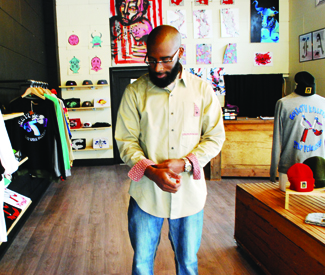
Last week I went to visit a silver grill, affixed to the grin of a one Edwin Haynes, the unapologetically pierced founder of graphically subversive clothing line Sav Noir. Think T-shirts covered in upside-down crosses, hot nuns making out, and a priest hoisting a Bible, gun, and shotglass — that would be the brand’s first collection, now available. Think a tough black-and-white color palette setting off designs by local artist Henry Lewis. Also think about a back room of an unmarked studio space, which is where I was last week checking out his works of the devil, artfully arranged on an L-section sofa.

Haynes talks mess about Catholic school while members of his team — event promoter Traci P of female hip-hop crew Sisterz of the Underground and Bogl, bass-and-beat DJ and event producer — look on.

“These figures and these idols who you were forced to worship were the people doing the most dirty shit,” the ex-chef, promotor, and “fashion guy” explains as we look at his sartorial takedowns of religion splayed out before us on the couch cushions. It’s all there: slutty sisters, gangster priest, schoolgirl swilling beer. Sav Noir is adamantly for the alternative nightclub set — the people, Haynes tells me, who don’t have to wait for the end of office hours to become who really are.

That makes sense, it’s hard to picture a real estate agent rocking the white tee with the photo print of the sexily open mouth cradling pills on its tongue. (If you are a real estate agent who wears things like that, get in touch with me.)

You can cop Sav Noir’s hats and tees at Infinite (www.infinitesf.com), True (www.trueclothing.net), and Santa Cruz’s So Fresh (www.sofreshclothing.com). But you may as well make a night of it. The brand also hosts The Gift, a first Sunday dub-trap party at Vessel starring DJs Ruby Red Eye and Atlanta’s DJ Holiday. Bogl spins Tuesday nights at Monarch. The events look like they crack — the Jan. 26 launch at 1AM Gallery for the new line attracted a crowd that spilled out into the SoMa streets.

“At the end of the day, we’re all we have,” says FAZE Apparel (3236 21st St., SF. www.fazeapparel.com) co-owner Johnny Travis as he tours me around his sunny Mission space, past the racks of his own line’s SF-made button-downs with printed cuffs, peculiar pockets — just intricate enough to catch the eye, but not so crazy that they can’t be basics.

FAZE also hawks ace $21 beanies, made in LA with leather tags affixed here in the city. The line’s hoodies are lined with nursery school zoo prints, part of the “Animal City” collection that also includes a tee with snarling pumas and the words “Easy Pussy” in heavy metal slant letters. It’s streetwear, but with details that make it pop.

The shop also has one of the mores interesting arrays of hyper-local brands I’ve seen: there’s All Out Foul, a San Mateo line that supplies tees to the quickly-growing legions of Niners fans. Those tees sit alongside nautical-inspired ones designed by Charlie Noble, an Alameda Coast Guard vet. The different brands are great for the store, Travis tells me. The days of single-brand customers, he says, are over.

And FAZE (an acronym for “Fearless and Zealous Everyday”) is nothing is not group-oriented. “We don’t want to be an intruder to the community,” the SF native Travis tells me, wary of the fact that he just moved a business into a part of the Mission where rents are skyrocketing and many residents feel displaced. “We want to be a part of it.”

To that end, the regular art parties. At January’s FAZE event, the paintings created by the line’s artists on-site, made in front of the eyes of party attendees right there in the shop, were sold to benefit the Boys and Girls Club down the street. At the next event (at the shop Feb. 8, 6-10pm, free), proceeds will round another corner to another neighbor of FAZE, going to low income student support service Scholar Match. Of course, you’re welcome to buy clothes at the party.

“I know a lot of people try to get their stuff in the hands of celebrities,” says Travis. “But that’s not what we’re about. It’s people like you and I who carry brands.”

Stage Listings

0

Stage listings are compiled by Guardian staff. Performance times may change; call venues to confirm. Reviewers are Robert Avila, Rita Felciano, and Nicole Gluckstern. Submit items for the listings at listings@sfbg.com. For further information on how to submit items for the listings, see Picks.

THEATER

OPENING

Not a Genuine Black Man Marsh San Francisco, 1062 Valencia, SF; www.themarsh.org. $25-50. Opens Fri/1, 8pm. Runs Fri, 8pm; Sat, 5pm (Sat/2, show at 8pm). Through Feb 23. What, the unapologetically middle-class Brian Copeland asks, is the real meaning behind the phrase “a genuine black man”? By way of an answer, the stand-up comic and KGO radio host offers up a simultaneously funny and disarmingly frank story about growing up African American in the racist suburb that was San Leandro in the early 1970s. Letting his narrative bounce back and forth between his boyhood memories and a period of depression that overtook him as a parent in 1999 — and interlacing the autobiography with verbatim utterances from both sides of the fight his family joined to desegregate the city — Copeland brings admirable chops as a comedian to bear on some difficult and disturbing, if ultimately hopeful, material. Note: review from an earlier run of the same show. (Avila)

You Know When the Men Are Gone Z Space, 450 Florida, SF; www.zspace.org. $30-55. Previews Wed/30-Thu/31, 7pm; Fri/1, 8pm. Opens Sat/2, 8pm. Runs Wed-Thu, 7pm; Fri-Sat, 8pm; Sun, 3pm. Through Feb 24. Word for Word performs two short stories by Siobhan Fallon (the author, not the film actor): “The Last Stand” and “Gold Star.”

ONGOING

Cat on a Hot Tin Roof Buriel Clay Theater at the African American Art and Culture Complex, 762 Fulton, SF; www.african-americanshakes.org. $10-15. Sat, 8pm; Sun, 3pm. Through Feb 17. African-American Shakespeare Company performs Tennessee Williams’ Pulitzer-winning classic.

Dear Harvey New Conservatory Theatre Center, 25 Van Ness, SF; www.nctcsf.org. $25-45. Wed-Sat, 8pm; Sun, 2pm. Through Feb 24. New Conservatory Theatre Center performs Patricia Loughrey’s play about Harvey Milk, drawn from over 30 interviews.

Foodies! The Musical Shelton Theater, 533 Sutter, SF; www.foodiesthemusical.com. $30-34. Fri-Sat, 8pm. Open-ended. AWAT Productions presents Morris Bobrow’s musical comedy revue all about food.

4000 Miles Geary Theater, 415 Geary, SF; www.act-sf.org. $20-150. Wed-Sat, 8pm (also Sat, 2pm); Sun, 2 and 8pm; Tue, 7pm. Through Feb 10. ACT performs Amy Herzog’s comedy about growing up and growing old, and the moments in between.

Hedwig and the Angry Inch Boxcar Playhouse, 505 Natoma, SF; www.boxcartheatre.org. $25-40. Wed-Sat, 8pm (also Sat, 5pm). Through March 2. Hold onto your hairpiece, Boxcar Theatre is reprising their all-too short summer run of Hedwig and the Angry Inch, and just in case you think you saw it already, be forewarned — you ain’t seen nothing yet. Recast, redesigned, and re-vamped, this outcast-rock musical familiarly follows the misadventures of one Hedwig Robinson (né Hansel Schmidt) with glam, guts, and glitter. But unlike the movie version penned by and starring John Cameron Mitchell as the titular chanteuse, or other staged versions, director Nick A. Olivero splits the larger-than-life, would-be rock sensation into eight different characters, who are each given a solo turn as well as plenty of ensemble harmonizing during the course of the two hour-plus performance. The effect is often electric, and just as frequently hilarious, as when the four female actors playing the role stomp across the stage swinging imaginary dicks in the air to the lyric “six inches forward and five inches back, I got a, I got an angry inch!” Supported by a tight quartet of rock musicians led by Rachel Robinson, and the phenomenal Amy Lizardo as Hedwig’s beleaguered “man Friday” Yitzhak, Hedwig keeps on extending for what appears to be an indefinite run, employing the time-honored Thrillpeddlers’ tradition of rotating cast members and comeback performances, which means you could theoretically go multiple times and never see quite the same show twice. I certainly plan to. (Gluckstern)

The Little Foxes Tides Theatre, 533 Sutter, SF; www.tidestheatre.org. $20-38. Wed-Sat, 8pm. Through Feb 23. Tides Theatre Company performs a modern take on the Lillian Hellman classic.

Se Llama Cristina Magic Theatre, Fort Mason Center, Marina at Laguna, SF; www.magictheatre.org. $22-60. Opens Wed/30, 8pm. Runs Tue, 7pm; Wed-Sat, 8pm (also Sat/2 and Feb 13, 2:30pm); Sun, 2:30pm. Magic Theatre performs the world premiere of Octavio Solis’ multi-layered drama.

Manic Pixie Dream Girl ACT Costume Shop Theater, 1117 Market, SF; www.manicpixiedreamgirl.org. $25-35. Thu-Sun, 8pm. Through Feb 10. Billed as a “graphic-novel” play, first-time playwright Katie May’s Manic Pixie Dream Girl reaches out to a demographic frequently left out of the theatrical conversation — the geek chic, 20-something set. Marrying projected panels of black-and-white graphic novel-style drawings with dialogue and action provided by the actors onstage, this PlayGround co-production attempts to combine two very different mediums into a smooth narrative, a rocky but valiant effort. Much of the live action appears cartoonish rather than nuanced, and the two central protagonists — struggling painter and wannabe graphic novel artist Tallman (Joshua Roberts) and his new muse Lilly (Lyndsy Kail), a waifish mute with pockets full of candy wrappers chance-met in his neighborhood dive bar — are awkwardly incomplete ciphers. If you’re looking for the depth of detail and the visual impact of a Transmetropolitan or a Berlin, you won’t find it in MPDG, but what you will get is a glad eyeful of Rob Dario’s striking graphics, and some impeccable support acting courtesy of Lucas Hatton (who plays several welcome roles including a buttinsky, bro of a bartender and a “evil” real estate agent with all the charm and smarm of an overgrown frat boy), Liz Anderson’s bitch-queen supernova ex-girlfriend, and Michal Barrett Austin’s winsome cynicism as Tallman’s best buddy. (Gluckstern)

Princess Ivona Performance Art Institute, 75 Boardman, SF; www.thecollectedworks.org. $20-30. Thu-Sat, 8pm. Through Feb 9. The first play by the great Polish writer Witold Gombrowicz (1904-1969) receives its first professional Northern California production in this admittedly uneven, sometimes sluggish but always intelligent and frequently inspired staging by newcomers the Collected Works. Set in the foyer and back room of co-presenter Performing Art Institute’s spacious SOMA warehouse, the action — peppered throughout by old-time American ballads enchantingly rendered by musician-singer Meredith Axelrod — initially unfolds amid an audience milling around a pond. There a haughty prince (the sharp, charismatic Ryan Tacata) and his aristo pals make sport of the plebs until the Prince takes things too far by impetuously proposing marriage to a slow, anemic, deeply dull and disheveled young woman, the anti-heroine of the title (played with a moody lethargy and savage intelligence by Tonyanna Borkovi). As the audience and the characters, including the worried King (Barry Kendall) and Queen (Florentina Mocanu-Schendel), all retire to the court, the presence of Ivona becomes a catalyst for the unsettling of ill-feelings, bad memories, and ugly impulses formerly buried beneath a surface of the luxury, grandeur, and privilege of the beautiful people. The absurdity of their lives revealed, how will harmony be restored? Astutely staged by director and company-cofounder Michael Hunter, with excellent design support — including from costumer Latifa Medjdoub — this captivating play makes for a worthwhile outing and a very promising company debut. (Avila)

“Risk Is This…The Cutting Ball New Experimental Plays Festival” Exit on Taylor, 277 Taylor, SF; www.cuttingball.com. Free ($20 for reserved seating; $50 for five-play reserved seating festival pass). Through Feb 9. Three new works (by Sean San José, Dipika Guha, and Basil Kreimendahl) and two new “Risk Translations.”

Sex and the City: LIVE! Rebel, 1760 Market, SF; trannyshack.com/sexandthecity. $25. Wed, 7 and 9pm. Open-ended. Lady Bear, Trixie Carr, Heklina, and D’Arcy Drollinger star in this drag tribute to the long-running HBO show.

SF Sketchfest: The San Francisco Comedy Festival Various venues, SF; www.sfsketchfest.com. Ticket prices vary according to event. Through Feb 10. The popular fest returns for its 12th year, featuring an array of comedy programs including tributes to Portlandia, The Adventures of Pete and Pete, and Bruce Campbell; a series of Reggie Watts performances; film screenings; sketch and improv shows; and more.

The World’s Funniest Bubble Show Marsh San Francisco, 1062 Valencia, SF; www.themarsh.org. $8-50. Sun, 11am. Extended through March 17. The Amazing Bubble Man (a.k.a. Louis Pearl) continues his family-friendly bubble extravaganza.

BAY AREA

Acid Test: The Many Incarnations of Ram Dass Marsh Berkeley, 2120 Allston, Berk; www.themarsh.org. $15-50. Sat, 8pm; Sun, 5pm. Extended through Feb 17. Lynne Kaufman’s new play stars Warren David Keith as the noted spiritual figure.

Hippy Icon, Flower Geezer and Temple of Accumulated Error Marsh Berkeley, 2120 Allston, Berk; www.themarsh.org. $15-50. Fri, 8pm; Sat, 5pm; Sun, 2pm. Through Feb 10. Wavy Gravy holds forth on his legendary life and times.

Our Practical Heaven Aurora Theatre, 2081 Addison, Berk; www.auroratheatre.org. $32-60. Previews Wed/30, 8pm. Opens Thu/31, 8pm. Runs Tue and Sun, 7pm (also Sun, 2pm); Wed-Sat, 8pm. Through March 3. Aurora Theatre Company presents the world premiere of Anthony Clarvoe’s play about a family that gathers in a home they’ll soon lose due to a rising sea.

Somewhere Mountain View Center for the Performing Arts, 500 Castro, Mtn View; www.theatreworks.org. $23-73. Tue-Wed, 7:30pm; Thu-Sat, 8pm (also Sat, 2pm); Sun, 2 and 7pm. Through Feb 10. TheatreWorks performs Matthew Lopez’s play about a 1960s Puerto Rican family caught up in the filming of West Side Story.

Troublemaker, or the Freakin Kick-A Adventures of Bradley Boatwright Berkeley Repertory Theatre, Thrust Stage, 2025 Addison, Berk; www.berkeleyrep.org. $29-77. Wed/30 and Sun/3, 7pm (also Sun/3, 2pm); Thu/31-Sat/2, 8pm (also Sat/2, 2pm). Berkeley Rep presents the world premiere of a play — about a 12-year-old wannabe superhero — it commissioned from writer Dan LeFranc.

Waiting for Godot Marin Theatre Company, 397 Miller, Mill Valley; www.marintheatre.org. $36-52. Tue and Thu-Sat, 8pm (also Sat/2 and Feb 16, 2pm; Feb 7, 1pm); Wed, 7:30pm; Sun, 2 and 7pm. Through Feb 17. Marin Theatre Company performs Samuel Beckett’s modern classic.

The Wild Bride Berkeley Repertory Theatre, Roda Theatre, 2015 Addison, Berk; www.berkeleyrep.org. $35-89. Tue and Thu-Sat, 8pm (also Sat, 2pm); Wed and Sun, 7pm (also Sun, 2pm). Through Feb 17. Berkeley Rep performs a return engagement of Emma Rice’s grown-up fairy tale.

PERFORMANCE/DANCE

“Adult” CounterPULSE, 1310 Mission, SF; www.counterpulse.org. Fri/1-Sun/3, 8pm. $10-30. Performance duo Jarry (Jesse Hewit and Laura Arrington) present a new, two-act work.

“Cabaret Showcase Showdown, Year #4: Contest for Best Comedic Cabaret Act” Martuni’s, 4 Valencia, SF; (415) 241-0205. Sun/3, 7pm. With up-and-coming acts judged by Lisa Geduldig, Trauma Flintstone, and Katya Smirnoff-Skye, plus guest performer Darlene Popovic.

“David Mills is Smart Casual” Stage Werx, 446 Valencia, SF; www.thevisibletheater.org. Sun/3, 8pm. $12. the comedian performs.

“In a Room Full of Strangers” Garage, 715 Bryant, SF; www.brownpapertickets.com. Wed/30-Thu/31, 8pm. $10-20. Erik Wagner presents a new dance-theater work.

“In and Out of Shadow” Marsh, 1062 Valencia, SF; www.themarsh.org. Sat/2, 5pm; Sun/3, 3pm; Feb 8-9, 8pm (also Feb 9, 2pm); Feb 10 and 17, 3pm; Feb 16, 2pm. $12-35. Marsh Youth Theater’s teen troupe performs Gary Soto’s musical play, based on oral histories gathered by the young actors themselves.

“The One Year Anniversary and Sweetheart Edition of The News” SOMArts Cultural Center, 934 Brannan, SF; somarts.org/thenews. Tue/5, 7:30pm. $5. The new and experimental performance works series celebrates its first anniversary with hosts WithLove and Peter Max Lawrence, plus performers Peter Griggs with Aurora Switchblade, Lambert, Erin Malley, and more.

“San Francisco Magic Parlor” Chancellor Hotel Union Square, 433 Powell, SF; www.sfmagicparlor.com. Thu-Sat, 8pm. Ongoing. $40. Magic vignettes with conjurer and storyteller Walt Anthony.

“San Francisco Symphony Lunar New Year Concert and Celebration” Davies Symphony Hall, 201 Van Ness, SF; www.sfsymphony.org. Sat/2, 4pm. $25-72. Celebrate the Lunar New Year and Year of the Snake with pre-concert festivities (3pm) including lion dancing and children’s arts and crafts, followed by a performance of traditional Asian music and orchestral works composed by Asian and Asian American artists.

“[title of show]” Band Candy Theatre Company, 125A Hyde, SF; www.brownpapertickets.com. Fri/1-Sat/2, 8pm; Sun/3, 2pm. $18. Band Candy performs a musical about … two guys writing a musical.

Mestranda Cigarra kicks ass

4

caitlin@sfbg.com

HEALTH AND WELLNESS It is impossible to climb the stairs to the San Francisco chapter of Abadá Capoeira and not know that you are in the Mestranda’s house.

Márcia Treidler founded the Mission District capoeira school, and she is there in the first photograph you see when you come in off the street. In it, she strikes her customary pose, an improbable one-handed flip (kick?) Her washboard abs challenge visitors to trade sedentary habits for the rich traditions and fat-carving core moves of the Brazilian martial arts form, the love of which made Treidler beg her mom for classes as a teenager, brought her from Brazil to the Bay Area, and led her to start a chapter of her teacher’s school right here in San Francisco.

In person, seated at a table next to Abadá’s statue of Iemanjá, orisha goddess of the Southern seas and patron deity of Rio de Janeiro, Treidler is hardly as intimidating. Mestranda Cigarra (her capoeira-given name) is in fact incredibly patient while explaining Brazilian history and basic tenets of the martial arts form to a stranger. She does do it for a living, after all.

Sharing information is a guiding principle of capoeira, which began as a covert form of fighting practiced by African slaves in Brazil who certainly couldn’t rely on written record to educate new generations in the martial art. After escaping servitude, some used their martial skills against the law enforcement sent after them. Capoeira helped fend off colonial attacks on their newly formed quilombos, the settlements ex-slaves built in remote locales.

Even after abolishing slavery in 1888, the Brazilian government considered capoeira subversive. It was officially banned in 1890, a tool used by authorities to put black men in jail. When waves of immigration brought new labor forces to the country and left many Africans jobless, public perception often equated capoeira with criminal activity.

The sport’s rise to acceptance and spread to other countries is a relatively recent occurrence. Treidler, who is now one of two of the highest ranking females in her school Abadá’s 41,000-member international organization, started practicing 31 years ago in Rio de Janeiro. She lived in Botafogo, a middle class beachfront neighborhood. At the time, capoeira still wasn’t considered respectable — and certainly not an obvious choice for an ambitious young woman. After becoming entranced by the sport at a school performance, the current Mestranda had to work on her mother for a year before she would agree to finance her classes.

“Women in capoeira was not popular at all,” Treidler says. “[My mother] was like ‘are you crazy? What are you thinking?'” Treidler had been active in sports — swimming and gymnastics — since she was six, but her mother insisted on observing capoeira classes before she’d agree to let her high school age daughter enroll.

“The [sport’s] reputation was really bad at the time,” Treidler remembers. “But when I first started, I never stopped.” Prepped by her athletic background, she took easily to capoeira’s acrobatics. She graduated through levels quickly, and struck a deal with her instructor to pay when she could after her mother withdrew financial support. Treidler credits the sport with teaching her patience, and became close with Mestre Camisa, the founder of Abadá.

The importance of their relationship today means Abadá students benefit from the vision of the founder, who still lives in Brazil. “She follows his vision 100 percent,” Treidler’s student and fellow Abadá instructor Antonio Contreras says. Camisa and Treidler are in constant contact, and he was present at the school’s January batizado graduation ceremony at Dance Mission Theater.

Eighty-plus students take classes at Abadá San Francisco chapter. They perform at places like the Academy of Sciences and in the Ethnic Dance Festival. The studio also offers Portuguese classes. Although there are only three adult Brazilians who currently take classes, the studio is somewhat of a center for Brazilian culture here in the city. Displays that tell of the legacy of capoeira line the walls in the main room, interspersed with statues of figures in traditional poses. Brazil’s world-famous street art duo Os Gemeos have whimsically rendered Abadá practitioners in large paintings that hang in the studio’s front stairwell, alongside the Mestranda’s portrait.

It is perhaps indicative of Treidler’s own start in the sport that her students are nothing if not diverse. At the recent batizado, the spotlight lingered on tiny children, middle-aged practitioners, developmentally-disabled capoeiristas sparring, flipping, playing musical instruments, and smiling tremendously in an immense roda, the circle of practitioners that encloses a capoeira presentation.

Treidler is the only instructor that Contreras, her only other full-time teacher at Abadá SF has ever had. An ex-personal shopper, he has called the studio home since 2000, when the sounds of single-stringed berimbaus and tambourine-like pandeiros pulled him into the studio after dinner at a Mission Street restaurant. He was amazed by the maculelê, the traditional dance that accompanies capoeira, and impressed by Treidler’s presence.

“I was like, ‘whoa, who’s that’ — this larger than life person,” he remembers. He was back that Tuesday for his first class. A cardio-weights gym rat who still employs a personal trainer, Contreras says that first day was the best workout of his life. He started noticing the changes in his body “immediately.”

“To me, it was very natural to learn from Márcia,” Contreras says, sitting next to a jar full of juice one afternoon at the studio. “The advantage is that she had it tough. She identifies with the difficulties you face because she has had her own.” He himself felt unflexible and uncoordinated when he first started his practice. He’s convinced that many instructors would have given up on him long ago.

But Treidler’s teaching eventually brought Contreras to a level of mastery that compelled him to quit his day job, to stop having to rush to the school from the stores every day at 5:45pm. Contreras says that the decision to commit to teaching is a natural part of capoeira.

Unlike other martial arts forms, in which the progressively more masterful levels of belt reward physical mastery of the form and discipline, capoeira reserves the next stage of training — and corresponding 10 colors of cords worn around your hips — for those who have displayed their ability to role model for others.

Treidler originally made ends meet here in San Francisco by working construction jobs, starting to teach capoeira a few times a week at SoMa’s Rhythm and Motion dance studio. She was deemed eligible for an “alien of extraordinary ability” visa by the US government and opened her first studio on Mission in between 19th and 20th Streets, moving to the current space 11 years ago.

Capoeira’s divergent skill sets — singing, playing musical instruments, sparring, and dancing — do seem to be a sport that can reward many kinds of students. Treidler resists generalizing when it comes to her students, but will say that the “women are very rational. Men identify with the power. I think that’s why it’s unique. We help each other in class.”

Capoeira is a good opportunity to let go of the “I’m sorry” hair trigger that plagues some females. “Women are too careful with each other,” the Mestranda says. “It’s like, I’m sorry? There’s no sorry! You get out of the way. That’s the challenge, for women not to think about it so much.” It’s difficult to picture Treidler hesitating — but then, she has been in rodas since she was 17 years old.

At the batizado in December, the Mestranda’s values of inclusion are as visible among her white-uniformed students as the high fives they can’t stop giving each other in the roda. After each class of graduates’ names are called, honorees “play games” — capoeira terminology for the minute-long sparring sessions that show off the flowing acrobatics and feigned violence of the sport. These run the gamut from the younger kids’ hyper, sky-high flips — done alongside each other as much as at each other — to the more focused bouts between older students. The latter range in tone from comical to rapid-fire serious. Everyone looks really good — er, healthy.

After a 2012 packed with performances, Treidler’s ready to expand her flock, make it possible for her part-time instructors to follow her path and leave their construction or restaurant job to focus on their passion for the sport. “What’s next you know?” she asks, somewhat rhetorically. “How can we use capoeira to make the world a better place?”

Abadá Capoeira 3221 22nd St., SF. (415) 206-0650, www.abada.org


Localized Appreesh: Adios Amigo

3

Localized Appreesh is our thank-you column to the musicians that make the Bay. To be considered, contact emilysavage@sfbg.com.

What began life as a side-project for Il Gato drummer Johnny Major has grown into a hyper melodic, can’t-miss, feel-good group to know. Or as I breathlessly wrote after catching an early show at the Hemlock: Adios Amigo is pure indie-pop bliss, in the vein of Broken Social Scene and the Shins. 

In this one, Major leads as singer-songwriter-guitarist, backed by guitarist Rahi Kumar, bassist Alex Coehn, drummer Stephen Wills, Claire Grinton on keys and fiddle, and percussionist Catalina Atria – along with warm multi-part harmonies put forth by all those involved.

The band released Dos last year, and starts 2013 off right with a headlining gig at Cafe Du Nord. Learn more about Adios Amigo below, but first check out the video for plucky “Chicken” and see how long you can hold out without cracking a grin.

http://www.youtube.com/watch?v=G4X7QxfE2jw
Video Credit: Caitlyn Adkins

Year and location of origin: 2011, San Francisco

Band name origin: Sitting in a cubicle in SOMA, dreaming of escaping to South America, I came up with the name.  It means ‘Goodbye Friend’.

Band motto: “¡Hasta la victoria siempre!” – “Until victory, always!”

Description of sound in 10 words or less: Grandiose, jangly, guitar-driven, harmonic psych-pop

Instrumentation: Two Guitars, one bass, one keyboard, one drum set.

Most recent release: Dos EP – June, 2012.

Best part about life as a Bay Area band: Living in one of the most beautiful cities in the world, being a part of one of the best music scenes in the world, playing awesome venues, great food, liberals.  

Worst part about life as a Bay Area band: The rent.  Too high.

First album ever purchased: Green Day’s Dookie, or the Forrest Gump soundtrack.

Most recent album purchased/downloaded:
 Tame Impala, Lonerism.

Favorite local eatery and dish: The Little Chihuahua — Garlic Shrimp Burrito. Everyday.

Adios Amigo
With City Tribe, Ghost Tiger
Thu/17, 9pm, $10
Cafe Du Nord
2170 Market, SF
www.cafedunord.com

New steps

0

arts@sfbg.com

THEATER/DANCE Choreographer Mary Armentrout’s itinerant, site-specific performance installation, reveries and elegies, passed through CounterPULSE last weekend. A post-solstice meditation on dislocation and flux, it was also the harbinger of a striking new season at the SOMA performance incubator. In fact, reveries and elegies, true to its theme of displacement, can be considered the odd one out among programming whose defining structure is the duet.

A broad range of interpretation and subversion of that basic form comprises CounterPULSE’s Queer Series, running January through March and showcasing new work from artists as diverse and far-flung as New York’s Faye Driscoll, the Minneapolis-based BodyCartography Project, San Francisco’s Annie Danger, Berlin-based American Jeremy Wade, and conjoined local choreographic dynamo Jarry (aka Jesse Hewit and Laura Arrington).

If you’ve followed the vicissitudes of programming at CounterPULSE even intermittently, a glance at this year’s calendar prompts a double take for the careful concentration of work and the thematic consistency it evinces, in addition to its impressive international lineup. The rigorous queering of the duet structure underlined by the series, for instance, comes further elaborated through complimentary work like DavEnd’s well-received 2012 debut, F.A.G.G.O.T.S.: the Musical! (which turns on a duet of sorts with a wall mirror) as well as some rich auxiliary events.

The latter include a talk on gender by Judith Butler (on February 16) and, on February 28 (the eve of Danger’s genuflection to sexual healing and empowerment, The Great Church of the Holy Fuck), a screening of Community Action Center (2010), the aesthetically and politically astute, 69-minute, queer, trans, women-centered celebration/subversion of 1970s porn by A.K. Burns and A.L. Steiner. (That program includes a post-screening Q&A with Steiner, whose film was recently acquired by the Museum of Modern Art).

The duet form (and the act of reimagining it) is an apt metaphor for the programming model behind the season too, which represents something of a departure from business as usual.

CounterPULSE’s Julie Phelps, central in the development of the season and currently serving as interim artistic and executive director for Jessica Robinson Love (who is on sabbatical), explained that the Queer Series and the season as a whole had emerged from some serious rethinking at the organizational level.

“We were sort of primed to embark on this new season, which [comes directly] after our strategic planning process, where we really identified who we are, how we do what we do, and what limits we still have on our impact.”

Phelps says one limit they identified was a single-minded commitment to the bottom line that was keeping certain kinds of work almost permanently out of reach — for example, much work by touring artists from out of the state or country, for which there is relatively little foundational money available for tapping.

“We’re actually, financially, a very conservative organization,” says Phelps, “which has brought with it a lot of stability — very important especially in the young years of an organization, but ultimately stopping us from taking risk on vision. We were always on a break-even model. Either it needs to be some mix of foundation support or some other kind of funding with some tickets sales. The bottom line always has to equal zero. So we’ve been pushing ourselves to think bigger about the types of risks that we can take.”

That’s far from inviting recklessness, Phelps stresses, but it does mean modifying notions of financial success and failure, bringing them in line with an artistic spirit of experimentation and what might be thought of as the useful flop.

“Actually, failure is just as valid a result as success,” says Phelps. “When we had been building failure out of every income model we had, we’d also been building out risk from some of the artistic selections, and from the way we were making artistic selections. We’ve really only just recently moved into curating in the first place. Before we were like, we have a space, if you want to do a show, come ask us and we’ll work it out. [In this] season, every artist was someone we approached and worked with, found out ways that they could intersect with CounterPULSE, what was financially viable for us and for them, what was artistically interesting for us and for them — actually build something from the inside out, instead of the outside in.”

Despite the considerate design in the program, Phelps calls it more art than science and insists it’s all “still a very organic process,” noting that the queer label is at least partly one of sheer convenience.

“I mean, ‘queer’ is basically the only banner that you could fly over that season, and only because it is so indistinct — because actually each of these works is hugely different. So there’s still a patchwork element to it, but it’s a little bit more deliberate [than usual],” she explains, laughing at the metaphor carrying her away. “At least the patches were picked out, and the fabric was cut to shape before they were added to the quilt this time.” *

www.counterpulse.org


Manhattanization forgotten, Transbay Tower moves without the trains

101

Times in San Francisco have changed since the battles in the ‘80s against increased high-rise development and the “Manhattanization of San Francisco,” which peaked in 1986 with the passage of Prop. M placing limits on the rapid development pushed by then-Mayor Dianne Feinstein and her downtown allies.

Now, in 2012, the tallest building on the West Coast — Transbay Tower, the first in a series of new high-rises envisioned for downtown — gathered its final approvals with only scattered opposition (such as Quentin Kopp, the former judge and legislator, who derides the project as nothing but a “real estate scheme” involving lucrative publicly owned land being turned over private developers).

Whether we were all too distracted by a year of political scandals real and contrived, or whether it was the project proponents’ savvy marriage of the real estate deal to the high-speed rail project and Caltrain extension that environmentalists want to see become a reality, this behemoth building is now all but a done-deal.

Yet despite the slick and compelling interactive videos and project descriptions on the Transit Joint Powers Authority website, San Franciscans aren’t really on the verge of realizing this utopian urban vision of 21st century high-speed rail burrowing its way into SoMa over the next few years.

“The projection of that is less clear now. The delays with the high-speed rail have created some challenges for us,” said Adam Alberti of the high-powered communications firm Singer Associates, which represents the TJPA. Contributing to the delay and uncertainty is the indefinitely delayed plan for the electricification of Caltrain tracks that would be a precursor to bringing the trains downtown.

Now, even though the current Transbay Terminal rebuild (scheduled for completion in 2017) includes a “train box,” funding hasn’t yet been identified for the tunneling to get the trains there. That depends on federal allocations and the New Starts program administered by the Metropolitan Transportation Commission.

“Those things take awhile. It’s a long process,” Alberti said.

But the 930-foot Transbay Tower has its approvals, with the property scheduled to be formally transferred to the Hines/Boston Properties building team in the next couple months, followed in the coming years by other parcels in the area for more high-rises.

“The other parcels will be metered out and put out when we get maximum return for taxpayers,” Alberti said. “The transit center itself is on schedule and on budget, so it’s moving forward.”

That’s great, even if it’s just going to be a glorified bus station for the foreseeable future as the high-rises that are being built as part of this trade-off for trains help inch San Francisco a bit closer to Manhattanization

No brand

0

caitlin@sfbg.com

STREET SEEN To the casual observer, it may have appeared as if I had taken a painful, rainy early morning Muni ride into SoMa for the sole purpose of eating plastic-wrapped Japanese pancakes filled with red bean paste in a chain store. But to adherents of the Muji phenomenon, I was actually witnessing the birth of cross-Pacific retail revolution.

“The minimalism of Muji fits San Francisco perfectly with what the city is trying to do with conservation,” said store manager Eric Kobuchi, who was standing with the cash registers behind of him, and the sleepy-eyed attendees of the November 30th press preview and reception in front of him. His company was to open its first West Coast location (540 Ninth St., SF. www.muji.us) in an hour-and-a-half.

Among minimalism aficionados, this brand is paramount. Muji was born in 1980, originally as a line of 40 house and food items that were sold in Seiyu supermarkets. The name itself means “no label, quality goods.” The items were cheap, but relatively high quality. These savings were possible, said the company, by simplifying packaging and production, and utilizing offbeat materials, like the parts of the fish near the head and tail for its canned fish.

Muji fans kindled to the line’s recycled, plain packaging (the company has courted the “sustainable” label for decades). Being a Muji consumer is an identity unto itself, at least according to the brands’s brilliant ad campaigns. From a 256-page coffee table book of such endeavors presented to me at the preview: “Muji tries to attract not the customer who says ‘This is what I want,’ but rather the one who says, rationally, ‘this will do.'”

Zen. Today, Muji’s selection is an Ikea-Gap mélange. The San Francisco location, says Azami, has a similar, but smaller product selection (minus the food — tight regulations here make importing comestibles complicated), and the same layout and presentation as its Japanese stores. I don’t doubt that little changes have been made to the Muji formula for its West Coast audience — during the press preview, display prices for some of the stock were still only visible in yen.

Muji is but one simple, made-from-recycled-material package in a shopping bag full of newish Japanese brands to hit the Bay Area. Daiso, in my eyes the epitome of dollar (or rather 100 yen, roughly $1.50) store excellence, has been plying lunch boxes, fake eyelashes, party wigs, and stationary on the West Coast since 2005. It has several stores from SF to Milpitas (SF locations at 570 Market and 22 Japantown Peace Plaza).

We have homegrown Japanese retailers as well. Lounging in a bright office lined with shelves of Japanese comics, Seiji Horibuchi explained to me how he came to open retail complex New People (1746 Post, SF. www.newpeopleworld.com) in the heart of San Francisco’s Japantown.

Dressed in head-to-toe Sou Sou, a neo-traditional line of Japanese worker comfortwear whose signature item is its brightly patterned split-toe shoes, Horibuchi says he moved to the city in 1975, and started his anime-manga publishing house Viz Media in his adopted city in 1986. Viz Pictures, a distribution company for Japanese films followed, and then New People was born, originally as a movie theater at which to play Viz titles.

But the project grew, and by its opening in 2009, the J-pop mall included a gift shop, art gallery, and entire floor of Japanese fashion brands like Sou Sou and the babydoll goth Lolita brand Baby, the Stars Shine Bright.

New People is a bit different than the new megachains in town, however. Even the casual visitor can tell Horibuchi’s inventory couldn’t have come from any other country — unlike a lot of Muji’s stock, comprised of simply-universal products, most of New People’s vinyl dolls, high design flatware, and frilly babydoll bonnets could really have only come from Japan.

But Horibuchi understands why brands like Muji choose San Francisco for their debut on this side of the country. “We’re more open to foreign culture,” he says. “San Francisco is very flexible, livable.”

Plus, Asian Americans make up nearly 36 percent of the city’s population — and that ratio has grown in recent years. Companies know that many residents are already familiar with their brand, Horibuchi says. “I’m sure they’ve done enough marketing research.”

A company that has certainly done its marketing research is Uniqlo, which opened a popup shop (117 Post, SF) this summer, then a full-size West Coast flagship store (111 Powell, SF) in Union Square in October. In its opening weeks, the latter attracted 100-plus-person lines of shoppers with cheaply-priced rainbows of colored denim and ultralight down jackets.

In a calm moment on a busy holiday shopping day, I got a chance to talk with Uniqlo’s John “Jack” Zech, a “superstar store manager” according to a publicist that sat with us while we talked.

The three of us had a view of Uniqlo’s specially-designed-for-SF “magic mirror” (put on a down jacket, press a button, and the hue of your garment in the reflection shifts through the line’s different colors), its staircase of melting rainbow tones, and slowly rotating armies of mannequins clad in ski-ready fashions, ensconced in glass cases.

Zech worked in Uniqlo’s Japanese locations for months before the SF stores opened, and he says the company’s goal is to bring the Japanese concept of supreme customer service, irrashai mase, to the rest of the world.

When you walk into Uniqlo, a person in a happi day kimono greets you warmly. But other than that, I couldn’t see much of a difference between the cheery sales staff there versus that of any of the other chain stores in the neighborhood.

You won’t find happi on sale at Uniqlo. Instead, its affordably-priced cashmere, “Heat Tech” clothing — that I promise you, actually tingles and heats your skin up — and $9.90 packable raincoats (the only clothing item made specifically for the SF store) dominate the sales floor.

In 2010, the company’s official language switched to English. All managerial staff worldwide is required to speak it. “We found that people basically need the same things in Japan, France, London, here,” chirps Kech. “[CEO] Tadashi Yanai thinks we can improve the world by being a global company.”

Which snapped me out of the reverie I’d been lulled into by banks of $29.90 beige boot-cuts. Are Uniqlo and Muji really all that different than the globalized brands from the United States? Walmart, after all, has store greeters.

“If the product is good, it will sell,” regardless of geography, Horibuchi told me. These big brands have real cute stuff (admittedly, I would like to draw Santa’s attention to Muji’s $38 cardboard MP3 speakers.) But you’re not being worldly by shopping at them, though you are being globalized.


On the Cheap Listings

0

WEDNESDAY 12


The Lion and the Lamb FIFTY24SF Gallery, 218 Fillmore, SF. www.fifty24sf.com. Through Feb 12. Opening reception: 6:30-10pm, free. Partnering with chic streetwear store Upper Playground, artist Sam Flores will be debuting his first solo presentation in more than three years entitled "The Lion and the Lamb." The work presented is a thorough exploration of the duality of the relationship between good and evil via the medium of oil paintings, pen and ink drawings, and sculptures.

THURSDAY 13


I See Beauty in this Life Curator’s Walkthrough California Historical Society, 678 Mission, SF. (415) 357-1848, iseebeautycurator.eventbrite.com. 5pm, 5:45pm, 6:30pm, free–$5. Jump into 100 years of pictures of rural California with writer and photographer Lisa M. Hamilton’s as your tour guide, in her new exhibit entitled "I See Beauty in this Life." For the last two years, Hamilton has been chronicling stories of rural communities as apart of work "Real Rural" and tonight some of that work will be on display at the California Historical Society.

Ditched a.Muse Gallery, 614 Alabama, SF. (415) 279-6281, www.yourmusegallery.com. Through Jan 6. Opening reception: 6:30-9pm, free. Hap Leonard’s latest photo exhibit takes a humorous approach to our city’s urban landscape. "Ditched" is a series of photographs of colorful abandoned couches set in various San Franciscan allies and streets.

FRIDAY 14


Soldering, Lapidary, and Enameling Demonstration Silvera Jewelry School, 1105 Virginia, Berk. (510) 868-4908, www.silverajewelry.com. 1-8pm, free. Interested in learning to work with soldering, lapidary, enameling, and stone cutting? Then you won’t want to miss this event at the North Berkeley Silvera Jewelry School.

Animal Dance Party Harlot, 46 Minna, SF. wildkingdom-es2.eventbrite.com. 9pm-3am, $5-10. If the name of this event doesn’t immediately make you want to burst out of your seat and start dancing like nobody’s watching, then something must be wrong you. Just kidding: we’ll still love you either way. Experience DJs Traviswild and Girls and Boomboxes ignite electro mayhem at the Harlot Club. Oh, and nimal attire is strongly encouraged.

SATURDAY 15


Steppe Warriors Shooting Gallery, 839 Larkin, SF. www.shootinggallerysf.com. Through Jan 5. Opening reception: 7-11pm, free. Did you know that Genghis Khan’s real name is Chinggis Khan? Genghis Khan is the Persian version of the Mongolian King’s name. And the horsemen of this legendary historical player are the source of inspiration for Zaya’s upcoming solo show entitled "Steppe Warriors" which will feature 12 ink and watercolor paintings.

Fabricators Jack Fischer Gallery, 49 Geary Suite 418, SF. www.jackfischergallery.com. 3-5pm, free. This new show is the result of a collaboration among five Creativity Explored artists and students from the California College of the Arts’ Fabricators ENGAGE class which is taught by art critic, writer, educator and curator Glen Helfand. Holiday gifts, baked goods, and art pieces will also be on sale at this exhibit.

Mercado de Cambio 2940 16t St. #301, SF. (415) 863-6306, www.poormagazine.org. 3-7pm, free. POOR Magazine will throwing the fourth edition of its annual Mercado de Cambio/The Po Sto’ Holiday Art party, billed as a "powerful people-led collaboration of micro-business, art, performance, and community." Sounds like the perfect holiday party for the Mission.

Poetry Reading Vi Gallery, Embarcadero Center 4, Lobby Level, 100 Drumm, SF. www.vi-gallery.com. 4-6pm, free. The Embarcadero Center isn’t the first place most people think of when asked where’s the best place in SF for a poetry reading. Nevertheless this Saturday writers Richard Hack and Mel C. Thompson will be on hand to dish out some of their own poetry.

In One Hand a Ghost, the Other an Atom White Walls, 835 Larkin, SF. www.whitewallssf.com. Through Jan 5. Opening reception: 6-9pm. Australian artist New2’s curiously named exhibit will showcase between 16 and 24 pieces of large-scale artwork completely made from paper — specifically, hand-cut layered paper collages.

SUNDAY 16


Santa Skivvies Run The Lookout, 3600 16th St., SF. www.lookoutsf.com. 1pm, free to watch, $35 to run. The only thing better than running through the streets half-naked is running through the streets half-naked for a good cause. Come watch dozens of barely clothed Santas romp around the Castro for the 2012 Santa Skivvies run, whose proceeds will go to benefit the SF AIDS Foundation.

TUESDAY 18


Sketch Tuesdays 111 Minna Gallery, 111 Minna, SF. www.111minnagallery.com. 6pm, free. On the third Tuesday of every month about 20 artists gather at this swanky SOMA gallery to fabricate art on a small scale. And if you’re a patron of the arts you’ll be able to purchase these freshly made works.

Sorry, Chuck — HANC eviction hasn’t happened

14

The eviction of the Haight Asbury Neighborhood Council’s recycling center, which critics of the center said was scheduled to take place Dec. 5, hasn’t happened – and it’s entirely possible that the center could keep operating for several more weeks.

At the end of the day Wednesday, the doors were open, the center was continuing business as usual – and the office of Sheriff Ross Mirkarimi, who is charged with carrying out the eviction, was telling reporters that Dec. 5 was never a firm deadline.

Kathy Gorwood, Mirkarimi’s chief of staff, told us that the law gives tenants five days from the service of an eviction notice before any law-enforcement action can take place. “But that’s not a legal mandate that we evict on the sixth day,” she said.

The notice was served Nov. 30.

Gorwood said all evictions are planned with officer safety, tenant hardships and staff scheduling in mind – and on Dec. 5, the sheriff wasn’t ready to move.

“We surveyed the property, the sheriff personally surveyed the property,” she said. “We can’t say, and we don’t say, when an eviction will take place.”

Gorwood said Mirkarimi wasn’t defying the law or refusing to carry out the eviction. But since there are likely to be protests, possibly civil disobedience, the deputies need to be prepared and the schedule set carefully.

Mirkarimi has a history of supporting HANC. As a former supervisor of District 5, which includes the Haight, he voted to urge SF Rec and Park to and find a solution to keep the center in Golden Gate Park. The vote was nonbinding. He clearly wants to avoid a nasty confrontation, and if he can find a way to work out a voluntary move-out, it’s likely he’ll take the time to negotiate it.

For the past ten years, The Department of Recreation and Parks has aggressively sought to oust HANC.  Finally, this fall, Rec-Park filed an eviction through the City Attorney’s Office
Interestingly, the “Notice to Vacate” served on the center was signed off by the City Attorney’s Office on September 14, 2012. However, the actual eviction date that SF Rec and Park requested was December 5, 2012.

Why wait three months to evict a center that Rec-Park has been trying to get rid of for a decade?

Jack Fong, a spokesperson for the City Attorney’s office, declined to say if there were any procedural or administrative reasons that an eviction notice given to the sheriff in September would take three months to go through.

We called Phil Ginsburg, director of Rec and Parks, and Sarah Ballard, its spokesperson, to ask about the time disparity. We did not hear back from them before press time.

But you don’t need to be a genius to figure it out — just look at what was happening in November. Ginsburg was pushing Proposition B, which secured $195 million in bonds to shore up neglected playgrounds and open spaces in San Francisco’s parks. The measure needed a two-thirds vote – and Rec-Park was nervous about any bad publicity.

The measure passed by a landslide. Butousting HANC, eliminating a revenue stream for the poor, the homeless, and working class people, would have been bad publicity leading up the November election.

The Small Business Commission is scrambling to notify businesses in the area of their possible new role without the recycling center — they could all either become mini-recycling centers, or
face a $100 a day charge from the state of California
.

Exactly how and when the commission will reach out to those affected will be discussed at the Small Business Commission’s December 10 meeting.

Regina Dick-Endrizzi, the executive director of the Small Business Commission, told us that one business in the SOMA, which she declined to name, faced three months worth of the $100-a-
day charge for not buying back recyclables from the state while trying to navigate applying for an exemption. Even after being granted the exemption, that’s a $9,000 charge, which for a small
liquor store or grocer is not chump change.

There’s a precedent for a San Francisco sheriff refusing to carry out an eviction notice. Sheriff Richard Hongisto, who later served on the board of supervisors for three terms, famously
refused to evict the Filipino and Chinese elderly tenants of the International Hotel in 1976. The scandal was even the subject of a documentary, “The Fall of the I-Hotel.

The International Hotel was sold to developers who were going to cast the elderly tenants out onto the street. News outlets as far flung as the New York and LA times wrote about the
mass eviction, and many consider it a black eye on San Francisco to this day.

In January 1977, Hongisto was jailed for five days for his refusal to evict the tenants. Eventually, he relented, leading a team of SWAT and other officers to clear the hotel of
protesters, and even swung an ax himself to bust open the hotel.

But this is a different situation: Mirkarimi hasn’t refused to follow the law, and in fact, Gorwood said that he has every intention of carrying out the eviction. The law, Mark Nicco, assistant counsel to the sheriff, told us, only says that an eviction has to happen in a timely manner – and there’s no definition of what that might be.

So if Ginsburg or the mayor think Mirkarimi is dragging his feet, the only recourse would be for Rec-Park to go to court and seek a judge’s order compelling the sheriff to evict the center in a stated period of time. All of which could take weeks.

So for the moment, HANC is still in business, Mirkarimi is avoiding an ugly eviction scene – and there’s still a chance for Rec-Park to come to its senses. But we’re not taking bets.

Additional reporting by Tim Redmond

Comfort, au courant

0

virginia@bayguardian.com

APPETITE San Francisco doesn’t lack for comfort food. The last decade’s wave of twists on hearty, familiar fare has insured most neighborhoods aren’t without elevated burgers and grown-up childhood favorites. Two new restaurants, opened in September, continue and update the trend.


COMPANY

Guerrero and 22nd Street has long been one of my favorite corners. Whether enjoying a pint at the Liberties, a cocktail at retro fabulous bar Lone Palm, or house charcuterie at Beast and the Hare, at this intersection I feel transported, encouraged to linger and take in my surroundings, as if in Europe. In Company’s big picture windows, vintage red chairs and retro lamps make the space even more welcoming than it was before, as Tao Cafe. Lunch is idyllic: a book, a sandwich, and a bowl of soup becomes a way of spoiling myself.

Dinner is likewise mellow, families and couples confirming a local vibe. It’s clear in early months that while Company may not be revolutionary destination dining, chef-owners Karen Hoffman (from Four Seasons Newport Beach and Jardiniere) and Jason Poindexter (Four Seasons Chicago and San Francisco) offer tranquil surroundings and well-executed food. The ubiquitous upscale burger is there: “Breadand Butter” burger ($14), a patty of ground chuck and oxtail, topped with Madeira-glazed pioppini mushrooms and decadent triple creme brie. At lunch, vegetarian stands up to burger and pork offerings: grilled eggplant and house ricotta panini ($11) is layered with rapini/broccoli rabé and romesco sauce. Smoky eggplant and ricotta are in harmony: warm, luxurious, almost healthy. A bowl of squash soup, savory with duck confit, brightened by citrus reduction, is $8 but as an add-on cup to a lunch entree is merely $3.

At dinner, salads are vivid, unlisted vegetables one night in a “crisp vegetable salad” ($9) being beets, cucumber, and avocado over sweet gem lettuce, tossed with feta and toasted pine nuts in a basil mint vinaigrette. House-cured salmon salad ($11) is likewise fresh and silky, with cucumber and beets in yogurt dill dressing. Crispy confit chicken wings ($9) are especially tender, accented with heat (and color) from red jalapenos and fried mint leaves. Syrah-braised short ribs ($23) are cooked in harissa, evoking Middle Eastern intrigue over whipped garnet yams and charred rapini.

With four beers on draft, like intense peach notes of Widmer Bros. BRRR Seasonal Red Ale from Portland ($6), and a shorter wine list (heavy on France, Italy, California), there are cocktails sans hard liquor from Assistant General Manager Russell Morton. While I don’t get excited about soju and wine cocktails, preferring robust spirits to mild soju, Morton elevates an amaretto sour into an almond cherry sour ($6), keeping house amaretto tart rather than too sweet, with lemon, cherry bitters, and brandied cherries.

1000 Guerrero, SF. (415) 374-7479, www.companysf.com


JAMBER

Midwestern brother-sister duo Jess and Matt Voss opened Jamber, serving gourmet pub food from Chef Peter Baker with California-only wines and beers, all on tap. The siblings’ care shows in hand-assembled tables, chairs made from wine barrels, wines selected from wineries they personally visited, a hip, industrial vibe warmed by woods and graffiti art in the loft-like space with a walled front patio.

Wines (happily, there are options: 2.5 oz. and 5 oz. glasses, 1/2 or full jugs), like Darcie Kent Gruner Veltliner from Monterey or a Margerum Grenache Blanc from Santa Barbara, flow easily from taps, with beers such as Almanac’s Farmhouse Ale or a hibiscus saison, Pacific Brewing Lab’s Nautulis. In my visits, there’s a relaxed welcome from staff best experienced sitting at the rustic wood bar. Jess’ bacon jam recipe is a highlight: a savory, textured pleasure of a spread, no matter what it’s served with. Mr. Meatloaf ($15) is the star, a hefty, tender slab of buffalo meatloaf wrapped in bacon, accompanied by mashed potatoes and roasted carrots. I often find myself bored by big hunks of ground meat. Not so here. Jamber’s meatloaf is about as good as meatloaf gets.

Two more standouts: PB & Jam ($11) is a hunk of pork belly layered in a sandwich with peanut butter and that Jamber bacon jam. Most starters, like pretzels and fried mozzarella, are on the heavy side; the top one is easily Parmesan rosemary mashed potater tots ($8) — warm mashed potatoes oozing out of lightly fried breading — with, yes, Jamber bacon jam. After a decent mac ‘n cheese ($10) or freshly generous salads ($7–$9), a pot pie ($12–$14), namely ratatouille, sounded brilliant but was a soggy, funky mash of vegetables in flavorless crust. Likewise, the beet Jamburger ($10, there is a veal-beef burger for $12) made me sorry I took the vegetarian path. Despite fresh bread, it tasted like slices of beet on a bun rather than the creative beet-veggie patties I’ve had that never replace a “real” burger but can be a worthy sandwich on their own.

Despite a couple difficult dishes, there’s enough here to love at this all-day SoMa spot for a drink and a filling bite.

858 Folsom, SF. (415) 273-9192, www.jambersf.com

Subscribe to Virgina’s twice-monthly newsletter, The Perfect Spot, www.theperfectspotsf.com

Chopping spree

2

cheryl@sfbg.com

FILM Unlike the San Francisco Independent Film Festival’s flagship event and its popular DocFest, which more or less put roots down at the Roxie, genre fest Another Hole in the Head spreads its horror, sci-fi, and just plain weird wealth around to various venues. Yeah, the Roxie’s still on its list, but HoleHead also hosts events down 16th Street at the Victoria Theater, and at SOMA’s Terra Gallery and the Vortex Room — the latter an inspired addition, given the Vortex’s reputation as a haven for mondo cinema.

This year, HoleHead opens with a screening of Richard Elfman’s 1982 cult musical Forbidden Zone, presented in — holy Tyrrell! — remastered and colorized form. Elfman will be on hand to answer all your Sixth Dimensional questions, and a party (complete with Oingo Boingo cover band) follows.

Closing night looks to be a decidedly less festive affair, with Austrian director Michal Kosakowski’s unsettling Zero Killed — a feature film spun from his video installation and short film project, Fortynine. From 1996 to 2006, Kosakowski interviewed people about their murder fantasies, then used the tales (suicide bombings, school shootings, dog attacks, dinner-party poisonings, stabbings, shoving people into traffic or letting them slip off cliffs, etc.) as short-film inspiration, starring the storyteller as either perpetrator or victim.

A haunting musical score ups the creep factor, as Kosakowski tracks down each participant (many, but not all, are actors by trade) to interview them about their specific fantasies and other troubling topics, like revenge, torture, and “What is evil?” Zero Killed is a uniquely disturbing mix of fiction and documentary, cutting between horrific, blood-soaked vignettes and clinical talking-head interviews — often featuring the same subject.

There’s plenty of blood gushing forth in slick British standout Axed (listed as “Fangoria presents Axed” on the HoleHead schedule, so that right there should assure you of its splatter cred). When a businessman is, uh, axed from the corporate gig that turned him into an uptight prick long ago, he goes all Jack Torrance on his wife and teenage kids. As you might guess, the titular implement figures prominently in his plans, and Ryan Lee Driscoll’s film spirals from satirical to sadistic as each new body drops.

Changing gears, from in-your-face to perhaps too subtle: posting recently to his Observations on Film Art blog, scholar David Bordwell scrutinized what he called “discovered footage” horror films, with a focus on the Paranormal Activity series. Bordwell took particularly interest in the “rewards and risks” of the genre’s “narrow set of stylistic choices.” In these films, the camera itself occupies a heightened presence within the story. By now, everyone knows the psychological effect that’s supposed to have: if we’re aware of the camera, and it seems like an actual person is filming what we see, the images appear more real — and hopefully, “the reward” translates to genuine shrieks in the dark.

But for every Paranormal Activity sequel that’s seen by millions and rakes in hundreds of millions, there are dozens of copycats. And why not? Found-footage horror is non-traditional filmmaking at its most democratic. It can be made on the cheap, and wobbly production values are de rigueur. Unfortunately, it’s a lot easier to get ahold of a camera than to come up with an original idea, much less one that yields actual moments of fright.

With that said, The Garlock Incident does make an effort to tread new, albeit Blair Witch-y, ground. The set-up is that a group of Los Angeles actors — appealing 20-somethings all — are en route to Vegas for a movie shoot. Also in the van is ambitious director Lily (Ana Lily Amirpour), who obsessively films everything. After taking a spontaneous detour to visit a ghost town with a sinister back story, they discover a couple of maybe-abandoned shacks — and soon realize that getting off the main road was a bad idea. Oh, kids. It’s always a bad idea, especially for city slickers who can’t function without cell service.

Garlock‘s frustrating ending, which I wouldn’t dare spoil even if I fully understood it (even after watching it several times), is a letdown. Until its last act, though, Garlock is actually a pretty interesting look at how quickly relationships can break down when circumstances slide from uncertain to dire. But once you start puzzling over the ending, other doubts surface — like, by what logic would the actors’ audition footage be neatly edited into this roughly-shot, “found” chronicle of wilderness terror?

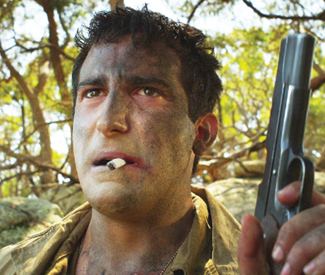
Speaking of wilderness terror and, alas, unsatisfying finales, retro-styled sci-fi adventure The 25th Reich screeches to a halt with a “to be continued” cliffhanger, just when shit is starting to get mind-blowingly insane. Argh! Fortunately, for the most part, the film — about a group of World War II soldiers who time-travel back and forth, squabbling among themselves as they pursue UFOs and Nazis — works just fine as a stand-alone, though its gleeful reliance on stereotypes (the Jew, the Italian, the Southern redneck, etc.) feels less like a nod to classic war films than a way to avoid actual character development.

The best gimmick centers on Captain O’ Brien, an erstwhile matinee idol not above reciting cornball lines from his own films at crucial moments. That he’s played by Jim Knobeloch — who also appeared in 2012’s other Nazi sci-fi flick, Iron Sky — is a perfect bit of obscure-genre synergy.

It wouldn’t be HoleHead without zombies. Comic The Living Corpse gets the (re-)animated treatment in The Amazing Adventures of the Living Corpse, which follows the titular beastie’s existential crisis after he — oops! — rips apart almost his entire family. Spared is a young son who is sent to a creepy boarding school for orphans, though he’s soon plucked from its halls to apprentice under a mad scientist. Meanwhile, the guilt-ridden corpse — real name: John Romero; memo to creative types: naming anyone “Romero” in your zombie-related whatnot is no longer a novel idea — roams the underworld and the land of the living, meting out occasional supernatural ass-kickings but mostly searching for his long-lost offspring.

The haunted-school scenes (complete with a kids vs. demons showdown) are clever, and the catchy soundtrack has punky flair, but the sheer number of plot threads nearly overwhelms the 82-minute film — maybe cool for fans of the comic, but viewers new to the material might wonder why, say, the “Spectral Protection Society” is elaborately introduced and then discarded. The overall effect is not nearly as fun (or “amazing”) as it should be.

Amazing, however, is one of many gushing adjectives I might use to describe my top pick of the festival: Mike Malloy’s Eurocrime! The Italian Cop and Gangster Films That Ruled the ’70s — a jazzy, lovingly-compiled homage to some of the trashiest, most mean-spirited films ever made. Everyone’s heard of Spaghetti Westerns, but poliziotteschi movies have yet to make a true cult breakthrough (or be remade by Quentin Tarantino, but I’m sure he’ll get there eventually). A groovy-sleazy score and endless clips, posters, and still shots set the tone for Eurocrime!, which gathers some of the genre’s biggest stars (laid-back John Saxon; gracious Franco Nero; bratty Antonio Sabàto) to look back at their years chasing each other across rooftops, brawling in junkyards, and working with directors like Umberto Lenzi (“the screaming-est director I ever met in my life,” according to actor Henry Silva).

The doc, a tad long at 137 minutes, also explores why the films became so popular, despite the fact that their scripts were often ripped wholesale from American “angry cop” films (and, later, from each other) — and why that popularity didn’t last (possible culprits: laughable dubbing, distracting mustaches, brutal violence against women). Newcomers won’t believe that such a world of insane film exists, longtime aficionados will dig the nostalgia, and both camps will enjoy Eurocrime!‘s high-energy appreciation of a genre long overdue for this kind of treatment. 

ANOTHER HOLE IN THE HEAD

Nov. 28-Dec.9, $10-$12

Various venues, SF

www.sfindie.com

Under $10 gift guide: Neighborly love

0

Our Holiday Guide “neighborhood” is Cookie Dough, who plays Sofia Petrillo in the now-classic annual drag queen production of The Golden Girls: The Christmas Episodes. The show runs Dec. 6-30, get your tickets at goldengirlssf.eventbrite.com

>>CHECK OUT THE REST OF OUR HOLIDAY GUIDE FOR MORE CHEAP GIFTS, THINGS TO DO, ALTERNATIVE CHEER

SAN FRANCISCO MAPKINS, $5.50

Presents for acquaintances should draw on the things you have in common — like a love of your shared territory.

Lola, 1415 Grant, SF. www.lolaofnorthbeach.com

HAND-WOVEN RAAHUNA COLECTIVO CHANGE PURSE, $10

Oaxaca, Mexico’s women-run Raahuna artisan collective makes this beautiful, fair trade purse. It’d make a socially-conscious (and hip) token of your esteem.

Artillery Gallery, 2751 Mission, SF. www.artillery-ag.com

STICKY NOTES BY JUNZO TERADA, $9.95

If your neighbor’s going to be leaving you passive-aggressive memos about placement of recycling bins, they may as well be on these friendly animal and guitar-shaped sticky notes.

Kinokuniya Bookstore, 1581 Webster, SF

NEIGHBORHOOD SOAPS, $10

Associate yourself in their minds with good, clean living with these soaps from San Franpsycho’s Divisadero store. Choose from Golden Gate Park, Mission, Hayes Valley, Potrero Hill, Pacific Heights, SoMa, Nopa, Ocean Beach, and more.

San Franpsycho, 505 Divisadero, SF. www.sanfranpsycho.com

WEE BOWL, $8

In addition to poetry-engraved ceramic necklaces and porcelain buttons, San Franciscan Lynae Zebest sells these sweet little bowls on her Etsy site.

Zebest Pottery, www.etsy.com/shop/zebestpottery

FARMER’S MARKET FLOWER BOUQUET, $3-10

Every Tuesday and Saturday from 9am-1pm Santa Rosa Flowers sells bright bundles of blooms perfecting for brightening your giftee’s foyer, or even cubicle

Alameda Farmers Market, Webster and Haight, Alameda