SF

On the Cheap listings

0

Events compiled by Cortney Clift. For information on how to submit events for consideration, see Selector.

WEDNESDAY 15

Information Technology Talk World Affairs Council, 312 Sutter, SF. www.worldaffairs.org. 7-8pm, $15. Will the advancement of technology will solve all of humankind’s problems? One of today’s most respected cyber philosophers Evgeny Morozov doesn’t think so. Join him tonight as he discusses what might happen if we continue on our path that diverges from the natural imperfections of human life toward a digitally standardized age.

Oakland Walking Tour Paramount Theatre, 2025 Broadway, Oakl. www2.oaklandnet.com. 10am, free. RSVP at (510) 238-3234 or aallen@oaklandnet.com. Whether you’re an Oakland resident or looking to get better acquainted with the city, take to the streets and join this 90-minute walking tour of Uptown and Lake Merritt. Volunteers will guide you past sparkly Art Deco landmarks like the Fox and Paramount theaters and the Floral Depot. Finish up atop the Kaiser Center’s secret rooftop garden for a camera-worthy view of Lake Merritt. Because what better way to wrap up a walk than in a perfectly manicured rooftop garden?

THURSDAY 16

Jaron Lanier: "Who Owns the Future?" JCCSF Kanbar Hall, 3200 California, SF. www.jccsf.org/arts. 7pm, $10. Computer scientist, musician, and digital media pioneer Jaron Lanier will be at the Jewish Community Center to discuss his new book Who Owns the Future? Lanier will speak about the effects social media has on the economy and the paths we will take to move toward a new information economy.

FRIDAY 17

Fun Times with Friends Lost Weekend Video 1034 Valencia, SF. www.lostweekendvideo.com. 8pm, $10. So you’ve been to a stand-up show before. But have you been to a stand-up show with free cake? Fun Time with Friends (FTWF) aptly summarizes its event as something like "a comedy show crashing a party, or a party crashing a comedy show." As this is the premiere FTWF event, its hilarious founders will take to the stage. Some of which include: Ron Chapman, Aly Jones, Scott Simpson, and Brandon Stokes.

World Congress on Qigong and Tradition Chinese Medicine Hotel Whitcomb 1231 Market, SF. www.15thworldcongress.eventbrite.com. 9am-9:30pm, free. Register online. Think East this evening at a world-traveling event that aims to educate attendees on the benefits and practices of traditional Chinese medicine and Qigong– physical and breathing exercises related to tai chi. Acupuncturists, herbalists, martial artists, physicians, and clinical researchers will be hosting workshops throughout the day and opening festivities will kick off in the evening at 7pm.

SATURDAY 18

Little Paper Planes store opening 855 Valencia, SF. www.littlepaperplanes.com. 6-9pm, free. Be real, did you get Mom a present worth her love on Mother’s Day? Of course not, but today’s brick-and-mortar opening of this beloved website of goods made by small producers is the perfect opportunity to be a good child again. Little Paper Planes moves onto Valencia Street today, and DJs Jackie Im and Aaron Harbour will be dropping beats to which you can happily peruse the shop’s selection of well-made, quietly gorgeous clothes, housewares, and accessories. (Your momma thanks you in advance.)

Festival of the Silk Road Mexican Heritage Plaza Theatre, 1700 Alum Rock, San Jose. www.festivalsilkroad.com. 2-10pm, $10-45. The 7,000-mile Silk Road trade route extending through Iran, China, Turkey, India, Greece, and Egypt will be recreated today for a cross-cultural extravaganza. During the day take part in various dance and musical workshops, check out a costume exhibit, or snatch up some jewelry and art at the Silk Road Bazaar. In the evening sit back and enjoy performances by an array of ethnic dance groups.

Ferry Plaza Farmer’s Market Birthday Bash Ferry Plaza, Embarcadero at Market, SF. farmersmarketbirthdaybash.eventbrite.com. 9am-noon, free–$20. The best thing about birthday parties is often the food. We think it’s safe to say the food at this party is going to be hard to beat. Celebrate the 20th anniversary of the Ferry Plaza’s market and its contribution to the Bay Area’s farm to table movement. Ticket holders will enjoy a build-your-own shortcake station, a custom beverage and juice bar, and special party favors. Non-ticketed, free activities include a market-wide treasure hunt and presentation by local luminaries.

"The Whole Enchihuahua" Dolores Park, SF. www.sfspca.org. Noon-3pm, free. Be warned: your cuteness tolerance is going to be tested this afternoon. The third annual Whole Enchihuahua — a canine-filled afternoon organized to bring awareness to the high numbers of Chihuahuas in shelters — will consist of a doggie fashion show, adoptable animals, free dental checks for your pup, and food trucks (serving up people food, although we all know that your four-legged friend will get your scraps).

SUNDAY 19

Amgen Tour of California 2013 Marina Green, Marina and Fillmore, SF. www.amgentourofcalifornia.com. 8:15am-noon, free. Whether you are a cycle-to-work or cycle-across-the-country kind of biker, the Amgen Tour of California is sure to stir up some motivation within your little bike-loving skull. Competitors will be biking down from Santa Rose to cross the finish line of the 750-mile California coast race. Where’s the best place to watch? We advise snagging a spot on the Golden Gate Bridge, which will be closed to cars during the event.

TUESDAY 21

Feast of Words SOMArts Cultural Center 934 Brannan, SF. www.feastofwords.eventbrite.com. Doors open 6:30pm, $5 with potluck dish or $12 at the door. Scarf down some literature amongst friends and food at this monthly literary feast. Tonight’s special guest will be author of Birds of Paradise Lost Andrew Lam. Grab a plate of homemade goodies, take part in writing exercises led by Lam, and share your on-the-spot scribbles for a chance to be entered in a drawing for edibles, books, and other prizes.
Changing the metaphor

2

news@sfbg.com

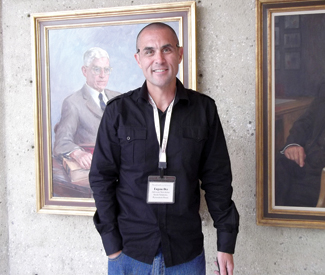
With my partner-in-crime Keith Chandler at the wheel, we’re driving through San Francisco on our way to Stanford University Law School for the Three Strikes Summit, a deeply personal topic to both of us. Three Strikes is partly why I served 15 years in prison, and Stanford’s Three Strikes Project is a big reason why I was released earlier this year.

Chandler is a renowned activist, ex-lifer, and my comrade in the struggle to reintegrate inmates back into life in the outside world. I have become a fanatic on a mission, and this May 2 event will feature many of the top criminal justice players responsible for last year’s Three Strikes reform measure, from Attorney General Kamala Harris to San Francisco District Attorney George Gascon.

So the path we carve through the City takes us deep into the heart of the reform movement that changed my life. Change is in the air, and I’m following the scent back to its roots.

POSTER CHILD

Three Strikes as a metaphor made perfect sense. In the 1980s, the justice system was a revolving door. Relatively short sentences for serious and/or violent crimes were the norm, sentences often cut in half by parole. Lengthy records of arrests and convictions fueled a movement to get tough on crime.

As per usual, bad things happened. In 1993, sexual predator Richard Allen Davis killed Polly Klaas, a 12-year-old girl from Petaluma. A general consensus formed that repeat offenders needed to be punished to the fullest. So prison industrialists came up with a catchy solution: three strikes and you’re out. Commit three violent crimes, the authors sold to the public in 1994, and you’ll serve 25 years to life.

However, the fine print expanded the concept to any third felony — even crimes that would be misdemeanors to non-parolees — and California’s prisons swelled.

In many ways, I was a Three Strikes poster child. As a wild youngster in Sacramento, I was a menace. At 18 in 1984, I began a four-year spree of crimes that included armed robbery, assault with a deadly weapon, and residential burglary. For those transgressions, among others, I received a 12-year sentence in 1988.

I embraced sobriety, college, and writing as I served six discipline-free years. Back then, we had a right to participate in rehabilitative endeavors. Effective programs like cognitive restructuring and life-skills classes might have been foreign concepts, but I benefitted from college, weight training, and family visiting.

But I was still trapped by my criminal thinking — plagued by my nefarious associations. Though I hid it well, I was all fucked up.

In 1994, I was paroled into a whole new ball game: the era of three strikes. As soon as the law passed, the horror stories began to amass. Guys were being struck out for stealing from stores or possessing small amounts of drugs. California became the republic of the intolerant. Mired by myriad imperfections, I stepped up to the plate and swung for the fences.

A 28-year-old undergraduate with a range of goals, I started a construction company and contemplated graduate school. And instead of taking my construction company seriously, or even finishing my undergraduate education, I started using and selling meth — partying like there was no tomorrow.

In my broken way of thinking, I convinced myself that supplementing my income made perfect sense. In reality, it was an excuse to get high for free and it all fell apart. Two parole violations for drug cases seamlessly lead to a felony drug case in 1999. I went from baller to squalor, and hit a line drive right to the catcher. I struck out and faced a lifetime behind bars.

When my life came to an end, I chose to change the rules of my game. I found purpose by advocating for my demographic. As the system began to shift towards smart-on-crime principles in the mid-’00s, I managed to shift with it. My two-pronged litigious and literary activism — a lifestyle that regularly put me at odds with my captors — morphed into rehabilitative advocacy.

As a result of voters approving Prop 36 last fall, my life sentence was lifted on March 22. The merits of my rehabilitative record coalesced with a successful one-time review. As I walked out of prison a week later and jumped into the arms of my childhood sweetheart, I told Charlotte, “Let’s get the hell out of here before they change their minds.”

ROAD TO REFORM

After all the craziness of 15 years of incarceration, I have been decompressing in a transitional housing program. With a bachelor’s degree and multiple drug counseling certifications, I’m establishing myself as rehabilitative consultant. Moreover, I received the ultimate welcome home gift when The Sacramento Bee covered my reentry.

As we arrived on the Stanford campus, I thought of the friends and foes I left behind in prison. To me, this is serious business, a personal progression of nonstop advocacy. Keith’s gig as a criminal justice consultant now includes a new task — delivering me into the apex of reform.

Stanford Law School started the Three Strikes Project in 2006. The human lessons learned from securing the release of 26 three strikers motivated project director and law professor Mike Romano to shift tactics. He decided to take a bigger swing at a very bad law. By avoiding the mistakes from a catastrophic 2004 reform initiative, Romano could secure the release of thousands rather than dozens.

The project decided a narrowly drafted initiative would have the best chance for success. To qualify for a reduced sentence, minor third strikers without murder or sex offenses in their backgrounds would be vetted by the courts to determine whether they currently posed an unreasonable risk to public safety. He took down one of the nation’s toughest laws with 69 percent of the vote.

Of the 9,000 three strikers in California prisons, Prop. 36 made nearly 3,000 eligible for review. On the day of the summit, a prison official reported 460 had already been released — a number that will climb daily. While most counties have over 100 candidates — and some hotly contested cases are on the horizon — Los Angeles has a staggering 1,325 cases. San Francisco, by contrast, only has two, the result of SF’s sober, compassionate approach to charging three strikes cases.

Hearing the statewide cries from their landmark measure, Stanford invited all relevant parties to discuss how to move forward. Harris, the keynote speaker, wrapped her entire speech around a unique prosecutorial career that began in San Francisco.

As the author of Smart on Crime: A Career Prosecutor’s Plan To Make Us Safer, Harris models cutting-edge thinking as the state’s top cop. She pursued data-driven policies as she learned to look at “other issues through the lens of public safety.” By doing so, Harris avoided the sensationalism mentality that leads to hyper-incarceration.

Her successor, Gascon, followed her approach. Research showed Gascon that “higher levels of incarceration don’t translate into increased public safety.” So he teamed up with Stanford, the NAACP, and other like-minded officials as early supporters of the Three Strikes Reform Act of 2012.

Overall, the summit included a range of panelists who discussed a number of relevant topics. But how to adjudicate all these cases was juxtaposed by the need to find resources for reentry services. Stanford professor Joan Petersilia has been instrumental in every recent criminal justice policy change in California, and she warned of the need for more reentry programs.

“What goes down can easily go up,” Petersilia said, warning the crowd about prison populations and crime rates. “Roughly $1 million is being spent on the average three striker, and zero is being spend on their reentry.”

FREEDOM

Most of us are being released without any supervision or any type of state or county funds associated with probation or parole. Since we have far exceeded our sentences, the average three striker is leaving prison with little to no resources, let alone being able to tap into existing programs. I’m paying for my program out of my own pocket.

While it took decades to create the worst justice and prison system in the country, it’s definitely going to take years to correct. I advocated for more than a decade while buried under draconian measures buttressed by dreadful prison policies. Thus, I am excited groundbreaking issues are being discussed by people like this.

For those officials still trapped in their broken thinking, I also know how hard it is to abandon criminal thinking. However, like Gascon said, “Prop 36 is changing the metaphor.”

Seated in Keith’s sports car with the top down, we are making our way up 280 towards the city. Heading back home to Sacramento, I felt like a passenger on the Titanic with an alternate ending. While I am still in the honeymoon stage of my reentry — and reluctant to let this feeling go — I am at the beginning of a new era. We all have work to do.

My life of crime and activism has been an open book — and so is my reentry. After spending the day with journalists and actors in the field of justice, now I feel an even greater obligation to repay my debts. For the first time the light at the end of the tunnel is no longer blurred by the cold hard steel of the penitentiary, or maintained by tone-deaf policy-makers.

I still can’t believe it — I am free.

Tech workers aren’t all evil

59

Read the full original blog post this op-ed was drawn from here.

OPINION I hear a lot of talk, especially from my own queer community, about how “tech people” are ruining San Francisco. From skyrocketing rent prices and disappearing diversity to economic and cultural ruination, the tech community has become the scapegoat for a lot of the problems we are facing in the city as a whole. As a tech worker, I’m writing this to say: wake up and direct your anger at the real sources of these problems.

First of all, let’s get one thing straight. The vast majority of “tech people” in San Francisco don’t make nearly as much money as you think they do. We are not all making six-figure salaries, we are not personally driving up rent costs, and we are not killing the cultural community here. Simply put, we are trying to further our careers and make the city we call home a nicer place to live.

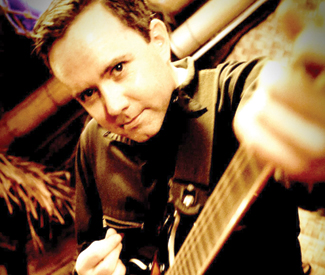
From day one of living in San Francisco, I’ve put blood sweat and tears into building the cultural community in SF (music, mostly), and I’ll never stop doing that. I first moved here with my husband in 2006 from Indiana. I immediately immersed myself in the music scene here, forming a touring band and quickly becoming a booker and promoter for live shows. It wasn’t until several years into my time here that I snuck my way into the tech industry. Here I am, five years into my tenure at Bay Area music tech startup Thrillcall, hustling every day to help build music communities not only in SF, but across the country.

The tipping point for me, to be honest, was the nonsense of people beating up a Google bus piñata in the Mission, shouting epithets about how they’re the bane of San Francisco. The people that ride those buses are not to blame. They are not heading up that company, they don’t make millions of dollars, and they certainly don’t deserve the hatred being directed at them by many people here in San Francisco.

You know what is ruining San Francisco? Complacency. Apathy. Misguided hate. Inaction. Put some energy into making change, not senseless whining.

If you’re upset about rising rent costs, be angry at the money-hungry landlords that do absolutely nothing to put money back into the city or help build culture. Want SF prices to stop skyrocketing? Let’s organize and drive proposals with our city government. Upset about the recent sanitization of many of the lovely traditions and values of San Francisco? Get mad at Sup. Scott Weiner, who is actually supported by a lot of longtime, non-tech residents. Want more culture, arts, music? Maybe try reaching out to people that can help in the tech world instead of complaining about everything going downhill.

We are not the companies we work for, however large or small. Corporations, for the most part, suck.

We’re not the douche bags you think we are. Let’s put our energy toward doing good, instead of just pointing fingers. We all know that. Demonizing the people that work for them (while contributing to this wonderful city) is baseless, classless, and makes you look like a total dick.

A great deal can be accomplished if people take an active role toward coexisting, rather than shouting “ENEMY!” to anyone who will listen.

Johnny Koch is promotional manager, artist management, and site administrator at Thrillcall.

Ultimate zero

3

rebecca@sfbg.com

In January, Mayor Ed Lee appeared on the PBS NewsHour to talk up the city’s Zero Waste program, an initiative to eliminate all landfilled garbage by 2020 by diverting 100 percent of the city’s municipal waste to recycling or compost. “We’re not going to be satisfied,” with the 80 percent waste diversion already achieved, Lee told program host Spencer Michels. “We want 100 percent zero waste. This is where we’re going.”

But somewhere in Te Anau, New Zealand, an environmental scholar tuning into an online broadcast of the program was having none of it. “I sat there thinking, no, you’re not. It would be great if you were, but you’re not — for obvious reasons,” said Robert Krausz, who’s working toward a PhD in environmental management, describing his reaction during a Skype call with the Bay Guardian.

Krausz, a Lincoln University scholar originally from Canada, spent three years studying municipal zero-waste initiatives internationally, and completed an in-depth, 40-page analysis of San Francisco’s Zero Waste program as part of his doctoral thesis.

He may as well have taken aim at a sacred cow. The city’s Zero Waste program has near-universal support among local elected officials, and has garnered no shortage of glowing media attention. San Francisco’s track record of diverting 80 percent of waste from the landfill is well ahead of the curve nationally, scoring 15 percent higher than Portland, Ore., a green hub of the Pacific Northwest, and 20 percentage points or higher above Seattle, according figures provided by Recology, San Francisco’s municipal waste hauler.

Despite the city’s well-earned green reputation, Krausz arrived at the pessimistic conclusion that “San Francisco’s zero waste to landfill by 2020 initiative is headed for failure.” In seven years’ time, he predicts, the program deadline will be marked with a day of reckoning rather than a celebratory gala. “I think the city is setting itself up,” Krausz told the Guardian. “Somebody’s going to be holding the bag in 2020.”


ANOTHER AFFLUENT CITY

Sporting a goatee and glasses, Krausz comes across as the type you might find locking up his bike outside a natural foods store with canvas bags at the ready. When he visited San Francisco, he said he was ready to be wowed by the example of an ecologically enlightened city, yet ultimately left in disappointment. “It was just another affluent American city, in terms of consumption.”

The problem, he argues, is that people are still buying way too much disposable stuff — and a significant amount can’t be recycled. Plastic bags, food wrapping, pantyhose, plastic film, pet waste, construction materials with resin in them (like the popular Trex decking), and particularly disposable diapers have nowhere to go but into the landfill.

San Francisco produces a total of about six kilograms of trash per person per day before diversion is factored in — three times the U.S. national average. That’s a sobering figure that puts a slight dent in the city’s eco-conscious image. It’s not really fair to denizens of the city by the Bay, because it counts trash generated by 20 million annual visitors, daytime employees, developers, and businesses as well as residents. Nevertheless, the trash output ranks well above the per capita average for the Eurozone, which clocks in at a minimalistic 0.5 kg per person per day.

The city has earned its bragging rights for making strides toward diverting waste from the landfill — yet truckloads of waste still leave the famously green city every day. Since 2003, Krausz notes, San Francisco’s overall waste generation has actually increased, from 1,900 to 2,200 kilograms per person per year. At the same time, the per capita amount of waste going into a landfill has dropped, from about 1,000 to 500 kilograms per year. That’s still a lot of garbage.

Krausz argues that San Francisco has no comprehensive plan for achieving Zero Waste, while at the same time having little control over “top of the pipe” consumption, which generates a glut of trash. “While the city has achieved success at managing waste at the end-of-pipe, it has thus far failed to address the fundamental problem of consumption, which is driving waste generation,” his study notes.

Guillermo Rodriguez and Jack Macy of San Francisco’s Department of the Environment counter that there is a strategy, involving a host of different measures ranging from education, to policy initiatives, to incentive programs aimed at reducing waste. They think zero waste is possible. “We’re probably at 99 percent diversion here in this office,” said Macy, who serves as the city’s Commercial Zero Waste Coordinator. “At least 90 percent of the discard stream is recyclable and compostable,” he added. And as for the last 10 percent, “that pie will be shrinking as we find more markets” for recyclables.

Krausz also raised skepticism about Recology’s bid for a landfill contract that would extend until 2025, five years beyond the deadline for all waste elimination. To that, Recology’s Eric Potashner responded that state law requires 15 years of disposal capacity to guarantee a safety net, regardless of municipal aspirations.

Krausz is critical of San Francisco officials for promising zero waste, but he acknowledges that manufacturers of disposable goods, not city officials, are to blame. Ambitious legislative measures such as San Francisco’s mandatory composting program and a ban on plastic bags have been enacted and achieved tangible results, but for items like ubiquitous thin-film plastics, dirty diapers, synthetic materials, and the like, good solutions have yet to be found.

Krausz’ study also determined that no city on the planet that’s set out to do so has ever actually succeeded at achieving zero waste. “If you are a city that is a member of Western civilization as we know it, you’re not going to be zero waste to landfill, because you participate in the global economy,” Krausz states plainly.


SF’S TRASH PIT

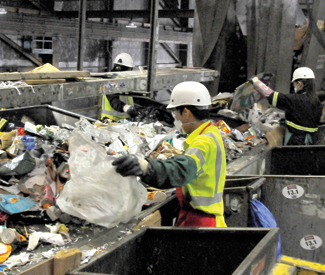
On a recent Friday morning, Recology’s Potashner and Paul Giusti led a tour of the city’s recycling and waste processing facilities. It featured a stop at the transfer station, housed in a large warehouse off of Tunnel Road where all the refuse from the black trash bins is deposited before being carted off to the Altamont Landfill. A sweet, pungent aroma hung in the air. “We call this the pit,” Giusti explained as we approached a sunken area that could have contained multiple Olympic-sized swimming pools, extending a story or two below us into the earth. “This is the last frontier,” Potashner added. “The last 20 percent.”

It was filled with an astonishing quantity of trash, making a tractor that ambled awkwardly over top the mound to compact it down appear toy-like in comparison. The sea of discarded material contained every hue, and floating around in the debris were orange juice containers, cardboard boxes, and thousands upon thousands of (banned) plastic bags. Between 200 and 300 garbage trucks eject their contents into the pit each day, and a single truck can hold up to four tons of trash.

Giusti started working for Recology, formerly NorCal Waste Systems, in 1978, following in the footsteps of his father. Back then, the pit was more like a mountain: “When I would dump my truck, I could walk up this pile,” he said, gesturing toward a set of sprinklers suspended from the ceiling to indicate how high it once extended. State data confirms the story: In 2011, according to CalReycle, San Francisco sent 446,685 tons of waste to the landfill. That number has steadily declined over time; in 2007, it stood at 628,914 tons.

Asked for his reaction to Krausz’s thesis that the Zero Waste program won’t ever actually get to zero, Guisti turned the question around by asking, what’s the harm in trying? “Let’s say you said, zero waste is unattainable,” he said. “Then what’s the number? I think zero waste is an ambitious goal — but if we get to 90 or 95 percent, what a tremendous achievement.” Setting the highest of bars is important, he said, because striving for it provides the motivation to keep diverting waste from the landfill.

In order to actually reduce the city’s garbage from 446,685 tons to zero in the next seven years, Zero Waste program partners Recology and San Francisco’s Department of the Environment face a twofold challenge. First, they must prevent compostable and recyclable material from getting into the landfill pile. Second, they must find solutions for diverting the waste that currently has nowhere else to go but the landfill. With a combination of seeking new markets for recyclables, using technology that can sort out the recyclable and compostable matter, and implementing incentives and educational outreach programs, they’re still focused on the goal. “It’s hard to tell how close we’ll get to zero in 2020,” Macy said. So even if zero waste does not actually mean zero waste in the end, that goal “sends a message that we want to move toward being as sustainable as we can.”

Alerts

0

WEDNESDAY 15

Bike ride for fallen cyclists Justin Herman Plaza, SF. ramona.wheelright@gmail.com. tinyurl.com/bq623vg. 6:30pm, free. On the third Wednesday of May each year, the Ride of Silence is held in cities throughout the world to honor cyclists injured or killed while riding. The ride is also intended to advocate for safe streets for all users. The San Francisco 2013 contingent will visit nine locations, where ten bicyclists have been killed since 2001, to honor their memories.

THURSDAY 16

Sportswriter Dave Zirin in conversation with KALW’s Rose Aguilar Mission Cultural Center for Latino Arts, 2868 Mission, SF. tinyurl.com/cyujal2. 7pm, $10. The Center for Political Education (CPE) and Solespace present Rose Aguilar, the host of KALW’s “Your Call,” for a special on-stage discussion with noted author Dave Zirin, an author who writes regularly for The Nation and whose commentaries decode the political messages and messaging embedded in sports. Aguilar has hosted Your Call, a daily public affairs radio show on KALW, since 2006. This the only chance to catch Zirin in SF; he’ll appear a second time on May 17 in Oakland (visit link for details).

SATURDAY 18

Yogathon to raise awareness of HIV Madison Square Park, 849 Madison, Oakl. asianhealthservices.org/0518/ 8:30am-1pm, $10. Join Asian Health Services’ HIV/AIDS program for its Fourth Annual Strike a Pose! Yogathon, held in observance of National Asian and Pacific Islander (API) HIV Awareness Day. The event was created to raise awareness and resources for HIV/AIDS prevention within the Asian American, Native Hawaiian, and Pacific Islander (AANHPI) community in Alameda County.

Bay Area Debtors’ Assembly. Unite Here, Local 2, 209 Golden Gate, SF. strike-debt-bay-area.tumblr.com. (415) 568-6037. 2-5pm, free. Strike Debt Bay Area, a local chapter of an international movement formed to resist unjust debt, will host its second Debtors’ Assembly, with the goal of rethinking debt as a political platform for collective resistance and action. Come to the Assembly to learn about tools for escaping debt, sharing resources, skills and experiences, and brainstorming.

MONDAY 20

Eve Ensler reads from her memoir First Congregational Church, 2501 Harrison, Oakl. tinyurl.com/brcvovn. 7:30pm, $35 advance / $38 door. KPFA Radio, Code Pink and Pegasus Books present “Eve Ensler: In the Body of the World,” hosted by Erica Bridgeman. Internationally renowned playwright, activist and author Eve Ensler is the founder of V-Day, the global movement to end violence against women and girls. Ensler will discuss her memoir, In the Body of the World, taking readers through her personal history of sexual abuse, her travels to the Congo, her diagnosis with cervical cancer, and her reflections on the resilience of humanity.

TUESDAY 21

An Evening with Eduardo Galeano First Congregational Church of Oakland, 2501 Harrison, Oakl. tinyurl.com/bl8mb4z. 7:30-9:30pm, $15 advance. One of Latin America’s most distinguished writers, journalists and historians, Eduardo Galeano is the author of the Memory of Fire Trilogy, Open Veins of Latin America, Days and Nights of Love and War, and many other works. Born in Montevideo in 1940, Galeano lived in exile in Argentina and Spain for many years before returning to Uruguay. In his latest work, Children of the Days: A Calendar of Human History, each page has an illuminating story that takes inspiration from that day of the calendar year. Hosted by KPFA Radio.

Gang’s all here

0

culture@sfbg.com

THE BLOB We so very want to love the brand new Sydney Town Tavern (531 Commercial, SF. www.sydneytownsf.com) in the Financial District, named after a roving gang of Australian, Irish, and English convict-rogues who terrorized the Barbary Coast. The Blob certainly loves a bad boy or five! The pedigree is right: Syndney Town is sister to Irish Times, right around the corner. And the drinks are nice — a huge, like pint-glass huge, pomegranate margarita will solve any afternoon problems, and a refreshing orange crush replicates an Orangesicle, though not too sticky-sweet. But the menu falls too much on the typical gourmet bar snacks side, executed not-so-stellarly: fish was leathery and its chips were a droopy few; meatballs were firm but unmemorable; truffle mac and cheese was dry and pasty. Channel your namesake and do something naughty, Sydney Town Tavern!

PS: Cherries are amazing right now; grab some at the farmers market this week.


A+ DEEP GREEN FROM JUICE SHOP

Friends, we are living in an era of $9 juice. There’s a complex story behind the founding of Juice Shop by brothers Charlie, Ben, and Jake Gulick (and Charlie’s wife Linda) involving miraculous liver cleansing, which we won’t relate here, because “liver cleansing.” We will relate, however, the taste of our glass-bottle pint of cold-pressed, unpasteurized, kale-parsley-spinach-romaine-etc. A+ Deep Green juice, purchased at a rustic-cute streetside stand in the FiDi (there’s one in Cow Hollow, too): “Deeep Greeen deeelightful. Immediately, the Blob was ready to conquer her day — probably aided by some sort of squeaky super-clean hyper-liver.

Other options include Coco-Clorophyll, pineapple pear chia, Alpha Green, Beta Beet, and apple lemon ginger. Juice Shop will also program an entire 1-10 day cleanse to suit your needs, including an array of juices, plus aloe and blue-green algae, starting at $62. Has there ever been a kickstarter for a personal cleanse?

353 Pine, SF. www.juiceshopsf.com


PASTRAMI ON RYE AT SHORTY GOLDSTEIN’S

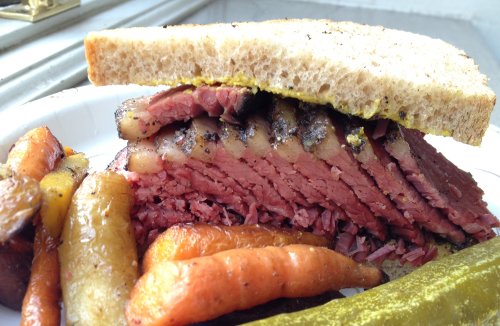
So long ago seem the days when the concept of gourmet Jewish deli food was unconcepted, and that cute guy with the dreads from Wise Sons was hawking chocolate babka out of a hand cart on Ferry Plaza. Wouldn’t you know it, here we are, digging with both hands and a fork into the mountain of meat Shorty Goldstein presents as a pastrami on rye ($12). Lean is definitely not the byword here, with thick, peppery, fat-laced slices piled up like brisket on solid, if completely overwhelmed, rye (mustard and accompanying pickle provided). The Blob cannot lie — it took her two days to finish this giant, which comes out to $6 per lunch. Not bad, and helps explain the lines down the street.

As if that were not recommendation enough, when we showed a picture of said sandwich to our very Jewish uncle from the East Coast, he grunted in condescending amusement, which in old-school East Coast Jewish terms is the closest any gourmet West Coast deli food is going to come to approval, so what’s to complain?

We piled on a hefty side of farm fresh veggies as a treat ($5) — that day it was rainbow carrots roasted with a hint of mint. Other sandwich options include exactly what you’d expect: corned beef (every day), egg salad (Mondays), beef tongue (Thursday), etc. Go eat, already.

126 Sutter, SF. www.shortygoldsteins.com


MATJES HERRING AT WALWERK

Let’s waltz out of the Financial District and its parade of newbies, and right into SoMa for an old favorite, Walzwerk, which was hopping on an early Sunday evening. (If there’s ever a time for wonderful, heavy East German food, Sunday dinner time is it.) The Blob had not been there for at least one historico-dialectical cycle, but the giant etchings of Marx, Engels, and Lenin on the walls still amused, the fabulously direct waitress remembered us, and the German Democratic Republic memorabilia remained fascinating and somehow hilarious.

And the food. Oh, the food. Mouthwatering sauerbraten with pickled cabbage and hefty dumplings covered in gravy, chicken breast stuffed with apples and bacon, awesomely firm cheese spaetzle, “soljanka” cabbage soup with salami, bacon, and pickles. Treat of all treats? Tangy, dill infused matjes herring (mildly salted herring served “housewife-style”), with fresh fillets soused in sour cream with apples, onions, and pickles — a light, sweet take on Thousand Island dressing, maybe, served with firm pumpernickel for spreading. We love you, tangy-sweet East German housewife!

381 South Van Ness, SF. www.walzwerk.com

Bye bye Briski

3

marke@sfbg.com

SUPER EGO It’s been half a minute since I poked my stilettos through an extra-large Target bag and pulled it up to make an evening gown for hitting the town. I only have one sinus left over from the ’90s, so I have to pace my nightlife, ha AS IF. But lately sometimes it’s all like, “where’d everybody go?” when I go out. SF is definitely undergoing another of its periodic freak drains (although much wild unicorn magik still remains, as the Odyssey party proved last weekend).

In 1999 everyone was moving to NYC, in 2003 it was Portland, in 2007 it was Berlin, and now everyone’s either moving to Oakland or LA or beyond. Soon as I manage to turn around without falling down, someone’s gone: beloved DJ bear Claude VonStroke, party maniac Sleazemore, phantasmagoric art star boychild, radical queer activist Michael Lorin Friedman, future Ms. Drag Mess Universe Ambrosia Salad, almost all my tricks I didn’t want to leave…

Yes, it’s the economy, rising rents, influx of drones, lack of jobs or diversity or artistic opportunity, the outrageous wish to not live in a pantry with five other crazies. Also some people seem to think they want professional careers? What is this, “Star Search”?

Well, here’s another story of a beloved someone moving on — but unlike many others, this one’s a happy one (although it may reflect on just how high you can go in this town when it comes to dance music). “No, I’m not really afraid that once I move out of SF I won’t be able to afford moving back,” As You Like It crew resident and sweetest person ever DJ Briski, a.k.a. Brian Bejarano told me over the phone. “Someone will have a floor for me to crash on, and I’ve got family in Pacifica.” That’s where Briski grew up, but he spent a formative period raving in the UK in 2006, which cemented his transition from a psychedelic rock and punk fan to a deeper house sound. Minimal techno was breaking hard back then, but Briski cut his rave teeth at Back to Basics, the infamously gonzo darker-funk night in Leeds (now the longest running weekly in the world).

His signature groove is deep and somewhat tense, almost playfully post-punk — he’s great at ’80s rarities, too — and very consciously indebted to Bay psychedelic house legends the Wicked crew. In fact, his last gig here will be playing back to back with Wicked’s Jenö at the next As You Like It party, Fri/17 at Mighty.

Briski’s off to become the tour manager for one of tech-house’s biggies, Maceo Plex, who has basically achieved pop star status in Europe, and is now based in Barcelona. Briski met the Cuban-born Maceo in Dallas a few years ago, and grew close. “My girlfriend Mariesa [Stevens, also moving], became Maceo’s agent a few years back and we’ve been like a little rave family ever since. Our musical styles are very different, but I’ll be opening for him in some places, and have access to his studio and record label to continue developing my music.”

The only fear Briski has, really, is the fact that he doesn’t know Spanish (despite his family’s Nicaraguan roots). “I grew up here, and I know San Francisco will always be San Francisco, despite whatever changes come. You can still make the life you want here, and go as far as you can go with it. The dance scene is all about family and support — not just my crew, but everyone involved. It’s the true spirit of the city, and that will never die.”

AS YOU LIKE IT w/ Wagon Repair’s Mathew Johnson and Konrad Black, plus Briski B2B Jenö. Fri/17, 9pm-5am, $10–$20. Mighty, 119 Utah, SF. www.ayli-sf.com


THE CLOCK

Christian Marclay’s incredible round-the-clock collage of realtime film moments is one of the hottest nightlife events going — it plays 24-hours at the SF MOMA on Saturdays. You’ll need to get there two-and-a-half hours early to catch midnight, but the wait dies down for 4am, so maybe go then.

Saturdays through June 1, 10am until 5:45om on Sunday, $18. SF MOMA, 151 Third Street, SF. www.sfmoma.org


KASTLE

The SF-based major player on the moody, post-dubstep R&B-sample scene has knocked up an impressive array of hits and a big following. I was more impressed by his recent classic two-step mix, which showed he really knew his sound’s historical progression. With xxxy, Clicks & Whistles, Matrixxman.

http://www.youtube.com/watch?v=nhOn6XaULlU

Thu/16, $16–$18, doors 8:30pm, show at 9pm. The Independent, 628 Divisadero, SF. www.theindependentsf.com


DIRTYBIRD PLAYERS


Oh look, it’s goofball bass papa Claude VonStroke back in town to play with his wily gang of bass-keteers, including Justin Martin, Leroy Peppers (a.k.a. Christian Martin), and one of my favorites J. Phlip, who just returned from Berlin.

Fri/17, 9pm, $5 before 11pm, $20 after. mezzanine, 444 Jessie, SF. www.mezzaninesf.com


OBJEKT

Sonic sculpting with premium put on a dark bass edge from this Berlin-via-Britain dub minimalist: “expansive banging” is a term that comes up alot, which sounds just fine. With Gerd Jansen and the Icee Hot crew.

Sat/18, 10pm-3am, $10. Public Works, 161 Erie, SF. www.publicsf.com


“YAZ: UPSTAIRS AT ERIC’S”

Very cool. New “San Francisco Album Project” — made up of a gaggle of fabbies like DJ Chicken, Trixxie Carr, Nikki Six Mile, Elijah Minelli, Dia Dear, and Precious Moments is performing this classic album from beginning to end, with added dialogue, gender clown zazz, and visual treats. Dragons, the policeman knew, were supposed to breathe fire.

Sun/19, 7pm, $15 advance. The Chapel, 777 Valencia, SF. www.chapelsf.com


Psycho beach party

0

emilysavage@sfbg.com

TOFU AND WHISKEY Why don’t more surfers listen to surf music? I found myself in one of those fuzzy-eyed, web-based black holes, frustrated, rhetorically asking the question through the endless prism of social media a few months back. And furthermore, why don’t surfer-musicians play authentic surf rock? While the sound was born in Southern California in the early 1960s, most of the early musicians who incorporated it weren’t active participants in the sport for which it was named, save for Dick Dale. The oft-repeated story is that Dale wanted to reflect the sounds he heard in his mind while surfing. And around that time, Santa Ana, Calif. based guitar-maker Fender even ran ads with beach babes and the tag “Fender makes music to surf by.”

But in the past few decades at least, the more prominent surfer-musicians seem to mostly vacillate between producing pop-punk, reggae, or more commonly, your ubiquitous, folky, banana pancake-loving Jack Johnson boredom block.

Tom Curren is in an elite class, a world champion surfer and son of legendary big-wave rider Pat Curren, he’s an athlete who took all his souped-up energy, and left his sport to pursue…folk rock. He released first album In Plain View in March.

During an ancient ritual in which I participated last week — that would be my honeymoon on Oahu — the bus drivers, tour leaders, cabbies, and general friendly tourist industry folks kept offering up slice-of-life songs for our listening pleasure. You like music? Well, get a load of this beach-ready sound. Cue soft rock (Hawaiian-born) Jack Johnson, or, the late Honolulu singer-ukulele musician Israel “Iz” Kamakawiwo’ole. We heard Iz’s “Somewhere Over The Rainbow/What A Wonderful World” medley no fewer than 15 times in seven days. I asked my husband, who grew up surfing on the Central Coast, what was up with the surfer/surf rock divide and he quietly responded, “I’ve never participated in surf culture, I have no idea.”

When I returned to work this week, I asked local surf musician Donald Bell of Aloha Screwdriver a similar question, and he shut it down more academically, “I can’t speak for surfers. I don’t surf. I grew up skateboarding. I don’t know a single one of our fans who surf. What’s funny is that our biggest fans live in the gloomiest climates. We have a bunch of fans in Seattle.” He added, “I think that Californians have a kind of cultural cringe when they hear surf music, because it’s the kind of thing that always gets played in the background whenever a California beach scene is shown on TV. It can feel cliché. But once you get outside of California, that baggage tends to disappear and you get treated like an exotic import.”

Bell got it though, what I was after. I wanted the explosive electric guitar of Dale and the Trashmen, the wet noodling power of ’90s revival acts like Phantom Surfers and Man Or Astro-Man?, or powerful throwback shock of Guantanamo Baywatch or Trashwomen (those last two, by the way, will play the Burger Boogaloo fest July 6-7 in Oakland). OK, so Hawaii wasn’t technically the place to find the thriving surf rock stuff; if I’m being fair, I knew the style I desired wasn’t based there. Plus, I didn’t exactly plow through underground punk shows while visiting, being buried deep in the sand and fruity alcohol-based beverages and all.

So maybe it doesn’t matter if professional surfer-musicians are out there playing the music of their cultural ancestors, there’s still an avid fan base.

A week earlier, the husband and I walked down the aisle to the Ventures, “Walk Don’t Run” (“Pipeline” was considered but ultimately dismissed). See, this was the music I grew up loving. The vroom-vroom-vroom of wild guitar riffs, heavy reverb, Eastern scales, rapid and escalating drumming peaking, crescendoing, wiping out. Proto-beach punk.

“People forget that before the Beatles hit, surf music was once pop music in this country. Right now, pop music is very focused on a synthetic sound, but everything comes back around,” Bell says.

And there will be a fix of the good stuff nearby this weekend, at radio station KFJC’s Battle of the Surf Bands benefit (Sat/18, noon, $10, all ages. The Surf Spot, 4627 Coast Hwy., Pacifica. www.kfjc.org). Bell’s Alameda-based trio will play the yearly event for the second time. And the 16-band battle also includes Beachkrieg, Deadbeats, Mighty Surf Lords, Tomorrowmen, Frankie and the Pool Boys, Meshugga Beach Party, and more surf acts with cheeky names. The event benefits the station itself, and also will be broadcast using Live Cam.

Given that it does often feel like a maligned art form, the abundance of traditional surf bands participating every year at KFJC’s event (now in its sixth year) seems surprising.

“There are probably more surf rock groups in the Bay Area than any other location in the world,” Bell says, naming off many that will play the battle, and beyond. “A lot of that has to do with the continued support of KFJC and DJs like Phil Dirt and Cousin Mary who really championed the genre…I formed my first surf band when I was 16, and Dirt brought us into the studio to play live on the air for 30 minutes. It was crazy to have that kind of outlet. It’s unheard of.”

Now in his early 30s, Bell has continued to play in surf bands with his musician friends from high school — drummer Steve Slater and bassist Grant Shellen. They grew up together in Fremont and that’s where they formed that first band: Chachi, Boba Fett and the Wookiee. Bell says he initially found the genre through the surf revival acts of the ’90s like the Phantom Surfers and Shadowy Men on a Shadowy Planet, but then, once he was hooked, he tumbled backward toward the Ventures, Link Wray, the Shadows, and of course, Dale.

Aloha Screwdriver began in ’09, and the trio plays all instrumental music. “Sometimes it veers into rockabilly or like a Ennio Morricone spaghetti western vibe, or even like a Disney Haunted Mansion feel, but I’m always holding our songs up to this idea that they could carry a Tarantino-worthy action sequence.”


MYRON AND E

Listen to Myron and E’s single “If I Gave You My Love” and you’ll start to feel some involuntary movements, your head bouncing in agreement, shoulders shimmying side to side. It’s the nature of the solid gold soul beast. The duo was recently signed to tastemaker Stones Throw, and will release newest album Broadway, backed by Timmion Records house band the Soul Investigators, on the label July 2. With a handful of 45s already out there, the two — Bay Area bred Myron Glasper and Eric “E da Boss” Cooke — have successfully maneuvered an authentic soul sound that’s at once smooth and celebratory (with the help of some well-placed horns). The duo, which met on tour with Blackalicious, stops by Berkeley this weekend for the East Bay Soul Stomp 2. With Bang Girl Group Revue, New Love Soul Revue, DJ Derek See, DJ Der.

Sat/18, 8pm, $9–$12. Starry Plough, 3101 Shattuck, Berk.www.starryploughpub.com.


BLACK PUS

The first thing you need to know about Black Pus is that it’s just a looping Brian Chippendale — he of Lighting Bolt fame. For this project, the madman drummer (and forever art-school kid at heart) uses percussion, a triggered oscillator, and those echoing, distorted Lightning Bolt style vocals you’d expect. Most tracks sound like a spaceship lifting off and exploding into starry darkness, repeatedly. With CCR Headcleaner, Reptilian Shape Shifters.

Sat/18, 9:30, $10. Hemlock Tavern, 1131 Polk, SF. www.hemlocktavern.com.


Fair play

4

arts@sfbg.com

VISUAL ART It’s art fair time again. Last year there were three, this year there are only two, though it looks like artMRKT, which is taking over now defunct SF Fine Art Fair’s slot at Fort Mason, has pretty much absorbed the former’s area galleries. ArtPadSF, the more festive of the two fairs, will again be renting out all the rooms at the Tenderloin’s Phoenix hotel. (Both fairs run Thu/16-Sun/19). I can’t help but wonder, will there be synchronized swimming again in the pool this year?

>>View a slideshow of our fair picks here

Say what you will about whether or not art fairs are a reasonable way to actually engage artworks in a serious way (read: they’re not), they do offer exposure to people that are worth knowing more about. With that in mind, here’s our locals only guide to Bay area artists — some emerging, some established — whose work you can catch at the fairs.


ARTPADSF

Andrew Benson, Johansson Projects

Benson’s sometimes gooey, sometimes crunkly digital video/experimental software work breathes some ragged, frenetic energy into the standard trope of “relationships between the body and technology.” His piece is scheduled to be projected from the Phoenix onto the six-story building next door at 8pm, Thu/16-Sat/18.

Justine Frischmann, Unspeakable Projects

Frischmann’s paintings look like something that one of those spiders on Benzedrine would make. If it lived inside an Etch A Sketch. And used neon spray paint. During a dust storm. Trust me, these are compliments.

David Hevel, Marx & Zavattero

Hevel makes collaged sculptures and sharp pop abstract paintings, usually riffing on American celebrity. His work at the fair will be very MTV 1983.

Scott Hove, Spoke Art

Will Oaklander Hove be showing one of his intensely drugged up fanged wall cakes, a knotted rope work installation, or a surrealism-on-meth painting? Yeah, it all sounds good to me, too.

Jason Kalogiros, Queen’s Nails Gallery

Kalogiros makes edgy, dense, cerebral, photo-based works, lately by manipulating found commercial images. I’m hoping to see a couple from his series of Cartier and Bvlgari watches.

Ed Loftus, Gregory Lind Gallery

Loftus does photorealism pretty much the right way, by marrying intense attention to detail with an obsessive and neurotic subject matter that crawls under your skin ever deeper the more time you spend with it. While you’re in Gregory Lind’s space, also check out Thomas Campbell and Jovi Schnell.

Matt Momchilov, Unspeakable Projects

Momchilov queers punk and rock fandom in the traditional sense of the word, meaning his paintings and sculpture snatch and redirect standard accoutrements of punk fanboys and girls to point that hardcore laser focus in new directions and at more fey subjects.

Gregg Renfrow, Toomey-Tourell

I won’t blame you one bit if you try to lick Renfrow’s luminous, vibrating color field abstractions. His meticulous, precise, wondrous paintings are like visual everlasting gobstoppers, and I fully expect that by the time I see ’em, they’ll have a layer of saliva all over.

Jonathan Runcio, Queen’s Nails Gallery

Runcio makes incisive 2 and 3D work that takes traditional hardedge abstraction in the art concrete vein, shacks it up with remnants of urban architecture, and has a post-formalist lovechild.

www.artpadsf.com


ARTMRKT

Johnna Arnold, Traywick Contemporary

The fair’s Collector’s Lounge will be showing Arnold’s video created to accompany the richly saturated, haunting landscape photos that will be showing offsite at the gallery.

Carol Inez Charney, Slate Contemporary

Charney’s complex photographs were the single most outstanding thing I saw last year at ArtPad. That’s complex like a personality, not like your taxes. A year later, I’m prepared for the brainfreeze again.

Amanda Curreri, Romer Young

Curreri’s precisely conceived conceptual color and abstract works are subtle in that they tend to yield only small nibbles at first pass, but they’re deceptive that way, and usually end up smacking you around by the time it’s all over.

Lauren DiCioccio, Jack Fischer Gallery

DiCioccio has recently been applying her super-meticulous needlework to fastidiously x-ing out individual letters in pages of books, as an act of both scrutiny and physical redaction of the received, mediated world.

Joshua Hagler, Jack Fischer Gallery

Somewhere in the Hamptons summer home where Glenn Brown and Lucian Freud are renting with Mark Tansey and Matthew Day Jackson, Hagler is stoned on the couch making fart noises with his armpits. That is also a compliment.

Claire Rojas, Gallery Paul Anglim

Sure Gallery Paul Anglim shows Barry McGee, but I’ll be looking at the Rojas paintings, whose hard edge and off-kilter abstractions of interior architectural spaces are spot-on and mesmerizing.

Diane Rosenblum, Slate Contemporary

Rosenblum switches up hyperanalytical and conceptual works that incorporate research, crowdsourced interactions, and photography. I’m hoping to see images from a series of recent photos that work Flickr comments into the image.

Dana Hart Stone, Brian Gross

I can’t wait to examine Hart Stone’s paintings up close, which in the past have been made by repeatedly transferring or printing antique images in rows onto canvas. Also at Brian Gross are Bay Area stalwarts Roy de Forest and Robert Arneson.

Esther Traugot, Chandra Cerrito

Traugot combines found organic objects with crochet. I know what you’re thinking, but this is not a Portlandia skit. She does it the right way, promise.

www.art-mrkt.com/sf

4 reasons that spending $150 on Janelle Monae tickets is not 100 percent ridiculous

0

1. Her Thu/16 show is at the symphony It is! The show is at Davies Symphony Hall and features actual symphony musicians playing actual orchestral arrangements to back up android-andro chic Ms. Monae, whose set will include material from her new album even. She’s dropping through the Chicago Symphony later this month as a last-minute stand-in for Aretha Franklin, so you can go to her SF gig and chortle about the Windy City getting our original orchestral arrangement sloppy seconds. This will be a wonderful chance to see the Symphony dames approximate Rocky Horror Picture Show, if Thursday night’s fashion scene is anything like this episode of 106th and Park:

2. It’s a fundraiser Your million dollars are going towards teaching childrens how to play musical instruments. The SF Symphony’s Adventures in Music program reaches all 23,000 kidlets on the 91 SF Unified School District campuses, and exposes them to in-school concerts, musical curriculum, and private concerts at Davies Symphony Hall. Elementary school kids in SF get to go through five years of Adventures in Music programming, and the program also does professional development offerings for teachers and administrators. 

3. Alcohol, mingling Few concerts you will attend this year figure pre-and-post-parties into the ticket prices, but there you are — the Symphony has you covered. Get to the venue at 7pm and you will dive politely into a carefully meted vat of sparkling wine in the well-lit, curving foyer wonderland of Davies Symphony Hall. After the concert, all will reconvene across the street at City Hall to talk about how wonderful everything was during yet another cocktail hour. 

4. Monae’s new single with Erykah Badu You’ve heard this, right? Not guaranteeing that it’ll be performed on Thursday with the full compliment of world-class musicians, but we have heard that Fat Belly Bella has been creeping around the Bay recently, performing at the Bonobo show at the Warfield earlier this month. Manifest it, friends. The video is genius: 

Janelle Monae at SF Symphony

Thu/16, 7pm reception, 8pm show, $150-340

Davies Symphony Hall

201 Van Ness, SF

(415) 864-6000

www.sfsymphony.org

Heads Up: 7 must-see concerts this week

0

This video has been floating around of Canadian astronaut Chris Hadfield floating in space, slowly turning inside his vessel, playing the acoustic guitar and singing Ziggy Stardust-era Bowie (“Space Oddity,” naturally). It’s an arresting image, melding science, sound, nerd culture, and pop culture together in the coolest of ways. And it was his goodbye love letter to space, as he returned back down to earth yesterday.

Outside the spaceship, and also back here on earth (and playing San Francisco this week, naturally) there are bands that are grounded by gravity, though little else — the celestial atmospheric head case of Kisses, larger-than-life Big Boi, otherworldly solo pounder Black Pus (Brian Chippendale of Lightning Bolt), cosmic soul duo Myron and E, and more invade our shores in the coming days. Maintain your curiosity, and greet them live in the flesh, eyes and ears wide with wonder.

Here are your must-see Bay Area concerts this week/end:

Kisses
Los Angeles dream-poppers Kisses (a.k.a Jesse Kivel and Zinzi Edmundson) have sonically stripped down for their sophomore album, Kids in LA. But the electro duo (analog keyboards, drum machines, robot moans) remains dedicated to breezy synth-pop with hints of the bleak LA underbelly peaking through the palm trees in the form of chilly vocals and anxious beats.
With Sister Crayon, Astronauts etc.
Tue/14, 8pm, $10-$12
Rickshaw Stop
155 Fell, SF
www.rickshawstop.com
http://www.youtube.com/watch?v=HO9KZQRZ0H8

Big Boi
“Any lingering notions of Big Boi as the “conventional” half of legendary Atlanta hip-hop duo Outkast should be dispelled by his two solo albums, including his most recent effort Vicious Lies and Dangerous Rumors, released last November. Aided by cameos from Phantogram and Little Dragon in “Vicious,” Big Boi dives into rock guitars, female vocalists, and electronic bass to present a fearless, kaleidoscopic vision of rap.” — Kevin Lee
With Killer Mike, Fishhawk, Goast
Thu/16, 8:30pm, $35
Mezzanine
444 Jessie
www.mezzaninesf.com
http://www.youtube.com/watch?v=CRUVMg6yvCs

Midi Matilda
“Midi Matilda is the embodiment of everything that’s missing from contemporary twee-pop. It has a sense of intimacy, soul, and joy, embodied by great hooks and hilarious choreographed dances that are absolutely infectious. Operating backward from most bands, Midi Matilda wrote and recorded music before it ever established a live presence, gaining attention on the web with its “Day Dreams” music video.” — Haley Zaremba
With OONA, holychild
Fri/17, 8:30pm, $12
Rickshaw Stop
155 Fell, SF
(415) 861-2011
www.rickshawstop.com
http://www.youtube.com/watch?v=GzdyhuhE694

KFJC’s Battle of the Surf Band
Alameda-based trio Aloha Screwdriver will play this yearly event for the second time. And the 16-band battle also includes Beachkrieg, Deadbeats, Mighty Surf Lords, Tomorrowmen, Frankie and the Pool Boys, Meshugga Beach Party, and more surf acts with cheeky names. The event benefits the station itself, and also will be broadcast using Live Cam.
Sat/18, noon, $10, all ages
Surf Spot
4627 Coast Hwy., Pacifica
www.kfjc.org
http://www.youtube.com/watch?v=0RKqyITE7zk

Myron and E
Listen to Myron and E’s single “If I Gave You My Love” and you’ll start to feel some involuntary movements, your head bouncing in agreement, shoulders shimmying side to side. It’s the nature of the solid gold soul beast. The duo was recently signed to tastemaker Stones Throw, and will release newest album Broadway, backed by Timmion Records house band the Soul Investigators, on the label July 2. With a handful of 45s already out there, the two — Bay Area bred Myron Glasper and Eric “E da Boss” Cooke — have successfully maneuvered an authentic soul sound that’s at once smooth and celebratory (with the help of some well-placed horns).
East Bay Soul Stomp 2 with Bang Girl Group Revue, New Love Soul Revue, DJ Derek See, DJ Der.
Sat/18, 8pm, $9–<\d>$12
Starry Plough
3101 Shattuck, Berk
www.starryploughpub.com
http://www.youtube.com/watch?v=pkkCRD0pLnI

Black Pus
The first thing you need to know about Black Pus is that it’s just a looping Brian Chippendale — he of Lighting Bolt fame. For this project, the madman drummer (and forever art-school kid at heart) uses percussion, a triggered oscillator, and those echoing, distorted Lightning Bolt style vocals you’d expect. Most tracks sound like a spaceship lifting off and exploding into starry darkness, repeatedly.
With CCR Headcleaner, Reptilian Shape Shifters.
Sat/18, 9:30, $10
Hemlock Tavern
1131 Polk, SF
www.hemlocktavern.com
http://www.youtube.com/watch?v=sZKJs2tAayg

Gothic Tropic
“For a band that has released so little music — only the 2011 EP Awesome Problems — Gothic Tropic has a developed sense of itself. Part of it is in frontperson Cecilia Della Peruti’s tendency to perform shoeless so as not restrict her dance moves. The primary feature, though, is the band’s sound. As its name suggests, Gothic Tropic plays sunny and exotic psych-pop tinted with some grit and darkness, and it plays it well. See the band in all of it’s fully-formed glory at Brick and Mortar.” — Laura Kerry
With Seatraffic, Cruel Summer
Sun/19, 9pm, $10
Brick and Mortar
1710 Mission, SF
(415) 800-8782
www.brickandmortarmusic.com
http://www.youtube.com/watch?v=gU-QqrMApDQ

Hot sexy events: Aliens, etc.

10

You will have to excuse the few weeks that your sexy events column has taken off — our Day-Glo phalanges have been so atwitter over tonight’s extraterrestial sexuality event that every thing else has just seemed… of this planet, shall we say. Check out my interview in this week’s newspaper with Strange Attractors co-editor Suzie Silver, by the way, for talk of sensual delights outside the Earthly realm, including beings comprised mostly of scrotal tissue — and head over to Center for Sex and Culture to see the video and performance lineup of UFO couplings that Silver has put together.

Still, the sex culture train rolls on. Here’s so more hot-and-heavy happenings around the Bay this week: 

“Ask a Ho: Question the Real Professionals”

Gonna go ahead and say that we’d be a lot healthier about sex as a society if we let the pros talk a little more loudly about the subject. Apparently Oakland sex shop Feelmore510 feels the same way — Shannon Williams of the Sex Worker Outreach Project facilitates this Q&A journey into the lives of the pros. Bring your best queries, because you gotta think that these folks are gonna be a lot less squeamish about answering your questions about sex than say, Dr. Phil or your “cool” roommate.

Tue/14, 7-8:30pm, $5. Feelmore510, 1703 Telegraph, Oakl. www.feelmore510.com

Perverts Put Out spring fling

Unthaw, it’s almost summer goddamn it. But the PPO crew is taking you through the rites of spring tonight, with dirty readings by the Guardian’s own Sex-Positive Parent Airial Clark, Jen Cross, horehound stillpoint, Virgie Tovar, and more, hosted by the fingers-in-everything Dr. Carol Queen. 

Sat/11, 8pm, $10-25. Center for Sex and Culture, 1349 Mission, SF. www.sexandculture.org

“How To Create An Effective Online Profile – And How To Write Messages That Will Get Good Responses”

If you’re anything like us, you spend more time scoping people’s online ramblings and photo albums than you do IRL cruising. Lesson: you should probably shape up your online profiles if you want to get laid with minimal footwork, ‘Net junkies. Today’s workshop with M. Christian is a class on how to get sexy through words, pics, and clicks. Attend to learn how to be cute-not-creepy with your online come ons, and some Internet etiquette so you’re not FLAMING when all your online paramour desires is sweet, soft pings. 

Tue/14, 7-10pm, $20. Center for Sex and Culture, 1349 Mission, SF. www.sexandculture.org

“Spanking, Paddling & Pinching: An Introduction to the Sensual Side of Pain”

Does rough play get you all hot and bothered, but you’re still hesitant to jump into BDSM without a little primer first? Good thing you live in San Francisco, because you’re welcome to come down to Good Vibrations for this one-off class taught by kink expert Pepper on safety rules, safe places on the body to apply impact, and the psychological underpinnings of sexy pain. 

Tue/14, 6:30-8:30pm, $20-25. Good Vibrations, 1620 Polk, SF. www.goodvibes.com

Jamaican Queens on major influences, ‘Wormfood,’ and Detroit

0

The Detroit-based trio, Jamaican Queens, makes instantly catchy, hip-hop-influenced, electronic-soaked pop gems and performs them in a dance-inducing glam pop fashion. Although Ryan Spencer, Adam Pressley, and Ryan Clancy have been laying down beats together for less than a year, they have already released a full-length album – Wormfood – hit their hundredth show, and written album number two (which they’ll record once they’ve concluded their lengthy West Coast and summer tours).

I spoke with Jamaican Queens before they opened for Javelin at the New Parish in Oakland last week. After the boys grabbed a few local brews (Anchor Steam, of course), we went up to the roof and talked about their eclectic sound, living in Detroit, and the projects in the works. If you missed the Oakland show, catch them this Sunday at Brick and Mortar as Jamaican Queens could quickly become your favorite new band. (That’s been the case for yours truly.)

SF Bay Guardian How would you describe your sound?

Adam Pressley It’s hip-hop influenced and really abrasive.

Ryan Spencer It’s also experimental, but at the same time in the veil of pop. And lyrically, it’s very glam. We want to make music that makes people feel some sort of emotion – whether it be good or bad.

SFBG Who are some of your chief influences?

RS Most of the vocals I’m influenced by are dramatic – like the way David Bowie sings or the way the London Suede sings or T. Rex.

AP When we were making Wormfood, I started listening to the Magnetic Fields, and I was heavily influenced by what they were doing production-wise.

RS Yeah, they make very exaggerated pop music and can wrap up a huge amount of emotion in a two and a half minute song.

SFBG What type of music do you tend to listen to on your own?

AP I listen to only pop.

RS I listen to some more avant-garde stuff. I like Cambodian music and Jamaican Dancehall. That’s kind of where “Jamaican Queens” came from: Dancehall music. I love that stuff. But I like music that’s all across the board. Reggaeton. Insane punk rock. Everything. As long as it can make you feel something.

SFBG Do you guys have a favorite song to perform?

Ryan Clancy The dexterity and movement our songs require make them all really fun to play.

AP Our songs could be performed by six people, but we’ve got it so that we can all perform two instruments at once, so I’m playing a bass and a drum pad, Ryan Clancy is playing electronic drums and real drums, and Ryan Spencer is playing guitar and sampler. That’s “Water” right there.

SFBG Who’s behind your “Caitlin” video? The cinematography is unbelievable.

RC The cinematographer is our good friend Dan DeMaggio.

RS Our friend Caitlin, who the song is about, is the main character in the video. It’s a really dark story. She was living with Adam at the time, and her great aunt got murdered. A team of con artists started working for her great aunt and then ended up breaking into her house and murdering her. This is the song we wrote for her when she was going through that. It was a really intense time.

SFBG So, what’s it like living in Detroit?

RS I imagine it’s a little bit like Oakland. It’s a really supportive community, and the art and music scenes are very small so everyone knows each other and all of the bands that seem to be cool work together and help each other. Most of our friends don’t really have jobs, so you’ve got a lot of creative people working really hard on their art.

RC Yeah, I think one of the reasons we have such cool videos is because the art and the music scene are very incestuous. Everyone who’s a good photographer is also probably in a band or something.

SFBG What are you guys up to this summer and fall?

RS We’re doing a lot of festivals throughout the summer as well as working on going to Europe for the first time. We’re also making remixes, releasing some vinyl stuff in the UK, and recording a new album, which will be a long time coming because Wormfood just came out last month.

SFBG What do you think of the Bay Area so far?

RS The weather’s amazing, the people are cool, and it’s really liberal. It’s great.

Jamaican Queens
With Maus Haus, Black Jeans
Sun/12, 9pm, $7
Brick and Mortar
1710 Mission, SF
(415) 371-1631
www.brickandmortarmusic.com

Hey, you! “Tech people” are not the douchebags you think we are

I hear a lot of talk, especially from my own queer community, about how “tech people” are ruining San Francisco. From skyrocketing rent prices and disappearing diversity to economic and cultural ruination, the tech community has become the scapegoat for a lot of the problems we are facing in the city as a whole. As a tech worker, I’m writing this to say: wake up and direct your anger at the real sources of these problems.

First of all, let’s get one thing straight. The vast majority of “tech people” in San Francisco don’t make nearly as much money as you think they do. We are not making six-figure salaries, we are not personally driving up rent costs, and we are not killing the cultural community here. Simply put, we are trying to further our careers and make the city we call home a nicer place to live. 

From day one of living in San Francisco, I’ve put blood sweat and tears into building the cultural community in SF (music, mostly), and I’ll never stop doing that. I first moved here with my husband in 2006 from Indiana. We fell deeply in love with the city while visiting several times early on in our relationship, and knew this was where we wanted to call home. Of course queer acceptance came into play, but I loved the fact that the city had a life of its own, an entity with which I felt a kinship. I immediately immersed myself in the music scene here, forming a touring band and quickly becoming a booker and promoter for live shows. It wasn’t until several years into my time here that I snuck my way into the tech industry. Thankfully all those hours spent in my parent’s basement as a child on the computer helped! Here I am, five years into my tenure at Bay Area music tech startup Thrillcall, hustling every day to help build music communities not only in SF, but across the country.

I bust my ass doing this for modest pay just to get ahead and know I’m working in a field (music) that I love. I know many others like myself who have day jobs in the tech community that do the same.

However, accusations that I’ve been hearing lately would have you believe otherwise. Claims that “people like us” are ruining San Francisco by gentrifying everything and pushing out what San Francisco truly is. Protip: the Bay Area has, for quite some time now, been a hub for technology. This is not a new thing. Stop acting like it is. Directing anger towards us for what you consider woes to the community at large here is way off base. Bubbles have happened constantly since the early 1990s (or hey, 1840s), and anyone who has lived here for long can tell you this is true. 

The tipping point for me, to be honest, was the nonsense of people beating up a “Google Bus” piñata in the Mission, shouting epithets about how they’re the bane of San Francisco. The people that ride those buses are not to blame. They are not heading up that company, they don’t make millions of dollars, and they certainly don’t deserve the hatred being directed at them by many people here in San Francisco.

They’re utilizing a method of mass transportation (cutting down on carbon footprint) provided by their employer. If you want to be angry about something, be angry at the company, not the people who work for it. If you want to actually do something about it (beating a piñata in a public place solves nothing), then take your grievances to the heads of the companies you think are responsible for the predicament that San Francisco currently finds herself in.

You know what is ruining San Francisco? Complacency. Apathy. Misguided hate. Inaction. Put some energy into making change, not senseless whining.

If you’re upset about rising rent costs, be angry at the money-hungry landlords that do absolutely nothing to put money back into the city or help build culture. Want SF prices to stop skyrocketing? Let’s organize and drive proposals with our city government. Upset about the recent sanitization of many of the lovely traditions and values of San Francisco? Get mad at a-holes like Scott Weiner, who is actually supported by a lot of longtime, non-tech residents. Want more culture, arts, music? Maybe try reaching out to people that can help in the tech world instead of complaining about everything going downhill. 

A vast majority of the tech workers here in SF are upwardly mobile, culturally involved people. We are not ruining this city. We live here for much more than just the jobs we have. We love it, and it’s where we call home. We have as much control over the cost of living here as everybody else. And we are not the companies we work for, however large or small. Corporations, for the most part, suck. We all know that. Demonizing the people that work for them (while contributing to this wonderful city) is baseless, classless, and makes you look like a total dick.

We’re not the douchebags you think we are. Let’s put our energy toward doing good, instead of just pointing fingers. A great deal can be accomplished if people took an active role toward coexisting, rather than shouting “ENEMY!” to anyone who will listen. 


From Lick to Main: Noah Veltman on his amazing interactive SF street name history map

0

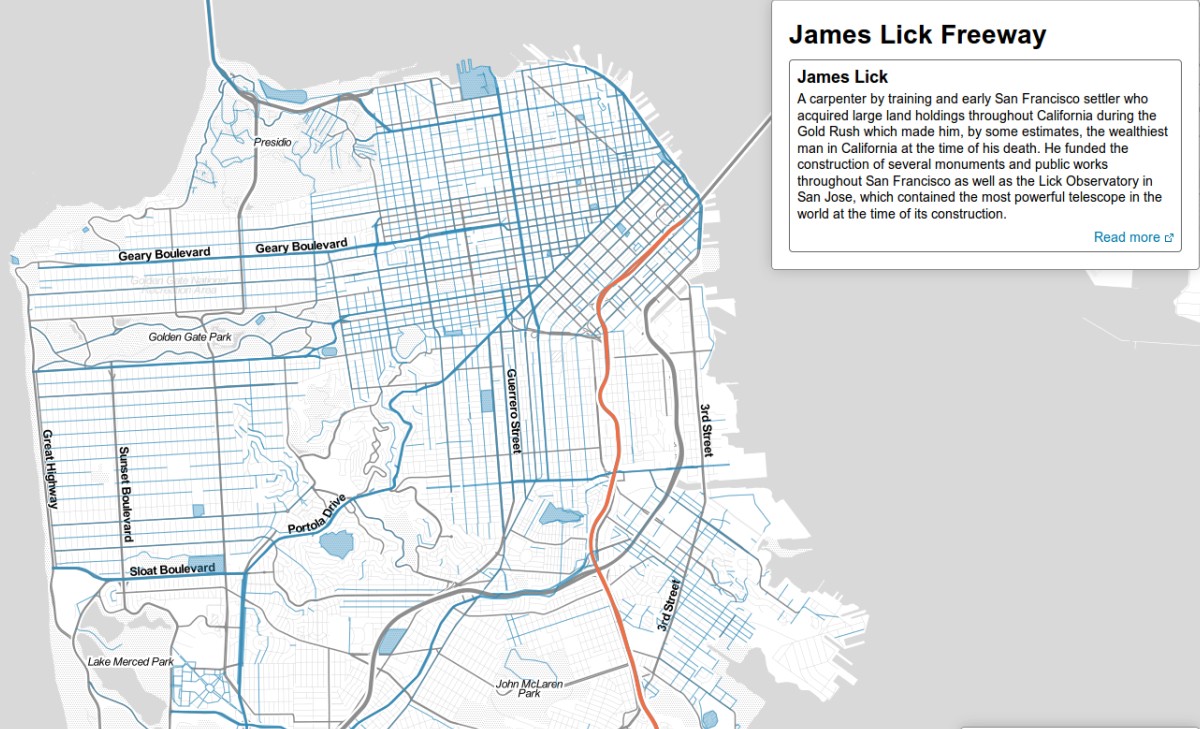
When I saw Noah Veltman’s interactive SF street (and landmark) name history map pop up on feed last week, I was instantly engrossed. (It was especially refreshing after staring at this depressing interactive map of Ellis evictions.) Of course I looked up my own street immediately, duh.

Many of us have encountered various bits of street name history along our travels, but here was a comprehensive aggregator that was fun to play with, and covered James Lick Freeway to Main Street, all in one handy spot. Did you know that Baker street was named after Edward Dickinson Baker, the lawyer who defended accused US Marshal killer Charles Cora, before Cora was lynched by the Vigilance Commitee in 1856? Or that Moraga was named for José Joaquín Moraga, founder of San Jose? Or how about Germania — it’s actually named after German people!

(One thing you do realize after a couple of minutes is that most of the streets are named after dudes, both military and wealthy. Maybe going forward, SF will institute gender parity naming regulations, like Berlin just did.)

I wanted to talk to Noah more about what inspired him to make the map, where he got his info from, and if the SF map — and the mapping project as a whole — would continue to grow. So I sent him an email. Here are the smart, and smartly civic, things he had to say

“I’m a Web developer by trade, I’ve always made interactive graphics like this for fun, although this is probably my most ambitious (you can see some of my other side projects here). I grew up on the peninsula, and lived in San Francisco for the last 4 years, but I moved to London in January for a one-year fellowship doing interactive graphics and data journalism at the BBC.

“I made the map because I thought it would be a neat way to take San Francisco’s colorful history and connect to everyday experience, give you a new sense of your neighborhood and your city. I used to walk down these streets all the time and never had any idea that they all pointed to so many larger-than-life characters and pivotal events. The names tell stories that you couldn’t make up if you tried: duels,
saloon shootouts, mob justice, espionage, overnight millionaires, explorers, tycoons, battles, rebellions. They also give you a lot of insight into people who in some cases literally built the city, people who created its skyscrapers or its railroads or its parks. That kind of local history has an immediacy you don’t get when you’re learning about something like the Founding Fathers. You walk past it on your way to work every day.

“There were a number of surprising histories to me, like the fact that Main Street isn’t a generic name, it’s named after Charles Main. I also never knew Crissy Field used to be a military airfield – I’m sure there’s a plaque explaining that somewhere but I had never come across it. Some other favorites:

Green Street
Broderick Street
Woodward Street
Guerrero Street


“I got the information from lots of places — a few different books, but also old news clippings, military records, historical society sites, that sort of thing. Usually I would start with a claim that a street was named for somebody, and then find as much corroborating evidence as I could, and if it seemed solid, research for other colorful details about the person’s life. Needless to say it was a time-intensive process.

“I’ll definitely be adding more to the map over time, there are lots of histories missing, and I’ve gotten lots of helpful tips from others since posting the map. Some streets are left out by design though. Many are self-explanatory or don’t have a historical component (for example, lots of names are just Spanish words or trees or foreign cities), I wanted to focus on ones that would be interesting and not clutter up the map with the rest. I also had to leave out a lot of ones with potentially interesting histories that were hard to verify. I wanted to be careful about not presenting rumor as fact, and there’s plenty of rumor to go around when it comes to how the streets got their names. It’s a tough balancing act, a lot of judgment calls, and I’m sure I still got a few wrong.

“This wasn’t originally meant to be a larger project, but once I got deeper into it I realized that I’d really like to expand it to other cities, so I’m going to be working on that in the coming weeks. I’d like to work on additional cities myself (maybe LA and London next) but I’d also like to generalize the template and create blank versions for lots of cities in the world and open them up for others to work on. I’ve gotten tons of feedback from folks who would be excited to make something similar for their home cities, and I’d love to help make that happen.

“As far as other upcoming projects, in addition my work at the BBC and taking the street name map beyond San Francisco, I’m hoping to start on a project to visualize diasporas from different countries around the world.”

Commission approves soccer project but pushes the city to restore habitat

43

The California Coastal Commission today upheld San Francisco’s plan to replace the Beach Chalet grass soccer fields at the west end of Golden Gate Park with artificial turf and high stadium lights after an emotional five-hour hearing, but not before voicing concerns about the loss of natural terrain and urging the city to do wildlife habitat restoration work on adjacent land.

The soccer project has been repeatedly approved by city agencies despite strong opposition from some neighbors and environmentalists, who say it conflicts with a Local Coastal Plan that calls for it to be a “naturalistic” setting. Their appeal to the commission — which enforces the California Coastal Act of 1976 and regulates development in the coastal zone statewide — was supported by commission staff, giving hope to opponents.  

But the dearth of playing fields in the city and bad conditions on this often soggy, gopher-ridden site drove the local approvals of the project, and advocates for soccer and youth dominated public testimony at today’s hearing, which was held in San Rafael. Supportive speakers made arguments ranging from the exodus of families from the city to the need to combat youth obesity and diabetes to concerns that the woods surrounding the field is now “a fornication playground for gay men, it’s a shooting gallery for drug users, and it’s a toilet for the homeless,” all ills they say the turf and lights will help dispel.    

“I urge you to reject the appeal and allow San Francisco to manage our park system,” Sup. Scott Wiener testified to the commission, adding, “San Francisco has a crisis in that we are losing our families and losing our children.”

Former Sup. Aaron Peskin took the opposite position, calling the commission’s staff report “well-reasoned” and telling commissioners they have an obligation to protect coastal areas on behalf of all Californians: “It is the role of the commission not to succumb to political pressure.”

After public testimony and before a lunch break when he needed to leave, Commissioner Steve Blank made a motion to adopt staff recommendations and deny the city’s project, rejecting the various arguments made by supporters as irrelevant to whether this project complied with the Coastal Act and should be built so close to the ocean.

“Our review is based on the needs of 38 million Californians. One of the reasons our coastline looks the way is does is because of this commission,” Blank said, later adding, “This project looks like an industrial sports facility which is the antithesis of a naturalistic setting.”

He acknowledged arguments that the site has been soccer fields for more than 60 years and that many San Franciscans want them there. But he analogized it to the city’s one-time embrace of the Embarcadero Freeway before decades later realizing it wasn’t an appropriate waterfront use and tearing it down.

After a lunch break, the commissioner who seconded his motion, Esther Sanchez, continued Blank’s arguments against the project. “Our purview is different than the city and county of San Francisco,” she said. The commission’s role is ensuring compliance with the Coastal Act and LCP — which was developed by the city and approved by the commission decades ago — and its call to “emphasize naturalistic land use qualities of the western part of the park for visitor use,” saying the city should use other parks if it wants artificial turf fields.

But Commissioner Steven Kinsey called for the commission to defer to the city process and argued that turf and lights don’t necessarily violate the vague language in the LCP. “Grass alone does not make the site naturalistic,” Kinsey said, making a motion to approve the city’s project.

Commissioner Martha McClure then strongly sided sided with Kinsey and the city, and Commissioners Robert Garcia and Wendy Mitchell followed suit, saying how they personally liked turf more than grass. “It’s great for the environment, it’s water reducing, it stays green,” Mitchell said, noting that she’s replacing the lawn at her Southern California home with turf, calling the staff report “arrogant,” and saying, “I’m disappointed that we’re hearing this item.”

Garcia said the project will improve the public’s access to the coastal zone, which is something the Coastal Act also encourages.

“Artificial turf has become a savior for us, we can keep all our fields in play,” Commissioner Carole Groom, a member of the San Mateo County Board of Supervisors, later said, making her the fifth solid vote for the city’s project.

That left four swing votes on this 11-member commission who all said this was a difficult decision. They were inclined to let the project go through, but they were bothered by converting seven acres of real grass to artificial turf and wanted to mitigate that loss of wildlife habitat.

Chair Mary Shallenberger took issue with Mitchell’s comments. “I think they is absolutely properly before us,” she said. “This is how the process is supposed to work. Staff ended their presentation by saying this is a judgment call,” commending project opponents for filing the appeal.

“This was a very hard one for me,” Commissioner Dayna Bochco said, raising doubts that “seven acres of plastic would be a natural and healtful condition.”

Commissioner Jana Zimmer shared the concern and seized on a comment that SF Recreation and Parks Director Phil Ginsburg made earlier expressing a desire to restore as a naturalistic setting a long-neglected four-acre site next to Beach Chalet that used to be the city’s old wastewater treatment plant, noting that $6.5 million in the city’s last parks bond was set aside for habitat restoration in Golden Gate Park.

“I’d like to find a way to link the finding here to that requirement,” Zimmer said, asking Ginsburg whether he could make that commitment.

Ginsburg said that would be the top staff recommendation for the bond money, but that a public process and environmental review would be needed and he couldn’t make the commitment.

“I do believe mitigation is required here,” Bochco said. “We’re taking away seven acres of habitat and I want it replaced with something.”

A majority of commissioners, those for and against the project, strongly urged Ginsburg to follow-through on his pledge to pursue habitat restoration on the adjacent site. But with concerns expressed about tying the two projects together — which raised both legal and local control issues — the motion to do so failed on a 5-6 vote.

With Ginsburg’s pledge and the writing on the wall, the commission then voted unanimously to approve the project, clearing the way for the city to break ground as early as this summer.

Coastal Commission to rule on Beach Chalet soccer project

25

The California Coastal Commission will decide tomorrow (Thu/9) whether San Francisco and its Recreation and Parks Department violated the Coastal Act in approving a renovation of Golden Gate Park’s Beach Chalet soccer fields that uses artificial turf and stadium lights and seating. [UPDATE 3pm: The commission just approved the project. Full story coming soon.]

SF Ocean Edge, a group comprised mostly of environmentalists and neighbors of the site where the park meets the ocean, has been fighting the project since its inception. They got a big boost recently when the Coastal Commission staff recommended rejection of the project, finding that it violated requirements that coastal areas should remain in a naturalistic state and be open to the general public.

“Going into any hearing, you never know what’s going to happen, but the staff report was excellent,” group spokesperson Kathy Howard told the Guardian. “They have a lot of good idea for renovations to the area which would allow more than just organized sports teams to use the area.”

Spokespersons for the Recreation and Park Department didn’t return Guardian calls for comment. The hearing is being held in San Rafael, with this item expected to be heard starting at 9:30-10am, Howard said. Check in here later in the day for a full report.

More SF restaurants settle with the city over fraudulent employee health surcharges

12

City Attorney Dennis Herrera today announced another batch of settlements with restaurants that have been fraudulently using surcharges on customers’ bills to cover their city-required employee health coverage and using some of that money to simply pad their profits.

Seventeen San Francisco restaurants that took advantage of Herrera’s partial amnesty offer — settlements are half of what the violators should owe, based on voluntarily submitting records by last month’s deadline — will be paying tens of thousands of dollars each to the employees’ they ostensibly collected the money for, joining two other restaurants that had settled with the city earlier this year.

Among this latest batch of restaurants is Burgermeister, whose $134,088 settlement is the largest of this group; and Burma Superstar, whose $10,045 is the smallest. Other restaurants paying up as part of the settlement are 5A5 Steak Lounge, Amber India, B Star, Bix, Cafe Bellini, Calibri Mexican Bistro, Citizen’s Band, Cafe Flore, Fresca, MarketBar, Nob Hill Café, Press Club, Skool, Tony’s Pizza Napoletana, and Venticello Ristorante.

In total, Herrera’s office has recovered about $844,000 that will be split among about 1,500 employees.

Another dozen restaurants suspected of misusing the surcharges were given a clean bill of health: Bluestem Brasserie, Cafe Claude, Cupola Pizzeria, Firefly Restaurant, Gitane Restaurant and Bar, Lark Creek Management LLC, Lark Creek Steak, NOPA, One Market Restaurant, Plant Cafe, Ristobar, and Twenty Five Lusk.

There are still more than 30 restaurants that responded to the amnesty offer that remain in negotiates with Deputy City Attorney Sara Eisenberg, with more settlements expected in the coming weeks and the possibility of lawsuits being filed against restaurants that won’t settle.  

The full press release follows:


Restaurant workers net $844K restitution in 19 surcharge enforcement settlements so far

Herrera praises good faith efforts by restaurants ‘to do right by their employees’; announces ‘clean bills of health’ for 12 other establishments targeted in investigation

SAN FRANCISCO (May 8, 2014) — City Attorney Dennis Herrera today announced settlement agreements with 18 local restaurant businesses that voluntarily took part in his office’s surcharge enforcement and amnesty program, which seeks to remedy shortfalls between amounts collected from customers to cover the cost of complying with San Francisco’s universal healthcare law, and funds actually expended to provide health care benefits to employees.  Together with an earlier settlement announced in January, Herrera’s restaurant surcharge enforcement effort has now netted a total $844,644 to be distributed among approximately 1,500 eligible employees by 19 different companies.

The program announced in January included a one-time 50 percent amnesty offer for establishments with significant shortfalls — provided they fully cooperate with city investigators; agree to good faith compliance with the employer spending requirement of San Francisco’s Health Care Security Ordinance moving forward; and directly compensate their current and former employees who were the intended beneficiaries of the surcharges paid by customers.  All agreements announced today resolve potential disputes with the City over collected surcharges without admissions of liability.  

“I commend these businesses for working cooperatively with us so early in the process, and for understanding our duty to enforce the law even-handedly,” said Herrera.  “Today’s settlements reflect good faith efforts by restaurant owners and managers to do right by their employees, and to honor the intent of fees charged to their customers.  I recognize that complying with groundbreaking programs like Healthy San Francisco can sometimes present new and unique challenges.  So, I’m grateful to these businesses for their cooperation in reaching settlement agreements with us.  I’m glad to continue patronizing these establishments, and I hope other San Franciscans and visitors will join me in doing so, too.”

Some of the 19 establishments that reached settlements under the program include: 5A5 Steak Lounge, Amber India, B Star, Bix, Bugermeister, Burma Superstar, Cafe Bellini, Cafe Flore, MarketBar, Mina Group, Nob Hill Cafe, Patxi’s Chicago Pizza (announced in January), Press Club, Skool, and Tony’s Pizza Napoletana.

Twelve establishments receive ‘Clean Bills of Health’ following investigation
Herrera also announced that 12 businesses targeted for investigation on the basis of the health care expenditure shortfalls they reported to San Francisco’s Office of Labor Standards Enforcement had received “clean bills of health.”  Recipients of such letters were informed by Herrera’s office that after extensive review of additional evidence provided in the course of the City Attorney’s investigation, surcharge-related consumer fraud did not appear to have been committed during the relevant time periods.  In most instances, shortfalls reported to OLSE by businesses that received “clean bills of health” were attributable to their inadvertent reporting or accounting errors.

Establishments so far issued “clean bills of health” are: Bluestem Brasserie, Cafe Claude, Cupola Pizzeria, Firefly Restaurant, Gitane Restaurant and Bar, Lark Creek Management LLC, Lark Creek Steak, NOPA, One Market Restaurant, Plant Cafe, Ristobar, and Twenty Five Lusk.

Surcharge Fraud Enforcement Program background
Herrera announced the program at a City Hall news conference on Jan. 25 with Assemblymember Tom Ammiano, Supervisors David Campos and David Chiu, and representatives from San Francisco restaurants and the Office of Labor Standards Enforcement.  Ammiano first authored legislation in 2005 as a member of the Board of Supervisors that would ultimately lead to the City’s Health Care Security Ordinance, or HCSO, which passed in 2007 with policy input from then-Mayor Gavin Newsom.  Board President Chiu and Supervisor Campos have both been active in subsequent proposed amendments to strengthen and improve the law.  In launching the enforcement and amnesty program, Herrera lauded the Golden Gate Restaurant Association for working productively to share its helpful input, even after years of legal disputes over the law that ultimately ended in the U.S. Supreme Court.  

Status of enforcement efforts and investigation
In addition to the establishments involved with today’s announcement, more than 30 other businesses applied for Herrera’s amnesty program before the April 10, 2013 deadline.  The City Attorney’s Office expects a significant number of additional settlement agreements in the coming weeks, pending further analysis of surcharge funds that establishments collected and expended over the relevant time period.    

Herrera’s one-time offer of 50 percent amnesty has now expired, and the favorable settlement terms are no longer guaranteed to non-participating establishments with significant shortfalls between health care-related collections and expenditures.  Announcing his enforcement and amnesty program in January, Herrera said that restaurants and other businesses found to have committed HCSO-related surcharge fraud during the years 2009 to 2011 that failed to come forward before the deadline voluntarily would risk being sued for full restitution of the amount of surcharges collected during that period, together with potentially substantial penalties, costs and attorneys’ fees.  A small number of defiant, non-participating businesses remain under consideration by the City Attorney for further enforcement action or litigation.

“For restaurants that haven’t yet come forward, it’s still very much in their interest to do so voluntarily,” Herrera said.  “I can’t guarantee the same favorable terms reflected in today’s settlements, but cooperative engagement is better and more cost-effective than lawsuits.”  

Will SF’s new broadband infrastructure be controlled by the city or Google?

28

Board President David Chiu is calling for San Francisco to add to its broadband fiber network every time a contractor or utility tears up a street, joining other cities in expanding high-speed Internet capacity. But will this new network be a municipal utility or corporate-controlled? An upcoming hearing he has called for could begin to answer that question.

“In the 21st century, cities need access to affordable, high-quality broadband to compete economically, just as access to water, electricity, roads or railways was critical in the 20th century,” Chiu said in a public statement. “We see other cities like Austin, Kansas City and Santa Clara making enormous strides.  My proposal will ensure that San Francisco does better in this area.”

But Austin and Kansas City have opted to take the easy path and let Google install and control the system, which raises a variety of questions and problems that are highlighted “Kansas City Gives it up for Google,” in the current issue of Harper’s Magazine, which looked at how KC is letting corporate interests trump the public interest.

“According to its contract, Kansas City must give Google access to its underground conduits, fiber, poles, rack space, nodes, buildings, facilities, and available land. It cannot charge the company for ‘access to or use of any city facilities . . . nor will it impose any permit and inspection fees.’ And what does the city get in return? It has no say in the pricing of Google’s services, nor can it ensure that Google will deliver fiber-optic service to all of the city’s residents. Google’s offices, meeting spaces, and showroom are provided free of charge, and the city pays the company’s electric bill. The mayor, moreover, is barred from commenting on Google’s activities without the express permission of Google,” the magazine writes.

Chiu is building his proposal from a report that then-Sup. Tom Ammiano commissioned years ago, calling for the city to build a network of fiber as it opens up the streets. Now, Chiu is trying to implement that idea with legislation and an upcoming hearing on the issue, but right now he’s agnostic on whether that network is owned by San Francisco or a corporation that it might contract with.

“My legislation doesn’t dictate who lays the fiber, it just ensures that it happens,” Chiu told the Guardian, although he did add that he’s “more intrigued that it could be the public sector.”   

The Harpers article discusses how public utilities have succeeded in delivering reliable, cost-effective services to millions of Americans since the 1930s when FDR began to use government to deliver electricity to rural areas that lacked it, drawing parallels to the 100 million Americans now who lack access to high-speed Internet service. But the federal government seems to be encouraging corporations to do the work this time, and they’re more than happy to oblige.

“Why does Google feel so at home in Kansas City—rather than in, say, California, where the company is based? Why not build their first citywide fiber-optic network in a nearby community? According to Google vice president Milo Medin, the company has preferred to steer clear of such pesky statutes as the California Environmental Quality Act. ‘Many fine California city proposals . . . were ultimately passed over in part because of the regulatory complexity here,’ Medin told a congressional committee in 2011. ‘In fact, part of the reason we selected Kansas City for the Google Fiber project was [that] the city’s leadership and utility moved with efficiency and creativity in working with us to craft a real partnership,’” the article says.

Yet with Google in charge, the company is only guaranteeing access to neighborhoods where a minimum number of residents pre-register and pay for premium service, redlining out many African-American neighborhoods and forcing community members to go door-to-door essentially selling Google’s services.

And in the end, the corporation will make gains even if it loses money on the project, as the article concludes: “So why would an Internet-search company want to spend a fortune to install fiber-optic cable in Kansas City, Missouri, and neighboring Kansas City, Kansas? Freedom from regulatory headaches is one part of the equation: if such networks are the wave of the future, the time to jump in is now, before legislative oversight can ruin the party. But another explanation might be the treasure trove of user-behavior information that such a network represents. Data of this kind is so prized that a company like Google can afford to give away other services for free, as long as this beneficence opens up new markets. In Kansas City, low-income subscribers to the company’s slower, ‘free’ Internet option will be giving Google details about each URL they visit, even if their accounts remain anonymous. And customers who plunk down $120 a month for the ‘Full Google Experience’ will have their television-viewing habits individually tracked by Google’s data-mining elves. Is this a reasonable bargain? For Kansas City, it’s too late to ask. But history—and the success of municipally owned fiber-optic projects throughout the country—strongly suggest that we should look this gift horse in the mouth.”

Food for thought as San Francisco contemplates whether it wants to build public infrastructure or simply facilitate more corporate infrastructure.

Nice builds

5

marke@sfbg.com

STREETS ISSUE “Oh, we’re doing pretty well right now,” a hunky contractor with Cahill Construction said with a wink at a chic party a couple weeks ago. He was referring to the building boom that’s hitting SF, its slender cranes teetering across our skyline like a stilettoed bacherorette party drinking its way down Polk Street. In terms of new build, 2010s SF is the new 1990s Berlin (somebody wrap our Reichstag, already). And while some of the design is surprisingly gorgeous, and we thankfully haven’t fallen yet for too much trendy starchitect stuff, a lot of it is a bit perfunctory to say the least. For a region that produced visionary architects from A.G Rizzoli to Ant Farm (and the often gorgeous infrastructure of your personal computer), you’d think we could push beyond stacked glass boxes lined in travertine and looming USB-like forms a tad more.

Practicality intrudes, of course, and while we wait for this, one of the richest and most creative places on earth, to develop a contemporary street vernacular to replace those awful ’90s SoMa live/work lofts, there’s a lot of loveliness hitting our streets, This year’s American Institute of Architecture SF Awards, which took place April 25, were abuzz with great, recently completed projects that focused on ground-up design that was practical, sustainable, inventive, and just plain neato. Here are a few winners that caught my eye, mostly because I had seen them in action on my weekly walks through the city and beyond. Their worth a closer look on your own jaunts. (See more winners at www.aiasf.org.)

RICHARDSON APARTMENTS

Designed by David Baker + Partners (snappy sage of green design Baker is SF’s closest thing to a starchitect) and run by Community Housing Partnership, this Hayes Valley supportive housing complex is named for Drs. Julian and Raye Richardson, who started Marcus Books in the Fillmore, the country’s oldest black book store. It houses 120 formerly homeless tenants as well as several businesses, and its swoop of natural materials and neighborhood-brightening color “seek to repair the site of a collapsed freeway with homes.”


OAKLAND MUSEUM ENTRY PLAZA

You usually go to a museum to see (worship?) others’ creativity: Oakland Museum’s interactive entry plaza and event space, designed by Jensen Architects, allows you to express your own. Usable white garden furniture hangs from a giant blackboard — make a space to chill, and write out your thoughts. Simple and stunning.


OURCADIA

The parklet movement began in San Francisco in 2010 and has now spread throughout the world, decommissioning parking spaces for more humanely amenable uses. (Maybe parklets are our new native architectural vernacular? Hope so.) Now some of the sharper ones are being institutionally recognized, like this nifty zag outside farm:table restaurant in the Tenderloin, designed by Ogrydziak/Prillinger Architects and Reynolds-Sebastiani landscape architects. Funding by, duh, Kickstarter.


HAYES VALLEY PLAYGROUND

Hayes Valley has gotten so congested at this point, its need for some space to breathe is critical — and with patricia’s Green being pretty much overrun and Hayes Valley Farm about to disappear under a cloud of construction, it’s only getting worse. This groovy clubhouse and playground design by WRNS Studio (in association with the Trust for Public Land) updates the 1958 Parks and Rec space with some bright color, fun contraptions, and spacious feel, creating a safe space for kids to “foster an appreciation of nature and social gathering.”


LAND’S END LOOKOUT

Perched above Sutro Baths, on a cliff exploding right now with colorful blooms, this exceedingly graceful 4,050 sq. ft. National Park Service visitor center is one of my new favorite places in the world. It contains a smart little cafe, oodles of info on the natural surroundings and nearby historical hot spots, and a superfriendly staff. But the design itself, by EHDD, fits so perfectly into its Point Lobos surroundings (and puts further to shame the industrial barn-like Cliff House next door) that you may find yourself lingering beyond a cappuccino to enjoy the light and light-filled space, waves frothing on the rocks far below.


ONE KEARNY LOBBY

A walk through the Financial District at night is a journey into Mad Men nostalgia — further back, even, as elaborately sculpted Neo-Gothic lintels from the early 1900s beckon over entranceways, lit dramatically by the spacious lobbies within. Contemporary takes are worth searching out as well. Redeveloped century-old beauty One Kearny’s tiny new lobby, designed by IwamotoScott Architecture and entitled Lightfold (because we brand our lobbies now), is a wee swooner of luminescent stalactites, a.k.a. “an array of digitally-fabricated wood veneer lanterns” and bright, odd angles. Like all good entryways, it draws you fully in.


SFO T2

The glistening, organic-futuristic San Francisco International Airport Terminal Two “elevates the passenger experience with design strategies that reduce traveler stress, promote progressive sustainability measures and highlight the airport’s art installations.” It also kind of makes me not want to leave.

How SF politics (and journalism) really works

51

The internal report on SF Housing Authority management berates ousted director Henry Alvarez as a jerk and a bully, somone who made racist and homophobic comments and intimidated staff. But the report also shows exactly how the corrupt politics of San Francisco contracting works. You can’t read the whole Chronicle story because of the paywall, but I’ll excerpt the part that matters:

In another instance, Larsen said Alvarez had him resolicit bids three times for a contract to provide security at public housing projects. Alvarez later called Larsen into his office and said he had just returned from lunch with Chronicle columnist and former Mayor Willie Brown where he met Stan Teets, who runs the private security firm Personal Protective Services, which was not poised to win the contract, the report said.

“Larsen said that Alvarez told him, ‘You need to figure this out; you need to figure out a way to get PPS the work,’ ” according to the report. “Larsen said that his belief is that Alvarez saw Brown as an influential person, and that he (Alvarez) therefore needed to get Teets a contract or risk losing his job.”

After PPS failed to win the contract, Larsen said Alvarez told him to start the process over a fourth time, the report said.

Alvarez denied to investigators that ever happened.

Brown, when reached on his cell phone, said: “I can’t talk to you. I’m at a luncheon.”

Check that out: Brown — who works for the Chronicle as a columnist — said he can’t talk to a Chronicle reporter because he’s at a luncheon. BTW, he’s used the exact same excuse with me a bunch of times, including once at 4pm. He has a lot of luncheons. And they seem to last most of the day.

And let’s remember: in his columns, Brown has consistently made excuses for Alvarez and gone out of the way to tell his side of the story.

PPS has had serious problems with its work at the Housing Authority in the past, when Teets was hired by Brown’s hand-picked authority director, Ronnie Davis. Now Brown meets with Alvarez — who he defends in his column — and tries to get a contract for a firm with a shaky history that wasn’t the low bidder.

Is PPS one of Brown’s private law clients? We don’t know — the Chron doesn’t require him to disclose that information.

But we know this is fucking sleazy shit, and it’s exactly how the city worked every day when Brown was mayor — and apparently, it’s how things are working again, now that Brown’s pal Ed Lee is mayor. I give Lee credit for ousting Alvarez and shaking up the Housing Authority Commission, but by the time he did that, he really had no choice — the evidence and the mounting media pressure was overwhelming. And Willie clearly still has his hands in the operations of the city.

All this is happening at the same time that the Columbia Journalism Review has taken up the issue of Brown’s column and the truly shady ethics involved.

I had a lot of gripes with Mayor Gavin Newsom, as all of you know, but when he was mayor, this kind of pay-to-play overwhelming sleaze wasn’t the order of the day at City Hall. Now it’s back.

That’s how it works in San Francisco in 2013. How lovely.


Dirty dialect in a small town: A trip to the Boonville Beer Fest

2

I thought that the booming voice yelling across the backyard of Anderson Valley Brewing Company, hosts of the vaunted Boonville Beer Festival, would be bearing tidings of “shut the hell up and go to sleep.” After all, it was 1am and many of the pros camping in the shady glen designated for brewers had a long day of pouring stouts and ambers in the hot sun ahead at the May 4 festival. 

But I had misjudged the staying power of bearded and hop-obsessed hippiefolk.

“I want to hear some partying!” concluded the voice. We beckoned the rambling brewer who’d dropped by our camp to pour another finger of barleywine, double-checked our Ibuprofen cache, and kept one blurry eye on the 24-year old apple farmer talking about oral sex in Boontling, Boonville’s appealingly vulgar indigenous dialect, by the campfire. I heard later accounts of brewers staying up all night communing with toads in the creek that lined the back edge of the Anderson Valley Brewery’s makeshift campgrounds. 

Boonville is no refined urban pourfest. “This is the beer festival you have to go to,” confirmed a crew member of Concord’s Black Diamond Brewing. If you enjoy sweeping mountain landscapes, 90 degree heat, and beer from across the state, you will agree. Boontville is epic, one-day setting for the 60-some breweries on tap each year.

>>CHECK OUT OUR SLIDESHOW FROM BOONVILLE 2012

Tips gathered around the campfire the night before the one-day festival: drink slowly, don’t drop your tasting cup, don’t get stuck in the fairground’s horse corral, keep an eye out for the actual indoors bathrooms for a break from the Port-a-Pots. 

I’ll admit I fell back on the stalwart Hell or High Watermelon Wheat ale from the home team 21st Amendment Brewery. I am not an ironclad beer drinker and by my way of thinking, the 90 degree heat that ruled May 11 in Anderson Valley was not ideal for coffee stouts no matter how delicious. Pro drinkers avoided joining in on the standard beer fest hollering that hails a dropped tasting cup, and focused their energies on finding the off-menu small-batch specialties being poured, like Black Diamond’s brandy barrel-aged Grand Cru. 

SF’s thriving microbrew scene was well-represented by Speakeasy, Magnolia, Pacific Brewing Lab. The city kids were joined by scores of breweries from across the state — Sacramento’s Rubicon, San Diego’s Societe, and the coastal Pizza Port were a few of the exciting new brews we tried. 

Beer’s great and all, but Boonville’s small-town trappings made a bright day of beer-drinking a cultural event.

The Anderson Valley Lion’s Club was selling BBQ tri-tip sandwitches for $10 ($12 with veggies.) I’m not big on the mammal-eating, so my boozy friend suggested I ask them for a grilled cheese. Larry Lombard, a Lion of 25 years and self-described “wingnut over in Boonville — that makes me a flyboy,” told me I was SOL on veg-friendly eats at the Lion’s tent. No big deal — proceeds from the festival go to fund the Club’s two college scholarships, given out yearly to local high school students, and judging from the tent’s traffic, they were going to make some academic dreams come true this year.

“This year it looks like it’s going to be good,” Lombard said. “We try just as hard on the bad years as the good years, though.”

Tucked away in the shade, the well-coiffed ladies of Anderson Valley Historical Society were working hard selling water bottles and Boontling dictionaries for donations and fending off the advances of dehydrated gentlemen. 

Boontling in action

“A lot of the stuff has sexual connotations.” (Forgive me, gray-haired angel, for not writing down your name! Blame the Watermelon Wheat.) The ladies and I were discussing Boontling, whose origins are debated. Was it created by the local fishermen, as written in the dimunitive Boontling dictionary I took home, or as the apple farmer told us and I prefer to believe, invented as a code used by the local wenches to throw shade at the city wife some poor Boont man brought home with him? 

At any rate, the verbal language was first officially studied by a California State University-Chico professor named Charles Adams. The dialect is largely referential, meaning most words originate from local landmarks. Maybe your cousin Sandy is a little slutty (this being the example used by the apple farmer) — you’ll sub in the word “Sandy” for “floozy.” The adding on of new words to see if your conversation partner will catch it is referred to as “sharking,” making Boontling a dynamic language. 

Maybe. “I think it’s gonna die,” said the Historical Society expert. “However, there seems to be interest in it now.” Mainly from the media, she said. She directed me to town’s two premier Boontling linguists for more info. She had one the guys’ digits memorized. 

Here are some of my fave words from the Boontling mini-dictionary I copped, entitled A Wee Deek on Boont Harpin’s (A Little Look at Boont Talking). I advise memorizing them and trying not to irritate the locals using them when you make the trip up north for next spring’s fest: 

Apple head: girl friend

Burlapper: (not actually in dictionary, but the ladies of the Historical Society urged me to write it down, “burlapper” being some sort of four-letter word serving as both noun and verb)

Jeekus: donkey or mule

Jimheady: confused; unclear mentally; suffering from a bad hangover

Tidrik: a party

Wilk: a wild cat

Pickem up billies: dirty men’s socks (!?)

Catch up!

0

SUPER EGO Happy 45th birthday to Specs, my favorite bar in the city. The Capitan cocktail at La Mar is drink of the year so far. I think I finally get Daft Punk. There will probably soon be a “high-end” “gay” “strip” club called the Randy Rooster in the Castro, but you can’t make it rain — tips are donated at entry to a favorite charity, the dancers only strip to g-strings, and there’ll be upscale food. (It sounds positively Mormon.)

The winner of How Weird Street Faire was homegrown genius Larry Gonnello Jr.’s Boombox Affair, the back alley stage with the wired-together boomboxes, this killer six-hour set, and a perfect respite from the overflow of looky-loos this year. And that proposal by Mark Leno for bars in Cali to stay open until 4am? It died in committee, much like Roxxxy Andrews’ hair (I don’t even know who that is) — mostly due to the twisted machinations of the California Police Chiefs Association, who said it would mean more drunks on the road. Absolutely untrue! And this is why we can’t ever have nice things. My goddess, even the bars in Anchorage, Alaska can stay open longer than ours. Guess I’ll just have to keep my Scooby Doo flask polished and at the ready in my tubesock.


BOO WILLIAMS

I am so very excited for this. A Chicago house legend and true sweetie who knows soul biz like nobody — except maybe his Strictly Jazz Unit partner in crime Glenn Underground. The Housepitality weekly does it again.

Wed/8, 9pm, $10. f8, 1192 Folsom, SF. www.housepitalitysf.com


AFROLICIOUS 6-YEAR

Six years of this awesome Latin funk and Afro jazz collective’s dance floor vibes. As always, groovy brothers Pleasuremaker and Senor Oz preside over the festivities, full of live goodies and sweaty hotties, so good it’s taking over two nights.

Thu/9 and Fri/10, $8–$15 per night. Elbo Room, 647 Valencia, SF. www.elbo.com


DERRICK MAY

Oh hi, Detroit originator of techno.

Fri/10, $20. 9:30pm-3:30am. Public Works, 161 Erie, SF. www.publicsf.com


KITSUNE CLUB NIGHT

Poof! It’s the return of that special-smart French hyperdisco feeling, as beloved label Kitsune spreads its pixie dust around with Fred Falke, Chrome Sparks, and our own Aaron Axelsen.

Fri/10, 9pm, $17. Mezzanine, 444 Jessie, SF. www.mezzaninesf.com


ODYSSEY

The best and most freakish roving house party is at it again, this time bringing in the energetic and gorgeous W. Jeremy and Christy Love of NYC’s House of Stank and Get Up Recordings.

Fri/10, $10, 9:30pm-3:30am. Public Works, 161 Erie, SF. www.publicsf.com


PUSH THE FEELING

“An all locals, disco-heavy night of music,” too-cute promoter Kevin Meenan promises, somewhat surprisingly, for this installation of his monthly boundary pushing night, with Beat Broker on decks and plaza performing live.

http://www.youtube.com/watch?v=nUsxpZ_xKyg

Fri/10, 9pm, $5. UndergroundSF. 424 Haight, SF.


TORMENTA TROPICAL

Everyone’s favorite 808cumbia, electro-salsa, and tech-bachata monthly celebrates a bangin’ new release on its Bersa Discos label from Mexican DJ Quality, with DJ Quality! Sat/11, $5–$10, 10pm. Elbo Room, 647 Valencia, SF. www.elbo.com


WOLF + LAMB, SOUL CLAP

The two greatest bromances of the retro-rebuild decade, these male duos melted minds when they Frankensteined tunes from the 1950s-2000s (emphasis on the ’90s) into exotic-sounding hybrids of moody funk and deep house. Now everyone’s taken their cues — what will they pull off next?

Sat/11, 9pm, $20. Mezzanine, 444 Jessie, SF. www.mezzaninesf.com


KIM ANN FOXMAN

She has the tightest style — sound + vision — of anyone going right now, melting late ’80s and early ’90s sonic signifiers into a sophisticated semiotic code that packs the dance floor every time. Funky Mother’s Day!

Sun/12, 10pm, $10. Holy Cow, 1535 Folsom, SF. www.honeysoundsystem.com