SF

SF arts funding prioritizes symphony, other stuff white people like

45

Disadvantaged artists might be getting the short end of the paintbrush in favor of the city’s more affluent art community in Mayor Ed Lee’s proposed 2014-16 city budget.

That’s what a seemingly endless line of advocates expressed in a hearing in front of the San Francisco Budget and Finance Committee Friday [6/20] when given the opportunity to suggest ways to better apportion funding in the budget. According to a recent report from the Budget and Legislative Analyst’s Office, the dissenters might be onto something.

The report details the allocation of funding from Grants for the Arts, revealing that 76 percent of GFTA’s grant money will go to art organizations with primarily white audiences. This figure is right in line with the funding priorities from 1961, when the city’s population was 82 percent white.

Today, people of color make up 58 percent of the city’s population, while the white population has been nearly cut in half over the course of the five decades since 1961. But that hasn’t stopped GFTA from devoting more than three-quarters of its funds for art organizations whose audiences are predominantly white, the report found.

GFTA’s self-proclaimed goal is to “promote and support the widest possible variety of arts and culture activities in the City,” although it’s hard to imagine it had that in mind when devising the budget plan for the upcoming fiscal year.

This isn’t the first time GFTA has snubbed underprivileged artists. According to the Budget Analyst’s report, GFTA actually reduced its percentages of funding to arts organizations of color from 2006-07 to 2012-13, and the agency’s funding for those organizations has not improved over the last 25 years, despite the city’s radically shifting demographics and the lip service regularly given to diversity at City Hall. GFTA has no plans to improve its grant money allocation, according to the report. Officials at the agency declined to comment when contacted for this story.

arts grants

When the Budget and Finance Committee heard public comment today about the mayor’s proposed budget, a great deal of the discussion centered on cultural equity and providing increased funding for disadvantaged citizens in the arts.

Numerous speakers cited the city’s changing demographics and the reality that the city isn’t made up of an enormous majority of white residents anymore, calling for more art funding for people of color, despite the budget’s lopsided allocation of funds to the white demographic.

In particular, the budget proposal allocates 19 percent of the 2014-15 budget to the San Francisco Symphony, which was enough for one speaker to state that “a lion’s share is going to the traditional organizations.” The message to the committee, simply put, was to “consider how you invest the money you’re spending,” as another speaker said, and that “public funding for the arts is not supposed to disempower by taking away the voice of the underrepresented.”

Allocating more funding for the Cultural Equity Grants was an oft-mentioned method for better supporting disadvantaged artists, with the project-based grant system receiving 25 percent of the commission’s budget in the 2014-15 fiscal year. The number of grants awarded each year has remained relatively stagnant in recent years, with 94 grants awarded in 2012-13, a projected 100 to be given out in 2013-14, and a target of 100 in both 2014-15 and 2015-16.

The number of street artists supporting themselves by selling their work isn’t progressing much either. The city issued 176 new licenses for such artists in 2012-13, but is projected to dole out only 122 in the current fiscal year. The new proposal targets similar numbers to those from 2012-13 (179 and 183 licenses in 2014-15 and 2015-16, respectively), further affirmation of the sluggish advancement of the mission to ensure that all cultures of the city are represented.

But disadvantaged residents in the arts aren’t the only ones who stand to be affected by the proposed budget, a fact that wasn’t lost on many concerned advocates. Lee calls for a budget of $13.9 million for the Arts Commission in 2014-15, a relatively minor 2 percent decrease from the 2013-14 budget of $14.2 million. The real drop-off occurs in 2015-16, however, when the Arts Commission budget decreases by a full 8.4 percent from the previous fiscal year. The Mayor’s Office declined to respond when contacted for this story.

Needless to say, members of the art community as a whole weren’t thrilled about Lee’s sharply declining emphasis on the arts, and they voiced their concern toward the Committee on Friday. The city’s lack of aid for the general art community, in addition to simply underprivileged artists, had many speakers understandably up in arms.

Below we’ve embedded Harvey Rose’s report on skewed arts grants funding.

"Arts inequity": San Francisco Budget and Legislative Analyst Report by Joe Fitzgerald Rodriguez

Happy Hour: The week in music

0

Hey you. Yeah, you. Are you still sitting at your desk, despite it being a beautiful day outside, and despite the proximity of large-screen TVs tuned to the World Cup inside multiple alcohol-serving establishments within three blocks of you in every direction?

Give yourself a pat on the back. You deserve it. And you have less than an hour to go!

To help kill those last few minutes of clock-watching, here are some musical highlights of the past week, and a thing or two to do this weekend:

1. YouTube is about to fuck up 95 percent of what you and I use YouTube for. Sorry, not cat videos; I meant listening to audio and watching videos from independent artists. An executive from the Google-owned giant recently told the Financial Times that YouTube was prepared to remove videos from labels that didn’t sign their contract for the new YouTube Music Pass (a paid licensing program) “within days.” Reps from a lot of these labels (like 4AD — see ya, The National, tUnE-yArDs, Deerhunter, et al) have said they’ve been offered the extraordinarily shitty end of the terms stick.

2. If you’re sticking around the Bay Area this weekend — unlike the 8 out of 10 musicians I’ve talked to in the past few days who are all taking off for Hickey Fest — you could do a lot worse than to check out the ULUV Music Day, a festival of free music featuring more than 100 bands playing throughout the day at parklets, BART stations, and other public locations in every neighborhood in the city from noon to 5pm. At 6pm, head over to Dolores Park for a “music flash mob” and official proclamation from the City of San Francisco.

3. New owners for Yoshi’s SF (following bankruptcy under the current ownership) signal “an all-but-final blow to the original aims of the Fillmore Jazz Preservation District,” says SF Weekly.

4. Biopics are in the works about NWA and Aaliyah, though the latter’s family is none too happy about it. By contrast, Ashanti has hit the county fair circuit.

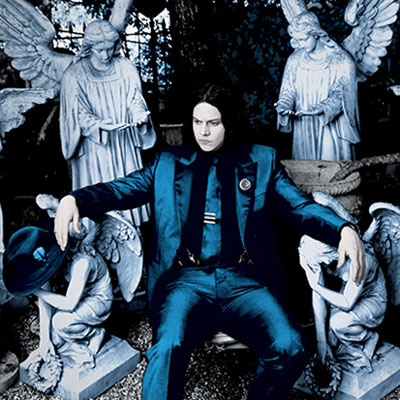
5. Jack White (who’ll be at the Bill Graham Civic Auditorium Aug. 22 and 23) debuted his latest, Lazaretto, at #1 on the Billboard charts, selling 138,000 copies in its first week — some 40,000 of them vinyl. That broke Pearl Jam’s record for the largest sales week for a vinyl album, a title that previously went to 1991’s Vitalogy. Let’s compare and contrast (quick, before YouTube takes them down).

Now then. Beer time?


Jury finds Recology cheated in waste diversion bonus program

A jury has determined that Recology, San Francisco’s garbage collection contractor, was not honest with the city when it collected a bonus payment of $1.36 million for successfully diverting waste from the landfill.

Brought by a former employee, the lawsuit claims that Recology misrepresented the amount of diverted waste in order to qualify for the bonus money. This is especially significant because San Francisco is recognized nationwide as a leader in its quest to send zero waste to the landfill as an environmental goal.

Jurors deliberated for more than a week before issuing their determination, and ultimately found on June 17 that the waste management company had made a false claim and therefore must pay the city $1.36 million to compensate for the amount it improperly received.

The False Claims Act, the California law under which the suit was filed, provides that violators can be made to pay three times the amount collected under false pretenses, with interest tacked on to boot. That means Recology could ultimately wind up paying out an amount closer to $5.5 million.

Under an incentive program set up by the city, Recology may reap additional bonus profits above what it normally earns from the business of collecting and processing San Francisco customers’ trash if it effectively meets targets for keeping the trash out of the landfill, the most environmentally harmful waste disposal method. Under the program structure, Recology may withdraw this extra money from an account it maintains, containing funds derived from rates paid by garbage customers, if it meets the city’s established waste diversion targets.

The lawsuit, filed in 2010, claims Recology used several schemes to manipulate waste diversion records when it submitted records the San Francisco Department of the Environment in 2008, in order to be granted permission to withdraw the bonus money. The suit claimed this happened in three other years, too, but the jury only ruled against Recology for this one year.

The primary way this occurred, according to attorney David Anton, involved misclassifying demolition and construction waste. Under state law, ground up raw construction material that is labeled as “fines” can legally be used to cover up the top of a landfill – in order to prevent pests, fires, and odors, for example. When construction waste is ground up and used this way, it counts as “alternative daily cover” – like a layer of frosting on a giant cake of garbage – and strangely enough, the state allows waste disposal companies to count that frosting as “diverted waste” even though it’s actually part of the landfill.

The lawsuit claimed that Recology tried to count a great many tons of its construction and demolition waste as “fines” when in reality it should have been labeled just plain garbage, because the tons of stuff that they were shipping to the Solano County landfill wasn’t being processed to a fine enough grade to comply with state requirements for what constitutes “fines.”

The difference between “fines” and regular old construction and demolition waste is that for the latter, the company would have had to pay a fee to dispose of it – and would have had to count it as waste sent to the landfill, rather than waste diverted from the landfill. Had it been counted as plain old garbage, Recology would have missed its diversion targets in 2008, thus losing out on the $1.36 million bonus payment.

“The construction material that they were sending – they were telling SF was qualified to be used for this beneficial purpose at the landfill,” said Anton, “when in fact, the county and the state had said it was not qualified for it, it can’t be used that way, and it can’t be accounted that way.” He added, “Recology kept this completely secret from San Francisco.”

Recology spokesperson Eric Potashner told us the company plans to appeal this finding, because the violation Recology received in regard to the “fines” was only the start of a lengthy process. “The local enforcement agency in Solano County had questions about that material,” he said, noting that Recology went through a formal process of challenging an inspector’s assessment of the material. He said that at the end of the day Recology was never issued a cease-and-desist, nor was it made to revise company records to count it as anything other than “alternative daily cover.”

Another problem uncovered in the trial, Anton said, had to do with Recology misrepresenting tons of garbage generated in San Francisco as having originated in a different county, so that it could be counted outside the parameters of the waste diversion program. Potashner called that “an oversight” that had since been corrected, and added that it would not amount to enough to “move the needle” on hitting the diversion goals.

Finally, Anton noted, it came out in the course of the trial that somewhere between 10 and 20 percent of what residential customers chuck into their green compost bins actually winds up in the landfill at the end of the day.

Where happens to the stuff that goes in the green bin? “What we found out in this trial,” Anton said, “is that it’s sent to a place where they can compost it, but this place doesn’t necessarily make it into compost. Recology owns the composting place. And the composting place happens to be at a landfill. And it happens to be the law that a landfill has to cover the garbage that it gets every day. It’s got to cover it with dirt – six inches of dirt. Every day. A lot of landfills buy dirt to cover it – but the state allows you to … take mulch or green waste, if it’s chopped up fine, and cover a landfill with it. Well, Recology decided that they made more money and did better if they took a bunch of your green bin material, and put it on their landfill, rather than buying dirt.” As a result, he said, some of that green-bin waste “gets put in a landfill every night.”

Which really isn’t what most people would expect would happen after they’ve chucked some yard clippings into a compost bin.

When San Francisco set up the green-bin composting program, Anton said, a specific policy was created against this sort of practice. Nevertheless, “San Francisco knew that the company was doing that,” he said, and permitted it despite the formal policy because “they wanted to help out the company.”

Potashner said it is perfectly legitimate under state law for green waste to be used as alternative daily cover. “The Department of the Environment watches this, and knows we’re doing this,” Potashner said.

All of which underscores a point that Anton said he found to be somewhat confusing, or perhaps telling: “It was a very strange thing,” he said, “to be pursuing this lawsuit, trying to get money to the city, and the city’s representatives are saying, ‘we don’t want it.’”

He said he found it odd that a representitive from the San Francisco Department of the Environment, which oversees the city’s Zero Waste program, even made a statement in the course of the trial suggesting that he hoped the suit wasn’t successful.

Anton guessed that the city remained on the sidelines of this case because its “relationships with Recology are so close and tight.”

The Department of the Environment did not return the Bay Guardian’s request for comment.

Is the SF District Attorney’s Office biased against cyclists?

75

There’s been much discussion over the last year about whether police and prosecutors in San Francisco are biased against bicyclists. And while the San Francisco Police Department has admitted problems in their investigations of collisions that injure cyclists and pledged to do better (with mixed results), the District Attorney’s Office doesn’t seem have gotten the message.

The cyclist community was appalled last month when District Attorney George Gascon refused to follow SFPD recommendations and file criminal charges against the commercial truck driver who killed cyclist Amelie Le Moullac in August, a high-profile case that highlighted SFPD bias and triggered a series of hearings on the issue at City Hall.

Now, a San Francisco jury has voted overwhelmingly to acquit a cyclist who collided with a pedestrian last year, finding that the collision was clearly accidental and that the cyclist tried to avoid the victim who jaywalked to check the parking meter for her car and then abrupted reversed course and collided with the cyclist.

“The evidence in this case was clear: It was an accident, not a crime,” Deputy Public Defender Tammy Zhu said of her client, 20-year-old John Kewin, who faced up to a year in jail after the DA’s office charged him with reckless driving.

But the jury last week voted 11-1 to acquit Kewin, siding with witnesses who said he tried to avoid the collision over one witness (ironically, a cyclist) who testified that Kewin was riding too fast. So the DA’s office this week decided to drop the charges.

Public Defender’s Office spokesperson Tamara Barak Aparton told us charges should have never been filed in the case: “I don’t think it should have been, it was clearly an accident and not a crime.”

The DA’s Office has refused to file criminal charges against any of the four motorists who killed cyclists in San Francisco in the last year, even in cases where the drivers were making illegal turns across bike lanes and making no efforts to avoid the cyclists.

Does the District Attorney’s Office have a bias against bicyclists? We left messages with two different spokespeople from that office, and we’ll update this post with their replies if and when we hear back. 

Amour Vert brings its eco-friendly designs to Hayes Valley

0

“Paris Chic, Cali Cool.” That’s the tagline behind the eco-friendly clothing brand Amour Vert. Usually, the people who refer to California as “Cali” are non-natives. The term implies a certain unfamiliarity with the golden state and a desire to be more ~CaLiFoRnIaN~. Yet, the slogan is fitting. Founded out of a need for clothing that doesn’t sacrifice style for sustainability, Amour Vert’s garments are created by a French designer and made within a 20 mile radius.

Until now, the Palo Alto-based brand was only available in department stores and small boutiques but Amour Vert opens its first retail store today. Nestled in the heart of Hayes Valley, at 437 Hayes, the boutique neighbors the french confectioner Chantal Guillon Macarons and clothing store Steven Alan.

Across the street is Alternative Apparel, a company with a similar commitment to sustainable fashion. But owner Linda Balti maintains that Amour Vert is very different from its neighbor. In an equally sustainable way, Alternative Apparel outsources its garments to socially-responsible factories in Peru, Vietnam, Indonesia, China and other countries around the world. Amour Vert keeps everything local, from its design studio in the Dogpatch, to the exceptional garment factories in the Bay Area, to its beautiful living wall in the Hayes Valley store.

French-German couple Balti and Christoph Frehsee conceptualized Amour Vert after reading a Newsweek article a couple years ago that named the fashion industry as the second polluter in the world.

“I was in the middle of writing a paper for my master’s,” Frehsee said at the store’s opening reception last night. (He studied environmental resources at Stanford.) Balti began researching sustainable alternatives but found that they were either unflattering (think hippie hemp dresses) or expensive, such as John Patrick and Stella McCartney. 

The Parisian designer wanted simple and elegant options to fill her wardrobe at an affordable cost, she says. At the opening reception, Balti wore an Amour Vert sleeveless green palm leaf printed jumpsuit and crisp white hightop sneakers, the epitome of French elegance. With ruffled straps and a cinched waist, the Crystal Jumpsuit is a highlight of the summer collection. This easy and feminine silhouette made of washable silk is indicative of the brand’s casual luxury. Using the finest materials available in the Bay, each garment is handmade from bamboo, silk, organic cotton, recycled polyester, linen, or wood pulp.

Amour Vert’s “Plant a T(r)ee” collection is probably its most impressive. Continuing their dedication to a cleaner environment, Balti and Frehsee have created a small line of garments made from wood pulp, where with each T-shirt purchase (ranging from $75-$135), American Forests will plant a tree in the United States. “It’s our way of directly giving back to the environment what we take from it,” said Balti. So far, they’ve planted 15,000 trees.

In the store, vibrant green and coral pieces with palm tree prints line the walls. Simple, neutral basics are also available. The “Plant a T(r)ee” is mostly comprised of marinières—the quintessentially French navy and white striped boating shirts. With muses such as Charlotte Gainsbourg and Clémence Poésy, the brand maintains a prominently French style. But the Cali vibe is not lost. A lace crop top hangs in the corner embracing the West Coast flair.

The focal point of the store however is a heart-shaped living wall — a nod to Amour Vert’s French name, which translates to “green love.” Designed by SF native, model, and philanthropist Lily Kwong, the installation is composed of small potted plants (for sale for $20) that create a big green heart in the back of the store. The local support continues with two “Made in California” chairs produced by Russell Pritchard, owner of the interior design store Zonal down the street, and board member of the Hayes Valley Neighborhood Association.

“Everyone has been very welcoming,” Frehsee said. At last night’s reception, Kwong made an appearance, and delicious snacks by Chantal Guillon Macarons and the Melt food truck were on hand for hungry partygoers. There was also Amour Vert’s signature photo booth, where a tree will be planted for every photo taken. 

The decision to open a store in Hayes Valley was very natural, Balti said. After several pop-ups in the area, the couple decided to open a permanent location in the neighborhood. The store is a lab project to them, says Frehsee — the couple got their beginnings in science, they met at a defense trade show in Abu Dhabi.

“The store is our opportunity to interact with our customers on a personal level and hear what they love most about Amour Vert,” Frehsee said. “We’re looking forward to having that direct dialogue with them.”

Enter if you dare! Spirited local actors highlight Jefferson Street’s ghoulish new attraction

3

A new attraction is coming to Fisherman’s Wharf June 26, and it’s pretty surreal. The San Francisco Dungeon, the eighth in a series by Merlin Entertainments and the first stateside (most of the other dungeons focus on medieval history and are scattered throughout Western Europe), is a subterranean labyrinth where actors lead patrons on a hodgepodge tour of creepy SF-inspired historical haunts. 

There’s obviously a lot to be skeptical of here. For one, Merlin, which is centered in the UK, is a gargantuan enterprise second only to Disney in the themed tourist trap world — other assets include Madame Tussauds, Legoland, and a bevy of contrived wildlife safaris. San Franciscans already talk a ton of smack about the half-assed efforts by huge corporate attractions on Jefferson St. to appear “local” — the one or two scattered Californian sports figures or cultural icons in Tussauds, for example, don’t conceal the sterility of the whole operation. 

My visit to the Dungeon didn’t run entirely contrary to these concerns.

The stories that the actors tell occasionally slip into generalities that have little to do with the city, some of the rooms are similarly vague, and the exclusion of the 1906 Earthquake (despite the Dungeon’s focus on 1857-1907), while explained away by artistic director Kieron Smith as too large-scale of an event to cover, feels wrong. There’s also a random water ride that, while impressive from an engineering perspective in that a boat and mini-canal was placed in a very contained space, distracts from any legitimate exchange of history or theatrics. We didn’t get to ride it though, so I’m really in no place to judge. 

Despite its adherence to certain stereotypes, the Dungeon transcends a lot of the more toxic elements that drag down other Jeffersonian locales. Smith, an extremely charming Brit who wrote the entire script for the 50-odd minute tour and has done so at all other Dungeon locations, seems genuinely passionate about the city’s more macabre lore and clearly did his research. Most of the actors’ ghoulish tales of drunken Barbary Coasters and mining ghosts are subtle and relatively specific. I can imagine the full show being nominally educational. 

The preview we received included a scary 1850s Alcatraz ghost tale that packed a legitimate punch. The barred Alcatraz Room, one of nine themed areas, provided a chilling backdrop for a crazed young woman’s recounting of her military prisoner father’s murder and subsequent haunting of the Rock. When the lights flickered and the dead father appeared, complete with gory makeup, the entire room shrieked deliriously. 

Another room, a facsimile of the headquarters of the San Francisco Hounds, a sinister crime organization that flourished in the city after the Gold Rush, was less compelling. An actor playing real-life Hounds leader Sam Roberts mimicked torture tools (including a gag penis-cutter that elicited a few half-hearted laughs) and nervously beckoned the group out of the room when the sounds of a police raid interrupted his demonstration. 

Despite the inconsistency in humor and scares, the actors themselves were all enthusiastic and believable. Since beginning rehearsal a month ago, they have learned to play every part in the tour and will alternate roles when the Dungeon opens. Many of the performers have real chops, and while they likely don’t see two-minute frenetic monologues to scared tourists as their career zeniths, the Dungeon, unlike many of the other less interactive wharf traps, is employing burgeoning artists. 

In addition to hiring local actors, the Dungeon has also worked with several area businesses. Wee Scotty, the prolific costumers headed by Lynne Gallagher, provide all of the period clothes, which look authentic and have an effectively drab and dusty aesthetic. Daniel’s Wood Land scavenged wood from the ruins of a Japanese internment camp in Arizona to panel the walls of many of the rooms — the fact that the rooms looked like they feasibly could have been from over 100 years ago as opposed to cheap plastic imitations makes the experience feel slightly more real. 

The Dungeon isn’t revolutionary — it still belongs in the gimmicky world of Fisherman’s Wharf. The artistic enthusiasm and local involvement, however, lends the entertainment a realness and grittiness that elevates it above most other overpriced diversions. 


Opens June 26, $19-$26

San Francisco Dungeon 

145 Jefferson, SF

http://sanfrancisco.thedungeons.com

Party Radar: Hardkiss Brothers celebrate 1991, “Flowers Blooming”

0

It’s a tribute to the resiliency of SF’s classic Hardkiss Brothers — and the soul of the SF house music scene — that, after the devastating loss of musical brother Scott last year, Gavin and Robbie Hardkiss have bounced back with an exuberant tribute to the roots of their legendary collective, new album 1991.

This Fri/20 at Public Works (9pm-3am, $10. 161 Erie, SF), they’ll be bringing the Hardkiss family together to celebrate the release of exuberant floor-stomping single “Flowers Blooming” — a rework of lovely 1980 Change track “Glow of Love.” Free download below!

Besides calling to mind the joyful-disco, Luther Vandross-fronted original — oh man, how I love me some Young and Gay American Luther — plus the Inner City “Big Fun” sound of the late ’80s, and the glowing “Flowers in Your Hair” SF Summer of Love aesthetic, “Flowers Blooming” also slips into a luminous legacy of flora-based raveytime anthems. 1991 indeed.

Anyway, I’m high. Here’s what the brothers themselveshave to say about the track, which boasts a slew of remixes and inclusion in this cool flashback “Megamixx”:

“In the latest single off the album, ‘Flowers Blooming/Glow of Love,’ Hardkiss take Change’s 1980 classic ‘Glow of Love’ out for a driving musical journey. First stopping in ’90s Detroit before putting the top down and heading straight for the California sunshine. The result is sun-drenched track that is both irresistible and feel good- a must have addition to any summer playlist. Featuring vocals by Robbie Hardkiss, there’s enough on the new Hardkiss album to satisfy any dancefloor intent on rising up in celebration.” 


Who moved my cheese?

2

culture@sfbg.com

THE WEEKNIGHTER Weekends are for amateurs. Weeknights are for pros. That’s why each week Broke-Ass Stuart (www.brokeassstuart.com) will be exploring a different San Francisco bar, bringing you stories about the places and people who make San Francisco one of the most phenomenal cities in the world. Who wants a drink?

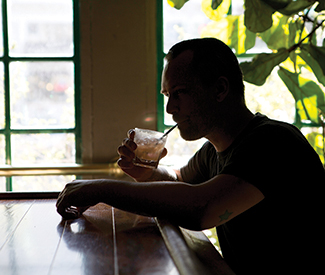
I think it was SF writer Brock Keeling who told me The Lion Pub (2062 Divisdero St, SF. 415-567-6565) used to be a gay bar. Well, I mean he didn’t tell me, I read it on his old site SFist, but you get the point. There was some reference to “remembering when the Lion Pub was a gay bar” and I thought, actually I don’t remember that at all. To me the Lion Pub had always been that place that had the cheese spread and that acted as the Normandy in the Marina’s D-Day-like onslaught of Divisidero. It was the first place over the hill where the waves of guys in collared shirts and gals in uncomfortable shoes had landed before slowly, intrepidly, marching south.

It’s hard to be nostalgic for a something you never experienced, but you can sure as hell romanticize it… not that I’m really doing either. As a straight guy I don’t imagine myself trekking all the way over to Lower Pac Heights to frequent a gay bar, especially when I live close to so many on Folsom Street. But Pete Kane’s recent article in SF Weekly about the death of gay culture in SF got me thinking about the peculiarities of The Lion Pub’s transformation. When the bar switched teams in the early 2000s it must’ve been jarring for the regular patrons. What had been a gay bar since 1971 (according to the Gay Bar History Log on The Cinch’s website) was suddenly being filled with the kind of people who still called their friends “fags” when they were busting their balls.

This was the early 2000s after all, way before Ellen or Michael Sam, and not long after Matthew Shepard. Now I’m not saying for sure that shitty things happened, because I want to believe this is/was the San Francisco we all think it is/was. But what I am saying is that the switch from a gay bar to a Marina bar must’ve been mind-boggling.

But I wouldn’t know. I wasn’t there. [Ed Note: It was weird, but OK. —Ye Olde Marke B.] The first time I visited The Lion Bar was probably in 2006 and I was incredibly impressed. It felt somewhere between a fern bar (its hidden gay legacy peeking through) and a Victorian parlor, it had a disco ball, and most importantly it had free food. I was researching the “free food” section for my book Broke-Ass Stuart’s Guide to Living Cheaply in San Francisco, and someone had tipped me off to the Lion Pub. Rumor was they put out a big cheese spread and even did free sushi on some nights.

So of course I had to go investigate. Walking in that first night I could smell the fresh fruit juice and could spy attractive people milling around. It was bigger than I expected and it wasn’t till I walked around a bit that I found what I was looking for: cheese and crackers! When I asked the barkeep how often they did this, he just kinda shrugged his shoulders and said, “Pretty much whenever they feel like it,” and let it at that.

I haven’t been back to the Lion’s Pub in years but rumor has it that the luminous cheese spread is no more, which bums me out. But maybe next time I’m in the area I’ll pop in anyways for one of its notorious greyhounds — and I’ll try to imagine what it was like back before everything got so straight. I’ll bring my own cheese spread just for old times’ sake.

Stuart Schuffman aka Broke-Ass Stuart is a travel writer, poet, and TV host. You can find his online shenanigans at www.brokeassstuart.com


A heart in San Francisco

5

arts@sfbg.com

THEATER This week, at New Conservatory Theatre Center, San Francisco’s Evan Johnson remounts his popular 2013 solo play, Pansy. It’s the story of a disaffected twentysomething gay man who discovers a cache of videocassettes in the basement of his SF apartment building — made by someone who could be considered his doppelganger, a club kid long since felled by AIDS. The play functions in part as a communion between a younger generation of queer San Franciscans and the early era of the AIDS crisis.

Of course, there are those who, in their lives as well as work, continue to bridge the two eras, maintaining a vital link to this fraught but fecund period in SF’s queer/queered history. One of them is the inimitable Justin Vivian Bond. Mx. Bond has long since been based in New York, and yet v (to apply the preferred prefix and pronoun to someone who has gracefully sidestepped the dominant gender binary) grew into an artist here, and has returned to SF many times over the years, including for packed performances produced by Marc Huestis at the Castro Theatre.

Although maybe still most often identified with the cabaret sensation Kiki and Herb — a Tony-nominated, long-running duet with Kenny Mellman, in which Bond excelled as the perennially sloshed Kiki Durane — Bond’s career has hardly slowed since K&H were put to rest more than five years ago. In fact, the output for this internationally acclaimed artist, actor, performer, and singer-songwriter has been impressive: In addition to innumerable musical performances, there are two fine albums, a spunky and poignant memoir about growing up as a trans kid in suburban 1970s Maryland, and a recent turn as the Widow Begbick (singing original songs by Duncan Sheik) in a New York production of Bertolt Brecht’s A Man’s a Man.

A powerfully soulful and charismatic performer, Bond brings Love Is Crazy!, an evening of songs about love in all its aspects, to Feinstein’s at the Nikko this weekend.

SF Bay Guardian In the late 1980s and early ’90s, AIDS made SF a dark place, but it was also a time of exceptional artistic, intellectual, and political ferment. How did that affect the development of your career?

Justin Vivian Bond I majored in theater in college, but I couldn’t really see a place for myself in mainstream theater. At my freshman evaluation they told me I had to butch up; I had to be able to pass as a straight man in order to make a living in the theater. Fortunately, I’ve been able to prove them wrong! But that was sort of a frustrating and unappealing way to live my life.

So I moved to San Francisco. I was going to probably go back to college and get a degree in art history and teach. But instead, I found Theatre Rhinoceros and queer performance and Queer Nation. It was a time when there was a tremendous amount of activism around HIV and AIDS. I worked at A Different Light bookstore, so I was exposed to the greatest queer minds of the day, brilliant writers and artists that would come in there. It was also, looking back now, the golden age of queer publishing. It was when Mike Warner published Fear of a Queer Planet. It was an intellectual and creative surge for queer people. Rick Jacobsen was still alive, and he did the Kiki Gallery [1993–1995]. I worked with him on a show that was written by Christian Huygen called Waiting for Godet, which appropriated Waiting for Godot and made it about two drag queens. It was so much fun, and really exciting. And I was in Hidden: A Gender with Kate Bornstein at Theater Rhinoceros. We toured that around the country — that was my New York stage debut.

I was at the Alice B. Theatre in Seattle when the NEA Four were defunded. Three of the four were at that festival. That was when I decided that I was going to devote my life to queer performance and to having the voices of queer people heard in as many places as possible. That propelled me to stay in the role of Kiki longer than I might have liked to, because it eventually brought me to Carnegie Hall and a Tony nomination on Broadway. [After that] I thought, OK, now I can really start honoring my own creativity, aside from making political statements. Fortunately for me, once I gave up that character and started performing as myself, I feel like things have been going pretty well. And it all started for me in San Francisco, which is why I love it so much.

SFBG Was there always a political dimension to your work?

JVB Having my art spring from a political place — exposed to the queer politics, really the life-or-death politics, that were happening back then — really justified my impulse to be an artist. I’m not saying that everything I’ve ever done has been politically astute or important, but there is a political perspective behind everything I do. That helps me justify asking a bunch of people to pay attention to me. If I didn’t feel like I was actually saying something, I’d probably be embarrassed to be on the stage, really.

SFBG What are the origins of Love Is Crazy!? You took it first to Paris. Was it a show you made specifically for that city?

JVB It kind of evolved. When I was last in San Francisco, actually, I was getting ready to host a benefit for the Lambda Legal Defense [and Education] Fund. Sometimes I’ll just pick a word and put it on my iPod, then let all the songs with that word in them play. That particular day, I had recently become single, so I hit “love,” and this list of songs played. I thought, “I should just write down this list and that could be my next show.” And that’s what I did for a show here in New York called “Mx. Bond’s Summer Camp.” I liked that show but over time I sort of finessed it. Now, not all the songs have the word love in them. Some are songs from both of my records. I was going to Paris, and I decided I wanted to do this Valentine’s Day show in front of the Eiffel Tower. I had a really wonderful time with it, so I decided to tour that show this year. So that’s what it is, craaazy love. And it’s got some good anecdotes in it.

SFBG I’m curious about the origins of your distinctive singing voice.

JVB For Kiki, I sang with a character voice. I started performing Kiki when I was like 28 or 29. I was just coming into my own voice at that time, and I kind of sang in that voice for 15 years. In San Francisco, during the last run of Kiki and Herb, I met this person who I fell in love with, and went on the road with, from San Francisco up to Canada. I kind of got back in touch with my queer roots, and I started writing my own songs, because I needed to find my own voice. It really helped me to get myself into the mindset of what I wanted to say, as opposed to what I wanted to say as this character.

I wrote several songs that were on my record Dendrophile. And I started singing songs that really resonated with me, including “The Golden Age of Hustlers,” which is a song by Bambi Lake and Jonathan Basil, who lives in the Bay Area. It’s about San Francisco and Polk Street. It’s an elemental song for me. And that’s how I started to rediscover my own voice. I had also just been in London; I went to Central Saint Martins College for my MA in scenography, which is like performance installation. One of my teachers was talking about Nina Simone, and how when you hear her sing you hear the life that she’s lived. I set out to try and make my voice reflective of my experience, so that when people hear my singing voice, they’ll sort of know what my life has been like and the world that I inhabit through it. That was my goal. And it really is a very satisfying thing, I have to say.

SFBG To be concentrating on your voice?

JVB And my life, and what my voice can say. 

JUSTIN VIVIAN BOND

Sat/21-Sun/22, $35-$50

Feinstein’s at the Nikko

222 Mason, SF

www.feinsteinssf.com


This Week’s Picks: June 18 – 24, 2014

0

raucous as it is tender

WEDNESDAY 18


Zara McFarlane

You’ve got to be plenty ballsy to venture a cover of “Police and Thieves,” the immortal 1976 reggae track by Junior Murvin (produced by Lee “Scratch” Perry, no less) and transformed into a rock classic by the Clash on their debut 1977 album. But this fascinating Jamaican-British singer’s version, a hypnotic cabaret-jazz version floated by a voice clear as a bell, earns the praise heaped upon it. Included on McFarlane’s new album, If You Knew Her, “a tribute to women, from the alpha female to the housewife,” puts a feminist spin on the spooky lyrics that decry “scaring the nation with their guns and ammunition, from Genesis to Revelation.” With her classic poise and lucid style (Roberta Flack springs to mind), it’s easy to see why global soul guru Gilles Peterson snagged McFarlane quick for his Brownswood label. (marke B.)

8pm, $18 advance

Yoshi’s SF

1330 Fillmore, SF

(415) 655-5600

www.yoshis.com


THURSDAY 19


Mugwumpin 10

Mugwumpin, San Francisco’s ensemble-driven experimental theater company, celebrates its 10th anniversary season this month with a host of performances by itself and others (including A Host of People, from Detroit) as well as a series of symposia, workshops, and “occurrences.” It’s a big deal for a small company devoted exclusively to devised work and should be full of good things, including two revivals and a work-in-progress production of the company’s latest, Blockbuster Season — a duet of disaster featuring co-founders Joe Estlack and Christopher W. White. Beginning this week, you can whet your appetites and explore them too, as Mugwumpin remounts its 2010 hit, This Is All I Need. (Robert Avila)

‘This Is All I Need’

8pm, $25, $40 Two-show pass

June 19-22, July 2-3, 5-6

ACT Costume Shop Theater

1117 Market, SF

www.mugwumpin.org


mewithoutYou

Ten years ago Philadelphia’s experimental post-hardcore outfit mewithoutYou released their sophomore album, Catch For Us the Foxes. Now, a decade and three albums later, Foxes is still a beloved fan favorite and the defining album of mewithoutYou’s lyrically rich and musically unique career. The album, which borrows its name directly from the Song of Songs, tackles the band’s usual themes of spirituality, nature, and literature in their trademarked spoken (well, shouted)-word vocals over beautifully melancholy, churning instrumentals. In honor of the record’s 10th birthday, mewithoutYou will be playing the entire record start to finish, followed by a set taken from the rest of their catalog. (Haley Zaremba)

With The World is a Beautiful Place & I Am No Longer Afraid to Die, Dark Rooms

8pm, $16

Slim’s

333 11th St, SF

(415) 255-0333

www.slimspresents.com


Fresh Meat Festival

There are probably other LGBT festivals in the county. But — call me a chauvinist if you must — there is none like the gay-friendly Fresh Meat Festival, which focuses on transgender-based performance, the way this homegrown three-day event does. Now in its 13th incarnation, it is as raucous as it is tender, and as political as it is personal. Above all, its artists are impressively professional, with the know-how to present one heck of a show, whether they perform ballroom, hip-hop, Taiko, voguing, disco, circus, or music. Whatever their chosen discipline, they make quality work about who they are — comfortably, honestly, joyously. For many of them, and their audiences, it is a gathering of the tribes. Sean Dorsey, the brain and heart behind the festival, is showing excerpts of his yet to-be-born next piece. (Rita Felciano)

Through Sat/21, 8pm, $15-25

Z Space

450 Florida, SF

www.freshmeatproductions.org


FRIDAY 20


Animate Your Night: Choose Your Own Adventureland

For more than 50 years now, a collection of fine, feathered friends have been greeting and entertaining visitors at Disneyland’s Enchanted Tiki Room, singing up a storm of tropical-themed tunes in a show that was the very first to showcase audio-animatronics. Fans can pretend they’re at the theme park tonight at the Animate Your Night: Choose Your Own Adventureland party, and celebrate the arrival of a “barker bird” addition to the The Walt Disney Family Museum’s collection with a tiki-themed party to welcome it, complete with live music and dancing, cocktails from Smuggler’s Cove, presentations, and a host of other activities. (Sean McCourt)

7-10pm, $12-$30

The Walt Disney Family Museum

104 Montgomery, SF

(415) 345-6800

www.waltdisney.org


Dean Wareham

While his sharp tenor has gotten a bit lower and his hair is noticeably grayer than it was during his days fronting Galaxie 500, Dean Wareham has remained astonishingly consistent since his burst onto the burgeoning indie rock scene almost 30 years ago. His eclectic and minimalist guitar work and profoundly detached lyrics are on display once again on his eponymous first solo album, which came out in March. To celebrate the occasion, Wareham has embarked on a tour of intimate venues along with his stellar four-piece band. Wareham’s wife and frequent collaborator Britta Phillips, who was an instrumental creative force in Wareham’s post-Galaxie 500 group Luna and on several duet albums since, will also perform with the group. The Chapel, with a capacity of a few hundred, provides the perfect venue to examine Wareham’s instrumental and emotional subtlety, a set that he has promised will include tracks from throughout his career. (David Kurlander)

9pm, $20

The Chapel

777 Valencia, SF

(415) 551-5157

www.thechapelsf.com


SATURDAY 21


Nightmares on Wax

With a career that now spans two and a half decades, producer George Evelyn (aka DJ E.A.S.E., aka Nightmares on Wax) is credited with being among the first to merge early New York hip-hop

With the British B-boy and graffiti scenes of the ’80s, forming what would come to be known as trip-hop. Work with greats like De La Soul followed, but Evelyn has evolved with the times — he’s still considered a go-to inspiration and dream collaborator for today’s up-and-coming hip-hop, dub, and funk hopefuls. He also just released a two-disc “best of,” N.O.W. Is the Time, so this show should be a good time to time-travel a bit — while dancing your ass off, of course. (Emma Silvers)

With Ren the Vinyl Archaeologist

9pm, $22-$25

Regency Ballroom

1300 Van Ness, SF

www.theregencyballroom.com


Summer Solstice Celebration in the Redwoods

What better way to mark the longest day of the year than by savoring the fruits of summer while strolling among 100-year-old redwoods? And by fruit we mean wine, of course, which is complimentary at this annual celebration thrown by the SF Botanical Garden. Local cheeses will also be available for tasting as you stop to savor natural beauty, exploring the trails of lush wilderness that are at our fingertips right here in the city, in what’s likely to be the prettiest twilight you’ll see all year. No togas or complicated flower headdresses required. (Silvers)

6-8pm, $20-$30

San Francisco Botanical Garden

1199 Ninth Ave, SF

www.sfbotanicalgardensociety.org


SUNDAY 22


North Beach Bacchanalia

The local record label Name Drop Swamp Records is hosting an all-day music and poetry festival at the Emerald Tablet gallery, a self-described “creativity salon.” Bands include electric chamber folk-rock group Muralismo, the ambient and existential Devotionals, and several more groups with remarkably alluring names — Edwin Valero, named after the legendary Venezuelan boxer who killed his wife and himself in 2010, is sure to be compelling. Poets include Collaborate Arts Insurgency co-founder Charlie Getter and prolific writer and labor activist Paul Corman-Roberts. The Lagunitas Brewing Company sponsorship suggests that the ale will be flowing, while the Beat Museum support ensures snaps aplenty. (Kurlander)

12pm, free

Emerald Tablet

80 Fresno, SF

(415) 500-2323

www.emtab.org


Waka Flocka Flame

Born in Queens and raised in Atlanta in a musical family, Waka Flocka Flame has been surrounded by hip-hop his entire life. But he never wanted to be an MC. It wasn’t until he was 18 and his mother started managing rapper Gucci Mane (with whom he has been infamously feuding since 2013) that Waka Flocka began experimenting with the mic himself. Now, with three albums, 18 mix tapes, and 111 guest appearances under his belt, Waka Flocka is going hard in da motherfuckin paint and has made a huge mark on the southern trap scene. Aggressive, crisp, and catchy, Waka Flocka’s distinctive beats and rhymes will make for a high-energy show not to be missed. (Haley Zaremba)

With Chanel West Coast, DJ Sean G

9pm, $35

Mezzanine

444 Jessie, SF

(415) 625-8880

www.mezzaninesf.com


TUESDAY 24


Withered Hand

Jack Kirby aside, I wouldn’t expect to like anything titled New Gods, but the latest album by that name by Slumberland artist Dan Wilson, aka Withered Hand, seems to have a purely grounded worldview. Beauty on the album is of the here-in-the-moment variety; if an afterlife did exist, Wilson seems to wryly propose on the album opener “Horseshoe,” “we could kill our friends, we could sing a song that never ends.” And on “King of Hollywood” there’s a searing bit of self-righteous egotism in the lyric “Some of you guys should get with my God / He hates about everything / Well everything except me / I’m the anomaly.” Now that’s theology anyone can get behind. (Ryan Prendiville)

Opening for Owl John

9pm, $15

The Chapel

777 Valencia, SF

(415) 551-5157

www.thechapelsf.com

The Guardian listings deadline is two weeks prior to our Wednesday publication date. To submit an item for consideration, please include the title of the event, a brief description of the event, date and time, venue name, street address (listing cross streets only isn’t sufficient), city, telephone number readers can call for more information, telephone number for media, and admission costs. Send information to Listings, the Guardian, 225 Bush, 17th Flr., SF, CA 94105; or e-mail (paste press release into e-mail body — no attachments, please) to listings@sfbg.com. Digital photos may be submitted in jpeg format; the image must be at least 240 dpi and four inches by six inches in size. We regret we cannot accept listings over the phone.

A high price

0

cheryl@sfbg.com

LIT Andy Hall was five years old in 1967, a kid living at the base of Denali, North America’s tallest peak. His father, a National Park Service veteran, took a job overseeing Mount McKinley National Park (as it was then called) just months before a climbing party known as the Wilcox Expedition encountered a freak storm near the summit. Seven of its 12 members died in one of the mountain’s most enduring tragedies.

Hall, who grew up to be the editor and publisher of Alaska magazine, was always haunted by the incident, which he chronicles in Denali’s Howl: The Deadliest Climbing Disaster on America’s Wildest Peak (Dutton, 252pp., $27.95). These days, he lives north of Anchorage in the small community of Chugiak. I called him up to discuss his book, a page-turner that’s as much about memory as it is about mountaineering.

SF Bay Guardian Why did you decide to write a book about the Wilcox Expedition?

Andy Hall I’d been working at a magazine for about 16 years, and I started feeling like I needed a change. I’d been close to this thing because my dad had been the park superintendent, and I’d run into a lot of people who’d been involved in it one way or another. I saw how it affected them still. I thought, “Well, I’ve got a great story sitting right here in my lap.”

At the time I started [writing the book], my dad had died five years prior. Some of the guys who’d been involved were getting up there in age. I thought, if I’m gonna do this, I gotta do it now. There were times I regretted not sitting down and having a formal interview with my dad about it, but I had talked with him enough that I knew what happened, and I knew there was a lot more material I could dig into.

SFBG Beyond the folks in your community, how did you track down your sources?

AH Some of the key players I did already know. But the ones that I really wanted to find were more difficult. For example, I wanted to find Gary Hansen, who’d managed the Alaska Rescue Group, the civilian rescue organization [that had attempted to help the climbers]. He left Alaska in the early 1970s, but I knew he was an architect, and I’d heard he’d gone to California. I’m not a detective, but I just thought: Look for someone who’s licensed in both Alaska and California. He got on the line after I called his office and said, “You found me!” Once I connected with him, he made even more recommendations, and it went on from there.

SFBG How did you extract the truth from the various stories you were being told?

AH Memory was definitely a big player. [Survivors] Joe Wilcox and Howard Snyder had both written books; I read both, and there were conflicts. If I could investigate [discrepancies] in person, I would. Then, there were original letters, documents, and journals, and I read what everybody wrote, but I would go beyond that. In the National Park archives, there were longhand accounts that had been written immediately after the incident.

In my dad’s desk, I found a reel-to-reel tape that had interviews with the would-be rescuers from the Mountaineering Club of Alaska. It was their firsthand account of finding artifacts [from the Wilcox Expedition], and then finding [the first three] bodies. So I had these early-as-possible accounts, and I would compare them to what was written later. Some people maintained a pretty solid account of what happened throughout, while others were less consistent.

In the case of Joe Wilcox, I think he wanted to make sure that people didn’t think the men on his team were incompetent. I don’t think he needed to do that, but I think he really wanted them to be portrayed in a positive light.

SFBG Building off that last thought, Denali’s Howl opens with a section listing each man’s climbing credentials. They weren’t inexperienced by any means. Did clashes within the group lead to their downfall?

AH One of the things I wanted to do with the book was contextualize the climb in the day, in the environment. In the 1960s, climbing was something you did as a group. This wasn’t a guided climb. Joe was the organizer, and he did try to lead, but he wasn’t the guide. Today, a hired guide could look at you and say, “You’re getting the early stages of altitude sickness,” and send you back down the mountain. He’s in charge, and you have no choice.

In this incident, it was a bunch of guys, essentially peers, some of whom had more experience than others, but they were climbing together. There were conflicts, but I don’t think there were any more than in successful climbs — and I don’t think they were the deciding element of the tragedy.

SFBG The book really shows how mountaineering has changed.

AH Denali National Park is now a major destination. There are more climbing rangers on the mountain at this moment, probably, than in the entire park in ’67. Back then, there were an average of about 20 people climbing the mountain in a given year. Today, a couple of thousand summit each year. It’s an industry now. There are satellite phones, [high-tech] weather reports, and a high-altitude helicopter standing by ready to respond. In 1967, these guys went up in what Joe called “the age of self-reliance” — they knew they were up there on their own. *

ANDY HALL

Thu/19, 7pm, free

Book Passage

51 Tamal Vista, Corte Madera

www.bookpassage.com


Reel pride

0

The Case Against 8 (Ben Cotner and Ryan White, US) This documentary follows the successful fight to have Proposition 8 overturned as unconstitutional and restore legality to gay marriage in California. There’s way too much time spent on the couples chosen as plaintiffs, a Berkeley lesbian pair and two Los Angeles male partners — we get it, they’re nice people — and the decisions to disallow broadcast of the eventual court proceedings means we get laborious recitations of what people have already said on record. Frameline has shown so many documentaries about gay marriage already that festival regulars may find this one covers too much familiar ground at excessive length. (It also doesn’t bother giving much screentime to the anti-gay forces, which might have livened things up a bit.) Still, it’s a duly inspirational tale, with real entertainment value whenever the focus turns to the case’s very unlikely chief lawyers: mild-mannered Ted Olson and boisterous David Boies, the latter a longtime leading conservative attorney who’d argued the other side against Olson in the Bush v. Gore presidential election decision. Nonetheless, he’s all for marriage equality, and these otherwise widely separated figures are great fun to watch as they work, taking considerable pleasure in each other’s company. Thu/19, 7pm, Castro. (Dennis Harvey)

Bad Hair (Mariana Rondón, Venezuela, US) Living in a Caracas tenement, Marta (Samantha Castillo) has no husband, no romance in her life, and now no job after she’s fired from a security company. She turns her frustrations on the older of her two fatherless children, 10-year-old Junior (Samuel Lange Zambrano), whose insistence on straightening his hair like the people he sees on TV strikes her as incipiently gay — and that is something she is not willing to tolerate. Mariana Rondón’s prize-winning feature is a small, subtle drama about the poisoning effects of economic pressure and homophobia within the family unit. It’s also quietly devastating about something you don’t often see in movies: The real-world truth that, sometimes, deep down, parents really don’t love their children. Sat/21, 1:30pm, Roxie. (Harvey)

Floating Skyscrapers (Tomasz Wasilewski, Poland, 2013) Competitive swimmer Kuba (Mateusz Banasiuk) has moved girlfriend Sylwia (Marta Nieradkiewicz) into the Warsaw apartment he shares with his possessive divorced mother (Katarzyna Herman), but the two women don’t get along and Kuba doesn’t seem very committed to the relationship anyway. So Sylwia immediately worries her days are numbered when Kuba — who already indulges in the occasional furtive public gay sex — shows unusual interest in out Michal (Bartosz Gelner). As the two young men grow closer, it becomes clear that this is something neither of the women in Kuba’s life will stand for. Tomasz Wasilewski’s Polish drama has a crisp widescreen look and a minimalist air, with little dialogue articulating emotions the characters are wrestling with. Though its protagonist isn’t particularly likable, the film’s simultaneous confidence and ambivalence lends its eventually depressing progress real punch. Sat/21, 9:30pm, Victoria; June 26, 9:30pm, Roxie. (Harvey)

I Am Happiness On Earth (Julián Hernández, Mexico, 2013) When young dancer Octavio is picked up by well-known filmmaker Emiliano, he’s instantly smitten — not realizing yet that the latter is the kind of serial seducer allergic to fidelity. Rich, famous, and gorgeous, he can have anyone he wants, and he does. That’s about it for story in Julián Hernández’s latest, which features some of his characteristically lush camerawork and poetical romanticism. But it’s one of his weaker efforts, basically turning into one sex scene after another with even less attention to character and plot development than usual. This sexy, aesthetically sensual eye candy sports the odd enchanting moment, as when two men after a quickie are suddenly transfixed by the TV and begin singing a pop ballad along with it, to each other. But Hernández (2006’s Broken Sky, 2003’s A Thousand Peace Clouds Encircle the Sky) is a highly talented filmmaker who here seems to be running out of ideas. Sat/21, 9:30pm, Castro. (Harvey)

The Foxy Merkins (Madeleine Olnek, US, 2013) Writer-director Madeleine Olnek of Codependent Lesbian Space Alien Seeks Same (2011) hits a bit of a sophomore slump with this similarly loopy but less inspired absurdist comedy. Lisa Haas returns as Margaret, a sad-sack new arrival to Manhattan who — apparently like most holders of Women’s Studies degrees — ends up homeless and prostituting herself to a large available client base of better bankrolled lesbians. She gets schooled in the ways of the street and kink-for-pay by veteran Jo (Jackie Monahan), who’s a good business partner if also a somewhat unreliable ally. After a hilarious first half hour or so, the movie runs out of steam but keeps plodding on to diminishing returns, despite scattered moments when Olnek and cast hit the comedic bull’s-eye. She’s got a unique sensibility, at once deadpan and utterly nonsensical, but it’s fragile enough to need a stronger narrative structure to sustain than it gets here to sustain feature length. Sun/22, 9:15pm, Castro. (Harvey)

Winter Journey (Sergei Taramaev and Luba Lvova, Russia, 2013) This stylish Russian drama depicts the paths-crossing and eventual unlikely friendship of two extremely different young men in Moscow. Keanu-looking Eric (Aleksey Frandetti) is a bratty, lieder-singing voice student who escapes pressures at home and school by getting drunk and hanging out with a circle of older gay artistic types. Lyokha (Evgeniy Tkachuk) is homeless and unstable, inclined toward picking fights and stealing stuff. Their not-quite-romance — a bit like a below-zero My Own Private Idaho (1991) with lots of Schubert — isn’t particularly credible, but it’s directed with confident panache by Sergei Taramaev and Luba Lvova, to ultimately quite poignant effect. Mon/23, 9:15pm, Victoria. (Harvey)

Violette (Martin Provost, France, 2013) Taking on another “difficult” woman artist after the excellent 2008 Séraphine (about the folk-art painter), Martin Provost here portrays the unhappy life of Violette Leduc (Emmanuelle Devos), whose fiction and autobiographical writings eventually made her a significant figure in postwar French literature. We first meet her waiting out the war with gay author Maurice Sachs (Olivier Py), one of many unrequited loves, then surviving via the black market trade before she’s “discovered” by such groundbreaking, already-established talents as Jean Genet (Jacques Bonnaffé) and Simone de Beauvoir (Sandrine Kiberlain). It is the latter, a loyal supporter who nonetheless retains a chilly emotional distance, who becomes bisexual Violette’s principal obsession over the coming 20 years or so. Devos does her best to portray “a neurotic crazy washed-up old bag” with an “ugly mug” — hardly! — who is perpetually broke, depressed, and awkward, thanks no doubt in part to her mean witch of a mother (Catherine Hiegel). “Screaming and sobbing won’t get you anywhere,” Simone at one point tells her, and indeed Leduc is a bit of a pill. For the most part lacking the visual splendors of Séraphine (this character’s environs weren’t so pastoral), Violette is finely acted and crafted but, like its heroine, hard to love. Note: Frameline is also showing Violette Leduc: In Pursuit of Love, a documentary on the same subject. Mon/23, 9:15pm, Castro. (Harvey)

To Be Takei (Jennifer Kroot, US) The erstwhile and forever Mr. Sulu’s surprisingly high public profile these days no doubt sparked this documentary portrait by SF’s own Jennifer Kroot (2009’s It Came From Kuchar). But she gives it dramatic heft by highlighting the subject’s formative years in World War II Japanese-American internment camps, and finds plenty of verite humor in the everyday byplay between fairly recently “out” gay celebrity George and his longtime life and business partner Brad Altman — the detail-oriented, pessimistic worrywart to his eternally upbeat (if sometimes tactlessly critical) star personality. We get glimpses of them in the fan nerdsphere, on The Howard Stern Show, at Takei’s frequent speaking engagements (on internment and gay rights), and in his latter-day acting career both as perpetual TV guest and a performer in a hopefully Broadway-bound new musical (about internment). Then of course there’s the Star Trek universe, with all surviving major participants heard from, including ebullient Nichelle Nichols, sad-sack Walter Koenig, thoughtfully distanced Leonard Nimoy, and natch, the Shat (who acts like a total asshat, dismissing Takei as somebody he sorta kinda knew professionally 50 years ago.) We also hear from younger Asian American actors who view the subject as a role model, even if some of his actual roles weren’t so trailblazing (like a couple “funny Chinaman” parts in Jerry Lewis movies, and in John Wayne’s 1968 pro-Vietnam War film The Green Berets). Even if you’ve tired of Takei’s ubiquity online and onscreen, this campy but fond tribute is great fun. Tue/24, 6:30pm, Castro. (Harvey)

Back on Board: Greg Louganis (Cheryl Furjanic, US) For most Americans, the words “famous diver” conjure up only one name: Greg Louganis, the charismatic, record-breaking Olympian who dominated the sport in the 1980s. But as Cheryl Furjanic’s doc reveals, athletic perfection did not spell easy livin’ for Louganis. Though he hid the fact that he was gay (and HIV positive) from the public for years, his sexuality was an open secret in the diving world, and likely cost him lucrative endorsement deals. Louganis’ tale is not being shared for the first time (see also: the best-selling autobiography, which became a made-for-TV biopic), but Furjanic goes in deep, revealing Louganis’ considerable financial woes even as he finally finds personal happiness — and recharges his sports career when he’s asked to mentor 2012 Olympians. He’s clearly a good-hearted guy, and it’s hard not to root for him, particularly when we’re treated to so much footage of “the consummate diver” in his prime. He made it look easy, when clearly (in so many ways) it was not. June 25, 4pm, Castro. (Cheryl Eddy)

Regarding Susan Sontag (Nancy Kates, US) This excellent documentary by Nancy D. Kates (2003’s Brother Outsider: The Life of Bayard Rustin) places more emphasis on the subject’s life — particularly her lesbian relationships — than on the ideas expressed in her work as a novelist, essayist, filmmaker, and cultural theorist. But it’s still a fine overview of a fascinating, often divisive figure. Extremely precocious (she began college at 15), she abandoned an early marriage for freedom in late 1950s Paris, then became a charismatic cultural theorist at the center of all 60s avant-gardisms. Her lovers included playwright Maria Irene Fornes, painter Jasper Johns, choreographer Lucinda Childs, and finally photographer Annie Liebovitz. A terrific diversity of archival footage and contemporary interviewees contribute to this portrait of a very complicated, difficult (both personally and as an artist/intellect) woman perpetually “interested in everything.” June 25, 7pm, Victoria; June 26, 7pm, Elmwood. (Harvey)

Lady Valor: The Kristin Beck Story (Sandrine Orabona and Mark Herzog, US) “I don’t do anything halfway,” admits Kristin Beck, a 20-year, highly-decorated veteran of the Navy SEALs. During her time in the military, she was known as Christopher — and she admits now, as a trans woman “trying to be the real person that I always knew I was, and always wished I could be,” that her willingness to embrace danger was a coping mechanism as she struggled to realize her true identity. In this moving, well-crafted doc, we follow along as Kristin travels to visit with family (some more accepting than others, and some, like her aging dad, making a heartfelt effort even as they stumble over pronouns and still call her “Chris”) and former Navy colleagues and fellow veterans, many of whom have put aside their initial confusion and embrace Kristin as she is. And who is she? A badass who survived multiple tours of Iraq and Afghanistan, with a wry sense of humor and an easygoing, thoughtful personality, Beck is also an inspiration — an American hero on multiple levels. June 27, 1:30pm, Castro. (Eddy)

Appropriate Behavior (Desiree Akhavan, US) First seen packing her belongings under the malevolent eye of her newly ex–girlfriend, then walking unabashedly down the street with a harness and dildo in hand, Brooklyn-dwelling twentysomething Shirin (played by writer-director Desiree Akhavan) doesn’t seem like a person who has trouble owning her sexuality. And indeed, in the parts of her life that don’t require interacting with her close-knit Iranian American family, Shirin is an out, and outspoken, bisexual. Brash, witty, self-involved, and professionally unmoored, she has a streak of poor impulse control that leads her into situations variously hilarious, awkward, painful, and disastrous. Through a series of flashbacks, Akhavan walks us back through the medium highs and major lows of Shirin’s defunct relationship, while tracking her floundering present-day attempts to wobble back to standing. Akhavan’s first feature, Appropriate Behavior has a comic looseness that occasionally verges on shapelessness, but the stray bits are entertaining too. June 27, 7pm, Castro. (Lynn Rapoport)

Of Girls and Horses (Monika Treut, Germany) A semi-delinquent teenager named Alex (Ceci Chuh) is sent away to work on a horse farm as a sort of last-ditch effort to shift her onto a more salutary path. Under the care of thirtysomething Nina (Vanida Karun), who is taking time apart from urban life in Hamburg, where her girlfriend lives, Alex comes to fall under the quiet spell of the horses, and when another young girl, Kathy (Alissa Wilms), shows up to vacation at the farm with her horse, Alex falls for her as well. Director Monika Treut (1999’s Gendernauts) favors long, lyrical shots of horses grazing or gazing soulfully into the lens, of Nina and Kathy cantering over flat green expanses of countryside, and of Alex forking hay into the stalls. A few small dramas take place, but Of Girls and Horses is more of a sketch than a story, and whether it holds your interest may depend on how many Marguerite Henry horse stories you consumed in your youth. June 27, 9:15pm, Roxie. (Rapoport)

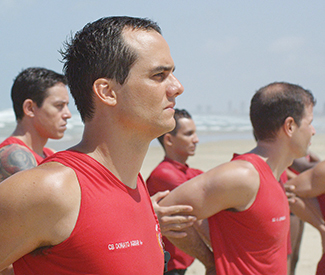
Futuro Beach (Karim Ainouz, Brazil) When two German men globe-trotting on their motorcycles go for a dip off the Brazilian coast, they’re pulled under by the current — only Konrad (Clemens Schick) is saved by local lifeguard Donato (Wagner Moura), his companion lost. The two men console one another with sex. Then in the first of several disorienting jumps forward in time here, suddenly Donato has moved to Europe in order to continue their relationship, leaving his old life (including a dependent mother and younger brother) behind. There are further narrative leaps ahead — director Karim Ainouz (2002’s Madame Satã) is all about bold gestures here, but his visual and sonic assertiveness don’t necessarily fill the blanks in narrative and character development. The resulting exercise in style will leave you either dazzled or emotionally untouched. June 27, 9:30pm, Castro. (Harvey)

Cupcakes (Eytan Fox, Israel, 2013) After a run of politically tinged features, Eytan Fox (2002’s Yossi & Jagger, 2004’s Walk on Water) goes the Almodóvar-lite route with this flyweight comedy about a Eurovision-style song contest. Gay Ofer (Ofer Shechter) and various girlfriends who all live in the same Tel Aviv apartment building decide to enter the Universong competition, becoming Israel’s official entry with improbable ease despite never having performed publicly before. Their mild travails (fighting the creative inference of professional handlers, Ofer’s attempts to drag his boyfriend out of the closet) fill time pleasantly enough before the inevitable triumphant telecast climax. This candy-colored fluff, its mainstreamed camp sensibility predictably reflected in corny vintage hits (“Love Will Keep Us Together,” “You Light Up My Life”), is aptly named — it’s as colorful, easily digested, and about as nutritious as a tray of cupcakes. June 28, 8:30pm, Castro. (Harvey)

I Feel Like Disco (Axel Ranisch, Germany, 2013) When housewife Monika (Christina Grobe) suffers a stroke and falls into a coma she may never come out of, her chubby teenage son Flori (Frithjof Gawenda) and junior high swim coach husband Hanno (Heiko Pinkowski) are forced to depend on each other without mom as a buffer. Things tentatively look up when Flori develops an unlikely friendship — and possibly something more — with dad’s star diver, Romanian émigré Radu (Robert Alexander Baer). Axel Ranisch’s gentle seriocomedy doesn’t make much of an impression for a while, springing few surprises (despite occasional deadpan fantasy sequences) along its moderately amusing path. But as father and son struggle to rise to the occasion of their shared crisis, we grow to like them more — and likewise this ultimately quite disarming feature. June 29, 7pm, Castro. (Harvey) *

Frameline 38, the San Francisco International LGBT Film Festival, runs June 19-29 at the Castro Theatre, 429 Castro, SF; Roxie Theater, 3117 16th St, SF; Victoria Theatre, 2961 16th St, SF; and Rialto Cinemas Elmwood, 2966 College, Berk. For tickets (most shows $10-15) and schedule, visit www.frameline.org. For even more Frameline 38 short takes, visit www.sfbg.com.

Get up

0

marke@sfbg.com

SUPER EGO Fellow freakazoids, I’m disturbed. There’s an alarming new microtrend in nightlife: daylife. More specifically: morninglife. Halp!

First NYC’s Daybreaker party hit our shores a couple weeks ago, enticing hundreds of people to line up outside Audio at 8am for two hours of pre-work dancing ($15-$20) that apparently involved giant jellyfish costumes, a brass band (just to make sure you were awake?), and Four Barrel coffee — no alcohol here. I didn’t make it, because fuck that. But I was intrigued! Daybreaker’s AM disc jockey DJ Bradley P is a quality cutie, and the after-vids were rad. I’m waiting to hear if more are in the works.

Now comes Morning Gloryville from London (Wednesday, June 25, 6:30am-10:30am, $20. Heron Arts, 7 Heron, SF. www.morninggloryville.com), which places itself at the nexus of Burning Man, Ministry of Sound, and 24-Hour Fitness. Kind of a spiritual neon-flashmob throwdown, with wigs, massages, and smoothies. “Rave your way into the day!” It looks real cute. And exhausting.

I should have seen this coming the moment fluorescent Fitbits and post-ironic ’80s “Get Physical” dance routines started hitting the dance floors. Of course, SF has a long, glorious, deranged history of morning parties, from 6am Sunday Church at the End Up in the ’70s to recent blasts at North Beach’s Monroe and our own occasional Morning Glory party. I’ve loved dancing in the wee hours ever since I hung out in West Berlin in the ’80s and discovered high school kids hit the clubs before going to school.

But this new wave is just so darn wholesome — complete with slick marketing campaigns, relentless cheerfulness, and franchise ambitions. Despite my liver’s squeaky pleas, I’m not quite ready to come over to the “nightlife as workout routine” side, let alone sans cocktails. At least not yet. Yes, this fantastic ass came from tripping the light fantastic four-six nights a week. But these massive biceps? Grasping my vodkas, dear. Perhaps one day I’ll see the light.


BAIKAL

Sound Department continues to delve monthly into the more thought-provoking side of electronic music. This 11th installment features Berlin multi-layerist Baikal, who’s been building a body of impeccable (yet quite danceable) tech-work.

https://www.youtube.com/watch?v=roAxi8EQ6dk

Fri/20, 9pm-3am, $10. Monarch, 101 Sixth St., SF. www.monarchsf.com


GRIT & GLAMOUR

New show “Gorgeous” at the Asian Art Museum challenges and redefines the notion of beauty in “Eastern” art: Fantastic-sounding opening party makes it all come to life, with deep techno tunes from Dr. Sleep and Robot Hustle, bounce jams from DavO and Natalie Nuxx, vogue extravaganza from House of Nu Benetton, milky tea, fresh nail designs, full bar, and an afterparty at the Stud.

Fri/20, 7pm-11pm, $20–$25. Asian Art Museum, 200 Larkin, SF. www.asianart.org


LEE BANNON

Based-goth monthly funhole 120 Minutes presents this brilliant, trip-hoppy Ninja Tuner, drifting on gorgeous, post-glitch waves to the darker side.

Fri/20, 10pm, $8–$10. Elbo Room, 647 Valencia, SF. www.elbo.com


LOCO DICE

Maestro of that muscular quasi-minimal Ibiza sound — and not bad to look at, either — Mr. Dice blew me away last time he touched down, a couple years back. He’ll be on the 1015 system this time: All aboard the silver spaceship.

Fri/20, 9pm-4am, $20–$25. 1015 Folsom, SF. www.1015.com


LOUIE VEGA

Here’s a “flashback” night for ya: Master at Work and Latin house legend. He’ll be stretching back into his roots with some Afrobeat, samba, disco, and soul at Mighty. With old school heroes David Harness and Jayvi Velasco.

Fri/20, 10pm-4am, $20 advance. Mighty, 119 Utah, SF. www.mighty119.com


KAFANA BALKAN

“Join us for wild brass, abandon, and reverberating floors” — you can say that again, as this whirling, stomping Balkan delight returns to its Rickshaw Stop home. DJ Zeljko, Fanfare Zambaleta live band, Elizabeth Strong, and the Foxglove Sweethearts belly dancers bring gypsy joy to an adoring crowd.

Sat/21, 9pm, $15. Rickshaw Stop, 155 Fell, SF. www.rickshawstop.com


MAYA JANE COLES

The superfly UK whiz kid with a knack for connecting dance music history dots continues to thrill in the spotlight. She’s headlining a powerhouse night featuring NYC early-’90s fantasist Kim Ann Foxman, Alex Arnout, Young Marco, Bells & Whistles, and more at the As You Like It party.

https://www.youtube.com/watch?v=eV4ZiUSFvIQ

Sat/21, 9pm-5am, $20–$25 advance. Public Works, 161 Erie, SF. www.ayli-sf.com


WERD.

The classic Sunday weekly ran at now-closed Otis Lounge for more than seven years — now it’s at Monarch and sweeter than ever. This week’s ace tech-house guest Peter Blick helps break things in.

Sun/22, 9pm, $5. Monarch, 101 Sixth St., SF. www.monarchsf.com


Alerts: June 18 – 24, 2014

0

WEDNESDAY 18


Glenn Greenwald: Snowden, the NSA and the US Surveillance State

The Nourse Theatre, 275 Hayes, SF. (773) 583-7884 tinyurl.com/glengreenwald. 7-9pm, $6. Greenwald, who received the Pulitzer Prize for Public Service along with his UK Guardian colleagues, will recount his Hong Kong meeting with Edward Snowden, discuss new information on the National Security Agency’s abuse of power and examine the bigger picture implications of the NSA’s surveillance. Greenwald will also be signing his new book, No Place to Hide: Edward Snowden, the NSA, and the U.S. Surveillance State. This event is sponsored by Haymarket Books, The Center for Economic Research and Social Change, Metropolitan Books, The Tow Center for Digital Journalism at Columbia Journalism School and KPFA.


Film and Discussion: DamNation

The David Brower Center, 2150 Allston, Berk. (510) 809-0900 tinyurl.com/damfilm. 7pm, $10 advance, $12 at door. Award-winning film DamNation explores America’s pride in large dams and the ways that we rely on rivers. The film looks at the effects of dams on fish and landscapes, as well as the values that come along with dams. Guests include Matt Stoecker, DamNation Producer/Underwater Photographer, Jason Rainey, Executive Director of International Rivers, and Steve Rothert, California Regional Director of American Rivers.

THURSDAY 19


Labor in the Food System

120 Kearny No. 3100, SF. (510) 654-4400 tinyurl.com/foodsys. 6-8:45, free. This panel will explore all levels of food production, from farm to government, and will have speakers from the various levels. They will discuss wages, food distribution, food processing and more. The panel is put on by Food First, which aims to end hunger-inducing injustices. Speakers include James Cochran, Gail Wadsworth, Margaret Reeves and Paul Ramirez.


Do Good Lab’s International Development Trivia Night

Soda Popinski’s, 1548 California, SF. tinyurl.com/oslg7d5 6-9pm, $15 per individual or $60 per team. Trivia is fun, but doing it for a cause with five other friends is even better. On Thursday, Do Good Lab will hold its International Development Trivia Night in collaboration with FUNDAESPRO, a women’s empowerment organization based in Guatemala City. For $60—$10 per person—teams can compete to raise money for the organization, which provides childcare for working mothers and literacy education to women. Better yet, all tips to the bar (staffed by with special guest bartenders) will go toward FUNDAESPRO’s childcare and education centers.

Picture of SF’s extreme income equality worth thousands of words

53

Sometimes visuals paint a picture in a visceral way that mere numbers can’t, and that was the case when the Anti-Eviction Mapping Project recently released a graph highlighting the magnitude of San Francisco’s high rate of income inequality growth and how it compares to other major cities around the country. San Francisco’s purple bubble is floating way up, all alone, above Atlanta, Georgia’s orange bubble and everyone else closely grouped together. 

The graph’s findings reveal the sad but well-known fact that San Francisco is widely unequal, and it comes as little surprise that from 2007 to 2012, SF saw its income gap grow faster than any other major city in the United States.

The visualization cited a Brookings Institute report on income inequality released in February, which found the income of San Francisco’s low-earning residents (more specifically, those in the 20th percentile of yearly income) dropped by an average of $4,000 during that timespan, while the highest-earning residents (the 95th percentile) saw their income jump by an average of $28,000 over the same period. The latter figure was the largest gain in any American city, and it affirms what’s already clear to city residents: The rich are getting richer while the poor continue to get poorer.

That message might seem like old news to those familiar with San Francisco’s income inequality issues, but the truly alarming part of the study is the rate at which the trend is occurring. Though it provides further confirmation of an unpleasant fact that has plagued San Francisco residents for years, the unprecedented speed of the income gap’s increase is especially startling given the efforts to rectify the issue. As the mapping project pointed out, “trickle-down economics does not appear to be working” in San Francisco.

The gap has become so pronounced that the city’s 2012 GINI Coefficient (which measures income distribution) of .523 would make it the 14th-most economically unequal country in the world if San Francisco were its own nation. That’s right in line with countries that are widely known for their income inequality, like Paraguay and Chile, and more than twice as unequal as top-ranked Sweden.

Perhaps the best indication of this growing division has been the drastic increase in evictions throughout the city. The Anti-Eviction Mapping Project has worked to shed light on the issue, releasing time lapses showing the evictions while making it clear that seniors and disabled people aren’t immune to the trend either.

The Anti-Eviction Mapping Project is probably best known for protesting the Google tech buses, whose effects on local communities they’ve researched extensively. The organizations’ maps showlinks between the location of bus stops and a large number of evictions in the same areas.

Developing nations with income gaps akin to San Francisco’s don’t have tech buses driving around their streets, so it’s no surprise that the buses’ unpaid use of public bus stops hasn’t left residents of lower income areas particularly thrilled, especially with the tech sector pushing up the price of housing in those areas while contributing heavily to the results of the Brookings Institute report.

Gimme 5: Must-see shows this week

0

Happy Monday, y’all. I know, it’s rough. I hope at the very least that your weekend was better than this guy’s.

If not, don’t despair! Here are some rad shows to look forward to this week from the Bay Guardian team. As the late great Casey Kasem (aka Shaggy) would say, keep your feet on the ground, and keep reaching for the stars. Keep your friends close, and your pizza closer. (Okay, that second part’s just me.)

WED/18

Zara McFarlane
You’ve got to be plenty ballsy to venture a cover of “Police and Thieves,” the immortal 1976 reggae track by Junior Murvin (produced by Lee “Scratch” Perry, no less) and transformed into a rock classic by the Clash on their debut 1977 album. But this fascinating Jamaican-British singer’s version, a hypnotic cabaret-jazz version floated by a voice clear as a bell, earns the praise heaped upon it. Included on McFarlane’s new album, If You Knew Her, “a tribute to women, from the alpha female to the housewife,” it puts a feminist spin on the spooky lyrics that decry “scaring the nation with their guns and ammunition, from Genesis to Revelation.” With her classic poise and lucid style (Roberta Flack springs to mind), it’s easy to see why global soul guru Gilles Peterson snagged McFarlane quick for his Brownswood label — Marke B.

8pm, $18 advance
Yoshi’s SF
1330 Fillmore, SF.
(415) 655-5600
www.yoshis.com

THU/19

mewithoutYou
Ten years ago Philadelphia’s experimental post-hardcore outfit mewithoutYou released their sophomore album Catch For Us the Foxes. Now, a decade and three albums later, Foxes is still a beloved fan favorite and the defining album of mewithoutYou’s lyrically rich and musically unique career. The album, which borrows its name directly from the Song of Songs, tackles the band’s usual themes of spirituality, nature, and literature in their trademarked spoken (well, shouted)-word vocals over beautifully melancholy, churning instrumentals. In honor of the record’s tenth birthday, mewithoutYou will be playing the entire record front to back, followed by a set taken from the rest of their catalog. — Haley Zaremba

With The World is a Beautiful Place & I Am No Longer Afraid to Die, Dark Rooms
8pm, $16
Slim’s
333 11th St, SF
(415) 255-0333
www.slimspresents.com

FRI/20

Dean Wareham
While his sharp tenor has gotten a bit lower and his hair is noticeably grayer than it was during his days fronting Galaxie 500, Dean Wareham has remained astonishingly consistent since his burst onto the burgeoning indie rock scene almost 30 years ago. His eclectic and minimalist guitar work and profoundly detached lyrics are on display once again on his eponymous first solo album, which came out in March. To celebrate the occasion, Wareham has embarked on a tour of intimate venus along with his stellar four-piece band. Wareham’s wife and frequent collaborator Britta Phillips, who was an instrumental creative force in Wareham’s post-Galaxie 500 group Luna and on several duet albums since, will also perform with the group. The Chapel, with a capacity of a few hundred, provides the perfect venue to examine Wareham’s instrumental and emotional subtlety a set that he has promised will include tracks from throughout his career. — David Kurlander

9pm, $20
The Chapel
777 Valencia, SF
(415) 551-5157
www.thechapelsf.com

https://www.youtube.com/watch?v=MSIe4eGaT0M

SAT/21

Nightmares on Wax
With a career that now spans two and a half decades, producer George Evelyn (aka DJ E.A.S.E., aka Nightmares on Wax) is credited with being among the first to merge early New York hip-hop with the British B-boy and graffiti scenes of the ’80s, forming what would come to be known as trip-hop. Work with greats like De La Soul followed, but Evelyn has evolved with the times — he’s still considered a go-to inspiration and dream collaborator for today’s up-and-coming hip-hop, dub, and funk hopefuls. He also just released a two-disc “best of,” N.O.W. Is the Time, so this show should be a good time to time-travel a bit — while dancing your ass off, of course.
 

With Ren the Vinyl Archaeologist
9pm, $22-$25
Regency Ballroom
1300 Van Ness, SF
www.theregencyballroom.com

SUN/22

Allah-Las
Fresh from an appearance at Hickey Fest in up in Medocino County, the psych-garage quartet will bring their grooved out, British Invasion-influenced swagger to the stage at GAMH. It makes sense that three of four Allah-Las members met while working at Amoeba in LA; their sound comes off like they’ve absorbed the entirety of the ’60s soul and pop sections of a record store, thrown in a healthy handful of ’70s psychedelia and surf-rock, mixed them all together, and now can’t help but have the dark-tinged, dreamy result basically leaking out their musical pores. It doesn’t hurt that lead singer Miles Michaud channels Jim Morrison eerily well (in vocal tone, hopefully not in recreational drugs of choice).
 

With Dream Boys, Old Testament
8pm, $16
Great American Music Hall
859 O’Farrell, SF
www.slimspresents.com


Extra! Extra! Sunshine advocates beat the Anti-Sunshine Gang in City Hall

27

 By Bruce B. Brugmann

And so the  Anti-Sunshine Gang in City Hall, which for two years has been conducting a nasty vendetta against the Sunshine Ordinance Task Force,  capitulated quietly at Tuesday’s Board of Supervisors meeting without a fight or even a whimper.

The capitulation came in a two line phrase  buried in item 28 in the middle of the board’s agenda.  It was a report from the rules committee recommending  the Board of Supervisors approve a motion for  unnamed nominees to the Sunshine Ordinance Task Force. “Question:  Shall this Motion be approved.”

Board Chair David Chiu asked for approval in his usual board meeting monotone. And the approval came unanimously, with no dissent and no roll call vote and not a word spoken by anybody.  He banged the gavel and that was that. And only a few veteran board watchers knew that this was the astonishing  end to a crucial battle that pitted the powerfuf Anti-Sunshine Gangs against the sunshine forces and the citizens of San Francisco. It was a battle that would decide whether the task force would remain an independent people’s court that would hear and rule on public access complaints.  Sunshine won.

It was ironic and fitting that Chiu presided over the capitulation. For it was Chiu as board president who orchestrated  the deal to demolish Park Merced and then orchestrated the  infamous 6-5 board vote  in September 2010 approving  a monstrous redevelopment  project that would evict lots of tenants, and destroy most of the affordable housing. This was a big deal because the housing crisis was heating up and Park Merced was the largest affordable community in the city and one of the largest In the nation. This is where tens of thousands of young people, young married couples, students and faculty at nearby San Francisco State, older people, and middle class people had come for generations with their families to live in affordable housing in an  “urban park,” as Park Merced promo once put it.

And it was Chiu as board president who was charged by the Sunshine Task Force, along with Supervisors Scott Wiener, Malia Cohen, and Eric Mar with violating the Sunshine Ordinance and the state’s open meeting law (Brown Act) when they approved the project with blazing speed.. 

Wiener, Cohen, and Mar were on the board’s Land Use and Economic Development Committee when they voted on the contract. Literally minutes before the committee vote, Chiu introduced 14 pages of amendments to the contract. The deputy city attorney at the meeting blessed the amendments by saying, gosh, golly, gee, no problem, the amendments do  not substantially alter the contract and therefore the description of the item on the agenda was still apt and the committee could act on it. Bombs away! The full board approved the contract the same day by one vote.

This sleight of hand and pellmell approval process meant that Park Merced was going,going, gone and in its place would be a project that “has no hindsight, no insight, or foresight,” as Planning Commissioner Kathryn Moore was quoted as saying in a scathing Westside Observer column by landscape architect Glenn Rogers. “It is not a project of the 21st century.  It is the agenda of a self-serving developer.”

 The Observer, to its immense credit, was the only media in town to blast away at the project. (Read its coverage and weep, starting with a June piece by Pastor Lynn Gavin who wrote that the Park Merced owners did not disclose to her or her family that they “were going to demolish the garden apartment that was our home.”)  Gavin and her neighbors took the formal complaint to the Sunshine Ordinance Task Force and got a unanimous 8-0  ruling condemning Chiu, Wiener, Cohen, and Mar for open government violations.

It was a historic ruling by the task force and demonstrated once again in 96 point tempo bold the irreplaceable value of the people’s court.  The ruling also had impact because it amounted to a stinging  expose of how government often works in San Francisco with big money and big development and how one vote can add gallons of high octane petrol to the housing crisis. It angered the hell out of the six supervisors who voted for the project.

 And in effect, it gave rise to what I call the Anti-Sunshine Gang in City Hall whose response to the ruling was, not to apologize and change their illegal ways, but to start a vicious vendetta against the task force for doing the right thing at the right time.  The six votes were David Chiu, Scott Wiener, Malia Cohen, Mark Farrell, Sean Elsbernd, and Carmen Chu. Elsbernd has gone on to Sen. Diane Feinstein’s office in San Francisco and Chu to becoming assessor. But the gang picked up other allies along the way, notably the city attorney’s office.

Two years ago, when the task force members came to the board for reappointment, the Anti-Sunshine Gang retaliated and swung into action by “launching a smear campaign aimed at purging the eight task force members who had unanimously voted to find the violations,” according to Richard Knee, a 12 year veteran of the task force, in a June column in the Observer.  Knee, who represents the local chapter of the Society of Professonal Journalists, also wrote that “the mayor and the Board of Supervisors…made sure that the panel gets minimal funding, staffing and resources, and the board has refused to fill two long standing vacancies, making It difficult at times to muster a quorum since task force members are volunteers with outside responsibilities such as family and work.

“Two year ago, the board’s failure to appoint a physically disabled member forced the task force to take a five month hiatus, exacerbating a backlog of complaints filed by members of the public.This year, Knee wrote,  the start of the appointment process was “farcical and ominous.”  He explained that, at the May 15 meeting of the board’s rules committee, which vets applicants for city bodies, the two supervisors present chair Norman Yee and Katy Tang (David Campos had an excused absence) “complained that there weren’t enough racial/ethnic diversity among the 13 candidates. “That didn’t deter them from recommending the reappointments of Todd David, Louise Fischer, and David Pilpel, all Anglos.”

Before the full board five days later, Yee complained again, “this time that lack of a regular schedule and frequent switching of meeting dates were making attendance difficult for task force members. Either Yee had no clue of the facts or he was lying.” Knee explained that the task force normally meets the first Wednesday of each month and its subcommittees usually meet during the third week of the month.

“Meeting postponements and cancellations are the result, not the cause, of difficulties in mustering a quorum, due to the vacancies—which now number three.

“In gushing over David, Fischer, and Pilpel, at the board’s May 20 meeting, Wiener offered no evidence or detail of their alleged accomplishments and ignored the fact that David has missed six task force meetings since March 2013, including those of last February and April. Until the board fills the other seats, the five remaining incumbents—Chris Hyland, Bruce Oka, David Sims, Allyson Washburn, and yours truly—stay on as ‘holdover’ members.”

Meanwhile, by the next session of the Rules Committee on June 5, the sunshine advocates had rallied and put together an impressive mass of sunshine power. Testifying at the hearing were representatives from SPJ and the journalism community, the League of Women Voters, the ACLU, the sunshine posse, the Library Users Association, the Bay Area News Group, the Inter-American Press Asociation, the Center for Investigative Reporting, the UC-Berkeley Graduate School of Journalism, the First Amendment Coalition, the  Electronic Frontier Foundation, the Observer and neighborhood activists, and other sunshine allies and FOI groupies. It was quite a show of force. 

SPJ placed a pointed, timely op ed in the Chronicle (“SF Supervisors block Sunshine Ordinance Task Force,” good of the Chron/Hearst to run it but better if the paper didn’t black out local sunshine issues.) Members of the posse peppered the gang with public record requests aimed at tracking skullduggery and they found it. Reps from the groups lobbied the supervisors by email, phone, and personal office visits. And the word that the Anti-Sunshine Gang was back and on the gallop shot through the neighborhoods and around town and into election campaigns and among constituents of the gang.

SPJ and its vigorous Freedom of Information Committee under co-chairs Journalist Thomas Peele, of Chauncey Bailey fame, and Attorney Geoff King  were particularly effective. Peele is an investigative reporter with the Bay Area Newspaper Group, a lecturer on public records at the UC-Berkeley Graduate School of Journalism, and author of a respected book on Chauncey Bailey, a black journalist murdered on his way to work.

The word got around that the supervisors were blocking strong pro-sunshine candidates for the task force and that their first three nominees were the weakest of the lot. Campos, a stellar sunshine advocate, was back at the committee meeting, making the right calls and shepherding the strong nominees along through the committee and the Board of Supervisors.  Great job.

The cumulative weight and force  of the presentations of the nominees and the sunshine advocates made the proper political point:  any supervisor who voted with the Anti-Sunshine Gang was going to face their constituents and voters with the brand of being anti-sunshine and anti- government accountability.  More: they would have to answer some embarrassing questions: Who lost Park Merced? Who voted to turbo charge evictions and middle class flight from the city for years to come? Who tried to cover up the outrage and who did it? And who led the retaliatory vendetta against the Sunshine Ordinance Task Force for doing the right thing on behalf of sunshine in San Francisco?

And so the Board of Supervisors was dragged kicking and screaming into the sunshine of June 2014 and beyond. The supervisors ended up nominating what looks to be one of the strongest pro-sunshine task forces: Attorney  Mark Rumold and journalist Ali Winston from SPJ, Allyson Washburn from the League of Women Voters, Attorney Lee Hepner, Journalist Josh Wolf, and holdover Chris Hyland. Plus Bruce Oka who looks to be a late holdover in the disabled seat. Congratulations for hanging in and winning, hurray for the power of sunshine, on guard,  B3

P.S. l: PG&E institutionalizes City Hall secrecy and corruption:  The pernicious influence of the Anti-Sunshine gang hung heavy over the rules committee.  Tang tried to force every candidate to take a pledge of allegiance to the city attorney. Tang is the kind of neighborhood supervisor (Sunset) who has a 100 per cent Chamber of Commerce voting record. Her city attorney pledge demand was laughable on its face, given the fact that the city attorney refuses to move on the PG&E/Raker Act scandal and thus has helped institutionalize secrecy and corruption in City Hall on a multi-million dollar scale for decades. Which is reason enough for the city to always maintain a strong, enduring Sunshine Ordinance Task Force, to help keep tabs on how PG&E keeps City Hall safe for PG&E and its allies. (See Guardian stories and editorials since 1969.)  

Tang and Yee continued the gang’s hammering on Bruce Wolfe, a worthy candidate for the disabled seat whose main sin was that he was one of the Honorable Eight who voted condemnation.  The gang knocked out Wolfe as a holdover candidate the first time around and they were at it again at the committee meeting. Oka says he wants to resign from the task force but only when the board finds a good replacement. Wolfe, who was an effective and knowledgeable sunshine task force member, is the obvious replacement but he is still on the purge list.  Stay tuned on this one. . 

There are three things that no one can do to the entire satisfaction of anyone else: make love, poke the fire, and run a newspaper. William Allen White, 1917, line atop the editorial page of the Durango Herald, Durango, Colorado. 

The World Cup is almost here! Where are you gonna watch?

5

The World Cup runs June 12-July 13. Will the US make it out of its group? Will Cristiano Ronaldo get past the (alleged) curse upon his injured knee? Will Neymar Jr. debut a new hairstyle in front of the Brazilian home crowd? And where will you go to watch all this happen? Some suggestions below.

1) SoMa StrEat Food Park: international array of food trucks, beer garden (with Brazilian beer specials), “lots of big-screen HDTVs.” www.somastreatfoodpark.com

2) For those who prefer to party indoors, with a full bar, club Monarch is going to be broadcasting all the games. (OK, “all the big matches” — so if your chosen side is too far down in the FIFA rankings you might be out of luck). www.monarchsf.com

3) North Beach’s Cigar Bar hosts a screening of Sat/14’s key clashes (i.e., you’re on your own for the early-AM Greece vs. Colombia game) with DJs spinning special World Cup jams. This weekend also happens to be the North Beach Festival, so you can get your street fair on before the games. www.aykuteevents.com

4) Once again, there’ll be a giant screen outside of SF City Hall broadcasting most of the games. Also: food trucks, soccer skills clinics, mini-games, and other kid-friendly activities. www.worldcupsf.com

5) In the Metreon, Jillian‘s will be screening all the games, with full bar and special menus. www.jillianssf.com

Celebrate the whole shebang with an opening party (samba dancers!) Sat/14 at Supperclub (www.supperclub.com). Also in SF, don’t forget futbol standbys Mad Dog in the Fog, Danny Coyle’s, Ireland’s 32, Kate O’Brien’s, and Balompie Café.