Scene

Film listings

0

Film listings are edited by Cheryl Eddy. Reviewers are Kimberly Chun, Dennis Harvey, Lynn Rapoport, and Sara Maria Vizcarrondo. For rep house showtimes, see Rep Clock.

DOCFEST

The 12th San Francisco Documentary Film Festival runs June 6-23 at venues including the Roxie, 3117 16th St, SF; Balboa, 3630 Balboa, SF; Aquarius, 430 Emerson, Palo Alto; and New Parkway, 474 24th St, Oakl. For tickets (most shows $11; opening night $20; passes, $25-$160), additional venue information, and schedule, visit www.sfindie.com. For commentary, see “Realness.”

OPENING

The East In Zal Batmanglij and Brit Marling’s powerful second film collaboration (Batmanglij directs, and the pair co-wrote the screenplay, as in 2011’s Sound of My Voice), Marling plays Sarah, an intelligence agent working for a private firm whose client list consists mainly of havoc-wreaking multinationals. Sarah, presented as quietly ambitious and conservative, is tasked by the firm’s director (Patricia Clarkson) with infiltrating the East, an off-the-grid activist collective whose members, including Benji (Alexander Skarsgård), Izzy (Ellen Page), and Doc (Toby Kebbell), bring an eye-for-an-eye sensibility to their YouTube-publicized “jams.” Targeting an oil company responsible for a BP-style catastrophe, they engineer their own spill in the gated-community habitat of the company’s CEO, posting a video that juxtaposes grisly images of oil-coated shorebirds and the unsettling sight of gallons of crude seeping through the air-conditioning vents of a tidy McMansion. A newspaper headline offers a facile framework for understanding their activities, posing the alternatives as “Pranksters or Eco-Terrorists?” But as Sarah examines the gut-wrenching consequences of so-called white-collar crime and immerses herself in the day-to-day practices of the group, drawn in particular to the charismatic Benji, the film raises more complex questions. Much of its rhetorical force flows from Izzy, whom Page invests with a raw, anguished outrage, drawing our sympathies toward the group and its mission of laying bare what should be unbearable. (1:56) California, Embarcadero. (Rapoport)

Fill the Void Respectfully rendered and beautifully shot in warm hues, Fill the Void admirably fills the absence on many screens of stories from what might be considered a closed world: the Orthodox Hasidic community in Israel, where a complex web of family ties, duty, and obligation entangles pretty, accordion-playing Shira (Hada Yaron). An obedient daughter, she’s about to agree to an arranged marriage to a young suitor when her much-loved sister (Renana Raz) dies in childbirth. When Shira’s mother (Irit Sheleg) learns the widower Yochay (Yiftach Klein) might marry a woman abroad and take her only grandchild far away, she starts to make noises about fixing Shira up with her son-in-law. The journey the two must take, in possibly going from in-laws to newlyweds, is one that’s simultaneously infuriating, understandable, and touching, made all the more intimate given director Rama Burshtein’s preference for searching close-ups. Her affinity for the Orthodox world is obvious with each loving shot, ultimately infusing her debut feature with a beating heart of humanity. (1:30) Albany, Clay, Smith Rafael. (Chun)

The Internship Owen Wilson and Vince Vaughn weasel their way into being Google’s oldest interns. Yes, but will they ride the GBUS to MTV? (1:59) Four Star, Marina.

Kings of Summer Ah, the easy-to-pluck, easy-to-love low-hanging fruit of summer — and a coming of age. Who can blame director Jordan Vogt-Roberts and writer Chris Galletta, both TV vets, for thinking that a juicy, molasses-thick application of hee-hee-larious TV comedy actors to a Stand by Me-like boyish bildungsroman could only make matters that much more fun? When it comes to this wannabe-feral Frankenteen love child of Terrence Malick and Parks and Recreation, you certainly don’t want to fault them for original thinking, though you can understand why they keep lurching back to familiar, reliably entertaining turf, especially when it comes in the form of Nick Offerman of the aforementioned P&R, who gets to twist his Victorian doll features into new frustrated shapes alongside real-life spouse Megan Mullally. Joe (Nick Robinson) is tired of his single dad (Offerman) stepping on his emerging game, so he runs off with neurotic wrestling pal Patrick (Gabriel Basso) and stereotypically “weirdo foreign” kid Biaggio (Moises Arias) to a patch of woods. There, from scrap, they build a cool-looking house that resembles a Carmel boho shack and attempt to live off the land, which means mostly buying chicken from a Boston Market across a freeway. Pipes are pummeled, swimming holes are swum, a pathetically wispy mustachio is cultivated — read: real burly stuff, until the rising tide of testosterone threatens to poison the woodland well. Vogt-Roberts certainly captures the humid sensuality and ripe potential of a Midwestern summer — though some of the details, like the supposedly wild rabbit that looks like it came straight from Petco, look a bit canned — and who can gripe when, say, Portlandia‘s Kumail Nanjiani materializes to deliver monster wontons? You just accept it, though the effect of bouncing back and forth between the somewhat serious world of young men and the surprisingly playful world of adults, both equally unreal, grows jarring. Kings of Summer isn’t quite the stuff of genius that marketing would have you believe, but it might give the “weirdo foreign” art house crowd and TV comedy addicts something they can both stand by. (1:33) (Chun)

Much Ado About Nothing Joss Whedon (last year’s The Avengers) shifts focus for a minute to stage an adaptation of the Shakespeare comedy, drawing his players from 15 years’ worth of awesome fantasy/horror/sci-fi TV and film projects. When the Spanish prince Don Pedro (Reed Diamond) pays a post-battle visit to the home of Leonato (Clark Gregg) with his officers Claudio (Fran Kranz) and Benedick (Alexis Denisof), Claudio falls for Leonato’s daughter, Hero (Jillian Morgese), while Benedick falls to verbal blows with Hero’s cousin Beatrice (Amy Acker). Preserving the original language of the play while setting his production in the age of the iPhone and the random hookup, Whedon makes clever, inventive use of the juxtaposition, teasing out fresh sources of visual comedy as well as bringing forward the play’s oddities and darker elements. These shadows fall on Beatrice and Benedick, whose sparring — before they succumb to a playfully devious setup at the hands of their friends — has an ugly, resentful heat to it, as well as on Hero and Claudio, whose filmy romance is unsettlingly easy for their enemies, the malevolent Don John (Sean Maher) and his cohorts, to sabotage. Some of Acker and Denisof’s broader clowning doesn’t offer enough comic payoff for the hammy energy expenditure, but Nathan Fillion, heading up local law enforcement as the constable Dogberry, delivers a gleeful depiction of blundering idiocy, and the film as a whole has a warm, approachable humor while lightly exposing “all’s well that ends well”‘s wacky, dysfunctional side. (1:49) (Rapoport)

1 Mile Above When his brother dies suddenly, sheltered Taiwanese student Shuhao takes possession of the older boy’s “riding diaries,” determined to complete his sibling’s dream of biking to the highest point in Tibet. It’d be a perilous journey even for an experienced cyclist — but Shuhao’s got gutsy determination that (almost) makes up for his wobbly wheels. Fortunately, nearly everyone he meets en route to Lhasa is a kind-hearted soul, including a food-obsessed fellow traveler who doles out advice on how to avoid government checkpoints, prevent “crotch trouble” (from all that riding), and woo women, among other topics. (The cruel weather, steep inclines, and hostile wild dogs he faces, however, aren’t as welcoming.) Jiayi Du’s based-on-true-events drama doesn’t innovate much on similar adventure tales — spoiler alert: it’s the journey, not the destination, that counts — but it admirably avoids melodrama for the most part, and the gorgeous location photography is something to behold. (1:29) Metreon. (Eddy)

The Purge Ethan Hawke and Lena Headey star in this sci-fi thriller that imagines the United States has curbed its crime rate by allowing one completely lawless 12-hour period each year. Brilliant plan! What could possibly go wrong? (1:25) Shattuck. Shadow Dancer Watching the emotions flicker across the exquisitely smooth, pale plane of Andrea Riseborough’s face is one of the central pleasures of Shadow Dancer. Likely the surest step Madonna made in making 2011’s W.E. was choosing the actress as her Wallis Simpson — her features fall together with the sweet symmetry of a, well, Madonna, and even when words, or the script, fail her, the play of thoughts and feelings rippling across her brow can fill out a movie’s, or a character’s, failings admirably. The otherwise graceful, good-looking Shadow Dancer fumbles over a few in the course of resurrecting the Troubles tearing apart Belfast in the 1990s. After feeling responsible for the death of a younger brother who got caught in the crossfire, Collette (Riseborough) finds herself a single mom in league with the IRA. Caught after a scuttled bombing, the petite would-be terrorist is turned by Mac (Clive Owen) to become an informant for the MI5, though after getting quickly dragged into an attempted assassination, Collette appears to be way over her head and must be pulled out — something Mac’s boss (Gillian Anderson) won’t allow. Director James Marsh (2008’s Man on Wire) brings a keen attention to the machinations and tested loyalties among both the MI5 and IRA, an interest evident in his Red Riding: In the Year of Our Lord 1980 (2009), and even imbues otherwise blanked-out, non-picturesque sites like hotel suites and gray coastal walks with a stark beauty. Unfortunately the funereal pacing and gaps in plotting, however eased by the focus on Riseborough’s responses, send the mind into the shadows. (1:44) Embarcadero. (Chun)

Violet and Daisy The 1990s revival has already infiltrated fashion and music; Violet and Daisy, the directorial debut of Oscar-winning Precious (2009) screenwriter Geoffrey Fletcher, suggests that cinema may be next. Unfortunately, not enough time has passed since the first wave of Pulp Fiction (1994) knockoffs to make the genre feel particularly interesting again. And yet here comes a pair of assassins dressed as nuns, cracking long-winded jokes before unloading on their targets with guns they’ve concealed in pizza boxes … as an AM radio hit (“Angel of the Morning”) swells in the background, and Danny Trejo stops by for a cameo. At least this Tarantino-lite exploration of crime and daddy issues has an appealing cast; besides Trejo, Alexis Bledel (sporting Mia Wallace bangs) and Saoirse Ronan play the jailbait titular killers, and James Gandolfini pops in as a sad-sack who manages to evade their bullets because, like, he’s nice and stuff. Despite their efforts, the over-stylized Violet and Daisy comes off like a plate of leftovers reheated too long after the fact. (1:28) (Eddy)

Wish You Were Here One of few bright spots in The Great Gatsby, Joel Edgerton returns in this Aussie import that doesn’t need to set off 3D glitter bombs to win over its audience — that’s the power of a well-acted, well-written thriller. Under the opening credits we witness married Sydney couple Dave and Alice (Edgerton and Felicity Price, who co-wrote the script with her husband, director Kieran Darcy-Smith), along with Alice’s sister Steph (Warm Bodies‘ Teresa Palmer) and new beau Jeremy (Antony Starr), having a blast on their Southeast Asian escape: sampling exotic food, dancing all night, spotting an elephant wandering the streets … oh, and guzzling drinks and gobbling drugs. Next scene: Dave and Alice returning home to their two young children, tension in the air, vacation bliss completely erased. It seems Jeremy is missing, somewhere in remote Cambodia — and that’s not the only lingering fallout from this journey gone terribly awry. Flashbacks mix with present-day scenes, including the police inquiry into Jeremy’s disappearance, to flesh out what happened; the end result is a suspenseful, surprising, precisely-assembled tale that only reveals what it needs to as the minutes tick by. (1:33) Opera Plaza, Shattuck. (Eddy)

ONGOING

After Earth In around a century, we’ll board penitentiary-style ships and evacuate Earth for a sexier planet. Let’s call it a middle-aged migration — we all saw this coming. It’ll be dour, and we’ll feel temporary guilt for all the trees we leveled, bombs we dropped, and oil refineries we taped for 1960s industrial films. Like any body post-divorce, our planet will develop defenses against its ex — us humans — so when Will Smith and son Jaden crash land on the crater it’s toxic to them, full of glorious beasts and free as the Amazon (because it was partly filmed there). Critically wounded General Raige (Will) has to direct physically incredible Kitai (Jaden) through the future’s most dangerous Ironman triathalon. It’s more than a Hollywood king guiding his prince through a life-or-death career obstacle course, it’s a too-aggressive metaphor for adolescence — something real-world Jaden may forfeit to work with dad. Call that the tragedy beneath After Earth: it makes you wonder why the family didn’t make a movie more like 1994’s The Lion King — they had to know that was an option. Director M. Night Shyamalan again courts the Last Airbender (2010) crowd with crazy CG fights and affecting father-son dynamics, but for once, Shyamalan is basically a hired gun here. The story comes straight from Papa Smith, and one gets the feeling the movie exists primarily to elevate Jaden’s rising star. (1:40) Four Star, 1000 Van Ness, Presidio, SF Center, Sundance Kabuki. (Vizcarrondo)

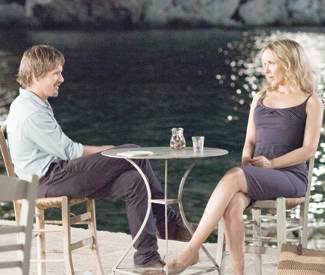
Before Midnight Proving (again) that not all sequels are autonomic responses to a marketplace that rewards the overfamiliar, director Richard Linklater and his cowriters Julie Delpy and Ethan Hawke reconnect with the characters Céline and Jesse, whom we first encountered nearly 20 years ago on a train and trailed around Vienna for a night in Before Sunrise, then met again nine years later in Before Sunset. It’s been nine more years since we left them alone in a Paris apartment, Céline adorably dancing to Nina Simone and telling Jesse he’s going to miss his plane. And it looks like he did. The third film finds the two together, yes, and vacationing in Greece’s southern Peloponnese, where the expansive, meandering pace of their interactions — the only mode we’ve ever seen them in — is presented as an unaccustomed luxury amid a span of busy years filled with complications professional and personal. Over the course of a day and an evening, alone together and among friends, the two reveal both the quotidian intimacies of a shared life and the cracks and elisions in their love story. (1:48) Embarcadero, Piedmont, Shattuck, Sundance Kabuki. (Rapoport)

Elemental Even those suffering from environmental-doc fatigue (a very real condition, particularly in the eco-obsessed Bay Area) will find much to praise about Elemental, co-directed by Gayatri Roshan and NorCal native Emmanuel Vaughan-Lee (who also co-composed the film’s score). This elegantly shot and edited film approaches the issues via three “eco-warriors,” who despite working on different causes on various corners of the planet encounter similar roadblocks, and display like-minded determination, along the way: Rajendra Singh, on a mission to heal India’s heavily polluted Ganges River; Jay Harman, whose ingenious inventions are based on “nature’s blueprints”; and Eriel Deranger, who fights for her indigenous Canadian community in the face of Big Oil. Deranger cuts a particularly inspiring figure: a young, tattooed mother who juggles protests, her moody tween (while prepping for a new baby), and the more bureaucratic aspects of being a professional activist — from defending her grassroots methods when questioned by her skeptical employer, to deflecting a drunk, patronizing Robert F. Kennedy Jr. at a big-ticket fundraiser — with a calm, steely sense of purpose. (1:33) Smith Rafael. (Eddy)

Epic (1:42) Metreo, 1000 Van Ness, Presidio.

Fast and Furious 6 Forget the fast (that’s understood by now, anyway) — part six in this popcorny series is heavy on the “furious,” with constant near-death stunts that zoom past irrational and slam into batshit crazy. Agent Hobbs (Dwayne Johnson) lures the gang out of sunny retirement to bust a fast driver with a knack for strategy and an eye on world domination. Sure, Ludacris jokes their London locale doesn’t mean they’re in a Bond movie, but give cold-blooded Luke Evans some time and he’ll work his way up to antagonizing 007. Shaw (Evans) is smaller than our hero Toretto (Vin Diesel), but he’s convincing, throwing his King’s English at a man whose murky dialect is always delivered with a devilish baritone. If Shaw’s code is all business, Toretto’s is all family: that’s what holds together this cast, cobbled from five Fast and Furious installments shot all over the world. Hottie Gal Gadot (playing Sung Kang’s love interest) reassures Han (Kang) mid-crisis: “This is what we are.” It’s not for nothing the gang’s main weapon is a harpoon gun that, once shot, leaves an umbilicus from the shooter to whatever’s in the crosshairs. That’s Torreto for you. Meanwhile, the villain’s weapon is a car with a spatula-like front end, that flips cars like pancakes. The climactic battle on a cargo plane has to give a face time to every member of the eight-person team, so naturally they shot it on the world’s longest runway. Of course the parade features less car porn than previous editions but it’s got a wider reach now — it’s officially international intrigue, not just fun for gearheads. For my money, it’s some of the best action in theaters today. Stick around for the inevitable sequel-suggesting coda during the credits. (2:10) Metreon, 1000 Van Ness. (Vizcarrondo)

Frances Ha Noah Baumbach isn’t exactly known for romance and bright-eyed optimism. Co-writing 2009’s Fantastic Mr. Fox with director Wes Anderson is maybe the closest to “whimsy” as he’s ever come; his own features (2010’s Greenberg, 2007’s Margot at the Wedding, 2005’s The Squid and the Whale, 1997’s Mr. Jealousy, and 1995’s Kicking and Screaming) tend to veer into grumpier, more intellectual realms. You might say his films are an acquired taste. But haters beware. Frances Ha — the black-and-white tale of a New York City hipster (Baumbach’s real-life squeeze, Greta Gerwig, who co-write the script with him) blundering her way into adulthood — is probably the least Baumbach-ian Baumbach movie ever. Owing stylistic debts to both vintage Woody Allen and the French New Wave, Frances Ha relies heavily on Gerwig’s adorable-disaster title character to propel its plot, which is little more than a timeline of Frances’ neverending micro-adventures: pursuing her nascent modern-dance career, bouncing from address to address, taking an impromptu trip to Paris, visiting her parents (portrayed by the Sacramento-raised Gerwig’s real-life parents), “breaking up” with her best friend. It’s so charming, poignant, and quotable (“Don’t treat me like a three-hour brunch friend!”) that even those who claim to be allergic to Baumbach just might find themselves succumbing to it. (1:26) Embarcadero, Piedmont, Shattuck, Smith Rafael, Sundance Kabuki. (Eddy)

The Great Gatsby Every bit as flashy and in-your-face as you’d expect the combo of “Baz Luhrmann,” “Jazz Age,” and “3D” to be, this misguided interpretation of F. Scott Fitzgerald’s classic tale is, at least, overstuffed with visual delights. For that reason only, all the fashion-mag fawning over leading lady Carey Mulligan’s gowns and diamonds, and the opulent production design that surrounds them, seems warranted. And in scenes where spectacle is appropriate — Gatsby’s legendary parties; Tom Buchanan’s wild New York romp with his mistress — Luhrmann delivers in spades. The trade-off is that the subtler aspects of Fitzgerald’s novel are either pushed to the side or shouted from the rooftops. Leonardo DiCaprio, last seen cutting loose in last year’s Django Unchained, makes for a stiff, fumbling Gatsby, laying on the “Old Sports” as thickly as his pancake make-up. There’s nothing here so startlingly memorable as the actor and director’s 1996 prior collaboration, Romeo + Juliet — a more successful (if still lavish and self-consciously audacious) take on an oft-adapted, much-beloved literary work. (2:22) California, Marina, 1000 Van Ness, SF Center, Sundance Kabuki. (Eddy)

The Hangover Part III Even the friendliest little blackout bacchanal can get tiresome the third time around. The poster depicting Bradley Cooper, Ed Helms, and Zach Galifianakis — stern in suits and ties — says it all: it’s grim men’s business, the care and maintenance of this Hangover franchise, this orgy of good times gone bad. Once a bad-taste love letter to male-bonding, Hangover Part III is ready for a chance, primed to sever some of those misbegotten ties. This time around, the unlikely troika — with the always dispensable normal-dude figurehead Doug (Justin Bartha) in tow — are captured by random sketchy figure Marshall (John Goodman, whose every utterance of the offensive “Chinaman” should bring back Big Lebowski warm-and-fuzzies). He holds Doug hostage in exchange for the amoral, cockfighting, coke-wallowing, whore-hiring, leather-wearing Leslie Chow (Ken Jeong), who stole his gold, and it turns out Alan (Galifianakis) might be his only chum. Jeong, who continues to bring the hammy glee, is still the best thing here, even as the conscience-free instigator; he’s the dark counterpart to tweaked man-child Alan, who meets cute with mean-ass pawn-star soulmate Cassie (Melissa McCarthy). Meanwhile, Cooper and Helms look on, puzzled, no doubt pondering the prestige projects on their plates and wondering what they’re still doing here. (1:40) 1000 Van Ness, SF Center, Shattuck, Sundance Kabuki. (Chun)

The Iceman Methody-y changeling Michael Shannon is pretty much the whole show in The Iceman, about a real-life hitman who purportedly killed over 100 people during his career. Despite some scarily violent moments, however, Ariel Vromen’s film doesn’t show much of that body count — he’s more interested in the double life Richard Kuklinski (Shannon) leads as a cold-blooded killer whose profession remains entirely unknown for years to his wife, daughters, and friends. The waitress he marries, Deborah (Winona Ryder), isn’t exactly a brainiac. But surely there’s some willful denial in the way she accepts his every excuse and fake profession, starting with “dubbing Disney movies” when he actually dupes prints of pornos. It’s in that capacity that he first meets Roy Demeo (Ray Liotta), a volatile Newark mobster who, impressed by Kuklinski’s blasé demeanor at gunpoint, correctly surmises this guy would make a fine contract killer. When he has a falling out with Demeo, Kuklinski “freelances” his skill to collaborate with fellow hitman Mr. Freezy (Chris Evans), so named because he drives an ice-cream truck — and puts his victims on ice for easier disposal. For the sake of a basic contrast defined by its ad line — “Loving husband. Devoted father. Ruthless killer.” — The Iceman simplifies Kuklinski’s saga, making him less of a monster. The movie only briefly suggests Kuklinski’s abused childhood, and it omits entirely other intriguing aspects of the real-life story. But Shannon creates a convincing whole character whose contradictions don’t seem so to him — or to us. (1:46) Opera Plaza. (Harvey)

In the House In François Ozon’s first feature since the whimsical 2010 Potiche, he returns somewhat to the playful suspense intrigue of 2003’s Swimming Pool, albeit with a very different tone and context. Fabrice Luchini plays a high school French literature teacher disillusioned by his students’ ever-shrinking articulacy. But he is intrigued by one boy’s surprisingly rich description of his stealth invasion into a classmate’s envied “perfect” family — with lusty interest directed at the “middle class curves” of the mother (Emmanuelle Seigner). As the boy Claude’s writings continue in their possibly fictive, possibly stalker-ish provocations, his teacher grows increasingly unsure whether he’s dealing with a precocious bourgeoisie satirist or a literate budding sociopath — and ambivalent about his (and spouse Kristin Scott Thomas’ stressed gallery-curator’s) growing addiction to these artfully lurid possible exposé s of people he knows. And it escalates from there. Ozon is an expert filmmaker in nimble if not absolute peak form here, no doubt considerably helped by Juan Mayorga’s source play. It’s a smart mainstream entertainment that, had it been Hollywood feature, would doubtless be proclaimed brilliant for its clever tricks and turns. (1:45) Roxie. (Harvey)

Iron Man 3 Neither a sinister terrorist dubbed “the Mandarin” (Ben Kingsley) nor a spray-tanned mad scientist (Guy Pearce) are as formidable an enemy to Tony Stark (Robert Downey, Jr.) as Tony Stark himself, the mega-rich playboy last seen in 2012’s Avengers donning his Iron Man suit and thwarting alien destruction. It’s been rough since his big New York minute; he’s been suffering panic attacks and burying himself in his workshop, shutting out his live-in love (Gwyneth Paltrow) in favor of tinkering on an ever-expanding array of manned and un-manned supersuits. But duty, and personal growth, beckon when the above-mentioned villains start behaving very badly. With some help (but not much) from Don Cheadle’s War Machine — now known as “Iron Patriot” thanks to a much-mocked PR campaign — Stark does his saving-the-world routine again. If the plot fails to hit many fresh beats (a few delicious twists aside), the 3D special effects are suitably dazzling, the direction (by series newcomer Shane Black) is appropriately snappy, and Downey, Jr. again makes Stark one of the most charismatic superheros to ever grace the big screen. For now, at least, the continuing Avengers spin-off extravaganza seems justified. (2:06) Metreon, 1000 Van Ness, Sundance Kabuki. (Eddy)

Kon-Tiki In 1947 Norwegian explorer and anthropologist Thor Heyderdahl arranged an expedition on a homemade raft across the Pacific, recreating what he believed was a route by which South Americans traveled to Polynesia in pre-Columbian times. (Although this theory is now disputed.) The six-man crew (plus parrot) survived numerous perils to complete their 101-day, 4300-mile journey intact — winning enormous global attention, particularly through Heyderdahl’s subsequent book and documentary feature. Co-directors Joachim Roenning and Espen Sandberg’s dramatization is a big, impressive physical adventure most arresting for its handsome use of numerous far-flung locations. Where it’s less successful is in stirring much emotional involvement, with the character dynamics underwhelming despite a decent cast led by Pal Sverr Hagen as Thor (who, incredibly, was pretty much a non-swimmer). Nonetheless, this new Kon-Tiki offers all the pleasures of armchair travel, letting you vicariously experience a high-risk voyage few could ever hope (or want) to make in real life. (1:58) Opera Plaza, Shattuck. (Harvey)

Midnight’s Children Deepa Mehta (2005’s Water) directs and co-adapts with Salman Rushdie the author’s Booker Prize-winning 1981 novel, which mixes history (India’s 1947 independence, and the subsequent division of India and Pakistan) with magical elements — suggested from its fairy-tale-esque first lines: “I was born in the city of Bombay, once upon a time.” This droll voice-over (read by Rushdie) comes courtesy of Saleem Sinai, born to a poor street musician and his wife (who dies in childbirth; dad is actually an advantage-taking Brit played by Charles “Tywin Lannister” Dance) but switched (for vaguely revolutionary reasons) with Shiva, born at the same moment to rich parents who unknowingly raise the wrong son. Rich or poor, it seems all children born at the instant of India’s independence have shared psychic powers; over the years, they gather for “meetings” whenever Saleem summons them. And that’s just the 45 minutes or so of story. Though gorgeously shot, Midnight’s Children suffers from page-to-screen-itis; the source material is complex in both plot and theme, and it’s doubtful any film — even one as long as this — could translate its nuances and more fanciful elements (“I can smell feelings!,” Saleem insists) into a consistently compelling narrative. Last-act sentimentality doesn’t help, though it’s consistent with the fairy-tale vibe, I suppose. (2:20) Smith Rafael. (Eddy)

Mud (2:18) Piedmont.

Now You See Me Cheese can be a tough factor to quantify, but you get close to the levels Now You See Me strives for when you picture the hopelessly goofy, tragically coiffed Doug Henning lisping, “It’s magic!” somewhere between Bob “Happy Little Tree” Ross and a rainbow sprinkled with Care Bears. Now You See Me, however, is much less likely to be dusted off and adored by a Bronies-style cult. Four seemingly savvy street and stage magicians (Jesse Eisenberg, Woody Harrelson, Isla Fisher, and Dave Franco) are brought together by tarot card invite by a mysterious host. What follows is a series of corny performances by the crew, now dubbed the Four Horseman, that are linked to a series of Robin Hood-like, or not, thefts. Nipping at their heels are a loudly flustered FBI agent (Mark Ruffalo, working an overcooked Columbo impression), a waifish Interpol detective (Mélanie Laurent, as if slouching through a Sorbonne semester), and a professional debunker (Morgan Freeman, maintaining amusement). In the course of the investigation, the Horsemen’s way-too-elaborate and far-from-apocalyptic illusions are taken apart and at least one vigorously theatrical fight scene takes place — all of which sounds more riveting than what actually transpires under the action-by-the-book watch of director Louis Leterrier, who never succeeds in making the smug, besuited puppets, I mean Horsemen, who strut around like they’re in Ocean’s Eighteen 4D, anything remotely resembling cool. Or even characters we might give a magical rabbit’s ass about. For all its seemingly knowing pokes at the truth behind the curtain, Now You See Me lacks much of the smarts and wit of loving deconstructionists like Penn and Teller —glimmers of which can only be made out in the smirk of Harrelson and the knowing twinkle of Freeman — or even the tacky machismo of Criss Angel, as well as a will to get to a truth behind the mystery. Or is the mystery behind the truth? (1:56) California, 1000 Van Ness, Presidio, SF Center, Sundance Kabuki. (Chun)

Oblivion Spoiler alert: the great alien invasion of 2017 does absolutely zilch to eliminate, or at least ameliorate, the problem of sci-fi movie plot holes. However, puny humans willing to shut down the logic-demanding portions of their brains just might enjoy Oblivion, which is set 60 years after that fateful date and imagines that Earth has been rendered uninhabitable by said invasion. Tom Cruise plays Jack, a repairman who zips down from his sterile housing pod (shared with comely companion Andrea Riseborough) to keep a fleet of drones — dispatched to guard the planet’s remaining resources from alien squatters — in working order. But Something is Not Quite Right; Jack’s been having nostalgia-drenched memories of a bustling, pre-war New York City, and the déjà vu gets worse when a beautiful astronaut (Olga Kurylenko) literally crash-lands into his life. After an inaugural gig helming 2010’s stinky Tron: Legacy, director Joseph Kosinski shows promise, if not perfection, bringing his original tale to the screen. (He does, however, borrow heavily from 1968’s 2001: A Space Odyssey, 1996’s Independence Day, and 2008’s Wall-E, among others.) Still, Oblivion boasts sleek production design, a certain creative flair, and some surprisingly effective plot twists — though also, alas, an overlong running time. (2:05) Metreon. (Eddy)

Rebels with a Cause The huge string of parklands that have made Marin County a jewel of preserved California coastline might easily have become wall-to-wall development — just like the Peninsula — if not for the stubborn conservationists whose efforts are profiled in Nancy Kelly’s documentary. From Congressman Clem Miller — who died in a plane crash just after his Point Reyes National Seashore bill became a reality — to housewife Amy Meyer, who began championing the Golden Gate National Recreation Area because she “needed a project” to keep busy once her kids entered school, they’re testaments to the ability of citizen activism to arrest the seemingly unstoppable forces of money, power and political influence. Theirs is a hidden history of the Bay Area, and of what didn’t come to pass — numerous marinas, subdivisions, and other developments that would have made San Francisco and its surrounds into another Los Angeles. (1:12) Roxie. (Harvey)

Renoir The gorgeous, sun-dappled French Riviera setting is the high point of this otherwise low-key drama about the temperamental women (Christa Theret) who was the final muse to elderly painter Auguste Renoir (Michel Bouquet), and who encouraged the filmmaking urges in his son, future cinema great Jean (Vincent Rottiers). Cinematographer Mark Ping Bin Lee (who’s worked with Hou Hsiao-hsein and Wong Kar Wai) lenses Renoir’s leafy, ramshackle estate to maximize its resemblance to the paintings it helped inspire; though her character, Dédée, could kindly be described as “conniving,” Theret could not have been better physically cast, with tumbling red curls and pale skin she’s none too shy about showing off. Though the specter of World War I looms in the background, the biggest conflicts in Gilles Bourdos’ film are contained within the household, as Jean frets about his future, Dédée faces the reality of her precarious position in the household (which is staffed by aging models-turned-maids), and Auguste battles ill health by continuing to paint, though he’s in a wheelchair and must have his brushes taped to his hands. Though not much really happens, Renoir is a pleasant, easy-on-the-eyes experience. (1:51) Smith Rafael. (Eddy)

Scatter My Ashes at Bergdorf’s This glossy love letter to posh New York City department store Bergdorf Goodman — a place so expensive that shopping there is “an aspirational dream” for the grubby masses, according to one interviewee — would offend with its slobbering take on consumerism if it wasn’t so damn entertaining. The doc’s narrative of sorts is propelled by the small army assembled to create the store’s famed holiday windows; we watch as lavish scenes of upholstered polar bears and sea creatures covered in glittering mosaics (flanking, natch, couture gowns) take shape over the months leading up to the Christmas rush. Along the way, a cavalcade of top designers (Michael Kors, Vera Wang, Giorgio Armani, Jason Wu, Karl Lagerfeld) reminisce on how the store has impacted their respective careers, and longtime employees share anecdotes, the best of which is probably the tale of how John Lennon and Yoko Ono saved the season by buying over 70 fur coats one magical Christmas Eve. Though lip service is paid to the current economic downturn (the Madoff scandal precipitated a startling dropoff in personal-shopper clients), Scatter My Ashes is mostly just superficial fun. What do you expect from a store whose best-selling shoe is sparkly, teeteringly tall, and costs $6,000? (1:33) Opera Plaza. (Eddy)

Star Trek Into Darkness Do you remember 1982? There are more than a few echoes of Star Trek II: The Wrath of Khan in J. J. Abrams’ second film retooling the classic sci-fi property’s characters and adventures. Darkness retains the 2009 cast, including standouts Zachary Quinto as Spock and Simon Pegg as comic-relief Scotty, and brings in Benedict “Sherlock” Cumberbatch to play the villain (I think you can guess which one). The plot mostly pinballs between revenge and preventing/circumventing the destruction of the USS Enterprise, with added post-9/11, post-Dark Knight (2008) terrorism connotations that are de rigueur for all superhero or fantasy-type blockbusters these days. But Darkness isn’t totally, uh, dark: there’s quite a bit of fan service at work here (speak Klingon? You’re in luck). Abrams knows what audiences want, and he’s more than happy to give it to ’em, sometimes opening up massive plot holes in the process — but never veering from his own Prime Directive: providing an enjoyable ride. (2:07) Metreon, 1000 Van Ness, Presidio, Sundance Kabuki. (Eddy)

Stories We Tell Actor and director Sarah Polley (2011’s Take This Waltz) turns the camera on herself and her family for this poignant, moving, inventive, and expectation-upending blend of documentary and narrative. Her father, actor Michael Polley, provides the narration; our first hint that this film will take an unconventional form comes when we see Sarah directing Michael’s performance in a recording-studio booth, asking him to repeat certain phrases for emphasis. On one level, Stories We Tell is about Sarah’s own history, as she sets out to explore longstanding family rumors that Michael is not her biological father. The missing piece: her mother, actress Diane Polley (who died of cancer just days after Sarah’s 11th birthday), a vivacious character remembered by Sarah’s siblings and those who knew and loved her. Stories We Tell‘s deeper meaning emerges as the film becomes ever more meta, retooling the audience’s understanding of what they’re seeing via convincingly doc-like reenactments. To say more would lessen the power of Stories We Tell‘s multi-layered revelations. Just know that this is an impressively unique film — about family, memories, love, and (obviously) storytelling — and offers further proof of Polley’s tremendous talent. (1:48) Shattuck, Smith Rafael. (Eddy)

What Maisie Knew In Scott McGehee and David Siegel’s adaptation of the 1897 Henry James novel, the story of a little girl caught between warring, self-involved parents is transported forward to modern-day New York City, with Julianne Moore and Steve Coogan as the ill-suited pair responsible, in theory, for the care and upbringing of the title character, played by Onata Aprile. Moore’s Susanna is a rock singer making a slow, halting descent from some apex of stardom, as we gather from the snide comments of her partner in dysfunctionality, Beale (Coogan). As their relationship implodes and they move on to custody battle tactics, each takes on a new, inappropriate companion — Beale marrying in haste Maisie’s pretty young nanny, Margo (Joanna Vanderham), and Susanna just as precipitously latching on to a handsome bartender named Lincoln (True Blood‘s Alexander Skarsgård). The film mostly tracks the chaotic action — Susanna’s strung-out tantrums, both parents’ impulsive entrances and exits, Margo and Lincoln’s ambivalent acceptance of responsibility — from Maisie’s silent vantage, as details large and small convey, at least to us, the deficits of her caretakers, who shield her from none of the emotional shrapnel flying through the air and rarely bother to present an appropriate, comprehensible explanation. Yet Maisie understands plenty — though longtime writing-and-directing team McGehee and Siegel (2001’s The Deep End, 2005’s Bee Season, 2008’s Uncertainty) have taken pains in their script and their casting to present Maisie as a lovely, watchful child, not the precocious creep often favored in the picture shows. So we watch too, with a grinding anxiety, as she’s passed from hand to hand, forced to draw her own unvoiced conclusions. (1:38) Albany, Opera Plaza. (Rapoport) *

 

Clock ticks, ground breaks: SFMOMA kicks off its two years of renovations with 24-hour party, glitter bomb

0

The students from SoMa’s Bessie Carmichael Elementary, against my better judgement, were to ones to push down the level detonating… whatever was going to mark the groundbreak of SFMOMA’s planned two-and-a-half years of closure for massive renovations expansions this morning.

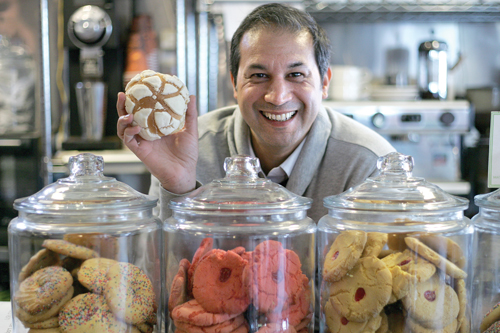
When glitter cannons took the place of the further obliteration of the building behind Supervisor Jane Kim and the museum trustees with their hard hats and decorative shovels, I breathed a sigh of relief. I should have known any cultural institution with the foresight to build a DIY graffiti wall made of cookies wouldn’t allow minors to be injured. 

You’ll probably want to say hasta luego to the Bay Area’s premier contemporary art museum by attending the Countdown Days celebration, which’ll bring ecosexual performance artists Annie Sprinkle and Beth Stephens, dancer-force Marc Bamuthi Joseph, Homobiles, TCHO Chocolate, Guillermo Gómez-Peña, one-canvas docent explorations, and much more, culminating in a 24-hour extravaganza, to the soon-to-be-shuttered atriums and galleries Thu/30-Sun/2.

Dry your eyes though kitty-cat, when the museum returns, it’ll be free to visitors under 18 and larger by 225,000 square feet at an estimated cost of $610 million. 41,000 square feet of free-access public space has been promised, in addition to a new seventh floor outdoor terrace and massive vertical gardens.

While we wait for 2016 to arrive, art fans are invited to enjoy special roaming installations, like the Mark di Suvero sculptures already gracing Crissy Field.

The Contemporary Jewish Museum, Yerba Buena Center for the Arts, and Asian Art Museum, and other venues will be hosting special SFMOMA collaborations. 

Here’s what we have to look forward to with the new design, courtesy its creators, Norway’s Snøhetta architecture firm.

Turn around girl… 

… There it is.

Today’s groundbreaking included aforementioned cookie wall, accompanied by some sadly impotent spray cans of edible spray paint. Groundbreakers were encouraged to spray, then walk off with a souvenir “brick” baker by Blue Bottle Coffee pastry chef Caitlin Freeman. I ate mine when it feel apart in my hands: a delicious impermanence, sonly slightly troubling in that the cookie wall was meant to mimick Snøhetta’s architectural style. 

Delicious cookie wall

I’m sure it will be fine. Here are the little ones charged with ushering the SF arts scene into the future. 

And Supervisor Kim, in a chain metal scarf-necklace that topped off the single best outfit I’ve seen a city politician sport. 

Museum trustees and officials praised the city’s “universal support” towards getting the renovations funded, which was also supported by private donors, including $5 million from anonymous sources. An estimated 1,400 construction jobs wil be created by the project, say museum PR materials. 

Swing through for one last look at the current facilities, and check out the future if you’re so inclined. Download this app by Brooklyn’s Will Pappenheimer and John Craig Freeman and pull out your phone at 10 points throughout the SFMOMA to view: 

Artist-created motifs that riff on features of the museum—such as plants from the new vertical garden and fragments from the current building—merge with iconic images from the Bay Area’s natural and tech environments to create a circling vortex of animation through and around the building, as well as floating off into space. 

SFMOMA Countdown Celebration

Thu/30-Fri/31, 10am-9:45pm; open continuously Sat/1, 10am-Sun/2, 5:45pm

SFMOMA

151 Third St., SF

www.sfmoma.org

Film listings

0

Film listings are edited by Cheryl Eddy. Reviewers are Kimberly Chun, Dennis Harvey, Lynn Rapoport, and Sara Maria Vizcarrondo. For rep house showtimes, see Rep Clock. Due to the Memorial Day holiday, theater information was incomplete at presstime.

OPENING

After Earth M. Night Shyamalan directs father-son team Will and Jaden Smith as a father-son team stranded on post-apocalyptic Earth. (1:40)

Before Midnight See “The Conversations.” (1:48)

Now You See Me Magicians rob banks in this ensemble caper starring Jesse Eisenberg, Mark Ruffalo, Morgan Freeman, and Woody Harrelson. (1:56)

Rebels with a Cause The huge string of parklands that have made Marin County a jewel of preserved California coastline might easily have become wall-to-wall development — just like the Peninsula — if not for the stubborn conservationists whose efforts are profiled in Nancy Kelly’s documentary. From Congressman Clem Miller — who died in a plane crash just after his Point Reyes National Seashore bill became a reality — to housewife Amy Meyer, who began championing the Golden Gate National Recreation Area because she “needed a project” to keep busy once her kids entered school, they’re testaments to the ability of citizen activism to arrest the seemingly unstoppable forces of money, power and political influence. Theirs is a hidden history of the Bay Area, and of what didn’t come to pass — numerous marinas, subdivisions, and other developments that would have made San Francisco and its surrounds into another Los Angeles. (1:12) Roxie. (Harvey)

Sightseers See “Tourist Trappers.” (1:28)

Venus and Serena How do you compress the remarkable life and stunning career of one Williams sister into a doc that’s a shade over 90 minutes, much less fit both of their stories in there? Venus and Serena can’t do much more than offer an overview of the sports phenoms, shadowing both during what proved to be an unfortunately injury-plagued 2011 season. It also flashes back to chart the sisters’ rise from Compton-raised prodigies to Grand Slam-dominating forces of nature, and features glamorously-lit interviews with the women, a handful of their relatives, and famous admirers (with Anna Wintour stopping by to purr that they are “fashion gladiators and tennis gladiators”). Though directors Maiken Baird and Michelle Major don’t leave out the more controversial bits — the sisters’ feelings about their domineering father (their former coach); their on-court tantrums; their frank talk about religion, race, dealing with stress, etc. — the straightforward Venus and Serena lacks any stylistic flair, a shame considering how important style is to the sisters. It does offer a few unexpected off-the-cuff moments, however, as when a karaoke-obsessed Serena launches into “Hole Hearted,” by 1990s hair rockers Extreme, after a disappointing day at Wimbledon. (1:39) (Eddy)

We Steal Secrets: The Story of Wikileaks Call it the unenviable yet altogether fascinating task of the smartest moviemaker in the room: capturing the evasive, mercurial and fallible free-speech crusader Julian Assange and his younger church-going, trans-curious cohort Bradley Manning, all sans interviews with the paranoid former who’s in hiding and the guileless latter who was incarcerated without charges for a year by the military. Enron: The Smartest Guys in the Room (2005) documentary maker Alex Gibney seems to be just the guy to take on this project, pulling back the curtain on the transparency-first site, navigating the labyrinthine contradictions of a classic Internet-age antihero, and telling the previously untold story of the young man who tied himself to WikiLeaks’s, and Assange’s, fortunes. It starts out innocently (or not) enough, with Assange and his minuscule band of volunteers uploading and unleashing the still-shocking video footage of a Reuters news crew and their rescuers, mistaken for insurgents, being mowed down in a hailstorm of friendly fire by US forces in Iraq. Assange’s notoriety and undoing comes with the arrival of a mass of easily shared government intelligence uploaded then passed along to him by computer wiz Private Manning in the biggest leak of state secrets in US history; the lonely analyst’s unexpected friendship with hacker Adrian Lamo, who ultimately turns him in; and the rape charges that finally ensnare Assange in a web of lies, ironically, of his own making. Seemingly on the side of Assange, Net anarchists, and the free flow of information at the start of the saga, Gibney uses extensive interviews with (Bush-era) intelligence experts, Lamo, an Assange sexual-assault accuser, WikiLeaks supporters, and reporters; animation; and footage culled from journalists and likely anyone with a cell phone camera in shooting distance of Assange to tell this riveting story of good intentions and ego run amok, sidestepping the WikiLeaks poobah’s approval in a comprehensive, impassioned warts-and-all way that he even might appreciate. (2:10) (Chun)

ONGOING

At Any Price Growing up in rural Iowa very much in the shadow of his older brother, Dean Whipple (Zac Efron) cultivated a chip on his shoulder while dominating the figure 8 races at the local dirt track. When papa Henry (Dennis Quaid) — a keeping-up-appearances type, with secrets a-plenty lurking behind his good ol’ boy grin — realizes Dean is his best hope for keeping the family farm afloat, he launches a hail-mary attempt to salvage their relationship. This latest drama from acclaimed indie director Ramin Bahrani (2008’s Goodbye Solo) is his most ambitious to date, enfolding small-town family drama and stock-car scenes into a pointed commentary on modern agribusiness (Henry deals in GMO corn, and must grapple with the sinister corporate practices that go along with it). But the film never gels, particularly after an extreme, third-act plot twist is deployed to, um, hammer home the title — which refers to prices both monetary and spiritual. A solid supporting cast (Kim Dickens, Heather Graham, Clancy Brown, Red West, newcomer Maika Monroe) helps give the film some much-needed added weight as it veers toward melodrama. (1:45) (Eddy)

The Big Wedding The wedding film has impacted our concepts of matrimony, fashion, and marital happiness more than all the textbooks in the world have affected our national testing average; but it’s with that margin of mediocrity I report from the theater trenches of The Big Wedding. With this, the wedding movie again peters to a crawl. Susan Sarandon (an actress I love with a loyalty beyond sense) is Bebe, the stepmother/caterer swept under the rug by the selfishness of her live in lover Don (De Niro), his ex-wife/baby momma Elle (Diane Keaton) and their racist wackjob future in-laws. When Don and Elle faced the end of their marriage, they tried to rekindle with a Columbian orphan. Cue Ben Barnes in brownface. Alejandro is set to wed Amanda Seyfried and when his mother ascends from Columbia for the wedding, he decides Don and Elle have to act like their marriage never ended &ldots; which makes Bebe a mistress. Surprise! A decade of caring selflessly for your lover’s kids has won you a super shitty wedding you still have to cater! To give you a sense of the conflict management on display, Bebe — the film’s graceful savior —drops a drink on Don before fleeing the scene in her Alfa Romeo; she’s the one character not determined to act out her more selfish urges in the style of an MTV reality show. Despite some less imaginative conflicts and degrading “solutions,” this blended family still speaks some truth about the endearing embarrassment of the happy family. (1:29) (Vizcarrondo)

Elemental Even those suffering from environmental-doc fatigue (a very real condition, particularly in the eco-obsessed Bay Area) will find much to praise about Elemental, co-directed by Gayatri Roshan and NorCal native Emmanuel Vaughan-Lee (who also co-composed the film’s score). This elegantly shot and edited film approaches the issues via three “eco-warriors,” who despite working on different causes on various corners of the planet encounter similar roadblocks, and display like-minded determination, along the way: Rajendra Singh, on a mission to heal India’s heavily polluted Ganges River; Jay Harman, whose ingenious inventions are based on “nature’s blueprints”; and Eriel Deranger, who fights for her indigenous Canadian community in the face of Big Oil. Deranger cuts a particularly inspiring figure: a young, tattooed mother who juggles protests, her moody tween (while prepping for a new baby), and the more bureaucratic aspects of being a professional activist — from defending her grassroots methods when questioned by her skeptical employer, to deflecting a drunk, patronizing Robert F. Kennedy Jr. at a big-ticket fundraiser — with a calm, steely sense of purpose. (1:33) Smith Rafael. (Eddy)

Epic (1:42)

Fast and Furious 6 Forget the fast (that’s understood by now, anyway) — part six in this popcorny series is heavy on the “furious,” with constant near-death stunts that zoom past irrational and slam into batshit crazy. Agent Hobbs (Dwayne Johnson) lures the gang out of sunny retirement to bust a fast driver with a knack for strategy and an eye on world domination. Sure, Ludacris jokes their London locale doesn’t mean they’re in a Bond movie, but give cold-blooded Luke Evans some time and he’ll work his way up to antagonizing 007. Shaw (Evans) is smaller than our hero Toretto (Vin Diesel), but he’s convincing, throwing his King’s English at a man whose murky dialect is always delivered with a devilish baritone. If Shaw’s code is all business, Toretto’s is all family: that’s what holds together this cast, cobbled from five Fast and Furious installments shot all over the world. Hottie Gal Gadot (playing Sung Kang’s love interest) reassures Han (Kang) mid-crisis: “This is what we are.” It’s not for nothing the gang’s main weapon is a harpoon gun that, once shot, leaves an umbilicus from the shooter to whatever’s in the crosshairs. That’s Torreto for you. Meanwhile, the villain’s weapon is a car with a spatula-like front end, that flips cars like pancakes. The climactic battle on a cargo plane has to give a face time to every member of the eight-person team, so naturally they shot it on the world’s longest runway. Of course the parade features less car porn than previous editions but it’s got a wider reach now — it’s officially international intrigue, not just fun for gearheads. For my money, it’s some of the best action in theaters today. Stick around for the inevitable sequel-suggesting coda during the credits. (2:10) (Vizcarrondo)

42 Broad and morally cautious, 42 is nonetheless an honorable addition to the small cannon of films about the late, great baseball player Jackie Robinson. When Dodgers owner Branch Rickey (Harrison Ford) declares that he wants a black player in the white major leagues because “The only real color is green!”, it’s a cynical explanation that most people buy, and hate him for. It also starts the ball curving for a PR shitstorm. But money is an equal-opportunity leveling device: when Robinson (Chadwick Boseman) tries to use the bathroom at a small-town gas station, he’s denied and tells his manager they should “buy their 99 gallons of gas another place.” Naturally the gas attendant concedes, and as 42 progresses, even those who reject Robinson at first turn into men who find out how good they are when they’re tested. Ford, swashbuckling well past his sell-by date, is a fantastic old coot here; his “been there, lived that” prowess makes you proud he once fled the path of a rolling bolder. His power moves here are even greater, but it’s ultimately Robinson’s show, and 42 finds a lot of ways to deliver on facts and still print the legend. (2:08) (Vizcarrondo)

Frances Ha Noah Baumbach isn’t exactly known for romance and bright-eyed optimism. Co-writing 2009’s Fantastic Mr. Fox with director Wes Anderson is maybe the closest to “whimsy” as he’s ever come; his own features (2010’s Greenberg, 2007’s Margot at the Wedding, 2005’s The Squid and the Whale, 1997’s Mr. Jealousy, and 1995’s Kicking and Screaming) tend to veer into grumpier, more intellectual realms. You might say his films are an acquired taste. But haters beware. Frances Ha — the black-and-white tale of a New York City hipster (Baumbach’s real-life squeeze, Greta Gerwig, who co-write the script with him) blundering her way into adulthood — is probably the least Baumbach-ian Baumbach movie ever. Owing stylistic debts to both vintage Woody Allen and the French New Wave, Frances Ha relies heavily on Gerwig’s adorable-disaster title character to propel its plot, which is little more than a timeline of Frances’ neverending micro-adventures: pursuing her nascent modern-dance career, bouncing from address to address, taking an impromptu trip to Paris, visiting her parents (portrayed by the Sacramento-raised Gerwig’s real-life parents), “breaking up” with her best friend. It’s so charming, poignant, and quotable (“Don’t treat me like a three-hour brunch friend!”) that even those who claim to be allergic to Baumbach just might find themselves succumbing to it. (1:26) Smith Rafael. (Eddy)

The Great Gatsby Every bit as flashy and in-your-face as you’d expect the combo of “Baz Luhrmann,” “Jazz Age,” and “3D” to be, this misguided interpretation of F. Scott Fitzgerald’s classic tale is, at least, overstuffed with visual delights. For that reason only, all the fashion-mag fawning over leading lady Carey Mulligan’s gowns and diamonds, and the opulent production design that surrounds them, seems warranted. And in scenes where spectacle is appropriate — Gatsby’s legendary parties; Tom Buchanan’s wild New York romp with his mistress — Luhrmann delivers in spades. The trade-off is that the subtler aspects of Fitzgerald’s novel are either pushed to the side or shouted from the rooftops. Leonardo DiCaprio, last seen cutting loose in last year’s Django Unchained, makes for a stiff, fumbling Gatsby, laying on the “Old Sports” as thickly as his pancake make-up. There’s nothing here so startlingly memorable as the actor and director’s 1996 prior collaboration, Romeo + Juliet — a more successful (if still lavish and self-consciously audacious) take on an oft-adapted, much-beloved literary work. (2:22) (Eddy)

The Hangover Part III Even the friendliest little blackout bacchanal can get tiresome the third time around. The poster depicting Bradley Cooper, Ed Helms, and Zach Galifianakis — stern in suits and ties — says it all: it’s grim men’s business, the care and maintenance of this Hangover franchise, this orgy of good times gone bad. Once a bad-taste love letter to male-bonding, Hangover Part III is ready for a chance, primed to sever some of those misbegotten ties. This time around, the unlikely troika — with the always dispensable normal-dude figurehead Doug (Justin Bartha) in tow — are captured by random sketchy figure Marshall (John Goodman, whose every utterance of the offensive “Chinaman” should bring back Big Lebowski warm-and-fuzzies). He holds Doug hostage in exchange for the amoral, cockfighting, coke-wallowing, whore-hiring, leather-wearing Leslie Chow (Ken Jeong), who stole his gold, and it turns out Alan (Galifianakis) might be his only chum. Jeong, who continues to bring the hammy glee, is still the best thing here, even as the conscience-free instigator; he’s the dark counterpart to tweaked man-child Alan, who meets cute with mean-ass pawn-star soulmate Cassie (Melissa McCarthy). Meanwhile, Cooper and Helms look on, puzzled, no doubt pondering the prestige projects on their plate and wondering what they’re still doing here. (1:40) (Chun)

The Iceman Methody-y changeling Michael Shannon is pretty much the whole show in The Iceman, about a real-life hitman who purportedly killed over 100 people during his career. Despite some scarily violent moments, however, Ariel Vromen’s film doesn’t show much of that body count — he’s more interested in the double life Richard Kuklinski (Shannon) leads as a cold-blooded killer whose profession remains entirely unknown for years to his wife, daughters, and friends. The waitress he marries, Deborah (Winona Ryder), isn’t exactly a brainiac. But surely there’s some willful denial in the way she accepts his every excuse and fake profession, starting with “dubbing Disney movies” when he actually dupes prints of pornos. It’s in that capacity that he first meets Roy Demeo (Ray Liotta), a volatile Newark mobster who, impressed by Kuklinski’s blasé demeanor at gunpoint, correctly surmises this guy would make a fine contract killer. When he has a falling out with Demeo, Kuklinski “freelances” his skill to collaborate with fellow hitman Mr. Freezy (Chris Evans), so named because he drives an ice-cream truck — and puts his victims on ice for easier disposal. For the sake of a basic contrast defined by its ad line — “Loving husband. Devoted father. Ruthless killer.” — The Iceman simplifies Kuklinski’s saga, making him less of a monster. The movie only briefly suggests Kuklinski’s abused childhood, and it omits entirely other intriguing aspects of the real-life story. But Shannon creates a convincing whole character whose contradictions don’t seem so to him — or to us. (1:46) (Harvey)

In the House In François Ozon’s first feature since the whimsical 2010 Potiche, he returns somewhat to the playful suspense intrigue of 2003’s Swimming Pool, albeit with a very different tone and context. Fabrice Luchini plays a high school French literature teacher disillusioned by his students’ ever-shrinking articulacy. But he is intrigued by one boy’s surprisingly rich description of his stealth invasion into a classmate’s envied “perfect” family — with lusty interest directed at the “middle class curves” of the mother (Emmanuelle Seigner). As the boy Claude’s writings continue in their possibly fictive, possibly stalker-ish provocations, his teacher grows increasingly unsure whether he’s dealing with a precocious bourgeoisie satirist or a literate budding sociopath — and ambivalent about his (and spouse Kristin Scott Thomas’ stressed gallery-curator’s) growing addiction to these artfully lurid possible exposé s of people he knows. And it escalates from there. Ozon is an expert filmmaker in nimble if not absolute peak form here, no doubt considerably helped by Juan Mayorga’s source play. It’s a smart mainstream entertainment that, had it been Hollywood feature, would doubtless be proclaimed brilliant for its clever tricks and turns. (1:45) Roxie, Smith Rafael. (Harvey)

Iron Man 3 Neither a sinister terrorist dubbed “the Mandarin” (Ben Kingsley) nor a spray-tanned mad scientist (Guy Pearce) are as formidable an enemy to Tony Stark (Robert Downey, Jr.) as Tony Stark himself, the mega-rich playboy last seen in 2012’s Avengers donning his Iron Man suit and thwarting alien destruction. It’s been rough since his big New York minute; he’s been suffering panic attacks and burying himself in his workshop, shutting out his live-in love (Gwyneth Paltrow) in favor of tinkering on an ever-expanding array of manned and un-manned supersuits. But duty, and personal growth, beckon when the above-mentioned villains start behaving very badly. With some help (but not much) from Don Cheadle’s War Machine — now known as “Iron Patriot” thanks to a much-mocked PR campaign — Stark does his saving-the-world routine again. If the plot fails to hit many fresh beats (a few delicious twists aside), the 3D special effects are suitably dazzling, the direction (by series newcomer Shane Black) is appropriately snappy, and Downey, Jr. again makes Stark one of the most charismatic superheros to ever grace the big screen. For now, at least, the continuing Avengers spin-off extravaganza seems justified. (2:06) (Eddy)

Jurassic Park 3D “Life finds a way,” Jeff Goldblum’s leather-clad mathematician remarks, crystallizing the theme of this 1993 Spielberg classic, which at its core is more about human relationships than genetically manufactured terrors. Of course, it’s got plenty of those, and Jurassic Park doesn’t really need its (admittedly spiffy) 3D upgrade to remain a thoroughly entertaining thriller. The dinosaur effects — particularly the creepy Velociraptors and fan-fave T. rex — still dazzle. Only some early-90s computer references and Laura Dern’s mom jeans mark the film as dated. But a big-screen viewing of what’s become a cable TV staple allows for fresh appreciation of its less-iconic (but no less enjoyable) moments and performances: a pre-megafame Samuel L. Jackson as a weary systems tech; Bob Peck as the park’s skeptical, prodigiously thigh-muscled game warden. Try and forget the tepid sequels — including, dear gawd, 2014’s in-the-works fourth installment. This is all the Jurassic you will ever need. (2:07) (Eddy)

Kon-Tiki In 1947 Norwegian explorer and anthropologist Thor Heyderdahl arranged an expedition on a homemade raft across the Pacific, recreating what he believed was a route by which South Americans traveled to Polynesia in pre-Columbian times. (Although this theory is now disputed.) The six-man crew (plus parrot) survived numerous perils to complete their 101-day, 4300-mile journey intact — winning enormous global attention, particularly through Heyderdahl’s subsequent book and documentary feature. Co-directors Joachim Roenning and Espen Sandberg’s dramatization is a big, impressive physical adventure most arresting for its handsome use of numerous far-flung locations. Where it’s less successful is in stirring much emotional involvement, with the character dynamics underwhelming despite a decent cast led by Pal Sverr Hagen as Thor (who, incredibly, was pretty much a non-swimmer). Nonetheless, this new Kon-Tiki offers all the pleasures of armchair travel, letting you vicariously experience a high-risk voyage few could ever hope (or want) to make in real life. (1:58) (Harvey)

Love is All You Need Copenhagen hairdresser Ida (Trine Dyrholm) has just finished her cancer treatments — with their success still undetermined — when she arrives home to find her longtime husband Leif (Kim Bodnia) boning a coworker on their couch. “I thought you were in chemo” is the closest he comes to an apology before walking out. Ida is determined to maintain a cheerful front when attending the Italian wedding of their daughter Astrid (Molly Blixt Egelind) — even after emotionally deaf Leif shows up with his new girlfriend in tow. Meanwhile brusque businessman and widower Philip (Pierce Brosnan), the groom’s father, is experiencing the discomfort of returning to the villa he once shared with his beloved late wife. This latest from Danish director Susanne Bier and writing partner Anders Thomas Jensen (2006’s After the Wedding, 2004’s Brothers, 2010’s In a Better World) is more conventionally escapist than their norm, with a general romantic-seriocomedy air reinforced by travel-poster-worthy views of the picturesque Italian coastline. They do try to insert greater depth and a more expansive story arc than you’d get in a Hollywood rom com. But all the relationships here are so prickly — between middle-aged leads we never quite believe would attract each other, between the clearly ill-matched aspiring newlyweds, between Paprika Steen’s overbearing sister in-law and everyone — that there’s very little to root for. It’s a romantic movie (as numerous soundtracked variations on “That’s Amore” constantly remind us) in which romance feels like the most contrived element. (1:50) (Harvey)

Midnight’s Children Deepa Mehta (2005’s Water) directs and co-adapts with Salman Rushdie the author’s Booker Prize-winning 1981 novel, which mixes history (India’s 1947 independence, and the subsequent division of India and Pakistan) with magical elements — suggested from its fairy-tale-esque first lines: “I was born in the city of Bombay, once upon a time.” This droll voice-over (read by Rushdie) comes courtesy of Saleem Sinai, born to a poor street musician and his wife (who dies in childbirth; dad is actually an advantage-taking Brit played by Charles “Tywin Lannister” Dance) but switched (for vaguely revolutionary reasons) with Shiva, born at the same moment to rich parents who unknowingly raise the wrong son. Rich or poor, it seems all children born at the instant of India’s independence have shared psychic powers; over the years, they gather for “meetings” whenever Saleem summons them. And that’s just the 45 minutes or so of story. Though gorgeously shot, Midnight’s Children suffers from page-to-screen-itis; the source material is complex in both plot and theme, and it’s doubtful any film — even one as long as this — could translate its nuances and more fanciful elements (“I can smell feelings!,” Saleem insists) into a consistently compelling narrative. Last-act sentimentality doesn’t help, though it’s consistent with the fairy-tale vibe, I suppose. (2:20) Smith Rafael. (Eddy)

Mud (2:15)

Oblivion Spoiler alert: the great alien invasion of 2017 does absolutely zilch to eliminate, or at least ameliorate, the problem of sci-fi movie plot holes. However, puny humans willing to shut down the logic-demanding portions of their brains just might enjoy Oblivion, which is set 60 years after that fateful date and imagines that Earth has been rendered uninhabitable by said invasion. Tom Cruise plays Jack, a repairman who zips down from his sterile housing pod (shared with comely companion Andrea Riseborough) to keep a fleet of drones — dispatched to guard the planet’s remaining resources from alien squatters — in working order. But Something is Not Quite Right; Jack’s been having nostalgia-drenched memories of a bustling, pre-war New York City, and the déjà vu gets worse when a beautiful astronaut (Olga Kurylenko) literally crash-lands into his life. After an inaugural gig helming 2010’s stinky Tron: Legacy, director Joseph Kosinski shows promise, if not perfection, bringing his original tale to the screen. (He does, however, borrow heavily from 1968’s 2001: A Space Odyssey, 1996’s Independence Day, and 2008’s Wall-E, among others.) Still, Oblivion boasts sleek production design, a certain creative flair, and some surprisingly effective plot twists — though also, alas, an overlong running time. (2:05) (Eddy)

Pain & Gain In mid-1995 members of what became known as the “Sun Gym Gang” — played here by Mark Wahlberg, Dwayne Johnson, and Anthony Mackie — were arrested for a series of crimes including kidnapping, extortion, and murder. Simply wanting to live large, they’d abducted one well-off man (Tony Shalhoub) months earlier, tortured him into signing over all his assets, and left him for dead — yet incredibly the Miami police thought the victim’s story was a tall tale, leaving the perps free until they’d burned through their moolah and sought other victims. Michael Bay’s cartoonish take on a pretty horrific saga repeatedly reminds us that it’s a true story, though the script plays fast and loose with many real-life details. (And strangely it downplays the role steroid abuse presumably played in a lot of very crazy behavior.) In a way, his bombastic style is well-suited to a grotesquely comic thriller about bungling bodybuilder criminals redundantly described here as “dumb stupid fucks.” There have been worse Bay movies, even if that’s like saying “This gas isn’t as toxic as the last one.” But despite the flirtations with satire of fitness culture, motivational gurus and so forth, his sense of humor stays on a loutish plane, complete with fag-bashing, a dwarf gag, and representation of Miami as basically one big siliconed titty bar. Nor can he pull off a turn toward black comedy that needs the superior intelligence of someone like the Coen Brothers or Soderbergh. As usual everything is overamped, the action sequences overblown, the whole thing overlong, and good actors made to overact. You’ve got to give cranky old Ed Harris credit: playing a private detective, he alone here refuses to be bullied into hamming it up. (2:00) (Harvey)

The Painting Veteran animator Jean-François Laguionie’s French-Belgian feature is a charming and imaginative fable whose characters live in the worlds of an elusive artist’s canvases. It begins in one particular picture, a fanciful landscape in which society is strictly stratified in terms of how “finished” the figures in it are. At the top of the heap are the Alldunns, elitist castle-dwelling snobs who look down on the semi-completed Halfies. Everybody shuns the Sketchies, pencil preliminaries come to life. When members of each group get chased into the Forbidden Forest, they discover they can actually exit the frame entirely and visit other paintings in the artist’s studio. As a parable of prejudice and tolerance it’s not exactly sophisticated, and the story doesn’t quite sustain its early momentum. But it’s a visual treat throughout, nodding to various early 20th-century modern art styles and incorporating some different animation techniques (plus, briefly, live action). Note: the last screenings of each day will be in the film’s original French language, with English subtitles; all others offer the English-dubbed version. (1:18) (Harvey)

The Place Beyond the Pines Powerful indie drama Blue Valentine (2010) marked director Derek Cianfrance as one worthy of attention, so it’s with no small amount of fanfare that this follow-up arrives. The Place Beyond the Pines‘ high profile is further enhanced by the presence of Bradley Cooper (currently enjoying a career ascension from Sexiest Man Alive to Oscar-nominated Serious Actor), cast opposite Valentine star Ryan Gosling, though they share just one scene. An overlong, occasionally contrived tale of three generations of fathers, father figures, and sons, Pines‘ initial focus is Gosling’s stunt-motorcycle rider, a character that would feel more exciting if it wasn’t so reminiscent of Gosling’s turn in Drive (2011), albeit with a blonde dye job and tattoos that look like they were applied by the same guy who inked James Franco in Spring Breakers. Robbing banks seems a reasonable way to raise cash for his infant son, as well as a way for Pines to draw in another whole set of characters, in the form of a cop (Cooper) who’s also a new father, and who — as the story shifts ahead 15 years — builds a political career off the case. Of course, fate and the convenience of movie scripts dictate that the mens’ sons will meet, the past will haunt the present and fuck up the future, etc. etc. Ultimately, Pines is an ambitious film that suffers from both its sprawl and some predictable choices (did Ray Liotta really need to play yet another dirty cop?) Halfway through the movie I couldn’t help thinking what might’ve happened if Cianfrance had dared to swap the casting of the main roles; Gosling could’ve been a great ambitious cop-turned-powerful prick, and Cooper could’ve done interesting things with the Evel Knievel-goes-Point Break part. Just sayin’. (2:20) (Eddy)

Renoir The gorgeous, sun-dappled French Riviera setting is the high point of this otherwise low-key drama about the temperamental women (Christa Theret) who was the final muse to elderly painter Auguste Renoir (Michel Bouquet), and who encouraged the filmmaking urges in his son, future cinema great Jean (Vincent Rottiers). Cinematographer Mark Ping Bin Lee (who’s worked with Hou Hsiao-hsein and Wong Kar Wai) lenses Renoir’s leafy, ramshackle estate to maximize its resemblance to the paintings it helped inspire; though her character, Dédée, could kindly be described as “conniving,” Theret could not have been better physically cast, with tumbling red curls and pale skin she’s none too shy about showing off. Though the specter of World War I looms in the background, the biggest conflicts in Gilles Bourdos’ film are contained within the household, as Jean frets about his future, Dédée faces the reality of her precarious position in the household (which is staffed by aging models-turned-maids), and Auguste battles ill health by continuing to paint, though he’s in a wheelchair and must have his brushes taped to his hands. Though not much really happens, Renoir is a pleasant, easy-on-the-eyes experience. (1:51) Smith Rafael. (Eddy)

Scatter My Ashes at Bergdorf’s This glossy love letter to posh New York City department store Bergdorf Goodman — a place so expensive that shopping there is “an aspirational dream” for the grubby masses, according to one interviewee — would offend with its slobbering take on consumerism if it wasn’t so damn entertaining. The doc’s narrative of sorts is propelled by the small army assembled to create the store’s famed holiday windows; we watch as lavish scenes of upholstered polar bears and sea creatures covered in glittering mosaics (flanking, natch, couture gowns) take shape over the months leading up to the Christmas rush. Along the way, a cavalcade of top designers (Michael Kors, Vera Wang, Giorgio Armani, Jason Wu, Karl Lagerfeld) reminisce on how the store has impacted their respective careers, and longtime employees share anecdotes, the best of which is probably the tale of how John Lennon and Yoko Ono saved the season by buying over 70 fur coats one magical Christmas Eve. Though lip service is paid to the current economic downturn (the Madoff scandal precipitated a startling dropoff in personal-shopper clients), Scatter My Ashes is mostly just superficial fun. What do you expect from a store whose best-selling shoe is sparkly, teeteringly tall, and costs $6,000? (1:33) (Eddy)

Star Trek Into Darkness Do you remember 1982? There are more than a few echoes of Star Trek II: The Wrath of Khan in J. J. Abrams’ second film retooling the classic sci-fi property’s characters and adventures. Darkness retains the 2009 cast, including standouts Zachary Quinto as Spock and Simon Pegg as comic-relief Scotty, and brings in Benedict “Sherlock” Cumberbatch to play the villain (I think you can guess which one). The plot mostly pinballs between revenge and preventing/circumventing the destruction of the USS Enterprise, with added post-9/11, post-Dark Knight (2008) terrorism connotations that are de rigueur for all superhero or fantasy-type blockbusters these days. But Darkness isn’t totally, uh, dark: there’s quite a bit of fan service at work here (speak Klingon? You’re in luck). Abrams knows what audiences want, and he’s more than happy to give it to ’em, sometimes opening up massive plot holes in the process — but never veering from his own Prime Directive: providing an enjoyable ride. (2:07) (Eddy)

Stories We Tell Actor and director Sarah Polley (2011’s Take This Waltz) turns the camera on herself and her family for this poignant, moving, inventive, and expectation-upending blend of documentary and narrative. Her father, actor Michael Polley, provides the narration; our first hint that this film will take an unconventional form comes when we see Sarah directing Michael’s performance in a recording-studio booth, asking him to repeat certain phrases for emphasis. On one level, Stories We Tell is about Sarah’s own history, as she sets out to explore longstanding family rumors that Michael is not her biological father. The missing piece: her mother, actress Diane Polley (who died of cancer just days after Sarah’s 11th birthday), a vivacious character remembered by Sarah’s siblings and those who knew and loved her. Stories We Tell‘s deeper meaning emerges as the film becomes ever more meta, retooling the audience’s understanding of what they’re seeing via convincingly doc-like reenactments. To say more would lessen the power of Stories We Tell‘s multi-layered revelations. Just know that this is an impressively unique film — about family, memories, love, and (obviously) storytelling — and offers further proof of Polley’s tremendous talent. (1:48) Smith Rafael. (Eddy)

Upstream Color A woman, a man, a pig, a worm, Walden — what? If you enter into Shane Carruth’s Upstream Color expecting things like a linear plot, exposition, and character development, you will exit baffled and distressed. Best to understand in advance that these elements are not part of Carruth’s master plan. In fact, based on my own experiences watching the film twice, I’m fairly certain that not really understanding what’s going on in Upstream Color is part of its loopy allure. Remember Carruth’s 2004 Primer? Did you try to puzzle out that film’s array of overlapping and jigsawed timelines, only to give up and concede that the mystery (and sheer bravado) of that film was part of its, uh, loopy allure? Yeah. Same idea, except writ a few dimensions larger, with more locations, zero tech-speak dialogue, and — yes! — a compelling female lead, played by Amy Seimetz, an indie producer and director in her own right. Enjoying (or even making it all the way through) Upstream Color requires patience and a willingness to forgive some of Carruth’s more pretentious noodlings; in the tradition of experimental filmmaking, it’s a work that’s more concerned with evoking emotions than hitting some kind of three-act structure. Most importantly, it manages to be both maddening and moving at the same time. (1:35) Roxie. (Eddy)

A Wedding Invitation (1:45)

What Maisie Knew In Scott McGehee and David Siegel’s adaptation of the 1897 Henry James novel, the story of a little girl caught between warring, self-involved parents is transported forward to modern-day New York City, with Julianne Moore and Steve Coogan as the ill-suited pair responsible, in theory, for the care and upbringing of the title character, played by Onata Aprile. Moore’s Susanna is a rock singer making a slow, halting descent from some apex of stardom, as we gather from the snide comments of her partner in dysfunctionality, Beale (Coogan). As their relationship implodes and they move on to custody battle tactics, each takes on a new, inappropriate companion — Beale marrying in haste Maisie’s pretty young nanny, Margo (Joanna Vanderham), and Susanna just as precipitously latching on to a handsome bartender named Lincoln (True Blood‘s Alexander Skarsgård). The film mostly tracks the chaotic action — Susanna’s strung-out tantrums, both parents’ impulsive entrances and exits, Margo and Lincoln’s ambivalent acceptance of responsibility — from Maisie’s silent vantage, as details large and small convey, at least to us, the deficits of her caretakers, who shield her from none of the emotional shrapnel flying through the air and rarely bother to present an appropriate, comprehensible explanation. Yet Maisie understands plenty — though longtime writing-and-directing team McGehee and Siegel (2001’s The Deep End, 2005’s Bee Season, 2008’s Uncertainty) have taken pains in their script and their casting to present Maisie as a lovely, watchful child, not the precocious creep often favored in the picture shows. So we watch too, with a grinding anxiety, as she’s passed from hand to hand, forced to draw her own unvoiced conclusions. (1:38) (Rapoport)

Who saves the world?

0

caitlin@sfbg.com

LIT Even humankind’s saviors need a little help from their friends to max out on destiny. In local writerperson Michelle Tea’s world, that support has been culled from the closely-knit community of queers, feminists, and outspoken loud mouths that make up the extended family of the Sister Spit and Radar reading series that she assembled in the open mic wilderness of early 1990s and 2000s San Francisco.

All good young Bay Area writers know what followed: Tea went onto write a series of smashing, lyrical novels and memoirs detailing her journey from daughter of the beleaguered town of Chelsea, Mass., to sex worker, and finally into the lit star firmament with Valencia, a cult classic about the Mission’s slutty turn-of-century Lexington Club set.

Bully for her, but we can’t all chart such exceptional trajectories. Thanks goddess, then, that in Tea’s second young adult novel Mermaid in Chelsea Creek, help comes to 13-year-old Sophie Swankowski from a more likely cast of characters: a flock of well-spoken activist pigeons, a spell-weaving corner store zhakharka, her grandmother’s hot genderqueer garbage dump assistant, and an absolutely filthy mermaid who assures Swankowksi that despite the six-pack plastic rings stuck in her hair, she is big in Poland.

“It’s sort of a bad world,” the put-upon Swankowski is told by Syrena the mermaid. “I come here to help you fix it.” The declaration arrives while Sophie is playing the “pass-out game” (you KNOW) with her obsessive, set-upon-by-hormones best friend Ella at the polluted creek near their depressing homes. The scene takes place at the start of summertime in Chelsea, where “there isn’t any right side of the tracks,” as our protagonist puts it.

What follows is not the story of Swankowski’s world rescue, but a different struggle entirely: the young woman’s realization that she need not hold to the boundaries erected around her by family and childhood friends. She is, as Angel the dump worker-curandera’s daughter puts it, one of the “girls who knew things and had powers and a certain destiny.”

I refuse to consider this a spoiler because the excellent Mermaid of Chelsea Creek, the first book published under McSweeney’s new young adult imprint McMullens, is but the first in an upcoming trilogy involving Sophie and her motley crew. Believe me, there is a lot in the book you’ll have to read to discover (psst dog-grandfathers and the effect superpowers have on dealing with rude neighborhood boys.)

Tea, it would appear, has had a penchant for the epic recently — the hotly-anticipated movie version of Valencia has been crafted by no less than 21 filmmakers, each in charge of their own story chapter and distinct cast. (Cop your tickets to its June 21 and 27 Frameline world premiere, on sale starting Fri/31, at www.frameline.org.) One of Tea’s next projects is said to be a novel imagining the world in the wake of a 1990s apocalypse.

But enough of this future-mongering, because Mermaid of Chelsea Creek is a triumph in its own right, a stand-alone treat that I could not eat without chortling about to my own social circle at every possible juncture. I hope it makes its way into schools across the country, and trickles across the radar of those too young yet to attend Radar. Young adult literature, thank Harriet the Spy, is not without its strong young heroines, but Swankowski’s working-class journey goes beyond pluck. You never saw Ramona Quimby plump for a cereal dinner in solidarity with a hot-mess single working mom, nor decide, ultimately, that gender ambiguity is fine when it comes to a budding friendship-crush.

Ultimately, the book becomes what all Tea projects tend to be: assertions that survival is possible, if not inevitable — and that through achieving survival, we make the world a better place. Not all pigeons talk, but everyone deserves the freaky, feathered friends they need to get them through the summer. 

MICHELLE TEA

Booksmith Pride bookswap

W/ Ali Liebegott

June 7, 6:30-9:30pm, $25 for dinner and open bar

Booksmith

1644 Haight, SF

www.booksmith.com

June 18, 7pm, free

Moe’s Books

2476 Telegraph, Berk.

www.moesbooks.com

Solomon: Our twisted politics of grief

1

By Norman Solomon
Norman Solomon is co-founder of RootsAction.org and founding director of the Institute for Public Accuracy. His books include “War Made Easy: How Presidents and Pundits Keep Spinning Us to Death” and “Made Love, Got War: Close Encounters with America’s Warfare State.”

Darwin observed that conscience is what most distinguishes humans from other animals. If so, grief isn’t far behind. Realms of anguish are deeply personal — yet prone to expropriation for public use, especially in this era of media hyper-spin. Narratives often thresh personal sorrow into political hay. More than ever, with grief marketed as a civic commodity, the personal is the politicized.

The politicizing of grief exploded in the wake of 9/11. When so much pain, rage and fear set the U.S. cauldron to boil, national leaders promised their alchemy would bring unalloyed security. The fool’s gold standard included degrading civil liberties and pursuing a global war effort that promised to be ceaseless. From the political outset, some of the dead and bereaved were vastly important, others insignificant. Such routine assumptions have remained implicit and intact.

The “war on terror” was built on two tiers of grief. Momentous and meaningless. Ours and theirs. The domestic politics of grief settled in for a very long haul, while perpetual war required the leaders of both major parties to keep affirming and reinforcing the two tiers of grief.

For individuals, actual grief is intimate, often ineffable. Maybe no one can help much, but expressions of caring and condolences can matter. So, too, can indifference. Or worse. The first years of the 21st century normalized U.S. warfare in countries where civilians kept dying and American callousness seemed to harden. From the USA, a pattern froze and showed no signs of thawing; denials continued to be reflexive, while expressions of regret were perfunctory or nonexistent

Drones became a key weapon — and symbol — of the U.S. war trajectory. With a belated nod to American public opinion early in the century’s second decade, Washington’s interest in withdrawing troops from Afghanistan did not reflect official eagerness to stop killing there or elsewhere. It did reflect eagerness to bring U.S. warfare more into line with the latest contours of domestic politics. The allure of remote-control devices like drones — integral to modern “counterterrorism” ideas at the Pentagon and CIA — has been enmeshed in the politics of grief. So much better theirs than ours.

Many people in the United States don’t agree with a foreign policy that glories in use of drones, cruise missiles and the like, but such disagreement is in a distinct minority. (A New York Times/CBS poll in late April 2013 found Americans favoring U.S. overseas drone strikes by 70 to 20 percent.) With the “war on terror” a longtime fact of political life, even skeptics or unbelievers are often tethered to some concept of pragmatism that largely privatizes misgivings. In the context of political engagement — when a person’s internal condition is much less important than outward behavior — notions of realism are apt to encourage a willing suspension of disbelief. As a practical matter, we easily absorb the dominant U.S. politics of grief, further making it our politics of grief.

The amazing technology of “unmanned aerial vehicles” glided forward as a satellite-guided deus ex machina to help lift Uncle Sam out of a tight geopolitical spot — exerting awesome airpower in Afghanistan and beyond while slowing the arrival of flag-draped coffins back home. More airborne killing and less boot prints on the ground meant fewer U.S. casualties. All the better to limit future grief, as much as possible, to those who are not us.

However facile or ephemeral the tributes may be at times, American casualties of war and their grieving families receive some public affirmation from government officials and news media. The suffering had real meaning. They mattered and matter. That’s our grief. But at the other end of American weaponry, their grief is a world of difference.

In U.S. politics, American sorrow is profoundly important and revs up many rhetorical engines; the contrast with sorrow caused by the American military could hardly be greater. What is not ignored or dismissed as mere propaganda is just another unfortunate instance of good intentions gone awry. No harm intended, no foul. Yet consider these words from a Pakistani photographer, Noor Behram, describing the aftermath of a U.S. drone attack: “There are just pieces of flesh lying around after a strike. You can’t find bodies. So the locals pick up the flesh and curse America. They say that America is killing us inside our own country, inside our own homes, and only because we are Muslims.

A memorable moment in the film Lincoln comes when the president says, “Things which are equal to the same thing are equal to each other” — in 1865, a daring leap for a white American assessing race. Truly applying the same Euclidean theorem to grief would be just as daring now in U.S. politics. Let’s face it: in the American political culture of our day, all grief is not created equal. Not even close.

We might say ’twas ever thus: countries and ethnic groups mourn their own while yawning or even rejoicing at the agonies of some “others.” And when grief weighs in on the U.S. political scale, the heaviness of our kind makes any other secondary at best. No wonder presidents have always been wary of red-white-and-blue coffins at Andrews Air Force Base. No wonder “Bring our troops home” is such an evergreen slogan of antiwar activism. If the only grief that matters much is American, then just getting Americans out of harm’s way is the ticket. The demand — like empathy for the war-torn grief of Americans — is vital. And grievously incomplete.

The world’s only superpower has been operating with vast impunity to strike targets and, in effect, summarily execute. (President Obama’s big speech on May 23 reasserted that prerogative; as the ACLU’s president Anthony Romero pointed out, Obama “still claims broad authority to carry out targeted killings far from any battlefield, and there is still insufficient transparency.”)  For American politics and mass media — perennially infatuated with the Pentagon’s latest tech advances in military capacities — such enormous power to smite presumptive evildoers has fed into a condition of jingo-narcissism. Some of its manifestations could be viewed as sociopathic: unwilling or unable to acknowledge, or evidently care much about, the pain of others.

Or the terror of others, if we are causing it. In the American political lexicon, terror — the keynote word for justifying the U.S. state of warfare so far in this century — is a supreme epithet, taken as ours to confer and to withhold. Meanwhile, by definition, it goes without saying, our leaders of the “war on terror” do not terrorize. Yet consider these words from New York Times reporter David Rohde, recalling his captivity by the Taliban in 2009 in tribal areas of Pakistan: “The drones were terrifying. From the ground, it is impossible to determine who or what they are tracking as they circle overhead. The buzz of a distant propeller is a constant reminder of imminent death.”

As part of tacit job descriptions, the U.S. network anchor or the president is highly selective in displayed compassion for the grieving. It won’t do to be seen with watery eyes when the Pentagon has done the killing (“friendly fire” a notable exception). No rulebook need be published, no red lines openly promulgated; the gist remains powerfully inherent and understood. If well acculturated, we don’t need to ask for whom the bell tolls; we will be informed in due course. John Donne, meet Orwell and Pavlov.

The U.S. Constitution — if not international law or some tenacious kind of idealism — could prevent presidential “kill lists” from trumping due process. But, as Amy Davidson wrote in a New Yorker online column last year, the operative approach is: “it’s due process if the president thinks about it.” Stephen Colbert summed up: “The Founders weren’t picky. Trial by jury, trial by fire, rock-paper-scissors — who cares?” After all, “Due process just means there’s a process that you do.” Satire from Colbert has been far more candid than oratory from President Obama, whose May 23 speech claimed a commitment to “due process” and declared: “I’ve insisted on strong oversight of all lethal action.”

Bypassing due process and shrugging off the human consequences go hand in hand. At the same time, it can be reassuring when the commander in chief speaks so well. But Obama’s lengthy speech at the National Defense University laid out a global picture with a big missing piece: grief due to U.S. military attacks. The only mention was a fleeting understatement (“for the families of those civilians, no words or legal construct can justify their loss”), instantly followed by a focus on burdens of top perpetrators: “For me, and those in my chain of command, these deaths will haunt us as long as we live…” As usual, the grief of the USA’s victims was quickly reframed in terms of American dilemmas, essential goodness and standing in the world. So, while Obama’s speech called for “addressing the underlying grievances and conflicts that feed extremism, from North Africa to South Asia,” some crucial grievances stoking the conflicts were off the table from the outset; grief and rage caused by U.S. warfare remained out of the picture.

Transcendent and truly illuminating grief is to be found elsewhere, close to home. “The greatest country in the world” presumes to shoulder the greatest grief, with more access to profundities of death. No wailing and weeping at the scene of a drone strike, scarcely reported by U.S. media anyway, can hold a candle. For American grief to be only as weighty as any other just won’t do. We’re number one! A national narrative of emotional supremacy.

Our politics of grief, bouncing off the walls of U.S. media echo chambers, are apt to seem natural and immutable while fueling much of the domestic political rhetoric that drives U.S. foreign policy. The story goes that we’re sinned against yet not sinning, engaged in self-protection, paying to defend ourselves. Consider the Google tallies for two phrases. “U.S. defense budget”: nearly 4,000,000. “U.S. military budget”: less than 100,000.

But for those in communities grieving the loss of people struck down by the USA’s “Defense Department,” the outlook is inverted. To be killed is bad enough. But to be killed with impunity? To be killed by a machine, from the sky, a missile fired by persons unseen who do not see who they’re killing from hundreds or thousands of miles away? To be left to mourn for loved ones killed in this way?

When, from our vantage point, the grief of “others” lacks major verisimilitude, their resentment and rage appear irrational. Heaven forbid that such emotions could give rise to deadly violence approaching the level of our own. People who are uneducated and unclear on the American concept sometimes fail to appreciate that our perception is to be enforced as hegemonic reality. By a kind of fiat we can elevate with fervent validation some — some — others’ grief. As for the rest, the gradations of importance of their grief, and the legitimacy of their resort to violence, are to be determined by our judicious assessment; for further information, contact the State Department.

There may be no worse feeling of human powerlessness than inability to prevent the death of a loved one. The unmatched power of bereavement forces people to cope with a basic kind of human algebra: love + death = grief. Whether felt as a sudden ghastly deluge or as a long series of sleeper waves with awful undertows, real grief can turn upbeat memories into mournful ones; remembering becomes a source of anguish, so that, as Joan Didion wrote, “Memories are what you no longer want to remember.” Ultimately, intimately, the human conditions of loss often move people to places scarcely mapped by standard news coverage or political rhetoric.

Imagine living in a village in Pakistan or Afghanistan or Yemen. From the sky, death has been visited on neighbors, and drones keep hovering. (As now-former Times reporter Rohde pointed out: “Drones fire missiles that travel faster than the speed of sound. A drone’s victim never hears the missile that kills him.”) Overhead are drones named Reaper, shooting missiles named Hellfire. Have the heavens been grabbed by people who think their instruments of death are godly?

“When scientific power outruns moral power,” Martin Luther King Jr. said, “we end up with guided missiles and misguided men.” For America, drones and other highest-tech weapons are a superb technological means of off-loading moral culpability from public agendas; on the surface, little muss, less fuss.

Disembodied killing offers plenty of pluses in U.S. politics, especially when wars become protracted. From Vietnam to Afghanistan, the reduction of troop levels has cut the number of American deaths (easing the grief that “counts”) in tandem with more bombardment from the air (causing the “other” grief). Today’s domestic politics of grief are akin to what emerged after mid-1969, when President Nixon initiated a steady withdrawal of U.S. troops from South Vietnam. During the three years that followed, Nixon reduced the number of soldiers in Vietnam by nearly half a million, to 69,000. During the same three years, the U.S. government dropped 3.5 million tons of bombs on Vietnam — more than all the bombing in the previous five years.

Then, as now, the official scenario had U.S. troops thinning on the ground, native troops taking up more of the combat burden, and the Pentagon helpfully bombing from the sky as only Americans could “know how.” Independent journalist I. F. Stone astutely identified the paradigm in 1970, when the White House struggled with fading public support for the war. The revamped policy, Stone wrote, was “imperialism by proxy,” aiming to buy “low-wage soldier-power,” an approach that “will be seen in Asia as a rich white man’s idea of fighting a war: we handle the elite airpower while coolies do the killing on the ground.” Stone would have swiftly recognized the pattern in President Obama’s upbeat statement on May 23 that “we will work with the Afghan government to train security forces and sustain a counterterrorism force.”

The number of U.S. ground troops in Afghanistan was down by one-third, to 66,000, at the start of this year, when Obama announced plans to gradually withdraw the remaining troops over a period of two years. High-tech warfare would pick up the slack. The outgoing Defense Secretary, Leon Panetta, told a news conference that a key mission in Afghanistan, persisting after 2014, would be “counterterrorism,” a buzzword for heavy reliance on airpower like drones and cruise missiles. Such weapons would give others grief.

A top “national security” adviser to the president, John Brennan, said as much in an April 2012 speech. “As we have seen,” he noted, “deploying large armies abroad won’t always be our best offense. Countries typically don’t want foreign soldiers in their cities and towns.” The disadvantages of “large, intrusive military deployments” were many. “In comparison, there is the precision of targeted strikes.”

But such “precision” is imperfect enough to be an other’s calamity. Likewise, the extreme relativity of “agony.” At his Senate confirmation hearing to become CIA director in February 2013, Brennan spoke of “the agony we go through” in deciding which individuals to target with drones. Perhaps to square some circles of cognitive dissonance, those who inflict major violence often seem moved to underscore their own psychological pain, their own mental wounds. (As if to say, This hurts me as much as it hurts them; maybe even more, given my far more acute moral sensitivities.) When the focus is on the agony of the perpetrators, there may be less room left to consider the grief of their victims.

Shifting the burden of protracted war easily meshes with a zero-sum geopolitical game. Official enthusiasm for air strikes has correlated with assurances that Americans would be facing much less grief than allied others. So, near the end of 2012, the USA Today front page reported that “the number of U.S. deaths in Afghanistan is on track to decline sharply this year, reflecting the drawdown in U.S. forces” — while the death toll for Afghan government forces had climbed to ten times the U.S. level. These developments were recounted as progress all the way around.

As top officials in Washington move to lighten the political load of American grief, their cost-benefit analyses find major strategic value in actions that inflict more grief on others. Political respects must be paid. Elites in the war corps and the press corps do not have infinite tolerance for American deaths, and the Pentagon’s latest technology for remote killing is a perpetual favorite. In the long run, however, what goes around tends to come around.

Advice offered by scholar Eqbal Ahmad before 9/11 bears repeating and pondering: “A superpower cannot promote terror in one place and reasonably expect to discourage terrorism in another place. It won’t work in this shrunken world.”
After the “war on terror” gained momentum, Martin Luther King III spoke at a commemoration of his father’s birth and said: “When will the war end? We all have to be concerned about terrorism, but you will never end terrorism by terrorizing others.” That was more than nine years ago.

Norman Solomon is co-founder of RootsAction.org and founding director of the Institute for Public Accuracy. His books include “War Made Easy: How Presidents and Pundits Keep Spinning Us to Death” and “Made Love, Got War: Close Encounters with America’s Warfare State.”

(The Bruce blog is written and edited by Bruce B. Brugmann, editor at large of The San  Francisco Bay Guardian, and editor and co-founder and co-publisher of the Guardian with his wife Jean Dibble (1966-2012). He can be contacted at Bruce@sfbg.com. b3

The conversations

0

arts@sfbg.com

FILM Half a lifetime ago — that is to say, sometime in the mid-’90s — on a train rolling through Austria, a young American man named Jesse (Ethan Hawke) met a young French woman named Celine (Julie Delpy). They were in their early 20s, and maybe that’s why it didn’t seem outlandish when, after some passing miles and some good conversation, he asked her to get off the train with him in Vienna, proposing that they spend the next 12 or so hours wandering the city, until his flight home in the morning. He didn’t scream axe murderer, and he made the case that if she stayed on the train, she might look back on her decision in 20 years, from the vantage of an unsatisfying marriage, and regret it. On paper, it sounds dubious bordering on smarmy. But sometimes it’s all in the delivery, and it didn’t seem too lunatic when Celine said yes.

So for the next hour and a half, we followed them as they traced a meandering itinerary among Vienna’s monuments, cafés, bars, and riverside walkways. Drifting through half a day’s worth of dense conversation (a sort of retort to the typical romantic comedy montage), they told personal anecdotes, took philosophical positions, and did a certain amount of playful flirting, whose intensity crept upward with the passing hours as the parameters of their encounter began to constrict. By morning, we were pretty invested in the last-minute arrangement they made just before Celine boarded her train: to reconvene there, barring personal constraints, in one year’s time. As the sun rose on all the places they’d passed through, empty now, we were left with that ambiguous possibility and our own guesses and projections as to whether Jesse and Celine would ever see each other again.

Since 1995, when director Richard Linklater, Delpy, and Hawke told this story in the film Before Sunrise, they’ve returned to these characters three times: they surface in a disconnected cameo in 2001’s animated Waking Life. The 2004 follow-up Before Sunset, shot in real time, reunites them after nine years in a Paris bookstore, where Jesse, now a successful writer, is reading from his novel about their time together in Vienna; more discursive talk and a beautifully ambiguous ending ensue. And now Before Midnight marks the third installment in a series whose occasional, compressed episodes submerge us so deeply in a particular moment of Jesse and Celine’s lives that we begin to forget how long it’s been since we saw them last.

When the newest film — co-written, like Before Sunset, by Linklater, Delpy, and Hawke; Linklater wrote the first film with Kim Krizan — picks up with Celine and Jesse, another nine years have passed. And it’s possible that they no longer recall with the warm clarity we do that gorgeous, affecting, flirty scene in the last few moments of Before Sunset, when we left them alone in Celine’s Paris apartment listening to Nina Simone, Jesse looking very likely to miss his plane back to the States this time around. It was one of the more perfect movie endings in recent memory, true. But in the intervening years, a lot has happened, including twins, a rancorous divorce and custody fights (for Jesse, whose teenage son lives in Chicago with his ex-wife), another best-selling (and semiautobiographical) novel, various environmental battles (for nonprofit worker Celine), and nine years of steady, unrestricted companionship that have inevitably overshadowed the telescoped intensity and romantic longing of the pair’s early encounters.

Now in their early 40s, Jesse and Celine have formed a web of commitments domestic and professional, and Before Midnight reflects this shift by adopting a more expansive outlook, the camera pulling back to take in a wider circle of family and friends. The film begins with a scene between Jesse and his son, Hank (Seamus Davey-Fitzpatrick), saying their farewells at an airport in Greece’s southern Peloponnese, where the family have been spending the summer at the home of an older expat and writer, Patrick (played by veteran cinematographer Walter Lassally).

When we finally see Celine, waiting curbside at the car with their little girls, she’s on the phone with a colleague in Paris, and her and Jesse’s exchanges as they drive signal a habitual intimacy (new to us but now commonplace to them) — as well as a few recurring sources of tension. Back at Patrick’s, the camera moves amid a crowded intergenerational scene and, at dinner, circles the table in an extended take as these disparate characters reflect on the stages of love and life in the kind of rambling, associative conversation we’ve come to expect of the series.

There’s a neatness to the generational roll call at the dinner table — a couple in their 20s (whose long-distance affair via Skype is juxtaposed to Before Sunrise‘s romantic, chancy gesture); two couples in their 40s; the elderly Patrick and a female friend, both widowed. But the discussion itself is messy like life, and things get messier still when Jesse and Celine finally manage some alone time. We see the people who met half a lifetime ago, but the shock of recognition comes when the fissures in their relationship are fully exposed, cracks we can follow back nearly 20 years, as well as forward. We remember, and so do they, Jesse convincing Celine to get off the train with that fast-forward glance at a possible future, and wonder if we’ll ever see the two of them again.


BEFORE MIDNIGHT opens Fri/31 in Bay Area theaters.

The action of bodies in heat

4

arts@sfbg.com

THEATER Tom Stoppard is not a playwright who shies away from topics of unusual size. While other writers might confine themselves more narrowly with plumbing the emotional depths of their protagonists, Stoppard further concerns himself with the very workings of the universe they live in, and the machinery of history and the evolution of thought that informs their relationship to it.

In Arcadia, Stoppard inserts his articulate, intellectually-curious characters into long-winded conversations about Euclidian geometry, determinism, and the second law of thermodynamics, while still giving plenty of stage time to more emotionally-fraught preoccupations such as “carnal knowledge,” public reputation, and even romantic love. Set in both the Romantic age and the modern era, the two storylines are rife with parallel plot points: the philosophical implications of chaos theory; the abrupt self-exile of that most tempestuous of poets, Lord Byron; the struggles of two brilliant female characters to be taken seriously in their respective times; and even a quiet affection for tortoises.

Set primarily in the gracious drawing room of an English estate (designed for this production by Douglas W. Schmidt), the play is nevertheless far from static, spanning, as it does, 200 years of Western thought and several generations of the wonky Coverly clan, who inhabit their Derbyshire home with the carefree insouciance of the very wealthy. However, with the exception of the formidable Lady Croom (Julia Coffey), the expected mannerisms of a stifled upper-class don’t really manifest themselves in either her gifted daughter Thomasina (Rebekah Brockman), or in the modern-day coterie of Coverly siblings, who wander through their stately mansion in hoodies and jeans, speaking frankly of mathematics and sex as if the two passions were one and the same. Indeed, by the end of the play, it’s hard to believe otherwise, testament to Stoppard’s ability to thoroughly contextualize both.

It’s the character of Thomasina, as luminously portrayed by Brockman, who first captures our attention. Armed with precocious directness, the 13-year-old quickly reveals herself to be both sharp-witted and intellectually hungry, tackling Fermat’s Last Theorem, the meaning of “carnal embrace,” and the scientific implications of a bowl of rice pudding with equal intensity. Although her advanced aptitude eventually commands the respect of her otherwise professionally-frustrated tutor, Septimus Hodge (a handsomely rakish Jack Cutmore-Scott), she is constantly and casually dismissed by every other adult in her life — from her forceful mother, to the foppish Captain Brice (Nick Gabriel), to her unpleasant, Eton-educated brother Augustus (Titus Tompkins). Truly a product of her time, even Thomasina’s name is telling — the name given to a girl child whom everyone would have preferred to have been a boy, then left to her own devices until she reaches the age of matrimony.

Shifting to the next scene and the present day, we encounter Hannah Jarvis (a pitch-perfect Gretchen Egolf), a brittle yet erudite academic whose own intelligence has recently come under attack thanks to her controversial book about Lord Byron’s erstwhile lover, Caroline Lamb. As she seeks clues to the identity of the mysterious “Hermit of Sidley Park,” her pragmatic Classicist outlook locks horns with the strident Romanticism of a fellow academic, Bernard Nightingale (a fabulously fatuous Andy Murray) who has come to Sidley Park in search of Lord Byron. The combative chemistry between the two professional and philosophical rivals is one of the production’s great pleasures, and although it’s hard to not delight in Nightingale’s eventual comeuppance, the occasional points he scores in the name of “gut instinct” can be equally cheered.

This is Perloff’s second go-round helming Arcadia, the first occurring in 1995 at the then-Stage Door Theatre (now Ruby Skye). Despite some lags in energy, her measured direction matches the elegance of both the decor and the lofty ideation without sacrificing the sly wit that simmers beneath almost every dialogue. Though the pragmatic, modern-day scientist Valentine (Adam O’Byrne) points out that thanks to the principles of thermodynamics, everything in the universe will eventually wind up “at room temperature,” the emotional heat trapped in the most coolly academic characters nonetheless gradually seeps to the surface. The play’s final scene, a wordless waltz between two unlikely pairs, trembles right at the verge of combustion. 

ARCADIA

Through June 9

Tue-Sat, 8pm (also Wed and Sat, 2pm); Sun, 2pm, $20-$95

Geary Theater

415 Geary, SF

www.act-sf.org


This Ain’t The Summer Of Love

27

Recently, I came across this great series from 1995 on YouTube, “Dancing In The Streets–the History of Rock and Roll”. Ten episodes from the R/B meets Country birth of the music all the way to hip hop. Really well done, excepting some glaring errors (whomever wrote the Ramones segment knew nothing of the band) and omissions (not an Elton John fan, but the guy was a recording artist of enormous success, ditto Rod Stewart and no MC5 or New York Dolls). As it is television and not music, the colorful parts of rock’s history got a lot of play.

One entire segment was devoted to psychedelia. Was great, too–bookended by the Byrds’ “Eight Miles High” and “You Ain’t Goin’ Nowhere”. Naturally, there was a lot of attention devoted to San Fran and its bands and the importance of the City in rock and roll. Which can’t be denied. San Francisco–from the mid 50’s to the mid 60’s–was America’s creative crucible. The Beats of North Beach and the hippies of the Haight are now cultural signifiers and as the program pointed out, they didn’t happen in San Francisco by accident. 

As the Airplane’s Paul Kantner points out, San Fran is a seaport and seaports tend to be where the collision of disparate ideas from around the world makes new ones. What’s not in the piece is the real reason the Beats flourished in SF. In New York, cabaret licenses were hard to obtain in the 50’s, in SF, they weren’t. Therefore, a city with a population 1/10th the size of New York’s could compete with New York. As is also said in the show, all of SF’s old ballrooms were ideal for Kesey’s acid tests and the laissez faire attitude of the City wasn’t entirely due to its open-mindedness, but simply that San Fran had no idea what was coming in 1966 and 1967.

At the end of the show (which featured Jerry Garcia’s last interview and he was good naturedly hilarious in it), I wondered if in this day and age, San Francisco could ever be the giant of the zeitgeist again. Took me less than a half a minute to realize that the answer is a resounding “no”.

Every factor that figures in to a locale becoming a spawning ground for the arts no longer exists in SF. Artists need two things above all else–lots of space and cheap rent. An “artist” that works a 50 hour a week day job to pay the bare bones of rent, food and heat hasn’t got much left by way of time and energy. If the same artist is in a Mission one bedroom (and shared), there’s no elbow room. Nowhere to rehearse one’s craft and nowhere to paint or draw without getting up in someone else’s space.

That’s to say nothing of a “night life scene” where the price of two drinks and a cover could buy lunch five days a week in another city. 

Don’t hand me the idea that the young software and PNS developers are somehow the same as Jack Kerouac, Jerry, Janis and Grace. Yeah–they’re all young (not now, of course). But conflating commerce with art that no one thought would make any money in the first place because “that’s what kids do now” is jive. They’re opposites. Artists and their fans are messy and free and by their nature hard to control, businessmen and politicians are soulmates. Catering to the very wealthy is a slam dunk to the Ed Lee’s and Nancy Pelosi’s of the world because the wealthy contribute to them.

Don’t get me wrong–the 60’s weren’t utopia and the hordes of homeless people that have flocked to SF since have become an almost intractable problem. 

San Francisco is the country’s mosy physically beautiful city. It has a long history of upheaval (culturally and seismically). But in our time, Detroit, Erie or Buffalo are becoming just as likely if not more so to be where the arts boom next. They’re cheap and with the Internet, an artist’s work can go anywhere when he or she don’t have to. Fact is, plain old venality is doing SF in. Pandering to the few at the expense of the many means that the fertile underside of the (actual) creative class gets priced right off the peninsula. All that’s left is the safe and staid that San Fran has thumbed its nose at forever. Sad.


Activists’ zine documents violent arrests at SF State

Emotions ran high at San Francisco State University on May 21, where a group of activists held a rally decrying police officers’ excessive use of force in an incident that occurred last Thursday, May 16. Five arrests were made that night outside a student dormitory. YouTube videos showing police officers tackling the arrestees to the ground, as onlookers cry out in dismay, have drawn thousands of hits.

The five young people were arraigned May 21 and face charges of misdemeanor trespassing, with some facing additional charges of resisting and obstructing an officer. Resham MacFarlane, a friend of the arrestees who accompanied them to the university, said they had all been on campus as guests of SF State students who reside in the dorm.

Officially, the arrests were made by San Francisco State University Police Department. However, individuals who were at the scene told the Bay Guardian that SFPD officers were responsible for injuring several arrestees to the point of requiring them to be transported off the scene by ambulance. According news reports, a campus police officer also sustained minor injuries. 

At the rally yesterday, supporters of the five arrestees distributed a zine they’d created to document the events, including detailed descriptions of the injuries sustained. Melissa Nahlen, 25, reportedly wound up with “cuts near her eyes, a bruised and swollen lip, a swollen left hand … and cannot bend her neck downward due to being stomped on by the police.” Since she cannot afford to hire an attorney, Nahlen is being represented by the San Francisco Public Defender’s Office.

Another arrestee, Carlos Cruz, was transported from the scene in an ambulance and brought to a hospital before being taken to jail at 850 Bryant. Cruz was reportedly released yesterday, May 21. During the arraignment hearing, the court appointed defense attorney Stuart Hanlon to represent him, since he was unable to afford an attorney, and the San Francisco Public Defender’s Office cannot legally represent multiple co-defendants. 

“Carlos almost immediately received a blow to the head after being told he was trespassing,” according to activists’ written account. He was “Hit on head multiple times … Large bruise on shoulder, swollen wrists, loss of feeling in his thumb and forefinger in his right hand, bruises all over shins and knees, laceration on ear.” MacFarlane, a friend of Cruz’s, said that when she visited him in jail “he had a bruise on his sternum.”

Reached by phone, SFPD spokesperson Albie Esparza said he could not offer detailed comment on the incident because it was under SF State’s jurisdiction. “It’s not our investigation,” Esparza said. “We made no arrests. It would be inappropriate to comment on someone else’s jurisdiction.” SFPD only responded at the behest of SF State, he said, and were called in because “it was a chaotic scene.” 

Nan Broadman, a spokesperson at SF State, said campus police initially reported to the dorm because “an unidentified caller said a drunk male was harassing passersby” outsidethe building. A friend of the arrestees noted that they had been drinking earlier on that night. Broadman said a police report for the incident was not publicly available, and did not know whether a formal investigation of officer misconduct was underway.

MacFarlane and another friend of the arrestees, who gave her name as Natasha Noel, both said the trouble started when Cruz and a friend went outside to smoke a cigarrette and encountered police, who immediately pursued them upstairs into the dormitory. The physical clash between officers and arrestees is reflected in the YouTube videos, which Natasha recorded with her cell phone. Someone pulled the fire alarm during the incident, and the building was evacuated. 

A day earlier, on May 15, SFPD’s tactical unit conducted an early morning raid at an abandoned building at 200 Broad Street, where some 30 people had been living for months. Esparza said the building’s owner initally contacted police for assistance with removing the squatters. Because the abandoned building had been occupied for so long, police sought guidance from the San Francisco City Attorney’s office as to whether they should proceed, since it was unclear whether the squatters’ presence constituted a civil, or criminal matter. The City Attorney ultimately determined that because it wasn’t a residential property, they could be removed on criminal trespassing charges rather than evicted in a civil proceeding.

A handful of those squatters, including Cruz, MacFarlane, Nahlen and some others, wound up making their way to friends’ dorm rooms at SF State. The arrests occurred just hours after their arrival on campus, according to MacFarlane.

A detailed narrative included as part of the zine notes that the squatted building was known as “the SF Commune, a community center and social space for organizers in the Ocean View district of the city.” According to this account, squatters took over the property, which had been abandoned for several years, in April of 2012. “The building was filled with needles, broken glass, and buckets of human feces. The group worked for weeks cleaning up the building, moving out all the hazardous materials and disposing of them properly, and turning the building into a livable home and organizing space.”

MacFarlane said she had been staying at the squat. “I had another place to stay, but I chose to stay at the commune,” she explained, adding that she found it to be a positive and constructive atmosphere. “There was lots of music and art every day.”

Tour of duty

0

arts@sfbg.com

THEATER Audience members entering the drill court of the Mission Armory and climbing the bleachers to their seats do so amid the buzzing drone of Highland music and an eager swarm of searchlights, all of it punctuated by booming pre-show announcements over the PA. When silence falls at last, a solitary man in jeans and leather jacket emerges a bit sheepishly from a doorway at the far end of the stage. Appearing small and inconsequential against the stadium-like surroundings and the preceding pomp and circumstance, he stutters a few opening lines before returning to his element — the local pub in Scotland’s Fife. There he assumes wholly different proportions, as he and his friends relay their own perspectives on the spectacle of war.

In Black Watch, the touring revival of a site-specific 2006 production by the National Theatre of Scotland (currently being presented by American Conservatory Theater), writer Gregory Burke and director John Tiffany set out to present a spectacle grounded in real lives. To that end, they blend fictionalized scenes with the accounts of young Fife veterans who served in Iraq as part of Scotland’s famed 300-year-old Black Watch regiment.

Meanwhile, the show employs a hybrid theatrical form that draws equally on the conventions of the music hall, the docudrama, and physical theater. The stage is a wide and busy corridor running between two tall banks of seats, with scaffolding on either end where actors also play, video monitors flicker, and large video projections are sometimes cast.

This is the production’s fourth international tour, remarkably. But despite its continued popularity abroad, little in it seems especially surprising or penetrating. There’s a lot of brash dialogue (hyper-macho, casually chauvinistic, expletive-laden soldierly banter in slightly toned-down Scottish brogues); some muscular dance routines (with the martial drills the most interesting); a sometimes affecting, sometimes overbearing musical score; and a few flashy staging ideas (including an eerily unexpected entrance in the barroom).

But whether the play is offering gritty realism or stylized interpretation, the message is generally and familiarly on-the-nose: war seems glamorous to the young man back home, and hell to the soldier in the field; soldiers are sold out by politicians; and soldiers don’t fight for their country or some high ideal, but for less abstract ties and especially for their fellow soldiers. The lies, illegality, and massive unpopularity surrounding the Iraq War is also hardly new ground in itself — though one line rings with unintended irony in the Armory setting (where Kink.com has been in residence since 2007) when a Scottish officer (Stephen McCole) jokingly admits the war is being waged for “petrol and porn.”

The narrative toggles between the aforementioned pub — where Cammy (Stuart Martin) and his fellow vets somewhat grudgingly and aggressively divulge their experiences to a timid middle-class Writer (Robert Jack) — and a flashback to the daily drudgery and danger of Iraq in 2004, where the company’s assignment in support of devastating American military assault on Fallujah leads to the death of three Scottish soldiers in a suicide car bombing. There’s also a segue into a somewhat silly if historically relevant recruitment scene at the outset of World War I, which further convolutes a narrative already burdened with details about political machinations at home and distress over “amalgamation” (the British government’s ill-timed decision to dissolve the Black Watch and fold it into a single, cheaper Royal Scottish Regiment).

The play never represents Iraqi lives or perspectives, nor is there more than passing sympathy for them among the characters; this is instead a work focused squarely on the Scottish soldier’s experience and, most significantly, the molding of that experience by a state reliant on a voluntary military. In a world of limited and dispiriting options, the military opportunistically and very successfully offers young men a seeming basis for pride in themselves and in an inflated (or degraded) masculine ideal. Black Watch is itself successful in those rare moments where sentimental spectacle gives way to images that register the profound, uneasy, and complex implications of this fact.

BLACK WATCH

Through June 16

Tue-Sat, 8pm (also Wed and Sat, 2pm); Sun, 2pm, $100

Drill Court, Armory Community Center

333 14th St, SF

www.act-sf.org


Selector: May 22-28, 2013

0

WEDNESDAY 22

God Loves Uganda

One of the most memorable docs to play this year’s San Francisco International Film Festival, Roger Ross Williams’ God Loves Uganda offers a remarkably all-access look at evangelical Christians who travel from America to Uganda. In Africa, these bright-eyed youths build medical clinics, teach school, and preach their ultra-conservative religion — directly influencing a rise in hate crimes and draconian anti-gay laws. To mark both Harvey Milk Day and the International Day Against Homophobia, American Jewish World Service and the Horizons Foundation host a screening of this important film. Since it’s bound to stir emotions (outrage is a big one), there’ll be a post-show discussion with human rights advocates and religious leaders. (Cheryl Eddy)

6pm, free (seating is limited, so RSVP is required)

SFJAZZ Center

201 Franklin, SF

gc.ajws.org/rsvpmaker/film-screening-god-loves-uganda


Shout Out Louds

My favorite songs by this Swedish pop group have clear antecedents in ’80s New Wave. With Our Ill WIlls (2007) opener “Tonight I Have To Leave It” singer Adam Olenius was a ringer for Robert Smith at his most ebullient (read: “Just Like Heaven”) and “Impossible” hit on the Human League and Simple Minds. It could be derivative, but with the Joy Division via Interpol meets the B-52s sound of “Glasgow” on its latest album Optica, the system the group has is working, particularly the sparkling production. Opening band Haerts seems a perfect match, as its slick debut single “Wings” sees the SOLs referent for referent, and adds in some Spandau Ballet and Stevie Nicks vocals to great effect. (Ryan Prendiville)

With Haerts

8pm, $19

Great American Music Hall

859 O’Farrell, SF

(415) 885-0750

www.slimspresents.com


THURSDAY 23

“A Gathering of Angels: opening event for Beat Memories

Let’s get it out of the way: A picture tells a thousand words. Though this doesn’t exactly apply to Allen Ginsberg, whose poetry portrayed imagery as vividly as any picture could, the many photos he took capture a different dimension. While his words express a Beat mythology that continues to resonate, his pictures freeze isolated moments that bring the figures surrounding Ginsberg alive in a profound and intimate way. We see Kerouac smoking coolly against a brick wall in 1953, then again in 1964, frowning and slumped in a chair; there’s Burroughs up close in a dark room, and Corso in an attic. The photos, beautiful works of art in themselves, show us the living people comprising the cultural history and because of that, they’re fascinating. This opening event includes a pop-up poetry salon, drop-in zine making with Rad Dad creators, and a “typewriter petting zoo.” (Laura Kerry)

Through September 8

6:30pm, $5

Contemporary Jewish Museum

736 Mission, SF

(415) 655-7800

www.thecjm.org


Philip Glass at 75

Philip Glass is no ordinary composer. Having collaborated with everyone from Ravi Shankar to David Bowie, while writing stacks of of symphonies, operas, and film scores in the process, Glass has shifted the direction of classical music as wildly, and influentially, as any living figure. In celebration of his 75th birthday, SF will be treated to screenings of two Glass-scored films, accompanied live by the Philip Glass Ensemble: Godfrey Reggio’s famously plotless multimedia extravaganza, Koyaanisqatsi (1982), and Jean Cocteau’s early film adaptation of The Beauty and the Beast, La Belle et la Bête (1946). Punctuating the weekend-long festival is a Q&A session with Glass himself, moderated by SF’s own Brad Rosenstein. (Taylor Kaplan)

Philip Glass Ensemble: La Belle et la Bête

Thu/23-Sat/25, 8pm, $40–$65 (Sat/25 includes Q&A)

Lam Research Theater at YBCA

700 Howard, SF

(415) 495-6360

www.ybca.org


Koyaanisqatsi

Sun/26, 7pm, $40-65

Davies Symphony Hall

201 Van Ness, SF

(415) 864-6000

www.sfperformances.org


Detroit Cobras

Some bands you’ll just never be able to judge by their album cover(s). Some bands just don’t have time for all that studio nonsense. They wanna rock — and they wanna rock with you. Up close and personal. In your face. Get it? That pretty much describes the rough-and-ready Detroit Cobras method, after releasing a scant handful of albums, they’ve continued to tour extensively, bringing the husky, tough-girl vocals of Rachel Nagy and the gritty, jangling guitar riffs of Mary Ramirez to the people. Their reinterpretations of vintage, B-side rock, soul, and Motown give songs that could have been contenders a brash new life, while their relentless stage show gives their adoring fans a good, old-fashioned, foot-stomping workout. (Nicole Gluckstern)

With Pangea, the Chaw

9pm, $16

Slims

333 11th St., SF

(415) 255-0333

www.slimspresents.com


“Project Open Walls”

What’s a gallery when none of its art is for sale? Project One, the Potrero gallery and art bar is exploring the concept in 2013, for which it is asking its artists not to contribute paintings or sculpture to their exhibitions, but rather to paint the walls of the gallery itself. “Project Open Walls” enjoyed its first opening in February with numerous artists (street and not) contributing murals of busy vase tableaus, color-forward twirls of 3D tags, and luminous flower designs. Now, those walls will be gradually painted over. This month, the grizzly bear-focused muralist Chad Hasegawa gets up, in addition to one of last year’s Goldies award winners, dreamy minimalist painter Brett Armory. (Caitlin Donohue)

Opening reception: 7pm, free

Project One Gallery

251 Rhode Island, SF

www.p1sf.com


FRIDAY 24

Performance Research Experiment #2: Paradox of the Heart

Scientists frequently ask for volunteers on which to test the hypothesis their research suggests. Artists rarely get that kind of concrete response to what they are working on. In come Jess Curtis and Jörg Müller — and a bevy of artist and scientist collaborators — who will help them get scientifically measurable information that we the audience provide through our responses to what happens around us. The data will be translated into what Curtis calls an “interactive mash-up of dance/performance and physical science,” also called Performance Research Experiment #2: Paradox of the Heart. In case you care, the 2003 Experiment #1, also by the team of Curtis and Müller, drew on the duo’s background in circus arts and involved a lot of brooms and balls. (Rita Felciano)

8om, $20

CounterPULSE

1310 Mission, SF

www.eventbrite.com


Black Moth Super Rainbow

Black Moth Super Rainbow is nothing if not mysterious. The five enigmatic band members perform under whimsical stage names — Tobacco, the Seven Fields of Aphelion, Power Pill Fist, Iffernaut, and Father Hummingbird — that speak volumes about the fantastical and wonderfully absurd psychedelic pop they produce. The band, formed in Pittsburgh in 2002 originally gained attention from a run of buzz-building shows as SXSW. The band’s liberal use of analog electronics like a vocoder, Rhodes piano, and Novatron gives its music a sunny, retro sound. Underneath the barrage of strange instruments and layers of synth, Black Moth Super Rainbow sneaks in solid pop hooks and tight songwriting. Through its decade of existence, the band has continuously improved with each new release, and the sixth and most recent full-length Cobra Juicy certainly continues this evolution. (Haley Zaremba)

With the Hood Internet, Oscillator Bug

9pm, $19.50

Fillmore

1805 Geary, SF

www.thefillmore.com


TSOL

First gaining notoriety for songs such as “Code Blue,” an ode to the joys of necrophilia, along with the infamous riots that would break out at its early shows, T.S.O.L — or True Sounds of Liberty — was among the earliest and best of the Southern California punk bands to emerge in the late 1970s. While singer Jack Grisham has found other outlets for stirring up the social pot over time, including a 2003 gubernatorial run and as an author (his newest book, Untamed comes out next month) he and guitarist Ron Emory are still keeping the group going strong more than 30 years after their inception in Long Beach, Calif. (Sean McCourt)

With VKTMS, Rush and Attack

9pm, $13

Thee Parkside

1600 17th St., SF

(415) 252-1330

www.theeparkside.com


SATURDAY 25

“Sex Worker Sinema”

The cinema, er, sinema portion of the San Francisco Sex Worker Film and Arts Festival — focusing on “the lives, the art, and the struggle for workers’ and human rights of people employed in sex work industries” — is highlighted by several intriguing-sounding documentaries. Alexander Perlman’s Lot Lizard explores the lives of prostitutes who conduct business out of truck stops; James Johnson’s American Courtesans widens the scope, following 11 different sex workers in various situations; and a legendary NYC trans activist and Stonewall icon gets her due in Pay It No Mind: The Life and Times of Marsha P. Johnson. Also on tap: a full slate of shorts, both doc and narrative. The $35 pass scores entry into all films in the fest. (Eddy)

2pm-midnight, $35

Roxie Theater

3117 16th St, SF

www.sexworkerfest.com


Mikal Cronin

Mikal Cronin has been bouncing around the San Francisco music scene for a couple of years as an unsung hometown hero, collaborating with Thee Oh Sees, recording with Ty Segall and performing in the Ty Segall Band, while quietly releasing his own solo records and singles. Finally, Cronin is no longer sidekicking. This year’s full-length MCII has received rave reviews from major music publications (SPIN and Pitchfork have labeled it among the best new music of the year) and Cronin is enjoying a headlining slot on a national tour. Tonight’s gig at the Rickshaw Stop is a much-deserved album release-party, and I wouldn’t be too surprised if Cronin pulls up some old friends to help him celebrate. (Zaremba)

With Audacity, Michael Stasis

9pm, $12

Rickshaw Stop

155 Fell, SF

(415) 861-2011

www.rickshawstop.com


TUESDAY 28

Radiation City

A quiet, practical friend of mine who nevers speaks in hyperbole just declared that Radiation City is his favorite band. It is a strong statement, but not surprising considering the band’s near-magical wooing ability. Comprised of two couples, even the band can’t resist its own magnetism. Maybe it’s a result of chemistry that extends offstage, but Radiation City has arrived at an enchanting formula the combines dreamy pop, some ’60s girl band flare, a shadow of psych-rock, and the occasional hint of bossa nova. After the May 21 release of its third album, Animals in the Median, Radiation will play new music to an enchanted crowd at Rickshaw Stop. My picky friend will be among those dancing, shouting, and bewitched. (Kerry)

With Cuckoo Chaos

8pm, $12

Rickshaw Stop

155 Fell, SF

(415) 861-2011

www.rickshawstop.com

The Guardian listings deadline is two weeks prior to our Wednesday publication date. To submit an item for consideration, please include the title of the event, a brief description of the event, date and time, venue name, street address (listing cross streets only isn’t sufficient), city, telephone number readers can call for more information, telephone number for media, and admission costs. Send information to Listings, the Guardian, 225 Bush, 17th Flr., SF, CA 94105; or e-mail (paste press release into e-mail body — no attachments, please) to listings@sfbg.com. Digital photos may be submitted in jpeg format; the image must be at least 240 dpi and four inches by six inches in size. We regret we cannot accept listings over the phone.

Film listings

0

Film listings are edited by Cheryl Eddy. Reviewers are Kimberly Chun, Dennis Harvey, Lynn Rapoport, and Sara Maria Vizcarrondo. For rep house showtimes, see Rep Clock.

OPENING

Elemental Even those suffering from environmental-doc fatigue (a very real condition, particularly in the eco-obsessed Bay Area) will find much to praise about Elemental, co-directed by Gayatri Roshan and NorCal native Emmanuel Vaughan-Lee (who also co-composed the film’s score). This elegantly shot and edited film approaches the issues via three “eco-warriors,” who despite working on different causes on various corners of the planet encounter similar roadblocks, and display like-minded determination, along the way: Rajendra Singh, on a mission to heal India’s heavily polluted Ganges River; Jay Harman, whose ingenious inventions are based on “nature’s blueprints”; and Eriel Deranger, who fights for her indigenous Canadian community in the face of Big Oil. Deranger cuts a particularly inspiring figure: a young, tattooed mother who juggles protests, her moody tween (while prepping for a new baby), and the more bureaucratic aspects of being a professional activist — from defending her grassroots methods when questioned by her skeptical employer, to deflecting a drunk, patronizing Robert F. Kennedy Jr. at a big-ticket fundraiser — with a calm, steely sense of purpose. (1:33) Opera Plaza. (Eddy)

Epic Animated fantasy about a teenager who finds herself drawn into a conflict between warring forest creatures. Features the voices of Amanda Seyfried, Colin Farrell, Beyoncé, and Christoph Waltz. (1:42) Balboa, Presidio.

Fast and Furious 6 Just FYI, part seven has already been announced. (2:10)

Frances Ha See “Let’s Dance.” (1:26) Embarcadero, Piedmont, Shattuck, Smith Rafael.

The Hangover Part III The bros reunite for another ill-advised Las Vegas trip. (1:40) Four Star, Marina, Shattuck.

The Painting Veteran animator Jean-François Laguionie’s French-Belgian feature is a charming and imaginative fable whose characters live in the worlds of an elusive artist’s canvases. It begins in one particular picture, a fanciful landscape in which society is strictly stratified in terms of how “finished” the figures in it are. At the top of the heap are the Alldunns, elitist castle-dwelling snobs who look down on the semi-completed Halfies. Everybody shuns the Sketchies, pencil preliminaries come to life. When members of each group get chased into the Forbidden Forest, they discover they can actually exit the frame entirely and visit other paintings in the artist’s studio. As a parable of prejudice and tolerance it’s not exactly sophisticated, and the story doesn’t quite sustain its early momentum. But it’s a visual treat throughout, nodding to various early 20th-century modern art styles and incorporating some different animation techniques (plus, briefly, live action). Note: the last screenings of each day will be in the film’s original French language, with English subtitles; all others offer the English-dubbed version. (1:18) Opera Plaza, Shattuck. (Harvey)

A Wedding Invitation Already a hit in China, this romantic drama directed by Korea’s Oh Ki-hwan follows a young couple (Eddie Peng, Bai Baihe) as they break up to pursue careers in Beijing and Shanghai, making a pact that they’ll reunite in five years if they’re both still single. (1:45) Metreon.

What Maisie Knew In Scott McGehee and David Siegel’s adaptation of the 1897 Henry James novel, the story of a little girl caught between warring, self-involved parents is transported forward to modern-day New York City, with Julianne Moore and Steve Coogan as the ill-suited pair responsible, in theory, for the care and upbringing of the title character, played by Onata Aprile. Moore’s Susanna is a rock singer making a slow, halting descent from some apex of stardom, as we gather from the snide comments of her partner in dysfunctionality, Beale (Coogan). As their relationship implodes and they move on to custody battle tactics, each takes on a new, inappropriate companion — Beale marrying in haste Maisie’s pretty young nanny, Margo (Joanna Vanderham), and Susanna just as precipitously latching on to a handsome bartender named Lincoln (True Blood‘s Alexander Skarsgård). The film mostly tracks the chaotic action — Susanna’s strung-out tantrums, both parents’ impulsive entrances and exits, Margo and Lincoln’s ambivalent acceptance of responsibility — from Maisie’s silent vantage, as details large and small convey, at least to us, the deficits of her caretakers, who shield her from none of the emotional shrapnel flying through the air and rarely bother to present an appropriate, comprehensible explanation. Yet Maisie understands plenty — though longtime writing-and-directing team McGehee and Siegel (2001’s The Deep End, 2005’s Bee Season, 2008’s Uncertainty) have taken pains in their script and their casting to present Maisie as a lovely, watchful child, not the precocious creep often favored in the picture shows. So we watch too, with a grinding anxiety, as she’s passed from hand to hand, forced to draw her own unvoiced conclusions. (1:38) Albany, Embarcadero. (Rapoport)

ONGOING

At Any Price Growing up in rural Iowa very much in the shadow of his older brother, Dean Whipple (Zac Efron) cultivated a chip on his shoulder while dominating the figure 8 races at the local dirt track. When papa Henry (Dennis Quaid) — a keeping-up-appearances type, with secrets a-plenty lurking behind his good ol’ boy grin — realizes Dean is his best hope for keeping the family farm afloat, he launches a hail-mary attempt to salvage their relationship. This latest drama from acclaimed indie director Ramin Bahrani (2008’s Goodbye Solo) is his most ambitious to date, enfolding small-town family drama and stock-car scenes into a pointed commentary on modern agribusiness (Henry deals in GMO corn, and must grapple with the sinister corporate practices that go along with it). But the film never gels, particularly after an extreme, third-act plot twist is deployed to, um, hammer home the title — which refers to prices both monetary and spiritual. A solid supporting cast (Kim Dickens, Heather Graham, Clancy Brown, Red West, newcomer Maika Monroe) helps give the film some much-needed added weight as it veers toward melodrama. (1:45) SF Center. (Eddy)

The Big Wedding The wedding film has impacted our concepts of matrimony, fashion, and marital happiness more than all the textbooks in the world have affected our national testing average; but it’s with that margin of mediocrity I report from the theater trenches of The Big Wedding. With this, the wedding movie again peters to a crawl. Susan Sarandon (an actress I love with a loyalty beyond sense) is Bebe, the stepmother/caterer swept under the rug by the selfishness of her live in lover Don (De Niro), his ex-wife/baby momma Elle (Diane Keaton) and their racist wackjob future in-laws. When Don and Elle faced the end of their marriage, they tried to rekindle with a Columbian orphan. Cue Ben Barnes in brownface. Alejandro is set to wed Amanda Seyfried and when his mother ascends from Columbia for the wedding, he decides Don and Elle have to act like their marriage never ended &ldots; which makes Bebe a mistress. Surprise! A decade of caring selflessly for your lover’s kids has won you a super shitty wedding you still have to cater! To give you a sense of the conflict management on display, Bebe — the film’s graceful savior —drops a drink on Don before fleeing the scene in her Alfa Romeo; she’s the one character not determined to act out her more selfish urges in the style of an MTV reality show. Despite some less imaginative conflicts and degrading “solutions,” this blended family still speaks some truth about the endearing embarrassment of the happy family. (1:29) SF Center. (Vizcarrondo)

The Croods (1:38) Metreon.

Disconnect (1:55) SF Center.

Evil Dead “Sacrilege!” you surely thought when hearing that Sam Raimi’s immortal 1983 classic was being remade. But as far as remakes go, this one from Uruguayan writer-director Fede Alvarez (who’d previously only made some acclaimed genre shorts) is pretty decent. Four youths gather at a former family cabin destination because a fifth (Jane Levy) has staged her own intervention — after a near-fatal OD, she needs her friends to help her go cold turkey. But as a prologue has already informed us, there is a history of witchcraft and demonic possession in this place. The discovery of something very nasty (and smelly) in the cellar, along with a book of demonic incantations that Lou Taylor Pucci is stupid enough to read aloud from, leads to … well, you know. The all-hell that breaks loose here is more sadistically squirm-inducing than the humorously over-the-top gore in Raimi’s original duo (elements of the sublime ’87 Evil Dead II are also deployed here), and the characters are taken much more seriously — without, however, becoming more interesting. Despite a number of déjà vu kamikaze tracking shots through the Michigan forest (though most of the film was actually shot in New Zealand), Raimi’s giddy high energy and black comedy are replaced here by a more earnest if admittedly mostly effective approach, with plenty of decent shocks. No one could replace Bruce Campbell, and perhaps it was wise not to even try. So: pretty good, gory, expertly crafted, very R-rated horror fun, even with too many “It’s not over yet!” false endings. But no one will be playing this version over and over and over again as they (and I) still do the ’80s films. (1:31) SF Center. (Harvey)

42 Broad and morally cautious, 42 is nonetheless an honorable addition to the small cannon of films about the late, great baseball player Jackie Robinson. When Dodgers owner Branch Rickey (Harrison Ford) declares that he wants a black player in the white major leagues because “The only real color is green!”, it’s a cynical explanation that most people buy, and hate him for. It also starts the ball curving for a PR shitstorm. But money is an equal-opportunity leveling device: when Robinson (Chadwick Boseman) tries to use the bathroom at a small-town gas station, he’s denied and tells his manager they should “buy their 99 gallons of gas another place.” Naturally the gas attendant concedes, and as 42 progresses, even those who reject Robinson at first turn into men who find out how good they are when they’re tested. Ford, swashbuckling well past his sell-by date, is a fantastic old coot here; his “been there, lived that” prowess makes you proud he once fled the path of a rolling bolder. His power moves here are even greater, but it’s ultimately Robinson’s show, and 42 finds a lot of ways to deliver on facts and still print the legend. (2:08) Metreon, 1000 Van Ness, Sundance Kabuki. (Vizcarrondo)

The Great Gatsby Every bit as flashy and in-your-face as you’d expect the combo of “Baz Luhrmann,” “Jazz Age,” and “3D” to be, this misguided interpretation of F. Scott Fitzgerald’s classic tale is, at least, overstuffed with visual delights. For that reason only, all the fashion-mag fawning over leading lady Carey Mulligan’s gowns and diamonds, and the opulent production design that surrounds them, seems warranted. And in scenes where spectacle is appropriate — Gatsby’s legendary parties; Tom Buchanan’s wild New York romp with his mistress — Luhrmann delivers in spades. The trade-off is that the subtler aspects of Fitzgerald’s novel are either pushed to the side or shouted from the rooftops. Leonardo DiCaprio, last seen cutting loose in last year’s Django Unchained, makes for a stiff, fumbling Gatsby, laying on the “Old Sports” as thickly as his pancake make-up. There’s nothing here so startlingly memorable as the actor and director’s 1996 prior collaboration, Romeo + Juliet — a more successful (if still lavish and self-consciously audacious) take on an oft-adapted, much-beloved literary work. (2:22) California, Four Star, Marina, 1000 Van Ness, Presidio, SF Center, Sundance Kabuki, Vogue. (Eddy)

The Iceman Methody-y changeling Michael Shannon is pretty much the whole show in The Iceman, about a real-life hitman who purportedly killed over 100 people during his career. Despite some scarily violent moments, however, Ariel Vromen’s film doesn’t show much of that body count — he’s more interested in the double life Richard Kuklinski (Shannon) leads as a cold-blooded killer whose profession remains entirely unknown for years to his wife, daughters, and friends. The waitress he marries, Deborah (Winona Ryder), isn’t exactly a brainiac. But surely there’s some willful denial in the way she accepts his every excuse and fake profession, starting with “dubbing Disney movies” when he actually dupes prints of pornos. It’s in that capacity that he first meets Roy Demeo (Ray Liotta), a volatile Newark mobster who, impressed by Kuklinski’s blasé demeanor at gunpoint, correctly surmises this guy would make a fine contract killer. When he has a falling out with Demeo, Kuklinski “freelances” his skill to collaborate with fellow hitman Mr. Freezy (Chris Evans), so named because he drives an ice-cream truck — and puts his victims on ice for easier disposal. For the sake of a basic contrast defined by its ad line — “Loving husband. Devoted father. Ruthless killer.” — The Iceman simplifies Kuklinski’s saga, making him less of a monster. The movie only briefly suggests Kuklinski’s abused childhood, and it omits entirely other intriguing aspects of the real-life story. But Shannon creates a convincing whole character whose contradictions don’t seem so to him — or to us. (1:46) Embarcadero, Shattuck, Sundance Kabuki. (Harvey)

In the House In François Ozon’s first feature since the whimsical 2010 Potiche, he returns somewhat to the playful suspense intrigue of 2003’s Swimming Pool, albeit with a very different tone and context. Fabrice Luchini plays a high school French literature teacher disillusioned by his students’ ever-shrinking articulacy. But he is intrigued by one boy’s surprisingly rich description of his stealth invasion into a classmate’s envied “perfect” family — with lusty interest directed at the “middle class curves” of the mother (Emmanuelle Seigner). As the boy Claude’s writings continue in their possibly fictive, possibly stalker-ish provocations, his teacher grows increasingly unsure whether he’s dealing with a precocious bourgeoisie satirist or a literate budding sociopath — and ambivalent about his (and spouse Kristin Scott Thomas’ stressed gallery-curator’s) growing addiction to these artfully lurid possible exposé s of people he knows. And it escalates from there. Ozon is an expert filmmaker in nimble if not absolute peak form here, no doubt considerably helped by Juan Mayorga’s source play. It’s a smart mainstream entertainment that, had it been Hollywood feature, would doubtless be proclaimed brilliant for its clever tricks and turns. (1:45) Smith Rafael. (Harvey)

Iron Man 3 Neither a sinister terrorist dubbed “the Mandarin” (Ben Kingsley) nor a spray-tanned mad scientist (Guy Pearce) are as formidable an enemy to Tony Stark (Robert Downey, Jr.) as Tony Stark himself, the mega-rich playboy last seen in 2012’s Avengers donning his Iron Man suit and thwarting alien destruction. It’s been rough since his big New York minute; he’s been suffering panic attacks and burying himself in his workshop, shutting out his live-in love (Gwyneth Paltrow) in favor of tinkering on an ever-expanding array of manned and un-manned supersuits. But duty, and personal growth, beckon when the above-mentioned villains start behaving very badly. With some help (but not much) from Don Cheadle’s War Machine — now known as “Iron Patriot” thanks to a much-mocked PR campaign — Stark does his saving-the-world routine again. If the plot fails to hit many fresh beats (a few delicious twists aside), the 3D special effects are suitably dazzling, the direction (by series newcomer Shane Black) is appropriately snappy, and Downey, Jr. again makes Stark one of the most charismatic superheros to ever grace the big screen. For now, at least, the continuing Avengers spin-off extravaganza seems justified. (2:06) Metreon, 1000 Van Ness, Presidio, Sundance Kabuki. (Eddy)

Jurassic Park 3D “Life finds a way,” Jeff Goldblum’s leather-clad mathematician remarks, crystallizing the theme of this 1993 Spielberg classic, which at its core is more about human relationships than genetically manufactured terrors. Of course, it’s got plenty of those, and Jurassic Park doesn’t really need its (admittedly spiffy) 3D upgrade to remain a thoroughly entertaining thriller. The dinosaur effects — particularly the creepy Velociraptors and fan-fave T. rex — still dazzle. Only some early-90s computer references and Laura Dern’s mom jeans mark the film as dated. But a big-screen viewing of what’s become a cable TV staple allows for fresh appreciation of its less-iconic (but no less enjoyable) moments and performances: a pre-megafame Samuel L. Jackson as a weary systems tech; Bob Peck as the park’s skeptical, prodigiously thigh-muscled game warden. Try and forget the tepid sequels — including, dear gawd, 2014’s in-the-works fourth installment. This is all the Jurassic you will ever need. (2:07) 1000 Van Ness. (Eddy)

Kon-Tiki In 1947 Norwegian explorer and anthropologist Thor Heyderdahl arranged an expedition on a homemade raft across the Pacific, recreating what he believed was a route by which South Americans traveled to Polynesia in pre-Columbian times. (Although this theory is now disputed.) The six-man crew (plus parrot) survived numerous perils to complete their 101-day, 4300-mile journey intact — winning enormous global attention, particularly through Heyderdahl’s subsequent book and documentary feature. Co-directors Joachim Roenning and Espen Sandberg’s dramatization is a big, impressive physical adventure most arresting for its handsome use of numerous far-flung locations. Where it’s less successful is in stirring much emotional involvement, with the character dynamics underwhelming despite a decent cast led by Pal Sverr Hagen as Thor (who, incredibly, was pretty much a non-swimmer). Nonetheless, this new Kon-Tiki offers all the pleasures of armchair travel, letting you vicariously experience a high-risk voyage few could ever hope (or want) to make in real life. (1:58) Albany, Embarcadero, Piedmont. (Harvey)

Love is All You Need Copenhagen hairdresser Ida (Trine Dyrholm) has just finished her cancer treatments — with their success still undetermined — when she arrives home to find her longtime husband Leif (Kim Bodnia) boning a coworker on their couch. “I thought you were in chemo” is the closest he comes to an apology before walking out. Ida is determined to maintain a cheerful front when attending the Italian wedding of their daughter Astrid (Molly Blixt Egelind) — even after emotionally deaf Leif shows up with his new girlfriend in tow. Meanwhile brusque businessman and widower Philip (Pierce Brosnan), the groom’s father, is experiencing the discomfort of returning to the villa he once shared with his beloved late wife. This latest from Danish director Susanne Bier and writing partner Anders Thomas Jensen (2006’s After the Wedding, 2004’s Brothers, 2010’s In a Better World) is more conventionally escapist than their norm, with a general romantic-seriocomedy air reinforced by travel-poster-worthy views of the picturesque Italian coastline. They do try to insert greater depth and a more expansive story arc than you’d get in a Hollywood rom com. But all the relationships here are so prickly — between middle-aged leads we never quite believe would attract each other, between the clearly ill-matched aspiring newlyweds, between Paprika Steen’s overbearing sister in-law and everyone — that there’s very little to root for. It’s a romantic movie (as numerous soundtracked variations on “That’s Amore” constantly remind us) in which romance feels like the most contrived element. (1:50) Opera Plaza, Shattuck. (Harvey)

Midnight’s Children Deepa Mehta (2005’s Water) directs and co-adapts with Salman Rushdie the author’s Booker Prize-winning 1981 novel, which mixes history (India’s 1947 independence, and the subsequent division of India and Pakistan) with magical elements — suggested from its fairy-tale-esque first lines: “I was born in the city of Bombay, once upon a time.” This droll voice-over (read by Rushdie) comes courtesy of Saleem Sinai, born to a poor street musician and his wife (who dies in childbirth; dad is actually an advantage-taking Brit played by Charles “Tywin Lannister” Dance) but switched (for vaguely revolutionary reasons) with Shiva, born at the same moment to rich parents who unknowingly raise the wrong son. Rich or poor, it seems all children born at the instant of India’s independence have shared psychic powers; over the years, they gather for “meetings” whenever Saleem summons them. And that’s just the 45 minutes or so of story. Though gorgeously shot, Midnight’s Children suffers from page-to-screen-itis; the source material is complex in both plot and theme, and it’s doubtful any film — even one as long as this — could translate its nuances and more fanciful elements (“I can smell feelings!,” Saleem insists) into a consistently compelling narrative. Last-act sentimentality doesn’t help, though it’s consistent with the fairy-tale vibe, I suppose. (2:20) Shattuck, Smith Rafael. (Eddy)

Mud (2:15) California, Metreon, 1000 Van Ness, Piedmont, Sundance Kabuki.

Oblivion Spoiler alert: the great alien invasion of 2017 does absolutely zilch to eliminate, or at least ameliorate, the problem of sci-fi movie plot holes. However, puny humans willing to shut down the logic-demanding portions of their brains just might enjoy Oblivion, which is set 60 years after that fateful date and imagines that Earth has been rendered uninhabitable by said invasion. Tom Cruise plays Jack, a repairman who zips down from his sterile housing pod (shared with comely companion Andrea Riseborough) to keep a fleet of drones — dispatched to guard the planet’s remaining resources from alien squatters — in working order. But Something is Not Quite Right; Jack’s been having nostalgia-drenched memories of a bustling, pre-war New York City, and the déjà vu gets worse when a beautiful astronaut (Olga Kurylenko) literally crash-lands into his life. After an inaugural gig helming 2010’s stinky Tron: Legacy, director Joseph Kosinski shows promise, if not perfection, bringing his original tale to the screen. (He does, however, borrow heavily from 1968’s 2001: A Space Odyssey, 1996’s Independence Day, and 2008’s Wall-E, among others.) Still, Oblivion boasts sleek production design, a certain creative flair, and some surprisingly effective plot twists — though also, alas, an overlong running time. (2:05) Metreon, 1000 Van Ness. (Eddy)

Pain & Gain In mid-1995 members of what became known as the “Sun Gym Gang” — played here by Mark Wahlberg, Dwayne Johnson, and Anthony Mackie — were arrested for a series of crimes including kidnapping, extortion, and murder. Simply wanting to live large, they’d abducted one well-off man (Tony Shalhoub) months earlier, tortured him into signing over all his assets, and left him for dead — yet incredibly the Miami police thought the victim’s story was a tall tale, leaving the perps free until they’d burned through their moolah and sought other victims. Michael Bay’s cartoonish take on a pretty horrific saga repeatedly reminds us that it’s a true story, though the script plays fast and loose with many real-life details. (And strangely it downplays the role steroid abuse presumably played in a lot of very crazy behavior.) In a way, his bombastic style is well-suited to a grotesquely comic thriller about bungling bodybuilder criminals redundantly described here as “dumb stupid fucks.” There have been worse Bay movies, even if that’s like saying “This gas isn’t as toxic as the last one.” But despite the flirtations with satire of fitness culture, motivational gurus and so forth, his sense of humor stays on a loutish plane, complete with fag-bashing, a dwarf gag, and representation of Miami as basically one big siliconed titty bar. Nor can he pull off a turn toward black comedy that needs the superior intelligence of someone like the Coen Brothers or Soderbergh. As usual everything is overamped, the action sequences overblown, the whole thing overlong, and good actors made to overact. You’ve got to give cranky old Ed Harris credit: playing a private detective, he alone here refuses to be bullied into hamming it up. (2:00) Metreon. (Harvey)

Peeples (1:35) Metreon, 1000 Van Ness.

The Place Beyond the Pines Powerful indie drama Blue Valentine (2010) marked director Derek Cianfrance as one worthy of attention, so it’s with no small amount of fanfare that this follow-up arrives. The Place Beyond the Pines‘ high profile is further enhanced by the presence of Bradley Cooper (currently enjoying a career ascension from Sexiest Man Alive to Oscar-nominated Serious Actor), cast opposite Valentine star Ryan Gosling, though they share just one scene. An overlong, occasionally contrived tale of three generations of fathers, father figures, and sons, Pines‘ initial focus is Gosling’s stunt-motorcycle rider, a character that would feel more exciting if it wasn’t so reminiscent of Gosling’s turn in Drive (2011), albeit with a blonde dye job and tattoos that look like they were applied by the same guy who inked James Franco in Spring Breakers. Robbing banks seems a reasonable way to raise cash for his infant son, as well as a way for Pines to draw in another whole set of characters, in the form of a cop (Cooper) who’s also a new father, and who — as the story shifts ahead 15 years — builds a political career off the case. Of course, fate and the convenience of movie scripts dictate that the mens’ sons will meet, the past will haunt the present and fuck up the future, etc. etc. Ultimately, Pines is an ambitious film that suffers from both its sprawl and some predictable choices (did Ray Liotta really need to play yet another dirty cop?) Halfway through the movie I couldn’t help thinking what might’ve happened if Cianfrance had dared to swap the casting of the main roles; Gosling could’ve been a great ambitious cop-turned-powerful prick, and Cooper could’ve done interesting things with the Evel Knievel-goes-Point Break part. Just sayin’. (2:20) Opera Plaza, Shattuck, Sundance Kabuki. (Eddy)

The Reluctant Fundamentalist Based on Pakistani novelist Mohsin Hamid’s award-winning 2007 novel, and directed by the acclaimed Mira Nair (2001’s Monsoon Wedding, 2006’s The Namesake), The Reluctant Fundamentalist boasts an international cast (Kate Hudson, Martin Donovan, Kiefer Sutherland, Liev Schreiber, Om Puri) and nearly as many locations. British-Pakistani actor Riz Ahmed (2010’s Four Lions) stars as Changez Khan, a Princeton-educated professor who grants an interview with a reporter (Schreiber) after another prof at Lahore University — an American citizen — is taken hostage; their meeting grows more tense as the atmosphere around them becomes more charged. Most of the film unfolds as an extended flashback, as Changez recounts his years on Wall Street as a talented “soldier in [America’s] economic army,” with a brunette Hudson playing Erica, a photographer who becomes his NYC love interest. After 9/11, he begins to lose his lust for star-spangled yuppie success, and soon returns to his homeland to pursue a more meaningful cause. Though it’s mostly an earnest, soul-searching character study, The Reluctant Fundamentalist suddenly decides it wants to be a full-throttle political thriller in its last act; ultimately, it offers only superficial insight into what might inspire someone’s conversion to fundamentalism (one guess: Erica’s embarrassingly bad art installation, which could make anyone hate America). Still, Ahmed is a compelling lead. (2:08) Smith Rafael. (Eddy)

Renoir The gorgeous, sun-dappled French Riviera setting is the high point of this otherwise low-key drama about the temperamental women (Christa Theret) who was the final muse to elderly painter Auguste Renoir (Michel Bouquet), and who encouraged the filmmaking urges in his son, future cinema great Jean (Vincent Rottiers). Cinematographer Mark Ping Bin Lee (who’s worked with Hou Hsiao-hsein and Wong Kar Wai) lenses Renoir’s leafy, ramshackle estate to maximize its resemblance to the paintings it helped inspire; though her character, Dédée, could kindly be described as “conniving,” Theret could not have been better physically cast, with tumbling red curls and pale skin she’s none too shy about showing off. Though the specter of World War I looms in the background, the biggest conflicts in Gilles Bourdos’ film are contained within the household, as Jean frets about his future, Dédée faces the reality of her precarious position in the household (which is staffed by aging models-turned-maids), and Auguste battles ill health by continuing to paint, though he’s in a wheelchair and must have his brushes taped to his hands. Though not much really happens, Renoir is a pleasant, easy-on-the-eyes experience. (1:51) Smith Rafael. (Eddy)

Scatter My Ashes at Bergdorf’s This glossy love letter to posh New York City department store Bergdorf Goodman — a place so expensive that shopping there is “an aspirational dream” for the grubby masses, according to one interviewee — would offend with its slobbering take on consumerism if it wasn’t so damn entertaining. The doc’s narrative of sorts is propelled by the small army assembled to create the store’s famed holiday windows; we watch as lavish scenes of upholstered polar bears and sea creatures covered in glittering mosaics (flanking, natch, couture gowns) take shape over the months leading up to the Christmas rush. Along the way, a cavalcade of top designers (Michael Kors, Vera Wang, Giorgio Armani, Jason Wu, Karl Lagerfeld) reminisce on how the store has impacted their respective careers, and longtime employees share anecdotes, the best of which is probably the tale of how John Lennon and Yoko Ono saved the season by buying over 70 fur coats one magical Christmas Eve. Though lip service is paid to the current economic downturn (the Madoff scandal precipitated a startling dropoff in personal-shopper clients), Scatter My Ashes is mostly just superficial fun. What do you expect from a store whose best-selling shoe is sparkly, teeteringly tall, and costs $6,000? (1:33) Clay. (Eddy)

Star Trek Into Darkness Do you remember 1982? There are more than a few echoes of Star Trek II: The Wrath of Khan in J. J. Abrams’ second film retooling the classic sci-fi property’s characters and adventures. Darkness retains the 2009 cast, including standouts Zachary Quinto as Spock and Simon Pegg as comic-relief Scotty, and brings in Benedict “Sherlock” Cumberbatch to play the villain (I think you can guess which one). The plot mostly pinballs between revenge and preventing/circumventing the destruction of the USS Enterprise, with added post-9/11, post-Dark Knight (2008) terrorism connotations that are de rigueur for all superhero or fantasy-type blockbusters these days. But Darkness isn’t totally, uh, dark: there’s quite a bit of fan service at work here (speak Klingon? You’re in luck). Abrams knows what audiences want, and he’s more than happy to give it to ’em, sometimes opening up massive plot holes in the process — but never veering from his own Prime Directive: providing an enjoyable ride. (2:07) Balboa, Metreon, 1000 Van Ness, Presidio, Sundance Kabuki. (Eddy)

Stories We Tell Actor and director Sarah Polley (2011’s Take This Waltz) turns the camera on herself and her family for this poignant, moving, inventive, and expectation-upending blend of documentary and narrative. Her father, actor Michael Polley, provides the narration; our first hint that this film will take an unconventional form comes when we see Sarah directing Michael’s performance in a recording-studio booth, asking him to repeat certain phrases for emphasis. On one level, Stories We Tell is about Sarah’s own history, as she sets out to explore longstanding family rumors that Michael is not her biological father. The missing piece: her mother, actress Diane Polley (who died of cancer just days after Sarah’s 11th birthday), a vivacious character remembered by Sarah’s siblings and those who knew and loved her. Stories We Tell‘s deeper meaning emerges as the film becomes ever more meta, retooling the audience’s understanding of what they’re seeing via convincingly doc-like reenactments. To say more would lessen the power of Stories We Tell‘s multi-layered revelations. Just know that this is an impressively unique film — about family, memories, love, and (obviously) storytelling — and offers further proof of Polley’s tremendous talent. (1:48) Embarcadero, Shattuck, Smith Rafael. (Eddy)

Sun Don’t Shine Prolific indie producer and actor (Upstream Color) Amy Seimetz’s debut as feature writer-director is a intriguingly ambiguous mumblecore noir about a couple on the run, à la Bonnie and Clyde. Crystal (Kate Lyn Sheil) and Leo (Kentucker Audley) are driving south through Florida — a state that seemingly always relaxes demands on intelligence and legality — with a handgun, innumerable anxieties, and something problematic hidden in the trunk. We gradually realize she’s unstable, though to what extent remains unclear. Seimetz’s refusal to spell out that and other basic narrative elements lends her film a compelling aura of mystery, one that heightens some striking, tense sequences but also can prove somewhat frustrating in the long run. (A little more insight would have made it easier to understand why the seemingly level-headed Leo has hitched his wagon to the increasingly off-putting Crystal.) Overall, though, it’s the kind of first feature that makes you eager to see what she’ll come up with next. (1:20) Roxie. (Harvey)

Upstream Color A woman, a man, a pig, a worm, Walden — what? If you enter into Shane Carruth’s Upstream Color expecting things like a linear plot, exposition, and character development, you will exit baffled and distressed. Best to understand in advance that these elements are not part of Carruth’s master plan. In fact, based on my own experiences watching the film twice, I’m fairly certain that not really understanding what’s going on in Upstream Color is part of its loopy allure. Remember Carruth’s 2004 Primer? Did you try to puzzle out that film’s array of overlapping and jigsawed timelines, only to give up and concede that the mystery (and sheer bravado) of that film was part of its, uh, loopy allure? Yeah. Same idea, except writ a few dimensions larger, with more locations, zero tech-speak dialogue, and — yes! — a compelling female lead, played by Amy Seimetz, an indie producer and director in her own right. Enjoying (or even making it all the way through) Upstream Color requires patience and a willingness to forgive some of Carruth’s more pretentious noodlings; in the tradition of experimental filmmaking, it’s a work that’s more concerned with evoking emotions than hitting some kind of three-act structure. Most importantly, it manages to be both maddening and moving at the same time. (1:35) Roxie. (Eddy) 

Film listings

0

Film listings are edited by Cheryl Eddy. Reviewers are Kimberly Chun, Dennis Harvey, Lynn Rapoport, and Sara Maria Vizcarrondo. For rep house showtimes, see Rep Clock.

OPENING

Elemental Even those suffering from environmental-doc fatigue (a very real condition, particularly in the eco-obsessed Bay Area) will find much to praise about Elemental, co-directed by Gayatri Roshan and NorCal native Emmanuel Vaughan-Lee (who also co-composed the film’s score). This elegantly shot and edited film approaches the issues via three “eco-warriors,” who despite working on different causes on various corners of the planet encounter similar roadblocks, and display like-minded determination, along the way: Rajendra Singh, on a mission to heal India’s heavily polluted Ganges River; Jay Harman, whose ingenious inventions are based on “nature’s blueprints”; and Eriel Deranger, who fights for her indigenous Canadian community in the face of Big Oil. Deranger cuts a particularly inspiring figure: a young, tattooed mother who juggles protests, her moody tween (while prepping for a new baby), and the more bureaucratic aspects of being a professional activist — from defending her grassroots methods when questioned by her skeptical employer, to deflecting a drunk, patronizing Robert F. Kennedy Jr. at a big-ticket fundraiser — with a calm, steely sense of purpose. (1:33) Opera Plaza. (Eddy)

Epic Animated fantasy about a teenager who finds herself drawn into a conflict between warring forest creatures. Features the voices of Amanda Seyfried, Colin Farrell, Beyoncé, and Christoph Waltz. (1:42) Balboa, Presidio.

Fast and Furious 6 Just FYI, part seven has already been announced. (2:10)

Frances Ha See “Let’s Dance.” (1:26) Embarcadero, Piedmont, Shattuck, Smith Rafael.

The Hangover Part III The bros reunite for another ill-advised Las Vegas trip. (1:40) Four Star, Marina, Shattuck.

The Painting Veteran animator Jean-François Laguionie’s French-Belgian feature is a charming and imaginative fable whose characters live in the worlds of an elusive artist’s canvases. It begins in one particular picture, a fanciful landscape in which society is strictly stratified in terms of how “finished” the figures in it are. At the top of the heap are the Alldunns, elitist castle-dwelling snobs who look down on the semi-completed Halfies. Everybody shuns the Sketchies, pencil preliminaries come to life. When members of each group get chased into the Forbidden Forest, they discover they can actually exit the frame entirely and visit other paintings in the artist’s studio. As a parable of prejudice and tolerance it’s not exactly sophisticated, and the story doesn’t quite sustain its early momentum. But it’s a visual treat throughout, nodding to various early 20th-century modern art styles and incorporating some different animation techniques (plus, briefly, live action). Note: the last screenings of each day will be in the film’s original French language, with English subtitles; all others offer the English-dubbed version. (1:18) Opera Plaza, Shattuck. (Harvey)

A Wedding Invitation Already a hit in China, this romantic drama directed by Korea’s Oh Ki-hwan follows a young couple (Eddie Peng, Bai Baihe) as they break up to pursue careers in Beijing and Shanghai, making a pact that they’ll reunite in five years if they’re both still single. (1:45) Metreon.

What Maisie Knew In Scott McGehee and David Siegel’s adaptation of the 1897 Henry James novel, the story of a little girl caught between warring, self-involved parents is transported forward to modern-day New York City, with Julianne Moore and Steve Coogan as the ill-suited pair responsible, in theory, for the care and upbringing of the title character, played by Onata Aprile. Moore’s Susanna is a rock singer making a slow, halting descent from some apex of stardom, as we gather from the snide comments of her partner in dysfunctionality, Beale (Coogan). As their relationship implodes and they move on to custody battle tactics, each takes on a new, inappropriate companion — Beale marrying in haste Maisie’s pretty young nanny, Margo (Joanna Vanderham), and Susanna just as precipitously latching on to a handsome bartender named Lincoln (True Blood‘s Alexander Skarsgård). The film mostly tracks the chaotic action — Susanna’s strung-out tantrums, both parents’ impulsive entrances and exits, Margo and Lincoln’s ambivalent acceptance of responsibility — from Maisie’s silent vantage, as details large and small convey, at least to us, the deficits of her caretakers, who shield her from none of the emotional shrapnel flying through the air and rarely bother to present an appropriate, comprehensible explanation. Yet Maisie understands plenty — though longtime writing-and-directing team McGehee and Siegel (2001’s The Deep End, 2005’s Bee Season, 2008’s Uncertainty) have taken pains in their script and their casting to present Maisie as a lovely, watchful child, not the precocious creep often favored in the picture shows. So we watch too, with a grinding anxiety, as she’s passed from hand to hand, forced to draw her own unvoiced conclusions. (1:38) Albany, Embarcadero. (Rapoport)

ONGOING

At Any Price Growing up in rural Iowa very much in the shadow of his older brother, Dean Whipple (Zac Efron) cultivated a chip on his shoulder while dominating the figure 8 races at the local dirt track. When papa Henry (Dennis Quaid) — a keeping-up-appearances type, with secrets a-plenty lurking behind his good ol’ boy grin — realizes Dean is his best hope for keeping the family farm afloat, he launches a hail-mary attempt to salvage their relationship. This latest drama from acclaimed indie director Ramin Bahrani (2008’s Goodbye Solo) is his most ambitious to date, enfolding small-town family drama and stock-car scenes into a pointed commentary on modern agribusiness (Henry deals in GMO corn, and must grapple with the sinister corporate practices that go along with it). But the film never gels, particularly after an extreme, third-act plot twist is deployed to, um, hammer home the title — which refers to prices both monetary and spiritual. A solid supporting cast (Kim Dickens, Heather Graham, Clancy Brown, Red West, newcomer Maika Monroe) helps give the film some much-needed added weight as it veers toward melodrama. (1:45) SF Center. (Eddy)

The Big Wedding The wedding film has impacted our concepts of matrimony, fashion, and marital happiness more than all the textbooks in the world have affected our national testing average; but it’s with that margin of mediocrity I report from the theater trenches of The Big Wedding. With this, the wedding movie again peters to a crawl. Susan Sarandon (an actress I love with a loyalty beyond sense) is Bebe, the stepmother/caterer swept under the rug by the selfishness of her live in lover Don (De Niro), his ex-wife/baby momma Elle (Diane Keaton) and their racist wackjob future in-laws. When Don and Elle faced the end of their marriage, they tried to rekindle with a Columbian orphan. Cue Ben Barnes in brownface. Alejandro is set to wed Amanda Seyfried and when his mother ascends from Columbia for the wedding, he decides Don and Elle have to act like their marriage never ended &ldots; which makes Bebe a mistress. Surprise! A decade of caring selflessly for your lover’s kids has won you a super shitty wedding you still have to cater! To give you a sense of the conflict management on display, Bebe — the film’s graceful savior —drops a drink on Don before fleeing the scene in her Alfa Romeo; she’s the one character not determined to act out her more selfish urges in the style of an MTV reality show. Despite some less imaginative conflicts and degrading “solutions,” this blended family still speaks some truth about the endearing embarrassment of the happy family. (1:29) SF Center. (Vizcarrondo)

The Croods (1:38) Metreon.

Disconnect (1:55) SF Center.

Evil Dead “Sacrilege!” you surely thought when hearing that Sam Raimi’s immortal 1983 classic was being remade. But as far as remakes go, this one from Uruguayan writer-director Fede Alvarez (who’d previously only made some acclaimed genre shorts) is pretty decent. Four youths gather at a former family cabin destination because a fifth (Jane Levy) has staged her own intervention — after a near-fatal OD, she needs her friends to help her go cold turkey. But as a prologue has already informed us, there is a history of witchcraft and demonic possession in this place. The discovery of something very nasty (and smelly) in the cellar, along with a book of demonic incantations that Lou Taylor Pucci is stupid enough to read aloud from, leads to … well, you know. The all-hell that breaks loose here is more sadistically squirm-inducing than the humorously over-the-top gore in Raimi’s original duo (elements of the sublime ’87 Evil Dead II are also deployed here), and the characters are taken much more seriously — without, however, becoming more interesting. Despite a number of déjà vu kamikaze tracking shots through the Michigan forest (though most of the film was actually shot in New Zealand), Raimi’s giddy high energy and black comedy are replaced here by a more earnest if admittedly mostly effective approach, with plenty of decent shocks. No one could replace Bruce Campbell, and perhaps it was wise not to even try. So: pretty good, gory, expertly crafted, very R-rated horror fun, even with too many “It’s not over yet!” false endings. But no one will be playing this version over and over and over again as they (and I) still do the ’80s films. (1:31) SF Center. (Harvey)

42 Broad and morally cautious, 42 is nonetheless an honorable addition to the small cannon of films about the late, great baseball player Jackie Robinson. When Dodgers owner Branch Rickey (Harrison Ford) declares that he wants a black player in the white major leagues because “The only real color is green!”, it’s a cynical explanation that most people buy, and hate him for. It also starts the ball curving for a PR shitstorm. But money is an equal-opportunity leveling device: when Robinson (Chadwick Boseman) tries to use the bathroom at a small-town gas station, he’s denied and tells his manager they should “buy their 99 gallons of gas another place.” Naturally the gas attendant concedes, and as 42 progresses, even those who reject Robinson at first turn into men who find out how good they are when they’re tested. Ford, swashbuckling well past his sell-by date, is a fantastic old coot here; his “been there, lived that” prowess makes you proud he once fled the path of a rolling bolder. His power moves here are even greater, but it’s ultimately Robinson’s show, and 42 finds a lot of ways to deliver on facts and still print the legend. (2:08) Metreon, 1000 Van Ness, Sundance Kabuki. (Vizcarrondo)

The Great Gatsby Every bit as flashy and in-your-face as you’d expect the combo of “Baz Luhrmann,” “Jazz Age,” and “3D” to be, this misguided interpretation of F. Scott Fitzgerald’s classic tale is, at least, overstuffed with visual delights. For that reason only, all the fashion-mag fawning over leading lady Carey Mulligan’s gowns and diamonds, and the opulent production design that surrounds them, seems warranted. And in scenes where spectacle is appropriate — Gatsby’s legendary parties; Tom Buchanan’s wild New York romp with his mistress — Luhrmann delivers in spades. The trade-off is that the subtler aspects of Fitzgerald’s novel are either pushed to the side or shouted from the rooftops. Leonardo DiCaprio, last seen cutting loose in last year’s Django Unchained, makes for a stiff, fumbling Gatsby, laying on the “Old Sports” as thickly as his pancake make-up. There’s nothing here so startlingly memorable as the actor and director’s 1996 prior collaboration, Romeo + Juliet — a more successful (if still lavish and self-consciously audacious) take on an oft-adapted, much-beloved literary work. (2:22) California, Four Star, Marina, 1000 Van Ness, Presidio, SF Center, Sundance Kabuki, Vogue. (Eddy)

The Iceman Methody-y changeling Michael Shannon is pretty much the whole show in The Iceman, about a real-life hitman who purportedly killed over 100 people during his career. Despite some scarily violent moments, however, Ariel Vromen’s film doesn’t show much of that body count — he’s more interested in the double life Richard Kuklinski (Shannon) leads as a cold-blooded killer whose profession remains entirely unknown for years to his wife, daughters, and friends. The waitress he marries, Deborah (Winona Ryder), isn’t exactly a brainiac. But surely there’s some willful denial in the way she accepts his every excuse and fake profession, starting with “dubbing Disney movies” when he actually dupes prints of pornos. It’s in that capacity that he first meets Roy Demeo (Ray Liotta), a volatile Newark mobster who, impressed by Kuklinski’s blasé demeanor at gunpoint, correctly surmises this guy would make a fine contract killer. When he has a falling out with Demeo, Kuklinski “freelances” his skill to collaborate with fellow hitman Mr. Freezy (Chris Evans), so named because he drives an ice-cream truck — and puts his victims on ice for easier disposal. For the sake of a basic contrast defined by its ad line — “Loving husband. Devoted father. Ruthless killer.” — The Iceman simplifies Kuklinski’s saga, making him less of a monster. The movie only briefly suggests Kuklinski’s abused childhood, and it omits entirely other intriguing aspects of the real-life story. But Shannon creates a convincing whole character whose contradictions don’t seem so to him — or to us. (1:46) Embarcadero, Shattuck, Sundance Kabuki. (Harvey)

In the House In François Ozon’s first feature since the whimsical 2010 Potiche, he returns somewhat to the playful suspense intrigue of 2003’s Swimming Pool, albeit with a very different tone and context. Fabrice Luchini plays a high school French literature teacher disillusioned by his students’ ever-shrinking articulacy. But he is intrigued by one boy’s surprisingly rich description of his stealth invasion into a classmate’s envied “perfect” family — with lusty interest directed at the “middle class curves” of the mother (Emmanuelle Seigner). As the boy Claude’s writings continue in their possibly fictive, possibly stalker-ish provocations, his teacher grows increasingly unsure whether he’s dealing with a precocious bourgeoisie satirist or a literate budding sociopath — and ambivalent about his (and spouse Kristin Scott Thomas’ stressed gallery-curator’s) growing addiction to these artfully lurid possible exposé s of people he knows. And it escalates from there. Ozon is an expert filmmaker in nimble if not absolute peak form here, no doubt considerably helped by Juan Mayorga’s source play. It’s a smart mainstream entertainment that, had it been Hollywood feature, would doubtless be proclaimed brilliant for its clever tricks and turns. (1:45) Smith Rafael. (Harvey)

Iron Man 3 Neither a sinister terrorist dubbed “the Mandarin” (Ben Kingsley) nor a spray-tanned mad scientist (Guy Pearce) are as formidable an enemy to Tony Stark (Robert Downey, Jr.) as Tony Stark himself, the mega-rich playboy last seen in 2012’s Avengers donning his Iron Man suit and thwarting alien destruction. It’s been rough since his big New York minute; he’s been suffering panic attacks and burying himself in his workshop, shutting out his live-in love (Gwyneth Paltrow) in favor of tinkering on an ever-expanding array of manned and un-manned supersuits. But duty, and personal growth, beckon when the above-mentioned villains start behaving very badly. With some help (but not much) from Don Cheadle’s War Machine — now known as “Iron Patriot” thanks to a much-mocked PR campaign — Stark does his saving-the-world routine again. If the plot fails to hit many fresh beats (a few delicious twists aside), the 3D special effects are suitably dazzling, the direction (by series newcomer Shane Black) is appropriately snappy, and Downey, Jr. again makes Stark one of the most charismatic superheros to ever grace the big screen. For now, at least, the continuing Avengers spin-off extravaganza seems justified. (2:06) Metreon, 1000 Van Ness, Presidio, Sundance Kabuki. (Eddy)

Jurassic Park 3D “Life finds a way,” Jeff Goldblum’s leather-clad mathematician remarks, crystallizing the theme of this 1993 Spielberg classic, which at its core is more about human relationships than genetically manufactured terrors. Of course, it’s got plenty of those, and Jurassic Park doesn’t really need its (admittedly spiffy) 3D upgrade to remain a thoroughly entertaining thriller. The dinosaur effects — particularly the creepy Velociraptors and fan-fave T. rex — still dazzle. Only some early-90s computer references and Laura Dern’s mom jeans mark the film as dated. But a big-screen viewing of what’s become a cable TV staple allows for fresh appreciation of its less-iconic (but no less enjoyable) moments and performances: a pre-megafame Samuel L. Jackson as a weary systems tech; Bob Peck as the park’s skeptical, prodigiously thigh-muscled game warden. Try and forget the tepid sequels — including, dear gawd, 2014’s in-the-works fourth installment. This is all the Jurassic you will ever need. (2:07) 1000 Van Ness. (Eddy)

Kon-Tiki In 1947 Norwegian explorer and anthropologist Thor Heyderdahl arranged an expedition on a homemade raft across the Pacific, recreating what he believed was a route by which South Americans traveled to Polynesia in pre-Columbian times. (Although this theory is now disputed.) The six-man crew (plus parrot) survived numerous perils to complete their 101-day, 4300-mile journey intact — winning enormous global attention, particularly through Heyderdahl’s subsequent book and documentary feature. Co-directors Joachim Roenning and Espen Sandberg’s dramatization is a big, impressive physical adventure most arresting for its handsome use of numerous far-flung locations. Where it’s less successful is in stirring much emotional involvement, with the character dynamics underwhelming despite a decent cast led by Pal Sverr Hagen as Thor (who, incredibly, was pretty much a non-swimmer). Nonetheless, this new Kon-Tiki offers all the pleasures of armchair travel, letting you vicariously experience a high-risk voyage few could ever hope (or want) to make in real life. (1:58) Albany, Embarcadero, Piedmont. (Harvey)

Love is All You Need Copenhagen hairdresser Ida (Trine Dyrholm) has just finished her cancer treatments — with their success still undetermined — when she arrives home to find her longtime husband Leif (Kim Bodnia) boning a coworker on their couch. “I thought you were in chemo” is the closest he comes to an apology before walking out. Ida is determined to maintain a cheerful front when attending the Italian wedding of their daughter Astrid (Molly Blixt Egelind) — even after emotionally deaf Leif shows up with his new girlfriend in tow. Meanwhile brusque businessman and widower Philip (Pierce Brosnan), the groom’s father, is experiencing the discomfort of returning to the villa he once shared with his beloved late wife. This latest from Danish director Susanne Bier and writing partner Anders Thomas Jensen (2006’s After the Wedding, 2004’s Brothers, 2010’s In a Better World) is more conventionally escapist than their norm, with a general romantic-seriocomedy air reinforced by travel-poster-worthy views of the picturesque Italian coastline. They do try to insert greater depth and a more expansive story arc than you’d get in a Hollywood rom com. But all the relationships here are so prickly — between middle-aged leads we never quite believe would attract each other, between the clearly ill-matched aspiring newlyweds, between Paprika Steen’s overbearing sister in-law and everyone — that there’s very little to root for. It’s a romantic movie (as numerous soundtracked variations on “That’s Amore” constantly remind us) in which romance feels like the most contrived element. (1:50) Opera Plaza, Shattuck. (Harvey)

Midnight’s Children Deepa Mehta (2005’s Water) directs and co-adapts with Salman Rushdie the author’s Booker Prize-winning 1981 novel, which mixes history (India’s 1947 independence, and the subsequent division of India and Pakistan) with magical elements — suggested from its fairy-tale-esque first lines: “I was born in the city of Bombay, once upon a time.” This droll voice-over (read by Rushdie) comes courtesy of Saleem Sinai, born to a poor street musician and his wife (who dies in childbirth; dad is actually an advantage-taking Brit played by Charles “Tywin Lannister” Dance) but switched (for vaguely revolutionary reasons) with Shiva, born at the same moment to rich parents who unknowingly raise the wrong son. Rich or poor, it seems all children born at the instant of India’s independence have shared psychic powers; over the years, they gather for “meetings” whenever Saleem summons them. And that’s just the 45 minutes or so of story. Though gorgeously shot, Midnight’s Children suffers from page-to-screen-itis; the source material is complex in both plot and theme, and it’s doubtful any film — even one as long as this — could translate its nuances and more fanciful elements (“I can smell feelings!,” Saleem insists) into a consistently compelling narrative. Last-act sentimentality doesn’t help, though it’s consistent with the fairy-tale vibe, I suppose. (2:20) Shattuck, Smith Rafael. (Eddy)

Mud (2:15) California, Metreon, 1000 Van Ness, Piedmont, Sundance Kabuki.

Oblivion Spoiler alert: the great alien invasion of 2017 does absolutely zilch to eliminate, or at least ameliorate, the problem of sci-fi movie plot holes. However, puny humans willing to shut down the logic-demanding portions of their brains just might enjoy Oblivion, which is set 60 years after that fateful date and imagines that Earth has been rendered uninhabitable by said invasion. Tom Cruise plays Jack, a repairman who zips down from his sterile housing pod (shared with comely companion Andrea Riseborough) to keep a fleet of drones — dispatched to guard the planet’s remaining resources from alien squatters — in working order. But Something is Not Quite Right; Jack’s been having nostalgia-drenched memories of a bustling, pre-war New York City, and the déjà vu gets worse when a beautiful astronaut (Olga Kurylenko) literally crash-lands into his life. After an inaugural gig helming 2010’s stinky Tron: Legacy, director Joseph Kosinski shows promise, if not perfection, bringing his original tale to the screen. (He does, however, borrow heavily from 1968’s 2001: A Space Odyssey, 1996’s Independence Day, and 2008’s Wall-E, among others.) Still, Oblivion boasts sleek production design, a certain creative flair, and some surprisingly effective plot twists — though also, alas, an overlong running time. (2:05) Metreon, 1000 Van Ness. (Eddy)

Pain & Gain In mid-1995 members of what became known as the “Sun Gym Gang” — played here by Mark Wahlberg, Dwayne Johnson, and Anthony Mackie — were arrested for a series of crimes including kidnapping, extortion, and murder. Simply wanting to live large, they’d abducted one well-off man (Tony Shalhoub) months earlier, tortured him into signing over all his assets, and left him for dead — yet incredibly the Miami police thought the victim’s story was a tall tale, leaving the perps free until they’d burned through their moolah and sought other victims. Michael Bay’s cartoonish take on a pretty horrific saga repeatedly reminds us that it’s a true story, though the script plays fast and loose with many real-life details. (And strangely it downplays the role steroid abuse presumably played in a lot of very crazy behavior.) In a way, his bombastic style is well-suited to a grotesquely comic thriller about bungling bodybuilder criminals redundantly described here as “dumb stupid fucks.” There have been worse Bay movies, even if that’s like saying “This gas isn’t as toxic as the last one.” But despite the flirtations with satire of fitness culture, motivational gurus and so forth, his sense of humor stays on a loutish plane, complete with fag-bashing, a dwarf gag, and representation of Miami as basically one big siliconed titty bar. Nor can he pull off a turn toward black comedy that needs the superior intelligence of someone like the Coen Brothers or Soderbergh. As usual everything is overamped, the action sequences overblown, the whole thing overlong, and good actors made to overact. You’ve got to give cranky old Ed Harris credit: playing a private detective, he alone here refuses to be bullied into hamming it up. (2:00) Metreon. (Harvey)

Peeples (1:35) Metreon, 1000 Van Ness.

The Place Beyond the Pines Powerful indie drama Blue Valentine (2010) marked director Derek Cianfrance as one worthy of attention, so it’s with no small amount of fanfare that this follow-up arrives. The Place Beyond the Pines‘ high profile is further enhanced by the presence of Bradley Cooper (currently enjoying a career ascension from Sexiest Man Alive to Oscar-nominated Serious Actor), cast opposite Valentine star Ryan Gosling, though they share just one scene. An overlong, occasionally contrived tale of three generations of fathers, father figures, and sons, Pines‘ initial focus is Gosling’s stunt-motorcycle rider, a character that would feel more exciting if it wasn’t so reminiscent of Gosling’s turn in Drive (2011), albeit with a blonde dye job and tattoos that look like they were applied by the same guy who inked James Franco in Spring Breakers. Robbing banks seems a reasonable way to raise cash for his infant son, as well as a way for Pines to draw in another whole set of characters, in the form of a cop (Cooper) who’s also a new father, and who — as the story shifts ahead 15 years — builds a political career off the case. Of course, fate and the convenience of movie scripts dictate that the mens’ sons will meet, the past will haunt the present and fuck up the future, etc. etc. Ultimately, Pines is an ambitious film that suffers from both its sprawl and some predictable choices (did Ray Liotta really need to play yet another dirty cop?) Halfway through the movie I couldn’t help thinking what might’ve happened if Cianfrance had dared to swap the casting of the main roles; Gosling could’ve been a great ambitious cop-turned-powerful prick, and Cooper could’ve done interesting things with the Evel Knievel-goes-Point Break part. Just sayin’. (2:20) Opera Plaza, Shattuck, Sundance Kabuki. (Eddy)

The Reluctant Fundamentalist Based on Pakistani novelist Mohsin Hamid’s award-winning 2007 novel, and directed by the acclaimed Mira Nair (2001’s Monsoon Wedding, 2006’s The Namesake), The Reluctant Fundamentalist boasts an international cast (Kate Hudson, Martin Donovan, Kiefer Sutherland, Liev Schreiber, Om Puri) and nearly as many locations. British-Pakistani actor Riz Ahmed (2010’s Four Lions) stars as Changez Khan, a Princeton-educated professor who grants an interview with a reporter (Schreiber) after another prof at Lahore University — an American citizen — is taken hostage; their meeting grows more tense as the atmosphere around them becomes more charged. Most of the film unfolds as an extended flashback, as Changez recounts his years on Wall Street as a talented “soldier in [America’s] economic army,” with a brunette Hudson playing Erica, a photographer who becomes his NYC love interest. After 9/11, he begins to lose his lust for star-spangled yuppie success, and soon returns to his homeland to pursue a more meaningful cause. Though it’s mostly an earnest, soul-searching character study, The Reluctant Fundamentalist suddenly decides it wants to be a full-throttle political thriller in its last act; ultimately, it offers only superficial insight into what might inspire someone’s conversion to fundamentalism (one guess: Erica’s embarrassingly bad art installation, which could make anyone hate America). Still, Ahmed is a compelling lead. (2:08) Smith Rafael. (Eddy)

Renoir The gorgeous, sun-dappled French Riviera setting is the high point of this otherwise low-key drama about the temperamental women (Christa Theret) who was the final muse to elderly painter Auguste Renoir (Michel Bouquet), and who encouraged the filmmaking urges in his son, future cinema great Jean (Vincent Rottiers). Cinematographer Mark Ping Bin Lee (who’s worked with Hou Hsiao-hsein and Wong Kar Wai) lenses Renoir’s leafy, ramshackle estate to maximize its resemblance to the paintings it helped inspire; though her character, Dédée, could kindly be described as “conniving,” Theret could not have been better physically cast, with tumbling red curls and pale skin she’s none too shy about showing off. Though the specter of World War I looms in the background, the biggest conflicts in Gilles Bourdos’ film are contained within the household, as Jean frets about his future, Dédée faces the reality of her precarious position in the household (which is staffed by aging models-turned-maids), and Auguste battles ill health by continuing to paint, though he’s in a wheelchair and must have his brushes taped to his hands. Though not much really happens, Renoir is a pleasant, easy-on-the-eyes experience. (1:51) Smith Rafael. (Eddy)

Scatter My Ashes at Bergdorf’s This glossy love letter to posh New York City department store Bergdorf Goodman — a place so expensive that shopping there is “an aspirational dream” for the grubby masses, according to one interviewee — would offend with its slobbering take on consumerism if it wasn’t so damn entertaining. The doc’s narrative of sorts is propelled by the small army assembled to create the store’s famed holiday windows; we watch as lavish scenes of upholstered polar bears and sea creatures covered in glittering mosaics (flanking, natch, couture gowns) take shape over the months leading up to the Christmas rush. Along the way, a cavalcade of top designers (Michael Kors, Vera Wang, Giorgio Armani, Jason Wu, Karl Lagerfeld) reminisce on how the store has impacted their respective careers, and longtime employees share anecdotes, the best of which is probably the tale of how John Lennon and Yoko Ono saved the season by buying over 70 fur coats one magical Christmas Eve. Though lip service is paid to the current economic downturn (the Madoff scandal precipitated a startling dropoff in personal-shopper clients), Scatter My Ashes is mostly just superficial fun. What do you expect from a store whose best-selling shoe is sparkly, teeteringly tall, and costs $6,000? (1:33) Clay. (Eddy)

Star Trek Into Darkness Do you remember 1982? There are more than a few echoes of Star Trek II: The Wrath of Khan in J. J. Abrams’ second film retooling the classic sci-fi property’s characters and adventures. Darkness retains the 2009 cast, including standouts Zachary Quinto as Spock and Simon Pegg as comic-relief Scotty, and brings in Benedict “Sherlock” Cumberbatch to play the villain (I think you can guess which one). The plot mostly pinballs between revenge and preventing/circumventing the destruction of the USS Enterprise, with added post-9/11, post-Dark Knight (2008) terrorism connotations that are de rigueur for all superhero or fantasy-type blockbusters these days. But Darkness isn’t totally, uh, dark: there’s quite a bit of fan service at work here (speak Klingon? You’re in luck). Abrams knows what audiences want, and he’s more than happy to give it to ’em, sometimes opening up massive plot holes in the process — but never veering from his own Prime Directive: providing an enjoyable ride. (2:07) Balboa, Metreon, 1000 Van Ness, Presidio, Sundance Kabuki. (Eddy)

Stories We Tell Actor and director Sarah Polley (2011’s Take This Waltz) turns the camera on herself and her family for this poignant, moving, inventive, and expectation-upending blend of documentary and narrative. Her father, actor Michael Polley, provides the narration; our first hint that this film will take an unconventional form comes when we see Sarah directing Michael’s performance in a recording-studio booth, asking him to repeat certain phrases for emphasis. On one level, Stories We Tell is about Sarah’s own history, as she sets out to explore longstanding family rumors that Michael is not her biological father. The missing piece: her mother, actress Diane Polley (who died of cancer just days after Sarah’s 11th birthday), a vivacious character remembered by Sarah’s siblings and those who knew and loved her. Stories We Tell‘s deeper meaning emerges as the film becomes ever more meta, retooling the audience’s understanding of what they’re seeing via convincingly doc-like reenactments. To say more would lessen the power of Stories We Tell‘s multi-layered revelations. Just know that this is an impressively unique film — about family, memories, love, and (obviously) storytelling — and offers further proof of Polley’s tremendous talent. (1:48) Embarcadero, Shattuck, Smith Rafael. (Eddy)

Sun Don’t Shine Prolific indie producer and actor (Upstream Color) Amy Seimetz’s debut as feature writer-director is a intriguingly ambiguous mumblecore noir about a couple on the run, à la Bonnie and Clyde. Crystal (Kate Lyn Sheil) and Leo (Kentucker Audley) are driving south through Florida — a state that seemingly always relaxes demands on intelligence and legality — with a handgun, innumerable anxieties, and something problematic hidden in the trunk. We gradually realize she’s unstable, though to what extent remains unclear. Seimetz’s refusal to spell out that and other basic narrative elements lends her film a compelling aura of mystery, one that heightens some striking, tense sequences but also can prove somewhat frustrating in the long run. (A little more insight would have made it easier to understand why the seemingly level-headed Leo has hitched his wagon to the increasingly off-putting Crystal.) Overall, though, it’s the kind of first feature that makes you eager to see what she’ll come up with next. (1:20) Roxie. (Harvey)

Upstream Color A woman, a man, a pig, a worm, Walden — what? If you enter into Shane Carruth’s Upstream Color expecting things like a linear plot, exposition, and character development, you will exit baffled and distressed. Best to understand in advance that these elements are not part of Carruth’s master plan. In fact, based on my own experiences watching the film twice, I’m fairly certain that not really understanding what’s going on in Upstream Color is part of its loopy allure. Remember Carruth’s 2004 Primer? Did you try to puzzle out that film’s array of overlapping and jigsawed timelines, only to give up and concede that the mystery (and sheer bravado) of that film was part of its, uh, loopy allure? Yeah. Same idea, except writ a few dimensions larger, with more locations, zero tech-speak dialogue, and — yes! — a compelling female lead, played by Amy Seimetz, an indie producer and director in her own right. Enjoying (or even making it all the way through) Upstream Color requires patience and a willingness to forgive some of Carruth’s more pretentious noodlings; in the tradition of experimental filmmaking, it’s a work that’s more concerned with evoking emotions than hitting some kind of three-act structure. Most importantly, it manages to be both maddening and moving at the same time. (1:35) Roxie. (Eddy) 

Heads Up: 7 must-see concerts this week

4

Bjork is coming! She’ll bring Biophilia’s ambitiously in-the-round and touch screen app-filled show to Richmond, Calif. this week. Plus, the educational component of that tour will make its way to the Exploratorium via a handful of science and sound experiments.

The sparkly avant-pop star is the major music news this week in the Bay, however there also is the annual (and reliably well-curated) SF Popfest, plus a bunch of other shows you should be checking out as well, like Japanese doom masters Boris, Swedish indie popsters the Shout Out Louds, the gritty B-side soul goodness of the Detroit Cobras, and local rock’n’roller Mikal Cronin — high on the release of a celebrated new solo album, MCII.

Here are your must-see Bay Area concerts this week/end:

Boris
The experimental Japanese drone legends are playing two shows at the Rickshaw Stop this week — only one of those is sold out (that would be Tuesday). At Wednesday’s show, Boris will perform the four song, 70-minute masterpiece/“cult classic” album Flood, in its entirety. The ‘00 sludge-rock album hovers between psychedelic and doomy in all the right ways.
With deafheaven
Wed/22, 8pm, $18
Rickshaw Stop
155 Fell, SF
www.rickshawstop.com
http://www.youtube.com/watch?v=CvCLhq8okxc

Mortar and Pestle
On its self-titled new full-length, Oakland’s Mortar and Pestle sounds something like a trippier Little Dragon. There are bouncy keyboard lines and scattered upbeat found-sound touches boosted by the lush and dreamy vocals of lead singer Janaysa Lambert. On first single “U.V” there’s even the familiar ping-ping-ping of a classic pinball game, forcing you to picture the full Mortar and Pestle set-up placed neatly between games in a 1980s arcade. The tropical synth-pop trio is also one of the first acts to see release on Metal Mother’s new label-collective, Post Primal, so you know it has her stamp of approval.
With the Visibles (Record Release), Great Spirits
Wed/22, 9pm, $8
Brick and Mortar
1710 Mission, SF
www.brickandmortarmusic.com
http://www.youtube.com/watch?v=wqEGK6li2rE

Bjork
Can you even recall your first run-in with the mythic, boundary-less creature that is Björk? Perhaps it was bounding through the forest with crystals underneath her eyes as a giant paper-mache bear chased her through Michel Gondry’s video for “Human Behaviour,” off 1993 solo album Debut. Or maybe it was poised for the tabloids in an elegant swan dress, holding a large egg purse at the ’01 Academy Awards after her devastating performance in Dancer in the Dark (2000). Those long obsessed will likely point to first hearing ’88’s “Birthday” by the Sugarcubes, her early Icelandic act (post teenage punk bands), on international radio. Whenever — and however — it went down, it left a lasting impression, the stunning shock of that otherworldly voice tends to permeate memories. Solo, Bjork has long coupled that voice with innovation, always grasping at new objects and sounds, or as she described it to me in conversation, she’s “like a kid in a toy shop.”
Wed/22, Sat/25, Tue/28, 8:30pm, $75
Craneway Pavilion
1414 Harbour Way, Richmond
www.craneway.com
http://www.youtube.com/watch?v=MvaEmPQnbWk

Shout Out Louds
“My favorite songs by this Swedish pop group have clear antecedents in ’80s New Wave. With Our Ill WIlls (2007) opener “Tonight I Have To Leave It” singer Adam Olenius was a ringer for Robert Smith at his most ebullient (read: “Just Like Heaven”) and “Impossible” hit on the Human League and Simple Minds. It could be derivative, but with the Joy Division via Interpol meets the B-52s sound of “Glasgow” on its latest album Optica, the system the group has is working, particularly the sparkling production. Opening band Haerts seems a perfect match, as its slick debut single “Wings” sees the SOLs referent for referent, and adds in some Spandau Ballet and Stevie Nicks vocals to great effect.” — Ryan Prendiville
With Haerts
Wed/22, 8pm, $19
Great American Music Hall
859 O’Farrell, SF
(415) 885-0750
www.slimspresents.com
http://www.youtube.com/watch?v=4dXpmbZDnRk

The Detroit Cobras
“Some bands you’ll just never be able to judge by their album cover(s). Some bands just don’t have time for all that studio nonsense. They wanna rock — and they wanna rock with you. Up close and personal. In your face. Get it? That pretty much describes the rough-and-ready Detroit Cobras method, after releasing a scant handful of albums, they’ve continued to tour extensively, bringing the husky, tough-girl vocals of Rachel Nagy and the gritty, jangling guitar riffs of Mary Ramirez to the people. Their reinterpretations of vintage, B-side rock, soul, and Motown give songs that could have been contenders a brash new life, while their relentless stage show gives their adoring fans a good, old-fashioned, foot-stomping workout.” — Nicole Gluckstern
With Pangea, the Chaw
Thu/23, 9pm, $16
Slims
333 11th St., SF
(415) 255-0333
www.slimspresents.com
http://www.youtube.com/watch?v=v8ZhLBO9NZY

Sea Lions
The pizza-loving Sea Lions (think a more beachy Vaselines) come to the Bay via Oxnard, Calif. courtesy of this weekend’s SF Popfest. And that fest lineup for the evening is rather ingenious, bookended with the awesome “stoner-punk” LA shredder Colleen Green — go now and check fuzzy “Heavy Shit” — along with distorted-pop maker Permanent Collection, and more.
With Still Flyin’, Burnt Palms
Fri/24, 9pm, $12
Café Du Nord
2170 Market, SF
www.cafedunord.com
http://www.youtube.com/watch?v=ko_FxbKq9PM

Mikal Cronin
“Mikal Cronin has been bouncing around the San Francisco music scene for a couple of years as an unsung hometown hero, collaborating with Thee Oh Sees, recording with Ty Segall and performing in the Ty Segall Band, while quietly releasing his own solo records and singles. Finally, Cronin is no longer sidekicking. This year’s full-length MCII has received rave reviews from major music publications (SPIN and Pitchfork have labeled it among the best new music of the year) and Cronin is enjoying a headlining slot on a national tour. Tonight’s gig at the Rickshaw Stop is a much-deserved album release-party, and I wouldn’t be too surprised if Cronin pulls up some old friends to help him celebrate.”  — Haley Zaremba
With Audacity, Michael Stasis
Sat/25, 9pm, $12
Rickshaw Stop
155 Fell, SF
(415) 861-2011
www.rickshawstop.com
http://www.youtube.com/watch?v=0S2eTV2v3V0

Just for kicks

0

IN THE GAME It’s not kickball; it’s matball. Which looks a lot like kickball, with one big difference: You can have more than one runner at a time on any given base. You can have up to three, but if a fourth is incoming, someone’s got to go.

You don’t have to stop running, either, when you reach home, in some versions of the game. You can keep going — back to first, and around the bases again. In gym class, this was a way to make kids run laps without quite exactly knowing it.

Here in the adult world it’s just good, clean chaos. Jay Li uses that word a lot — chaos — talking about his co-ed pickup kickball scene.

“That’s the reason we’re playing at Dolores Park,” he said. “You have people, and other variables, that you can’t predict.”

“Like the volleyball net in left field?” I asked.

“That’s one of the variables,” he said.

The volleyball net went up in the fourth inning. Someone came, set it up, and then didn’t play. After grumbling a bit, the matballers turned it into a home run fence. A very shallow one. A “mesh monster” of sorts.

Other variables are self-imposed. There are no force-outs, for example. You have to either hit or touch the runner with the ball, between bases. Or, of course, catch it.

The kicking team supplies its own pitcher. And the kicker gets to choose from a whole menu of balls that lie scattered about the pitcher’s feet. There was a giant one, a tiny one, and a couple of different midrange sizes.

My favorite of Li’s innovations, though, is his loose interpretation of the basepath. Twice during the game runners, thinking they were out, left the field of play . . . only to find they had in fact not been called out; nor were they out for leaving the basepath. And, thanks to Li’s leniency, they had every right in the world to try and get back safely. Neverminding that the base, by that time, was being guarded by a defender with a ball.

Hilarity ensued. In one instance, a couple offensive teammates came charging from the sidelines toward the base, like pulling guards and tackles, to block for the poor, displaced baserunner.

Watching from the hill, with a picnic, I almost choked on my chicken I was laughing so hard.

“That’s the whole idea,” Li said later, when I asked about this particular play. “It hasn’t happened that much, but when it does, I let it happen. It’s entertaining. People get creative.”

Matball is not a low-scoring game. The score was 14-0 before the first out was recorded. It was 15-14 at the end of the first inning — at which point they decided to move the bases back a little.

Li, an energetic, easy-going, backwards-hatted commissioner, moderates the game, photographs the bejesus out of it, and fills in for anyone who has to leave early or turns their ankle. He also buys drinks — alcoholic or not — for the winning team after.

Before Li’s Meetup group, Bay Area Kickball, formed a couple years ago, he played on a team in a league. “I found the game a little too serious. A little too much alcohol,” he said. “It wasn’t that much fun for me.”

Now, once or twice a month, he sets up these more casual (and more sober) coed games through Meetup. If under 25 people show, they play kickball. If more than 25, matball.

The one I saw . . . there was a good mix of men and women, serious athletes and beginners. One with keys jangling from his belt loop, others in cleats. In truth, the athleticism surprised me. I saw one guy run with the ball from centerfield all the way to home plate to bean someone just as they were about to score.

“As long as there are people who can play very well, it kind of keeps the game going, and keeps it interesting,” Li said. “I’m trying to balance all these things.”

He’s doing a good job. Impressively, with all that scoring, and all the chaos, plus the almost-arbitrary divide of serious athletes and just-for-funners, it was, in the end, a one-run game.

The team called Cannibal Sheep won, 36-35. But the losers, the Winners, had the tying run on 2nd base when the final out was recorded.

Oh, and by the way, that “final out” was the fifth, not the third. You get five outs in the ninth inning, so long as both teams agree to it.

Then, before the bar, both teams pile up together for a group photo for the Web page. Which, in this case — as the only member of the press present — I had the honor to snap. Check it out.

http://www.meetup.com/BayAreaKickball


Small Business Awards 2013: Business Alliance for Local Living Economies

0

The folks at the Business Alliance for Local Living Economies were locavores before the fancy foodies ever created that word. They were talking about a new economy more than a decade ago — and their vision involves networks that are human, not just electronic.

BALLE is the heart of the movement for localism, for building economies based on communities.

Founded in 2001 by Judy Wicks, who owned a restaurant in Philadelphia, and Laury Hammel, who owned a group of sports clubs in Boston, the group has expanded to a national operation with one of its two main offices in Oakland.

BALLE offers resources, training, and connections for businesses that want to build a more sustainable economy.

The main premise of the BALLE model is the notion that businesses are best when they are locally owned, use local suppliers, and operate as part of a local community. The philosophy of the group is ecological: living economies are like all living systems, and they do better when they’re diverse and recycle energy and resources.

Not to mention that BALLE rolled out the concept of crowd-funding long before Kickstarter ever made the scene. Its built businesses that defy the traditional model — and they’ve succeeded. The group’s dedicated to sharing that vision, and the tools they’ve developed, with others.

BALLE conferences, affinity groups, and mentoring programs help individual entrepreneurs and startups — but also play a role in trying to build a more equitable, just, and sustainable economy for everyone. 

www.bealocalist.org

Small Business Awards 2013: La Victoria Bakery

38

When Jaime Maldonado’s dad Gabriel opened the family’s corner bakery in 1951, it was the only Latino-owned business on 24th Street. In the years since, the story of La Victoria and its famous pan dulce has become, more or less, the story of the Mission District.

That’s never been more true than today, when the bakery’s plate glass windows are filled with Mexican classics, but also dulce de leche scones, Mexican chocolate brownies, and prickly pear beignets that reflect the neighborhoods changing palate — in addition to the conchitas, elotittos, and maranitos that made the place a favorite.

Soon, La Victoria will include a full-service restaurant that Jaime tells the Guardian will “skip over the burrito phase and to straight to original La Victoria. It’ll be the food your grandma would cook for special occasions.”

Few businesses have been able to surf the Mission’s changing demographics like La Victoria. The Maldonados found a way to thrive amid racial slurs in the ’50s. The restaurant became a gathering place and haven for Mexicans when the blocks became carved up along the gang lines delineating close-knit immigrant communities, and a training ground for bakers who brought La Victoria’s recipes to panaderias across the neighborhood. In the ’70s, the fern-filled restaurant in the back room was a habitué for SF’s movers-and-shakers — Dianne Feinstein and Cesar Chavez were known to grab tables.

Hippies, Brazilians, and Argentineans were added to La Victoria’s clientele over the years. In 1992, when Jaime took the reins from his aging pop, he was ready to make the business adjustments needed to keep La Victoria relevant. That meant focusing on the joint’s strengths — no more groceries, less reliance on wholesale business.

Maldonado survived the “cherry bomb in an ant farm,” as he refers to the late ’90s dot-com boom, and the business slowdown after 9/11. He made the kitchen available for rent, and has since attracted an impressive list of alumni through his work with Soul Cocina’s Roger Feely: Hapa SF, Sour Flour, Wholesome Bakery, Venga Empanadas. La Victoria started hosting pop-up dinners, and now looks forward to expanding into different kinds of Latin coffee drinks, and a full sit-down menu.

All in keeping with La Victoria’s Mission to connect with the ‘hood’s new techie residents, stay true to the neighborhood’s history, and connect with the “hybrid kids,” as Maldonado dubs his generation of Latinos who grew up in SF’s foodie scene, but can still appreciate a traditional Mission burrito.

“This corner is dying for someone to stand up and say ‘I’m going to show you how,'” he says. “And we’re going to do that — with Latin flair.”

2937 24th St., SF. (415) 642-7120, www.lavictoriabakery.com

Selector: May 15-21, 2013

0

WEDNESDAY 15

Appleseed Cast

Change seems to be the only constant for Lawrence, Kansas’ meandering Appleseed Cast. Chris Crisci’s 14-year-old band has produced eight albums, dabbled in about as many different genres, and has a revolving-door lineup that would exhaust any frontperson. But Crisci shows no signs of tiring. In fact, the lyrics for the band’s most recent album, this year’s Illumination Ritual, were written over the course of three nights, between the hours of midnight and 4am. Though the band’s career has arced far from its oldschool emo beginnings, the vespertine Illumination Ritual gets back to its moody roots. With a fresh lineup and a nostalgic new sound, the Appleseed Cast’s tender instrumentals and Crisci’s earnest vocals have never sounded so good. (Haley Zaremba)

With Hospital Ships, the Dandelion War

8:30pm, $14

Bottom of the Hill

1233 17th St, SF

(415) 626-4455

www.bottomofthehill.com


THURSDAY 16

ArtPad

Here’s an idea for a surrealist film: enter one hotel room and find metal hands that respond to their viewers, enter another and find a strange light sculpture, then cut to a performance of a synchronized swimming team in a pool in the courtyard. This is no film plot, but a description of ArtPad, the arts fair that will take over the entire Phoenix Hotel for three days. With galleries from the Bay Area and beyond filling every room with experimental exhibitions, while food, drink, and performances contribute to the festive vibe, the event promises to be surreally epic. (Laura Kerry)

Through May 19

$15–$40

Phoenix Hotel

601 Eddy, SF

www.artpadsf.com


Liss Fain

It was almost exactly a year ago that Liss Fain Dance premiered her luminous The Water is Clear and Still at Z Space. It’s perhaps her must successful collaboration with her longtime designer Matthew Antaky, who created a translucent multi-level space that welcomed Fain’s choreography and her fine dancers. It was one of those wondrous installation pieces that you could walk around in, but most of us stayed glued to our spots in an attempt to catch everything. Water is steeped in Jamaica Kincaid’s lyrical memories of a Caribbean childhood, both painful and exotic. Fain now has added a prologue. Solid Ground, based on Kincaid’s latest book, in which she revisits those childhood memories from a mature woman’s perspective. The piece is also moving from Z Space to YBCA’s Forum, which has successfully hosted other Liss Fain Dance installations. (Rita Felciano)

Thu/16-Sat/18, 8pm; Sun/19, 5pm forum, $15–$30

Yerba Buena Center for the Arts

700 Howard, SF

www.lissfaindance.org


Sandra Bernhard

It’s hard to pinpoint the moment when one learned that Sandra Bernhard was amazing. The stand-up comedian has been doing the damn thing for so long (since the ’70s), that she’s always just — been around, a fixture of the alternative culture firmament. A foulmouthed, straightforward, erudite queer back when they never made it network TV, she languidly lent cameos to Isaac Mizrahi’s Stripped and Madonna’s Truth or Dare, turned in seam-busting rants for her epic performance art-concert films like 1990’s Without You, I’m Nothing, and yes, was the first regular-appearing gay character on a network sitcom on Roseanne. To miss Bernhard’s first run in San Francisco in two years would be a revocation of your cool card, don’t do it. (Caitlin Donohue)

Also Fri/17

9pm, $45

Bimbo’s 365 Club

1025 Columbus, SF

(415) 474-0365

www.bimbos365club.com


Big Boi

Any lingering notions of Big Boi as the “conventional” half of legendary Atlanta hip-hop duo Outkast should be dispelled by his two solo albums, including his most recent effort Vicious Lies and Dangerous Rumors, released last November. Aided by cameos from Phantogram and Little Dragon in “Vicious,” Big Boi dives into rock guitars, female vocalists, and electronic bass to present a fearless, kaleidoscopic vision of rap. Track “Objectum Sexuality” sees Big Boi wax lyrical about women in between Phantogram’s Sarah Barthel’s floating vocals, a French interlude, and samples of atmospheric harp plucking. And just when you think he has slipped too far into moody, indie-fusion territory, Big Boi snaps you back with a devastating, horns-laden, proudly Atlantan club banger “In the A” with T.I. and Ludacris. (Kevin Lee)

With Killer Mike, Fishhawk, Goast

8:30pm, $35

Mezzanine

444 Jessie

(415) 625-8880

www.mezzaninesf.com


Janelle Monae at the SF Symphony

“Is it peculiar that she twerk in the mirror?” You can’t really blame her if you’ve caught R&B andro-angel Janelle Monae’s newest single with Erykah Badu “Q.U.E.E.N.” — the ode to iconoclasm, with its simple, catchy bass line is the perfect soundtrack to strutting and popping in front of reflective surfaces. Catch the singer’s turn with the SF Symphony tonight — the musicians have prepared original arrangements for her songs, and you’ll get tunes from her new album to boot. The ticket price is fairly astronomical, but the evening is a fundraiser for the Symphony’s educational programs, so there’s that. Plus attendees are granted access to a pre-show sparkling wine reception and after-party at City Hall. (Donohue)

7pm reception, 8pm concert, $90-$275

Davies Symphony Hall

201 Van Ness, SF

www.sfsymphony.org


FRIDAY 17

Midi Matilda

The first time I was confronted with local pop duo Midi Matilda, I was not-so-patiently waiting for Starfucker to take the stage at the Regency Lodge last September. Not expecting much from an electronic duo that was playing one of its very first shows, I was dumbstruck by the second song. Midi Matilda is the embodiment of everything that’s missing from contemporary twee-pop. It has a sense of intimacy, soul, and joy, embodied by great hooks and hilarious choreographed dances that are absolutely infectious. Operating backward from most bands, Midi Matilda wrote and recorded music before it ever established a live presence, gaining attention on the web with its “Day Dreams” music video. The duo’s catchy, dreamy pop songs make for a nice listen, but it is its goofy antics and blissful onstage presence that make a great new addition to the San Francisco music scene. (Zaremba)

With OONA, holychild

8:30pm, $12

Rickshaw Stop

155 Fell, SF

(415) 861-2011

www.rickshawstop.com


Dale Earnhardt Jr. Jr.

“You’re Supposed To Roll Your Hips In Time/ You’re Supposed To See Your Age Rewind” intones Dale Earnhardt Jr. Jr. on the bright electronic pop track “If You Didn’t See Me (Then You Weren’t On The Dancefloor),” off its new Patterns EP. On its albums, the Detroit duo of Daniel Zott and Joshua Epstein alternate between aw-shucks folksiness and the party-hearty synth-and-rock of MGMT and Phoenix. While firmly rooted in the here and now, DEJJ have shown respect to its musical inspirations with covers to classics by Madonna and the Beach Boys. The duo paid homage to Gil-Scott Heron with a shimmering, upbeat take on his funk classic “We Almost Lost Detroit,” resplendent with a video showcasing authentic locals and establishments from the Motor City. (Lee)

9pm, $16

Independent

628 Divisadero

(415) 771-1421

www.theindependentsf.com


SATURDAY 18

Disappears

A 16-minute song has to do a lot of work to keep its listeners invested, but the strange thing about Disappears’ “Kone” off of the band’s April EP is that it is compelling because it doesn’t seem to make too much of an effort. An experiment in Kraut and psych-rock, the song harkens back to the very beginnings of proto-punk; though it involves less muddy intensity, it recalls those stretches in some Velvet Underground songs that don’t feel the need to arrive anywhere, but simply relish the ride. And isn’t that the aim of any good concert? It certainly will be at the Disappears’ Bottom of the Hill show. (Kerry)

With LENZ, the Tambo Rays

10pm, $12

Bottom of the Hill

1233 17th St., SF

(415) 626-4455

www.bottomofthehill.com


Exrays and Mwahaha

Going to the Lab is like a weekly, weekend celebration of “the other.” You might see any combination of drag, performance art interludes, or Sunday’s ritual Godwaffle Noise Pancakes, but should definitely count on some underground, experimental shit. Hidden among the crowded club corridor along 16th and Mission, at times it becomes a mini-rave cave. This Sat/18 should be no exception to those guidelines when Exrays (members of THEMAYS and Maus Haus) bring their old-school Atari-sounding glitchiness. The band hangs on to fun melodies while the frontperson delivers mopey vocals (it could just be that his voice is deep). Oakland’s Mwahaha headlines and goes for more of a sensory overload approach. It’s collaborated with tUnE-yArDs and will open for Sigur Ros in London this summer. (Andre Torrez)

With Seventeen Evergreen, Mohani

9pm, $7–$15 (sliding scale)

Lab

2948 16th St., SF

(415) 864-8855

www.thelab.org


Hunx and His Punx

It was a dark day here in the Bay when Seth Bogart, a.k.a Hunx, packed up his bags and moved to Los Angeles, leaving the city’s burgeoning garage rock scene a little less gay in every way. Despite this tragic loss, Bogart hasn’t slowed down at all since his relocation, with a variety web TV show (Hollywood Nailz), his own novelty record label (Wacky Wacko), a new solo album, and a brand new Hunx and His Punx record on the way. Despite the 2011 dissolution of the Punkettes, Hunx still rocks a deliciously genderqueer persona and is backed by some truly kickass ladies. This intimate show, featuring bandmate Shannon Shaw’s own group Shannon and the Clams as well as fellow SF ex-pat Ty Segall’s Fuzz is like a big, happy Bay Area reunion — and everyone’s invited! (Zaremba)

With Shannon and the Clams, Fuzz, Peach Kelli Pop, Twin Steps

8pm, $15

New Parish

579 18th St, Oakl.

(510) 444-7474

www.thenewparish.com


SUNDAY 19

Gothic Tropic

For a band that has released so little music — only the 2011 EP Awesome Problems — Gothic Tropic has a developed sense of itself. Part of it is in frontperson Cecilia Della Peruti’s tendency to perform shoeless so as not restrict her dance moves. Another aspect arises in her nickname for the trio, “the Sacred Three.” The primary feature, though, is the band’s sound. As its name suggests, Gothic Tropic plays sunny and exotic psych-pop tinted with some grit and darkness, and it plays it well. See the band in all of it’s fully-formed glory at Brick and Mortar. (Kerry)

With Seatraffic, Cruel Summer

9pm, $10

Brick and Mortar

1710 Mission, SF

(415) 800-8782

www.brickandmortarmusic.com


TUESDAY 21

“Eating Nose-to-Tail: The Whole Animal Movement”

Let’s face it, Americans loves meat. But everyday consumers and informed connoisseurs are grappling with an increasing number of unanswered health and environmental questions with their meat, questions that an increasingly centralized food industry has left mostly unanswered. Unsatisfied with the growing gaps along the production chain, farmers, butchers, and chefs have banded together under the Whole Animal movement, which emphasizes using all of an animal for preparation and consumption. At this talk, four of the Bay Area’s meat authorities slice into how the movement stresses conservation and connects local producers, preparers, and eaters. After the talk, Dave the Butcher gives a whole animal butchery lesson while diners delve into delectables at the Ferry Building, with proceeds going to the Center for Urban Education about Sustainable Agriculture. (Lee)

With Chris Cosentino, Ryan Farr, John Fink and Tia Harrison

6:30pm program, $12–$20; 8pm butchering demo, $80–$100

Commonwealth Club

95 Market

(415) 597-6700

www.commonwealthclub.org


The Guardian listings deadline is two weeks prior to our Wednesday publication date. To submit an item for consideration, please include the title of the event, a brief description of the event, date and time, venue name, street address (listing cross streets only isn’t sufficient), city, telephone number readers can call for more information, telephone number for media, and admission costs. Send information to Listings, the Guardian, 225 Bush, 17th Flr., SF, CA 94105; or e-mail (paste press release into e-mail body — no attachments, please) to listings@sfbg.com. Digital photos may be submitted in jpeg format; the image must be at least 240 dpi and four inches by six inches in size. We regret we cannot accept listings over the phone.