San Francisco

Waiting to connect

10

news@sfbg.com

Eight years ago, San Francisco almost gave away an enormously lucrative public utility to Google and Earthlink: a citywide Wi-Fi connection. The hastily drawn up plan was championed by then-Mayor Gavin Newsom after a Google executive pitched him on the idea of citywide wireless Internet access at a dinner party.

Google’s Wi-Fi scheme would have blanketed the city with coverage, but it would also have required users to obtain Google accounts to sign in, thereby facilitating the company’s vacuum-like data harvesting practices that suck up everything from search queries and emails to the geographic locations of smartphones and tablets. Google’s Wi-Fi plan would have allowed the tech giant to insert “prioritized placement” of ads and brands into a Wi-Fi user’s feed, limiting choice of content through profit-driven algorithms.

The Electronic Frontier Foundation, ACLU of Northern California, Electronic Privacy Information Center, and we at the Bay Guardian all criticized the plan (see “Tech Disconnect,” 11/9/05). Earthlink, Google’s partner in the privatization deal, nearly went bankrupt in 2007 and the company bailed on the Wi-Fi proposal. That was the end of the city’s first Wi-Fi scheme. Thousands of free networks in cafes and hotels popped up in the meantime, leading many to question the purpose of building municipal Wi-Fi.

But municipal Wi-Fi is back. Sup. Mark Farrell and Mayor Ed Lee announced recently that free Wi-Fi is coming to 31 San Francisco parks. Google is involved yet again, but officials in the city’s Department of Technology say that the network will be not be controlled by Google, nor directly susceptible to privacy invasions by the “don’t be evil” company or its affiliates. In short, it will be a public utility.


PUBLIC UTILITY

“I think a lot of the prior debate around free Wi-Fi in San Francisco that never moved forward was because of different questions around business models,” Farrell told us. “To emphasize, this is a free gift [from Google] of financial benefit to the city of San Francisco with no strings attached.”

For the parks, Google has agreed to give a $600,000 contribution to fund Wi-Fi installation and two years of operation. Farrell said this is the company’s only role. There will be no Google hardware or software allowing the company to devour user data or steer traffic.

San Francisco’s reinvigorated push to build out public Wi-Fi comes just as major telecom companies and Internet giants like Google are again targeting large Wi-Fi networks for privatization. In the late 2000s, many tech companies abandoned Wi-Fi services as unprofitable. Telecom companies were busy expanding their cellphone infrastructure.

But thanks to the proliferation and technical advances of smartphones, cellular networks are now choking on megabits of traffic. Telecom companies see Wi-Fi as a means of offloading mobile traffic onto broadband infrastructure. Google and other companies see Wi-Fi networks as vast troves of consumer data, and airwaves on which to advertise.

Google’s grant for Wi-Fi in San Francisco’s parks comes after months of bad press for the company and the tech sector, including revelations that all of Silicon Valley’s top companies readily cooperated with the NSA’s electronic surveillance programs.

Google also recently paid out $7 million to settle state investigations into its “Wi-Spy” data collection activities: wireless receivers hidden in Google’s Street View vehicles sopped up communications data, including passwords and even email content, from millions of networks in the United States and Europe. Beside Google’s numerous spying scandals, the company has also come under criticism for aggressively avoiding federal taxes, and locally for its impact on San Francisco’s transportation and housing problems.

If the $600,000 gift is designed to bolster Google’s image as a good corporate citizen, it probably also makes good business sense. “Thousands of Googlers live and work in SF,” said Jenna Wandres, a spokesperson for the company replied to our inquiries by email.

Marc Touitou, director of the city’s Department of Technology, told us the park Wi-Fi system will be entirely the city’s, and that no third party corporation will determine who can use the service or under what terms.

“It’s not a Google network, it’s not a Wi-Fi name from Google. It’s a donation, a gesture,” said Touitou. He added that talks with AT&T to let the company roll out a Wi-Fi network for all of Market Street were recently cut off because his office has decided to build the system as a fully municipal network instead.


CORPORATE GIFTS

Touitou’s office has plans to light up free municipal Wi-Fi along the Embarcadero, in the Castro, Noe Valley, and perhaps even on Muni buses in the near future. With the parks, Touitou said the idea is to gain back the confidence of the public, to show that the city can do this on its own. Touitou also said that he hopes the city will budget funds for these Wi-Fi systems so that they’re not reliant on corporate gifts.

“We reserve right to leverage this model where companies can put money in because it’s in their interest,” Touitou said. “They don’t care what name is on the network so long as they can dump their traffic on it.”

A public utility model will allow San Francisco to own and operate Wi-Fi across the city and to allow telecom companies to funnel mobile traffic through the city’s infrastructure, likely for a fee. Touitou said it doesn’t make sense for the city to give away its Wi-Fi infrastructure as it is a limited and increasingly valuable asset.

“The day we sell it would be a sad day,” Touitou added.

He described the city’s two radio towers, 200 buildings, thousands of utility poles, and the fiber optic grid that can connect these as the backbone of a robust municipal wireless network. Telecom and Internet companies will pay to use the infrastructure under this model. Most privacy experts who examined San Francisco’s prior Wi-Fi plans have yet to weigh in on the parks network. Revelations about the NSA’s vast spying programs have consumed the attention of groups like EFF and the ACLU.

Touitou said, however, that the city’s Wi-Fi privacy policies will be strong. “This isn’t a third party network trying to market to you,” explained Touitou. “It’s a city network that wants to facilitate traffic, and we want to have the privacy respected.”

Even as San Francisco plans its next steps with city Wi-Fi, Google is rapidly expanding its own wireless network operations. Already the company controls the citywide Wi-Fi network for Mountain View where the “Googleplex” is located. Google also has Wi-Fi networks scooping up communications in Boston’s South Station and New York’s Chelsea neighborhood. The terms of Google’s Mountain View deal do not limit Google from collecting data, and users are required to sign in with a Google account. Google also recently announced that it will take control over Starbucks’ thousands of Wi-Fi networks, creating a potentially vast trove of consumer data and a marketing platform for both companies. Starbucks has 50 locations in San Francisco.

AT&T, which lost the Starbucks contract to Google, and also lost its bid to take over Market Street’s airwaves, has its own data mining projects that tap the company’s Wi-Fi networks in 30 countries for personal information, and to route telecom traffic.

So even with municipal Wi-Fi, tech and telecom companies will still have ample ability to siphon off communications data straight from wireless networks and hand it to the feds or to advertisers.

Spotlight shone on gentrification in West Oakland and SF

0

Two stories on the theme of gentrification and displacement — a topic we at the Bay Guardian have expended plenty of ink on — ran in major news outlets recently, showing how intense the Bay Area housing market pressure has become as it continues to be fueled by a rapid growth in high-salaried jobs in big tech.

Zeroing in on San Francisco, the Los Angeles Times turned an eye toward Mission District gentrification (“San Francisco split by Silicon Valley’s wealth,” Aug. 14) illustrating the growing divide with a succinct comment overheard on a Muni bus: “I don’t know why old people ride Muni. If I were old, I’d just take Uber.”

And a Wall Street Journal article (“Companies spruce up neighborhoods, putting gentrification in overdrive,” Aug. 13) provides an eye-opening account of how REO Homes LLC is seeking to accelerate the gentrification process by “beautifying” West Oakland, an historically African American neighborhood that is home to predominantly low-income and working-class residents.

Minutes from downtown San Francisco via BART, West Oakland is dotted with Victorians and was hit with a wave of foreclosure during the economic crash, destabilizing the lives of many families who lost their homes.

REO is an investment firm helped along by San Francisco billionaire Tom Steyer, a well-connected venture capitalist (he even hosted a Democratic Party fundraiser with President Barack Obama at his Pacific Heights mansion earlier this year).

As the Journal’s Robbie Whelan reports, REO has been shelling out top dollar to spruce up not just its holdings, but residences nearby its West Oakland properties. In a rarely seen form of hyper-gentrification, the company has been planting trees, sprucing up homes (for free) of neighbors who aren’t in the market to sell or rent, mending fences, and making other improvements — all in an effort to lure higher-income residents to the neighborhood.

Since 2008, the height of the real-estate market crash, REO has acquired more than 200 homes in Oakland, Whelan reports, mostly in West Oakland. “Most houses cost around $200,000,” he writes, “and [founder Neill Sullivan] said he invests as much $100,000 to fix each one up.”

Real-estate agents have been marketing the sometimes-rough neighborhood to house-hunters as an affordable, nearby alternative to astronomically expensive San Francisco. Now that many people who weren’t able to keep up with mortgage payments have been forced out by foreclosure, things are changing swiftly, as if by magic. Armed with cash, bankers are chasing away the blight and rolling out the welcome mat for up-and-comers who can’t swing that $3,000 one-bedroom in The City. All of which will likely result in further displacement of Oakland residents who are barely holding on as it is. As Oakland City Council member Desley Brooks told the Journal: “I’m not interested in finding housing for San Franciscans who can no longer afford San Francisco. I’m interested in helping people here in Oakland.”

City College’s judges get judged

10

City College of San Francisco had its accreditation revoked by the Accrediting Commission of Junior and Community Colleges in July, and now the ACCJC is getting a taste of its own medicine — its own existence has been threatened over its treatment of City College.

In an Aug. 13 letter to ACCJC President Barbara Beno, the Department of Education found it out of compliance with the Education Secretary’s regulations governing accrediting agencies, as well as the ACCJC’s own internal rules.

“Therefore, we have determined that in order to avoid initiation of an action to limit, suspend or terminate ACCJC’s recognition, ACCJC must take immediate steps to correct the areas of non-compliance in this letter,” the letter reads.

The DOE found the ACCJC noncompliant in four areas: A conflict of interest because Beno’s husband served on the visiting team that evaluated City College, no clear policies on who should serve on those teams (with the letter noting the teams were stacked with administrators rather than educators), no defined distinction between “deficiencies” and “recommendations” or indication of their severity levels, and failure to give CCSF two years to correct those deficiencies, as ACCJC policies call for.

Ironically, the ACCJC has plenty of time to correct its own shortcomings. “The process in this case is that ACCJC will have an opportunity to provide information about the steps it has taken to come into compliance with the cited criteria in its response to the draft staff analysis of the agency’s petition for renewal of its recognition, which is currently under review,” DOE spokesperson Jane Glickman told the Guardian, noting that there will be a hearing in mid-December, with possible actions ranging from limiting the agency’s authority to giving it another year to come into compliance.

But she said the DOE can’t directly help City College: “The Department does not have the authority to require an agency to change any accreditation decision it has made. The agency (ACCJC) needs to amend its policies and procedures and provide documentation that it follows its amended policies and procedures to demonstrate that it is in compliance with the cited criteria.”

The California Federation of Teachers, which filed the appeal with the DOE, wants the ACCJC to reconsider its sanction of City College in light of these validated concerns over its process.

“We are gratified that the U.S. Dept. of Education agreed with us that the process was deeply flawed, and we call on the ACCJC to rescind its unprecedented decision to deny accreditation to CCSF,” CFT President Joshua Pechthalt, wrote in a press release.

But ACCJC Vice President of Policy and Research Krista Johns told us that DOE’s concerns were narrow and shouldn’t affect its actions against City College:”The overall result of the US Department [of Education]’s analysis and study of the documents presented by the CFT about the ACCJC really affirmed that we are in compliance to a very large degree with all of the many regulations that touch on accreditors.”

But it’s still an open question whether the DOE’s findings will affect the decision to revoke City College’s accreditation and turn control over the institution to a state-appointed special trustee.

“We’re still analyzing the letter. There’s a lot in there,” Paul Feist, spokesperson for the State Community College Chancellor’s Office, told us. “I don’t know if it could say there is any reprieve [for City College]. Regardless, there are a number of problems with City College that need fixing.”

But even a cursory analysis of the letter reveals something that raises suspicions about the integrity of the entire process: the DOE letter raises concerns about why the ACCJC chose to go beyond its own policies to sock it to City College.

The college’s appeal ultimately is in the hands of the new Super Trustee of City College, Bob Agrella, who acts with all of the powers of the college’s now defunct board. But Agrella has, in past interviews, agreed with the way the ACCJC is run.

“I think the way the commission operates is okay,” he told City College’s newspaper, The Guardsman. “I’ve dealt with their policies and operating procedures at other institutions where I worked that were dealing with addressing accreditation problems—not to the same degree as here at City College—and the process worked there.”

But Karen Saginor, the ex-City College academic senate president, said the DOE criticism of the process should be taken into account in the appeal of the accreditation revocation decision.

“It’s pretty exciting, that letter,” Saginor told the Guardian. “It’s recognition from an important authority that there are irregularities in the process that put us on show cause. We’ve been saying ‘it wasn’t fair.’ And we’ve been told ‘its a totally fair process, you’re just not happy because you don’t like the result.’ Now we have an important authority verifying what we’ve been saying.”

Canned again

6

news@sfbg.com

In the newest of the city’s recycle-pocalypse saga, two Safeway recycling centers are shuttering their services, further narrowing the places in San Francisco where consumers can get their can and bottle deposits back from the government.

The Japantown Safeway on Geary Boulevard already evicted its team of recyclers, and the Safeway at Church and Market streets will soon follow suit.

Early media reports suggested the services would soon be replaced by reverse vending machines, but Safeway spokesperson Wendy Gutshall told the Guardian it’s still exploring all of its options.

“In San Francisco, it is easy to recycle with curbside recycling,” she told us. “The vending machines are a relatively new option and we have been testing them in other locations.”

Safeway has two options for those locations, in lieu of a recycling center: Pay a state-mandated fee to offset a lack of recycling, or to use the reverse vending machines.

The vending machines are a growing problem for San Francisco consumers, advocates say, because they process only one can or bottle at a time, making it nearly impossible for consumers who bring bags full of recyclables to process their buyback in a timely manner.

Ed Dunn, the executive director of the Haight Ashbury Neighborhood Council, which formerly oversaw the recycling center at Kezar Gardens in Golden Gate Park, thinks this is a trend that may not stop.

“This wave of closures will trigger (more closures) in in-store recycling across the northern half of the City,” he said. And the numbers back that up. There were 30 recycling centers in San Francisco as recently as 1990, and the state agency Cal Recycle shows there are now only 20 — an unspecified number of which are recycling vending machines.

Cal Recycle said only two of them are vending machines, but a visit to some of the sites revealed there are more than two, and that there may be a discrepancy in its data.

Safeway’s option of just paying the fee is a growing trend, Cal Recycle said. As recycling centers in San Francisco go the way of the dodo, consumers and small businesses feel the pinch. The lack of recycling centers triggers state laws requiring local businesses to pay fees of up to $100 a day if they don’t provide buyback when a nearby recycling center closes.

Supermarkets who make more than $2 million annually, like the two aforementioned Safeways, serve as “convenience zones,” mandated by California law. Those zones cover a half-mile radius around a supermarket that are convenient places for consumers to bring their recyclables to get back their five or ten cents per can or bottle.

But when large supermarkets like Safeway apply for exemptions with the state at a cost of $100 a day, or $36,000 a year, the burden of recycling falls onto each one of the businesses in a half mile radius around those supermarkets.

That liquor store on the corner? They have to pay people for their bags of recycling, or pay the same fees as the Safeway. Many businesses can’t afford either option, said Regina Dick-Endrizzi, the director of city’s Office of Small Business. That, and they don’t have the space available to put the reverse vending machines as an “out.”

“When you’re a transit-first city, it’s harder. This law was really written for suburbia,” she told the Guardian. “We’re getting denser.”

San Francisco’s density means Safeway’s decision can affect many local businesses. If a convenience zone in Santa Rosa closed, for instance, maybe five businesses would be affected — and they’d have plenty of space in a parking lot to deal with recycling.

But when the Haight Ashbury recycling center closed down, more than 50 businesses were affected.

The state bill was crafted in 1986, which makes it outdated in a number of ways, Dick-Endrizzi said. But the convenience zone requirements need to be amended on a state level, meaning a fix could be months or years away. “This is not going to be a quick solve,” she said.

In the meantime, stores must apply for exemptions, which are numbering too many in San Francisco at this point, said Mark Oldfield, communications director for Cal Recycle.

“The point of the convenience zones to have places for people to recycle,” he told us. “If they’re all exemptions, there’s no place for convenience.”

But even when supermarkets put in recycling machines, consumers and the city still lose out, critics say.

Kevin Drew, the zero waste coordinator at the city’s SF Environment, brought the problem to the Small Business Commission in December. “I’ve heard concerns from homeowners and consumers saying ‘There’s not a place to take my bottles and cans, I’ve got to drive there, and there’s a huge long line when I get there.'”

That’s the rub: When many San Franciscans think of people who collect bottles and cans, they think of the homeless, maybe vagrants, certainly poor, who take them from our curbside bins and trash cans. But even if you don’t identify with those folks, they’re not the only ones depending on these recycling centers.

“My experience in going to the centers and seeing what happens is that where there are certainly is a robust group of scavengers and poachers,” Drew told the Small Business Commission. “There’s a steady flow of people from a restaurant, people coming with kids… You’d be surprised.”

He said that of the $18 million a year in recycling San Francisco produces, two-thirds of that comes from recycling centers. So if you think “everyone” uses curbside recycling, think again. The Guardian’s research bears out the idea that there are still regular folks using recycling centers. As we covered the city’s closure of the Haight Ashbury Recycling Center (see “Canned,” 12/4/12), we met families, kids who brought in recycling for their allowance, bar and restaurant owners who wanted to make money back instead of paying for curbside recycling, and yes, vagrants. One of the customers we talked to was Kristy Zeng, a 30-year-old immigrant from China who worked with her 62-year-old mother to support the family with recycling revenues. “People look at her and say she’s too old [to get another job],” Zeng said. Finally, there’s the impact to the city to consider. Anyone who has ever been in Dolores Park on a sunny afternoon understands the role that recyclers play in keeping San Francisco clean and providing an elegant way for the poor to earn a living. With Safeway’s decision, both benefits are being diminished.

Protect local power and control

30

EDITORIAL There’s a growing stench of political corruption — or, at the very least, hidden agendas aimed at subverting popular will in favor of entrenched corporate interests — emanating from the Mayor’s Office these days. And it’s undermining projects and institutions that are vital to the future of San Francisco.

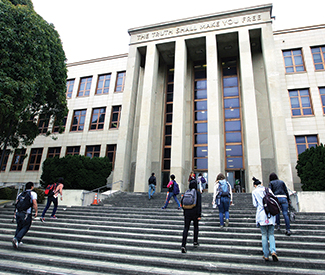
In the last week, a pair of important developments illuminated the shady way business gets done in San Francisco. The first instance concerned City College of San Francisco, which had its accreditation rashly revoked last month, prompting Mayor Ed Lee to enthusiastically support the disbanding of the locally elected Board of Trustees and the takeover of City College by state-appointed outsiders bent on shutting down community-based facilities and classes.

While Lee and the San Francisco Chronicle have been cheerleading this loss of local control and the corporatist agenda behind it — CCSF was criticized for resisting the narrowing of its mission to focus on job training and college prep — we at the Guardian have questioned this process and the motives behind it.

In a cover story (“Who killed City College?” July 9), editorial (“Why democracy matters,” July 23), and other coverage, we’ve highlighted how the attack on CCSF is part of national movement to focus schools on job training rather than broad-based education, and questioned the haste with which CCSF’s local leadership was usurped.

Critics mocked these concerns, as they did those of the California Federation of Teachers, which formally challenged the actions by the Accrediting Commission of Community and Junior Colleges, with Lee and others saying that we need to just accept the death threats against CCSF and do whatever these outsiders are asking.

So on Aug. 13, when the US Department of Education sustained the CFT appeal and found the ACCJC in violation of federal regulations and its own internal standards in its approach to City College, it validated our concerns and called into question Lee’s hair-trigger abandonment of City College’s local leaders.

Frankly, we’re puzzled by Lee’s approach to City College — from his appointment of right-wing ideologue Rodrigo Santos as a trustee last year (who subsequently got trounced in the election) to his resistance to helping the college before the state takeover — but we suspect it’s connected to Lee’s focus on “jobs, jobs, jobs” to the exclusion of other issues and values.

But Lee only counts private sector jobs, not those created to serve the public interest like the thousands of jobs that would be created by CleanPowerSF, a program that Lee opposes and that his appointees to the SF Public Utilities Commission are actively subverting.

As we report in this issue, CleanPowerSF is a renewable energy program approved last year by a veto-proof majority on the Board of Supervisors, but it’s being blocked by the SFPUC’s refusal to approve the rates and sign the contracts, with commissioners raising concerns that go well beyond their purview at this point.

It’s time for Mayor Lee to start serving the people of San Francisco instead of the corporate titans and political benefactors who elevated this loyal career bureaucrat into the big chair in Room 200.


Alerts: August 21 – 27, 2013

0

WEDNESDAY 21

Breaking News: The future of open news and local storytelling Hub Media Lab, The San Francisco Chronicle Building, 925 Mission, SF. Hubmedialabsf.com. 6:30pm, $15. Local news outlets and mobile app founders will discuss the future of news distribution in the Bay Area in the context of maintaining an informed citizenry. Panelists will include Lydia Chavez, Founder of Mission Local; Laura Ramos, Executive Producer of The Bold Italic; Michael Coren, Co-founder of Publet and Burt Herman, Co-Founder of Storify.

FRIDAY 23

Egypt: A revolution in crisis 2969 Mission, SF. www.answersf.org. 7pm, $5–$10. Since the Egyptian Revolution began in January 2011, hundreds have been killed and thousands more wounded. The Egyptian military seized power on July 3, following massive protests against the government of Mohammad Morsi. What do these developments mean for the future of Egypt and the broader region? What is the role of the U.S.? Panelists include Omar Ali, an Egyptian-American activist with ANSWER, and Mazda Majidi, co-author of Socialists & War.

SATURDAY 24

Women’s Rights Day: A tribute to immigrant women New Valencia Hall, 747 Polk, SF. www.radicalwomen.org. 7:30-9:30pm, $3. This tribute to immigrant women will feature a screening of the documentary “Rape in the Fields,” unmasking the sexual violence against female agricultural workers. Hear from guest speaker, former farm worker and Los Angeles Radical Women member Yolanda Alaniz, co-author of Viva La Raza: A History of Chicano Identity and Resistance. Arrive at 6:30pm for dinner, which will be available for a donation of $8.50.


Rally for civil rights Steps of San Francisco City Hall, SF. bayardrustincoalition.com. 3:30-5:30pm, free. The Bayard Rustin LGBT Coalition is organizing this civil rights rally to commemorate the 50th anniversary of the 1963 March on Washington for Jobs and Freedom, where Dr. Martin Luther King delivered his famed “I have a dream” speech. The event will also honor the memory of Bayard Rustin, a gay man who was a prominent strategist of this historic event.

Lawsuit alleges Uber unfairly withholds tips from drivers

A class action lawsuit filed against Uber, a tech-based service that connects riders to drivers and has filled San Francisco streets with sleek black town cars, alleges that the company is cheating its drivers out of tips.

The suit also charges that drivers have been misclassified as independent contractors under California law.

Uber’s website tells customers there is “no need to tip,” and drivers are prohibited from accepting any extra cash. The complaint alleges that “drivers do not receive the tips that are customary in the car service industry and that they would otherwise receive were it not for Uber’s communication to customers that they do not need to tip.”

The lawsuit was filed in San Francisco’s Northern District on Aug. 16. Attorney Shannon Liss-Riordan, of the Boston-based firm Lichten & Liss-Riordan, believes that by withholding tips “Uber is artificially trying to make the total price look lower – and in doing so, they’re hurting the drivers.”

Douglas O’Connor, who is named as a plaintiff in the lawsuit, said that when he started working as an Uber driver in San Francisco about 10 months ago, he was told not to accept tips because they were included in the service fees automatically charged to customers’ credit cards. But there’s nothing in his paycheck to indicate whether he has received a gratuity or for what amount, O’Connor said.

“For some of the drivers there has been a line item, but that line item that’s called the gratuity has not gone to the drivers,” Liss-Riordan explained. In those cases, it appears Uber takes half, she said. And in cases like O’Connor’s, “There is no separate gratuity that’s going to the drivers,” Liss-Riordan said, so the representation that any tip was included in the first place is “a lie.”

Liss-Riordan noted that Uber has even been known to send out “secret shoppers” who are directed to take Uber, offer cash tips, and report whether the drivers accepted the tips or declined with the explanation that the tips are included in the service fee, as they are instructed to.

Meanwhile, Uber recently required drivers to agree to revised contract terms, which is mandatory in order to continue their relationship with the ridesharing company. Buried in the fine print is an arbitration clause with a class action waiver. By agreeing to these terms – something Uber not only requires but makes exceptionally easy with the tap of a button on a smartphone – drivers are essentially giving up their rights to join a class action suit against the company. O’Connor noted that the contracts were sent out in English only, but English is not the first language of many Uber drivers.

“In order to opt out of this class action they have to send a hand-delivered letter to the general counsel of Uber in San Francisco,” Liss-Riordan pointed out. “We’re also trying to get the word out to Uber drivers that if they want to participate in this class action case and potentially recover their tips, they actually have to opt out of this arbitration clause.”

O’Connor said he drives between 30 and 70 hours a week, and would like to continue doing so in the long run. But without the additional income he feels he could be earning in tips, “I’m not going to be able to do it. It’s just so expensive to live in the San Francisco Bay Area.” He described what happened when a businessman he’d ferried to the airport offered to add an additional $10 to $15 onto his company credit card for exceptional customer service. He couldn’t, because Uber does not provide a mechanism for attaching an additional driver bonus onto the service fee. 

Asked if there was an estimate as to how much drivers could be losing in tips, Liss-Riordan said, “It adds up to a lot – for someone working there for over a year, you could be talking in the hundreds if not thousands of dollars.” And for the entire class of Uber drivers, who are estimated to number in the thousands across major U.S. cities, she noted that the total damages sought could end up being in the millions.

In addition to charging that Uber is “unjustly enriching” itself by collecting fees that are owed to drivers, the suit also claims that Uber drivers should be classified as employees under California law.  

“Under California law, there’s a multi-factor test to determine whether someone is an employee or an independent contractor and the test looks at things like … whether the workers’ services form the core part of what the business does,” Liss-Riordan explained. In this case, they do, she added: “If there were no drivers, there would be no Uber.”

As independent contractors, Uber drivers must pay for their own gas expenses and vehicle maintenance. They are not eligible for workers compensation or unemployment benefits in the event that they are terminated. Nor is Uber required to make any contributions toward its San Francisco drivers’ health care costs, since its drivers aren’t considered employees. The San Francisco Health Care Security Ordinance mandates that employers contribute toward healthcare for any employee working eight hours or more.

Liss-Riordan specializes in representing tipped employees. She prevailed in a lawsuit against American Airlines on behalf of skycaps who were prevented from receiving tips because the airline created a $2 fee for curbside check-in that led passengers to believe that gratuity was included.

Reached via email, Uber spokesperson Andrew Noyes declined to answer questions about the allegations raised in the complaint, nor would he explain why Uber required its drivers to agree to an arbitration clause waiving their rights to join a class action suit. Noyes declined to comment, saying the complaint had not yet been formally served.

O’Connor, meanwhile, said he agreed to be named as a plaintiff in the case “in order to improve working conditions for myself and my colleagues.” Asked if he was concerned whether this decision would affect his standing as an Uber driver, O’Connor shrugged it off. “I’m probably not going to get the employee driver of the month award,” he joked.

The Performant: Surrender to Dorothy

2

San Francisco’s invasion of Canada has begun

On my first day in Alberta, Canada I am greeted by gracious Edmontonians bearing platters of smoked meats, a local tradition perhaps, and upon joining my reconnaissance troop, the small but mighty Naked Empire Bouffon Company, who I’m stage-managing for their one-month Fringe Festival tour, we head down to the 32nd Edmonton International Fringe Theatre Festival headquarters to discover what we can about the territory. The Edmonton Fringe is the second largest in the world after Edinburgh (the original), attracting over a half-million people to the festival site, and hosting over 200 performing companies over the course of 11 days. Mixed in with the vast throng of performers from around the world, a small regiment of infiltrators from the Bay Area have scattered themselves throughout the festival grounds and venues, a quiet invasion of quirky monologists and seasoned storytellers.

And Naked Empire of course, whose confrontational buffooning offers an entirely different definition of Fringe theatre.

Once briefed, we spread out into the Old Strathcona neighborhood to make ourselves known. Old Strathcona is one of those sweetly-preserved old town areas filled with historic wood and brick buildings, cute vintage boutiques, head shops, pubs with names like “Filthy McNasty’s” and “The Tilted Kilt,” as well as many of the city’s theaters and clubs. But what catches our eyes most immediately are the community signposts and storefront windows already covered with Fringe show posters and flyers, although the festival won’t open for another three days. We’re lucky we’re so early, there’re still a few empty spots we can claim as our own with a stack of posters and reams of packing tape. The Naked Empire conquest of Canada has officially begun.

Over the next few days I keep an eye out for evidence of our Bay Area comrades. Some shows are familiar to me, such as David Caggiano’s Jurassic Ark, which won a “Best Of” award at the 2011 San Francisco Fringe, and Annette Roman’s Hitler’s Li’l Abomination, which plays the same venue as Naked Empire — the Yardbird Suite, a volunteer-run Jazz Club during the year. Others are performers I’ve seen in previous shows, such as Pi Clowns, here with a stripped-down, three-person venture entitled De(tour), and Randy Rutherford with Walk Like a Man, a low-key, heartfelt solo show combining folk music and reminiscence. Still others are performers I haven’t yet seen in the Bay Area, so it was fun to catch them across the border instead: Howard Petrick on riding the rails in Never Own Anything You Have to Paint or Feed, and Barbara Selfridge in Zero Tolerance: Sex, Math, and Seizures.

Out of all of us, Rutherford is the performer who’s most seasoned on the Canadian Fringe, a linked circuit of 22 individual festivals with staggered starting dates stretching across the continent, making it possible for a Fringe artist to start touring in June in Montreal (or May, in Orlando, Florida), and travel west all summer long, hitting multiple festivals along on the way. Performing his solo shows on the circuit since the late 1990s, Rutherford has won 21 “Best Of Fringe” awards, and is one of the rare performers from the United States to really tap into the potential rewards the Canadian Fringe has to offer. The irony, of course, is that he’s much better known in Canada than in his own hometown, as are many of the Fringe famous.

As for Naked Empire, our second show is today, so it’s still early to tell whether or not we’ll be joining those ranks or not, but stay tuned. The Edmonton Fringe is just beginning and there are dozens of stories yet to tell.

Wanna Fringe vicariously through us? Follow @enkohl and @NakdEmprBouffon on the twit-thing for updates and gossip.

“Greyhound therapy” is wrong for Nevada, and San Francisco

22

It’s horribly inhumane and indefensible for Nevada to ship its mentally ill homeless to San Francisco, and City Attorney Dennis Herrera is right to go after that state with a lawsuit aimed at changing that policy and recovering the city’s costs, which he discussed today in a press release and San Francisco Chronicle article.

But San Francisco should have greater moral authority to make this stand than it does, thanks to the Homeward Bound program started by then-Mayor Gavin Newsom and continued by Mayor Ed Lee, a program that gives local homeless individuals a one-way bus ticket out of town.

The Chronicle took pains to say how different San Francisco’s exportation of its homeless is from Nevada’s, noting that we make sure our homeless are stable enough to travel alone and that there’s someone waiting for them on the other side before we send them to the bus station.

Sure, that’s better, but the basic concept is the same and it’s consistent with San Francisco basic approach toward much of its homeless population, for whom the city intentionally limits shelter beds and makes it difficult to get one and treats the resulting street population as a law enforcement issue.

Newsom was elected on his Care Not Cash promise to provide shelter and social services to the homeless, and it certainly did get many people who needed it into supportive housing. But the actual homeless problem is far worse and more systemic than that program (or feel-good gimmicks like Project Homeless Connect) can really address.

San Francisco should be leading the way in calling for this country to address the root causes of homelessness, as well as the related problems of poverty, exploitation of workers and natural resources, and a wasteful economic system that is cooking the planet and its biodiversity.

Instead, we’re leading the way in pushing unsustainable, technology-fueled economic growth with no regard for the byproducts of wealth generation by the privileged few, whether it be giving our homeless one-way bus tickets out of town, forcing our workers and nonprofits to seek reasonable rents elsewhere, undermining hard-won social compromises, or missing our own greenhouse gas reduction goals (today’s Examiner cover story).

We can — and we should — take greater responsibility for our city’s policies and prejudices and work to regain  the moral authority that we need to be an example for other cities and begin to advocate for needed reforms on the national and international levels.  

Heads Up: 8 must-see concerts this week

2

The Internet never forgets. I realized this yet again today after discovering the complete 1979 BBC documentary, Who Is Poly Styrene, and with the more globally appealing announcement that it looks like JT and the rest of the ‘N Sync gang will perform at MTV’s Video Music Awards, Sunday. Oh and Cher has a new video, which is her first in 12 years! There may be hope for you yet, Gotye (the coffee shop I was at this morning played his hit, which reminded me of his existence.) 

Anyways, this week (and slightly beyond), the Bay Area will host both legendary and up-and-coming must-sees, with the Melvins, Black Sabbath, My Bloody Valentine topping the list, along with Deerhunter and No Age, and newbies the Parmesans, the She’s, and Ovvl. All acts to catch if you have the chance (and you do, see below).

Here are your must-see shows: 

The She’s
“If you walked anywhere in the downtown area during July, you’re probably already familiar with the She’s. The band was featured by the Converse Represent campaign, and its image, pushing a drum kit up one of SF’s trademarked hills, has been boldly splashed around the city. Converse chose well. The She’s embody all the youth, DIY attitude, and vintage pop that San Francisco loves. Their debut album, appropriately titled Then It Starts To Feel Like Summer, retrofits dreamy ’60s pop with a crackling teenage energy (these ladies are still in high school) and they’re finishing up a much-anticipated EP, tentatively titled We’re not Best Coast (But They’re Cool Too). The band, which has credited much of its success to the open and supportive SF music scene, is giving back tonight at Bottom of the Hill, where it’s headlining this Save KUSF Benefit.” — Haley Zaremba
With the Yes Go’s, False Priest
Tue/20, $10, 9pm
Bottom of the Hill
1233 17th St, SF
www.bottomofthehill.com

http://www.youtube.com/watch?v=LoRGt9PjXGA

The Melvins
“And they said a stoner metal cover of Roxy Music’s “In Every Dream Home a Heartache” couldn’t be done. Well, sludge metal veterans the Melvins are here to prove them wrong. The longstanding band is making a voyage to Slim’s to play its 2013 cover album, Everybody Loves Sausages. Get ready for things to get a little weird and campy, as a bunch of middle aged dudes play a diverse selection of tunes throughout the ages. Embarking on their 30th anniversary tour, the Melvins will be playing songs by artists such as freak folk band the Fugs, the dear and departed drag queen Divine (John Waters’ muse), Queen, David Bowie, and the Jam. In short: don’t miss this hit parade.” — Erin Dage
With Honky
Thu/22, 9pm, $22
Slim’s
333 11th St, SF
(415) 255-0333
www.slimspresents.com
http://www.youtube.com/watch?v=z1mi_zvk0yQ

No Age
The newest album from LA noise-punks No Age, An Object, seems almost restrained compared to the bombast of previous records like 2010’s Everything in Between. With An Object, there’s a sense of tense build-up without release, tightly coiled guitar lines over paranoid drumming, and faraway hollers on the Sub Pop record, which comes out Aug. 20. Like much arty post-punk, it makes you feel like you’re holding your breath for the entirety of the tracks, unable to unclench. Relax and settle in: the experiment of An Object is a success, and the album is worthy of passionate intake. Continuing down the experimental route, the duo takes its live show to a more unexpected location this time: the Berkeley Art Museum and Pacific Film Archive. And if you miss this stop, No Age will be back in Oakland Sept. 28 for the Station to Station fest at 16th St. Station.
With Devin Gary and Ross, Sun Foot
Fri/23, 7:30pm (doors at 5pm), $7
Berkeley Art Museum and Pacific Film Archive
2625 Durant, Berk.
www.bampfa.berkeley
http://www.youtube.com/watch?v=ZVb4QyF8fDY

My Bloody Valentine
“This is the reunion for which we dared not hope. Until this year, My Bloody Valentine’s genre-defining masterstroke of the shoegaze movement, 1991’s Loveless, was the last we had heard from the Irish-English band, and as a result, it was canonized as one of those pristine, “perfect” albums, frozen in time and untainted by inferior follow-ups. And then, this past Groundhog Day, the unthinkable happened: after an excruciating, 22-year wait, and countless broken promises, bandleader Kevin Shields casually posted a new record, mbv, on the web, In Rainbows style, surprising his diehard fans with the legendary third album they had been hopelessly fantasizing about only a week before. This Friday, My Bloody Valentine will pay a visit to the Bill Graham Civic Auditorium for their first SF show since the early ’90s.” — Taylor Kaplan
With Beachwood Sparks, Lumerians
Fri/23, 8pm, $45
Bill Graham Civic Auditorium
99 Grove, SF
(415) 624-8900
www.billgrahamcivicauditorium.com
http://www.youtube.com/watch?v=FyYMzEplnfU

The Parmesans
Local countrified indie-folksters the Parmesans released their full-length debut, Wolf Eggs, this week. The record’s full of swoony multipart harmonies, plucky instruments, and a chipper sense of hot-sauced humor. All of that is on fine display in track, “Load Up on Eggs and Bacon,” which begins with a solo voice, “when I wake up/I feel shaken” then layered barbershop quartet-style with additional harmonies, “load up on eggs and bacon,” and the sound of an egg cracking. Add to that the strings of guitars and mandolins and banjos, bellowing trumpet, and a light and tight rhythm section. Then bake on high.. (Savage)
With Before the Brave, Garden Party, Greg Downing
Fri/23, 9pm, $10
Thee Parkside
1600 17th St, SF
www.theeparkside.com
http://www.youtube.com/watch?v=0Srcmhe1ogg

Ovvl
“If you’ve been to a local metal show in recent months, chances are Ovvl was on the bill. If not, there was probably an Ovvl member standing next to you in the crowd. But, hesher, stop now if you’ve been taking ’em for granted. With a new album and tours on the horizon, the four-piece is about to be mighty scarce around these parts.” — Cheryl Eddy
With Crag Dweller
Sat/24, 9pm, $5
Bender’s Bar and Grill
806 S. Van Ness, SF
www.bendersbar.com
http://www.youtube.com/watch?v=V6Up1tS8fOs

Black Sabbath

Before reality television and famous flame-haired wives, even before that bloody bat-biting incident, Ozzy Osbourne was simply a wild-eyed young boy from a hardscrabble town who, together with guitarist Tony Iommi and drummer Bill Ward, formed the world’s first heavy metal group. This year, Black Sabbath released its first new album together in decades, 13, a lumbering return to form produced by Rick Ruben. With it came instantly timeless first single, “God is dead?” an eight-minute metal epic. Beyond all the hype, myth, and druggy tabloid brouhaha, a vital band still stands before us, wicked as it ever was, and willing to crowd-please with old tracks mixed in with the new. According to live reviews of this headlining non-fest tour, the band has been opening with “War Pigs.”
Mon/26, 7:30pm, $40–$149.50
Shoreline Amphitheatre
One Amphitheatre Parkway, Mountain View
www.livenation.com
http://www.youtube.com/watch?v=OhhOU5FUPBE

Deerhunter
“Many who have flirted with musical greatness have also teetered on the fine line between eccentricity and insanity, and Deerhunter frontperson Bradford Cox is no exception. While the Atlanta band’s garage rock albums continue to receive glowing reviews and growing numbers of dedicated fans, Cox’s mental (in)stability has also been featured center stage in the group’s evolution. His charming eccentricities — rambling and semi-incoherent stage banter — are shadowed with more off-putting stunts, as when Cox responded to a fan’s snarky request for “My Sharona” with an hour-long cover of the song in Minneapolis. A Deerhunter show is many things — insane, beautiful, confusing, and frequently very moving — but there is one thing it will never manage to be. Bradford Cox will never be boring.” — Haley Zaremba
With Lonnie Holley, Avey Tare’s Slasher Flicks
Mon/26, 8pm, $21
Great American Music Hall
859 O’Farrell, SF
(415) 885-0750
www.slimspresents.com
http://www.youtube.com/watch?v=G5RzpPrOd-4

Attorneys debate toxic turf during Beach Chalet project opponents’ last stand

29

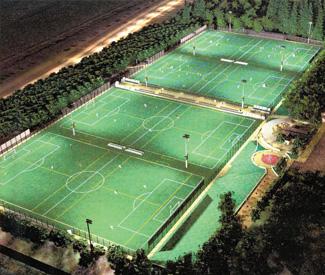
Opponents of a city plan to install artificial turf soccer fields and stadium lights at the Beach Chalet soccer fields in Golden Gate Park — after losing at every stage of the project’s approval process — had their day in court Friday, beginning what could be their last chance: to have a judge block the project.

“I wouldn’t be surprised if these were the most heavily scrutinized soccer fields in the country,” attorney James Emery, who is representing the city and the project, said as he started off his opening arguments to defeat the lawsuit.

Groups including the SF Coalition for Children’s Outdoor Play and the Sierra Club’s San Francisco Bay Chapter filed a lawsuit based on the claim that the city violated the California Environmental Quality Act when it chose to use what the plaintiffs lawyers describe as “toxic turf.”

The main argument on the plaintiff’s side was that the styrene-butadiene rubber (SBR) that will be used for the fields is inherently toxic. Other arguments included the lack of hybrid alternatives on the Environmental Impact Report conducted for the fields, as well as deletion of emails by a city department.

Plaintiffs attorney Vernon Grigg started off with the assertion that the SBR turf being used for the soccer fields is made from crushed up tires “that aren’t even allowed in a landfill without a permit,” and that the EIR failed to offer other alternatives such as carpet pad rubber or cork.

His co-counsel Richard Drury also pointed out that SBR turf has a 18.8 in a million chance of causing cancer, exceeding the significant threshold of 10 in a million the Bay Area Air Quality Management District (BAAQMD) adopted in 2010.

Attorney Scott Emblidge, another lawyer contracted by the city on the case, said that wasn’t a standard that the city has adopted, criticizing the oft-repeated point by saying, “San Francisco has not formally adopted significance standards, though they have said it 17 times in their opening brief.”

But Drury emphasized that the city is compelled by CEQA to consider a less toxic option. “There are no alternatives to less toxic turf,” Drury said. “It wouldn’t have been hard for them to do that — they just didn’t do it.”

But Emblidge said the EIR didn’t identify the turf choice as significantly toxic, a point Drury disputed.  

“The EIR does mention alternative forms, and does discuss alternative turf composition,” Drury said. “They consistently covered that there were significant health effects. There’s lots of speculation, but nothing that truly shows it.”

Other points were made that people within the Recreation and Parks Department were deleting emails related to the project, but coverage on that subject ran short as Judge Teri L. Jackson had to leave the court because of other engagements.

Attorneys for both sides are scheduleed to meet on Wednesday to be questioned further by Jackson.

Plan Bay Area takes legal punches from the left and right

45

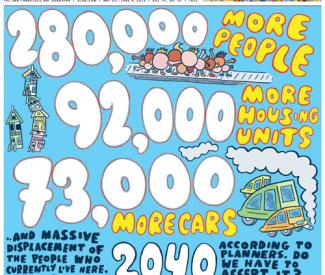
Plan Bay Area, the regional strategy to funnel future population growth into San Francisco and other big cities in order to combat climate change, is now being slammed with legal challenges from both sides of the ideological spetrum.

Those left-right punches could knock out a plan that critics called a schizophrenic attempt to accomplish competing goals with inadequate resources and resolve. For example, it created incentives to increase housing density along transit lines, but it did little to limit private automobile use, make that housing affordable by people who do use transit, or address the displacement of existing urban populations.

Earthjustice, Communities for a Better Environment, and the Sierra Club today filed a lawsuit in Alameda Couty Superior Court challenging Plan Bay Area’s recent approval by the Metropolitan Transportation Commission and the Association of Bay Area Governments.

That lawsuit follows one filed Friday with the same court by the Building Industry Association of the Bay Area. And those two suits follow another one filed Aug. 6 by the conservative Sacramento law firm Pacific Legal Foundation on behalf of a group calling itself Bay Area Citizens.

While that first lawsuit from the Tea Party crowd criticizes the very idea of regional planning and the validity of addressing global warming, these latest two lawsuits basically call out Plan Bay Area and its supporters for not going far enough to address the goals laid out in the plan.

Earthjustice and the community groups it works with criticize Plan Bay Area for disrupting Bay Area communities with an accelerated growth plan that doesn’t address environmental justice issues like those faced by West Oakland residents, whose air quality would be worsened by an influx of automobile traffic.   

 “The people of the Bay Area take pride in living in one of the most diverse, culturally and economically vibrant metropolitan areas in the world. We demand smart planning for growth—the kind that improves our quality of life, makes life easier and less expensive for residents all over the Bay Area, and allows our communities to thrive and grow,” Irene Gutierrez, Earthjustice associate attorney, said in a press release. “This requires responsible planning that reduces climate change pollution, plans for smart public transit growth, avoids toxic zones, and dirty and harmful air quality. Plan Bay Area does not achieve those goals. The people of the Bay Area deserve a much better plan.”

And Bay Area developers are focused on how the plan calls for more transit-oriented development without investing in the public infrastructure needed to serve it, criticizing the state legislation behind Plan Bay Area that relaxes the environmental studies of projects in transportation corridors.

“SB 375 calls on the Bay Area and other regions of California to integrate residential and transportation planning in ways that fully accommodate their housing need and in ways that allow for reduced reliance on and emissions from passenger vehicles,” said Bob Glover, executive officer of BIA | Bay Area. “Plan Bay Area is a cop out.  It neither plans for enough housing nor provides a reasonable path for developing it and therefore looks a lot more like a pulling up of the draw bridge than a sustainable communities strategy.”

To learn more about Plan Bay Area, you can read our May cover story, “Planning for Displacement,” or the coverage of a public forum that we and other groups sponsorerd.

Celebrating food (and the food biz) at La Cocina’s Food and Entrepreneurship Conference

5

La Cocina — known for its ability to break down cultural barriers through food and for aiding low-income food entrepreneurs in their journey to sustainability — drew many fresh faces to its fourth annual Food and Entrepreneurship Conference Sun/18. The conference wrapped up a busy weekend for the organization, which also hosted the fifth annual San Francisco Street Food Festival Sat/17.

The all-day conference, held at SOMArts Cultural Center, was a mixing bowl of talented women cooks, curious food-business pioneers, new volunteers, and delicious food. Needless to say, the atmosphere was buzzing.

The theme was centered around work, women, and food. Three panels throughout the day featured business owners, food writers, and urban food-access coordinators, who discussed their inspirations for cooking, how to catch a food writer’s attention, and how to provide affordable food to urban landscapes, among other topics.

Carlos Rivera, director of Radio Laser Los Angeles, a family-centered Latino radio station based in Los Angeles, said he came to soak up La Cocina’s mission and hopes to spread it in the LA area.

“We’re discovering what they’re doing here. The most important thing is culture,” he said, adding that the LA area would benefit tremendously from La Cocina’s services. “There is a division of culture. We [Los Angeles] will need three or four La Cocinas. Thousands of people come to these seminars, but only a few catch the idea — culinary culture with fresh, healthy foods.”

The sharing of cultures is one goal that La Cocina and the businesses within it hit dead-on. It’s certainly true of Chiefo Chukwudebe, chef and owner of Chiefo’s Kitchen, with wares available at La Cocina’s Ferry Building kiosk, among other locations.

Chukwudebe spoke at the event about her culinary journey and her inspirations. She specializes in home-cooked Nigerian dishes like grilled suya chicken (“marinated in fresh ginger garlic and roasted peanut sauce and coated with West African peanut pepper spice rub,” according to the Chiefo’s Kitchen website). Another customer favorite is her take on Scotch eggs.

“Not a lot of people know about Nigerian food,” said Chukwudebe, who’s been with La Cocina for three years. “Most of what they know [about Nigeria] is from the news. But the best way to get to know a culture is through food. My goal is to bring the best of West Africa to the Bay Area. I want people to taste Africa, to taste the sunshine. There’s more to food than what’s on the plate.”

She is glad to be a part of La Cocina and said the business brings the issues of food to the forefront, and above all, provides her with a network of fellow cooks and owners.

“Most important to me is the community of women business owners providing support,” she said. “It’s hard work, but I wouldn’t change it.”

The event drew in people who are new to the food business and others who hope to jump in soon, including an Oakland resident who preferred not to give her name for professional reasons. She hopes to quit her job and start a community food space, kitchen, and market place in Oakland later this year, and she’s enjoyed drawing up ambitious plans for her future sustainable food business.

“It’s been fun connecting with people who are excited about making it happen,” she said, noting that she was inspired by the food owner speakers at the event. “People are doing pieces of what I want to do.”

Throughout the day, between panels and during coffee breaks, there was lots of upbeat chatter and excited conversations. Anna Rakoczy, a new business owner and founder of Homemade, an organization that holds weekly healthy cooking meet ups for sustainable weight loss, was especially enthused about the event. La Cocina, she noted, “helps entrepreneurs who are cooking real food with real ingredients.”

To the fit Stanford graduate, helping others become healthy is not just a job. “For me, to actually show people how easy it is to achieve weight loss and a sustainable lifestyle just by eating delicious, healthy, natural, real food … that, for me, is so inspiring and exciting,” said Rakoczy.

Luis Gonzales, a Treasure Island resident who volunteered at the event, aptly captured the spirit of La Cocina, and its small food businesses. “People look for homemade food and the public helps them [small food businesses] survive,” he said. “It’s like a symbiotic relationship.”

Dick Meister: Still dreaming of justice

2

Dick Meister is a San Francisco-based columnist who has covered labor and politics for more than a half-century.  Contact him through his website,www.dickmeister.com, which includes more than 350 of his columns.

Think back to Aug. 28, 1963.  More than a quarter-million labor and civil rights activists led by Martin Luther King Jr. march onto the National Mall in Washington, D.C., to demand good jobs at decent wages and strict enforcement and expansion of the laws guaranteeing meaningful civil and economic rights to all Americans.

The demands, spelled out in Dr. King’s famous “I have a Dream” speech that day,  will be forcefully raised once again by  a fiftieth  anniversary March from the Lincoln Memorial  to the King Memorial  on the  Mall  this August 24.

The 2013 march has been called for very good reason: The need for greatly strengthened labor and civil rights is at least as urgent today as it was in 1963. By any measure, the 1963 March was a huge success. It had a direct and strong influence on the enactment a year later of laws prohibiting discrimination in public accommodations and the passage two years later of the Voting Rights Act that enabled many African -Americans to freely cast ballots for the first time.

But despite the successes that followed the march, the nation once again faces severe economic and social problems. Consider:

*Voter suppression has become a serious problem once more, with several
states imposing new restrictions on the right to vote that have been upheld
in court.

*Unemployment remains notably high, particularly among African-American
workers, and young workers generally, even as a great need for workers to
rebuild the nation’s crumbling transportation and energy infrastructure
continues to mount.

*Jobless workers now, as then, need much more government aid, with
unemployment insurance payments averaging only $300 a week.  Many workers
who manage to find jobs are able to work only part-time or only temporarily,
and for less pay than they made on previous jobs.

*Millions of women workers face blatant job discrimination, as do older
workers, the young and African-American workers in general. They often are
paid less than others doing the same work, and often are denied promotions
that they’ve earned. Women sometimes face sexual harassment as well.
*Millions of workers, male and female alike, are forced to live on
poverty-level pay, including those workers making the grossly inadequate
federal minimum wage of $7.25 an hour. Many of the country’s fast-food
workers are lucky if they make even that.

*Millions lack paid sick leave needed to care for sick children and other
family members and to keep them from having to work when ill and endanger
the health of others as well as themselves.

*Public employees, who perform some of the country’s most vital work, are
under steady attack by politicians and others who seize on them as
scapegoats by blaming the workers, many of them women and people of color,
for the economic problems that beset government at all levels. They strive
mightily to cut the employees ‘pay and pensions and other benefits and mute
their political and economic voices.

*Income inequality is a severe problem. The gap between the haves and
have-nots is downright spectacular. A recent study by the Economic Policy
Institute showed, for instance, that the CEOs of major companies make on
average about 273 times more than the average worker. That’s right ­­
average executive pay is almost three times  the average pay of ordinary
workers. Are those who direct work really worth so much more than those who
actually do the work?

 *Thousands of workers are endangered by lax enforcement of job safety laws,
thousands shortchanged by employers who fail to pay them what they’ve been
promised and clearly earned.

*Anti-labor employers openly violate laws that promise workers the right of
unionization that would enable them to effectively try to improve their
inadequate pay and working conditions. That’s one of the key reasons the
share of workers in unions has declined to a 97-year low of barely 11
percent.

*Despite the rise of Cesar Chavez and the United Farm Workers union, the
men, women ­-and too often children — who harvest the food that sustains us
all are barely surviving on their poverty level wages.

*Free trade agreements and the offshoring of U.S. jobs have led to the loss
of millions of domestic jobs.

President Clayola Brown of the AFL-CIO’s A. Philip Randolph Institute, a key
2013 march sponsor named for the leader of the 1963 march, notes that as in
1963, “the job situation is deplorable. Today, we have 30-year-old people
who have never had a full-time job in their lives.”

Brown will be among the thousands of union and civil rights advocates who,
like the marchers 50 years ago, are expected to gather on the National
Mall Aug. 24 to raise their demands for justice, as they march from one to
the other of the sculpted likenesses of two of the greatest advocates of
social and economic justice who’ve ever lived.

Dick Meister is a San Francisco-based columnist who has covered labor and
politics for more than a half-century.  Contact him through his website,
www.dickmeister.com, which includes more than
350 of his columns.
   Copyright 2013 Dick Meister.

(Bruce B. Brugmann writes and edits the Bruce Blog on the San Francisco Bay Guardian website. He is the editor at large and former editor and co-founder and co-publisher with his wife Jean Dibble of the SF Bay Guardian, 1966-2012.)

America’s Cup organizers sell small-scale naming rights at Pier 27 to pay their debt to the city

0

The Port Commission has approved a proposal by the America’s Cup Organizing Committee (ACOC) to sell bricks, benches, and other assets at Pier 27 to offset budget shortfalls, but community activists fear that corporate naming rights are undermining plans for a public recreation space.

A presentation at the Tuesday meeting by Kyri McClellan, the former city staffer who now serves as CEO of the ACOC, and Mike Martin of the Office of Economic and Workforce Development outlined the sale of up to 1,000 bricks to be set in pathways and 72 benches to dot the Northeast Wharf Plaza, which will bear the names of donors. Benches will be priced at $25,000, which McClellan cited as the going rate at other high-profile locations throughout the city.

McClellan emphasized that “none of what we’re proposing today as a pilot program includes what may previously have been alluded to as naming rights for this particular park, the piers, or the buildings.”

Milo Hanke and Alex Walker of San Francisco Beautiful, a local advocacy organization, didn’t have a problem with the smaller scale elements of the ACOC proposal. “The tiles and the bricks that are being offered here for $150, $300, for instance,” Hanke told the crowd, “that’s a gratifying opportunity for ordinary citizens who have already invested in our port to volunteer to express additional support for this proud port.”

But Hanke and Walker expressed concern about bigger ticket items that McClellan addressed with less specificity. “We want to make sure that this is a thing that’s going to be place-making and not place-taking,” commented Walker.

In addition to bricks and benches, the wharf’s lawn and adjacent walkway, an open plaza area, and a point at the pier’s end are earmarked for recognition of donors. So too are an event space and an exterior concourse on the second floor of the James R. Herman Passenger Cruise Terminal, slated to open at Pier 27 next spring.

“Corporate naming rights,” explained Hanke, “come with an intangible cost and I think that, given San Franciscans’ historic aversion to excess commercialization of our public realm, corporate naming rights are well worth taking a bypass on.”

Diagrams presented by ACOC did not include detailed renderings of larger donor fulfillments or clarification as to whether recognition would be restricted to individual and foundational donors and off limits to more commercial interests. “There is concern,” said Hanke, “of a creeping naming rights program if large areas are named for corporations.”

Pulling in $500,000 to $2.5 million a piece, however, bigger structures may be the revenue drivers ACOC is desperately seeking. As part of its host agreement with San Francisco, the organization is obligated to help offset the city’s expenses incurred in event preparations and operations.

Luckily, the race’s outsized budget is expected to be less than the $32 million originally projected, due to the paltry number of teams competing (four at last count) and the resulting decrease in spectatorship. Still, the ACOC needs to come up with as much as $20 million – a debt burden that’s got Mayor Ed Lee personally stumping in the fundraising effort. The fundraising flop belies early promises that the city would make money hosting the event.

San Francisco voters approved Proposition B last November, authorizing the city to apply public funds towards repairs and redevelopment of recreational spaces. The fact that the Northeast Wharf Plaza was a named site in that bond measure isn’t the only reason community activists are demanding to know what assets on its piers are being auctioned off and who’s buying them.

According to Jon Golinger, a spokesman for the Northeast Waterfront Advisory Group, the San Francisco Waterfront Special Area Plan limited development on the Pier 27 plaza until a 2000 amendment lifted port restrictions in exchange for guarantees of public recreation areas.

Since then, “we’ve been paying close attention to this park. It’s particularly needed and a long time coming,” explained Golinger, who said there’s been no citizen review of the ACOC’s donor recognition program proposal.

Neighborhood organizations hope ACOC’s tag sale of infrastructure doesn’t torpedo use plans for land long ago promised as a public recreation area. Golinger would like to see features like a kids’ play area, a dog run, and exercise equipment for seniors included in the final design – whether or not they are lucrative to race organizers now.

“After the Cup is done in October, it should look, feel, and be used like a true public park,” Golinger said of the plaza. “This corner of town is the most densely packed part of San Francisco with the fewest recreation areas per capita…. [the plaza] should be part of the neighborhood as opposed to a corporate event venue.”

The promise of infrastructure improvements was one reason the city of San Francisco agreed to host the America’s Cup race in the first place. Residents are now left to hope that ACOC won’t forgo investments of lasting civic value for single-use vanity projects intended to float its budget deficit.

Concluding the discussion of the ACOC’s proposal on Tuesday, Port Commissioner Leslie Katz offered assurances that, “we’ll definitely oversee and be mindful of the aesthetics of anything going forward… This is not a selling off of the port, but really an opportunity to thank and acknowledge those that have allowed us to move forward.”

This opportunity, of course, assumes that donors actually surface. Mayoral spokesperson Christine Falvey said, “We will learn from [this] effort about how we can raise private dollars to improve our waterfront and engage city residents in the effort.”

If ACOC’s efforts to court private dollars from city residents aren’t fruitful, however, taxpayers-turned-debt-collectors may have no option but to sign former District 3 Supervisor Aaron Peskin’s online petition and to demand that America’s Cup billionaire defending champion Larry Ellison pick up the tab for his boat race all by himself.

Tragedies remind us to pay attention and share the roads

114

A pair of tragic news items involving bicyclists in San Francisco — one cyclist a victim, another a perpetrator — illustrates the need for all of us to slow down, pay attention, and safely and respectfully share the roadways of this crowded city.

The victim of yesterday’s fatal collision between a truck and bicyclist at Folsom and 6th Streets — in which the motorist turned right across the path of cyclist in a bike lane, but was inexplicably yet not surprisingly not cited by police — was today revealed to be 24-year-old Amelie Le Moullac.

Meanwhile, 37-year-old cyclist Chris Bucchere was today sentenced to 1,000 hours of community service and three years probation after pleading guilty to felony vehicular manslaughter after last year trying to beat a red light at Castro and Market streets and fatally striking elderly pedestrian Sutchi Hui.

“Motorists, pedestrians, and bicyclists must share the road in a responsible way because there are dire consequences when traffic laws are disregarded,” District Attorney George Gascon said today after Bucchere’s sentencing.

Both of these incidents were sad for all concerned, and they should remind us to be responsible and attentive travelers, a lesson that we could all use. Everyday on my bike commute home, I see motorists running red lights or darting heedlessly around obstacles, risking people’s lives to save seconds of their days; cyclists impatiently edging their way past pedestrians; and pedestrians stepping out into traffic without looking around them, often because they’re absorbed by their smartphones.

We’re all guilty of bad behavior on the roadways at times, myself included, so I’m not going to presume to stereotype any particular group of road users (I’ll leave that to the trolls). But when we hear about terrible tragedies like these, it’s good to take a moment to reflect on our own behavior and do what we can to civilly share our civic spaces, particularly when wielding the deadly weapons of a fast-moving bicycle or an automobile moving at any speed.  

SF Democratic Party opposes developers’ 8 Washington initiative

On Wed/14, members of the San Francisco Democratic County Central Committee voted 14-6 to oppose Proposition B, a San Francisco ballot measure backed by the developers of a luxury waterfront development project, 8 Washington. Ten DCCC members abstained, while two voted “no endorsement.” Prop. B seeks voter approval for the waterfront development, which has become a flashpoint in San Francisco politics.

The 134-unit condominium complex, which will offer units in the $5 million range, already won approval from the San Francisco Board of Supervisors last June. But 8 Washington developers launched the Prop. B initiative in response to Prop. C, a referendum backed by oppositional campaign “No Wall on the Waterfront.” In May, the DCCC made an early endorsement against Prop. C, essentially siding with project opponents in declaring opposition to 8 Washington.

It’s easy to get Props. B and C confused. The campaign against 8 Washington is called “No Wall on the Waterfront,” while the developer-backed campaign favoring construction has been dubbed “Open up the Waterfront.” From opponents’ perspective, it almost doesn’t matter if voters bother to sort out which is which. Now with the support of the DCCC, they are urging a “no” vote on each.

Last week we told you about a campaign video produced by 8 Washington developers that had attracted some controversy. Here’s a campaign video produced by 8 Washington opponents, featuring former San Francisco Mayor Art Agnos. The pitch makes sound like the San Francisco waterfront will morph into Miami Beach if 8 Washington moves forward. You have to admit it’s a stretch.

Music Listings: August 14-20, 2013

0

WEDNESDAY 14

ROCK
Bottom of the Hill: 1233 17th St., San Francisco. Bang Bang, The Comet Empire, Jared Cohen & The Future Proofs, 9 p.m., $8.
El Rio: 3158 Mission, San Francisco. The Wearies, The Avenues, Modern Kicks, 9 p.m., $5.
Elbo Room: 647 Valencia, San Francisco. Evil Eyes, Wiles, Yellow Belly, Popgang DJs, 9 p.m., free.
Hemlock Tavern: 1131 Polk, San Francisco. Buildings, Hawks, Sex Snobs, 8 p.m., $7.
The Independent: 628 Divisadero, San Francisco. Ivan & Aloysha, The Record Company, 8 p.m., $13-$15.
Make-Out Room: 3225 22nd St., San Francisco. Jonathan Richman with Tommy Larkins, Through Aug. 15, 7 p.m., $15.
Monarch: 101 6th St., San Francisco. The Shape, Hungry Skinny, The Surgeon Generals, Scissors for Lefty, 8 p.m., $8.
Rickshaw Stop: 155 Fell, San Francisco. Nightbox, Nova Albion, Silver Hands, 8 p.m., $10-$12.

DANCE
The Cafe: 2369 Market, San Francisco. “Sticky Wednesdays,” w/ DJ Mark Andrus, 8 p.m., free.
Cat Club: 1190 Folsom, San Francisco. “Bondage A Go Go,” w/ DJs Damon, Tomas Diablo, & guests, 9:30 p.m., $5-$10.
The Cellar: 685 Sutter, San Francisco. “Eye Candy Wednesdays,” 9 p.m., free.
Club X: 715 Harrison, San Francisco. “Electro Pop Rocks: Pirates of EPRrrrgh,” 18+ dance party, 9 p.m.
Edinburgh Castle: 950 Geary, San Francisco. “1964,” w/ DJ Matt B & guests, Second and Fourth Wednesday of every month, 10 p.m., $2.
F8: 1192 Folsom St., San Francisco. “Housepitality,” w/ Eric Cloutier, Michael Perry, DJ Sep, 9 p.m., $5-$10.
Harlot: 46 Minna, San Francisco. “Qoöl,” w/ Mark Slee, William Wardlaw, 5 p.m.
Infusion Lounge: 124 Ellis, San Francisco. “Indulgence,” 10 p.m.
The Knockout: 3223 Mission, San Francisco. “Disorder: Synthpop Edition,” w/ Sex in Latex, Strube Jackson, DJ Nickie, 10 p.m., $5.
Lookout: 3600 16th St., San Francisco. “What?,” w/ resident DJ Tisdale and guests, 7 p.m.
MatrixFillmore: 3138 Fillmore, San Francisco. “Innov8,” 8 p.m.
Monarch: 101 6th St., San Francisco. “Soul Phunktion,” w/ resident DJs Kimmy Le Funk, Primo, and M3, 9 p.m.
Public Works: 161 Erie, San Francisco. Clipping, Ritualz, Brandon Nickell, Worker/Parasite, 9 p.m., $6.
Q Bar: 456 Castro, San Francisco. “Booty Call,” w/ Juanita More, Joshua J, guests, 9 p.m., $3.

HIP-HOP
Double Dutch: 3192 16th St., San Francisco. “Cash IV Gold,” w/ DJs Kool Karlo, Roost Uno, and Sean G, 10 p.m., free.
Skylark Bar: 3089 16th St., San Francisco. “Mixtape Wednesday,” w/ resident DJs Strategy, Junot, Herb Digs, & guests, 9 p.m., $5.

ACOUSTIC
50 Mason Social House: 50 Mason, San Francisco. Sing Out of Darkness: Where It Began, American Foundation for Suicide Prevention benefit featuring Sweet Hayah, Sugar Ponies, The Tommy P. Project, Gentry Bronson, Tim Brochier, and host Julie Mayhew., 6:30 p.m., $3-$5 suggested donation.
Cafe Divine: 1600 Stockton, San Francisco. Craig Ventresco & Meredith Axelrod, 7 p.m., free.
Fiddler’s Green: 1333 Columbus, San Francisco. Terry Savastano, Every other Wednesday, 9:30 p.m., free/donation.
Hotel Utah: 500 Fourth St., San Francisco. Tom Goss, Jeb Havens, The Plastic Arts, 8 p.m., $10-$12.
The Lost Church: 65 Capp St., San Francisco. Mick Shaffer, Jim Bruno, 8 p.m., $10.
Milk Bar: 1840 Haight, San Francisco. Delaney & Paris, 1 Man Banjo, 9 p.m., free.
Plough & Stars: 116 Clement, San Francisco. Blood & Dust, 9 p.m.

JAZZ
Amnesia: 853 Valencia, San Francisco. Gaucho, Eric Garland’s Jazz Session, The Amnesiacs, 7 p.m., free.
Burritt Room: 417 Stockton St., San Francisco. Terry Disley’s Rocking Jazz Trio, 6 p.m., free.
Club Deluxe: 1511 Haight, San Francisco. The Techtonics, Every other Wednesday, 8:30 p.m., free.
Jazz Bistro At Les Joulins: 44 Ellis, San Francisco. Charles Unger Experience, 7:30 p.m., free.
Le Colonial: 20 Cosmo, San Francisco. The Cosmo Alleycats featuring Ms. Emily Wade Adams, 7 p.m., free.
Oz Lounge: 260 Kearny, San Francisco. Hard Bop Collective, 6 p.m., free.
Pier 23 Cafe: Pier 23, San Francisco. Mitch Woods, 6 p.m., free.
Revolution Cafe: 3248 22nd St., San Francisco. Michael Parsons Trio, Every other Wednesday, 8:30 p.m., free/donation.
Savanna Jazz Club: 2937 Mission, San Francisco. “Cat’s Corner,” 9 p.m., $10.
Sheba Piano Lounge: 1419 Fillmore, San Francisco. Fran Sholly, 8 p.m.
Top of the Mark: One Nob Hill, 999 California, San Francisco. Ricardo Scales, Wednesdays, 6:30-11:30 p.m., $5.
Zingari: 501 Post, San Francisco. Chris Duggan, 7:30 p.m., free.

INTERNATIONAL
BeatBox: 314 11th St., San Francisco. Queer Salsa Night, 8 p.m.
Bissap Baobab: 3372 19th St., San Francisco. Timba Dance Party, w/ DJ WaltDigz, 10 p.m., $5.
Cafe Cocomo: 650 Indiana, San Francisco. “Bachatalicious,” w/ DJs Good Sho & Rodney, 7 p.m., $5-$10.
Cigar Bar & Grill: 850 Montgomery, San Francisco. Grupo Falso Baiano, 8 p.m.
Pachamama Restaurant: 1630 Powell, San Francisco. “Cafe LatinoAmericano,” 8 p.m., $5.
Union Square Park: 333 Post, San Francisco. Second Annual Son Jarocho Festival, w/ DiaPa’Son, 12:30 p.m., free.

BLUES
The Royal Cuckoo: 3202 Mission, San Francisco. Big Bones & Chris Siebert, 7:30 p.m., free.
The Saloon: 1232 Grant, San Francisco. Leah Tysse, 9:30 p.m.
Yoshi’s San Francisco: 1330 Fillmore, San Francisco. David Ryan Harris, 8 p.m., $18-$23.

FUNK
Vertigo: 1160 Polk, San Francisco. “Full Tilt Boogie,” w/ KUSF-in-Exile DJs, Second Wednesday of every month, 8 p.m.-1:30 a.m., free.

SOUL
Boom Boom Room: 1601 Fillmore, San Francisco. Soul Mechanix, 9:30 p.m., free.
The Cellar: 685 Sutter, San Francisco. “Color Me Badd,” w/ DJ Matt Haze, Wednesdays, 5-9 p.m.

THURSDAY 15

ROCK
Bottom of the Hill: 1233 17th St., San Francisco. The Lonely Wild, Kris Orlowski, The Sad Bastard Book Club, 9 p.m., $10.
Brick & Mortar Music Hall: 1710 Mission, San Francisco. The Love Dimension, The Tenderloins, The Chaw, 9 p.m., $7.
Cafe Du Nord: 2170 Market, San Francisco. Filligar, Torches, Tracing Figures, 8:30 p.m., $12-$15.
S.F. Eagle: 398 12th St., San Francisco. Thursday Nite Live: White Fang, Glitz, Honey Bucket, Twin Trilogy, 9 p.m.
Hemlock Tavern: 1131 Polk, San Francisco. Useless Children, Dreamdecay, Vibrating Antennas, 9 p.m., $7.
Hotel Utah: 500 Fourth St., San Francisco. Sweet Water, Sad Tires, Azyphyryx, 9 p.m., $7.
The Knockout: 3223 Mission, San Francisco. The Royal Deuces, Rockin’ Lloyd Tripp, Hi-Road Players, Los High Tops, 10 p.m., $6.
Make-Out Room: 3225 22nd St., San Francisco. Jonathan Richman with Tommy Larkins, Through 7 p.m., $15.
Milk Bar: 1840 Haight, San Francisco. Illusion of Self, Drive Thru Mystics, Reverter, Pre-Legendary, 8 p.m., $8.
Thee Parkside: 1600 17th St., San Francisco. Howl, Lord Dying, Cormorant, Hornss, 9 p.m., $10.

DANCE
Abbey Tavern: 4100 Geary, San Francisco. DJ Schrobi-Girl, 10 p.m., free.
Aunt Charlie’s Lounge: 133 Turk, San Francisco. “Tubesteak Connection,” w/ DJ Bus Station John, 9 p.m., $5-$7.
BeatBox: 314 11th St., San Francisco. “Jukebox,” w/ DJ Page Hodel, 9 p.m., $10.
The Cafe: 2369 Market, San Francisco. “¡Pan Dulce!,” 9 p.m., $5.
Cat Club: 1190 Folsom, San Francisco. “All ‘80s Thursdays,” w/ DJs Damon, Steve Washington, Dangerous Dan, and guests, 9 p.m., $6 (free before 9:30 p.m.).
The Cellar: 685 Sutter, San Francisco. “XO,” w/ DJs Astro & Rose, 10 p.m., $5.
Club X: 715 Harrison, San Francisco. “The Crib,” 9:30 p.m., $10, 18+.
Elbo Room: 647 Valencia, San Francisco. “Afrolicious,” w/ DJs Pleasuremaker, Señor Oz, and live guests, 9:30 p.m., $5-$7.
The EndUp: 401 Sixth St., San Francisco. EDMSF Thursdays, 10 p.m., $10 (free before midnight).
F8: 1192 Folsom St., San Francisco. “Beat Church,” w/ resident DJs Neptune & Kitty-D, Third Thursday of every month, 10 p.m., $10.
Infusion Lounge: 124 Ellis, San Francisco. “I Love Thursdays,” 10 p.m., $10.
John Colins: 138 Minna, San Francisco. “SoLuna Dance Party,” w/ DJs Miquel Penn & Motive, 9 p.m., free.
Laszlo: 2532 Mission, San Francisco. “Werk It,” w/ DJ Kool Karlo, Third Thursday of every month, 9 p.m., free.
Madrone Art Bar: 500 Divisadero, San Francisco. “Night Fever,” 9 p.m., $5 after 10 p.m.
MatrixFillmore: 3138 Fillmore, San Francisco. “Fusion,” w/ DJ Big Bad Bruce, 9 p.m., $5.
Monarch: 101 6th St., San Francisco. “Green Gorilla Lounge,” w/ The Revenge, DJ M3, Anthony Mansfield, Kimmy Le Funk, 9 p.m., $10.
Public Works: 161 Erie, San Francisco. “JackHammer Disco,” w/ James Murphy (DJ set), Conor, Solar, J-Boogie, 9 p.m., $18-$23.
Q Bar: 456 Castro, San Francisco. “Throwback Thursday,” w/ DJ Jay-R, 9 p.m., free.
Raven: 1151 Folsom St., San Francisco. “1999,” w/ VJ Mark Andrus, 8 p.m., free.
Rickshaw Stop: 155 Fell, San Francisco. “Popscene,” w/ Guardian, Metal Mother, DJs Omar & Aaron, 9:30 p.m., $10.
Slide: 430 Mason, San Francisco. “Euphony,” w/ Mikey Tan, Monika Santucci, Halloran, 9 p.m.
Temple: 540 Howard, San Francisco. “Solid,” w/ Marten Hørger, DJ Icon, Sychosis, Sunny Daze, 10 p.m., $10.
The Tunnel Top: 601 Bush, San Francisco. “Tunneltop,” DJs Avalon and Derek ease you into the weekend with a cool and relaxed selection of tunes spun on vinyl, 10 p.m., free.
Underground SF: 424 Haight, San Francisco. “Bubble,” 10 p.m., free.
Vessel: 85 Campton, San Francisco. “Base,” w/ Butch, 10 p.m., $5-$10.

HIP-HOP
Eastside West: 3154 Fillmore, San Francisco. “Throwback Thursdays,” w/ DJ Madison, 9 p.m., free.
Park 77 Sports Bar: 77 Cambon, San Francisco. “Slap N Tite,” w/ resident Cali King Crab DJs Sabotage Beats & Jason Awesome, free.
The Parlor: 2801 Leavenworth, San Francisco. “Locals Night Out,” w/ DJ Illy D, 9 p.m., free.
Showdown: 10 Sixth St., San Francisco. “Tougher Than Ice,” w/ DJs Vin Sol, Ruby Red I, and Jeremy Castillo, Third Thursday of every month, 10 p.m.
Skylark Bar: 3089 16th St., San Francisco. “Peaches,” w/lady DJs DeeAndroid, Lady Fingaz, That Girl, Umami, Inkfat, and Andre, 10 p.m., free.

ACOUSTIC
Atlas Cafe: 3049 20th St., San Francisco. Mountain Dojo (Toshio Hirano & Dave Berry), 8 p.m., free.
The Lost Church: 65 Capp St., San Francisco. Yonat, Whitney Myer, Graham Patzner, 8 p.m., $10-$15.
Plough & Stars: 116 Clement, San Francisco. Tipsy House, Third Thursday of every month, 9 p.m., free.

JAZZ
Blush! Wine Bar: 476 Castro, San Francisco. Doug Martin’s Avatar Ensemble, 7:30 p.m., free.
Bottle Cap: 1707 Powell, San Francisco. The North Beach Sound with Ned Boynton, Jordan Samuels, and Tom Vickers, 7 p.m., free.
Cafe Claude: 7 Claude, San Francisco. The Monroe Trio, 7:30 p.m., free.
Center for New Music: 55 Taylor St., San Francisco. Erik Jekabson String-tet, Matt Renzi Cello Quartet, 7:30 p.m., $8-$10.
Club Deluxe: 1511 Haight, San Francisco. Michael Parsons, 8:30 p.m., free.
Le Colonial: 20 Cosmo, San Francisco. Steve Lucky & The Rhumba Bums, 7:30 p.m.
The Lucky Horseshoe: 453 Cortland, San Francisco. Ralph Carney’s Serious Jass Project, 9 p.m.
Pier 23 Cafe: Pier 23, San Francisco. Ned Boynton, 7 p.m., free.
The Royal Cuckoo: 3202 Mission, San Francisco. Chris Siebert, 7:30 p.m., free.
Savanna Jazz Club: 2937 Mission, San Francisco. Savanna Jazz Jam with Eddy Ramirez, 7:30 p.m., $5.
Sheba Piano Lounge: 1419 Fillmore, San Francisco. Sebastian Parker Trio, 8 p.m.
Top of the Mark: One Nob Hill, 999 California, San Francisco. Stompy Jones, 7:30 p.m., $10.
Yoshi’s San Francisco: 1330 Fillmore, San Francisco. NaJe, in Yoshi’s lounge, Third Thursday of every month, 6:30 p.m., free; Eliane Elias, Aug. 15-16, 8 & 10 p.m., $20-$25.
Zingari: 501 Post, San Francisco. Barbara Ochoa, 7:30 p.m., free.

INTERNATIONAL
Bissap Baobab: 3372 19th St., San Francisco. “Pa’Lante!,” w/ Juan G, El Kool Kyle, Mr. Lucky, 10 p.m., $5.
Pachamama Restaurant: 1630 Powell, San Francisco. “Jueves Flamencos,” 8 p.m., free.
Verdi Club: 2424 Mariposa, San Francisco. The Verdi Club Milonga, w/ Christy Coté, DJ Emilio Flores, guests, 9 p.m., $10-$15.
Yerba Buena Gardens: Fourth St. & Mission, San Francisco. Second Annual Son Jarocho Festival, w/ Son de Madera, 12:30 p.m., free; Pacific Mambo Orchestra, at Jessie Square, 6 p.m., free.

REGGAE
Pissed Off Pete’s: 4528 Mission St., San Francisco. Reggae Thursdays, w/ resident DJ Jah Yzer, 9 p.m., free.

BLUES
50 Mason Social House: 50 Mason, San Francisco. Bill Phillippe, 5:30 p.m., free.
Biscuits and Blues: 401 Mason, San Francisco. Alan Iglesias & Crossfire, 8 & 10 p.m., $20.
Jazz Bistro At Les Joulins: 44 Ellis, San Francisco. Bohemian Knuckleboogie, 7:30 p.m., free.
The Saloon: 1232 Grant, San Francisco. Chris Ford, 4 p.m.; Steve Freund, 9:30 p.m.

EXPERIMENTAL
The Luggage Store: 1007 Market, San Francisco. Dark Spring, Hare & Arrow, 8 p.m., $6-$10.

FRIDAY 16

ROCK
Bottom of the Hill: 1233 17th St., San Francisco. Tribute to Joe Strummer & Benefit for Strummerville, Music education fundraiser with Eric McFadden & Friends, The Hooks, Interchords, Jane Wiedlin, Delphine De St. Paër, and Lantz Lazwell., 9 p.m., $10-$12.
Cafe Du Nord: 2170 Market, San Francisco. Zoo Station, Chronic Town, Pretending, 9 p.m., $15.
The Chapel: 777 Valencia St., San Francisco. Part Time, Sam Flax, Ruby Pins, 9 p.m., $12.
El Rio: 3158 Mission, San Francisco. Night Call, DJ Emotions, 10 p.m., free.
Hemlock Tavern: 1131 Polk, San Francisco. English Singles, The Rantouls, 9:30 p.m., $7.
Hotel Utah: 500 Fourth St., San Francisco. Mother Falcon, Sonny Pete, The Visibles, 9 p.m., $10-$12.
Thee Parkside: 1600 17th St., San Francisco. VKTMS, Unko Atama, Sharks from Mars, Bad Coyotes, Stay Scared, 9:30 p.m., $8.

DANCE
1015 Folsom: 1015 Folsom St., San Francisco. Paper Diamond, Roach Gigz, AnnaLove, UltraViolet, DJ Dials, VNDMG, Releece, Teleport, Jocelyn, 10 p.m., $20 advance.
Audio Discotech: 316 11th St., San Francisco. Opening Weekend with DJs David Carvalho & D.Lo, 9 p.m.
BeatBox: 314 11th St., San Francisco. “U-Haul: Nerd Out Edition,” w/ DJs Ms. Jackson & China G, 10 p.m., $5-$10.
Cafe Flore: 2298 Market, San Francisco. “Kinky Beats,” w/ DJ Sergio, 10 p.m., free.
The Cafe: 2369 Market, San Francisco. “Boy Bar,” w/ DJ Matt Consola, 9 p.m., $5.
Cat Club: 1190 Folsom, San Francisco. “The Witching Hour,” w/ DJs Sage, Daniel Skellington, Joe Radio, and Melting Girl, 9:30 p.m., $7 ($3 before 10 p.m.).
The Cellar: 685 Sutter, San Francisco. “F.T.S.: For the Story,” 10 p.m.
The EndUp: 401 Sixth St., San Francisco. “Fever,” 10 p.m., free before midnight.
F8: 1192 Folsom St., San Francisco. “Vintage,” w/ DJ Toph One & guests, 5 p.m., free; Sweater Beats, Penthouse Penthouse, Lil Texas, 9 p.m., $10-$15.
The Grand Nightclub: 520 4th St., San Francisco. “We Rock Fridays,” 9:30 p.m.
Harlot: 46 Minna, San Francisco. “The Animal Party: Under the Sea,” w/ DJs Travis Wild & Panic City, 9 p.m.
The Independent: 628 Divisadero, San Francisco. Ulrich Schnauss, Doombird, 9 p.m., $25.
Infusion Lounge: 124 Ellis, San Francisco. “Escape Fridays,” 10 p.m., $20.
Lookout: 3600 16th St., San Francisco. “HYSL,” 9 p.m., $3.
Madrone Art Bar: 500 Divisadero, San Francisco. “That ‘80s Show,” w/ DJs Dave Paul & Jeff Harris, Third Friday of every month, 9 p.m., $5.
Manor West: 750 Harrison, San Francisco. “Fortune Fridays,” 10 p.m., free before 11 p.m. with RSVP.
MatrixFillmore: 3138 Fillmore, San Francisco. “F-Style Fridays,” w/ DJ Jared-F, 9 p.m.
Mezzanine: 444 Jessie, San Francisco. “Dirtybird Players,” w/ Justin Martin, Worthy, J. Phlip, Leroy Peppers, 9 p.m., $20 ($5 before 11 p.m.).
Mighty: 119 Utah, San Francisco. “Bada Big Boom 6,” w/ DJs from Pink Mammoth, Bassyx, Disco Knights, and more, 9 p.m., $6+ advance.
Monarch: 101 6th St., San Francisco. Derrick Carter, Mark Farina, Sharon Buck, 9 p.m., $20-$30.
OMG: 43 6th St., San Francisco. “Release,” 9 p.m., free before 11 p.m.
Public Works: 161 Erie, San Francisco. Afrolicious Sound System, DJ Shotnez, Dub Gabriel, Kush Arora, 9 p.m., $8-$15.
Q Bar: 456 Castro, San Francisco. “Pump: Worq It Out Fridays,” w/ resident DJ Christopher B, 9 p.m., $3.
Ruby Skye: 420 Mason, San Francisco. Simon Patterson, Blurr, Niko Zografos, 9 p.m., $20-$25 advance.
Slate Bar: 2925 16th St., San Francisco. “Darling Nikki,” w/ resident DJs Dr. Sleep, Justin Credible, and Durt, Third Friday of every month, 8 p.m., $5.
Supperclub San Francisco: 657 Harrison, San Francisco. “Fire & Ice,” w/ DJ Chris White, 10 p.m., $10 advance.
Temple: 540 Howard, San Francisco. “Fresh Juice,” w/ DJ Mei-Lwun, Manic Mondays, Quadrobe, Airavata, Zoukis, Chemical Ali, Papa Lu, David Gregory, Halloran, 10 p.m., $15.
Vessel: 85 Campton, San Francisco. Sex Panther, DJ Donovan, DJ Nile, Hector Garza, 10 p.m., $10-$30.
Wish: 1539 Folsom, San Francisco. “Bridge the Gap,” w/ resident DJ Don Kainoa, Fridays, 6-10 p.m., free; “Depth,” w/ resident DJs Sharon Buck & Greg Yuen, Third Friday of every month, 10 p.m., free.

HIP-HOP
Brick & Mortar Music Hall: 1710 Mission, San Francisco. Bambu, Rocky Rivera, Rey Resurreccion, Ruby Ibarra, The Kasamas, Vandal9, 9 p.m., $10-$15.
EZ5: 682 Commercial, San Francisco. “Decompression,” Fridays, 5-9 p.m.
John Colins: 138 Minna, San Francisco. “Juicy,” w/ DJ Ry Toast, Third Friday of every month, 10 p.m., $5 (free before 11 p.m.).
Showdown: 10 Sixth St., San Francisco. “Fresh to Def Fridays: A Tribute to Yo! MTV Raps,” w/ resident DJs Boom Bostic, Inkfat, and Hay Hay, Third Friday of every month, 10 p.m.
Slim’s: 333 11th St., San Francisco. Mickey Avalon, 9 p.m., $26.

ACOUSTIC
Giordano Brothers: 303 Columbus, San Francisco. Rich McCulley, 9 p.m., free.
Mercury Cafe: 201 Octavia, San Francisco. Toshio Hirano, Third Friday of every month, 7:30 p.m., free, all ages.
Plough & Stars: 116 Clement, San Francisco. “Bluegrass Bonanza,” w/ Steep Ravine, 9 p.m., $6-$10.
The Sports Basement: 610 Old Mason, San Francisco. “Breakfast with Enzo,” w/ Enzo Garcia, 10 a.m., $5.

JAZZ
Beach Chalet Brewery & Restaurant: 1000 Great Highway, San Francisco. Johnny Smith, 8 p.m., free.
Bird & Beckett: 653 Chenery, San Francisco. The Third Quartet, Third Friday of every month, 5:30 p.m., free.
Cafe Claude: 7 Claude, San Francisco. Nick Rossi Trio, 7:30 p.m., free.
Cafe Royale: 800 Post, San Francisco. West Side Jazz Club, 9 p.m.
Jazz Bistro At Les Joulins: 44 Ellis, San Francisco. Charles Unger Experience, 7:30 p.m., free.
Pier 23 Cafe: Pier 23, San Francisco. Gaucho, 8 p.m., free.
Revolution Cafe: 3248 22nd St., San Francisco. Emily Anne’s Delights, Third Friday of every month, 8:45 p.m., free/donation.
The Royal Cuckoo: 3202 Mission, San Francisco. Jules Broussard, Danny Armstrong, and Chris Siebert, 7:30 p.m., free.
Savanna Jazz Club: 2937 Mission, San Francisco. Benn Bacot, 7:30 p.m., $10.
Top of the Mark: One Nob Hill, 999 California, San Francisco. Black Market Jazz Orchestra, 9 p.m., $10.
Yoshi’s San Francisco: 1330 Fillmore, San Francisco. Eliane Elias, Aug. 15-16, 8 & 10 p.m., $20-$25.
Zingari: 501 Post, San Francisco. Joyce Grant, 8 p.m., free.

INTERNATIONAL
Bissap Baobab: 3372 19th St., San Francisco. Qumbia Qrew, Third Friday of every month, 8 p.m.
Brava Theater Center: 2781 24th St., San Francisco. Second Annual Son Jarocho Festival, w/ Los Soneros del Tesechoacán, Cambalache, 8 p.m., $18-$35.
Cafe Cocomo: 650 Indiana, San Francisco. Taste Fridays, featuring local cuisine tastings, salsa bands, dance lessons, and more, 7:30 p.m., $15 (free entry to patio).
Cigar Bar & Grill: 850 Montgomery, San Francisco. Mazacote, 8 p.m.
Little Baobab: 3388 19th St., San Francisco. “Paris-Dakar African Mix Coupe Decale,” 10 p.m.
Pachamama Restaurant: 1630 Powell, San Francisco. Cuban Night with Fito Reinoso, 7:30 & 9:15 p.m., $15-$18.
Verdi Club: 2424 Mariposa, San Francisco. “Café Flamenco,” w/ Yaelisa & Caminos Flamencos, Third Friday of every month, 8 & 9:30 p.m., $18-$22 ($10 for kids under 12).

REGGAE
Gestalt Haus: 3159 16th St., San Francisco. “Music Like Dirt,” 7:30 p.m., free.

BLUES
Biscuits and Blues: 401 Mason, San Francisco. Alan Iglesias & Crossfire, 8 & 10 p.m., $20.
Boom Boom Room: 1601 Fillmore, San Francisco. Bill Phillippe, 6 p.m., free.
Lou’s Fish Shack: 300 Jefferson St., San Francisco. Eldon Brown, 8:30 p.m.
The Saloon: 1232 Grant, San Francisco. David M’ore, 4 p.m.; Shad Harris, 9:30 p.m.
Sheba Piano Lounge: 1419 Fillmore, San Francisco. South City Blues Band, 9 p.m.

EXPERIMENTAL
Center for New Music: 55 Taylor St., San Francisco. “Cords/Strings/Wires,” a night of improvised music by “mix and match” ensembles featuring Aurora Josephson, Scott Looney, Lisa Mezzacappa, Tim Perkis, Fay Victor, and Scott Walton, 8 p.m., $8-$10.

FUNK
Amnesia: 853 Valencia, San Francisco. “Hella Tight,” w/ resident DJs Vinnie Esparza, Jonny Deeper, & Asti Spumanti, Third Friday of every month, 10 p.m., $5.
Boom Boom Room: 1601 Fillmore, San Francisco. Steppin’, The Neckbeard Boys, 9:30 p.m., $10.
Elbo Room: 647 Valencia, San Francisco. Benefit for Friday Jumbo with Albino!, Black Water Gold, Fundraiser for the famed percussionist of Fela Kuti’s Africa 70, with the man himself sitting in with both bands., 9:30 p.m., $10-$12.
Make-Out Room: 3225 22nd St., San Francisco. “Loose Joints,” w/ DJs Centipede, Damon Bell, & Tom Thump, 10 p.m., $5.

SOUL
DNA Lounge: 375 11th St., San Francisco. Black Sheep S.C. Presents the San Francisco Classic 20th Anniversary Vintage Scooter Rally, w/ DJs GloryBoy Kev, Dr. Scott, Soulciter, and Mini (upstairs), 9 p.m., free.
Edinburgh Castle: 950 Geary, San Francisco. “Soul Crush,” w/ DJ Serious Leisure, 10 p.m., free.
The Knockout: 3223 Mission, San Francisco. “Oldies Night,” W/ DJs Primo, Daniel, Lost Cat, and friends, Third Friday of every month, 10 p.m., $5.
Rickshaw Stop: 155 Fell, San Francisco. Midtown Social, Soul Pie, Hotel Eden, Kevin Eagle Oliver, DJ Tom Temprano, 9 p.m., $10.

SATURDAY 17

ROCK
Bender’s: 806 S. Van Ness, San Francisco. Let It Burn, Texas Thieves, Makeout’s 50th birthday party, 10 p.m., $5.
Bottom of the Hill: 1233 17th St., San Francisco. Black Sheep S.C. Presents the San Francisco Classic 20th Anniversary Vintage Scooter Rally, w/ The Dukes of Hamburg, Sandollar Sound, Rile 9 Collective, 9 p.m., $10.
Brick & Mortar Music Hall: 1710 Mission, San Francisco. Bells Atlas, Waterstrider, Joey Dozik, 9 p.m., $7-$10.
The Chapel: 777 Valencia St., San Francisco. Steve Taylor Band, 10 p.m., free.
El Rio: 3158 Mission, San Francisco. Great American Cities, Nonagon, We Will Be Lions, 9 p.m., $8.
Hemlock Tavern: 1131 Polk, San Francisco. Evangelista, Jackie-O Motherfucker, Badwater Bob, 9 p.m., $15.
Hotel Utah: 500 Fourth St., San Francisco. The Valiant Sailors, The Letters Home, The Peripherals, Diamond Heights, 9 p.m., $8.
Make-Out Room: 3225 22nd St., San Francisco. The American Professionals, The Bye Bye Blackbirds, Rich McCulley, 7 p.m., $8.
Red Devil Lounge: 1695 Polk, San Francisco. Cherie Currie, Bite, DJ Omar, 8 p.m., $15-$18.
Slim’s: 333 11th St., San Francisco. Led Zeppelin 2, 9 p.m., $20.
Thee Parkside: 1600 17th St., San Francisco. Walrus, Abatis, The Devil in California, 9:30 p.m., $8.

DANCE
Amnesia: 853 Valencia, San Francisco. “O.K. Hole,” w/ Patricia, Past Protocol Preservation Society, C.L.A.W.S., Nay Nay, Keith Slogan, 9 p.m., $5.
Audio Discotech: 316 11th St., San Francisco. Opening Weekend with DJs Pierce Fulton & Lucas Med, 9 p.m.
BeatBox: 314 11th St., San Francisco. “Evolution,” w/ DJ Dave Aude, 10 p.m., $5-$50.
Cafe Flore: 2298 Market, San Francisco. “Bistrotheque,” w/ DJ Ken Vulsion, 8 p.m., free.
Cat Club: 1190 Folsom, San Francisco. “New Wave City: Tribute to The Cure,” w/ DJs Skip, Shindog, Xander, and Donimo, 9 p.m., $7-$12.
DNA Lounge: 375 11th St., San Francisco. “Bootie S.F.: 10-Year Anniversary,” w/ A+D, Smash-Up Derby vs. Hubba Hubba Revue, DJ Dada, JoeJoe, Ding Dong, Ernie Trevino, Haute Mess, Meikee Magnetic, Mixtress ShiZaam, Grandpamini, DJ Tripp, John!John!, much more, 9 p.m., $10-$20.
The EndUp: 401 Sixth St., San Francisco. “The Show,” w/ Ben Seagren, Dean Samaras, and guests, Third Saturday of every month, 10 p.m., $10-$20 (free before 11 p.m.).
F8: 1192 Folsom St., San Francisco. “Cult,” w/ DJs Markie, Jenö, Sunshine Jones, Cosmic Jason, Andre, and Danja Koja, 10 p.m., $5-$10.
The Independent: 628 Divisadero, San Francisco. The Hood Internet, Richie Cunning, Popgang DJs, 9 p.m., $15.
Infusion Lounge: 124 Ellis, San Francisco. “Social Addiction,” Third Saturday of every month, 10 p.m., $20.
Lexington Club: 3464 19th St., San Francisco. “Hot Summer Nights,” w/ DJ Rapid Fire, 9 p.m., free.
Lookout: 3600 16th St., San Francisco. “Bounce!,” 9 p.m., $3.
Madrone Art Bar: 500 Divisadero, San Francisco. “Fringe,” w/ DJs Blondie K & subOctave, Third Saturday of every month, 9 p.m., $5 (free before 10 p.m.).
Mezzanine: 444 Jessie, San Francisco. Fehrplay, Jeremy Olander, 9 p.m., $10-$15.
Mighty: 119 Utah, San Francisco. “Leopalooza,” w/ DJ Icey, All Good Funk Alliance, DJ Shotnez, DJ Wolfie, U9lift, Ground Control, Tom Thump, Konnekt, 10 p.m., $15-$17.50.
Milk Bar: 1840 Haight, San Francisco. “The Queen Is Dead: A Tribute to the Music of Morrissey and the Smiths,” w/ DJ Mario Muse & guests, Third Saturday of every month, 9 p.m.
Monarch: 101 6th St., San Francisco. Anthony Mansfield, Galen, DJ Gravity, Shissla, DJ Sol, Tamo, 9 p.m., $10-$20.
Powerhouse: 1347 Folsom, San Francisco. “Beatpig,” Third Saturday of every month, 9 p.m.
Public Works: 161 Erie, San Francisco. “Deep Blue,” w/ Lee Burridge, DJ Rooz, DJ Bo (in the main room), 9:30 p.m., $13-$25.
Rickshaw Stop: 155 Fell, San Francisco. “Bearracuda: 7-Year Anniversary,” w/ DJs Kam Shafaati & Steve Sherwood, 9 p.m., $5-$10.
Ruby Skye: 420 Mason, San Francisco. “World Town,” w/ Thomas Gold, Trevor Simpson, 9 p.m., $25-$45 advance.
Slate Bar: 2925 16th St., San Francisco. “Smiths Night S.F.: 3-Year Anniversary,” w/ The Certain People Crew, 10 p.m., $5.
Slide: 430 Mason, San Francisco. “Luminous,” w/ DJ Zhaldee, 9 p.m.
Sub-Mission Art Space (Balazo 18 Gallery): 2183 Mission, San Francisco. “Requiem,” w/ DJs Xiola, Owen, and Mel Draper, 9:30 p.m., $5.
Temple: 540 Howard, San Francisco. “Crush,” w/ DJ Nile, Mikey Tan, Reggie Soares, Nanosaur, D3fbot, DJ Gize, DJ Bizkit, 10 p.m., $20.
Underground SF: 424 Haight, San Francisco. “Deep Crates,” w/ DJs Spaziale, Kizmiaz, Smac, JD, and Duarte, 9 p.m., $5 (free before 10 p.m.).
Vessel: 85 Campton, San Francisco. LA Riots, 10 p.m., $10 advance.

HIP-HOP
111 Minna Gallery: 111 Minna St., San Francisco. “Shine,” Third Saturday of every month, 10 p.m.
John Colins: 138 Minna, San Francisco. “The Bump,” w/ The Whooligan, Third Saturday of every month, 10 p.m., free.
The Knockout: 3223 Mission, San Francisco. “The Booty Bassment,” w/ DJs Dimitri Dickinson & Ryan Poulsen, Third Saturday of every month, 10 p.m., $5.
Showdown: 10 Sixth St., San Francisco. “Purple,” w/ resident DJs ChaunceyCC & Party Pablo, Third Saturday of every month, 10 p.m.
Yoshi’s San Francisco: 1330 Fillmore, San Francisco. “The Ol’ Skool House Party,” w/ Big Daddy Kane, plus DJs Pos Red, Supreme, and C.J. Flash (in Yoshi’s lounge), 10:30 p.m., $25-$30.

ACOUSTIC
Atlas Cafe: 3049 20th St., San Francisco. Craig Ventresco & Meredith Axelrod, Saturdays, 4-6 p.m., free.
Bazaar Cafe: 5927 California, San Francisco. Clayton J. Foor, 7 p.m.
Cafe Du Nord: 2170 Market, San Francisco. Bobby Long, Michael Bernard Fitzgerald, Blind Willies, 9:30 p.m., $15.
Plough & Stars: 116 Clement, San Francisco. R.J. Comer & The Porch Bandits, 9 p.m.
The Riptide: 3639 Taraval, San Francisco. The Nickel Slots, 9 p.m., free.

JAZZ
Cafe Claude: 7 Claude, San Francisco. Mad & Eddie Duran Trio, 7:30 p.m., free.
Club Deluxe: 1511 Haight, San Francisco. Saturday Afternoon Jazz, w/ Danny Brown, Danny Grewen, Eugene Warren, & Beth Goodfellow, 4:30 p.m., free.
Jazz Bistro At Les Joulins: 44 Ellis, San Francisco. Bill “Doc” Webster & Jazz Nostalgia, 7:30 p.m., free.
Rasselas Ethiopian Cuisine & Jazz Club: 1534 Fillmore, San Francisco. Rasselas Farewell Party with the Robert Stewart Experience, 8 p.m.
The Royal Cuckoo: 3202 Mission, San Francisco. Jules Broussard, Danny Armstrong, and Chris Siebert, 7:30 p.m., free.
Zingari: 501 Post, San Francisco. Barbara Ochoa, 8 p.m., free.

INTERNATIONAL
1015 Folsom: 1015 Folsom St., San Francisco. “Pura,” 9 p.m., $20.
Brava Theater Center: 2781 24th St., San Francisco. Second Annual Son Jarocho Festival, w/ Son de Madera, DiaPa’Son, 8 p.m., $18-$35.
Cigar Bar & Grill: 850 Montgomery, San Francisco. Conjunto Picante, 8 p.m.
Little Baobab: 3388 19th St., San Francisco. “Paris-Dakar African Mix Coupe Decale,” 10 p.m.
Make-Out Room: 3225 22nd St., San Francisco. “El SuperRitmo,” Latin dance party with DJs Roger Mas & El Kool Kyle, 10 p.m., $5.
OMG: 43 6th St., San Francisco. “Bollywood Blast,” Third Saturday of every month, 9 p.m., $5 (free before 10:30 p.m.).
Pachamama Restaurant: 1630 Powell, San Francisco. Peña Eddy Navia & Pachamama Band, 8 p.m., free.
The Ramp: 855 Terry Francois, San Francisco. Alexis y la Original, 5:30 p.m.
Revolution Cafe: 3248 22nd St., San Francisco. Go Van Gogh, Third Saturday of every month, 9 p.m., free/donation.

REGGAE
Asiento: 2730 21st St., San Francisco. “Kulcha Latino,” w/ DJs Stepwise & Ras Rican, 8 p.m., free.

BLUES
Biscuits and Blues: 401 Mason, San Francisco. Albert Castiglia, 7:30 & 10 p.m., $20.
Lou’s Fish Shack: 300 Jefferson St., San Francisco. Willie G, 8:30 p.m.
The Saloon: 1232 Grant, San Francisco. Kathy Tejcka, 4 p.m.; Curtis Lawson, 9:30 p.m.
Sheba Piano Lounge: 1419 Fillmore, San Francisco. The O.G. Rhythm & Blues Band, 9 p.m.

COUNTRY
Pier 23 Cafe: Pier 23, San Francisco. Misisipi Mike & The Midnight Gamblers, 10 p.m., free.

FUNK
Boom Boom Room: 1601 Fillmore, San Francisco. Gravity A, 9:30 p.m., $12 advance.

SOUL
Elbo Room: 647 Valencia, San Francisco. “Saturday Night Soul Party,” w/ DJs Lucky, Phengren Oswald, and Paul Paul, Third Saturday of every month, 10 p.m., $10 ($5 in formal attire).
Yoshi’s San Francisco: 1330 Fillmore, San Francisco. Michael Henderson, 8 & 10 p.m., $23-$31.

SUNDAY 18

ROCK
Amoeba Music: 1855 Haight, San Francisco. The Polyphonic Spree, 3 p.m., free.
El Rio: 3158 Mission, San Francisco. “Space Prom, Part II,” w/ The Y Axes, 8 p.m., free.
Hemlock Tavern: 1131 Polk, San Francisco. CCR Headcleaner, Lazy, Pure Bliss, 8:30 p.m., $6.
The Knockout: 3223 Mission, San Francisco. Completed Exposition, Replica, Rad, Tom Hanks, 5 p.m., $6.
Neck of the Woods: 406 Clement St., San Francisco. Selebrities, Rare Times, 9 p.m., $10.

DANCE
The Cellar: 685 Sutter, San Francisco. “Replay Sundays,” 9 p.m., free.
The Edge: 4149 18th St., San Francisco. “’80s at 8,” w/ DJ MC2, 8 p.m.
Elbo Room: 647 Valencia, San Francisco. “Dub Mission,” w/ DJ Sep & Maneesh the Twister, 9 p.m., $6 (free before 9:30 p.m.).
The EndUp: 401 Sixth St., San Francisco. “T.Dance,” 6 a.m.-6 p.m.; “Sunday Sessions,” 8 p.m.; “Soul Affair,” Third Sunday of every month, 8 p.m.
F8: 1192 Folsom St., San Francisco. “Stamina Sundays,” w/ DJs Lukeino, Jamal, and guests, 10 p.m., free.
Holy Cow: 1535 Folsom, San Francisco. “Honey Sundays,” w/ Honey Soundsystem & guests, 9 p.m., $5.
The Knockout: 3223 Mission, San Francisco. “Sweater Funk,” 10 p.m., free.
Lookout: 3600 16th St., San Francisco. “Jock,” Sundays, 3-8 p.m., $2.
Monarch: 101 6th St., San Francisco. “Reload,” w/ Ruben Lenten, Unders, Keith Kraft, 9 p.m.
Otis: 25 Maiden, San Francisco. “What’s the Werd?,” w/ resident DJs Nick Williams, Kevin Knapp, Maxwell Dub, and guests, 9 p.m., $5 (free before 11 p.m.).
The Parlor: 2801 Leavenworth, San Francisco. DJ Marc deVasconcelos, 10 p.m., free.
Phoenix Hotel: 601 Eddy, San Francisco. Sunday Summer Series, w/ Jeremy Sole, Wiseacre, Trus’me, 1-7 p.m., $10 advance.
Q Bar: 456 Castro, San Francisco. “Gigante,” 8 p.m., free.
Showdown: 10 Sixth St., San Francisco. “The Dark Wave Rises,” w/ DJ Xtine Noir & DJ From Full House, Third Sunday of every month, 10 p.m.
Slate Bar: 2925 16th St., San Francisco. “She Said…: A Queer Affair,” Third Sunday of every month, 4 p.m., $3-$5.
Temple: 540 Howard, San Francisco. “Sunset Arcade,” 18+ dance party with bar games and video arcade, 7 p.m., $5.

ACOUSTIC
50 Mason Social House: 50 Mason, San Francisco. Delaney & Paris, Comically raunchy folk music duo from Portland., 7 p.m., $6-$8.
Amnesia: 853 Valencia, San Francisco. The B-Stars, Third Sunday of every month, 9 p.m., $7.
Cafe Du Nord: 2170 Market, San Francisco. Peter Bradley Adams, Rachel Efron, 8 p.m., $12-$15.
Club Deluxe: 1511 Haight, San Francisco. Musical Mayhem with the Dimestore Dandy, 5:30 p.m., free.
The Lucky Horseshoe: 453 Cortland, San Francisco. Sunday Bluegrass Jam, 4 p.m., free.
Madrone Art Bar: 500 Divisadero, San Francisco. “Spike’s Mic Night,” Sundays, 4-8 p.m., free.
Milk Bar: 1840 Haight, San Francisco. The Rogers, John Roy Zat & Brian Bloom, 4 p.m., free.
Neck of the Woods: 406 Clement St., San Francisco. “iPlay,” open mic with featured weekly artists, 6:30 p.m., free.
Pier 23 Cafe: Pier 23, San Francisco. Misisipi Mike, 5 p.m., free.
Plough & Stars: 116 Clement, San Francisco. Seisiún with Pat O’Donnell, Sean O’Donnell, and John Sherry, 9 p.m.
The Rite Spot Cafe: 2099 Folsom, San Francisco. Snow Angel, The Hallflowers, 9 p.m., free.
St. Luke’s Episcopal Church: 1755 Clay, San Francisco. “Sunday Night Mic,” w/ Roem Baur, 5 p.m., free.
Thee Parkside: 1600 17th St., San Francisco. Rich McCulley, 4 p.m., free.

JAZZ
Biscuits and Blues: 401 Mason, San Francisco. Steve Lucky & The Rhumba Bums, 7 & 9 p.m., $15.
Club Deluxe: 1511 Haight, San Francisco. Jay Johnson, 9 p.m., free.
Jazz Bistro At Les Joulins: 44 Ellis, San Francisco. Bill “Doc” Webster & Jazz Nostalgia, 7:30 p.m., free.
Madrone Art Bar: 500 Divisadero, San Francisco. “Sunday Sessions,” 10 p.m., free.
Musicians Union Local 6: 116 Ninth St., San Francisco. Noertker’s Moxie, Frozen Reflections, 7:30 p.m., $8-$10.
Revolution Cafe: 3248 22nd St., San Francisco. Jazz Revolution, 4 p.m., free/donation.
The Riptide: 3639 Taraval, San Francisco. The Cottontails, Third Sunday of every month, 7 p.m., free.
The Royal Cuckoo: 3202 Mission, San Francisco. Lavay Smith & Chris Siebert, 7:30 p.m., free.
Savanna Jazz Club: 2937 Mission, San Francisco. Vocal Jam with Kelly Park, 7 p.m., $5.
Yoshi’s San Francisco: 1330 Fillmore, San Francisco. Brian Simpson & Jeff Kashiwa Groovetet, 7 p.m., $23-$27.
Zingari: 501 Post, San Francisco. Barbara Ochoa, 7:30 p.m., free.

INTERNATIONAL
Atmosphere: 447 Broadway, San Francisco. “Hot Bachata Nights,” w/ DJ El Guapo, 5:30 p.m., $10 ($15-$20 with dance lessons).
Bissap Baobab: 3372 19th St., San Francisco. “Brazil & Beyond,” 6:30 p.m., free.
Oasis Bar & Grill: 401 California Ave., San Francisco. “El Vacilón,” 4 p.m., $10.
The Ramp: 855 Terry Francois, San Francisco. Grupo da Sete, 5:30 p.m.
Thirsty Bear Brewing Company: 661 Howard, San Francisco. “The Flamenco Room,” 7:30 & 8:30 p.m.
Yerba Buena Gardens: Fourth St. & Mission, San Francisco. Brazil in the Gardens, w/ Bata Ketu, 1 p.m., free.

BLUES
Lou’s Fish Shack: 300 Jefferson St., San Francisco. A.C. Myles, 4 p.m.
Revolution Cafe: 3248 22nd St., San Francisco. HowellDevine, 8:30 p.m., free/donation.
The Saloon: 1232 Grant, San Francisco. Blues Power, 4 p.m.; Silvia C, 9:30 p.m.
Sheba Piano Lounge: 1419 Fillmore, San Francisco. Bohemian Knuckleboogie, 9 p.m., free.

COUNTRY
Tupelo: 1337 Green St., San Francisco. “Twang Sunday,” 4 p.m., free; “Twang Sunday,” w/ The West Nile Ramblers, 4 p.m., free.

EXPERIMENTAL
The Lab: 2948 16th St., San Francisco. “Godwaffle Noise Pancakes,” w/ Aaron Dilloway, Transient, Mason Jones, Aux Yux Crux, Jungle Jim, noon, $5-$10; “Godwaffle Noise Pancakes,” w/ Scummerai with Aaron Dilloway, Kanoko Nishi, Styrofoam Sanchez, Horseflesh, Lycanthropic Legions of Noise, Rigormortis Clitaurus, Tara Sreekrishnan, 7:30 p.m., $10.

FUNK
Pier 23 Cafe: Pier 23, San Francisco. Hot Pocket, Third Sunday of every month, 4 p.m., $5.

SOUL
Boom Boom Room: 1601 Fillmore, San Francisco. “Deep Fried Soul,” w/ DJs Boombostic & Soul Sauce, 9:30 p.m., $5.
Delirium Cocktails: 3139 16th St., San Francisco. “Heart & Soul,” w/ DJ Lovely Lesage, 10 p.m., free.

MONDAY 19

ROCK
The Chapel: 777 Valencia St., San Francisco. The Polyphonic Spree, Harper Simon, Seryn, 9 p.m., $20-$25.
Hemlock Tavern: 1131 Polk, San Francisco. Surf Club, Hibou, DJ Craft Spells, 6 p.m., $7.
The Independent: 628 Divisadero, San Francisco. Queensrÿche, Something Unto Nothing, 8 p.m., $39.50.

DANCE
Delirium Cocktails: 3139 16th St., San Francisco. “Null & Void,” w/ DJs Bite Mark & Erix, 10 p.m., free.
DNA Lounge: 375 11th St., San Francisco. “Death Guild,” 18+ dance party with DJs Decay, Joe Radio, Melting Girl, & guests, 9:30 p.m., $3-$5.
Q Bar: 456 Castro, San Francisco. “Wanted,” w/ DJs Key&Kite and Richie Panic, 9 p.m., free.
Underground SF: 424 Haight, San Francisco. “Vienetta Discotheque,” w/ DJs Stanley Frank and Robert Jeffrey, 10 p.m., free.

ACOUSTIC
Amnesia: 853 Valencia, San Francisco. Windy Hill, Third Monday of every month, 9 p.m., free.
Bazaar Cafe: 5927 California, San Francisco. West Coast Songwriters Competition, 7 p.m.
Cafe Du Nord: 2170 Market, San Francisco. Weatherside Whiskey Band, The Creak, Eight Belles, 9 p.m., $8.
The Chieftain: 198 Fifth St., San Francisco. The Wrenboys, 7 p.m., free.
El Rio: 3158 Mission, San Francisco. Garden Party, Mark Nelsen & Devin Farney, She Owl, 7 p.m., $5.
Fiddler’s Green: 1333 Columbus, San Francisco. Terry Savastano, 9:30 p.m., free/donation.
Hotel Utah: 500 Fourth St., San Francisco. Open mic with Brendan Getzell, 8 p.m., free.
Osteria: 3277 Sacramento, San Francisco. “Acoustic Bistro,” 7 p.m., free.
The Saloon: 1232 Grant, San Francisco. Peter Lindman, 4 p.m.

JAZZ
Cafe Divine: 1600 Stockton, San Francisco. Rob Reich, First and Third Monday of every month, 7 p.m.
Le Colonial: 20 Cosmo, San Francisco. Le Jazz Hot, 7 p.m., free.
Sheba Piano Lounge: 1419 Fillmore, San Francisco. Eric Wiley, 8 p.m.
The Union Room at Biscuits and Blues: 401 Mason, San Francisco. The Session: A Monday Night Jazz Series, pro jazz jam with Mike Olmos, 7:30 p.m., $12.
Zingari: 501 Post, San Francisco. Nora Maki, 7:30 p.m., free.

REGGAE
Skylark Bar: 3089 16th St., San Francisco. “Skylarking,” w/ I&I Vibration, 10 p.m., free.

BLUES
Jazz Bistro At Les Joulins: 44 Ellis, San Francisco. Bohemian Knuckleboogie, 7:30 p.m., free.
The Saloon: 1232 Grant, San Francisco. The Bachelors, 9:30 p.m.

SOUL
Madrone Art Bar: 500 Divisadero, San Francisco. “M.O.M. (Motown on Mondays),” w/ DJ Gordo Cabeza & Timoteo Gigante, 8 p.m., free.

TUESDAY 20

ROCK
50 Mason Social House: 50 Mason, San Francisco. Thieves of Malta, The Grandpa Paws, 9 p.m., free.
Boom Boom Room: 1601 Fillmore, San Francisco. ZuhG, Third Tuesday of every month, 9:30 p.m., $5.
Bottom of the Hill: 1233 17th St., San Francisco. Save KUSF Benefit with The She’s, The Yes Go’s, False Priest, 9 p.m., $10.
Cafe Du Nord: 2170 Market, San Francisco. Bored Spies, Grand Hallway, Goh Nakamura, Scrabbel, 8 p.m., $10.
The Chapel: 777 Valencia St., San Francisco. Strangers Family Band, Once & Future Band, 9 p.m., $12.
DNA Lounge: 375 11th St., San Francisco. All Shall Perish, Aethere, As Artifacts, Parasitic Ejaculation, 7:30 p.m., $15-$20.
The Knockout: 3223 Mission, San Francisco. Ruleta Rusa, Culture Abuse, The Vans, DJ Taypoleon, 9:30 p.m., $7.
Sutro Baths: Point Lobos Ave., San Francisco. Wild Moth, Dreamdecay, 3 p.m.

DANCE
Aunt Charlie’s Lounge: 133 Turk, San Francisco. “High Fantasy,” w/ DJ Viv, Myles Cooper, & guests, 10 p.m., $2.
MatrixFillmore: 3138 Fillmore, San Francisco. “TRL,” w/ DJ Big Bad Bruce, 10 p.m.
Monarch: 101 6th St., San Francisco. “Soundpieces,” 10 p.m., free-$10.
Q Bar: 456 Castro, San Francisco. “Switch,” w/ DJs Jenna Riot & Andre, 9 p.m., $3.
Underground SF: 424 Haight, San Francisco. “Shelter,” 10 p.m., free.
Wish: 1539 Folsom, San Francisco. “Tight,” w/ resident DJs Michael May & Lito, 8 p.m., free.

HIP-HOP
Skylark Bar: 3089 16th St., San Francisco. “True Skool Tuesdays,” w/ DJ Ren the Vinyl Archaeologist, 10 p.m., free.

ACOUSTIC
Amnesia: 853 Valencia, San Francisco. Michael Musika, Sandy’s, Indianna Hale, 9:15 p.m., $7.
Bazaar Cafe: 5927 California, San Francisco. Songwriter-in-Residence: Wilson Wong, 7 p.m. continues through Aug. 27.
Plough & Stars: 116 Clement, San Francisco. Seisiún with Autumn Rhodes, 9 p.m.
The Rite Spot Cafe: 2099 Folsom, San Francisco. Drizzoletto, 8:30 p.m., free.

JAZZ
Beach Chalet Brewery & Restaurant: 1000 Great Highway, San Francisco. Gerry Grosz Jazz Jam, 7 p.m.
Blush! Wine Bar: 476 Castro, San Francisco. Kally Price & Rob Reich, 7 p.m., free.
Burritt Room: 417 Stockton St., San Francisco. Terry Disley’s Rocking Jazz Trio, 6 p.m., free.
Cafe Divine: 1600 Stockton, San Francisco. Chris Amberger, 7 p.m.
Cafe Royale: 800 Post, San Francisco. Sheilani Alix, 8 p.m.
Club Deluxe: 1511 Haight, San Francisco. Eugene Warren Trio, 8:30 p.m., free.
Jazz Bistro At Les Joulins: 44 Ellis, San Francisco. M.B. Hanif & The Sound Voyagers, 7:30 p.m., free.
Oz Lounge: 260 Kearny, San Francisco. Emily Hayes & Mark Holzinger, 6 p.m., free.
Revolution Cafe: 3248 22nd St., San Francisco. West Side Jazz Club, 5 p.m., free; Panique, Third Tuesday of every month, 8:30 p.m., free/donation.
Verdi Club: 2424 Mariposa, San Francisco. “Tuesday Night Jump,” w/ Stompy Jones, 9 p.m., $10-$12.
Yoshi’s San Francisco: 1330 Fillmore, San Francisco. Keiko Matsui 25th Anniversary Tour, 8 p.m., $25.
Zingari: 501 Post, San Francisco. Hubert Emerson, 7:30 p.m., free.

INTERNATIONAL
The Cosmo Bar & Lounge: 440 Broadway, San Francisco. “Conga Tuesdays,” 8 p.m., $7-$10.
Elbo Room: 647 Valencia, San Francisco. “Brazilian Wax,” w/ DJs Carioca & Lucio K, Third Tuesday of every month, 9 p.m., $7.
F8: 1192 Folsom St., San Francisco. “Underground Nomads,” w/ rotating resident DJs Cheb i Sabbah, Amar, Sep, and Dulce Vita, plus guests, 9 p.m., $5 (free before 9:30 p.m.).

REGGAE
Milk Bar: 1840 Haight, San Francisco. “Bless Up,” w/ Jah Warrior Shelter Hi-Fi, 10 p.m.

BLUES
Biscuits and Blues: 401 Mason, San Francisco. John Garcia Band, 8 & 10 p.m., $15.
The Saloon: 1232 Grant, San Francisco. Lisa Kindred, Third Tuesday of every month, 9:30 p.m.

FUNK
Madrone Art Bar: 500 Divisadero, San Francisco. “Boogaloo Tuesday,” w/ Oscar Myers & Steppin’, 9:30 p.m., free.

SOUL
Make-Out Room: 3225 22nd St., San Francisco. “Lost & Found,” w/ DJs Primo, Lucky, and guests, 9:30 p.m., free.


Promo: SF Street Food Festival is this Saturday!

0

La Cocina’s San Francisco Street Food Festival brings all of the best food and music in the Bay Area to one street, once a year, to celebrate the talent, taste, and entrepreneurial spirit of people who make a living doing what they love to do. Over the years, the festival has both galvanized a national movement while supporting local businesses – both informal vendors and high-profile restaurants.  

Admission to the festival is free, however all food at the event – whether from State Bird Provisions, Central Kitchen, or the local tamale-maker’s tent – will be priced at under $8. Attendees may purchase a passport before the event, the culinary ticket to all street food and discounts, to save time and money.   

In addition to mouth-watering eats from 80-plus vendors, the festival serves as a fundraiser for La Cocina’s kitchen incubator, cultivating low-income and immigrant food entrepreneurs since 2005. For the complete festival line-up and continued updates, download the festival app or visit sfstreetfoodfest.com.

Saturday, August 17 from 11am-7pm in the Mission, on Folsom from 20th to 26th  Streets, and on 21st and 25th Streets from Treat to Shotwell, as well as the Cesar Chavez Elementary School parking lot, Parque de los Ninos Unidos, and Jose Coronada Playground


West Oakland hyper gentrification in the WSJ

Two stories on the theme of gentrification and displacement – a topic we at the Guardian have expended plenty of ink on – ran in major news outlets recently, showing how intense the Bay Area housing market pressure has become as it continues to be fueled by a rapid growth in high-salaried jobs in big tech.

Zeroing in on San Francisco, the LA Times turned an eye toward Mission District gentrification, illustrating the growing divide with a succinct comment overheard on a Muni bus: “I don’t know why old people ride Muni. If I were old, I’d just take Uber.”

And a Wall Street Journal article provides an eye-opening account of how REO Homes LLC is literally seeking to accelerate the gentrification process by “beautifying” West Oakland, an historic Black neighborhood that is home to predominantly low-income and working-class residents. (Note: The article may be behind a paywall.)

Minutes from downtown San Francisco via BART, West Oakland is dotted with Victorians and was hit with a wave of foreclosure during the economic crash, destabilizing the lives of many families who lost their homes.

REO is an investment firm helped along by San Francisco billionaire Tom Steyer, a well-connected venture capitalist (he even hosted a Democratic Party fundraiser with President Barack Obama at his Pacific Heights mansion earlier this year).

As the Journal’s Robbie Whelan reports, REO has been shelling out top dollar to spruce up not just its holdings, but residences nearby its West Oakland properties. In a rarely seen form of hyper-gentrification, the company has been planting trees, sprucing up homes (for free) of neighbors who aren’t in the market to sell or rent, mending fences, and making other improvements – all in an effort to lure higher-income residents to the neighborhood.

Since 2008, the height of the real-estate market crash, REO has acquired more than 200 homes in Oakland, Whelan reports, mostly in West Oakland. “Most houses cost around $200,000,” he writes, “and [founder Neill Sullivan] said he invests as much $100,000 to fix each one up.”

Real-estate agents have been marketing the neighborhood – which is no stranger to violent crime – to house-hunters as an affordable, nearby alternative to astronomically expensive San Francisco. Now that many people who weren’t able to keep up with mortgage payments have been forced out by foreclosure (see: robocalls, bungled loan modifications, foreclosure abuses), things are changing swiftly, as if by magic. Armed with cash, bankers are chasing away the blight and rolling out the welcome mat for up-and-comers who can’t swing it for that $3,000 one-bedroom in the city.

All of which will likely result in further displacement of Oakland residents who are barely holding on as it is. As Oakland councilwoman Desley Brooks told the Journal: “I’m not interested in finding housing for San Franciscans who can no longer afford San Francisco. I’m interested in helping people here in Oakland.”

Lawsuit challenging the Beach Chalet turf project goes to trial

18

Plans to place artificial turf and stadium lights on Beach Chalet’s soccer fields in Golden Gate have been in the works since 2011, and local environmental groups have been fighting the proposal and losing each time. Now, their final hopes rest on a lawsuit going to trial this Friday.

[UPDATE 8/16: Presiding Judge Teri L. Jackson is calling for more input from the plaintiff and defendant attorneys on Wednesday, August 21, so a decision in the case isn’t expected until then at the earliest. on that day at the earliest. Check back on Monday for coverage of went down in the courtroom during today’s trial.]

The SF Coalition for Children’s Outdoor Play, the Bay Area chapter of the Sierra Club’s San Francisco Bay Chapter, and other groups filed a lawsuit claiming that the city violated the California Environmental Quality Act of 1970 when it chose turf that uses styrene-butadiene rubber from old tires.

“We’re going to argue that it violates the Environmental Quality Act when the city decided to use the most toxic rubber,” plaintiffs attorney Richard Drury said. “We’re asking the judge to do a new environmental impact report and to consider other alternatives, such as using more environmentally friendly material.”

Katherine Howard, spokesperson for SF Ocean Edge, a group of environmentalists and residents who live near the site, has been a leading opponent of the project.

“We feel that the project is totally wrong,” Howard said. “Golden Gate Park is described as an escape from the city, and to cover acres of it’s land with grounded up tires is awful.”

In May, the California Coastal Commission denied an appeal of the project after a hearing was called to determine whether or not the plan violates the Coastal Act and the city’s Local Coastal Plan, which calls for naturalistic conditions at the site.

“We believe that this is a strong case,” Arthur Feinstein of the Sierra Club said. “If we lose we have the opportunity to go to a higher court of appeals.”
Trial for the lawsuit starts at 9:45 a.m. this Friday, August 16 at the San Francisco Superior Court of California in Room 503, and is expected to last two to four hours.

Elaborating tradition

2

THEATER The idea of traditional dance as somehow frozen in time or resistant to modernity is a canard that received a thorough going-over at last weekend’s Performing Diaspora Symposium, which kicks off the Performing Diaspora series at CounterPULSE.

Attending to tradition while moving freely beyond it remains a hallmark of the artists gathered in the annual series. Joti Singh is a good example. Dancer-choreographer Singh — whose Red, Saffron and Green premieres this weekend — grew up in the American South with parents who hailed from northern India. One way she absorbed her family’s Indian culture was through training in Punjabi dances that, as an adult, she began blending with West African styles.

Singh’s Red, Saffron and Green is a celebratory accounting of the Gandar party, founded in 1913 San Francisco by Punjabi activists organizing on behalf of Indian independence from Great Britain. Singh’s own great-grandfather served for a time as the party’s president. Her innovative blend of performance styles thus could be considered a natural vehicle for a story that is transnational, local, and familial at once — indeed a historically astute expression of the elaborate nature of diasporic identity and of the personal as political.

The CounterPULSE series expresses an ongoing commitment to ethnic and traditional forms as a vital area of innovation and conversation in the larger world of dance. Its title, meanwhile, flags two overlapping impulses in presenting the broad range of work: the desire to highlight diasporic communities as important producers of performance; and a focus on dance as a channel of expression, investigation, and community-building for diasporic cultures, whether those cultures are borne by first-generation immigrants or their American-reared great-grandchildren.

Animating the daylong symposium (available as a podcast on the CounterPULSE website) were three panels featuring distinguished guests and at least one artist from the series — the absorbing Congolese dance-theater performer and choreographer Byb Chanel Bibene, who spoke to the harrowing experience, and body memory, of civil war that informs his Taboos and Heroes (running this weekend) in the first panel’s exploration of diasporic dance derived from the experience of genocide and war.

On the same panel, Cambodian dancer-choreographer Chey Chankethya spoke to the “silence” confronting the children of genocide survivors, and the physicalizing of that unspoken trauma in the body. Jazz tap dancer and vocal improviser Germaine Ingram spoke as an African American concerned with the legacy of slavery and dispossession, adding that it is the space for expression in even the most oppressive conditions that exercises her creative imagination. “I consider my work not so much about trauma as agency,” she emphasized.

The following two panels covered the challenges of “representing Africa” in the changing heterodox world of Bay Area African dance — which generated some lively and straightforward talk during the audience Q&A — and the presentation of sacred dance as performance for general audiences.

There were also bursts of live performance and music (in particular, from Ingram and master drummer and Bay Area legend CK Ladzekpo, of UC Berkeley and the Ghana National Dance Ensemble, who joined the panel on “Spirit Moves: Sacred Dance Onstage”). Meanwhile, Singh led an interactive “experiential lecture/demonstration” on Punjabi Bhangra dance that had the audience up and on the dancefloor, moving in ecstatic unison for the better part of an hour.

In all, the event generated a lot of productive questions and considerable momentum for the fifth annual Performing Diaspora series (this year curated by Roko Kawai, Lily Kharrazi, and Umi Vaughan), which features work-in-progress showings from six individual artists over two weeks. The varied stories and distinctive aesthetic styles on display amount to a unique tribute to the cultural persistence and improvisation that make up life in the diaspora. *

PERFORMING DIASPORA

Through Aug. 25

Thu-Sun, 8pm, $22-$32

CounterPULSE

1310 Mission, SF

counterpulse.org/performing-diaspora


Backward on climate

After a hearing lasting several hours on Tue/13, members of the San Francisco Public Utilities Commission voted down a motion to approve electricity rates for CleanPowerSF, a municipal energy program designed to offer a 100 percent green energy mix to San Francisco customers.

The approval of that “not-to-exceed” rate, set at 11.5 cents per kilowatt-hour, would have cleared the path to set CleanPowerSF in motion after almost a decade of politically charged debates and setbacks.

“I feel like today is a historic moment for the SFPUC as well as the city of San Francisco,” commissioner Francesca Vietor said as she introduced her motion to approve the rate. “Even though I understand this is only a vote to approve the not-to-exceed rate,” she added, it was a critical first step toward a long-term vision in which “we will also be able to create a new generation of green collar workers and build our own renewable power system.”

In the end, Vietor and Commissioner Anson Moran were the only ones to favor the rate approval, while Ann Moller Caen, Vince Courtney and President Art Torres shot it down. So once again, CleanPowerSF has been kicked back in limbo.

“This is not just about rates today,” Torres said. “If we approve these rates, that would authorize the General Manager [of the SFPUC] to authorize a contract with Shell.”  

Oil giant Shell Energy North America was tapped by the SFPUC to purchase green energy on the open market during the first phase of the program. Although Shell is a fossil fuel company with a disgraceful human rights track record, progressives and environmentalists stand behind a speedy approval of that contract, because they say it is a crucial first step toward realizing the ultimate project vision of constructing city-owned and operated renewable energy facilities while creating local green jobs.

“The deal is that you cannot do that until you move forward, and launch the program,” said Shawn Marshall, executive director of LEAN – a group that assists with clean-energy municipal power programs – speaking at a rally just before the hearing. “You have to live to go local. We call on the mayor’s office to stop impeding progress with heavy-handed politics and we ask the San Francisco Public Utilities Commission to stay focused on its job of implementing a program that was approved by the San Francisco Board of Supervisors last September.”

Rather than focusing on the question of whether or not to approve the rate, Torres and Caen voiced generally negative sentiments about the CleanPowerSF endeavor before casting “no” votes on the rate approval. Caen said she’d “always had problems with the opt-out situation,” referring to a system of automatic enrollment in the program, and Torres criticized the project for having changed shape, saying, “at the end of the day, this is not what San Franciscans had anticipated.”

The bid to establish CleanPowerSF is mired in charged politics. Because the program threatens Pacific Gas & Electric Co.’s monopoly in San Francisco, the utility giant is prepared to shell out whatever it takes to stop the forward momentum. PG&E is deeply influential in San Francisco City Hall, having richly rewarded former San Francisco Mayor Willie Brown, known to be a frequent dining companion of Mayor Ed Lee, for his consulting services, for instance. Lee opposes the program, and the mayor appoints the SFPUC commissioners.

Torres, the commission president, bristled at suggestions from the public that he was merely carrying the mayor’s water, saying, “I do my own homework, and I make up my own mind.”

But Sup. John Avalos has made up his own mind too, and he sent legislative aide Jeremy Pollock to convey the message to the SFPUC that enough is enough. Avalos plans to go to the City Attorney to find out what can be done about the relentless foot-dragging of a commission that just won’t approve a fair rate for a program that was approved by the Board of Supervisors last fall.

During the public comment session of the hearing, Pollock read Avalos’ statement, which characterized the commission’s refusal to approve the rate as a “constitutional crisis” with regard to the body’s responsibilities.

“Any further delay will essentially show that we are in a constitutional crisis caused by a city department failing to carry out a policy approved by a veto-proof supermajority of the Board of Supervisors,” Avalos’ statement noted. “The Board stands ready to approve these rates, but nothing more can happen until you take action. The City Charter is silent on the possibility of the Public Utilities Commission failing to act on a proposed utility rate. Therefore if there is further delay, I feel I have no choice but to request that the City Attorney explore our options to resolve this type of stalemate—including the possibility of drafting a Charter Amendment. CleanPowerSF is too important and the threat of climate change is too significant to allow this program to die on the vine. It is time for leadership. And this vote will be long remembered for the action you take today.”

But instead of just approving that rate – which is lower, by the way, than originally proposed – the commissioners just seized the opportunity to halt the program from moving forward, since CleanPowerSF cannot advance without a contract, and the contract cannot be signed until a rate has been formally approved.

“It seems as if they are essentially refusing to establish a fair rate, so we’re going to ask the city attorney, you know, what’s the recourse if the PUC is failing to carry out their duties?” Pollock noted.

Just before the votes were cast, Vietor, who had urged her colleagues to go forward and approve the rate at the outset of the meeting, was asked to re-state her motion. She returned to the bright and optimistic prepared statement she’d read at the beginning, only this time with a note of frustration because it was clear that the votes weren’t there. “Today is a historic moment for the San Francisco public utility commission,” she read out loud, “to become a leader in combating climate change.”

Note: This post has been updated from an earlier version.