San Francisco

The trouble with demons

0

cheryl@sfbg.com

FILM Suspended between the deluge of superhero flicks and awards-show fodder (speaking of, check back next week for the Guardian’s fall movie preview), mid-to-late August is an outstanding time to go to your local art house, rep theater, underground cinema, or movie night in the park.

You could also seek out a pair of new movies from Asia, both opening Friday, which offer viewing experiences only similar in that they’re entirely different than anything else out there right now — or ever, in the case of Painted Skin: The Resurrection, a sort-of sequel to 2008’s Painted Skin (which one need not have seen to enjoy Resurrection).

Starring two of China’s most glamorous leading ladies, Resurrection is a lavish fantasy following the adventures of fox demon Xiaowei (Xun Zhou), who can become human only if someone voluntarily offers up his or her heart (as in, the actual blood-pumping muscle). Though she’s been rampaging cross-country trying to find a suitable man-donor, she spots a likelier candidate in Princess Jing (Vicki Zhao), who wears a delicate gold mask to conceal her scarred face. Jing has fled her royal duties to confront her true love, General Huo (Chen Kun), who is a generally nice guy and most excellent archer, but not a huge fan of the messed-up face. But wait! Supernaturally pretty Xiaowei has just the solution, and it definitely involves swapping bodies (and all-important internal organs).

But Huo is secondary here. Less a love story than the tale of a toxic friendship, Resurrection adds levity with a subplot about a demon hunter (William Feng) who falls for Xiaowei’s bird-demon sidekick (Mini Yang), and has plenty of over-the-top flair, with abundantly obvious CG and Kris Phillips’ campy performance as an evil wizard. It was a huge hit in China but will probably only reach a small audience here, so don’t miss your chance.

A different type of demon — the mental, fucks-with-your-emotions kind — infiltrates Hara-Kiri: Death of a Samurai, the latest from prolific director Takashi Miike. The speed of his output is nearly as dizzying as the array of genres represented in his filmography, though for Hara-Kiri, he sticks with the samurai milieu of his hit 2010 epic, 13 Assassins. That said, despite its equally suggestive-of-gore title, Hara-Kiri — which takes place some 250 years earlier than Assassins — is no limb-lopping extravaganza. Rather, it’s a surprisingly somber drama, with violence used judiciously (albeit gruesomely).

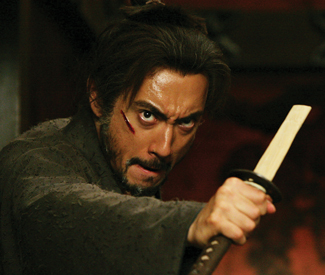
Solemn samurai Hanshiro (Ebizo Ichikawa, an acclaimed kabuki theater actor) appears before a feudal lord, humbly asking permission to commit ritual suicide in the man’s courtyard. But in this house, skepticism reigns over honor, thanks to a recent rash of “suicide bluffs” — it’s not death these downtrodden men seek, but sympathy in the form of handouts or job offers. In fact, there was a suicide bluff recently, right there in the courtyard. A young man named Motome. It ended badly.

It’s soon clear that Hanshiro and Motome are connected, and the circumstances that motivate their extreme behavior are indeed tragic and deeply felt. Miike takes his time getting there, though, and fans seeking breakneck mayhem may be disappointed. Side note: for whatever reason, Miike filmed Hara-Kiri in 3D, but it’ll be screening in old-school 2D during its local run at the Four Star.


PAINTED SKIN: THE RESURRECTION and HARA-KIRI: DEATH OF A SAMURAI open Fri/17 in San Francisco.

Suspended in the groove

2

arts@sfbg.com

MUSIC Out of nowhere an isolated house groove surfaced from the ether of the Internet and touched an unexpected chord. It was called “Love Me Like This,” a throbbing re-edit of the early 1980s track of the same title from R&B group Real to Reel. Its author was an unknown British musician going by the name of Floating Points, a gerund whose aerial element reminded me at the time of another producer closer to home, Flying Lotus.

Apart from names, both applied jazz tendencies to their electronic compositions. And both were involved respectively in a loose constellation of musicians and producers, whose inspired theorizing on low end frequencies had just begun to crack apart the stale course taken by much of dance music, exploding it into countless directions.

This was the case in, at least, that nebulous sphere of grassroots creativity that many still lovingly call the underground — in which the alleged distinction between dance and head music (or, in industry parlance, between electronic dance music and intellectual dance music) just doesn’t make any sense. Is it head music dancing? Dance music getting head? How about this: dance music about dance music. That’s heady enough. And if you think I’m dancing around the issue, then I would be so lucky to have got my point across.

Putting my word games aside, Floating Points’s music hits a sweet spot. Something about “Love Me” suspends you in midair. Syncopated percussion lurches ahead, offset by a wandering snare. The song unravels joyously, arriving and departing from a series of peaks where the programmed drums and swirling vocal refrain come to be utterly overwhelmed by lush arpeggios, sweltering keys. Most of what we tend to place under the category of dance music operates precisely this formula in which claustrophobic discomfort builds and holds itself back until it’s finally spent in an expulsive release. Again and again. Floating Points, who is also called Sam Shepherd, often executes this to brilliant effect.

But something else can happen too, where the difference between claustrophobia and release is suspended. It’s as if, against all odds, you feel both restraint and letting go at the same time. And there you are, floating in the delay between them — in an extraordinarily ecstatic shuffle where the climactic drop that has become so essential to the huge financial success of EDM festival acts just doesn’t even count anymore. You’ve been taken instead somewhere else, outside of the drop’s comfort zone.

“Love Me Like This” appeared from nowhere more than three years ago, before anyone really knew the name Skrillex, before dub-step would begin to sell its signature wobble to the popular consumption of American cars and Brittney Spears’ songs. Then, Californian producers were in the midst of reinventing instrumental hip-hop, while others toyed with the boogie funk of Prince, as the sounds of UK club culture filtered into this experimental space.

I remember waiting impatiently for two specific aspects of these worlds to collide — waiting for someone to take what Dam-Funk was doing in Los Angeles with bounce driven soul and fissure it with the two-step drum patterns that made all the sub-genres splintering from and around dub-step sound so interesting. Floating Points answered my silent wish.

I exaggerate my prescience here, though, because Shepherd far exceeded whatever I could muster in anticipation. His first proper release was a seven-inch record that debuted Eglo Records, which he co-founded with Alexander Nut in London. The single’s two tracks stem from the disorienting free jazz belonging to another incessant breaker of rules, Sun Ra. “Radiality” warps Ra’s “Lanquidity” into a plosive shattering of synthetic rhythms and melodies. The way the groove lobs in time is a bit like the floating I mentioned earlier — there we are, languishing warmly in rhythm.

A couple EPs, a number of singles, remixes, and collaborations followed. On Vacuum, Shepherd shows that he can just as well make a no frills house groove. Subtle narrative arcs made up of punchy bass lines and sticky keys invite you to surrender willingly to the beat. Shadows is a bit more experimental. The extended compositions are fractured: bass lines disappear into quiet piano solos, chords dissolve into pulses spiraling in concentric circles around themselves. From these shallow swirls of sound arise huge swells of energy, only to dissipate once again.

Some of Shepherd’s most magnetic music, though, features fellow Eglo signee Fatima on vocals. She not only sings wonderfully with the Floating Points Ensemble, but has also done significant work of her own with Shepherd on production. What sticks with me most is last year’s Follow You EP, a subtle and lovely take on the intoxicating inner visions that music can conjure.

It turns out Floating Points is a classically trained musician, who only moonlights on analog drum machines and synthesizers. A great deal of his waking hours are otherwise devoted to pursuing a Ph.D in neuroscience. I assume that’s why it’s taken Shepherd this long to touch down in San Francisco for a live performance. And thanks to the curatorial teamwork between DJ Dials and Noise Pop’s Dawson Ludwig, he’ll join the eclectic bill for the upcoming Scene Unseen event.

Set among other headliners — including both the extravagant rapper, Riff Raff (who will be played by none other than James Franco in an upcoming film directed by Harmony Korine), and the showy Chicago duo, Flosstradamus — I’m not sure what to expect. Add to that set list two experimental beatsmiths from LA, Dibiase and Groundislava, as well as locals Ghost on Tape and the DJ crew KM / FM, among others, then you’ve pretty much run the risk of nullifying any categorical expectation. It’s really quite a gamble. Then again, that’s the liminal space in which Floating Points has thrived, and in which tomorrow’s music has always thrown its dice.

FLOATING POINTS

With Riff Raff, Flosstradamus, and others

Fri/17, 10pm, free with RSVP

1015 Folsom, SF

www.1015.com

Nicky Da B at Public Works

0

This Thursday, two of San Francisco nightlife’s heavy hitters, Stay Gold and Future Perfect, are joining forces with Public Works to bring you the show of the summer. 

Nicky Da B is at the forefront of the next generation of New Orleans bounce rappers. He is currently earning huge accolades for his most recent work with Grammy nominated producer Diplo on “Express Yourself,” his ground breaking video for “Hot Potato Style,” and his sold out headlining performance at the Sydney Opera House this past June. Nicky Da B’s live performances are highlighted by choreographed songs, live dancers, and his DJ, Rusty Lazer.

DJs Rapid Fire, Pink Lighting, Vin Sol & Marco de la Vega will be DJing throughout the night.  This event is surely something not to be missed. Get your presale tickets here.

Thursday, August 16 @ Public Works, 161 Erie, SF | $8-$10 | This is a 21+ event


Oh no they didn’t! Hilarious horror stories at Mortified

6

Why is it that I like myself most when looking back on my years as a college freshman, drunkenly spooning peanut butter into my mouth amid the squalor of my dirty kitchen? Why is it that I appreciate a boyfriend most when I see his elementary school photos and realize he used to look like a well-fed lizard in glasses?

I’m going to wager that it isn’t my own affinity for the less-than-socially acceptable and is actually a testament to the fact that humans often love that which is most, well, human. And humanity has the tendency to do some painfully embarrassing stuff.
 
This is the concept that drives Mortified, a collection of short readings and performances of the sometimes brilliant, sometimes artistic, sometimes sad, and always humiliating personal musings its performers created as children and teens. The brainchild of creators and producers Dave Nadelberg and Neil Katcher, Mortified has a constantly changing cast, mainly consisting of adults who have, fortunately, left most of their adolescent angst behind — but still have plenty of stories to tell about it.

The DNA Lounge is surprisingly conducive to theater, with its upper balcony offering unobscured views of the performers. On Aug. 10, the night’s first performance was by Orlando, Fla. native Jessica Wassil, reading from her teenage diaries. There isn’t much to do in Orlando, the edgy-looking brunette explained in her introduction, and thus her 14-year-old self saw no other alternative to the cultural void than to eat Butterfingers by the truckload and obsess over football players who didn’t know she existed.
 
Wassil’s excerpts treaded not-so-lightly on the line between funny and cringe-inducing, with her bellowing laments of insecurity and unrequited love making the audience members guffaw, but also tempting them to crawl under their seats. Her powerhouse opening excerpt, describing what indeed seemed to be the “worst Valentine’s day ever” (eating Snickers for breakfast and then soiling herself at school) had tears of ambiguous varieties streaming from the audience’s eyes.
 
But it’s okay, because now she’s totally cute. And kind of a hipster. And probably pretty awesome, given her confidence to stand alone on a stage and read almost grotesque confessions from her youth.
 
However, Heather Aronson’s accounts of a being an underage metalhead were anything but sad. Her diary entries read more like an epistolary novel addressed to the guitarist of Def Leppard, to whom a young Aronson’s commitment resembled a nun’s devotion to God. Kinda freaky. And such was the collective opinion of Aronson’s classmates in her first year at a new high school.
 
And yet, the admittedly girly but nonetheless badass actions of the head-banging teen were wholly awesome. She backed boys into corners, scored concert tickets, got drunk, made at least one friend, and — as the piece’s climax and finale went — cussed out the haughty girls at her school, kicked in her science classroom’s door, and ends her high school year of hell in appropriately metal fashion.
 
The “Worst Teen Poetry Slam,” for which Mortified creator Dave Nadelberg traveled from Los Angeles to San Francisco, offered some variety in the evening. The first contestant was businesswoman Lisa Ratner, who read adolescent love poetry directed toward one particular (and, it seemed, totally undeserving) young man.

Imagine any lovesick and slightly pathetic tween’s poetry, then add in a strong penchant for metaphors about kings, queens, stardust, and chariots, and you’ve got the general aesthetic of Ratner’s collection. Nadelberg was the night’s second contestant, and eventual winner, thanks to some awkwardly erotic poetry about “world music” just bizarre enough to offer a refreshing reminder that teens aren’t only pitiful … they’re also weird as hell.

“What’s in the bag, Mr. Pips?” began Nadelberg’s ode to bagpipes. He had me at that.
 
Lily Sloane’s confessions of a boy-crazy, coffee-shop working, rock’n’roll loving, and prematurely cynical teen girl were perhaps an unspoken dedication to all those 15-year-old girls who know they’re cool but, goddamn it, why doesn’t anyone else realize it? Covering her insecurities with swearwords yet always admitting to her own faults and adorably neurotic self-awareness, Sloane shared oodles of unwittingly fantastic one liners. (“That little fucker better call me” ended one entry about the boyfriend for whom she incessantly pined.)
 
Her piece, however, was best punctuated by the live performance of her fifth and sixth grade musical stylings, with which she angrily serenaded her parents: “I have to be cute when we have guests/I don’t want to wear my little pink dress.”
 
San Francisco show producers Scott Lifton and Heather Van Atta programmed wisely by choosing to end the night’s series of confessionals with Ezra Horne. His diary of an overweight, closeted Mormon boy read like a Daniel Pinkwater coming-of-age novel, with daily accounts of the number of times he looked at porn (which he coded as “P”) or masturbated (creatively delineated by the letter “M”).
 
He thought he was a fat, lazy, slob. He was jealous of his friends. He made secretly-self hating speeches at church. He knew he would never get into the celestial kingdom. And yet, by the end, there was some hope in Horne’s brash yet somehow whimsical musings. He ended his piece with an epilogue: his eventual coming-out was a well-supported, smooth transition by his family and community. Currently happy and in love, Horne said: “I was always hoping God would fix me. But God can’t fix me because I’m not broken.”
 
And that could be the moral for all the of night’s performers: despite horror-story, silly-stupid childhoods, they’d all moved on nicely.
 
Mortified officially began in 2002, and this is by no means the first Mortified SF installation. Speaking with audience members, it’s evident that every show is different. According to the unnamed gentleman on my right, this show “wasn’t even as funny” as the last.
 
And that may prove my thesis: the concept behind Mortified is brilliant to the point where I’m not quite sure where any Mortified show could go wrong, with its ability to lovingly yet bluntly look at personal and painful topics.
 
The series returns to the DNA Lounge Sept. 14; the group will also make a special performance at the SF Improv Festival Sat/18.

Newsom will vote on campaign donors’ projects

7

On the front page of the Chronicle Aug. 12, California Watch reported that Lieutenant Governor Gavin Newsom has been promoting the interests of campaign donors in San Diego and San Bernardino. It’s nothing criminal, but it looks bad – and it’s just the start.

Newsom, who sits on the state Lands Commission (one of the few critical duties of the Lite Guv) has received thousands of dollars in donations from interested parties looking to exploit San Francisco’s waterfront, public records show. And he will be voting on the future of their projects.

Newsom received $2,000 for his 2014 campaign from two lawyers, Neil Sekhri and Mary Murphy. Both attorneys are at the law firm Gibson, Dunn and Crutcher, and are involved with the controversial 8 Washington project – which comes before the Lands Commission Aug. 14. Since part of the site of the most expensive condos in San Francisco history is state Tidelands Trust property, the state has to approve the deal. Newsom will be one of three members voting.

The future site for the Golden State Warriors arena is along the waterfront. The decision to turn over that land to private investors will come before Newsom’s panel, too – and Newsom has received more than $6,000 from interested parties.
The Strada Investment Group, which is representing the Warriors as a development consultant, gave Newsom $5,000, records on file with the Secretary of State show. Jesse Blout, real estate investor for the group contributed $750. Scott Stafford, principal, contributed $750. Marty Glide, chief executive officer of the Warriors, contributed $2,000 Newsom’s campaign.

Aaron Peskin, former supervisor and a foe of 8 Washington, issued a press release Aug. 13 calling on Newsom to recuse himself from voting on that project. Newsom’s office hasn’t responded to us, but it’s a safe bet that’s not going to happen. Newsom didn’t get where he is by stiffing campaign donors when they need him on a big vote.

There’s another  problem with the Lands Commission vote on 8 Washington. According to former City Attorney Louise Renne, the commission can’t vote on a project that doesn’t actually exist.

Her argument, laid out in an Aug. 7 letter to the commission, is simple: More than 31,000 San Francisco voters signed a petition demanding a vote on the project – and the Department of Elections has certified the referendum for a citywide vote. That can’t happen until November 2013. “Under these circumstances,” Renne wrote, “you do not have a currently valid 8 Washington Street/Seawall Lot 351 project before you for consideration. Approvals of the project are suspended by law.”

Does the commission even care if what it’s doing is legal? Anyone placing bets?

UPDATE: We just got a statement from Newsom’s chief of staff, Chris Garland, who told us that the Attorney General’s Office and the Lands Commission legal staff agreed that none of the panel members have a conflict of interest.  “The lieutenant governor has enjoyed the support of parties on both sides of this issue and is capable of looking at the item impartially and doing what is right for the state,” he said. “This isn’t a matter of contributions; it’s matter of calling balls and strikes on an important project.”

Okay then.

Heads Up: 7 must-see concerts this week

0

The global spectacle of the Olympics is through for now (see you in Russia 2014!); the local frenzy of Outside Lands 2012 has passed. So what’s there to do and see this week? Well, there’s Twin Shadow, Sam Flax, Three Mile Pilot, Midnight Magic, and two free shows: Flosstradamus with Riff Raff and Floating Points, and afternoon with the San Francisco Opera (separate outings).

Here are your must-see Bay Area concerts this week/end:

Sam Flax
Sam Flax has a visionary vibe – out of the noisy norm, beyond genre, new, colorful, and electric. It’s a quality shared with the other acts on this bill. The event – dubbed “An Anthology of Savage illusions,” and hosted by Mashi Mashi – also includes Maus Haus, Seventeen Evergreen, Michael Stasis, Mohani, Warm Leatherette DJs and art (instillations, illustrations, and sculptures) by Carlos A. Etcheverry, Edmundo de Marchena, Slenna DaFonseca.
Thu/16, 7pm, $7-$15
CELLspace
2050 Bryant, SF
Facebook: Mashi Mashi presents
http://www.youtube.com/watch?v=DTVY9K3NkFo

Twin Shadow
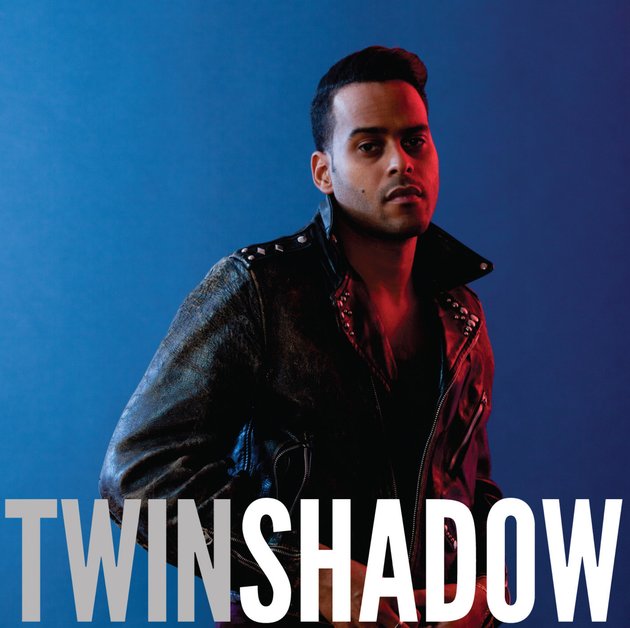
Stylish 1980s-repping R&B/dark new wave crooner Twin Shadow returns to the Great American for a set of headlining shows, this time on the heels of sophomore album, Confess, which saw a proper release July 10 on 4AD. He’s basically Prince in Purple Rain during the video for “Confess,” the titular first single off the album.
Thu/16-Fri/17, 9pm, $21
Great American Music Hall
859 O’Farrell, SF
(415) 885-0750
www.slimspresents.com
http://www.youtube.com/watch?v=HiC9XNQSxFQ

Flosstradamus, Riff Raff, Floating Points
This is like the Internet IRL. British electronic musician Floating Points programs the quality background, Chicago DJ duo Flosstradamus brings the flash, and reality celebrity/royal mess rapper Riff Raff uses MS Paint to spray-paint dicks, dollar signs, and marijuana leafs all over the site. Plus it’s free, and there’ll be opening sets by DJs and producers Ghosts on Tape, Debase vs. Popscene, Dibiase, Groundislava, Elephant & Castle, Richie Panic, Marco De La Vega, DJ Dials, KM/FM, Moziac, D33J, and Tyrell Williams. That’s a lot of pages to bookmark.
Fri/17, 10pm, free
1015 Folsom, SF
www.1015folsom.com
do415.com/event/2012/08/17/scene-unseen

Three Mile Pilot
More than 20 years after its influential San Diego inception, Three Mile Pilot (the emotional lo-fi indie band that spawned Pinback and Black Heart Procession, among others) still knows how to make a guts-pummeling album. 3MP proved this with 2010’s The Inevitable Past Is The Future Forgotten, the first release after 13 years of radio silence, and again this summer with new EP, Maps.
Sat/18, 10pm, $20
Bottom of the Hill
1233 17th St., SF
(415) 621-4455
www.bottomofthehill.com
http://www.youtube.com/watch?v=v7UeBxHFhK4

Midnight Magic
“It’s become apparent that the PR agents have discovered the trick to getting my attention: listing the name of a band next to the words “ex-mems of LCD Soundsystem,” thereby exploiting the hole left in one of my bodily organs by that now defunct group. The connection here is a bit tenuous, referring to former members of Hercules and Love Affair (quite a good name drop on its own) enlisted to play backup at LCD’s last shows. Moving beyond the past, the nine piece disco outfit’s releases so far — “Drop Me a Line” and “Beam Me Up” — have a promising, lively romanticism that’s doing all the influences justice.” — Ryan Prendiville
With Tron Jeremy, Brother Sister, hosted by Ava Berlin and Andy Vague
Sat/18, 10pm, $10-$15
Rickshaw Stop
155 Fell, SF
(415) 861-2011
www.rickshawstop.com
http://www.youtube.com/watch?v=8EaYwmv7hcA

San Francisco Opera
A grand yearly tradition that gives us peons (a.k.a those of us who cannot afford top-shelf liquor or a fancy night out) a shot of upper-crust culture. The program, with conductor Giuseppe Finzi, features soprano Leah Crocetto, tenor Michael Fabiano, and more soloists performing “a selection of operatic favorites.” Pack some cheese and wine, something classy. 
Sun/19, 2pm, free
Stern Grove
19th Avenue at Sloat, SF
(415) 252-6252
www.sterngrove.org
http://www.youtube.com/watch?v=ew3nJW5GzB8

Nashville Pussy
Deep-fried Southern rock meets heavy metal band Nashville Pussy stops by Oakland in between slots on a much higher priced ZZ Top tour.
With Fang, Turbonegra
Sun/19, 8pm, $12-$15
Uptown
1928 Telegraph, Oakl.
www.uptownnightclub.com
http://www.youtube.com/watch?v=gPyd8pO1Lfc

Rafael Mandelman enters City College board race

6

After the really bad news that Community College Board member Milton Marks died, there’s some good news: Rafael Mandelman, an energetic, smart, progressive lawyer and member of the DCCC, has decided to run for that board.

City College badly needs the help. There’s a real chance that a state monitor could be placed over the district, robbing the board of much of its ability to set policy and spend money. And even if that doesn’t happen, the state — which disagrees with San Francisco on how community colleges should be run — is going to keep tyring to mess with CCSF.

So it would be nice to have someone like Mandelman, who has political experience but also works for a law firm that does a lot of public-sector work, around to help.

Marks’s untimely and tragic death leaves an open seat and he hadn’t filed to run for re-election. So the mayor has the ability to appoint someone to serve out Marks’s term — and if he does it before Aug. 15, that person can file and run as an incumbent. But for those of us who are getting sick of having so much of our government appointed for us, it would be nice if Mayor Lee would wait until after the filing deadline then name a real caretaker — Mandelman suggests former trustee Tim Wolford, who is now in the business of helping troubled nonprofits. The board will need help in the next four months, and someone qualified — and skilled in dealing with fiscal and political problems — would be an immense help.

But appointing a political hack who is pals with the mayor’s inner circle and sees a shot at running as an incumbent would be a big mistake.

Of course, Lee hasn’t done too well in the “caretaker” department. We’ll see what happens.

Unhinged eccentricity: Outside Lands night shows

0

Last week saw two alternative rock favorites headlining local venues thanks to Outside Lands night shows: San Francisco punk-Americana duo Two Gallants, and master whistler-violinist Andrew Bird. Two Gallants rocked hard as hard as always, while Bird spun fantastical sounds and tales.

Two Gallants are most well known for their song “Despite What You’ve Been Told” (What the Toll Tells, 2006), which hit big as their career began to take off, leading to years of worldwide tours and a loyal following outside the Bay Area. Since then, shows in their home city have been even more appreciated and sought out by local fans.

Singer and guitarist Adam Stephens and drummer Tyson Vogel – best friends since childhood – are both strongly influenced by the blues. And its clear they give their all to every word sung and note played: be it a growling punk-inflected tune or a slower building, lovesick, blues-tinged ballad.

Their fifth studio album The Bloom and the Blight will be released Sept. 4, and the album cover features the duo goofing around as children. Vogel and Stephens are two of the most earnest musicians I have encountered; it’s always gratifying to hear them thank their home city for coming out to a show. And last Wednesday at the Rickshaw Stop, Two Gallants played with a fervor that was completely contagious. Everyone around me sang and danced their hearts out.


Two Gallants at Rickshaw Shop. Photo by Shauna C. Keddy

You can always count on the audience at a Two Gallants show to sing along at the top of their lungs to their hit “Steady Rollin” – “I shot my wife today, dropped her body in the ‘Frisco Bay…Death’s coming, I’m still running. Well I come from the old time baby, too late for you to save me. If I remain, then I’m to blame.” I felt so thankful for the Bay Area music scene while I rocked out with everyone else to this song, and for Vogel’s heavy drumming, and Stephens’ skilled guitar picking and harmonica playing. I even felt grateful during the opening set, for another local band: Future Twin, an act with hard-rocking, synth-filled songs and a great female lead singer.

The Rickshaw Stop was a classically humble choice for powerhouse Two Gallants duo. The red velvet curtains and comfortably small size always makes the venue feel welcoming, and the band played in front of a beautiful banner. True to their detailed album artwork in the past, the banner featured Tarot card-like artwork, depicting a person inside a sun, a snake wrapped around the sun, and a bird emerging from the center, with drops of water falling all around.

The huge crowd that packed into the Rickshaw left looking enlivened and delighted.

The following night brought Andrew Bird to the Independent, with Kelly Hogan opening. Bird has performed on more than 15 albums, with nine solo releases under his own name. His music only becomes more enchanting with each release.

His latest, Break it Yourself (Mom + Pop Music) was released this spring, and he is on a world tour with his band in support of this gorgeous album. Joining them is his sock monkey (adorned in a suit, button up shirt, tie and converse sneakers, no less), who can also be spotted in their appearance on Colbert Report, and all his late night TV spots. This is why Bird is so undeniably lovable – he embraces childlike whimsy, but it’s all rooted in musicianship. While some of Bird’s lyrics could fit in a childrens’ lullaby, each song explores things on a deeply philosophical level, with a sound that carries these explorations perfectly.

He embodies the creative force of an artist who is just brimming with ideas: unless he’s busy whipping up beautiful violin notes, his arms and hands are in almost constant motion as he narrates his tales. I pictured him as a wild conductor, conjuring the sounds around him as he closes his eyes and pictures it all taking form.

Bird and his band played each song last Thursday night with impeccable timing.

That’s something the Outside Lands night show acts had in common. Both Bird and Two Gallants can be counted on for precision in sound, yet both also employ just the right amount of unhinged eccentricity. Two Gallants music brings to mind traveling alone on a country road, and then finally finding your loved ones gathered around a fire by the rivers edge. Bird’s music could provide the soundtrack to a journey through an enchanted forest, complete with Dr. Seuss-like creatures. Conversely, While Two Gallants’ sound can often be stripped down, translating raw emotion, Bird is known for featuring rich instrumental layers of sound.

For his newest album Bird took time away from his home-city of Chicago and recorded in his barn in Western Illinois, self-producing his album there. His whistling talents are also featured in last year’s The Muppets (2011).

The stage at the Independent was adorned with Bird’s spinning two-headed contraption– which at first appears like an old gramophone. After some research, I discovered this is known as a Janus Horn (leave it to Bird to employ such an rare contraption), which spins in reaction to sound and creates a change in the sound pitch that it picks up.

Additionally, beautiful paper and wooden twisted conical shapes hung from either side of the stage and above the crowd, which turned slowly in time to the music as the lights shone through the sheer paper. Bird’s attention to detail and craft created an altogether stunning night.

Shall we dance? Our review of Naked Sword’s SF sex party

1

“At this San Francisco sex party, service comes with a smile”

I watched his engorged, throbbing penis emerge at the opening of the glory hole. Staring felt awkward, but I couldn’t peel my eyes away. Men were all over the room, some casually looking on, some men lounging naked on the couch. One guy was doing a nude figure drawing of his next conquest.  

I hit pause on the video stream to cool down. Oh! I should mention I was watching Naked Sword’s newest release Private Party — the local production company’s stab at recreating a SF sex party. And as a queer local who has actually attended a SF sex party or two, I have to say Private Party is more of a fantasy of what an SF sex party would be like than a true-to-life recreation. 

Don’t get me wrong, you’ll definitely get off. Private Party all but guarantees it in its tagline: “At this San Francisco sex party, service comes with a smile.”And true enough, the shoot is chock-full of muscle-clad gay male porn stars with well-developed members in twosomes and threesomes, all happily ending.

The series welcomes you  into a home where sexual escapades are happening around every corner. The title sequence of each episode sets the scene. You have just arrived at the sex party — cut to scenes of men on top of hot men. This is unfortunately were the sex party motif ends. 

Because at this point, the episodes breaks off into more intimate scenes — a twosome in Episode One, a threesome in Episode Two. 

In my opinion, a more realistic tale would have included men in all the various combinations having sex together in the same room. The camera would be panning across their naked, sweat-drenched bodies, and you wouldn’t be able to tell which limbs belong to who. I guess you would call that an orgy. Where’s the orgy scene, Naked Sword? 

Perhaps Private Party is holding out for future episodes to give us the big “O” scene. One more thing I have to call foul on: there was a dance party at the last sex party I went to. Where’s the dance party? 

If you’re looking for a porn with built and attractive gay male porn stars in pretty intimate — I would almost call them romantic — scenes with great lighting and artistic cinematography Private Party may be the porn series for you. Just don’t expect a dance party.


The good, the bad, and the delicious at Outside Lands

5

Recovered yet? We’re almost there. It was a frenzied, foggy, dusty and memorable weekend at Outside Lands in Golden Gate Park. There were sonic high points that brought us to tears, and bathroom lines that did the same. Here are our favorite moments, a photo slideshow of awesome performances — and the niggling things that got under our skin.

THE GOOD

The powerful, still-relevant punch of a perfectly orchestrated Metallica performance; the band still slays in 2012. It was everything a show of that magnitude should be, with legendary metal sing-alongs, wailing guitars, James Hetfield’s signature growl, bass solos, and fan favorites “Master of Puppets,” “One,” and “Blackened,” along with a barrage of even more headbanging hits, pyrotechnics (shooting fireballs on cranes that actually seemed to warm the freezing crowd below), and timed lasers, colorfully slicing through the fog.

Whimsical Father John Misty‘s sexy, subdued tummy-revealing dance moves on the Panhandle Stage; also his opening song “Funtimes in Babylon” (which has him drawling “Look out Hollywood, here I come”) along with the moment when the crowd thought that song had ended, so it applauded, and he replied “shut up!” and finished out the tune.

Neil Young switching to acoustic guitar to play heartbreaking classic “The Needle and the Damage Done,” after 10 minutes of slow, harsh guitar-beating noise (as one fan eloquently put it, “masterbating with his guitar”).

Following his comedy set, David Cross (in Tobias Funke facial hair, as he’s thankfully currently back shooting the revived Arrested Development) and fiance/Joan of Arcadia actress Amber Tamblyn in a traditional festival floppy hat, taking in Neil Young together.

Neil Young & Crazy Horse playing  “Hey Hey, My My.”  Specifically the line: “It’s better to burn out than to fade away and stuttering the “f-f-f-f-f-fade” dramatically.

The spicy, peanut-sauced vegan Malaysian nachos with braised tofu and pickled vegetables from the Azalina’s booth paired with a Hobo Wine Co. Pinot from Wine Lands, eaten cross-legged in the wet grass among thousand of hungry revelers.

The Nerdist (a.k.a Chris Hardwick) curated comedy lineup in the beautiful circular red Barbary tent, including gut-bustingly awesome comedienne-podcast host Michelle Buteau; in particular, Buteau’s subtle knock on the white dude with dreads, and her impressions of her new Dutch husband.

Stevie Wonder, telling the crowd that he loved all his seven children – and all of their mothers – the same. Especially since one of his daughters was there as a backup singer.

The moment when it seemed like every red-blooded ticket-holder was there to see the great Alabama Shakes, filling in the the grassy bowl of the Sutro Stage more so than any other act on that stage. Pure mayhem.

Charming British soul singer Michael Kiwanuka (a one-time tour opener for Adele) answering fan questions in the All Access tent (full disclosure: SFBG’s Caitlin Donohue hosted the interviews).

Pacific Brewing Laboratory’s subtly fruity hibiscus saison at Beer Lands – a standout among a wide variety of unique Beer Lands offerings.

Ninja from Die Antwoord’s bouncy pelvic thrusts – wearing nothing but Pink Floyd Dark Side of the Moon boxers – singing about “rubbing his dick” on “XP€N$IV $H1T.” (The bass-thumping point basically being: screw fancy stuff.) Followed by tiny bleached firecracker Yo-Landi popping back out on stage in gold lame tights and a huge gold jacket to shake her ass singing that she’s a “Rich Bitch.”

Santigold thanking the bananas in goggles.

Portugal.The Man‘s reverberating rendition of “Ain’t No Sunshine.”

Sincere and personable singer-songwriter Sharon Van Etten telling the crowd a heartfelt story about making mistakes and how they influenced her to write the next song, then supposedly messing up a guitar part during said song (“All I Can” with lyrics “we all mistakes”). But no one caring, because she was so endearing.

Chocolate Lands, with strawberry and apple skulls covered in chocolate hanging from the trees. And the moment when when the Inspector Gadje brass orchestra and red sequined cheerleaders performed among a thoroughfare crowd munching those sweet chocolatey treats sold below the skulls.

Jack White and Tom Morello performing seemingly impromptu concerts in that same wooded area.

Beck giving the antsy masses what they wanted early: “Devils Haircut” the second song in, followed immediately by “Loser.” Letting those who overbooked start making their way to the next act. 

Andrew Bird‘s rotating phonograph-ish stage-craft (edit: we now know it was a Janus Horn) and his soaring whistle, cutting through the rolling fog.

The mathy, intricate instrumental bliss and swelling peaks, tension and release, of Explosions in the Sky on the main stage, as hippies slowly hula-hooped along.

All the offerings from San Francisco’s Pica Pica Maize Kitchen: the gluten-free maize’wich, fried plantains, and crispy yuca fries  –  the best handheld foods for proper band-watching stance.

All the bands and comedians – every single one, regardless of age, gender, background, or genre distinctions  – commenting on the chilly San Francisco weather, seeing as how it’s summertime, people! Not getting sunburned.

THE BAD

Crowds seemed epic this year, though there might not be any getting around that. The park felt stuffed, almost (but not quite) suffocating, with swarms of people funneling out every wooded orifice.

That girl whose wine we accidentally knocked over during Metallica’s set; it’s Metallica, put down the wine, or at least get over it and quit with the non-verbal shaming, Ms. Stink Eye.

So much corporate sponsorship, ads and booths for cell phones and cars and all kinds of technology one needn’t think about during a music festival.

There just has got to be a way around the Porta-Potty, right? Isn’t there a company out there that can make a more suitable moveable toilet, something with a smidge more dignity? That’s corporate sponsorship we could um, get behind. 

Big week ahead as City College classes start

2

Classes at City College of San Francisco start for the fall on August 15. That makes this a big week for the coalition of students, staff, and community working on its future. 

As the college welcomes students back, this coalition will set up on the Ocean campus in Ram Plaza and at the Valencia entrance of the Mission Campus. With litterature from community groups, music and speakers, they hope to let incoming students get the chance to learn about the efforts to save the college- making sure it continues to exist, as well as maintaining its academic standards, accessibility, and other core values. The celebration will include music and speakers.

There’s also plenty happening before Wednesday. Today, a student organizing meeting will take place at the student union at the CCSF Ocean Campus. Then, at 6pm, CCSF will be the focus of the weekly Occupy Forum, an open space to discuss issues of importance to the occupy movement. William Walker, CCSF student trustee, will speak at this week’s forum, called “Education Under Attack: Austerity, Privatization and Profit.”

On Tuesday, the CCSF Board of Trustees will hold a special meeting at CCSF’s Ocean Campus. They are scheduled to discuss the progress of the working groups that have been set up to work towards meeting accreditation requirements. The meeting is public, and stakeholders and community members will definitely be making an appearance. The meeting is at 4pm in multi-use building room 140.

“There are a lot of people that have opinions on how we need to move forward,” said Walker. “It’s the job of students to come together to figure out what austerity is actually going to mean for city college, and what our must-have demands.”

Creating activist scholars: extended interview with Andrej Grubacic

16

For this week’s paper, we talked with with Andrej Grubacic, the new head of the anthropology department at the California Institute for Integral Studies. Here’s the extended interview with Grubacic, where he talks more about the new Anthropology and Social Change program, as well as the history of anarchist schools, how his grandmother influenced his politics growing up in Yugoslavia, and the state of the occupy movement.

San Francisco Bay Guardian: What’s the structure of the new program going to look like?

Andrej Grubacic: It’s going to be called Anthropology and Social Change, and we have two levels. One is MA, the other is PhD. Philosophically speaking and politically speaking, in the age of occupy and all of these movements, the great question for me was how to organize a department that’s actually going to be useful for all of these social struggles and that activism that’s happening outside of education. I’ve been in academia as a scholar-activist for a long time. And what I’ve discovered is the most painful thing in my experience is the separation. The fact of actual separation between the grassroots knowledges, produced outside of the academia, and academic knowledge produced within the universities. So the best things, the way that I was thinking about this was that what we should do on both levels, MA and PhD, is to construct a space of translation of different knowledge. So to put these two knowledges, one produced outside of academia and the other produced in the university, in dialogue.

So we have Boots Riley for example, he’s going to be teaching community organizing, or organizing for social justice. Then we’re going to have Sasha Lilley teaching an eminently practical course on how to create and produce radical radio. So you’re going to get activist media skills. Then we’re going to have a few other people teaching also different skills, and knowledge that’s inspired by art, bringing artists in, and knowledge that’s inspired by people who are thinking about social theory and social emancipation. We’re going to create something really exciting. 

SFBG: Do you think the students who attend are going to be the same kind of mix of academics, artists, activists, and people who want to organize within their own communities here in San Francisco?

AG: I think so. That’s the idea. The idea is to make this department work for the students, but also for the people in San Francisco Bay Area. And we can do that by bringing students who are interested in local work, and I think that’s going to be a pretty amazing. If we are of course able to do things right, but I think that we will be. So Chris Carlsson for example, he’s going to be teaching labor and ecological history of San Francisco, so a very local topic. We’re going to be teaching courses on activist ethnography, and activist ethnography is the center for the whole program, which is how can we relate to community– and this is where we’re also using the term integral– in an integral way? Meaning how do we integrate community into every step of the research process? And the traditional anthropology, as you probably know, is all about participant observation. We would like to have instead observant participants. People who are involved with the communities. People who are trying to dissolve the distinction between the researcher, between who’s on the outside, and who’s on the inside. And they’re creating something together. 

SFBG: I saw when you spoke at the University of the Commons launch. You were talking about how there’s a wave of radical activity going on at schools throughout the world.

AG: Oh yeah.

SFBG: This is obviously very different, because this is an institution putting out something radical, but do you think it fits into that trend right now?

AG: I think it does. Because if you know my biography, I’ve been travelling through all of these experiences in schools for many many years now. I had to leave Yugoslavia where I’m from because of my oppositional political activity and, you know, I finally arrived here to work at New College of California which was also a private institution, and I was very inspired by the department of Activism and Social Change, and I completely fell in love with the history of radical schools in San Francisco. Now I don’t know how much you know about them, but they’re, like, great stuff. There was a liberation school, there were Black Panther schools, of course. There is a great history of alternative schools and experiments. So New College was a private institution, but still, many of my activist friends, who became friends later, have actually been through New College and they got their MA s in activism and social change or media studies. So CIIS actually took many of these people, many of the professors from these programs, and invited them here. So in a certain sense, I think what was done in terms of Activism and Social Change, and orientation to social justice and emancipation, was that at New College we are still keeping that spirit alive. But, in communication- and I think this is the crucial thing for our department- we are doing this in communication with radical educational experiments, movement-based experiments from all over the world. Manolo Callahan, who is going to be teaching here next semester, he is one of the people involved in University of the Earth- Universidad de la Tierra in Oaxaca and in Chiapas, so we are creating relationships with them. Which you know are completely radical experiences outside of institutions, they call themselves deprofessionalized intellectuals. We have already relationships with the Activism and Social Change department in Leeds, in England, they have a great school there. With people in Brazil, the landless workers movements. We’re in touch with people from Ecuador and people form Bolivia. So it’s a whole network of educational, tendency of educational experiences that this department is now creating.

SFBG: Do you have economics courses here?

AG: Yeah.

SFBG: So are there classes that are non-capitalist economics?

AG: Yes, it’s called radical political economy. We are trying to understand political economy from a feminist perspective, from an anarchist perspective, from a post-colonialist- so in that sense we are engaging multiple emancipatory frameworks of understanding social reality. So I myself, I come from the anarchist experience in social science, in politics. We have people who are feminists- Roxanne Dunbar-Ortiz for example. She’s sort of a legend in San Francisco Bay Area and she’s teaching three courses. Roxane Dunbar-Ortiz is going to be teaching about Native American struggles. As it pains me to say, that kind of a focus is mostly missing not only in private but also in public universities now. 

SFBG: So could you tell me a little more about the anarchist background you come from?

AG: I became an anarchist fairly early on, I was 13 or something. Because I was living in Yugoslavia. At that time, Yugoslavia was a socialist state. And because it was a socialist state for me it was a very interesting place to grow up, because you see socialism, real existing socialism, and you see many things that are beautiful about socialism. But you also see many things that are not so beautiful. And I was thinking about the alternatives to it. And for me it was really, sounds cheesy, but a conversation with my grandmother that decided it. She was a communist; she was a Yugoslav revolutionary communist. And Yugoslavia was falling apart, Yugoslavia was in a series of really brutal ethnic wars back in the 90s, and my grandmother, this lifelong communist, told me– my question was, are you still a communist? Do you still believe in communism in the context of this country falling apart? And she said yes, I do, I think that we have chosen a path to communism that was wrong. But I think the responsibility of your generation is to find a different path. The ideal is OK, the ideal is good. It’s a different path that you’re generation needs to find, and you have a great responsibility to do so. And the alternative that I discovered that seemed to me, back when I was 13 years old, and it still does, rational– as an alternative to the Marxist-Leninst way of getting from here to there, right– is anarchism. So for me anarchism, or libertarian socialism is another name that people are using, is a way of organizing for social justice and creating an egalitarian system that takes democracy very seriously. It’s like democracy without a state. 

SFBG: What happened that made you leave Yugoslavia?

AG: I was raised a Yugoslav. So I was raised to be a citizen of a country that doesn’t exist anymore. And on one hand, you had people who were Serbian nationalists, and I couldn’t really get along with those. On the other hand you had people who were neoliberal capitalists, who thought that everything coming from Europe and the United States was great and I couldn’t really agree with those either. And being a young academic, I was a historian at the time and working within the university, there was a great deal of pressure to get me out of the university. So it became very unpleasant. So I already had a relationship with Noam Chomsky, and Chomsky was following everything that was happening to me in Yugoslavia. And he told me at some point OK, it’s time for you to go. So he got me out of Yugoslavia, moved me to the United States or helped me move to the United States, introduced me to a man whose name is Immanuel Wallerstein, a great, amazing sociologist, who helped me get to his program at the Center for the Study of Economics, Historical Systems, and Civilization at SUNY-Binghamton to finish my graduate studies. So that was a– it was a long journey. 

Let’s just say that it was an active disagreement with the political class active at that time in Yugoslav-Serbia. It was actually funnily enough still called Yugoslavia. We only had two countries of the former Yugoslavia, Serbia and Montenegro. But the political cultures and political groups in power were either Serbian nationalists or these hyper-capitalists, right. And going after them, because I was publishing and I was doing a lot of things, was– let’s say, not smart career choice. But it made it possible for me to meet people like Chomsky and some other people. And they liked what I was doing and they were concerned that, for health reasons, United States might be a better environment.

SFBG: Even within these more welcoming academic environments, do you feel your activism or anarchism is stifled in some way?

AG: I had a bad experience here at one university, a local university here in San Francisco, and it wasn’t a good experience. That felt unpleasant and it felt very stifling. CIIS is very different. Actually this is the first place where I think that I was hired because I was an anarchist, or I am an anarchist. It’s kind of funny. But in other places, in Yugoslavia and there was another institution here, I had problems because of my politics. Here, that was exactly the reason I was hired. So it gives you an idea that the school is very different than most other universities. 

SFBG: Could there be such a thing as an anarchist school?

AG: I hope University of the Commons can become something like an anarchist school. Anarchist schools actually used to exist. And they still exist. But the really big one was Francisco Ferrer in Spain. It was called Modern School. It was created in 1904. It became so huge– especially after Francisco Ferrer was killed by the Spanish state in 1909- that there were 60 schools only in Spain and there were I don’t know how many schools in the United States but the last one closed only in 1958 in New Jersey. Modern Schools were amazing places. One could also argue that Yasnaya Polyana of Leo Tolstoy was also an anarchist school. It was in many ways. 

But anarchist schools were schools where you had a few elements. Integral education was number one. Education of the whole person. You don’t only educate somebody as an intellectual but you aim at education of the whole person. The other thing was something that anarchists called reality of the encounter. Which means that all the questions in pedagogical practice needs to come from real questions posed by life itself. So you need to do something that’s practical. Another thing was the complementary role of the teacher, which means the teacher needs to be a facilitator who listens and who offers something in return. But the first thing, the first kind of show of interest, comes from the student. So the role of the teacher is complementary. Another huge thing was something Proudhon called démoédie, or self-government of the school. So school becomes a place where you teach students arts of self-government and self-management. Schools are organized in the spirit of direct democracy. Another thing which was Paul Goodman, famous anarchist educator, his idea was to organize decentralized “teeny schools,” as he called them. So to have a small teaching environment. To have students go to the bank to be taught about mathematics, to go to a museum and then to teach them about geography, to do these things. And then the most important thing for anarchist schools on all levels is the idea of natural motivation and natural learning which was first formulated by Tolstoy. The idea is the students have this natural motivation to learn. And what you do is basically you create an environment where that kind of learning becomes possible. And another thing for anarchist schools was the idea of spontaneous order. So there is no imposed order by the teacher, but there is a spontaneous order that the students themselves discover. In other words, discipline is– I think this is Tolstoy’s, the word that he used– discipline is being discovered, not imposed. What would that mean for a university is a different question. I think the one obvious thing would be that everybody, students and professors, there needs to be a horizontal relationship between them. There needs to be an atmosphere of collective production of knowledge in the classroom. There cannot be a curriculum that’s linear. It needs to be dialogical, it needs to be participatory, you need to talk about this and co-create a syllabus. You need to be as horizontal and participatory as possible. You need to be as imaginative as possible in diminishing your own role as a teacher, which is a very tricky thing, without becoming a populist in the classroom, you know. Empowering students, and finding appropriate structure together with students. Again we are coming back to the idea of listening. We need to listen to the students and together with them, create an atmosphere in the classroom that’s going to be genuinely transformative. 

SFBG: I’d love to ask you more about how this will relate to anarchism and occupy.

AG: In terms of anarchism, we are gonna have- this is going to be one of the few places where anarchism is going to be studied. So anarchist social theory, anarchist education, anarchist ideas in general. We are going to study them, seriously, because they need to be recognized seriously. They’re part of- it’s a beautiful history, it’s a beautiful tradition. How important it is, I think, is revealed, by the recent rediscovery or reinvention of anarchism at occupy. So I think that it’s more relevant than ever to create a space where anarchism will be studied. 

In terms of occupy, occupy is going through the process of fragmentation right now, and they are looking for a new political space of conversation I think. So the way that we can relate to occupy, I think, is to have our students participate in whatever different movements occupy helped. Because you know that occupy now how occupy patriarchy, there is decolonize, there are many different groups. So I expect our students to be involved in occupy, and I expect us to be able to offer a space where many of the debates related to occupy can happen. So, and you know there is an actual affinity. When Silvio Federici comes, or John Holloway, or Michael Hardt, or any of these people, these are the people that occupy people read, and these are some of the bibles of the occupy movement. So what are we going to do is, we are going to make them available and accessible to these people who come here, and we are going to bring here,  and we are going to take them to the occupy movements and we are going to invite people from the occupy movements to come here. But we are also going to do more I think. What we can do, and this is now only a plan an idea, is to invite the movement itself, not only occupy but different movements, and say, OK, please come here and tell us what would you like us to do. And one person from our department had this idea and I think it is brilliant. So to have the movement, different movements– is it food, is it the environment, is it one of the occupy-related movements- come here. We provide the space. And they tell us- social theorist, social scientists, people in the academia, they tell us what do they need us to do. It comes back to this idea of listening. So give a movement or movements a real possibility and opportunity to speak. Because usually academics, we are people who speak. Well we would like to see academics become people who actually listen. 

SFBG: I agree that occupy is basically an anarchist movement and a lot of the tenants of anarchism are being used in it. And I think this is a time when, in the mainstream, people are talking about anarchism more. But for a lot of people it has the image of people who wear black and smash stuff. So I’m curious, how does black bloc, or property damage, relate to the anarchism that’s going to be studied in the department?

AG: It doesn’t relate at all. The anarchism that we are going to study is– in Katrina, the Common Ground collective. That for me is a great example. Common Ground collective is a relief group of activists who went there from all over the place, they went to New Orleans, they were all anarchists and they said OK, we don’t believe in charity, we believe in solidarity. And they built a common ground center and they did relief work with the community for a couple of years. And there is a new book about it by a person who actually came here and spoke, one of the New Orleans activists, Scott Crow. And this is the kind of anarchism I am myself inspired by, the constructive side, not the destructive side. So how to build alternatives in the present for people, what sometimes referred to as prefigurative politics. How to think about positive stuff, constructive stuff. Building alternatives that are going to be persuasive enough– not about breaking windows. I don’t see any particular point in breaking windows. And I think it’s an unfortunate thing that people would reduce anarchism to that. If you think about it, the most important public intellectuals in the United States, one of them recently died, Howard Zinn, and Noam Chomsky thankfully is still alive, they’re both anarchists. So this is the kind of anarchism that I subscribe to, and both of them were my mentors. And I studied with Howard. I studied with Noam, he was the chair of my PhD committee. So these are the people whose anarchism I take very seriously, and this is the kind of anarchism that I like. 

SFBG: But it’s hard to ignore organizing tactics.

AG: But even orgnanizing tactics– black bloc as a tactic comes from the autonomen movement in Germany, which was not an anarchist movement. It comes from the 80s. People dressed in black in Germany, you know, doing property destruction thinking that property destruction is going to contribute to the tactical efficiency of a particular action. Then it went through the environmental movement in particular places, in the environmental movement here in the United States. And it’s being used not only by anarchists, it’s being used by people who would call themselves communists, left, anti-state communists, by different varieties, autonomous Marxists. So it’s not only a tactic that anarchists use. And, you know, it’s a tactic. Anarchism is far broader. 

SFBG: Than just tactics.

AG: Yes. If you would ask me what is the most distinguishing, for me, character of anarchism I would say prefigurative politics– creating the new within the shell of the old—the idea of direct democracy, and the idea of direct action. Direct action being producing alternatives within the present, and direct democracy, behaving in the way that general assemblies are being set up. So that is I think the greatest lesson that anarchism can teach, direct democracy and direct action. 

SFBG: Occupy Oakland, they only had their camp for less than two months, but so much happned.

AG: They did great things. I really feel bad when I read mainstream media completely dismissing that experience. I was there, and the amount of work that went into keeping the medical facilities there, to helping homeless, feeding homeless, helping people with medicine, with immediate healthcare, taking care of children, creating children-friendly spaces, I mean it was amazing. Sure there were problems, of course there are going to be problems. But the stuff that people did there was just incredible. And the general strike, and shutting the port, and all of that, these were great things.

SFBG: And part of the reason the city started cracking down on it was when police tried to enter the space, people wouldn’t let them in.

AG: And they shouldn’t let them in, because the way police behave in Oakland was just outrageous.

This interview has been edited for length.

Davis snags a trio of top progressive endorsements

36

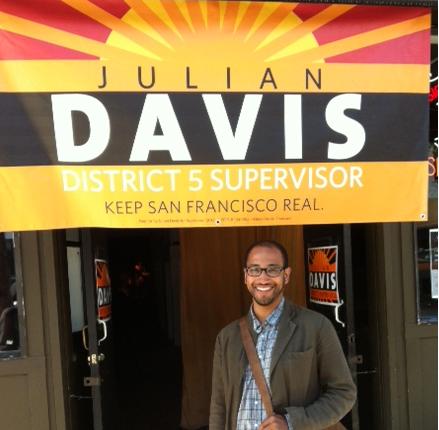
District 5 supervisorial candidate Julian Davis is emerging as the progressive standard-bearer in that competitive race after today receiving the endorsements of a trio of top progressive politicians: Sups. John Avalos and David Campos and attorney Matt Gonzalez, the former board president, mayoral candidate, and D5 supervisor.

Gonzalez had endorsed appointed incumbent Sup. Christina Olague – who he appointed to the Planning Commission in 2004 – but he withdrew that endorsement last month after being frustrated by a series of actions in which she sided with Mayor Ed Lee, moderates, and developers over her longtime progressive colleagues and constituents.

Avalos and Gonzalez are endorsing just Davis, at least for now, while Campos added to his early endorsement of Olague by today endorsing Davis and John Rizzo, who had earlier snagged the other prized progressive endorsement by winning the support of Assembly member Tom Ammiano.

Davis, who was already endorsed by former supervisor and local Democratic Party chair Aaron Peskin, said he’s thrilled with today’s triple endorsement. While some have questioned his anemic fundraising so far, raising less than $10,000 as of June 30, Davis notes that he had been in the race for less than a month before that deadline and that he expects to have more than $150,000 to get his message out.

“What these endorsements signal is a confidence from San Francisco’s progressive leaders, not only in the vision of this campaign, but in our capacity to win,” Davis told us.

Avalos said that he has confidence in Davis’ values, experience, and his ability to run a strong race that will help to reinvigorate the progressive movement.

“Julian is a solid candidate who has been around for years on a number of progressive causes. Running for mayor, I was impressed with his connection to neighborhood issues ranging from small business development to urban cycling and youth and worker rights. His campaign has a good buzz about it, one that I expect will resonate with District 5 residents,” Avalos told us.

Milton Marks, City College defender, dies at 52

3

Milton Marks III, the son of a state senator who for 12 years tried, often against long odds and strong opposition, to clean up the San Francisco Community College District, died Aug. 9 of complications from a brain tumor. The whole city — particularly the college district and its community of teachers and students — should be mourning a genuinely good guy who stood up to corruption and secrecy and was an honest progressive on the College Board back when that was a lonely position.

“Of all the public servants I’ve known, he was the one I really admired most,” his colleague, board member John Rizzo, said. “For all the shit he took, he never wavered. He was the nicest guy in politics, but he never backed down.”

Marks was elected to the board in 2000, when it was a snake pit of sleaze, and he fought valiently — often against the board majority and the administration — to bring accountability and openness to the district.He’s been re-elected twice, and would have been a shoo-in for another term this fall. (Unlike many College Board members, Marks wasn’t constantly running for higher office. He loved City College and saw his role right there on the board.)

With all the problems the college is facing today, Marks and his voice of reason and credibility will be sorely missed.

The mayor will appoint a new member to that seat, and the person will have to run in November.

I don’t know all the details about memorial arrangements; I’m still waiting for the formal statement from City College. The school paper, the Guardsman, has a solid obit you can read here. I’ll fill in more details when I have them.

Meanwhile, we’ll all miss you, Milton. You gave it the good fight.


“Bourne” again and other new movies!

1

Big news this week out of the San Francisco Film Society: the Executive Director post, empty since the January passing of Bingham Ray (himself a replacement for the late Graham Leggat), has been filled. According to the organization’s official press release:

“Ted Hope, one of the film industry’s most respected and prolific figures, has been named executive director of the San Francisco Film Society (SFFS), effective September 1, 2012. In a surprise move, the veteran film producer and one of the most influential individuals in independent film will embark upon a new chapter in his professional life, leaving New York City, where he produced independent films through his companies Good Machine, This is that corporation and Double Hope Films, to lead the Film Society into the future.”

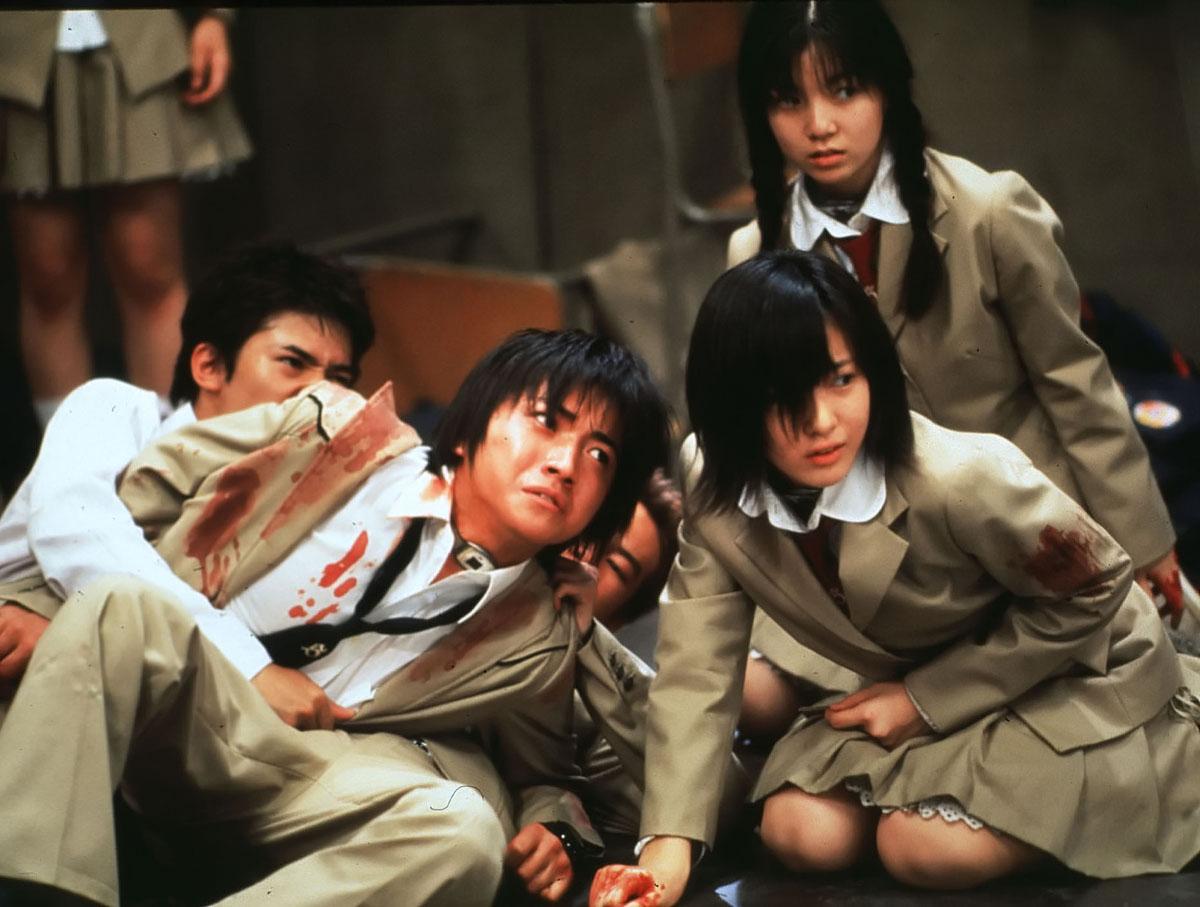
This happy announcement comes on the heels of two pretty depressing ones: longtime SFFS publicity head Hilary Hart, one of the most beloved film PR figures in San Francisco (or any film community, I’d wager), was let go; and the organization opted not to renew its SF Film Society Cinema lease at Japantown’s New People. However, “We’ll still have plenty of one-off screenings and events at various locations, and our Fall Season festival programming is completely unaffected,” says publicity manager Bill Proctor. (Speaking of, hot tip: killer-kid classic Battle Royale is up at SF Film Society Cinema through August 16.)

New movies? We got ’em. One more oldie-but-oh-so-goodie recommendation, plus, yeah, The Bourne Legacy and the rest, after the jump.

The Vortex Room: we love what they do ’cause they do it so well. A new series of Pop-art pictures is underway; check out Dennis Harvey’s take on the series (and some old-school porn posters, for good measure, here.) The unstoppable Mr. Harvey also reviews The Moth Diaries (another SF Film Society Cinema selection) and new French drama Unforgiveable.

Also new: The Campaign, about a smug incumbent (Will Ferrell) and a naïve newcomer (Zach Galifianakis) who battle over a North Carolina congressional seat; Celeste and Jesse Forever, an indie dramedy about a couple (Andy Samberg and co-writer Rashida Jones) who try to stay friends despite their impending divorce; and Nitro Circus the Movie 3D, starring the daredevil antics of the “action sports collective.”

But wait … THERE’S MORE!

http://www.youtube.com/watch?v=paVLyvA5S1g

The Bourne Legacy Settle down, Matt Damon fans — the original Bourne appears in The Bourne Legacy only in dialogue (“Jason Bourne is in New York!”) and photograph form. Stepping in as lead badass is Jeremy Renner, whose twin powers of strength and intelligence come courtesy of an experimental-drug program overseen by sinister government types (including Edward Norton in an utterly generic role) and administered by lab workers doing it “for the science!,” according to Dr. Rachel Weisz. Legacy’s timeline roughly matches up with the last Damon film, The Bourne Ultimatum, which came out five years ago and is referenced here like we’re supposed to be on a first-name basis with its long-forgotten plot twists. Anyway, thanks to ol’  Jason and a few other factors involving Albert Finney and YouTube, the drug program is shut down, and all guinea-pig agents and high-security-clearance doctors are offed. Except guess which two, who manage to flee across the globe to get more WMDs for Renner’s DNA. Essentially one long chase scene, The Bourne Legacy spends way too much of its time either in Norton’s “crisis suite,” watching characters bark orders and stare at computer screens, or trying to explain the genetic tinkering that’s made Renner a super-duper-superspy. Remember when Damon killed that guy with a rolled-up magazine in 2004’s The Bourne Supremacy? Absolutely nothing so rad in this imagination-free enterprise. (2:15) (Cheryl Eddy)

http://www.youtube.com/watch?v=4EYI2ro239s&list=PL96F1FB5F45240219&index=1&feature=plcp

Easy Money A title like that is bound to disprove itself, and it doesn’t take long to figure out that the only payday the lead characters are going to get in this hit 2010 Swedish thriller (from Jens Lapidus’ novel) is the kind measured in bloody catastrophe. Chilean Jorge (Matias Padin Varela), just escaped from prison, returns to Stockholm seeking one last big drug deal before he splits for good; JW (Joel Kinnaman from AMC series The Killing) is a economics student-slash-cabbie desperate for the serious cash needed to support his double life as a pseudo-swell running with the city’s rich young turks. At first reluctantly thrown together, they become friends working for JW’s taxi boss — or to be more specific, for that boss’ cocaine smuggling side business. Their competitors are a Serbian gang whose veteran enforcer Mrado (Dragomir Mrsic) is put in the awkward position of caring for his eight-year-old daughter (by a drug addicted ex-wife) just as “war” heats up between the two factions. But then everyone here has loved ones they want to protect from an escalating cycle of attacks and reprisals from which none are immune. Duly presented here by Martin Scorsese, Daniel Espinosa’s film has the hurtling pace, engrossing characters and complicated (sometimes confusing) plot mechanics of some good movies by that guy, like Casino (1995) or The Departed (2006). Wildly original it’s not, but this crackling good genre entertainment that make you cautiously look forward to its sequel — which is just about to open in Sweden. (1:59) (Dennis Harvey)

Hope Springs Heading into her 32nd year of matrimony with aggressively oblivious Arnold (Tommy Lee Jones), desperate housewife Kay (Meryl Streep) sets aside her entrenched passivity in a last-ditch effort to put flesh back on the skeleton of a marriage. Stumbling upon the guidance of one Dr. Bernard Feld (Steve Carell) in the self-help section of a bookstore, Kay (barely) convinces Arnold to accompany her to a weeklong session at Feld’s Center for Intensive Couples Counseling, in Hope Springs, Maine. The scenes from a marriage leading up to their departure, as well as the incremental advances and crippling setbacks of their therapeutic sojourn, are poignant and distressing and possibly familiar. Some slow drift, long ago set in motion, though we don’t know by what, has settled them in concrete in their separate routines — and bedrooms. It’s the kind of thing that, if it were happening in real life — say, to you — might make you weep. But somehow, through the magic of cinema and the uncomfortable power of witnessing frankly depicted failures of intimacy, we laugh. This is by no means a wackiness-ensues sort of sexual comedy, though. Director David Frankel (2006’s The Devil Wears Prada and, unfortunately, 2008’s Marley & Me) and Jones and Streep, through the finely detailed particularities of their performances, won’t let it be, while Carell resists playing the therapeutic scenes for more than the gentlest pulses of humor. More often, his empathetic silences and carefully timed queries provide a place for these two unhappy, inarticulate, isolated people to fall and fumble and eventually make contact. (1:40) (Lynn Rapoport)

http://www.youtube.com/watch?v=uwPB1I4aB7o

Nuit #1 Montreal director-writer Anne Émond bares more than her actor’s beautiful bodies: she’s eager to uncover their tenderized souls: hurt, unsavory, vulnerable, terrified, nihilistic, compulsive, and desperate. Nikolai (Dimitri Stroroge) and Clara (Catherine de Lean) are just two kids on the crowded dance floor, jumping up and down in slow motion to the tune of a torch song; before long, they’re in Nikolai’s shabby apartment, tearing off their clothes and making love as if their lives depended on it. But when Nikolai, laid out on his mattress on the floor like a grunge Jesus with a bad haircut, catches Clara sneaking out without saying good-bye, he sits her down for an earful of his reality. She returns the favor, revealing an unexpected double life, and the two embark on a psycho-tango that takes all night. It can seem like a long one to those impatient with the young, beautiful, and possibly damned’s doubts and self-flagellation, though Émond’s artful, coolly empathetic eye takes the proceedings to a higher level. She’s attempting to craft a simultaneously romantic and raw-boned song of self for a generation. (1:31) (Kimberly Chun)

360 A massive ensemble sprinkled with big-name stars, a sprawling yet interconnected story, and locations as far-flung as Phoenix and Bratislava: 360 is not achieving anything new with its structure (see also: 2011’s Contagion, 2006’s Babel, and so on). And some pieces of its sectioned-off narrative are less successful than others, as with the exploits of a posh, unfaithful duo played by Rachel Weisz (re-teaming with her Constant Gardener director Fernando Meirelles) and Jude Law. Fortunately, screenwriter Peter Morgan (2006’s The Queen) finds some drama (and a lot of melancholy) in less-familiar relationship scenarios. An airport interlude that interweaves a grieving father (Anthony Hopkins), a newly single Brazilian (Maria Flor), and a maybe-rehabilitated sex offender (Ben Foster) is riveting, as are the unexpectedly sweet and sour endpoints of tales spiraling off a Russian couple (Dinara Drukarova, Vladimir Vdovichenkov) who’ve drifted apart. (1:51) (Cheryl Eddy)

In Richmond, is it safe to eat your garden fruits and veggies?

12

Questions remain about the safety of eating homegrown fruits and vegetables from gardens in Richmond and other areas affected by a fire at the Chevron refinery August 6.

The official line from Contra Costa County–where residents were told to shelter-in-place during Monday evening’s fire–is to wash the produce in your gardens extra well.

“It’s safe to eat your fruit and vegetables,” said Randy Sawyer, the county’s chief environmenta and hazardous materials officer. “We do recommend that you wash them in a weak soap solution like a dish soap.” If there was harmful residue on the plants, it would be visible, he said. “It wouldn’t be a dust product, it would be sooty.”

But local gardeners and environmentalists beg to differ, and many are anxious about the fire’s potential long-term effect on the area’s urban agriculture. At a tense community meeting on Tuesday night, gardeners from Urban Tilth rolled in wheelbarrows of wilted produce they said was destroyed by the refinery fire, which was contained after a few hours but burned into the night. 

“We have extreme concerns,” Urban Tilth executive director Doria Robinson told the Guardian. “We’re trying to work with soil and air quality scientists to figure out what we need to test and how we can test it to determine what is safe. In the meantime, we can’t stand by the food we have.”

Until we know what chemicals were burning in the fire and what remains in the air, it’s dangerous to assume our garden products are not contamminated, said Robinson, a Richmond resident herself. “If it’s particulate matter or dust, in theory you can wash it off. At the same time, you’re not exactly sure how certain chemicals react. More importantly, if you can wash the plant, what happens to the soil? Heavy metals like mercury are used in some processing. If that stuff was in the plume and it deposited in the soil” there could be lasting detrimental effects on our gardens, she said. 

When a Richmond resident at Tuesday’s community meeting asked what chemicals might be in the air, and Jeff McKay, Deputy Air Pollution Control Officer at Bay Area Air Quality Management District (BAAQMD), listed hydrogen sulfide, benzene, sulfur dioxide, and styrene. All four compounds are either considered poisonous, or suspected to be carcinogens. 

The BAAQMD’ lab analysis report tested for 23 compounds, including Benzene, but not the other three chemicals. Most of the chemicals “have been identified by the state of California as Toxic Air Contaminants,” according to the BAAQMD. And although the same report insists that the air pollution levels were “significantly below federal health standards,” the San Francisco Chronicle reported that 1,700 people ended up in the emergency room with respitory problems during or after the fire. 

Robinson said it is extremely difficult to trace health problems to individual pollutants. 

“The way that companies like Chevron have been able to pollute the air without liability is it’s extremely hard to trace back, and they can point to things like the highways,” she said. “This particular instance was so extreme that if we get a list of what was burning, we might be able to trace it back for the first time.”

Robinson and her team hope to have a plan to test Urban Filth’s produce by Monday, though she said financial barriers will make a comprehensive analysis difficult or impossible. Until the products are deemed safe, the organization is planning on suspending its school programs and refraining from eating from its 11 Richmond gardens, and Robinson urged residents to do the same with their personal plants.

“Before we take someone else’s word for it, we owe it to ourselves and our community” to ensure our food is clean, she said.

Outer limits

0

arts@sfbg.com

MUSIC Last year, we thought it couldn’t get better, and then it upped the ante. Outside Lands 2012 takes place this weekend, and the lineup is packed with legendary performers, reunited favorites, and flashy newcomers, pieced together (some overlapping) in a masterful Golden Gate frame, outlined by all that glorious flora and fog.

There’s little to debate; our inboxes have been unequivocally flooded with requests to cover the event from the moment the full list roared onto the web. Who’s to say what sparked the revved up offerings and subsequent queries?

The facts: 72 bands on stage, 15 DJs in the Dome, 25 comedy-variety acts in the Barbary, plus 10 night shows featuring 20 performers. Expected attendance is more than 65,000 people per day, according to the organizers.

It’s a lot to take in, even for the seasoned San Francisco festival-goer (keep hydrated, wear layers, duh). So we’ve whittled down the schedule to the must-sees — those with a certain unscientific combination of vitality and vigor, of historical significance and a very-modern presence.

Of course, if you’ve got a one or three-day pass, you’re likely planning on packing in as many acts as possible, with perfectly timed bathroom, wine, and gourmet food stand breaks. But if you’re of the looser sort, one to wander with feckless abandon among those throngs, keep the below in mind.

Here are your must-see Outside Lands performances:

THE BIG ONES

Headliners and icons

Watching an old friend dance with his bride to iconic folk ballad “Harvest Moon,” it dawned on us: despite his gruff persona, broadly influential singer-songwriter Neil Young & Crazy Horse (8:10-9:55pm Friday, Lands End) is for lovers. And his words — and strumming — are deeply personal for a handful of generations. They’ve left a yearning imprint on our collective pleasure center.

This is a grand return for ’90s indie rockers, Grandaddy (5:10-6:10pm Saturday, Sutro). The Modesto five-piece split in 2006, after a respected career that included touring with Elliott Smith (RIP) and a song, “AM 180,” used in a memorable zombie-less supermarket sweep scene in 28 Days Later.

Kill ‘Em AllAnd Justice For All…okay, and we guess St. Anger. The heavy metal — and then some other stuff — back catalogue of Metallica (7:55-9:55pm Saturday, Lands End) is forever drilled into our brains. In a press call leading up to the fest, drummer Lars Ulrich said, “we’re very proud of our…relation and our history with San Francisco,” (does that mean the band will do us a solid and play early tracks?), later adding, “it’s an amazing thing, 31 years into a career to be able to be as busy as we are and to [see] people give a shit and to be able to still tour.” We give a shit, Lars.

As one fan noted, Mr. Superstition, Steve Wonder (7:20-9:30pm Sunday, Lands End), is likely the most creative choice of a headliner in 2012. And it makes the night-map easy for some of us; in the scheduling contest between dub-monster Skrillex and Motown icon Stevie Wonder, there is no contest.

LOCALS ONLY

Best of the Bay represented

It’s been five years since Two Gallants (1:50-2:40pm Friday, Lands End) released an album, and this fest (along with the OL night show) are the first local shows for the folk-punk duo touring on the new record, The Bloom and the Blight. Seems they’ll have a lot of stowed away energy to release in the park.

Perhaps never has man and computer so beautifully collided than with San Francisco digi-rock act Geographer (2:10-2:55pm Saturday, Twin Peaks). Swelling vocal melodies blend so evenly with darting beeps and blurps and laser synths, sometimes deepened by floating violin. It’s hard-rocking orchestral pop, operatic robot love, and world travel in a machine. The band paid its dues playing Rock Make, Treasure Island, Live 105’s BFD, and now, Outside Lands.

These San Francisco pysch-surf-punks are notorious for their headspinningly prolific songwriting, unpredictable live shows, and spastic energy. Regardless of what happens during Thee Oh Sees (6:05-6:45pm Saturday, Panhandle) set, it’ll be an act people are talking about.

THE ANDY WARHOL FACTOR

Who everyone will be Tweeting about

Having just premiered barely pronounceable single “XP€N$IV $H1T” (“I rub my dick on XP€N$IV $H1T” being actual lyrics) it’s safe to assume that Southern African freak-rap trio Die Antwoord (5:25-6:15pm Friday, Twin Peaks) is going to continue down a path of what-the-fuck-did-I-just-witness trashy splendor. There will be rave wear and Ninja’s inexplicable junk-thrusting dance moves, DJ Hi-Tek records spinning, and Yo-Landi’s hyper-high chirp.

When Father John Misty (2:55-3:35pm Saturday, Panhandle), a.k.a. J. Tillman of Fleet Foxes, stopped by Bottom of the Hill earlier this year, folks didn’t know what hit them. FJM was a wild force on stage, engaging in an ongoing and increasingly odd conversation with the audience, with quips and asides a-plenty in between a hectic set of woozy pop and crunchy-hippie psychedelic jams.

Perhaps not since Janis Joplin, have we heard a lady blues vocalist with pipes this powerful. That wail is a show-stopper. And, four-piece Alabama Shakes (3:50-4:40pm Saturday, Sutro), led by Brittany Howard (she of the powerful pipes), is actually born and raised Alabama, as the band name would imply, meaning its a more authentic experience, it would seem.

After a prolonged break, Santigold (5:10-6pm Sunday, Twin Peaks) dropped long-awaited Master Of My Make-Believe this year, with reggae-flecked party jam single “Disparate Youth,” cut through with a machine-gun guitar riff. Clearly, Santigold is no less bold in her return. Both the sound and her avant-pop style will surely absorb those expansive outdoor stages.

WORLD TRAVEL

Globally relevant bands from far and wide

Sigur Ros is not the only Icelandic band at Outside Lands 2012. If ambient soundscapes aren’t your thing, check out the lesser-known folk sextet Of Monsters and Men (5:25-6:25pm Friday, Sutro), which balances catchy melodies with beautifully harmonized vocals. Amadou & Mariam (3:35-4:25pm Sunday, Twin Peaks) met at Mali’s Institute for the Young Blind. What the African duo lacks in 20/20 vision they make up for in mesmerizing sound — irresistible hip-hop-and blues-inspired world music. We dare you not to dance. Globally recognized Columbian culture-masher band Bomba Estéreo (6-6:40pm Sunday, Panhandle) mixes in the sounds of Latin America, the Caribbean, reggae, dub, and beyond, with bouncy hip-hop beats. Live, lead vocalist Li Saumet (who this year also released a side-project in which she imagines killing her boyfriend) pumps up the energy tenfold.

SONIC BREAK

Explore beyond the music

Imbibe in yeasty concoctions at this year’s first ever Beer Lands (oui, Wine Lands will be there too). And the beer lineup is made up of local craft breweries: 21st Amendment, Anchor Brewing, Magnolia, Pac Brewing Labs, Speakeasy (all San Francisco); Bear Republic (Russian River area), Drakes, (San Leandro) and Linden Street (West Oakland). Oh, and Sierra Nevada is debuting the Outside Lands Saison at the fest, said to be inspired by OL itself. Reggie Watts, Neil Patrick Harris, David Cross, Kristen Schaal, Nerdist Chris Hardwick, the list goes on for The Barbary. The comedy and variety tent keeps getting bigger, and weirder. There are the big names of course (see above) but also some awesome homegrown talent — Jesse Elias, for one. We caught him in the Cinecave last month, and were blown away by his timing. Our cheeks ached from laughing. And he never once looked up at the audience, only moving to push his glasses back up his nose.

OUTSIDE LANDS MUSIC AND ARTS FESTIVAL

Fri/10-Sun/12, noon, $95

Golden Gate Park, SF

www.sfoutsidelands.com

City College students, in their own words

6

City College of San Francisco (CCSF) students and freelance journalists Joe Fitzgerald and Sara Bloomberg this week continued giving Guardian readers some of the most insightful coverage of that institution’s struggles available, supplementing it with profiles on students effected by CCSF’s current woes.

And this enterprising pair of reporters didn’t stop there. You can now hear directly from a couple of students they interviewed in these videos they made as part of the project:

To hear the perspectives of other CCSF students, in their own words, check out these two Tumblr blogs, where they post their thoughts.

Olague faces her challengers during first D5 debate

58

Tonight’s inaugural District 5 supervisorial debate will be a key test for Sup. Christina Olague – who has fallen from favor with many progressives after a series of bad votes and prickly or evasive interactions with one-time allies – and a test for the rival candidates who are seeking to become the main progressive champion in one of the city’s most leftist districts.

The elected incumbents on the Board of Supervisors have ended up with surprisingly easy paths to reelection [8/9 UPDATE: with the exception of Eric Mar in D1], leaving D5 – as well as conservative District 7, where FX Crowley, Norman Yee, and Michael Garcia are part of a competitive field seeking to replace termed out Sup. Sean Elsbernd – as the race to watch this year.

Olague has been trying to execute a tough balancing act between the progressive community that she’s long identified with and the moderates she began courting last year with her early support for Mayor Ed Lee, who returned the favor and appointed her to serve the final year of Ross Mirkarimi’s D5 term. But by most accounts, she hasn’t executed the feat well, usually siding with Lee on key votes, but doing so in a waffling way that has frustrated both sides.

Progressive candidates such as Julian Davis and John Rizzo will have plenty of fodder with which to attack Olague as a turncoat, including her votes on the 8 Washington project and Michael Antonini, her strange antics on repealing ranked-choice voting, and her close ties to power brokers such as Rose Pak, who hosted a fundraiser that provided more than half of the $81,333 Olague has raised this year, much of it from developers and other interests outside of D5.

Matt Gonzalez – the former D5 supervisor, board president (from where he appointed Olague to the Planning Commission), and mayoral candidate – was so frustrated with Olague that he withdrew his endorsement of her last month, a decision that her other progressive endorsers are also said to be mulling.

With Mirkarimi tarnished by his ongoing official misconduct probe, the endorsement of Gonzalez could be the most significant in this race, and he told us that he plans to make a decision by Friday, the deadline for submission of ballot statements and a point at which we may hear about other changed or dual endorsements from prominent progressives. Other key nods in the race so far have been Aaron Peskin endorsing Davis and Tom Ammiano endorsing Rizzo, two candidates each vying to become the favorite of the left, with Thea Selby, Hope Johnson, and Andrew Resignato also courting support from the left.

Yet so far, the strongest challenge of Olague seems to be coming from her right, with moderate London Breed leading the fundraising battle with $85,461 as of late June 30, including the maximum $500 donation from venture capitalist Ron Conway – the main fundraiser behind Lee’s election last year – which may be a sign that Olague’s support among moderates is also soft.

Olague may be trying to get back in good with the progressives, last week introducing pro-tenant legislation sought by the San Francisco Tenants Union. But impressions have formed and the pressure is now on, and so far Olague – who didn’t answer our calls seeking comment, another troubling trend – hasn’t performed well in public appearances, mangling organizations’ names and generally not winning over her audiences.

Will Olague step up now that the campaign in entering its public phase? Will another candidate catch fire with progressives? Find out tonight from 6-7:30pm at the Park Branch Library, 1833 Page Street. It’s sponsored by the District 5 Democratic Club, the D5 Neighborhood Action Committee and the Wigg Party.

Or if you miss it, catch the next one on Tuesday, sponsored by the Harvey Milk Democratic Club, starting at 7pm in the Eric Quezada Center, 518 Valencia Street.

Forum tonight cancelled after Mayor’s ‘no stop and frisk’ announcement

30

A community forum to discuss stop and frisk tonight has been cancelled, in the wake of Mayor Lee’s announcement yesterday that he would not be implementing the controversial policy.

“We will not be implementing the stop and frisk program, or variations of that, in San Francisco,” Lee said at a press conference yesterday that was well-attended by neighbors, faith leaders and other interested parties.

Before the announcement, a forum was planned tonight for a panel discussion about stop and frisk at the CCSF Southeast campus. It was organized by filmmaker Kevin Epps, known for Straight Outta Hunter’s Point and Straight Outta Hunter’s Point 2, and the Osiris Coalition.

“There’s still a problem,” Epps said. “But as far as what they had planned on doing, the mayor actually backed off of implementing any part of that.”

Instead of stop and frisk, Lee said, the police will use “interrupt, prevent and organize” (IPO). The program involves keeping tighter tabs and the city’s 200 parolees as well as formerly incarcerated people in general, using computer data to track and send police to high crime areas, and working with community groups to “liaison” between police and residents.

Many hope that the conversation continues, however. “Ed Lee needs to meet with some of the younger people in this community about how to stop this violence,” said Jameel Patterson, organizer with the Bayview-based Black Star Liner Coalition. 

Cocktales

0

virginia@sfbg.com

FOOD AND DRINK It was another humid, sweltering year at Tales of the Cocktail in New Orleans. The world’s biggest cocktail event drew thousands of attendees July 25-29 for a week of nonstop tastings, seminars, and parties in the great queen of the South.

Any reason to be in Nola is a good one and with the city overrun with some of the world’s best bartenders, brand ambassadors, writers, and distillers, it was as usual, one long party. Here’s a few highlights — read the rest online at sfbg.com.

SF REPRESENTS

Though Tales’ Spirited Awards continue to be dominated by winners from Europe and New York , particularly London, this year San Francisco made a dent that still only hinted at our long-established cocktail culture. At Thursday night’s Bar Room Brawl, bars from six US cities fielded teams that served up special drink menus as brass bands blew. The winner of this showdown, and by extension, the tile of best cocktail bar in America? Our own Beretta. Ryan Fitzgerald, Jennifer Colliau, Enrique Sanchez, and a hard-working crew of SF bartenders ecstatically accepted a giant trophy.

Scott Baird, Josh Harris, Alex Straus of the Bon Vivants deservedly won the John Lermeyer award for good behavior at the Spirited Awards. It was a joy watching them be acknowledged for their humanitarian work. In addition to painting over 30 New Orleans charter school classrooms with a team of volunteers, the group threw its third annual Pig and Punch school fundraiser on Saturday in Washington Square Park. With delicious barbecue (whole hog, y’all), Don Julio and George Dickel punches, and a crowd of over 800 people, it raised over $21000, a shining example of how to have fun and give back at the same time.

With two of the four nominees for Spirited Awards’ best restaurant bar award being from SF (the other was the wonderful Bar Agricole), it was a delight to see the ever-talented Erik Adkins win for the Slanted Door. He’s done equally impressive work behind Heaven’s Dog. I wish more US bars would win awards at Tales — and that the list of those honored would be a little more up to date. Often, places are nominated that were great or established years ago. Though I adore the town and have been to all the bars that were nominated from London, I can’t help but notice that the US isn’t represented at its Cocktail Week. Why shouldn’t we reserve a platform to more specifically acknowledge the fantastic bars right here in the States?

JAPANESE WHISKEY HAVEN

Thank you to Suntory for what was my top highlight of Tales: an intimate, invite-only tasting room in a warehouse district loft. Down a candlelit hall stood a white room punctuated by glowing bar, decorative kimono on loan from a Paris museum, and mini-tables lined with vials of single barrel whiskies from the Suntory line for us to mix and pour over hand-cut ice.

Michael Mina corporate chefs Lincoln Carson and Gary Lamorte flew out to cook four exceptional bites. I’m still dreaming of the 76-degree sous vide egg strained through a siphon, so creamy served over vanilla brioche and bacon. Cool banana mochi on top of golden raisin puree elicited a long sigh of delight. The space’s zen-like peace and the camaraderie I found there with my fellow whiskey aficionados were spectacular, and the afternoon was made a landmark event by a bar stocked with Hakushu 25-year, Yamazaki 1984, Hibiki 30-year, and other extremely rare, unavailable in the US Japanese whiskies. While I would be hard pressed to chose a favorite, Yamazaki ’84 lingered on my palate long after I returned to the blinding heat outside.

FIRST TASTES OF UNRELEASED SPIRITS

Meeting with distillers and previewing unreleased spirits are key reasons I go to Tales, even if there wasn’t an overwhelming amount of new offerings in 2012. This year, I spent time with WhistlePig master distiller Dave Pickerell, who was also a Maker’s Mark master distiller for 14 years. Pickerell told me I was the very first to try his upcoming October Whistlepig release, TripleOne. This is a 111 proof rye versus the standard 100, aged 11 years in place of the typical 10. The bracing TripleOne doesn’t boast quite as long a finish as Whistlepig’s flagship rye, but it’s even more complex, surprisingly akin to applejack or Calvados at first sip, opening up into spicy rye body with citrus and chocolate notes. American whiskey fans, watch for this one.

AMARO/AMARI 

You say amaros, but I say amari (short grammar lesson about the plural for amaro). The bottom line is amaro (Italian for “bitter”), the wide range of herbal liqueurs commonly sipped as after-dinner digestifs in Italy, has been hot for the past few years and only continues to get hotter. Though there are still countless amari not yet imported from Europe, big names like Fernet and Cynar have ushered bitter liqueurs into the mainstream. Amari popped up all over Tales, most notably in the fortified and aromatized wines tasting room highlighting port, sherry, etc. Not to mention some of the US’ best vermouths like SF’s Sutton Cellars and Imbue in Portland. The highlight of the tasting was Neil Kopplin pouring Imbue’s debut of brand new Petal & Thorn, a gorgeously bitter gentian liqueur using homegrown beets for color, alongside cinnamon and menthol.

On the Italian front, The Spirit of Italy threw a two-morning brunch hosted by Francesco Lafranconi and featuring seven producers: Amaro Lucano, Luxardo, Moccia, Nardini, Pallini, Toschi and Varnelli. Lafranconi’s cocktails stole the show, there was an addictive Amaro Lucano-bourbon milk punch and Zabov NOLA coffee. Zabov is essentially zabaglione (the Italian dessert of whipped egg yolks, sugar, sweet wine) in a bottle. It was a little sweet on its own but fascinating in texture and in the coffee cocktail. On the other end of the spectrum, Varnelli’s expensive ($52), uber-bitter Amaro Sibilla is a complex delight, unfolding with chestnuts, coffee, honey, and intense bitter notes. This one is not for the novice amaro drinker.

INDIE SPIRITS ROCK

Kudos to Dave Schmier for Indie Spirits That Rock, a version of his Indy Spirits Expo here in San Francisco. Crowds thronged around small, independent spirits — methinks they need a bigger tasting room next year. I even discovered a few new spirits I had not tasted before, including West Virginia’s Smooth Ambler Spirits‘ (I’d had their Old Scout bourbon before) fascinating Barrel-Aged Gin, aromatic with orange marmalade, bitter subtleties, pine, cinnamon, and their Very Old Scout bourbon, earthy with oak, nuts, toast and butter. Few Spirits (from Evanston, IL) also offered an intriguing rye and bourbon, the former spicy, sweet, bracing, the latter smooth but not lacking in character. I look forward to revisiting each of these.

FRANCIS FORD COPPOLA’s NOLA HOME

Besides Suntory’s sacred den of Japanese whiskey, the other haven from Tales madness and New Orleans’ Summer heat was Francis Ford Coppola’s French Quarter home. By invite only, we were merely given an address, entering a candlelit walkway into a classic New Orleans courtyard and hundred years’ old home with exposed brick walls, fireplaces, grand piano and jazz duo serenading us as we sipped Krug and Inglenook wines. I stopped in more than once, grateful for a peaceful gathering on comfy couches where I ran into friends from New York to Ireland.

HOUSE SPIRITS’ MORNING COFFEE BAR

Thanks to Portland’s House Spirits for the brilliant idea of a coffee bar — with booze, of course —  every morning at an art gallery across the street from the Tales’ home base of the Hotel Monteleone. Iced Stumptown Coffee perked us up on those slugglishly hot, post-party mornings. And if one must add House Spirits’ coffee liqueur or aquavit to the coffee, so be it.

Subscribe to Virgina’s twice-monthly newsletter, The Perfect Spot, www.theperfectspotsf.com


2012 TALES of the COCKTAIL Spirited Award Winners

Winners in bold


The John Lermeyer Award for Good Behavior

The Bon Vivants 


American Bartender of the Year

Eric Alperin

Charles Joly

Jeffrey Morganthaler

Joaquin Simo


Best American Brand Ambassador

Erick Castro

Elayne Duke

Jamie Gordon

Jim Ryan


Best American Cocktail Bar

Anvil Bar & Refuge – Houston, Texas

Clover Club – Brooklyn, New York

Columbia Room – Washington, District of Columbia

The Varnish – Los Angeles, California


Best Bar Mentor

Bridget Albert

Wayne Collins

Francesco Lafranconi

Steve Olson


Best High Volume Cocktail Bar

Beretta – San Francisco, California

Clover Club – Brooklyn, New York

Eastern Standard – Boston, Massachusetts

La Descarga – Los Angeles, California


Best Cocktail Writing, Non-Book

BarLifeUK

Liquor.com

ShakeStir.com

Time Out NY


Best Cocktail Writing

Gary Regan

Robert Simonson

David Wondrich

Naren Young


Best International Brand Ambassador

Jacob Briars

Ian Burrell

Claire Smith

Angus Winchester


Best New Cocktail/Bartending Book

The American Cocktail by the Editors of Imbibe

Bitters: A Spirited History of a Classic Cure-all

Gaz Regan’s Annual Manual for Bartenders 2011

PDT Cocktail Book


Best New Product

Chairman’s Reserve Spiced Rum

Cognac Pierre Ferrand 1840 Formula

Lillet Rose

Perlini System


Best Restaurant Bar

Bar Agricole – San Francisco, California

Rivera – Los Angeles, California

Saxon + Parole – New York, New York

Slanted Door – San Francisco, California


International Bartender of the Year

Zdenek Kastanek

Alex Kratena

Sam Ross

Dushan Zaric


World’s Best Cocktail Bar

69 Colebrooke Row – London, United Kingdom

Black Pearl – Melbourne, Australia

The Connaught Bar – London, United Kingdom

The Varnish – Los Angeles, California


World’s Best Cocktail Menu

Black Pearl – Melbourne, Australia

Callooh Callay – London, United Kingdom

Clover Club – Brooklyn, New York

Mayahuel – Manhattan, New York


World’s Best Drinks Selection

Artesian Bar at The Langham – London, United Kingdom

Death & Co. – Manhattan, New York

Eau de Vie – Sydney, Australia

Salvatore Calabrese at The Playboy – London, United Kingdom


World’s Best Hotel Bar

Artesian Bar at The Langham – London, United Kingdom

Clive’s Classic Lounge – Victoria, British Columbia

Clyde Common – Portland, Oregon

The Zetter Townhouse – London, United Kingdom


World’s Best New Cocktail Bar

Aviary – Chicago, Illinois

Candelaria – Paris, France

Canon – Seattle, Washington

The Zetter Townhouse – London, United Kingdom


Helen David Lifetime Achievement Award

Gaz Regan 


Let it learn

1

culture@sfbg.com

CAREERS AND ED Be not dazzled by the big show across the pond into forgetting your studies! Regardless of how assured and gosh-darn perfect the Olympians may seem, few of us will ever find our dream job by cutting another tenth of a second off our 100-meter dash, or adding another five pounds onto our barbell (egads! Didn’t you people check that Korean weightlifter’s horrific elbow dislocation last week? Low weight, high reps out there, please.) But there are ample ways to improve your lot in life, by attending a class or two or enrolling at one of our fine educational institutions. We’ve compiled some amazing options within your grasp here. Grasp… poor, poor Sa Jae-hyouk.

EXTRACURRICULARS

INTRODUCTION TO ACCORDION

Saturdays at the Accordion Apocalypse repair shop offer a shot in SoMa at learning to tickle the ivories on sweet, sweet squeezebox. For only $20, staff teach accordion-playing hopefuls about the inner workings of the instrument. It’s said you’ll even emerge from your day of instruction knowing how to wheeze an entire song. Lessons happen once a week and hey, how convenient! If you really take to the accordion, fine specimens are available for purchase mere feet from your classroom.

Saturdays, 4pm. $20. Accordion Apocalypse, 255 10th St, SF. www.accordianapocalypse.com

CAMP WAKEUPOBAMA

You don’t have to be a stoner to be upset about the way the federal government has been shutting down our cannabis dispensaries and raiding marijuana trade schools here in the Bay Area. And you don’t have to be a stoner to not know, like, what the hell to do about it. Enter patient advocacy group Americans For Safe Access, who is teaching you how to stand up for medical marijuana with its free Camp WakeUpObama program. Earn online merit badges for calling your elected officials, making protest art projects — even coordinating pot-themed street theater with the help of ASA’s exhaustive website’s educational resources.

www.americansforsafeaccess.org/campwakeupobama

STUDIO SCULPTURE

Maybe you don’t want to go back to college, but you are down to take a college class. It happens, and San Francisco State’s extended learning department gets it. Register for an Open University course for this kind of real class, real life confluence. For example, its Studio Sculpture course. It’s a rare opportunity to get a in-depth studio sculpting experience without all the boring prerequisites. That doesn’t mean you won’t get ample lessons in theoretical background. You didn’t think your trip back to college will be all clay and play, did you?

Tuesdays and Thursdays Aug. 27-Dec. 17, 9:10-11:55am. $960. SFSU Fine Arts Building, 1600 Holloway, SF. www.sfsu.edu

WE BE SUSHI WORKSHOP

Sharpen your hamachi-making skills at this City College of San Francisco two-session course on the best in raw fish prep. We Be Sushi owner Andy Tonozuka opened his first sushi shop in 1987, so he should be able to impart all you need to know, from rolls to sashimi. Best of all: the lessons take place in Tonozuka’s classic Mission District eatery. You can’t get more San Francisco sushi-authentic than that — and we’ll bet you your class fee covers at least a free sample or two.

Sundays, Sept. 26-Oct. 6, 10am-1pm. $65-80. We Be Sushi, 538 Valencia, SF. www.ccsf.edu

SURVIVAL TOOL MAKING

From camp-happy urbanites to professional explorers, Bay Area citizens can take their wilderness savvy to the next level with Adventure Out, one of NorCal’s ultimate resources on all things wild. With the organization’s flintknapping and stone tools course, students will be introduced and trained in stone technology, which sound like an oxymoron, but actually entails exacting processes like spalling, percussion, and pressure flaking. Apocalypse now!

Sep. 29-30, 10am, $250. Adventure Out, Santa Cruz. www.adventureout.com

DEGREE PROGRAMS

DRAMA THERAPY

A concentration within the school’s counseling psychology degree, this is one of the nation’s only master’s in drama therapy. The program is intended for those who’d like to make their living implementing Erik Erikson’s psychological prescription to “play it out.” Courses focus on broadening self-understanding and activating dormant aspects of the human psyche.

California Institute of Integral Studies, 1453 Mission, SF. (415) 575-1600, www.ciis.edu

BROADCAST JOURNALISM

If you can’t beat ’em, join ’em. After all, if our media sources aren’t covering the news to your liking, it may be high time you became a newscaster. This program teaches students the appropriate research, writing, and reporting skills for careers in media forms including radio, television, cable, syndicated, Internet, and satellite news organizations.

Community College of San Francisco, 50 Phelan, SF. (415) 239-3285, www.ccsf.edu

PRODUCT DESIGN AND DEVELOPMENT

For every consumer consuming, there must be an industry creating. San Francisco State keeps this basic fact of capitalism on the books by offering a degree that is as much kooky inventor as it is savvy economist. Process, people, and product provide the basis for this bachelor’s degree in industrial design with a concentration in product design and development. Students will learn product design through researching technology, material, aesthetics, and the nuances of that ever-present invisible hand.

San Francisco State University, 1600 Holloway, SF. (415) 338-1111, www.sfsu.edu

DIETETICS

Body-conscious, food-obsessed Californians can thank their stars that some of the state’s brightest students are equally as nutrition-oriented, and driven to make moves in the world of healthy eating. UC Berkeley’s College of Natural Resource undergraduate degree in dietetics focuses on disease prevention through understanding metabolic regulation, genetics, and the biological and chemical sciences of nutritional studies. Graduates from the program are generally expected to gun for a future in food production, clinical settings, or community and governmental leadership.

UC Berkeley, 318 Sproul Hall No. 5900, Berk. (510) 642-7405, www.berkeley.edu

If you want my advice

0

CAREERS AND ED In July, the unemployment rate in California was 11 percent. Which got us thinking: what’s the smart way to job hunt these days? We’re not the only ones — this month, the Commonwealth Club is hosting a series of lectures and workshops called “The Future of Work.” We tapped two of the series’ experts for email interviews, asking Marty Nemko, author of Cool Careers For Dummies, and Joel Garfinkle, Oakland-based career coach, for their takes on the matter. They offered two points of view on today’s dreary job market. Upside? Nemko, who spoke on August 1, is positive that more workers will be needed to implement upcoming immigration reform. Of course, he also foresaw growth in “bio-chemical terrorism.” Oh, the future.

San Francisco Bay Guardian: Tell us about your Commonwealth Club event.

Marty Nemko: [My focus was] on which careers are likely to burgeon [in] the result of [an] Obama win — which ones polls and Intrade [a speculative, crowd-sourced website] betting suggest will occur. I’ll also talk about how to survive and even thrive during what may be America’s decline and fall.

Joel Garfinkle: Working hard and being good at what you do is not enough to attain the level of success you truly deserve. So what exactly makes one person more successful than another? The answer: leveraging and applying perception, visibility, and influence better than anyone else.

SFBG: What kinds of issues are older workers facing in terms of getting new jobs?

MN: It’s very tough to convince an employer that a 40-year old with no experience is better than a 25-year old with experience. In this job market, the employer doesn’t have to settle.

JG: Mid-life career transitions occur because after years of success, many of my clients find that they lack fulfillment. Success isn’t enough anymore to satisfy them. [But] it’s difficult to make a mid-life career transition due to the lack of financial stability that exists when making the change. Learning of new skills in a different profession can be a daunting and intimidating task.

SFBG: What are some place that are still proving fruitful for job searchers?

MN: Some of my predicted areas for growth are auditing for corporations, the US Treasury, and the IRS; immigration-related bureaucrats that will be needed after Obama gets comprehensive immigration reform after the election; health care advocates to help people get the health care they need as ObamaCare is implemented; and bio-chemical terrorism. Anything mandated will be the last sort of employment to get cut. Lastly, multicultural marketers to address the tastes of the fastest-growing ethnic groups.

JG: Information technology is still growing. About two-thirds of hiring manages have been adding staff this year and will continue to add headcount to the IT departments. Health care is still pretty in-demand due to rising ages in the US. And many employers have had difficulty finding and hiring enough engineers.

SFBG: Should people still be striving for their dream job? Is that idea still relevant?

MN: It’s in the Bay Area’s drinking water. If there was a motto on the San Francisco flag, it would be “Do what you love and who cares if the money follows. My parents will support me.”

JG: The increase in collective desire to love one’s job comes from something missing in a person’s life. Statistics over the years have stayed consistent in stating that over two-thirds of Americans are unhappy in their jobs. The task is to recognize that people are uniquely special, have something to give, have a talent no one else shares in quite the same way.

MARTY NEMKO: “KEYS TO BEATING THE ODDS IN STARTING A BUSINESS”

(next lecture) Thu/9 6pm, $20

Commonwealth Club 

595 Market, Second Floor, SF

JOEL GARFINKLE: “GETTING AHEAD AND TAKING YOUR CAREER TO THE NEXT LEVEL”

Aug. 30, 7pm, $15 

Silicon Valley Bank

3005 Tasman, Santa Clara

(415) 597-6700

www.commonwealthclub.org